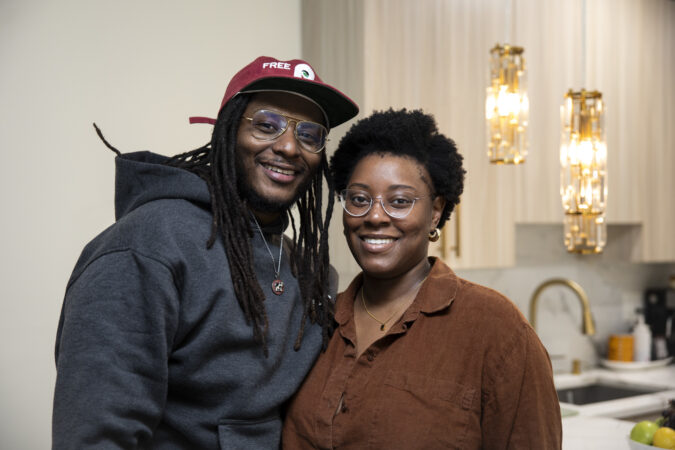
The buyers: Mercedes Murphy, 33, healthcare worker
The house: a 1,710-square-foot townhome in Port Richmond with three bedrooms and two baths, built in 1925.
The price: listed for $289,000; purchased for $291,000
The agent: Emily Terpak, Compass
The exterior of Mercedes Murphy’s home in Port Richmond.
The ask: Murphy had a strategy for maximizing her savings: never pay more than $850 in rent. If it went above that, she would simply move, which she did several times over five years. But eventually, what started as a strategy began to feel like a trap. “The quality of the places I was willing to pay for kept dropping,” Murphy said. When her small, rat-infested apartment in Point Breeze flooded — the second place she’d lived in that had flooding issues — she decided she’d had enough and set out to find a two-bedroom house with an updated kitchen for $350,000 or less.
The search: Murphy looked across the city, including in Mt. Airy, Fishtown, and South Philly. Some houses looked good in photos, butlooked worse once she saw the surroundings. A Northwest Philly rowhouse made a great impression inside, thanks to its sparkling wood floors, but not outside. “It was just parking lots, and nobody was around,” Murphy said. “It wasn’t very safe.”
She saw a promising place in Fishtown — a beautiful house with updated appliances, right by Girard Avenue. But it was small and had only one bathroom. Murphy debated the pros and cons with her then-fiancé (now husband), Stefan Walrond, for a few days, then made an offer. Almost immediately, she regretted it. She pulled her offer less than 24 hours later. “They had so many offers already,” Murphy said, “I didn’t feel like fighting for it.”
The living room in Murphy’s Port Richmond home. She liked how large it was compared to others that she had seen.
The appeal: A week after she pulled her offer, Murphy got COVID and couldn’t attend showings. Her fiancé went to see a house in Port Richmond without her. “He did the tour,” she said. “He sent me photos and did a little video walk-through.”
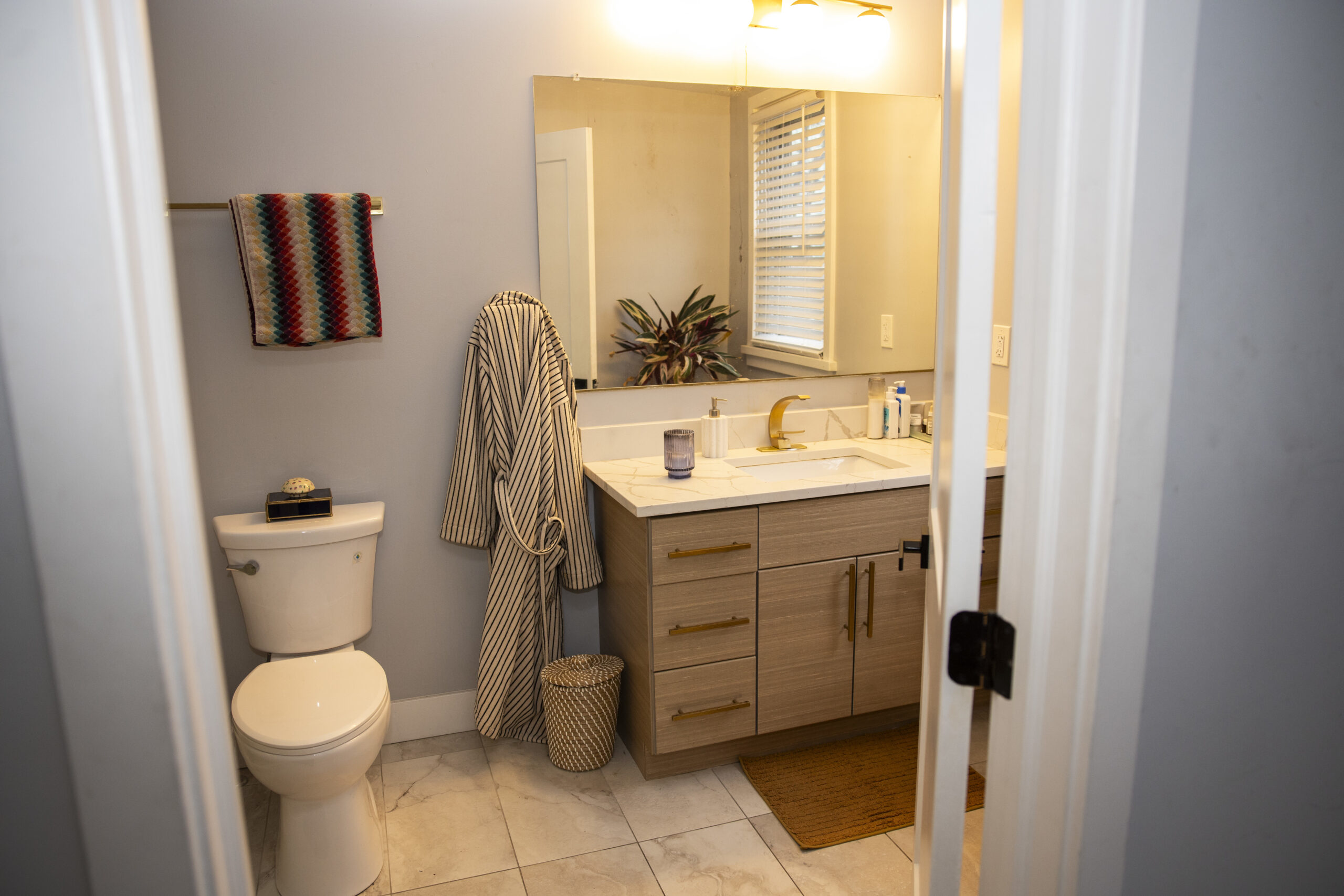
Murphy could tell that this might be the one. It had everything she wanted, including lots of space, two full bathrooms, and an updated kitchen. It even had a backyard with a cherry tree and enough room for their dog. What ultimately sold her, though, were the finishes in the kitchen and upstairs bathroom: the gold faucets, the marble countertops, the built-in bench in the shower. “I loved the modern aesthetic,” Murphy said.
The deal: Murphy wanted to avoid a bidding war, so she offered $291,000, $2,000 over the asking price.
Murphy fell in love with the modern finishes, like the gold faucet, in the bathroom.
The inspection was straightforward. The only major issue was the roof. It would need to be replaced in a few years. A few of the appliances looked like they wouldn’t last very long either. Murphy didn’t ask for any concessions or credits. She just made sure she had enough money saved to pay for replacements down the line. Sure enough, the fridge broke one week after she moved in, and the roof started leaking within the year.
The money: Murphy, a self-described “huge saver,” started aggressively saving money in 2015, the year she got her first “major job.” When she went to buy a house seven years later, she had just over $100,000 in savings. “I always lived really below my means,” Murphy said. She drove an old used car, lived with roommates, and didn’t have any “crazy expenses, like video games or makeup.”
“I’m just not a big spender,” she said. Not having student loans helped too.
Murphy loved the modern aesthetic of the kitchen.
Murphy used $70,000 for a 20% down payment. She tapped into her remaining $30,000 to pay for the new roof, which cost $6,000, and a new washing machine, which cost $1,700. Her parents bought her a new fridge for $2,000.
The move: Murphy’s landlord allowed her to break thelease she shared with her fiancé due to the flooding. She hired movers for the first time ever. “I moved so much in Philly before that I knew this time I definitely wanted movers,” Murphy said. It only cost $400. “We didn’t have that much stuff,” she said, “and we weren’t going very far.”
Any reservations? Murphy and Walrond love their neighborhood and their neighbors, but they wish they lived on a quieter street. “Aramingo is a main thoroughfare,” Murphy said. “So we have a lot of emergency vehicles come by.”
Other than that, Murphy wishes she negotiated more. If she could do it all over again, she wouldn’t offer $2,000 over the asking price. She would also ask for more concessions from the seller to address the aging appliances. “I didn’t even think to do it,” Murphy said. “I was just so happy to get a house.”
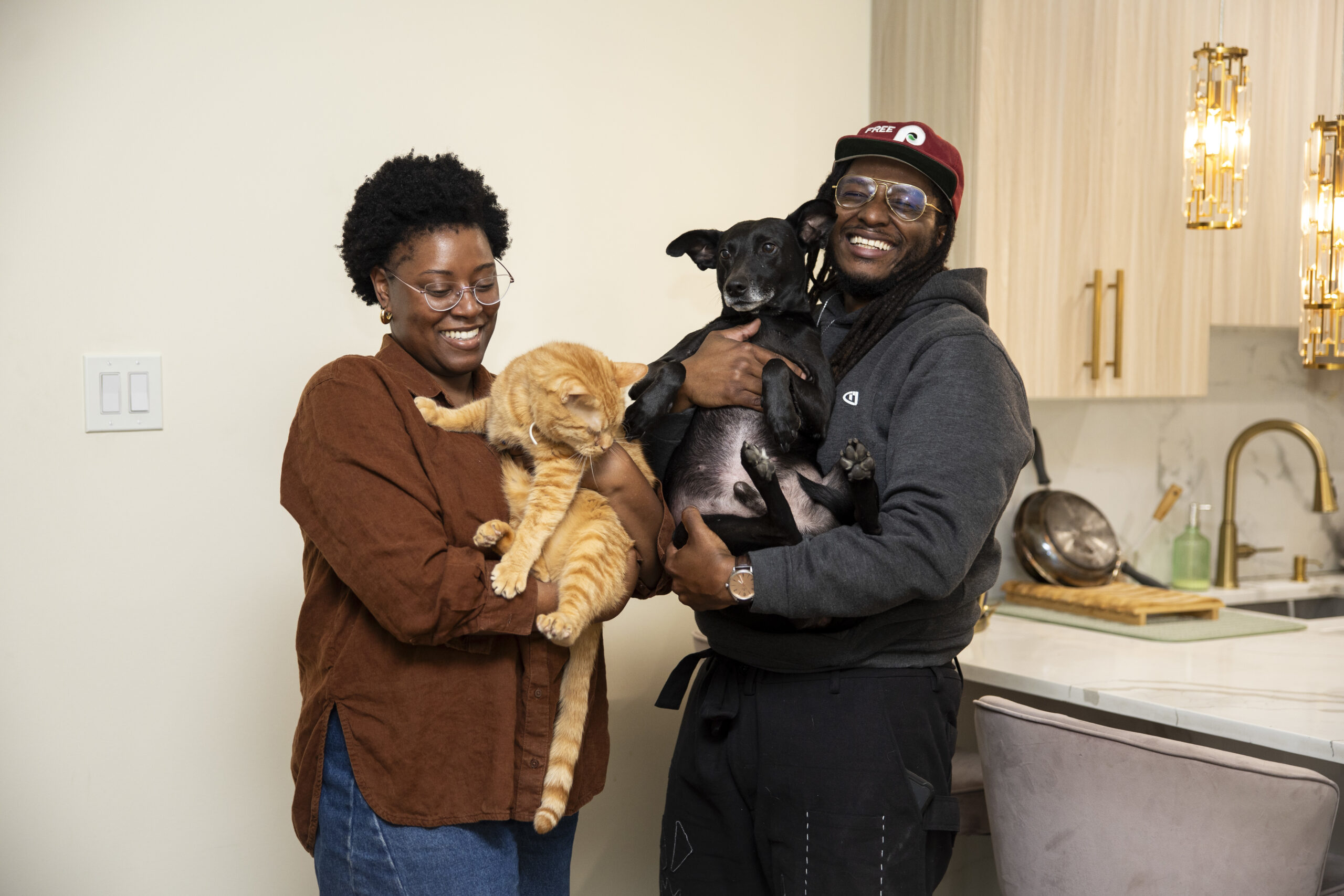
Mercedes Murphy and Stefan Walrond pose with their pets Archie (left) and Onyx at their Port Richmond home on Tuesday, Jan. 13, 2026, in Philadelphia.
Life after close: Murphy hasn’t changed anything since moving in, just repaired things. The leak in the roof damaged the bedroom drywall, which she is now in the process of fixing. And she had to replace a leaky window in the office. Despite the minor inconveniences, she’s happy with her purchase. Now she’s focused on rebuilding her savings. She wants to get back to $100,000. “Let’s see if I can do it again,” she said.
Compared with the rest of the tribe of baseball writers, my criteria for Hall of Fame inclusion are undemanding. The most controversial element: I do not discriminate against the PED crowd.
I consistently have voted for Barry Bonds, Alex Rodriguez, and Manny Ramirez, titanic talents of their era who are shunned by a voting bloc — us writers — that ignored and profited from rampant steroid use. Further, I know there are plenty of players who juiced and didn’t get caught, so banning the BALCO boys never made sense.
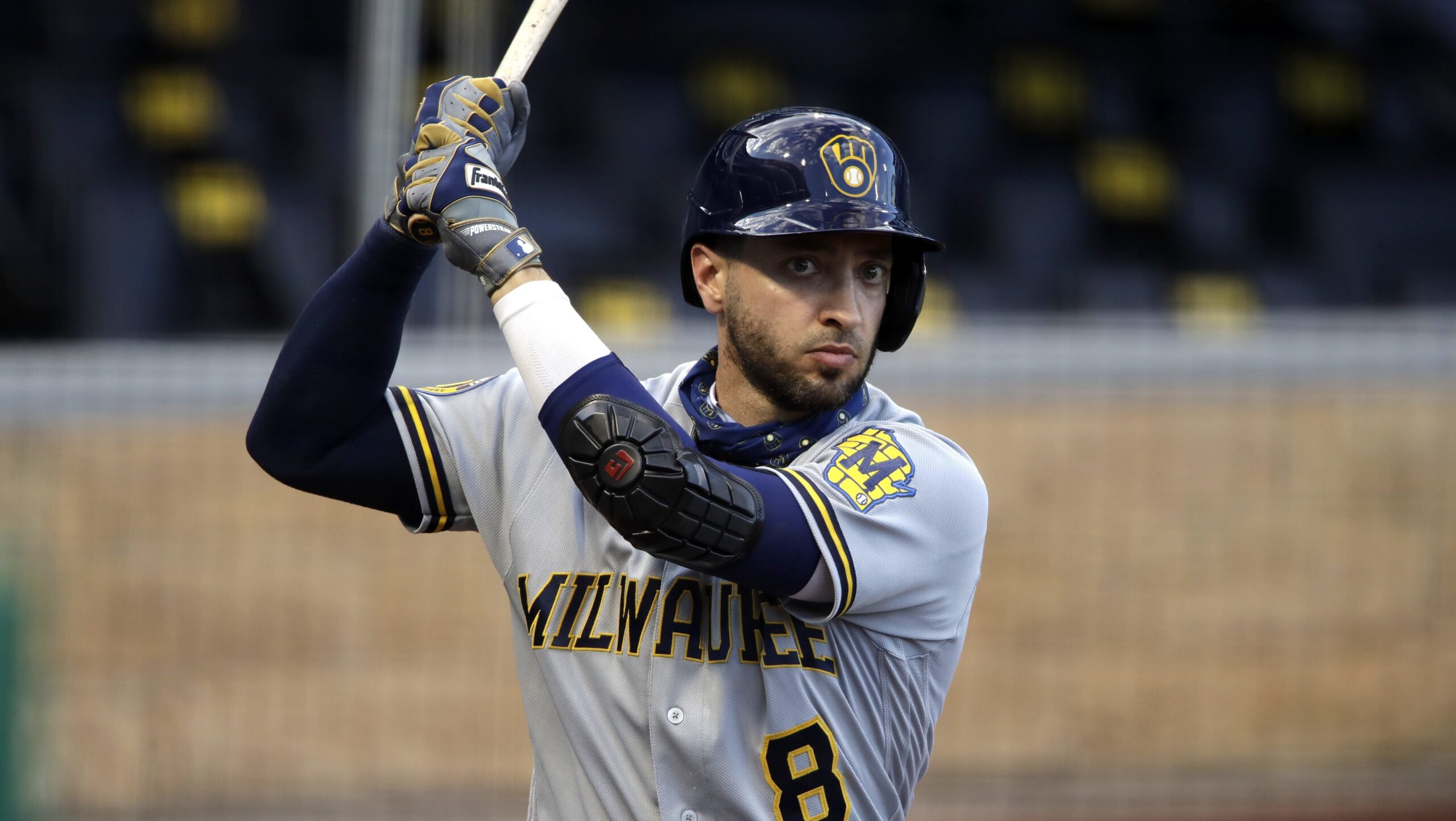
Which brings us to Ryan Braun, the best of a weak first-year class of Hall of Fame candidates — no offense, Cole Hamels. Inductees will be announced Tuesday. Don’t expect either to be on the list.
Between 2008 and 2016, a nine-season span, Braun was, without question, one of baseball’s best players. He was a five-tool player. He twice hit at least 30 home runs and stole at least 30 bases. His .902 OPS ranks fifth in that period among players with at least 4,000 plate appearances. Ahead of him: future Hall of Fame locks Miguel Cabrera and Albert Pujols, Hall of Famer David Ortiz, and, at No. 2, Joey Votto.
Braun was Rookie of the Year in 2007 and National League MVP in 2011.
From 2008 to 2016, Ryan Braun was one of baseball’s best players with a .902 OPS that ranks fifth in that period among players with at least 4,000 plate appearances.
You know what else happened in 2011? Braun tested positive for synthetic testosterone, and ruined his reputation in the aftermath. He challenged the test, smeared one of the testers as being antisemitic (Braun is Jewish), and had his record cleared on a technicality involving the handling of the sample.
Then, in 2013, later, Braun tested positive again. That invalidated all of his protestations.
This time, he served a 65-day suspension. Despite excellent production over the next three seasons and despite an effort to rehabilitate his image through varied good works, he never recovered.
There’s no way Braun will get the 75% of the vote he needs to qualify for induction; not this year, and probably not for five years or so. He’ll be the next Carlos Beltrán, the scapegoat for the Astros’ signal-stealing scandal in 2017 who should have been inducted years ago.
Braun certainly belongs in the Hall of Shame, right next to Rodriguez, who once indignantly denied that he’d ever taken steroids then later admitted to juicing as a younger player. A-Rod’s image has never recovered, either. Both belong in the Hall of Fame, too.
I vote for A-Rod every year. In fact, this is the third consecutive year he’s my No. 1 pick. The only time he wasn’t No. 1 was in 2022, when he was No. 2. Bonds was No. 1.
Braun’s situation is different. For one thing, he tested positive twice. For another, he was an absolute tool about it. For a third, PED use had plummeted by the time Braun arrived on the scene, so it’s not as if he needed to cheat to keep up. Finally, Braun tested positive in an era in which players knew the likely penalty for testing positive. Mark McGwire, who was first eligible in 2007, was being blackballed every year of Braun’s Hall of Fame run.
It is a penalty with which I always have disagreed. And, while I acknowledge that Braun’s candidacy is tainted more than any other PED user, I would be as hypocritical as my colleagues if I excluded him purely on the basis of PED use.
I will vote for him, but, more so than with A-Rod or Bonds or Roger Clemens, I will hold my nose as I check his box.
And I will think slightly less of myself for doing so.
The criteria
I not only divulge my votes, as I believe every writer should do, I also rank my votes and defend them.
I don’t vote for designated hitters because they don’t play the whole game. That included Ortiz in 2022, and it would have included Harold Baines and Edgar Martinez if I’d had a vote in 2019. Kyle Schwarber one day might make me eat those words.
I don’t vote for relievers. Traditionally, they’ve been failed starters. I backslid on that criterion in 2025 because I didn’t want to be the reason Billy Wagner didn’t get enough votes in his final year of eligibility. Thankfully, I didn’t have a vote in 2019, when Mariano Rivera was a unanimous selection. I don’t exactly know what I’d have done that year, when two designated hitters also made it. I probably would have abstained. My antireliever stance will further soften as more players who were drafted and groomed as relievers become eligible.
I use all 10 ballot slots, which means I’ve helped keep Omar Vizquel on the ballot.
I vote for players nearing the end of their 10-year candidacy limit over players who still have time left.
The last few players are usually interchangeable: This year, that interchangeability begins at No. 7, with Chase Utley.
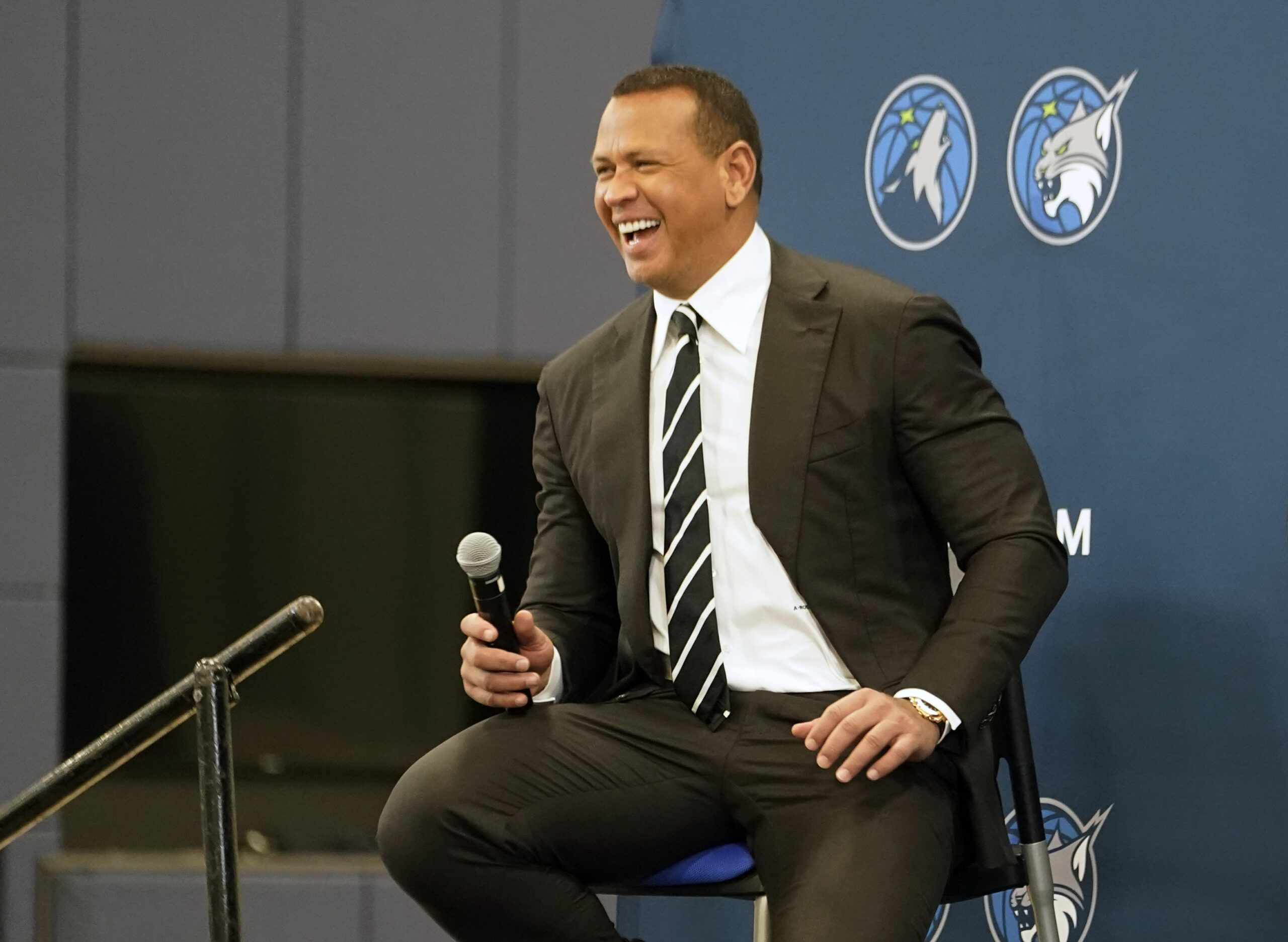
Alex Rodriguez, here in a 2021 event as co-owner of the Minnesota Timberwolves, was one of the great players of his era.
The vote
1. Alex Rodriguez, fifth year
Hit .302 with 642 home runs from 1996 to 2012, the most homers by a margin of 85 (Jim Thome had 557). Hot or cold in his postseasons. Elite fielder. Smug, condescending, weirdo, Yankee. But still.
2. Manny Ramirez, 10th year
In his final HOF run, Ramirez will be remembered less as the most important player on the Red Sox teams that broke the Curse of the Bambino than as a juicer. He led baseball with 1,660 RBIs from 1995 to 2008. He led Cleveland in aggregate OPS from 1995 to 2000 and was fourth in baseball behind McGwire, Bonds, and Martinez among players with at least 3,000 plate appearances. He led Boston in OPS from 2001 to 2006 and was third in baseball behind Pujols and Todd Helton, again among players with 3,000 or more plate appearances. He was the best hitter on loaded teams in Cleveland, Boston, and Los Angeles. He might have been juicing the whole time — he tested positive three times — but, again, PED use was rampant during his prime years.
3. Carlos Beltrán, fourth year
In a game rife with cheating, it astounds me that so many people hold the sign-stealing scandal against him, a scandal perpetrated when he was 40, in his final season, after an 18-year run of excellence. That included the 1999 AL Rookie of the Year as a Royal; nine All-Star Game appearances, his ninth at the age of 39; three Gold Glove awards; and incredible playoff production: a 1.021 OPS, a .307 batting average, 16 home runs, 42 RBIs, and 11 steals (never caught) in 65 playoff games.
That said, he got 70.3% of the vote last year, 57.1% in 2024, and 46.5% in his first year of eligibility. Independent preannouncement polling indicates that Beltrán will cruise into the Hall this year as effortlessly as he played the game itself.
4. Ryan Braun, first year
See above.
5. Jimmy Rollins, fifth year
I understand why, independent of their controversies, Beltrán and Braun aren’t slam-dunk Hall of Famers. I understand why Rollins isn’t, either. J-Roll is my best example of why defense, baserunning, and availability don’t get enough respect from voters. His 2007 MVP season was the best of an eight-year run in which his most consistent contributions involved superb shortstop play, base stealing, and baserunning, which helped account for his 292 stolen bases and the 395 combined doubles and triples he hit from 2001 to 2008, a league high among players with at least 5,000 plate appearances.
Rollins also played in 1,237 games in that span, second-most among shortstops (Miguel Tejada) and seventh-most among all players, including the next guy on this list, one of Rollins’ best friends.
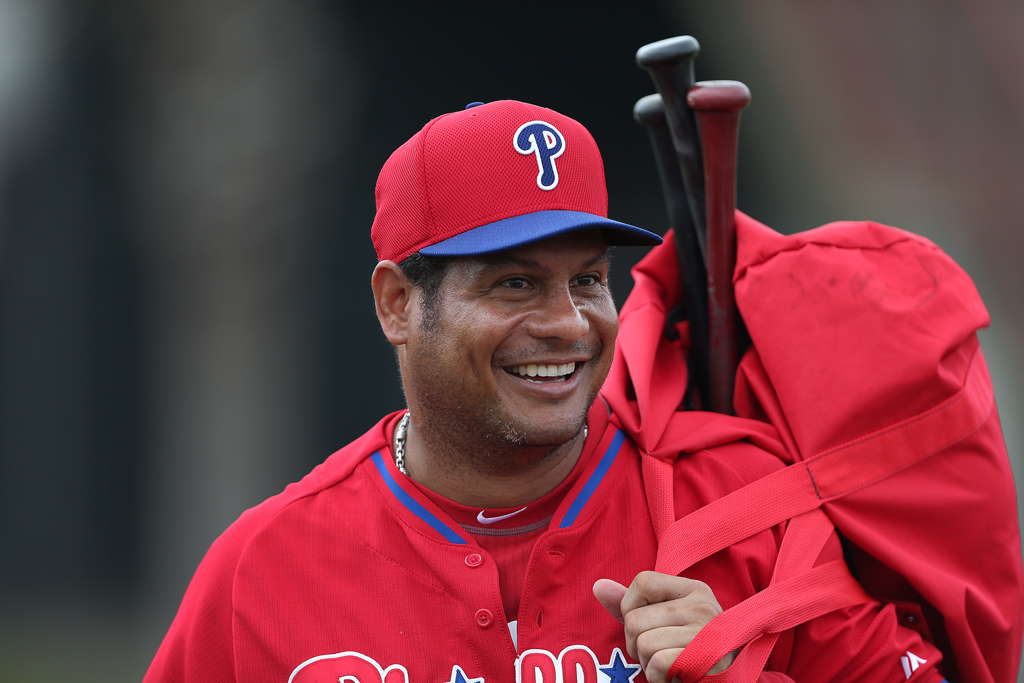
Bobby Abreu had a great career offensively, and he was a good outfielder, but his chances of making the Hall of Fame aren’t good.
6. Bobby Abreu, seventh year
Abreu was one of baseball’s best hitters from 1998 to 2009; his .902 OPS is third among players with at least 7,500 plate appearances, behind Helton and A-Rod. He averaged more than 28 stolen bases with a .301 batting average. He was an elite offensive player with one Gold Glove and a golden arm to boot. He got 19.5% last season, but he’s a lost cause.
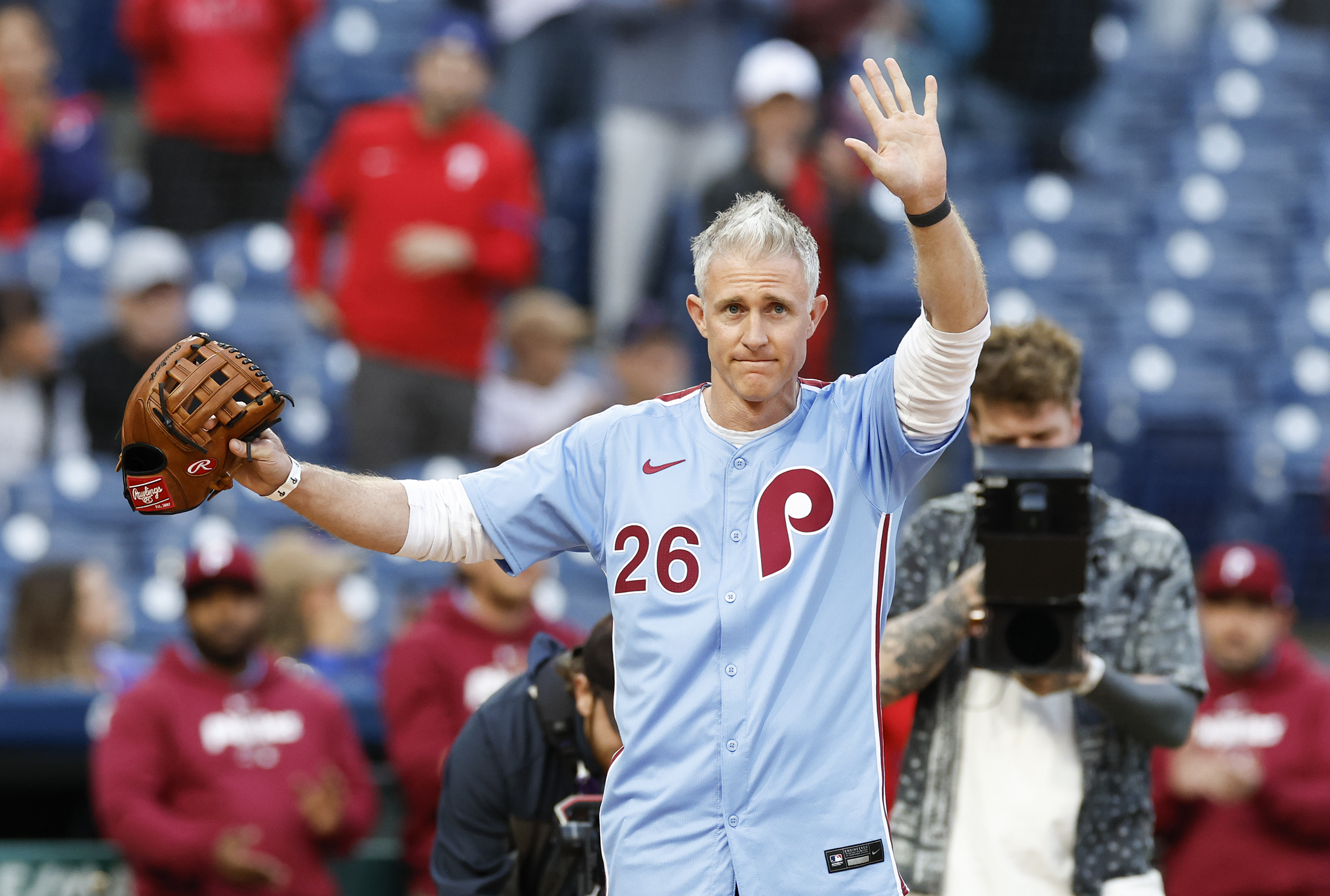
Chase Utley is expected to get closer than last year to the needed 75% of Hall of Fame votes.
7. Chase Utley, third year
He was a profoundly productive second baseman from 2005 to 2013, so why isn’t “Ut” higher? Because he was a profoundly poor second baseman who played out of position. He should have been at first base. Yes, his .881 OPS in that span ranks 11th among players who played at least 1,000 games, but he missed an average of 30 games per season in that span. He’s compared to Jeff Kent, who peaked at 46.5% in his final year of eligibility, though the new Contemporary Baseball Era Committee wrongmindedly slid him in instead of PED poster children Bonds and Clemens. However, Utley’s current popularity campaign as MLB’s ambassador to Europe — the most unlikely ambassadorship this side of Woody Johnson’s former gig in the United Kingdom — will surely help Utley blast past his 39.8% mark from last year.
8. Torii Hunter, sixth year
Hunter’s 5.1% last year barely met the 5% minimum for ballot retention, and he probably won’t be on the ballot after this year, but he was the best center fielder in baseball from 2001 to 2013 and a better player than Dustin Pedroia, Andy Pettitte, Hamels, and maybe even Utley.
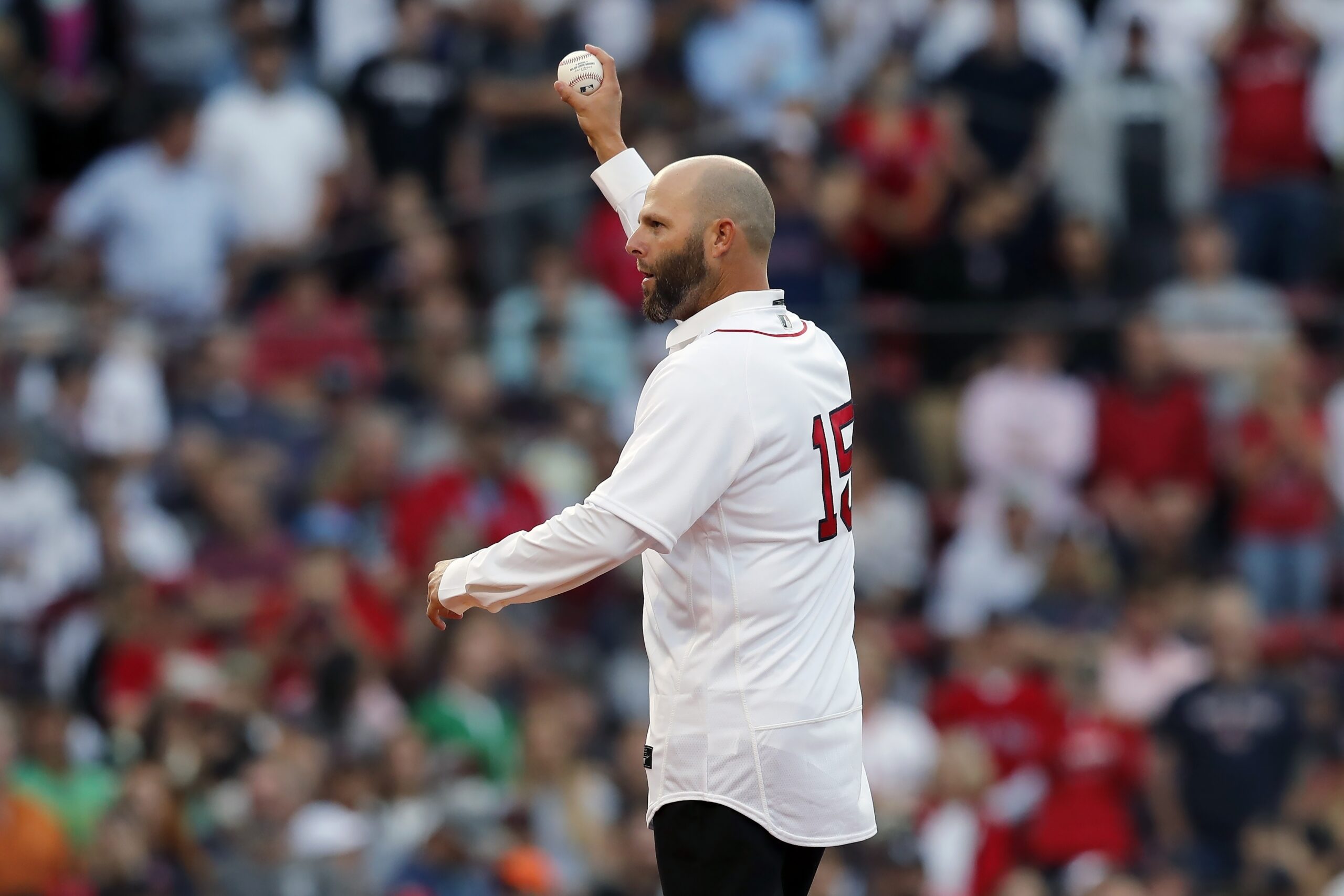
Dustin Pedroia’s career compared favorable to Chase Utley’s, except in home run power.
9. Dustin Pedroia, second year
There’s an excellent argument that, if you’re in on Utley, you should be in on Pedroia. His 10-year peak was slightly less homer-heavy than Utley’s, but his overall play probably was better, considering his four Gold Gloves. He also won AL Rookie of the Year in 2007 and was AL MVP in 2008. He won two World Series with the Red Sox, but after his first playoff run in 2007 he hit .212 with a .628 OPS in his next 37 playoff games.
10. Omar Vizquel, ninth year
He’s the best defensive shortstop of the modern era after Ozzie Smith. However, his candidacy cratered when, in 2021, he was sued and accused of sexually harassing an autistic adult batboy while managing the White Sox’s double-A affiliate in 2019. No charges were brought, and the sides settled in 2022, but the incident, combined with previous, unproven accusations of domestic violence accusations by an ex-wife, effectively ended Vizquel’s Hall of Fame campaign.
He peaked at 52.6% in 2020, his third year of eligibility, but hasn’t broken 25% in the past four years, and almost certainly won’t again this year.
Honorably mentioned
If I had an 11th vote, I would throw Hamels, Pettitte, and Félix Hernández in a barrel, pick one out, and he would get that vote. None is especially Hall of Fame unworthy, and all were very good long enough to warrant consideration. Pettitte won’t make it this year, his eighth, so, in the spirit of my expiring candidacy criterion, I might vote for him in a couple of years, after some candidates drop off and after Buster Posey gets in next year as a first-ballot candidate.
With Americans reeling from high consumer prices, the federal government will suspend tax refund seizures and wage garnishments for people in default on theirstudent loans, the Education Department said Friday.
The action dials back the Trump administration’srecent decision to resume involuntary collections after a nearly six-year suspension because of the pandemic.
The suspensions take effect immediately, with no defined end date. The move offers relief to the millions of Americans in default but means the government is losing out on billions of dollars.
The Education Department said Friday that the temporary suspensionwill help the agency implement student loan repayment reforms to give borrowers more options to repay their loans and give defaulted borrowers more time to rehabilitate their loans. The tax bill that President Donald Trump signed into law last year calls for the creation of new repayment plans, while phasing out a few existing ones starting July 1.
“The Department determined that involuntary collection efforts such as Administrative Wage Garnishment and the Treasury Offset Program will function more efficiently and fairly after the Trump Administration implements significant improvements to our broken student loan system,” Under Secretary of Education Nicholas Kent said in a statement Friday.
About 5.3 million people have not made a payment on their federal student loans for nearly a year — defaults that place them at risk of having a portion of their paycheck, Social Security, or disability income garnished or their tax refund withheld by the federal government. Many were in default before the federal government stopped collecting defaulted loans six years ago. Another 4.3 million borrowers are severely delinquent and nearing default, according to an analysis by the Congressional Research Service.
In December, the Education Department told the Washington Post that starting the week of Jan. 7, it would notify about 1,000 defaulted borrowers of plans to withhold a portion of their wages. After that, notices were supposed to be sent to a larger number of borrowers each month. The department would not confirmFridaywhether those notices ever went out.
Under garnishment regulations, the Education Department can withhold up to 15% of a borrower’s disposable, or after-tax, income. The garnishment continues until the defaulted loans are paid off in full or the borrower takes action to get out of default.
“Borrowers were in an absolute panic about the government garnishing wages during an affordability crisis,” said Persis Yu, deputy executive director at the advocacy group Protect Borrowers. “Garnishing wages right at this moment was always a terrible idea.”
Protect Borrowers and the National Consumer Law Center have also been warning struggling borrowers to check if they are in student loan default before they file their taxes. The groups released a public service announcement Tuesday that encouraged people to call the Treasury Department to find outif they are on the list to lose some or all of their refund. Refunds of federal Child Tax Credits and Earned Income Tax Credits can be critical lifelines for impoverished families, the advocates said.
Defaults have historically been concentrated among borrowers with low loan balances who never completed their degree, leaving them less likely to find work that could pay off the debt.
While itwas widely anticipated that the government would one day resume seizing the money, the collections wouldrun counter to Trump’s promise to make life more affordable for Americans — a message he is heralding ahead of the midterm elections.
But Republicans have historically denounced student loan relief as an affront to taxpayers, who they say shouldn’t be on the hook for the debt of college students. Pausing involuntary collection is far from the debt forgiveness the Biden administration pushed, but it does give borrowers a reprieve at the expense of taxpayers.
The White House’s decision to suspend involuntary collection undercuts the administration’s messaging around student loan repayment. The Education Department previously said the portfolio is headed toward a “fiscal cliff” if the Trump administration doesn’t restart involuntary collections.
When the Education Department announced the resumption of involuntary collection in April, Education Secretary Linda McMahon said her agency, with the help of the Treasury Department, would “shepherd the student loan program responsibly and according to the law, which means helping borrowers return to repayment — both for the sake of their own financial health and our nation’s economic outlook.”
But at an event in Rhode Island this week, McMahon signaled that the administration was changing plans. Asked if she had any concerns about making borrowers’ financial situation worse by garnishing their wages, the secretary said there was a pause on taking any action, even though no official announcement had been made.
Even with a suspension in place, interest will continue to accrue on defaulted loans and borrowers will still contend with the negative credit reporting. The Education Department is encouraging defaulted borrowers to explore resolutions, noting that it reports student loan defaults to credit reporting agencies.
When Jackie Fegley, a former nun, got married 51 years ago, money was tight. So she borrowed a dress from a friend.
And when her husband looked at her nurse’s salary the first year he did her taxes, he said: “Do you know you’re borderline poverty?”
But all that changed over the ensuing decades, and on Friday, Jackie and her husband Bill Fegley Jr., who made his career in accounting, gave a $5 million gift to Neumann University. Jackie is a 1971 graduate of Neumann — then called Our Lady of Angels College.
It’s the largest single gift Neumann — a Catholic university in Aston, Delaware County — has received from an individual, and the university in recognition named its nursing college The Jacquelyn Wilson Fegley ’71 College of Nursing.
“Bill and I were both lucky to receive a good education,” said Jackie, 81, who lives in Blue Bell with her husband, a Drexel University graduate. “So we decided that’s where we’d really like to give our money.”
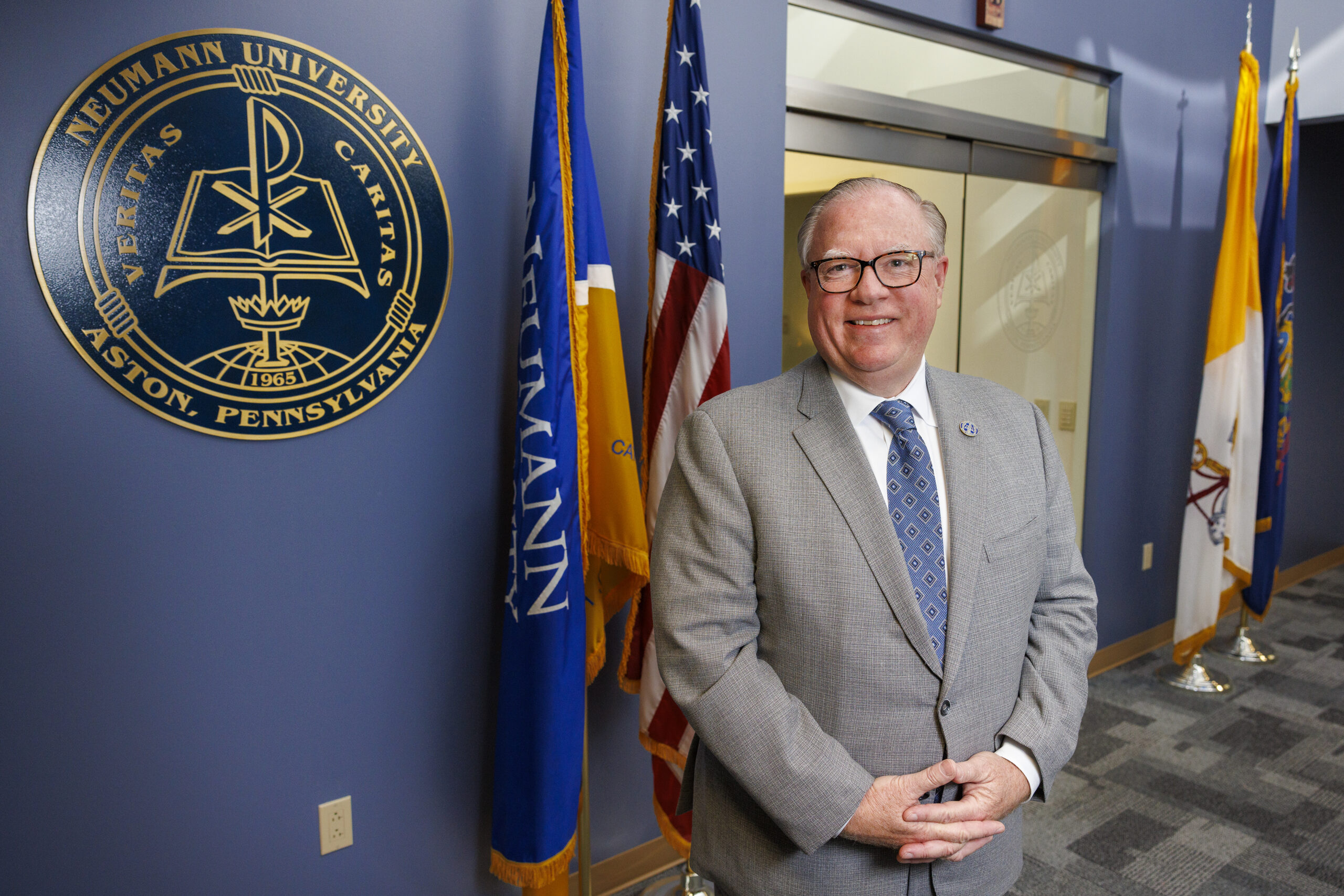
Chris Domes, president of Neumann University
Neumann President Chris Domes said $4.5 million will be used for undergraduate nursing scholarships for students with the most need and highest achievement, and the other $500,000 for lab equipment. The scholarships will begin to be awarded in the fall, with 22 to 25 students benefiting each year and continuing to get the funds over four years.
Nursing is the largest major at Neumann, with 368 undergraduate and graduate students enrolled. That’s about 17% of the 2,174-student body.
“If the scholarships give somebody an opportunity to change their life, it’s amazing,” said Bill, 78, who started his public accounting career with Arthur Young and then founded his own firm, Fegley & Associates, in 1975.
Domes said he hopes the gift encourages others to invest in higher education.
“It sends a signal that Neumann is a place that is financially strong and getting stronger,” he said. “It’s a real sign from Bill and Jackie that they believe in what we are doing here.”
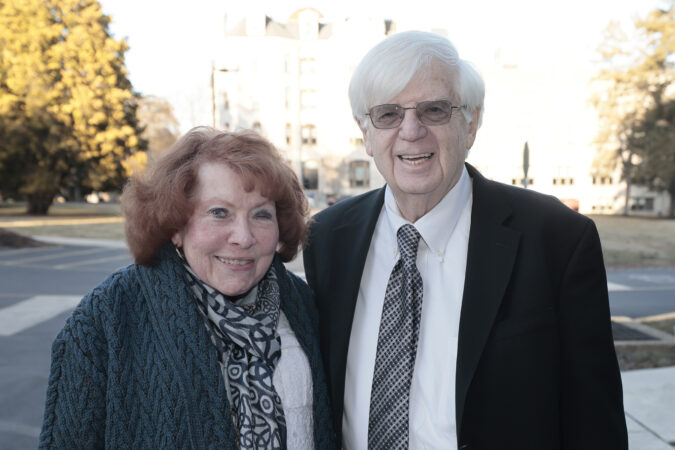
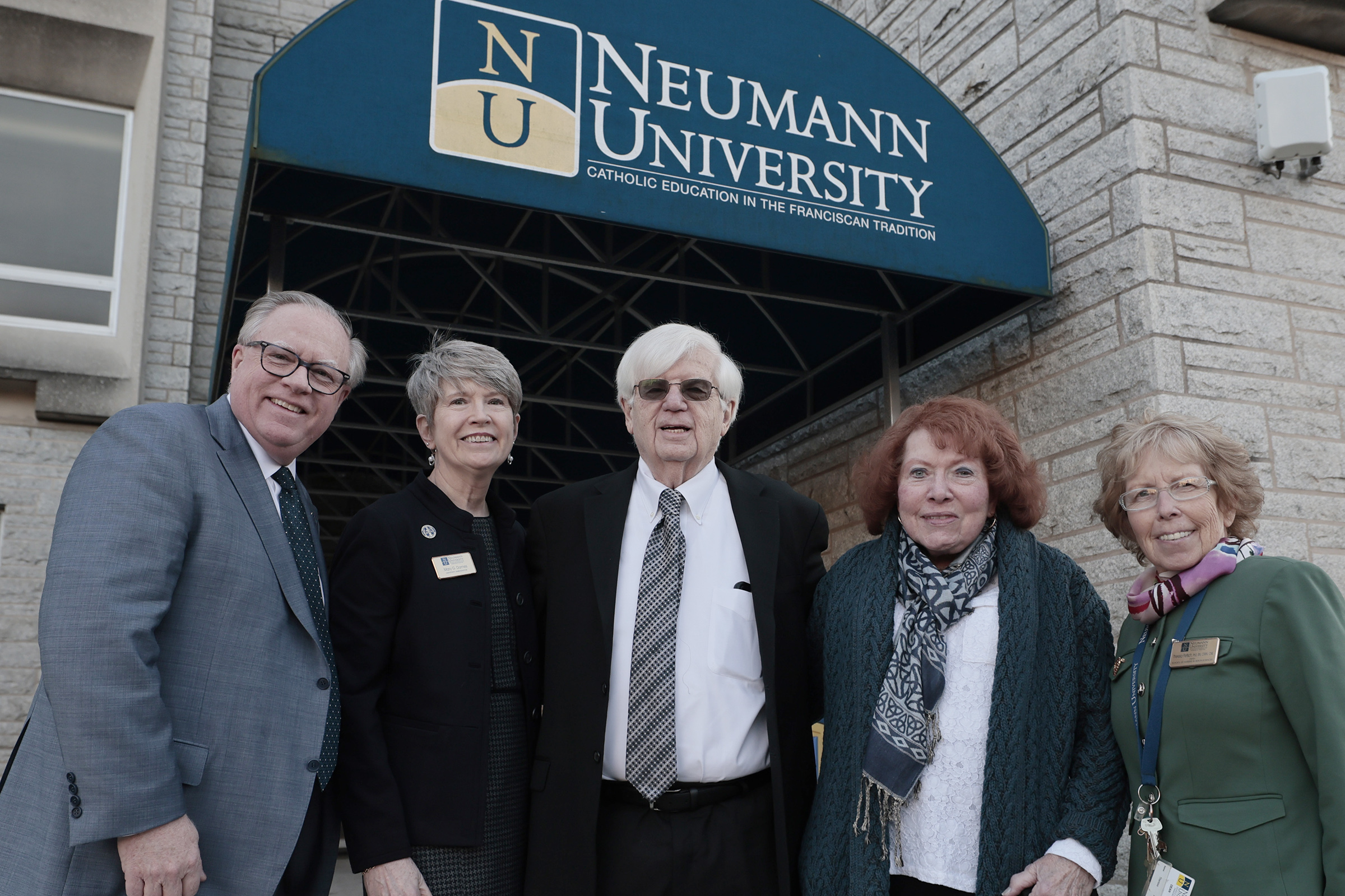
Neumann University President Chris Domes (from left) and his wife Mary Domes, William Fegley Jr. and his wife Jacquelyn Fegley, of Blue Bell and Neumann’s Nursing Health Sciences Dean Theresa Pietsch at Neumann University in Aston, Pa. on Friday, Jan. 16, 2026.
Born in Chester, Jackie said she grew to admire the Franciscan sisters at her local parish and stayed in touch with them through high school. When she graduated from Notre Dame High School in Moylan in 1962, she joined the order.
During her decade there, she taught grade school, including one year at an orphanage where the children ranged in age from 3 to 9. She said that’s when she started to think she wanted a family.
She got her bachelor’s degree while in the order, first taking classes at St. Joseph’s University and then moving over to Our Lady of Angels when it opened. She was part of the college’s second nursing graduating class.
“I think there were 10 of us in the class,” she said, including other nuns and lay people. “It was a wonderful experience integrating everyone together.”
After leaving the convent, she worked as a nurse at Holy Redeemer Hospital in Meadowbrook and Nazareth Hospital in Northeast Philadelphia. In January 1974, she met Bill, who grew up in Tamaqua, at a dance at a local pub. In September of that year, they married.
They have five children, now ages 40 to 50, who work as accountants, a personal trainer, a doctor, and a minimart operator.
Jackie has remained in contact with the sisters through the years.
“I love the sisters,” she said. “I still consider myself a Franciscan, just not a Franciscan sister.”
Bill — whose accounting firm has since merged with Morison Cogen LLP, where he continues to serve as a partner — has served on the foundation board for the Sisters of Saint Francis and has chaired it for about four-and-a-half years. And nine months ago, he joined Neumann’s board of trustees. He also has served as a lecturer at the University of Pennsylvania and an adjunct professor at Drexel and Pennsylvania State University.
The couple has visited Neumann to see how the educational program has grown and were pleased to see its Franciscan spirit thriving.
“I was really thrilled to see that this was how it was progressing,” Jackie said.
The couple attended the naming celebration and gift announcement at Neumann on Friday.
“We’re just pleased that God put us in a position that we’re able to do this,” Bill said.
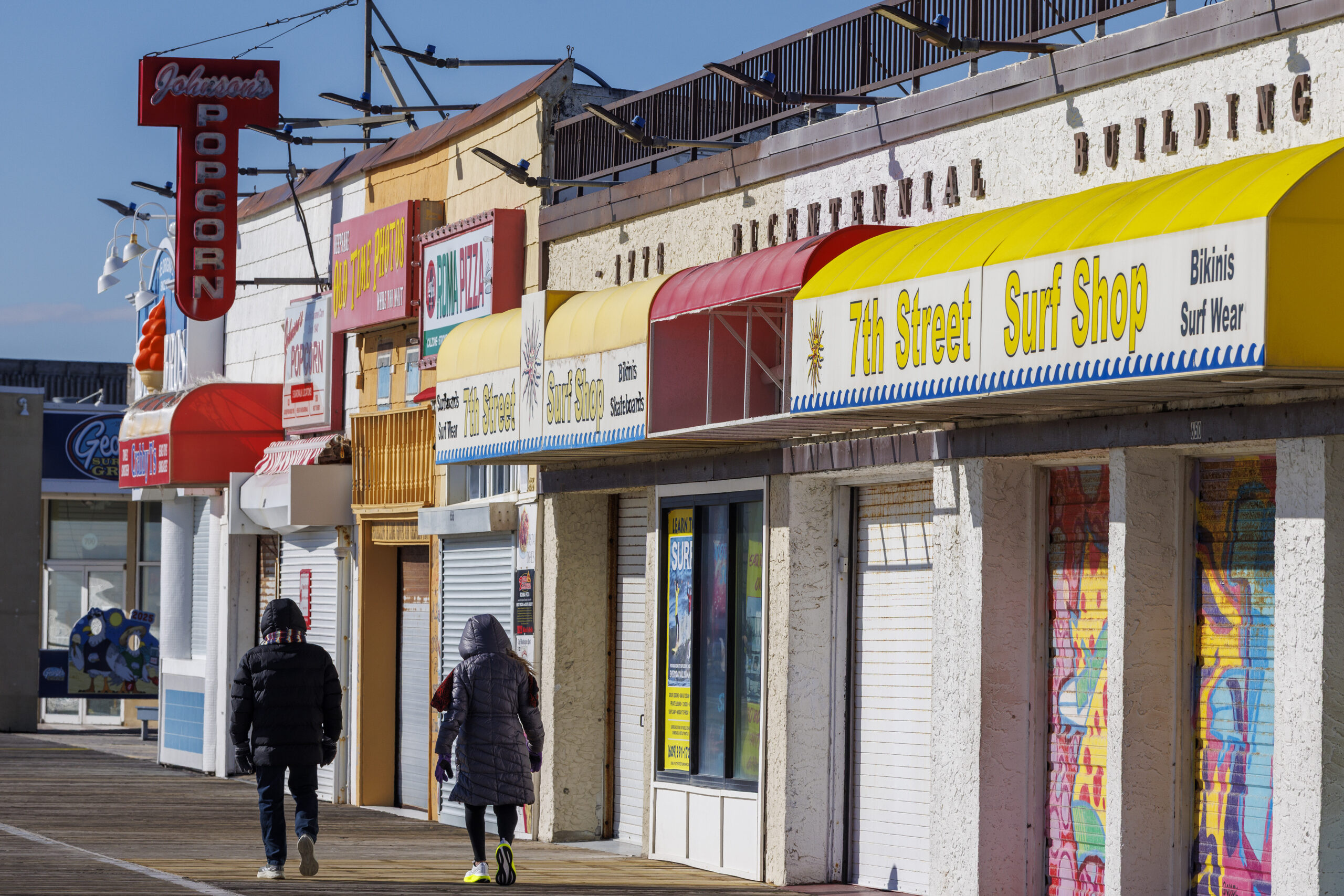
OCEAN CITY, N.J. — Along the commercial stretch of Ocean City’s boardwalk, from Sixth to 14th Streets, there are 167 storefronts, including four Kohr Bros. Frozen Custards, three Johnson’s Popcorns, three Manco & Manco Pizzas, and eight Jilly’s stores of one type or another.
There are eight mini-golfs, nine candy shops, 18 ice cream places, 10 pizza shops, 18 arcades or other types of amusements, five jewelry stores, three surf shops, five T-shirt shops, and 47 clothing or other retail shops. There is one palm reader.
Even without Gillian’s Wonderland Pier, the iconic amusement park at Sixth Street that famously closed in October 2024, it still adds up to a classically specific, if repetitive, Jersey Shore boardwalk experience. Many of the shops are owned by the same Ocean City families, some into their third generation.
But now these very shop owners are sounding the alarm.
“This is a group that’s been hanging on for a long time,” Jamie Ford, owner of Barefoot Trading Co., at 1070 Boardwalk, said in an interview last week. “These places are hanging in there. They’re not going anywhere, but we’re nervous.”
Chuck Bangle, owner of the storied Manco & Manco Pizza, warned planning officials he might close one of his three locations if business did not pick up. Other boardwalk property owners said longtime tenants were not returning.
“It’s the 70th year of our family business, the 34th year on the boardwalk,” Bangle told the planning board Jan. 7, before it eventually deadlocked 4-4 on whether the Wonderland site should be declared in need of rehabilitation. “I wrestled with closing the Eighth Street location. I don’t want to close. The impact of Wonderland’s closing on all the merchants has been substantial.”
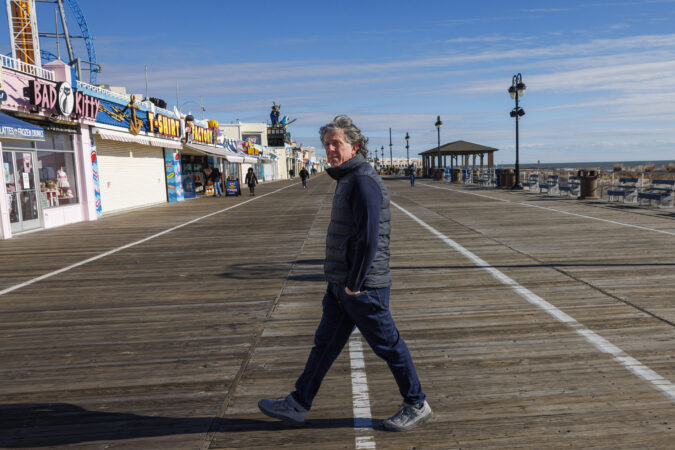
Business along Boardwalk near 7th Street, Ocean City, NJ., Thursday, Jan. 15, 2026.
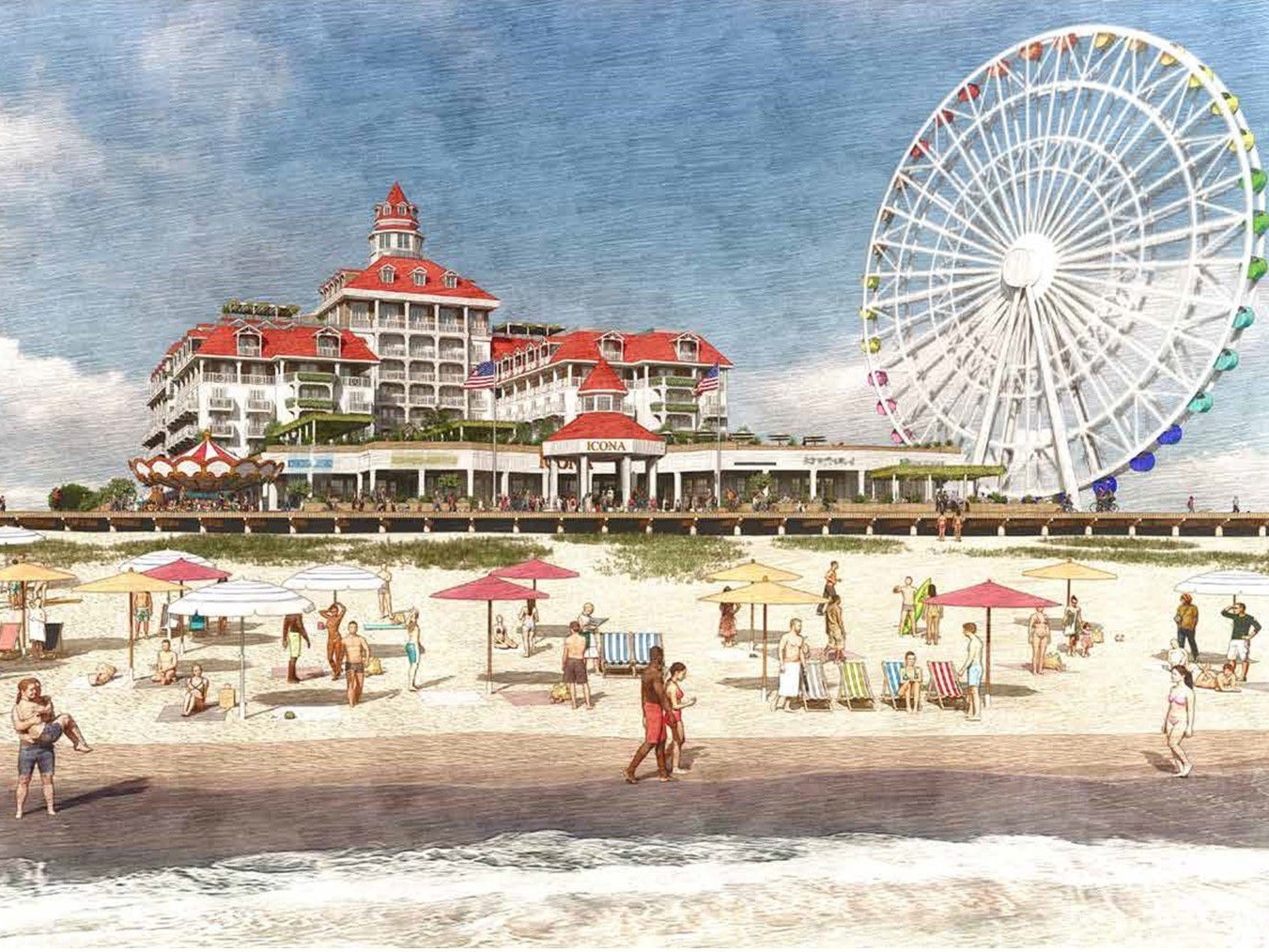
Into blustery January, the debate has raged about whether a luxury hotel, even one that would save the Ferris wheel, would bolster or undermine the essential character of this dry town and its beloved boardwalk.
At this point, even the most ardent members of the Save Wonderland faction seem resigned to the reality that, as Will Morey of Morey’s Piers himself came up from Wildwood to say to the planning board, the odds of Wonderland coming to life again as an amusement park are slim to none.
A rendering of the proposed new Icona in Wonderland Resort, to be built on the site of the old Wonderland Pier. The proposal for a 252-room resort includes saving the iconic Ferris wheel and carousel.
It’s the rest of the boardwalk that now wants to be heard: merchants with the voice of their ancestors ringing in their ears.
“This is an incredible opportunity,” said Ocean City Councilman Jody Levchuk, a member of the family that owns the Jilly’s stores on the boardwalk. He is also a member of a boardwalk subcommittee that will report its findings on Feb. 7. “My grandfather — who’s a big boardwalk guy — he’d walk up and he’d say this man wants to spend $170 million and you’re ignoring him.”
Plummeting parking revenue
A season without Wonderland took its toll. Parking figures from municipal lots tell the story.
The 249-spot lot at Fifth and the boardwalk across from Wonderland brought in $483,921 in parking fees in 2024 (people paid an average of $21 to park there during the summer season), but dropped to $290,895 in 2025, a 40% decrease. Overall, parking revenue dropped by about a half-million dollars, from $2.46 million in 2024 to $1.95 million in 2025.
At the end of 2025, there were a half-dozen empty storefronts, according to boardwalk merchants who keep track, mostly in the 600 block adjacent to Wonderland, though there is inevitable churn during the offseason.
Becky Friedel, owner of 7th Street Surf Shop, said in an interview that the shop is planning to expand and take over two of the vacant boardwalk storefronts for a new breakfast and lunch spot and a clothing boutique.
She said that while businesses have seen the loss of some of the younger clientele who used to fill Ocean City rooming houses and group Shore houses, the newer second-home owners come “with a fair amount of money.” The boardwalk also has a handful of higher-end boutiques, including the Islander. The downtown saw the opening of a Lululemon last year. Some envision a boardwalk that might include more boutiques in the mix, and fewer repeating sequences of ice cream-french fries-pizza-beachwear.
“We’re optimistic,” Friedel said. “Obviously [Wonderland closing] hurt us a little bit, especially in the evening. Our night business isn’t as strong as it was. We’re taking over the french fry place to focus on breakfast and lunch.”
Taking on the boardwalk
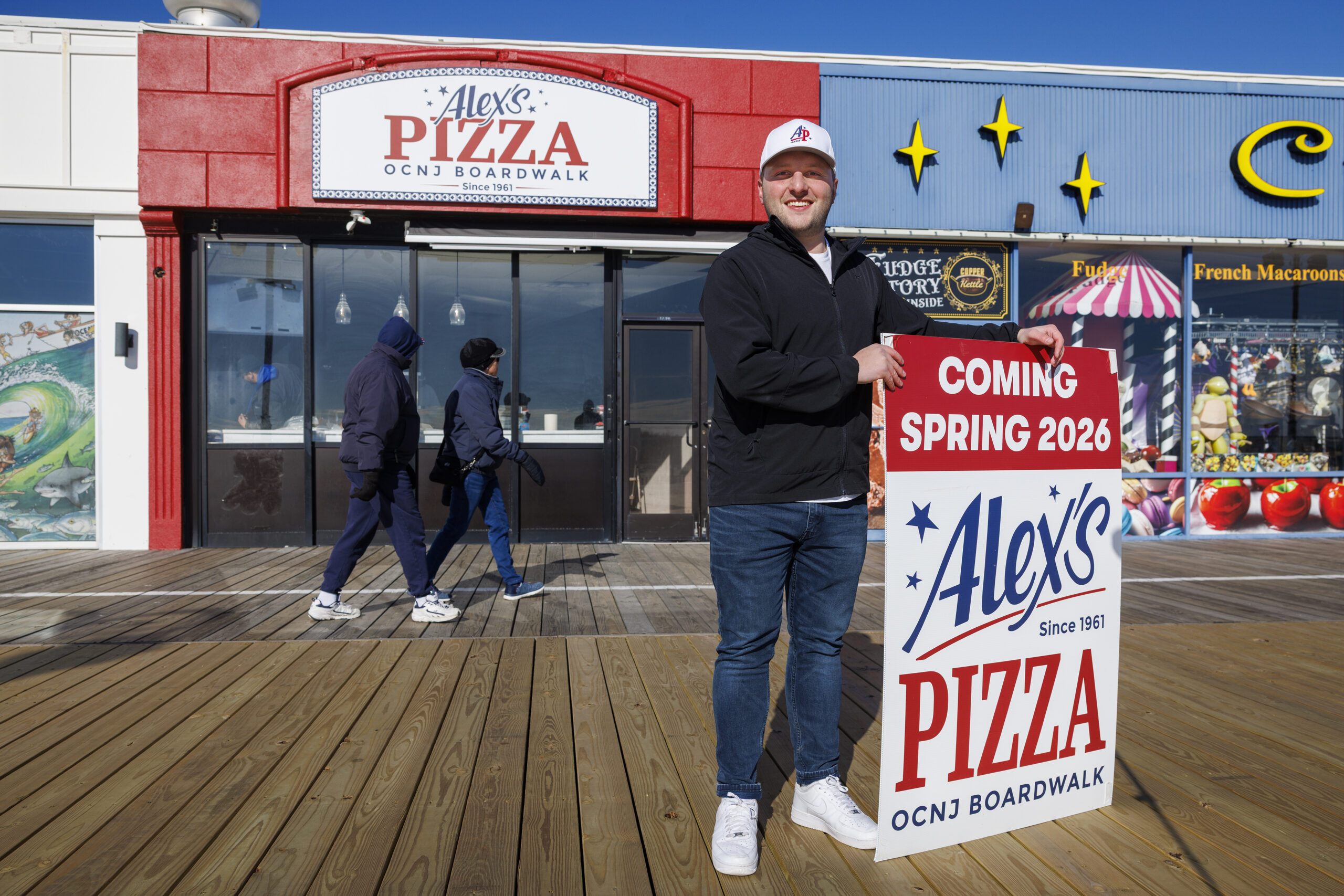
Also optimistic are the partners behind Alex’s Pizza, the Roxborough stalwart dating to 1961 that is opening up this summer at 1214 Boardwalk, next to Candyland. Coming in hot with a tomato sauce swirl atop the pizza not unlike the Manco’s staple, Alex’s partner Rich Ennis said, “We’re more of a thin-crust pizza.”
The enthusiasm of Ennis and partner Dylan Bear to take on the boardwalk also raises the question of whether the center of gravity will continue to shift southward, away from the no-longer-Wonderland end.
Dylan Bear, owner of Alex’s Pizza, 1214 Boardwalk, Ocean City, NJ., Thursday, Jan. 15, 2026.
“If you don’t have an anchor down there, people are not going to walk down there,” said Mark Benevento, owner of Congo Falls golf at 1132 Boardwalk, among other properties he rents out. “They will turn around at the music pier.”
Rather than seeing the hotel proposal as a threat to the character of the town, the merchants have united to stress that they view it as essential to Ocean City’s preservation. In other Shore towns, it has been the push of residential development that has eaten away at commercial zones. The parcel is currently zoned for amusements.
In places like Seaside Heights, Long Beach Island, and Avalon, condo and new residential construction has chipped away at the essential character of the places, replacing some of their most distinctive destinations, from restaurants to motels to bars and nightclubs.
Mark Raab, a local pediatric dentist whose family owns five boardwalk properties in Ocean City, called the closing of Wonderland “devastating” in remarks to the planning board.
“People don’t know what’s going on,” he said. “This year we had three businesses that closed, longtime tenants that did not renew their leases. Six years ago we had a waiting list for these properties.
“The boardwalk is not thriving,” he said. “The boardwalk is slowly going down. It’s going down piece by piece. It is rapidly becoming a snowball effect.”
‘Now they have galvanized us’
Ford, of Barefoot Trading, thinks the time has come for the view of the merchants to be heeded. The 4-4 tie at the planning board is being seen not as an outright rejection of a rehabilitation designation, which would expedite zoning allowances and possible tax abatements, but as a pass back to the city council.
The families, he said, are “the backbone of it. What we’re speaking in favor of should carry a little bit of weight.”
In a usually sleepy Jersey Shore January, there has been an awful lot of intrigue, and packed meetings, with the latest talk of perhaps a limited zoning change that would allow a hotel, though perhaps one not as grand (252 rooms, seven stories) as Mita is seeking.
There is also talk of allowing residential units above boardwalk storefronts. And many believe the city council will essentially give the tie to the nonvoting planner, Randall E. Scheule, who told his deadlocked board he believed the Wonderland site did meet two needed criteria — significant deterioration and a pattern of underutilization — and to go ahead and approve the rehabilitation zone.
Mita has said that time is of the essence. He said he has been shocked at the way the town has stymied his plan twice.
Councilman Keith Hartzell, who twice voted against advancing Mita’s development plan, said he still wants to negotiate with Mita over height, parking, and other issues. One possibility, in conjunction with the boardwalk subcommittee, is rezoning just the 600 block of the boardwalk to allow a hotel. Hartzell has also been trying to bring a playground to that end in the meantime.
“I’m not anti-hotel at all,” Hartzell said. “Our job is to come up with something [Mita] can do that he can make money with and be happy with.”
For Ocean City’s merchants, the Wonderland saga, and Mita’s difficulty in getting his hotel off the ground, has prompted them to step out from behind the counter or out of the ticket booths and speak up.
Said Benevento, the Congo Falls owner: “Maybe we have never gotten political. Now they have galvanized us.”
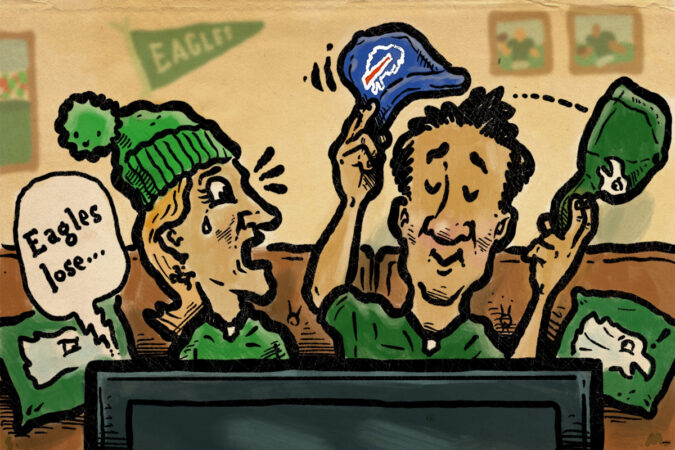
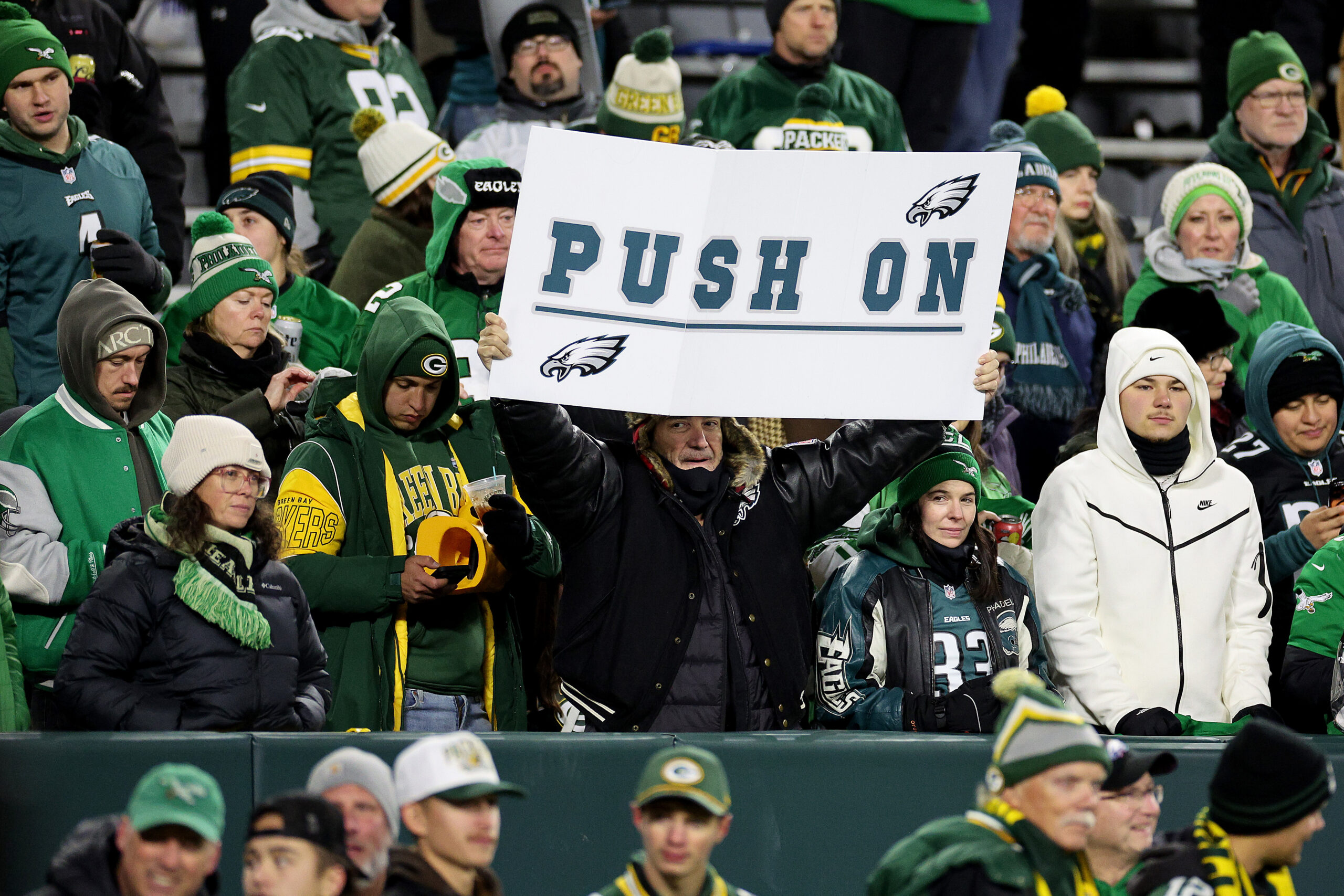
You don’t necessarily need to root for another team … but it’s perfectly acceptable to root for certain teams to lose more than others. Post-Eagles playoff fandom is less about loyalty and more about spite management.
You’re no longer picking a champion; you’re ranking villains.
Dugan Arnett, Life & Culture Reporter
I believe that Philadelphians should be free to root for any of the NFL’s remaining playoff teams. Except the Patriots, obviously. No one should ever root for the Patriots.
Tommy Rowan, Programming Editor
At this point, you’re rooting for fan bases. So I’m rooting for Bills fans. As a fan base, they’ve been through it. Despite an unprecedented four straight Super Bowl appearances in the early 1990s, they have zero championship wins to show for it.
And there are some similarities between Buffalo fans and Philly fans. Our friends from up north routinely throw each other through card tables at game day tailgates like WWE wrestlers. The two fan bases could honestly be cousins. Real long-suffering Northeast football fans recognize real. So, Go Bills. … Until the playoffs are over.
Amy Rosenberg, Life & Culture Reporter
This is when being a transplant has its advantages. Buried ancestral loyalties can now resurface. My dad loved the Bills dating back to the Marv Levy era. I’ve always loved the Rams? Feels OK to go with the Bills. (Getting some Bills consensus here.) Anything remotely Boston, New England, or Dallas is obviously off-limits. Chicago could be a late pivot to root for. Birds, Bills, Bears.
Matt Mullin, Senior Sports Editor for Digital Strategy
Unsurprisingly, I have a lot of thoughts on this. Sorry! Like Biggie said, there are rules to this game, so I wrote you a manual. And these can be applied to almost any season — or any sport.
You absolutely cannot root for the team that eliminated you, so the 49ers are out. But! If they win it all, you’re allowed to say the Eagles basically finished second.
You can’t root for any NFC East teams — luckily that’s not a concern this year — or any teams that beat you during the regular season. Goodbye, Denver and Chicago.
In fact, you shouldn’t really root for any NFC team, since you’ve likely beefed with them all at one point. But if you must, pick one of the teams you beat. At least that way you’ll be able to convince yourself the Eagles were actually the better team. Would the Rams, who the Eagles beat in the regular season and last postseason and don’t really have a fan base to rub it in, making the Super Bowl be the worst? Probably not. But that doesn’t mean you have to support them.
You should also try to avoid rooting for the top seeds, since Philly loves an underdog. We’ve already eliminated the Broncos, but so long, Seattle.
That leaves three AFC teams. Again, any team that beat you this year is automatically out. So are the Patriots. You never root for the Patriots.
In five simple steps, we’ve now boiled it down to just two acceptable teams: the Bills and Texans. We’ll give the Bills the nod here since their fan base and Eagles fans seem to have a lot in common — even though their coach tried to kill the Tush Push over safety but still uses it regularly.
Sam Ruland
I think my ideal Super Bowl here would be Bills vs. Bears. Because the Bills have a good fan base, fun, loyal (all the things we said). And I have no negative thoughts on the Bears fan base either. Also, never forget Jason Kelce tailgating with the Bills Mafia. That’s gotta count for something.
The Eagles bowed out of the playoffs in the wild-card round, setting in motion an offseason that likely will feature a lot of change. Players and coaches will come and go, and the team won’t look the same when it takes the field for training camp in July. Some of that began right away, when offensive coordinator Kevin Patullo was relieved of his duties two days after the season ended.
We’ll keep you updated on the entire Eagles offseason at The Inquirer with news and analysis on the team as it goes through a critical offseason.
Is a new deal in the cards for tight end Dallas Goedert coming off a career season?
Roster decisions
Scheduled free agents
The Eagles have 20 pending free agents, 10 on offense, nine on defense, and punter Braden Mann.
Offense
TE Dallas Goedert: Goedert reworked his deal last offseason to stay with the Eagles and scored to a career-best 11 touchdowns, an Eagles tight end record. Considering the Eagles don’t have any tight ends on the roster, they may look to bring the 31-year-old back after he got through the season relatively healthy.
WR Jahan Dotson: The little-used third receiver could find a new home this offseason. WR3 is a tough position on this team behind A.J. Brown and DeVonta Smith, and it seems unlikely the Eagles will find it worth bringing Dotson back.
OT Fred Johnson: Johnson left for free agency after last season, but the Eagles traded for him before the season for some insurance at tackle, and they needed it. It remains to be seen how the Eagles approach the draft and free agency, but Johnson’s return would put an experienced body on the depth chart.
TE Grant Calcaterra: As mentioned, the Eagles don’t have any tight ends. Calcaterra has been productive when the Eagles use him as a pass catcher, but he’s not a great blocker, and the Eagles need their tight ends to block.
OL Brett Toth: The do-it-all lineman has been a valuable asset in Jeff Soutland’s offensive line room. He can fill in at any position.
TE Kylen Granson: Granson was a big part of the Eagles’ special teams, despite having a limited role in the offense. The tight end position is in flux, but Granson could return as a depth piece.
OL Matt Pryor: The Eagles brought back a familiar and experienced face in the offseason for some depth. Pryor gave that and provided positional versatility. But he wasn’t all that great in relief.
RB AJ Dillon: Dillon started the season in the mix to get snaps behind Saquon Barkley, but he fell out of favor after the Eagles traded for Tank Bigsby. Dillon was inactive for most of the second half of the season and logged just 12 carries. The Eagles are pretty set at running back with Barkley, Bigsby, and Will Shipley.
QB Sam Howell: The Eagles weren’t comfortable with Kyle McCord as QB3, so they acquired Howell before the season. Will McCord be ready after spending the 2025 season on the practice squad?
FB Ben VanSumeren: VanSumeren changed positions from linebacker to fullback and made the 53-man roster, but his season ended on the opening kickoff in Week 1. The Eagles signed Kansas City’s Carson Steele to a futures contract. Will they bring back VanSumeren and have a fullback competition?
The Eagles got a good look at linebacker Jaelan Phillips after acquiring him at midseason.
Defense
EDGE Jaelan Phillips: The deadline acquisition stepped in right away and was a difference-maker along the defensive line. The Eagles need a top-end edge rusher to add to a unit that has Jalyx Hunt and Nolan Smith under contract. Phillips would make sense.
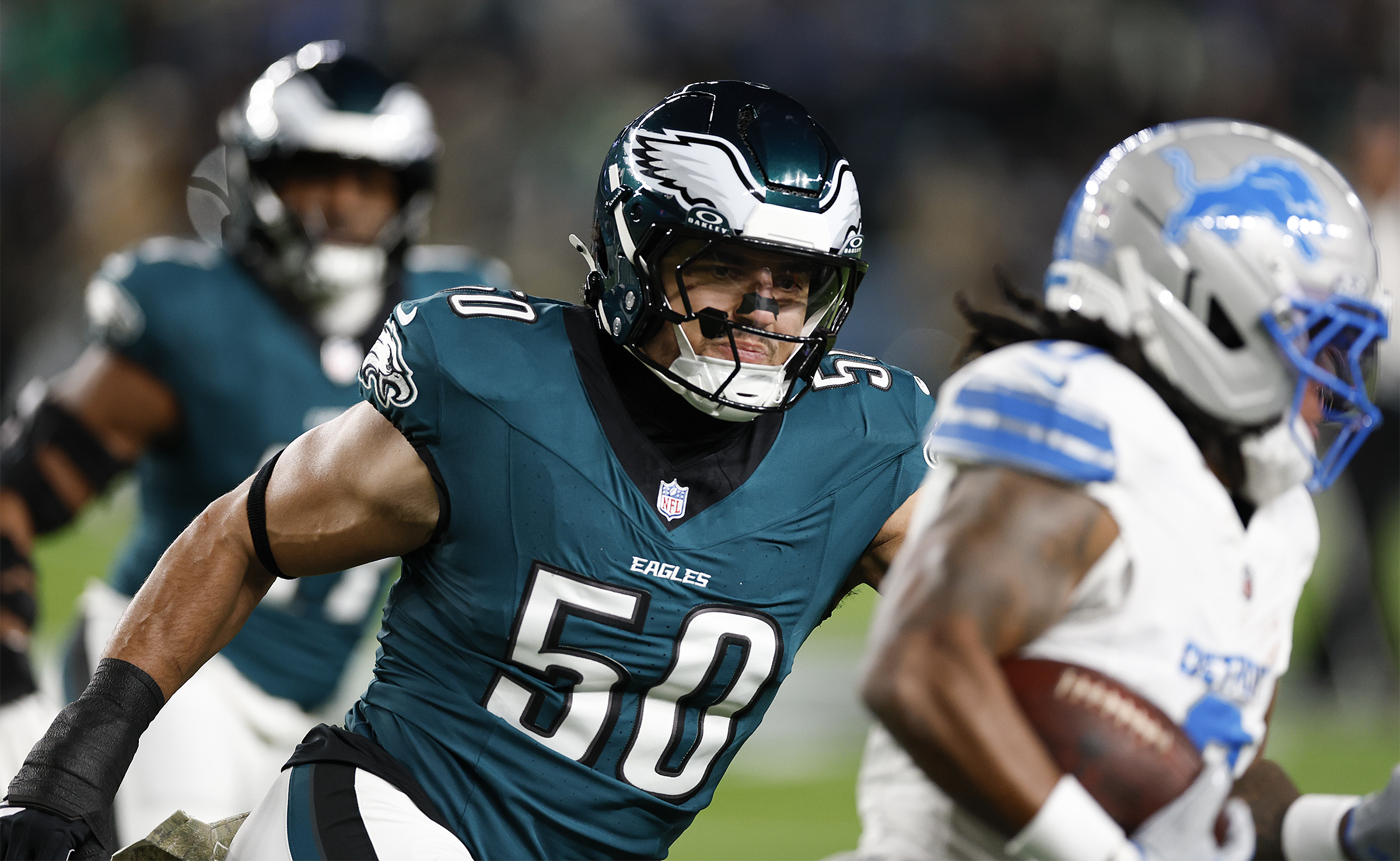
LB Nakobe Dean: Dean returned from patellar tendon surgery in the middle of the season and looked like he didn’t miss a beat. But the Eagles drafted his replacement last season in Jihaad Campbell.
S Reed Blankenship: Blankenship has been a big part of the defense for the last four years. He has started 50 games and is a leader. The Eagles are thin at safety, but it remains to be seen what Blankenship’s market looks like and if the Eagles will be in the mix.
CB Adoree’ Jackson: Jackson was up and down in training camp and to start the season, but he played his way into a starting job opposite Quinyon Mitchell. He’ll be 31 next season, and the Eagles probably want to get better at CB2.
S Marcus Epps: Epps stepped in as a starter after Drew Mukuba went down. He’ll be 30 before the season starts, though he could find his way back to the Eagles and compete for a job.
EDGE Brandon Graham: Graham came out of retirement and briefly changed positions when Jalen Carter went down and the interior needed a boost. Will he go back into retirement?
EDGE Joshua Uche: Uche seemed to be playing his way into a bigger role when the Eagles brought Graham out of retirement, which forced Uche to a lesser role. The Eagles are thin on the edge, though Uche seems to be more of a depth piece right now.
EDGE Azeez Ojulari: Ojulari ended up behind Uche on the depth chart and then missed most of the season after being placed on injured reserve.
EDGE Ogbo Okoronkwo: Okoronkwo made the team out of training camp as a depth edge rusher but suffered a season-ending injury in Week 4, the only game in which he played.
Special teams
P Braden Mann: Mann had a great season. He ranked fifth in the NFL in punt average (49.9 yards). It would make sense for the Eagles to want to bring him back.
Jordan Davis, left, and Jalen Carter could both be in consideration for new deals.
New deals?
There are a few players under contract who could be in the running for a new contract with the Eagles.
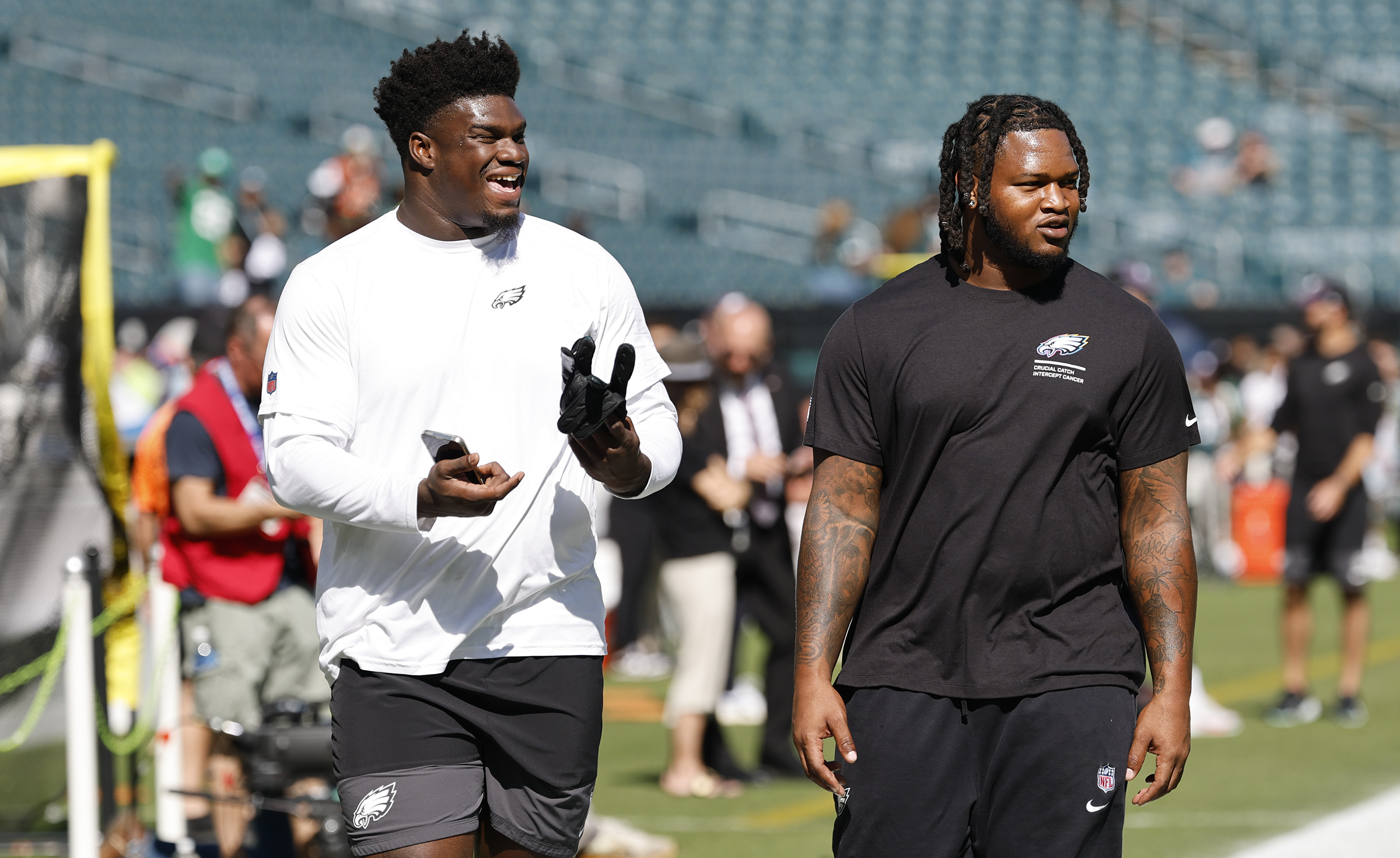
DT Jordan Davis: The Eagles picked up Davis’ fifth-year option last offseason and he remains under contract for the 2026 season. But after a breakout 2025 season, he likely earned himself a lot of money.
DT Jalen Carter: The Eagles likely will do what they did with Davis and pick up Carter’s fifth year, but it might be time for an extension now. Carter didn’t have his best season after a dominant 2024. The Eagles may be able to sign him to a more team-friendly deal, though Carter and his agent, Drew Rosenhaus, may opt to play 2026 on his current deal and revisit the big-money deal next offseason.
DT Moro Ojomo: Ojomo is set to play the final year of his four-year rookie deal in 2026. The seventh-round pick has been a major success story. Will the Eagles look to lock him up beyond 2026? Will they be able to afford all of these defensive linemen with big contracts coming in the future for other defensive stars like Quinyon Mitchell and Cooper DeJean?
Contracted players who could be on the way out
The Eagles have some players on the 2026 roster who may not be here when training camp starts.
K Jake Elliott: Elliott has had two consecutive seasons where he didn’t perform well enough. His 2025 field goal conversion rate was just 74.1%, the lowest of any kicker who played a full season.
WR A.J. Brown: Will his frustrations with the offense cause him to ask for a trade? It would be a costly move for the Eagles, but they’ve willingly taken on dead cap in the past. The Eagles would have a big hole to fill if it came to that.
RT Lane Johnson: Johnson remains one of the best tackles in football, but his availability was an issue this season. He missed the final eight games of the season after suffering a Lisfranc injury in his right foot. The Eagles probably would love him back, but Johnson will be 36 in May and won’t play forever.
QB Tanner McKee: Will the Eagles look to ship McKee to another team for a draft pick? McKee’s Week 18 performance didn’t help their cause.
CB Kelee Ringo: Ringo remains under contract on his rookie deal, but he seems like a change-of-scenery candidate. He has struggled to get on the field with the Eagles, though he has been great on special teams.
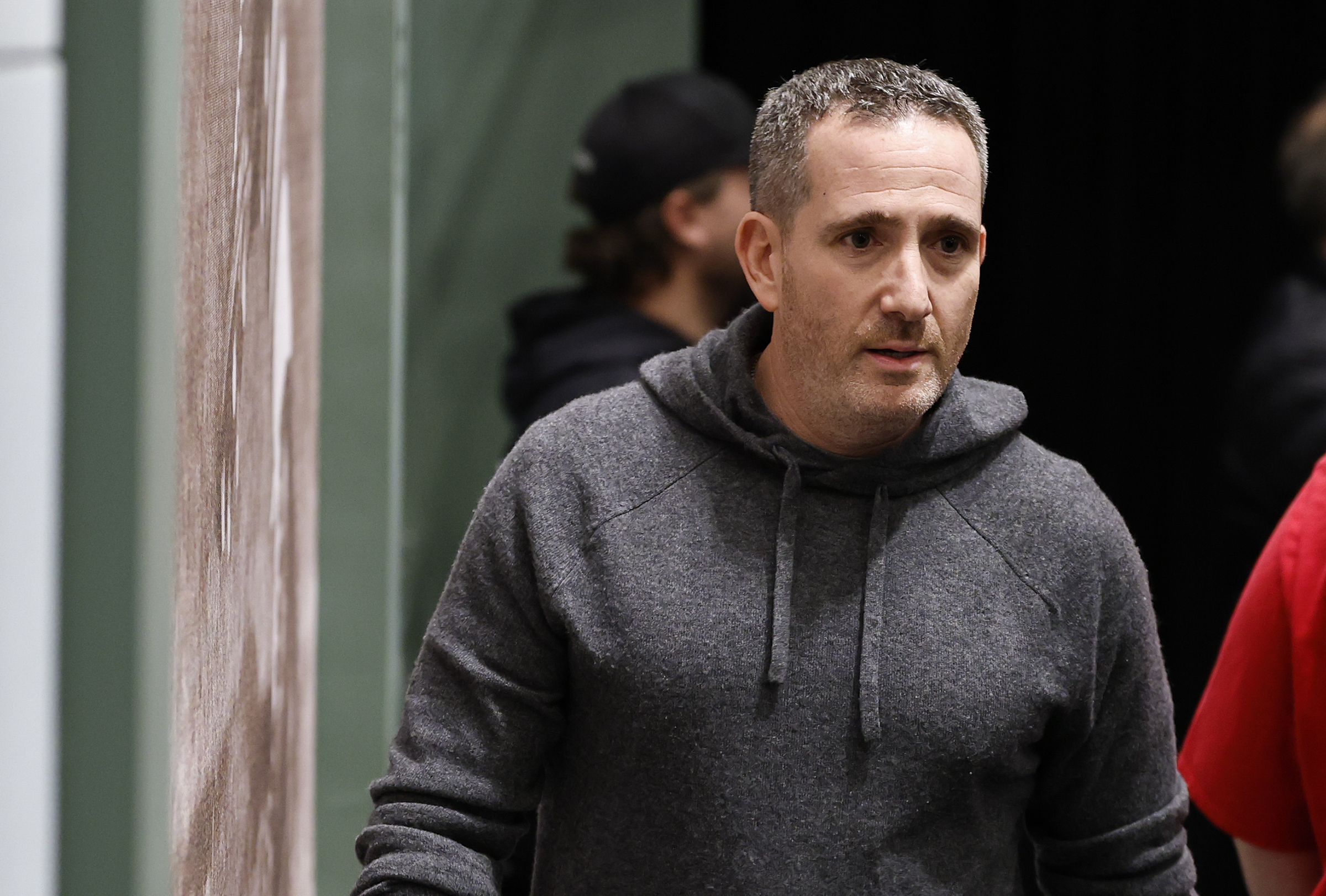
Howie Roseman will be central to the selection of a new offensive coordinator.
Coaching staff changes
Patullo’s ouster kicked off an offseason that could see a few more coaching changes.
The Eagles, of course, are looking to hire an offensive coordinator. Nick Sirianni said he wants the Eagles’ offense to continue to “evolve” and the team appears to be going after some experienced play-callers to get their offense back on track.
Who else could be on the move?
For starters, special teams coordinator Michael Clay is not under contract for next season.
Additionally, defensive backs coach Christian Parker has been a popular name for defensive coordinator openings. Defensive line coach Clint Hurtt has been a coordinator before and, after his work with the Eagles’ front, could get some interviews.
A new offensive coordinator could mean more shakeup on the offensive staff, too.
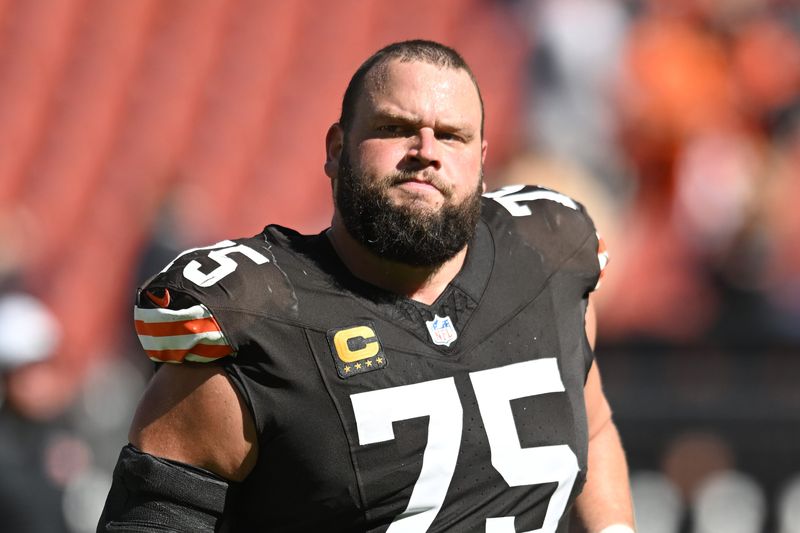
Guard Joel Bitonio has been a respected member of a Browns team that has otherwise struggled for most of his tenure.
2026 free agency targets
What do the Eagles need most? What kind of players will be on the market?
First, the Eagles need to know what happens with the futures of key offensive players like A.J. Brown and Lane Johnson.
At the moment, they have just over $15 million in cap space, according to Over the Cap. That’s not a lot, but Howie Roseman has shown the creativity to use void years and spread cap hits out over multiple seasons.
Free agency begins March 11.
Position groups and players to target
Offensive line: Will Johnson return? Will Landon Dickerson ever be healthy again? Can Cam Jurgens bounce back? Big questions facing the Eagles, who need to restore their offensive line this offseason. Reinforcements likely will come via the draft, but free agency offers some options.
Indianapolis Colts right tackle Braden Smith, for example, has dealt with injuries but could provide insurance for Johnson and help the Eagles bridge their way to the next young tackle. Old friend Isaac Seumalo fits that bill, too, at guard. Same with Cleveland Browns guard Joel Bitonio.
Wide receiver: Regardless of what happens with Brown, the Eagles could use some more help at receiver. They won’t be playing in the George Pickens pool, and probably not Alec Pierce, either, but what about Romeo Doubs, Kendrick Bourne, or Van Jefferson at WR3?
EDGE: Jaelan Phillips should be at the top of the Eagles’ wish list. Jalyx Hunt and Nolan Smith are the only two edge rushers under contract. The Eagles will draft at least one rusher, but they need a top-end talent like Phillips. If not Phillips, other top options would be Trey Hendrickson, Odafe Oweh, Boye Mafe, Joey Bosa, and Khalil Mack. There’s always the possibility of Roseman figuring out a way to trade for Maxx Crosby, too.
Tight end: Dallas Goedert may be in the running to return. But if not, the Eagles could eye someone like Atlanta’s Kyle Pitts, who finally played to his potential this season. Pitts attended Abington and Archbishop Wood before playing at Florida in college. Other free agents include Isaiah Likely, David Njoku, and Tyler Higbee. The Eagles probably will use a draft pick on one, too.
Cornerback: Quinyon Mitchell eventually will re-sign at the top of the market, and you don’t see many teams spending that type of money on two players at this position. But there are some options the Eagles could target, like Tariq Woolen, Roger McCreary, and Jamel Dean. Will those players be too costly? We’ll see.
Safety: Reed Blankenship has been solid for the Eagles, but he’s not great in coverage. The Eagles could be looking to pair Drew Mukuba with a better player on the back line, and they could look to do that via free agency. Old friend Kevin Byard has been really productive with the Chicago Bears, though he could command a bigger contract than the Eagles are willing to give out. Los Angeles Rams safety Kamren Curl could be an option.
The 2026 NFL draft
The Eagles’ needs here will become clearer after free agency, though our Devin Jackson looked at a few potential targets at pick No. 23.
The draft will take place beginning on Thursday, April 23, in Pittsburgh.
Before that, there are some other key dates and events to look out for.
The East-West Shrine Bowl is on Jan. 27; the Senior Bowl is on Jan. 31; the yearly NFL Scouting Combine begins on Feb. 23; and teams have until April 15 to conduct visits, tests, and interviews with prospective draft picks.
Will there be more drama around the Tush Push this offseason?
League meetings
The annual league meeting is from March 29 to April 1 in Arizona. It is there that the Tush Push likely will be another big topic of conversation and could meet its demise.
But the Eagles’ lack of success using their signature play this season could result in some teams backing off a little bit. We’ll see.
There’s also another league meeting May 19 and 20 in Orlando.
2026 Eagles schedule
The Eagles’ opponents are known. They play home games vs. their three divisional opponents (Washington Commanders, Dallas Cowboys, and New York Giants), as well as other games vs. the Indianapolis Colts, Carolina Panthers, Los Angeles Rams, Seattle Seahawks, Pittsburgh Steelers, and Houston Texans.
Besides their three NFC East road games, the Eagles also travel to play the San Francisco 49ers, Chicago Bears, Arizona Cardinals, Jacksonville Jaguars, and Tennessee Titans.
It remains to be seen if the Eagles will get an international game.
The schedule is due out in May, but international dates will likely be released prior to that.
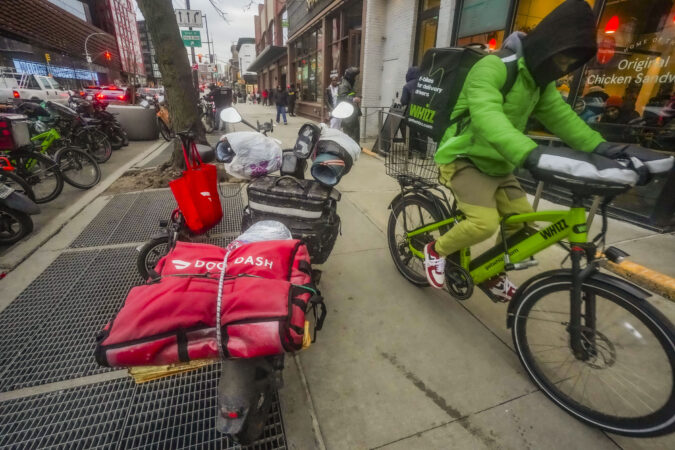
New York’s government disclosed an eye-popping number this week: The average customer tip on the food delivery apps DoorDash and Uber Eats is 76 cents in the city, compared to $3.66 two years ago.
Everyone agrees why tips dried up — not because we’re tired of tipping. It’s largely because those two companies changed the in-app tip feature to make New Yorkers less likely to leave a gratuity.
The apps moved the tip option from just before customers place an order to after. Average tipping amounts immediately plummeted, the city says. It’s proof that app design influences our behavior.
What’s hotly disputed, though, is whether the tip decline is a healthy sign for workers, as the companies say, or a result of delivery couriers being deprived of a collective $550 million in income, as the new administration of New York Mayor Zohran Mamdani says.
While this tipping fracas is unique to New York, it also reveals two broader realities about app-based convenience services such as Uber, Lyft, DoorDash, and Instacart.
First, people are confused and angry about tipping, and the delivery app boom makes it worse. (Keep reading for food delivery tipping suggestions from a worker advocate.)
Second, 15 years after app-based “gig work” emerged as an alternative to conventional employment, there remains profound disagreement about whether these are good jobs and how to make them better.
Those struggles raise questions about whether Americans and our political leaders are prepared to address the risks of artificial intelligence wiping out jobs or cratering incomes.
Regulating gig work
If a restaurant server’s tips are low, the restaurant must pay the worker more until she reaches the legally mandated minimum wage.
But people who work for apps such as Uber, Lyft, DoorDash, and Instacart are considered independent contractors rather than employees. Minimum wage laws don’t typically apply to them.
The workers often say that as a result, their pay is unpredictable and highly dependent on tips, which can comprise half or more of app workers’ pay. Some states and cities have tried forms of pay guarantees for app workers.
Starting in December 2023, New York mandated a minimum hourly wage for couriers of six food delivery apps. DoorDash, Uber Eats, and Grubhub were by far the largest.
App companies warned that the wage mandate would hurt workers, raise prices for consumers, and drive restaurants out of business. That was true on the margins, but largely the law worked as intended without ruining what people like about food delivery.
Average hourly pay for delivery couriers of the six apps more than doubled, from $11 in the spring of 2023 to $24 in spring 2025, New York data show. Tips have declined significantly, but the higher total pay is now mostly coming from the app companies’ pockets rather than tips.
This average hourly pay isn’t necessarily comparable to what a restaurant cook or a Starbucks barista makes. Employers of those conventional hourly workers may pay the costs of benefits, job-related expenses ,and workers’ compensation. Delivery app workers typically must pay those expenses out of their own wages.
Ligia Guallpa, executive director of the Worker’s Justice Project, a labor advocacy group, said workers still need tips. She criticized DoorDash and Uber Eats for moving the in-app tipping option.
The city says that the average customer tip on apps such as Grubhub that didn’t move the in-app tipping option in late 2023 is $2.17 compared to the 76-cent average for DoorDash and Uber Eats.
DoorDash and Uber Eats say the city suggested they move or remove the in-app tipping option, essentially to avoid scaring off customers facing higher delivery fees from the minimum-wage law. DoorDash and Uber Eats now say that the city wanted workers to rely less on tips; it worked and New York is blaming them for a change the city itself suggested.
The two companies sued to stop a looming mandate to put the in-app tipping option back where it was, at the moment New Yorkers place an order.
Again, this dispute isn’t about one city. It shows the difficulties in making food deliveries fair for everyone involved — restaurants selling you meals, delivery workers, app companies, and diners.
What workers want you to know about tips
An oddity of tipping for many app-based delivery services is that you’re often asked for a gratuity when you place an order. It’s like tipping at a restaurant just as you sit down for dinner rather than after the meal.
This breaks American norms of tipping as a reward for a job well done. But fairly or unfairly, app companies built their system around tips.
Tips may determine whether your order is assigned a delivery courier right away or not, and tips can make or break an app worker’s paycheck.
I asked Guallpa for a road map on how food delivery workers would like us to tip. She said:
Consider tipping 10% to 20% of your order amount. And she suggested tipping more during bad weather or if you’re placing a large order.
If you can, opt for Grubhub over DoorDash or Uber Eats.Guallpa said Grubhub tends to treat workers better than other food delivery apps. (DoorDash’s comment didn’t address the criticism. Uber Eats didn’t comment.)
Consider tipping both in the app and in cash at the door if you’re happy with the service.Guallpa also said that some delivery couriers suspect the app companies don’t pay them all the in-app tips they earn. (Wage theft is a common claim among hourly workers, and delivery apps have previously been forced to reform over tip-stealing allegations.)
If you tip in the app, she said that couriers tend to appreciate it when customers show them the amount, at the door or with a texted screenshot, for the worker’s records.
City revenue officials expect to collect more than $35 million in new BIRT payments this year from the expanded pool of taxpayers, even with slightly lower tax rates.
“This is applicable to every sole proprietorship, limited-liability company, incorporation, or partnership engaged in a business, profession, or activity for profit in the City of Philadelphia,” said Scott S. Small, trust counsel in the Philadelphia-area office of Fiduciary Trust International, a New York-based advisory firm for families and business owners.
“Think of folks that have houses they rent. Daycare in their homes. For-hire drivers at Uber or Lyft. Estates and trusts that own property,” Small said. “A return now has to be filed, regardless of whether you made a profit.”
Even with extensive city guidance, “it becomes a logistical nightmare” for small taxpayers, who may have to hire professionals to figure out what they owe and exemptions that can reduce the total, said Will Gonzalez, who runs CEIBA, a Latino business and economic education group.
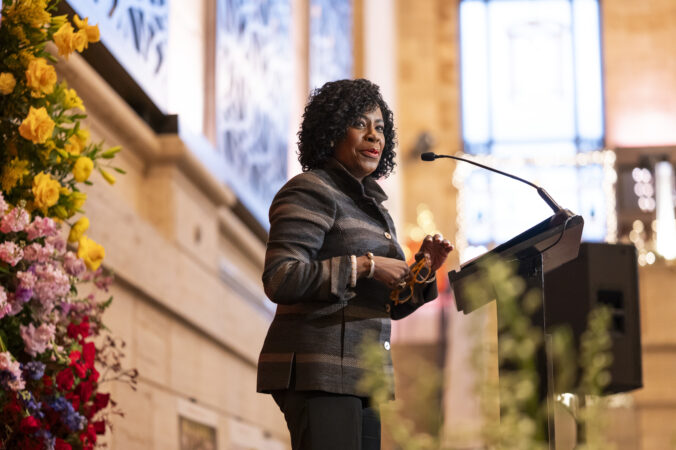
Business taxes and the general difficulty of doing business in Philadelphia were “the number one issues” reported in a survey of 200 city businesses by the Independence Business Alliance, a chamber of commerce for LGBTQ+ business owners, that was presented to members of Mayor Cherelle L. Parker’s tax reform commission last year, said Zach Wilcha, the alliance’s chief executive.
“Small businesses pay on revenues, sales, profits [there is a separate net profits tax along with the BIRT income tax], and wages,“ Wilcha said. ”People love being in Philadelphia; they want to stay here. But they feel the tax structure is forcing them to leave.”
Eliminating the BIRT’s income tax and curbing the revenue tax has been a longtime goal of business advocacy groups like the Chamber of Commerce for Greater Philadelphia. It was a goal of business members on the tax reform commission. City leaders in the end decided on gradual rate reductions instead, a move tax commission chair Richard Vague called “disheartening.”
The BIRT tax rate on sales is dropping by half a penny per $1,000 this tax season to $1.41 per $1,000 of sales. And the income tax is decreasing to $57.10 per $1,000 of profits from $58.10. The city plans to slowly cut the revenue tax to zero and the BIRT income tax by half by 2039.
But this year, far more taxpayers will be paying the tax, which is due by April.
Philadelphia formerly exempted businesses that gross less than $100,000 in sales per year from paying BIRT. That exemption failed to survive a court challenge. Under the “uniformity clause” of the Pennsylvania state constitution, taxes can’t exempt whole classes of taxpayers based on income.
“It’s the same reason we can’t have a [state or local] tax just on billionaires, or millionaires,” Small said.
A smaller-business exemption on the city’s use and occupancy tax exemption is also gone, leaving more small-business owners liablefor that 1.21% a year tax, paid in monthly installments.
Among Pennsylvania communities, only a minority, including Radnor Township and other Main Line communities, charge similar business taxes.
Kathleen McColgan, Parker’s revenue commissioner, says Philadelphia expects to collect “an additional $35 million to $40 million in fiscal year 2026″ from the broadened BIRT. The city has earmarked that money for “commerce and business development.”
City officials have said they will spend $7.5 million this year for programs to help new taxpayers figure out how to manage the city’s complicated tax programs and exemptions.
In recent years, the city has collected BIRT from around 40,000 larger businesses, McColgan said. She estimates that 50,000 businesses that have paid other city taxes will start owing BIRT for the first time. Roughly 25,000 other registered businesses that hadn’t incurred any taxes in recent years before might also owe.
City officials could provide no estimate of how many businesses that never registered to pay taxes may be required to pay BIRT for the first time.
To spread the word, McColgan said the city sent around 80,000 notices to registered business taxpayers in and outside the city, plus 119,000 postcards to businesses “who may have a responsibility to file” from lists the city purchased from a private vendor.
Besides the promised multilingual tax education and assistance for first-time filers, officials noted that the city has an array of tax discounts that can reduce the small-business burden.
First-time filers can get an extension if they can’t get the form in by April 15, but they will still owe the tax accruing from that date with any late fees.
And, after the first year, taxpayers are expected to pay the next year’s BIRT in advance, in quarterly installments.
Even with the city’s initial guidance, many first-time taxpayers will need professional help to navigate all those rules and realize available discounts, Small said. “It’s a nightmare” for a layperson to attempt to follow all the instructions and file correctly.
“People want to pay their taxes,” CEIBA’s Gonzalez said. “It’s the right thing to do. They also need to pay their taxes, if they want to buy a house or send a child to college.
“But anyone who is going to pay the BIRT for the first time is going to need a city business license. And for that, they have to pay any outstanding tickets and bills. And that can be a lot to resolve all at once.”
His group and others have held online and remote workshops to advise drivers, independent home-health aides, and other first-time BIRT payers.
Gonzalez predicted “a rude awakening for Philadelphians” as the tax fits in. “Our economy is built on a lot of this gig work, and we’d hate to see people punished for making more money for their families.
“And this puts people in Philadelphia at a disadvantage. In a year we are celebrating the 250th year of the American Revolution that started with unfair tax concerns, we need to find a better way.”
Small, of Fiduciary Trust, said the Philadelphians he advises tend to complain without leavingthe city. “Folks kind of suck it up, and say, ‘It’s not as bad as it could be.’”
Still, many people have noticed how the city and state also offer incentives to bring in new businesses that aren’t given to regular taxpayers, he said. “The small guy gets the higher burden, while larger ones who have more ability to pay, pay less.”
The reconstructed “ghost” structure with partial walls and windows of the building known in the eighteenth-century as 190 High Street is officially titled, “Freedom and Slavery in the Making of a New Nation” (2010).
The open-air President’s House installation in Independence National Historical Park was designed to give visitors a sense of the house where the first two presidents of the United States, George Washington and John Adams, served their terms of office.
The commemorative site designed by Emanuel Kelly, with Kelly/Maiello Architects, pays homage to nine enslaved people of African descent who were part of the Washington household with videos scripted by Lorene Cary and directed by Louis Massiah.
Just like the Rocky statue I photographed last week in anticipation of this week’s news, the President’s House was in the news last year so it remains on my radar as I walk around Old City (our newsroom is right across the street).
The cloud formation in the winter sky was what first caught my attention. Then it was seeing the sun lined up directly behind the triangular pediment above the Georgian home’s “front door.”
I played with “placement” of the sun peeking through a tiny gap at a bottom corner of the gable. I knew knew that f/22 on my mirrorless camera’s lens would give me a nice starburst. It’s an optical effect that happens because the lens’ aperture blades don’t form a perfect circle. And the narrower the opening — like f/22 — the more pronounced the effect (shooting at f/2.8 is not quite as dramatic).
Then it was simply a matter of my moving my head ever-so-slightly to align the sun with the little hole — like threading a needle.
While standing in the thin shadow of the door, I was getting blasted in the eye each time I moved. Then a group of tourists, or a noise, startled a flock of pigeons and as they took flight I was not poised just right, but I liked having the birds there better than a perfect placement of the starburst.
I tried a similar “trick” a few years ago, when walking around my town photographing with my iPhone. It doesn’t have a mechanical diaphragm so the effect is not the same. Plus, the threading-the-needle part is much more difficult when you are not actually looking through the lens as in a DSLR. And with a backlight sun blasting you directly in the face.
The optical principle of refraction through a lens diaphragm is the same for both mirrorless and DSLR cameras because light travels through the lens elements and aperture in the same way.
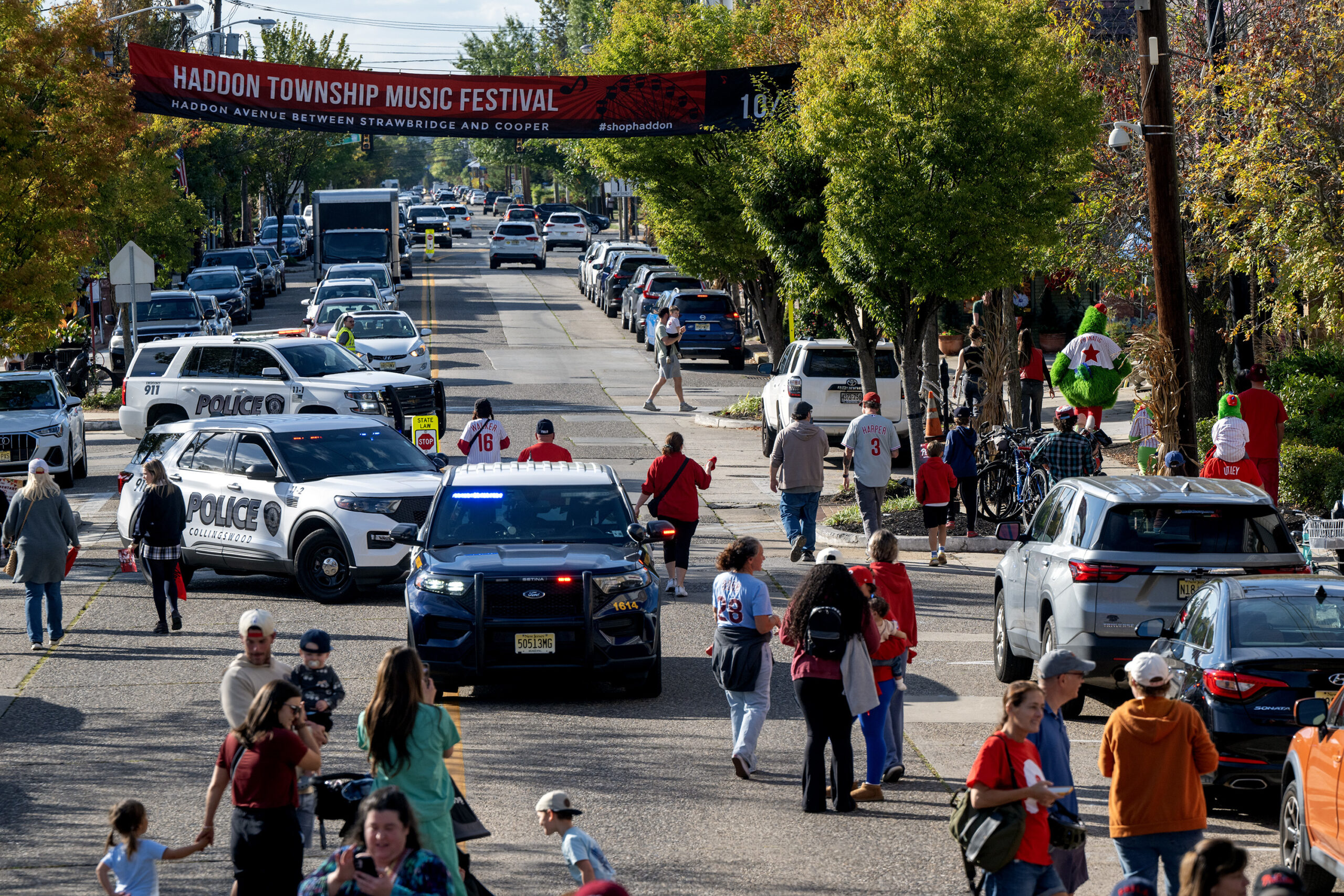
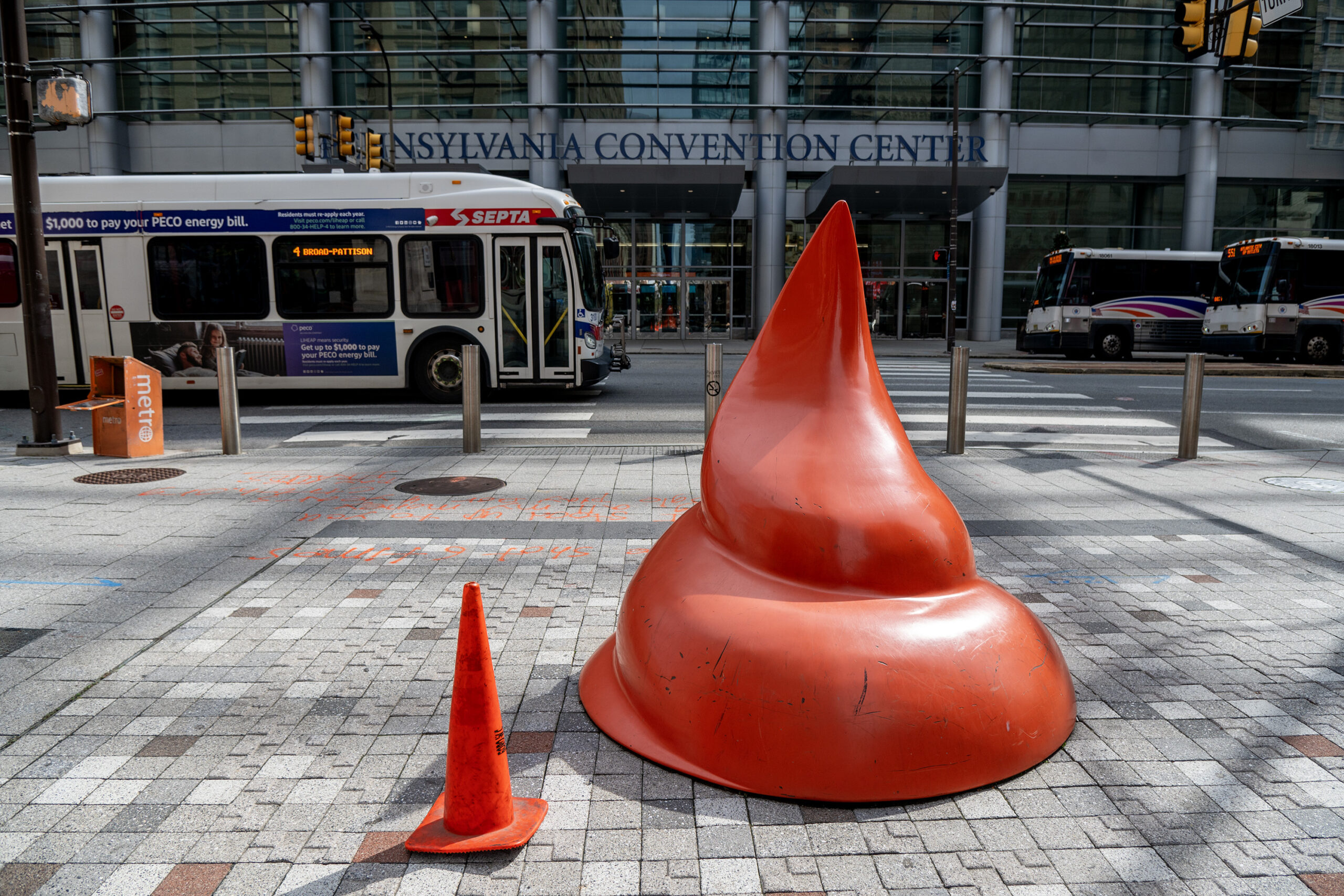
Since 1998 a black-and-white photo has appeared every Monday in staff photographer Tom Gralish’s “Scene Through the Lens” photo column in the print editions of The Inquirer’s local news section. Here are the most recent, in color:
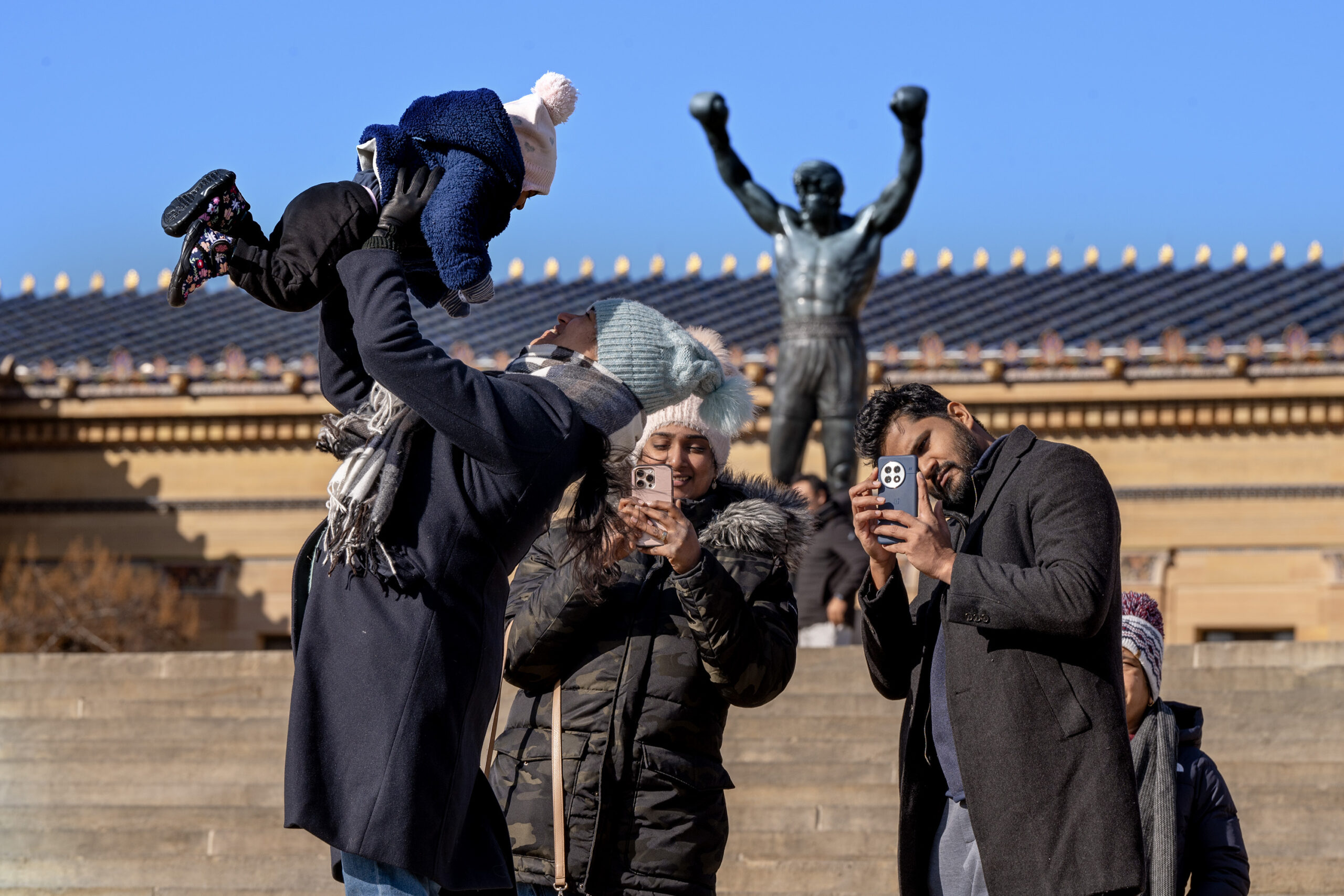
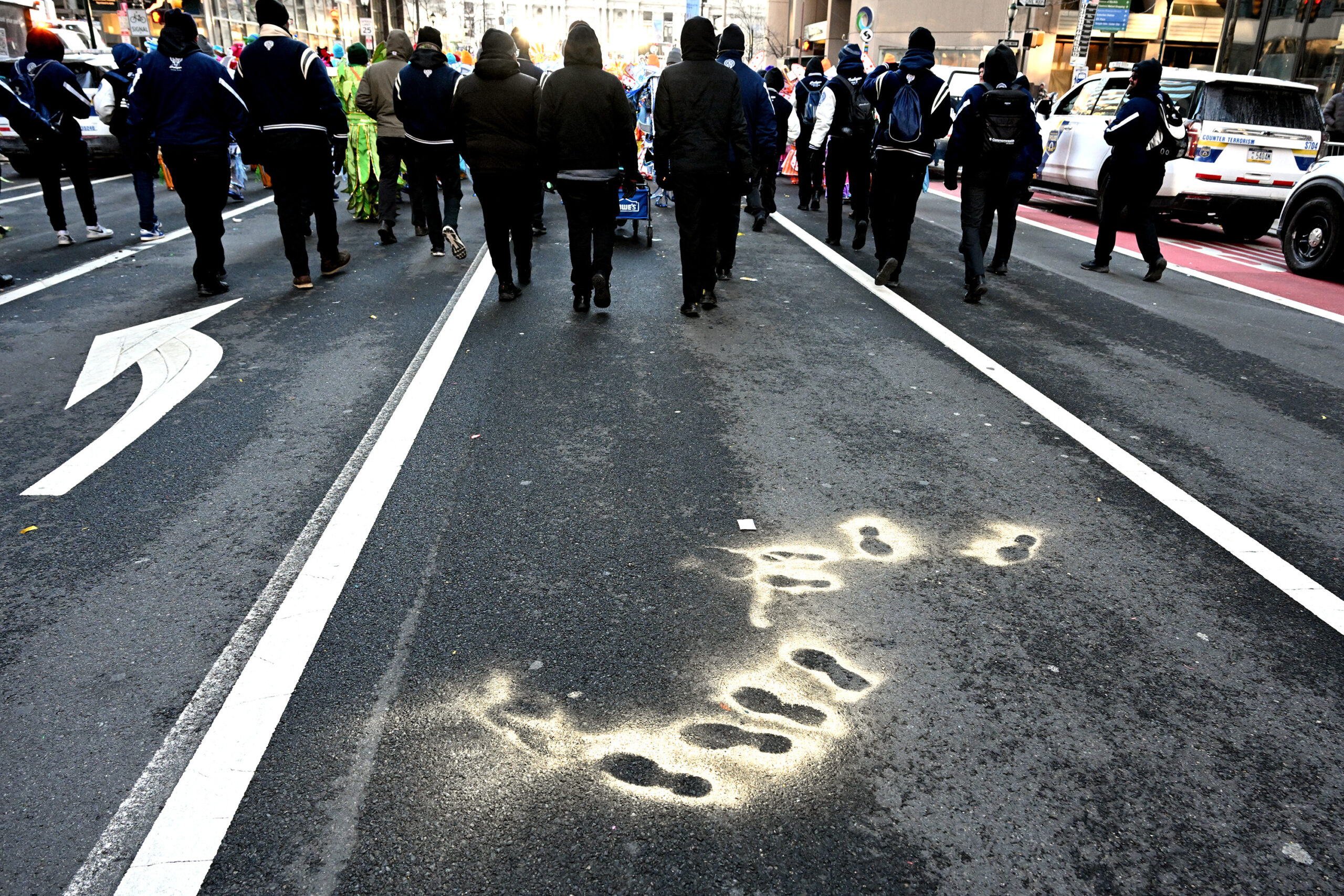
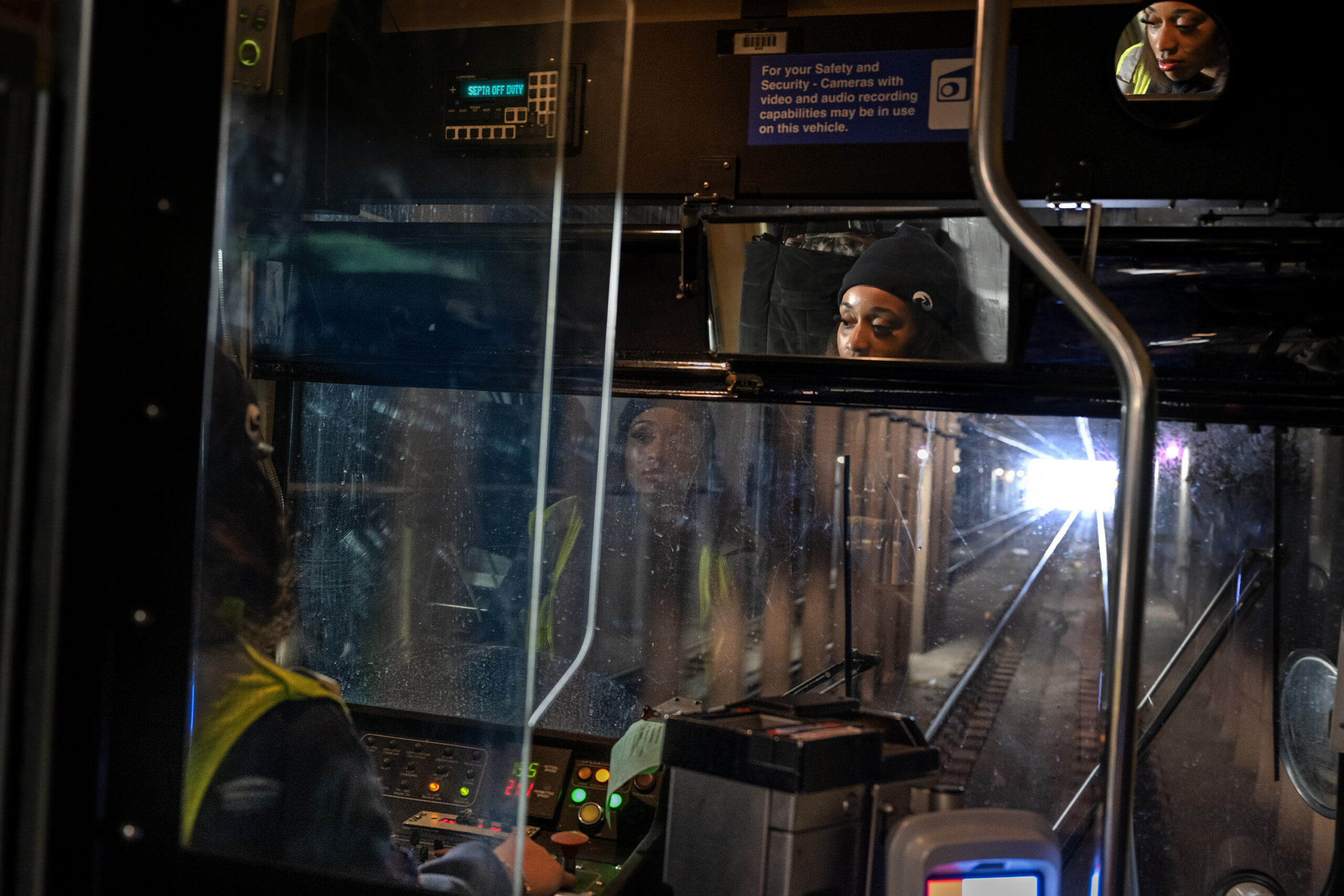
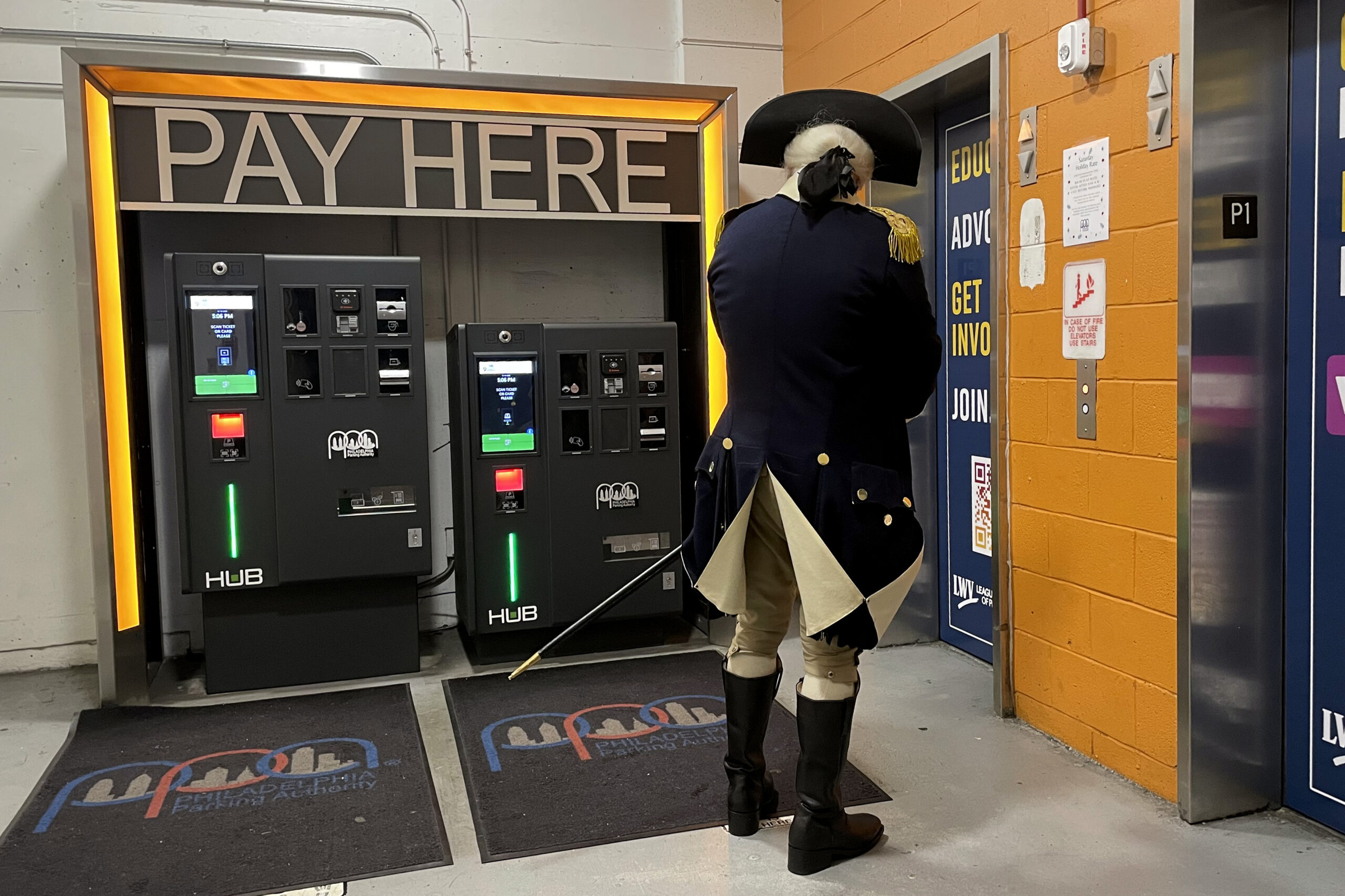
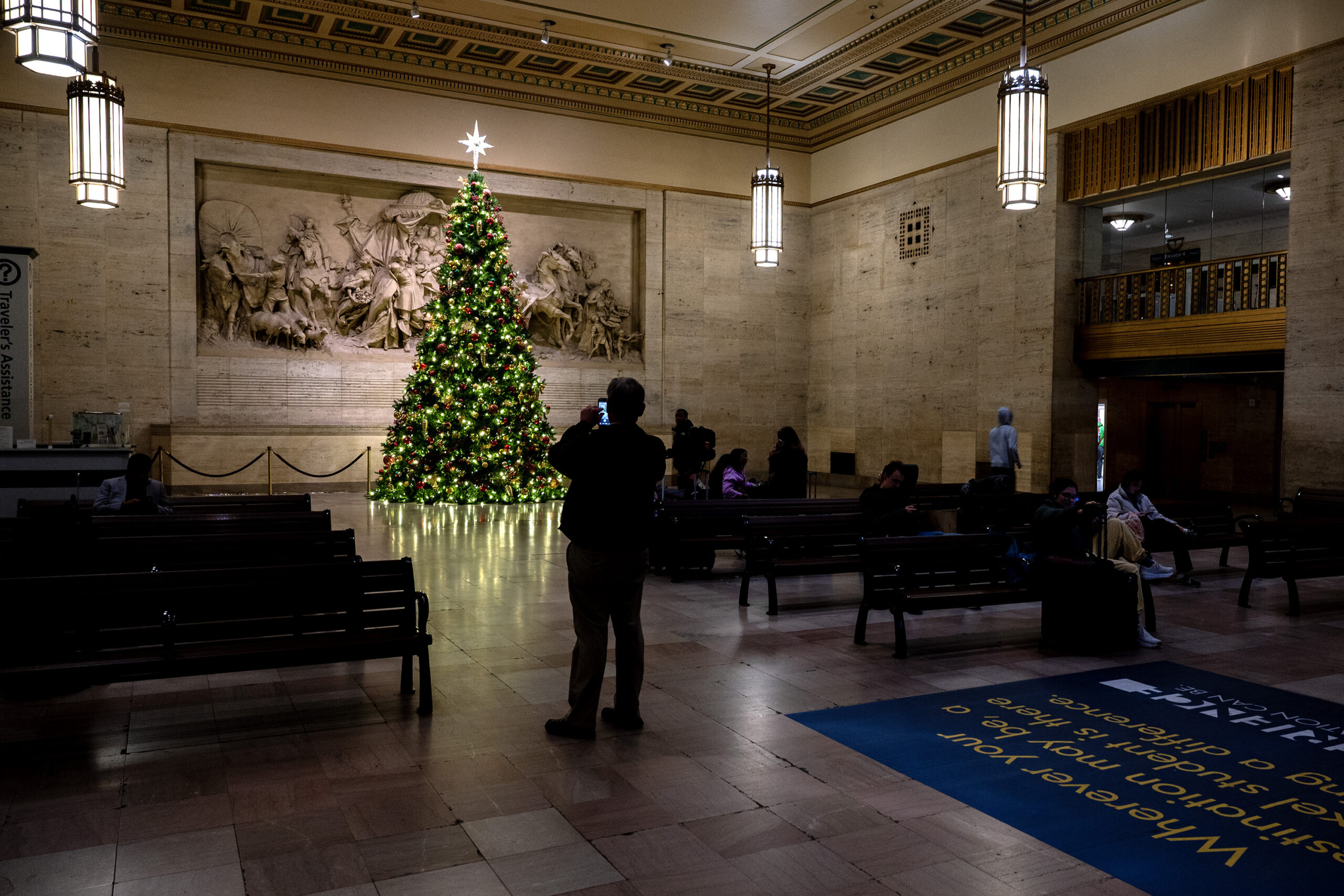
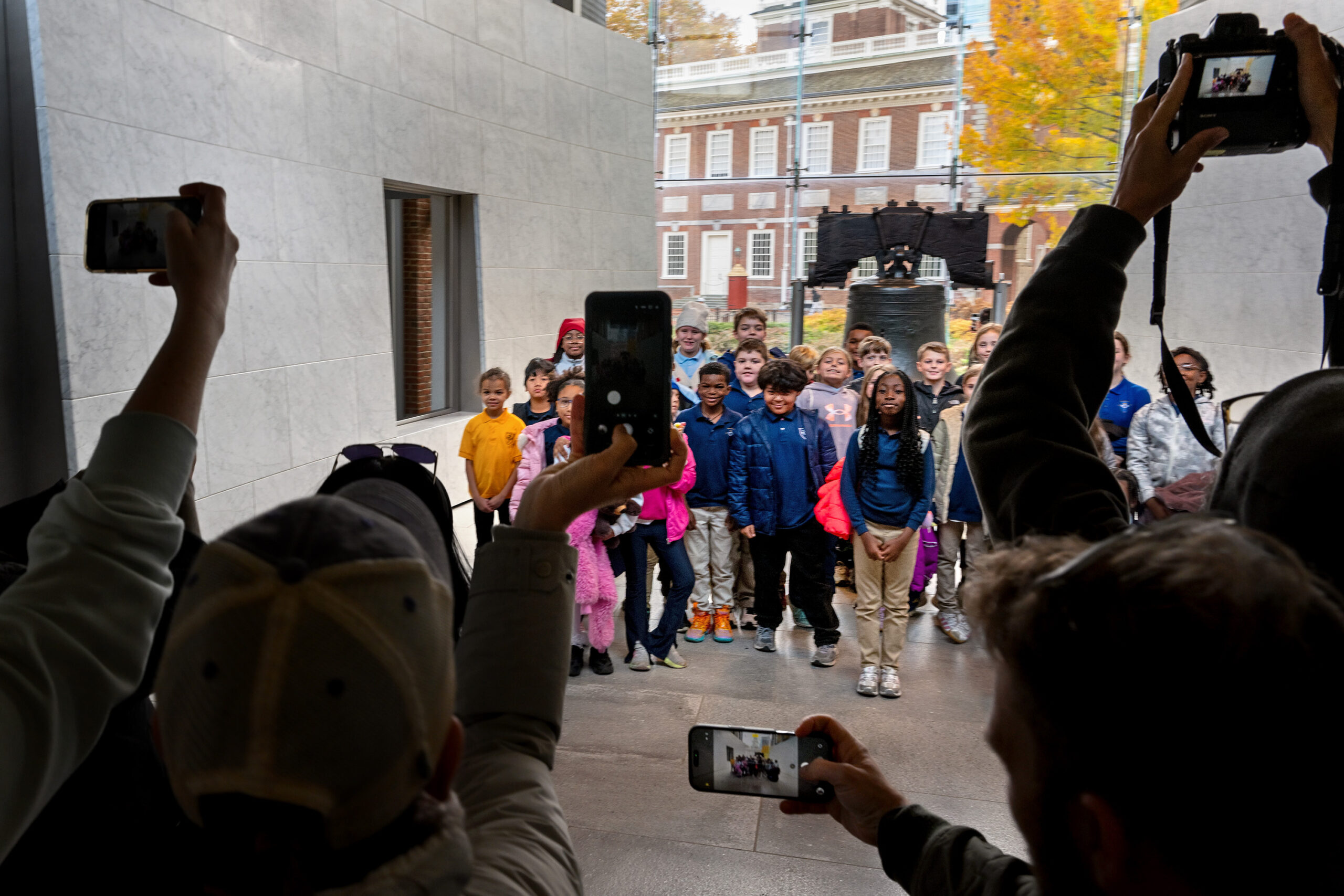
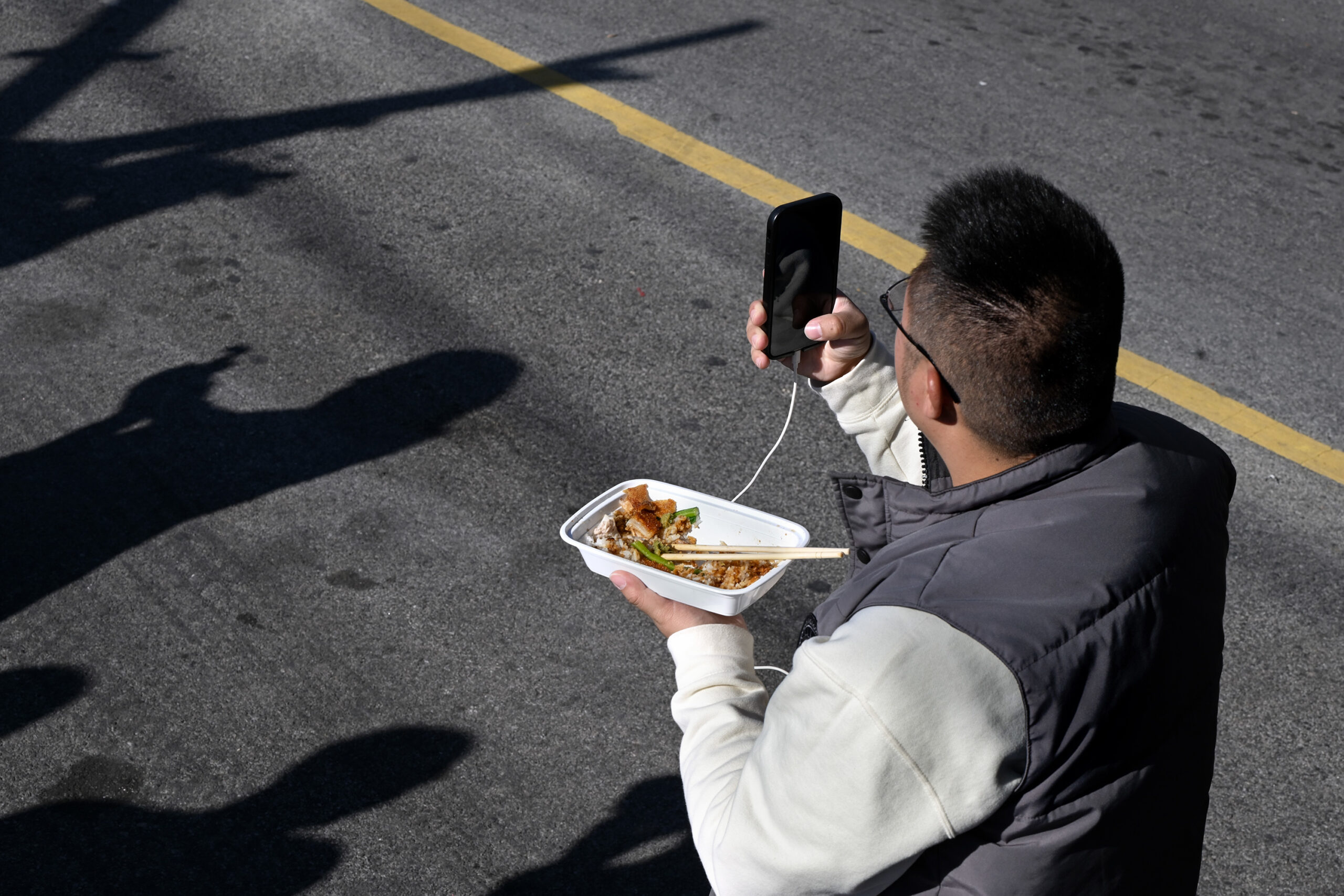
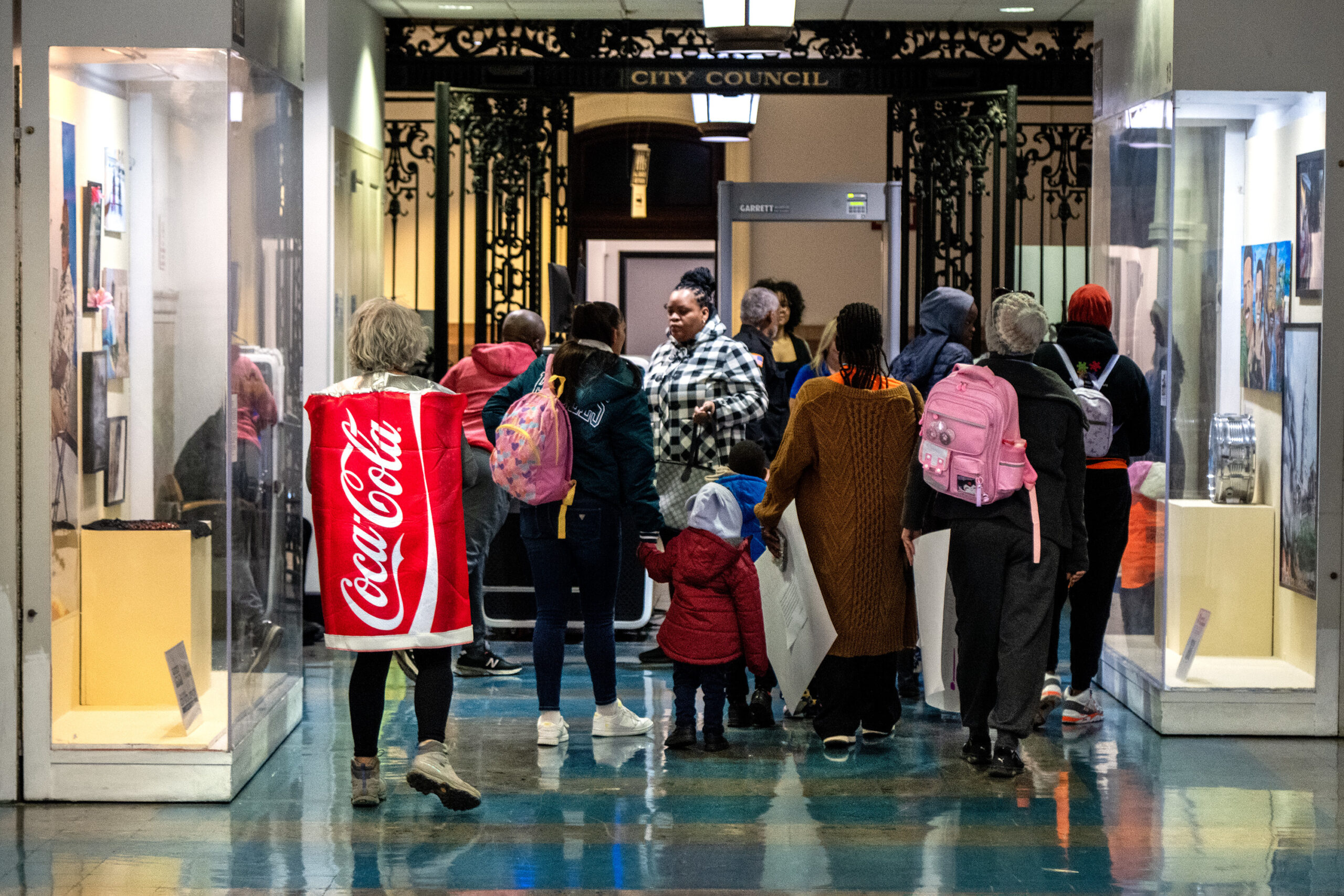
Deepika Iyer holds her niece Ira Samudra aloft in a Rockyesque pose, while her parents photograph their 8 month-old daughter, in front of the famous movie prop at the top of the steps at the Philadelphia Art Museum. Iyer lives in Philadelphia and is hosting a visit by her mother Vijayalakshmi Ramachandran (partially hidden); brother Gautham Ramachandran; and her sister-in-law Janani Gautham who all live in Bangalore, India.January 5, 2026: Parade marshals trail behind the musicians of the Greater Kensington String Band heading to their #9 position start in the Mummers Parade. Spray paint by comic wenches earlier in the day left “Oh, Dem Golden Slippers” shadows on the pavement of Market Street. This year marked the 125th anniversary of Philly’s iconic New Year’s Day celebration.Dec. 29, 2025: Canada geese at sunrise in Evans Pond in Haddonfield, during the week of the Winter Solstice for the Northern Hemisphere. December 22, 2025: SEPTA trolley operator Victoria Daniels approaches the end of the Center City Tunnel, heading toward the 40th Street trolley portal after a tour to update the news media on overhead wire repairs in the closed tunnel due to unexpected issues from new slider parts.December 15, 2025: A historical interpreter waits at the parking garage elevators headed not to a December crossing of the Delaware River, but an event at the National Constitution Center. General George Washington was on his way to an unveiling of the U.S. Mint’s new 2026 coins for the Semiquincentennial, December 8, 2025: The Benjamin Franklin Bridge and pedestrians on the Delaware River Trail are reflected in mirrored spheres of the “Weaver’s Knot: Sheet Bend” public artwork on Columbus Boulevard. The site-specific stainless steel piece located between the Cherry Street and Race Street Piers was commissioned by the City’s Public Art Office and the Delaware River Waterfront Corporation and created and installed in 2022 by the design and fabrication group Ball-Nogues Studio. The name recalls a history that dominated the region for hundreds of years. “Weaver’s knot” derives from use in textile mills and the “Sheet bend” or “sheet knot” was used on sailing vessels for bending ropes to sails. November 29, 2025: t’s ginkgo time in our region again when the distinctive fan-shaped leaves turn yellow and then, on one day, lose all their leaves at the same time laying a carpet on city streets and sidewalks. A squirrel leaps over leaves in the 18th Century Garden in Independence National Historical Park Nov. 25, 2025. The ginkgo (Ginkgo biloba) is considered a living fossil as it’s the only surviving species of a group of trees that existed before dinosaurs. Genetically, it has remained unchanged over the past 200 million years. William Hamilton, owner the Woodlands in SW Phila (no relation to Alexander Hamilton) brought the first ginkgo trees to North America in 1785.November 24, 2025: The old waiting room at 30th Street Station that most people only pass through on their way to the restrooms has been spiffed up with benches – and a Christmas tree. It was placed there this year in front of the 30-foot frieze, “The Spirit of Transportation” while the lobby of Amtrak’s $550 million station restoration is underway. The 1895 relief sculpture by Karl Bitter was originally hung in the Broad Street Station by City Hall, but was moved in 1933. It depicts travel from ancient to modern and even futuristic times. November 17, 2025: Students on a field trip from the Christian Academy in Brookhaven, Delaware County, pose for a group photo in front of the Liberty Bell in Independence National Historical Park on Thursday. The trip was planned weeks earlier, before they knew it would be on the day park buildings were reopening after the government shutdown ended. “We got so lucky,” a teacher said. Then corrected herself. “It’s because we prayed for it.” November 8, 2025: Multitasking during the Festival de Día de Muertos – Day of the Dead – in South Philadelphia.November 1, 2025: Marcy Boroff is at City Hall dressed as a Coke can, along with preschoolers and their caregivers, in support of former Mayor Jim Kenney’s 2017 tax on sweetened beverages. City Council is considering repealing the tax, which funds the city’s pre-K programs. October 25, 2025: Austin Gabauer, paint and production assistant at the Johnson Atelier, in Hamilton Twp, N.J. as the finished “O” letter awaits the return to Philadelphia. The “Y” part of the OY/YO sculpture is inside the painting booth. The well-known sculpture outside the Weitzman National Museum of American Jewish History was removed in May while construction continues on Market Street and has been undergoing refurbishment at the Atelier at the Grounds for Sculpture outside of Trenton.October 20, 2025:The yellow shipping container next to City Hall attracted a line of over 300 people that stretched around a corner of Dilworth Park. Bystanders wondered as they watched devotees reaching the front take their selfies inside a retro Philly diner-esque booth tableau. Followers on social media had been invited to “Climb on to immerse yourself in the worlds of Pleasing Fragrance, Big Lip, and exclusive treasures,” including a spin of the “Freebie Wheel,” for products of the unisex lifestyle brand Pleasing, created by former One Direction singer Harry Styles.October 11, 2025: Can you find the Phillie Phanatic, as he leaves a “Rally for Red October Bus Tour” stop in downtown Westmont, N.J. just before the start of the NLDS? There’s always next year and he’ll be back. The 2026 Spring Training schedule has yet to be announced by Major League Baseball, but Phillies pitchers and catchers generally first report to Clearwater, Florida in mid-February.October 6. 2025: Fluorescent orange safety cone, 28 in, Poly Ethylene. Right: Paint Torch (detail) Claes Oldenburg, 2011, Steel, Fiberglass Reinforced Plastic, Gelcoat and Polyurethane. (Gob of paint, 6 ft. Main sculpture, 51 ft.). Lenfest Plaza at the Pennsylvania Academy of the Fine Arts on North Broad Street, across from the Convention Center.