Blog

  • Old City’s latest all-day cafe doses coffee, tea, and mocktails with kava and kratom

    Old City’s latest all-day cafe doses coffee, tea, and mocktails with kava and kratom

    A new all-day lounge in Old City is betting on kava and kratom — two controversial psychoactive plants — to pull crowds away from bars.

    Old City Kava Company opened in December at 40 S. Second St., across from a Fine Wine & Good Spirits and a honky-tonk bar. The lounge specializes in kava and kratom mocktails intended to boost mood and lower inhibitions, not unlike knocking back a couple of drinks. The establishment’s co-owners, Luca Kobza and Adam Lagner, believe the substances can open up a new social scene in Philly — namely, one that isn’t centered on alcohol.

    “We’ve had groups of people showing up who I otherwise believe would’ve been at bars … maybe having a cocktail and then regretting it the next day,” said Kobza. Customers have told them the space is a welcome change from bars and nightclubs, Kobza said.

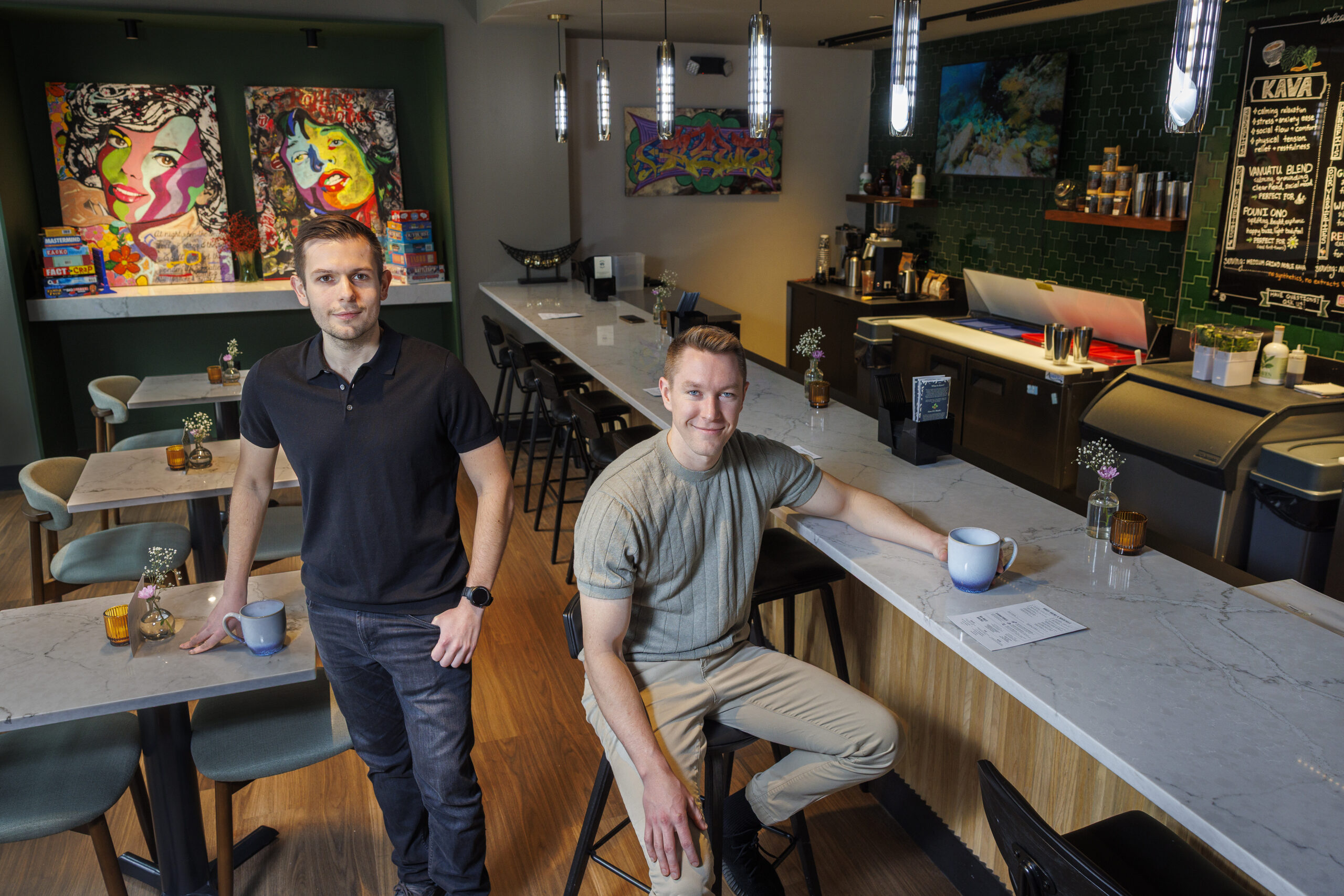
    Old City Kava Company co-owners Luca Kobza (left) and Adam Lagner (right) met in college at the University of Miami and ran a kava bar in Naples, Fla. before moving to Philly.

    The 1,900-square-foot lounge is designed for lingering, with 60 seats between its bar, two-top tables, and plush jeweled-toned couches. The space has a small-yet-serviceable board game collection, plus a rotating display of contemporary art for sale from Kensington’s Vizion Gallery.

    Old City Kava opens at 10 a.m. daily, serving its kava and kratom-infused mocktails alongside drip coffee from ReAnimator, teas from Random Tea Room, and a selection of pastries from wholesaler Au Fornil. By day, it largely functions as a coworking space.

    The atmosphere shifts at night. Open till midnight on weekdays and 2 a.m. on weekends, the space feels cocktail bar-adjacent, with a menu of 16 kava and kratom-infused mocktails. They range from a kava-lemongrass-and-guava paloma to a kratom-kombucha-ginger beer mule and a matcha tonic shaken with kava and kratom. Lagner and Kobza have already hosted run clubs, singles events, and book clubs to highlight the spectrum of Philly’s sober-curious scene.

    The interior of Old City Kava Company at 40 S. 2nd Street.

    What are kava and kratom?

    Old City Kava sources kava — derived from the leaves of the piper methysticum, a large plant that grows in Hawaii and other South Pacific islands — from Fiji, Tonga, and Vanuatu and kratom from Vietnam, Thailand, and Malaysia. They brew both as teas, adding roughly a tenth of an ounce to each mocktail.

    The lounge’s eight employees had to undergo 15 hours of in-house “kava-tending” training, which mostly involves learning how to educate first-timers. Lagner hated kava the first time he tried it.

    “It’s bitter, earthy. I was very off-put,” said Lagner. At the age of 30, he now prefers drinking it straight.

    Kava is traditionally brewed as a tea for religious ceremonies. Advocates say the substance can briefly reduce anxiety or stress.

    Kratom, on the other hand, comes from the leaves of a Southeast Asian tree and acts like a caffeine-esque stimulant in small doses and a sedative in larger ones. Users treat it as a catchall to self-soothe pain, depression, and anxiety.

    Adam Lagner making Old City Kava Company’s Lemongrass Paloma, which swaps alcohol for kava.

    A visit to the lounge starts with a kava-tender offering samples of pure kratom or kava tea, the latter of which makes your lips tingle with a mild numbness. Despite having no real relationship with one another, kava and kratom often come as a package deal in kava bars across the U.S., which have exploded in popularity as an alternative to traditional bars during a time when fewer young people are choosing to drink.

    Both substances are contentious, having raised public concerns about addiction and other risks. Neither is currently regulated by the Food & Drug Administration, but the FDA announced plans last summer to schedule kratom as a controlled substance after an uptick in reports of synthetic kratom addiction. Sold in tiny bottles at gas stations and smoke shops, synthetic kratom isolates 7-OH, a compound that can cause intense opioid-like addiction and withdrawal symptoms. Kratom is currently banned in seven states. In December, two Pennsylvania state representatives introduced a bill that would prohibit the sale of the synthetic variety.

    These laws and the FDA’s plan include carve-outs for the botanic kratom from the leaf — which Old City Kava uses in its mocktails. The varieties are fundamentally different, Lagner said.

    “A lot of people conflate the two … when they hear ‘kratom,’ they think of the products you’re seeing in gas stations,” he explained. “We serve natural kratom leaf tea how it’s been consumed safely for centuries in Southeast Asia. They’re much less potent in their natural form.”

    That may be true, but experts still have concerns about botanic kratom. According to Dr. Adam Scioli, chief medical officer of Wernersville, Pa.’s Caron Treatment Centers, botanic kratom is five to 20 times less potent than its synthetic counterpart. But it still carries an addiction risk, Scioli said, and can cause other health issues, such as nausea, high blood pressure, a racing heartbeat, and averse drug interactions, particularly when consumed with sedatives.

    “What concerns me most clinically is that kratom is often perceived as ‘natural and therefore safe,’” said Scioli. “History has repeatedly shown us that natural substances can still carry significant addiction risk, especially once commercialized.”

    A bar, but not

    Lagner, a Blue Bell native and La Salle High School grad, met business partner Kobza, also 30, when they were both students at the University of Miami. The duo would study together at kava bars on South Beach, and after graduating in 2018, opened their own, called Nektar Lab, in Naples, Fla.

    Lagner and Kobza sold their stakes in Nektar in 2022. They moved to Philly shortly after, where they found a far less vibrant scene than what they were used to in Florida, the kava capital of the U.S. (Philly has only one other kava bar, Queen Village’s Lightbox Cafe.)

    Adam Lagner pours a shot of creamer for Old City Kava Company’s Old City Red Eye, a coffee drink that includes kava and kratom.

    “Most kava bars around the country are very grungy and tiny,” said Lagner. “And there haven’t been enough concepts [in Philly] to show people that this can be a nice alternative to the social scene that revolves around alcohol and can also fill gaps in some of the daytime third-space sort of sphere.”

    Old City Kava’s bestseller is the Old City Red Eye: kava and kratom tea shaken together with ReAnimator cold brew, oat milk creamer, agave, and vanilla syrup. “You would think the kava and kratom cancel each other out because, at face value, it’s an upper and a downer in the same drink,” said Kobza. “But in reality they complement each other. The kava takes the edge off the coffee … the [kratom] just adds a mild euphoria.”

    Kobza said first-timers shouldn’t have kava or kratom on an empty stomach, or try too many cocktails at once. (That’s what this Inquirer reporter did, and she ended up with a splitting headache plus lingering nausea.)

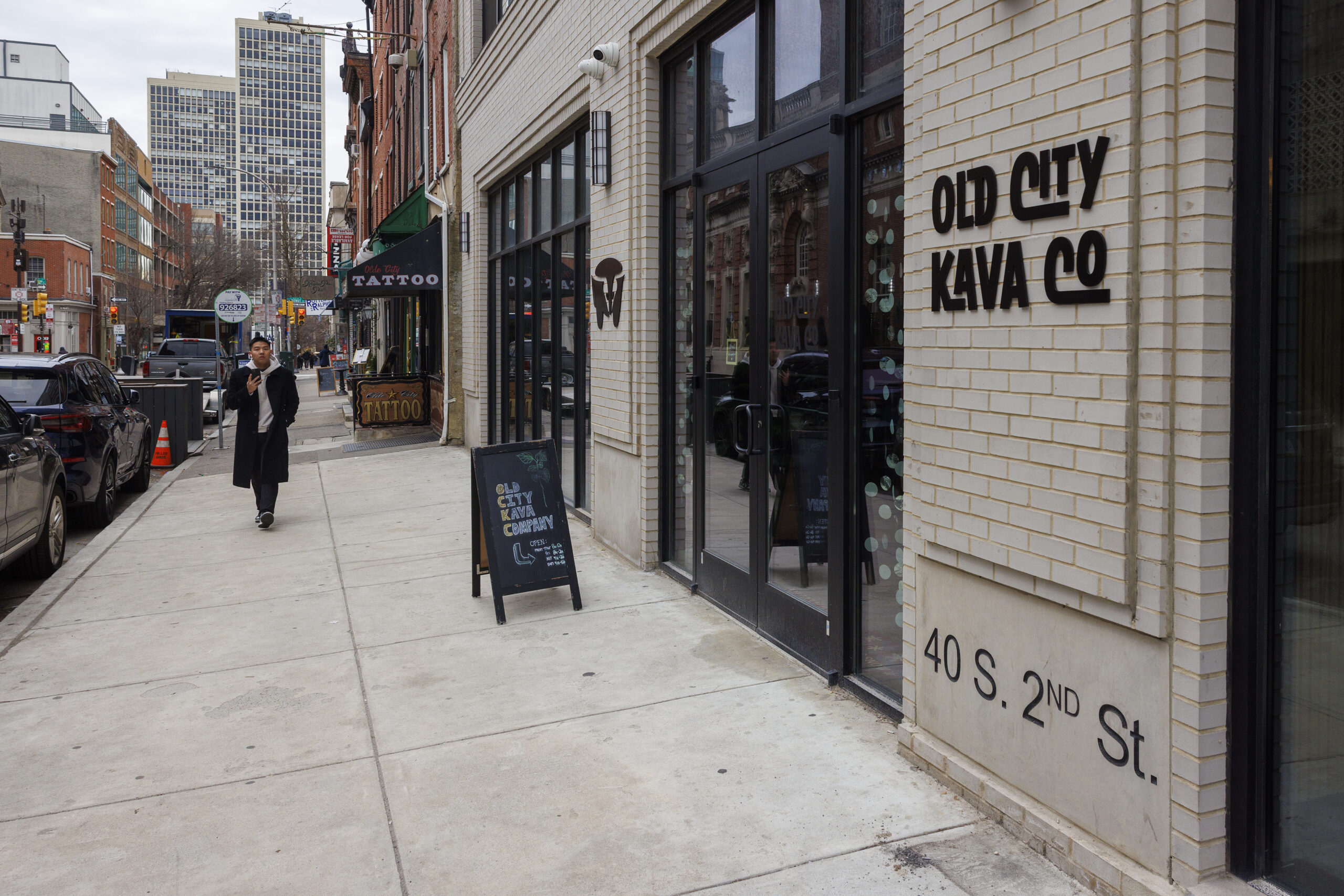
    The exterior of Old City Kava Company at 40 S. 2nd Street.

    Carissa Kilbury, 24, goes to Old City Kava weekly. Sometimes, she spends full workdays at the lounge, sipping a few infused drinks while at her computer. A slow drinker, Kilbury said she doesn’t feel much other than mild relaxation.

    “When I’m stressed at work, I feel a little bit less stressed, which is nice,” she said. “It feels like a bar without really being a bar. I like that vibe.”

    Old City Kava Company, 40 S. Second St., 215-402-7047, oldcitykava.com. Hours: 10 a.m. – 12 a.m. Sunday through Thursday; 10 a.m. – 2 a.m. Friday and Saturday.

  • Ben Vaughn does the impossible task of explaining the Geator to a non-Philly outsider in his new podcast

    Ben Vaughn does the impossible task of explaining the Geator to a non-Philly outsider in his new podcast

    Ben Vaughn is a man of many moods, and an equal number of career twists.

    The Camden County native and radio host’s hourlong show The Many Moods of Ben Vaughn — “broadcasting weekly from the Relay Shack, from parts unknown” — airs Saturdays at 6 p.m. on WXPN-FM (88.5). It’s also heard on 19 other stations in the U.S. and one in France.

    The singer-guitarist has released 20 albums, starting with his 1986 debut, also called The Many Moods of Ben Vaughn, and including one, 1997’s Rambler ’65, recorded entirely in his car.

    His collaborative album with Providence, R.I.-based band and Ben Vaughn fanboys Deer Tick is due in October, and his first U.S. tour in nearly three decades will follow. (He plays regularly in Spain, France, and Italy.)

    In the 1990s, the Mount Ephraim-native moved to Los Angeles and worked as a music composer for the hit TV sitcoms 3rd Rock From the Sun and That ‘70s Show. His credits as a record producer include legends and eccentrics such as Charlie Feathers, Alex Chilton, Los Straitjackets, Nancy Sinatra, and New Hope duo Ween.

    Along the way, he’s accumulated a lifetime of stories, from his encounter with Billy Joel’s hippie band Attila in Philly head shop 13th Street Conspiracy to playing harmonica with Lynyrd Skynyrd at the Spectrum in the 1980s.

    Those tales — an encounter with composer Lalo Schifrin, producing soul music great Arthur Alexander, or how Duane Eddy’s guitar changed his life — are now collected in Straight From the Hat, Vaughn’s new podcast with Sun Records marketing and social media manager Laura Pochodylo.

    Ben Vaughn’s new podcast with Laura Pochodylo is “Straight From the Hat.”

    This week’s episode of the pod, which debuted in January with episodes released every other Thursday, concerns a subject dear to Vaughn’s heart. Philly DJ Jerry Blavat — the Geator with the Heater, the Boss with the Hot Sauce — was Vaughn’s “mentor without knowing it” for years until the two became close friends and then collaborators late in the life of Blavat, who died in 2023 at 82.

    Straight From the Hat took shape because Sonny Bono brought Vaughn and Pochodylo together.

    In 2022, Vaughn was digging into the Sun vaults to curate a compilation for the storied label’s 70th anniversary. With songs by Feathers, Harmonica Frank, and the Prisonaires, it shows the flair for unearthing musical gems that Vaughn displays in the 552 Many Moods episodes that have aired since launching on Valentine’s Day 2009. (Over 300 are available on podcast platforms.)

    Speaking from Many Moods headquarters near Joshua Tree in California’s Mojave Desert, Vaughn says that “even though she’s a lot younger than me” — he’s 70, Pochodylo is 33 — “her record collection is almost identical to mine.”

    They bonded over “non-ironic appreciation” of Bono, the late singer, actor, and politician famed for his work with his wife Cher. Bono also wrote songs recorded by Sam Cooke, Jackie DeShannon, and the Rolling Stones. Pochodylo calls herself “a Sonny Bono evangelist.”

    Vaughn told Pochodylo stories about musicians in Sun Records’ collection who he had worked with.

    “And then we came up with the idea to write all these names down and throw them in a hat. She picks one out, and I say whatever comes to mind. No preparation, no planning.”

    In this week’s episode, Pochodylo pulls out Blavat’s name, and Vaughn has plenty to say about the Philadelphia life force he first felt at age 10 in 1965, when he tuned into Blavat’s afternoon TV show The Discophonic Scene.

    “I started going to these dances he would put on at gymnasiums and Knights of Columbus Halls,” Vaughn said. “The first song I ever played lead guitar on in front of an audience was ‘Sheba’ by Johnny and the Hurricanes because the Geator was using it as a theme song.”

    Jerry “The Geator” Blavat with Ben Vaughn in 1997.

    Vaughn played drums in his first band when he was 12, and got a South Jersey musical education at Blavat package shows seeing vocal groups like the Dells and Delfonics.

    A Four Tops performance at the Steel Pier in Atlantic City “spoiled me,” he said, “because the Four Tops were one of the most professional acts in the history of entertainment. So everything was perfect.

    “And then I saw Canned Heat [at the Pier], and I remember they were very high, and couldn’t keep their guitars in tune because of the salt air. I remember thinking: ‘There are several ways to go as an entertainer, and this is one way I will never go!’”

    The free-form nature of The Many Moods, which last week featured songs under two minutes by artists like Francoise Hardy, Bob Dylan, and Nina Simone, was shaped not by Blavat but by early 1970s Philly DJs like David Dye and Michael Tearson on WMMR-FM (93.3).

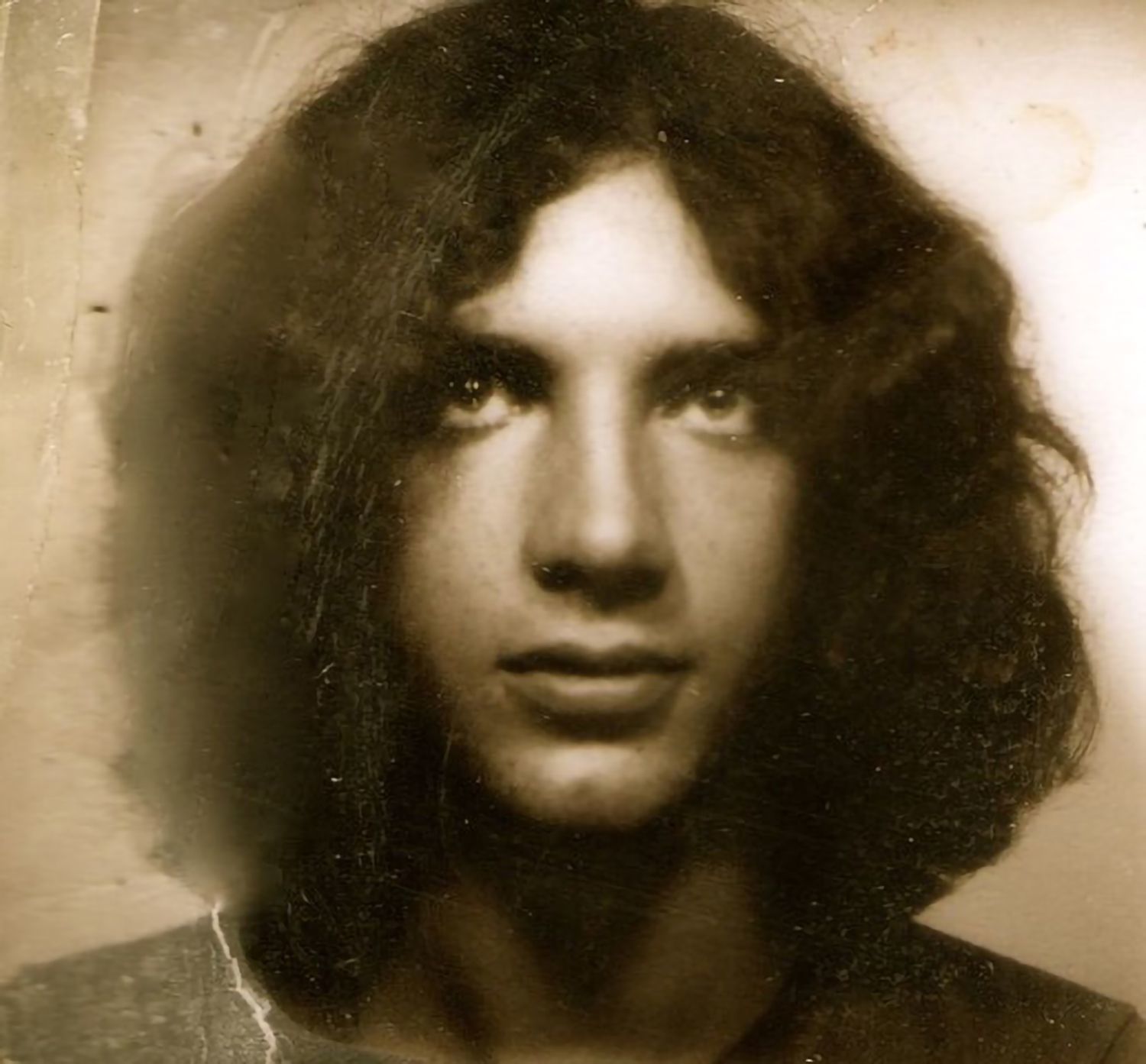
    Ben Vaughn in Philadelphia in the summer of 1970.

    But the unstoppable self-confidence and business acumen of Blavat, who Vaughn got to know in the 1980s, shaped Vaughn’s career.

    “There was a way the rest of the world did things, and a Geator way,” Vaughn said. “He told me I should own my own show, which I do.” Blavat emphasized self-belief. Whatever Vaughn did would have value, as long as it was truly unique.

    “The Geator would buy time on the radio, and sell ads himself. I would drive around with him to pizzerias and shoe stores and car dealerships and watch him. And then we’d drive away with a car with his name on the side. The Geatormobile!”

    Philly musicians in future Straight episodes include “Mashed Potato Time” singer Dee Dee Sharp and rock and roller Charlie Gracie, who befriended Vaughn in the 1970s at the Mount Ephraim club Capriotti’s, where Gracie was nightly entertainment and Vaughn a dishwasher.

    Vaughn’s own stature as a Philadelphia institution was underscored when he was contacted by the Delco-set HBO series Task. They asked him to record a Many Moods snippet for the show. In one scene, Tom Pelphrey’s character, Robbie Prendergast, rolls a joint, listening to Vaughn on air pods.

    “I watched it and you can hardly hear me. But I show up in the close captions and they spell my name right. So that’s a victory.”

    In 2021, Vaughn helped Blavat move out of his office on East Market Street and found unopened letters from 1964 with song requests to play on Blavat’s WCAN-AM (1320) radio show. Blavat and Vaughn opened them on air on XPN in 2021 in a show called The Lost Dedications.

    “The Geator created something that never existed before,” Vaughn said. “Geatordelphia! It was a subculture. The way he talked, the kind of records he played, the way he had of communicating with the audience.

    “He connected so many human beings, and made everybody feel good. He made us all feel like we were better looking than we really were. Only South Philly could have produced a guy like him. It didn’t make sense to anyone outside of a 90-mile radius. The Jersey Shore, Trenton, Wilmington, that’s it.

    “That was the great thing about doing the podcast. Laura is originally from Detroit, and she didn’t know anything about the Geator. And trying to explain the Geator to an outsider is an amusing thing.”

    “Straight From the Hat” episodes are at straightfromthehat.com and on all podcast platforms.

  • How to choose the best nursing home or assisted living facility

    How to choose the best nursing home or assisted living facility

    Sometimes it’s a fall that brings a broken hip and a loss of mobility. Or memory problems that bubble into danger. Or the death of the partner who was relied upon for care.

    The need to move to a nursing home, assisted living facility, or another type of care setting often comes suddenly, setting off an abrupt, daunting search. It’s likely something no one ever wanted, but knowing what to look for and what to ask can make a big difference.

    Here’s what to do when looking for a long-term care facility:

    Start with government ratings

    Regulation of assisted living facilities varies greatly from state to state, meaning there’s no centralized standards or source for information. If you’re looking for a nursing home, though, they are monitored by the federal government.

    The Centers for Medicare and Medicaid Services maintains records on nursing homes, including data on who owns the facility, how robust its staffing is, and what types of violations it might have been fined for. It assigns homes a star rating, from one to five.

    Sam Brooks, director of public policy for the National Consumer Voice for Quality Long-Term Care, says while the star rating “can be notoriously unreliable,” due to its reliance on self-reported data, it can still provide some clues about a home.

    “One or two stars, expect it to be bad,” Brooks says.

    Ratings can be a resource to rule out the worst options, but not necessarily to find the best. Still, Brooks suggests taking a closer look at four- and five-star facilities and to consider a home’s ownership, too. Nonprofit homes are often better staffed.

    You could scour inspection reports and online reviews for clues, too, but eventually you’ll need to make a list of potential candidates and start making visits.

    “The data,” Brooks says, “only goes so far.”

    Look past the lobby

    When visiting a home on your list, be careful not to be too swayed by decorative touches that might be designed to lure you in, like a lobby’s furniture, dangling chandeliers, or vases of flowers.

    “When I tour a building, I listen first. Is it loud? Are call bells ringing nonstop?” says Mark Sanchez, CEO of United Hebrew, a nursing home in New Rochelle, N.Y.

    After that, Sanchez says, switch your senses. Do you detect an odor? Do you see residents clustered around the nurses’ station, perhaps clamoring for help? Are staffers speaking respectfully to residents? Are they making eye contact? Are they rushed?

    “Culture shows up in small moments,” Sanchez says, “and it matters.”

    Seeking input from families of current residents can be insightful. Another resource may be your local long-term care ombudsman. Ombudsmen, funded by the federal Older Americans Act and present in every state, investigate long-term care residents’ complaints.

    With all the available information on each home, it can be easy to feel like you’re drowning in data. So pay attention to how a place feels, too, and pair that with concrete facts.

    When Jennifer Fink was making the “stressful, grief-inducing, hard, and scary” decision on what memory care community was right for her mother, she didn’t consult state databases or Google ratings. She went with her gut reaction and luckily, it was right.

    “Trust your gut. Keep top of mind that the salesperson wants your loved one’s money,” says Fink, of Auburn, Calif. “If it’s giving you the ‘ick,’ then move on.”

    Staffing matters most

    More than any other single thing, experts on long-term care stress that a facility’s staffing is most important. That means both the quality of the care you witness workers giving residents during your visit and the average staffing levels shown in the reported data.

    A home providing an average of three hours of nursing care to each resident each day may not look all that different on paper from one providing three-and-a-half hours. But those minutes matter dearly, meaning the difference between a person getting a shower, having help at mealtime, or being discovered if they’ve fallen.

    During a visit, pay attention to how quickly call bells are answered and whether it seems like residents are engaged in activities. Ask staff how long they’ve worked there. A home that holds on to its workers for years may offer your loved one more continuity.

    Evan Farr, an elder law attorney in Lorton, Va., who wrote The Nursing Home Survival Guide, says visiting a facility at night or on the weekend can be particularly revealing.

    “These are the times when staffing is reduced and the true operation of the facility becomes apparent,” Farr says. “It is entirely possible to have a five-star rated facility that is woefully understaffed from 5 p.m. Friday until 8 a.m. Monday morning.”

    Keep a long-range view

    When faced with an urgent decision, it can be difficult to focus on anything beyond the factors in front of you. But it’s important to choose a home with a long-range view.

    At the start, many long-term care residents are able to pay for the cost of their bill. But what happens if their money runs out? If it’s a nursing home that accepts Medicaid, how many beds are allocated to such residents? Would your loved one get that slot? If it’s an assisted living facility, do they even accept people on Medicaid?

    Assisted living facilities often have complicated billing structures that require a bevy of questions to understand. Ask how costs may change as a person’s needs increase. Some places tack on separate charges for tasks like helping a person to the bathroom.

    “Four-thousand dollars a month can become $8,000 overnight,” says Geoff Hoatson, founder of the elder law practice Family First Firm in Winter Park, Florida.

    Another fact of long-term care that few understand is how often facilities seek to remove residents seen as undesirable, often due to a change in their financial circumstances or in their health. Dementia patients in particular — with challenging care needs and symptoms that can sometimes bring aggression — are targeted with orders to leave.

    “Ask specifically what conditions would require transfer,” Hoatson says.

  • A new streaming series tells the story of America through the lens of Philadelphia

    A new streaming series tells the story of America through the lens of Philadelphia

    By 2019, after a decade of producing dozens of documentaries about Philadelphia history, the filmmakers at History Making Productions realized they had more than just the story of a city.

    They had the story of America.

    On Friday, the studio released its epic, new telling of that 400-year-old story: In Pursuit: Philadelphia and the Making of America. Directed by documentary filmmaker Andrew Ferrett and written by author and historian Nathaniel Popkin — and mixing modern footage with historical recreation and more than 600 on-camera interviews — the 10-episode series explores the history of America through the lens of Philadelphia, its birthplace.

    Belinda Davis as Sarah Forten in “In Pursuit: Philadelphia and the Making of America.”

    Timed to coincide with the 250th anniversary of the Declaration of Independence in 2026, known as the Semiquincentennial, the series provocatively grapples with urgent questions, like how did the American experiment actually unfold? And how can it endure?

    “Philadelphia is not just the birthplace of American democracy — it has been its proving ground,” said Sam Katz, series creator, executive producer, and founder of History Making Productions. “This series looks honestly at how ideals were formed, challenged, expanded, and sometimes betrayed, and why that history matters so urgently.”

    ‘A national moment’

    Spanning 400 years of Philadelphia history, from its Indigenous roots to the MOVE Bombing the series is equal parts entertainment and civic project. Funded by Katz and philanthropies like Pew Center for Arts & Heritage, Penn Medicine, and Lindy Communities, the series premiered at the National Constitution Center on Thursday.

    Episode One is now streaming online. Katz and the filmmakers will host screenings and community conversations at Pennsbury Manor in Bucks County on Sunday, and another screening Feb. 26 at the Bok Building in South Philadelphia.

    Throughout 2026, as the city and country celebrate the national milestone, a citywide “In Pursuit of History Film Festival” will promote each new installment with monthly screenings and public events. 6abc will air monthly hourlong shows to highlight new episodes.

    Sam Katz at Independence Hall, in Philadelphia, Tuesday, Feb. 17, 2026.

    From the beginning, the project was meant to get people talking about the true meaning of the American experience, and those it has left behind.

    “We’re going to get partners all over the city, and we’re going to have screenings all over the place,” said Katz, the civic-leader-turned-producer. “We’re going to create opportunities for people to come and meet the filmmakers, or meet a historian or an artist, who will then lead a conversation. It really is an opportunity for Philadelphia to take stock of itself.”

    Popkin, who cofounded Hidden City Daily, said the project tells the story of events that shaped a city and a country founded on ideals not yet fully realized — and now as divided and tested as they’ve been in decades.

    “The timing is perfect,” he said. “I think a film can really launch a lot of conversations. This is a moment for us as a nation.”

    Fresh portals

    Ferrett, who grew up in Bucks County, and has been directing and producing films at History Making Productions for more than 15 years, said the project revealed itself.

    For earlier Philly projects — including The Great Experiment, an Emmy-award winning, 14-part docuseries spanning 500 years of Philly history, and Urban Trinity: The Story of Catholic Philadelphia — the filmmakers had amassed hundreds of unused hours of interviews with local and national historians, artists, and cultural leaders.

    Over the years, much of it had to be left on the cutting room floor, including magical moments that Ferrett said opened fresh portals to Philly history.

    “We talked to pretty much anyone you can imagine who was either involved with studying Philadelphia history, or in the case of 20th-century history, a lot of witnesses to it,” he said.

    Poet Ursula Rucker during filming of “In Pursuit: Philadelphia and the Making of America.” The new 10-part docuseries examines the history of America through the story of Philadelphia.

    Besides, he said, nowhere else could hold a better mirror to America than the place of its birth.

    “It really became obvious to us that what we have here is much more than a local history,” he said. “It’s a history of the whole United States because so many consequential moments that shaped the country’s history went through Philadelphia.”

    History that feels alive

    Setting out to tell the story anew, Katz raised money to shoot updated interviews and fresh historical recreations.

    Meanwhile, history did not slow down, from the COVID-19 pandemic, to the killing of George Floyd and the Black Lives Matter movements, to Trump, and immigration crackdowns.

    “We were asking how do we deal with history while all this is happening,” Katz said. “We were writing about it right now.”

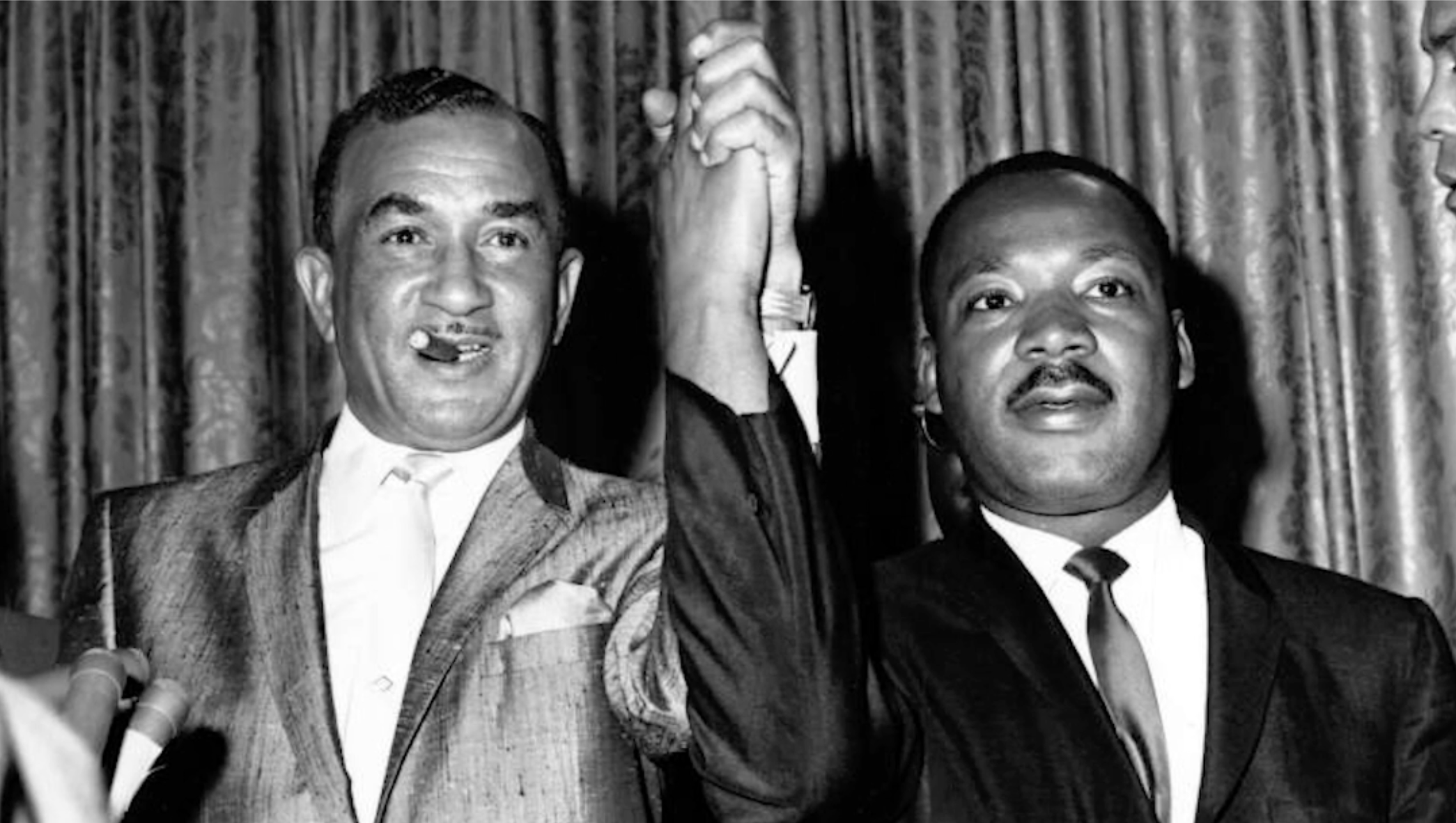
    Cecil B. Moore and Martin Luther King Jr. in footage from “In Pursuit: Philadelphia and the Making of America.”

    Narrated in a warm, resonant baritone by actor Michael Boatman, known for roles in shows Spin City and The Good Wife, In Pursuit is no dull, black-and-white history. The city feels alive, the stakes serious and undecided.

    Threading modern-day footage of bustling Philly streetscapes and soaring neighborhood shots with commentary and historical recreations imprints the series with a powerful immediacy.

    The story stretches far beyond 1776, though the dramatic details of that sweltering summer in Philadelphia are recounted in episode three in gripping scenes of refreshingly believable historical recreations.

    “We were able to shoot these lush and full reenactments,” said Ferrett, of all 10 episodes. “Sam was always like, ‘Where’s the dirt? I don’t want to see people with perfect teeth and smiling.’”

    The start

    Episode One, “Freedom (to 1700),” begins at the beginning, pulling no punches as it tells the story of the Lenape people, Philadelphia’s earliest Indigenous settlers — and of the generations of Dutch and other European colonists’ efforts to eradicate them through violence and disease.

    It surprises even in the telling of William Penn, recounting how the rebellious aristocrat’s nonconformist ways landed him in jail more than once, before he founded a City of Brotherly Love meant to be a better world, and a testing ground of the most advanced ideals in Europe.

    The episode also showcases what Ferrett describes as “deepeners,” when the story cuts away from the arc of history for moments of reflection from modern Philly voices.

    “We all feel it here … it’s all in our bloodstream,” poet Ursula Rucker says in the episode. “What does this city mean to me? Everything. Everything.”

  • Trump officials used AI to distort a photo of an anti-ICE activist. That’s not OK.

    Trump officials used AI to distort a photo of an anti-ICE activist. That’s not OK.

    In the everyday chaos that characterizes President Donald Trump’s America, the news cycle changes faster than most of us can keep up with it.

    But can we please pause for a moment and consider the gravity of what happened to Nekima Levy Armstrong at the hands of the U.S. government? She led a group of activists who interrupted a worship service in Minnesota on Jan. 18. The demonstrators went to Cities Church in St. Paul to stage a protest in support of immigrant rights.

    The choice of venue was very much intentional: One of the leaders at the church is an administrator at a local U.S. Immigration and Customs Enforcement office. Four days later, Levy Armstrong, a half dozen other protesters, and two journalists were arrested.

    Afterward, while she was still in custody, Trump administration officials released an AI-manipulated image of her on X, the social media site formerly known as Twitter, on accounts for Homeland Security Secretary Kristi Noem and the White House.

    The doctored image shows Levy Armstrong (no relation) with her mouth open as if she’s sobbing hysterically. Her face also appears to have been darkened. The photo caption reads: “ARRESTED far-left agitator Nekima Levy Armstrong for orchestrating church riots in Minnesota.”

    It wasn’t a riot. Nor was she crying. But all that is beside the point. The Trump administration officials wanted to make her look bad, even if it meant reshaping reality to do so. What’s especially concerning is the dishonest way it went about it. According to photos and video of her arrest, Levy Armstrong maintained a mostly impassive expression on her face throughout the ordeal.

    On Jan. 22, the White House posted an AI-altered image of Nikema Levy Armstrong on the White House’s official X feed. The altered image makes Levy Armstrong appear as crying, the original image shows no such emotion.

    A lot of people might see the digitally altered image of her sobbing and assume that because it was posted on a verified social media channel from the highest levels of government, it is an accurate representation of what happened — when it’s anything but.

    A New York Times analysis concluded that the photo had been manipulated — something the White House admits to doing, and is unrepentant about. The manipulated photo is a meme, according to White House spokesperson Kaelan Dorr, who doubled down on X, saying, in part: “Enforcement of the law will continue. The memes will continue.”

    No one should be surprised at that reaction, considering how many questionable AI images Trump has shared. (And, although it wasn’t artificial intelligence, don’t get me started on his racist post about the Obamas earlier this month.)

    He once posted an AI video of himself — with a crown on his head — flying a plane that dumps feces onto “No Kings” protesters. It was even more disturbing when he released a deepfake video of former President Barack Obama, who seems to live rent-free inside Trump’s head, being arrested in the Oval Office.

    Imagine the uproar if another president had done such a thing. Many people have normalized this kind of corrosive behavior so much that Teflon Don usually gets off with a shrug. But those of us who care about accountability have to keep calling him out.

    Dirty politics are one thing, but when Trump administration officials manipulated the photo of Levy Armstrong, a private citizen, it made my blood boil. It’s another reminder that there’s no bottom with Trump when it comes to how low he will go, and that’s really scary.

    I recently had a chance to speak with Levy Armstrong, and can report that, despite the administration’s efforts, she is unbowed and unbroken.

    She called the government’s use of the fake image “horrifying and deeply disturbing,” and insists “I was cool, calm, and collected” during the arrest.

    “I guess because they didn’t see me broken, they needed to manufacture an image of me broken,” Levy Armstrong told me.

    “This is not unlike what has happened historically to Black people with all of the Sambo imagery and the mammy imagery that’s out there, with exaggerated features and darkened skin,” she said. “That’s the same thing that I went through, and that’s what they did to me. Not to mention making me look hysterical.”

    She added that “I felt caricaturized, just like our people have been during slavery and Jim Crow.”

    While I had her on the phone, I also asked Levy Armstrong about the arrest of former CNN anchor Don Lemon, who covered the protest she organized.

    Journalist Don Lemon speaks to the media outside the U.S. District Courthouse in St. Paul, Minn., on Feb. 13.

    Levy Armstrong disputes MAGA claims that Lemon was a participant in the demonstration, as opposed to being an observer. Levy Armstrong told me, “I just think it’s foolishness that they would try to rope him in as a protest organizer.”

    “He’s not an activist. He’s not an organizer,” she pointed out. “He’s not a protester whatsoever.”

    The former law professor said that referring to Lemon as an organizer was an excuse to attack him, as well as Georgia Fort, an Emmy Award-winning independent Black journalist based in Minnesota, who also faces federal charges after covering the protest.

    Minnesota-based independent journalist Georgia Fort speaks to reporters and supporters outside the federal courthouse in St. Paul, Minn., on Feb. 17, after pleading not guilty over her alleged role in a protest that disrupted a Sunday service at a Southern Baptist church in St. Paul.

    I’ve covered many protests throughout my journalism career, and find what happened particularly upsetting. Republicans talk a good game about upholding the Constitution, but the arrests were clearly an attempt to keep journalists from exercising their First Amendment right to freedom of the press.

    Meanwhile, no arrests have been made in the fatal shootings by Border Patrol and ICE, respectively, last month of Alex Pretti, an intensive care nurse, or Renee Good, a mother of three.

    But Levy Armstrong has been charged for her role in a disruptive but peaceful protest inside a church during which no one was physically harmed. (And, yes, although they are rare, demonstrations in churches happen. During the civil rights movement, demonstrators would hold “kneel-ins” to protest segregated churches in the Jim Crow South.)

    An ordained minister, Levy Armstrong told me she draws strength from such icons of the civil rights movement as Fannie Lou Hamer, Rosa Parks, and the Rev. Dr. Martin Luther King Jr., all of whom had suffered the indignity of being arrested while fighting for their basic human rights.

    “Everybody needs to wake up,” she said. “This is not just about immigration. This is about our constitutional rights. This is about our democracy. This is about our freedoms.”

    Freedoms we stand to lose if we allow the Trump administration to try and silence us the way it has attempted to do with Lemon, Fort, and Levy Armstrong, among so many others.

    Levy Armstrong has nothing but praise for Philadelphia District Attorney Larry Krasner, who is vocal about prosecuting ICE agents who run afoul of the law. Her suggestion for concerned Philadelphians? “Get some whistles,” she said. “Get some people organized. Hold your elected leaders accountable.”

  • A nearly 250-year-old hospital’s closure was announced on this week in Philly history

    A nearly 250-year-old hospital’s closure was announced on this week in Philly history

    In the wake of the U.S. Bicentennial, in which Philadelphia was at the center of a yearlong celebration of the country’s 200th birthday, one of the city’s contributions to public health was put on the chopping block.

    On Feb. 15, 1977, city officials confirmed that Mayor Frank Rizzo was closing Philadelphia General Hospital.

    The poorhouse

    Philadelphia General Hospital traced its lineage back to 1729, predating even the revered Pennsylvania Hospital, which was founded in 1751 and is generally considered the nation’s first chartered hospital.

    Philadelphia General Hospital was originally established at 10th and Spruce Streets as an almshouse, also known as an English poorhouse.

    “The institution reflected the idea that communities assume some responsibility for those unable to do so themselves,” Jean Whelan, former president of the American Association for the History of Nursing, wrote in 2014.

    The almshouse was used as housing for the poor and elderly, as well as a workhouse. It also provided some psychiatric and medical care.

    It moved in the mid-1800s into what was then Blockley Township, at what is now 34th Street and Civic Center Boulevard, and began offering more traditional medical services. The Blockley Almshouse’s barrage of patients and their variety of maladies helped it naturally grow into a teaching tool for nursing and medical students.

    And by turn of the 20th century, it had become a full-blown medical center, made official by its new name: Philadelphia General Hospital.

    But it held onto its spirit.

    Its doors were open to anyone who needed care, no matter that person’s race, ethnicity, class, or income.

    Healthcare was a given. Workers saw it as a responsibility.

    Even if it wasn’t always the best care.

    Poor health

    The hospital relied on tax dollars, and as a result was often short on staffing and low on supplies. It was a source of political corruption, scandal, and discord among its melting pot of patients.

    Patients in the hallways of Philadelphia General Hospital in the 1940s.

    Eventually, it collapsed under the weight of its mission.

    Its facilities became outdated, its services could not keep up, and its role as educator was outsourced to colleges and universities.

    Philadelphia General Hospital’s closure left a gaping hole in available services in West Philadelphia. It was no longer there to help support the uninsured.

    Before it officially closed in June 1977, it was considered the oldest tax-supported municipal hospital in the United States.

    “There’s a common misunderstanding that PGH recently has become a poor people’s hospital,” said Lewis Polk, acting city health commissioner, in 1977. “It’s always been a poor people’s hospital. The wealthy never chose to go there.”

    Its old grounds are now occupied by several top-rated facilities, including Children’s Hospital of Philadelphia and the University of Pennsylvania medical campus.

    A historical marker there notes Philadelphia General Hospital’s nearly 250 years of service to the community.

  • Flyers continue to fight local hunger one assist at a time: ‘We needed to do more, plain and simple’

    Flyers continue to fight local hunger one assist at a time: ‘We needed to do more, plain and simple’

    The Flyers and Penn Medicine have partnered up to donate 13,750 pounds of food, which accounts for over 9,000 meals, so far this season as part of their Penn Medicine Assist program.

    The initiative, which started during the 2023-24 season, donates 50 pounds of food to local hunger-relief organization Philabundance for every Flyers assist — increasing last year’s amount by 20 pounds per assist. So far, the Flyers have tallied 275 assists.

    “We needed to do more, plain and simple,” said Todd Glickman, the chief revenue and business officer for Comcast Spectacor. “We felt like we needed to do more and give more because food insecurity is such a big thing in the region. It was important to Penn Medicine and it was important to us. And it was an easy thing to do.”

    The program’s numbers continue to grow each year. During the 2023-24 season, the Flyers’ 396 assists donated 11,880 pounds of food. The following year, the Flyers’ 403 assists donated 12,090 pounds of food — making it over 37,000 pounds of food, and over 25,000 meals, that have been donated over the last three years.

    “I think we’ll see the numbers go up significantly from last year just by increasing the amount by 20 pounds per assist,” said Lori Gustave, the chief strategy officer of Penn Medicine. “I personally hope they get a lot of assists so that we can donate a lot of food.”

    The initiative will benefit Philabundance, which has been operating for 41 years, growing across two states in nine counties, with the mission to bridge the gap between a surplus of food and those in the community struggling with food insecurity.

    The foundation started from the back of Pam Rainey Lawler’s Subaru in 1984. Since then, it has grown tremendously — delivering over 40 million pounds of food to the community over the past year.

    Gritty at Philabundance last year, packing some of the meals donated from the Penn Medicine Assist program.

    “Of the nine counties, which includes Philadelphia, there are approximately 700,000 neighbors that are food insecure,” said Amy Galette, the director of corporate relations at Philabundance. “If you think about the amount of people we serve a week, it’s enough to fill five stadiums full during Flyers games. It’d be like selling out five Flyers games per week.”

    As part of last year’s Penn Medicine Assist program, Gritty and some of the Flyers players, including Jamie Drysdale and Bobby Brink, joined the assembly line at Philabundance to help package some of the meals.

    “It was fun,” Brink said. “I mean it was nice to get a little day-in-the-life kind of vibe and help out. The environment was great, a lot of great people, and it’s always nice just giving a few hours to help.”

    Drysdale added: “We are very fortunate to be in this position that we’re in. And I don’t think it takes a lot for us to give a few hours wherever we can to kind of help out and just show some love back to the community that treats us so well.”

  • Phillies roster questions going into the first spring game: Fifth starter, bullpen picture, and more

    Phillies roster questions going into the first spring game: Fifth starter, bullpen picture, and more

    CLEARWATER, Fla. — On the eve of spring training games, an annual reminder: They don’t count.

    Not really. Stats are kept, but mostly as a formality. Hits don’t carry over into the season. Strikeouts are little more than a sugar rush for a pitcher. Win some, lose some, even tie some, and everyone’s record resets on March 25.

    What do you do, then, if you’re Dylan Moore? A veteran of seven major league seasons, the 33-year-old utility man must have a good camp to make the Phillies’ opening-day roster after signing a minor-league contract 17 days ago.

    Try telling him Grapefruit League games aren’t really real.

    “To make an impression, you’ve got to be able to take it seriously and play it like it’s a game that’s meaningful,” Moore said Thursday after facing pitchers in live batting practice. “Because it is, you know? You want to see where you’re at, which is why you never want to go less than [full effort] just because it doesn’t matter. But yeah, it’s a balancing act.”

    The Phillies will play 30 spring training games, including a March 4 exhibition against Canada’s entry in the World Baseball Classic. That’s a lot of faux innings for a team that has few jobs up for grabs.

    Here, then, is an attempt to answer a few roster questions entering Saturday’s opener against the Blue Jays in neighboring Dunedin, based on reporting from the first eight days of camp:

    Andrew Painter is a leading candidate to occupy a spot in the Phillies’ season-opening starting rotation.

    Who will take the fifth (starter spot)?

    Zack Wheeler played catch from 120 feet the other day and is scheduled to do so again Friday while incorporating more spin on the ball. The Phillies haven’t said when he will progress to a mound.

    “He’s doing very well,” manager Rob Thomson said.

    But nothing has changed. Five months after having a rib removed to relieve pressure on a vein that was compressed between his collarbone and rib cage, Wheeler won’t be ready to start the season on time, which creates a vacancy in the starting rotation.

    Upon returning from the World Baseball Classic, Cristopher Sánchez (Dominican Republic), Aaron Nola (Italy), and Taijuan Walker (Mexico) will join Jesús Luzardo in the starting rotation. Nobody will say it, but the last spot is Andrew Painter’s to lose.

    Painter didn’t pitch in 2023 or ’24 because of a torn elbow ligament that necessitated Tommy John surgery. But after a healthy, 118-inning season in the minors, most of which came in triple A, he’s unburdened by usage restrictions this spring.

    Ideally, the Phillies want Painter to not only earn his spot but also to keep it once Wheeler returns. Either way, it’s time for the 22-year-old (turning 23 in April) to step forward.

    “Obviously Painter had a tough year in triple A,” Bryce Harper said, referring to a 5.40 ERA in 22 starts. “That first year coming back from Tommy John is really tough. I’m hoping he bounces back this year. We need him to.”

    Lefty reliever Kyle Backhus has a chance to win a spot in the bullpen after coming over in a trade with the Diamondbacks.

    How does the bullpen shape up?

    Get to know this name: Kyle Backhus.

    The Phillies acquired Backhus from the Diamondbacks for a minor-league outfielder on the same day in December that they sent Matt Strahm to the Royals for reliever Jonathan Bowlan. Backhus has minor league options, but Thomson mentioned him last month as a bullpen candidate.

    And the hitters, including Trea Turner, who faced Backhus in live batting practice Thursday were impressed with the sidearming lefty, who had a 4.62 ERA in 32 games last season for Arizona.

    “They said he was tough to pick up,” Thomson said. “He starts from the third base side. He’s a crossfire guy. It’s a really low slot, so you don’t see that. It’s tough, really tough to pick up.”

    The Phillies haven’t had a lefty reliever with such a low arm slot in years. Thomson would like a third lefty in the bullpen, although he said it isn’t a necessity. Backhus would fit in behind José Alvarado and Tanner Banks.

    Orion Kerkering has been slowed in camp by a hamstring injury. But health permitting, closer Jhoan Duran, Brad Keller, Alvarado, Kerkering, Banks, and Bowlan have seats in the bullpen.

    That leaves two spots for a pool of candidates, including Rule 5 pick Zach McCambley and out-of-options righty Zach Pop. Veteran lefty Tim Mayza and righty Lou Trivino are also in camp as nonroster invitees.

    But Backhus might have the early inside track.

    “Backhus is a completely different look for people,“ Thomson said. ”You want good stuff, you want strikes, but when you have different looks like that, it makes it a lot better.”

    Johan Rojas could make the Phillies’ roster as a reserve outfielder.

    Who gets the last bench spot?

    All the health-related caveats apply, but the opening-day lineup appears set: J.T. Realmuto (catcher), Harper (first base), Bryson Stott (second base), Turner (shortstop), Alec Bohm (third base), Brandon Marsh (left field), rookie Justin Crawford (center field), Adolis García (right field), and Kyle Schwarber (designated hitter).

    Edmundo Sosa and Otto Kemp are expected to claim seats on the bench, with another going to incumbent backup catcher Rafael Marchán or veteran Garrett Stubbs.

    That leaves one spot.

    Johan Rojas would provide speed on the bases and elite outfield defense, although the latter is less important without Nick Castellanos in right field. Marsh, Crawford, and García are all solid defenders. Also, Rojas has minor-league options and might benefit from everyday at-bats in triple A.

    Veteran outfielder Bryan De La Cruz has 58 career major league homers, seven of which came against the Phillies. De La Cruz and Pedro Leon are intriguing right-handed bats, but Sosa and Kemp bat from the right side. And as outfielders, De La Cruz and Leon lack positional versatility.

    And then there’s Moore, who has played everywhere except catcher and won a Gold Glove as a utility man for the Mariners in 2023. He said he signed with the Phillies to work with hitting coach Kevin Long. But he also recognized an opportunity.

    Phillies manager Rob Thomson (left), with Charlie Manuel during batting practice on Thursday, has one spot to fill for a bench player.

    “In past experience, having two utility guys — one who’s more depth to infield and one who’s more depth to outfield — is huge,“ Moore said. ”A guy that can do both is great. Sosa plays an awesome infield everywhere you put him, so maybe I could be more of the outfield guy.

    “This has been my career in a nutshell — play some, play not so much, and just stay ready. I feel like I’ve gotten pretty good at it, and I still have more in me.”

    With Harper, Schwarber, Sosa, and Rojas away at the WBC next month, there will be ample opportunity for Moore to prove it.

    And that’s the meaning of spring training games.

  • 🦅 Lane’s coming back | Sports Daily Newsletter

    🦅 Lane’s coming back | Sports Daily Newsletter

    The Eagles might have gotten the best news of their offseason. Lane Johnson, a no-doubt Hall of Famer someday, told The Inquirer on Thursday that he would be back for the 2026 season, ending speculation about whether he might retire.

    Eagles fans are well aware of how important the right tackle is to the offense. In Johnson’s 13 seasons, the team is 110-57-1 when he plays and 18-27 when he does not. Ask Saquon Barkley if he missed Johnson when the Pro Bowl tackle sat out seven games this season and missed parts of others.

    Of course, Johnson will be 36 in the next season and he’s coming off a Lisfranc foot fracture in Week 11. He avoided surgery, though, and he has shown the ability to overcome major injuries in the past. Now the Eagles wait for the other shoe to drop: Oft-injured guard Landon Dickerson has hinted at retirement as well, and we’re waiting to see if he’ll return. Jeff McLane has the full story.

    — Jim Swan, @phillysport, sports.daily@inquirer.com.

    If someone forwarded you this email, sign up for free here.

    Game on: What to watch

    Phillies manager Rob Thomson (left) and president of baseball operations Dave Dombrowski will have few roster decisions to make over the next four weeks.

    Spring training games don’t count. But don’t tell that to Dylan Moore, the 33-year-old utility man fighting for a bench role with the Phillies.

    The Phillies will play 30 spring training games, including a March 4 exhibition against Canada’s entry in the World Baseball Classic. That’s a lot of faux innings for a team that has few jobs up for grabs.

    Here, then, is an attempt to answer a few roster questions entering Saturday’s opener against the Blue Jays in Dunedin, Fla., based on reporting from the first eight days of camp.

    These Phillies starting pitchers are preparing for the “different feeling” that goes with competing in the World Baseball Classic.

    J.T. Realmuto is back for an eighth season with the Phillies. But for a week in January, he wasn’t sure he’d return.

    Back after the break

    Sixers guard Tyrese Maxey drives to the basket against Atlanta’s Nickeil Alexander-Walker on Thursday.

    Tyrese Maxey returned from his All-Star Game appearance with a 28-point effort, but the Atlanta Hawks earned a 117-107 victory over the Sixers at Xfinity Mobile Arena. Jalen Johnson, fresh off an All-Star appearance himself, led the way for the Hawks with 32 points.

    Outside looking in

    Flyers defenseman Emil Andrae has not played since Jan. 26, with Rick Tocchet instead electing to play Noah Juulsen.

    Flyers fans have been clamoring for Emil Andrae to play after the Swedish defenseman was benched for five straight games heading into the Olympic break. They may soon get their wish.

    “He’s been really sharp in these three practices that he’s been back for,” says defense coach Todd Reirden. “I know he came back a little bit earlier and did some other skating. He’s doing everything he can to get himself in a situation where he’s fighting to be in that lineup every night.”

    Andrae’s future with the team is an uncertain one with the NHL trade deadline approaching on March 6. We’ll see if he’s back in the lineup when the Flyers return to game action against the Washington Capitals on Wednesday.

    ‘I did my best’

    Isabeau Levito competes in her free skate on Thursday at the Winter Olympics in Milan, Italy.

    Figure skater Isabeau Levito, the 18-year-old pride of South Jersey, placed 12th at the Winter Olympics in Milan, the hometown of her mother. Levito’s teammate, friend, and fellow Blade Angel, Alysa Liu, emerged with the gold medal.

    Levito had an uncharacteristic fall on her opening triple flip but otherwise skated a beautiful long program on Thursday. “I did my best,” she said afterward.

    After the U.S. women’s hockey team won the gold medal with an overtime victory against Canada, the spotlight turns to the men’s team in the semifinals. Here’s the Olympic TV schedule for today.

    Sports snapshot

    Father Judge’s Ahmir Brown heads up the court during a 52-46 victory against Archbishop Wood in the Catholic League semifinals.

    Our best sports 📸 of the week

    West Philadelphia’s players shower coach Adrian Burke with water after a 68-47 win against Dobbins in the Public League semifinals at John E. Glaser Arena on Tuesday.

    Each Friday, Inquirer photo editors will pick our best shots from the last seven days and share them with you, our readers. This week, it’s hoop, hoop hooray: Photos include high school boys’ and girls’ basketball playoffs, college hoops as well, and plenty from the Phillies at spring training.

    What you’re saying about burning questions

    We asked: What’s your burning Philly sports question? Among your responses:

    The fans of all Philly sports teams are passionate, but it is the Eagles who draw the most passion. Their most burning off season question is “are the Eagles trying hard to trade A.J. Brown before next season?” … Does the Eagles brass see him as a locker room cancer with more negative value to the team than the value of his performance on the field? And how confident are they that the new offensive coaching staff can turn around his mental attitude toward performing consistently at his best? There are some who believe that the same question could be applied to Jalen Hurts. — John W.

    Will the Phillies have enough to repeat as Eastern Division champs? Can the Eagles adapt to a new offensive scheme and remain a legit Super Bowl contender? Is Joel Embiid done? — Bob C.

    The Palestra played host to the Catholic League semifinals on Wednesday.

    What, if anything, can be done to have at least one Big Five (I’m not talking to you, Drexel) doubleheader each year at the Palestra.? Streamers, banners, the whole works. Or even a doubleheader with one nationally popular team. Everyone would get totally into it. Sorry to live in the past, but those were the greatest times I ever had. Cold outside, hot, sweaty and noisy inside. And everyone celebrating Philadelphia basketball, no matter which school they were from or rooting for. — Tom L.

    Two questions. Ready to spend in the 100 millions for Bo Bichette, but unwilling to spend even a small percentage of that to keep Harrison Bader, who so impressed all Phillies fans during his short time here? And is Sirianni truly the coach who can bring the Eagles back to the Super Bowl? This past season I think he failed to lead when the going was the toughest and leadership was most needed. — Everett S.

    What’s wrong with the Flyers? As usual they have become irrelevant. — Bill M.

    Is this still Bryce’s team, or has Schwarber overtaken him as the star of the organization? — Anthony P.

    We compiled today’s newsletter using reporting from Jeff McLane, Scott Lauber, Lochlahn March, Ellen Dunkel, Gabriela Carroll, Jonathan Tannenwald, Rob Tornoe, Jeff Neiburg, Sean McKeown, Colin Schofield, Conor Smith, and Dylan Johnson.

    By submitting your written, visual, and/or audio contributions, you agree to The Inquirer’s Terms of Use, including the grant of rights in Section 10.

    Have a great weekend. Thanks for reading, as always, and I’ll see you in Monday’s newsletter. — Jim

  • On crime, public transit, and the economy, Philadelphia counts the ways | Shackamaxon

    On crime, public transit, and the economy, Philadelphia counts the ways | Shackamaxon

    This week’s Shackamaxon is all about the numbers.

    15

    As I write this column, that’s Philadelphia’s total number of homicides for the year so far. It is a 50% decrease from this time in 2025, and a stunning 79% drop from the pandemic-era spike in violence. While it is much too early to make projections, and snowy and freezing weather the last few weeks undoubtedly played a role in keeping people indoors, the decline is genuinely remarkable. Especially when it is accompanied by a similar decline in shooting victims, and double-digit declines in overall violent and property crimes.

    In fact, on a per-capita basis, Philadelphia’s homicide rate is currently not that different from Bucks County’s.

    Given the city just notched its safest year since the 1960s, this progress is exciting. So far, no one has an explanation for why homicide is declining. It may simply be a national trend back to normalcy. If so, it is time to extend it to more parts of life.

    Killings may be down, but homelessness is rising. SEPTA’s Metro system is still overrun with smokers. And the melting snow has revealed that much of the city is covered in too much everyday grime.

    A Sharon Hill trolley — now known as the D2 — on a low-speed section of track near the 69th Street Transportation Center in Upper Darby. The route, along with its counterpart, the D1, or Media trolley, will have longer trips next week after a safety upgrade to the signal system.

    15

    That’s how many additional minutes trolley trips to Media could take after implementing something called “communications-based train control” at a cost of $75 million. This system takes away discretion from operators, resulting in slower acceleration, longer braking periods, and slower overall speeds. SEPTA says a similar installation on its Regional Rail system also led to initial delays, but those challenges were overcome in time.

    There’s a better solution. SEPTA should restore the gate system that was removed back in 2009. This would eliminate many of the needed slowdowns.

    SEPTA riders board the Route 47 bus at Eighth and Market Streets in January.

    714,475

    That’s how many daily rides SEPTA provided on average last month, an increase of 1% over 2025. Given the struggles the agency went through last year, the fact that ridership continues to grow is remarkable.

    In August, SEPTA scaled back overall service by 20%, before reversing the cuts weeks later under court order — and after a gubernatorial funds transfer. State Senate Majority Leader Joe Pittman essentially called the agency (and our entire region) a bunch of greedy moochers and blocked a plan for sustainable support.

    The Regional Rail network was severely curtailed for months because of aging, exploding train cars. The Center City trolley tunnel was closed for weeks because of maintenance issues. In January, a brutal winter storm made getting to — and on — the bus a struggle. And yet, ridership grew.

    In fact, since the pandemic, SEPTA has routinely been one of America’s strongest transit agencies when it comes to ridership growth. Given there have been zero additional dollars invested in operations for years, the system’s resilience may prove that Philadelphians need mass transit so badly that they’re willing to keep riding through the chaos.

    From left, Joaquin Duato, J&J chairman and CEO, is with Gov. Josh Shapiro and Pennsylvania Department of Community and Economic Development Secretary Rick Siger on Wednesday after Johnson & Johnson announced it will spend $1 billion on a cell therapy plant on its campus in Lower Gwynedd Township.

    5.5

    That’s how much investment, in billions of dollars from pharmaceutical companies, is coming to Eastern Pennsylvania, according to Gov. Josh Shapiro. While this is great news for the Keystone State, it’s hard to avoid noticing that none of these investments are coming to Philadelphia itself. Neither is Merck’s $1 billion new biotech center, which is being built in Delaware. Given our city’s status as a hub for eds and meds — with multiple colleges and medical schools, and a high concentration of skilled workers — this is disappointing.

    Illinois Gov. JB Pritzker speaks during a news conference in Chicago in 2025.

    150

    That figure, also in billions of dollars, is how much economic growth Pennsylvania needs in order to bridge the deficit without raising taxes or cutting services, according to an analysis by Athan Koutsiouroumbas, managing director of the Harrisburg-based lobbying and consulting firm Long Nyquist.

    The easiest way to accomplish this is by being bolder on housing policy. As Shapiro has pointed out, Pennsylvania is currently 44th in the nation when it comes to new housing production. Unfortunately, current plans aren’t bold enough to meet the moment. They lack the significant forays into statewide zoning standards that have been embraced by figures like Illinois Gov. JB Pritzker. Shapiro likes to say he’s tired of losing to “frigging Ohio,” but without a more audacious approach to housing policy, he may have to add “frigging Illinois” to the list of states eating our lunch.

    Philadelphia’s economy grew faster than Atlanta, Dallas, Denver, and Phoenix.

    13.6

    If we’re being optimistic, let’s call it almost 14%. That’s how much job growth Philadelphia has experienced since 2020. That’s better than the 11.7% average for the nation’s 25 most populous counties. It is better than the collar counties, and puts Philadelphia ahead of Montgomery County in office employment for the first time in decades.

    Still, economist Mark Zandi urges caution. In the pages of The Inquirer, he points out that much of this has to do with the fact that the national economy is struggling. Given the city has lagged on growth for decades, even incremental steps forward may look more significant here than elsewhere.

    There’s also the fact that much of this growth is in relatively low-paid work, rather than the high-wage “tradeable industries” the city needs to escape decades of economic stagnation.

    Simply put, while working as a home health aide and working in a drone factory both put food on the table, only the latter helps make the regional economy healthier.