WASHINGTON — Tariffs paid by midsize U.S. businesses tripled over the course of the past year, new research tied to one of America’s leading banks showed on Thursday — more evidence that President Donald Trump‘s push to charge higher taxes on imports is causing economic disruption.
The additional taxes have meant that companies that employ a combined 48 million people in the U.S. — the kinds of businesses that Trump had promised to revive — have had to find ways to absorb the new expense, by passing it along to customers in the form of higher prices, employing fewer workers, or accepting lower profits.
“That’s a big change in their cost of doing business,” said Chi Mac, business research director of the JPMorganChase Institute, which published the analysis Thursday. “We also see some indications that they may be shifting away from transacting with China and maybe toward some other regions in Asia.”
The research does not say how the additional costs are flowing through the economy, but it indicates that tariffs are being paid by U.S. companies. The study is part of a growing body of economic analyses that counter the administration’s claims that foreigners pay the tariffs.
The JPMorganChase Institute report used payments data to look at businesses that might lack the pricing power of large multinational companies to offset tariffs, but may be small enough to quickly change supply chains to minimize exposure to the tax increases. The companies tended to have revenues between $10 million and $1 billion with fewer than 500 employees, a category known as “middle market.”
The analysis suggests that the Trump administration’s goal of becoming less directly reliant on Chinese manufacturers has been occurring. Payments to China by these companies were 20% below their October 2024 levels, but it’s unclear whether that means China is simply routing its goods through other countries or if supply chains have moved.
The authors of the analysis emphasized in an interview that companies are still adjusting to the tariffs and said they plan to continue studying the issue.
White House spokesperson Kush Desai called the analysis “pointless” and said it didn’t “change the fact that President Trump was right.” The study showed that U.S. companies are paying tariffs that the president had previously said would be paid by foreign entities.
Trump defended his tariffs during a trip to Georgia on Thursday while touring Coosa Steel, a company involved in steel processing and distribution. The president said he couldn’t believe the Supreme Court would soon decide on the legality of some of his tariffs, given his belief that the taxes were helping U.S. manufacturers.
“The tariffs are the greatest thing to happen to this country,” Trump said.
The president imposed a series of tariffs last year for the ostensible goal of reducing the U.S. trade imbalance with other countries, so that America was not longer importing more than it exports. But trade data published Thursday by the Census Bureau showed that the trade deficit climbed last year by $25.5 billion to $1.24 trillion. The president on Wednesday posted on social media that he expected there would be a trade surplus “during this year.”
The Trump administration has been adamant that the tariffs are a boon for the economy, businesses, and workers. Kevin Hassett, director of the White House National Economic Council, lashed out on Wednesday at research by the New York Federal Reserve showing that nearly 90% of the burden for Trump’s tariffs fell on U.S. companies and consumers.
“The paper is an embarrassment,” Hassett told CNBC. “It’s, I think, the worst paper I’ve ever seen in the history of the Federal Reserve system. The people associated with this paper should presumably be disciplined.”
Trump increased the average tariff rate to 13% from 2.6% last year, according to the New York Fed researchers. He declared that tariffs on some items such as steel, kitchen cabinets, and bathroom vanities were in the national security interest of the country. He also declared an economic emergency to bypass Congress and impose a baseline tax on goods from much of the world in April 2025 at an event he called “Liberation Day.”
The high rates provoked a financial market panic, prompting Trump to walk back his rates and then engage in talks with multiple countries that led to a set of new trade frameworks. The Supreme Court is expected to rule soon on whether Trump surpassed his legal authority by declaring an economic emergency.
Trump was elected in 2024 on his promise to tame inflation, but his tariffs have contributed to voter frustration over affordability. While inflation has not spiked during Trump’s term thus far, hiring slowed sharply, and a team of academic economists estimate that consumer prices were roughly 0.8 percentage points higher than they would otherwise be.
A high-stakes fight is brewing between President Donald Trump’s administration and states such as Pennsylvania and New Jersey over the regulation of prediction markets, the online platforms that allow users to wager on everything from sports and elections to the weather.
States that have legalized sports betting in recent years say prediction markets amount to unauthorized gambling, putting consumers at risk and threatening tax revenues generated by regulated entities like casinos.
But the Trump administration this week said the federal government was the appropriate regulator, siding with the industry’s argument that the markets’ “event contracts” are financial derivatives that allow investors to hedge against risks.
The chair of the federal Commodity Futures Trading Commission on Tuesday said the CFTChad filed a brief in federal court to “defend its exclusive jurisdiction” to oversee these markets, amid litigation between state governments and platforms such as Kalshi and Polymarket.
Prediction markets “provide useful functions for society by allowing everyday Americans to hedge commercial risks like increases in temperature and energy price spikes,” CFTC Chairman Mike Selig said in a video posted on X.
New Jersey collected more than $880 million in gaming tax revenues last year, while Pennsylvania brought in almost $3 billion, according to regulators. The revenues fund property tax relief programs and the horse racing industry, as well as programs for senior citizens and disabled residents.
Pennsylvania’s gaming regulator has previously warned that prediction markets risk “creating a backdoor to legalized sports betting,” without strict oversight.
The state Gaming Control Board’s Office of Chief Counsel told The Inquirer Wednesday that it sees a distinction between certain futures markets — like those for agricultural commodities, which have long been regulated by the CFTC — and “event contracts” tied to “the outcome of a random Wednesday night NBA basketball game.”
Representatives for Gov. Josh Shapiro of Pennsylvania and Gov. Mikie Sherrill of New Jersey, both Democrats, didn’t respond to requests for comment.
But former New Jersey Gov. Chris Christie — a Republican who worked to legalize sports betting while in office and who’s now advising the American Gaming Association — said Tuesday on X that the Trump administration is trying to “grow the size of the federal government & their own power while trying to crush states rights and take advantage of our citizens.”
Beyond the courts, the GOP-led Congress could also choose to step in. Some Republican lawmakers have expressed concerns about a “Wild West” in prediction markets, notwithstanding Trump’s support for the industry.
Sen. Dave McCormick (R., Pa.) welcomed the CFTC’s announcement, writing on X that prediction markets “offer tremendous benefits to consumers and businesses.”
“A consistent, uniform framework for derivatives is essential to supporting U.S. markets,” he said.
The CFTC’s action means the federal government is backing an industry in which the Trump family has a financial stake. The agency’s brief supports Crypto.com, a platform that last year partnered with the Trump family’s social media company to launch a prediction market.
Ethics experts have said the Trump family’s ties to Crypto.com create a conflict of interest. The White House denies that and says the president’s holdings are in a trust controlled by his children.
Winding through courts
The U.S. Supreme Court in 2018 struck down a federal law that prohibited sports betting in most states, paving the way for states to legalize it. Pennsylvania and New Jersey both enacted laws authorizing sports gambling and imposing requirements on betting operators such as taxation on gaming revenues, consumer protection rules, and licensing fees.
Despite state laws, prediction markets now operate nationwide — even in states that prohibit gambling altogether, like Utah.
New York-based Kalshi launched its platform in 2021. The CFTC initially opposed Kalshi’s election-related contracts, but in the fall of 2024 the company won a case in which courts found the regulator failed to show how the platform’s “event contracts” would harm the public interest. Kalshi users proceeded to trade more than $500 million on the “Who will win the Presidential Election?” market.
Then came sports contracts. In January 2025, following the CFTC’s protocols, Kalshi “self-certified” that its contracts tied to the outcome of sports games complied with relevant laws.
The company has since offered event contracts on everything from the Super Bowl to Olympic Male Curling. Some established sportsbooks like Fanatics and DraftKings have also jumped into prediction markets.
States have tried to intervene. In March, New Jersey’s gaming regulator ordered Kalshi to cease and desist operations in the Garden State, alleging the company issued unauthorized sports wagers in violation of the law and state Constitution.
Kalshi filed a lawsuit, and a federal court issued an injunction prohibiting New Jersey from pursuing enforcement actions. Kalshi and other platforms have filed suits against other states, and courts have issued conflicting rulings.
The CFTC said it filed a brief in one such suit this week.
“To those who seek to challenge our authority in this space, let me be clear: we’ll see you in court,” Selig, the Trump-appointed CFTC chairman, said Tuesday.
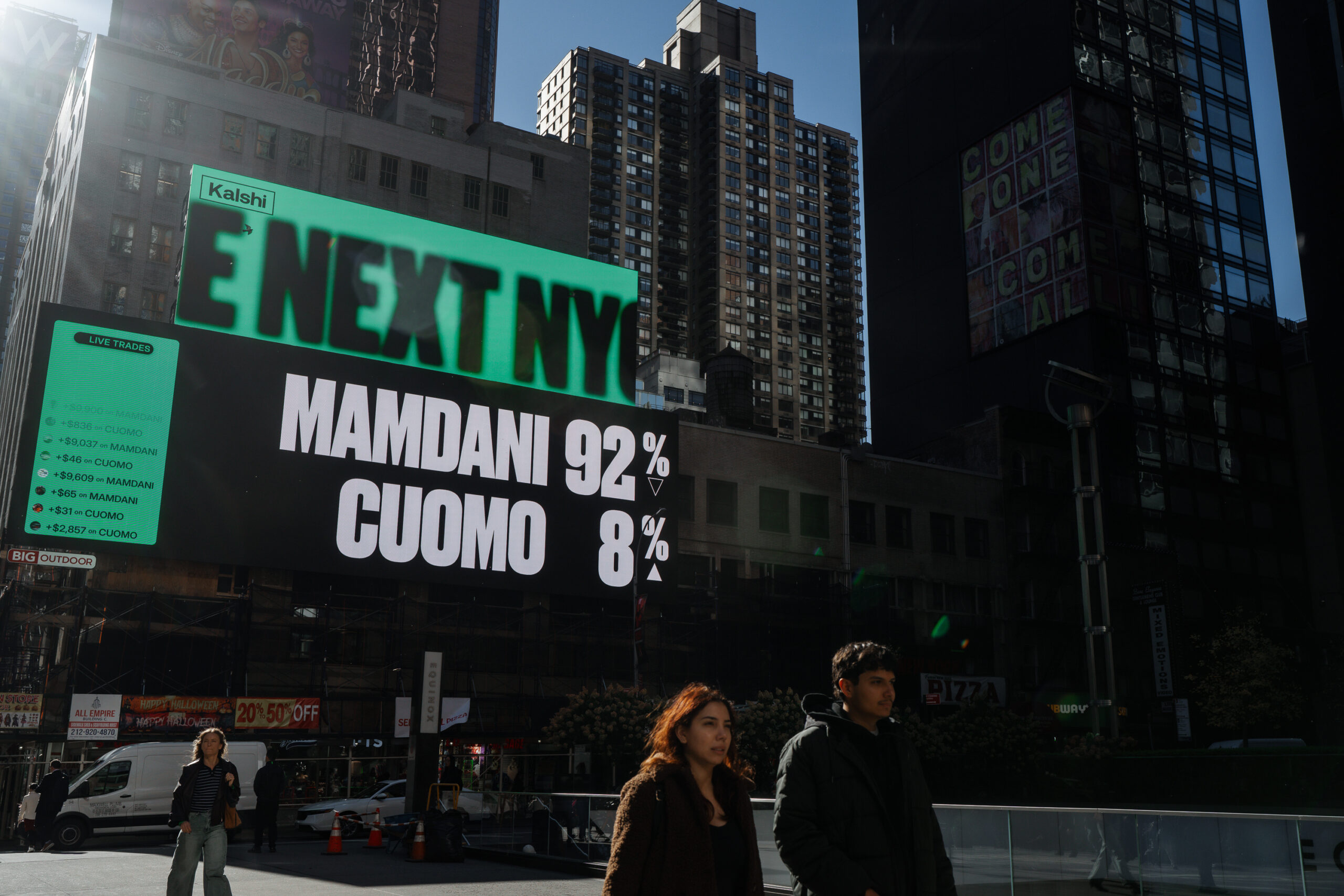
Advertisements by the company Kalshi predict a victory for Zohran Mamdani in the New York City mayoral election before the votes are counted and polls close, Tuesday, Nov. 4, 2025, in New York.
‘Event contracts’
At issue is whether the “event contracts” offered by prediction markets amount to gambling — regulated by states — or, as Selig says, financial instruments “that allow two parties to speculate on future market conditions without owning the underlying asset.”
Platforms like Kalshi say they are similar to stock exchanges, where people on both sides of a trade can meet — and therefore subject to federal regulation of commodities. Unlike a casino, the platforms say, they don’t win when customers lose.
Pennsylvania regulators see it differently.
The state Gaming Control Board told The Inquirer Wednesday that it takes issue with “‘prediction markets’ allowing any consumer, age 18 years old or older, to purchase a ‘contract’ on any potential future event occurring, even when that event does not have any broad economic impact or consequence, such as the outcome of a random Wednesday night NBA basketball game.”
(Under Pennsylvania law, gambling is limited to those who are 21 or older.)
“The Board believes that is not what the Commodities Exchange Act contemplated when it was enacted by Congress and established the CFTC and is, in fact, gambling,” the board’s Office of Chief Counsel said in a statement.
If the courts side with the Trump administration, states worry that tax revenues from regulated sportsbooks would fall and customers would be vulnerable to markets they say are easily exploited by insiders.
“If prediction markets successfully carve themselves out of the ‘gaming’ definition, they risk creating a parallel wagering ecosystem where bets on sports outcomes occur with significantly less oversight regarding potential match-fixing,” Kevin F. O’Toole, executive director of the Pennsylvania Gaming Control Board, wrote in an October letter to the state’s congressional delegation.
For example, the gaming board has the ability to penalize licensed operators if they violate state regulations, O’Toole wrote, “something that an operator who ‘self-certifies’ their contracts/wagers [under CFTC rules] would never be subjected to.”
O’Toole said the board’s regulatory role in this area is limited to sports wagering, but he added that markets on non-sports related events — he cited examples from Polymarket such as whether there will be a civil war in the United States this year — are equally “if not more troubling.”
The CFTC says it is capable of overseeing the industry. “America is home to the most liquid and vibrant financial markets in the world because our regulators take seriously their obligation to police fraud and institute appropriate investor safeguards,” Selig wrote in a Wall Street Journal opinion piece this week.
After the drama of the U.S. women’s ice hockey team’s come-from-behind win in the gold medal game Thursday, the spotlight now shifts to the men’s tournament for the rest of the Olympics.
The quality of the United States’ 2-1 overtime win over Sweden in Wednesday’s quarterfinals, and the other three games that day, showed why it’s so great to have NHL players back on the big stage.
On Friday, the tension will rise even more. The Americans will face a Slovakia squad that has just seven NHL players but topped a group with Sweden and Finland and routed Germany in the quarterfinals, 6-2.
The San Jose Sharks’ Pavol Regenda scored twice, and Flyers fans might recognize a few names from rival NHL teams: New Jersey’s Šimon Nemec, Washington’s Martin Fehérváry, and Montreal’s Juraj Slafkovský.
NBC will carry the U.S.-Slovakia game live at 3:10 p.m. Philadelphia time. USA Network will have the other semifinal, a star-studded Canada-Finland matchup, joining it in progress at 11:50 a.m. It starts at 10:40 a.m., with the entire game streamed on Peacock.
Other big events Friday include a U.S.-Switzerland women’s curling semifinal, starting at 8 a.m. on Peacock. USA will join it in progress at 8:45. It’s the first time that a U.S. women’s curling team has made an Olympic semifinal in 24 years — and this group includes a Delaware County native, Broomall’s Taylor Anderson-Heide.
There’s also women’s speedskating’s 1,500 meters. The United States’ Brittany Bowe will hope to challenge Dutch star Femke Kok, who won gold in the 500 meters and silver in the 1,000. Bowe might also hope for a little stardust from her new fiancée, U.S. women’s hockey star Hilary Knight, after Knight popped the question in Milan earlier this week.
As a general rule, our schedules include all live broadcasts on TV, but not tape-delayed broadcasts on cable channels. We’ll let you know what’s on NBC’s broadcasts, whether live or not.
NBC
Noon: Bobsled — Two-woman first run
12:15 p.m.: Freestyle skiing — Men’s aerials final (tape-delayed)
NBC’s TV coverage will have live events from noon to 5 p.m. Philadelphia time on weekdays and starting in the mornings on the weekends. There’s a six-hour time difference between Italy and here. The traditional prime-time coverage will have highlights of the day and storytelling features.
As far as the TV channels, the Olympics are airing on NBC, USA, CNBC, and NBCSN. Spanish coverage can be found on Telemundo and Universo.
NBCSN is carrying the Gold Zone whip-around show that was so popular during the Summer Olympics in 2024, with hosts including Scott Hanson of NFL RedZone. It used to be just on Peacock, NBC’s online streaming service, but now is on TV, too.
Every event is available to stream live on NBCOlympics.com and the NBC Sports app. You’ll have to log in with your pay-TV provider, whether cable, satellite, or streaming platforms including YouTube TV, FuboTV, and Sling TV.
On Peacock, the events are on the platform’s premium subscription tier, which starts at $10.99 per month or $109.99 per year.
You have to start there. It is the independent variable. You have to define it in order to solve the rest of the equation. You can’t have an opinion on how the Eagles should proceed with their All-Pro wide receiver if you don’t first have an opinion on what they should do without him.
Feel free to take as much time as you need. Just make sure that you don’t dwell too long on the internal options. Right now, there aren’t any.
Aside from DeVonta Smith, the Eagles have exactly two pass-catchers under contract who had a target for them last season. Darius Cooper and Britain Covey combined for 11 catches on 112 yards. Other than that, your options are limited to 2024 sixth-round pick Johnny Wilson, who missed last season with a knee injury. The tight end room doesn’t even have anyone to turn on the lights.
So … what’s the plan?
The draft is not a serious option. Not where the Eagles are picking, at least. Last year’s draft yielded 11 wide receivers and tight ends who played at least 50% of their team’s snaps. Four of those players were selected before pick No. 23. Five others played for the Titans, Browns or Jets. Maybe they’ll be in a position to draft this year’s Emeka Egbuka (No. 19 to the Bucs in 2024). But they could just as easily end up with this year’s Matthew Golden (No. 23 to the Packers). The best way to get yourself in trouble on draft day is to try to solve this year’s problems.
It isn’t outlandish to think Alabama wide receiver Germie Bernard might be capable of what Deebo Samuel did as a rookie when the 49ers drafted him in 2019.
That’s not to say they shouldn’t be looking. Nor that they won’t find some help. Alabama’s Germie Bernard would make a worthy target, even at No. 23. Whatever he measures at the combine, the game speed is there, as is the hybrid 6-foot-1, 204-pound frame. It isn’t outlandish to think he could do what Deebo Samuel did as a rookie after the 49ers drafted him at No. 36 overall in 2019: 57 catches, 802 yards, 14 carries, 159 yards. But to feel comfortable trading Brown, you need a lot more certainty than “isn’t outlandish.”
Free agents? Sure, let’s talk. Alec Pierce would be a no-brainer. At 25 years old, the Colts wideout caught 47 passes for 1,003 yards with Daniel Jones, Philip Rivers and Riley Leonard at quarterback. He isn’t anywhere close to Brown as a singular talent. Still, if you combine him with a draft pick like Bernard, he could be part of a radical and positive identity shift in both the short- and long-term.
Only one problem: The Eagles are one of 32 teams that can bid on free agents. A team like the Patriots can offer more cap room and a better quarterback and an acute need at the position. I’m skeptical the Eagles would win out.
The free agent crop is interesting even beyond Pierce and presumptive Cowboys franchisee George Pickens. Jauan Jennings and Mike Evans could replace some of Brown’s physicality in traffic and in 50/50 situations. Again, though, you have to wonder. Will players who have multiple options err on the side of a team with a run-heavy approach and Jalen Hurts at quarterback?
The conundrum is the same as it was three months ago, when the annual pre-trade-deadline nonsense reached its crescendo. The dream that the Eagles might part ways with their WR1 died in a head-first collision with reality. However disgruntled Brown was, however diminished his skills were, nobody else on the roster would have done enough in his stead to survive such a move. To suggest otherwise was to betray a fundamental misunderstanding of how this Eagles passing offense works. It would not have functioned without him.
Colts wide receiver Alec Pierce had his first 1,000-yard season with Daniel Jones, Philip Rivers, and Riley Leonard throwing to him.
True, the Eagles barely functioned with Brown. But that only matters if you think they should have given up on the season at the trade deadline. That’s what they would have been doing by trading Brown. Look at their track record without him. Brown missed four (meaningful) games in his first three seasons with the Eagles. The Eagles lost three of them, and they scored 15 points in the game that they won. In 2025, the Eagles scored 38 points against the Giants without Brown. They also threw the ball 20 times. Smith was the only wide receiver to catch more than one of them.
Plenty of NFL teams have managed to win without two WR1 types. But we’ve never seen Hurts have to do it. Right now, the Eagles don’t even have a WR2 who is better than replacement level. Keep in mind, the Eagles already have a hugely pressing need at tight end. They could need to spend big bucks to retain Jaelan Phillips, or to sign a replacement. In the draft, they will be hard-pressed to turn down an opportunity to add another offensive lineman to their feeder system.
The preponderance of the circumstances says the Eagles probably shouldn’t trade Brown. Life would be a lot easier if they didn’t need to. The onus is on the case for how they can do so and survive. If you can make one, I’m sure they’d love to hear it.
MILAN — Eileen Gu and all the other freestyle skiers wait for their scores by a large Powerade-branded cooler, then glide away without taking a drink.
Bottles of the blue sports drink are stacked in hockey penalty boxes. Even the tissues in figure skating’s drama-packed “Kiss and Cry” area are branded.
One way the Olympics generally stand out is by the absence of advertising on courses, rinks, and slopes. But increasingly at the Milan Cortina Games, sponsors are creeping into the action.
“We continue to open up those opportunities for partners,” International Olympic Committee marketing director Anne-Sophie Voumard said Wednesday, noting sponsor products can now “organically be present” more widely.
The change has seemingly accelerated since French luxury goods maker LVMH prominently placed its Louis Vuitton brand at the opening ceremony of the 2024 Paris Olympics.
“It seems like there’s been an increasing need and desire from the sponsors for the IOC to show greater value in the TOP [the Olympic partners] program,” Terrence Burns, who has worked for the Olympic body in marketing and consulted for sponsors and hosting bids, told the Associated Press.
There’s product placement on TV, even if it is still restrained compared to most American sports. Spectators inside the Olympic arenas hear shout-outs by the announcers and see logos on the big screen.
The IOC is looking to create extra value in its TOP program, which has been a financial success for the organization over four decades. There are 11 TOP sponsors in Milan, after peaking at 15 in Paris. Revenue in 2025 dropped a bit to $560 million in cash and services compared to $871 million in 2024.
Watching a hockey game in the arena is different
An Olympic hockey game looks clean and non-commercial on TV to NHL fans used to seeing sponsors on the boards. It’s a little different in the venue.
“This is the Corona Cero wave!” roars an announcer, attaching an alcohol-free beer brand to efforts to liven up fans at a quiet afternoon game with a wave around the arena.
An automaker gets a mention with the “Stellantis Freeze Cam” and an interview with a boxer during the intermission between periods is “thanks to Salomon,” a skiwear brand that signed a sponsor deal with the Milan Cortina organizing committee.
Burns thinks the logos in Olympic arenas are a morale booster for sponsors, but worth relatively little compared to the big campaigns they typically launch in the year before the Games.
“I think it’s a psychological ‘Attaboy’ to see your brand on a board somewhere in and around the Olympics,” Burns said. ”I get it, but show me how that helps you sell more things.”
A long-term trend ahead of the 2028 Los Angeles Olympics
The Olympic Charter, a kind of constitution for the Games, says any logo in an Olympic venue must be approved “on an exceptional basis,” but the IOC has gradually relaxed its restrictions.
“The Olympic world moves slow, and it should. It’s a 3,000-year-old brand, so they’ve got to be careful with it,” Burns said.
Barely a decade ago, the “clean venue” policy was so strict that IOC staff checked the hand dryers in arena bathrooms to make sure they had their manufacturer’s brand covered with tape.
For the Tokyo Olympics in 2021, restrictions on athletes promoting their personal sponsors on social media were relaxed after a legal challenge in Germany.
The Paris Olympics saw medals delivered to the podium in Louis Vuitton-branded boxes before athletes were handed a phone for “the Olympic Victory Selfie, presented by Samsung,” a new tradition that’s continued at the Milan Cortina Games.
Voumard, the IOC’s marketing director, acknowledged the need to “be mindful of the legacy of those [Olympic] Games and the uniqueness of the presentation.”
New opportunities
The Los Angeles Olympics will break new ground on sponsorship.
For the first time, the IOC has approved the selling of naming rights for venues in a pilot program. The volleyball venue in Anaheim will keep its Honda Center name, just like it does for NHL games, and Comcast is putting its brand on a temporary arena for squash.
Until now, stadiums named for sponsors have had to switch to generic names for the Olympics. The O2 Arena in London became the North Greenwich Arena for basketball and gymnastics in 2012, and a raft of French soccer stadiums got new names for 2024.
Burns predicts the IOC might come under pressure from Los Angeles organizers to take further sponsor-friendly steps, and might need to push back on some requests to protect the Olympic brand.
“It’s not unreasonable to think that LA would look to what happened in Paris with Louis Vuitton or even Samsung on a podium,” Burns said.
“It’s their fiduciary responsibility to try to make as much money as they can. So they’re going to be looking for any and all opportunities to generate incremental revenue from sponsors. That’s the IOC’s role as a franchisor to protect that.”
Each Friday, Inquirer photo editors pick the best Philly sports images from the last seven days. This week, there’s nowhere better to start than on the hardwood with the boys’ and girls’ high school basketball playoffs in full swing. There’s plenty from the college game and Phillies spring training as well.
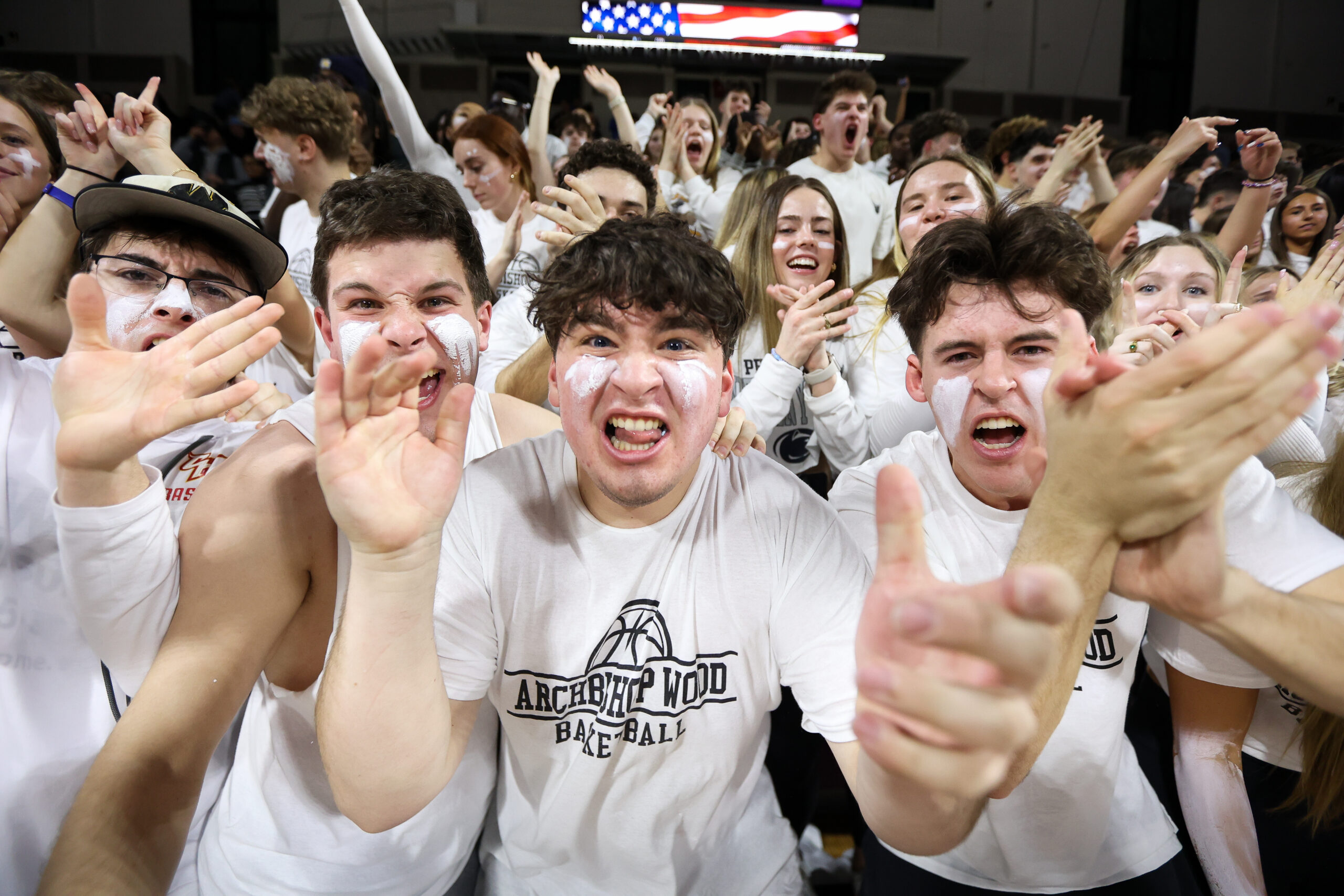
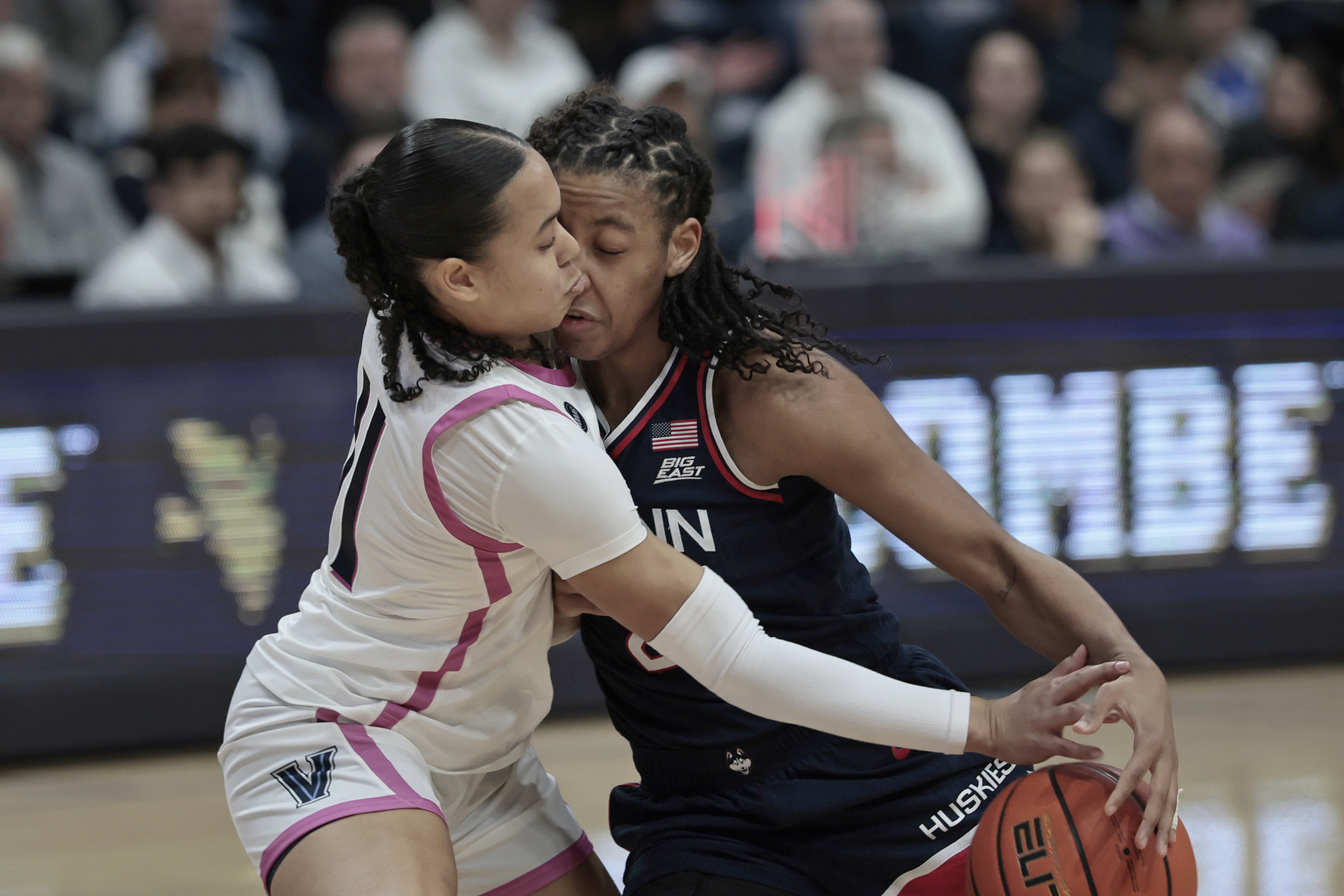
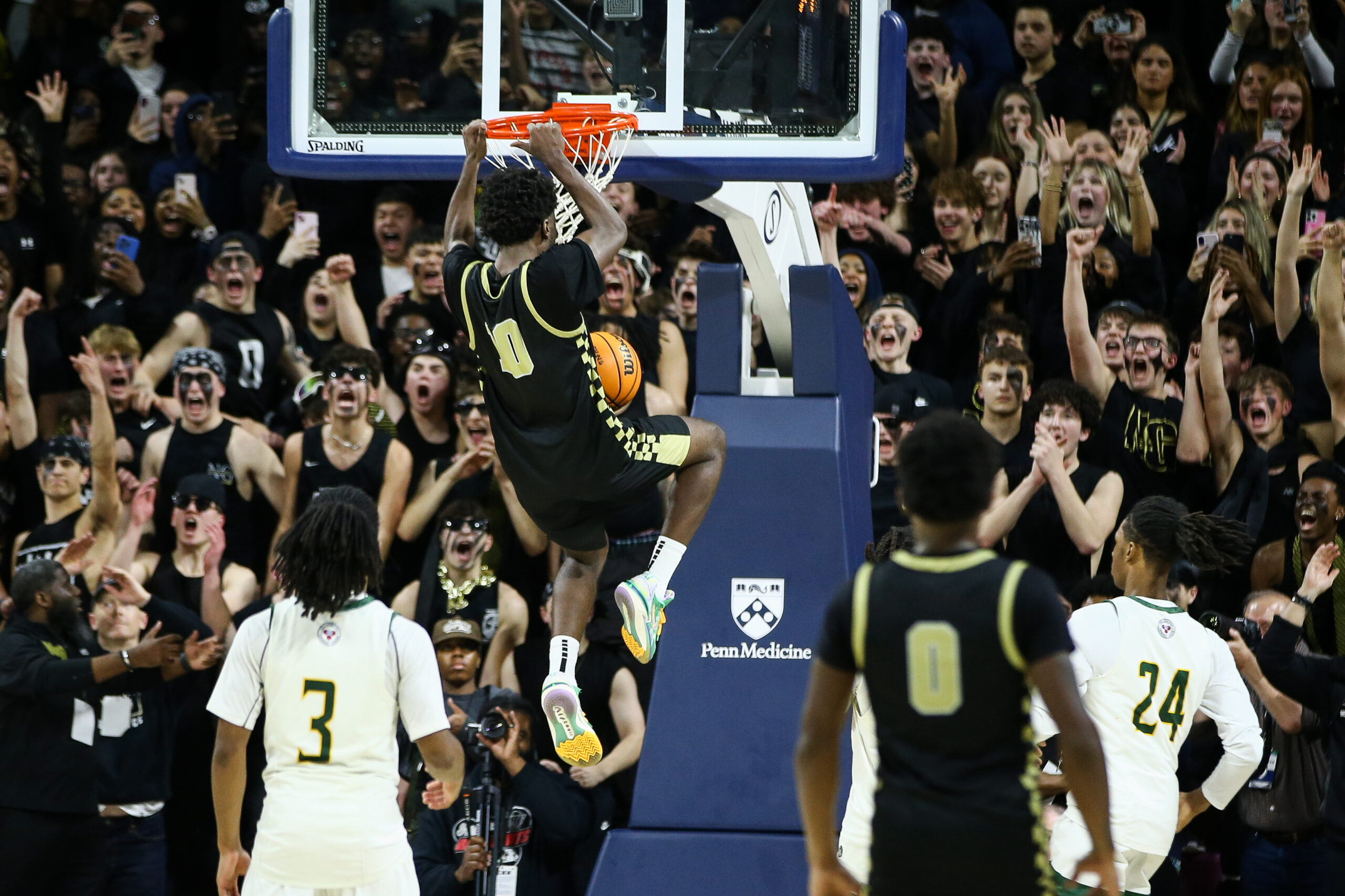
The Archbishop Wood student section cheers before the start of the Vikings’ Catholic League semifinal against Father Judge at the Palestra on Wednesday. Villanova’s Jasmine Bascoe (left) knocks the ball away from UConn’s KK Arnold on Wednesday at the Finneran Pavilion. No. 1 UConn prevailed, 83-69.Neumann Goretti’s Marquis Newson dunks during the final minutes of its win against Bonner Prendergast in the Catholic League semifinals.
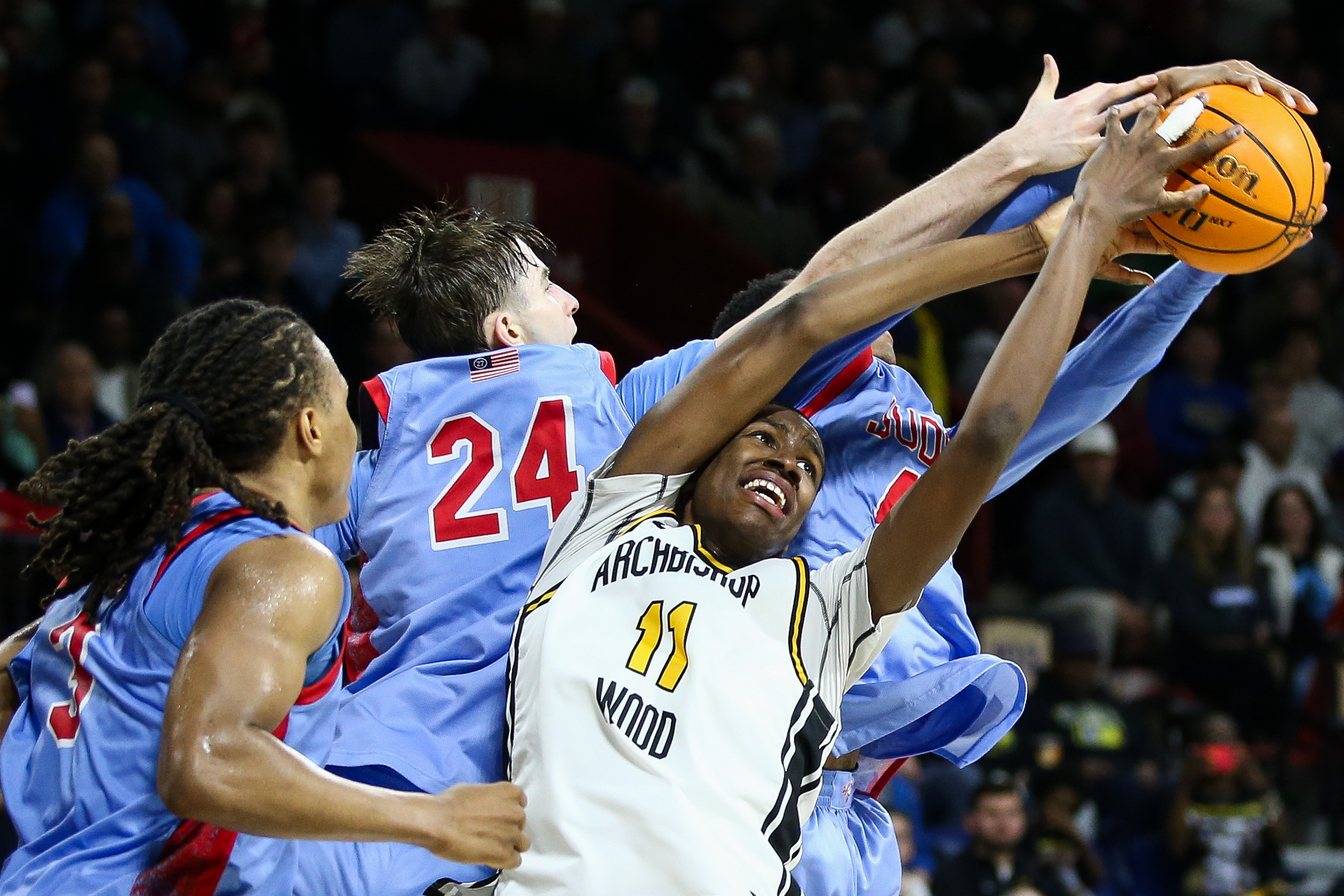
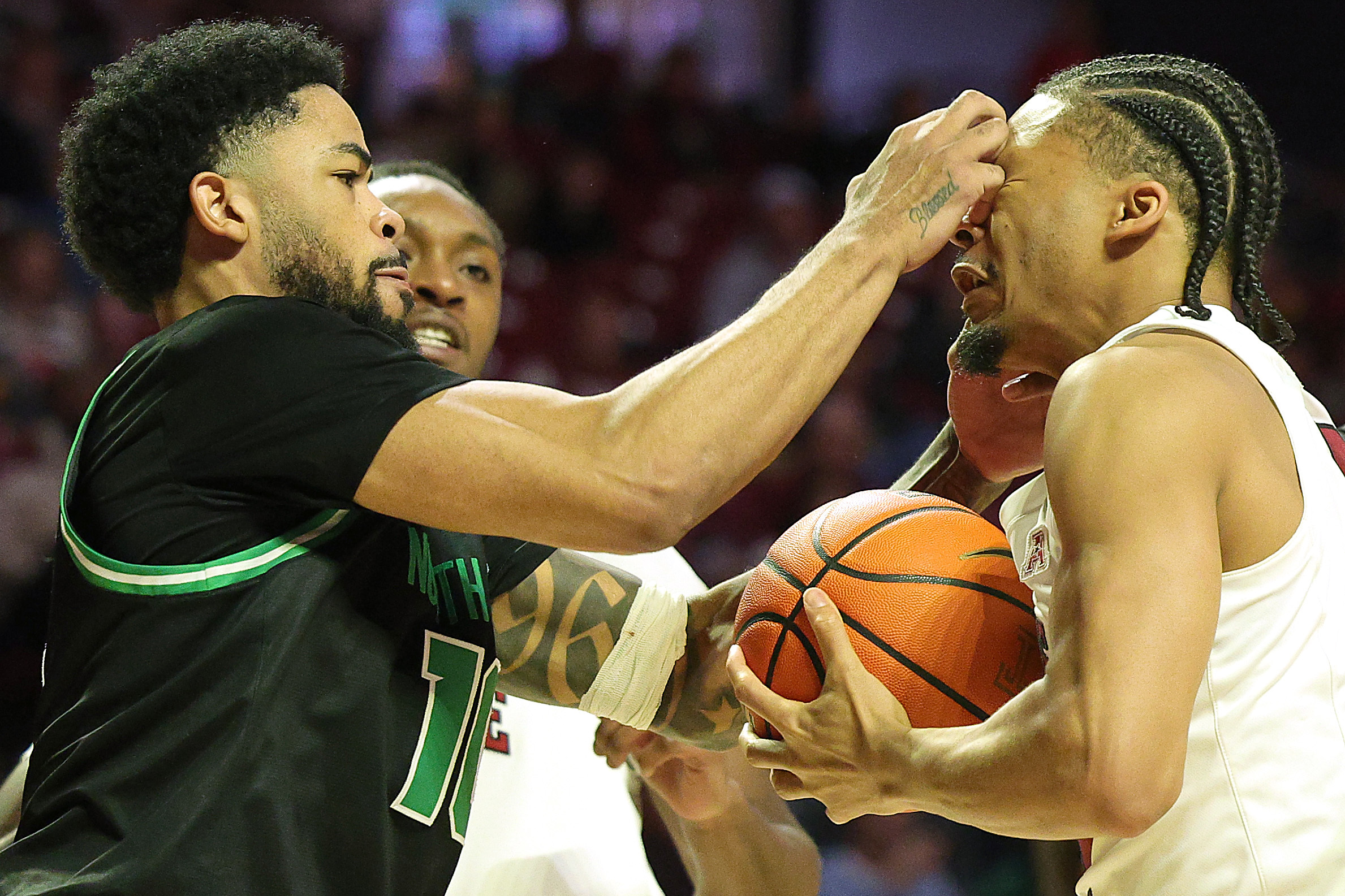
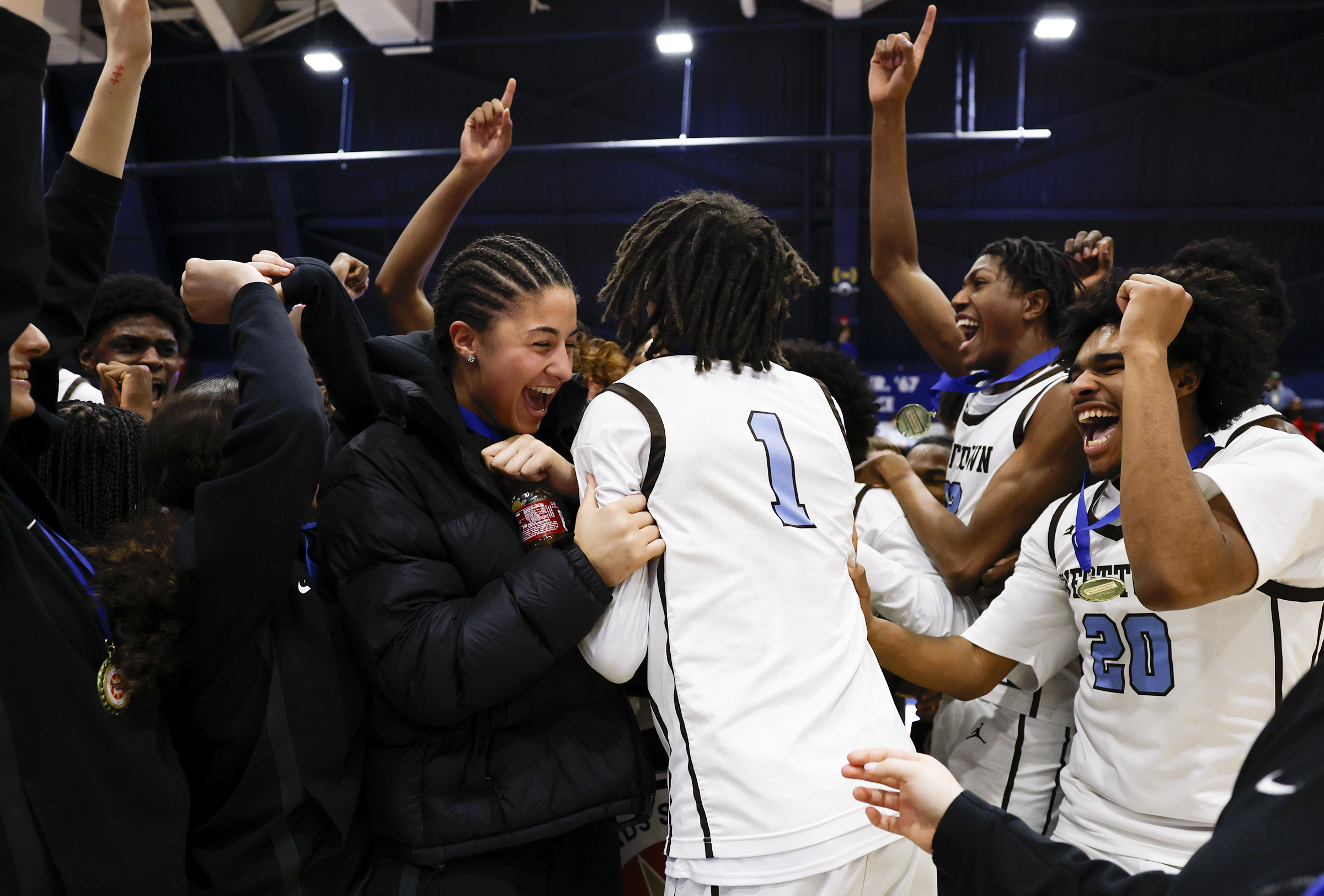
Archbishop Wood’s Jaydn Jenkins reaches for a rebound against several Father Judge players in their Catholic League semifinal game. Judge came out the winner.Cole Franklin of North Texas hits Temple’s Masiah Gilyard as he reaches for the ball Sunday at the Liacouras Center. The Owls fell, 65-62.Members of the boys’ and girls’ basketball teams at Westtown School rejoice after wining their Friends Schools League championships at La Salle University last Friday.
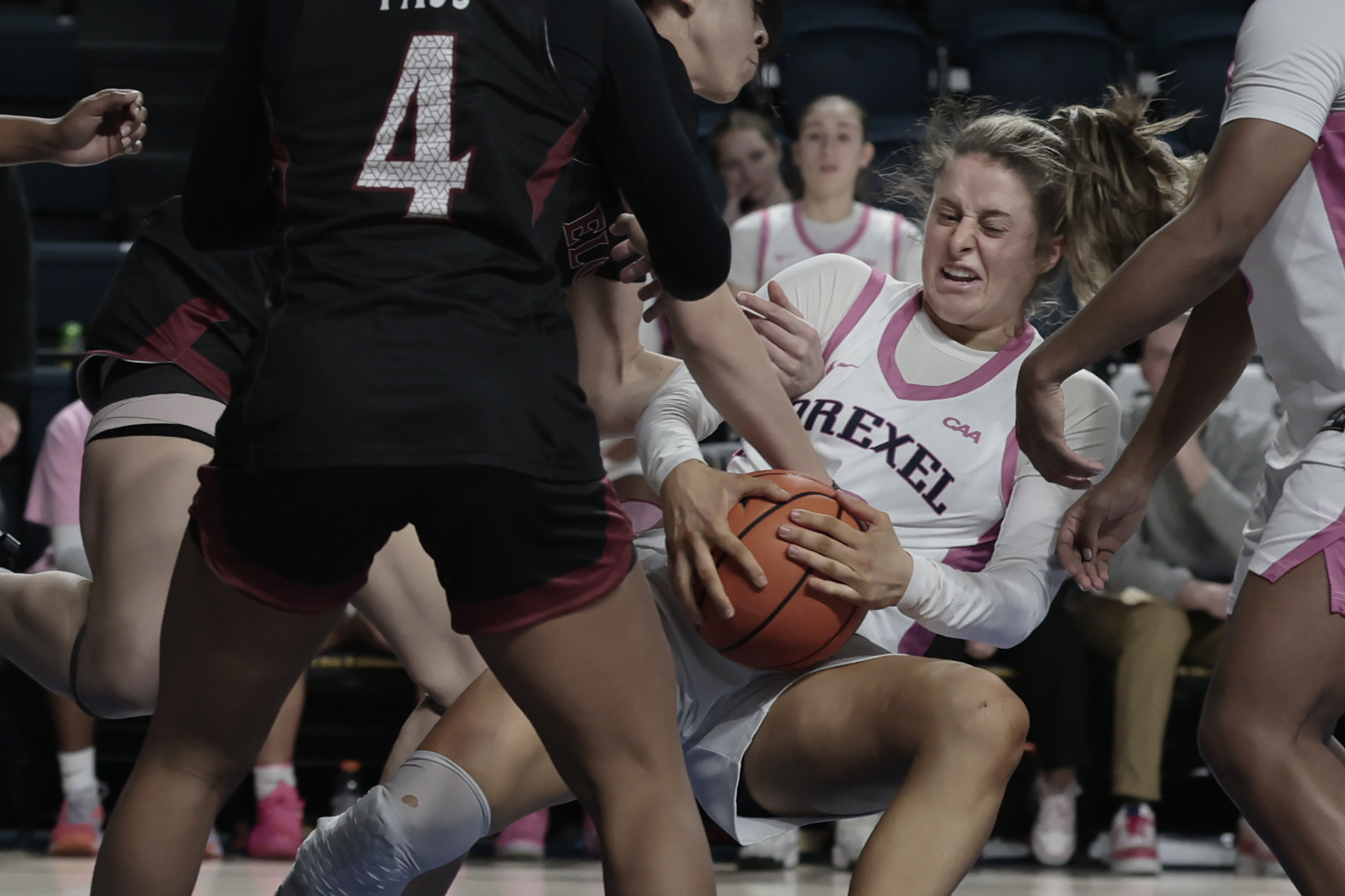
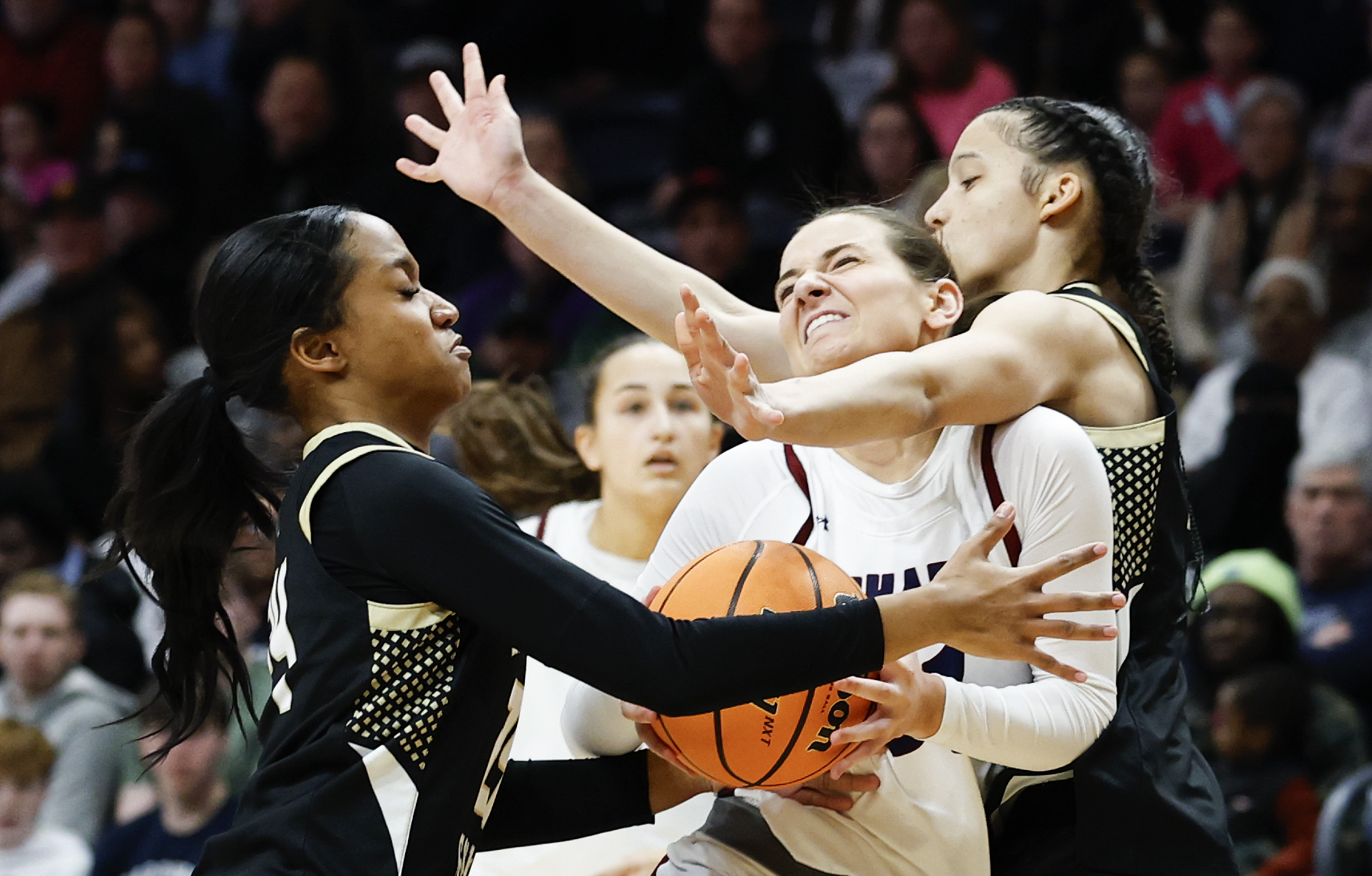
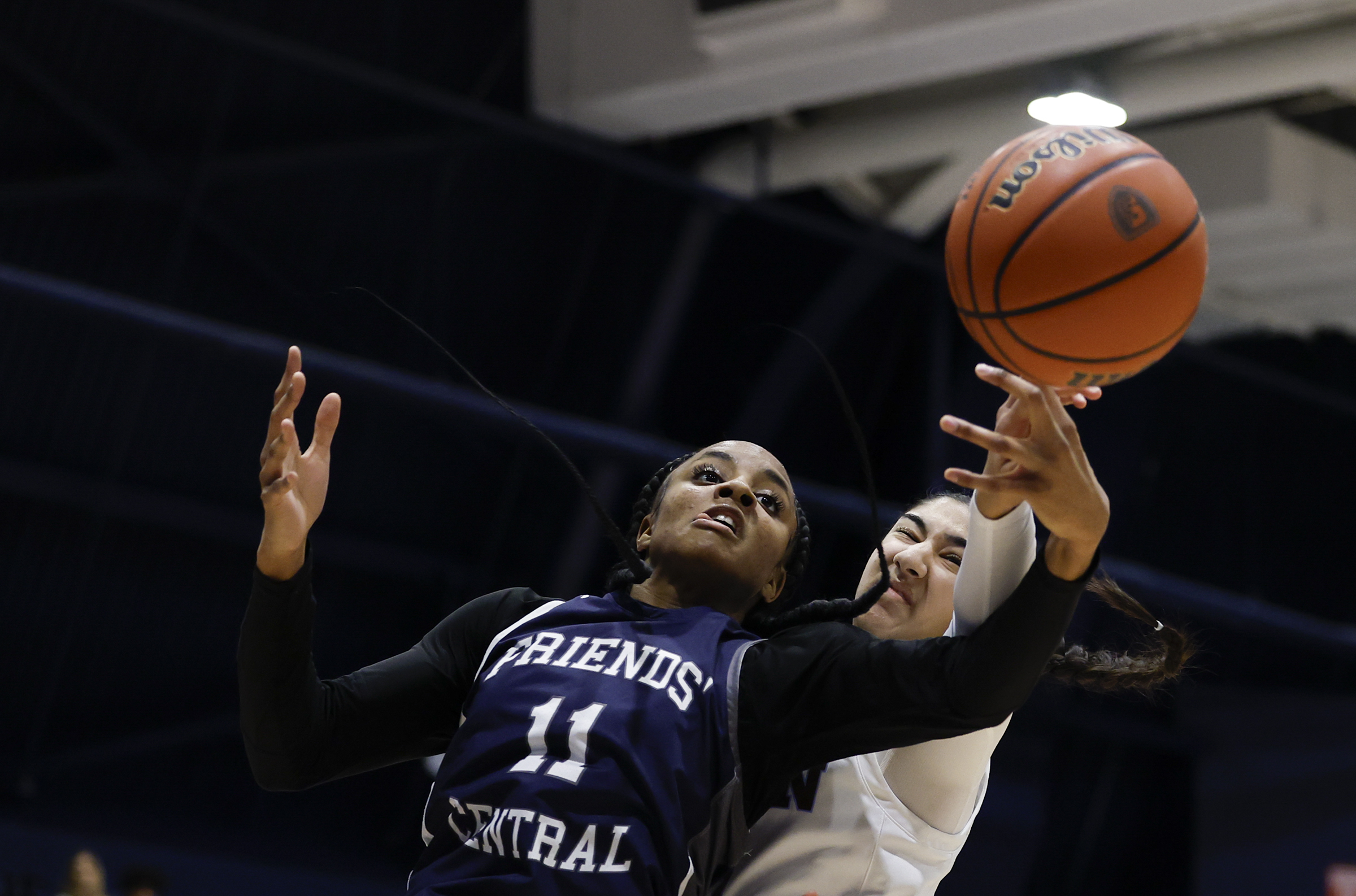
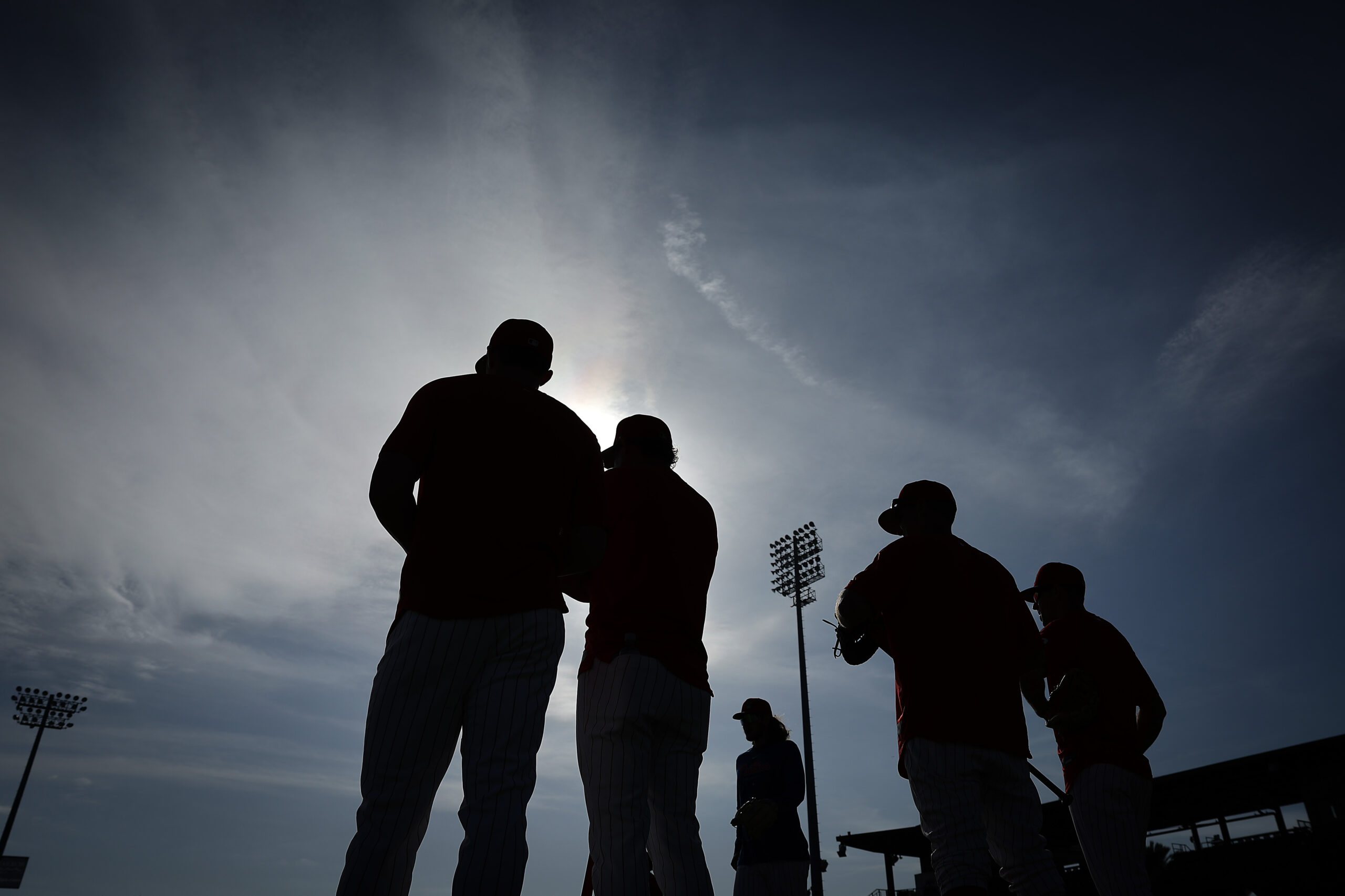
Drexel’s Laine McGurk hits the deck as she fights for a loose ball against Elon last Friday. Drexel won, 68-59. Cardinal O’ Hara’s Megan Rullo (center) is fouled driving to the basket against Neumann Goretti’s Kamora Berry (left) and Reginna Baker during their Catholic League semifinal at Villanova. Rullo scored 22 points in a 51-33 victory. Friends’ Central School’s Zya Small (11) fights for the basketball with Westtown School’s Ishana Sundararajan during the Friends Schools League title game. Phillies third baseman Alec Bohm (center) is silhouetted along with some of his teammates as they wait during a drill at spring training in Clearwater, Fla.
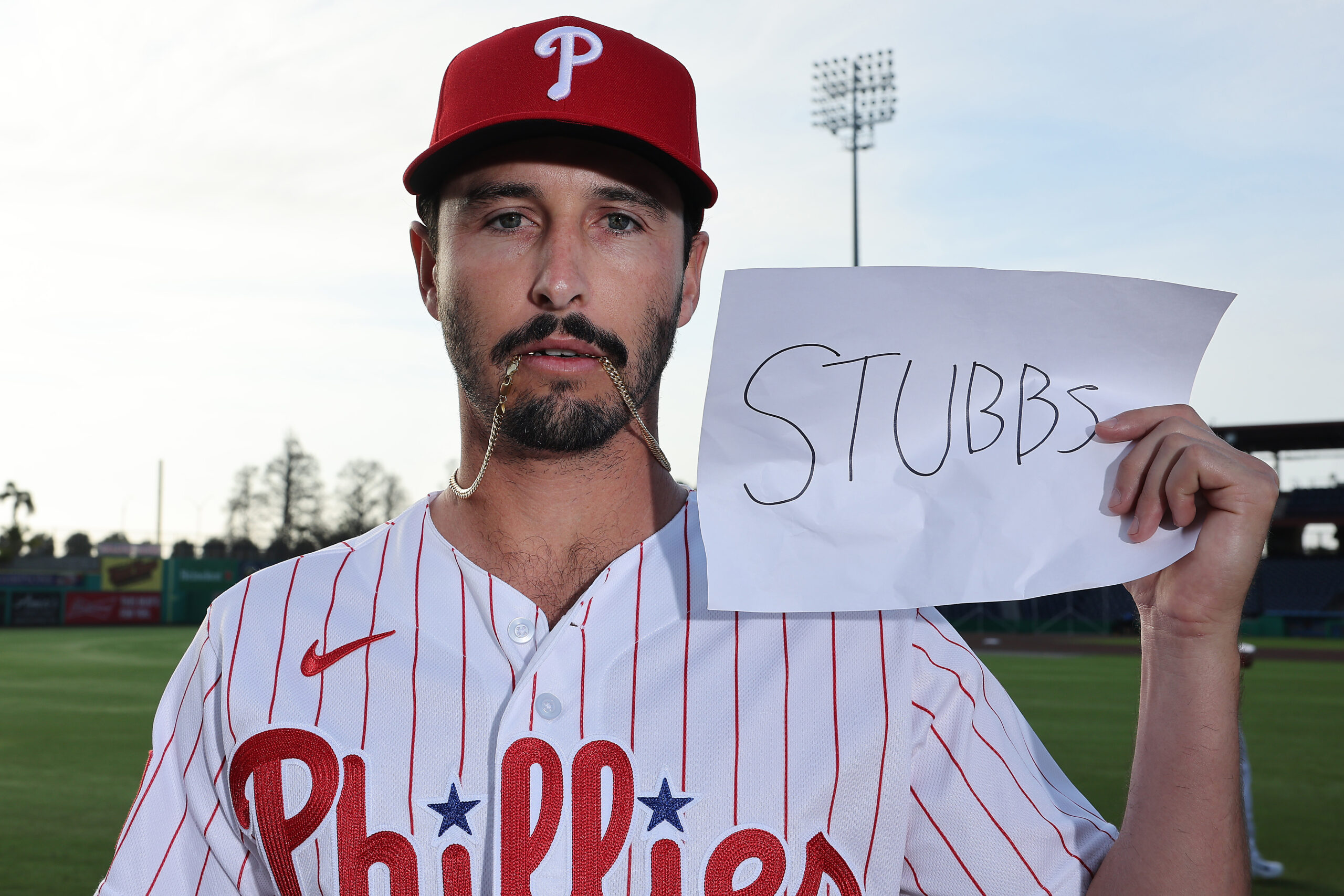
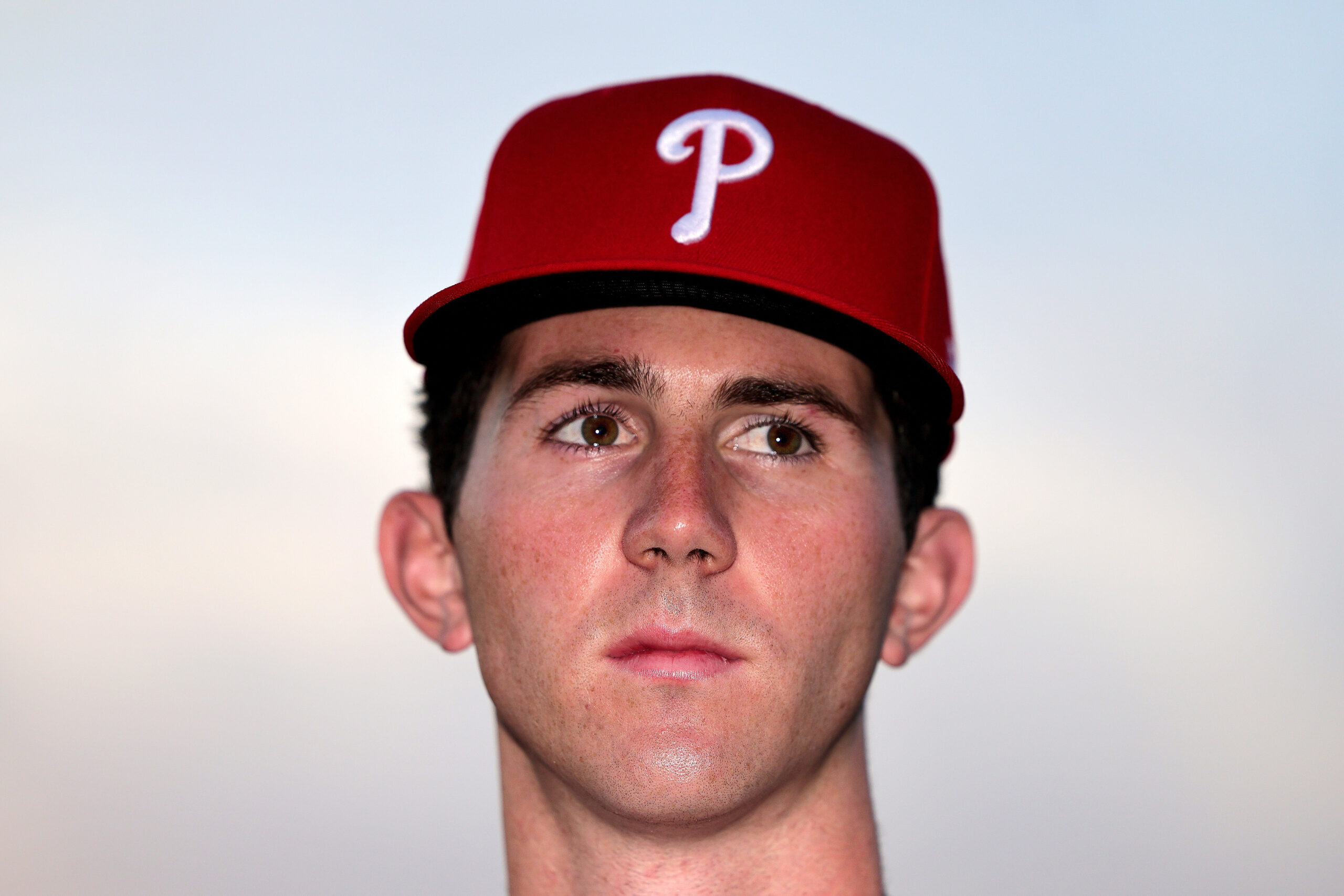
Phillies catcher Garrett Stubbs plays around for his portrait on photo day at spring training. Phillies pitcher Andrew Painter poses for a portrait during photo day in Clearwater, Fla. Veteran right-hander Aaron Nola warms up in the outfield at spring training on Wednesday. Justin Crawford, a rookie outfielder known for his speed, runs the bases during a drill at Phillies spring training on Tuesday. Hoping for a bounce-back season, pitcher Aaron Nola (center) talks with his Phillies teammates in Clearwater, Fla. Phillies shortstop Trea Turner takes part in a drill that involved bouncing a tennis ball off a mask during spring training.
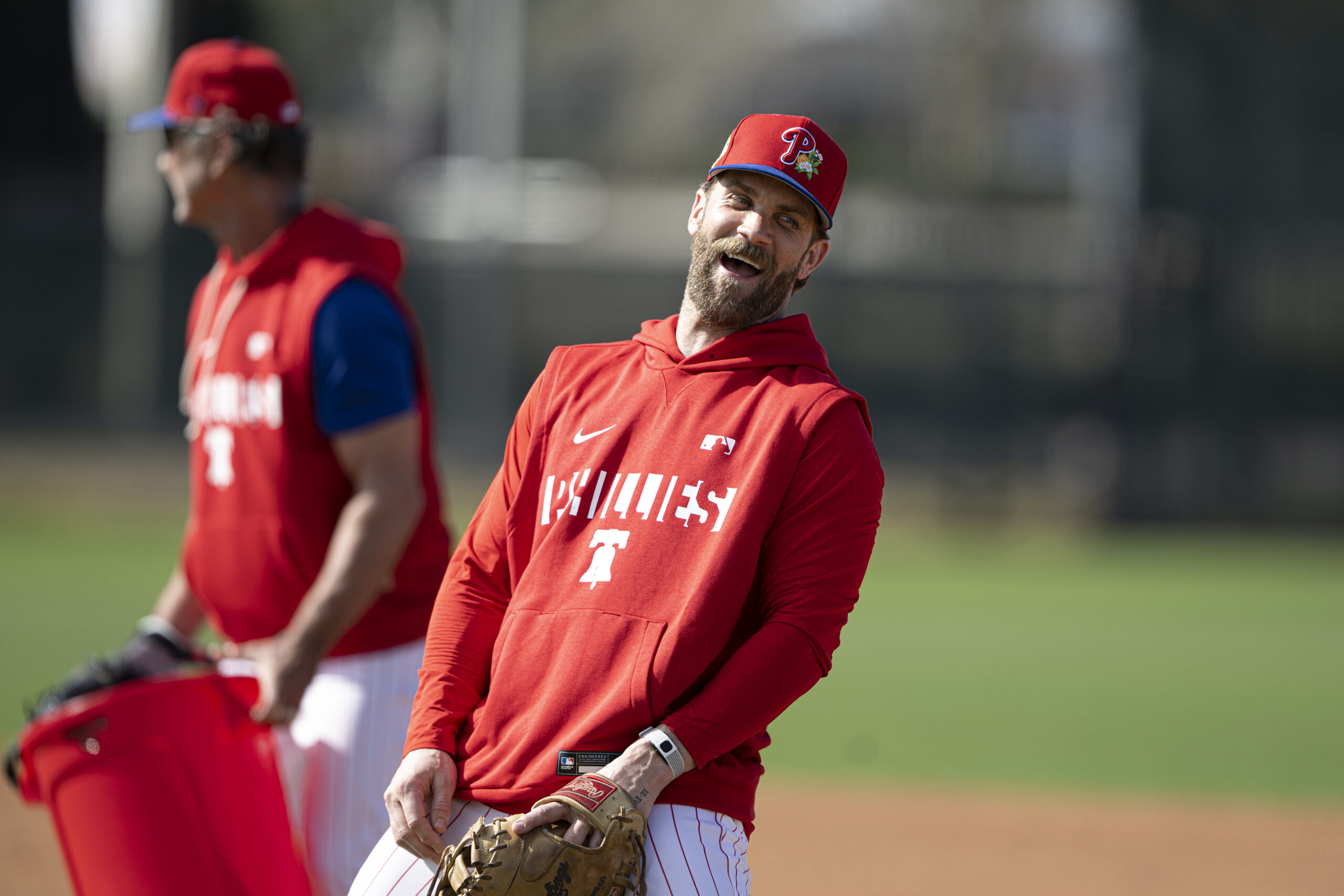
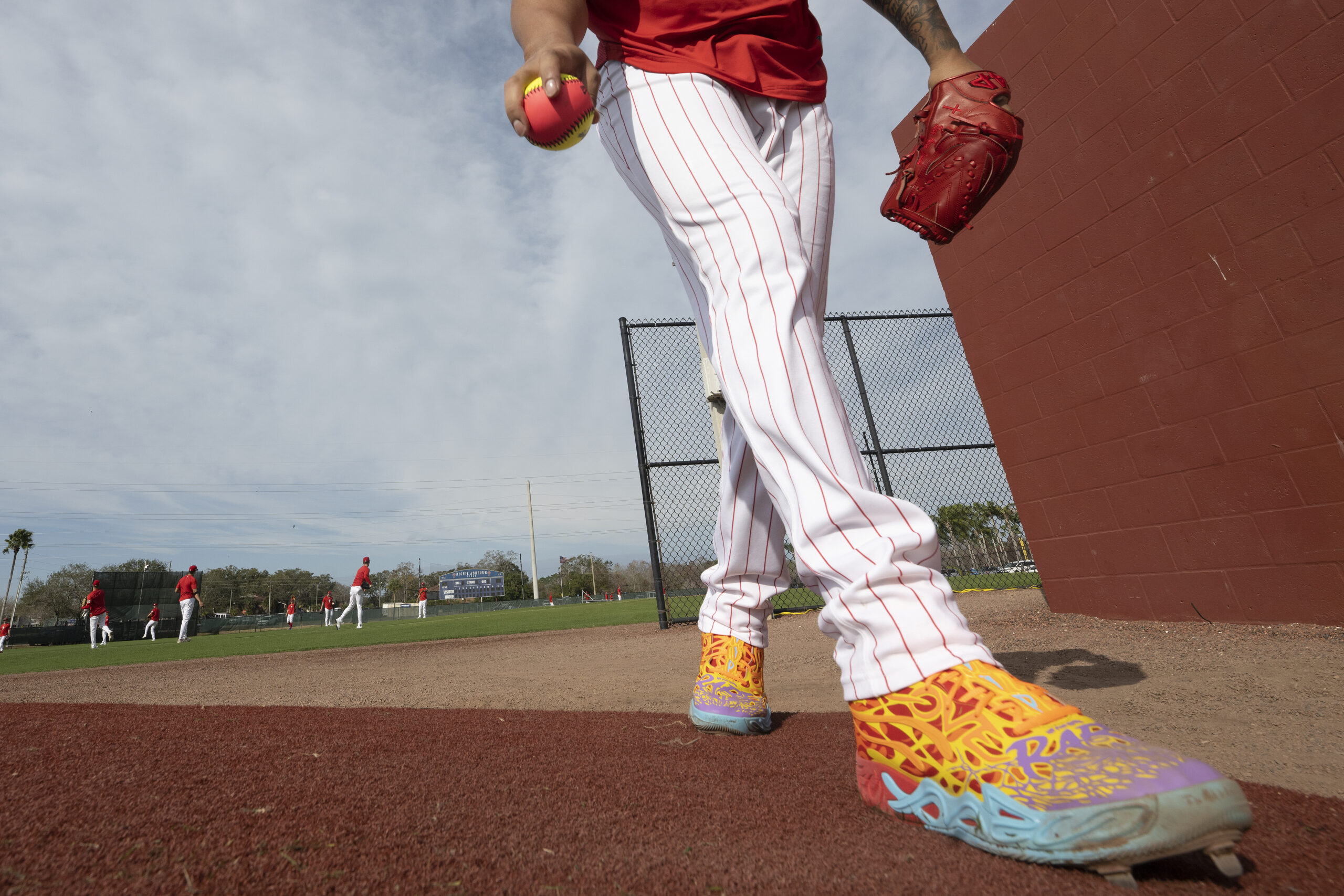
First baseman Bryce Harper (right) interacts with new Phillies bench coach Don Mattingly during the first full-squad workout on Monday. Phillies reliever Jose Alvarado goes through a workout on Saturday. Pitcher Taijuan Walker looks on during a spring training workout on Sunday. Hot feet: Closer Jhoan Duran walks off the mound after a bullpen session during spring training on Sunday.
Olwethu Makhanya is just 21 years old, and this year will be his second as a regular player for the Union. But in a centerback unit with so many newcomers, that’s enough to qualify him as a veteran.
In fact, it’s enough to qualify him as a rising leader. Though Japhet Sery Larsen and Geiner Martínez are both older, Makhanya is the only one of the expected regulars who has played in Bradley Carnell’s system, and knows the Union’s standards on and off the field.
“We had two important players from the back line leaving the team,” he told The Inquirer, referring to centerback Jakob Glesnes and left back Kai Wagner. “So that leaves people like me who were here last season to try and take on leading, try to help the new guys coming in to understand what we try to do. So yeah, I feel like it’s a new challenge for me to try and be a leader, and lead the new guys.”
No position on the field requires more chemistry than centerback. Whether in a group of two (as the Union use) or three, each player must know where the others were, are, and will be, and often without being able to talk about it in real time.
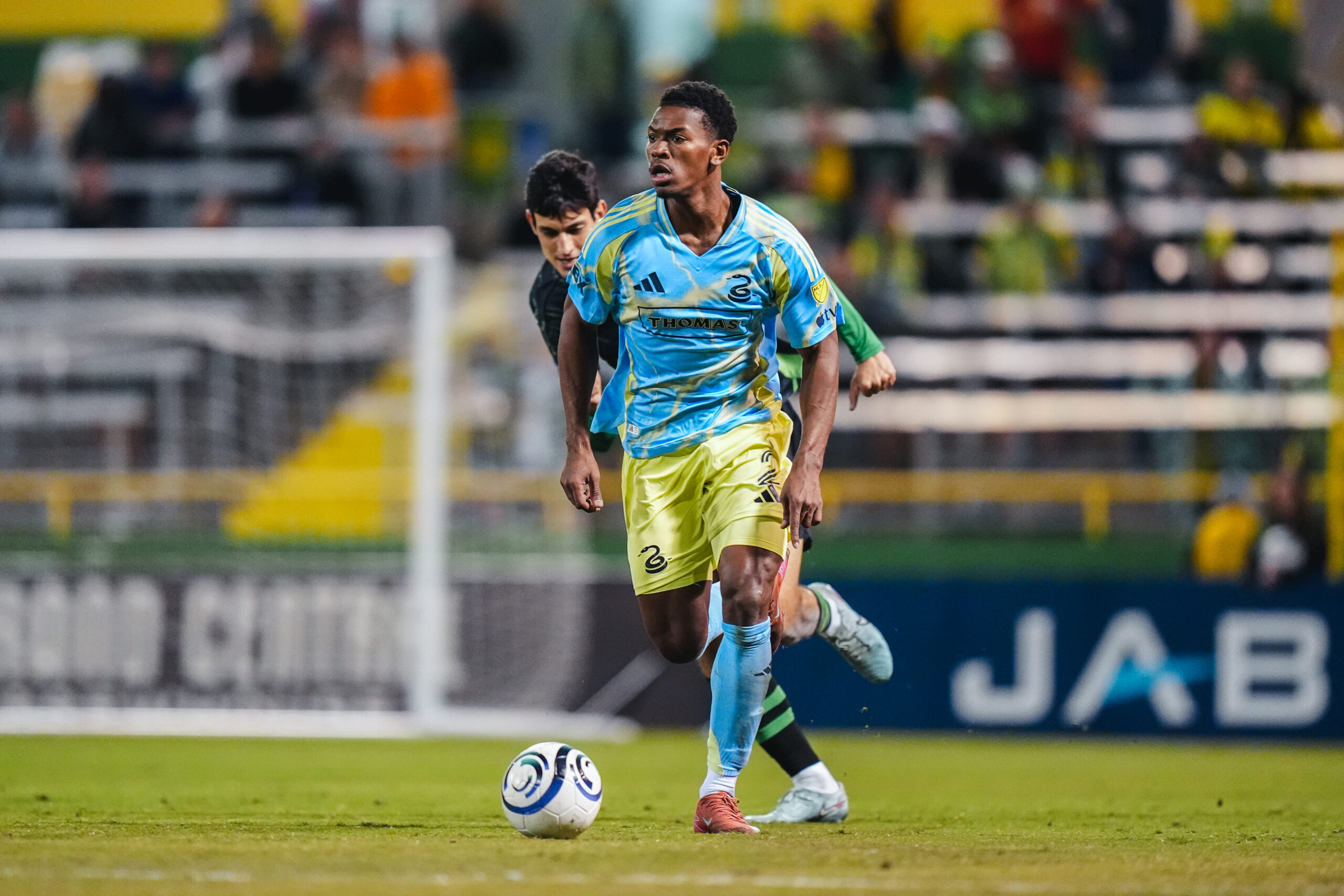
Olwethu Makhanya (right) defending Chicago striker Hugo Cuypers during last year’s playoffs.
That made it crucial to get Makhanya and Sery Larsen as many reps together as possible in the preseason, and that seemed to be achieved over the Union’s five games. Martínez arrived later, but he played in the last two games and was on the field with Makhanya in each.
“I feel like five games is enough,” Makhanya said. “Obviously it’s not going to be perfect from the start, but I feel like it’s going to be enough at least to prepare us for the start [of the season].”
He has also enjoyed getting to know Sery Larsen and Martínez off the field.
“They’re very good people,” Makhanya said. “They’re already blending in with the team. Very good human beings, they work hard, [are] willing to learn, and that’s all we need as a team.”
Japhet Sery Larsen (right) in action during one of the Union’s preseason games.
Selflessness within the group
Though Glesnes’ departure impacts Makhanya most directly, Wagner’s departure matters, too. There are no true left backs on the Union’s roster right now, and though the club is actively shopping for a new starter, they haven’t signed one yet.
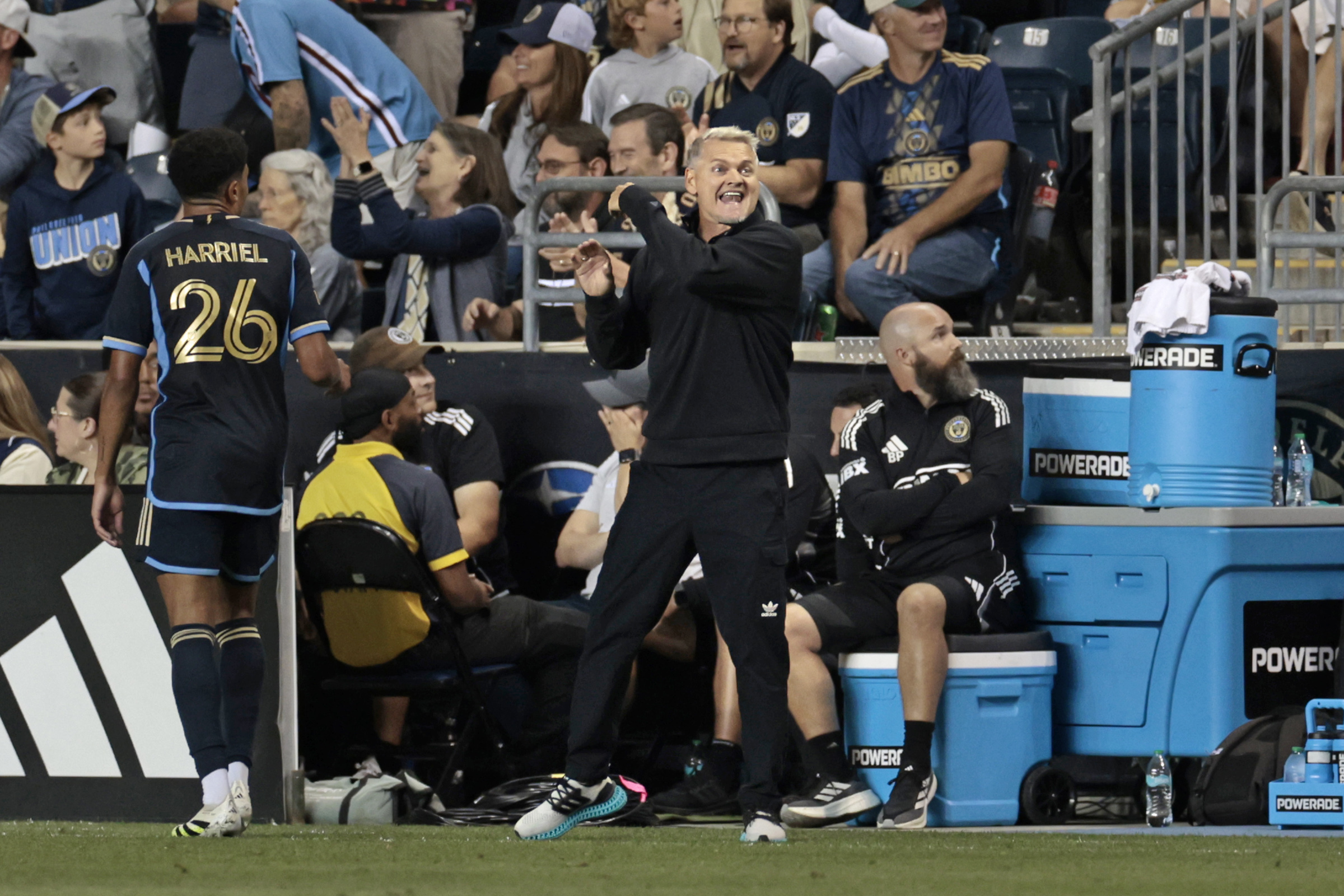
For now, Frankie Westfield and Nathan Harriel are platooning at the spot, since each has past experience there. Makhanya has had to adjust to that, and will have to adjust again when the new signing arrives.
“Looking at the way that we play, the system, the style of play,” Makhanya said, “I feel like the guys that we have at the moment … everyone can be able to play those positions. As long as they’re able to take in the instructions from the coach, we should be fine.”
Longtime Union fans will know that it’s been a regular theme in these pages over the years that the Union need to have more than two starting-caliber centerbacks, so they can be rotated over the season to stay fresh. That will be very important again this season, with the club’s return to the Champions Cup now and MLS’s Leagues Cup in late summer.
Geiner Martínez is the other major new addition to the Union’s centerback group this year.
Any player wants to play, of course, but veterans know the importance of the long haul. So it’s to Makhanya’s credit that he’s willing to take a seat for a night if needed.
“I’d be OK,” he said. “As long as it’s something that’s going to help the team, I’d be fine with it.”
It’s not surprising that Makhanya has grown a bond with manager Bradley Carnell. Along with both being South Africa natives, Carnell took a leap of faith to make Makhanya a starter last year when he hadn’t played a second for the first team yet.
That faith was rewarded with a major role in the Union winning the Supporters’ Shield, and doing so with a return to the stingy defense they cherish.
Bradley Carnell on the Union sideline during a game last year.
“I feel like the relationship I have with him is really amazing,” Makhanya said. ”He’s a great human being, he’s a good teacher, his instructions are very clear, he’s a very understanding person. So because of who he is, it it’s very easy to work with him.”
Asked what his goals are for this year, Makhanya started with some humor.
“Firstly for myself, I think I’m going to score a couple of goals this season on set pieces,” he said. He scored twice last year, including a dramatic game-winner in the U.S. Open Cup round-of-16 comeback against Red Bull New York.
But Makhanya meant it when he said he wants to improve his aerial presence this year and “get a few headers” on free kicks and corners. He proved it right away, too, with a headed goal off a corner kick in the season-opening win at Defence Force FC in the Concacaf Champions Cup.
“And then for the group, we obviously have very high expectations, because we already know what we can do,” he said. “So we’re just trying to maintain that and try to find a way forward, and we take it a game at a time.”
There could be one more goal, too, beyond the Union. South Africa’s national team is in the World Cup for the first time since hosting in 2010. Fans and media back home have noticed Makhanya’s success, and have criticized the Bafana Bafana’s staff for thinking less of MLS than perhaps it should.
Carnell, who played for his country at the 2002 tournament, is well aware — and not pleased. Makhanya was diplomatic about it when asked, at least at first.
“I mean, not even being part of the national team last season was kind of disappointing for me, you know, but it’s just a motivation at the same time,” he said. “So yeah, it’s something that’s been in my mind that I’m looking forward to.”
“I think they do [look at MLS], but I feel like they don’t really have that much respect for the league,” Makhanya said. “So I guess that’s why I’m maybe not part of the squad, but I can’t really know.”
If he starts this season as well as he played last year, there might be even more people hoping for a better answer.
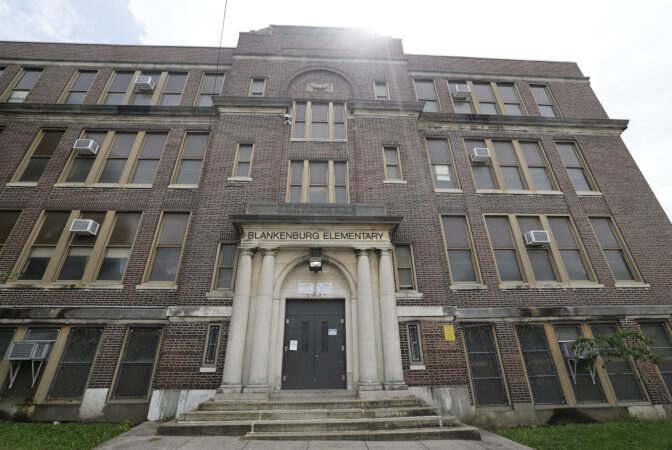
Rudolph Blankenburg Elementary School in West Philadelphia serves kids with complex needs — and test scores reflect that.
The school, where nearly 95% of students are considered economically disadvantaged, had been a Comprehensive Support and Improvement school — a federally mandated designation for schools performing in the bottom 5% statewide.
But last fall, Blankenburg shed that label. Many students are still struggling but are making gains, teachers said — progress they fear will be threatened by a district proposal to close the schoolas part of a sweeping facilities plan.
“We’ve worked really hard, with a consistent staff and all types of resources in place, for our students to pull ourselves out of that status,” said Flori Thomas, a middle school science teacher at Blankenburg.
That’s her biggest fear, she said: “You’re going to impact our scholars.”
Blankenburg is one of 20 district schools proposed for closure under the plan released last month. Six other schools would be colocated and more than 150 modernized as part of the proposal — which is facing resistance from City Council.
District officials say closures are needed in a system that has lost more than 80,000 students over the last 30 years, many to charter schools. The district has struggled to fund repairs of aging buildings — including at Blankenburg, where staff report chipping paint and roof leaks.
Marquita Jenkins, the school’s dean of climate and culture, does not disagree that the building, which opened in 1925, needs repairs — or that it is underutilized. The K-8 school, which currently enrolls 278 students, has room for almost 600. Officials said the school’s enrollment has declined by about 100 students over the last four years.
But the relatively low enrollment has also enabled smaller class sizes, helping student growth, Jenkins said. A former fourth- and sixth-grade teacher at Blankenburg, she recalled teaching a class of 33 students, 11 of whom had individualized special education plans: “It was tough.” Classes now are smaller, she said.
Like other staff, she worried about where Blankenburg students would end up. The district proposes to reassign them to Edward Heston School, James Rhoads Elementary School, and a newly colocated Martha Washington Academics Plus School and Middle Years Alternative School.
Blankenburg‘s building near 46th and Girard, meanwhile, would be conveyed to the city for “affordable workforce housing and/or job creation,” according to the district.
Jenkins and other staff questioned the safety of the routes to schoolfor reassigned students.
They also voiced concern for particularly vulnerable students: Blankenburg is surrounded by at least seven homeless shelters and “tends to have attendance fluctuations,” assistant principal Sandra Pitts said at a virtual community meeting with district officials this month. She questioned how families would be “assisted to avoid further trauma.” (Officials said they would be supporting students with housing instability in placements.)
Staffers noted that Blankenburg also has a significant population of students with special needs, who make up 25% of its enrollment.
Among them is Sherell Robinson’s kindergartener, Illiyin, who has autism and medical complexities.
Robinson, who lives in West Philadelphia, said that Illiyin had been denied enrollment at other district schools, and that she was told she had to send her daughter to Blankenburg.
Robinson initially had a negative impression of Blankenburg but was impressed with the school’s principal, Sheena Wilson, who “didn’t try to sell me, or placate me” — just presented what the school had to offer, she said.
What Robinson found was a small environment, “loving people,” and a routine for Illiyin. Now she is panicked at the prospect of the school closing.
“For them to be taking this whole community away is really devastating,” Robinson said. “It takes time to find the correct programming and environment and teachers who are neuro-affirming, especially for Black children.”
A real estate agent, Robinson said there was an irony to the district’s plan to convert Blankenburg to workforce housing — something she believes she currently would qualify for. But if she does not find a stable school environment for her daughter, she isn’t sure she will be able to keep her job.
“They might look at me as a single case, but I can assure you I am not an anomaly,” said Robinson, who also works for a disability nonprofit and is in touch with other parents of autistic children. “This is going to affect how we can take care of our families, how that perpetuates what we’re already experiencing. … I don’t want to normalize that struggle to them.”
Teachers said they are committed to Blankenburg’s students. “We bring a lot of positivity and try to keep our kids safe,” said Jenkins, who has led field trips to places including the Kimmel Center in Center City and the National Museum of African American History and Culture in Washington.
Thomas, who grew up in the neighborhood around Blankenburg and now lives in New Jersey, said that whenever students learn about her commute, she tells them they are worth the drive.
Others outside the city see headlines about crime, Thomas said, but she tells students: “I see you.”
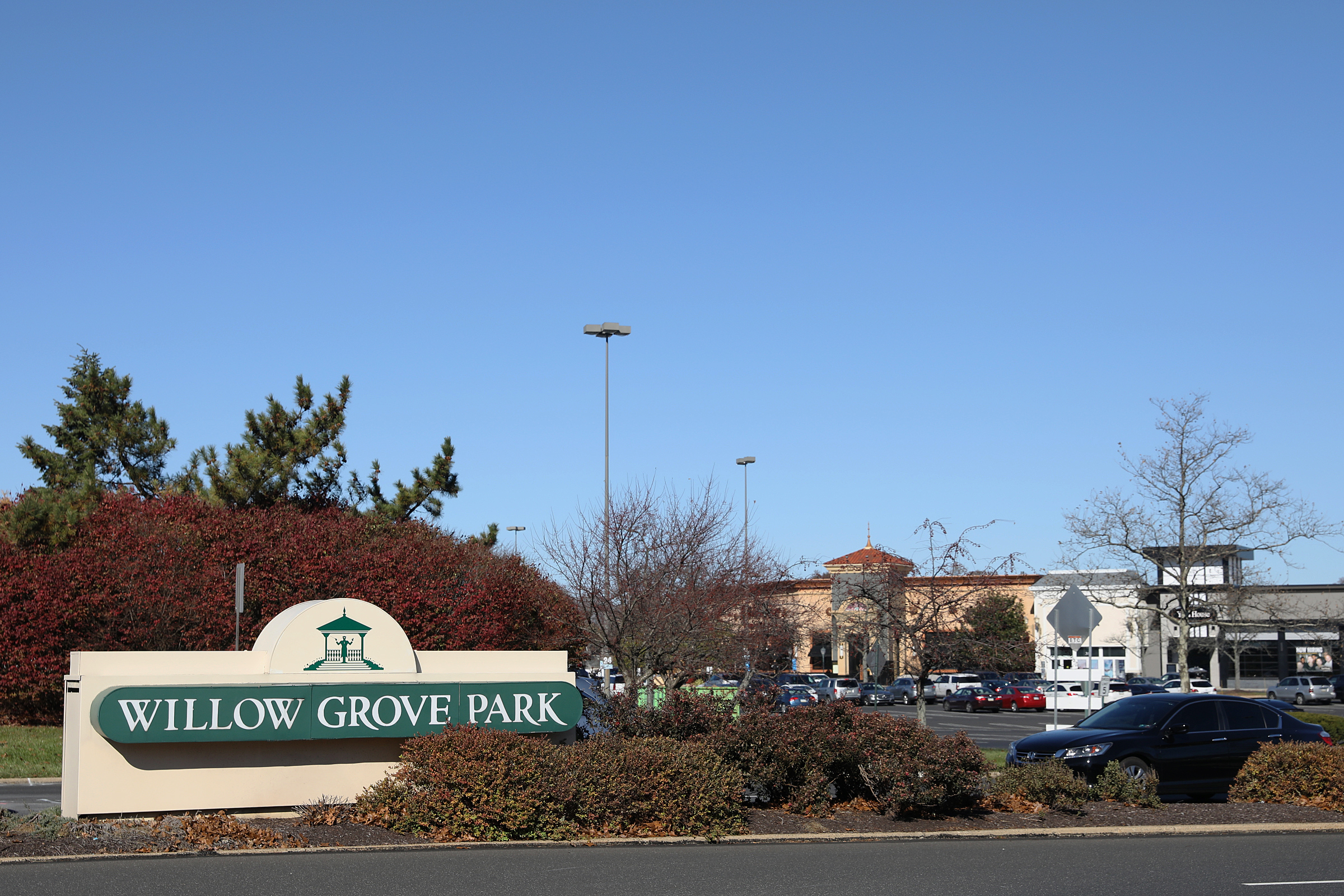
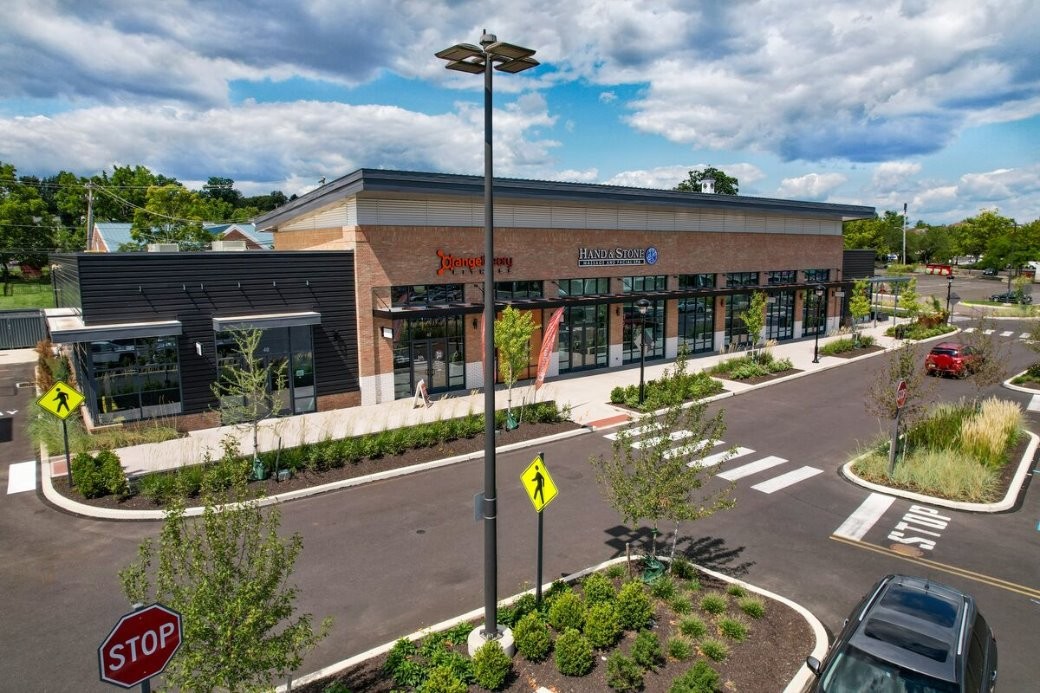
A shopping center in the shadow of Willow Grove Park Mall will soon undergo a $105-million “transformation” with new apartments and shops, says the developer behind the project.
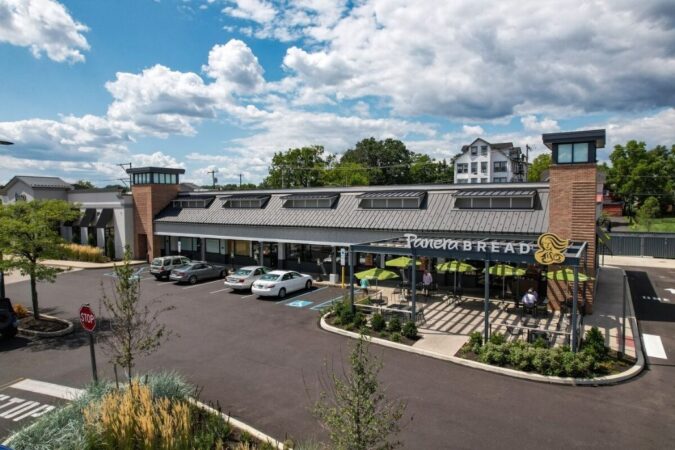
Starting this summer, about 130,000 square feet of the Willow Grove Shopping Center will be demolished to build a mixed-used complex with 261 residential units and 35,000 square feet of new retail space, said Mark Brennan, vice president of regional development for Federal Realty Investment Trust.
It will mark the latest stage in a multiphase redevelopment of the outdoor center, which is located across the street from the mall.
A rendering of what Federal Realty Investment Trust plans to build at the Willow Grove Shopping Center.
Across the Philadelphia region, similar mixed-use complexes have increasingly been built around thriving shopping destinations, such as King of Prussia, where thousands of new apartments have risen in recent years.
A spokesperson for PREIT, which owns Willow Grove Park Mall, did not return a request for comment. In a 2022 shareholders’ report, PREIT executives called the complex “one of our leading suburban Philadelphia assets,“ with an occupancy rate of more than 96%.
The Willow Grove Park Mall is pictured in 2019.
Across Moreland Road, Brennan is confident his shopping-center redevelopment will be met with high demand.
Since the pandemic, the Montgomery County community has “really come alive,” due in part to its proximity to the city and to suburban employment centers, said Brennan, who is based in Wynnewood. And people who are moving out of the city or looking to downsize are particularly interested in moving to mixed-use developments, he said.
The center’s proximity to SEPTA’s Willow Grove train station, and major highways, including the Pennsylvania Turnpike, will make it particularly appealing, as will its mix of “highly curated” shops, Brennan said.
Across the street from the mall, the Willow Grove Shopping Center is set to undergo a $105-million transformation with apartments and new retail.
The center’s existing tenants, which include Marshalls and Five Below, will remain open during construction, Brennan said.
He expects the project to be complete sometime in 2028.
“These sort of multifaceted, multiphased development projects do take quite a bit of time and planning,” Brennan said. “We’re really excited to get to the next phase of this transformation.”
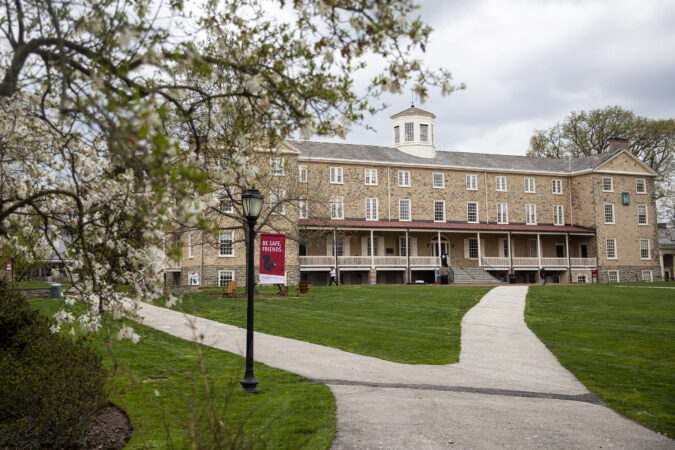
During a talkby an Israeli journalist at Haverford College earlier this month, a group of about a dozen masked people sat and stood in the audience.
At one point, one of them began shouting through a bullhorn, “Death to IOF,” or Israeli Occupying Forces, a name critics use to refer to Israel Defense Forces,and “Shame,” according to a video of the incident and people who attended the event. The protesters’ faces were covered by masks or keffiyehs, a symbol of Palestinian identity.
“When Gaza has burned, you will all burn, too,” the protester shouted at the audience of about 180 people, many of them members of the local Jewish community, according to another video viewed by The Inquirer.
An audience member grabbed at the bullhorn and appeared to make contact with the protester as the protester yelled in his face, according to a video. The college’s campus safety personnel ejected both the bullhorn user and the audience member and has since banned both from campus, college officials said, noting that neither is an employee, student, or alumnus of Haverford.
The event sparked renewed charges of antisemitism on the highly selective liberal arts campus, which already is under scrutiny by a Republican-led congressional committee for its handling of antisemitism complaints and is the subject of an open investigation by the U.S. Department of Education.
It will also lead to changes in Haverford’s policies. In a message to the campus after the event, president Wendy Raymond — who faced intense questioning from the congressional committee about the school’s response to antisemitism last year — said “shouting down a speaker whom one does not agree with is never acceptable and stands outside of our shared community values.”
College officials acknowledged that Haverford needs to upgrade its event policies andsaid changes would be rolled out no later than after spring break.
Some people who attended the event to hear journalist Haviv Rettig Gur said they were afraid because they did not know who the masked attendees were or what they had in their belongings, and in light of recent mass violence at Jewish events around the world.
“I was scared to walk back to my car by myself, which is the only time I ever felt that way in Lower Merion, where I live,” said Susan Taichman, a resident of Bala Cynwyd, who was in the audience.
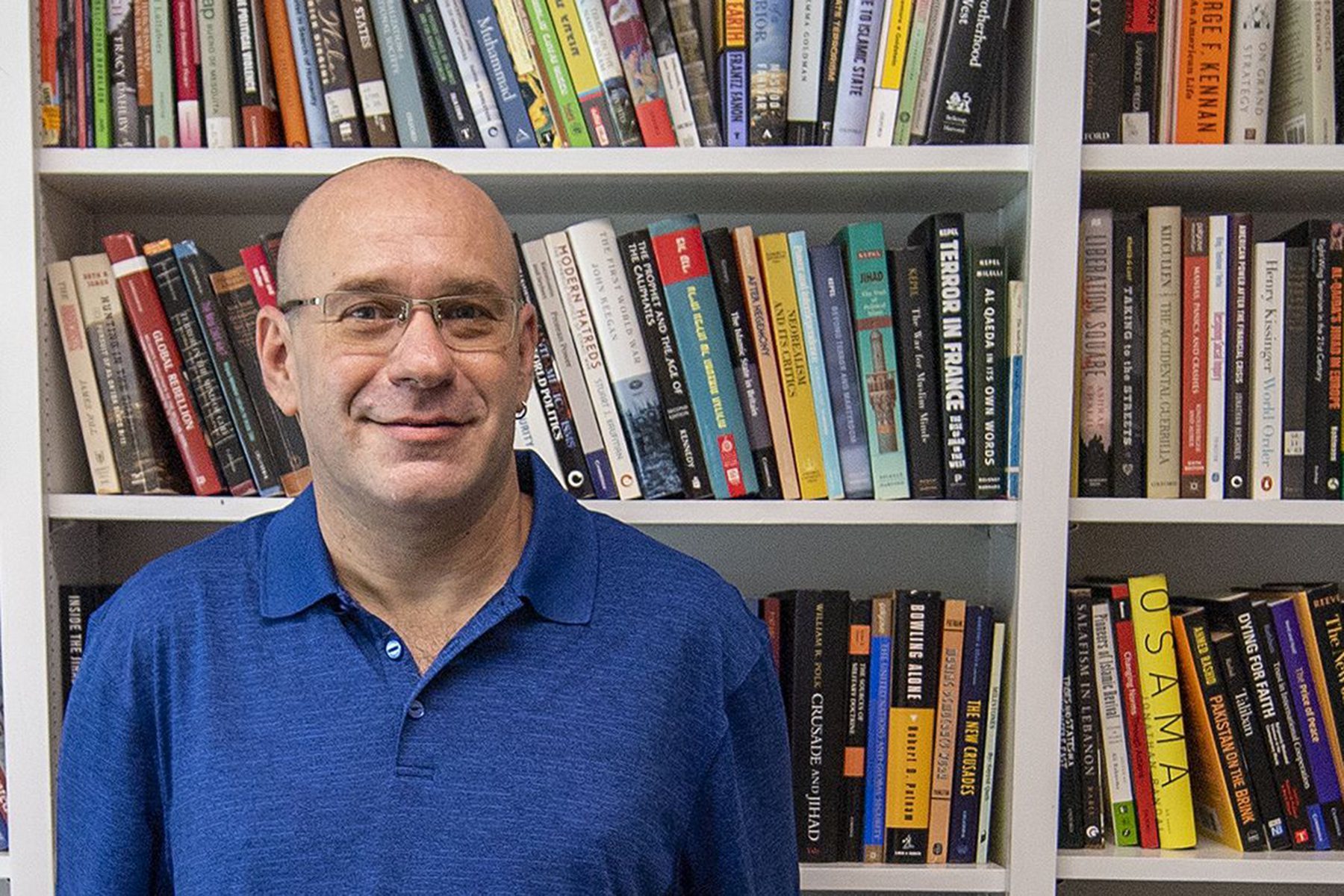
Barak Mendelsohn,professor of political science at Haverford College
Several students in attendance that night said most of the protesters sat or stood silently during the event — which is permitted under campus policy.
“I went into that event not with hatred for Jewish people, as some … have claimed was the intention of the protesters at the event,” said one Haverford student protester who asked that her name be withheld for safety reasons. “I went in with love, empathy, and deep concern for the Palestinians experiencing abhorrent amounts of violence in their homeland, as well as an understanding of the historical contexts that led to this violence, including the historic persecution of Jewish people that led to the development of Zionist thought.
“This context, in my opinion, is not an excuse for the genocide. It’s something really tragic that is going on, and I feel really strongly that it has to be stopped.”
Cade Fanning, the associate editor of the Clerk, Haverford’s student newspaper, cited three interruptions by protesters. One early on argued with Gur for an extended period, followed by the bullhorn incident less than an hour into the event, and then some banging on doors and yelling outside the room, said Fanning, 21, a senior history major from Annapolis, who attended the event.
Haverford professor Barak Mendelsohn, who helped organize the nearly three-hour event and has complained about the college’s handling of antisemitism in the past, said attendees were terrified as disruptions continued.
“I can’t tell you how ashamed I am as one of the organizers,” said Mendelsohn, an Israeli-born professor of political science and a terrorism scholar.
Leaders of Haverford’s students’ council, meanwhile, voiced concerns that an audience member had initiated physical contact with the protester, “which deeply frightened and disturbed members of Students’ Council,” they wrote. “We believe it is paramount to prioritize the safety of members of our college community. Actions like this have no place in our community.”
Some community members also interrupted and “heckled” protesters, Fanning said, adding that Gur belittled the activists as “children” who did not know enough about the world. The college, Fanning said, should have addressed that in its statement to the community.
“It would have been beneficial had they at least acknowledged that he wasn’t the most conducive to respectful, honest, open debate either,” Fanning said of Gur. “He didn’t treat the students with the most respect.”
But Anna Braun, 21, a senior English major from New York City who attended the event, said she was impressed with how Gur handled the protesters.
“He decided to engage with them one on one to really ask them questions and try to deconstruct why they were protesting,” she said. “The only way we can have any hope for peace is for people to listen to each other and to find some middle ground. And if you’re ignoring each other or if you are interrupting each other, then there is no potential for seeing eye to eye.”
An effort to ensure safe events
“It has become clear that there are gaps in how events are reviewed, supported, and managed on campus,” Raymond said in her message to campus. “We are actively revising our event management and space use policies to improve clarity and processes.”
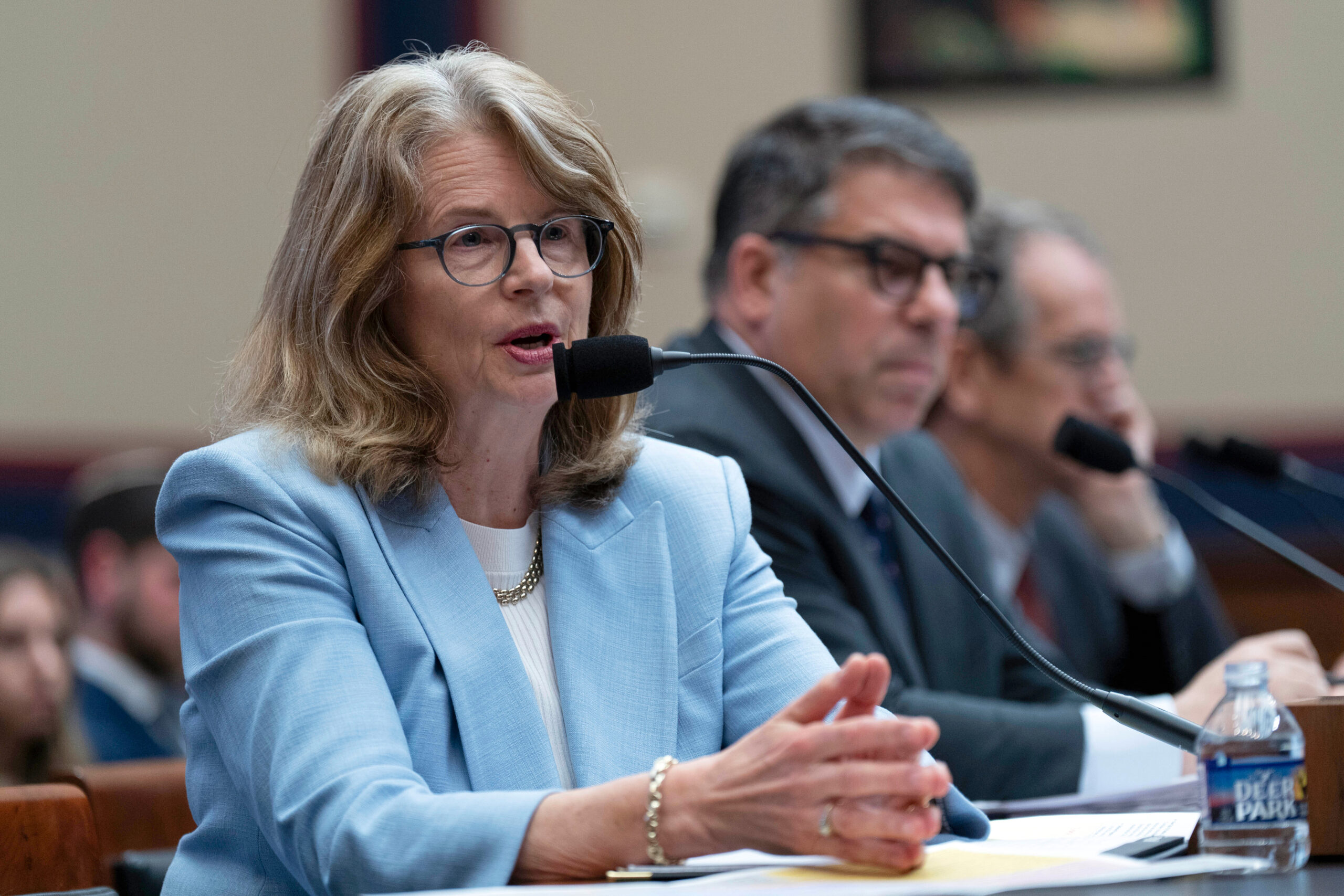
Wendy Raymond, president of Haverford College, testifies before the House Committee on Education and Workforce hearing on antisemitism on American campuses on May 7, 2025.
The new policy, she said, “will clarify expectations for different types of events, strengthen coordination among College offices, and establish additional planning and support for events that require heightened attention.”
Factors such as “significant attendance or operational complexity, heightened public visibility, safety, security, or crowd-management considerations, media presence or external participation, and increased likelihood of disruption or protest activity” may trigger the need for additional review to determine whether more resources are needed, said Melissa Shaffmaster, Haverford’s vice president for marketing and communication.
“Our intention … is not in any way to restrict free speech or restrict access for different speakers or topics to be discussed on campus,” she said. “We want to make sure that the proper resources are allocated so events can happen safely, people can have really thoughtful discourse, and these events can go off the way they are intended.”
The indoor use of bullhorns violated the school’s “expressive freedom” policy put in place last spring, she said.
The college is participating in the Hillel Campus Climate Initiative, touted as an effort to help college leaders counter antisemitism. A survey “to better understand the current climate for Jewish students” will be part of the effort.
Haverford also is preparing for a major change in leadership. Raymond said in November she would step down as president in June 2027; John McKnight, the dean of the college, also announced he would be leaving at the end of this semester for a new role at Dartmouth College; and the college’s vice president for institutional equity and access also will exit that post in May.
‘The howling cry of an uneducated child’
Gur’s talk was titled “Roots, Return, and Reality: Jews, Israel, and the Myth of Settler Colonialism.” In an opinion piece for the Free Press after the talk, Gur said he had gone to Haverford to talk “about the Jewish history that forged Israeli identity.”
While he saw the audience “tense up” when protesters entered, he wrote, he saw it as “a chance to explore managing an encounter with the abusive ideologues.”
He said he invited protesters to stay, but told them they had to remove their masks, which they did not do. Most protesters remained for the entire talk, he said, some even crying and engaging in dialogue with him.
“The more I treated them like neglected children hungry for knowledge, the more likely they were to respond in healthy and productive ways,” he wrote.
The event was organized by Kevin Foley, a 1983 Haverford graduate. Foley said he was impressed with Gur, a political correspondent and senior analyst for the Times of Israel, after seeing a video of him teaching.
“I thought I could do something good for Haverford by having him teach there,” said Foley, who lives in Connecticut and New York City and spent his career running electronic trading businesses at Bloomberg and Cantor Fitzgerald.
Foley’s best friend was killed in the 9/11 attacks and he said he experienced Hamas’ October 2023 attack on Israel as an “echo trauma.” To see concerns at Haverford about its handling of antisemitism “was disappointing,” he said, and what happened at Gur’s talk reinforced those concerns.
“What I can’t believe is that Haverford has so abandoned its liberal values of academic freedom, freedom of inquiry, that it’s considered acceptable for protesters to come in and disrupt and shut down an educational class,” Foley said.
Foley called on the college to ban masks and have metal detectors available when needed, and to apologize to Gur’s audience.
Shaffmaster said the college’s policy allows people to wear masks, but they must remove them if they are asked by campus safety officers or administrators for identification purposes.
Ongoing tensions on campus
Several students in attendance, who asked not to be named because of tensions on campus over the issue, said they thought campus safety and the college handled the event as best they could without silencing either side.
“No matter what they had done, people would be mad at them,” one said.
Fanning, the student editor, understood why older community members may have been fearful, but said protesters also have fears of being harassed or doxed for their pro-Palestinian advocacy if their identity is known.
“They are not fearless themselves,” Fanning said. “Nobody is.”
But Mendelsohn, the professor, was disturbed that Haverford seemed to equate the actions of the audience member who grabbed the bullhorn with those of the protester.
“The person acted in self-defense and managed to get the bullhorn from her hands,” he said. “If someone turned to you with a microphone and screamed, you would not sit there and do nothing.”
Mendelsohn has been at the forefront of allegations that Haverford has not done enough to address antisemitism, and the college has investigated him for speaking out on social media and in emails, according to a lawsuit filed against the college last year by a Jewish group. Much of the complaint was dismissed, but the judge allowed a portion involving breach of contract that would result in nominal damages to proceed, and that is in mediation, court records show.
The actions at Gur’s speech were just one of several ongoing problems with antisemitism on the campus, Mendelsohn said. His mezuzah — an object signifying the Jewish faith — was stolen from his office door a couple of months ago, he said. And he referred to a bias complaint over comments made around funding for the Haverford Chabad board. That remains under review, the college said.
Braun, the English major, said that she was heartened to see improvement in Haverford’s handling of the Gur event and that the campus has been more welcoming to Jewish students. Most people she has spoken with, she said, did not think the use of the bullhorn was appropriate.
“That’s not something I would have heard two years ago on this campus,” she said. “I sincerely believe there is more of a desire to create an inclusive environment.”