Blog

  • What are South Jersey farmers doing to remedy lost crops? GoFundMes, bigger pumpkin patches, and higher prices

    What are South Jersey farmers doing to remedy lost crops? GoFundMes, bigger pumpkin patches, and higher prices

    Cynthia Martini of Mantua Township visits Mood’s Farm Market every year to pick blueberries. During a typical summer, she collects 40 pounds of them. She used to bring her kids, but now that they’re older, she goes solo.

    Her routine on June 30 didn’t look much different from the last 25 years. On a hot morning, she picked two Tupperware containers of blueberries in paint-streaked shorts.

    “In an hour I picked 10 pounds,” Martini said. “So not bad.”

    But rather than harvesting in the farm’s designated pick-your-own area, Martini kept to to an area typically reserved for staff.

    Mood’s, a 180-acre fruit farm in Elk Township, Gloucester County, opened the off-limits fields as one strategy to survive the summer after a spring crop freeze destroyed about two-thirds of its blueberries and all its cherries, plums, nectarines, pears, and peaches. The farm will likely have only a handful of healthy apples come fall. That means no apple hayrides, even though pick-your-own operations are one of its primary revenue streams. A skeleton crew is working the land rather than a full staff, and it’s taking workers longer to pick fruit since there’s less on the bush.

    After picking her own blueberries, Cynthia Martini (right) of Mantua talks with owners Richard Mood and daughter Patti Mood at Mood’s Farm in Gloucester County on June 30.

    The Elk farm isn’t alone. The freeze destroyed large swaths of fruit crops across the Northeast after temperatures rapidly dropped and spiked again in April. In May, New Jersey officials estimated losses of at least $300 million. A month later, the Garden State, which has nearly 450,000 acres of cropland, secured a disaster declaration that made farmers in all 21 counties eligible for emergency federal loans.

    But South Jersey farms like Mood’s are getting creative to survive a summer with depleted income and damaged crops. From promoting frozen fruit to temporary closures to raising prices, here’s how farms are keeping on.

    Spend less and plant more

    Rowand’s Farm, a 20-acre sweet and sour cherry orchard in Glassboro, Gloucester County, is going through unprecedented circumstances.

    Stephen Rowand, the farm’s third-generation owner, said he’s usually excited when a spring frost arrives, since the cold weather thins out the fruit and produces larger cherries.

    “This season is unique for us as a first with NO CROP at all,” Rowand said via Facebook Messenger. “No income.”

    Rowand decided to close the farm, but that hasn’t meant time off. To ensure the orchard blooms next season, the farm still needs mowing, irrigation, fertilizer, and trimming, and without the ability to hire farmworkers. Rowand, 60, is doing all that work himself through extreme heat. He said he’s currently living off his retirement savings and might have to get a job in the offseason next fall. He’s trying to stay frugal by avoiding vacations and eating out.

    But Rowand has managed to find some solutions to survive.

    To make sure they stay fed, his family planted a bigger garden of tomatoes, string beans, eggplants, cucumbers, greens, and herbs for their personal diets after figuring out the freeze had eliminated their income. He said he will likely apply for a loan from the USDA’s Farm Service Agency to pay bills, and a GoFundMe, which has raised $25,000 so far, has helped pay for some of Rowand’s farm expenses.

    “It’s really helping keep the farm from going into debt,” Rowand said, “which is usually what puts a farm out of business in the end.”

    Duffield’s Farm Market in Sewell, Gloucester County, like Mood’s, won’t have peach picking this summer and is still considering whether it’ll apply for loans. Since the freeze halved their apple crop, the farm won’t offer apple picking trips for local schools this fall, either. To ensure people have enough to pick in the fall, owner Tracy Duffield said, farmers planted a field of pumpkins early.

    As for labor, without peaches to pit, Duffield said there’s less to do, which means reducing hours for the farm’s migrant workers from Puerto Rico.

    “It’s not just us. Everybody is kind of in the same boat,” Duffield said. “Just support your local farm. We’ll recover.”

    ‘A silver lining’

    South Jersey farmers say the natural laws of supply and demand mean fruit prices will rise this year. Mood said their farm’s blueberry prices have doubled, while Duffield’s increased the cost about 50 cents per pound.

    “We still have a business to run, and we have to support the families involved with the business,” Duffield said. “They just have to understand for this year, anyway, that things are going to be a bit higher.”
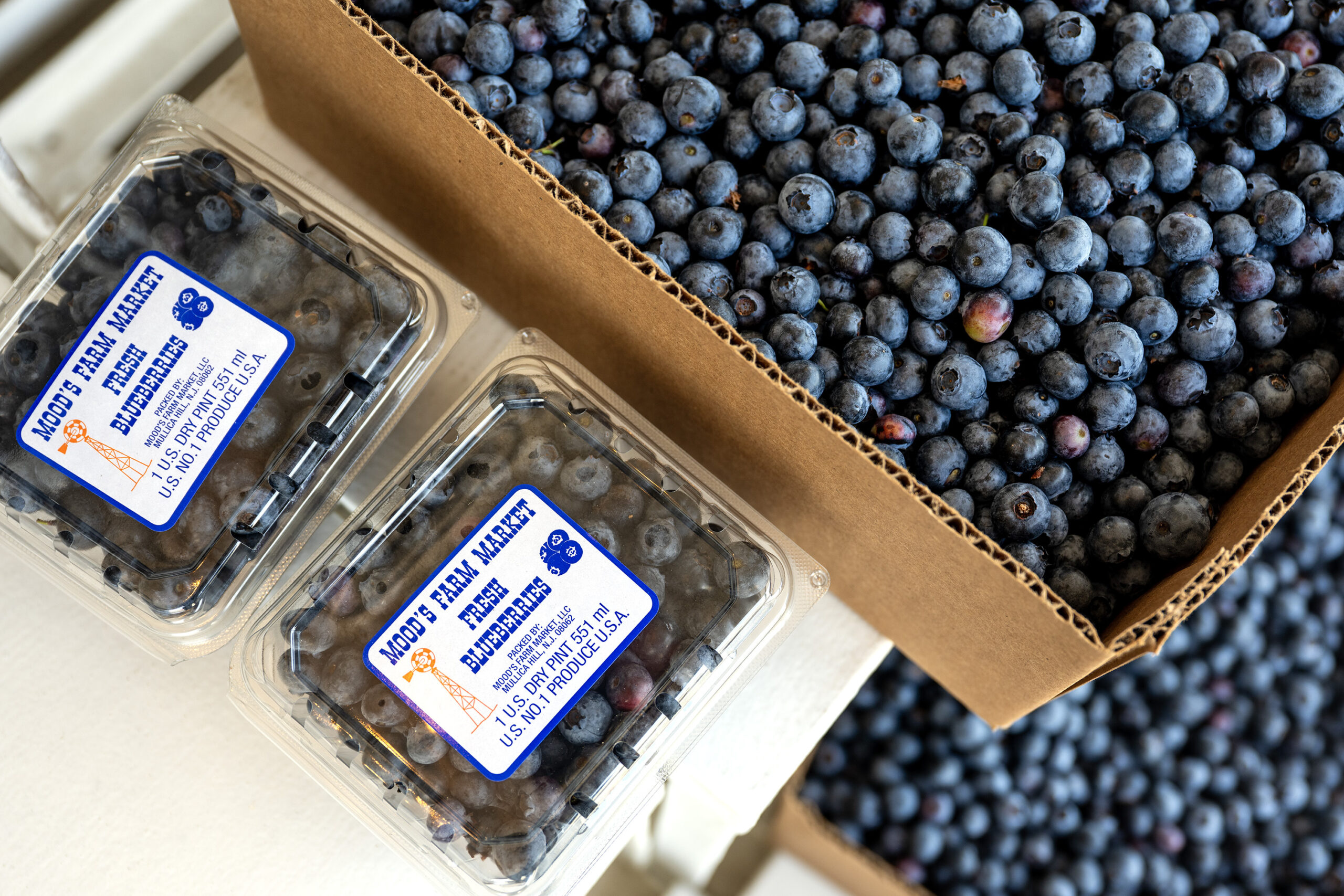
    Blueberries for sale at the farm stand at Mood’s Farm in Gloucester County.

    Anthony DiMeo owns DiMeo Farms and Blueberry Plants Nursery, which has a large pick-your-own blueberry operation in Hammonton, Atlantic County. With significant damage to his crop, DiMeo said, he anticipates the season to end a couple of weeks early.

    “But there’s a silver lining to this, and that is the price is very high,” DiMeo said. “Even for blueberries that might not be the biggest or might not be the best, the price is exceptional.”

    DiMeo, though, said he decided not to significantly raise prices this year, keeping blueberries at $2.50 per pint, a cheaper price than most grocery stores and farm markets. The choice to eat the losses was influenced by the price consumers are already paying to get through life right now.

    “They’re spending enough as it is with gas and tolls and everything else,” DiMeo said.

    ‘Just luck’

    Bob Fralinger of Fralinger Orchards, a fifth-generation peach and nectarine farm in Bridgeton, Cumberland County, said it was “just luck” that some of his peaches survived the freeze.

    His farm sits along the Cohansey River, and the heat emitting from the water kept the temperature a couple of degrees warmer for the crops. Fralinger said he still lost about half his peaches, but since nearby South Jersey farmers weren’t quite as lucky, nearly 100 farm markets, some hours away, have come to him for fruit. Duffield’s and Mood’s are on that list.

    The increased interest has meant Fralinger has to make sure he has enough peaches for everyone, including his typical wholesalers. And even though Fralinger is having no problem selling, the reduced harvest means he worries that the revenue won’t be enough to pay next year’s bills.

    “Your margins are so close that you can’t survive from one year to the next unless you do things just right, and that’s the problem,” Fralinger said.

    Like Fralinger, Robson’s Farm in Wrightstown, Burlington County, also managed to salvage some peaches from the harvest this year, but not nearly enough to meet the summer demand.

    Customers travel from out of state for Robson’s peaches, fourth-generation farmer Rose Robson said, and many will be disappointed to arrive to find no peaches in sight.

    But once she overcame her initial grief over the lost crops, Robson said, she quickly hatched a plan to adapt to a potentially peachless summer on the farm.

    “Just because the farm is really sad and not great in one way doesn’t mean the whole summer has to be,” Robson said. “This could be a really fun opportunity to be creative and to bring some new people to the farm and still have a really great summer.”

    Robson had already started developing ways to boost business during the farm’s offseason in the fall, like a walking club on the farm, she said. The spring freeze just forced her to consider starting sooner and making it active year-round.

    Plus, Robson’s is focusing on what they can still offer customers.

    “We doubled up on our U-pick cut flowers,” Robson said, “which has been growing over the years anyway, so that’s kind of fun.”

    But more than anything, Robson said her priority has remained the same: “making the farm as grand an experience as we can possibly make it,” she said.
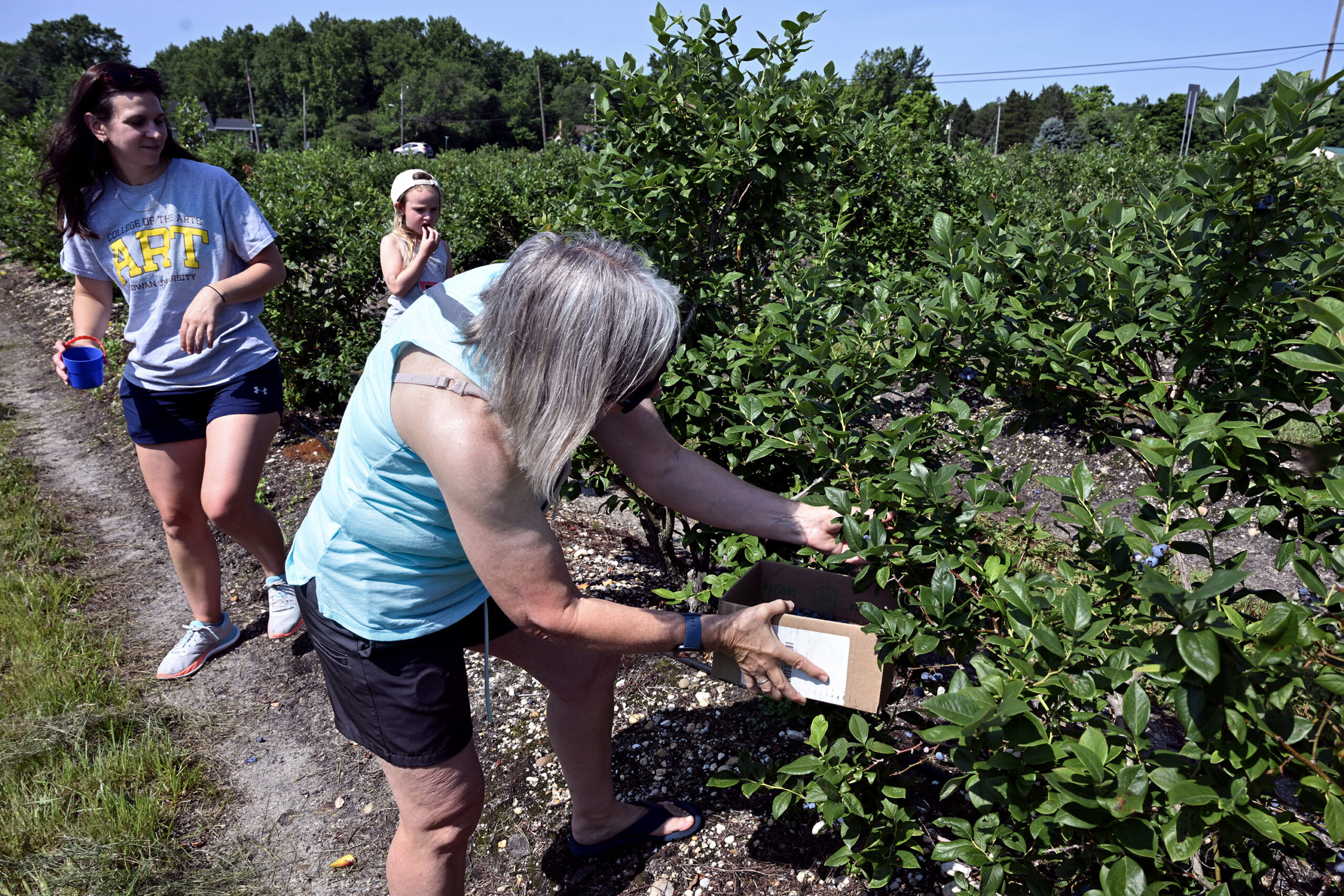
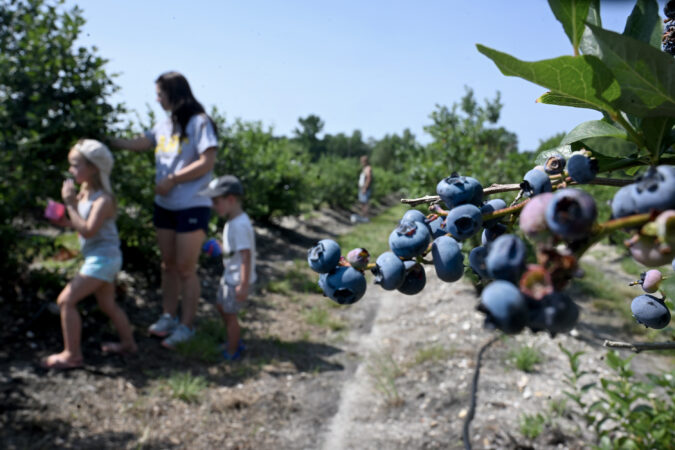
    Sandy Trifiletti (front) of Glassboro and her daughter Hope Welch and granddaughter Rosie, 6, of Pitman, pick their own blueberries June 30 at Mood’s Farm in Gloucester County.

    As farms scramble to adapt, South Jersey residents, whether they’re in the market for fresh fruit or flowers, continue to support their local markets.

    Back at Mood’s Farm, Hope Welch of Pitman picked blueberries with her two children and her mother, Sandy Trifiletti. The Welches have visited Mood’s for years.

    Hope Welch, whose son spoke some of his first words during an annual Apple Festival, asked Mood about the fate of this year’s event. Mood said one would still happen, but it probably wouldn’t revolve around apples, since they won’t have very many.

    “That hurts my heart,” Welch said. “We’ll be back for the fall festival. Whatever it’s called.”

  • Letters to the Editor | July 7, 2026

    Letters to the Editor | July 7, 2026

    Self-evident

    Thank you to the editors of The Inquirer for placing the opening lines of the preamble to the Declaration of Independence on the front page as we celebrate the 250th anniversary of our nation.

    May we continue to ensure these fundamental human rights given by our Creator are not taken away.

    Mary Beth Rodger, Warwick

    . . .

    I was stunned and delighted by July 4’s front page. I wish I could buy a poster-sized version. It expresses everything I want our government to strive for.

    Anne Slater, Ardmore

    . . .

    Bravo, Inquirer! Unfolding my morning paper and seeing your outstanding choice for front page text took my breath away. How powerful. How beautiful. How full of hope. Thank you.

    Elizabeth Gavula, Philadelphia

    Arts funding cut

    During the past five weeks, I have attended seven or eight performances presented as part of the ArtsPhilly: What Now 2026 Festival, celebrating the 250th anniversary of our nation’s founding through the work of Philadelphia artists and arts organizations.

    What made these events so memorable was their focus on lesser-known community arts groups. The festival showcased theater, storytelling, poetry, dance, music, visual arts, and performance art, and every event I attended drew enthusiastic audiences. They demonstrated both the vitality of Philadelphia’s arts community and the public’s appetite for diverse, neighborhood-based cultural experiences.

    That is why I was dismayed to read both your editorial and Peter Dobrin’s article about the city’s decision to reduce funding for the Mural Arts program and the Philadelphia Cultural Fund. The cultural fund provides essential grants to smaller, underresourced organizations — the very groups ArtsPhilly helped bring to wider public attention.

    These cuts are a shortsighted response to the city’s budget challenges. The strong attendance at ArtsPhilly events shows Philadelphians value these organizations and the opportunities they create for connection, creativity, and community. Rather than weakening them, the city should invest in them. If these cuts stand, Philadelphia’s cultural life — and all who benefit from it — will be poorer.

    Naomi Lokoff, Glenside

    Lasting legacy

    Jonathan Zimmerman’s thoughtful defense of the Peace Corps deserves attention. One of its greatest achievements, however, is often overlooked. When President John F. Kennedy and Sargent Shriver created the Peace Corps, they established three goals. The third — and perhaps the most enduring — was to bring home the knowledge and understanding volunteers gained by living and working alongside people in other countries.

    As Returned Peace Corps Volunteers who served in Morocco from 1968 to 1970, we have seen that goal fulfilled. More than 250,000 Returned Peace Corps Volunteers have become teachers, professors, physicians, scientists, diplomats, public servants, business leaders, and community volunteers. The perspective gained during two years of service has shaped careers, classrooms, communities, and public institutions across the United States.

    Measured over a lifetime, the return on America’s investment in the Peace Corps is extraordinary. The benefits did not end when volunteers came home; in many ways, they were just beginning.

    Zimmerman reminds us that the Peace Corps is one of the smallest items in the federal budget. It is also one of the wisest investments our nation has ever made.

    James F. Lawrence, senior executive, U.S. Department of State (retired), and Daniel A. Wagner, professor and UNESCO chair, University of Pennsylvania

    Join the conversation: Send letters to letters@inquirer.com. Limit length to 150 words and include home address and day and evening phone number. Letters run in The Inquirer six days a week on the editorial pages and online.

  • Dear Abby | Husband is a mad scientist in the kitchen

    DEAR ABBY: I never want to eat my husband’s cooking again. He refuses to follow recipes because he says they are “too hard.” He doesn’t use seasonings — or he uses the wrong ones. An example: He recently put cinnamon and cloves on zucchini and agreed with me that it tasted terrible. In addition to almost never being tasty, his cooking is usually nutritionally imbalanced — like a meal that has zero vegetables, or a meal that’s all carbs. In the 10 years we’ve been married, he has lit the food on fire twice.

    I adore everything else about him. I wish I could cook every meal, every day, but I can’t. I work full time in a physically demanding job, take classes at the community college and side hustle as a pet sitter. He only works 40 hours. We’re both amateur competitive athletes, so skipping dinner is out of the question. Eating takeout sometimes is OK, but it’s too expensive to do it regularly. Any advice you can offer is welcome.

    — GET OUT OF THE KITCHEN

    DEAR GET OUT: As an athlete, your husband must understand the importance of correct form and practice. There is no reason he can’t learn to cook a simple, balanced menu.

    Explain to him that while you appreciate his willingness to pitch in, you are no longer willing to eat his experiments. Then, next time it’s his turn to cook, walk him through the preparation of the meal. Do not allow him to get creative. Creativity is for those who have mastered the basics, which he has not. If he learns just one easy meal and cooks only that for the rest of his life, it would be an improvement.

    ** ** **

    DEAR ABBY: I have been in a relationship for 25 years. We got engaged after four years, but we have not gotten married. He gives an excuse each year the subject is brought up. He is a good provider and a good liar, as he has had many outside relationships and continues to do so. He’s not aware that I know more than he thinks.

    Each time he gets caught, he starts screaming and doesn’t want to talk about it. His double life is HIS life. Our finances are linked together, including homeownership, and neither could afford to live on their own if we parted. (We are both retired.)

    How do I continue to live this type of life? I was planning on obtaining a lawyer for advice to see where I stand financially in case this blows up on me. I have not forgiven him, nor can I forget his actions. Do you have any advice for me?

    — LOOKING FOR HAPPINESS IN FLORIDA

    DEAR LOOKING: Yes, I do. Forget about raising the subject of marriage with this man. He has no intention of changing a status quo that is working for him. Contact an attorney now, because the question you want to ask is a valid one. Unless you want to spend the rest of your life accepting this unhappy reality, you need to make a change.

  • Horoscopes: Tuesday, July 7, 2026

    ARIES (March 21-April 19). Peace is not always created through agreement. Sometimes it comes from addressing the issue everyone else avoids. Your gift is courage. Love grows when people know where they stand with you and trust that you’ll speak honestly.

    TAURUS (April 20-May 20). You create peace through steadiness. Others relax when they know what to expect and can rely on your word. Love is built from repeated actions, small comforts and promises kept long after the excitement fades.

    GEMINI (May 21-June 21). Many conflicts begin as misunderstandings. Your gift is curiosity. Before deciding what someone meant, ask another question. Love grows when people feel heard, understood and free to explain themselves without being rushed.

    CANCER (June 22-July 22). You create peace by helping people feel safe enough to be themselves. A warm welcome, thoughtful gesture or shared meal can accomplish more than debate. Love flourishes wherever belonging is offered without conditions attached.

    LEO (July 23-Aug. 22). Recognition is one of the most overlooked forms of generosity. You create peace by noticing what others contribute and saying so aloud. Love grows when people feel appreciated, valued and celebrated for who they are.

    VIRGO (Aug. 23-Sept. 22). You create peace by paying attention. While others discuss problems, you’re already spotting practical solutions. Love is expressed through usefulness, follow-through and care for details that make another person’s life easier and smoother.

    LIBRA (Sept. 23-Oct. 23). Peace comes naturally when people feel included in the conversation. Your gift is helping others find common ground without forcing agreement. Love grows through fairness, consideration and a willingness to see more than one perspective.

    SCORPIO (Oct. 24-Nov. 21). Resentment thrives in silence. Peace begins when truth is spoken with care and received with courage. Your gift is emotional honesty. Love deepens when people trust that difficult subjects can be discussed without fear.

    SAGITTARIUS (Nov. 22-Dec. 21). You create peace through perspective. Not every disagreement requires a winner, and not every difference requires correction. Love grows when people are allowed room to learn, change and arrive at wisdom in their own way.

    CAPRICORN (Dec. 22-Jan. 19). Stability is a gift. You create peace by doing what you said you would do and following through when others depend on you. Love grows in the presence of reliability, commitment and steady effort over time.

    AQUARIUS (Jan. 20-Feb. 18). You create peace by making room for differences. Harmony does not require sameness. Your gift is seeing value in many kinds of people and helping others feel welcome exactly as they are.

    PISCES (Feb. 19-March 20). Compassion changes the atmosphere around you. You create peace by imagining what another person might be carrying beneath the surface. Love grows whenever empathy softens judgment and kindness becomes the first response.

    TODAY’S BIRTHDAY (July 7). It’s your Year of the Lotus. The lotus rises from muddy water to bloom magnificent. What begins in unlikely conditions will develop into something remarkable. More highlights: Loved ones show up for you in unforgettable ways. A door opens in a prestigious way that suits you. A smart investment from long ago pays in a timely and abundant way. Capricorn and Scorpio adore you. Your lucky numbers are: 19, 26, 30, 2 and 7.

  • Peco and worker union reach a deal, ending strike

    Peco and worker union reach a deal, ending strike

    Peco and its worker union reached a tentative agreement on a new contract late Monday, ending the first strike in the company’s history on its third day.

    Roughly 1,500 unionized linemen, field workers, call center staff, and other Peco employees have been without a contract for more than three months, since their most recent five-year agreement expired on March 31. They walked off the job on the Fourth of July.

    The union characterized the five-year agreement as a “historic contract victory” in an announcement late Monday, noting that it included cash balance pension plans, full retirement medical coverage, and “significant wage increases” for all members.

    “We said from day one that our members’ top priorities were restoring pensions and retirement medical coverage for all members, and we won that and more,” Larry Anastasi, president of IBEW Local 614, said in a statement.

    Wage increases for field workers are 4% annually for the first four years and 4.5% in the fifth year, according to the union, and call center workers are to get 3% raises annually throughout the five-year contract.

    Peco announced the agreement Monday night in a company statement.

    “We value our long-standing relationship with IBEW Local 614 and appreciate the efforts of both bargaining teams in reaching this agreement,” Peco’s statement said. “The proposed contract recognizes the contributions of our employees while supporting our responsibility to deliver reliable, affordable service across southeastern Pennsylvania.”

    With the agreement in place, Peco and the union said, the work stoppage will end while union members vote on ratifying the contract. A union spokesperson said members would return to work Wednesday and a date to vote on the contract has not yet been decided.

    Peco and the union had held daily bargaining sessions since last Wednesday to reach an agreement. Over the weekend and into Monday, workers picketed outside Peco’s headquarters in Center City.

    Larry Anastasi, president and business manager of IBEW Local 614, and Stuart Davidson, general counsel for the union, speak with the media Monday amid contract negotiations and day three of the worker strike.

    Meanwhile, Peco has been contending with outages following thunderstorms in recent days. The company had a contingency plan in place, which included workers from outside the region.

    Over 57,000 customers were without power on the night of July Fourth at the height of the outages, Peco said, but within less than 24 hours, that number was reduced to less than 6,000. As of Monday afternoon, the company reported roughly 4,400 outages on its webpage, and the number was just over 100 a day later.

    The tentative deal marks a pivotal moment in what have been challenging negotiations between the union, IBEW Local 614, and Peco. Bargaining turned ugly in April, as each side accused the other of using unfair tactics.

    In addition to raises and better healthcare benefits, the union wanted its contract to include a uniform retirement plan for all members. Currently, roughly 600 of the 1,500 union workers do not have pensions, the union has said, and pension benefits vary for the other 900 or so.

    Utility companies started moving away from providing pensions to new hires in the 1990s, according to William Dwyer, a professor at the Rutgers University School of Management and Labor Relations, who once worked at PSE&G in New Jersey. That left 401(k) as the typical retirement benefit. At Peco, that happened later — the company stopped putting new hires into its pension plan in 2021, according to the union.

    The tentative agreement includes a requirement that call center workers get 24-hour notice of mandatory overtime, as well as better upgrade pay for union members who complete tasks outside their typical job description, according to the union.

    In Southeastern Pennsylvania, Peco provides electricity to 1.7 million customers and natural gas to 553,000.

  • U.S. fans lament loss to Belgium at watch parties across the area: ‘I had a bad feeling from the get-go’

    U.S. fans lament loss to Belgium at watch parties across the area: ‘I had a bad feeling from the get-go’

    Storm clouds and a looming threat of rain did not stop fans of the U.S. men’s national team from packing FIFA World Cup watch parties across the area on Monday evening for America’s round of 16 match against Belgium in Seattle.

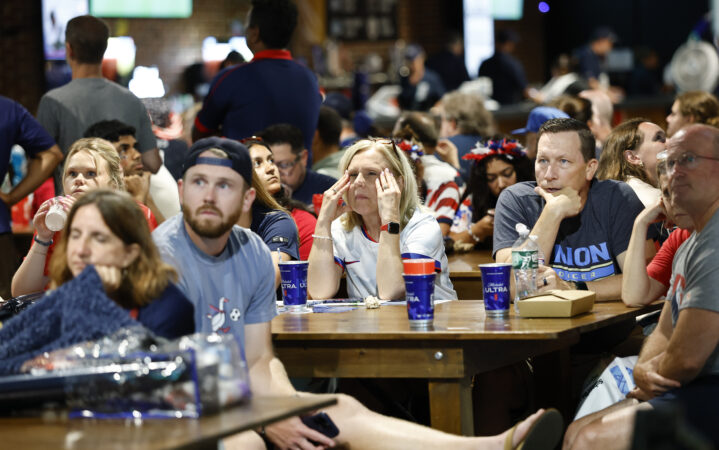
    Fans clad in red, white, and blue packed the FIFA Fan Festival in Lemon Hill and Union Yards outside Subaru Park in Chester. The storms held off, but a deluge of Belgian goals led to a 4-1 loss for the U.S., disappointing much of both crowds.

    The fan fest in Lemon Hill was sparsely populated after the first match of the day between Spain and Portugal, but by the time the U.S. men kicked off at 8 p.m., the crowd at the festival’s main stage stretched all the way back to the corporate activations set up in the middle of the festival.

    That packed crowd was disappointed early, as forward Charles De Ketelaere gave Belgium a 1-0 lead with a strike in the ninth minute. To make matters worse for the U.S. supporters, the stage at Lemon Hill lit up red and yellow as the Belgians celebrated in Seattle.

    They did red and yellow strobes at Fan Fest for Belgium’s first goal. The crowd seems less than amused

    [image or embed]

    — Owen Hewitt (@oyounothing.bsky.social) July 6, 2026 at 8:10 PM

    The crowd in Lemon Hill erupted in celebration as Malik Tillman put the States back on level terms with a goal on a free kick in the 31st minute.

    For a brief moment, the U.S. tied it at one-all, and Fan Fest went nuts:

    [image or embed]

    — Owen Hewitt (@oyounothing.bsky.social) July 6, 2026 at 8:47 PM

    Meanwhile, in Chester, fans with toy trumpets complemented the cheers.

    But the celebration didn’t last long, as De Ketelaere reclaimed the lead just two minutes later. It was all Belgium from there, as it added to its lead in the 57th minute, leaving both crowds in shock.

    Fan Fest can’t believe what Matt Freese just did either:

    [image or embed]

    — Owen Hewitt (@oyounothing.bsky.social) July 6, 2026 at 9:27 PM

    Romelu Lukaku added a fourth to seal the win for Belgium in the 93rd minute, and as U.S. fans headed for the exits in Lemon Hill, a small group of Belgian supporters celebrated their country’s win at the center of the festival.

    The Belgians here at Fan Fest are loving it:

    [image or embed]

    — Owen Hewitt (@oyounothing.bsky.social) July 6, 2026 at 10:03 PM

    One of the few Belgians on hand for the match was Bertrand Colla, who traveled to Philadelphia from his home country to visit family and watch France’s win over Paraguay on Saturday at Philadelphia Stadium.

    Bertrand Colla celebrates at FIFA Fan Festival after Belgium’s 4-1 win over the U.S.

    While Belgium’s close win over Senegal in the round of 32 worried him, he had renewed confidence in his team after its 4-1 thrashing of the U.S.

    “I didn’t expect it at all,” Colla said. “This game proves it all. We’re going to go there.”

    U.S. fans, meanwhile, were let down after a second consecutive exit in the round of 16 by the U.S. men at the World Cup.

    “It’s disappointing. They looked like they didn’t have it from the beginning,” U.S. fan J.P. Hochschwender said as he left Union Yards. “They looked slow. The defense looked a little disorganized, and, ultimately, [Belgium] just capitalized on the opportunities they got, but I had a bad feeling from the get-go.”

    Ruben Mendoza holds a replica World Cup trophy while watching the USMNT face Belgium in a round of 16 game.

    Lasting effects

    Like the FIFA Fan Festival, the Union’s watch party in Chester was free to enter. Team chief revenue officer Charlie Slonaker hopes the event and the area’s World Cup-powered soccer fever will drive more Philadelphians to their MLS team once the tournament is over.

    “Soccer is the world’s game, it’s a beautiful game, and there’s no bigger event than the World Cup,” Slonaker said. “We’re excited to hopefully capture that, capture that fan excitement and enthusiasm by [having them] come down to these soccer celebrations.

    “We hope they fall in love with the game, as so many of us have, and over the long term, they ultimately want to come out to Subaru Park to watch Philadelphia Union games.”

    The Union looked to take advantage of the World Cup’s draw quickly after North America was awarded the tournament in 2018. Once FIFA approved MLS franchises hosting watch parties, Slonaker’s team sprung into action to gather partners for events. On Monday, that included food trucks Mister Softee, Dos Hermanos Taqueria, and Humpty’s Dumplings as well as Michelob Ultra.

    Outside of watching the game — one many U.S. fans will want to forget — the area offered plenty to do for a family-heavy crowd. Before and during the game, kids played soccer scrimmages alongside a plethora of lawn games. Unlike the festivities in Lemon Hill, which drew many young adults, the Union looked to engage the next generation of soccer fans.

    Slonaker is not the only one hoping the buzz around soccer is here to stay in Philadelphia. Some of the Union’s longtime fans are hoping they will have reinforcements in the stands when the team’s season resumes at the end of the month.

    “You see all the international fans mixing with the local fans, and it’s heartwarming,” said Shane Wittkop, a member of Union supporters group Doopin Delinquents. “I hope we have more Union supporters out of this.”

    Soccer fans at Union Yards in Chester watch the USMNT face Belgium in the World Cup.
  • USMNT blown out of World Cup with a 4-1 loss to Belgium in the round of 16

    USMNT blown out of World Cup with a 4-1 loss to Belgium in the round of 16

    SEATTLE — The game the U.S. men’s soccer team dreamed of for so many years proved to be a nightmare.

    Belgium blew the Americans off the field, 4-1, in the round of 16, as Charles de Ketelaere scored two goals and created the third. Malik Tillman scored the Americans’ game-tying goal in the first half, but it was all they could muster in a game in which they were outshot, 15-7, including 7-2 on target.

    Perhaps it wasn’t surprising that the Red Devils were up for the contest, motivated by a perception that FIFA and President Donald Trump had tilted the scales against them. Nor was it surprising that Folarin Balogun started for the U.S. after FIFA dismissed Belgium’s last shot at an appeal.

    The Red Devils were on the front foot right away, with Timothy Castagne forcing Matt Freese into his biggest save of the tournament after just 45 seconds. At the other end, Belgium goalkeeper Thibaut Courtois repeatedly slowed play down when the ball came to him, drawing boos from the packed crowd in Seattle but otherwise quieting the venue.

    The game plan paid off in the ninth minute. After a long passing sequence that pulled the U.S. defense apart, Alex Freeman was short with an attempted headed clearance, Weston McKennie failed to get the loose ball, and Nicolas Raskin slipped a short pass for an unmarked De Ketelare to tap in from close range.

    When the midhalf hydration break arrived, Belgium had a 7-0 advantage in shots. But soon after play resumed, the Americans’ first attempt of the game went in the net in remarkable fashion.

    Brandon Mechele pushed over Balogun about 22 yards from goal, Tillman stepped up for the free kick, and his shot at goal deflected off the head of a leaping Hans Vanaken. The crowd of 66,925 erupted with so much joy that the stadium stands shook.

    Belgium, however, was unmoved. Not even two minutes passed before De Ketelaere put the Red Devils back in front. Leandro Trossard beat Sergiño Dest off the dribble, sent in a cross, and De Ketelaere jumped between Antonee Robinson and Tim Ream — flat-out overpowering the latter — to head the ball in.

    At halftime, it was 2-1, and the shots were 11-3. Pochettino made his first substitution at halftime, pulling Dest and sending in Gio Reyna. It made the U.S. more lively, but it did nothing to stop Belgium from scoring a catastrophic third goal.

    Mechele hit a simple long ball out of the back, and Freese gambled by coming far off his line to try to play it. But he failed to, De Ketelaere picked his pocket from behind, and the ball rolled to Vanaken. All he had to do was put a shot on frame, and, though Ream tried to backtrack, he couldn’t block the ball.

    After that, Pochettino withdrew Christian Pulisic, who had been clattered in a challenge that went uncalled a few minutes earlier, and sent in Sebastian Berhalter.

    When the Hershey native sat down on the bench, he put his head in his jersey, disconsolate. But he hadn’t been that effective when on the field.

    Pochettino sent Ricardo Pepi in for Tyler Adams in the 72nd, but the move didn’t produce many chances. The Americans only mustered three more shots the rest of the way.

    Romelu Lukaku finished the job in second-half stoppage time, taking the ball off Chris Richards and firing past Freese to the far post.

    It was significant that the U.S. men won a World Cup knockout game for the first time in 24 years. But this team, with players hyped as a golden generation of talent, had aimed higher — and so had Pochettino, paid $6 million per year by U.S. Soccer’s big donors from the private equity world.

    In the end, what they produced wasn’t any better than their predecessors: a round of 16 loss to a familiar foe and an exit with a whimper instead of a bang.

  • Here’s what we know about Sen. Mitch McConnell’s health

    Here’s what we know about Sen. Mitch McConnell’s health

    Sen. Mitch McConnell has been hospitalized for more than three weeks, and his office still will not say what sent the 84-year-old Kentucky Republican there, his latest condition, or when he might return.

    McConnell, who has served in the Senate since 1985 and led Senate Republicans from 2007 until 2025, has not cast a vote since June 11. His absence comes as Republicans are navigating a narrow Senate majority. It has helped stall spending bills in the Appropriations Committee and added uncertainty around a senator already in the final months of his career.

    Here’s what we know about his health.

    What happened to McConnell?

    McConnell was admitted to the hospital on the morning of June 14, according to a statement from his office that said that he was “receiving excellent care.”

    EMS dispatch audio from the morning of June 14 suggests that emergency medical personnel were sent to McConnell’s home to attend to an unconscious person in cardiac arrest.

    According to the dispatch audio, a call went out at 8:36 a.m. for an “unconscious” person at McConnell’s address, and an ambulance was sent with an advanced life support crew. Six minutes later a medic radioed that CPR was “in progress.” At 8:43 a.m., a dispatcher relayed the emergency as a “cardiac arrest.” McConnell is named nowhere in the recording, though the address is his.

    The next day, Senate Majority Leader John Thune (R., S.D.) and Senate Majority Whip John Barrasso (R., Wyo.) — the top two Senate Republicans — told reporters that they had spoken to McConnell.

    What else do we know?

    McConnell’s office has been quiet on his condition in the weeks since and has not provided additional information on his treatment or the cause for his hospitalization.

    On June 22, eight days after McConnell was hospitalized, his office said that he wouldn’t be voting that week “as he continues his recovery.”

    Thune, on the same day, told reporters that he spoke with McConnell “toward the end of last week” and that McConnell “sounded good and was anxious to get back.”

    A July 2 statement from McConnell’s office provided little new information but said he was still in the hospital.

    “The Senator continues to improve, and is working closely with his staff on Kentucky and Senate matters while the Senate is out of session,” his office said.

    His office has not provided additional information since and did not respond to a request for comment on Monday.

    What does his continued absence mean?

    Any extended absence for McConnell could make matters more difficult for Republicans to pass legislation this year, as it would temporarily shrink their majority to 52-47 in the chamber.

    McConnell’s absence also further complicates matters for the Senate Appropriations Committee, which is already running behind schedule. The committee has not advanced any spending bills for the 2027 fiscal year due to disagreements over defense funding.

    Without McConnell, the Senate Appropriations committee is split evenly between Republicans and Democrats. This could prevent Republicans from advancing their spending priorities if all Democrats vote against them, as any vote within the committee that splits evenly along party lines would fail.

    The committee already had postponed plans to mark up spending bills during the week of June 22 due in part to McConnell’s absence, according to a Republican aide who spoke on the condition of anonymity.

    McConnell did not run for reelection this year and is set to retire from the Senate in January at the end of his term.

    What health issues has McConnell faced before?

    McConnell’s health has drawn repeated attention in recent years.

    McConnell had polio as a child and has long had difficulty climbing stairs.

    In March 2023, he was hospitalized after falling at a Washington hotel and was away from the Senate floor for several weeks. Months later, he had two highly public episodes in which he stopped speaking during news conferences and had to be helped by others.

    He was injured again in December 2024 after tripping outside a Senate Republican lunch, and earlier this year, he spent more than a week in the hospital after his office said he had flulike symptoms.

  • Pa. officials mourn the death of former State Sen. Shirley Kitchen, who represented North Philly for 20 years

    Pa. officials mourn the death of former State Sen. Shirley Kitchen, who represented North Philly for 20 years

    Pennsylvania elected officials are mourning the death of former State Sen. Shirley Kitchen, the second Black woman to serve in the state Senate and a champion for progressive issues who represented parts of North Philadelphia for more than two decades. She died Saturday at 79. A cause of death was not immediately clear.

    Kitchen represented the 3rd Senatorial District, composed of parts of North Philadelphia, for 20 years. She is remembered by her former colleagues as a pillar and matriarch of her community who worked tirelessly to improve the lives of low-income people, even after she retired.

    “She did so many things for so many people. Now that I’m old enough to appreciate it, I’m not quite sure how she did it — and she did it with such force,” said State Sen. Anthony H. Williams (D., Philadelphia), who served alongside Kitchen in the Senate and had known her for decades. Kitchen was elected to the state Senate in 1996 and served five terms before retiring in 2016.

    Her former colleagues, some through tears, credited many of Pennsylvania’s recent criminal justice reforms as being born under Kitchen’s leadership, with her early legislative proposals paving the way for their passage years later. For example, Kitchen authored early drafts of what is now known as the Clean Slate Act, which automatically seals some nonviolent convictions after 10 years, hiding them from most employer and landlord background checks. She first introduced similar legislation in Harrisburg years earlier and it failed. In 2018, two years after Kitchen retired, the Clean Slate Act became law in Pennsylvania and was heralded as a first-in-the-nation model for criminal justice reform.

    Elected officials across the city shared their condolences, remembering Kitchen as an advocate who cared deeply for her community.

    Mayor Cherelle L. Parker in a social media post on Sunday recalled Kitchen as “fighting for people who often had no one else to fight for them,” and as a trailblazer for Black women in politics.

    “Shirley Kitchen cared about working people, and she cared about Philadelphia,” said Parker, the city’s first Black female mayor and a former state representative.

    City Council President Kenyatta Johnson said in a statement that Kitchen “never forgot who she was fighting for,” dedicating her life to making people’s lives better.

    State Rep. Joanna McClinton (D., Philadelphia), Pennsylvania’s first Black female speaker of the House, wrote in a social media post that Kitchen was “a mentor and her service in the state House and Senate inspired me greatly.”

    Williams added that Kitchen also sought to elevate other Black politicians, like himself, to elected office — and laid the groundwork for much of the city’s current political progressivism.

    “The reality is that a lot of the infrastructure that helps them, Shirley had everything to do with it, and more,” Williams said, noting her advocacy and experience during the Civil Rights Movement. “I would hope the progressives in this generation would tip their hat to a generation that really created the progressive movement.”

    State Sen. Sharif Street (D., Philadelphia) had known Kitchen since he was a child, and said she helped him see the power a Senate seat has in improving the lives of his neighbors. When she decided to retire, Kitchen encouraged Street, who was on her staff at the time, to run to fill the vacancy in the 3rd District following her fifth and final term in the state Senate.

    Williams and Street recalled Kitchen as a fair but demanding mentor.

    “If she told you to do something, you better do it,” Williams said, with a laugh.

    For Street, Kitchen “didn’t limit her advice. She had opinions about everything in my life, including when my wife was right and I needed to listen to her.”

    Street said he spoke with Kitchen weekly, and Williams said he remained in touch with her as recently as last month. She often had ideas or issues she wanted the senators to take up. Street spoke with her last week about a forthcoming Registered Community Organization meeting that she was leading about a new proposed development nearby, emblematic of her continued involvement in her community.

    Prior to her election to the state Senate, Kitchen was involved in the National Welfare Rights Movement, which was a progressive advocacy group for the dignified treatment of women and children, largely led by Black women, during the 1960s and 1970s, Williams said.

    Kitchen served as the minority chair of the Senate Public Health and Welfare committee, in which she often leaned on her social work experience to inform her legislative proposals.

    A Democrat in a time where Republicans controlled the state legislature, she served her entire tenure in the minority party, but was still able to garner bipartisan support for some of her legislative proposals.

    “This image of her being an urban Black woman from Philadelphia would limit her ability to get stuff done in the Senate just wasn’t true,” Williams added. “She could analyze people and figure out what way to approach them with exceptional skill.”

    Born in 1946 in Augusta, Ga., Kitchen attended the Philadelphia School District and graduated from Antioch University in 1979 with a bachelor’s degree in human services, according to her Senate Library biography. She went on to work for former Philadelphia Mayor John Street, Sharif Street’s father, before she was elected to the state House in a special election in 1987. After she lost reelection to the seat in 1989, Kitchen returned to Harrisburg a decade later after her election to represent the 3rd Senatorial District.

    “She was a transformational figure that loved her community and understood that the purpose of those of us holding elected power is to be able to make a difference in the lives of the people we serve, in a way that they can feel and see,” Sharif Street added.

    Funeral services will be announced in the coming days, he said.

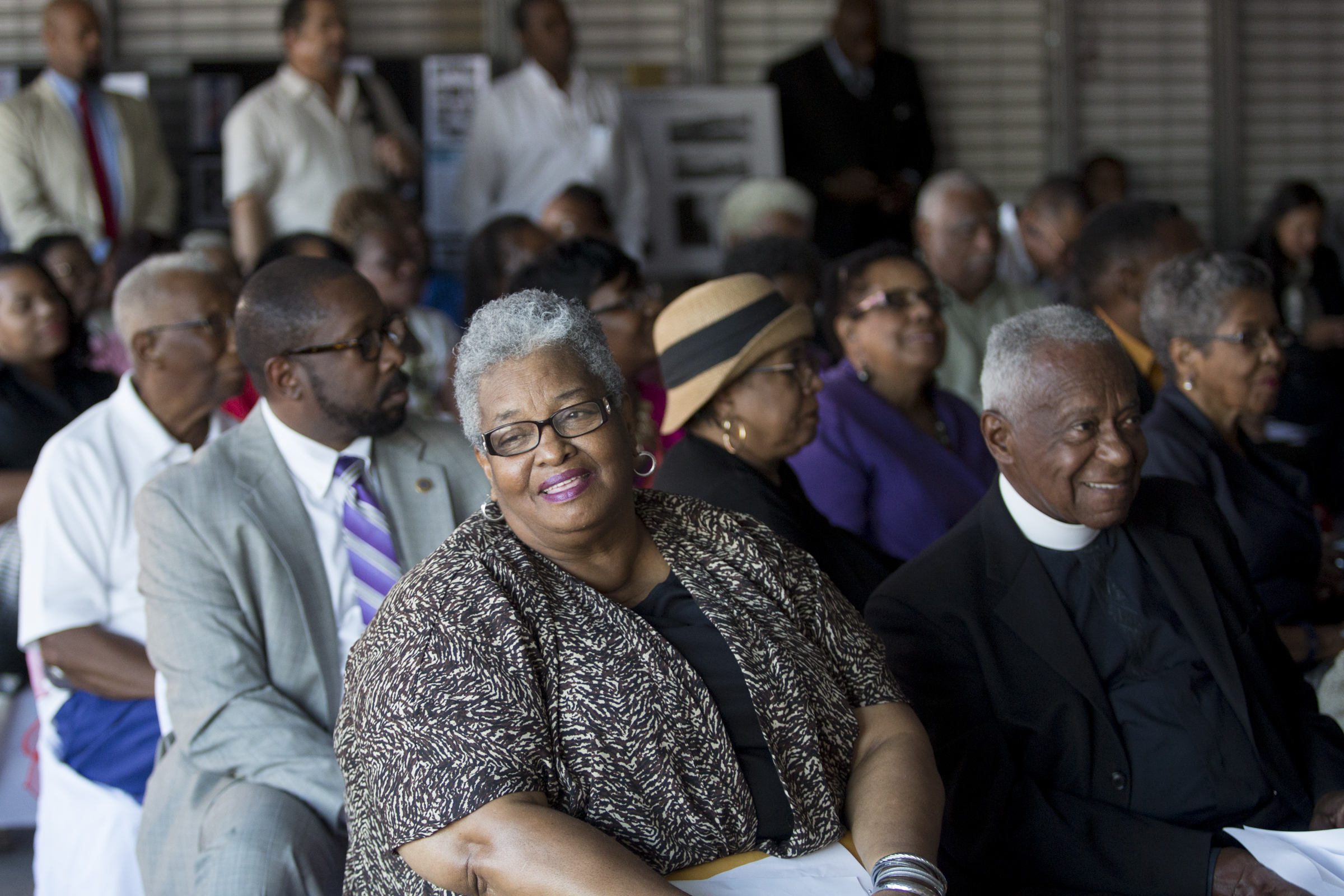
    Senator Shirley Kitchen in the audience during speeches in honor of the historical marker that was unveiled at Sullivan Progress Plaza September 14, 2016. The plaza was the first black-owned and operating shopping center in America. Wednesday, Sept. 14, 2016.
  • Over 36 million people watched the U.S.-Bosnia World Cup game, a record for soccer

    Over 36 million people watched the U.S.-Bosnia World Cup game, a record for soccer

    The U.S. men’s soccer team’s World Cup round of 32 win over Bosnia and Herzegovina broke the record for the most-watched soccer game in American broadcast history.

    Fox’s English broadcast drew an audience of 26.395 million viewers, and Telemundo’s broadcast in Spanish drew 9.8 million, between TV and streaming platforms. The combined total of 36,195,000 blows away the previous record of 27,314,274 that watched the 2014 men’s World Cup final between Argentina and Germany on ABC and Univision.

    That record actually has been broken twice this summer. The Mexico-Ecuador round of 32 game, played a day before U.S.-Bosnia, drew an audience of 29.33 million: 24.429 million on Fox’s platforms and 9.1 million on Telemundo’s.

    Mexico’s World Cup games have also been big draws for U.S. TV viewers.

    Fox’s U.S.-Bosnia audience also set a new record for the biggest audience to watch a soccer game on a single network. That mark had been the 25.632 million who watched the 2015 women’s World Cup final between the U.S. and Japan, which was a prime time kickoff, since the tournament was in Canada.

    According to the data published by the networks so far, 27 games in this World Cup have drawn combined audiences of over 10 million viewers. Eleven have drawn audiences over 15 million, and seven have drawn over 20 million — including all of the U.S.’s group games, and Mexico’s group-stage contest vs. South Korea and round of 16 win over England.

    The data isn’t complete, as the networks haven’t released data for all of their broadcasts. Particularly, there are gaps in the simultaneous games at the end of the group stage and the round of 32.

    More numbers should be published this week.