Blog

  • USMNT blown out of World Cup with a 4-1 loss to Belgium in the round of 16

    USMNT blown out of World Cup with a 4-1 loss to Belgium in the round of 16

    SEATTLE — The game the U.S. men’s soccer team dreamed of for so many years proved to be a nightmare.

    Belgium blew the Americans off the field, 4-1, in the round of 16, as Charles de Ketelaere scored two goals and created the third. Malik Tillman scored the Americans’ game-tying goal in the first half, but it was all they could muster in a game in which they were outshot, 15-7, including 7-2 on target.

    Perhaps it wasn’t surprising that the Red Devils were up for the contest, motivated by a perception that FIFA and President Donald Trump had tilted the scales against them. Nor was it surprising that Folarin Balogun started for the U.S. after FIFA dismissed Belgium’s last shot at an appeal.

    The Red Devils were on the front foot right away, with Timothy Castagne forcing Matt Freese into his biggest save of the tournament after just 45 seconds. At the other end, Belgium goalkeeper Thibaut Courtois repeatedly slowed play down when the ball came to him, drawing boos from the packed crowd in Seattle but otherwise quieting the venue.

    The game plan paid off in the ninth minute. After a long passing sequence that pulled the U.S. defense apart, Alex Freeman was short with an attempted headed clearance, Weston McKennie failed to get the loose ball, and Nicolas Raskin slipped a short pass for an unmarked De Ketelare to tap in from close range.

    When the midhalf hydration break arrived, Belgium had a 7-0 advantage in shots. But soon after play resumed, the Americans’ first attempt of the game went in the net in remarkable fashion.

    Brandon Mechele pushed over Balogun about 22 yards from goal, Tillman stepped up for the free kick, and his shot at goal deflected off the head of a leaping Hans Vanaken. The crowd of 66,925 erupted with so much joy that the stadium stands shook.

    Belgium, however, was unmoved. Not even two minutes passed before De Ketelaere put the Red Devils back in front. Leandro Trossard beat Sergiño Dest off the dribble, sent in a cross, and De Ketelaere jumped between Antonee Robinson and Tim Ream — flat-out overpowering the latter — to head the ball in.

    At halftime, it was 2-1, and the shots were 11-3. Pochettino made his first substitution at halftime, pulling Dest and sending in Gio Reyna. It made the U.S. more lively, but it did nothing to stop Belgium from scoring a catastrophic third goal.

    Mechele hit a simple long ball out of the back, and Freese gambled by coming far off his line to try to play it. But he failed to, De Ketelaere picked his pocket from behind, and the ball rolled to Vanaken. All he had to do was put a shot on frame, and, though Ream tried to backtrack, he couldn’t block the ball.

    After that, Pochettino withdrew Christian Pulisic, who had been clattered in a challenge that went uncalled a few minutes earlier, and sent in Sebastian Berhalter.

    When the Hershey native sat down on the bench, he put his head in his jersey, disconsolate. But he hadn’t been that effective when on the field.

    Pochettino sent Ricardo Pepi in for Tyler Adams in the 72nd, but the move didn’t produce many chances. The Americans only mustered three more shots the rest of the way.

    Romelu Lukaku finished the job in second-half stoppage time, taking the ball off Chris Richards and firing past Freese to the far post.

    It was significant that the U.S. men won a World Cup knockout game for the first time in 24 years. But this team, with players hyped as a golden generation of talent, had aimed higher — and so had Pochettino, paid $6 million per year by U.S. Soccer’s big donors from the private equity world.

    In the end, what they produced wasn’t any better than their predecessors: a round of 16 loss to a familiar foe and an exit with a whimper instead of a bang.
  • Here’s what we know about Sen. Mitch McConnell’s health

    Here’s what we know about Sen. Mitch McConnell’s health

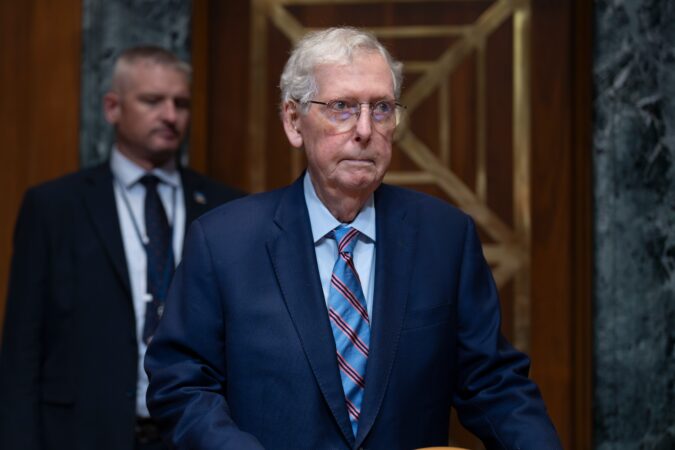
    Sen. Mitch McConnell has been hospitalized for more than three weeks, and his office still will not say what sent the 84-year-old Kentucky Republican there, his latest condition, or when he might return.

    McConnell, who has served in the Senate since 1985 and led Senate Republicans from 2007 until 2025, has not cast a vote since June 11. His absence comes as Republicans are navigating a narrow Senate majority. It has helped stall spending bills in the Appropriations Committee and added uncertainty around a senator already in the final months of his career.

    Here’s what we know about his health.

    What happened to McConnell?

    McConnell was admitted to the hospital on the morning of June 14, according to a statement from his office that said that he was “receiving excellent care.”

    EMS dispatch audio from the morning of June 14 suggests that emergency medical personnel were sent to McConnell’s home to attend to an unconscious person in cardiac arrest.

    According to the dispatch audio, a call went out at 8:36 a.m. for an “unconscious” person at McConnell’s address, and an ambulance was sent with an advanced life support crew. Six minutes later a medic radioed that CPR was “in progress.” At 8:43 a.m., a dispatcher relayed the emergency as a “cardiac arrest.” McConnell is named nowhere in the recording, though the address is his.

    The next day, Senate Majority Leader John Thune (R., S.D.) and Senate Majority Whip John Barrasso (R., Wyo.) — the top two Senate Republicans — told reporters that they had spoken to McConnell.

    What else do we know?

    McConnell’s office has been quiet on his condition in the weeks since and has not provided additional information on his treatment or the cause for his hospitalization.

    On June 22, eight days after McConnell was hospitalized, his office said that he wouldn’t be voting that week “as he continues his recovery.”

    Thune, on the same day, told reporters that he spoke with McConnell “toward the end of last week” and that McConnell “sounded good and was anxious to get back.”

    A July 2 statement from McConnell’s office provided little new information but said he was still in the hospital.

    “The Senator continues to improve, and is working closely with his staff on Kentucky and Senate matters while the Senate is out of session,” his office said.

    His office has not provided additional information since and did not respond to a request for comment on Monday.

    What does his continued absence mean?

    Any extended absence for McConnell could make matters more difficult for Republicans to pass legislation this year, as it would temporarily shrink their majority to 52-47 in the chamber.

    McConnell’s absence also further complicates matters for the Senate Appropriations Committee, which is already running behind schedule. The committee has not advanced any spending bills for the 2027 fiscal year due to disagreements over defense funding.

    Without McConnell, the Senate Appropriations committee is split evenly between Republicans and Democrats. This could prevent Republicans from advancing their spending priorities if all Democrats vote against them, as any vote within the committee that splits evenly along party lines would fail.

    The committee already had postponed plans to mark up spending bills during the week of June 22 due in part to McConnell’s absence, according to a Republican aide who spoke on the condition of anonymity.

    McConnell did not run for reelection this year and is set to retire from the Senate in January at the end of his term.

    What health issues has McConnell faced before?

    McConnell’s health has drawn repeated attention in recent years.

    McConnell had polio as a child and has long had difficulty climbing stairs.

    In March 2023, he was hospitalized after falling at a Washington hotel and was away from the Senate floor for several weeks. Months later, he had two highly public episodes in which he stopped speaking during news conferences and had to be helped by others.

    He was injured again in December 2024 after tripping outside a Senate Republican lunch, and earlier this year, he spent more than a week in the hospital after his office said he had flulike symptoms.

  • Pa. officials mourn the death of former State Sen. Shirley Kitchen, who represented North Philly for 20 years

    Pa. officials mourn the death of former State Sen. Shirley Kitchen, who represented North Philly for 20 years

    Pennsylvania elected officials are mourning the death of former State Sen. Shirley Kitchen, the second Black woman to serve in the state Senate and a champion for progressive issues who represented parts of North Philadelphia for more than two decades. She died Saturday at 79. A cause of death was not immediately clear.

    Kitchen represented the 3rd Senatorial District, composed of parts of North Philadelphia, for 20 years. She is remembered by her former colleagues as a pillar and matriarch of her community who worked tirelessly to improve the lives of low-income people, even after she retired.

    “She did so many things for so many people. Now that I’m old enough to appreciate it, I’m not quite sure how she did it — and she did it with such force,” said State Sen. Anthony H. Williams (D., Philadelphia), who served alongside Kitchen in the Senate and had known her for decades. Kitchen was elected to the state Senate in 1996 and served five terms before retiring in 2016.

    Her former colleagues, some through tears, credited many of Pennsylvania’s recent criminal justice reforms as being born under Kitchen’s leadership, with her early legislative proposals paving the way for their passage years later. For example, Kitchen authored early drafts of what is now known as the Clean Slate Act, which automatically seals some nonviolent convictions after 10 years, hiding them from most employer and landlord background checks. She first introduced similar legislation in Harrisburg years earlier and it failed. In 2018, two years after Kitchen retired, the Clean Slate Act became law in Pennsylvania and was heralded as a first-in-the-nation model for criminal justice reform.

    Elected officials across the city shared their condolences, remembering Kitchen as an advocate who cared deeply for her community.

    Mayor Cherelle L. Parker in a social media post on Sunday recalled Kitchen as “fighting for people who often had no one else to fight for them,” and as a trailblazer for Black women in politics.

    “Shirley Kitchen cared about working people, and she cared about Philadelphia,” said Parker, the city’s first Black female mayor and a former state representative.

    City Council President Kenyatta Johnson said in a statement that Kitchen “never forgot who she was fighting for,” dedicating her life to making people’s lives better.

    State Rep. Joanna McClinton (D., Philadelphia), Pennsylvania’s first Black female speaker of the House, wrote in a social media post that Kitchen was “a mentor and her service in the state House and Senate inspired me greatly.”

    Williams added that Kitchen also sought to elevate other Black politicians, like himself, to elected office — and laid the groundwork for much of the city’s current political progressivism.

    “The reality is that a lot of the infrastructure that helps them, Shirley had everything to do with it, and more,” Williams said, noting her advocacy and experience during the Civil Rights Movement. “I would hope the progressives in this generation would tip their hat to a generation that really created the progressive movement.”

    State Sen. Sharif Street (D., Philadelphia) had known Kitchen since he was a child, and said she helped him see the power a Senate seat has in improving the lives of his neighbors. When she decided to retire, Kitchen encouraged Street, who was on her staff at the time, to run to fill the vacancy in the 3rd District following her fifth and final term in the state Senate.

    Williams and Street recalled Kitchen as a fair but demanding mentor.

    “If she told you to do something, you better do it,” Williams said, with a laugh.

    For Street, Kitchen “didn’t limit her advice. She had opinions about everything in my life, including when my wife was right and I needed to listen to her.”

    Street said he spoke with Kitchen weekly, and Williams said he remained in touch with her as recently as last month. She often had ideas or issues she wanted the senators to take up. Street spoke with her last week about a forthcoming Registered Community Organization meeting that she was leading about a new proposed development nearby, emblematic of her continued involvement in her community.

    Prior to her election to the state Senate, Kitchen was involved in the National Welfare Rights Movement, which was a progressive advocacy group for the dignified treatment of women and children, largely led by Black women, during the 1960s and 1970s, Williams said.

    Kitchen served as the minority chair of the Senate Public Health and Welfare committee, in which she often leaned on her social work experience to inform her legislative proposals.

    A Democrat in a time where Republicans controlled the state legislature, she served her entire tenure in the minority party, but was still able to garner bipartisan support for some of her legislative proposals.

    “This image of her being an urban Black woman from Philadelphia would limit her ability to get stuff done in the Senate just wasn’t true,” Williams added. “She could analyze people and figure out what way to approach them with exceptional skill.”

    Born in 1946 in Augusta, Ga., Kitchen attended the Philadelphia School District and graduated from Antioch University in 1979 with a bachelor’s degree in human services, according to her Senate Library biography. She went on to work for former Philadelphia Mayor John Street, Sharif Street’s father, before she was elected to the state House in a special election in 1987. After she lost reelection to the seat in 1989, Kitchen returned to Harrisburg a decade later after her election to represent the 3rd Senatorial District.

    “She was a transformational figure that loved her community and understood that the purpose of those of us holding elected power is to be able to make a difference in the lives of the people we serve, in a way that they can feel and see,” Sharif Street added.

    Funeral services will be announced in the coming days, he said.

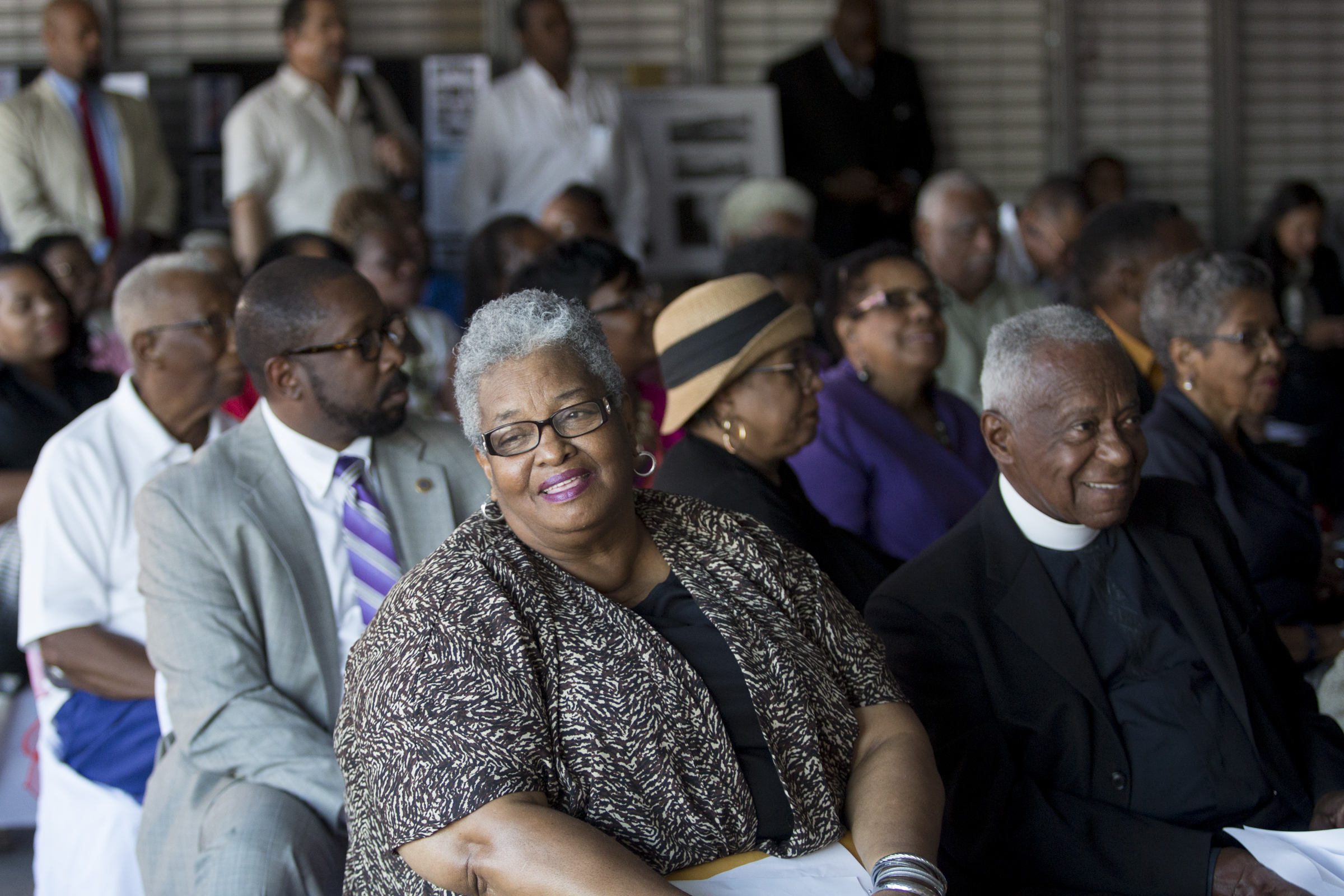
    Senator Shirley Kitchen in the audience during speeches in honor of the historical marker that was unveiled at Sullivan Progress Plaza September 14, 2016. The plaza was the first black-owned and operating shopping center in America. Wednesday, Sept. 14, 2016.
  • Over 36 million people watched the U.S.-Bosnia World Cup game, a record for soccer

    Over 36 million people watched the U.S.-Bosnia World Cup game, a record for soccer

    The U.S. men’s soccer team’s World Cup round of 32 win over Bosnia and Herzegovina broke the record for the most-watched soccer game in American broadcast history.

    Fox’s English broadcast drew an audience of 26.395 million viewers, and Telemundo’s broadcast in Spanish drew 9.8 million, between TV and streaming platforms. The combined total of 36,195,000 blows away the previous record of 27,314,274 that watched the 2014 men’s World Cup final between Argentina and Germany on ABC and Univision.

    That record actually has been broken twice this summer. The Mexico-Ecuador round of 32 game, played a day before U.S.-Bosnia, drew an audience of 29.33 million: 24.429 million on Fox’s platforms and 9.1 million on Telemundo’s.

    Mexico’s World Cup games have also been big draws for U.S. TV viewers.

    Fox’s U.S.-Bosnia audience also set a new record for the biggest audience to watch a soccer game on a single network. That mark had been the 25.632 million who watched the 2015 women’s World Cup final between the U.S. and Japan, which was a prime time kickoff, since the tournament was in Canada.

    According to the data published by the networks so far, 27 games in this World Cup have drawn combined audiences of over 10 million viewers. Eleven have drawn audiences over 15 million, and seven have drawn over 20 million — including all of the U.S.’s group games, and Mexico’s group-stage contest vs. South Korea and round of 16 win over England.

    The data isn’t complete, as the networks haven’t released data for all of their broadcasts. Particularly, there are gaps in the simultaneous games at the end of the group stage and the round of 32.

    More numbers should be published this week.

  • Philly police ID officer and man he fatally shot outside St. Christopher’s Hospital for Children

    Philly police ID officer and man he fatally shot outside St. Christopher’s Hospital for Children

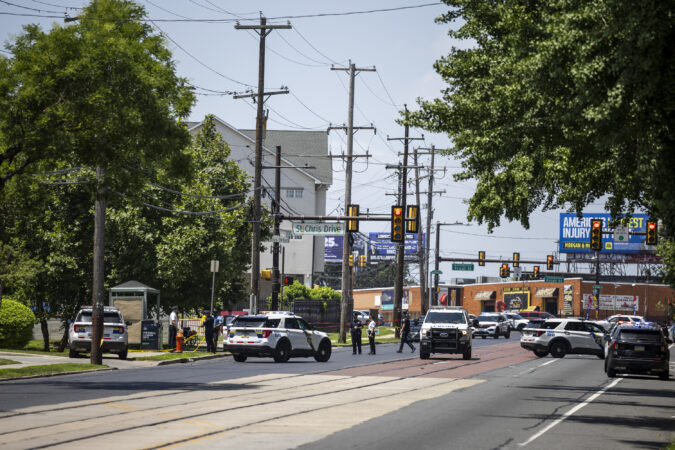
    Philadelphia police on Monday identified both the officer and the 32-year-old man he fatally shot last week during a confrontation outside St. Christopher’s Hospital for Children.

    Joseph Smithers allegedly pulled a Smith and Wesson handgun from his waistband at a bus stop on Erie Avenue when he was shot multiple times by Officer Azieme Lindsey, the police department said.

    “He did not fire his weapon,” Police Commissioner Kevin Bethel said Thursday evening about Smithers.

    A 29-year-old woman, identified last week by Police Commissioner Kevin Bethel as Smithers’ girlfriend, sustained a graze wound to her neck. She was taken to Temple University Hospital to be treated. Bethel said Thursday evening that she was in good condition.

    Lindsey and a second responding officer both had body-worn cameras that were activated during the encounter, the department said Monday.

    Lindsey, 28, was placed on administrative duty while the shooting was being investigated by the police department and the Philadelphia District Attorney’s Office.

    Just after 10:20 a.m. Thursday, two police officers responded to the area of St. Christopher’s after being dispatched for a report of a person with a weapon, the department said Monday.

    It was later determined that the original 911 caller, described as a family member, had contacted police out of concern that Smithers was experiencing a mental health crisis and was suicidal, the department said.

    It was also later determined that around the time of the 911 call from the family member, Smithers had been told by security that he was not allowed in the hospital because he had been asked to leave the day before and was no longer permitted on the property, the department said.

    No explanation has been given for why Smithers was asked to leave on Wednesday, but Bethel said last week that Smithers was there because his son was at the hospital.

    Smithers was “left without incident” when hospital security turned him away on Thursday, the department said.

    “The hospital was at no time under threat,” Bethel said Thursday evening.

    When Lindsey and the second officer — who were in full uniform and in a marked police vehicle — arrived at the hospital, they were met by a security officer who directed them to the nearby bus stop where Smithers was last seen, the department said.

    As Lindsay exited the patrol vehicle, Smithers allegedly began moving backward while also pulling the gun, the department said. Lindsay then fired, striking Smithers multiple times.

    Smithers was transported to Temple hospital, where he was pronounced dead at 10:44 a.m. Thursday.

    The department said the handgun was legally possessed by Smithers, who had a permit to carry a concealed firearm.

  • Former strength coach charged with criminal hazing in death of Bucknell University football player

    Former strength coach charged with criminal hazing in death of Bucknell University football player

    A former strength coach at Bucknell University was charged Monday with criminal hazing in the 2024 death of Calvin “CJ” Dickey Jr., an 18-year-old freshman football player with a known medical condition who collapsed after being required to perform drills until he passed out, Pennsylvania Attorney General Dave Sunday said.

    Mark Kulbis, 34, who worked for Bucknell at the time, surrendered to authorities late Monday morning and was arraigned on the charges, Sunday said. Bail for Kulbis was set at $10,000 unsecured.

    Dickey, originally from Florida, was participating in the first day of freshman football practice for the university in Lewisburg, Pa., on July 10, 2024, “when he was directed to do extensive calisthenics, which put him in risk of death due to his sickle cell trait,” the attorney general’s office said.

    Kulbis allegedly “subjected Dickey to the hazing, even after being made aware of Dickey’s medical condition and receiving training from the university on sickle cell trait and state law and NCAA standards regarding hazing,” Sunday’s office said.

    Dickey was required to perform 100 “up-downs” and several full-body plank drills: “both considered extraneous calisthenic exercises. This was done in spite of training and direction from other coaches that such exercises were not appropriate or safe for use as part of training,” the attorney general’s office said.

    Dickey, who was recruited to play lineman positions, “was visibly struggling with the exercises and Kulbis, the only coach in the training room, did not summon help until Dickey passed out,” Sunday’s office said.

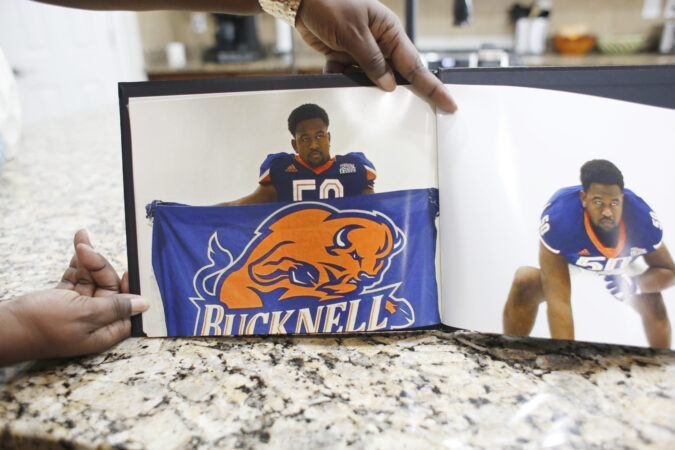
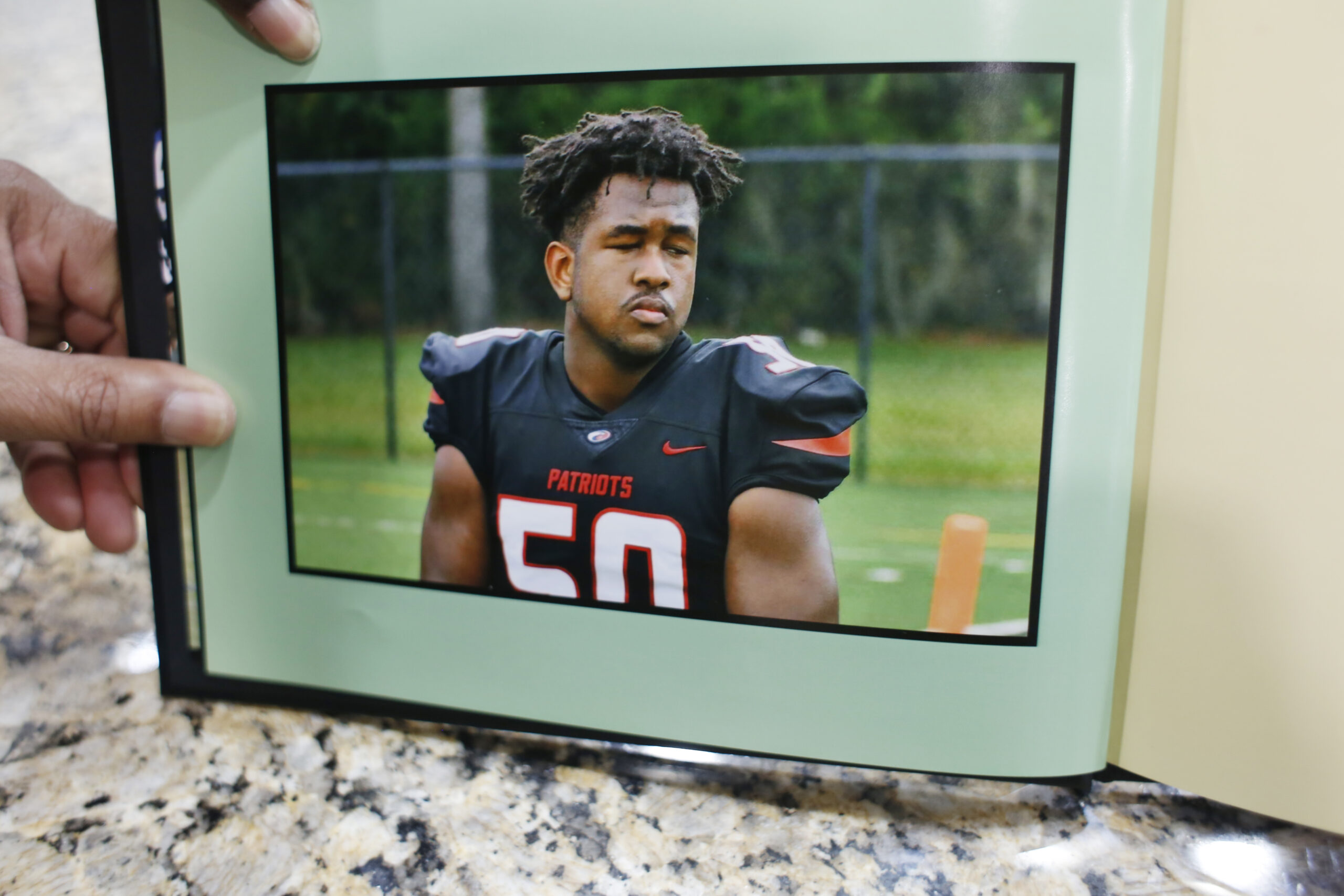
    Photo of Calvin “CJ” Dickey Jr. The 18-year-old died in 2024 after collapsing on the first day of freshman football practice for Bucknell University.

    Dickey was hospitalized, but died on July 12, 2024. An autopsy determined that Dickey’s death “was caused by Kulbis subjecting Dickey to the exercises in combination with Dickey’s Sickle Cell trait, body weight, and exertional rhabdomyolysis,” the attorney general’s office said.

    “This is an extraordinary tragedy, worsened by the fact that C.J.’s death was preventable,” Sunday said in a statement.

    The sickle cell trait can make intense exercise dangerous in certain situations. It used to be the leading cause of death in college football, but the rate of death associated with it among Division I football players dropped by nearly 90% after the NCAA began requiring testing and education in 2010, according to a report published in Sports Health Journal.

    NCAA guidelines say coaches should allow student athletes to set their own pace, build up slowly while training, and rest and recover between intense bouts of exercise.

    The criminal case was referred to state prosecutors last year by the Union County District Attorney, Sunday said. The campus in Lewisburg, located about a hour north of Harrisburg, is located in Union County.

    In an emailed statement, Bucknell University said Monday that university officials were aware of the criminal charges announced against Kulbis.

    “Bucknell has cooperated with the Pennsylvania Attorney General’s Office throughout its investigation,” the university said.

    “Because this is now an active criminal matter, and related civil litigation remains pending, the university will not comment on the allegations or legal proceedings,” the university said.

    “We continue to remember Calvin ‘CJ’ Dickey, Jr. and extend our deepest sympathies to his family and friends,” Bucknell said.

    Barbara Zemlock, an attorney for Kulbis, could not be reached for comment. ESPN reported that Zemlock provided a statement defending Kulbis.

    “While the death of Calvin Dickey is tragic, Mark Kulbis did not contribute to it and is not responsible for it,” Zemlock told ESPN.

    “The strength and conditioning program that was implemented was appropriate and in accordance with the training that Mr. Kulbis received, and with applicable standards.”

    Zemlock added: “There are facts and other circumstances surrounding this matter that, once presented at the appropriate time, will demonstrate that Mr. Kulbis did not commit the crimes charged,” and that “we intend to vigorously defend the charges.”

    Late last month, a federal judge allowed a lawsuit to proceed against Bucknell University filed by Dickey’s parents.

    Kulbis was charged with felony aggravated hazing and misdemeanor counts of involuntary manslaughter, reckless endangerment, and hazing. Sunday said.

    The aggravated hazing charge was made into Pennsylvania law in response to the 2017 hazing death of Penn State University student Tim Piazza.

    “This law exists because it recognizes what hazing is: criminal conduct that, in the best possible scenario, humiliates and dehumanizes an individual — and at its worst, takes lives and leaves families and friends forever devastated,” Sunday said.

  • Thunderstorms Monday morning left Camden County with 1,000 emergency calls and intense flooding

    Thunderstorms Monday morning left Camden County with 1,000 emergency calls and intense flooding

    Camden County and city officials are working with the state to assess the damage after severe thunderstorms left the region with heavy flooding Monday morning.

    Mayor Victor Carstarphen said no fatalities or injuries have been reported, but by Monday afternoon, Camden City had received about 90 service calls reporting damages following more than 4 inches of rainfall, and he expected Camden to get more calls as people return home from work to potential flooding.

    “Today, the rainfall exceeded what our stormwater system is designed to handle in such a short period of time,” Carstarphen said.

    Countywide, Camden received about 1,000 911 calls just in the stretch of the morning storm, said Dan Keashen, Camden County’s public affairs director.

    It will take a while for the county to determine how many homes were impacted and the estimated cost of damages. Public assistance teams from the state will work with the city and county to assess damages home by home in affected areas, said Morgan Callan, external communications manager for Camden County.

    Dave Balog of Mullica Hill makes his way to his truck in the flooded parking lot at the Ferry Avenue PATCO station in Camden Monday, July 6, 2026, as a flash flood threat continues for the region. Balog said there were no warnings about a storm when he parked there four hours earlier for an appointment in Center City Philadelphia. His truck did start as it was not in the deepest area of the lot.

    Flooding left vehicles stranded on roadways throughout the county, including two police vehicles and a fire department apparatus in Camden City, Keashen said. But most of the water has receded, according to a press release Monday afternoon.

    Both city pools in Camden will be closed this week, Carstarphen said.

    Camden City residents with damage to their properties can call the city emergency operations center at (856) 757-7132 or (856) 757-7139. Calling in those damages will allow city officials to report them to the state, which then could unlock regional and state disaster aid for residents.

    Residents of other Camden County municipalities can report property damages to their respective offices of emergency management.

    Carstarphen couldn’t confirm the timeline for how long it would take officials to visit properties to assess damages, but he said he encourages residents to file claims with their property insurance providers in the meantime.

  • Cristopher Sánchez endures the worst start of his career in bid to be All-Star starter

    Cristopher Sánchez endures the worst start of his career in bid to be All-Star starter

    KANSAS CITY, Mo. — Trea Turner crossed over second base, took a throw from Bryson Stott, and sidearmed the ball to first.

    Double play, right?

    More like double trouble.

    Turner uncorked a sinker in the dirt that skipped by diving first baseman Bryce Harper. A run scored. An avalanche followed. Rather than escaping the first inning here Monday, Cristopher Sánchez got blitzed for six runs, the start of a 15-1 Phillies trouncing by the bottom-dwelling Royals.

    “That’s a play you’ve got to make,” Turner said. “Who knows how that game ends up if [Sánchez] gets out of there clean and then gets on a roll?”

    Who knows? Because with a chance to deliver a series win for the Phillies and a closing argument to be the National League’s starting pitcher next week in the All-Star Game, Sánchez endured the worst start of his career.

    The ugly numbers:

    • 3⅓ innings, his shortest (noninjury) start since April 23, 2024
    • nine runs, career high
    • 12 hits, tied for career high
    • three homers, career high

    “It was not good,” Sánchez said through a team interpreter. “I mean, it was crap what I did today.”

    The Royals’ Starling Marte celebrates a first-inning double, one of four consecutive hits after Trea Turner’s error.

    Sánchez repeatedly was over the middle of the plate with his signature changeup. His sinker lacked its peak zip. Each of the homers — Luke Maile’s three-run shot in the first inning and solos by Salvador Perez and Lane Thomas — came on changeups.

    A half-dozen Royals hits against Sánchez were scorched at 100 mph or faster off the bat. Sánchez’s ERA climbed from 2.00, second-best in the NL, to 2.62, seventh in the league.

    Turner’s error absolved none of that.

    But it did change the game.

    “Yeah, absolutely,” Turner said. “They put some good swings on the ball today. But [Sánchez] has thrown the ball so great this whole year. He could easily put up five, six, seven scoreless, and we could’ve been in it.”

    Turner said he “rushed it a little bit” after taking the throw from Stott. It was his 12th error of the season, tied for the third-most among shortstops behind the Nationals’ CJ Abrams and the Angels’ Zach Neto (14 apiece).

    Errors aren’t always the truest measure of defense, but modern metrics haven’t favored Turner either. Entering play Monday, he was tied for 32nd among shortstops in outs above average (minus-6) and ranked last in defensive runs saved (minus-8).

    Alec Bohm drove in the Phillies’ only run with a double in the first inning.

    The Phillies haven’t considered moving Turner away from shortstop, especially after last year, when he had one of his best defensive seasons. But given his downturn this season, the questions will be renewed.

    “I don’t think this year’s been nearly as good as last,” Turner said. “I feel like just a little sped up. I feel like the game slowed down quite a bit last year. It’s still in there. I feel like I can do it.”

    Don Mattingly didn’t want to discuss Turner specifically. But he made clear that the Phillies must convert more balls in play into outs. By most metrics, and through the old-fashioned eye test, they rank among the worst defensive teams in the sport.

    “Let’s just say in general, I think defense is always a concern,” Mattingly said. “You want to limit outs. You never know when one out turns into runs at any point in the game.”

    Sánchez’s first inning was proof of concept. Instead of being back in the dugout after a scoreless inning, he gave up four consecutive hits: RBI singles from Nick Loftin and Starling Marte, an infield single by Tyler Tolbert, and Maile’s homer, which sent center fielder Derek Hill crashing into the wall.

    And with that, the rout was on.

    Kyle Schwarber got ejected by plate umpire Alan Porter after striking out in the sixth inning. Third-string catcher Garrett Stubbs pitched the eighth — and gave up the last two runs and four hits in the Royals’ 22-hit barrage. Mattingly emptied the bench in the middle innings, spring training-style.

    And the Phillies dropped the series to the Royals, who have the second-worst record in a bad American League. They’ve lost three of the last four games and five out of nine, with six games left before the All-Star break.

    Sánchez will get one more start, Saturday in Detroit, to stake his claim as the first Phillies pitcher to start an All-Star Game since Roy Halladay in 2011.

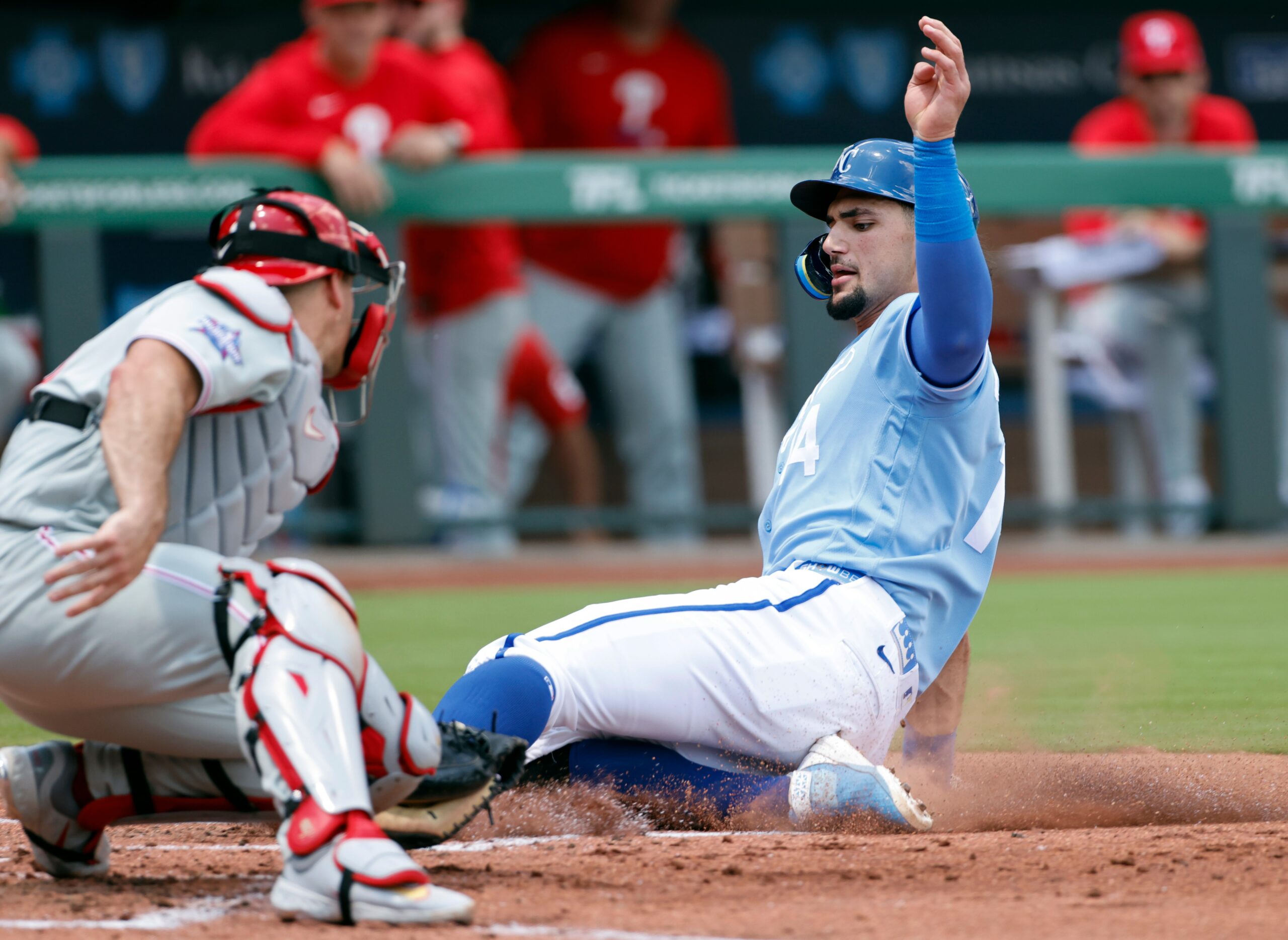
    The Royals’ Jac Caglianone beats the tag by Phillies catcher J.T. Realmuto to score off a Nick Loftin double during the first inning on Monday.

    In the meantime, the Phillies will dive into whether the start against the Royals was a one-off or a reason for concern about the ace lefty, who has worked the second-most innings (120⅓) of any pitcher in the majors.

    Mattingly noted that Sánchez struggled in three recent road starts in Milwaukee, Washington, and now Kansas City. Maybe that’s a coincidence. He has always pitched better at home.

    “You are looking like, ‘Is he getting ahead in the count; is he getting the ball where he wants to on the plate,’ things like that,” Mattingly said. “That’s what you look at. You’re looking at health. [Is he] tired, even? We’ve asked a lot of him. He’s thrown a lot of innings.”

    Sánchez insists everything’s fine. And if Turner makes a better throw to first base, who knows?

    “I feel great,” Sánchez said. “That’s why I was a little surprised to have such an outing today. Because, physically, I feel really good.”

  • Medford church planning repairs after possible lightning-caused fire Friday

    Medford church planning repairs after possible lightning-caused fire Friday

    On Sunday morning, the doors of Fellowship Alliance Chapel were open for prayer on schedule despite a fire in the Medford church’s worship center less than 48 hours earlier.

    “Just the heartfelt praise, the worship, the prayer time that we had together — it was just wonderful praising God for all his goodness. So many things could have really been much worse than they were,” Fellowship Alliance vice chairman Dave Gutekunst said.

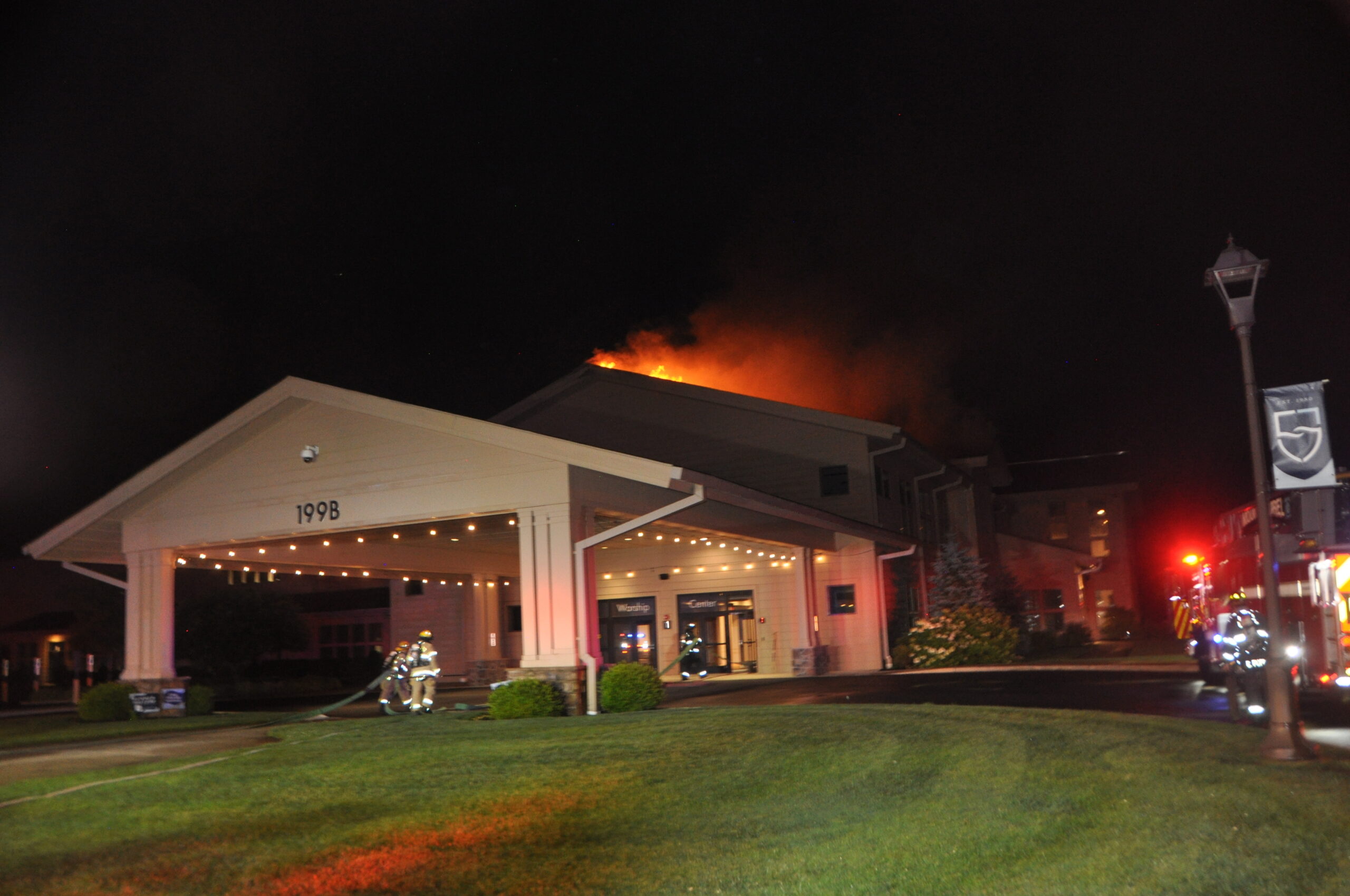
    No one was in the building when church officials say lighting struck the building’s roof around 9 p.m. Friday and no one was injured.

    The fire was contained between the roof and the ceiling of the worship center, limiting the scope of damage inside the church to smoke and water, Gutekunst said.

    “We just felt really blessed and I think people have had a renewed sense of hope that this is just one in a long list of many chapters of the history of our church,” he said. “God sustained us through trials and tribulations before and he’ll continue to sustain us and carry us through this one.”

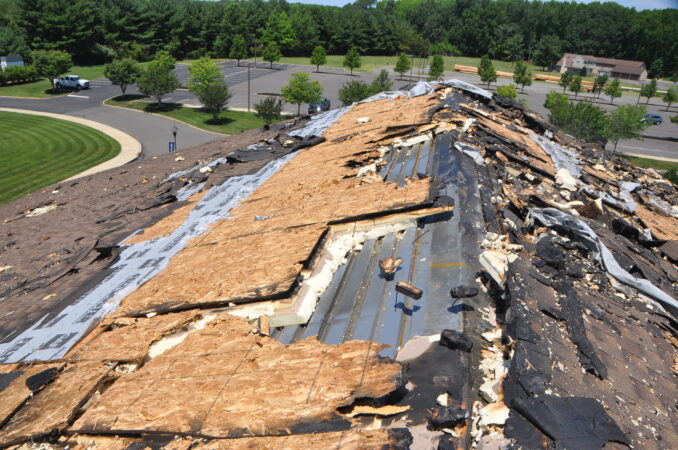
    The roof of Fellowship Alliance Chapel was damaged by a fire on Friday, July 3, 2026.

    Gutekunst also expressed his gratitude for the dozens of firefighters who responded to the scene during the peak of the weekend heat wave.

    It’s still too early for a clear timeline for repairs, he said, but the church is forming a team of experts to spearhead recovery. In the meantime, services will continue to be held in the temporary worship space that was set up in another building on the church’s campus after the fire.

    While church leaders believe the fire was sparked by a lightning strike, the Medford fire marshal has not determined an official cause of the fire and it is still under investigation, according to Medford manager Robert Dovi.

    Per protocol, the Bureau of Alcohol, Tobacco, Firearms and Explosives has also been notified because the fire occurred at a house of worship, Dovi said.

    But lightning-caused fires aren’t uncommon in this area, Dovi said.

    “This is a common occurrence for our area due to the large trees and open space,” Dovi said. “This weekend due to the severe nature of the storms there were a number of fires potentially related to lightning strikes.”

  • Macron arrives in Syria as first major western leader to visit war-torn country under new leadership

    Macron arrives in Syria as first major western leader to visit war-torn country under new leadership

    DAMASCUS, Syria — French President Emmanuel Macron arrived Monday in Syria, making him the first major western leader to visit the war-torn country since the ouster of Bashar al-Assad in 2024.

    Ukrainian President Volodymyr Zelensky visited in April but Macron is the first leader from western Europe or North America to do so.

    The French president’s visit comes during a period of relative calm in the Middle East after the monthslong war in Iran and Lebanon. He will travel next to Ankara, Turkey, for the NATO summit, where Syrian President Ahmad al-Sharaa is also expected to attend and hold a high-profile meeting with U.S. President Donald Trump.

    Syria’s state-run SANA news agency said Macron would visit with a business delegation to discuss regional security as well as business and investment opportunities.

    The French president was greeted at Damascus airport by Syrian Foreign Minister Asaad al-Shibani.

    “I have come to express France’s commitment to the Syrian people. For a sovereign Syria, united in its diversity and at peace with its neighbors,” Macron said in a post on X. “Together, let us open a new chapter of stability and peace.”

    France supports all those who can “contribute to build a new Syria” in line with the aspirations expressed since the 2011 Arab Spring, Macron’s office said, referring to a period of widespread uprisings across the Middle East that called for political change and reform.

    Macron will meet with al-Sharaa at the presidential palace and “engage directly with diverse Syrian people,” his office said.

    The French president’s meetings are scheduled throughout Tuesday, beginning with members of Syrian civil society, his office said, though no details were disclosed. Macron will then meet with al-Sharaa, before holding economic talks and signing memorandums of understanding. The two leaders will hold a joint news conference afterward.

    Macron hosted al-Sharaa in Paris in May 2025, where he urged European and U.S. leaders to lift longstanding sanctions on Damascus. Most of those sanctions have since been lifted.

    Paris supported Syria’s new leadership even at a time where others were skeptical of al-Sharaa’s Islamist-led rule and former role as the head of the Hayat Tahrir al-Sham militant group, previously linked to al-Qaida.

    Western governments were especially concerned about the treatment and inclusion of women and minorities, and whether Syria’s new government would transition into a more democratic rule.

    Syria has managed to sidestep the region’s recent conflicts, but the country is still battered from 13 years of war that left much of it in ruins, drove millions into poverty, and will cost hundreds of billions of dollars to rebuild. While Syria has signed memorandums of understanding with states and large companies for large investment projects, they have not yet come to fruition.