As it approaches halftime, the meteorological winter around here so far has been about as inconsistent as the Philadelphia Eagles’ offense, but it is about to get decidedly colder, if not snowier.
Temperatures on Thursday are due to hover around freezing with a brisk westerly wind gusting up to 30 mph (sympathies to all bikers and runners and those who are navigating those Center City wind tunnels), and then drop into the 20s after sunset with windchills in the teens.
Then, after a modest warmup Friday and Saturday, the forecast turns decidedly colder and potentially more intriguing, as computer models have been going back and forth on snow potential for the Philly region.
Philly’s coldest stretch of the winter so far to begin Sunday
Readings are expected to warm into the 40s on Saturday, but then drop off dramatically during the holiday weekend and may not reach freezing again until Thursday.
They may not get out of the 20s on Tuesday — when wind chills could fall to 0 in Philly — and Wednesday, with overnight lows in the teens.
A few alarm bells went off Wednesday afternoon when the main U.S. computer model suggested potential major snowstorms along the coast all the way to the I-95 corridor on Sunday.
However, other computer guidance wasn’t buying it, nor were forecasters. The computer food fight continued Thursday.
The U.S. model, said Paul Pastelok, longtime seasonal forecast specialist with AccuWeather Inc., “goes wacky all the time.” Maybe not all the time, but a subsequent run of the European model kept the storm offshore.
“We’re kind of in a waiting game,” said Pastelok.
Opined the National Weather Service Office in Mount Holly in its afternoon forecast discussion, the potential system has “high-end potential but also could end up being nothing.”
In other words, situation normal.
The winter so far in Philly and United States
Oddly, the raw stats for the first half of the meteorological winter — that’s the Dec. 1-Feb. 28 period — are not too far from normal for snowfall and temperature.
December temperatures finished at 3.6 degrees below normal at Philadelphia International Airport. And in the first two weeks of 2026, they were 3.6 degrees above normal. Snowfall in December was about an inch above average, but with a paltry 0.3 inches so far this month, the 4.8 total is very close to where it should be.
The early season coolness in Philly and much of the rest of the East was a surprise, said Owen Shieh, warning coordination meteorologist with NOAA’s Weather Prediction Center, in College Park, Md. The West, conversely, was quite warm.
The contrasts were the result of “pattern persistence,” said Tony Fracasso, a weather center meteorologist.
In the East, “This winter started quite strong,” he added, compared with recent winters. “It was not record cold,” but, “it sure felt cold for us.”
What’s ahead the rest of the winter of 2025-26
That likely will be the case early next week, and NOAA’s Climate Prediction Center has chances favoring below normal temperatures and above-normal precipitation in the Jan. 22-28 period.
Pastelok said that upper-air patterns are aligning in such a way that favors importing cold air from northwestern Canada.
The Climate Center’s Laura Ciasto said she does not see a major invasion of the polar vortex in the next few weeks. The vortex circles the Arctic, imprisoning the planet’s coldest air. But on occasion, the winds weaken, the freezer opens, and the contents spill southward.
She said the vortex winds are slightly weaker than normal but are expected to strengthen.
It is possible that lobes of the vortex may stretch on occasion, resulting in short-lived periods of cold in the Northeast, said Judah Cohen, research scientist with the Massachusetts Institute of Technology.
A period to watch would be the first week in February, when a significant disruption of the vortex is possible, Pastelok said.
A sudden stratospheric warming in the high atmosphere in the Arctic, which can lead to cold outbreaks in the contiguous United States “is not out of the question” late in the winter, Ciasto said.
Philadelphia’s peak snow season typically occurs in late January through mid-February.
Of the 10 biggest snowfalls in the city’s history, only three have occurred before Jan 22.
Unrivaled has sold out its upcoming Philly takeover event at Xfinity Mobile Arena, a Comcast Spectacor official confirmed to The Inquirer on Thursday.
The 3-on-3 women’s basketball league, which launched last year in Miami, is taking its season on the road in Year 2. The first Unrivaled event outside suburban Miami will be Jan. 30 in Philadelphia.
Xfinity Mobile Arena, which has a capacity of 21,000 and is owned by Comcast Spectacor, will be by far the biggest venue Unrivaled has played in. The league’s usual venue in Medley, Fla., Sephora Arena, was built just for Unrivaled and holds just 1,000 seats.
Philly is Unrivaled. One night only. In the City of Basketball.
The event, which features a doubleheader between four of Unrivaled’s eight teams, Breeze vs. Phantom and Rose vs. Lunar Owls, is set to bring young stars like Paige Bueckers (Breeze) and Cameron Brink (Breeze), along with Philly natives Natasha Cloud (Phantom) and Kahleah Copper (Rose), to South Philly.
The doubleheader comes on the heels of the WNBA’s announcement in June 2025 that Philadelphia will be home to an expansion franchise, with play set to begin in 2030.
If you missed out on purchasing, tickets are available for resale on platforms like StubHub and Ticketmaster, starting at $111.15 for the upper deck as of Thursday afternoon.
WASHINGTON — A bipartisan group of lawmakers have proposed creating a new agency with $2.5 billion to spur production of rare earths and the other critical minerals, while the Trump administration has already taken aggressive actions to break China’s grip on the market for these materials that are crucial to high-tech products, including cellphones, electric vehicles, jet fighters and missiles.
It’s too early to tell how the bill, if passed, could align with the White House’s policy, but whatever the approach, the U.S. is in a crunch to drastically reduce its reliance on China, after Beijing used its dominance of the critical minerals market to gain leverage in the trade war with Washington. President Donald Trump and Chinese President Xi Jinping agreed to a one-year truce in October, by which Beijing would continue to export critical minerals while the U.S. would ease its export controls of U.S. technology on China.
The Pentagon has shelled out nearly $5 billion over the past year to help ensure its access to the materials after the trade war laid bare just how beholden the U.S. is to China, which processes more than 90% of the world’s critical minerals. To break Beijing’s chokehold, the U.S. government is taking equity stakes in a handful of critical mineral companies and in some cases guaranteeing the price of some commodities using an approach that seems more likely to come out of China’s playbook instead of a Republican administration.
The bill that Sen. Jeanne Shaheen (D., N.H.) and Sen. Todd Young (R., Ind.) introduced Thursday would favor a more market-based approach by setting up the independent body charged with building a stockpile of critical minerals and related products, stabilizing prices, and encouraging domestic and allied production to help ensure stable supply not only for the military but also the broader economy and manufacturers.
Shaheen called the legislation “a historic investment” to make the U.S. economy more resilient against China’s dominance that she said has left the U.S. vulnerable to economic coercion. Young said creating the new reserve is “a much-needed, aggressive step to protect our national and economic security.”
Rep. Rob Wittman (R., Va.) introduced the House version of the bill.
New sense of urgency
When Trump imposed widespread tariffs last spring, Beijing fought back not only with tit-for-tat tariffs but severe restrictions on the export of critical minerals, forcing Washington to back down and eventually agree to the truce when the leaders met in South Korea.
On Monday, in his speech at SpaceX, Defense Secretary Pete Hegseth revealed that the Pentagon has in the past five months alone “deployed over $4.5 billion in capital commitments” to close six critical minerals deals that will “help free the United States from market manipulation.”
One of the deals involves a $150 million of preferred equity by the Pentagon in Atlantic Alumina Co. to save the country’s last alumina refinery and build its first large-scale gallium production facility in Louisiana.
Last year, the Pentagon announced it would buy $400 million of preferred stock in MP Materials, which owns the country’s only operational rare earths mine at Mountain Pass, California, and entered into a $1.4-billion joint partnership with ReElement Technologies Corp. to build up a domestic supply chain for rare earth magnets.
On Wednesday, Trump announced in a proclamation that the U.S. is “too reliant” on foreign-sourced critical minerals and directed his administration to negotiate better deals. He said possible remedies would include minimum import prices for certain critical minerals.
“Reshoring manufacturing that’s critical to our national and economic security is a top priority for the Trump administration,” said Kush Desai, a White House spokesperson.
The drastic move by the U.S. government to take equity stakes has prompted some analysts to observe that Washington is pivoting to some form of state capitalism to compete with Beijing.
“Despite the dangers of political interference, the strategic logic is compelling,” wrote Elly Rostoum, a senior fellow at the Washington-based research institute Center for European Policy Analysis. She suggested that the new model could be “a prudent way for the U.S. to ensure strategic autonomy and industrial sovereignty.”
Companies across the industry are welcoming the intervention from Trump’s administration.
“He is playing three-dimensional chess on critical minerals like no previous president has done. It’s about time too, given the military and strategic vulnerability we face by having to import so many of these fundamental building blocks of technology and national defense,” NioCorp’s Chief Communications Officer Jim Sims said. That company is trying to finish raising the money it needs to build a mine in southeast Nebraska.
On Monday, finance ministers from the G7 nations huddled in Washington over their vulnerability in the critical mineral supply chains.
Treasury Secretary Scott Bessent, who has led several rounds of trade negotiations with Beijing, urged attendees to increase their supply chain resiliency and thanked them for their willingness to work together “toward decisive action and lasting solutions,” according to a Treasury statement.
The bill introduced on Thursday by Shaheen and Young would encourage production with both domestic and allied producers.
Past efforts to bolster rare earths production
Congress in the past several years has pushed for legislation to protect the U.S. military and civilian industry from Beijing’s chokehold. The issue became a pressing concern every time China turned to its proven tactics of either restricting the supply or turned to dumping extra critical minerals on the market to depress prices and drive any potential competitors out of business.
The Biden administration sought to increase demand for critical minerals domestically by pushing for more electric vehicle and windmill production. But the Trump administration largely eliminated the incentives for those products and instead chose to focus on increasing critical minerals production directly.
Most of those past efforts were on a much more limited scale than what the government has done in the past year, and they were largely abandoned after China relented and eased access to critical minerals.
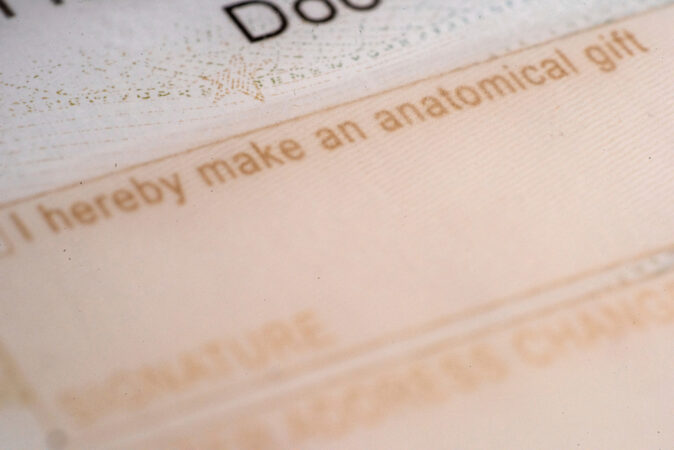
WASHINGTON — Organ donations from the recently deceased dropped last year for the first time in over a decade, resulting in fewer kidney transplants, according to an analysis issued Wednesday that pointed to signs of public mistrust in the lifesaving system.
More than 100,000 people in the U.S. are on the list for an organ transplant. The vast majority of them need a kidney, and thousands die waiting every year.
The nonprofit Kidney Transplant Collaborative analyzed federal data and found 116 fewer kidney transplants were performed last year than in 2024. That small difference is a red flag because the analysis traced the decline to some rare but scary reports of patients prepared for organ retrieval despite showing signs of life.
Those planned retrievals were stopped and the U.S. is developing additional safeguards for the transplant system, which saves tens of thousands of lives each year. But it shook public confidence, prompting some people to remove their names from donor lists.
Andrew Howard, who leads the Kidney Transplant Collaborative, said last year’s dip in kidney transplants would have been larger except for a small increase — about 100 — in transplants from living donors, when a healthy person donates one of their kidneys to someone in need. The collaborative advocates for increased living donations, which make up a fraction of the roughly 28,000 yearly kidney transplants.
With the exception of 2020, when the COVID-19 pandemic was raging, organ transplants have been rising year-to-year. Last year’s decline in deceased donors didn’t translate into fewer transplants overall: There were just over 49,000 compared with 48,150 in 2024. Transplants of hearts, livers and lungs continued to see gains, according to federal data. Howard said that was likely due to differences in how various organs are evaluated and allocated for transplant.
The Association of Organ Procurement Organizations wasn’t involved in Wednesday’s analysis but expressed alarm, calling on its members, hospitals and federal regulators “to unite in restoring public trust and strengthening this critical system.”
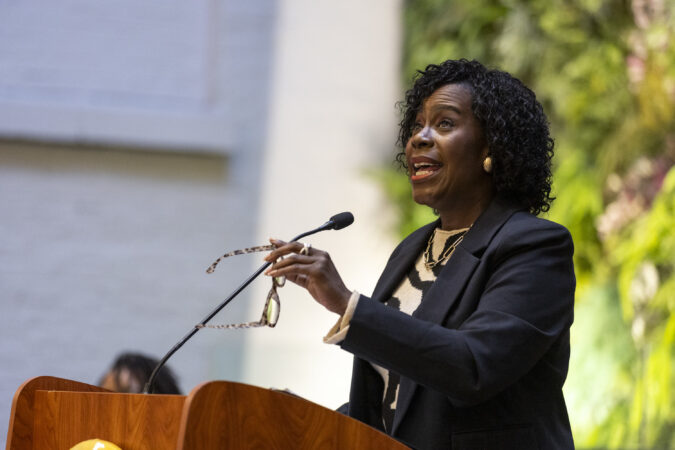
Mayor Cherelle L. Parker on Thursday announced the launch of the Philadelphia Free Business Tax Preparation program, which will cost the city $7.5 million per year and is expected to last at least five years.
The new service is aimed at helping the estimated 50,000 firms this year that will need to start paying Philadelphia’s business income and receipts tax, or BIRT, following the elimination of a popular exemption that primarily benefited small companies.
How does the Philadelphia Free Business Tax Preparation program work?
Under the new program, the city will connect eligible business owners with private tax professionals who will be reimbursed by the city for each client they assist.
There will be no cost to the businesses. Only firms based in Philadelphia that made less than $250,000 in 2024 are eligible.
The tax professionals will help firms file city, state, and federal tax returns — not just BIRT.
“We want you to be ready,” acting Commerce Director Karen Fegley said Thursday. “Let’s be ready for growth.”
The city so far has contracted with 19 tax preparation companies to participate in the program, and more may join, Fegley said. Together, they offer services in 13 languages, including English, Spanish, Mandarin, Cantonese, Arabic, Italian, Russian, Japanese, and French.
Why did the BIRT exemption end?
For about a decade, firms with less than $100,000 in revenue from transactions in Philadelphia were exempt from paying the BIRT.
That policy, championed by former City Councilmembers Maria Quiñones Sánchez and William J. Green IV, effectively allowed the tens of thousands of companies making less than that amount to forgo paying the tax at all. During the COVID-19 pandemic, former Mayor Jim Kenney’s administration waived the requirement for those firms to file local business tax returns, providing administrative relief for business owners.
But Parker last year convinced Council to eliminate the tax break after a Massachusetts-based medical device manufacturer that does business in Philly sued the city, saying the policy violated the Pennsylvania Constitution’s uniformity clause.
The policy change will place a significant burden on Philadelphia’s smallest businesses, both financially and administratively, given the complexity of BIRT. The tax includes two levies: Firms must pay 5.71% of their net income, or profits, made in Philadelphia, as well as 0.141% of their gross receipts, or total income, in the city.
Council last year approved a Parker plan to gradually lower the tax rates over 13 years and eventually eliminate the gross receipts levy, but the most significant cuts are years away.
Parker reiterated Thursday that she supported the $100,000 exemption. But she said her administration settled the lawsuit after determining the city would likely lose in court, potentially risking a ruling that City Solicitor Renee Garcia has said could require the city to repay past tax revenue.
Critics of the mayor’s decision to settle the case last year questioned why she didn’t fight harder to preserve the tax break. Parker said Thursday that would have been irresponsible.
“I said, ‘That’s why I’m the mayor and you’re not,’ because we can’t just do that and put the fiscal stability of the city at risk,” Parker said Thursday at a City Hall news conference.
To help ease the transition, Parker last year proposed using the money the city expected to gain as a result of more firms paying the BIRT — about $30 million — to fund business assistance programs. Council increased that total to about $47 million before approving the city budget in June.
Most of the money will go to existing programs that provide direct grants for businesses, such as the Philadelphia Catalyst Fund, Fegley said. But Parker is also using the funds to launch the tax preparation service.
“Small businesses are the backbone of Philadelphia, I don’t care what neighborhood you live in,” Parker said.
What else is being done to help small businesses?
In response to the elimination of the $100,000 BIRT exemption, Councilmember Mike Driscoll last year introduced a bill to exclude certain types of businesses — entrepreneurs, sole proprietorships, and businesses with one employee — from the tax.
Many of Philadelphia’s smallest companies are one-person operations, and Driscoll said he aimed to relieve them of the cost and burden of filing a BIRT return.
Parker on Thursday said her administration is still evaluating the proposal, noting that it would cost the city revenue and could potentially run up against the same legal hurdle as the $100,000 BIRT exemption: the uniformity clause, which requires Pennsylvania businesses, property owners, and individuals of the same “class” to be taxed at the same rate.
“We will work through that with his team, and do the cost analysis,” Parker said, adding that, “more importantly,” the city’s law department will work “to make sure we are not in violation of the Commonwealth of Pennsylvania’s uniformity clause.”
Council is expected to consider the measure in a committee hearing in the first half of the year.
Moscow agrees with President Donald Trump’s view that Ukraine is holding up a peace deal to end the almost four years of fighting since Russia invaded its neighbor, a Kremlin official said Thursday.
Kremlin spokesperson Dmitry Peskov said, “Yes, we can agree with it, it’s indeed so.” His comments came after Trump said in published remarks Wednesday that Ukrainian President Volodymyr Zelensky is an obstacle in U.S.-led peace talks.
That assessment is at odds with the sentiment of European officials, who have repeatedly accused Russian President Vladimir Putin of stalling in negotiations while his bigger army tries to push deeper into Ukraine and Russia relentlessly bombards Ukrainian cities.
“I think he’s ready to make a deal,” Trump was quoted as saying of the Russian president in an interview with Reuters. “I think Ukraine is less ready to make a deal,” he said, naming Zelensky as obstructing a settlement.
Polish Prime Minister Donald Tusk, who along with many European and NATO member nations has strongly backed Ukraine, pushed back on Trump’s reported comments.
“It is Russia who rejected the peace plan prepared by the U.S.,” not Zelensky, Tusk posted on X on Thursday. “The only Russian response (was) further missile attacks on Ukrainian cities. This is why the only solution is to strengthen pressure on Russia. And you all know it.”
Putin said Thursday that Moscow, like Ukraine, demands security guarantees as part of a prospective peace deal.
“We must proceed from the premise that security must be truly universal, and therefore equal and indivisible, and it cannot be ensured for some at the expense of the security of others,” Putin said after receiving credentials from foreign ambassadors in the Kremlin.
“In the absence of it, Russia will continue to consistently pursue the goals it has set,” Putin added.
Trump’s position appeared to deviate from recent comments by U.S. officials that the American president is running out of patience with Putin.
U.S. Sen. Lindsey Graham (R., S.C.) said last week that Trump is on board with a tough sanctions package intended to economically cripple Russia.
“This will be well-timed, as Ukraine is making concessions for peace and Putin is all talk, continuing to kill the innocent,” Graham said in a statement.
Also, the United States accused Russia on Monday of a “dangerous and inexplicable escalation” of its war at a time when the Trump administration is trying to advance negotiations toward peace.
The Institute for the Study of War, a Washington think tank, said late Wednesday that “the Kremlin has been delaying the peace process for months in order to protract the war and achieve Russia’s original war aims through military means.”
A Russian drone struck a playground in the western city of Lviv overnight, according to the head of the regional military administration Maksym Kozytskyi. The blast shattered over a hundred windows in the area, though nobody was injured, he said.
Peskov, the Kremlin spokesman, said that no date has been agreed for U.S. presidential envoy Steve Witkoff to make another visit to Moscow for further peace talks.
More than two dozen people participated in a multiyear scheme to fix basketball games in the NCAA and the Chinese professional league, federal prosecutors in Philadelphia alleged Thursday — a conspiracy that affected dozens of games and involved tens of thousands of dollars in bribes and millions in fraudulent bets.
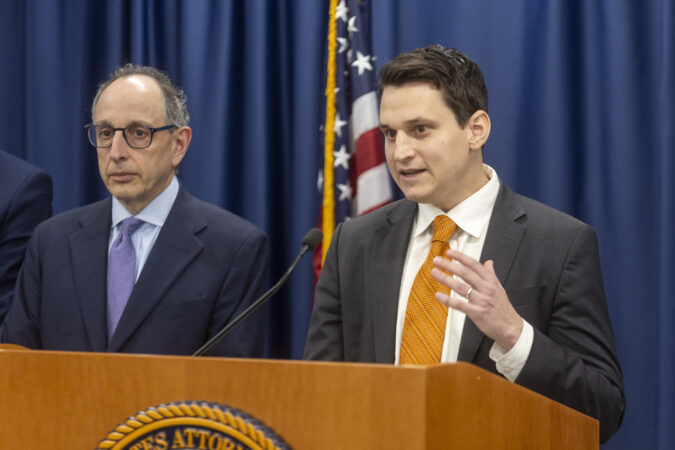
Twenty basketball players and six so-called fixers were charged in federal court in Philadelphia with crimes including bribery, conspiracy, and wire fraud, according to U.S. Attorney David Metcalf, who described the case as “historic.”
Metcalf said the fixers — professional gamblers or others with ties to the basketball world — would recruit players to underperform in forthcoming games, then bettors would wager against that player’s team. Players were bribed for their efforts, Metcalf said, while gamblers ultimately collected millions of dollars in illicit winnings.
“When criminals rig the outcome of games for the purpose to lose … we all lose,” said Metcalf, who spoke at a morning news conference alongside officials including Andrew Bailey, deputy director of the FBI, and Wayne Jacobs, the FBI’s top official in Philadelphia.
Players involved included Antonio Blakeney, a onetime Chicago Bulls player who later played for the Jiangsu Dragons in China, prosecutors said, as well as a number of Division 1 college players from programs including Tulane University, Nicholls State University, Northwestern State University, and North Philadelphia’s La Salle University.
Antonio Blakeney, who once played for the Chicago Bulls, has been charged with accepting bribes when he later played for a Chinese basketball team to influence its games.
In all, prosecutors said, the scheme involved 39 players on more than 17 Division 1 NCAA teams, with bettors wagering huge sums on at least 29 games. Some of the bets were placed at Rivers Casino in Philadelphia.
The allegations are similar in theme to those leveled last fall against NBA players including the Miami Heat’s Terry Rozier, who has also been federally charged with altering his performance to benefit gamblers.
At that time, the charges against Hennen — and the earlier dismissal of Temple University guard Hysier Miller — were rumored to extend to a more far-reaching probe into the NCAA.
Metcalf said the new investigation was distinct from that case, which is being prosecuted in New York. In that matter, Metcalf said, Rozier and others were accused of providing confidential information to bettors — such as a player’s injury status — to help boost the odds of a wager succeeding.
In the newest case, Metcalf said, players were directly participating in the conspiracy — and benefiting from it, even as they sought to help their teams lose.
“There is a really important difference between wagering on predicted outcomes [based on] insider information, and wagering on determined outcomes — outcomes that you control,” Metcalf said. “The former is a crime against sports betting markets. The latter is a crime against the sport itself … and that’s what makes it different and, in my opinion, worse.”
An American scheme in China
In a unique twist, prosecutors said, the scheme targeting one of America’s most popular sports was launched in China.
According to the indictment, Hennen and another professional gambler, Marves Fairley, recruited Blakeney — then playing for the Jiangsu Dragons — to join their so-called point-shaving scheme in 2022.
Blakeney at the time was a top scorer in the Chinese Basketball Association. And, according to the indictment, Hennen and Fairley offered him bribes in exchange for deliberately underperforming and hurting his team’s chances of winning.
After he agreed, prosecutors said, Hennen and Fairley placed large bets at the Rivers Casino sportsbook in Fishtown, known as “BetRivers.” In one instance, prosecutors said, the men wagered $198,300 on the Guangdong Southern Tigers to beat the Dragons in a March 6, 2023, game.
Blakeney averaged 32 points a game that season, but scored just 11 in the contest, which the Dragons lost, 127-96.
Hennen was apparently pleased with his new investment. Later that spring, the indictment said, he sent a text to another schemer offering reassurance about a game involving Blakeney.
“Nothing gu[a]rantee[d] in this world,” Henner wrote, ”but death taxes and Chinese basketball.”
A spokesperson for Rivers Casino declined to comment on the case.
After the season, Fairley left $200,000 in cash in a Florida storage unit Blakeney controlled, the indictment said. In intercepted text messages, Hennen and Fairley also described “giving $20,000” to other players recruited by Blakeney to fix matches during his absence.
The Chinese betting ring then became a template, prosecutors alleged — one that the conspirators used to begin rigging games much closer to home.
Targeting NCAA games
In 2024, prosecutors said, Hennen and Fairley recruited college basketball trainers Jalen Smith and Roderick Winkler to help rig NCAA games. Prosecutors said the trainers’ status in the basketball world gave them access to, and credibility with, NCAA athletes.
The men then used that influence to recruit about 20 players from a variety of schools to participate in the point-shaving operation, prosecutors said.
Several players had ties to the Philadelphia region, including former Temple University forward Elijah Gray, who was approached while playing at Fordham; Micawber “Mac” Etienne, who was approached at DePaul but later played for La Salle; and Delaware State University point guard Camian Shell, who is alleged to have thrown games while at North Carolina A&T State University. C.J. Hines, a current player on Temple’s roster, was also charged with taking bribes in 2024, when he was playing at Alabama State, court documents show. A Temple spokesperson said Thursday that the university was “reviewing this new information” and noted that Hines has not played for the Owls due to ongoing eligibility questions.
The scheme worked much as in China, prosecutors contended: Hennen and Fairley would bribe players to throw games, then place bets on their opponents.
But the gamblers took a less visible role this time, the indictment said, generally sending brief texts to a number of people who could place high-stakes bets on their behalf.
“Queens ny -1 first half and money line,” Hennen texted a straw bettor, seeking to place a $20,000 bet that the Queens University Royals would cover the first-half spread by at least 1½ points in a March 1, 2024, game against Kennesaw State.
The men let Smith handle much of the dirty work, the indictment said. In one example, he texted with Kennesaw State players Simeon Cottle and Demond Robinson the day of a game.
“I need both of y’all on FaceTime with me twice today,” he wrote. “Just to make sure y’all good and really locked in … [This] money guaranteed, ima be at the game with the money.”
In some cases, Smith is alleged to have flown to Philadelphia to pay players their bribes. In other instances, the indictment said, Smith was intensely involved with pressuring players to underperform even while games were progressing.
In March 2024, for example, the indictment said, Smith texted DePaul’s Etienne that his teammates who were playing well needed to “chilllll [the f—] out.”
In another episode, the indictment said, he wrote to to Alabama State players Shawn Fulcher and Corey Hines, saying: “Lose by 6 full game no excuses,” then sent a photo of a large stack of cash.
When the players complained that they were struggling to throw the game because their opponent — the University of Southern Mississippi — was “so bad,” Smith sent an all-caps response, the indictment said.
“LET [the Southern Mississippi players] LAY IT UP,” he wrote.
Sports impacted by ‘monetization’
While Hennen is accused of orchestrating many of his crimes in Philadelphia, the indictment painted a more limited picture of his role with local teams.
In 2024, for example, Smith and Blakeney attempted to recruit players from La Salle to join the scheme for a game against St. Bonaventure, the indictment said. But prosecutors did not name any La Salle players as having done so, and they said all the bets Hennen and Fairley placed on the game were unsuccessful.
A spokesperson for La Salle said Thursday that the university would cooperate with all investigations into the matter, and that “neither the university, current student-athletes, or staff are subjects of the indictment.”
Metcalf said the “monetization” of college sports in recent years — and the proliferation of legalized sports gambling across the country — “furthered the enterprise in this case.”
And he said that although college athletes can now be legally paid for their name, image, and likeness, some of those who participated in this scheme were targeted because they did not feel they were making enough money in that new landscape.
Metcalf said many Americans are drawn to sports because they offer a venue for teams and players to participate in honest competition.
“This,” Metcalf said, “totally flies in the face of all of that.”
Staff writer Isabella DiAmore contributed to this article.
Top officials across the Philadelphia region are taking a stand against partnerships with ICE.
On Wednesday, newly inaugurated Bucks County Sheriff Danny Ceisler terminated a 287(g) agreement with ICE initiated by his Republican predecessor that enabled deputies to act as immigration enforcement officers.Haverford Township also passed a resolution barring participation in a 287(g) agreement.
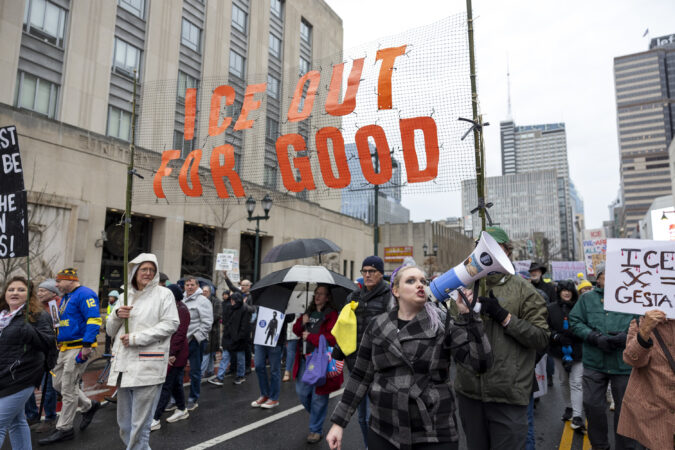
These developments come as protests escalate against President Donald Trump’s deployment of U.S. Immigration and Customs Enforcement agents to U.S. cities, after an agent shot and killed Renee Nicole Good in Minneapolis last week. Good, a poet and mother of three, was in her SUV when the agent fired into the vehicle.
Also on Wednesday, Trump said on his social media platform, Truth Social, that federal funding would be cut from any states that have sanctuary cities. These jurisdictions, which limit local law enforcement cooperation with ICE, have been increasingly targeted by the president’s administration.
As local leaders continue to grapple with the ever-changing and escalating Trump immigration policy, here’s what to know about how local governments are interacting with federal immigration authorities:
Everyone has a theory as to why that might be: Could Trump be avoiding the largest city in the most important swing state? Has Mayor Cherelle L. Parker’s decision to refrain from publicly criticizing Trump played a role?
But regardless of the name, a 2016 executive order signed by former Mayor Jim Kenney on ICE cooperation remains in place under Parker’s administration. The directive orders city authorities to not comply with ICE-issued detainer requests to hold people in custody unless there is a judicial warrant.
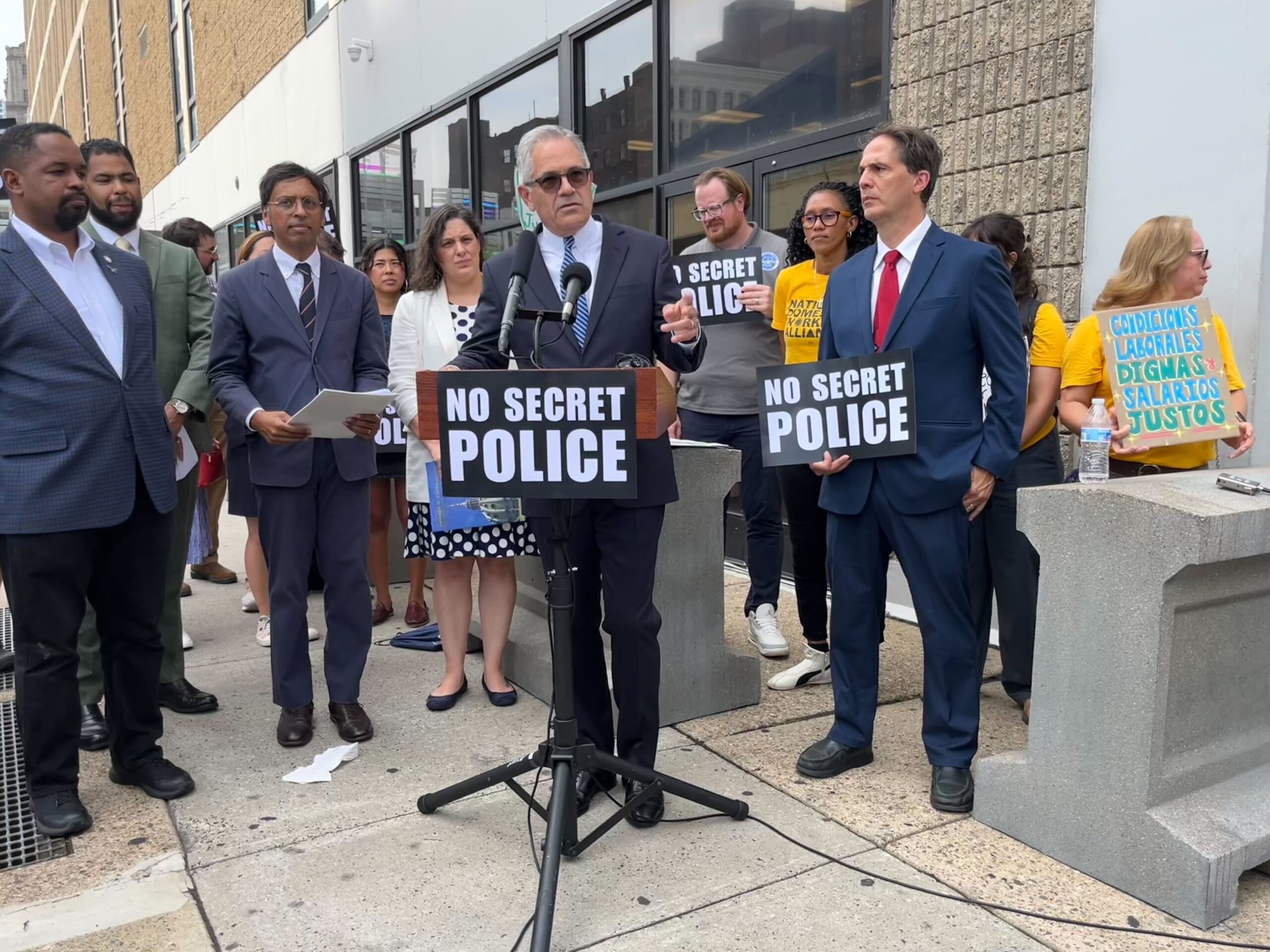
Philadelphia District Attorney Larry Krasner speaks at a news conference outside the Philadelphia Field Office for Immigration Customs Enforcement in Center City in August.
The sheriff terminated a 287(g) agreement with ICE — what does that mean?
Essentially, it means that sheriff deputies are no longer allowed to act as immigration authorities.
Last April, Ceisler’s predecessor, Fred Harran, a Trump-aligned Republican, signed on to thepartnership with ICE, stirring upcontroversy in the swingcounty. Ceisler, a Democrat who defeated Harran in November, made terminating the agreement a focal point of his campaign.
No one in Bucks had been detained under the 287(g) agreement, Ceisler said.
On Wednesday, Ceisler signed another order that prohibits deputies from asking crime victims, witnesses, and court observers their immigration status.
Does Bucks County still work with ICE?
Yes. Bucks County is not a sanctuary county and, in the words of Ceisler, “will never be.”
The Bucks County Department of Corrections will continue to share information with law enforcement agencies, including ICE. The federal agency will also continue to have access to county jails and Bucks will honor judicial warrants from immigration enforcement.
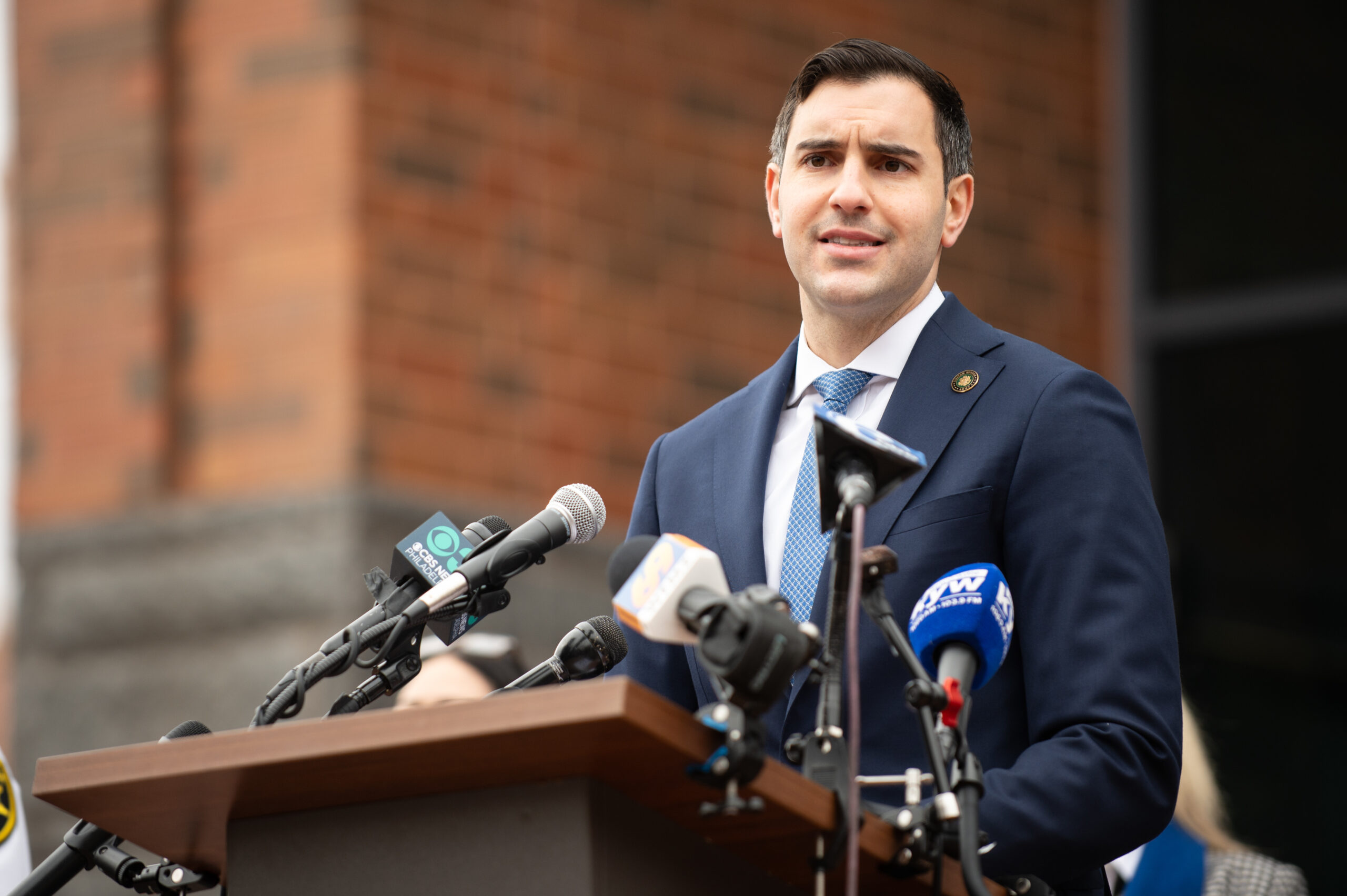
Bucks County Sheriff Danny Ceisler announces the termination of the county’s partnership with ICE, an agreement formally known as 287(g), during a press conference at the Bucks County Justice Center in Doylestown, Pa., on Wednesday, Jan. 14, 2026.
“It’s sporadic, it’s reports,” Ceisler said of ICE’s presence in Bucks.
“I can’t get ICE out of Bucks County,” he added. “I have no authority over them. All I can do is prevent 16 deputies from participating in a program that enables them to perform immigrant enforcement in the community.”
Bucks County was the only county in the Philadelphia region that did not appear on an initial list published by the Trump administration of sanctuary jurisdictions that could have federal funding at risk. That list was later deleted. The most recent list, published by the administration in August, also does not feature Bucks.
Haverford Township
Will Haverford Township participate in a 287(g) agreement?
While the police department has not requested to enter an alliance with ICE, township commissioners passed the resolution as a preventive measure.
Montgomery County
What is Montgomery County’s policy on immigration?
Montgomery County’s Democratic commissioners have not passed a formal ordinance or a resolution labeling Montco a sanctuary or welcoming county, citing limits to their power, concerns about creating a false sense of security, and a preference for internal policy changes.
In early 2025, county officials approved a policy that limits communication between county employees and ICE officials and said they would not answer prison detainer requests without warrants.
Montgomery County activists hold a news conference about ICE incidents in the county last month.
What do Montco residents think about it?
County residentshave urged individual municipalities within the county to limit collaboration with ICE, especially as the county has become a hot spot for immigration enforcement. Norristown, a heavily Latino community, has specifically become a target for ICE.
“ICE has created a crisis in our neighborhoods, and we cannot afford silence, mixed signals, or leadership that only reacts once harm has already happened,” Stephanie Vincent, a resident and leader of Montco Community Watch, said last month during a news conference at a West Norriton church.
As of early December, local organizers estimated that only six out of 62 municipalities had enacted policies, though they consider some to be lackluster.
Staff writer Katie Bernard contributed to this article.
When the Rev. Jack Perkins Davidson and other parishioners in his socially active Spring Glen Church in Connecticut learned last year that budget carrier Avelo Airlines — with a major hub at nearby Tweed New Haven Airport — was also operating U.S. government deportation flights, the pastor kept thinking about one thing.
What would the Rev. Dr. Martin Luther King Jr. do?
Davidson said King’s 1955 Montgomery bus boycott against segregation — the iconic protest that launched the civil rights movement of the mid-20th century — was an inspiration as he and a coalition of activists pressured Avelo to stop aiding U.S. Immigration and Customs Enforcement and its mass deportation campaign.
“I often think about how the Montgomery bus boycott was a very local action, but it became national news,“ Davidson told me by phone recently. ”Sometimes when I feel so overwhelmed by the state of the world, I take hope in that example — that acting in the local level is a way to create national impact.”
Davidson and his congregation’s allies, like Connecticut Students for a Dream and the New Haven Immigrant Coalition, spent nine months pressuring Avelo to drop ICE — staging noisy protests, but also doing what the minister called “the unglamorous work” of gathering petition signatures and attending airport board meetings. Last summer, New Haven’s mayor signed their petition as the city banned official travel on Avelo.
Spotify confirms that they are no longer running ICE recruitment ads.
Last October, the company faced backlash for running ICE recruitment ads after receiving $74,000 from the Department of Homeland Security to promote the Trump's plan to hire 10,000 new deportation officers by… pic.twitter.com/4M7l4HGg0K
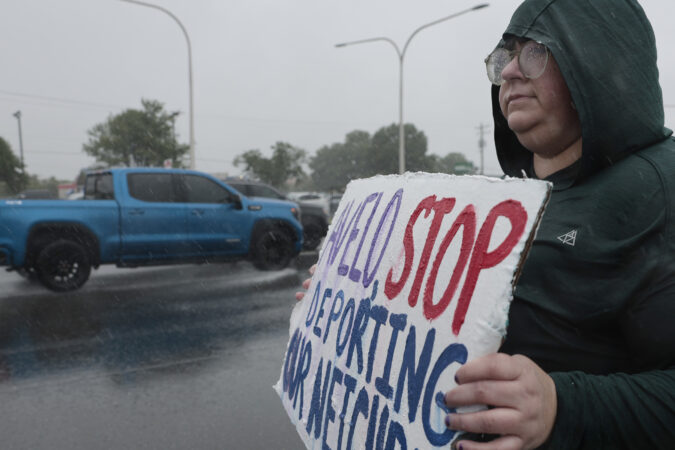
The Connecticut crusaders were joined by activists at other Avelo hubs, including Wilmington. It’s impossible to know exactly how much boycotting air travelers hurts the bottom line of the private, Texas-based corporation, but earlier this month, Avelo made a U-turn. A spokesperson said the airline would halt working with ICE, which “ultimately did not deliver enough consistent and predictable revenue to overcome its operational complexity and costs.”
Avelo’s exit from the ugly business of flying often handcuffed and shackled migrants out of the United States was a huge win for the growing movement against the Trump regime’s mass deportation raids — but it was not an isolated incident.
In recent days, the leading music streamer Spotify announced it was no longer running recruitment ads for new ICE agents. The spots urged would-be applicants to “fulfill your mission to protect America,” but sparked outrage among listeners opposed to the agency’s masked goons and its violent raids that have roiled cities from New Orleans to Minneapolis.
As with Avelo, Spotify’s ties to ICE — the U.S. Department of Homeland Security paid the Swedish-based streamer $74,000, according to Rolling Stone — sparked a nationwide campaign for a boycott that was led by Indivisible, a leading organizer of the massive “No Kings” protests.
Thousands canceled their paid subscriptions, and some artists pulled their music from Spotify to protest both the ICE ads and the company’s ties to a defense contractor.
These economic wins come amid a deadly and chaotic start to 2026 that has battered America’s already damaged national psyche. The stunning Jan. 7 Minneapolis murder of Renee Nicole Good, a 37-year-old poet and mother of three, by an ICE agent has only upped the anxiety and the stakes.
A new Quinnipiac Poll released this week showed that 57% of Americans now disapprove of the way ICE and other federal agencies are enforcing immigration laws, with 53% saying Good’s killing was not justified. A separate Economist/YouGov survey found respondents favoring the abolition of ICE by a 46%-43% majority — a first for that political hot-button question.
So, as you can imagine, in a healthy functioning democracy like the United States, the opposition party Democrats are forming a united front in working to abolish ICE, including the withholding of money in the latest budget battle on Capitol Hill, right?
Right?
Um, not exactly. To be sure, Good’s murder and the appalling scenes in Minnesota have triggered a more radical response from some Democrats, including more than 50 members, so far, who’ve signed on for the impeachment of DHS Secretary Kristi Noem. But many in Congress are insisting ICE can somehow be reformed — including an utterly bizarre proposal to put scannable QR codes on immigration agents so the public can identify them. It’s an echo of the tepid reform ideas that failed to stop police brutality after George Floyd’s 2020 murder.
BREAKING: Heavy police and state trooper presence in Minneapolis as noise protest continues outside the Canopy by Hilton where ICE agents are reported staying.
Protests press into the night, demanding Walz and Frey arrest ICE officer Jonathan Ross. pic.twitter.com/lONV4RaUeD
“Clearly, significant reform needs to take place as it relates to the manner in which ICE is conducting itself,” House Minority Leader Hakeem Jeffries of New York told MS Now on Tuesday night — minutes before agents in Minneapolis reportedly shot a flash-bang grenade into a moving car and injured six children, including a baby.
You don’t significantly reform the brand of fascism that we can all see on the icy streets of the Twin Cities. You fight it like the existential crisis for American democracy that it is. Millions of everyday Americans are both feeling that urgency and dismayed that the institutions theythought would oppose autocracy — Congress, the media, the U.S. Supreme Court — aren’t standing with them.
No wonder people are fighting with the only real ammunition they have under late-stage capitalism: their dollars.
Nearly one year into the second coming of Trump, many of the major victories by citizens resisting his regime have come through the fingertips of everyday folks clicking on a “cancel” button.
The best-known example came last summer when Disney-owned ABC briefly suspended late-night host Jimmy Kimmel in a flap over some (fairly tame) comments he made after the assassination of right-wing activist Charlie Kirk. The network raced to put Kimmel back on the air after the cancellation rates for two lucrative Disney-owned streaming services, Disney+ and Hulu, doubled. And Disney recently extended the contract of Trump’s least-favorite comic by another year.
Other economic pressure campaigns have badly damaged U.S. brands without getting results … yet. The best example is the giant retailer Target, whose decision to end its diversity initiatives after Trump’s inauguration sparked calls for a boycott by prominent Black activists and some labor unions. Since then, foot traffic at Target stores has dropped (while increasing at more “woke” rival Costco), and the stock price of the Minnesota-based company has plunged by 33%.
This hasn’t yet inspired Target’s management to fully restore its diversity initiatives, and it more recently has angered some activists by insisting it has no power to stop ICE agents from using its parking lots and even entering its stores to make arrests. None of this should deter the public from keeping the pressure on Target.
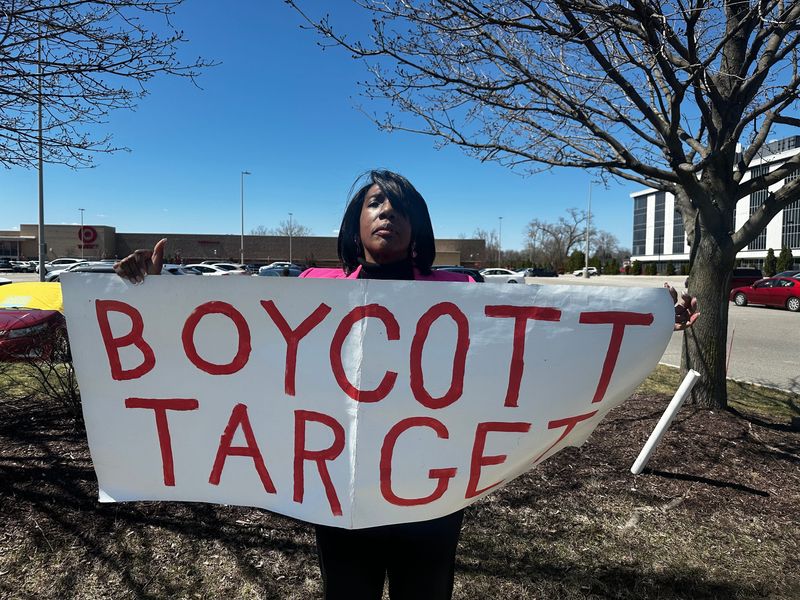
Allison Folmar of West Bloomfield joined the protesters who advocated for a boycott against Target in April.
The weeks of Minnesota mayhem have focused attention on a new corporate bête noire: Hilton Worldwide Holdings. Two of the hotel chain’s properties in Greater Minneapolis have been the scene of noisy, all-night protests after reports that out-of-town ICE agents are staying there. And Hilton further infuriated activists and sparked calls for a boycott by delisting a third Minneapolis hotel after an employee said ICE was not welcome.
I will not stay at any Hilton hotel as long as the company thinks it’s OK to host masked thugs who are snatching laborers off the street and shooting or tear-gassing anyone who objects to that, and I hope you would consider doing the same.
As New Haven’s Davidson rightly said, using economic pressure to end injustice takes time and hard work that isn’t always glamorous or made for the cable-TV cameras. Some 71 years ago in Montgomery, Ala., the King-led bus boycott took 381 days and a lot of sacrifice from unsung heroes like Claudette Colvin, who died this week at age 86, and working-class Black people who walked or carpooled to their jobs until claiming victory.
The bottom line has not changed since MLK’s time. The color that matters most to corporate America is the color of money. The pursuit of profit is why cowardly law firms or TV networks like CBS are aiding American dictatorship instead of fighting it. But it’s also what makes them reverse course when they realize that hate is actually bad for business in a consumer society.
Boycotts aren’t the only solution, but in a world where feckless institutions have given up, they have become an essential tool. Spend your dollars with any company that still believes in a decent, diverse America, and put the collaborators out of business. Consider it an early birthday present for Dr. King.
This week, owner Kimco Realty and developer Bozzuto Development announced the opening of Coulter Place, the first apartment community in the Ardmore shopping destination.
The five-story, mixed-use development includes 131 apartments with one to three bedrooms and about 20,000 square feet of ground-floor retail space. Amenities for residents include a fitness center, clubroom, game room, pool, coworking spaces, and pet-care spaces. It has two courtyards and garage parking with electric-vehicle charging stations.
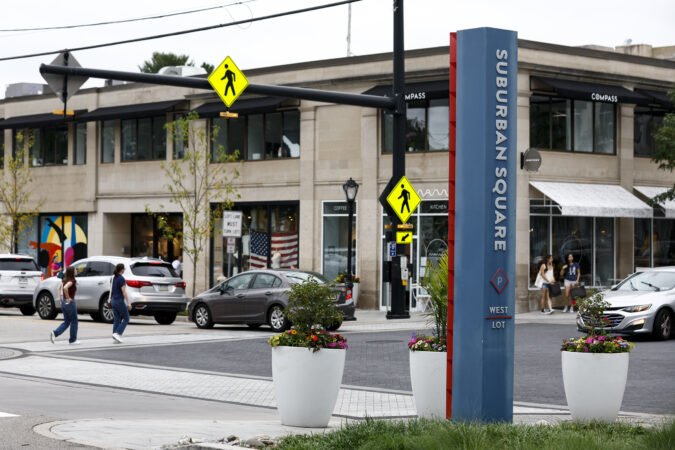
The promise of apartment residents helped attract new retailers to Suburban Square, including New Balance, Sugared + Bronzed, and the apparel brand Rhone on the ground floor of the apartment building.
The complex is one of a few projects planned in recent years that have added or will add hundreds of apartments near Lancaster Avenue in Ardmore. One Ardmore, a 110-unit apartment complex, opened in 2019 after a yearslong campaign by residents to stop it. The long-awaited Piazza development is expected to add 270 apartments and almost 30,000 square feet of retail space when it opens in a couple of years.
This rendering shows the outdoor pool at Coulter Place.
Conor Flynn, CEO of Kimco Realty, said in a statement that Suburban Square is an “iconic, walkable destination” and that the addition of apartments creates “a more vibrant, connected experience for residents, retailers, and visitors alike.”
“Coulter Place represents the next chapter in Suburban Square’s evolution and a clear example of how we’re unlocking long-term value through thoughtful mixed-use development,” Flynn said.
The apartments are across from Trader Joe’s and the Ardmore Farmers Market and within walking distance to the Ardmore station for SEPTA and Amtrak trains.
Apartments available for lease at Coulter Place range from one-bedroom, one-bathroom units for about $3,030 per month to a three-bedroom, two-bathroom unit for $7,035 per month.
Philadelphia-based JKRP Architects designed the apartment building.
Suburban Square was developed in 1928 and now has about 80 shops, restaurants, fitness spaces, and more. Businesses include Apple, SoulCycle, Warby Parker, Van Leeuwen Ice Cream, CAVA, and Di Bruno Bros.
This rendering shows one of the courtyards for residents of Coulter Place.