Blog

  • Temple is sliding in the American standings after its third consecutive loss

    Temple is sliding in the American standings after its third consecutive loss

    About a week ago, Temple was in contention for the No. 2 seed in the American Conference. Now, the Owls are on a downward spiral following a 76-71 loss to Alabama-Birmingham Wednesday night at the Liacouras Center.

    Temple (15-11, 7-6) has lost three straight games and is tied for sixth place in the conference standings. The win moved the Blazers (17-10, 8-6) ahead of Temple in the standings.

    Temple coach Adam Fisher noted he was disappointed with the Owls’ execution.

    “Proud of the effort, not the result,” Fisher said. “Effort doesn’t always get it done. You got to execute. Got to be better at home. You see zone for most of the game, you can’t shoot 1-for-15 [from three-point range] at home. Another game with a free throw line [deficiency]. We got to get better there. We got to do some small things.”

    Statistical leaders

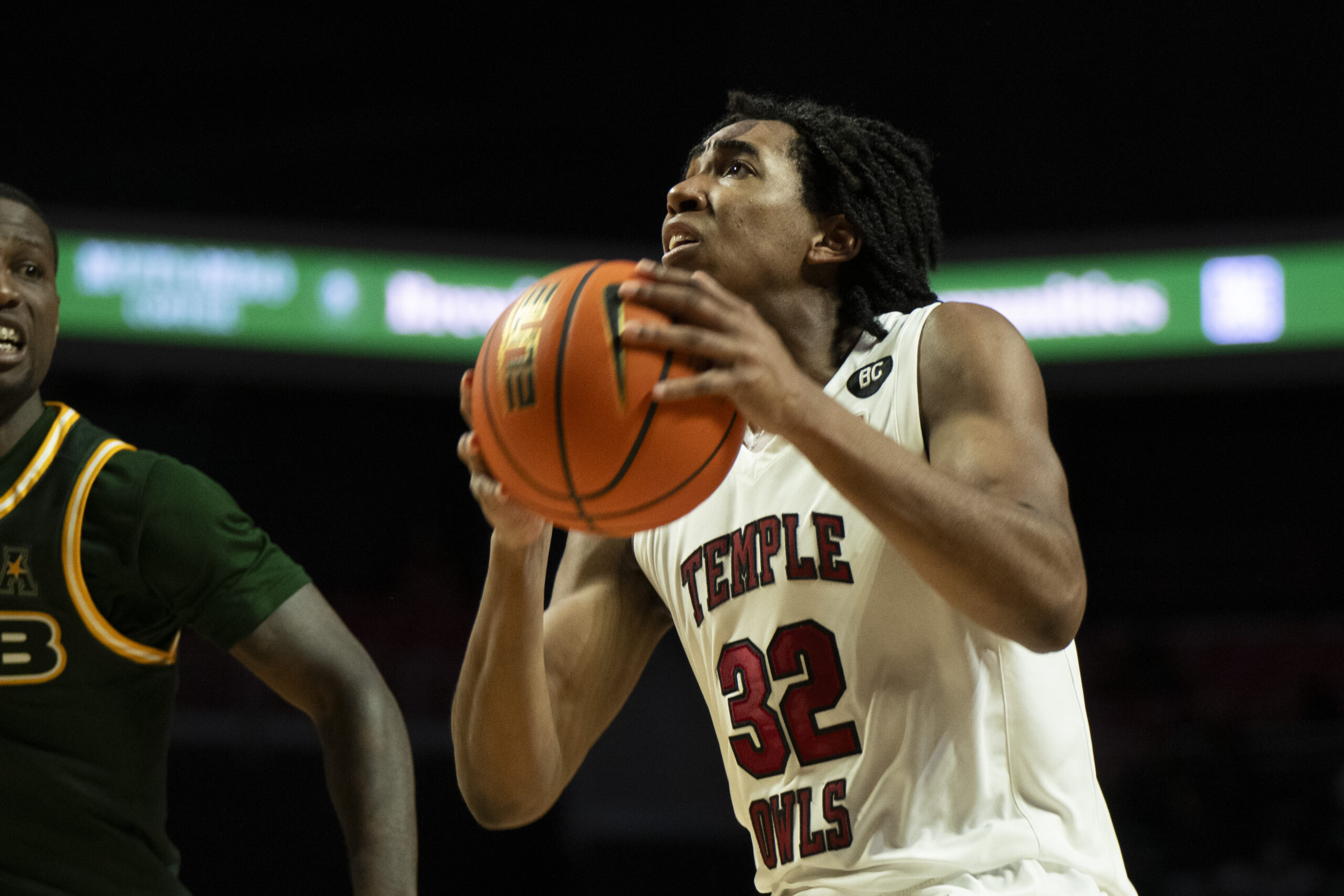
    Temple ended the game winning the rebounding battle 37-31 against the second-best rebounding team in the conference. Guards Jordan Mason (18 points) and Derrian Ford (17) led the team in points, while forward Jami Felt had eight points and 10 boards.

    Temple’s Jordan Mason finished with 18 points on Wednesday night.

    The Owls had just five turnovers, following 16 in their last outing against North Texas, but struggled shooting the ball. In addition to their 1-for-15 three-point performance referenced by Fisher, they went 12-for-19 from the free throw line.

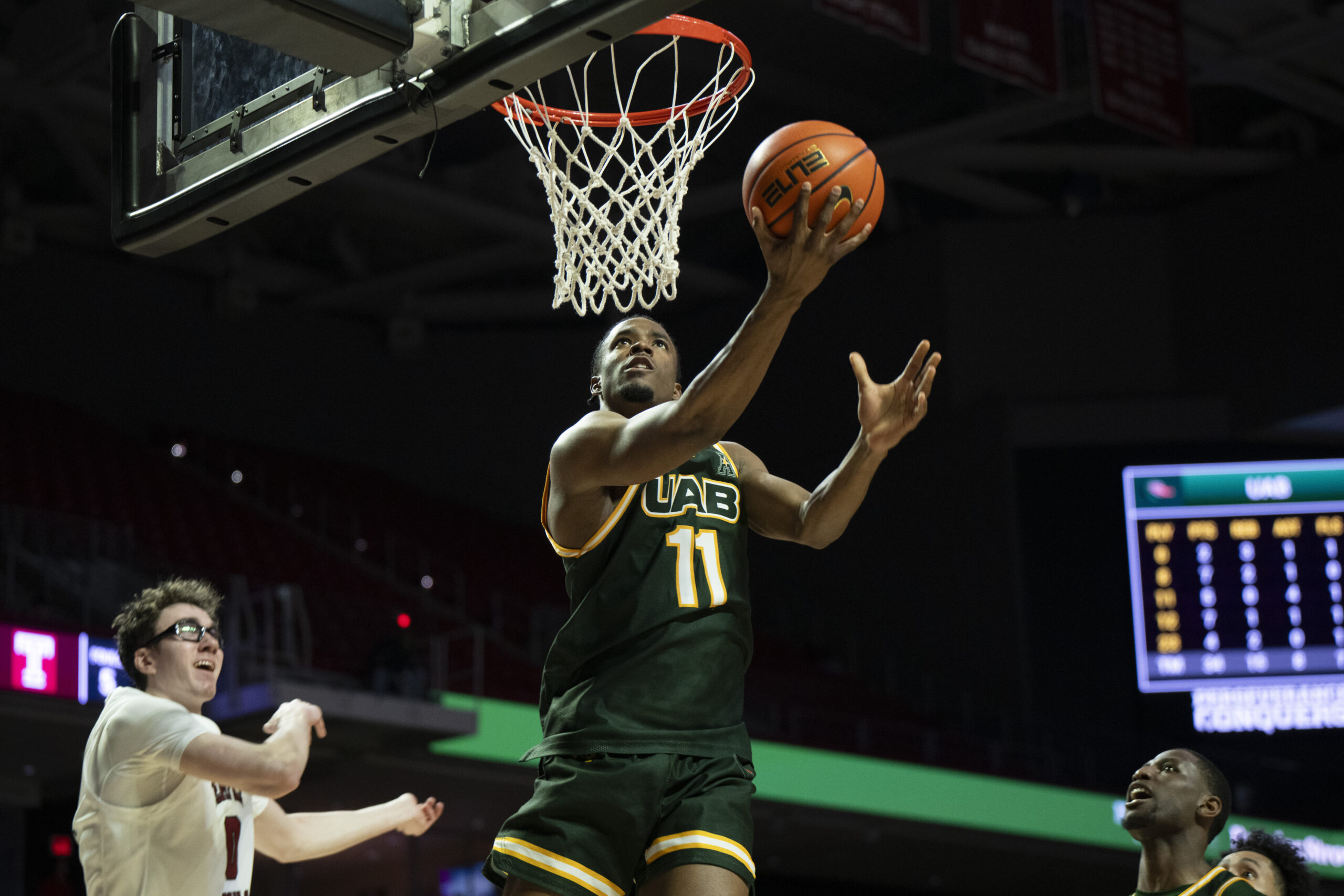
    Guard Chance Westry led the Blazers with 24 points and eight assists.

    What we saw

    Temple pushed the pace on the Blazers’ defense for easy points inside the paint.

    Mason, Ford, and Felt got the Owls out to an early 20-16 lead before UAB woke up. The Blazers snatched a 39-33 lead at the half. Temple continued to get points in the paint, but struggled without any points from the perimeter.

    Chance Westry led UAB with 24 points on Wednesday.

    Temple made just one three-pointer the entire game. Westry, however, got hot and scored 17 second-half points.

    “We tried to be in gaps and constructed it a little bit,” Fisher said. “But [Westry] had a really good night.”

    Game changing play

    Felt delivered a dunk to give the Owls a one-point edge with seven minutes remaining. Then, 20 seconds later, he went to the line to give them a chance at a three-point lead.

    Instead, his shot bounced off the rim, and UAB went back to work.

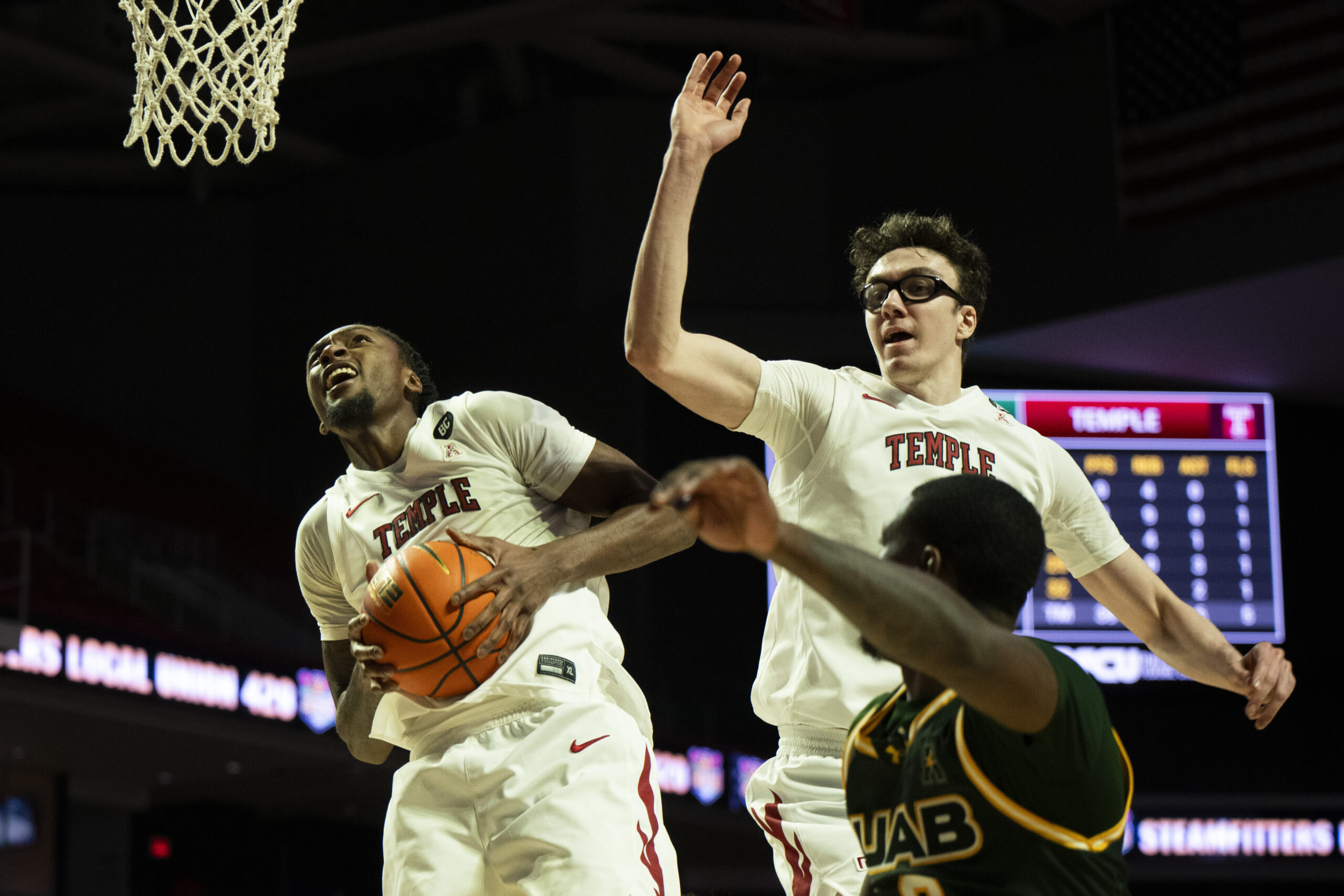
    Temple’s Jamai Felt secures a rebound against UAB on Wednesday.

    Westry capitalized 24 seconds later by drilling a three-pointer to snatch the lead right back for the Blazers. Felt had another chance to tie the game with more free throws, but both missed. Mason also missed a critical three-pointer.

    UAB knocked down five of its last six shots to seal the victory.

    Up next

    Temple will visit Wichita State (17-10, 9-5) on Saturday (ESPN2, 6 p.m.).

  • Some of the California avalanche victims had roots in Lake Tahoe

    Some of the California avalanche victims had roots in Lake Tahoe

    TRUCKEE, Calif. — After days of increasingly brutal conditions in California’s Sierra Nevada, a group of 15 backcountry skiers set out for home. But as they left remote huts at thousands of feet of elevation and trekked back toward the trailhead, they were slammed by a treacherous avalanche that left eight dead and one missing.

    With avalanche warnings in effect through early Thursday, officials were still waiting for the powerful storm to clear so they could recover the bodies of the victims of Tuesday’s avalanche, the nation’s deadliest in nearly half a century. Officials have not yet released the names.

    The ski group involved has deep ties to the alpine recreation community in Lake Tahoe, including the elite Sugar Bowl Academy, which issued a statement late Wednesday mourning the loss of victims with “strong connections to Sugar Bowl, Donner Summit and the backcountry community.”

    It did not say how the skiers, said to range in age from 30 to 55, were connected to the school, which offers alpine and backcountry ski instruction and academics for young athletes.

    “We are an incredibly close and connected community,” Sugar Bowl Academy executive director Stephen McMahon said in the statement. “This tragedy has affected each and every one of us.”

    Four in the group employed by Blackbird Mountain Guides, which offers mountaineering and backcountry ski trips as well as safety courses across the West and internationally. One of them was among the six survivors.

    The three-day tour, which began Sunday, was for intermediate to expert skiers, according to the company’s website.

    The tour company said in a statement Wednesday night that it has launched an investigation and paused field operations at least through the weekend while it prioritizes supporting the victims’ families.

    The guides who led the group were trained or certified in backcountry skiing, and were instructors with the American Institute for Avalanche Research and Education.

    While in the field, they “are in communication with senior guides at our base, to discuss conditions and routing based upon conditions,” founder Zeb Blais said in the statement.

    “We don’t have all the answers yet, and it may be some time before we do,” the company said. “In the meantime, please keep those impacted in your hearts.”

    Mayor Max Perrey of Marin County’s Mill Valley, a small city about 14 miles (22 kilometers) north of San Francisco, confirmed that some in the group were women from his city. He was not able to provide additional details but told The Associated Press via email that more information would be released later.

    One of the victims was married to a member of a backcountry search and rescue team in the area, said Placer County Sheriff Wayne Woo.

    The Sierra Avalanche Center issued an avalanche watch Sunday morning, and that was elevated to a warning by 5 a.m. Tuesday, indicating that avalanches were expected. It is not clear whether the guides knew about the change before they began their return trek.

    Authorities described a harrowing scene as the survivors scoured the snow for the missing and waited six hours for help to arrive in blizzard conditions. They found three of the bodies, Nevada County Sheriff Shannan Moon said.

    The skiers all had beacons that can send signals to rescuers, and at least one guide was able to send text messages. But it was not clear whether they were wearing avalanche bags, which are inflatable devices that can keep skiers near the surface, sheriff’s Capt. Russell “Rusty” Greene said.

    One of those rescued remained hospitalized Wednesday, Moon said.

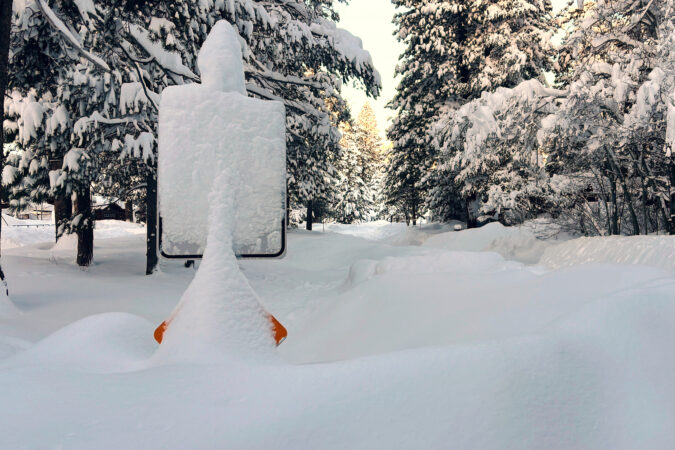
    Three to 6 feet (91 centimeters to 1.8 meters) of snow has fallen in the area since Sunday. The area was also hit by subfreezing temperatures and gale force winds.

    The avalanche is the deadliest in the U.S. since 1981, when 11 climbers were killed on Mount Rainier in Washington state, and the second deadly avalanche near Castle Peak this year, after a snowmobiler was buried January. Each winter the slides kill 25 to 30 in the country, according to the National Avalanche Center.

    The area near Donner Summit, where the ski trip took place, is one of the snowiest places in the Western Hemisphere and until just a few years ago was closed to the public. The summit is named for the infamous Donner Party, a group of pioneers who resorted to cannibalism after getting trapped there in the winter of 1846-1847.

  • Why it’s becoming so expensive to buy a car in America

    Why it’s becoming so expensive to buy a car in America

    It can be a shock shopping for a new car these days.

    The pandemic shortages are over. Dealer lots are stocked. Customers can find the colors and options they want.

    But prices have never been higher — and the auto loans bigger and longer than ever to make it pencil out.

    The average sticker price for a new car or truck now sits above $50,000 — about 30% more than in 2019. Even with incentives and specials, the out-the-door price reached above $50,000 for the first time in September and stood at $49,191 in January — a record for the typically sluggish sales month, according to Cox Automotive.

    That’s helped push the average monthly payment to buy a new vehicle to an all-time high of a little over $800, according to J.D. Power.

    Some customers go further. About 1 in 5 new auto loans have monthly payments of at least $1,000, S&P Global said, projecting that share could double by year’s end.

    “We are approaching a threshold that a lot people don’t want to go over,” said Patrick Manzi, chief economist at the National Automobile Dealers Association.

    The auto industry is increasingly worried how much more consumers can take. Signs of stress are growing. Severely delinquent auto loan rates have soared to levels last seen during the pandemic shutdown. Affordability was a buzzword at the 2026 North American Dealers Association conference in Las Vegas earlier this month. And there is growing talk about the need for automakers to offer more budget-friendly vehicles, especially when little relief is to be found in the used-car market, with average prices of about $25,000.

    “There is no doubt that affordability is front of mind,” said Mike Manley, chief executive of AutoNation, one of the nation’s largest auto retailers, speaking to analysts on an earnings call earlier this month.

    The question that the industry is asking, said Tyson Jominy, senior vice president at J.D. Power for automaker data and insights: “Is there a breaking point where you just push prices past what the average consumer can afford?”

    Sales remain strong, for now. Automakers are coming off their best year since the pandemic, selling 16.2 million vehicles in the United States.

    But sales are projected to slump to 16 million this year, according to NADA.

    One big change is that carmakers have largely abandoned entry-level vehicles in recent years.

    The last car with an asking price under $20,000 — the subcompact Nissan Versa, at $17,390 — ended production in December. Other affordable subcompacts have disappeared in the last couple of years, such as the Mitsubishi Mirage, Kia Rio, Hyundai Accent, and Chevrolet Spark.

    “Americans just don’t want them,” said Jessica Caldwell, head of insights at Edmunds, the car-buying research company.

    They want SUVs and crossovers.

    A decade ago, the American market was about evenly split between cars and light trucks. Today, the light truck category — which includes SUVs — makes up about 8 in 10 of sales. Crossover SUVs, such as the Honda CR-V, account for nearly half of vehicles sold.

    Under $30,000 “is the new threshold for affordability,” said Manzi of NADA.

    That reality surprises many consumers, who might buy a new car every six to eight years.

    “It’s not something you shop for every day and so you come back a few years later and get real sticker shock,” said Erin Keating, executive analyst at Cox Automotive.

    It’s a common complaint, said Caldwell.

    “That’s what we hear from so many consumers,” she said. “People don’t like it. They’re not happy with how much cars costs.”

    Affordability was cited as the biggest obstacle for people who planned to buy a car in the near future, according to a survey recently released from credit reporting agency TransUnion.

    Automakers have managed to pay less attention to the entry-level market because luxury vehicles, with higher profit margins, continue to sell.

    The U.S. economy has seen a widening divide between the fortunes of its top earners and everyone else, creating the so-called K-shaped economy. And cars are no exception.

    At end of last year, vehicles priced over $70,000 were staying about the same amount of time on dealer lots as cars under $70,000. And buyers with household incomes above $150,000 accounted for 29% of all car purchases, up from 18% in 2020.

    “Wealthier customers are driving this,” Manzi said.

    New car buyers are also getting older, another sign of rising costs.

    Nearly half of all new car registrations last year came from people 55 and older, according to S&P Global data.

    A buyer’s average age was 51, according to J.D. Power. It was 50 before the pandemic.

    Twenty-five years ago, the average buyer was a little over 43 years old.

    Meanwhile, the other end of the car-buying market appears to be struggling.

    The average auto loan now runs for 68.8 months — more than five years.

    A growing share of auto loans now go for 84 months or longer. These seven-year loans made up 11.7% of the market last year, nearly double the share in 2019, according to J.D. Power.

    “We’ve already pushed things pretty far,” Jominy said. “How much further can they go?”

    Bad auto loans are becoming more common. The share of auto loans that were 90 days past due, known as severely delinquent, reached 8.6% early last year — levels last seen briefly in 2020 and then after the 2008-2009 financial meltdown, according to Federal Reserve Bank of Philadelphia data. The growth in bad loans is from borrowers with low credit scores.

    “That’s that K-shaped economy. That’s kind of the reality,” Manzi said. “Wages haven’t kept up.”

    Vehicle prices have surged even though carmakers have been absorbing most of the cost of President Donald Trump’s tariffs, auto analysts said. It’s unclear how much longer they can do that.

    “At some point we’ll have to see tariff price increases,” Caldwell said.

    U.S. automakers also need to tackle affordability if they hope to keep out ultra-low-cost Chinese car manufacturers, said Keating of Cox Automotive.

    Auto analysts didn’t think the United States would welcome these foreign carmakers anytime soon. But Canada recently relaxed its tariff rules for Chinese electric vehicles.

    U.S. automakers are slowly starting to pay attention to pricing.

    Chevrolet has been touting its Trax crossover, which starts at $21,700. Car and Driver recently named the 2026 Trax its Best Crossover SUV.

    “It shows that it can be done,” Jominy said.

    The Ford Maverick pickup — which looks like a baby version of the Ford Ranger — starts at $28,145. And Ford announced earlier this month that it planned to offer several more vehicles under $40,000 by 2030.

    Honda also is evaluating its lineup.

    “With average new car prices hitting record highs across the industry, cost is a growing concern, and we want the Honda and Acura brands to continue to be recognized for delivering incredible value to our customers,” said Lance Woelfer, sales vice president for American Honda.

    No one expects a return of the $20,000 car. Instead, carmakers appear to be pinning their hopes on small SUVs.

    “That’s the new front door to the industry,” Tominy said.
  • U.S. trade deficit slipped lower in 2025, but gap for goods hits a record despite Trump tariffs

    U.S. trade deficit slipped lower in 2025, but gap for goods hits a record despite Trump tariffs

    WASHINGTON — The U.S. trade deficit slipped modestly in 2025, a year in which President Donald Trump upended global commerce by slapping double digit tariffs on imports from most countries. But the gap in the trade of goods such as machinery and aircraft — the main focus of Trump’s protectionist policies — hit a record last year despite sweeping import taxes.

    Overall, the gap between the goods and services the U.S. sells other countries and what it buys from them narrowed to just over $901 billion, from $904 billion in 2024, but it was still the third-highest on record, the Commerce Department reported Thursday.

    Exports rose 6% last year, and imports rose nearly 5%.

    And the U.S. deficit in the trade of goods widened 2% to a record $1.24 trillion last year as American companies boosted imports of computer chips and other tech goods from Taiwan to support massive investments in artificial intelligence.

    Amid continuing tensions with Bejing, the deficit in the goods trade with China plunged nearly 32% to $202 billion in 2025 on a sharp drop in both exports to and imports from the world’s second-biggest economy. But trade was diverted away from China. The goods gap with Taiwan doubled to $147 billion and shot up 44%, to $178 billion, with Vietnam.

    Economist Chad Bown, senior fellow at the Peterson Institute for International Economics, said the widening gaps with Taiwan and Vietnam might put a “bull’s-eye’’ on them this year if Trump focuses more on the lopsided trade numbers and less on the U.S. rivalry with China.

    In 2025, U.S. goods imports from Mexico outpaced exports by nearly $197 billion, up from a 2024 gap of $172 billion. But the goods deficit with Canada shrank by 26% to $46 billion. The United States this year is negotiating a renewal of a pact Trump reached with those two countries in his first term.

    The U.S. ran a bigger surplus in the trade of services such as banking and tourism last year — $339 billion, up from $312 billion in 2024.

    The trade gap surged from January-March as U.S. companies tried to import foreign goods ahead of Trump’s taxes, then narrowed most of the rest of the year.

    Trump’s tariffs are a tax paid by U.S. importers and often passed along to their customers as higher prices. But they haven’t had as much impact on inflation as economists originally expected. Trump argues that the tariffs will protect U.S. industries, bringing manufacturing back to America and raise money for the U.S. Treasury.

  • The Union won their season opener in a blowout, but Bradley Carnell won a gamble in it

    The Union won their season opener in a blowout, but Bradley Carnell won a gamble in it

    When the Union kicked off their season on Wednesday night, they were the fourth MLS team to take the field in this year’s Concacaf Champions Cup.

    The previous three — San Diego, Nashville, and Los Angeles FC — outscored their opponents by a combined 12-3 over four games.

    LAFC accounted for six of those goals, with star forward Dénis Bouanga scoring three and superstar Son Heung-min tallying one and three assists. San Diego’s biggest name, last year’s MLS Newcomer of the Year Anders Dreyer, led his team to an outstanding 4-2 aggregate win over Mexico’s Pumas UNAM.

    You needn’t have walked through much slush around Philadelphia this week to wonder which MLS team would be first to fall. But surely it wouldn’t be the Union, with such a talent advantage over Trinidad’s Defence Force FC.

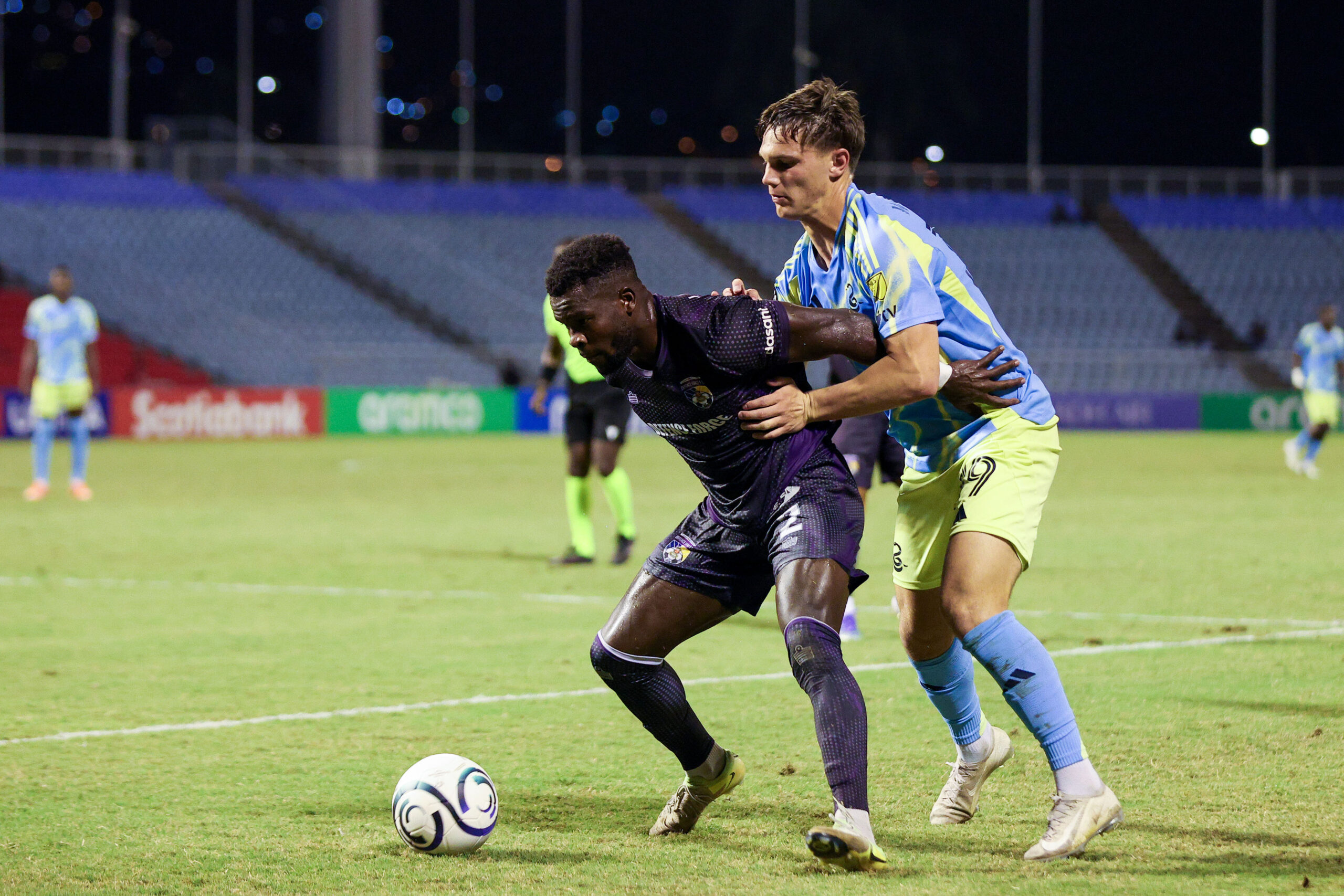
    Frankie Westfield (right) defending Defence Force’s Levi Garcia.

    Then the Union’s starting lineup was revealed, and the mood turned to shock. Manager Bradley Carnell chose to start Stas Korzeniowski at forward, Alejandro Bedoya at right attacking midfield, Nathan Harriel at centerback, Andrew Rick in goal, and most surprising, attacking midfielder Jeremy Rafanello at right back.

    Bruno Damiani, Indiana Vassilev, Japhet Sery Larsen, and Andre Blake were all on the bench. Geiner Martínez and Olivier Mbaizo weren’t on the game squad in the first place. Nor was Jovan Lukić, though at least Carnell had signaled that was coming due to an injury.

    Right after kickoff, Concacaf’s world feed broadcast hinted at another unusual circumstance. Jesús Bueno had issues getting a visa to enter Trinidad. He spent Tuesday night in nearby Antigua, got the visa Wednesday morning, and only arrived in Port-of-Spain at lunchtime Wednesday.

    Later in the game, a source with knowledge of the matter told The Inquirer that Martínez also had a visa issue. That helped clarify things a little more.

    Jeremy Rafanello was a surprising starter at right back on Wednesday.

    But it was still a surprise to see this lineup. Was Carnell taking the opponent lightly? He spoke repeatedly after the game about his respect for Defence Force, but his lineup choices also said something.

    Some watchers recalled that another of Bedoya’s teams made choices in Trinidad in 2017, 20 miles down the road in Couva. He was stuck on the bench for the U.S. men’s team’s infamous loss to Trinidad & Tobago that knocked the Americans out of the 2018 World Cup.

    At the final whistle, all those thoughts were long gone. The Union won in a 5-0 rout, with Milan Iloski’s 29th-minute free kick opening the floodgates. Ezekiel Alladoh scored his first goal for the Union off a superb Frankie Westfield cross, Olwethu Makhanya slammed in a header off an Iloski corner, and Bruno Damiani scored twice as a substitute.

    Cavan Sullivan also made his first goal contribution for the Union’s first team, with a terrific assist on Damiani’s first goal. The 16-year-old had multiple nifty moments on the ball in his 25-minute run as a substitute, one of which earned a penalty kick after a nice combination play with Westfield. Damiani stepped up to score it.

    On the same night that Westfield’s brother Rocco led Father Judge to a second straight Catholic League boys’ basketball final at the Palestra, Frankie was a strong nominee for the Union’s player of the game. He recorded 39-of-46 passing, five scoring chances created, four clearances, one block, and seven duels won of the 12 contested.

    That was almost all overshadowed in the 70th minute, when the cameras showed Westfield holding his right hamstring. With Harriel off the field, the only other left back option available was midfielder Ben Bender on the bench.

    Westfield shook off the pain for a while, but he exited in the 84th minute for Vassilev. That meant both outside backs were attacking midfielders. At least at that point it didn’t matter anymore.

    “Rafa’s a guy who is very versatile, he can play anywhere,” Carnell said afterward. “This was just more by need, and we knew he could do the job. We just needed positive guys to give energy, [to] want to do what’s best for the team, and that’s what Jeremy is.”

    The gamble paid off, and with some style in the end. Carnell was rightly pleased at the final whistle, praising his team for surviving Defence Force’s early-game surge before imposing its will.

    “I think we did have a challenge for sure, and I think through the second half performance of our guys — give them credit,” he said. “We showed a real professional performance in the second half.”

    But he had still gambled, and it’s a good thing he won.

  • St. Joe’s women are on a hot streak and could earn a double bye in the Atlantic 10 tournament

    St. Joe’s women are on a hot streak and could earn a double bye in the Atlantic 10 tournament

    Through 20 minutes on Wednesday night at Hagan Arena, St. Joseph’s was in a defensive battle with Duquesne. The Hawks jumped out to a nine-point lead in the game’s first 2½ minutes, but the Dukes’ defense clamped down. By the 8-minute, 3-second mark of the second quarter, that lead was one.

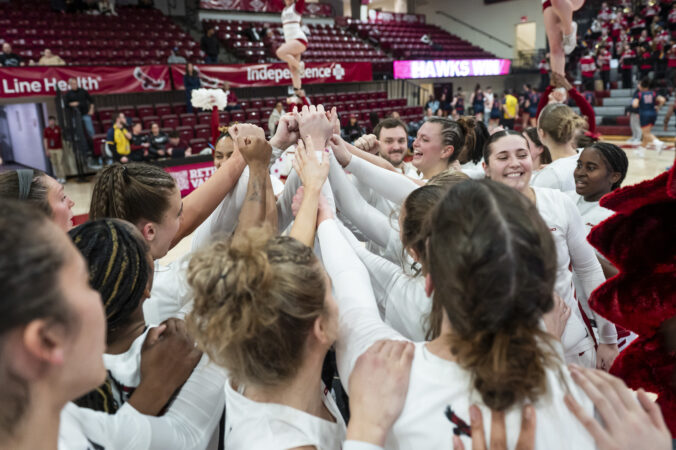
    The Hawks recovered, and behind strong free throw shooting and an 11-2 run, they held a eight-point halftime lead. St. Joe’s pushed its lead into double figures early in the third quarter and never looked back in a 61-46 win.

    “I’m really pleased with the grit and determination that our team came out with today,” Hawks coach Cindy Griffin said. “I thought the beginning of the first and third quarters really set the tone, and it starts with our defense.”

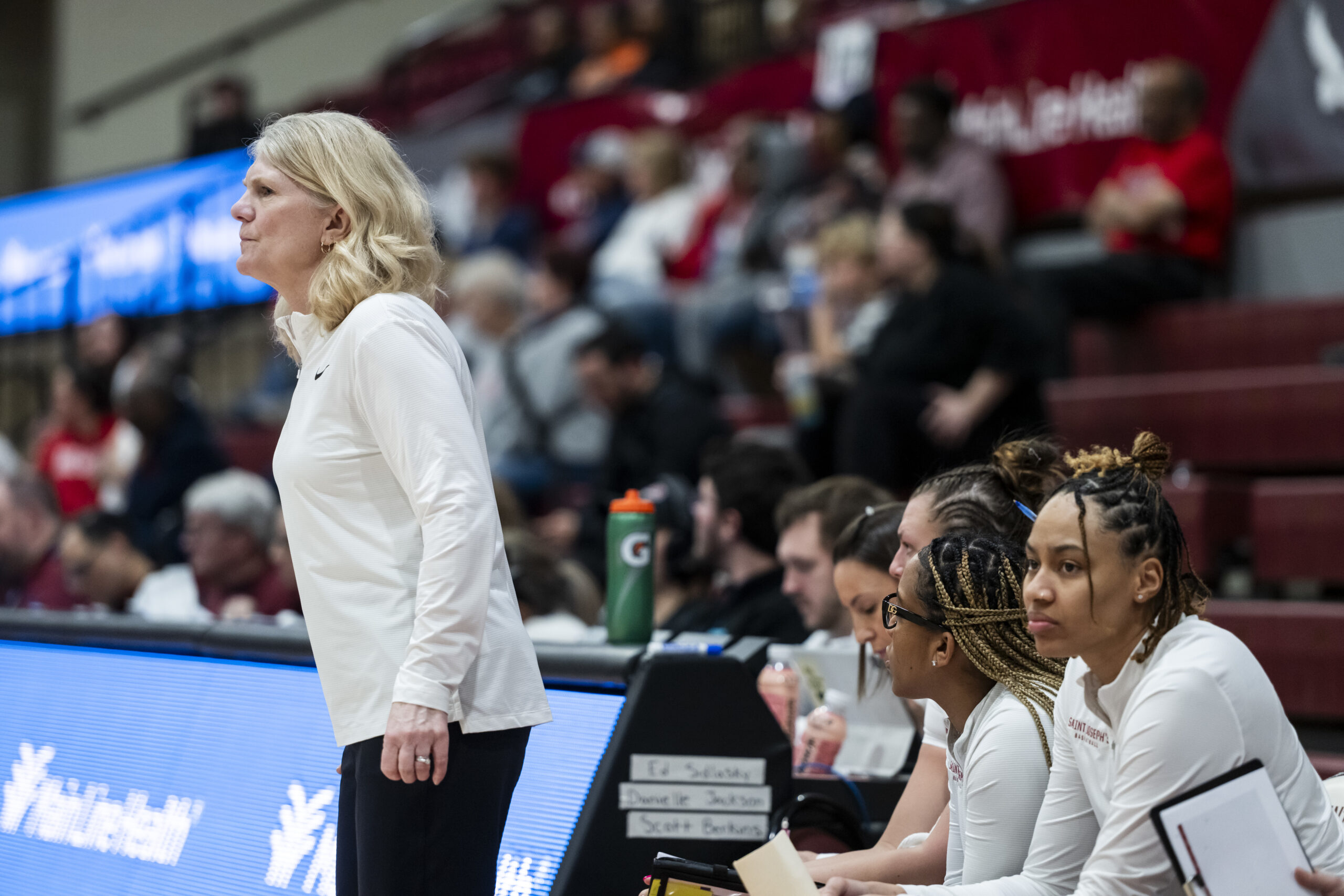
    St. Joe’s coach Cindy Griffin said her team showed “grit and determination” against Duquesne on Wednesday.

    St. Joe’s (18-8, 9-6 Atlantic 10) is riding a three-game winning streak and still competing for a double bye in the A-10 tournament. With three games left in the regular season, the Hawks are tied with Davidson for fourth place, which is the last spot for a double bye.

    Statistical leaders

    Guard Gabby Casey guided the Hawks with 19 points on 7 of 12 shooting along with nine rebounds. Forward Faith Stinson also had a strong performance with 13 points, nine rebounds, and three assists. She was key a factor on defense against the Dukes’ taller frontcourt.

    “I really just took what we have been working on in practice, like slowing down and assessing what the defense is giving me,” Stinson said. “Then, using my multiple post moves to get around the defender and score from the easiest angle.”

    Faith Stinson finished with 13 points and was a key factor on defense Wednesday night.

    The Hawks weren’t efficient — they were 20-for-54 from the field — but made 7 of 18 three-point attempts. Their defense stepped up and held Duquesne (9-17, 2-13) to 31% from the field and forced 13 turnovers. Guard Mackenzie Blackford led the Dukes with 16 points.

    Coasting in the second half

    St. Joe’s made four of its first five shots in its game-opening 9-0 run. But offense became hard to come by after that, opening the door for the Dukes. St. Joe’s struggled to get open looks went more than six minutes without a point, which allowed Duquesne to take a 16-15 lead at the 8:03 mark of the second quarter.

    The Hawks regained control, and Casey scored seven points in the 11-2 run to close the half. St. Joe’s entered the locker room with a 29-21 advantage, extended its lead to 37-27 midway through the third quarter, and never allowed Duquesne back within single digits, largely thanks to sharp free-throw shooting an timely threes.

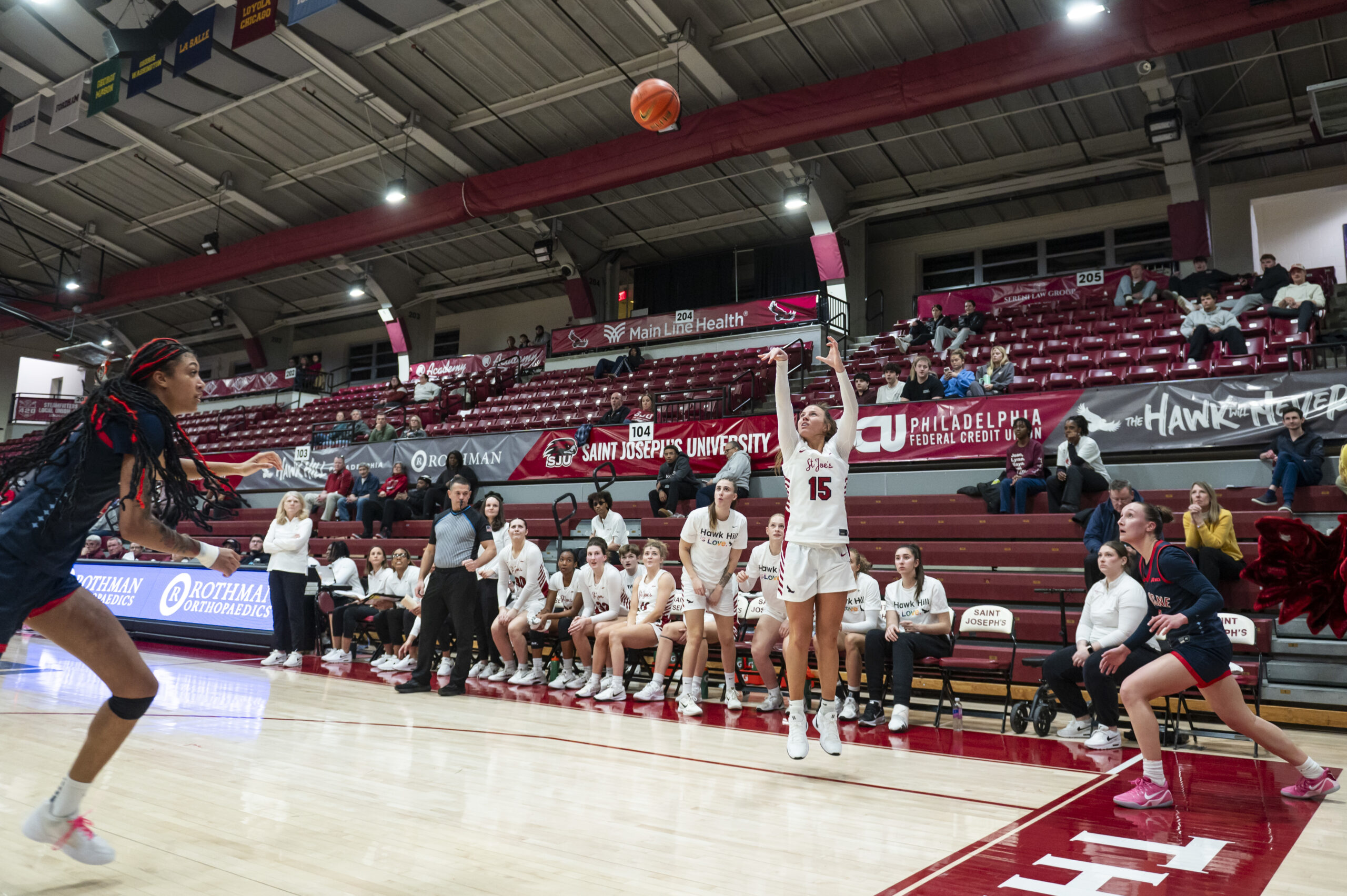
    Gabby Casey throws the ball towards the net. St. Joe’s made 7 of 18 three-pointers on Wednesday.

    “Nobody really panics,” Griffin said. “I think they trust each other. They trust what we’re doing as a team, and they know that if we just persevere and if we are relentless about what we’re doing on both ends of the floor and stay connected, we know that we’re going to come out of those slumps a little bit.”

    Strong free-throw shooting

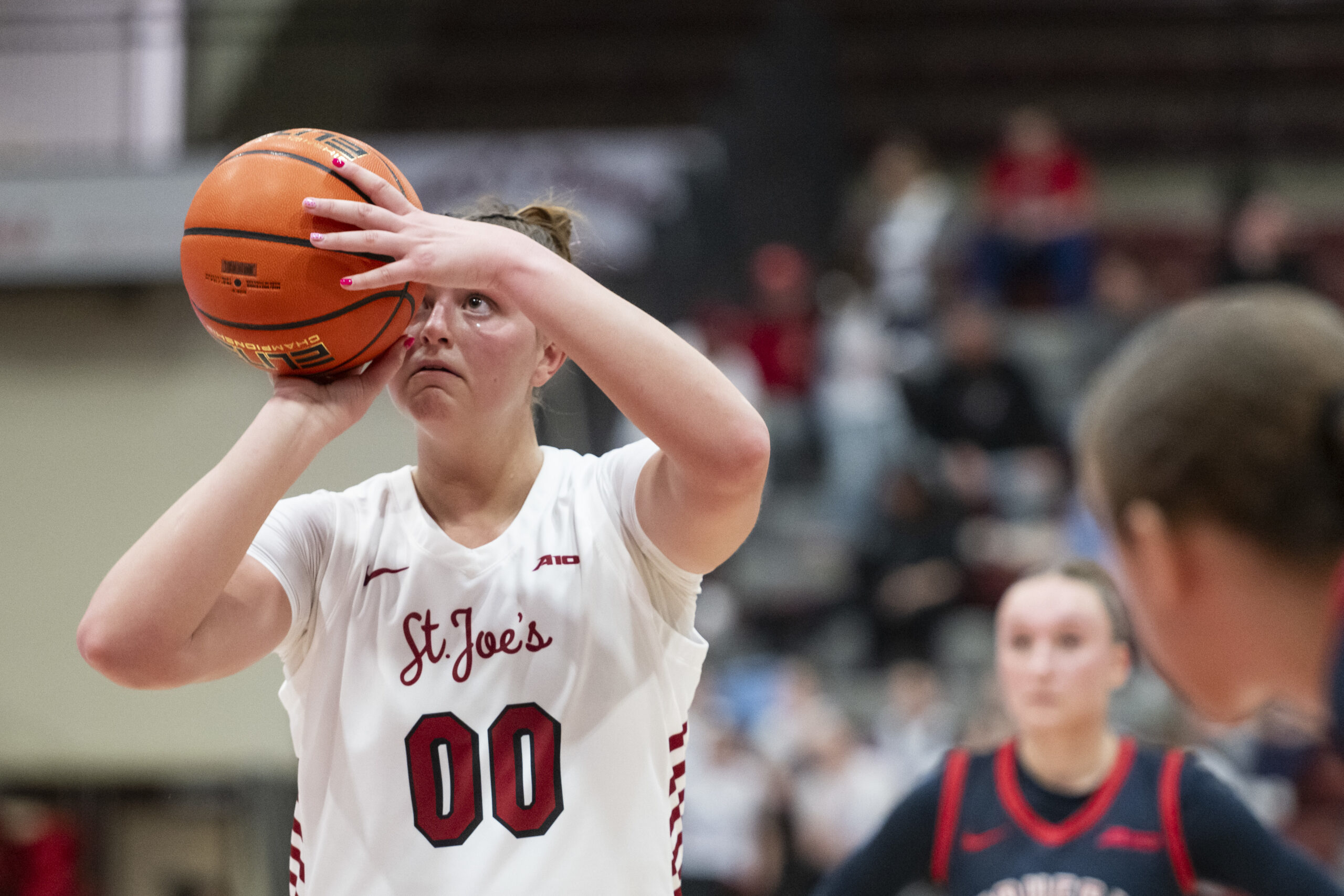
    The teams had nearly identical shooting splits from the field and at the three-point line in the first half, but the Hawks held a halftime advantage because they shot 7-for-8 on free throws, while the Dukes did not make a free throw in the first 20 minutes. Overall, St. Joe’s went 14-for-16 on free throws and Duquesne was 3-for-5.

    Aleah Snead gets ready to shoot a free throw against Duquesne on Wednesday.

    “When you’re talking about a low-scoring game and the shooting percentage wasn’t great, you have to find different ways to score,” Griffin said. “Getting to the free-throw line and making free throws, we talked about it all year, layups and free throws.”

    Up next

    St. Joe’s will visit St. Louis (11-17, 5-10 A-10) on Saturday (3 p.m., ESPN+).

  • Before Alexis Eberz begins her journey at Villanova, she has unfinished business with Archbishop Carroll

    Before Alexis Eberz begins her journey at Villanova, she has unfinished business with Archbishop Carroll

    Alexis Eberz knew she wanted play in the Big East. So when it came down to deciding between Maruqette or Villanova, the Archbishop Carroll senior guard did what most high schoolers do: she asked for her mother’s advice.

    “I just told her to pray on it,” said Michelle Eberz, Alexis’ mother.

    Her advice came at the perfect time. It was the end of Eberz’s junior year, and she was about to embark on a religious retreat called “Kairos,” which was hosted by Carroll. It was a four-day, three-night retreat at the Malvern Retreat House with no cell phones. It was the perfect opportunity for Eberz to reflect on where she wanted to play college basketball.

    “I said, ‘Alexis, listen to me. Go to Kairos and pray on it. You will find your answer,’” Michele said. “And, honestly, it was almost like the pressure melted off her.”

    Eberz decided on Villanova and signed with the team in November. Besides getting to play in the Big East, Villanova has always felt like home, which stems for her parents. Michele and her husband, Eric, played basketball on the Main Line and exposed their daughter to the school at a young age.

    However, Alexis has forged her own connection to the program and is ready to take her game to the next level. But first, the senior has some unfinished business to take care of at Carroll.

    This season, Eberz is averaging 17.5 points and was named Catholic League MVP. The Patriots will face Cardinal O’Hara on Sunday at the Palestra in the Catholic League final, marking their third consecutive appearance. The last time Carroll won a PCL title was in 2019.

    No stranger to ’Nova

    Long before she picked up a basketball, Villanova has been part of Eberz’s life.

    “It’s a parent’s dream that she’s actually not only at [our] alma mater, but so close to home,” Michele said. “So many people know her already before she even steps on campus.”

    Alexis Eberz added: “I’m really close with Maddy Siegrist. I would shoot with her and do workouts with her [and former coach] Harry Perretta.”

    Learning from Siegrist, Villanova’s all-time leading scorer for men and women, contributed to Eberz wanting to play for Villanova. But it wasn’t the only factor.

    “I was around Villanova at such a young age,” Eberz said. “And then I never really went away from it. You’re never going to get that tight-knit community anywhere else. It’s awesome. The players, the coaching staff, everyone’s so nice. That really stuck out to me.”

    Plus, Villanova coach Denise Dillon viewed Eberz as an elite addition to the roster.

    “I think [what stood out to us] was a combination of the tangibles and intangibles,” Dillon said. “The tangibles being her ability to make shots. She’s a great shooter, great passer, moves well without the ball. The intangibles [being] her toughness. I just think she is a competitor. She doesn’t care who it is: post player, perimeter player, she’s going to battle.”

    It also doesn’t hurt that Dillon has been longtime friends and former teammates with Michele.

    Their time also overlapped at Villanova from 1993 to 1995. During Michele’s senior season, the Wildcats went 19-9 overall and 13-5 in the Big East.

    “The years I played with Denise, we really grew as a team and friends,” Michele said.

    Alexis Eberz was named Catholic League MVP this season.

    The two even are in a group chat with old teammates.

    But Michele and Eric were careful to stay out of their daughter’s recruiting process. They wanted their daughter to make the decision for herself, even if they were rooting for her to be a Wildcat.

    “A coach is going to be hard on you on the basketball court, but [Villanova] also cares a lot about developing players into a young woman or becoming successful in school,” said Eric, who played at Villanova from 1992 to 1996. “You know that your coach’s job is to help kids find their path in life, too, and I think Denise does a great job at that.”

    ‘A really good teammate’

    Alexis Eberz has had quite an accomplished career with the Patriots.

    During her junior year, she averaged 17.6 points and earned first-team All-State honors. She also was named first-team All-Philadelphia Catholic League, first-team All-Delaware County, and scored her 1,000th career point.

    “When [Alexis] was a freshman, she was a very good shooter and had a great IQ for the game,” Archbishop Carroll coach Renie Shields said. “What she’s progressed into was a really good teammate [who] understands more about the game, and that’s just what her continual growth has been: increasing her skill set, shooting, ballhandling, and then now it’s movement without the ball and how to find openings for herself and her teammates.”

    She’s one of the senior leaders this season, alongside Ursinus pledge Bridget Grant, who happens to be Dillon’s niece and Eberz’s best friend. Also on the roster are Eberz’s younger twin sisters, Kelsey and Kayla, who are sophomores.

    “It’s awesome,” Eberz said. “It’s been surreal. It’s so special getting the chance to play with my sisters. I’m also really blessed, because some people don’t get a chance to play with their younger sisters, so I’ve been really grateful to have that chance.”

    With Grant and her sisters, Eberz is leading Carroll to a memorable season, as the team is 19-5 entering Sunday’s matchup. While the Palestra is an arena filled with history and tradition, for Eberz, it represents redemption.

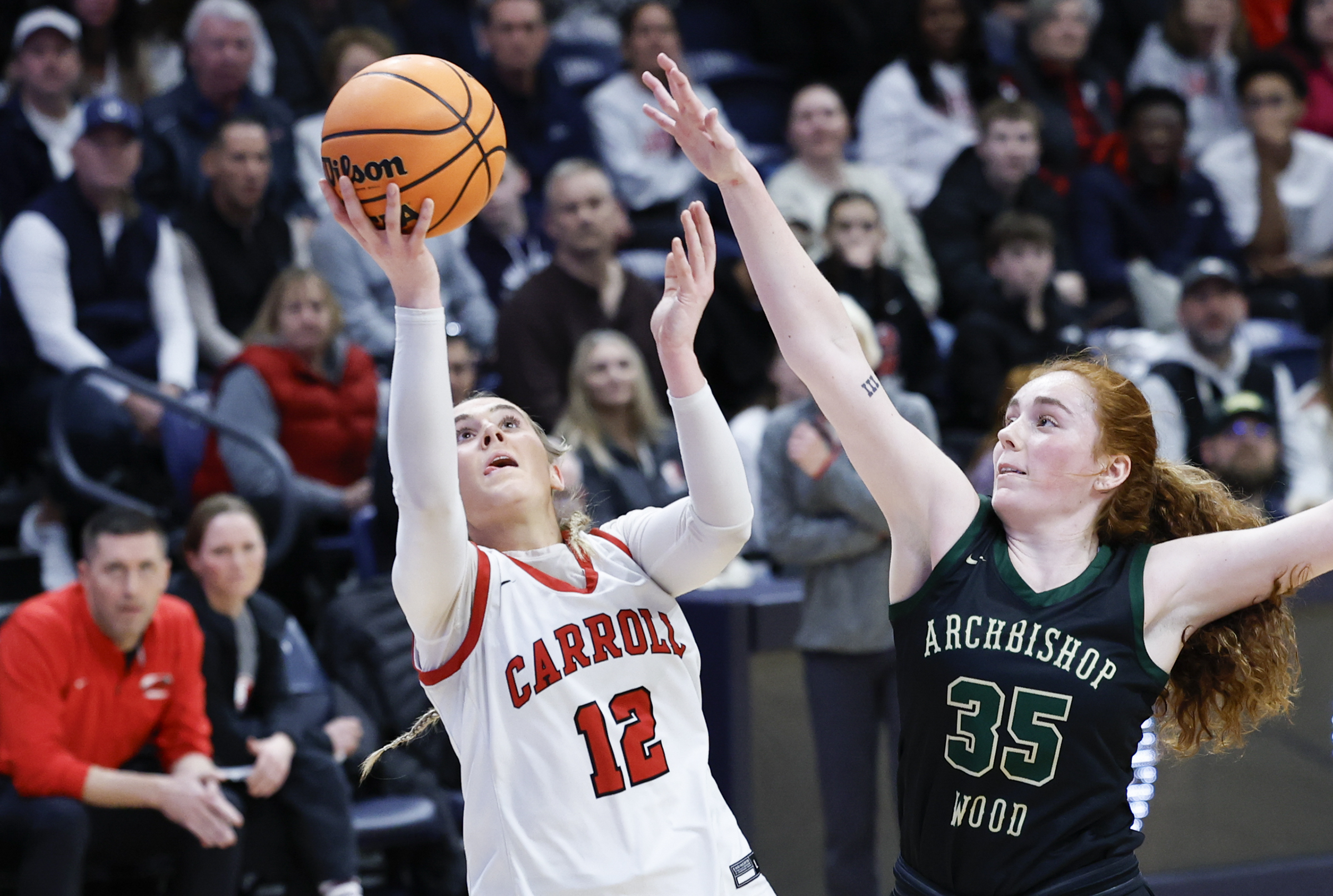
    Archbishop Carroll will face Cardinal O’Hara in the Catholic League girls’ basketball final on Sunday.

    The Patriots have been to the PCL final the past two seasons, but lost both years.

    “There’s no other option,” Eberz said. “I have to win.”

    With one final shot at a PCL title, Eberz is looking to rewrite her team’s story.

    “Obviously we have a target on our back, being undefeated. … but I think that also gives us more of a reason to want it more,” she said. “It’s just the fact that we played so hard all season, and we beat all the teams so that we can get to this point. I think it just makes us want it more.”

  • Another weekend snow threat is in the outlook for the Philly region

    Another weekend snow threat is in the outlook for the Philly region

    You may have read this somewhere before: Computer models are seeing the potential for a significant winter storm to affect the Philly region on yet another weekend.

    Those ingenious machines continue to predict that a storm will intensify off the Southeast coast Sunday into Monday. But “a large amount of uncertainty” remains about whether it will generate accumulating snow in the Philadelphia region, the National Weather Service said in its morning discussion Thursday. In the early going, areas south and east of Philly were the likeliest targets.

    Based on past experience, not to mention the nonlinear chaos of the atmosphere, about the only thing certain was that they would be changing their stories multiple times in the next few days, as would their virtual peers.

    In the short term, it is highly likely that, along with a certain dreariness, the region will be getting something that has been mighty scarce lately — rain. Philly’s rain total this month is under 15% of normal. Over the last 60 days throughout the region, it has been 40% to 50% below normal.

    The forecast for the rest of the workweek in Philly

    The freshness date on the snowpack has about expired and about now looks like it could use a good scrubbing, along with the air.

    Atop the remnants, generally light winds have been aiding and abetting a rather stagnant air mass. A “code orange” air quality alert was in effect for South Jersey Thursday, and health officials advised those with respiratory conditions to limit outdoor exposure.

    The primary irritants were tiny particulates, about 30 times smaller in diameter than a human hair.

    Rain is likely to be in the air Thursday night into Friday, and it could be a substantial amount, on the order of a half-inch or more. So far this month, officially 0.25 inches have been measured at Philadelphia International Airport.

    The moist air and the rain should erase more of the snowpack, “but we don’t want the snow and ice to melt too quickly,” said Ray Martin, a lead meteorologist at the National Weather Service Office in Mount Holly. No significant flooding is expected, just some potential damage to footwear.

    Temperatures are expected to top out in the 40s Thursday and Friday.

    About the weekend storm potential

    It may hit 50 degrees on Saturday with an appearance of the sun. So much for the easy part.

    Come Sunday, “there could be some rain or snow,” said Matt Benz, senior meteorologist with AccuWeather Inc.

    A storm is due to slide across the South and eventually regroup off the Atlantic coast on Sunday.

    But Benz pointed out that a key feature of the potential storm still was over the Pacific and not due to make landfall until sometime later Thursday, when it would be captured by land-based observation and give the machines a clearer idea of its intentions.

    And it is not at all clear how much cold air would be available for snow, Benz said, but if the storm intensifies sufficiently, “it can manufacture its own cold.” Another factor is just where off the coast the storm would be when it matured.

    In case you’re wondering why the atmosphere seems to pick on Sundays, having storms show up in seven-day cycles is a common phenomenon.

    They often migrate in 3½-day cycles, which has to do with the rhythms of storm movements as they travel across the country, and it so happens that the more significant one has been arriving on the seventh day.

    It keeps happening until it doesn’t, and it’s still very possible that it doesn’t this time around.

    Said Benz: “We have a long way to go to Sunday.”

  • What did Villanova learn in its loss to No. 1 UConn? The game truly is ‘four quarters.’

    What did Villanova learn in its loss to No. 1 UConn? The game truly is ‘four quarters.’

    It would be unfair to call Wednesday night’s Big East clash between Villanova and No. 1 Connecticut anything other than what it ultimately was: a litmus test for the Wildcats.

    Villanova may sit in second place in a demanding Big East, but in Wednesday’s game against UConn, the Wildcats once were again looking up at a Geno Auriemma-coached Huskies program, which entered Finneran Pavilion undefeated with 27 wins.

    Technically, make that 43 regular-season games, if you consider the Huskies haven’t lost since last February when, as the No. 1 team in the land, they suffered a four-point upset against then-No. 19 Tennessee.

    A perennial power team in a power conference, Villanova wasn’t just playing the women wearing the Huskies’ deep blue on the other side of the floor; it was playing to prove itself against UConn’s stature, its reputation.

    And, if we’re being honest, the result of UConn’s tens of millions in NIL funding, ready for distribution.

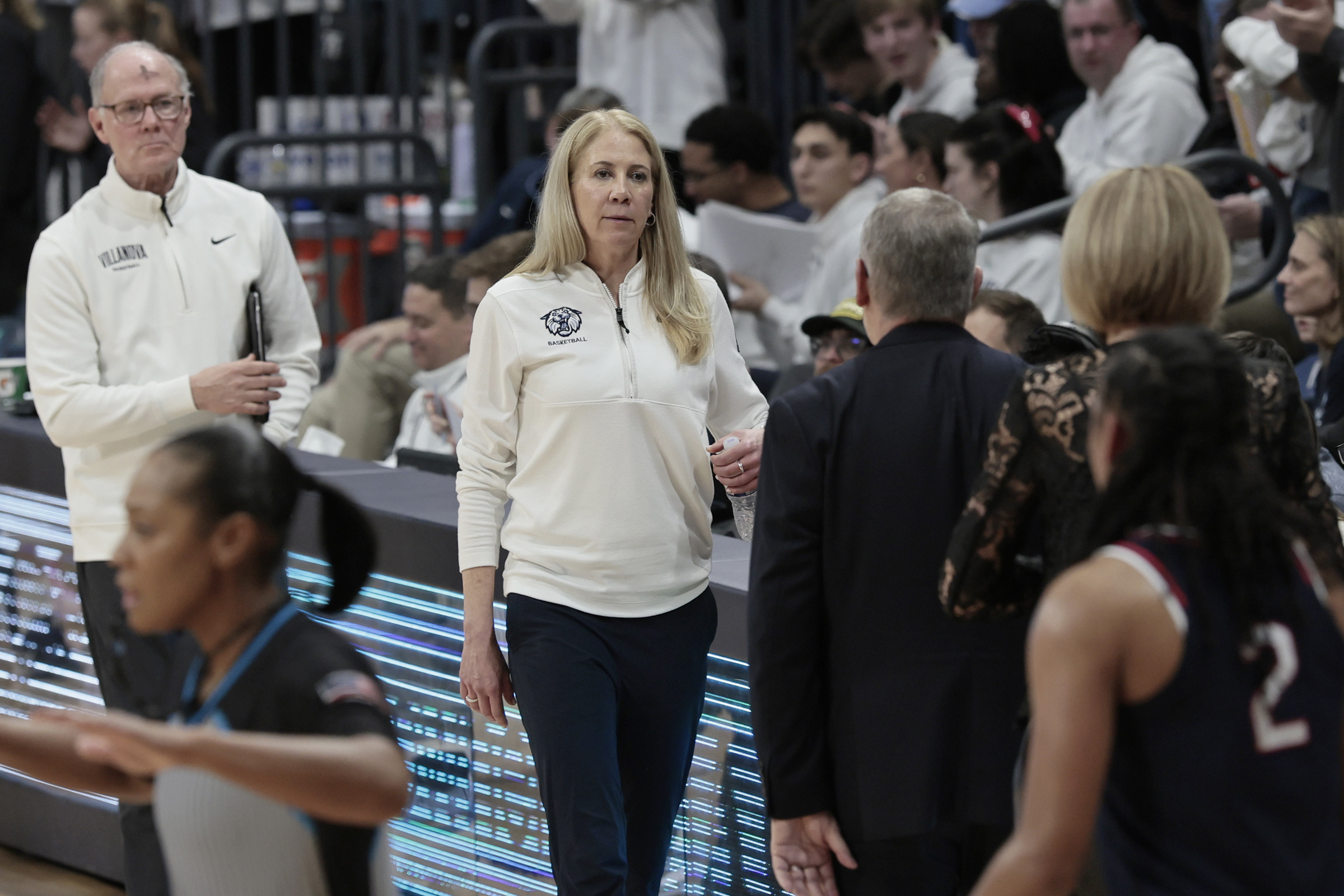
    Villanova coach Denise Dillon approaches UConn coach Geno Auriemma following Wednesday’s game between the two at Finneran Pavilion.

    In her six years as head coach, Denise Dillon has never made concessions for her team after it came up short against UConn, time and time again.

    But if she wants this year’s Wildcats to dance far into March, their performance has to match what was on display in the first half on Wednesday night. And look a heck of a lot better than a second-half fallout that resulted in an 83-69 loss.

    “Honestly, give them credit. [UConn] stuck to their game plan,” Dillon said. “I think we let up on what we needed to do … miss a possession here or there, they’re going to take advantage.

    “And that’s what happened.”

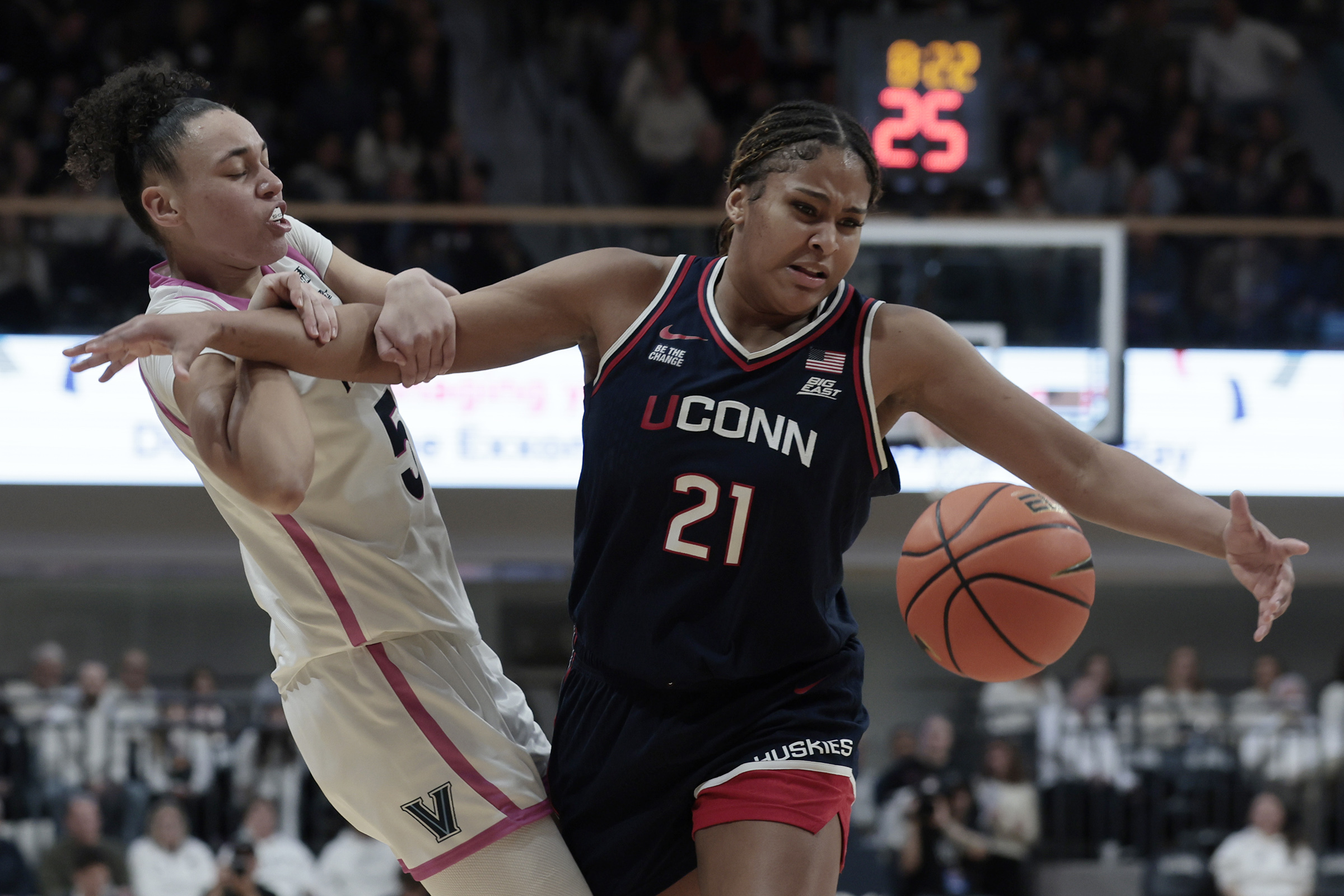
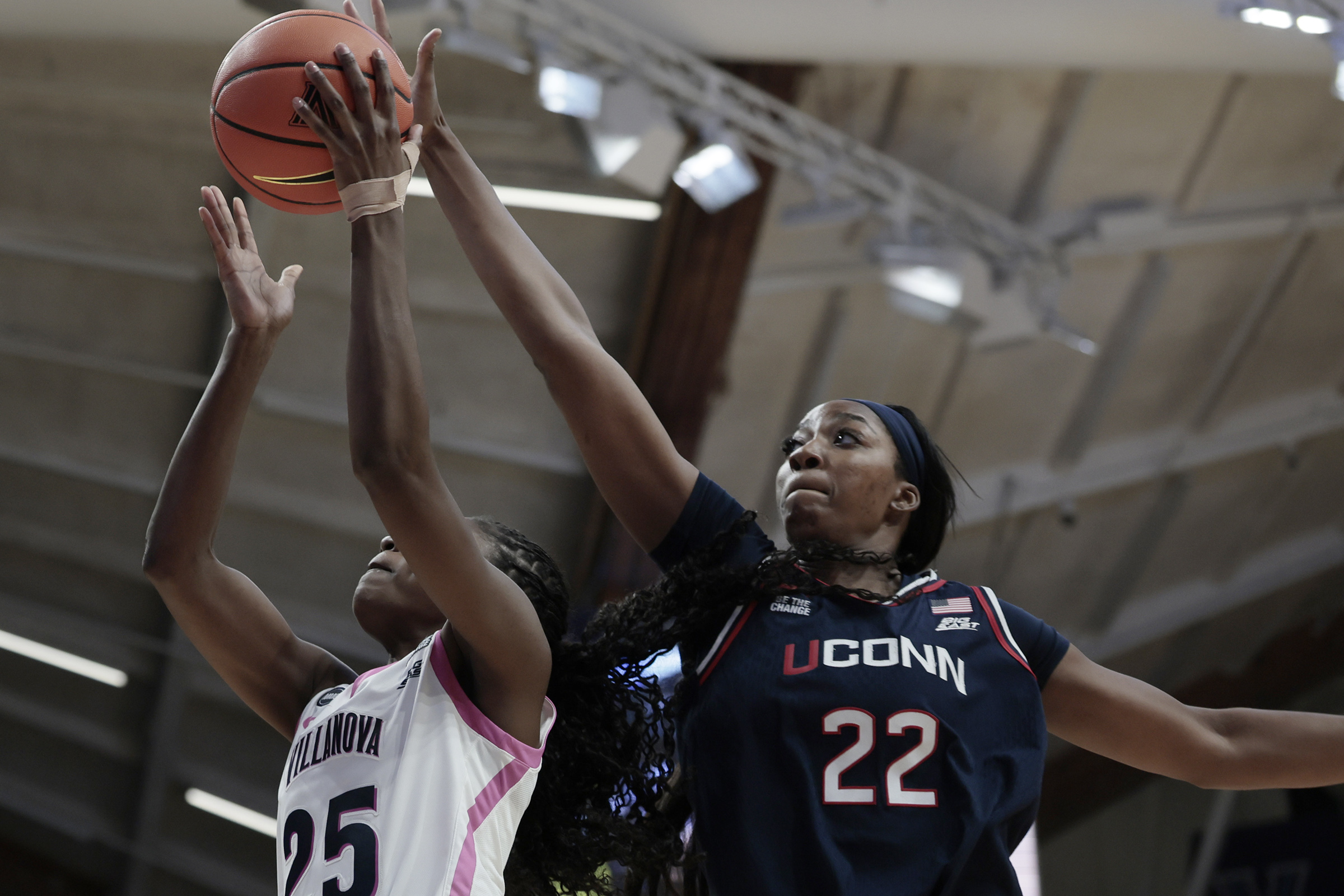
    Villanova’s Ryanne Allen (left) is held back by UConn’s Sarah Strong during their game on Wednesday. Strong finished with 21 points and 12 rebounds.

    Don’t sleep on the Wildcats

    Villanova (21-6, 14-4 Big East) looked like a true contender in the first eight minutes. The Wildcats held a one-point lead at the first television timeout with 4 minutes, 38 seconds remaining and went into halftime up three.

    It marked the only time UConn (28-0, 17-0) has trailed at halftime this season and one of its longest deficits, with the Wildcats ahead for 16:10 of the first half, compared to just 2:09 for the Huskies.

    “How we started the game was unacceptable,” said UConn guard Azzi Fudd, who finished with a team-high 25 points. “We need to be able to start the game strong, play the full 40, and not take the game or a team for granted. I think they proved we cannot overlook anyone.”

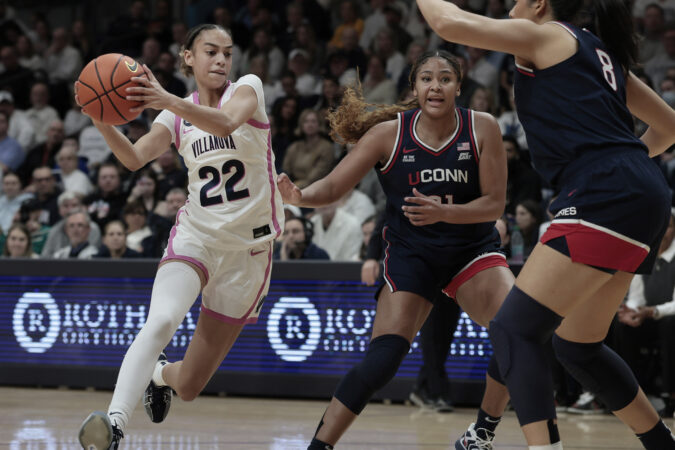
    One player UConn certainly couldn’t overlook was Jasmine Bascoe, who had a game-high 26 points and was a rebound shy of a double-double. She got help from Denae Carter (21 points) and freshman Kennedy Henry, who finished with nine, but played one of her best games of the season.

    “If it weren’t for my two girls [Fudd and forward Sarah Strong], she’d be the best player in the Big East, hands down,” said Auriemma, who lauded Bascoe’s performance. “Just an amazing talent, and she made it really tough for us tonight.”

    Villanova’s Jasmine Bascoe signals one of her four made three-pointers in Wednesday’s game against UConn.

    Lessons learned

    The reason UConn is No. 1 — besides having one of the most dominant players in women’s college basketball in Strong — is an ability to grind out wins.

    Speaking of Strong, while she finished with 21 points and 12 rebounds, the Wildcats frustrated the sophomore enough that by the third quarter, she was in danger of fouling out. She kept her composure and aided the Huskies in outscoring Villanova, 46-29, in the second half.

    Strong and Fudd did what they do, but in the end, turnovers were the Wildcats’ undoing; UConn scored 28 points off 26 Villanova turnovers.

    Villanova’s Denae Carter has her shot blocked from behind by UConn’s Serah Williams.

    “We talked about it, even at the end of the first quarter,” Dillon said. “I said, ‘Imagine if we’d got 8-10 more shots off in that period, what a difference it could make.’ We just have to focus our attention on taking care of the basketball.”

    Before the game, ESPN bracketologists had Villanova as a bubble team, projected as the No. 9 seed in the NCAA Tournament. Judging by last night’s performance, it feels like a pretty fair assessment.

    “The goal is to get to the [Big East] championship game and [get into] March Madness,” Dillon said. “We’re preparing for that every day. We talk to our players about our practice plan, which is to prepare to face a UConn; and if they train that way, you’re going to have a lot of success along the way.”

    On Wednesday night, the Wildcats came close to the type of success that could have landed them in Top 25 polls this time next week.

    That didn’t happen.

    But the consolation? They did more than enough to impress a storied coach who has firsthand experience of what success looks like.

    “They’re a team that will be in the tournament, I think,” Auriemma said. “They’re really well coached. Denise [Dillon] does a tremendous job. You know, this felt like one of those old-school Big East games tonight where you have to grind it out, and that’s usually what it’s like when you play here.”

    Up next

    Villanova will remain in town in preparation for Marquette at the Finn on Sunday (3:30 p.m., Peacock). The Golden Eagles (16-10, 10-7) are coming off a 71-56 Valentine’s Day loss to UConn and will look to snap a three-game losing streak.

    It’s Huskies week in Philly

    On Saturday, Villanova’s men host No. 5 UConn (24-3, 14-2) at Xfinity Mobile Arena (5:30 p.m., TNT). The Wildcats (21-5, 12-3 Big East) are on a six-game winning streak and are looking to avenge a 75-67 overtime loss against then-No. 2 UConn on Jan. 24.

  • A style of chardonnay that’s bone-dry and tart

    A style of chardonnay that’s bone-dry and tart

    Chablis is a French white wine made with 100% chardonnay grapes, but its flavor profile is nothing like the chardonnay American wine drinkers are accustomed to. Where most Chardonnays are fuller-bodied and richer in texture than other whites, Chablis is lightweight and sheer on the palate. Where the majority of Chardonnays feature some overt apple-pear fruitiness and the distinctive pumpkin spice flavors of new oak, almost all Chablis wines are bone-dry, unoaked, and a little anemic in the fruit department. Most importantly, where most Chardonnays are on the softer end of the white wine acidity scale, Chablis is famously tart — so much so that it can taste unpleasant alone, needing to be partnered with salty foods in order to taste balanced.

    All of these qualities give Chablis an austerity whose appeal is a challenge to describe in positive terms, as with the ferocious bitterness of Campari or the beach-fire funk of an Islay single-malt scotch. Like these other drinks, Chablis tends to be an acquired taste that rarely appeals to the wine novice, but nonetheless retains its prestige from generation to generation as new converts discover its charms.

    What makes Chablis so distinctive is that it is grown in considerably colder conditions than is normal for the chardonnay grape — in a zone of northern France whose climate is a closer match to that of Nova Scotia than it is to California’s. Low ripeness in the fruit grown in Chablis amplifies acidity and minerality, while suppressing fruitiness and alcohol. While most Chablis is quite pricey, petit Chablis — or small Chablis — is the name used there for modest, entry-level wines like this one. It may not have the complexity or the long finish of a superior Chablis, but makes a solid introduction to this style that is a chardonnay for chardonnay haters. Brisk, cleansing, and as dry as the desert, with flavors of crabapples and goat cheese, it makes a marvelous match for any food you might squeeze some lemon on.

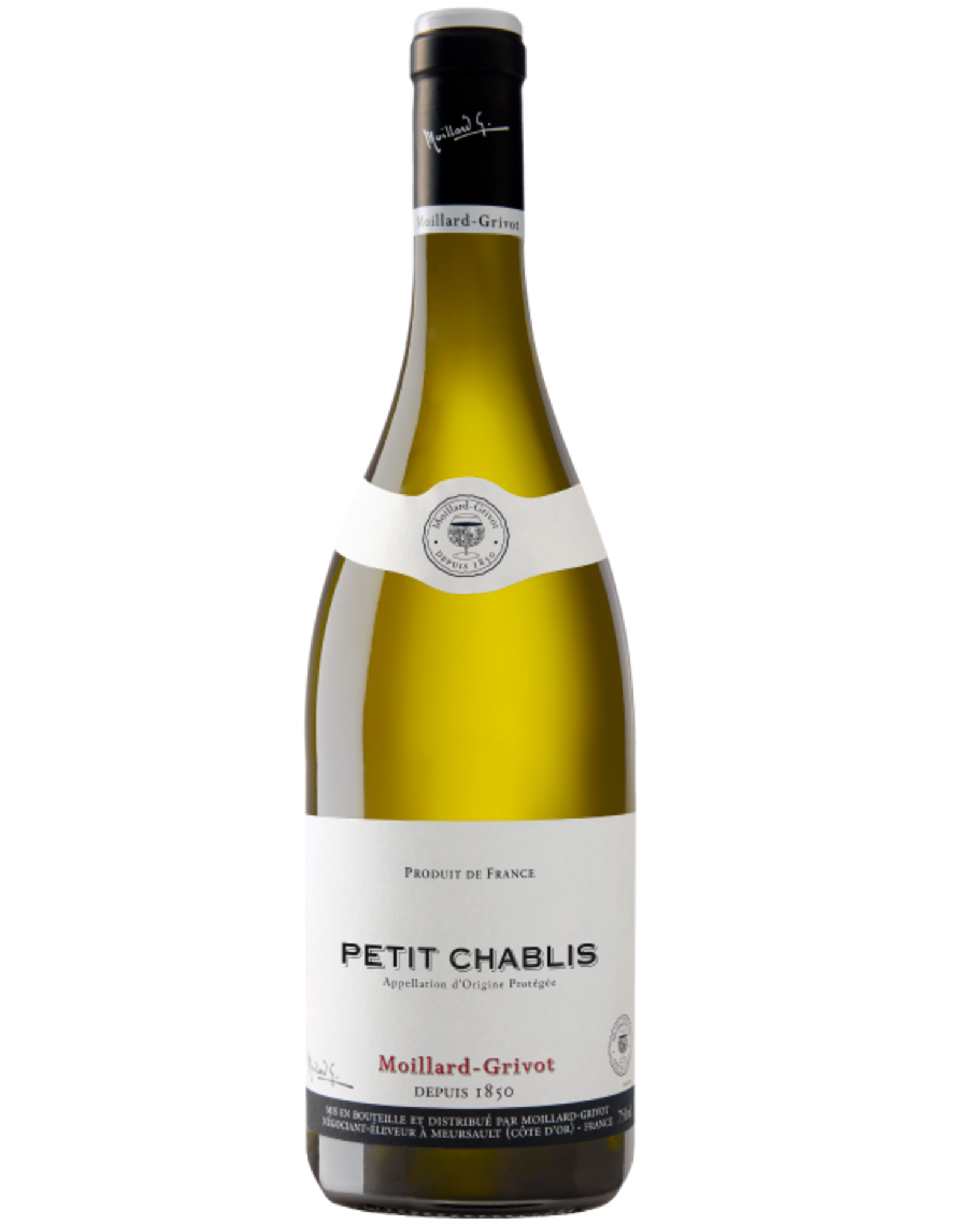
    Moillard-Grivot petit Chablis

    Moillard-Grivot petit Chablis

    Burgundy, France; 12.5% ABV

    PLCB Item #100048775 – on sale for $17.99 through March 1 (regularly $19.99)

    No alternate retail locations within 50 miles of Philadelphia according to Wine-Searcher.com