Blog

  • How a 911 dispatcher helped a woman save her husband | Inquirer Chester County

    How a 911 dispatcher helped a woman save her husband | Inquirer Chester County

    Hi, Chester County! 👋

    A 911 dispatcher has been recognized for helping a Willistown woman save her husband’s life when he went into cardiac arrest. Also this week, work to rehab the Downingtown Trestle is set to get underway, a Netflix series with West Chester ties is getting a tax credit for its latest season, plus, Tredyffrin officials are addressing residents’ concerns about a Department of Homeland Security lease.

    If someone forwarded you this email, sign up for free here.

    How a 911 dispatcher guided a woman through saving her husband’s life
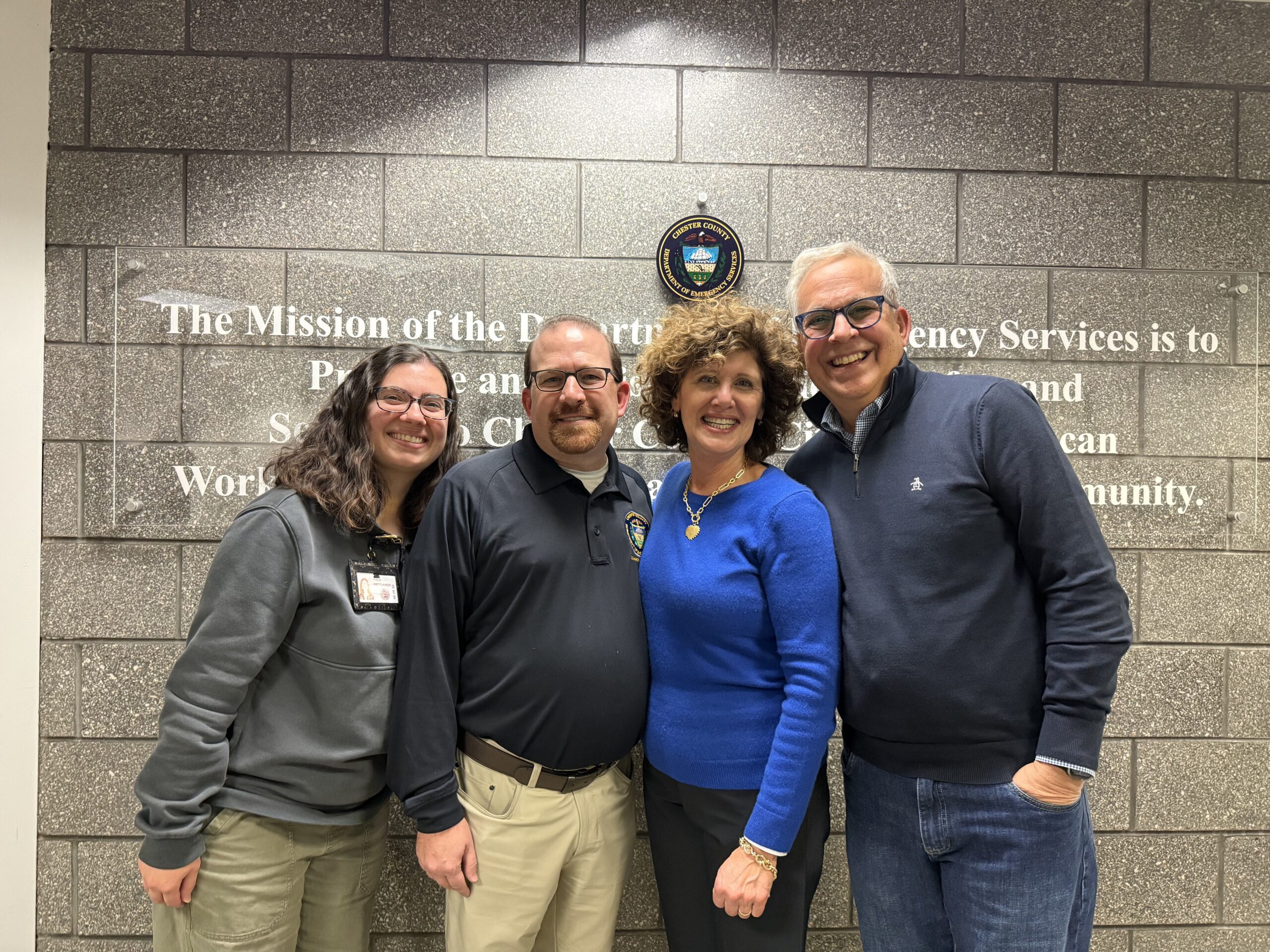
    Chester County 911 dispatcher Kayla Wettlaufer (left) guided Terri Borzillo (center right) through CPR on the phone when Bob Borzillo (right) went into cardiac arrest in November.

    When Willistown residents Terri and Bob Borzillo returned from a trip to Barcelona last fall, neither had expected that Terri would soon be holding “the balance of his life” in her hands.

    But that’s what happened one November evening when Bob, 65, went into cardiac arrest. With guidance from county dispatcher Kayla Wettlaufer, Terri, also 65, was able to perform compressions on her husband of more than 40 years years while she waited for EMTs to arrive.

    Wettlaufer’s direction helped saved Bob’s life in an often fatal situation, earning her honors from the county this month.

    The Inquirer’s Brooke Schultz spoke with the couple about the harrowing evening and why the experience made them proud to be longtime Chesco residents.

    ❤️ Plus, we’ve put together a guide for how to help someone in cardiac arrest.

    The Downingtown Trestle Bridge will be rehabbed, extending the Chester Valley Trail
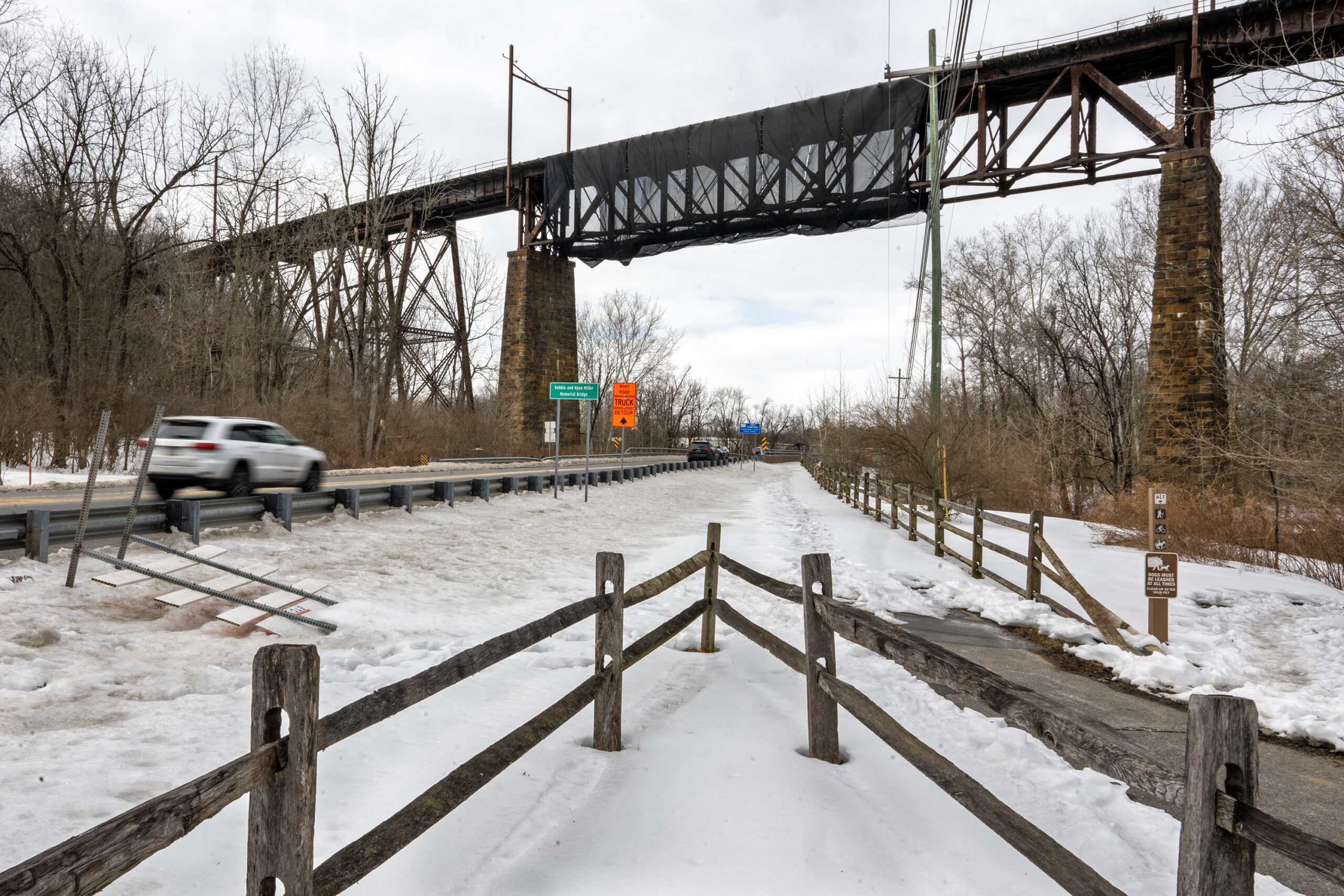
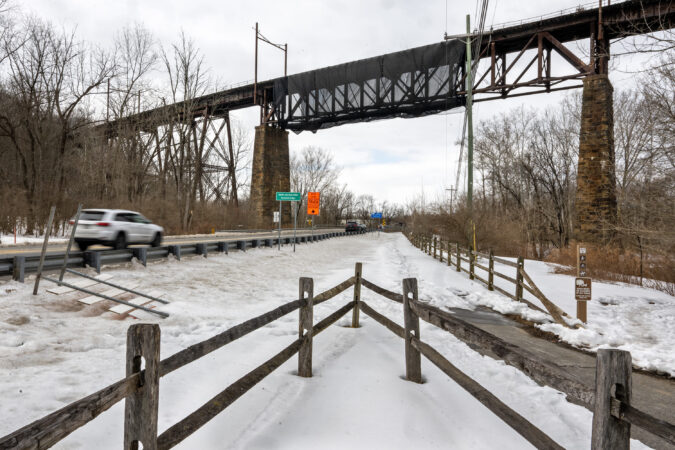
    The Brandywine Valley Viaduct, better known as the Downingtown Trestle Bridge, will eventually help extend the Chester Valley Trail.

    The more than century-old bridge known as the Downingtown Trestle is set to be rehabilitated, a move that will eventually help extend the Chester Valley Trail. Work on the overall extension project is estimated to take five to seven years, with the design phase starting next year.

    The nearly 19-mile multi-use trail currently runs from Atglen to Exton and the trestle bridge is a “keystone” of the extension project, said Chester County’s director of facilities and parks department.

    Read more about how officials say the bridge and extended trail will benefit the community.

    📍 Countywide News

    • In case you missed it, an unknown number of annual mail ballot applications went out to county residents with the first and last names reversed earlier this month. Officials said the error won’t affect processing of the forms, but it comes at a time when some voters have expressed concerns after tens of thousands of independent and unaffiliated voters were left off November’s poll books.
    • In an address to the Senate floor, Sen. Dave McCormick used the county’s recent poll book blunder as an example of why there should be nationwide rules mandating proof of citizenship and photo identification for voters, like those outlined in the proposed SAVE Act. But the senator painted an incomplete and inaccurate picture of what happened in November and the SAVE Act wouldn’t have solved those problems, The Inquirer’s Katie Bernard reports.

    💡 Community News

    • Michael Phillips, a 44-year-old Coatesville man, was taken into custody last week after allegedly stabbing his 3-month-old son and then throwing him into the snow. The infant was taken to Children’s Hospital of Philadelphia for surgery and was later listed in critical but stable condition. Phillips faces charges of attempted homicide and aggravated assault.
    • Tredyffrin Township officials have responded to community concerns after the Department of Homeland Security, which oversees ICE, leased about 10,000 square feet of space at the Westlakes Office Complex. In a statement, they reiterated that local law enforcement agents don’t enforce immigration orders or work with ICE. The space “will not house ICE agents or support their operations. It is strictly for back-office officials, such as lawyers and analysts,” a spokesperson for the property told Wired.
    • Last week, shareholders approved the merger of American Water Works and Essential Utilities, which serves customers in parts of Chester County, including Phoenixville and West Chester. More details about the merger are expected in the coming weeks.
    • There have been recent leadership changes at two area police departments. Brian Barber, who previously spent over 26 years with the Pennsylvania State Police, is the new deputy police chief of Caln Township. In Uwchlan Township, James Fisher has been appointed as the department’s new head following Chief of Police Scott Alexander and Lieutenant Maureen P. Evans’ recent retirements.
    • The Netflix comedy show Tires has been awarded $6 million in tax credits for production of its third season. The Shane Gillis-led show takes place in a fictional West Chester auto shop and is expected to generate $24 million in the local economy.
    • Alisan Road Mercantile, a new general store stocking Pennsylvania-made goods, is now open at 89 N. Main St. in Spring City.
    • A new bookstore opened over the weekend in Kennett Square. Located at 121 W. State St., Forage Books also offers a selection of gifts.
    • Heads up for drivers: There are several construction projects causing delays around the county. In Uwchlan Township, there will be traffic restrictions on Route 113 between Gordon Drive and Lionville Station Road today from 9 a.m. to 3 p.m. for utility work. In East Pikeland Township, Rapps Dam Bridge will be closed today for maintenance. In West Whiteland Township, there’s a temporary new traffic pattern in effect for the next three weeks on Valley Creek Boulevard between Swedesford Road and the entrance of the Church Farm School. The southbound lanes will be closed from 7 a.m. to 5 p.m. for sewer line construction. In Easttown Township, Chester Road between South Fairfield and South Waterloo Roads is expected to be closed to non-local traffic from 9 a.m. to 3 p.m. through Friday for sewer improvements. And in and around East Marlborough Township, there may be delays on U.S. 1 between Schoolhouse Road and the Kennett Oxford Bypass tomorrow from 7 p.m. until 5 a.m. Friday as PennDot installs overhead signage.
    • After multiple power outages in East Marlborough and Pocopson Townships, Peco will be upgrading and installing new equipment as well as trimming trees over the next month. The $1.5 million project includes work along Folly Hill Road, East Doe Run Road, East Street Road, Brooks Road, Huntsman Lane, Schilling Drive, Windovr Way, Gideon Drive, and Valley Road.

    🏫 Schools Briefing

    • Kennett Consolidated School District’s finance committee is considering a 4.17% real estate tax hike in its 2026-27 preliminary budget, which would cost homeowners of the average assessed home an extra $268 annually. The hike would help to fund special education and student services, according to the finance committee. The proposed hike requires a referendum exception and could change between now and June when the board is expected to approve the final budget.
    • A Westtown School teenager is balancing being a kid with a burgeoning collegiate athletic career. As Jordyn Palmer looks ahead to college ball, the 6-foot-2 junior guard who’s averaged 23 points and 12 rebounds this season, “has not even scratched her full potential,” one coach said. Joseph Santoliquito recently profiled Palmer for The Inquirer.
    • Palmer scored 19 points in Westtown’s victory over Friends’ Central on Friday, clinching the team’s sixth Friends Schools League title. Westtown’s boys’ team similarly won its game against Academy of the New Church, giving the Moose its first league title in four years.

    🍽️ On our Plate

    • The Original Hot Bagels, a Delaware eatery specializing in bagels, breakfast sandwiches, and omelets, is opening its first Pennsylvania location in Landenberg. It will take over the former home of The Landenberg Store, at 100 Landenberg Rd., which closed in September.
    • West Chester Restaurant Week kicks off on Sunday and runs through March 1. Over two dozen restaurants will offer $40 to $60 specials during the eight-day event. See the full list of participating restaurants and their menus here.

    🎳 Things to Do

    🏠 Cabin Fever: This family-friendly event includes arts and crafts as well as a mobile zoo, where you can get up close to animals. Registration is requested. ⏰ Saturday, Feb. 21, 1-4 p.m. 💵 Free 📍 Malvern Borough Hall

    🎤 The Best of Carole King and James Taylor: Listen and sing along to hits from these iconic musicians at this benefit for Marvin’s Home, an organization that supports youth after foster care. ⏰ Saturday, Feb. 21, 7 p.m. 💵 $15 📍 Steel City Coffeehouse and Brewery

    🎶 Mad Dogs and Englishmen: A 20-piece band will recreate Joe Cocker’s live album and tour, Mad Dogs and Englishmen. ⏰ Saturday, Feb. 21, 8 p.m. 💵 $41.78-$83.18 📍 The Colonial Theatre, Phoenixville

    🏡 On the Market

    A sprawling Paoli home with a wet bar and wine storage
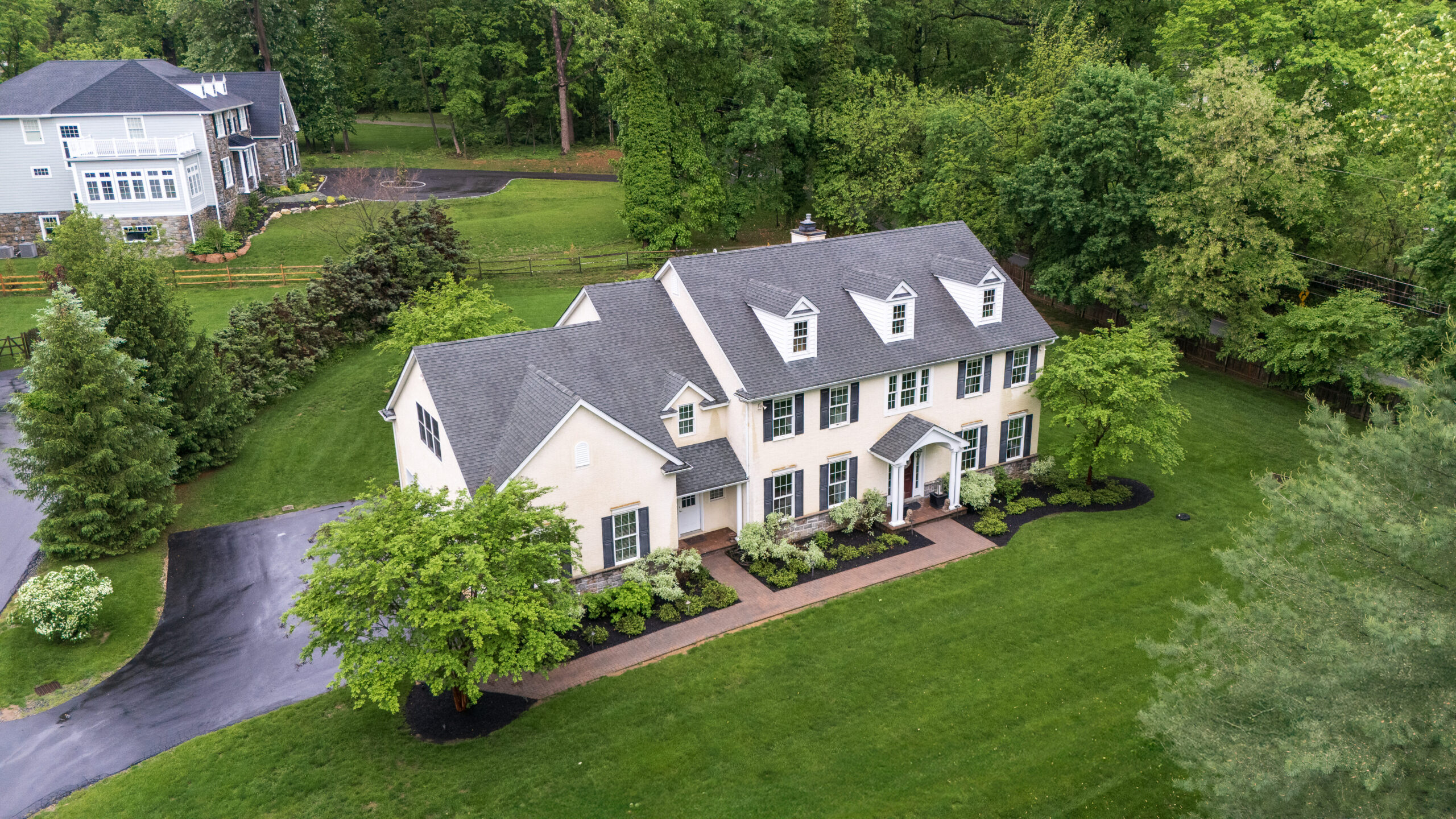
    The home sits on a nearly 1-acre lot.

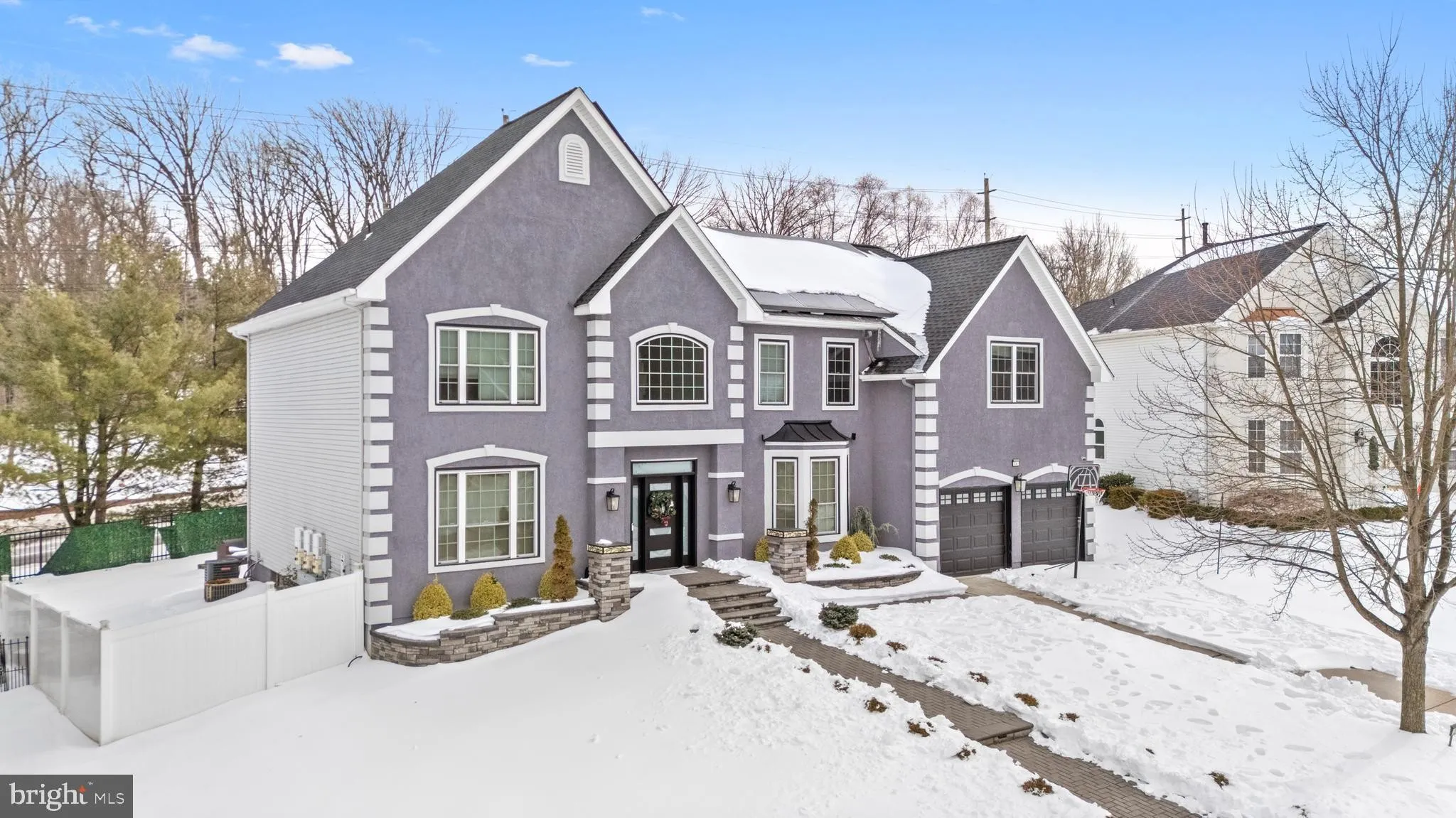
    This spacious five-bedroom Paoli home is a blend of classic details and modern amenities. Its first floor features a two-story foyer flanked by dining and living rooms; an office; an eat-in kitchen with cherry cabinetry, an island, and a butler’s pantry; and a family room with vaulted ceilings and a gas fireplace. There are four bedrooms upstairs, including the primary suite, which has a sitting area, two walk-in closets, and a bathroom with a soaking tub. Other features include a finished basement with a wet bar, wine storage, a full bathroom, a fifth bedroom, and another office. Outside, there’s a fenced yard and a brick patio with a firepit. There’s an open house Saturday from noon to 2 p.m.

    See more photos of the home here.

    Price: $1.55M | Size: 5,800 SF | Acreage: 0.94

    🗞️ What other Chester County residents are reading this week:

    By submitting your written, visual, and/or audio contributions, you agree to The Inquirer’s Terms of Use, including the grant of rights in Section 10.

    This suburban content is produced with support from the Leslie Miller and Richard Worley Foundation and The Lenfest Institute for Journalism. Editorial content is created independently of the project donors. Gifts to support The Inquirer’s high-impact journalism can be made at inquirer.com/donate. A list of Lenfest Institute donors can be found at lenfestinstitute.org/supporters.
  • 8 local happy hours to check out | Inquirer Cherry Hill

    8 local happy hours to check out | Inquirer Cherry Hill

    Hello, Cherry Hill! 👋

    Looking for a great happy hour deal? We’ve rounded up eight spots to check out. Also this week, a bomb squad was called in after residents discovered a cannonball in their backyard, the school district is no longer planning to redraw enrollment boundaries for elementary schools, plus Mikado is looking to add a small bar.

    If someone forwarded you this email, sign up for free here.

    8 local happy hours to check out

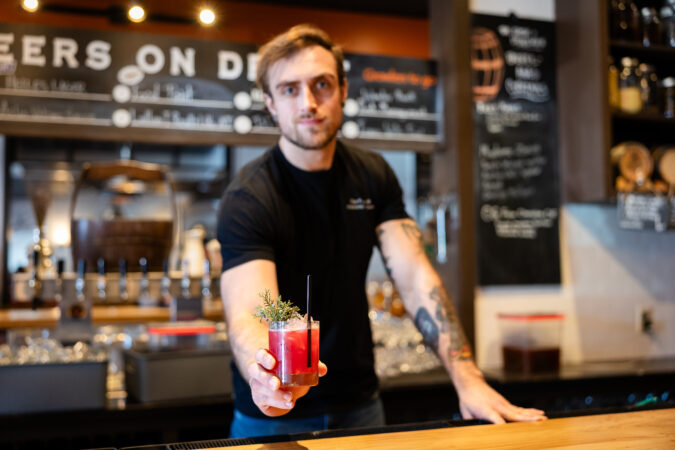
    The Farm and Fisherman Tavern has a happy hour special.

    Looking for a spot to score $3 tacos or $7 martinis? Luckily you don’t have to go very far, thanks to these eight restaurants’ happy hour deals.

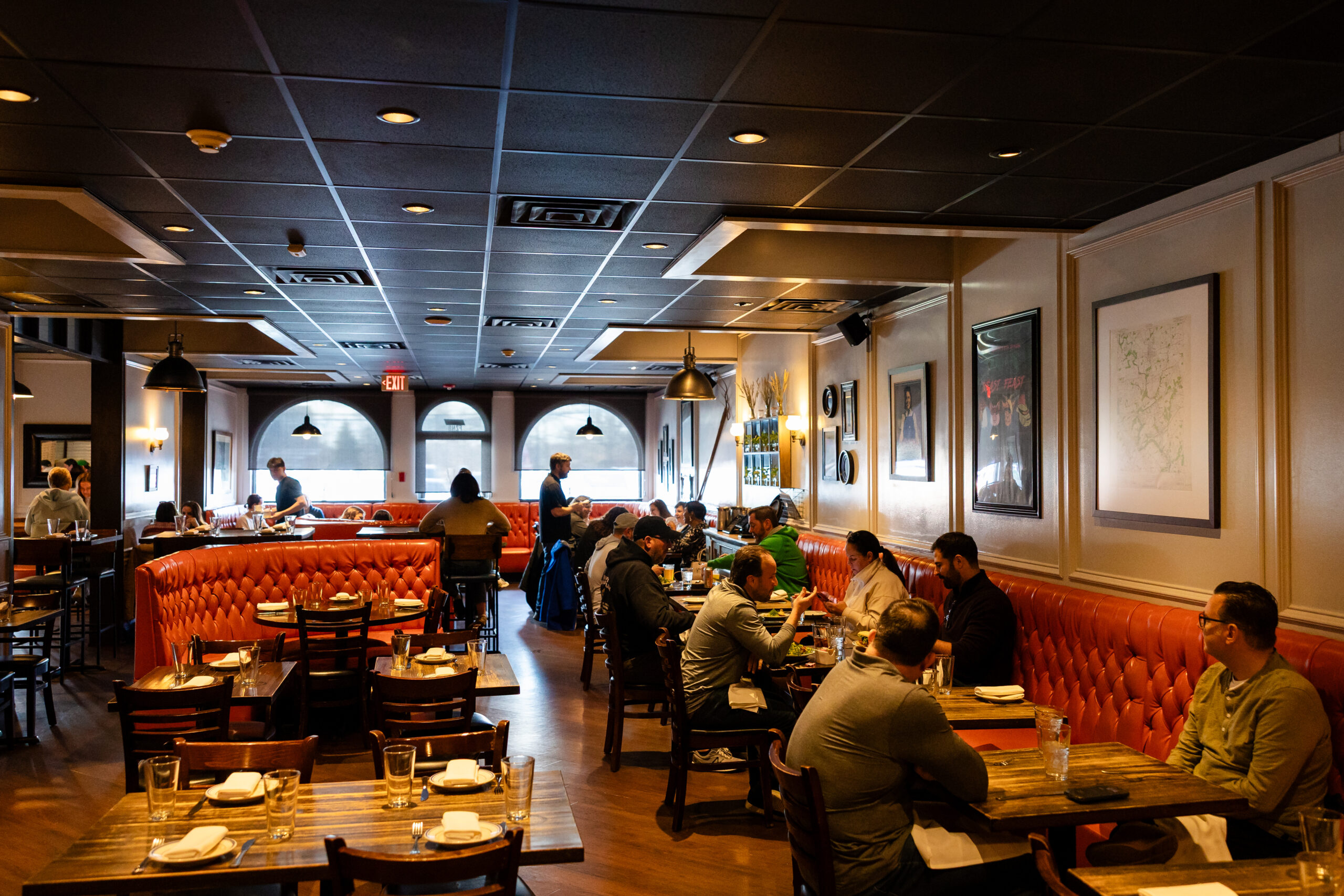
    The Inquirer’s Denali Sagner has rounded up eight spots in and around Cherry Hill with happy hour offerings, including the nostalgia-inducing Steak 38, neighborhood bar Kaminski’s, and farm-to-table eatery Farm and Fisherman ($8 P.E.I. Mussels, anyone?).

    See what’s on the menu at these eight happy hours.

    💡 Community News

    • Residents on Woodstock Drive South found an old cannonball buried in their backyard Friday, prompting street closures and evacuations as the Camden County Sheriff’s Department Bomb Unit removed it. It’s unclear where the cannonball came from or how long it had been there.
    • Cherry Hill residential property taxes rose 5.23% from 2024 to 2025, according to new data from the state, outpacing the statewide average hike of 4.7%. The average household paid $9,874 in residential property taxes, which is slightly less than the statewide average of $10,570. The average Cherry Hill residence was valued at $227,125 in 2025, a 0.03% increase from 2024. (NJ.com)
    • Speaking of taxes, today is the extended deadline for residents to pay their tax bills for the first half of 2026.
    • The landmark former Cherry Hill Diner could soon be demolished after construction permits were recently filed for the site, which will make way for a new Tidal Wave Auto Spa. A second Tidal Wave is planned for 2301–2311 Route 70 West. Yet another carwash is in the works at 1507 Kings Highway North, where Speeders Car Wash is taking over the former Route 41 Car Wash. (42 Freeway and A View From Evesham)
    • As iconic diners like the Cherry Hill Diner continue to disappear across New Jersey, legislators are searching for ways to keep these businesses afloat. Last month, a bill was introduced in the state Senate that would establish a registry of historic diners and restaurants and give them a tax credit of up to $25,000.
    • Archaeologists working at Croft Farm have discovered evidence that the historic property was an active part of the Underground Railroad. A dig to assess the property ahead of planned drainage improvements has turned up cuts of meat and crockery possibly used by people who moved through there. Residents can see the work up close this weekend (more on that below). (70 and 73)
    • The township is seeking feedback from residents 55 and older for its senior needs assessment. The survey, which is open through March 31, is part of a grant-funded study about how Cherry Hill can better support older residents, who make up about a third of the township’s population. Find the survey, which is available in English, Spanish, and Chinese, here.
    • Registration for the township’s spring programs is now open. Programs include yoga, cardio kickboxing, golf, painting, and dancing.

    🏫 Schools Briefing

    • In case you missed it, the school district has decided against redrawing its elementary school boundaries to head off expected overcrowding in the coming years and instead is planning additions to Clara Barton Elementary School and Rosa International Middle School, which are anticipated to be the most impacted. The school board still has to approve the additions.
    • East’s boys’ and girls’ swim teams have advanced to the state semifinals after capturing their respective New Jersey State Interscholastic Athletic Association sectional titles for South Jersey last week. The boys’ team defeated Gloucester County Institute of Technology 111-59, a victory that led to its 17th consecutive title. The girls’ team defeated Egg Harbor Township High School 91-79, marking the team’s second consecutive title. The boys’ semifinals take place today, with the girls’ slated for tomorrow. (NJ.com)
    • There’s a board of education meeting on Tuesday at 6:30 p.m.

    🍽️ On our Plate

    • Mikado will ask the town zoning board this week for permission to turn its roughly 500-square-foot outdoor patio into an enclosed 10-seat bar and waiting area.
    • Indian Villa Restaurant reopened earlier this month in the Woodcrest Shopping Center, and introduced an updated menu featuring classic Indian dishes.
    • Looking for a great cup of soup? Hen Vietnamese Eatery has one of the best in the state, according to a new list from NJ.com.

    🎳 Things to Do

    🪏 Unearthing History: Archaeologists will be excavating part of the Croft Farm property, where 18th and 19th century artifacts, as well as earlier pieces of Native American history, have previously been found. The public can view the dig and ask questions at designated times. ⏰ Saturday, Feb. 21 and Sunday, Feb. 22, 10 a.m.-4 p.m. 💵 Free 📍Croft Farm

    🎹 A Time for Love: Vocalist and pianist Jay Daniels will perform some iconic love songs. Registration is required. ⏰ Saturday, Feb. 21, 2-3 p.m. 💵 Free 📍Cherry Hill Public Library

    ❤️ Healthy Heart Big Fitness Event: Part of the JCC’s heart health programming for February, this event will take attendees through pilates and fitness dancing demonstrations, followed by snacks. The event is open to anyone 12 and older. ⏰ Sunday, Feb. 22, 10 a.m.-12:30 p.m. 💵 $20 for members, $25 for non-members 📍Katz JCC

    🥐 Black Girl Magic Drag Brunch: VinChelle is hosting this drag brunch, which features performances by Mz Peaches, Cyrus K. Stratton, and Samara LaNegrá. ⏰ Sunday, Feb. 22, 2:30-5 p.m. 💵 $19.03 📍Vera

    ⛸️ LGBTQ+ Skate Night: Head to WinterFest Cottage at Cooper River Park for skating, a DJ, food, drinks, and access to local resources for the LGBTQ+ community. Registration is encouraged. ⏰ Monday, Feb. 23, 6-8 p.m. 💵 Free 📍Cooper River Park

    🏡 On the Market

    This home’s primary suite has a jacuzzi with a built-in sound system

    The home spans nearly 4,000 square feet.

    Located in the Springdale Crossing neighborhood, this four-bedroom home has a modern interior, including new flooring. It features a two-tone, two-story foyer, a dining room, an eat-in kitchen with a waterfall island and stainless steel appliances, plus living and family rooms. The family room has vaulted ceilings and a floor-to-ceiling stone fireplace. All four bedrooms are upstairs, including the primary suite, which has a jacuzzi tub with a built-in sound system, and a walk-in closet. Other features include a finished basement and a fenced backyard. There are open houses Saturday and Sunday from 11 a.m. to 1 p.m.

    See more photos of the home here.

    Price: $925,000 | Size: 3,954 SF | Acreage: 0.3

    🗞️ What other Cherry Hill residents are reading this week:

    By submitting your written, visual, and/or audio contributions, you agree to The Inquirer’s Terms of Use, including the grant of rights in Section 10.

    This suburban content is produced with support from the Leslie Miller and Richard Worley Foundation and The Lenfest Institute for Journalism. Editorial content is created independently of the project donors. Gifts to support The Inquirer’s high-impact journalism can be made at inquirer.com/donate. A list of Lenfest Institute donors can be found at lenfestinstitute.org/supporters.
  • A historic Chesco bridge will be rehabbed to extend a scenic trail

    A historic Chesco bridge will be rehabbed to extend a scenic trail

    A project to expand the Chester Valley Trail and repair the historic Downingtown Trestle Bridge, which has spent decades largely untouched, will kick off soon, Chester County officials said.

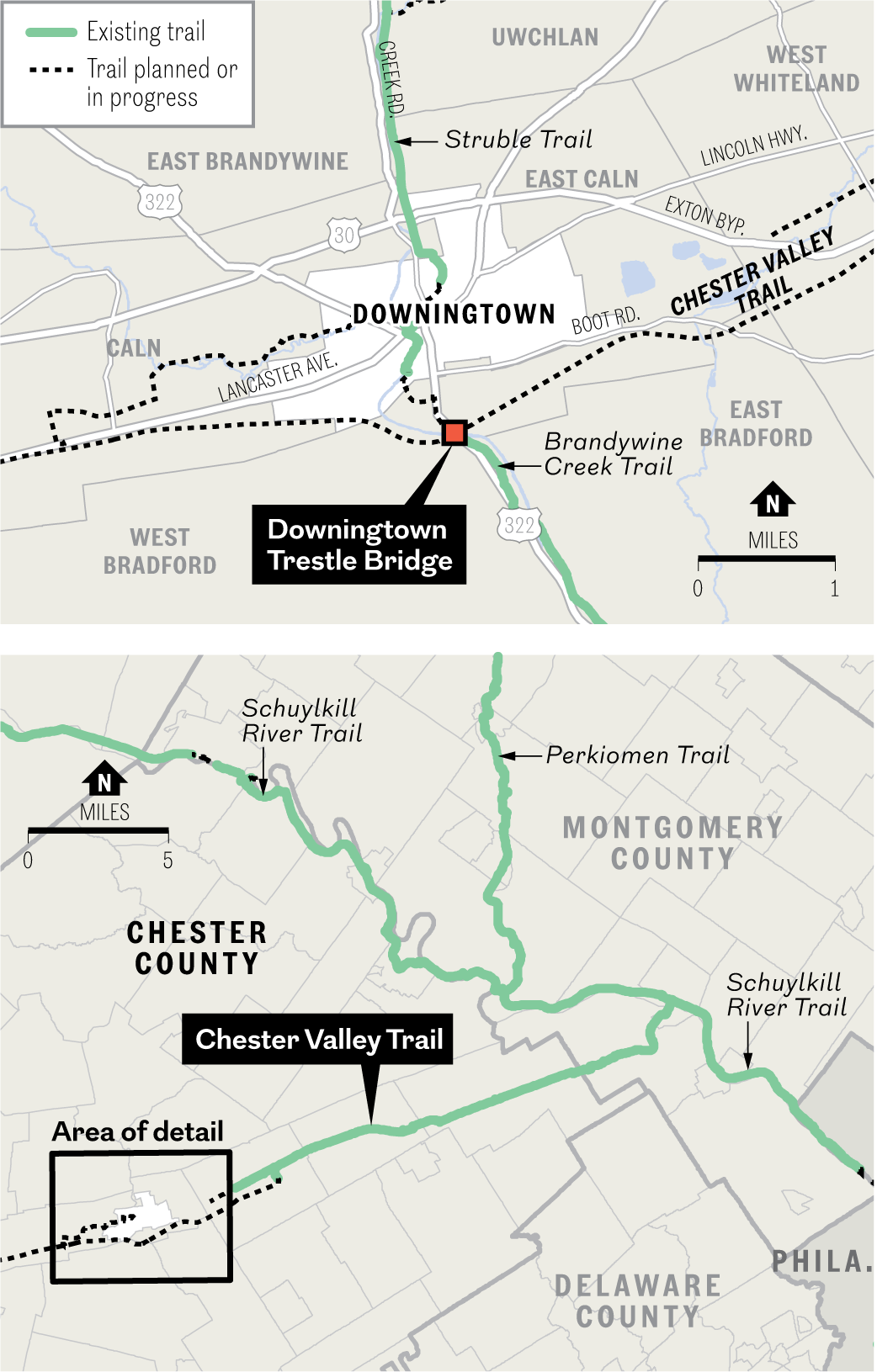
    It’s part of a larger effort to expand the sprawling Chester Valley Trail, a 19-mile rail trail that runs through Chester and Montgomery Counties, from Exton to Atglen.

    “The bridge is a really key part of it, because it’s multimodal,” said George Martynick, director of Chester County’s facilities and parks department. “Without that bridge, I really don’t know what we’d do with this project. It is the keystone of that project. It’s a big job.”

    As the county kicks off the project, people can expect to see inspections taking place on the bridge in the coming months. The trestle will get a full inspection to make sure it meets federal standards, Martynick said. Design is slated to begin in the next year, and the rehabilitation and extension should be completed in five to seven years, he said.

    The bridge stretches 1,450 feet long and more than 130 feet high over the east Brandywine River. Known as the “Brandywine Valley Viaduct,” “Downingtown High Bridge,” or “Pennsylvania Railroad Freight Bridge”— but colloquially called the Downingtown Trestle Bridge — it was constructed in the early 1900s, according to the Downingtown Area Historical Society.

    “This is taking on something much bigger than I think a lot of people understand,” Martynick said.

    Map of the Downingtown Trestle Bridge and the Chester Valley Trail in Chester County.

    The Trestle Bridge has been out of commission since the 1980s, with the track removed. Since then, the bridge has sat abandoned, and has had a troubled history. Security measures were added to prevent people from accessing it, and netting was put on it to keep debris from falling off it.

    The county completed a drone inspection before it took ownership of the bridge last year.

    In May, the county commissioners voted to purchase a portion of the former Philadelphia and Thorndale railroad corridor from the Pennsylvania Department of Transportation for $1.

    Other than some growth and weeds, “it’s in fairly good shape,” Martynick said.

    The county has received three grants for the project — two from the state department of conservation and natural resources, each for $500,000, and a Delaware Valley Regional Planning Commission grant for $200,000, said Brian Styche, the multimodal transportation planning director for the county’s planning commission.

    The county is matching both of the conservation and natural resources grants, for a total of $2.2 million in funding toward the bridge’s design.

    “It’s a good project. It’s going to take a lot of time and effort and a lot of patience, but it will be a pretty impressive project for the community,” Martynick said.

    It’s a personally important project, too: Martynick applied to work in the county’s parks department because of his love of the trail.

    “I love it,” he said. “It’s a very, very special trail.”

  • SNAP cuts are taking a toll on the thousands of Pennsylvanians losing benefits: ‘I fell into a downward spiral’

    SNAP cuts are taking a toll on the thousands of Pennsylvanians losing benefits: ‘I fell into a downward spiral’

    Enrique Fuentes counted on the $250 he received monthly in federal nutrition assistance to cover the cost of groceries. That changed last month.

    Fuentes works three days a week as a technician assisting therapists who help autistic children and adults, ages 3 to 22. He is one of an estimated 3 million able-bodied Americans who do not work enough hours to qualify for the Supplemental Nutrition Assistance Program (SNAP) under a law signed by President Donald Trump.

    “They cut me off because you need to work more than 20 hours a week to get benefits, and I didn’t have those hours,” said Fuentes, 27, who lives in Philadelphia. “I wasn’t even aware of that stipulation.”

    Roughly 4 million Americans are expected to lose SNAP benefits in 2026 under the One Big Beautiful Bill Act. Many of them do not meet work requirements added to the anti-hunger program under the legislation, which paid for Trump’s tax cuts with cuts to SNAP and Medicaid.

    In Pennsylvania, around 144,000 SNAP recipients could see benefits cut this year — an estimated 45,000 in Philadelphia and 12,000 in its collar counties, according to Pennsylvania Department of Human Services estimates.

    Without enough food, Fuentes, who has an associate’s degree in psychology, felt overwhelmed, he said. He is consulting Community Legal Services, which serves people in poverty, for help.

    “I fell into a downward spiral. It’s been upsetting,” he said.

    “Lots of people didn’t know the rules, thinking the winds of Washington don’t affect them. But they do.”

    Since January, advocates say, they have begun to hear from increasing numbers of people suddenly being removed from the program.

    “The White House is rifling through our pockets for lunch money,” said George Matysik, executive director of the Share Food Program, a major provider of food to hundreds of pantries in the region. The cuts constitute “a rounding error for the federal government but [the money is] a lifeline for working-class families,” he added.

    Asked for comment on criticism of the SNAP cuts, a White House spokesperson did not address the program. Instead, the spokesperson praised Trump for helping U.S. families by “fixing” former President Joe Biden’s “broken economy.”

    The spokesperson said that benefits meant for American citizens are “no longer supporting illegal aliens.” But undocumented immigrants have never been eligible to receive SNAP benefits, according to the American Immigration Council, a group that provides legal services to immigrants.

    Policy changes under Trump’s law

    Because the new law revises categories of SNAP recipients — many of which will go into effect at different times — people are uncertain about what they may lose and when. Others who have already seen reductions say they are growing apprehensive because they don’t know whether the law is the reason, or whether bureaucratic adjustments or errors are the cause.

    “Will all this change result in mass panic?” wondered Cailey Tebow, an education outreach coordinator for AmeriCorps VISTA, a national service program designed to alleviate poverty. Tebow works with low-income individuals in Northeast Philadelphia. “It’s scary to think what will happen when people realize what’s being taken from them.”

    Hoa Pham, deputy secretary of the Office of Income Maintenance in the Pennsylvania Department of Human Services, which administers SNAP in the state, is more hopeful. She said she believes the efforts her department has been making will help Pennsylvanians understand SNAP revisions and will “avoid chaos.”

    One category of potential confusion is the change in work requirements.

    Until Trump’s spending plan rewrote the rules, groups of low-income people in Pennsylvania and other states were exempt from a long-standing requirement that childless adults without disabilities and under the age of 54 work, volunteer, or go to school 20 hours per week in order to be eligible for SNAP benefits.

    The work stipulation had been waived for decades because of high levels of poverty and hunger, as well as diminished job opportunities in Philadelphia and elsewhere in the state.

    Under the new policy, childless, able-bodied adults — whose age limit has now been increased to 64 — can be exempt from the work requirements only in areas with at least 10% unemployment — a rate of joblessness considered catastrophic, experts say. In November, Philadelphia’s unemployment rate was 4.8% and other areas in the region saw similar or lower rates.

    “Work requirements in SNAP will put forward a substantial amount of bureaucracy that Pennsylvanians have to contend with,” Pham said. “It could kick many people off SNAP. The impact to people could be severe.”

    She added that reducing SNAP rolls should not be construed as a savings for taxpayers, as Trump and other Republicans have long argued. That is because food insecurity exacerbates health problems, which will add other costs in the long term, Pham said.

    “That will just drive up healthcare and insurance costs,” she said.

    ‘Life is already crumbling’

    At the Jenkintown Food Cupboard last week, “anxiety about what will happen is growing,” said Nicolino Ellis, the executive director. “But bellies are already aching from hunger. Life is already crumbling today.”

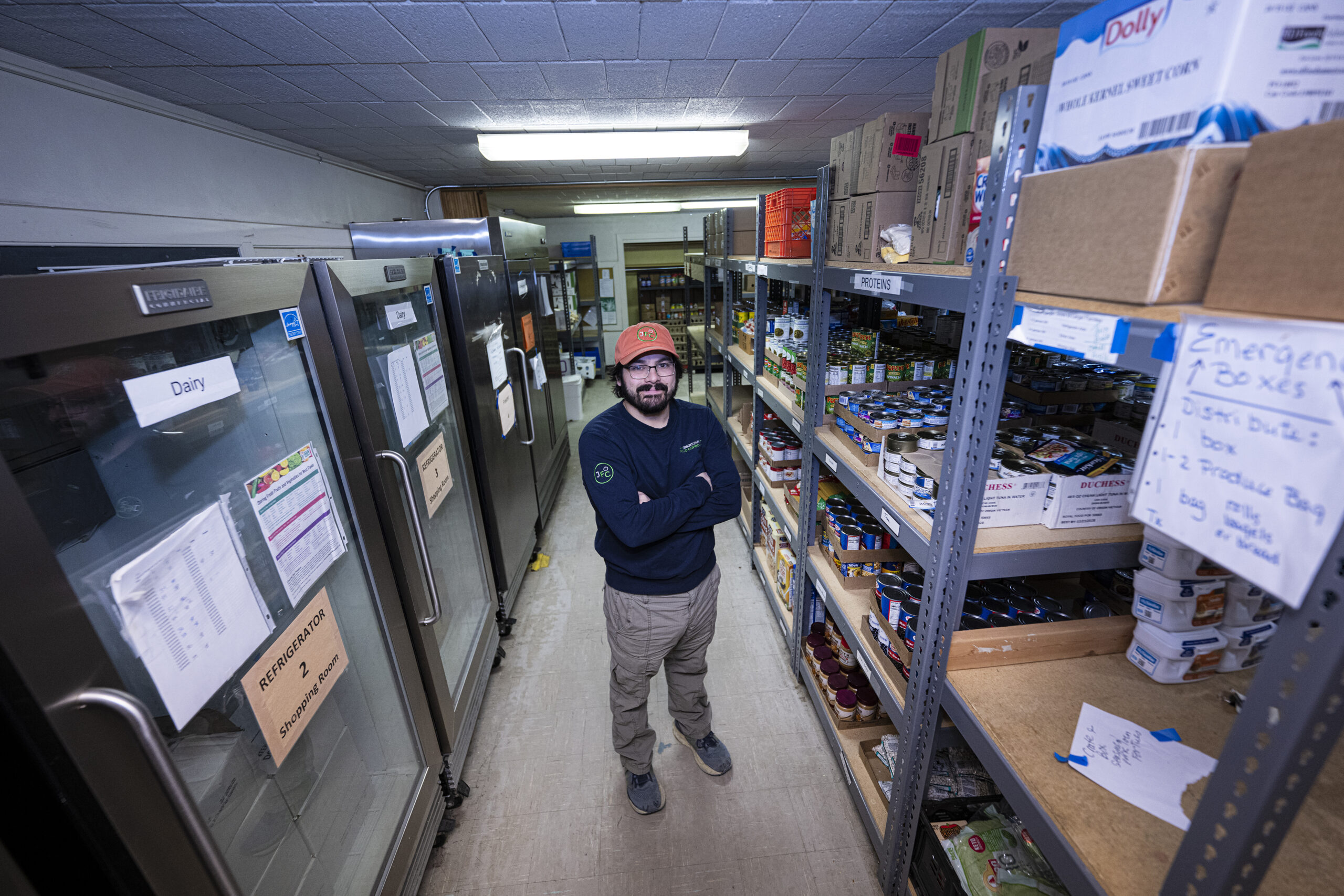
    Nicolino Ellis, executive director of the Jenkintown Food Cupboard, in the warehouse.

    Outside the cupboard at the Jenkintown United Methodist Church, food was distributed in a driveway to clients who drove up in cars. A phalanx of volunteers slid bags of perishables and shelf-stable foods into trunks and back seats.

    As SNAP benefits dry up while food prices soar, cupboards like this one become overburdened. But they are a less efficient means of feeding Americans in need, according to Stuart Haniff, CEO of the nonprofit Hunger-Free Pennsylvania.

    “For every single meal distributed at a food pantry,” he said, “SNAP provides nine. And need in Philadelphia increased 140% over the last two years.”

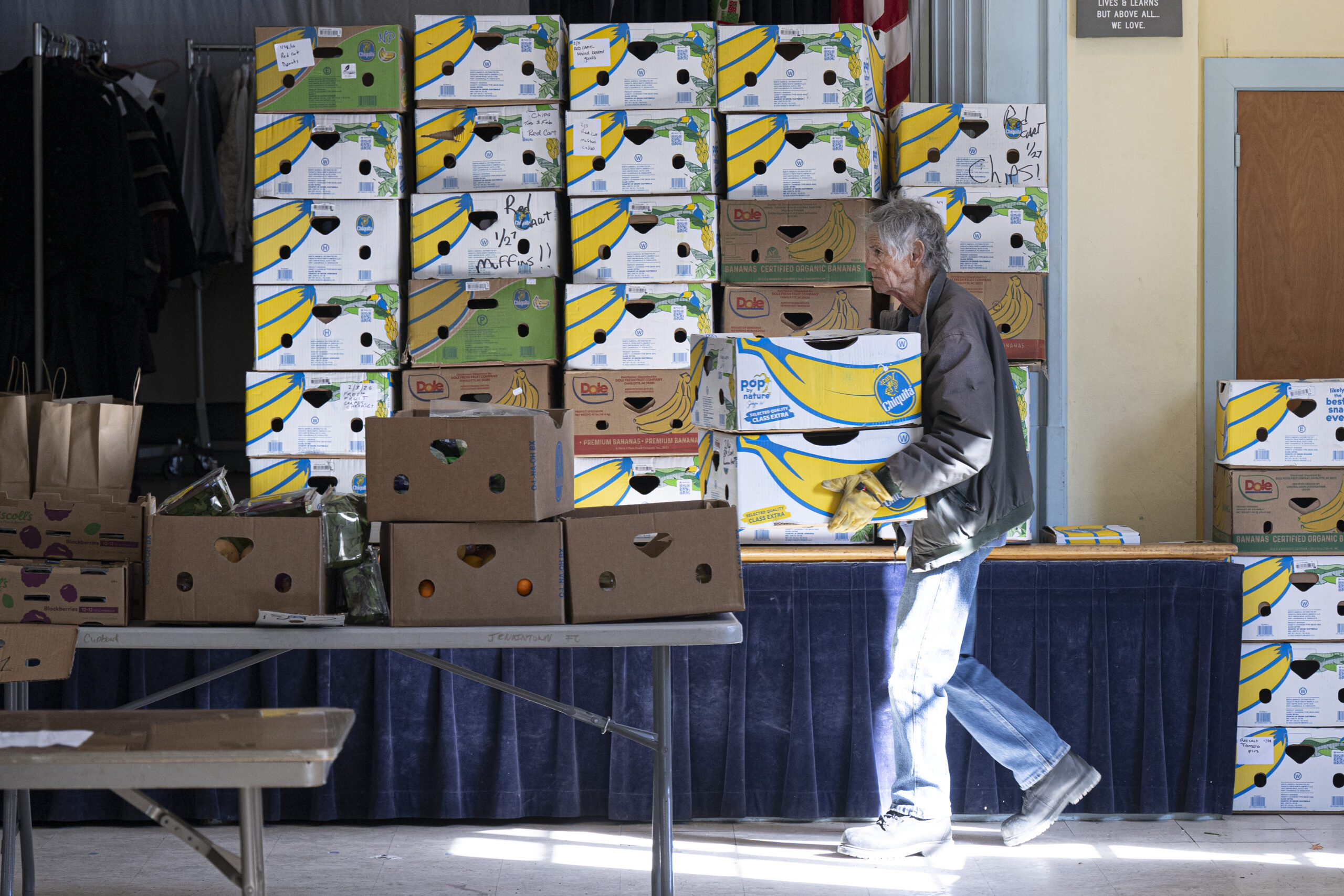
    A Jenkintown Food Cupboard volunteer works to set up food distribution.

    Shelley Gaither is one of the hundreds of people receiving groceries from the pantry.

    Gaither, 51, is a former data analyst with an MBA who suffered a disability that caused her to stop working at a Malvern finance company 13 years ago. She now collects Social Security Disability Insurance and lives with her three sons, ages 6, 9, and 18, in Cheltenham.

    Gaither said that in January, her SNAP payment dropped from $400 to $200. “I don’t know if it was a new formula from the government cutting me back, or some other reason,” she said in a phone interview. “No one told me why. It’s not supposed to happen when you have a disability. It’s crazy.”

    Whatever caused the cut, Gaither said, she is in trouble, and worried the benefit will shrink even further.

    “Now, the money I used to pay for electricity and water has to go for food,” she said. “This makes surviving more difficult.”

  • After 20 years of growth, this Philadelphia-born company says it’s ready to help in the caregiver crisis

    After 20 years of growth, this Philadelphia-born company says it’s ready to help in the caregiver crisis

    Just over 20 years ago, when Geoff Gross founded Medical Guardian, his vision was to empower older adults to live more independently.

    The company launched in 2005 out of Gross’ apartment in Center City with a focus on emergency response for seniors and individuals with disabilities.

    “At the time, the industry was largely reactive and built around moments of crisis,” he said.

    It now has 630,000 active members, who can choose from lightweight medical alert devices worn as a necklace or on the wrist. One of them, which looks like any other smartwatch on first glance, allows users to track health and activity stats.

    The company employs more than 600 people and is approaching $250 million in annual revenue. Gross said it is poised to step in as aging-in-place becomes an urgent challenge facing families, healthcare systems, and policymakers.

    By 2034, the number of older adults in the U.S. will surpass the number of minors for the first time in history, according to the U.S. Census Bureau. Simultaneously, families and caregivers are experiencing increased demands, and traditional care models are proving to be less sustainable. Over 53 million Americans serve as unpaid family caregivers, according to a recent study from the Shirley Ryan AbilityLab, and they provide an estimated $600 billion worth of unpaid labor each year.

    “Caregiving is now widely recognized as a public health, workforce, and economic issue, not just a personal one,” Gross said. “Burnout, anxiety, and sleep deprivation are increasingly common, yet caregivers are still underserved by technology that focuses almost entirely on emergencies instead of daily reassurance and support.”

    From peace of mind to longevity

    Gross founded Medical Guardian based on a “simple but deeply personal belief” that “people deserve to age with confidence, dignity, and the freedom to live life on their own terms,” he said.

    That was informed by his family’s experience with Gross’ grandmother, Freda, a retired nurse who lived alone later in life and experienced frequent falls. “She was fiercely independent, but those moments created real anxiety for our family,” he said.

    She became Medical Guardian’s first member.

    The MGMini Lite by Medical Guardian.

    “People who are older, frail, or have a disability or chronic illness” need to be able to easily, reliably contact family or emergency services, said Richard C. Wender, who chairs the Department of Family Medicine and Community Health at the University of Pennsylvania’s medical school.

    He recommends choosing a system that’s affordable and delivers on promises made. These services can offer more independent options for vulnerable individuals.

    “Most people want the same things as they get older, as they did before: control over their daily lives, privacy, and the ability to remain in their own homes and communities for as long as possible,” Gross said. “When done thoughtfully, connected health and safety tools can remove barriers rather than impose them.”

    People often find Medical Guardian through referrals from adult children, caregivers, clinicians, and community organizations, Gross said. He noted that such decisions are “often made collaboratively, and our approach is designed to reflect that reality.”

    The company also does direct-to-consumer marketing, as well as social media advertising and influencer outreach. And it works closely with health plans, providers, senior living operators, and state programs focused on helping aging adults remain safely at home.

    “That blend of consumer and healthcare channels mirrors how aging and caregiving actually happen, in real homes, with real families, over time,” Gross said.

    Gross says Medical Guardian members have shared feedback that their devices’ biggest impact is not a dramatic moment, but the everyday reassurance.

    Medical Guardian’s MGMini device, which is worn around the neck.

    “Feeling steady taking a shower, walking outside without hesitation, or knowing help is there if something feels off,” Gross said. “Those small moments of confidence shape how people experience independence.”

    With that in mind, one of the company’s goals is to support people earlier — before a fall, a health scare, or a rushed decision.

    “Our services often come years before in-home care or assisted living, which gives us the opportunity to build trust while people are still living independently and confidently,” he said.

    Medical Guardian also has wellness advocates, many of whom have social work backgrounds, as well as emergency response specialists and care teams.

    “Our platforms use data, automation, and intelligence to notice patterns and surface insights, but when something matters, a real person is always involved,” Gross said.

    Philly-based medical device competes with Big Tech watches

    Many of the people answering Medical Guardian’s emergency calls, building its software, supporting members, and working with health plans are doing so from Philadelphia, where the company is headquartered. More than half its employees are based in the area.

    Geoff Gross, CEO of Medical Guardian, in the Technology Product Innovation Lab at the company’s Center City Philadelphia office.

    “We’ve built and scaled this company in Philly, and that matters to us,” Gross said. “There’s a strong work ethic here, a deep healthcare ecosystem, and a sense of community responsibility that aligns with our mission.”

    Some of Medical Guardian’s partners are based in the region — such as AmeriHealth Caritas, Independence Blue Cross, and Jefferson Health.

    Some may feel that an Apple Watch can do as much as one of Medical Guardian’s devices by providing vital stats, location tracking, and communication capabilities. But Gross said Medical Guardian’s products offer a unique alternative.

    “Many of our members do not want dozens of apps or daily charging. They want something reliable, intuitive, and built for real life, especially in moments when clarity and speed matter,” he said.

    Gross cited that Medical Guardian can monitor location and, when appropriate, biometrics like oxygen levels or blood pressure. That’s not meant to overwhelm people with data but to create meaningful context for families and care teams.

    “For many older adults,” he said, “that focus on usefulness over features is more appealing than a general-purpose smartwatch that tries to do everything.”

  • Sen. Dave McCormick says Chester County proves the need for national election rules. But the GOP proposal wouldn’t have solved the county’s problems.

    Sen. Dave McCormick says Chester County proves the need for national election rules. But the GOP proposal wouldn’t have solved the county’s problems.

    When Sen. Dave McCormick stood on the Senate floor to call for nationwide rules mandating proof of citizenship and photo identification for voters, he invoked a drama that had played out three months earlier in Chester County.

    The county had mistakenly left all third-party and unaffiliated voters off the Election Day voter rolls, creating a chaotic scene in which more than 12,000 voters were forced to cast provisional ballots, which take more time to count as officials must verify the eligibility of each voter. A subsequent investigation by a law firm hired by the county attributed the issue to human error and insufficient oversight.

    “Every time Americans hear about election problems like Chester County’s, they rightly question the integrity of our electoral process,” McCormick said.

    But in his recounting of events, the Pennsylvania Republican gave incomplete and inaccurate information about Chester County’s election error.

    What did McCormick say about Chester County?

    Americans, he said, overwhelmingly believe there are problems with U.S. elections, and he argued that has been demonstrated for them on multiple occasions, including in November when Chester County omitted more than 70,000 third-party and unaffiliated voters from its Election Day pollbooks.

    “Registered voters were turned away at the polls. And an unknown number of unverified voters cast regular ballots,” McCormick claimed.

    But there is no evidence that voters were turned away or that ineligible voters cast ballots. McCormick’s office did not respond to questions.

    Were voters turned away?

    According to county officials, no voter who wanted to vote was turned away.

    Instead, for most of the day voters were offered the opportunity to vote by provisional ballot while county and state officials worked to get supplemental pollbooks distributed to polling places across the county.

    Some voters did testify at county election board meetings that they voluntarily left their polling place when their name was not in the pollbook but that they returned later in the day when they could vote on machines.

    Did unverified voters cast ballots?

    There is no evidence that ineligible voters cast ballots. The identity and eligibility of all voters who cast ballots were verified, county officials said.

    When the pollbook issue was discovered on Election Day, Chester County officials initially recommended that poll workers ask voters not included in the pollbook to sign the pollbook manually and vote as normal, according to the independent investigation of the incident.

    To ensure those voters were eligible to vote, county officials said, poll workers were instructed to follow a detailed process that included verifying voters’ eligibility in the full voter list and verifying their identity with photo identification.

    The Chester County Republican Committee has disputed the county’s version of events, contending that photo ID was not checked for all voters who wrote their names into pollbooks and that poll workers were unable to verify voters’ identities using signature matching.

    Around 7:40 a.m., less than an hour after polls opened, Pennsylvania Department of State officials recommended the county shift to asking voters to cast provisional ballots to eliminate the risk of an ineligible voter casting a ballot, thereby invalidating the election.

    A county spokesperson said there is no evidence that ineligible voters cast ballots during November’s election.

    Whether voters wrote their names into a pollbook or cast a provisional ballot, “the identity and eligibility of each individual was verified by the poll workers,” said Chester County spokesperson Andrew Kreider.

    Would the SAVE Act have changed anything?

    The SAVE Act is a collection of election policies proposed by congressional Republicans that would require proof of citizenship to register to vote and mandate all voters show photo ID at the polls.

    Such requirements would not have prevented Chester County’s error, which investigators determined was a clerical error resulting from inexperienced staff with insufficient training and oversight.

    “Sen. McCormick was ignoring the facts and feeding into this larger narrative that our elections can’t be trusted and just feeding into the president’s narrative that there’s something wrong with Pennsylvania elections,” said Lauren Cristella, the CEO of the Committee of Seventy, a Philadelphia-based civic engagement and good-government organization.

    In addition to Chester County, McCormick pointed to his own experience in close elections — both his 2022 primary loss and his 2024 general election win — as a reason he supports the bill’s proof of citizenship and voter ID requirements.

    The policy, which passed the Republican-led U.S. House, still faces an uphill battle in the U.S. Senate, where it would need 60 votes to advance. It has faced significant opposition from Democrats who say it would needlessly make it harder for people to vote.

    The proof of citizenship requirement, critics say, would place a higher burden on married people whose last names no longer match their birth certificates.

    Speaking to reporters last week, Democratic Gov. Josh Shapiro said he was “vehemently opposed” to the policy, arguing it would nationalize elections.

    “We are not going to turn our elections over to Donald Trump,” he said.

  • Missing Di Bruno’s on the Main Line? Carlino’s has your back — and has for decades

    Missing Di Bruno’s on the Main Line? Carlino’s has your back — and has for decades

    As the Main Line contends with the recent abrupt closure of Di Bruno Bros. markets in Ardmore and Wayne, a homegrown Italian-specialties purveyor — just as storied as its South Philly-rooted counterparts — remains open for business.

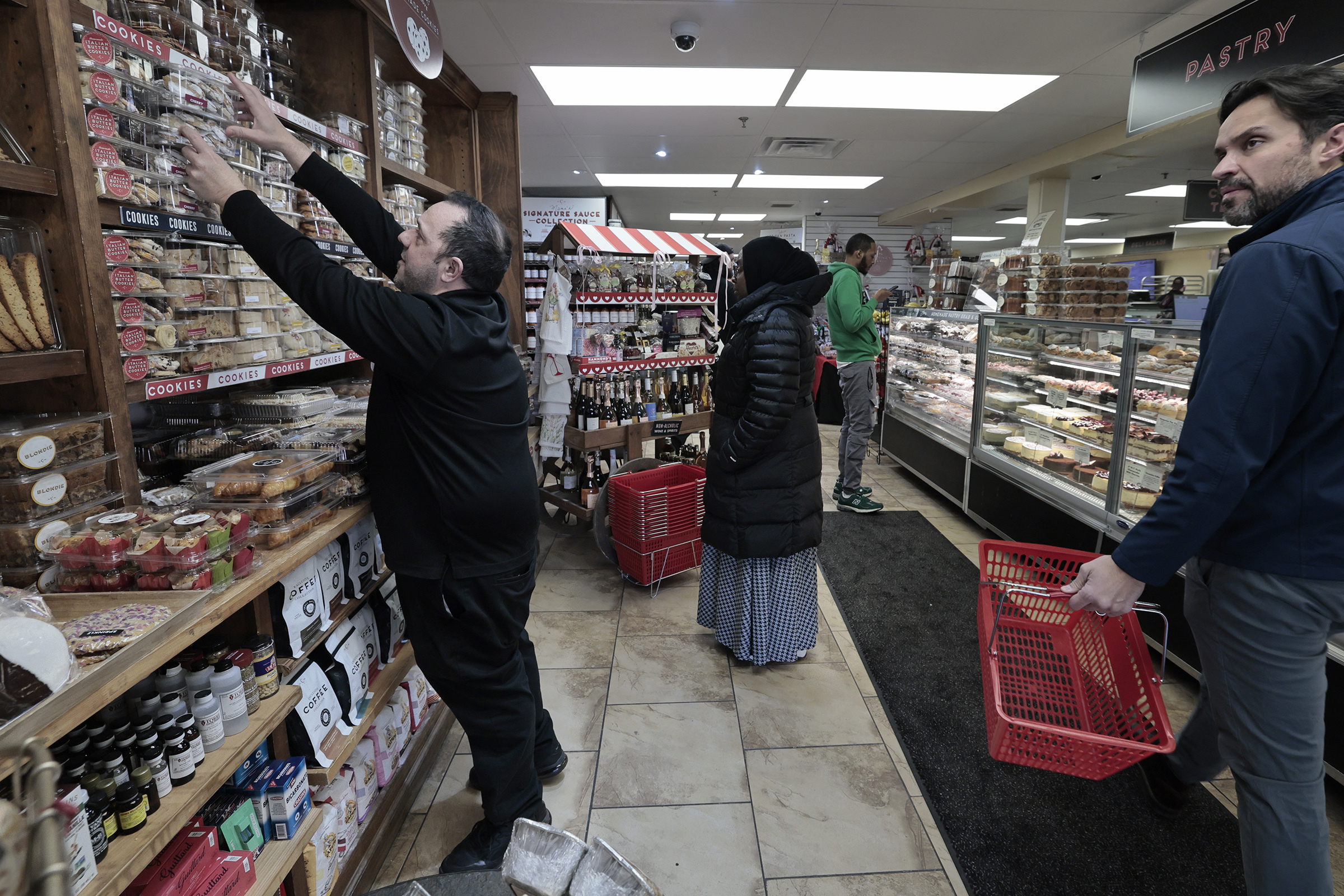
    On the day before Valentine’s Day, shoppers at Carlino’s Market on County Line Road tucked heart-shaped macarons and chocolate-dipped cannoli into baskets already full with marinara sauce, freshly packed chicken cutlets, and imported cheese. Regulars stopped by for their pre-weekend deli orders, and shoppers took refuge from the cold amid aisles of dried pasta and prepared foods.

    Carlino’s is an Ardmore institution, founded in 1983 as a small, family-owned pasta shop serving Lower Merion’s Italian community. In the decades since, the market has grown into a suburban powerhouse, supplying Ardmore, West Chester, and the surrounding towns with prepared foods, baked goods, and high-end groceries seven days a week.

    The Carlino’s brand has started to transcend its Ardmore roots: In recent years, the family-run operation has expanded its wholesale business to hundreds of grocery stores, from New York to Delaware and as far as Texas. Even as the company grows, its second- and third-generation leaders remain grounded in its origins as a mom-and-pop shop.

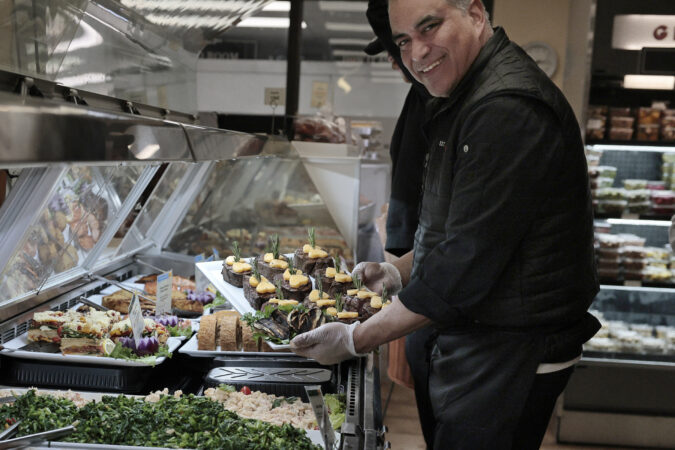
    Carlino’s Market general manger Bruno DiNardo (left) restocks cookies, pastries and treats, all homemade, at Carlino’s Market in Ardmore on Friday, Feb. 13, 2026.

    From Abruzzo to Ardmore

    Carlino’s was founded by Nicola and Angela Carlino, who left Abruzzo in 1968 to move to the United States with their two sons, Pasquale (“Pat”) and Carmen. In Abruzzo, the Carlinos tended to olive groves and grape vineyards and raised livestock on Nicola’s family farm. They left in search of better opportunities for their sons, landing in Ardmore, where Nicola initially worked as a bus driver and groundskeeper at Mitchell Prep, a private school, while Angela sold cookies, fresh pastas, and sauces out of their home.

    When Mitchell Prep closed in the early 1980s, Nicola and Angela decided to take a chance on a family business. They opened Carlino’s Homemade Pasta in a former barbershop on East County Line Road in South Ardmore — at the time, an Italian American enclave. Residents in search of a taste of home regularly patronized Carlino’s, and the family started wholesaling some products to local restaurants and casinos.

    According to Pat Carlino, 63, now the company’s CEO, it’s easy to take the Philly area’s formidable Italian-food scene for granted. But when his parents opened Carlino’s in the 1980s, Pat said, you could barely find marinara sauce in the grocery store. No one knew what tiramisu was, or how to tell the difference between high-quality Parmigiano Reggiano and grocery-store sprinkle cheese. Mention of ciabatta would prompt blank stares.

    Carlino’s was “an education to the public,” he said.

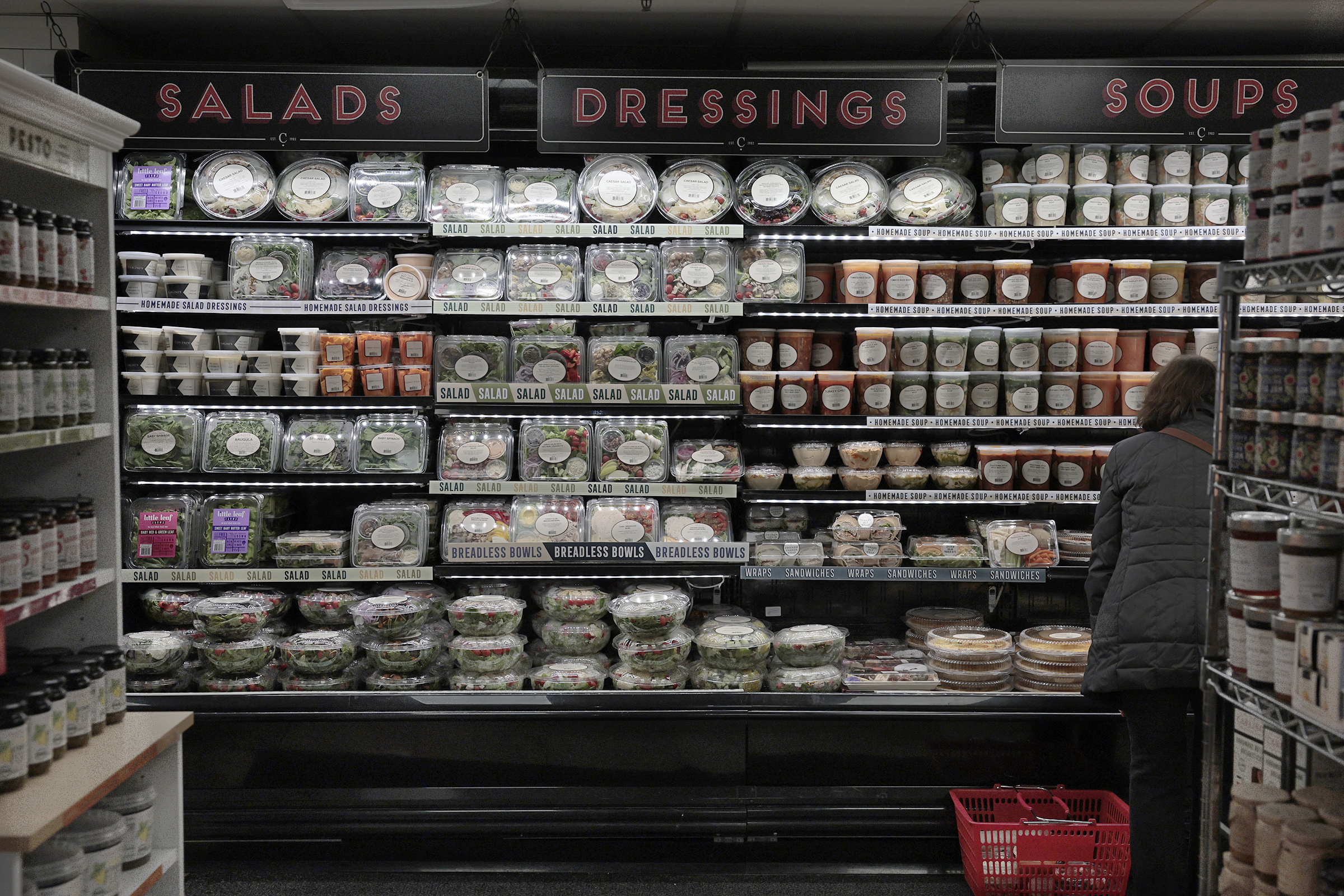
    Customers look over some of the homemade soups, salads and ready to go meals available at Carlino’s Market in Ardmore on Friday, Feb. 13, 2026.

    As time went on, the store expanded, subsuming other houses on its block, and shifted to a retail focus. The family renamed it Carlino’s Market and expanded offerings to include baked goods, pizza, sandwiches and wraps, imported meats and cheeses, and groceries like sauces, olive oils, and coffee. By the mid-1990s, Carlino’s selection and specialties — handmade ravioli, freshly stuffed sausage, garden-grown bruschetta on house-baked bread, tiramisu cake, and more — attracted savvy customers from as far as New York City and Washington, D.C.

    A growing business

    The Carlinos opened a second market, on Market Street in West Chester, in 2007. Angela, aka “Mama Carlino,” died two days after the second store opened. (Many of Mama Carlino’s recipes, the backbone of market’s origin story, have been recorded in two cookbooks, including a 2023 volume compiled and written by granddaughter Nadia Carlino.) Nicola Carlino died in 2020.

    In 2022, Carlino’s began wholesaling its sauces, dry pastas, and pestos — which you can now find at other small, local retailers like Riverwards Produce and Kimberton Whole Foods, as well as large grocery chains like Wegmans and Giant. Carlino’s products are available in parts of Pennsylvania, Delaware, New Jersey, Maryland, Virginia, Washington, D.C., Florida, Texas, New York, and Massachusetts, and will soon be on shelves in California and the Chicago area.

    Pat declined to share specifics about the company’s business model, though he said future growth will be in wholesaling and the grocery market, not retail. (Many former patrons of Di Bruno’s now-shuttered suburban outposts said the company grew its retail presence too hastily, diminishing its quality).

    While Carlino’s business is growing, Pat said his core customers are still people he knows “people that I grew up with.”

    Carlino’s also remains a family operation. Pat and his wife, Laura, are the company’s top executives, and their children — now the third generation of Main Line Carlinos — help manage marketing, wholesaling, importing, and manufacturing.

    Talking about Carlino’s products, a word Pat comes back to regularly is “clean.”

    Before influencers and foodies popularized the idea of “clean eating,” Carlino’s was doing it, Pat said. Nicola cooked with fresh tomatoes, cucumbers, and herbs he grew in his Ardmore garden. Pat said Carlino’s continues to rely on fresh produce, organic flour, and high-quality olive oil and French butter.

    “Things that are trending now, we were doing 40 years ago,” Pat said.

    “You can pick up anything and it’s clean,” he added, just like how your grandma would make it (or at least how a Carlino grandma would).

    This suburban content is produced with support from the Leslie Miller and Richard Worley Foundation and The Lenfest Institute for Journalism. Editorial content is created independently of the project donors. Gifts to support The Inquirer’s high-impact journalism can be made at inquirer.com/donate. A list of Lenfest Institute donors can be found at lenfestinstitute.org/supporters.
  • Ranking the 2026 NFL draft position groups, and what that means for the Eagles

    Ranking the 2026 NFL draft position groups, and what that means for the Eagles

    Next week, 319 college football prospects will descend on Indianapolis for the annual NFL scouting combine, where they will be tested physically, mentally, and medically, interviewed by NFL front office personnel, and will speak with hundreds of media members.

    This latest step in the 2026 NFL draft process allows teams to home in on the next crop of players that will fill their franchises. All 32 teams will have 45 “formal interviews,” which last just under 20 minutes, can include watching film or any questions teams want to ask a prospect, and typically take place in the Lucas Oil Stadium suites.

    The first direct touch point with prospects happened at last month’s Shrine and Senior Bowl games. NFL teams will utilize this next piece of the puzzle to identify which prospects match their team needs.

    Here is how we’re ranking the combine position groups from strongest to weakest — and how they could help the Eagles address some roster needs.

    Ohio State cornerback Davison Igbinosun (1) is a potential target for the Eagles beyond the first round.

    1. Cornerbacks

    It’s a good year to add a secondary player, whether they play outside corner, nickel, or safety. But outside and boundary corners, specifically, will be plentiful from the first round to Day 3 of the draft.

    This is a position the Eagles could address early, but not one that will likely be prioritized in the first round. Among the early projected draft picks at the position are LSU’s Mansoor Delane, Tennessee’s Jermod McCoy and Colton Hood, Clemson’s Avieon Terrell, and South Carolina’s Brandon Cisse.

    Finding a corner to develop into a starter opposite of Quinyon Mitchell — assuming they don’t bring back Adoree’ Jackson, who is set to be a free agent — should be among the Eagles’ objectives. Keep an eye on San Diego State’s Chris Johnson, Ohio State’s Davison Igbinosun, Arkansas’ Julian Neal, Georgia’s Daylen Everette, and Texas A&M’s Will Lee as players who could interest the Eagles.

    Ole Miss wideout Harrison Wallace III (2) could be a depth or slot option for the Eagles.

    2. Wide receivers

    There is always a healthy stable of receivers entering the draft, and 2026 is no different. The Eagles, of course, won’t be drafting a wide receiver early — unless they trade A.J. Brown before the draft — but they will need to add more depth to the room regardless.

    The top of the class is led by Ohio State’s Carnell Tate, Arizona State’s Jordyn Tyson, and USC’s Makai Lemon, but the receivers heading to the combine feature several skill sets.

    The Eagles’ WR3 spot is a potential question mark heading into next season with Jahan Dotson heading into free agency. Players like Ole Miss’ Harrison Wallace, Baylor’s Josh Cameron, Georgia Tech’s Eric Rivers, and Clemson’s Antonio Williams are players to keep an eye on that can occupy either a slot role or have moved around the formation in their collegiate careers and could fit in a depth role for the Eagles.

    Would Penn State defensive end Dani Dennis-Sutton (33) be a fit for the Eagles’ pass rushing group?

    3. Edge rushers

    There is an abundance of edge rushers worth drafting in this class, with Miami’s Rueben Bain, Texas Tech’s David Bailey, and Auburn’s Keldric Faulk as the top names. With Jaelan Phillips and Azeez Ojulari set to become free agents and Brandon Graham’s status unknown for 2026, the Eagles’ edge rusher room desperately needs more depth.

    The versatile edge rusher types might interest the Eagles more in this class, though, to complement the relatively light-body types in the edge rusher room currently. Alabama’s LT Overton, Florida’s Tyreak Sapp, and Penn State’s Dani Dennis-Sutton are all players who are bigger in size and have the ability to play from three-techniques out to true pass rusher alignments.

    As for developmental pass rushers, keep an eye on Michigan’s Jaishawn Barham, Western Michigan’s Nadame Tucker, and Boston College’s Quintayvious Hutchins as late Day 2 and early Day 3 options as pure pass rushers.

    Christen Miller (52) is another Athens-to-South Philly possibility for the Eagles.

    4. Interior D-line

    As the Eagles and Seattle Seahawks proved in the last two Super Bowls, an interior pass rush presence matters a whole lot, and the NFL has a deep group of prospects to choose from in this class.

    There are run stuffer types such as Texas Tech’s Lee Hunter, Ohio State’s Kayden McDonald, Iowa State’s Domonique Orange, and Georgia’s Christen Miller, and twitchy pass rushers including Clemson’s Peter Woods and Florida’s Caleb Banks.

    Jalen Carter and Jordan Davis could soon get extensions from the Eagles, but adding more bodies to have a deeper rotation and talent level in the room would only help keep those players fresh. Michigan’s Rayshaun Benny, Missouri’s Chris McClellan, and Texas A&M’s Tyler Onyedim are a few Day 2 and 3 options to keep tabs on.

    Eric Gentry is a local product who might be of interest to the Eagles.

    5. Linebackers

    The Eagles linebacker room became a strength of the defense over the last few seasons and they won’t need to expend an early-round pick on one. But this class has three first-round caliber players at the position: Ohio State’s Arvell Reese and Sonny Styles and Georgia’s CJ Allen.

    The Eagles could lose Nakobe Dean to free agency this offseason, but still have Jihaad Campbell and Zack Baun penciled in as starters. There are two players in this class with Philly-area ties: USC’s Eric Gentry, the former Neumann Goretti standout, and Missouri’s Josiah Trotter, the younger brother of Jeremiah Trotter Jr. Josiah Trotter and Gentry are both expected to get drafted.

    North Carolina State tight end Justin Joly (7) could be an intriguing target for the Eagles.

    6. Tight ends

    Put a big circle around this group, because tight end is one of the pressing needs for the Eagles. Dallas Goedert, Grant Calcaterra, and Kylen Granson are all set to be free agents, and regardless of whether any of those players return, the room needs more talent in it.

    Oregon’s Kenyon Sadiq is at the top of the class, and likely the only tight end to go in Round 1. But this class is strong on Day 2 and 3.

    Ohio State’s Max Klare, NC State’s Justin Joly, Georgia’s Oscar Delp, and Baylor’s Michael Trigg are all receiving tight end prospects worth taking on Day 2. Players who can thrive in-line as blockers and have some receiving chops as well include Ohio State’s Will Kacmarek, Penn State’s Khalil Dinkins, Texas A&M’s Nate Boerkircher, and Indiana’s Riley Nowakowski, who can also play fullback.

    Other later names, including Utah’s Dallen Bentley, Ole Miss’ Dae’Quan Wright, and Stanford’s Sam Roush are developmental options on Day 3 and could fill roles as second or third options in multi-tight end formations.

    Could Xavier Nwankpa (1) join Cooper DeJean as another ex-Hawkeye in the Eagles secondary?

    7. Safeties

    This is a position that probably needs more attention than it generally gets, considering Reed Blankenship and Marcus Epps are soon-to-be free agents. Drew Mukuba and Sydney Brown are the only players under contract for next season who have taken significant snaps at the position.

    This is a strong safety class, led by Ohio State’s Caleb Downs, who is also one of the best players in the draft class. Quinyon Mitchell’s alma mater, Toledo, has another early-round pick in Emmanuel McNeil-Warren, and there are plenty of coverage specialists such as USC’s Kamari Ramsey, LSU’s A.J. Haulcy, and Arizona’s Genesis Smith.

    Since Blankenship played more near the line of scrimmage, the Eagles could be looking to pair that skill set with Mukuba, and players including Penn State’s Zakee Wheatley, Oregon’s Dillon Thieneman, and Iowa’s Xavier Nwankpa fit the bill.

    Kadyn Proctor (74) is generating buzz as a possibility along the Birds’ offensive line.

    8. Offensive linemen

    This is the spot the Eagles need to upgrade most heading into next season, yet it’s among the weakest groups in this class in terms of starting caliber players. Still, there are players that will interest the Eagles.
    The player most commonly linked to the Birds is Alabama’s Kadyn Proctor, a massive offensive lineman with unique athleticism at 6-foot-7, 366 pounds. Is he a tackle or guard? That debate could get settled at the combine next week.

    The other top offensive linemen are Utah’s Spencer Fano and Caleb Lomu and Miami’s Francis Mauigoa. Fano and Mauigoa are also players that could move to the interior at the NFL level. Georgia’s Monroe Freeling, Arizona State’s Max Iheanachor, and Clemson’s Blake Miller are the next group of fringe first-round players who will strictly be tackles in the NFL and could serve as potential heirs to Lane Johnson whenever he retires.

    As for interior offensive line, Penn State’s Olaivavega Ioane is the only true guard prospect that is Round 1 worthy. The Day 2 prospects like Texas A&M’s Chase Bisontis, Oregon’s Emmanuel Pregnon, Georgia Tech’s Keylan Rutledge, and Notre Dame’s drop-off could be players the Eagles have interest in, especially with Landon Dickerson’s uncertain future.

    The overall O-line class has a steep drop-off after the starting-caliber players, so if the Eagles want one, they’ll need to draft one early.

    9. Running backs

    The Eagles seem set at the running back position for now with Saquon Barkley, Tank Bigsby, and Will Shipley. A quick glance at the running back invites at the combine shows a relatively limited group to pick from.

    There’s only one running back right now that has first-round consideration, and that’s Notre Dame’s Jeremiyah Love. Beyond him, the next running back could wait a full one or two rounds before hearing their name called in the 2026 draft.

    Illinois quarterback Luke Altmyer is a potential developmental QB the Eagles might evaluate.

    10. Quarterbacks

    As we alluded to in the All-Star game takeaways, this is not a strong quarterback class and it’s reflected in the number of combine invites. Indiana’s Fernando Mendoza is the projected top pick, but beyond him, the class is wide open. Alabama’s Ty Simpson could go in Round 1, but the gap between the second and third quarterback taken in this class could be very wide.

    The class overall lacks starting caliber players, and the sweet spot of the class is likely between Rounds 3-6. The Eagles could draft one to develop since Sam Howell is a free agent and Tanner McKee could move on over the next year via trade or free agency.

    Some players attending the combine that could make sense for the Eagles include Kansas’ Jalon Daniels, Arkansas’ Taylen Green, and Illinois’ Luke Altmyer.

  • Modern designs and mid-century touches live side-by-side in this renovated Lambertville home

    Modern designs and mid-century touches live side-by-side in this renovated Lambertville home

    As their family grew, Lauren Braun-Strumfels and Kyle Strumfels felt the walls of their 1895 rowhouse in Lambertville, N.J., closing in on them. With two kids, the 16-foot wide, one-bathroom house left a lot to be desired.

    They pined after the neighboring standalone house built in the 1970s, an abnormality for the Victorian-era town that attracts antiques lovers to Hunterdon County year-round. Even though maintenance had been deferred for decades, the house sat on an unusually roomy lot for the dense, walkable downtown. The couple, unafraid of a renovation, had a vision for what it could become.

    But creating the California modern-inspired ranch house they live in today was not nearly as straightforward. First, buying the house proved challenging.

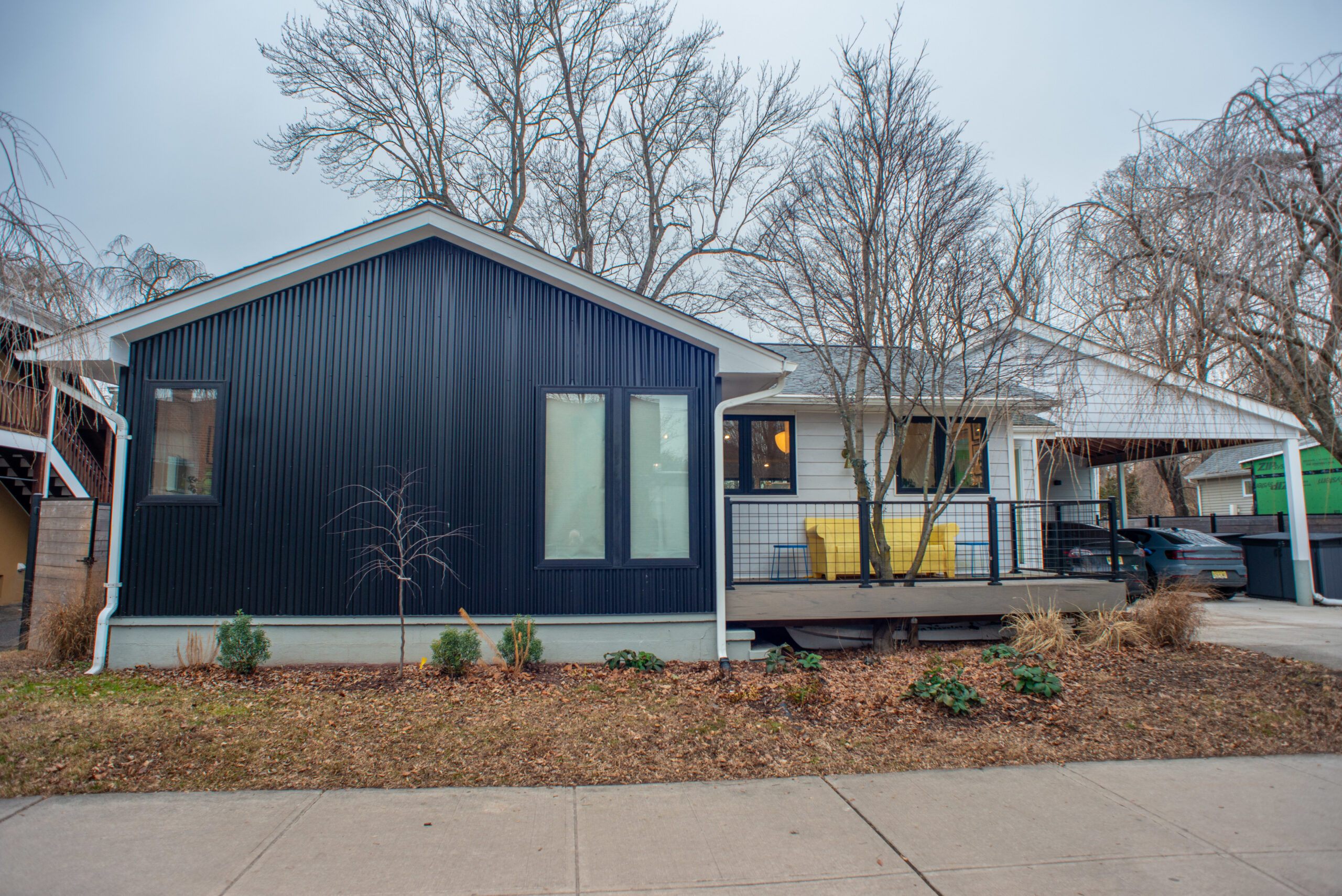
    The exterior of Kyle Strumfels and Lauren Braun-Strumfels’ home in Lambertville, N.J.

    “When we finally got to the table and signed the deal, [the seller’s] lawyer said, ‘I thought she was gonna go breach of contract, like, three times!’” Braun-Strumfels, 46, said. The couple felt it on their end, too, as they helped guide their neighbor through the sale. “It was very stressful and very intense.”

    They closed for $290,000 in August 2017. The young family moved into the two-bedroom house on Feb. 4, 2018, the day the Eagles won the Super Bowl, recalled Strumfels, 47. Their two kids, now 12 and 9, shared one room while the couple had the other. Everything needed updating.

    “With the rowhouse, there were certain things that we just wouldn’t want to do to it, historically, to preserve the character,” Braun-Strumfels said. “This house was a total blank slate. It was neither historic nor attractive, so we felt like we could really transform it.”

    In the first of their two major renovations, they funneled $150,000 into moving the kitchen to the front of the house, bumping the back wall of the house out to add more living space, and adding a Jack-and-Jill bathroom connecting the two original bedrooms on top of less exciting but no less important mechanical upgrades. They lived that way for a few years but always knew there was more work to do.

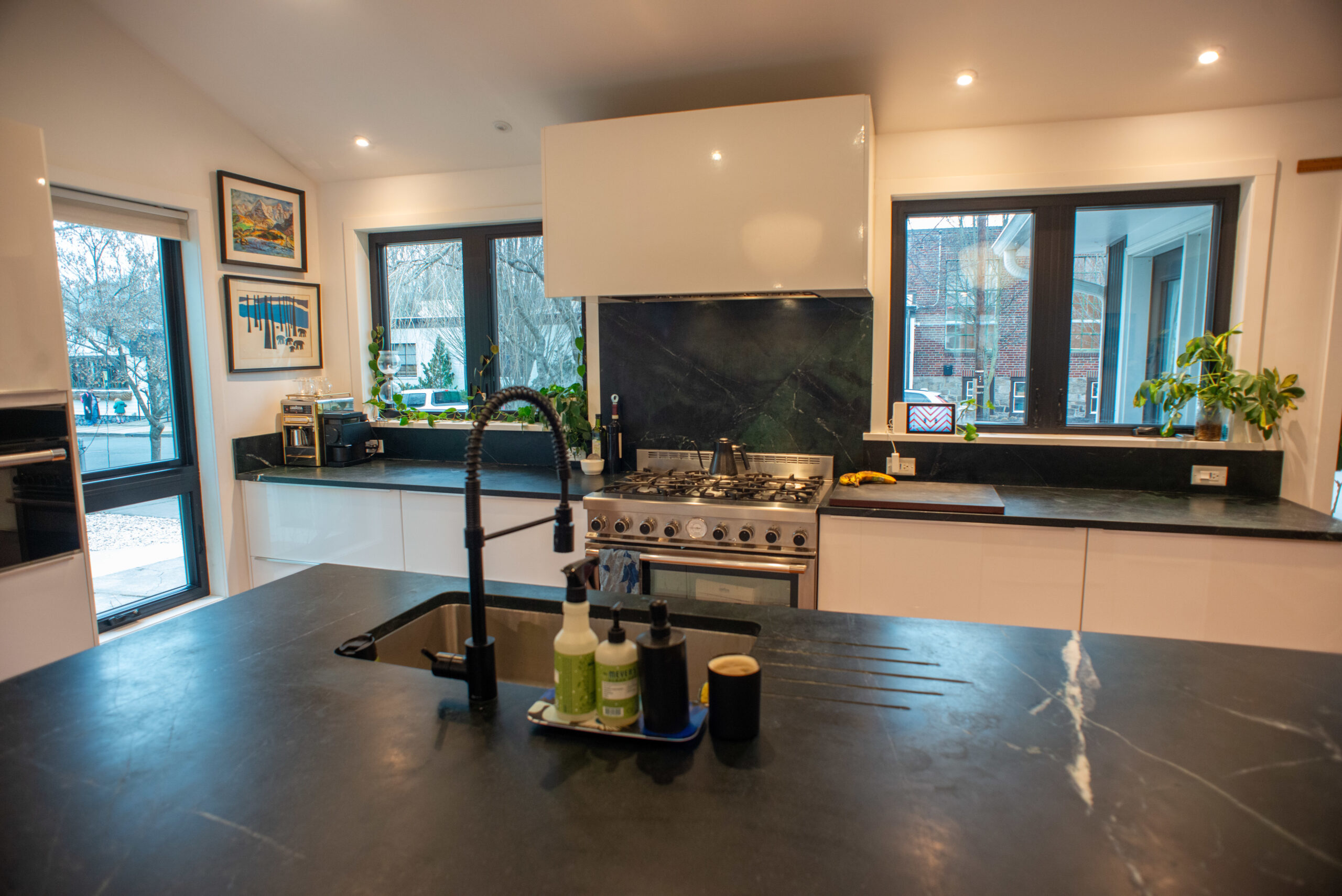
    The kitchen, which was relocated in the first round of renovations.
    The main bathroom.

    The second renovation didn’t go quite as smoothly.

    The couple began pursuing a $300,000 construction loan in 2018 that didn’t close until 2020, thanks to a zoning snafu. The amount was intended to leave a nice cushion for finishing details, but by the time the loan was theirs, the pandemic had driven up lumber costs and “our whole budget got eaten by two-by-fours,” Braun-Strumfels said. Their tile budget was whittled down to about $1 per square foot in the bathrooms, meaning Braun-Strumfels had to let go of her plans for elaborate tile and countertops.

    They also had to part with one architect who didn’t quite get the couple’s vision. They then hired Princeton-based architect Peter Wasem.

    The hallway near the entrance features a large painting that contrasts with the green front door.

    Ultimately the renovation added 1,000 square feet for a new entry as well as what they call an “adult wing,” with a walk-in closet that leads to an en suite bathroom. Through a stroke of smart design, the en suite’s water closet doubles as a powder room, creating a circular flow through the wing.

    Coming from their rowhouse, which only had two exposures, it was important to Braun-Strumfels and Strumfels to take advantage of the roomy lot’s natural light. The primary bedroom is lined in windows — with a partial view of their old property. Their living room addition also has a large window overlooking the backyard.

    The primary bedroom has two-story windows, high ceilings, and a living space.

    The original front porch was enclosed to become a shared office for Braun-Strumfels, an associate professor of history at Cedar Crest College, and Strumfels, a senior vice president of ESG and climate at Macquarie Group. A new carport gives the house a distinctly mid-century touch.

    The result of the renovations is an open-concept house where the couple’s eclectic furniture, wares, and finishes can live in harmony. Their collection of mid-century furniture and wares from local joints like Rago Auctions coexists with original art, including Strumfels’ favorite piece from Philadelphia’s Material Culture. And that’s on a backdrop of modern finishes like sleek soapstone countertops and Herman Miller pendant lighting over the oversized kitchen island.

    “Sometimes I wondered if people would be mad we stuck a modern house in the middle of this town, but people seem to really like it,” Strumfels said. Folks in the area can be very resistant to change, Strumfels said, but “we get a lot of nice feedback.”

    Mid-century furniture and original art coexist in an eclectically decorated home.

    They have no plans to move, but Braun-Strumfels said they do harbor a hope of someday returning to Philadelphia, where they lived for a year before moving to Lambertville.

    Paintings hang on the wall.
    One of the children’s bedrooms.

    “We have our little pipe dream that we might retire eventually, get a little spot in the city, go back and forth,” she said.

    But for now, they’re finally perfectly at home.

    Is your house a Haven? Nominate your home by email (and send some digital photographs) at properties@inquirer.com.

  • Sue Altman was thrown out of a hearing as a critic of George Norcross. Six years later, she’s running for Congress

    Sue Altman was thrown out of a hearing as a critic of George Norcross. Six years later, she’s running for Congress

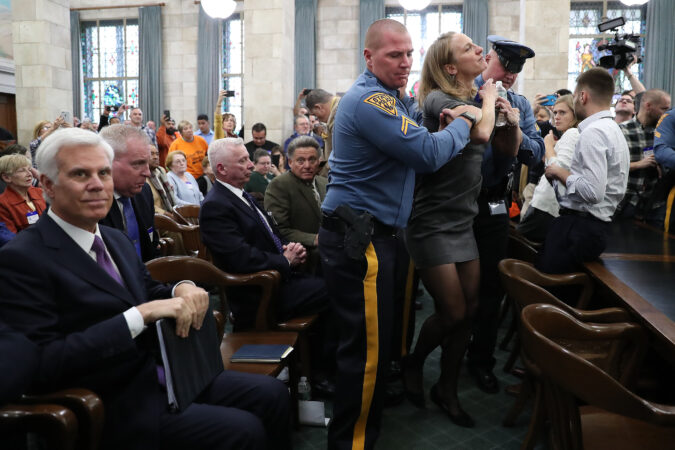
    Sue Altman showed up at a state Senate hearing in late 2019 to confront George E. Norcross III and was dragged out by state troopers. Six years later, she is using that incident as an example of why New Jersey voters should send her to Congress.
    “If anything can prepare you for a dogfight that Washington politics is, it’s Jersey politics,” said Altman, one of more than 15 Democrats vying to succeed retiring U.S. Rep. Bonnie Watson Coleman in a reliably blue Central Jersey seat.

    Altman, 43, recently resigned after serving for the last year as state director for U.S. Sen. Andy Kim, a South Jersey Democrat who has also challenged the state’s machine politics. Before that role, she unsuccessfully ran for Congress in 2024 in a swing district that borders Coleman’s district.

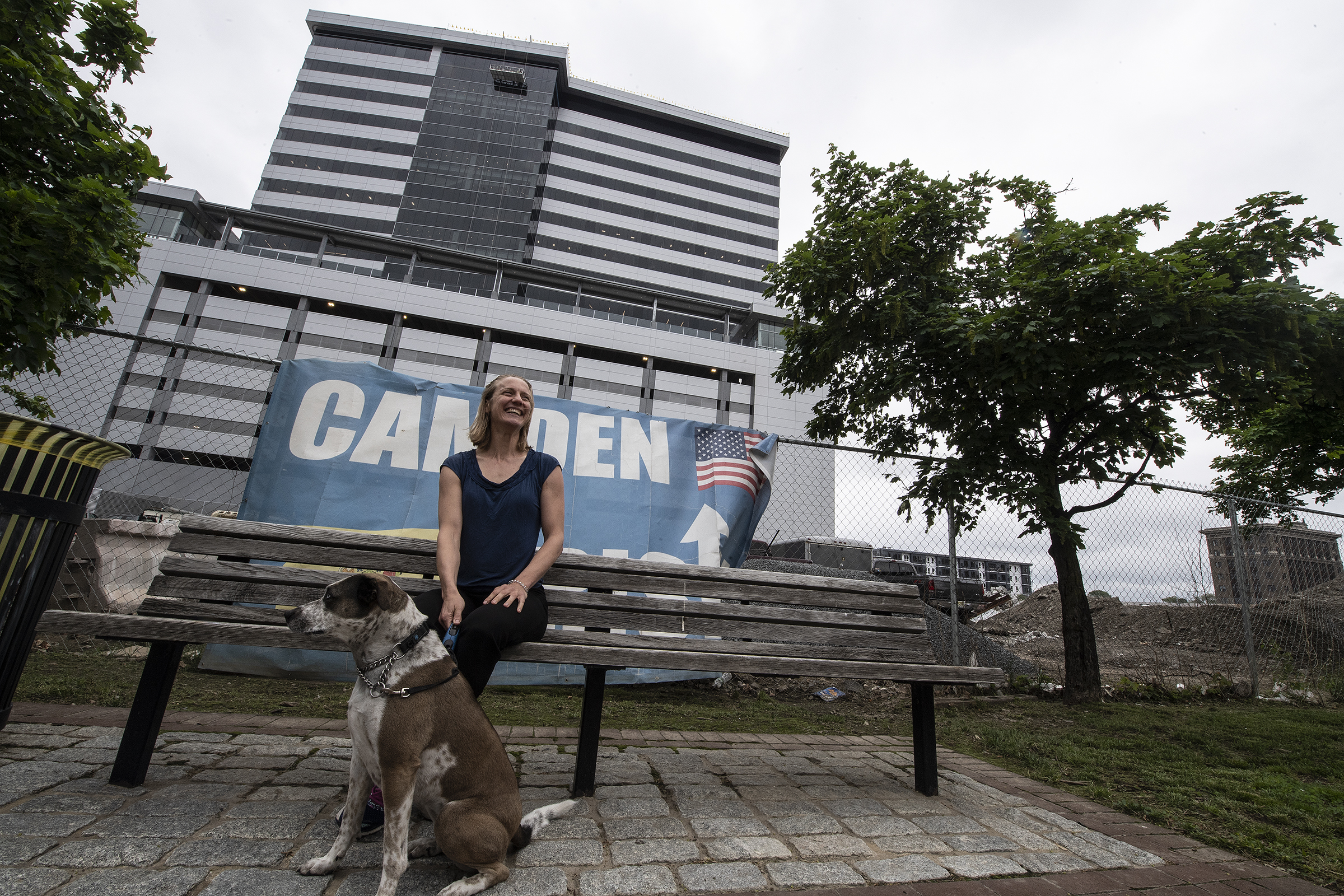
    She made a name for herself as a progressive activist in Camden, where she fought former Republican Gov. Chris Christie as the state began its takeover of the city’s public schools, vocally criticized power brokers like Norcross, and led a legal effort to abolish the county line from New Jersey ballots before Kim took it to the finish line in 2024.

    “My time in Camden was extremely important, and in many ways shapes the work that I did in the state from that point forward,” she said.

    While Altman built her progressive credentials in Camden, she has most recently lived in Lambertville and will be relocating northeast to Bridgewater to move in with her long-term boyfriend, who lives just outside the district’s boundaries.

    “I think what the electorate is hungry for and what the party needs are people who are going to challenge power,” she said. “I’ve done that my whole career.”

    Altman, who grew up in Central Jersey, played professional basketball in Ireland and Germany after graduating from Columbia University. She earned two master’s degrees from Oxford University before landing in Camden in 2014.

    She garnered attention in the city for going back and forth with Christie for roughly six minutes at a public meeting in which they tossed a microphone in the air to each other.

    After Donald Trump’s first election as president in 2016, Altman helped organize South Jersey Women for Progressive Change, a group that campaigned for Kim’s 2018 election to the U.S. House and spoke out against machine politics. She said she continued that work as she took the reins as executive director of the state’s Working Families Party in 2019 from Analilia Mejia — the progressive who recently won Democratic primary to replace Gov. Mikie Sherrill in Congress.

    Sue Altman at the Camden Waterfront in 2019.

    Altman drew national attention that year after she was dragged out of the hearing in Trenton on a corporate tax incentive program Norcross defended, drawing a message of support from U.S. Sen. Elizabeth Warren (D., Mass.). Activists used images of the incident to bolster their argument that unelected power brokers like Norcross hold outsize influence in New Jersey, though Norcross later said he did not believe she should have been thrown out.

    Camden Mayor Vic Carstarphen, a Democrat, criticized Altman for what he called her “singular focus” on “trying to tear down” Norcross during her time in Camden for her own “self-promotion.”

    “She created a lot of chaos in the city, and ran amok throughout the city,” Carstarphen said Tuesday.

    In 2021, Altman led the legal strategy in the first major lawsuit against the county line, the old ballot that was advantageous to party-endorsed candidates. The fall of the line has led to more competitive primaries, including her own.

    She went on to unsuccessfully challenge incumbent Republican U.S. Rep. Tom Kean Jr., losing by more than five percentage points in 2024.

    Altman said dealing with immigration cases while working in Kim’s office partially inspired her to run again. She said Democrats should replace U.S. Immigration and Customs Enforcement with “full comprehensive immigration reform” while also securing the border.

    Neither Kim nor the Working Families Party has weighed in on the race.

    Altman warns that the country is at “one of the most vulnerable points” in its history with Trump in office for a second time.

    “We have a very short window of time to prove to the rest of the country that Democrats in power can deliver for people and hold Trump accountable, but not get overwrought with the politics of it,” she said.