Blog

  • Scientists are inventing treatments for devastating diseases. There’s just one problem.

    Scientists are inventing treatments for devastating diseases. There’s just one problem.

    This past spring, a biotech company announced the first use of a new gene-editing technology in people to fix an errant gene that causes a severe immune disorder. In June, a baby born with a life-threatening metabolic disorder was allowed to leave the hospital after a six-month sprint by scientists to create a bespoke treatment for him. And increasingly, a generation of “bubble babies” born without immune defenses are nearing their teenage years after receiving a one-time experimental gene therapy in early childhood.

    Therapies that target genetic illnesses at their root are no longer on the horizon. They are here. More are coming. But even as a growing suite of gene therapy tools are changing individual patients’ lives, many are getting stuck in a medical purgatory because they don’t fit the model for turning breakthroughs into accessible treatments.

    Donald Kohn, a pediatric bone marrow transplant physician at the University of California at Los Angeles, has successfully rebuilt children’s immune systems with gene therapy in the clinic for over a decade, but it has not yet become a medicine.

    “There are several dozen rare diseases in a similar situation, where there is a therapy that looks good in academic clinical trials. But getting to the end zone of an approved drug is very challenging,” Kohn said.

    The potential public health impact may appear small individually, but it is massive collectively. Rare diseases are estimated to afflict 300 million people globally, and around 70% of them trace to genetic causes.

    Typically, drug development is a relay race. Academic labs, backed by federal funding, often do the early, basic research. Companies run the next leg to turn those insights into drugs. While scientists can now utilize an expanding arsenal of gene therapy technologies to start the race against potentially thousands of diseases, finding someone to pick up the baton is challenging when any individual therapy may help a handful of patients ― or even just one.

    That limbo has led scientists to experiment with new business models and more efficient ways of testing new therapies to fill a market gap. They are building biotech companies that don’t rely on maximizing profits, launching nonprofits, and fashioning new kinds of clinical trials. The Trump administration has also weighed in to help.

    In November, the Food and Drug Administration outlined a path forward for getting certain treatments of rare diseases with a clear biological cause to market.

    “Unfortunately, FDA has heard from patients, parents, researchers, clinicians, and developers, that current regulations are onerous, unnecessarily demanding, provide unclear patient protection, and stifle innovation. We share this view,” top FDA officials wrote in the New England Journal of Medicine. “Nearly 30 years after the sequencing of the human genome, bespoke therapies are close to reality.”

    Lifesaving cures that ‘ebb and flow’

    For several decades, scientists have tried to use cell and gene therapies to fix illnesses at their roots. A few dozen have been approved for diseases, such as sickle cell anemia and spinal muscular atrophy. Even as new tools have expanded this potential over the last decade, risks also exist. Patients have died after receiving gene therapies, showing the tension between encouraging innovation and guarding patient safety.

    Perhaps no case highlights the opportunity — and the challenge — better than an experimental gene therapy designed to rebuild the immune systems of babies who were born without one. The disease, called severe combined immunodeficiency (SCID), has more than a dozen different genetic causes, but the same result: Babies are born without immune defenses.

    The condition is rare, affecting 40 to 80 children in the United States each year, but was popularized by the story of David Vetter, featured in the 1976 movie The Boy in the Plastic Bubble.

    In 2014, Jeffrey and Caroline Nachem’s newborn daughter, Eliana, developed a cough that wouldn’t go away. A blood test delivered a shocking result — a white blood cell count so low that the doctor ordered it to be run again, thinking it might be a fluke.

    It wasn’t. The Nachems learned their daughter had a subtype called adenosine deaminase deficiency-SCID (ADA-SCID). They lived in Fredericksburg, Va., near the woods, but couldn’t open the windows because mold spores could float in. They found new homes for their pets. They wiped down every surface and changed clothes after coming home from the outside world, to protect Eliana from germs.

    With a matched bone marrow transplant, the disease can be effectively treated, but the best option is from a sibling, and Eliana was the Nachem’s first child. Scientists had been developing gene therapies that turn a patient’s own cells into a possible cure, requiring a lower dose of chemotherapy and fewer immune-related complications.

    Researchers remove bone marrow cells, use a harmless virus to insert a corrected version of the ADA gene, and then reinfuse the cells. At 10 months old, Eliana received an experimental gene therapy — and it worked. As her immune system rebuilt itself, doctors gave her parents the clearance to give her a kiss or bring her outside. When she was 18 months, the Nachems pushed her around in a shopping cart at the grocery store.

    In a recent study in the New England Journal of Medicine, Kohn and colleagues reported the long-term follow-up of 62 children with ADA-SCID who were treated with a one-time gene therapy, including Eliana. Nearly all of them have had their immune systems fully rebuilt, going strong after an average of nearly eight years.

    Eliana is now in sixth grade. “She is incredible. She has attitude, she is artistic, she is the commander of the world. Nothing gets in her way,” Caroline Nachem said.

    The therapy, however, has been stuck.

    A biotechnology company, Orchard Therapeutics launched a plan to develop the therapy in 2016, but stopped investing in it a few years later. Orchard returned the therapy to its academic inventors in 2022.

    Researchers in Kohn’s lab spun out Rarity Public Benefit Corporation to turn it into a medicine. Now the bottleneck is developing the commercial manufacturing.

    “I saw the ebb and flow of this therapy,” said Paul Ayoub, chief executive of Rarity. “The therapies work, but they stop at this academic stage … We wanted to put it in our own hands — take the proven science to the finish line.”

    Meanwhile, families are waiting. Maria Thianthong, who lives in Los Angeles, is one of them. Her 3-year-old daughter, Eliyah, has been on the waiting list for the therapy since birth. Children with this form of SCID can live with injections of a replacement enzyme therapy, though it is considered a stopgap.

    “Three years is a lot of time for them to figure out something with the funding,” Maria said. “We’re just a little impatient.”

    A new era of ‘genetic surgery’

    For scientists, the SCID example is a gold standard, but also a cautionary tale.

    Cardiologist Kiran Musunuru and pediatric geneticist Rebecca Ahrens-Nicklas hold KJ Muldoon after he received an infusion of a drug custom-made for him. MUST CREDIT: Children’s Hospital of Philadelphia

    Running a trial with dozens of patients for a decade is a “Herculean effort” said Kiran Musunuru, a cardiologist at the University of Pennsylvania’s Perelman School of Medicine. He hopes that federal rules can be streamlined to speed up the process. Otherwise, many cures may never be made.

    The beauty of modern gene-editing tools, many of which build off the Nobel Prize-winning CRISPR technology, is that cures become programmable. Instead of inventing a new medicine for each disease, scientists in theory can write a bit of code to address a patient’s unique mutation for multiple diseases.

    David Liu, a biochemist at the Broad Institute and one of the field’s leaders, recently showed that a one-size-fits-all therapy could, with a single edit, treat multiple diseases in human cell and mouse models of disease. He’s also working with colleagues to create a nonprofit Center for Genetic Surgery to advance cures “that are not likely to be served by industry anytime soon, because their disease is so rare.”

    A company he co-founded, Prime Medicine, announced promising early results last year in treating two patients with a rare, inherited immune deficiency called chronic granulomatous disease. But it announced that it would deprioritize the program to focus on other diseases.

    The company is continuing to explore possible paths to federal approval with the current data set, rather than treating more patients.

    Paving the way for the future is the case of “Baby KJ” Muldoon, an infant who received a custom gene-editing therapy for a rare metabolic disorder last year at Children’s Hospital of Philadelphia.

    KJ celebrated his first birthday at home this summer, is learning to walk and is meeting developmental milestones. But he is one patient. Other children also suffer from similar disorders, called urea cycle disorders, that are caused by different mutations in multiple different genes. KJ’s treatment team is working on an “umbrella” clinical trial, in which five other children will be treated. They’ll use the same basic approach they used for KJ, but tailor the treatment to different genes and mutations.

    The hope is the evidence, pooled together, could be used to support the treatment’s approval. Musunuru’s team recently published a step-by-step guide to their interactions with regulators in the American Journal of Human Genetics. He and other researchers, who have been encouraged by the FDA’s recent announcement about a new pathway, await more specific guidance on how it would operate.

    “We’re kind of taking the stance, there are many patients like KJ who need therapies now,” Musunuru said. “The clock is ticking and we know we can do it now.”
  • Eagles news: Coaching search reportedly begins with two top targets; Cowboys seek to interview Birds coach

    Eagles news: Coaching search reportedly begins with two top targets; Cowboys seek to interview Birds coach


    // Timestamp 01/14/26 3:18pm

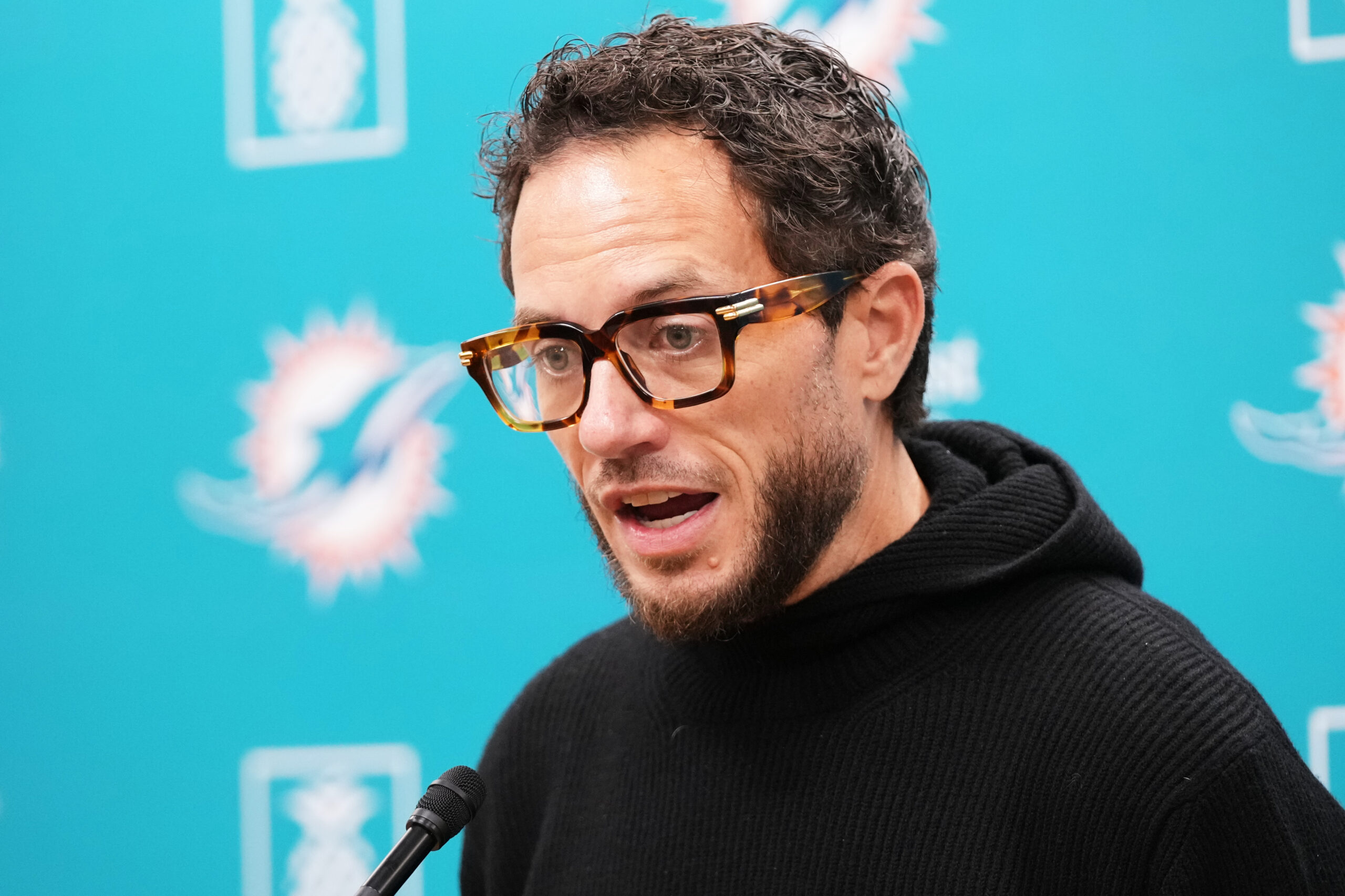
    Mike McDaniel, Brian Daboll top Eagles’ list of candidates: report


    // Timestamp 01/14/26 2:48pm

    Young Eagles fan reacts to Kevin Patullo no longer being offensive coordinator


    // Timestamp 01/14/26 12:30pm

    It doesn’t look like Aaron Rodgers will be back with the Steelers


    // Timestamp 01/14/26 11:45am

    Cowboys request to interview Eagles’ defensive coach: reports

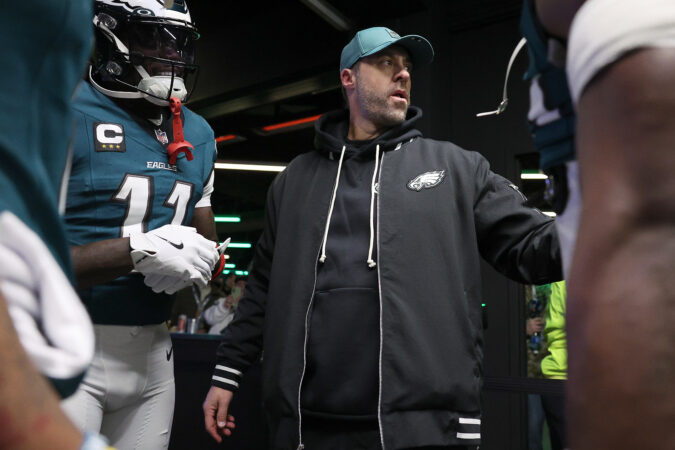
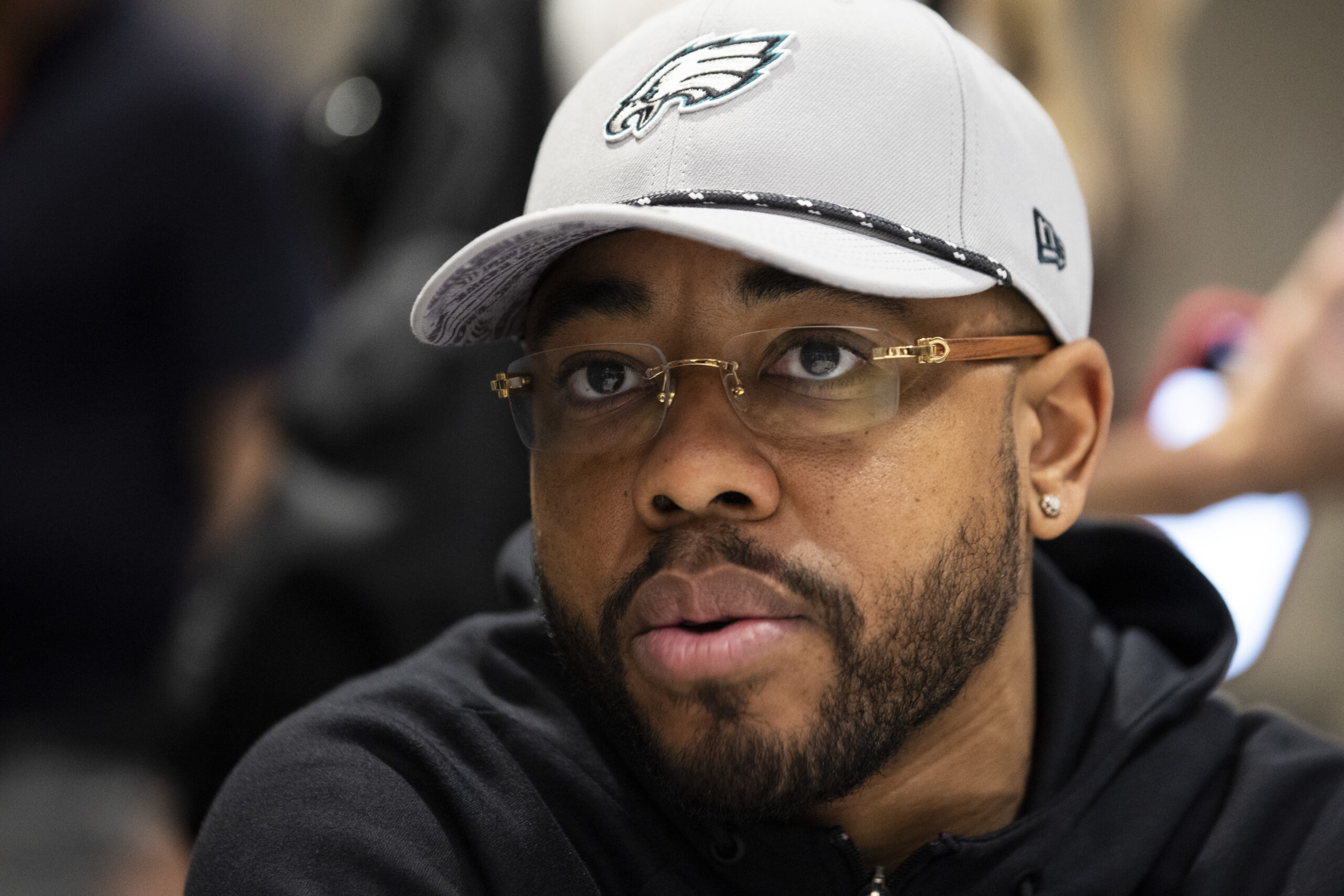
    Christian Parker, Eagles passing game coordinator and defensive backs coach, seen here ahead of last year’s Super Bowl.

    The Dallas Cowboys are on the market for a new defensive coordinator, and it looks like one of their candidates is right here in Philly.

    According to multiple reports, the Cowboys have requested permission to interview Christian Parker, the Birds’ passing game coordinator and defensive backs coach. It’s unclear if the Eagles will grant a divisional rival permission to interview one of their coaches.

    Parker, who just finished his second season with the Eagles, has been credited with helping improve the Birds’ secondary and the development of Cooper DeJean and Quinyon Mitchell, both of whom were named All-Pros this season.

    “Teams are intrigued by him,” ESPN’s Jeremy Fowler wrote of Parker last week.

    The Cowboys are looking to replace Matt Eberflus, fired by the team after just one season. Dallas also requested to interview New York Giants interim defensive coordinator Charlie Bullen, according to the NFL Network’s Mike Garafolo.

    Rob Tornoe


    // Timestamp 01/14/26 10:51am

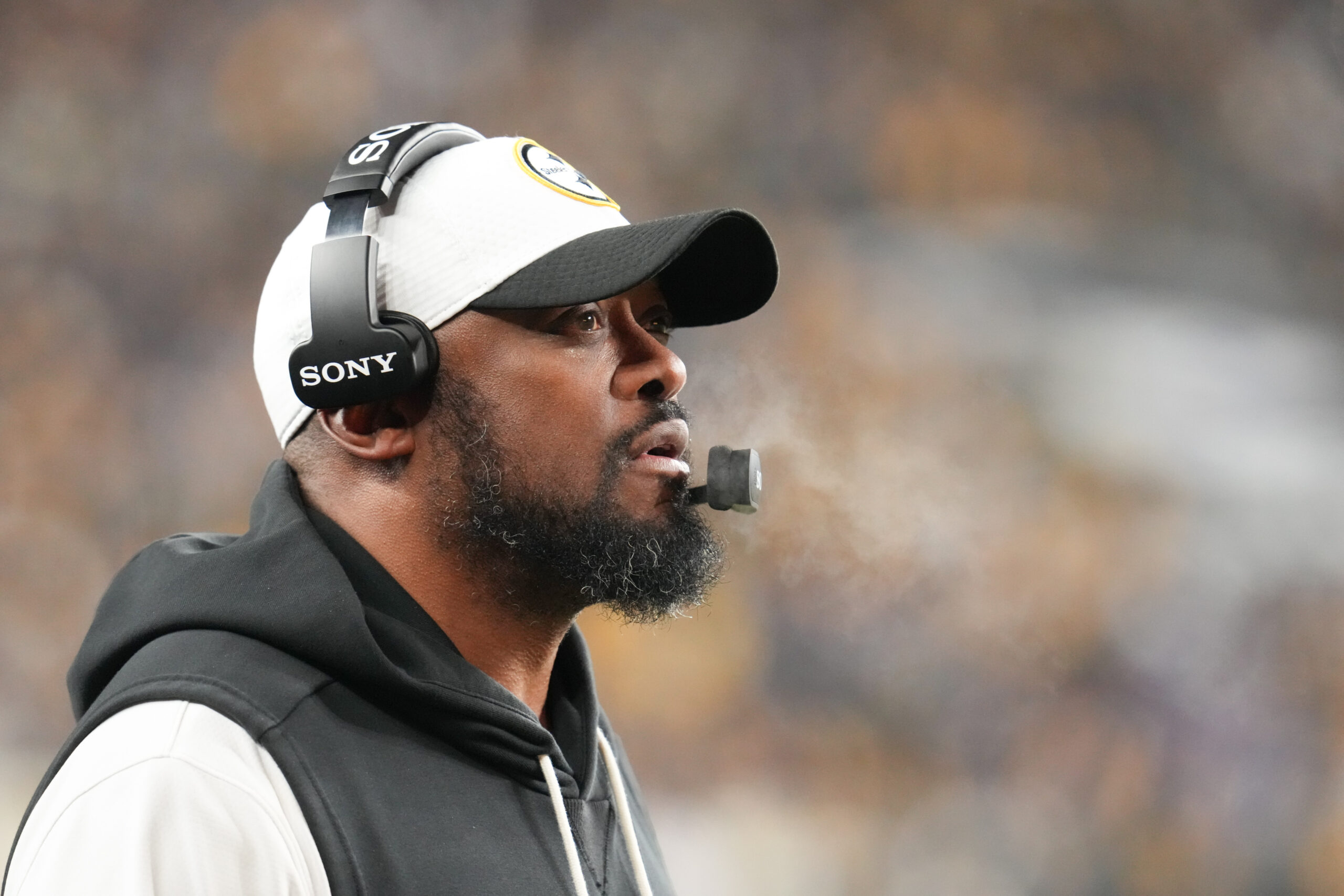
    Teams were told Mike Tomlin isn’t coaching next season: NFL Network


    // Timestamp 01/14/26 10:37am

    Breaking down the top candidates to replace Kevin Patullo


    // Timestamp 01/14/26 10:07am

    John Harbaugh to interview with Giants today: reports


    // Timestamp 01/14/26 9:36am

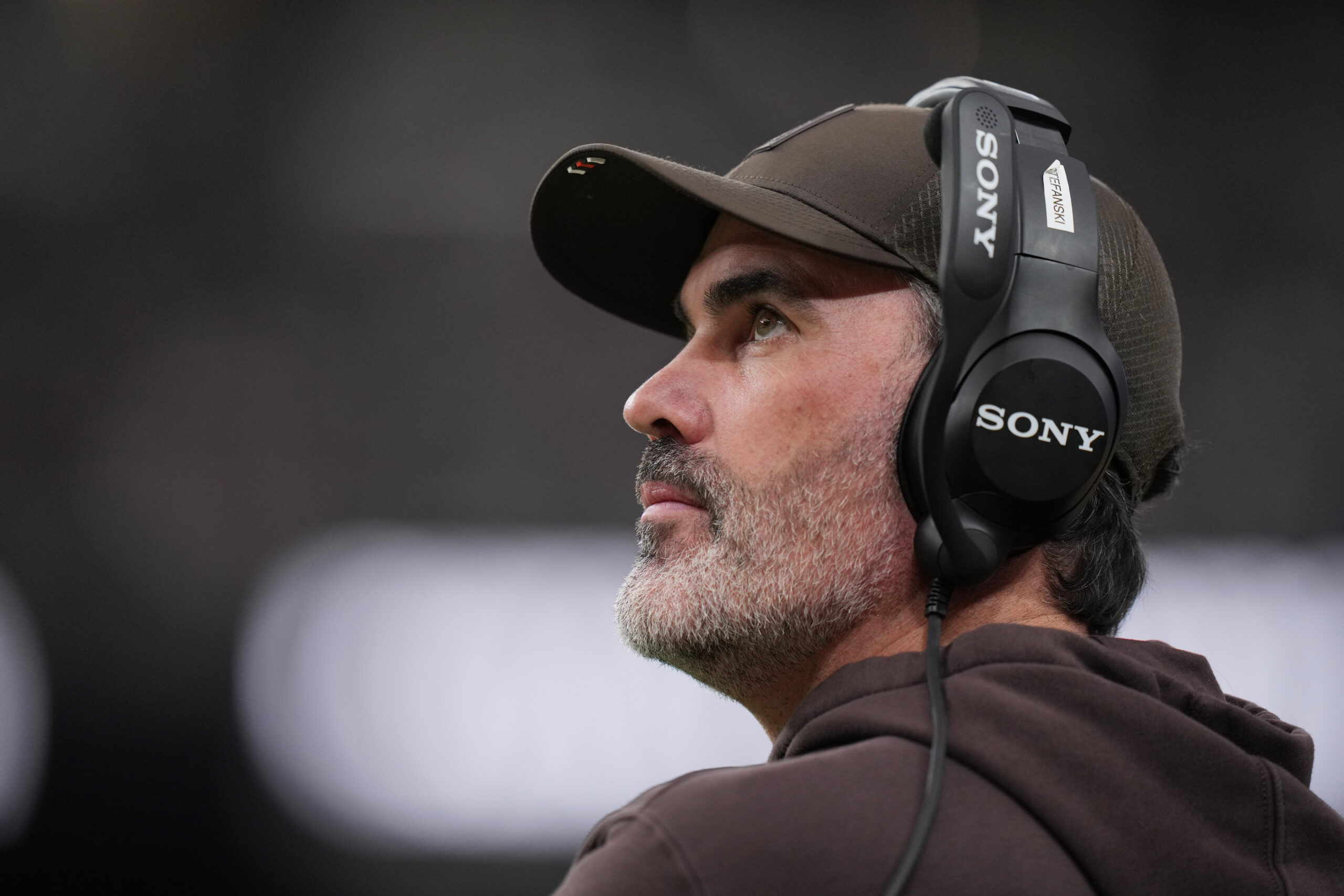
    Kevin Stefanski has completed coaching interviews with three different teams

    Kevin Stefanski has now interviewed for three head coaching jobs.

    The Miami Dolphins have completed their interview with former Cleveland Browns head coach and Philadelphia native Kevin Stefanski, the team announced Wednesday morning.

    Stefanski, among those mentioned as a possible Eagles offensive coordinator candidate, was fired by the Browns after six seasons (45-46) and two NFL Coach of the Year awards. Stefanski’s three playoff games was the most for the franchise since Marty Schottenheimer’s tenure during the mid-1980s.

    Stefanski interviewed with the Atlanta Falcons (and new team president Matt Ryan) Sunday. He also had an interview with the Tennessee Titans.

    Rob Tornoe


    // Timestamp 01/14/26 8:31am

    Rapoport expects the Eagles ‘to swing big’

    On the NFL Network Wednesday morning, Ian Rapoport didn’t mention any specific candidates to replace offensive coordinator Kevin Patullo. But the long-time NFL insider did offer a somewhat cryptic clue about the direction the Eagles could take in their coaching search.

    “I would expect the Eagles to swing big,” Rapoport said. “I would also expect them to maybe not go with something that Sirianni has done before, something of a clean break there.”

    A “big swing” would be going for an established playcaller, someone like former Giants head coach Brian Daboll, former Cleveland Browns head coach (and Philly native) Kevin Stefanski, or former Miami Dolphins head coach Mike McDaniel (whom columnist David Murphy prefers).

    It could also mean someone who has experience calling plays, like former Washington Commanders offensive coordinator Kliff Kingsbury or current Baltimore Ravens offensive coordinator Todd Monken.

    Rob Tornoe


    // Timestamp 01/14/26 8:03am

    Nick Foles breakdown of final Eagles’ play of the season is worth listening to

    Super Bowl LII MVP Nick Foles knows a thing or two about running a successful offense, and the former Birds quarterback had a few interesting observations about the Eagles’ widely-criticized final play during their wild-card loss to the San Francisco 49ers.


    // Timestamp 01/14/26 7:22am

    Potential candidates for Eagles offensive coordinator opening

    Former Dolphins Mike McDaniel is among the potential candidates to replace Kevin Patullo.

    Jalen Hurts will begin his sixth season as the Eagles’ starting quarterback in September. He is about to have his seventh play-caller.

    Kevin Patullo, the 44-year-old, first-time offensive coordinator, was removed from his position on Tuesday in the aftermath of the Eagles’ wild-card exit. Now, Nick Sirianni and the Eagles will be tasked with hiring the team’s next offensive play-caller. The team’s last two internal promotions — Patullo and Brian Johnson — were finished after one season.

    If the team decides to fill the vacancy with an outside voice, here are some candidates they could consider:

    • Brian Daboll, former Giants head coach
    • Kliff Kingsbury, former Commanders offensive coordinator
    • Nate Scheelhaase, Rams passing game coordinator
    • Klay Kubiak, 49ers offensive coordinator
    • Todd Monken, Ravens offensive coordinator
    • Mike McDaniel, former Dolphins head coach
    • Doug Nussmeier, Saints offensive coordinator
    • Frank Reich, former Colts head coach

    Of this list, columnist David Murphy things the Birds should make McDaniel their top candidate, who would bring in a fresh set of eyes and a proven track record of inventive run-scheming.

    McDaniel is one of three coaches on this list have been vetted by the team as far back as the the last regime, according to Jeff McLane: McDaniel, Kingsbury, and Monken.

    “Doesn’t mean they’ll interview or even be under consideration — and may not even be available — but would expect the list to be heavily tilted toward proven commodities,” McLane wrote on social media.

    Olivia Reiner, Rob Tornoe


    // Timestamp 01/14/26 7:15am

    ‘We’ll be back’


    // Timestamp 01/14/26 7:12am

    Which free agents will the Eagles focus on keeping?

    Tight end Dallas Goedert is among a group of high-profile free agents.

    As Reed Blankenship noted Sunday in the locker room: “It’s not going to be the same.”

    “Who knows where we all end up?” the safety said. “That’s just part of the business side of it. They can’t keep us all. I wish they could.”

    Blankenship is one of the Eagles’ nearly two dozen free agents. Like Blankenship, a few are notable players who may not be back.

    Let’s start with Dallas Goedert, who had a career year — the most prolific touchdown season in the history of Eagles tight ends. There are zero tight ends on next season’s roster as it stands. Along the offensive line, reserves Fred Johnson, Brett Toth, and Matt Pryor are free agents. So is wide receiver Jahan Dotson. Deeper reserves like running back AJ Dillon, quarterback Sam Howell, and injured fullback Ben VanSumeren are set to hit the market, too.

    Blankenship, linebacker Nakobe Dean, and edge rusher Jaelan Phillips are the marquee names among the defensive free agents. Two more starters from Sunday’s game are also scheduled to be free agents: safety Marcus Epps and cornerback Adoree’ Jackson. Other free agents include edge rushers Brandon Graham, Joshua Uche, Azeez Ojulari, and Ogbo Okoronkwo. Punter Braden Mann’s contract also is up.

    As for which players the Eagles will prioritize, it’s not hard to imagine them wanting to rework something with Goedert before they look elsewhere for a tight end. Phillips will be at or near the top of the priority list, too. The Eagles are thin at edge rusher and could use an impact player like Phillips at the top of the depth chart to pair with Jalyx Hunt and Nolan Smith. Blankenship’s position is a priority, but it remains to be seen what his market looks like and what the Eagles decide to do at safety. Rookie Drew Mukuba will be coming off a season-ending injury at one of the safety spots.

    As for Dean, he may be the most expendable among the top free-agents-to-be with Jihaad Campbell waiting in the wings.

    Jeff Neiburg


    // Timestamp 01/14/26 7:10am

    NFL head coaching vacancy tracker

    Mike Tomlin is leaving the Steelers and is expected to land a prominent TV role.

    With Mike Tomlin leaving the Pittsburgh Steelers after 19 years, there are now nine head coaching vacancies across the league.

    Here are all the current openings:

    • Baltimore Ravens
    • New York Giants
    • Cleveland Browns
    • Pittsburgh Steelers
    • Tennessee Titans
    • Las Vegas Raiders
    • Atlanta Falcons
    • Arizona Cardinals
    • Miami Dolphins

    Rob Tornoe


    Divisional round playoff schedule

    Josh Allen and the Bills will kick off the divisional round against the Denver Broncos.

    Saturday

    • No. 6 Buffalo Bills at No. 1 Denver Broncos: 4:30 p.m. CBS (Jim Nantz, Tony Romo, Tracy Wolfson)
    • No. 6 San Francisco 49ers at No. 1 Seattle Seahawks: 8 p.m., Fox (Kevin Burkhardt, Tom Brady, Erin Andrews, Tom Rinaldi)

    Sunday

    • No. 5 Houston Texans at No. 2 New England Patriots: 3 p.m., ABC/ESPN (Joe Buck, Troy Aikman, Lisa Salters, Laura Rutledge)
    • No. 5 Los Angeles Rams at No. 2 Chicago Bears: 6:30 p.m., NBC (Mike Tirico, Cris Collinsworth, Melissa Stark)

    Full 2025 NFL playoff schedule

    • Divisional round: Saturday, Jan. 17, to Sunday, Jan. 18
    • AFC and NFC championship games: Sunday, Jan. 25
    • Super Bowl LX: Sunday, Feb. 8

    Rob Tornoe

    // Timestamp 01/14/26 7:05am

  • The reservation racket | Let’s Eat

    The reservation racket | Let’s Eat

    As Philly’s restaurant profile rises, the reservation scalpers have arrived. We have a crazy tale about one restaurant’s reaction.

    Also in this edition:

    Mike Klein

    If someone forwarded you this email, sign up for free here.

    Fighting reservation scalpers

    Selling restaurant reservations

    Pssst. Wanna buy a hot table? Reservation scalpers are popping up in Philly’s online world, commandeering seats at popular restaurants. When one tried selling dinner bookings at Mawn, management fought back. Beatrice Forman will tell you the story.

    💸 OpenTable has tacked on a new fee, ostensibly to target no-shows.

    Craig heads to Toyko for ramen

    Philly ramen power couple Jesse Pryor and Lindsay Mariko Steigerwald of the now-shuttered Neighborhood Ramen decamped to Tokyo last year, and they’ve launched tours. On a recent trip to Japan, Craig LaBan went slurping with them.

    On the bar scene

    It’s Dry January, and Hira Qureshi offers the ultimate guide to sober-curious drinking in Philadelphia — plus word of a Dry January bar crawl this weekend.

    Amari and other bitters are being made in-house at more local bars than ever. Kiki Aranita explains who’s making them and what’s behind the trend.

    The PLCB has a rare-whiskey lottery running this week.

    Craig welcomes a chef’s comeback

    Craig LaBan has been following chef George Sabatino for years, and finds that his new spot in Kensington — Fleur’s — bristles with date-night energy.

    The best things we ate last week

    “If ever a sandwich deserved a place in the Louvre, this was it,” writes Stephanie Farr about this croque madame — one of three dishes that caught our palates.

    😋 Egg tarts — those wiggly, lightly gelatinous conveyors of joy — are all over. Kiki Aranita will direct you to her favorite Portuguese pasteis de nata, flaky Chinese egg tarts, and cookie-style shortcrust egg tarts.

    Scoops

    El Toro, chef Edward Strojan’s taco spot at Reunion Hall in Haddon Township, will add location numero dos at 1437 E. Passyunk Ave., the former Essen Bakery. He’s aiming at early February.

    River Twice’s Randy and Amanda Rucker are planning an expansion next door into the shuttered former Manatawny Still Works tasting room on Passyunk just off Tasker. They’re mum on concept and timeline.

    The Juice Pod has leased the former Joe coffee space at 1845 Walnut St. for a spring opening.

    Restaurant report

    Crust Vegan Bakery — known for its picture-perfect pop-tarts — has merged its retail store and commercial kitchen into a new storefront in East Falls. “I wanted to create a place where people think, ‘Oh, I can get everything I need there,’” owner Meagan Benz told Beatrice Forman.

    Falafel Time in the Graduate Hospital neighborhood has had an if-you-know-you-know menu since it opened in 2019. One dish — a crispy wrap stuffed with chicken shawarma, thin pickle slices, and garlic sauce — is now making the shop TikTok-famous. Hira lets you in on this now-open secret.

    Kennett Square is getting an artsy restaurant and cocktail bar next to a boutique hotel. Brooke Schultz has the details on Birch Street, intended as an anchor for the block.

    Bart’s Bagels, which launched in West Philadelphia and expanded to South Philadelphia, is headed to Bala Cynwyd next.

    Briefly noted

    Max’s Steaks, the North Philly eatery with an attached bar that got screen time a decade ago in the Creed movies, has been sold.

    McGillin’s Olde Ale House, Philadelphia’s oldest tavern (1860!), is hosting a reunion for couples who met at the bar, had their first date at the bar, or got engaged there. It’s Feb. 3, starting at 5:30 p.m. The $30-per-couple ticket includes a talk about the bar’s book Cheers to McGillin’s: Philly’s Oldest Tavern, drink tickets, appetizer buffet, discounted beers, and more. Details are here.

    ❓Pop quiz

    A national restaurant chain has opened a “classic” location in Pennsylvania, decorated with nostalgic touches. Name it.

    A) Roy Rogers

    B) Big Boy

    C) Horn & Hardart

    D) Pizza Hut

    Find out if you know the answer.

    Ask Mike anything

    Gazzos’ Ardmore location has not been open for over a month. I tried reaching out to the Pottstown location about whether it is permanently closed, but received no response. There is no sign or message. Are you able to learn anything? — James D.

    Gazzos co-owner Joe Lewis told me that the Ardmore sandwich shop, which opened last July at 2528 Haverford Rd., will return late this month (target is Jan. 28) after upgrades that will expand the menu.

    📮 Have a question about food in Philly? Email your questions to me at mklein@inquirer.com for a chance to be featured in my newsletter.

    By submitting your written, visual, and/or audio contributions, you agree to The Inquirer’s Terms of Use, including the grant of rights in Section 10.

  • Policing in the city, living in the suburbs | Morning Newsletter

    Policing in the city, living in the suburbs | Morning Newsletter

    Good morning, Philly.

    Mayor Cherelle L. Parker wants Philly police to live in Philly, but more cops live outside the city than ever before. Does it matter?

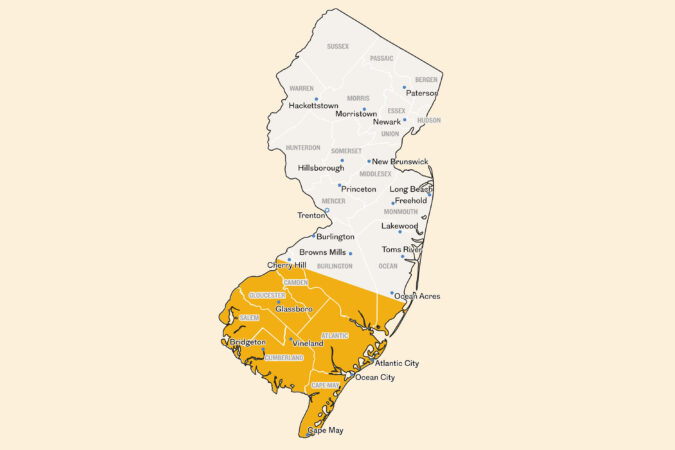
    And where does South Jersey start? The geographical debate rages on. Join it by drawing your own lines on our interactive state map.

    — Julie Zeglen (morningnewsletter@inquirer.com)

    If someone forwarded you this email, sign up for free here.

    ‘Where they lay their heads at night’

    The number of Philly police living outside the city has doubled in less than a decade, despite efforts from Mayor Parker and her predecessors to tighten residency requirements.

    Changing policies: Most municipal employees must live within city limits. For cops, that requirement has been eased in recent years amid complaints from the Philadelphia Police Department that it made recruitment too difficult. Now, officers can live outside the city after serving on the force for at least five years, though they must also have lived in it for at least one year prior to their hiring.

    By the numbers: About one-third of the department’s 6,363 full-time staffers live elsewhere. Nearly half of all captains, lieutenants, and inspectors live outside the city, too. (Even Police Commissioner Kevin J. Bethel maintains a second home in Montgomery County.) The most popular destination for expats is Lower Bucks.

    Unclear impact: Parker maintains that Philadelphians are better served when their police hail from the place they’re patrolling. But public safety experts say that might not bear out in the data.

    Reporters Ryan W. Briggs and Anna Orso have the story.

    Drawing the line

    Some parts of South Jersey are clearly South Jersey. Cherry Hill is minutes and one $6 toll from Philly. You’ll find way more Eagles fans than Giants fans in Atlantic County.

    📍 But elsewhere, it’s not so obvious. Ocean County, for instance? Vibes-wise, depends on which side we’re talking. Trenton seems to straddle the state, but can one end claim it?

    📍 Adding to the confusion is Central Jersey, a concept so nebulous that Gov. Phil Murphy’s office had to put forth an official definition in 2023.

    📍 According to the state, it’s Hunterdon, Mercer, Middlesex, and Somerset Counties — yet somehow, not Monmouth County, which is about as geographically central as it gets.

    To help settle this never-ending debate, tell us where you think South Jersey begins — then, if you believe Central Jersey exists, where that begins, too.

    In other Jersey news: State lawmakers approved a bill that would make it easier for development projects in Camden to qualify for hundreds of millions of dollars in tax credits. A new minor-league hockey team in Trenton will be named the Ironhawks. And following the death of its own “Milltown Mel,” the Jersey town wanted to import out-of-state woodchucks for Groundhog Day celebrations — but Gov. Murphy vetoed it.

    What you should know today

    Quote of the day

    The viral, 93-year-old Avril Davidge wants to keep in touch with her new Mummer friends after making the transatlantic flight to see them perform. But her Instagram account was mysteriously taken down. She’s part of a growing number of people allegedly being banned by faulty artificial intelligence systems.

    🧠 Trivia time

    Another Wawa is closing in Philadelphia — the latest in a string of closures in recent years — after its new digital-order-only system fell flat. Where is it?

    A) Across from Independence Hall

    B) On Aramingo Avenue

    C) At 17th and Arch Streets

    D) On Drexel University’s campus

    Think you know? Check your answer.

    What (and whom) we’re …

    🍹 Attending: Philly’s first-ever Dry January bar crawl.

    🦅 Meeting: The local team who took us behind the scenes of this Eagles season on HBO’s Hard Knocks.

    🥊 Reading: This Inquirer archive dive on the Rocky statue’s arrival controversy.

    🐟 Tentatively trying: Trout chowder and other Pennsylvania delicacies at the Farm Show.

    🌲 Considering: The majesty of America’s national parks, including those in our own city.

    🧩 Unscramble the anagram

    Hint: Center City events hub, the Pennsylvania _ _

    OVEN INTERCONNECT

    Email us if you know the answer. We’ll select a reader at random to shout out here.

    Cheers to Adam Lees, who solved Tuesday’s anagram: Max’s Steaks. The North Philadelphia sandwich shop is being sold after three decades. Far from tourist hubs, it was recently featured in the Creed movies.

    Photo of the day

    Adrian Forowycz walks along the Falls Bridge on a winter day.

    Paola has you covered for the next few days. Until we meet again in your inbox, be well.

    By submitting your written, visual, and/or audio contributions, you agree to The Inquirer’s Terms of Use, including the grant of rights in Section 10.

  • Where does South Jersey start anyway? | Inquirer Cherry Hill

    Where does South Jersey start anyway? | Inquirer Cherry Hill

    Hello, Cherry Hill! 👋

    It’s the great debate: Where does South Jersey start, and is there even a Central Jersey? Let us know what you think by marking South Jersey on our interactive map. Also this week, a high-end gym is opening in Ellisburg Shopping Center, plus a Tony Award-winning Broadway show currently at the Academy of Music has surprisingly local ties.

    If someone forwarded you this email, sign up for free here.

    Where does South Jersey actually start?

    It’s a longstanding question: Where does South Jersey start? Is the dividing line the same as where Eagles fans stop and Giants fans begin? Is it based on your area code? Is there some other sign that you’ve crossed from the North to the South?

    The Inquirer is posing that very question to readers, along with one other hotly debated item: Is there such a thing as Central Jersey?

    Readers can weigh in on both and see how others responded here.

    💡 Community News

    • A high-end gym is taking over the former Buy Buy Baby space in the Ellisburg Shopping Center. Club Studio Fitness is expected to open a 30,240-square-foot gym in spring 2027. Club Studio Fitness, the boutique-style gym from parent company LA Fitness, is known for its premium amenities like cryotherapy and red-light therapy, a juice bar, stretch stations, and locker rooms, in addition to its fitness and wellness offerings. Memberships at Club Studio Fitness’ only other New Jersey location, in Edgewater, range from $189 to $249 per month.
    • In honor of Martin Luther King Jr. Day, the township is hosting two service events in the coming week. On Sunday from 1 to 4 p.m., volunteers will help with trail maintenance throughout Croft Farm. And on Monday, kids 11 to 17 can participate in a youth leadership workshop with the police department. Advanced registration is required.
    • Two Cherry Hill residents are among the 2026 Martin Luther King Jr. Freedom Medal recipients, awarded by Camden County. Artist Giselle Brown and Col. Ted Gallagher, director of veterans affairs for Camden County, will be recognized alongside nine other recipients next Wednesday. Brown is a 17-year-old whose work has been recognized at the local, state, and national level, and Gallagher is a decorated 28-year military veteran who went on to work at the U.S. Department of Health and Human Services before joining the county.
    • Broadway show Suffs is currently in town and has two South Jersey connections, one far less obvious than the other. The touring musical, which is at the Academy of Music through Sunday, was created by playwright, composer, and actor Shaina Taub, whose mother is a Cherry Hill native. It follows the suffrage movement and centers on South Jersey Quaker activist Alice Paul, who was born in Mount Laurel. The Inquirer’s Rosa Cartagena dives into what inspired the Tony Award-winning production.
    • Washington, D.C.-based Cozen O’Connor Public Strategies has named a new principal to its Cherry Hill office. Braxton Plummer will help grow the government relations firm’s practice throughout New Jersey and the region.
    • Park Royal Orthodontics recently opened at 921 Haddonfield Rd. at Towne Place at Garden State Park. The practice offers orthodontic care for all ages.
    • A clarification: We noted in last week’s newsletter that Appliances Outlet will be moving into the space occupied by Whole Hog Cafe and Wine Legend. Appliances Outlet will only take over part of the space, and neither of the current businesses are slated to close.

    🏫 Schools Briefing

    🍽️ On our Plate

    • Chick’s Deli got a shout-out from BestofNJ.com as one of the best sandwich shops in New Jersey. The website noted specialty sandwiches like the chicken cheesesteak with broccoli rabe and sharp provolone “really shine.” It also suggested trying the mushroom cheesesteak.

    🎳 Things to Do

    Napkin Wars: Battle of the Zodiac!: Represent your zodiac sign during this fun “napkin war” party, where three DJs will spin tunes. ⏰ Saturday, Jan. 17, 9 p.m.-2 a.m. 💵 $19.03 📍 Vera

    👩‍⚕️ Game Plan for Wellness: Jefferson Cherry Hill Hospital’s community health expo will include wellness stations and tables, healthcare screenings, cooking and exercise demos, and more. ⏰ Sunday, Jan. 18, 11 a.m.-2 p.m. 💵 Free 📍 Jefferson Cherry Hill Hospital

    🧁 Valentine’s Day Cupcake Decorating: Registration opens tomorrow for this event geared toward kids in sixth through 12th grade. ⏰ Sunday, Feb. 8, 2-3:30 p.m. 💵 Free 📍 Cherry Hill Public Library

    🏡 On the Market

    A four-bedroom Olde Springs home with an eye-catching kitchen

    The kitchen island has cabinetry which contrasts with the slate-gray cabinets throughout the rest of the space.

    Located in the Olde Springs neighborhood, this four-bedroom, three-and-a-half bathroom home blends classic and modern design elements. Its first floor features include a dining room, a multipurpose room with a tiled fireplace, a laundry and mudroom, and an open-concept kitchen and living room. The kitchen has a large island with white cabinetry that contrasts with the slate-gray cabinets throughout the rest of the space and matches the subway tile backsplash. It opens into a two-story living room. The bedrooms are upstairs, including a primary suite with a double vanity and soaking tub.

    See more photos of the home here.

    Price: $800,000 | Size: 4,053 SF | Acreage: 0.41

    🗞️ What other Cherry Hill residents are reading this week:

    By submitting your written, visual, and/or audio contributions, you agree to The Inquirer’s Terms of Use, including the grant of rights in Section 10.

    This suburban content is produced with support from the Leslie Miller and Richard Worley Foundation and The Lenfest Institute for Journalism. Editorial content is created independently of the project donors. Gifts to support The Inquirer’s high-impact journalism can be made at inquirer.com/donate. A list of Lenfest Institute donors can be found at lenfestinstitute.org/supporters.

  • The Avenue of the Arts to break ground on an ambitious $150 million streetscape to make Broad Street greener

    The Avenue of the Arts to break ground on an ambitious $150 million streetscape to make Broad Street greener

    Lush landscaping and public art will soon line Broad Street, impromptu performances may pop up, and vehicular traffic will be calmed with a new Avenue of the Arts south streetscape about to take shape.

    The project — estimated to take $150 million and a decade to realize — will begin modestly.

    The groundbreaking ceremony was held Wednesday morning in front of the Kimmel Center and was attended by more than 200 dignitaries, including Mayor Cherelle L. Parker, City Council President Kenyatta Johnson, and other members of City Council, state representatives, and officials from groups along the Avenue of the Arts.

    The actual construction is slated to start at the end of January on a small portion of the project: remaking the median strip between Spruce and Pine Streets. That phase is expected to be completed by June.

    In 2027, after the end of an anticipated swell in tourism and street activity during the Semiquincentennial, sidewalk beautification will begin on both the east and west sides of that block.

    Eventually, pending funding, all of the blocks between City Hall and Washington Avenue will be remade.

    Looking north toward City Hall, a rendering shows the completed first phase of a South Broad Street streetscape project slated to break ground in January 2026.

    The current streetscape of planters, pavers, and retro light fixtures was designed and installed more than three decades ago. In addition to the wear and tear of the existing scheme, the thinking around public space has evolved since then, said Carl Dranoff, board chair of Avenue of the Arts, Inc., which is overseeing the project.

    “It’s become somewhat aged and dog-eared,” said Dranoff. “In 1993 you didn’t need to have outdoor cafes. We need to activate the street, not just make it palatable. We have the opportunity to really elevate the Avenue of the Arts into one of the world’s great streets.”

    The project was announced in July 2024 at $100 million, but inflation and a more detailed cost analysis has now put the total price tag at about $150 million — $15 million per block. These numbers include not just the planters, lighting, public art, street furniture, and aesthetic elements, but also infrastructure work beneath the surface, said Dranoff.

    “A lot of it is things you don’t see. There’s a lot of underground construction,” he said. “Right now water is leaking from the median strip into the subway concourse. One of the reasons we got support from SEPTA and PennDot and [the Philadelphia] Streets [Dept.], is as we are building the median strips, we are improving deficiencies in the street in each block.”

    In addition, some utilities will have to be moved. One PECO relocation, for instance, will cost the project $250,000, he said.

    Dranoff has a vested interest in the vitality of the Avenue of the Arts. He has led several development projects on South Broad Street, including Arthaus, which is on the same block as the first phase of the new streetscape, and, one block south, Symphony House. He compares the investment in the new streetscape to the ones made in the Pennsylvania Convention Center, Philadelphia Navy Yard, Kimmel Center, and Schuylkill River Trail.

    “If we don’t make investments in the future, which are going to increase revenue and population, we are relegating ourselves to second-place status.”

    The new $15 million streetscape in the block from Spruce to Pine, which includes a $1 million endowment fund to underwrite maintenance, native-species plants, a rainwater-collection cistern, lighting, curved raised planting beds, public art, seating, way-finding devices, and artist-designed banners.

    Of the $15 million needed, $5 million has been raised so far: $3 million from the city over two budget years, $1 million from the state, and $1 million from private donors. Other funding requests are pending, which planners call “very promising.”

    A sidewalk garden on the east side of Broad Street between Pine and Spruce Streets is planned for installation in 2027 as part of a new Avenue of the Arts streetscape.

    Dranoff says that construction of the median between Spruce and Pine — which is the block occupied by the Kimmel Center and defunct University of the Arts — won’t cause “a lot of disruption. They’re only working business hours, not on weekends.” Any blocked lanes will be reopened after work is done for the day, he said.

    The next block to be redesigned hasn’t been decided, but it will likely be north of Spruce Street, Dranoff said. “Part of it will depend on funding. If we get a donor, someone whose offices are near the Academy of Music and is donating $15 million for that block to be next, we might accommodate that,” he said.

    Funding for the entire project is expected to be a mix of public money, corporate and individual donations, and foundation support, he said.

    The goal isn’t to have the mile-plus between City Hall and Washington Avenue end up with a streetscape that looks uniform, Dranoff said. Instead, design firms Gensler and OJB Landscape Architecture may come up with different ideas for different blocks.

    “You don’t need a master plan that’s set for 10 blocks. Every block is different, the institutions are different. It lends itself to block-by-block planning tied together by a common theme.”

    Dranoff said once the block from Spruce to Pine is done, it will show the potential, which he expects will spur fundraising to complete the streetscape for the entire Avenue of the Arts south.

    “The difference between now and the first block being finished is, you’re going to be driving down a tree-lined boulevard.”

    The article has been updated with details from the groundbreaking ceremony.

  • Trump wants to control Latin America, but he can’t even manage to sell oil to energy interests

    Trump wants to control Latin America, but he can’t even manage to sell oil to energy interests

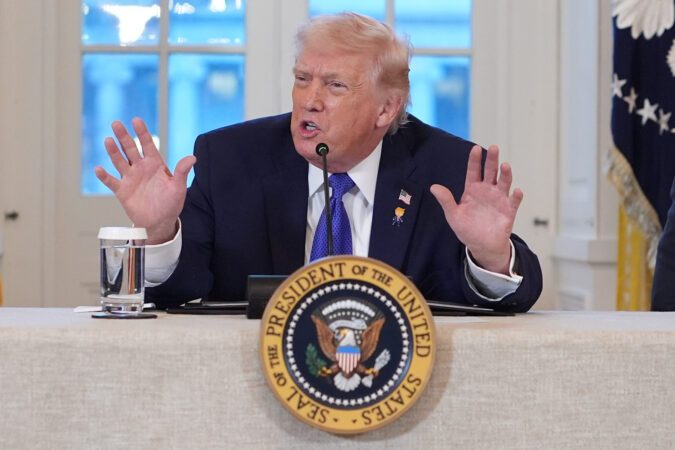
    Donald Trump gathered U.S. energy executives on Friday to tell them of the nice crude, heavy oil he had procured for them by invading Venezuela — killing dozens of people and kidnapping President Nicolás Maduro and his spouse in the process — only for the men to respond that they couldn’t invest in that country because they’d spent all their money getting Trump elected.

    It was a twist right out of an O. Henry story. Call it, The Gift of the Megalomaniac.

    Well, not quite. While Big Oil did indeed spend at least around $500 million last year on the presidential campaign and other lobbying efforts, it fell short of the reported $1 billion Trump asked oil executives for during his run for the White House. And even that amount would hardly make a dent in industry profits, which in 2022 reached nearly $200 billion.

    I’ll get to Trump’s deranged, illegal attack on Venezuela and its larger implications for Latin America — which plays less like literature and more like a bad ‘80s sitcom episode (“The Dumbroe Doctrine,” Season 2, Episode 1) — in a bit. First, let’s talk oil.

    The reason why energy executives didn’t jump at Trump’s offer for them to spend $100 billion in Venezuela to boost oil production is that while there may be massive, untapped potential there, it’s going to take a long time to realize, said Harold York, a fellow at the Center for Energy Studies at Rice University’s Baker Institute.

    To start, York told me, companies need a technical assessment of the state of the Venezuelan oil industry’s infrastructure, which is believed to be in serious disrepair. Then, the U.S. must help establish a credible and trustworthy legal and fiscal framework for international companies to participate in Venezuela. After that, executives will begin to figure out what a development plan looks like.

    A local walks past a mural featuring oil pumps and wells in Caracas, Venezuela, on Jan. 6.

    While some have pointed to the current low price of oil as a roadblock, York doesn’t believe that’s an impediment, since the decision to embark on a yearslong project would consider what the price will be in the future, not what it is now.

    “I think there will be appetite precisely because they may not need the production today,” York said. “If you’re looking to keep your portfolio diversified, then Venezuela is something you would look at as one of your long-run assets.”

    What will most likely temper that appetite is that the requirements that need to be met for Big Oil to return in earnest to Venezuela also depend on the kind of stability no one can guarantee. You don’t even need to get to the unknown unknowns, as one former failed nation builder once coined. In Venezuela’s case, it is the known unknowns that will get you first.

    Trump is offering companies security guarantees, but can a president who routinely reneges on agreements promise a subsequent administration won’t do the same? Future leaders in Venezuela may decide to take back their oil with minimal compensation to U.S. companies, as the government did in 1976, and America could just shrug its shoulders. Or even a pro-U.S. Venezuelan government may decide it wants to renegotiate at some point.

    All of that to say, if Trump removed Maduro from power to gain control of Venezuela’s oil, the administration did not seem to give the plan much thought.

    What Trump was successful at, other than violating international law and the Constitution — no matter how coyly the administration insists that what it did was a law enforcement action and not an act of war — is in bringing the Monroe Doctrine back to bloody life.

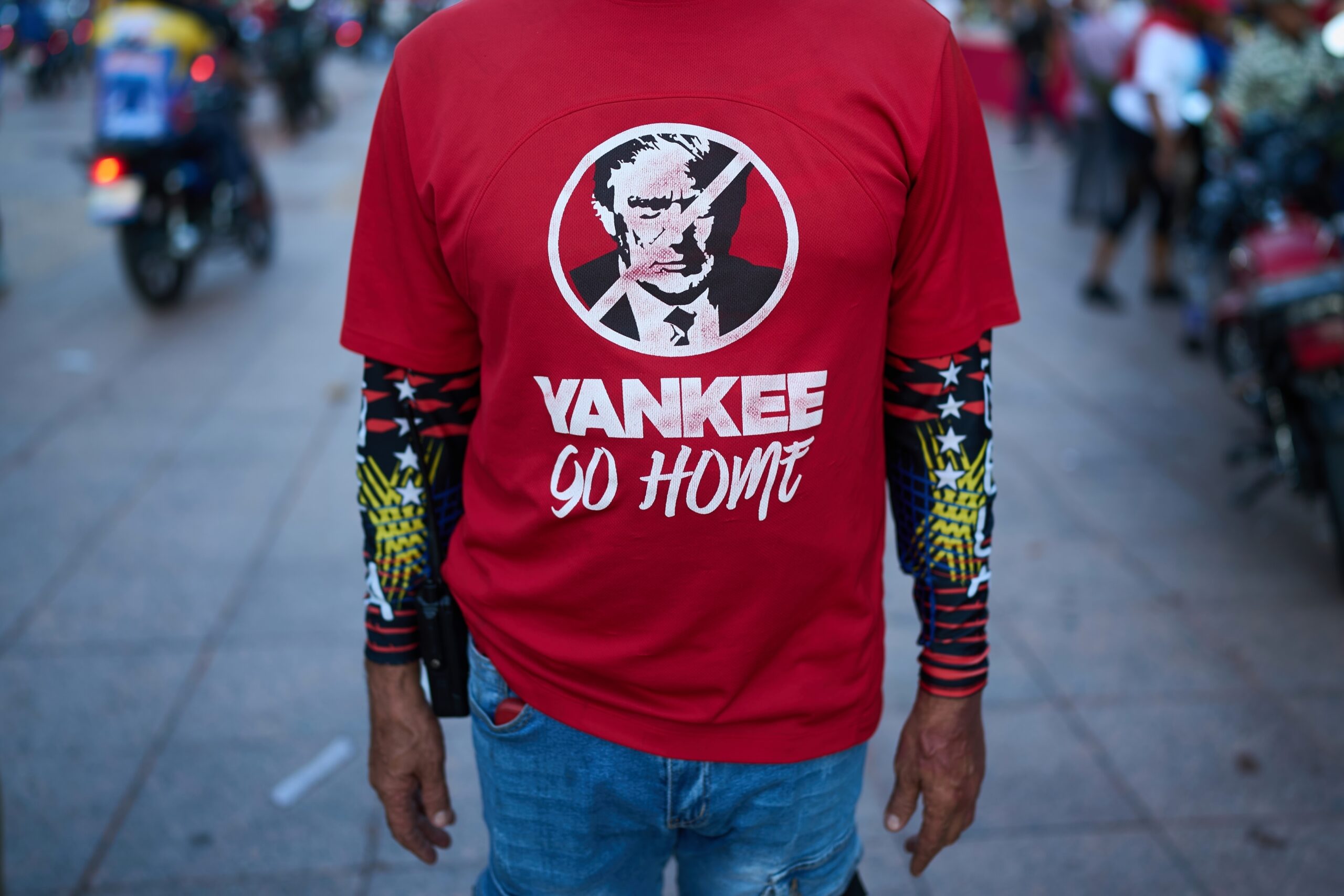
    A man wears a T-shirt with a image of President Donald Trump during a government-organized rally against foreign interference, in Caracas, Venezuela, in October.

    As presented by President James Monroe in 1823, it was a warning to European powers to stay out of the Western Hemisphere, and an assertion of the United States’ sphere of influence. By the start of the 20th century, the doctrine was used as an excuse to exert power in Latin America to protect U.S. interests as Washington saw fit, including using the military.

    Trump allowing Venezuela’s authoritarian regime to continue in every way except having Maduro at the top is in keeping with Cold War U.S. interventionism in Latin America, when U.S.-friendly forces were backed at the expense of civil rights and liberties.

    Even before he ordered the kidnapping of Venezuela’s leader to kick off 2026, the president had already spent his first year back in the White House punishing his perceived enemies (imposing sanctions and tariffs on Colombia and Brazil, bombing alleged drug boats) and rewarding his friends (bailing out Argentina, paying for prisoners in El Salvador).

    In retrospect, the escalation to full military invasion should not be that surprising, even as the long-term consequences remain uncertain, both for America as a continent and for the system of laws and alliances that has kept the world from war for 80 years.

    After Venezuela, Trump threatened Cuba, Colombia, and Mexico. Hearing from friends from Latin America, the feelings that have emerged there in the last week over U.S. actions seem to be fear and loathing.

    There is much more to say about this in a future column, but ultimately, neither sentiment is in America’s best interest.

  • Parting with Patullo | Sports Daily Newsletter

    Parting with Patullo | Sports Daily Newsletter

    The news was expected to come at some point after the Eagles were knocked out of the playoffs by San Francisco on Sunday.

    Two days later, the team announced that Kevin Patullo had been removed as offensive coordinator after one season. But it’s possible that Patullo could remain on the staff in another role.

    Patullo has been with the team since coach Nick Sirianni was hired in 2021. He went from passing game coordinator to offensive coordinator a year ago after Kellen Moore left to become the coach of the New Orleans Saints.

    Now, the Eagles’ next offensive coordinator will be the seventh play-caller Jalen Hurts has had in the NFL in what will be his seventh season in the league. So who might the Birds target as the next offensive coordinator?

    Well, there’s no shortage of strong candidates to help fix a star-studded offense, and maybe they’ll look to hire an outside voice, considering that Sirianni’s last two internal promotions — Patullo and Brian Johnson — were finished after one season.

    If that’s the case, Eagles beat writer Olivia Reiner starts us off with eight candidates to consider.

    — Isabella DiAmore, @phillysport, sports.daily@inquirer.com.

    If someone forwarded you this email, sign up for free here.

    ❓Who should the Eagles hire as their next offensive coordinator? Email us back for a chance to be featured in the newsletter.

    Bigger things to come

    Eagles linebacker Jihaad Campbell started 10 games in his rookie season.

    Jihaad Campbell was touted as a versatile defensive weapon who offered the Eagles the ability to line him up in multiple spots. But he saw more opportunity inside during Nakobe Dean’s injury rehabilitation, which led the rookie to start next to Zack Baun for the first seven games of the season.

    The Camden County native, a first-round pick out of Alabama, played in all 17 games while starting 10 of them. He excelled in pass coverage and was solid against the run. With his first season in the books, Campbell will likely be utilized and trusted more next season because Dean is a pending free agent whose return to the Eagles seems unlikely.

    What we’re …

    🤔 Wondering: What folks are saying about the Eagles parting ways with Patullo as the play-caller.

    📖 Reading: The viral 11-year-old Eagles fan Sam Salvo wanted Patullo flipping burgers. He says “it worked.”

    🏒 Learning: Pro hockey is returning to Trenton after a 13-year hiatus and the new minor league team officially got a name.

    Luzardo open to extension

    Jesús Luzardo made 32 starts and worked 183⅔ innings in his first season with the Phillies, both career highs.

    Jesús Luzardo hasn’t spoken with the Phillies yet about a contract extension.

    But it’s a conversation he would like to have.

    “It’s not something that I’m closed off to,” said Luzardo, appearing as a guest this week on Phillies Extra, The Inquirer’s baseball podcast. “I just got married and hopefully eventually have a family, and just being stable in a certain place, knowing that you’re comfortable within an organization … it’s something I would be really interested in.”

    Warm welcome

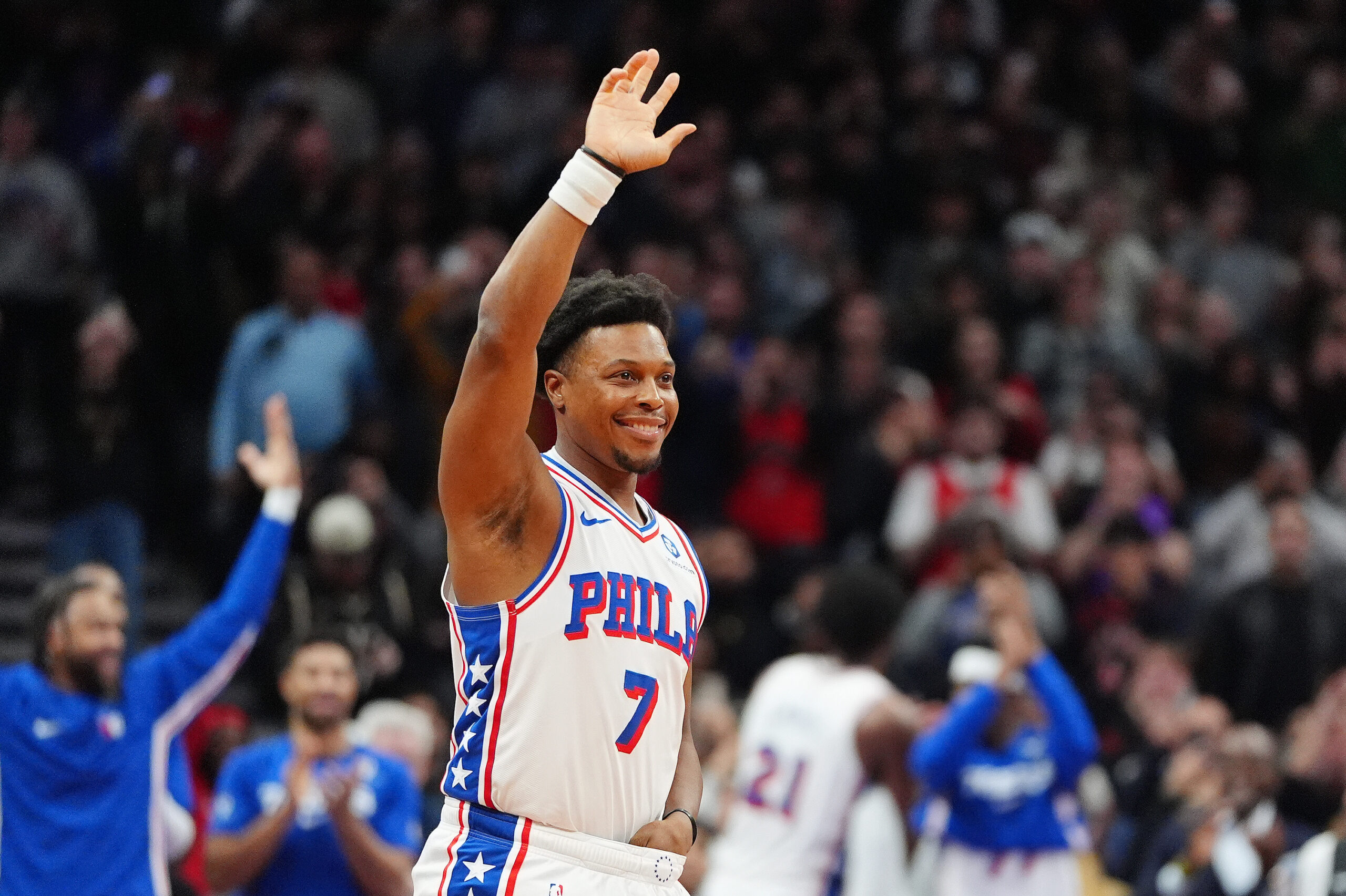
    Sixers guard Kyle Lowry receives an ovation in what could be his last game in Toronto, where the Raptors legend won an NBA title.

    Tyrese Maxey told Lowry at the start of Monday’s matchup against Toronto that his Sixers teammates would “do whatever we’ve got to do to get you in tonight.”

    Maxey kept his word and allowed Lowry to check in late, as the 39-year-old soaked in potentially one last ovation from an adoring crowd that watched the North Philly native become a six-time All-Star and 2019 NBA champion. It was a joyous curtain call and “probably one of the greatest basketball moments of my personal career.”

    Three lessons learned

    Flyers right wing Nikita Grebenkin was one player who looked to provide energy on Monday.

    After two straight sobering losses to perennial powerhouse Tampa Bay, the Flyers need to refocus if they want to stay in playoff contention in the hotly contested Eastern Conference. Here are three lessons that they learned and need to carry with them as they move through a gauntlet before February’s Olympic break.

    Rick Tocchet believes the Flyers need to simplify. The first-year coach believes his team, which is considered the fourth-youngest team in the NHL, is trying to make the perfect play too often instead of making the right reads. So he says, “We’re going to have to really dummy it down a little bit.”

    Sports snapshot

    Since the transfer portal opened, 22 former Iowa State players, including quarterback Rocco Becht, have followed Matt Campbell to Penn State.

    David Murphy’s take

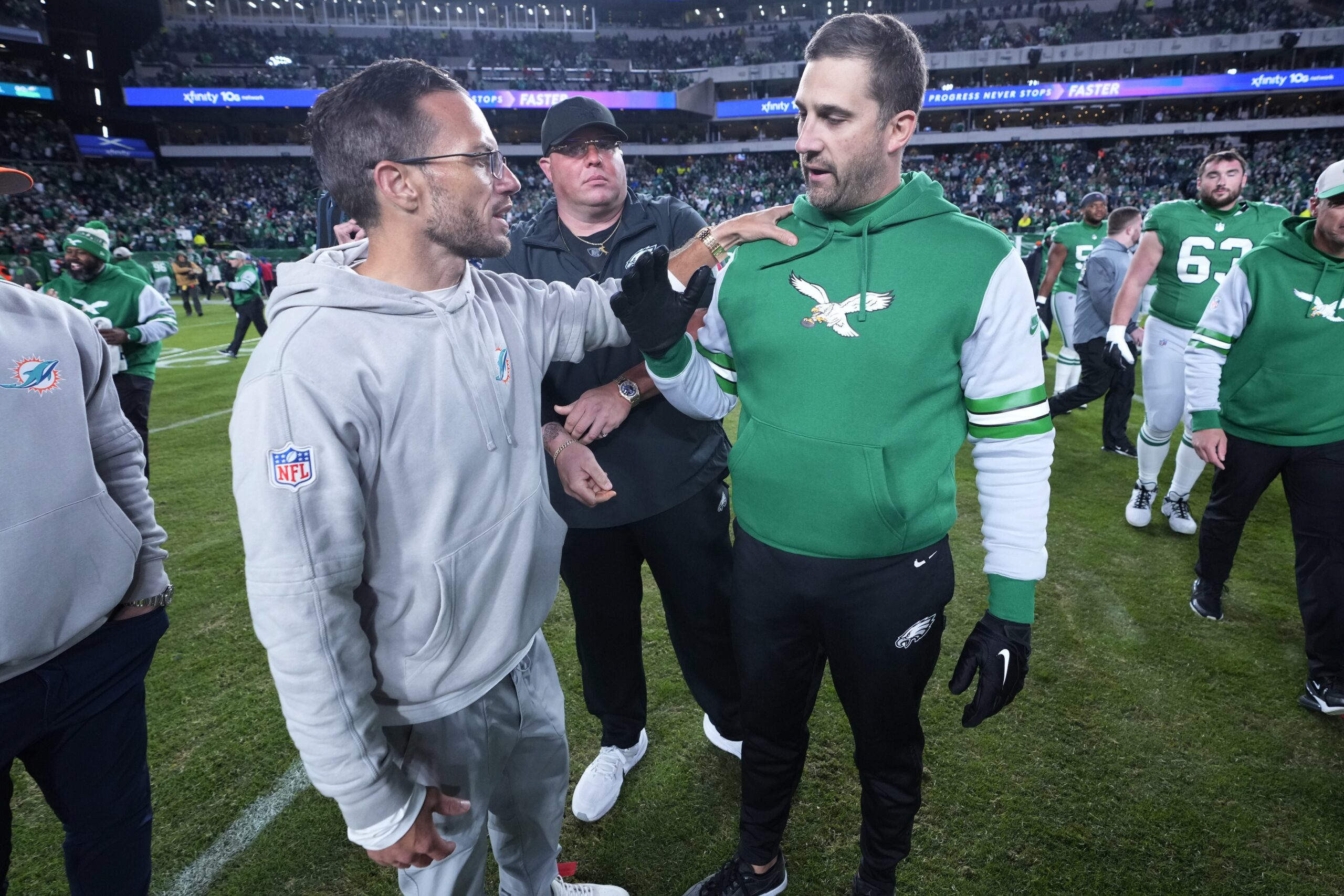
    Former Dolphins head coach Mike McDaniel (left) shown with Eagles coach Nick Sirianni after their matchup in 2023.

    Kevin Patullo isn’t the first person to experience the downside of this city’s manic emotional instability when it comes to professional sports. But my point here isn’t to shame anybody. Actually, my point is to lobby the Eagles to spend whatever it takes to hire Mike McDaniel as their offensive coordinator. The Eagles need to bring in a fresh set of eyes and a proven track record of inventive run-scheming. They need to reinvent this offense, and McDaniel is the perfect mind to do it, writes columnist David Murphy.

    🧠 Trivia time answer

    Who has the most wins in the playoffs as coach of the Eagles?

    C) Andy Reid with 10 wins — Mike R. was first with the correct answer.

    What you’re saying about A.J. Brown

    We asked: What do you think about the prospects of the Eagles trading A.J. Brown? Among your responses:

    Possibility is high they try to trade him even if all they can get is a bag of footballs in return. If they can’t trade him they should just cut him. A malcontent is nothing but a cancer on the team and his on the field efforts are highly questionable right now. Can anyone say “Ricky Watters?” — Bob A.

    I wish our fans would stand by the team win or lose. That’s what most parents of young athletes do. Pretend it’s your kid out there playing for the Eagles. What would you say when they lose? We are not going to win the Super Bowl every year. But every year we, as fans, get to show our love and support for them. — Cindy F.

    It’s time for A. J. to take his show elsewhere. Once upon a time we had another star who also thought he was bigger than the game itself. When he short armed a pass in 1995 his response was “for who for what.” Ricky found out that afternoon what Philadelphia fans were all about. Never happened again and he had 3 super years with the Birds. There’s only 4 reasons we lost that game to the 49ers’ and none of them fall on coaching. The 3 catchable balls A. J. dropped and the extra point Elliott blew. He makes that kick and we’re 3 down. We kick a 20 yard field goal with 5 seconds to play. Games tied and who knows what could happen in OT. Now if AJ catches any one of the three drops and we’re in the Red Zone and no one’s better in the Red Zone than us. The kicker has to go and the dead cap $ will unfortunately keep AJ around for another season. He’ll be a free agent after next season so maybe he’ll be playing lights out for a free-agent contract and leaves his EGO at the door. — Ronald R.

    Eagles wide receiver A.J. Brown can’t pull in a pass in the playoff loss to the 49ers at Lincoln Financial Field on Sunday.

    The Eagles have multiple problems. 1. Sirianni. He is going to be fired this time next year. To be honest, Nick is not smart. 2. AJ Brown. If he was correct criticizing the play calling, then keep him. 3. Patullo should never have been handed the OC position for a SB team. Nick, again, showing his lack of maturity in hiring an unqualified friend. 4. I read once a coach say, “Every season we change our entire offensive scheme.” Nick hasn’t changed anything in years. This is an abomination of dereliction of responsibility as the head coach. The question is either Nick is lazy, or he is incompetent. 5. Hurts. He is a below average QB if he will not run the ball. Hurts cannot read the field quickly. He simply doesn’t process the coverage. He refuses to throw to where the receiver will be. He waits until the receiver is already there and then passes. — Jack D.

    Going to be a long off season, but don’t worry about anything, just put your trust in Howie. Not sure who is ready to deal for Brown, but I think it is time for the Eagles to part with him. An outstanding receiver who needs to play in a Vince Lombardi culture where he knows what the boundaries are. Mike Tomlin and the Steelers can handle him, but would they want him? — Everett S.

    It is always easy to trade someone, the key question is who will replace him and will it be an upgrade. — Gary P.

    We compiled today’s newsletter using reporting from Jeff Neiburg, Olivia Reiner, Gina Mizell, Jonathan Tannenwald, Jackie Spiegel, Gustav Elvin, Lochlahn March, Ariel Simpson, Gabriela Carroll, Devin Jackson, David Murphy, and Greg Finberg.

    By submitting your written, visual, and/or audio contributions, you agree to The Inquirer’s Terms of Use, including the grant of rights in Section 10.

    Thanks for reading and have a wonderful Wednesday. Kerith will be back in your inbox with tomorrow’s newsletter. — Bella

  • More Philadelphia police live outside the city than ever before

    More Philadelphia police live outside the city than ever before

    When Cherelle L. Parker was a City Council member, she championed a strict residency rule that required city employees to live in Philadelphia for at least a year before being hired.

    Amid protest movements for criminal justice reform in 2020, Parker said stricter residency requirements would diversify a police force that has long been whiter than the makeup of the city, and ensure that officers contribute to the tax base.

    “It makes good common sense and good economic sense for the police policing Philadelphia to be Philadelphians,” she said then.

    But today, under now-Mayor Parker, more police live outside Philadelphia than ever before.

    About one-third of the police department’s 6,363 full-time staffers live elsewhere. That share — more than 2,000 employees — has roughly doubled since 2017, the last time The Inquirer conducted a similar analysis.

    (function() {
    var l2 = function() {
    new pym.Parent(‘ppd_zips’,
    ‘https://media.inquirer.com/storage/inquirer/projects/innovation/arcgis_iframe/ppd_zips.html’);
    };
    if (typeof(pym) === ‘undefined’) {
    var h = document.getElementsByTagName(‘head’)[0],
    s = document.createElement(‘script’);
    s.type = ‘text/javascript’;
    s.src = ‘https://pym.nprapps.org/pym.v1.min.js’;
    s.onload = l2;
    h.appendChild(s);
    } else {
    l2();
    }
    })();

    Today, the percentage of nonresidents is even higher among the top brass: Nearly half of all captains, lieutenants, and inspectors live outside the city, according to a review of the most recent available city payroll data.

    Even Commissioner Kevin Bethel keeps a home in Montgomery County, despite officially residing in a smaller Northwest Philadelphia house that he owns with his daughter.

    Most municipal employees are still required to live within city limits. Across the city’s 28,000-strong workforce, nearly 3,200 full-time employees listed home addresses elsewhere as of last fall. Most of them — more than 2,500 — are members of the police or fire departments, whose unions secured relaxed residency rules for their workers in contract negotiations. About a quarter of the fire department now lives outside the city.

    Philadelphia Mayor Cherelle L. Parker and Police Commissioner Kevin Bethel speak before the start of a news conference.

    Proponents of residency rules in City Hall have long argued they improve rapport between law enforcement and the communities they serve, because officers who have a stake in the city may engage in more respectful policing.

    But experts who study public safety say there is little evidence that residency requirements improve policing or trust. Some say the rules can backfire, resulting in lesser quality recruits because the department must hire from a smaller applicant pool.

    A survey of 800 municipalities last year found that residency requirements only modestly improved diversity and had no measurable effect on police performance or crime rates.

    “It’s a simple solution thrown at a complex problem,” said Fritz Umbach, an associate professor at John Jay College of Criminal Justice. “It doesn’t have the impact people think it will.”

    Parker, a Philadelphia native who lives in the East Mount Airy neighborhood, says she would still prefer all municipal employees live in the city.

    “When I grew up in Philadelphia, it was a badge of honor to have police officers and firefighters and paramedics who were from our neighborhood,” she said in a statement. “They were part of the fabric of our community. I don’t apologize for wanting that to be the standard for our city.”

    ‘Where they lay their heads at night’

    What qualifies as “residency” can be a little pliable.

    Along with his wife, Bethel purchased a 3,600-square-foot home in Montgomery County in 2017 for over a half-million dollars. Although he initially satisfied the residency rule by leasing a downtown apartment after being named commissioner by Parker in late 2023, he would not have met the pre-residency requirement the mayor championed for other city employees while she was on Council.

    Today, voter registration and payroll data shows that Bethel resides in a modest, 1,800-square-foot rowhouse in Northwest Philadelphia, which he purchased with his daughter last year. While police sources said it was common for Bethel to sleep in the city given his long work hours, his wife is still listed as a voter in Montgomery County.

    Police Commissioner Kevin Bethel speaks during the 22nd District community meeting at the Honickman Learning Center on Dec. 2, 2025.

    Sgt. Eric Gripp, a spokesperson for the department, said in a statement that Bethel is a full-time resident of Philadelphia, and that while he owns a property outside the city, his “main residence” is the home in Northwest Philly.

    Although sources say it was not unheard of for rank-and-file officers to use leased apartments to satisfy the requirement on paper, Gripp said “only a small number” of residency violations had required formal disciplinary action following an investigation by the department’s Internal Affairs Division.

    That likely owes to officers’ increasing ability to reside elsewhere legally. The Fraternal Order of Police Lodge 5, which represents thousands of active and retired Philadelphia Police officers, won a contract provision in 2009 allowing officers to live outside the city after serving on the force for at least five years.

    The union didn’t respond to a request for comment.

    Few of the cops who left the city went very far.

    While Northeast Philly and Roxborough remain the choice neighborhoods for city police, the top destinations for recent transplants were three zip codes covering Southampton, and Bensalem and Warminster Townships, according to city payroll data.

    A few officers went much farther than the collar counties.

    Robert McDonnell Jr., a police officer in West Philadelphia’s 19th district with 33 years on the force, has an official address at a home in rural Osceola Mills, Pa., about 45 minutes north of Altoona in Centre County.

    A person who answered a phone number associated with McDonnell — who earned $124,000 last year between his salary, overtime, and bonus pay — declined to speak to a reporter.

    Asked about the seven-hour round-trip commute McDonnell’s nominal residence could entail, Gripp said the department doesn’t regulate the manner in which employees travel to and from work.

    “Our members serve this city with dedication every day,” he said, “regardless of where they lay their heads at night.”

    A long and winding history

    Versions of residency rules can be found as far back as the 19th century, when police recruits were required to live in the districts they sought to work in.

    But when Mayor Joseph S. Clark pushed to reform the city charter in the 1950s, he sought to abolish the rules as an impediment to hiring, saying “there should be no tariff on brains or ability.”

    Instead, City Council successfully fought to expand the restrictions. And, for more than five decades, the city required most of its potential employees to have lived in Philadelphia for a year — or obtain special waivers that, in practice, were reserved for the most highly specialized city jobs, like medical staff.

    Many other big cities enacted similar measures either to curb middle-class flight following World War II or to prioritize the hiring of local residents. But the restrictions were frequently blamed for causing chronic staff shortages of certain hard-to-fill city jobs.

    Officers Azieme Lindsey (from left), Charles T. Jackson, and Dalisa M. Carter taking their oaths in 2023.

    Citing a police recruit shortage in 2008, former Mayor Michael A. Nutter successfully stripped out the prehiring residency requirement for cadets. Recruits were required only to move into the city once they joined the force.

    A year later, the police union attempted to have the residency requirement struck from its contract entirely.

    Nutter’s administration objected. But an arbitration panel approved a compromise policy to allow officers to live elsewhere in Pennsylvania after five years on the job. By 2016, firefighters and sheriff’s deputies secured similar concessions.

    Then, in 2020, Parker and then-Council President Darrell L. Clarke successfully fought to have the one-year, prehire residency requirement reinstated. They said it would result in a more diverse force and an improved internal culture.

    But experts say there’s little research showing that to be true.

    “I am unsure if requiring officers to reside in the city is a requirement supported by evidence,” said Anjelica Hendricks, an assistant law professor at the University of Pennsylvania who worked for the city’s Police Advisory Commission. “Especially if that rule requires a city to sacrifice something else during contract negotiations.”

    Residency requirements have been a point of contention for organized labor over decades.

    FOP leaders have long opposed the rule and said it was partly to blame for the department’s unprecedented recruitment crisis and a yearslong short-staffing problem that peaked in the aftermath of the COVID-19 pandemic.

    In 2022, facing nearly 1,500 unfilled police jobs, former Mayor Jim Kenney loosened the prehire residency rule for the police department again, allowing the force to take on cadets who lived outside the city, so long as they moved into Philadelphia within a year-and-a-half of being hired.

    Since then, recruiting has rebounded somewhat, which police officials attribute to a variety of tactics, including both the eased residency rules and hiring bonuses. The force is still short 20% of its budgeted staffing and operating with 1,200 fewer officers than it did 10 years ago.

    Umbach, the John Jay professor, said the impact on recruiting is obvious: Requiring officers to live in a city where the cost of living may be higher than elsewhere amounts to a pay cut, which shrinks candidate pools.

    “Whenever you lower the standards or lower the appeal of the job, you’re going to end up with people who cause you problems down the road,” he said. “A pay cut is just that.”

  • Family budgets are stretched, and bargain grocer Aldi seizes the moment in a rapid expansion

    Family budgets are stretched, and bargain grocer Aldi seizes the moment in a rapid expansion

    The discount grocery chain Aldi is expanding rapidly and plans to open more than 180 U.S. stores this year as more Americans skip nights out at restaurants and cook at home due to anxiety over the nation’s economy.

    The chain, with U.S. operations based outside of Chicago, went on an expansion tear soon after inflation began to spike in 2021 and opened a record number of new stores last year.

    Food inflation has slowed, but it was still up 2.4% last year, according to U.S. data, and has soared about 25% since the pandemic. On Tuesday, the U.S. Labor Department said that grocery prices jumped 0.7% in December from the previous month, and that price hikes accelerated faster in 2025 than they had in the previous two years.

    Last month beef and veal prices climbed 1% from November, and are up 16.4% from last year. Coffee prices increased 1.9% in a month and are up almost 20% over a year. Egg prices dropped 8.2% in December, continuing to fall after surging last year after a bird flu outbreak.

    The vast majority of U.S. adults say they’ve noticed higher than usual prices for groceries and electricity in recent months, according to a survey from the Associated Press-NORC Center for Public Affairs Research.

    Aldi has sought to snap up market share as more families trade down, meaning they are changing where they shop to cut costs.

    Americans are dropping trusted name brands for cheaper store-brands and swapping out the places they’ve shopped for years in favor of discount or thrift stores. It’s been a boon for national bargain stores chains such as Dollar General and Dollar Tree.

    That shift had begun before President Donald Trump’s trade war began, but appears to have accelerated over the past year.

    Aldi said in 2024 that it planned to open 800 new stores by 2028 as inflation worries spread. It announced plans to open a record 225 locations last year in the U.S.

    Aldi said Tuesday that it will add new distribution centers in Florida, Arizona, and Colorado, and is still committed to investing $9 billion in the U.S. through 2028. The company is also looking to open more than 50 stores in Colorado within the next five years and plans to double its Las Vegas store count by 2030.

    The expansion will give Aldi almost 2,800 stores by the end of the year, which gets its closer to its goal of 3,200 stores by 2028.

    Traditional grocers are under pressure from bargain chains, massive retailers like Walmart, and also relatively new players like Amazon.com. In December, Amazon said same-day perishable grocery delivery had been expanded to more than 2,300 cities and towns, and the online giant said it has more expansion plans for this year.