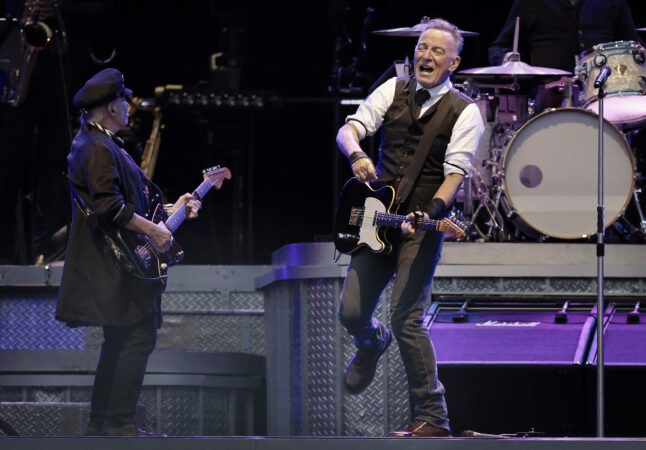
Bruce Springsteen & the E Street Band is headed out on the road this spring on its first U.S. tour dates in two years. These will be the band’s first performances since Springsteen made news last month with his anti-ICE protest song, “Streets of Minneapolis.”
Appropriately enough, the “Land of Hope and Dreams American Tour” begins in Minneapolis on March 31 before making its way to the Xfinity Mobile Arena in South Philly on May 8.
The itinerary includes east coast dates in Newark, N.J.; Long Island; Manhattan; and Brooklyn. There are 19 indoor arena shows in all, plus a closing night baseball stadium show in Washington on May 27.
In a statement accompanying the tour announcement, Springsteen said: “We are living through dark, disturbing and dangerous times, but do not despair — the cavalry is coming! Bruce Springsteen and The E Street Band will be taking the stage this spring from Minneapolis to California to Texas to Washington, D.C., for the Land of Hope And Dreams American Tour.”
“We will be rocking your town in celebration and in defense of America — American democracy, American freedom, our American Constitution and our sacred American dream — all of which are under attack by our wannabe king and his rogue government in Washington, D.C.,” Springsteen said in the statement.
Last year, the Boss made headlines while on tour in Europe for his pointed comments about the Trump administration, which he called “corrupt, incompetent, and treasonous” before performing his patriotic song “Land of Hope and Dreams.”
Trump responded on Truth Social by calling Springsteen “highly overrated” as well as a “dried out prune of a rocker” and “not a talented guy — Just a pushy, obnoxious JERK.”
Last month, Springsteen wrote “Street of Minneapolis” on the day that Alex Pretti was fatally shot by federal immigration enforcement agents in Minneapolis and released it three days later.
Calling out “King Trump’s private army from the DHS,” Springsteen memorializes “two dead, left to die on snow-filled streets, Alex Pretti and Renee Good.”
“Everyone, regardless of where you stand or what you believe in, is welcome — so come on out and join the United Free Republic of E Street Nation for an American spring of Rock ‘n’ Rebellion! I’ll see you there!,” Springsteen said in the statement.
Tickets for the Philadelphia stop of Bruce Springsteen’s “Land of Hope and Dreams” tour go on sale Feb. 21, 10 a.m. via Ticketmaster. The full tour itinerary is at BruceSpringsteen.net.
After 37 days of preseason, three centerback signings, three striker signings, and negotiations for a left back that aren’t done yet, the Union will play their first game of 2026 on Wednesday.
Bradley Carnell’s squad should be favored in its visit to Defence Force FC of Trinidad & Tobago in the Concacaf Champions Cup (6 p.m., FS2). But this group of Union players hasn’t played an official game together, and, as the manager said in the preseason, you don’t know until you know.
Now, it’s time to find out.
“I think we’re always ready,” Carnell said in a news conference from Trinidad on Tuesday morning. “We know it’s early in our in our season, and we know that there’s a schedule coming up that’s really tough. And so we’ve been working hard over the last couple of weeks to get everybody integrated as best as we could.”
Carnell had to contend with a series of absences during camp. Indiana Vassilev and Milan Iloski suffered injuries that they’ve recovered from, Bruno Damiani and Cavan Sullivan started the year with knocks, and Damiani was away for a few days this month to finish getting his U.S. green card.
Jovan Lukić also was a late addition to the list, as Carnell revealed Tuesday that the midfielder took a hit to the ribs in a recent practice.
“It’s preseason — there’s always a couple of things here and there,” he said. “But we’ve got a good competitive group here, ready to go.”
Of Lukić’s status, he said, “we’re still assessing that, and we’ll see if that makes sense or not” for him to play Wednesday.
Bruno Damiani (left) recently got his U.S. green card.
The Union have never played Defence Force, partially because no team from Trinidad has reached the Champions Cup since the 2016-17 edition. Defence Force hasn’t qualified since 2002, though it has a notable history as winners in 1978 and 1985.
The present-day squad is led by a familiar name, winger Kevin Molino. He played for Orlando, Minnesota, and Columbus from 2011 to 2023, then joined Defence Force in late 2024.
“This is the challenge and the joy of the Champions Cup,” Carnell said.
As if hosting a U.S. team in the region’s top soccer tournament wasn’t a big enough deal, Wednesday’s game will come right after Trinidad held its annual two-day Carnival around Mardi Gras.
That should add even more buzz to the atmosphere at Hasely Crawford Stadium, one of Concacaf’s most historic venues. It’s the home of Trinidad and Tobago’s national soccer teams and the site of one of the U.S. men’s team’s all-time wins: the 1989 triumph to earn qualification for the 1990 World Cup, ending a 40-year tournament drought.
Andre Blake is the only current Union player who has played a senior-level game in the venue, a World Cup qualifier last November that ended in a 1-1 tie. That might surprise some fans, but it’s true. Danley Jean Jacques hasn’t yet with Haiti, and Alejandro Bedoya never did with the United States.
Union defender Nathan Harriel said that while “there’s temptation — it’s really easy to go out and want to be a part of something,” the team is making sure this stays a business trip.
“There’s a lot of people here. It’s loud, noisy,” he said. “At the same time, we’re focused on the one thing at hand, and that’s getting a result on Wednesday. There’s distractions in any city you go to. … Just being able to manage that in the best way possible and just stay focused on the mission at hand is the most important.”
And for those players who’ve played in Concacaf tournaments before, especially the Champions Cup, they know to always expect the unexpected.
“I remember a few years ago in El Salvador, a dog ran on the field and grabbed the ball,” Harriel said, recalling the Union’s 2023 visit to Alianza. “So at the same time, you have to enjoy it, because you never know when you’ll be back. And you have to respect every opponent in this tournament — everybody is qualified to be in it, and we understand that.”
The historic Hasely Crawford Stadium in Port of Spain, Trinidad, where the Union will play Defence Force FC in the Concacaf Champions Cup on Wednesday.
Like Major League Baseball installing the pitch clock or Apple dropping the headphone jack from iPhones, a small shift can have a major impact.
The same is true of sandwiches: After 96 years, South Philadelphia landmark Pat’s King of Steaks has made two subtle but significant tweaks.
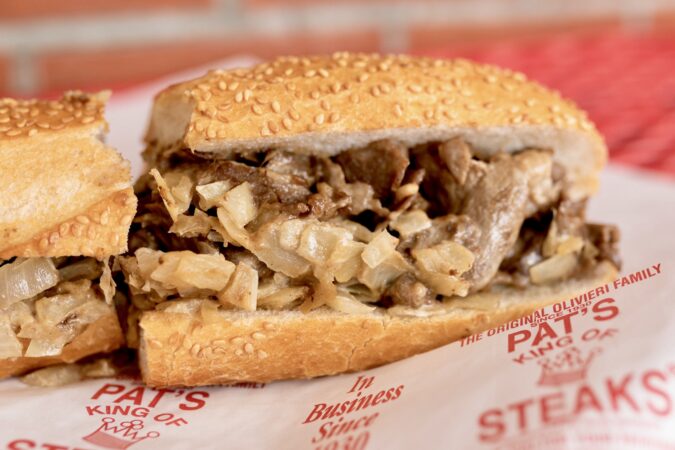
The stand at the crossroads of Ninth, Passyunk, and Wharton is now offering seeded rolls, from longtime supplier Aversa Italian Bakery, alongside the plain hoagie-style rolls Pat Olivieri first used when he introduced the steak sandwich in 1930.
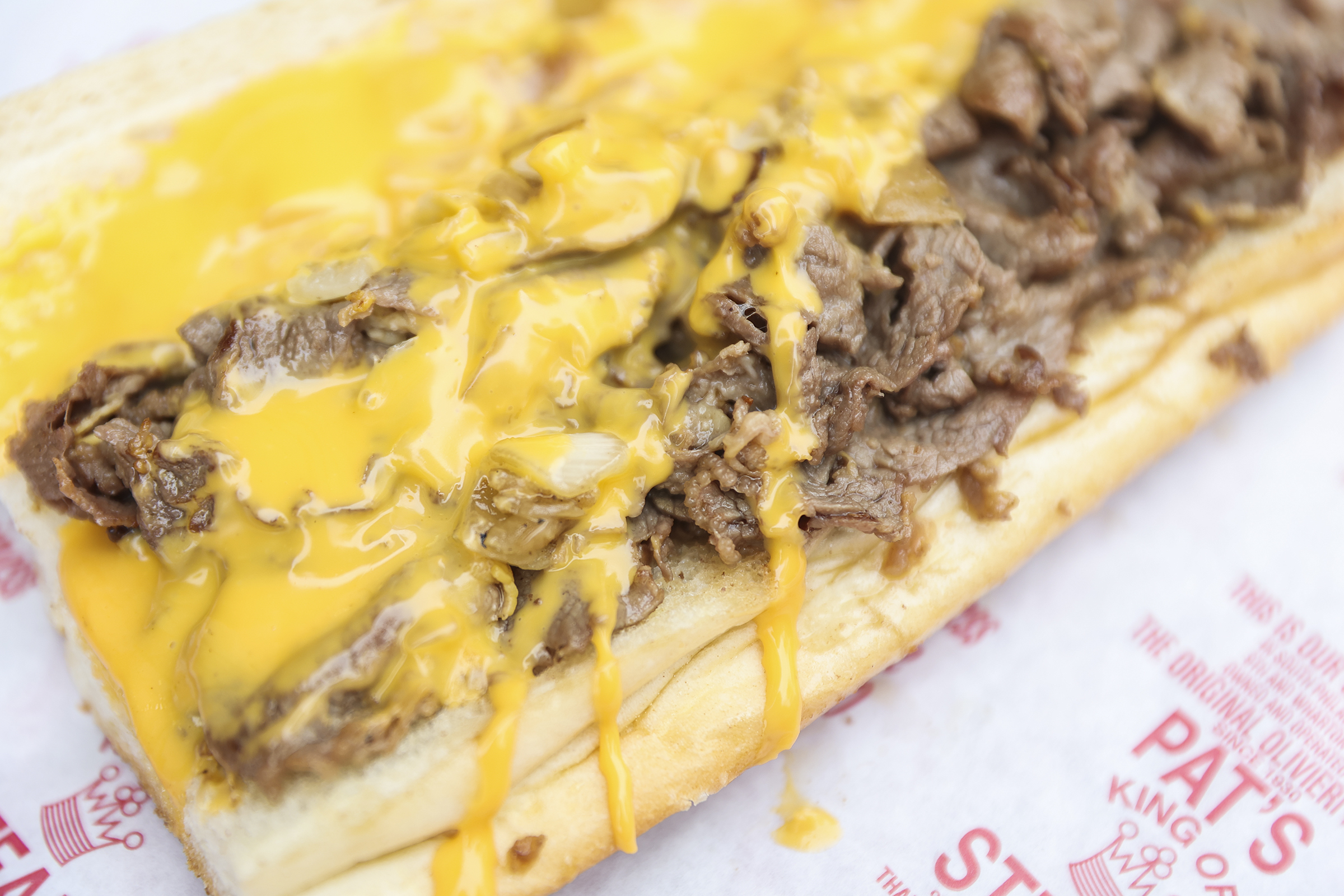
An O.G.-style cheesesteak with Cheez Whiz on top at Pat’s King of Steaks in 2024.
Owner Frank Olivieri said his father, Frank P. Olivieri, didn’t want seeded rolls “probably because his father [Harry] and his uncle [Pat] beat it into his head that he could not change the recipe whatsoever for whatever reason. But since my father unfortunately passed several weeks ago, I thought maybe it’s time to change up a little bit,“ he said. ”Seeded rolls are something that I do when I make them at home for myself.”
Pat’s announced the “new school” seeded-roll option on Instagram as a limited-time offering, but Olivieri said it likely will be permanent. (Across the street, Geno’s still offers plain rolls only.)
The second change — subtle but more significant — is happening on Pat’s grills.
Since Pat’s began offering cheesesteaks in the 1950s, cooks layered the sliced cheese over the beef and let residual heat do the melting on the sandwich. Now, the cheese is melted into the meat and optional onions on the grill before everything gets mixed and goes into the roll.
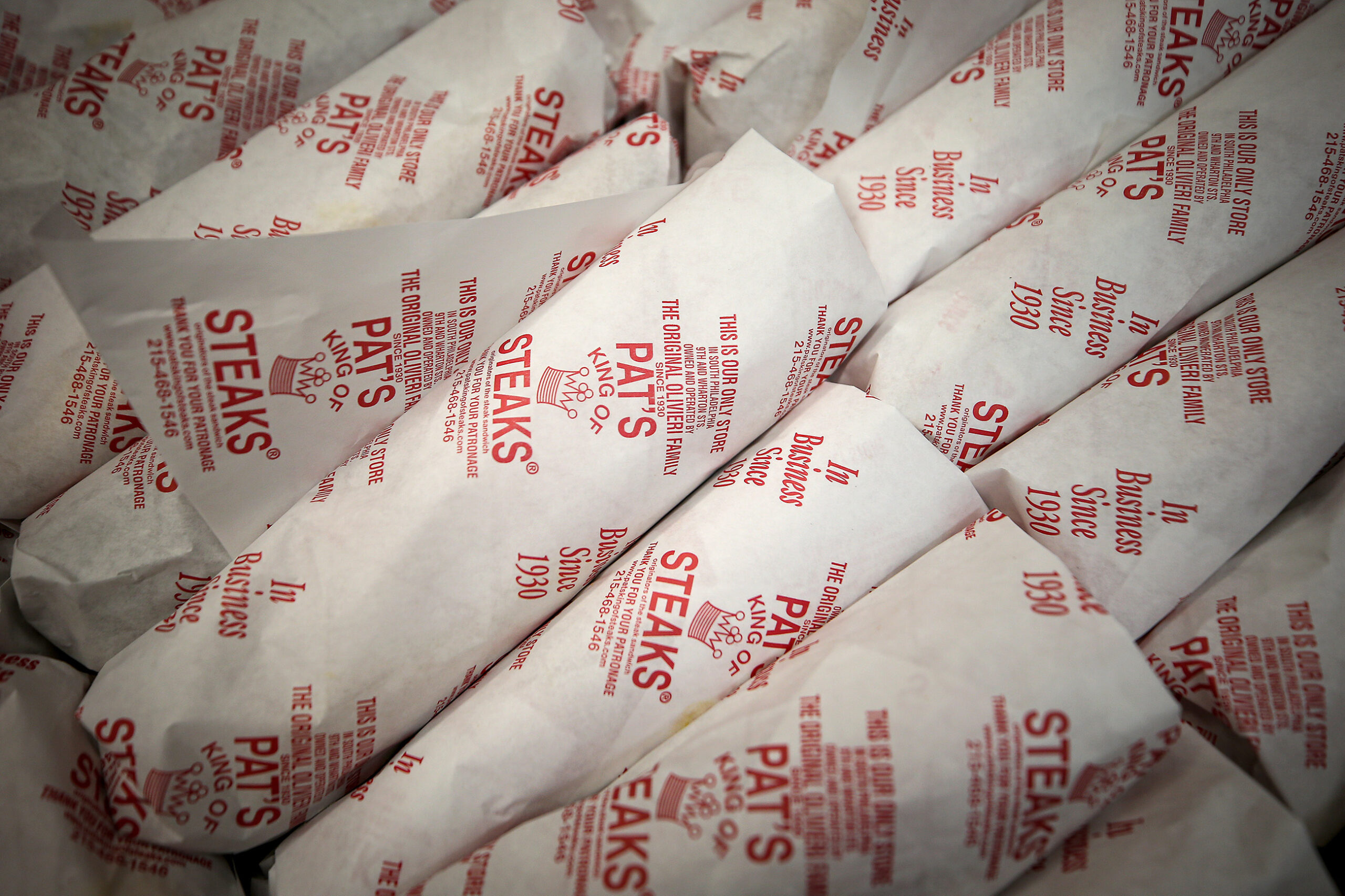
Pat’s is credited with inventing the steak sandwich in 1930.
Olivieri said his father resisted melting cheese on the grill out of concern for maintaining the cooking surface. The new method produces a more integrated bite, with cheese distributed evenly. (Traditionalists, he said, can ask for the classic layered technique.)
While newer operators often finely chop their steak, Pat’s remains committed to its sliced, or “slab,” style.
“There’ll be no banging on the grill,” Olivieri said.
Other additions have appeared. Two years ago, Pat’s started to offer chicken cheesesteaks and Cooper Sharp cheese — the darling of the new-gen shops. Pat’s still offers American, but Olivieri said he plans to phase it out. “It’s kind of redundant,” he said.
In the late 1970s, Olivieri said, he and his mother, Ritamarie, began offering mushrooms and peppers after hearing customers ask for them. His father didn’t notice at first.
“He was looking at one of the invoices and said, ‘When the hell did we start selling mushrooms and peppers?’” Olivieri recalled. “I said, ‘Three weeks ago, Dad.’ He goes, ‘Oh, are they selling?’ I said, ‘Yes.’”
They stayed.
Still, Olivieri sets some boundaries. “I draw the line at pepperoni,” he said.
I was cranking out the newsletter in Tuesday’s predawn darkness when we learned that the Rev. Jesse Jackson Sr., who’d been our greatest living bridge to the civil rights heroics of the 1960s and ‘70s, had died at age 84. Covering his groundbreaking 1984 campaign as a cub reporter at the Birmingham News is still a career highlight four-decades-plus later — a memory that was reinforced recently listening to Abby Phillip’s excellent new book on Jackson. He leaves us right when his victories for African Americans in arenas such as corporate hiring and college admissions are under attack, and it challenges us to fight to preserve them. RIP to an American original.
How ICE protest by ‘an average Joe’ from Haddon Heights went viral
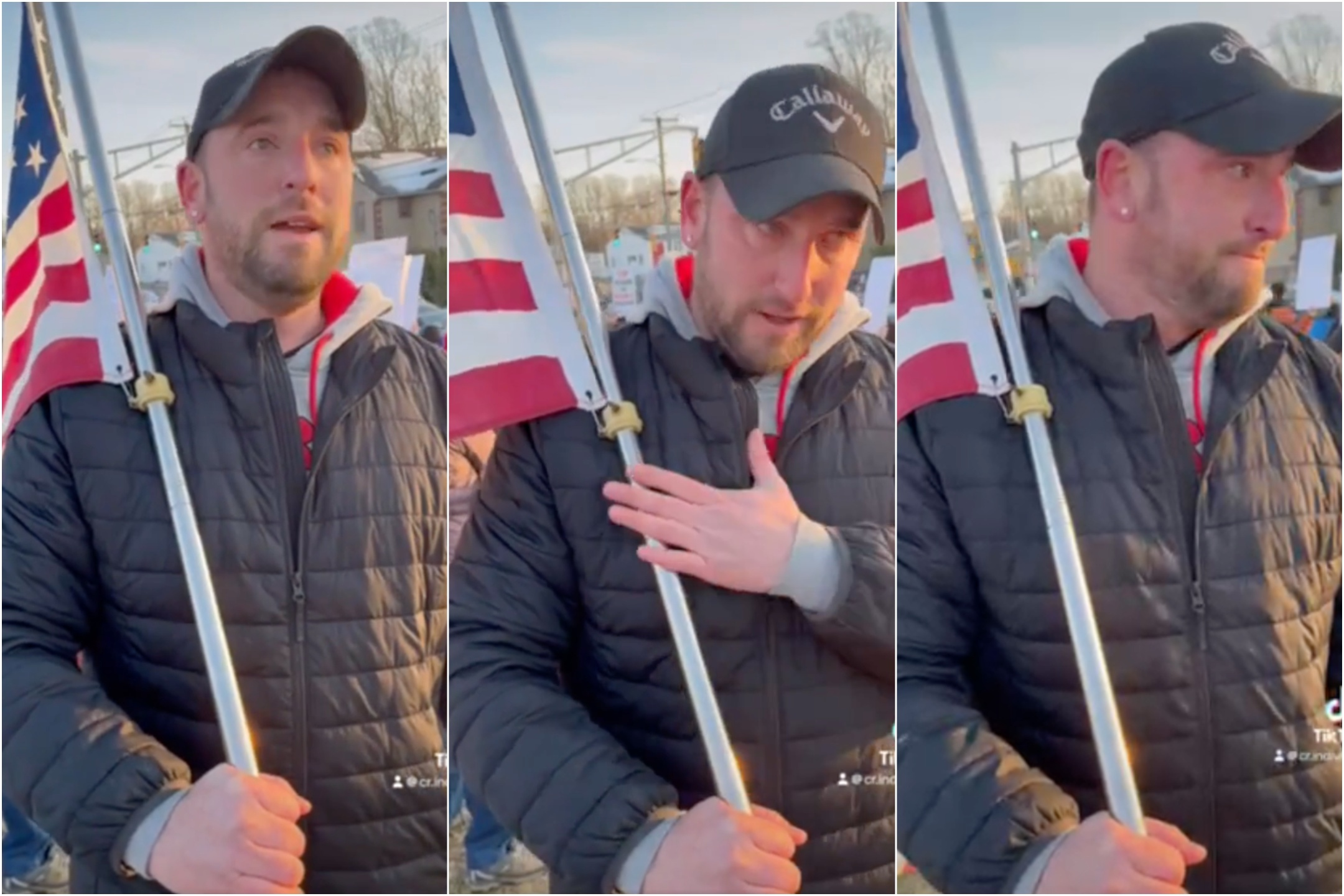
“I never want to see a child run away from our own government again,” said this self-described first-time protester, Joseph Zobel from Haddon Heights, at a rally in Lindenwold, N.J., the day after children ran from a school bus stop after ICE appeared to conduct an operation in the area.
Last Friday, “an average Joe who grew up in Haddon Heights” named Joseph Zobel was at work when he saw a viral video from the nearby South Jersey town of Lindenwold that shocked the nation, and shocked him.
The clip from a Ring doorbell camera showed a gaggle of fourth and fifth graders running in a panic, screaming, “ICE! ICE!” as masked federal immigration agents had approached their morning bus stop the day before.
“I just thought, ‘How can that be happening here in the United States?’” Zobel told me Monday in his first media interview, conducted by email. When he got home from work, he saw online that the group Cooper River Indivisible was holding an “ICE Out” protest at the Lindenwold municipal building at 4 p.m.
He looked at the clock. It was 3:58.
“Something inside of me said, ‘Go up there and stand with these people,’” said Zobel, a 36-year-old school coach who said he’s never been to a protest before in his life. “I wanted to stand for what is right.” As he dashed out, Zobel also grabbed one thing — the American flag he flies in front of his house most of the time (except during football season, when an Eagles flag replaces it).
As many as 300 people were at the protest, as Indivisible organizer Amber Clemments asked the flag-bearing Zobel if he’d be willing to film a video. Zobel’s raw emotion, choking back tears as he said, “I watched fourth- and fifth-grade kids run away from our own government,” soon ignited across social media over the long Presidents Day weekend.
By Tuesday morning, the 47-second clip of Zobel had been watched an astronomical 2.9 million times on TikTok — and liked by some 709,000 viewers — even as it also went viral on Bluesky, X, Threads, and other social media platforms.
It’s not hard to understand why. Zobel, who described himself as a patriotic regular voter but never very political, instantly became the bearded, baseball hat-wearing, anguished face of a new American majority — an Everyman shocked into action by the horror of immigration raids, wondering how best to protect his neighbors.
The two South Jersey viral videos — the one depicting the raid itself and Zobel’s raw reaction — revealed how both the terrorizing tactics of masked immigration cops and the powerful reaction from often nonpolitical Americans, dubbed “neighborism,” are spreading far beyond the Minnesota tundra where this battle was initially met.
Indeed, local activists say Lindenwold — last stop on the heavily traveled PATCO line, just over 15 miles southeast of Philadelphia — has been under a relentless siege from U.S. Immigration and Customs Enforcement (ICE) and other federal agents since last spring, not long after Donald Trump became president. The transit hub has become a magnet for immigrants in recent years, with a local school population that is just under 60% Latino.
Craig Strimel, a leader of Cooper River Indivisible, a local chapter of the group that organized the large “No Kings” protests, said activists first learned of the ICE activity when a Lindenwold immigrant couple escaped agents last year by taking refuge in the local high school, where the principal blocked the feds at the doorway. Since then, Strimel said, ICE watchers have seen frequent activity in and around a cluster of five apartment complexes with large immigrant populations, but few known arrests.
“It was becoming apparent early on that this was all about creating terror,” said Strimel of the frequent ICE sightings. Some local residents stopped leaving their apartments, he said, and a once-popular restaurant in Lindenwold just closed its doors amid rumors that the couple that owned it has returned to Mexico.
All of this set the stage for last Thursday, when masked federal agents wearing tactical gear arrived early in the morning at Lindenwold’s Woodland Village Apartments just as 44 elementary school kids were waiting for their school bus. The sighting triggered a panic that saw some kids running away and others frantically hustling onto the bus as the driver arrived. No one was apprehended or reported hurt.
On Monday, U.S. Department of Homeland Security officials said the agents went to the complex hoping to arrest a Honduran immigrant who’d once been convicted of aggravated assault. The man was not taken on Thursday and remains free.
Although some outlets reported the large protest was in response to the high-profile raid — which has been covered by the CBS Evening News, MS Now’sMorning Joe, and elsewhere — that took place just a day and a half earlier, the rally actually had been in the works for several weeks.
It had been organized by a young woman from Lindenwold named Tatiana — a 20-year-old business major at Camden County Community College who spoke with me Monday on the condition that I not use her full name — who’d been seeing the ICE activity in her hometown and felt it was time local people spoke out.
Tatiana told me that the idea behind the Lindenwold protest was “to give the community a voice — to be able to say, ‘No, we don’t stand for this.’ That’s the most important thing for me. It’s just bringing community together and deciding we’re not OK with this at all.” But she agreed the bus stop raid had given the event a boost from residents believing “that children should not be scared of federal law enforcement.”
Zobel was one of those neighbors. In the email interview, he described himself as “just your average Joe who grew up in Haddon Heights.” He did volunteer that he’s voted in every election since he turned 18, and that his first ballot was cast for Barack Obama, “and I felt proud walking out of the booth that day.”
Fittingly, Zobel sounded somewhat Obama-esque when he described his dismay over America’s bitter partisan divide. “We as a nation are so angry with one another, and that makes me so sad,” he said. Not surprisingly, he’s as stunned as anyone at the millions of views for Friday’s video, and somewhat concerned about the impact, saying, “I just hope this video does not divide people.”
But Zobel’s words and teary-eyed emotion went viral because it was such a shot of hope — that in a moment when hate is on public display in the streets of the United States, “your average Joe” who’d once stood on the sidelines is now grabbing the American flag and taking the field to fight for their neighbors. An authoritarian movement dependent on rage simply never counted on the brotherly love that sent this nonpolitical Eagles fan to his first protest.
It might not be his last. “I am always happy,” he said, “to help support humanity.”
Yo, do this!
With several inches of snow still on the ground, it might shock you to hear this, but American soccer is back! The Philadelphia Union — despite winning the 2025 Supporters Shield and boasting Major League Soccer’s best winning percentage in the 2020s — radically shook things up during the offseason. With new strikers Ezekiel Alladoh and Agustín Anello looking to amp up their attack, the Union’s quest for the CONCACAF Champions Cup begins Wednesday in Trinidad against Defence Force FC at 6 p.m. on FS2. Saturday night at 7:30 p.m., it’s back to the chillier climes of Washington for the MLS opener against DC United on Apple TV (with no need in 2026 for an additional Season Pass subscription, as in past years).
In the quest for what’s new in American popular culture, sometimes we take for granted the established jewels in our midst. I’ve long felt that MS Now’s 9 p.m. (now just on Monday nights) host Rachel Maddow is our best TV commentator because of the way she weaves the historical past into the headlines of America’s tortured present. But since last summer, she has upped her game. Maddow’s coverage of two stories underreported in most of the mainstream media — grassroots resistance to the Trump regime, and now the push for a nationwide network of warehouse concentration camps — has created appointment television every Monday.
Ask me anything
Question: What is your take on the latest CBS censoring of [Stephen] Colbert? — @bcooper82.bsky.social via Bluesky
Answer: Another Tuesday morning breaking story on deadline: The CBS overseers of Late Night with Stephen Colbert — the top-rated talk show that’s nevertheless ending this year in what critics see as genuflecting to the Trump regime that the program frequently mocks — would not air a recorded interview with Texas state lawmaker and Democratic Senate primary candidate James Talarico. The backstory here is that the Federal Communications Commission has long exempted late-night talk shows from its equal time rule about political candidates on licensed broadcast outlets, but last month, FCC chair Brendan Carr — a pro-Trump MAGA pit bull — said this is changing. That apparently was enough for CBS’s new Trump-friendly management, which would not broadcast the interview (available on YouTube, now certain to get more views than if it hadn’t been censored). This new flap just highlights what a perilous moment this is for the First Amendment and American democracy writ large. Government limits on what viewpoints you can see or hear are a sign of dictatorship, full stop.
What you’re saying about …
Last week’s question about a winning Democratic strategy for the 2026 midterms drew a robust response, and almost all of the replies were thoughtful and nuanced. If there was a consensus, it was that Democrats should tailor their candidates to the divergent views of the congressional districts they hope to win. As Naomi Miller stated, “I think progressive candidates should run in progressive districts, and mainstream democrats in mainstream, purple, and red districts.” Still, a number of you think America’s bad experience with MAGA extremism means a sharp left turn is warranted in response. “I’d like for the Democrats to become more progressive and combative toward Trump than they already are,” wrote Benjamin Spohn, voicing an opinion many share these days.
📮 This week’s question: Tuesday’s passing of the Rev. Jesse Jackson is one more reminder that many icons of America’s tumultuous 20th century are disappearing. So who do you think is the current greatest living American, and why? Please email me your answer and put the exact phrase “greatest living American” in the subject line.
Backstory on the main reason the media is not trusted
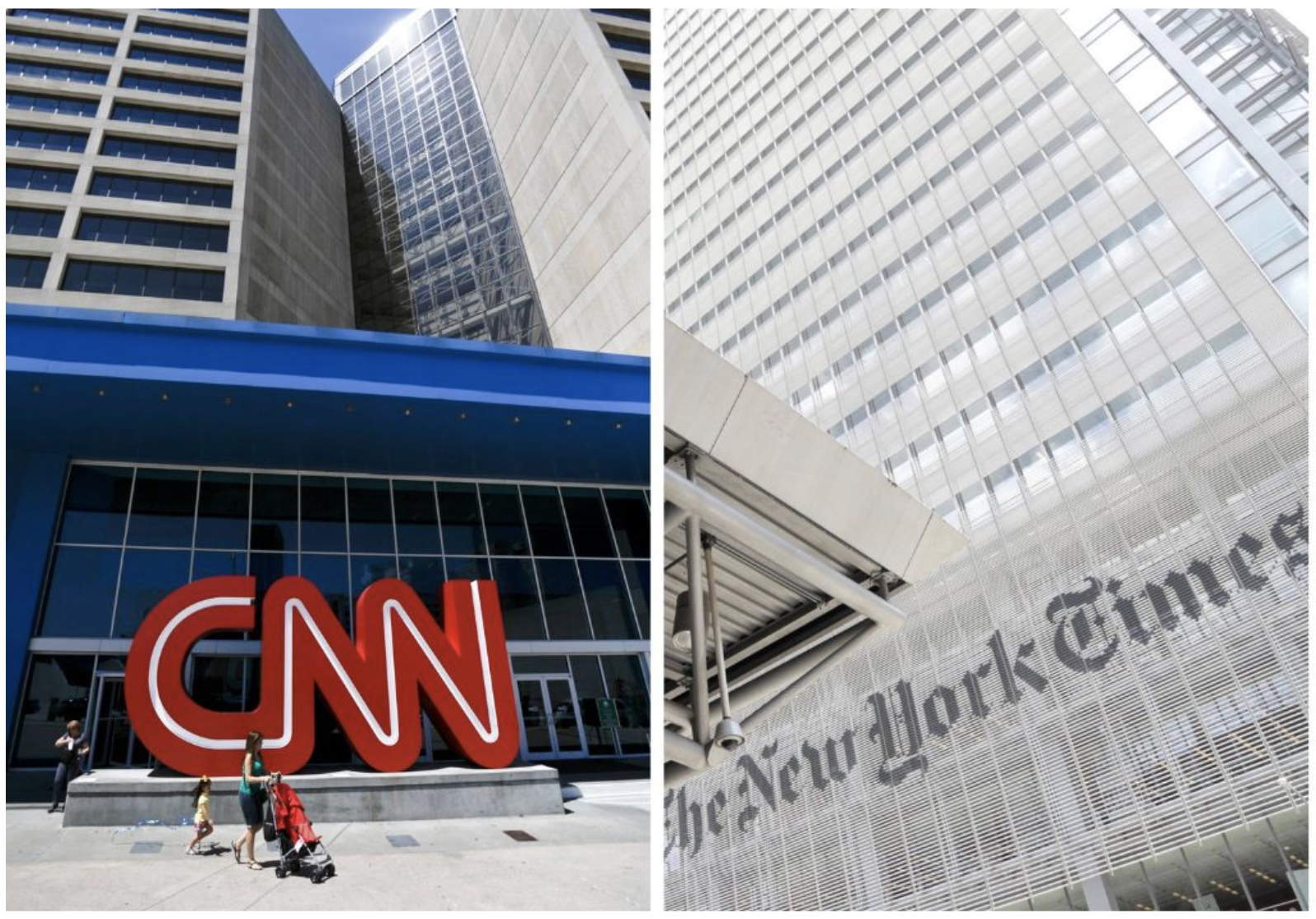
Exterior images of CNN headquarters in Atlanta and the New York Times Building in Manhattan.
It’s rare these days to write something that everyone can agree on, but here goes: Public trust in the media has never been lower than it is today. How low? A Gallup poll last fall found that public trust in the ability of newspapers, TV, and radio to fairly and accurately report the news had plunged to 28%, the lowest ever recorded. Why? It’s complicated. The people’s faith in every major institution has declined in the 21st century, after all. And it’s clear that in a deeply divided America, rage against the media machine looks different from the left than it does from the right.
This weekend, in a New York Times piece largely about the broken promises of one media-mogul billionaire — Washington Post owner and Amazon founder Jeff Bezos — columnist Lydia Polgreen put forth an explanation for sinking media trust that jibes with a lot of what I’ve witnessed since graduating into full-time journalism back in 1981. I believe it’s not the only reason — but the biggest, and maybe the most misunderstood.
Polgreen noted that the common theory for the public turning against Big Media — that journalists grew more partisan and biased after the tumult of the 1960s and ‘70s — doesn’t comport with the bigger reality. The era that peaked with the publication of the Pentagon Papers and the Watergate scandal launched a decades-long golden era of profitable news organizations spending big on investigative and accountability journalism — exactly what viewers and readers claimed they wanted.
Yet, trust declined as that happened. Polgreen cited a study in the late 1990s that compared then-contemporary media to 1960s newspapers and found the earlier times were “naïvely trusting of government, shamelessly boosterish, unembarrassedly hokey and obliging.” Polgreen wrote that moving “away from deferential stenography and toward fearless investigation … led to declining trust in the news media. Aggressive, probing and accountability-oriented journalism held up a mirror to American society — and many Americans didn’t like what they saw.”
I think this explanation is spot on, but before readers jump all over me, let me quickly add a couple of caveats. Starting way back in Ronald Reagan’s 1980s, there was also a response to the growing backlash — especially in elite, Beltway journalism — that resulted in too much groveling to authority, and thus stenography around government lies like the 2003 Iraq War. This has only gotten worse with the current wave of billionaire owners like the Post’s Bezos. This means many liberals now also distrust the media, but not for the same reasons as conservatives, who’ve long loathed journalism for probing America’s inequities around race or gender.
The explanation offered by Polgreen jumped out at me because it fit with what I explored in my 2022 book, After the Ivory Tower Falls, which looked at Americans losing trust in another large institution: colleges and universities. The liberal ideas that were nurtured on campuses in the postwar college enrollment boom — including the civil rights movement — triggered the same grievance-filled, largely white working-class backlash as did journalism about social injustice. Today, the only road back for the media is to hold the powerful to account — and understand that not everyone is going to like it.
What I wrote on this date in 2022
People can’t say they didn’t see America’s current crisis coming. On this date four years ago, I expressed my shock and amazement that little more than one year beyond Donald Trump’s attempted coup to stay in power, the right-wing’s creation of a political fantasy world was spiraling out of control, with lies about Hillary Clinton spying on Trump’s 2016 campaign and Joe Biden giving out free crack pipes (?!!). I wrote, “[Historian Ruth] Ben-Ghiat told me that the failure of the Jan. 6 insurrection only forced the GOP to double-down on embracing alternate realities, because ‘they have to reckon with the fact that [Trump] lost, that he’s no longer the leader.’”
There’s been no rest on themass deportation beat. In my Sunday column, I looked at the out-of-control lying from the Trump regime, with unbelievable fictions about everything from shootings and rampant brutality by masked immigration officers to Commerce Secretary Howard Lutnick’s whoppers about his friendship with Jeffrey Epstein. I argued that government lying is fundamentally unconstitutional and that the perpetrators need to be punished, including prison time. Over the weekend, I wrote about how, while Minneapolis was a victory for the forces resisting American authoritarianism, that won’t stop Homeland Security from putting thousands of new officers on the street and expanding its concentration camps. The fight for the soul of the nation has only just begun.
What was I saying higher up in this newsletter about accountability journalism? Ever since Lyndon B. Johnson’s Great Society push in the mid-1960s, community nonprofits have been a valuable source of urban renewal, yet aresometimes dragged down by waste, fraud, and abuse. It’s a problem that sadly persists, as shown last week by a major Inquirer investigation into Philadelphia’s NOMO Foundation, one of the best-funded nonprofits attacking youth violence and crime. Ace reporters Ryan W. Briggs and Samantha Melamed found that the foundation has received more than $6 million in public funds in recent years, but faced an IRS lien and eviction lawsuits while it was forced to close its housing program. This is why we have a First Amendment, so that a free press can report on the problems a corrupt or inept government refuses to deal with. Subscribing to The Inquirer gives you access to this type of essential journalism, and you’ll also feel good about supporting this vital work.
By submitting your written, visual, and/or audio contributions, you agree to The Inquirer’s Terms of Use, including the grant of rights in Section 10.
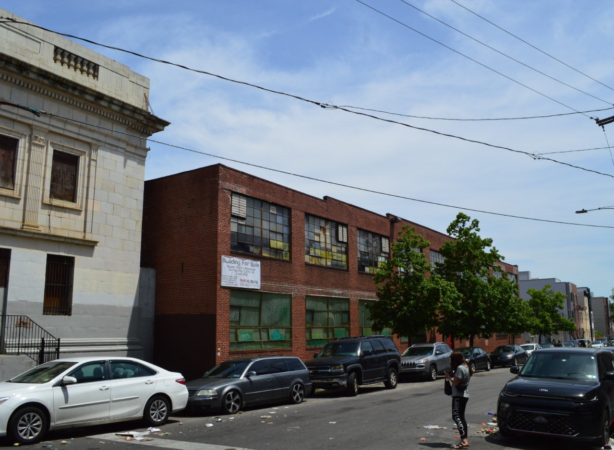
The long vacant industrial building at 1807 Huntingdon St. in East Kensington is moving toward redevelopment after seven years of setbacks.
Philadelphia-based Smith & Roller has been eyeing the faded brick structure since 2019 but struggled with funding following the COVID-19 pandemic and the loss of a lender after Silicon Valley Bank’s collapse in 2023.
But last week New Jersey-based Ellavoz Impact Capital announced that it was acquiring the building in partnership with Smith & Roller, allowing the developers to move forward with their plans near SEPTA’s Huntingdon stop on the Market-Frankford line.
Developers Tayyib Smith and Jacob Roller see the project as a catalyst for change around the elevated train station, which is haunted by the opioid crisis.
“I’ve always imagined connecting nodes of vitality and then seeing how it almost has a regenerative spring of people looking at a neighborhood differently,” Smith said.
“I can imagine that block having a different feel, a different type of lighting, a different type of walkability, more socio-economic diversity, more eyes on the corridor,” he added.
The developers plan to break ground on the project in about six months.
Smith & Roller’s neighboring development, 1801 Huntingdon, will transform a historic bank building into a banquet hall and commissary kitchen for Black-owned caterer Strother Enterprises, which has been expanding elsewhere in the city recently. That development will need approvalby the city’s Zoning Board of Adjustment and is on a longer timeline.
Over the years, the project at 1807 Huntingdon has added more housing and cut back on space for businesses.
The current version of the project includes 109 residential units and 8,600 square feet of commercial space. According to Ellavoz Impact Capital’s news release, the commercial space has been preleased, but the tenant list is not public yet.
A rendering of the redeveloped factory building, as a mixed-use apartment building.
An earlier version of the project, reviewed by the city’s Civic Design Review committee in 2022, would have contained 80 apartments and 38,000 square feet of light industrial space.
That’s partly because the federal program Smith & Roller originally planned to use, New Market Tax Credits, requires that at least a fifth of a mixed-use project be devoted to commercial development.
But the project at 1807 Huntingdon has been in process for so long that this part of Kensington no longer qualifies for the federal incentive, which is meant to spur investment in struggling areas.
The project is still in a Keystone Opportunity Zone (KOZ), however, which will give state tax breaks to businesses at the 1807 and 1801 Huntingdon projects.
That policy is also meant to incentivize development in lower-income areas, but there are many examples of its application to parts of Philadelphia like the Navy Yard and University City.
“I don’t know many [KOZs] that are in neighborhoods like Kensington,” Smith said, “where there’s somebody trying to use it in the spirit and intent of how the legislation was written.”
The project will include both the redeveloped factory with additional space above it and an adjacent parking lot, which will have multiple stories of housing on top.
It will include a mix of studios, one-bedroom, and a few two-bedroom apartments, along with loft-style units that can be rented out as either short-term rentals or office space.
Sixty percent of the units will be set aside for households earning 80% of area median income, or almost $67,000 for one person.
“We don’t have a direct subsidy, like a Low Income Housing Tax Credit or anything like that,” Roller said. “In some cases, it’s not that different a number than a market rent in the neighborhood.”
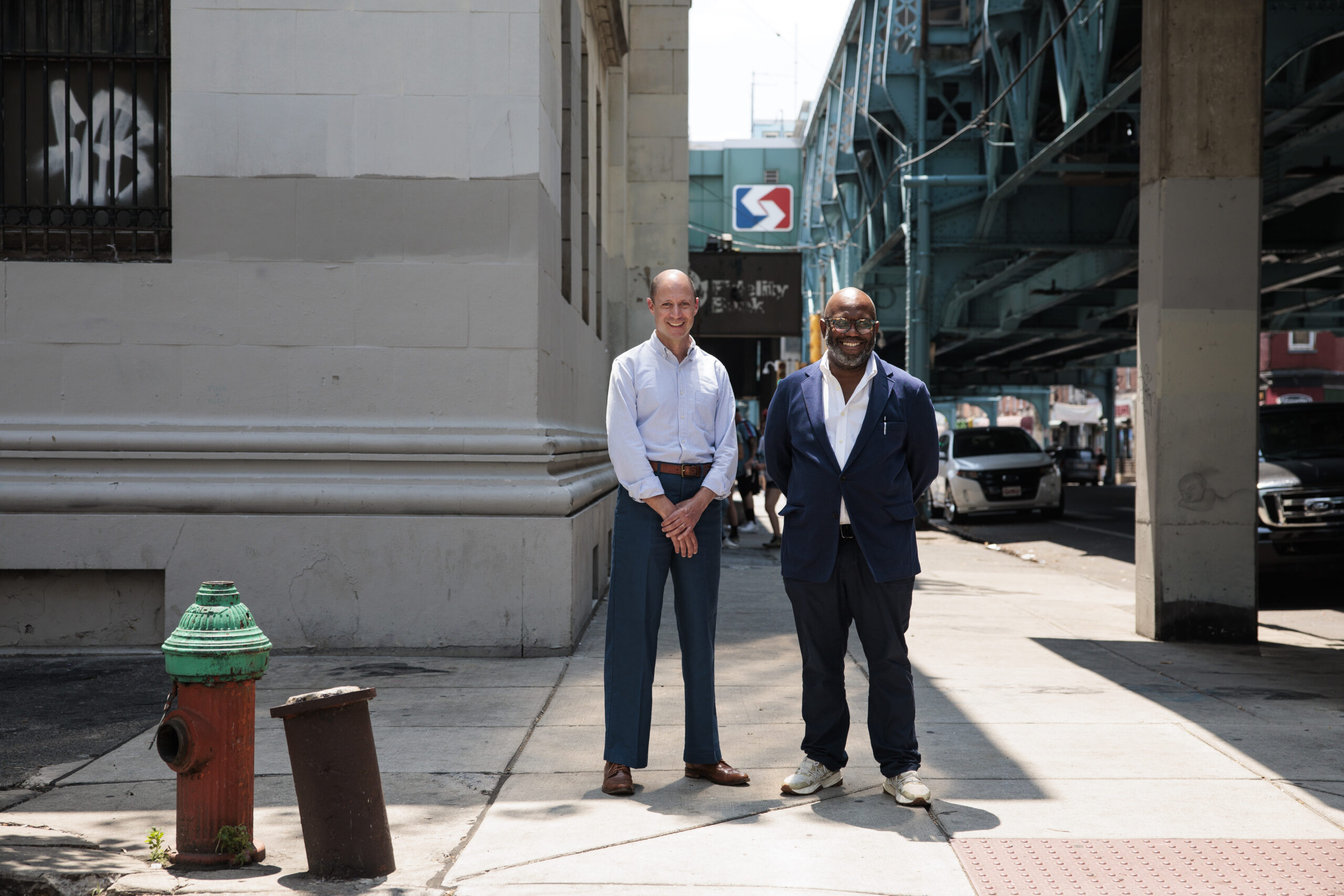
Jacob Roller (left) and Tayyib Smith last June outside the historic bank they plan to turn into a base for Black-owned businesses, which is next to the apartment project farther down Huntingdon Street.
Roller said the project is inspired in unit mix and general location by the success of Shift Capital’s mixed-use project at 3400 J St., home to Càphê Roasters. Smith & Roller was a junior partner in that project.
The Huntingdon Street project will be the firm’s largest project by unit count.
“I am extremely impressed by the work of Smith & Roller,” Jeffrey Crum, president of Ellavoz Impact Capital, said in the news release. “They have proven themselves as professional and experienced urban redevelopers who have a unique vision for revitalizing neighborhoods in partnership with local communities.”
The proposal has been presented to the East Kensington Neighbors Association several times over the years, and the community group is supportive of Smith & Roller’s proposal.
The group also sees the development project as a means to bring new life to the block, where the current dilapidated state of the buildings often attracts opioid users from nearby open-air drug markets on Kensington Avenue.
“The block has been challenged for a long time,” said John Theobald, president of the East Kensington Neighbors Association. “It’s really where a lot of the Kensington Avenue activity impacts the neighborhood, so hopefully more people living there and less vacancy will help.”
The Eberz sisters know they can count on each other to pick another up.
Alexis and Kayla Eberz, two of three sisters on the Archbishop Carroll girls’ basketball team, leaned on another to earn a 50-38 win over Archbishop Wood in a Catholic League girls’ basketball semifinal.
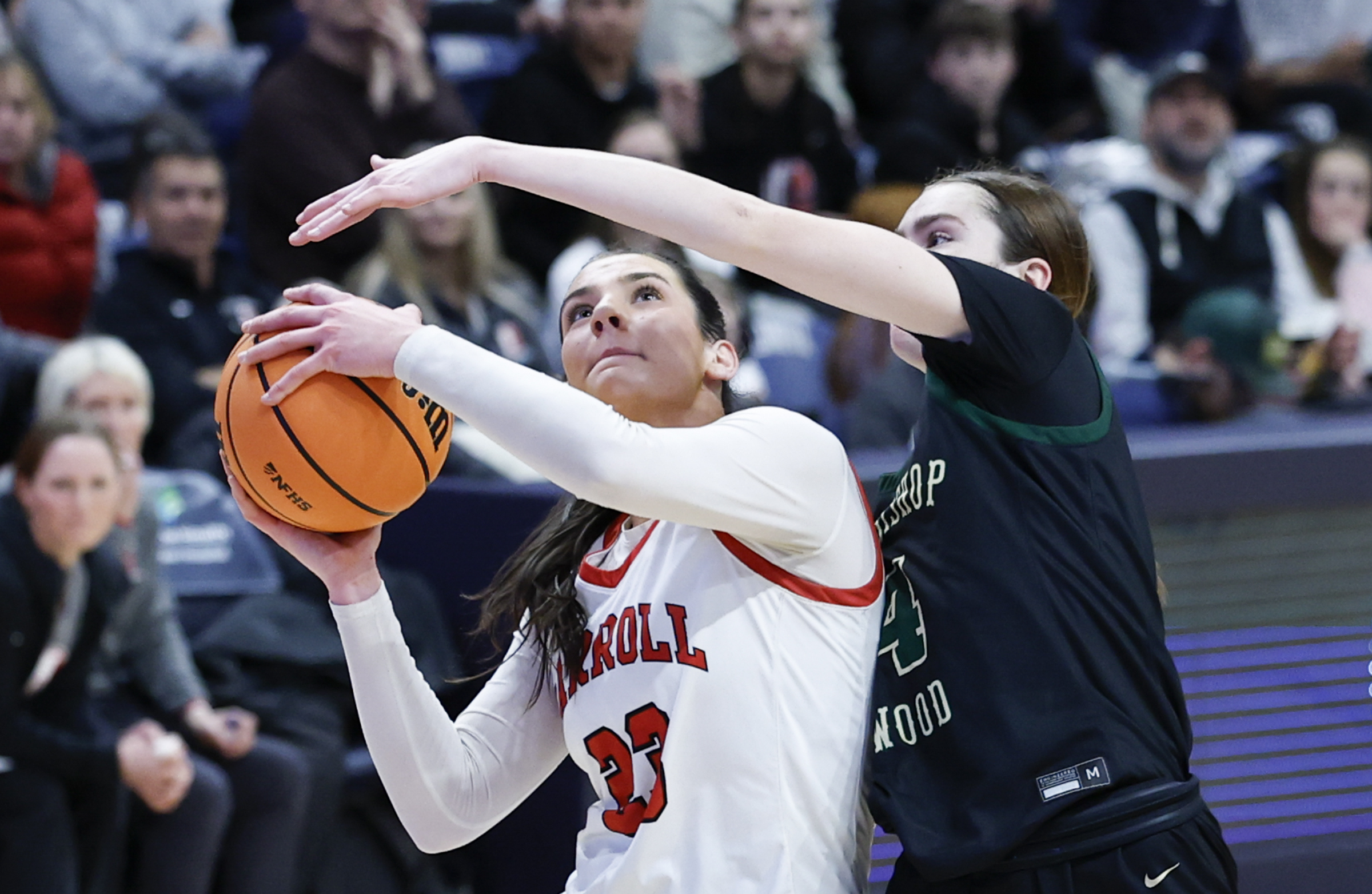
The two combined for 36 of Carroll’s 50 points; sophomore Kayla scored 24 and senior Alexis added 12.
“I definitely look up to Lex a lot,” Kayla Eberz said. “I’m so proud of everything she does, [and] I think we work together really well. So if one’s not doing so [we’re going to] pick the other one up.”
Archbishop Carroll’s Kayla Eberz finished with a team-high 24 points against Archbishop Wood on Monday.
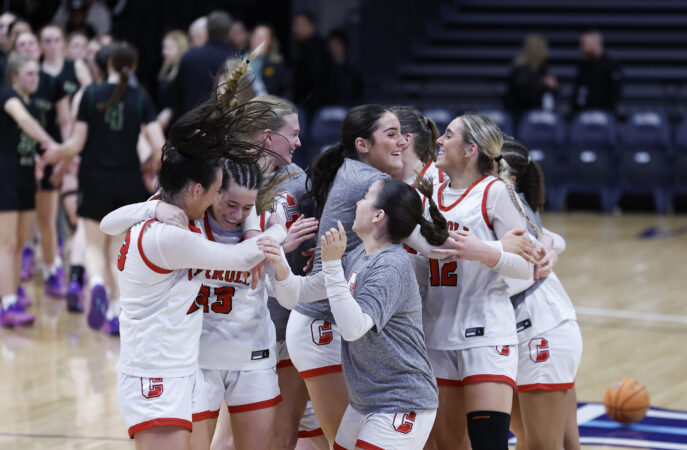
Now, Carroll finds itself in a familiar position: the PCL final. This marks the Patriots’ third straight PCL final appearance.
Last season, Carroll lost to Neumann Goretti, and in 2024, it lost to Wood. The Patriots haven’t won a PCL title since 2019.
This time around, Carroll, which will face Cardinal O’Hara Sunday at the Palestra, believes it’s in a better spot to come out victorious.
“I think our mindset [has changed],” Alexis Eberz said. “We haven’t gotten the outcome we wanted the past two times, but we are using that as motivation this year. … We’re a special team. Staying together, staying composed, having discipline — I think we got it.”
Road to victory
But the Patriots’ semifinal win at Finneran Pavilion — the future home of Alexis Eberz, a Villanova signee — did not come easy.
The Vikings built a 10-point lead about six minutes into the game. Carroll responded with back-to-back three-pointers to cut its deficit and end the first quarter down by two points.
Wood senior forward Colleen Besachio, a Rider signee, was the difference-maker for the Vikings, scoring a team high 15 points. Wood trailed, 21-20, at halftime.
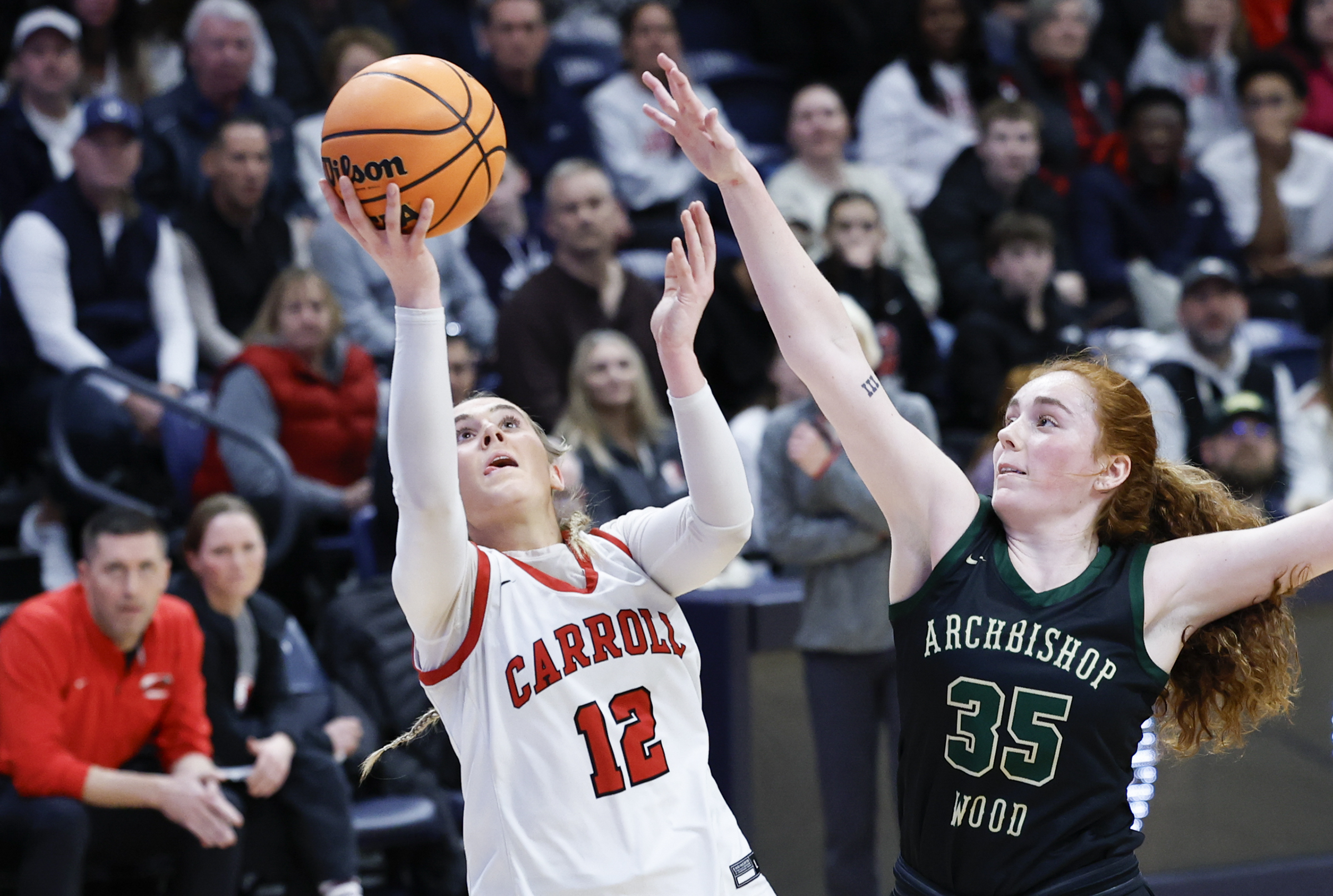
Archbishop Carroll’s Alexis Eberz drives to the basket against Archbishop Wood High’s Colleen Besachio in the third quarter on Monday.
But once the Eberz sisters started to connect in the third quarter, the tempo shifted.
Kayla started the run with a bucket that gave Carroll 31–28 lead, then followed it up with a massive block. On the Patriots’ next possession, Alexis found Kayla for a three-pointer, followed by a Kayla dish to Alexis for an easy layup to make it 36–28.
“Basketball is a game of runs,” Kayla said. “They had their run at first; we had ours. And then we just had to stay on top of it.”
Carroll held an eight-point lead entering the final 10 minutes and extended that advantage to a comfortable 12 points by the final buzzer.
“We just had to [take it one] possession at a time,” Carroll coach Renie Shields said. “When we dug in, took one possession defensively, and offensively got going, I felt more comfortable that we got into a swing of things.”
Back to the Palestra
Carroll has an 11-0 league record. The team is full of chemistry and experience.
The Patriots hope that will help them write a new story and bring home a PCL crown on Sunday afternoon.
“We’re all such good friends. It helps,” said senior forward Bridget Grant, who’s committed to Ursinus. “When one of us is down, another person picks [them up]. If someone takes a bad shot, you can let them know. That’s not us getting mad; it’s just trying to help the team. It really just shows how well we play with each other, that we all love each other.”
Members of the Archbishop Carroll team celebrate after beating Archbishop Wood in the Catholic League girls’ basketball semifinals on Monday.
The theory after the U.S. women’s soccer team’s January camp was that the SheBelieves Cup in March would be the first big step toward World Cup qualifying in the fall.
Tuesday’s announcement of the tournament roster signaled that the step might not be as big as believed.
The 26-player squad doesn’t lack for marquee names. Naomi Girma, Sam Coffey, Lily Yohannes, Rose Lavelle, Trinity Rodman, and Alyssa Thompson are among them. But just as significant are two names not on the squad.
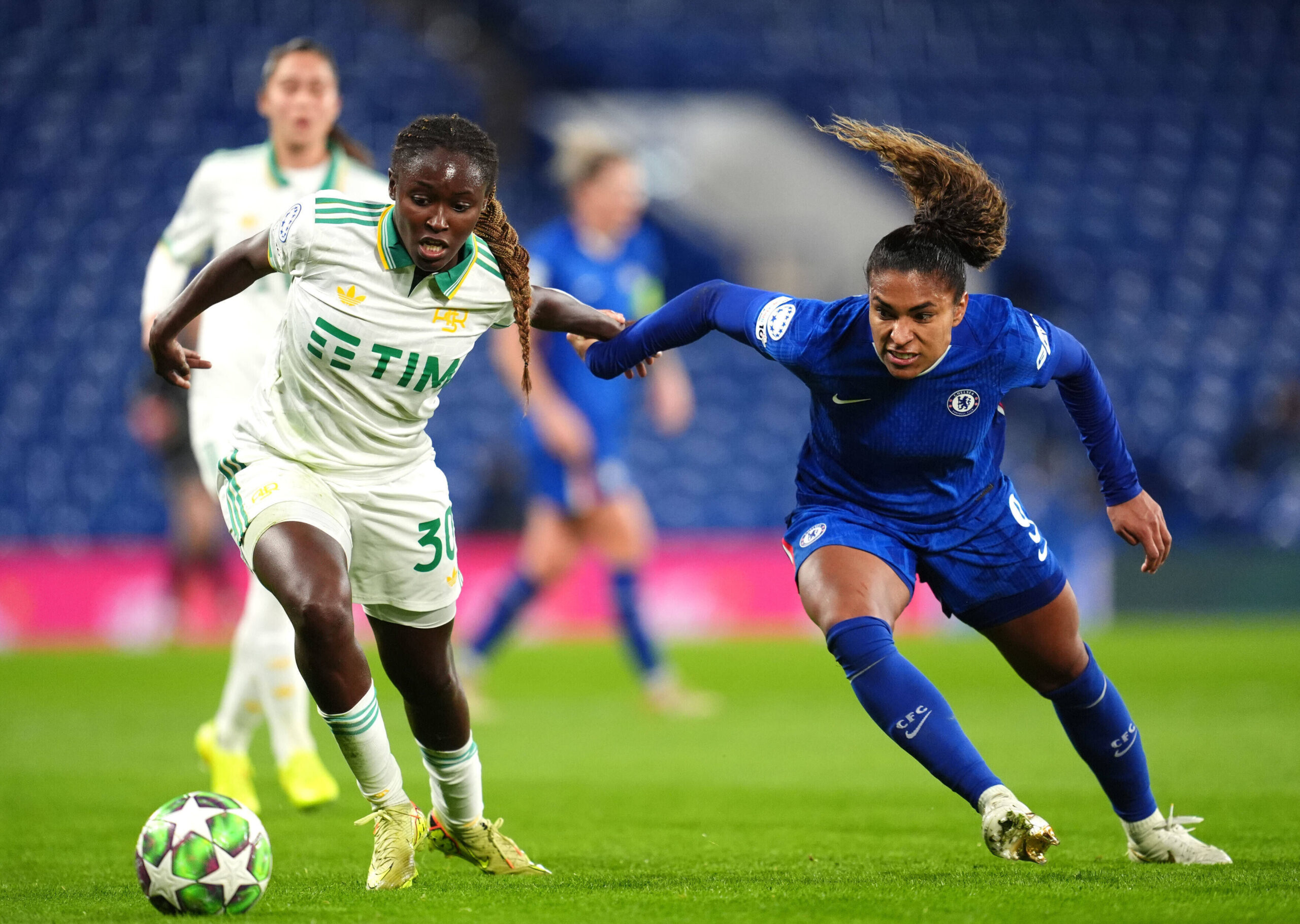
Sophia Wilson is back from maternity leave and participating in the Portland Thorns’ preseason camp out west. Catarina Macario hasn’t played since December for the U.S. or her English club, Chelsea, but there’s been a lot of chatter that a reported heel injury isn’t the only reason. She turned down a new contract offer in London and could be headed to the NWSL’s San Diego Wave.
Catarina Macario (right) likely is leaving Chelsea after three years at the London club.
U.S. manager Emma Hayes has made it clear that she won’t call in players who haven’t been playing for their clubs lately. That makes sense. Still, Monday’s news raised some eyebrows. Hayes was not surprised to be asked about the two stars and said she would have called in both, were they healthy.
“‘Soph’ and I spoke, and she’s just not ready,” she said, noting that the Thorns didn’t deem her fit yet either. “The return to play protocol, it’s just not given her enough time, I think, for her to be in the place that she wanted to be in. So it’s right that she’s not part of this squad, however much I want her to be.”
The manager described Macario as “getting closer and closer [to returning] every day” and said she didn’t know when the forward will return to club action.
“She’s not available for selection yet at Chelsea. ”I don’t know when that is going to come — I don’t know if it’s a week, two, three weeks away.”
The situation is different with two other major absentees. Mallory Swanson, the third member of the “Triple Espresso” forward line, is also a new mother and hasn’t returned to work with the Chicago Stars. Centerback Tierna Davidson has resumed training with Gotham FC after a torn ACL last year — “we’ve missed her,” Hayes said — but isn’t yet in game shape.
“A player coming back from injury, you have to give them the time to be able to find their best version of themselves,” Hayes said. “I expect Tierna, when she is cleared to play for Gotham, to be competing, to come back into this side as soon as she, ideally, starts competing for Gotham on a regular basis. But most importantly, when her body is ready.”
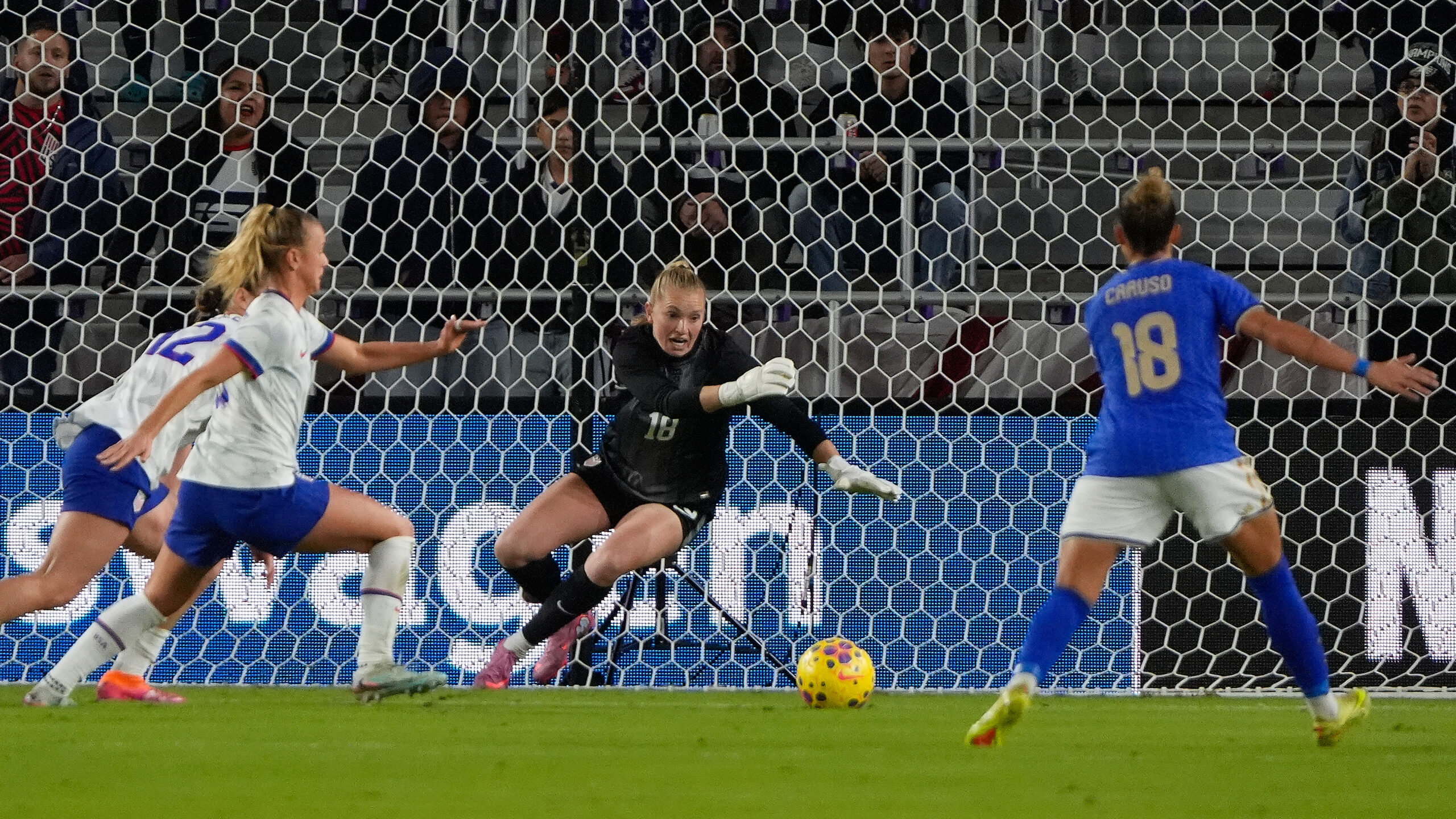
As for players who are on the 26-woman squad, the battle to be the new starting goalkeeper is one of the biggest stories. Phallon Tullis-Joyce, Claudia Dickey, and Mandy McGlynn are the three on this squad as the competition continues.
Tullis-Joyce has the most club pedigree at Manchester United, at least for now. But she hasn’t always looked the part in a U.S. jersey. Dickey, of the Seattle Reign, has looked sharper in starting five of the last seven U.S. games, though Tullis-Joyce missed December’s games with an injury and January’s as they weren’t in a FIFA window.
Phallon Tullis-Joyce hasn’t played for the U.S. since the Americans lost to Portugal in October at Subaru Park.
“I’ve been really happy with Claudia Dickey and Mandy McGlynn from [the] last camp,” Hayes said. “With Phallon, we didn’t get the chance to select her because she was injured in the back end of November, December, so I’m looking forward to having Phallon back with the group. And, for now, I’m happy with this group.”
The U.S. will play Argentina, Canada, and Colombia in this year’s tournament, on March 1, 4, and 7, respectively. Sports Illustrated Stadium in Harrison, N.J., will host the last day’s doubleheader, Argentina-Canada and U.S.-Colombia. As ever, a sellout crowd will be expected, with a few Philadelphia accents in the stands from fans making the trip north.
Six days later, the NWSL season will kick off in Washington with Rodman’s Spirit hosting Wilson’s Thorns. That will be Rodman’s first game since signing her big new contract in D.C. The potential for Wilson to return to action that night will make it an even bigger occasion.
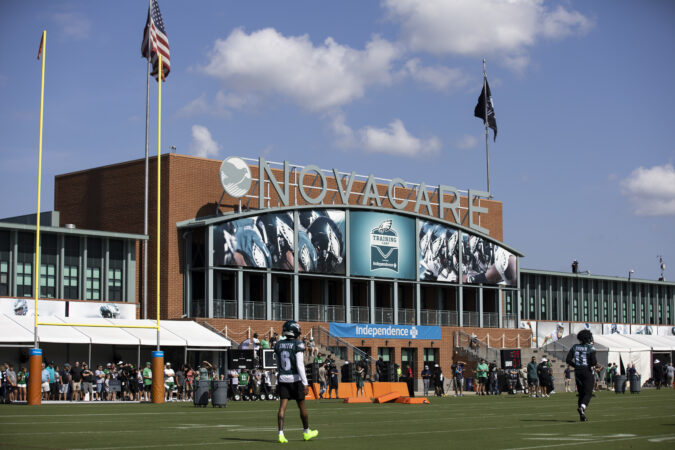
The Eagles’ training facility in South Philadelphia will have a new name this upcoming season: Jefferson Health Training Complex.
Since the practice facility opened in 2001, it has been known as the NovaCare Complex. It’s been home to Eagles training camp since 2013.
The team announced new sponsorship agreements with Jefferson Health and with NovaCare Rehabilitation on Tuesday, which included the renaming of the Eagles’ facility.
The facility, located on the side of Broad Street across from the sports complex, is home to the Birds’ main locker room, team offices, and more.
“The longstanding partnership between the Eagles and Jefferson Health has been built on a shared commitment to the region we serve,” Eagles president Don Smolenski said in a press release. “This multi-year extension marks a defining moment in our partnership — one that will now call the Jefferson Health Training Complex home to the Philadelphia Eagles. We are thrilled to celebrate this moment together and look forward to building upon our joint impact in the community through the core values we share.”
Jefferson Health will also continue to be the jersey patch sponsor for the Eagles’ practice jerseys, while NovaCare will continue to be the team’s official rehabilitation partner.
The Birds will return for practices in late April and May, ahead of mandatory minicamp in June and training camp in July.
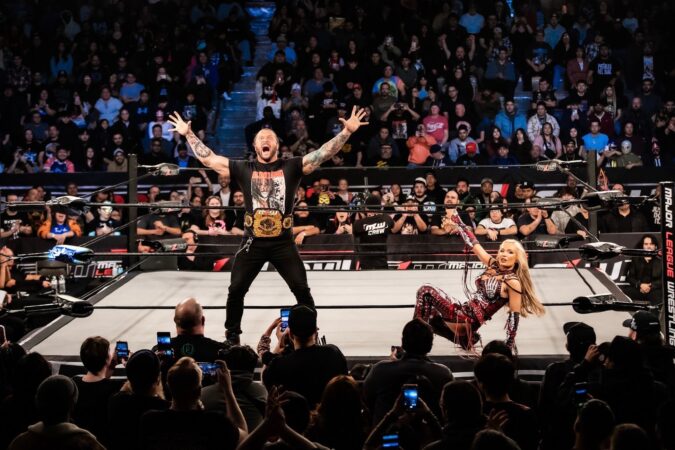
For the first time in over two years, Major League Wrestling will return to Philadelphia to host two nights of action at the 2300 Arena as part of the promotion’s 24th anniversary.
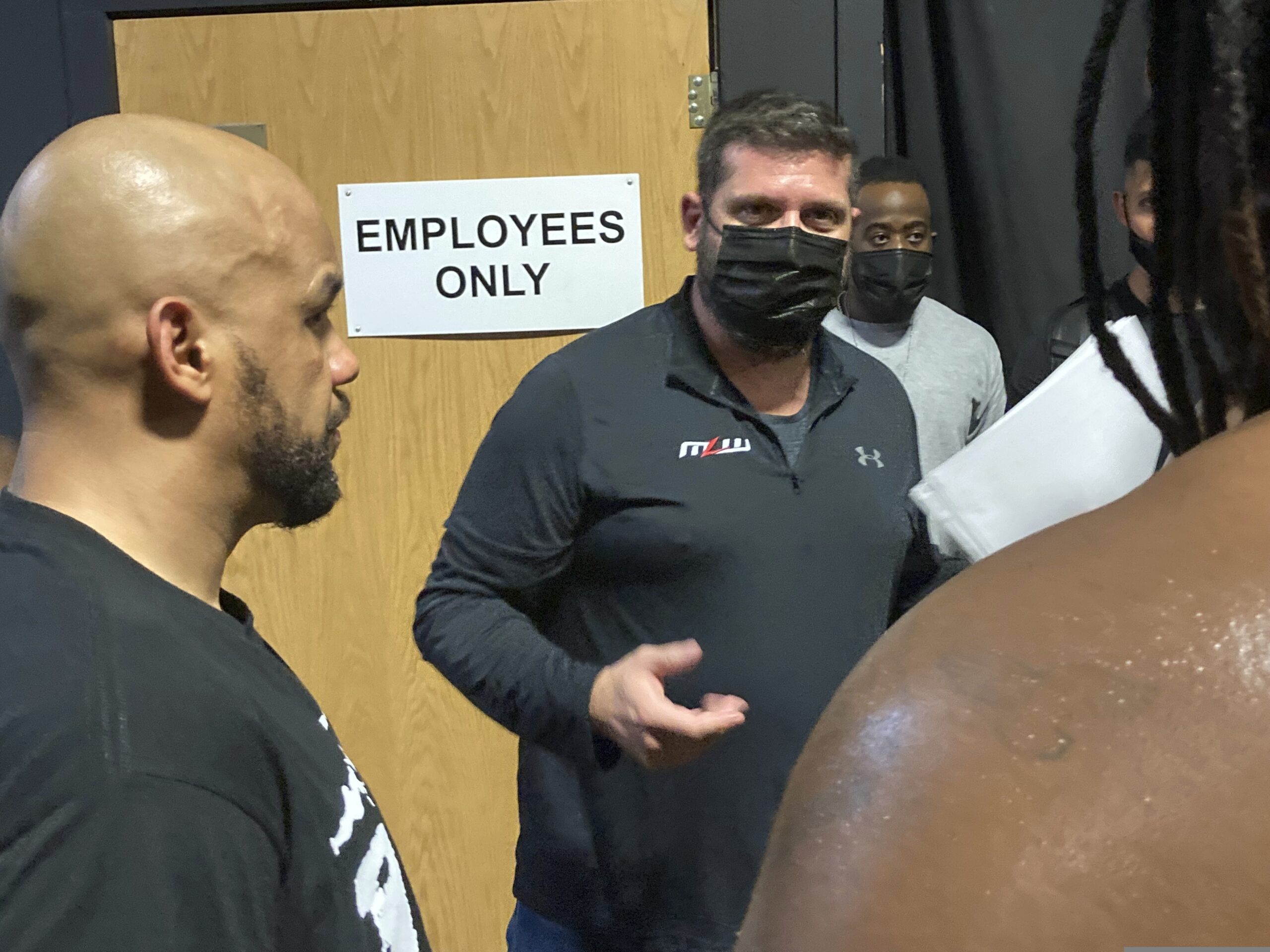
“With it being our anniversary this June, we felt like there’s no better place to host it than Philadelphia,” said Court Bauer, the CEO of MLW. “And since fans have been asking for two-and-a-half years for us to come back, we’re like, let’s give them a double shot. Two nights of MLW. Let’s make this as big as we can.”
MLW will visit on June 12 and 13, filming a national television taping of the new season of MLW Fusion and showcasing the promotion’s signature event, Summer of the Beasts.
Fans can expect appearances from MLW world heavyweight champion Killer Cross, Shotzi Blackheart, Matt Riddle, CONTRA Unit, and Don Gato.
“From a matchmaking perspective, as a promoter, it really scratches that itch and gets me thinking creatively in ways that challenges me because you know the bar is going to be high,” Bauer said. “There might be some extreme wrestling. There might be some hard core wrestling. There might be some lucha.”
Although the 2300 Arena has given fans plenty of iconic Extreme Championship Wrestling memories, MLW has its own history at the venue.
Major League Wrestling CEO Court Bauer (center) shown at 2300 Arena in 2021.
The company’s debut event, Genesis, was held at the 2300 Arena in June 2002. Since then, it has operated in major markets, including New York, Chicago, and Los Angeles.
“There’s just something special that you can’t really find in another city, that intensity that Philly has for pro wrestling,” Bauer said. “And the 2300 Arena is kind of like the cathedral of pro wrestling in America. There’s no other place that’s held as many great matches and has shed as much blood.”
The last time the promotion was at the 2300 Arena was in February 2024 for MLW’s SuperFight card, which featured an MLW world heavyweight title match between Satoshi Kojima and Alex Kane.
Cardinal O’Hara is heading back to the Catholic League girls’ basketball championship for the first time since 2022.
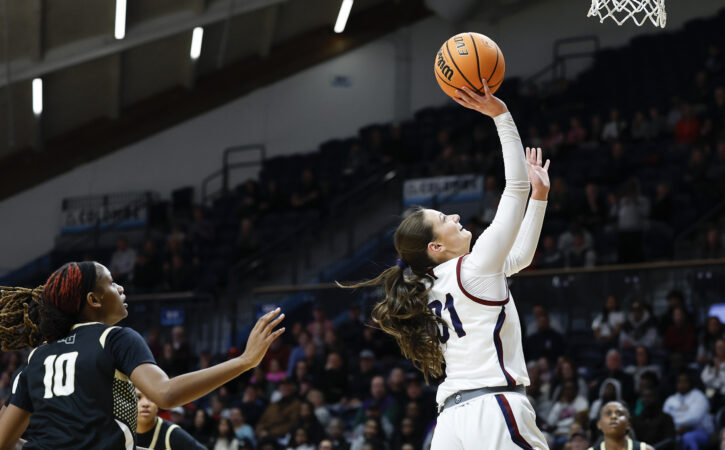
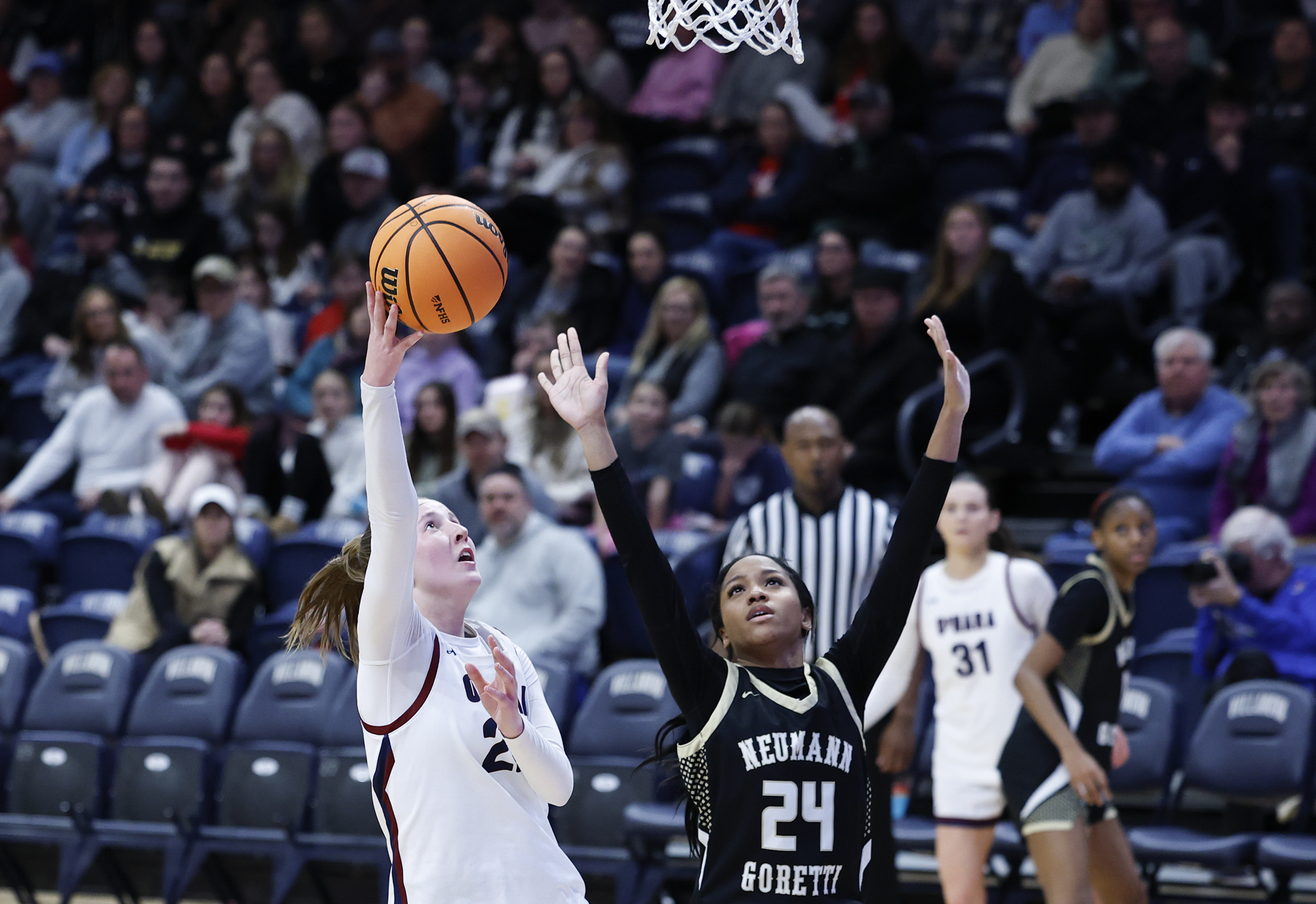
In a rematch of last year’s semifinal, Cardinal O’Hara overwhelmed Neumann Goretti, 51-33, on Monday night. The Lions lost to the Saints last season, when they played without its two stars in senior guard Megan Rullo and junior forward Brezhae Davis.
“Getting those two back on the court definitely helped,” said Cardinal O’Hara coach Chrissie Doogan said. “Neumann Goretti lost their guards from last year, but they’re a very talented team and play well together. … So it’s just a little bit of added incentive against the team that beat you last year to get back and take care of business.”
Cardinal O’Hara’s Brigidanne Donohue (left) finished with 13 points against Neumann Goretti on Monday.
Rullo led the Lions with 22 points, eight rebounds, and seven assists. Junior guard Brigidanne Donohue added 13 points, and Davis had 10.
For Neumann Goretti (14-10), freshman guard Azzure O’Connor led the Saints with nine points. Junior guard Reginna Baker contributed seven points.
Cardinal O’Hara (20-3) will face Archbishop Carroll at the Palestra on Sunday for the PCL title. The Lions beat the Patriots, 55-30, in the 2022 final.
“It means a lot,” said Rullo, who is committed to Drexel and will join her sister, Megan, there. “Last year was definitely a learning year, not being able to play. So there’s definitely a lot of wanting to get there. I’ve never played at the Palestra, and that’s definitely been a goal of mine. It’s everyone’s goal, so we’re super excited.”
O’Hara dominates
Cardinal O’Hara controlled the game.
Sophomore Catie Doogan sank a three-pointer, followed by a pair of foul shots from Rullo, to give the Lions a 13-6 advantage at the end of the first quarter.
The Lions continued to climb in the second quarter. Neumann Goretti gained some momentum close to halftime as senior Kamora Berry grabbed a defensive rebound, which led to a three-pointer from senior Zion Coston. But a Rullo layup as time expired sent Cardinal O’Hara into halftime with a 10-point lead.
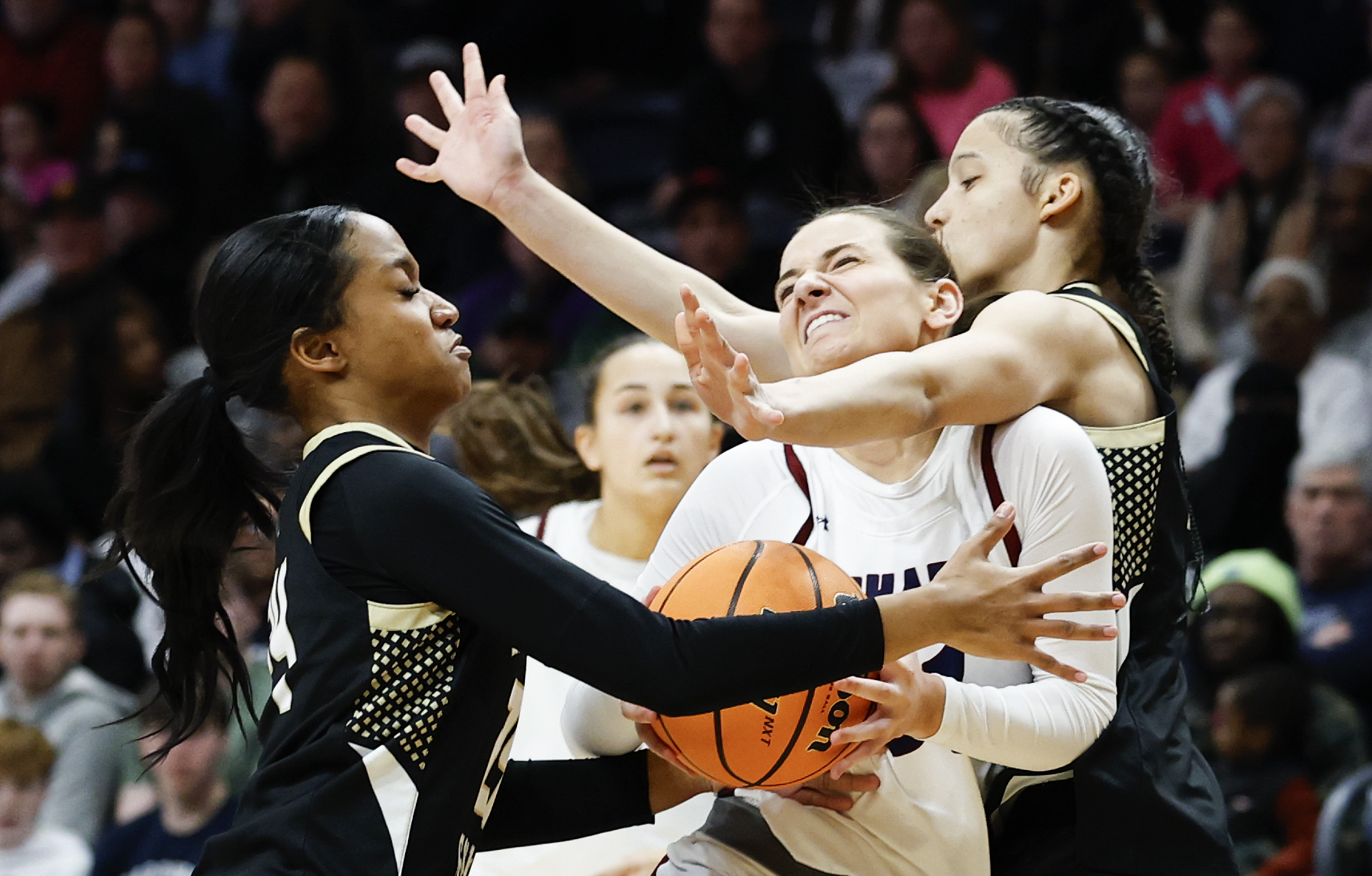
Neumann Goretti played consistent, high-pressure defense on Rullo, who repeatedly drew fouls as she drove to the rim. Rullo shook off the defense and kept her composure. She totaled 13 points from the free-throw line.
Cardinal O’Hara’s Megan Rullo (center) gets fouled driving to the basket against Neumann-Goretti.
“I like being a leader of this team, and I feel like staying composed is something that I have to do in order to lead this team to success,” Rullo said. “We talk about it all the time, just not getting frustrated and matching the intensity level, giving it back a little bit.”
With seconds left in the third quarter, Donohue tossed in a basket to give the Lions a 40-27 lead. They then solidified their win in the fourth with a pair of foul shots from Rullo in the final minute that pushed the Saints’ deficit to 20 points.
Heading to the Palestra
Cardinal O’Hara lost to Archbishop Carroll, 51-28, on Jan. 13. With the stakes much higher, the Lions are looking forward to their chance at redemption.
“We were embarrassed at Carroll a month ago, but they locked in and recommitted themselves … to the success of our program,” Doogan said. “They really locked in on the defensive end. And, honestly, they don’t care who gets the credit. We’re at our best when we have three or four kids all between eight and twelve points. On any given night, it could be all five of our stars.”
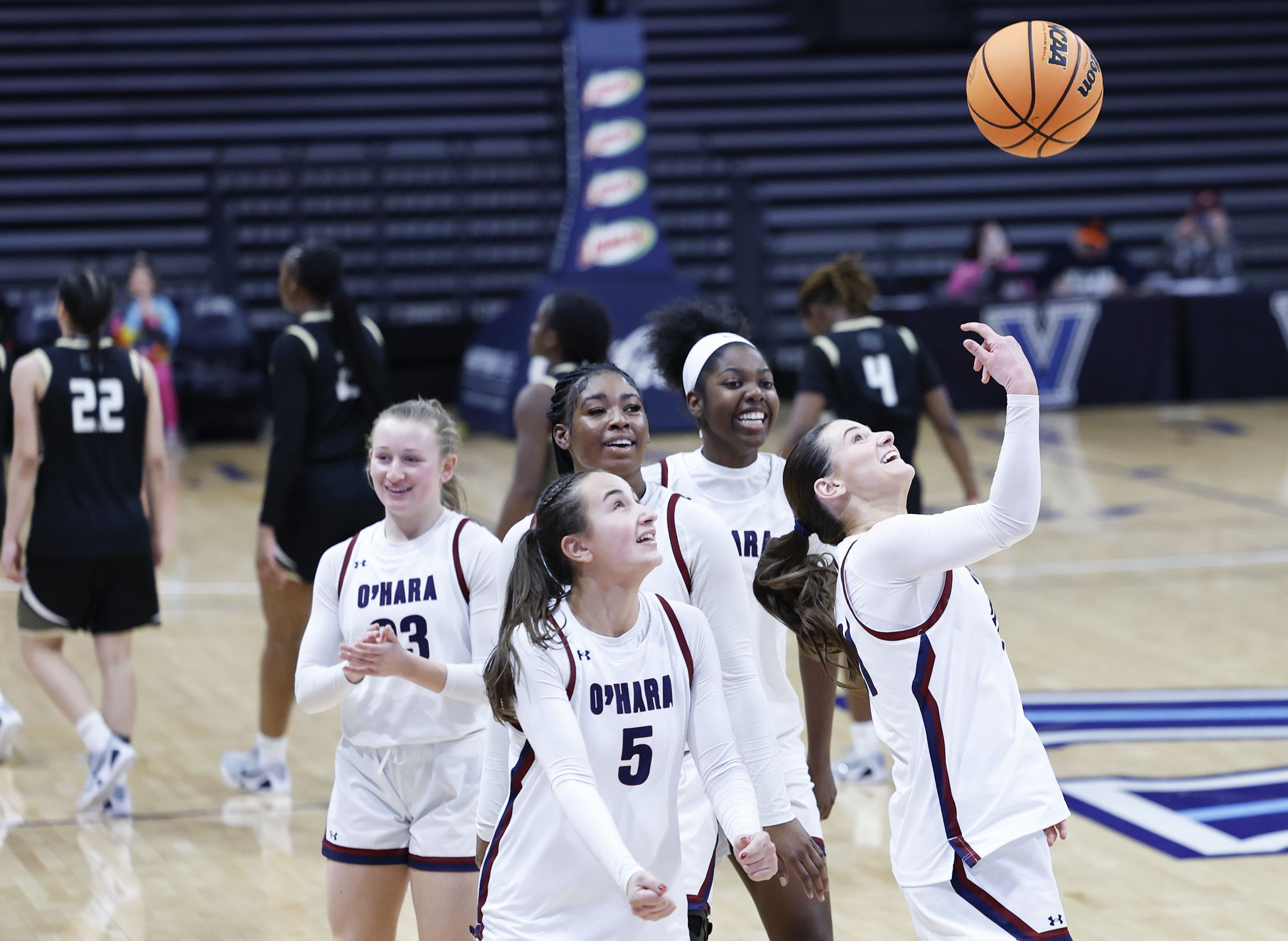
Cardinal O’Hara’s Megan Rullo (right) celebrates tossing the basketball with her teammates after beating Neumann Goretti in the Catholic League girls’ basketball semifinals.
Doogan and Cardinal O’Hara are especially excited for the opportunity to compete at Philadelphia’s most historic basketball arena.
“These kids deserve a chance to play at the Palestra,” Doogan said. “It’s something that every Catholic League kid wants, and I put a little bit of pressure on myself to get them there. Carroll’s a really good team. They’re playing well, and it’s going to be a dog fight.”