Blog

  • Source: Guard Cam Payne rejoining Sixers for the rest of the season

    Source: Guard Cam Payne rejoining Sixers for the rest of the season

    The 76ers are bringing guard Cam Payne back to Philly as a pickup off the buyout market, a source confirmed Monday. The deal was first reported by SteinLine’s Marc Stein.

    Partizan Belgrade in Serbia announced Payne’s departure on social media, sharing a post that revealed his $1.75 million buyout. The Sixers can contribute only $875,000 to his release, Stein reports.

    Payne played with the Sixers in 2024 and averaged 9.3 points and 3.1 assists in 31 games. Team president Daryl Morey traded Patrick Beverley to Milwaukee in exchange for Payne and a second-rounder before the 2024 trade deadline.

    He served as a bench spark plug and offensive boost behind Tyrese Maxey. Payne, 31, should be expected to take on a similar role after the Sixers traded second-year guard Jared McCain to the Oklahoma City Thunder before the NBA trade deadline.

    A 10-year NBA veteran, Payne also has played for the Thunder, Bulls, Cavaliers, Suns, Bucks, and Knicks.

    The move strengthens a position the Sixers considered one of their strong points entering the season. With Maxey, McCain, VJ Edgecombe, and Quentin Grimes in the backcourt to start the season, the Sixers expected their backcourt to carry them as stars Joel Embiid and Paul George rounded into form. Both players ended up being ahead of schedule as Embiid morphed back into All-Star form and George provided a steady hand as a key defender and ballhandler.

    But with George suspended 25 games for violating the NBA’s anti-drug policy and McCain with the Thunder, the Sixers need reinforcements for the stretch run after All-Star break. Payne could provide that in short spurts.

  • Aliens are ‘real,’ Obama says, and Washington shrugs

    Aliens are ‘real,’ Obama says, and Washington shrugs

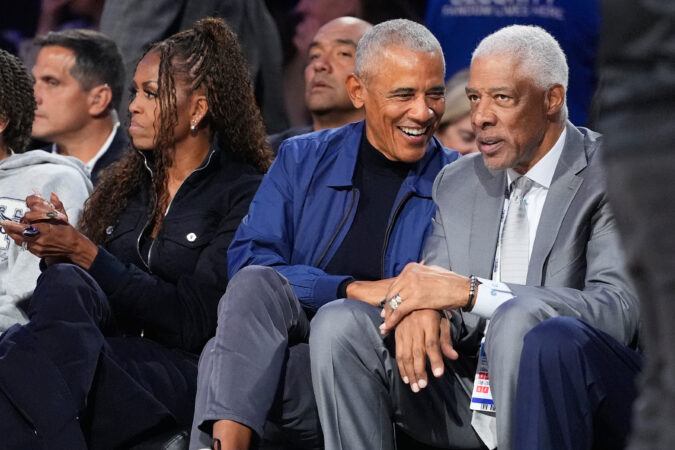
    Former President Barack Obama this weekend appeared to drop an otherworldly bombshell: Extraterrestrials exist.

    “They’re real, but I haven’t seen them,” Obama said in a podcast released Saturday. “There’s no underground facility, unless there’s this enormous conspiracy, and they hid it from the president of the United States.”

    The comments — coming in the 44th minute of a 47-minute interview with a popular liberal podcaster — sparked an outsize reaction on social media, including from UFO believers convinced the truth is out there and that government leaders have spent decades concealing it.

    It was also notable what didn’t happen, at least in official Washington. Political pundits didn’t discuss Obama’s comments on Sunday’s roster of talk shows. His foes didn’t rush to mock or condemn him; his allies didn’t jump to support him. Many mainstream media outlets initially ignored his comments on aliens while transcribing his other podcast remarks.

    In interviews, lawmakers and Capitol Hill staff members offered an explanation: The paranormal has become normal. They pointed to mounting political attention given to unidentified aerial phenomena, or UAPs — the term that has replaced UFOs — and polls that show a growing belief in extraterrestrials. Fifty-six percent of Americans believe that aliens exist, according to a November poll conducted by YouGov.

    Obama on Sunday night largely walked back his unearthly remarks, suggesting that he was offering a pithy response in the spirit of the podcast’s “lightning round” and that he was simply performing cosmic math.

    “Statistically, the universe is so vast that the odds are good there’s life out there,” Obama wrote on Instagram. “But the distances between solar systems are so great that the chances we’ve been visited by aliens is low, and I saw no evidence during my presidency that extraterrestrials have made contact with us. Really!”

    Not long ago, the former president’s 24-hour dalliance with E.T.s would have represented a political earthquake, liability, or both. When Dennis Kucinich, a former Democratic congressman from Ohio, affirmed at a 2007 presidential debate that he believed he had seen an unidentified flying object, Time magazine dubbed the comments one of the “screwups” of that political campaign cycle. Debate moderator Tim Russert then asked whether Obama, at the time a Democratic senator from Illinois, believed in extraterrestrial life, too.

    “I don’t know, and I don’t presume to know,” Obama responded, quickly pivoting from the question. “What I know is there is life here on Earth, and that we’re not attending to life here on Earth.”

    At the time, about a third of Americans believed in UFOs, according to an Associated Press/Ipsos poll released that month.

    But the political conversation has steadily shifted. Beginning in 2017, the New York Times and other media outlets have run reports on secret federal programs that have studied unusual, seemingly inexplicable phenomena. Government agencies have released videos of aircraft that appeared to defy the laws of physics.

    It’s a “legitimate question now,” former President Bill Clinton said in a 2022 appearance on The Late Late Show with James Corden.

    That curiosity is bipartisan. The GOP-led House Oversight Committee in 2024 held a hearing on “exposing the truth” about unidentified aerial phenomena, citing reports by naval aviators and government officials who claim to have witnessed or received reports of strange vehicles. Marco Rubio, the nation’s secretary of state and national security adviser, is among the now-dozens of officials and lawmakers who have demanded more information.

    “We have people with very high jobs in the U.S. Government that are either (a) liars; (b) crazy; or (c) telling the truth, and two of those three options are not good,” Rubio said in a Fox News interview in December, commenting on statements that he said he had heard while serving in the U.S. Senate. “I don’t know the answer.”

    Officials across multiple administrations have said they are unaware of proof of celestial beings.

    “I certainly wasn’t privy to any intelligence about alien life forms and believe me, I asked about it!” Sean Savett, the spokesperson for the White House National Security Council during the Biden administration, wrote in a text message on Sunday.

    Obama in 2021 said that he prioritized finding answers about extraterrestrial life as president, alluding to the conspiracy theories about Area 51 — a military base in Nevada that has been depicted in Hollywood productions as harboring alien technology and even alien beings.

    “When I came into office, I asked … ‘Is there the lab somewhere where we’re keeping the alien specimens and space ship?’ And, you know, they did a little bit of research and the answer was no,” Obama said in a 2021 appearance on The Late Late Show with James Corden.

    The current occupant of the Oval Office has been less publicly curious about interstellar matters. President Donald Trump told ABC News in 2019 that he had a “brief meeting” on UFOs during his first administration and that he didn’t particularly believe in aliens.

    While the White House press office did not respond to questions Sunday about Obama’s comments or whether Trump had updated his views, current staff members said they weren’t aware of Trump discussing the topic.

    “While POTUS often talks about things outside of my orbit, he’s never talked about things outside Earth’s orbit,” a White House official texted Sunday.

  • Former Penn president Liz Magill will lead Georgetown’s law school

    Former Penn president Liz Magill will lead Georgetown’s law school

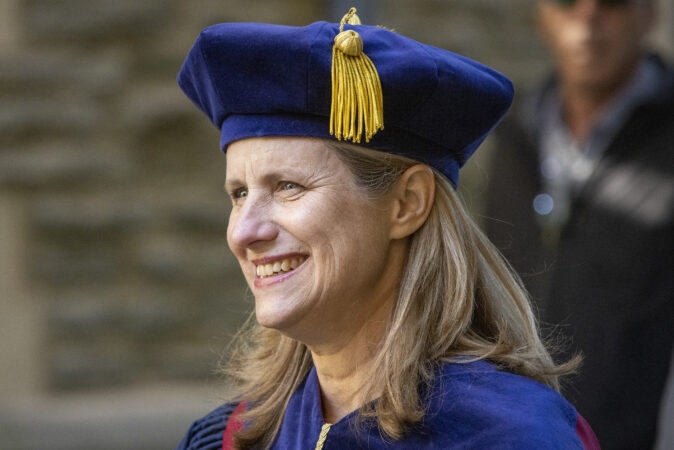
    Former University of Pennsylvania president Liz Magill has been named the new executive vice president and dean of Georgetown University’s law school in Washington, D.C.

    The move comes a little more than two years after Magill resigned from Penn following a bipartisan backlash over her testimony to a congressional committee about the campus’ handling of antisemitism.

    “I am honored to join Georgetown Law, one of this country’s great law schools, and the university, an exceptional and distinctive research institution,” Magill said in an announcement posted Friday on the Jesuit institution’s website.

    Magill did not immediately return a request for comment.

    Magill, a lawyer and academic, previously served as dean of Stanford’s law school from 2012 to 2019 and had been executive vice president and provost of the University of Virginia before joining Penn. She resigned from Penn in December 2023 — just 18 months after she started the job — but has remained a faculty member at Penn Carey Law.

    She starts at Georgetown Aug. 1.

    “Liz Magill brings the experience and leadership that we need to lead Georgetown Law,” Thomas A. Reynolds, chair of Georgetown’s board of directors, said in the school’s announcement. “Her ability to connect with others, her humility and her unwavering belief in higher education will make her an exceptional next dean.”

    Three of Magill’s siblings have degrees from Georgetown Law School, the announcement noted.

    Magill became Penn’s president July 1, 2022, following the record-setting 18-year tenure of Amy Gutmann. Tensions began to mount about a year into her tenure, and her departure from Penn followed a tumultuous semester, marked by near-weekly student protests and complaints from deep-pocketed donors over the school’s response to antisemitism following Hamas’ attack on Israel in October 2023. There was also unrest over the school’s allowing the Palestine Writes Literature Festival to be held on campus in September of that year.

    Then, during her congressional testimony, U.S. Rep. Elise Stefanik (R., N.Y.) asked her about whether calling for the genocide of Jewish people would violate Penn’s code of conduct. “It is a context-dependent decision,” Magill had answered.

    Less than a week later, she stepped down. Scott L. Bok, then chair of the board of trustees, also resigned. And former Harvard president Claudine Gay, who also testified that day, resigned, too, less than a month later.

    “I provided this 30-second sound bite that went viral and just swamped everything else about what I’d said and my record at Penn,” Magill said last May when she and Bok talked about their experiences at the New York Public Library following the publication of Bok’s book that discussed the controversy. “And I really regret that. It hurt Penn. It hurt Penn’s reputation, and my job was to protect the institution that I led.”

  • Masks don’t belong on ICE agents — or on campus

    Masks don’t belong on ICE agents — or on campus

    When was the last time you changed your mind?

    That’s one of my favorite questions to ask students. I want them to scrutinize their most deeply held beliefs. When you do that, I tell them, you sometimes find out you don’t believe them any longer.

    A few weeks ago, a student put the same question to me. I thought about it for a few days, and then I came back with my answer: I changed my mind about protesters wearing masks on campus.

    I used to think they should be allowed to cover their faces, and that it was a mistake for universities to prohibit them from doing so. But I think differently now.

    And my reason has three letters: ICE.

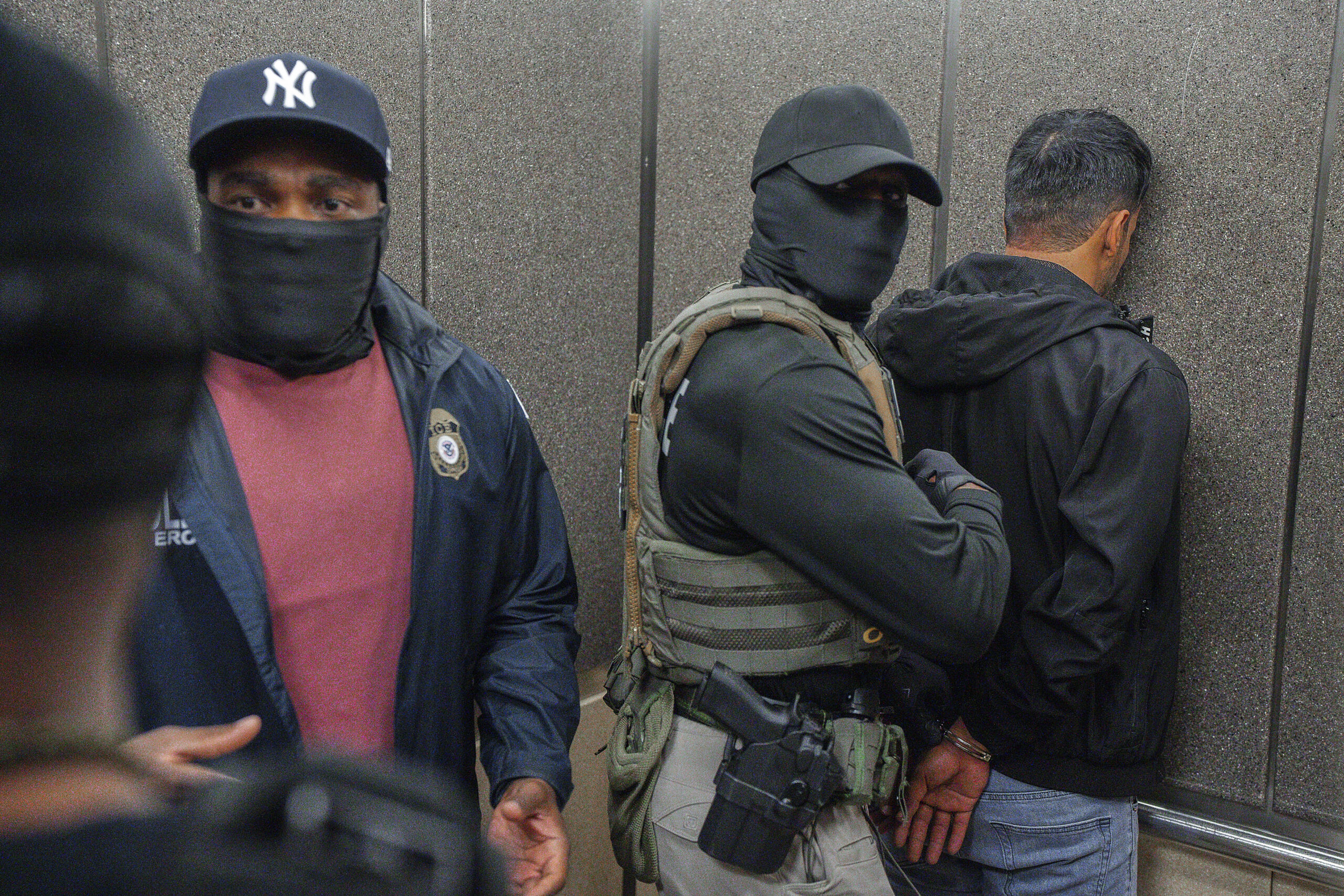
    Like many other Americans, I’m appalled by the presence of masked agents from U.S. Immigration and Customs Enforcement on our streets. Even before they killed two protesters in Minnesota, I was afraid of them. Now, I’m terrified.

    And I’m proud of Democrats in Congress for demanding that ICE agents be prohibited from wearing masks that hide their identities. Blocking a GOP spending bill that lacked any new curbs on ICE, the Democrats forced a partial shutdown of the federal government over the weekend. They should hold out until the mask ban is in place.

    I also support a proposed City Council measure that would block law enforcement officers in Philadelphia — including ICE agents — from obscuring their identities with facial coverings.

    A demonstrator in Los Angeles wears a mask in front of an image of Renee Good during a protest last month to denounce the Trump administration’s immigration enforcement polices.

    But now I believe campus demonstrators — like ICE agents — should also be barred from wearing masks. Their facial coverings stoke fear, too. And they make it next to impossible for officials to keep everyone else safe.

    If you think otherwise, consider what happened at Haverford College earlier this month. Interrupting a talk by a pro-Israel speaker, several masked demonstrators burst into the room. One of them shouted into a bullhorn that “Israeli occupation forces” were killing children. “When Gaza is burned, you will all burn, too,” she said.

    Most universities already have rules barring disruption of public events. But masks add something worse: intimidation.

    When the masked protesters entered the room, a Haverford professor said he thought they were “terrorists trying to get in and kill us.” Another witness said she worried she might be attacked.

    “No one knew who they were or whether they were armed,” the witness added. “Imagine fully masked people entering through emergency exits, hiding objects under their coats, blocking basic points of egress. It is reasonable to fear for your physical safety.”

    And it’s also reasonable for colleges to ban masks. In a statement, Haverford officials said the protester carrying the bullhorn was not a member of their community. But nobody could know that when she entered the room.

    Masked U.S. Immigration and Customs Enforcement agents escort a detained immigrant into an elevator after he exited an immigration courtroom in New York in June.

    How can we keep the university safe if we don’t know who is from the university and who isn’t?

    At the University of Pennsylvania, where I teach, only nine of 33 people arrested during the clearing of pro-Palestinian encampments in May 2024 were students at the university. At Swarthmore, just two of nine arrested demonstrators were members of the college community.

    I opposed the disbanding of the Penn encampments back then, and I still do. I also opposed the university’s new guidelines on open expression, which prohibited protests that “threaten or advocate violence” against “individuals or groups” on the basis of their race, religion, national origin, or sexual orientation. Under that rule, the Haverford protester’s comment about Gaza — “you will burn, too” — might be banned.

    It shouldn’t be. We need a free and open dialogue about Israel, and everything else. And that’s also why we should ban masks, which inhibit that same dialogue. You can’t have a conversation if you don’t know who is talking.

    I used to think masks were a form of free expression, so universities should allow them. I also thought protesters needed to hide their identities so they wouldn’t get doxed, which would subject them to violence and harassment.

    Then the Trump administration said the same thing about ICE agents — they need masks to protect them from doxing — and I changed my mind. Regular police officers don’t wear masks; instead, they wear numbers and name tags. That’s how we hold them accountable for their actions.

    Putting masks on ICE agents does the opposite: It lets them act with impunity. The goal of the masks is not to protect the agents. It’s to foster fear in our communities and our nation.

    They need to take their masks off. But so do we.

    Of course, we should make exceptions for people who cover their faces for reasons of health, religion, sports, or entertainment. I’d hate to see a college kid barred from wearing a Halloween mask, for example.

    But a protester? Let us see who you are. Don’t cower behind a mask. That’s what ICE does.

    Jonathan Zimmerman teaches history and education at the University of Pennsylvania. He is the author of “Whose America?: Culture Wars in the Public Schools.”

  • Mitch McConnell is taking a beating in the race to replace him

    Mitch McConnell is taking a beating in the race to replace him

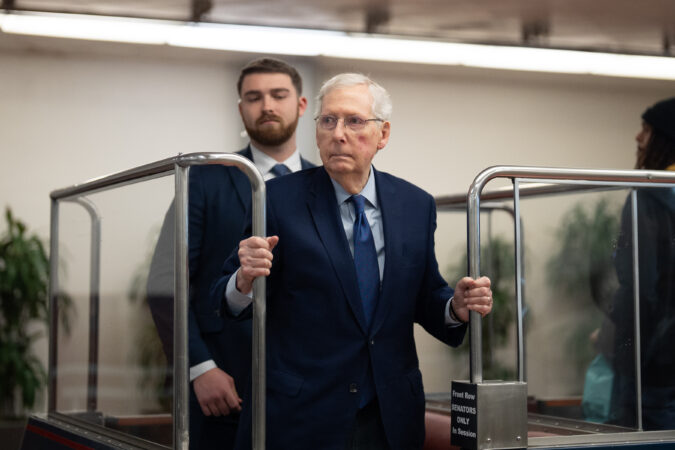
    One Republican candidate to succeed Sen. Mitch McConnell introduced himself with an ad that shows a cardboard cutout of the longtime Senate majority leader in the trash.

    Allies for a rival hit back with ads that noted the first candidate gave McConnell money.

    And Daniel Cameron, the former Kentucky attorney general once considered a McConnell protégé, is now keeping his distance.

    “I’m my own man,” Cameron said in an interview, later suggesting McConnell donors prefer one of his opponents.

    The Senate primary to replace 83-year-old McConnell shows how profoundly the GOP base in his home state has soured on one of the most powerful and significant political figures in Kentucky history. McConnell drew low approval ratings for years but fended off challengers by flexing his raw clout and ability to deliver for his state.

    While he at times expressed frustration or anger with President Donald Trump, McConnell used his political muscle to cement much of the president’s first-term legacy, including a 6-3 conservative majority on the Supreme Court that has helped pave the way for an even more disruptive second term.

    But many in the MAGA movement still view him as the embodiment of the GOP establishment that sought to hold Trump back. Three former interns for McConnell have distanced themselves while running to succeed him, pitching themselves as “America First” Republicans in Trump’s mold.

    Cameron says voters don’t want a candidate who is “just bashing an old man” — a rebuke of his opponent Nate Morris, a businessman backed by national MAGA stars whose vociferous attacks on McConnell have alienated some Republicans in the state. Many operatives argued his initial assault went too far.

    Still, it’s clear that ambitious Republicans have diverged from the towering conservative figure, who is set to retire next year after four decades in Congress.

    “This is a fight for the future of the Republican Party … Donald Trump’s Republican Party,” said Morris, a friend of Vice President JD Vance, in an interview. “And certainly, if you’re with Mitch McConnell, you’re not part of that future.”

    Terry Carmack, McConnell’s chief of staff, said the senator has secured more than $65 billion in extra federal funding for Kentucky over his career — for military bases, hospitals, law enforcement and more — and added that the state “deserves a Senator who will fill those shoes.”

    “As Kentucky’s longest-serving Senator and the nation’s longest-serving Senate leader, Senator McConnell’s job stayed the same: ensuring Kentucky always punched above its weight,” Carmack said in a statement.

    The primary is effectively a three-way race between Morris, Cameron and Rep. Andy Barr, who touts that he was the Kentucky chairman of Trump’s 2024 campaign. Whoever wins the May 19 GOP contest is likely to represent the solidly red state.

    The fact that all three have ties to McConnell reflects how much in Kentucky GOP politics traces back to the senator. The state Republican Party headquarters bears his name, and he has helped many other GOP officeholders over the years.

    “I challenge anybody who takes this seat to do what he’s done,” said Frank Amaro, the GOP vice chair for Kentucky’s 1st Congressional District.

    The campaign jabs at McConnell have been frustrating to many who have worked with him over the years and say he deserves respect, pointing to his hardball tactics that pushed the courts nationwide to the right and the money he has steered toward Kentucky. The state got nearly $2.6 billion in extra federal funding this fiscal year, according to McConnell’s office.

    “You don’t have to like someone for them to be your go-to to deliver results,” said Iris Wilbur Glick, a former political director for McConnell who called candidates’ positioning on the senator “very disappointing.”

    But many Republicans are critical — especially of his relationship with Trump. Trump has repeatedly attacked him. McConnell held Trump “practically and morally responsible” for the mob that stormed the U.S. Capitol on Jan. 6, 2021, though his vote against impeachment helped enable Trump’s comeback.

    After Trump won in 2024 and McConnell stepped down as majority leader, he opposed some of Trump’s most controversial Cabinet picks — casting the only GOP vote against Robert F. Kennedy Jr. for secretary of health and human services.

    A December Economist-YouGov poll found that 21 percent of Republicans nationally had a favorable view of McConnell, while 55 percent had an unfavorable view. In interviews, Kentucky voters often knew little about the Senate race or the candidates — but knew they didn’t like McConnell.

    “I want him out of there,” said Julie Jackson, a 56-year-old Republican.

    Cameron, who once worked as McConnell’s legal counsel and rose in politics with his mentorship, launched his Senate campaign last year with an attempt to separate himself. Days after announcing, he put out a video rebuking McConnell for opposing Trump’s Cabinet picks.

    “What we saw from Mitch McConnell in voting against Pete Hegseth, Tulsi Gabbard and RFK was just flat-out wrong,” Cameron said in the video. “You should expect a senator from Kentucky to vote for those nominees to advance the America First agenda.”

    A year later, one of Cameron’s biggest challenges is raising money — a struggle some Republicans in the state attribute in part to his break with McConnell.

    “Daniel Cameron relied heavily on his connections to McConnell-world in his previous races for fundraising, and that’s simply not an avenue that’s available to him for this race, and it shows in his fundraising reports,” said Tres Watson, a Republican strategist in Kentucky.

    Cameron notes that some McConnell donors have backed Barr — who leads the pack on fundraising. Attack ads on Barr from a group affiliated with the conservative Club for Growth featured old footage of Barr calling McConnell a “mentor.”

    Barr has kept his distance from McConnell, too, however, tying himself to Trump.

    “Thank you for giving me a chance to work with this president to make America great again,” he said to close his speech at recent GOP dinner. His team declined an interview request.

    Trump has stayed out of the Senate race and often avoids weighing in on primaries absent a personal grudge or clear polling leader. But prominent Trump allies have lined up behind Morris, the businessman and friend of Vance. Morris said the vice president called him last year encouraging him to jump into the Senate race, saying that “we’re going to need somebody in that seat that’s not going to stab our president in the back.” Vance allies work on Morris’s campaign and a supportive super PAC.

    Charlie Kirk, the late conservative activist, endorsed Morris before he was killed in September. Morris “is not going to be beholden to the McConnell machine,” said Andrew Kolvet, a spokesman for Kirk’s group Turning Point, who called McConnell a “relic.”

    Elon Musk, the billionaire tech CEO who has become a major force in GOP politics, rocked the primary by putting $10 million behind Morris this year after a meeting where he came away impressed in part by Morris’s anti-McConnell message, according to a person familiar with the matter who spoke on the condition of anonymity to discuss private conversations.

    “[McConnell] has had a stranglehold on Kentucky for 40 years, and it is not the easiest thing to challenge the McConnell mafia right here in the Bluegrass State,” Morris said last month on the podcast of Trump’s eldest son, Donald Trump Jr. — where he also launched his campaign. “But we’ve done it and we’ve gone straight for the jugular of Mitch and his cronies.”

    The message hasn’t always gone over well. Morris was roundly booed last year at an annual Kentucky political picnic where the former garbage company CEO declared he would “trash Mitch McConnell’s legacy.”

    “A lot has changed in politics, but you still have to introduce yourself, and he started out just attacking people,” said Adam Koenig, a former GOP state lawmaker.

    Morris dialed back his attacks at a recent event in northern Kentucky, mentioning McConnell only in passing. But he made his antipathy clear.

    “We cannot go back to what we’ve had the last 40 years,” he said.

  • No, George Washington didn’t have wooden teeth. Yes, he led the Siege of Boston.

    No, George Washington didn’t have wooden teeth. Yes, he led the Siege of Boston.

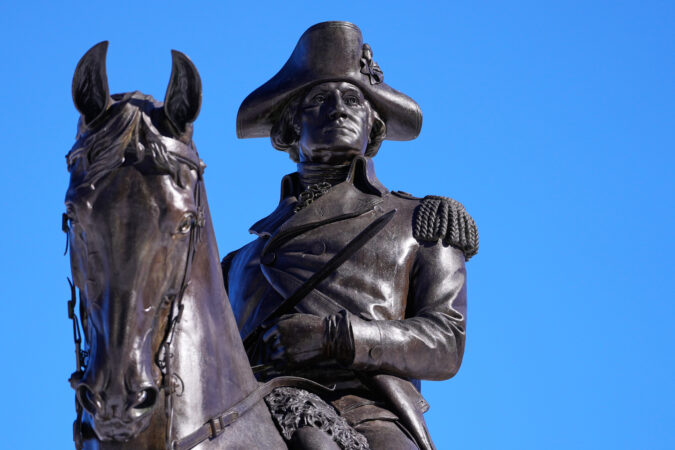
    BOSTON — More than a decade before he became the country’s first president, George Washington was leading a critical campaign in the early days of the American Revolution. The Siege of Boston was his first campaign as commander-in-chief of the Continental Army and, in many ways, set the stage for his military and political successes — celebrated on Presidents Day.

    Following the Battles of Lexington and Concord, militias had pinned down the British in Boston in April 1775. The Continental Congress, recognizing the need for a more organized military effort, selected Washington to lead the newly formed army.

    The Siege of Boston and its significance

    On this day 250 years ago, Washington would have been nearing the end of an almost yearlong siege that bottled up as many as 11,000 British troops and hundreds more loyalists. The British were occupying Boston at the time, and the goal of the siege was to force them out.

    A critical decision made by Washington was sending Henry Knox, a young bookseller, to Fort Ticonderoga in New York to retrieve dozens of cannons. The cannons, transported hundreds of miles in the dead of winter, were eventually used to fire on British positions. That contributed to the decision by the British, facing dwindling supplies, to abandon the city by boat on March 17, 1776.

    Historians argue that the British abandoning their positions, celebrated in Boston as Evacuation Day, rid the city of loyalists at a critical time, denied the British access to an important port and gave patriots a huge morale boost.

    “The success of the Siege of Boston gave new life and momentum to the Revolution,” Chris Beagan, the site manager at Longfellow House in Cambridge, a National Historic Site that served as Washington’s headquarters during the American Revolution. “Had it failed, royal control of New England would have continued, and the Continental Army likely would have dissolved.”

    How the siege shaped Washington

    The siege was also a critical test for Washington. A surveyor and farmer, Washington had been out of the military for nearly 20 years after commanding troops for the British during the French and Indian War. His successful campaign ensured Washington remained the commander-in-chief for the remainder of the revolution.

    Doug Bradburn, president of George Washington’s Mount Vernon, said Washington took the first steps to creating a geographically diverse army that included militiamen from Massachusetts to Virginia and, by the end of the war, a fighting force with significant Black and Native American representation. It was the most integrated military until President Harry S. Truman’s desegregated the armed forces in 1948, he said.

    Washington, a slave owner who depended on hundreds of slaves on his Mount Vernon estate, was initially opposed to admitting formerly enslaved and free Black soldiers into the army. But short of men, Washington came to realize “there are free Blacks who want to enlist and he needs them to keep the British from breaking out” during the siege, Bradburn said.

    Ridding Boston of the British also turned Washington into one of the country’s most popular political figures.

    “He comes to embody the cause in a time before you have a nation, before you have a Declaration of Independence, before you’re really sure what is the goal of this struggle,” Bradburn said. “He becomes the face of the revolutionary movement.”

    Commanding the military for more than eight years also prepared Washington for the presidency, Pulitzer Prize-winning military historian Rick Atkinson said. “Perhaps most important, it gave him a sense that Americans could and should be a single people, rather than denizens of thirteen different entities.”

    Myths of Washington

    His rise to prominence also led to plenty of myths about Washington, many which persist to this day.

    One of the most popular is the cherry tree myth. It was invented by one of Washington’s first biographers, according to George Washington’s Mount Vernon, who created the story after his death. Supposedly, a 6-year-old Washington took an ax to a cherry tree and admitted as much when caught by his father, famously saying “I cannot tell a lie … I did cut it with my hatchet.”

    The second one is the wooden teeth myth. It was rumored that Washington had wooden dentures and scholars, well into the 20th century, were quoted as saying his false teeth were made from wood. Not true. He never wore wooden dentures, instead using those with ivory, gold and even human teeth.

    More than a statesman

    During his lifetime, Washington had myriad pursuits. He was known as an innovative farmer, according to the George Washington’s Mount Vernon, and an advocate for Western expansion, buying up to 50,000 acres of land in several Mid-Atlantic states. After returning to Mount Vernon, he built a whiskey distillery that became one of the largest in the country.

    His connection to slavery was complicated. He advocated for ending slavery, and his will called for freeing all the slaves he owned after the death of his wife, Martha Washington. But he didn’t own all the slaves at Mount Vernon so he couldn’t legally free all of them.

    Celebrating Presidents Day

    For fans of George Washington, Presidents Day is their Super Bowl. Originated to celebrate Washington’s birthday, which falls on Feb. 22, the holiday has become associated with good deals at the mall. Still, there are plenty of places celebrating all things Washington on this day.

    There will be a wreath-laying ceremony at Washington’s tomb at Mount Vernon, and there will be a Continental Army encampment. There will be a parade honoring Washington in Alexandria, Virginia, and, in Laredo, Texas, a monthlong celebration features a carnival, pageants, an air show and jalapeno festival.

  • Iran’s top diplomat met with the head of the U.N. nuclear watchdog ahead of a second round of U.S. talks

    Iran’s top diplomat met with the head of the U.N. nuclear watchdog ahead of a second round of U.S. talks

    GENEVA — Iran’s top diplomat met with the head of the U.N. nuclear watchdog agency on Monday, ahead of a second round of negotiations with the United States over Tehran’s nuclear program.

    Iranian Foreign Minister Abbas Araghchi met with Rafael Grossi, director-general of the International Atomic Energy Agency, and said he would also meet with Foreign Minister Badr al-Busaidi of Oman, which is hosting the U.S.-Iran talks in Geneva on Tuesday.

    “I am in Geneva with real ideas to achieve a fair and equitable deal,” Araghchi wrote on X. “What is not on the table: submission before threats.”

    As U.S. President Donald Trump ordered an additional aircraft carrier to the region, Iran on Monday launched a second naval drill in weeks, state TV reported. It said the drill would test Iran’s intelligence and operational capabilities in the Strait of Hormuz, the Persian Gulf and the Gulf of Oman.

    Iran’s drills take place against the U.S. military buildup

    Just before the talks, Iran announced its paramilitary Revolutionary Guard started the drill early Monday morning in the waterways that are crucial international trade routes through which 20% of the world’s oil passes.

    Separately, EOS Risk Group said sailors passing through the region received by radio a warning that the northern lane of the Strait of Hormuz, in Iranian territorial waters, likely would see a live-fire drill Tuesday. Iranian state TV did not mention the live fire drill.

    This is the second time in recent weeks sailors have received warning about an Iranian live fire drill. During the previous exercise, announced at the end of January, the U.S. military’s Central Command issued a strongly worded warning to Iran and the Revolutionary Guard. While acknowledging Iran’s “right to operate professionally in international airspace and waters,” it warned against interfering or threatening American warships or passing commercial vessels.

    On Feb. 4, tensions between the Iranian and U.S. navies rose further after a U.S. Navy fighter jet shot down an Iranian drone that was approaching the aircraft carrier USS Abraham Lincoln in the Arabian Sea. Iran also harassed a U.S.-flagged and U.S.-crewed merchant vessel that was sailing in the Strait of Hormuz, the U.S. military reported.

    Iran open to compromise in exchange for sanctions relief

    On Sunday, Iran’s Deputy Foreign Minister Majid Takht-Ravanchi signaled that Tehran could be open to compromise on the nuclear issue, but is looking for an easing of international sanctions led by the United States.

    “The ball is in America’s court. They have to prove they want to have a deal with us,” Takht-Ravanchi told the BBC. “If we see a sincerity on their part, I am sure that we will be on a road to have an agreement.”

    “We are ready to discuss this and other issues related to our program provided that they are also ready to talk about the sanctions,” he added.

    Oman hosted a first round of indirect talks between the U.S. and Iran on Feb. 6.

    Similar talks last year between the U.S. and Iran about Iran’s nuclear program broke down after Israel launched what became a 12-day war on Iran, that included the U.S. bombing Iranian nuclear sites.

    The U.S. is also hosting talks between envoys from Russia and Ukraine in Geneva on Tuesday and Wednesday, days ahead of the fourth anniversary of the all-out Russian invasion of its neighbor.

    U.S. keeps military pressure high

    Trump initially threatened to take military action over Iran’s bloody crackdown on nationwide protests last month, but then shifted to a pressure campaign in recent weeks to try to get Tehran to make a deal over its nuclear program.

    Secretary of State Marco Rubio, visiting Budapest, reiterated on Monday that the U.S. hopes to achieve a deal with Iran, despite the difficulties. “I’m not going to prejudge these talks,” Rubio said. “The president always prefers peaceful outcomes and negotiated outcomes to things.”

    Trump said Friday the USS Gerald R. Ford, the world’s largest aircraft carrier, was being sent from the Caribbean to the Mideast to join other military assets the U.S. has built up in the region. He also said a change in power in Iran “would be the best thing that could happen.”

    Iran has said if the U.S. attacks, it will respond with an attack of its own.

    The Trump administration has maintained that Iran can have no uranium enrichment under any deal. Tehran says it won’t agree to that.

    Iran has insisted its nuclear program is for peaceful purposes. However, its officials increasingly threaten to pursue a nuclear weapon. Before the June war, Iran had been enriching uranium up to 60% purity, a short, technical step away from weapons-grade levels.

    The direct meeting with Grossi is a significant step after Iran suspended all cooperation with the IAEA following the June war with Israel. The two also met briefly on the sidelines of the United Nations General Assembly in September. The IAEA said it has been unable to verify the status of Iran’s near weapons-grade uranium stockpile since the war. Iran has allowed IAEA some access to sites that were not damaged, but has not allowed inspectors to visit other sites.

    Iran’s stockpile of uranium enriched to 60% could allow Iran to build as many as 10 nuclear bombs, should it decide to weaponize its program, Grossi previously told The Associated Press. He added that it doesn’t mean that Iran has such a weapon.

    Israeli Prime Minister Benjamin Netanyahu rushed to Washington last week to urge Trump to ensure that any deal to include steps to neutralize Iran’s ballistic missile program and end its funding for proxy groups such as Hamas and Hezbollah.

  • These Philly schools are slated for big upgrades as the district works to modernize buildings

    These Philly schools are slated for big upgrades as the district works to modernize buildings

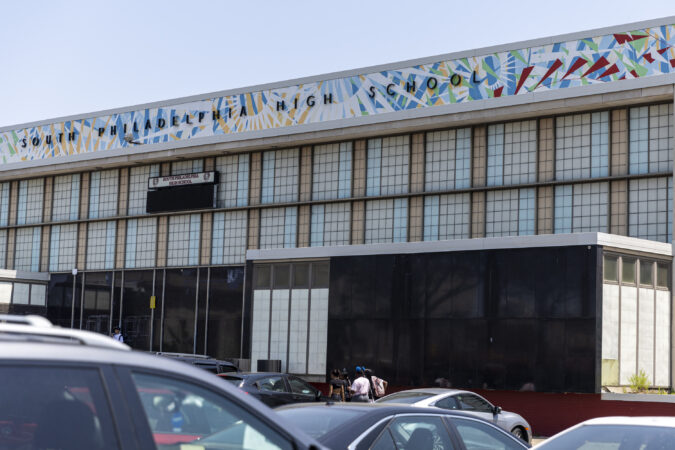
    Nearly $58 million for South Philadelphia High School. Over $27 million for Forrest Elementary in the Northeast. Almost $55 million for Bartram High in Southwest Philadelphia.

    Ahead of a Tuesday City Council hearing on the Philadelphia School District’s proposed facilities master plan, district officials have dangled the carrot that would accompany the stick of 20 school closings.

    The district released Monday morning how much it would spend on modernization projects at schools in each City Council District if Superintendent Tony B. Watlington Sr.’s plan is approved by the school board this winter.

    The totals range from $443 million in the 9th District — which includes parts of Olney, East and West Oak Lane, Mount Airy, and Oxford Circle — to nearly $56 million for the 6th District in lower Northeast Philadelphia, including Mayfair, Bridesburg, and Wissinoming.

    The district’s announcement comes as the plan has already raised hackles among some Council members, and City Council President Kenyatta Johnson has said he’ll hold up the district’s funding “if need be” if concerns are not answered to Council’s satisfaction.

    Tailoring the release to Council districts — including highlighting one major project per district — appears to be an effort to calm opposition ahead of Tuesday’s hearing.

    Details on every school that would get upgraded under Watlington’s plan — 159 in total — have not yet been released.

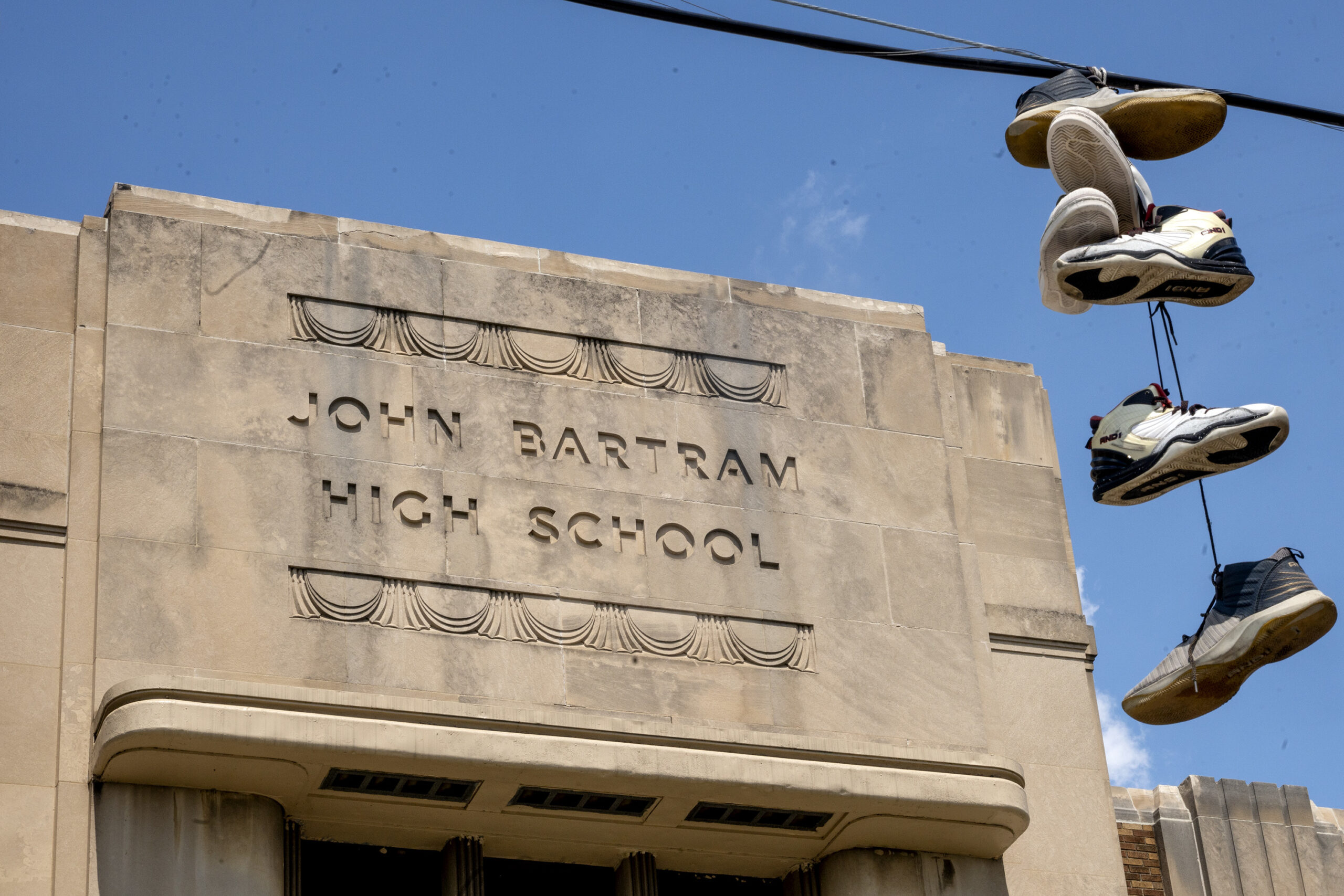
    John Bartram High School at 2401 S. 67th St in Southwest Philadelphia.

    Watlington has stressed that the point of the long-range facilities plan is not closing schools, but solving for issues of equity, improving academic programming, and acknowledging that many buildings are in poor shape, while some are underenrolled and some are overenrolled.

    “This plan is about ensuring that more students in every neighborhood have access to the high-quality academics, programs, and facilities they deserve,” Watlington said in a statement. “While some of these decisions are difficult, they are grounded in deep community engagement and a shared commitment to improving outcomes for all public school children in every ZIP code of Philadelphia.”

    But at community meetings unfolding at schools across the city that are slated for closure, Council members have expressed displeasure about parts of the plan — a preview, perhaps, of Tuesday’s meeting.

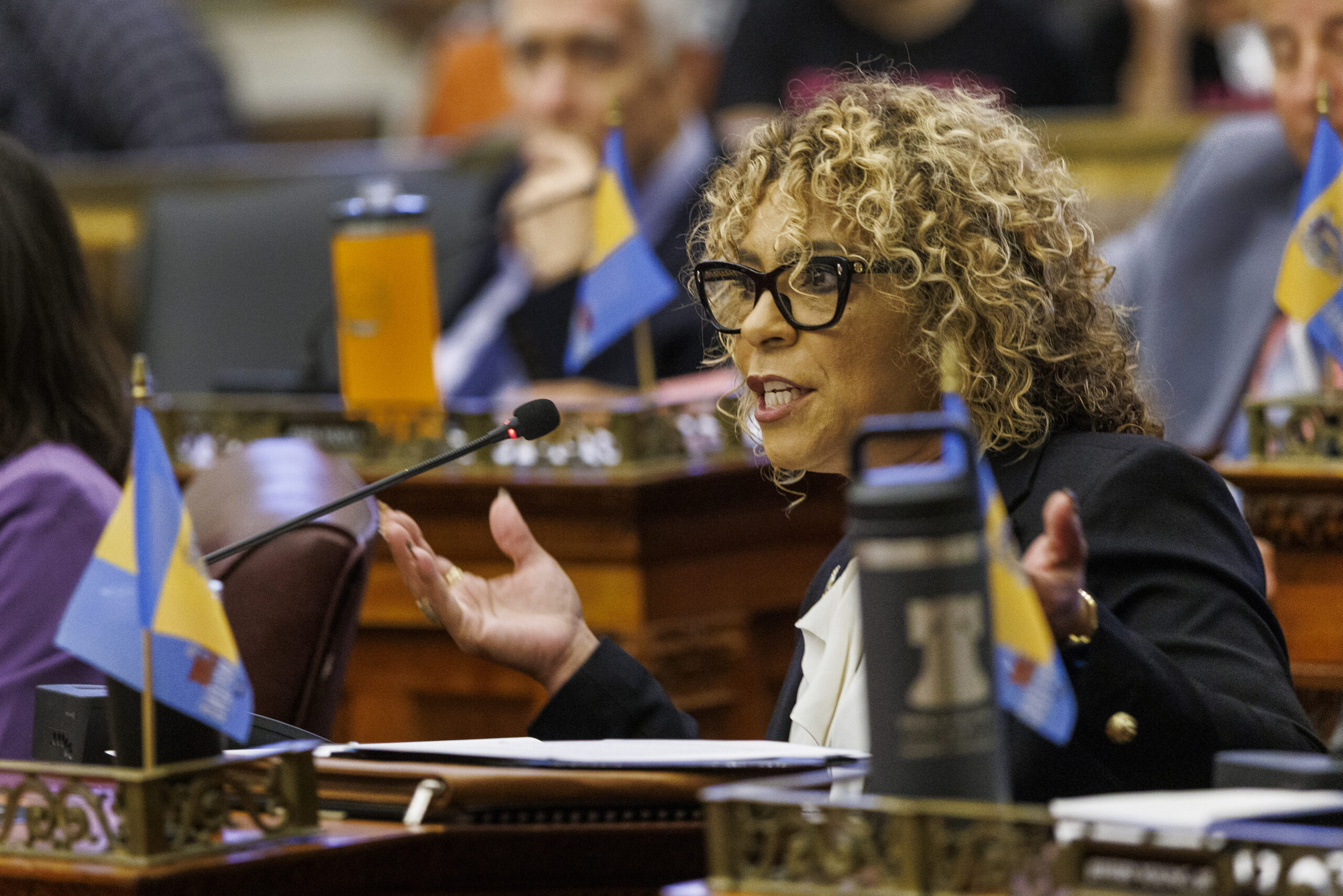
    Councilmember Quetcy Lozada, represents the 7th District, including Kensington, Feltonville, Juniata Park, and Frankford. Four schools in her district — Stetson, Conwell, Harding, and Welsh — are on the chopping block.

    “The fact that they are being considered for closure is very concerning to me,” Lozada said at a meeting at Stetson Middle School on Thursday.

    Councilmember Quetcy Lozada is shown in a 2025 file photo.

    Councilmember Cindy Bass, speaking at a Lankenau High meeting, objected to closing schools that are working well. (Three schools in Bass’ 8th District, Fitler Elementary, Wagner middle school, and Parkway Northwest High School, are proposed for closure. Lankenau is in Curtis Jones Jr.’s district but has citywide enrollment.)

    “I do not understand what the logic and the rationale is that we are making these kinds of decisions,” said Bass.

    While Council members will not have a direct say on the proposed school closures or the facilities plan, Council wields significant control over the district’s budget. Funding for the district is included in the annual city budget that Council must approve by the end of June.

    Local revenue and city funding made up about 40% of the district’s budget this year, or nearly $2 billion. Most of that is the district’s share of city property taxes which, unlike other school systems in Pennsylvania, are levied by the city and then distributed to the district.

    (function() {
    var l2 = function() {
    new pym.Parent(‘schools_districts2’,
    ‘https://media.inquirer.com/storage/inquirer/projects/innovation/arcgis_iframe/schools_districts2.html’);
    };
    if (typeof(pym) === ‘undefined’) {
    var h = document.getElementsByTagName(‘head’)[0],
    s = document.createElement(‘script’);
    s.type = ‘text/javascript’;
    s.src = ‘https://pym.nprapps.org/pym.v1.min.js’;
    s.onload = l2;
    h.appendChild(s);
    } else {
    l2();
    }
    })();

    Where will the money go?

    Despite city and schools officials saying in the past that the district has more than $7 billion in unmet facilities needs, Watlington has said the district could complete its plan — including modernizing 159 schools — for $2.8 billion.

    Officials said further details about modernization projects and the facilities plan will be released before the Feb. 26 school board meeting, where Watlington is expected to formally present his proposal to the school board.

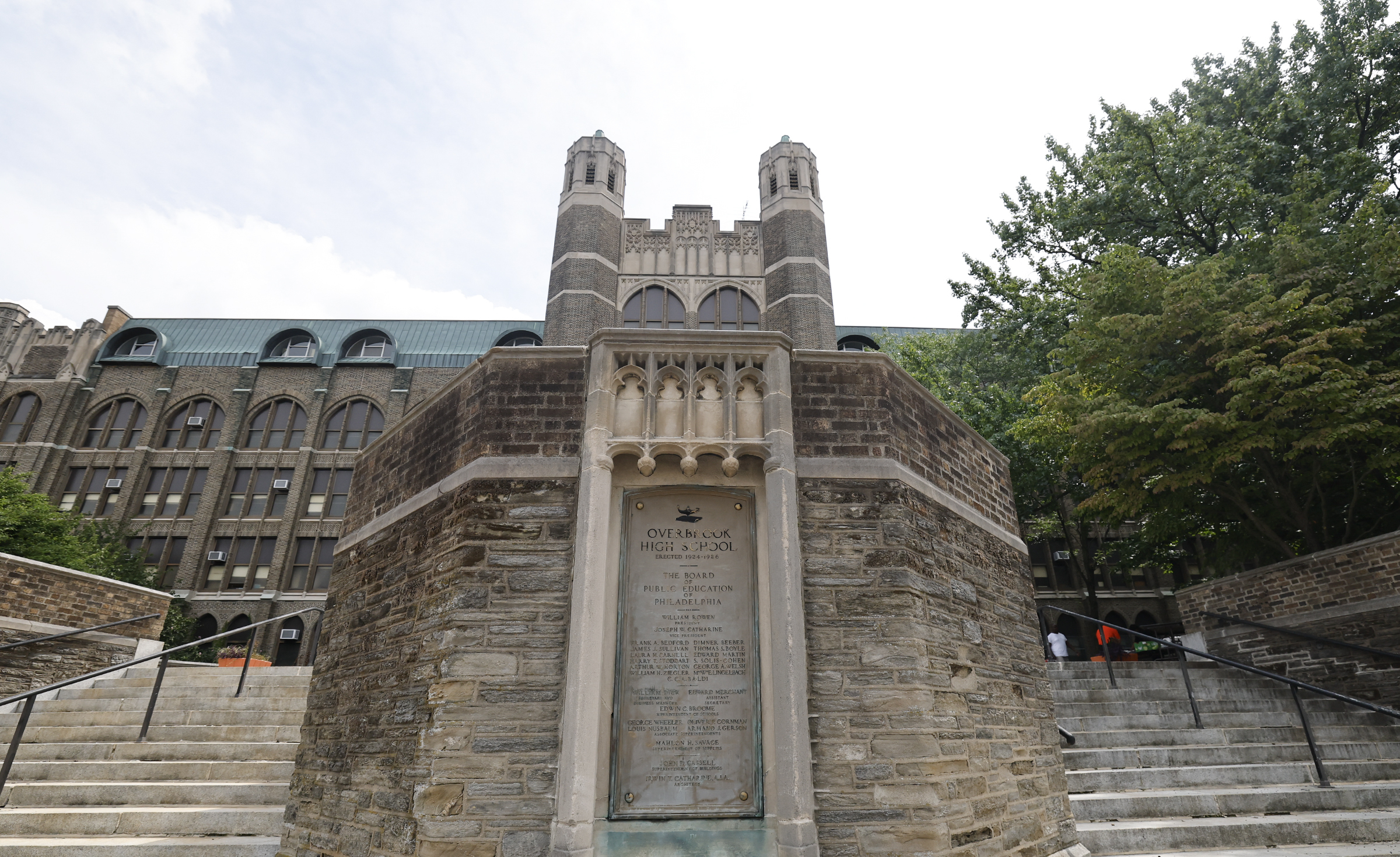
    Overbrook High School, in West Philadelphia, will get major renovations in preparation for The Workshop School, a small, project-based district school, colocating inside the building.

    Here are the total proposed dollar amounts per Council district and the 10 big projects announced Monday:

    • 1st District: $308,049,008. Key project: $57.2 million for South Philadelphia High, turning the school into a career and technical education hub and modernizing electrical, lighting, and security systems.
    • 2nd District: $302,284,081. Key project: $54.6 million for Bartram High, to renovate the school and grounds, career and technical education spaces, restroom and accessibility renovations, new painting, and new athletic fields and facilities (on the site of nearby Tilden Middle School, which is slated to close). Motivation High School would close and become an honors program inside Bartram.
    • 3rd District: $204,947,677. Key project: $19.6 million for the Sulzberger site, which currently houses Middle Years Alternative and is proposed to house Martha Washington Elementary. (It currently houses MYA and Parkway West, which would close.) Improvements would include heating and cooling and electrical systems, classroom modernizations, and the addition of an elevator and a playground.
    • 4th District: $216,819,480. Key project: $50.2 million for Overbrook High School, with updates including new restrooms, accessibility improvements, and refurbished automotive bays. (The Workshop School, another district high school, is colocating inside the building.)
    • 5th District: $290,748,937. Key project: $8.4 million for Franklin Learning Center, with updates including for exterior, auditorium, and restroom renovations, security cameras, accessibility improvements, and new paint.
    • 6th District: $55,769,008. Key project: $27.2 million for Forrest Elementary, including modernizations that will allow the school to grow to a K-8, and eliminate overcrowding at Northeast Community Propel Academy.
    • 7th District: $388,795,327. Key project: $32.3 million at John Marshall Elementary in Frankford to add capacity at the school, plus a gym, elevator, and schoolwide renovations.
    • 8th District: $318,986,215. Key project: $42.9 million at Martin Luther King High in East Germantown for electrical and general building upgrades and accommodations for Building 21, a school that will colocate inside the King building.
    • 9th District: $442,934,244. Key project: $42.2 million at Carnell Elementary for projects including an addition to expand the school’s capacity, restroom renovations, exterior improvements, and stormwater management projects.
    • 10th District: $275,829,539. Key project: at Watson Comly Elementary in the Northeast, an addition to accommodate middle grade students from Loesche and Comly, and building modernizations. District officials did not give the estimated cost of the Comly project.

    What’s next?

    The facilities Council hearing is scheduled for 10 a.m. Tuesday at City Hall. It will also be livestreamed.

    Members of the public also have the opportunity to weigh in on the facilities plan writ large at three community town halls scheduled for this week: Tuesday at Benjamin Franklin High from 4:30 to 6:30 p.m., Friday at Kensington CAPA from 4:30 to 6:30 p.m., and a virtual meeting scheduled for 2 p.m. on Sunday.

    Meetings at each of the schools proposed for closure continue this week, also; the full schedule can be found on the district’s website.

  • At Old City’s latest restaurant, a South Philly restaurant couple updates their red-sauce memories

    At Old City’s latest restaurant, a South Philly restaurant couple updates their red-sauce memories

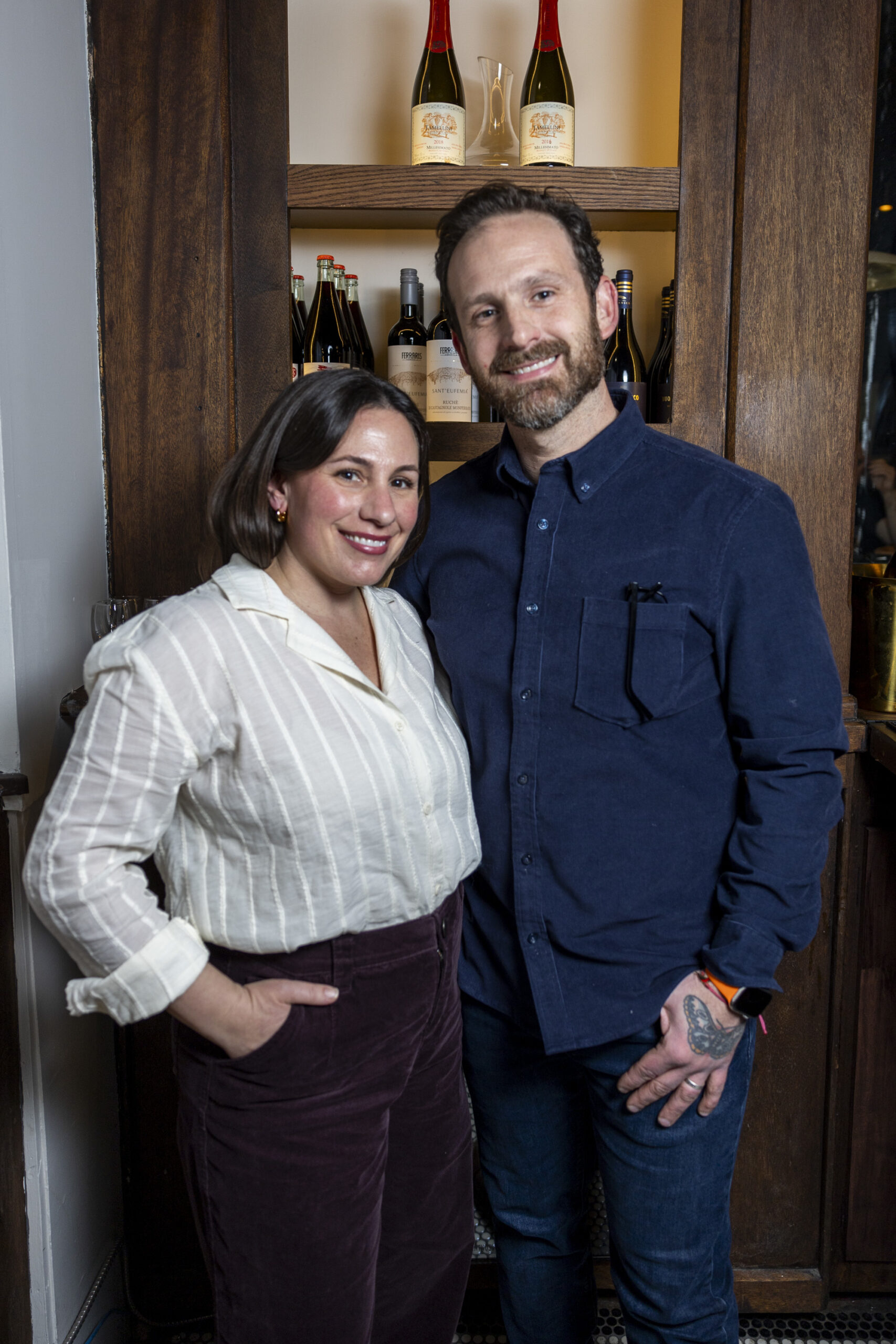
    Piccolina is the newest entry from restaurateurs Michael and Jeniphur Pasquarello, and it may also be their most personal.

    The Italian restaurant opened Monday inside the Society Hill Hotel at Third and Chestnut Streets, occupying a compact spot that was originally an oyster bar in 1830. The corner restaurant is anchored by the big-bellied, handmade brick Marra Forni pizza oven installed by the hotel’s owners, who closed their own restaurant in the space in December. At night, the bar glows against warm brick and plaster, giving the room a sense of intimacy.

    Guests dining in and at the bar at Piccolina in Philadelphia, Pa., on Friday, Feb. 13, 2026. .
    Michael and Jeniphur Pasquarello at their restaurant Piccolina in Philadelphia, Pa., on Friday, Feb. 13, 2026.

    For the Pasquarellos — whose restaurant history dates to 2003, when they opened their first Cafe Lift bruncherie in Callowhill — Piccolina marks a shift in focus. Over the years, the couple added a Cafe Lift in Haddonfield and moved the original location to 12th and Spring Garden (after closing a short-lived branch in Narberth), and opened the nearby concepts Prohibition Taproom (corner bar) and La Chinesca (Mexican). They also had a six-year run of the wood-fired pizzeria Bufad, and a decade in Fishtown with the beef-, then fish-centered Kensington Quarters.

    Piccolina is a return to the Pasquarellos’ South Philadelphia roots: He grew up near Chadwick and Shunk Streets, and she grew up two blocks away, at 17th and Ritner. Her grandparents, the Bernardinis, ran Bruno’s luncheonette — later Brunic’s. (Brunic’s lives on, under different owners.)

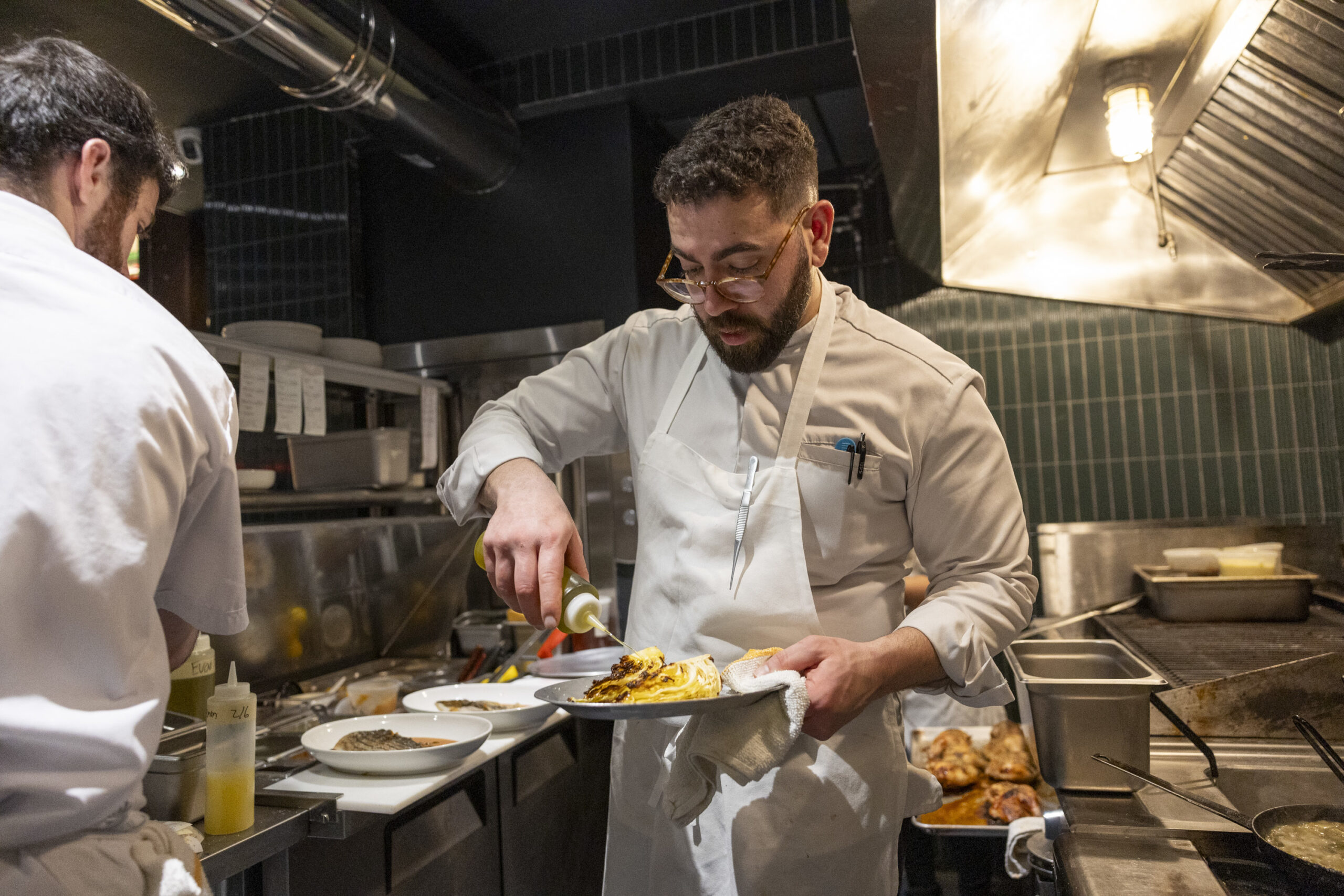
    Chef Alex Vazquez working during service at Piccolina in Philadelphia, Pa., on Friday, Feb. 13, 2026.

    “It’s tapping into memory and the feeling of where it all came from,” Michael Pasquarello said. But although the menu includes flavors they grew up with, Piccolina is not a South Philly red-gravy house. “We took all of that and then we let Alex put it through his filter.”

    Alex is chef Alex Vazquez, whose resumé includes Vernick Food & Drink and Friday Saturday Sunday, where he rose over a five-year run from garde manger to sous chef.

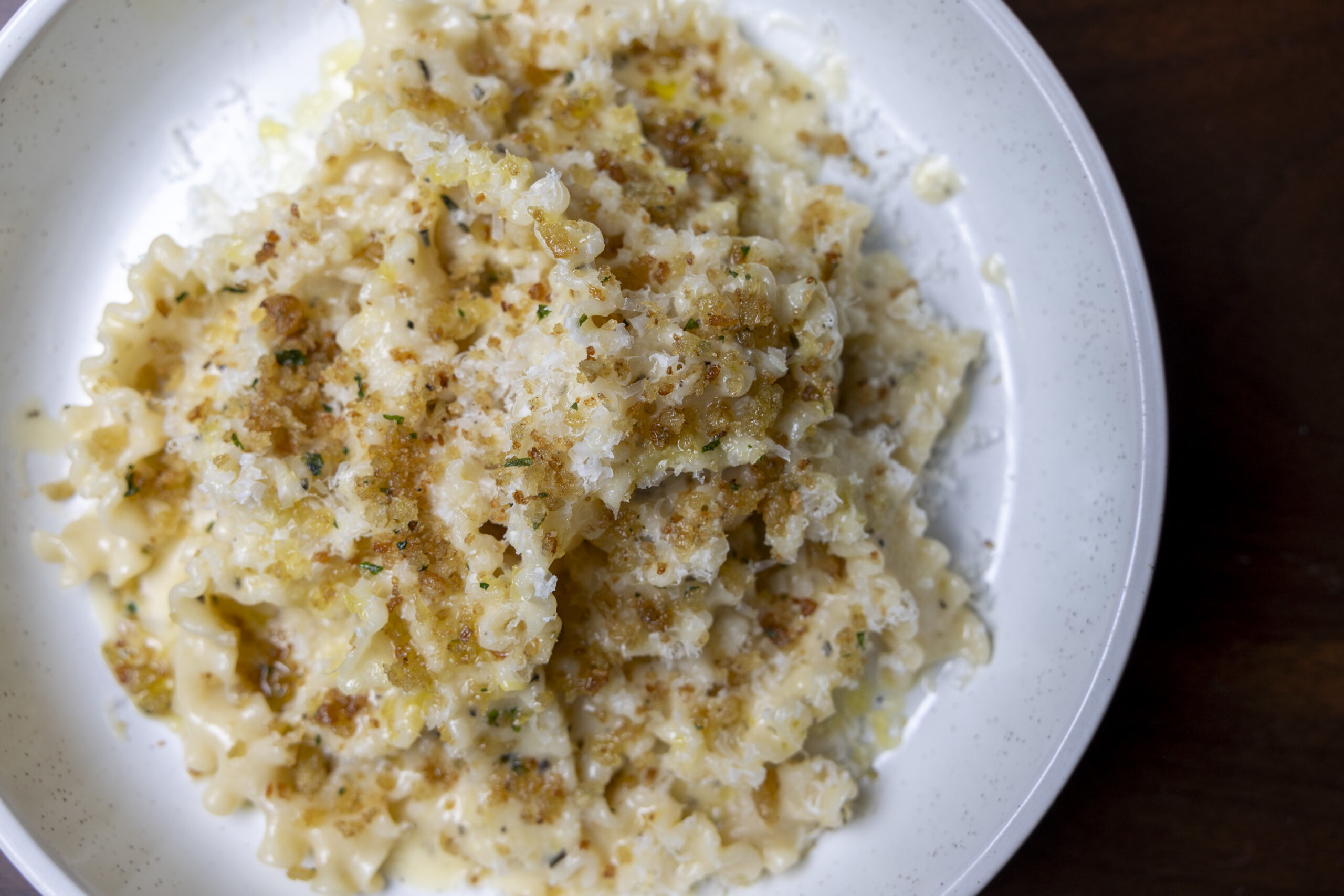
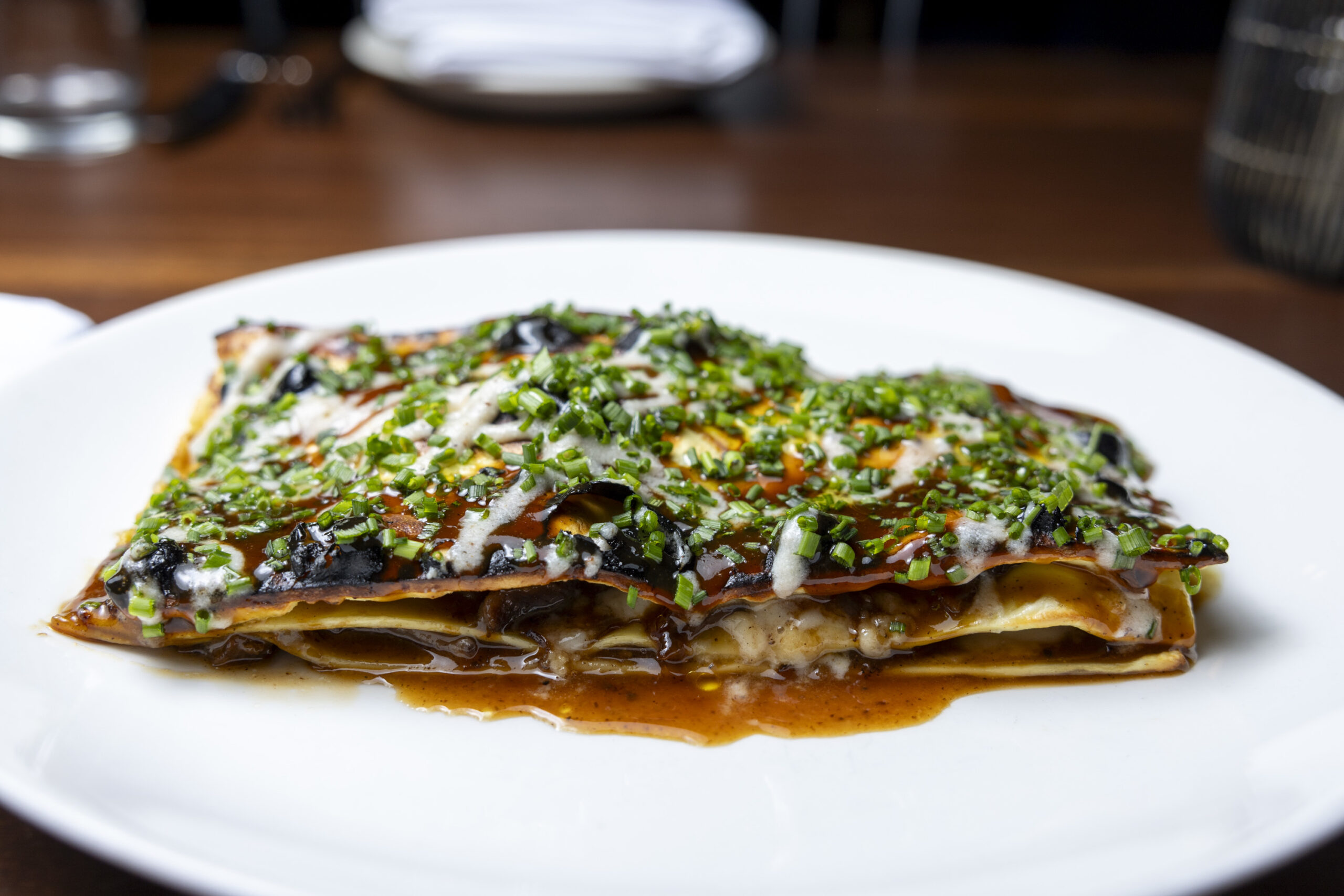
    At Piccolina, Vazquez is turning out traditional pastas like bucatini amatriciana and malfadine al limone. Stracciatella is folded into the campanelle vodka just before plating, giving the sauce a loose, creamy pull rather than a heavy coat, Michael said. There’s oxtail lasagna, too, built with just three layers of fresh pasta — a technique Pasquarello traces back to Kensington Quarters.

    The Malfadine Al Limone at Piccolina in Philadelphia, Pa., on Friday, Feb. 13, 2026.
    The Oxtail lasagna at Piccolina in Philadelphia, Pa., on Friday, Feb. 13, 2026.

    “We used to do these thin lasagnas because we wanted crispy edges,” Michael said. “Alex loved that idea. So we do braised oxtail, a really rich tomato sauce, drizzle Alfredo through it, then fire it in the brick oven so you get those crisp edges.”

    Vazquez’s Neapolitan pizzas are sturdy-crusted, all the better to keep up with a load of toppings. Inspired by Bufad, there’s a sausage pie finished with béchamel, broccoli rabe, and shaved pecorino, as well as a mushroom pizza that had developed a following before the restaurant closed at the end of 2018.

    The Sausage Pizza at Piccolina in Philadelphia, Pa., on Friday, Feb. 13, 2026.

    The larger plates push the “memory through a chef’s lens” idea most clearly, Michael said. The half-chicken marsala starts with dry-aged birds that are brined, air-dried, and cooked, then finished with a deep marsala sauce and hearth-fired mushrooms.

    “I remember my mom making chicken Marsala for us,” he said. “So the idea was, what does that look like when you take it [more] seriously?”

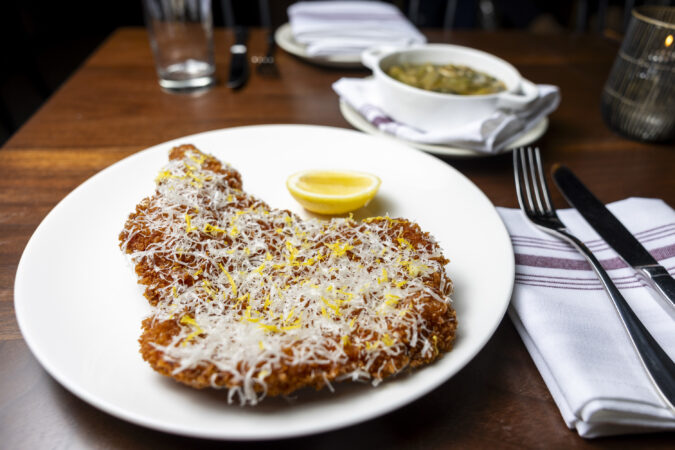
    The pork Milanese follows a similar logic. Vazquez brines the pork for 24 hours with coriander, fennel, garlic, and peppercorns before breading it in panko and frying it crisp. It’s served with a hearty crock of escarole and beans — a dish Michael describes as almost universal in South Philadelphia kitchens. “That dish is home to me,” he said.

    “I love red-sauce places,” Vazquez said. “It’s so Philly. I just wanted to put my spin on what I want to eat — a red-sauce, pizza, pasta place that’s a little nicer.”

    Piccolina serves dinner daily, with lunch and brunch expanding the menu into panini, egg dishes, and sweets like maritozzi French toast stuffed with mascarpone whip. The full bar includes six beers on draft, negroni and other cocktails, and an Italian-only wine list.

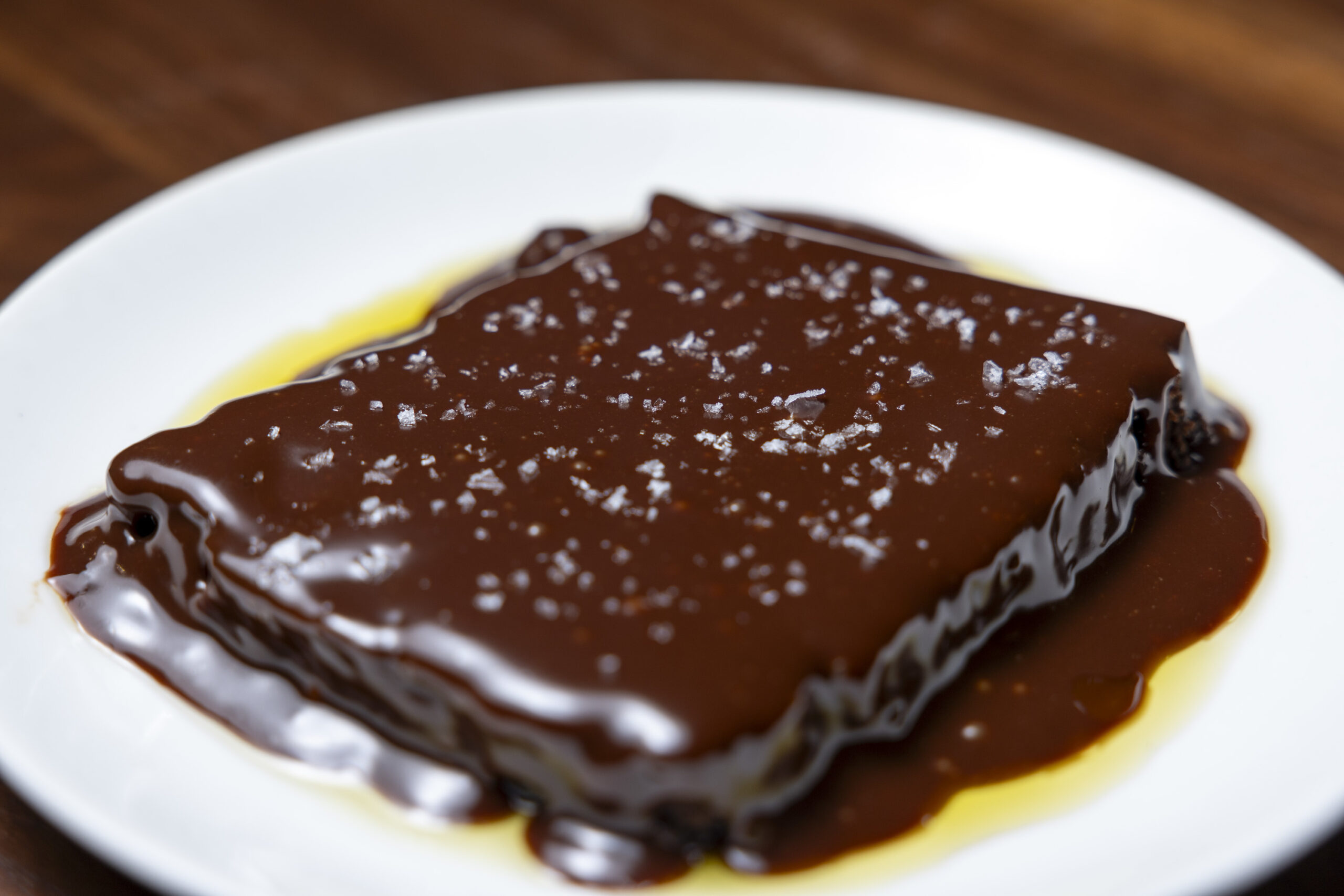
    A chocolate cake at Piccolina in Philadelphia, Pa., on Friday, Feb. 13, 2026. .

    Piccolina, 301 Chestnut St., 267-761-4120, piccolinaphl.com. Hours: 5 p.m. to 1 a.m. for dinner. Lunch (noon to 4 p.m. Monday to Friday) starts Feb. 17 and weekend brunch (11 a.m. to 4 p.m.) starts Feb. 21.

  • Why three Philly bars serve this rare Portuguese spirit

    Why three Philly bars serve this rare Portuguese spirit

    During a recent snowstorm, Philly bar owner Chris Fetfatzes dashed around the bustling bar at Sonny’s Cocktail Joint, delivering platters of burgers and fries alongside 1-ounce pours of house-made liqueurs served in tiny, cut-crystal glasses.

    One liqueur in particular glowed ruby red, and a sip showed that it had a careful balance of sweetness and tang, its fruitiness cutting through the richness of Sonny’s cracker-thin pizzas. It served as both a pick-me-up and a digestif on a bitter-cold day.

    A spread of menu items at Grace & Proper with Portuguese influences: piri piri buffalo chicken dip, a bifana, pasteis de nata, gigantes, and the pink street cocktail.

    This sunny spirit was a classic sour cherry Portuguese liqueur called ginjinha (“zhin-ZHEEN-yah”). In its home country, you can drink it at the sidewalk-facing counters of historic, pocket-sized stores scattered throughout Lisbon. In the Philly area, you’ll be hard-pressed to find it at most establishments — except for the bars owned and operated by Fetfatzes’ Happy Monday Hospitality: Sonny’s on South Street, Grace & Proper in Bella Vista, and WineDive in Rittenhouse.

    The restaurants also make their own green alpine liqueur, chocolate liqueur, coffee liqueur, falernum, fernet, Swedish punsch, and pumpkin tequila, with more to come. (As with ginjinha and house-made amari and vermouth, these all involve steeping botanicals and produce in alcohol, not distilling fresh spirits.)

    But the ginjinha is near and dear to Fetfatzes’ heart. The 44-year-old South Philadelphia native is a first-generation American whose mother was Portuguese and father was Greek, and the delicate glasses of liqueur served in his restaurant group’s establishments are part of a quiet legacy of Portuguese immigration to Northeast Philly.

    Picking morello cherries in Philly.

    Happy Monday’s ginjinha contains the DNA of Fetfatzes’ original batch, made in 2023 from the fruit of a morello cherry tree that a Portuguese friend planted as a sapling in the Northeast after migrating to the U.S. Fetfatzes and his team harvested 20 gallons of cherries from the tree, grown specifically for ginjinha, in 2023. The fruit was macerated with sugar in a blend of young, unaged brandy and Portuguese red wine for several days, with the occasional agitation to redistribute the cherries.

    “It’s [somewhat] like a sangria, as it is a wine-based product,” said Fetfatzes, though it is much sweeter and stronger than typical, easy-drinking Spanish sangria.

    The ginjinha recipe was developed through trial and error by Fetfatzes and his beverage director, Scott Rodrigue, who is also of Portuguese descent. “We got a base, messed around with it and branched out to make it our own,” Fetfatzes said. The sour cherry liqueur conjures up the big family parties he partakes in every year when taking his own family back to his mother’s home country.

    Washing freshly picked morello cherries grown in Philly.

    After landing on a base recipe, subsequent batches of ginjinha — made every three weeks for Happy Monday’s bars — have used flash-frozen cherries sourced from wherever it’s cherry season, whether it’s California, Portugal, Central Europe, or the Middle East.

    Fetfatzes and his staff employ the solera method of fractional blending, which is also used to make Champagne and fortified wines like sherry. The 2023 batch has become a “mother” for all of Fetfatzes’ ensuing batches, “like a starter yeast for sourdough,” he explained.

    Sorting morello cherries.

    “Like the Italians, we’re peasants living off the land,” said Fetfatzes, whose own mother followed a similar migration path to that of the original batch’s tree. “My mom’s village town was Vergada in the Mozules. She came over solo as a seamstress in 1974.”

    The ginjinha is popular at Sonny’s, where several customers who’ve traveled to Portugal like to order it, but it is perhaps best enjoyed at Grace and Proper, where there’s a rotation of homesick Portuguese regulars. They come in for the tiny pours of ginjinha, or have it shaken up with vodka and fresh lime juice for a cocktail called the “Pink Street” ($12), a Portuguese interpretation of a cosmopolitan, along with a bifana sandwich ($7) — one of the best sandwich deals in town — consisting of pork marinated with white wine, garlic, and paprika, and soaking through crusty Portuguese bread.

    The ginjinha’a sweetness balances out the sandwich’s salt-kissed meatiness. The flavors, twisted together, balance one another. “Ginjinha has got this pomegranate-like tart-sweet punch that cuts through the garlicky richness of our bifana. It resets your palate, jiving with the bifana’s piri-piri heat and bite of mustard,” said Fetfatzes.

    Sonny’s Cocktail Joint, 1508 South St., sonnyscocktailjoint.com; Grace & Proper, 941 S. Eighth St., graceandproper.com; WineDive, 1534 Sansom St., instagram.com/winedivephilly