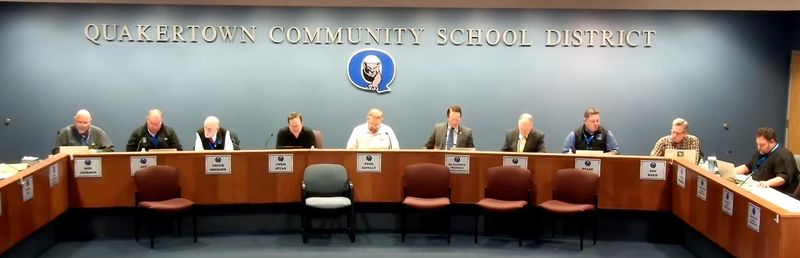
Quakertown Community School District Superintendent Matthew Friedman is on leave effective immediately, a district spokesperson said Friday.
The spokesperson, Melissa Hartney, said the district’s school board could not comment further.
“Because this is a personnel matter, the board is limited in the amount of information it can share at this time,” Hartney said in a statement.
Friedman did not return a request for comment.
Friedman took over the 4,600-student district in Upper Bucks County in 2023, after serving as superintendent of the Ocean City School District in New Jersey.
The Quakertown school board in November granted him a $10,000 raise, bringing his salary to $233,000, and extended his contract until June 30, 2028.
Assistant Superintendent Lisa Hoffman is taking over day-to-day operations of the district, Hartney said.
“The board is confident that district operations, instructional programs, and student services will continue without interruption,” Hartney said, adding that it “remains committed to transparency, accountability, and maintaining the trust of our students, staff, families, and community.”
A cannonball was found buried in a Cherry Hill home’s backyard Friday morning, prompting street closures and evacuations.
The Cherry Hill Police Department responded to the 200 block of Woodstock Drive South just before noon, after residents found a very old cannonball buried in their yard, said Capt. Sheldon Bryant.
The Camden County Sheriff’s Department Bomb Unit was called in to handle the situation. The police temporarily evacuated neighboring homes and closed down surrounding streets.
Cannonballs have been discovered in New Jersey yards before.
In June 2015, an old cannonball mysteriously appeared in Madison in North Jersey, and was turned over to the U.S. Army, according to NBC New York.
A month later, a couple found what turned out to be an active cannonball while landscaping their backyard in Lower Township in Cape May County. It was later detonated in an unpopulated area, 6abc reported.
As for the Cherry Hill cannonball, it was unknown where the cannonball came from, how old it was, exactly how it was discovered, or how long it had been in the yard. The bomb unit took the cannonball for proper disposal, and the area was cleared in less than an hour, Bryant said. Streets were open soon afterward.
“We treat every situation like this with care and caution to ensure the safety of our residents,” Bryant said. “We are thankful for the swift response of the Camden County Sheriff’s Department Bomb Unit and for the cooperation of the neighborhood while we worked to resolve this safely.”
You may not have noticed, but that endless snowpack has developed a slow leak — in this case historically slow.
Its endurance continues to climb the charts among the snowpacks of yesteryear — and in at least one way may well be unprecedented in the period of record dating to the late 19th century.
As of 7 a.m. Friday, officially at Philadelphia International Airport, three inches of the snowy and icy remnants of what fell on the region on Jan. 25 had survived.
That made this the most-enduring snowpack of at least three inches in 65 years, said Alex Staarmann, a meteorologist at the National Weather Service in Mount Holly, the office’s climate specialist.
That earlier one, which lasted from Jan. 20 to Feb. 14, 1961, was replenished by multiple significant snowfalls, as did others at the top of the endurance list; the 2026 version was basically one-and-done after 9.3 inches were measured at the airport.
This one — and it still has its sparkle where it hasn’t mutated into frozen sludge — even has bested the snow cover attending the 44 inches that accumulated in a six-day period in February 2010, when at least four inches survived for 17 days.
The latest batch was at four inches for 18 days, good for fourth place all-time.
Not that it hasn’t had some aesthetic benefits. It can be like light therapy in the morning, and a spectacular screen for the tree shadows. It has beautifully entombed all that unfinished yard work.
Snow and ice debris is piled along the Camden waterfront in Camden, N.J., framing the Philadelphia skyline across the Delaware River, Thursday, Feb. 5, 2026.
But it’s also been a royal pain throughout the region and begged the question: When it will go away?
When will bare ground emerge in the Philly region?
A farewell tour is likely next week as a snow threat for the holiday weekend remains a remote one, with accumulations only between “wet flakes” and “a dusting” possible, said Staarmann.
And you might keep an eye on Tuesday for a melt watch. Temperatures are forecast to fall below freezing Monday morning, and then stay above 32, even at night, through the workweek.
Highs are expected in the 40s Saturday through Monday, and then 50 or better the next three days.
More significantly for melting, the air will become noticeably more moist on Tuesday, and that should accelerate the melting. Your skin might even notice the difference.
Why has the snowpack been so enduring in Philly?
Since the precipitation ended on Jan. 25, the air has been remarkably dry, an underrated factor in the persistence of the ground cover, along with what happened after the snow stopped that day.
After more than seven inches of snow had fallen, it was topped with several hours of accumulating sleet.
Those miniature ice balls turned out to be a mighty additive: Ice may be way slower to accumulate, but it is also way slower to melt, giving the snowpack staying power.
“If we hadn’t had this much sleet, we might have some evidence of it, but it wouldn’t be this deep or persistent,” said Staarmann.
The Arctic freeze that followed and the consistently arid air have been the ideal preservatives.
Moist air, an efficient melter, has been absent.
When enough invisible water vapor comes in contact with snow and ice, it condenses and gives off latent heat that can liquefy the pack in a hurry.
After Philadelphia’s record 30.7-inch snowfall of Jan. 7-8, 1996, it was a moisture surge 11 days after the snow stopped that had a whole lot to do with erasing the snowpack even before the modest rains that followed, recalled David Robinson, the longtime New Jersey state climatologist.
The melt set off disruptive flooding, but even though rain is in the forecast for midweek, anything resembling a repeat is unlikely this time around.
Is that all there is for the winter of 2025-26?
NOAA’s Climate Prediction Center on Friday had odds favoring above-normal temperatures through Feb. 23, followed by a possible cool down.
Regarding any potential for snow, “We still have a few weeks left of opportunities,” said Staarmann.
As long as computers are operating, snow chances will never die.
However, the February sun is getting stronger by the day and lasting longer. If it does snow again, it’s a near certainty that it won’t match this one for staying power.
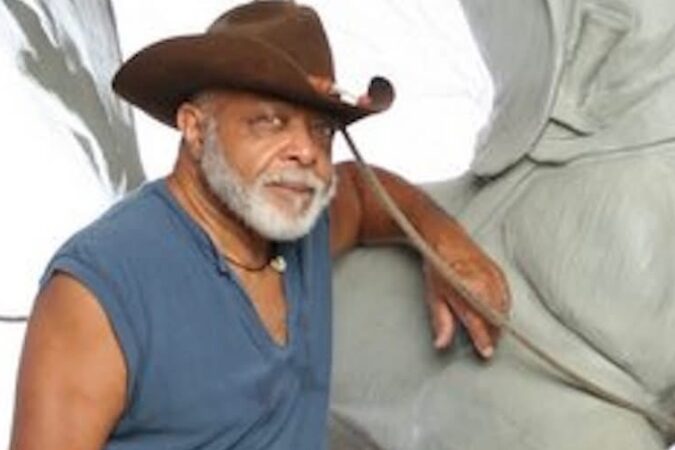
Phil Sumpter, 95, formerly of Philadelphia, celebrated sculptor, artist, art teacher, TV station art director, veteran, mentor, urban cowboy, and revered raconteur, died Thursday, Jan. 1, of age-associated decline at his home in San Juan, Puerto Rico.
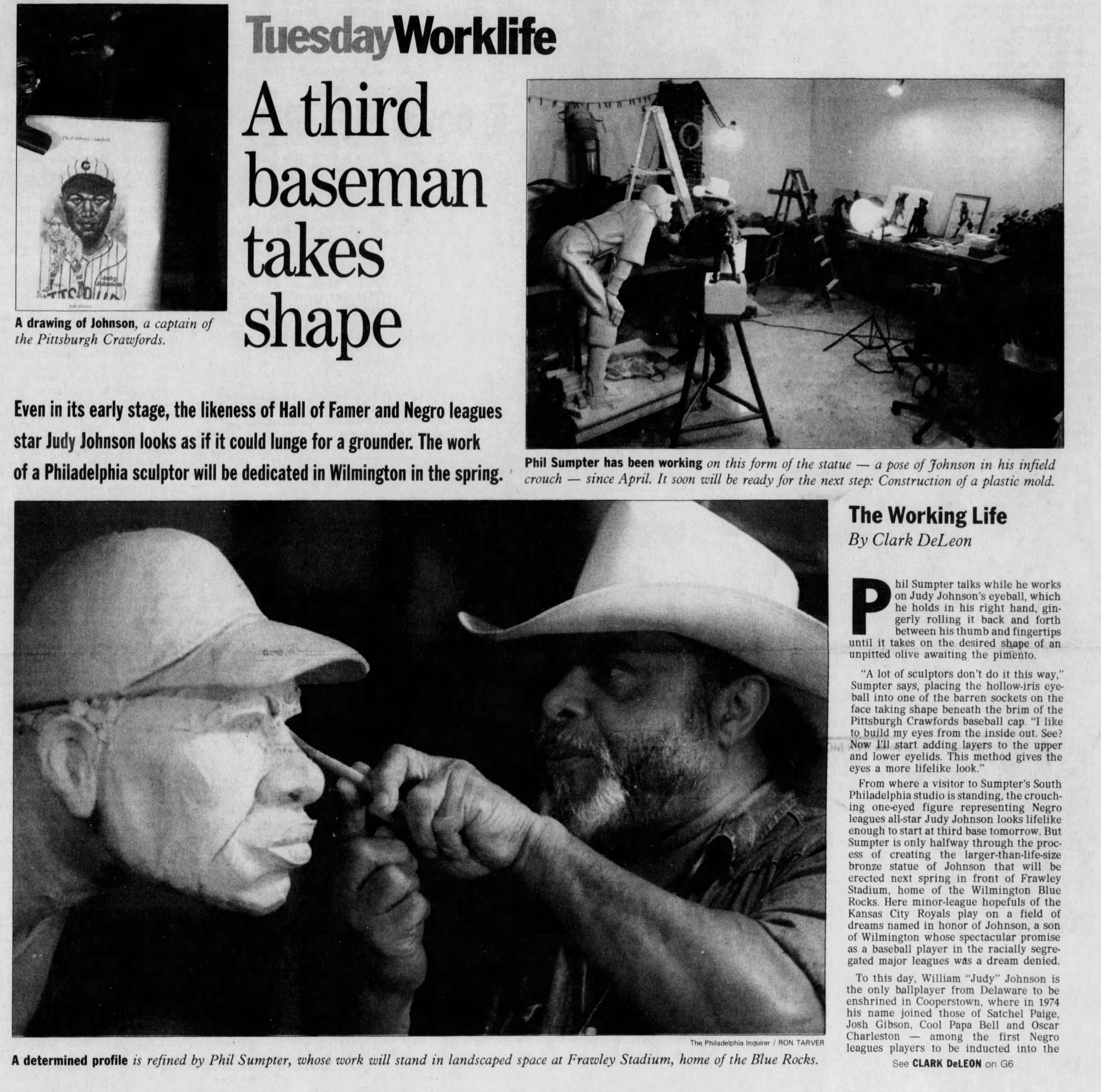
A graduate of John Bartram High School and the old Philadelphia College of Art, Mr. Sumpter taught art, both its history and application, to middle and high school students in Philadelphia for 27 years. He was an engaging teacher, former students said, and a founding faculty member at the Philadelphia High School for the Creative and Performing Arts in 1978.
He started teaching in 1955 and, after a break in the 1960s and ’70s, finally retired in 1992. “You are very lucky to have a teacher in your life that believed in you, nurtured you, challenged you, and loved you,” a former student said on Facebook. “Mr. Sumpter did all that and more.”
Other former students called him their “father” and a “legend.” One said: “You did a lot of good here on earth, especially for a bunch of feral artist teenagers.”
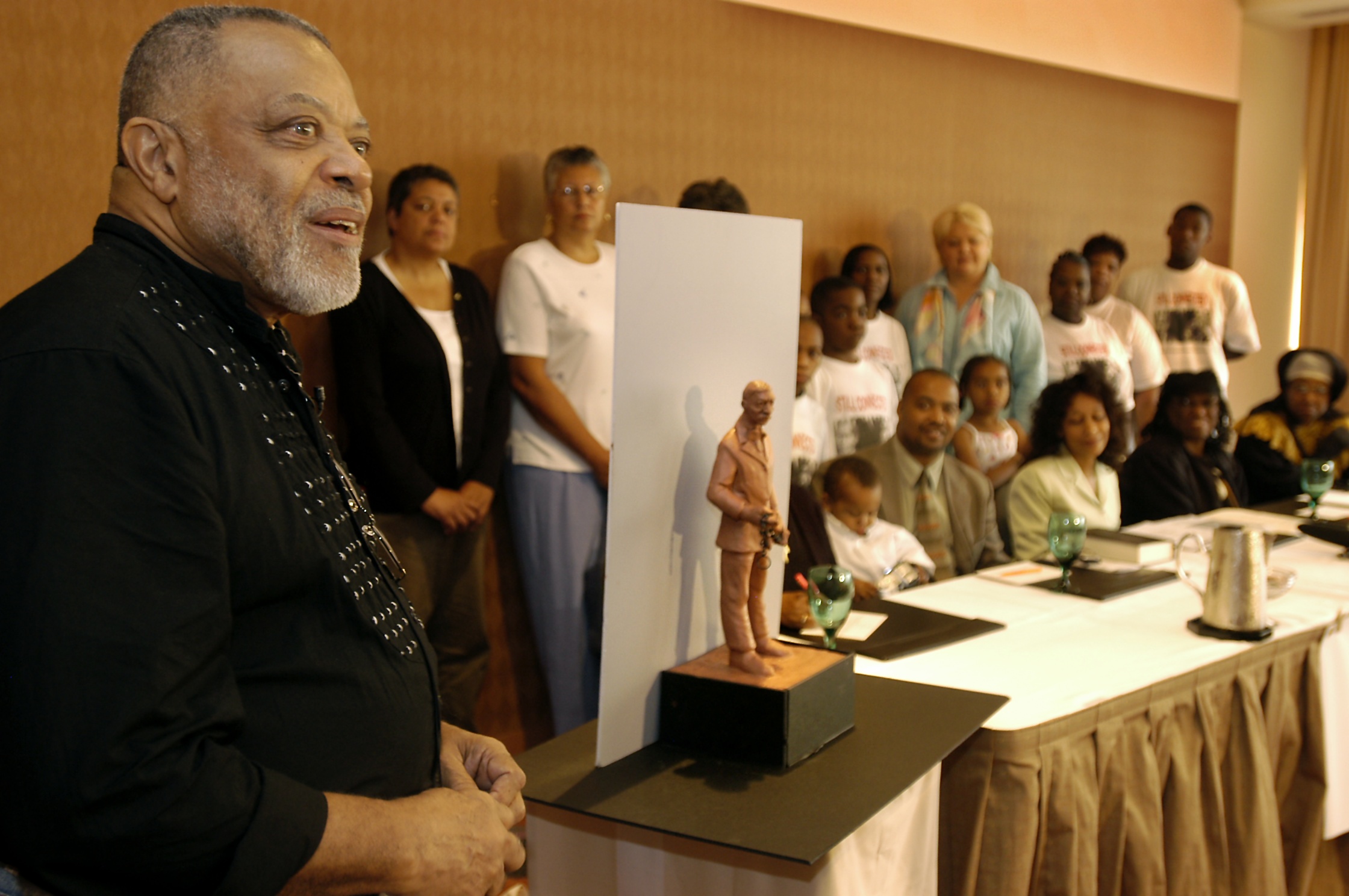
Mr. Sumpter (left) talks about his sculpture of Underground Railroad organizer William Still in 2003.
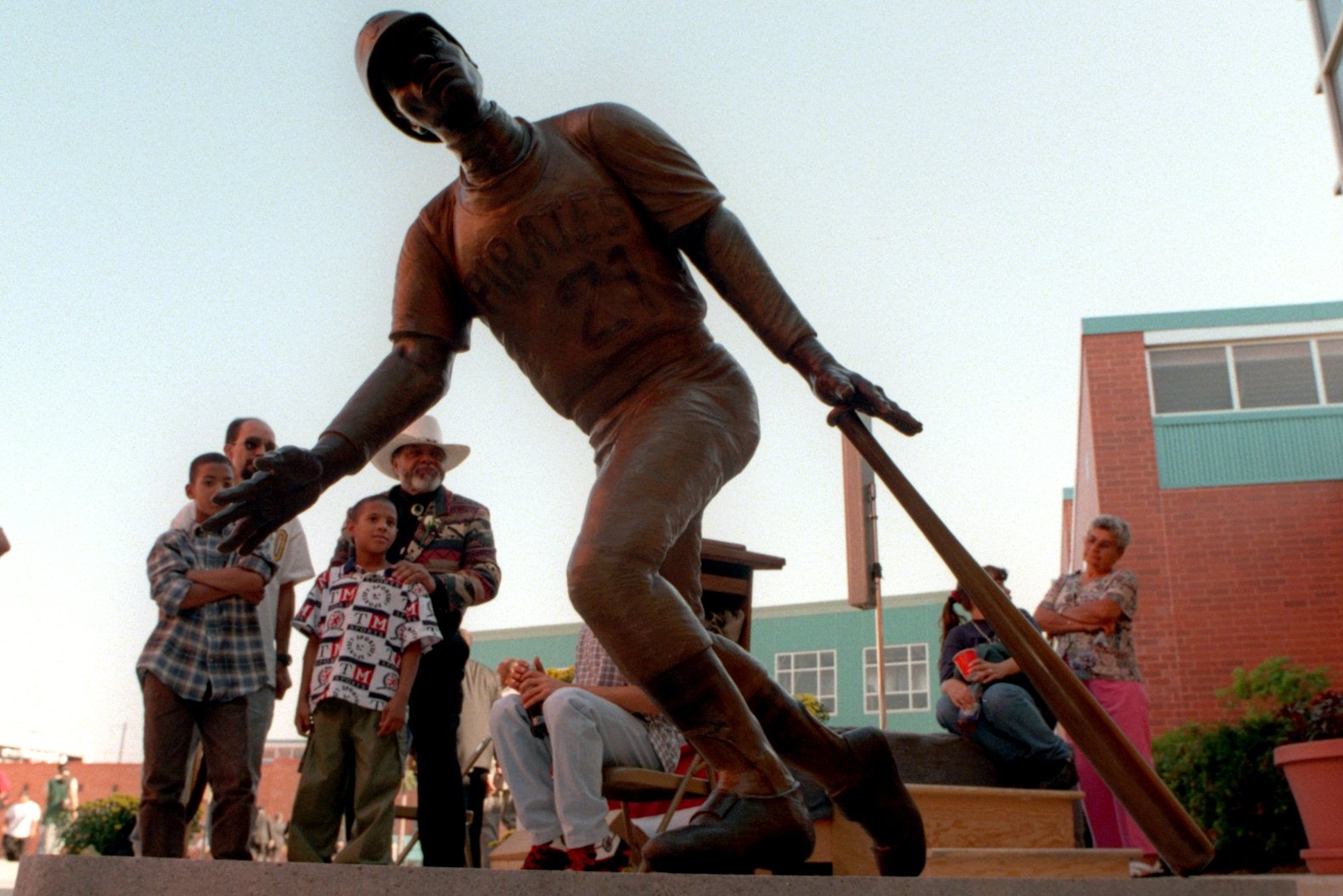
Outside the classroom, Mr. Sumpter sculpted hundreds of pieces and painted and sketched thousands of pictures in his South Philadelphia stable-turned-studio on Hicks Street. Prominent examples of his dozens of commissions and wide-ranging public art presence include the bas-relief sculpture of Black Revolutionary War soldiers at Valley Forge National Historical Park in Montgomery County, the action statue of baseball star Roberto Clemente in North Philadelphia, the Negro Leagues baseball monument in West Parkside, and the Judy Johnson and Helen Chambers statues in Wilmington.
He worked often in clay and paper, made murals, and designed commemorative coins and medals. He especially enjoyed illustrating cowboys, pirates, Puerto Rican jibaros, and landscapes.
His statue of Clemente was unveiled at Roberto Clemente Middle School in 1997, and Mr. Sumpter told The Inquirer: “I think I’ve captured a heroic image, an action figure depicting strength plus determination.”
He was among the most popular contributors to the Off the Wall Gallery at Dirty Franks bar, and his many exhibitions drew crowds and parties at the Bacchanal Gallery, the Free Library of Philadelphia, the Plastic Club, and elsewhere in the region and Puerto Rico. He hung out with other notable artists and community leaders, and collaborated on projects with his son, Philip III, and daughter, Elisabeth.
Mr. Sumpter worked often in clay and paper, made murals, and designed commemorative coins and medals.
He even marketed a homemade barbecue sauce with his wife, Carmen. His family said: “He is remembered for mentorship, cultural fluency, and presence as much as for material works.”
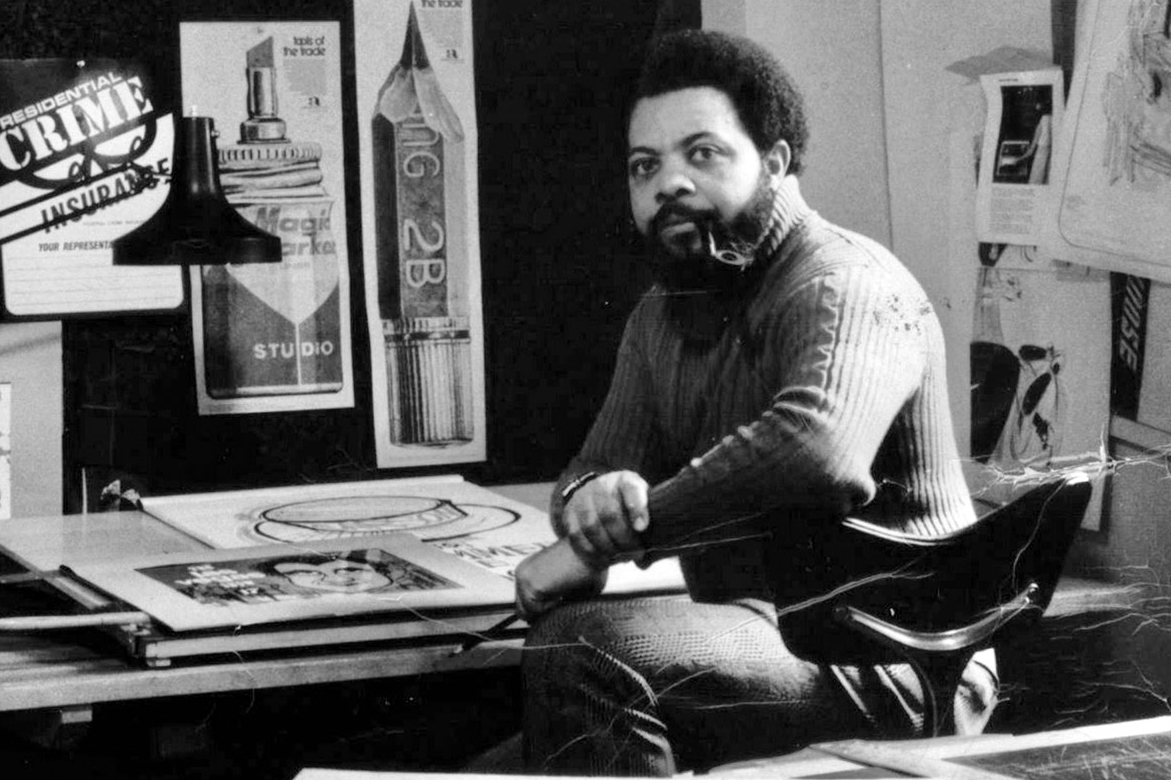
He founded Phil Sumpter Design Associates in the 1960s and worked on design and branding projects for a decade with institutions, educational organizations, and other clients. He was art director for WKBS-TV, WPHL-TV, and the Pyramid Club.
“The word for him,” his son said, “is expansive.”
Mr. Sumpter was friendly and gregarious. He became enamored with Black cowboys and Western life as a boy and went on to ride horses around town, dress daily in Western wear, and depict Black cowboys from around the world in his art. His viewpoints and exhibits were featured often in The Inquirer, the Philadelphia Tribune, Philadelphia Magazine, Dosage Magazine, and other publications.
Mr. Sumpter (in white cowboy hat) views his statue of Roberto Clemente in 1997.
He was an air observer for the Air Force during the Korean War and later, while stationed in England, studied sculpture, ceramics, and drawing at Cambridge Technical Institute. His daughter said: “He taught me how to open the portal to the infinite multiverse of my own imagination, where every mind, every soul can be free.”
Philip Harold Sumpter Jr. was born March 12, 1930, in Erie. His family moved to segregated West Philadelphia when he was young, and he earned a bachelor’s degree in art education at PCA.
He married and divorced when he was young, and then married Florence Reasner. They had a son, Philip III, and a daughter, Elisabeth, and lived in Abington. They divorced later, and he moved to Hicks Street in South Philadelphia.
He met Carmen Guzman in Philadelphia, and they married in 2001 and moved to San Juan for good in 2003. He built a studio at his new home and never really retired from creating.
Mr. Sumpter (second from left) enjoyed time with his family.
Mr. Sumpter enjoyed singing, road trips to visit family in Pittsburgh, and bomba dancing in San Juan. He was a creative cook, and what he called his “trail chili” won cook-offs and many admirers.
“He was a larger-than-life person,” his son said. “He was fearless in his frontier spirit.” His wife said: “His joy for life was contagious, as was his laughter.”
In addition to his wife, children, and former wife, Mr. Sumpter is survived by other relatives.
A celebration of his life was held earlier in Puerto Rico. Celebrations in Philadelphia are to be from 2 to 5 p.m. Saturday, March 14, at Dirty Franks, 347 S. 13th St., Philadelphia,Pa. 19107, and from 2:30 to 4:30 p.m. Sunday, March 15, at the Plastic Club, 247 S. Camac St., Philadelphia, Pa. 19107.
Mr. Sumpter’s work was featured in The Inquirer in 1994.
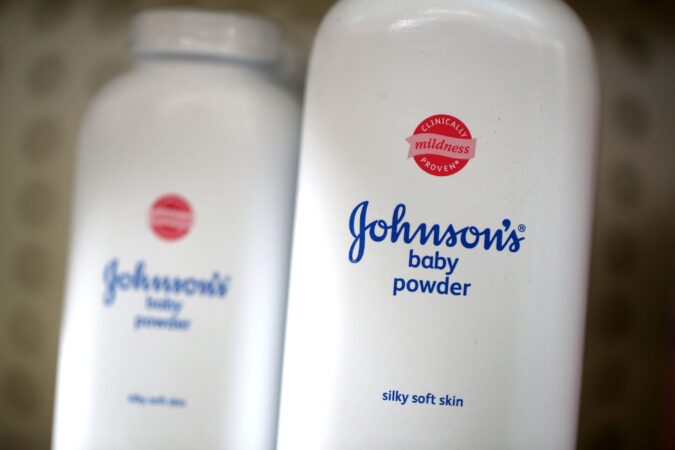
A Philadelphia jury ordered pharmaceutical and cosmetics giant Johnson & Johnson to pay $250,000 to the family of a York County woman after finding the company’s baby powder product led her to develop cancer.
Gayle Emerson sued Johnson & Johnson in 2019 as part of a nationwide wave of litigation accusing the company’s talc-based baby powder of causing ovarian cancer. Emerson, who was diagnosed with cancer in 2015, died at age 68, months after filing the complaint.
The complaint accused the New Jersey-based company of selling a defective product and failing to warn about its risks.
After a three-week trial, which Common Pleas Judge Sean F. Kennedy presided over,the jury began deliberating Tuesday afternoon and reached its verdict Friday around 2 p.m. During deliberations, jurors asked the judge questions that suggested they grappled with how strongly the evidence showed that external use of baby powder could allow a cancer-causing substance to reach the ovaries.
The verdict was comprised of $50,000 in compensatory damages and $200,000 in punitive damages.
“This token verdict reflects the jury’s appreciation that the claims were meritless and divorced from the science,” Erik Haas, Johnson & Johnson’s worldwide vice president of litigation, said in a statement.
The company plans to appeal the verdict, Haas said.
Johnson & Johnson specifically advertised the product for women, the suit says, stating on the bottle: “For you, use every day to help feel soft, fresh, and comfortable.”
Studies haveconnected talc to ovarian cancer since the early 1970s, according to the complaint. The mineral is excavated from the mines that also contain asbestos, riskingcontamination from the cancer-causing substance.
The Federal Drug Administration asked condom manufacturers in the 1990s to stop dusting their product with talc because of the risk to women.
The company was aware of the research about the increased risk of cancer for women who use the powder on their genital area, the suit says, based on internal documents and public statements.
“Gayle Emerson trusted Johnson & Johnson, and Johnson & Johnson betrayed that trust,” Leigh O’Dell, a Beasley Allen attorney representing Emerson’s family, said in her opening statement.
Attorneys in Pennsylvania aren’t allowed to advise jurors on how much to award in damages, but O’Dell noted in her closing argument that Johnson & Johnson’s net worth is $72.3 billion and a verdict should be “enough” to get the attention of the company’s boardroom.
During the trial, attorneys for Johnson & Johnson said the baby powder, which Emerson used externally, wasn’t responsible for the cancer. Other parts of her feminine care routine, such as douching, are also associated with increased risk of ovarian cancer, the attorneys said, and Emerson had other risk factors such as family history, obesity, and age.
Emerson’s attorneys ignored those risk factors because they have “talc blinders” on, Shaila Diwan, a Kirkland Ellis attorney representing the company, said to the jurors at the outset of the trial.
“Ms. Emerson would have still developed cancer if she never used Johnson’s baby powder,” Diwan said in closing.
It’s important that the jury found that Johnson & Johnson was directly responsibe for Emerson’s cancer but the award is “significantly less than the amount necessary to punish J&J,” O’Dell said in a statement.
While the Philadelphia trial was proceeding, a three-judge panel of a New Jersey appeals court disqualified Beasley Allen from the baby powder litigation in the state for ethical violations. The Alabama-based firm has been accused of receiving privileged information from an attorney who previously represented Johnson & Johnson. The firm said it would appeal the decision.
It’s unclear if the ruling will impact the Pennsylvania verdict, or future Beasley Allen cases outside New Jersey.
Emerson’s is the second talc-related lawsuit to reach a verdict in Philadelphia, after a 2021 trial concluded with the jury siding with Johnson & Johnson.
There are 176 lawsuits similar to Emerson’s pending in the Philadelphia court, and thousands across the nation. Another trial against Johnson & Johnson in a City Hall courtroom is scheduled for April.
NEW YORK — Goldman Sachs general counsel Kathy Ruemmler has had a storied legal career. As a federal prosecutor, she helped successfully prosecute Enron executives including Ken Lay and Jeffrey Skilling. She was part of President Barack Obama’s administration, working in various roles for much of his two terms in office, including as White House counsel.
She was even briefly considered by President Obama as a candidate for attorney general.
On Thursday, Ruemmler, 54, announced that she plans to resign from the top legal post at Goldman after a trove of emails and correspondence between her and disgraced financier Jeffrey Epstein showed the two individuals were especially close, years after Epstein’s 2008 conviction on sex crimes charges, when he became a registered sex offender.
Ruemmler previously downplayed her relationship with Epstein. She called him a “monster” and said she regretted ever knowing him. Ruemmler has repeatedly described their relationship as professional, citing her job as a private defense attorney before she ever joined Goldman Sachs.
But documents released in recent weeks and reviewed by the Associated Press depict a deeper relationship than had previously been characterized by Ruemmler and Goldman Sachs. These included intimate email exchanges, social plans and gifts that went beyond formal legal work.
Roughly 8,400 documents involved Ruemmler or referenced her. Some correspondence shows that Ruemmler was aware of the extent of the allegations that Epstein had faced involving underage girls in Florida. In some instances, she advised Epstein on how he might go about trying to repair his image and defend himself publicly against new claims of misconduct.
The gifts Epstein gave to Ruemmler have been documented in news reports: the spa treatments, the handbags from Hermes, an Apple Watch, a Fendi coat, among many others. But some of the interactions between Epstein and Ruemmler described throughout their correspondence indicates that Epstein and Ruemmler did not simply have a lawyer-client transactional relationship, as Ruemmler previously attested to.
“It makes him happy to see you happy,” Epstein’s assistant wrote to Ruemmler in 2016, after Epstein prepaid for a spa treatment for her.
In October 2018, Epstein directed one of his assistants to send flowers and chicken soup to Ruemmler because she has “not been feeling well.” It would not be the first time that Epstein would send her a small token of appreciation when she was sick. They talked about dating issues, made jokes about both the wealthy and everyday people, and shared laments about their careers and dating lives.
They would message each other about mundane things like their mutual distaste for seeing babies in business class on flights and would repeatedly plan to have dinner or drinks in various places. Epstein even had Ruemmler as a backup executor of his will at one point.
Setting aside the immense wealth and privilege and Epstein’s legal troubles, many of the emails between the two would look no different from the banter that many Americans would share to in their own text messages, emails, or group chats.
“Well, I adore him. It’s like having another older brother!” she wrote in an email in 2015.
During her time in private practice after she left the White House in 2014, Ruemmler received several expensive gifts from Epstein, including luxury handbags and a fur coat. The gifts were given after Epstein had already been convicted of sex crimes in 2008 and was registered as a sex offender. Ruemmler was also involved in Epstein’s legal defense efforts after he was arrested a second time for sex crimes in 2019 and later killed himself in a Manhattan jail.
“So lovely and thoughtful! Thank you to Uncle Jeffrey!!!” Ruemmler wrote to Epstein in 2018.
She later joined Goldman Sachs in 2020 and became the investment bank’s top lawyer in 2021.
The firm’s leadership backed her publicly amid the revelations. But the embarrassing emails raised questions about Ruemmler’s judgment. Historically, Wall Street frowns on gift-giving between clients and bankers or Wall Street lawyers, particularly high-end gifts that could pose a conflict of interest. Goldman Sachs requires its employees to get pre-approval before receiving gifts from or giving them to clients, according to the company’s code of conduct, partly in order to not run afoul of anti-bribery laws.
Bloomberg News, the Wall Street Journal, and other media outlets reported that Goldman’s partners, who are the firm’s most senior and well-regarded members going back to when the investment bank was privately held, had begun to question why the firm was holding Ruemmler in such high regard when other lawyers were just as qualified to hold the top legal job.
In her statement Thursday, Ruemmler said: “Since I joined Goldman Sachs six years ago, it has been my privilege to help oversee the firm’s legal, reputational, and regulatory matters; to enhance our strong risk management processes; and to ensure that we live by our core value of integrity in everything we do. My responsibility is to put Goldman Sachs’ interests first.”
Goldman CEO David Solomon said he respected Ruemmler’s decision to resign. The firm isn’t rushing Ruemmler out the door, saying in a statement that she would wind down her work at the bank “to ensure a smooth transition,” before her last day on June 30.
Carver Engineering and Science’s quest for its first Public League boys’ basketball title was halted after the Engineers were disqualified following a skirmish in Thursday’s quarterfinal game, where they were 71 seconds away from winning.
E&S led visiting Constitution by 12 points in the fourth quarter when a shoving match paused the game. Video reveals players from both benches staying on the sidelines before fans stormed the court and surrounded players.
The E&S players left the bench while the majority of Constitution’s reserve players remained on the sideline. No players from either team appeared to throw punches.
The game ended with E&S leading, 61-49, but they were later informed that Constitution would advance to Tuesday’s semifinal against Imhotep Charter. James Lynch, the president of the Public League, said the league reviewed the referee’s report and video footage before disqualifying E&S.
“Several players from Constitution have also been assessed suspensions due to their involvement in the incident,” Lynch wrote in an email. “However, the entire Carver E&S team leaving the bench is what resulted in the forfeit loss for that game according to the PPL Unsportsmanlike conduct policy.”
The league’s policy says, “if an entire team leaves their bench area and steps onto the field of play during an incident, the entire team will be ejected from the game, and will serve a one-game suspension for their next contest. The ejected team will be assessed a forfeit for the current contest, and will forfeit their next contest.”
Carver E&S has been disqualified and Constitution will play Imhotep Charter in the PPL final four.
E&S coach Dustin Hardy-Moore posted on social media that his team was disqualified despite “the opposing team and fans inciting a fight.” The coach, who could not be reached for comment, posted a screenshot that showed seven Constitution players on the court when the skirmish began.
“And our bench is still on the bench,” Hardy-Moore wrote.
The Inquirer also reached out to Constitution for comment on Friday, but did not receive a response.
CLEARWATER, Fla. — One day after the Phillies released Nick Castellanos, it was business as usual in their clubhouse.
Even before the transaction was official, Castellanos’ absence had been obvious from the start of spring training. Not only because president of baseball operations Dave Dombrowski had repeatedly indicated over the winter that the Phillies intended to find a “change of scenery” for the right fielder for the final year of his contract, but because his usual locker at BayCare Ballpark was occupied by someone else.
Kyle Schwarber said he saw the handwritten letter that Castellanos posted on Instagram on Thursday, shortly after the Phillies announced his release. In it, Castellanos thanked several members of the organization and addressed what he described as the “Miami Incident.”
Castellanos revealed that he brought a beer into the dugout during a June road game against the Miami Marlins, upset that he had been removed for a defensive substitution in the eighth inning. He wrote that the beer was removed from his hand by teammates before he could take a sip, and his actions led to a one-game benching as punishment.
“I mean, I saw it. It is what it is, right?” Schwarber said Friday. “I think the biggest thing is that we all wish him the best. We’ve had a lot of really good memories here over the last four years, and he’s had some really big moments with us, and we wish him the best moving forward.
“Like it is what it is, but hopefully wherever he goes next, he’s able to keep going out there and keep doing his thing and keep having those big moments.”
Had the overall situation been a distraction for the team last year?
“I mean, that’s [neither] here nor there,” Schwarber said. “We did what we did. It felt like that in the Dodgers series that we played good games. There were just things that we didn’t execute. We didn’t walk away with wins at the end of the day. So it’s hard to say here or there, right? Like, you know, we put ourselves in the position of where we wanted to be, and we just got knocked out.
“So, can’t really say.”
Toward the end of his Phillies tenure, Castellanos had been openly critical of manager Rob Thomson’s communication, as his role changed from an everyday player to a platooning one.
Castellanos did not mention Thomson in the portion of the letter where he thanked members of the Phillies organization, including principal owner John Middleton, Dombrowski, outfield coach Paco Figueroa, and his teammates.
“I’m proud of him,” Thomson said Friday of the letter. “Because he owned up to what he did. And, hey, we all make mistakes. Mine are well-documented. But Nick helped us out in a lot of ways here. He’s had some big hits and big plays and helped us win a lot of ball games. So I do, I wish him all the best.”
Castellanos also wrote in his letter that he had planned to explain his actions in Miami to the media the following day but “was instructed not to by management.”
At the time, Thomson had described the reason for the benching as an “inappropriate comment.” On Friday, the manager said he wouldn’t change how the team handled that situation.
“I thought it was appropriate, what we did,” Thomson said.
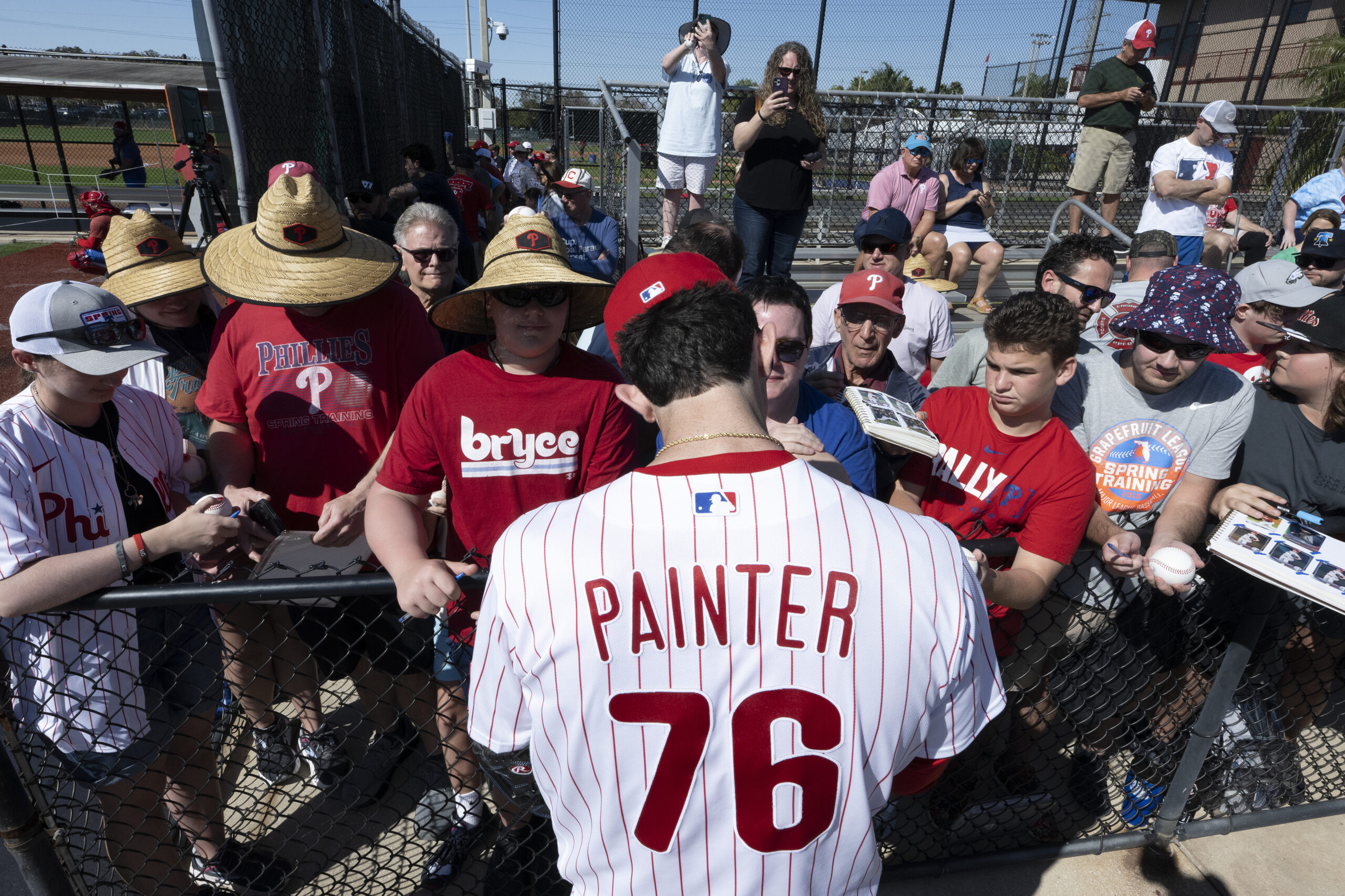
Phillies pitcher Andrew Painter signs autographs for fans during a spring training workout on Friday in Clearwater, Fla.
Extra bases
Andrew Painter, Jesús Luzardo, Cristopher Sánchez, Aaron Nola, and newcomer Brad Keller were among the pitchers who threw bullpen sessions on Friday. “I hate sounding like Peter Positive all the time, but we had a really good day today on the mound,” Thomson said. “Painter was really good. Luzardo. Nola. Sánchez, Keller, some of the new guys, [Kyle] Backhus and [Chase] Shugart, just really good day. I mean, they’re filling it up. Balls coming out good, shapes are good.” … Max Lazar, Nolan Hoffman, and Andrew Walling threw live batting practice Friday to several of the catchers in camp, including J.T. Realmuto, Garrett Stubbs, and Rafael Marchán.
Two university-run science summer camps that have each served Philly kids for more than two decades will not run this summer due to budget limitations.
Academy Science Camp, run through the Academy of Natural Sciences of Drexel University, is canceling its camp for just this summer. The University of Pennsylvania’s Museum of Archaeology and Anthropology is ending its Anthropology Camp for this summer as well as “the foreseeable future,” the museum wrote on its website.
Both camps, which offered science lessons and projects tailored to the museums’ exhibits, cited financial pressures as the catalyst behind the decision.
The new truncated public schedule made continuing the summer camp, which typically runs Monday through Friday, no longer feasible, the academy wrote on its website.
The academy plans to assess later in the year whether to run the camp in 2027, academy spokesperson Kaitlyn Kalosy said.
Last year, the camp served 360 kids ages 5 to 12, Kalosy said. It offered museum tours, experiments, and field trips.
“We know this may be disappointing for campers who look forward to spending their summers exploring and learning with us, and we are truly grateful for the enthusiasm they bring to the Academy each year,” the academy wrote online.
The University of Pennsylvania Museum of Archaeology and Anthropology, meanwhile, is unable to afford the cost of staff to run its camp because of a university-wide hiring freeze, it wrote on its website. The camp served about 500 kids ages 6 to 13 each summer, according to a museum spokesperson. It offered workshops, expert talks, and gallery explorations.
“This decision was reached only after extensive discussion and careful consideration of multiple scenarios,” the museum wrote on its website. “It was not made lightly.”
The school first ordered a hiring freeze in the spring to prepare for anticipated federal funding cuts under President Donald Trump’s administration. Last year, Penn and its centers were asked to cut 5% of certain expenses. This year, they have been asked to cut 4% on top of that. The cuts are aimed at helping the school keep up with mounting endowment taxes, legal, insurance and employee-benefit expenses, potential losses in research funding, and changes in student loan and visa programs, Penn leaders said.
WASHINGTON — President Donald Trump on Thursday pardoned five former professional football players — one posthumously — for various crimes ranging from perjury to drug trafficking.
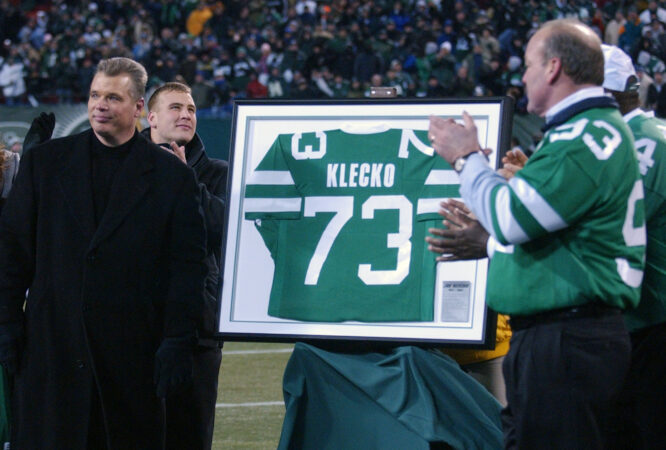
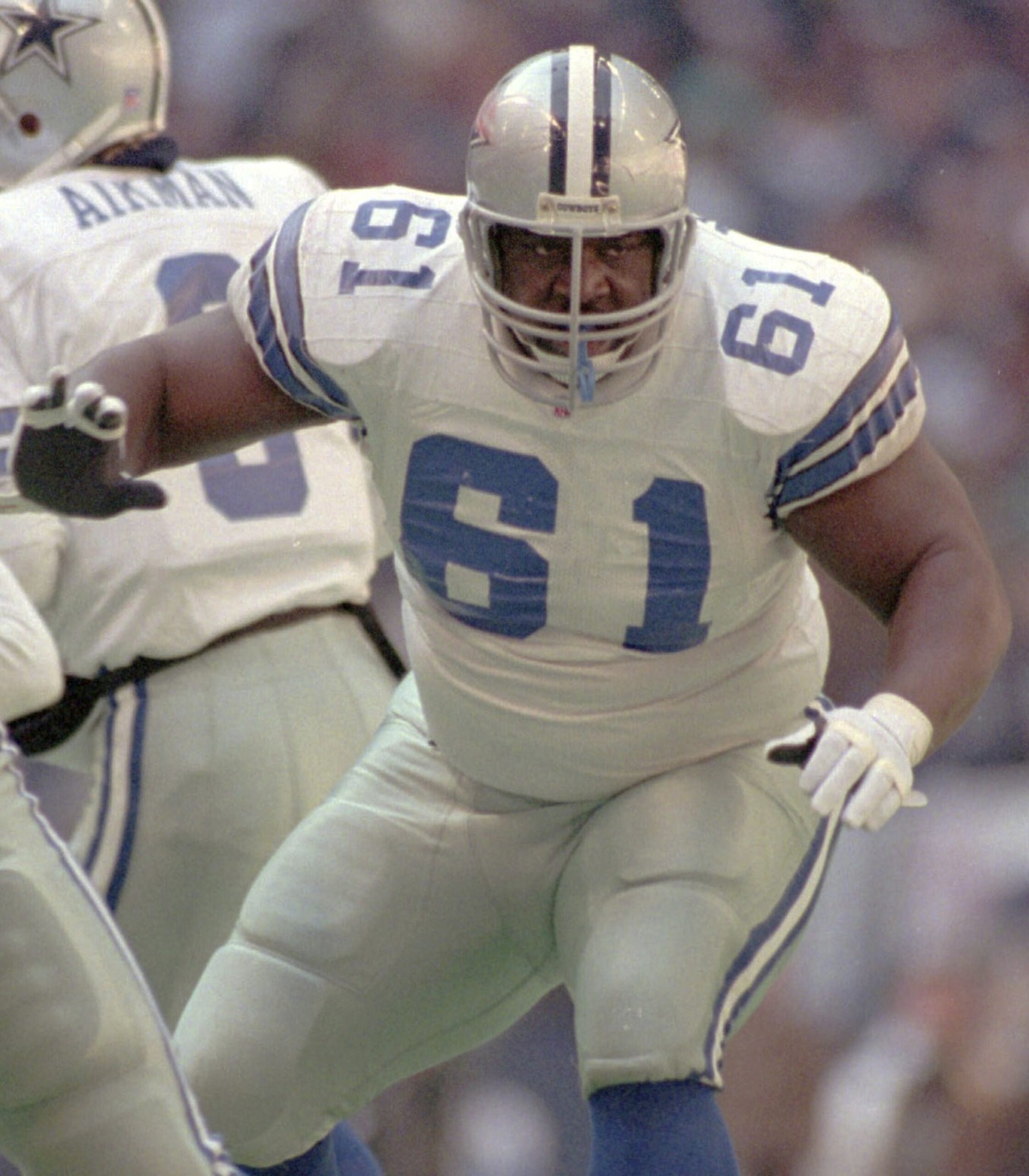
The pardons were announced by White House pardon czar Alice Marie Johnson. Ex-NFL players Joe Klecko, Nate Newton, Jamal Lewis, Travis Henry, and the late Billy Cannon were granted the clemency.
“As football reminds us, excellence is built on grit, grace, and the courage to rise again. So is our nation,” Johnson wrote on the social media site X, as she thanked Trump for his “continued commitment to second chances.”
Klecko, a former star for the New York Jets, pleaded guilty to perjury after lying to a federal grand jury that was investigating insurance fraud.
A defensive lineman, Klecko played high school football at St. James Catholic High School for Boys in Chester and at Temple. He was inducted into the Pro Football Hall of Fame in 2023. He was a two-time Associated Press All-Pro player and a four-time Pro Bowler.
Johnson said Dallas Cowboys owner Jerry Jones “personally” shared the news with Newton, who won three Super Bowls with the team.
The White House did not return a request for comment Thursday night on why Trump, an avid sports fan, pardoned the players.
Dallas Cowboys offensive lineman Nate Newton is in action against the Philadelphia Eagles during the NFC divisional playoffs in Irving, Texas, Jan. 7, 1996.
Newton, an offensive lineman, pleaded guilty to a federal drug trafficking charge after authorities discovered $10,000 in his pickup truck as well as 175 pounds of marijuana in an accompanying car driven by another man. Newton was a two-time All-Pro player and six-time Pro Bowler.
Lewis, formerly of the Baltimore Ravens and the Cleveland Browns, pleaded guilty in a drug case in which he used a cellphone to try to set up a drug deal not long after he was a top pick in the 2000 NFL draft. Lewis, a running back, was named an All-Pro once and was a one-time Pro Bowler. He was named the 2003 AP Offensive Player of the Year.
Henry, who played for the Denver Broncos, pleaded guilty to conspiracy to traffic cocaine for financing a drug ring that moved the drug between Colorado and Montana. He was a running back for three teams and a one-time Pro Bowler.
And Cannon — who played with the Houston Oilers, Oakland Raiders, and Kansas City Chiefs — admitted to counterfeiting in the mid-1980s after a series of bad investments and debts left him broke.
Cannon was a two-time All-Pro player and a two-time Pro Bowler. Cannon also won the 1959 Heisman Trophy while starring for Louisiana State University, where he had one of the most memorable plays in college football history: an 89-yard punt return for a touchdown against Ole Miss. He died in 2018.