Blog

  • Gifts and soup from ‘Uncle Jeffrey’: The Epstein ties that ended Kathy Ruemmler’s run at Goldman

    Gifts and soup from ‘Uncle Jeffrey’: The Epstein ties that ended Kathy Ruemmler’s run at Goldman

    NEW YORK — Goldman Sachs general counsel Kathy Ruemmler has had a storied legal career. As a federal prosecutor, she helped successfully prosecute Enron executives including Ken Lay and Jeffrey Skilling. She was part of President Barack Obama’s administration, working in various roles for much of his two terms in office, including as White House counsel.

    She was even briefly considered by President Obama as a candidate for attorney general.

    On Thursday, Ruemmler, 54, announced that she plans to resign from the top legal post at Goldman after a trove of emails and correspondence between her and disgraced financier Jeffrey Epstein showed the two individuals were especially close, years after Epstein’s 2008 conviction on sex crimes charges, when he became a registered sex offender.

    Ruemmler previously downplayed her relationship with Epstein. She called him a “monster” and said she regretted ever knowing him. Ruemmler has repeatedly described their relationship as professional, citing her job as a private defense attorney before she ever joined Goldman Sachs.

    But documents released in recent weeks and reviewed by the Associated Press depict a deeper relationship than had previously been characterized by Ruemmler and Goldman Sachs. These included intimate email exchanges, social plans and gifts that went beyond formal legal work.

    Roughly 8,400 documents involved Ruemmler or referenced her. Some correspondence shows that Ruemmler was aware of the extent of the allegations that Epstein had faced involving underage girls in Florida. In some instances, she advised Epstein on how he might go about trying to repair his image and defend himself publicly against new claims of misconduct.

    The gifts Epstein gave to Ruemmler have been documented in news reports: the spa treatments, the handbags from Hermes, an Apple Watch, a Fendi coat, among many others. But some of the interactions between Epstein and Ruemmler described throughout their correspondence indicates that Epstein and Ruemmler did not simply have a lawyer-client transactional relationship, as Ruemmler previously attested to.

    “It makes him happy to see you happy,” Epstein’s assistant wrote to Ruemmler in 2016, after Epstein prepaid for a spa treatment for her.

    In October 2018, Epstein directed one of his assistants to send flowers and chicken soup to Ruemmler because she has “not been feeling well.” It would not be the first time that Epstein would send her a small token of appreciation when she was sick. They talked about dating issues, made jokes about both the wealthy and everyday people, and shared laments about their careers and dating lives.

    They would message each other about mundane things like their mutual distaste for seeing babies in business class on flights and would repeatedly plan to have dinner or drinks in various places. Epstein even had Ruemmler as a backup executor of his will at one point.

    Setting aside the immense wealth and privilege and Epstein’s legal troubles, many of the emails between the two would look no different from the banter that many Americans would share to in their own text messages, emails, or group chats.

    “Well, I adore him. It’s like having another older brother!” she wrote in an email in 2015.

    During her time in private practice after she left the White House in 2014, Ruemmler received several expensive gifts from Epstein, including luxury handbags and a fur coat. The gifts were given after Epstein had already been convicted of sex crimes in 2008 and was registered as a sex offender. Ruemmler was also involved in Epstein’s legal defense efforts after he was arrested a second time for sex crimes in 2019 and later killed himself in a Manhattan jail.

    “So lovely and thoughtful! Thank you to Uncle Jeffrey!!!” Ruemmler wrote to Epstein in 2018.

    She later joined Goldman Sachs in 2020 and became the investment bank’s top lawyer in 2021.

    The firm’s leadership backed her publicly amid the revelations. But the embarrassing emails raised questions about Ruemmler’s judgment. Historically, Wall Street frowns on gift-giving between clients and bankers or Wall Street lawyers, particularly high-end gifts that could pose a conflict of interest. Goldman Sachs requires its employees to get pre-approval before receiving gifts from or giving them to clients, according to the company’s code of conduct, partly in order to not run afoul of anti-bribery laws.

    Bloomberg News, the Wall Street Journal, and other media outlets reported that Goldman’s partners, who are the firm’s most senior and well-regarded members going back to when the investment bank was privately held, had begun to question why the firm was holding Ruemmler in such high regard when other lawyers were just as qualified to hold the top legal job.

    In her statement Thursday, Ruemmler said: “Since I joined Goldman Sachs six years ago, it has been my privilege to help oversee the firm’s legal, reputational, and regulatory matters; to enhance our strong risk management processes; and to ensure that we live by our core value of integrity in everything we do. My responsibility is to put Goldman Sachs’ interests first.”

    Goldman CEO David Solomon said he respected Ruemmler’s decision to resign. The firm isn’t rushing Ruemmler out the door, saying in a statement that she would wind down her work at the bank “to ensure a smooth transition,” before her last day on June 30.


  • Public League boys’ basketball team disqualified from playoffs after skirmish

    Public League boys’ basketball team disqualified from playoffs after skirmish

    Carver Engineering and Science’s quest for its first Public League boys’ basketball title was halted after the Engineers were disqualified following a skirmish in Thursday’s quarterfinal game, where they were 71 seconds away from winning.

    E&S led visiting Constitution by 12 points in the fourth quarter when a shoving match paused the game. Video reveals players from both benches staying on the sidelines before fans stormed the court and surrounded players.

    The E&S players left the bench while the majority of Constitution’s reserve players remained on the sideline. No players from either team appeared to throw punches.

    The game ended with E&S leading, 61-49, but they were later informed that Constitution would advance to Tuesday’s semifinal against Imhotep Charter. James Lynch, the president of the Public League, said the league reviewed the referee’s report and video footage before disqualifying E&S.

    “Several players from Constitution have also been assessed suspensions due to their involvement in the incident,” Lynch wrote in an email. “However, the entire Carver E&S team leaving the bench is what resulted in the forfeit loss for that game according to the PPL Unsportsmanlike conduct policy.”

    The league’s policy says, “if an entire team leaves their bench area and steps onto the field of play during an incident, the entire team will be ejected from the game, and will serve a one-game suspension for their next contest. The ejected team will be assessed a forfeit for the current contest, and will forfeit their next contest.”

    E&S coach Dustin Hardy-Moore posted on social media that his team was disqualified despite “the opposing team and fans inciting a fight.” The coach, who could not be reached for comment, posted a screenshot that showed seven Constitution players on the court when the skirmish began.

    “And our bench is still on the bench,” Hardy-Moore wrote.

    The Inquirer also reached out to Constitution for comment on Friday, but did not receive a response.

  • Phillies’ Rob Thomson ‘proud’ of Nick Castellanos: ‘He owned up to what he did’

    Phillies’ Rob Thomson ‘proud’ of Nick Castellanos: ‘He owned up to what he did’

    CLEARWATER, Fla. — One day after the Phillies released Nick Castellanos, it was business as usual in their clubhouse.

    Even before the transaction was official, Castellanos’ absence had been obvious from the start of spring training. Not only because president of baseball operations Dave Dombrowski had repeatedly indicated over the winter that the Phillies intended to find a “change of scenery” for the right fielder for the final year of his contract, but because his usual locker at BayCare Ballpark was occupied by someone else.

    Kyle Schwarber said he saw the handwritten letter that Castellanos posted on Instagram on Thursday, shortly after the Phillies announced his release. In it, Castellanos thanked several members of the organization and addressed what he described as the “Miami Incident.”

    Castellanos revealed that he brought a beer into the dugout during a June road game against the Miami Marlins, upset that he had been removed for a defensive substitution in the eighth inning. He wrote that the beer was removed from his hand by teammates before he could take a sip, and his actions led to a one-game benching as punishment.

    “I mean, I saw it. It is what it is, right?” Schwarber said Friday. “I think the biggest thing is that we all wish him the best. We’ve had a lot of really good memories here over the last four years, and he’s had some really big moments with us, and we wish him the best moving forward.

    “Like it is what it is, but hopefully wherever he goes next, he’s able to keep going out there and keep doing his thing and keep having those big moments.”

    Had the overall situation been a distraction for the team last year?

    “I mean, that’s [neither] here nor there,” Schwarber said. “We did what we did. It felt like that in the Dodgers series that we played good games. There were just things that we didn’t execute. We didn’t walk away with wins at the end of the day. So it’s hard to say here or there, right? Like, you know, we put ourselves in the position of where we wanted to be, and we just got knocked out.

    “So, can’t really say.”

    Toward the end of his Phillies tenure, Castellanos had been openly critical of manager Rob Thomson’s communication, as his role changed from an everyday player to a platooning one.

    Castellanos did not mention Thomson in the portion of the letter where he thanked members of the Phillies organization, including principal owner John Middleton, Dombrowski, outfield coach Paco Figueroa, and his teammates.

    “I’m proud of him,” Thomson said Friday of the letter. “Because he owned up to what he did. And, hey, we all make mistakes. Mine are well-documented. But Nick helped us out in a lot of ways here. He’s had some big hits and big plays and helped us win a lot of ball games. So I do, I wish him all the best.”

    Castellanos also wrote in his letter that he had planned to explain his actions in Miami to the media the following day but “was instructed not to by management.”

    At the time, Thomson had described the reason for the benching as an “inappropriate comment.” On Friday, the manager said he wouldn’t change how the team handled that situation.

    “I thought it was appropriate, what we did,” Thomson said.

    Phillies pitcher Andrew Painter signs autographs for fans during a spring training workout on Friday in Clearwater, Fla.

    Extra bases

    Andrew Painter, Jesús Luzardo, Cristopher Sánchez, Aaron Nola, and newcomer Brad Keller were among the pitchers who threw bullpen sessions on Friday. “I hate sounding like Peter Positive all the time, but we had a really good day today on the mound,” Thomson said. “Painter was really good. Luzardo. Nola. Sánchez, Keller, some of the new guys, [Kyle] Backhus and [Chase] Shugart, just really good day. I mean, they’re filling it up. Balls coming out good, shapes are good.” … Max Lazar, Nolan Hoffman, and Andrew Walling threw live batting practice Friday to several of the catchers in camp, including J.T. Realmuto, Garrett Stubbs, and Rafael Marchán.

  • Academy of Natural Sciences, Penn cancel science summer camps for the year, both citing budget constraints

    Academy of Natural Sciences, Penn cancel science summer camps for the year, both citing budget constraints

    Two university-run science summer camps that have each served Philly kids for more than two decades will not run this summer due to budget limitations.

    Academy Science Camp, run through the Academy of Natural Sciences of Drexel University, is canceling its camp for just this summer. The University of Pennsylvania’s Museum of Archaeology and Anthropology is ending its Anthropology Camp for this summer as well as “the foreseeable future,” the museum wrote on its website.

    Both camps, which offered science lessons and projects tailored to the museums’ exhibits, cited financial pressures as the catalyst behind the decision.

    Scott Cooper, president and CEO of the Academy of Natural Sciences, announced in the fall that the museum would scale back its operating days, previously Wednesday through Sunday, to only Friday through Sunday. The shortened operating schedule was an effort to stem losses from low visitation rates that have yet to rebound to pre-pandemic levels, federal funding cuts, and uncertainty in the future of donations, he wrote.

    The new truncated public schedule made continuing the summer camp, which typically runs Monday through Friday, no longer feasible, the academy wrote on its website.

    The academy plans to assess later in the year whether to run the camp in 2027, academy spokesperson Kaitlyn Kalosy said.

    Last year, the camp served 360 kids ages 5 to 12, Kalosy said. It offered museum tours, experiments, and field trips.

    “We know this may be disappointing for campers who look forward to spending their summers exploring and learning with us, and we are truly grateful for the enthusiasm they bring to the Academy each year,” the academy wrote online.

    The University of Pennsylvania Museum of Archaeology and Anthropology, meanwhile, is unable to afford the cost of staff to run its camp because of a university-wide hiring freeze, it wrote on its website. The camp served about 500 kids ages 6 to 13 each summer, according to a museum spokesperson. It offered workshops, expert talks, and gallery explorations.

    “This decision was reached only after extensive discussion and careful consideration of multiple scenarios,” the museum wrote on its website. “It was not made lightly.”

    The school first ordered a hiring freeze in the spring to prepare for anticipated federal funding cuts under President Donald Trump’s administration. Last year, Penn and its centers were asked to cut 5% of certain expenses. This year, they have been asked to cut 4% on top of that. The cuts are aimed at helping the school keep up with mounting endowment taxes, legal, insurance and employee-benefit expenses, potential losses in research funding, and changes in student loan and visa programs, Penn leaders said.

  • Trump pardons 5 former NFL players for crimes ranging from perjury to drug trafficking

    Trump pardons 5 former NFL players for crimes ranging from perjury to drug trafficking

    WASHINGTON — President Donald Trump on Thursday pardoned five former professional football players — one posthumously — for various crimes ranging from perjury to drug trafficking.

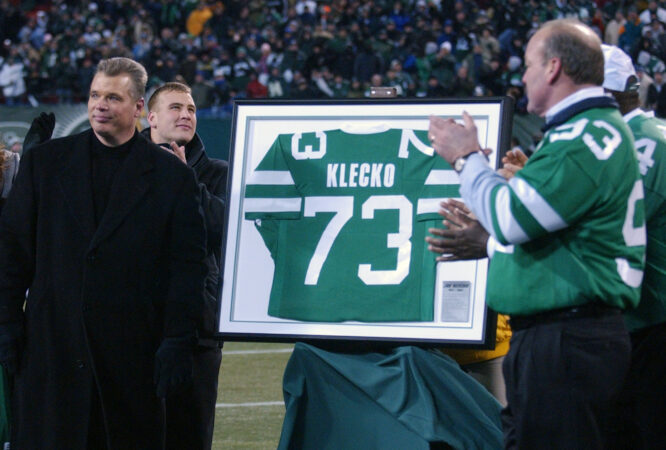
    The pardons were announced by White House pardon czar Alice Marie Johnson. Ex-NFL players Joe Klecko, Nate Newton, Jamal Lewis, Travis Henry, and the late Billy Cannon were granted the clemency.

    “As football reminds us, excellence is built on grit, grace, and the courage to rise again. So is our nation,” Johnson wrote on the social media site X, as she thanked Trump for his “continued commitment to second chances.”

    Klecko, a former star for the New York Jets, pleaded guilty to perjury after lying to a federal grand jury that was investigating insurance fraud.

    A defensive lineman, Klecko played high school football at St. James Catholic High School for Boys in Chester and at Temple. He was inducted into the Pro Football Hall of Fame in 2023. He was a two-time Associated Press All-Pro player and a four-time Pro Bowler.

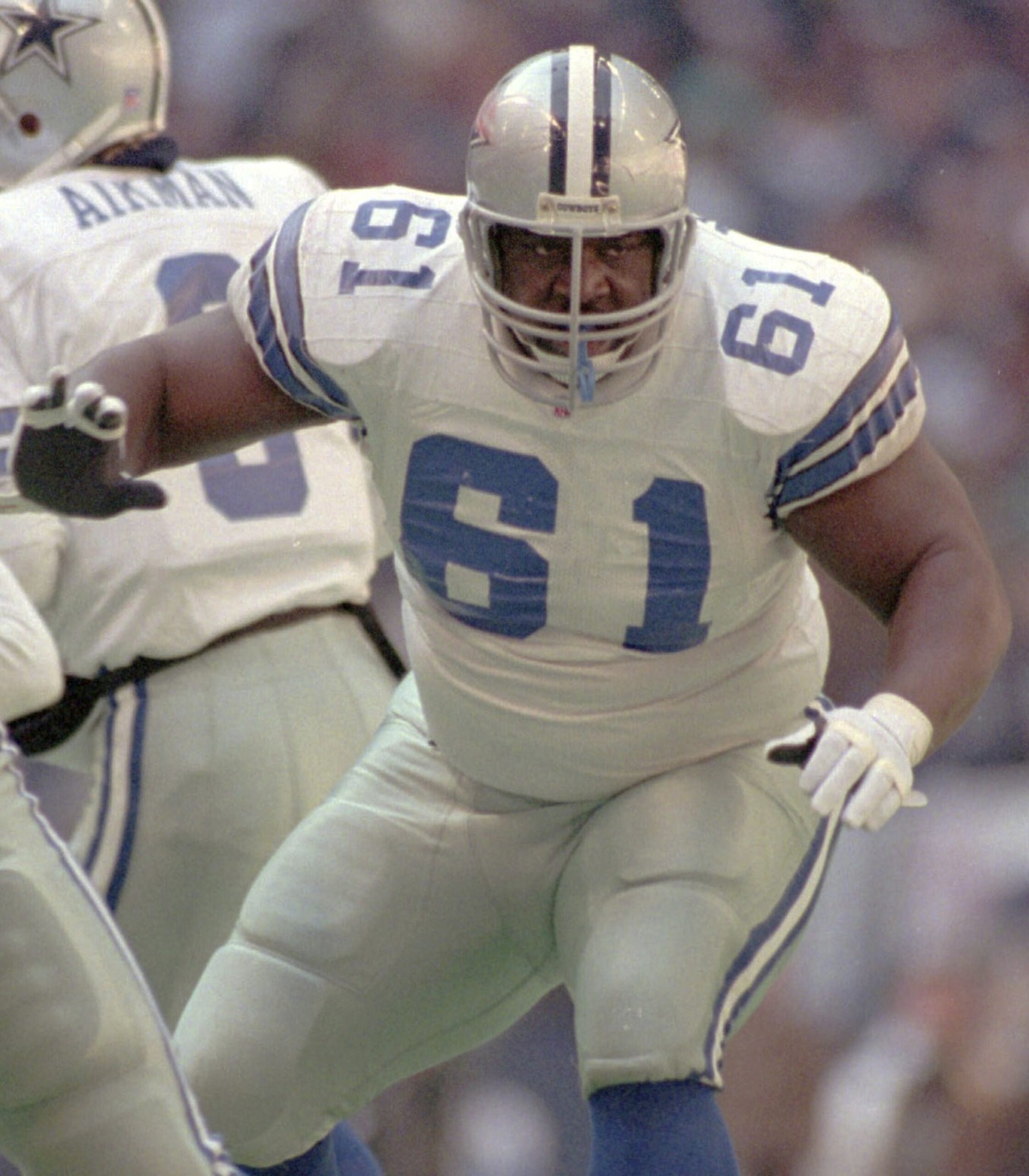
    Johnson said Dallas Cowboys owner Jerry Jones “personally” shared the news with Newton, who won three Super Bowls with the team.

    The White House did not return a request for comment Thursday night on why Trump, an avid sports fan, pardoned the players.

    Dallas Cowboys offensive lineman Nate Newton is in action against the Philadelphia Eagles during the NFC divisional playoffs in Irving, Texas, Jan. 7, 1996.

    Newton, an offensive lineman, pleaded guilty to a federal drug trafficking charge after authorities discovered $10,000 in his pickup truck as well as 175 pounds of marijuana in an accompanying car driven by another man. Newton was a two-time All-Pro player and six-time Pro Bowler.

    Lewis, formerly of the Baltimore Ravens and the Cleveland Browns, pleaded guilty in a drug case in which he used a cellphone to try to set up a drug deal not long after he was a top pick in the 2000 NFL draft. Lewis, a running back, was named an All-Pro once and was a one-time Pro Bowler. He was named the 2003 AP Offensive Player of the Year.

    Henry, who played for the Denver Broncos, pleaded guilty to conspiracy to traffic cocaine for financing a drug ring that moved the drug between Colorado and Montana. He was a running back for three teams and a one-time Pro Bowler.

    And Cannon — who played with the Houston Oilers, Oakland Raiders, and Kansas City Chiefs — admitted to counterfeiting in the mid-1980s after a series of bad investments and debts left him broke.

    Cannon was a two-time All-Pro player and a two-time Pro Bowler. Cannon also won the 1959 Heisman Trophy while starring for Louisiana State University, where he had one of the most memorable plays in college football history: an 89-yard punt return for a touchdown against Ole Miss. He died in 2018.

  • Josh Shapiro tells Kristi Noem he’ll ‘aggressively pursue every option’ to block new ICE detention centers in Pa., in letter to DHS

    Josh Shapiro tells Kristi Noem he’ll ‘aggressively pursue every option’ to block new ICE detention centers in Pa., in letter to DHS

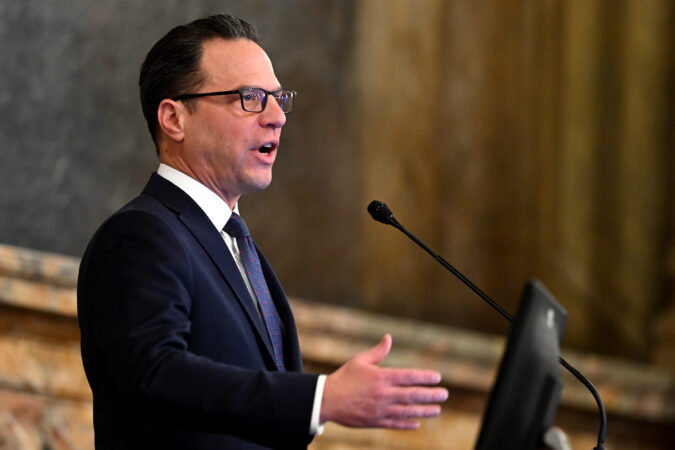
    Gov. Josh Shapiro implored Homeland Security Secretary Kristi Noem this week to reconsider converting warehouses in Berks and Schuylkill counties into mass immigration detention centers, citing “real harms” to the communities.

    In a Thursday letter to Noem obtained by The Inquirer, Shapiro questioned the legality of the facilities, which the governor said could hold up to 9,000 people in total.

    Hinting at a possible lawsuit, Shapiro said if DHS goes through with converting the sites, his administration will “aggressively pursue every option to prevent these facilities from opening and needlessly harming the good people of Pennsylvania.”

    As part of President Donald Trump’s expanding deportation agenda, the federal government has started purchasing warehouses across the country to flip into U.S. Immigration and Customs Enforcement detention centers. ICE is planning to spend $38.3 billion turning warehouses into detention centers, The Washington Post reported.

    So far, two have been bought in Pennsylvania — a nearly 520,000-square-foot facility in Upper Bern Township and another in Tremont Township, where the purchase has drawn the ire of concerned residents.

    Shapiro slammed the department’s escalating immigration enforcement strategy, saying that ICE and other federal immigration agents “resort to unnecessary and excessive force, leading to innocent people being injured or tragically killed.”

    “Your Department’s record is reason enough to oppose your plan to use warehouses in Schuylkill and Berks Counties as detention centers,” Shapiro wrote, adding that the warehouses would also negatively impact residents’ health and safety, deplete tax revenue, and put extra stress on local communities and emergency response.

    Tricia McLaughlin, DHS assistant secretary for public affairs, confirmed ICE’s purchase of these two warehouses and the department’s plans to use them as detention facilities in a statement to The Inquirer Friday.

    She said that the sites will “undergo community impact studies and a rigorous due diligence process to make sure there is no hardship on local utilities or infrastructure prior to purchase” and that the facilities would create economic benefits, including bringing more than 11,000 jobs to the two Pennsylvania communities in total.

    “Thanks to the One Big Beautiful Bill, ICE has new funding to expand detention space to keep these criminals off American streets before they are removed for good from our communities,” McLaughlin said.

    At an unrelated event last week, the Democratic governor blasted the agency’s “secretive” purchase of the Berks County warehouse, saying he was not alerted of the decision ahead of time.

    At the time, Shapiro said the state was exploring “what legal options we may have to stop” the ICE purchase but said those options were slim.

    Shapiro has become more forceful in his opposition to federal immigration enforcement activities in recent weeks, especially since federal agents fatally shot Alex Pretti in Minneapolis last month.

    He’s said the Trump administration’s strategies in American cities make communities less safe, violate constitutional rights, and erode trust in law enforcement.

    Shapiro, who is seen as a likely contender for the White House in 2028, is up for reelection this year. His likely November opponent is Treasurer Stacy Garrity, a Trump-endorsed Republican who has urged cooperation with ICE.

    In his letter to Noem, Shapiro said that DHS has not engaged local leaders to discuss the warehouse purchases and that both Democratic and Republican state and local officials have objected to the department’s “plans to interfere with our communities because of the chaos and harm your actions will bring.”

    Some of Shapiro’s cabinet secretaries also penned an additional letter to Noem where they stressed that the facilities would be detrimental to the communities’ environment and public health and safety.

    “The stress each facility will place on local infrastructure will, among other things, jeopardize Pennsylvanians’ access to safe water, deplete resources and infrastructure needed for emergencies, and overextend already strained emergency response personnel,” wrote Pennsylvania Health Secretary Debra L. Bogen, Fire Commissioner Thomas Cook, Emergency Management Director Randy Padfield, Environmental Protection Secretary Jessica Shirley, and Labor Secretary Nancy A. Walker.

    In addition to the warehouses, DHS is also leasing new office space throughout the country, including in the Philadelphia area. The department said back-office staff, including lawyers and analysts, will be moving into a building in Berwyn, and the department will also share space with the Department of Motor Vehicles at Eighth and Arch Streets in Center City, WIRED reported.

    Despite the governor’s vocal opposition to Trump’s enforcement strategies, Pennsylvania still cooperates with ICE. Shapiro’s administration honors some ICE detainers in state prisons and provides ICE with access to state databases that include personal identifying information for immigrants.

    Immigrant rights groups have for months called on Shapiro to take more decisive action against federal immigration enforcement in Pennsylvania and end all cooperation with the agency.

    Staff writer Gillian McGoldrick contributed reporting.

  • Transfer of ISIS suspects concludes as Trump pursues Syria exit

    Transfer of ISIS suspects concludes as Trump pursues Syria exit

    The U.S. military has completed the transfer of thousands of suspected Islamic State fighters to the Iraqi government, setting the stage for the expected withdrawal of many — perhaps even all — American troops from Syria within months despite concerns about the Syrian government’s ability to prevent a resurgence of the group, officials familiar with the issue said.

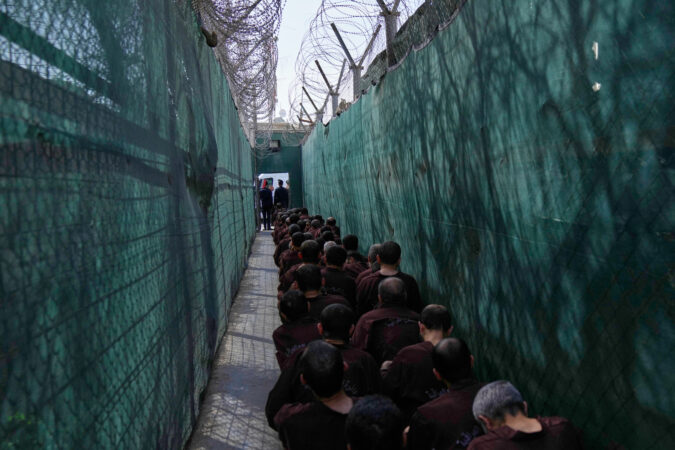
    The movement of 5,700 detainees, underway for weeks, was completed Thursday night with a flight from northeastern Syria to Iraq, U.S. military officials said in a statement. The effort signals a forthcoming end to a yearslong mission overseen by the U.S.-backed Syrian Democratic Forces (SDF), a Kurdish militia group that had managed the detention facilities in territory it controlled in northeastern Syria.

    The transfer began Jan. 21 as U.S. troops teamed with SDF and Iraqi counterparts to move the detainees using aircraft and armed ground convoys. It marks one of the most significant developments in years for the remnants of the Islamic State, the militant group whose bloody campaign across Syria and Iraq resulted in a multinational military intervention beginning in 2014. A smaller number of Syrians, fewer than 2,000, are expected to remain in Syria in the SDF-run detention centers until they are turned over to the Syrian government.

    Many of the detainees who have been transferred are expected to be held at the Al-Karkh prison, an Iraqi facility near Baghdad International Airport, said U.S. officials, who like some others spoke on the condition of anonymity to discuss sensitive military operations. It was once called Camp Cropper and used by the U.S. military to house detainees during the Iraq War. Iraq’s supreme judicial council said Friday that about 3,000 Syrians are among the detainees transferred.

    In a statement, the White House said Trump is committed to a Syria that is “stable, unified and at peace with itself and its neighbors.” That requires Syria not being a base for terrorism or to pose a threat in the region and beyond, it says.

    The United States is monitoring the situation in Syria and working with all sides, the statement says, to ensure that “ISIS detainees remain in detention,” including an organized transition of other detention centers in Syria to Syrian government control.

    The shift underscores a major shift in U.S. policy toward Syria, as President Donald Trump, who has aligned himself with Syrian President Ahmed al-Sharaa, seeks to extricate the roughly 1,000 American troops who have remained there functioning as a backstop to prevent a resurgence by the Islamic State.

    A report by the Director of National Intelligence last year said that the Islamic State will attempt to “reconstitute its attack capabilities,” including plotting against the West, and free prisoners to rebuild its ranks. Three U.S. troops were ambushed and killed by a suspected Islamic State member in Syria in December, prompting Trump to approve retaliatory airstrikes days later.

    Sharaa, a former al-Qaeda militant who broke with the group in 2016, has sought to unify his country since his forces forced the December 2024 ouster of Syrian President Bashar Assad, a dictator whose 24-year rule was marked by mass atrocities and a civil war that killed hundreds of thousands of people. The Islamic State has repeatedly attempted to assassinate Sharaa over the last year, according to a United Nations report released this week.

    One step in the withdrawal occurred Wednesday, as U.S. troops at the Tanf garrison in the southeastern part of Syria turned control over to Sharaa’s forces. Adm. Brad Cooper, the top officer overseeing U.S. operations in the region, said in a statement that U.S. forces retain the ability to respond to any threats posed by the Islamic State in the region.

    Other bases could be transferred to Sharaa’s forces in coming days or weeks as conditions warrant, two officials familiar with the issue said. Doing so could allow Trump to fully end the U.S. mission there, a goal since his first administration that consistently collided with challenges posed by Syria’s fractured state.

    Trump has downplayed Sharaa’s past as a jihadist, telling reporters in January that the Syrian leader was “working very hard.” He’s characterized him as a “tough guy” with a “pretty tough resumé.”

    “You’re not gonna put a choir boy in there and get the job done,” Trump said at the time.

    Still, U.S. officials said, Washington had privately delivered warnings to their Iraqi counterparts about Sharaa’s ability to ensure security over the ISIS detention camps. One senior U.S. official said in an interview with the Washington Post that the Trump administration had told Baghdad in the fall that it was “entirely likely” that if Sharaa’s government took control of the alleged terrorism suspects, they could be freed or break loose at some point and attack Iraq again.

    Sharaa could not be reached for comment.

    Iraqi officials acknowledged then that there was cause for concern, the senior U.S. official said. But those anxieties accelerated last month, as Sharaa’s forces pressed forward with an armed offensive into SDF-held territory, forcing the group to abandon two major facilities, the Shaddadi prison and al-Hol camp, allowing about 200 detainees to escape on Jan. 19.

    The detainees were considered “low-level” fighters, and dozens were later recaptured, U.S. officials said. But the episode triggered alarm in Washington and Baghdad and prompted numerous phone calls from senior U.S. officials to Sharaa, officials said, including at least one by Cooper on Jan. 21 and one by Trump on Jan. 27, these people said.

    Abdulkarim Omar, a representative with the SDF’s civilian government, called the moves of Sharaa’s forces in the region “aggression.” The Kurdish people, he said, “became victims of international arrangements concluded over their heads” and have seen “international silence.”

    Cooper also made a visit to northeastern Syria on Jan. 22, as his team attempted to ensure that Sharaa’s forces and the SDF adhered to a ceasefire as the detainees were transferred from Syria to Iraq, according to a U.S. military statement at the time.

    “It definitely could have gone completely sideways, to be completely honest with you,” a senior U.S. official told the Post, noting that U.S. soldiers remained in the region as tensions were high between the SDF and Sharaa’s fighters.

    Trump acknowledged calling Sharaa, saying his team had “solved a tremendous problem in conjunction with Syria and saved many lives.” He did not elaborate.

    The undertaking has triggered mixed feelings in the region, even as officials there appear to cooperate with U.S. desires.

    Hussein Allawi, an Iraqi security adviser, said his government is urging other governments to take back ISIS suspects from their countries so that Iraq is not overwhelmed. Iraq, he said is “totally capable” of handling the issue, but will face infrastructure challenges.

    Jiwan Soz, a Kurdish researcher, said that “despite the interference of the Americans” in the dispute between the SDF and Sharaa’s fighters, the Syrian president “cannot control the situation.” The armed groups Al-Sharaa relies on have a variety of tribal affiliations and allegiances, he said, and armed skirmishes have continued.

    “There are huge challenges there, and I don’t believe al-Sharaa can succeed,” he said.

    Nawar Rahawie, a Syrian official, said the ceasefire is fragile and will require persuasion. Tribal fighters who aligned with both the SDF and the Syrian government have kept their fighters out of the fray, he said, and Sharaa has “a certain level of control over the tribes and fighters.”

    He added that people of all kinds were “harmed by the Assad regime,” and credited Sharaa’s government for offering a new way. Syrian officials are investigating “crimes and murder” that have emerged, and will seek accountability, he said.

    James Jeffrey, a former U.S. ambassador who focused on Syria during the first Trump administration, told the House Foreign Affairs Committee this week that he is “wary” of Sharaa, but has watched him push Iranian influence away from Syria and combat Islamic State fighters who remain — both core U.S. goals.

    U.S. troops in Syria have worked with both the SDF and Sharaa’s forces in recent months, Jeffrey said, and Washington will have a better understanding of what occurs in the region the longer they remain.

  • He watched the Ringling Bros. circus as a kid in South Jersey. This year, he wrote the script for the latest tour.

    He watched the Ringling Bros. circus as a kid in South Jersey. This year, he wrote the script for the latest tour.

    South Jersey native Jordan Gershowitz is no stranger to the bright lights.

    In fifth grade, he wrote, cast, and directed his first musical at Westampton Middle School. Named Trial of Treason, the play was a “loose” retelling of the Revolutionary War, with the kind of sci-fi elements only true ’90s kids will appreciate.

    Gershowitz’s story starred two characters who build a machine to travel back to the time American traitor Benedict Arnold was court-martialed for abusing military power. Gershowitz gave his actors ketchup packets to smear on their shirts to act out battle scenes.

    “I don’t remember how we split up the viewing audience, but it was definitely a one-day-only production,” he joked.

    South Jersey Jordan Gershowitz is the story editor and co-developer of Netflix’s new kids series “Hot Wheels Let’s Race.” The show premiered on March 4, 2024.

    Years later, Gershowitz became the bassist for the neon pop-rock band Rushmore. They opened for the likes of the Plain White-Ts and Justin Bieber, and were nominated for best breakout artist at the 2009 MTV Video Music Awards.

    These days, Gershowitz, 38, is busy working on another production with historical ties: the new Ringling Bros. and Barnum & Bailey Circus.

    The iconic traveling circus, billed as “The Greatest Show on Earth,” opens at Xfinity Mobile Arena on Friday. All eight shows will feature dancing acrobats, nimble trapeze artists, and Skylar “the human rocket” Miser, among other performers.

    Gershowitz, who has previously written for Netflix’s Hot Wheels Let’s Race, Sharkdog, The Snoopy Show, and other shows, penned the script for the 148th edition of the longest-running circus in American history.

    Gershowitz has written all the dialogue for the show guides and characters, including the robo-puppy named Bailey Circuit, and sequenced all the performing acts to establish the overall vibe of the show.

    “Ringling Bros. is like the gold standard of family entertainment,” he said. “It was a fantastic opportunity to be a part of it.”

    The man behind the newest rendition of Ringling Bros. is South Jersey native Jordan Gershowitz. The iconic touring circus opens at the Xfinity Mobile Arena on Friday. The show runs through Feb. 16.

    None of his previous writing credits transported him back to childhood in the same way as Ringling Bros., he said.

    “Ringling is just one of those rare American institutions that I think everyone has a personal memory of,” Gershowitz said. “And for me, it wasn’t just an opportunity to write a circus. It was a really compelling opportunity, and something the entire team was mindful of as we went into this.”

    Before starting the writing process a year ago, he remembered the days he attended Ringling Bros. circuses growing up in Westampton. With his parents, he marveled at the gravity-defying stunts and masterful crowd interactions performed by artists from all corners of the world.

    “I really loved the spectacle of it. Being a kid in the early ’90s, at least in South Jersey, you had to make a lot of your own fun,” Gershowitz said. “So, getting to go to a really big communal experience like Ringling Bros. was just eye-opening.”

    The man behind the newest rendition of Ringling Bros. is South Jersey native Jordan Gershowitz. The iconic touring circus opens at the Xfinity Mobile Arena on Friday. The show runs through Feb. 16.

    With a project as historic as Ringling Bros., Gershowitz said the challenge was reimagining the circus for modern audiences.

    “I didn’t approach it necessarily trying to replace what came before,” he said. “I tried to look at what made it meaningful in the first place to so many people, and then worked with director Michael Schwandt to look at what does that mean for a new generation with social media and TikTok clips.”

    Gershowitz lined up a series of electrifying acts back-to-back, making audiences question which direction the show would go next. He also incorporated more audience engagement, ensuring it felt more like the “Greatest Party on Earth” than a standard circus act.

    The goal, he said, is to keep people off their cellphones and to fully immerse them into the music, the movements, and visual art illuminating the show’s 60-foot screen.

    “You’re weaving all these amazing acts together, so you’re always thinking about pacing, emotion, and how each moment flows into the next,” he said. “It’s a really unique puzzle that you don’t get in other formats, so hopefully the audience is coming away feeling energized and connected.”

    The man behind the newest rendition of Ringling Bros. is South Jersey native Jordan Gershowitz. The iconic touring circus opens at the Xfinity Mobile Arena on Friday. The show runs through Feb. 16.

    Gershowitz’s script has transformed the circus into a more-interactive and “fun-filled” experience for generations of crowd-goers to enjoy, said Ringling Bros. DJ Lucky Malatsi.

    “He made sure that we were able to connect with the audience, not only with the slang, but with all the conversation pieces,“ Malatsi said. ”It’s not your traditional, ‘Welcome to the circus.’ It’s more, ‘Come vibe with us. We’re having a party.’”

    Since the tour opened Jan. 2, Gershowitz has enjoyed seeing audiences react to his work in real-time. He still loves writing for TV, but he said there’s nothing like seeing an arena filled with families cheering and dancing to a show like the Ringling Bros.

    “When you’re writing for television, it takes a really long time for the audience to watch. Watching TV is also very solitary,” he said. “But the cool thing about Ringling, you’re watching the show along with the audience, and you can feel the energy.”

    The man behind the newest rendition of Ringling Bros. is South Jersey native Jordan Gershowitz. The iconic touring circus opens at the Xfinity Mobile Arena on Friday. The show runs through Feb. 16.

    Their reactions remind him of his own as a young circus fan, which later inspired his own performances in school plays and at music venues as one-fifth of Rushmore.

    With the production’s Philly tour stop, he hopes to forge similar memories for young crowd-goers, and remind longtime circus fans of the magic that first struck them in their youth.

    “Ideally, everyone is going to leave post-show talking to each other about what they saw and how it made them feel,” he said. “[Ringling] opened my eyes to larger possibilities, so hopefully it does the same for kids in the area. Whether they’re a future performer, or they start to see the world is much larger than their neighborhood.”


    The Ringling Bros. tour stop runs through Feb. 16, Xfinity Mobile Arena, 3601 S. Broad St., Phila. Tickets at ringling.com.

  • The cost of climate change is measured in people, not dollars. Save the endangerment finding.

    The cost of climate change is measured in people, not dollars. Save the endangerment finding.

    While countries around the world strive to protect their citizens from climate change, the U.S. government is attacking its citizens through climate regulations. Repealing the Environmental Protection Agency’s 2009 “endangerment finding” hits Americans where it hurts: their health.

    This all started last year, when the Trump administration convened a group of five “climate contrarians” who have profited from their fringe views denying climate change and called it a “Climate Working Group.” The group quickly threw together a report full of cherry-picked data and other bad science. It was soon disbanded in the face of widespread scientific criticism, but the damage was done. The EPA — or a gutted version of it — used this sham Climate Working Group’s conclusions to propose a repeal of the 2009 endangerment finding, the foundation of our ability to regulate the polluting emissions that cause climate change and endanger human health.

    Instead, it wants environmental regulation to be based solely on costs to businesses — effectively valuing human health at $0 in its scientific models.

    This battle of reports and regulations might seem abstract, but it threatens real people. In the nearly two decades since the endangerment finding was issued, the impacts of climate change on health have only become clearer. Air pollution and extreme weather cause hundreds of thousands of premature deaths in the U.S. every year, impacting everyone from newborns to working-age people to older adults — and it’s only getting worse.

    Doctors understand this reality beyond the science. Pretending health has no economic value passes the cost of climate change and air pollution onto people who are sick.

    In this 2023 file photo, buildings in downtown Erie, normally visible from West Grandview Boulevard, are shrouded in a smoky haze caused by smoke from Canadian wildfires.

    These are our patients — the truck driver in Cleveland having an asthma attack because of smoke from the Canadian wildfires, the gig worker who wiped out on her e-bike in a torrential storm, the day laborer who gets kidney failure working day after day in extreme heat — and they are sacrificing their health to pay their rent and feed their families. It’s no surprise that 120 leading patient care organizations (including Doctors for America) signed a letter urging the EPA to save the endangerment finding.

    None of this seems to matter to the Trump administration.

    A geyser of runoff rain water spouts from the sidewalk along 12th Street outside Reading Terminal Market as storms with damaging winds and significant flash flooding, as well as localized rainfall in amounts as high as seven inches, impacted the Philadelphia region last July.

    The EPA officially repealed the endangerment finding Thursday. As doctors, we can’t believe we’re having this conversation again. The evidence is clear: Climate change is making us sicker and sicker, but we can limit that harm with better policy and regulations. This government is trading our health for the interests of big business.

    We’re tired and angry, but we’re also scared. We’re doctors, but we’re also people.

    We’ve been the new mom afraid to bring her newborn home from the NICU under skies turned orange by wildfire smoke. We’ve sat in our driveways during a flash flood warning, wondering if it’s worth risking our safety to get to work on time. We stay up at night worrying about an America where a livable environment is a luxury.

    The America we want puts its citizens over politics. It cares more about people than dollars. Repeal of the endangerment finding has made that America a pipe dream. Only real science, a government that protects its people, and strong climate regulations can get us there.

    Madhury “Didi” Ray is a public health physician, a Drexel Med alum, and a Copello Fellow in Health Advocacy with Doctors for America. Olivia Rizzo is a pulmonologist from northeast Ohio and the cochair of the Public Health Taskforce for Doctors for America.

  • Justice Department sues Harvard for data as it investigates how race factors into admissions

    Justice Department sues Harvard for data as it investigates how race factors into admissions

    WASHINGTON — The Trump administration is suing Harvard University, saying it has refused to provide admissions records that the Justice Department demanded to ensure the Ivy League school stopped using affirmative action in admissions.

    In a lawsuit filed Friday in federal court in Massachusetts, the Justice Department said Harvard has “thwarted” efforts to investigate potential discrimination. It accused Harvard of refusing to comply with a federal investigation and asked a judge to order the university to turn over the records.

    Harmeet Dhillon, who leads the department’s Civil Rights Division, said Harvard’s refusal is a red flag. “If Harvard has stopped discriminating, it should happily share the data necessary to prove it,” Dhillon said in a statement.

    A statement from Harvard said the university has been responding to the government’s requests. It said Harvard is in compliance with the Supreme Court decision barring affirmative action in admissions.

    “The University will continue to defend itself against these retaliatory actions which have been initiated simply because Harvard refused to surrender its independence or relinquish its constitutional rights in response to unlawful government overreach,” the university said.

    The suit is the latest salvo in President Donald Trump’s standoff with Harvard, which has faced billions of dollars in funding cuts and other sanctions after it rejected a list of demands from the administration last year.

    Trump officials have said they’re taking action against Harvard over allegations of anti-Jewish bias on campus. Harvard officials say they’re facing unconstitutional retaliation for refusing to adopt the administration’s ideological views. The administration is appealing a judge’s orders that sided with Harvard in two lawsuits.

    The Justice Department opened a compliance review into Harvard’s admissions practices last April on the same day the White House issued a series of sweeping demands aligned with Trump’s priorities. The agency told Harvard to hand over five years of admissions data for undergraduate applicants along with Harvard’s medical and law schools.

    It asked for a trove of data including applicants’ grades, test scores, essays, extracurricular activities and admissions outcomes, along with their race and ethnicity. It asked for the data by April 25, 2025. The lawsuit said Harvard has not provided that data.

    Justice Department officials said they need the data to determine whether Harvard has continued considering applicants’ race in admissions decisions. The Supreme Court barred affirmative action in admissions in 2023 after lawsuits challenged it at Harvard and the University of North Carolina.

    Trump officials have accused colleges of continuing the practice, which the administration says discriminates against white and Asian American students.

    The White House is separately pressing universities across the U.S. to providing similar data to determine whether they have continued to factor race into admissions decisions. The Education Department plans to collect more detailed admissions data from colleges after Trump signed an action suggesting schools were ignoring the Supreme Court decision.

    Trump’s dispute with Harvard had appeared to be winding down last summer after the president repeatedly said they were finalizing a deal to restore Harvard’s federal funding. The deal never materialized, and Trump rekindled the conflict this month when he said Harvard must pay $1 billion as part of any deal, double what he previously demanded.