Blog

  • Flyers defenseman Jamie Drysdale lands on injured reserve; Travis Konecny and Bobby Brink are day-to-day

    Flyers defenseman Jamie Drysdale lands on injured reserve; Travis Konecny and Bobby Brink are day-to-day

    The injury bug has officially bitten the Flyers.

    On Friday, defenseman Jamie Drysdale was placed on injured reserve with an upper-body injury retroactive to Jan. 6, and announced forwards Bobby Brink and Travis Konecny are day-to-day with upper-body injuries. In a corresponding move, defenseman Adam Ginning has been recalled from Lehigh Valley of the American Hockey League.

    Drysdale was injured in Tuesday’s win against his former team, the Anaheim Ducks, by a hit well away from the puck by forward Ross Johnston in the second period. There was no supplemental discipline or fine handed out by the NHL’s department of player safety.

    Brink also suffered his injury in the game on a blindsided hit in the first period by forward Jansen Harkins. He did not play on Thursday.

    “Still getting evaluated, type of thing,” coach Rick Tocchet said on Wednesday, adding he didn’t have an update after the team’s morning skate on Thursday. “I don’t want to say it’s a day-to-day. I don’t know yet. So it’s kind of one of those things. … I really don’t know. I talked to them today; they’re in a half-decent mood. Still being evaluated, so we’ll see.”

    Drysdale was curling in the offensive zone and did not see Johnston, who was skating into the zone, as the puck was deep in the Ducks’ end. They collided, and Johnston appeared to claim to officials that it was incidental contact or just a collision between two players who didn’t see one another.

    However, the video indicates that Johnston not only had enough time to avoid Drysdale but also stuck out an arm and threw it into the defenseless blueliner. Drysdale lay on the ice and did not move for a considerable amount of time before doctors and a stretcher arrived on the ice. He eventually sat up and skated off with help.

    Johnston was given a five-minute major for interference and a game misconduct.

    “Yeah, it’s tough. Anytime you see the stretcher come out, for either team, it’s not a good situation,” defenseman Cam York, who is a good friend of Drysdale’s, told The Inquirer on Thursday. “So it’s obviously not an ideal situation, but he’s OK now. So obviously that’s really good. I talked to him after that second intermission.”

    Konecny was injured on Thursday in the Flyers’ 2-1 overtime loss to the Toronto Maple Leafs. He scored the team’s lone goal in the second period but did not return for the third period. Konecny was interviewed during the second intermission by NBCSP, but appeared to be uncomfortable and winced as he walked off.

    Tocchet said after the game he did not have an update, but that “something was bugging him, I guess, early on. I think he fell or something. I don’t know [all of] the whole details.”

    The Flyers have a tough stretch ahead, and without Drysdale, and if Brink and Konecny, who is second on the team in points, cannot play, it will make it a tall task. Philly is home for games Saturday (7 p.m., NBCSP) and Monday, both against a Tampa Bay Lightning team that has won eight straight while outscoring opponents 38-22. The Flyers travel to play the Buffalo Sabres, winners of 12 of their last 13, Wednesday, and the Pittsburgh Penguins, who have won six straight Thursday.

    Ginning made the Flyers out of training camp and played in five games in October. Before being assigned to the Phantoms on Dec. 1, after clearing waivers, he was loaned to the Phantoms on a conditioning stint Nov. 18. In 17 games with Lehigh Valley, the defensive defenseman has one goal and three points.

    Veteran blueliner Noah Juulsen played with Emil Andare on Thursday. According to Natural Stat Trick, when they were on the ice together at five-on-five, the Flyers had 64.29% of the shot attempts and four scoring chances to one for the Maple Leafs.

    Flyers defenseman Jamie Drysdale on the ice against the Vancouver Canucks on Dec. 22.

    The loss of Drysdale, however, is huge as he was having a breakout year. Known for his offensive abilities with questionable acumen on the defensive side of the puck, the 23-year-old has built his game from the ground up to become a blueliner who can play a complete 200-foot game.

    This season, he had 18 points (three goals, 15 assists) in 41 games, and before the Anaheim game, he was averaging 21 minutes, 35 seconds, tying his career high and ranking third on the Flyers. He also had a plus-minus of plus-1, the highest of his career.

    “One hundred percent,” he told The Inquirer on Monday when asked if he has pride in how his defensive game has grown. “I mean, at the same time, it [stinks] to kind of have the results on the other end from the last few years. Definitely take pride in it.

    “And I think that it’s also just coming to me more naturally now; I would say that’s kind of one way to put it. So that feels good. And I think it’s just building my game, and just taking it to another level. I think it can get there, so just going to keep working at it.”

    After being acquired in the deal for Cutter Gauthier in January 2024, he played just 24 games for Philly, missing time with a shoulder injury sustained against the Penguins at the end of February. In April 2024, he underwent surgery to repair a core injury he suffered while playing for the Ducks. And he missed time last season with an upper-body injury.

    Entering 2024-25, he had played in just 147 games across four NHL seasons, missing significant time with shoulder injuries, including a torn labrum that required an operation in 2022. Since playing 81 games in his first full NHL season in 2021-22, he has never played more than the 70 he skated in last year.

  • Trump meets with oil executives at the White House on Friday, seeking investments in Venezuela

    Trump meets with oil executives at the White House on Friday, seeking investments in Venezuela

    WASHINGTON — President Donald Trump met with oil executives at the White House on Friday in hopes of securing $100 billion in investments to revive Venezuela’s ability to fully tap into its expansive reserves of petroleum — a plan that rides on their comfort in making commitments in a country plagued by instability, inflation and uncertainty.

    Since the U.S. military raid to capture former Venezuelan leader Nicolás Maduro on Saturday, Trump has quickly pivoted to portraying the move as a newfound economic opportunity for the U.S., seizing tankers carrying Venezuelan oil, saying the U.S. is taking over the sales of 30 million to 50 million barrels of previously sanctioned Venezuelan oil and will be controlling sales worldwide indefinitely.

    On Friday, U.S. forces seized their fifth tanker over the past month that has been linked to Venezuelan oil. The action reflected the determination of the U.S. to fully control the exporting, refining and production of Venezuelan petroleum, a sign of the Trump administration’s plans for ongoing involvement in the sector as it seeks commitments from private companies.

    It’s all part of a broader push by Trump to keep gasoline prices low. At a time when many Americans are concerned about affordability, the incursion in Venezuela melds Trump’s assertive use of presidential powers with an optical spectacle meant to convince Americans that he can bring down energy prices.

    “At least 100 Billion Dollars will be invested by BIG OIL, all of whom I will be meeting with today at The White House,” Trump said Friday in a pre-dawn social media post.

    Trump met with executives from 17 oil companies, according to the White House. Among the companies attending are Chevron, which still operates in Venezuela, and ExxonMobil and ConocoPhillips, which both had oil projects in the country that were lost as part of a 2007 nationalization of private businesses under Maduro’s predecessor, Hugo Chávez.

    The president is meeting with a wide swath of domestic and international companies with interests ranging from construction to the commodity markets. Other companies slated to be at the meeting include Halliburton, Valero, Marathon, Shell, Singapore-based Trafigura, Italy-based Eni, and Spain-based Repsol.

    Large U.S. oil companies have so far largely refrained from affirming investments in Venezuela as contracts and guarantees need to be in place. Trump has suggested on social media that America would help to backstop any investments.

    Venezuela’s oil production has slumped below one million barrels a day. Part of Trump’s challenge to turn that around will be to convince oil companies that his administration has a stable relationship with Venezuela’s interim President Delcy Rodríguez, as well as protections for companies entering the market.

    Secretary of State Marco Rubio, Energy Secretary Chris Wright and Interior Secretary Doug Burgum are slated to attend the oil executives meeting, according to the White House.

    Meanwhile, the United States and Venezuelan governments said Friday they were exploring the possibility of restoring diplomatic relations between the two countries, and that a delegation from the Trump administration arrived to the South American nation on Friday.

    The small team of U.S. diplomats and diplomatic security officials traveled to Venezuela to make a preliminary assessment about the potential re-opening of the U.S. Embassy in Caracas, the State Department said in a statement.

    Trump also announced on Friday he’d meet with President Gustavo Petro in early February, but called on the Colombian leader to make quick progress on stemming flow of cocaine into the U.S.

    Trump, following the ouster of Maduro, had made vague threats to take similar action against Petro. Trump abruptly changed his tone Wednesday about his Colombian counterpart after a friendly phone call in which he invited Petro to visit the White House.

  • Swiss bar owner put in pre-trial detention over the fatal fire at an Alpine resort

    Swiss bar owner put in pre-trial detention over the fatal fire at an Alpine resort

    MARTIGNY, Switzerland — Switzerland held a national day of mourning on Friday for the 40 people who died in an Alpine bar fire during a New Year’s Eve celebration, as prosecutors requested one of the managers to be placed in pretrial detention.

    Valais region’s chief prosecutor Beatrice Pilloud said in a statement the detention of the man was needed to avoid a “risk of flight.” The man’s wife and co-manager will remain free under judicial supervision, the statement said.

    A Swiss business register lists French couple Jacques and Jessica Moretti as the owners of Le Constellation bar, in the Alpine resort of Crans-Montana, where a fire broke out less than two hours after midnight on Jan. 1. As well as the fatalities, 116 people were injured, many of them seriously.

    Local media reported that Moretti was being held in custody pending the court’s decision after the couple were questioned by prosecutors in Sion on Friday morning.

    Swiss authorities have opened a criminal investigation into the owners, who are suspected of involuntary homicide, involuntary bodily harm, and involuntarily causing a fire.

    A memorial service and a minute’s silence marked Friday’s national homage, while church bells across Switzerland rang out for five minutes, beginning at 2 p.m. Across the country, people gathered to light candles, put down flowers for the victims and followed the national ceremony that was livestreamed on public television.

    Speaking at the memorial ceremony in Martigny, Swiss President Guy Parmelin said that “the memory of that terrible night illuminates the faces of the 156 victims, their happy days, their carefree spirit.”

    He added: “Our country is appalled by this tragedy. It bows before the memory of those who are no longer with us. It stands by the bedside of those who are about to embark on a long road to recovery.”

    Investigators have said they believe sparkling candles atop Champagne bottles ignited the fire when they came too close to the ceiling. Authorities are looking into whether soundproofing material on the ceiling conformed with regulations and whether the candles were permitted for use in the bar. Fire safety inspections hadn’t been carried out since 2019.

    The severity of burns made it difficult to identify some victims, requiring families to supply authorities with DNA samples. Police have said many of the victims were in their teens to mid-20s.

    An autopsy has been ordered for five of the six Italian victims and has been delegated to the prosecutors’ offices in Milan, Bologna, and Genoa, where the bodies of the victims have been returned.

    “What happened is not a disaster: It’s the result of too many people who didn’t do their job or who thought they were making easy money,” Italian Premier Giorgia Meloni said during a press conference on Friday. “Those responsible must be identified and prosecuted.”

    Meloni said the State Attorney General’s Office has contacted the Swiss Attorney General to follow the investigation. She also confirmed that the Rome Prosecutor’s Office has started a separate probe.

    “The families have my word that they will not be left alone while they seek justice,” she added.

    The Paris prosecutor’s office Monday announced that it was opening a probe to assist the Swiss investigation and make it easier for families of French victims to communicate with Swiss investigators. Nine French citizens were killed, the youngest of them aged 14, and 23 others were injured.

  • Trump says he will meet Machado — and would accept Nobel Peace Prize from her

    Trump says he will meet Machado — and would accept Nobel Peace Prize from her

    President Donald Trump said he will meet with Nobel Peace Prize winner María Corina Machado next week — and that he would accept the award she has said she wants to share with him.

    “I understand she’s coming in next week sometime, and I look forward to saying hello to her,” the president said of the Venezuelan opposition leader during an interview with Fox News’s Sean Hannity that aired Thursday. Trump added that he heard Machado wants to give him the prize, “and that would be a great honor.”

    The White House late Thursday did not provide details about Machado’s trip or specify what issues she and Trump would discuss.

    In an interview with Hannity this week in which she heaped praise on Trump, Machado said she had not spoken to the U.S. president since October, when she was announced as the latest Nobel laureate.

    She had been in hiding in Venezuela during President Nicolás Maduro’s last days in power and turned up in Oslo, where her daughter accepted the prize on her behalf. But she promised to return to her country and called for elections to replace Maduro.

    “But I do want to say today, on behalf of the Venezuelan people, how grateful we are for [Trump’s] courageous mission,” Machado said on Hannity’s show this week, adding that she and the Venezuelan people want to “share” the prize with Trump after the U.S. military seized Maduro and his wife and brought them to New York to stand trial on narco-terrorism charges.

    Trump has openly coveted and publicly lobbied for the Nobel Peace Prize, claiming to have “solved” a number of international conflicts. Several world leaders have backed his claims.

    Machado, a former National Assembly member, won the opposition primary in Venezuela two years ago but was barred from running by Maduro in the general election. Maduro claimed victory over the candidate Machado backed, but ballot audits by the Washington Post and independent monitors show the reported election result was invalid.

    Following the U.S. operation to arrest Maduro on Saturday, Trump said the United States would “run” Venezuela with the cooperation of Delcy Rodríguez, Maduro’s vice president, who has become the country’s acting leader. Trump has not given a timeline for when elections would be held and said he did not believe Machado had the support to run the country after Maduro’s removal.

    “I think it would be very tough for her to be the leader,” Trump told reporters last weekend. “She doesn’t have the support within, or the respect within, the country. She’s a very nice woman, but she doesn’t have the respect.”

    Two people close to the White House previously told The Post that Trump was not willing to support Machado because she accepted the Peace Prize. “If she had turned it down and said, ‘I can’t accept it because it’s Donald Trump’s,’ she’d be the president of Venezuela today,” one of the people said, speaking on the condition of anonymity to discuss a sensitive situation.

    Machado told Hannity she believed that if elections were held, she would win the presidency in a landslide.

  • Russia unleashes nuclear-capable missile in latest Ukraine attack

    Russia unleashes nuclear-capable missile in latest Ukraine attack

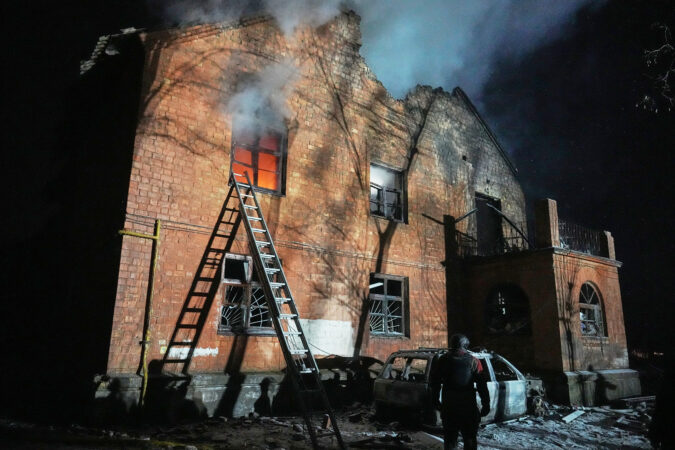
    KYIV — Russia launched an Oreshnik medium-range ballistic missile, which is capable of carrying nuclear warheads, as part of a large-scale aerial assault on Ukraine overnight Friday, the Russian Defense Ministry said — a menacing reminder to the world of Moscow’s huge nuclear arsenal at a moment when a peace plan promoted by President Donald Trump appears to be faltering.

    The latest Russian aerial barrage largely pummeled Kyiv, leaving close to half a million people without electricity in Kyiv and the surrounding region, officials said, as temperatures plummeted — prompting Mayor Vitali Klitschko to urge residents to temporarily evacuate the capital if possible.

    Klitschko said nearly 6,000 apartment buildings — half of the city’s total — were without heat. Water supply was disrupted in some districts, he said, and he urged residents, “who have the opportunity to temporarily leave the city” to find “alternative sources of power and heat.”

    Russian forces first used the Oreshnik — meaning “hazelnut tree” — in an attack on Ukraine in November 2024, creating concern in Western capitals over Moscow’s potential use of nuclear-capable weapons in the conflict. The missile fired overnight Friday did not carry a nuclear payload.

    Countries friendly to Moscow, such as China, have warned Russia against using nuclear weapons in Ukraine, meaning Russian President Vladimir Putin would risk wide international condemnation even by using a small-scale “tactical” nuclear weapon. Depending on the target, a nuclear strike could also pose the danger of releasing radiation next door to Putin’s own country.

    The Russian Defense Ministry said that the Oreshnik was launched in retaliation for a claimed attack by Ukrainian drones on one of Putin’s residences — an attack that Trump, citing U.S. intelligence, now says never happened.

    Trump initially expressed fury over the alleged drone strike after Putin told him that his residence in the northwestern Novgorod region had been targeted by drones. Kyiv, however, forcefully denied the attack, and local residents did not post anything about it on social media, despite Russia’s claims that 91 drones had been involved and shot down. Days later, Trump rejected Moscow’s claims.

    In its statement, on the Telegram messaging platform, the Russian Defense Ministry called the alleged drone incident a “terrorist attack.”

    Trump told reporters earlier this week: “I don’t believe that strike happened.”

    Trump has been pushing an initiative to halt Russia’s war but with little indication that Putin is willing to support any ceasefire. After a meeting in Paris this week, European leaders and Ukrainian President Volodymyr Zelensky said they had made progress on plans to provide postwar security guarantees and that their initiative was ready for Trump’s approval. Russia, however, quickly rejected any presence of Western peacekeeping forces in Ukraine, a core pillar of the security guarantees.

    On Friday, Ukrainian officials did not specify whether an Oreshnik had been used, but Zelensky later said in a social media post that an Oreshnik had been part of Russia’s overnight aerial assault.

    Ukraine’s security services, the SBU, said that its investigators had found debris indicating the missile was an Oreshnik — including the “stabilization and guidance unit,” which was described as the “brain” of the missile, and “parts from the engine unit.”

    The country’s western air command said in a Facebook post that “the enemy launched a missile strike on infrastructure facilities in Lviv using a ballistic missile.”

    “The air target was moving at a speed of about 13,000 kilometers per hour along a ballistic trajectory,” the air command said. “The type of missile with which the Russian aggressors attacked the city will be established after studying all its elements.”

    Ukrainian media reported six loud explosions in the Lviv region, one after another, shortly before midnight.

    In a Telegram post, Ukraine’s air force said that a “medium-rаnge ballistic missile” was launched from Russia’s Kapustin Yar test site, in the Astrakhan region on the Caspian Sea.

    Ukrainian Foreign Minister Andrii Sybiha said the possible use of an Oreshnik near Ukraine’s border with European Union and NATO member Poland was “a grave threat to the security on the European continent and a test for the transatlantic community.”

    “We demand strong responses to Russia’s reckless actions,” Sybiha wrote on X.

    “It is absurd that Russia attempts to justify this strike with the fake ‘Putin residence attack’ that never happened,” he wrote, adding that Putin used the Oreshnik “in response to his own hallucinations — this is truly a global threat.”

    Alexander Gabuev, director of the Carnegie Russia Eurasia Center, said that Russia’s use of the Oreshnik as a “high precision kinetic weapon with normal warheads” did not make a great deal of sense, since the destruction it caused was “limited.”

    Instead, Gabuev said it was potentially “a signal” — that in striking the Lviv region in far western Ukraine “no part of the country is immune.” It also could be a warning to Western leaders that any peacekeeping contingent sent to Ukraine would be vulnerable.

    “The message could be both to undermine Ukrainian morale but also to show that, look, if you place Western military, it will not be immune, because we have multiple ways to reach these troops,” Gabuev said in an interview.

    In addition to the Oreshnik, Ukraine’s air force said that the Russian attack involved 242 drones “of various types” and 36 missiles, including 13 ballistic missiles. In total, the air force said that 18 missiles and 16 drones pummeled 19 locations.

    “The main direction of the attack was Kyiv region,” the air force said. Air raid alerts in the capital lasted until the early morning hours on Friday, with explosions ringing out regularly — as Ukrainian antiaircraft defenses countered the aerial assault and some of the drones and missiles hit their targets.

    At least four people died and 22 were injured in Kyiv, Ukraine’s state emergency service said.

    Among those killed was a first responder, Serhiy Smolyak. “When the emergency medical team arrived at the scene of the shelling of a residential building, the enemy launched a second strike,” Ukrainian Health Minister Viktor Liashko wrote on social media.

    The damage to Kyiv’s critical infrastructure was extensive, city officials said. Tymur Tkachenko, head of Kyiv’s military administration, said that at least 50 buildings, four educational institutions and 18 cars were damaged, as well as “more than 1,000 broken windows.” A Russian drone also damaged the Qatari Embassy in Kyiv, Zelensky said.

    The difficult energy situation was made worse as temperatures across Ukraine were forecasted to remain well below freezing.

    “This is one of the most difficult attacks on the city,” Tkachenko said. This was in part due to “the challenging weather,” he said, which the Russians were “counting on,” hoping that “we will freeze and our services will collapse.”

    Klitschko warned Kyiv residents that the cold weather would not let up for some time.

    “City services are operating in emergency mode,” the mayor wrote on Telegram. “And the weather conditions, unfortunately, are forecast to be difficult in the coming days.”

  • The ultimate guide to sober-curious drinking in Philadelphia

    The ultimate guide to sober-curious drinking in Philadelphia

    Dry January is here, and Philly bars are serving inventive alcohol-free drinks. But that’s not all: Bartenders are also offering interactive classes and bottle shops are expanding their inventory of nonalcoholic spirits.

    We’ve complied all the tips and tricks you need navigate the month — and beyond — alcohol-free in Philadelphia.

    Mercantile 1888 is a vintage store and nonalcoholic bar in Collingswood.

    Where to drink for Dry January

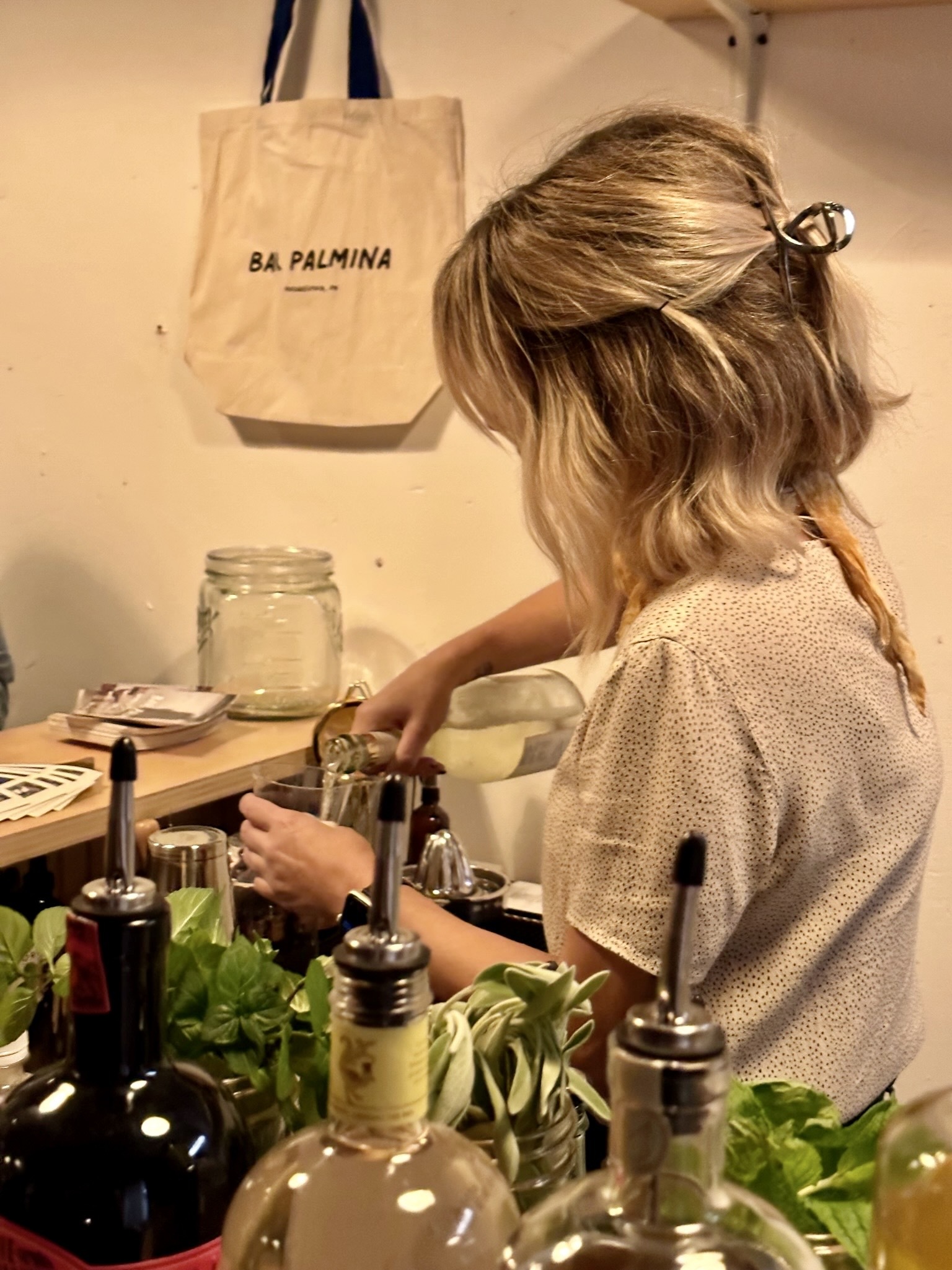
    Start your Dry January journey at Bar Palmina in Fishtown, where Nikki Graziano, a “former heavy drinker,” serves creative zero-proof craft cocktails featuring brands like Monday and Lyre’s.

    Over in Collingswood, Mercantile 1888 offers pomegranate margaritas with Ritual tequila, Monday mezcal palomas, and Seedlip botanical cocktails.

    Other options include:

    • Grace and Proper (South Philly): $7 zero-proof cocktails during happy hour (Wednesdays and Thursdays, 4 to 6 p.m.).
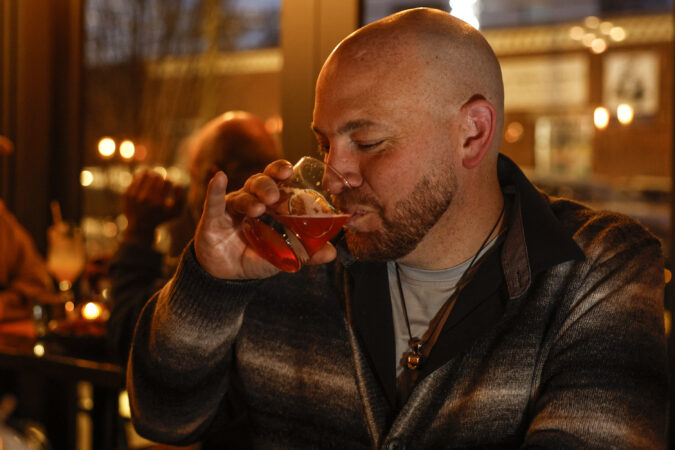
    • Mia Ragazza (Manayunk): Booze-free tiramisu espresso martinis made with Seedlip Spice.
    • Bar Hygge (Fairmount): Sparkling nonalcoholic wines.
    • Evil Genius Beer Co.: Nonalcoholic golden ales from Athletic Brewing Co.
    Dry Vibes, a touring sober festival, makes a stop in Philly this January.

    Best Dry January events

    There are plenty of events in honor of Dry January, too.

    • Jan. 14: Jesse Andreozzi, known as @mr.zeroproof, will share his expertise in zero-proof cocktail-making at Bar Hygge at 6:30 p.m. Tickets include cheese and charcuterie, a live demonstration from Mr. ZeroProof, and three nonalcoholic cocktails.
    • Jan. 15: Bar Palmina teams up with Heart to Heart Herbology, Three Wild Spirits, and Home Brewed Events for a Dry January class. Learn about the history of herbs and botanicals, along with its uses in beer brewing, distilling, and cocktails. Tickets, which can be purchased online, include a nonalcoholic cocktail featuring botanicals created in collaboration Bar Palmina.
    • Jan. 31: Dry Vibes Philly Festival at Billy Penn Studios (11 a.m. to 5 p.m.), featuring a vendor marketplace, wellness services, and celebrity meet and greets, including skateboarder Brandon Novak and author Arlan Hamilton. Tickets can be purchased online.

    In Ardmore, Wallace Dry Goods is hosting:

    Gem Life + Bar in Pitman offers over 250 nonalcoholic products.

    Where to find zero-proof spirits

    The options for alcohol-free spirits in Philadelphia are vast, with plenty of stores and shops selling an expansive selection of alcohol-free spirits for you to try at home.

    At Cork in Rittenhouse, brands like Spiritless tequila, Lyre’s Aperitif Rosso vermouth, canned Ghia aperitifs, and others are priced up to $48. Herman’s Coffee, the South Philly cafe known for espresso tonics and food pop-ups, offers a selection of over 200 nonalcoholic wines, spirits, and beers. And Riverwards Produce in Old City and Fishtown are stocked with nonalcoholic spirits, along with a variety of ingredients for cocktail making.

    Whether you’re seeking a zero-proof wine, beer, or spirit, there’s something for every palate — explore more options in the Inquirer guide.

    Best zero-proof spirits

    But with such a wide selection of nonalcoholic spirits, where do you begin?

    Buyer Michelle Flisek asks visitors walking into Cork one key question to help guide them in the right direction: What flavor profiles are you looking to enjoy? With over 100 varieties of nonalcoholic items in the store, starting with flavor is a good way to determine what brands and cocktail accessories will work for you.

    Each brand has distinct flavor profiles and ingredients. Brands like Ritual Zero Proof and Monday use botanical ingredients like Mexican blue agave and coriander seed extract to mimic the flavor profiles of mezcal, gin, and other traditional spirits. Wines like Prima Pavé create grape beverages through dealcoholization, a process that begins with the traditional fermentation process, but includes the additional step of removing alcohol from the final product.

    Remember the key to working with these nonalcoholic products is experimentation, according to Kasey Ehrgott of Manayunk’s now-closed alcohol-free bar the Volstead by Unity. Ehrgott recommends Ritual products, All The Bitter zero-proof bitters (created by botanical extraction with vegetable glycerin), and Pathfinder, a hemp-based drink with dark botanical notes of angelica root, saffron, and wormwood.

    “It’s important to remember it’s not going to be identical — you might like something you didn’t expect to,” she said.

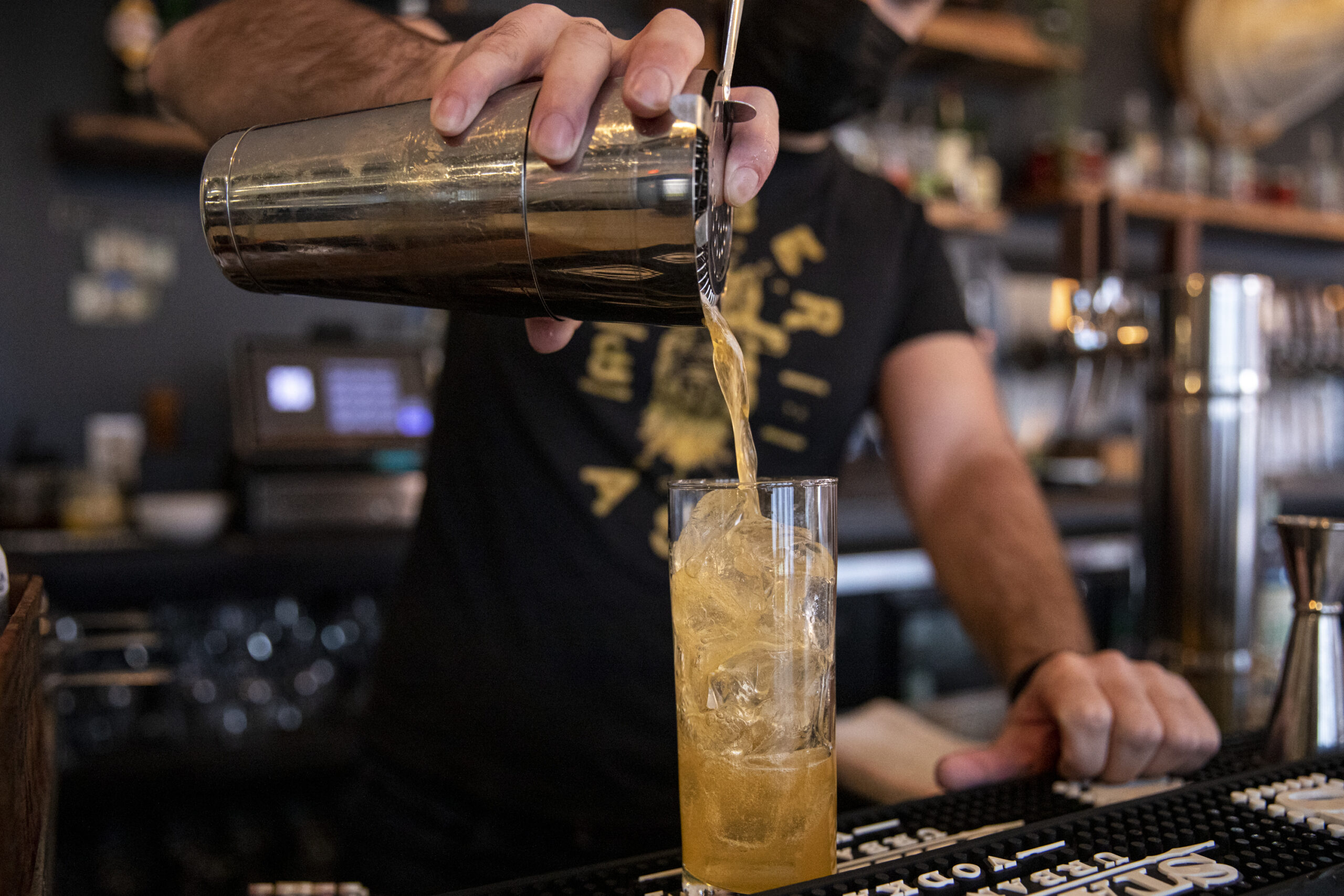
    Kristian Fidrych, beverage manager at Ember & Ash, creating a Tomato Collins, made with zero-proof gin, zero-proof bitter aperitif, smoke tomato shrub, lemon, and club soda, in 2021.

    Are there health benefits to Dry January?

    Reducing alcohol consumption, even temporarily, can offer meaningful health benefits, according to experts. Henry Kranzler, director of the Center for Studies of Addiction at the University of Pennsylvania’s Perelman School of Medicine, previously emphasized to The Inquirer that “alcohol is not good for you, by and large,” highlighting the potential risks associated with drinking.

    In a recent report, U.S. Surgeon General Vivek Murthy outlined a direct link between alcohol consumption and an increased likelihood of developing cancer. The Surgeon General’s Advisory on Alcohol and Cancer Risk stated “alcohol consumption is the third leading preventable cause of cancer in the United States, after tobacco and obesity, increasing risk for at least seven types of cancer” with about 100,000 alcohol-related cancer cases and about 20,000 alcohol-related cancer deaths annually.

    Nikki Graziano runs Bar Palmina.

    How to keep your Dry January resolution

    With the city’s ever-growing sober-curious scene, Philadelphians are able to prioritize an alcohol-free lifestyle, even during the holidays. But sustaining mindful drinking beyond Dry January can be a challenge for some.

    Understanding what leads you to drink is the first step, according to Amanda E. White, the founder of Therapy for Women Center and author of Not Drinking Tonight.

    White and other experts say changing your mindset and having more options can help you stay booze-free year-round.

    “Sometimes people go back to drinking without even realizing why they started again,” White told The Inquirer. “This is likely because they are not familiar with their triggers or reasons that they drink — maybe it’s feeling awkward at a party or a warm day that makes you crave a margarita.

    “Learn your triggers and come up with a plan for how you will combat them.”

  • Renee Good’s wife says she was supporting neighbors when killed by ICE

    Renee Good’s wife says she was supporting neighbors when killed by ICE

    MINNEAPOLIS — Renee Nicole Good and her wife had “stopped to support our neighbors” when she was fatally shot by an ICE officer in a confrontation on a residential street Wednesday, her wife said in a statement.

    The couple had come to Minneapolis almost a year ago, looking for a place that they and their 6-year-old son could feel comfortable.

    “On Wednesday, January 7, we stopped to support our neighbors. We had whistles. They had guns,” Rebecca Good said in a statement Friday.

    “We were raising our son to believe that no matter where you come from or what you look like, all of us deserve compassion and kindness,” the statement said. “Renee lived this belief every day. She is pure love. She is pure joy. She is pure sunshine.”

    Good, 37, was shot and killed Wednesday morning blocks from her home by an ICE agent, who federal officials say fired in self-defense. Details of the shooting, which was captured in videos by private citizens, are in dispute.

    Tricia McLaughlin, a spokesperson for the Department of Homeland Security, told Fox News on Thursday that Good “was stalking agents all day long, impeding our law enforcement.” Asked by the Washington Post what she was basing that description on, McLaughlin said the information came from “firsthand accounts” from law enforcement officers who had been in contact with Good.

    In interviews this week, friends and family members painted a picture of a woman who lived a quiet life not shaped by overt activism — a sharp contrast to comments by Vice President JD Vance, who blamed Good for her own death, and Homeland Security Secretary Kristi L. Noem, who said Good’s actions amounted to “an act of domestic terrorism.”

    Noem’s comments, and the FBI’s apparent move to block state investigators from the probe into the shooting, show the administration has “already come to a conclusion” about what it wants the inquiry to find, Minneapolis Mayor Jacob Frey said Friday.

    “From the very beginning, they’re calling the victim a domestic terrorist, they’re calling the actions of the agent involved as some form of defensive posture,” Frey said from the Minneapolis City Hall rotunda. “We know they’ve already determined much of the investigation.”

    Good’s family members have said they do not believe she was an aggressive activist tailing ICE officers. She had just dropped her son at school, they said. Her father, Tim Ganger, in a brief interview Wednesday, said she got “caught up in a bad situation. I think she was just caught in the crossfire.”

    Videos show Good’s maroon Honda Pilot parked across the road as U.S. Immigration and Customs Enforcement vehicles approach. ICE agents then confront her, demanding she get out of her car. A frame-by-frame analysis by the Post of the footage, however, raises questions about the accounts of administration officials. The SUV did move toward the ICE agent as he stood in front of it. But the agent was able to move out of the way and fire at least two of three shots from the side of the vehicle as it veered past him, according to the analysis.

    Good’s family and friends describe her as a devoted mother to her three children, an artist with a prizewinning talent for poetry who had weathered personal difficulties, including the death of her second husband, a military veteran who suffered from post-traumatic stress disorder.

    She was “a devoted Christian who took part in youth mission trips to Northern Ireland when she was younger,” said her first husband, who spoke on the condition of anonymity out of concern for the safety of his daughter, 15, and son, 12. “She loved to sing and studied vocal performance in college.”

    Good grew up in Colorado Springs. She attended Coronado High School, sang in the school’s show choir and participated in a school group called Community Crew dedicated to learning practical skills like cooking, according to the yearbook. When she graduated in 2006, Good won “Best Personality.”

    “When I found out that I had won, I was like ‘this is pretty flippin’ sweet!’” she told yearbook staff.

    Good attended Metropolitan State University of Denver briefly in 2014 and 2015. After she and her first husband divorced, he said Good married Timmy Macklin Jr., who served in the U.S. Air Force. In 2019, she began studying creative writing at Old Dominion University in Virginia.

    “She was his heart,” her former brother-in-law Joseph Macklin, who lives near Knoxville, Tenn., said of Good and his brother. He described her as “a great and loving mother.”

    One of her professors, Kent Wascom, director of Old Dominion’s MFA and creative writing program, recalled her as a poet studying how to improve her fiction writing, first in a class and then an advanced workshop. Unlike some of her peers, Good never talked about politics, Wascom said, focusing instead on “realist fiction” about those very different from her, from an elderly woman to a veteran.

    “She consistently sought to write outside of her experience,” he said. “She was a really warm presence but not a show-off. She never made a class about herself, even when her work was the focus of a workshop.”

    By then, Good was older than many of her classmates, pregnant with her third child and working to pay for school (as a dental assistant and at a credit union, her first husband said). “My memory of Renee is how much she tried to connect with her peers and support them,” Wascom said. He recalled how Good later brought her newborn son to meet him.

    By 2020, Good had won a prestigious prize for one of her poems, an honor Wascom said demonstrated her promise. She graduated with a bachelor’s degree in English that December.

    In April 2021, Good met a professional photographer named Charles W. Winslow at an Old Dominion football game that he was covering. She wanted advice on how to incorporate photography into covers for book projects she had planned. He said she was a gifted student and accompanied him on many of his professional assignments. But he also remembered her kindness.

    “As a friend she was kindhearted and always helping others in need,” Winslow said. “She didn’t care of race, creed, color. If she had $10 in her pocket, she would give a homeless person $9 that she passes on the street.”

    In 2023, Timmy Macklin died at the age of 36, and Good became primarily a stay-at-home mom, her first husband said.

    Joseph Macklin said Good made an effort to keep her son in touch with his family back in Tennessee: “She always brought him to see us. She was so kindhearted.”

    After she met and married Rebecca Good, 40, the couple settled in Kansas City, Mo., and crafted a quiet life.

    As a gay couple living in a red state, they weren’t overtly political, at least among the residents of their quiet street in the Waldo neighborhood, their neighbor Jennifer Ferguson recalled Thursday. But after Donald Trump was reelected in 2024, the two broke their lease and told Ferguson they were moving to Canada because of the political situation.

    “[Becca] said, ‘We’re getting out,’ ” Ferguson said. “‘We can go to Canada until we figure out what we are going to do.’”

    The couple lived in the neighborhood for only a short time but made an impression on Ferguson, 41, an administrative assistant. Becca Good had sold a home improvement business before they moved in, so she mostly stayed home with their son, cooking and mowing the lawn. Renee Good told Ferguson she was studying for a master’s degree.

    The two families exchanged Christmas treats and their kids played together, she said.

    They were “just such nice people” and “great parents” to their son, then in preschool, Ferguson said. Both were attentive, quick to enforce rules or stop an activity — like splashing in a kiddie pool — when the little boy seemed overly tired. When they moved away, they gave Ferguson their lawn mower after hers had been stolen.

    “We always talked about free stuff for the kids,” Ferguson said. “She asked about a free indoor playground, and I said, ‘Go to the McDonald’s up the street.” The couple also asked her opinion about nearby charter schools, because her son was about to start kindergarten.

    “They rarely left the house,” Ferguson said, except to take the boy to school. “They were homebodies.”

    They were also devotees of the WNBA and the KC Current, the local women’s pro soccer team. (A KC Current sticker was visible on Good’s Honda Pilot.)

    The couple moved from Kansas City to Minneapolis in March of last year, her first husband said, adding that Becca Good was “getting support from friends and her and Renee’s family.”

    Macklin, Good’s former brother-in-law, said Thursday that Good’s children “are hurting and wondering why this happened, especially the youngest.”

    “We just buried his father three years ago in June and now he lost his mother,” Macklin said. “It is definitely a tragedy no kid should have to go through at such a young age. And to have to see it all over social media and television is sickening.”

    He said that after the shooting, Good’s wife contacted his parents. “My heart really hurts for her. I’m praying for her,” he said. “She’s such a sweet and caring woman.”

    Macklin, whose father is a Christian street preacher, struggled to make sense of Good’s death.

    “I wish she would’ve minded her business and stayed out the way,” he said, but added, “I know families are being broken apart … and it’s heartbreaking, but now it’s our family.”

    “She was a good mother and a good person, and she didn’t deserve this. Her [significant other] doesn’t deserve to be without her, her mom doesn’t deserve to be without her, and her kids don’t deserve to be without her,” he said. “It truly is a tragedy that not just our family is going through, but our nation.”

  • Hennepin County prosecutor calls on the public to share Renee Good shooting evidence with her office

    Hennepin County prosecutor calls on the public to share Renee Good shooting evidence with her office

    MINNEAPOLIS — Hennepin County Attorney Mary Moriarty on Friday called on members of the public to send any video or other evidence in the fatal shooting of Renee Good directly to her office, challenging the Trump administration’s decision to leave the investigation solely to the FBI.

    Moriarty said that although her office has collaborated effectively with the FBI in past cases, she is concerned by the Trump administration’s decision to bar state and local agencies from playing any role in the investigation into Wednesday’s killing of Good by an Immigration and Customs Enforcement officer in Minneapolis. Specifically, she said she’s worried the FBI won’t share evidence with state investigators.

    “We do have jurisdiction to make this decision with what happened in this case,” she said at a news conference. “It does not matter that it was a federal law enforcement agent.”

    Moriarty said her office would post a link for the public to submit footage of the shooting, even though she acknowledged that she wasn’t sure what legal outcome submissions might produce.

    She also said that despite the Trump administration’s insistence that the officer who shot Good has complete legal immunity, that isn’t the case.

    A grieving wife speaks

    The prosecutor’s announcement came as Minneapolis braced for another day of protests over Good’s killing and a day after federal immigration officers shot and wounded two people in Portland, Ore.

    Good’s wife, Becca Good, released a statement to Minnesota Public Radio on Friday, saying “kindness radiated out of her.”

    “On Wednesday, January 7th, we stopped to support our neighbors. We had whistles. They had guns,” Becca Good said.

    “I am now left to raise our son and to continue teaching him, as Renee believed, that there are people building a better world for him,” she wrote. “That the people who did this had fear and anger in their hearts, and we need to show them a better way.”

    The reaction to the Good’s shooting was immediate in the city where police killed George Floyd in 2020, with hundreds of people turning up to the scene to vent their outrage at the ICE officers and the school district canceling classes for the rest of the week as a precaution.

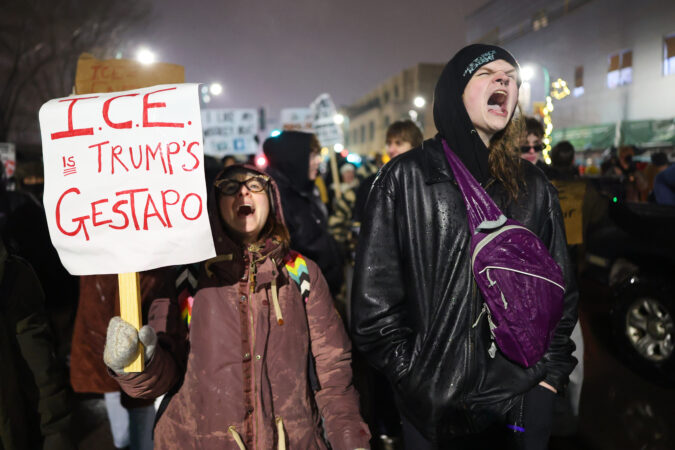
    On Thursday night, hundreds marched in freezing rain down one of Minneapolis’ major thoroughfares, chanting “ICE out now!” and holding signs saying, “Killer ice off our streets.” The day began with a charged demonstration outside of a federal facility that is serving as a hub for the immigration crackdown that began Tuesday in the Twin Cities of Minneapolis and St. Paul. Authorities erected barricades outside the facility Friday.

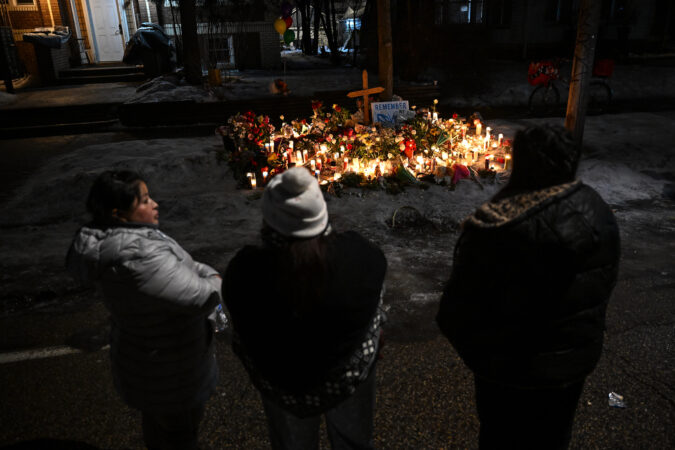
    City workers, meanwhile, removed barricades made of old Christmas trees and other debris that had been blocking the streets near the scene of Good’s shooting. Officials said they would leave up a makeshift shrine to the 37-year-old mother of three.

    Shootings in Portland

    The shootings in Portland took place outside a hospital Thursday afternoon. A man and woman, identified by the Department of Homeland Security as Venezuela nationals Luis David Nico Moncada and Yorlenys Betzabeth Zambrano-Contreras, were shot inside a vehicle, and their conditions were not immediately known. The FBI and the Oregon Department of Justice were investigating.

    Portland Mayor Keith Wilson and the city council called on ICE to end all operations in the city until a full investigation is completed. Hundreds protested Thursday night at a local ICE building. Early Friday, Portland police reported that officers had arrested several protesters after asking the to move from the street to the sidewalk, to allow traffic to flow.

    Just as it did following Good’s shooting, DHS defended the actions of the officers in Portland, saying it occurred after a Venezuelan man with alleged gang ties and who was involved in a recent shooting tried to “weaponize” his vehicle to hit the officers. It wasn’t immediately clear if the shootings were captured on video, as Good’s was.

    The biggest crackdown yet

    The Minneapolis shooting happened on the second day of the immigration crackdown in the Twin Cities, which Homeland Security said is the biggest immigration enforcement operation ever. More than 2,000 officers are taking part and Noem said they have made more than 1,500 arrests.

    The government is also shifting immigration officers to Minneapolis from sweeps in Louisiana, according to documents obtained by The Associated Press. This represents a pivot, as the Louisiana crackdown that began in December had been expected to last into February.

    Good’s death — at least the fifth tied to immigration sweeps since Trump took office — has resonated far beyond Minneapolis, as protests happening in other places, including Texas, California, Detroit and Missouri.

    In Washington, D.C., on Thursday, a woman held a sign that said, “Stop Trump’s Gestapo,” as hundreds of people marched to the White House. Protesters in Pflugerville, Texas, north of Austin, banged on the walls of an ICE facility. And a man in Los Angeles burned an American flag in front of federal detention center.

    A deadly encounter seen from multiple angles

    Homeland Security Secretary Kristi Noem, President Donald Trump and others in his administration have repeatedly characterized the Minneapolis shooting as an act of self-defense and cast Good as a villain, suggesting she used her vehicle as a weapon to attack the officer who shot her.

    But state and local officials and protesters rejected that characterization, with Minneapolis Mayor Jacob Frey saying videos show the self-defense argument is “garbage.”

    Several bystanders captured footage of Good’s killing, which happened in a neighborhood south of downtown.

    The recordings show an officer approaching an SUV stopped across the middle of the road, demanding the driver open the door and grabbing the handle. The Honda Pilot begins to pull forward and a different ICE officer standing in front of it pulls his weapon and immediately fires at least two shots at close range, jumping back as the vehicle moves toward him.

    It is not clear from the videos if the vehicle makes contact with the officer, and there is no indication of whether the woman had interactions with agents earlier. After the shooting, the SUV speeds into two cars parked on a curb before crashing to a stop.

    Officer identified in records

    The federal agent who fatally shot Good is an Iraq War veteran who has served for nearly two decades in the Border Patrol and ICE, according to records obtained by AP.

    Noem has not publicly named him, but a Homeland Security spokesperson said her description of his injuries last summer refers to an incident in Bloomington, Minn., in which court documents identify him as Jonathan Ross.

    Ross got his arm stuck in the window of a vehicle whose driver was fleeing arrest on an immigration violation. Ross was dragged and fired his Taser. A jury found the driver guilty of assaulting a federal officer with a dangerous weapon.

    Attempts to reach Ross, 43, at phone numbers and email addresses associated with him were not successful.

  • Eagles’ postseason adjustments, concerns with the offense, breakout players, and other AMA highlights

    Eagles’ postseason adjustments, concerns with the offense, breakout players, and other AMA highlights

    Heading into the Eagles’ wild-card matchup with the San Francisco 49ers, fans have plenty of questions surrounding the team’s offense, adjustments they could make in the playoffs, and players who may step up in the postseason.

    Before Sunday’s game at Lincoln Financial Field, The Inquirer’s Olivia Reiner took to Reddit for an AMA — or “Ask Me Anything” — to answer reader questions about the team … and the future of its offensive coordinator.

    The following has been edited for length and clarity.

    Despite the 11-win season, the offense has felt ‘enigmatic’ (and at times dysfunctional) compared to the defense this year. In your opinion, is the disconnect primarily viewed as a play-calling issue with Kevin Patullo, or are there deeper issues with the offensive players this year?

    Reiner: It would be very easy to chalk all of the offense’s dysfunction up to one thing, but I don’t think that’s fair. The blame deserves to be spread around. But just anecdotally speaking, I feel like there have been too many instances this year where Hurts doesn’t have anywhere to go with the ball. He’s been forced to make plays out of structure, whether he’s scrambling for yardage or extending the play.

    I think we saw in the season finale with Tanner McKee and the backups what happens when the Eagles don’t have a quarterback who can do those things. Re: the lack of answers, how much is that on Patullo for the play call? How much is that on Hurts for not changing the play if he has the freedom to do so based on what the defense presents before the snap? Or on the offense for not getting to the line fast enough for Hurts to make a change? Only the Eagles really know.

    Jalen Hurts’ designed runs have been more frequent during the second half of the season.
    What adjustments could we hope to see for the offense to finally get going in the playoffs

    Reiner: I’m curious to see if Kevin Patullo calls more designed runs for Jalen Hurts now that the team is in the playoffs and they could be a little less concerned with the self-preservation aspect of it. Hurts has insisted throughout the season that his designed rushes being down are more of a product of the offense, not so much an issue of keeping him healthy, though, although Nick Sirianni has acknowledged the health aspect of it.

    I wrote about Hurts’ designed rushes being down this year last month. His rushing ability has the power to help keep defenses honest and open up opportunities for his teammates. That could be the most logical tweak to the offense this late in the game. I wouldn’t expect wholesale changes at this point.

    Do you think the eagles offense will be able to get it done if they don’t put together four solid quarters in four straight games?

    Reiner: Well, that’s how they’ve won most games this season! Many games have come down to Vic Fangio’s defense playing nearly flawless to bail out an inconsistent offense. A.J. Brown referred to it earlier in the season as the defense putting a “Band-Aid” over the offense’s inability to produce over a full four quarters.

    I’m not sure if that method will fly in the playoffs. The competition, of course, gets better in the postseason. But can the Eagles offense suddenly become this consistent, well-oiled machine after sputtering so many times throughout the regular season? I think they’re still going to need the defense to bail them out, and that doesn’t sound like a recipe for success going forward.

    Jahan Dotson has just 18 catches on the season. Could he be more impactful in the postseason?
    If you had to pick a player likely to take a big step forward in production in the playoffs, who would it be? Is anyone unexpected going to break out?

    Reiner: Jahan Dotson was kind of that player last postseason, especially in the Super Bowl. I’m more surprised that he hasn’t been more of a factor in the passing game during the regular season given his contributions in February. Maybe he comes down with a couple of key catches in the postseason. Even if it’s just a couple, that would be notable, given that he has just 18 catches on the season (one fewer than 2024).

    Regardless of Sunday’s outcome, do you expect major changes to the coordinator staff this offseason? Hopefully that change involves Kevin Patullo.

    Reiner: This is pure speculation and not reporting: I would think that Sunday’s outcome has to be taken into consideration regarding any changes at the offensive coordinator position, and the outcome of any additional playoff games. A wild-card exit wouldn’t reflect well on anybody. Another Super Bowl win would. This postseason run is important for Kevin Patullo, as my colleague David Murphy wrote about this morning.

    To check out the rest of Olivia’s AMA, click here.

  • How Trump’s plan to charge foreigners more is causing chaos at national parks

    How Trump’s plan to charge foreigners more is causing chaos at national parks

    Visitors traveling to the most popular national parks are facing a new question at the gate: Are you a United States resident?

    That question is already causing longer wait times to enter parks and is leading some foreign tourists to turn away at the gates. Experts describe the “America-first pricing” as another example of the Trump administration targeting immigrants.

    “It’s meant to make people feel nervous and uncomfortable and make the decision to either stay away or to modify their plans based on their identities,” said Mneesha Gellman, a political scientist at Emerson College who serves as an expert witness in U.S. immigration court.

    “It really is being used to sow fear.”

    In November, the Trump administration announced it would hike visitor fees for people who are not U.S. residents, with 11 popular parks charging a $100 surcharge in addition to the entrance fee. America the Beautiful passes, which include admission to the entire National Park system, cost an additional $170 for nonresidents.

    “The updated fee structure reflects the significant investment made by U.S. taxpayers to support these public lands, while still welcoming international visitors who help sustain local economies and share in our nation’s natural and cultural heritage,” said Elizabeth Peace, an Interior Department spokeswoman, in a statement. “This policy reflects the Administration’s belief that America’s public lands should be enjoyed by everyone who visits our country lawfully and responsibly.”

    The parks subject to the additional fees are Acadia National Park, Bryce Canyon National Park, Everglades National Park, Glacier National Park, Grand Canyon National Park, Grand Teton National Park, Rocky Mountain National Park, Sequoia & Kings Canyon National Park, Yellowstone National Park, Yosemite National Park and Zion National Park.

    That policy went into effect on Jan. 1 and is already having an impact, according to four people familiar with the matter, who spoke on the condition of anonymity for fear of retaliation.

    That includes slowing down entry to parks as staff question visitors about whether they are U.S. residents, which can generate confusion because of the wide array of possible immigration statuses and visas.

    At multiple parks, this has led to long lines and wait times at entrance gates, with staff saying they expect the problem to worsen when visitation peaks in the summer months ahead.

    The NPS website says visitors must show proof of citizenship or residency in the form of a passport, driver’s license, state ID or green card to purchase a pass. But an internal NPS directive reviewed by The Washington Post instructs staff to ask groups, “How many people visiting are not U.S. citizens or residents?”

    The document says “the fee collector does not need to check the identification of every visitor.” Two park employees confirmed they are taking visitors at their word and not checking IDs, except when it’s required to buy or use an annual pass.

    Even the questioning leads to uncomfortable conversations, one of the employees said.

    “We feel a bit conflicted in what we’re doing or it doesn’t feel right,” the person said. “We don’t want to make visitors feel unwelcome.”

    The staffers, who work at separate parks, said every day groups of foreign visitors are deciding not to enter the park when asked about their residency and told they will have to pay higher fees.

    “Wait times are absolutely longer because we have to ask more questions,” the second park staffer said. “If someone doesn’t meet residency requirements then we have to explain everything to them. This can be made extra difficult with language barriers.”

    Deciding who counts as a U.S. resident is difficult when there are hundreds of different immigration statuses, said Julia Gelatt, an associate director of U.S. immigration policy at the Migration Policy Institute, a think tank.

    “I don’t know how somebody from the Park Service who’s not trained in immigration law is meant to tell who is a citizen or permanent resident,” she said.

    The policy is part of a larger Trump administration strategy to send a message that the interests of U.S.-born Americans come before those of immigrants, Gelatt said. That includes restricting immigrant access to public programs, as well as escalating Immigration and Customs Enforcement activity, Gelatt said.

    An undocumented immigrant is likely to face a risk at a National Park only if ICE or other immigration enforcement agents are present, she said, noting examples in the Washington, D.C., area of immigration arrests in parks.

    Verifying visitor’s residency status adds to the workload of already overburdened park staff, said Emily Douce, deputy vice president for government affairs for the National Parks Conservation Association, an advocacy group.

    NPCA estimates that the Trump administration cut 4,000 Park Service employees last year, about a quarter of the overall staff.

    “There is going to be a lot of confusion because it’s not easy to implement such a complicated system of new rules in such a short amount of time,” she said.

    She added that it remains unclear how the fee policy “could affect park visitation or the tourism economies of surrounding gateway communities. Any policy that keeps people from visiting our national parks is a problem.”