American Airlines, the largest carrier out of Philadelphia International Airport, is bringing free Wi-Fi to its fleet for members of its rewards program. The service is sponsored by AT&T and launches this month, the airline announced Tuesday.
“Free high-speed Wi-Fi isn’t just a perk; it’s essential for today’s travelers,” said Heather Garboden, American’s chief customer officer. “Once rollout is completed, every AAdvantage member can stay connected, stream, and share almost anywhere their journey takes them for free.”
American is not the first PHL airline to tout free onboard Wi-Fi for travelers with reward memberships. Southwest Airlines started doing so last year through a partnership with T-Mobile, and Delta announced a similar offering in 2023. United offersWi-Fi to rewards members on some planes, provided by Elon Musk’s Starlink, and announced in October that it plans to install the service on several more aircrafts.
American Airlines estimates that by early spring, free Wi-Fi will be available on “nearly every” one of its flights.
Travelers need an AAdvantage account, which is free to join, to access the free Wi-Fi. The membership also allows customers to earn points and miles toward flights. Onboard, travelers must log in at aainflight.com and select the “Free Wi-Fi” option.
Previously, all passengers using Wi-Fi had to pay for a pass or subscription. Non-AAdvantage members can still do so, said company spokesperson Bri Harper.
Philadelphia International Airport is a hub for American Airlines, PHL’s largest airline by passenger volume, which carried nearly 20 million passengers through the airport in 2024. That’s more than five times the second largest carrier, Frontier.
Alveus Therapeutics, a Philadelphia start-up specializing in obesity therapies with top staff from Novo Nordisk and Eli Lilly, made its public debut Thursday with $159.8 million in venture capital funding.
The announcement comes on the heels of a banner year for investment and acquisition activity in the weight loss arena, as venture capitalists and big pharmaceutical firms try to catch up to the enormous successes Eli Lilly and Novo Nordisk have had in recent years with their GLP-1 treatments.
New Rhein Healthcare Investors, based in Philadelphia and Belgium, founded Alveus in early 2024 to develop obesity treatments that are more tolerable and have greater durability. Andera Partners, based in Paris, and Omega Funds in Boston joined New Rhein in leading the Series A investment round.
“Obesity is one of the fastest-growing global healthcare challenges, and today’s therapies leave patients struggling to maintain weight loss over time,” Raj Kannan, CEO of Alveus, said. Kannan is based in Boston, according to LinkedIn.
Alveus is headquartered in Philadelphia, the company said. Most research and development is in Copenhagen, Denmark. The company has fewer than 50 employee, split about evenly between Philadelphia and Copenhagen.
The company’s chief scientific officer and head of R&D, Jacob Jeppesen, is a former vice president at Novo Nordisk in the areas of type 2 diabetes and cardiovascular disease.
Brian Bloomquist, a former Eli Lilly vice president with responsibility in the diabetes and obesity treatment area, is Alveus’ chief business and strategy officer. The company’s chief technical officer is Xiao-Ping Dai, who spent some time working at the former WuXi Advanced Therapies in Philadelphia.
WASHINGTON — A federal judge has temporarily blocked the Trump administration’s efforts to remake Head Start, ordering it to stop purging words it associates with diversity, equity and inclusion from grant applications and barring it from laying off any more federal employees in the Office of Head Start.
The order came this week in a lawsuit filed in April against Department of Health and Human Services Secretary Robert F. Kennedy Jr. and other officials. The lawsuit accuses the Trump administration of illegally dismantling Head Start by shutting down federal Head Start offices and laying off half the staff. It also challenges the administration’s attempts to bar children who are in the U.S. illegally from Head Start programs and to ban language they view as suggestive of DEI.
The plaintiff organizations representing Head Start providers and parents said in a court filing last month that officials told a Head Start director in Wisconsin to axe the terms “race,” “belonging” and “pregnant people” from her grant application. They later sent a list with nearly 200 words the department discouraged her from using in her application, including “Black,” “Native American,” “disability” and “women.”
A Health and Human Services spokesperson said he could not comment on the judge’s order.
Head Start, founded six decades ago as part of President Lyndon B. Johnson’s War on Poverty, is an early education and family support program that serves hundreds of thousands of children who come from low-income households, foster homes or homelessness. It is federally funded but operated by nonprofits, schools and local governments.
Joel Ryan, who heads the Washington State Head Start & Early Childhood Education and Assistance Program, said the order halts an attack on Head Start centers.
“When a Head Start program has their funding withheld because of their efforts to provide effective education to children with autism, serve tribal members on a reservation, or treat all families with respect, it is an attack on the fundamental promise of the Head Start program,” Ryan said.
The directive on the forbidden words raised confusion for Head Start directors, who must describe how they will use the money in grant applications and are required by law to provide demographic information about the families they serve. A director in Washington state said in a court filing the guidance led her to cancel staff training on how to support children with autism and children with trauma.
The order from U.S. District Judge Ricardo S. Martinez of Seattle, published Monday, bars Health and Human Services from cutting any more employees and from punishing Head Start providers if they use the prohibited language.
PROVIDENCE, R.I. — When a gunman began firing inside an academic building on the Brown University campus, students didn’t wait for official alerts warning of trouble. They got information almost instantly, in bits and bursts — through phones vibrating in pockets, messages from strangers, rumors that felt urgent because they might keep someone alive.
On Dec. 13 as the attack at the Ivy League institution played out during finals week, students took to Sidechat, an anonymous, campus-specific message board used widely at U.S. colleges, for fast-flowing information in real time.
An Associated Press analysis of nearly 8,000 posts from the 36 hours after the shooting shows how social media has become central to how students navigate campus emergencies.
Fifteen minutes before the university’s first alert of an active shooter, students were already documenting the chaos. Their posts — raw, fragmented, and sometimes panicked — formed a digital time capsule of how a college campus experienced a mass shooting.
As students sheltered in place, they posted while hiding under library tables, crouching in classrooms and hallways. Some comments even came from wounded students, like one posting a selfie from a hospital bed with the simple caption: #finalsweek.
Others asked urgent questions: Was there a lockdown? Where was the shooter? Was it safe to move?
Described by Harvard Magazine as “the College’s stream of collective consciousness,” Sidechat allows anyone with a verified university email to post to a campus feed. On most days, the Brown feed is filled with complaints about dining hall food, jokes about professors, and stress about exams — fleeting posts running the gamut of student life.
On the Saturday afternoon just before the shooting, a student posted about how they wished they could “play Minecraft for 60 hours straight.” Then, the posts abruptly shifted.
Crowds began pouring out of Brown’s Barus and Holley building, and someone posted at 4:06 p.m.: “Why are people running away from B&H?”
Others quickly followed. “EVERYONE TAKE COVER,” one wrote. “STAY AWAY FROM THAYER STREET NEAR MACMILLAN 2 PEOPLE JUST GOT SHOT IM BEING DEAD SERIOUS,” another user wrote at 4:10 p.m.
Dozens of frantic messages followed as students tried to fill the information gap themselves.
“so r we on lockdown or what,” one student asked.
By the time the university alert was sent at 4:21 p.m., the shooter was no longer on campus — a fact Brown officials did not yet know.
“Where would we be without Sidechat?” one student wrote.
A university spokesperson said Brown’s alert reached 20,000 people minutes after the school’s public safety officials were notified shots had been fired. Officials deliberately didn’t use sirens to avoid sending people rushing to seek shelter into harm’s way, said the spokesperson, Brian E. Clark, who added Brown commissioned two external reviews of the response with the aim of enhancing public safety and security.
Long hours of hiding
Long after the sun had set, students sheltered in dark dorm rooms and study halls. Blinds were closed. Doors were barricaded with dressers, beds, and mini fridges.
“Door is locked windows are locked I’ve balanced a metal pipe thing on the handle so if anyone even tries the handle from the outside it’ll make a loud noise,” one student wrote.
Students reacted to every sound — footsteps in hallways, distant sirens, helicopters overhead. When alerts came, the vibrations and ringtones were jarring. Some feared that names of the dead would be released — and that they would recognize someone they knew.
Law enforcement moved through campus buildings, clearing them floor by floor.
A student who fled Barus and Holley asked whether anyone could text his parents to let them know he had made it out safely. Others said they had left phones behind in classrooms when they fled, unable to reach frantic loved ones. Ironically, those closest to the shooting often had the least information.
Many American students expressed emotions hovering between numbness and heartbreak.
“Just got a text from a friend I haven’t spoken to in nearly three years,” one student wrote. “Our last messages? Me checking in on her after the shooting at Michigan State.” Multiple students replied, saying they’d had similar experiences.
International students posted about parents unable to sleep on the other side of the world.
“I just want a hug from my mom,” one student wrote.
Anxiety sets in
As the hours dragged on, students struggled with basic needs. Some described urinating in trash cans or empty laundry detergent bottles because they were too afraid to leave their rooms. Others spoke of drinking to cope.
“I was on the street when it happened & suddenly I felt so scared,” one student wrote. “I ran and didn’t calm down for a while. I feel numb, tired, & about to throw up.”
Another wrote: “I’m locked inside! Haven’t eaten anything today! I’m so scared i don’t even know if I get out of this alive or dead.”
Some students posted into the early morning, more than 10 hours into the lockdown, saying they couldn’t sleep. Sidechat also documented acts of kindness, including a student going door to door with macaroni and cheese cups in a dark dorm.
Information, and its limits
Students repeatedly asked the same questions — news? sources? — and challenged one another to verify what they saw before reposting it.
“Frankly I’d rather hear misinformation than people not report stuff they’ve heard,” one student wrote.
Others pushed back, sharing a Google Doc that would grow to 28 pages where students could find the most updated, verified information. Some posted police scanner transcriptions or warned against relying on artificial intelligence summaries of the developing situation. Professors — who rarely post on the app — joined the feed, urging caution and offering reassurance.
“If you’re talking about the active situation please add a source!!!” one student wrote.
But “reliable information,” students noted, often arrived with a delay.
Within about 30 minutes of the shooting, posts incorrectly claimed the shooter had been caught. Reports of more gunshots — later proven false — continued into the night and the next day, fueling fear and frustration. Asked one student, what are police doing “RIGHT NOW”?
Replies came quickly.
“They are trying their best,” one person responded. “Be grateful,” another added. “They are putting their lives in danger at this moment for us to be safe.”
A campus changed
Students awoke Sunday to a campus they no longer recognized. It had snowed overnight — the first snowfall of the academic year.
In post after post, students called the sight unsettling. What was usually a celebration felt instead like confirmation something had irrevocably shifted.
“It truly hurt seeing the flakes fall this morning, beautiful and tragic,” one student wrote.
Even as the lockdown lifted, many said they were unsure what to do — where they could go, whether dining halls were open, whether it was safe to move.
“What do I do rn?” one student posted. “I’m losing my mind.”
Students walked through fresh snow in a daze, heading to blood donation centers. Others noticed flowers being placed at the campus gates and outside Barus and Holley.
Many mourned not only the two students killed, but the innocence they felt had been stripped from their campus.
“Will never see the first snow of the season and not think about those two,” one student wrote.
With the lockdown ended, students returned to their dorms as Sidechat continued to fill with grief and reflection. Many said Brown no longer felt the same.
“Snow will always be bloody for me,” one person posted.
Actor Kate Winslet sounds like she’s ready for a second season of the 2021 hit series Mare of Easttown.
The Emmy-winning show about a depressed-but-determined detective investigating a string of murders in a fictional Delaware County town was produced as a seven-part limited series. But, following its massive success, many Philadelphia fans have long hoped for another season.
After years of back-and-forth conversations between Winslet, Berwyn-based creator Brad Ingelsby, director Craig Zobel, and HBO executives about whether and when to move forward with a new season, it seems a green light may have been lit.
Discussions in late 2024 were reportedly productive enough that Winslet believes they could film in 2027, the actor told Deadline.
“They were proper conversations around a time frame when it could be possible. And so I think we probably will do it, and that’s the first time I’ve felt that,” Winslet told said in the recent interview that revolved mostly around her directorial debut, Goodbye June, a holiday movie that landed on Netflix last month.
Shooting Mare “wouldn’t actually be this year, I reckon it would end up being 2027 to film it. There’s a strong likelihood it would film sometime in 2027,” she said.
In June 2024, HBO’s head of drama Francesca Orsi told Variety that initial talks for a second season felt “too soon” after the show wrapped, but now there’s a possibility for a story set years after the events of Season 1.
“While there’s nothing in the works, we are having early discussions about whether it might be time to start thinking of building something. We might be willing to figure out with Mare, years later, picking her up — not on the heels of where she ended, but there have been years for the character that have passed. Who is she now?” said Orsi.
The momentum to bring back Mare comes fresh off the heels of Ingelsby’s latest Delco-set crime series, Task, starring Mark Ruffalo (who’s up for a Golden Globe Award for best performance in a TV drama). Both shows filmed extensively in and around Philadelphia and greater Pennsylvania.
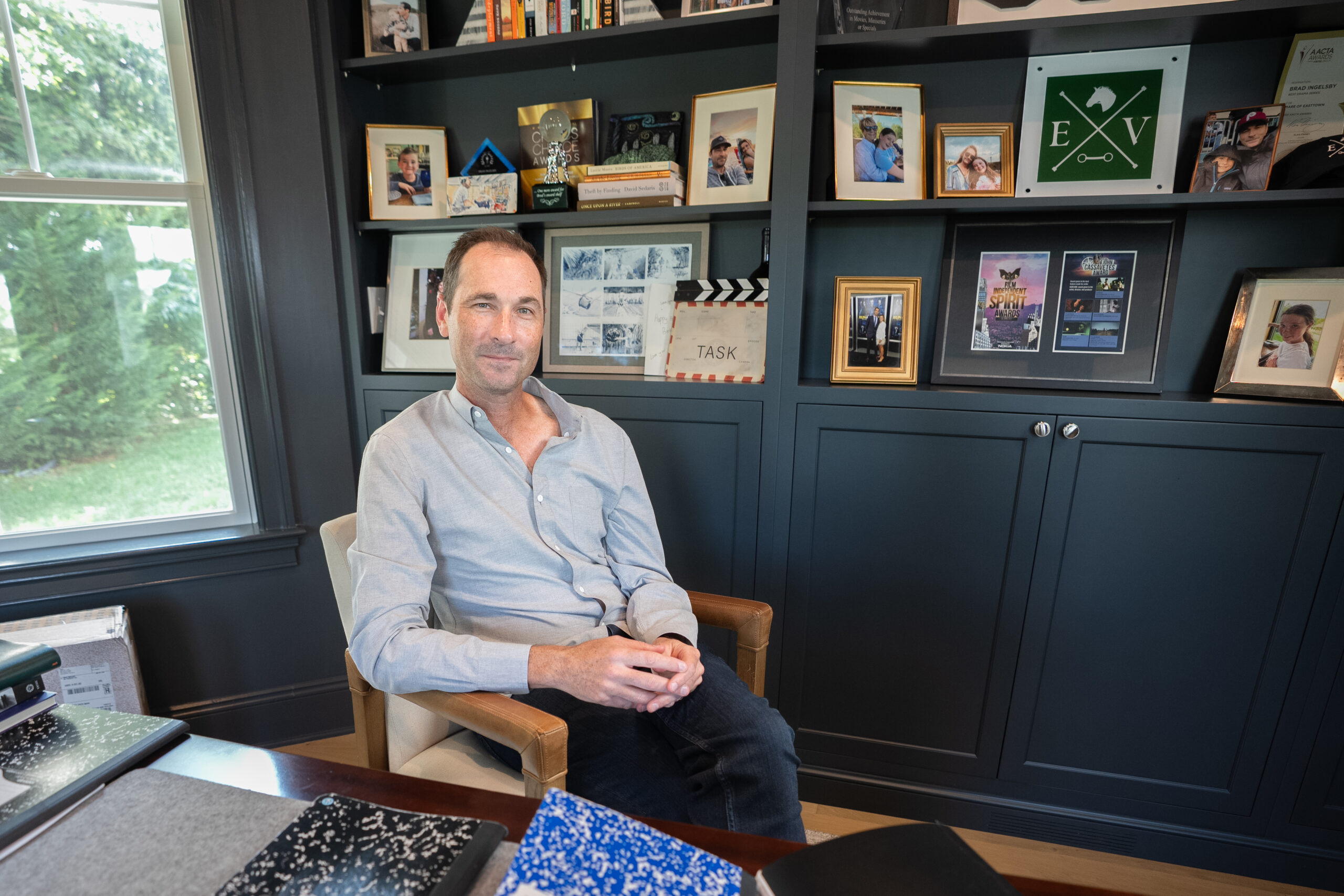
Brad Ingelsby in his office in Berwyn, Pa.. on July 17, 2025.
When Ingelsby spoke to The Inquirer in 2024, the writer also said he was open to a new season of Mare.
“I’m always open to Mare. The door is never closed. I think it’s a matter of when does Kate want to do it? Is there a window [in her schedule]?” Ingelsby said last summer.
“But I definitely think there are more stories to tell … I just think she’s a fascinating character. Kate’s an amazing actress, and we certainly kicked the tires over the years, and we stay in touch. Ultimately, if we could figure out the time and the story, Kate would, I think, be open to doing it too.”
Nothing is official just yet, but so far, all signs point to yes: We will hopefully get to see Winslet pick up the Delco accent (and vape) again in the future.
Though the U.S. men’s soccer team will command the lion’s share of the spotlight this year, the women’s team isn’t scaling anything back.
That starts Jan. 17, when Emma Hayes gathers 26 players for the program’s annual winter training camp in suburban Los Angeles. It will kick off the 41st year of the women’s team’s existence, and will include games against Paraguay on Jan. 24 in Carson, Calif., and Jan. 27 against Chile in Santa Barbara, Calif.
Because the camp takes place outside of official national team windows, all 26 players will come from the NWSL. And because Gotham FC is playing in FIFA’s inaugural Women’s Champions Cup in London at the end of the month, the club’s many national team stars — such as Rose Lavelle, Emily Sonnett, and Jaedyn Shaw — were not called up.
They’re in Europe already, training for a few weeks in Marbella, Spain, before heading north to England. (In fact, they’re at the same complex where the Union will be for part of their preseason camp later this month.)
Rose Lavelle (left) and Gotham’s other U.S. national team stars are preparing for FIFA’s Women’s Champions Cup tournament.
That said, Hayes’ squad has a few veterans and many newcomers, which is no surprise. January camps outside of World Cup years often are that way.
But one name stands out: Trinity Rodman. It’s her first national team call-up since April because of injuries, and she will arrive as a free agent — officially “unattached” on the U.S. roster — since her Washington Spirit contract expired at the end of December.
Rodman’s future is by far the biggest story in the women’s soccer world right now. All signs are she’d like to stay in Washington, but she’d also like to be paid what she’s worth — and she’s worth a lot.
NWSL commissioner Jessica Berman said at the league’s championship game in November, when Washington lost to Gotham, that “we want Trinity in our league, and we will fight for her.”
NWSL commissioner Jessica Berman
Spirit owner Michele Kang also has shown she wants to keep Rodman in town. Kang put together a back-loaded contract offer that would fit within NWSL salary rules by cashing in on the next cycle of broadcast rights. But Berman vetoed it, with Bloomberg reporting in early December that she said it “violated the spirit of the rules.”
This sparked an enormous outcry from fans, media, and the players’ union. The union filed a grievance claiming the decision violated “at least five different sections” of the collective bargaining agreement, according to The Athletic.
The league soon retreated some — but only some. It proposed a new “High Impact Player” status that would allow teams to pay stars up to $1 million beyond the salary cap, and in early December, the league’s board of governors approved the change.
It quickly emerged that the new rule was not so simple, and that blew up in the NWSL’s face. Unlike Major League Soccer’s Designated Player rule, the NWSL’s version put restrictions on what kinds of players can earn the status.
Michele Kang seems to be trying to keep Trinity Rodman in Washington, and Rodman seems to want to stay there.
They included being ranked in voting for honors bestowed by the media, including France Football’s Ballon d’Or top 30, the Guardian’s top 100, and ESPN’s top 40.
Many women’s soccer journalists have no interest in having influence over players’ salaries like that. It also matters that those rankings’ voting pools skew heavily toward Europe, including journalists, coaches, and former players.
This promptly was called out by one American soccer industry veteran for having “outsourced the valuation of players for an American soccer league to European media.”
The league also counts SportsPro Media’s “Top 150 Most Marketable Athletes.” That promptly was bashed by fans as being even more subjective than journalists’ opinions. (It also drew attention that in the league’s press release, this item was first on the list of criteria.)
Trinity Rodman has become one of the NWSL’s biggest stars.
Another metric on the list is being in the “top 11 minutes played for the USWNT” over the last two years for field players, or No. 1 in minutes for goalkeepers. This puts players’ eligibility for a big paycheck in Hayes’ hands, with her starting lineup and substitution choices.
Hayes was asked Thursday what she thinks of having that power.
“Nothing will change with me and the way that I’m doing things, regardless of any ruling that’s put in place,” she said. “To be honest with you, it’s probably going to be a little bit longer until they resolve what that criteria is — whether it ends up being that or something else, you’d have to ask them. But from my perspective, nothing changes with regards to how I will operate.”
Hayes also said she “didn’t know” the rule was coming before it was announced, and that she found out about it from the national team’s longtime PR chief, Aaron Heifetz.
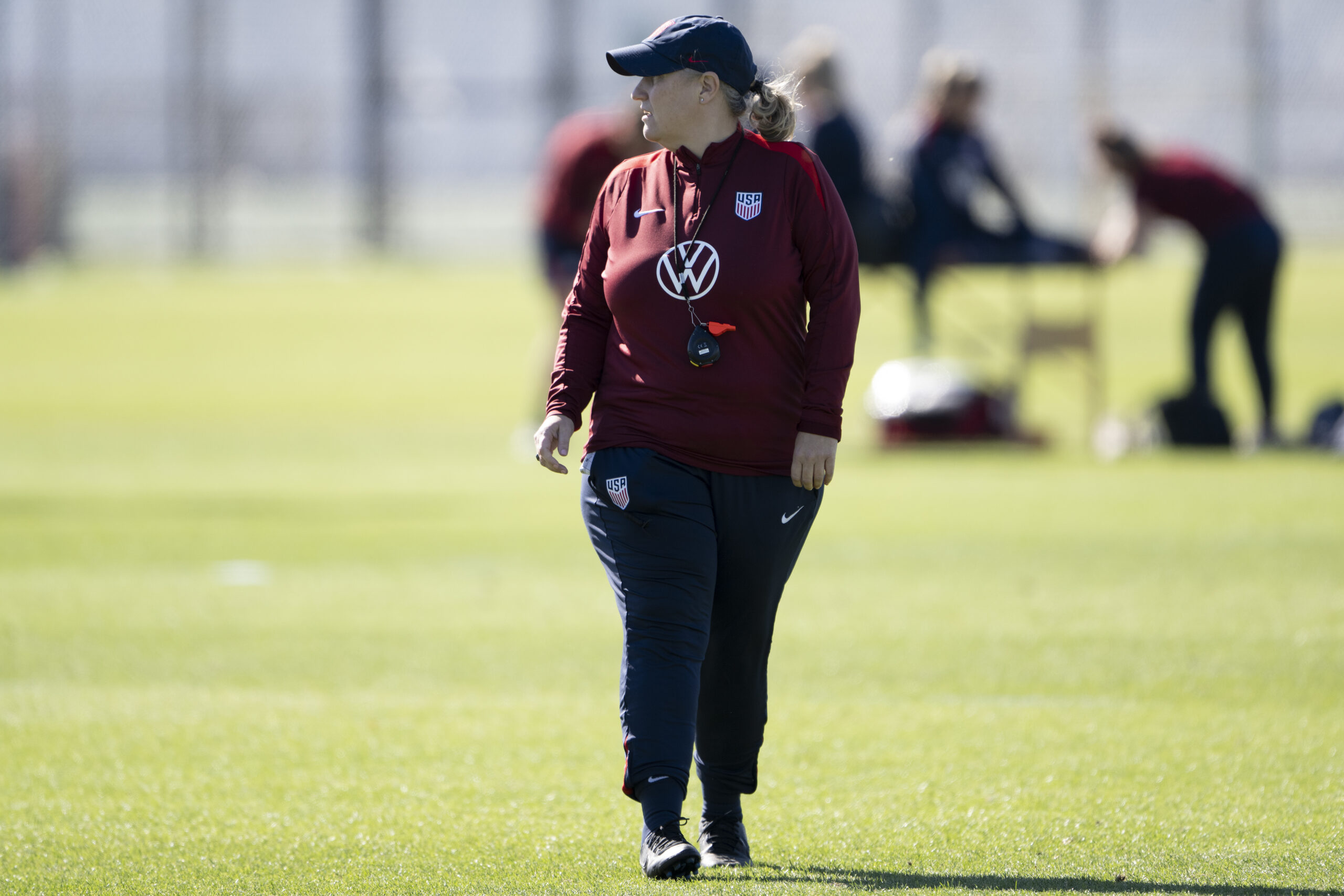
U.S. women’s soccer team manager Emma Hayes
The NWSL Players Association has continued to oppose the rule, and said Wednesday that it is preparing to take the league to arbitration. The league claimed it has the right to impose the rule without collective bargaining and said it consulted the union on the rule. The union disagrees on both counts.
“A league that truly believes in the value of its players would not be afraid to bargain over it,” the NWSLPA said in a statement when the rule was announced.
It would prefer that the league just raise the cap by $1 million for this year. ESPN reported that the league’s base salary cap for this year is $3.5 million “before additions for revenue sharing.”
How many of the league’s 16 teams would favor that isn’t known, nor is it known what the vote of clubs would have to be to make that happen.
Trinity Rodman at last year’s NWSL championship game, which the Washington Spirit lost to Gotham FC.
What is known is that Rodman will report to national team camp without a club affiliation, and it isn’t clear where she’ll end up. Many European clubs reportedly have expressed interest, although the list with the roster room and the quality Rodman deserves is pretty short.
The other big absence from this squad is midfielder Sam Coffey. The reason for that was revealed a few hours after the roster was announced: The Guardian reported that she is in “advanced talks” to join England’s Manchester City, and that the deal is “close to completion.”
Manchester City leads the Women’s Super League standings and is seeking its first title since 2016 after many runner-up finishes. Second-place Chelsea has Catarina Macario, Naomi Girma, and Alyssa Thompson, and third-place Arsenal has Emily Fox.
Defenders (8): Jordyn Bugg (Seattle Reign), Avery Patterson (Houston Dash), Izzy Rodriguez (Kansas City Current), Tara Rudd* (Washington Spirit), Emily Sams (Orlando Pride), Gisele Thompson (Angel City), Kennedy Wesley (San Diego Wave), Kate Wiesner (Washington Spirit)
Midfielders (8): Croix Bethune (Washington Spirit), Hal Hershfelt (Washington Spirit), Claire Hutton (Kansas City Current), Riley Jackson (North Carolina Courage), Lo’eau LaBonta (Kansas City Current), Sally Menti (Seattle Reign), Sam Meza (Seattle Reign), Olivia Moultrie (Portland Thorns)
Forwards (7): Maddie Dahlien (Seattle Reign), Jameese Joseph (Chicago Stars), Trinity Rodman (unattached), Yazmeen Ryan (Houston Dash), Emma Sears (Racing Louisville), Ally Sentnor (Kansas City Current), Reilyn Turner (Portland Thorns)
* — The former Tara McKeown got married a few weeks ago.
USWNT schedule
Jan. 24: Vs. Paraguay in Carson, Calif., 5:30 p.m. (TNT, truTV, Universo, HBO Max, Peacock)
Jan. 27: Vs. Chile in Santa Barbara, Calif., 10 p.m. (TBS, Universo, HBO Max, Peacock)
March 1: Vs. Argentina in Nashville, 5 p.m. (TNT, truTV, Universo, HBO Max, Peacock)
March 4: Vs. Canada in Columbus, Ohio, 6:45 p.m. (TNT, truTV, Universo, HBO Max, Peacock)
March 7: Vs. Colombia in Harrison, N.J., 12:30 p.m. (TBS, truTV, Telemundo 62, Universo, HBO Max, Peacock)
MORGANTOWN, Pa. — The Trump administration says it is focused on protecting unaccompanied migrant children. It imposed strict new background checks on those seeking custody of young migrants and cut ties with a chain of youth shelters accused of subjecting children in its care to pervasive sexual abuse.
“This administration is working fearlessly to end the tragedy of human trafficking and other abuses of unaccompanied alien children who enter the country illegally,” saidHealth Secretary Robert F. Kennedy Jr., who oversees the Office of Refugee Resettlement, or ORR, which cares for unaccompanied migrant children.
But for the last three months, that office has also locked some teenage migrant boys inside a secure juvenile prison about 50 miles west of Philadelphia with a long and publicly documented history of staff physically and sexually abusing juvenile offenders in its care, a Washington Post investigation has found.
“ORR is sending children to a juvenile detention center who should not be there,” said Becky Wolozin, a senior attorney at National Center for Youth Law.
ORR awarded $9 million to Abraxas Alliance in August to hold up to 30 young immigrants deemed a danger to themselves or others in its facility in Morgantown, Berks County. At various times since early October, between five and eight migrant teenage boys have been held inside a dedicated wing of the juvenile detention center, sleeping inside locked cells the size of walk-in closets, according to lawyers who met with them.
Pennsylvania state inspectors have documented at least 15 incidents since 2013 in which they said staff physically mistreated minors at the Morgantown facility, which holds principally juveniles facing or convicted of criminal offenses. In at least two incidents, officials documented allegations of staff sexually harassing or sexually abusing young residents. The most recent reported abuse occurred in November.
In a lawsuit filed in 2024, six former residents of the facility allege they were sexually abused by staff between 2007 and 2016, accusing management of enabling a “culture of abuse.”
A spokesperson for Abraxas Alliance, the Pittsburgh nonprofit that operates the facility,did not respond to a long list of questions about its treatment of children. After some of the incidents cited by inspectors, Abraxas suspended or fired staff members and submitted correction plans to state regulators, promising to retrain workers on proper restraining techniques and install more surveillance cameras.
ORR has wide latitude over the types of facilities it uses to house children, though federal rules require it to use “the least restrictive setting that is in the best interests of the child.” The rules say ORR may place minors in secure facilities if they have been charged with a crime, or if the agency determines they could harm themselves or others.
HHS spokesman Andrew Nixon said decisions on where to place migrant children “are based on each child’s specific circumstances, behavior-based risk assessments, and legal criteria.” All the teens at the Morgantown facilitywere provided a notice with “specific details as to why they are placed there,” he added.
Some of the migrant boys have no pending criminal charges, and several have parents or close relatives in the U.S. asking to be reunited with them, said Becky Wolozin, a senior attorney at National Center for Youth Law who visited the facility and spoke to some of the boys in November.
The Post was unable to identify any of the boys or verify Wolozin’s claims about their circumstances, because neither their immigration lawyers nor government officials would share details about their cases due to strict rules protecting the records of minors.
License revoked
In November, Pennsylvania revoked one ofthe three licenses held by different units within the Morgantown facility, Abraxas Academy. The state accused Abraxas of “gross incompetence, negligence, and misconduct” following a Nov. 4 incident of staff violence against a child, state records show. According to those documents, a staff member put his hand on a child’s neck andshoved his face into a table, an incident the facility’s operatordid not report to local authorities.
Ali Fogarty, a spokeswoman for Pennsylvania’s Department of Human Services, said state law prevented her from commenting on the incident, includingwhether the child was a migrant placed by ORR or another juvenile held in the facility. The state increased its monitoring of the Morgantown facility and reduced its maximum capacity under one license by 25 residents whilethe companyappeals the revocation. Its two other licenses were unaffected, and it is still permitted to hold more than 100 individuals, Fogarty said.
Nixon, the HHS spokesman, saidORR “will make any necessary adjustments to its use of the facility based on the outcome of the state’s licensing process” and its own review of the incident,adding that “ORR has zero tolerance for sexual abuse and harassment of children in our care.”
The problems at the nation’s only secure jail for migrant youths are unfolding as the Trump administration pushes measures it says are aimed at safeguarding the 2,300 unaccompanied migrant children in its custody, as well as those it releases to sponsors within the country.
In March, ORR ended its use of shelters operated by Southwest Keys — a Texas nonprofit which the Justice Department sued in 2024, alleging its workers repeatedly sexually abused children in the nonprofit’s shelters from 2015 to at least 2023. The company said in a 2024 statement that the lawsuit did not “present the accurate picture of the care and commitment our employees provide to the youth and children.” The department dropped the lawsuit last year.
Around the same time, ORRalso began requiring people to provide income documents and submit to DNA testing, fingerprinting and interviews before regaining custody of young migrants, including their own children, which agency officials say will help ensure they are not being claimed by traffickers.
The Trump administration said President Joe Biden had released tens of thousands migrant children to sponsors with little or no vetting, including to some adults with a history of violent crimes. U.S. Immigration and Customs Enforcementsays it’s enlisting the help of local law enforcement agencies to locate the children and verify their safety.
Jen Smyers, a former deputy director of ORR under Biden, said this population has faced abuse for decades, across several administrations. She said stricter vetting cannot always prevent mistreatment.
Partly as a result of the Trump administration’s new vetting procedures, the average child remains in ORR custody about six months —nearly three times longer than at the beginning of 2025, government data shows.
A history of abuse allegations
By jailing migrant children in a secure detention center, especially one with a recent history of abuse, the administration is exposing these young people to some of the same risks it says it wants to eliminate, said Jonathan White, a former career HHSofficial who managed the unaccompanied children program during part of Trump’s first term.
Under any previous administration, a track record of physical or sexual abuse would be “instantly disqualifying” for federal contracts involving the care of minors, White said. “This is the kind of thing under Republican and Democratic administrations you terminate existing grants for — you don’t give new grants to places like that.”
Abraxas Academy, part of a chain of 10 youth detention and treatment centers, holds dozens of teenage boys from surrounding areas, many of whom are serving sentences for violent crimes or awaiting court hearings. Rob Monzon, a former director of the Morgantown facility, calls it “the most extreme setting in juvenile detention.”Its young inmates, some who claim to be from gangs, frequently lash out at one another, vandalize the building and attack staff members, he said.
State inspection records show that staff members have at times responded with violence.
One staff member“picked up[a child] by the shirt and threw the child to the ground, holding the child down with a knee, and banging the child into the wall,” a 2013 report on the state’s website said. Another threw punches at a different minor and yet another bit an incarcerated child in the abdomen, other reports said.The reports noted that one staff member “frequently escalates situations” by applying restraint holds that are “known to cause pain to the child.”
Workers have been trained to defend themselves by placing inmates into restrictive holds, waiting for them to calm down and calling for help from other employees, according to Shamon Tooles, who worked as a supervisor at Abraxas Academy for eight months in 2023. But due to a lack of training, supervision, and frequent short-staffing, he said, some workers resorted to fighting back.
“A lot of the staff were just scared,” said Tooles, who said he does not condone any mistreatment of children.
In December 2016, Pennsylvania state inspectors said they found “a preponderance of evidence” that a staff member sexually harassed a child at the Morgantown facility. The staff member, who was not identified, was put on leave and subsequently resigned.
One of the former detainees who is suing AbraxasAllianceclaimed a staff membertook away his food or gym privileges or locked him in his room if he did not comply with sexual requests.
In court records, attorneys for Abraxas Alliance denied any wrongdoing and said they would need the names of all the abusers to confirm details of the alleged abuse. The lawsuit, which covers allegations lodged by 40 former residents from fiveAbraxas facilities, is still active and no trial date has been set.
Nixon,the HHS spokesman, saidAbraxas Academy was the only state-licensed facility that submitted a bid on the ORR contract that “operated a secure care facility for youth between the ages of 13 to 17.” He said the contract is part of an effort to “restore” the government’s capacity to hold “children whose needs cannot be safely supported” in less restrictive settings.
Fresh paint
Abraxas Academy sits at the end of a three-mile road, deep in the farmlands of Amish country. It’sso remote that when nine boys escaped through a hole in the barbed wire fence in 2023, they were quickly discovered a few miles away, lost and shivering in the rain, ready to go back,according to Paul Stolz, the police chief of nearby Caernarvon Township.
When Wolozin visited Nov. 5, she said the walls smelled like fresh paint and workers were still renovating the floors of the wing designated for immigrant boys, separate from the teens serving criminal sentences. At that time, there were eight migrant boys; at least two have since been transferred to less restrictive facilities, and another was moved to an adult detention center upon turning 18, according to their lawyers. At least two new detainees arrived in December.
Wolozin’s group advocates for children in the foster care, juvenile detention and immigration detention systems and has special permission to meet with them per the terms of a landmark 1997 legal agreement. She has personally supported Democratic politicians and causes.
According to Wolozin, the conditions for migrant boys at Abraxas Academy mirror those of children serving criminal sentences. The boys are woken from their cells and counted every morning. Their use of a “family room,” with TVs, board games and bean bag chairs, is restricted to certain times, as is their access to an outdoor recreation area with farm animals and an indoor gym. Some have told lawyers and advocates they have been limited to two 15-minute phone calls to family members per week. Federal rulesrequire at least three calls per week.
Wolozin, who interviewed five of the migrant boys but has not reviewed their files, said one appeared to have severe cognitive disabilities. Another had completed his sentence for a criminal charge and was set to be released to his familybut was instead transferred to ORR custody. Others had never been in jail before.
“What became very apparent to me is that ORR is sending children to a juvenile detention center who should not be there,” she said.
The vast majority of the migrant children in government custody live in shelters where they move freely around a campus. But the government can place children in more restrictive settings if they are deemed a risk — a broad authority that former child welfare officials say ORR has misused.
In 2018, ORR found it had “inappropriately placed” 18 of the 32 minors who were in secure facilities at the time, according to the court deposition of a former agency official. One child, the official said, had been placed in a jail because they were an “annoyance” and not an actual danger.
ORR had moved away from juvenile detention centers since 2023, after the government settled lawsuits that claimed children in these facilities were subjected to inhumane punishments or illegally locked up based on being mislabeled gang members. As part of the settlements, ORR agreed to implement new rules providingstronger legal protections for migrant children in custody.
Now, the administration is expanding the practice of secure detention once more. Along with the 30 beds for migrant teens at Abraxas Academy, ORR is exploring a second secure facility that would hold up to 30 additional migrant children in Texas, government procurement records show.
Advocates for migrant youths say these jails are unnecessary and harmful — and evident from the government’s tumultuous history with ORR detention centers before the Abraxas contract.
‘I just went on myself’
Young peopledetained at Virginia’s Shenandoah Valley Juvenile Center said in 2018 court declarations that they had been locked in small rooms for most of the day. Some said they were beaten by guards. If they acted out, some said, they were put in a restraint chair, with straps around their head, elbows, legs and feet, and wheeled into a room where they were left to sit alone for hours with their head covered in a white mesh hood so they couldn’t spit on the guards.
“This is embarrassing, but on one occasion, I had to pee, and they wouldn’t let me, so I just went on myself,” a child identified as “R.B.”said in a court filing. “I know one or two other kids this happened to as well; they peed on themselves while they were in the chair.”
Shenandoah’s operators said their use of the restraint chair was not abuse. ORR policies permit such restrains as a last resort. A federal judge ruled in 2018 that the government had improperly placed minors in secure facilities including Shenandoah but did not determine whether its use of restraints constituted abuse.
California’s Yolo County Juvenile Detention Center commonly used chemical agents and physical force to control children, the state’s attorney general found in 2019. A spokeswoman for Yolo County said in an emailed statement that the facility took measures to reduce its reliance on chemical agents, including staff training on nonviolent crisis intervention.
Community activists pressured city and state officials to stop jailing migrant children there, citing lawsuits and the growing costs of defending against them. One Salvadoran teen alleged in court papershe was shipped across the country to the facility simply because New York police claimed he was a member of MS13. A federal judge found no unequivocal evidence of the boy’s ties to any gang.
By 2023, Shenandoah, Yolo and another juvenile detention center in Alexandria, Va., had all opted not to renew their contracts with ORR.
“Nobody wants these contracts,” said Holly S. Cooper, co-director of the Immigration Law Clinic at UC Davis, who was involved in the effort to end the Yolo contract. “There was a massive public outcry.”
According to Smyers, ORR’s No. 2 official at the time, the agency in late 2023 solicited proposals for a new kind of facility where children could have restrictions increased or reduced depending on their behavior. ORR has not awarded this contract, but Nixon said it is still a priority.
Fights, an escape attempt
The Abraxas chain of youth detention and treatment centers has changed ownership at least twice. At the time of many of the abuse incidents in the inspection reports, it was owned by private prison firm Geo Group, which purchased the chain for $385 million in 2010. Geo has said in court records it is not aware of any sexual abuse.
The company sold parts of the Abraxas business to a nonprofit group run by Jon Swatsburg, the unit’s longtime executive, for $10 million in 2021.At the time, Geo was losing federal contracts and being shunned by major banks in response to community activism against its business. Geo still owns the building in Morgantown and leases it out to Abraxas Alliance, securities filings show.
A spokesman for Geo did not respond to requests for comment.
Swatsburg, who has overseen the properties for more than two decades, was paid $752,000 by Abraxas and related entities in 2022, according to the most recent tax filings available. Inperium, an investor in the nonprofit group, said Swatsburg was departing in 2023, but he continued to list himself as president and chairman of Abraxas in corporate filings in 2024 and 2025. As of last year, Swatsburg was also listed as a vice president of Geo Group.
Last year alone, police responded to at least 34 incidents at the facility, local records show, including inmate fights, at least one attempted escape,a suicidal detainee, an incident that left three police officers with minor injuries and another incident in which a staff member’s finger was partly amputated by a door.
Meanwhile, the migrant boys at Abraxis havetold advocates that they feel stuck.
“They had plans and family, and lives and school and girlfriends, and things going on that they planned to do,” Wolozin said. “Instead, they are in this place.”
Renee Nicole Good, 37, was shot and killed by U.S. Immigration and Customs Enforcement agents on Wednesday in Minneapolis. She is the second person killed after the Trump administration unleashed masked, armed, and increasingly unaccountable federal forces upon U.S. cities.
Unless the government immediately changes course, she will not be the last.
Several videos posted to social media show the deadly encounter. If you believe your eyes, Good was fatally shot as she attempted to drive away from agents who were yelling obscenities at her and violently trying to open her vehicle’s door.
If you believe the U.S. Department of Homeland Security, Good was part of a group of “violent rioters” who “weaponized her vehicle” and tried to “run over our law enforcement officers in an attempt to kill them.” Good, according to DHS spokesperson Tricia McLaughlin, was engaged in an act of “domestic terrorism.”
The stark disconnect is telling. The administration’s reflexive lying is emblematic of the moral rot at the heart of President Donald Trump’s militarized mass deportation efforts. It reflects a worldview where all immigrants are criminals, and all dissenters are rioters or terrorists.
By all accounts, Good was neither. She was a mother, a neighbor, a self-described poet, writer, and poor guitar player. In death, she joins Silverio Villegas-Gonzalez, a 38-year-old Chicago resident who was killed by ICE in September during a similar incident. The Mexican immigrant was shot in the neck shortly after he dropped off one of his children at school and another at daycare.
These deaths were as preventable as they were foreseeable.
People gather for a vigil after a U.S. Immigration and Customs Enforcement agent shot and killed a motorist earlier in the day.
In her Nov. 20 ruling ordering federal agents to limit aggressive tactics in Chicago, U.S. District Judge Sara Ellis wrote that “agents have used excessive force in response to protesters’ and journalists’ exercise of their First Amendment rights, without justification, often without warning, and even at those who had begun to comply with agents’ orders.”
Dozens of videos, from cities around the nation, have shown federal agents engaging in violent behavior during their enforcement duties. Any one of those incidents could have turned deadly. That more people have not been killed in the administration’s reckless and ill-advised efforts can best be attributed to providence.
Reported close calls in California include Border Patrol agents smashing windows and firing on a truck as it drove away during a traffic stop, a man who claimed he wanted to warn agents there were children nearby was shot in the back by an ICE agent, and a TikTok streamer was shot as ICE agents smashed his car window.
In Chicago, a woman was shot multiple times after she allegedly rammed the vehicle of a U.S. Customs and Border Protection agent. The charges against her were dismissed in the face of glaring inconsistencies in the government’s story.
Federal agents confront protesters outside the Bishop Henry Whipple Federal Building on Thursday in Minneapolis.
On Thursday, a day after Good’s killing, two people were reportedly shot by Border Patrol agents in Portland, Ore., after a vehicle stop. DHS once again claimed the driver “weaponized his vehicle” and attempted to run over the agents.
The conduct of too many federal agents involved in immigration enforcement not only violates the norms of decency and order but also goes against the various agencies’ use-of-force policies and rights enshrined in the Constitution.
All of that is meaningless, however, to an administration that has repeatedly shown disdain for the law and which has overtly condoned violence as an acceptable response to nonviolent behavior.
It may be too late for Congress to use its power of the purse to rein in these out-of-control agencies. Republicans have already given the president $30 billion to recruit thousands more ICE agents, even as hiring requirements are lowered and training time is reduced — a recipe for disaster.
Legislators not in thrall to the Trump administration must use every oversight opportunity they can muster to shine the spotlight on abuse and hold rogue officials accountable.
Local and state governments must lawfully push back and protect their residents — including investigating and charging federal law enforcement with crimes. In the Good case, the former is already proving to be a challenge, as Minnesota’s attorney general notes that state law enforcement officials are being pushed aside, and that the investigation will be conducted solely by the FBI.
Even as the president puts his thumb on the scales, the courts must stand firm and uphold the law.
And in communities across the country, everyday Americans like Renee Nicole Good must continue to peacefully exercise and defend our civil rights against those who would use fear and intimidation to gain control. The risk has never been greater, but the stakes have never been higher.
But the club has re-signed another veteran, Alejandro Bedoya, to the latest in a series of one-year deals. The midfielder and longtime captain will turn 39 in April, and this will be his 11th season in Chester.
As in the last two seasons, Bedoya’s contract will have special status, with a role in the team’s front office.
Alejandro Bedoya (right) celebrates scoring a goal for the Union in Houston in July.
“Alejandro’s impact on our organization continues to be invaluable, both on and off the field,” Union manager Bradley Carnell said in a statement. “While he remains an important contributor as a player, his leadership and insights in his player development and front office roles are especially beneficial. His experience and deep understanding of our system make him a steady presence and trusted mentor for our younger players, while his work behind the scenes continues to strengthen our culture.”
Mikael Uhre’s departure official
Uhre’s departure as a free agent also became official Wednesday, a few hours after the Union announced Bedoya’s return. The striker signed with FC Midtjylland in his native Denmark, an opportunity that will allow him to play in the UEFA Europa League later this month.
Coincidentally, the next team Midtjylland will face in Europe’s second-tier continental tournament is Norway’s SK Brann, from which the Union reportedly will soon sign centerback Sery Larsen.
Uhre departs the Union as their joint No. 3 all-time scorer, with 43 goals (and 28 assists) in 155 games. His last tally was the one that clinched the Supporters’ Shield in a 1-0 win over New York City FC on Oct. 5.
Mikael Uhre’s celebration of the goal that clinched the Supporters’ Shield for the Union, which ended up being his last goal for the club.
The player with whom Uhre is tied, his former strike partner Julián Carranza, recently signed with Mexico’s Necaxa. Carranza’s move from Chester to Dutch club Feyenoord in mid-2024 ended up being a flop, and Necaxa reportedly paid around $4 million to sign him.
Some portion of that will go to the Union as a sell-on fee, but the exact amount is unknown.
The Union will open their preseason next week in Chester, then head to Marbella, Spain, for a couple of weeks. They’ll return here for some time off, then go to Clearwater, Fla., for their annual stay down the road from the Phillies’ spring training complex.
They then will fly from Clearwater to Trinidad for their first game of the year, at Defence Force FC in the Concacaf Champions Cup on Feb. 18.
While weed is legal in Delaware, with a baker’s dozen worth of dispensaries to buy it from, people can still face jail time for public marijuana use under current state law.
State Rep. Eric Morrison (D., Newark) introduced a bill last month that would ease those punishments. House Bill 252 would reduce the penalties for public marijuana consumption from a misdemeanor to a civil violation.
“This is not saying that public consumption of cannabis is OK. It is simply making the penalty commensurate with the offense,” Morrison said. “Almost all of the states that have legalized cannabis like we have revisited their laws and changed this violation to a civil offense instead of a misdemeanor, which carries higher fines, a criminal record, and possible jail time.”
Customers line up for the first day of recreational marijuana sales at Thrive Dispensary in Wilmington on Aug. 1, 2025.
Currently, police can either stop and fine someone up to $200 for smoking weed in public, or officers have the option to arrest the person, with possible imprisonment for up to five days.
Under Morrison’s bill, police can still stop people for smoking or consuming marijuana in public, but instead of a misdemeanor, the offense is considered a civil violation — similar to a traffic violation — that carries a fine of up to $50 for a first offense, and up to $100 for subsequent offenses.
People driving a vehicle while under the influence of marijuana would still beconsidered a DUI.
Delaware’s decriminalization of public marijuana use would match the policies of neighboring states, like New Jersey and Maryland, where weed is fully legal, and some Pennsylvania cities where only medical marijuana is legal, such as Philadelphia and Pittsburgh. In these places, only fines are given out, and violations do not appear on criminal records.
New Jersey went a step further and approved the East Coast’s first legal weed lounges, which means more adults can safely and legally consume cannabis outside of their homes.
Zoë Patchell, president of the Delaware Cannabis Advocacy Network, said some lawmakers are now correcting a policy that should have been included in the original legalization laws.
“This simply just brings Delaware’s law in line with the standards used by most other states,” Patchell said. “This measure does not legalize public consumption. It reduces the penalty from a misdemeanor, which can result in a criminal record.”
Criminal charges have “severe collateral consequences,” Patchell added. For example, arrest and incarceration can negatively impact someone’s health and social outcomes, like losing access to housing, financing, and employment.
“Especially today, for people in America living paycheck to paycheck, spending time in jail can lead to lost wages or having this charge on a criminal record can lead to being terminated from your job,” Morrison said. “For a whole lot of Americans, losing any wages puts their family in a hard predicament financially.”
A customer browses through product offerings on Day One of recreational marijuana sales at Thrive Dispensary in Lewes on Aug. 1, 2025.
Delaware legalized recreational marijuana in 2023, but it took years to open legal sales to adults in recreational dispensaries. The first 13 dispensaries opened to adults last year, but advocates like Patchell say the current law makes it difficult to consume cannabis legally.
Delaware’s laws on consumption on private property are also restrictive, Patchell said. Adults can consume cannabis on private property, but only in locations that are at least 10 feet from a sidewalk, street, parking lots, businesses, or “any other areas to which the general public is invited,” according to state law.
“This means that someone can be arrested for consuming cannabis on their own private property,” Patchell said. This proves even more difficult for those living in households that don’t have the property space to be away from the public, she said.
Morrison said he wants to keep working with cannabis advocates to create a safe and robust cannabis industry, but that it would be premature to say if additional measures will be taken at this time, such as amending the 10-foot rule around private property and public space.
“For this year, [decriminalization of public use] is what I’m focused on regarding cannabis,” Morrison said.