Blog

  • Scientists discover oldest evidence of human-made fire in a 400,000-year-old hearth

    Scientists discover oldest evidence of human-made fire in a 400,000-year-old hearth

    Scientists have discovered the oldest evidence of ancient humans igniting fires: a 400,000-year-old open-air hearth buried in an old clay pit in southern England.

    The study, published in the journal Nature, is based on a years-long examination of a reddish patch of sediment excavated at a site in Barnham. It pushes back the timeline on fire-making by about 350,000 years.

    The nebulous question of how far back human ancestors conjured fire is deeply intertwined with some of the biggest outstanding mysteries about human evolution. The ability to reliably set fires would have allowed humans to cook food, expanding the range of what they could eat and making meals more digestible. That, in turn, could have supported bigger brains that consumed more energy, catalyzing new social behaviors as humans gathered around campfires.

    But campfires don’t leave fossils. It takes painstaking work to reconstruct these ephemeral uses of technology. And what remains unclear is who set them. No telltale bones have been recovered at Barnham, but researchers think it was Neanderthals, close cousins of our species who interbred with our ancestors.

    “The evidence of fire is incredibly difficult to preserve. If you get to ash and charcoal, it can wash away. Sediment can get washed away,” said Nicholas Ashton, curator of Paleolithic collections at the British Museum and one of the leaders of the work. “We just found this one pocket — quite a large site — where it happens to be preserved.”

    Even when traces of fire remain, the task of distinguishing incidental flames sparked by lightning strikes or wildfires from those set by people is difficult. Perhaps most challenging is distinguishing between fires ignited by humans with the know-how from those produced by scavenging embers from wildfires.

    The study could spark more debate.

    “The authors did an excellent job with their analysis of the Barnham data, but they seem to be stretching the evidence with their claim that this constitutes the ‘earliest evidence of fire making,’” Wil Roebroeks, an archaeologist at Leiden University, said in an email, calling the evidence “circumstantial.”

    Ségolène Vandevelde, an archaeologist and adjunct professor at the University of Quebec at Chicoutimi, praised the multidisciplinary approaches the authors used and said the finding was “solid.”

    Pyroarchaeology

    In the Paleolithic era, the Barnham site would have been a woodland with a seasonal pond — set away from the main river valley, where predators might have roamed, according to Robert Davis, an archaeologist at the British Museum and one of the authors of the study. The wildlife would have included elephants, lions, deer, fish and other small mammals.

    Despite the fleeting nature of fire, it can leave traces under the right conditions. At the site in Barnham, where artifacts such as heat-shattered flint hand axes were also found, researchers were intrigued by a layer of reddish sediment — a result of iron-rich sediments being heated to produce a mineral called hematite. For four years, they studied it, trying to determine whether it was the result of a wildfire or deliberate human activity.

    One of the first questions they asked was whether this was a one-time blaze or something closer to a fireplace that was lit and relit many times.

    To deconstruct this question, scientists studied the magnetism of the sediment, which is altered by heating. They conducted modern experiments, to see if they could come up with an estimate of how many heating events might have resulted in the magnetic profile of the sediment — and found that after about a dozen heating events, each one four hours long, their modern samples mimicked the archaeological one.

    Then they examined the chemistry of the site — scrutinizing particular chemical compounds left behind. The patterns they found suggested humans had been using these fires.

    The last element was small pieces of cracked flint scattered about the site — as well as two bits of pyrite, which can create a spark when struck together. A geological study of the area showed that pyrite was scarce in the local landscape, leading the authors to argue that the inhabitants had carried it there for the specific purpose of making fire.

    Scavenging sparks vs. setting fires

    The archaeological record with examples of fires used by hominins — the ancestors of humans — stretches back more than a million years ago in Africa.

    But what interests scientists is not just the ability to successfully scavenge sparks from wildfires or lightning strikes, but also the ability to reliably create it — possibly by striking flint and pyrite together to create sparks.

    The oldest accepted evidence of fires purposefully set are from a Neanderthal site dated to 50,000 years ago in France. That evidence is considered convincing in part because there are chunks of flint showing “microwear traces of having been struck” to create sparks, Roebroeks said. But at Barnham, there are no microwear traces, leaving room for disagreement.

    “It’s a very contentious debate that’s been going on for some time,” Davis said.

    Early hominins would have learned to harvest fire by collecting embers, harvesting the right fuel and tending the fire. And eventually, they had to learn how to make it on demand — which would allow them to live in colder places, cook, fend off predators and socialize after dark.

    The study does not suggest that Barnham was where fire originated; it was probably widespread across the ancient world. But it does offer a rare, preserved snapshot of prehistoric life.

    “The maintenance of fire requires social cooperation, cultural rules and work coupled with knowledge of wood types, and means that a complicated tradition is at play,” said John Hawks, a paleoanthropologist at the University of Wisconsin at Madison.
  • Sixers’ Joel Embiid and Paul George want to ‘be efficient’ while playing on the floor together

    Sixers’ Joel Embiid and Paul George want to ‘be efficient’ while playing on the floor together

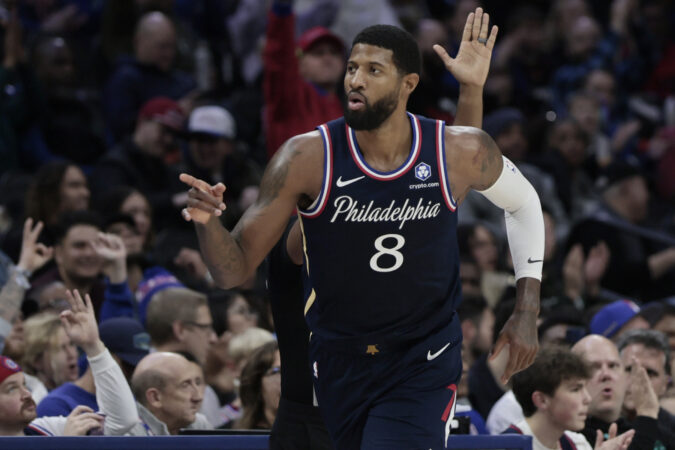
    Paul George and Joel Embiid have only played two games together this season. So, following the 76ers’ optional practice on Wednesday, George was asked what the next step was for the pairing.

    “Just keep at it,” he said. “Keep getting opportunities on the floor together. Keep presenting healthy, and everything else just kind of roll it out once we get on the floor and continue to keep logging minutes.”

    Neither player shot the ball well during Sunday’s 112-108 loss to the Los Angeles Lakers at the Xfinity Mobile Arena.

    George made 3 of 8 shots — including going 1-for-3 on three-pointers — to finish with 12 points along with six rebounds, three assists, one steal, and a turnover in 32 minutes, 9 seconds. Meanwhile, Embiid missed 17 of 21 shots — including all six of his three-pointers — while scoring 16 points. The 7-foot-2 center also finished with seven rebounds, two assists, one block, and a steal.

    In their two games together, Embiid averaged 17 points while making 28.5% of his shots. Meanwhile, George averaged 14 points on 36% shooting.

    “Just, obviously, trying to be efficient,” George said of his biggest takeaway from playing alongside Embiid. “Trying to understand, still, spacing and key moments of being aggressive, and when I can be aggressive, look for mine, but understanding, like, he [hasn’t] played a ton either. So, he’s trying to find his rhythm. He’s trying to get in a flow, and I think both of us, on the court, are trying to do that at the same time.

    “So, more minutes. More understanding. He’ll know where I like the ball, where I’m aggressive, and vice versa.”

    Joel Embiid is averaging a career-low 18.2 points in nine games for the Sixers this season.

    But their struggles haven’t been limited to those two games.

    Through eight games played this season, George’s field-goal percentage (41.8%) and three-point percentage (34.9%) are both the second lowest of his career. He’s also averaging the fourth-fewest points (14.1 points) of his career.

    Meanwhile, Embiid is shooting career lows from the field (40.7%) and on three-pointers (21.4%), in addition to averaging a career-low 18.2 points in nine games this season.

    But George noted that Embiid had great looks at the basket on Sunday. He added they were shots the Sixers want him to take.

    “Shots, I’m sure he was comfortable with,” George said. “It’s just how the ball went that night, but that’s the game. He’s been working on his game. He’s been working on his rhythm, his timing. He’s been putting the extra work in.

    “So, we expect him to be on the reverse side of that. But it’s the game, man. It’s how it goes sometimes.”

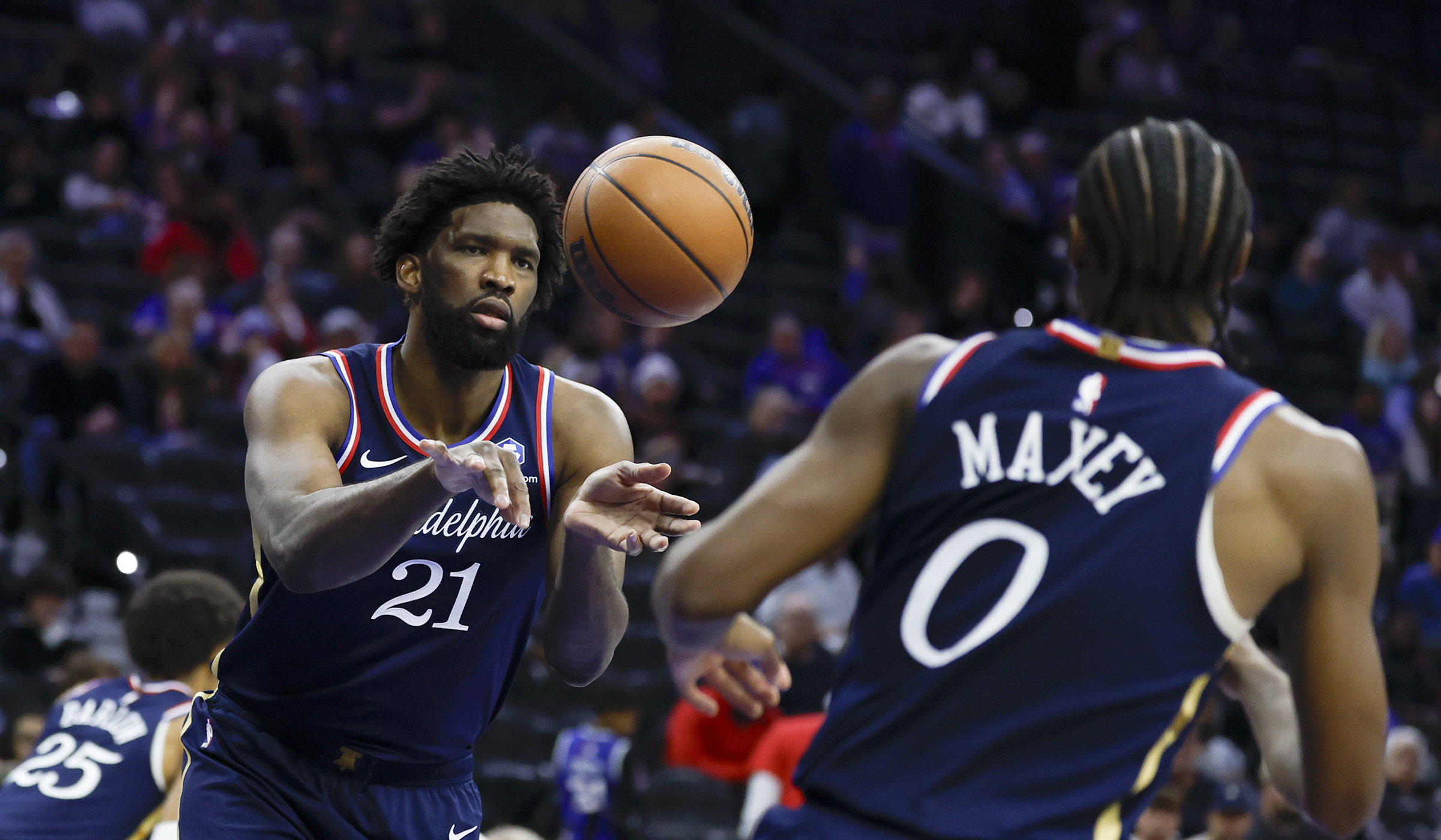
    Sixers’ Joel Embiid and Tyrese Maxey shown together during a game against the Hawks on Nov. 30.

    Embiid has missed 14 games this season due to left and/or right knee injury management. Meanwhile, George missed 14 games with left knee injury management and sat out another game with a sprained right ankle.

    Not having games on Monday, Tuesday, Wednesday, and Thursday this week is bittersweet for the Sixers, especially Embiid and George. They’ve been able to rest and build rhythm heading into Friday’s home game against the Indiana Pacers.

    “We’ve taken advantage of these days off,” George said. “We’re in the gym today. We were in the gym yesterday. So, it hasn’t been ‘off’ for us. We’re still putting the work in to kind of be prepared and be ready and get our bodies going and try to stay sharp, but it is bittersweet. Especially, for us trying to get into a game time rhythm where we start to come back and then there’s a break in between, but it’s good.

    “Especially for the guys that have been playing a ton of minutes for them to get some time away. That’s where the sweet part comes in.”

  • Christian Dvorak has done wonders for Trevor Zegras and the team’s depth down the middle. Should the Flyers consider keeping him around?

    Christian Dvorak has done wonders for Trevor Zegras and the team’s depth down the middle. Should the Flyers consider keeping him around?

    Flyers general manager Danny Brière sat at the podium following a busy July 1 and said what everyone was thinking.

    “Shows that we focused on term — short term — to try to fill those holes,” he said. “Guys were willing to bet on themselves, which is awesome. And for us, term was way more important than anything else. … We know that the salaries were very competitive, but where it helps us is, it keeps the flexibility moving forward in our favor.”

    Flexibility is critical for the Flyers as they climb out of a rebuild. Several players in the organization should push for roster spots in the coming years, and short-term deals fill gaps now without creating a logjam.

    But one player signed on the first day of free agency probably is forcing the Flyers to consider taking a detour. Christian Dvorak, whom many viewed as an overpaid stopgap and potential midseason trade candidate, signed a one-year deal with the Flyers at $5.4 million on July 1.

    He is earning every penny right now.

    “He was more in a defensive role in Montreal, more on the fourth line,” coach Rick Tocchet said after Dvorak got the Flyers on the board in Tuesday’s win over the San Jose Sharks.

    “And I think he’s getting a chance. He saw the opportunity here with our situation, and I think that he’s grabbing it.”

    Part of the reason Dvorak came to Philly was to work with Tocchet — again. The Flyers coach ran Arizona’s bench when Dvorak set a career high with 38 points in 2019-20. Just 28 games into this season, the 29-year-old center has 19 points and is on pace for 56.

    And a big factor is the trust between the two. Dvorak is deployed in all situations. He has played on the power play — like on Tuesday when Matvei Michkov missed the start of the second period — and is a key penalty killer. If Tocchet needs a faceoff man, it makes perfect sense to send out the player who wins 55.8% of them. The bench boss also uses him to close out games, even when it’s three centers and two defensemen.

    Christian Dvorak and Trevor Zegras, pictured recently at the Flyers’ Casino Night, have developed terrific chemistry on and off the ice.

    Dvorak also is centering the Flyers’ top line, between Trevor Zegras and Travis Konecny. They haven’t played together for long but already are making noise.

    According to MoneyPuck, among the Flyers lines that have played at least 35 minutes together, the trio ranks first in expected goals percentage (63.3%) and expected goals for per 60 minutes (4.33), but also tied for first in expected goals against (1.8).

    And according to Natural Stat Trick, among lines that have played at least 12 minutes together, when they’re on the ice, the Flyers dominate. It has them ranked first in chances for percentage (57.5%), shots for percentage (73.68%), scoring chances for percentage (60.53%), and high-danger chances (72.2%).

    A large part of that is because of Dvorak’s defensive acumen and his ability to not just be in the right spots but to let the creative duo of Konecny and Zegras do what they do offensively.

    “Yeah, it’s been great. Two guys [with] high hockey, IQ, which is huge. You know they’re going to make the right play almost every time, and that helps a lot,” Dvorak told The Inquirer.

    “And, yeah, getting to know TK the last handful of games, the chemistry is coming. Playing with Zegras for a while here, I think we read off each other pretty well, and that helps a lot. And I thought we’ve been pretty effective.”

    The trio has been on the ice for two goals for the Flyers and just one against in more than 35 minutes at five-on-five.

    “I played junior against him a lot. Dominated him, actually, in junior, quite a bit,” joked Konecny — or maybe not — who played against Dvorak in the Ontario Hockey League.

    “But now it’s nice, yeah, be on the same line, and he’s got a ton of skill. He’s really, really smart, so he thinks the game the right way. And usually you just get into a good spot and going to know where you’re at.”

    Tocchet likes pairs, and Dvorak and Zegras are attached at the hip on and off the ice. Friends long before either came to Philly, their connection has helped Dvorak feel comfortable in the room. It’s showing with Dvorak’s confidence, but he’s also elevating his linemates’ games as well.

    “I’ve learned so much from him,” Zegras said after a spirited practice on Wednesday. “[Looking] back to earlier in my career, like maybe when things weren’t going my way, I’d be screaming and slamming sticks on the bench, and saying all crazy stuff that doesn’t really help in a positive way.

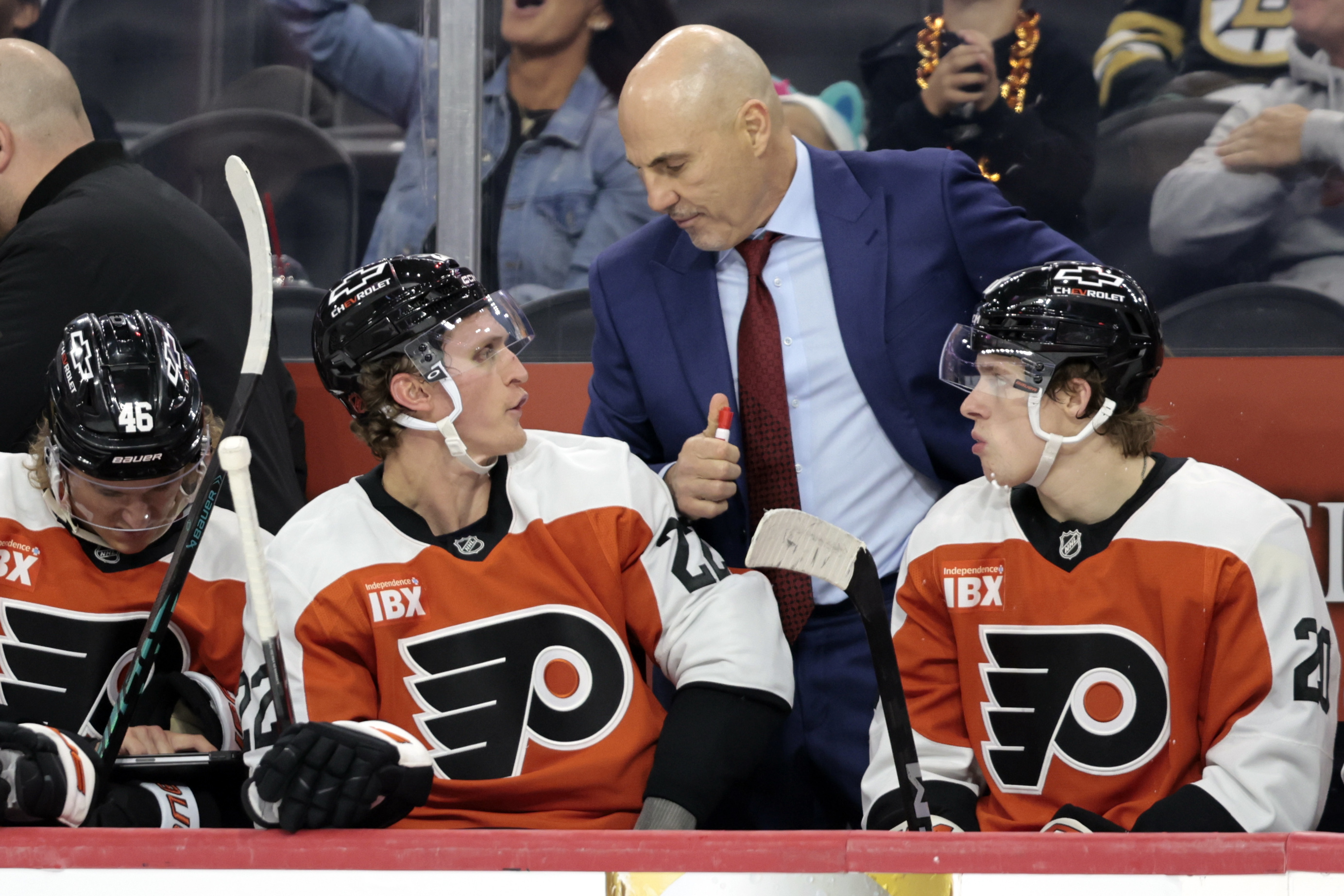
    Christian Dvorak (center) and Rich Tocchet go back to their days together in Arizona.

    “He’s as cool as a cucumber, and his famous line or expression is: it’s a game of runs. So that’s what I tell myself. It’s a game of runs. And you go back out there, you get ready to go for the next shift. So I just think that from the aspect of being himself, he’s a leader in that regard. And I’ve definitely learned a lot from him.”

    Maybe the Flyers should play long ball with Dvorak. At the time, his deal looked like an overpay. Today, it looks like they got him for cheap. And with the salary cap going up and the amount of available centers dwindling, the soon-to-be unrestricted free agent may just be someone the Flyers decide to keep around .

    Breakaways

    Defensemen Rasmus Ristolainen and Cam York, who are recovering from upper-body injuries, practiced on Wednesday in regular jerseys. … Defenseman Ty Murchison also remains with the club, and it sounds like he may get another game before possibly returning to Lehigh Valley of the American Hockey League.

  • House passes defense bill to raise troop pay and overhaul weapons purchases

    House passes defense bill to raise troop pay and overhaul weapons purchases

    WASHINGTON — The House voted to pass a sweeping defense policy bill Wednesday that authorizes $900 billion in military programs, including a pay raise for troops and an overhaul of how the Department of Defense buys weapons.

    The bill’s passage comes at a time of increasing friction between the Republican-controlled Congress and President Donald Trump’s administration over the management of the military.

    The annual National Defense Authorization Act typically gained bipartisan backing, and the White House has signaled “strong support” for the must-pass legislation, saying it is in line with Trump’s national security agenda. Yet tucked into the more than-3,000-page bill are several measures that push back against the Department of Defense, including a demand for more information on boat strikes in the Caribbean and support for allies in Europe, such as Ukraine.

    Overall, the sweeping bill calls for a 3.8% pay raise for many military members as well as housing and facility improvements on military bases. It also strikes a compromise between the political parties — cutting climate and diversity efforts in line with Trump’s agenda, while also boosting congressional oversight of the Pentagon and repealing several old war authorizations. Still, hard-line conservatives said they were frustrated that the bill does not do more to cut U.S. commitments overseas.

    “We need a ready, capable and lethal fighting force because the threats to our nation, especially those from China, are more complex and challenging than at any point in the last 40 years,” said Rep. Mike Rogers, the GOP chair of the House Armed Services Committee.

    Lawmakers overseeing the military said the bill would change how the Pentagon buys weapons, with an emphasis on speed after years of delay by the defense industry. It’s also a key priority for Defense Secretary Pete Hegseth. Rep. Adam Smith, the top Democrat on the armed services panel, called the bill “the most ambitious swing at acquisition reform that we’ve taken.”

    Still, Smith lamented that the bill does not do as much as Democrats would like to rein in the Trump administration but called it “a step in the right direction towards reasserting the authority of Congress.”

    “The biggest concern I have is that the Pentagon, being run by Secretary Hegseth and by President Trump, is simply not accountable to Congress or accountable to the law,” he said.

    The legislation next heads to the Senate, where leaders are working to pass the bill before lawmakers depart Washington for a holiday break.

    Several senators on both sides of the aisle have criticized the bill for not doing enough to restrict military flights over Washington. They had pushed for reforms after a midair collision this year between an Army helicopter and a jetliner killed all 67 people aboard the two aircraft near Washington’s Ronald Reagan National Airport. The National Transportation Safety Board has also voiced opposition to that section of the bill.

    Here’s what the defense bill does as it makes its way through Congress:

    Boat strike videos and congressional oversight

    Lawmakers included a provision that would cut Hegseth’s travel budget by a quarter until the Pentagon provides Congress with unedited video of the strikes against alleged drug boats near Venezuela. Lawmakers are asserting their oversight role after a Sept. 2 strike where the U.S. military fired on two survivors who were holding on to a boat that had partially been destroyed.

    The bill also demands that Hegseth allow Congress to review the orders for the strikes.

    Reaffirm commitments to Europe, Korea

    Trump’s ongoing support for Ukraine and other allies in Eastern Europe has been under doubt over the last year, but lawmakers included several positions meant to keep up U.S. support for countering Russian aggression in the region.

    The defense bill requires the Pentagon to keep at least 76,000 troops and major equipment stationed in Europe unless NATO allies are consulted and there is a determination that such a withdrawal is in U.S. interests. Around 80,000 to 100,000 U.S. troops are usually present on European soil. It also authorizes $400 million for each of the next two years to manufacture weapons to be sent to Ukraine.

    Additionally, there is a provision to keep U.S. troops stationed in South Korea, setting the minimum requirement at 28,500.

    Cuts to climate and diversity initiatives

    The bill makes $1.6 billion in cuts to climate change-related spending, the House Armed Services Committee said. U.S. military assessments have long found that climate change is a threat to national security, with bases being pummeled by hurricanes or routinely flooded.

    The bill also would save $40 million by repealing diversity, equity and inclusion offices, programs and trainings, the committee said. The position of chief diversity officer would be cut, for example.

    Iraq War resolution repeal

    Congress is putting an official end to the war in Iraq by repealing the authorization for the 2003 invasion. Supporters in both the House and Senate say the repeal is crucial to prevent future abuses and to reinforce that Iraq is now a strategic partner of the U.S.

    The 2002 resolution has been rarely used in recent years. But the first Trump administration cited it as part of its legal justification for a 2020 U.S. drone strike that killed Iranian Gen. Qassim Suleimani.

    Lifting final Syria sanctions

    Congress would permanently remove U.S. sanctions put on Syria after the Trump administration temporarily lifted many penalties.

    Lawmakers imposed economically crippling sanctions on the country in 2019 to punish former leader Bashar Assad for human rights abuses during the nearly 14-year civil war. After Syrian President Ahmed al-Sharaa led a successful insurgency to depose Assad, he is seeking to rebuild his nation’s economy.

    Advocates of a permanent repeal have said international companies are unlikely to invest in projects needed for the country’s reconstruction as long as there is a threat of sanctions returning.

    Lack of IVF coverage

    Democrats criticized House Speaker Mike Johnson (R., La.) for stripping a provision from the bill to expand coverage of in vitro fertilization for active duty personnel. An earlier version covered the medical procedure, known as IVF, which helps people facing infertility have children.

  • Twice-weekly trash pickup is coming to North Philly

    Twice-weekly trash pickup is coming to North Philly

    Happy holidays, North Philly: Twice-weekly trash pickups are coming to your neighborhood.

    The city will institute a second pickup day for North Philadelphia, beginning Jan. 5.

    Last year, Mayor Cherelle L. Parker announced a $11.9 million initiative to bring twice-weekly trash collection to Center City and South Philly as a key piece of her push to make the city clean and green. Now, after an additional $7 million investment in trash trucks, the program is ready for North Philly.

    “We’re seeing this make a difference,” said Carlton Williams, director of the Philadelphia Office of Clean and Green Initiatives. He said since the initiative began in December 2024, reports of illegal dumping in South Philly and Center City have fallen by 15% to 20% and the amount of litter has decreased.

    The North Philly phase of the initiative will cover the boundaries of:

    • Vine Street to Hunting Park Avenue, from Broad Street to the Schuylkill
    • Vine Street to Glenwood Avenue, from Broad Street to the Delaware River
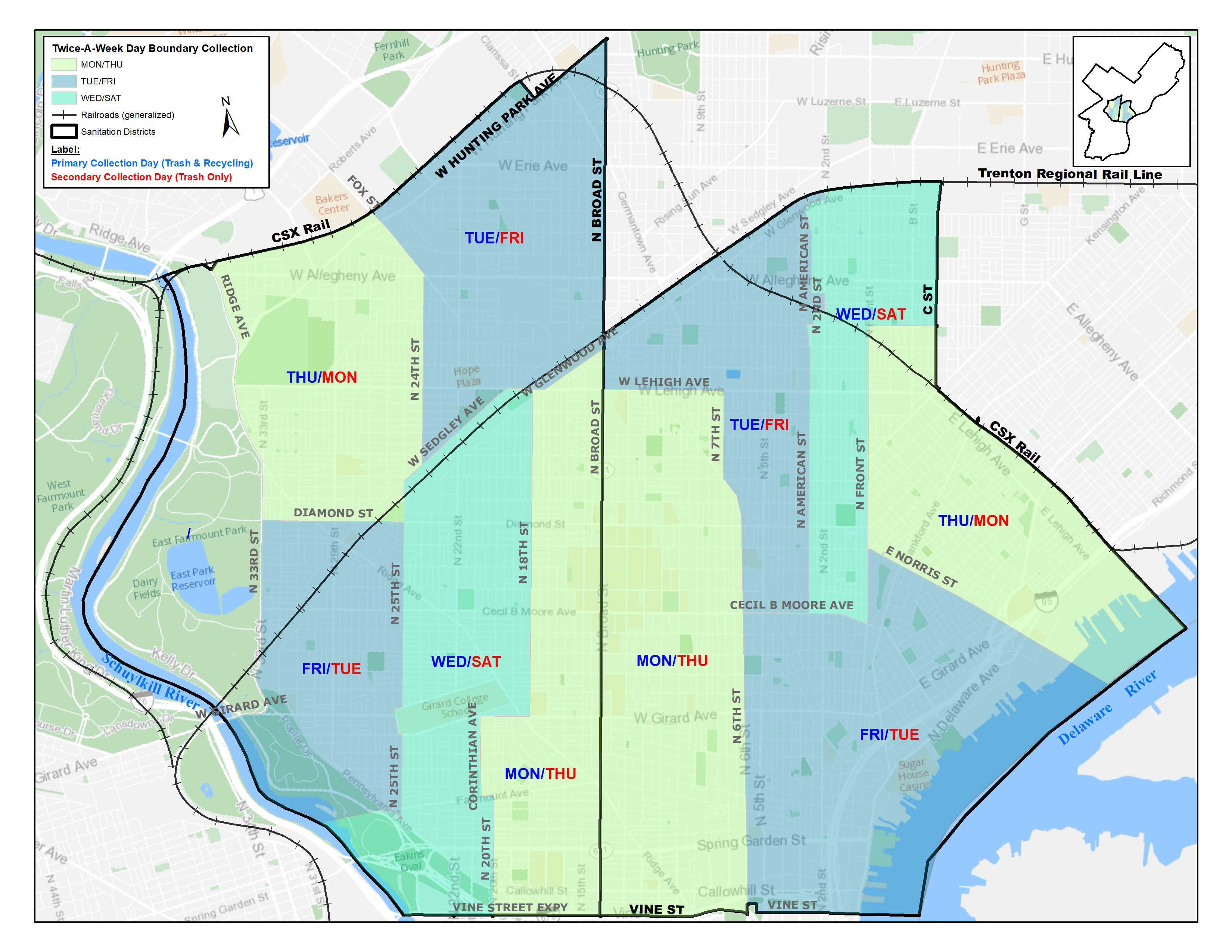
    A map of where and when additional trash pickups will take place in North Philadelphia, beginning Jan. 5, 2026.

    Just like elsewhere in the city, the second pickup will occur on the third day after an area’s typical pickup day. For example, households that normally have their trash collected on Monday will have their second pickup on Thursday. Households with Tuesday pickups will have their second pickup on Friday, and so forth.

    Recycling will not be collected on the second pickup day. That will continue to be done on the original pickup day. And there will be no second collection during weeks of city holidays.

    Residents reported some inconsistency with the twice-weekly program in the first few months of its rollout. Williams said he expects a similar learning curve for pickup crews this time around, particularly since the North Philly phase covers a larger area.

    Mayor Cherelle L. Parker poses for a photo on a sanitation truck at South 21st Street and Point Breeze Avenue in Philadelphia in December 2024.

    Should crews miss a pickup, Williams said, they will collect it within 24 hours, but residents should also call 311 to ensure the trash is on the city’s radar.

    To minimize the amount of time that trash sits outside, the city requires that households and businesses set their trash and recycling on the curb after 5 p.m. the day before pickup during the fall and winter, and after 7 p.m. in the spring and summer.

    It is unclear when the rest of the city could see trucks coming a second time during the week. When the city announced the beginning of the initiative, it said it intended to expand the program to North Philly and West Philly.

    Since then, Williams said, the city has determined that the program might not make sense for all of West Philly or other areas of the city, since some of those neighborhoods have driveways or other trash storage that make extra pickups unnecessary. He said other possible expansion areas will be evaluated.

  • Foreigners allowed to travel to the U.S. without a visa could soon face new social media screening

    Foreigners allowed to travel to the U.S. without a visa could soon face new social media screening

    WASHINGTON — Foreigners who are allowed to come to the United States without a visa could soon be required to submit information about their social media, email accounts and extensive family history to the Department of Homeland Security before being approved for travel.

    The notice published Wednesday in the Federal Register said Customs and Border Protection is proposing collecting five years’ worth of social media information from travelers from select countries who do not have to get visas to come to the U.S. The Trump administration has been stepping up monitoring of international travelers and immigrants.

    The announcement refers to travelers from more than three dozen countries who take part in the Visa Waiver Program and submit their information to the Electronic System for Travel Authorization (ESTA), which automatically screens them and then approves them for travel to the U.S. Unlike visa applicants, they generally do not have to go into an embassy or consulate for an interview.

    DHS administers the program, which currently allows citizens of roughly 40 mostly European and Asian countries to travel to the U.S. for tourism or business for three months without visas.

    The announcement also said that CBP would start requesting a list of other information, including telephone numbers the person has used over the past five years or email addresses used over the past decade. Also sought would be metadata from electronically submitted photos, as well as extensive information from the applicant’s family members, including their places of birth and their telephone numbers.

    The application that people are now required to fill out to take part in ESTA asks for a more limited set of questions such as parents’ names and current email address.

    Asked at a White House event whether he was concerned the measure might affect tourism to the U.S., President Donald Trump said no.

    “We want safety, we want security, we want to make sure we’re not letting the wrong people come into our country,” Trump said.

    The public has 60 days to comment on the proposed changes before they go into effect, the notice said.

    CBP officials did not immediately respond to questions about the new rules.

    The announcement did not say what the administration was looking for in the social media accounts or why it was asking for more information.

    But the agency said it was complying with an executive order that Trump signed in January that called for more screening of people coming to the U.S. to prevent the entry of possible national security threats.

    Travelers from countries that are not part of the Visa Waiver Program system are already required to submit their social media information, a policy that dates back to the first Trump administration. The policy remained during Democratic President Joe Biden’s administration.

    But citizens from visa waiver countries were not obligated to do so.

    Since January, the Trump administration has stepped up checks of immigrants and travelers, both those trying to enter the U.S. as well as those already in the country. Officials have tightened visa rules by requiring that applicants set all of their social media accounts to public so that they can be more easily scrutinized and checked for what authorities view as potential derogatory information. Refusing to set an account to public can be considered grounds for visa denial, according to guidelines provided by the State Department.

    U.S. Citizenship and Immigration Services now considers whether an applicant for benefits, such as a green card, “endorsed, promoted, supported, or otherwise espoused” anti-American, terrorist or antisemitic views.

    The heightened interest in social media screening has drawn concern from immigration and free speech advocates about what the Trump administration is looking for and whether the measures target people critical of the administration in an infringement of free speech rights.

  • Former Michigan football coach Sherrone Moore is jailed, hours after he was fired due to an ‘inappropriate relationship’ with a staff member

    Former Michigan football coach Sherrone Moore is jailed, hours after he was fired due to an ‘inappropriate relationship’ with a staff member

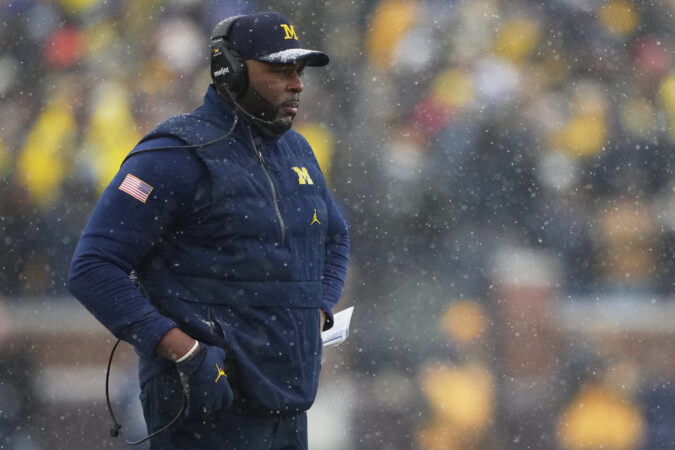
    ANN ARBOR, Mich. — Former Michigan football coach Sherrone Moore was jailed on Wednesday, according to court records, hours after he was fired for what the university said was an “inappropriate relationship with a staff member.”

    According to the Washtenaw County Jail, the 39-year-old Moore had been booked into the facility as of Wednesday evening. The jail’s records did not provide any information about why Moore was detained or whether any court appearances were scheduled.

    In response to media inquires about Moore, the Pittsfield Township Police Department issued a statement that did not mention anyone by name. According to the statement, police were called to investigate an alleged assault in Pittsfield Township, a couple of miles south of Michigan Stadium, and took a person into custody.

    The incident was not random and there was no ongoing threat to public safety, police said, and the person was jailed pending a review of charges by prosecutors.

    “Given the nature of the allegations, the need to maintain the integrity of the investigation, and its current status at this time, we are prohibited from releasing additional details,” the statement said.

    Michigan said it fired Moore for cause after finding evidence of his relationship with the staffer, ending an up-and-down, two-year tenure that saw the Wolverines take a step back on the field after winning the national championship and getting punished by the NCAA.

    “This conduct constitutes a clear violation of university policy, and UM maintains zero tolerance for such behavior,” athletic director Warde Manuel said in a statement.

    The announcement did not include details of the alleged relationship. Moore, who is married with three young daughters, did not return a message from The Associated Press seeking comment.

    Moore was 9-3 this year after going 8-5 in his debut season.

    He signed a five-year contract with a base annual salary of $5.5 million last year. According to the terms of his deal, the university will not have to buy out the remaining years of Moore’s contract because he was fired for cause.

    College football’s winningest program is suddenly looking for a third coach in four years, shortly after a busy cycle that included Lane Kiffin leaving playoff-bound Mississippi for LSU.

    Moore, the team’s former offensive coordinator, was promoted to the lead the Wolverines after they won the 2023 national title. He succeeded Jim Harbaugh, who returned to the NFL to lead the Los Angeles Chargers.

    The 18th-ranked Wolverines (9-3, 7-2 Big Ten) are set to play No. 14 Texas on Dec. 31 in the Citrus Bowl.

    Biff Poggi, who filled in for Moore when he was suspended earlier this season, will serve as interim coach.

    Moore, in his second season, was suspended for two games this year as part of self-imposed sanctions for NCAA violations related to a sign-stealing scandal. The NCAA added a third game to the suspension, which would have kept Moore off the sideline for next year’s opener against Western Michigan.

    Moore previously deleted an entire 52-message text thread on his personal phone with former staffer Connor Stalions, who led the team’s sign-sealing operation. The texts were later recovered and shared with the NCAA.

    Just a few years ago, Moore was Harbaugh’s top assistant and regarded as a rising star.

    Moore, who is from Derby, Kansas, didn’t start playing football until his junior year of high school. He played for Butler County Community College in Kansas and as an offensive lineman for coach Bob Stoops at Oklahoma during the 2006 and 2007 seasons.

    His coaching career began as a graduate assistant at Louisville before moving on to Central Michigan, where he caught Harbaugh’s attention. Harbaugh hired him in 2018 as tight ends coach.

    Moore was promoted to offensive line coach and co-offensive coordinator in 2021, when the Wolverines bounced back from a 2-4, pandemic-shortened season and began a three-year run of excellence that culminated in the school’s first national title in 26 years.

    He worked his way up within the Wolverines’ staff and filled in as interim coach for four games during the 2023 championship season while Harbaugh served two suspensions for potential NCAA rules violations.

    Moore also served a one-game suspension during that year related to a recruiting infractions NCAA case.

    Earlier in the 2023 season, Michigan State fired coach Mel Tucker for cause after he engaged in what he described as consensual phone sex with an activist and rape survivor. In 2012, Arkansas fired coach Bobby Petrino due to a sordid scandal that involved a motorcycle crash, an affair with a woman who worked for him and being untruthful to his bosses.

  • Hospital-based anti-violence programs get $3 million in state funding

    Hospital-based anti-violence programs get $3 million in state funding

    Several Philadelphia-area violence prevention efforts will benefit from nearly $3 million in newly released state funding to help hospitals address a leading cause of death and injury.

    The new funding for hospital-based violence intervention programs (HVIP) was announced by Pennsylvania Lt. Gov. Austin Davis on Wednesday at Penn Presbyterian Medical Center. One of the recipients, the Penn Trauma Violence Recovery Program, is based at the Penn Medicine hospital in University City.

    Other local awardees include Temple University Hospital in North Philadelphia and the Philadelphia-based nonprofit Urban Affairs Coalition. The coalition received funding on behalf of the Chester Community Coalition to relaunch a program that had been at the now-shuttered Crozer-Chester Medical Center.

    The University of Pittsburgh Medical Center also received funding. The amounts awarded to each program were not announced.

    The Pennsylvania Commission on Crime and Delinquency, which Davis chairs, received 15 applications in total seeking nearly $12 million in funding — four times what was available.

    “Addressing the epidemic of gun violence is a top priority for our administration,” Davis said.

    Lieutenant Governor Austin Davis speaks at a press conference announcing the $3 million in grants for hospital-based violence intervention programs.

    The programs aim to connect patients at risk of repeat violence with resources while they are in a hospital, so they leave with a safety plan. Services can include long-term community-based case management, mentoring, and home visits.

    Since the first HVIP was established in the mid-1990s, dozens have spread around the country and abroad, including in Philadelphia.

    Several local institutions have these programs, including Temple Health, Children’s Hospital of Philadelphia, Penn Medicine, Jefferson Health, and Drexel University. The City of Philadelphia, in conjunction with the area’s Level 1 trauma centers, launched an HVIP Collaborative in 2021.

    Studies have shown these programs reduce rates of repeat violent injuries and recidivism among participants.

    After shootings spiked during the COVID-19 pandemic, gun violence is now declining in Philadelphia. As of July, shootings for the year were at their lowest total since at least 2015.

    Davis noted that Philadelphia has seen a 15% decrease in homicides this year, with roughly four in five gunshot victims surviving their injuries.

    The new funding will allow the Penn Trauma Violence Recovery Program to increase its community presence and mental health programming, said its director, trauma surgeon Elinore Kaufman.

    Through her experience treating victims of violence, she has learned that injuries can be deeper than the physical wounds.

    The program was launched to address social factors often involved in violence by providing psychosocial support and connecting patients with services to help with education, job training, and housing.

    “We’ve worked with patients long enough now that we have high school graduation photos, we have baby pictures,” Kaufman said. “We have patients who want to give back and have joined our patient advisory board to help push us forward.”

  • Phillies select pitcher Zach McCambley in Rule 5 draft: ‘He could make the team’

    Phillies select pitcher Zach McCambley in Rule 5 draft: ‘He could make the team’

    ORLANDO — To close out this year’s winter meetings, the Phillies selected right-handed pitcher Zach McCambley in the Rule 5 draft.

    McCambley, 26, was in the Miami Marlins organization, and had a 2.90 ERA and 1.097 WHIP in 62 innings between double A and triple A. According to draft regulations, McCambley was assigned directly to the Phillies’ 26-man roster.

    To be removed from the roster, he must be placed on outright waivers and offered back to Miami. But the Phillies think McCambley has a chance of impacting their club in 2026.

    “When we drafted him, we had the feeling that he could make the team,” Phillies president of baseball operations Dave Dombrowski said. “And one of the things that we’ve talked about looking to have over the last few years is a right-handed person in the bullpen that dominates right-handed hitters. So we think he has a chance to do that.”

    To further bolster their relief depth, the Phillies acquired reliever Yoniel Curet in exchange for minor league pitcher Tommy McCollum in a trade with the Tampa Bay Rays on Wednesday. Curet had a 3.90 ERA in 55⅓ innings across rookie ball, double A, and triple A this year but missed some time because of a shoulder injury. He had been designated for assignment by the Rays.

    Curet made 14 starts last season, but the Phillies are viewing him as a reliever.

    “He has options available. He has an arm that we really like,” Dombrowski said. “He’s really been successful at the minor league level; plus-plus fastball. … We have roster spots, so we’re going to start building some depth and take advantage of it.”

    Griff McGarry was selected by the Nationals in the Rule 5 draft after the Phillies chose not to protect him.

    The Phillies lost right-hander Griff McGarry in the draft after opting to leave him unprotected for the second straight year. The 26-year-old was selected by the Washington Nationals with the third overall pick. McGarry has been unable to establish himself in triple A but had a bounce back season in 2025 with a 3.44 ERA. He won the Paul Owens Award as the Phillies’ top minor league pitcher.

    “We liked him,” Dombrowski said. “We just think that he’d have a hard time staying with the big league club. We like his arm strength and like a lot of things about him. … It was just a risk that we took, figuring that we’d rather have the roster spot at that time. Wish him nothing but the best.”

    It’s possible McGarry returns to the Phillies if he doesn’t make the Nationals out of camp. Last year, the Minnesota Twins selected Eiberson Castellano in the Rule 5 draft, but he was returned to the Phillies in March.

    In the minor league phase of the Rule 5 draft, in which there aren’t any roster restrictions for selections, the Phillies took infielder Austin Murr from the Detroit Tigers and right-handed pitcher Evan Gates from the San Francisco Giants. First baseman Carson Taylor was selected from the Phillies by the Seattle Mariners.

  • Supreme Court wrestles with death penalty in cases of intellectual disabilities

    Supreme Court wrestles with death penalty in cases of intellectual disabilities

    The Supreme Court on Wednesday wrestled with whether to allow Alabama to execute a man with low cognitive function, a ruling that could set new rules for states to condemn those with borderline intellectual disabilities to death row.

    Roughly two hours of intense arguments did not seem to produce a consensus among the justices over how states should assess IQ tests to determine mental disability.

    In a landmark 2002 ruling Atkins v. Virginia, the court decided that sentencing a mentally disabled person to death violated the Eighth Amendment’s prohibition on “cruel and unusual punishment,” but left it up to states to come up with standards for determining who is too disabled.

    Since then, the rules states have used to determine who is ineligible for the death penalty have come before the court several times, in part because many death row inmates skirt the line of intellectual disability.

    In the current case, Alabama is asking the court to cut back on protections that those previous rulings have given to those who have borderline intellectual disabilities. The case involves how lower courts weighed Alabama’s use of multiple IQ tests to decide Joseph Clifton Smith should face death for robbing and killing a man in 1997.

    Under Alabama’s death penalty rules, a defendant is ineligible for the death penalty if he or she has an IQ at or below 70 and significant deficits in everyday skills and those issues occurred before adulthood. Many states have similar IQ thresholds.

    In Wednesday’s argument, Robert Overing, deputy solicitor general for Alabama, told the justices that lower courts, which threw out Smith’s death sentence, had placed too much weight on a single low IQ score and additional evidence of impairment, rather than considering the cumulative results of five tests that placed Smith above the IQ cutoff. He said the latter was a more accurate yardstick for his abilities.

    “He didn’t come close to proving an IQ of 70 or below … but the lower courts changed the rules,” Overing said.

    The court’s three liberal justices expressed skepticism the law required lower courts to consider the cumulative effect of multiple scores as Overing suggested.

    In previous rulings, the high court said defendants were permitted to offer additional evidence of cognitive impairment if IQ scores fell below the threshold, but Overing downplayed that idea. That drew rebukes from the liberals as well as questions from conservative Justice Brett Kavanaugh.

    “What you’ve done is shift this to be all about the IQ test, which is not supported by our case law,” Justice Ketanji Brown Jackson told Overing.

    Kavanaugh asked at another point about additional evidence: “What’s the logic or the rationale or the sense behind not having a district court or a trial court or a state court have the ability in those circumstances to go on and look at more?” he asked.

    Justice Neil Gorsuch floated the idea of a ruling that would allow states to set the threshold for a claim of mental disability, but not allow eligibility to turn solely on a single IQ test score. Any additional evidence of impairment would not be allowed to outweigh a low test score.

    But there was little agreement among the justices as they groped for the proper standard.

    Smith’s murder case began in 1997, while he was on work release from prison. Smith and an accomplice robbed a man of $140 and killed him. A jury convicted Smith of capital murder during a robbery and sentenced him to death.

    After the court’s 2002 decision in the Atkins case, Smith filed a petition in federal court arguing his intellectual disability met the criteria to bar his execution. The case has gone back and forth in the lower courts ever since.

    During an evidentiary hearing, testimony revealed Smith had scored 75, 74, 72, 78 and 74 on IQ tests over the course of his lifetime. Those were the scores Overing, the lawyer for Alabama, pointed to in arguing that the cumulative effect of the tests placed Smith slightly above the state’s IQ cutoff.

    The federal district judge considering the case, however, pointed to the test on which Smith scored 72, saying it indicated his IQ could be as low as 69, since the test had a three-point error range. For that reason, the court allowed Smith to present additional evidence of his impairment to assess his cognitive function.

    In seventh grade, Smith’s school classified him as “Educable Mentally Retarded,” meaning he had mild intellectual disability. Smith never consistently held a job, never had a bank account and had difficulty following laws, according to testimony in the lower court hearings. He also acted impulsively, and read and did math at a low level.

    The court determined Smith’s “actual functioning” was comparable to someone who was intellectually disabled so he couldn’t be sentenced to death.

    After an appeals court ruled in Smith’s favor, Alabama appealed to the Supreme Court. The high court vacated the decision, asking the appeals court to clarify whether its ruling was based solely on one low IQ score or had considered other evidence and expert testimony.

    The appeals court once again found Smith was intellectually disabled and said its decision was based on a holistic approach that considered Smith’s deficits in everyday skills along with the IQ score of 72. Alabama again appealed to the Supreme Court, which agreed to take up the case it heard Wednesday.

    Seth P. Waxman, an attorney for Smith, said the lower courts had not erred in their assessment of Smith and it was proper to consider additional evidence of his impairment.

    “Every court in Alabama … this court and every other court in every other state that I am aware of understands that raw observed test scores is not the definition of true IQ,” Waxman said.

    But Harry Graver, an attorney for the Trump administration, which backed Alabama’s position, said the lower court did not give proper weight to the multiple IQ scores.

    “Even if you look at other evidence, you still need to circle back and see how that weighs against the evidence on the other side of the scale,” Graver said.

    Smith’s case is not the first time the Supreme Court has tackled intellectual disability and the death penalty.

    In a 2014 case from Florida and a 2019 case from Texas, the high court noted that IQ tests are not precise. In the 2019 case, the court specifically said that lower courts needed to consider the possible error range in IQ scores.