
Blog

  • WTF? Embracing profanity is one thing both political parties seem to agree on

    WTF? Embracing profanity is one thing both political parties seem to agree on

    WASHINGTON — As he shook President Barack Obama’s hand and pulled him in for what he thought was a private aside, Vice President Joe Biden delivered an explicit message: “This is a big f— deal.” The remark, overheard on live microphones at a 2010 ceremony for the Affordable Care Act, caused a sensation because open profanity from a national leader was unusual at the time.

    More than 15 years later, vulgarity is now in vogue.

    During a political rally Tuesday night in Pennsylvania that was intended to focus on tackling inflation, President Donald Trump used profanity at least four times. At one point, he even admitted to disparaging Haiti and African nations as “shithole countries” during a private 2018 meeting, a comment he denied at the time. And before a bank of cameras during a lengthy cabinet meeting last week, the Republican president referred to alleged drug smugglers as “sons of bitches.”

    While the Biden incident was accidental, the frequency, sharpness, and public nature of Trump’s comments are intentional. They build on his project to combat what he sees as pervasive political correctness. Leaders in both parties are seemingly in a race now to the verbal gutter.

    Vice President JD Vance called a podcast host a “dips—” in September. In Thanksgiving remarks before troops, Vance joked that anyone who said they liked turkey was “full of s—.” After one National Guard member was killed in a shooting in Washington last month and a second was critically injured, top Trump aide Steven Cheung told a reporter on social media to “shut the f— up” when she wrote that the deployment of troops in the nation’s capital was “for political show.”

    Among Democrats, former Vice President Kamala Harris earned a roar of approval from her audience in September when she condemned the Trump administration by saying “these motherf— are crazy.” After Trump called for the execution of several Democratic members of Congress last month, Sen. Chris Murphy (D., Conn.) said it was time for people with influence to “pick a f— side.” Senate Democratic leader Chuck Schumer of New York said the administration cannot “f— around” with the release of the Jeffrey Epstein files. Democratic Rep. Jasmine Crockett, who on Monday announced her Senate campaign in Texas, did not hold back earlier this year when asked what she would tell Elon Musk if given the chance: “F— off.”

    The volley of vulgarities underscore an ever-coarsening political environment that often plays out on social media or other digital platforms where the posts or video clips that evoke the strongest emotions are rewarded with the most engagement.

    “If you want to be angry at someone, be angry at the social media companies,” Utah Gov. Spencer Cox, a Republican, said Tuesday night at Washington National Cathedral, where he spoke at an event focused on political civility. “It’s not a fair fight. They’ve hijacked our brains. They understand these dopamine hits. Outrage sells.”

    Cox, whose national profile rose after calling for civility in the wake of conservative activist Charlie Kirk’s assassination in his state, approved an overhaul of social media laws meant to protect children. A federal judge has temporarily blocked the state law.

    Tough political talk is nothing new

    Tough talk is nothing new in politics, but leaders long avoided flaunting it.

    Recordings from Democrat Lyndon B. Johnson’s administration, for instance, revealed a crude, profane side of his personality that was largely kept private. Republican Richard Nixon bemoaned the fact that the foul language he used in the Oval Office was captured on tape. “Since neither I nor most other Presidents had ever used profanity in public, millions were shocked,” Nixon wrote in his book In the Arena.

    “Politicians have always sworn, just behind closed doors,” said Benjamin Bergen, a professor at the University of California-San Diego’s Department of Cognitive Science and the author of What the F: What swearing reveals about our language, our brains, and ourselves. “The big change is in the past 10 years or so, it’s been much more public.”

    As both parties prepare for the 2026 midterm elections and the 2028 presidential campaign, the question is whether this language will become increasingly mainstream. Republicans who simply try to imitate Trump’s brash style do not always succeed with voters. Democrats who turn to vulgarities risk appearing inauthentic if their words feel forced.

    For some, it is just a distraction.

    “It’s not necessary,” said GOP Rep. Don Bacon of Nebraska, who is retiring next year after winning five elections in one of the most competitive House districts. “If that’s what it takes to get your point across, you’re not a good communicator.”

    There are risks of overusing profanity

    There also is a risk that if such language becomes overused, its utility as a way to shock and connect with audiences could be dulled. Comedian Jerry Seinfeld has talked about this problem, noting that he used swear words in his early routines but dropped them as his career progressed because he felt profanity yielded only cheap laughs.

    “I felt like well I just got a laugh because I said f— in there,” he said in a 2020 interview on the WTF podcast with fellow comedian Marc Maron. “You didn’t find the gold.”

    White House spokesperson Liz Huston said Trump “doesn’t care about being politically correct, he cares about making America great again. The American people love how authentic, transparent, and effective the President is.”

    But for Trump, the words that have generated the most controversy are often less centered in traditional profanity than slurs that can be interpreted as hurtful. The final weeks of his 2016 campaign were rocked when a tape emerged of him discussing grabbing women by their genitals, language he minimized as “locker room talk.” His “shithole” remark in 2018 was widely condemned as racist.

    More recently, Trump called Bloomberg reporter Catherine Lucey “piggy,” comments that his press secretary, Karoline Leavitt, defended as evidence of a president who is “very frank and honest.” Trump’s use of a slur about disabled people prompted an Indiana Republican whose child has Down syndrome to come out in opposition to the president’s push to redraw the state’s congressional districts.

    On rare occasions, politicians express contrition for their choice of words. In an interview with The Atlantic published last week, Pennsylvania Gov. Josh Shapiro, a Democrat, dismissed Harris’ depiction of him in her book about last year’s presidential campaign by saying she was “trying to sell books and cover her a—.”

    He seemed to catch himself quickly.

    “I shouldn’t say ‘cover her a—,” he said. “I think that’s not appropriate.”
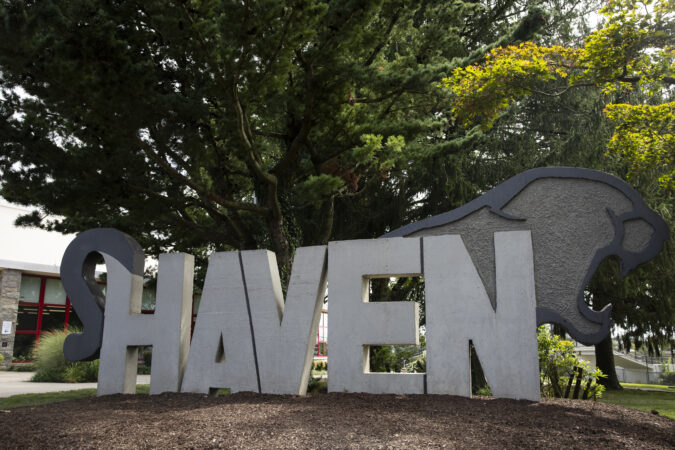
  • ‘Everything is up for consideration’ as Wallingford-Swarthmore tackles $2.6 million budget deficit

    ‘Everything is up for consideration’ as Wallingford-Swarthmore tackles $2.6 million budget deficit

    Standing before a room full of parents, administrators, and taxpayers on Monday morning, Wallingford-Swarthmore School District Superintendent Russell Johnston opened the conversation: “None of us is as smart as all of us.”

    At the listening session at Strath Haven Middle School, Johnston and members of the Wallingford-Swarthmore administration took suggestions from the public and laid out the district’s dire budget issues, which came into the public eye at a board meeting last month.

    The main message Johnston came to deliver: As Wallingford-Swarthmore works to cut its budget, everything is on the table, no idea is too big, and no cut is too small.

    “None of this is easy and, like I said, everything is up for consideration right now,” Johnston said, emphasizing that the district is “turning over every stone” and is eager to hear good ideas.

    The Wallingford-Swarthmore School District is facing a $2.6 million budget deficit for the 2027-28 school year. Administrators say the shortfall is due to a combination of factors, including runaway spending, rising staffing costs, a stagnant revenue base, and costly infrastructure repairs, which are needed due to years of deferred maintenance.

    At the community meeting (which was the first of two sessions that took place on Monday), Johnston and colleagues broke down expenses related to staffing, transportation, special services, curriculum, and the district’s long-range capital plan, which was approved in June.

    The conversation stretched across the big picture and the nitty-gritty.

    How often should classrooms be deep-cleaned? How important is renovating the swimming pool? Should the district run late buses for students in after-school clubs? Could the number of district administrators be reduced?

    Suzanne Herron, a parent of young children in the district, said the meeting felt “thoughtful and transparent.”

    “I walked out of there feeling pretty confident that they were going to think about the right things,” Herron said.

    Johnston took the helm of Wallingford-Swarthmore in May, closing an embattled chapter for the Delaware County school district. The district parted ways with its former superintendent, Marseille Wagner, with a $330,000 payout in August 2024. Wagner was accused of spending excessively on administrative initiatives and facilitating an unhealthy work environment for staff, including pitting staffers against one another and dismissing efforts for consensus building.

    The district and Wagner said in a statement at the time that they had “mutually agreed to amicably end their contractual agreement.”

    Wagner’s tenure hung over the conversation at Strath Haven Middle School. Attendees asked how many administrators had been added under the prior superintendent and how the administrator-to-student ratio compared with neighboring districts (administrators said they didn’t have exact numbers off the top of their heads). One parent said that while she was grateful for the open discussion, she struggled to understand how the district got to such a dire place.

    Parents also raised concerns that a disconnect remains between school needs and what taxpayers, especially those without children in the district, see as wasteful spending

    In contrast to neighboring districts like Rose Tree Media and Radnor, which are home to a mix of residential and commercial properties that feed their tax bases, Wallingford-Swarthmore is small and largely residential. This means its school district tax base is powered almost completely by homeowners, many of whom feel stretched thin by the growing tax burden. Swarthmore College, a major presence in the borough, pays limited taxes as a 501(c)3 nonprofit.

    On top of local taxes, Delaware County is expected to increase residential property taxes by 19% for next year. That’s in addition to the 23% increase the county approved for 2025.

    Joyce Federman, an attendee who recently moved to the area and does not have children in the school district, said she has been “staggered” by the amount of school taxes she pays.

    “My tax burden is unbearable,” she added.

    District officials emphasized that there will be continued opportunities for feedback as the budget process continues. The school board finance committee is set to present a potential budget reallocation strategy on Tuesday, and the board is set to vote on reallocation expectations on Dec. 22. A budget must be adopted by June.

    This suburban content is produced with support from the Leslie Miller and Richard Worley Foundation and The Lenfest Institute for Journalism. Editorial content is created independently of the project donors. Gifts to support The Inquirer’s high-impact journalism can be made at inquirer.com/donate. A list of Lenfest Institute donors can be found at lenfestinstitute.org/supporters.

  • A North Philly gang hit man, ‘the very worst’ of society, taken into custody for three killings, officials say

    A North Philly gang hit man, ‘the very worst’ of society, taken into custody for three killings, officials say

    A North Philadelphia street-gang hit man wanted in connection with three killings, including the execution-style shooting of a 16-year-old boy, was taken into custody Wednesday morning in Delaware County, officials said.

    Tyvine “Blumberg Eerd” Jones, 25, was apprehended by U.S. marshals in an apartment where he had been hiding at the Stratford Court complex in Lansdowne, authorities said. Jones was considered one of the city’s most wanted fugitives, and in October, marshals issued a $5,000 reward for information leading to his arrest.

    Eric Gartner, the United States marshal for the Eastern District of Pennsylvania, said Jones’ “unrestrained existence serves only to diminish our great city,” and his arrest demonstrates the agency’s commitment to keep Philadelphians safe.

    Investigators say Jones is a suspect in three slayings that took place between 2020 and 2022: the killings of Heyward Garrison, 16, Wesley Rodwell, 20, and Ryan Findley, 23.

    Jones is a self-identified member of the Blumberg gang, which federal prosecutors say operates in the area around the now-shuttered Norman Blumberg Apartments on Oxford Street in North Philadelphia.

    Members of the gang, including its onetime leader, Edward Stinson, have been convicted of drug trafficking in that area, and others have been tied to assaults and shootings.

    Stinson, federal prosecutors wrote in court filings, ran a round-the-clock crack cocaine distribution ring that sucked in teenagers, single mothers, and other vulnerable people.

    Jones was an associate of Anthony “Blumberg Geez” Watson, and the two recorded rap songs together. In one song, “Blow Up,” the two brag about stalking and shooting their criminal rivals.

    Like Jones, Watson, 21, was sought by investigators as a suspect in Garrison’s killing, but he was gunned down in an unrelated shooting after a year on the run.

    Garrison was found shot multiple times in the back of a Honda Pilot parked near 22nd and Diamond Streets in August 2020.

    Two years later, in May 2022, Rodwell was slain on Erie Avenue near 16th Street in a broad-daylight shooting.

    And in September 2022, Findley was killed on Creston Street near Oakland in Oxford Circle.

    Investigators say Jones was involved in all three killings. When announcing the reward for his arrest, Supervisory Deputy U.S. Marshal Robert Clark called Jones “the very worst society has to offer” and said he demonstrated a complete disregard for human life.

  • Bucks County pop star Sabrina Carpenter named to Met Gala 2026 host committee

    Bucks County pop star Sabrina Carpenter named to Met Gala 2026 host committee

    Quakertown-raised pop star Sabrina Carpenter will be part of the upcoming Met Gala 2026 celebration, Vogue announced on Wednesday.

    The Grammy-winning singer will join the Met Gala host committee along with 15 other celebrities, including trailblazing ballerina Misty Copeland, K-pop icon Lisa, model Paloma Elsesser, vocalist Sam Smith, and Wednesday actor Gwendoline Christie.

    Cochairs for the illustrious fashion event are Beyoncé, Nicole Kidman, Venus Williams, and, as usual, Anna Wintour, the chief content officer of Condé Nast and global editorial director of American Vogue.

    The gala will honor the Metropolitan Museum of Art’s Costume Institute’s spring 2026 exhibit, “Costume Art,” which will pair the Institute’s clothing with museum artwork to explore “depictions of the dressed body across the Met’s vast collection” and “reveal the inherent relationship between clothing and the body.” It will be organized with themes like “the Pregnant Body,” “the Aging Body,” and “the Naked Body.”

    The host committee has its own cochairs as well: Caught Stealing actor Zoë Kravitz and Saint Laurent creative director Anthony Vaccarello.

    Carpenter has attended the Met Gala three times previously, most recently in a burgundy pinstripe Louis Vuitton bodysuit with long tails and crystal buttons.

    Sabrina Carpenter attends The Metropolitan Museum of Art’s Costume Institute benefit gala celebrating the opening of the “Superfine: Tailoring Black Style” exhibition on Monday, May 5, 2025, in New York. (Photo by Evan Agostini/Invision/AP)

    Last month, she wrapped up her “Short n’ Sweet” tour, which stopped in Philadelphia last year. She’s up for six Grammy Awards in 2026, including album of the year, song and record of the year, and best video for “Manchild.”

    The “Espresso” singer is known for sporting glittery strapless bodysuits onstage with blond bombshell hair that embraces an aesthetic of old Hollywood glamour. This week, she appeared on Late Night with Seth Myers wearing a vintage black and white Chantal Thomas minidress.

    She’s made headlines lately for condemning President Donald Trump’s administration for using her music in a video promoting violent ICE raids that target undocumented immigrants. “This video is evil and disgusting. Do not ever involve me or my music to benefit your inhumane agenda,” she wrote on X last week.

    The Bucks County star is the latest celebrity from the Philadelphia region to be part of the Met Gala festivities. Earlier this year, West Philly-raised actor Colman Domingo (who also appeared in Carpenter’s “Tears” music video) served as cochair of the Met Gala 2025, which centered Black dandyism.

    Several Philadelphia stars showed up and showed out on the gala’s blue carpet, from Eagles quarterback Jalen Hurts to The Roots drummer Questlove to Abbott Elementary creator Quinta Brunson.

  • The White House says the midterms are all about Trump. Democrats aren’t so sure

    The White House says the midterms are all about Trump. Democrats aren’t so sure

    WASHINGTON — A Dallas congresswoman opened her Senate campaign by telling voters that she “has gone toe to toe with Donald Trump.” Her Democratic primary opponent insisted that Americans are tired of “politics as a blood sport.”

    The divergent approach highlights how U.S. Rep. Jasmine Crockett and State Rep. James Talarico are navigating a race where Democrats hope to break a three-decade losing streak in Texas. It also reflects a broader divide within the party, with some candidates continuing to focus on Trump while others barely mention his name.

    Figuring out the best approach will be critical for Democrats who are grasping for a path back to power in the 2026 midterm elections that will determine control of Congress and are already maneuvering for the 2028 presidential race.

    Republicans, by contrast, have been crystal clear.

    Susie Wiles, the White House chief of staff, said in a recent podcast interview that the Republican president will campaign aggressively next year and the party will “put him on the ballot.”

    “He is the greatest vote energizer in the history of politics,” said Neil Newhouse, a veteran Republican pollster. “But the challenge is that he does it as much for Democrats as he does for Republicans.”

    Crockett takes on Trump

    In her campaign launch video, Crockett was silent as audio of Trump’s insults played, including multiple times that he has called her a “very low-IQ person.” At the end of the video, she breaks out into a smile.

    On Monday, she addressed the president more directly.

    “Trump, I know you’re watching, so let me tell you directly,” Crockett said. “You’re not entitled to a damn thing in Texas. You better get to work because I’m coming for you.”

    Trump responded the next day, telling reporters aboard Air Force One that her candidacy is “a gift to Republicans” and “I can’t even believe she’s a politician, actually.”

    For nearly a decade, Democrats have used their criticism of Trump to draw attention and fuel fundraising. Governors who are considered potential 2028 presidential contenders, including California’s Gavin Newsom and Illinois’ JB Pritzker, saw their profiles rise as they positioned themselves as staunch Trump opponents.

    U.S. Sen. Mark Kelly (D., Ariz.) recently participated in a video telling service members that they should not follow “illegal orders.” Trump responded by accusing him of “seditious behavior” that’s “punishable by death.”

    Kelly started a national media tour and sent out a flurry of fundraising emails, both for himself and other Democrats. He said Trump has bullied everyone in his career, “but not now, because I won’t let it happen.”

    When it comes to running for office, “Trump is the red meat that drives donors,” said John Anzalone, a longtime Democratic pollster.

    “There are clearly some candidates that are playing towards the donor world that don’t actually make a great argument for winning races. But it’s great for clicks and making money. And money is the first primary that you need to win.”

    Talarico charts a different course

    Talarico has built a following with a less combative style. The former schoolteacher who is working toward a master’s degree in divinity at Austin Presbyterian Theological Seminary gained attention by posting viral social media content challenging Republicans’ claims to Christian values. He has focused less on Trump or other politicians.

    “The biggest divide in our country is not left versus right. It’s top versus bottom,” Talarico said in the video launching his campaign.

    There are echoes of other Democratic successes this year, such as when candidates for governor won in New Jersey and Virginia by focusing on affordability concerns.

    Voters in those states were much likelier to say they were voting to oppose Trump than to support him, according to the AP Voter Poll. For example, 71% of voters for Democrat Mikie Sherrill in New Jersey said their decision in the governor’s race was motivated at least partially by opposition to Trump.

    But Sherrill recently said that it is not enough for Democrats to rely solely on anti-Trump fervor.

    “Trump makes a difference. He’s a forcing mechanism to coalesce the party,” Sherrill said. “But to really turn out the vote in a really strong manner, you have got to run a really sharp campaign.”

    When Democrats talk about Trump, they have to connect his actions to voters’ everyday lives, she said.

    “You can’t just say, oh, I’m so upset that Trump demolished the East Wing of the White House,” she said. “You have to say, look, there’s a tariff regime that is being run that is enriching the president to the tune of $3 billion, and you’re paying more for everything from your cup of coffee in the morning to the groceries that you’re buying to cook your family dinner at night.”

    It is an approach that could have more staying power in the coming years.

    “In the not-too-distant future, Trump will not be on the ballot and that will be a challenge for both parties,” said Austin Cook, a senior aide for Democrat Elissa Slotkin’s successful U.S. Senate campaign in Michigan last year. “He is a starting gun for Democratic enthusiasm. But soon we won’t have him as a foil.”

    Republicans need Trump to turn out voters

    Republicans have little choice but to enlist Trump’s help, considering his enduring support among voters who are less likely to turn out during the midterms.

    “They need to energize Republican voters and the only real way to energize Republican voters and get them out to vote is by enlisting Trump in the campaign,” said Newhouse, who is advising some of the party’s U.S. Senate candidates.

    He warned that Trump’s popularity does not necessarily transfer to candidates he supports, “but there isn’t an alternative.”

    “What they are trying to do here is basically wrap themselves up in him, hope that his approval and the economic numbers improve and get their voters out to the polls to match the Democrats’ intensity,” Newhouse said.

    The White House has said that Trump will be on the road more in the coming months. He hosted his first rally in a while in Pennsylvania on Tuesday evening, where he blamed Democrats for inflation.

    “They gave you high prices,” he said, adding that “we’re bringing those prices down rapidly.”

  • FIFA World Cup could bring 17,000 Airbnb guests to the Philly region

    FIFA World Cup could bring 17,000 Airbnb guests to the Philly region

    Airbnb expects to host 17,000 guests at its short-term rentals across the Philadelphia region when the FIFA World Cup comes to town next summer.

    That’s according to a new report done by Deloitte at Airbnb’s behest and released last week. Airbnb guests are expected to spend about $52 million on average during their stays in the Philly region, and about $14 million of that total will be spent on the rentals.

    Over the course of the six matches in June and July, Airbnb hosts are expected to rake in about $1,900 on average, totaling about $8 million in earnings for all area hosts, according to the report.

    Officials from Philadelphia Soccer 2026 have estimated that the World Cup will bring 500,000 visitors to the region. Airbnb’s report estimates that 149,000 of them will require overnight accommodations.

    Each Airbnb guest is expected to spend about $109 a night on average on the rentals, as well as another $301 a night on food, entertainment, and other expenses, according to the company’s report.

    Airbnb guests will have a total impact of about $167 million, including direct and indirect spending, the report projected, and that activity is expected to spur additional spending in the city over the following five years.

    Some experts, however, caution that the long-term economic impacts of one-off sporting events tend to be overestimated, saying they usually lead to only temporary boosts to local economies.

    Six World Cup matches are set to take place at Lincoln Financial Field between mid-June and July 4, 2026. The full schedule of events was announced Saturday, and powerhouses Brazil and France will be among the teams playing in Philadelphia. Fans can enter a lottery to purchase tickets, which will be subject to dynamic pricing that fluctuates depending on demand.

    After the games were announced, some people went online to secure their short-term rentals. All host cities saw a 33% spike in new bookings last weekend, according to AirDNA, a site that analyzes data on short-term rentals. In Philadelphia, occupancy across all game days has reached 20%, a year and a half ahead of the event.

    The World Cup will coincide with Philadelphia’s celebration of the United States’ 250th birthday.

    Airbnb has more than 8,300 listings in the Philadelphia region, which brings in $29.4 million in annual revenue, according to AirDNA.

    In 2023, Airbnbs in the city became more strictly regulated, with hosts now required to have permits and licensing.

  • Source: Orioles agree to $155 million, 5-year deal with Pete Alonso

    Source: Orioles agree to $155 million, 5-year deal with Pete Alonso

    BALTIMORE — The Baltimore Orioles agreed to a $155 million, five-year deal with slugger Pete Alonso, a person with knowledge of the agreement told The Associated Press on Wednesday.

    The person spoke to the AP on condition of anonymity because the deal was pending a physical.

    It’s a major move for a Baltimore team that vowed to be aggressive following a last-place finish. Alonso hit .272 with 38 home runs and 126 RBIs this year for the New York Mets, posting an .871 OPS that was his highest since he hit 53 home runs as a rookie in 2019.

    Alonso, who turned 31 on Sunday, hit 264 homers over seven seasons with the Mets. He’s earned All-Star honors five times, including each of the past four years.

    Nicknamed the Polar Bear, Alonso became a Citi Field fan favorite as a home-grown member of the Mets. He was NL Rookie of the Year in 2019, when he hit .260 with a major league-high 53 homers — a rookie record — and 120 RBIs. He had a career-high 131 RBIs in 2022.

    Alonso batted a career-low .217 in 2023 while hitting 46 homers and driving in 118 runs and hit .240 with 34 homers and 88 RBIs in 2024.

    After a slow free agent market last winter, Alonso signed a $54 million, two-year contract to stay with the Mets, but he opted out of the final year of the deal.

  • Judge orders Trump to end California National Guard troop deployment in Los Angeles

    Judge orders Trump to end California National Guard troop deployment in Los Angeles

    The Trump administration must stop deploying the California National Guard in Los Angeles and return control of the troops to the state, a federal judge ordered Wednesday in an emphatic ruling.

    U.S. District Judge Charles Breyer in San Francisco granted a preliminary injunction sought by California officials, but also put the decision on hold until Monday, presumably to give the administration a chance to appeal.

    In an extraordinary move, President Donald Trump called up more than 4,000 California National Guard troops in June without Gov. Gavin Newsom’s approval to further the Trump administration’s immigration enforcement efforts. The number had dropped to several hundred by late October, but California remained steadfast in its opposition to Trump’s command of the troops.

    White House spokeswoman Abigail Jackson suggested in a statement that the administration would appeal Breyer’s ruling, saying it looked forward to “ultimate victory on the issue.”

    “President Trump exercised his lawful authority to deploy National Guard troops to support federal officers and assets following violent riots that local leaders like Newscum refused to stop,” she said, using a pejorative moniker Trump has used to refer to the Democratic governor.

    California Attorney General Rob Bonta said the ruling was a victory for democracy and the rule of law, and he accused the administration of playing “political games” with the troops.

    “But the President is not king,” he said in a statement. “And he cannot federalize the National Guard whenever, wherever, and for however long he wants, without justification.”

    Breyer rejected the administration’s arguments that he could not review extensions of a Guard deployment and that it still needed Guard troops in Los Angeles to protect federal personnel and property, saying the first claim was “shocking” and the second one bordered on “misrepresentation.”

    “The Founders designed our government to be a system of checks and balances,” added Breyer, a nominee of President Bill Clinton, a Democrat. “Defendants, however, make clear that the only check they want is a blank one.”

    The 100 or so California troops that remain in Los Angeles are guarding federal buildings or staying at a nearby base and are not on the streets with immigration enforcement officers, according to U.S. Northern Command.

    California argued that conditions in Los Angeles had changed since Trump first deployed the troops following clashes between federal immigration officers and people protesting his stepped-up enforcement of immigration laws. During one demonstration, protesters threw rocks at Border Patrol vehicles. One man later pleaded guilty to throwing a Molotov cocktail.

    The Republican administration has extended the deployment until February while also trying to use California Guard members in Portland, Ore. as part of its effort to send the military into Democratic-run cities over the objections of mayors and governors. It also sent some California National Guard troops to Illinois.

    In his ruling, Breyer accused the Trump administration of “effectively creating a national police force made up of state troops.”

    The idea that risks from demonstrations in the Los Angeles area could not be managed today without the National Guard defied “common sense,” the judge wrote.

    “After all, local law enforcement like the LAPD, the LASD, and the California Highway Patrol (“CHP”) have not only been willing to manage the protests, but have capably done so since June,” he wrote.

    The June call-up was the first time in decades that a state’s national guard was activated without a request from its governor and marked a significant escalation in the administration’s efforts to carry out its mass deportation policy. The troops were stationed outside a federal detention center in downtown Los Angeles where protesters gathered and later sent on the streets to protect immigration officers as they made arrests.

    California sued, arguing that the president was using Guard members as his personal police force in violation of a law limiting the use of the military in domestic affairs. The administration said courts could not second-guess the president’s decision that violence during the protests made it impossible for him to execute U.S. laws with regular forces and reflected a rebellion, or danger of rebellion.

    Breyer said in Wednesday’s decision the suggestion there was danger of rebellion was even more “farfetched” when the administration extended the deployment than it was in June.

    Breyer initally issued a temporary restraining order that required the administration to return control of the Guard members to California, but an appeals court panel put that decision on hold.

    After a trial, Breyer ruled in September that the deployment violated the law.

    Other judges have blocked the administration from deploying National Guard troops to Portland, Oregon, and Chicago.

  • Mavericks center Dereck Lively II to have season-ending foot surgery

    Mavericks center Dereck Lively II to have season-ending foot surgery

    DALLAS — Dallas Mavericks center Dereck Lively II is set for season-ending surgery on his ailing right foot.

    The team said Wednesday the surgery will be performed by Dr. James Calder in London. The Mavericks previously said Lively was seeking multiple medical opinions as discomfort in the foot lingered.

    He had a procedure on the same foot in the offseason.

    Lively’s final game of the season was a 118-115 victory over New Orleans on Nov. 21. He then sat the second night of a back-to-back after missing 10 of the previous 14 games because of a knee injury. The foot issue arose after his return.

    The 21-year-old Lively, a former Westtown School standout, will have missed 148 of a possible 246 games by the end of his third season.

    Lively missed 27 games as a rookie but was healthy for the postseason as the Mavericks made their first trip to the NBA Finals since winning the franchise’s only championship in 2011. Dallas lost to Boston in five games.

    Injuries sidelined Lively for 46 games last season. The former Duke star and 2023 first-round pick ended up missing 75 games in 2024-25.

    When he’s healthy, Lively has been productive. At 7-foot-1, he was a strong pick-and-roll partner with Luka Dončić before the Mavericks traded their young superstar last season.

    Lively has barely had a chance to play with fellow big man Anthony Davis, former general manager Nico Harrison’s target in the Dončić trade. Harrison was fired last month with the Mavericks off to a slow start in their first full season without Dončić, and the oft-injured Davis was sidelined at the time.

    Lively also didn’t get to share much of fellow Duke alum Cooper Flagg’s rookie season after the Mavericks won the draft lottery and the right to take Flagg No. 1 overall.

    Lively has averaged 8.4 points and 7.0 rebounds in 98 games.

  • Mod Spuds, a monthlong jacket potato pop-up in South Philly, is the latest from chef Ange Branca

    Mod Spuds, a monthlong jacket potato pop-up in South Philly, is the latest from chef Ange Branca

    Diner traffic doesn’t usually peak on Monday evenings, but there was a long line of patrons waiting to get inside Comfort & Floyd at just that time this week. They poured into the South Philly luncheonette’s diminutive space, quickly filling its 16 seats and every inch of standing room. They were eager to taste Ange Branca’s take on English jacket potatoes: enormous russet potatoes baked until the skin is dark and shatteringly crisp, with a fluffy interior that’s splayed open and filled with heaps of baked beans, shredded cheese, thin-sliced beef, chili con carne, or jackfruit.

    Unlike its American cousin, the baked potato, the English jacket potato is not a side dish, but a full meal in a bowl.

    Clockwise from top left, Mod Spuds’ Bollywood spud, Malaysian spud, classic spud, and Philly cheesesteak spud.

    While Branca’s Bella Vista restaurant Kampar remains under construction after a February fire, Branca has started Mod Spuds, a monthlong residency running twice a week at Comfort & Floyd, located on the corner of 11th and Wharton.

    Southeast Asian twists on the comfort food of the ’90s seem to be having a moment — Mod Spuds pops up in the same month as the debut of Manong, Chance Anies’ Filipino interpretation of an Outback Steakhouse. It’s another instance of a chef centering a specific story from a moment in their life as the animating theme of a concept.

    In Branca’s case, she survived on jacket potatoes while studying at university in Edinburgh.

    She retells the story of this era in her life through global flavors found in Philadelphia. There’s a Philly cheesesteak spud with hot pepper relish; a Bollywood spud with chicken tikka masala; the Nacho, with chorizo, pico de gallo, and salsa verde; a Happy Jack spud with barbecue jackfruit; and one more familiar to Branca’s devotees — a Malaysian spud with beef rendang, sambal, and ulam (a fresh herb blend). The classic Mod Spud is pulled directly from Branca’s university days, topped with chili con carne and Heinz baked beans that British chef Sam Jacobson from Stargazy helped her source.

    Branca has a particular way of eating jacket potatoes. “I dig right into the middle, scooping all the way down so I can get a little bit of each topping and a little bit of the potato.” Once she has scraped the toppings and potato from its skin, or jacket, she’ll pick it up like a taco and eat it.

    Each jacket potato goes for $15. All offerings are gluten-free. Diners may also build their own spud ($8 for the base, $3 for each vegetable topping, $5 for each meat topping).

    Wash it all down with an excellent and very fizzy homemade root beer ($8) from Kampar server and fermentation specialist Rachel Ore. (Make it a float with Turkey Hill vanilla ice cream for an extra $5.) Ore is behind Kampar’s nonalcoholic soda program. For this one, she used sarsaparilla root, birch bark, licorice root, galangal root, a little bit of cinnamon, mint, and some vanilla. The brew takes four days to fully ferment and creates an extremely bubbly beverage — sort of like if root beer married kombucha.

    Branca hopes the fast-casual concept will have legs beyond this month’s pop-up and that its slick, retro, Jetsons-esque branding will have wide appeal. Other than the rendang on the Malaysian spud, Mod Spuds marks a significant departure from anything that has ever been served at Kampar.

    “I want to see if people love this, and if they do, I will keep it going,” she said.

    Mod Spuds runs through December at Comfort & Floyd, 1301 S. 11th St., 5 p.m. to 9 p.m. Mondays and 11 a.m. to 9 p.m. Tuesdays.