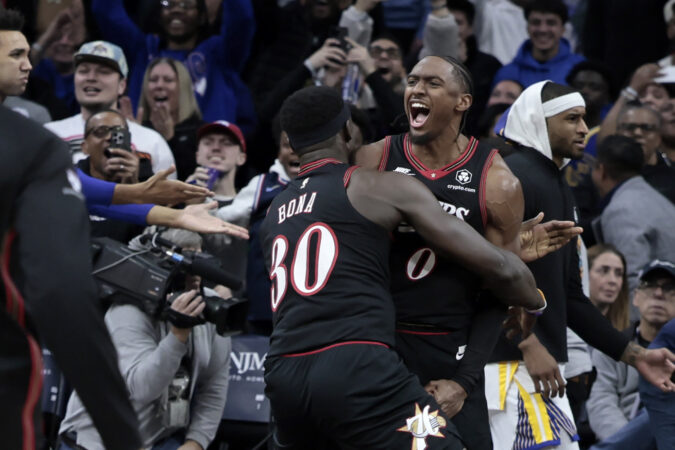
When Tyrese Maxey flew down the court for his game-saving block on the Golden State Warriors’ De’Anthony Melton last week, it was not only an impressive burst of speed.
“That’s conditioning, too,” Doc Rivers, the Milwaukee Bucks coach who formerly was with the 76ers, said while commending Maxey’s play the following day. “If you’re tired mentally or physically, you can’t make that play.”
Maxey insists that, a quarter of the way through this season, he is not fatigued. But perhaps no Sixer is savoring this light stretch in the schedule before Friday night’s game with visiting Indiana more than their star point guard.
Maxey entered Thursday leading the NBA in minutes played, averaging 39.9 in 23 games. That is three minutes greater than the next player with a comparable number of games logged (the Los Angeles Lakers’ Austin Reeves’ 36.9 minutes in 21).
Maxey’s recent workloads have included playing the entire second half and overtime of a Nov. 20 win at the Milwaukee Bucks, when he scored a career-high 54 points. In a Nov. 30 double-overtime loss to the Orlando Magic, he played more minutes (52) than there are in a typical NBA game (48).
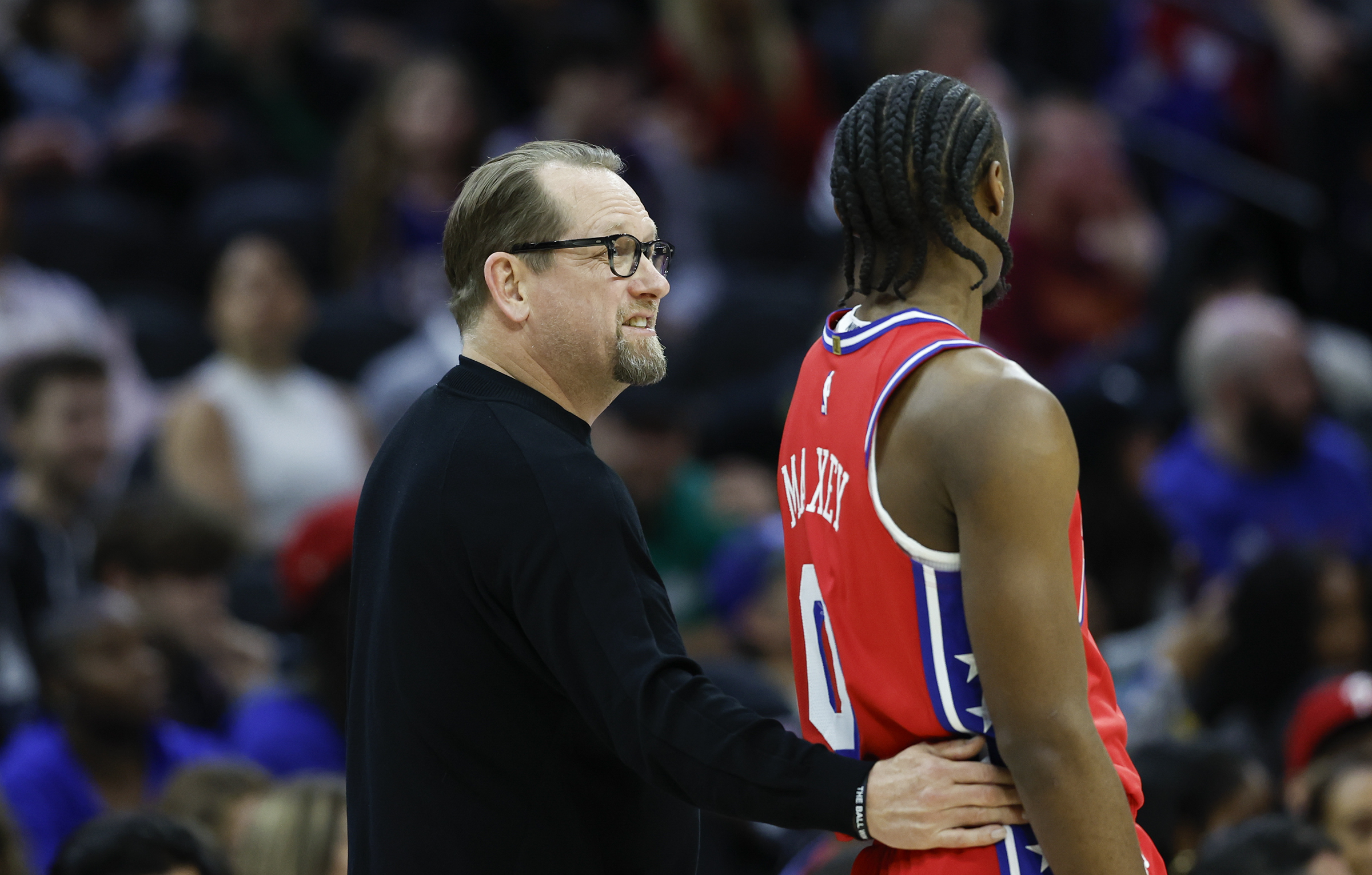
No NBA player has averaged 40 minutes or more per game since Monta Ellis with Golden State in 2010-11 (40.3). So conventional wisdom says this pace for Maxey is not sustainable for the 82-game grind. Sixers coach Nick Nurse hopes having the team’s four rotation guards healthy — and productive — will ease Maxey’s load moving forward.
Still, it has taken impressive physical fitness and mental fortitude for Maxey to pull this off for the season’s first seven weeks while playing at an All-NBA level. He entered Thursday ranked third in the league in scoring (31.5 points per game) and averaging a career-high 7.2 assists and 4.7 rebounds.
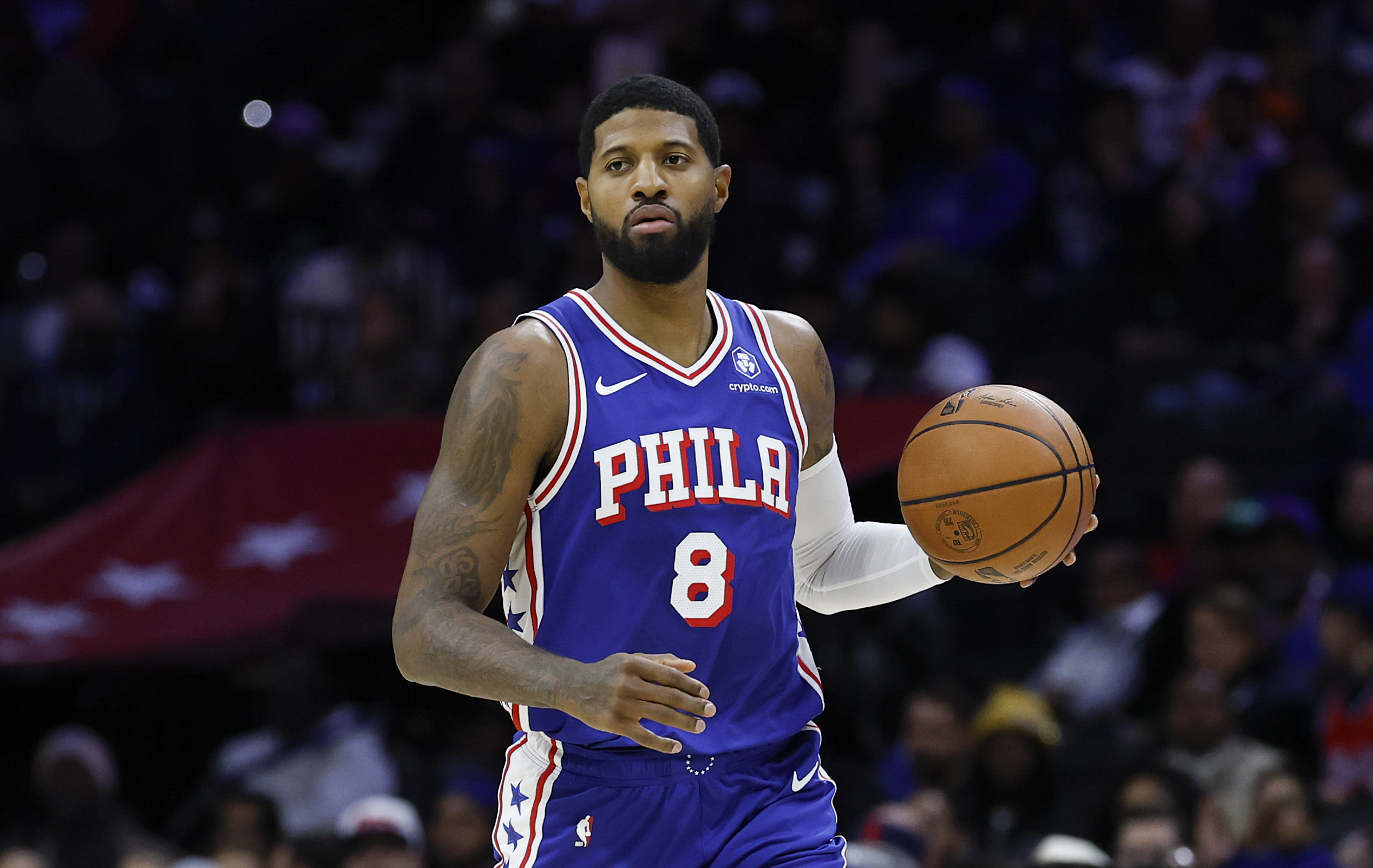
“He’s a warrior,” teammate Paul George said. “There’s no question about it. He’s a fighter. … [There’s] a leadership about him. And when he’s out there, I play for him. I do everything I can to make the game easier for him. He’s our guy. It’s inspiring. Me, as a vet, it’s inspiring for a guy to consistently do it — and to be efficient with all the minutes that he’s been playing.”
Nurse said Maxey’s relentless energy stems from him being “lost in the competitiveness” of the Sixers’ 13-10 start, that “it’s not like I’m sitting there saying, ‘Hey, you’ve got to come out.’ It’s the other way around. He doesn’t want to come out.”
It’s also a responsibility to which Maxey has become accustomed. Last season, he led the NBA at 37.7 minutes per game in 52 games. In 2023-24, he ranked second in the league in that category, with 37.5 minutes in 70 games.
Nurse’s top players racking up heavy minutes has also become a trademark of his coaching approach. Pascal Siakam, when he was a Toronto Raptor, led the NBA for two consecutive seasons, in 2021-23, while Fred VanVleet landed in the top five in both seasons. This season, fellow Sixers Kelly Oubre Jr. (34.8 minutes) and VJ Edgecombe (34.6) rank in the top 20, although their workloads have been diminished by injuries.
Though there may not appear to be a massive difference between 37 and 40 minutes on the court, they add up game after game. Especially when Maxey is so active in generating the Sixers’ offense with the ball in his hands, and he has become more of a defensive playmaker.
“He’s taken that challenge on a nightly basis, while being guarded by the best defender, usually,” George said Wednesday. “ … He’s doesn’t look for a night off, to go and sit in the corner and guard no one.”
Maxey, 25, credits sports performance consultant Alexander Reeser with building foundational offseason strength and conditioning programs that “[push] me to my max limit, every day.” Maxey also has gained a reputation for his early morning on-court workouts, and for sometimes clocking in for as many as three sessions per day.
Last season, Maxey added, was his first time “really locking in” on recovery, an effort to blend his present high performance with career longevity. Which means his routine between games in-season has become “very minimal work, for obvious reasons,” Nurse said.
Maxey said the goal of his individual sessions is not “running around” to get to his spots on the floor to shoot — or to execute elaborate dribble combinations — which expend more energy. Instead, he drills passing, touch layups, floaters, and jumpers from the midrange and beyond the arc.
“It’s the stuff you do after you do the move,” Maxey said. “Making sure it feels good.”
Added Nurse: “He’s maturing a little bit, to have the confidence to just understand he can roll [in games] without having to have a big day on the floor on the off days.”
Nurse has tinkered with when to rest Maxey, typically at the end of the first and/or third quarters or at the beginning of the second and/or fourth quarters. In that Nov. 20 game at Milwaukee, however, Maxey told Nurse, “Coach, let me go,” leading to him playing the final 29 minutes. Yet even within those lengthy on-court stretches, teammate Jared McCain has noticed Maxey going “straight to sit down” on the bench during timeouts.
“Give him his time to breathe and rest,” McCain said. “[It’s] definitely a responsibility … [that] all the guards take, and something we’ve got to help him with.”
Sixers coach Nick Nurse has started to lean on a three-guard lineup without Tyrese Maxey to give him much-needed time on the sideline.
The Sixers’ new-look offense, after all, has been built around its four rotation guards — Maxey, Edgecombe, McCain, and Quentin Grimes — who can score, push the pace, and pass in a variety of lineup combinations. But only recently did that full group reach full strength.
McCain got off to a rocky start after missing nearly a calendar year following knee and thumb surgeries, but now he looks like a threat to score from all three levels. Edgecombe, a hyper-athletic two-way player, missed three games with a calf injury. And, outside the backcourt, max players George and former MVP Joel Embiid remain limited after offseason knee surgeries.
“That’s kind of part of the reason we spread the floor out and we’re moving the ball a lot more,” Nurse said of those guard-heavy looks last week. “We’re trying to get them to play downhill and off the catch. We just haven’t quite got to it yet. There’s glimpses of it. …
“We’re just [spreading] them out, and they go back and forth and move the pieces a little bit and then, boom, one of them’s down the lane. I hope they make a good decision. They either take it forcibly to the rim, or they just kick it out to a shooter or start it all over again.”
Perhaps the start of the second quarter of Sunday’s 112-108 loss to the Lakers offered some encouragement, when the Sixers turned a tie game into an eight-point advantage while Maxey rested for nearly six minutes. But their latest poor third quarter followed, and then LeBron James’ shot-making buried the Sixers down the stretch.
That the vast majority of the Sixers’ games so far have been tight has also contributed to Maxey’s workload. They entered Wednesday having played the league’s third-most “clutch” games (16), which occurs when the score is within five points or less with five minutes remaining in the fourth quarter.
So when the Sixers staged a rare blowout win over the Washington Wizards last week — and Maxey logged a season-low 29 minutes — he chuckled when asked if he could immediately play another game.
“Yeah, I guess so,” he said.
Maxey followed that up by amassing 40 minutes against the Warriors and 37 at the Bucks on back-to-back nights. Then, another 39 against the Lakers.
After that game, how did Maxey plan to spend this lighter stretch in the schedule?
The giant, inflatable positivity rabbit got the boot from the Eagles locker room after less than a week, but its spirit lives on a few stalls away.
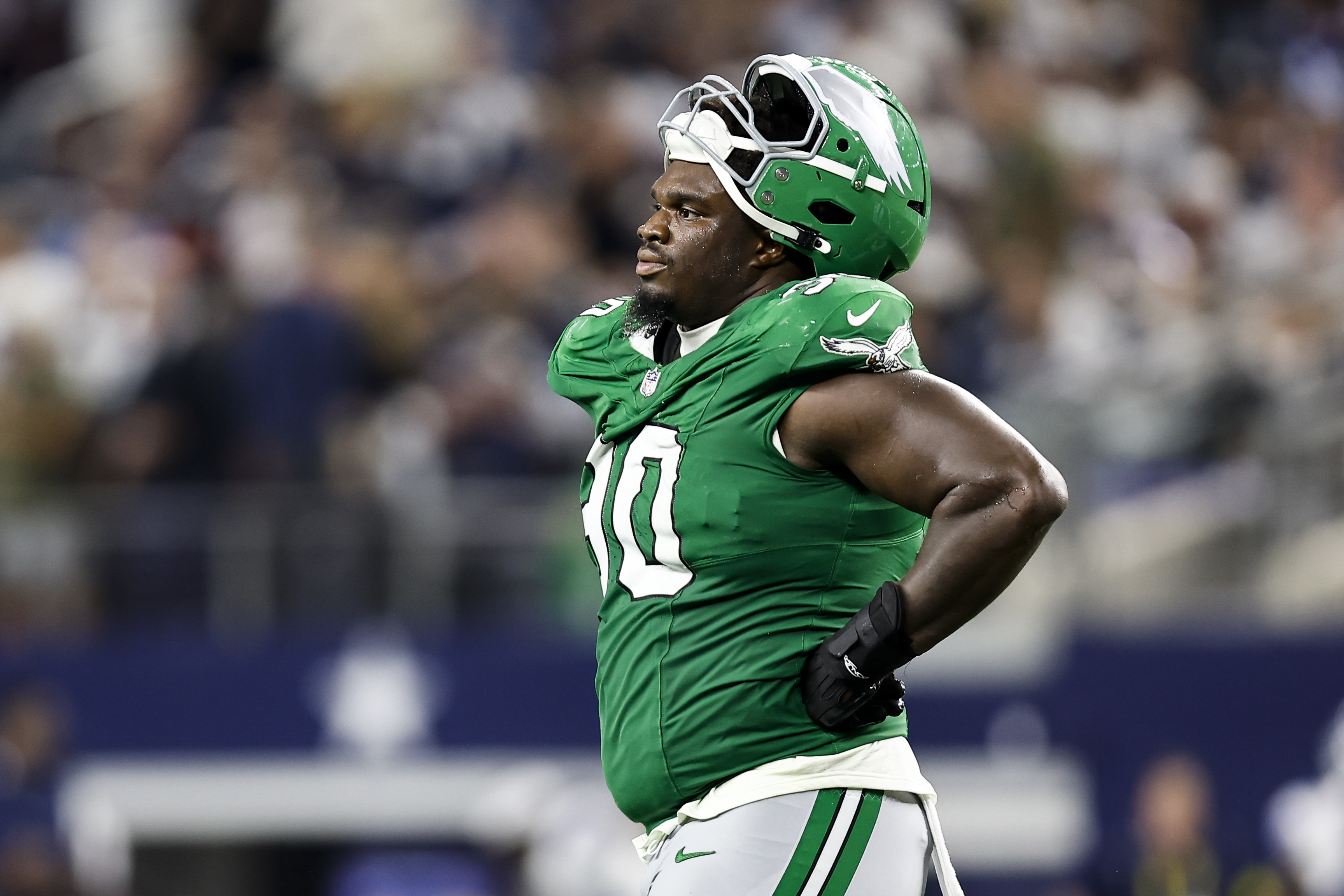
Jordan Davis, whom defensive line coach Clint Hurtt referred to on the latest episode of Hard Knocks as a “big ass [freaking] Care Bear,” couldn’t shake the perpetual smile on his face on Wednesday. His optimism, he explained, hasn’t wavered, even amid a three-game losing streak in which the offense hasn’t eclipsed more than 21 points.
Vic Fangio’s defense has been operating on a different wavelength. Since the bye week, the Eagles have conceded nine total touchdowns, tied for the second-fewest in the league among teams that have played five games in that span. Davis was brilliant Monday night in the loss to the Los Angeles Chargers, notching 1½ sacks, six pressures, and six stops, which Next Gen Stats defines as tackles that result in a successful play for the defense.
Jordan Davis has had a breakout year after receiving an offseason contract extension.
Last month after the Eagles’ narrow win over the Green Bay Packers, A.J. Brownexpressed his dismay about the defense putting a Band-Aid over the offense’s shortcomings too frequently. But the offense’s inconsistencies haven’t shaken the confidence of the defense, Davis explained Wednesday, four days before the Eagles’ Week 15 game against the Las Vegas Raiders.
“I know for me, personally, I’m never wavered by that stuff,” Davis said. “Offense is going to have their games. And I’m so deep into this faith in the offense that I have, that one day, hopefully very, very soon, it’s going to click. And when it does click, watch out. ’Cause we all know what we’re capable of. We all know that we’re capable of much more.
“We have to keep keeping the faith, because I feel like a lot of people are just kind of losing faith. And whether that’s y’all or whether that’s the fans, whatever. But me, I’m still 10 toes down for this team. I hope that we just go out there one game and we just put a 100 ball on them and we play a high level of defense. I‘m always telling them, I’m always confident. I always say before we walk out, go on the field for the game, I say, ‘Each and every [expletive] in this locker room, I have full faith in.’ Because I wouldn’t be playing this game at my purest confidence if I wasn’t confident in the team that I have behind me.”
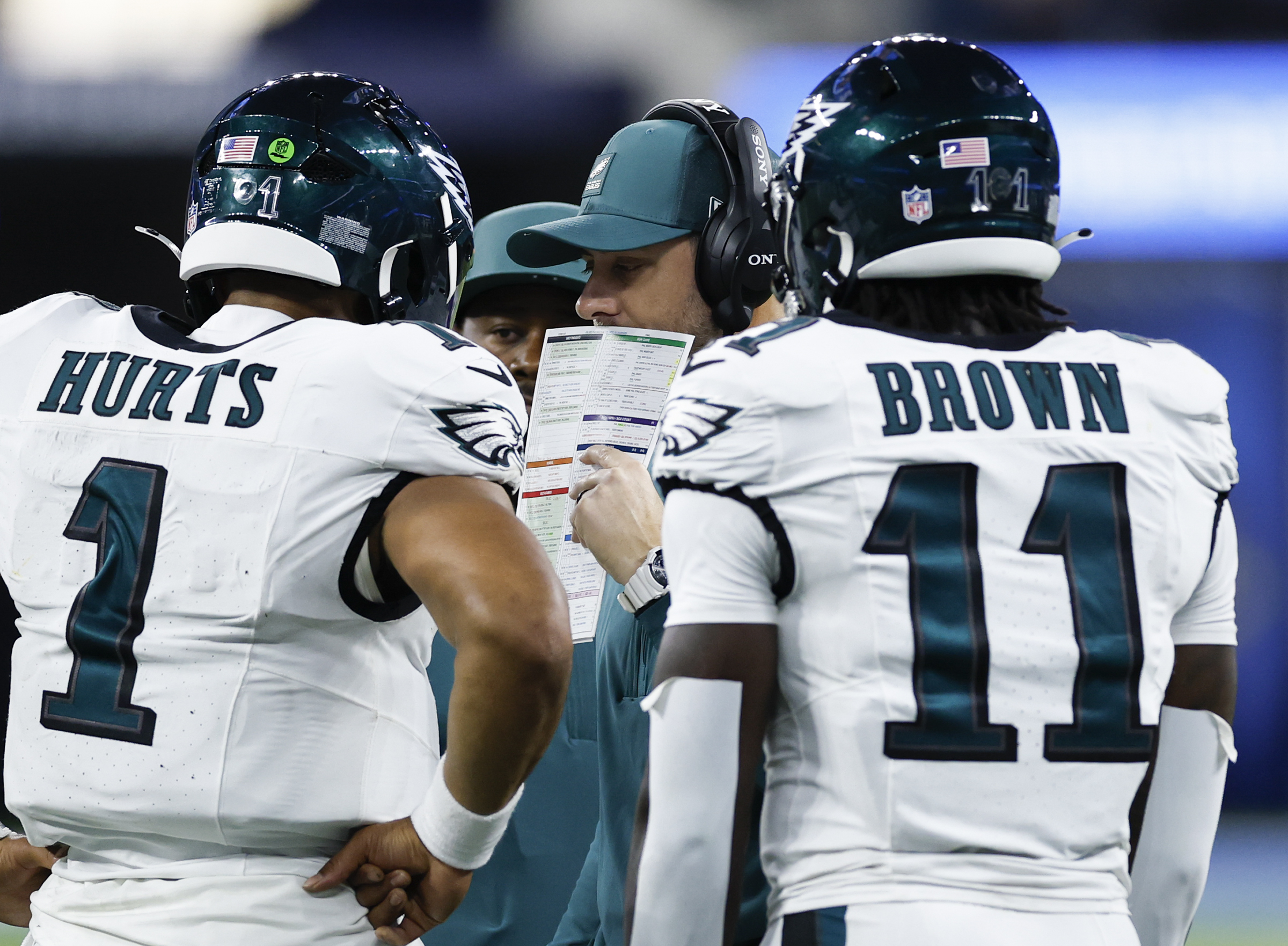
Outside the locker room, that sense of confidence in the Eagles offense is waning. Jalen Hurts committed five turnovers (four interceptions, one fumble) in the loss to the Chargers. Brown and DeVonta Smith each had drops. Saquon Barkley had his second-longest rush of the season (a 52-yarder for a touchdown), but he also had his share of negative runs that have plagued him all season.
Still, Davis, the No. 13 overall pick for the Eagles in 2022 out of Georgia, remains a beacon of positivity inside the NovaCare Complex. He ought to understand the power of belief. Despite the slow start to Davis’ career, the Eagles picked up his fifth-year option in the offseason. Now, he is becoming the every-down defensive tackle the Eagles envisioned when they drafted him, stepping up while Jalen Carter has been dealing with shoulder injuries this season.
Davis is lending a bit of that sense of belief to his teammates on the other side of the ball, even if they might be lacking in it themselves.
“I’m grateful,” Davis said. “Because even though we’re not doing too hot on the offensive side, when you have somebody that they believe in you, they at least want to play hard for them. And if that’s all they give me, I’m cool with that. I’m cool with that. I just want them to feed off that energy, feed off that faithfulness that I have in them. I just want them to have that for themselves.”
He is consciously trying to keep the energy high despite the team’s misfortunes on the field. Davis cracks jokes when he can. He calls his teammates out when they aren’t smiling.
The offense’s struggles haven’t deflated him, nor has the external criticism, Davis explained. If anything, those factors have motivated him to play harder.
“I love the guys and it hurts my soul when I see all the talk and all the stuff going out here and just seeing everybody down and everybody kind of putting people down,” Davis said. “’Cause that’s not how I live. I live positively. But, two, these are my people you’re talking about.
“I see people talking negative about this stuff. I’m like, man, I really want to go to war for these guys, because man, these are my people you’re talking about. And I’m so confident in the things that they’re capable of doing.”
Injury report
The Eagles did not practice on Wednesday, so the injury report was an estimation. Carter (shoulders) and Lane Johnson (foot) were listed as would-be non-participants.
Johnson has missed the last three games, but the tackle was not put on injured reserve following the win over the Detroit Lions, indicating that he could return in less than four weeks.
Landon Dickerson (calf) was listed as limited. Zack Baun (hand) and Charley Hughlett (abdomen; injured reserve) were listed as full participants.
The Eagles are scheduled to practice for the first time this week on Thursday.
Eight years after the Philadelphia arts community learned it could lose the 7,000-square-foot mosaic that for decades wrapped around an Old City building, the structure’s current owner has started to demolish it.
The fate of the building was the subject of an almost six-year legal battle. Artists and preservationists wanted to save the building. Neighbors opposed a developer’s plans to preserve it.
That developer — architect and building owner Shimi Zakin of Atrium Design Group — had proposed constructing apartments above the mural with a design The Inquirer’s architecture critic called “a terrific work of architecture.”
Zakin received a permit from the city in September to tear down the building. He plans to replace it with 85 apartments and about 6,000 square feet of commercial space. The new building would be six stories and 65 feet tall.
A digger operator walking through inside of the former Painted Bride building, Old City Philadelphia, Monday, December 8, 2025.
Zakin did not respond to a request for comment about the start of demolition at the site. In September, he told The Inquirer: “We are moving forward with an amazing project at an amazing location.”
He estimated that his apartment building would take about 2½ years to complete.
For now, a black wooden fence surrounds the former Painted Bride building while demolition equipment tears out its insides, and the walls await their turn.
High school basketball has begun already, with several stellar players and teams back in action.
This season, the area has two national-level girls’ basketball players, a pair of sisters who could be the best in the Philadelphia Catholic League, the nation’s No. 1 player in another sport, and a player who suffered a torn ACL two years ago and is now dunking the ball in practice.
Here are some of the area’s top girls’ basketball players to watch out for in the 2025-26 season.
Reginna Baker
Neumann Goretti, 5-foot-7 junior guard
Baker returns as the leading scorer for the defending Catholic League and PIAA Class 4A state champions. She averaged 15 points as a sophomore and will now be the face of the Saints, after Catholic League MVP Carryn Easley and Amya Scott graduated.
She has improved as a two-way player, and received scholarship offers from eight Division I schools. She will likely become a 1,000-point scorer as a junior and earn strong consideration for PCL MVP, alongside Archbishop Carroll’s Alexis and Kayla Eberz.
Carter showed great courage playing in the PIAA Class 5A state championship before going down with an injury. She scored 23 points in Archbishop Wood’s 45-37 loss to South Fayette. This will be Carter’s third school in three years — she played her freshman year at Penn Charter — and she is high on the list of every major college program in the country. She can score from anywhere on the court, and will run the point for Vinny Simpson’s Friends’ Central team this season.
ESPN #12 2027 PG Ryan Carter of FCHS is the BEST thing since sliced bread. Carter made some plays against Germantown Academy that are nearly impossible seem effortless‼️🔥 pic.twitter.com/xXjrKE1hl0
The daughter of Ben Davis, the former major leaguer who was the No. 2 overall pick in the 1995 MLB Draft, Riley Davis is the No. 1 lacrosse player in the country and is committed to Penn State for lacrosse. It is the reason why many schools backed off recruiting her for basketball. She is very athletic and a matchup problem. She has a height advantage over other guards, while being too fast for a center to stay with. She enters this season as one of the top scoring threats in the Inter-Ac League.
Penn State commit Riley Davis of Notre Dame, ranked as the top lacrosse player in the country, scored 15 points against Imhotep Charter, helping to secure a victory at home. pic.twitter.com/4rFbUYSiNP
Like her parents, Alexis Eberz is planning to attend Villanova. The oldest daughter of former Villanova stars Eric Eberz and Michele Thornton, Alexis may be the best player in the Catholic League and is a strong candidate for PCL MVP.
One of her major challengers for that title lives under the same roof, her younger sister Kayla. Alexis is one of the most potent three-point shooters in the area and has become more aggressive driving to the lane. She won a state championship as a freshman and is looking to finish a great high school career with the triple crown of a Catholic League championship, a District 12 title, and a PIAA Class 6A crown.
Kayla Eberz can handle the ball, shoot from a distance, rebound, defend, and at times dominate games. Only a sophomore, Kayla is receiving interest from numerous programs across the country, including Villanova, Michigan, and Marquette. What makes her unique is that she can defend anyone on the court, from point guards to centers. By the time she is a senior, Eberz projects to be one of the best players in the PCL and one of the most sought-after recruits in the country. She is among the best in Pennsylvania right now.
Eberz sisters (from left) Kelsey, Alexis, and Kayla last December.
Jada Lynch
Westtown, 5-11 junior guard
Lynch is the spitting image of her mother, former U.S. Open champion and tennis Hall of Famer Kim Clijsters, but the basketball gene came from her father, Brian Lynch, who played for Villanova. Jada plays for the Belgium under-18 national team. She shoots well and can shoot beyond the college three-point stripe. She is versatile, deceptively quick, can rebound, and has the competitive gene from her parents. She is getting attention from Power 4 schools.
Palmer is the best player in Pennsylvania and one of the best players in the country. She’s been playing high school varsity basketball since she was in eighth grade. She will be able to go to any top-10 program in the country. She simply dominates games with her ballhandling, shooting, rebounding, high basketball IQ, and with the energy she brings.
She can finish left- or right-handed, and has added a more consistent perimeter game. She’s also a team player, making it a point to get her teammates involved. She plays with poise despite the constant attention she has had on her since she was a freshman.
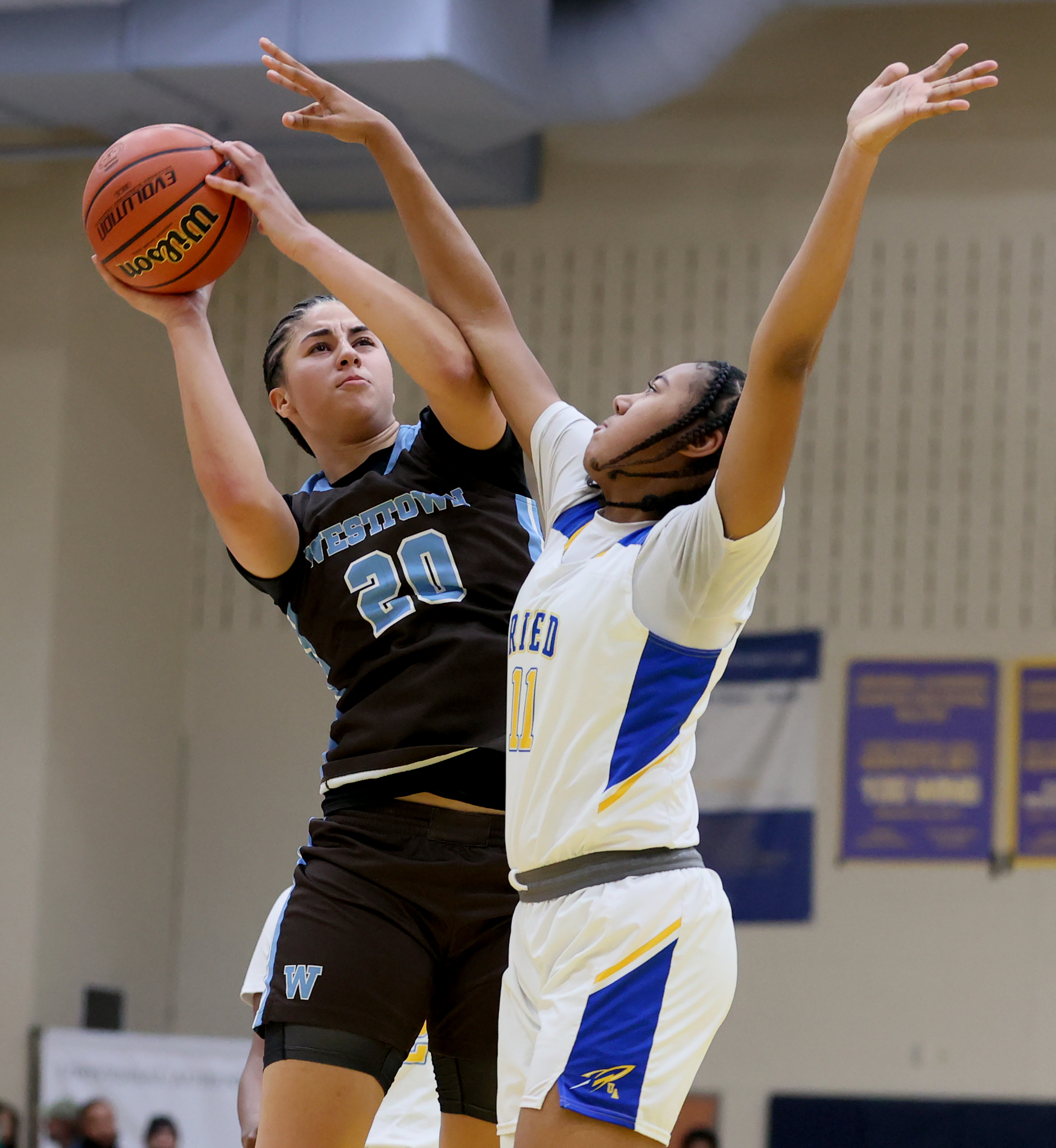
Jordyn Palmer (left) of Westtown shoots over Nasiaah Russell of Universal Audenried Charter during a game on Nov. 30, 2024.
Nasiaah Russell
Audenried, 6-3 junior center/power forward
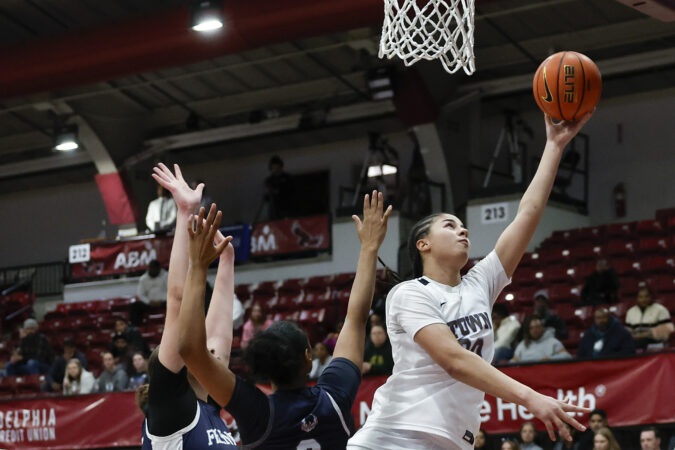
This should be Russell’s breakout year. With the graduation of Philadelphia’s all-time leading scorer Shayla Smith, who is now at Penn State, it will be up to Russell to lead the defending Public League champions. Russell has grown an inch and gotten stronger since last season, now able to dunk. A dominant shot blocker, Russell averaged nine points, seven rebounds, and two blocks as a sophomore. She has made a complete recovery from tearing an ACL in her right knee as a freshman in December 2023.
Small is an athletic 6-2 forward who can do everything. Her strength is her defense and creating turnovers. She started at Scranton High as a freshman and arrived at Friends’ Central as a sophomore, displaying her athletic versatility to play multiple positions, block shots, rebound, and alter shots.
She is considered one of the best players in the state, and is now teamed with one of the country’s best players in Carter.
Atlee Vanesko
Westtown, 6-foot senior combo guard
Vanesko is bound for Ohio State. She is a three-year captain at Westtown, the premier program in the area. She can shoot, and at 6-foot, she is not afraid to rebound and defend. She is a pass-first guard. She can also knock down an open three.
U.S. data agencies need urgent help from the Trump administration and Congress to ensure they can carry out their basic duties and restore public confidence amid a deepening crisis, according to a new report by some of the country’s top statistics experts.
The agencies are struggling with fragile capacity and eroding trust — as well as diminished safeguards for data integrity — and need more money and staff, says the study led by the American Statistical Association. It cites challenges that have grown more acute since last year’s inaugural version of the report, published before President Donald Trump returned to office.
Government departments such as the Bureau of Labor Statistics, Bureau of Economic Analysis, and Census Bureau are tasked with publishing all kinds of data, which cover the economy and many other topics, and are key to decisions by policymakers, investors, and companies as well as the wider public. Their work has been made harder by longstanding problems such as shrinking budgets and falling response rates for surveys — as well as more recent threats to their independence and integrity.
“Immediate action must be taken to halt the severe decline in the federal statistical agencies’ ability to meet their basic mission and be positioned to keep up with increasing information needs and to address uncertainty in the trustworthiness of federal statistics,” says the report, which was published Wednesday.
In Trump’s second term, the strain on federal statistics has intensified. His administration’s campaign to downsize the government left gaping holes in many agencies, with data products becoming collateral damage of the staffing cuts. Organizations such as the ASA have created dashboards to keep an eye on changes to datasets and highlight any that disappear.
Headcount at the BLS was down 20% last fiscal year compared with the previous one, and the BEA has seen a 25% drop since 2019, the report says. Trump has proposed further cuts in his 2026 budget.
Trump’s most drastic action so far on the data front came when he fired the head of the BLS in August after a weak jobs report — accusing her, without providing evidence, of rigging the numbers to make him look bad. Economists and statisticians have lined up to reject that claim. The administration pointed to large revisions in employment data and said the numbers needed to be “fair and accurate.”
Just a day before all this drama unfolded, the statistics experts behind Wednesday’s study had published an interim report saying they were confident that data could be trusted and there were no signs of meddling by the executive branch. Trump’s move against the BLS forced a rapid rethink. The document was amended to say that the president’s actions “undermine trust in the future by accusing statistical agency heads of past political manipulation.”
The group’s new report cites a survey which found the share of the public expressing trust in federal data had declined to 52% in September, from 57% in June.
It calls out other administration actions this year that undermined official statistics, like the termination of advisory committees, failure to fill leadership roles, and elimination of datasets without consulting Congress or the public. It notes that the positions of chief statistician and Census director have been staffed with political appointees who already held other full-time positions, and argues this could further erode trust.
The report urges the Trump administration to exempt key data-agency positions from the federal hiring freeze, and calls on Congress to fund research and enhancements in IT infrastructure that can help improve the quality of statistics. Such measures would “begin to restore the system’s capacity to deliver the timely, relevant, and trustworthy statistics the nation depends upon,” it says.
For over 20 years, at three locations, former Daily News sportswriters Ed Barkowitz and Mike Kern have made the Christmas season special in South Philly in their other roles as guest bartenders.
Here’s the thing: The good vibes have nothing to do with the drinks they were slinging (well, somewhat, as someone who has attended a few), but everything to do with what the event’s proceeds ensured.
Scores of kids from the neighborhood would have something to open under the tree.
Friday will mark the 23rd time their annual toy drive takes place, now at Wolf Burger on Front and Wolf Streets. In place of Kern will be fellow former Daily News sports scribe Bob Cooney, but Barkowitz, who has used his platform and notoriety at the paper for good, is scheduled to attend, doing what he does best: anything for the kids.
Inquirer reporter Matt Breen is first up on this frigid Thursday, delivering the holiday cheer with this fantastic story.
Also, could securing athletes with multiyear deals be the key to retaining top talent for college programs outside the Power Four? Temple thinks so, and might be on to something.
Eagles offensive coordinator Kevin Patullo and the Birds offense will look to turn things around against the visiting Las Vegas Raiders on Sunday.
It’s been a rough few weeks for the Eagles, but surely the end has to be near by way of the visiting Las Vegas Raiders, a team that enters 2-11 and hasn’t won a game since October.
Right?
Well, that remains to be seen, and it’s too early to assume, especially after the Eagles were in a similar situation in the 2023 season in what looked to be a surefire win against the Arizona Cardinals that turned into anything but.
So what do we know about these Raiders, next up in a Week 15 matchup for the Birds at the Linc on Sunday (1 p.m., Fox29)? Inquirer writer Olivia Reiner offers this look.
What we’re …
🙏🏾 Hoping: Philly soccer fans looking for World Cup tickets are successful in obtaining some through this latest FIFA presale lottery, which opens today.
🤔 Wondering: With Pittsburgh up next, what, if anything, did Villanova learn in its blowout loss against Michigan this week?
👀 Watching: This fan’s hilarious interaction with Eagles wide receiver A.J. Brown in the latest episode of HBO’s Hard Knocks.
Sixers forward Paul George playing against the Clippers on Nov. 17.
Paul George and Joel Embiid want to be more efficient on the basketball court. First, they need to be on the court together more than they have this season.
The pair have played only two games together, and in those games, Embiid averaged 17 points while shooting 28.5%. Meanwhile, George averaged 14 points on 36% shooting.
So what’s the secret to upping those numbers as two of the top names on the roster?
“Just keep at it,” George says. “Keep getting opportunities on the floor together. Keep presenting healthy … and continue to keep logging minutes.”
Phillies president of baseball operations Dave Dombrowski still has work to do on the 2026 roster.
The Phillies’ contingent left Disney World on Wednesday with more clarity than when it arrived. After signing Kyle Schwarber to a five-year, $150 million deal during the winter meetings, the Phillies now have a better sense of direction for the rest of their offseason.
And now, instead of worrying about contingency plans to fill a Schwarber-sized hole in the lineup, the Phillies can focus their attention on other areas of need.
With his third child due any day now, Schwarber returned to the Phillies with a new contract. He’s hoping J.T. Realmuto does the same.
The Phillies selected three players in the Rule 5 draft on Wednesday, including a pitcher they think can make the team in 2026.
Flyers center Christian Dvorak has been producing at a high clip since joining the club via NHL free agency.
When the Flyers secured Christian Dvorak during the first day of NHL free agency in July, he was primarily viewed as a potential midseason trade option if need be.
Not so fast.
Just 28 games into the season, the 29-year-old center has 19 points and is on pace to finish with 56. A big part? His developing relationship with Trevor Zegras and Travis Konecny, on the Flyers’ top line. His play hasn’t gone unnoticed as coach Rick Tocchet noted: “He saw the opportunity here with our situation, and I think that he’s grabbing it.”
Dec. 11, 1981: Boxing legend Muhammad Ali entered the ring for the final time, culminating a 21-year career with a loss by unanimous decision to Trevor Berbick in the Bahamas. Ali’s first fight? Oct. 29, 1960, when he was still known as Cassius Clay.
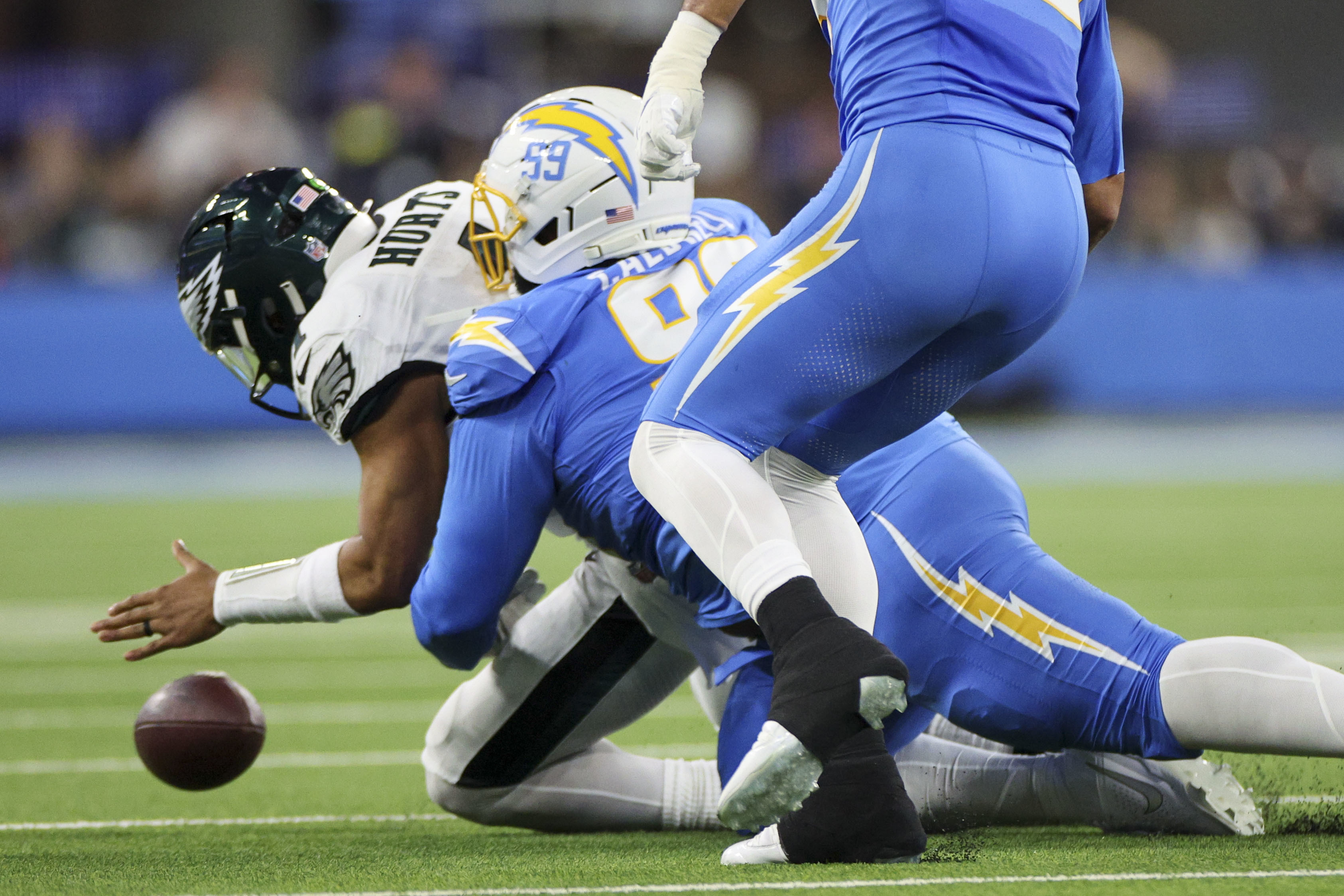
In the middle of Jalen Hurts’ awful game on Monday: The Chargers’ Jamaree Caldwell strips the ball from him after the Eagles QB recovered it on a wacky second-quarter play.
We’re getting to the point where removing Hurts and inserting Tanner McKee would be helpful, just to create a control in this ugly experiment that is the Eagles offense. Read this latest from Sielski here.
The Phillies locked in Kyle Schwarber with a five-year, $150 million contract. Here’s what readers had to say about it.
What you’re saying about the Phillies
We asked: What was your reaction to the Phillies re-signing Kyle Schwarber and extending manager Rob Thomson?
Wise decision. [J.T.] Realmuto should be next, since the Phillies have no backup plans — Bill M.
I love Schwarber and agree that the Phillies really needed to re-sign him. On the practical side, I can’t see Kyle hitting 50-plus homers four or five years from now. I think the players like Topper, and maybe that is good, but I can’t see him managing a team to a WS win. In that tragic inning at Dodger Stadium when Kerkering tossed the ball over JT [Realmuto’s] head, Rob should have been out there before that, reviewing all the options with his players. He did not, but Dave Roberts would have. — Everett S.
Absolutely thrilled about Schwarber. So so about Thomson. When he’s good, he’s really good. But he’s often not good. I am hoping for re-signings from Realmuto and Suarez. In a perfect world, that would happen. — Kathy T.
We compiled today’s newsletter using reporting from Matt Breen, Olivia Reiner, Ryan Mack, Henry Savage, Jeff Neiburg, Jackie Spiegel, Lochlahn March, Scott Lauber, Keith Pompey, and Mike Sielski.
By submitting your written, visual, and/or audio contributions, you agree to The Inquirer’s Terms of Use, including the grant of rights in Section 10.
That’s what I have for you today. Stay warm, and we’ll see you tomorrow. — Kerith
As the 2024 world silver medalist and the 2023 U.S. champion, South Jersey figure skater Isabeau Levito competes and performs across the country and the globe.
But this weekend, Levito, 18, has an easy commute to the show she is skating in.
American Gold Live! — Holiday Ice Spectacular will be at the Class of 1923 Ice Rink on Penn’s campus on Saturday and features 2026 Olympic hopefuls Levito, Ilia Malinin, and Alysa Liu. Brian Boitano, the 1988 Olympic champion, is hosting the show.
Alysa Liu, the 2025 world champion, won her first Grand Prix Final last weekend in Japan.
This weekend’s show is a particularly good opportunity for Levito.
“I was very happy to hear that it was in Philly when I was asked if I wanted to do the show,” said Levito, who lives and trains in Mount Laurel. “I don’t want to go to the airport.”
But she’s also eager to get up and go.
“I get a little antsy when I’m home for too long,” she said. “I’m used to every month or so I have a competition or something, having to travel.”
This year she had an unexpected break as the first alternate to last weekend’s Grand Prix Final in Japan.
“I’ve been home for, like, five weeks,” she said. “I don’t know what to do with myself.”
So she’s eager to perform. One of her numbers in the show will be this year’s short program, to a medley of music from Sophia Loren movies. (Her long program is to music from Cinema Paradiso. This season’s competitive programs are a nod to Italy, where the 2026 Winter Olympics will be in her mother’s hometown of Milan.)
“I haven’t competed since [the] beginning of November,” Levito said, ”so it’ll be kind a way to [get it out there]. But also, I like that program.”
She’ll also be skating a new holiday program to Jackie Evancho’s “Believe.”
Shows allow skaters to put aside the rules of competition and play up their favorite elements.
Liu, 20, of Oakland, Calif., enjoys executing spins that are not allowed in competition, doing very fast rotations, and trying new positions.
“We all have the same [spins] now,” Liu said, “because of the rules and how to get the levels. It’s so strange and we don’t really have as much creativity. There are so many other spins that we can do.”
Levito said she enjoys making the most out of her illusion spin, in which a skater alternates between spinning upright and with her head down toward the ice and a leg in the air. In shows, she’ll hold it for as long as she can, which would not be allowed in a competition. But it is a crowd pleaser.
“I remember Philly audiences being really into skating and really good,” Boitano said. “So I think it’s going to be fun. You’re going to see them unplugged and having a good time before they gear up to go to the Olympic trials” — the U.S. Figure Skating Championships — “in St. Louis and then to the Olympics in Milan.”
Ilia Malinin won the Grand Prix Final in Japan while successfully completing all seven quadruple jumps.
Malinin, 21, from Vienna, Va., known as the Quad God, competes in the most difficult program in skating today. He won his third Grand Prix Final in Japan last weekend while completing all seven quadruple jumps in his freestyle program.
For shows, though, he often skates something he choreographs for himself. He also likes to explore a different side to his skating.
“In shows, I really love to express myself more and be a little more creative and artsy with my programs,” Malinin said. “Whether that be cool, interesting choreography, or even some cool backflips or those kind of tricks.”
As for competition, Malinin is planning to maintain his difficulty throughout the season — and then maybe raise it even further.
He planned all seven quads last season, “but now I think I really want it to be something that I can repeat and do consistently, especially this at the Olympics. I think it would be another kind of record.”
“A lot of behind-the-scenes [planning and training] is definitely going to be the quints [quintuple jumps, which have never been done],” he said. “I think I want to get that done after the Olympics, for sure.”
For Levito, this year’s elements are set in stone. But she’ll be back after the Olympics and hopes to step up her game as well.
“I’m really excited for next season,” she said, “because I’m going to start finally working on things that I’ve really been wanting to work on, but I’m too scared to get injured.
“When I was 14, I was working on quad toe [loop]. I seriously had it, like I would land it in practice. But then I got a stress reaction in my shin before the Junior Grand Prix Final, and I couldn’t do the final.
“I already know I can do [the jump], so why can’t I do it now?”
Isabeau Levito is highlighting her mother’s native Italy in her programs this year.
Liu competed a triple axel and quadruple lutz when she was a young teenager. When COVID hit, she came to Newark, Del., to train, and she had the whole rink to herself.
“I loved Delaware,” she said. “That was my first break day in my life. Before that, I skated every single day. Delaware was this utopia for me. There was no coach. I would lay on the ice and blast the music.”
Liu retired from skating after the 2020 Olympics and went to college. Then she realized she missed it, so she came back last year with a new love for the sport and a new attitude. (She is on leave as a student at UCLA.)
“If [Alysa] learns a triple axel the day before the Olympics, she’ll land it in the Olympics,” Boitano said.
Liu said she probably would put it in her program that quickly.
“I’m not afraid of failure,” she said. “I invite failure. Skating is my parkour.”
“American Gold Live! — Holiday Ice Spectacular” is at 1 and 6 p.m. Saturday at the Penn Class of 1923 Ice Rink, 3130 Walnut St. Tickets: $96.62-$292.31. Information: americangoldlive.com.
After a nearly six-year legal battle between artists, preservationists, and neighbors, the Old City building and its celebrated mosaic were demolished.
The former Painted Bride Art Center building, once home to world-renowned artist Isaiah Zagar’s 7,000-square-foot mirror-and-tile mosaic, has started to come down.
The demolition equipment and growing dust at 230 Vine St. closes the book on a yearslong saga over the distinctive Old City building’s future.
Founded in 1969 as a gallery on South Street, the Painted Bride helped transform Old City into an artists’ corner of Philadelphia when it moved to the neighborhood in the ‘80s.
story continues after advertisement
Decades later, Zagar’s mosaic, titled Skin of the Bride and wrapped around the exterior of the building, became a point of contention when the organization tried to sell the building in 2017. The debate led to a nearly six-year legal battle involving artists, real estate developers, city government officials, and neighbors.
As demolition of the celebrated building begins, take a look back at the complicated legal battles that led to its razing.
Using grants and donations for a down payment, the Painted Bride moved to 230 Vine St. from its initial digs in South Philadelphia. The former elevator factory in Old City spanned 15,000 square feet and sold for $300,000.
Alley Friends Architects, a local firm, drew up plans for the space, which included a 225-seat performance venue and galleries.
Artist Ruth McCann arrives with her paintings at the new Painted Bride at 230 Vine St. on December 2, 1982..James L. McGarrity / Staff Photographer
"There's never been an Academy of Music for people who weren't famous, and now Philadelphia has one. We've deserved this for many years. New York has a dozen such spaces,” said Keith Mason, the Bride’s program director at the time.
1991
Isaiah Zagar begins installing his mosaics
Zagar worked on the Bride’s distinctive mural for nine years.
“Isaiah woke up at 5 a.m. each morning and drove down to 230 Vine St.,” recalled his wife, Julia Zagar. “He dreamed of it as being his masterpiece and worked 10-12 hours a day until he collapsed with exhaustion.”
Artist Isaiah Zagar working on his giant mosaic at the Painted Bride Art Center on Vine Street in the 1990s.Courtesy of Philadelphia Magic Gardens
story continues after advertisement
November 2017
Vine Street property goes on the market
After 35 years on Vine Street, the Painted Bride announced the building would be sold. Executive director Laurel Raczka said the organization was not in financial distress but chose to ditch the building so the Bride could explore new ways to present the arts.
The following month, Raczka also noted the changing vibes of Old City: "We don't feel like we belong here anymore,” she told The Inquirer.
The entrance to the Painted Bride Art Center, covered in Zagar’s mosaics.Tom Gralish / Staff Photographer
Many in the arts community were perplexed. Performance artist Tim Miller, a founder of artistic spaces in New York City and Santa Monica, Calif., said, "Once [the Painted Bride] is gone, it will never be replaced. To discard it, to me, it feels reckless, unless it's the only way to survive."
March 2018
Painted Bride building is nominated for historic preservation
"The Painted Bride is one of his masterpieces," Smith said. "The building itself is a treasure."
Zagar, photographed for The Inquirer in the fall of 2017.Margo Reed / For The Inquirer
April 2018
Arts leaders beg the Bride to suspend sale plans
More than 30 of the city's most prominent artists, performers, and arts officials cosigned a three-page public letter calling for "a reexamination" of the Bride's situation and community-wide discussion about the organization's future.
Signers included: Joan Myers Brown, founder and executive artistic director of Philadanco; hip-hop dance sensation Rennie Harris; architect Cecil Baker; and Wilma Theater cofounder and director Blanka Zizka. The city’s chief cultural officer offered to facilitate a community conversation between the Bride’s leadership and local artists and art patrons.
The Bride’s leaders rebuffed the offer and said that they would continue to pursue "a sustainable business model."
June 2018
Historical designation passes the first hurdle
A committee of the Philadelphia Historical Commission unanimously agreed the Painted Bride building should be protected.
September 2018
Historical designation is denied
After a three-hour, public debate, Philadelphia’s Historical Commission voted 5-4 to reject designation, a move that opened the door for developers to acquire and demolish the building.
A few days earlier, Lantern Theater Company made a bid of over $2 million for the building, which would have preserved it as an arts space. The offer was rejected.
Lawyers for the Bride said that the law did not require approvals from the court but that the Painted Bride sought them nonetheless.
Architect and developer Shimi Zakin of Atrium Design Group poses with a sign on an interior mosaic in the Painted Bride Art Center building before closing on the sale.Courtesy of Shimi Zakin
The Bride’s petition stated that “given the history” of the building, the Bride “wishes to obtain approval of the sale from both the Pennsylvania Office of the Attorney General and the Philadelphia Orphans’ Court.”
August 2019
City allows townhouses
Philadelphia’s Department of Licenses and Inspections issued a zoning permit to allow Atrium Design Group to build 16 townhouses at the site.
September 2019
Court blocks the sale, citing ‘priceless’ mosaic facade
Philadelphia Orphans’ Court blocked the sale, citing the likely destruction of the Bride’s “priceless” mosaic facade. Judge Matthew D. Carrafiello said the sale would "all but ensure the destruction of what many individuals consider to be a true treasure.”
“It is the sale of its property, including the mosaic, that will result in the liquidity necessary for Painted Bride to continue to fulfill its charitable purpose,” wrote Judge J. Andrew Crompton.
January 2021
Neighborhood group opposes proposal that would save the mosaics
The Zoning Board of Adjustments approved Zakin’s proposal, paving the way for him to move forward with the apartment building.
Shortly after, neighborhood groups appealed the decision.
March 2022
Building officially sold for $3.85 million
Despite the looming appeals hearing, many involved with the Bride and supporters of preserving Zagar’s artwork believed the mural had been saved when the building was sold to Zakin.
A Philadelphia Common Pleas Court judge agreed with some neighbors that the mosaic in Old City could be preserved without allowing the developer to build taller and more densely than local zoning rules allow.
This rendering shows a potential design of the building proposed to replace the Painted Bride Art Center in Old City.Courtesy of Atrium Design Group
Emily Smith, executive director of Philadelphia’s Magic Gardens, which preserves and provides access to Zagar mosaics, said the planned destruction of the Painted Bride mosaic was a case of “NIMBY-ism at its most tragic.”
Over several weeks, the Magic Gardens Preservation Team used chisels, hammers, and small power tools to remove as much as they could from the facade. The mosaic was well-adhered to the brick, and this was a difficult process physically and emotionally. The crew was able to remove approximately 30% of the tiles for reuse in new mosaics.
Magic Gardens’ representatives attempt to save pieces of the iconic Zagar mosaic on all the exterior walls of the former Painted Bride before the building is demolished.Tom Gralish / Staff Photographer
September 2025
Demolition permit granted
Zakin received a demolition permit from the city and told The Inquirer that he plans to start demolition in late October. He said he anticipates that his building will be completed in about 2½ years.
Late November/Early December 2025
Demolition begins
Workers began to take down the interior of the building.
A digger works to demolish the inside of the former Painted Bride building on Dec. 8, 2025.Alejandro A. Alvarez / Staff Photographer
This Hanukkah, while Jews around the world prepare to light the menorah and bring light into the darkest days of winter, our celebration of hope and resilience remains in the shadow of Israel’s ongoing genocide of Palestinians in Gaza. And, nearly two months into a U.S.-brokered ceasefire, I am still protesting.
Hanukkah, which in Hebrew means dedication, tells the story of Jewish peoples’ resistance to an oppressive empire, and of a miracle that kept candles aflame for eight days and eight nights when there was only enough oil for one.
It is a story that resonates to this day, and it is in the spirit of hope, light, and miracles that I find myself rededicating to the struggle for Palestinian liberation.
The U.S.-brokered ceasefire went into effect on Oct. 10. Since then, Israel has continued near-daily attacks, killing at least 345 Palestinians and wounding another 889. While the agreement required Israel to lift its blockade on aid reaching Gaza, Israel continues to interfere with the free flow of humanitarian aid. Less than 25% of aid deliveries have made it to Gazans, who face increasingly dire circumstances.
Palestinians grab sacks of flour from a moving truck carrying World Food Programme (WFP) aid as it drives through Deir al-Balah in central Gaza, in November.
While the United States and Israel insist the ceasefire holds and deny the well-documented violations of the ceasefire agreement, I find it difficult to describe the current conditions as anything other than a slower-paced extension of the genocide.
The need for our solidarity is no less urgent or crucial than it was last year or the year before.
What’s more, Israel’s genocidal campaign against Palestinians isn’t confined to Gaza. Tens of thousands of Palestinians have been forcibly expelled from the illegally occupied West Bank, actions that human rights groups have classified as war crimes. It is worth noting that the primary targets of this ethnic cleansing are the refugee camps set up in the 1950s to house Palestinians who were forcibly driven from their homes when the state of Israel was founded.
Because of my organizing, I know history didn’t start on Oct. 7, 2023. Palestinians have faced expulsion from their lands, destruction of their homes and civil infrastructure, and deadly violence since 1948. They enjoy fewer rights than their Jewish counterparts, lacking freedom of movement and access to land, jobs, and public services.
Many falsely proclaim that this system of violent occupation and the ongoing genocide are necessary for Jewish safety. The truth is that this is a desecration of Jewish values and an affront to our long tradition of resisting empire and seeking justice.
I reject the claim that Jewish safety relies on the subjugation of Palestinians, and am inspired by the growing anti-Zionist movement among American Jews. Just as the Hanukkah lights our ancestors lit were not extinguished, our struggle for Palestinian liberation burns brightly.
It doesn’t take a miracle, but it does require courage, rededication to fundamental human rights, and, for many, the willingness to shift positions and take accountability for the role of the United States in bankrolling and providing diplomatic cover for Israel’s genocide of Palestinians in Gaza.
One opportunity I implore our elected officials to take is to sign on to the Block the Bombs legislation, which prohibits the president from selling, transferring, or exporting certain defense articles or services to Israel, except in specified circumstances. I was heartened to see Rep. Dwight Evans recently sign onto the bill, joining 59 other legislators, including three from Pennsylvania.
Hanukkah celebrates an important miracle in the Jewish faith, the rededication of the Second Temple in Jerusalem.
This Hanukkah, I call on all of us to shine a light on Gaza and rededicate ourselves to Palestinian liberation. Only by keeping the flame of our solidarity alive can we hope to one day say, as in our Hanukkah story, “a great miracle happened there.”
Rabbi Linda Holtzman teaches at the Reconstructionist Rabbinical College. She is the organizer of Tikkun Olam Chavurah, a group that pursues social and political justice work together as a Jewish community.
Philadelphia Mayor Cherelle L. Parker is traveling around the city to tout her $2 billion plan to invest in 30,000 new or renovated homes. Yet, one of the key city departments for ensuring her plan is enacted safely is facing questions about transparency and efficiency.
If Parker’s affordable housing initiative is to succeed, it needs clear answers and greater efficacy from the Department of Licenses and Inspections.
In many ways, L&I performs one of the most quintessential duties of local government: regulating local businesses and inspecting property. Despite the essential nature of their work, the department has not always met the standards Philadelphians deserve. For decades, it was known for corruption, with rogue inspectors accused of accepting bribes.
In 2013, these issues metastasized into a catastrophe. A building being improperly demolished on Market Street collapsed onto the Salvation Army store next door, killing six people. An inspector took his own life, blaming his own actions for the disaster, even as city officials strongly defended his integrity.
Mayor Jim Kenney appointed David Perri to lead L&I in 2015 with a mandate to effect transformational change, root out corruption, and embrace new ways of doing things. One of the changes Perri made was to the system of tracking vacant and abandoned properties. In the past, inspectors would verify vacancy by doing a “windshield survey.” This meant driving by homes to look for physical signs of abandonment. The method was inefficient, and the counts were almost certainly inaccurate.
The department partnered with the city’s Office of Innovation and Technology to create a new way of tracking vacancies. They used data from the Water Department, Peco, and other city sources that strongly indicate abandonment.
This information was not only used by the city, but also by groups like Clean and Green Philly, which aims to reduce gun violence by cleaning up empty lots. According to a study led by University of Pennsylvania physician Eugenia South, keeping these lots from becoming sources of blight, trash, and disorder helps reduce shootings.
According to Nissim Liebovits, the founder of Clean and Green Philly, it was down for 16 months before being restored. Even before its disappearance, it had significantly fewer properties listed than expected.
While the data is available again on the city’s Open Data portal, residents still deserve to know what happened. City officials have yet to provide an adequate explanation for the disparity or the gap in publication.
Beyond the missing data sets, L&I also struggles with understaffing and political pressure, particularly from members of City Council. Despite many quality inspectors joining the department in the years following the 2013 collapse, outside pressures often led them to leave city government. Union leaders called it a mass exodus.
The workers themselves said they were often told to ignore violations by bigger developers and contractors, while also being urged to come down harshly on smaller entities.
The U.S. attorney who oversaw the investigation into the Market Street collapse said the remaining inspectors are overworked and have too many buildings to handle. Meanwhile, Council members regularly divert departmental resources away from the backlog and toward their pet issues. They also seek to put their finger on the scales to help or hinder projects.
A city controller report from earlier this year cited insufficient enforcement of the city’s building regulations, with construction crews across the city operating without licenses or work permits. Meanwhile, some contractors with suspended licenses and records of shoddy work have resumed doing business simply by changing their names.
Philadelphia cannot afford further backsliding at L&I, particularly when the city has committed to increasing the rate of construction. Mayor Parker and City Council President Kenyatta Johnson must work together to provide adequate staffing, restore full transparency, and insulate inspectors from the kind of political pressures that routinely interrupt regular business and contribute to the backlog of unfinished work.
The ability to call up an inspector and get immediate results may be politically beneficial for the city’s elected leaders and a few lucky constituents, but the “squeaky wheel” approach must end if the department is ever going to systematically address ongoing concerns.
Parker says she wants Philadelphia to be America’s “cleanest, greenest, and safest city, with economic opportunity for all.” Her One Philly dream can only be achieved if residents feel they can trust L&I to work for all.