Blog

  • You can still be arrested in Delaware for smoking weed in public. A new bill might change that.

    You can still be arrested in Delaware for smoking weed in public. A new bill might change that.

    While weed is legal in Delaware, with a baker’s dozen worth of dispensaries to buy it from, people can still face jail time for public marijuana use under current state law.

    State Rep. Eric Morrison (D., Newark) introduced a bill last month that would ease those punishments. House Bill 252 would reduce the penalties for public marijuana consumption from a misdemeanor to a civil violation.

    “This is not saying that public consumption of cannabis is OK. It is simply making the penalty commensurate with the offense,” Morrison said. “Almost all of the states that have legalized cannabis like we have revisited their laws and changed this violation to a civil offense instead of a misdemeanor, which carries higher fines, a criminal record, and possible jail time.”

    Customers line up for the first day of recreational marijuana sales at Thrive Dispensary in Wilmington on Aug. 1, 2025.

    Currently, police can either stop and fine someone up to $200 for smoking weed in public, or officers have the option to arrest the person, with possible imprisonment for up to five days.

    Under Morrison’s bill, police can still stop people for smoking or consuming marijuana in public, but instead of a misdemeanor, the offense is considered a civil violation — similar to a traffic violation — that carries a fine of up to $50 for a first offense, and up to $100 for subsequent offenses.

    People driving a vehicle while under the influence of marijuana would still be considered a DUI.

    Delaware’s decriminalization of public marijuana use would match the policies of neighboring states, like New Jersey and Maryland, where weed is fully legal, and some Pennsylvania cities where only medical marijuana is legal, such as Philadelphia and Pittsburgh. In these places, only fines are given out, and violations do not appear on criminal records.

    New Jersey went a step further and approved the East Coast’s first legal weed lounges, which means more adults can safely and legally consume cannabis outside of their homes.

    Zoë Patchell, president of the Delaware Cannabis Advocacy Network, said some lawmakers are now correcting a policy that should have been included in the original legalization laws.

    “This simply just brings Delaware’s law in line with the standards used by most other states,” Patchell said. “This measure does not legalize public consumption. It reduces the penalty from a misdemeanor, which can result in a criminal record.”

    Criminal charges have “severe collateral consequences,” Patchell added. For example, arrest and incarceration can negatively impact someone’s health and social outcomes, like losing access to housing, financing, and employment.

    “Especially today, for people in America living paycheck to paycheck, spending time in jail can lead to lost wages or having this charge on a criminal record can lead to being terminated from your job,” Morrison said. “For a whole lot of Americans, losing any wages puts their family in a hard predicament financially.”

    A customer browses through product offerings on Day One of recreational marijuana sales at Thrive Dispensary in Lewes on Aug. 1, 2025.

    Delaware legalized recreational marijuana in 2023, but it took years to open legal sales to adults in recreational dispensaries. The first 13 dispensaries opened to adults last year, but advocates like Patchell say the current law makes it difficult to consume cannabis legally.

    Delaware’s laws on consumption on private property are also restrictive, Patchell said. Adults can consume cannabis on private property, but only in locations that are at least 10 feet from a sidewalk, street, parking lots, businesses, or “any other areas to which the general public is invited,” according to state law.

    “This means that someone can be arrested for consuming cannabis on their own private property,” Patchell said. This proves even more difficult for those living in households that don’t have the property space to be away from the public, she said.

    Morrison said he wants to keep working with cannabis advocates to create a safe and robust cannabis industry, but that it would be premature to say if additional measures will be taken at this time, such as amending the 10-foot rule around private property and public space.

    “For this year, [decriminalization of public use] is what I’m focused on regarding cannabis,” Morrison said.
  • Minneapolis ICE murder is Trump’s Waterloo in America’s war for the truth

    Minneapolis ICE murder is Trump’s Waterloo in America’s war for the truth

    “You might murder a freedom fighter … but you can’t murder the freedom fight.”

    Fred Hampton shortly before his own assassination by the U.S. government in 1969

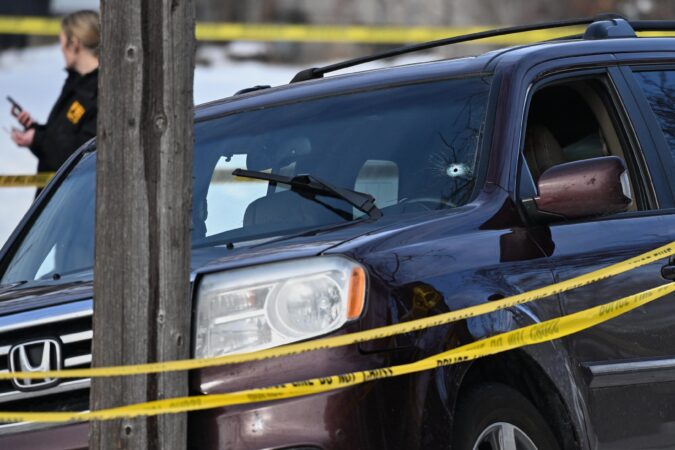
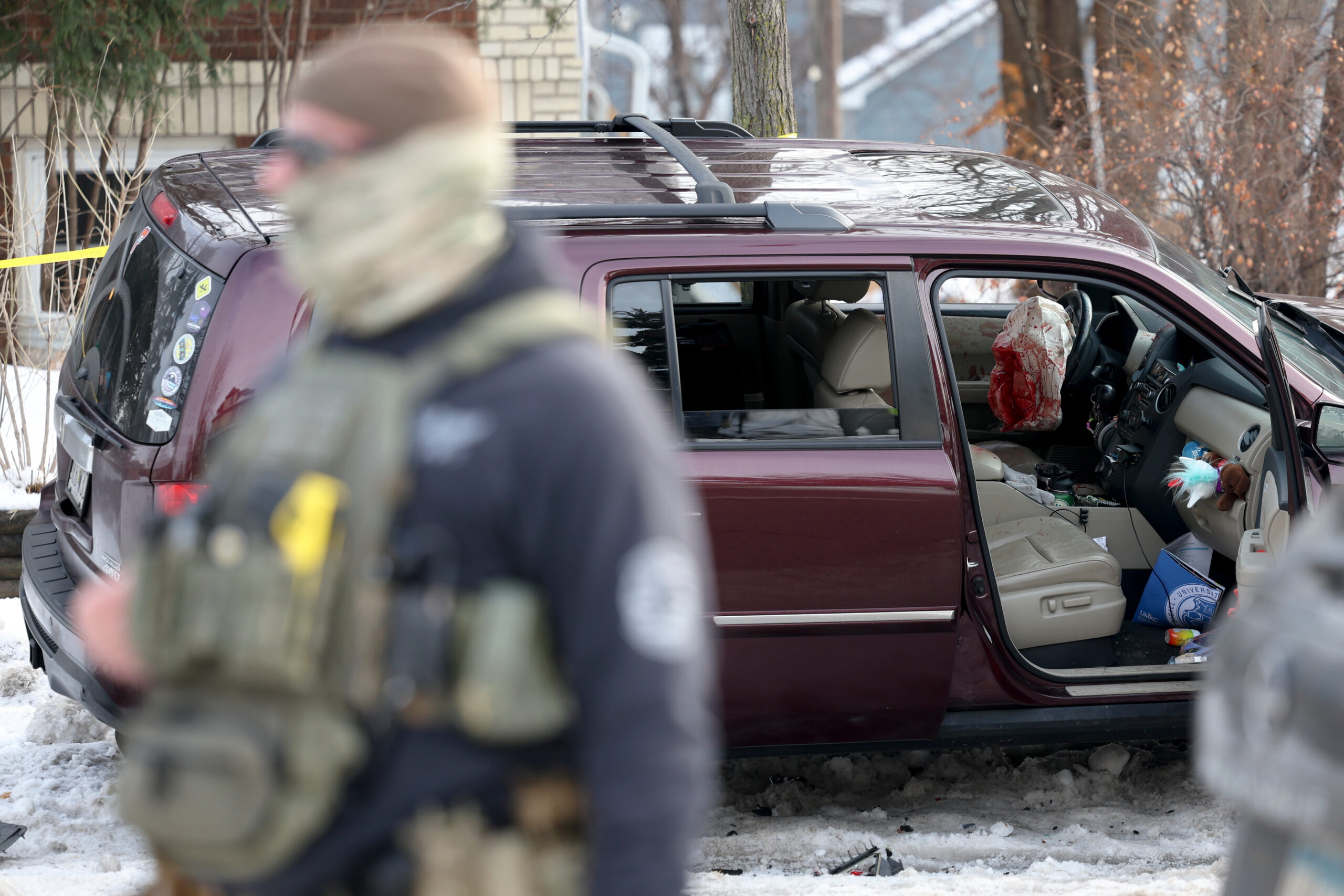
    The Honda Pilot family SUV with the glove compartment crammed with a 6-year-old’s adorable stuffed toys and its deployed airbag and headrest drenched in fresh red blood hadn’t even been towed from the Minneapolis murder scene on Wednesday before the full force of the U.S. government attacked Renee Nicole Good a second time.

    After the three deadly bullets came a fusillade of outrageous and morally reprehensible lies.

    Tricia McLaughlin, the already notoriously fact-averse spokesperson for the U.S. Department of Homeland Security, didn’t even know the identity of the 37-year-old Colorado native — let alone any details of her intricate life or her beautiful, award-winning poetry — when the DHS flack smeared Good as “one of the violent rioters” who’d “weaponized” her SUV against the U.S. Immigration and Customs Enforcement (ICE) agent who shot and killed her, and called it “an act of domestic terrorism.”

    Just moments later, DHS Secretary Kristi Noem — the absurdity of her words only ratcheted up by her ridiculously oversized cowboy hat at a Texas border press hit — joined the verbal pile on and amplified the “domestic terrorism” angle, even though the investigation of what had actually happened on snowy Portland Avenue had barely begun. This was all just a warm-up for America’s prevaricator-in-chief.

    President Donald Trump took to his so-called Truth Social to offer his own, further-embellished version — insisting to the nation that the still-at-that-moment unidentified woman had “violently, willfully, and viciously ran over” ICE officers, blaming “the Radical Left,” and even claiming that the ICE gunman was recovering in the hospital.

    A deployed airbag and blood stains are seen in a crashed vehicle on at the scene of a shooting in Minneapolis on Wednesday.

    In reality, the violent, reckless actions by masked agents of an American secret police were nothing new, and neither was the government’s massive assault on the truth of what happened in Minneapolis, ripped from the pages of a fascist playbook.

    But this time, millions of Americans could see what really happened to Good, thanks to multiple videos taken on that south Minneapolis street by everyday citizens with a righteous distrust of their own government. It’s the deep skepticism that began with three gunshots and a blurry home movie in Dallas’ Dealey Plaza on Nov. 22, 1963. Now, the digital clarity of three gunshots at 9:30 a.m. on Jan. 7, 2026, may have marked a kind of Waterloo, a righteous turning point in our existential war over the truth.

    Americans could believe their elected president, or the completely different reality they could see with their own eyes.

    The citizen videos showed Good — it’s unclear whether she was a volunteer observer of the amped-up ICE raids in Minneapolis, or just filming the agents on a whim — parked at an angle across Portland Avenue when an ICE SUV approached. Two agents hopped out and approached Good’s Honda while a third — the soon-to-be shooter — moved in from the opposite side. One agent screamed, “Get out of the f— car,” but Good, with her window now open and her partner in the passenger seat, slowly backed up and then started a sharp right turn, seeking to leave the scene.

    But the third federal officer, seen adjacent to the left front fender, had already drawn his gun and fired a shot through the windshield as Good turned her Honda away from him. The videos then show the agent — now a few feet from the vehicle and clearly not in danger — firing two more times into the open window, as the vehicle and the mortally wounded Good traveled halfway down the block and into a parked car.

    The shooter — the agent the president claimed had been run over and hospitalized — was filmed walking around the murder scene, apparently unharmed. Meanwhile, the government’s crusade to dehumanize Good was already well underway, as agents were shown blocking a physician who pleaded to aid the dying woman before they finally dragged her away by her limbs.

    The senseless killing of Good was exactly the tragedy that state and city officials had feared when DHS declared at the start of the new year that it was flooding Minnesota — whose large community of Somali American refugees had been viciously slurred by Trump as “garbage” — with some 2,000 armed, masked immigration agents.

    The national spotlight ensured wall-to-wall cable news coverage when agents killed a white U.S. citizen and a mother of three on the second day of the surge in and around Minneapolis, but all of this has happened before. In the last four months, according to the New York Times, federal agents have fired their weapons in nine separate incidents — each time into a vehicle. And often the initial story from DHS collapses under the weight of truth.

    In October, U.S. Customs and Border Protection agents involved in Chicago’s “Operation Midway Blitz” claimed they were boxed in by as many as 10 cars — again, not supported by video — and fired at least five shots at Mirimar Martinez, who was not seriously injured, but was then indicted, along with her passenger, on assault and attempted murder charges. Martinez was not charged with a gun crime — despite an initial DHS claim that she’d brandished a semiautomatic weapon — and soon the entire case crumbled, and now all charges have been dismissed.

    Federal agents are only allowed to fire into a moving car when they believe the driver is trying to kill or maim them or other bystanders. As videos of Good’s killing circulated Wednesday afternoon, an unnamed DHS official told NBC News that the agents’ actions — from approaching the vehicle from the front to firing the fatal shots — went against their training. But how can the public expect sound decision-making from a surge of inexperienced new hires that ICE recruits on social media, or in slick ads during NFL games, with plans to target gun shows and military enthusiasts?

    People gather for a vigil on Wednesday evening after a U.S. Immigration and Customs Enforcement officer shot and killed a woman hours earlier in Minneapolis.

    What’s more, why would the Trump regime tell the truth about killing Good when its entire Minnesota operation — along with everything else about its immoral mass deportation drive — is built atop a foundation of despicable lies, from the White House racist slander of Somali refugees seeking a better life in Minnesota to the gross exaggerations (spiked by a dishonest viral video) about a childcare fraud scandal?

    GOOD MORNING MINNEAPOLIS,” DHS tweeted from its official account Monday as it began an unwarranted, unwelcome operation that is making no one safer, especially not the children of Minnesota. A local coalition of childcare operators called Kids Count on Us reported Wednesday that ICE agents have been swarming their facilities as operators report that little kids are frightened, adding, “We are terrified.” After Good’s death, protesting students at nearby Roosevelt High School were pepper-sprayed by federal agents. And now a 6-year-old child, whose military veteran father had already died in 2023, is an orphan.

    Exactly who are the violent rioters committing acts of domestic terrorism here?

    Minneapolis is a great American city that has been bombarded with needless tragedies throughout the 2020s, beginning on May 25, 2020, when George Floyd was murdered under the knee of police officer Derek Chauvin, just 0.7 miles from where Good was killed. That homicide also began with official lies that were absurdly false, until a brave citizen’s video showed America what really happened.

    Wednesday’s ICE murder carried the grim echoes of past government killing across the upper Midwest — an icy wind that blows from the massacre at Wounded Knee through the 1969 assassination of Black Panther Fred Hampton and over Floyd’s senseless demise. Yet, there is also reason to feel that, this time, a change is in the air.

    For one thing, true leaders like Minneapolis Mayor Jacob Frey — who stunned a national TV audience when he bluntly told ICE, “Get the f— out of Minneapolis” — and Minnesota Gov. Tim Walz made it clear they are fed up with the performative violence and the blatant lies. “Maybe we’re at their McCarthy moment,” Walz told a news conference. “Do you have no decency? Do you have no decency? We have someone dead in their car for no reason whatsoever. Enough. Enough is enough.”

    But there was something even more critical on this frigid prairie morning: brave everyday citizens willing to put their lives on the line for neighbors they don’t even know, and to risk everything in pursuit of the truth. America knows what really happened to Good because courageous people ran toward the scene with their phones aloft to bear witness, not knowing if ICE would kill again.

    It’s the revolutionary spirit we’ve been seeing all across America for months — regular folks from the community blowing whistles, filming ICE raids, and telling the world that our citizens will defend their communities even when all the big institutions and their overpaid leaders will not. Authoritarian governments only thrive in their own manufactured reality, gaslighting the masses that their hardworking, brown-skinned neighbor is a rapist, or that an uninjured federal agent is instead in the emergency room.

    Mark down Jan. 7, 2026, as the day America started turning off the gas, and the masks came off. No wonder it came out Thursday morning that the FBI is not cooperating with Minnesota state authorities on the investigation, in a pathetic, too-late effort at covering this mess up.

    I was one of many on Wednesday who couldn’t stop thinking about another unprovoked government killing: the Kent State Massacre and the murder of four college students on May 4, 1970. That moment caused Neil Young to write these words that still feel so relevant: “What if you knew her and found her dead on the ground?/ How can you run when you know?”

    Good Americans who still believe in truth and justice ran into the danger on Portland Avenue, and we are a better place for that. Some day, and probably soon, there will be a statue on that spot in honor of Renee Nicole Good, an American hero whose bigger freedom fight could not be murdered by tyrants.

  • Health officials urge vaccination as flu cases surge in Pennsylvania

    Health officials urge vaccination as flu cases surge in Pennsylvania

    More Philadelphians are visiting emergency departments with the flu than a year ago, as cases are surging across Pennsylvania.

    Flu cases in late December hit higher counts locally and statewide than at this time last year, according to city and state data. It’s too early to say whether flu has peaked for the season, or whether cases will continue to rise, health officials say.

    window.addEventListener(“message”,function(a){if(void 0!==a.data[“datawrapper-height”]){var e=document.querySelectorAll(“iframe”);for(var t in a.data[“datawrapper-height”])for(var r,i=0;r=e[i];i++)if(r.contentWindow===a.source){var d=a.data[“datawrapper-height”][t]+”px”;r.style.height=d}}});

    Philadelphia-area physicians say they’re dealing with an increased flu caseload, including patients suffering from severe complications.

    COVID-19 and respiratory syncytial virus (RSV) cases are also rising, but flu is the biggest concern right now, said Brett Gilbert, Main Line Health’s infectious disease chief.

    “We’ve been fighting COVID for the last five years, while flu took a back seat,” he said. “But flu is in the driver’s seat this year.”

    One reason for the high number of flu cases this early in the flu season, which runs from winter to early spring and typically peaks in December to February, is a new flu variant that emerged this summer.

    World health experts meet twice a year to determine which flu variants are circulating and recommend seasonal flu shots to target them.

    The variant causing the most cases right now, subclade K, was detected after flu shots for the Northern Hemisphere had already been selected this year, Gilbert said. “There is some degree of vaccine-disease mismatch,” he said.

    window.addEventListener(“message”,function(a){if(void 0!==a.data[“datawrapper-height”]){var e=document.querySelectorAll(“iframe”);for(var t in a.data[“datawrapper-height”])for(var r,i=0;r=e[i];i++)if(r.contentWindow===a.source){var d=a.data[“datawrapper-height”][t]+”px”;r.style.height=d}}});

    But that doesn’t mean that the current flu vaccine is not effective, especially in preventing hospitalizations and deaths.

    “It may not be so great at preventing the illness itself, but [with a vaccine], it may be a mild illness, easily treatable with antivirals or supportive care,” Gilbert said.

    Flu in children

    Just over half of Pennsylvania children were vaccinated for the flu this season, according to federal surveys, slightly up from last year’s rates.

    Childhood flu vaccination rates in Philadelphia were even higher than the statewide rate, with about 56% of children vaccinated this season.

    Some of the most serious cases of flu that pediatrician Daniel Taylor sees are among unvaccinated children.

    At St. Christopher’s Hospital for Children, where Taylor sees patients, the outpatient sick clinic is filled with children with severe cases of flu and RSV.

    Some are suffering from dehydration and require care in the ER at the North Philadelphia hospital.

    Taylor stresses the risk of serious complications from the flu in conversations with parents about vaccination. (Taylor also regularly writes about his experiences as a physician for The Inquirer.)

    The flu can trigger severe health crises that can cause brain damage or temporary paralysis from inflammation of the spinal cord. Taylor has seen two children this flu season with benign acute childhood myositis, a rare complication of an upper respiratory infection that causes swelling and muscle damage in the legs, and in even rarer cases can lead to kidney failure.

    “They’re not able to walk, and in so much pain from the swelling of the legs,” he said.

    Nine children have died nationwide from the flu this season. The season before, flu deaths among children were the highest since 2004, when the Centers for Disease Control and Prevention began tracking them, the American Academy of Pediatrics noted. Among Americans of all ages, the CDC has estimated 5,000 total flu deaths so far this season.

    Taylor said that President Donald Trump’s chaotic upheaval of longstanding vaccine policy — with the CDC changing recommendations around flu vaccines and slashing six vaccines from the routine childhood immunization list — makes it harder for physicians to help patients.

    He said he had recently met with a mother who told him she’d previously vaccinated her children, but now was avoiding vaccines because she was “scared of giving her kid vaccines with everything going on in the government.”

    “They hear something different from the government and the CDC, and they question the relationship” with their doctor, Taylor said.

    He said parents can find trustworthy information about vaccination at websites run by the American Academy of Pediatrics and the Children’s Hospital of Philadelphia.

    ‘It’s never too late to get a flu vaccine’

    Anyone who hasn’t been vaccinated for the flu still has time to get immunized. Flu season runs through May, and cases can occur year-round.

    About 40% of Pennsylvanian adults and about 42% of New Jersey adults have been vaccinated for the flu so far this season, lower than in previous years and slightly below the national rate for the first time.

    About 47% of Philadelphians have been vaccinated so far this season, above the national rate.

    Patients who are feeling sick can get tested for the flu at a hospital or a doctor’s office, and home tests are also available. Antiviral treatments can help ease symptoms. Wearing a mask can also protect others from contracting the flu.

    window.addEventListener(“message”,function(a){if(void 0!==a.data[“datawrapper-height”]){var e=document.querySelectorAll(“iframe”);for(var t in a.data[“datawrapper-height”])for(var r,i=0;r=e[i];i++)if(r.contentWindow===a.source){var d=a.data[“datawrapper-height”][t]+”px”;r.style.height=d}}});

    In Philadelphia, residents can get free flu and COVID vaccines at five health centers, and the health department regularly conducts vaccine outreach in the city, said Gayle Mendoza, a spokesperson for the Philadelphia Department of Public Health.

    “People might say ‘We’re past the holidays, what’s the point in getting vaccinated?’” she said. “Sure, winter break is behind us, but the influenza virus is still forging ahead.”

  • A 72-year-old woman imprisoned for over half a century was released after her life sentence was commuted

    A 72-year-old woman imprisoned for over half a century was released after her life sentence was commuted

    For the first time in more than half a century, Marie Scott is free.

    Scott, 72, who served more than 52 years in prison for felony murder, was released from custody on Wednesday after Gov. Josh Shapiro commuted her life sentence in June. Despite opposition from the victim’s family, community advocates had pushed for her freedom for years, saying she had served enough time, was a model inmate, and no longer posed a threat to society.

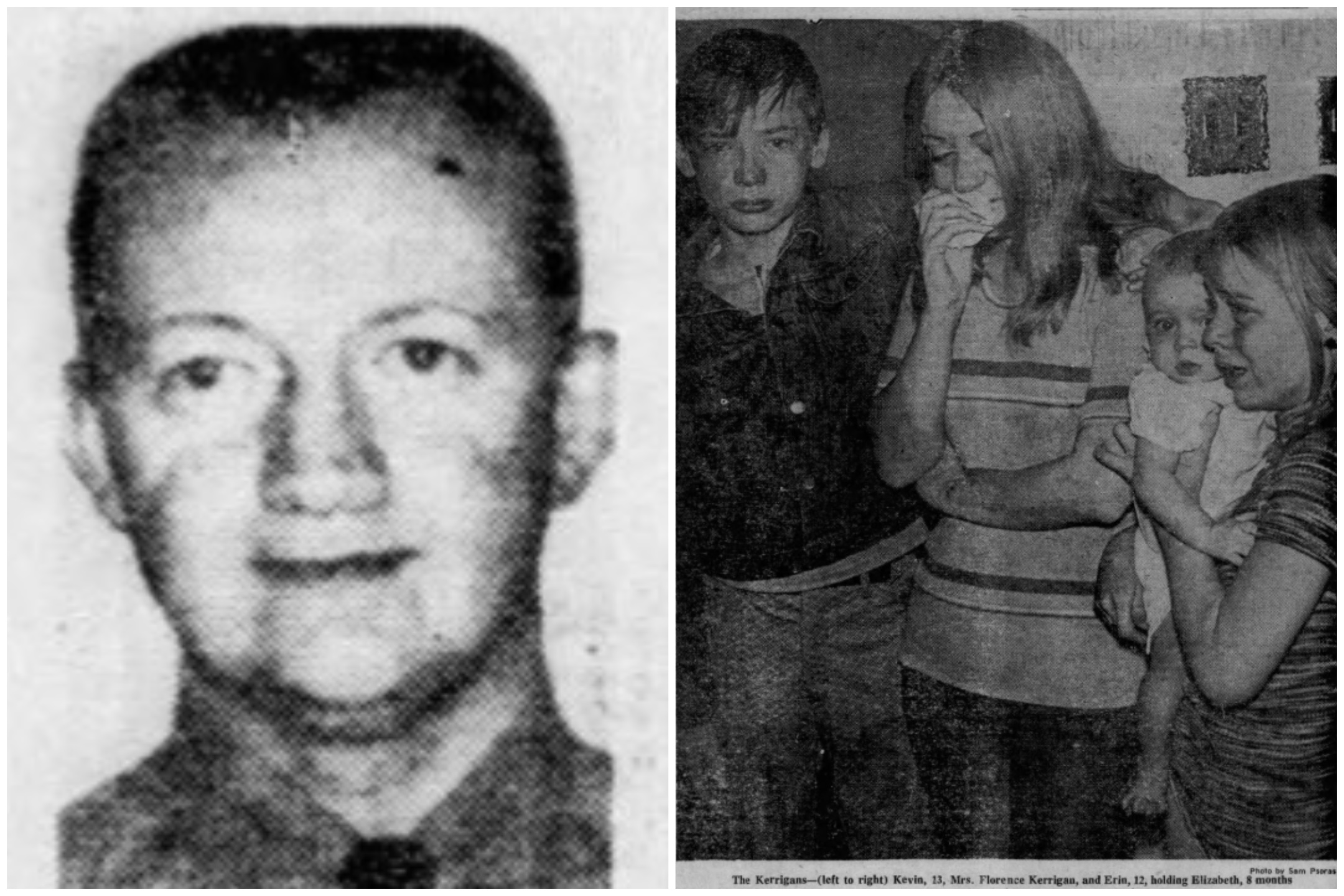
    Scott, known as “Mechie,” has been incarcerated since 1973, after she and her then-16-year-old boyfriend, Leroy Saxton, robbed a Germantown gas station. She was 19 and addicted to heroin when she helped Saxton restrain the cashier, Michael Kerrigan, and then rummage through the store’s cash register and safe. Her attorneys say she was acting as a lookout when — to her surprise, she says — Saxton shot Kerrigan, 35, in the back of the head.

    Philadelphia firefighter Michael Kerrigan, left, was killed in 1973. His family, shown in a 1973 photograph, was never the same. In the photo, from right to left, is Kerrigan’s son Kevin, wife Florence, and daughter Erin holding 8-month-old Angela.

    Saxton was later convicted of first-degree murder and sentenced to life in prison. Scott was convicted of felony murder and handed the same fate.

    But Saxton was released on time served in 2020 after the U.S. Supreme Court overturned mandatory life sentences for juveniles.

    Scott had remained behind bars ever since.

    Until Wednesday, when hours before dawn, she walked out of her cell in State Correctional Institutional Muncy for the final time, stepped into the back of a van, and was driven three hours toward her new life in Philadelphia.

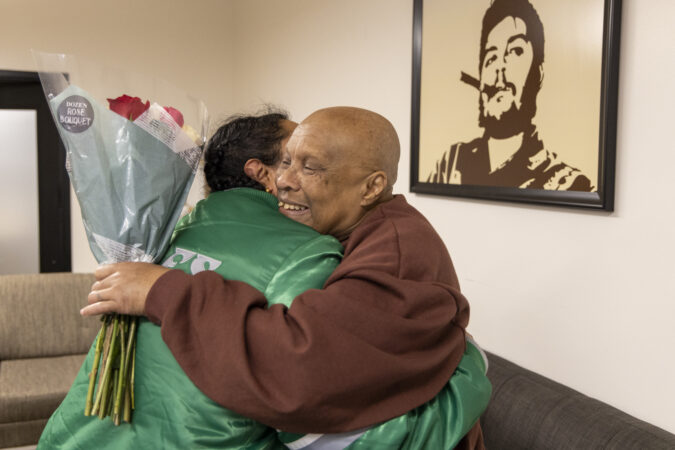
    There, for the first time in her life, she hugged her daughter, Hope Segers, outside the prison walls.

    “I just covered my face and lost it,” Scott said of seeing her Wednesday. “That was the first time I have seen my daughter and grandson in the real world. … To feel them, to smell them in the free air.”

    Marie Scott had her life sentence commuted after 52 years in prison.

    Segers was born in SCI Muncy 45 years ago. During one of the three times Scott escaped from prison between 1975 and 1980, she reunited with a man who worked in the prison kitchen and with whom she had fallen in love, and she got pregnant.

    Segers has known her mother only through prison visits often years apart, and short calls via phone and Zoom. Now, she said, she is eager to begin building a true relationship with her.

    “It’s still not real,” she said of sitting next to her mother. “I’m still in shock.”

    Scott, who will be on parole for the rest of her life, will move into her daughter’s home in Northeast Philadelphia after living in a halfway house for a year, as is required by the prisons.

    Scott’s health has deteriorated in recent years. She uses a wheelchair, suffered from Stage 2 breast cancer, and had a double mastectomy last year. She was not ill enough to qualify for compassionate release, her attorneys said.

    But she has since learned she is cancer free, she said.

    Marie Scott, 72, survived Stage 2 breast cancer while in prison.

    Scott had been serving a mandatory life sentence under Pennsylvania’s felony murder law, which allows people to be convicted of second-degree murder if a death occurs during the commission of a felony such as robbery — even if they did not kill the victim or intend for anyone to die. Pennsylvania is one of only two states where a felony murder conviction automatically carries a life sentence, a punishment Shapiro has called unjust and unconstitutional. (Pennsylvania’s Supreme Court is currently weighing the issue.)

    Other than the decades-old escapes, her attorneys said, she has been a model inmate. She is deeply remorseful for her actions, and has written books about healing, directed plays, and led drug and alcohol treatment courses for inmates, they said. She became a mentor and mother figure to dozens of women at Muncy.

    Rupalee Rashatwar (from left, Hope Segers, Bret Grote, and Sam Lew worked to free Marie Scott through their work at the Abolitionist Law Center.

    For years, Scott and her attorneys at the Abolitionist Law Center applied for a commutation from the Pennsylvania Board of Pardons, asking that her life sentence be reduced. Her applications were repeatedly denied without explanation, lawyer Bret Grote said.

    She applied last year with renewed hope after the leadership at SCI Muncy said they would support her petition.

    Still, Grote said, Laurel Harry, secretary of the state Department of Corrections, told officials she would not support Scott’s petition because of the prison escapes decades ago. Harry’s support was typically a requirement of the board’s approval for release, he said.

    Grote, his colleagues, and a collection of volunteers drafted a social media, phone, and letter writing campaign to persuade Shapiro and prison officials to support her commutation. Members of Philadelphia City Council, alongside state senators and representatives, called for her release, as did Philadelphia rapper Meek Mill.

    It worked. In May, the Board of Pardons voted to recommend a commutation of her sentence, and the following month, Shapiro formally approved her release. The board then required that Scott spend six additional months in prison for the prison escapes.

    Her release comes amid opposition from the victim’s family.

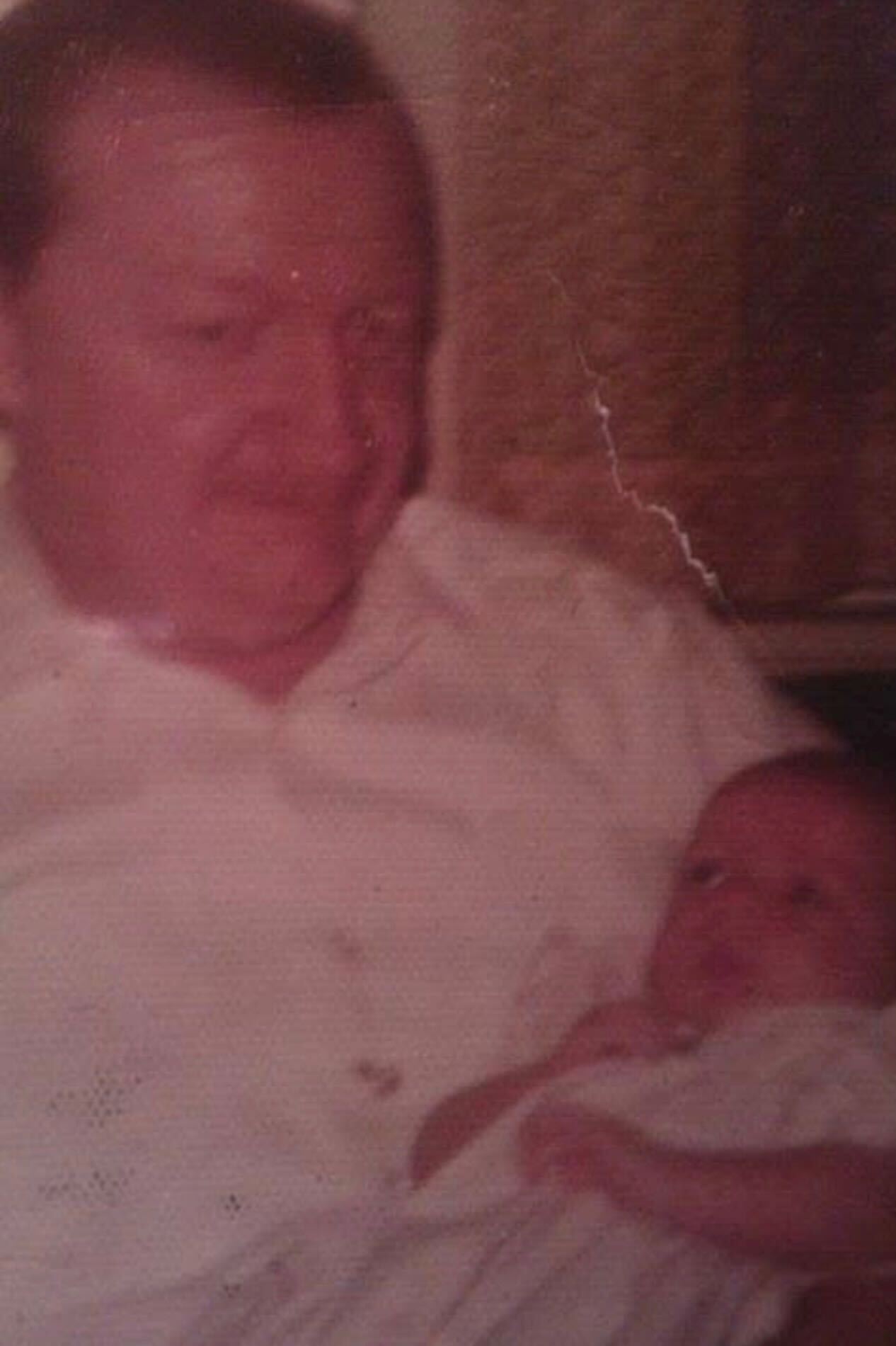
    Michael Kerrigan holding his granddaughter, Angela Kerrigan Hightower. His wife later adopted Angela to be one of her seven children.

    Initially, two of Kerrigan’s daughters said they supported Scott’s release and could forgive her, but later changed their minds and asked the board of pardons and parole not to release her. They said they do not believe she has taken enough responsibility for the crime.

    Angela Kerrigan Hightower, a grandchild of Kerrigan’s who was later adopted by his wife and would have been his seventh child, said Wednesday that “the system failed the victims in this case.” She said she does not believe Scott has shown sufficient remorse, and that she and Saxton should have had to serve a life sentence for the suffering they brought her family.

    “I want to know,” she said, “where is the justice for the victims in this case.”

    Scott has said she deeply regrets what happened. She said Wednesday that she hopes to use her time outside of prison to tell the story of the cycle of drug and sexual abuse and codependency that she has said contributed to her actions.

    She also wants to push for the release of other women who she said have been reformed in prison and don’t deserve to die there.

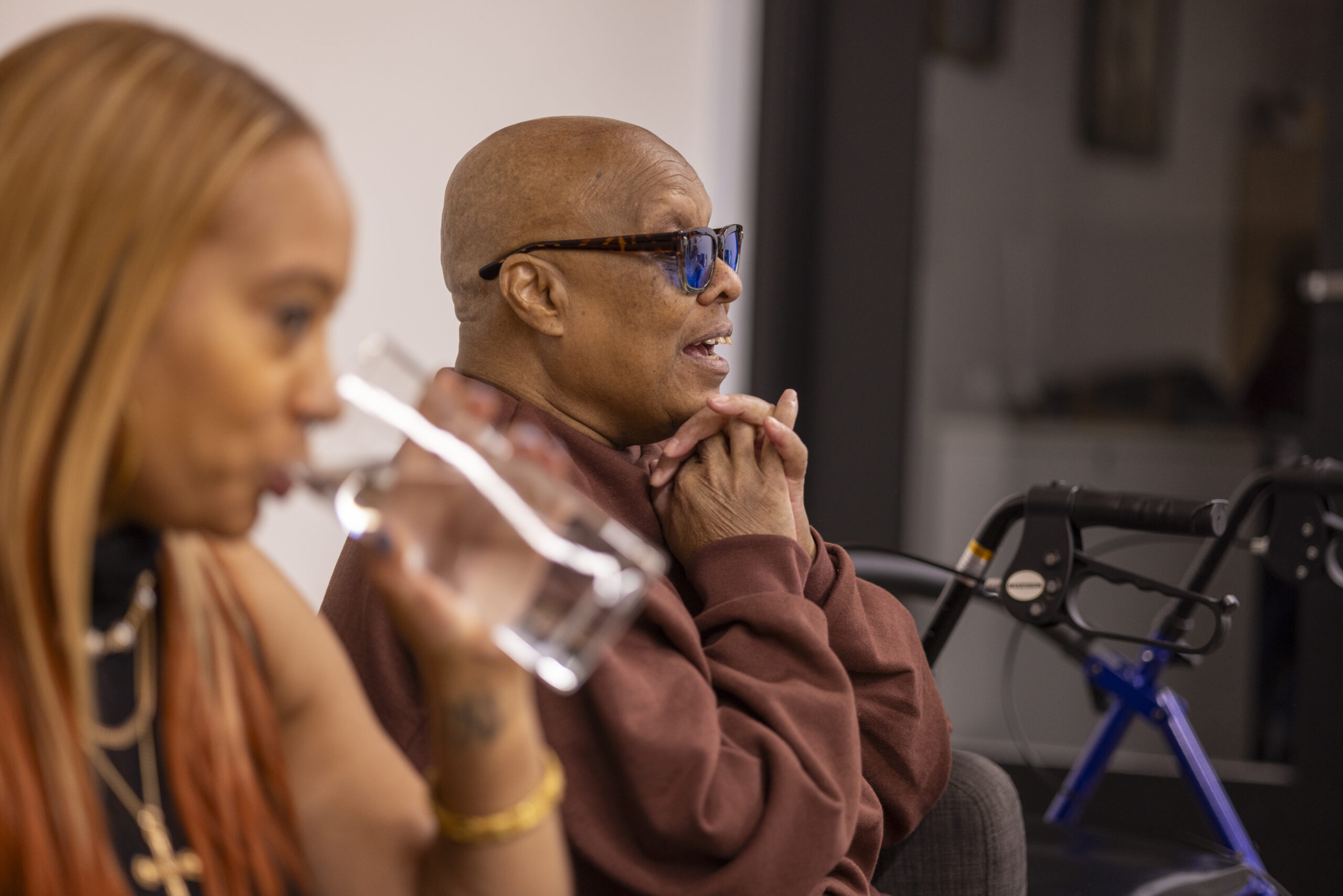
    Marie Scott, 72, joined a Zoom call with the Coalition to Abolish Death by Incarceration alongside her daughter, Hope Segers, and grandson Dashawn Green.

    Scott’s grandson, Dashawn Green, 28, said he wants to get his grandmother’s health and diet back on track, introduce her to his girlfriend and miniature schnauzer, and maybe even plan a road trip.

    Scott said her first order of business is to find a church.

    Seated on the couches in the Abolitionist Law Center in North Philadelphia Wednesday night, she recalled gathering for her final Sunday service inside the prison last week and saying goodbye to the women in the facility who raised her.

    “You’re my family,” she said she told them. “I don’t make promises because they’re made to be broken, but if you don’t have your word, then you don’t have anything. And I give you my word, I am going to die trying to get all of my women out.”

    “It feels like I’m on another planet,” Marie Scott, 72, said of her newfound freedom.
  • Avelo stops deportation flights in Arizona; protesters in Delaware applaud

    Avelo stops deportation flights in Arizona; protesters in Delaware applaud

    Avelo, the only commercial airline serving Wilmington’s airport, has ended its contract flights to carry foreign nationals detained by U.S. immigration agents. The change takes place amid a larger consolidation of Avelo’s routes.

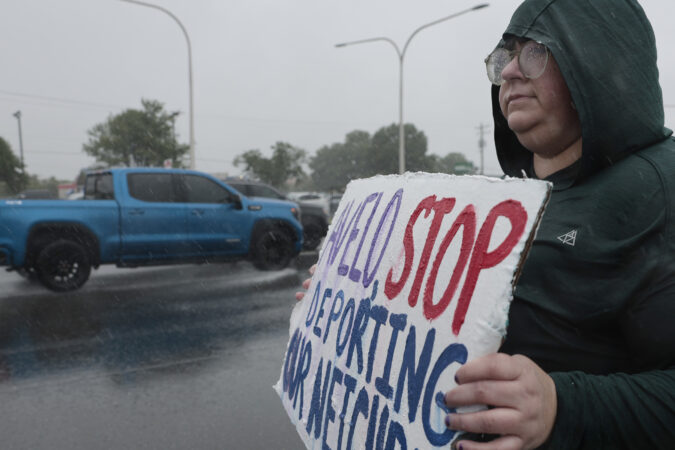
    The Delaware Stop Avelo Coalition of groups critical of President Donald Trump’s deportation policies hailed the airline’s move. They had been leading pickets at the Wilmington airport in New Castle, Del., since last spring, when Avelo joined several charter airlines transporting deportees for the Department of Homeland Security.

    For Avelo, the latest move was part of a cost-cutting reorganization “streamlining its network” to four of its regional bases: Wilmington; New Haven, Conn.; Charlotte/Concord, N.C.; and Lakeland, Fla. Among the regional bases it is closing is Mesa, Ariz., which handled deportation flights.

    “Avelo will close the base” in Arizona, where it had managed what the airline called “removal flights” for the government, “and will conclude participation in the DHS charter program” by Jan. 27, Avelo spokesperson Courtney Goff said in a statement. The airline said earlier that it had not moved deportees through Delaware.

    Avelo also said it has gotten rid of six Boeing jets. Airline industry information sites are reporting DHS has picked up at least some of those former Avelo airliners, as if moving deportation capacity in-house.

    Avelo plans a new base at the McKinney National Airport, near Dallas, later this year.

    Avelo CEO Andrew Levy last year said the DHS contract was part of the airline’s plans for growing and maintaining operations. Levy started the airline in 2020 and has rapidly increased its route network, but also has acted quickly to cut and shift unprofitable service.

    The coalition, a group including local Democratic Party activists in chapters of the Indivisible organization, Working Families Party affiliates, the Delaware Democratic Socialists of America, and Unitarian-Universalists, said in a statement that it welcomed Avelo’s decision to end deportation flights, “especially those without due process.”

    “We don’t know, to be honest, but we have indications from behind the scenes that we had some effect. Sometimes these things build and build,” said Gayle Gibson, an engineer who serves as coalition spokesperson.

    The coalition also coordinated some of the sign-waving picketing with actions at other airports Avelo serves around the country.

    Gibson noted that Wilmington City Council passed a resolution calling on Avelo to stop flying deportees rushed into custody without due process. State legislators drafted similar bills, which had not yet advanced to a vote, and “hundreds” of protesters had turned out to airport picket lines, local-government meetings, and University of Delaware rallies to pressure Avelo. Leaders also met with Gov. Matt Meyer and other top state officials.

    Safety concerns raised by Avelo employees also had an impact, Gibson said. “This shows Delaware stands behind businesses that operate according to laws and value people and due process.”

    The organizers in their statement took credit for making Avelo’s deportation flights “politically and reputationally radioactive,” leading to the company’s decision to stop.

    Avelo cited poor financial returns. The program did not pay Avelo enough “to overcome its operational complexity and costs,” according to Goff’s statement.

    State and local officials in Connecticut, New York, and other states had called on Avelo to stop the deportation-related flights.

    Meyer, who welcomed Avelo to the airport when he was New Castle County executive in the early 2020s, had said he personally boycotted Avelo after the protests began.

    Activists said they couldn’t measure the effect of any customer boycott.

    “We did not see an impact regarding customers choosing to fly,” said Goff, the airline spokesperson. Customer flights rose to 2.6 million last year, up 11% from 2024, as planes were fuller. She credited low fares and on-time reliability.

    The protests put Meyer and other Democratic officials in a quandary. They had encouraged Avelo to begin service from the airport, which formerly managed only charter, corporate, and general-aviation flights, as a way of boosting Delaware’s corporate employment sector as the state economy turns from heavy and chemical manufacturing toward biotech and other developing industries.

    Meyer did not act on protesters’ demands that the state cancel tax incentives and other Avelo financial benefits to pressure the airline to end the flights.

    The airport is operated by the Delaware River and Bay Authority, which also controls the Delaware Memorial Bridge and Cape May-Lewes ferry. The authority’s board represents the Democratic-led states of Delaware and New Jersey.

    Like the governor, the authority declined activist requests to pressure Avelo, saying the airline had the right to conduct its business the way it sees fit.

    “We’re aware of the community concerns regarding Avelo’s past operations at other airports,“ James Salmon, the authority’s spokesperson, said in a statement after Avelo announced an end of the flights. “We’ve consistently maintained a neutral position” and focused on keeping the airport accessible to customers for Avelo’s flights to Florida and other destinations. The airline’s flights from other airports were “outside the scope” of the agency’s authority.

    “This decision proves that public pressure really works,” the coalition said in its statement. It said it would keep pushing proposed laws to prevent airlines receiving state benefits from “quietly” resuming flights or other deportation contractors from winning government support.

  • U.S. reverses course on limiting alcohol to one or two drinks a day

    U.S. reverses course on limiting alcohol to one or two drinks a day

    Thousands of people pause their cocktail consumption and embrace Dry January every year. The percentage of Americans who say they drink alcohol has hit new lows. And more and more, researchers warn we should stay away from drinking all together.

    But the ongoing debate over the health harms of alcohol took a turn Wednesday after the United States dropped its long-standing guidance to consume no more than one or two drinks per day. It marks a pull back in messaging for the federal government — under President Joe Biden, the U.S. surgeon general recommended adding cancer warnings to alcohol products, and reassessing limits on alcohol consumption.

    During a news conference rolling out new U.S. dietary guidelines on Wednesday, Mehmet Oz, the administrator of the Centers for Medicare & Medicaid Services, said people should drink judiciously. Then he added it is a “social lubricant that brings people together” and “there’s probably nothing healthier than having a good time with friends in a safe way.”

    Critics scoffed at the characterization, saying Oz was echoing talking points from the alcohol industry. Mike Marshall, CEO of the U.S. Alcohol Policy Alliance, called the statement irresponsible and said the pared-down guidelines fly in the face of Health Secretary Robert F. Kennedy Jr.’s Make American Healthy Again movement.

    “Alcohol is a toxic, addictive carcinogen,” Marshall said. “The fact the guidelines are going backward is disappointing and alarming.”

    The new guidelines call for people to “consume less alcohol for better overall health” while cautioning pregnant women, those recovering from alcohol use disorder and patients taking certain medications to avoid alcohol all together.

    Previous U.S. Department of Agriculture guidelines were significantly more detailed, defining moderate consumption as no more than two drinks a day for men, and one drink for women — while explaining the risks associated with heavy drinking, such as heart disease, liver disease, and some types of cancer. They also defined binge drinking as five drinks within two hours for men, and four for women.

    Public health advocates said the government’s new messaging was vague and glossed over the harms of alcohol.

    The new guidelines do not allow “Americans to really have any sort of sense of where the risks begin,” said Marissa Esser, a public health consultant who headed the Centers for Disease Control and Prevention Alcohol Program until it was disbanded by the Trump administration in April. “Americans deserve to be informed about this information in order for them to be able to make their own decisions about their drinking and their health.”

    The language on alcohol was included as part of broader overhaul of dietary guidelines under Kennedy, which included calls for Americans to limit intake of processed foods while endorsing products such as whole milk, butter, and red meat.

    The release of the new guidelines comes as Americans have become increasingly wary of the well-studied harms of drinking, which apart from diseases can include violence, domestic strife, and car crashes. Last year, a Gallup poll found that 53% of Americans say drinking in moderation is bad for health, the first time the polling company found a majority who feel that way.

    Americans’ alcohol consumption surged during the worst of the coronavirus pandemic, causing even more deaths. The number of adult drinkers also grew: Gallup found in 2022 that 67% of Americans reported drinking, the highest number in decades. Rates have since decreased, as researchers have noted a steep decline in drinking among young people.

    The industry and some Republican lawmakers had pushed back against federally funded studies, including the one published in January 2025 that concluded even moderate drinking could carry health risks.

    Tim Naimi, one of the co-authors of that report, noted that males who consume two drinks per week have a 1 in 25 chance of dying prematurely from alcohol. Naimi said he had hoped that guidelines would be tighter, calling for no more than a few drinks per week, or no more than one per day for men and women.

    But Naimi said he appreciated that the guidelines still espouse limiting alcohol for better health. “I think that’s what the public now understands — when it comes to alcohol, the less is better,” said Naimi, director of the University of Victoria’s Canadian Institute for Substance Use Research.

    Countries such as Canada and the United Kingdom have pushed citizens to drink less, reflecting the broader scientific consensus about the harms of alcohol, said David H. Jernigan, a Boston University professor of health law and a critic of alcohol industry marketing.

    “The human body is the same no matter what country you’re in,” Jernigan said, adding: “With these vague guidelines, the alcohol industry got a really nice New Year’s present.”

    The alcohol industry has struggled amid tariffs and Americans prioritizing wellness, drinking less, or embracing nonalcoholic options. Nearly 30% of U.S. consumers said they planned to spend less money on alcoholic drinks during the next three months amid tighter budgets and economic unease, McKinsey & Company reported in December.

    A coalition of alcohol industry groups on Wednesday issued a cautious statement, emphasizing that guidelines have long stressed moderation and that the new version is “underpinned by the preponderance of scientific evidence.” The Beer Institute, a trade group, added that the nation’s beer industry has “championed responsible consumption for decades” and encourages moderation in drinking.

    The alcohol industry worried that under Kennedy and Trump — who famously doesn’t drink — guidelines could have been stricter, said Dave Williams, president of Bump Williams Consulting, an analytics research firm that specializes in the alcoholic beverage industry.

    “The latest guidelines came as more of a relief, but aren’t necessarily a fix” for the industry’s troubles, he said.

  • Villanova suffers first Big East loss to Creighton, snaps five-game win streak

    Villanova suffers first Big East loss to Creighton, snaps five-game win streak

    Villanova succumbed to Creighton, 76-72, marking its first home and conference loss of the season on Wednesday night.

    Villanova (12-3, 3-1 Big East) had its five-game winning streak snapped and picked up its first defeat since Dec. 9. The Wildcats could not find defensive stops in the second half, which was coupled with poor three-point shooting. Creighton (10-6, 4-1) pulled away after shooting 18-for-27 (67%) from the field in the second.

    Acaden Lewis finished with a team-high 20 points for Villanova. He dished out five assists within the first few minutes of the game and ended with seven and only one turnover. The freshman guard also collected a game-high three steals. Lewis is averaging 13.4 points and 4.3 assists in conference play.

    In the paint, ’Nova’s Duke Brennan continued to be a force, picking up his sixth double-double of the season with 16 points and 12 rebounds (seven offensive).

    Villanova guard Acaden Lewis led the team with 20 points against Creighton on Wednesday.

    Villanova shot 44% from the field and 25% from beyond the arc, compared to Creighton’s 50% on field goals and 30.4% on three-pointers.

    Next, Villanova will visit Marquette (6-10, 1-4) on Saturday at 2:30 p.m. (TNT/truTV). The Wildcats lead the all-time series, 28-20.

    Decisive second half

    For just the second time this season, Villanova was outscored in the second half, 46-38. The only other time was in the 76-66 overtime win against Wisconsin on Dec. 19.

    Villanova had no answer defensively for a surging Creighton offense. The Bluejays spun off a 13-2 run, while Villanova went on a three-minute scoring drought.

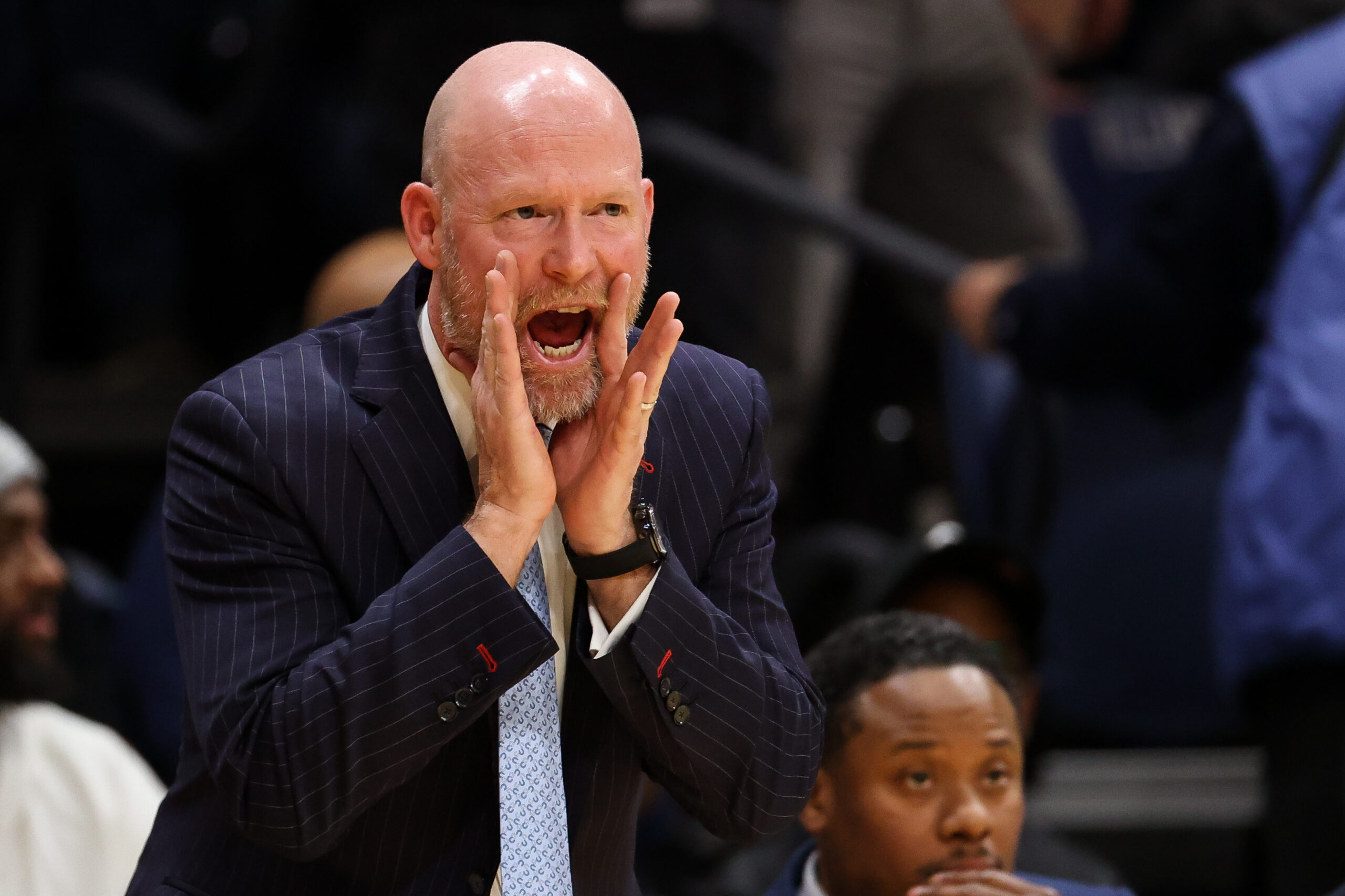
    Kevin Willard coaching Villanova during the second half against Creighton on Wednesday.

    “I thought [the Bluejays] did a really good job of using their size to their advantage,” Villanova coach Kevin Willard said. “I thought [Josh] Dix and [Blake] Harper made some really big plays just using their size against us, and every time we tried to get a stop. You’ve got to give those two credit. They played really well.”

    Creighton made Villanova’s best shooter, redshirt sophomore Bryce Lindsay, a nonfactor. Lindsay, who averaged 45.8% from deep in the last three games, went 0-for-3 on three-pointers against Creighton. Villanova made only 2 of 12 three-pointers in the second half.

    “We had our opportunities at the rim,” Willard said. “I thought [Jasen] Green had two really good wall-ups towards the end, but we had our opportunities. It had nothing to do with [our] offense. It was totally just abysmal defense.”

    Beaten on the boards

    Villanova kept Creighton at bay in the first half, and at one point led by25-15. However, it all slipped away after halftime. Villanova gave up 13 offensive rebounds, which Creighton turned into 11 second-chance points.

    “Just defense,” Willard said when asked about what he took away from the loss. “I thought we took some bad shots in the first half, when we had a good run going. And I thought we were playing good defensively early. So I thought our offense in the first half was the issue. But defensively, you just can’t give up 13 offensive rebounds to a Greg McDermott team. You’ve got no chance.”

    Villanova forward Duke Brennan (center) reaches for the ball against Creighton guard Ty Davis (9).

    Brennan was quick to take accountability for Villanova’s defensive performance.

    “Being a senior, I need to adjust my ball-screen coverages on different teams as we play,” Brennan said. “I don’t think I did a great job at it tonight, but I do look at the film and help out our defense. I’m that line for us.”

    Creighton’s 76 points were the most a conference opponent has scored against the Wildcats this season.

    Watching rotations

    At the beginning of the season, Willard consistently rotated nine to 10 players each game. Injuries limited the rotations with Devin Askew and Zion Stanford missing time to start the season. Villanova had multiple games with eight or more scorers.

    Now, it looks like Willard has found his rotations that work efficiently. The coach has leaned on his starting five of Lewis, Lindsay, Tyler Perkins, Matt Hodge, and Brennan for a bulk of the minutes, with most of them playing an average of 30 minutes or more.

    As of recently, only Askew and Malachi Palmer have had meaningful minutes off the bench. Freshman guard Chris Jeffrey has missed the last five games due to a knee injury that required surgery, sidelining him indefinitely.

  • The ICE agent in Minneapolis was not in the vehicle’s path when he fired at Renee Good, video shows

    The ICE agent in Minneapolis was not in the vehicle’s path when he fired at Renee Good, video shows

    A deadly encounter in Minneapolis on Wednesday between federal Immigration and Customs Enforcement agents and a 37-year-old woman escalated in a matter of seconds.

    In the aftermath, Homeland Security Secretary Kristi L. Noem said the woman had committed an act of “domestic terrorism,” first disobeying officers’ commands and then weaponizing her SUV by attempting to “run a law enforcement officer over.” President Donald Trump said the woman “violently, willfully and viciously ran over the ICE officer.”

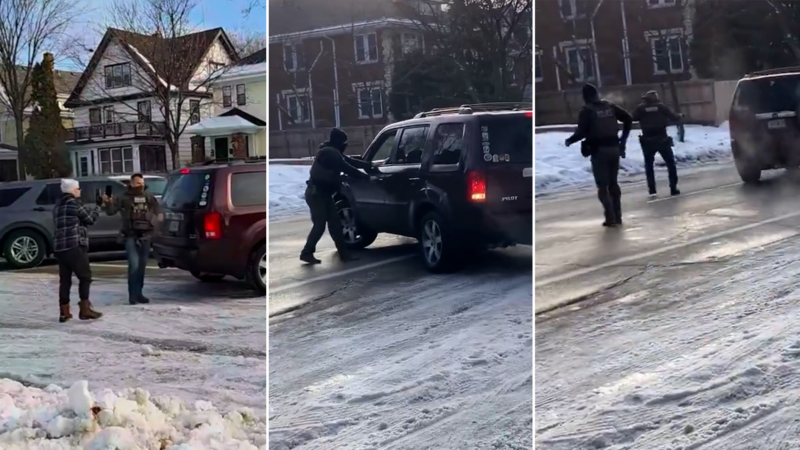
    A frame-by-frame analysis of video footage, however, raises questions about those accounts. The SUV did move toward the ICE agent as he stood in front of it. But the agent was able to move out of the way and fire at least two of three shots from the side of the vehicle as it veered past him, according to the analysis.

    Video taken by a witness shows Renee Nicole Good’s vehicle, a burgundy Honda Pilot SUV, stopped in the middle of a one-way road in a residential area of south Minneapolis on Wednesday morning. That footage and other videos examined by The Washington Post do not show the events leading up to that moment.

    The agent, who has not been publicly identified, can be seen standing behind Good’s SUV, holding up a phone and pointing it toward a woman who also has her phone out. The two appear to be recording each other.

    The agent then walks around the passenger side of Good’s vehicle.

    A pickup truck pulls up, and two additional agents exit the vehicle and approach Good, the video shows. A voice can be heard saying to “get out” of the car at least two times. One of the agents puts a hand on the opening of the driver’s side window and with his other hand tugs twice quickly on the door handle, but the driver’s door does not open.

    That same agent puts his hand farther in the opening of Good’s window, and almost simultaneously, the SUV begins to back up.

    The agent who was first seen behind Good’s SUV reemerges in front of the vehicle, still appearing to hold up a phone. The SUV quickly pulls forward, and then veers to the right, in the correct direction of traffic on the one-way street.

    As the vehicle moves forward, video shows, the agent moves out of the way and at nearly the same time fires his first shot. The footage shows that his other two shots were fired from the side of the vehicle.

    Videos examined by The Post, including one shared on Truth Social by Trump, do not clearly show whether the agent is struck or how close the front of the vehicle comes to striking him. Referring to the officer, Trump wrote in his post that it was “hard to believe he is alive.” Video shows the agent walking around the scene for more than a minute after the shooting.

    Good’s SUV travels a short distance before crashing into a car parked on the opposite side of the street.

    The FBI and Minnesota’s Bureau of Criminal Apprehension are investigating the shooting. The White House and the Department of Homeland Security did not immediately respond to a request seeking comment for this story.

  • Despite sluggish second half, Temple prevails over East Carolina to extend winning streak

    Despite sluggish second half, Temple prevails over East Carolina to extend winning streak

    Temple looked like it would easily secure its seventh straight victory by beating East Carolina, a team that sits at the bottom of the American Conference, on Wednesday at the Liacouras Center.

    The Owls (11-5, 3-0 American) carried a 15-point lead into halftime. Then ECU started to crawl back. The Pirates (5-10, 0-2) got within five points in second half, but it was too little too late.

    A 29-point surge from ECU guard Jordan Riley wasn’t enough as Temple shook off its horrid offensive slump and finished with a 75-67 victory, marking its longest winning streak since the 2014-15 season.

    “We told our guys at halftime, ‘Hey, they’re going to ramp it up. They’re going to go on a run. We’ve got to be ready,’” coach Adam Fisher said. “I know we got a little stagnant and didn’t score as much as we would have liked in parts of that second half. But winning is hard. … So again, I’m really proud of our guys and I thought it took everybody to prepare the right way and then to get this win here tonight.”

    Next, Temple will face a true test in the American when the Owls visit defending conference champion Memphis (7-7, 2-0) on Wednesday (8 p.m., ESPN+).

    First-half defense

    Temple’s mentality all season has been simply to play defense. The Owls had one of the worst defenses in the country last season, and they’ve shown signs of improvement this year, allowing 70.4 points per game, the fourth-lowest average in the American.

    On Wednesday, the Pirates had little room to breathe as Temple searched for momentum on offense.

    The result was 12 turnovers, with eight coming in the first half. ECU had multiple scoreless stretches, including a five-minute drought, which helped Temple push the lead to seven points.

    The biggest win was Temple’s success on the glass. After ECU center Giovanni Emejuru picked up his second foul, Temple managed to get through.

    Guards Gavin Griffiths, who finished with a season-high 24 points, and Masiah Gilyard were key contributors for the Owls, as they finished with six and five rebounds, respectively.

    Griffiths also was Temple’s best defender. He swatted away four shots and had two steals.

    Hot-and-cold offense

    Toward the end of the half, Griffiths ended his 12-minute scoreless stretch with a three-pointer. Owls guard Derrian Ford, who missed the last game with an injury, started finding his rhythm. He finished with 18 points, with 10 coming at the free-throw line.

    But the offensive slump returned after halftime.

    Temple guard Gavin Griffiths scored a season-high 24 points on Wednesday.

    The Pirates clamped down after the break, limiting any chance for the Owls to stay comfortable.

    Guard Aiden Tobiason, who is second on the team in scoring, was a nonfactor. His first and only field goal came late in the game, as he finished with four points.

    Temple finished the second half going 8-for-22 and had six turnovers, forcing the defense to save the game. Then came a big three-pointer from Griffiths to make it 65-56 with 3 minutes, 21 seconds left.

    “I just felt like I was open, so I was going to shoot it,” Griffiths said. “My teammates did a great job finding me. I think I only took one dribble for my three. So most of them are catch-and-shoot.”

    Containing Riley

    Temple’s game plan was to stop Riley. The former Temple guard entered his homecoming as the conference’s leading scorer with 20.8 points per game, powering an offense that averages 67.3.

    In the first half, Riley was stuffed. But in the second half, the seal was lifted, and Temple had no way to stop him.

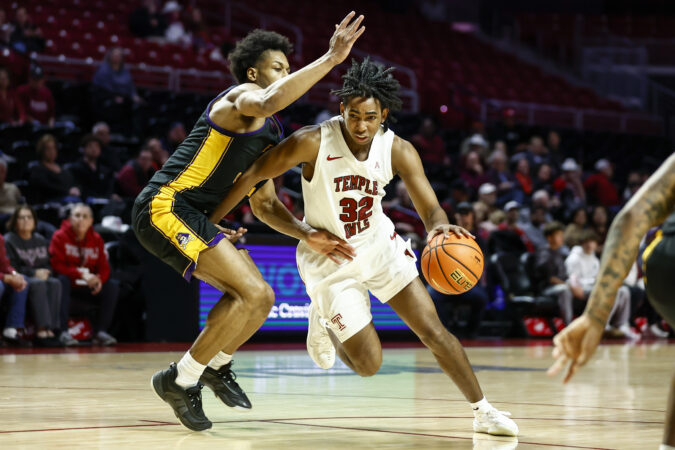
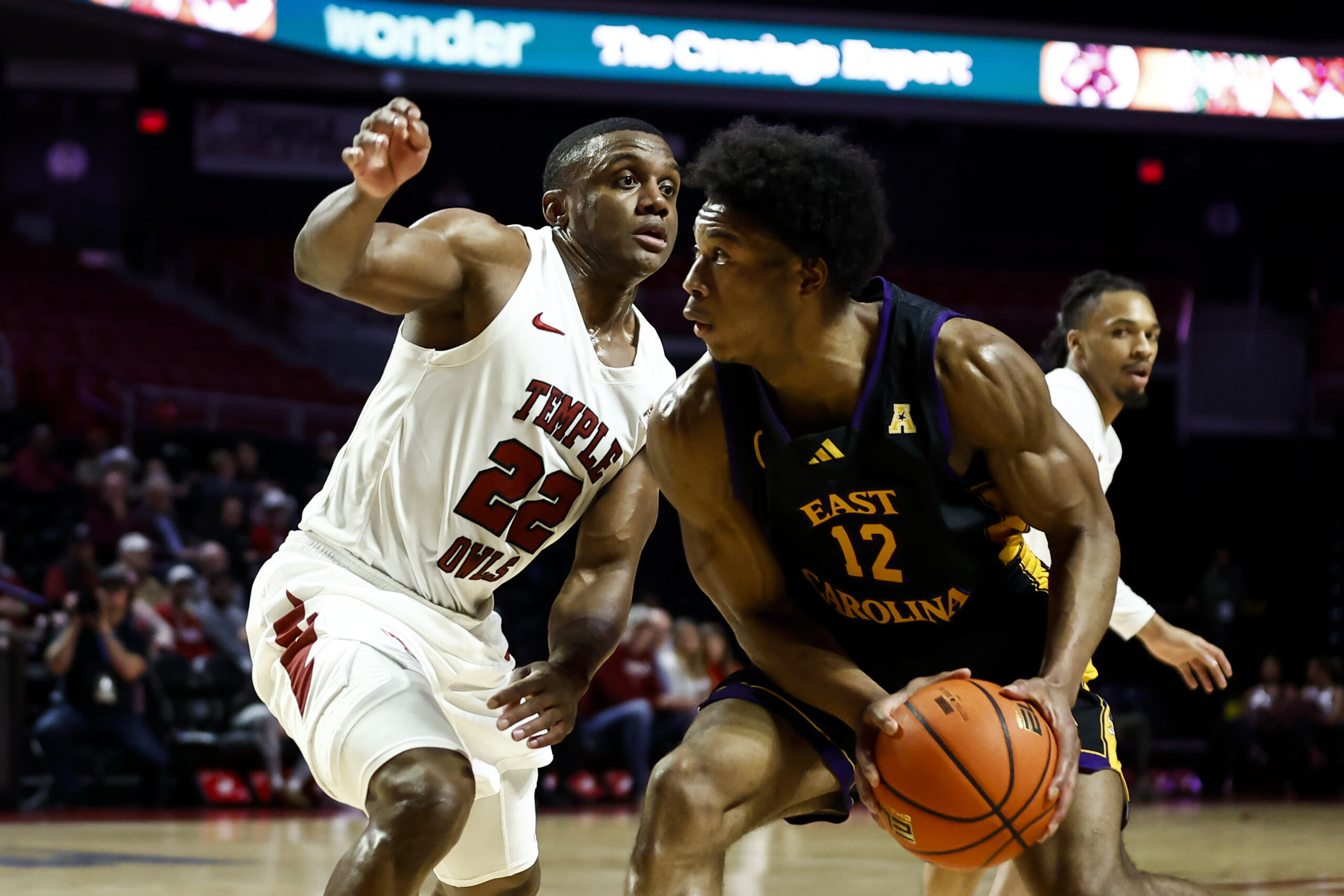
    Temple guard Derrian Ford guards East Carolina guard Jordan Riley on Wednesday.

    “Jordan Riley is a fantastic player,” Fisher said. “I thought Jordan made some tough shots. He gets downhill. We know how good he can be, but in the second half they were really good, and we’ve got to be better. Our second-half defense wasn’t where we needed to be.”

    Riley’s 23 second-half points kept the Pirates in the game as they finished the half with 46 points. But ultimately Temple’s lead was too big to overcome.

  • A woman died in an early-morning fire in Ogontz

    A woman died in an early-morning fire in Ogontz

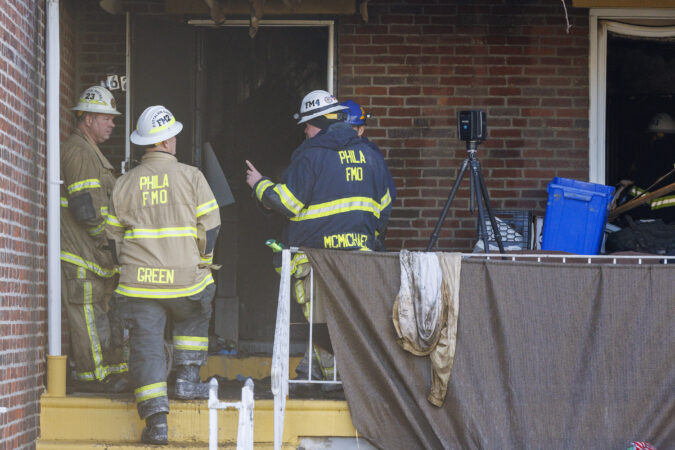
    Philadelphia firefighters pulled a 60-year-old woman away from a burning building where she was trapped early Thursday morning, but she later died at a hospital.

    The fire department responded to the blaze around 4:45 a.m. on the 6200 block of Ogontz Avenue in North Philadelphia. Firefighters arrived to find a heavy fire scorching throughout the two-story rowhouse.

    About 60 firefighters, medics, and support staff were at the scene, officials said. Upon searching the house, firefighters found an unresponsive woman, who did not survive. The Medical Examiner’s Office will soon determine the cause of death, with the Fire Marshal’s Office investigating the cause of the fire.

    There have been at least two deadly fires in the area over the last month, in addition to Thursday. Additionally, two people were rescued and survived a fire in South Philadelphia Wednesday, according to CBS.

    Earlier this week, Bucks County officials confirmed the death of a third person related to the Bristol Health & Rehab Center fire, which claimed the lives of two other people and injured 20 others. Days before the Bristol fire, a deadly fire in Upper Darby killed one person, critically injured another, and left a firefighter and a handful of others with less-severe injuries.