Blog

  • The ICE agent in Minneapolis was not in the vehicle’s path when he fired at Renee Good, video shows

    The ICE agent in Minneapolis was not in the vehicle’s path when he fired at Renee Good, video shows

    A deadly encounter in Minneapolis on Wednesday between federal Immigration and Customs Enforcement agents and a 37-year-old woman escalated in a matter of seconds.

    In the aftermath, Homeland Security Secretary Kristi L. Noem said the woman had committed an act of “domestic terrorism,” first disobeying officers’ commands and then weaponizing her SUV by attempting to “run a law enforcement officer over.” President Donald Trump said the woman “violently, willfully and viciously ran over the ICE officer.”

    A frame-by-frame analysis of video footage, however, raises questions about those accounts. The SUV did move toward the ICE agent as he stood in front of it. But the agent was able to move out of the way and fire at least two of three shots from the side of the vehicle as it veered past him, according to the analysis.

    Video taken by a witness shows Renee Nicole Good’s vehicle, a burgundy Honda Pilot SUV, stopped in the middle of a one-way road in a residential area of south Minneapolis on Wednesday morning. That footage and other videos examined by The Washington Post do not show the events leading up to that moment.

    The agent, who has not been publicly identified, can be seen standing behind Good’s SUV, holding up a phone and pointing it toward a woman who also has her phone out. The two appear to be recording each other.

    The agent then walks around the passenger side of Good’s vehicle.

    A pickup truck pulls up, and two additional agents exit the vehicle and approach Good, the video shows. A voice can be heard saying to “get out” of the car at least two times. One of the agents puts a hand on the opening of the driver’s side window and with his other hand tugs twice quickly on the door handle, but the driver’s door does not open.

    That same agent puts his hand farther in the opening of Good’s window, and almost simultaneously, the SUV begins to back up.

    The agent who was first seen behind Good’s SUV reemerges in front of the vehicle, still appearing to hold up a phone. The SUV quickly pulls forward, and then veers to the right, in the correct direction of traffic on the one-way street.

    As the vehicle moves forward, video shows, the agent moves out of the way and at nearly the same time fires his first shot. The footage shows that his other two shots were fired from the side of the vehicle.

    Videos examined by The Post, including one shared on Truth Social by Trump, do not clearly show whether the agent is struck or how close the front of the vehicle comes to striking him. Referring to the officer, Trump wrote in his post that it was “hard to believe he is alive.” Video shows the agent walking around the scene for more than a minute after the shooting.

    Good’s SUV travels a short distance before crashing into a car parked on the opposite side of the street.

    The FBI and Minnesota’s Bureau of Criminal Apprehension are investigating the shooting. The White House and the Department of Homeland Security did not immediately respond to a request seeking comment for this story.

  • Despite sluggish second half, Temple prevails over East Carolina to extend winning streak

    Despite sluggish second half, Temple prevails over East Carolina to extend winning streak

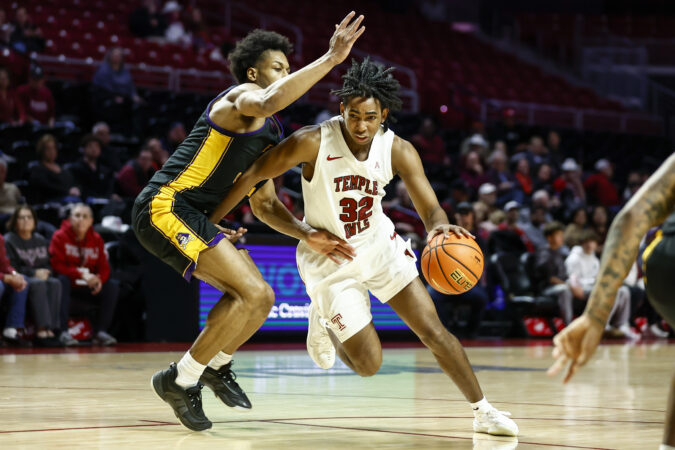
    Temple looked like it would easily secure its seventh straight victory by beating East Carolina, a team that sits at the bottom of the American Conference, on Wednesday at the Liacouras Center.

    The Owls (11-5, 3-0 American) carried a 15-point lead into halftime. Then ECU started to crawl back. The Pirates (5-10, 0-2) got within five points in second half, but it was too little too late.

    A 29-point surge from ECU guard Jordan Riley wasn’t enough as Temple shook off its horrid offensive slump and finished with a 75-67 victory, marking its longest winning streak since the 2014-15 season.

    “We told our guys at halftime, ‘Hey, they’re going to ramp it up. They’re going to go on a run. We’ve got to be ready,’” coach Adam Fisher said. “I know we got a little stagnant and didn’t score as much as we would have liked in parts of that second half. But winning is hard. … So again, I’m really proud of our guys and I thought it took everybody to prepare the right way and then to get this win here tonight.”

    Next, Temple will face a true test in the American when the Owls visit defending conference champion Memphis (7-7, 2-0) on Wednesday (8 p.m., ESPN+).

    First-half defense

    Temple’s mentality all season has been simply to play defense. The Owls had one of the worst defenses in the country last season, and they’ve shown signs of improvement this year, allowing 70.4 points per game, the fourth-lowest average in the American.

    On Wednesday, the Pirates had little room to breathe as Temple searched for momentum on offense.

    The result was 12 turnovers, with eight coming in the first half. ECU had multiple scoreless stretches, including a five-minute drought, which helped Temple push the lead to seven points.

    The biggest win was Temple’s success on the glass. After ECU center Giovanni Emejuru picked up his second foul, Temple managed to get through.

    Guards Gavin Griffiths, who finished with a season-high 24 points, and Masiah Gilyard were key contributors for the Owls, as they finished with six and five rebounds, respectively.

    Griffiths also was Temple’s best defender. He swatted away four shots and had two steals.

    Hot-and-cold offense

    Toward the end of the half, Griffiths ended his 12-minute scoreless stretch with a three-pointer. Owls guard Derrian Ford, who missed the last game with an injury, started finding his rhythm. He finished with 18 points, with 10 coming at the free-throw line.

    But the offensive slump returned after halftime.

    Temple guard Gavin Griffiths scored a season-high 24 points on Wednesday.

    The Pirates clamped down after the break, limiting any chance for the Owls to stay comfortable.

    Guard Aiden Tobiason, who is second on the team in scoring, was a nonfactor. His first and only field goal came late in the game, as he finished with four points.

    Temple finished the second half going 8-for-22 and had six turnovers, forcing the defense to save the game. Then came a big three-pointer from Griffiths to make it 65-56 with 3 minutes, 21 seconds left.

    “I just felt like I was open, so I was going to shoot it,” Griffiths said. “My teammates did a great job finding me. I think I only took one dribble for my three. So most of them are catch-and-shoot.”

    Containing Riley

    Temple’s game plan was to stop Riley. The former Temple guard entered his homecoming as the conference’s leading scorer with 20.8 points per game, powering an offense that averages 67.3.

    In the first half, Riley was stuffed. But in the second half, the seal was lifted, and Temple had no way to stop him.

    Temple guard Derrian Ford guards East Carolina guard Jordan Riley on Wednesday.

    “Jordan Riley is a fantastic player,” Fisher said. “I thought Jordan made some tough shots. He gets downhill. We know how good he can be, but in the second half they were really good, and we’ve got to be better. Our second-half defense wasn’t where we needed to be.”

    Riley’s 23 second-half points kept the Pirates in the game as they finished the half with 46 points. But ultimately Temple’s lead was too big to overcome.

  • A woman died in an early-morning fire in Ogontz

    A woman died in an early-morning fire in Ogontz

    Philadelphia firefighters pulled a 60-year-old woman away from a burning building where she was trapped early Thursday morning, but she later died at a hospital.

    The fire department responded to the blaze around 4:45 a.m. on the 6200 block of Ogontz Avenue in North Philadelphia. Firefighters arrived to find a heavy fire scorching throughout the two-story rowhouse.

    About 60 firefighters, medics, and support staff were at the scene, officials said. Upon searching the house, firefighters found an unresponsive woman, who did not survive. The Medical Examiner’s Office will soon determine the cause of death, with the Fire Marshal’s Office investigating the cause of the fire.

    There have been at least two deadly fires in the area over the last month, in addition to Thursday. Additionally, two people were rescued and survived a fire in South Philadelphia Wednesday, according to CBS.

    Earlier this week, Bucks County officials confirmed the death of a third person related to the Bristol Health & Rehab Center fire, which claimed the lives of two other people and injured 20 others. Days before the Bristol fire, a deadly fire in Upper Darby killed one person, critically injured another, and left a firefighter and a handful of others with less-severe injuries.

  • Sizing up the area’s top high school boys’ basketball teams in the 2025-26 season

    Sizing up the area’s top high school boys’ basketball teams in the 2025-26 season

    Since the PIAA basketball championships were canceled because of the COVID-19 pandemic in 2020, District 12 boys’ basketball teams, comprised of the Catholic and Public Leagues, have won 11 state titles and appeared in 20 of the 30 state finals. No other district across the state has come close to matching that.

    District 12 is the only area to ever four-peat in the state championships, doing it twice: once in 2022 (Class 6A Roman Catholic, 5A Imhotep Charter, 4A Neumann Goretti, and 3A Devon Prep), and again last year, when the Catholic League became the first league to win four state titles in one season (6A Father Judge, 5A Neumann Goretti, 4A Devon Prep, and 3A West Catholic).

    It shows the dominance the Philadelphia area has on high school basketball.

    This season should be no different, even though there are stark differences for several marquee programs. Roman Catholic and West Catholic have new coaches. Imhotep will be competing for the second straight year as a Class 6A school, while two-time defending state champion Devon Prep and two-time defending Inter-Ac League champ Penn Charter have seen most of their impact players graduate.

    Some prominent players have changed schools. Former Imhotep guard RJ Smith, who’s committed to La Salle, is now at Roman Catholic. Academy of the New Church’s Marquis Newson is now at Neumann Goretti, and Germantown Friends’ all-time leading scorer Jordan Dill now calls Imhotep home.

    In the Catholic League, Judge will be challenged by Roman, Archbishop Wood, Neumann Goretti, and a sleeper, Bonner-Prendergast, while Imhotep appears to be the clear favorite to win another Public League title. Academy of the New Church has enough back to three-peat in the Friends Schools League, with a challenge coming from Westtown, while Coatesville, Central Bucks East, Penn Wood, Garnet Valley, and Plymouth Whitemarsh look strong in District 1 Class 6A, and Penncrest, Springfield (Delco), Holy Ghost Prep, and Upper Dublin battle for supremacy in District 1 Class 5A.

    Here are some of the area’s top boys’ basketball teams to watch during the 2025-26 season.

    Academy of the New Church

    The Lions went 15-9 overall and 6-2 in the Friends Schools League last year. ANC returns 6-foot-7 senior forwards Ryan Warren and Cam Smith, 6-4 senior guard Dior Carter, and 6-foot senior point guard Bryce Rollerson. With a senior-laden team, the Lions are looking for their first Pennsylvania Independent School Athletic Association (PAISAA) state championship since they repeated as PAISAA winners in 2009. The Lions were knocked out of last year’s PAISAA semifinals by eventual champion Phelps School.

    Archbishop Wood

    The Vikings had a rare down year last season, finishing 11-13 overall and 5-8 in the Catholic League. Under coach John Mosco, Wood has been a perennial Catholic League contender. It looks like the Vikings are back, buoyed by a core group of 6-3 senior guard Brady MacAdams, 6-4 junior guard Caleb Lundy, and 6-11 junior center Jaydn Jenkins, who is on the radar of major college programs. The addition of Dylan Powell, an athletic 6-2 sophomore guard, makes the Vikings even stronger.

    Brady MacAdams will look to be one of the leaders this season for Archbishop Wood.

    Bonner-Prendergast

    The Friars are small and fast, possibly the fastest team in the Catholic League, the deepest league in the state. They finished 18-11 overall and 7-6 in the PCL last season, including a buzzer-beating victory over league champion Father Judge. Bonner-Prendie is a guard-oriented team, centered on juniors Korey Francis — who recently received a scholarship offer to La Salle — Kam Jackson, and Jakeem Carroll. Size inside will be provided by 6-7 senior Aydin Scott. The Friars reached last year’s Class 5A state quarterfinals, where they were upset by Upper Moreland in overtime.

    Coatesville

    The Red Raiders feature 6-6 sophomore Colton Hiller, who is rated as the top sophomore in the state by 247 Sports. Hiller will be joined by 6-7 senior forwards Larry Brown and Jonas Chester and junior guards Jahmaad Williams and Chris Allegra. Coatesville went 24-7 last season and is looking to three-peat as Ches-Mont champion, beating its opponents by an average of 25 points in the league tournament last year. The Red Raiders lost in the District 1 6A semifinals to eventual champ Conestoga and reached the state quarterfinals, where they lost to eventual state finalist Roman Catholic. Coatesville is a favorite in District 1 and last won district and state titles (under the Class 4A system) in 2001, when current Coatesville coach John Allen was the star of the team.

    Father Judge

    The Crusaders experienced their best season in program history last year, going 24-7 overall and 10-3 in the Catholic League, winning the PIAA 6A state championship for the first time, and the first Catholic League title since 1998. Judge returns three prominent players from that team: Temple-bound Derrick Morton-Rivera, Merrimack-bound Rocco Westfield, and Iona-bound Max Moshinski. The Crusaders have size, though they are untested, in 6-6 sophomore Rezon Harris, a transfer from Imhotep; 7-foot junior Jamal Hamidu, a transfer from New York; and 6-7 junior Jeremiah Adedeji, who played sparingly last year for Judge.

    Imhotep

    The Panthers could be the best team in the city. They finished 26-6 last year and reached the PIAA Class 6A state semifinals, where they lost to Judge, breaking a 35-game state playoff winning streak. The Panthers’ legendary coach Andre Noble has won 10 PIAA state and 12 Public League championships. The Panthers are the five-time defending Public League champions, only the second school to win five straight titles since the legendary Gene Banks and West Philly’s five-peat (1974-78). Imhotep is looking to break that mark this season as a Class 6A school. Everything will revolve around 6-7 junior forward Zaahir Muhammad-Gray, who missed last season with a knee injury. He will be joined by Drexel-bound 6-5 senior Latief Lorenzano-White, 6-4 junior guard Kevin Benson III, 6-foot sophomore point guard Ian Smith, and 6-1 senior guard Dill.

    Malvern Prep

    The Friars return a strong nucleus that includes junior forward Nick Harken, junior point guard Marvin Reed, and 6-10 sophomore center Logan Chwastyk for a team that went 17-10 overall and 5-5 in the Inter-Ac, which has been ruled by two-time defending league champion Penn Charter. The Quakers lost most key players to graduation, leaving Malvern, under coach Paul Romanczuk, an open invitation to challenge for the Inter-Ac crown this season.

    Neumann Goretti

    The defending PIAA Class 5A state champion enters this season with vengeance, after going 18-11 (7-6 PCL) and being ousted in the Catholic League quarterfinals last season by Father Judge. Coach Carl Arrigale, who holds the all-time mark of 12 Catholic League titles and nine state titles, returns a loaded team with four starters back from Neumann Goretti’s first PIAA Class 5A state title team: Stephon “Munchie” Ashley-Wright, DeShawn Yates, Kody Colson, and 6-6 East Stroudsburg-bound Alassan N’Diaye. Add in exciting, above-the-rim 6-5 junior guard Newson, and the Saints could arguably be the best team in the city.

    Penncrest

    Why are the Lions on this list? They had eventual state champion Neumann Goretti down, 63-58, with 31 seconds left in last season’s state quarterfinals before Yates saved the Saints. Penncrest finished 23-4 last season and has one of the best coaches in the area, Mike Doyle, plus everyone back from a team that is a favorite in District 1 Class 5A. Everything will go through Carnegie Mellon-bound 6-7 senior star Mikey Mita, complemented by seniors Sean Benson, Will Stanton, Ryan McKee, and Connor Cahill, who scored 19 points in last year’s state quarterfinals.

    Roman Catholic

    The Cahillites reached the Catholic League and state finals last season, losing both times to Father Judge. Brad Wanamaker takes over for Chris McNesby after Roman went 25-6. Roman will be led by VCU-bound Sammy Jackson, the son of former Temple star Marc Jackson, along with Smith, the former Imhotep point guard, and seniors Semaj Robinson, Bryce Presley, and Al Jalil-Bey Moore. Roman won consecutive Catholic League titles in 2023 and 2024 and last won a state title in 2022. This senior-loaded team wants to leave its mark.

  • The Sixers finally have a full roster. Now it’s time to see how all the players fit.

    The Sixers finally have a full roster. Now it’s time to see how all the players fit.

    About 70 minutes before tipoff Wednesday, Kelly Oubre Jr. let out a scream when he popped into the 76ers’ locker room. A few minutes later, Tyrese Maxey announced that “12 [is] back” while settling into his seat next to Trendon Watford.

    They were, indeed. Oubre and Watford both returned from lengthy injury absences in the Sixers’ comfortable 131-110 victory over the Washington Wizards at Xfinity Mobile Arena. Their modest stat lines — Oubre totaled two points, three rebounds, and two steals in 20 minutes, 16 seconds; Watford three assists and did not attempt a shot in 4:45 — reflected that they had been sidelined for more than a month.

    But their outings were an appropriate first step for the 20-15 Sixers, who had their full roster available for a game for the first time since December 2023.

    “It’s been a long journey to get back out there,” Oubre said postgame. “And it felt amazing, just to even be able to just touch the court and be able to do anything out there.”

    Coach Nick Nurse’s eyes widened when informed that, according to research by PhillyVoice, it had been more than two calendar years since the Sixers had not ruled out any players before a game because of injury or personal reasons. When the public address announcer shared that the Sixers had “no injuries” a few minutes before tipoff, cheers erupted from the crowd.

    There was another big ovation when Oubre initially checked in during the first quarter, wearing a knee brace under a leg sleeve that provides proper support but “just [messes] my swag all the way up,” he quipped.

    Kelly Oubre Jr. averaged 16.8 points on 49.7% shooting along with 5.1 rebounds in the season’s first 12 games.

    Oubre airballed his first shot, an elbow pull-up off a rebound that he said he rushed because he “was so happy and geeked” to be back on the court. After two more misfires — which the 11-year veteran attributed to fatigued legs — Oubre’s fourth-quarter jumper in the lane bounced in just before he exited for the final time.

    But on the defensive end, the Sixers consistently felt Oubre’s full-court pressure. That was where he was most eager to test that knee, he said.

    “He just started going out there and picking his guy up,” Nurse said. “And everybody behind him saw how hard he was working, and I think they picked it up, too.

    “I think he was a big spark tonight, even though it doesn’t look like his offense is anywhere near his capabilities yet.”

    While rehabbing the knee sprain he suffered on Nov. 14, Oubre said he felt “no pain” but added that he needed to regain his stability and strength. When he finished “like my 1,000th sprint,” however, Oubre said he was “so done.”

    “I just wanted to get out there and play basketball,” Oubre said, “and test my wind out there on the court.”

    Next, Oubre will be tasked with recapturing his career-best play, when he averaged 16.8 points on 49.7% shooting along with 5.1 rebounds in the season’s first 12 games. He was more in control with the ball in his hands on offense and was another defender who could guard bigger wings and switch on to multiple positions.

    Oubre also has been a consistent starter when healthy throughout his two-plus Sixers seasons. Dominick Barlow, who had become a terrific fit as a rebounder and cutter in Oubre’s absence, maintained that first-team role Wednesday.

    Nurse said before the game that he would prefer to eventually become “a little more fluid” with lineup combinations, depending on opponent matchups. Personnel tweaks also could affect players further down the rotation, such as Jabari Walker and Jared McCain.

    Watford, who averaged 8.9 points, 4.7 rebounds, and 3.6 assists in 14 games before suffering an adductor strain in his thigh, put himself in the category of needing to earn one of those spots again.

    He believes his three assists in Wednesday’s short stint are evidence of his playmaking as a 6-foot-8 “point” forward. He said he needs to get more comfortable playing off former MVP center Joel Embiid, who is looking far more like himself than earlier in the season.

    Yet after Watford also missed training camp and the preseason with a hamstring injury, Nurse said he needs to evaluate the forward for “a long stretch of games.”

    “We certainly like his size, his skill, his kind of versatility,” Nurse said. “But I just haven’t seen enough of it yet to really understand where he’s going to help us and fit into this thing.”

    That process will continue when the Sixers hit the road for a Friday matchup against the Orlando Magic before two straight games against the Raptors in Toronto. Nurse knows Oubre and Watford regaining their conditioning, rhythm, and “peak performance” will take time. And the coach does not want to disrupt the cohesion that has been building as Embiid and Paul George have become more available, mobile, and productive alongside the dynamic backcourt of Maxey and VJ Edgecombe.

    But Wednesday was the first step with the Sixers’ full roster.

    Finally.

    “I feel fine,” Oubre said. “I feel amazing, actually. So I’m just happy to get one under my belt and just continue to grow from there.”

  • After striking gold in Paris in 2024, can NBC do it again at the Winter Olympics in Milan?

    After striking gold in Paris in 2024, can NBC do it again at the Winter Olympics in Milan?

    NEW YORK — In the lead-up to the Summer Olympics in Paris two years ago, there was no small amount of fear that the Games were losing their luster.

    It probably didn’t help that there were three straight Olympics in Asia, which meant most of the action was overnight for U.S. television viewers. And the pandemic definitely didn’t help, because sports without crowds in the stands weren’t as fun to watch.

    But NBC went all-in on Paris anyway, and was rewarded with huge ratings. Yes, people did still care, and they showed up to prove it.

    Now the network faces the challenge of bringing that energy to next month’s Winter Olympics in Milan and Cortina d’Ampezzo, Italy. The winter edition has historically drawn lower audiences than the summer no matter the circumstances, but NBC once again is going all-in.

    The Winter Olympics start Feb. 6 in Milan and Cortina d’Ampezzo, Italy.

    “We know the Winter Olympics haven’t been fully attended in eight years,” NBC’s Olympics executive producer Molly Solomon said at a media preview event last week. “We can’t take anything for granted. The media landscape has completely changed since 2018. So what have we got to do? We’ve got to win back viewers, we’ve got to show them why they should watch.”

    As with two years ago, there will be a lot of coverage on the big broadcast network, starting with at least five live hours a day. Because of the six-hour time difference between Italy and the eastern United States, the traditional prime time show will be like it was in Paris, with a mix of highlights and features.

    There will also be a lot of broadcasts on the USA Network and CNBC cable channels, and every event will be live on NBC’s Peacock streaming platform.

    If it feels natural to say all that, veteran Olympics fans will remind you quickly of how different things used to be. For many years, NBC held back showing some big events live to save them for the big prime time show.

    South Jersey-raised figure skater Isabeau Levito will likely be the highest-profile name from the Philadelphia area competing at the Winter Olympics.

    Paris was the first time NBC really opened everything up. It isn’t a coincidence that those were the first Games after Rick Cordella was promoted to president of NBC Sports, and the first outside of Asia after Solomon was promoted to her job in 2019.

    “The Olympics in Paris proved the Olympics are back, and remain an unrivaled media property with the unique abilities to captivate the nation and generate audiences across all demographics for 17 days and nights,” Cordella said. “We expect Milan-Cortina to carry on that legacy.”

    Solomon said she “felt as though we handed the viewer the remote control, and we said, ‘Hey, we’re going to give you different ways to watch the Olympics.’ And we’re now going to take all those learnings and build on them for Milan-Cortina.”

    With dramatic backdrops like the Eiffel Tower, the 2024 Summer Olympics in Paris proved to be a hit with U.S. TV viewers.

    A big bet paid off

    For as much as fans welcomed NBC’s change in philosophy, there was no guarantee it would succeed. If the prime time show’s ratings had flopped, some critics might have said the old way was more profitable.

    Instead, the network shot out of the gate. An average of 34.5 million viewers watched the first three days of competition in what were seen as the two “prime” slots, live coverage from 2-5 p.m. Eastern time then the nighttime highlights show — including a massive 41.5 million on the first Sunday.

    The average over the whole Summer Games ended at 30.4 million, which NBC said was up 80% from 2021 in Tokyo.

    Solomon said that when Cordella called her after the first weekend with the early returns, “I burst into tears, because those numbers — I didn’t think it was possible. … We didn’t even dream that big.”

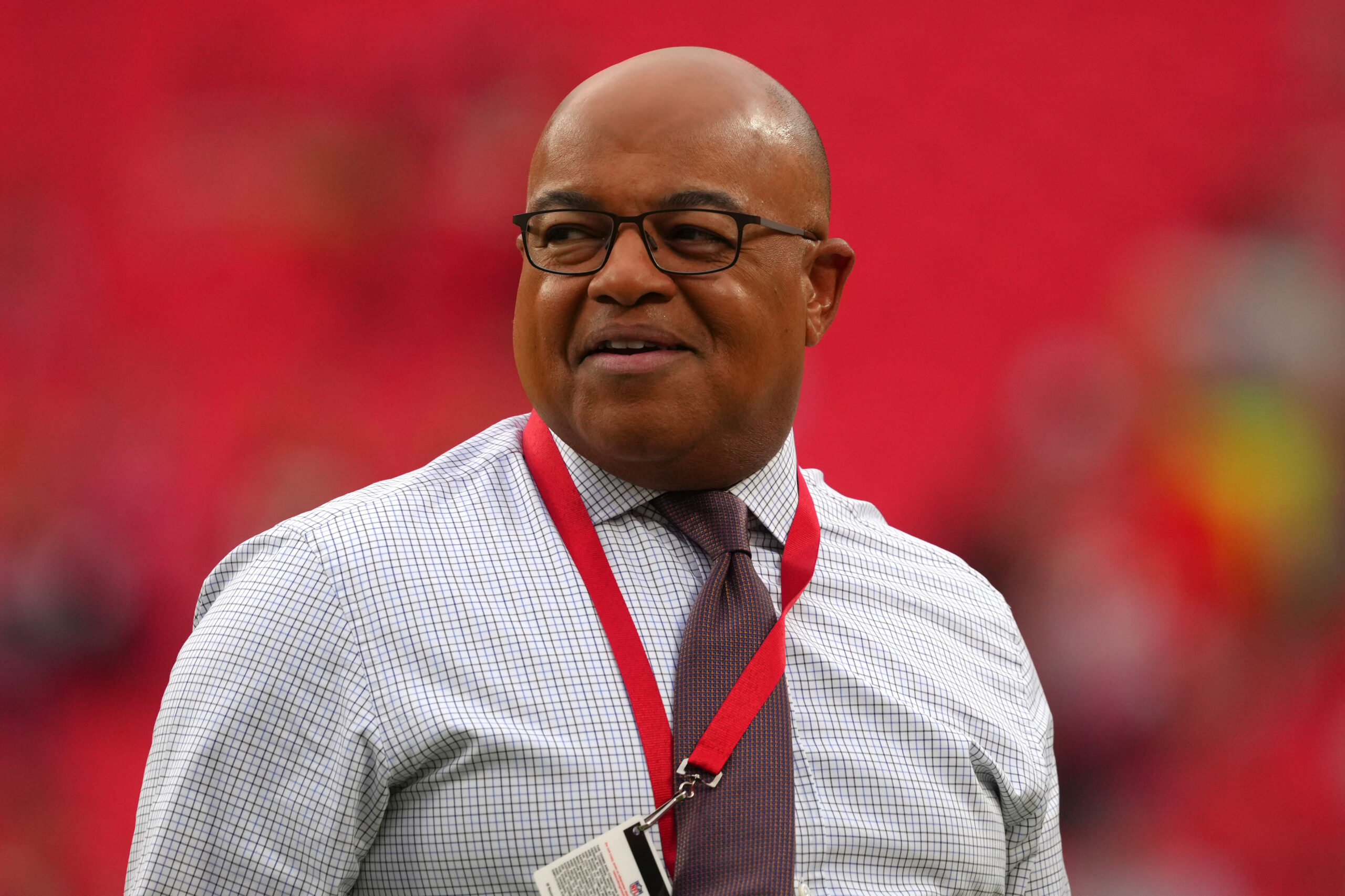
    NBC’s lead Olympics host Mike Tirico said he could tell from the studio that things were working.

    “We saw that there was a formula for the prime time show: that [showing an event] live and then showing it again, and there was enough differentiation in what we showed again, that it was connecting with viewers,” he said. “And then hearing back from people who were home: ‘Hey, this is so great, I’m enjoying watching it at night after we watch all the daytime events.’ Probably day four, I would say that Monday or Tuesday, was [when] I got feedback that it was working.”

    The 2028 Summer Olympics in Los Angeles will be different again, since they’ll be on home turf. Then the 2030 Winter Olympics will be back in Europe in the French Alps.

    Who knows what the media landscape will look like by then, given how quickly things change these days, but it’s hard to believe NBC will ever revert to its past.

    Mike Tirico does lots of things at NBC, from hosting the Olympics to calling NFL and NBA play-by-play.

    “Just as a sports fan, I would say not,” Tirico said. He emphasized he was speaking just for himself, not his bosses, but his opinion counts for something.

    “I think we’ve seen because of streaming, you can access anything you want at any time,” he continued. “There’s still the largest audience sitting there at the end at night, and you want to give them the biggest events [as highlights]. So holding them doesn’t make any sense in this day and age. And we had long talks about that before Paris, and I think we saw a formula that worked.”

    This year’s new additions

    There will be a few new toys for viewers to enjoy next month. Peacock will have extra camera angles available for figure skating — including some behind-the-scenes ones — and ice hockey.

    Solomon worked with the International Olympic Committee to get live drone cameras into coverage, to get microphones on some athletes, and to get into warmup areas to show how athletes get ready for their big moments.

    Skiing superstar Lindsey Vonn will be at her fifth Olympics, 24 years after her first.

    “We’ve really pushed everybody to go places, and take the viewer places they’ve never seen before,” she said. “Because in the winter, you’re covered with goggles and head gear. So we need to be at the place before they put this stuff on. We need to see faces. And the International Olympic Committee has been great about granting us that access.”

    The biggest new thing might be an expansion of the popular “Gold Zone” whip-around live highlights show. From 8 a.m. to around 4 p.m. each day, it will be televised not just on Peacock but on the recently relaunched NBCSN cable channel.

    That means more viewers will have access, but it also takes away an incentive to subscribe to Peacock if you don’t yet.

    “I think the NBA would say that would drive people to subscribe to Peacock, or Premier League [soccer], and now that’s available on NBCSN,” Cordella said. “And so our view of NBCSN is that we’re going to be agnostic to how people consume our content, as long as we’re getting adequately paid for it [by distributors]. We did a deal with YouTube [TV], we’ve done a deal with our parent company Comcast, and hopefully we’ll do a deal with others, but NBCSN is a big part of our strategy moving forward.”

    For the most part, everyone speaking at the media preview event stayed away from another addition to the landscape: the United States’ current hostilities with Venezuela and Greenland, the Russia-Ukraine war, and the turmoil within U.S. borders over ICE and many other subjects.

    But they did not stay away from the subject completely.

    “I’ve just been thinking a lot about this: In this increasingly divided and isolated world, there’s not many moments when we all come together anymore,” Solomon said. “Sports does bring us together, but I think the Olympics is really even more unique.”

    Comcast CEO Brian Roberts also alluded to wider affairs in his speech at the end of the event.

    “Bringing our country together when a lot of things are pulling us apart is just a fabulous opportunity,” he said.

  • Low-alcohol wines are trending. Here’s one that’s actually good.

    Low-alcohol wines are trending. Here’s one that’s actually good.

    If there is one thing that winemakers are certain of at the dawn of 2026, it’s that demand will continue to grow for lighter wines that contain less alcohol. To date, those who have successfully capitalized on this trend have tended to be cheap, mass-market brands. To appeal to those looking to reduce their alcohol intake, many companies have created “light” brand spinoffs, in which some portion of the wine’s alcohol is removed with tech wizardry.

    Removing alcohol, however, alters flavor and compromises the complex balance of tastes, smells, and textures that people expect from a good wine.

    As lighter wines grow more popular, a number of smaller and more traditional wineries are exploring alternate methods for making lower-alcohol wines without sacrificing quality. Companies like Ramón Bilbao in Spain are making lighter, brighter, and fresher wines by changing how they grow their grapes instead of how they make their wine.

    This limited-edition “Early Harvest” wine is crafted from verdejo grapes picked two weeks earlier than usual in the Rueda region of Spain’s Douro River Valley. Picking grapes earlier results in fruit that contains lower levels of sugar and higher levels of tangy acidity — yielding fresh, vibrant wines that contain a lower percentage of alcohol than the norm.

    Ramón Bilbao’s standard Rueda verdejo contains 13% alcohol, a very typical strength for a dry, unoaked white wine. This early-harvested version is 15% lower in alcohol, coming in at only 11% ABV. Both iterations are crisp, dry, citrusy, and herbal, with a flavor profile that would please any fan of sauvignon blanc or grüner veltliner. However, rather than tasting flattened by alcohol-reduction machinery, this early-harvested edition is simply more delicate and perhaps a touch more refined. It is, after all, a superior cuvée from a single estate. Its flavors may be lighter and milder but the wine is nonetheless balanced, complex, and complete in a way that manipulated “light” wines are not.

    Ramón Bilbao “Early Harvest” Verdejo

    Rueda, Spain; 11% ABV

    PLCB Item #100049347 — on sale for $16.99 through Feb. 2 (regularly $19.99)

    No alternate retail locations within 50 miles of Philadelphia according to wine-searcher.com.

  • Two former homicide detectives get probation for lying about DNA evidence in murder case that spanned decades

    Two former homicide detectives get probation for lying about DNA evidence in murder case that spanned decades

    Two former Philadelphia homicide detectives were sentenced Wednesday to a combined three years of probation for lying about their knowledge of DNA evidence during the retrial of a man they helped convict of murder 35 years ago.

    Common Pleas Court Judge Lucretia Clemons imposed a two-year probation sentence for Manuel Santiago, 76, and one-year sentence for Frank Jastrzembski, 78. The retired detectives will not be required to meet with probation officers.

    The sentencing punctuates an unusual case in which prosecutors accused three retired Philadelphia police officers of fabricating evidence in a decades-old homicide case, and later perjuring themselves when testifying about that evidence under oath. A grueling eight-day trial in March revisited the 1991 murder of 77-year-old Louis Talley in Nicetown and the 2016 retrial of Anthony Wright, the man police helped send to prison for the crime.

    The jury ultimately rejected the larger conspiracy built by prosecutors that the detectives had framed Wright, but found both Santiago and Jastrzembski guilty of misdemeanor false swearing and found Santiago guilty on an additional count of perjury, a felony. A third detective who worked on the case, Martin Devlin, was acquitted of all charges.

    Santiago’s attorney, Fortunado Perri Jr., thanked Clemons for the “appropriate” sentence on Wednesday. Steve Patton, an attorney for Jastrzembski, reiterated that the jury had acquitted his client of planting evidence and described the conviction as a matter of “technical knowledge.”

    “We’re pleased with that outcome and thankful for the judge’s careful consideration of the facts of this case,” Patton said.

    In an interview Wednesday, Krasner blasted what he described as lenient sentencing guidelines for lying under oath in Pennsylvania. Probation is the recommended sentence for a false swearing conviction, while the maximum recommended penalty for perjury is nine months.

    “Those sentencing guidelines are disgraceful,” Krasner said, while also acknowledging the two defendants are both now in their 70s and have health issues.

    Former Philadelphia Police Detective Frank Jastrzembski leaves the Criminal Justice Center in Philadelphia on March 17, 2025.

    At trial, Krasner’s top prosecutors contended that the three detectives had conspired to frame Wright for Talley’s murder, extracted a false confession from him, and planted evidence in his home.

    Santiago was acquitted of perjury in connection with his testimony about Wright’s murder confession, while Jastrzembski was acquitted of perjury and related charges for his testimony about a search warrant he executed at Wright’s home — charges that hinged on prosecutors’ ability to prove the detectives had wholly fabricated evidence.

    Instead, the convictions centered on what Santiago and Jastrzembski knew about the evidence against Wright when they testified at his 2016 retrial. The two detectives were instrumental in building the original case against Wright in 1991, and later sought to send him back to prison — even after DNA evidence implicated another man in Talley’s murder. Wright’s conviction was overturned in 2014 based on the strength of that forensic science.

    When prosecutors under former District Attorney Seth Williams charged Wright a second time — under suspicion that he had acted with an accomplice — Santiago and Jastrzembski were briefed on the new DNA information. The results pointed to a known crack user who lived near Talley in Nicetown, a man who had since died in a prison.

    Under oath at Wright’s retrial, however, Santiago and Jastrzembski denied knowing the DNA evidence implicated another suspect.

    Wright was acquitted and later filed a federal civil rights lawsuit against the city and won a $9.85 million settlement. During sworn depositions in that case, Santiago and Jastrzembski were questioned about the DNA evidence and gave answers that prosecutors said contradicted their earlier trial testimony.

    The perjury trial in March at times resembled a second retrial for Wright, with defense attorneys accusing him of getting away with Talley’s murder. Wright proclaimed his innocence.

    Following the jury’s verdict, Krasner insisted that the detectives had framed Wright, and he criticized his predecessor’s decision to retry the man after his conviction was overturned.

  • Older Americans quitting weight-loss drugs in droves

    Older Americans quitting weight-loss drugs in droves

    Year after year, Mary Bucklew strategized with a nurse-practitioner about losing weight. “We tried exercise,” like walking 35 minutes a day, she recalled. “And 39,000 different diets.”

    But 5 pounds would come off and then invariably reappear, said Bucklew, 75, a public transit retiree in Ocean View, Del. Nothing seemed to make much difference — until 2023, when her body mass index slightly exceeded 40, the threshold for severe obesity.

    “There’s this new drug I’d like you to try, if your insurance will pay for it,” the nurse-practitioner advised. She was talking about Ozempic.

    Medicare covered it for treating Type 2 diabetes but not for weight loss, and it cost more than $1,000 a month out-of-pocket. But to Bucklew’s surprise, her Medicare Advantage plan covered it even though she wasn’t diabetic, charging just a $25 monthly co-pay.

    Pizza, pasta, and red wine suddenly became unappealing. The drug “changed what I wanted to eat,” she said. As 25 pounds slid away over six months, she felt less tired and found herself walking and biking more.

    Then her Medicare plan notified her that it would no longer cover the drug. Calls and letters from her healthcare team, arguing that Ozempic was necessary for her health, had no effect.

    With coverage denied, Bucklew became part of an unsettlingly large group: older adults who begin taking GLP-1s and related drugs — highly effective for diabetes, obesity, and several other serious health problems — and then stop taking them within months.

    That usually means regaining weight and losing the associated health benefits, including lower blood pressure, cholesterol, and A1c, a measure of blood sugar levels over time.

    Widely portrayed as wonder drugs, semaglutide (Ozempic, Wegovy, Rybelsus), tirzepatide (Zepbound, Mounjaro), and related medications have transformed the treatment of diabetes and obesity.

    The FDA has approved several GLP-1s for additional uses, too — including to treat kidney disease and sleep apnea, and prevent heart attacks and strokes.

    “They’re being studied for every purpose you can conceive of,” said Timothy Anderson, a health services researcher at the University of Pittsburgh and author of a recent JAMA Internal Medicine editorial about anti-obesity medications.

    (Drug trials have found no impact on dementia, however.)

    People 65 and older represent prime targets for such medications. “The prevalence of obesity hovers around 40%” in older adults, as measured by body mass index, said John Batsis, a geriatrician and obesity specialist at the University of North Carolina School of Medicine.

    The proportion of people with Type 2 diabetes rises with age, too, to nearly 30% at age 65 and older. Yet a recent JAMA Cardiology study found that among Americans 65 and up with diabetes, about 60% discontinued semaglutide within a year.

    Another study of 125,474 people with obesity or who are overweight found that almost 47% of those with Type 2 diabetes and nearly 65% of those without diabetes stopped taking GLP-1s within a year — a high rate, said Ezekiel Emanuel, a health services researcher at the University of Pennsylvania and senior author of the study.

    Patients 65 and older were 20% to 30% more likely than younger ones to discontinue the drugs and less likely to return to them.

    What explains this pattern? As many as 20% of patients may experience gastrointestinal problems. “Nausea, sometimes vomiting, bloating, diarrhea,” Anderson said, ticking off the most common side effects.

    Linda Burghardt, a researcher in Great Neck, N.Y., started taking Wegovy because her doctor thought it might reduce arthritis pain in her knees and hips. “It was an experiment,” said Burghardt, 79, who couldn’t walk far and had stopped playing pickleball.

    Within a month, she suffered several bouts of stomach upset that “went on for hours,” she said. “I was crying on the bathroom floor.” She stopped the drug.

    Some patients find that medication-induced weight loss lessens rather than improves fitness, because another side effect is muscle loss. Several trials have reported that 35% to 45% of GLP-1 weight loss is not fat, but “lean mass” including muscle and bone.

    Bill Colbert’s cherished hobby for 50 years, reenacting medieval combat, involves “putting on 90 pounds of steel-plate armor and fighting with broadswords.” A retired computer systems analyst in Churchill, Pa., he started on Mounjaro, successfully lowered his blood glucose, and lost 18 pounds in two months.

    But “you could almost see the muscles melting away,” he recalled. Feeling too weak to fight well at age 78, he also discontinued the drug and now relies on other diabetes medications.

    “During the aging process, we begin to lose muscle,” typically half a percent to 1% of muscle weight per year, said Zhenqi Liu, an endocrinologist at the University of Virginia who studies the effects of weight loss drugs. “For people on these medications, the process is much more accelerated.”

    Losing muscle can lead to frailty, falls, and fractures, so doctors advise GLP-1 users to exercise, including strength training, and to eat enough protein.

    The high rate of GLP-1 discontinuation may also reflect shortages; from 2022 to 2024, these drugs temporarily became hard to find. Further, patients may not grasp that they will most likely need the medications indefinitely, even after they meet their blood glucose or weight goals.

    Reinitiating treatment involves its own hazards, Batsis cautioned. “If weight goes up and down, up and down, metabolically it sets people up for functional decline down the road.”

    Of course, in considering why patients discontinue, “a large part of it is money,” Emanuel said. “Expensive drugs, not necessarily covered” by insurers. Indeed, in a Cleveland Clinic study of patients who discontinued semaglutide or tirzepatide, nearly half cited cost or insurance issues as the reason.

    Some moderation in price has already occurred. The Biden administration capped out-of-pocket payments for all prescriptions that a Medicare beneficiary receives ($2,100 is the 2026 limit), and authorized annual price negotiations with manufacturers.

    The reductions include Ozempic, Wegovy, and Rybelsus, though not until 2027. Medicare Part D drug plans will then pay $274, and since most beneficiaries pay 25% in coinsurance, their out-of-pocket monthly cost will sink to $68.50.

    Perhaps even lower, if agreements announced in November between the Trump administration and drugmakers Eli Lilly and Novo Nordisk pan out.

    The bigger question is whether Medicare will amend its original 2003 regulations, which prohibit Part D coverage for weight loss drugs. “An archaic policy,” said Stacie Dusetzina, a health policy researcher at the Vanderbilt University School of Medicine.

    The Trump administration’s November announcement would expand Medicare eligibility for GLP-1s and related medications to include obesity, perhaps as early as spring. But key details remain unclear, Dusetzina said.

    Medicare should cover anti-obesity drugs, many doctors argue. Americans still tend to think that “diabetes is a disease and obesity is a personal problem,” Emanuel said. “Wrong. Obesity is a disease, and it reduces life span and compromises health.”

    But given the expense to insurers, Dusetzina warned, “if you expand the indications and extent of coverage, you’ll see premiums go up.”

    For older patients, often underrepresented in clinical trials, questions about GLP-1s remain. Might a lower maintenance dose stabilize their weight? Can doses be spaced out? Could nutritional counseling and physical therapy offset muscle loss?

    Bucklew, whose coverage was denied, would still like to resume Ozempic. But because of a recent sleep apnea diagnosis, she now qualifies for Zepbound with a $50 monthly co-pay.

    She has seen no weight loss after three months. But as the dose increases, she said, “I’ll stay the course and give it a shot.”

    The New Old Age is produced through a partnership with The New York Times.

    KFF Health News is a national newsroom that produces in-depth journalism about health issues and is one of the core operating programs at KFF — the independent source for health policy research, polling, and journalism.

  • Why are malnutrition deaths soaring in America?

    Why are malnutrition deaths soaring in America?

    Something strange is happening with malnutrition.

    It’s by far the fastest-growing cause of death in America, soaring sixfold over the past decade or so, according to our analysis of death certificate data from the Centers for Disease Control and Prevention.

    To be sure, we wouldn’t yet call it commonplace. But while it accounts for fewer than 1 in 100 deaths, its toll is rising so fast that it’s now in the same league as arterial disease, mental disorders, and deaths from assault.

    But when you dig into the data, it doesn’t look like our mental image of malnutrition, one which revolves around food banks and famine. For starters, it doesn’t quite map to economic hardship.

    It tends to kill somewhat more people in lower-income states, and among folks with less education in general. But the relationship isn’t as strong as you’d think, and it bears surprisingly little relation to state measures of food insecurity or food stamp use.

    More important, we’re worried here about the meteoric rise in deaths, not the level. And the rise is much harder to explain with demographics. We see it across the board. Every state, every education level, every race, every gender.

    When we split the numbers every which way, only one metric showed clear differences: age. Americans 85 or older die of malnutrition at around 60 times the rate of the rest of the population, and such deaths are rising about twice as fast among that group.

    What’s going on? Are older Americans struggling to eat?

    Yes (but). Uche Akobundu, a dietitian who directs nutrition strategy at Meals on Wheels America, told us the program’s local providers “consistently report serving seniors who struggle to afford or access nutritious food while living on fixed incomes and facing rising costs for housing, utilities, and healthcare.”

    Indeed, the share of Americans 65 or older who report some level of food insecurity hit a high in 2023. The rate among the 85-plus crowd was lower, but still near record levels.

    And those records may not be broken, at least after 2024. The source we used, a supplement to the Census Bureau’s Current Population Survey, has been canceled by the Agriculture Department. The forthcoming release could be the last.

    But before we declared this a closed case, we stepped back and put the numbers in context. Food insecurity among older Americans has risen 5% from 2011 to 2023. That’s not a good number, or one you can just wave off. But at the same time, it can’t explain a 746% increase in malnutrition deaths over that period. (And, yes, we adjusted for the aging population.)

    So, we called the American Society for Parenteral and Enteral Nutrition — also known as ASPEN or, more descriptively, the nation’s intravenous-nutrition and feeding-tube experts. If there’d been a sudden surge of malnutrition among older Americans, ASPEN would have noticed.

    Peggi Guenter led clinical practice, quality, and advocacy at ASPEN for two decades. Her best guess is simple: Malnutrition “has always been there. … We’re just identifying and documenting it better than we ever have in the past.”

    What happened in the past? Well, it has never been unusual for someone with a serious condition to lose weight. Watching a loved one waste away isn’t a modern phenomenon. But physicians used to see malnutrition as part of the patient’s overall decline.

    But around 2010, researchers started accumulating evidence that showed what they had long assumed: The lack of nutrients was, itself, a risk factor. A pile of papers now tell that malnourished people have more emergency room visits, spend longer in the hospital, and need more healthcare.

    Doctors weren’t trained to diagnose it separately, especially since research has shown it wasn’t as easy as lab-testing for a single indicator, according to Alison Steiber, chief research, impact, and strategy officer at the Academy of Nutrition and Dietetics.

    That started to change in 2012. That’s when, prompted partly by new research finding malnutrition could be driven by inflammation as well as lack of calories, ASPEN and the nutrition academy released the Consensus Statement on “Characteristics Recommended for the Identification and Documentation of Adult Malnutrition (Undernutrition).”

    Not long after, in 2014, we saw the first big jump in death certificates labeled with malnutrition as the underlying cause of death. Nobody’s willing to say the declaration caused the rise in diagnoses. “Cause” is a sacred, hard-earned word in medicine. But it’s also true that the nutrition academy, ASPEN, and friends went all out to ensure that the statement caused physicians to be aware that they needed to diagnose malnutrition more often.

    The Academy of Nutrition and Dietetics, ASPEN, and their allies taught clinicians from all over the country to diagnose malnutrition by looking not just for weight loss, but also for factors such as muscle loss, loss of under-the-skin fat pads, fluid retention, and simply not eating enough. They held awareness weeks, tons of trainings and — perhaps most notably — launched an ambitious Malnutrition Quality Improvement Initiative, which worked with hundreds of hospitals starting in 2013.

    All those efforts paid off.

    “I started practicing in 2010, and I was not trained to identify malnutrition in my education program, like in my internship,” said Michelle Schneider, ASPEN’s manager of clinical practice. And the 2012 paper and awareness push “is when I myself started … really evaluating the set of clinical characteristics that can identify and diagnose malnutrition.”

    When she and her colleagues started looking for malnutrition, their hospital’s related case numbers went up. It happened all over the country. As a rule of thumb, multiple experts told us that at least 1 in 5 hospital patients probably suffer from some kind of malnutrition. In 2010, about 3% were diagnosed with it. By 2018, it hit 9%, Guenter and her colleagues found.

    “As with other conditions, such as celiac disease, increased prevalence rates do not necessarily reflect more cases, but rather improved detection, diagnosis, and intervention,” Steiber told us.

    But what about older patients specifically? We called on the American Academy of Hospice and Palliative Medicine and got ludicrously lucky: They put us in touch with their chief medical officer, Kristina Newport.

    Newport runs palliative medicine at Penn State Health, speaks in fully formed paragraphs, and probably could have dictated a better version of this column over breakfast before she’d had her first coffee. She confirmed everything we’d heard — then added another variable.

    “The other thing that happened around this timeline is that CMS, the Center for Medicare and Medicaid Services, changed the impact of the diagnosis of some of these diagnoses that fall under malnutrition,” she said.

    “When hospitals are measured on their mortality, the calculation includes a comparison of how many people actually die compared to how many people are expected to die. And that expected number is determined by the complexity of documented illnesses as reflected in diagnosis codes. So when there was more weight given to malnutrition as a diagnosis code — when it was better defined, based on the understanding that nutrition often correlates with severity of illness — all of a sudden, it changed the calculation.”

    So, hospitals and other providers were given a strong incentive to look out for malnutrition, because now official statistics (correctly) recognized it increases the odds that someone will have an awful outcome, which means you’re not penalized as much if said outcome occurs.

    “Long-term care facilities have also started paying very close attention to weight loss and are held accountable for folks having abnormal weight loss,” she added. In fact, nursing homes must have a dietitian or nutrition specialist on staff.

    And hospice, which can be part of many medical or at-home settings, has its own incentives.

    “You’re only eligible for hospice enrollment if you’re expected to die within six months and if you’re not pursuing life-prolonging treatments,” she told us. “The hospice clinicians have to regularly demonstrate that somebody is progressing toward death, which is crazy, right? And so one of the ways that they have to routinely demonstrate that there’s evidence that this person is dying is to routinely assess different aspects of nutrition.”

    It might not be weight loss, since people in failing health might retain water, but you can still look at arm circumference and other metrics. It helps demonstrate the decline needed to maintain eligibility (and payment) for hospice services, she said, and it can be an indirect way to measure the progress of a patient’s disease, particularly for folks who might not have a clear terminal illness.

    “So your 85-year-old woman who has a little bit of cognitive impairment but has never been diagnosed with dementia — she gets a urinary tract infection every once in a while, but she doesn’t have one right now. She had mild diabetes. None of those things are explicitly taking her life,” Newport said. “The most objective thing you can say is she continues to lose weight.”

    “Somebody like that may end up with a diagnosis of malnutrition on her death certificate because none of those other things obviously took her life. Right? But it wasn’t because she didn’t have access to food.”

    In fact, regardless of your condition, weight loss and loss of appetite are one of the most common pathways toward death as the body shuts down.

    So, malnutrition is often a normal part of dying. It hints at the presence of other underlying conditions. So how did it end up as the underlying cause of death on almost 25,000 death certificates last year?

    Newport had a hint for us on that one, too. We cherish death certificates as one of the most authoritative data sources out there — and they are, since they cover pretty much the entire population and are certified by professionals. But those professionals are human.

    “Despite the importance of the cause of death and filling out this form, there’s very little education or standardization of doing it,” she told us. “So that’s just something to keep in mind.”

    And we did. So we set out to learn about death certificates.

    We started with the folks who quarterback the entire certification process and make sure the families and doctors get what they need. We called the funeral directors.

    Chris Robinson just finished his term as president of the National Funeral Directors Association. He also runs Robinson Funeral Homes at the foot of South Carolina’s sliver of the Blue Ridge.

    When someone dies, Robinson gets a report from the hospital, hospice, or coroner. It tells him their next of kin and date of birth. He meets with the family to fill in vital statistics. But he’s not allowed to fill in the cause of death.

    “We submit it electronically to the certifying physician or coroner, whoever’s going to certify the death,” Robinson told us. “And then they send it back to us with the cause of death.” Robinson then sends the certificate to the health department to be finalized, so he can get official paper death certificates for the family.

    That pointed us to the next step in following the certificate on its journey. That step was Reade Quinton. Quinton is president of the National Association of Medical Examiners. He also runs the pathology residency at the Mayo Clinic. Filling out the cause of death on certificates — and teaching others to do so — is a large part of his career.

    “There’s a science and an art to filling out a death certificate,” he told us. It’s a forensic pathologist’s job to ask why, to get to the root of the problem. Ideally, he said, you’ll rarely see malnourishment on a death certificate by itself — the document should also define the underlying cause.

    You see, under cause of death, a typical certificate has four blanks. You start with what Quinton would call the “final insult,” and then tease out the causal chain until, by the fourth blank — if you need that many — you’ve listed the underlying cause.

    So, the chain might go something like: gastrointestinal bleeding due to swollen veins in the esophagus due to cirrhosis due to alcohol use disorder. In that case, the alcohol abuse would be the underlying cause.

    Malnutrition could play a role in that four-step mortality chain. But why are people listing it as the ultimate cause? Quinton’s not sure, but death certification isn’t really taught in depth outside of pathology residencies, and most deaths aren’t certified by pathologists.

    “There’s a large number of people … who fill out death certificates,” Quinton explained. “So you may have forensic pathologists filling them out in certain cases, you may have hospitalists filling them out, residents on service who are still in training, coroners. It’s incredibly variable depending on whose jurisdiction the death occurred in.”

    And looking at the data, we see clues that most of these malnutrition deaths probably weren’t certified by medical examiners.

    For example, we’ve seen very little growth in malnutrition deaths in hospitals in recent years. The increase has been sharpest at nursing homes and long-term care facilities, where some residents may arrive with nutrition issues, followed by deaths at home or hospice. Similarly, almost no patients who had an autopsy got malnutrition listed as a cause of death.

    Is it a perfect smoking gun? No. Malnutrition is a routine part of death. And unless someone suspects neglect, routine deaths often don’t cross the desk of specialists such as Quinton and his protégés.

    But we reckon it’s a hint, especially when paired with something else we heard from Quinton and several others.

    “Electronic records are so accessible now,” he told us. “We have a lot more information at our fingertips than we had 10 or 20 years ago. So is it possible that now they’re getting a better list of underlying conditions and saying, ‘Oh, he’s got malnutrition,’ and so they put that on there as well.”

    And that’s our best guess. A better understanding of malnutrition means it has appeared on more medical charts. And from there, it occasionally makes its way onto a death certificate, perhaps helped by a harried physician.

    But does that mean rising malnutrition deaths are a mirage?

    We didn’t really expect Kurt Soffe to answer that question. The fine folks at the National Funeral Directors Association put us in touch with Soffe, the director of Jenkins-Soffe Funeral Home south of Salt Lake City, to answer questions about death certificates in Utah, the state with the highest rate of malnutrition deaths.

    But when he logged on to Zoom, we saw Soffe was on his phone. He was in the driver’s seat of his vehicle, parked outside the retirement facility where he’d just dropped off his wife. Her 93-year-old father had just entered hospice.

    He said he’d seen diagnoses like malnutrition on more and more death certificates. But all the time he spent with grieving families still didn’t prepare him for the reality.

    “He was a robust healthy man just a few months ago,” Soffe said. “And he basically is 120 pounds of nothing now.”

    His father-in-law suffered a stroke. Doctors removed the blockage, but away from his beloved home and even-more-beloved yard, he lost the desire to eat. He told them everything tasted like “sand.”

    “We tried Boost protein drinks, we tried protein bars, we tried steak and potatoes, we tried everything,” Soffe told us.

    It reminded us of something we heard from Newport, the palliative care physician.

    “One of the main ways we take care of people we love is we feed them, right? And so it’s very distressing for caregivers to look at their loved ones and to see that they don’t want to eat. … We have to understand that in some situations, it’s not something we can fix.”

    We watched Soffe struggle with that conflict in real time.

    “You watch his mental change, his physical change, his capacity to communicate change, and then just watch him decline by the millimeter,” Soffe said, his voice breaking.

    “I’ve been in funeral service all my life and have been a caregiver all my life. Born and raised in the building, and I found myself absent of words because I didn’t know what to even say to my own father-in-law, who I knew was dying.”

    “There really isn’t anything to say other than ‘I love you’ and ‘thank you.’”

    Soffe’s father-in-law died about 12 hours later.