Blog

  • Everything you need to know about the MLB All-Star Game coming to Philly

    Everything you need to know about the MLB All-Star Game coming to Philly

    The wait is finally over.

    It was more than seven years ago that Major League Baseball announced the All-Star Game would come to Philadelphia for the nation’s 250th birthday. The game is the bookend to a season of big events following March Madness, the PGA Championship, and the FIFA World Cup.

    Baseball’s midsummer classic, which returns to Philly for the first time since 1996, will be more than just a game, as the city will be the center of the baseball world for nearly a week.

    Here’s a look at what to expect:

    HBCU Swingman Classic

    When: 7 p.m., Friday

    TV: MLB Network

    Location: Citizens Bank Park

    What you need to know: The fourth annual game is a showcase of the best players from historically Black colleges and universities. The classic was founded by Ken Griffey Jr. as a way to give a platform to players who often are overlooked.

    The local connection: Jimmy Rollins will manage one of the teams, and Mayor Cherelle L. Parker will throw out the first pitch. The teams will visit City Hall before the game to honor Octavius Catto, a civil rights activist who cofounded one of America’s first organized Black baseball teams in 1865. There is a statue of Catto outside City Hall. Mayfair’s Santino Harwood will play in the game. The Roman Catholic grad is a shortstop at Delaware State.

    Pitcher Gage Wood was the Phillies’ top pick in last year’s MLB draft.

    The MLB draft

    When: 1:30 p.m., Saturday; TBD Sunday.

    Location: Pennsylvania Convention Center Grand Hall

    What to know: The event is free to attend, but ticket registration has closed. The draft used to be held at MLB Network’s studio in Secaucus, N.J., before the league moved it to All-Star Week starting in 2021. The White Sox have the first pick, and the Phillies have to wait until No. 36 for their first selection.

    All-Star Village

    When: 10 a.m.-8 p.m. Saturday and Sunday; 10 a.m.-6 p.m. Monday and Tuesday

    Location: Pennsylvania Convention Center

    What to know: The event is similar to Fan Fest that came with the 1996 game, but it’s much bigger now. The village will feature big league mascots and appearances by a cast of Phillies legends including Steve Carlton, Cole Hamels, John Kruk, Larry Bowa, Dave Cash, and Carlos Ruiz. Fans can make their own strikeout call, test food from around the majors, throw a pitch, take batting practice, see the World’s Largest Baseball, and even strap on a Velcro suit, jump, and stick on a wall for a home run-robbing photo op.
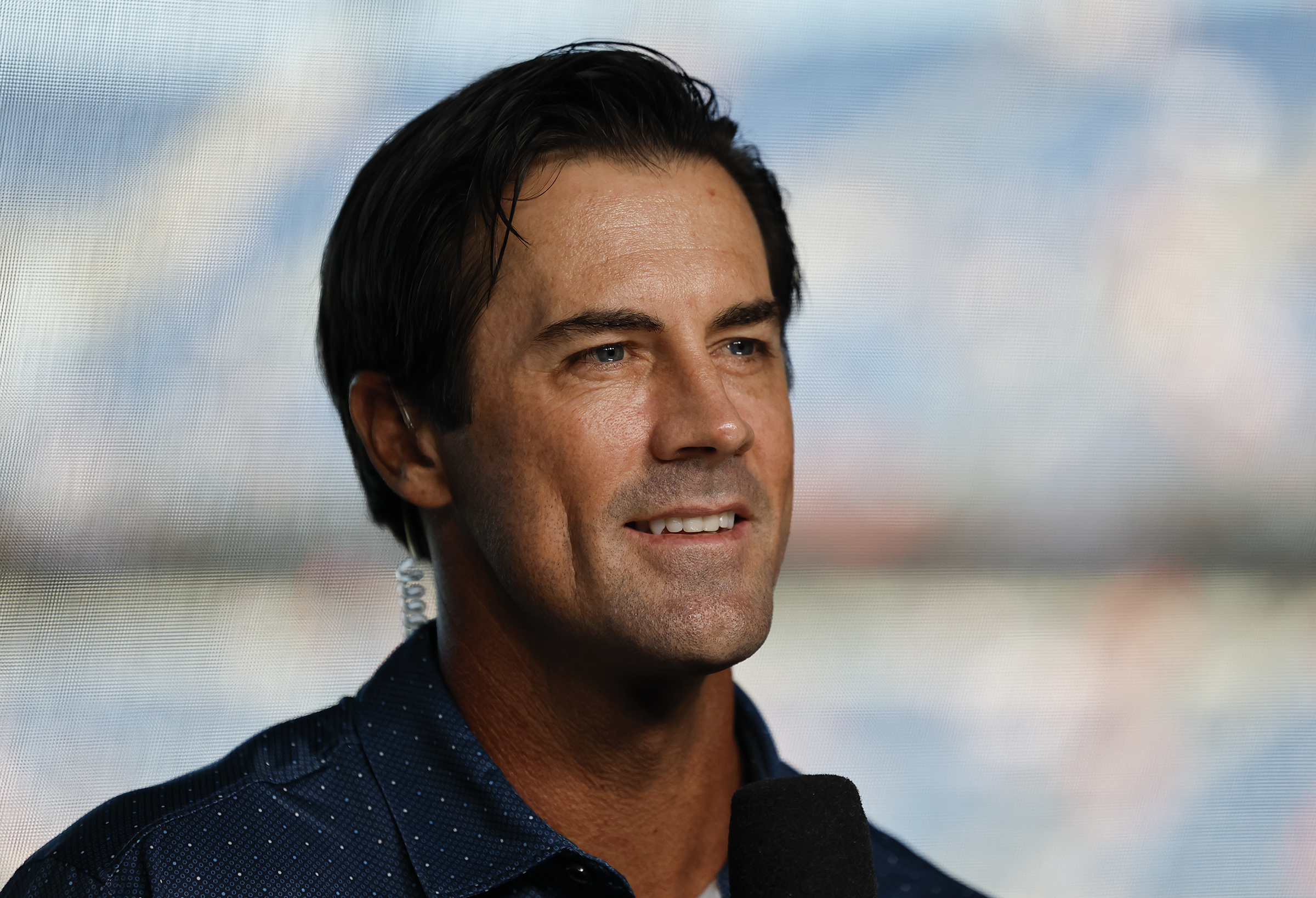
    Former Phillies pitcher Cole Hamels is scheduled to make an appearance at MLB’s All-Star Village.

    Futures Game

    When: Noon Sunday

    Location: Citizens Bank Park

    TV: NBC10

    What to know: The game is a collection of baseball’s best prospects as each team sends two players from its farm system. The players are split into American League and National League squads. The game will feature nine of MLB Pipeline’s Top 10 prospects including top-ranked Jesús Made, a shortstop in the Milwaukee Brewers’ system.

    Local connection: The teams will be managed by Larry Bowa and Shane Victorino. Gage Wood, who may have a shot to reach the majors this year, will represent the Phillies a year after they drafted the hard-throwing right-hander 26th overall. Wen-Hui Pan, a right-handed reliever, also was selected for the Futures Game. Both pitchers are with double-A Reading.

    MLBx All-Star 3-on-3

    When: Following the Futures Game on Sunday

    Location: Citizens Bank Park

    What to know: New this year, MLBx replaces the Celebrity Softball Game. The fast-paced event is a modified home-run hitting challenge in which players are awarded points for their hitting and the catches they make in the field.

    Local connection: Ryan Howard, Rollins, and Victorino will captain teams, with Atlanta Braves legend Andruw Jones leading the fourth squad. Howard has Eagles wide receiver DeVonta Smith on his team while Rollins is teamed up with Terrell Owens. Each team includes an MLB legend, a professional softball player, and a nonbaseball celebrity.
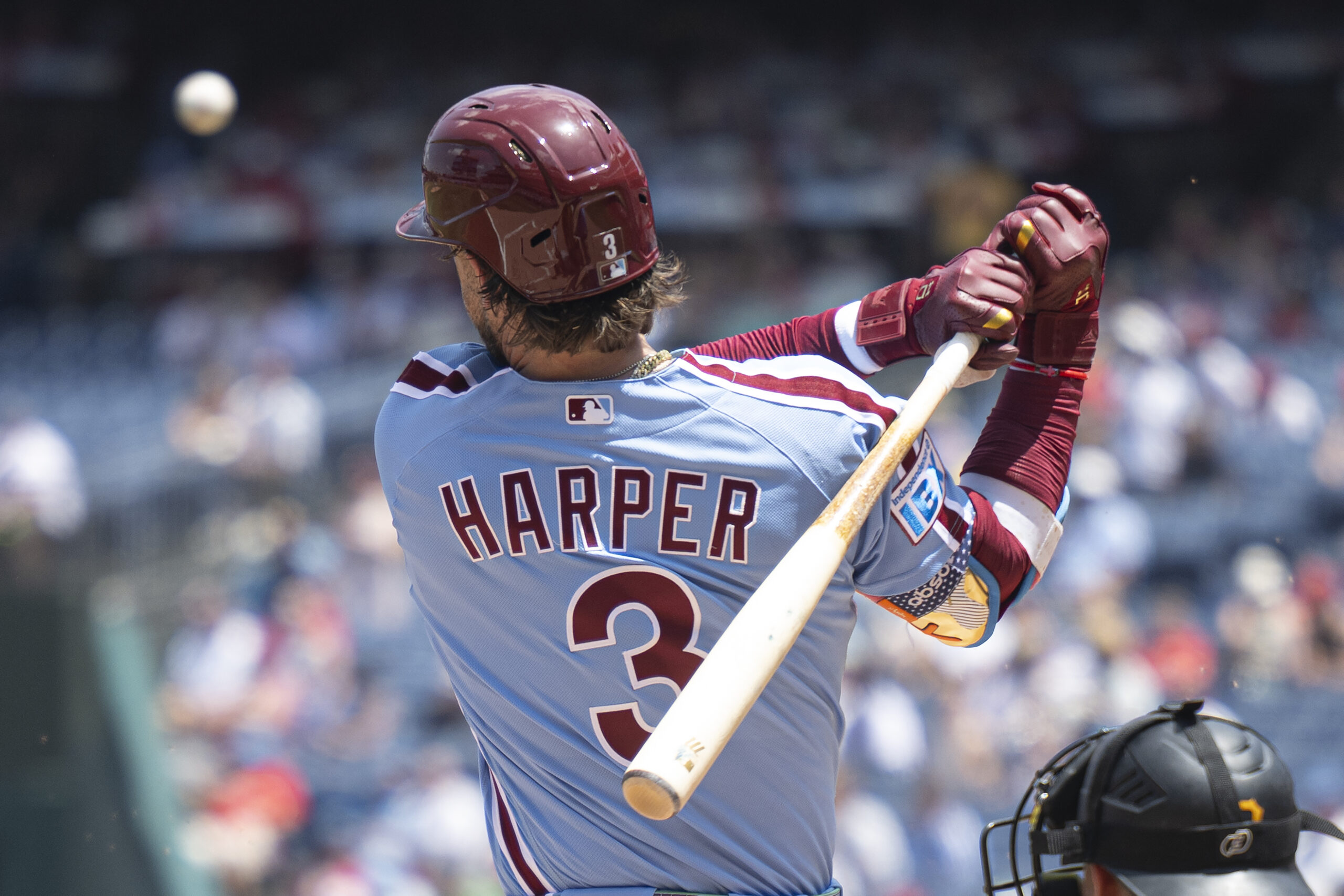
    Bryce Harper was the last slugger to win the home run derby in his home ballpark. However, that was in 2018 while he was with the Nationals.

    Home Run Derby

    When: 8 p.m. Monday, July 13

    TV: Netflix

    Location: Citizens Bank Park

    What to know: It’s been 20 years since Howard won the Home Run Derby. The Phillies are due. Bryce Harper is the last player to win the derby in his home ballpark, which he did with the Nationals in 2018 by beating … Kyle Schwarber in the final round.

    The competitors: There will be eight participants, but could two of them be Phillies? Perhaps we’ll see a rematch of the 2018 final.

    The format: The league is ditching the clock that governed the derby since 2015, as players now will be given a finite number of swings per round. A batter gets 20 swings in Round 1, 15 in Round 2, and 15 in the final. If a batter homers on their final swing, they keep swinging until they come up empty. The top four players from the first round move to Round 2, and the top two then move to the final round. The tiebreaker in Round 1 is home run distance, and Rounds 2 and 3 use a three-swing swing-off.

    The red carpet

    When: 2 p.m. Tuesday, July 14

    TV: MLB Network

    Location: Independence Hall

    What to know: The players will showcase their fashion just steps from the Liberty Bell before walking all the way to South Philly. Just kidding. They’ll board a bus and head to the game after walking the red carpet. This event is free for fans to attend, but ticket registration has closed.

    All-Star Game

    When: 8 p.m. Tuesday, July 14

    TV: Fox29

    Location: Citizens Bank Park

    What to know: Only one player has won back-to-back All-Star Game MVP awards, Mike Trout in 2014-15. Could Schwarber be the next? It’ll be hard to match last year’s heroics, when Schwarber won the game for the NL in a dramatic swing-off at the Atlanta Braves’ stadium. Expect the game to have a star-studded lineup for pregame ceremonies and something special during the game. Last year’s tribute to Hank Aaron set the bar.

    Phillies in the game: Brandon Marsh will start after receiving the most votes on the fan ballots. He will be joined by Bryce Harper, Kyle Schwarber, Jhoan Duran, and Cristopher Sánchez.

  • How much did Philly-area nonprofit health system CEOs make in 2024?

    How much did Philly-area nonprofit health system CEOs make in 2024?

    Jefferson’s Joseph G. Cacchione ranked as the highest-paid CEO at the Philadelphia region’s nonprofit health systems in 2024, with total compensation of $7 million, according to The Inquirer’s annual review of public tax forms.

    Madeline Bell at Children’s Hospital of Philadelphia collected $5.5 million in 2024, giving her the number two spot.

    Both also were top earners in The Inquirer’s 2023 compensation analysis. Jefferson is the largest system based here, both by revenue and number of hospitals, with 33 stretching from South Jersey to near Scranton. CHOP is among the nation’s top-ranked children’s hospitals.

    Janice Nevin at ChristianaCare joined the ranks of the top five. She received $3.5 million, about the same pay as the region’s fourth highest earner, Al Maghezehe at Capital Health, which has a network of outpatient clinics in Bucks County and two hospitals in Mercer County. Maghezehe’s compensation stands out because Capital had by far the lowest revenue among the systems with the 10 highest-paid CEOs.

    A couple of CEOs who left their positions before 2024 continued collecting long-term compensation, as is common in the industry.

    Most notably, Jefferson’s former CEO Stephen K. Klasko collected just over $1 million in 2024. He retired at the end of 2021, but remained an adviser through June 2022. The 2024 payment brought his total through 2024 to $48.7 million for 8½ years as CEO.

    Lori Herndon left AtlantiCare in June 2023. Her compensation the following year was $1.3 million.

    Other CEOs left during 2024, making it possible they will be listed in the next round of 990s. Those executives include Donald Mueller at St. Christopher’s Hospital for Children, Michael Laign at Redeemer Health, and Ronald W. Johnson at Shore Medical.

    Here’s a look at the numbers from The Inquirer’s review of the latest 990 tax returns of 20 nonprofit health systems, covering 11 health systems with operations concentrated in Southeastern Pennsylvania, seven in South Jersey, and two in northern Delaware:

    (function(){function e(){window.addEventListener(`message`,function(e){if(e.data[`datawrapper-height`]!==void 0){var t=document.querySelectorAll(`iframe`);for(var n in e.data[`datawrapper-height`])for(var r=0,i;i=t[r];r++)if(i.contentWindow===e.source){var a=e.data[`datawrapper-height`][n]+`px`;i.style.height=a}}})}e()})();

  • Pa. residents stand to lose an average of $520 a month in Social Security benefits in six years unless Congress acts

    Pa. residents stand to lose an average of $520 a month in Social Security benefits in six years unless Congress acts

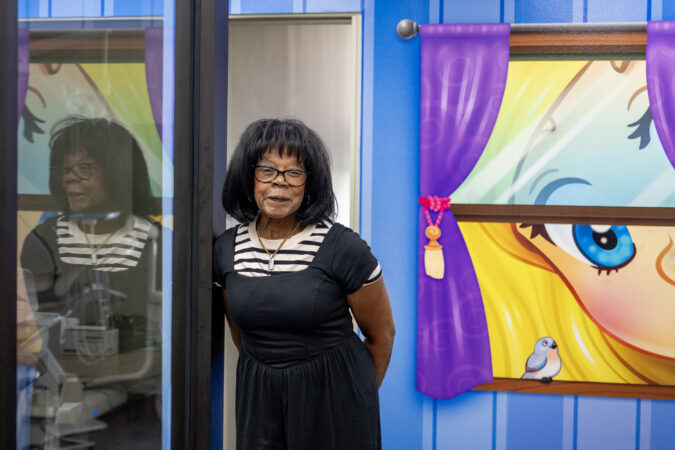
    For 30 years, Nettie King, 92, has relied on Social Security to survive.

    She and her former employers at the Oak Lane Diner near her home paid into Social Security through payroll taxes for years.

    While the storied institution closed in 2015, the Social Security benefit checks that King’s work generated have kept coming. “It’s been comfortable,” explained King, who said she was the diner’s first server of color in 1963.

    But now there’s a problem.

    King is among 68 million Americans facing possible reductions of 22% to their benefits by 2032 unless Congress acts, according to a new report by Social Security Administration (SSA) trustees released last month.

    Pennsylvania residents could lose an average of $520 each from their monthly Social Security checks, according to the Committee for a Responsible Federal Budget, a nonpartisan think tank. That would affect an estimated 255,000 Philadelphians receiving Social Security benefits, according to Olivia Mitchell, director of the Boettner Center on Pensions and Retirement Research at the Wharton School of the University of Pennsylvania.

    “Losing that much would be a disaster,” King said. “I pray the money doesn’t stop.”

    It won’t if Congress overcomes its partisan divide and creates a workable solution to make Social Security solvent, say advocates for the elderly — including AARP, whose senior vice president Bill Sweeney warned in a recent press call that “the longer they wait, the harder it gets.”

    Speaking for the Trump administration, Treasury Secretary Scott Bessent said in a statement, “We are working to preserve Social Security … and recognize that more work remains to secure benefits for future beneficiaries.”

    Someday soon

    Analysts have long predicted the Old Age and Survivors Insurance trust fund from which most retired Social Security claimants draw benefits could dissipate, said Temple University labor economist Samuel Solomon. But that was always regarded as a “someday” event.

    “Someday” may now be just six years away. “That’s a big deal,” Solomon said.

    The SSA wouldn’t stop paying benefits altogether, Mitchell said. Although the report predicts the fund’s reserves could be tapped out by 2032, “continuing payroll tax revenue [from people currently working] would cover about 78% of scheduled retirement benefits,” she added.

    At nearly $1.6 trillion annually, Social Security represents more than 20% of the U.S. budget and is the nation’s largest single expense, Solomon said.

    Various factors have combined recently to accelerate the fund’s potential depletion, according to the report submitted by SSA trustees, who include Bessent, as well as Health Secretary Robert F. Kennedy Jr.

    First, the fertility rate this year is going down faster than predicted: 1.75 children per woman vs. 1.9.

    Also, immigration is lower than estimated. That trend will continue as the government maintains restrictive immigration policies, experts say. It represents a potentially immense loss of revenue, according to Wharton research, which shows that “unauthorized immigrants” paid $24 billion in Social Security payroll taxes in 2024, despite being ineligible to collect any benefits.

    Both the slowed fertility and diminished immigration rates have lowered the anticipated number of workers and the payroll taxes they’d have contributed to Social Security, said Kathleen Romig, Social Security expert with the Center on Budget Priorities and Policies, a left-leaning research group.

    The final factor, the trustees report said, is that the One Big Beautiful Bill Act that decreased income tax rates has reduced revenue that would’ve flowed into the program.

    The SSA didn’t respond for requests to comment.

    The Social Security system had been strained long before the trustees report. The giant baby boomer generation has been retiring since around 2011, siphoning millions from the program, Solomon said.

    In 1950, when the first boomers were 4 years old, every 100 workers paid the Social Security benefits of 13 elderly people, Solomon said. Today, it’s 25 elderly people per 100 workers — “more responsibility on a single working person to support more retirees,” Solomon said.

    That worries Doris Kitt, 81, of Jenkintown, a Social Security benefits recipient who still works at a South Jersey pediatric dental practice.

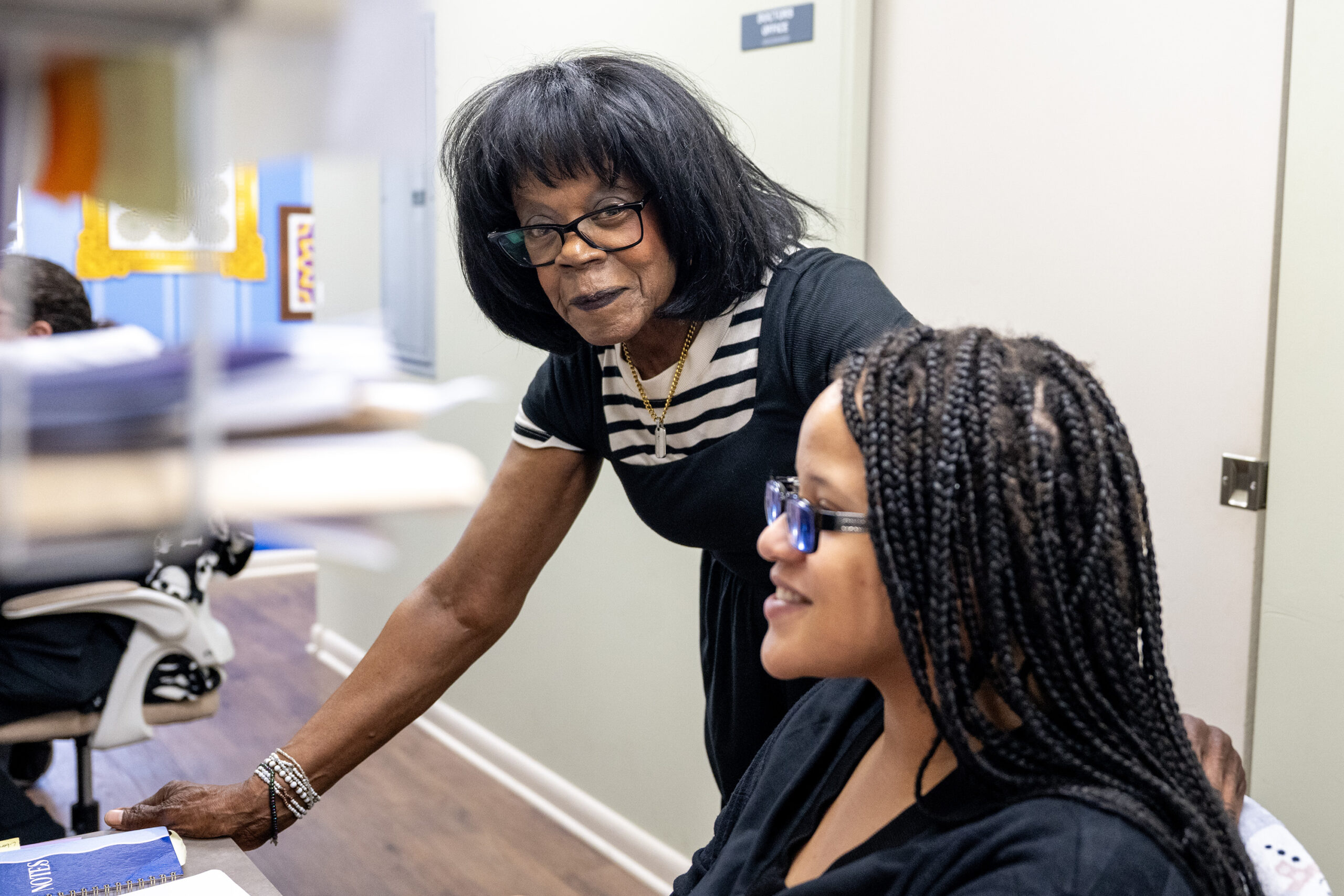
    Doris Kitt talks with coworker Asia Bagby. Kitt, who is 81, still works and also collects Social Security benefits.

    “Less Social Security when rent and food continue to cost more is a challenge,” Kitt said.

    ‘Give me what I’m due’

    Through the years, Republicans and Democrats have forwarded competing remedies for repairing Social Security.

    GOP suggestions include raising the retirement age to 70, and privatizing the system.

    Democrats call for raising payroll taxes and ending the payroll tax cap. (Currently, wages above $184,500 are not subject to Social Security taxes. Democrats would eliminate the cap so higher-income earners pay into the system on 100% of their earnings.)

    In a statement, U.S. Rep. Brendan Boyle, a Northeast Philadelphia Democrat running for reelection in November against Republican challenger Jessica Arriaga, said the trustees report makes it clear that “we must act to protect Social Security benefits for all generations.“

    He referenced a bill he introduced in May 2025 that would require Americans earning more than $400,000 to contribute a greater percentage of their wages to Social Security. It’s now before the House Ways and Means Committee.

    U.S. Rep. Lloyd Smucker, a Republican representing Lancaster County, also issued a statement, saying Social Security could be fixed by a “bipartisan fiscal commission” to “build consensus” and eliminate depletions of benefits. Smucker is being opposed by Democrat Nancy Mannion in his bid for reelection.

    “We must preserve the trust fund millions of Americans rely on and keep our promise to those who have been paying into the system their entire lives,” he said.

    That covenant must be honored, said Shirley Stringfield, 70, a retired city worker from Germantown.

    “I spent 55 years of my life paying into Social Security,” she said, “so I want them to give me my due. I expect to receive my benefits until I expire. I need every cent.”

  • Sharon Hill police killed his cousin. Now he is Delaware County’s new reform-minded sheriff

    Sharon Hill police killed his cousin. Now he is Delaware County’s new reform-minded sheriff

    Siddiq Kamara remembers standing side by side with his aunt outside of the Delaware County courthouse and calling for changes in how police are trained after a stray bullet fired by Sharon Hill police officers killed his cousin Fanta Bility.

    Three years later, his office is inside that same building.

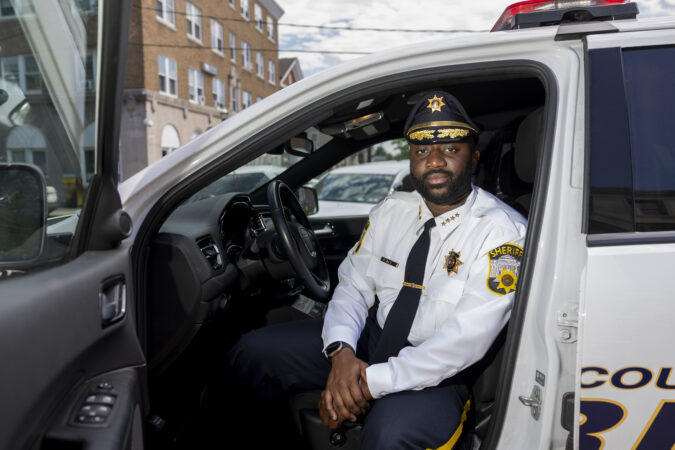
    Kamara, 30, became the youngest sheriff in Delaware County history when he cruised to victory in November with 63% of the vote. The son of Liberian immigrants, Kamara turned his family’s tragedy into a platform for improving the way community policing is carried out in his home county.

    “The people in Delaware County, I’m here to work with them, and my office is going to do that every single day,” he said.

    “This is the greatest country in the world. Being 30, being Muslim, being a first-generation immigrant and being the sheriff of one of the biggest counties in Pennsylvania, it’s unheard of. And I don’t take that lightly.”

    In his first six months in office, Kamara equipped all of his deputies with body cameras and beefed up recruiting efforts, including open fitness tests throughout the county, to help fill the 35 vacancies he inherited. He’s mandated de-escalation and regular firearms training for his deputies, in memory of his cousin.

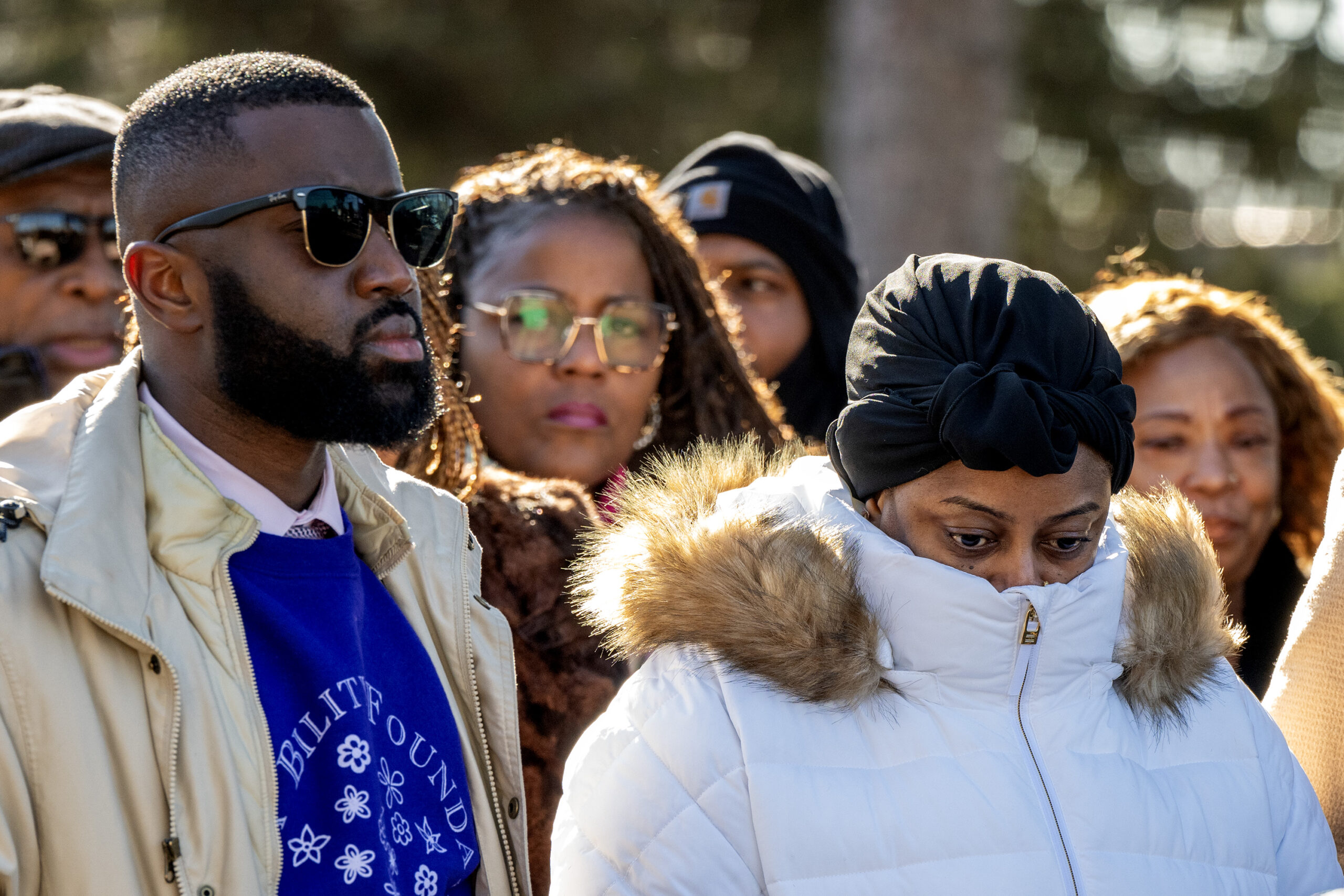
    Siddiq Kamara (left) stood by his aunt, Tenneh Kromah, in January 2025 as they renamed a park in Sharon Hill after his cousin Fanta Bility.

    Delaware County Council President Monica Taylor said Kamara is bringing a fresh perspective to a row office that often gets overlooked.

    “He doesn’t just talk. He does the work,” Taylor said. “That’s what makes him a great public servant. He’s bringing everyone to the table to make these improvements.”

    That’s notable for a county sheriff, given the role traditionally, doesn’t require officials to stray too far beyond the county courthouse. But Kamara wants to change that, making sure he and his deputies are a frequent presence in the towns they serve.

    That desire comes from Kamara’s own experience. After serving six years in the Army National Guard, Kamara became a police officer in Yeadon. He later took a job in the state Attorney General’s Office, working in various roles including narcotics and the personal protection detail for then-Attorney General Josh Shapiro.

    Kamara’s cultural background and linguistic skills — he speaks African dialects including Mandingo and Fula, as well as French — were called upon by federal investigators as they built their case against Laye Sekou Camara, a Liberian war criminal.

    He said he became a police officer because so many people in his community in Upper Darby, drawing on their experiences in their home countries, were distrustful of police.

    “We interact with the public every single day, and sometimes these individuals, we’re not getting them at their happiest time. It’s their most vulnerable time, and you have to use empathy,” he said. “So we’ve been sending some of our supervisors to trainings so they can understand the tools when they’re out there in the community and they can teach their fellow colleagues how to de-escalate situations.”

    But when Fanta Bility was gunned down in August 2021, Kamara’s professional ambitions changed. The 8-year-old was struck by a stray bullet after three Sharon Hill officers opened fire toward a crowd leaving a high school football game. They were aiming at a car they mistakenly believed was the source of a nearby shooting.

    Those officers were later fired and pleaded guilty to reckless endangerment. But Kamara knew something had to change.

    “If you understand what happened that day to my cousin, cops, unfortunately, we can’t make mistakes. It costs people’s lives,“ he said. ”And, that day, it cost my cousin’s life, so I wanted to make sure that in my capacity, as the sheriff, our officers are properly trained.”

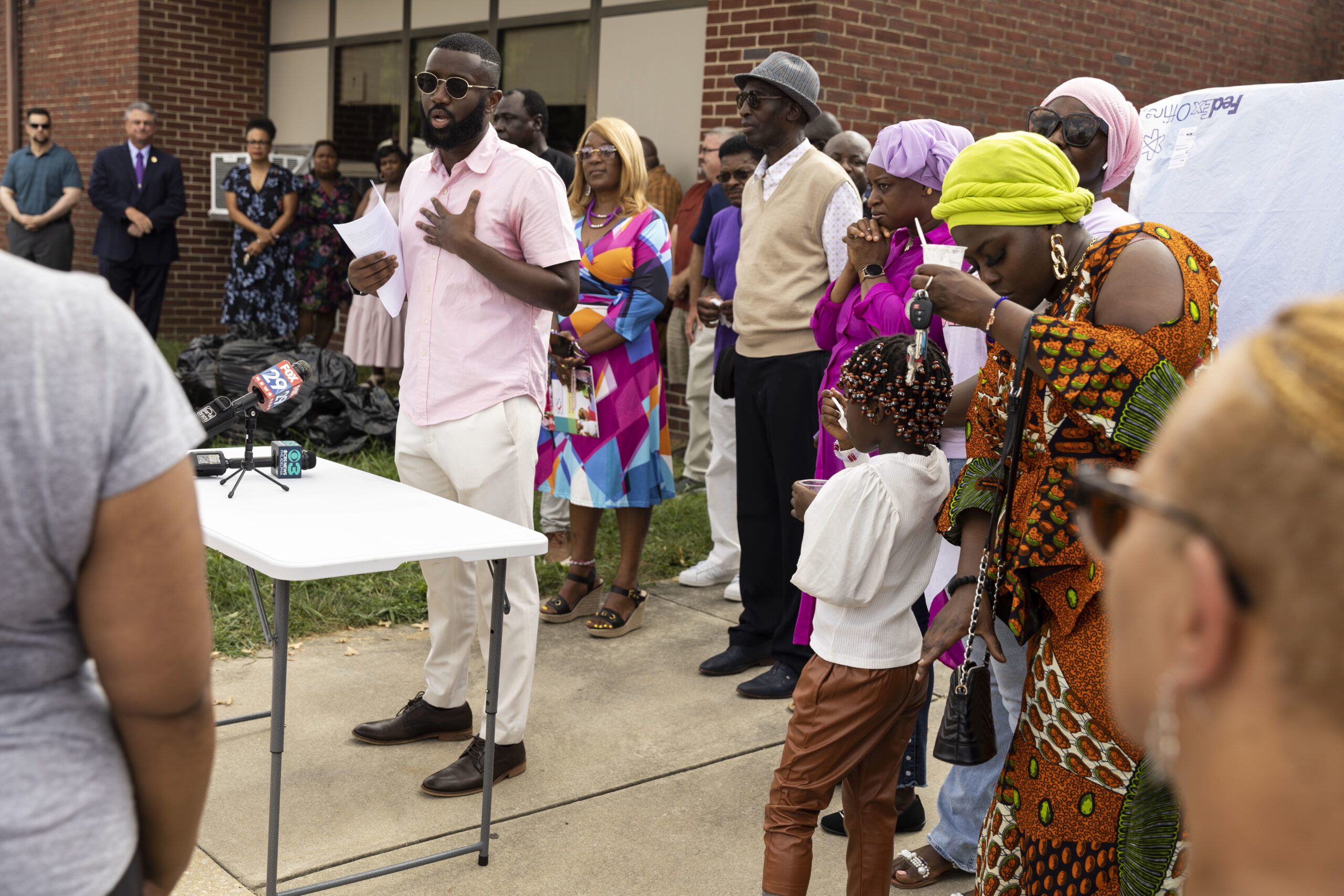
    Siddiq Kamara speaks during a backpack giveaway at Sharon Hill Elementary School in August 2023 held in memory of Fanta Bility.

    State Sen. Anthony Hardy Williams, a Democrat who sponsored a bill nicknamed “Fanta’s Law” that would require all Delaware County police departments to be accredited and receive annual use-of-force training, has been a mentor and friend to Kamara for years.

    “Back then, he was annoying,” Williams joked. “But he learned from my team, and it grew from him just being unapologetically persistent and curious, to him understanding he has a real value.”

    From Kamara’s early days of volunteering at political events, it was clear to Williams that he was dedicated to public service. “Fanta’s Law,” Williams said, is their latest collaboration.

    “He’s here to improve things, not just here to say ‘I have a title and have a position,’” Williams said. “It’s clear he wants to find out how to use this position to improve the office and also improve the lives of people who don’t even know about the office.”

    Kamara, for his part, said he’s thankful for the opportunity to enact change in the county that raised him.

    “When you’re in an office, and I teach my deputies this all the time, is that we do the protection part, but we’ll forget sometimes about serving,” he said. “And serving goes a long way.”

  • Phillies radio calls give him ‘goose bumps.’ Then he shares those chills with everyone on social media.

    Phillies radio calls give him ‘goose bumps.’ Then he shares those chills with everyone on social media.

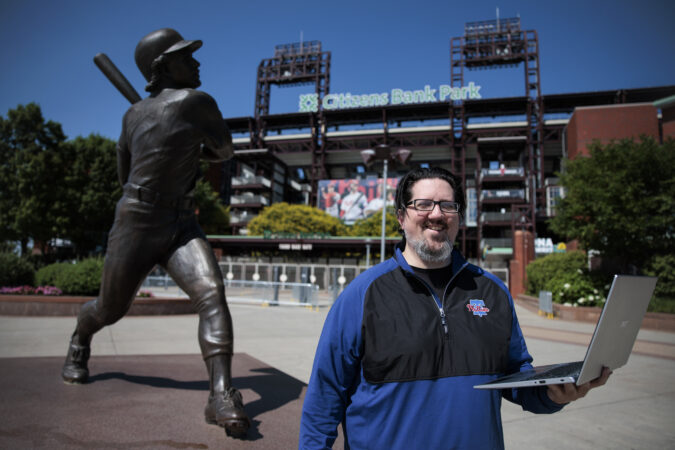
    The Phillies game wasn’t over yet last month but it was over as Nick Piccone kept the TV on mute like a distraction in the background. The Phils trailed the Nationals by two runs and were down to their last strike with the bases empty in the ninth on June 23. It was over.

    But Piccone — just like lots of diehards who accepted a loss but refused to stop watching — didn’t turn it off.

    “Just in case,” he said.

    And then it happened. The Phillies scored eight runs with two outs, delivering the most unlikely win of the season. It was time for Piccone to work. He’s built a following in recent seasons for being the guy who clips the radio calls of Philly sports highlights and posts them to social media.

    First, he had to listen to how Scott Franzke — the Phils’ radio voice on 94.1 WIP — described the action.

    “I got goose bumps when I listened to it,” said Piccone, who lives in Delaware County. “And I just knew Phillies fans are going to love this.”

    He posted a montage of Franzke’s pitch-perfect calls that night and then watched them go viral. Philadelphia loves its teams but the city has always had a deep relationship with the voices, putting Piccone at the intersection of fandom and the way we enjoy it.

    Brandon Marsh’s homer was thrilling, but how much better did Franzke’s narration make it feel?

    “You could tell that the fan kind of came out,” Piccone said. “Like, he didn’t think that was going to happen. He had the same reaction that we did, and he’s calling it. He reaches that second level for a regular season game when I’m sure he probably thought this was going to be a loss. You could hear the surprise in his voice.

    “If you’re listening live on the radio, you feel that instantly. And even if you’re watching the video, you’re like, ‘Oh my God.’ Having him feel what we feel and hear his voice match what we’re feeling inside, makes it so much better. It makes those moments so much better.”

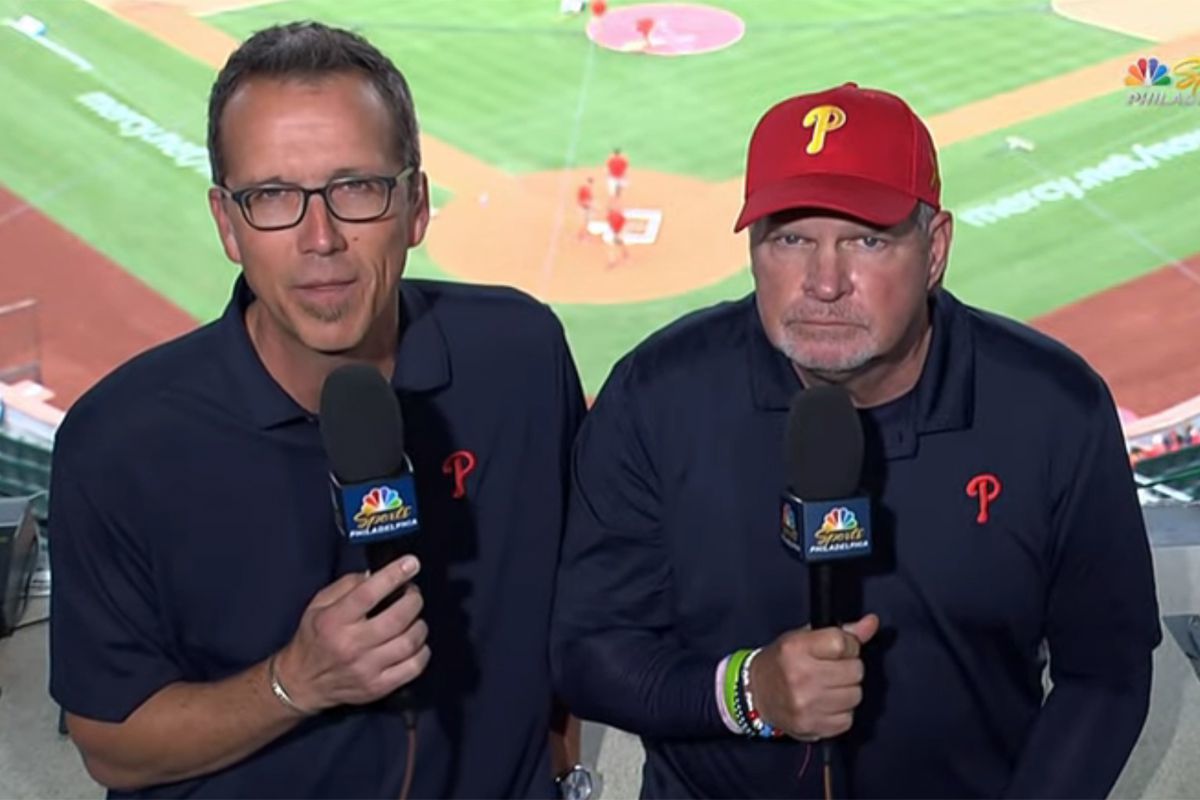
    Phillies radio play-by-play announcer Scott Franzke (left) with TV analyst John Kruk.

    Piccone does not get paid to post his videos, but he commits himself every game — “I watch every pitch,” he said — to tracking the calls of the big plays and sharing them on social media. He does the same thing for other teams. It’s how he enjoys the game.

    It takes about 10 minutes for Piccone to edit the clip on his computer and post it on social media.

    “People would message me from Europe or Asia and say, ‘I’m stationed here’ or ‘I moved here for work, and your videos make me feel like I’m home,’” Piccone said. “When I started doing it, I wasn’t even thinking about that stuff. So when people say that I was able to provide that, I was like, ‘Wow.’ That’s a huge reason why I continue to do it.”

    His hustle gives a radio broadcast a new life, allowing Franzke’s words to be heard again and again. Some people want to relive a moment they already enjoyed. Others want to feel closer to home.

    “It’s flattering, honestly,” Franzke said. “It’s humbling to know that it resonates enough with someone to know that they’re willing to go through that sort of trouble and effort to spread the word.”

    Brandon Marsh watches the ball after hitting a two-run home run against the Washington Nationals on June 23.

    From Dolly to Franzke

    Franzke was told when he first got into the business to have someone in mind to whom you are broadcasting.

    “For me, the general Delaware Valley listener is stuck in traffic on the Schuylkill,” Franzke said.

    His voice is the soundtrack of traffic jams, days at the beach, and backyard barbecues. Kids tune their radio to the Phils while they’re putting on their PJs, just like their grandparents used to sneak transistor radios under their pillows. They listen to Franzke on their porch at night and power walk around the neighborhood with his voice in their earbuds.

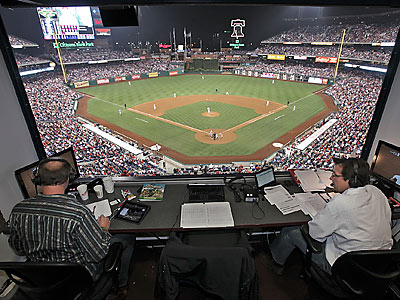
    Radio broadcasters Larry Andersen (left) and Scott Franzke (right) call a Phillies game in 2011.

    The Phillies broadcast their first game on the radio in 1936 with a former umpire named Dolly Stark calling the action. He was regarded as the National League’s top ump but quit after the 1935 season when the league balked at his request for a raise from his $9,000 salary.

    “A new sports thrill,” said the advertisement for the games that were broadcast on WIP 610. “Seeing the game through the umpire’s eyes! Hearing what he thinks about every play, while that play is being made! And it’s a thrill that will last all summer.”

    Stark called games for just one season before he returned to calling balls and strikes. But the game became the perfect radio sport. The pace is slow enough for the broadcaster to share a story and make you comfortable. Yet the action becomes exciting enough for them to build drama and make you feel something.

    The umpire was followed by greats who became voices of summer like By Saam, Bill Campbell, Harry Kalas, and Franzke. Richie Ashburn ordered pizzas, Chris Wheeler taught you something, and Larry Andersen admires the umpire. There’s just something about baseball on the radio. It works.

    “I think one of the reasons that baseball on the radio still works is because people can consume it passively,” Franzke said. “They’re driving, falling asleep in their beach chair, or doing yard work. They can do other things and be a part of it. A lot of people like the audio wallpaper, if you will. It’s there. It’s around them. They enjoy it passively and do other things in their life. We’re just along for the ride, I guess.”

    Piccone’s clips show that Franzke is more than just enjoying the ride. He’s driving the car. It wasn’t a silent clip of Marsh’s homer that went viral last week. It was the clip of Marsh’s homer with the announcer sounding just as stunned as you were that it happened.

    Franzke said it’s the moment that “generates the goose bumps,” since he’s just a guy. And it was the guy calling that moment last week that gave Piccone chills.

    “It doesn’t matter when it is during the season, September or April, the story of the game takes over,” Piccone said. “I think he tells that story perfectly in his calls. Offense, a great defensive play, a strikeout. That emotion comes through and you know it’s a big moment.”

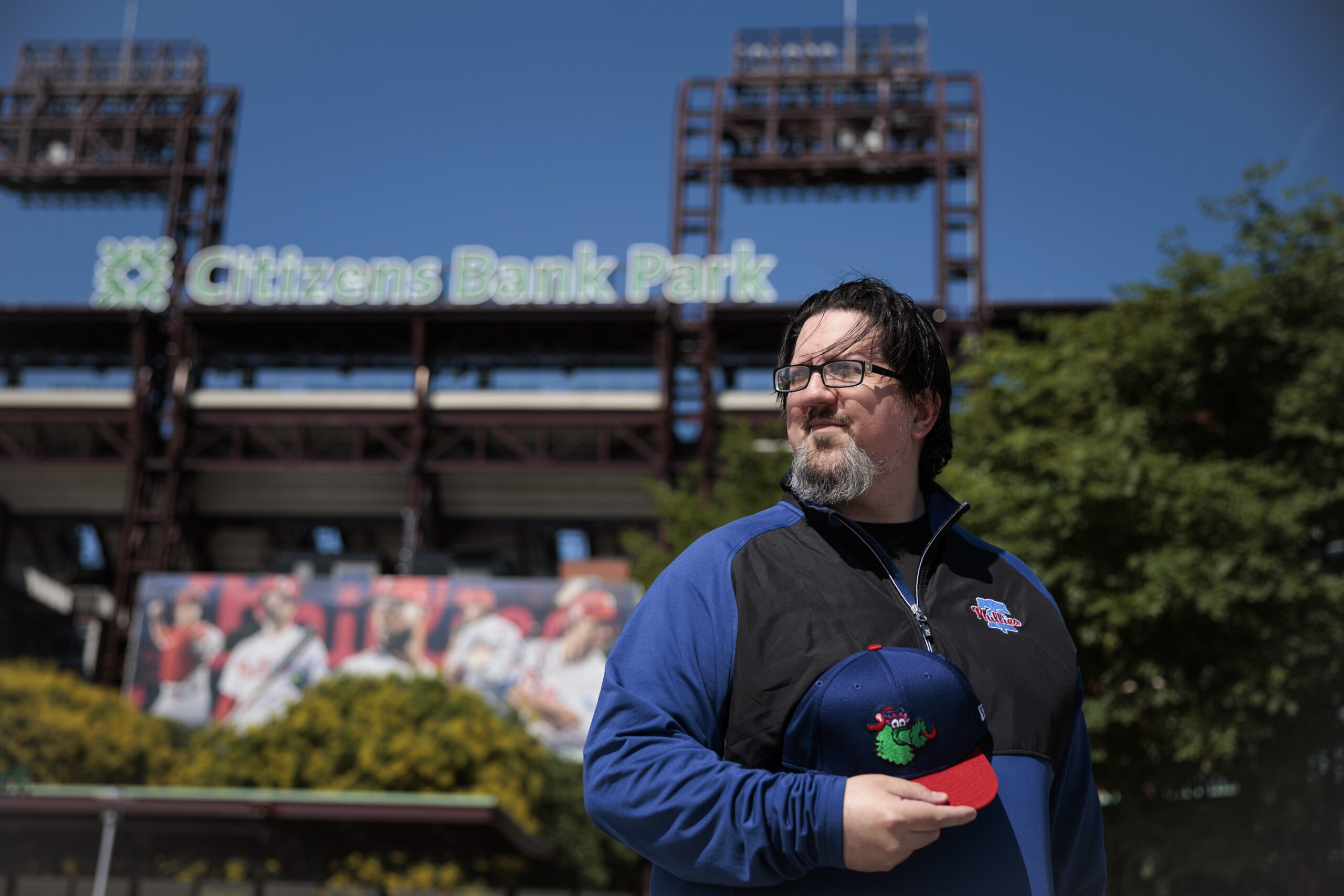
    Nick Piccone says he’s “kind of jealous” of people who grew up listening to baseball games on the radio. “I didn’t even think of consuming sports in that way when I was younger. I’m glad I’m able to do it now.”

    Being that guy

    Piccone grew up on the 1993 Phillies and started watching the other teams in 1999 as a freshman at Kingsway High School. He soon was a diehard: devastated when they lost and elated when they won.

    “I just consume it,” Piccone said last month. “Like, I’m mad the Phillies lost today.”

    But the guy who chops up the audio of every radio broadcast didn’t grow up listening to the radio. He just watched it on TV.

    “People who say they were brought up listening to sports on the radio, I’m kind of jealous of them,” Piccone, 40, said. “Because I didn’t even think of consuming sports in that way when I was younger. I’m glad I’m able to do it now.”

    “We just have amazing play-by-play guys. You think of the Phillies, you think of Franzke. You think of the Flyers, you think of Tim Saunders. You think of the Sixers, you think of Tom McGinnis. Eagles, Merrill Reese and Mike Quick. They’re synonymous with the teams.”

    Piccone planned to do what he does now — clip the radio call and match it to the TV feed — when the Eagles played the Patriots in Super Bowl LII. But his buddy’s Wi-Fi dropped that night, so Piccone closed his laptop and watched the game like a normal fan. And then the Eagles won, and he wished he had the clips.

    He made sure to have a stronger connection in 2022 when the Phillies went to the World Series. He clipped every call that October, and his social media following soared.

    He sends out Franzke’s call along with the team’s Spanish broadcasters and the opponent’s call. Piccone noticed that the TV calls are the ones usually shared by the teams or networks. The radio guys, he thought, weren’t getting their due.

    People soon started messaging him for specific calls or pointing out things he may have missed. He suddenly felt like he had a responsibility. He became that guy.

    “It’s fun being known for that,” said Piccone, who writes for Crossing Broad. “I like being that guy.”

    The Phillies season likely will end in October again, giving Piccone plenty of moments to share. The goose bumps, he said, usually are felt in the fall when the stakes are higher. But sometimes the broadcaster makes you feel it on a weeknight in June. And that’s why you leave the game on.

    “People will say, ‘I heard your call,’” said Franzke, who is not on X, formerly known as Twitter. “And there’s two places they heard it: WIP playing it back or on social media. It’s cool that Nick invests that kind of time. At the end of day, this promotes what we’re doing.”

  • Breast cancer survivors from Whitemarsh Boat Club are rowing like ‘an athlete’

    Breast cancer survivors from Whitemarsh Boat Club are rowing like ‘an athlete’

    It was Valentine’s Day 2022 when Shannan McConnell found a rash near her neck that felt like a lump. Then, everything went awry. She was diagnosed with breast cancer and quickly began her treatment.

    There wasn’t much time to process what was happening to her, she says.

    “A lot of people say that when you’re going through the treatment, you’re just doing what you’re told and you just keep going,” said McConnell, age 46, from Media. “Then when you’re left alone, you’re like, someone has to tell me that really happened, it was so far out. … Will I ever be the same, will I ever be strong, will I ever have adventures?

    “We have 10 years of medication that changes your whole life, monthly injections, it’s ongoing. It kind of feels a little more daunting afterward.”

    McConnell is no longer in active treatment, and even though her doctors have told her, “you’re cancer free — you can put this behind you,” she can’t. Many cancer survivors can’t, she says. However, for the past three years, McConnell has found an outlet that has given her strength and community. It’s paddling in a boat with a group of women.

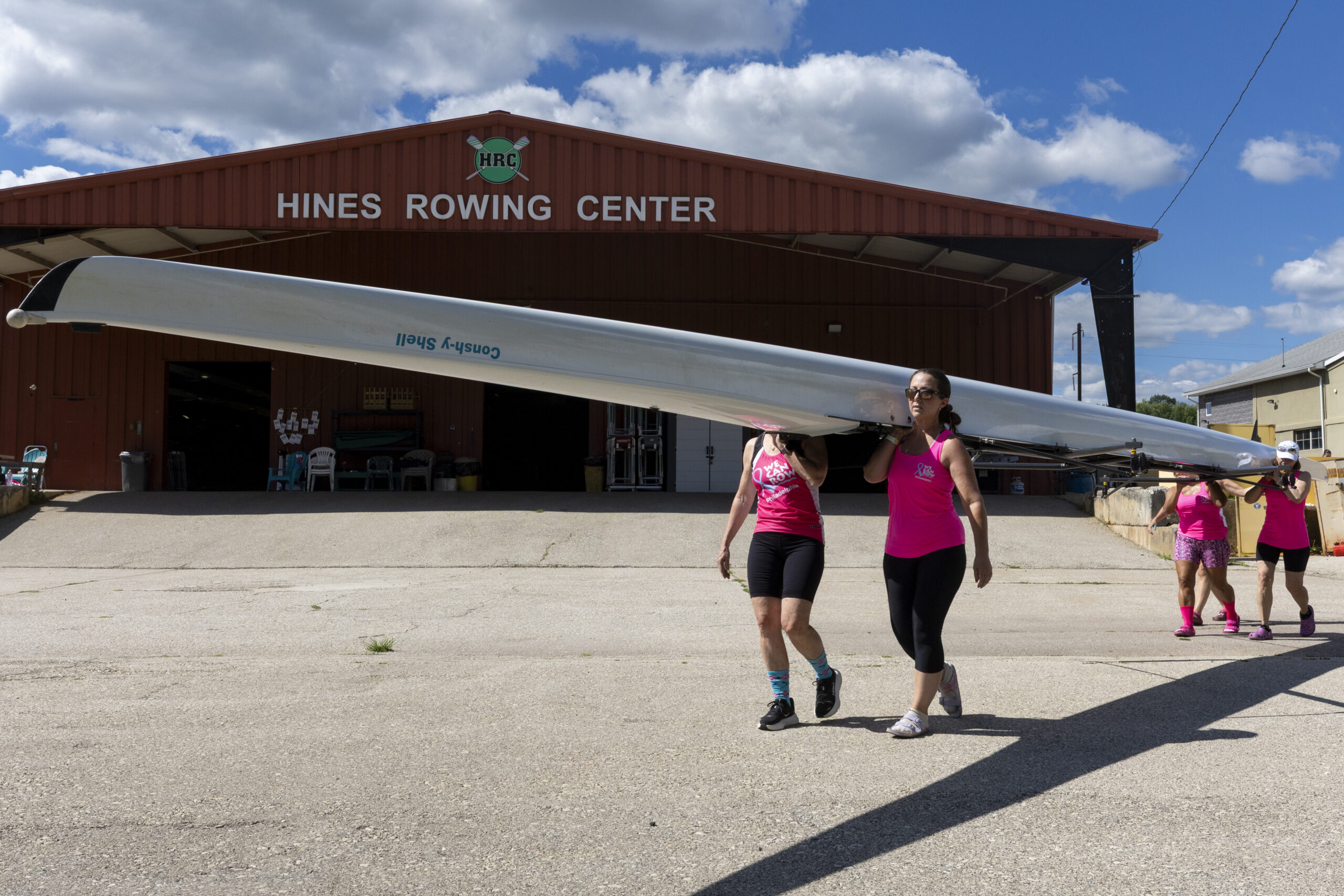
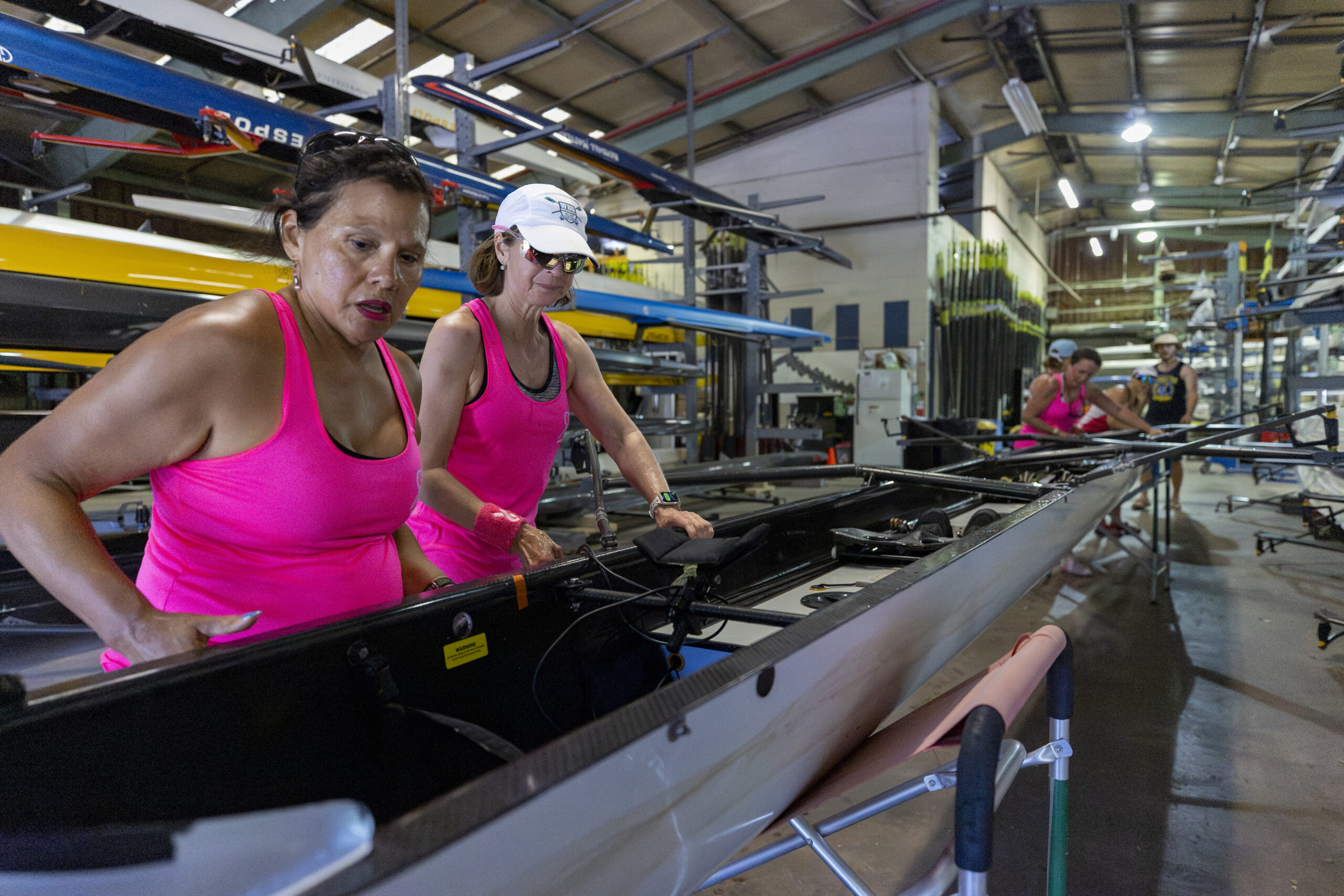
    WeCanRow-Philadelphia, a rowing program through Whitemarsh Boat Club for breast cancer survivors, came to Philly in 2018 and currently has 46 members.

    WeCanRow-Philadelphia is a rowing program through Whitemarsh Boat Club for breast cancer survivors. The Philly chapter is supported through the Survivor Rowing Network, which has more than 30 participating programs around the nation. It came to Philly in 2018 and currently has 46 members.

    “WeCanRow is everything about community, about mentoring, about encouraging, about connection, about hope,” said Susan Ryan, 61, of Eagleville. “It’s the on-water support group that isn’t.”

    While the program focuses on mental and physical healing for those treated for breast cancer, the participants are competitors, too. They’ve raced twice at the Head of the Charles Regatta in Boston and won both exhibition survivor events in 2024 and 2025.

    Now, they’re taking their oars across seas.

    From July 10 to 12, Whitemarsh Boat Club will have three boats compete at the Henley Masters Regatta in Henley-on-Thames, England. Members of WeCanRow-Philly will take part in an exhibition women’s coxed four. McConnell, Ryan, Jill Hunt, Bonnie Martin, and coxswain Marie Leonard will fill the exhibition boat.

    This will be the regatta’s first dedicated cancer survivor rowing event and marks a significant milestone as the first major event in the United Kingdom to welcome cancer survivor crews. It will run as a trial, with the hopes of becoming a permanent fixture.

    “When we meet these other survivors, there’s a connection,” said Martin, 61, of Lumberton, Burlington County. “It’s just great to have these connection points really all over the world, all over the country.

    “If someone would have told me six and a half years ago, when I was in treatment, that I’d be rowing like this, I would have never believed it. I feel like I’m an athlete, which I was never part of any organized sports before. It’s just been amazing.”

    WeCanRow-Philly is one of more than 30 participating programs around the nation through the Survivor Rowing Network.

    The two other boats are men’s and women’s quad. Both will race in the Master’s E class.

    The women’s quad is made up of all cancer survivors, featuring Emily Nelson, Karen Pinkstone, Kathy Reape, and Rebecca Choo Quan, while the men’s includes two cancer survivors from Whitemarsh, Jason Beck and Jim Nice.

    The program, which runs out of Hines Rowing Center in Conshohocken, runs from April till September, every Monday evening. Then in October, practices are held on Saturday mornings.

    Since finding out in May that they would be rowing at Henley, the crew bumped those practices to three times a week. Volunteer coach Matt Sidlowski, who’s a senior studying graphic design at West Chester, has been preparing the group for the upcoming regatta. He’s been involved with WeCanRow-Philly for the past three years.

    “They are so eager to row, so eager to get out there and spend their time working toward improvement,” Sidlowski said. “It makes it easy to show up. I have the power as a coach to give them access to a practice plan, training schedules, equipment, water time, feedback. … It really is motivating for me to see them achieve things they never thought they could.”

    Matt Sidlowski (left), a senior at West Chester, is a volunteer coach for WeCanRow-Philly.

    WeCanRow-Philly has brought together women from all over the area since Whitemarsh Boat Club is the only local boathouse offering cancer survivor rowing.

    Pinkstone, 56, travels about an hour from her home in Yardley to Montgomery County to row. But the drive is well worth it, she says.

    “It’s an entire evening,” she added. “You’re working all day and then you’re going to practice. My family is supportive because they see how happy this makes me and how important it is to me. … I’m a better teacher, a better mom, a better wife, a better person, because I’m taking care of myself, and this is a big part of it.”

    The group hopes to see more survivor rowing programs and events. To participate at such a prestigious regatta, though, is a start.

    Beyond the sisterhood, rowing is about working together to be in sync — even when the odds feel against you.

    “You can still pull hard in an unset boat, it doesn’t have to be perfect,” said Nelson, 56, of Villanova. “You can still put in 1,000 percent effort, even though the conditions are terrible, and I think about that a lot in the boat.

    “It’s not set, that’s not a reason to stop rowing, it’s not a reason to make excuses. Just go out there, do your best, no matter what’s going on. And that’s true on land, too.”

    WeCanRow-Philly has brought together women from all over the area since Whitemarsh Boat Club is the only local boathouse offering cancer survivor rowing.
  • Eagles newcomers ‘26: How soon can Eli Stowers make an impact at tight end?

    Eagles newcomers ‘26: How soon can Eli Stowers make an impact at tight end?

    With Eagles training camp drawing nearer, The Inquirer is taking a closer look at the more than three dozen new faces who are expected to report along with the rest of the team on July 28.

    Player: Eli Stowers

    Position: Tight end

    Age: 23

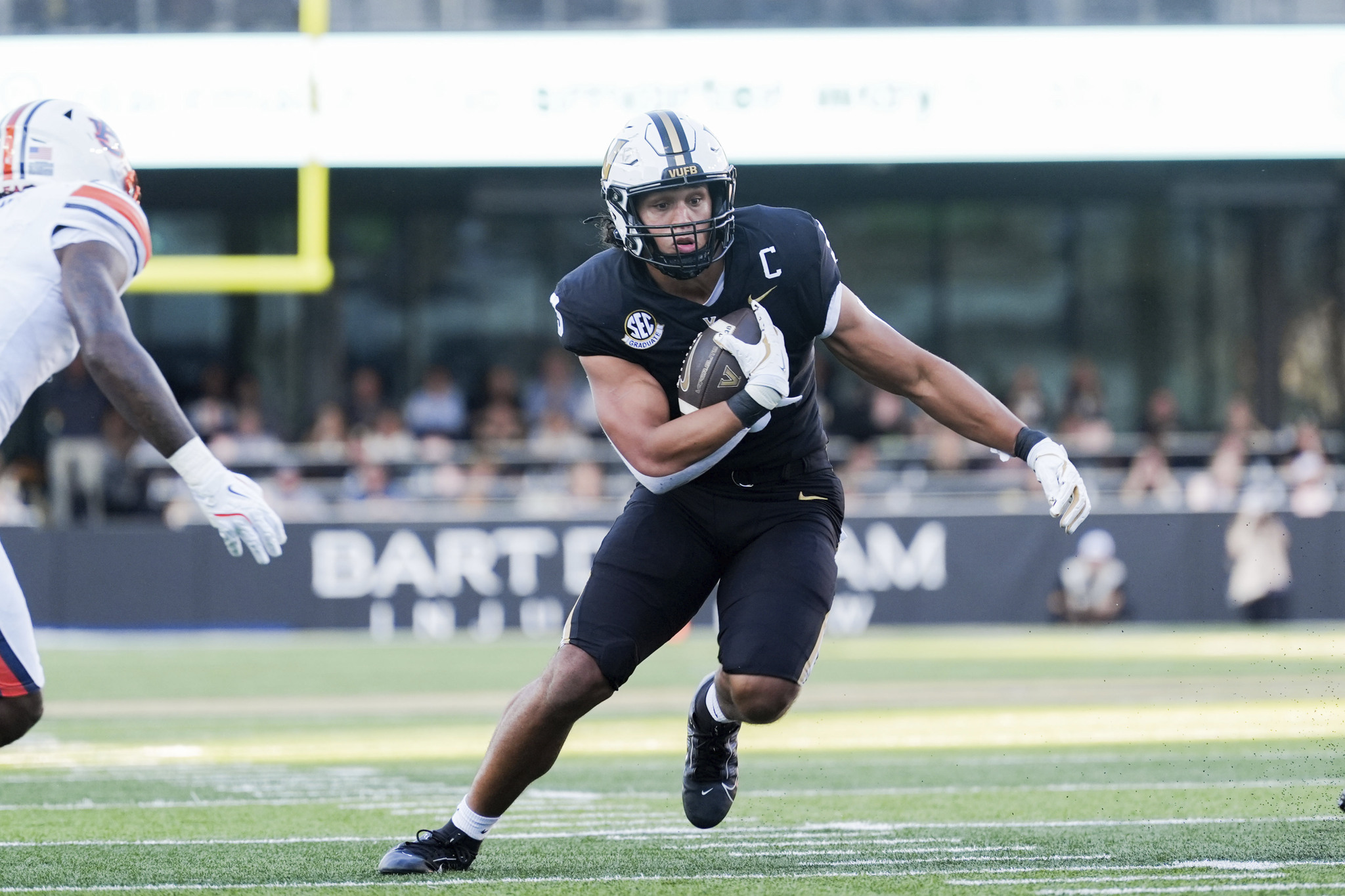
    Previous experience: Stowers, a second-round pick in this year’s draft, has been a tight end for only a few years. He entered college in 2021 as a quarterback, a top 20 recruit nationally at his position. But shoulder injuries forced him to find a new spot on the field. He was 6-foot-4, 215 pounds when he entered college; he’s now 240 pounds and scouts rave about his blend of size and speed. At Vanderbilt last season, Stowers, who won the 2025 William V. Campbell Trophy, otherwise known as the “Academic Heisman,” caught 62 passes for 769 yards and four touchdowns in 12 games.

    He was named the nation’s top tight end after leading all FBS tight ends in receiving yards per game (64.1). A year earlier, Stowers, a two-year starter at tight end, had 49 catches for 638 yards in 13 games with the Commodores.

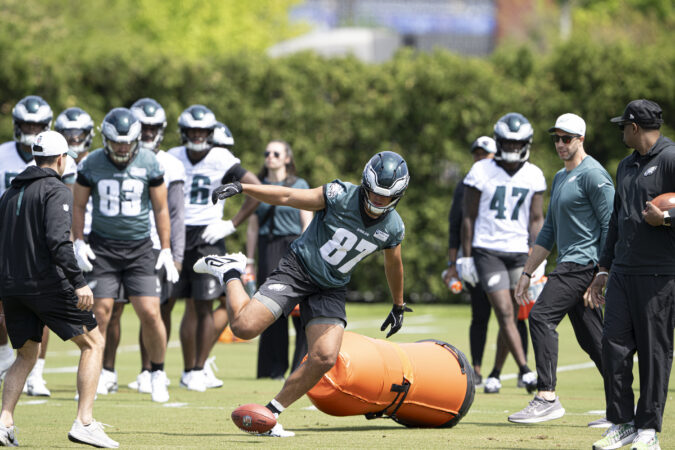
    Path to a roster spot: Stowers’ spot on the team is secure. His role, however, is up in the air right now. It’s not worth overanalyzing organized team activities and mandatory minicamp workouts in May and June, but Stowers didn’t stand out during practices open to reporters.

    Nick Sirianni seems excited about the possibility of lining Stowers up in the slot and creating mismatches, but the tight end’s path to significant playing time in his rookie season includes becoming a better blocker. Dallas Goedert is the unquestioned No. 1 on the depth chart, and the Eagles brought in a blocking tight end, Johnny Mundt, to help fill in an area of weakness from last year. If Stowers proves to be an efficient route-runner who can get open and make plays, he’ll find himself on the field plenty.

    Fun fact: Stowers is a son of coaches. His father, Donald, played defensive back at New Mexico State and had a short professional football career before becoming a coach. His mother, Tina, played volleyball at Baylor and later became a coach. While recovering from shoulder surgery in 2021, Stowers learned how to play guitar.

    Eli Stowers has drawn comparisons to Travis Kelce.

    Quotable: “I’m going to throw a name out here and people may be [like], ‘Are you serious?’ I’m just speaking from a standpoint of his approach to the game, and when I watch him — Travis Kelce was a former quarterback,” former Eagles receiver Jordan Matthews, now a coach at Vanderbilt, said in April when asked for Stowers’ NFL comparison. “You can tell Travis Kelce runs routes like he understands the defensive structure.

    “He knows what the defense has given him, and so he knows how to find voids in zone. But then he’s also athletic enough to win vs. man.”

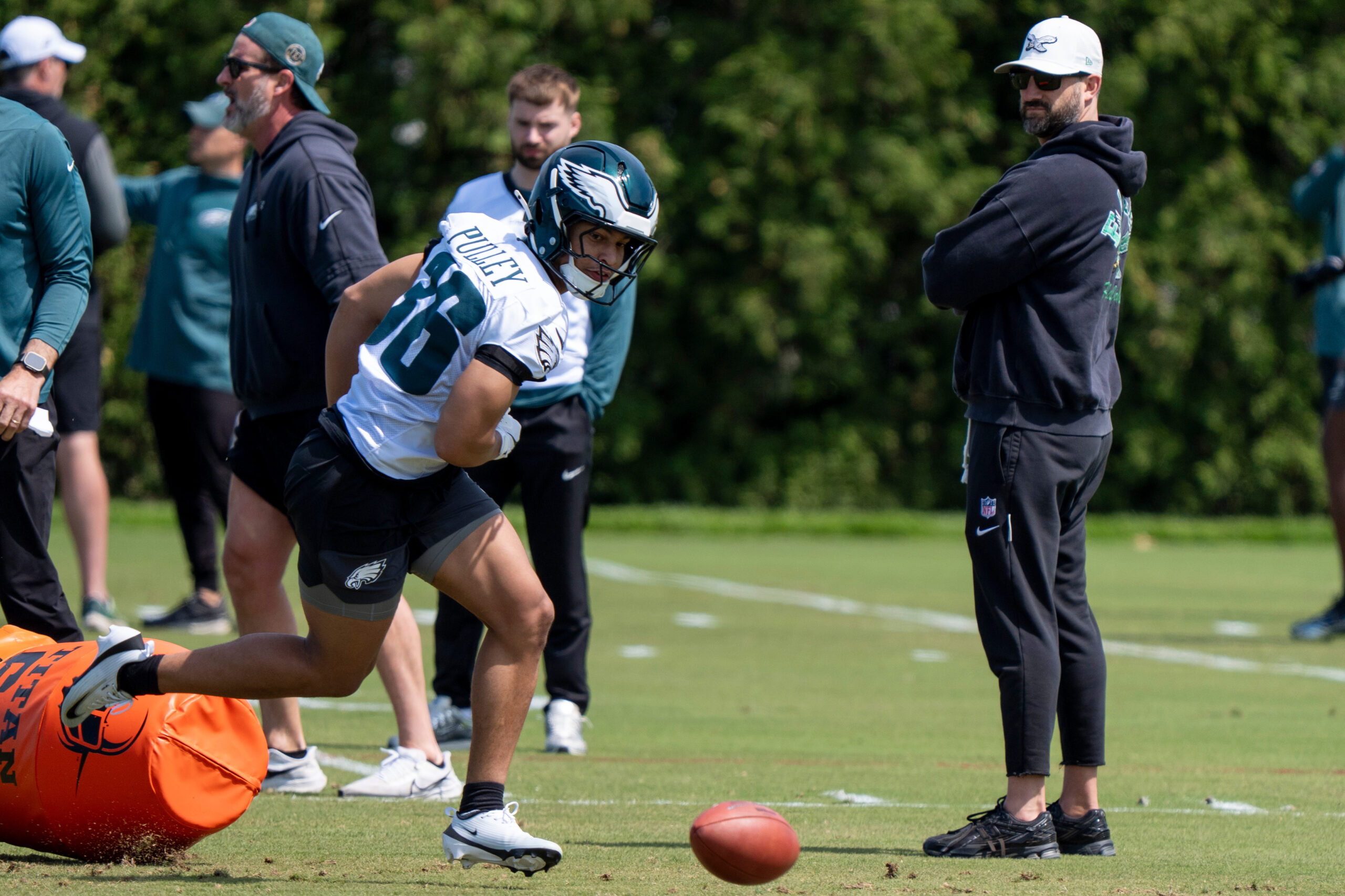
    Maximus Pulley (left) signed with the Eagles as a UDFA after three standout seasons at FCS school Wofford.

    Player: Maximus Pulley

    Position: Safety

    Age: 23

    Previous experience: Pulley’s rise has been remarkable. He had no scholarship offers out of high school, and Western Kentucky, where he began his college journey, didn’t even have a preferred walk-on spot for him. Pulley tried out for the team in the middle of the season in 2021 and joined the scout team. By the next year, he was a full-time special teamer. He hit the transfer portal after 2022 and landed at Wofford, a FCS program. He started every game with Wofford the next three seasons. Last year, Pulley led the team with five interceptions and returned two of them for touchdowns. He was a first-team All-American.

    At his pro day, Pulley ran a 4.45 40-yard dash and registered a vertical jump of 41½ inches.

    Path to a roster spot: Pulley is a long shot. The Eagles have at least some uncertainty at safety, but Pulley will be starting pretty low on the totem pole. Drew Mukuba is a lock to start, and the Eagles plan to use All-Pro nickel Cooper DeJean at safety in base. Right now, Marcus Epps is next in line to get on the field, with Michael Carter II also in the mix. The Eagles also used a seventh-round draft pick on a safety, Cole Wisniewski, and signed veteran special teams ace J.T. Gray. There’s room for an undrafted free agent like Pulley to make a push, but he’ll also be competing with fellow UDFA Kapena Gushiken — whom Vic Fangio has already name-dropped — for opportunities.

    Fun fact: Pulley, a sociology and anthropology major with a 3.64 GPA at Wofford, was named an academic All-American last season.

    Quotable: “Coming out high school, I wasn’t really good, but I was always the hardest worker,” Pulley said earlier this year on the Sam Acho podcast. “I feel like I’ve passed over so many people in the football world due to my work alone and my delusion. My mom loves the faith that I’ve always had, but the faith has come more recently. The delusion … I thought I was so much better than I was but I always trusted the work that I did.”

  • This chiller-than-happy-hour European drinking tradition is taking over Philly

    This chiller-than-happy-hour European drinking tradition is taking over Philly

    As the most popular dinner reservation times trend earlier and daycaps (aka late afternoon drinks) replace post-dinner cocktails, some Philadelphia bars and restaurants are forgoing happy hour for something with a chiller, convivial vibe: aperitivo.

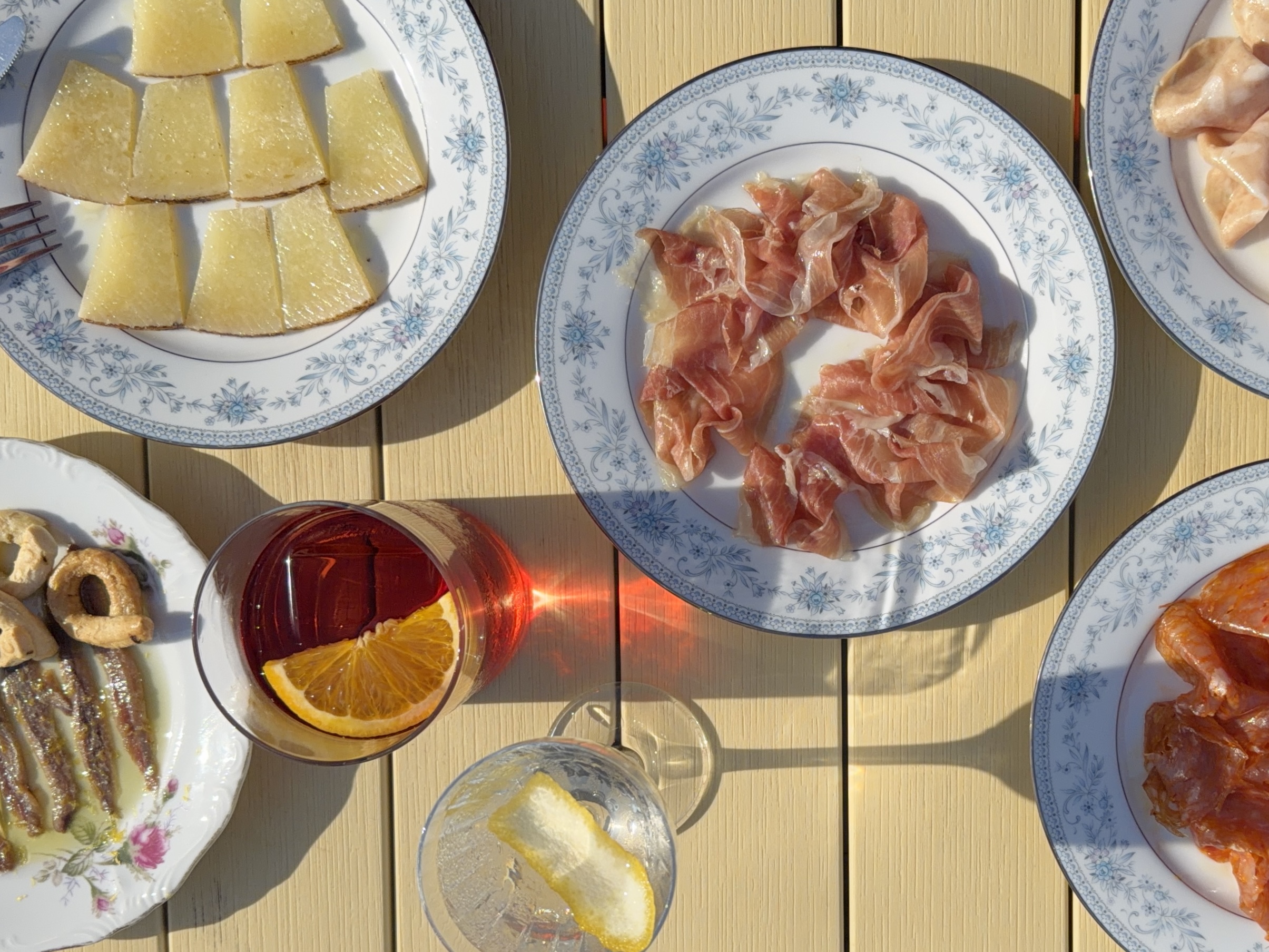
    A longstanding European tradition, aperitivo — which means “to open” in Italian — refers to the late afternoon and early evening hours ripe for lighter-paced drinking and snacking. While other countries have their own words for it (“apéro” in France, “la hora del Vermut” in Spain), the menu always includes fortified wines, bittersweet cocktails and liqueurs, and small bites meant to stimulate appetites.

    The ritual is a natural fit for Philadelphia, the so-called “Frenchest city in America,” and its rise of Euro-American-inspired bars and restaurants. Operators are leaning into food-driven aperitivo hours to stretch out the day longer and cater to diners that are going home earlier and drinking less. Signature aperitivo drinks — classic negronis, savory vermouths, and bittersweet amaris — aren’t as heavy or fast-paced as half-priced beer and shot specials, and often come with sidecars of salty snacks, like cured meats, olives, and bread. Others, like an Aperol spritz or an Americano perfecto (a spaghett-style cocktail with beer, Vermouth, Campari, and an orange slice), tend to be lower in ABV.

    People are “drinking earlier, coming right from work, and getting a small spritz, a snack, and then going to dinner,” said Benjamin Kirk, the beverage director at Michelin-key Hotel Anna & Bel, which offers an aperitivo menu three days a week at its cocktail lounge, Caletta. “You don’t see people out as late as you normally would since the pandemic.”

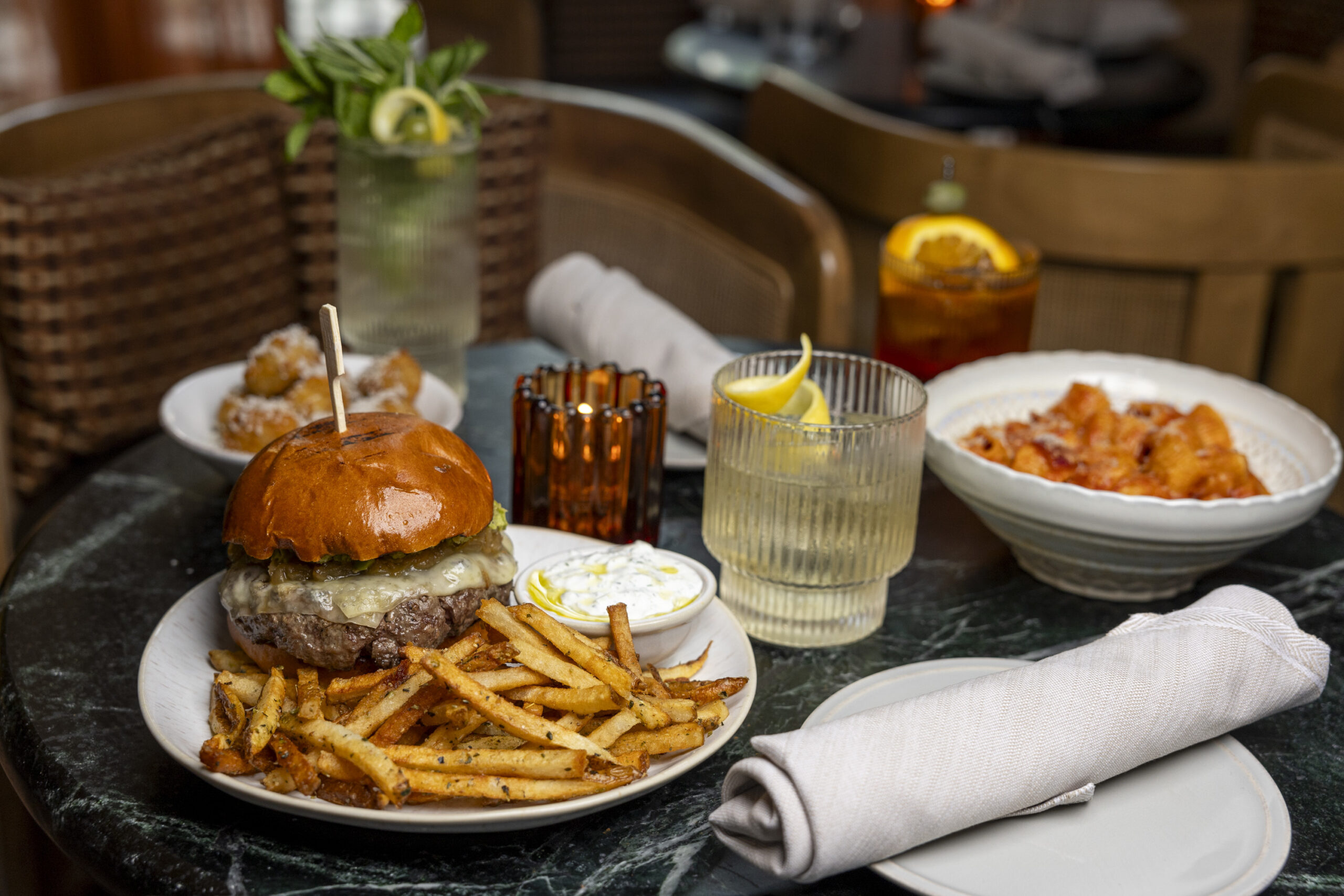
    A cheeseburger and fries, the rigatoni all Amatriciana, and croquettes are all part of the aperitivo menu at Caletta in Fishtown.

    Aperitivo is also more casual, less hurried, and lower pressure than a sit-down dinner or an after-work date. Reservations aren’t required, and it’s not uncommon to see friends popping in and out for a drink or kids joining family at the table.

    “It’s a lot easier to roll into aperitivo with a stroller and get a glass of wine with kids while you are catching up with friends rather than going to a bar,” said Chris DiPiazza of the South Philly bakery Mighty Bread, which started offering aperitivo hour in August 2024.

    Apéro is also “a marathon, not a sprint,” said Chloé Grigri, whose bars Superfolie, the Good King Tavern, Le Caveau, and Supérette all offer some version of late afternoon drink and food deals year-round. For Grigri, the purpose is less about pushing discounts so customers can drink more than it is about finding ways to intertwine French culture with happy hour. In Bella Vista, for example, the Good King Tavern is expanding daily apéro deals from 3 to 6 p.m. during the World Cup games (and beyond) to include discounted charcuterie, tartines, and “Frenchie-Americana” drink specials like Suze and Mountain Dew highballs and whiskey and Kronenburg citywides. “It’s the sort of thing you’d stumble across in Paris today in my opinion, but better,” she said.

    The Americano? Americano!, a vermouth cocktail that’s available only during aperitivo at Caletta.

    Still, prices at aperitivo tend to hover at $8 to $16 — roughly between the cost of a beer or glass of wine — which can attract customers during slower weekday business hours, said Le Virtù general manager Chris O’Brien. In the restaurant on East Passyunk Avenue’s monthly wine club newsletter, O’Brien said that 2026 has been “our busiest year on record by a long shot” with an uptick in patio reservations, where its all-you-can-eat northern Italian aperitivo events take place.

    Similarly at Fishtown’s Caletta, Kirk said he’s seen a midweek bump with more guests requesting aperitivo hours even during offseason months. Grigri also noted the timing of the World Cup this summer has worked well for her businesses across the board. “Le Caveau had an immediate noticeable uptick,” in business, she said, alongside Good King Tavern and Supérette, where aperó has had a steadier and slower build. “It’s about getting people in right before our normal busy hours,” said Grigri.

    Here are eight places to sip, linger, and graze al fresco for aperitivo in Philly.

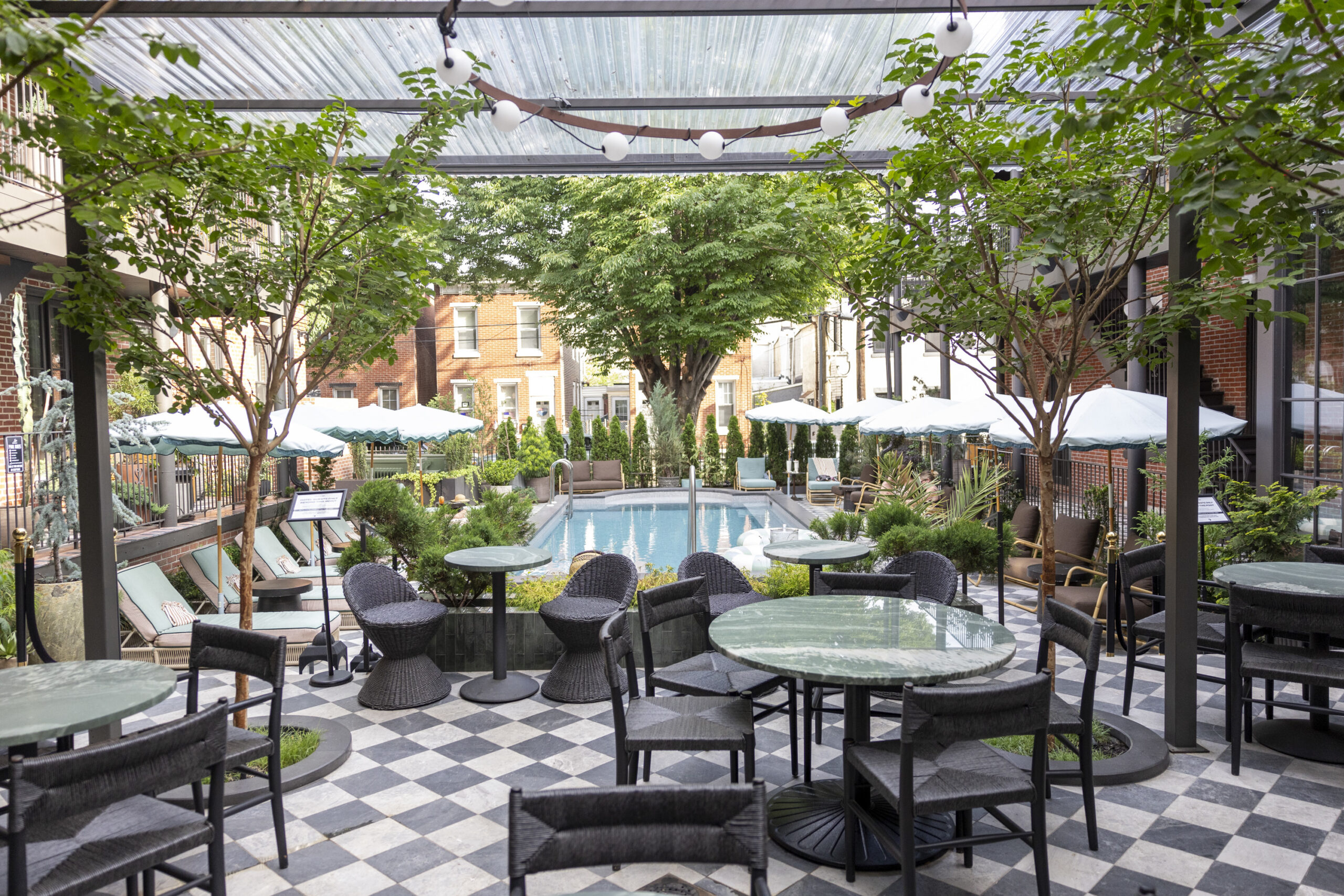
    Outdoor seating at Caletta, which offers an aperitivo menu from 4 to 7 p.m. Wednesdays through Fridays.

    Where to find aperitivo in Philly

    Caletta

    Caletta’s patio aperitivo (Wednesday through Friday from 4 to 7 p.m.) transports you from a quiet Fishtown block to the Mediterranean coastline. At this hotel bar, the cocktails include split-based, lower ABV drinks that use house-made liqueur blends and fortified wines, like the “Americano? Americano!,” which includes a mix of coffee liqueur, sweet vermouth, red bitters, orange, and olive. A bonus: Your first drink comes with a complimentary salty snack dish of mixed nuts, roasted peppers, or salami with house-made focaccia.

    📍1401 E. Susquehanna Ave., Philadelphia, Pa. 19125, 📞267-682-8253 🌐 calettafishtown.com

    A selection of complimentary aperitivo snacks alongside two cocktails at Sorellina, 699 N. Broad St.

    Sorellina

    At owner Joe Cicala’s casual pizzeria in the Divine Lorraine, aperitivo is baked into the regular menu. Every table gets a few olives and tuna-stuffed peppers to snack on while deciding what to order for dinner. Italian-style bitter cocktails, imported beers, and amari anchor the bar program,​ though Cicala has noticed more customers ordering nonalcoholic bitter sodas — perhaps influenced by summer Euro trips, he noted.

    📍699 N. Broad St., Philadelphia, Pa. 19123 📞 267-324-3586 🌐 sorellinapizza.com

    Banshee

    Banshee’s dedicated aperitivo section features Spanish-style small plates of croquettas and patatas bravas, among others, plus drink specials from 5 to 6 p.m. daily. The Mediterranean-inspired bar in Graduate Hospital folds cocktails from Spain (Kalimotxo), France (Kir), and Italy (the not-discounted-but-still-excellent Spring Americano with strawberry vermouth and rhubarb aperitivo) into one concise menu. Our recommendation: Order everything, including a side of the house-made sourdough.

    📍1600 South St., Philadelphia, Pa. 19146 📞 267-876-8346 🌐 bansheephl.com

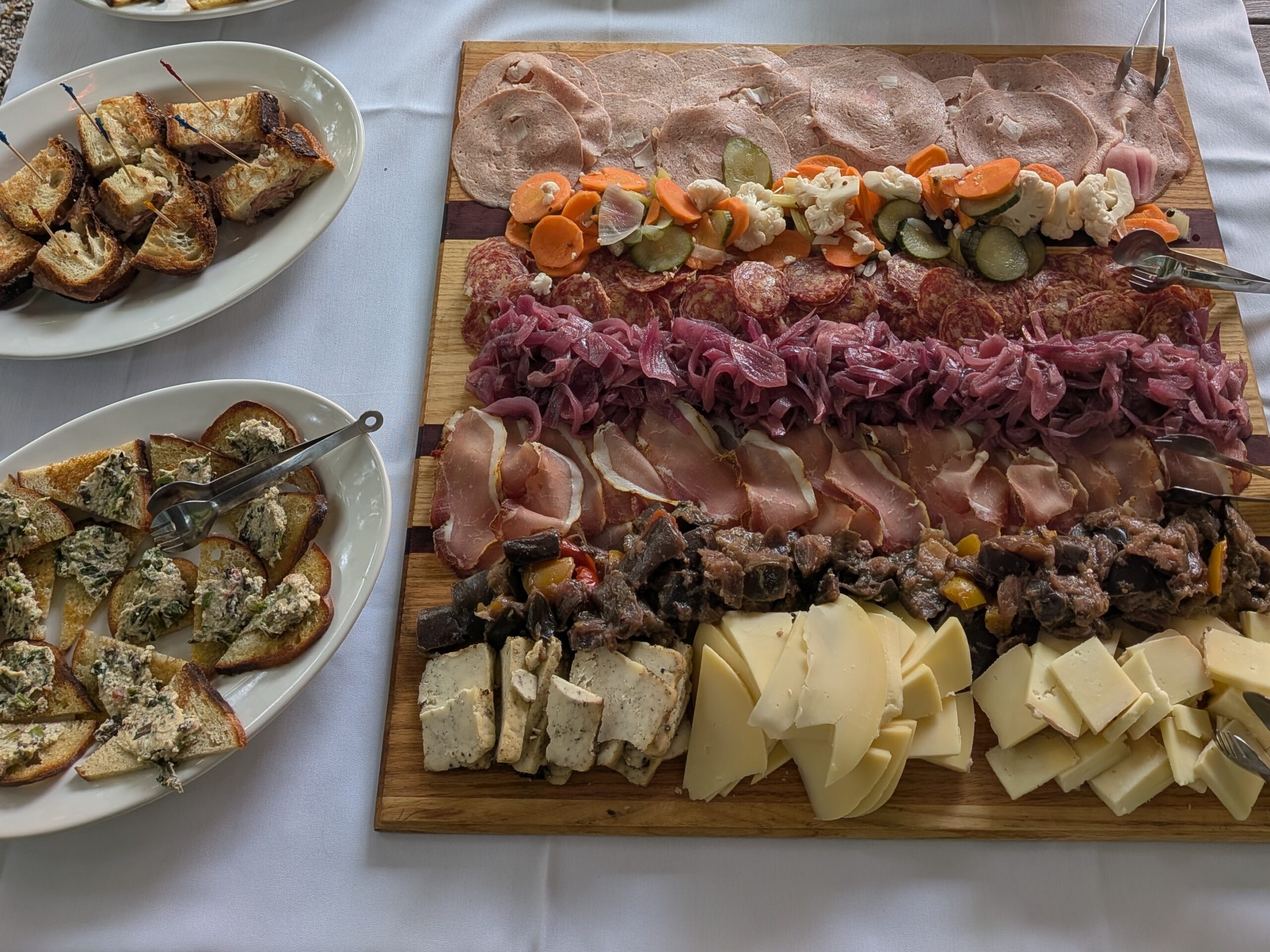
    A spread of stuzzichini (bite-size appetizers from Northern Italy) at one of Le Virtú’s summertime aperitivo events.

    Le Virtù

    For a glimpse of more communal-style aperitivo, East Passyunk’s Le Virtù hosts one-off seasonal patio gatherings throughout the summer that draw from the culture of Abruzzo, Italy, where owner Francis Cratil-Cretarola is from. Programming — typically on a Wednesday, weekend afternoon, or early evening — is lightly curated with unlimited buffet-style stuzzichini (bite-sized northern Italian appetizers) for $35 and $14 wines by the glass in collaboration with a rotating mix of producers and importers. Follow @levirtuphila on Instagram for upcoming events.

    📍1927 Passyunk Ave., Philadelphia, Pa. 19148 📞 215-271-5626 🌐 levirtu.com

    BOTLD — Midtown

    This retail shop, tasting room, and cocktail bar adjacent to the Gayborhood lets you choose your aperitivo experience — order a drink and stay awhile or buy bottled-in-state products for at-home concoctions. Either way, you can’t go wrong with its “Slayborhood Spritz,” featuring Apologue persimmon liqueur, Kyro pink gin, prosecco, and club soda or a lemon herbaceous amaro with Fast Penny Spirits Americano Bianca.

    📍117 S. 13th St., Philadelphia, Pa. 19107 📞 445-776-7000 🌐 botld.com

    Light bites and negroni cocktails from Irwin’s aperitivo menu, which runs Wednesday through Friday from 5 to 7 p.m.

    Irwin’s

    Nothing beats a rooftop hang — especially with classic Sicilian drinks and snacks. Irwin’s, just across the hall from Bok Bar, hosts aperitivo hour inside and out on the roof every Wednesday through Friday from 5 to 7 p.m. during the summer. Everything on the menu is $13 or less: Negroni cocktails, charcuterie and formaggi, anchovies, tomato pie, and eggplant caponata (a chef Michael Ferreri family recipe for an antipasto vegetable stew).

    📍800 Mifflin St., Philadelphia, Pa. 19148 📞 215-693-6206 🌐 irwinsupstairs.com

    Mighty Bread Company

    This James Beard Award-nominated South Philly bakery is home to a family-friendly aperitivo. On weekdays year-round (except Tuesdays) from 4 to 6 p.m. you can enjoy Philly-Italian bites, cocktails, beer, and wine inside or in the courtyard. Snacks highlight bread in various forms: “Mighty Munch” with baguette chips, candied nuts, and seasoned pretzel chips; focaccia; and scallop toast with fermented aji chili butter. There are easy-sippers with Pennsylvania-made spirits, too, like Char & Stave coffee Amaro and soda, a ready-to-drink sparkling wine spritz, and Mighty Bread’s own Italian semolina pilsner, Amici Del Pane.

    📍1211 Gerritt St., Philadelphia, Pa. 19147 📞 215-607-3205 🌐 mightybreadco.com

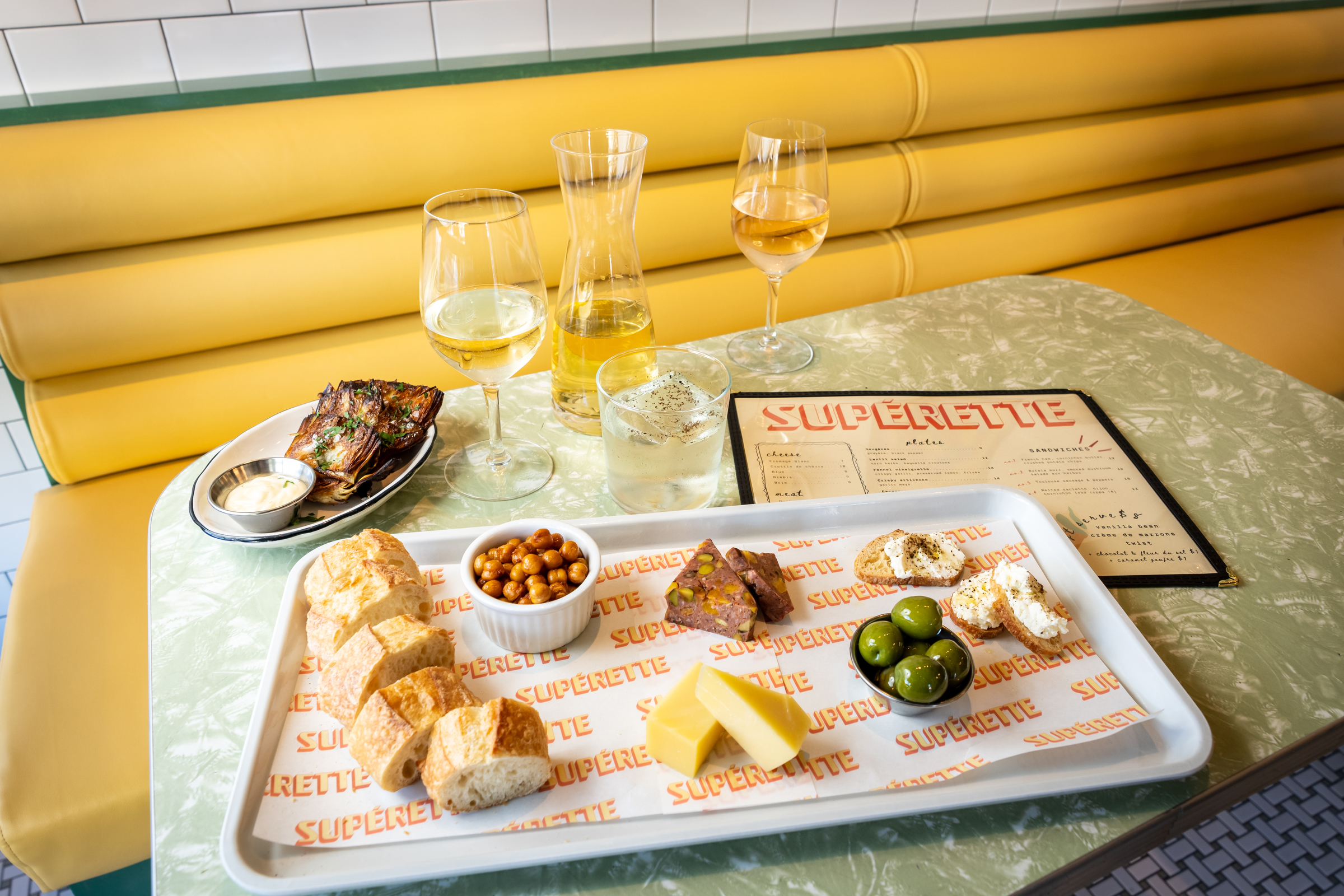
    A snack board at Supérette, a restaurant, bottle shop, and wine bar on East Passyunk Avenue.

    Supérette

    Supérette captures that quintessential French-style apéro energy: Customers drift in and out the door, shopping for natural wine in the bottle shop or sipping highballs at the bar. The day-to-night vibes at Chloe Grigi’s épicerie and wine bar on East Passyunk Avenue invite spontaneous meetups fueled by olives, mini-chip-filled jambon-and-beurre sandwiches, and Frenchie disco fries (aka nachos with shredded cheese, local spam, cornichon relish, and crème fraîche). Better yet: Apéro is every weekday year-round from 3 to 6 p.m.

    📍1538 Passyunk Ave., Philadelphia, Pa. 19147 🌐 superettephl.com

  • Letters to the Editor | July 6, 2026

    Letters to the Editor | July 6, 2026

    Stoking fear

    Your reporting on the Bicentennial in Philadelphia reminds readers that then-Mayor Frank Rizzo stoked fears of July Fourth counterprotests, and thereby scared away tens of thousands of visitors. In his efforts to thwart protest, his unsuccessful demand for 15,000 federal troops predicted “disruption and violence by a substantial coalition of leftist radicals.” It was red-baiting rhetoric that sounds eerily like what we hear today.

    There were actually a few different protest actions on July Fourth. We were participants in the largest one, a national demonstration held in North Philadelphia and led by Puerto Rican and Native American activists, calling for “a Bicentennial without colonies,” as well as “jobs and a decent standard of living” and “full democracy and equality.” Hundreds of organizations mobilized for the protest. News accounts estimated as many as 40,000 people marched and rallied peacefully in Fairmount Park.

    While the protest’s goals are yet to be achieved, this massive coalition effort in the face of repression by Mayor Rizzo was a boost to independent progressive politics in Philadelphia and beyond. This year, we are commemorating that protest and noting that milestones like America 250 are opportunities — not only to celebrate America’s birthday, but also to point out the unfulfilled promises of the Declaration of Independence, and to advance truthful, inclusive narratives about U.S. history.

    Paul Socolar, Pedro A. Rodriguez, and Tony Heriza, July 4 Sin Colonias Coalition, Philadelphia

    Fiscal irresponsibility

    I appreciated the recent article illuminating Mayor Cherelle L. Parker’s decision to spend $15.5 million in taxpayer money on what is now called the “One Philly: A Unity Concert for America.” The price tag for the event seems to be in direct contradiction to what Parker said to striking municipal workers last summer — that meeting their demands for a new contract would put the “fiscal stability” of the city at risk. Moreover, given the fact that the Philadelphia School District is facing a $300 million deficit and narrowly avoided making significant staff cuts, spending $15.5 million on a concert sounds, to be frank, fiscally irresponsible. Simply put, Parker is prioritizing a concert that now bears her slogan over the stability of the city’s budget, which serves Philadelphians — proving, once again, that under the Parker administration, it’s not “One Philly,” it’s “Her Philly” — and we just pay for it.

    Jeff Wasch, Philadelphia

    Speak up

    I studied political science in college and constitutional law in law school. In 50 years of law practice, I dealt with the occasional constitutional issue. None of my training or experience has prepared me for what the Trump administration is doing to the delicate balance we have called democracy. Hard to imagine that four justices of the U.S. Supreme Court had doubts about birthright citizenship, impossible to think that massive, unauthorized, and garish changes to the White House could be done by incompetent contractors whose meager qualifications include paying vast sums to the president while the Republican-led Congress does nothing to prevent it. A president who ignores the Constitution, statutory law, and judicial rulings while continuing to line his pockets — and those of his children — with billions of dollars of ill-gotten gain? It’s all happening every minute. The midterms and the November election are our best and last chance to throw these criminals out of office and take back America. In the meantime, speak up, attend rallies, and by all means try to persuade anyone who is on the fence to come over and help repair the harm.

    Marc P. Weingarten, Palm Beach Gardens, Fla.

    . . .

    The elephant in the nine individual judicial chambers of the U.S. Supreme Court for the past three months was Donald Trump’s bogus executive order intended to end the absolute right to U.S. citizenship for every child born within the borders of the United States and its territories (with the ridiculous exception of American Samoa), as mandated by the Constitution and a prior court ruling. Trump has proved to be the most racist president since Theodore Roosevelt (look it up). He claimed, without evidence, that Barack Obama, son of a citizen and born in Hawaii, was an “illegal.” For years, with coaching and encouragement from the odious Steven Miller, he has been on a mission to cleanse America of nonwhite residents and darker-skinned immigrant citizens. Haitians fleeing for their lives from mercenary gangs, poverty, hurricanes, and earthquakes? Trump’s message is get the hell out. Lily-white Afrikaners from South Africa are welcomed with open arms. Need a visa? No problem. Unless Trump is removed from office by impeachment, we will have the cruelest and stupidest chief executive occupying the presidency for an implausible 31 more months — and at least four of nine Supreme Court justices and dozens of Republicans in Congress still ready and willing to defy the Constitution for him. They are a true enemy of America’s constitutional democracy and its creed — “out of many, one.”

    David Kahn, Boca Raton, Fla.

    Public philosophy

    I write regarding a recent article about the draft report issued by President Donald Trump’s Religious Liberty Commission. To solve the problem of a secular public square, the report calls for the elimination of the principle of separation of church and state and the elevation of Christianity. However, the problem of the public square being empty of moral meaning is not a result of the separation of the state from the church. Rather, it is due to the separation of the state from a public philosophy through which moral order can be arrived at through evidence and reason, rather than revelation. Such a public philosophy provided the foundation of our democracy from the Age of Enlightenment of our founders until the latter half of the 20th century, when morality became privatized. The case for revival of this philosophical tradition was first made in 1955 by the political philosopher and journalist Walter Lippmann in his classic book, The Public Philosophy, and more recently by commentators such as David Brooks. A philosophical moral order that underlies our government, social relations, and marketplace — arrived at through reason — avoids the potential oppression of a state-established religion that our founders sought to preclude.

    Donald Kelly, Havertown

    Art of the Donald

    In his book The Art of the Deal, Donald Trump bragged about his negotiating skills. So let’s see how they are faring during his presidency. He awarded a no-bid $14 million contract to his favorite pool maintenance company to correct alleged flaws in the Lincoln Memorial Reflecting Pool after claiming the job would cost less than $2 million. How’s that working out so far? And it was recently revealed that he awarded a no-bid $500 million contract to the company building his wonderful ballroom after claiming the project would cost far less and be covered by donations from his cronies. Way to go, Don. And let’s not overlook his “agreements” with Iran to end his flawed (failed?) war that he promised would replace its authoritarian regime, remove its potential nuclear weapon capabilities, and reopen the Strait of Hormuz, which had never been closed to international shipping until his war began. So far, his war seems to have failed in achieving many of his goals. And the Strait of Hormuz? Its shipping lanes are only partly open and are now subject to fees never before charged by Iran. His next book should rightly be titled The Art of the Fail.

    Ben Zuckerman, Philadelphia

    Join the conversation: Send letters to letters@inquirer.com. Limit length to 150 words and include home address and day and evening phone number. Letters run in The Inquirer six days a week on the editorial pages and online.

  • Dear Abby | Lack of intimacy has put marriage on the ropes

    DEAR ABBY: My wife and I have been married 10 years. Before that we dated for several years. We have a wonderful relationship in many ways, but we’ve never had the kind of sex life I would prefer. For a long time, we would talk about it and try to find ways to improve things. That communication at least made me feel like this was something we both wanted to improve.

    Two years ago, my wife had weight-loss surgery. Since then, our sex life has gone from bad to worse. In that time, I can count the times we’ve been intimate on one hand without using all my fingers. We also no longer talk about how we can improve things.

    Prior to the surgery, her struggle with her weight was one of the things that she cited as a (potential) cause for her low sex drive, so I was hoping things would improve. Instead, it seems like she has now lost ALL interest. I tried getting her a product that claimed to boost libido in women, but she never even opened it. It’s as if she has no interest in being interested in sex. I’m becoming increasingly frustrated with the situation (men want to be wanted, too), and I don’t know what to do. Help, please.

    — FRUSTRATED IN MICHIGAN

    DEAR FRUSTRATED: I will be frank. I am not sure if, under these circumstances, your marriage can be saved. Tell your wife you would like both of you to discuss this problem with her doctor and ask for a referral to an endocrinologist, a physician who specializes in hormones, who may be able to help her. However, if she refuses, unless you are resigned to living the rest of your life in a sexless marriage, you may have to consider divorce.

    ** ** **

    DEAR ABBY: A former next-door neighbor and casual friend has been obliging and assisted us several times since we’ve moved. (We still live about 15 minutes away from her, and we have no family within a 45-minute drive.) I feel we need to express our gratitude without making it seem like a payment.

    My wife and I have been on a few extended trips each year. This former neighbor has checked in on our cats, taken in packages and harvested from our garden to enhance proper growth, etc. Of course, in the course of caring for the garden, she could keep what she harvested. But I’m beginning to feel awkward about asking her for help because that’s the only time we call on her.

    We have had dinner with her and her boyfriend at her place, about twice a year, but that’s more effort on her part. This has been the pattern for about seven years. Please, I need a suitable gift idea.

    — AWKWARD GIFTER IN NEW YORK

    DEAR GIFTER: How about taking your former neighbor and her boyfriend out for a nice dinner? Or, host them for dinner at your home, offer them tickets to a concert or a play, or bring her back a gift from your travels. I am sure she and her boyfriend will appreciate the thoughtful gesture.