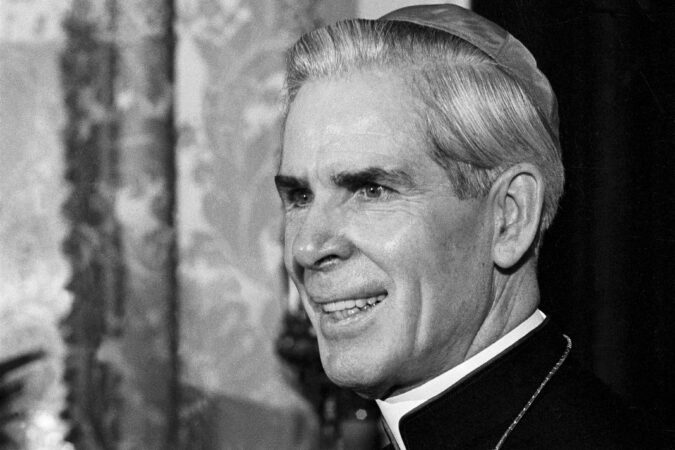
ROME — The Vatican has given the green light, again, to beatify Archbishop Fulton Sheen, the popular U.S. radio and TV preacher whose path to sainthood was derailed first by a lengthy court battle over his remains and then by concerns about how he handled clergy sexual misconduct cases.
After a rare six-year delay to investigate the concerns, Sheen’s beatification can now take place in Peoria, Ill., as originally planned, the Peoria diocese announced Monday.
No new date for the ceremony, the last major step before possible sainthood, was immediately announced. But the Vatican’s approval now sets the stage for the Illinois-born Sheen to be beatified during the pontificate of the Illinois-born Pope Leo XIV.
“The Holy See has informed me that the cause for the Venerable Servant of God Archbishop Fulton J. Sheen can proceed to beatification,” Peoria Bishop Louis Tylka said in a written and video statement on the websites of the diocese and the Sheen foundation. “We are working with the Dicastery of the Causes of Saints at the Vatican to determine the details for the upcoming beatification.”
Sheen was an enormously effective evangelizer in the 20th century U.S. church, who in some ways pioneered televangelism with his 1950s television series, Life Is Worth Living. According to Catholic University of America, where he studied and taught before he was made a bishop, Sheen won an Emmy Award, was featured on the cover of Time Magazine, “and became one of the most influential Catholics of the 20th century.”
Pope Francis had confirmed a miracle attributed to Sheen’s intercession on July 6, 2019, and had set his beatification for Dec. 21 that year in Peoria. But with less than three weeks’ notice, the Vatican postponed the ceremony indefinitely.
It acted after the diocese of Rochester, N.Y., where Sheen served as bishop from 1966-1969, asked for further investigation into Sheen’s tenure and “his role in priests’ assignments.”
The concerns focused on Sheen’s handling of two cases of priests accused of sexual misconduct. Sheen was never accused of abuse himself. A top canonical affairs official from Peoria, Monsignor James Kruse, said in 2019 that an investigation had cleared Sheen of any wrongdoing. Kruse later complained that the Rochester diocese was “sabotaging” the cause, writing a lengthy essay that had been posted on the official Sheen beatification site but later taken down.
Peoria Bishop Tylka’s statement made no reference to the concerns that prompted the delay in 2019.
The 2019 investigation was the latest obstacle to hinder Sheen’s cause, coming after an expensive, yearslong legal battle between Sheen’s relatives in Peoria and the New York City archdiocese over his final resting place.
Sheen, who died in 1979, was interred under the altar of St. Patrick’s Cathedral in New York. His remains were returned to Peoria in 2019 after a court ruled Sheen’s niece could bury him there.
Among those celebrating the Vatican’s new green light to beatify Sheen was the Pontifical Missions Societies in the U.S., the Vatican’s main missionary fundraising office in the U.S., which Sheen headed from 1950-1966. Sheen left most of his patrimony, including writings and audio recordings, to the organization, which raises money for the Catholic Church in Africa, Asia, Latin America, and other mission areas.
“It is profoundly moving that, in God’s providence, the first U. S. — born pope is able to advance the cause of his fellow Illinois native, the most iconic evangelizer ever produced by the American Church,” Monsignor Roger Landry, national director of the office, said in a statement.
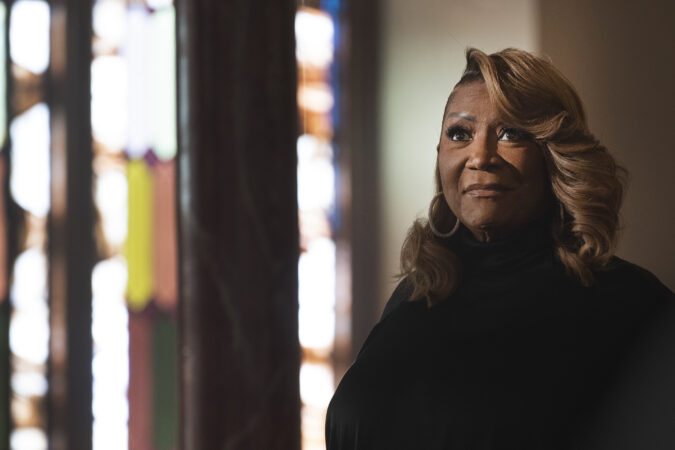
On a bitterly cold afternoon last month, Patti LaBelle walks gingerly down Mother Bethel A.M.E. Church’s center aisle, her left hand grazing the top of each pew, steadying her balance.
Half a dozen content creators, directors, and Visit Philadelphia staff coax the Grammy award-winning songstress toward the 18th century church’s magnificent altar, their voices overflowing with encouragement, reverence, and love.
LaBelle’s stockinged footstepsare deliberate, her unblinking eyes affixed on the organ pipes in front of her.
She’s as contemplative as she is careful.
“Come on, Miss Patti,” cooed Kyra Knox, the Emmy award-winning filmmaker who is directing Visit Philadelphia’s Black History Month promotional video, “We Are the Fabric. We are the Thread,” starring the Philadelphia legend. “You are doing great.”
“We Are the Fabric” is part of the nonprofit tourism agency’s “Indivisible” campaign, a yearlong initiative highlighting Philly’s diverse tourist destinations during America’s 250th birthday and Black History Month, which, coincidentally, is celebrating its 100th birthday this year. (Carter G. Woodson introduced Negro History Week in 1926. It was extended to Black History Month in 1976.)
The videos are streaming on several online platforms including Hulu and HBO Max in seven markets, including Philadelphia, New York, Atlanta, and Washington, D.C. During the month of February, Visit Phillywill conduct a series of neighborhood walks through the city’s historic districts with a special focus on Black history courtesy of the historical arts organizations 1838 Black Metropolis and the Black Journey.
“You cannot tell the story of American culture, innovation, music, art, and food without Black Americans because they are woven into every thread of the national narrative,” said Angela Val, president and CEO of Visit Philly.
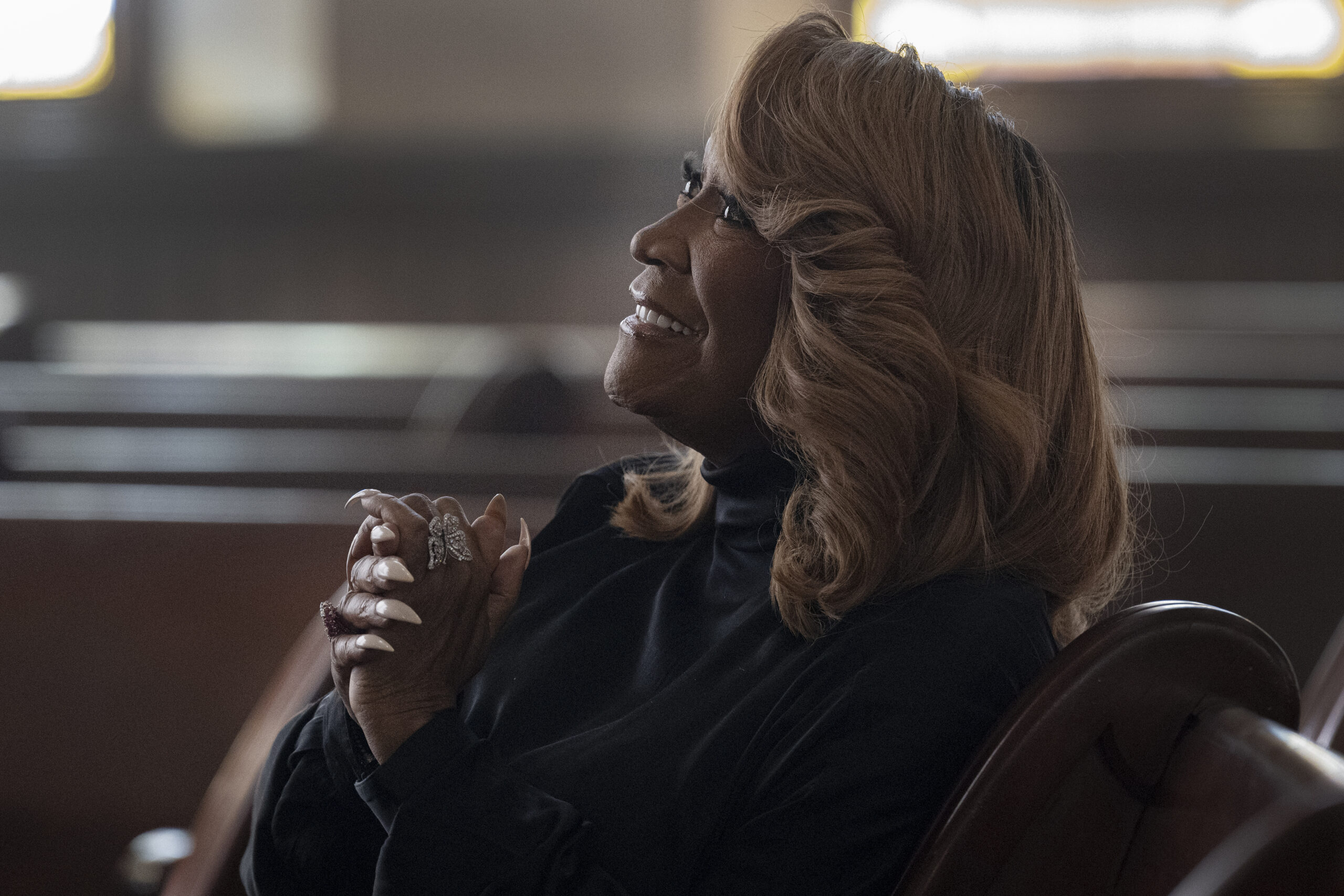
The filmmakers squeezed in a lot of places on the cold Thursday afternoon. Mother Bethel — the home of America’s first Black Christian church founded by formally enslaved Richard Allen — is the first stop on the hours-long shoot. After recording takes of LaBelle’s coffin-shaped ivory nails in prayer and the centuries-old church’s sunlit stained glass windows, LaBelle and the crew drive 14 blocks west to South Philadelphia’s Union Baptist Church.
Film rolls and cameras flash as LaBelle, wrapped in an ankle-length vintage chocolate brown fur, is reflective in front of Union Baptist’s 111-year-old stately exterior. Inside, barrier-breaking early 20th century contralto Marian Anderson once sang in the choir. Like Anderson, LaBelle got her start singing gospel at Southwest Philly’s Beulah Baptist Church.
Singer Patti LaBelle at Mother Bethel A.M.E. Church in Philadelphia during a shoot for Visit Philadelphia’s “Indivisible” initiative, part of an effort to celebrate the city’s communities of color during the city’s 250th anniversary. LaBelle is starring in the campaign’s Black History Month promotion.
After a few windy takes, the crew made its way to the southwest corner of City Hall in front of the statue of martyred 19th century civil rights leader Octavius Catto. The day ended at the Arden Theatre, a nod to Philadelphia’s vibrant Black performing arts community.
LaBelle stars in and narrates the video. She’s accompanied by 9-year-old Riley Mills and visits historical sites and modern locations, like Uncle Bobbie’s Coffee & Books in Germantown, reminding us that Black history is to be passed through the generations.
“When the Constitution couldn’t hold us, we held each other,” LaBelle says, her voice clear, sharp, and determined.
“We made the music you move to,” she continues as images of Teddy Pendergrass, Kenny Gamble, and Leon Huff fill the screen. And then, in an “if you blink, you will miss it moment,” there LaBelle is, in an old photograph flanked by her Labelle group members Sarah Dash and Nona Hendryx, followed by her powerful words: “When they wouldn’t give us a stage, we built one.”
Living Black history
Patti LaBelle is 81. She knows she’s Black history. She’s proud of it and doesn’t take it lightly.
“Black people stand for everything,” LaBelle told The Inquirer in between takes at Mother Bethel, her voice barely a whisper, worn out from her performances in the “Queens: 4 Legends Tour” starring LaBelle, Chaka Khan, Gladys Knight. and Stephanie Mills. They all came of age before the Civil Rights Act of 1964 was passed.
“And we continue to. We continue to fight while things are being taken away from us.”
As Visit Philly filmed “We Are the Thread,” the National Park Service was in the midst of dismantling an exhibit honoring nine enslaved people who worked at George Washington’s house when Philadelphia was America’s capital city.
“If we don’t fight to keep what is ours,” LaBelle said, her scratchy voice taking on urgency. “It will be lost.”
Visit Philly’s choice of LaBelle as its Black history spokesperson this year is thoughtful and necessary.
Her generation of civil rights warriors bridges the gap between Black Americans who lived through Jim Crow and those of us who only heard horror stories of how difficult it was for our ancestors to go to school, work, and vote.
As this administration claims that the Civil Rights Act resulted in “white people being very badly treated,” it’s important that stories like LaBelle’s aren’t just repeated but remembered and celebrated — especially as they get up there in age.
We need to give them their flowers now.
Without Patti LaBelle, Philadelphia — and its music — would be a different place.
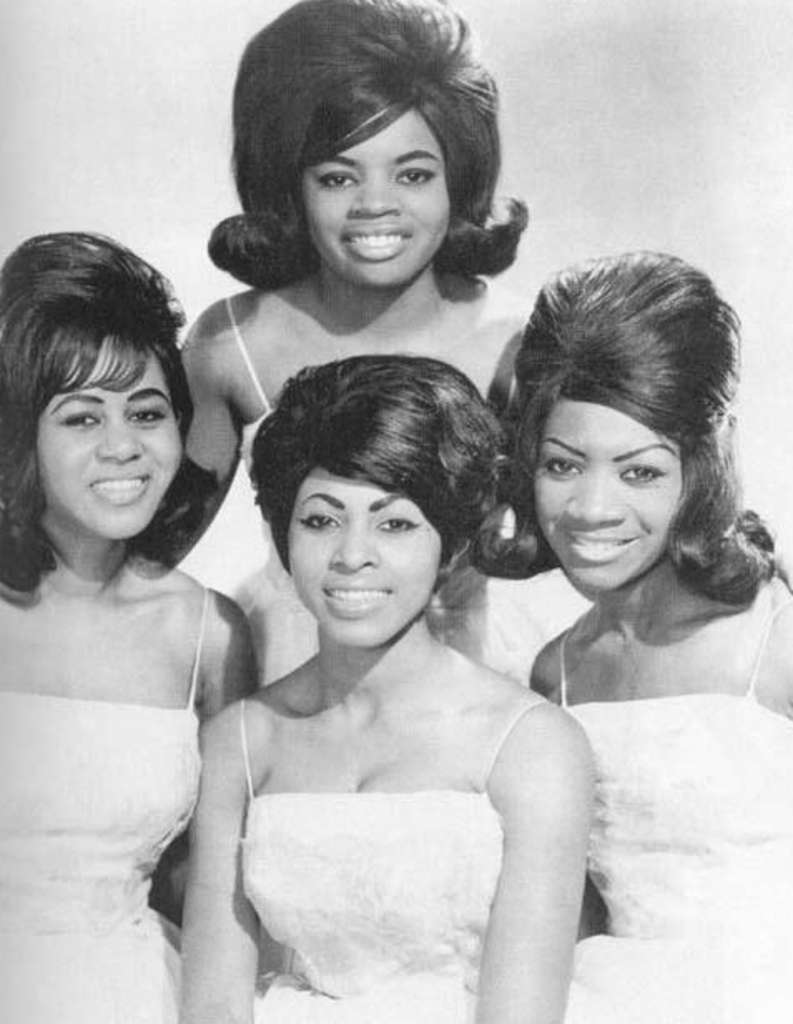
Patti LaBelle (right) and the Blue Belles, the group with which she had her first hit, in 1962: “I Sold My Heart to the Junkman.”
A Philadelphia girl
LaBelle was born Patricia Louise Holte in Southwest Philadelphia in 1944. Her dad, Henry, came to Philadelphia from Georgia in the early part of the 20th century during the Great Migration. He worked on the railroad, was a singer, and an occasional gambler. Her mom, Bertha, was a homemaker. LaBelle was the youngest of five.
She went to Bartram High and sang at Beulah Baptist before becoming the lead singer of Patti LaBelle and the Blue Belles.
The group’s 1962 hit, “I Sold My Heart to the Junkman,” sold millions of copies, cementing LaBelle’s stardom, getting her a spot on the Chitlin’ Circuit for performances at Uptown Theater. She appeared on American Bandstand and Jerry Blavat’s radio show.
By 1975, the group was simply known as Labelle and was a visual smorgasbord of Afrofuturistic sequins and space suits. It released the iconic “Lady Marmalade” that catapulted Labelle to the cover of Rolling Stone, becoming the first Black music group to be featured.
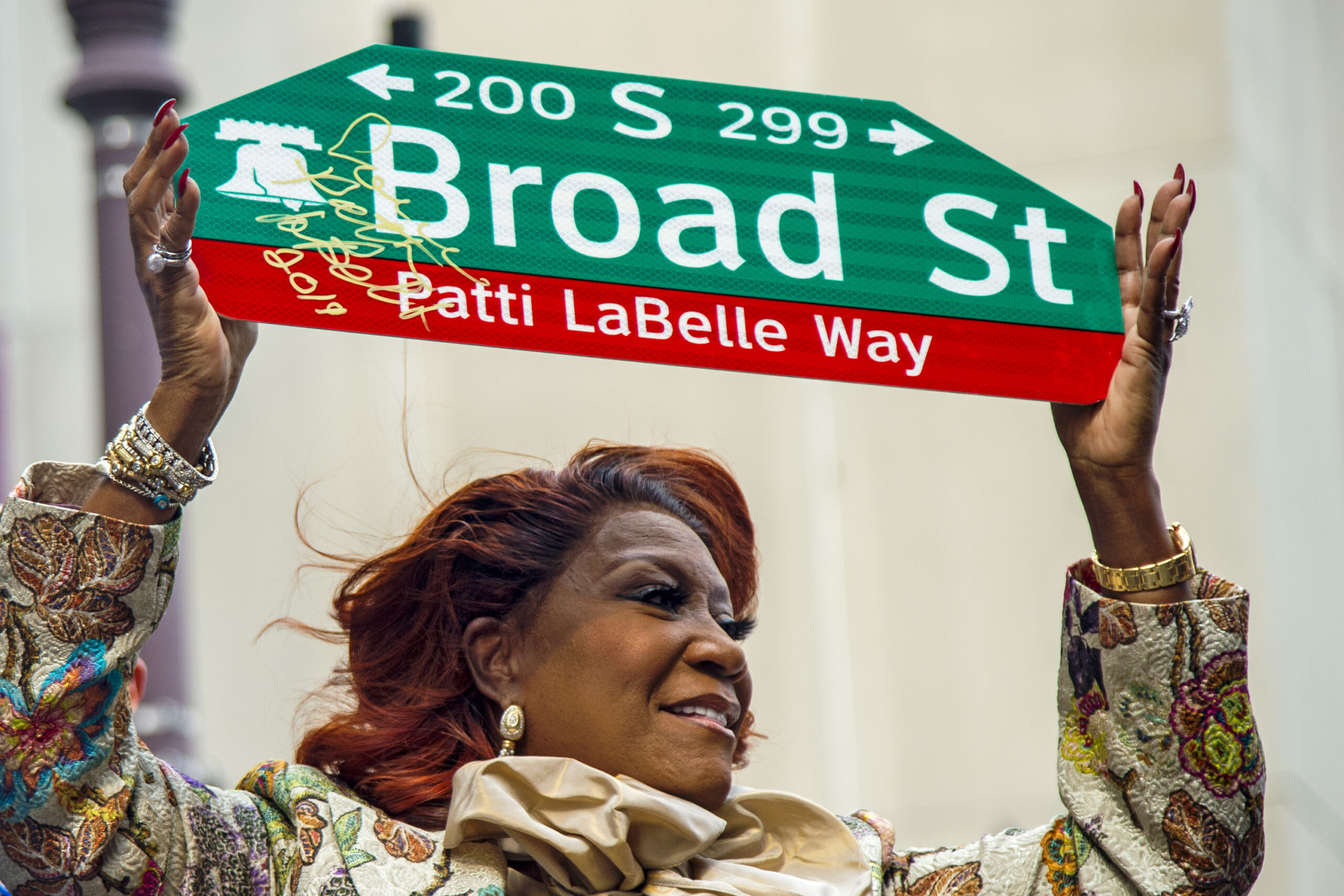
Patti LaBelle holds up a sign during a celebration on July 2, 2019, as the block of Broad Street between Spruce and Locust Streets is renamed Patti LaBelle Way.
“I’ve had a lot of wonderful moments in my career,” LaBelle said. “It’s nice to remember, to be proud. We made a lot of history.”
(Christina Aguilera, Lil’ Kim, Mya, and Pink covered “Lady Marmalade” in 2001 for the Moulin Rouge soundtrack. And in 2003 Labelle’s “Lady Marmalade” was inducted into the Grammy Hall of Fame.)
In 2016, LaBelle received the Marian Anderson Award. Three years later, the city named a block of Broad Street between Spruce and Locust Patti LaBelle Way.
LaBelle, who lives in Villanova now, never left the Philadelphia area.
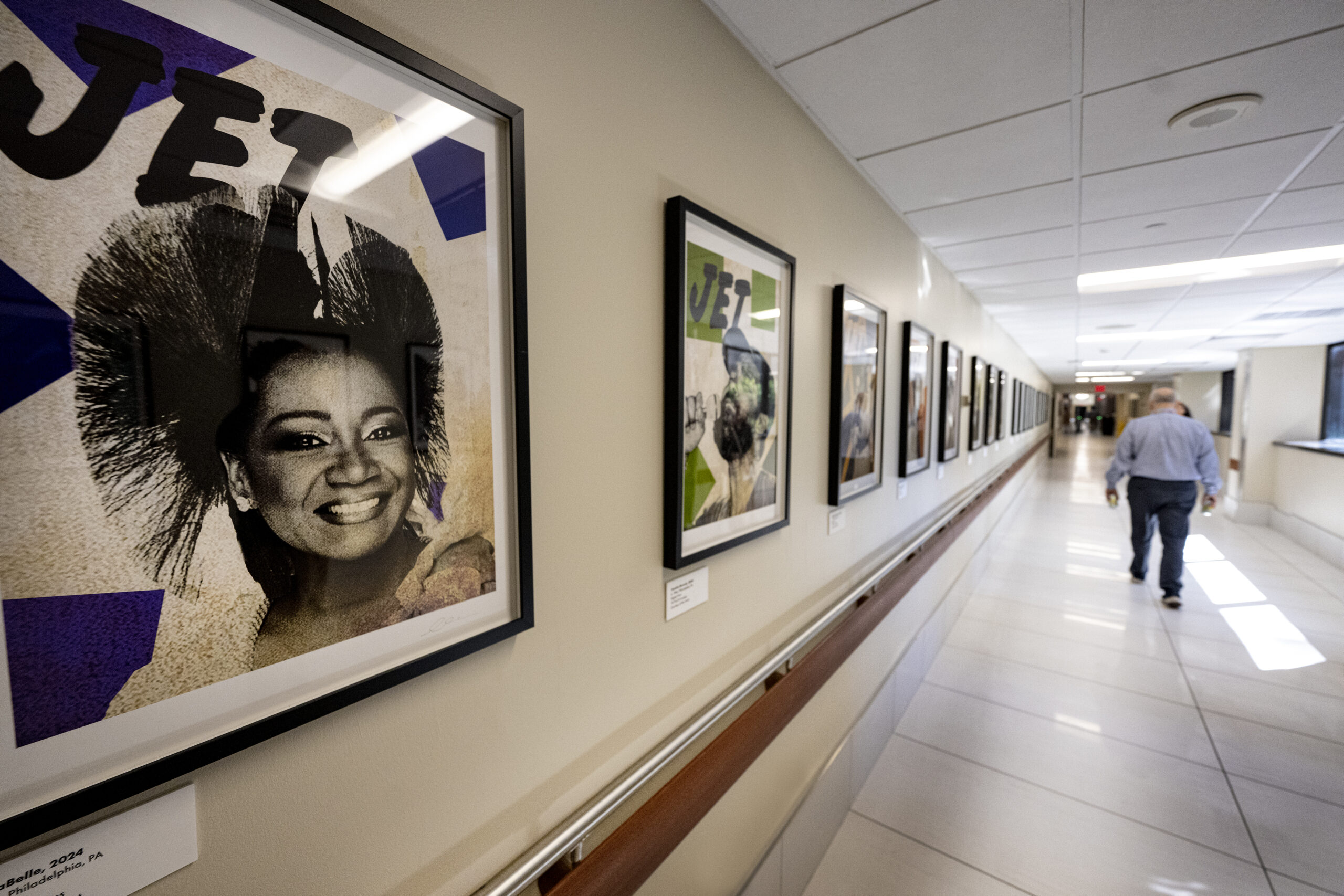
Patti LaBelle and Frankie Beverly are two of the celebrities featured on reimagined Shaheed Rucker’s ‘(re)Covering the Iconic” in in Jefferson Einstein’s community corridor. Monday, Sept. 8, 2025.
“I’m a Philadelphia girl,” she said with pride. “It’s laid back, comfortable. … How I like it.”
Over the decades, she has had a few entrepreneurial endeavors including two short-lived Philadelphia boutiques and a clothing collection on HSN. However, she’s best known for her indisputably yummy line of desserts — sweet potato pies and cobblers. Late last year, she introduced pancake mix and syrup that, she says for the record, is nothing like Aunt Jemima.
“For one,” she said, mustering up a bit of her trademark LaBelle sass, “I’m a real person.”
Real to her core.
“She’s given a lot to Philadelphia,” Val said. “She’s given so much to the country … to the Black community.”
A Western Pennsylvania man stole nearly $250,000 from the Montgomery County-based Pennsylvania Occupational Therapy Association, prosecutors said Monday, and spent the money on a trip to Disney World, country club membership fees, an Outer Banks vacation rental, and other personal expenses.
Michael Fantuzzo, 40, was charged with several counts of theft for the crimes, which prosecutors said took place between 2021 and 2024 while Fantuzzo, of Westmoreland County, served as treasurer for the nonprofit trade organization.
In all, prosecutors said, Fantuzzo spent $246,708 of the association’s funds, effectively reducing its savings account to zero.
Fantuzzo admitted to investigators that he used the association’s funds for personal expenses, though he initially told them he had spent $90,000 of the group’s funds and did so by accident.
A further investigation into Fantuzzo’s spending found that the sum was much larger.
Prosecutors say Fantuzzo spent more than $100,000 from the association’s bank account to pay off debt on a handful of credit cards opened in his name.
And Fantuzzo charged more than $128,000 to the association’s credit card, including $10,513 to install a hot tub at his home; $7,247 for a vacation home rental in Duck, N.C.; $5,460 for his local and county taxes; $4,124 for membership to the Hillcrest Country Club; $2,040 for a limousine service; and $2,019 for the trip to Disney World.
Members of the Pennsylvania Occupational Therapy Association, based in Plymouth Meeting at the time of the theft, realized something was wrong when newly elected board members learned the organization they inherited was experiencing “severe financial distress,” police said. They reported the suspicious payments to authorities in November.
The association advocates for occupational therapists and provides career development and networking opportunities, among other services, according to its website.
Investigators say they linked the spending back to Fantuzzo in a variety of ways.
Some payments, such as the Disney World tickets, included Fantuzzo and his family members’ names on the charges. Meanwhile, the PayPal payments went to an account bearing the name of Fantuzzo’s wife. And investigators tracked Fantuzzo’s name back to invoices and rental agreements for other purchases.
Fantuzzo turned himself in to Montgomery County authorities on Feb. 6. He was released from custody and is expected to appear in court for a preliminary hearing on Feb. 17.
HONG KONG — Jimmy Lai, the pro-democracy former Hong Kong media tycoon and a fierce critic of Beijing, was sentenced on Monday to 20 years in prison in the longest punishment given so far under a China-imposed national security law that has virtually silenced the city’s dissent.
Lai, 78, was convicted in December of conspiring with others to collude with foreign forces to endanger national security, and of conspiracy to publish seditious articles. The maximum penalty for his conviction was life imprisonment.
His co-defendants, six former employees of his Apple Daily newspaper and two activists, received prison terms of between 6 years and 3 months, and 10 years on collusion-related charges.
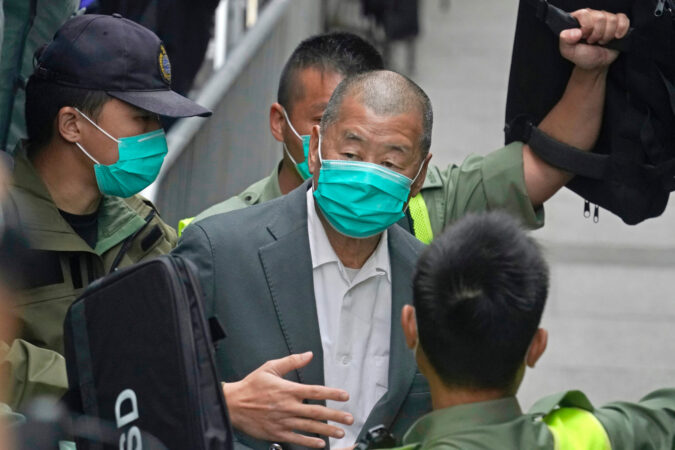
Lai smiled and waved at his supporters when he arrived for the sentence. But before he left the courtroom, he looked serious, as some people in the public gallery cried. When asked about whether they would appeal, his lawyer Robert Pang said “no comment.”
Lai’s daughter says he will die ‘a martyr’ in prison
The democracy advocate’s arrest and trial have raised concerns about the decline of press freedom in what was once an Asian bastion of media independence. The government insists the case has nothing to do with a free press, saying the defendants used news reporting as a pretext for years to commit acts that harmed China and Hong Kong.
Lai was one of the first prominent figures to be arrested under the security law in 2020. Within a year, some of Apple Daily’s senior journalists also were arrested and the newspaper shut down in June 2021.
Lai’s sentencing could heighten Beijing’s diplomatic tensions with foreign governments, which have criticized Lai’s conviction and sentencing.
U.S. President Donald Trump, who is expected to visit China in April, said he felt “so badly” after the verdict and noted he spoke to Chinese leader Xi Jinping about Lai and asked him “to consider his release.”
British Prime Minister Keir Starmer’s government also has called for the release of Lai, who is a British citizen. U.K. Foreign Secretary Yvette Cooper called the prosecution “politically motivated,” saying the prison term is tantamount to a life sentence.
In a statement, Lai’s son, Sebastien, said the “draconian” prison term was devastating for his family and life-threatening for his father. “It signifies the total destruction of the Hong Kong legal system and the end of justice,” he said.
His sister Claire called the sentence “heartbreakingly cruel” in the same statement. “If this sentence is carried out, he will die a martyr behind bars,” she said.
Hong Kong leader John Lee said Lai’s sentence demonstrated the rule of law, citing his serious crimes.
“It’s bringing great satisfaction to the people,” he said in a statement.
In Beijing, China’s Foreign Ministry spokesperson Lin Jian said Lai is a Chinese citizen and called him a major planner and participant in a series of anti-China destabilizing activities in Hong Kong. He urged “relevant countries” to respect the rule of law in Hong Kong.
Judges ruled Lai was the mastermind
Lai founded Apple Daily, a now-defunct newspaper known for its critical reports against the governments in Hong Kong and Beijing. He was arrested in August 2020 under the security law that was used in a yearslong crackdown on many of Hong Kong’s leading activists.
In their ruling, three government-vetted judges wrote that the starting point of Lai’s sentence was increased because they found him to be the mastermind of the conspiracies. But they also reduced his penalty because they accepted that Lai’s age, health condition, and solitary confinement would cause his prison life to be more burdensome than that of other inmates.
“Lai was no doubt the mastermind of all three conspiracies charged and therefore he warrants a heavier sentence,” they said. “As regards the others, it is difficult to distinguish their relative culpability.”
They took into account that Lai is serving a prison term of five years and nine months in a separate fraud case and ruled that 18 years of Lai’s sentence in the security case should be served consecutively to that prison term.
Urania Chiu, lecturer in law at Oxford Brookes University, said the case is significant for its broad construction of seditious intent and application of the term “collusion with foreign forces” to certain activities by the media. The implication is particularly alarming for journalists and those working in academia, she said.
“Offering and publishing legitimate critiques of the state, which often involves engagement with international platforms and audiences, may now easily be construed as ‘collusion,’” Chiu said.
Lai has been in custody for more than five years. In January, Pang said Lai suffered health issues including heart palpitations, high blood pressure, and diabetes. The prosecution said a medical report noted Lai’s general health condition remained stable. The government said his solitary confinement was at Lai’s wish.
Co-defendants get reduced sentences
The former Apple Daily staffers and activists involved in Lai’s case entered guilty pleas, which helped reduce their sentences Monday. They earlier admitted to the prosecution charge that said they conspired with Lai to request foreign forces to impose sanctions or blockades, or engage in other hostile activities against Hong Kong or China.
The convicted journalists are publisher Cheung Kim-hung, associate publisher Chan Pui-man, editor-in-chief Ryan Law, executive editor-in-chief Lam Man-chung, executive editor-in-chief responsible for English news Fung Wai-kong, and editorial writer Yeung Ching-kee. They received prison terms ranging between six years and nine months, to 10 years.
The two activists, Andy Li and Chan Tsz-wah, were sentenced to six years and three months, and seven years and three months respectively.
The penalties for Cheung, Chan, and Yeung, alongside the two activists, were reduced in part because they served as prosecution witnesses and the judges said their evidence had “significantly” contributed to the conviction of Lai.
Before sunrise, dozens of people stood in line outside the court building to secure a seat in the courtroom. One of them was former Apple Daily employee Tammy Cheung.
“Whatever happens, it’s an end — at least we’ll know the outcome,” Cheung said before the sentence was delivered.
Case considered a blow to Hong Kong media
Lai founded Apple Daily in 1995, two years before the former British colony returned to Chinese rule. Its closure in 2021 shocked the local press scene. Hong Kong ranked 140th out of 180 territories in the press-freedom index compiled by media freedom organization Reporters Without Borders in 2025, far from its 18th place in 2002.
Steve Li, chief superintendent of the police force’s National Security Department, welcomed the heavy sentence on Lai. “Obviously, he has done nothing good for Hong Kong that could serve as a basis for his mitigation,” he told reporters.
The government said it will confiscate assets related to Lai’s crime.
Human Rights Watch’s Asia director Elaine Pearson said the harsh 20-year-sentence is effectively a death sentence, calling it cruel and unjust.
It says a lot about the state of affairs when a Puerto Rican singer and rapper does more to unify the country in about 13 minutes than the president of the United States has done in the past 13 months.
Bad Bunny’s halftime performance at Super Bowl XL was all about love, while Donald Trump’s return to the Oval Office is focused on hate.
Bad Bunny’s joyful celebration of unity, diversity, and togetherness was a needed respite from Trump’s cruelty, retribution, and division.
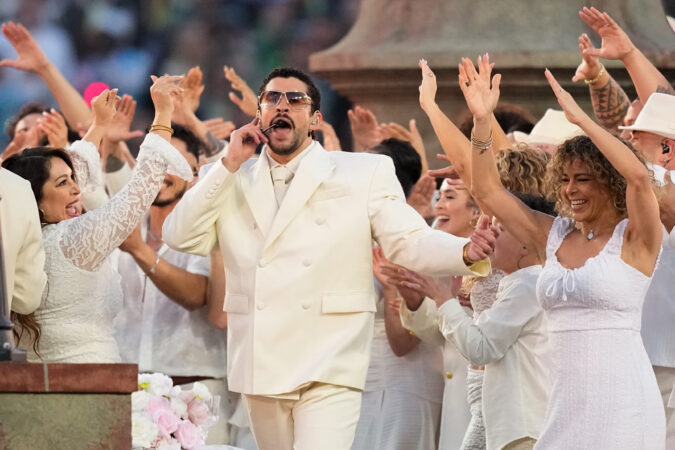
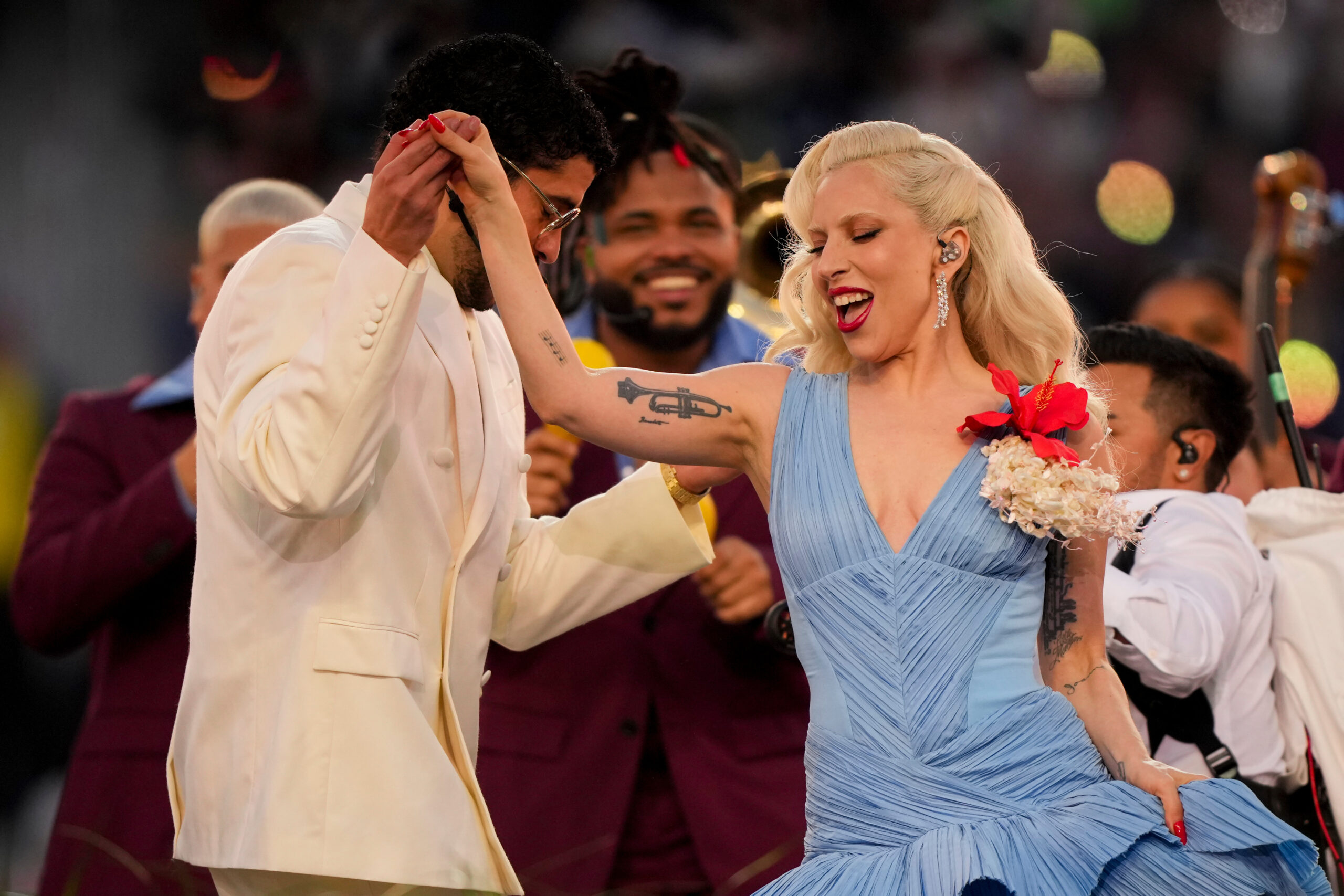
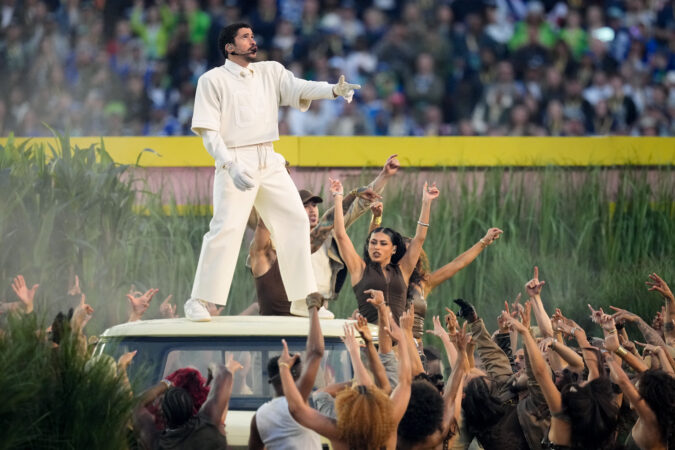
Even though many of the more than 135 million viewers may not have understood the words Bad Bunny sang in Spanish, just about everyone could feel the positive vibe and communal celebration that showcased dancing, hard work, urban street life, family — and a wedding.
Bad Bunny’s ode to Puerto Rico was a reminder that we are neighbors, not enemies. More broadly, the United States is part of the American continent that includes Canada, Mexico, Central America, South America, the Caribbean, and Greenland.
We are all stronger when we work together than when we are at each other’s throats.
Bad Bunny’s positive message stood in stark contrast to the president’s relentless serving of hate that is dividing and weakening the country.
Just last week, Trump posted a racist video on his social media account that depicted former president and first lady Barack and Michelle Obama as apes.
Eventually, he removed the post after several — but not many — GOP officials called out the blatant racism. The bipartisan backlash is a reminder that it will only take a few good Republican men and women to stop Trump’s attack on America’s institutions and its people.
Trump’s racist meme about the Obamas came on the heels of a racist and misleading move by the White House that posted a digitally altered image of a Black woman who was arrested while demonstrating against the unlawful actions of U.S. Immigration and Customs Enforcement agents in Minneapolis.
Bad Bunny and Lady Gaga perform during the Super Bowl halftime show Sunday.
The image released darkened Nekima Levy Armstrong’s skin and showed her sobbing, though the real picture depicted her as composed. Such detestable propaganda is how the Trump administration spends your tax dollars.
Trump is not a serious president.
As much of the country remained in a deep freeze, he spent his 20th weekend at his estate in Palm Beach, Fla., since returning to office last year.
He played golf with lackey Sen. Lindsey Graham (R., S.C.), and fired off more than 50 social media posts whining about rigged elections (still), the halftime show, and a U.S. Olympic skier he called a “loser” after the athlete expressed “mixed emotions” about representing the country amid Trump’s politics of upheaval.
The only thing Trump is serious about is enriching himself while many Americans struggle to make ends meet.
An updated accounting by the New Yorker magazine found Trump and his family leveraged his return to the White House to increase their wealth by $4 billion.
Lost in all the recent outrages from the Jeffrey Epstein files to Greenland to shooting citizens in Minneapolis was a Wall Street Journal story that detailed how a member of the United Arab Emirates royal family known as the “spy sheikh” invested $500 million to buy 49% of a crypto start-up founded by the Trump family.
The crypto deal came together as the Trump administration agreed to give the Emirati government hundreds of thousands of advanced computer chips to power artificial intelligence technology — a deal the Biden administration rejected out of national security concerns that the chips could be shared to help China advance its military weapons systems.
About 70% of Americans believe the country is “out of control” under Trump.
Many are fed up with his mismanagement of the economy that has resulted in higher prices and fewer jobs — in addition to defying courts, prosecuting political opponents, arresting citizens, deporting immigrants, and stifling free speech.
The landslide special election victory of a Democrat in a deep-red district in Texas shows voters are putting community before party.
Then along came Bad Bunny to remind America that love trumps hate.
Two more Philadelphia Museum of Art senior staffers are departing as the museum continues to plot out its path after a period of institutional turmoil.
Maggie Fairs, who was promoted to chief of staff last year by former director and CEO Sasha Suda, will leave the museum at the end of the month. CFO Valarie McDuffie has also resigned, with her last day this Friday.
Previously, the museum parted ways with its marketing chief Paul Dien as of Feb. 1. Days later, the museum announced that it was reversing course on a renaming while keeping its new logo. Both changes were unveiled four months earlier in a rebranding overseen by Suda and Dien.
No other immediate departures are expected, though the museum is working on an “organizational review,” with more changes possible later, a spokesperson said.
Suda announced the arrival of both Fairs and McDuffie in May 2023, saying that “these two colleagues reflect the future of the institution.” Fairs was hired as vice president of communications after having worked in the United States, United Kingdom, and Canada. McDuffie had previously held several senior financial posts in secondary education.
Fairs was promoted by Suda to chief of staff in May 2025. A replacement will not be hired, as the museum is restructuring the director’s office without that position.
A pile of snow and ice sits on Eakins Oval in front of the Philadelphia Museum of Art on Feb. 2.
Director and CEO Daniel H. Weiss, who took over in December, said in January that the staff of the museum was “the heart and soul of the place and they need to be treasured and supported and also held accountable,” and that the museum needed “a senior management team that is available to them and transparent in its processes and also accountable.”
Asked at the time whether there would be a reorganization, he said:
“With our ambition and our mission, and as that evolves a little bit under each new leader, there needs to be careful review of how the organization serves the needs of the moment. So that’s underway.”
The museum on Monday also announced Katherine Anne Paul as new curator of Indian and Himalayan art. Paul was most recently curator of Asian Art at the Birmingham Museum of Art since 2019, and held earlier positions at the Newark Museum, the American Museum of Natural History, and the Textile Museum in Washington, D.C. She holds a Ph.D. in languages and cultures of Asia from the University of Wisconsin–Madison.
Weiss, in Monday’s announcement, singled out Paul’s scholarship and her extensive knowledge of the Philadelphia Museum of Art’s collection. She was assistant and associate curator of Indian and Himalayan art at the museum from 2002 to 2008.
A previous version of the headline misrepresented the terms of the employees’ work termination. They resigned.
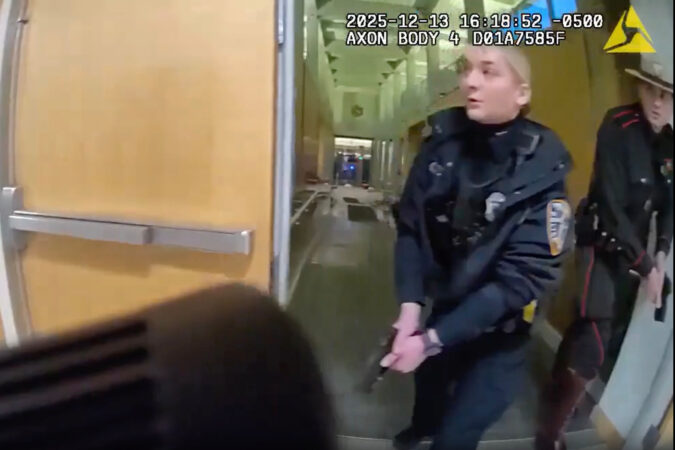
PROVIDENCE, R.I. — A new video from the day of the Brown University shooting that killed two students and injured nine others was released Monday, with city officials saying they had withheld other footage and redacted the most graphic, violent images to avoid harming victims.
“This was a difficult process to both maintain our commitment to transparency, to respond to requests from the media and the public’s right to know exactly what happened, but also balancing what we know are potential, really serious downside effects of releasing some of this information,” Providence Mayor Brett Smiley said at a news conference.
News outlets across the U.S. and other countries had been requesting body camera footage, audio clips, and other public records since shortly after the shooting took place in mid-December.
Material shows police response to the shooting
The newly released material includes audio of a campus police officer calling city police at 4:07 p.m. “This is Brown police. We have confirmed gunshots at 184 Hope Street,” the officer said. “We do have a victim but we do not know where they are.”
Four minutes later, campus police called back with an update: “We have a suspect description, wearing all black and a ski mask, unknown travel direction.”
Separately, the city released roughly 20 minutes of body camera footage of the officer in charge of the initial response to the shooting. The heavily redacted footage shows a chaotic and confusing scene of officers not knowing if the shooter was still in the building and attempts to quickly find a safe spot to send the students evacuated from the building. Scattered backpacks, gloves, and other items can be seen as officers scour the building looking for a possible shooter and victims.
“Let’s get these rescues in, where are we staging rescue?” the officer, who was not identified, says in the video.
He later cautions other officers, “Shooter might still be in the building, so use caution alright.”
Long portions of the video are either blacked out or with the audio redacted. The video is often blocked by the officer’s arms in front of the camera. Officials defended their decision, made in consultation with city lawyers, to release only one video, saying it offered the most “comprehensive” view. Smiley argued that releasing more videos would not answer the harder question of why the shooter chose to attack the university.
“Why did this person do this? None of those videos are going to answer that question. None of them,” Smiley said.
Other audio captures officers describing a possible sighting of the shooter on the second floor of another building and a report of a suspect being taken into custody. That person turned out to be a maintenance worker. It’s unclear when officers realized they had the wrong person in custody, but within minutes, one officer instructs them “We’re gonna work on the premise that that’s not him. We’re gonna conduct a secondary search.”
The city released those records Monday, saying they waited at the request of the victims′ families until after a memorial service was held the previous week on Brown’s campus. Smiley said he had spoken to the victims and their families in recent days.
“Many of their kids are working really hard at moving forward and moving on, and releases like today they fear will make it harder to move forward,” he said, describing them as “remarkably strong and resilient.”
Details of the shooting
On Dec. 13, gunman Claudio Neves Valente, 48, entered a study session in a Brown academic building and opened fire on students, killing 19-year-old sophomore Ella Cook and 18-year-old freshman MukhammadAziz Umurzokov and wounding nine others.
A newly released police incident report reiterated the emotional moments law enforcement had previously shared about hospitalized victims responding to photos of the suspected shooter.
One victim “quickly froze, physically pushed back” and began crying and shaking as she confirmed the image matched the person who shot her. Another victim “took a deep breath, shut his eyes, changed his breathing pattern and confirmed that the shooter he saw in the hallway appeared to be the person in the photos presented.”
Authorities say Neves Valente, who had been a graduate student at Brown studying physics during the 2000-01 school year, also fatally shot Massachusetts Institute of Technology professor Nuno F.G. Loureiro at Loureiro’s Boston-area home.
Neves Valente, who had attended school with Loureiro in Portugal in the 1990s, was found dead days after the shooting in a New Hampshire storage facility.
The Justice Department has since said Neves Valente planned the attack for years and left behind videos in which he confessed to the killings but gave no motive. The FBI recovered the electronic device containing the series of videos during a search of the storage facility where Neves Valente’s body was found.
Social media users incorrectly identified a small boy who was part of Bad Bunny’s Super Bowl halftime show on Sunday as Liam Conejo Ramos, the 5-year-old who, along with his father, was detained by immigration officials in Minnesota and held at an ICE facility in Texas.
The boy was actually Lincoln Fox Ramadan, a child actor from Costa Mesa, Calif., who is also 5 years old, according to his Instagram profile.
After Bad Bunny finished his song “NUEVAYoL,” cameras showed Lincoln watching Bad Bunny accepting his Grammy for album of the year last week. The artist then walks over and hands Lincoln what appears to be a Grammy.
Here’s a closer look at the facts.
Claim: Bad Bunny handed his Grammy to Liam Conejo Ramos during his Super Bowl halftime performance.
The Facts: This is false. The boy was child actor Lincoln Fox Ramadan.
“An emotional, unforgettable day being cast as the young Benito — a symbolic moment where the future hands the past a Grammy,” reads a Monday post on Lincoln’s Instagram profile. “A reminder that dreams come true and it’s never too early to dream big.”
The post includes photos from Lincoln’s appearance during the halftime show and other moments from the day, as well as a childhood photo of Bad Bunny, whose real name is Benito Antonio Martínez Ocasio.
In the caption, Lincoln also wrote that he’s “sending love to Liam Ramos” and that “we all deserve peace and love in America, a country built by and home to so many hard-working immigrants.”
Another post from Lincoln’s Instagram, shared on Sunday, included a video of his cameo and was captioned, “I’ll remember this day forever! @badbunnypr — it was my truest honor.” His last post before the Super Bowl, on Jan. 31, was a photo of himself captioned, “I booked a cool gig! Can’t wait to share it with you guys.”
Liam and his father, Adrian Conejo Arias, who is originally from Ecuador, were detained by immigration officers in a Minneapolis suburb on Jan. 20. They were taken to an ICE detention facility in Dilley, Texas, but returned to Minneapolis on Feb. 1 following a judge’s order.
Images of immigration officers surrounding the young boy in a blue bunny hat and Spider-Man backpack drew outrage about the Trump administration’s immigration crackdown in Minneapolis.
Lincoln, the child actor, is half Egyptian and half Argentinian, according to his Instagram and his acting profile. He previous work has included modeling for Walmart and Target.
Bad Bunny has won six total Grammys, including three at the 2026 awards show. His album of the year win for the critically-acclaimed DeBÍ TiRAR MáS FOToS, is the first time a Spanish-language album has taken home the top prize.
Representatives for Bad Bunny did not respond to a request for comment.
Hours before Ahmad Shareef was arrested for killing his wife, he called his mother and confessed.
“I cut her head off,” he told her, according to the affidavit of probable cause for his arrest.
On Monday, Shareef, 37, was sentenced to 16 to 42 years in prison in the decapitation death of Leila Al Raheel inside the couple’s Northeast Philadelphia home. Shareef pleaded guilty to third-degree murder and related crimes in the November 2022 slaying.
“I don’t think I’ve ever seen a case like this,” said Common Pleas Court Judge Charles Ehrlich.
New details of the killing also surfaced during the hearing.
After Shareef confessed to his mother, she asked a neighbor to go to her son’s home in the 300 block of Magee Avenue and check on Al Raheel, according to the affidavit. The neighbor found Al Raheel dead in the dining room, she later told police.
Officers who responded to the house discovered Al Raheel’s headless body on the kitchen floor, the affidavit said. They found Shareef about four miles away, hiding in bushes in front of a house. His sweatpants, the document said, were stained red with blood.
Inside a police interview room, Shareef waived his Miranda rights, according to the affidavit. He told detectives he’d argued with Al Raheel after she had called him names.
Then, he said, he cut off her head with a kitchen knife.
In court Monday, the neighbor described how discovering Al Raheel’s body upended her life. She said she has been diagnosed with post-traumatic stress disorder. “This isn’t something that time simply erases,” she said.
No one testified on Shareef’s behalf. His mother, who had been expected to appear, was ill and unable to attend, his defense attorney, Gregg Blender, said.
Al Raheel, who came to the U.S. with Shareef and his family in 2011, “has no family to speak on her behalf,” said the prosecutor, Maggie McDermott.
The judge imposed a sentence slightly below the prosecution’s request of 23 to 47 years, after Shareef’s attorney urged him to consider his client’s traumatic childhood and long-standing mental illness, which he said went largely untreated.
As a child, Shareef moved with his mother from Kuwait to Iraq and later to Syria, fleeing both war and abusive men who, Blender said, subjected them to violence. At the insistence of his family, Shareef later married Al Raheel, a neighbor, Blender said.
In the U.S., Shareef was treated repeatedly for mental health crises, Blender said. In 2012, he was hospitalized after striking himself and cutting his wrists, and in 2019, Blender said, Shareef stabbed himself in the neck.
Blender urged the judge to weigh what he described as his client’s “horrific upbringing” against what he acknowledged was “nothing less than a horrific crime.”
McDermott called the killing the “peak of domestic violence” and “unspeakably awful,” and warned that Shareef posed a continuing danger. If he was capable of such violence toward someone he loved, she argued, then even strangers were at risk.
Ehrlich said the sentence reflected both Shareef’s traumatic past and the threat he posed going forward.
“To sever a head with a kitchen knife takes a lot of effort,” he said. “Mr. Shareef, you have lived a life of horrors. I don’t think anyone in this courtroom disputes that.” The question, he added, was what needed to be done to protect others.
“I’m very concerned about the future — I’m going to be honest with you,” the judge said. “What happened to you as a child was not your fault. But people with this kind of damage can hurt others.”
After the slaying, neighbors told The Inquirer that several people had been living in the house, which had become an eyesore on the block. Shareef, they said, stood out: He behaved aggressively to other residents, and sometimes appeared outside wearing only underwear.
Since late 2016, police responded to more than 50 calls on the 300 block of Magee Street for domestic disturbances, reports of weapons, and other complaints. However, police would not disclose exact addresses, and it remains unclear how many of those calls — if any — originated from the home Shareef shared with Al Raheel, where she was eventually killed.
The city’s Department of Licenses and Inspections also confirmed that inspectors visited the house more than a year before Al Raheel was killed, following reports that the house’s garage was being used as a living space. But the inspectors weren’t able to gain access to the property, according to the department. Instead, they issued violations for weeds and combustible storage.
Philadelphia health officials have reported two deaths related to the city’s extraordinary stretch of freezing temperatures in recent weeks.
City officials did not provide additional information on the deaths, which took place between Jan. 20, when the city first declared an “enhanced Code Blue,” and Feb. 6.
An enhanced Code Blue is declared when the wind chill makes it feel like it’s 20 degrees outside or lower for more than three days. In response, officials open up more resources to protect Philadelphians from the cold, including additional shelter beds and warming centers at libraries and rec centers.
As of Friday, the centers have logged 26,270 stays, said James Garrow, a spokesperson for the city health department.
Temperatures were in the single digits on Sunday night, and the day’s average temperature of 14 degrees was 20 degrees colder than normal.
Residents who see someone who appears to be unsheltered outside during Code Blue can call the city’s homeless outreach hotline at 215-232-1984. The city maintains a list of warming centers on its website.