Blog

  • Masks emerge as symbol of Trump’s ICE crackdown and a flashpoint in Congress

    Masks emerge as symbol of Trump’s ICE crackdown and a flashpoint in Congress

    WASHINGTON — Beyond the car windows being smashed, people tackled on city streets — or even a little child with a floppy bunny ears snowcap detained — the images of masked federal officers have become a flashpoint in the Trump administration’s immigration enforcement operations.

    Not in recent U.S. memory has an American policing operation so consistently masked its thousands of officers from the public, a development that the Department of Homeland Security believes is important to safeguard employees from online harassment. But experts warn masking serves another purpose, inciting fear in communities, and risks shattering norms, accountability, and trust between the police and its citizenry.

    Whether to ban the masks — or allow the masking to continue — has emerged as a central question in the debate in Congress over funding Homeland Security ahead of Friday’s midnight deadline, when it faces a partial agency shutdown.

    “Humans read each others’ faces — that’s how we communicate,” said Justin Smith, a former Colorado sheriff who is executive director and CEO of the National Sheriffs’ Association.

    “When you have a number of federal agents involved in these operations, and they can’t be identified, you can’t see their face, it just tends to make people uncomfortable,” he said. “That’s bringing up some questions.”

    Democrats demand ‘masks off’

    Masks on federal agents have been one constant throughout the first year of President Donald Trump’s mass deportation operation.

    What began as a jarring image last spring, when plain-clothes officers drawing up their masks surrounded and detained a Tufts University doctoral student near her Massachusetts home, has morphed into familiar scenes in Los Angeles, Chicago, and other cities. The shooting deaths of two American citizens at the hands of federal immigration officers during demonstrations against ICE raids in Minneapolis sparked widespread public protest and spurred lawmakers to respond.

    “Cameras on, masks off” has become a rallying cry among Democrats, who are also insisting the officers wear body cameras as a way to provide greater accountability and oversight of the operations.

    House Democratic Leader Hakeem Jeffries told reporters at the Capitol that unmasking the federal agents is a “hard red line” in the negotiations ahead.

    Immigration and Customs Enforcement says on its website that its officers “wear masks to prevent doxing, which can (and has) placed them and their families at risk. All ICE law enforcement officers carry badges and credentials and will identify themselves when required for public safety or legal necessity.”

    Fueled with funds from Trump’s big tax cuts bill, which poured some $170 billion into Homeland Security, ICE has grown to be among the largest law enforcement operations in the nation. Last year, it announced it had more than doubled its ranks, to 22,000, with rapid hiring — and $50,000 signing bonuses. Homeland Security did not respond to an emailed request for further comment.

    Most Republicans say the current political climate leaves the immigration officers, many of them new to the job, exposed if their faces and identities are made public.

    Sen. Thom Tillis (R., N.C.) said he just can’t agree with Democrats’ demand that officers unmask themselves.

    “You know, there’s a lot of vicious people out there, and they’ll take a picture of your face, and the next thing you know, your children or your wife or your husband are being threatened at home,” he said. “That’s just the reality of the world that we’re in.”

    ICE stands apart with masks

    It appears no other policing agency in the country regularly uses masking on a widespread basis. Instead, masks are used during special operations, particularly undercover work or at times during large crowd control or protest situations, and when there is inclement weather or individual health concerns.

    Experts said only perhaps during the Ku Klux Klan raids or in the Old West has masking been a more widely used tool.

    “It is without precedent in modern American history,” said the American Civil Liberties Union’s Naureen Shah in Washington.

    She said the idea of masked patrols on city streets seeking immigrants can leave people scared and confused about who they are encountering — which she suggested is part of the point.

    “I think it’s calculated to terrify people,” she said. “I don’t think anybody viscerally feels like, OK, this is something we want to become a permanent fixture in our streets.”

    Toward the end of the first Trump administration, Congress sought to clamp down after masked federal agents showed up in 2020 to quell protests in Portland, Ore., and other cities. A provision requiring agents to clearly identify themselves was tucked into a massive defense authorization bill that Trump assigned into law.

    Last year, California became the first state in the nation to ban most law enforcement officers, including federal immigration agents, from covering their faces. The Trump administration’s Justice Department sued, saying the state’s policies “create risk” for the agents.

    A federal judge on Monday blocked the part of the California law that would ban federal immigration agents from covering their faces, but they will still be required to wear clear identification showing their agency and badge number.

    Judge Christina Snyder said she issued the initial ruling because the mask ban as it was enacted did not also apply to state law enforcement authorities, discriminating against the federal government. The ruling could have national implications as states grapple with how to deal with federal agents enforcing the Trump administration’s immigration crackdown.

    It left open the possibility of future legislation banning federal agents from wearing masks if it applied to all law enforcement agencies, with Snyder writing “the Court finds that federal officers can perform their federal functions without wearing masks.” The ruling will go into effect Feb. 19.

    Police seek middle ground, advocates say unmasking not enough

    Smith, of the sheriffs’ association, said there’s no easy answer to the current masking debate.

    He suggested perhaps a middle ground could be reached — one that would allow officers to wear masks, but also require their badge or other identifying numbers to be prominently displayed.

    Advocates said while unmasking the federal agents would be an important step, other restraints on immigration enforcement operations may be even more so.

    They are pushing Congress to curb the ability of ICE officers to rely on administrative warrants in immigration operations, particularly to enter people’s homes, insisting such actions should be required to use judicial warrants, with sign-off from the courts.

    There is also an effort to end roving patrols — the ability of immigration officers to use a person’s race, language, or job location to question their legal status, sometimes called “Kavanaugh stops” after Supreme Court Justice Brett Kavanaugh’s concurring opinion to a Supreme Court decision last summer.

    Greg Chen, senior director of government affairs at the American Immigration Lawyers Association, said because Congress gave Homeland Security such robust funding in the tax cuts bill, “That’s why the policy reforms are so important right now to bring the agency in check.”

    Rep. Ayanna Pressley (D., Mass.), who recently returned from Minnesota, said the weight of the masked enforcement operation can be felt in ways that impact everyone — regardless of a person’s own immigration status.

    “It’s a very a heavy presence of surveillance and intimidation,” she said. “No one is exempt.”

  • Chris Pronger weighs in on Matvei Michkov and a Flyers rebuild that’s been going on ‘for what seems like 12 years’

    Chris Pronger weighs in on Matvei Michkov and a Flyers rebuild that’s been going on ‘for what seems like 12 years’

    Flyers fans are “starving” for a superstar player. That’s what’s driving a lot of the angst around Matvei Michkov, former team captain Chris Pronger said.

    On Monday’s episode of the Spittin’ Chiclets podcast, Pronger, a hockey Hall of Famer who spent the last three years of his 18-year career with the Flyers, shared his thoughts on the team’s rebuild and Michkov’s development as a professional.

    The never-ending rebuild

    The current regime spearheading the Flyers’ rebuild, led by president Keith Jones and general manager Danny Brière, has been in place since May 2023, just under three years. But Flyers fans are still reeling from the failures of previous regimes.

    “They’ve been in what’s called a rebuild for what seems like 12 years,” Pronger said. “I think they’re frustrated and they want the rebuild to be over, but they didn’t go about the rebuild properly in the early days.”

    The Flyers haven’t made the playoffs since the COVID bubble in 2020, and have advanced past the first round just once since the 2012-13 season — during that bubble playoff run, which was played in an empty building in Toronto.

    The most important keys to any successful rebuild are finding a star center and a No. 1 defenseman, two things that have eluded the Flyers so far. It takes lottery luck, which the Flyers haven’t had much of lately. But those who believe Michkov, a winger, becoming a star will be the difference between a Stanley Cup-contending Flyers team and the draft lottery aren’t being realistic, according to Pronger.

    “I don’t know any team — any team — that rebuilds with a winger,” Pronger said. “I don’t know one good team who rebuilt with a winger. You don’t rebuild with a winger, you rebuild up the middle — center, defense, goalie. I know you [draft] the best player available, and clearly he was the best player, but as it relates to that, sometimes you have to luck out, too, in a rebuild and get the right pick when the right player is available.”

    In January, Pronger posted on X that those centerpiece players are the hardest to find, and the Flyers need to be patient and deliberate about compiling assets to make those moves if they become available. But he also suggested that the best way to rebuild is to tear it all the way down, like San Jose and Chicago have done, for a chance at landing a player like Macklin Celebrini or Connor Bedard.

    Flyers right wing Matvei Michkov has struggled in his second season with the team.

    How to help Michkov

    Michkov came into camp out of shape, something Pronger admitted he’d also done early in his career, in his second and third NHL seasons. Teams don’t get a lot of practice time, Pronger said, so it’s extremely difficult to play yourself into shape during the year. Pronger’s coach at the time, former Flyers boss Mike Keenan, was extremely tough on him, to the point where Pronger joked that even his teammates started to feel bad.

    He also pointed to the language barrier between the Russian Michkov and the coaching staff as a hurdle.

    “The fact that he doesn’t speak the language very well, if at all, that’s part of the problem, because it might not be translating properly what he’s going through, what he’s dealing with,” Pronger said. “… You’ve got to be hard on young guys, but it’s not 1995, either. That’s not how this world works in today’s hockey world, in today’s NHL. You have to find a connection with the player. There’s ways to be hard.”

    The Flyers do not employ a full-time Russian translator for Michkov, instead relying on Slava Kuznetsov, a skating coach who also works with Olympian Isabeau Levito, to translate for him.

    Now, the Flyers need to teach Michkov how to be a pro, Pronger said, and that includes setting the example of him coming into camp in shape, and learning to be more responsible with the puck.

    “I saw a few of their games last year with [John Tortorella], and he played [Michkov] a bit differently,” Pronger said. “He got him on the power play, to me it looked like he was putting him in more positions for success. It looked like he let him do a little more, but wasn’t — I don’t know if teaching him is the right word, but showcasing his abilities and not digging into the other parts of the game where he needed to improve.”

    The Flyers are off for the Olympic break and will return to the ice on Feb. 25 against the Washington Capitals.

  • Greenberg Elementary students have been relocated as Philly schools continue to face cold-weather issues

    Greenberg Elementary students have been relocated as Philly schools continue to face cold-weather issues

    Building woes triggered by a sustained blast of cold weather continue at some Philadelphia schools.

    Staff at Strawberry Mansion High reported that about half the building was without heat Monday, with some classrooms in the 40s and hallways not much warmer.

    And staff and students at Greenberg Elementary in the Northeast had to relocate to the old Meehan Middle School after nearly a week of virtual school because of heating problems.

    “Due to insufficient heat throughout the building, Greenberg is not able to safely support in-person learning at this time,” district officials wrote to parents this weekend. “Our facilities team is actively working to resolve the heating issue as quickly as possible. At this time, the repair timeline is still being assessed, but we will continue to provide updates as more information becomes available.”

    Meehan is one of the district’s “swing spaces” — it no longer operates as a school, but is used as an alternate location for schools that need it. It recently housed Thomas Holme Elementary while a new building was constructed for that school. It’s unclear how long Greenberg students will need to stay at Meehan.

    The move rankled some Greenberg parents, who had logistical and safety concerns about sending their children to a different location.

    Katy Foley-Gallagher, mom of a Greenberg kindergartener and third grader, said virtual learning was a challenge — on days she had to work, her husband had to take off from his job to manage their daughter and son.

    But moving to Meehan isn’t ideal either, Foley-Gallagher said.

    “Everybody’s getting anxious — this is disrupting their learning,” said Foley-Gallagher. “They district is not taking care of their building, and they don’t keep up with the infrastructure at all.”

    The school system, which a 2023 landmark court ruling acknowledged has been underfunded for decades, has billions in unmet building needs. Superintendent Tony B. Watlington Sr. has proposed a facilities master plan that would cost $2.8 billion and require closing 20 buildings, as well as modernizing 159 others.

    It’s not yet clear whether Greenberg would receive upgrades as part of that process. And that plan, which the school board is expected to vote on this winter, would take years to implement.

    Greenberg, like other district schools in the Northeast, is overcrowded, with over 1,000 students in a building whose capacity is 800. Students can no longer leave their classrooms for art or music; those rooms have been repurposed to accommodate extra classes.

    “They’re going to put them back in these crowded rooms,” said Foley-Gallagher. “Greenberg is such a good school, but I worry that this is going to drive people out of the school, out of the city.”

    She and other parents said they had concerns about their children being on a campus with Lincoln High, another overcrowded school.

    District officials said they were taking steps to ensure “a smooth transition for students and families” as Greenberg relocates to Meehan.

    The district is providing shuttle service for students who normally walk to Greenberg, though the shuttle leaves at 8 a.m., a half hour after classes begin.

    “We understand that unexpected changes can be challenging for families, and we appreciate your patience and partnership as we work to restore normal building operations,” district chief operating officer Teresa Fleming wrote in an email to parents. “The safety and well-being of our school community remain our highest priority.”

  • Officials deny seeking quick end to asylum claims for the Minneapolis family of 5-year-old

    Officials deny seeking quick end to asylum claims for the Minneapolis family of 5-year-old

    MINNEAPOLIS — Federal authorities have denied attempting to expedite an end to asylum claims by the family of a 5-year-old boy who was detained with his father during the immigration crackdown that has shaken the Minneapolis area.

    Images of Liam Conejo Ramos wearing a bunny hat and Spider-Man backpack surrounded by immigration officers stirred outrage over the crackdown.

    Danielle Molliver, a lawyer for the boy and his father, told the New York Times that the government was attempting to speed up the deportation proceedings, calling the actions “extraordinary” and possibly “retaliatory.”

    The government denied that.

    “These are regular removal proceedings. They are not in expedited removal,” Department of Homeland Security official Tricia McLaughlin said in a statement, adding ”there is nothing retaliatory about enforcing the nation’s immigration laws.”

    Molliver told the Times that an immigration judge, during a closed Friday hearing, gave her additional time to argue the family’s case.

    The boy and his father, Adrian Conejo Arias, who originally is from Ecuador, were detained in a Minneapolis suburb on Jan. 20. They were taken to a detention facility in Dilley, Texas.

    They were released following a judge’s order and returned to Minnesota on Feb. 1.

    Neighbors and school officials have accused federal immigration officers of using the preschooler as “bait” by telling him to knock on the door to his house so that his mother would come outside. DHS has called that description of events an “abject lie.” It said the father fled on foot and left the boy in a running vehicle in their driveway.

    The government said the boy’s father entered the U.S. illegally from Ecuador in December 2024. The family’s lawyer said he has an asylum claim pending that allows him to stay in the U.S.

  • U.S. military boards sanctioned oil tanker in the Indian Ocean after pursuit from the Caribbean

    U.S. military boards sanctioned oil tanker in the Indian Ocean after pursuit from the Caribbean

    WASHINGTON — U.S. military forces boarded a sanctioned tanker in the Indian Ocean after tracking the ship from the Caribbean Sea as part of an oil quarantine meant to squeeze Venezuela, Defense Secretary Pete Hegseth said Monday.

    Venezuela had faced U.S. sanctions on its oil and relied on a shadow fleet of falsely flagged tankers to smuggle crude into global supply chains. Following the U.S. raid to apprehend then-President Nicolás Maduro in early January, several tankers fled the Venezuelan coast, including the ship that was boarded in the Indian Ocean overnight.

    Hegseth vowed to eventually capture all those ships, telling a group of shipyard workers in Maine on Monday that “the only guidance I gave to my military commanders is none of those are getting away.”

    “I don’t care if we got to go around the globe to get them; we’re going to get them,” he added.

    The Trump administration has seized seven tankers as part of its broader efforts to take control of the South American country’s oil. Unlike those previous actions, the Aquila II has not been formally seized and placed under U.S. control, a defense official said.

    Instead, the ship is being held while its ultimate fate is decided by the U.S., according to the official, who spoke on condition of anonymity to discuss ongoing decision-making.

    The Aquila II is a Panamanian-flagged tanker under U.S. sanctions related to the shipment of illicit Russian oil. Owned by a company with a listed address in Hong Kong, the ship’s tracking data shows it has spent much of the last year with its radio transponder turned off, a practice known as “running dark” commonly employed by smugglers to hide their location.

    It was one of at least 16 tankers that fled the Venezuelan coast last month, according to Samir Madani, co-founder of TankerTrackers.com, who said his organization used satellite imagery and surface-level photos to document the ship’s movements. According to data transmitted from the ship Monday, it is not currently laden with a cargo of crude oil.

    The Pentagon’s post on X said the military “conducted a right-of-visit, maritime interdiction” on the ship.

    “The Aquila II was operating in defiance of President Trump’s established quarantine of sanctioned vessels in the Caribbean,” the Pentagon said. “It ran, and we followed.”

    A Navy official, who spoke on condition of anonymity to discuss military operations, would not say what forces were used in the operation but confirmed the destroyers USS Pinckney and USS John Finn as well as the mobile base ship USS Miguel Keith were operating in the Indian Ocean.

    In videos the Pentagon posted to social media, uniformed forces can be seen boarding a Navy helicopter that takes off from a ship that matches the profile of the Miguel Keith. Video and photos of the tanker shot from inside a helicopter also show a Navy destroyer sailing alongside the ship.

    Since the U.S. ouster of Maduro in a surprise nighttime raid on Jan. 3, the Trump administration has set out to control the production, refining, and global distribution of Venezuela’s petroleum products. Officials in President Donald Trump’s Republican administration have made it clear they see seizing the tankers as a way to generate cash as they seek to rebuild Venezuela’s battered oil industry and restore its economy.

    Trump also has been trying to restrict the flow of oil to Cuba, which faces strict economic sanctions by the U.S. and relies heavily on oil shipments from allies like Mexico, Russia and Venezuela.

    Since the Venezuela operation, Trump has said that no more Venezuelan oil will go to Cuba and that the Cuban government is ready to fall. Trump also recently signed an executive order that would impose a tariff on any goods from countries that sell or provide oil to Cuba, primarily pressuring Mexico because it has acted as an oil lifeline for Cuba.

  • Venezuela’s top prosecutor orders the arrest of opposition leader’s ally, hours after his release

    Venezuela’s top prosecutor orders the arrest of opposition leader’s ally, hours after his release

    CARACAS, Venezuela — Venezuela’s top prosecutor said on Monday that his office had requested the arrest of one of the closest allies of opposition leader María Corina Machado, less than 12 hours after his release from a detention facility as part of a government move to free those facing politically motivated accusations.

    The attorney general’s statement did not say whether Juan Pablo Guanipa was rearrested, or give indication of his whereabouts. The government had released him along with several other prominent opposition members on Sunday following lengthy politically motivated detentions.

    Attorney General Tarek William Saab’s office posted on social media that it had “requested the competent court to revoke the precautionary measure granted to Juan Pablo Guanipa, due to his non-compliance with the conditions imposed by the aforementioned court.”

    It did not elaborate on what conditions Guanipa, a former governor for the opposition, violated during the hours he was free, but said authorities were seeking house arrest.

    Guanipa’s son, Ramón, told reporters Monday that authorities have not yet notified him of his father’s whereabouts and their decision to place him on house arrest. He said his father did not violate the two conditions of his release — monthly check-ins with a court and no travel outside Venezuela — and showed reporters the court document listing them.

    Abducted by ‘heavily armed men’

    Earlier on Monday, Machado announced Juan Pablo Guanipa had been “kidnapped” by “heavily armed men, dressed in civilian clothes” who “arrived in four vehicles and violently took him away” in a neighborhood in the capital, Caracas.

    The development marked the latest twist in the political turmoil in Venezuela in the wake of the U.S. military’s seizure on Jan. 3 of Nicolás Maduro and his wife, Cilia Flores, from a military base compound in Caracas in a stunning operation that landed them in New York to face federal drug trafficking charges.

    The government of Venezuela’s acting President Delcy Rodríguez has faced mounting pressure to free hundreds of people whose detentions months or years ago have been linked to their political activities. The releases also followed a visit to Venezuela of representatives of the U.N. High Commissioner for Human Rights.

    Rodríguez was sworn in as Venezuela’s acting president after Maduro’s Jan. 3 capture and her government began releasing prisoners days later.

    Some of those freed Sunday joined families waiting outside detention facilities for their loved ones. They chanted, “We are not afraid! We are not afraid!” and marched a short distance.

    “I am convinced that our country has completely changed,” Guanipa told reporters after his release. “I am convinced that it is now up to all of us to focus on building a free and democratic country.”

    Guanipa had spent more than eight months in custody at a facility in Caracas.

    “My father cannot be a criminal … simply for making statements,” Ramón Guanipa said. How much longer will speaking out be a crime in this country?”

    Venezuelan-based prisoners’ rights group Foro Penal confirmed the release of at least 30 people Sunday.

    Several members of Machado’s political organization were among the released Sunday, including attorney Perkins Rocha and local organizer María Oropeza, who had in 2024 livestreamed her arrest by military intelligence officers as they broke into her home with a crowbar.

    Alfredo Romero, president of Foro Penal, expressed serious concern over Juan Pablo Guanipa’s disappearance.

    “So far, we have no clear information about who took him,” he said on X. “We hope he will be released immediately.”

    Long detentions for political activities

    Guanipa was detained in late May and accused by Interior Minister Diosdado Cabello of participating in an alleged “terrorist group” that was plotting to boycott that month’s legislative election. Guanipa’s brother Tomás rejected the accusation, and said the arrest was meant to crack down on dissent.

    Rodríguez’s government announced Jan. 8 that it would free a significant number of those arrested — a central demand of the country’s opposition and human rights organizations with backing from the United States — but families and rights watchdogs have criticized authorities for the slow pace of the releases.

    The ruling party-controlled National Assembly last week began debating an amnesty bill that could lead to the release of hundreds. The opposition and nongovernmental organizations have reacted with cautious optimism as well as with suggestions and demands for more information on the contents of the proposal.

    National Assembly President Jorge Rodríguez on Friday posted a video on Instagram showing him outside a detention center in Caracas and saying that “everyone” would be released no later than next week, once the amnesty bill is approved.

    Rodríguez, the acting president, and Volker Türk, the U.N. High Commissioner for Human Rights, spoke by phone in late January. His spokesperson, Ravina Shamdasani, in a statement said he sent a team to the country and “offered our support to help Venezuela work on a roadmap for dialogue and reconciliation” in which human rights should be centered.

  • In new video, Savannah Guthrie says family is ‘at an hour of desperation’

    In new video, Savannah Guthrie says family is ‘at an hour of desperation’

    TUCSON, Ariz. — The FBI said Monday it is unaware of any continued communication between Savannah Guthrie’s family and suspected kidnappers more than a week after the Today show host’s mom went missing.

    The FBI has still not identified any suspects or persons of interest in the mysterious disappearance of 84-year-old Nancy Guthrie, said Connor Hagan, a spokesperson for the FBI.

    Savannah Guthrie said the family was “at an hour of desperation” in a video released Monday, just hours before a purported ransom deadline apparently set by her mom’s abductors.

    Savannah Guthrie didn’t mention the deadline in the video, saying her family continues to believe their 84-year-old mother is out there and hearing everyone’s prayers.

    “She was taken and we don’t know where and we need your help,” Guthrie said in the video posted on Instagram that urged people nationwide to be on the lookout. “No matter where you are, even if you’re far from Tucson, if you see anything, if you hear anything.”

    The mysterious disappearance and search has riveted the U.S. — from President Donald Trump, who spoke with Savannah Guthrie last week, to the online sleuths who’ve flooded social media with tips, theories, and rumors.

    The FBI is now asking for the public’s help on digital billboards up in several major cities in Texas, California, Arizona, and New Mexico. The FBI has offered a $50,000 reward for information.

    Multiple press outlets have received alleged ransom letters during the past week. At least one letter made monetary demands and set deadlines for receiving the money. The first deadline passed last Thursday but a second one was set for Monday evening.

    Law enforcement officials declined to affirm that the letters were credible but said all tips were being investigated seriously.

    Authorities say they have growing concerns about Nancy Guthrie’s health because she needs daily medication. She is said to have a pacemaker and has dealt with high blood pressure and heart issues, according to sheriff’s dispatcher audio on broadcastify.com.

    Investigators returned to Nancy Guthrie’s Arizona neighborhood several times over the weekend.

    Savannah Guthrie said over the weekend that the family was prepared to pay for her mother’s return.

    “We beg you now to return our mother to us so that we can celebrate with her,” she said in a video posted Saturday. “This is the only way we will have peace. This is very valuable to us, and we will pay.”

    Authorities believe Nancy Guthrie was taken against her will from her home just outside Tucson. She was last seen there on Jan. 31 and reported missing the next day after not attending church services. DNA tests showed blood on Guthrie’s front porch was a match to her and her doorbell camera was disconnected in the early hours of Sunday morning, Pima County Sheriff Chris Nanos has said.

    Outside the home on Monday, neighbors strolled by on their morning jogs and walks, while a county sheriff’s deputy remained stationed out front.

    Detectives and agents carried out follow-up work at multiple locations over the weekend as part of the investigation, the Pima County Sheriff’s Department said Sunday. “Investigators have not identified any suspects, persons of interest, or vehicles connected to this case,” the department said.

    Investigators on Saturday were inside daughter Annie Guthrie’s home, about 4 miles from Nancy Guthrie’s house. On Sunday, an investigator was seen using a pole to search an underground tank behind Nancy Guthrie’s home.

  • The landmark Kibitz Room deli in Cherry Hill, which closed last month, has filed for bankruptcy

    The landmark Kibitz Room deli in Cherry Hill, which closed last month, has filed for bankruptcy

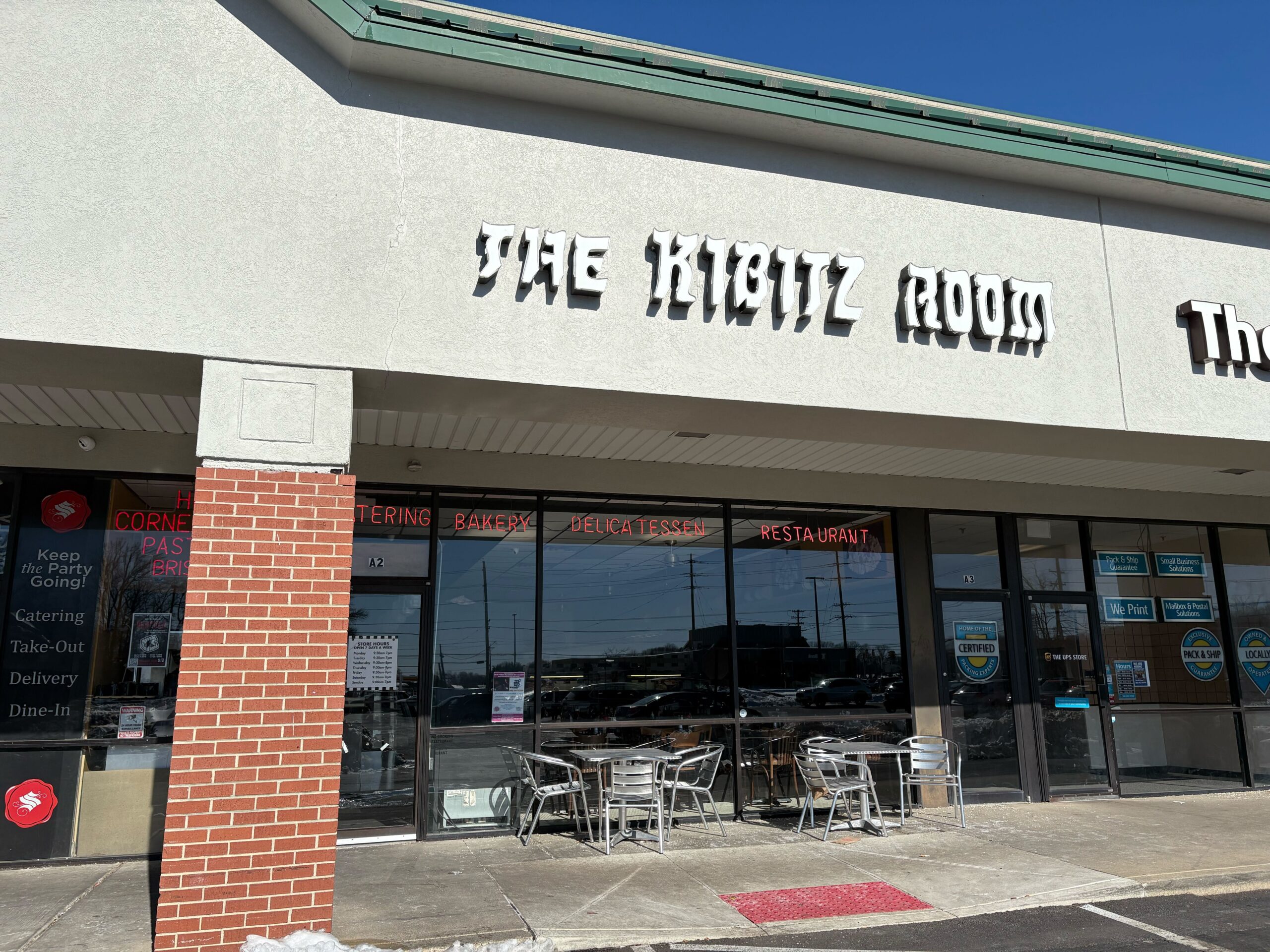
    The Kibitz Room in Cherry Hill, which shut down abruptly about two weeks ago after 25 years, has filed for bankruptcy protection, seeking to liquidate its assets.

    An attorney for the deli filed paperwork Friday in U.S. Bankruptcy Court in Camden, claiming assets of less than $50,000 and liabilities of $100,001 to $500,000. A hearing on the Chapter 7 petition was scheduled for March 3.

    The Kibitz Room, in Holly Ravine Plaza at 100 Springdale Rd. in Cherry Hill, on Feb. 2, 2026.

    Social media posts on Jan. 30 noted that the deli, owned by Sandy Parish, had apparently closed without notice.

    Meanwhile, former owner Neil Parish — Sandy’s ex-husband — told Patch in an article published Monday morning that he was talking to the landlord about reopening the deli. Their son Brandon commented on a public Facebook post midday Monday that he was working on reopening “under a new entity. Unfortunately the previous ownership was out of my hands but I did run the store for the last nine years until I left to open the other location. … It surely wasn’t from lack of business!!”

    Veteran deli operator Russ Cowan opened the Kibitz Room in Holly Ravine Plaza in 2001. Two years later, Neil Parish bought it using their daughter’s bat mitzvah gifts as the down payment. “She got four years at Syracuse, all covered,” Neil Parish said in an interview last year. “It was a good investment.”

    After Neil and Sandy Parish split up in 2016, Sandy ran the Kibitz Room with their son Brandon, now 32. Neil moved to the Baltimore area, where he ran delis before returning to Philadelphia.

    Brandon Parish stopped working in Cherry Hill early last year when he and his father opened the Kibitz Room King of Prussia in Valley Forge Center, which is not involved in the bankruptcy.

    Sandy Parish did not return messages seeking comment, nor did her son.

    In an interview last year, Brandon Parish said he had worked at the Cherry Hill deli since he could stand on a milk crate and wash dishes.

    “I didn’t want to be in camp,” Parish said. “I didn’t want to be at school. If it wasn’t the lacrosse field, I wanted to be at the shop. It was just the whole environment. The people who worked there were a second family.”

  • Source: Eagles hire ex-Vikings assistant Chris Kuper to replace offensive line coach Jeff Stoutland

    Source: Eagles hire ex-Vikings assistant Chris Kuper to replace offensive line coach Jeff Stoutland

    The Eagles have their replacement for longtime offensive line coach Jeff Stoutland.

    A league source confirmed an NFL Network report that the Eagles are hiring Minnesota Vikings offensive line coach Chris Kuper for the same role in Philadelphia. Kuper’s contract with Minnesota expired after the season and the team did not retain him, according to The Athletic.

    Kuper, 43, had been the line coach for the Vikings since 2022 and crossed paths there with new Eagles offensive coordinator Sean Mannion in 2023, when Mannion was on the roster as a quarterback.

    Kuper, who was drafted in the fifth round in 2006 and played guard for the Denver Broncos for eight seasons, also worked as an assistant offensive line coach under Eagles defensive coordinator Vic Fangio when Fangio was the head coach in Denver from 2019 to 2021.

    Jeff Stoutland had been the Eagles’ offensive line coach since 2013.

    Kuper has big shoes to fill. Stoutland was the Eagles’ offensive line coach from 2013 to 2025 and was widely regarded as the best line coach in the NFL. Stoutland announced his departure from the Eagles last week. The Eagles are moving to a new scheme under Mannion, and while Stoutland was offered a chance to return as offensive line coach, according to a source, he wasn’t going to have the role of run game coordinator and ultimately decided to step away from coaching with the Eagles.

    The Eagles’ offensive line took a dramatic step back in 2025, mostly because of injuries. Lane Johnson missed half the season, and Landon Dickerson and Cam Jurgens were never or rarely fully healthy and did not have the same impact as in previous seasons. The futures of Johnson and Dickerson could be up in the air, and the Eagles could be forced to replace one or two key parts of the line, or at the very least need to start planning for replacements via the draft or free agency.

    Kuper’s hiring marks the fourth new offensive coach in the building, a process that started when the Eagles hired Mannion on Jan. 29. They also hired former Tampa Bay offensive coordinator Josh Grizzard to be the pass game coordinator and hired Green Bay wide receivers coach Ryan Mahaffey as the run game coordinator and tight ends coach.

  • Philadelphia man charged with killing woman who reported him for sexual assault, officials say

    Philadelphia man charged with killing woman who reported him for sexual assault, officials say

    A Philadelphia man was charged with murder after fatally shooting his girlfriend in Levittown this weekend, shortly after she told police he had sexually assaulted her, authorities said.

    Yujun Ren, 32, turned himself in to police in Middletown Township Sunday and told them he had been trying to scare the woman, Yuan Yuan Lu, when the firearm he carried accidentally discharged, killing her.

    Investigators believe otherwise, according to the affidavit of probable cause for Ren’s arrest.

    In addition to murder, prosecutors charged Ren with stalking and a gun crime. He is being held without bail.

    Bristol Township police discovered Lu’s body shortly after noon Sunday in the driver’s seat of a white Hyundai in a residential neighborhood, according to the affidavit.

    Lu had been shot in the head. Police found that the driver’s side window had been struck by gunfire, and they recovered an expended shell casing from a small caliber handgun.

    In Ren’s interview with investigators, he told them that Lu had said “hurtful things and took their cats and dogs,” the affidavit said, leading him to pull the handgun in an attempt to scare her.

    A day earlier, Lu had told Philadelphia police that Ren had sexually assaulted her at his home on South Orianna Street in Pennsport.

    The assault, which Lu said happened around 1 p.m. Saturday, led her to end the relationship and pack her things to leave while Ren was at work, according to the affidavit. Lu told police she was afraid of Ren and said “he had a firearm he carried everywhere,” the document said.

    Ren legally owned a Mossberg MC20 9mm pistol, investigators found.

    The day Ren turned himself in, a woman who told police that she was Ren’s aunt turned that firearm over to Middletown Township authorities, according to the affidavit.

    Bucks County District Attorney Joe Khan said in a statement that the killing was a “sobering reminder of the lethal nature of domestic violence.”

    “Our investigation revealed a chilling course of conduct,” said Khan, adding that investigators recovered evidence showing Ren stalked Lu in the early morning hours before shooting her.

    Ren is set to appear in district court Tuesday for a preliminary hearing.