Blog

  • Those seeking to sue ICE for injuries or damage face an uphill battle

    Those seeking to sue ICE for injuries or damage face an uphill battle

    An undocumented immigrant is seeking $1 million in damages after he says he was riding his bike in Melrose Park, Ill., when a U.S. Border Patrol agent suddenly tackled him, placed him in a chokehold and punched his head.

    A Chicago resident says that federal agents caused $30,000 worth of property damage when they broke a lock on his wrought-iron gate and scaled a wooden fence to chase after construction workers repairing his Victorian-era home.

    A Columbia University student and activist who spent 104 days in a U.S. Immigration and Customs Enforcement detention center is demanding $20 million over what he says was a false arrest.

    All three should expect a long and difficult fight under the current legal landscape, lawyers warn.

    These and scores of other claims expected to arise out of the Trump administration’s crackdown on illegal immigration are winding through a bureaucratic process mandated under the Federal Tort Claims Act. It is the primary legal recourse for people seeking compensation for property damage, injuries and even deaths allegedly caused by federal agencies and their employees.

    First, individuals must fill out a form and submit it for review by the agency that they say caused the harm. Agencies such as ICE and Customs and Border Protection have six months to deny a claim, offer a settlement, or not respond at all. Only then can people sue in court under the Federal Tort Claims Act.

    But these cases are different from civil rights lawsuits. Judges, not juries, decide the outcome. Awarded damages are likely to be much lower. And individual officers can’t be named as defendants.

    “It’s absolutely bonkers,” said Brian Orozco, a Chicago attorney for Ricardo Aguayo Rodriguez, the bike-riding immigrant who was hospitalized and is now detained, awaiting deportation to Mexico. “If a Chicago police officer abuses my civil rights, I can file a claim immediately. I don’t have to wait six months [to file a lawsuit]. I have a right to a jury trial. I don’t have that when I’m up against the federal government. It’s scary to me how protected these federal agents are.”

    After the Civil War, Congress passed a law that established the right to sue local and state officials for the violation of constitutional rights. Federal officials weren’t included in the law, though a 1971 Supreme Court ruling established precedence for such lawsuits. But legal experts said that the court’s decisions within the past decade have narrowed that path and made it nearly impossible to successfully sue federal agents for civil rights violations.

    “It is arguably harder today in 2026 than at any other time in American history to sue federal officials for money damages if they violate your constitutional rights,” said Harrison Stark, senior counsel at the State Democracy Research Initiative at the University of Wisconsin Law School.

    Relatives of both Renée Good and Alex Pretti, Minneapolis residents who were fatally shot in separate encounters by federal immigration officers in January, have hired attorneys. In a statement, Romanucci & Blandin, the law firm retained by Good’s family, said it is pursuing a tort claim and would not be deterred by “the byzantine, time-consuming processes mandated by the Federal Tort Claims Act.” The attorney hired by Pretti’s parents did not respond to a request for comment.
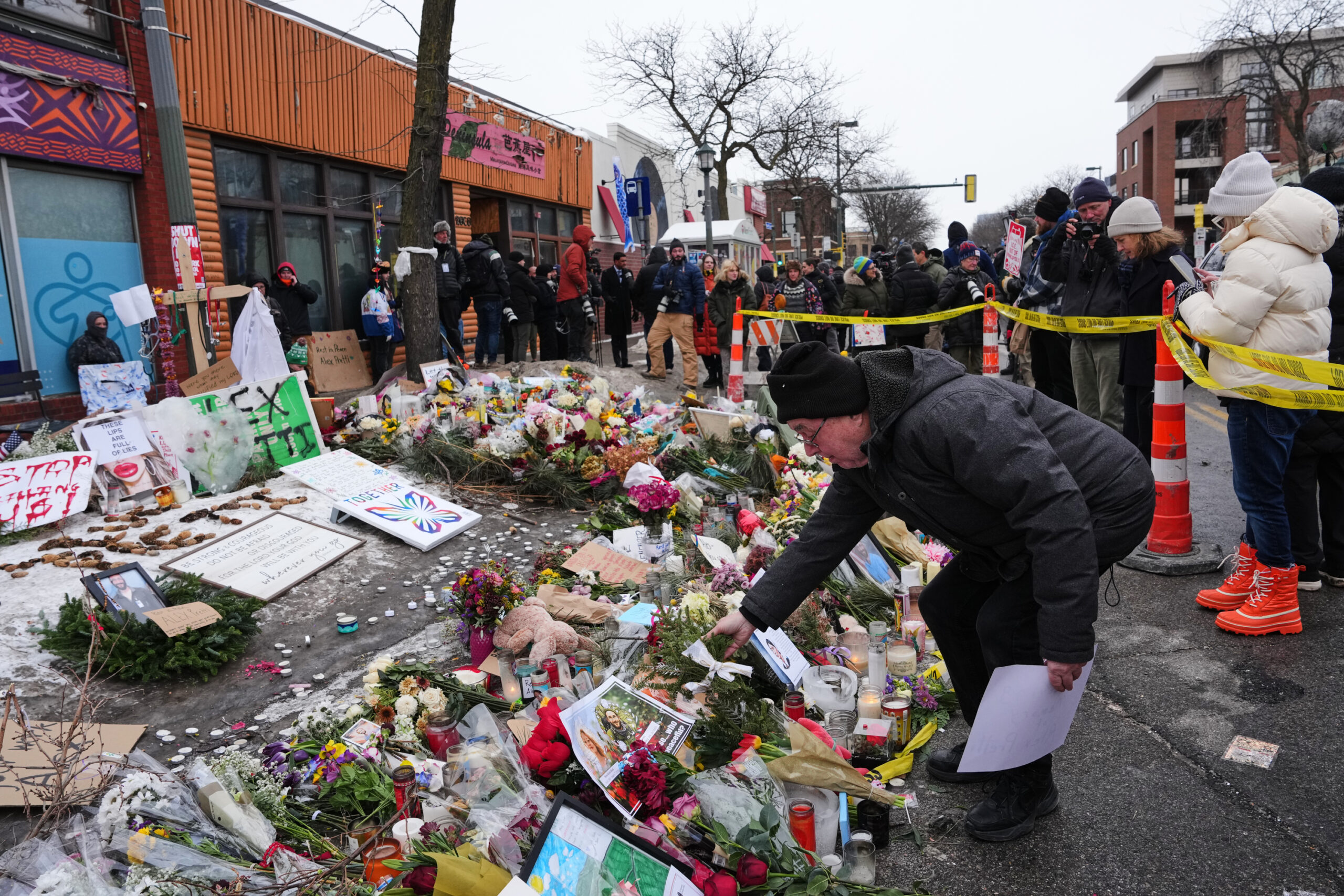
    People visit a makeshift memorial on Jan. 26 in Minneapolis for 37-year-old Alex Pretti, who was fatally shot by immigration officers.

    An ICE spokesperson said the agency received about 400 tort claims in fiscal 2025, which ended Sept. 30, but did not provide a breakdown of how many resulted in settlements or denials.

    “Despite facing a more than 1,300% increase in assaults against them, 8,000% increase in death threats, and a 3,200% increase in vehicle rammings, the men and women of ICE continue working around the clock” to arrest and remove “the worst of the worst criminal aliens from the United States,” ICE said in an emailed statement. The Washington Post could not independently verify these numbers.

    A U.S. Customs and Border Protection spokesperson declined to provide data about the number of tort claims the agency received last year.

    “Rioters and agitators have created an extraordinary amount of damage to public and private property, not to mention the harm they have put our officers and the public in,” a CBP spokesperson said in a statement. “We expect these agitators will be held responsible for their actions.”

    Spokespeople for ICE and CBP declined to comment on individual claims described in this story. They broadly said their agencies adhere to the Federal Tort Claims Act.

    A significant settlement is not impossible. The estate of Ashli Babbitt, the woman who was shot and killed on Jan. 6, 2021, during the U.S. Capitol riot, filed a tort lawsuit and reached a nearly $5 million settlement with the government.

    But the challenges of navigating the Federal Tort Claims Act — coupled with an anticipated rise in claims as violent encounters continue in cities across the United States — have put pressure on Congress to pass legislation to allow civil rights lawsuits against federal officers and agents.

    Such an effort would probably face pushback, experts said. Several years ago, the National Border Patrol Council, a union that represents Border Patrol agents, warned the Supreme Court of the “potentially massive financial impact” that would occur if thousands of its agents were exposed to “liability for personal damages.”

    ‘Not very hopeful’

    Leo Feler said he ran into challenges as soon as he decided to pursue a tort claim. For one thing, he wasn’t sure where to send it: Feler didn’t know which federal agency employed the masked men who came to his Chicago home on Oct. 24.

    Feler, a 46-year-old economist, said he wasn’t there at the time. But he received a notification from his Ring security camera: Someone was on his property.

    A construction crew had been repairing the windows and siding of his home in the affluent Lakeview neighborhood. As the workers ate lunch outside, armed men in green uniforms jumped from two vehicles and tried to break the locks on the gates of a nearly 6-foot-high wrought-iron fence, according to Feler, who reviewed security camera footage of the incident and a video taken by a neighbor.

    The agents, Feler said, had scaled a wooden fence along the side of his house and hopped onto his balcony in pursuit of the fleeing workers.

    One worker was injured as he scrambled through a construction site littered with wood and nails, Feler said, leaving a trail of blood in the home. Another worker was detained, he said.

    Feler said a tenant who rented a unit on his property asked the officers to provide a warrant that authorized the raid, but they refused to do so. Through his Ring camera’s intercom system, Feler told the agents that they were trespassing and needed to leave. But they ignored him, he said.

    Feler later sought legal advice. Attorneys told him he could file a tort claim for damages.

    Unsure which agencies had come to his house, Feler sent the paperwork for his tort claim in December to ICE, Customs and Border Protection and the Department of Homeland Security.

    He described the damage to his property — including to his locks and fence — and also wrote that the agents “robbed me and my family of the feeling of security we once enjoyed in my home.” His tenant was afraid and asked to break her lease early, which Feler said he agreed to do.

    Overall, Feler estimated $30,000 in damage to his property.

    He said he is “not very hopeful” that he will receive payment. If his claim is denied, he said he and his attorneys will pursue a lawsuit under the Federal Tort Claims Act.

    Others caught up in Operation Midway Blitz, the administration’s immigration enforcement actions in the Chicago area last fall, also said they expect it will be difficult to recover alleged damages.

    Leigh Kunkel, a 39-year-old freelance journalist, said she was documenting federal agents shooting pepper balls at protesters in late September outside an ICE facility in Broadview, Ill. An agent then aimed the weapon at her and fired pepper balls, she said, striking her in the back of the head and the nose and leaving her bloodied.

    A week later, her fiancé, Kyle Frankovich, also was protesting in Broadview within an area that he said state police monitoring the scene had designated a “free speech zone.” Federal officials, including Border Patrol commander Gregory Bovino, emerged from the ICE facility and began arresting protesters, according to video footage.

    Frankovich, 41, said he showed no aggression toward agents; nevertheless, he said, they took him to the ground and put him in handcuffs. They later lined him up with other detainees along a guardrail near the facility. The scene served as a backdrop to a Department of Homeland Security promotional video featuring Secretary Kristi L. Noem.

    He said he was detained for eight hours before a federal agent dropped him off at a nearby gas station. Frankovich has not been charged with a crime.

    Antonio Romanucci, a civil rights lawyer and founding partner at the Chicago-based firm representing Renée Good’s family, said his office plans to file federal tort claims for Kunkel and Frankovich. The couple said they understand the path may be long and their case could be unsuccessful, while also exposing them to public scrutiny.

    “Ultimately, we landed on the feeling that we are privileged enough to have the opportunity to fight back against this as citizens,” Kunkel said, “and that if we can do that, if this is one little way that we can push back, that we should.”

    Pushing for change

    Previous efforts to change the federal law have failed to gain traction.

    A law signed by President Ulysses S. Grant in 1871 established the statutory right to sue local or state officials for constitutional violations. Nearly two years ago, a group of U.S. lawmakers introduced draft legislation that would have amended that law by inserting just four words — “or the United States” — and established the right to sue federal officials as well. But the effort stalled.

    “It’s a somewhat complicated area of law across different jurisdictions,” Sen. Sheldon Whitehouse (D., R.I.) said of the challenges in garnering support for the bill, which he sponsored. “But I didn’t see any huge partisan issues.”

    Whitehouse said there was a lack of urgency at the time, even though the Supreme Court had “more or less strangled” the legal pathway that had been used since the 1970s to sue federal officials for civil rights violations.

    Last fall, Whitehouse and Rep. Hank Johnson (D., Ga.) reintroduced the measure. Legal experts told the Post they think it is unlikely to pass, citing anticipated concerns about exposing federal law enforcement officers to personal liability.

    A handful of states already have laws that authorize claims against federal officials for the violation of constitutional rights, including New Jersey and Massachusetts, according to research compiled by Stark of the University of Wisconsin Law School. Lawmakers in other states are scrambling to draft similar bills.

    Last week, the California Senate passed the “No Kings Act” to allow civil rights lawsuits against federal officers. The measure will head to the State Assembly next.

    In Colorado, Mike Weissman, a Democratic state senator, recently introduced a similar bill. He described talking with state legislators in Washington, New Mexico, and Virginia, to exchange ideas.

    And in Minnesota, State Rep. Jamie Long, a Democrat whose district includes part of Minneapolis, has drafted such a bill for the legislative session that begins later this month.

    “We know that there is evidence of these severe constitutional violations happening, and that’s why we think it’s appropriate to create this state remedy,” Long said.

    Such measures are likely to be challenged. The U.S. Justice Department has already sued Illinois, alleging that its new law authorizing civil rights claims against federal officers is an “unconstitutional attempt to regulate federal law enforcement officers.”

    In the meantime, those who say they have sustained property damage or injuries during immigration enforcement efforts and their attorneys are continuing to press lawmakers to enable them to sue federal officers.

    Christopher Parente, a Chicago-based lawyer, is representing Marimar Martinez, a 30-year-old teacher’s assistant who was shot five times by a Border Patrol agent in October and survived. In an interview with the Post, her attorney said he thinks that Congress should change the law.

    Parente, a former federal prosecutor who plans to file a tort claim on Martinez’s behalf, said, “There is no deterrence — in fact, these agents are embraced and celebrated by this administration and their colleagues.”
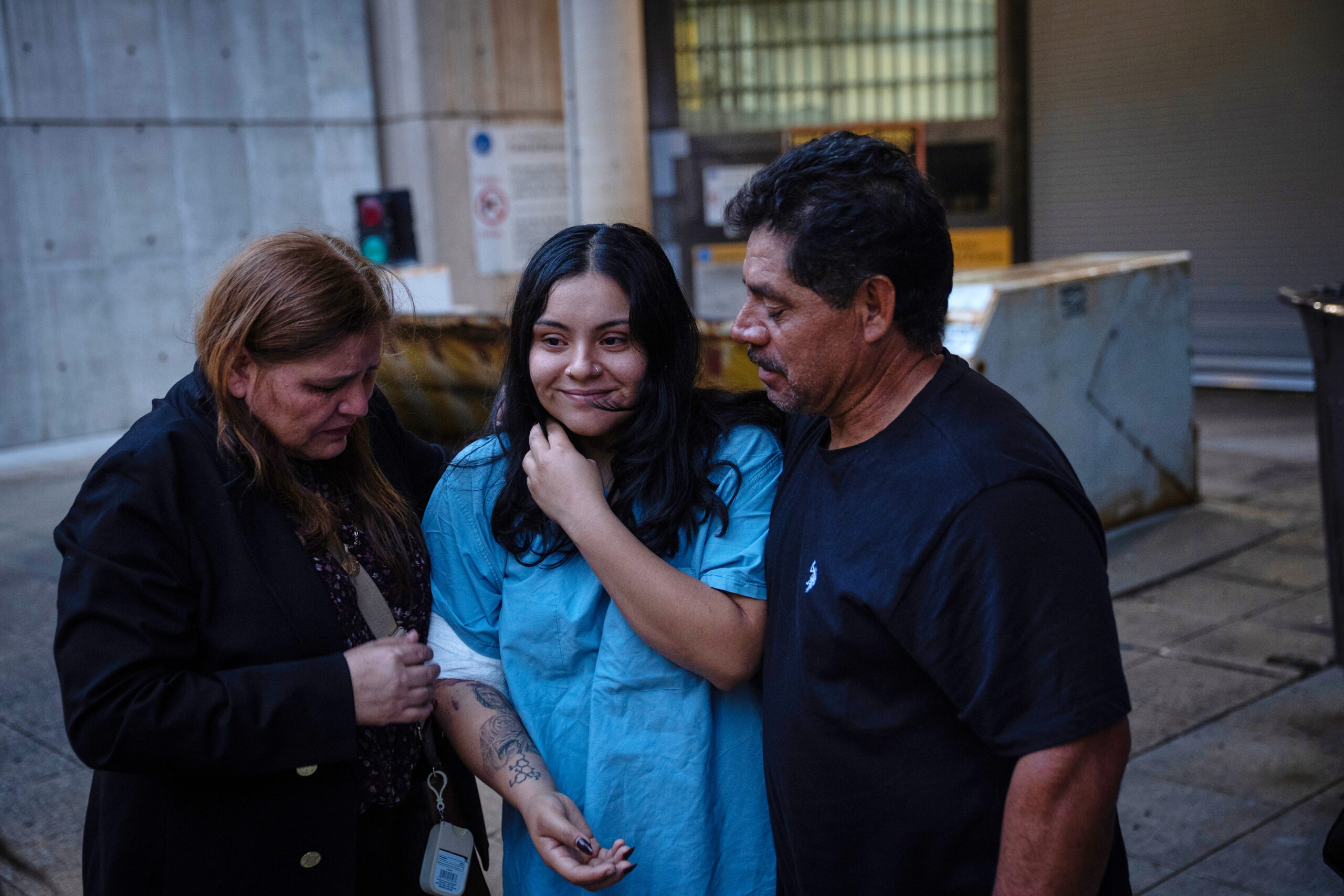
    Marimar Martinez (center) is greeted by her family after being released from the Metropolitan Correctional Center on Oct. 6, 2025, after being shot by immigration agents and charged with assaulting federal officers in an incident in Chicago’s Brighton Park.

    A chilling effect

    People seeking compensation from the federal government may face another roadblock: finding an attorney to take their case.

    “I’ve met people who spent the entire statute of limitations period, which is generally two years, looking for attorneys to represent them in cases against the federal government or federal officials and not being able to find them,” said Anya Bidwell, senior attorney for the Institute for Justice, a nonprofit law firm based in the D.C. area.

    Bidwell said many attorneys are deterred from taking Federal Tort Claims Act cases because the government often invokes “a very broad immunity that courts traditionally interpret to pretty much swallow any of the claims that involve any kind of a judgment or choice on behalf of an officer.”

    In other words, many cases are dismissed. Bidwell said “even getting to trial is extremely difficult.”

    Some people who consider filing claims ultimately decide not to, discouraged by the long and difficult process.

    In Minneapolis, Gina Christ, a 55-year-old business manager, contacted a lawyer to challenge what she described as an unlawful detention. But the attorney she met with told her suing the government would be “very, very difficult,” Christ recalled.

    Christ had driven to a protest that began after Border Patrol agents allegedly tried to arrest a pair of Latino teens. She said she parked along the side of the street to observe the agents, not to obstruct them.

    Christ said she was soon surrounded by agents and protesters. Agents yelled at her to move before smashing the window of her Ford Escape. They opened the door, pulled her out of the car, and held her facedown on the pavement, she said.

    Agents restrained her wrists with plastic zip ties, Christ said, while her eyes and throat burned from tear gas fired into the nearby crowd.

    Authorities took her to a federal building for processing, she said, and placed her in metal arm and leg shackles. She said they walked her to a folding table, where there was a makeshift sign with the criminal code for assaulting an officer. They told her she would face charges and took her fingerprints and a DNA swab.

    Christ said she spent nearly four hours in custody before she was released. She hasn’t been charged with a crime.

    A Customs and Border Protection spokesperson did not answer questions about the agency’s interaction with Christ.

    After weighing the difficulty of pursuing a tort claim, Christ said she plans to pay to fix her window herself. Given what others have lost, she said, it seems too small to pursue.
  • Hall of Fame quarterback Sonny Jurgensen dies at age 91

    Hall of Fame quarterback Sonny Jurgensen dies at age 91

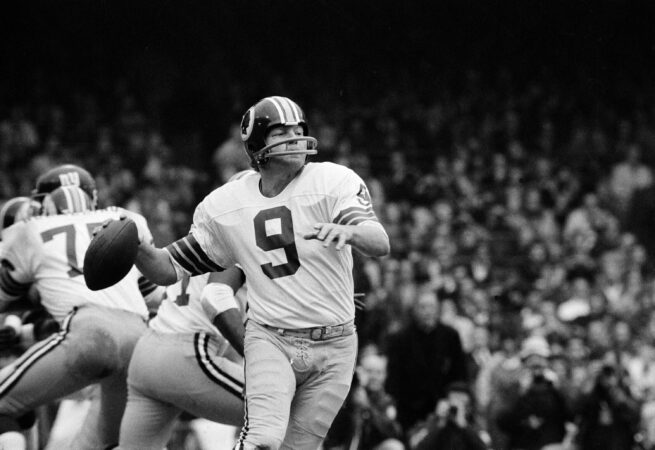
    Sonny Jurgensen, the Hall of Fame quarterback whose strong arm, keen wit and affable personality made him one of the most beloved figures in Washington football history, has died. He was 91.

    A Washington Commanders spokesperson confirmed Friday the team learned of Jurgensen’s death that morning from his family.

    Jurgensen arrived in Washington in 1964 in a surprise quarterback swap that sent Norm Snead to the Philadelphia Eagles. Over the next 11 seasons, Jurgensen rewrote the team’s record books.

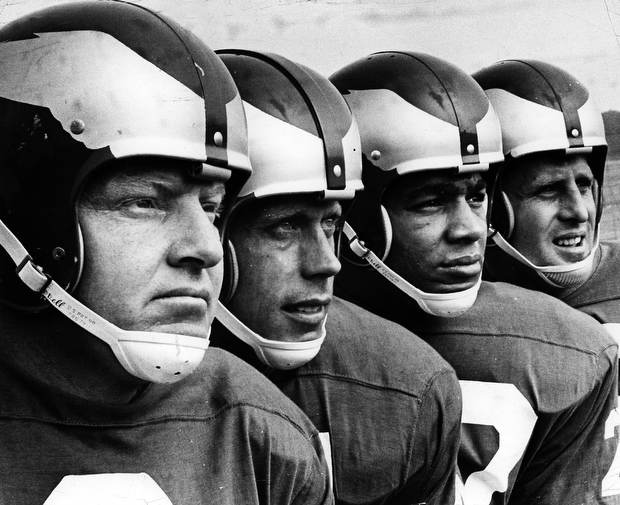
    Eagles players (from left) Sonny Jurgensen, Pete Retzlaff, Timmy Brown and Tommy McDonald in 1963.

    He topped 3,000 yards in a season five times, including twice with Philadelphia, in an era before rules changes opened up NFL offenses. He was inducted into the Pro Football Hall of Fame in 1983 and remains the only Washington player to wear the No. 9 jersey in a game.

  • The detention of the couple that owns Jersey Kebab sparked change. Deportation still looms.

    The detention of the couple that owns Jersey Kebab sparked change. Deportation still looms.

    COLLINGSWOOD, N.J. — The shawarma, falafel wraps and baklava at Jersey Kebab are great, but many of its patrons are also there these days for a side of protest.

    A New Jersey suburb of Philadelphia has rallied around the restaurant’s Turkish owners since federal officers detained the couple last February because they say their visas had expired.

    In fact, business has been so good since Celal and Emine Emanet were picked up early in the Trump administration’s immigration crackdown that they have moved to a bigger space in the next town over. Their regulars don’t seem to mind.

    The family came to the U.S. seeking freedom

    Celal Emanet, 52, first came to the U.S. in 2000 to learn English while he pursued his doctorate in Islamic history at a Turkish university. He returned in 2008 to serve as an imam at a southern New Jersey mosque, bringing Emine and their first two children came, too. Two more would be born in the U.S.

    Before long, Celal had an additional business of delivering bread to diners. They applied for permanent residency and believed they were on their way to receiving green cards.

    When the COVID-19 pandemic began and the delivery trucks were idled, Celal and Emine, who had both worked in restaurants in Turkey, opened Jersey Kebab in Haddon Township. Business was strong from the start.

    It all changed in a moment

    On Feb. 25, U.S. marshals and Immigration and Customs Enforcement officers arrested the couple at the restaurant. Celal was sent home with an ankle monitor, but Emine, now 47, was moved to a detention facility more than an hour’s drive away and held there for 15 days.

    With its main cook in detention and the family in crisis, the shop closed temporarily.

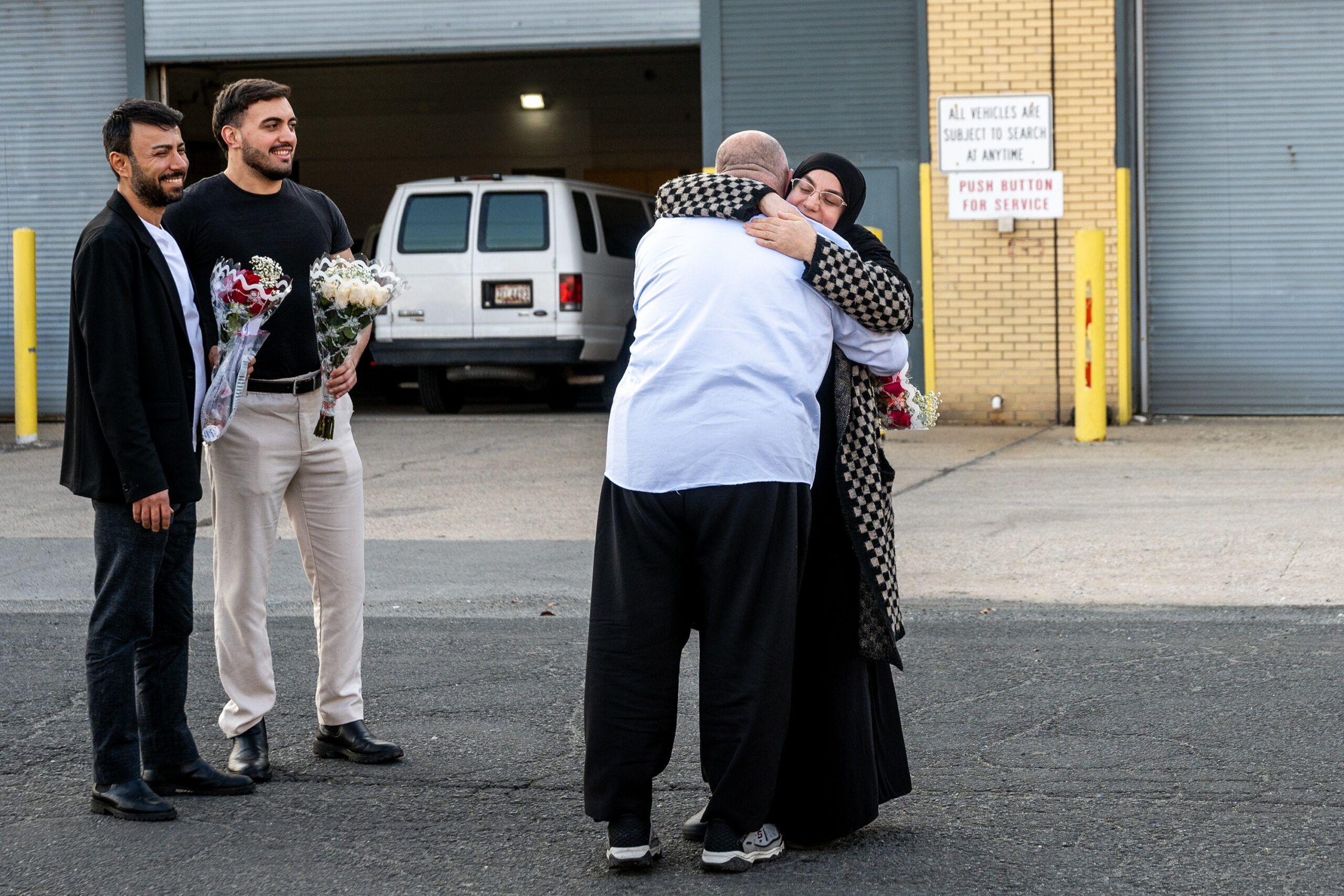
    Emine Emanet hugs her husband Celal as she leaves the ICE Elizabeth Detention Facility on Wednesday, March 12, 2025.

    Although the area is heavily Democratic, the arrests of the Emanets signaled to many locals that immigration enforcement during President Donald Trump’s second term wouldn’t stop at going after people with criminal backgrounds who are in the U.S. illegally.

    “They were not dangerous people — not the type of people we were told on TV they were looking to remove from our country,” Haddon Township Mayor Randy Teague said.

    Supporters organized a vigil and raised $300,000 that kept the family and business afloat while the shop was closed — and paid legal bills. Members of Congress helped, and hundreds of customers wrote letters of support.

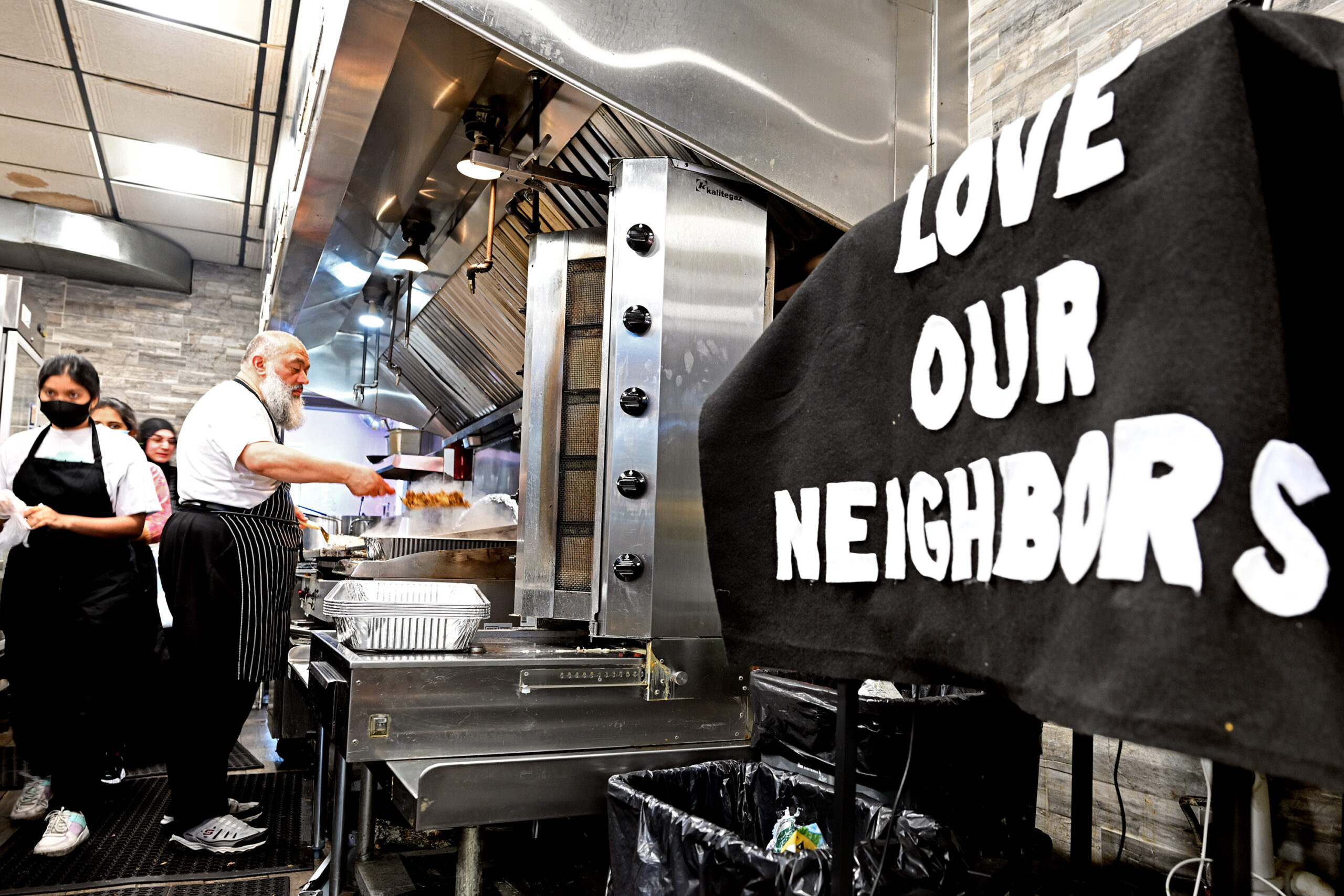
    Celal Emanet works at the grill in his Jersey Kebab restaurant on Sunday, Mar. 30, 2025.

    Space for a crowd

    As news of the family’s ordeal spread, customers new and old began packing the restaurant. The family moved it late last year to a bigger space down busy Haddon Avenue in Collingswood.

    They added a breakfast menu and for the first time needed to hire servers besides their son Muhammed.

    The location changed, but the restaurant still features a sign in the window offering free meals to people in need. That’s honoring a Muslim value, to care for “anybody who has less than us,” Muhammed said.

    Judy Kubit and Linda Rey, two friends from the nearby communities of Medford and Columbus, respectively, said they came to Haddon Township last year for an anti-Trump “No Kings” rally and ate a post-protest lunch at the kebab shop.

    “We thought, we have to go in just to show our solidarity for the whole issue,” Kubit said.

    Last month, with the immigration crackdown in Minneapolis dominating the headlines, they were at the new location for lunch.

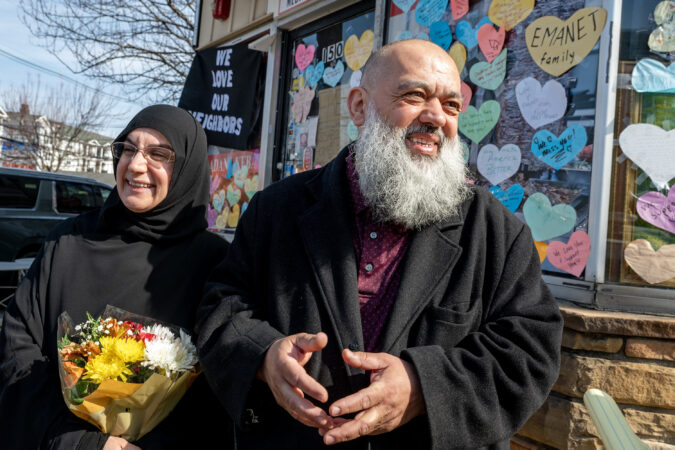
    Gretchen Seibert tapes up hearts with words of support for Celal and Emine Emanet, the owners of Jersey Kebab, after the couple was detained by ICE in February 2025.

    The legal battle hasn’t ended

    The Emanets desperately want to stay in the U.S., where they’ve built a life and raised their family.

    Celal has a deportation hearing in March, and Emine and Muhammed will also have hearings eventually.

    Celal said moving back to Turkey would be bad for his younger children. They don’t speak Turkish, and one is autistic and needs the help available in the U.S.

    Also, he’d be worried about his own safety because of his academic articles. “I am in opposition to the Turkish government,” he said. “If they deport me, I am going to get very big problems.”

    The groundswell of support has shown the family they’re not alone.

    “We’re kind of fighting for our right to stay the country,” Muhammed Emanet said, “while still having amazing support from the community behind us. So we’re all in it together.”

  • Man dies in North Philadelphia house fire

    Man dies in North Philadelphia house fire

    A man died Thursday morning in a fire inside a North Philadelphia home.

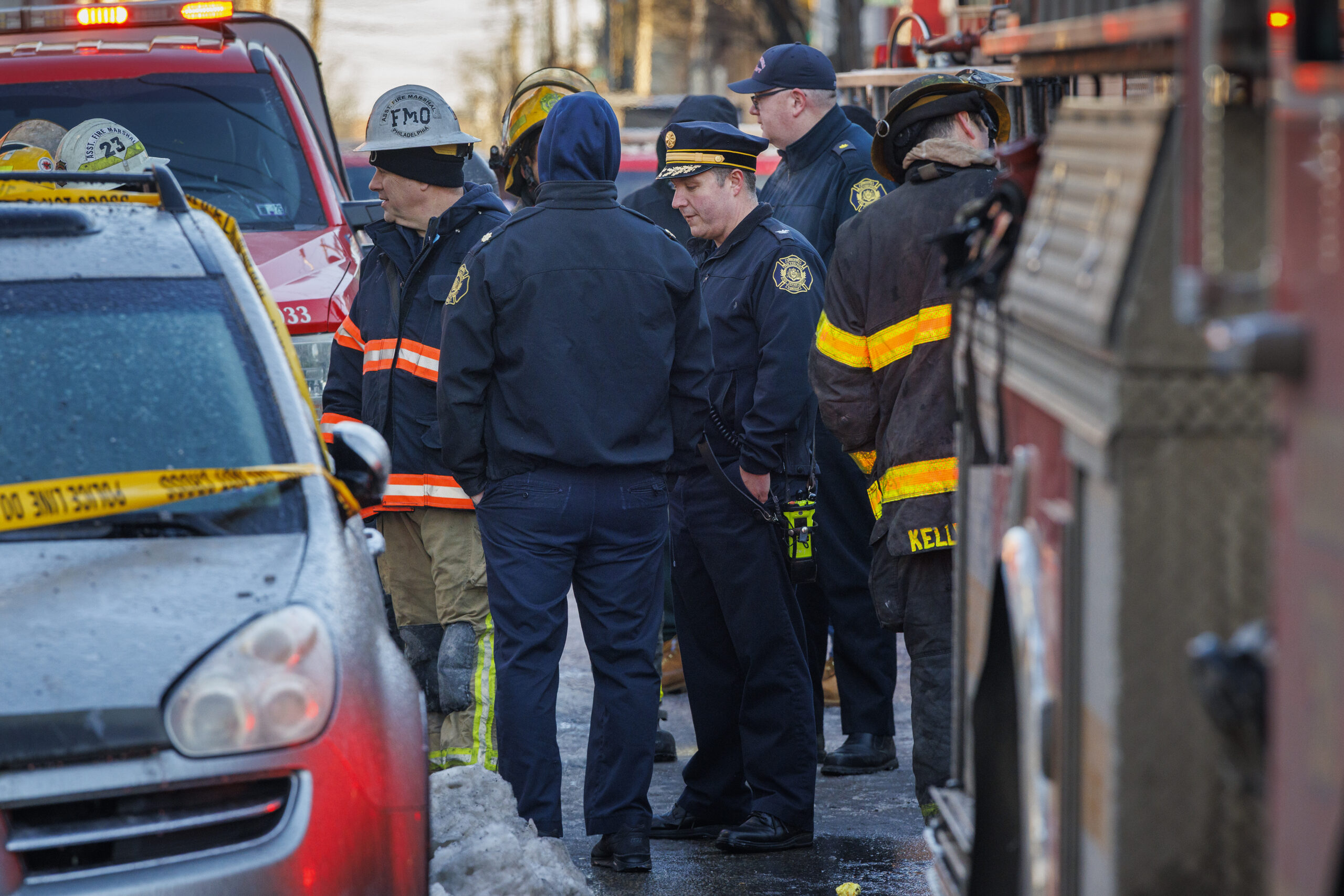
    The fire started around 5:15 a.m. on the 2500 block of North 12th Street, where crews found heavy smoke and fire coming from the two-story rowhouse, according to the Philadelphia Fire Department. Firefighters witnessed fire coming from the second floor, where they found a person dead inside the home.

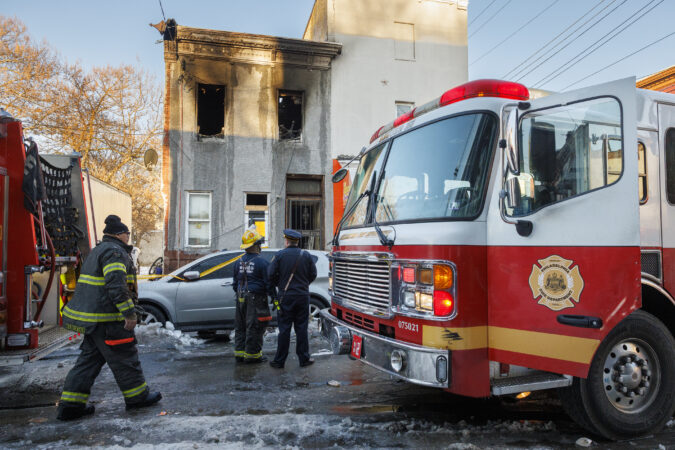
    Philadelphia fire department personnel at scene of fatal fire 2500 block N. 12th Street, early Thursday, Feb. 5, 2026.

    Firefighters placed the fire under control by 5:45 a.m. The cause of the fire remained under investigation.

    The Thursday morning blaze followed a fatal house fire in Kingsessing on Wednesday morning, which the fire marshal’s office determined was intentionally set, and another fatal fire in early January that claimed the life of a woman in the Ogontz section.

  • Savannah Guthrie’s family renews plea to mother’s kidnapper, while sheriff says they have no suspect

    Savannah Guthrie’s family renews plea to mother’s kidnapper, while sheriff says they have no suspect

    TUCSON, Ariz. — “Today” show host Savannah Guthrie’s brother on Thursday renewed the family’s plea for their mother’s kidnapper to contact them, hours after an Arizona sheriff said investigators don’t have proof Nancy Guthrie is alive but believe “she’s still out there.”

    “Whoever is out there holding our mother, we want to hear from you. We haven’t heard anything directly,” Camron Guthrie said in a video posted on social media.

    “We need you to reach out and we need a way to communicate with you so we can move forward,” but first the family needs to know the kidnapper has their mother, he said, echoing a statement his famous sister read the day before.

    Five days into the desperate search for 84-year-old Nancy Guthrie, authorities have not identified any suspects or persons of interest, Pima County Sheriff Chris Nanos said.

    Authorities think she was taken against her will from her home in Tucson over the weekend. DNA tests showed blood found on Guthrie’s front porch was a match to her, the sheriff said.

    “Right now, we believe Nancy is still out there. We want her home,” Nanos said at a news conference earlier Thursday. He acknowledged, however, that authorities have no evidence she’s OK.

    Demands for ransom

    Investigators said they are taking seriously notes seeking ransom that were sent to some media outlets.

    It’s unclear if all of the notes were identical. Heith Janke, the FBI chief in Phoenix, said details included a demand for money with a Thursday evening deadline and a second deadline for Monday if the first one wasn’t met. At least one note mentioned a floodlight at Guthrie’s home and an Apple watch, Janke said.

    “To anyone who may be involved, do the right thing. This is an 84-year-old grandma,” Janke said.

    At least three media organizations reported receiving purported ransom notes, which they handed over to investigators. Authorities made an arrest after one ransom note turned out to be fake, the sheriff said.

    A note e-mailed Monday to the KOLD-TV newsroom in Tucson included information that only the abductor would know, anchor Mary Coleman told CNN.

    “When we saw some of those details, it was clear after a couple of sentences that this might not be a hoax,” she said.

    The sheriff said it’s possible Nancy Guthrie was targeted, but if she was, investigators don’t know if that’s because her daughter is one of television’s most visible anchors.

    Authorities say any decision on whether to fulfill ransom demands ultimately is up to the family.

    A day earlier, Savannah Guthrie and her siblings released a message to her mother’s kidnapper, saying they are ready to talk but want proof their mom is still alive. There’s been no response to their pleas so far.

    New timeline of Guthrie’s disappearance

    Investigators gave a more detailed timeline from the hours after Nancy Guthrie was last seen Saturday night. She was eating dinner and playing games with family members before one of them dropped her off at her home in a upscale neighborhood that sits on hilly, desert terrain, the sheriff said.

    About four hours later, just before 2 a.m. Sunday, the home’s doorbell camera was disconnected, Nanos said. But Guthrie did not have an active subscription, so the doorbell company was unable to recover any footage.

    Software data recorded movement at the home minutes later, the sheriff said, acknowledging that the motion could have come from an animal.

    Then at 2:28 a.m. the app on Guthrie’s pacemaker was disconnected from her phone.

    Search enters a fifth day

    Guthrie was reported missing shortly before noon Sunday after she didn’t show up at a church.

    While she is able to drive and her mind is sharp, the sheriff said she has difficulty walking even short distances. She also requires daily medicine that’s vital to her health, he has said.

    A sheriff’s dispatcher said during the search Sunday that Guthrie has high blood pressure, a pacemaker and heart issues, according to audio from broadcastify.com.

    Investigators searched in and around Guthrie’s home again for several hours Wednesday.

    Authorities are bringing more resources and people into the investigation, and the FBI announced Thursday it was offering up to $50,000 for information. A day earlier, President Donald Trump posted on social media that he was directing federal authorities to help where they can.

    The kidnapping has attracted the attention of the American public, much like other famous abductions in U.S. history.

    Savannah Guthrie’s emotional plea

    Savannah Guthrie has hosted “Today” — NBC’s flagship morning show — for more than a decade and had been set to co-anchor the network’s coverage of Friday’s opening ceremony for the Winter Olympics. For now, she’s staying close to her mother’s home.

    She joined her two siblings in an emotional plea on social media Wednesday to say they’re ready to talk to whoever sent the ransom notes.

    “We need to know without a doubt that she is alive and that you have her. We want to hear from you and we are ready to listen. Please reach out to us,” she said while fighting off tears.

    With her voice cracking, she addressed her mother directly, saying the family was praying for her and that people were looking for her. She was flanked by Camron and their sister, Annie.

    “Mamma, If you’re listening, we need you to come home. We miss you,” Annie Guthrie said.

  • What to know about the too-close-to-call race to replace Mikie Sherrill in Congress

    What to know about the too-close-to-call race to replace Mikie Sherrill in Congress

    The Democratic primary to replace N.J. Gov. Mikie Sherrill in Congress remains too close to call as of Friday afternoon, but the early results already signal a major breakthrough for progressives in the state.

    Analilia Mejia, a progressive who’s worked for U.S. Sen. Bernie Sanders and the Working Families Party, led former U.S. Rep. Tom Malinowski by less than 1 percentage point, with more than 91% of votes tabulated in the crowded primary.

    Some outlets, including Decision Desk, called the race for Malinowski, who dominated mail ballots, Thursday night before issuing retractions as Mejia gained ground. The Democratic National Committee had even issued a premature congratulations to the former House member before Mejia took the lead.

    (function () {window.addEventListener(‘message’, function (e) { var message = e.data; var els = document.querySelectorAll(‘iframe[src*=”‘ + message.id + ‘”]’); els.forEach(function(el) { el.style.height = message.height + ‘px’; }); }, false); })();

    Sherrill represented North Jersey’s 11th Congressional District, which includes parts of Essex, Morris, and Passaic Counties, and stepped down after being elected governor. A field of 13 Democrats competed in the special election for the open seat from various factions of the Democratic Party.

    Only two broke through as serious contenders, and they represent two sides of the New Jersey Democratic Party: the establishment and progressives.

    Democrats were so invested in the race, turnout exceeded the 2024 primary for the seat, which signals the high level of motivation for Democratic voters going into this year’s midterms.

    Sherrill stayed neutral in the race

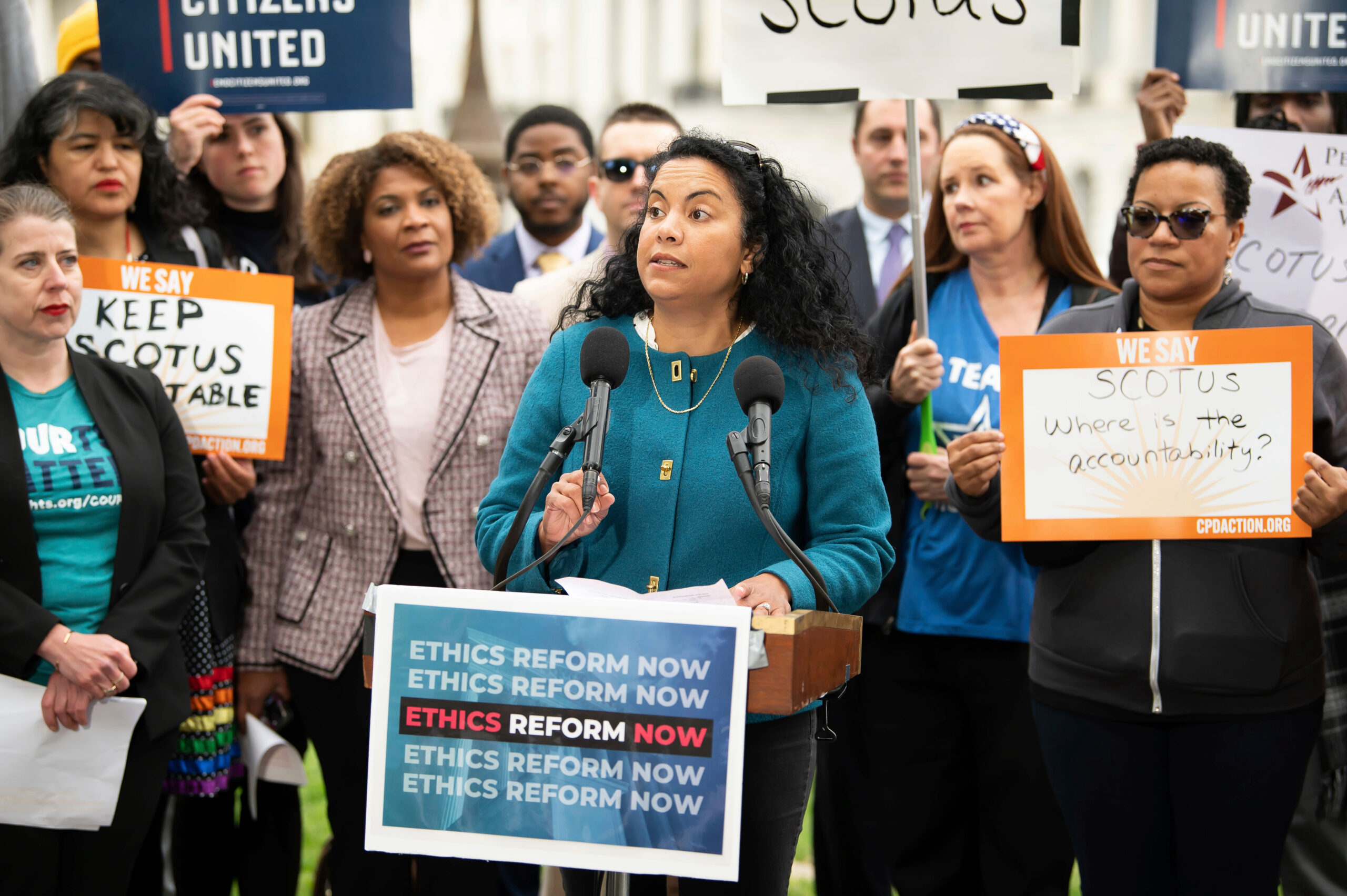
    Analilia Mejia, center, speaks during a rally calling for SCOTUS ethics reform, May 2, 2023, in Washington.

    Analilia Mejia is supported by national progressives like AOC

    Mejia, 48, is the daughter of Colombian and Dominican immigrants. She has called to “abolish ICE” and spoke in both English and Spanish at a news conference Friday.

    The progressive candidate has most recently worked as the co-executive director of Popular Democracy, a network of organizations across the country that call for “transformational change for Black, brown and low-income communities,” according to its website. She worked as the national political director for Sanders’ 2020 presidential campaign, the state director of the New Jersey Working Families Party, and as a union organizer before launching her bid for the seat.

    Mejia was endorsed by national progressives, including Sanders (I., Vt.), U.S. Rep. Alexandria Ocasio-Cortez (D., N.Y.) and U.S. Sen. Elizabeth Warren (D., Mass.). She also had the backing of Newark Mayor Ras Baraka, whose progressive campaign landed him in second place behind Sherrill in the six-way gubernatorial primary last year.

    Mejia leaned into her underdog status Thursday night when addressing supporters, noting the race had been called for her opponent before she took the lead.

    “Here’s the bottom line,” she said. “We know that our movement, this party, this moment, calls on every one of us to be big and bold and brave. And that is what we are about.”

    She later declared: “I think we’ll listen to some Bad Bunny!”

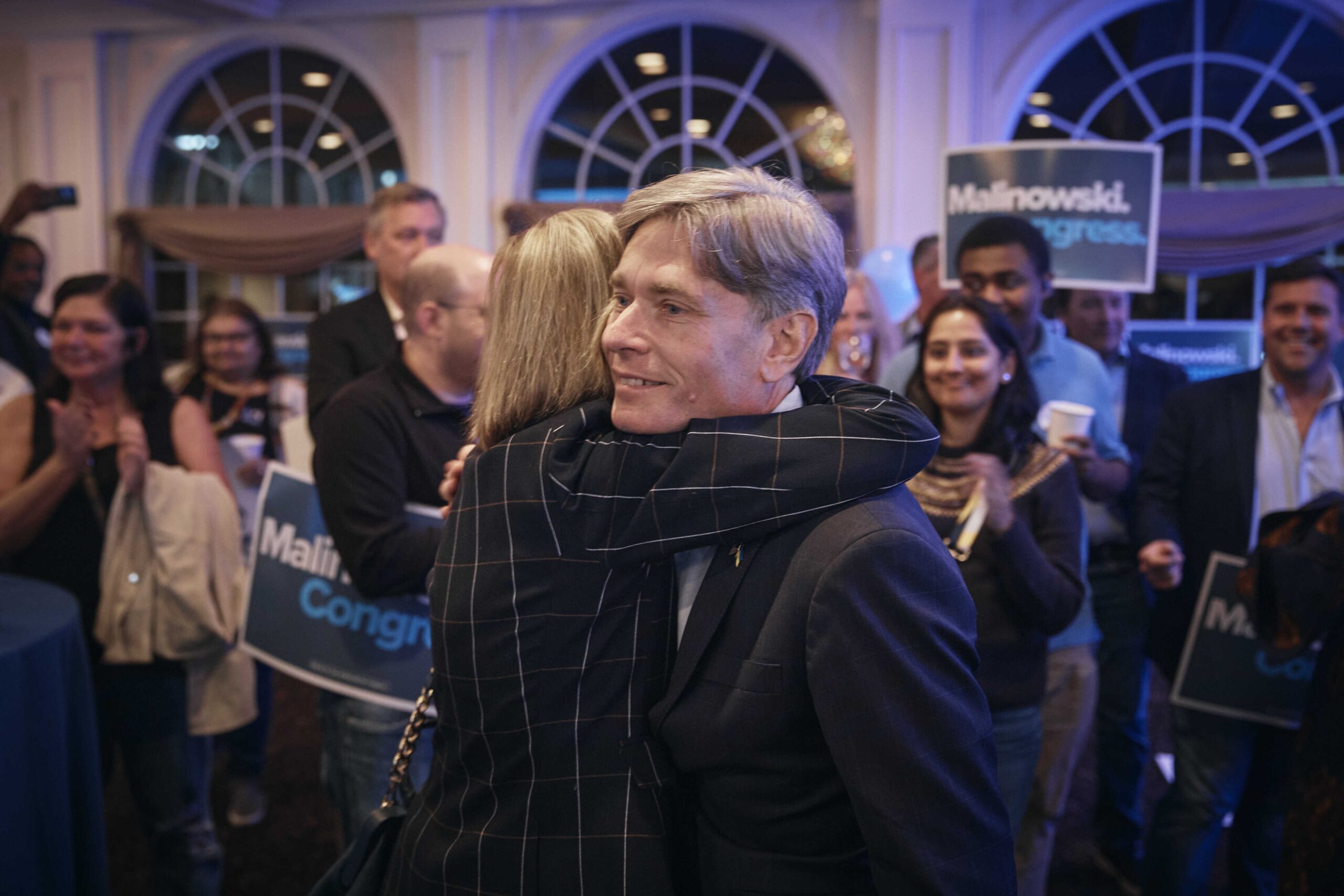
    Democratic Rep. Tom Malinowski, center right, arrives during his election night party in Garwood, N.J., Tuesday, Nov. 8, 2022.

    Tom Malinowski was backed by the local party apparatus

    Malinowski, 60, started as a freshman House Democrat alongside Sherrill in 2019 before losing his seat to Republican U.S. Rep. Thomas Kean Jr. in the 2022 election after he faced pushback for undisclosed stock trading and his area was redistricted to be less favorable to Democrats.

    His former district is right next to the 11th District and encompasses parts of Union, Somerset, Morris, and Sussex Counties, and all of Hunterdon and Warren Counties.

    He recently chaired the Hunterdon County Democratic Committee and previously worked as former President Barack Obama’s assistant secretary of state for democracy and human rights.

    He had the endorsement of the Morris County Democratic Committee, which would have had more sway before the state got rid of its county line ballot system last year.

    U.S. Sen. Andy Kim, the Burlington County Democrat who led the legal fight that led to the county line’s demise, endorsed Malinowski in this race, saying he trusts him.

    The Essex and Passaic County parties backed other candidates who were far behind Malinowski and Mejia.

    DNC Chair Ken Martin said in the premature Thursday night statement that Malinowski has “the experience to serve New Jersey once again.”

    AIPAC’s involvement in the race backfired

    Malinowski faced attacks from a super PAC funded by American Israel Public Affairs Committee (AIPAC), a pro-Israel national lobbying group, even though the group supported him in the past, The New York Times and other outlets reported.

    Those attacks likely pulled support away from Malinowski, who is far less critical of Israel than Mejia.

    Mejia called AIPAC’s tactics against Malinowski “disgusting” in a news conference on Friday and said it underscores her broader concerns about money in politics.

    “Big money can actually silence voters … In many ways, I’m glad that NJ-11 voters got to see the terrible tactics so that we could reject it in the future,” she said.

    The district, which used to be Republican, is now viewed as safely blue

    Sherrill flipped the 11th congressional district blue as a first-time candidate in 2018, defeating Republican Assemblymember Jay Webber after the GOP incumbent retired. The incumbent, former U.S. Rep. Rodney Frelinghuysen had held the seat since 1995. The district went from leaning Republican to leaning Democratic when its lines were redrawn in 2022.

    Sherrill won her last general election race for her House seat with 56.5% of the vote in 2024.

    The nonpartisan Cook Political Report rates the district as solidly Democratic. Former Vice President Kamala Harris won the district decisively by nearly 9 points in 2024, but it still swung to the right from Biden’s 2020 victory in the district by almost 17 points, according to Cook data.

    Joe Hathaway, the former mayor of Randolph in Morris County, was unopposed in the Republican primary.

    Hathaway, 38, said in a video on social media Thursday that the election brings an opportunity for “a new generation of leadership …one focused more on the hard work than the headlines.”

    He is a former aide to former Republican Gov. Christopher J. Christie and has worked in various roles in the private sector, and has branded himself as a “workhorse” throughout his campaign.

    Hathaway and the winner of the Democratic primary will face off on Thursday, April 16, less than two months before the regular primary election on June 2 for the midterms.

    When will the race be called, and will there be a recount?

    It’s unclear when the race will be called by The Associated Press (which The Inquirer relies on for election results), but it may not be this week.

    Mail ballots that were postmarked by Election Day on Thursday and received by the county Board of Election by next Wednesday can be counted in New Jersey.

    Provisional ballots in the state cannot be officially counted until after the eligible mail ballots are received to ensure the voter has not voted by mail. These ballots are used in specific situations, such as when a person registered to vote moves within the county without updating their address.

    Voters also have until the following Tuesday, Feb. 17, to cure a ballot flagged by election officials. This happens when there is a potential issue with a voter’s signature, which can happen when someone forgets to sign their ballot or whose signature has changed over time. The voter then has to verify their identity for their ballot to be counted.

    As for a recount, New Jersey doesn’t have an automatic recount system, so a candidate would have to request one and cover the expenses. The candidate would receive a refund if the result changed.

  • Jamie Drysdale scores late to force overtime, but Flyers lose to Senators, 2-1

    Jamie Drysdale scores late to force overtime, but Flyers lose to Senators, 2-1

    The Flyers nearly headed into the Olympic break with a whimper after they managed just 13 shots through three periods.

    After what looked like a lifeless effort for much of the first two periods, the Flyers stormed back late to tie the game with their net empty. Jamie Drysdale scored in his second consecutive game, after scoring the game-winner on Tuesday.

    But ultimately, Travis Konecny missed the net on another overtime breakaway, and Ottawa’s Tim Stützle came back to deliver the win for the Senators. Dan Vladař made 25 saves in the loss.

    “We had the two-on-one, last game against [the Los Angeles Kings], we hit the post,” Tocchet said. “We had another two-on-one, and we missed. They get it. It’s execution, Stützle goes around and scores. It’s hard to work on that stuff. We’re getting some chances.”

    Former Flyer Nick Cousins scored the first goal of the game just over halfway through the second period. Ottawa’s Shane Pinto took the first shot on Vladař, who made the save, but the puck bounced off his pad right toward Cousins, who scored in an empty net to take the 1-0 lead.

    The Flyers got their best offensive possession of the game late into the second — with a little assist from Senators’ center Dylan Cozens’ skate blade, which fell off on a blocked shot, making it basically a power play.

    The Flyers took eight shots on goal and missed 15 shots through two periods. Against Senators goaltender James Reimer, who entered Thursday’s game with an .862 save percentage in six appearances, the Flyers couldn’t generate enough traffic to take advantage of the weak matchup.

    In the third period, Rick Tocchet put the Flyers’ lines in a blender, moving Trevor Zegras back to wing to play with Christian Dvorak and Konecny, moving Denver Barkey to center to play with Carl Grundstrom and Garnet Hathaway, and slotting Nikita Grebenkin with Sean Couturier and Owen Tippett.

    Couturier drove to the net and got a one-on-one with the Ottawa goalie deep in the crease, but couldn’t get the puck past Reimer. His goal drought extended to 29 games.

    “There was just a lack of support, puck support, a lot of one and dones,” Drysdale said. “They did a good job defending as well. We were able to break through at the end, but just too little too late.”

    But struggling with offensive ineptitude for most of the game, the Flyers finally put it together on the 6-on-5, with Drysdale delivering on a low shot from the point, just like his game-winner on Tuesday.

    Ultimately, though, the Flyers’ luck didn’t last for long. After Sanheim took down Brady Tkachuk to give the Flyers their first breakaway of overtime, Konecny could not deliver on the two-on-one, and Stützle beat Sanheim and Vladař for the win.

    Breakaways

    The Flyers’ two shots in the first period were tied for the fewest they’ve had in a period all season. The last time that happened was on Dec. 13 against Carolina … Drysdale scored in consecutive games for the first time since March 9 and 11, 2025, against Seattle and Ottawa … The Flyers played their third one-goal game against the Senators this season, after losing 2-1 on Oct. 23 and 3-2 in overtime on Nov. 8.

    Up Next

    The Flyers will break for three weeks for the Winter Olympics in Milan Cortina. The men’s hockey tournament will begin Feb. 11, with Rasmus Ristolainen and Finland taking on Slovakia (10:40 a.m. ET, USA Network).

    The team returns to play on Feb. 25 against the Washington Capitals (7 p.m. ET, NBCSP).

  • A frozen car in Fishtown became a tourist attraction on Google Maps

    A frozen car in Fishtown became a tourist attraction on Google Maps

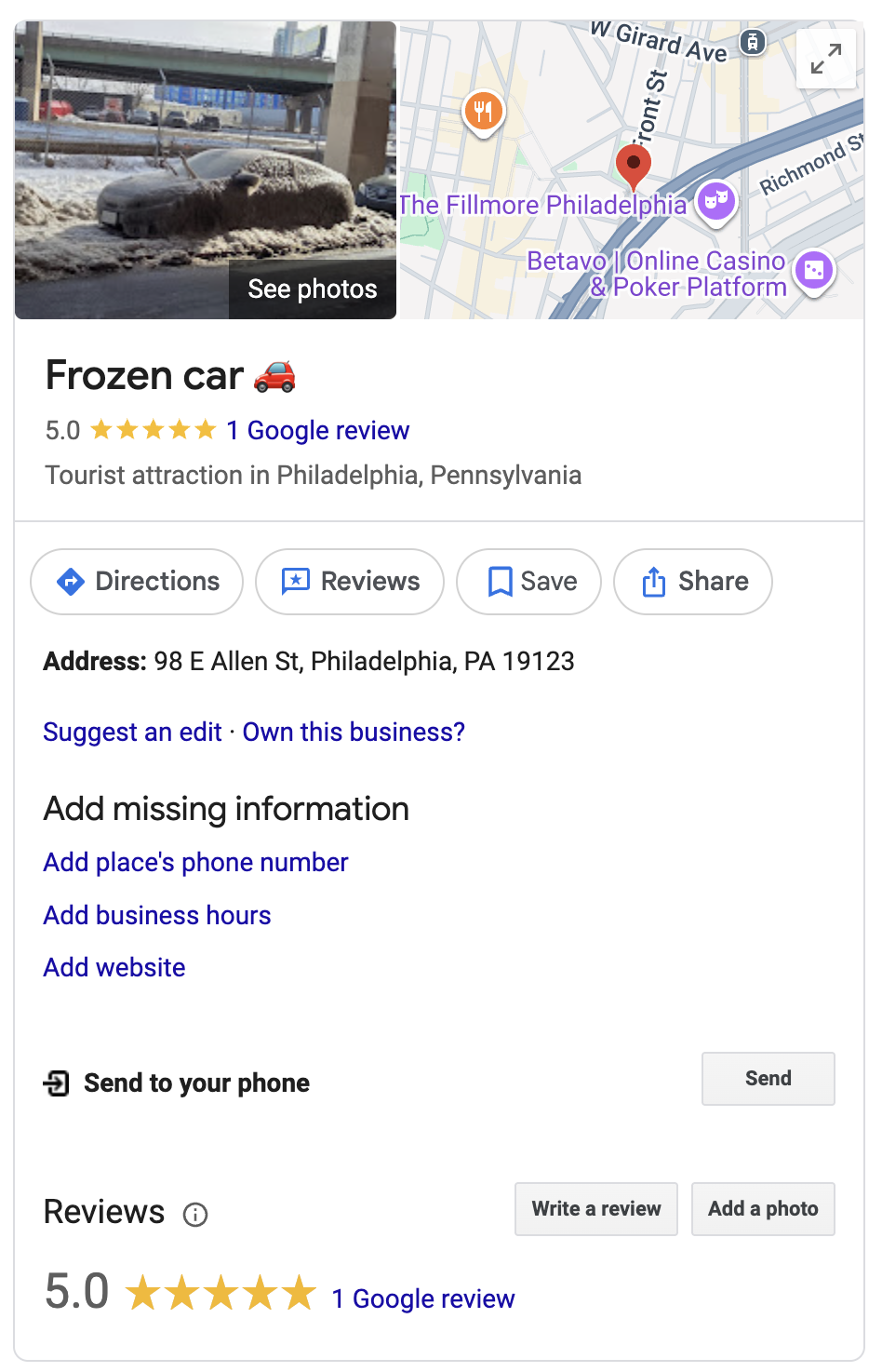
    Independence Hall, the Rocky statue, the Liberty Bell, and … a 2016 Honda Civic parked in Fishtown?

    That odd appendage at the end of the list just became one of Philadelphia’s newest tourist attractions on Google Maps.

    How does a silver two-door get minted a must-see site in the birthplace of America?

    It gets completely covered in ice.

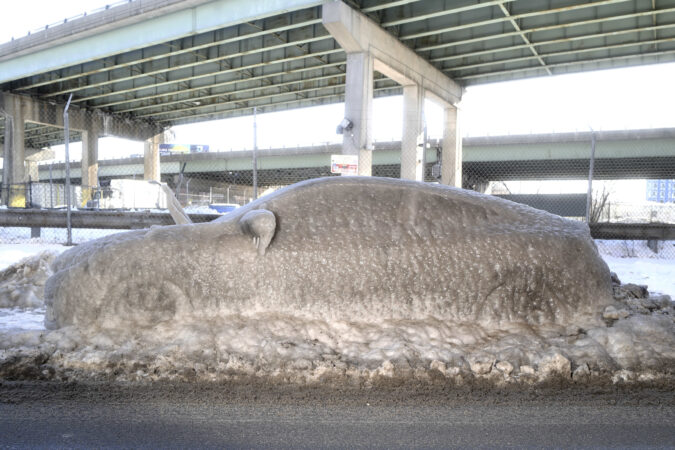
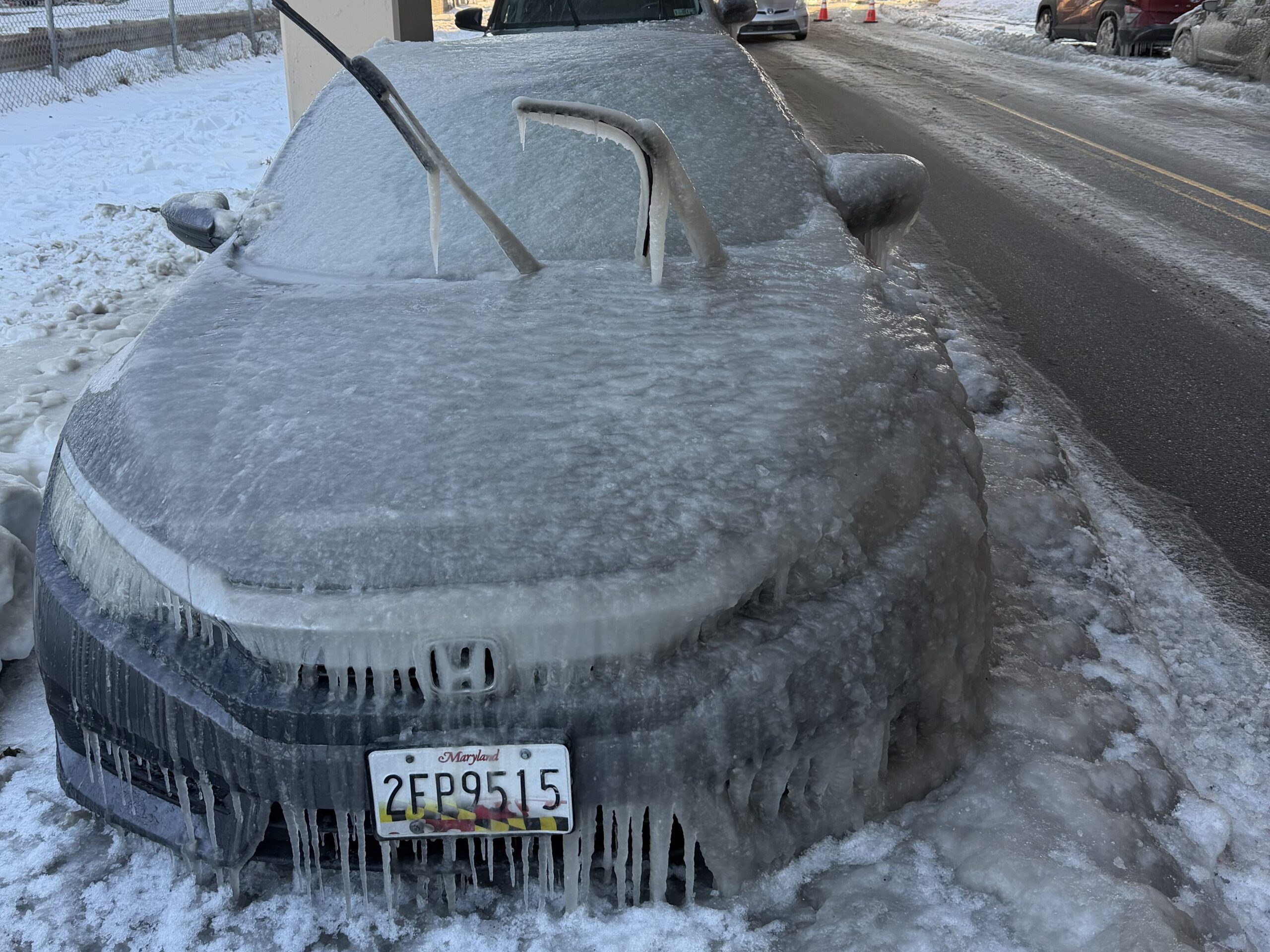
    In photos of the car now seen around the world, a sheet of ice wrapping around the roof and hood of the car extends all the way down to the pavement. Paralyzed windshield wipers propped up perpendicular to the dashboard look like a pair of arms flailing frantically for help as the car suffers a frigid death. Passersby might easily mistake the sight for an ice sculpture of a car rather than a real one.

    A screenshot of the frozen car in Fishtown on Google Maps.

    The journey from plebeian commuter vehicle to local celebrity has been a source of both humor and headache for 24-year-old Tianna Graham, the car’s owner.

    At first she wasn’t terribly worried about the situation.

    “It’s fine. I’ll figure it out,” she remembered thinking.

    Then the shock wore off.

    “Now I’m like, ‘OK, what do I actually do now?’”

    The saga starts at the intersection of North Front and East Allen Streets, under the El tracks, where Graham first parked her car on Jan. 23. She knew a major snowstorm was looming, so when she found an open spot near her apartment, she leaped at it.

    After the deluge of flakes and sleet left the city coated with 9.3 inches of snow and ice, her girlfriend helped her shovel her car out of the spot on Tuesday so they could run a few errands, she said.

    When they returned, they found the spot still vacant, so Graham parked there again.

    A car parked in Fishtown becomes completely encapsulated in ice.

    On Wednesday, Graham, a fifth-grade math teacher at Community Academy of Philadelphia, noticed the street she had parked on was cordoned off with caution tape.

    She asked a nearby police officer if she should move her car, she said, and he advised her to leave it there.

    What happened next, Graham, the city, the people of Philadelphia, and frozen-car fanatics worldwide may never fully know.

    On Thursday, the Philadelphia Water Department repaired a leak on a six-inch water main at North Front and East Allen Streets around 2:30 p.m., said department spokesperson Brian Rademaekers.

    The department did not receive any reports of water gushing dramatically from the pipe, Rademaekers said. It is not clear if water from the pipe, from the highway overpass, or from another source led the car to become enveloped in ice.

    But, when Graham returned from work last Thursday around 3:30 p.m. during what turned out to be a weeklong Arctic freeze and checked on her Honda, she saw it frozen absolutely solid.

    A car parked in Fishtown becomes completely encapsulated in ice.

    “I was freaking out a little bit,” Graham said. “I was just like, ‘I don’t even know where to start.’”

    So she started where many Gen Zers start — on Instagram.

    Graham posted the photo on her private Instagram story, asking friends what she should do.

    Her first instinct was to try to break apart the ice. So she and her friend came at it with a small shovel and an ice pick but quickly found it a futile effort.

    Graham was, however, able to pry open the passenger-side door and look inside.

    “There was water everywhere,” she said. “The inside of my car is soaked. The floors are soaked. My seats were soaked. Everything is wet inside.”

    On Friday, she was able to turn on the ignition, she said, but had no such luck when she tried again this week.

    She filed a claim through her insurance company, Geico, which dispatched a tow truck Monday, she said. It is now awaiting inspection.

    A car parked in Fishtown that got covered in ice gets towed.

    “It’s really just overall inconvenient,” she said. “I understand that it’s like hilarious and everyone’s loved it, but nobody has been offering any kind of valid help at this point.

    “I don’t really know where to go from here,” she said.

    As Graham was dealing with the logistics of trying to save the car, the car itself was skyrocketing toward social media stardom.

    Photos and videos of it began circulating online. Area residents began posting clips of themselves visiting the car, some even climbing on top of it.

    When 23-year-old Abbigail Erbacher came up to Philly to visit her friend on Sunday, the frozen car was quickly added to the day’s itinerary.

    The Egg Harbor Township, N.J., resident had seen the videos of the car on TikTok, identified the location with her friend based on landmarks around it, and headed to Fishtown.

    “My first thought was, ‘Oh, my god, this is real.’ And then my next was, ‘I feel so bad for her,’” Erbacher said. “It had to have been encased in anywhere from an inch to two inches of ice.”

    Shortly after the visit, Erbacher took to TikTok.

    @abbiani The famous Philly frozen car is encased in INCHES of ice after a pipe burst nearby. I am so honored we got to see this piece of Philadelphia history #frozencar #philly #phillytiktok #northernliberties ♬ original sound – abbiani

    Her video starts with her screaming upon seeing the car and gently knocking on the frozen solid driver’s-side mirror. The overlaid text: “philadelphias newest monument.”

    As of Wednesday the video had 22 million views.

    Erbacher was surprised to see her clip become so widely viewed, but was not at all shocked to see the story itself gaining traction.

    “I think our generation is so unserious,” she said. “These sort of things feel like the type of things that only happen to our generation.”

    Between the political climate and the pandemic, Erbacher said, she and many others Gen Zers feel particularly prone to bad luck.

    “I think we definitely feel a bit victimized,” she said. “And so when things reinforce that, we’re like, ‘OK, cool. That would only happen to us, so we just kind of got to go with it.’”

    And Graham did, indeed, go with it. She started documenting the journey on TikTok herself late last week beginning with a simple video featuring the camera panning around the frozen car to the Rob49 song “WTHELLY.” That post got 8 million views.

    @tiannag444

    and there she goes! yes it is totaled btw! if you feel inclined to help, go fund me in bio! no i’m not begging for money, but people have been asking how they can help and anything is appreciated to help w rental (which is not covered) and the difference to a new car! btw yes, the inside it soaked. yes, it did start but now will not (even after a jump)

    ♬ Vroom Vroom – Charli xcx

    On Monday, she posted two more videos: one of her girlfriend and friend gingerly cracking the ice off the car with hammers to the No Doubt song “Just a Girl,” which was viewed more than 27 million times, and another of the car getting towed away to the song “Vroom Vroom” by Charli XCX that was watched more than 12 million times.

    “Bye ice car!” she wrote over the video of its immobilized tires cutting through hefty chunks of ice as the tow truck dragged it across the street.

  • A South Philly garage is reborn as a date-night destination for oysters, cocktails, and polished vibes

    A South Philly garage is reborn as a date-night destination for oysters, cocktails, and polished vibes

    My chatty Uber driver was born and raised in South Philly and so, as we threaded our way through the cozy rowhouse blocks east of South Broad Street, he reveled in reciting the personal histories behind every deli, seafood market, corner taproom, and red-gravy pasta joint we passed. But even he seemed to be momentarily flummoxed as we pulled up to Tesiny, on the 700 block of Dickinson Street.

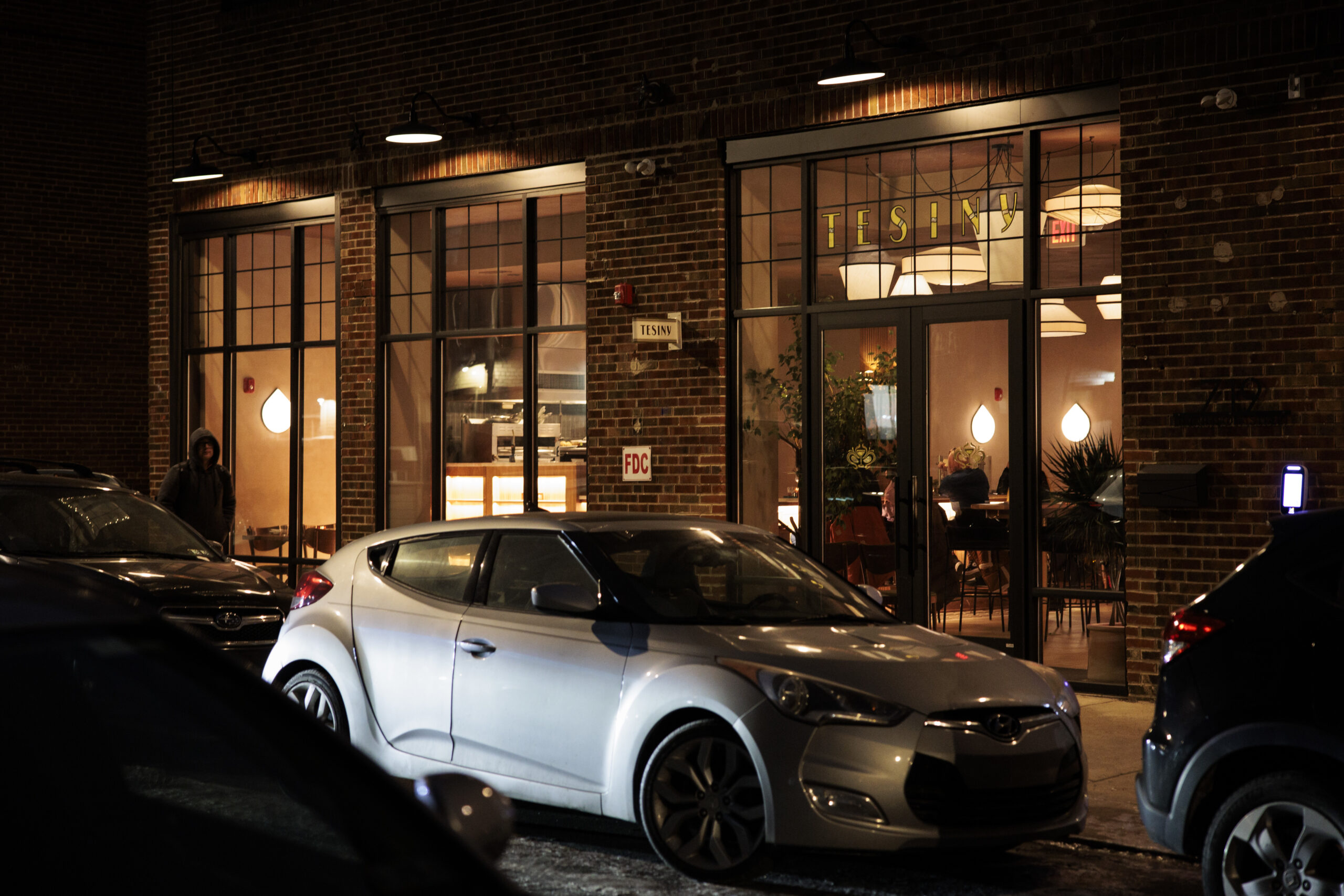
    A century-old corner brick building that for much of its life was an auto-repair shop had been completely transformed. Its garage doors were replaced with broad paned windows that glowed amber with the inviting tableau of a bustling restaurant inside. Diners clinked glasses of pink martinis. Chefs were illuminated by the flicker of a live-fire grill in the central open kitchen, where oysters were being shucked at the U-shaped counter, to be dispatched on icy plateaus to date-night duos across the room.

    Large seafood plateau with shrimp cocktail, clams ceviche with peach and jalapeño, three types of oysters, scallop crudo with melon water, and bluefin tuna with corn vinaigrette. Sauces are cilantro tarragon aioli and rosé mignonette, at Tesiny.

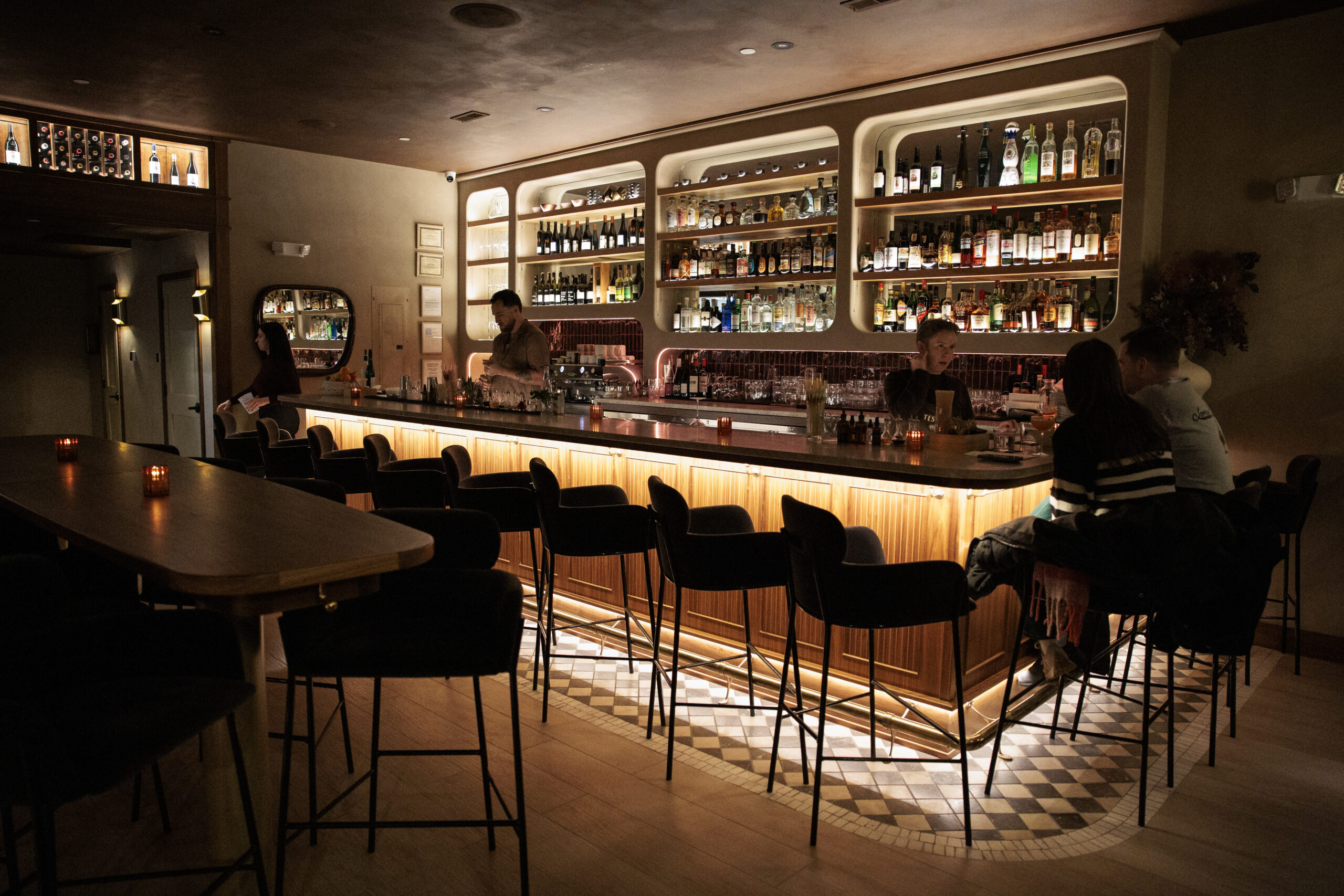
    The long bar near the entrance, deftly lit to illuminate its soigné design touches — the rich walnut wood accents, the purple-and-white tiled floor, the smooth curves of a backbar stocked with uncommon sherries — radiated a magnetic glamour.

    “Let me know how it is!” he said, as I exited the Uber. I promised a full report.

    In a dynamic old city constantly reinventing itself, we could do far worse than watching an industrial space be reborn as such a lovely restaurant. More specifically, you should be so fortunate to have Lauren Biederman be the one to do it.

    The exterior of Tesiny on Wednesday, Jan. 21, 2026 in Philadelphia.
    The bar at Tesiny on Wednesday, Jan. 21, 2026 in Philadelphia.

    Biederman, 30, is a bright talent who knows how to turn her quirky hunches into success. She’s best known as the area’s lox-and-caviar queen, after pursuing a “weird idea that popped into my head while driving” — that what Philly really needed was an old New York-style boutique market for hand-cut smoked salmon, fresh bialys, and brunch boards. In fact, we did. Five years after opening Biederman’s in the Italian Market, she’s now also serving caviar bumps from a kiosk beside the Four Seasons Hotel and about to open another Biederman’s near Rittenhouse Square, where Jewish prepared foods will be sold alongside the smoked fish.

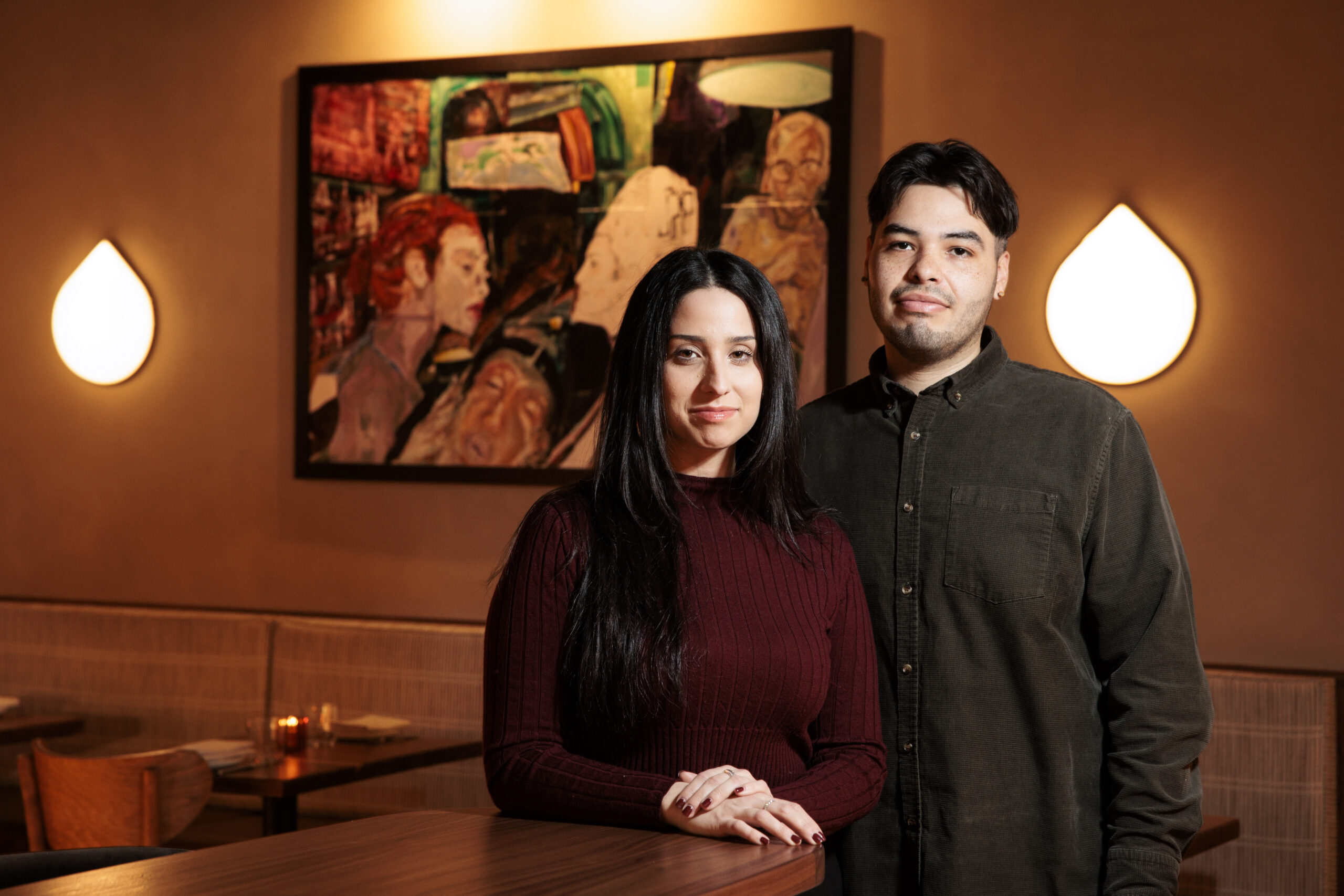
    But Biederman was a restaurant person before her retail success. The Vermont native worked at Oloroso, where she found her passion for wine, then got into bartending, working at Zahav and several Schulson Collective restaurants, including Osteria, where she met Devon Reyes-Brannan, 30, now her longtime boyfriend and partner at Tesiny. (The name, pronounced “TESS-iny,” is a reference to her late grandmother’s address in Connecticut. The two shared a love of seafood.)

    Co-owners Lauren Biederman and Devon Reyes-Brannan at Tesiny on Wednesday, Jan. 21, 2026 in Philadelphia.

    Biederman designed the room and nailed the elegantly sultry mood, with the dark brown ceiling and light floors keeping it cozy while the mellow soundtrack shifts throughout service from Sinatra to Sadé, then to hip-hop beats for the livelier later hours. Good spacing between tables keeps conversation possible.

    There’s an admittedly amorphous, on-trend quality to Tesiny — the raw bar, craft cocktails, and a chef’s-counter grill turning out shareable plates that resist easy classification as appetizers or entrees — that could just have easily landed in a buzzier restaurant district like Fishtown or Rittenhouse Square. But there’s an extra pulse of intimacy in finding this polished 50-seat oasis in the heart of residential Dickinson Narrows, a hotly debated neighborhood within a neighborhood just east of East Passyunk. It’s upscale, averaging $80 per person for food and drinks, but already resonating as a destination, with up to 100 diners on busy nights.

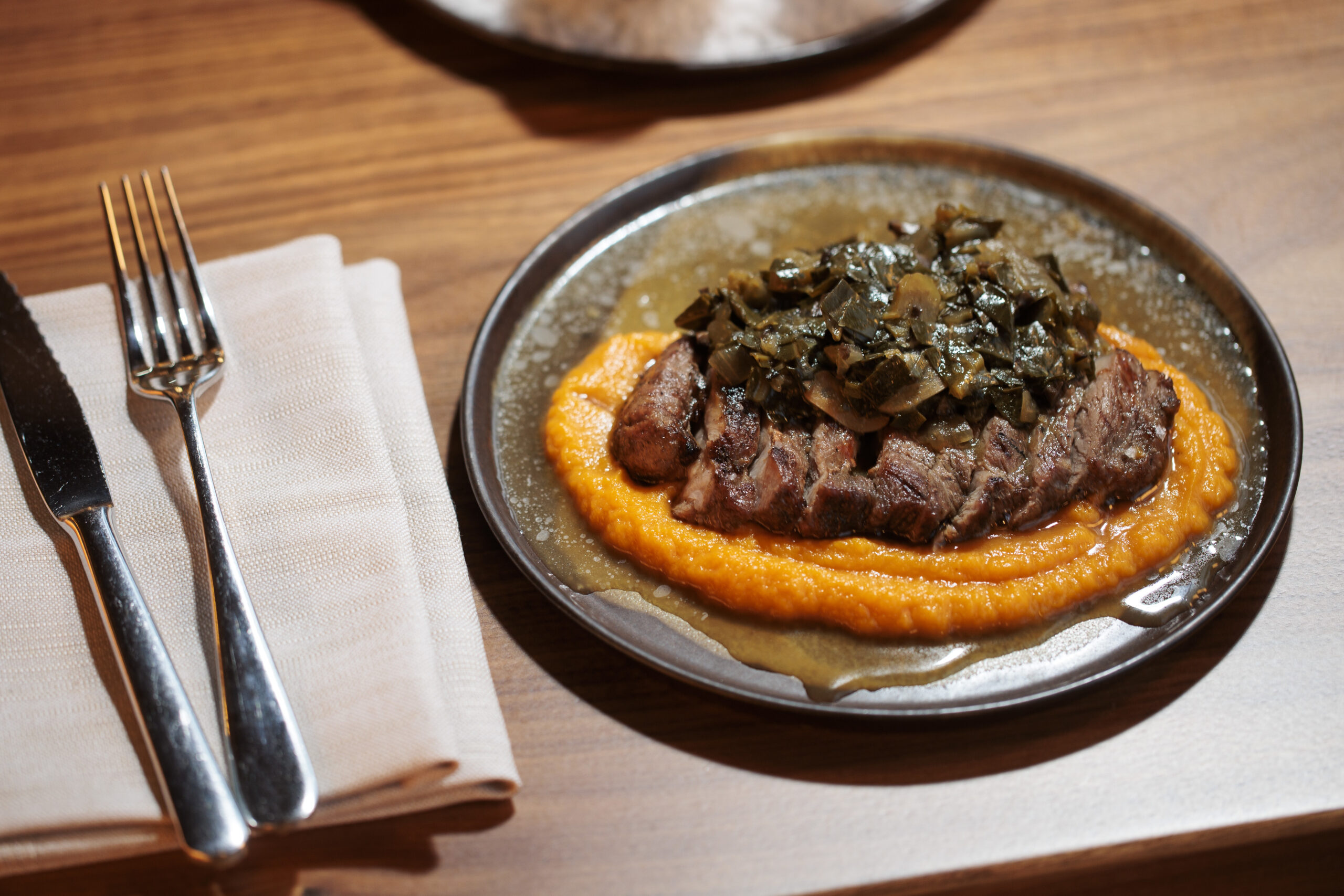
    The Iberico pork at Tesiny on Wednesday, Jan. 21, 2026 in Philadelphia.
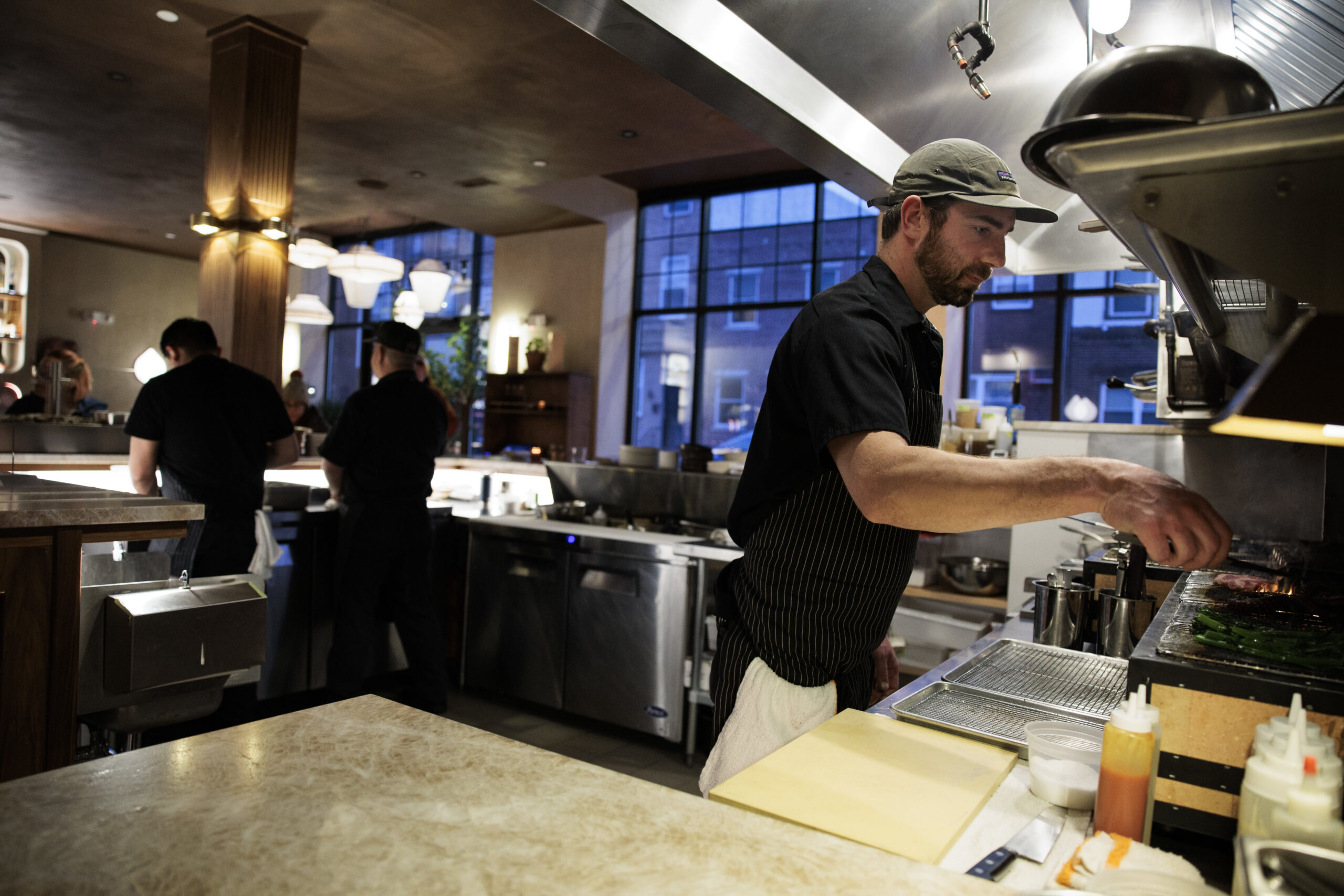
    Chef Michael Valent works in the open kitchen at Tesiny on Wednesday, Jan. 21, 2026 in Philadelphia.

    It succeeds on its posh vibes, but also the skill of its players to strike the right tone, from the well-informed (but never pushy) servers to chef Michael Valent, 36, with whom Biederman worked at Zahav. There’s nary a noodle on his menu — a rarity in this neighborhood.

    Valent instead deftly draws on an array of multicultural influences without the food ever feeling overly contrived, largely due to the breadth of his experience, including time in Boston, New Orleans, and Philly (at the French-themed Good King Tavern, Superfolie, and Supérette). One moment you’re savoring a tuna crudo dusted with coconut and aji chile spice. The next you’re savoring a tender grilled Ibérico pork collar with silky pureed squash and smoky collards that recall Valent’s stint in New Orleans working for Donald Link at Cochon. Another favorite, a crispy-skinned branzino fillet over a Basque-style pipérade of Jimmy Nardello peppers, is an inviting jaunt to the Mediterranean.

    The branzino at Tesiny on Wednesday, Jan. 21, 2026 in Philadelphia.

    The raw bar is always a smart place to start. The trio of ever-rotating East Coast oysters, from Canadian Eel Lakes to Sunken Meadows from Massachusetts, comes with a classic mignonette that benefits from being composed à la minute every time, so the shallots retain their bite (rather than pickle) in the rosé vinegar and still-fragrant fresh-cracked peppercorns. The shrimp cocktail was notably tender and flavorful from a citrus-scented poach. And the crudos were also tasty, although I preferred the juicier early version of the scallop crudo, bathed in jalapeño-spiced honeydew-cucumber water, to the more sparely dressed current setup, with smoked olive oil and Korean chile flakes.

    A starter of creamy crab salad laced with chorizo oil conveniently cradled in endive spears was solid, but also perhaps a bit boring in a passed-hors d’oeuvres kind of way. It reflected an occasional finger-food aesthetic here, a propensity to lend familiar favorites extra polish for elevated, no-fuss nibbling; that never, however, came with any culinary shortcuts.

    The tidiness impulse is especially clear with Tesiny’s labor-intensive chicken lollipops. Drumsticks of Green Circle chicken are “Frenched” to offer a clean bone handle for the poultry mallets that are double-crisped in rice flour, like Korean fried chicken. Glazed in an orange hot sauce made with Fresno chilies and infused with seafood trim (shrimp shells and scallop “feet”), the lollipops are visually appealing. But for a dish that also wants to evoke Buffalo wings, the sauce’s subtle flavors aren’t quite punchy enough for the maximum impact.

    The chicken lollipops at Tesiny are double-fried and glazed in a chile-tomato sauce that’s also infused with seafood trim.
    The broiled oysters at Tesiny on Wednesday, Jan. 21, 2026 in Philadelphia.

    Restraint was not the issue with my favorite seafood starter here: a platter of charbroiled Indian Cove oysters that arrive in a pool of Calabrian chile butter, which requires at least one order of Mighty Bread sourdough to mop up from the shells. Whatever crusts are left over, you can swipe through the silky white bean purée that sits beneath the tender grilled octopus topped with harissa-spiced olives and fennel.

    Valent’s winter green salad was also remarkably and unexpectedly delicious, its crunchy Little Gem and frisée greens dressed in a citrusy Champagne vinaigrette balanced by toasted almonds and the nutty Alpine richness of shaved Comté.

    The bar at Tesiny on Wednesday, Jan. 21, 2026 in Philadelphia.

    What to order from Tesiny’s gorgeous bar to accompany all this food? The well-crafted cocktails, many infused with fortified wines, are the most popular place to start. I especially enjoyed Not a Fender, a briny pink riff on a Gibson martini made with pickled red onions, olive oil-washed gin, and a splash of manzanilla sherry. And Tesiny’s thoughtful nonalcoholic offerings were so appealing that we ordered the blood orange-thyme fizz topped with creamsicle foam — and loved it — after spotting another couple order it across the chef’s counter.

    The pink Gibson: Olive-oil washed vodka and gin, pickled red onion brine, manzanilla sherry.
    The Return of Saturn cocktail and Fizz mocktial at Tesiny on Wednesday, Jan. 21, 2026 in Philadelphia.

    To pair with the handful of larger plates clustered at the bottom of the menu, it’s worth exploring the wines, an interest of both Biederman (who’s passed her Level 3 Wine and Spirits Education Trust exam) and Reyes-Brannan, a front-house veteran from Tria and Laser Wolf. Reyes-Brannan is partial to the food-friendly acidity of high-altitude wines from Europe, but he’s also been an enthusiastic ambassador for a Mexican version of nebbiolo from Casa Jipi. Lighter and juicier than Italian iterations, it’s a fine match for the juicy Wagyu culotte steak topped with cornmeal-fried oysters. It works equally well with the earthy grilled mushrooms that came dusted with chimichurri over a plate of warm polenta (recently updated to farro risotto).

    The nebbiolo was also a good match for Tesiny’s single best bite: a 5-ounce burger special called the Lil’ Kahuna, made from the trim of bluefin tuna belly and Ibérico pork shoulder. It’s a remarkably meaty patty with a subtle shade of rich tuna on the finish that shows off Valent’s ability to experiment with something new. It’s limited to just eight or so per night, which means it’s worth coming early. The effort also bodes well as Tesiny prepares to grow its menu and take some chances with larger plates for two, perhaps as soon as this spring.

    The Lil’ Kahuna burger from Tesiny, a blend of bluefin tuna and Ibérico pork.

    Dessert for two here is already a thing. And you’ll likely be dueling spoons for the espresso-chocolate mousse that Valent serves like a sundae topped with a wave of whipped cream, caramel cocoa nibs, and real maraschino cherries. Order a raisiny sweet pour of Pedro Ximénez from the impressive list of fortified wines — another quirky passion of Biederman’s, rooted in her days of studying abroad in Mallorca and her time at Oloroso.

    Is Philly ready for a renaissance of Bual Madeira and vintage Kopke Port? If Lauren Biederman has a hunch, I wouldn’t bet against her. Tesiny is more proof she has a vision worth paying attention to.

    The Chocolate Coffee Mousse at Tesiny on Wednesday, Jan. 21, 2026 in Philadelphia.

    Tesiny

    719 Dickinson St., 267-467-4343; tesiny.com

    Dinner Wednesday through Saturday, 5-10 p.m.

    Sharing plates, $15-$38

    Wheelchair accessible

    Menu highlights: raw bar (raw oysters, shrimp cocktail, tuna crudo); broiled oysters; winter salad; chicken lollipops; charred branzino; Ibérico pork; grilled mushrooms; Lil’ Kahuna tuna burger special; chocolate-coffee mousse.

    At least 75% of the menu is gluten-free or can be modified.

    Drinks: Creative and well-crafted takes on classic cocktails, frequently made with fortified wines, are the main draw. The wine program is deliberate in its focus on oyster-friendly Euro classics (Sardininian vermentino; muscadet), with an appealing collection of sparklers (try Red Tail Ridge from the Finger Lakes). Finish with a pour of vintage port or Madeira from one of the city’s better collections of fortified wines.

    The logo on the door at Tesiny on Wednesday, Jan. 21, 2026 in Philadelphia.
  • Who owns Pennsylvania’s digitized history? We’re a step closer to an answer.

    Who owns Pennsylvania’s digitized history? We’re a step closer to an answer.

    Spotlight PA is an independent, nonpartisan, and nonprofit newsroom producing investigative and public-service journalism that holds power to account and drives positive change in Pennsylvania. Sign up for our free newsletters.

    HARRISBURG — A long-simmering dispute over who owns digital copies of millions of Pennsylvania’s treasured historical records landed before a state appellate court this week.

    The ruling could determine whether those belong to the public or are under the control of a privately owned genealogy powerhouse.

    On Wednesday, Pennsylvania’s Commonwealth Court heard legal arguments in the case, in which a New York City-based professional genealogist faces off with a little-known but important state agency, as well as online genealogy giant Ancestry. The latter is a private company used by millions of people to search for family and other records.

    The genealogist is Alec Ferretti, a director at Reclaim the Records, a nonprofit that advocates for governments to make genealogical documents more accessible. In 2022, he submitted a public records request to the Pennsylvania Historical and Museum Commission (PHMC), the state’s “official history agency” that is responsible for collecting, conserving, and safeguarding the commonwealth’s historical records and objects.

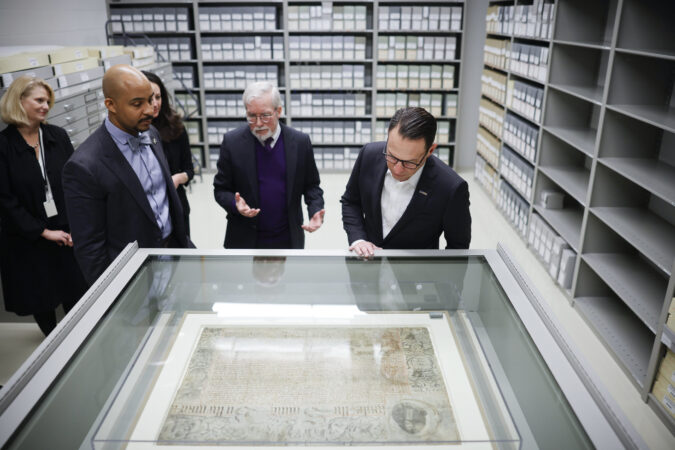
    At the time, Ferretti sought all records the state agency had provided to Ancestry as part of a 2008 agreement that, up until Ferretti’s request, had attracted sparse attention. That agreement allowed Ancestry to digitize a long list of Pennsylvania historical documents belonging to the commission and make them available on its website.

    According to the agreement, those documents include birth and death certificates, veterans’ burial cards, records about enslaved people, and naturalization forms, as well as Civil War border claims and muster rolls. Those records would then be free to Pennsylvania residents who create user profiles with Ancestry, which requires a paid subscription to access the breadth of its records. An Ancestry lawyer on Wednesday said it has about 18 million digitized images in all.

    Since Ferretti is a New York state resident, he requested the information directly from PHMC. He also asked for the metadata on the digitized records, as well as any index lists that Ancestry created when performing that work.

    PHMC denied the request, saying it didn’t have any responsive records in its possession. Ferretti appealed, arguing that the state agency was required to obtain them from Ancestry under a section of Pennsylvania’s Right-to-Know Law that allows public access to documents held by a private contractor hired to perform a governmental function on behalf of a government agency.

    Lawyers for Ancestry soon intervened in the fight, contending the company was not carrying out a government function for PHMC. They also argued that although Ancestry had agreed to license back the digitized records to the state, its work product is proprietary.

    Translation: It owns the digital records.

    The case has spent nearly four years in a complicated spiral of appeals before the state’s Office of Open Records, which sided with Ferretti. The matter could wind up in front of the Pennsylvania Supreme Court, depending on Commonwealth Court’s decision.

    During oral arguments on Wednesday, Commonwealth Court judges asked both sides pointed questions about whether the digital images constitute a public record accessible under the state’s Right-to-Know Law, as certain archival materials (while public) don’t fall under the law’s jurisdiction. They also asked whether maintaining digitized copies of historical records amounted to a governmental function.

    The judges seemed to agree on one thing: The case raised interesting dilemmas.

    “We just love Right-to-Know Law, so this is great,” President Judge Renée Cohn Jubelirer told lawyers when legal arguments came to a close.

    BEFORE YOU GO… If you learned something from this article, pay it forward and contribute to Spotlight PA at spotlightpa.org/donate. Spotlight PA is funded by foundations and readers like you who are committed to accountability journalism that gets results.