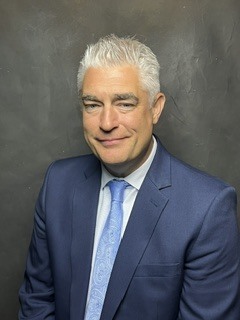
Mount Laurel public schools will start the next academic year with a new leader at the helm.
Neil Burti will take over as superintendent of schools starting Aug. 1, succeeding George Rafferty, who is retiring after leading the district for a decade.
After an extensive search, “Dr. Burti distinguished himself as the candidate whose experience, leadership style, and vision best aligned with the needs of the Mount Laurel School District,” Danielle Stuffo, president of the Mount Laurel Board of Education, said in an email.
Burti has more than 25 years of experience as an educator and administrator and is a longtime employee of the Cherry Hill Public Schools. While there, he served at all levels of leadership and was most recently the director of secondary education for the district.
Earlier this year, Burti also stepped in to handle the principal responsibilities during the second half of the school year at Cherry Hill High School East following a period of administrative upheaval in the school district.
The shake-up came after a lawsuit filed last September alleged that East’s former principal, alongside the Cherry Hill Board of Education and two other top administrators, subjected a former assistant principal to discrimination and retaliation.
“We are confident [Burti] will build upon the district’s many strengths, work collaboratively with our staff and community, and continue our focus on providing an exceptional educational experience for every student,” Stuffo said.
Stuffo said the district’s goals will largely remain the same under new leadership.
Like other districts, Stuffo said, Mount Laurel will work to continuously improve student experience and outcomes while adapting to evolving educational needs — and doing so within an increasingly limited budget.
“Fortunately, Mount Laurel is well positioned, with excellent staff and strong systems already in place. As Dr. Burti becomes familiar with the district, he will have the opportunity to evaluate our organizational structure and administrative leadership and, if appropriate, make recommendations to the Board for consideration,” she said in the email.
Burti was named the 2024 New Jersey Secondary School Principal of the Year during his time leading Cherry Hill’s John A. Carusi Middle School.
Burti holds a bachelor’s degree in movement studies and exercise science from East Stroudsburg University, a master’s degree in educational leadership from Temple University, and a doctorate in innovation and leadership from Wilmington University.
Playing the best friend to Kate Winslet’s titular Mare Sheehan character, Nicholson won an Emmy in 2021 for her heartwrenching performance as the mother of (spoiler alert!) the young boy revealed as the killer Sheehan was investigating.
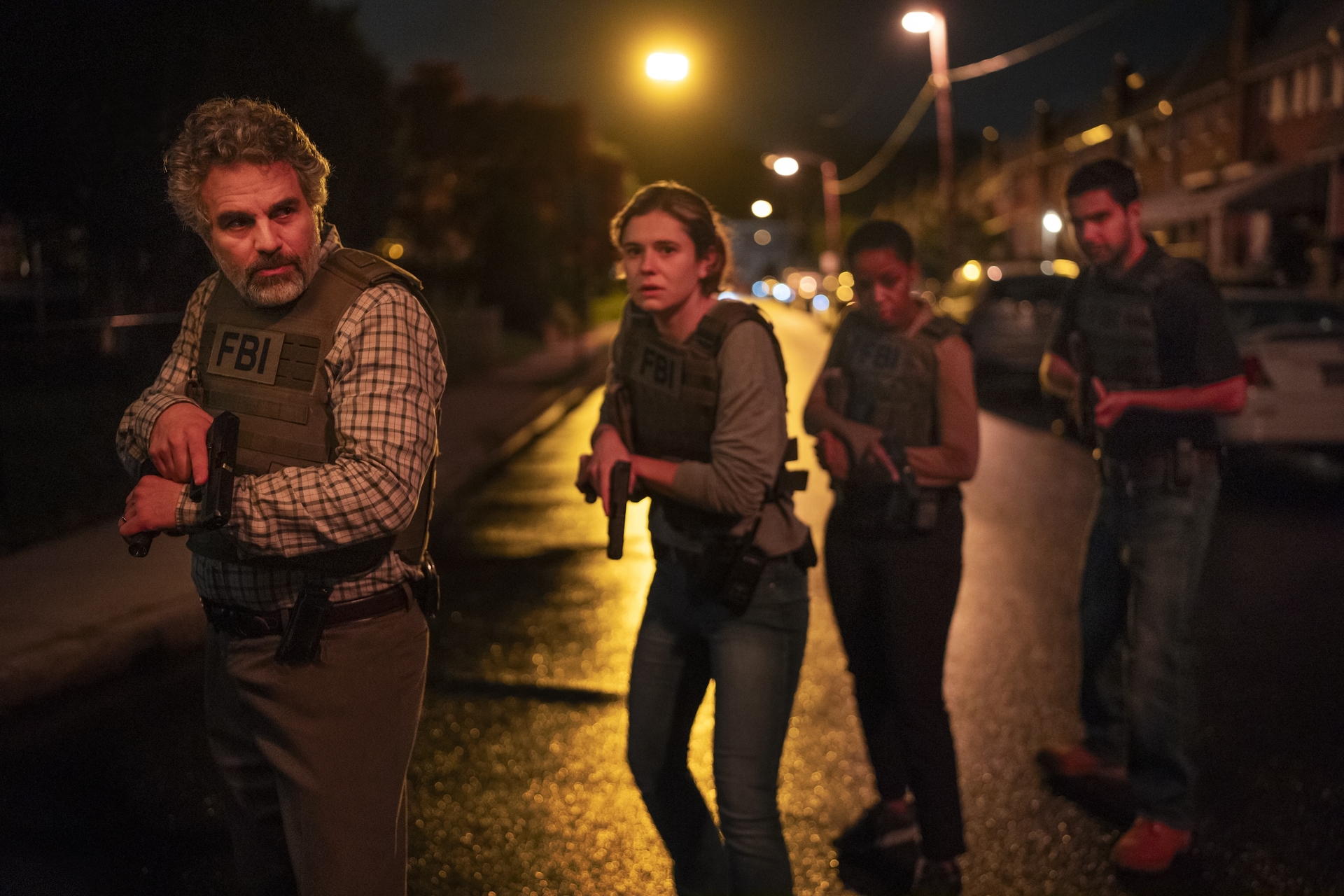
More details about how her character will factor into Task are under wraps. But we know that the new season follows Ruffalo’s ex-priest-turned-FBI agent — a performance that earned him an Emmy nod — as he leads another task force that will clash with the DEA.
Mark Ruffalo plays FBI agent Tom Brandis in the HBO series “Task.”
It’s the first time that the worlds of Task and Mare have officially collided, though both shows were created by Berwyn writer Brad Ingelsby and filmed in the Philadelphia area. There’s also some overlap in their creative teams, from production and costume design to dialect coaching. (Ingelsby recognizes the importance of getting the signature Delco accent just right.)
“We weren’t trying to separate Task from Mare. In fact, we were actually going the other way and saying, ‘No, it’s OK to use the same streets,’” said Ingelsby, who received an Emmy nomination recognizing his writing for the Task finale. “If there’s something architecturally that can connect the two worlds, let’s wrap our arms around it.”
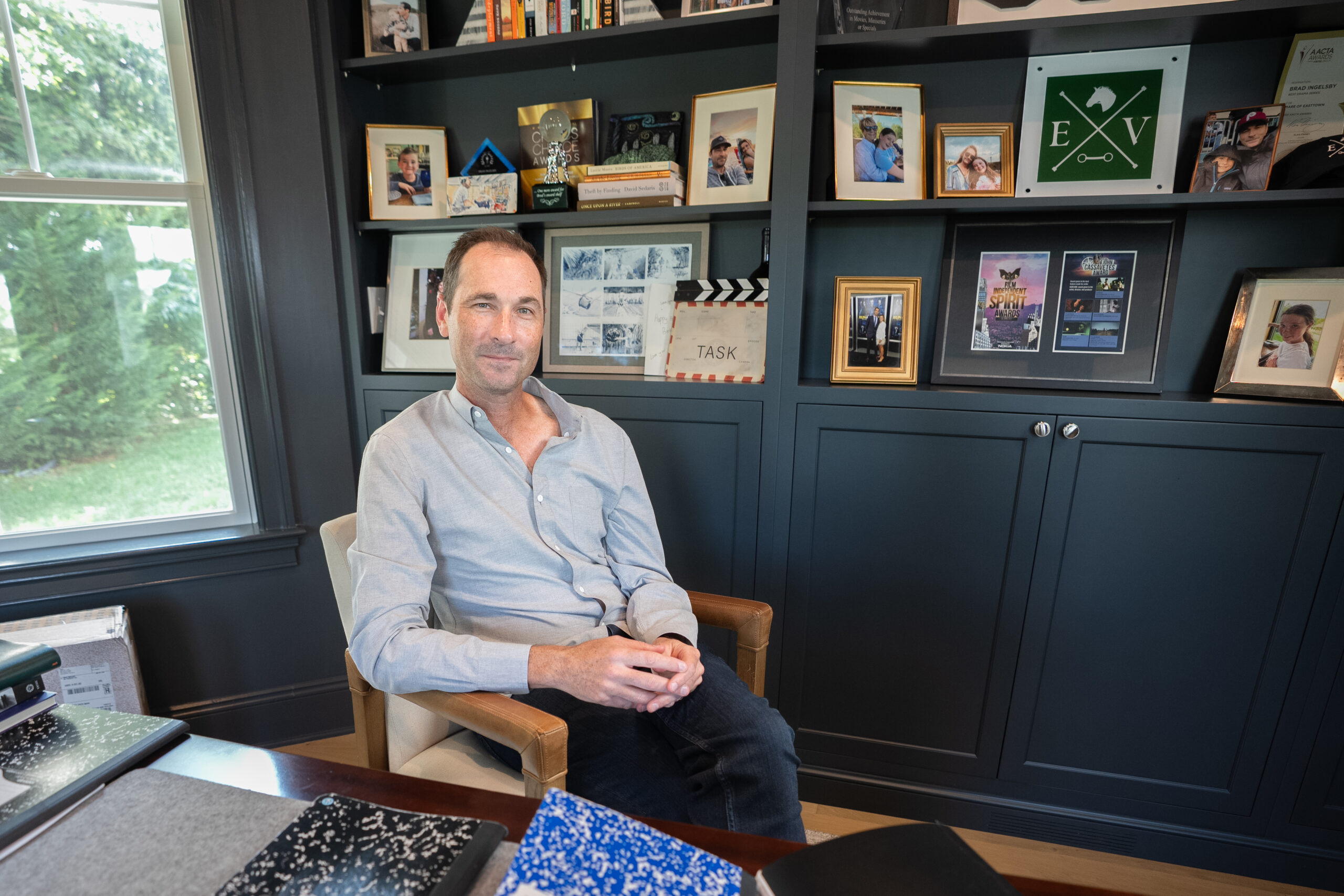
“Task” and “Mare of Easttown” writer Brad Ingelsby in his office in Berwyn, Pa.. on July 17, 2025.
Mare was initially developed as a limited series, but talk of a potential second season has persisted in the years since its release. Ingelsby has said the door is always open for a continuation of the show and earlier this year, Winslet reportedly said recent conversations with HBO were promising enough that she believes there’s a “strong likelihood” filming could begin in 2027.
It’s not yet clear whether Winslet could make a cameo in Task when the two shows crossover.
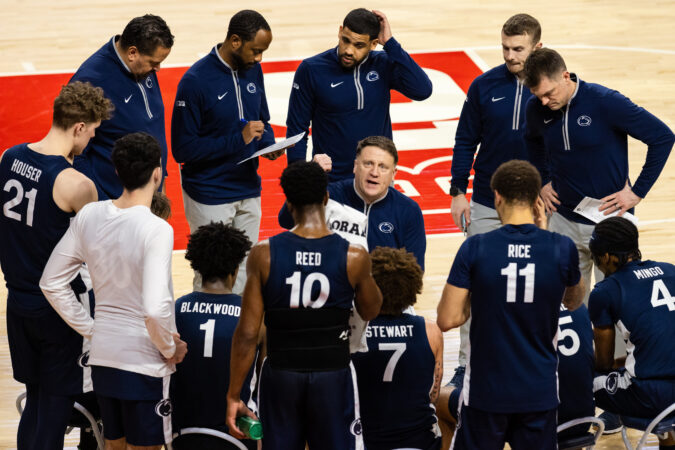
For the Palestra’s 100th anniversary, Penn State is returning to the storied arena to face a Keystone State rival, Pittsburgh.
The matchup will be Nov. 8, and it’s the second straight season in which the programs have played at a neutral site — they faced off at the Giant Center in Hershey on Dec. 21, 2025. Penn State holds an 76-73 advantage all-time over Pitt.
This is also the fifth consecutive season in which the Nittany Lions will play at the Palestra.
— Penn State Men’s Basketball (@PennStateMBB) July 9, 2026
“Games like this are what college basketball is all about,” Penn State coach Mike Rhoades wrote in a release. “Great history, passionate fan bases, and high-level competition. The Palestra is one of the most iconic venues in college basketball, and the opportunity to celebrate its 100th anniversary while renewing an in-state rivalry for the 150th time makes this a special event for everyone connected to our program.
Pitt coach Jeff Capel added: “Every basketball player and coach in this country understands the significance of playing at the Palestra. It’s one of the great venues in the history of the sport, and to play Penn State there in its 100th Anniversary year is a truly unique opportunity. Our players will be walking into a building with a century of history behind it, and after the atmosphere we saw in Hershey last year, I can’t wait to see the energy our fans bring to a place like the Palestra.”
The matchup is the second major addition to the Palestra’s 100th anniversary slate announced this week. On Tuesday, Penn announced that its annual Cathedral Classic will expand from four to five teams, ditching its round-robin format. The event, which is Nov. 27-28, will feature host Penn, La Salle, Bucknell, Buffalo, and Towson.
Penn announced in January that the Palestra’s anniversary celebration will begin in late August.
The World Cup may have moved on from Philadelphia, and the United States may have bowed out of the tournament, but the FIFA Fan Festival in Lemon Hill is bringing in events designed to keep the party going.
As 10 days and eight nations remain in the World Cup, the Fan Festival’s commitment to remain open for the full 39 days of the tournament begins Sunday with four concerts, including pop star Bebe Rexha (July 17) and world-renowned electronic DJ Deadmau5 on July 16.
Typically, a Deadmau5 ticket starts at $85, according to secondary market sites. His concert, and the others, are free; fans just need to register on FIFA’s Fan Festival website for a daily ticket. Access into the festival is on a first-come, first-served basis with a max capacity of 15,000 people.
“Deadmau5 has shaped electronic music with his level of production and technicality. Bringing his unique live performance style to FIFA Fan Festival Philadelphia is something special,” Michael DelBene, executive producer of FIFA Fan Festival in Philadelphia, said. “We truly believe there is something in this lineup for everyone and we hope to see visitors and Philadelphians alike come out and join us at Lemon Hill for their favorite act.”
Moar Free Shows 'n' Stuff
♦️ Thursday, July 16 ♦️ 7 PM ♦️ Lemon Hill, East Fairmount Park
— FIFA World Cup 26 Philadelphia™ (@FWC26Philly) July 9, 2026
In addition to Deadmau5 and Rexha, singer-songwriter Wisin performs on Sunday, followed by the return of the All-American Rejects, a pop-punk band that was one of the early acts at the Fan Festival on June 13.
With the World Cup set to end July 19, DelBene and Philadelphia Soccer 2026 noted that there could be further acts to come in addition to local artists, “cultural organizations, and community groups.”
FIFA Fan Festival at Lemon Hill Park as seen capacity crowds during the World Cup. They’re hoping that continues with a slate of free concerts next week.
FIFA Fan Festival free concert schedule
Sunday, July 12: Wisin, 2 p.m. (Festival gates open at noon and close at 4 p.m.)
Monday, July 13: All-American Rejects, 7 p.m. (Festival gates open at 5 p.m. and close at 9 p.m.)
Thursday, July 16: Deadmau5, 7 p.m. (Festival gates open at 5 p.m. and close at 9 p.m.)
Friday, July 17: Bebe Rexha, 7 p.m. (Festival gates open at 5 p.m. and close at 9 p.m.)
The Flyers’ pre-Fourth of July fireworks have officially become a dud.
On July 3, the team set off a bombshell when it tendered an offer sheet to Anaheim Ducks center Leo Carlsson. It came with a five-year contract worth an average annual value of $18 million. According to a league source, the deal was front-loaded with a heavy signing bonus — and signing bonuses every year of the deal. Carlsson would receive the league minimum in base salary every year, a deal Carlsson said was “too good to pass on.”
“It was an offer that 99% of people would sign too,” Carlsson told reporters on Thursday. “It’s a pretty simple answer. I really wanted to be here though. I really wanted them to match. I want to be an Anaheim Duck.”
That contract is now under control of the Anaheim Ducks, who matched the offer sheet on Thursday, a day before the 3 p.m. Friday deadline. The Ducks cannot trade Carlsson, who now has the highest AAV in the NHL, for one year.
“Did we expect the offer sheet to be this high? No. We did not see that one coming,” Verbeek told reporters on Thursday. “But we’re very confident, with the cap going up and the ability of Leo to make strides of improvement and become an elite player, we feel confident this contract will be a good one in the end.”
Did they leave enough cap space? The Ducks do have to re-sign restricted free agent Cutter Gauthier. But that is Anaheim’s problem now.
Carlsson was the type of top-line center the Flyers have been longing for since Claude Giroux was traded to the Florida Panthers in March 2022. Giroux, who was rumored to be interested in a return to the Flyers, inked a one-year deal to stay with the Ottawa Senators on Tuesday.
The offer sheet was always a long shot, but for a Flyers team that hopes its days at the bottom of the standings are done, it was one of scarce options. Since 2010, only nine players have signed an offer sheet, and six were matched. Top-six centers Sebastian Aho and Ryan O’Reilly, and now Carlsson, are among the group to be retained by their original team. The Flyers now have to pivot elsewhere to find a potential top-line center solution this offseason.
Could the Flyers take a swing at Columbus Blue Jackets center Adam Fantilli?
Aaron Portzline of The Athletic reported that Blue Jackets center Adam Fantilli, the No. 3 overall pick in 2023, could be the Flyers’ next target. Since Columbus is in the division, he would be difficult to pry away via trade, but could be amenable to an offer sheet. Fantilli was not eligible for arbitration.
Fantilli set career highs with 35 assists and 59 points in 2025-26. Across his 213 career games, Fantilli has 140 points (67 goals, 73 assists) but he hasn’t yet lived up to the high expectations of his record NCAA freshman season at Michigan, when he became just the third freshman to win the Hobey Baker Award as the nation’s top player, after Jack Eichel and Paul Kariya. That might make him easier to pry away, but the team runs the risk of giving up four first round picks for a middle-six player.
The Flyers are unlikely to make an attempt at the Chicago Blackhawks’ Connor Bedard, who is out for at least four months after undergoing shoulder surgery. The Blackhawks have nearly $30 million in cap space, per PuckPedia, and almost certainly would match any offer, assuming Bedard signed it.
Had the Ducks not matched the Carlsson offer sheet, the Flyers would have sent their next four first-round picks to Anaheim in return.
According to PuckPedia, the Flyers have a smidge over $29.5 million in cap space; however, that number includes center Jett Luchanko‘s contract ($941,667), and Flyers general manager Danny Brière told The Inquirer in early June that the expectation is he will be in Lehigh Valley of the American Hockey League. They still need to re-sign restricted free agents Trevor Zegras and Jamie Drysdale, who filed for arbitration on Sunday.
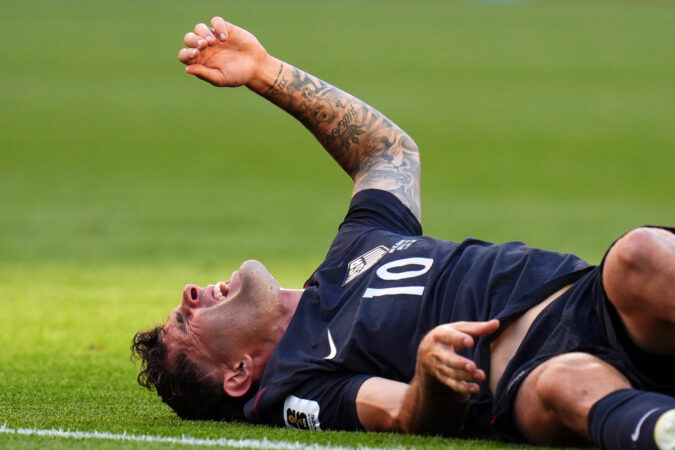
U.S. star Christian Pulisic fractured his right leg during the Americans’ World Cup loss to Belgium and will be sidelined for several weeks, a person familiar with the injury said Thursday.
The person spoke to the Associated Press on condition of anonymity because the diagnosis, first reported by the Athletic, had not yet been announced by the U.S. Soccer Federation.
Pulisic has a bone bruise and a microfracture of his tibia and fibula, the person said. He is expected to be able to resume training before AC Milan’s Serie A opener at Torino on Aug. 23, the person added.
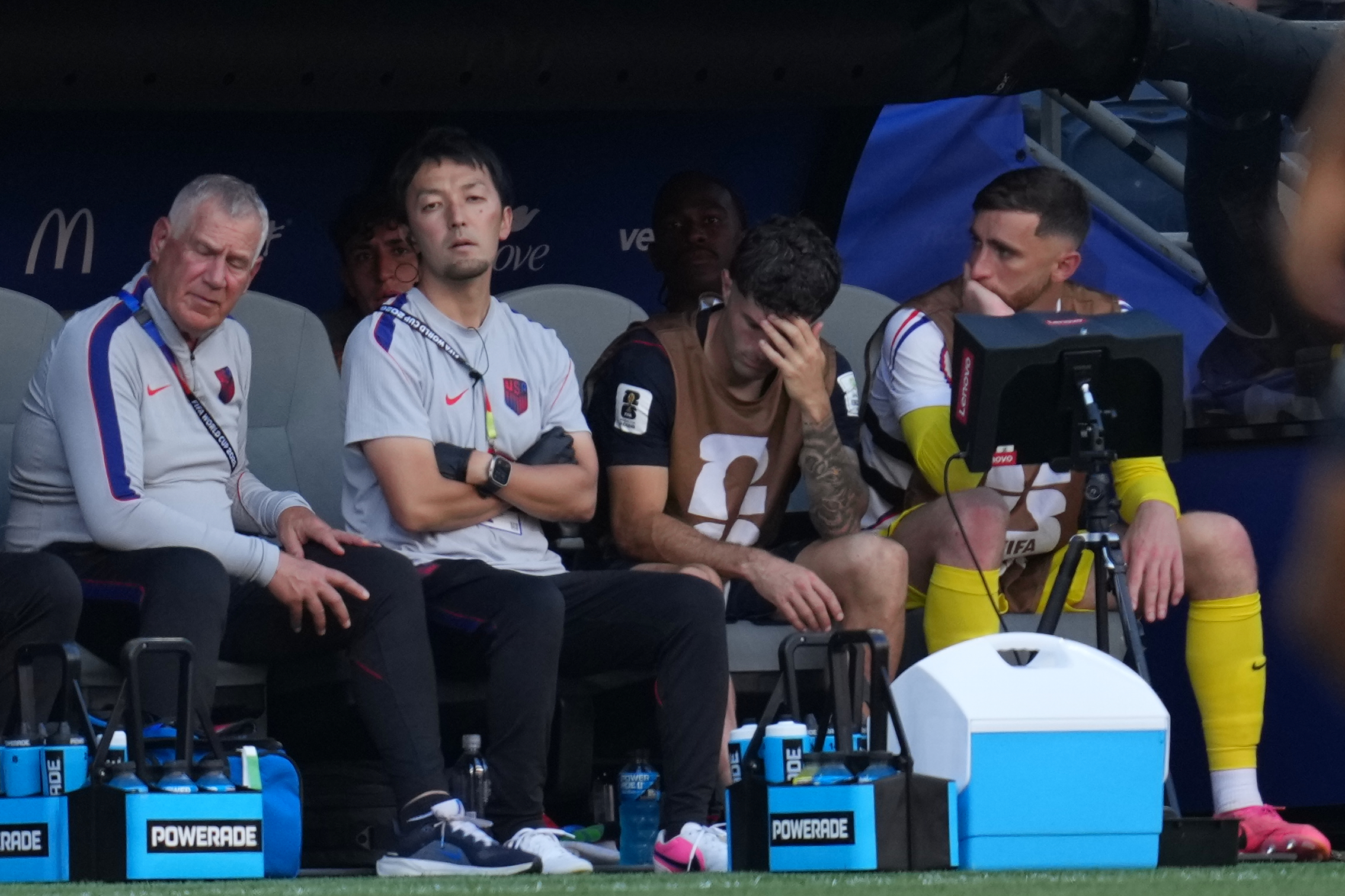
Christian Pulisic (second from right) on the bench after leaving the U.S.-Belgium game.
Pulisic hit a leg of Belgium captain Youri Tielemans while attempting a shot in the 52nd minute of Monday’s 4-1 round of 16 loss in Seattle. He remained in the game but was hobbling, and Sebastian Berhalter replaced him in the 59th minute.
The Hershey native failed to score in the World Cup, missed one of the Americans’ five matches because of a calf injury, and left two other games early. He has 33 goals in 90 international appearances.
Pulisic, who turns 28 in September, is entering his fourth season with Milan.
HANCOCK, Maine — They told him that he was “the guy.”
Last July, in a small town in coastal Maine, three progressive, self-styled recruiters of economic populists showed up at the blue-shingled house of Graham Platner, a little-known oyster farmer and Marine veteran who lived largely off government benefits.
They knew his name from local labor organizers and activists, and they had watched a video on the internet of him talking about oysters. Struck by his left-leaning ideology, his working-class affect and his gravelly voice, they became convinced that he could win a Senate seat in Maine — and quickly persuaded Platner of the same.
The recruiters — Dan Moraff, Leanne Fan and Morris Katz — told Platner he was “the one,” a “hero of the movement,” “a historical figure” who could be “leading a revolution,” according to half a dozen people with knowledge of their conversations.
But a clutch of people who cared about Platner were telling him something else. They worried about his mental health, amid his ongoing efforts to heal from post-traumatic stress disorder after tours in Iraq and Afghanistan. They feared this trio of out-of-state operatives was a dangerous combination of inexperienced and overconfident. The worst-case scenario, they thought, wasn’t running for Senate and losing — it was destroying the life he worked hard to build.
Until recently, Platner had seemed to prove the worriers wrong. His campaign was pumping out viral videos and broadcasting scenes from crowded town halls. He easily pushed a sitting governor out of the Democratic primary as voters embraced his message of economic populism and overlooked his checkered past. Progressives across the country heralded him as a new left-wing hero and saw him as their best opportunity to defeat Sen. Susan Collins, a Republican, in a race that could decide control of the Senate.
But behind the scenes, his campaign was messy, disorganized and haphazardly run. Platner did not disclose explosive, politically damaging secrets to key members of his team. And he was guarded by an insular and zealously protective inner circle of advisers who did not always seem to grasp the seriousness — or strangeness — of what quickly became a steady drip of scandal, according to party strategists, Democratic officials and former staff members.
Repeatedly, Platner promised there was nothing else damaging from his past to come. And each time, he was wrong.
Platner, said Ronald Holmes III, his former national finance director, was “seriously flawed.” But he faulted Platner’s team for failing to “ask the right questions and get honest answers.”
In a statement, the campaign disputed the idea that there was a lack of planning or infrastructure as “simply false,” and said that the team “built the operation, strategy, and organization needed to create one of the strongest grassroots campaigns Maine has ever seen.”
This report is based on interviews with more than 30 people who interacted with the campaign or Platner, many of whom were granted anonymity to discuss sensitive matters.
In June, as rumors swirled about a damaging story coming from The New York Times featuring several of Platner’s ex-girlfriends, Katz called a top national Democratic strategist, insisting that there were no issues in Platner’s past concerning his treatment of women, according to a person with direct knowledge of the conversation.
Katz said he had asked Platner directly and repeatedly whether anyone had made sexual assault allegations against him and the candidate had said no, according to two people familiar with the discussion who described it on the condition of anonymity.
“It’s been a slow-rolling disaster instead of all happening at once — it’s been really drawn out and painful and difficult to watch,” added Holmes, who resigned last fall after raising concerns about the professionalism of the campaign’s senior leadership. “It’s like we’ve been watching a mile-long train derail at four miles an hour.”
That train finally crashed this week, when a woman who had dated Platner accused him of rape. He denied the allegation, but released a video saying he was taking time to “reflect” on his path forward.
Within roughly 24 hours, Democrats at every level had called for him to withdraw, and the Maine Democratic Party was on a war footing with its own nominee. Ambitious politicians were taking steps to try to succeed him on the ticket. And Democrats across the country wondered how one of their best chances to flip a Senate seat had imploded.
Graham Platner, Democratic candidate for U.S. Senate, speaks at a campaign event Friday, June 5, 2026, in Bar Harbor, Maine.
A ‘Totenkopf’ tattoo
Before Platner became the Democrats’ biggest headache, his most ardent supporters spoke about him in strikingly lofty terms.
As his campaign was getting off the ground, Moraff likened him to Barack Obama in conversations with senior Democratic officials, according to two people with knowledge of the private conversations.
But there were early signs that Platner had serious political liabilities. Less than two weeks after he announced his bid, his wife, Amy Gertner, approached a top campaign aide. She wanted to disclose that Platner had been exchanging sexual messages with multiple women.
Platner was about to hold a campaign event with Sen. Bernie Sanders, his first major endorser and a personal hero. Gertner told Genevieve McDonald, then the campaign’s political director, that she worried Sanders would think less of her husband if he later found out about the exchanges with other women, McDonald recalled.
Was that the extent of the controversy in Platner’s personal life or was there more to worry about? Campaign officials appeared not to know.
A top Platner adviser had promised a national Democratic strategist that they would not launch a campaign without completing a full investigation of Platner’s background. But, according to two people familiar with the campaign’s operations, no extensive effort was undertaken in one of the marquee races of the midterm cycle.
Instead, they conducted an expedited review, resulting in a short risk-assessment memo.
Platner’s campaign said that a research firm produced a vetting memo of nearly 50 pages that included searches of news reports, social media posts and public documents. They did not do exhaustive interviews with Platner.
“I said, ‘None of this will or should stop him from becoming a U.S. senator,’” Moraff told The Wall Street Journal.
But others had access to significantly more damaging information about Platner’s past.
In Northern Virginia, Lyndsey Fifield, a former girlfriend of Platner’s, texted a private group chat of friends last summer about a tattoo on his chest widely recognized as a Nazi symbol. He had gotten it while serving in the military and referred to it, she has said, as “my Totenkopf.”
The “Nazi tattoo on his chest,” Fifield suggested, was going to be a problem.
The existence of the tattoo, however, did not immediately become public. In the meantime, Platner’s campaign began to find an audience. He drew bigger and bigger crowds, crisscrossing the state for events and spending hours gabbing on podcasts.
Yet controversies kept arising. In October, CNN and other news outlets uncovered a trove of incendiary online posts that Platner had written between 2009 and 2021, which included dismissive comments about rape and sexual assault in the military.
Platner apologized, and has urged the public not to judge him for his worst moments on the internet.
The lack of disclosure about his past made McDonald, a former state legislator and lobbyist, uncomfortable. She quit the campaign in October.
Around the same time, photos of Platner’s tattoo from his wife’s Facebook account began leaking to news organizations.
The Platner team, hoping to defuse the potential damage, released video footage of a shirtless Platner with the tattoo visible to Pod Save America, a liberal podcast that supported his bid.
In a friendly interview, Platner dismissed the issue as little more than pearl-clutching by his opponents. “I am not a secret Nazi,” he said. “Lifelong opponent.”
At the time, Platner said in a statement that he did not know that his tattoo resembled a Nazi symbol until it became a campaign issue.
More staffers, including Holmes, left the campaign.
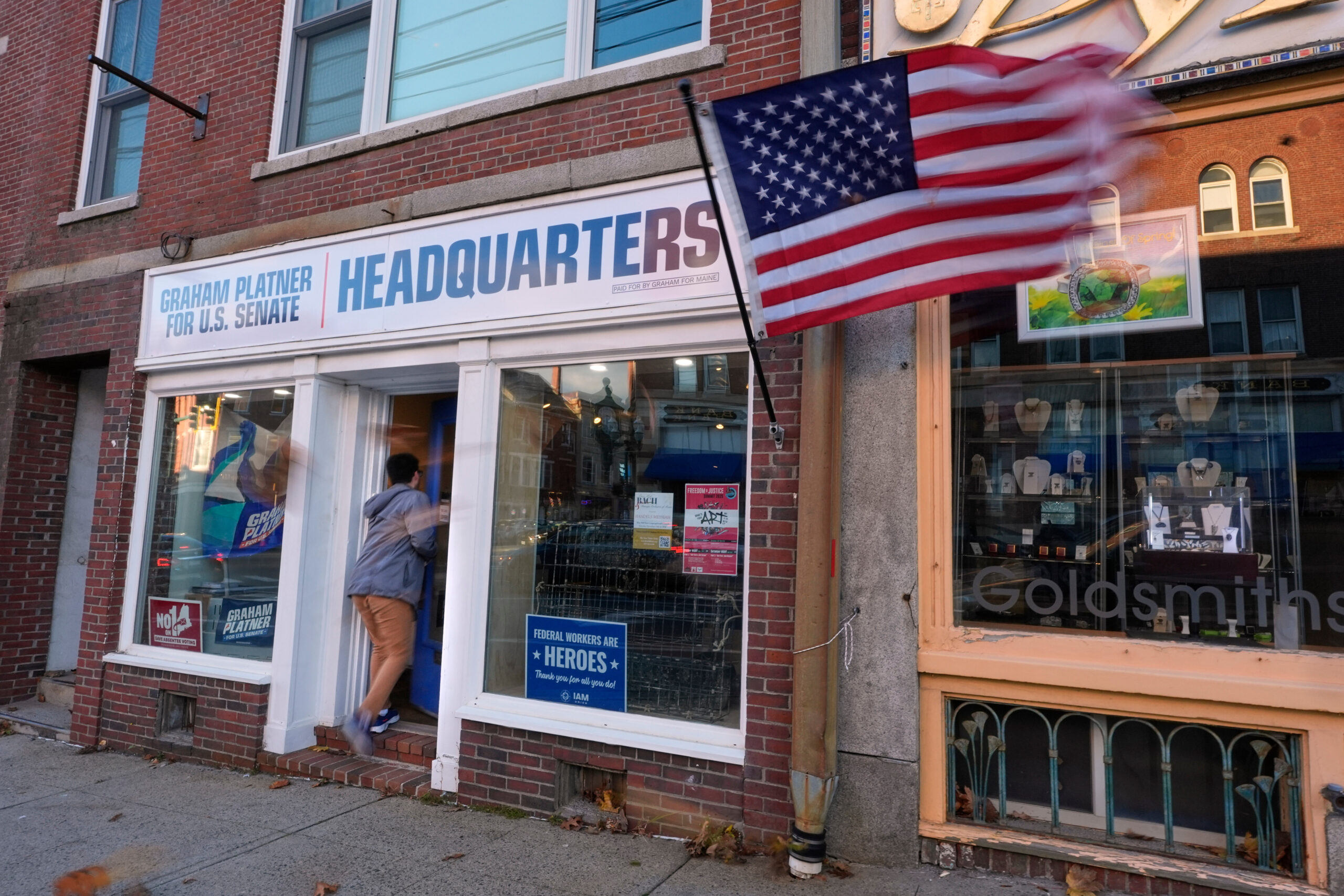
FILE – A worker enters the campaign headquarters for US Senate candidate Graham Platner, Tuesday, Nov. 4, 2025, in Ellsworth, Maine.
‘It’s not that complicated’
For months, there was little indication that any of the controversy was seriously hurting his candidacy.
As Platner’s star rose through the winter and early spring, Katz was privately promoting him as a future presidential candidate for as soon as 2028, if he won his Senate bid.
When Janet Mills, his chief Democratic primary opponent, produced tough ads featuring his comments about women and rape, it did little to change the trajectory of the race. Poll after poll showed Platner leading Mills, a two-term governor who was supported by national Democratic leaders, by double-digits.
Platner built a movement-like following, emerging as one of his party’s most powerful online fundraisers. His campaign constructed an image of a working-class combat veteran who had returned to Maine to rebuild his life, who spoke movingly about the failings of U,S, foreign policy and rallied voters with his promises to take on a political system dominated by corporations and billionaires. Democrats flocked to his town hall meetings.
Publicly, at least, the candidate expressed nothing but bravado.
In an April interview, he dismissed any jitters about going up against Mills — a former prosecutor — in a series of planned public debates.
Platner had debated before, he said, in college classes. His preparations, he said, were “standard run-of-the mill debate prep.”
“Honestly, I’ve seen enough and read enough about politics that it looks and sounds very much like what debate prep usually looks like,” he said.
He added: “Standing up and talking about the things you believe in, it’s not that complicated.”
Platner’s theory about debating would never be tested. The next morning, Mills dropped out the race, saying she lacked the funds to compete.
But by June, Platner was trailing far behind Collins in campaign funds. Platner’s campaign had just $1.3 million in the bank when he exited the race, a fraction of Collins’ $9.7 million war chest as of late May. A person familiar with the campaign’s finances said the amount of cash available to spend was even lower — under $100,000.
The campaign raised nearly $9 million last quarter, said a campaign official, more than doubling the previous quarter’s haul. While the campaign successfully focused on attracting small-dollar donations, it struggled to recruit and retain big-dollar donors.
Campaign aides told top Democratic strategists that donors kept raising concerns about the tattoo and his other controversies. Their requests for help assuaging donors’ concerns were met with silence from the national committee, according to three people familiar with discussions.
Last week, Platner kicked off a call with a new national finance committee — a first, if belated, step to bundle checks from wealthy donors, according to an invitation seen by the Times. And the campaign took its worries about money public, warning on a call with reporters that he was being swamped on the airwaves.
Estimates showed they were set to be outspent by 2-to-1 on advertising by Collins and her allies through Election Day, according to data from the media tracking firm AdImpact.
“I was training with my jujitsu buddies at my kids’ class yesterday,” Ben Chin, Platner’s campaign manager, told reporters. “There were these radio ads that were coming on as we were listening, and people were starting to give me a hard time, like, ‘Oh, where are your radio ads?’”
A campaign in crisis
The campaign’s money troubles were exacerbated by a series of even more damaging revelations about his personal conduct and treatment of women. In May, the Journal and the Times published stories detailing sexual text exchanges with women that had worried McDonald and Gertner nearly 10 months earlier.
In early June, Platner found himself in a private meeting in Washington facing questions from senators about whether more damaging revelations were yet to come. He promised that there was nothing else, according to a person familiar with the discussion.
But it became clear that Platner and his team were in crisis mode. He flew home to Maine, and frantically dialed ex-girlfriends to find people who would testify to his good character.
He called Rep. Ro Khanna, an early supporter from California, to warn him that the Times was going to publish a story that would detail his “toxic relationships.” He was a “terrible boyfriend” and made misogynistic comments, he said, according to someone familiar with the discussion, but nothing worse.
Days later, the Times published accounts from three women who had been in romantic relationships with Platner for years. They said he could be demeaning to women and, in at least one case, even physically threatening.
In the immediate aftermath, many activists and politicians went to their partisan corners.
“There are no saints in the United States Senate,” Sanders said.
But other prominent Democrats started speaking out more bluntly. In private meetings, even strong supporters began raising concerns.
“I look forward to the day where I am not answering every single week a question about bad behavior by another dude,” said an exasperated Sen. Elissa Slotkin, D-Mich., in an interview on MS Now.
By late June, Platner found what he hoped would be a powerful answer to critics: an endorsement by Planned Parenthood Action Fund at a splashy rally, portraying him as a champion of abortion rights.
Planned Parenthood officials knew their endorsement was a political risk, according to someone familiar with internal discussions. But they desperately wanted to defeat Collins.
Before they offered their endorsement, Alexis McGill Johnson, the chief executive of the group’s political arm, had posed to Platner the question that so many others had asked: Was there anything else that would come out about him?
Again, he said no. She responded with an ultimatum. If anything worse were to come out about him, he should not expect the women’s groups to clean up after him.
On Monday evening, as news that he had been accused of rape ricocheted across the country, the group quickly withdrew its support.
By midweek, as Democratic officials pushed for Platner to rapidly exit the race, the besieged candidate and a handful of aides, including Katz, hunkered down in his blue-shingled house and tried to challenge establishment politics one last time. Journalists trailed them to the local convenience store, where “The Graham,” a roast beef and pepper-jack sub, has been a popular deli counter order.
On Wednesday night, his campaign released a video in which Platner suspended his campaign and blamed his loss on the “corporate media system” and “political establishment.”
“We did it the right way,” he said. “And we won and now they are not going to let us have it. Not if it’s me.”
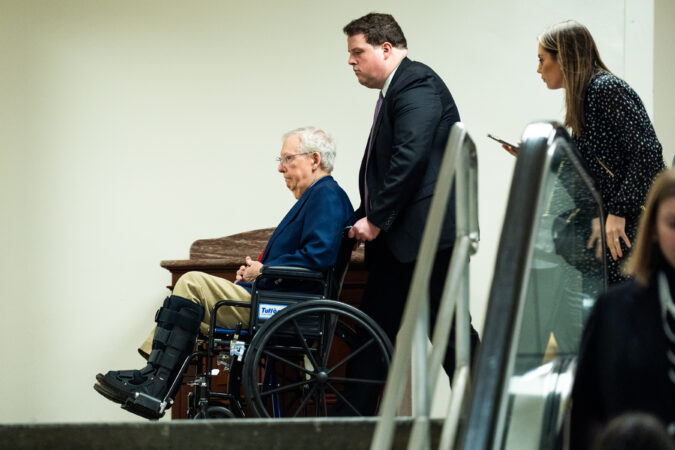
Sen. Mitch McConnell’s current health condition and ongoing absence threatens to complicate the U.S. Senate’s return to business next week.
Congress is returning from recess on Monday and faces a limited number of days left before the Sept. 30 deadline to fund the government for fiscal year 2027. McConnell (R., Ky.) plays a crucial role as a member of the Senate Appropriations Committee.
Republicans and Democrats on the committee have been at a stalemate that began over disagreements about defense funding. If the two sides can’t come to an agreement, Republicans will likely need McConnell’s support to advance any spending bills out of the committee amid Democratic opposition.
The Trump administration has requested Congress provide an additional $87.6 billion in supplemental funding for the Pentagon and other agencies, largely to cover needs related to the war with Iran, which reignited this week.
McConnell, 84, leads the Senate Defense Appropriations Subcommittee, which has jurisdiction over that military spending. He has not cast a vote on the Senate floor since June 11. He was admitted to the hospital on June 14. While members of Senate leadership said they have since spoken to him, McConnell’s office has offered limited details about his condition and he has not been seen publicly.
Democrats have refused to support the increase in defense funding Republicans have put forward without a comparable boost for domestic programs. That disagreement is part of the reason the committee, which normally advances these measures on a bipartisan basis, has not yet advanced any legislation for fiscal year 2027.
The Senate Appropriations Committee planned to begin hearings the week of June 22 to review some of the nondefense bills, after previous delays related to the defense spending. But those plans were canceled due to McConnell’s absence, according to a Republican aide, who spoke on the condition of anonymity to share internal deliberations.
A separate Republican congressional aide, who also spoke on the condition of anonymity to share internal deliberations, argued that the delays with the appropriations process “predate” McConnell’s hospitalization and blamed the delays on Senate Democrats.
McConnell’s continued absence could make it harder for the Senate Appropriations Committee to pass budget bills, by eliminating Republicans’ one-seat majority on the panel. Without McConnell, the Appropriations committee is split evenly between Republicans and Democrats, and tied votes tend to sink legislation in committees.
Republicans could move forward with hearings to markup the nondefense bills, but Democrats have indicated they would not support any funding measures without an agreement on overall spending levels.
Lawmakers will have to pass a temporary stopgap funding bill to prevent a government shutdown if they cannot get the fiscal year spending bills done in time.
McConnell’s office declined a request for comment about McConnell’s role in delaying the budget process, referring The Post to the appropriations committee. The appropriations committee pointed to a statement by its chair, Sen. Susan Collins (R., Maine), who has said there would be a hearing on the defense supplemental request.
McConnell’s absence is attracting more concern outside of Washington. Kentucky Gov. Andy Beshear, a Democrat, sent a letter on Wednesday to McConnell’s office asking for an update on his health.
“Over the last several weeks, Kentuckians have grown increasingly concerned about the current state of your health and well-being, and ability to hold office in the United States Senate,” Beshear said in the letter. “As public officeholders, we have made a commitment to our constituents to do our best to represent them and to always be transparent. I believe this requires clear communication about one’s ability to serve.”
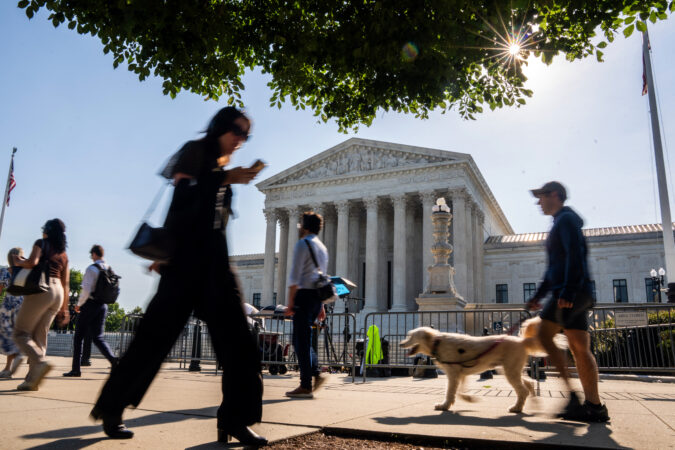
WASHINGTON — President Donald Trump said on Wednesday that he would ask the Supreme Court to reconsider its decision to strike down his executive order that aimed to revoke birthright citizenship, a request that the justices are highly unlikely to take up.
The declaration, made in a social media post, showed the president’s continued frustration with the court’s decision last week, when a majority of justices ruled that the citizenship given to nearly all children born on U.S. soil was enshrined in the Constitution.
Trump claimed that signs and billboards were being placed along the southern border and in Mexico advertising the right, and that citizenship would be granted to “anyone willing to pay.”
The president appeared to be referring to a Fox News report that identified a hospital in Texas that had advertised paying for “Birth Packages in South Texas” on billboards in Mexico. The outlet reported that Gov. Greg Abbott of Texas, a Republican, had ordered an investigation into the hospital, which told Fox News that “marketing materials regarding maternity services are no longer in use due to any unintended misunderstanding.”
“We do not support or facilitate any unlawful activity and work to comply with all applicable federal and state laws and regulations,” the hospital added in a statement to the outlet.
On Wednesday, Trump said that he would ask for a “rehearing” of the case “IMMEDIATELY,” and that the justices would “destroy America if they don’t change their absolutely insane decision.” As of Wednesday evening, administration lawyers had not filed a request with the court.
Under Supreme Court rules, parties can ask the justices to rehear a so-called merits case after it has already been decided. But it is exceptionally rare for the court to grant such requests.
The last time the court granted a rehearing request after it had announced a decision in an argued case was in 1965. The court has only once reversed itself after rehearing a case, according to Stephen I. Vladeck, a professor at Georgetown University Law Center. That reversal happened in a 1956 case examining military tribunal jurisdiction for civilian spouses of service members.
Trump, who attended the oral arguments in the Supreme Court citizenship case, has continued to lash out at the court over its ruling, which was delivered by Chief Justice John Roberts.
“Citizenship, then and now, was the right to have rights — to freely participate in our political community,” Roberts wrote in the decision. “The framers of the 14th Amendment extended that promise to ‘every freeborn person in this land.’”
The 6-3 decision capped a more than decadelong effort by Trump to use the issue as a political tool. In the immediate aftermath, he urged Congress to take up the issue with legislation, incorrectly asserting that “no long and unwieldy Constitutional Amendment is necessary.”
Several days later, the decision received renewed attention after Trump intervened in an officiating decision in the men’s World Cup on behalf of a U.S. player with foreign-born parents.
He called Gianni Infantino, the president of the body overseeing the tournament, to protest a red card that was given to Folarin Balogun, a star player who was born in the United States while his parents, who were born in Nigeria and lived in London, were on a trip.
FIFA, the World Cup governing body, reversed the referee’s decision, which would have prohibited Balogun from playing in a match against Belgium; the United States lost the game, 4-1, on Monday.
Trump said that he had decided to act when he learned of the implications of the red card, saying that “when they take your best player, or just about,” it is “very unfair.”
BEIJING — A fire broke out at a shoe factory in the eastern Chinese province of Fujian on Thursday, killing 28 people, the official Xinhua News Agency said.
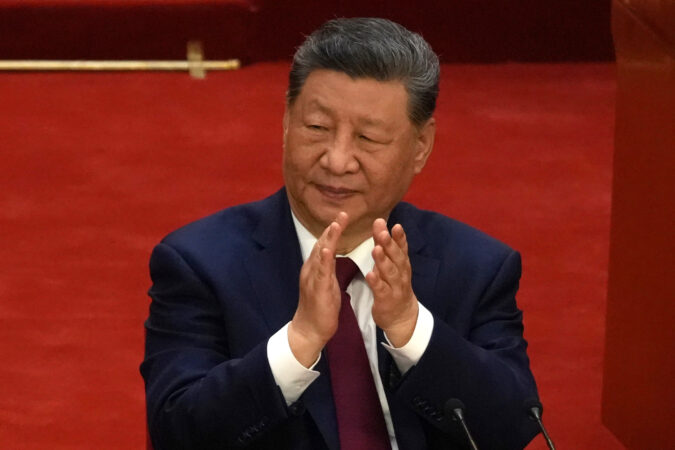
Chinese President Xi Jinping on Thursday demanded “an all-out search and rescue effort.” He urged swift investigation of the incident and to “strictly hold those responsible accountable.”
The blaze started at a factory by the Huiteng shoe company in the city of Jinjiang, also known as China’s shoe capital, the city’s fire department said in a statement. The cause of the fire was not immediately known, and it was unclear whether more people were injured in one of the deadliest fires in China in recent years. Local media reports said people had been trapped on the rooftop.
Xinhua said the factory’s owner and others in charge have been taken into custody and the company’s accounts have been frozen.
Video by the state broadcaster CCTV shows the facade of a building of several floors charred black and covered in white smoke. Earlier footage shows fires were burning on multiple floors and the building shrouded in thick, black smoke.