Blog

  • Trump returns to Mount Rushmore after years of hinting he belongs there

    Trump returns to Mount Rushmore after years of hinting he belongs there

    He hasn’t explicitly said that he wants to be added — at least not in public.

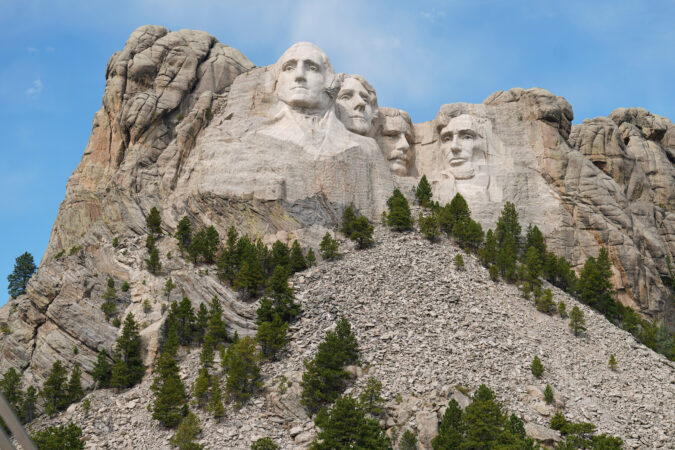
    But on the eve of the nation’s 250th anniversary, President Donald Trump was returning to Mount Rushmore after nine years of flirting with the idea of having one more face join the four presidents: his own.

    Ahead of his visit to the national memorial on Friday, his White House said that adding Trump’s face would be a welcome development — even though officials at Mount Rushmore have long said the monument cannot be carved further.

    “There would be no better addition to the iconic Mount Rushmore than the 45th and 47th President of the United States, Donald Trump,” said Taylor Rogers, a White House spokesperson, in a statement to the Washington Post.

    For a president who has had a golden statue of himself erected at his golf resort and his name and image affixed to buildings, government programs, U.S. passports, digital and physical coins, roads, and an airport, the landmark represents a rare limit: No presidential order or act of Congress can create more carvable rock.

    It has been on his mind. As recently as five weeks ago, the president — twice in one evening — posted to Truth Social digital mock-ups of his face next to the mountainside carvings of George Washington, Thomas Jefferson, Theodore Roosevelt, and Abraham Lincoln.

    Soon after he first took office, Trump told a congresswoman in private that joining them was his dream. When that Republican congresswoman, Kristi L. Noem, became South Dakota governor and gave Trump a sculpture depicting his face on Mount Rushmore next to Lincoln’s, he put it on display at his Mar-a-Lago office.

    He last visited the monument six years ago, delivering a speech on July 3, 2020, that sought to rally supporters around a law-and-order message central to his unsuccessful reelection campaign.

    On Friday, “beneath the towering faces of four of America’s greatest presidents, President Trump will deliver a historic address commemorating the nation’s 250th anniversary and charting a course for America’s next chapter,” Freedom 250, the White House-created organization heading up the semiquincentennial celebrations, wrote in an announcement of Trump’s Mount Rushmore appearance.

    Two people with knowledge of the event planning, including a senior White House official, said there would not be a projection of Trump’s face on Rushmore during the Friday night celebration.

    Trump, as he has danced around the idea of being added to Mount Rushmore since first taking office, has never batted it down.

    “Never suggested it,” he wrote on Twitter in 2020 in response to a New York Times report that said a White House aide had inquired with Noem’s office about the process of carving additional presidents. But Trump continued: “Although, based on all of the many things accomplished during the first 3½ years, perhaps more than any other Presidency, sounds like a good idea to me!”

    A year earlier, when asked by the Hill if he’d like to see his face carved there, Trump replied that he didn’t want to say: “If I answer that question, ‘Yes,’ I will end up with such bad publicity.”

    At a 2017 rally in Youngstown, Ohio, Trump declared that each of the presidents on Mount Rushmore “believed in protecting American industry.” He told the audience that he should “ask whether or not you think I will someday be on Mount Rushmore,” but that he would face blowback for positing such a question.

    “If I did it joking, totally joking, having fun, the fake news media will say, ‘He believes he should be on Mount Rushmore,’” Trump said. “So I won’t say it, OK? I won’t say it.”

    Trump’s allies have kept hope alive, however, even as Mount Rushmore officials and engineers who have long monitored the rocks there say it isn’t possible.

    Days after he was sworn in for a second time, Rep. Anna Paulina Luna (R., Fla.) in January 2025 filed a bill directing the Interior Department to begin the process of having Trump’s face carved onto Mount Rushmore. Around the same time, a Fox News panel, including former White House press secretary Kayleigh McEnany and former representative Jason Chaffetz (R., Utah), cheered on the idea. McEnany said it would be “epic” to have Trump’s face added for the country’s 250th anniversary — which would have left a year and a half to do so.

    Last July, Rep. Andy Ogles (R., Tenn.) sent a letter to Interior Secretary Doug Burgum asking him to “explore” adding Trump, saying that “past bureaucratic resistance or political discomfort” should not stop the process.

    And Burgum himself, contradicting what past National Park Service officials had said, last year told Trump’s daughter-in-law and Fox News host Lara Trump that it wasn’t out of the question.

    “Well, they certainly have room for it there,” Burgum replied when she asked if the United States would ever see Trump added to Mount Rushmore.

    In 2018, the public information officer at Mount Rushmore, Maureen McGee-Ballinger, told the Sioux Falls Argus Leader that “there is no more carvable space up on the sculpture,” adding that the rock to the left of Washington can’t be carved into, and what appears to be space next to Lincoln is “beyond the sculpture” and an “optical illusion.”

    Staff at Mount Rushmore and the National Park Service did not immediately respond to a request for comment on whether the memorial’s geology had changed since.


  • Belgian diamond group that won tariff relief gifts Trump a lavishly encrusted ring

    Belgian diamond group that won tariff relief gifts Trump a lavishly encrusted ring

    BRUSSELS — Dozens of diamonds spell out two giant letter T’s next to the Stars and Stripes and “1776” and “2026.” Dozens more frame the numbers 45 and 47 in the shape of Superman’s logo. A diamond-winged eagle carries a ruby shield and clutches an olive branch of emeralds, below a radiant “250” and atop the phrase “250 YEARS USA” etched in 18-karat gold.

    All told, 321 diamonds, 56 sapphires, 13 emeralds and six rubies encrust the watch-sized gold ring presented this week to Bill White, the U.S. ambassador to Belgium, to give to President Donald Trump.

    “A very special thank you to my friends from Antwerp for the magnificent Freedom 250 ring,” Trump said in a prerecorded video message during an event marking America’s 250th birthday in Brussels.

    Isidore Mörsel, president of the Antwerp World Diamond Center, or AWDC, gifted the ring on behalf of the centuries-old diamond community in the Belgian port city, a central node in the worldwide trade of the precious stones that found itself struggling last year under the weight of Trump’s sweeping trade war.

    “May this ring serve as a lasting reminder that true partnership like the finest natural diamonds are formed under pressure, endure the test of time, and shine brightest when built on trust,” Mörsel said. The ring’s interior is engraved with the phrase “Crafted in Antwerp for Donald John Trump.”

    In dollar terms, the ring’s value pales beside gifts like the $400 million plane donated by Qatar that Trump ordered converted into a new Air Force One. But it’s a glitzy window into the role that ostentatious – and almost always gilded — gifts are playing for those seeking to curry favor with the U.S. president.

    A White House official, speaking on the condition of anonymity to discuss the matter, said Thursday that the ring has not been presented to Trump yet.

    Ring is latest in Trump’s break with White House custom

    The gift comes months after Belgium’s diamond industry won the removal of U.S. tariffs on diamond imports. In September, AWDC said it had “succeeded in securing a zero percent import tariff” on Antwerp’s annual export of more than $2 billion of polished diamonds to the U.S. A spokesperson for the group said on Thursday that the AWDC provided “input” to the European Commission as it negotiated with Trump on a broad deal on tariffs in 2025, but did not itself lobby the administration.

    U.S. presidents have considerable discretion to accept gifts from domestic and foreign sources and may determine themselves whether a gift was meant for them personally or the nation. The exception is those from foreign governments, which are prohibited by the foreign emoluments clause of the Constitution without congressional assent, though presidents could use personal funds to reimburse the Treasury for the full value of an official gift if they wish to retain it.

    Personal gifts are also supposed to be registered on the president’s annual financial disclosure. Trump’s 2025 disclosure, released this week, revealed a $250,000 gift of a sculpture depicting his triumphal gesture after surviving a 2024 assassination attempt at a campaign rally in Butler, Pa., and tickets to 10 sporting events, including 10 to the upcoming World Cup final in New Jersey from FIFA’s Gianni Infantino, valued at a collective $15,000.

    Four U.S. ethics experts told the Associated Press that Trump has broken with decades-old custom in the White House to avoid accepting such gifts.

    Ring’s value estimated at $25,000-$35,000

    To forge the ring, the AWDC turned to David Gotlib, an Antwerp-based high-end jeweler whose cufflinks can sell for more than 15,000 euros ($17,000).

    Neither AWDC nor Gotlib would provide a valuation of the ring, but two independent jewelers told AP they estimated the value between $25,000 and $35,000.

    Paris- and London-based jewelry consultant Alexander Levinson calculated the cost at $25,928, while David Saad, a third-generation luxury jeweler in Canada, priced the ring between $33,000 and $35,000. Both said half the cost was in materials, half in labor.

    After the ring was presented on a star-spangled stage in Brussels, musician Alexis Wilkins, the girlfriend of FBI Director Kash Patel, sang the U.S. national anthem to more than 8,000 people drinking Budweiser and bourbon from Tennessee and Kentucky.

    White said he raised more than $5.5 million for the 250th anniversary event from corporate sponsors like defense industry titans Lockheed Martin and Northrop Grumman and tech firms like Intel, Google, and Meta, as well as the European chocolate companies Leonidas and Ferrero. AWDC said it contributed funds, too.

    “The media was asking, ‘Why does it have to be so big?’” White said of the event. “Because we are the United States of America!”

    Meanwhile, the fate of the ring is not currently clear.

    On Wednesday, White posted a photo online of himself wearing the ring and giving a thumbs-up. The post has since been deleted.

  • Flyers prospect Jett Luchanko missed development camp after core muscle procedure

    Flyers prospect Jett Luchanko missed development camp after core muscle procedure

    For the second straight year, Jett Luchanko missed Flyers development camp. And now we know why.

    Speaking to the media after the Flyers finished development camp with a spirited three-on-three tournament — won by the team led by Denver Barkey — assistant general manager Brent Flahr revealed that Luchanko had a procedure performed on his core about a month ago.

    “It’s been lingering for about a year and a half. It’s been a problem,” Flahr said. “So he’s back. He had it done — I don’t even know the timeline — probably a month ago.

    “… He’s working out lots [in the gym], and should be skating within a week, and he’ll be ready to go. It shouldn’t affect him anymore.

    “He doesn’t like to make excuses, but at the same time, his speed, skill set; there’s lots there. Hopefully, a full summer to train and train properly this year will really help him build his confidence.”

    The expectation is that Luchanko will be ready for training camp in September.

    Flyers leadership has expressed optimism about Jett Luchanko’s role this season.

    The news comes a few days after director of player development Riley Armstrong said Luchanko “had a little lower-body thing going on.” The next day, Luchanko spoke to the media and said he was feeling and progressing well without revealing the extent of the issue or that he had a procedure. He did confirm it had been lingering.

    A first-round pick in the 2024 NHL draft, Luchanko has skated in eight NHL games over the past two seasons after breaking camp with the Flyers each season. He has yet to register a point in the NHL, but counting playoffs, he notched nine assists in 16 games at the end of the 2024-25 season with Lehigh Valley of the American Hockey League. Luchanko made his NHL playoff debut in May, playing Game 4 against the Carolina Hurricanes.

    He will officially be a full-time pro this upcoming season.

    “We’re excited to see him turn [fully] pro. I think that’s great. … Stability will probably be a good thing for him,” Flyers general manager Danny Brière told The Inquirer at the beginning of June.

    “We expect a big summer out of him, and he’s got to get ready. The big thing with Jett is he has an elite skill in skating that is almost unmatched from anyone in the organization, other than maybe Owen Tippett. So that’s always going to have a lot of value for anybody to have a player like that.

    “Now it’s our job to try to help him and round out his game to make it in the NHL. But what I would expect is probably for him to play a year in Lehigh Valley.”

    Center Jack Berglund, who was drafted in the second round in 2024, also did not participate in on-ice activities at camp this week. He was held off the ice because of how much hockey he has played this year, including 40-plus professional games in Sweden, World Juniors, World Championships, and a five-game stint with the Phantoms.

    Barkey played in the three-on-three tournament on the small ice at the ’67 Arena rink at the Flyers Training Center after not participating in the five-on-five scrimmage Thursday night. He wanted to play but had “a little kind of hip flexor,” per Flahr, so he was held out of the full ice scrimmage.

    Goalie Martin Psohlavec, one of the Flyers’ second-round picks this past June, sustained an adductor injury during the three-on-three tournament. Flahr doesn’t expect it to be too serious but said they’ll probably keep him in Voorhees for another week. The Czech goalie performed well during the week and held the opposition scoreless during his time in net on Thursday.

    Flyers add Foote

    The Flyers continued to fill out their roster in Lehigh Valley on Friday, signing 25-year-old winger Nolan Foote to a one-year, two-way contract, according to a league source. Foote will earn $850,000 in the NHL and $300,000 in the minors.

    If the name Foote rings a bell, it should. Nolan is the son of longtime NHL defenseman and two-time Stanley Cup champion Adam Foote. The elder Foote, who served as Vancouver’s head coach last season, previously worked as an assistant under Rick Tocchet with the Canucks.

    Nolan, a 2019 first-round pick of the Tampa Bay Lightning, has largely played in the AHL since turning pro, amassing 245 games over six seasons. He has played 42 career NHL games, tallying seven goals and 10 points.

    Last season with Charlotte of the AHL, Foote had 14 goals and 32 points. He also got into 12 games with the Florida Panthers late in the season and had one goal.

  • Pope Leo XIV celebrates immigrants in speech to Philadelphia crowd amid clash with Trump ahead of 250th anniversary

    Pope Leo XIV celebrates immigrants in speech to Philadelphia crowd amid clash with Trump ahead of 250th anniversary

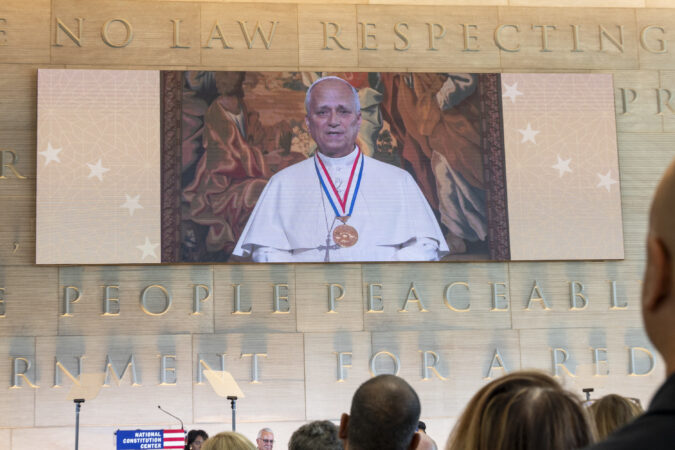
    Addressing a Philadelphia crowd live from the Vatican, Pope Leo XIV called for a “recommitment” to American ideals.

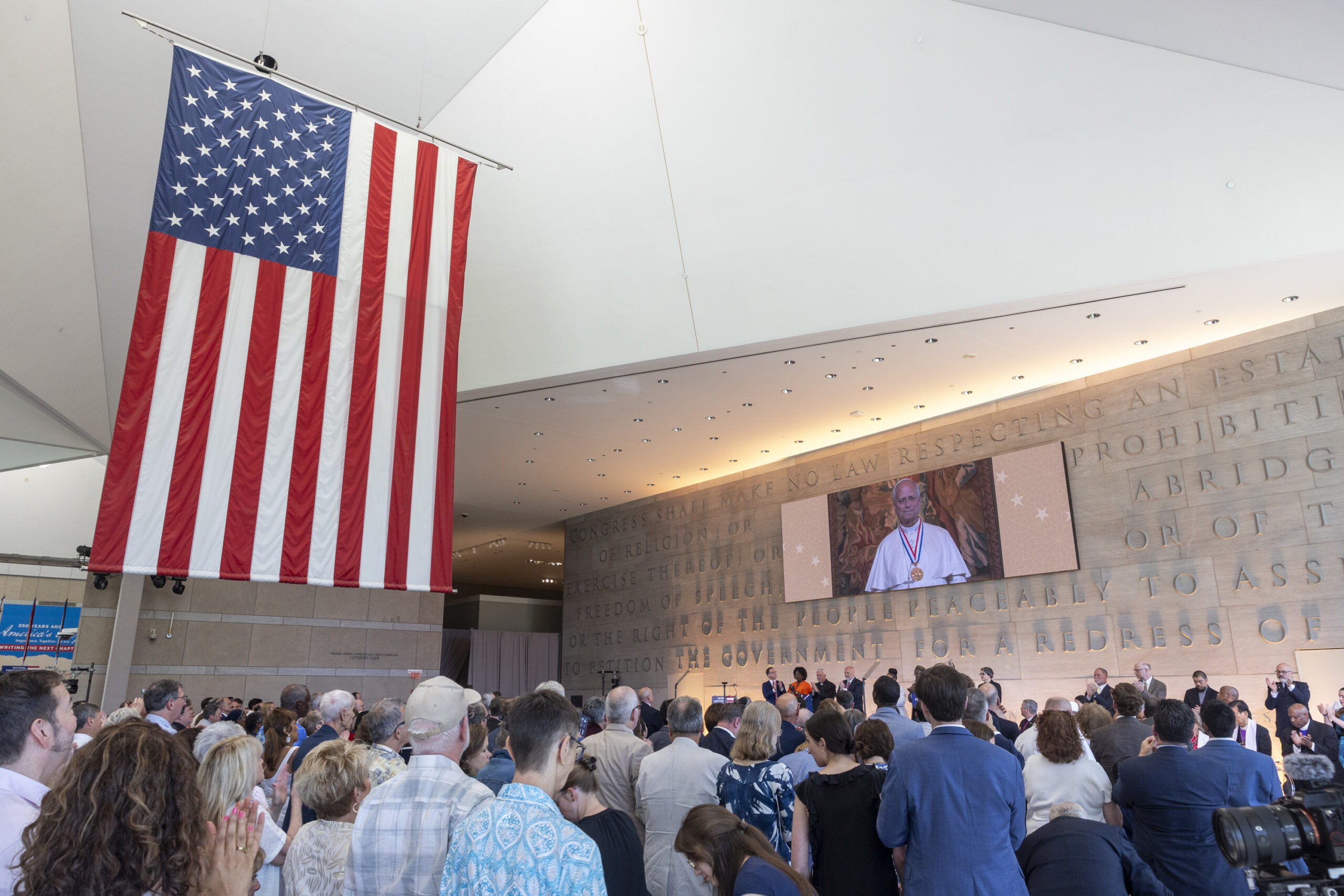
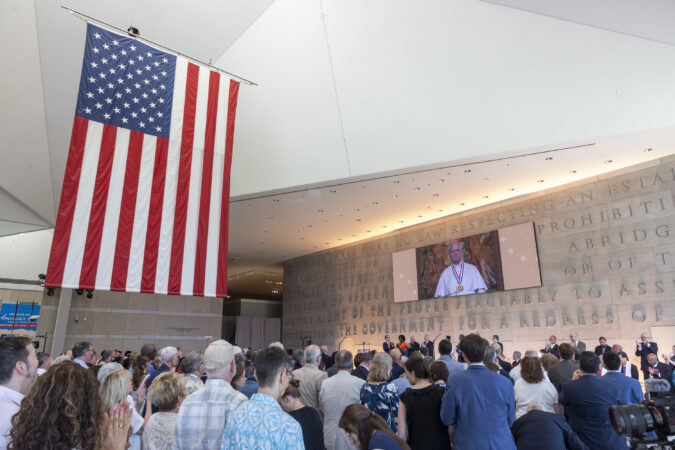
    The first U.S.-born pope delivered remarks virtually at an interfaith ceremony inside Philadelphia’s National Constitution Center on the eve of the United States’ 250th birthday to accept the center’s prestigious Liberty Medal.

    Facing a screen showing the live, cheering Philadelphia audience, the pontiff wore his Liberty Medal along with a cross around his neck.

    Leo, who grew up in Chicago and attended Villanova University, quickly pointed out his American roots, calling himself “a son of this great country.”

    “I join you in asking God’s blessings upon America’s future that the lofty ideals enshrined at the beginning of the Declaration of Independence may continue to guide the flourishing of the nation in unity, justice, and peace,” he said.

    Leo, who was elected pope last year, spent years serving the church in Peru and has been outspoken about calling for international peace. That’s landed him at odds with President Donald Trump’s administration on the issue of migrants, the war in Iran, and more.

    The pope leaned into some of those themes in his speech, even though he did not refer to the president directly.

    He nodded to his advocacy for humane treatment of immigrants and noted that the founders of the United States “made America a byword for freedom, as the country opened its doors to successive waves of immigrants, enabling them and their children to play their part in shaping the future of the nation.”

    He said the “love of freedom” in the United States has inspired the country “to look beyond itself and at great sacrifice to champion the cause of freedom beyond its own borders.” But he acknowledged that mission hasn’t been straightforward, noting that building a society that embodies such ideals “was not always easy and, in many respects, is still a work in progress.”

    The pontiff’s speech comes the day before he plans to visit Lampedusa, an Italian island known as a stop for migrants making the dangerous journey across the Mediterranean Sea from North Africa to Europe. His predecessor Pope Francis made his first official visit outside of Rome in 2013 to the same island and condemned the “globalization of indifference” toward migrants.

    Pope Leo XIV speaks at the Liberty Medal Ceremony at the National Constitution Center in Philadelphia on Friday.

    Julie Silverbrook, the chief content and learning officer for the National Constitution Center, emphasized in a Friday interview that Leo is a “global leader who has been uniquely shaped by American ideals.”

    “He has brought together people of different faith traditions, and through his ministry really reflected his belief in the inherent dignity of all human beings,” she said.

    Leo declined an invitation from Trump to the United States to celebrate the country’s 250th birthday on July Fourth, the New York Times reported. The first American-born pope opting to visit migrants instead sends a stark message as the president pursues his mission of mass deportations.

    But the pontiff’s participation in the Philadelphia program highlights his connections to the region, which isn’t lost on the National Constitution Center.

    The Philadelphia-based private nonprofit organization chose Leo for the award due to “his lifelong work promoting religious liberty and freedom of conscience and expression around the world — ideals enshrined by America’s founders in the First Amendment to the U.S. Constitution.” That, and also because he is the first pope born in the United States, and has connections to Philadelphia, Silverbrook said.

    “He was shaped by those freedoms … in much the same way that the Declaration of Independence was shaped by the city of Philadelphia, and of course a reflection of American values that have been carried globally,” she said.

    When a delegation from Philadelphia’s National Constitution Center met with Leo at the Vatican in April to present him with the medal in person, they also bore a few local goodies: a bundle of Villanova swag, a replica of George Washington’s Acts of Congress, and a Wawa tote bag filled with Tastykakes.

    “I think he very much so feels a connection to Philadelphia, both having been educated here, and I think in this semiquincentennial moment, I think the eyes of the world are on Philadelphia, and we’re thinking about the ideals that have emanated from this place for 250 years,” Silverbrook said.

    Leo, a 1977 Villanova alum, recently passed on a surprise message to graduates of his alma mater. Vince Stango, the interim president and CEO of the National Constitution Center, also went to the Augustinian university on the Main Line, which co-sponsored the NBC10 broadcast of the event along with the archdiocese and Malvern Prep.

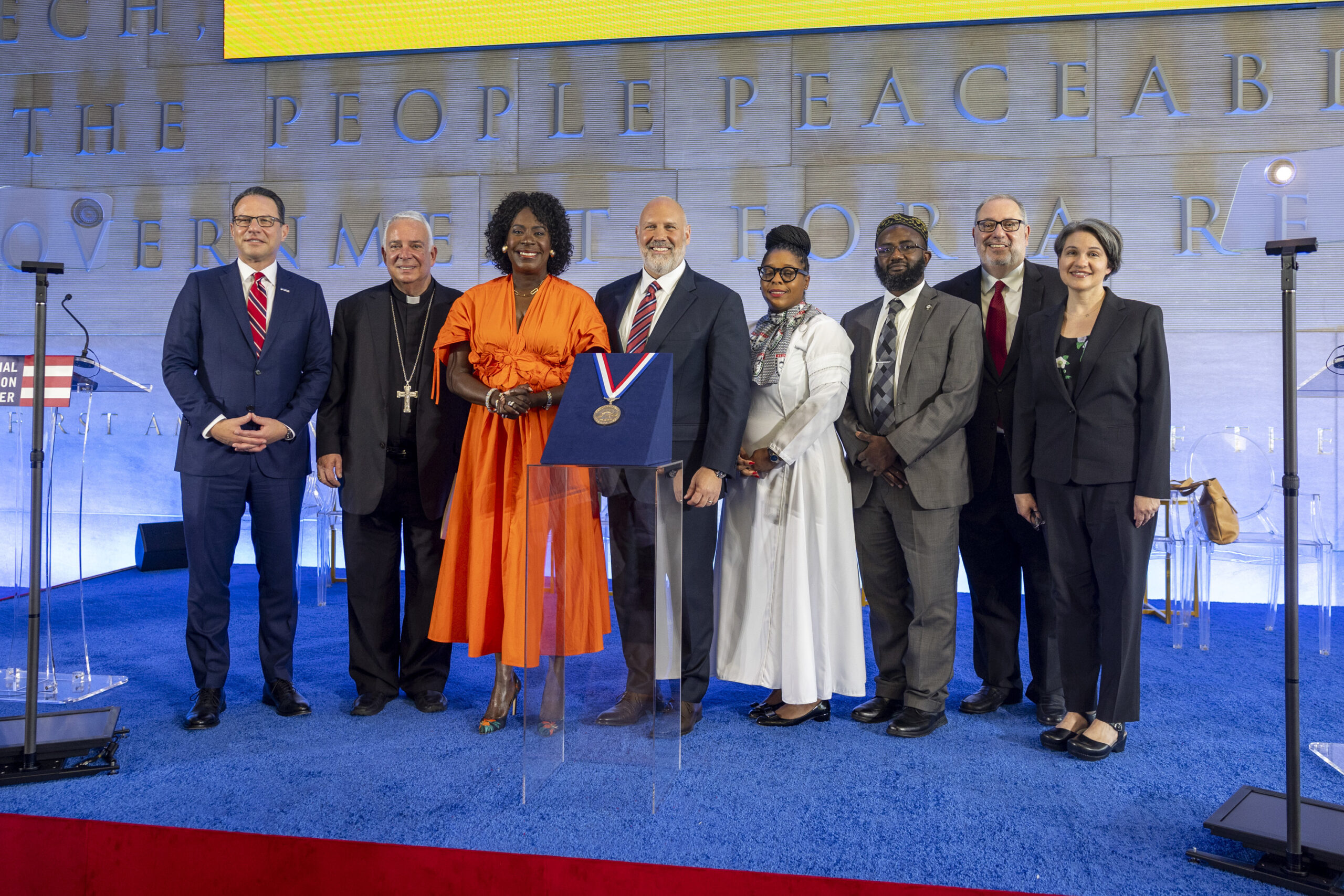
    (From left to right) Gov. Josh Shapiro, Rev. Nelson J. Pérez, Mayor Cherelle L. Parker, Interim President & CEO of National Constitutional Center Vince Stango, Rev. Carolyn C. Cavaness, Imam Quaiser D. Abdullah, Rev. Luis A. Cortés Jr., and Rabbi Jill L. Maderer, pose for a photo at the Liberty Medal Ceremony at the National Constitution Center in Philadelphia, Pa., on Friday.

    Clashing with Trump

    The pope has contended that it’s up to each country to determine how they want to accept migrants while also denouncing the Trump administration’s “extremely disrespectful” treatment of them.

    He has also spoken out against Trump’s threats against Iran, and declined to participate in the president’s “Board of Peace” for Gaza’s reconstruction.

    In an April social media rant, Trump complained that he doesn’t “want a Pope who criticizes the President of the United States.” The president called the Catholic leader weak and accused him of “catering to the Radical Left.”

    Leo told reporters that month that he has “no fear, neither of the Trump administration, nor of speaking out loudly about the message in the Gospel, and that’s what I believe I am called to do, what the church is called to do.”

    In his Friday remarks, the pope made a call for unity but warned that a country should come together with “ideals that do not fade with the passing of time.”

    He called on the United States to recognize its values of “peace and prosperity, a country characterized by generosity and nobility of heart,” and said the values of “shared human dignity, equality, and the rights laid out in the Declaration of Independence” can help unite and guide the nation.

    The Liberty Medal

    The Liberty Medal was created in 1988 and has been hosted by the National Constitution Center since 2006.

    The award has gone to storytellers, philanthropists, civil rights leaders, and politicians on both sides of the aisle, such as Ukrainian President Volodymyr Zelenskyy, former Supreme Court Justice Ruth Bader Ginsberg, the Bushes, Malala Yousafzai, and Thurgood Marshall.

    The center describes its recipients as individuals who “strive to secure the blessings of liberty to people around the globe.”

    The process of selecting Leo began about a year ago, Silverbrook said.

    The speech was initially going to be projected on Independence Mall, but the event was moved indoors due to the extreme heat and livestreamed by the center online.

    Rich Russo, 63, a Fishtown resident who attended the event in person, called the experience “once in a lifetime.”

    “How many times do you get the pope talking to you?” said Russo, who works for a bank.

    Gov. Josh Shapiro, who is Jewish, and Mayor Cherelle L. Parker, a Baptist — both Democrats who have been outspoken about their own faiths — joined Philadelphia Archbishop Nelson J. Pérez and other religious leaders who made remarks on stage prior to the pope’s speech. Pennsylvania Attorney General Dave Sunday, a Republican, rang a replica Liberty Bell outside.

    “Philly is proud that the pope is a graduate of Villanova University who spent time living and working in our region,” Pérez said on stage. “Pope Leo knows us, and we feel like we know him, too.”

    “His influence, however, extends beyond Philadelphia,” the archbishop added.

  • Venezuelan earthquake survivors search for missing pets in an unexpected place: McDonald’s

    Venezuelan earthquake survivors search for missing pets in an unexpected place: McDonald’s

    CARABALLEDA, Venezuela — Hope came in the strangest of places: a Venezuela McDonald’s.

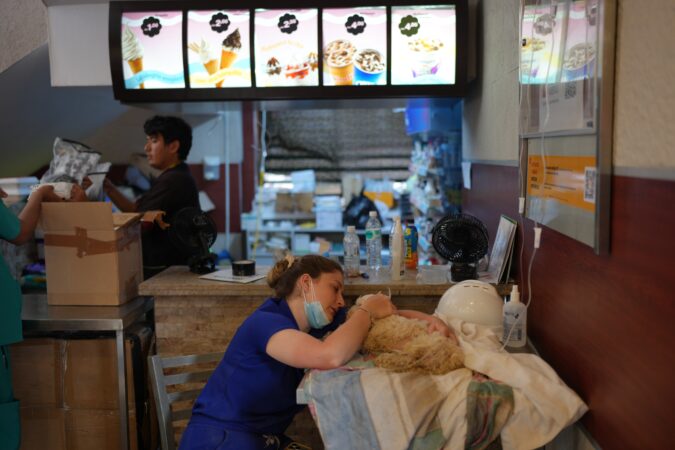
    Gabriela Alves found herself embracing her 6-year-old dog Buddy on Thursday in the fast-food outlet after a week of searching for the white pup that went missing when two earthquakes devastated the South American nation on June 24.

    The restaurant, next to the ruins of collapsed state housing complexes, has become a de facto hospital for earthquake victims, as well as a center for locating and treating missing pets in the seaside city of Caraballeda, which was devastated by the natural disaster. Neighbors call it “Hospital McDonald’s.”

    “This is a miracle,” Alves said, arms wrapped around the dog with an IV in one of his legs on a table next to restaurant workers selling soft-serve ice cream. “We’ve lost everything material, but at least we’re both alive.”

    The makeshift hospital was born one day after the back-to-back earthquakes killed at least than 2,295 people and wounded 11,000, according to Venezuelan officials. Many more families were left scrambling to find their missing loved ones, including cats and dogs lost in the rubble.

    Angel Matute and 70 other veterinarians, students, doctors, and civilian volunteers traveled from the western city of Barquisimeto. The team was looking for a place to sleep, store equipment, and shelter from heavy tropical rain when they found one of the only operational facilities within the chaos. The Golden Arches.

    They set up shop in the restaurant, which still had running air-conditioning, and began distributing medical supplies and treating human patients while also becoming a place for treating injured pets and seeking dogs and cats that were still missing.

    “For us, a pet is one more human life,” said Matute, who coordinates rescue efforts in the McDonald’s where the volunteers also sleep. “There are animals that are more human than humans themselves.”

    Matute was among dozens of bustling volunteers on Thursday treating dogs and cats alongside search teams ordering hamburgers and french fries. His group, which has rescued 140 animals and treated 60 more, plans to continue reuniting owners with missing pets until their assistance is no longer needed.

    Alves turned to Hospital McDonald’s when she was desperately searching for her beloved dog.

    Alves was at a family member’s house when the quakes shook northern Venezuela. Hours later, she jumped on her motorcycle and frantically rushed to her home to save Buddy, but all she found were ruins.

    The 36-year-old Venezuelan said she heard the McDonald’s had become a place to look for lost pets and began making daily laps. She would swing by the restaurant to check if the volunteers had found any white dogs before returning home to yell, “Buddy, Buddy,” hoping to hear a bark. For more than a week, she was met with silence.

    “We’re all living one day at a time,” she said Thursday. “Today, I returned and I truly can tell you I had lost all hope.”

    She persisted, though, and picked through the ruins, pulling clothes from her mother’s room, the only area of the home still accessible. Then she heard a distant bark, looked down and saw Buddy’s white ear through a crack in the concrete.

    Alves screamed for help and nearby rescuers ran to her. They broke a hole in the wall and pulled the dust-covered dog from the debris. Alves sobbed as she cradled Buddy, swaddled in a pink blanket and licking her arm. Hours later, veterinarians at Hospital McDonald’s checked Buddy for injuries after eight days trapped in the rubble.

    “Right now, with all the tragedy of the earthquake, it’s one positive thing in all the bad,” Alves said, still embracing her dog. “He’s like my doggie Band-Aid.”

  • The Sixers are in the hunt for LeBron James and Philly is losing its collective mind

    The Sixers are in the hunt for LeBron James and Philly is losing its collective mind

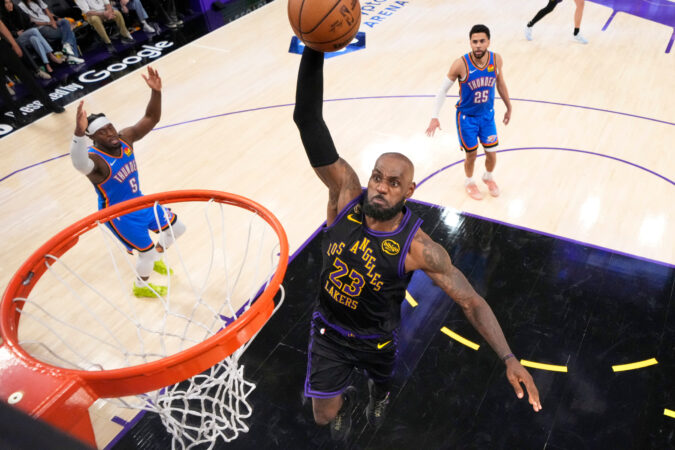
    Rumors no more. LeBron James is officially considering the 76ers as his next team.

    On Friday, James’ agent and Klutch Sports head Rich Paul confirmed Philadelphia as a possible destination for the four-time NBA champion on Paul’s Game Over podcast. Paul, who hosts the show alongside Max Kellerman, wheeled out a white board filled with the various teams James is considering. The Sixers, one of 10 teams listed, were discussed at length.

    “Philadelphia, everything changed,” Paul opened up the conversation with, seemingly referring to the 76ers’ trade for former Celtics star Jaylen Brown.

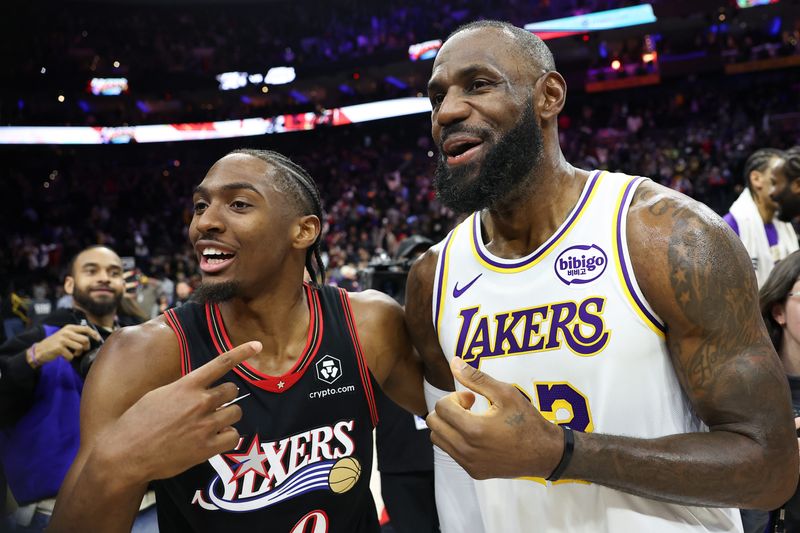
    On Thursday, ESPN reporter Brian Windhorst linked James to Philadelphia, referring to Sixers guard Tyrese Maxey, who is also a client of Klutch Sports, as “basically a part of LeBron’s extended family.” Kellerman looked to clarify whether the Sixers had gained James’ attention.

    “How could you not have the attention when you have Maxey, [VJ] Edgecombe, Brown and [Joel] Embiid?” Paul replied.

    “[James] loves Maxey so we don’t even have to talk about that,” Paul added. “I think VJ, he helps VJ understand really how to play the game. [Edgecombe is] already super talented, plays both ends of the floor, plays hard every night. The benefit that he gets, I mean, it would be ridiculous. Obviously, Jaylen Brown.”

    Tyrese Maxey (left) and Lebron James are represented by the same agency: Klutch Sports.

    If James were to join Philadelphia, it is expected that he would complement the scoring prowess of Maxey, Brown, and — when healthy — Joel Embiid. Last season, James’ Los Angeles teammate Luka Dončić led the league in points per game while James still put up near All-Star numbers. In 60 appearances, the 41-year old averaged 20.9 points, 6.1 rebounds, and 7.2 assists. Meanwhile, Brown and Maxey finished near the top of the NBA scoring ranks last season, finishing fourth and fifth in points per game, respectively.

    However, Embiid’s health seems to loom over James’ decision — as it does over most Sixers conversations. When discussing Philadelphia’s roster, Kellerman pointed out that Embiid is the team’s best player when “on the floor.” This has become a rarity in recent years. The Sixers big man has dealt with a slew of injuries since coming into the league. He has played in just 96 games in the three seasons since his MVP campaign. Paul added that Embiid’s “health and habits” are vital.

    Later in the conversation, after discussing Giannis Antetokounmpo’s Miami Heat as a possible option for James, Paul circled back to the Sixers. This time, Paul pointed to the Sixers’ revamped front office as an enticing factor, singling out general manager Jameer Nelson and president of basketball operations Mike Gansey.

    “X-factor about the Sixers though, we forgot about something” Paul said. “Jameer Nelson is a part of the front office — ex-player. Mike Gansey, you know Mike Gansey is [an] Ohio guy, played against us in high school.”

    Nelson, a native of Chester, starred at Saint Joseph’s before putting together a 14-year NBA career. Nelson, who is just three years older than James, played against the four-time MVP 35 times in the league.

    Gansey and James go back even further. As Paul pointed out, the two Ohioans competed in high school with Gansey finishing behind just James in the 2001 Mr. Ohio Basketball race. On Wednesday, Gansey’s brother, Steven, posted a photograph of Gansey and James in high school on X. Paul saw the photograph, referencing it on Game Time.

    “Does LeBron remember guys like Gansey?” Kellerman asked.

    “Absolutely,” Paul responded.

    Along with the Sixers and the Heat, eight other teams were listed on Paul’s white board of possible destinations: the Golden State Warriors, Minnesota Timberwolves, Cleveland Cavaliers, Boston Celtics, New York Knicks, Dallas Mavericks, San Antonio Spurs and Denver Nuggets.

    What Sixers fans are saying

    Paul’s comments about James’ likelihood of landing in Philadelphia sent ripples through Sixers social media — which was already on high alert following multiple reports and speculation on the subject Thursday.

    Others are playing the role of detective, drawing attention to the order of the white board names and a suspicious star next to Maxey’s name.

    Meanwhile, some are not buying the speculation or are experiencing flashbacks to 2018 free agency. Then, James was linked to the Sixers and the city launched a campaign to sign the all-time great. Sixers representatives, headlined by then-coach and interim general manager Brett Brown, met with Klutch Sports but James did not attend the meeting. Soon after, he opted for the bright lights of Los Angeles instead.

  • Older adults turn to ‘Golden Girls’ housing

    Older adults turn to ‘Golden Girls’ housing

    Shirley Jennett, a retired nurse, loves her spacious ranch-style house in Denver, with its big backyard and gazebo.

    “I want to stay here,” she vowed. “And die here.”

    She might pull that off. In relatively good health, Jennett still drives to lunch with friends, does her own housekeeping and grocery shopping, and plows through a book a day, usually a mystery. But her children worry about her living alone at 89, especially since she has had a couple of falls.

    Enter her new housemate, Susan Beese. Despite working four days a week in retail, Beese could no longer afford her nearby one-bedroom apartment as the rent topped $1,500 a month. She moved out, first staying with friends and then in what she delicately called “a senior women’s facility.”

    Now Beese, who is 79, pays Jennett $800 monthly for a bright two-bedroom space, with a bath and a kitchen, on the lower level of her house. As part of the agreement the housemates worked out, she helps plant and water Jennett’s garden, takes out the trash, and cooks occasional meals.

    “It’s been a lifesaver,” Beese said. Jennett even welcomed her dog.

    Meet the real-life Golden Girls. In the much-loved 1980s sitcom, still in perpetual reruns, the four wisecracking women who share a house in Miami met through an ad on a supermarket bulletin board.

    In Denver, the housing matchmaker was Sunshine Home Share Colorado, a local nonprofit that Alison Joucovsky, a senior services administrator, founded in 2016 when the problem became urgent. “My phone was ringing off the hook,” she said, recalling anxious pleas from older residents spending most of their Social Security checks on rising rent or facing yearslong waiting lists for subsidized senior housing.

    Home sharing “is a really efficient way to create affordable housing and to support older people who want to age in place,” Joucovsky said. Carefully vetting both “home providers,” who may be rattling around in family houses now too big and too empty, and “home sharers” seeking reasonable rents, Sunshine facilitated 31 shares last year, a record for the nonprofit.

    “The cost of developing and building new housing is astronomical, and so is the length of time it takes,” said Laura Fanucchi, president of the National Shared Housing Resource Center and an administrator with HIP Housing, a home-share organization in San Mateo County, Calif. “Why not make use of existing housing stock?”

    About 55 organizations around the country offer these services — and demand is growing, driven by housing shortages, rising rents, and sales prices that affect both the old and the young. Legislators in several states are working to promote home sharing as an option. (Personal care is not part of these arrangements.)

    The need is acute. About one-third of households headed by someone 65 or older were “cost-burdened” in 2024, according to an analysis by the Harvard Joint Center for Housing Studies. That means they spent more than 30% of their income on housing.

    Although nearly 80% of those people were homeowners, the center found, an increasing proportion are still paying off mortgages or home equity loans, and most contend with higher taxes, utility and maintenance costs, and insurance premiums.

    “A lot of the people calling me to complain about property taxes and inflation are senior citizens on fixed incomes whose children have left, and maybe their spouse has died,” said Pennsylvania state Rep. Abby Major, a Republican, who has co-sponsored a bill that would facilitate home sharing. “They’re a single older adult living in a four-bedroom house.”

    Yet most don’t want to relocate. Even if they do, many older adults will find that downsizing has also become prohibitively expensive, as home prices rise and very low interest rates become a memory.

    Younger people are similarly cost burdened, including 37% of those aged 25 to 34, and 31% of those 35 to 44, the Joint Center has reported. Home sharing can benefit both older homeowners who need income and people of any age in search of lower-cost housing.

    To help increase their reach, some home-share programs now supplement or replace the traditionally labor-intensive matching process with online platforms. (For-profit companies like Nesterly or Roommates.com also facilitate shared housing.)

    “It’s like online dating, except that people who have rooms can meet people who need rooms,” said Candice Smith, executive director of HomeShare Oregon. “And it’s a lot more secure.” HomeShare’s online platform has drawn close to 7,000 providers and seekers over five years.

    Further support has come from the city of Portland, which this year announced a pilot program to pay $1,000 to homeowners who make a spare room available (or $1,500 for two rooms) through qualified home-share programs.

    In addition, legislators in several states have introduced or passed bills that prohibit municipalities from unduly restricting homeowners who want to rent spare rooms to nonfamily members. Sponsors in Pennsylvania and Connecticut actually call them Golden Girls bills, and they’ve drawn bipartisan support.

    “So many young people have basically given up on buying a home,” said Colorado state Rep. Manny Rutinel, a Democrat. He helped pass a 2024 law prohibiting cities and counties from limiting the number of unrelated people who could live together in a single dwelling.

    In Pennsylvania, state Rep. Tarik Khan steered a similar bill through the House in June; it awaits a Senate vote. “It doesn’t make sense that your cousin can move in but someone unrelated to you can’t,” said Khan, a Democrat.

    The Pennsylvania bill caps the number of nonfamily occupants in a home at five; Connecticut’s limit would be three. That bill passed the Senate in April, and then died without a vote in the House. But the bill sponsors plan to reintroduce it next session.

    Home sharing can’t solve the housing crisis, its fans acknowledge. But it could make a dent, potentially unlocking thousands of spare bedrooms across the country without requiring new construction that would change the character of neighborhoods.

    Admittedly, matching homeowners with those who want to rent a room becomes a delicate process. Home-share staff members typically interview the individual parties, run background checks, verify incomes, coordinate initial phone calls and meetings, and mediate if problems later arise.

    They also help applicants sift through the myriad lifestyle preferences that can torpedo a match. “Living together isn’t easy,” Fanucchi said. Will the home provider accept smokers, pets, visitors? Does the sharer work from home? Or need to park a car? Who sets the thermostat?

    Sometimes the agreement includes a “service exchange,” in which the newcomer does a few hours of chores such as snow shoveling, shopping, or some meal preparation in return for reduced rent.

    Jenlyn and Larry Boyer, for instance, have lived in their ranch house in suburban Broomfield, Colo., for 31 years and never want to leave. But Jenlyn Boyer, who is 80, has “gotten unsteady” and uses a walker. Her husband, 70, suffers chronic fibromyalgia pain and needs a wheelchair.

    Because they now pay for tasks that they used to undertake themselves, and because inflation has undermined their finances, “I had an epiphany,” Jenlyn Boyer said. “We need more help and we need more money.”

    Six months ago, through Sunshine Home Share, they met a 46-year-old graduate student whose monthly rent had doubled to an unmanageable $2,000.

    The student moved into their furnished downstairs bedroom/family room with a bathroom, a small refrigerator and a microwave. In exchange for about 10 hours of dishwashing a month, she pays a reduced rent of $600.

    The additional income has helped the Boyers cover expenses like van repairs and wheelchair batteries. But they also enjoy chatting with their new housemate.

    “She turns out to be just a gem,” Boyer said. “We laugh together a lot.”

    This article originally appeared in the New York Times.

  • D.C. official tells Trump to build his arch somewhere else

    D.C. official tells Trump to build his arch somewhere else

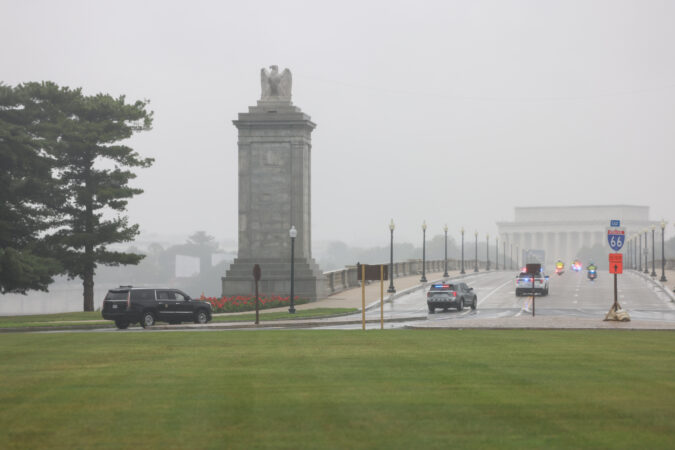
    The Trump administration should pick an “alternative site” for President Donald Trump’s planned 250-foot-tall triumphal arch, a Washington, D.C., official told the administration last month, warning that Trump’s plan to build the structure by Arlington National Cemetery would be “divisive.”

    David Maloney, the city’s historic preservation officer, said the plan to build in Memorial Circle — a traffic roundabout across the river from the Lincoln Memorial — would “severely damage an exceptional cultural landscape and one of the most important symbolic places in the nation.”

    Maloney instead suggested a different spot that he said would be a better fit for the towering arch: an empty traffic oval located on South Capitol Street between Nationals Park and Audi Field.

    “It would create an energizing focal point for a still-emerging neighborhood, suitable for a celebratory crowd,” Maloney wrote to the National Park Service in a June 26 letter posted by a federal commission reviewing the project. An arch located there could become a symbol of “sports triumph” linked with the nearby stadiums, he said, “and importantly, it would enhance the historic L’Enfant Plan and the city’s monumental landscape rather than detracting from it.”

    Rodney Mims Cook Jr., a Trump appointee who chairs the U.S. Commission of Fine Arts, had previously identified that site as a prospective location to build a triumphal arch.

    Washington Mayor Muriel E. Bowser’s office declined to comment on the proposal from Maloney, who has served as the city’s historic preservation officer since 2007. The historic preservation office does not always speak for the mayor and has some degree of autonomy in its work, city officials said.

    Bowser has sought to strike a balance with Trump as he attempts to remake parts of Washington, encouraging him to tend to long-delayed repairs to local fountains. She has avoided public battles with the president over some of his more controversial changes to the city and its historic buildings, such as Trump’s demolition of the East Wing to build an expansive White House ballroom.

    Trump last year proposed building a triumphal arch to honor the nation’s 250th anniversary, arguing that it was an overdue addition to Washington.

    “We’re the only important and major city that doesn’t have one,” Trump said in the Oval Office in May. He also touted his plan to make it bigger than the 164-foot-tall Arc de Triomphe in Paris.

    “We have to do slightly larger … otherwise you’d all be disappointed in me,” the president said, alluding to his propensity for large construction projects. “But it’s even far more beautiful.”

    Historic preservationists and advocacy groups have opposed the project, warning that the large arch — Trump’s most significant effort to change Washington’s skyline — would alter the city’s historic views.

    Military veterans also have sued to block it, warning that the towering structure would harm their experience of visiting the nearby national cemetery. A federal judge is weighing the case.

    The Commission of Fine Arts, which Trump has packed with allies, has approved the project. A second federal panel, the National Capital Planning Commission, is scheduled to weigh the proposal Thursday.

    Federal officials have also laid out an aggressive timetable to potentially complete work on the arch before Trump’s term ends, which would involve 20 hours per day of construction on the arch, year-round.

    Maloney, who declined an interview, has also questioned the Trump administration’s process to build the arch, criticizing the 10-day window for public comment. He also said that outside experts had been wrongly excluded from a federally required process, known as a Section 106 review, to consider the arch’s potential effects on historic properties.

    Trump officials have declined to include a half-dozen historic preservation and advocacy groups in the process. All of the excluded organizations, which have historically offered input on past federal projects, have sued the Trump administration over the president’s construction and renovation projects.

    The review process “is clearly an exercise designed to shield this controversial project from genuine public and expert scrutiny, rather than to reduce its harmful impacts on our shared heritage, which is owned by the public,” Rebecca Miller, the executive director of the DC Preservation League, wrote in a June 15 letter to the Park Service.

    Maloney also warned that Memorial Circle is somewhat removed from Washington’s downtown, limiting potential visitors if an arch is built there. He compared it to the sites of other major memorials — such as the Arc de Triomphe in Paris and the 9/11 Memorial in New York City — that are better woven into their city’s fabric.

    “The location does not suggest a likelihood of success for a celebratory monument,” Maloney wrote in his June 26 letter to the Park Service.

  • Read the full text of Pope Leo XIV’s speech to the National Constitution Center

    Read the full text of Pope Leo XIV’s speech to the National Constitution Center

    Here is the full text of Pope Leo XIV’s speech to the National Constitution Center, livestreamed from the Vatican on July 3 for his acceptance of the Liberty Medal. The Inquirer’s coverage of the event can be found here.

    Thank you very much.

    Dear friends,

    I am honored to accept the Liberty Medal of the National Constitution Center in this year that marks the 250th anniversary of the founding of the United States of America with the signing of the Declaration of Independence on July 4, 1776. On the eve of this momentous occasion, I offer a warm greeting to all those assembled at the National Constitution Center in Philadelphia. As a son of this great country, founded by courageous men and women who dreamed of liberty and of a better life for themselves and for their children, I join you in asking God’s blessings upon America’s future, that the lofty ideals enshrined at the beginning of the Declaration of Independence may continue to guide the flourishing of the nation in unity, justice and peace.

    From our youth, most of us have admired the eloquence of those words, with their resounding appeal to the law of nature and to nature’s God as the basis of their assertion that all men and women are created equal and endowed by their Creator with certain inalienable rights, including the right to life, liberty and the pursuit of happiness. While couched in the language of the Enlightenment, that claim is ultimately grounded in an understanding of the human person inspired by the great biblical vision of man and woman being created in the divine image. It is indeed here that we discover the basis of human dignity; dignity which precedes the establishment of any state, and whose custody constitutes its very purpose.

    In these past 250 years, for so many peoples throughout the world, it was the firm resolve to achieve the noble vision of the nation’s founders that made America a byword for freedom, as the country opened its doors to successive waves of immigrants, enabling them and their children to play their part in shaping the future of the nation. It was this same love of freedom that inspired the United States, in the darkest hours of the last century, at the time of the two world wars, to look beyond itself and, at great sacrifice, to champion the cause of freedom beyond its own borders.

    As every American knows, however, the path to building a society that would embody those high ideals of liberty and justice for all was not always easy and, in many respects, is still a work in progress. Indeed, the effort to realize this vision is one that must be taken up anew in each generation and in the face of ever new challenges. Today, as we look to the future, this historic anniversary presents us with the opportunity to reflect once again on the nation’s founding principles in the hope that America will remain ever true to the dream that has earned it the title of land of the free and home of the brave.

    The first right enshrined by the nation’s founders was the right to life, for no one who is deprived of life can enjoy liberty or pursue happiness. A country’s vitality is deeply tied to the value it affords to human life in every form and condition, acknowledging the dignity endowed upon every human person by virtue of their very existence. The inherent worth of every human life has led the noble hearts of generations to praise the marvelous works of the Creator and stand in reverence before so precious a gift. Indeed, it is precisely this reverence that we must continue to cultivate — one that sways the hearts of individuals and inspires laws that recognize and safeguard this gift from the moment of conception to natural death. Reverence, too, will aid us in discovering that we are guardians and stewards of those entrusted to our care. In this regard, the moral greatness of a nation is manifested, above all, in its capacity to support, protect and cherish the lives of all, especially the most vulnerable and those whose worth is questioned.

    Following the right to life, liberty was and is preeminent among the principles revered by the men and women who have sought within this nation’s borders a new beginning, often equating it with previously undreamed-of hope. Though frequently understood as the ability to act as one would like, authentic freedom runs much deeper. It is founded upon the human person’s capacity to know the truth and adhere to what is good, even at great cost — a sacrifice well known to many who have labored to shape this country. The desire for truth and freedom, as well as the very pursuit of happiness, continues to inspire people of all generations to ask fundamental questions regarding the meaning of life, our ultimate purpose, and indeed about God, and it is proper for magnanimous hearts to endeavor to answer these questions with sincerity. These answers inevitably determine the direction which we seek to give to our lives, and America has long championed the religious freedom necessary to follow responsibly the dictates of conscience in this regard, free from fear and coercion, as enshrined in the First Amendment to the United States Constitution.

    It is this freedom that holds sacred the inner sphere of the person where convictions are formed and where conscience can guide the decisions made in the intimacy of the human heart. This same freedom also ensures the right of every person to worship according to one’s own belief, and of individuals, communities and associations to give public expression to their faith. In fact, religious freedom gave rise to the American tradition of allowing for interfaith dialogue and interreligious cooperation in promoting the public good and enriching the debates on the great moral and ethical issues that have faced the nation and shaped the course of its history. It is my hope that this tradition will continue to bear fruit in a public discourse marked by moderation, respect for the views of others and an ongoing effort to find common ground in promoting the cause of peace and reconciliation, at home and abroad.

    The forbearers of this country, men and women of diverse backgrounds, religions and languages, were able to find that common ground and the strength necessary to pursue a better future. The principles that inspired America’s founders, rooted as they are in the truth of the human person, brought them together in a single cause, a common dream. Unity lent strength to that dream, giving rise, under God, to the United States of America. E pluribus unum — out of many, one. In order for a nation to flourish, it must be truly united; united not by goals bound to momentary endeavors, but by ideals that do not fade with the passing of time. May the principles we have reflected upon today — a shared human dignity, equality and the rights laid out in the Declaration of Independence — ever be a source of such unity and a guiding light for the present moment and the years to come.

    In accepting this award, I therefore pray that this, the 250th anniversary of the founding of this great nation, may be the occasion of a solemn recommitment to these ideals that have made America a country that values peace and prosperity, a country characterized by generosity and nobility of heart. I commend all of you, as well as the future of the nation, to the One who is himself the source of true freedom and lasting peace, the One whose very name is Peace.

    May God bless America!

  • Sixers agree to sign Caleb Love, Rayan Rupert to two-way contracts

    Sixers agree to sign Caleb Love, Rayan Rupert to two-way contracts

    Caleb Love and Rayan Rupert have agreed to sign two-way contracts with the 76ers, a source confirmed to The Inquirer on Friday.

    Love, an explosive scoring guard, averaged 10.4 points on 38.8% shooting in 49 games as a rookie last season on a two-way contract with the Portland Trail Blazers. He attempted six three-pointers per appearance, a potential boost for a Sixers team that struggled from beyond the arc last season.

    Love played four years of college basketball at North Carolina and Arizona, then went undrafted last summer.

    Rupert, a 6-foot-7 wing with excellent length, has played in 155 games across three NBA seasons with the Trail Blazers and Memphis Grizzlies. The 22-year-old averaged 12.2 points and 6.4 rebounds in 16 games for a “tanking” Grizzlies team late last season, including a 14-point effort on 6-of-9 shooting in a March loss at the Sixers.

    Rupert, who is from Strasbourg, France, was a second-round draft pick in 2023. He played professionally in his home country and for the New Zealand Breakers before making the jump to the NBA. His sister, Iliana, plays for the WNBA’s Golden State Valkyries and his father, Thierry, played in the EuroLeague and for the French national team.

    These are the Sixers’ first two-way signings this offseason. They have found success with such contracts in the recent past, with Dominick Barlow, Jabari Walker, and Dalen Terry getting converted to standard deals by the end of last season.