Blog

  • Flyers tender record offer sheet to Ducks center Leo Carlsson that would cost Philly four first-round picks

    Flyers tender record offer sheet to Ducks center Leo Carlsson that would cost Philly four first-round picks

    It is the dawn of a new era in the NHL, and the Flyers are officially among the trailblazers.

    A few short hours after watching the next generation wrap up development camp with a spirited and competitive three-on-three tournament, Danny Brière and the Flyers announced they are major players for today’s stars with the signing of budding star Leo Carlsson to an offer sheet.

    The offer is a five-year contract worth an average annual value of $18 million. According to a league source, it is front-loaded with a heavy signing bonus. It would make Carlsson the highest-paid player in terms of AAV in the NHL and would walk him directly to unrestricted free agency.

    Pat Verbeek and the Anaheim Ducks have seven days to match the offer. If they don’t, according to the team’s press release, the Flyers would have to transfer their own first-round draft pick in each of the next four seasons as compensation. However, according to PuckPedia, it is four in the next five years.

    Carlsson, a restricted free agent, is coming off his entry-level contract, and the two teams could also elect to work out a trade for the Swedish center ahead of Anaheim’s deadline. It should be noted that if the Ducks match the contract, they cannot trade Carlsson for one year.

    Carlsson, 21, is a 6-foot-3, 208-pound center and is coming off a breakout season. There is the critique that the deal is an overpayment, but he is exactly the type of young No. 1 center the Flyers have been craving for years. Ironically, the last 1C was Claude Giroux, who is in talks with the Flyers, although it sounds like that potential reunion is contingent on what happens with Carlsson.

    Anaheim Ducks center Leo Carlsson (91) is widely considered one of the top young players in the NHL.

    The Swede has size, speed, playmaking ability, and a lethal shot. Selected with the No. 2 overall pick in the 2023 NHL draft, Carlsson had 29 goals, 38 assists, and 67 points in 70 games this past season, despite missing time from mid-January to the Olympic break with a Morel-Lavallée lesion in his left thigh. According to Physiopedia, this is “due to shearing forces which separate the skin and subcutaneous tissue from the deep fascia.”

    Four of his goals and 18 of his points last season came on the power play. He added another four goals and 11 points in 12 playoff games, his first postseason experience. Across 201 career games, he has 141 points (61 goals and 80 assists) with a 14.7 shooting percentage, while he has won 41% of the career faceoffs he has taken — although it was 34.8% his first year.

    Carlsson is a former teammate of Trevor Zegras and Jamie Drysdale — both of whom are restricted free agents and due new contracts. Zegras and Drysdale’s new deals are expected to account for something in the neighborhood of $15 million combined.

    According to PuckPedia, the Flyers have a smidge over $29 million in cap space before Carlsson’s proposed deal. If Anaheim does not match, that leaves $11 million in cap space for the Flyers — technically, because the PuckPedia numbers have Nolan Foote ($850,000), Jett Luchanko ($941,667), Carl Grundström ($1 million), and Oliver Bonk ($909,166) in the NHL. It is also burying David Jiříček’s salary in the minors, but all signs point to Jiříček — who is no longer waiver-exempt — and his $1.5 million cap hit being in the NHL.

    Adding the first four names and subtracting Jiříček and Carlsson, that leaves just over $13 million between Drysdale and Zegras, with the expectation that fellow restricted free agents Nikita Grebenkin and Hunter McDonald would also be in the minors. If Anaheim doesn’t match the offer sheet, the Flyers would likely have to move a contract or two out to accommodate Carlsson’s massive deal.

    Former Flyers right wing Cam Atkinson (left) and Anaheim Ducks center Leo Carlsson battle for the puck during a game in 2023.

    The offer sheet also leaves Anaheim in a pickle, as the Ducks still have to sign restricted free agents Cutter Gauthier, Pavel Mintyukov, and Tyson Hinds. Next summer, Tim Washe is up for a new deal, and in two years, budding star Beckett Sennecke should also get a monster deal.

    Brière and Verbeek have some history. They came into their GM roles roughly the same time — Brière in May 2023 and Verbeek in February 2022 — and have already made two major deals. In January 2024, Gauthier was sent to the Ducks for Drysdale and a 2025 second-round pick that became Jack Murtagh. Last June, the Flyers acquired Zegras for Ryan Poehling, a 2025 second-rounder and a 2026 fourth-round pick. Because of these trades, it is a good sign that the Ducks would not be retaliatory and try to offer sheet Zegras or Drysdale.

    Although this is the first offer sheet for Brière, this is not the first in Flyers history. In 2006, they tendered an offer sheet to Ryan Kesler, but the Vancouver Canucks matched. In 2012, with Paul Holmgren at the helm, defenseman Shea Weber was signed to a 14-year, $110 million offer sheet that the Nashville Predators matched. And before the salary-cap era, Chris Gratton was signed to an offer sheet in 1997, and the Tampa Bay Lightning did not match; however, two of the four first-rounders were sent back in a trade for Mikael Renberg and Karl Dykhuis.

  • Fallout from Venezuela’s earthquakes turns political as opposition leader seeks return

    Fallout from Venezuela’s earthquakes turns political as opposition leader seeks return

    CARACAS, Venezuela — The fallout from Venezuela’s powerful twin quakes has evolved into a major test for acting President Delcy Rodríguez, sending her scrambling to prevent the humanitarian disaster from becoming a political one as her mandate as interim leader expired Friday.

    A day after Rodríguez angrily defended the competence of her government’s relief effort at her first news conference since the June 24 disaster, her main rival, exiled Venezuelan Nobel Peace Prize laureate María Corina Machado, issued her own appeal.

    Speaking Friday from Panama, Machado argued that the government’s quake response exposed its critical weaknesses and that her return to Venezuela “contributes to facilitating the transition process, especially after the tragedy.”

    “My presence stabilizes the situation; it is part of the organizing forces that the country needs at a time when the total absence of the state has become evident,” Machado said, referring to widespread criticism of the government’s earthquake response as slow and disorganized. “The country needs figures it can trust.”

    The quakes have killed more than 2,295 people and injured over 11,000 others, according to the government, which has not offered updates on the number of dead and injured since Wednesday. Machado’s opposition movement has set up a digital database to locate the missing that currently lists over 36,000 people unaccounted for. Her party has mobilized volunteers to collect donations in Venezuela and solicited aid from the country’s vast diaspora.

    “My presence … seeks to bring people together, to unify, not only to address an emergency, but also to heal the wound,” said the opposition leader, who was barred from running in a 2024 presidential election in which President Nicolás Maduro claimed victory. An independently verified vote count carried out by the opposition found that the candidate that Machado endorsed, Edmundo González, was the real winner.

    U.S. praises Rodríguez, blocks Machado

    When the earthquakes hit, Machado saw a critical opportunity to return home for the first time since fleeing last December to accept a Nobel Peace Prize in Norway. Ever since the United States captured Maduro in a brazen military operation in January, Machado has been seeking a comeback and calling for a democratic transition.

    But the Trump administration has thrown its support behind Rodríguez since Maduro’s ouster, praising her business-friendly reforms of the country’s lucrative oil sector and giving no timetable on when elections might be held.

    Two senior U.S. officials familiar with the matter, speaking on condition of anonymity to disclose private diplomatic discussions, told the Associated Press that the Trump administration has grown frustrated with Machado and dissuaded her from returning to Venezuela in the aftermath of the earthquakes.

    One official said that Machado had sought assistance from Washington for ferrying her to Venezuela from the Dutch Caribbean territory of Curaçao and also from Panama, where she is now.

    The second official said the U.S. suspected she wanted to return to lead protests against Rodríguez and push for political change at a time when the focus should be on quake recovery. This official added that the Trump administration could not prevent Machado’s return but was not in a position to facilitate it.

    Earthquake fallout becomes political

    Upon learning of Machado’s imminent plans to return, Rodríguez shut down commercial air traffic into Caracas, the U.S. official said. Those canceled flights had been due to bring in hundreds of relief workers to assist with earthquake recovery efforts, the official said.

    On Monday, Machado claimed that the government had closed its airspace to prevent her return, without offering evidence. The government did not respond to a request for comment on the alleged closure.

    Seemingly concerned that anger over the earthquake response could jeopardize her authority, Rodríguez on Thursday blamed any criticism on what she called “narratives manufactured in propaganda laboratories.” She claimed that rescue crews deployed immediately with adequate equipment to disaster zones — contrary to widespread complaints by residents that they were left alone to search for their loved ones without official teams or heavy machinery for the first 48 hours.

    “Those propaganda operations, driven by partisan political interests, are despicable,” she said. “We did not wait one day, two days, or three days. We activated immediately.”

    She went on to say that thousands of civil and military rescue workers as well as 11 international field hospitals had been deployed to quake-affected areas, adding that the government had approved the creation of a fund to receive donations for reconstruction.

    On Friday, state-run media broadcast her paying a visit in the hospital to Hernán Alberto Gil Flores, a 43-year-old security guard pried from a collapsed basement after surviving nearly eight days under the rubble. His dramatic rescue Thursday served as a rare bright spot in one of the bleakest periods in memory for Venezuela.

    Unclear what happens when mandate expires

    Under Venezuela’s constitution, temporary absences are to be filled by the vice president — which was Rodríguez’s former role — for up to 90 days, after which they can be extended by the national assembly for an additional 90 days.

    On Friday, that 180-day interim period expired. There was no immediate comment from authorities on what, if anything, they would do in response to the expiration of Rodríguez’s mandate.

    The National Assembly, controlled by Rodríguez’s party, can trigger a snap election if lawmakers declare the post permanently vacant.

  • On the United States’ 250th birthday, the nation is reminded who’s still in charge

    On the United States’ 250th birthday, the nation is reminded who’s still in charge

    For years, I and many others have looked forward to this week in Philadelphia, to be here in the city where our Declaration of Independence was written as our nation marks its 250th anniversary.

    But Mother Nature had other plans: She reminded us that we are not as independent as we’d like to think.

    Amid a 100-degree-plus heatwave, which was forecasted to continue through Saturday, numerous Seminquincentennial events were canceled. Yet locals and visitors persisted — with that consummate underdog Philadelphia spirit — and found small ways to come together to celebrate our ongoing American experiment.

    I first got the feeling things weren’t going to go as planned as I walked the streets while out reporting on the Red, White & Blue To-Do Thursday and noticed something missing — people.

    The crowds along the Red, White & Blue To-Do parade route were light and the audiences at WXPN’s music series — which featured 28 musicians playing at 11 historic venues — were even lighter. I was one of a dozen or so people in attendance at the Arch Street Meeting House for a free performance by the legendary poet and recording artist Ursula Rucker.

    Students from Dance4Life School of the Arts in Delaware perform during the Red, White, & Blue To-Do Pomp & Parade on Thursday.

    Not since the pandemic have I seen the sidewalks of Philadelphia as empty as they were Thursday, especially as the hours passed and the Salute to Service concert with Queen Latifah was canceled on Independence Mall.

    To the smart alecks on my social media feeds who responded to my observation with comments like “It’s 100 degrees! Of course they are empty you raging soup fork” — I know it was hot, spork, I was out there.

    I don’t blame anyone for not going outside in 103 temps, but that doesn’t mean I can’t feel bad for Philly, for those who did brave the heat, and for the visitors who came here to enjoy the festivities.

    And I know it must have been heartbreaking for officials to make the call to cancel Friday’s Salute to Independence Parade, which was to be the country’s largest Semiquincentennial parade featuring more than 240 elements and marching bands from across the country.

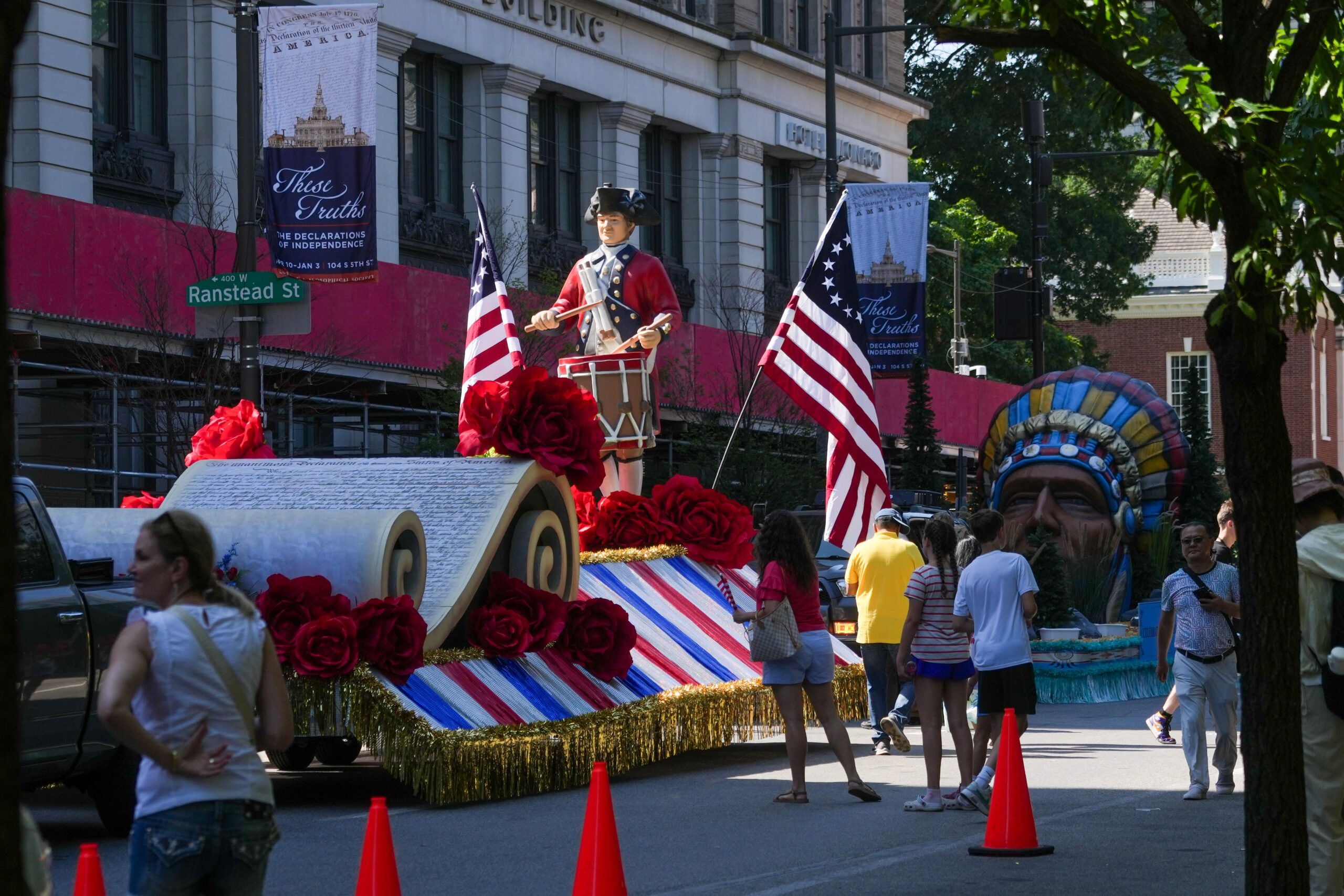
    Floats that were to be in the Salute to Independence Parade are pulled through Old City.

    People planned for years for the 250th. It was supposed to be the biggest week here since Pope Francis’ visit in 2015. We weren’t going to flub this Independence Day celebration up like the Bicentennial; Philly was going to bring it this time.

    But this time, it wasn’t our fault. The one factor nobody can control, Mother Nature, decided to control us.

    ‘Rough and gritty experiences’

    In May of 1776 it was so hot in Philadelphia that John Adams wrote to his wife, Abigail: “The Affairs of America, are in so critical a State, such great Events are struggling for Birth, that I must not quit this station at this Time. Yet I dread the melting Heats of a Philadelphia Summer, and know not how my frail Constitution will endure it.

    Not only did Adams’ frail constitution endure the heat, which dropped to 76 degrees by July 4, 1776, the other Founding Fathers and the people of this fledgling nation braved far worse to declare this country’s independence and create a new and monumental Constitution. Neither the people nor the product were perfect — and they still aren’t today — but they aspired to be something bigger and better.

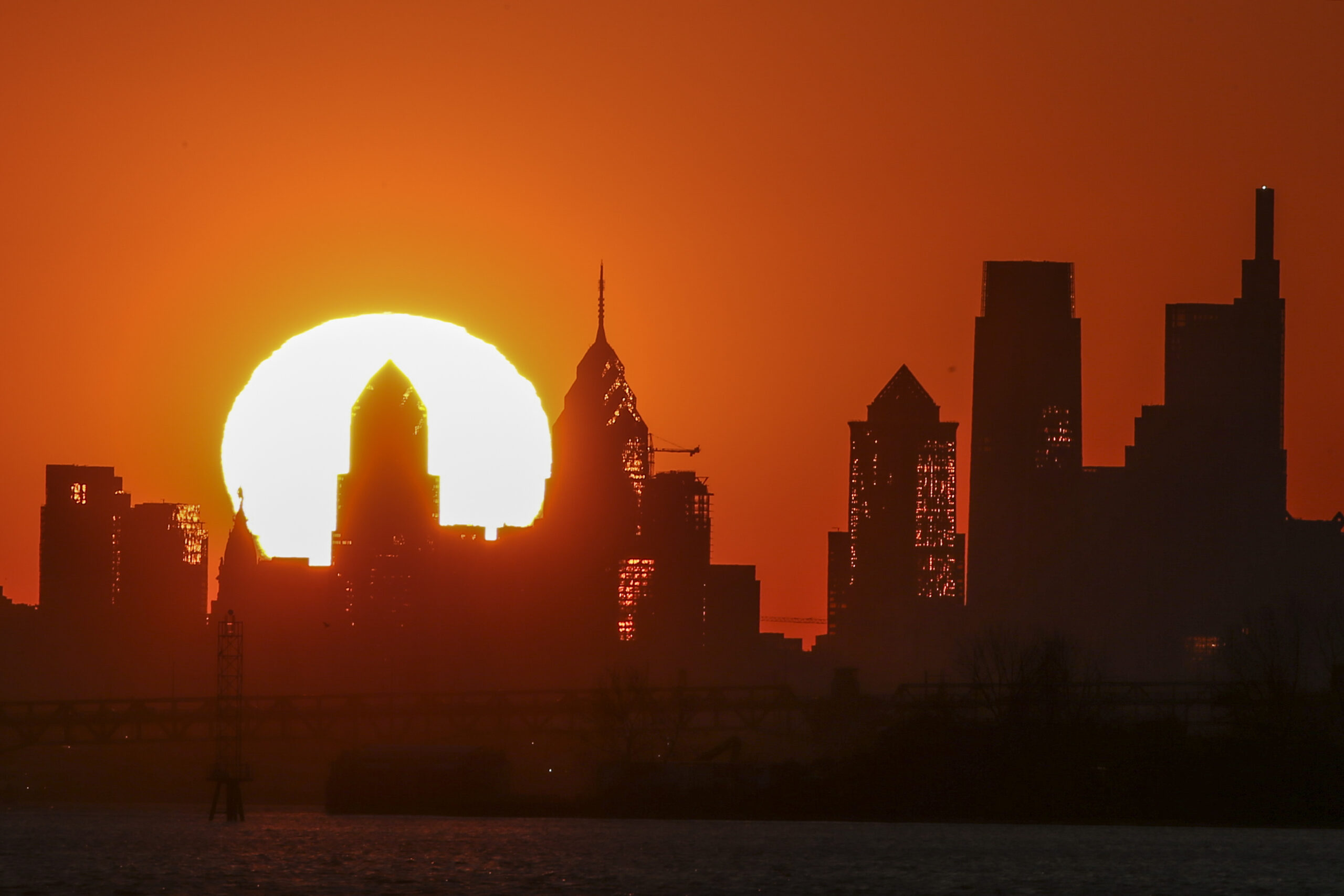
    The sun sets behind the Philadelphia skyline.

    In Philadelphia, we still believe in things bigger than ourselves. Sure, a large majority of the time it’s the Eagles, but not always.

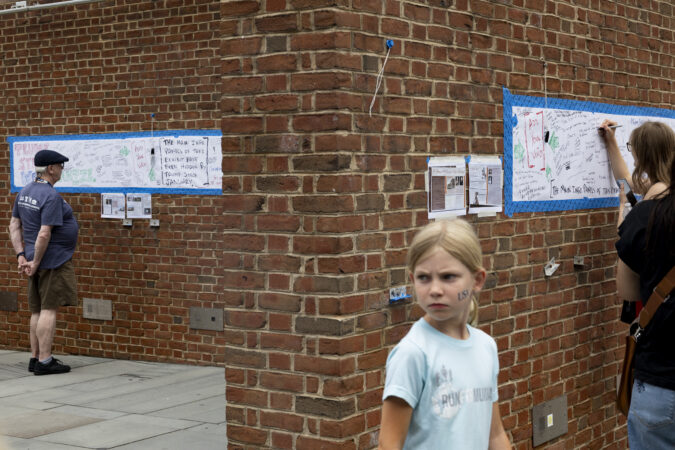
    We believe in each other. I see it everyday in small interactions between strangers. We believe in truth, even when it’s painful. I saw it as volunteers put up handwritten signs Thursday to replace the ones removed at the President’s House. And we believe we are capable of big things. I saw it in the planning of our 250th events.

    It wasn’t just officials who were invested in the Semiquincentennial, more than 10,000 Philadelphians volunteered to undergo training and be “Phambassadors” for the 250th events and the World Cup. These may be divisive times, but it was clear we, the people, still wanted to come together.

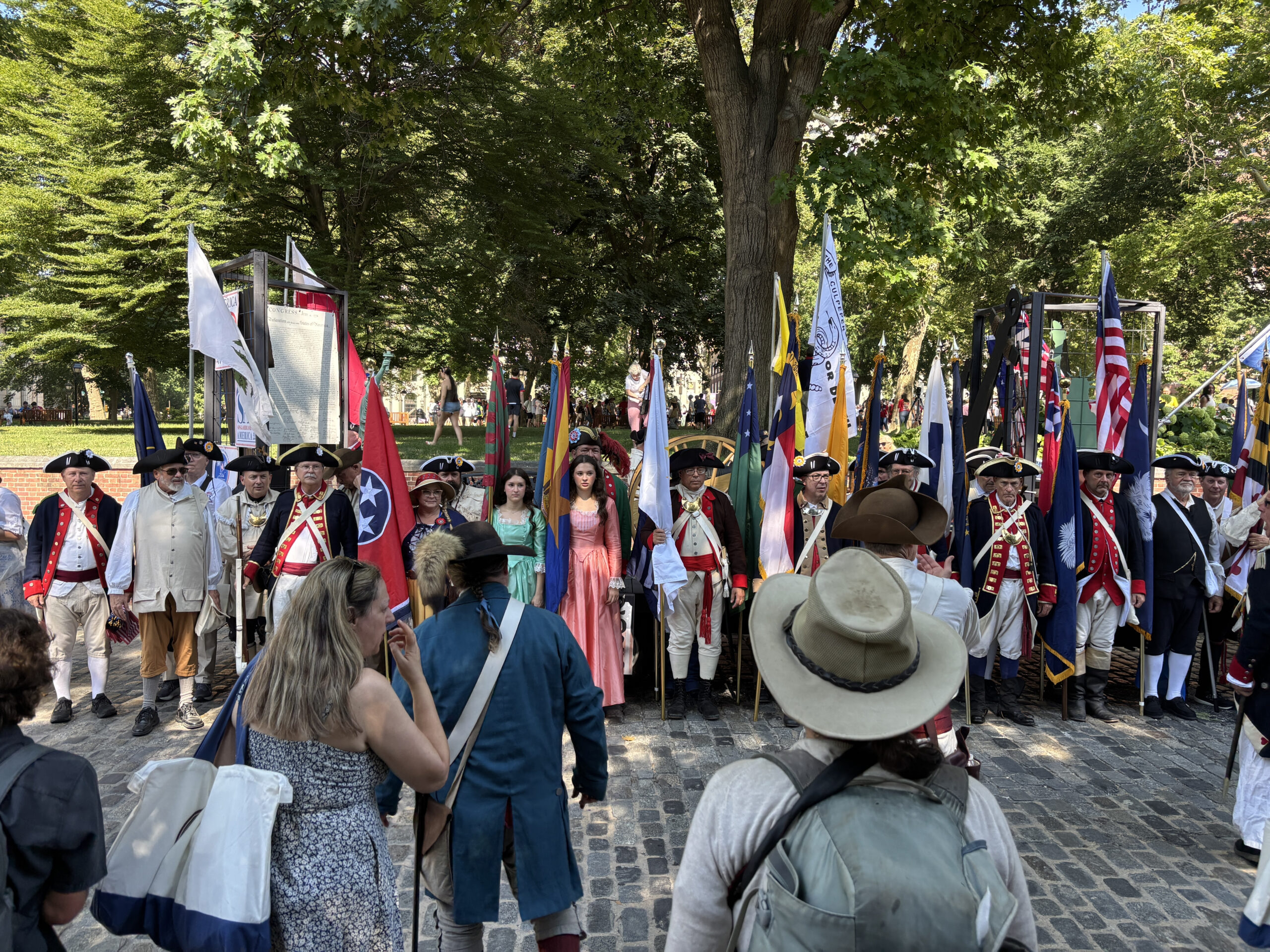
    Even after Friday’s parade was canceled, people persisted and came together in informal gatherings, because that’s what we do. Marching bands, color guards, and dance troupes from across the country held informal pop-up performances at air-conditioned locations across the Historic District and colonial reenactors staged an unscheduled parade near the Liberty Bell.

    With the Salute to Independence Semiquincentennial Parade cancelled reenactors muster near Independence Hall.

    Just because Mother Nature decided to show her hand and remind us who’s boss — which she is totally within her right to do (thanks so much for not hitting us with an astroid!) — doesn’t mean it was all for nothing. We still had those small moments with each other, and while they’re not as flashy as the big ones, in the whole of existence, they’re still pretty unlikely and special too.

    I had one of those moments during Rucker’s show at the Arch Street Meeting House. It felt like a gift to be part of such a small audience as I listened to her beautifully explore what it means to be a human and a Philadelphian.

    Philly legend and poet Ursula Rucker performs with Miles Orion for a crowd of about a dozen people at the Arch Street Meetinghouse Thursday as part of WXPN’s Red, White & Blue To-Do Music Series.

    [image or embed]

    — Stephanie Farr (@farfarraway.bsky.social) July 2, 2026 at 5:18 PM

    “At the core I love us,” she said. “We show mutual aid. We don’t judge. We have rough and gritty experiences.”

    This heat wave — temperatures were forecast to reach 104 Friday and just short of 100 Saturday, with a 60% chance of storms at night — is one of those rough and gritty experiences Philly will get through. The cancellation of events, while disappointing, is about mutual aid and concern, not just for those who would attend the celebrations, but for those who have to work them too.

    Instead of cursing Mother Nature for ruining our big birthday party, maybe Philly and the country can take heed and make a new declaration that we’ll become a leader in reducing factors that lead to global warming.

    I know, a girl can dream, but respect and deference to the one thing that truly governs us all seems like a pretty self-evident truth.

  • Conservative candidate Keiko Fujimori wins Peru’s presidential election in a runoff

    Conservative candidate Keiko Fujimori wins Peru’s presidential election in a runoff

    LIMA, Peru — Conservative politician Keiko Fujimori on Friday was declared the winner of the presidential runoff election in Peru, which was dominated by people’s concerns over surging crime.

    Fujimori, 51, the daughter of a disgraced former president, was running for the presidency for the fourth time. She will be Peru’s ninth president in 10 years when she takes office later this month.

    The election win was certified Friday by the country’s top election authority. Figures released by election officials earlier in the week showed that with 100% of ballots tallied, Fujimori received 9,223,000 votes, or 50.135% of the total, while nationalist congressman Roberto Sánchez earned over 9,173,000 votes, or 49.865%.

    Fujimori and Sánchez made it to the June 7 runoff election after defeating 33 other candidates in an April vote.

    Voters were primarily concerned with increasing levels of crime, especially extortion by violent organized crime gangs, and Fujimori pledged to combat crime with an iron fist.

    The winner is the daughter of the late Alberto Fujimori, the former president whose government in the 1990s defeated the Shining Path extremist rebel group but also took an authoritarian turn. He was convicted in 2009 of human rights abuses in the fight against the rebels, and later of corruption charges.

  • Iran begins funeral rites for Ali Khamenei, supreme leader killed in war

    Iran begins funeral rites for Ali Khamenei, supreme leader killed in war

    For four months, Iran feared it was too dangerous to lay to rest Ayatollah Ali Khamenei, the country’s supreme leader who was killed in an airstrike on the first day of the joint U.S.-Israeli war.

    Now, shielded by a tentative truce — and perhaps by an America distracted by its 250th July Fourth celebration — millions of Iranians are expected to mourn over several days of funeral rites that will stretch across five cities and into neighboring Iraq.

    For the surviving Iranian regime, the funeral offers an opportunity to project power after withstanding months of war with Israel and the United States, but it will also be a high-profile test of the government’s postwar competence.

    Khamenei’s body was moved to Tehran, the capital, on Thursday for a private ceremony at the place where he was killed — the small compound that served as his office and residence.

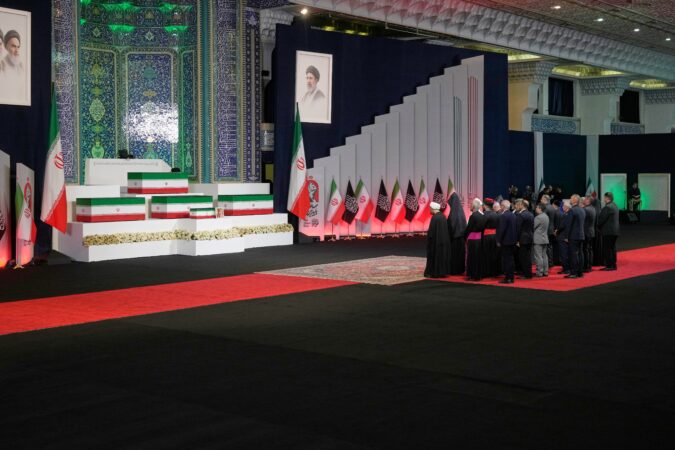
    On Friday, his coffin was moved to Grand Mosalla religious complex where it sat beside the coffins of other family members killed in the same strike, including his daughter and her husband. The smallest coffin was that of Khamenei’s granddaughter, who was 14 months old.

    Images distributed by state media showed foreign dignitaries, including leaders from Iraq, Qatar, and Tajikistan, as well as family members of the assassinated Hezbollah commander, Hasan Nasrallah, filing past the coffins as they arrived in Iran ahead of the funeral.

    Also shown paying his respects was the son of anti-Taliban Afghan commander Ahmed Shah Massoud.

    The funeral organizer said no officials were invited from Europe or the United States. Official banners prepared for the event declared “We must rise” and carried the image of a red fist.

    Security was expected to be tight, with sections of the capital Tehran already going into lockdown Friday.

    Parliament Speaker Mohammad Bagher Ghalibaf, who has been a key figure in peace talks with the U.S., issued a statement on Thursday calling on the Iranian people to “rise up and convey the nation’s call for bloodshed.”

    “Iran stands on the threshold of creating one of the greatest scenes in its history, a day when a nation, with hearts full of love, loyalty, and the pain of separation, comes to bid farewell to a great man,” Ghalibaf said.

    The cavernous prayer hall where Khamenei’s coffin was put on display Friday to lie in state was named after his predecessor, Ayatollah Ruhollah Khomeini, who led the country’s Islamic revolution, took power in 1979, and died a decade later.

    Khamenei led the Islamic Republic for 37 years, through wars and uprisings, and years of enmity and tangled negotiations with Washington over Iran’s nuclear program. Under his leadership, Iran repressed freedoms domestically and expanded its role as the patron of violent proxy militant groups, including Hezbollah and Hamas, which it used to confront the U.S. and Israel.

    Khamenei was killed in the opening hours of a war that has transformed Iran yet again, devastating the country’s infrastructure and leadership ranks, but ultimately seeming to strengthen its position regionally and in ceasefire talks with the U.S. — notably because of its leverage over the Strait of Hormuz.

    As Iranians mourn their assassinated leader, they and observers around the world will be watching the funeral for signals about the surviving regime, which is younger and even more hard-line. Among the top questions is whether Khamenei’s son and successor, Mojtaba, will appear in public for the first time since his father’s death.

    Mojtaba is believed to have been seriously injured in that strike, including serious damage to his face. His wife, Zahra Haddad Adel, was also killed.

    Mojtaba Khamenei has been living under intense security measures given the expectation that he, too, will be a target for assassination.

    Even in peacetime, he kept a low profile. He has only been photographed in public a few times and, before his designation as the new leader, most Iranians had never heard him speak publicly.

    Up until now, Iranians who support their government say they understand why their supreme leader has been unable to appear in public. But the further the country moves away from active war, the more people may demand an appearance.

    “If he doesn’t show up, it does become significant,” said Norman Roule, a former CIA officer who worked on Iran for decades, adding that the move would indicate that he is breaking from the rule of his father in which revolutionary symbolism was critically important.

    If Khamenei does appear — in person or by video — experts will be scouring images for clues about his injuries, officials said, while also searching for broader signs of the regime’s cohesion and capabilities.

    Observers will also be tracking the scale of the event, including whether the government can orchestrate convincing shows of public support beyond the tightly controlled capital. They will also be monitoring how much security is mobilized.

    And as the country shifts away from a war footing, its economic challenges will become more pronounced. Inflation has skyrocketed, and energy exports fell to near zero for weeks. The country’s industrial sector was heavily damaged by U.S. and Israeli strikes.

    Over Ali Khamenei’s decades as supreme leader, public dissatisfaction with the Iranian system grew, triggering repeated waves of protests. And in the past five years, demonstrations seemed to threaten the Islamic Republican at least twice.

    In each instance, Khamenei ordered violent crackdowns with escalating cruelty to clear city streets. The most recent crackdown in January is estimated to have killed thousands of people over just three days, a remarkable scale of brutality.

    After the mourning ceremonies in Tehran, Khamenei’s body will be taken to the holy Iranian city of Qom, then on to neighboring Iraq where crowds will gather in the holy Shiite cities of Najaf and Karbala, before he is finally laid to rest in his hometown, the eastern Iranian city of Mashhad.

    The ceremonies will present a serious logistical challenge for the Iranian regime. Local officials in Tehran say they are expecting crowds of up to 20 million.

    Authorities are keen to avoid the kind of chaotic scenes that marked previous burials. Eight people were trampled to death when Khomeini was buried in 1989. And dozens were killed in 2020 during crowd crushes at the funeral for Maj. Gen. Qasem Soleimani, then Iran’s most powerful military commander, who was killed in a U.S. drone strike ordered by U.S. President Donald Trump.

  • Trump administration gets final legal OK to install own panels at President’s House, city appeals

    Trump administration gets final legal OK to install own panels at President’s House, city appeals

    A Philadelphia-based federal appeals court gave President Donald Trump’s administration the final go-ahead to install its own exhibit at the President’s House.

    The new panels, which historians have criticized for whitewashing George Washington’s role in enslaving nine people, have been manufactured and stand ready to install, the Justice Department told the court.

    The procedural step, which the U.S. Court of Appeals for the Third Circuit took on an observed federal holiday, followed a Thursday request by Justice Department attorneys to allow the National Park Service to “begin work immediately and install its new exhibits.” The Third Circuit ruled last month that the city has no rights over the President’s House.

    “The President’s House is an important national historical site, and the Government submits that the President’s House exhibits should be fully installed without further delay,” the government’s filing said.

    Only two of 11 new panels mention the people enslaved at the President’s House, which was the exhibit’s original purpose. The exhibits are not factually wrong, historians said, but cast Washington in a more sympathetic light.

    “Slaves living in the President’s House experienced a greater modicum of autonomy than elsewhere in the South such as to explore the city and sometimes even attend the theater, with Washington buying the tickets,” one panel reads.

    The city quickly appealed and asked the Third Circuit court to recall the Friday-morning order, saying it didn’t have time to respond to the Justice Department’s Thursday request.

    And while the federal government asked to install the exhibits “immediately,” the request did not identify a reason for the rush.

    “That is not an emergency,” the city’s filing said, “it is a preference for speed.”

    The court shouldn’t have issued its final approval for changes without waiting the 90 days Philadelphia had to appeal last month’s order, the filing said.

    The city also repeated the argument, which has not found purchase with the appellate judges so far, that allowing the Trump administration to install its own exhibit would cause the city and public irreparable harm.

    The city’s motion does not automatically pause the court’s order.

    But in addition, the city filed a motion for a stay, while the Third Circuit considers the appeal, with District Judge Cynthia M. Rufe, who issued the now-vacated injunction ordering the Trump administration to restore the exhibits it had removed.

    The city and the Department of the Interior did not immediately respond to requests for comment.

    The President’s House has been subject to litigation in federal courts since the Trump administration dismantled the slavery exhibit in January.

    It has been in legal limbo in recent weeks because of litigation in a Boston federal court, where conservation groups sued to stop the Interior Department’s implementation of Trump’s 2025 executive order requiring no national parks displays that “inappropriately disparage Americans past or living.”

    At least 50 exhibits were removed from more than 30 sites nationwide, according to court records. Among them are also mentions of slavery at Independence Hall and the Second National Bank of the United States that the Trump administration quietly removed.

    A federal judge in Boston last month ordered the National Park Service to restore all removed exhibits to parks across the nation. But the Court of Appeals for the First Circuit disagreed and stayed that order Thursday.

    Hours later, Justice Department attorneys asked the Philadelphia-based federal court to clear the final procedural step — and the court obliged before noon Friday.

    The biggest question remaining is whether the Trump administration will attempt to install the panel during this historic July 4 weekend marking the United States’ 250th anniversary.

  • U.S. officials believed Israel was plotting to kill Iranian negotiators

    U.S. officials believed Israel was plotting to kill Iranian negotiators

    WASHINGTON — U.S. officials believed that Israel might have been plotting to kill Iran’s top negotiators while Washington was engaged with Tehran in delicate talks this spring to reach an interim peace deal, according to current and former U.S. officials.

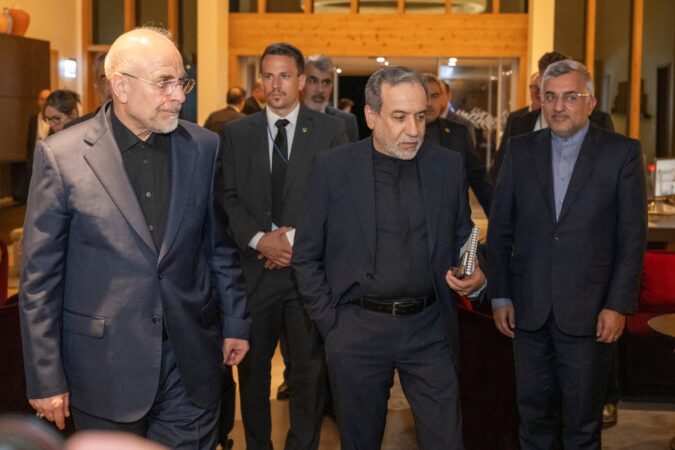
    Killing senior Iranian leaders had been part of Israel’s strategy from the start of the war. But America’s concerns about the targeting of two particular Iranian officials — Abbas Araghchi, Iran’s foreign minister, and Mohammad Bagher Ghalibaf, the speaker of the parliament — spiked during delicate ceasefire negotiations that began in April.

    Fearful that an Israeli assassination effort would doom the negotiations, the United States, according to some of the officials, went so far as to ask other countries in the region to warn Iran about the possibility Israel could target the two officials.

    U.S. officials acknowledged that during the intense phase of the war, Araghchi and Ghalibaf, as senior government officials, could have been legitimate targets for Israel, which was intent on toppling Iran’s hard-line government. But after the negotiations started in earnest in April, U.S. officials believed that any attempt to kill the Iranian leaders would end the talks and reignite the fighting.

    The war began Feb. 28 with an Israeli strike that killed the supreme leader, Ayatollah Ali Khamenei, and other top officials, based in part on U.S. intelligence.

    While U.S. strikes focused on Iran’s navy and missile forces, Israel prioritized targeting the leadership in the early phase of the war, intent on killing as many high-ranking officials as it could.

    That included killing potentially more pragmatic leaders that the Trump administration had hoped to negotiate with, such as Ali Larijani, Iran’s top national security official, and Kamal Kharazi, a former Iranian foreign minister. Both men were involved in the negotiations with the United States when they were killed in Israeli airstrikes.

    The Trump administration’s suspicions about the possible Israeli plot to kill the two top negotiators show how the U.S. and Israeli war aims, which were close at the very beginning of the war, quickly diverged radically. And while the United States wanted a peace agreement, Israel has been skeptical from the initial cessation of hostilities in April.

    The initial two-week ceasefire in April was met with grudging Israeli official support and broad public concern in Israel that the United States was ending the war too early. Rather than being driven from power, the theocratic government of Iran had become even more hard-line, and Iran’s Revolutionary Guard had only consolidated its control over the country.

    Araghchi and Ghalibaf have been the key officials negotiating with various countries in the region to reach a ceasefire and then a more lasting peace with the United States. In June, the United States and Iran reached a framework agreement that sought to open the Strait of Hormuz and set the outline for follow-on talks on Tehran’s nuclear program.

    Officials and commentators in Israel viewed the initial agreement as a disaster, because it did not accomplish their country’s war aims of forcing regime change, destroying Iran’s proxy forces, and seriously damaging its missile program. Israeli officials also worried the agreement would put billions of dollars into Iran, allowing it to quickly rebuild after the war and without meaningfully restricting its nuclear ambitions.

    A spokesperson for the Israeli Embassy in Washington declined to comment.

    Asked about Israeli plans and the warning to Iran, a U.S. official noted that talks between American and Iranian delegations continue and that Steve Witkoff, a special envoy, and Jared Kushner, the president’s son-in-law, had productive meetings in Qatar. President Donald Trump, the official said, wants the peace process “to play out.”

    The Wall Street Journal reported in March that Israel had Araghchi and Ghalibaf on a target list but temporarily removed them as the United States discussed beginning negotiations with Iran.

    A U.S. official and a Middle East official said that the Trump administration learned around that time that at least Ghalibaf was on an Israeli targeting list and asked Israel to refrain.

    Ghalibaf was nearly killed in both the 12-day war in June 2025 and again in this year’s conflict, when Israel targeted a secret meeting of senior government officials in a bunker under a mountain, according to three senior Iranian officials and public comments by officials. In both incidents, Ghalibaf was rescued from under the rubble, the officials said.

    “Today, Mr. Ghalibaf and Mr. Araghchi and other members of the negotiating team have put their lives on the line, knowing the grave security risks, and this is called a real sacrifice, not political maneuvering,” Mohsen Zanganeh, a lawmaker, told local media in late April after the Islamabad meeting.

    During the negotiations, Iran has taken precautions aimed at making it more difficult for Israel to strike at senior officials.

    In April, Ghalibaf was set to travel to Islamabad to meet with Vice President JD Vance. But Iranian security officials were concerned that Israel would use the opportunity to assassinate Ghalibaf or Araghchi to derail the talks, the officials said.

    Iranians sought guarantees from the United States, through Pakistani and Qatari intermediaries, that Israel would not carry out any covert operations targeting the Iranian delegation, the officials said.

    Pakistani fighter jets escorted the Iranian airplanes carrying a delegation of more than 70 Iranians from the border of Iran to Islamabad and back again when the session was over.

    But on the way back to Tehran, an Israeli security threat emerged.

    Iran’s security forces notified the plane carrying Ghalibaf back to Tehran that they had picked up intelligence that Israel planned to attack the plane and that two Israeli fighter jets had entered Iran’s airspace from its western border near Iraq, the two officials said.

    Mahdi Mohammadi, a senior adviser for Ghalibaf, who accompanied him to Islamabad, confirmed this account on his social media page. The plane made an emergency landing in the city of Mashhad, Iran’s closest airport to the Pakistani border, and the Iranian delegation traveled some eight hours by land back to Tehran, Mohammadi and the two officials said.

    But the officials have continued to travel.

    In late May, Ghalibaf and Araghchi flew to Qatar for talks and then traveled to Switzerland in June for a second in-person meeting with Vance and the American delegation.

    This article originally appeared in the New York Times.

  • Phillies closer Jhoan Duran named NL reliever of the month

    Phillies closer Jhoan Duran named NL reliever of the month

    Phillies closer Jhoan Duran was named the National League reliever of the month for June, MLB announced Friday.

    Duran posted a 1.64 ERA and 0.91 WHIP across 12 appearances in June. He converted nine of 10 save opportunities. After blowing his first save of the season on June 9 in Toronto, Duran has not allowed another run in eight appearances since.

    “There’s been times I’ve had to have teams where that ninth inning is by committee. It never seems to go that well,” interim manager Don Mattingly said last month. “I like having a number of guys that you could do it with, but it’s nice to have that guy that you feel like the game’s over.”

    The Phillies have leaned on their closer often as they engineered a turnaround from 10 games below .500 in April to now 10 games above .500.

    “If I feel good, I want to be in the game,” Duran said recently. “So that’s me. The more I throw in the game, I feel more comfortable. I feel way better.”

    So far this season, the 28-year-old right-hander has 21 saves, which was tied with the San Diego Padres’ Mason Miller and the St. Louis Cardinals’ Riley O’Brien for the National League lead, entering Friday.

    Duran is the second Phillies player to collect a monthly honor this season. Cristopher Sánchez won NL pitcher of the month for May.

  • Trump wants to ease rules on mailing guns. His son’s company could benefit.

    Trump wants to ease rules on mailing guns. His son’s company could benefit.

    On an earnings call in May, GrabAGun’s chief executive had a hopeful message for investors: The Trump administration’s proposed rollback of gun regulations could be a boon to the company, which hopes to be “the Amazon of guns.”

    “This could be the most significant change to firearms retail distribution in decades,” Marc Nemati said, according to a public recording of the call. “GrabAGun is uniquely positioned for this opportunity.”

    What Nemati did not mention was that the company also had a powerful voice on its side. Donald Trump Jr., the president’s son, is on GrabAGun’s board and is a consultant to the company.

    The younger Trump was present at the New York Stock Exchange in July 2025 when the company went public, with photos showing him making a gesture like holding a gun to celebrate the moment as he helped ring the bell.

    And, with a 1.1% ownership stake in the company, Trump Jr. stands to prosper if the company fulfills its goal of being a dominant seller of firearms online.

    “To be able to come back to the New York Stock Exchange and actually take a gun company public feels like such a vindication of all the insanity, all of the woke nonsense that we’ve been watching and facing for the last decade in America,” Trump Jr. said on Fox Business ahead of GrabAGun going public. “It’s a triumphant return.”

    GrabAGun sells and ships ammunition, and some gun accessories, directly to consumers in some states using its website. But it must rely on middlemen to actually transfer the firearm to the customer.

    That’s because federal regulations prohibit sending handguns to individuals through the mail, and they require that firearms background checks and transfers be conducted in person. The administration has proposed regulatory changes that, for the first time, would let firearms sales take place entirely online, with handguns mailed directly to buyers’ doorsteps.

    Such changes could enormously benefit GrabAGun and the president’s son, creating a potential conflict of interest that has attracted the attention of ethics watchdogs.

    Many Republicans were highly critical of Hunter Biden’s tenure as a board member of the Ukrainian energy company Burisma at a time when his father, Joe Biden, was vice president and a key player on Ukraine. In the Trumps’ case, the president’s son could benefit directly from policies adopted by his father’s administration.

    “There is no question about the company’s ties to the son of the president,” said Jordan Libowitz, a spokesperson for Citizens for Responsibility and Ethics in Washington, which investigates and litigates matters involving ethics in governance. “It is always going to raise red flags and question how decisions are made within the administration.”

    In a statement, a spokesperson for GrabAGun said, “We appreciate the proposed rulemaking may allow a more streamlined purchase process for firearms for everyone who wishes to legally secure firearms, from enthusiasts to sportsmen. There is a lengthy rulemaking process ahead. GrabAGun has submitted a public comment on one of the proposed rules, and will be participating in the public comment process.”

    A spokesperson for Trump Jr. said he is a longtime promoter of gun rights who is pursuing an attractive business opportunity and has no connection to the ATF rule changes.

    “Don is a lifelong businessperson and vocal advocate of our Second Amendment rights,” the spokesperson said. “He does not interface with the federal government as part of his role with any company that he invests in or advises and had zero involvement in this particular decision.”

    A White House official said the ATF proposals were driven by the administration’s interest in protecting the Second Amendment and had nothing to do with Trump Jr.’s business interests.

    The Trump family’s sprawling business ventures, which have thrived during President Donald Trump’s second term, are facing heightened scrutiny. The president’s latest financial disclosure forms show that his reported income soared to more than $2.2 billion in 2025, as he took in more than $1.4 billion from cryptocurrency, digital tokens, and related partnerships.

    The president has said he is not involved in the day-to-day operation of his businesses while in the White House. But his two oldest sons have continued to manage the family’s eponymous real estate empire and invest in new ventures, often in countries heavily reliant on the goodwill of the U.S. government.

    Trump Jr., for example, has invested in AI-related companies, data centers, and more.

    Trump Jr. became formally involved in GrabAGun in December 2024, shortly after his father was elected to his second term. Under his agreement with the company, Trump Jr. would serve as a consultant in exchange for 300,000 shares of stock, or just over 1% of the company’s value, according to filings with the Securities and Exchange Commission.

    He would also be responsible for helping to execute the company’s marketing strategy, developing partnerships, and “serving as a spokesperson for the Company to effectively communicate the Company’s mission and initiatives,” the filings say.

    GrabAGun Digital Holdings is a 16-year-old Texas-based company that aims to digitize the gun-buying process, according to SEC filings. It hopes to reach a more youthful cohort of firearms users, who company executives say would be more likely than their older peers to buy firearms online.

    Since going public, the company — which is valued at nearly $70 million — has dropped in value, public records show. On the earnings call, company executives blamed the loss in value on the costs of going public and expanding.

    Trump Jr. has made it clear that the company’s path toward greater profitability is internet sales.

    “Younger people are actually getting into the Second Amendment,” he said on Fox News in January 2025. “They understand the fundamental importance of being able to protect themselves and their freedoms. … This is a way — with an incredible tech site — for them to shop the way they shop for everything else.”

    On the campaign trail, the elder Trump promised to roll back Biden-era firearms regulations, such as a rule that prohibits the sale of stabilizing brace firearm accessories, and received the backing of major gun rights groups. In April, the Bureau of Alcohol, Tobacco, Firearms and Explosives — the law enforcement agency within the Justice Department tasked with regulating the nation’s hundreds of millions of firearms — proposed amending or eliminating 34 gun regulations.

    Experts said some of those changes, taken together, would transform the firearms market from one that largely plays out in storefronts across the country into a potentially lucrative digital marketplace.

    Currently, licensed firearms dealers must verify a potential buyer’s identity and run a federally mandated background check in person. That stems from Congress’ move to tighten the rules in 1968, after Lee Harvey Oswald used a fake name on a mail order to buy the gun he used to assassinate President John F. Kennedy in 1963.

    Gun rights groups say the regulations are outdated in the digital era. Under one of the ATF proposals, firearms sellers would be able to verify someone’s identity and check their background online.

    Erich Pratt, senior vice president of Gun Owners of America, said the Gun Control Act of 1968 went beyond the government’s authority in restricting gun purchases, given the Second Amendment right to bear arms. Pratt, the ATF, and other gun rights groups have said that the proposal has ample measures in place to ensure the safe sale of firearms online.

    “The right of Americans to buy guns — even online — is something that is deeply rooted in our nation’s text, history, and tradition,” Pratt said, echoing the language of recent Supreme Court decisions. “It is as American as apple pie.”

    GrabAGun’s business model allows customers to order firearms on the company’s website or mobile app. The guns are shipped not to their homes but to a licensed dealer in their states, and the customers must undergo background checks at the store before they can pick up the firearms.

    As the ATF moves to allow background checks online, a separate proposal would loosen a century-old ban on sending handguns to people’s homes through the U.S. Postal Service. Under the proposed rule, licensed firearms dealers could ship guns to residents of their state. The proposal follows a Justice Department memo in January, authored by lawyers in the department’s Office of Legal Counsel, declaring the gun-mailing ban unconstitutional.

    If the ATF and Postal Service rule changes are enacted, GrabAGun could sell firearms online and ship them directly to consumers, at least in states where the company is licensed. GrabAGun is a licensed dealer in Texas, according to public records, and firearms experts say it would not be difficult for the company to get licensed in many other states.

    The ATF announced its proposals on April 29, beginning a 90-day public comment period that will expire in early August. The public comment period for the Postal Service measure has closed, and those comments are under review. Multiple state attorneys general have said they are against the Postal Service proposal, suggesting that it could face legal challenges if adopted.

    The administration says its proposals would remedy the misinterpretation of the law and Constitution by Biden-era officials.

    “ATF regulation changes reflect President Trump’s commitment to the rule of law, and that includes protecting the Second Amendment rights of all Americans,” a White House official said. “We refuse to bypass Congress and use the regulatory process to harass law-abiding Americans seeking to exercise their rights,” as the administration claims its predecessors did.

    Advocates for stricter gun laws say it is critical that potential buyers have in-person interactions before they acquire handguns. In face-to-face interactions, they say, gun sellers can pick up on any red flags suggesting that it would be unsafe for the potential buyer to possess a firearm.

    Gun-control advocates cite another administration proposal that, they say, could help GrabAGun but threaten public safety.

    Under existing ATF regulations, residents of states with rigorous procedures for obtaining concealed-carry permits can bypass the federal background check. Under the new proposal, more states, including those with laxer procedures, would qualify for the waiver.

    Marianna Mitchem, senior industry adviser for Everytown for Gun Safety, a gun-control advocacy group, said she fears that the administration’s proposals would make it simpler for gun traffickers, criminals, and underage people to get their hands on firearms through online platforms such as GrabAGun.

    Mitchem, who was a senior official at ATF overseeing inspections of gun shops before leaving the agency in 2025, said the agency during the Biden administration never discussed easing regulations to enable online sales.

    “This is going to make it so much easier for dangerous people to get firearms,” Mitchem said. “You are eliminating [gun shops’] ability to be the first line of defense.”

    GrabAGun’s executives disagree, and they submitted a comment to ATF supporting online background checks.

    “The Second Amendment is in our blood,” Jonathan B. Wolens, GrabAGun’s general counsel, wrote in the comment, which is available online. “We support this rule change because we believe it will promote efficiency and support compliance by enabling more timely, accurate confirmation of license validity.”

    ATF said the proposed rule would require a rigorous identification process while updating the gun sales process for the 21st century. “ATF’s proposed rule modernizes and strengthens identity-verification requirements … and reduces burden on consumers,” an ATF spokesperson said in a statement.

    GrabAGun appears poised to move fast if the rule changes are enacted. In October — months before the proposals were introduced — GrabAGun formed a subsidiary called Pew Logistics, with a stated mission of selling software to provide “next-generation, white-label direct-to-consumer fulfillment solutions to modernize the firearms supply chain.”

    That software would be sold to gun manufacturers, helping them sell directly to consumers online.

    Trump Jr. has multiple other financial ties to GrabAGun that could enable him to profit if the company takes off.

    GrabAGun offers a “Shoot Now Pay Later” financing option through a company called Credova Financial. Credova is a subsidiary of Public Square Holdings, where the president’s son is a board member and investor.

    In August, the Consumer Financial Protection Bureau dropped an investigation of Credova, which had been accused of wrongly charging fees to customers. It said the inquiry, which started during the Biden administration, was politically biased against companies affiliated with firearms.

    When GrabAGun went public, it merged with Colombier Acquisition Corp. II, a firm designed to combine with other companies and take them public. Colombier is led by Omeed Malik, a major Republican donor who chairs 1789 Capital, a venture capital firm that includes Trump Jr. as a partner.


  • The Big Picture: World Cup mayhem, fireworks at the Bank, and the best Philly sports photos of the week

    The Big Picture: World Cup mayhem, fireworks at the Bank, and the best Philly sports photos of the week

    Each Friday, Inquirer photo editors pick the best sports images from the last seven days. This week, we look at the Pennsylvania showdown between the Phillies and the Pirates that for much of the series was a display of the Fightins’ dominance — until it wasn’t.

    The women’s basketball championship at inaugural Invitational Clash at Drexel University had no shortage of fireworks, literally, and we take a look at the penultimate game of the World Cup in Philly, the Group L clash between Croatia and Ghana.

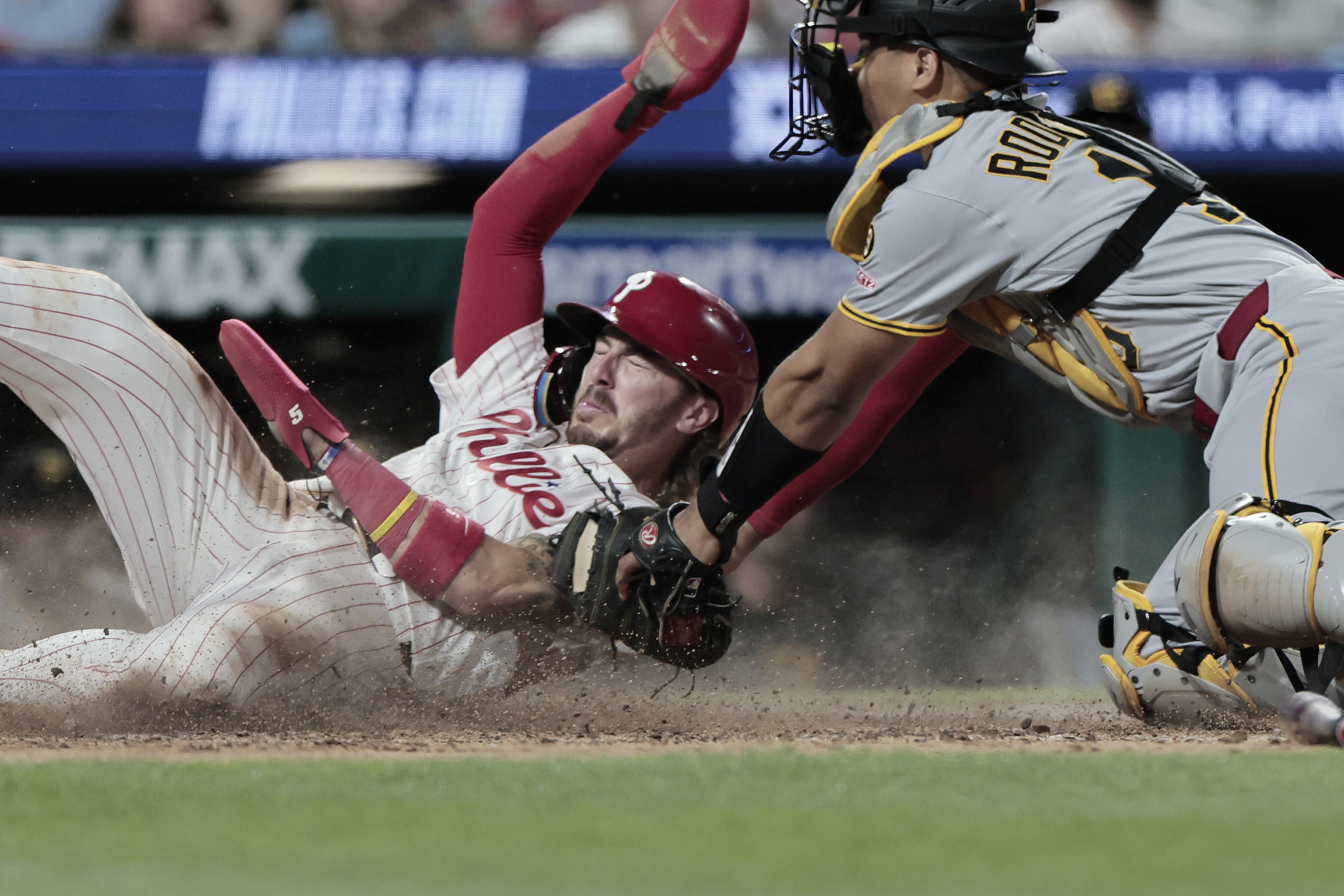
    Bryson Stott (left) scores ahead of the tag by Pirates catcher Endy Rodríguez in the eighth inning of the Phillies-Pirates game on Tuesday.
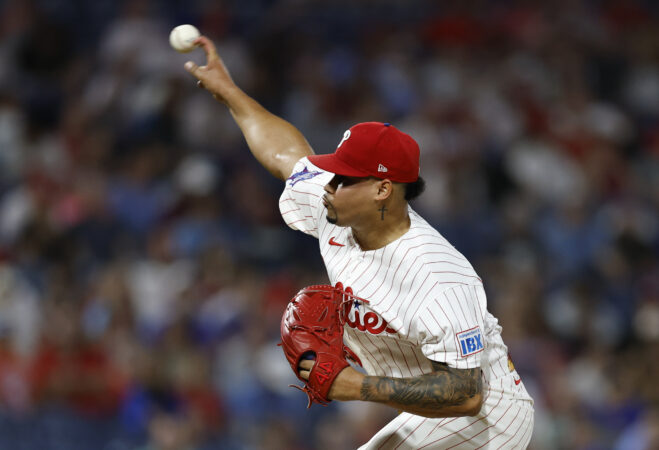
    Kyle Backhus pitches in the fifth inning of the Phillies’ game vs. the Pirates on Wednesday.
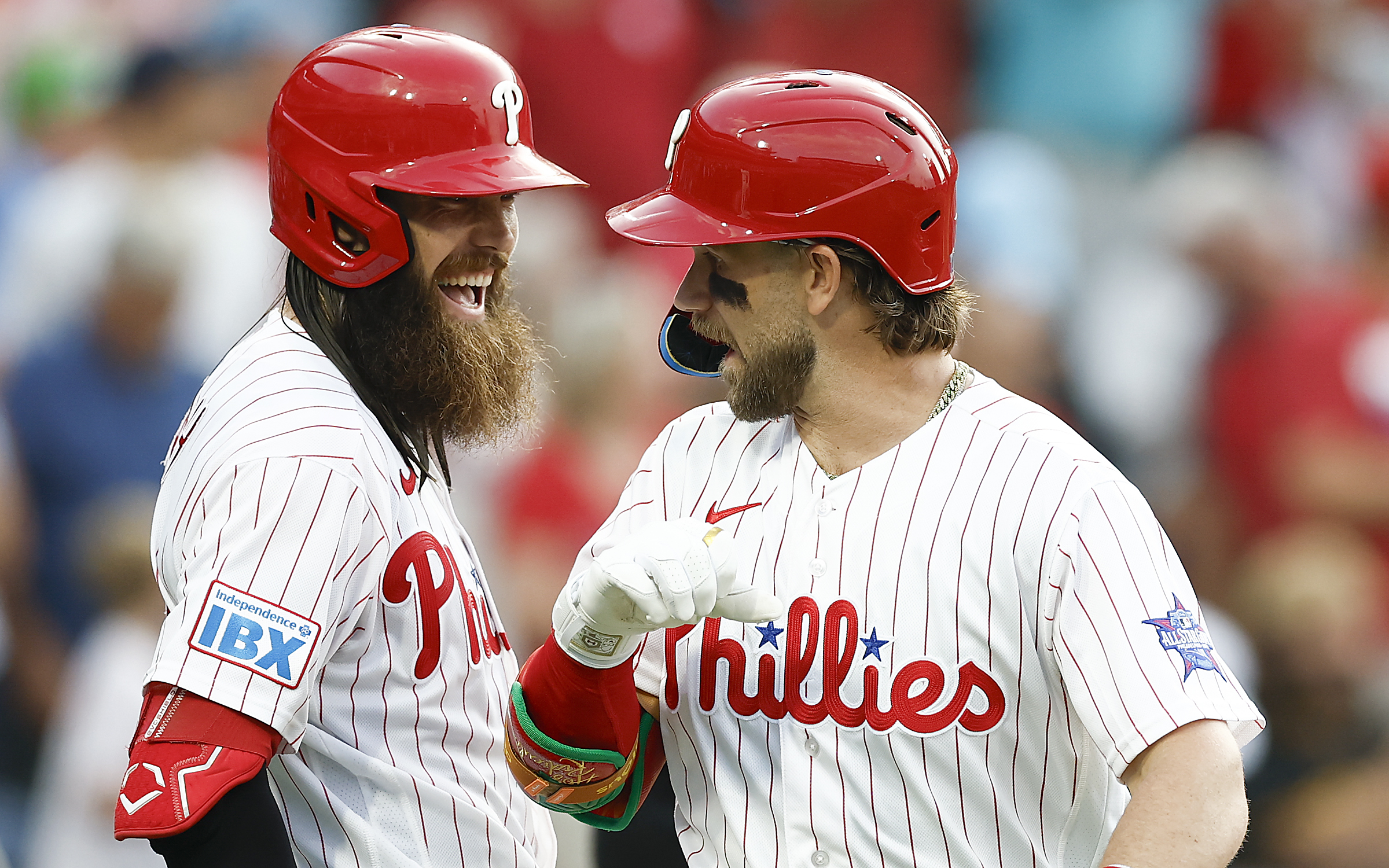
    Bryce Harper (right) celebrates his third inning two-run homer with teammate Brandon Marsh against the Pittsburgh Pirates on Monday.
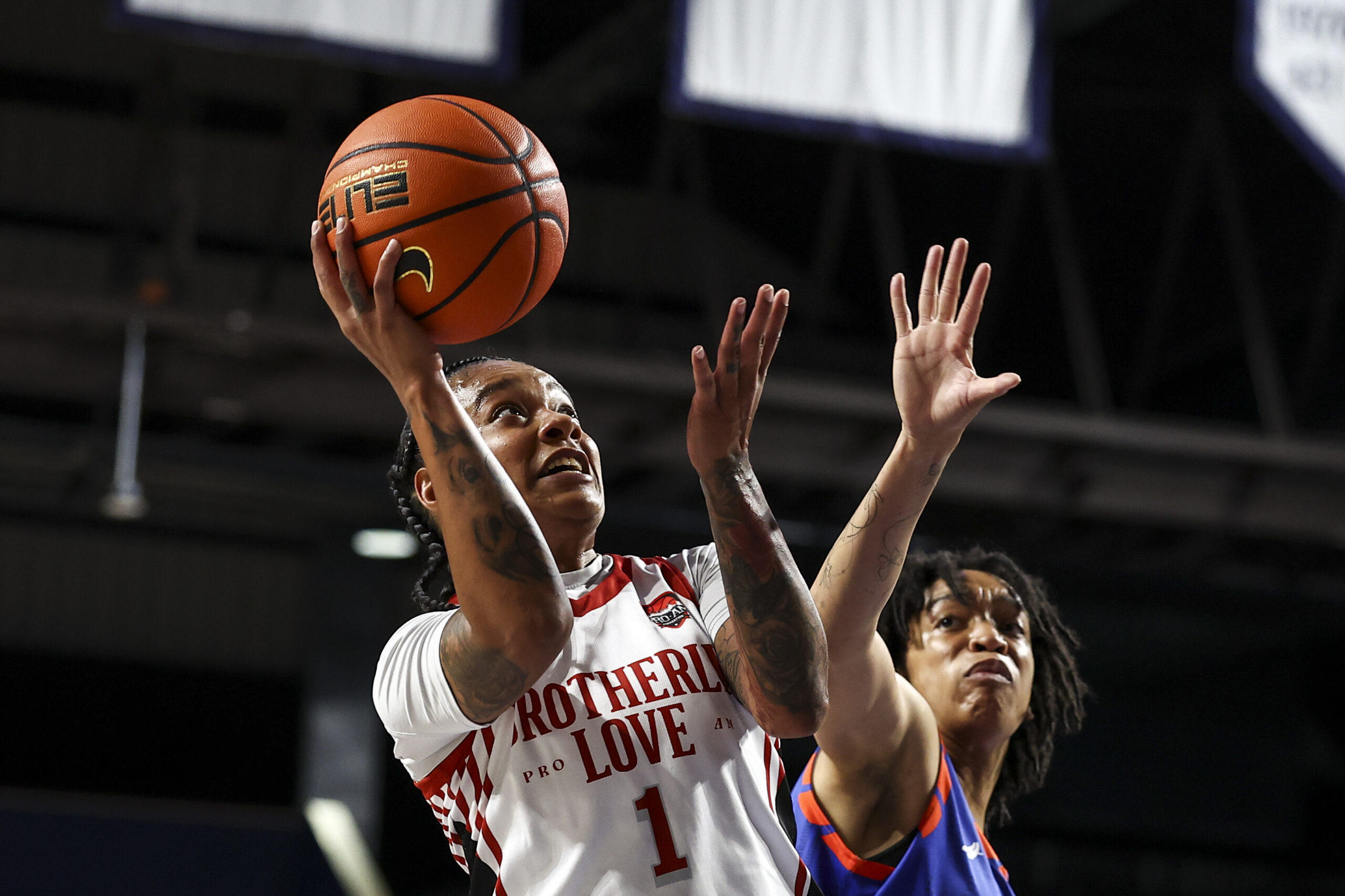
    Brotherly Love player Imani McGee takes the court during the Invitational Clash women’s championship at at Drexel on Monday.
    Brotherly Love’s Britt Hrynko (left) is defended by Rucker Park’ Roxkel Washington during the Invitational Clash women’s championship on Monday at Drexel.
    (From left to right) Tia Garvin, 33, of North Philadelphia, and their cousin Briana Garvin, 24, of New York City, enjoy the sun while doing some yoga and stretches at Dilworth Park in on Tuesday.
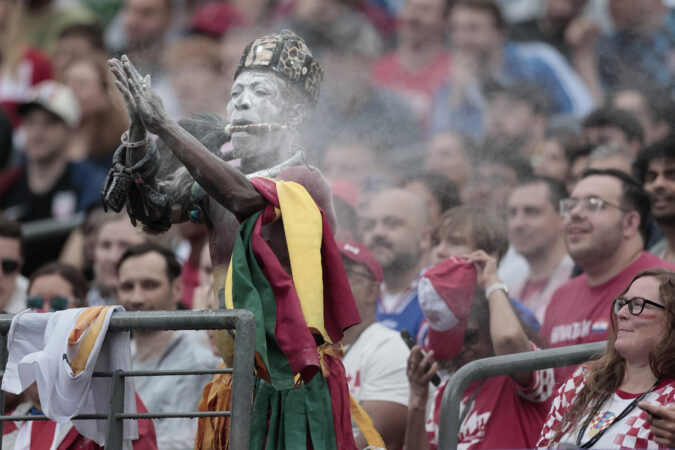
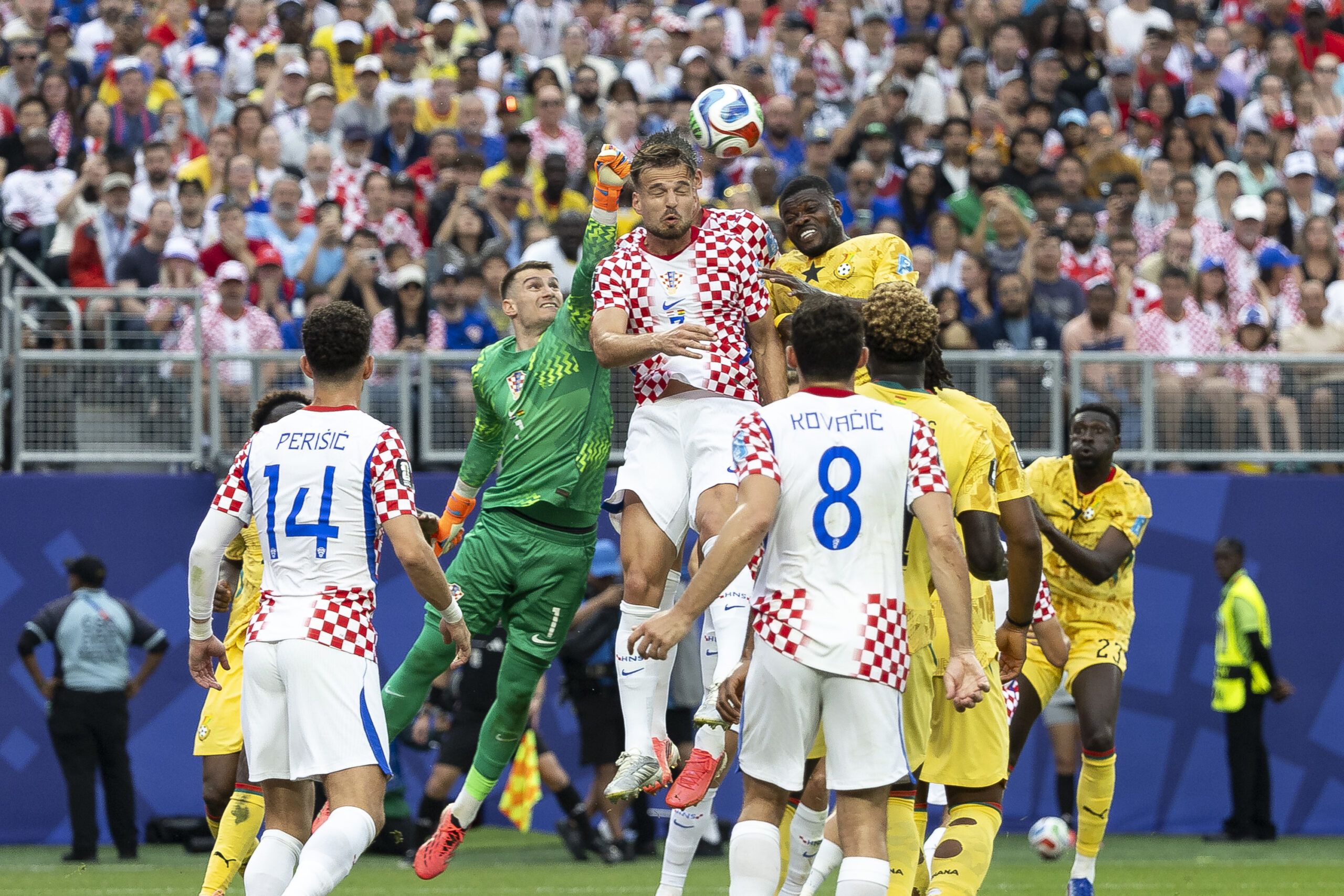
    Croatia’s Marin Pongracic (3), goes for a header to defend a corner kick by Ghana during the second half of their World Cup group stage game on Philadelphia Stadium on Saturday.
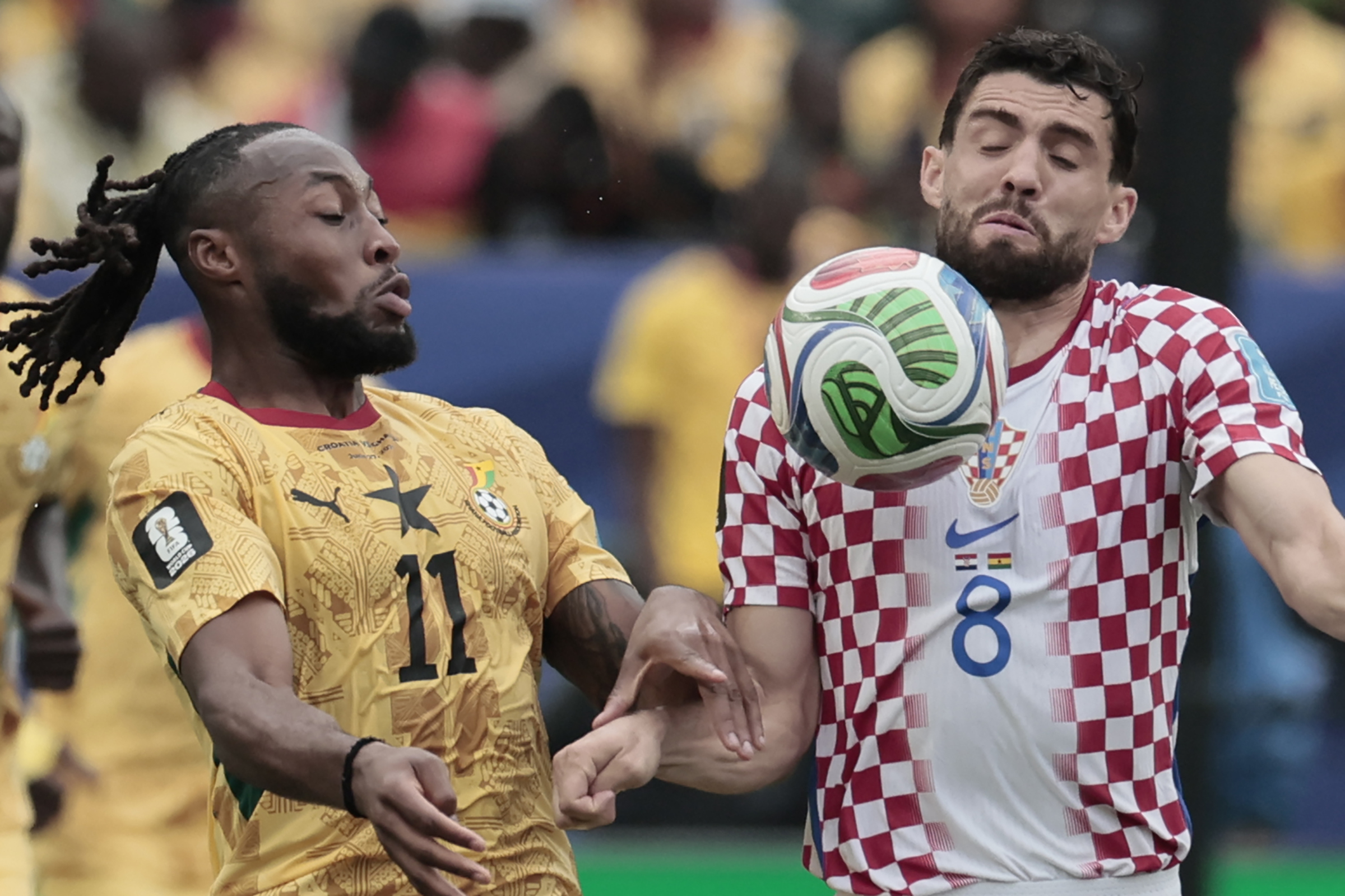
    Ghana’s Antoine Semenyo (left) and Croatia’s Mateo Kovacic battle for the ball in the first half of their match on Saturday at Philadelphia Stadium.
    Croatia’s Petar Sučić (center_ celebrates his first half goal in front of Croatia fans during the their Group L match against Ghana on Saturday.
    Carter Pike, 23, of Greenville, S.C., cheers for Croatia before their match against Ghana in Philadelphia on Saturday.
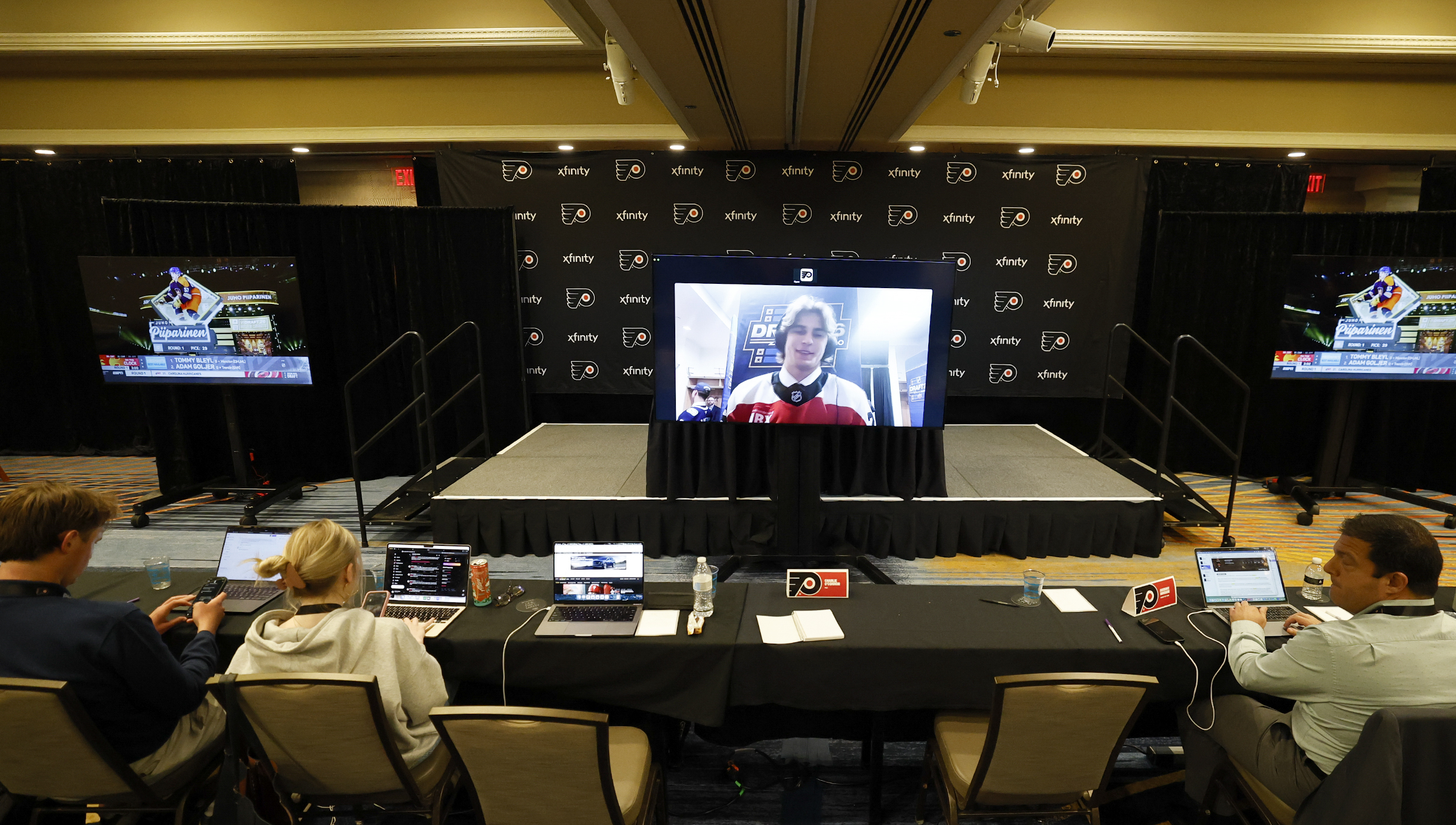
    Flyers first-round pick pick Maksim Sokolovskii meets with the media at the Flyers’ 2026 NHL draft party at the Hard Rock Hotel & Casino in Atlantic City last week.
    Flyers prospects Maksim Sokolovskii (left) and Brek Liske walk through the giant heart during the Flyers development camp signing event at the Franklin Institute on Wednesday.
    The fireworks looked out of this world following the Pirates-Phillies MLB game on Wednesday at Citizens Bank Park.