Remnants of a 136-year-old shipwreck have been discovered at Island Beach State Park in Ocean County. Large, wooden chunks of the Lawrence N. McKenzie, a 19th-century schooner that sank in the Atlantic Ocean on March 21, 1890, surfaced on the shoreline following weeks of beach erosion caused by persistent high winds and rough surf, according to a statement from State Park officials.
“Beach erosion during the winter months is common at Island Beach State Park and is part of a natural, cyclical process,” the statement said. “Most beaches recover from the erosion during the calmer summer months — but for now, this winter’s erosion has revealed a glimpse into the park’s maritime history.”
Pieces of the Lawrence N. Mckenzie, a 98-foot schooner that sank off the coast of New Jersey in 1890, were discovered on the shore of Island Beach State Park.
The 98-foot McKenzie was hauling oranges from Puerto Rico to New York City when it encountered a thick fog near Barnegat, New Jersey. According to a report that Captain Lawrence McKenzie filed with the insurance company, there was six feet of water in the vessel’s hold when members of the Cedar Creek U.S. Life Saving Service rescued the eight-person crew.
Barnegat’s coastline is notorious for its constantly shifting shoals and channels. The Army Corps of Engineers estimates that between 1705 and the introduction of the steamship, there were 40 shipwrecks each year off the coast of Barnegat, earning the coast of New Jersey the nickname “the graveyard of the Atlantic.”
Island Beach State Park officials are currently monitoring the area. They reminded visitors to respect the park’s historic artifacts. Touching or removing any part of such objects is prohibited and subject to summonses issued by the New Jersey State Park Police.
BRUSSELS, Belgium — After President Donald Trump used his bully pulpit in Davos, Switzerland, to demand “the acquisition of Greenland by the United States — just as we have acquired many other territories throughout our history” — and then backed down on the same day, many officials here see a lesson for the European Union: Pushing back works.
The brazen ultimatum — give up Greenland or face tariffs — elicited a level of unity that largely had eluded the leaders of the 27-nation EU in the year since Trump’s second inauguration.
Trump’s gambit for Greenland, an autonomous territory of NATO ally Denmark, bonded some unlikely partners in opposition: Europe’s mainstream political establishment with populist and nationalist parties; Republicans and Democrats in the deeply partisan U.S. Congress; the mostly Indigenous people of Greenland with their Danish former colonizers; and the EU and Britain, the only country ever to quit the bloc.
For advocates of taking a tougher line with Trump, the president’s climbdown regarding the strategic Arctic territory was proof that retaliation — not conciliation — is the answer to his hardball tactics. After accommodating Trump on trade and on armingUkraine, the Europeans finally stood up to him. Even more significantly, Trump backed down.
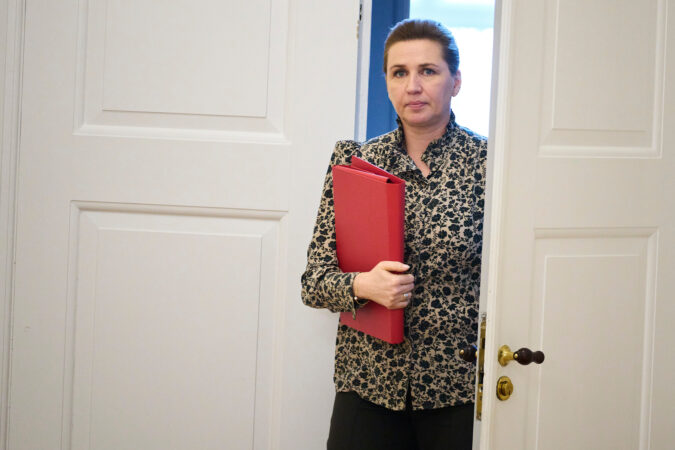
“When we stand together, and when we are clear and strong, also in our willingness to stand up for ourselves, then the results will show,” Danish Prime Minister Mette Frederiksen told reporters in Brussels on Thursday night. “I think we have learned something during the last couple of days and weeks, and now we, of course, want to find a solution.”
A chorus of European leaders insisted they would not be blackmailed. They blasted Trump’s crusade to grab land from a NATO ally as “unacceptable” and “inexplicable.” The EU threatened its own tariffs on American goods. And resolve grew within the bloc to unleash a trade retaliation tool it had long hesitated to use, which could target U.S. services in Europe — a profit center for American companies in which they benefit from a big surplus.
The solidarity from across Europe, Frederiksen said, “was extremely important in this very difficult situation.”
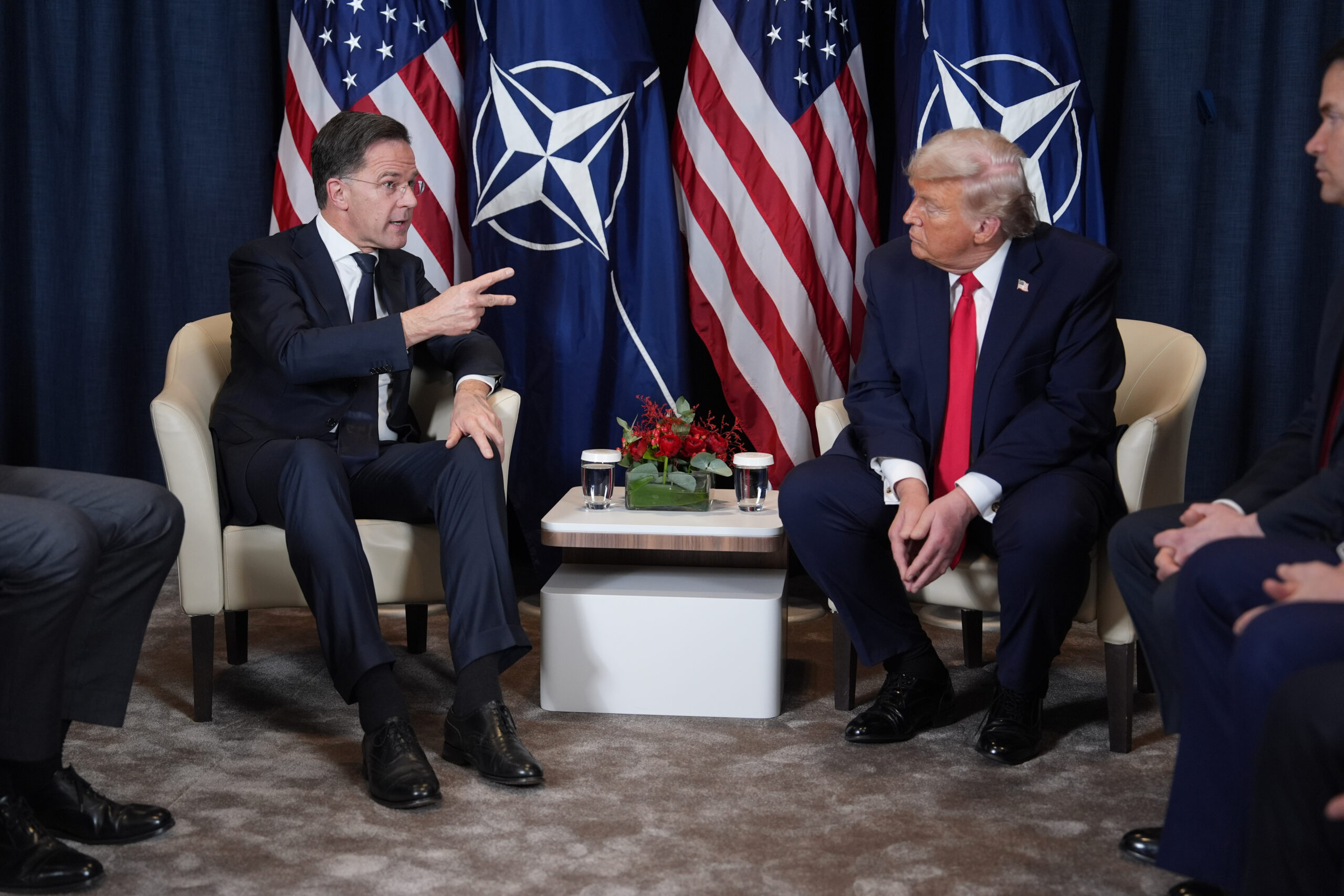
President Donald Trump meets with NATO Secretary-General Mark Rutte during the World Economic Forum in Davos, Switzerland, on Wednesday.
The White House maintains that Trump did not blink but actually got everything he wanted, including full access to Greenland for the U.S. military, without having to pay a dime through a deal brokered with NATO Secretary-General Mark Rutte.
“President Trump was preparing for a Feb. 1 tariff and that has only been removed from the table for one reason: he and the NATO Secretary General agreed upon a framework for a deal on Greenland,” Anna Kelly, a White House spokeswoman, said in a written response to a question.
Trump’s true motive for compromising may never be known. He arrived in the Swiss resort of Davos for the World Economic Forum planning to emphasize his efforts to address concern over an affordability crisis in America, which Trump has denied. The prospect of EU tariffs further raising costs for U.S. consumers may have moved him. Or perhaps it was a sharp sell-off in U.S. stock and bond markets, or the bipartisan opposition in Congress during a midterm election year.
Whatever the reason, Trump suspended his tariff threats against European nations, proclaiming he had reached the “framework” of a deal.
Points under negotiation include greater American access to military bases and minerals extraction in Greenland, European operations in the Arctic, and oversight over investments to prevent Russia or China from gaining a foothold, according to two European officials, who spoke on the condition of anonymity to discuss sensitive diplomacy.
Trump had been clear about wanting to “own” Greenland either by buying or otherwise acquiring the territory, even hinting at military action. In a speech in Davos on Wednesday, Trump ruled out the use of force. And within hours he declared victory and backed down.
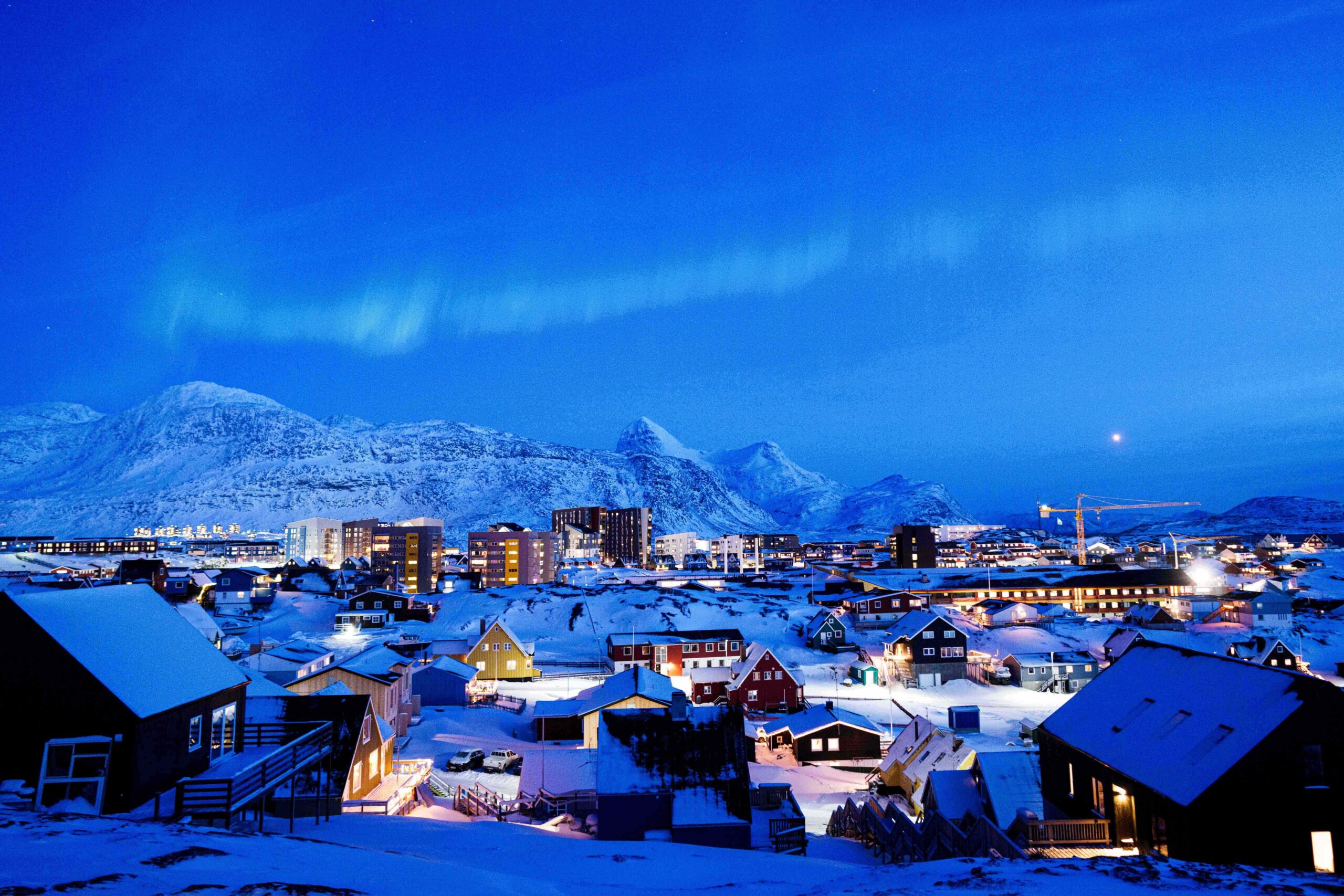
An aurora borealis is seen in the sky above Nuuk, Greenland, on Tuesday.
Danish leaders said ceding sovereign territory is a red line and that they requested a NATO mission in the Arctic. The Danes also had insisted that Trump could achieve his goals through an existing 1951 defense pact — a position the White House previously dismissed.
Now, the Trump administration will pursue negotiations with Denmark on updating that defense treaty, as well as with European nations over expanding NATO military presence in the Arctic, they said.
European officials said they believed his U-turn came from a change of heart, rather than a change in substance. Danish and other NATO leaders made such overtures for weeks before Trump escalated the standoff.
Officials said Trump appeared to shift after realizing that EU retaliatory tariffs could take effect in February, and that his bid for Greenland was unpopular back home, including with American businesses.
“Who knows what really goes on in his mind,” one official quipped.
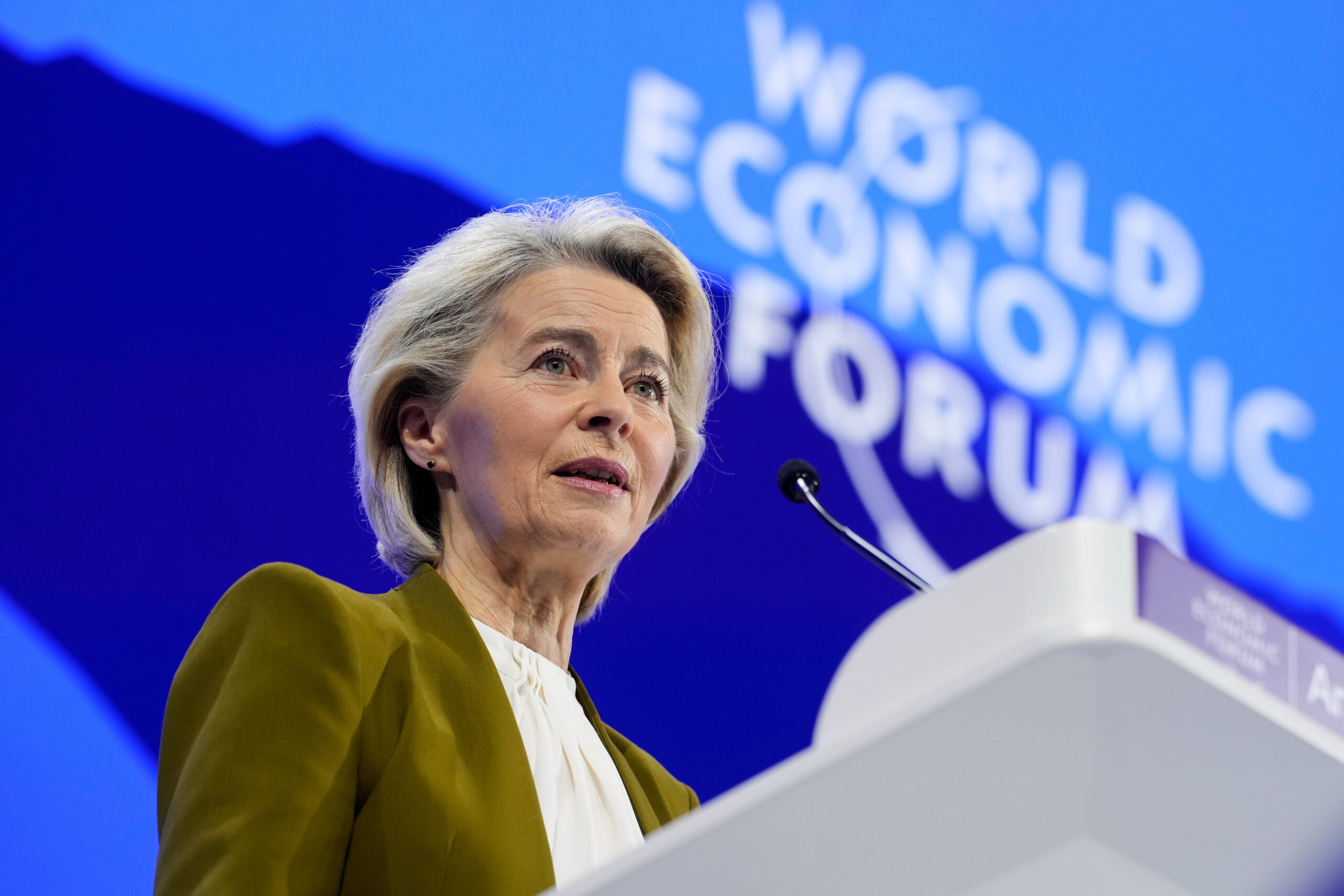
European Commission President Ursula von der Leyen speaks during the World Economic Forum in Davos, Switzerland, on Tuesday.
Ursula von der Leyen, the president of the European Commission, the EU’s executive body, said many elements “may also have played a role … but without firmness, non-escalatory responses, and unity in the European Union, they would not have worked.”
“We are here in a better position than we were 24 hours ago, and tonight we drew the lessons of our collective strategy,” von der Leyen said. “It was effective,” she added, “so going forward we should maintain this very approach.”
Von der Leyen spoke to reporters overnight following a summit of all 27 of the EU’s heads of state and government in Brussels. Beyond Greenland, they discussed how to prepare for a volatile world in which Washington, at any moment, might turn the threat of its military or economic power on longtime European allies.
Even as Europeans pushed back, leaders dispatched Rutte, a former Dutch prime minister often dubbed their “Trump whisperer.” Rutte’s job at NATO has been consumed by papering over rifts with Trump.
Publicly, the NATO chief said little about the Greenland crisis, refusing to deviate from praising Trump or agreeing with his grievances about Arctic security.
A few leaders attributed Trump’s reversal topatience and an extended olive branch. Italian Prime Minister Giorgia Meloni, an ally of Trump on the hard right, pointed to “fostering dialogue between allied nations.”
Emmanuel Macron on stage at the World Economic Forum in Davos, Switzerland, on Tuesday.
French President Emmanuel Macron, however, said tough resolve was the trick. “What we should conclude is that when Europe reacts with a united front, using the instruments at our disposal while it is under threat, it can command respect,” Macron said. “And we remain extremely vigilant.”
Even Polish Prime Minister Donald Tusk, still one of the most ardent champions of preserving the transatlantic relationship, said it was important “for our partners in Washington to understand the difference between domination and leadership.”
That said, the standoff has dramatically darkened the mood within the EU regarding relations with Washington — a bond that has insured economic stability and security on the continent for 80 years.
European lawmakers voiced a sense that the EU had to push back or there would be no end to Trump’s breaching of red lines. Playing nice only goes so far in shielding them from confrontation, officials conceded, and many warned that the Greenland matter was not yet settled.
“When we genuflect, Trump weighs in, when we keep our back straight he tacoes out,” Nathalie Tocci, director of the Rome-based Institute for International Affairs, wrote on X in reference to “Trump Always Chickens Out” — a favorite phrase of Trump critics. It’s not because “he’s scared of Europe but of the markets,” Tocci said. “Lesson learned hopefully.”
Lucky for EU leaders, they did not actually have to hit back — at least not yet — because the mercurial president stood down. That would have proved a bigger test of the cohesion between countries favoring a harder line, like France, and those more cautious, like Italy.
For all the declarations of EU unity, the standoff caused a serious and potentially enduring split in the NATO alliance.
Trump’s comments in Davos went to the heart of the European dilemma of how to navigate a world in which their most powerful ally is defining its positions. Trump cast the dispute as the U.S. vs. NATO, saying that Rutte was “representing the other side” while adding, “which is really us too, because, you know, we’re a very important member of NATO.”
In his pursuit of Greenland, Trump also suggested in his speech that the U.S. was not inclined to defend territory it does not own. The core pillar of NATO is its Article 5 collective defense clause — that an attack against one is an attack against all. For smaller nations such as the Baltics, near Russia, the key to this idea is that the U.S. would come to their defense.
Whatever moved Trump, everyone wants to claim the success.
In London, Prime Minister Keir Starmer had been facing pressure within his own Labour Party for a tougher response. Starmer delivered his sharpest rebuke yet hours before Trump’s pivot, promising he “would not yield” on his defense of Greenland.
The timing allowed officials to say Starmer’s government had stood up to Trump and even to claim some credit for deterring the president. British Foreign Secretary Yvette Cooper told Sky News it was a “a reflection of the strength of our connections in Washington.”
Still, Europeanofficials spoke of a deep breach of trust across the Atlantic. In Brussels, some diplomats from countries that have been the loudest cheerleaders of the U.S. now refer to America as “our former ally.”
Asked if she can still trust the U.S., Frederiksen, the Danish prime minister, hesitated. “I mean, we have been working very closely with the U.S. for many years,” she said, “but we have to work together respectfully, without threatening each other.”
But this time it’s not with new physical stores. The home design company is entering the virtual world.
The retailer, which has its U.S. headquarters in Conshohocken, announced this week that it is testing an immersive product experience on the Roblox platform.
Sweden and Australia are the first two pilot countries, according to the company, and the tests there “will better inform future decisions.” Ikea spokespeople did not respond Friday to questions about whether there were plans for similar pilots in the U.S.
What users of “Welcome to Bloxburg,” a Roblox game, will see when they go to search for Ikea digital products in the simulation.
“We’re delighted to bring some of our most loved Ikea products into this digital space,” Sara Vestberg, home furnishing direction leader at Ikea Retail, said in a statement. “With curiosity, we’re looking forward to seeing the home furnishing ideas people create, and how our products feel at home in their digital lives.”
During the Ikea pilot, the company is making six of its popular products available in virtual form to Welcome to Bloxburg users in the select countries. The digital items include the Stockholm sofa, the Elsystem rug, and the Blahaj stuffed shark.
The virtual experience can collide with the in-real-life shopping experience, too, if customers scan QR codes hidden around physical stores in these countries. The QR codes unlock extra virtual products, according to Ikea. In Sydney, Roblox users can compete to win real products at in-store events next week.
“This pilot is very much about learning and exploring,” said Parag Parekh, chief digital officer at Ikea Retail. “We’re using it to better understand how digital environments can enrich the Ikea experience, while continuing to stay true to our values and what customers expect from us.”
Ikea was founded in Sweden in 1943, and is currently based in the Netherlands. Its U.S. headquarters in Conshohocken employed more than 800 people as of June. Nationwide, Ikea has more than 50 stores, including in Conshohocken and South Philadelphia.
Comcast is one step closer to settling 24 class-action lawsuits over a 2023 data breach that potentially impacted over 30 million former and current customers.
Impacted customers would be able to receive three years of financial monitoring and identity-theft-protection service and choose between reimbursement of expenses up to $10,000 or a $50 cash payment, if the current terms of the agreement gain final approval.
Comcast did not oppose the request for preliminary approval of the agreement, but noted in court records that it does not agree with the facts as told by the representatives of the customers and denies all liability.
Neither a representative for the Philadelphia-based telecommunication giant nor its attorneys responded to requests for comment.
The settlement resolves 24 lawsuits, filed in federal courts nationally and consolidated under one judge in Philadelphia.
The flurry of litigation centers on a data breach that took place between Oct. 16 and 19, 2023, when hackers gained access to Comcast’s internal system. The hack was possible because the company delayed implementing a patch to fix a vulnerability in the Citrix Systems cyber software that Comcast has relied on, court records say.
Citrix warned customers of the problem and offered a solution in an Oct. 10 bulletin, court records say. The class attorneys accuse Comcast of having failed to heed the cyber-company’s advice, allowing hackers to take advantage of the vulnerability.
The data breach made the usernames, passwords, names, contact information, privacy questions and answers, and last four digits of Social Security numbers for more than 30 million customers potentially available to hackers, according to court records.
The settlement agreement was reached following a November negotiation session after multiple attempts at mediation.
The $117.5 million would be used to compensate customers, administer the settlement process that includes notifying customers and processing claims, and pay attorneys’ fees. The class attorneys could pocket as much as one third of the total settlement amount, according to court filings, but the exact amount will be decided later.
U.S. District Judge John Milton Young has set a final approval hearing for July. Once the settlement is approved, Comcast and Citrix will be released from all claims related to the data breach.
Citrix’s attorneys did not respond to a request for comment.
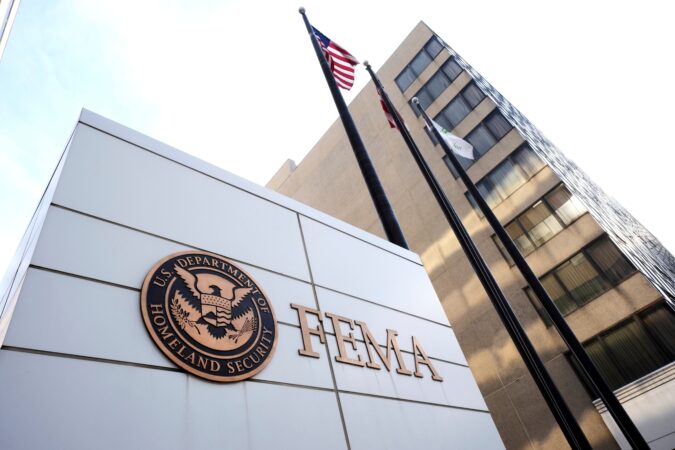
The Department of Homeland Security has paused terminations of employees working on the Federal Emergency Management Agency’s disaster response as it ramps up preparations for a massive and life-threatening winter storm that will pummel half the country this weekend.
Earlier this month, the Washington Post reported that the agency planned to terminate disaster response and recovery workers in waves. On New Year’s Eve, agency officials eliminated about 65 positions that were part of FEMA’s largest workforce, known as the Cadre of On-Call Response and Recovery (CORE) — staffers who are among the first on the ground after a disaster and often stick around for years to help communities recover.
But on Thursday night, DHS’s head of human resources sent an email notifying teams that “just a few minutes ago,” FEMA headquarters decided the agency would halt their process of non-renewing dozens of federally funded employees. These roles, hired by FEMA for multiyear terms under the Stafford Act using the disaster relief fund, have been up for renewal on a rolling basis.
Earlier that day, about 30 disaster workers received notices that their jobs would not be renewed. The pause then prompted human resources staff to backtrack, notifying those same workers that they still had jobs, according to the email and an official familiar with the process. Like others interviewed for this story, the official spoke on the condition of anonymity because they were not authorized to speak publicly about the matter.
“I didn’t even know what was happening until it happened,” the official said, adding that as human resources initially emailed people informing them that their jobs would not be renewed, senior leaders were learning that FEMA was pausing terminations.
In a statement, the Department of Homeland Security said that the agency regularly changes staffing levels for its disaster response and recovery efforts.
“The CORE program consists of term-limited positions that are designed to FLUCTUATE based on disaster activity, operational NEED, and available funding,” the department said in its statement, which included text in all-caps.
“FEMA’s National Response Coordination Center has been activated in response to a historic winter storm, in line with this mission FEMA is following standard protocol to ensure mission functions are being met,” it added.
Officials would not comment on how long the pause would last.
While states and local authorities handle most of their preparation and response to winter storms, FEMA will often deliver resources ahead of time, including generators and personnel if the potential for disaster seems high. Stafford Act employees, such as CORE members, will deploy to a state if they request an emergency or disaster declaration and the president approves it.
The sudden shift in staffing direction has caught officials across the agency by surprise, six officials said. In recent weeks, their teams were told to prepare to lose a substantial number of people over the next few months.
Since December, DHS has terminated more than 100 people across the agency who FEMA employs under the Stafford Act.
Some were informed on New Year’s Eve; others were given only a day or two to turn in their equipment; and still more were cut after their supervisors sent detailed memos explaining why their roles remained vital to FEMA’s mission. The agency also lost veteran employees who oversaw finances for Hurricane Helene recovery, as well as civil engineers who assist states with mitigation and rebuilding roadways, bridges and schools. Some offices in the Midwest have lost experienced managers who typically help lead operations during emergencies and big disasters.
On Wednesday, FEMA cut nearly 85 local hires from several regions, including a handful who were still working on Hurricane Helene recovery projects in North Carolina — a state now readying itself for potential power outages — according to two people with knowledge of the situation. FEMA’s call center in Puerto Rico lost many of their local hires Wednesday as well, one FEMA official said. If multiple states are hit hard enough and ask the president for federal assistance, those workers could have helped out, two officials said.
The same day the department halted the terminations, Homeland Security Secretary Kristi L. Noem visited the agency’s headquarters to help guide national coordination and preparation for the sweeping storm. Noem, whose department oversees FEMA, also hosted a call Thursday morning with governors from 21 states that are bracing for dangerous, chilling weather. She assured them that DHS and FEMA will support them.
“We can pre-deploy any needs that you may have, as far as generators or supplies to different parts of your state if you think you have a weakness in some area that’s going to be hit pretty hard,” Noem told the governors, reiterating that “if there is certain responses or requests specific to this event, feel free to reach out and use that contact information, and we’ll do all that we can to be helpful.”
During the call, Karen Evans, FEMA’s agency’s interim administrator, and Gregg Phillips, who is now overseeing the Office of Response and Recovery, also offered their personal cell phone numbers in case any governor needs to get in touch with them immediately.
Noem has instructed FEMA to be aggressive in preparing for the heavy snow and ice forecast to blanket a large portion of the United States and has promised a rapid and well-coordinated response, according to an official with knowledge of the situation. FEMA has delivered tens of thousands of meals and liters of water to various states, and it has positioned drivers who shuttle supplies outside distribution centers from Louisiana up to Pennsylvania.
The decision to pause the terminations also coincides with the House’s approval Thursday of a spending bill that would fund FEMA’s disaster relief fund and help the agency “maintain staffing levels, including a reservist workforce and its Cadre of Response/Recovery Employees, necessary to fulfill the missions required under” federal law.
Ahead of the storm, 10 officials from different parts of the agency who spoke to the Post said they were nervous about their ability to properly respond, given how their ranks have thinned over the past year, with the agency losing about 20% of its staff.
Noem, who has exercised strict oversight over FEMA since taking over DHS, has repeatedly expressed a desire to shrink or eliminate the agency. The Post reported that she previously recommended cutting agency staffing by about half.
In a previous statement, FEMA spokesperson Daniel Llargués said the agency had “not issued and is not implementing a percentage-based workforce reduction.”
Employees in CORE roles are typically renewed every two to four years. When the end of an employee’s contracted term approaches, their supervisors typically seek approval to renew those roles. Most positions are usually reinstated, according to four current and former FEMA officials, in part because recovery work is long and complex.
But in recent weeks, DHS’s process for renewing these temporary roles has changed frequently, according to officials with knowledge of the situation. Last week, supervisors in each region had to write memos justifying every role coming up for renewal this year, which would then be sent to FEMA’s temporary top official and then to Noem, according to two people familiar with the process. Guidance then shifted earlier this week. In a memo from Thursday, obtained by the Post, FEMA officials said that DHS will be making the calls without collecting justifications, and that “only extensions approved by DHS will be processed and they will be limited to 90 days.”
One CORE employee said DHS suddenly cut her job without warning after her manager had submitted a memo urging to keep her on. Because some firings have been abrupt, some were not able to transition their work, she said.
“And to be clear, I think most of us expected there to be staffing cuts this year,” the person said. “Just not in the bulldozer approach that didn’t take into account your job or performance.”
Villanova receiver Luke Colella and left guard Temi Ajirotutu have declared for the 2026 NFL draft.
“This journey has been filled with hard work, sacrifice, adversity, and growth,” Colella wrote in his announcement on Wednesday. “Every setback and every challenge made me stronger and taught a valuable lesson. With faith in God, gratitude for everyone who has supported me, and confidence in the work I’ve put in, I am proud to officially declare for the 2026 NFL Draft.”
BREAKING: Villanova (@NovaFootball) WR Luke Colella has declared for the 2026 NFL Draft, per his Instagram.
Colella had a breakout season with the Wildcats in 2025. He finished the year with 77 receptions for 1,071 yards and 8 touchdowns. pic.twitter.com/enCJ3pwNSd
Colella transferred to Villanova from Princeton for his final year of eligibility. He finished with a team-leading 77 receptions for 1,071 yards and eight touchdowns with the Wildcats.
At Princeton, he collected 93 receptions for 1,188 yards and 11 touchdowns across three seasons.
Ajirotutu, a graduate student, played his entire five-year college career at Villanova. He emerged as a starter in 2022 and was named third team All-CAA in 2023.
Last season, Ajirotutu played in four games before missing the remainder of the year with a medical redshirt. He earned an honorable mention on the AP FCS All-America team this past season, when he played in all 15 games.
With the help of Colella and Ajirotutu, Villanova made an appearance in the FCS semifinals for the first time since 2010. The Wildcats fell to Illinois State, 30-14.
The last Villanova player to get drafted was Buffalo Bills cornerback Christian Benford, who was selected in the sixth round in 2022.
The 2026 NFL Scouting Combine will take place on Feb. 23 to March 2, and this year’s draft will be held April 23-25 in Pittsburgh.
NEW YORK — The U.S. has finalized its withdrawal from the World Health Organization, one year after President Donald Trump announced America was ending its 78-year-old commitment, federal officials said Thursday.
But it’s hardly a clean break.
The U.S. owes about $280 million to the global health agency, according to WHO. And Trump administration officials acknowledge that they haven’t finished working out some issues, such as lost access to data from other countries that could give America an early warning of a new pandemic.
The withdrawal will hurt the global response to new outbreaks and will hobble the ability of U.S. scientists and pharmaceutical companies to develop vaccines and medicines against new threats, said Lawrence Gostin, a public health law expert at Georgetown University.
“In my opinion, it’s the most ruinous presidential decision in my lifetime,” he said.
The WHO is the United Nations’ specialized health agency and is mandated to coordinate the response to global health threats, such as outbreaks of mpox, Ebola, and polio. It also provides technical assistance to poorer countries; helps distribute scarce vaccines, supplies, and treatments; and sets guidelines for hundreds of health conditions, including mental health and cancer.
Nearly every country in the world is a member.
Trump cited COVID-19 in pulling U.S. from WHO
U.S. officials helped lead the WHO’s creation, and America has long been among the organization’s biggest donors, providing hundreds of millions of dollars and hundreds of staffers with specialized public health expertise.
On average, the U.S. pays $111 million a year in member dues to the WHO and roughly $570 million more in annual voluntary contributions, according to the U.S. Department of Health and Human Services.
In an executive order issued right after taking office, Trump said the U.S. was withdrawing from WHO due to the organization’s mishandling of the COVID-19 pandemic and other global health crises. He also cited the agency’s “failure to adopt urgently needed reforms” and its “inability to demonstrate independence from the inappropriate political influence of WHO member states.”
WHO, like other public health organizations, made costly mistakes during the pandemic, including at one point advising people against wearing masks. It also asserted that COVID-19 wasn’t airborne, a stance it didn’t officially reverse until 2024.
Another Trump administration complaint: None of WHO’s chief executives — there have been nine since the organization was created in 1948 — have been Americans. Administration officials view that as unfair given how much the WHO relies on U.S. financial contributions and on U.S. Centers for Disease Control and Prevention personnel.
Public health experts say U.S. exit will hobble responses to threats
Experts say the U.S. exit could cripple numerous global health initiatives, including the effort to eradicate polio, maternal and child health programs, and research to identify new viral threats.
Ronald Nahass, president of the Infectious Diseases Society of America, called the U.S. withdrawal “shortsighted and misguided” and “scientifically reckless.”
The U.S. has ceased official participation in WHO-sponsored committees, leadership bodies, governance structures and technical working groups. That would seem to include the WHO group that assesses what flu strains are circulating and makes critical decisions about updating flu shots.
It also signals the U.S. is no longer participating in global flu information-sharing that guides vaccine decisions.
Such disease intelligence has helped Americans be “at the front of the line” when new outbreaks occur and new vaccines and medicines are quickly needed to counteract them and save lives, Gostin said.
Trump administration officials say they already have public health relationships with many countries and are working to ensure direct sharing of that kind of information, rather than having WHO serve as a middleman. But U.S. officials did not give specifics about how many such arrangements are in place.
Gostin, an expert on international public health treaties and collaborations, said it’s unlikely the U.S. will reach agreements with more than a couple dozen countries.
Many emerging viruses are first spotted in China, but “is China going to sign a contract with the United States?” Gostin said. “Are countries in Africa going to do it? Are the countries Trump has slapped with a huge tariff going to send us their data? The claim is almost laughable.”
Gostin also believes Trump overstepped his authority in pulling out of WHO. The U.S. joined the organization through an act of Congress and it is supposed to take an act of Congress to withdraw, he argued.
U.S. still owes money, WHO says
The U.S. is legally required to give notice one year in advance of withdrawal — which it did — but also to pay any outstanding financial obligations.
The U.S. has not paid any of its dues for 2024 and 2025, leaving a balance of about $280 million at current exchange rates, according to WHO.
An administration official denied that requirement Thursday, saying the U.S. had no obligation to pay prior to withdrawing as a member.
Justin Crawford and Aidan Miller highlight the 27 nonroster players the Phillies have invited to major league spring training in Clearwater, Fla. next month.
Crawford is ranked as the Phillies’ No. 3 prospect by MLBPipeline and is expected to get an opportunity to be their opening-day center fielder. The 22-year-old slashed .334/.411/.452 in 112 games at triple-A Lehigh Valley last season.
Miller, a 21-year-old shortstop, is ranked the Phillies’ No. 2 prospect. He spent most of 2025 with double-A Reading, leading the Eastern League in walks (73) and stolen bases (52), before a September promotion to triple A. He finished the year with a .264/.392/.433 slash line across both levels.
Other top prospects who earned invites include infielder Aroon Escobar (Phillies’ No. 5 prospect) and outfielder Dante Nori, the Phillies’ 2024 first-round pick.
The full list of invitees:
Left-handed pitchers: Génesis Cabrera, Tucker Davidson, Tim Mayza, and Andrew Walling.
Right-handed pitchers: Andrew Bechtold, Jonathan Hernandez, Michael Mercado, Trevor Richards, and Bryse Wilson.
Catchers: Kehden Hettiger, Mark Kolozsvary, Paul McIntosh, René Pinto, and Caleb Ricketts.
Infielders: Keaton Anthony, Christian Cairo, Carson DeMartini, Aroon Escobar, Aidan Miller, Liover Peguero, Bryan Rincon, and José Rodríguez.
Outfielders: Dylan Campbell, Justin Crawford, Bryan De La Cruz, and Dante Nori.
LONDON — British Prime Minister Keir Starmer has signaled that President Donald Trump should apologize for his false assertion that troops from non-U.S. NATO countries avoided the front line during the Afghanistan war, describing Trump’s remarks as “insulting” and “appalling.”
Trump said that he wasn’t sure NATO would be there to support the United States if and when requested, provoking outrage and distress across the United Kingdom on Friday, regardless of individuals’ political persuasion.
“We’ve never needed them, we have never really asked anything of them,” Trump said of non-U.S. troops in an interview with Fox News in Davos, Switzerland, on Thursday. ”You know, they’ll say they sent some troops to Afghanistan, or this or that, and they did, they stayed a little back, a little off the front lines.”
In October 2001, nearly a month after the Sept. 11 attacks, the U.S. led an international coalition in Afghanistan to destroy al-Qaeda, which had used the country as its base, and the group’s Taliban hosts. Alongside the U.S. were troops from dozens of countries, including from NATO, whose mutual-defense mandate had been triggered for the first time after the attacks on New York and Washington.
U.K. sacrifice
In the U.K., the reaction to Trump’s comments was raw.
Starmer paid tribute to the 457 British personnel who died and to those have been left with profound life-long injuries.
“I will never forget their courage, their bravery and the sacrifice they made for their country,” Starmer said. “I consider President Trump’s remarks to be insulting and frankly appalling and I am not surprised they have caused such hurt to the loved ones of those who were killed or injured and, in fact, across the country.”
Prince Harry weighed in too, saying the “sacrifices” of British soldiers during the war “deserve to be spoken about truthfully and with respect.”
“Thousands of lives were changed forever,” said Harry, who undertook two tours of duty in Afghanistan in the British Army. “Mothers and fathers buried sons and daughters. Children were left without a parent. Families are left carrying the cost.”
After 9/11, then Prime Minister Tony Blair said that the U.K. would “stand shoulder to shoulder” with the U.S. in response to the al-Qaeda attacks. British troops took a key role in many operations during the Afghan war until their withdrawal in 2014, particularly in Helmand Province in the south of the country. American troops remained in Afghanistan until their chaotic withdrawal in 2021 when the Taliban returned to power.
Ben Obese-Jecty, a lawmaker who served in Afghanistan as a captain in the Royal Yorkshire Regiment, said that it was “sad to see our nation’s sacrifice, and that of our NATO partners, held so cheaply by the president of the United States.”
Trump and Vietnam
Anger was further fueled by the fact that the comments came from someone who didn’t serve in the Vietnam War at a time when he was eligible.
“It’s hugely ironic that someone who allegedly dodged the draft for the Vietnam War should make such a disgraceful statement,” said Stephen Stewart, author of The Accidental Soldier, an account of his time embedded with British troops in Afghanistan.
Trump received a deferment that allowed him to not serve in Vietnam because of bone spurs, but he has been unable to remember in which foot, leading to accusations of draft dodging.
Repeated NATO slights
It wasn’t the first time that Trump downplayed the commitment of NATO countries over the past few days. It has been one of his pivotal lines of attack as he escalated his threats to seize Greenland, a semiautonomous territory belonging to Denmark.
Trump’s allegation that NATO countries won’t be there when requested stands in stark contrast to reality.
The only time Article 5 of NATO’s founding treaty has been used was in response to the 9/11 attacks on the U.S. The article is the key mutual defense clause, obliging all member countries to come to the aid of another member whose sovereignty or territorial integrity might be under threat.
“When America needed us after 9/11 we were there,” former Danish platoon commander Martin Tamm Andersen said.
Denmark has been a stalwart ally of the U.S. in Afghanistan, with 44 Danish soldiers killed there — the highest per capita death toll among coalition forces. Eight more died in Iraq.
The latest controversy surrounding Trump comes at the end of a week when he has faced criticism — and pushback — for his threats to Greenland.
Trump also threatened to slap tariffs on European nations opposed to his ambitions to annex Greenland, which raised questions over the future of NATO. And though Trump backed down after a meeting with NATO Secretary-General Mark Rutte in which he said they formed the “framework” for a deal over Arctic security, trans-Atlantic relations have taken a hit.
His latest comments are unlikely to improve relations.
Diane Dernie, whose son Ben Parkinson suffered horrific injuries when a British Army Land Rover hit a mine in Afghanistan in 2006, said that Trump’s latest comments were “the ultimate insult” and called on Starmer to stand up to Trump over them.
“Call him out,” she said. “Make a stand for those who fought for this country and for our flag, because it’s just beyond belief.”
Taking her up on that, Starmer said “what I say to Diane is, if I had misspoken in that way or said those words, I would certainly apologize and I’d apologize to her.”
With a significant snowfall expected in the Philadelphia region this weekend, doctors are urging people to be cautious when digging out.
About 100 people a year die from heart attacks brought on by shoveling snow. Thousands more wind up in the emergency department with sprains, strains, chest pain, and other heart problems.
Shoveling may not seem like a cardio workout, but it can put as much strain on your heart as a treadmill stress test, according to the American Heart Association. People often mistakenly lift with their arms, which is more taxing on the heart than lifting with their legs. In extreme cold, blood vessels constrict to conserve heat, but that can further elevate blood pressure.
People with a history of heart problems, smoking, or obesity may be especially at risk.
In the Philadelphia area, shovelers are more accustomed to an inch or two of powder or slush. This weekend’s storm, which could bring several times that, will be a bigger and more dangerous challenge, said Jonathan Stallkamp, a senior vice president and chief medical officer for Main Line Health, a nonprofit system with four hospitals in the Philadelphia suburbs.
“All of a sudden your heart goes from beating normally, and now you’re putting in this additional heavy work of shoveling,” said Stallkamp.
Here’s how to shovel safely and make sure the upcoming storm isn’t your downfall.
Ask for help
The best way to prepare for clearing massive amounts of snow is to make sure you’re in good physical shape, said Stallkamp.
Shoveling uses muscles people may not be accustomed to exercising, and puts stress on the heart.
“A lot of our older community members aren’t in as good shape as they think,” Stallkamp said.
He encouraged people to be realistic about their abilities, and ask for help from a younger neighbor or relative, if possible.
Some cardiologists say that anyone over age 45 should use extra caution when shoveling.
Treat it like a sport
Prepare to tackle snow the way an athlete would prepare for a big game: Drink lots of water, avoid caffeine (which can raise blood pressure), and wear the right gear (mittens are generally warmer than gloves). And don’t forget to stretch. Warming up your joints, and muscles in your legs, arms and back will reduce the risk of injury, according to Mayo Clinic.
Lift with your legs
Bending your knees to scoop and lifting with your legs will reduce strain on your back. Lifting with arms and back are more likely to result in a pulled muscle.
Shovel often
Stallkamp recommends getting out early, clearing snow as it falls, rather than waiting for the big event to be over. It’s easier to shovel an inch of snow multiple times than to dig out of a foot of snow. While the forecast for the Philadelphia region is still in flux, some forecasts suggest snow could turn to ice, which adds to the challenge of clearing driveways and sidewalks.
Ice will be easier to clear if it falls on a thin layer of snow, than directly onto pavement, Stallkamp said.
Keep fingers away from snowblowers
This maybe goes without saying, but Stallkamp said he’s seen it enough that he’s sending a clear warning: Do not put your hands inside the opening of a snowblower.
When a stick or chunk of ice gets stuck in a snowblower, people may instinctively reach in to try to dislodge the object.
“But once that jam clears, those blades spin and your fingers go with it,” he said.
Take breaks and warm up
Mayo Clinic experts recommend taking breaks to check in with your body. If you feel out of breath, lightheaded, or just off, go inside to warm up and relax.
With ice in the forecast, Stallkamp recommends taking steps to keep your house warm if your home uses electric heat and you lose power.
Generators can help restore enough electricity to turn the heat on, but they should be kept as far from the house as possible and never used inside. Generators produce large amounts of carbon monoxide that can be deadly, especially in the winter when windows and doors are closed up.
If possible, turn up the heat in advance, so your home stays warm longer if power goes out.