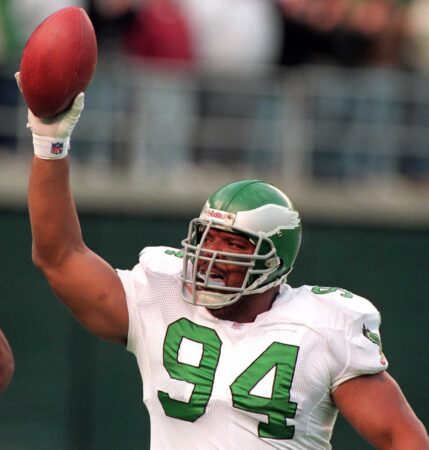
Former Eagles defensive end Kevin Johnson was found dead Wednesday at a homeless encampment in the Willowbrook area of Los Angeles, and a homicide investigation is underway, according to reports.
Los Angeles’ KABC reported that Johnson, 55, was pronounced dead at the scene after police responded to the 1300 block of East 120th Street for a report of an unconscious man. Johnson’s cause of death, according to KABC, citing L.A. County Medical Examiner records, includes “blunt head trauma” and “stab wounds.”
A fourth-round pick of the New England Patriots in 1994, Johnson was claimed by the Eagles after being waived by the Oakland Raiders in August 1995. Johnson, a Los Angeles native, played 23 games (six starts) across two seasons with the Eagles.
He recorded six sacks and appeared in both of the team’s postseason games in 1995. Johnson was released by the team in December of 1996 and later played in 15 games with the Raiders in 1997 before a stint in the Arena Football League.
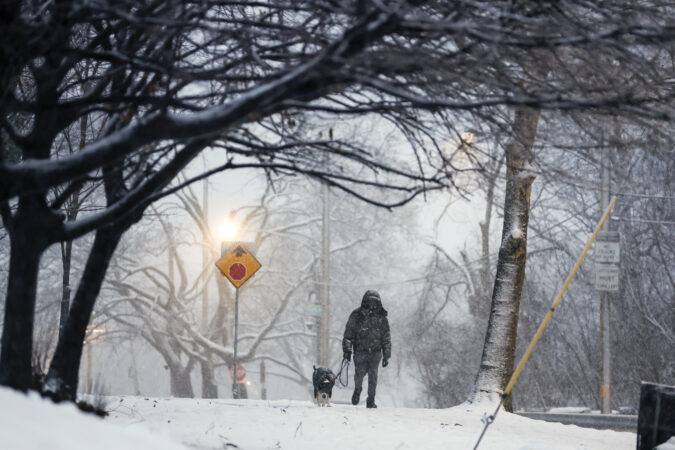
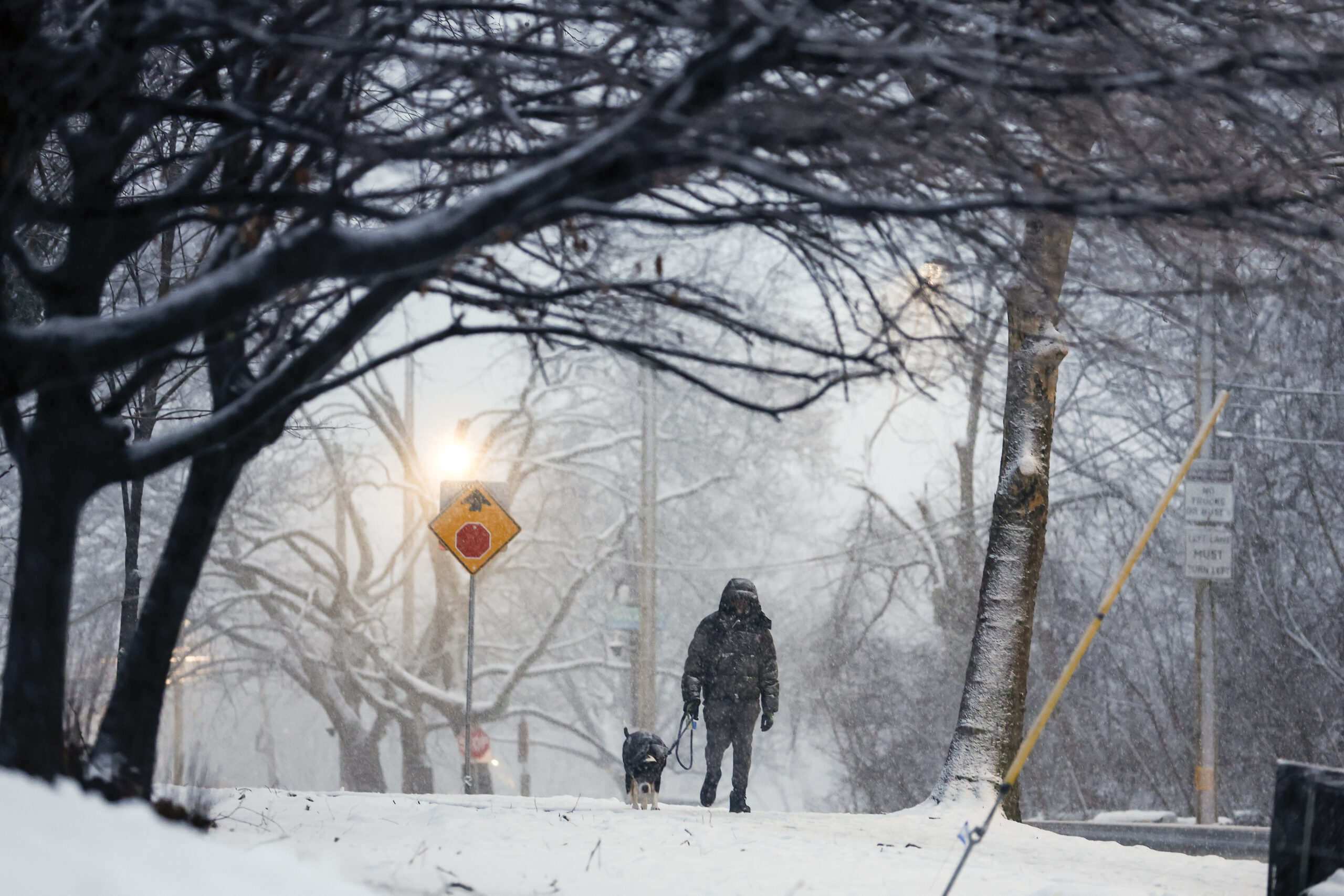
Philadelphia is expected to see its most significant winter storm in years this weekend, with nearly a foot of snow and ice expected from a formidable low-pressure system sweeping across the eastern United States.
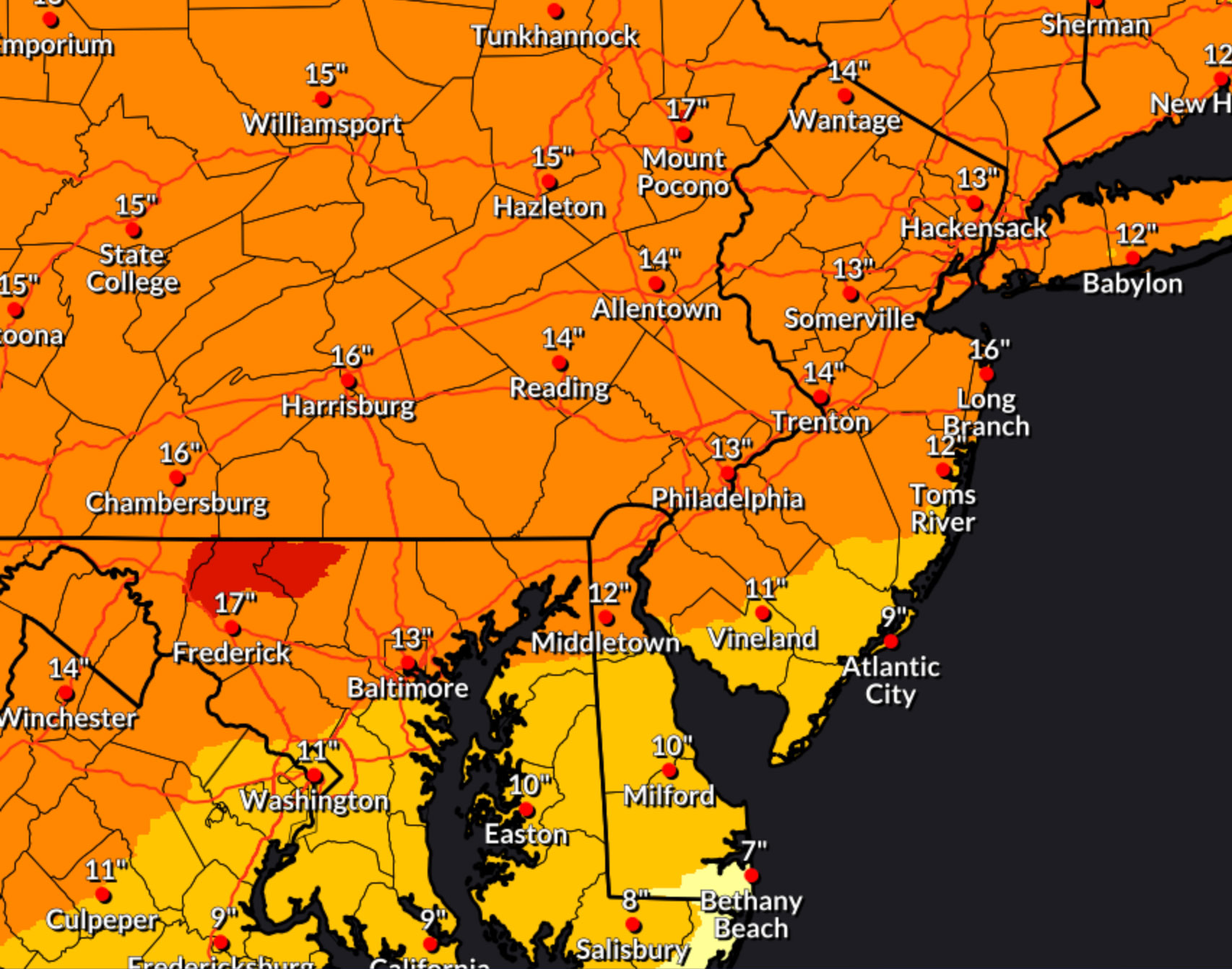
Official National Weather Service forecasts say six to 18 inches of snow is possible across most of New Jersey and Pennsylvania, including Philadelphia as the storm pushes through the region Saturday night to early Monday morning. More than 21 states are expected to experience at least moderate impacts from the storm, the weather service said.
Forecasters said that mixing with sleet and freezing rain could hold down overall snow totals across Philadelphia and South Jersey, but the storm is likely to hinder if not halt most travel on Sunday, regardless.
The National Weather Service puts out forecasts for every few square miles of land in the United States four times a day through a system called the National Digital Forecast Database.
The maps below display that data. Use it to find how much snow is expected anywhere in the eastern United States. It will show the most recent forecast for the next three days.
(function () {window.addEventListener(‘message’, function (e) { var message = e.data; var els = document.querySelectorAll(‘iframe[src*=”‘ + message.id + ‘”]’); els.forEach(function(el) { el.style.height = message.height + ‘px’; }); }, false); })();
A considerable amount of freezing rain and sleet may also fall during the storm, leading to icing concerns. The map below displays the forecast for ice accumulation, or accretion, over the next three days.
(function () {window.addEventListener(‘message’, function (e) { var message = e.data; var els = document.querySelectorAll(‘iframe[src*=”‘ + message.id + ‘”]’); els.forEach(function(el) { el.style.height = message.height + ‘px’; }); }, false); })();
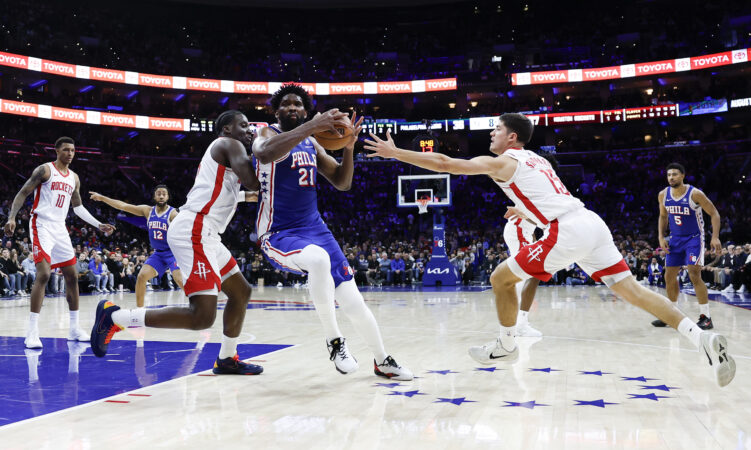
Joel Embiid overpowered Alperen Şengün with a spin inside, sending the Houston Rockets’ big man to the floor before easily laying the ball into the rim.
The play on Thursday night drew the ire of Rockets coach Ime Udoka, who got whistled for a technical foul. It was also another sign of how much Embiid’s health — and production — continues to progress.
Two years ago to the day, Embiid scored a career-high 70 points in a victory over the San Antonio Spurs. It was the masterpiece of a historic stretch, when the then-reigning NBA Most Valuable Player was scoring more than a point a minute.
A few days later, however, the Golden State Warriors’ Jonathan Kuminga inadvertently fell on Embiid’s knee, and years of struggles to stay healthy and available ensued.
Embiid has not returned to his peak level. Perhaps he never will. Yet it was poetic that his best performance since those surgeries — 32 points, 15 rebounds, and 10 assists in the 76ers’ thrilling 128-122 overtime victory at Xfinity Mobile Arena — arrived on the same date.
“Maybe I should have a baby on Jan. 22,” Embiid quipped from his locker after the game. “Seems to be a good day. Me and my wife, when I get home, we’re probably going to talk about [it]. Start making those calculations, and make sure that we’re trying to have a baby on Jan. 22.”
That answer, complete with the playful bravado, is further evidence that Embiid is getting back to himself, after acknowledging feeling depressed and separated from teammates while navigating his health struggles.
He also has allowed himself to sincerely reflect at points this season, saying in Orlando earlier this month that “this is a moment where I’m like, ‘Wow.’ A lot of people, I think, never thought this would happen again.”
Joel Embiid (with Kevin Durant) helped turn back the clock in an encouraging home victory Thursday night.
Sixers teammates and staff members have closely watched this recovery unfold. For Paul George, Embiid’s first dunk on Jan. 3 at Madison Square Garden was a key benchmark. For coach Nick Nurse, it has been the gradual improvements in rim protection, rebounding, drives to the basket, and post-up opportunities.
Nurse added he is still “a ways away” from schematically moving Embiid to different spots around the court “as much as we want to,” which could unlock even more of his offensive prowess.
And though Embiid has appeared in 11 out of the past 13 games — during which he has averaged 27.8 points on 51.7% shooting, along with 8.3 rebounds, and 4.3 assists — he said he still is “not allowed to play back-to-backs — yet.”
Thursday, though, was another significant step, in a down-to-the-wire victory against a quality opponent. His 15 rebounds were his highest total since — Surprise! — that 70-point outburst. His 10 assists were a season-high, and a product of Embiid getting rid of the ball earlier when the extra defender arrives, Nurse said.
Defensively, Embiid helped limit Şengün, an All-Star reserve contender in the Western Conference, to 5-of-14 from the floor and three points after halftime.
As a scorer, Embiid drew fouls on a rip-through move and while assertively turning toward the basket. He hit a jumper over two defenders at the end of the second quarter. He hunted switches so he could be guarded by a smaller defender, even as the Rockets “were moving pieces like crazy,” Nurse said, while unleashing a variety of different schemes.
Joel Embiid was effective on a night when the Rockets were aggressively making changes to help limit him.
And when the Sixers needed buckets in the fourth, Embiid kept his team afloat before its final surge.
An inside conversion to cut Houston’s lead to four points. A three-pointer to get them within 105-99. A driving finish out of a timeout to make the score 107-101. And six assists over the fourth quarter and overtime, including dishes to Tyrese Maxey (36 points) for a game-tying pull-up late in regulation and then for the game-sealing dunk in the final seconds of the extra frame.
By the time Embiid’s night was over, he had played nearly 47 minutes.
“He walked into the locker room after the game,” said Maxey, who leads the NBA in minutes played, “and said, ‘There’s no reason I should ever play more minutes than Tyrese.’ I said, ‘That’s great. You should do that more often.’ …
“He’s just getting back to himself, slowly but surely. And he’s doing it in a different way, kind of. But he’s just really locked in and really bought into this team.”
As Embiid held court in front of his locker, teammate Trendon Watford walked by and yelled, “All-Star Joel! All-Star Process!” Maxey had just done his own politicking during his news conference, saying “Process!” and tapping the microphone when asked to choose a teammate to join him at the festivities in Los Angeles next month.
That all echoed Embiid’s own personal campaigning, saying in Orlando that he believes he is worthy of a spot and “you guys [the media] should start putting the word out that Joel Embiid is back.”
A few minutes later, George said he could feel Embiid’s “competitive juices” while matching up against Sengun.
“He won’t say it,” George said. “But me in that position, when I was in his spot and there was guys under me that was coming up, I took it personal to kind of still be a force out there.”
After former Sixers teammate Furkan Korkmaz in September called Şengün the best center he has shared the floor with, as part of the Turkish national team, Embiid added a new photo to his Instagram grid late Thursday.
Şengün hunched over, slowly regaining his feet after that wicked spin sent him to the floor. Embiid standing over him, side-eyed and staring.
And a one-word caption: “Furk ……”
“He dominated,” George added. “Big fella took it on him to really take over. I thought he was the vintage Joel tonight.”
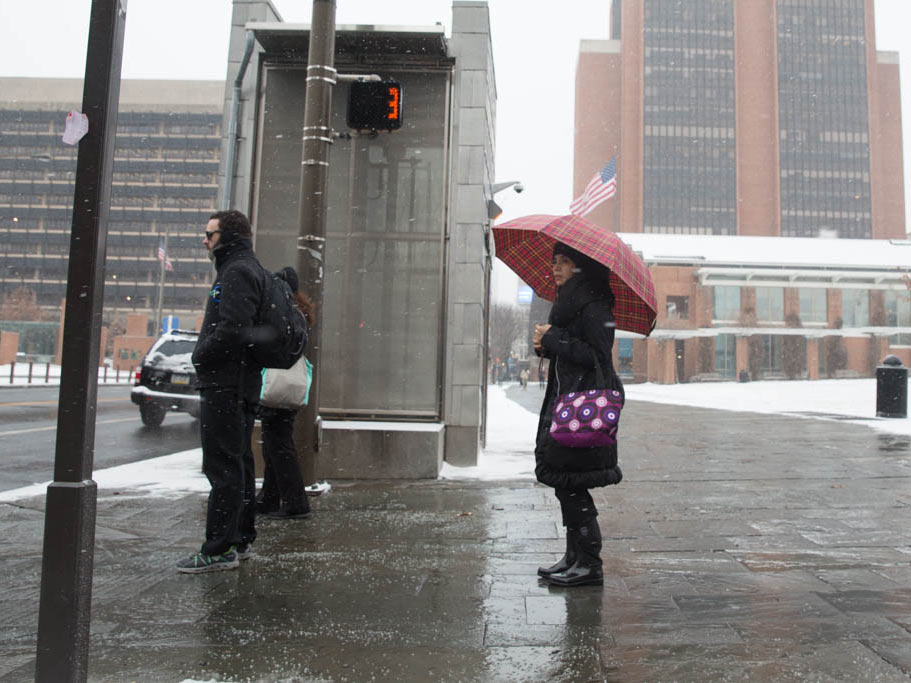
A major snowstorm is expected to hit Philadelphia and the region this weekend. It could be the city’s first double-digit snowfall in 10 years, though the latest forecast has snow totals down slightly.
Heavy snow and potentially dangerous icing are expected in Philly this weekend
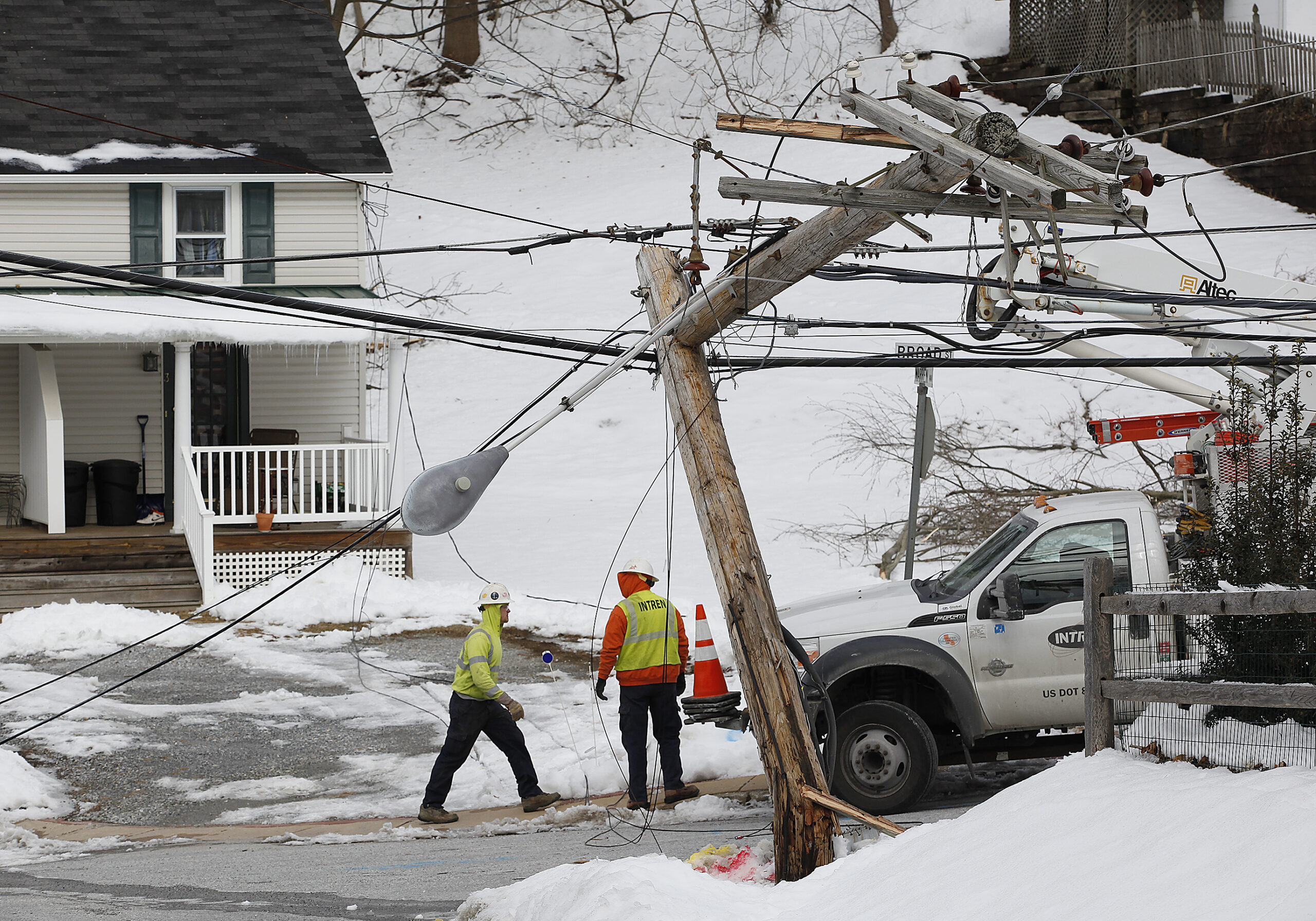
FILE – February 8, 2014 A crew from northern Illinois works to restore power at Broad Street and Warren Avenue in Malvern. February 8, 2014.
Philadelphia could experience more snow this weekend than it did during the the entire winter of 2024-25, but the forecast updates Friday suggested that may not be the worst of the storm’s offerings.
In issuing a profoundly predictable winter storm warning, in effect from 7 p.m. Saturday until 1 p.m. Monday, the National Weather Service said that in addition to 8 to 12 inches of snow, as much as a quarter-inch of freezing rain could accumulate. That would greatly increase the power outage potential.
Whatever the outcome, the storm still in its formative stage already has had significant impacts on the region and may have set an unofficial record for pre-storm buildup and preemptive closings.
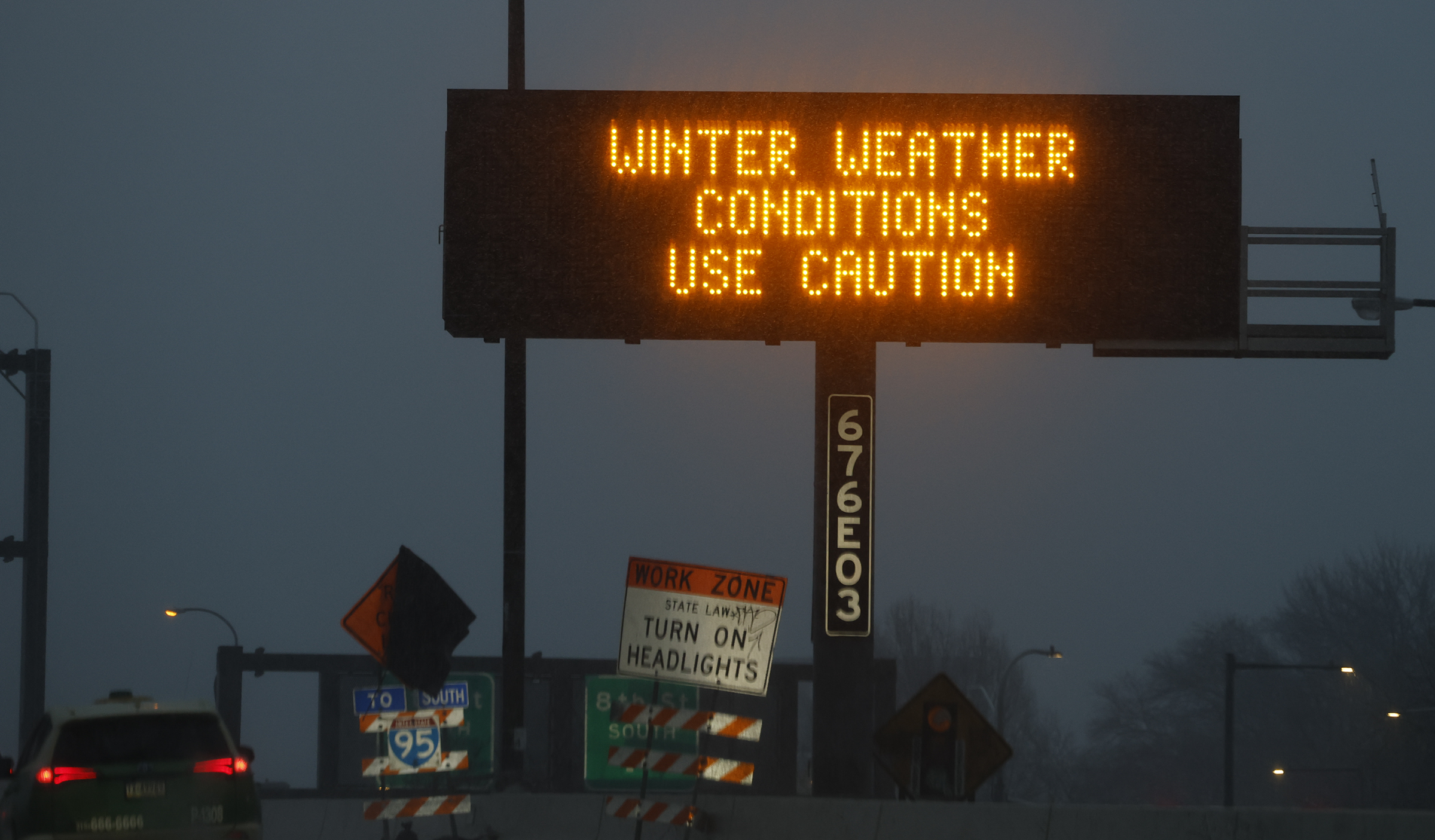
Philadelphia Mayor Cherelle L. Parker declared a state of emergency for Sunday, as did Pennsylvania Gov. Josh Shapiro and New Jersey Gov. Mikie Sherrill. PennDot is imposing speed restrictions. SEPTA is expecting issues.
Some schools already were planning for multiple-day closings, as the snow and ice will be accompanied by one of the region’s more impressive cold snaps of the last several years.
Were it not for the storm, in fact, the cold might be getting headlines.
Wind chills Saturday morning are expected to drop below zero. Sunday’s high of 25 degrees may make it the warmest day of the week.
It is likely that layers of snow and ice will harden into a frozen mass that the January sun won’t be able to do a whole lot about.
As a public service, for now we will hold off on mentioning another potential storm threat.
Gov. Josh Shapiro on Friday signed a disaster emergency declaration for Pennsylvania, freeing up resources for preparation and support efforts ahead of the coming weekend winter storm.
“Today, I signed a disaster declaration for the entire Commonwealth to ensure our agencies have all necessary resources ready to go,” Shapiro said in a statement. “Stay off the roads if you can, be safe, and follow instructions from PEMA and your local authorities.”
The declaration, Shapiro’s office said, more easily allows the state to use funding to give various state agencies the resources required to more effectively respond to the storm and county and municipality level. Much of the state is expected to experience significant snowfall as part of the storm, with forecasters calling for 8 to 12 inches of snow for the Philadelphia region, as well as ice totals of 0.25 inches.
In addition to announcing the disaster emergency declaration, Shapiro’s office urged Pennsylvanians to stay off the roads during the storm if possible.
Locally, Delaware County also declared a disaster emergency that will run for seven days starting Friday, county officials said. The storm, the county said in a statement, could cause “injury, damage, and suffering” to Delco residents, prompting the declaration.
“Please avoid unnecessary travel, particularly during the peak of the storm and ensure that you have enough essentials to last several days in case travel becomes difficult,” said Delaware County Council Chair Richard Womack.
New Jersey Gov. Mikie Sherrill declares state of emergency
New Jersey Gov. Mikie Sherrill has declared a state of emergency in the state ahead of the impending weekend winter storm, and issued statewide commercial vehicle restrictions on interstate highways.
“It’s been a while since we have seen a storm like this,” Sherrill said at a Friday news conference. “We’re tough, but we need to be prepared. We have to be safe.”
Sherrill, who was inaugurated earlier this week as New Jersey’s 57th governor, also urged residents to stay indoors throughout the duration of the storm, and refrain from traveling unless absolutely necessary. Potential road conditions for early Monday, she added, remained in flux, as the state could possibly “still be digging out” from the storm.
“Don’t commit to anything Monday morning,” Sherrill said.
Sherrill noted that while forecasts have been somewhat fluid, it appeared at the time of her briefing Friday that North Jersey was likely to see higher snow totals of 12 to 18 inches, while South Jersey could see 12 inches or less. The whole state, however, is expected to see impacts from snow and ice.
As part of Sherrill’s declaration, the State Emergency Operation Center will activate at 6 p.m. Saturday, officials said. Activating the center will allow state leaders to coordinate county and state responses to the storm, and monitor assistance requests around New Jersey.
“This is a good weekend to stay and watch some football, play a board game with your kids, but please stay off the roads on Sunday,” Sherrill said.
SEPTA expects service interruptions during storm Sunday: ‘Bad day to travel’
SEPTA officials gathered at their West Philadelphia depot Friday to unveil plans for this weekend’s winter storm, and demonstrate the machinery they have to battle the snow and ice.
Up to 70% of SEPTA’s workforce will be working Saturday and Sunday to clear travel lanes, keep trains and buses moving, and respond to emergencies. That said, SEPTA expects interruptions to its transit system as there is a lot of work ahead, said SEPTA General Manager Scott A. Sauer.
Crews will utilize large blowers, snow throwers, augers, and other pieces of heavy equipment to clear tracks and other critical areas, as well as 6,000 tons of salt to spread at stations and other facilities. SEPTA has 300 parking lots across their five-county service region as well as platforms and customer service areas.
“Extreme weather like this is very hard on our vehicles. As you know, we have the oldest rail fleet in the country. It’s hard on the trains as well as our tracks and other infrastructure,” Sauer said. “I fully expect we will see some equipment problems and need to make emergency repairs, but I am confident that our work crews are ready to handle any issues that come up.”
Blocked rail lines, power interruptions, residential cars blocking travel lanes, and more all contribute to service disruptions, Sauer said. SEPTA stresses that Sunday will be a “bad day to travel,” and to stay home unless it is absolutely necessary.
According to SEPTA, even if snowfall ends on Sunday, don’t expect the transit system to be back to normal by Monday morning.
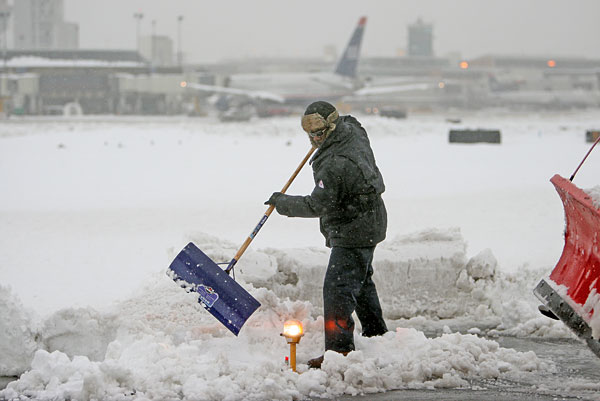
Edge lights being cleared of snow on a runway at Philadelphia International Airport during a 2010 storm.
A “handful of flights” at Philadelphia International Airport had been cancelled as of Friday afternoon for Saturday and Sunday as the city expected a weekend snowstorm. More cancellations were likely ahead of the start of the storm, said airport spokesperson Heather Redfern via email.
“This is an all-hands-on-deck situation for the Department of Aviation’s team, and our operations team will be working throughout the weekend to ensure the safe operation of runways, taxiways, roadways and terminals,” she said.
In preparation for the storm, the department’s crews are getting equipment ready to keep runways, taxiways, airport roadways, and sidewalks clear, she said. Deicing airplanes is handled by the airlines.
The airport does not close, she noted, even if flights are canceled by airlines or in the event that the Federation Aviation Administration issues a ground stop.
Travelers who have flights booked for the coming days through the airport should check in with their airlines, the airport advises, to see if their flight has been canceled or if they can reschedule it.
“PHL’s top priority is ensuring the safety of the traveling public and our staff as we work to ensure ongoing operations,” said Redfern.
PennDot says it’s equipped to handle ‘bear’ of a storm
Local PennDot officials said the department’s Philadelphia-area operations are well positioned to deal with the impending winter storm’s impacts, but urged residents to avoid being out and about if possible.
“This storm should be treated by travelers as a potentially serious weather event, and we hope everyone will make the accommodations to avoid travel if possible during this winter storm,” deputy communications director Brad Rudolph at a Friday news conference.
The department has already activated its anti-icing efforts, sending crews out to spray a salt brine mixture on expressways and major roadways to limit or prevent ice accumulation, officials said. In addition, it has access to about 425 trucks for snow clearing work, and has amassed about 70,000 tons of salt for its regional stockpile, Rudolph said.
Though salt is plentiful, officials noted, it is likely to be less effective than usual during this storm because of the low temperatures that are anticipated. Salt is more effective at preventing or melting ice when temperatures are above 20 degrees, and that level of warmth is likely to be in short supply during the storm and in the days after.
“One pound of salt will melt about 46 pounds of ice and snow at 30 degrees,” said PennDot senior district executive for maintenance Tom Rogal. “At 10, 15 degrees, it’s about one pound [of salt] to five pounds [of ice and snow]. So, you can only imagine how much more salt we would have to use.”
Plowing operations are slated to begin once snow begins to fall, and roadways are to be treated throughout the storm until the precipitation moves out and roads are cleared. PennDot, Rogal added, has also brought in additional resources to deal with the storm’s impacts, including more machines used for clearing snow and ice.
Despite the potentially serious impacts of the storm, Rogal said he remained confident PennDot was prepared.
“It’s a bear, but we’re equipped for it,” he said. “We can handle the situation. We’ve done this. Our operators are well-trained, and they take their job very seriously.”
Delaware doesn’t want people sledding down sand dunes
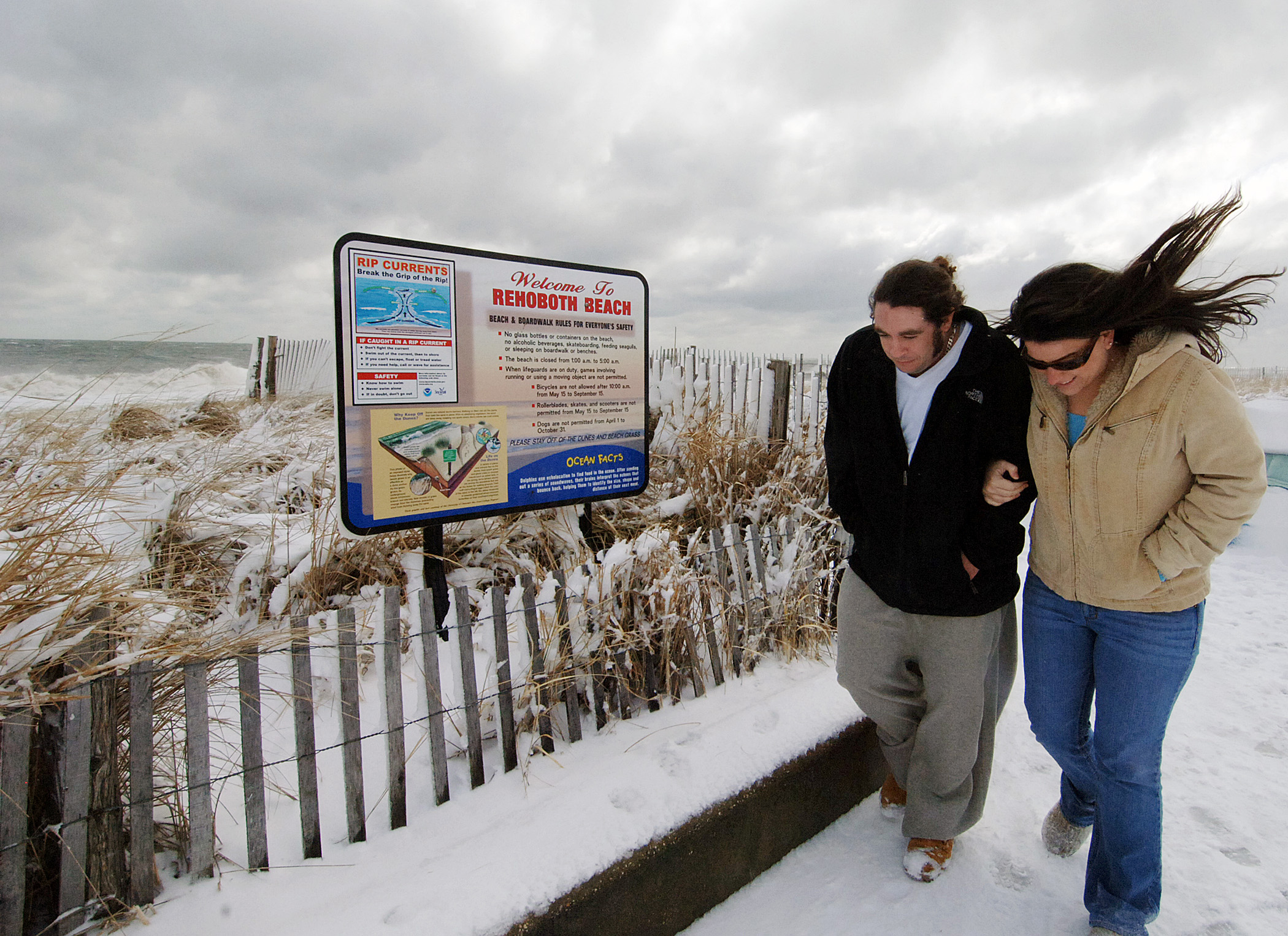
Delaware’s beaches are expecting up to 6 inches of snow.
Delaware beaches may not face as much snow as points north this weekend, but the National Weather Service still expects up to 6 inches of snow, and “very cold, windy conditions” will lash the working, vacation, and retirement communities — and the extensive sand dunes that bracket the area at Cape Henlopen and Delaware Seashore state parks.
But if that’s the kind of weather warning that gets your winter-sports hopes up, think again. “Do Not Sled or Snowboard on Dunes,” which “contain fragile wildlife habitat and provide protection for the beaches” and nearby neighborhoods, warns the state Department of Natural Resources and Environmental Control. Indeed, even walking across the shore dunes is prohibited at those parks, except at marked trails and crossings.
In the warning post, Delaware pointed sledders to a list of alternate sites where downhill runs are encouraged. Unfortunately for beach residents and visitors, almost all the officially approved sledding hills in this low-lying state are nearly two hours north, rimming the Brandywine and other streams that flow south from Pennsylvania. At least in the Diamond State, beach snow sports aren’t a thing.
Winter storm warning up, snow totals down slightly
As of Friday afternoon, forecasters expect Philadelphia to receive over 10 inches of snow between Sunday and Monday.
The National Weather Service has added the entire region to a winter-storm warning that now covers about half the country.
While the agency has trimmed back the snow amounts for Philly, it has added more ice, said Nick Guzzo, meteorologist in the Mount Holly office.
The weather service now is calling for 8 to 12 inches of snow for Philadelphia, but has increased ice totals to 0.25 inches as more freezing now is expected.
As of Friday afternoon, ice accumulations around three tenths of an inch are expected in and around Philadelphia, an increase compared to previous forecasts.
Sleet, which counts toward snow totals, and freezing rain are to do mix in Sunday afternoon after several inches of snow have accumulated.
The snow is expected to start in the early-morning hours, and precipitation could flip back to snow early Monday.
The winter storm warning goes into effect at 7 p.m. Saturday and continues through Monday morning.
Whatever falls is likely to stay around for awhile as the coldest weather of the season, perhaps in the last several years, settles over the region.
Philadelphia’s court system will be largely closed Monday due to the impending winter storm, meaning all scheduled trials and other hearings will be rescheduled for other dates.
Emergency services will remain open, the courts said on social media, including arraignment court. And people will still be ale to file emergency protection from abuse petitions at the Stout Center for Criminal Justice.
Vehicle restrictions on Pa. highways will be in effect Sunday
PennDOT is implementing vehicle restrictions beginning midnight Sunday
Starting at midnight on Sunday, the Pennsylvania Department of Transportation will implement vehicle restrictions aimed at limiting the number of cars on roads statewide during the coming winter storm.
PennDot’s vehicle restrictions are instituted in a tiered system, with Sunday’s coming in at tier four — the second-highest level. Under that tier, commercial vehicles are totally prohibited from using a number of interstates around Pennsylvania, as well as the Pennsylvania Turnpike.
“The decision to implement these restrictions was made with the intention of balancing safety for everyone on the roadway, including commercial drivers,” said PennDot secretary Mike Carroll. “We will remove these restrictions as soon as conditions warrant.”
In addition to limiting the travel of vehicles like tractor trailers and commercial buses, PennDot’s restrictions also apply to school buses, motorcycles, RVs, and passenger vehicles that are towing trailers, Carroll added. None of those vehicles, he said, are permitted to use roadways while the restrictions are in place.
“These restrictions aren’t about the quality of the driver,” said Pennsylvania Turnpike CEO Mark Compton. “These restrictions are about the amount of time it takes for us to clear an incident on one of these roadways. We ask that you please adhere to these restrictions.”
Officials urged motorists to stay home amid the coming storm, noting that the anticipated snowfall rate of one to two inches per hour, as well as the overall snowfall totals, will make keeping roads safe and clear difficult.
Restrictions, PennDot notes online, are evaluated hourly. Pennsylvania’s traveler information website, 511PA, keeps an up to date map of which roads are impacted by the restrictions, and Carroll recommended travelers check that website before heading out, should they absolutely have to.
“Stay home and watch the NFL games, despite the fact that the Eagles and Steelers are not playing,” Carroll said.
Schedule change for two Philly basketball games due to snowstorm
St. Joe’s men’s basketball moved Saturday’s 6 p.m. game against Dayton to 2 p.m. due to the Philly region expecting a major snowstorm this weekend.
With heavy snowfall expected this weekend, two Big 5 basketball programs are moving their tipoff times.
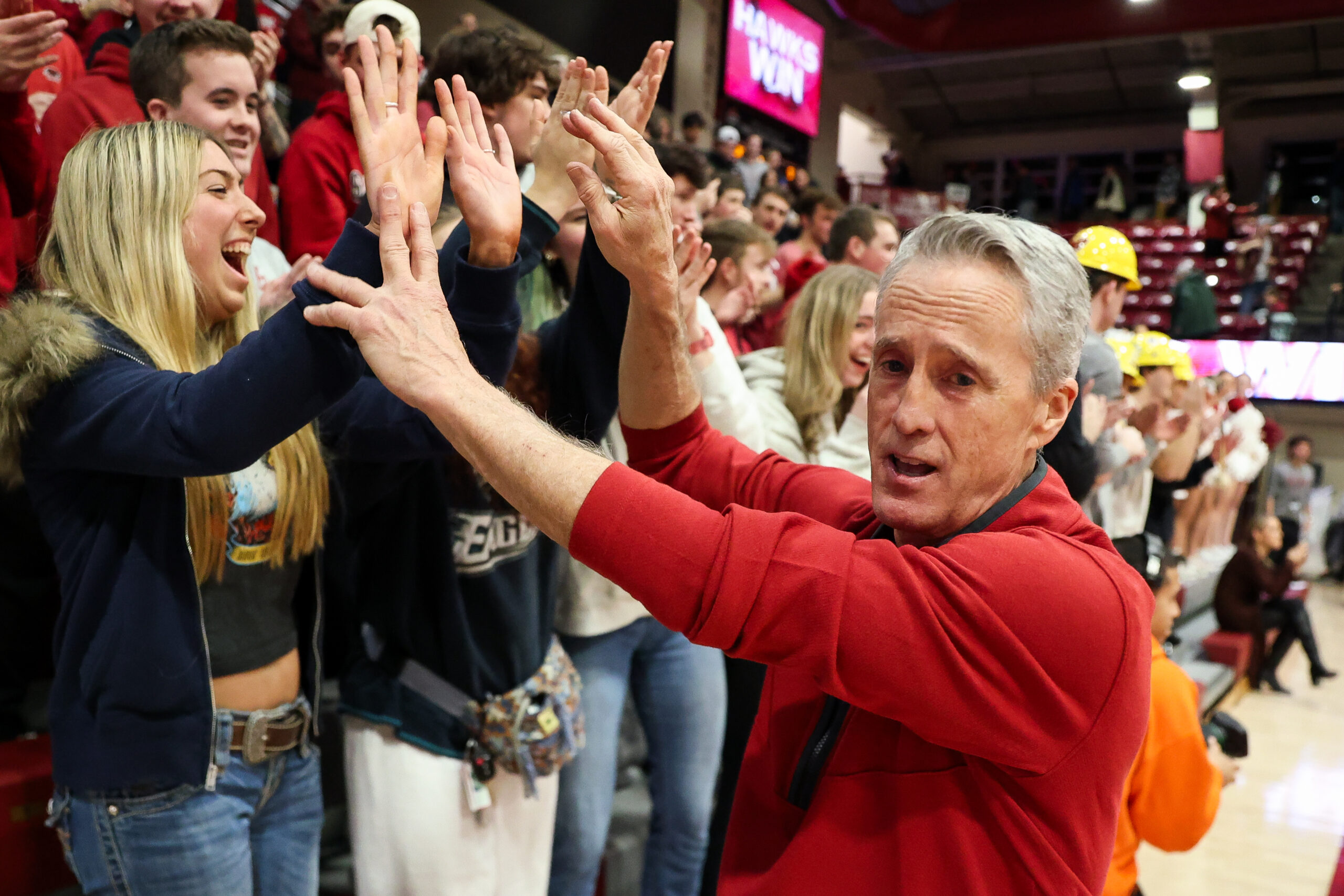
The St. Joseph’s men’s team was slated to take on Davidson at 6 p.m. on Saturday at Hagan Arena. Now, the Hawks will be starting at 2 p.m. to avoid interference with potential snowfall on Saturday night.
Meanwhile, Drexel women moved its Sunday matchup against Towson at the Daskalakis Athletic Center to Saturday at 6 p.m., which will now be a homecoming doubleheader with the men’s team, which face Northeastern at 2 p.m.
The women’s team will play back-to-back days, as the Dragons host Stony Brook on Friday night (6 p.m.).
Archdiocesan schools will use a flexible instruction day Monday
All archdiocesan schools in Philadelphia, and all Archdiocese of Philadelphia high schools, including those in suburban counties, will use a flexible instruction day Monday.
Archdiocesan elementary schools in the suburbs typically follow the snow closing decisions of their local school districts, but officials urged parents and students to check with their local school administration for information about Monday.
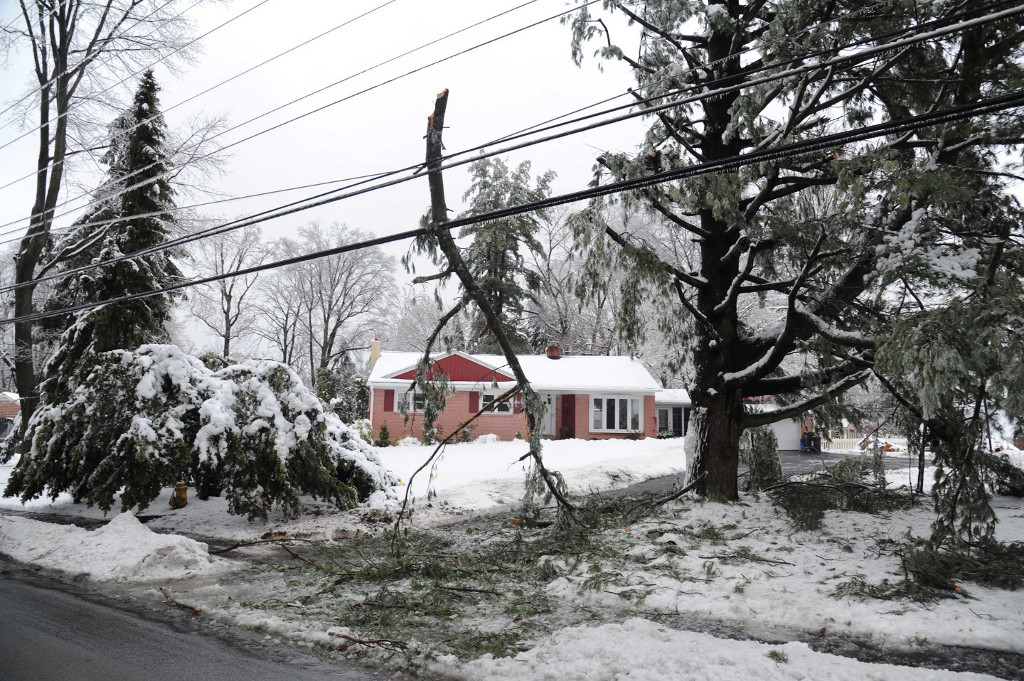
A pine tree branch leans against power lines on Sout New Street in West Chester on Feb. 5, 2014. An overnight freezing rain storm swept through the region leaving downed trees and power lines in its wake.
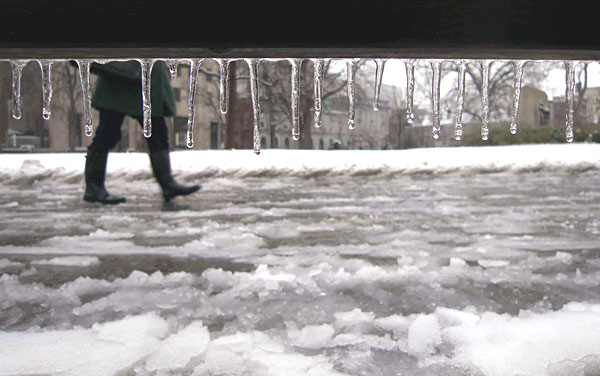
Neither sleet nor freezing rain are particularly pleasant forms of precipitation, but in terms of their impacts, they can be very different.
Sleet forms when a partially melted snowflake or rain drop freezes on the way to the ground.. Freezing rain is rain that doesn’t turn to ice until it lands on a surface and freezes on contact.
During a winter storm, both hold down accumulations. Typically, an inch of liquid precipitation can yield a foot of snow. A similar amount of liquid would yield about 4 inches of sleet. Freezing rain, of course, is measured as pure liquid. A quarter-inch is enough to trigger a winter-storm warning.
Both can fall when surface temperatures are well below freezing, if the upper air is warm enough.
Sleet has an endearing quality for the power companies and their customers: It bounces, rather than glooming on to wires.
Freezing rain is a menace to wires and adds weight to snow on tree branches.
In 2014, freezing rain that began 18 hours after a heavy snowfall resulted in Peco’s biggest winter outage total on record, affecting more than 700,000 customers.
In a battle between sleet and freezing rain, you probably should root against the latter.
Assuming that a 100% chance of snow, and everything else, from the winter menu assures that something actually will happen, this would mark the third consecutive weekend with notable precipitation in the region.
Nearly an inch of rain was measured in Philly on Jan. 10, and last Saturday and Sunday several inches of snow accumulated in areas away from the city heat island in separate snow events.
It’s not like the atmosphere particularly cares about our weekend plans.
It is not uncommon for snow and rain to show up on the same days of the week over periods of several weeks.
That’s the result of the typical spacing between weather systems as they move across the country, meteorologists say.
Sometimes, that keeps happening in 3- to 3½-day intervals — until it doesn’t.
But not to get too far ahead of ourselves, another threat may be brewing for next weekend.
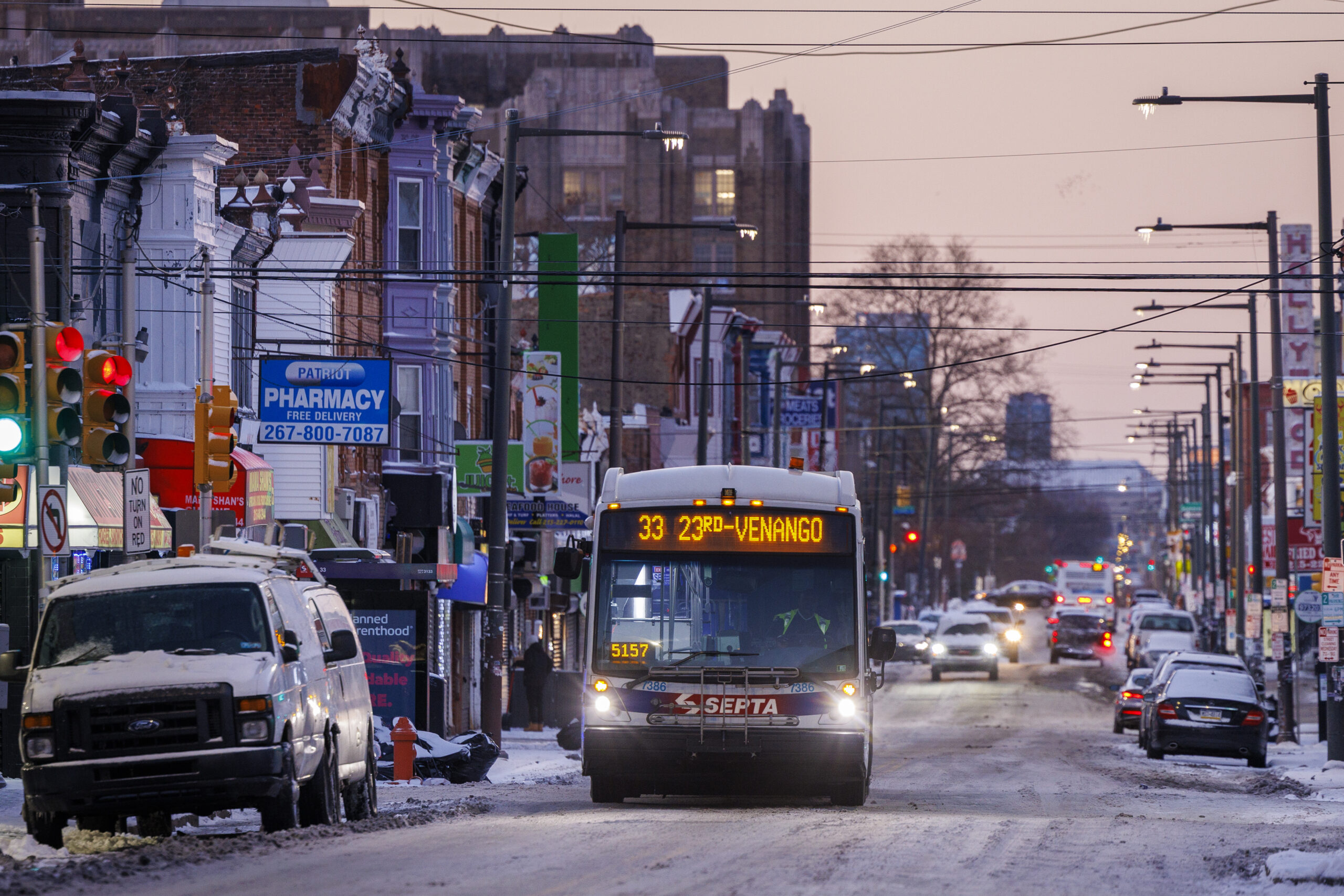
SEPTA buses, trolleys and trains will also be impacted by the snowstorm.
Philadelphians can expect SEPTA service disruptions as a result of the storm.
“Significant accumulations of snow and ice are likely to create unsafe conditions, both on the roads and the rails, and we’ll be making adjustments,” said SEPTA General Manager Scott Sauer.
“Customers should expect impacts to bus, trolley, and regional rail service.”
Sauer said SEPTA lines will operate for as long as it’s safe to do so and it will try to announce any service shutdowns two hours in advance when possible.
For essential workers who are required to commute Sunday, Sauer said the Broad Street Line and Market Frankford Line are the most reliable. Those lines are easier to keep open because large chunks of the rail are underground and the elevated tracks can be kept clear with frequent service, he said.
While inconvenient, suspending service before the height of the storm will ensure no one is stranded and no equipment is damaged, said Sauer.
Sauer warned it may take a few days to get service back to normal and reminded people to avoid travel unless absolutely necessary during the height of the storm.
Philly residents can be fined for not shoveling snow
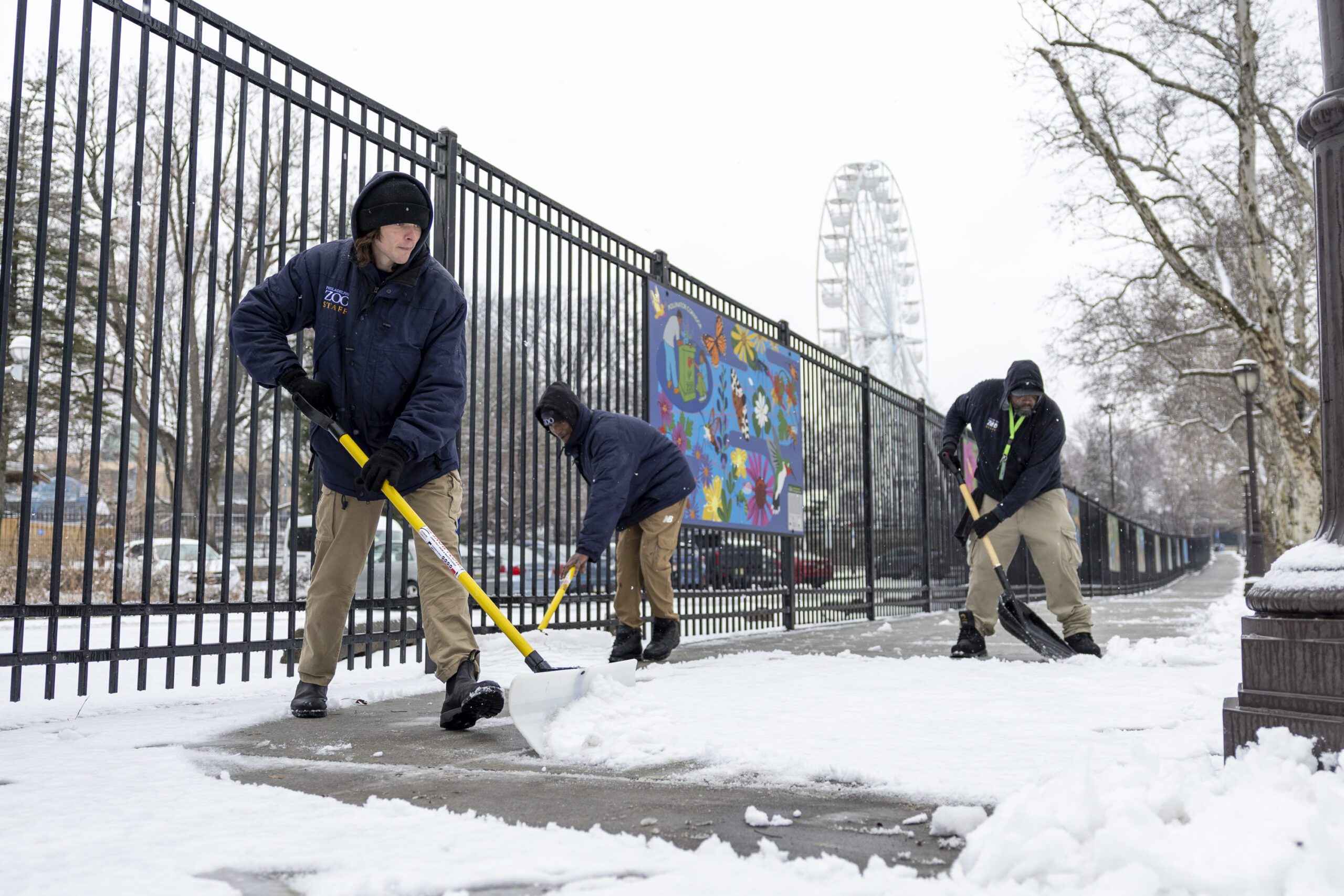
Philadelphia Zoo workers shovel snow on the sidewalks earlier this month.
More than 1000 workers are helping treat the streets and roads of Philadelphia, said Director of the Office of Clean and Green Carlton Williams.
Williams said workers are scheduled to work around the clock with 600 pieces of equipment and 30,000 tons of salt at the ready to make roads passable.
But he reiterated that residents bear some responsibility as well, reminding people that tickets will be issued for untreated sidewalks. They’ll have six hours to shovel after the storm and failing to do so could lead up to a $300 fine.
“We expect our residents to be out there, because, again, this is a safety issue,” said Williams. “If that becomes frozen or we can’t get access to someone because sidewalks aren’t shoveled that’s a problem for our emergency responders.”
City warming centers to remain open during snowstorm
Crystal Yates-Galle, Deputy Managing Director for Health and Human Services, said the city’s warming centers will continue to remain open during this storm as part of the ongoing Code Blue declaration, which allows the city to also add shelter beds to the system.
Warming centers are located at select libraries during the daytime from 9 a.m. to 9 p.m.
From 9 p.m. to 9 a.m., select recreation centers will act as warming centers.
The need is already proving to be great. The city reached capacity at four of its five warming centers Thursday, Yates-Gale said, but plans to open more as needed.
Shelter beds are also at capacity, though the city plans to add another 150 beds throughout the system within the next two weeks.
Philadelphia Police Commissioner Kevin J. Bethel said his department would be working with outreach workers to connect homeless people to city services during the snow emergency.
Monday will be a full snow day, but if schools need to remain closed Tuesday and beyond, students have Chromebooks and will turn to remote learning until it’s safe to return.
“We’re inviting students and staff to enjoy this snowfall, which will be the most I’ve seen during my nearly four years here in Philadelphia,” Watlington said.
‘Your cars will be towed’: City officials warn residents about snow parking
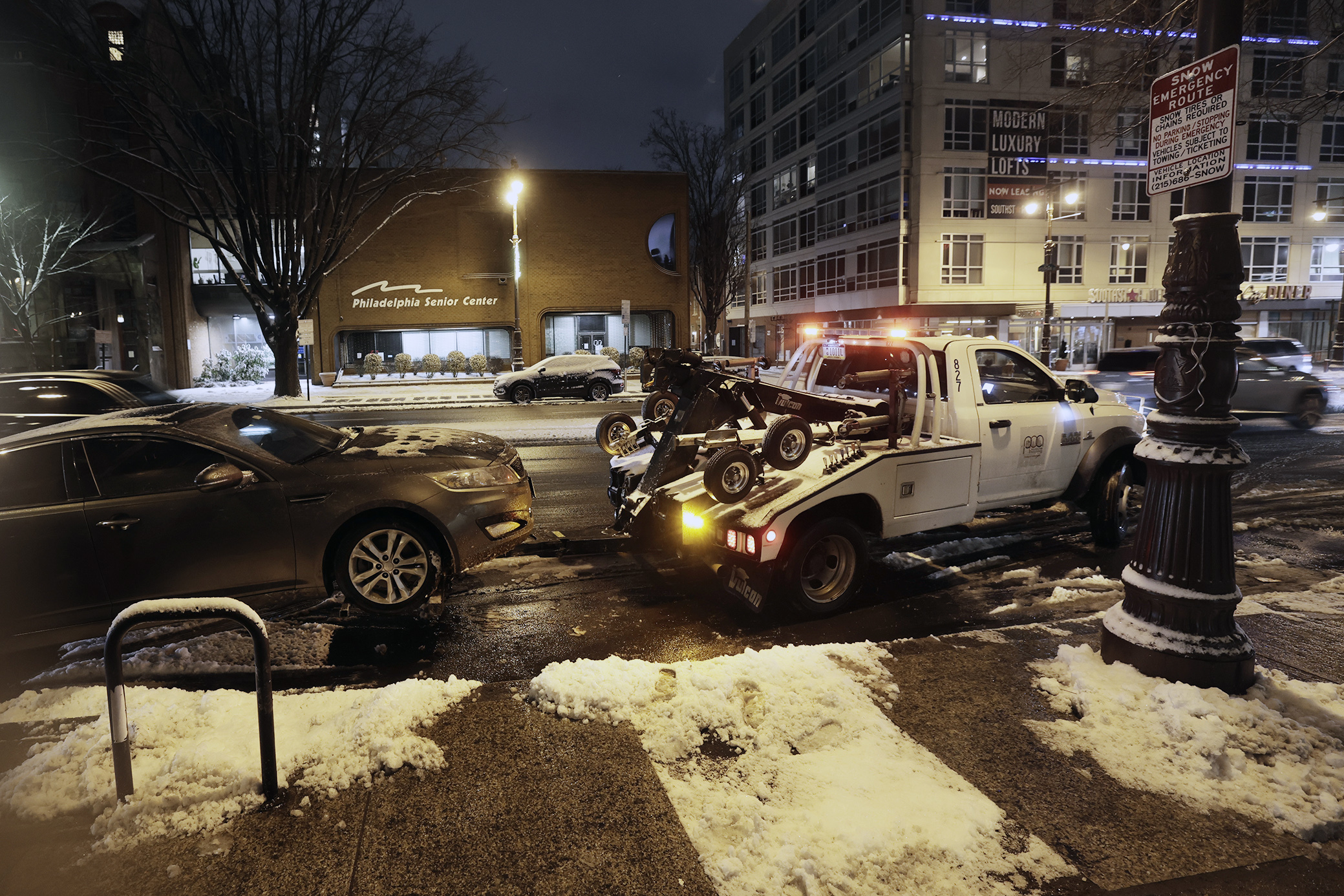
A Philadelphia Parking Authority truck tows a car from South Broad Street, a snow emergency route.
Regardless of how much snow Philly gets, the roads are a major concern for city officials.
Illegal parking, especially on narrow residential streets, is a focus for officials.
The city has been treating roads since Wednesday, according to Carlton Williams, director of the Office of Clean and Green.
But in order for plow operations to flow smoothly, Williams said residents would need to avoid parking in front of fire hydrants and blocking corners.
“Do not park on designated snow emergency routes,” said Williams.
“Your cars will be towed, snow emergency routes are necessary for our emergency responders to get to a location as quickly as possible and park cars impede that process.”
To help clear those emergency routes, the Philadelphia Parking Authority will institute $5 flat rate parking beginning at 7 p.m. on Saturday at any of its lots.
Philly trash and recycling collection suspended Monday, delayed rest of the week
Heavy snow will impact trash collection services in Philly.
Trash and recycling collection will be suspended across Philadelphia Monday, the city announced in a news conference Friday.
Collection days for the rest of the week will be pushed back a day, and residents are asked to hold their trash and recycling until the next day.
“There will be no two-day-a-week trash collection in those neighborhoods who receive that service.” said Carlton Williams, director of the Office of Clean and Green Initiatives.
Due to the amount of snow forecast, Williams asked residents with driveway collection to bring trash out to the street or use the drop off center, due to plowing issues.
Parker declares snow emergency in Philly beginning Saturday night
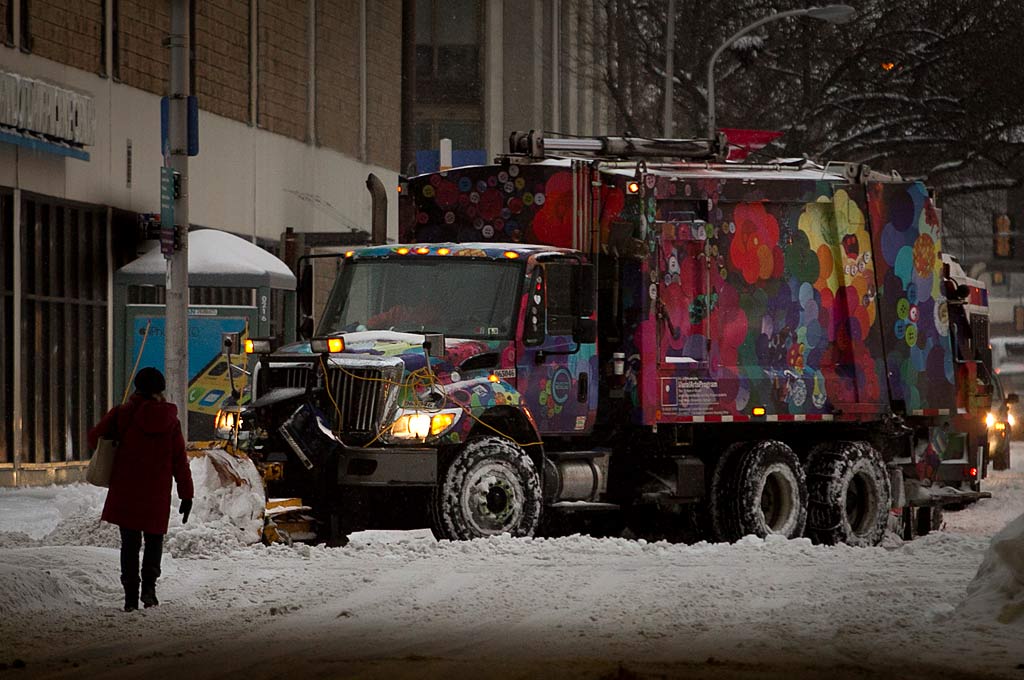
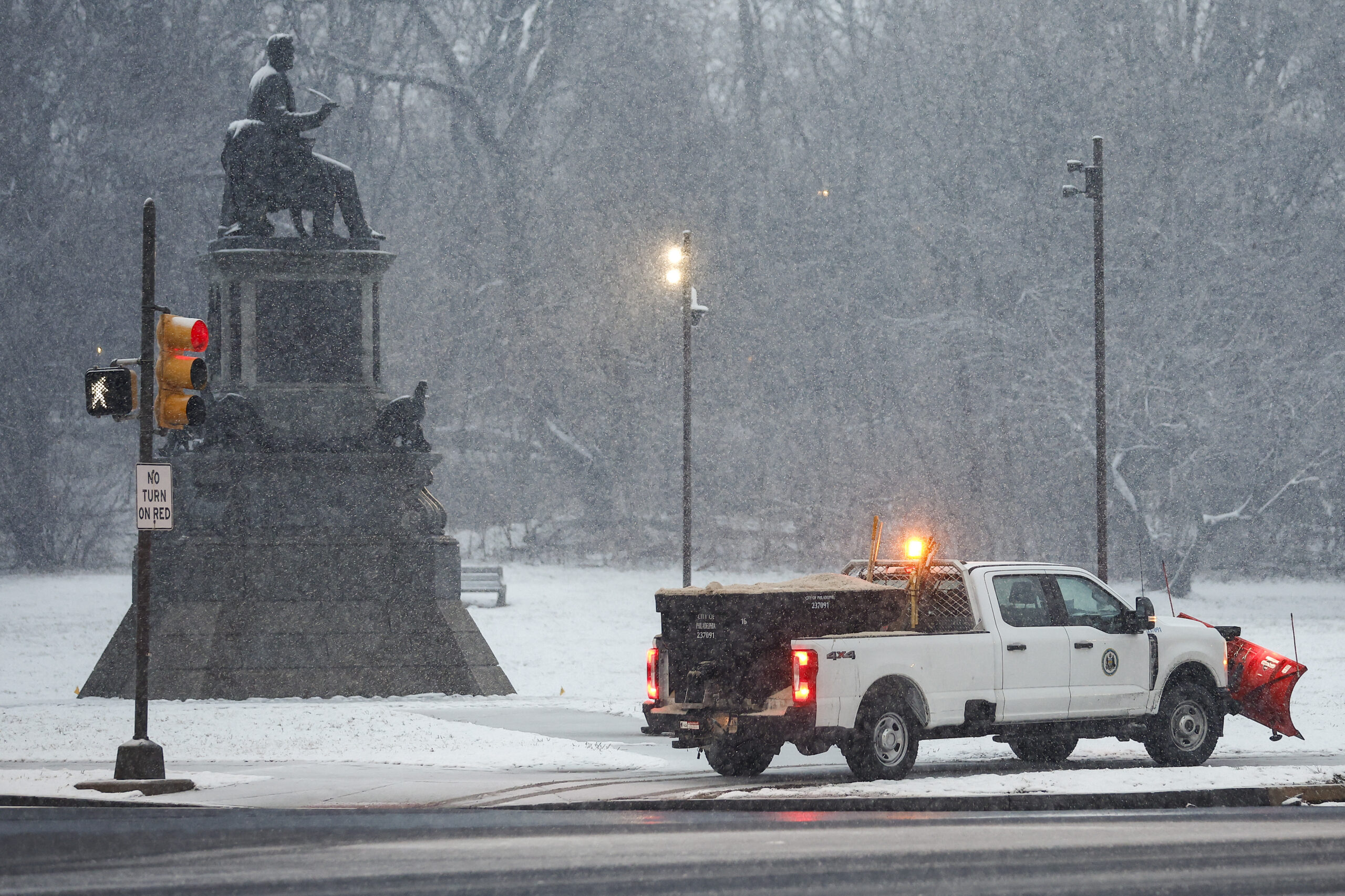
A plow truck drives along Reservoir Drive in Fairmount Park in February 2025.
With more than a foot of snow possible this weekend, Philadelphia Mayor Cherelle L. Parker announced a snow emergency would go into effect Saturday at 9 p.m.
“We hope you will help us by keeping our roadways as free as possible of any vehicles that don’t necessarily need to be parked there,” Parker said at a news conference Friday, warning roads would be “hazardous” Sunday.
“Please take this storm seriously,” Parker said. “Limit unnecessary travel once conditions worsen, and if you must be out, give yourself extra time, drive slowly and stay off the roads if conditions become hazardous, so our crews and first responders can do their jobs safely.”
Crews have already begin brining city streets, and while the focus will be on the city’s major roadways, Parker pledged to also get to residential streets as soon as possible.
“We will make every effort to get to every primary, secondary and tertiary street in the city of Philadelphia,” Parker said. “That is our standard.”
Forecasters expect about 13 inches of snow to accumulate in and around Philadelphia through Monday.
Love it or hate it, more snow than Philly has seen in a long time is all but certain this weekend.
Forecasters continue to predict as much as 18 inches of snow could fall in and around Philadelphia beginning Saturday night, which would mark the city’s first double-digit snowfall in a decade, almost to the day.
The situation is so serious, former NBC10 meteorologist Glenn “Hurricane” Schwartz has come out of retirement and is doing forecasts on TikTok.
“It’s going to be a historic storm,” Schwartz predicted Thursday night.
At this point, the only thing that might keep down the snow totals is a wintry mix of sleet and freezing rain, which could fall during peak portions of the storm Sunday. Even so, precipitation is expected to shift fully back to all snow by Sunday night, with an additional inch or two likely before the storm moves through.
When it’s all said and done, forecasters predict about 13 inches of snow will have fallen in Philadelphia.
Officially, a winter storm watch is in effect for the region beginning 7 p.m. Saturday through 1 p.m. Monday. With temperatures expected to plummet Friday night (along with wind chills between -10° and 0°), a cold weather advisory is also in effect through Saturday morning.
Philly-area schools prepare for closures that could last multiple days
Cheltenham School District warned parents buildings could be closed multiple days if “conditions are significant enough.”
Ahead of the impending snowstorm, some Philadelphia area school districts are sharing plans for closures — maybe for multiple days.
In Upper Darby, school officials told families Thursday night to prepare for the prospect of virtual instruction Monday, and possibly Tuesday.
“If the weather is more significant than anticipated and there are power outages in the area, we will shift to a snow day,” with no virtual school, Superintendent Daniel McGarry said in the message.
In the Cheltenham School District, Superintendent Brian Scriven told families that “if weather conditions require us to close schools and offices,” the district will have a traditional snow day Monday. Tuesday is to be determined – and Wednesday could be virtual instruction, “If conditions are significant enough,” Scriven said.
Maps: How much snow and sleet could fall across the Philly region
Snow near Poplar Drive and Girard Avenue in Philadelphia earlier this month.
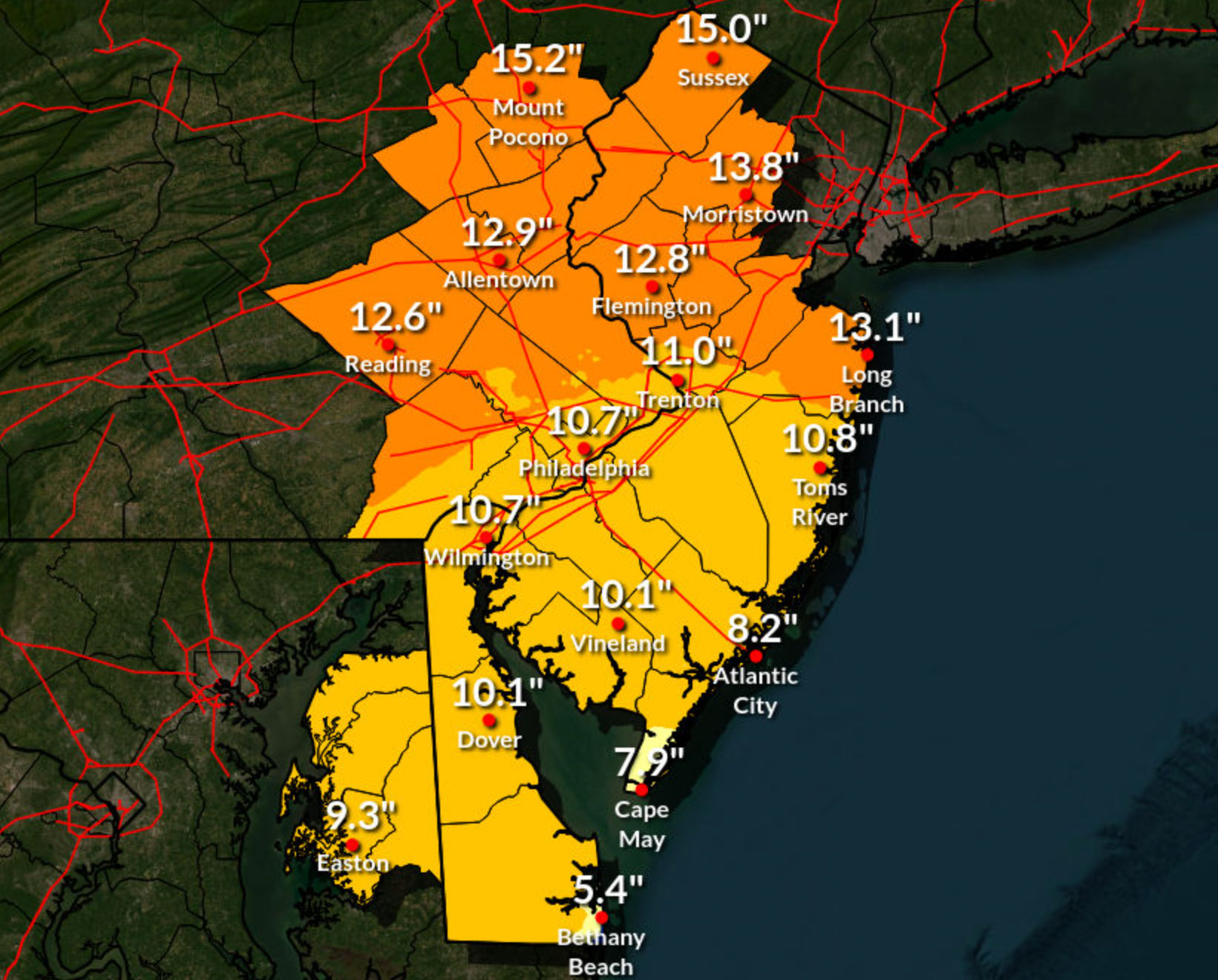
Official National Weather Service forecasts say 12 to 18 inches of snow is possible across most of New Jersey and Pennsylvania, including Philadelphia as the storm pushes through the region Saturday night to early Monday morning. More than 21 states were expected to experience at least moderate impacts from the storm, the weather service said.
The National Weather Service puts out forecasts for every few square miles of land in the United States four times a day through a system called the National Digital Forecast Database.
The map below displays that data. Use it to find how much snow is expected anywhere in the eastern United States. It will always show the most recent forecast for the next three days.
(function () {window.addEventListener(‘message’, function (e) { var message = e.data; var els = document.querySelectorAll(‘iframe[src*=”‘ + message.id + ‘”]’); els.forEach(function(el) { el.style.height = message.height + ‘px’; }); }, false); })();
(function () {window.addEventListener(‘message’, function (e) { var message = e.data; var els = document.querySelectorAll(‘iframe[src*=”‘ + message.id + ‘”]’); els.forEach(function(el) { el.style.height = message.height + ‘px’; }); }, false); })();
The timing and duration of precipitation aren’t among the strong suits of computer models.
The weather service’s winter storm watch, which covers the entire region, all of Delaware, and most of Pennsylvania and New Jersey, is in effect from 7 p.m. Saturday until 1 p.m. Monday.
The daytime Saturday “looks fine if you have to get out,” said Tom Kines, senior meteorologist with AccuWeather Inc.
The weather service is listing the likeliest starting time as the early morning hours of Sunday, with snow likely into the early morning hours of Monday.
Sunday is going to be one of the colder days of the winter with temperatures in the teens and lower 20s. The weather service introduces the possibility of freezing rain and sleet by 1 p.m., with a forecast temperature of 19 degrees.
Wintry mix could limit snow totals. It’s a real Philadelphia tradition.
Sleet and freezing rain could mix with snow in Philly this weekend.
One thing arguing against mega-snow totals this weekend along I-95 and South Jersey is the likelihood sleet and freezing rain would mix with the snow at the height of the storm’s impacts.
That’s part of the cost of doing business in Philly winters.
Our biggest snows typically come from coastal nor’easters, so-named for their onshore winds the import warm air off the Atlantic to the upper atmosphere, the sources of precipitation. Sea-surface temperatures off Atlantic City are in the upper 30s.
The warmth above changes the snow to rain that freezes on contact when it reaches a cold surface, a sidewalk, or street, or windshield. Or precipitation becomes sleet, liquid that becomes a ball of ice before it reaches the surface.
Storms that are purely snow are the exception in the Philly area, says Ray Kruzdlo, the hydrologist at the National Weather Service Office in Mount Holly.
One of American history’s most famous wintry mixes accompanied the Continental Army’s surprise invasion of the Hessians in Trenton in 1776 during the American Revolution. After crossing the Delaware on Christmas night, diary accounts tell of Gen. George Washington led his troops through a nasty wintry mix.
Conversely, Thomas Jefferson, 150 miles from the ocean in western Virginia, measured more than 20 inches of snow.
One of the more notable busts occurred in January 2015 when forecasts called for an I-95 East Coast snowstorm so ferocious that the mayor of New York imposed a curfew.
His boss at the time, weather service head Louis Uccellini, said no apology was necessary: Science has its limits. Busts have been known to happen in the battle of science against nonlinear.
This time around, meteorologists are all but certain something “impactful” is going to happen.
Ray Kruzdlo, the staff hydrologist in the weather service office, said the slim chance of this storm “not being significant is leaving us.”
TikTok has finalized a deal to create a new American entity, avoiding the looming threat of a ban in the United States that has been in discussion for years on the platform now used by more than 200 million Americans.
The social video platform company signed agreements with major investors including Oracle, Silver Lake, and the Emirati investment firm MGX to form the new TikTok U.S. joint venture. The new version will operate under “defined safeguards that protect national security through comprehensive data protections, algorithm security, content moderation and software assurances for U.S. users,” the company said in a statement Thursday. American TikTok users can continue using the same app.
President Donald Trump praised the deal in a Truth Social post, thanking Chinese leader Xi Jinping specifically “for working with us and, ultimately, approving the Deal.” Trump add that he hopes “that long into the future I will be remembered by those who use and love TikTok.”
Adam Presser, who previously worked as TikTok’s head of operations and trust and safety, will lead the new venture as its CEO. He will work alongside a seven-member, majority-American board of directors that includes TikTok’s CEO Shou Chew.
The deal ends years of uncertainty about the fate of the popular video-sharing platform in the United States. After wide bipartisan majorities in Congress passed — and President Joe Biden signed — a law that would ban TikTok in the U.S. if it did not find a new owner in the place of China’s ByteDance, the platform was set to go dark on the law’s January 2025 deadline. For a several hours, it did. But on his first day in office, President Donald Trump signed an executive order to keep it running while his administration sought an agreement for the sale of the company.
“China’s position on TikTok has been consistent and clear,” Guo Jiakun, a Chinese Foreign Ministry spokesperson in Beijing, said Friday about the TikTok deal and Trump’s Truth Social post, echoing an earlier statement from the Chinese embassy in Washington.
Apart from an emphasis on data protection, with U.S. user data being stored locally in a system run by Oracle, the joint venture will also focus on TikTok’s algorithm. The content recommendation formula, which feeds users specific videos tailored to their preferences and interests, will be retrained, tested and updated on U.S. user data, the company said in its announcement.
The algorithm has been a central issue in the security debate over TikTok. China previously maintained the algorithm must remain under Chinese control by law. But the U.S. regulation passed with bipartisan support said any divestment of TikTok must mean the platform cuts ties — specifically the algorithm — with ByteDance. Under the terms of this deal, ByteDance would license the algorithm to the U.S. entity for retraining.
The law prohibits “any cooperation with respect to the operation of a content recommendation algorithm” between ByteDance and a new potential American ownership group, so it is unclear how ByteDance’s continued involvement in this arrangement will play out.
“Who controls TikTok in the U.S. has a lot of sway over what Americans see on the app,” said Anupam Chander, a professor of law and technology at Georgetown University.
Oracle, Silver Lake, and MGX are the three managing investors, each holding a 15% share. Other investors include the investment firm of Michael Dell, the billionaire founder of Dell Technologies. ByteDance retains 19.9% of the joint venture.
If you’re intimidated by weight training, a new study is full of reassurance.
Weight workouts don’t have to be complicated or grueling to be effective, the study found. Almost any kind of lifting led to increased muscle and strength in the study. Whether people lifted heavy weights or light, through many repetitions or few, the results were broadly comparable.
“Lift however you like to lift. That’s the lesson,” said Stuart Phillips, a professor of kinesiology at McMaster University in Ontario, Canada, and an expert in resistance exercise. Phillips is the senior author of the study, which was published last month in the Journal of Physiology.
The study also provided other lessons, some unexpected, including about the importance of genetics in our bodies’ response to weight training and how some of us may get stronger without getting much bigger — or vice versa — when we begin to train.
Do you have to lift heavy weights?
Gym culture is full of widely held beliefs about the best ways to lift, Phillips said, many backed by scant evidence.
“You’ll see guys who’ve been lifting for decades and swear you have to lift heavy” to gain substantial muscle mass and strength, he said. For them, weights must be hefty enough that you can barely grunt through eight or nine taxing reps before your arms or legs give out.
But mounting evidence suggests that heavy weights are overrated. A comprehensive 2023 review of hundreds of past experiments concluded that, compared with no exercise, any lifting — not just with heavy weights — “promoted strength and hypertrophy” or larger muscles.
But questions remain about the most effective weight workouts. If you use lighter weights, how many times should you repeat each lift? What drives muscle growth, if it’s not heavy loads? And will everyone make the same gains from the same workouts?
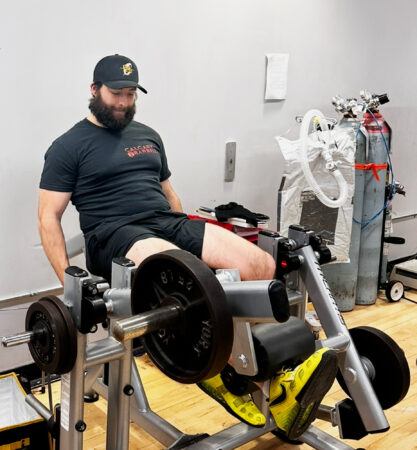
For answers, Phillips and his colleagues recruited 20 healthy, young men who didn’t normallyweight train and checked the size and strength of their muscles. (They have a similar study underway with women.) The men’s limbs were then randomized to heavy or light lifting; that is, their right or left arm was randomly assigned to complete biceps curls using a heavy weight, while the other arm did the same exercise with a much lighter weight. Similarly, one leg did knee extensions against a heavy weight; the other leg completed the same exercise with a much lighter load.
The heavy weights were challenging enough that lifters could manage no more than 12 repetitions before reaching muscular failure, meaning they felt they couldn’t lift again. With the lighter weights, the participants lifted through as many as 25 repetitions before deciding they couldn’t do another.
Light weights work fine
The men worked out three times a week under the researchers’ supervision, increasing their weights once they could easily complete more than 12 heavy or 25 light repetitions. At the end of 10 weeks, the researchers retested everyone.
By then, the men’s muscles were almost all stronger and larger, with little difference between limbs. The arm that lifted light weights was just as buff as the one that lifted heavy and ditto for legs. Both approaches were equally effective.
This finding “reinforces the idea that load isn’t an important determinant” of muscular response, Phillips said. “Effort is.” If people lifted until their muscles tired, they got results.
The practical takeaway is that you can “pick what works for you,” Phillips said. Have sore joints or little taste for big weights? Use smaller ones. Have limited time? You’ll finish faster with heavier loads.
But don’t expect your results to exactly mirror mine. There were substantial differences from one volunteer to the next. Some nearly doubled their strength or mass; others added less. And there was little relationship between bulk and strength. Some men got far stronger without growing much bigger, and some achieved almost the opposite.
These differences underscore the role of genetics. “To some extent, our muscular responses are baked in,” Phillips said. After 10 weeks of the same lifting routine, I won’t look precisely like you. But we’ll both be stronger and better muscled.
What about body weight exercises?
This study “was very well-designed,” said Brad Schoenfeld, an exercise scientist at CUNY Lehman College in the Bronx, who researches resistance training but was not involved with the new work. The findings suggest that “within broad limits, you can build similar amounts of muscle mass” with light or heavy loads.
The study has limitations, though. It involved only young men new to lifting. Phillips said he believes the results would be similar for women, older people, and anyone who’s been weight training for years. But studies are needed with those groups to be sure.
The training also involved gym machines. Would the results be the same with body weight exercises? “I think so,” Phillips said, adding, “I’m counting on it.”
Much of his own training nowadays, at age 60, takes place at home, he said, and involves body weight work. “I’ve got enough space in my basement to do squats, do deadlifts,” he said. He repeats each exercise until he can barely finish another rep, he said. “I do what I preach.”
But the key point is that he does something, Phillips said, and regularly. “Based on self-report and participation data, about 80% of people do not lift weights at all.” He hopes his group’s study and other research will encourage more people to try some kind of resistance training routine, he said. “Let’s make 2026 the year of strength.”
Philadelphia School District officials have revealed the results of a years-in-the-making facilities plan to reshape the system.
The big picture: Superintendent Tony B. Watlington Sr.’s current proposal would close 20 schools, colocate six, and modernize 159. The closures, which would not begin to take effect until the 2027-28 school year, would be scattered through the city, with North and West Philly hardest hit. The 10-year blueprint comes with a $2.8 billion price tag.
What we don’t know: Of several unknowns, the biggest is which, if any, of the proposed closures will actually happen. Any changes must be approved by the school board, which could adopt all, some, or none of Watlington’s recommendations.
Lawmakers’ reactions: The district’s facilities plan did not go over well in City Council’s first session of the year on Thursday, with several members voicing dismay and one proposing to allow Council to remove the school board members who will consider the proposed closures.
Despite community support and legal efforts, the detained immigrant father of a 5-year-old son with brain cancer has decided to drop efforts to stay in the United States and accept deportation to Bolivia.
Johny Merida Aguilara has been in federal custody at Moshannon Valley Processing Center since September. He was previously a main caretaker for his son, Jair, who has been treated at Children’s Hospital of Philadelphia, but whose future care is now uncertain.
Merida Aguilara’s wife and three American-citizen children will also go, voluntarily, leaving their home in Northeast Philadelphia.
In their own words: “I am tired,” Gimena Morales Antezana, his wife, said in an interview with The Inquirer. “We have been trying to survive, but it is difficult with the children because they miss their dad so much.”
We asked attendees at New Jersey Gov. Mikie Sherrill’s inaugural ball four questions about her. Here’s what they said.
An independent law firm found that independent and unaffiliated voters were left off Chester County’s poll books in November’s election due to human error and insufficient training.
A massive data center is under construction in South Jersey. Some residents are concerned about its impact on their lives and the environment.
A Philadelphia woman accused a local influencer of racist remarks and then pepper-sprayed him in the face on a SEPTA bus. Video was taken and widely shared on conservative media.
This week, we have an explainer from suburban reporter Denali Sagner by way of Curious Cherry Hill. A reader asked for the backstory of a hidden-in-plain-sight grave site in the township’s Woodcrest neighborhood.
The small cemetery is the final resting place of one of South Jersey’s most prominent colonial families, the Matlacks, and an unspecified number of servants and enslaved people. Here’s the full story.
The former KYW radio building on Walnut Street just sold for about $5 million — a steep discount from the $19 million it sold for in 2019. Which Beatle once worked there?
Cheers to Ruben Taborda, who solved Thursday’s anagram: Four Seasons. If you want to stay in the luxury hotel’s new penthouse suite, it’ll cost you … $25,000 per night.
Photo of the day
A pedestrian takes a shortcut through the three-day-old snow on the ground in downtown Camden’s Roosevelt Plaza Park on Wednesday.
Consider this your moment of calm before the storm. Remember: City residents can be fined up to $300 for not shoveling their sidewalks.
Thanks for ending your week with The Inquirer. ’Til we meet again in your inbox, be well.
By submitting your written, visual, and/or audio contributions, you agree to The Inquirer’s Terms of Use, including the grant of rights in Section 10.
There is a word I want us to consider: blagony. It’s a portmanteau of Black and agony, and it captures a specific psychological space.
It’s not merely being the only Black person in the boardroom. It’s the sustained emotional labor, the relentless vigilance, the pressure of representation and racialized perception — all while trying to meet the explicit performance metrics of any job.
The only Black engineer in a meeting. The single Black adviser on a team. The only Black teacher, the only Black graduate student. The Black female leader whose presence is always under the magnifying glass.
This is the daily landscape for many, and it is, in its quiet omnipresence, exhausting.
To understand blagony is to understand that workplace stress isn’t just about deadlines and deliverables. In the last decade, a significant body of research has reminded us that burnout — the chronic stress response the World Health Organization formally recognizes in the workplace — emerges not only from workload but from identity threat, lack of psychological safety, and perpetual masking of one’s authentic self. Burnout has been with us for decades, yet we are only beginning to grasp its intersecting causes.
In Burnout: The Secret to Unlocking the Stress Cycle, Emily and Amelia Nagoski explain that stress has a physiological component that often isn’t resolved by self-care alone. Stressors accumulate, and without mechanisms to complete the “stress cycle,” our bodies and minds remain in distress.
Now imagine experiencing the ordinary stress of overwork while also managing the extraordinary stress of visibility — being watched, categorized, and held up as both token and template for an entire community. That’s blagony. It’s not just about being in the room; it’s about being on stage in every room.
Organizational research shows this isn’t abstract. Studies probing wellness in underrepresented groups report that women of color — and particularly Black women — face compounded barriers in professional settings.
The freedom to bring all of who you are to work is one of the major predictors of organizational success. Yet, for Black employees, that safety is often a mirage. They must code-switch, temper their expertise with humility, and constantly evaluate whether being authentic will be rewarded or punished, writes Jack Hill.
They are both underrepresented and overlooked, which research connects to diminished career progression, reduced well-being, and heightened psychological strain.
This isn’t about victimhood. It’s about recognition. True psychological safety — the freedom to bring all of who you are to work — is one of the major predictors of organizational success. Yet, for Black employees, that safety is often a mirage. They must code-switch, temper their expertise with humility, and constantly evaluate whether being authentic will be rewarded or punished.
This labor — unmeasured, unpaid, and deeply internalized — is blagony.
Of course, we talk about inclusion and equity, about diversity plans and affinity groups. But intention isn’t impact. A reading of workplace wellness literature reveals a troubling tendency: The wellness industry urges individual strategies — meditation, resilience, boundary setting — while often ignoring structural stressors that are built into the workplace.
Yet, most corporate wellness programs remain superficial: apps, yoga classes, snack bars, mindfulness sessions. None of these treats the root of blagony: the constant cognitive load of being the sole representative of a marginalized group. Psychological research calls this “identity threat,” and it’s real.
In higher education and STEM settings, scholars highlight how Black professionals must mask parts of themselves — hide cultural cues, soften speech, temper humor — to conform to dominant norms. Every day, they must decide: Be fully me and risk being misunderstood? Or mold myself into the organizational ideal and risk losing touch with my own sense of self, or possibly risk losing my job?
In a striking parallel, centuries of research on microaggressions show how seemingly small, everyday slights accumulate into a wear and tear on the psyche. One corporate DEI consultant who has developed mindfulness tools for Black workers notes that these workers face not only the standard burnout of their peers, but additional layers — microaggressions, coded language, isolation, and stereotypical assumptions — which add up over the years.
That is blagony.
Some might raise the counterargument: Isn’t this just the cost of progress? The pain inherent in entering spaces that were never designed for everyone? But that is precisely the problem. Organizations and societies that value innovation, creativity, and collective intelligence must also value plurality of perspective, and the racial and ethnic components that come along with it. If we ignore the emotional costs paid by minoritized workers, we will degrade our own workplaces and squander human potential.
Consider the economy’s current preoccupation with “wellness.” Most wellness initiatives are rooted in an individualistic self-care model that assumes stress arises from personal habits. But when stress is born of organizational dynamics, personal adjustment alone isn’t enough.
Nagoski reminds us: Stress is physiological, yes, but it’s also social. You cannot meditate your way out of an environment that constantly signals that your presence is provisional.
Blagony demands more than corporate slogans or pulse surveys. It demands structural change. It demands that we rethink hiring, promotion, and evaluation criteria. It demands that we foster climates where people don’t feel the need to mask their identities to fit in. It demands sustained effort to build genuine psychological safety.
There is also a cultural dimension. We must shift from valuing perfection to valuing wholeness. We must recognize that human beings — especially those carrying the cumulative weight of historical and structural marginalization — cannot compartmentalize identity from performance. Workplaces that expect competence without empathy will find neither.
In my own conversations with Black professionals, what emerges over and over is not a desire for special treatment, but for authentic belonging. They don’t want to be tokens. They want to be colleagues whose full humanity is recognized and respected.
So let’s retire the idea that burnout is merely overwork. Let’s broaden our understanding to include blagony: the strain of being seen as a single voice for a whole community, the chronic vigilance against bias, the emotional taxation that is neither acknowledged nor compensated.
If we want workplaces that are not just more diverse but more human, then we must reckon with this. Because until we address the unique stressors Black employees carry — and redesign institutions to reduce them — we will continue to lose not just talent, but our shared moral coherence.
Blagony is not a symptom of individual weakness. It is a signal that our workplaces — and our culture — still have far to go.
Jack Hill is a diversity consultant, child advocate, journalist, and writer.
A Brooks armored truck pulled up to the main PSFS Bank office in Center City on the morning of Jan. 20, 1988, but guard Edward Leigh Hunt Jr. didn’t get out.
Two other employees of the Wilmington-based company, a driver and another guard, went inside the bank office on 13th Street near Market. When they returned about 30 minutes later, the 24-year-old Hunt was gone.
He fled the vehicle carrying two canvas bags containing used bills totaling $651,000, or more than $1.7 million in today’s dollars.
’See ya soon’
A few days after the robbery, Hunt, who went by Leigh, had made his way to Los Angeles, and phoned a friend from back home — mainly asking how much publicity he was receiving.
And then Hunt went silent for nearly 20 months.
In the meantime, he was twice featured on America’s Most Wanted and attracted national attention as well as a following.
“The whole incident has been bizarre since day one,” the fugitive’s father, Edward Leigh Hunt Sr., a former prosecutor for the Delaware Attorney General’s Office, would say later.
As the two-year anniversary of the heist approached, editors from the Wilmington News Journal newspaper inexplicably received a handwritten letter.
It was from Hunt, and he said the money was gone.
The University of Delaware graduate said he gambled it all away in an attempt, he wrote, to quadruple the sum and then return half the proceeds.
He missed his family, he wrote, and wanted to surrender on the second anniversary of the theft, Jan. 20, 1990, at noon in front of the Chamber of Commerce offices in downtown Los Angeles. He enclosed a photo of himself emerging from a swimming pool.
He sent a second letter to the newspaper a few days later, reiterating that he would be turning himself in. “Just a reminder,” he wrote.
“I’m sorry about the problems I have caused,” he added. “It’s nobody’s fault but mine. See ya soon.”
Going downtown
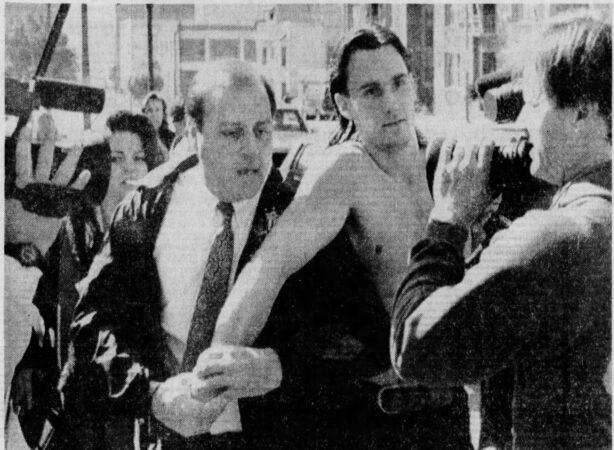
Hunt, now 26, arrived shirtless and five minutes late, but nonetheless surrendered as planned to members of the FBI.
“I love America,” Hunt said as he was taken into custody. “America is a great country.”
As he was taken away, according to the Los Angeles Times, a few supportive spectators shouted, “Free Leigh.”
Six months later, Hunt pleaded guilty to interstate theft, and a federal judge in Philadelphia sentenced him to eight years in prison. In hopes of getting his sentence reduced, Hunt later came clean and confessed to having hidden most of the money in a Hollywood storage locker.The FBI recovered nearly $574,000, and Hunt’s sentence was cut down to six years.
Donald Trump’s sudden retreat from his military and economic threats to seize Greenland from NATO ally Denmark shows it is still possible to block the president from further foreign policy folly.
Trump did a complete U-turn at the World Economic Forum in Davos, Switzerland, shortly after berating European allies and NATO in a lengthy, lie-filled speech, insisting he must “own” Greenland. Just two hours later, after a meeting with NATO Secretary General Mark Rutte, the president suddenly announced he had a “framework” for a deal that would satisfy all U.S. needs.
Make no mistake. No matter how the White House spins Trump’s sudden about-face, he staged a total climb-down from a mess of his own making. Based on early reports, he got almost nothing he couldn’t have agreed on with Denmark months ago, based on a 1951 treaty that permits the U.S. to open multiple bases in Greenland.
All Trump’s bluster achieved was to totally alienate America’s European allies and deeply wound the NATO military alliance, whose help he needs to block Russian and Chinese aggression in the Arctic and elsewhere.
So what caused Trump’s sudden reversal? No one can penetrate the president’s aging brain, but the likely reasons have to do with economics and his base, the only factors that seem to move him.
The financial markets tanked early this week from fear that Trump would invade Greenland. No doubt tech moguls at Davos were warning him. New polls also showed 90% of Americans opposed an invasion.
Yet, as late as Wednesday afternoon, he was insisting, in his Davos speech, on the need for “title and ownership” of Greenland, and was threatening to impose new tariffs on Denmark and other European allies if they didn’t surrender. “You need the ownership to defend [Greenland],” Trump contended. “Who the hell wants to defend a license agreement or a lease?”
President Donald Trump during a meeting with NATO Secretary General Mark Rutte on the sidelines of the annual meeting of the World Economic Forum in Davos, Switzerland, on Wednesday.
Parse those words, and you see they intimate an end to NATO and its Article 5 defense mechanism. After all, if the U.S. doesn’t own Poland or the Baltics or Finland, why should Trump defend them if Russia ever attacks?
Still, even in his aggressive speech, Trump was hinting he was seeking an off-ramp, stating he wouldn’t use force.
No doubt he recognized that, despite his open disdain for Europe, its key leaders had abandoned their conciliatory stance and were determined to strike back economically. Last week, the European Union discussed imposing $108 billion worth of retaliatory tariffs on the U.S., as well as restricting American companies from the bloc’s market. The EU-U.S. trade deal agreed to last July was also put on hold.
European leaders had been reluctant to wage such a trade war, but recognized they had no choice, as Trump threatened the future of the NATO alliance. Instead of focusing on the immediate security threat to the West — namely, Vladimir Putin’s war on Ukraine — Trump was helping the Kremlin by splitting with his European allies.
Instead of working with Canada and other allies whose territory abuts the Arctic, the White House leader was telling them to get stuffed. No wonder the language heard from once close European allies at Davos was unlike anything heard since NATO was founded.
“Until now, we tried to appease the new president in the White House, hoping to get his support for the Ukraine war,” admitted Belgian Prime Minister Bart De Wever. “We were dependent on the United States. But now so many red lines are being crossed … Being a happy vassal is one thing, being a miserable slave is something else.”
Even more blunt was Canadian Prime Minister Mark Carney (whom Trump later threatened for his critique).
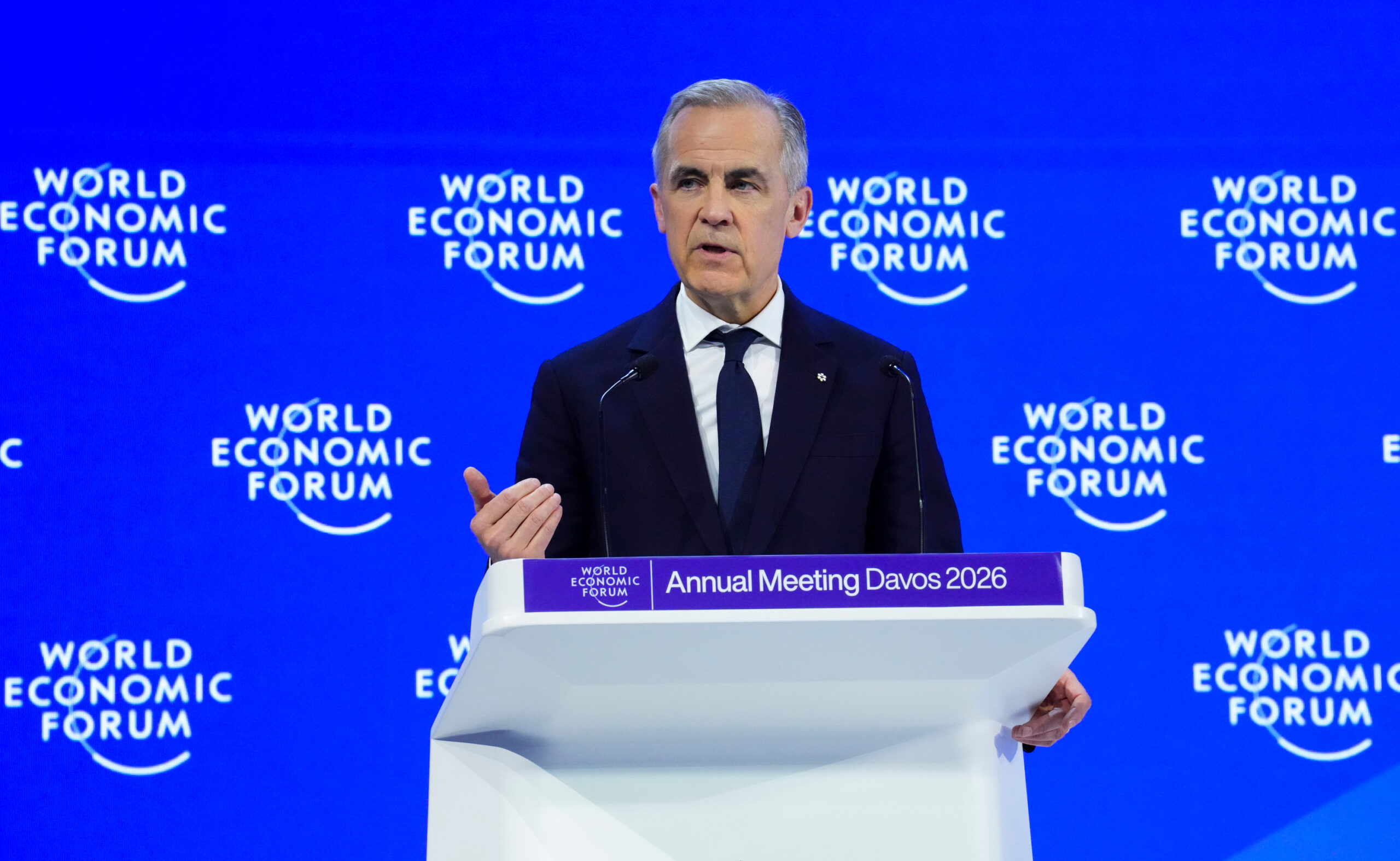
Canada Prime Minister Mark Carney delivers a speech at the World Economic Forum in Davos, Switzerland on Tuesday.
“The United States under President Donald Trump is no longer a reliable or predictable ally,” Carney said frankly. “We are in the middle of a rupture in the world order … where the large, main power … is submitted to no limits, no constraints.”
Intermediate powers like Canada, however, “are not powerless,” Carney added. Acting together, Canada and European leaders helped force Trump to face that reality this week.
But the fight over Greenland, and the future of NATO, is far from over, and Trump’s retreat may only be temporary. Denmark and Greenland may or may not agree that the U.S. can have sovereign rights to the territory housing new military bases (a provision under discussion).
Denmark will not sell or surrender Greenland, however. In fact, there will be no deal at all unless Copenhagen and Greenland approve the terms.
Moreover, as was clear at Davos from Trump’s speech and actions, he still believes he is the most brilliant leader the world has ever witnessed, which leaves him wide open to Russian and Chinese manipulation.
Nothing so clearly illustrated the president’s megalomania as his inauguration of a so-called Board of Peace. Originally envisioned as a group of world leaders overseeing Gaza’s reconstruction, the board’s newly released charter doesn’t even mention Gaza, but presents its mission as an alternative United Nations, tasked with making peace around the world.
In reality, it is a mammoth Trump vanity project: He heads the board, and its every action is subject to a presidential veto, according to its charter.
President Donald Trump holds up a signed Board of Peace charter during the annual meeting of the World Economic Forum in Davos, Switzerland, on Thursday.
The 20-plus initial participants were mostly Mideast sheikhs, emirs, and kings who can pay the $1 billion fee for permanent membership, along with several other autocrats and military-backed rulers. (The only Europeans signed up so far are pro-Russia Hungary and Bulgaria.)
War criminal Putin, busy bombing Ukraine’s civilian infrastructure to smithereens, may accept his invitation to the peace board if the United States releases $1 billion in frozen Russian assets to pay the fee. This, according to the Kremlin.
Meantime, Trump’s son-in-law, Jared Kushner, gave a slide presentation in Davos describing how Gaza could become a futuristic city with apartment towers and resorts in two to three years, a reprise of Trump’s earlier pitch for a Gaza Riviera. This, while the Gaza ceasefire is falling apart, and Israel has banned scores of humanitarian agencies from delivering food or medical treatment to desperate civilians.
Trump’s link to reality is so tenuous that the president could still resume his war on NATO. Instead of benefiting from his successful push for Europeans to spend more on defense, he may prefer to fight Europeans while conciliating with Russia.
European allies have finally demonstrated that a unified stand can check some of Trump’s foreign policy delusions. Gutless GOP senators and business leaders who moan privately about Trump’s madness but shut up in public should take note.