Blog

  • ICE, housing, and ‘resign to run’: What’s on Philadelphia City Council’s 2026 agenda

    ICE, housing, and ‘resign to run’: What’s on Philadelphia City Council’s 2026 agenda

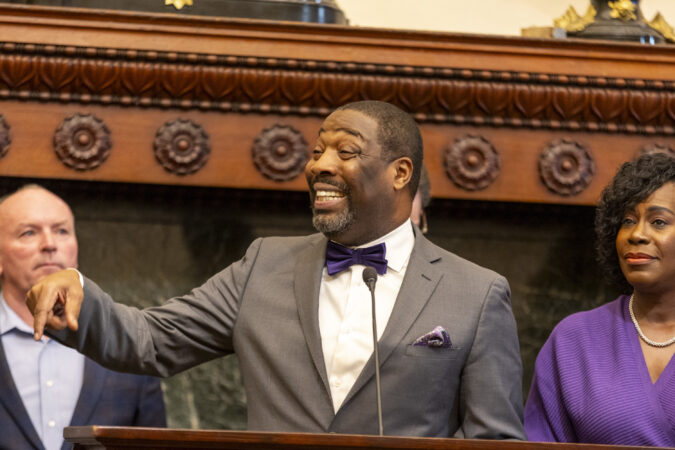
    Philadelphia City Council’s first meeting of 2026 on Thursday comes as tensions rise over President Donald Trump’s immigration crackdown and as Mayor Cherelle L. Parker continues to sidestep that conversation while focusing on advancing her signature housing initiative.

    During the first half of the year, city lawmakers are expected to have a hand both in shaping the city’s response to Trump and in advancing Parker’s Housing Opportunities Made Easy, or H.O.M.E., initiative.

    They will also tackle the city’s waste-disposal practices, a long-standing law requiring Council members to resign before campaigning for higher office, and the city budget.

    Meanwhile, events largely outside Council’s control, including potential school closings and Philly’s role in the nation’s 250th birthday, are also expected to prompt responses from lawmakers.

    Here’s what you need to know about Council’s 2026 agenda.

    ‘Stop Trashing Our Air’ bill up for vote

    The first meeting of a new Council session rarely features high-profile votes, but this year could be different.

    Council on Thursday is expected to take up a bill by Councilmember Jamie Gauthier that would ban Philadelphia from incinerating its trash.

    Currently, the city government sends about a third of the trash it collects to the Reworld trash incinerator in Chester, with the rest going to landfills. Those waste-disposal contracts expire June 30, and Gauthier is hoping to take incineration off the table when new deals are reached.
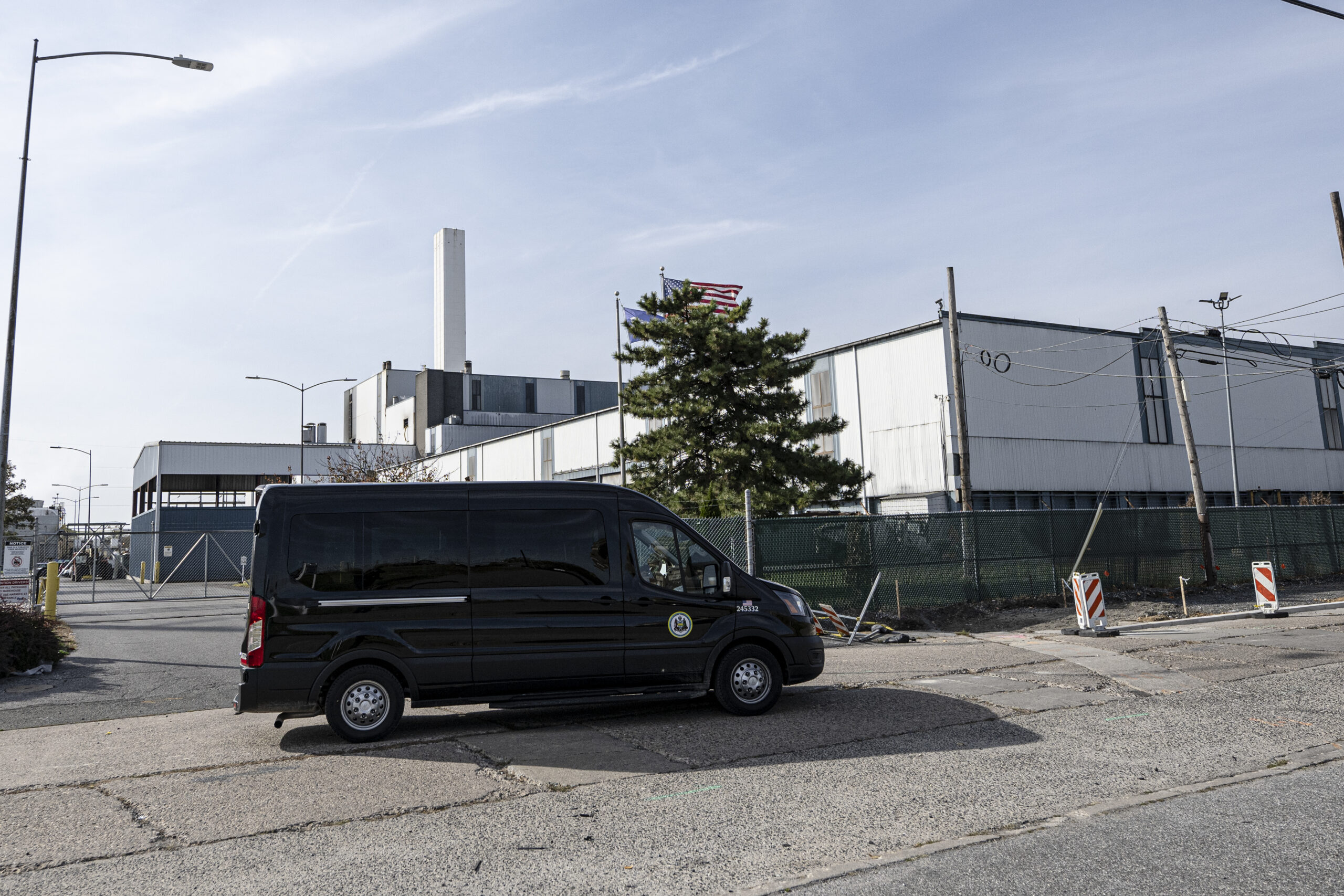
    The Reworld incinerator in Chester, Pa., on Friday, Nov. 7, 2025.

    “Burning Philadelphia’s trash is making Chester, Philadelphia, and other communities around our region sick,” Gauthier has said, pointing to elevated rates of asthma and other ailments and a legacy of “environmental racism” in Chester. The low-income and majority-Black city downriver from Philly has been home to numerous heavy industrial facilities.

    Reworld has said its waste-to-energy facility, which produces some electricity from burning trash, is a “more sustainable alternative to landfilling.”

    At a hearing last year, Parker administration officials said the city is including language in its request for proposals for the next contracts that will allow the city to consider environmental impacts. But they asked lawmakers not to vote for a blanket ban on incineration to allow the city to study the issue further.

    Parker waiting for Council to reapprove $800 million in bonds for her H.O.M.E. plan

    The biggest agenda item left hanging last month when lawmakers adjourned for the winter break was a bill to authorize the Parker administration to issue $800 million in city bonds to fund her H.O.M.E. initiative.

    Parker had hoped to sell the bonds last fall, and Council in June initially authorized the administration to take out new debt. But lawmakers made significant changes to the initiative’s first-year budget, especially by lowering income thresholds for some programs funded by the H.O.M.E. bonds to prioritize the lowest-income residents.
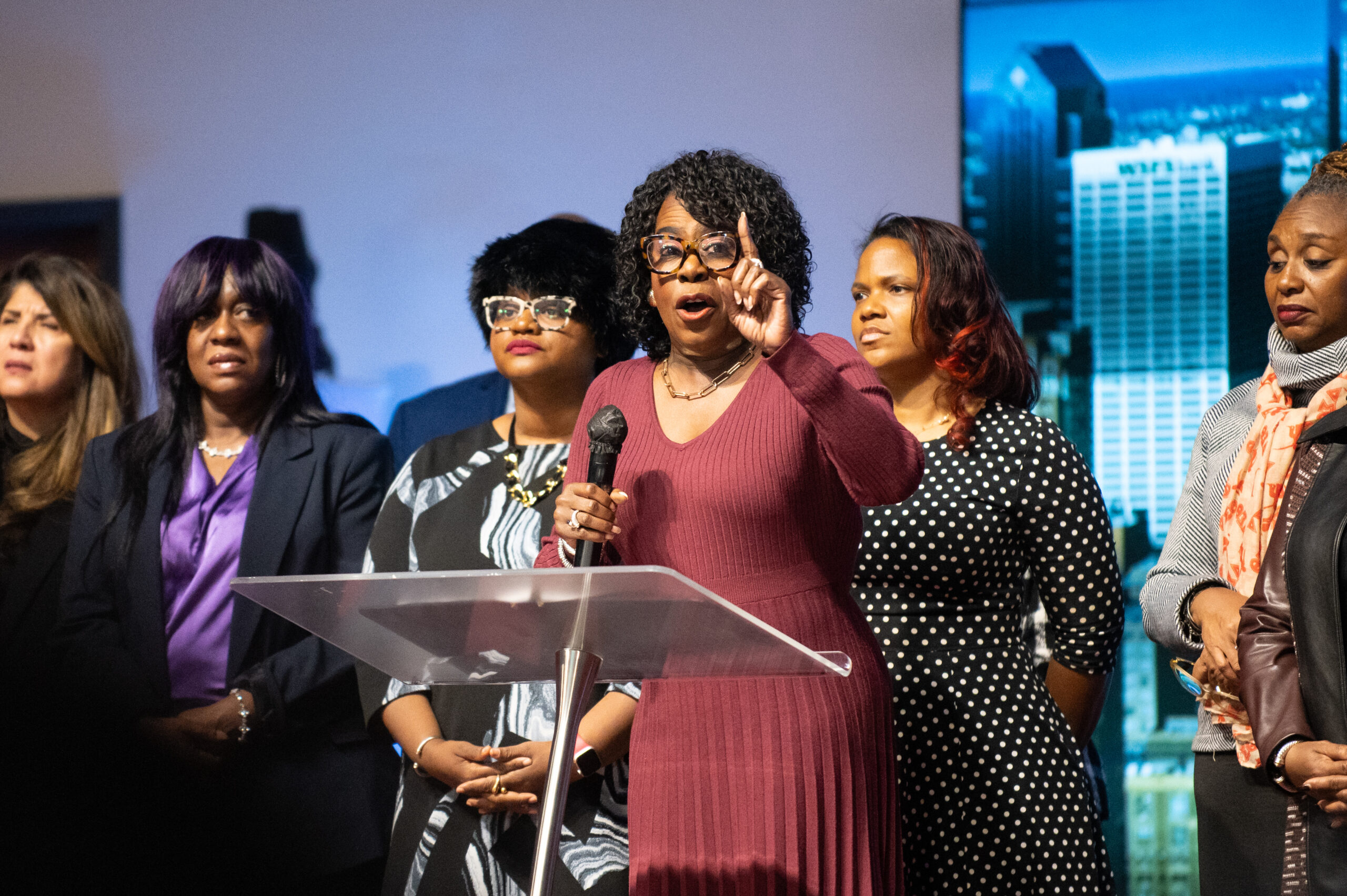
    Mayor Cherelle L. Parker speaks to the crowd at The Church of Christian Compassion in the Cobbs Creek neighborhood of West Philadelphia on Sunday, Dec. 7, 2025. Parker visited 10 churches in Philadelphia on Sunday to share details about her H.O.M.E. housing plan.

    That move, which Parker opposed and which sparked Council’s most significant clash with her administration to date, required a redo of the bond authorization. Lawmakers ran out of time to approve a new version of the measure in December, but Council President Kenyatta Johnson said it could come up for a final vote Thursday.

    “Council members have always been supportive of the H.O.M.E. initiative,” Johnson said. “H.O.M.E. advances City Council’s goals to expand access to affordable homeownership for Philadelphians … and to ensure that city housing investments deliver long-term benefits for families and neighborhoods alike.”

    Council aims to limit ‘resign to run’ … again

    Council is also expected to vote this spring on legislation that would change Philadelphia’s 74-year-old “resign to run” law and allow city officeholders to keep their jobs while campaigning for other offices.

    Currently, Council members and other city employees are required to quit their jobs to run for higher office. Lawmakers have tried several times over the last 20 years to repeal the law, but they have been unsuccessful. Changing the rule requires amending the city’s Home Rule Charter, which a majority of voters would have to approve through a ballot question.
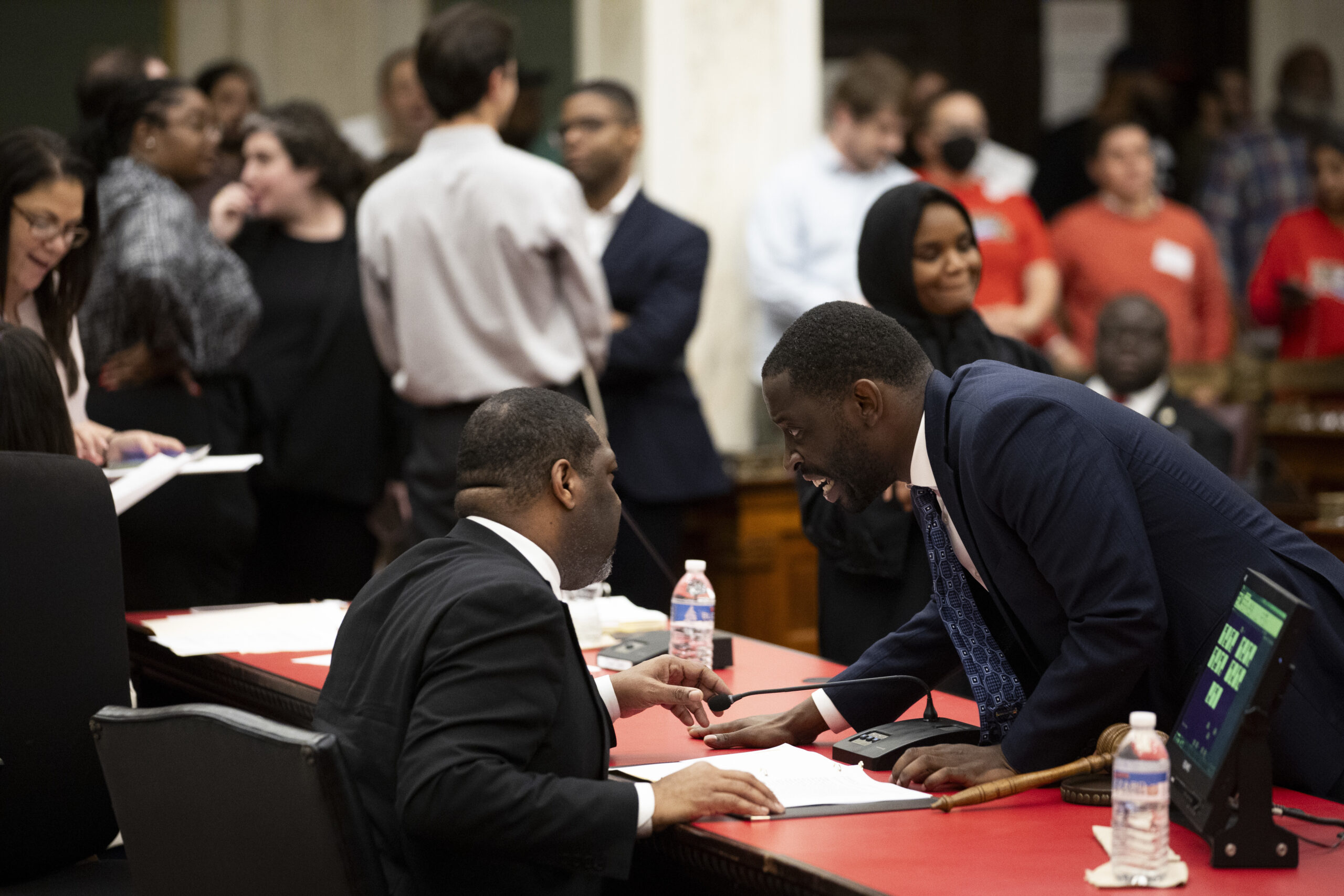
    Council President Kenyatta Johnson talks with Councilmember Isaiah Thomas at City Hall on Wednesday, Dec. 11, 2024 in Philadelphia.

    The latest attempt, spearheaded by Councilmember Isaiah Thomas, would not entirely repeal the resign-to-run law, but instead would narrow it to allow elected officials to keep their seats only if they are seeking state or federal office, such as in Congress or the state General Assembly. Council members who want to run for mayor would still have to resign.

    Thomas, a Democrat who represents the city at-large and is rumored to have ambitions of running for higher office, plans to make minor amendments to the legislation this spring, a spokesperson said, before calling it up for a final vote. The goal, Thomas has said, is to pass the legislation in time for a question to appear on the May primary election ballot.

    Incoming clash over immigration?

    Parker has spent the last year avoiding direct confrontation with the Trump administration, a strategy that supporters say has helped keep Philadelphia out of the president’s crosshairs.

    The mayor, however, cannot control what other local elected officials say about national politics, and Trump’s immigration crackdown appears to be stirring stronger local reaction heading into his second year in office.

    After an Immigration and Customs Enforcement agent fatally shot Renee Good in Minneapolis this month, Sheriff Rochelle Bilal went viral for saying federal agents “will not be able to hide” in Philly. (Bilal, however, does not control the Philadelphia Police Department, which is under Parker’s purview.)

    Meanwhile, progressive Councilmembers Rue Landau and Kendra Brooks this year are expected to introduce legislation aimed at constricting ICE operations in Philadelphia.

    Demonstrators from No ICE Philly gathered to protests outside the U.S. Immigration and Customs Enforcement, office at 8th and Cherry Street, Philadelphia, Tuesday, Jan. 20, 2026.

    It is not yet clear what the lawmakers will propose. But Brooks, who has called on Parker to take a firmer stand against Trump, recently criticized the Philadelphia courts for allowing agents to seize suspects leaving the Criminal Justice Center. She said officials who in her view have failed to stand up to ICE are engaged in “complicity disguised as strategic silence,” and she vowed to force those who “cooperate with ICE in any way” to testify in Council.

    “Cities across the country are stepping up and looking at every available option they have to get ICE out,” Brooks said at a news conference earlier this month. “In the coming days, you will hear about what my office is doing about city policy. These demands must be met or face the consequences in Council.”

    Landau added Philly cannot allow “some masked, unnamed hooligans from out of town [to] come in here and attack Philadelphians.”

    “We are saying, ‘ICE out of Philadelphia,’” she said.

    Parker has said her administration has made no changes to the city’s immigrant-friendly policies, but she continues to be tight-lipped about the issue.

    The Pennsylvania Office of Open Records last week ruled in favor of an Inquirer appeal seeking to force Parker’s administration to disclose a September letter it sent the U.S. Department of Justice regarding local policies related to immigration.

    The administration still has not released the document. It has three more weeks to respond or appeal the decision in court.

    South Philly arena proposal still in the works

    After the 76ers abandoned their plan to build a new arena in Center City a year ago, the team announced it would partner with Comcast Spectacor, which owns the Flyers, to build a new home for both teams in the South Philadelphia stadium complex.

    The teams announced last fall they have selected an architect for the new arena, which is scheduled to replace the Spectacor-owned Xfinity Mobile Arena, formerly the Wells Fargo Center, in 2031.

    If the teams are still planning to open the new arena on their previously announced timeline, legislation to green-light the project could surface as soon as this spring. But so far, there has been no sign of movement on that front.

    “There is currently no timeline for introducing legislation to build a new Sixers arena in South Philadelphia,” said Johnson, whose 2nd District includes the stadium complex. “At the appropriate time, my legislative team and I will actively collaborate with Mayor Cherelle L. Parker’s administration on drafting any legislation related to the Sixers arena before it is introduced in City Council.”

    School closings and 2026 celebrations also on the horizon

    In addition to its legislative agenda, Council this year will likely be drawn into discussions over school closings and the high-profile gatherings expected to bring international attention to Philly this summer.

    The Philadelphia School District is soon expected to release its much-anticipated facilities plan, including which school buildings are proposed for closure, consolidation, or disposition. The always-controversial process is sure to generate buzz in Council.

    “We will do our due diligence on the District’s Facilities Plan,” Johnson said in a statement.

    Additionally, the city is preparing for the nation’s Semiquincentennial, FIFA World Cup games, and the MLB All-Star Game. While the administration is largely responsible for managing those events, some Council members have said ensuring the city is prepared for them is a major priority.

    Johnson said his agenda includes “making sure Philadelphia has a very successful celebration of America’s 250th Birthday that results in short and long-term benefits for Philadelphia.”

    Staff writers Jake Blumgart, Jeff Gammage, and Kristen A. Graham contributed to this article.
  • Yo, Philly! There’s no need to move the Rocky statue

    Yo, Philly! There’s no need to move the Rocky statue

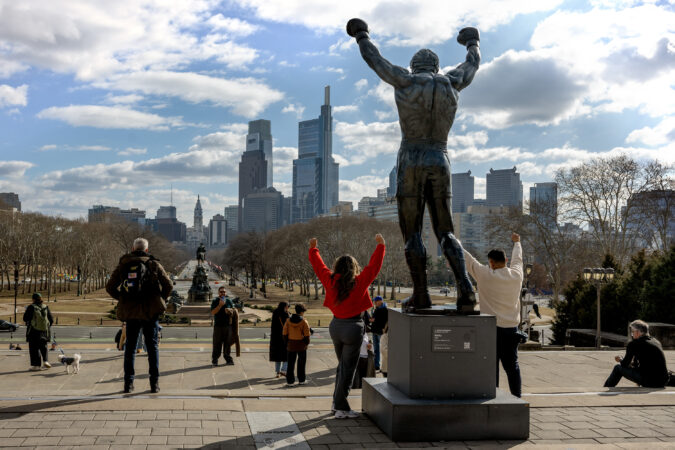
    To hear the Parker administration officials tell it, moving the Rocky statue from the bottom of the Philadelphia Art Museum steps to the top is a victory for the underdog.

    The new location, which received a green light from the Art Commission on Jan. 14, will certainly create a dramatic, Instagrammable moment for tourists, and further elevate the Rocky brand (and value).

    But it’s no victory for Philadelphia residents, who remain the true underdog in this saga. Allowing the old movie prop to dominate the Parkway’s iconic vista is simply the latest in a series of decisions that have privatized the Art Museum’s gorgeous, landscaped grounds.

    If you walk to the back of the museum, you’ll find the most egregious example of Philadelphia’s zeal for monetizing public space: the sprawling Cescaphe banquet operation at the Fairmount Water Works.

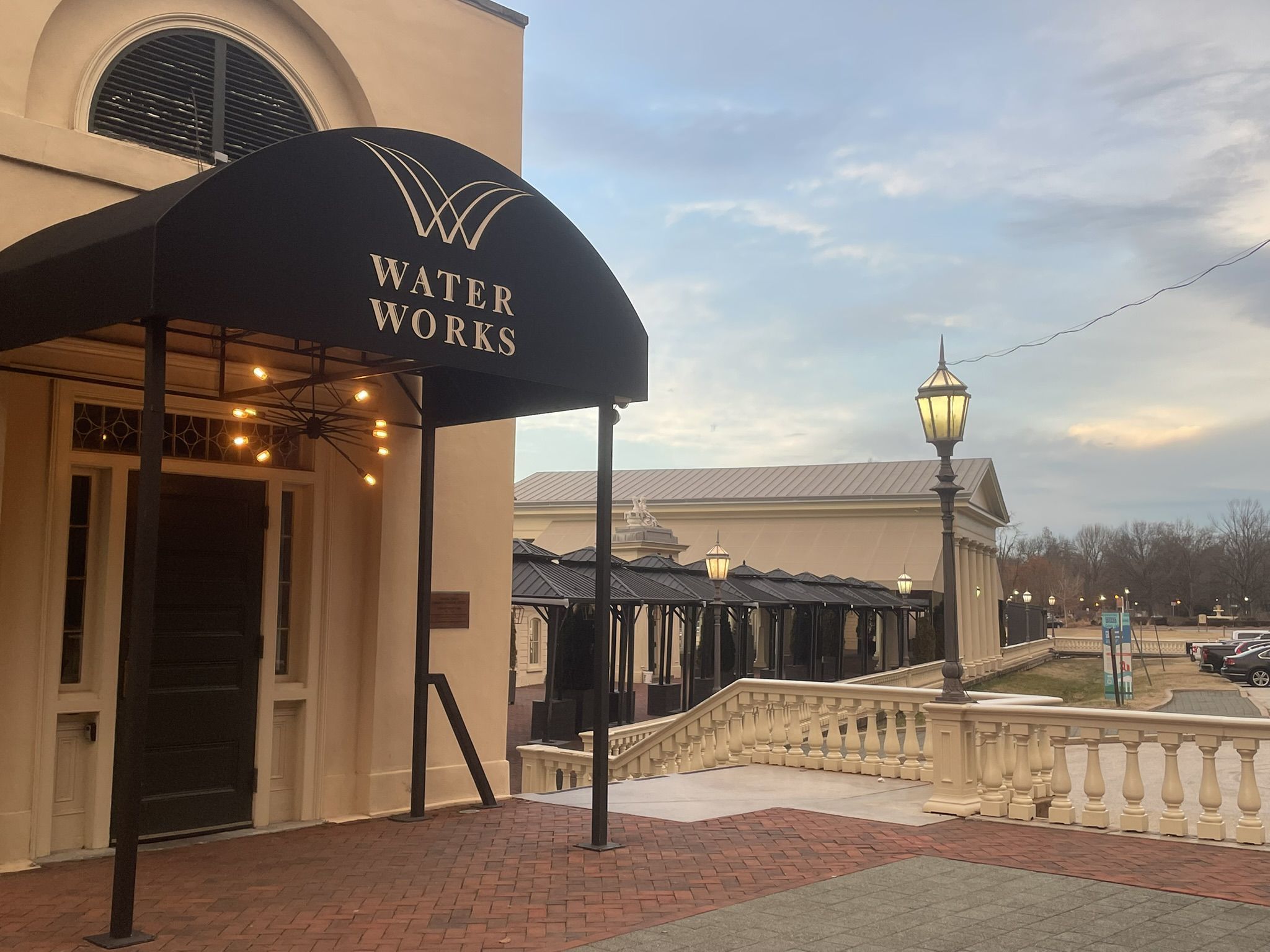
    While the main Engine House had been used as a restaurant in the past, the city allowed Cescaphe to take over the entire complex in 2021. Today, the Water Works is surrounded with a cordon of server stations, portable restrooms, and covered walkways.

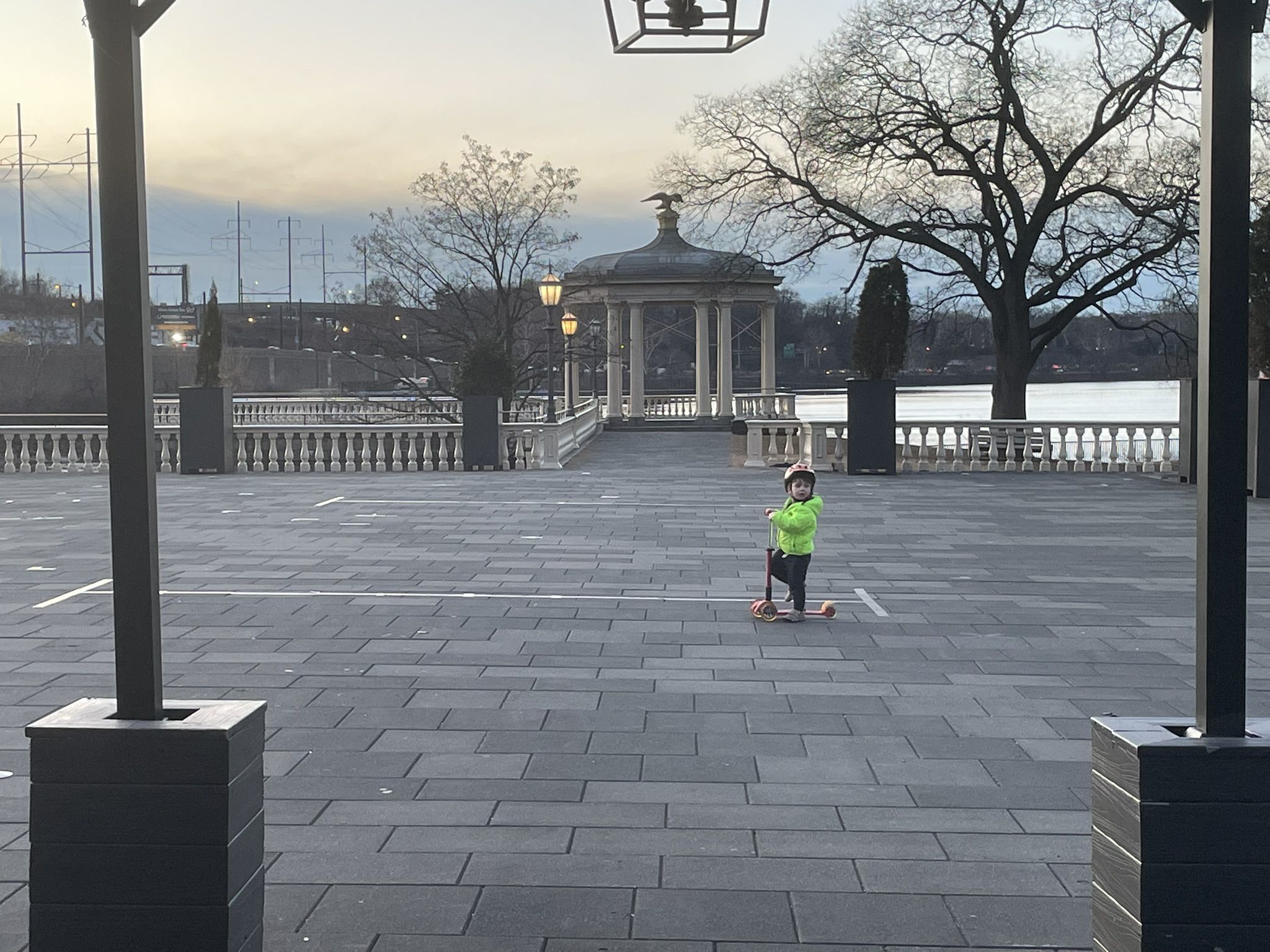
    Since 2021, the historic Fairmount Water Works has been surrounded by a cordon of server stations and covered walkways. A glass party room prevents the public from enjoying the Mill House Deck, a pier overlooking the Schuylkill.

    Cescaphe’s presence has drastically limited the public’s access to this historic landmark, a scenic spot where generations have come to stroll and take in views of the Schuylkill. Although visitors are permitted to wander though the Water Works’ classically inspired temples and colonnades when no events are going on, who would know that, given the messaging conveyed by Cescaphe’s formidable barricades?

    Preparations for evening events often start in the afternoon, further limiting access. Every spring, Cescaphe installs an enormous glass party room on the pier known as the Mill House Deck. It remains in place until late fall, which means the public gets to use the overlook only during the coldest months of the year.

    Rocky already has a good spot

    Moving the Rocky statue to the top of the steps might seem like a modest imposition by comparison, but the new location will interfere considerably with the public’s enjoyment of the space.

    Since people with mobility limitations will have trouble climbing the 72 steps to the top of the museum’s grand staircase, they’ll need transportation. The Philadelphia Visitor Center — the initial advocate for the new location — has offered to run a shuttle bus around the museum apron every 15 minutes. Better watch out when you’re taking that selfie!

    During the recent Art Commission hearings, the city’s two top cultural officials, Valerie V. Gay and Marguerite Anglin, argued that the Rocky statue deserves a higher profile perch because it’s a unique tourist attraction. They noted that the statue has been the subject of books and podcasts and will soon be the focus of a major Art Museum exhibition, “Rising Up: Rocky and the Making of Monuments,” curated by Monument Lab’s Paul Farber.

    Yet, given the added complications, it’s hard to understand what the city gains by changing the statue’s location.

    Rocky’s current home — a shady grove at the bottom of the steps — has been a huge success. The statue was installed there in 2006, after years of shuttling around Philadelphia, from the museum to the sports complex and back. In a typical year, 4 million people make the pilgrimage to see Rocky, the same number who visit the Statue of Liberty annually.

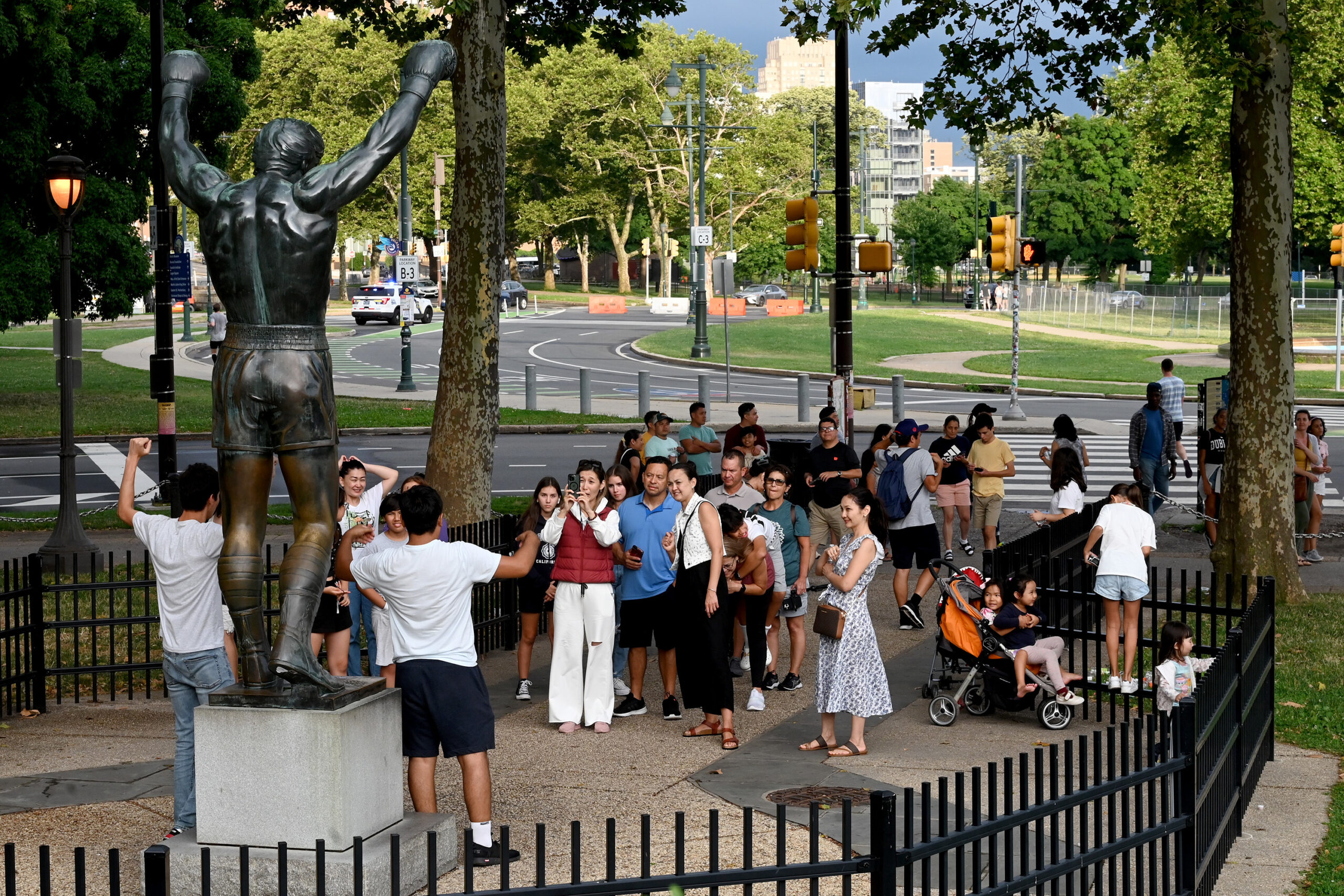
    The Rocky statue, currently at the base of the Art Museum steps, is easily accessible to visitors and tour groups.

    Because the grove is so close to the street, there are no accessibility issues. Tour buses and cars can pull up to the curb, allowing people to jump out for a quick selfie. Sometimes there’s a line for photos, but the mood is always festive, with visitors and locals mingling along the sidewalk. Anyone who wants to reenact the fictional boxer’s run up the museum stairs can do that, too.

    Yes, this site occupies a piece of the museum’s grounds. But the intrusion is relatively discreet. Considering how well this location works, why change it? It’s not like there was a huge public clamor to give Rocky more prominence. When Inquirer columnist Stephanie Farr polled readers in September, most respondents said they were happy to keep the statue in its current location — or get rid of it entirely.

    Only a single person testified at the Art Commission’s Jan. 14 hearing — and he argued against the move. Several civic organizations, including the Design Advocacy Group (DAG), sent written statements urging the city to reject the proposal.

    “All we’re doing is glorifying Sylvester Stallone, who sells merchandise at bottom of the steps,” complained David Brownlee, a member of the DAG board and a renowned University of Pennsylvania art historian who has written a history of the Art Museum.

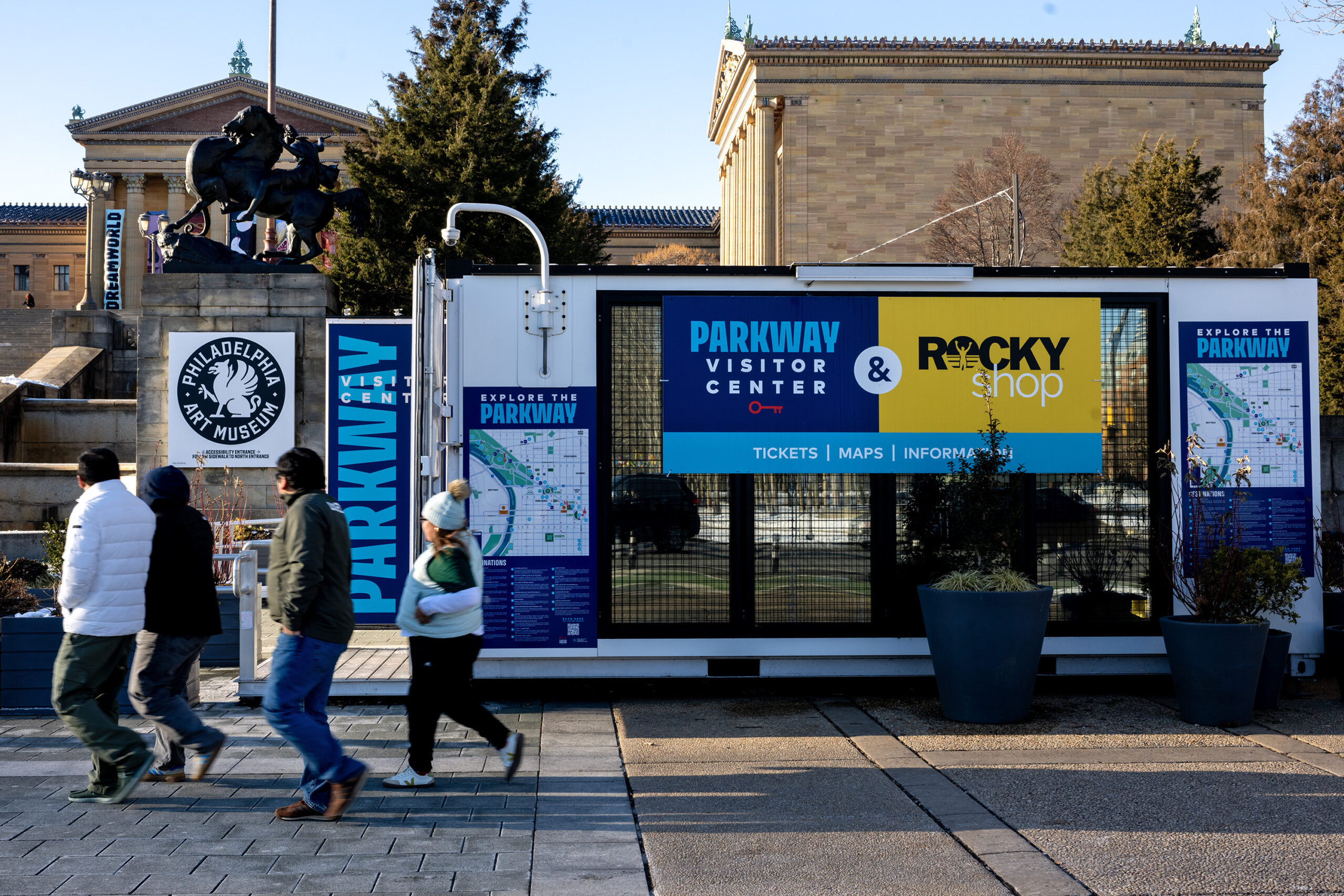
    Those Stallone-licensed souvenirs are sold in the “Rocky Shop,” a metal shipping container that was allowed to encroach on the plaza at the base of the museum steps in 2023. Although the metal structure doesn’t take up as much public land as Cescaphe’s banquet operation, it clunks up the approach to the museum’s elegant stone staircase.

    The Parkway Visitor Center & Rocky Shop at the base of the Philadelphia Art Museum steps Jan. 20, 2026. In 2023, the city allowed Sylvestor Stallone to set up the metal shipping container at the base of the Philadelphia Art Museum steps.

    Initial reports said the Visitor Center, which pushed for the shop, would get a cut of the sales. Yet when I asked how much money that partnership had yielded, a spokesperson for the independent tourism agency declined to answer. The Visitor Center is now run by Kathryn Ott Lovell, who was parks commissioner when the department signed off on Cescaphe’s 2021 expansion at the Water Works.

    The exorbitant cost of moving

    What jumped out at me during the Art Commission hearing was the cost of moving the bronze sculpture and setting it up on a new base.

    Creative Philadelphia, the city department overseeing the move, originally estimated the job would run about $150,000. Now it says the price could rise to $250,000. Those figures don’t include the cost of operating the shuttle, which will be borne by the Visitor Center.

    To put those numbers in context, consider the base payment the city receives from Cescaphe annually for operating a banquet hall at the Water Works: $290,000.

    When Cescaphe was given permission to occupy the Water Works complex in 2021, the city said the arrangement was necessary because the parks department could no longer afford to adequately maintain the property. In addition to rent, the agreement generated about $187,000 annually in concession fees between 2015 and 2022 for the city.

    That income isn’t peanuts, but is it really worth severely limiting public access to such an iconic Philadelphia landmark? What’s the point of monetizing our parks if the businesses prevent us from enjoying them?

    Except for a few months during the winter, the Mill House Deck pier at the Fairmount Water Works is covered with Cescaphe’s glass party room, making it impossible for Philadelphians to enjoy the space.

    The privatization of such beloved sites is the direct result of city government’s unwillingness to properly fund its parks. For years, Philadelphia has spent far less than peer cities on green space. Maintenance declined to the point where some parks became unusable.

    Rather than devote more money to this basic public amenity, the city has increasingly outsourced its parks to private managers. Enormously popular destinations, such as Dilworth Park and Franklin Square, are run by independent groups.

    Cescaphe, a banquet company, has surrounded the Fairmount Water Works with a cordon of arcades, server stations and portable restrooms since it began holding events there in 2021.

    But there’s a crucial difference between those private managers and the likes of Cescaphe. First, they’re nonprofits, not businesses. They exist to serve the public. While it’s frustrating when they close their parks for private fundraising events, all the money they raise goes back into improving the parks for the public’s use.

    With the Cescaphe deal, the city has crossed a line. Cescaphe is a money-making business that runs the Water Works for its own benefit. In theory, the rent and concession fees are supposed to be invested in the maintenance of the complex, which was considered one of the wonders of the world when it opened in 1815. But it’s Cescaphe, not the public, that benefits from the improvements.

    It’s not even clear that Cescaphe is doing the promised maintenance. The Engine House suffered a serious fire in November, and the company still has several outstanding building code violations.

    When asked about the citations, a spokesperson for Parks & Recreation described the infractions as minor. “Cescaphe has been a great partner,” Commissioner Sue Slawson said in a statement.

    To be clear, there is a big difference between leasing a public building to a restaurant concession and privatizing public space for the sole use of a single business. Restaurants are open to everyone. They also provide services, such as restrooms, that the public can use. It’s a win-win: The city makes a little money on the deal, and the public gets a nice amenity.

    The city had the right idea when it leased the Water Works’ Engine House to a restaurateur in the early 2000s. But instead of finding a replacement when that restaurant shut down in 2015, the city turned the complex over to Cescaphe. This April the banquet company’s lease will come up for renewal. It’s time to go back to the original model.

    Wouldn’t it be great to grab a sandwich at a Water Works cafe after a long walk or bike ride along the Schuylkill River Trail? The trail, which just completed a spectacular extension, does not have a single cafe between its new Grays Ferry terminus and the museum, apart from a small snack bar at Lloyd Hall. Philadelphia has plenty of great restaurateurs who would jump at the chance to operate in a prime spot like the Water Works.

    People have framed the Rocky discussion as a clash between elites, who object to the glorification of a movie prop as art, and the mass of fans who believe the statue embodies their aspirations.

    The reality is, there’s nothing less democratic than turning over the public’s land to private companies driven by their own gain.

    An earlier version of this column listed FDR Park as one of several city parks that are run by private managers. The Philadelphia Department of Parks & Recreation operates the park and provides workers to staff it.

    This story has been updated to remove the Schuylkill River Trail from a list of private managers because the Schuylkill River Development Corp. has a different type of contractual agreement with Philadelphia’s Department of Parks & Recreation and does not lease the land it oversees.

    When it opened in 1815 to provide the growing city with a reliable supply of drinking water, the Fairmount Water Works was a major engineering advance and was considered one of the wonders of the world.
  • ‘Drumming saved my life’: How the Sixers Stixers are providing opportunities for inner-city youth

    ‘Drumming saved my life’: How the Sixers Stixers are providing opportunities for inner-city youth

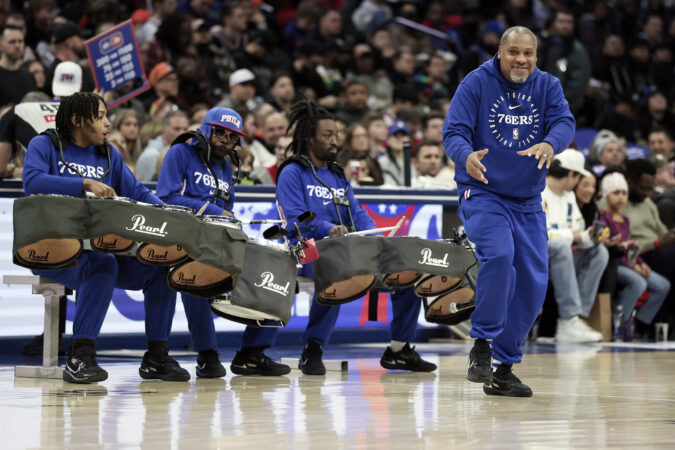
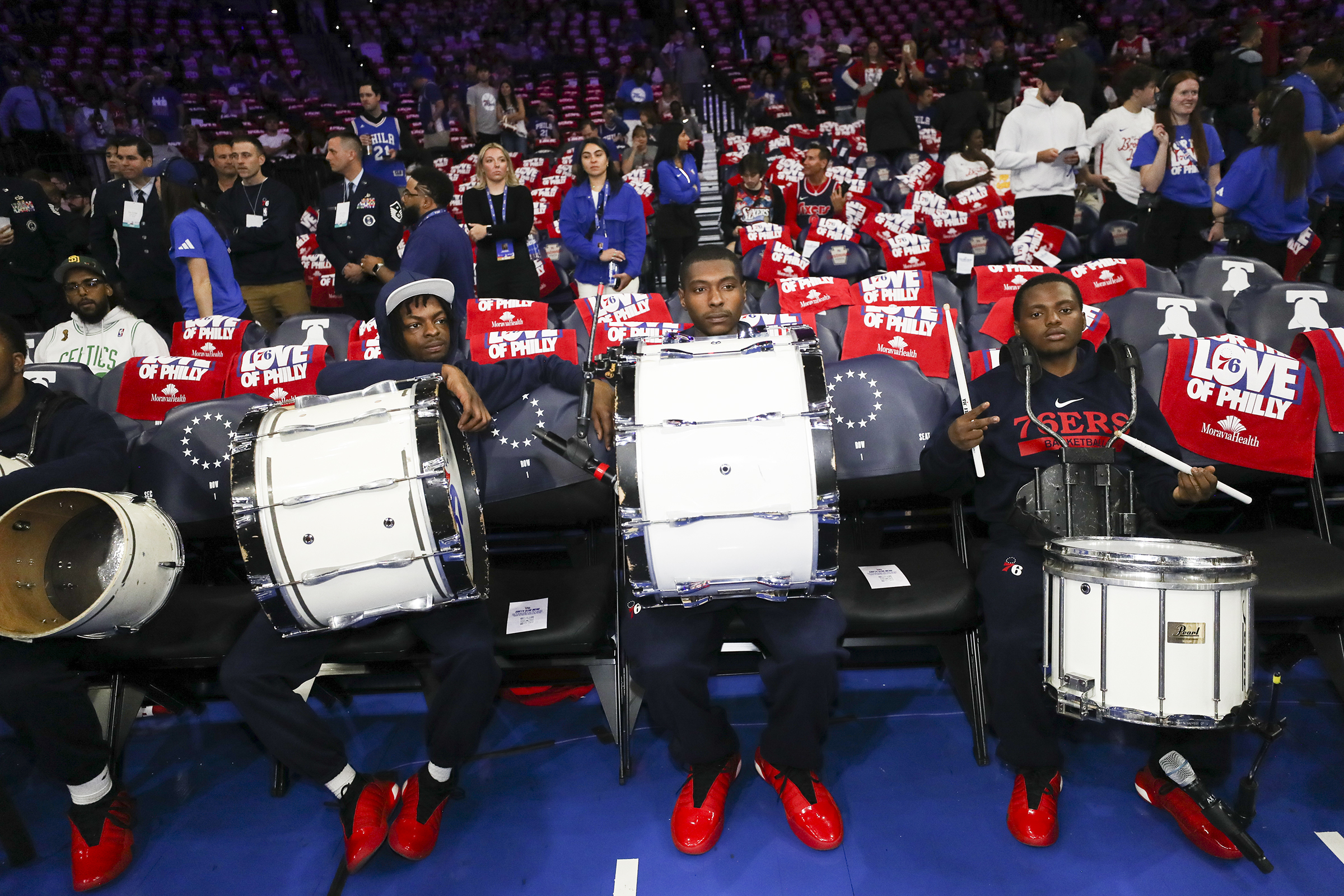
    Walking through the main concourse of Xfinity Mobile Arena after a game, fans often hear the faint sounds of drums rattling in the distance. If one follows the high-pitched rhythm of the snare to the melody of the tenor and eventually to the deep pulse of the bass, they’ll find the Sixers Stixers.

    The group has been the official drum line of the 76ers dating back to 2013. For over a decade, they’ve performed in perfect cohesion — relying on teamwork, discipline, and unity — building lifelong friendships deeply rooted in brotherhood, and providing life-changing opportunities for inner-city youth through the power of music.

    “We have nothing else,” said 46-year-old Antoine Mapp Sr., the director of the Sixers Stixers. “Everyone don’t play sports, everyone don’t play basketball, everyone don’t play football, everyone don’t play baseball, everyone don’t bowl. However, music is universal. Music touches the soul.

    “When you’re part of a team, you start feeling accepted. You start feeling like you belong to something, you start feeling important. All kids really need is love and affection. You don’t know what these kids go through at home. You don’t know what they go through in school, but when it comes to being a part of something like this, we all family, and we say before we leave, ‘I love you, bro,’ because I don’t know if he’s going to make it back tomorrow.”

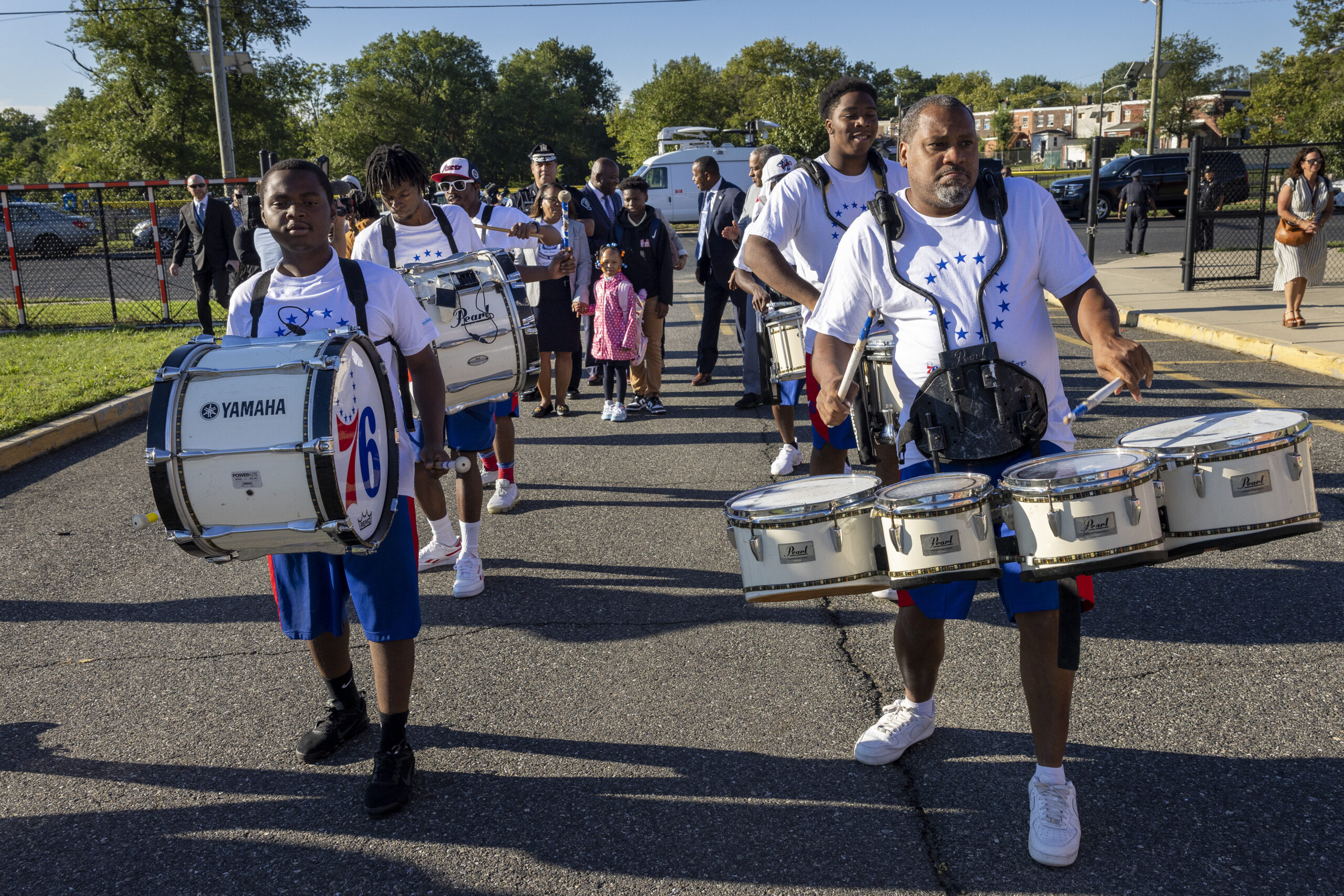
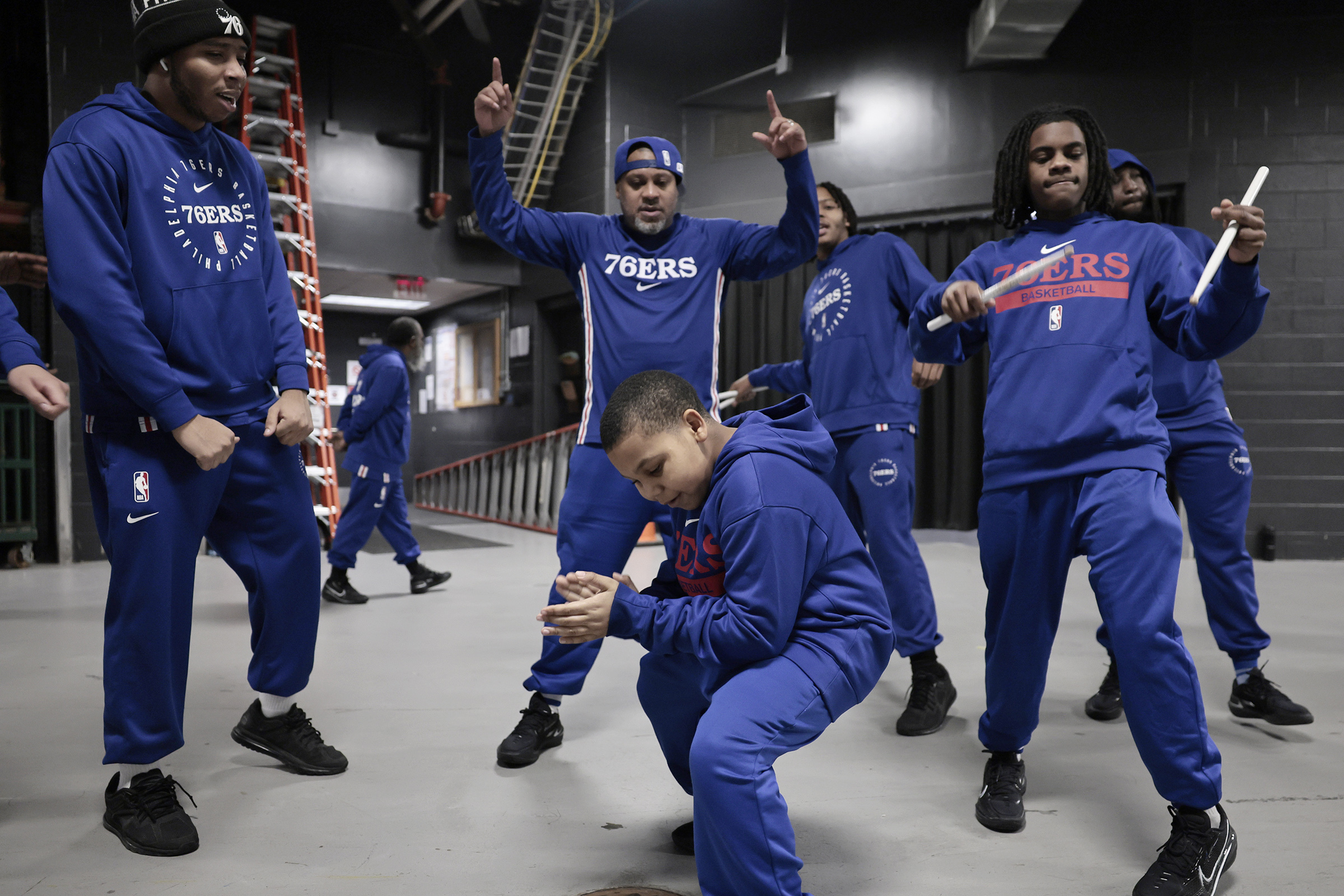
    Antoine Mapp (front left) and the Sixers Stixers do more than just perform at games, like escorting Zyair Kendrick-Finney (back center), along with school and city officials, for his first day of 7th grade at Morgan Village Middle School in Camden in 2022.
    Mapp’s Stixers have been performing at Sixers games for over a decade.

    ‘Take these drum sticks, jail cell, or graveyard’

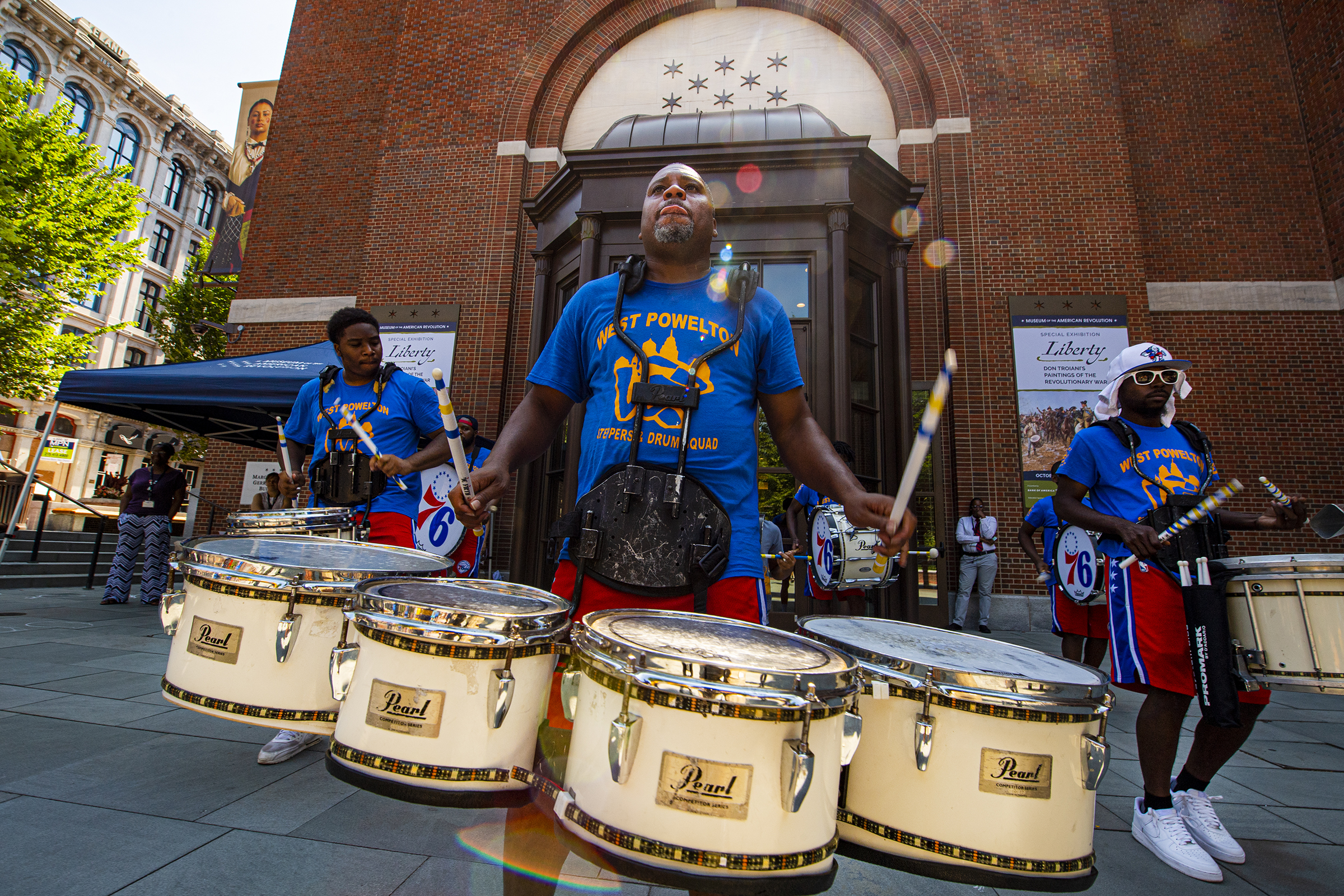
    In 1991, Mapp was first introduced to drumming by his late grandmother, Elsie Wise. To keep young boys and girls out of trouble in the West Powelton neighborhood, Wise created a drum line and drill team known as the West Powelton Steppers and Drum Squad, which still practices today.

    “My grandmom came to me and said, ‘Well, I’ll give you three options: take these drum sticks, jail cell, or graveyard,’” Mapp recalled. “I decided to pick the drumsticks. And I asked her what I’m supposed to do with these drumsticks. She said, ‘Figure it out.’”

    At that time drum squads and drill teams weren’t as accepted. At 11 years old, Mapp remembers being called every name in the book.

    “In the ’90s, drill team wasn’t accepted,” Mapp said. “They looked at us as being wimps, looked at us as being cowards, looked at us as being punks. They used to disrespect us, call us names, say vulgar things about our sexuality because they didn’t understand drumming, they didn’t understand the culture. They didn’t understand music and how it touches the soul and how it saves your life.”

    However, that culture was on full display when Mapp attended Cheyney University, the nation’s first Historically Black College and University. He decided to attend Cheyney, on the border of Chester and Delaware Counties, to stay closer to home — giving him time to continue helping with the West Powelton Steppers and Drum Squad.

    Antoine Mapp got his start with the West Powelton Steppers and Drum Squad, which helped turn into an opportunity with the Sixers.

    In 2001, Mapp became the first person in his family to graduate college, with a major in accounting and minor in computer programming. And as he pursued his degree, he joined the Cheyney drum line.

    “The band is the culture of the HBCU,” Mapp said. “The band is the heartbeat. The band is the lifeline. The band is what draws the attention. The sports team being good is a bonus when it comes to an HBCU.”

    Not only was it the lifeline of the HBCU, but it was the lifeline for Mapp himself. The Philly native credits the drum line for saving his life.

    “First of all, making it to 18 years old where I’m from, it’s like making it to 100,” Mapp said. “We used to make it to 18 and say, ‘OK, we have nothing to live for. We made it.’ That’s the mentality we used to have. Drumming saved my life. … The drill team and drum line raised me because the guys on the team became my brothers. The young ladies on the team became my sisters.”

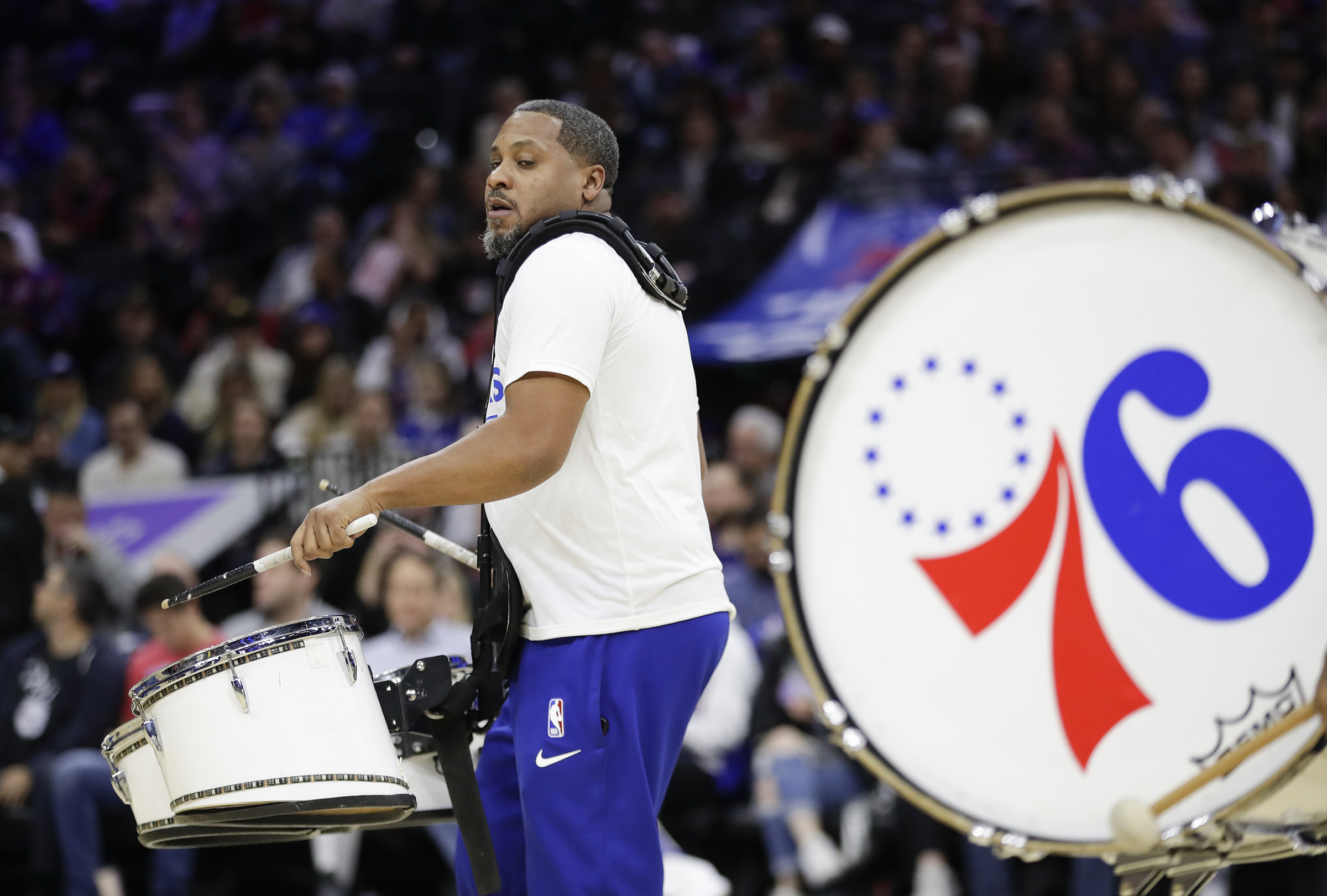
    This year, Antoine Mapp Jr. (front) — the son of Sixers Stixers drumline director Antoine Mapp (center in hat) — has joined the team.

    A family affair

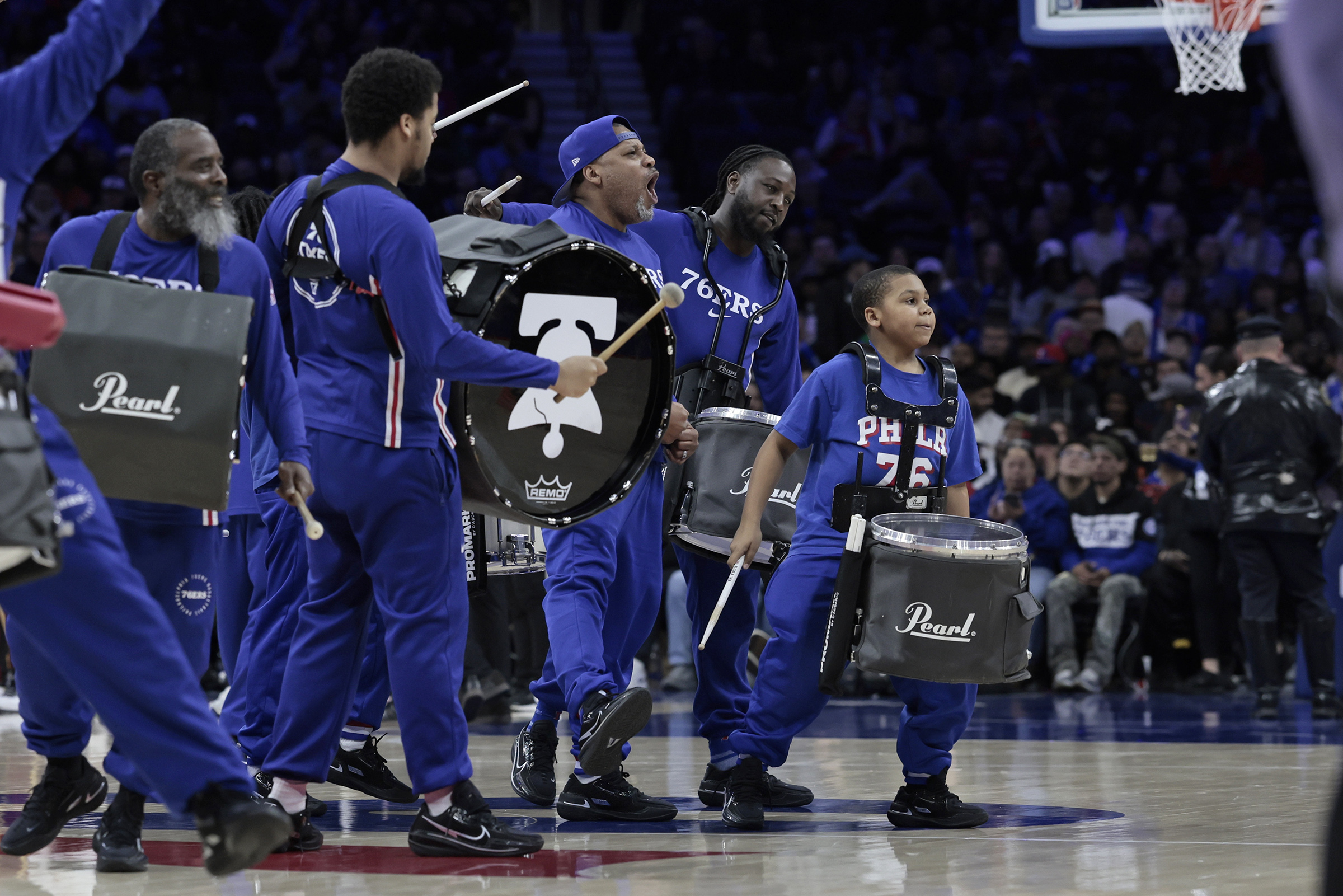
    “Break down!” Mapp yelled as the Stixers began to choreograph their routine for the halftime show of a recent game against the Wizards.

    Listening to the order, the rest of the Stixers changed formation — closing in on one another as they drummed out the melody that was discussed on their ride to the stadium. Wearing matching Sixers gear, their black Nikes moved in perfect harmony — one pair looking rather smaller than the rest.

    That pair belonged to 11-year-old Antoine Mapp Jr., the son of Mapp, who joined the Stixers at the start of the season. After their first performance together, Mapp sent out a message to another famous father-son NBA duo.

    “When I seen LeBron [James], it was the best feeling in the world,” Mapp Sr. said. “I said to LeBron, ‘Hey Bron, you ain’t the only one on the court playing with your son. It was a beautiful moment. Just to be able to say that, I never thought in a million years that I would be on the Sixers floor in the NBA drumming alongside my son. It’s the best feeling in the world.”

    If you would have told Mapp that he was going to be performing alongside his son on the Sixers court in 2014, he would have never believed it.

    Antoine Mapp Jr. (far right), is the 11-year-old son of Sixers Stixers drumline director Antoine Mapp (wearing hat). The group performs throughout Sixers games and at other team functions.

    “I just lost in 2014,” Mapp said. “I just lost my job. My son, Antoine, they told me to abort him. They told me that his stomach and his lungs were growing in his chest. They told me he wasn’t going to walk, talk, run, or do anything. My grandfather, the only father figure that I knew, was in the hospital passing away. I was losing my son and my grandfather.

    “On Father’s Day, I lost my grandfather. My son was in the NICU for six months. He was the only baby that survived the NICU.”

    Throughout all the struggles, drumming was one thing that helped him persevere. Mapp remembers sitting in the parking lot and praying for guidance.

    “[The Lord] spoke to me,” Mapp said. “That same week, I got a phone call from [76ers director of game presentation] Derrick Hayes. When Derrick called me he said, ‘Well, we’re calling you about being a Sixers drum line.’ I said, ‘OK, I’ll do it for free.’ That’s what I’m used to with the after-school program. Drumming was my payment. My life being saved, that was payment enough.

    “When he told me that he was going to pay me for doing the game, a light bulb went off in my head. What is one of the reasons why there’s so much crime in my neighborhood? Lack of funds. That’s one of the reasons. So, I said, ‘OK, if the Sixers are paying us, let me change my program to I pay you to save you.’”

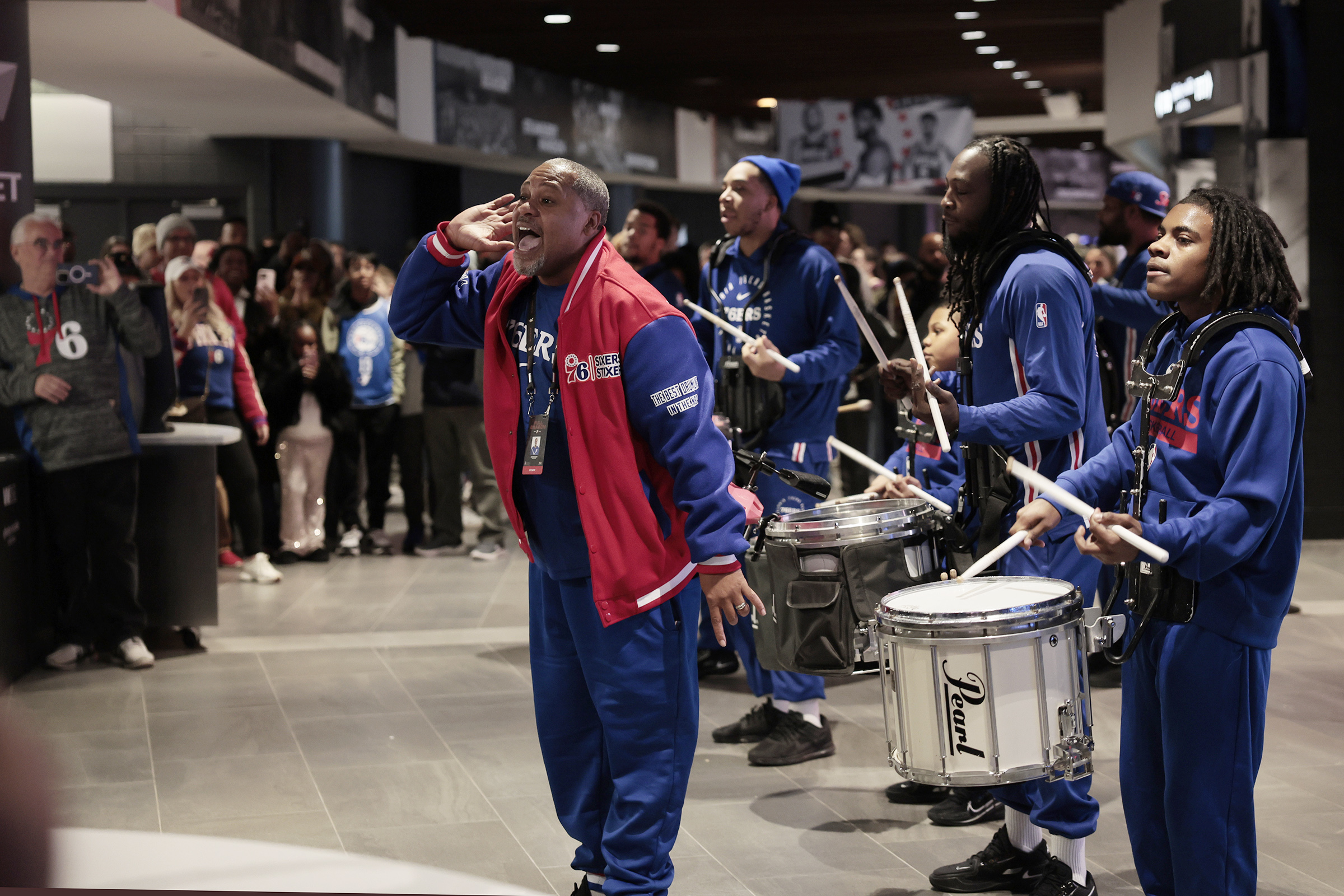
    Mapp (left) leads the drumline as they entertain fans on the main concourse during a recent game against the Washington Wizards.

    ‘Don’t ever stop’

    In 2020, Mapp’s 29th season helping with the West Powelton Steppers and Drum Squad, he had his last conversation with his grandmother.

    “Before she took her last breath, I asked her, ‘Why am I still here?’” Mapp said. “She said, ‘Because you still love it.’ The last thing she said to me, she said, ‘Don’t ever stop,’ and took her last breath.

    “That’s been ingrained in my brain ever since — and I haven’t stopped.”

    Mapp has spent over three decades with the West Powelton Steppers and over a decade with the Sixers Stixers, performing alongside children as young as 4 years old to grown men in their 40s.

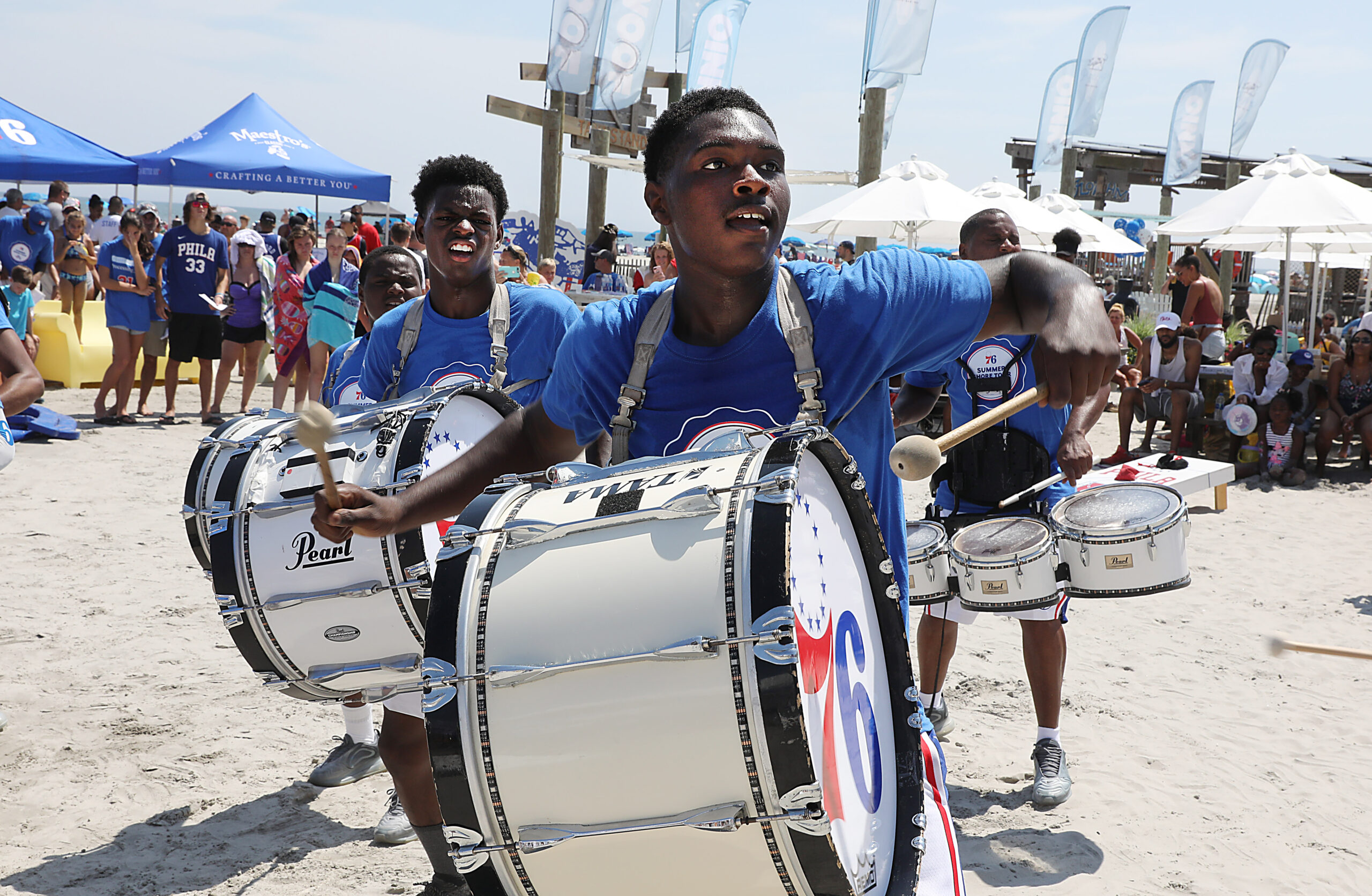
    The Stixers take part in off-court events like the Annual 76ers Summer Shore Tour.
    And there’s no rest in the postseason, as the Sixers Stixers prepare for their performance during Game 6 against the Boston Celtics in 2023.

    “We have no age limit,” Mapp said. “We don’t cap out. We’re in your life for the rest of your life. It’s our 35th year, and we have so many people that are still part of this group and have kids who are part of the group.

    “I can’t wait to see what my son does with it 20 years down. I can’t wait to say we’ve been with the Sixers for 50 years, I’ll probably be like 96. But, I’ll still be here. And I’ll still be out there leading my guys. I’m so honored to be a West Powelton drummer and to be a Sixer Stixer.”

  • Iconic Coney Island hot dog hawker Nathan’s Famous is sold for $450 million

    Iconic Coney Island hot dog hawker Nathan’s Famous is sold for $450 million

    Nathan’s Famous, which opened as a 5-cent hot dog stand in Coney Island more than a century ago, has been sold to packaged meat giant Smithfield Foods in an all-cash $450 million deal, the companies announced Wednesday.

    Smithfield, which has held rights to produce and sell Nathan’s products in the U.S. and Canada and at Sam’s Clubs in Mexico since 2014, will acquire all of Nathan’s outstanding shares for $102 each.

    Like almost every food company, Nathan’s has been under significant inflationary pressure. Nathan’s sales costs of branded products rose 27% compared with last year in its most recent quarter, the company said in a filing with the U.S. Securities and Exchange Commission. There was a 20% increase in the average cost per pound of hot dogs, it said.

    Nathan Handwerker opened the first Nathan’s hot dog stand on Coney Island in 1916 with a $300 loan, according to the company. After opening a handful of other locations around New York over the years, the Handwerker family sold the Nathan’s Famous business to investors in 1987. The franchise has continued to expand.

    Nathan’s has an outsized cultural presence in the U.S. both because of its history and the famous, or infamous, hot dog-eating contest held at its flagship Coney Island shop, where contestants from around the world gather every July 4 to see who can down the most hot dogs in 10 minutes.

    The restaurant sits on the same lot where Handwerker opened his first hot dog stand.

    American Joey Chestnut is the reigning Nathan’s hot dog-eating champion after eating 70.5 hot dogs and buns last year. Chestnut has won 17 of the last 19 events, setting a record in 2021 after wolfing down 76 hot dogs and buns.

    While the first recorded hot dog-eating contest was held in 1972, Nathan’s says informal contests began the year the stand opened early in the 20th century. It says the 2025 contest was its 103rd.

    Smithfield said Wednesday that the event, which has been televised on ESPN with a crowd estimated at 30,000 at Coney Island each year, will continue.

    Smithfield said it expects to achieve annual savings of about $9 million within two years of closing the deal.

    “As a long-time partner, Smithfield has demonstrated an outstanding commitment to investing in and growing our brand while maintaining the utmost quality and customer service standards,” said Nathan’s CEO Eric Gatoff.

    Nathan’s board of directors, which own or control nearly 30% of the outstanding shares of Nathan’s Famous common stock, approved the buyout and agreed to recommend to its shareholders to vote in favor of the deal.

    Smithfield, which also owns the Gwaltney bacon and Armour frozen meat brands, rang up more than a billion dollars in operating profit in 2024 on sales of $14.1 billion.

    Smithfield shares closed down 1.1% Wednesday.

    In fiscal 2025, Nathan’s reported profit of $24 million on revenue approaching $150 million. Its acquisition is expected to close in the first half of this year.

  • ‘Phillies Extra’ Q&A: Jesús Luzardo on J.T. Realmuto’s impact, his WBC decision, and more

    ‘Phillies Extra’ Q&A: Jesús Luzardo on J.T. Realmuto’s impact, his WBC decision, and more

    Jesús Luzardo trains in the offseason with dozens of major leaguers at a South Florida gym where the televisions are always tuned to MLB Network.

    Even so, his father keeps him apprised of all baseball news.

    “He makes sure to send me all the latest rumors,” Luzardo said in a guest appearance on Phillies Extra, The Inquirer’s baseball podcast. “I feel like I’m pretty connected.”

    You can be sure, then, that Luzardo was paying attention last week when former Phillies teammate Ranger Suárez agreed to a five-year, $130 million contract with the Red Sox.

    Because Luzardo could be in line for a similar deal a year from now — if not sooner.

    Luzardo, a 28-year-old lefty, is eligible for free agency after this season. In a wide-ranging conversation on the podcast, he said he’s interested in discussing a contract extension with the Phillies during spring training. He also discussed his impressive first season with the team, J.T. Realmuto’s impact behind the plate, and more.

    Watch the full interview below and subscribe to the Phillies Extra podcast on Spotify or Apple Podcasts.

    Q: What was your takeaway from your first year with the Phillies?

    A: I feel like I wasn’t sure what to expect, getting traded over to the Phillies, obviously coming to a new team, new organization, a little bit different from the places that I had been. I loved my time in Oakland and Miami. But obviously [the Phillies are] a little different organization. A lot more expectation, a lot more fans in the stands, the firepower in the clubhouse. But it was just great. The team was great, the organization was great, the fans are great. They obviously will let you know when you’re not doing well, [and] that’s not something that has ever bothered me. And I’ll let myself know before they let me know. So, I had a great time from top to bottom every day going to the field. I was looking forward to it.

    I had a great time [with] the guys I worked with, the guys I spent time with. I had a great time going into the playoffs and making the run that we did, just building that camaraderie. And, yeah, I couldn’t have asked for a better first year in my eyes. Obviously, some up and down, obviously some tough moments throughout the year. But it’s a long season, and it’s a marathon, and you’re not going to be your best the whole time. So, I think it’s just a matter of weathering the storm. And I like to go by that saying of ‘bend, don’t break.’ So, I think I learned that about myself in the sense that, when times get tough, it’s just a matter of grinding through it and finding the way out, as opposed to kind of just withering away and being like, it’s over. So, I think that was something that I take away from this year.

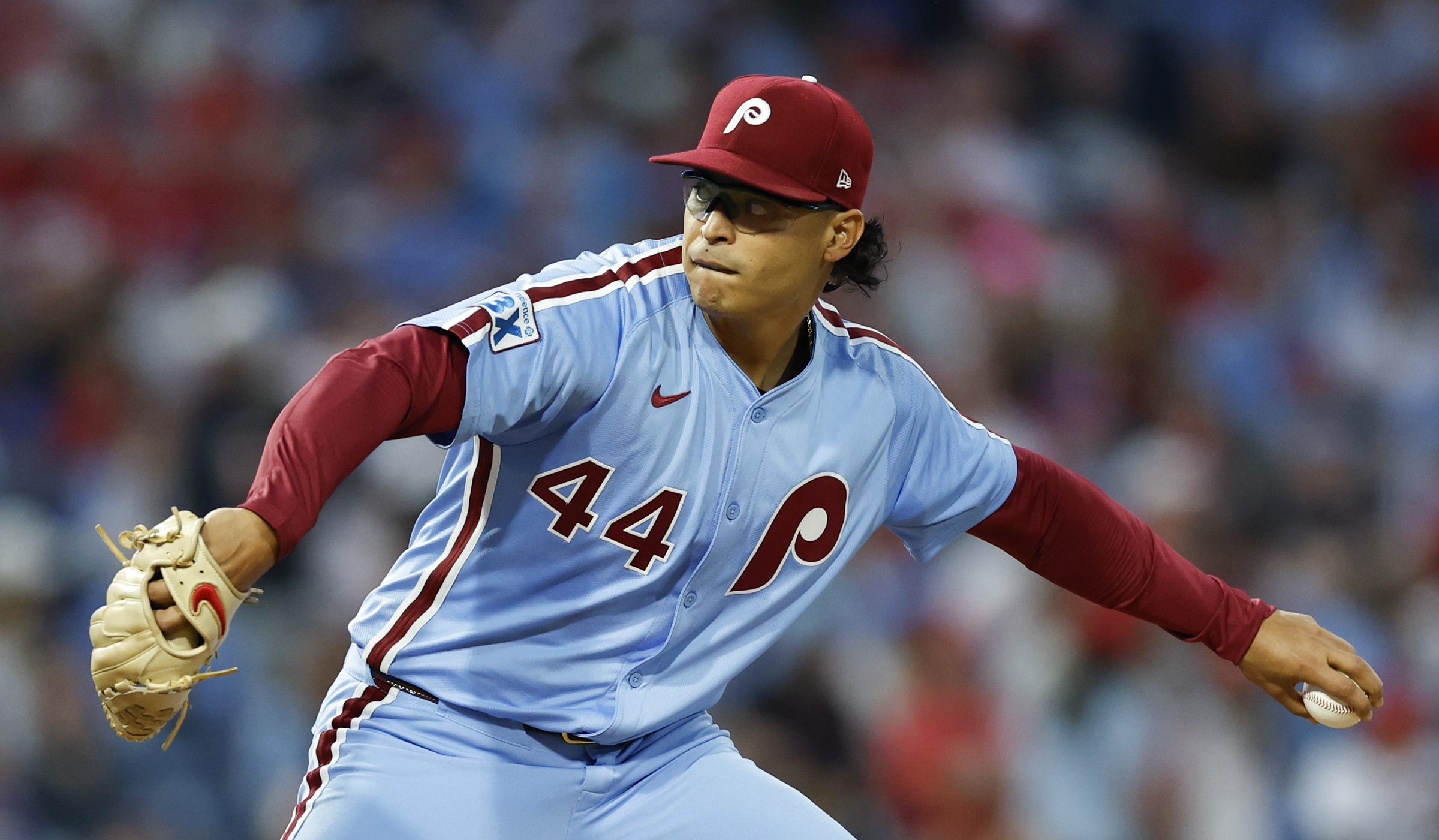
    Jesus Luzardo had a 3.92 ERA in a career-high 183⅔ innings in his first season with the Phillies.
    Q: Can you describe or give an example of how J.T. Realmuto has such a big impact on the pitching staff?

    A: There’s really not one specific thing. I think it’s just J.T. as a whole. I really respect the way he goes about his business. He’s a no-B.S. guy. He’s a family man. He is a hard worker. You see him, works hard in the weight room, works hard on the field; always is like, the first one to be out there ready to go. He’s not one to take a day off. They kind of have to pull his teeth out to take the day off. And you show up to the field, he’s already there, doing homework, going over scouting reports, watching video. So, when he goes up back there [behind the plate] and he tells us, ‘This is the plan that we’re going to do throughout the game,’ you have confidence that he knows what he’s talking about and that it’s not he’s just winging it. He has a plan. He understands what his plan is.

    And he takes very good care of his body. He’s very mentally aware of the situations, and he’s got a lot of baseball IQ. So, in that sense, I think he’s a full, full-bodied catcher in the sense that he has all his bases covered. And I think that’s something I really respect. And not only me, obviously the whole rotation, bullpen, all these guys. And when he’s hitting, it’s the same way. You could just see all the work he puts in and how smart he is at the plate. And that’s something that we all appreciate.

    Q: Your parents live in South Florida, where you grew up, but they’re from Venezuela. Do you have family there? Does everyone know that everyone’s OK after everything that’s happened down there? And are you interested in pitching for Venezuela again in the World Baseball Classic, like you did in 2023?

    A: I have family down there, and thankfully everyone’s OK so far. And yeah, it’s been a scary situation down there at times, but thankfully everyone’s all right. And in terms of pitching in the Classic, yeah, I threw in there three years ago. Last year talking to [Team Venezuela], I promised that I would go and pitch. And did get a call from the U.S., and got offered to pitch [for them] as well.

    But just this year, I think it’s going to be tough for me, going into a free-agency year [and] made the decision that, unfortunately, [I’m] not going to be able to pitch in the Classic and want to take my time. Take a slow spring training, fully get ready with the team, make sure my body bounced back after a career-high innings. And [it’s] a tough decision for me and my family, because it’s very important for my family, for me, to represent Venezuela. But just in terms of intelligent decision-making and a hard decision after a long last year and looking forward to a long this year, going into the playoffs, hopefully again pitching into maybe November, I think the correct decision would be to take a slow spring training and make sure everything’s along the right line to be prepared for the year.

  • A Philly-area university prof is competing in the Jeopardy! tournament of champions

    A Philly-area university prof is competing in the Jeopardy! tournament of champions

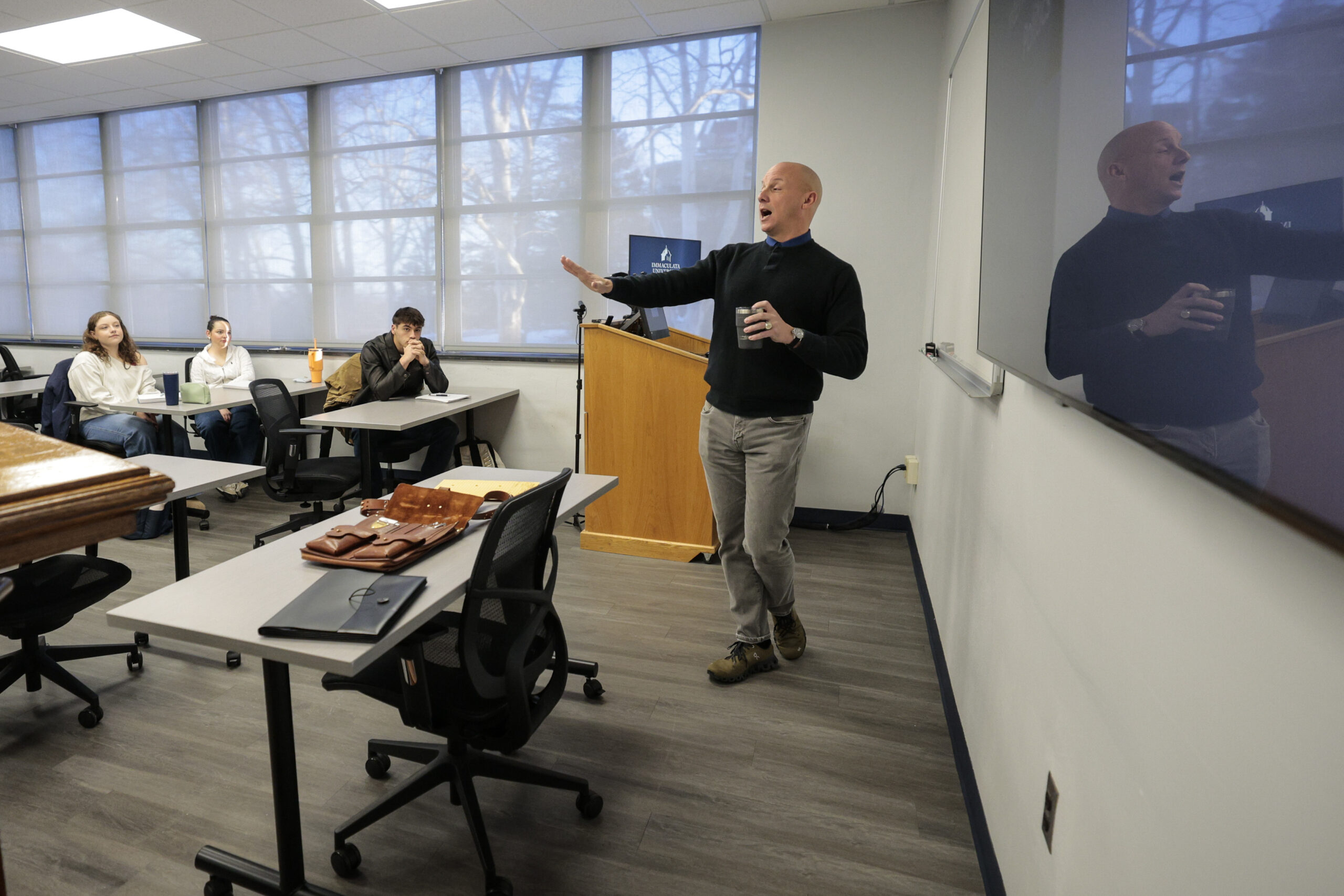
    As Joshua Weikert shared ground rules for quizzes in his early morning international relations class, he sought to put his students at ease.

    “I don’t want you stressing out about these,” he said Tuesday, as the new semester got underway at Immaculata University in Chester County. “I myself was a terrible student.”

    Weikert, 47, of Collegeville, may not have been a star student, but he sure knows a lot.

    The politics and public policy professor will compete on Jeopardy! 2026 Tournament of Champions at 7 p.m. Friday on ABC, having won six games when he was on the show in March.

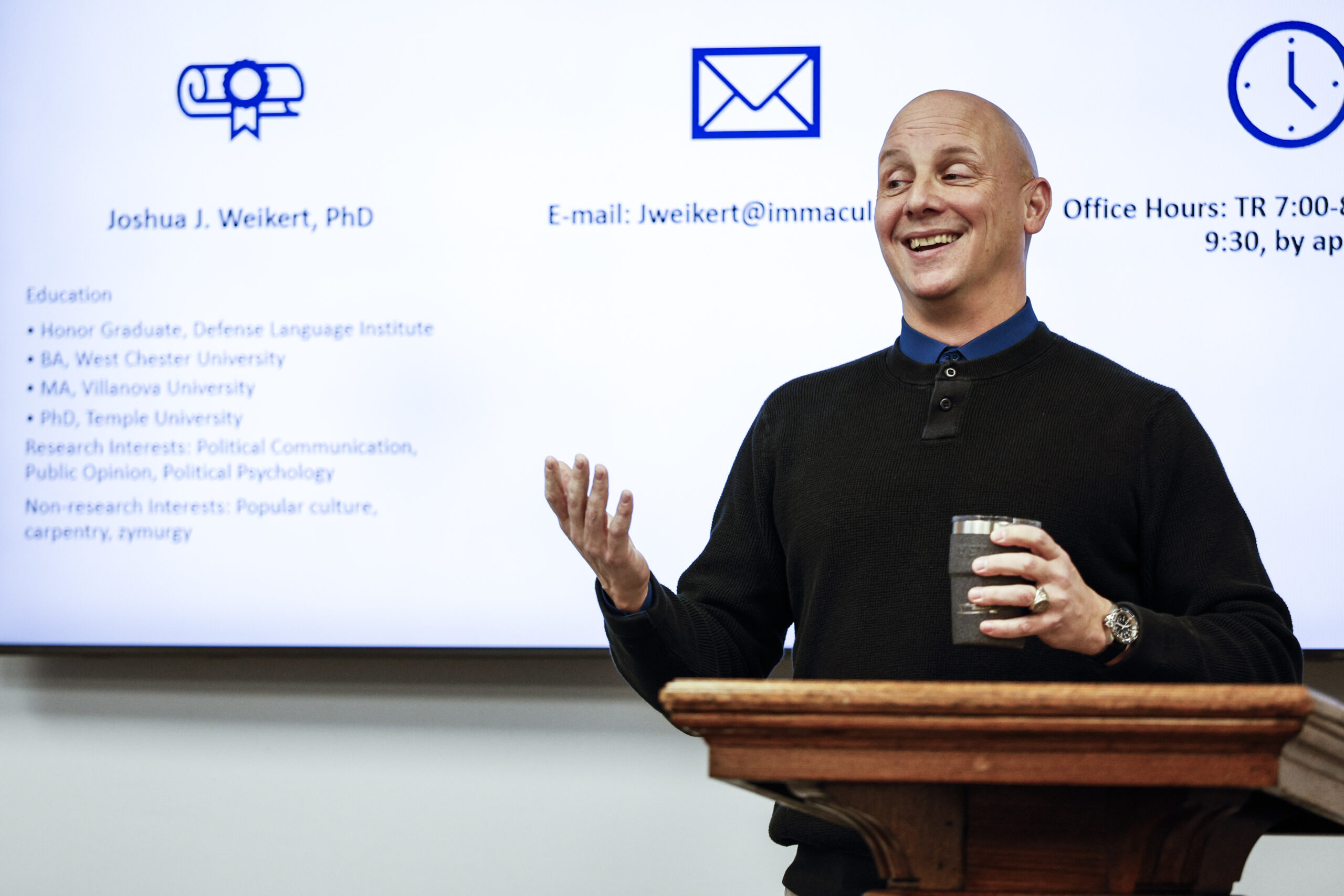
    Joshua Weikert teaches a class in international relations at Immaculata University.

    Over a couple weeks, Jeopardy! shows will feature him vying against 20 other champions, including Allegra Kuney, a doctoral student at Rutgers University’s New Brunswick campus, and Matt Massie, a Philadelphia lawyer who moved to the area in 2024, who also will appear on Friday’s show.

    Friday’s match is a quarter-final, and if Weikert wins, he’ll advance to the semifinals. (Kuney won her quarter-final Tuesday.)

    Weikert won about $103,000 when he competed last year, 10% of which he donated to a memorial scholarship fund named for his late friend, Jarrad Weikel, a Phoenixville man who died unexpectedly at age 40 in 2022. The winner of the champions tournament —which will conclude sometime in early February — will take home a grand prize of a quarter million.

    Weikert will watch the show Friday among family and friends — including his fellow contestant Massie — at Troubles End Brewing in Collegeville, which named one of its beers after him. It’s an English Bitter, one of Weikert’s favorites, called “Who is Josh?”

    At Immaculata, a Catholic college where Weikert has taught since 2016, students and staff are stoked. A campus watch party is planned, President Barbara Lettiere said.

    His appearance last year, she said, has put a welcome spotlight on the school and brought an outpouring of enthusiasm from alumni. On tours, some prospective students and their parents who spot Weikert have recognized him, she said.

    “I never knew that this show was as watched as it appears to be,” she said. “Win or lose, Immaculata wins.”

    Student Ben Divens talks about his Jeopardy-star professor Joshua Weikert.

    Ben Divens, 19, said it’s “jaw-dropping” and “surreal” to know his teacher will compete in the Jeopardy! champion tournament.

    “I knew from the first time I met him he was a super, super smart person,” said Divens, a prelaw major from Souderton.

    “He’s guided us so much in our major already,” added Bailey Kassis, 18, a political science major from Fort Washington.

    “He’s guided us so much in our major already,” student Bailey Kassis said about her professor Joshua Weikert.

    An early gamer

    Weikert said he has watched Jeopardy! ever since he can remember, probably since 1984 when he was 6, and it came back on the air with Alex Trebek as host. He grew up just outside of Gettysburg in a family that loved to play games, he said.

    “We took them very seriously, which is to say that they didn’t just let the kids win,” he said of his parents, both of whom had accounting degrees. “We were destroyed routinely in the games we played.”

    About his performance as a student, he said he often skipped his homework.

    “Just give me an exam,” he said, describing his attitude at the time. “I’ll pass it.”

    He got his bachelor’s degree in international relations from West Chester University, master’s degrees from Villanova and Immaculata, and his doctorate from Temple. He also attended the Defense Language Institute Foreign Language Center, where he studied modern standard Arabic while serving in the U.S. Army.

    Joshua Weikert sets expectations for students as a new semester gets underway at Immaculata University.

    In addition to teaching, he also works as a policy adviser to the Pennsylvania House of Representatives under state Rep. Joe Webster, a Democrat serving part of Montgomery County. He vets legislators’ ideas and offers ideas of his own.

    “The only thing they’ve ever told me no on was [when] I tried to abolish the Pennsylvania Senate,” he said.

    So many bills pass one body, then die in the other, he explained. If there were one legislative body where all House and Senate members served, that might be different, he said.

    Weikert’s office walls are lined with framed newspaper front pages highlighting major events: “Nixon Resigns,” “Nazis Surrender,” “Man Walks on Moon,” “Kennedy Shot to Death.”

    “Every once in a while, I just get up and read one of the stories,” he said.

    He got them from his mother-in-law’s basement and put them up after his wife told him his office needed some decor.

    Weikert’s status as a Jeopardy! champion makes clear he’s a fast thinker. He’s also a fast talker.

    “I don’t really drink caffeine. I just talk this fast,” he told his students.

    His wife, he told the class, tells him to slow down.

    “Keep up,” he tells her, he said.

    The road to Jeopardy

    Since his mid-20s, Weikert has been trying to get on Jeopardy!. Years ago, he got a call from the game show, but he put the caller on hold to get to a quiet place. They hung up.

    “I was like, well, I guess I missed that opportunity,” he said.

    But he kept trying and started taking the online tests, which typically draw 200,000 participants annually. In 2024, he got an email, inviting him to take the test again — and then again under Zoom surveillance.

    Next came a virtual audition and practice game in August 2024. That earned him a place in a pool of about 3,000 people, of whom a few hundred eventually became contestants.

    Weikert got the call last January and was invited to fly to California the next month to compete.

    In reality, his varied interests and life path had already prepared him for the show. He reads a lot. He’s a fan of historical fiction, pop culture, and movies. His work as a public policy scholar helps, too.

    But to try and up his game, he read plots of Shakespeare plays and a book on great operas. He flipped through lists of presidents and vice presidents. His wife, Barbara, a Norristown School District middle school music teacher, read questions to him from old Jeopardy! shows. He knew about 80% of the answers, he said.

    That, however, didn’t stop him from having panic dreams of being on stage and knowing nothing.

    The toughest category for him, he said, is popular music. Movies, history, and politics are his strongest.

    But the hardest questions, he said, are the ones with four or five strong possible answers.

    “Getting a Jeopardy! answer right is more about knowing what it’s not than what it is,” he said.

    Ultimately, he said, it’s impossible to really study for the game show.

    “The odds that something you study would come up is almost zero,” he said.

    It was an intense experience on stage last March, but the staff put contestants at ease, he said. Host Ken Jennings, formerly one of the show’s most successful contestants, told them, according to Weikert: “I promise you something today is going to be a win for you, so just relax and have fun.”

    He has a hard time remembering his winning answers. He readily recalls his dumbest, he said.

    The answer was “sacred cow.” He uttered “holy cow.”

    “Even as it was coming out of my mouth, I knew it was wrong,” he said.

    He’s proud that he only froze on one answer involving lyrics from the B-52’s “Love Shack,” he said.

    There was less pressure competing in the championship match last month, given he was already a winner, he said. But it was harder in that the contestants were the best of the best.

    “During the regular season, it’s a little under a quarter of a second between when you can start to buzz in and when the buzz actually comes,” he said. “In the tournament of champions, that drops to 0.08 seconds.”

    This time, he also prepped by reading children’s books on topics such as basic cell biology, a tip he got from another contestant.

    “It’s the simplest language they can use to convey the information,” he said.

    He also read the book, Timelines of Everything: From Woolly Mammoths to World Wars.

    He most enjoyed the camaraderie among contestants, he said. When filming was over, they hung out in a bar and — watched Jeopardy!.

    “We were yelling out the answers,” he said.

  • What the advanced stats say about the Eagles’ starters on defense

    What the advanced stats say about the Eagles’ starters on defense

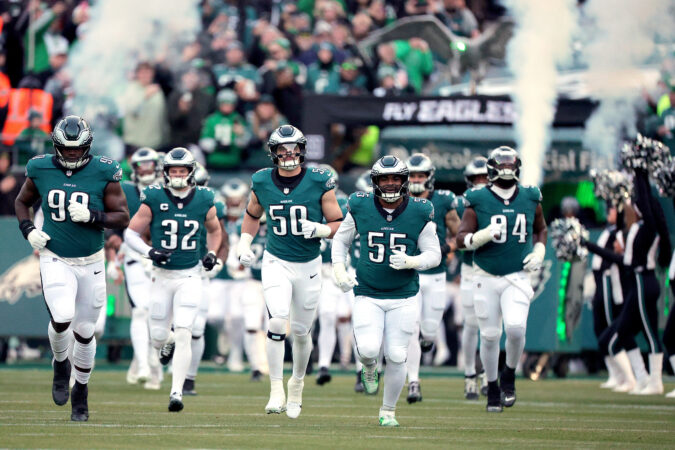
    The defense was a strength for the Eagles for most of the 2025 season, though not so much in their playoff loss to the San Francisco 49ers.

    The Eagles got to 11-6 and won the NFC East in part because of their ability to win low-scoring games. Their defense bailed out the offense in a few marquee victories, like their 10-7 win over Green Bay, their 16-9 victory over Detroit, and when they squeaked by Buffalo, 13-12.

    Vic Fangio’s unit lost a few key players from 2024 and dealt with an injured Jalen Carter, but still managed to finish fifth in points allowed per game despite a pretty tough schedule.

    What does that mean for 2026, with a handful of key players set to be back? Here’s one compelling advanced stat for each starter, the second in a two-part series that previously analyzed the offense:

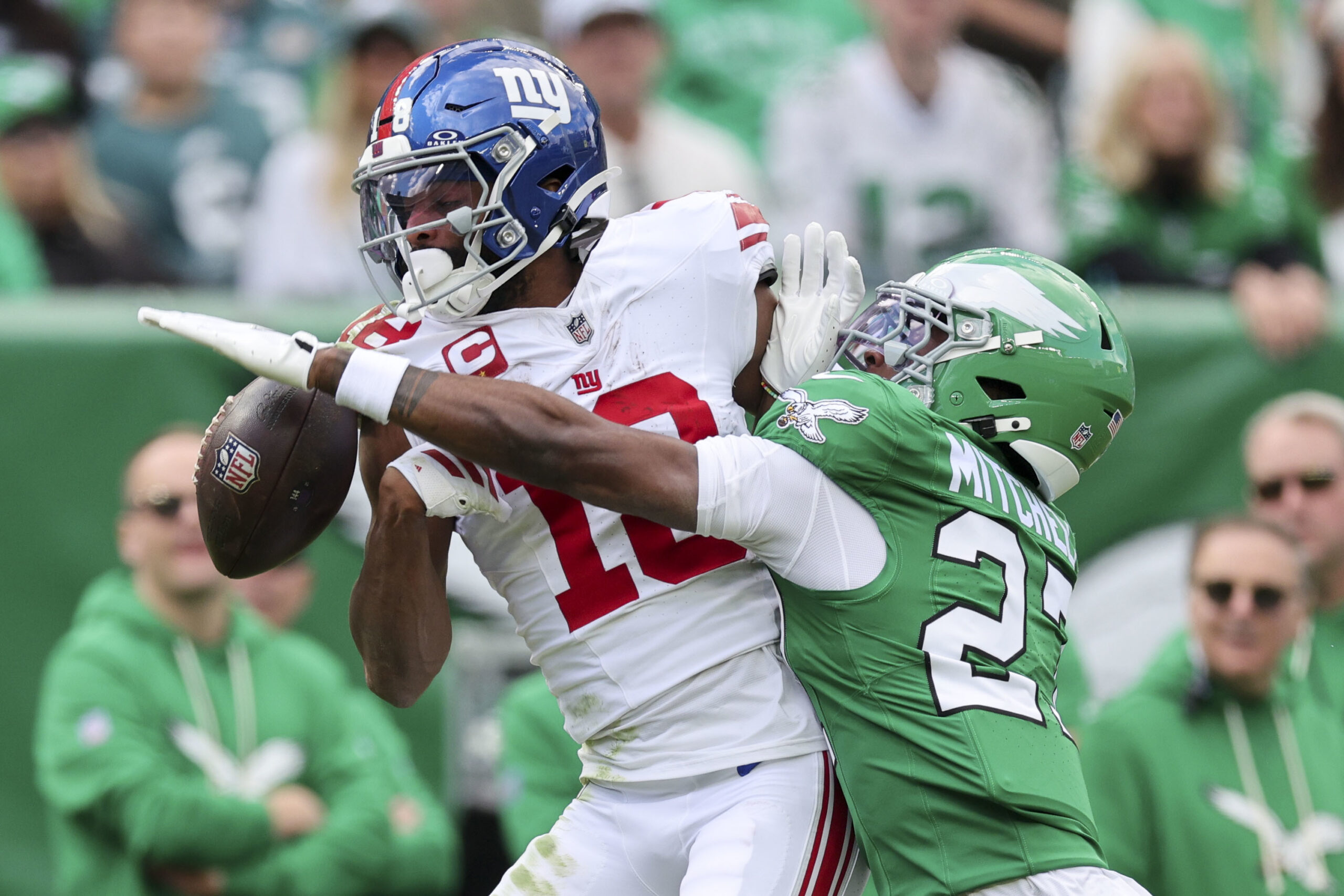
    Quinyon Mitchell developed into one of the premier corners in the league in his second season.

    Quinyon Mitchell

    Let’s start with Mitchell, a first-team All-Pro selection in his second NFL season.

    Mitchell emerged as one of the best cover corners in the NFL in 2025, as evidenced by his 42.4% catch percentage allowed, according to Next Gen Stats, a mark that led all corners who played a full season. Mitchell is so good it’s worth including another number: He led all NFL corners with an average target separation of 1.8 yards.

    If you were ranking the list of spots on the depth chart you were least worried about, CB1 would probably be at the top.

    Cooper DeJean dominated the slot during an All-Pro season.

    Cooper DeJean

    From one All-Pro to another. DeJean was named first-team All-Pro at nickel, and it’s worth noting that because that distinction is a key one. The Eagles like DeJean in the slot, and DeJean said it’s a spot he’d probably like to remain in.

    Why? There’s enough data out there now to suggest that it’s his best spot.

    After logging just nine snaps at outside corner during his rookie season (1.5% of his total snaps), DeJean, whom the Eagles kept on the field in their base package, aligned outside on 30.1% of his snaps in 2025.

    He fared much better in the slot, where he allowed a .574 completion percentage and 5.9 yards per target, according to Next Gen. Both of those numbers ranked well below the league-average marks of .695 and 6.8, respectively. DeJean allowed a similar .588 completion percentage when he lined up outside, but his 10.9 yards per target ranked seventh among defenders to have faced at least 15 such targets. He was susceptible to the deep ball when facing top receivers outside.

    Just ask George Pickens.

    Adoree’ Jackson

    We’ll count Jackson as a starter since the Eagles played more nickel than base and needed another outside corner not named DeJean on the field quite often.

    It wasn’t always Jackson’s job. The second cornerback spot was a position with a lot of intrigue in training camp and even early in the season. It was Jackson’s job, then it wasn’t, then it was again.

    Jackson was targeted at a higher clip (26.5% of his coverage snaps) through the first eight weeks of the season than any other cornerback in the NFL. After that, though, Jackson was targeted on just 16.5% of his coverage snaps while allowing a completion percentage of .585, slightly below the league average. He did not give up a touchdown during his last five games of the regular season or the playoff game.

    Jackson, 30, is a free agent, and the Eagles may need a new cornerback opposite Mitchell next season. But Jackson’s play showed that even an aging and average player can be put in that spot, and the defense won’t fall apart, regardless of the preseason narrative about a certain spot on the depth chart.

    Zack Baun generally lived up to his rich new contract in 2025.

    Zack Baun

    Baun proved he wasn’t a one-year wonder in his second season with the Eagles, who plucked him out of free agency last offseason and turned a player who had mostly been an edge rusher and special teamer into one of the best off-ball linebackers in the NFL.

    Baun didn’t earn All-Pro honors like he did in 2024, but he was still really good in 2025. While his tackle total dropped from 151 to 123, his pass deflection number rose from four to seven, and he intercepted two passes in 2025, up from one in 2024. Pro Football Focus ranked Baun as the fifth-best linebacker in the NFL, and the second-best coverage linebacker.

    His ability to cover ground may be his best trait. Baun was seventh in the NFL with 17 hustle stops, which Next Gen Stats defines as a tackle during a successful defensive play when a player covers 20-plus yards of distance from snap to tackle.

    A quality 2025 season will serve Nakobe Dean well in his next contract.

    Nakobe Dean

    Has Dean played his last game with the Eagles? And, to that end, can Jihaad Campbell replace Dean’s production?

    Because Dean was pretty productive in 2025 after he worked his way back onto the field after surgery to repair a patellar tendon injury, which he suffered in the wild-card round a year ago.

    This is what the Eagles could be asking Campbell to replace should Dean not return: Dean’s catch percentage allowed of just 58.3% on targets ranked third among all NFL linebackers who played at least 200 snaps in coverage, according to Next Gen. And Dean was even better as a blitzer: He led all linebackers with a 40.7% pressure rate on his 27 pass rushes and got home for four sacks.

    Injuries prevented Jalen Carter from demonstrating his full effectiveness for the NFC East champs.

    Jalen Carter

    The Eagles will be hoping Carter’s step back is easily explained by the shoulder injuries that limited his production and caused him to miss three games after undergoing procedures on both shoulders in late November.

    Carter, according to Next Gen, had a career-low 7.7% pressure rate on the year despite facing fewer double teams (41.7%) than he ever has. Carter generated five pressures against 158 double teams after tallying 12 in 2023 and 15 in 2024. His average time to sack also dropped to 5.32 seconds from 4.85 year over year.

    Notably, after Carter returned following his three-game break, he had five pressures and a sack vs. Buffalo and the same output in the playoff loss vs. San Francisco.

    Will the shoulder injuries be revisited in the offseason? Will Carter’s slide allow the Eagles to secure him on a long-term deal at a lower price? Lots of intrigue there.

    The emergence of Jordan Davis was one of the Eagles’ best stories of the year.

    Jordan Davis

    Davis was a revelation for the Eagles in 2025, and a big reason that the defense was so successful even as Carter’s play declined a bit.

    Davis showed up to camp in much better shape and improved his play in every area. Mainly relied on as a run stopper in the past, Davis showed his pass rushing chops in 2025. Entering the year, Davis had just 3½ sacks on 559 pass rushes through his first three NFL seasons. This season, Davis racked up 4½ sacks on 355 pass rushes.

    The run-stopping ability didn’t go away even though he showed up in July a little more svelte. Davis, according to Next Gen, had a career-high 50 run stops (run defenses that result in a negative play for the offense), which was second among all defensive linemen this season.

    Davis is in line for an extension, and his play in 2025 earned him a big new deal that will probably come from the Eagles.

    Jaelan Phillips played well but was not a sack machine for the Eagles.

    Jaelan Phillips

    Phillips helped steady the Eagles’ pass rush after he joined the team at the trade deadline, but while he and Jalyx Hunt formed an elite pass-rushing duo — their 61 combined pressures from Week 10 through Week 17 ranked fourth during that span — he had trouble converting his pressures into sacks.

    Phillips led the Eagles with 34 pressures after joining the team, but he turned just two of those into a sack. His 5.9% pressure-to-sack conversion rate, according to Next Gen, ranked 10th-lowest among 97 defenders to have generated at least 15 pressures after the trade deadline. Some of that is bad luck. Fangio talks often about the importance of pressures and not getting too hyper-focused on sack numbers.

    But the Eagles need a top-end talent at the top of the depth chart to pair with Hunt since Phillips is a free agent. Phillips wants to be back. Is the feeling mutual? We’ll see when free agency arrives.

    Jalyx Hunt made an impact as a member of the linebacker rotation in 2025.

    Jalyx Hunt

    Hunt became the first player in Eagles history to lead the team in sacks (6½) and interceptions (3).

    That’s an impressive stat, but this is a compilation of advanced numbers, so let’s point to this one instead: Hunt ranked seventh among all edge rushers who had at least 100 pass rushing snaps with a quarterback pressure rate of 17.3%.

    The 2024 third-round pick broke out in a big way in his second NFL season, and the Eagles used his safety background to drop him into coverage with success.

    Reed Blankenship was a team leader but the record shows that he struggled at times in coverage.

    Reed Blankenship

    Blankenship has been a leader on the defense for the last few seasons, but he’s now a free agent and it’s fair to wonder if he’ll be back next season.

    Blankenship has been solid against the run, but he’s not great in pass coverage when he’s targeted. After a 2024 season in which he ranked fifth-worst among safeties with at least 500 coverage snaps with an 81.3% completion percentage allowed, Blankenship had the eighth-worst passer rating allowed (116.8) in 2025, according to Pro Football Focus.

    It’s unclear what Blankenship’s market will look like in free agency, but it’s a position the Eagles could probably stand to upgrade.

    Drew Mukuba’s return from a broken fibula figures to be a training camp storyline.

    Drew Mukuba

    Mukuba’s first season in the NFL was incomplete. The second-round pick was lost for the season after suffering a fractured fibula in the waning moments of a Week 12 loss to Dallas.

    Mukuba wasn’t targeted often in coverage. Before his injury, he was targeted on just 4.2% of his snaps, according to Next Gen. That ranked fifth-lowest among all defenders in the NFL with a minimum of 150 coverage snaps. But when he was targeted, it was on deep balls. He had the fifth-highest total in yards per target allowed (13.5).

  • 🏀 Center of attention | Sports Daily Newsletter

    🏀 Center of attention | Sports Daily Newsletter

    While we all wait with bated breath to see who Jalen Hurts’ seventh offensive coordinator in seven years will be (technically, 11th if you count his college years), we’re going to switch gears and talk a little Sixers — specifically the timeshare that has transpired at the center position.

    Both Andre Drummond and Adem Bona have been key contributors at the position, both under the backdrop of Joel Embiid, who, despite a litany of injuries, has been the constant at the position for the latter part of a decade.

    So how do you compete with that? Well, according to both Drummond and Bona, you don’t; instead, you make the most of your minutes. Drummond, who has even been getting starting minutes recently, knows that “I probably won’t take my warmup pants off some games.”

    And while you’d think it would be a battle of the big men trying to occupy minutes on the court, Drummond and Bona have become friends, reveling in each other’s moments, however fleeting or prosperous, night after night.

    Inquirer writer Gina Mizell offers this rare look at selflessness on what’s shaping up to be a warmer day across the region, with highs expected to peak into the low 40s in many spots.

    — Kerith Gabriel, @phillysport, sports.daily@inquirer.com.

    If someone forwarded you this email, sign up for free here.

    ❓Thoughts on the Sixers so far this season? Email us back for a chance to be featured in the newsletter.

    Ranger will still do, too

    Ranger Suárez left the Phillies for a $130 million contract with the Red Sox.

    Former Phillies pitcher Ranger Suárez took the podium in a Red Sox jersey for the first time Wednesday when he was officially introduced at Fenway Park.

    The 30-year-old Suárez, who signed with the Phillies as a 16-year-old from Venezuela and developed into an All-Star and key rotation piece, departed in free agency this winter. His five-year, $130 million contract with Boston became official Wednesday.

    When prompted by a reporter at his introductory news conference, Suárez clarified the traditional Spanish pronunciation of his first name.

    In a wide-ranging conversation on Phillies Extra, The Inquirer’s baseball show, Jesus Luzardo said he’s interested in discussing a contract extension with the Phillies and talked about his impressive first season with the team, J.T. Realmuto’s impact behind the plate, and more.

    What we’re …

    👏🏾 Applauding: The impact of the Sixers drum line corps, the Stixers, specifically off the court.

    ⛳ Sharing: There’s a new sheriff in town when it comes to the PGA Championship, headed to Aronimink Golf Club this spring.

    🏀 Wondering: Thoughts on Tyrese Maxey’s latest shoe from New Balance.

    🏈 Answering: Why were so many people from Indiana University of Pennsylvania so excited about Indiana’s national championship win, even though IUP has no ties to IU?

    📖 Reading: NFL quarterback Baker Mayfield’s thoughts on former head coach and St. Joseph’s Prep alum Kevin Stefanski.

    👀 Watching: Inquirer reporter Jonathan Tannenwald takes us through the sophistication that is the video assistant referee, more commonly known as VAR.

    Long wait for Lane

    Lane Pederson made his Flyers debut on Monday against the Vegas Golden Knights. It was his first NHL game since March 2023.

    Lane Pederson has ridden a lot of buses in the American Hockey League over the last few years in pursuit of his dream to one day play in the NHL again.

    On Monday, that persistence and those long, late-night slogs must have all felt worth it, as Pederson played in his first NHL game in almost three years when he suited up for the Flyers in Las Vegas. The 28-year-old, who signed with the Flyers this summer, hoped he’d get one more chance to prove he belongs at the top level, and he’s got it after Rodrigo Ābols suffered a long-term injury on Saturday.

    Can Pederson stick on the fourth line with a coach he knows well in Rick Tocchet? No offense to Allentown, but the centerman hopes he won’t be returning to Lehigh Valley any time soon.

    And on Wednesday night, the Flyers dropped an early 3-0 lead to fall in overtime to the Utah Mammoth.

    Cavan’s turn

    Cavan Sullivan is seen during a Union practice at Subaru Field in Chester. Tuesday, Jan 13, 2026.

    There’s no need to remind Cavan Sullivan about all of the expectations placed on his now 16-year-old shoulders. He’s got plenty of reminders. It’s why this season, Sullivan says he’s focusing on the game and less on the pomp that comes with it.

    The timing couldn’t be better as there’s a real chance he could see considerable minutes as an attacking midfield presence with the Union, a spot left vacant by his older brother Quinn, who suffered an ACL sprain last season.

    Ahead of the team’s two-week trip to Spain, Cavan sat down with Tannenwald to talk about what could shape up to be a transformative season for the Union’s youngest pro talent.

    On this date

    Jan. 21, 2006: In Kobe Bryant’s legendary 81-point performance, he led the Los Angeles Lakers to a 122-105 win against Toronto. Bryant still holds the mark for the second-highest point total in a game behind Wilt Chamberlain’s 100-point game in 1962.

    Standings, stats, and more

    Want the full breakdown from last night’s Flyers game against the Mammoth? Here’s a place to access your favorite Philadelphia teams’ statistics, schedules, and standings in real time.

    Marcus Hayes’ take …

    “[Howie] Roseman might be the best GM in the NFL over the last nine years, but that doesn’t mean he’s going to have the best roster in 2026. Any top OC candidate is looking at the Eagles job as a one-year stepping stone to the 2027 cycle of head-coaching vacancies. The 2026 Eagles are richly talented on paper, but they are saddled with far more questions than answers.” — The latest take from Hayes, who explores why the Eagles’ vacant offensive coordinator position doesn’t have a line around the block.

    What you’re saying about the Phillies

    We all know Bo Bichette isn’t headed to Philly. That seems to work out just fine for these Inquirer readers.

    We asked: What are your thoughts on the Phillies missing out on Bo Bichette?

    [I don’t care] about Bichette or anyone else while the flawed hero-culture core remains unchanged and unrepentant. Schwarber did a contract year showing, and we fell for it, as if his biggest night of last year didn’t follow that pathetic series shellacking by the Mets (who were not good). What’s more interesting is how much all the Philly teams have been whiffing on big new additions in recent years — most prominently right now, desirable OCs for the Eagles. The perpetual national media’s lambasting of our town and sports culture feels like it’s winning, and we’re at risk of becoming Pariahdelphia. — D.W. Stone

    I believe it’s a great move on the Phillies to force them to start the process to go young. The fact that they did not make the run in September is due to the superstars not performing well. It’s now time to watch the development of the minor league players and analyze their improvement. You are not going to out-pay the Dodgers or Mets. Have fun watching new talent instead of Dave D trying to outspend our competitors. That has been Dave’s history on all his prior teams. — Dick F.

    Losing Bichette is a Godsend. We win twice by not getting him. First, we can stop hearing about getting rid of Alec Bohm, whose performance is on par with Bichette, [and who] is young and still improving every year. And then they are able to pay and retain the best catcher in baseball, even though he is a ripe old 34 years old. This roster is much better overall. BTW, why has Bohm been on the trading block every single year? totally undeserved. — John W.

    We compiled today’s newsletter using reporting from Rob Tornoe, David Murphy, Jeff McLane, Jeff Neiburg, Olivia Reiner, Gina Mizell, Scott Lauber, Ariel Simpson, Gabriela Carroll, Jonathan Tannenwald, Katie Lewis, Brooke Ackerman, and Jackie Spiegel.

    By submitting your written, visual, and/or audio contributions, you agree to The Inquirer’s Terms of Use, including the grant of rights in Section 10.

    That’s it for today. Enjoy your Thursday. Jim will be back tomorrow to get you set for the weekend ahead. Kerith

  • Yes, Philly is most definitely a basketball city. Dating all the way back to 1898.

    Yes, Philly is most definitely a basketball city. Dating all the way back to 1898.

    On Dec. 1, 1898, about 1,000 people gathered at a court in Textile Hall — today’s Kensington neighborhood. They were there to watch the Philadelphia Hancock Athletic Association play the New Jersey Trenton Nationals in America’s first professional basketball game.

    According to an article in the following day’s Philadelphia Times, the game got a late start because referees were still ironing out the rules of the world’s newest professional sport.

    But once the game got underway, it was fast and furious.

    Hancock “started with a rush, scoring two field goals before the players had become warmed up to their work,” the story reads.

    “Throughout the entire first half, the home team had the better of the argument, taking advantage of every opportunity finishing the half in the lead by a score of 11 to [0].”

    In the end, Philadelphia lost by two points, a disappointment Philly sports fans know all too well, even in these modern times.

    The final score: 21 to 19.

    Daniel Lipschutz blended history into his love of the modern day sport for this sculpture.

    That first game of the National Basketball League will be feted this Saturday at a Firstival at Xfinity Mobile Arena. Firstivals are the Philadelphia Historic District’s weekly day parties celebrating events that happened in Philadelphia before anywhere else in America, and often the world. They are part of a yearlong celebration of America’s 250th birthday.

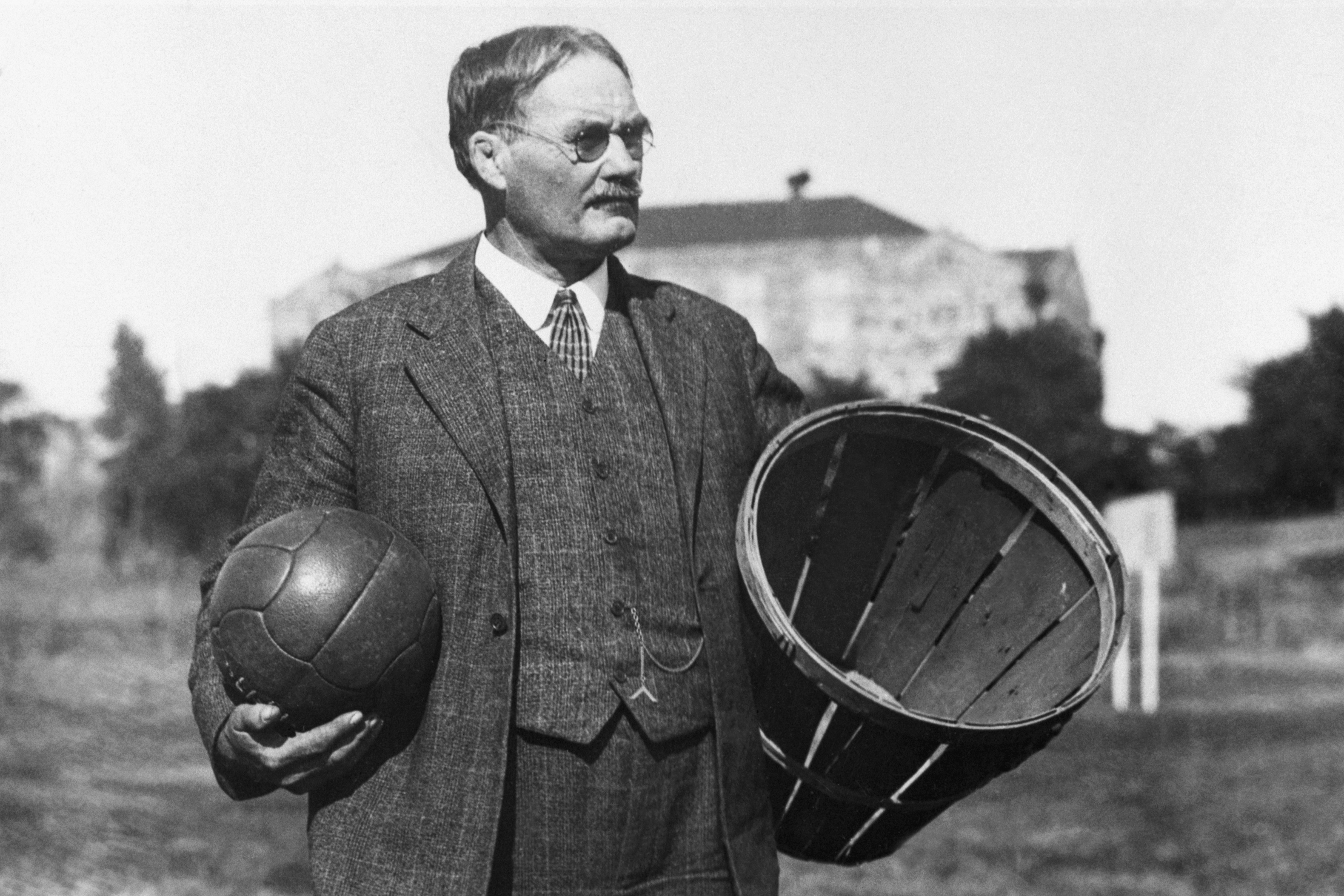
    James Naismith, a YMCA coach in Springfield, Mass., invented basketball in 1891 to keep kids active during winter months. The sport incorporated elements of rugby, lacrosse, and soccer. Instead of throwing balls into a bottomless net to score, players threw balls into peach baskets.

    (In other words, there was no such thing as a rebound.)

    James Naismith, inventor of basketball, with a ball and a basket.

    Basketball quickly became popular with college students and in 1898, Naismith was recruited to coach the University of Kansas basketball team.

    That same year, Horace Fogel, sports editor of the Philadelphia Public Ledger, organized the first professional basketball league with three teams from Philadelphia and three from South Jersey.

    A 12-foot chain-link cage separated players from the fans. Ropes replaced these iron cages in the 1920s.

    Fogel’s National Basketball League lasted just five years, folding in 1904 because of quick player turnover eating into profits. A second league was formed in 1937 and was sponsored by Goodyear. In 1946, the Basketball Association of America was established.

    And in 1949, the BAA and NBL merged to create today’s NBA.

    “This really goes to show that Philadelphia is a sports city,” said Shavonnia Corbin Johnson, vice president of civic affairs for the 76ers. “When people talk about Philadelphia sports rooted in history, tradition, and passion, it’s true, but now we know that America’s true love of sports can trace its roots right back here.”

    This week’s Firstival is Saturday, Jan. 24, 11 a.m. — 1 p.m., at Xfinity Mobile Arena, 3601 S. Broad St., Philadelphia, Pa. Premium Access Entrance on the Broad Street side, near Lot C. The Inquirer will highlight a “first” from Philadelphia Historic District’s 52 Weeks of Firsts program every week.

  • Frank Seravalli’s late cousin played hockey at Germantown Academy. Now the NHL insider is coaching the Patriots in his honor.

    Frank Seravalli’s late cousin played hockey at Germantown Academy. Now the NHL insider is coaching the Patriots in his honor.

    Frank Seravalli was standing behind the players’ bench at Bucks County Ice Sports Center when his phone buzzed. He didn’t reach for it — which is not his usual instinct.

    Seravalli, a former Daily News reporter, is one of only a handful of NHL insiders. His job is to talk to athletes and decision makers around the league. Missing a call or a text can mean missing a story, and in a competitive media environment, in which quick, accurate information comes at a premium, being “late” isn’t ideal.

    But on Jan. 12, in the midafternoon, Seravalli was busy. He was coaching Germantown Academy’s varsity hockey team. It was the third period and the Patriots were up, 6-2, in a rematch against Episcopal (5-2 on the aging scoreboard, which was missing a number).

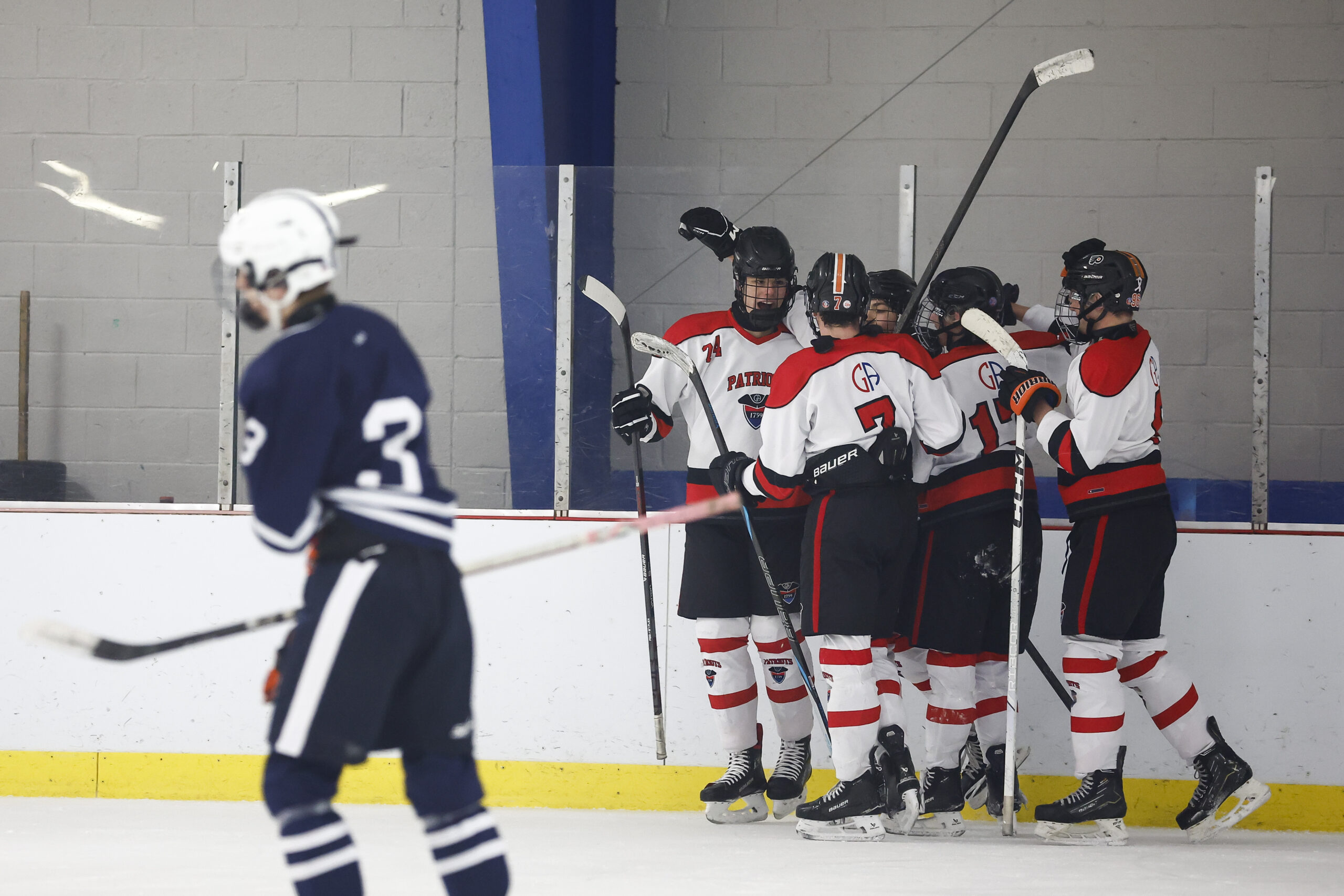
    Despite their lead, Seravalli’s players didn’t relent. With 35.6 seconds remaining, sophomore Mick Tronoski fired another shot into the net. A smattering of fans cheered.

    After the two groups shook hands, Seravalli walked off the ice. He pulled his phone from his pocket, and read that the Columbus Blue Jackets had fired their head coach, Dean Evason.

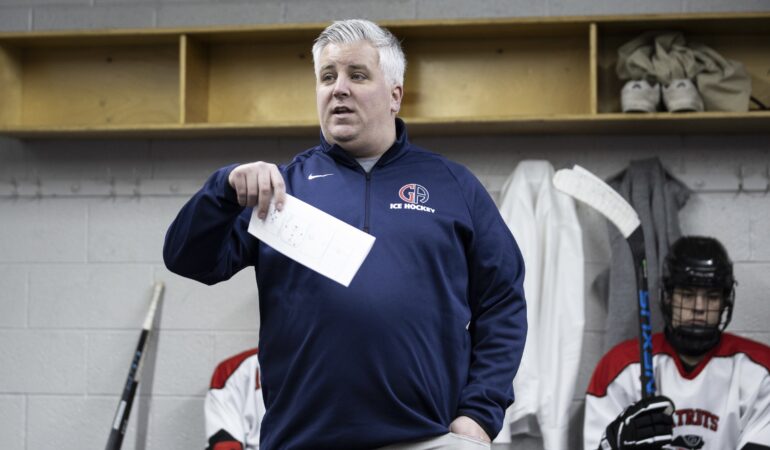
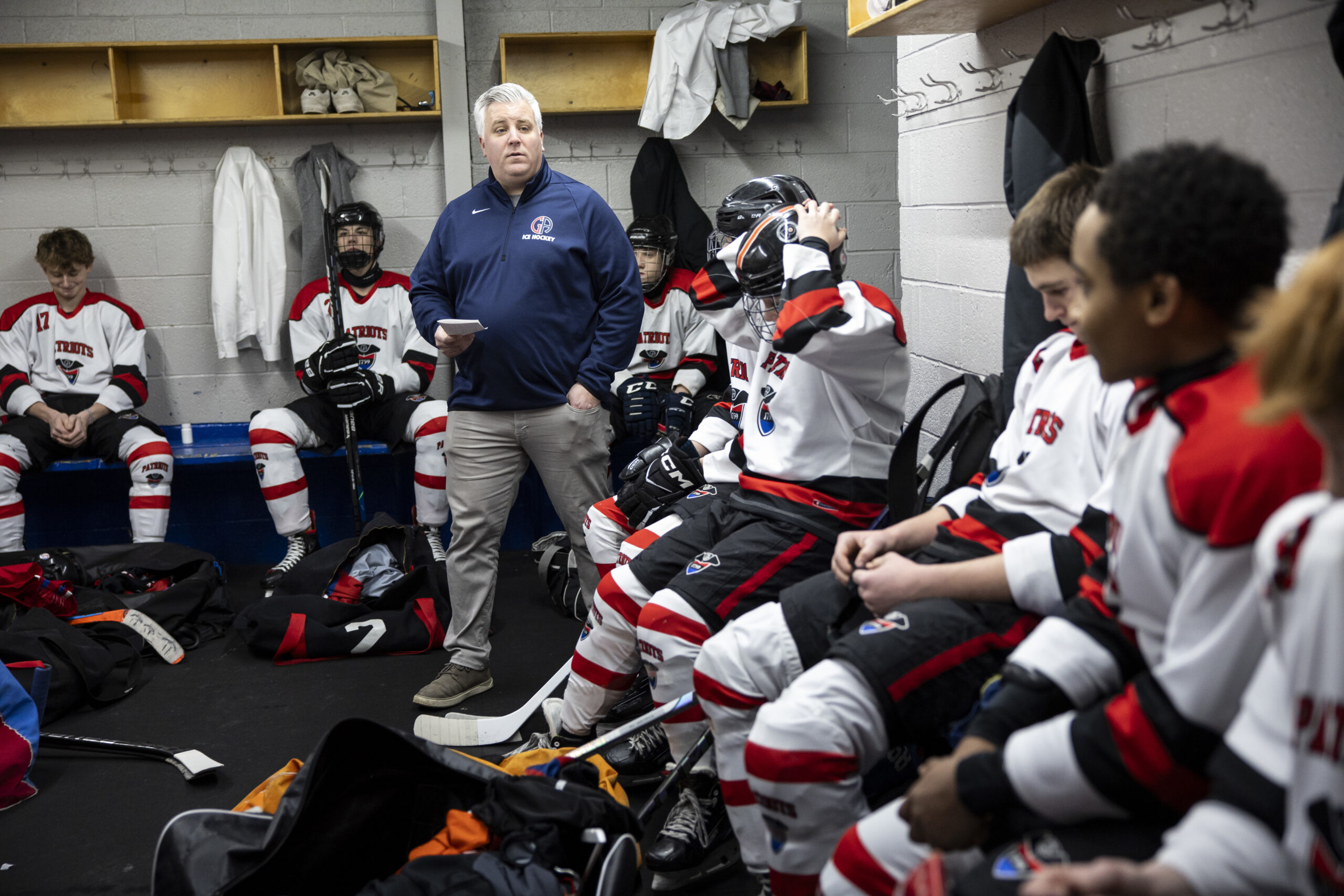
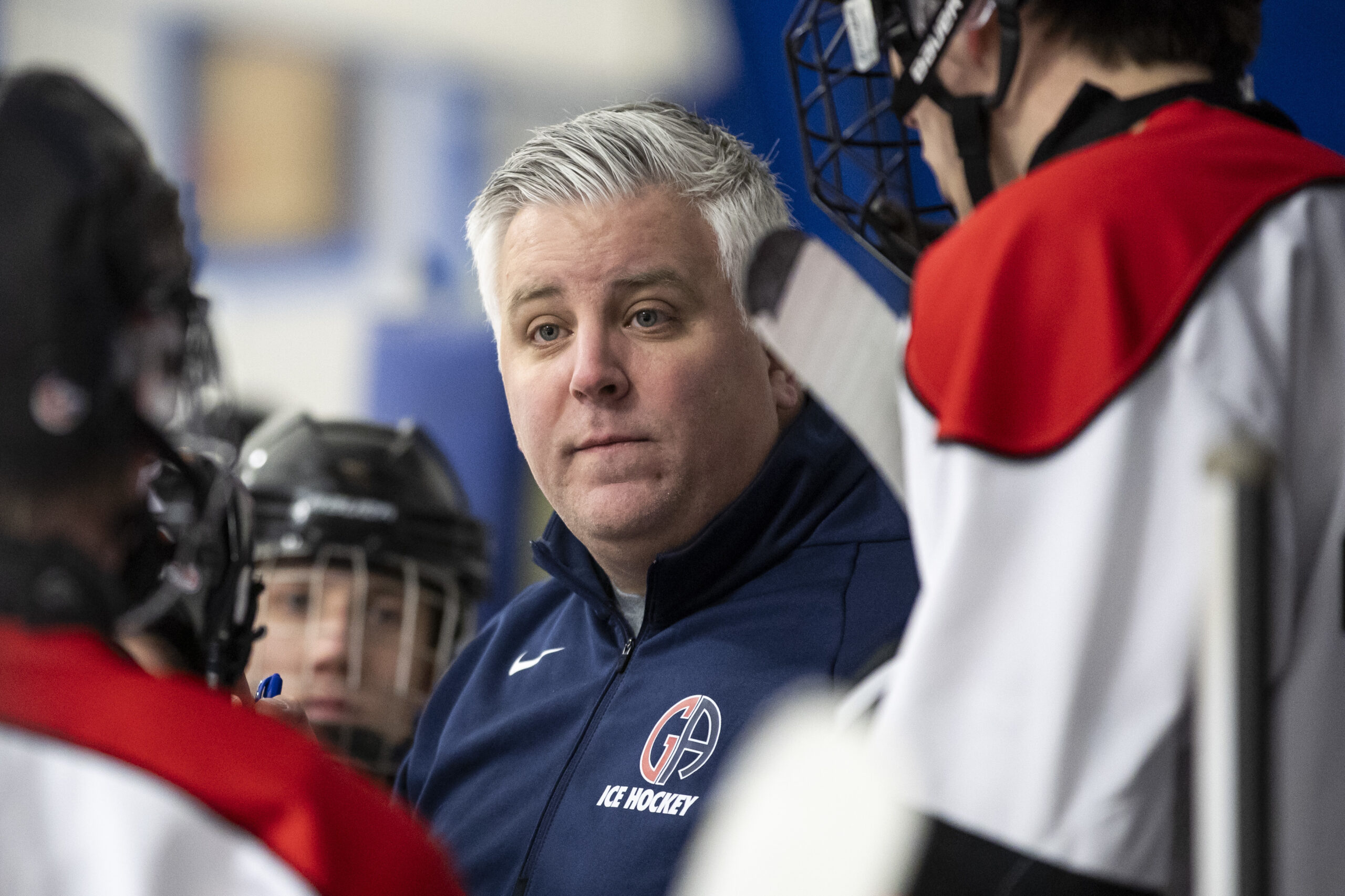
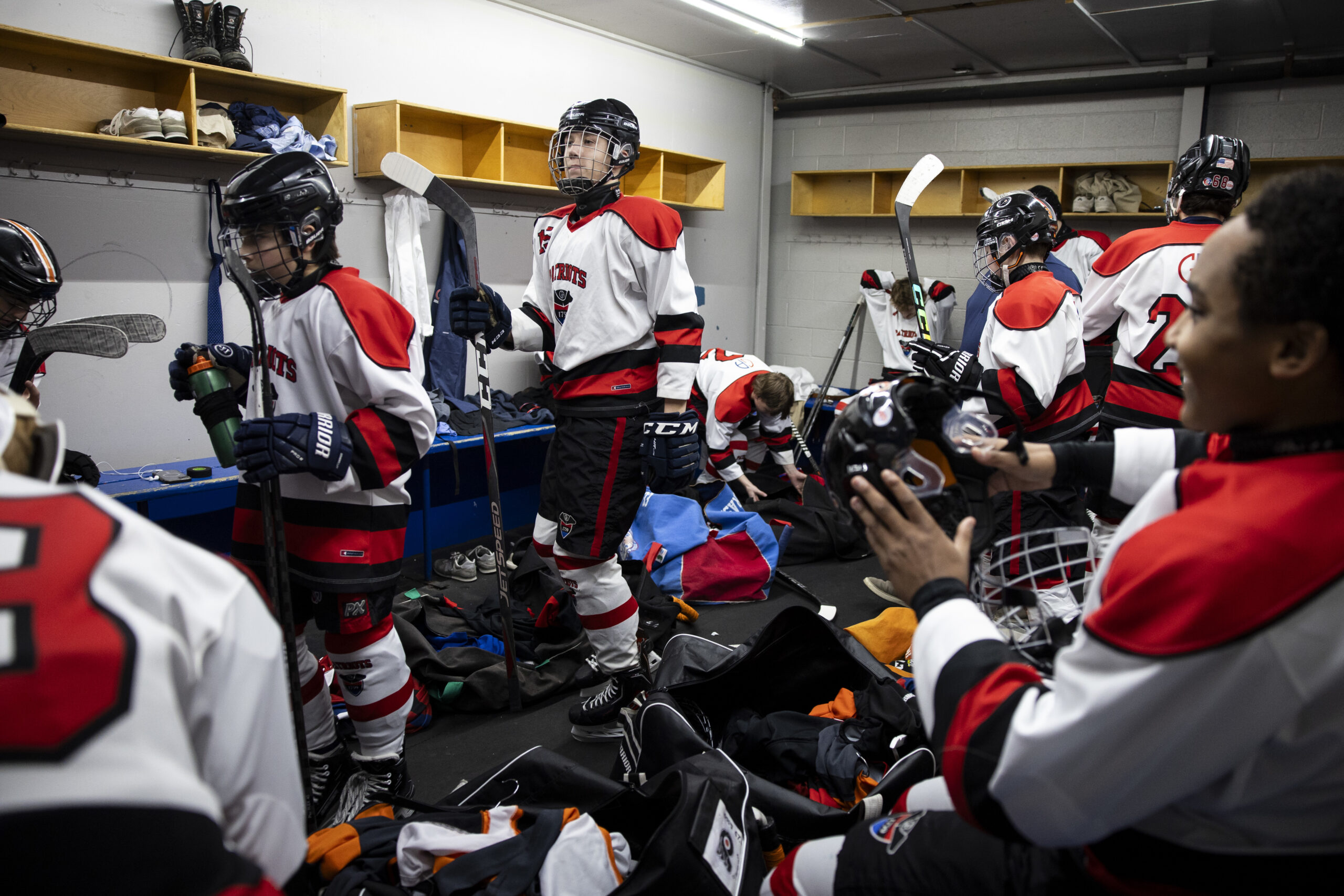
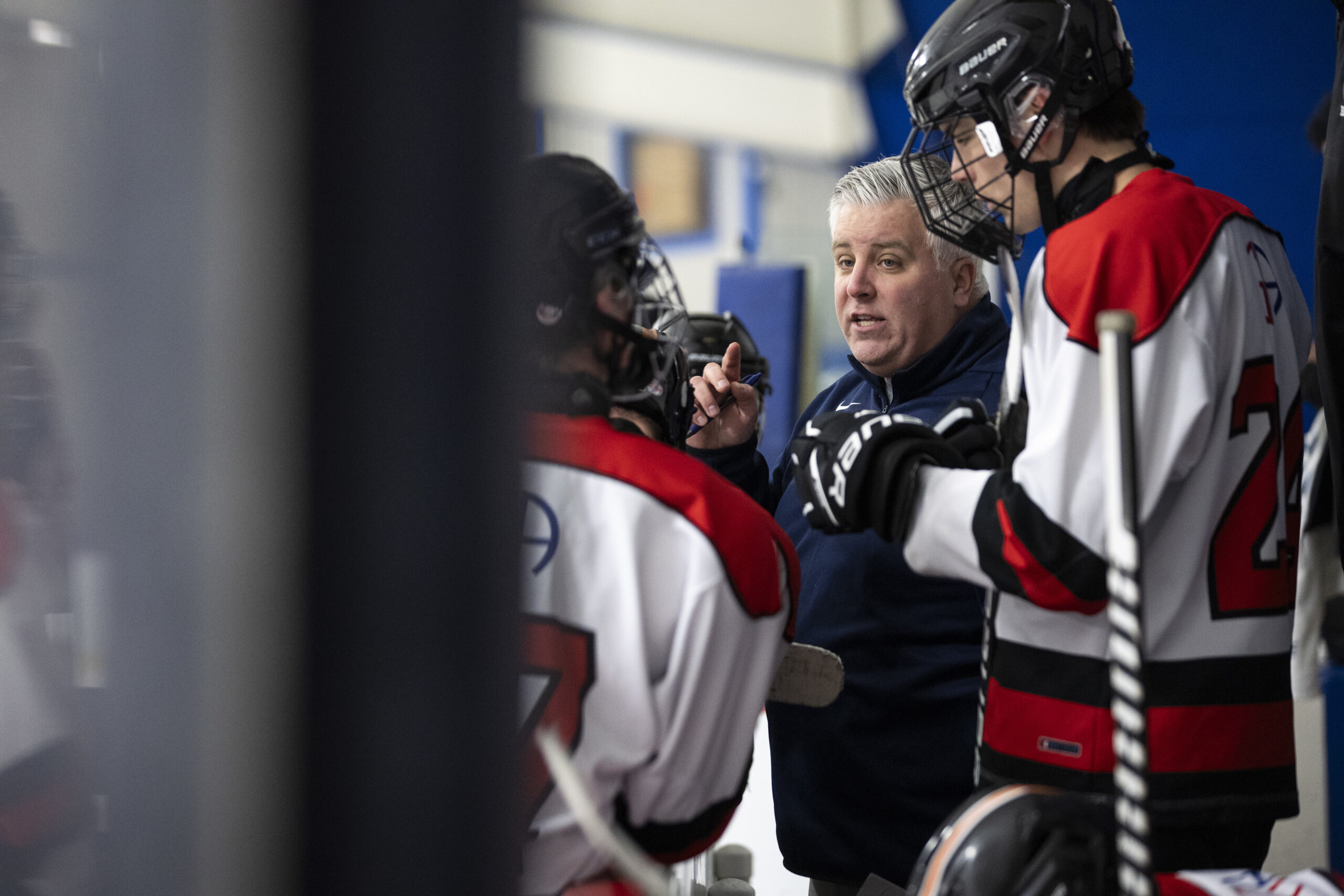
    Coach Frank Seravalli talks with his Germantown Academy team in the locker room at the Bucks County Ice Sports Center on Jan. 12.

    He retweeted a team statement, 27 minutes late. The NHL insider shrugged.

    “I mean, it’s just life, right?” he said. “What are you going to do?”

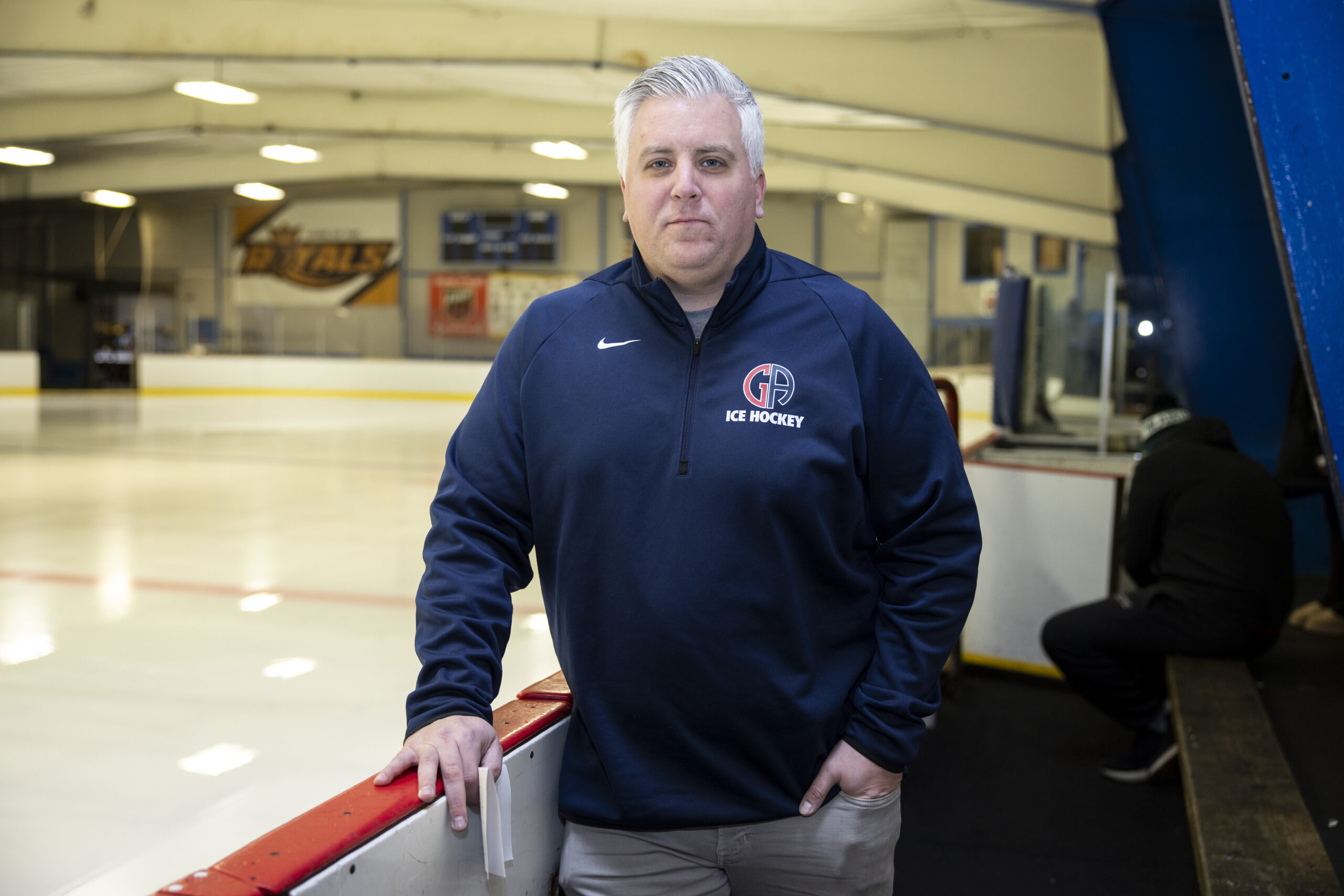
    Since July, Seravalli, 37, has served as GA’s head hockey coach. It is a daily commitment, one that he takes as seriously as his podcast and TV hits for various outlets. Five times a week, Seravalli oversees hourlong practices, and coaches hour-and-a-half games, with some 7 a.m. morning lifts mixed in.

    He is not above doing the grunt work, either, like ordering gear, setting the schedule, and keeping the team’s stats. He reviews film, plans workouts, and runs the middle school program, all while keeping an eye on promising players in the area.

    NHL insiders do not have an abundance of free time, so when Seravalli first told his family that he’d be coaching high school hockey, they thought the idea was absurd. And maybe it is a little absurd. Seravalli is not an alumnus of Germantown Academy. He is not doing this for the small stipend he gets halfway through the year.

    But he is doing it for a reason. Just over two years ago, Seravalli’s cousin, Anthony Seravalli, died unexpectedly. He was 41 and left behind a wife and three sons.

    Frank always looked up to him. Anthony was mature for his age, even as a teenager. He was a team captain and a star defenseman at Germantown Academy in the late-1990s, back when the school was winning Flyers Cups and producing NHL-caliber talent.

    GA hockey’s stature has diminished since then. New York Rangers goalie great Mike Richter once played for the Patriots, but for years, the program was essentially dormant. Local recruiting wasn’t a priority. It was unclear whether there would be enough players to field a team in 2025-26.

    Until Seravalli arrived. He has told the school he’s willing to make a five-to-10-year commitment to restore the program to what it was. In his mind, this is the best way to honor his late cousin.

    “I thought of him, and how big high school hockey was 25 to 30 years ago, and how I could help make that big again,” Seravalli said. “And I was like, ‘Maybe, this was supposed to happen.’”

    A ‘fixture’ of GA hockey

    Germantown Academy was an unlikely hockey powerhouse in the 1980s, ’90s, and 2000s. The coed school had an enrollment of only 1,200 students, from kindergarten through 12th grade. These numbers allowed the Patriots to fill only one varsity team most years.

    It paled in comparison to some of the bigger programs in the area, like La Salle College High School, which was able to fill four teams (one varsity and three junior varsity).

    Nevertheless, GA found success. Players took pride in its underdog identity, especially while playing local behemoths like Council Rock and Malvern Prep. Germantown Academy won two Flyers Cups — the hockey championship for eastern Pennsylvania high schools — in 1982 and again in 1983, and a state championship later that year.

    The team won three more Flyers Cups in 1991, 1994, and 1995, and went 100-0-6 in regular-season league play for over five seasons in the mid- to late-1990s.

    Anthony Seravalli was a key part of GA’s team. He joined the varsity as a freshman in 1996, and quickly established himself as a leader. Dan McDonald, a defenseman who was two years older, would drive him to school every morning.

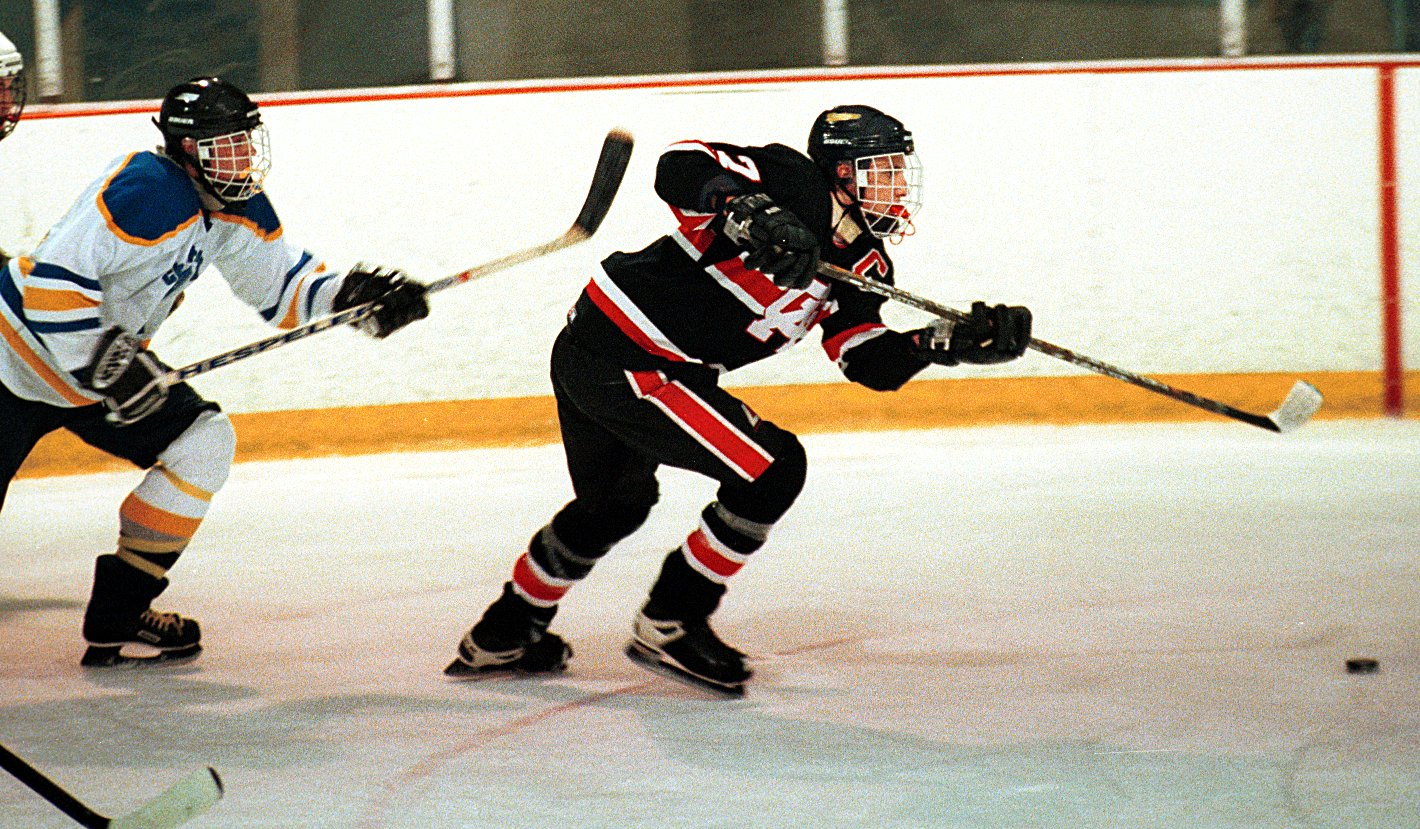
    Anthony Seravalli (right) was a critical part of GA’s program in the late 1990s.

    The underclassman would rarely — if ever — call out sick with an injury or illness. His teammates estimated that he’d be on the ice for about 70% of Germantown Academy’s games (a hefty workload for a young player). Seravalli was a physical presence, standing at 6-foot-2, with a big windup slap shot that was hard to miss.

    He carried no ego, despite his abilities. Anthony was inclusive with all of his teammates, including those who spent more time on the bench. In 1999, a few players got injured, and Seth Gershenson, a self-described “bench guy,” was asked to play some shifts.

    Before Gershenson took the ice, Seravalli pulled him aside to give a few words of encouragement.

    “He respected my effort and willingness to go out there and get beat up a little bit,” Gershenson said.

    Many local players also participated in club hockey. They saw it as a way to get noticed in eastern Pennsylvania, which was not exactly a hotbed for the sport. As a result, club teams often took precedence over high school teams.

    But this was not the case for Seravalli. GA always came first. Gershenson referred to him as a “fixture.”

    “He took being a captain really, really seriously,” Gershenson said, “and he took the success of GA really seriously. He took pride in our success much more than whatever his club team was doing.”

    Frank Seravalli grew up in Richboro, Bucks County, just a few minutes from the Face Off Circle, where Germantown Academy played at the time. By age 6, he was attending games and practices to watch Anthony and another cousin, Jason Jobba.

    The elementary school student would stand in the same spot, behind the net, with a fizzy Coke in hand, and his face pressed up close to the glass.

    “Watching your cousins who are a bit older, those are your heroes,” Seravalli said. “And for me, that’s part of where my love for the game came from.”

    The Seravallis were a big, tight-knit group. Almost everyone played hockey, and almost everyone went to work at the family construction business. This was the path Anthony took, but he also found time to give back to his alma mater.

    Frank Seravalli fondly remembers watching his older cousins play hockey when he was a child.

    In 2004, while Frank was playing at Holy Ghost Prep, Anthony returned to GA as an assistant coach. He had a knack for connecting with the players, most of whom were familiar with his high school career.

    One example was Brian O’Neill, a GA alum and former U.S. Olympian who is now playing pro hockey in Sweden.

    O’Neill was a talented skater, but he lacked defensive fundamentals. This was one of Anthony’s strengths, and when O’Neill was moved to defense in his sophomore year, he began to work with the assistant coach.

    Seravalli constantly reminded him to keep “stick on puck.” It was a message that O’Neill had heard for years but never fully understood. That changed when the coach stepped in.

    “It was easy for him to sell me on what he was trying to teach, because I had a lot of respect for him as a player and a person,” O’Neill said. “He didn’t really have to earn my trust. That was already there.”

    The goal was to put pressure on his opponent, in a way that didn’t involve hitting or cross-checking. The coach ran drills in which O’Neill would hold a puck in his right hand, and the stick in his left, to focus on keeping the stick down.

    “It’s amazing,” O’Neill said. “You would think, ‘OK, I can’t grip the stick with my other hand, so I pretty much am playing with one hand,’ and all you can do with that is pretty much stick on puck.

    “You would think you would be way worse at defending, but it’s actually the opposite, because all you’re focused on is stick on puck. And you’re not focused on hitting.”

    The concept finally clicked. O’Neill, who went on to play in the NHL, still uses it to this day.

    “[Anthony] was the guy that gave me the most advice on defense,” he said, “and that definitely made a huge impact on my career.”

    Germantown Academy players celebrate after a goal against Episcopal Academy at Bucks County Ice Sports Center.

    ‘Please help save our program’

    When he was young, Frank Seravalli would visit his family’s construction business in Northeast Philadelphia. He’d often notice workers perusing thick copies of the Daily News over lunch, and dreamed about having a byline someday.

    In 2009, that dream became a reality, when the paper hired Seravalli out of Columbia University’s journalism school to cover the Flyers. He stayed for six years, before leaving for the Canadian television network TSN, where he worked as a senior writer and NHL insider.

    In 2021, Seravalli started his own business, the Daily Faceoff, which was sold to a media group in Denmark in 2024. He’s now building a hockey network at the streaming service Victory+.

    A typical day includes a radio interview in the morning, a podcast taping at noon, and more radio and television hits at night. Interspersed are hours spent texting and calling sources throughout the league.

    It is a frenetic lifestyle, one that requires Seravalli to be glued to his phone. Finding time to coach a high school hockey program seemed impractical, if not impossible. But Seravalli was drawn to the idea. So, when he saw the job opening last year, he decided to apply.

    The school’s athletic director, Tim Ginter, could only laugh when he read the insider’s resumé. Among his references were two NHL general managers, an executive with the league, and a former NHL head coach.

    “He’s like, ‘Call [former Anaheim Ducks head coach] Dallas Eakins,’” said Ginter. “And I’m like, ‘You’ve got to be kidding me.’”

    Seravalli interviewed for the position in the spring. He talked to two of the team’s captains, J.P. McGill and Joey Lonergan, who explained that their program was in jeopardy.

    Coach Frank Seravalli talks with his team during the game against Episcopal Academy.

    GA had lost five players in 2025. School officials didn’t know how they were going to fill those spots. McGill and Lonergan had heard stories about the 1990s and 2000s teams, but returning to that level seemed like a long shot.

    The Patriots hadn’t played in a Flyers Cup since 2009. After years of shrinking rosters and coaching changes, the team was moved for 2009-10 from the Suburban High School Hockey League to the lesser Independence Hockey League, which isn’t eligible for Flyers Cup entry.

    “Essentially their plea was, ‘Please, help save our program,’” Seravalli said. “‘We’re not even sure we’re going to have a team next year.’

    “I couldn’t say no at that point. I knew I was hooked.”

    Seravalli met with Ginter shortly after. He made a succinct but powerful pitch.

    “If you don’t have interest in changing your program, and really tearing it down and rebuilding it, I’m not your guy,” the insider told him. “But if you are interested, I’m willing to make a five-to-10-year commitment to build this the right way.”

    He was hired in July. Seravalli rarely mentioned his full-time job, but it didn’t take long for the teenagers to figure it out. One day, while McGill was “doomscrolling” on the internet, he spotted his high school coach on Bleacher Report Open Ice.

    His reaction: “Oh [expletive].”

    “I texted some of my teammates,” McGill said. “I’m like, ‘He’s the Adam Schefter of the NHL!’”

    Germantown Academy’s players were not aware at first that their new coach was an NHL insider.

    Added junior defenseman Jack Stone: “He’s a reporter, so obviously he knows what he’s talking about.”

    The insider started to use his connections behind the scenes. He’d ask current and former NHL head coaches for advice, among them Eakins, who now works for Adler Mannheim in Germany.

    Eakins encouraged Seravalli to model the behavior he wanted to see in his team. He emphasized how important it was to show not only that he cared about the program, but about the players as people.

    He also shared some mistakes he’d made in his own coaching career, with the hope that Seravalli could learn from them.

    “Sometimes people [will] say, ‘OK, I’m a coach, now I have to take on a different persona,’” Eakins said. “And I told him, don’t do that. Don’t go in there and pretend to be [Florida Panthers head coach] Paul Maurice.

    “You’ve got to go in there and be Frank Seravalli. Because as soon as you step outside of that, you’re cooked. You can only pretend to take on this other persona for so long.”

    The tenor of the program changed almost immediately. Before Seravalli’s arrival, on-ice practices and team lifts were optional. Sometimes, as few as two or three players would show up. Now, they were mandatory, and everyone was expected to arrive on time.

    The teenagers learned this the hard way. In October, during preseason workouts, Seravalli organized morning weightlifting. Two players — who will remain anonymous — slowly waltzed into the gym, 15 minutes late.

    Coach Frank Seravalli brought a disciplined approach to the Germantown Academy hockey team.

    Seravalli didn’t say anything in the moment. But after the workout, he brought the team down to the field house to run sprints. The two late arrivals were put on the sideline, so they could watch their peers suffer on their behalf.

    “And I just said, ‘Look, we have a standard here,’” said Seravalli. “‘You have to make the commitment that everyone else is to show up on time and be ready.’

    “And I’ll tell you what: Since then, no one’s been late.”

    The players have embraced the newfound discipline. Stone said it’s something that they didn’t realize they needed, but they’re grateful to have. McGill agreed.

    “He’s way more intense than what we’ve had in the past,” McGill said. “Which, to some people, can be intimidating. But if you want to play at a high level, that can’t be intimidating.

    “There’s no getting away with anything around here anymore. Frank has done a great job of holding us accountable to what the new standard needs to be.”

    A different type of connection

    Not long after he was hired, Seravalli moved the team from the Hatfield Ice Arena to the Bucks County Ice Sports Center (formerly known as the Face Off Circle). The building looks just like it did when Anthony was in high school.

    The white-and-blue paint is faded, but intact, and so is the thermostat, set to the coldest possible temperature. Five days a week, Seravalli walks past the spot where he stood as a child, watching his cousins with wide eyes, as they swept across the ice.

    Anthony’s death was a shock to the entire family. He no longer roams the halls of the construction firm. He is no longer behind the bench at the Face Off Circle.
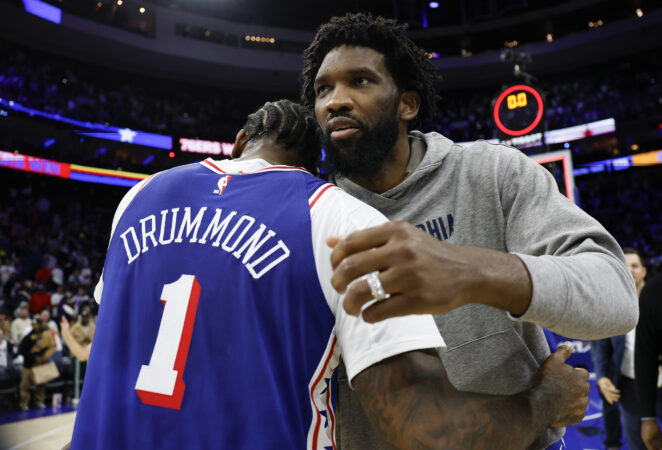
    But when Frank is skating around that rink, with GA students spinning past him, he feels connected to his late cousin.
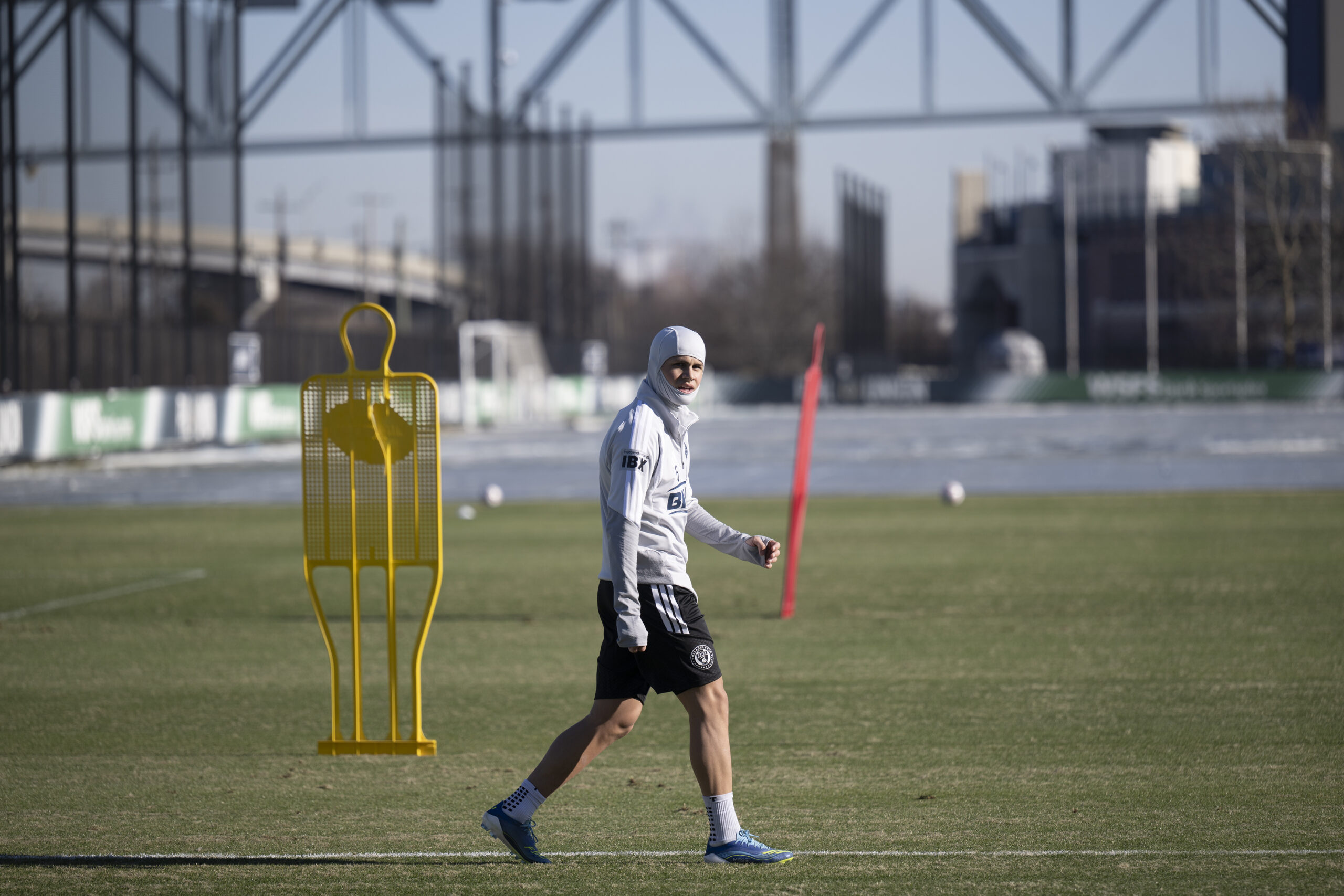
    “I can’t really explain how or why I ended up here,” he said. “I just know that it’s for a reason.”