ORCHARD PARK, N.Y. (AP) — Sean McDermott arrived in Buffalo in 2017, envisioning the day of looking out his office window and seeing a throng of fans celebrating a Super Bowl victory.
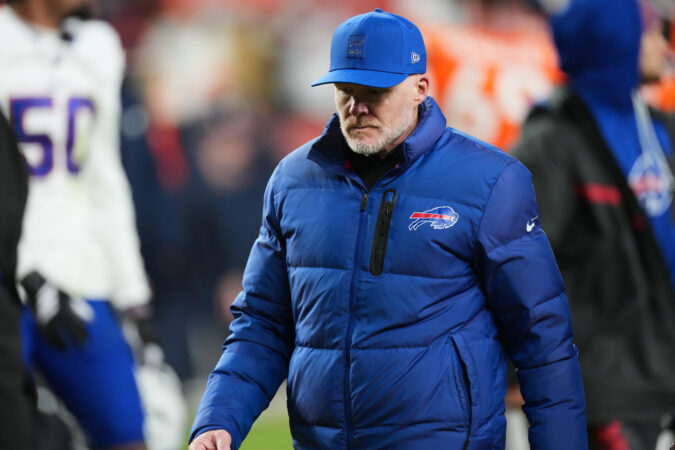
That possibility ended on Monday, when McDermott was abruptly fired by team owner Terry Pegula following a nine-year tenure in which the coach transformed the Bills into perennial contenders but fell short of reaching the Super Bowl.
The move came two days after a heart-wrenching 33-30 overtime loss at Denver in the divisional round of the playoffs.
“Sean helped change the mindset of this organization and was instrumental in the Bills becoming a perennial playoff team,” Pegula said. ”But I feel we are in need of a new structure within our leadership to give this organization the best opportunity to take our team to the next level.”
The new structure features general manager Brandon Beane being promoted to president of football operations. Beane will oversee his first coaching search since arriving in Buffalo five months after McDermott, who replaced Rex Ryan after two seasons in Buffalo.
Beane is expected to target an offensive-minded coach to spur an offense in which quarterback Josh Allen was too often asked to carry the burden.
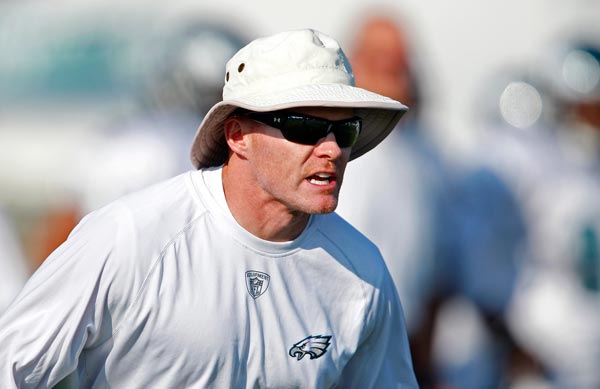
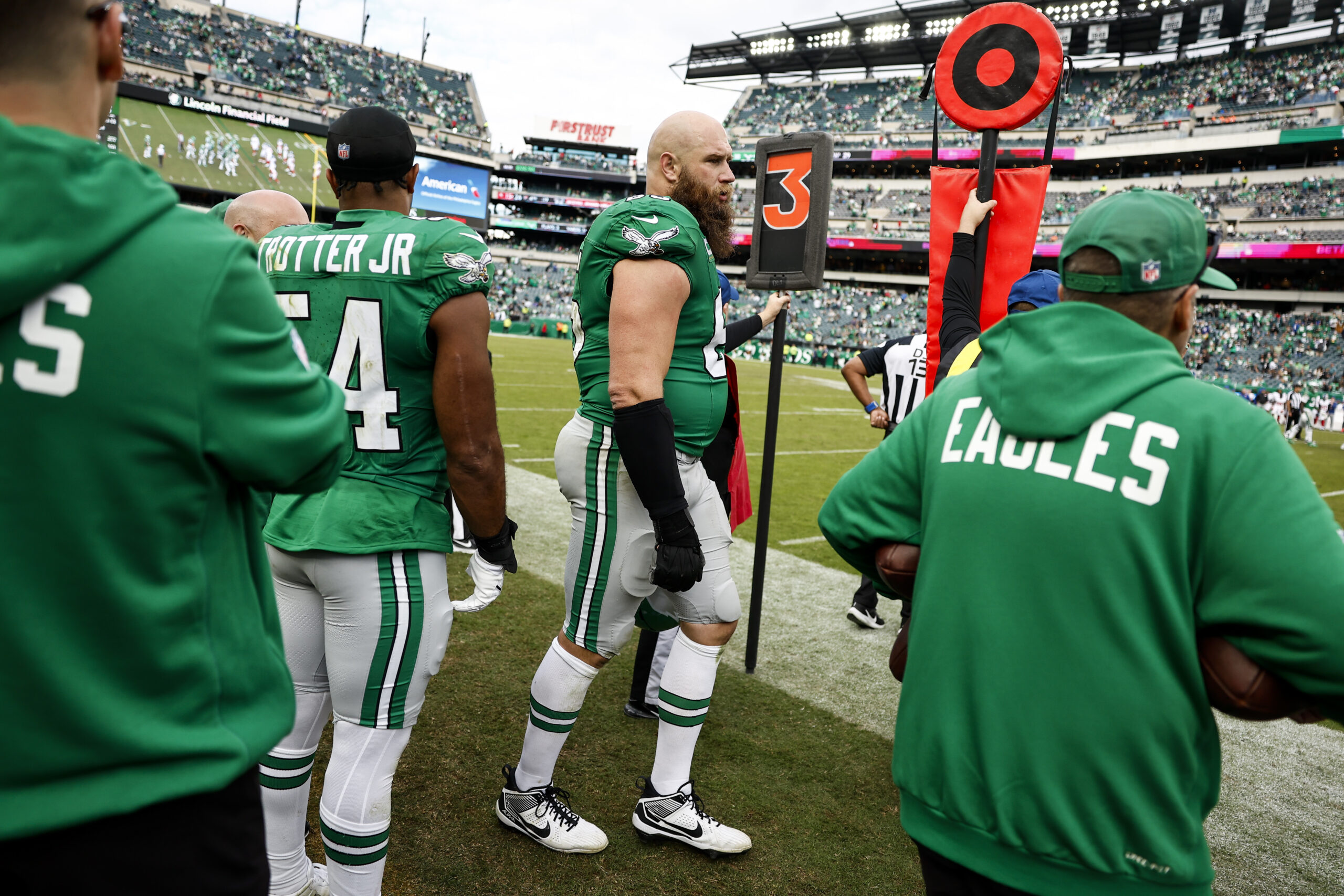
Sean McDermott was the Eagles’ defensive coordinator in 2009 and 2010.
Playoff shortcomings
Despite a seven-year playoff run and Allen setting many franchise passing and scoring records and earning AP NFL MVP honors last season, the Bills advanced no further than the AFC Championship Game, which they lost both times to Kansas City in the 2020 and ’24 seasons.
Buffalo became the league’s first team to win a playoff round in six consecutive years but not reach the Super Bowl.
McDermott was aware of the shortcomings, and addressed them in August.
“We take a lot of pride in what we’ve done here. And nobody has more internal drive and internal expectations than I do or we do. And very confident in who we are,” McDermott said. “There’s one thing that remains. We know what that is. But you can’t get there tomorrow.”
Tomorrow never came.
The Bills went 12-5 in the regular season and had their five-year run atop the AFC East end, finishing second behind the New England Patriots.
McDermott’s firing is the latest in what’s become a seismic shift in the NFL’s coaching ranks this offseason. He became the 10th head coach to lose his job, joining a respected group that includes Baltimore’s John Harbaugh and Pittsburgh’s Mike Tomlin. Harbaugh has since been hired by the New York Giants.
The 51-year-old McDermott finished with a 98-50 regular-season record and was 8-8 in eight postseason appearances, ranking second on the team in wins behind Hall of Fame coach Marv Levy (112-70, 11-8). McDermott’s eight playoff wins are the most by any NFL coach to not include a Super Bowl berth.
A wrestling and football star at North Penn and La Salle College High School, McDermott spent the first 12 years of his NFL coaching career with the Eagles in a variety of roles, including defensive coordinator in 2009 and 2010.
To his credit, in McDermott’s first season, Buffalo sneaked into the postseason on the final day to end a 17-year drought that stood as the longest active streak in North America’s four major professional leagues.
Allen arrived a year later as a first-round draft pick to raise the franchise’s national profile to among one of the NFL’s elite.
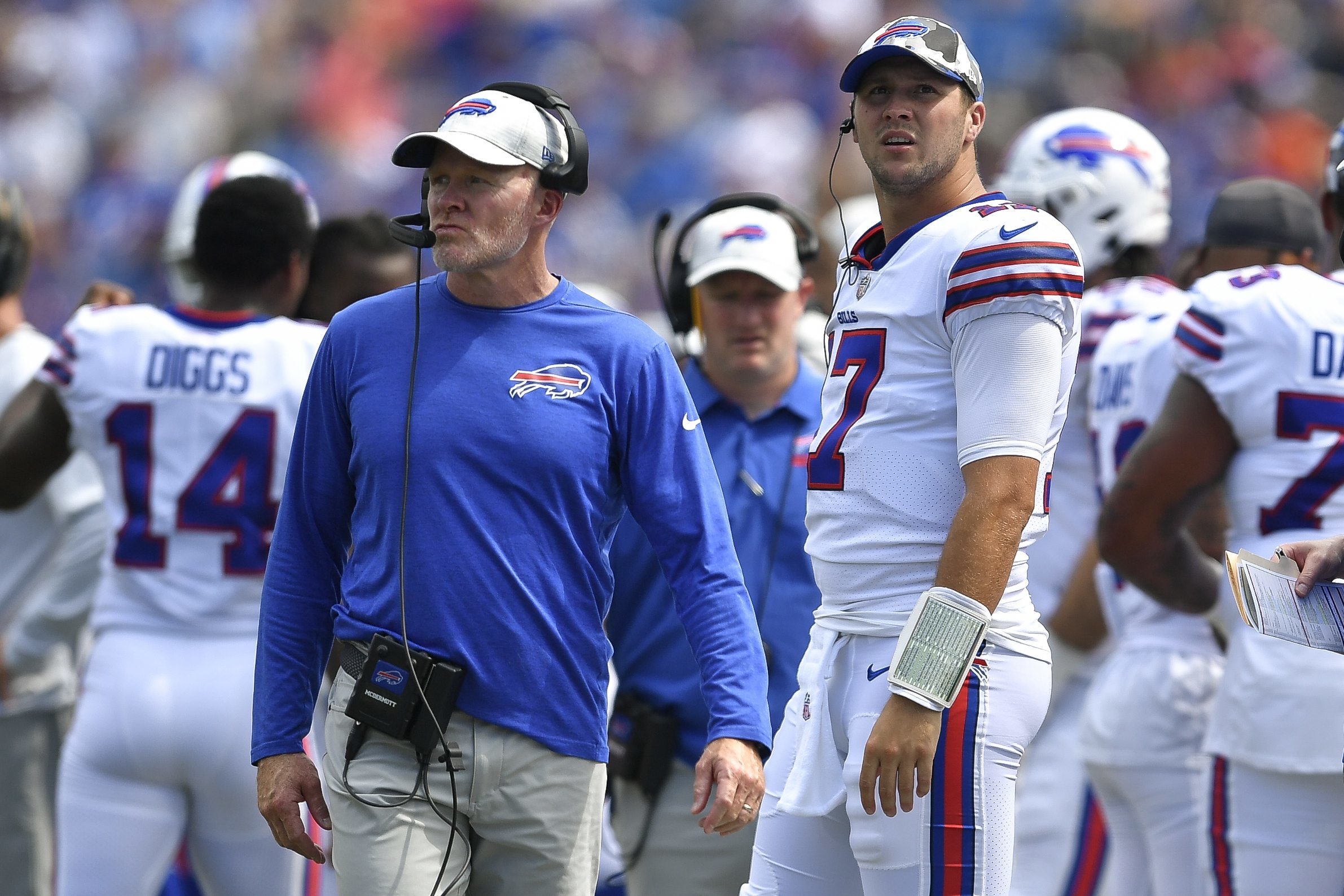
Sean McDermott, left, and quarterback Josh Allen fell short of reaching the Super Bowl in their eight seasons together.
There is increasing urgency in Buffalo to win with Allen turning 30 in May, and with the team now moving into a newly built $2.1 billion stadium across the street from its old home.
Allen was nearly inconsolable following the loss at Denver. Choking up several times and wiping tears from his eyes, Allen stood at the podium and took the blame following the loss at Denver in which he threw two interceptions and lost two fumbles.
“I feel like I let my teammates down tonight,” Allen said. “It’s been a long season. I hate how it ended, and that’s going to stick with me for a long time.”
McDermott rallied to Allen’s defense. He then let his emotions show in questioning the officials’ ruling on Allen’s second interception, which ended Buffalo’s lone possession in overtime.
Receiver Brandin Cooks came down with Allen’s deep pass, but had it wrestled out of his hands by Ja’Quan McMillian. Officials ruled McMillian had the ball before Cooks was down by contact, and Denver was awarded the turnover at its 20.
“I’m standing up for Buffalo, damn it. I’m standing up for us,” McDermott said, noting he was particularly dismayed by how little time the league took to review the play.
‘13 seconds’
Each of Buffalo’s past three playoff losses have been decided by three points. And three of McDermott’s playoff losses ended in overtime.
That includes a 42-36 loss to Kansas City in the 2021 divisional round that’s become dubbed “13 seconds” — the amount of time Patrick Mahomes had to complete two passes for 44 yards and set up Harrison Butker’s tying, 49-yard field goal on the final play of regulation.
McDermott, otherwise, led a team that won 10 or more regular-season games over seven straight seasons.
He also was credited with guiding the Bills through some difficult moments. The worst came January 2023, when safety Damar Hamlin nearly died after collapsing and needing to be resuscitated on the field during a game at Cincinnati.
Hamlin was one of several current and former players to express their support for McDermott following his firing. He posted a note on X referring to McDermott as “A True Leader of Men.”
Defensive tackle Jordan Phillips described the firing as “stupid honestly sickening.” Former center Eric Wood posted a note that read: “Sean is a great man and will be a great hire for another organization, and I hate we couldn’t get over the hump with him as HC in Buffalo.”
McDermott moved up the NFL ranks as a defensive specialist, and was hired by Buffalo following six seasons as Carolina’s coordinator, and where Beane worked in a front office role.
Coach/GM rift?
Together, McDermott and Beane provided the Bills with stability before fractures began showing this past season.
Allen’s 3,668 yards and 25 touchdowns passing were his fewest since 2019.
The defense struggled in part because of a transition to youth and a rash of injuries. Though Buffalo’s defense finished ranked seventh in the NFL this season, the unit had difficulty stopping the run.
It’s in the playoffs where the defense was criticized for collapsing too often. Buffalo allowed 30 or more points in four of its playoff losses.
If there’s anyone who understands the position Broncos fans are in right now, it’s the Eagles.
So, naturally, Nick Foles offered a few words of encouragement to Broncos fans on Sunday, after Denver learned it had lost starting quarterback Bo Nix for the rest of the season with a broken ankle he suffered in the closing moments of Saturday’s win over Buffalo.
“Note for the Broncos and their fans: I know it has been an emotional 24 hours. I feel for Bo and the team, and I’m sending prayers for a strong recovery,” Foles wrote on X. “A positive note going into the game vs. the Patriots is that they struggle against backup QBs in championship-type games.”
Note for the Broncos and their fans: I know it has been an emotional 24 hours. I feel for Bo and the team, and I'm sending prayers for a strong recovery.
A positive note going into the game versus the Patriots is that they struggle against backup QBs in championship-type games.
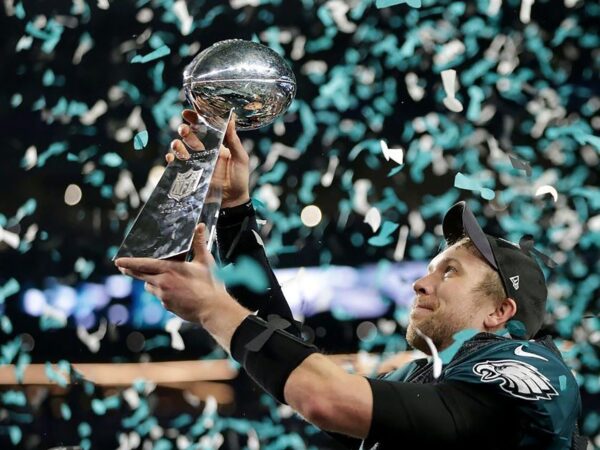
Foles, of course, famously took over for Carson Wentz in 2017, after Wentz suffered a torn ACL in a Week 14 win over the Rams. Foles led the Eagles all the way to Super Bowl LII against the Patriots, and threw for 373 yards and three touchdowns, plus his one receiving touchdown — the Philly Special. Foles was named Super Bowl MVP.
Nix finished the 33-30 win over Buffalo, but coach Sean Payton revealed after the game that he would miss the rest of the Broncos’ playoff run. Jarrett Stidham is expected to replace Nix for the AFC championship game against Drake Maye and the Patriots, which will be played in Denver.
Broncos fans can only hope that Stidham puts up anywhere near the caliber of performance Foles turned in. Stidham has been a backup for five seasons, including two in New England, appearing in 20 career games. The AFC championship game will be his fourth career start.
Thousands of college football coaches have paid their dues through the years, so it’s good to see a lifer like Curt Cignetti reach the top rung in his sport.
Cignetti’s unbeaten Indiana Hoosiers will play Miami tonight for the College Football Playoff championship (7:30, ESPN), and for the 64-year-old coach it is the culmination of quite a climb.
He was the head coach at Indiana University of Pennsylvania, Elon, and James Madison, among many other stops in his career. He also put in his time on North Broad Street as quarterbacks coach for Temple from 1989-92. Matt Breen tells the story of Cignetti’s time on Jerry Berndt’s staff, when the young coach learned by watching a master in another sport: Basketball Hall of Fame coach John Chaney.
Speaking of someone paying his dues, linebacker Mohamed Toure certainly has done that with the Miami Hurricanes. A native of Pleasantville, Atlantic County, Toure is in his seventh season of college football after ACL injuries cost him two seasons at Rutgers.
“It means a lot to the community,” says Chris Sacco, who was Toure’s head coach at Pleasantville. “I know it means a lot to the younger kids to be able to look at the school and say there’s somebody playing on Monday night for the national championship that went here, and recently.”
Beyond the local connections tonight, there is a reason for Eagles fans to tune in. Several Hoosiers and Hurricanes could be draft candidates for the Birds, and Devin Jackson identifies seven players who could fit the bill.
Sports Daily is taking a break to observe Martin Luther King Jr. Day. There will be no newsletter on Tuesday. We’ll return to your inbox on Wednesday morning.
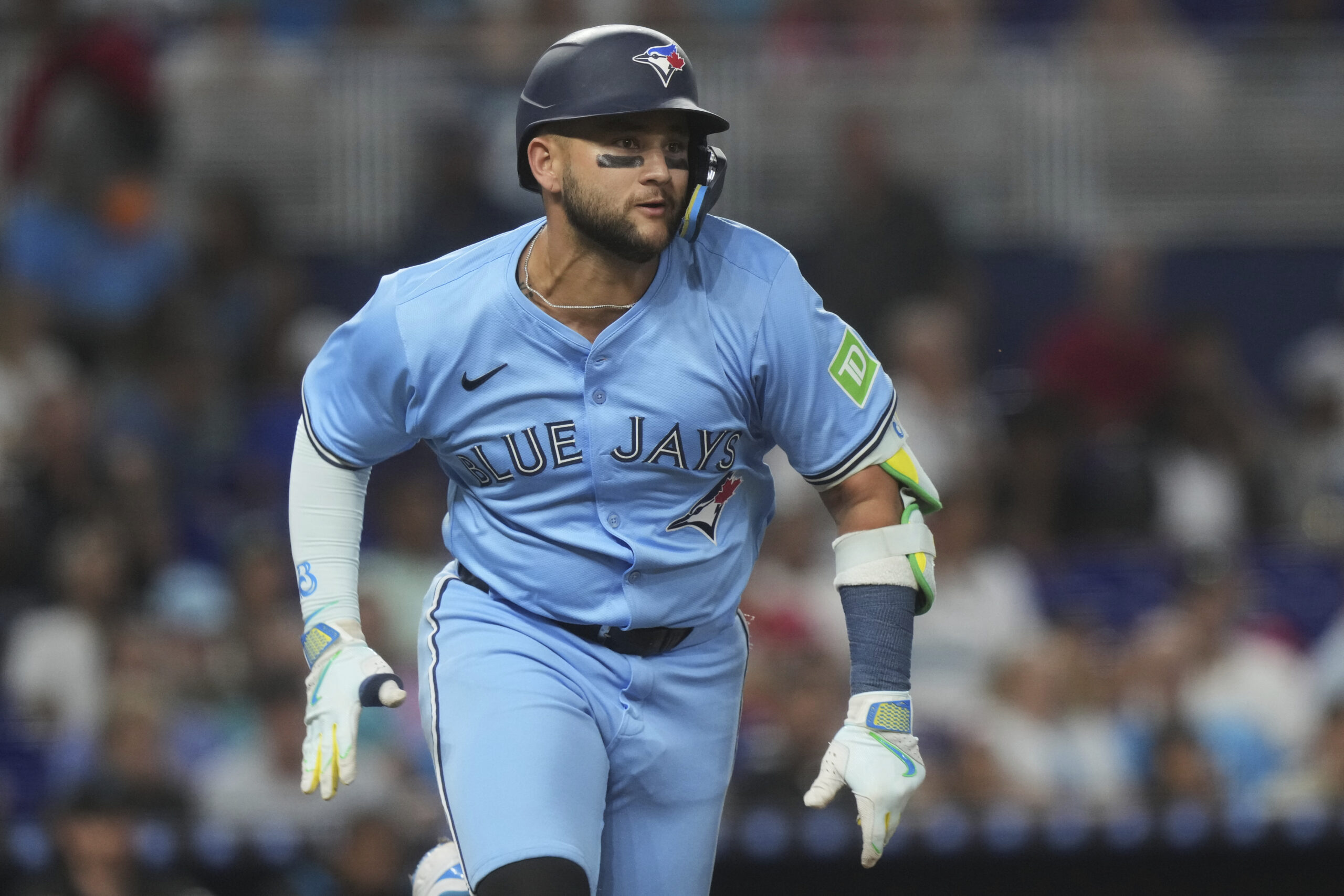
Bo Bichette reportedly has two opt-outs in his three-year deal with the Mets.
Bo Bichette is headed to the Mets, much to the chagrin of Phillies fans. The reports emerging in the immediate aftermath of New York’s agreement with the former Blue Jays star shortstop on a three-year, $126 million contract suggest the Phillies thought they were on the verge of signing Bichette to a seven-year, $200 million deal. But that’s more a misreading of the state of play than it is reality, David Murphy writes.
If the Mets were willing to offer Bichette these kinds of terms, and Bichette was intent on taking the best deal for his personal finances, the Phillies weren’t going to sign him. Both of those outcomes were more likely to be the case than Bichette accepting a long-term deal that the Phillies felt made fiscal sense.
Sixers guard Tyrese Maxey believes his team could be better at producing offense late in games.
With their second straight loss to the Cleveland Cavaliers on Friday, the Sixers dropped from fifth to seventh in the Eastern Conference standings. They blew an 11-point fourth-quarter lead in the 117-115 defeat at home.
They have played 25 “clutch” games — contests with the scoring margin at five points or less with five minutes remaining — and they have lost 12 of them, including three in a row.
“We’ve got to close games,” says Joel Embiid, “and we’ve had a lot of games that [we] probably wish we could take it back.”
Rodrigo Ābols was averaging 10 minutes, 43 seconds a night, centering the fourth line and killing penalties before the injury.
The Flyers will try to end a six-game losing streak tonight when they take on the Knights in Las Vegas (8, NBCSP+), but they’ll have to do it without Rodrigo Ābols. The team placed the fourth-line center on injured reserve after he was hurt Saturday in the loss to the Rangers. Ābols appeared to get his right toe stuck in the ice along the boards in the offensive zone, and his ankle buckled.
The Flyers called up Lane Pederson from the Phantoms to take his place.
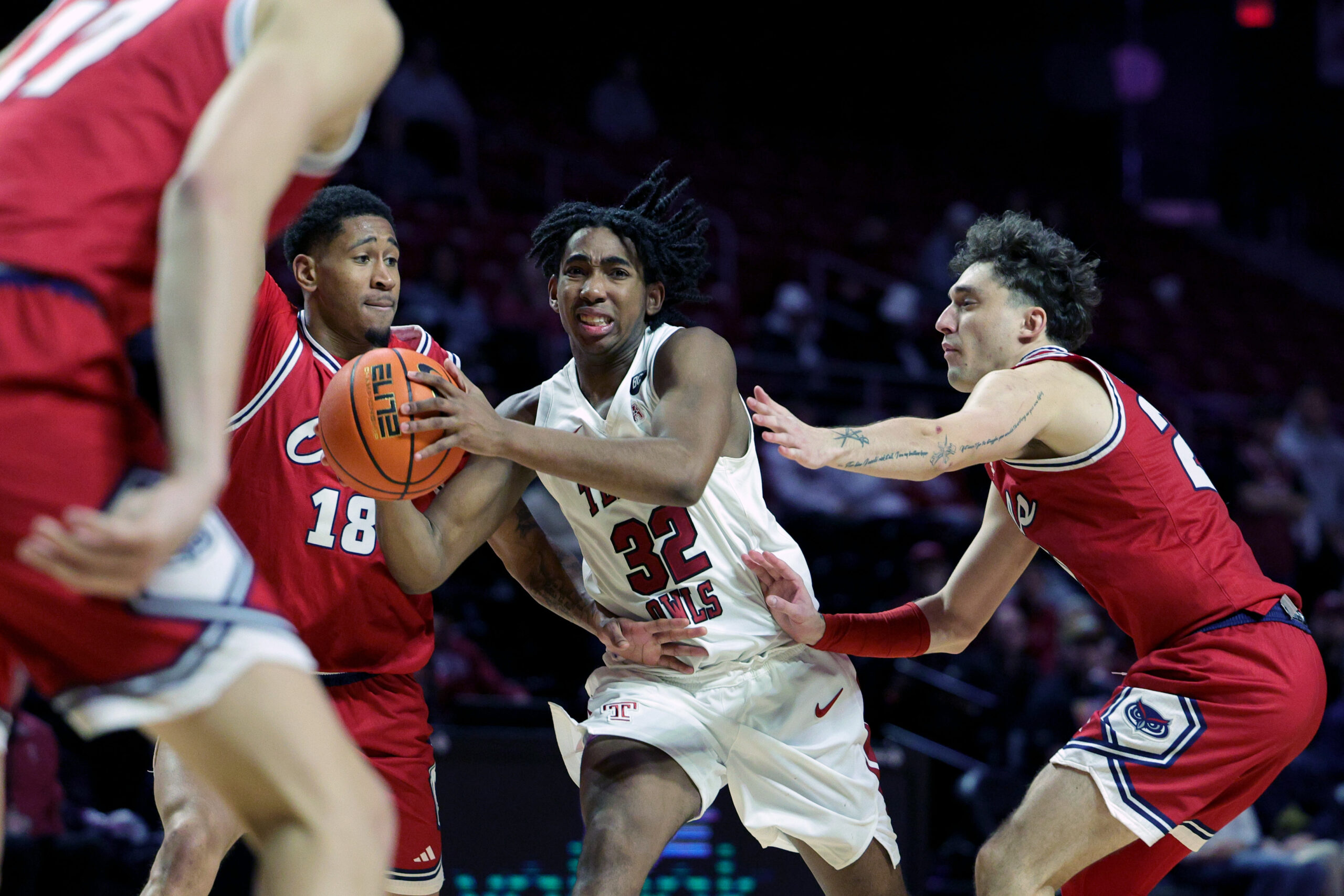
Temple’s Jordan Mason looks to pass as he is covered by Florida Atlantic’s Kanaan Carlyle (left) and Niccolo Moretti.
Temple ran out of gas at the Liacouras Center on Sunday, getting outscored by 10 points in the last 10 minutes of a 79-73 loss to Florida Atlantic, the first-place team in the American Conference.
An aerial view of Veterans Stadium during the last football game played there in 2003.
Jan. 19, 2003: In the final Eagles game at Veterans Stadium, the Tampa Bay Buccaneers spoiled the party with a 27-10 victory in the NFC championship game. Ronde Barber intercepted a Donovan McNabb pass and returned it 92 yards for a touchdown.
We compiled today’s newsletter using reporting from Matt Breen, Devin Jackson, Owen Hewitt, David Murphy, Gina Mizell, Jackie Spiegel, Jeff Neiburg, Colin Schofield, Katie Lewis, Ryan Mack, Sean McKeown, and Conor Smith.
By submitting your written, visual, and/or audio contributions, you agree to The Inquirer’s Terms of Use, including the grant of rights in Section 10.
Thanks for reading Sports Daily. Enjoy the holiday and we’ll return to your inbox on Wednesday. — Jim
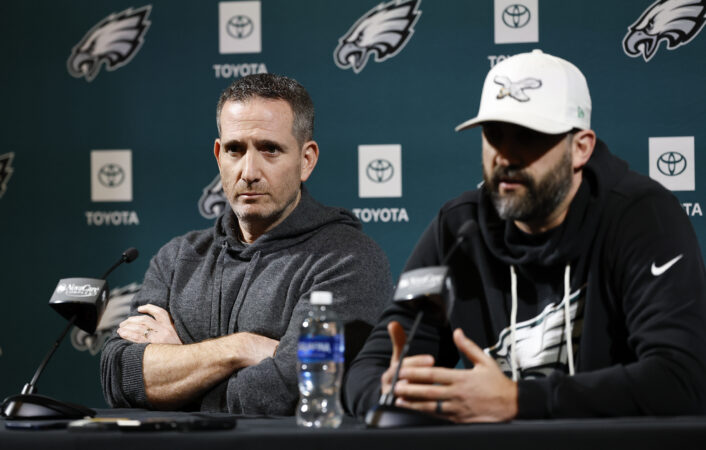
The long arc of history is a lot shorter in the modern NFL. Howie Roseman offered a nod to it last week. The tone of his voice was quite grave.
“There’s natural transition in what we do,” the Eagles’ general manager said. “I’m not making an excuse or anything, but there’s a national transition in that in terms of what you’re paying your guys, which side of the ball you’re paying guys who are coming up.”
Look back at the historically great teams and you will see a familiar pattern.
The early-’90s Cowboys won three Super Bowls in four years and have not been back to a conference championship since.
The turn-of-the-century Rams went to two Super Bowls in three years and then had one winning season in the next 15.
The Patriots won three Super Bowls in four years in the early 2000s and then did not win another over the next decade. Then they won three in five years.
And let’s not forget about the Andy Reid Era Eagles: four straight conference championship appearances with one Super Bowl Bowl appearance followed by one conference championship appearance in the next eight seasons.
More often than not, you look back and realize that the best version of a team was the one that took everybody by surprise. The Chiefs’ two biggest point differentials in the Andy Reid Era came in Patrick Mahomes’ first two seasons as a starter. The Packers outscored opponents by a combined 452 points in Aaron Rodgers’ first four seasons as a starter and then outscored them by 428 in his next eight.
Tackle Lane Johnson broke down this season and the Eagles offense suffered.
The phenomenon extends beyond the NFL. You don’t need to look far. The Phillies in 2008 and 2022. The Sixers in 2018-19. The Flyers in 1996-97 and 2009-10.
By the time you realize the good times are here again, they are already ending.
You might reject that thought as depressing, even nihilistic. But it is the reality of the Eagles’ situation. Their regression on the offensive side of the football was more due to the natural order of things than it was to the unique and aggressive incompetence of the head coach and his handpicked play-caller. They were a team with disproportionate reliance on the overwhelming talent of its offensive line. That talent advantage wasn’t as great this season.
Mekhi Becton left for more money. Lane Johnson missed the end of the season. Landon Dickerson and Cam Jurgens weren’t as healthy as last season. Even if the line was 85% of what it was, that would still jibe with the Eagles overall being 85% of what they were, especially if it was compounded by A.J. Brown and Saquon Barkley not being as uniquely dominant as they were last season.
Attrition is a natural part of the NFL, both at the individual level and the roster level. Those two things go hand-in-hand, obviously. One can argue that the job of a head coach and play-caller is to adapt to the realities on the ground. That’s more than fair. It is also a difficult thing to do midseason. The Eagles are right to be doing it now in their search for a play-caller to replace Kevin Patullo. But nobody should be surprised if they fail to find one.
Over the next few weeks, we’ll learn a lot about the rest of the NFL’s diagnosis of the Eagles. Former Dolphins head coach Mike McDaniel is a unique enough genius to be interviewing teams rather than teams interviewing him. A recent report said that he would rather accept a great offensive coordinator position than another head coaching job doomed to fail. A year ago, you would have counted the Eagles as such a job. Maybe they still are. But are they really a better job than the Lions?
McDaniel reportedly has spoken with Detroit, which previously made Ben Johnson a star. Jahmyr Gibbs is a running back with the same skill set that McDaniel had in Miami with De’Von Achane. Amon-Ra St. Brown, Jameson Williams and Sam LaPorta can make their case over Brown, DeVonta Smith, and whoever plays tight end for the Eagles next season. The Lions’ offensive line has consistently ranked near the top of the league, albeit behind the Eagles.
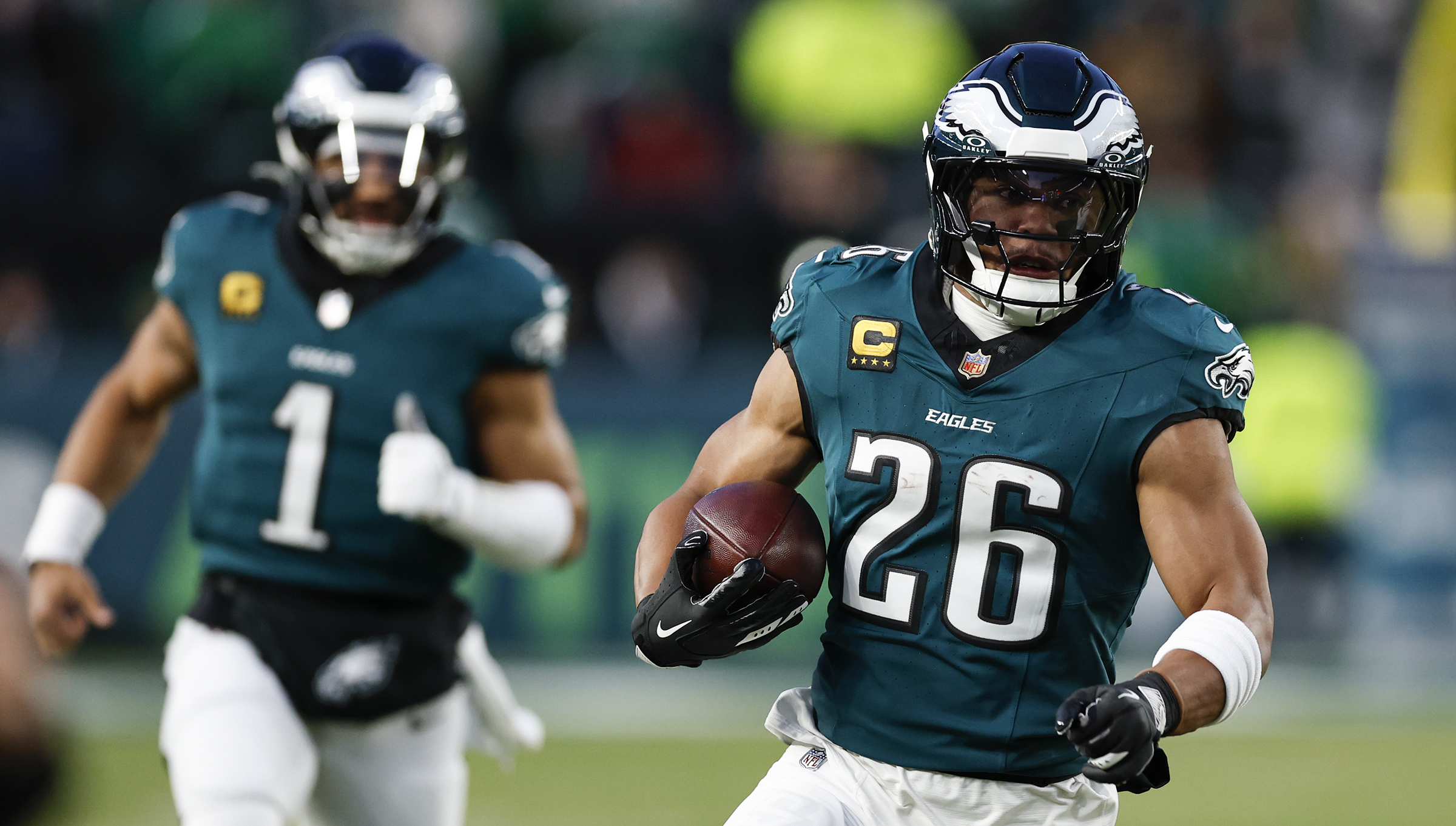
Eagles running back Saquon Barkley had a subpar season.
Brian Daboll and Zac Robinson are two other recognizable free agents. At the same time, the Chargers and Ravens are two other recognizable jobs. The Eagles aren’t just looking for the right guy … the right guy is looking for the right team.
All of that is to say that the real challenge of this Eagles offseason is figuring out the talent situation. Roseman has done a marvelous job of it on the defensive side of the ball, reinventing that unit in barely two offseasons. This season, the Eagles had seven players from their last three draft classes log at least 700 defensive snaps. No other team had more than five.
Building the offensive line is always the Eagles’ top priority. But they could sure use some reinforcements at the skill positions. Another wide receiver, a tight end, a change-of-pace running back with pass-catching skills, all would have helped immensely this season. That’s true even before we start to contemplate whether to trade Brown.
“I think we’ve drafted 15 guys since Nick [Sirianni] has been here in the first and second day, and 14 of them have been long-term starters. We’ve got to keep hitting like that. I know that’s hard, but we’ve got to keep doing it,” Roseman said. “That means we have to have a good process. We’ve got to understand the people that we’re bringing into the building. We’ve got to understand the roles and the vision that we have for them when they’re playing. If we do that, good things will happen. We’ll be able to keep the players that we need to keep under long-term contracts and have an influx of young players that are really good that can play at a high level.”
It’s no coincidence that the NFL’s championship windows are the same as the four-to-five-year windows of rookie contracts. The Eagles have already begun to extend theirs with their draft success on defense. It’s still the place where they are most likely to fix the offense.
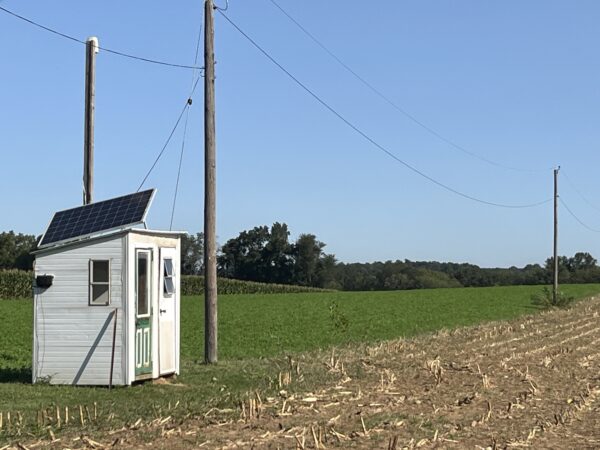
From his machine shop among corn and bean fields on Kurtz Road near Ephrata, Lancaster County, Allen Hoover sells 1970s-style word-processing computers, upgraded to internet speeds, at the rate of more than one a day.
For some, Hoover’s machine fits fast-changing business with timeless faith; others fear the computers have fed into a wave of covert internet use that threatens a formal split among his Amish customers.
Since 2004 the machines, originally priced at $800 each, have been adopted by dozens of Plain religious communities to run local systems, with names like Classic, Chore Boy, and Steward, to accommodate and monitor members’ text notes and business records, without video, corporate media networks, or Apple and Google apps.
A senior member of his Old Order Mennonite congregation and coauthor of a book on Plain responses to family abuse, Hoover agreed to talk to The Inquirer about Mennonite and Amish ideas and tools. The conversation has been edited for brevity and clarity.
What are the tensions around computers in Plain communities?
Our real goal is to live a separate life and not to be so influenced by popular society around us. If morality is decaying in the world, it becomes even more important for us to become a separate people. Well, that’s hard to do.
Everything is tied together. Especially with the internet, and, smartphones. It gets harder and harder for us to be in business and to make a living without some way of being connected.
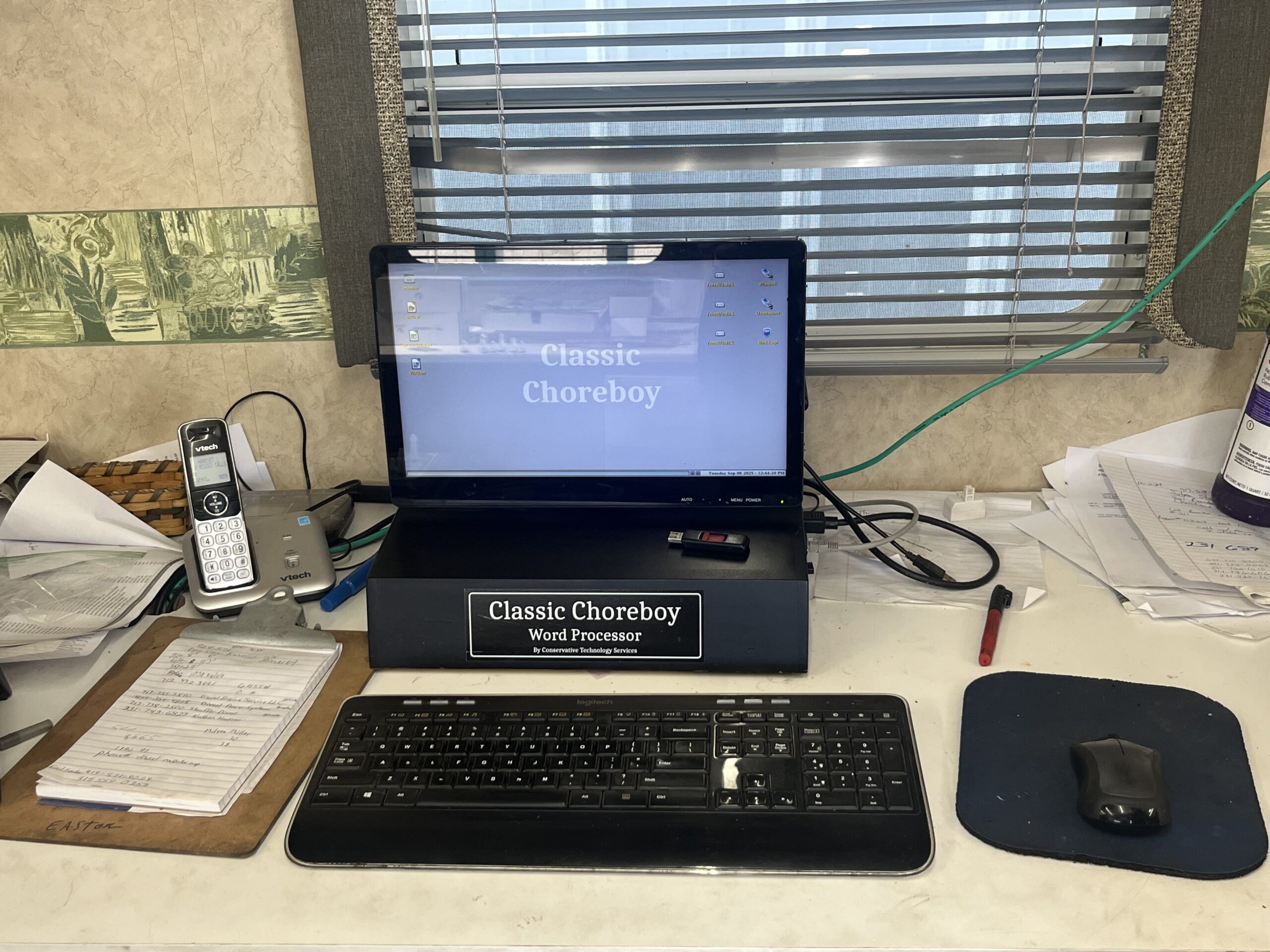
One of Allen Hoover’s Chore Boy word-processor machines at his workshop in Ephrata, Lancaster County, September 2025.
How are your machines different from normal computers?
For our Plain people, we wanted it to be separate from the world. So it should have no connectivity. Not to the internet, email, or even fax. Just a stand-alone unit. And then of course no amusements of the world, no games, music, nothing like that. Just a business tool.
Couldn’t you do that on a computer?
Well, if it’s in my home, my children will find ways of doing things with it that I have no idea of. And also, if you look at 50 different personal computers in peoples’ homes, you will find 50 different systems. We wanted one like the old word processors, where every unit was exactly alike. No additional programs, no apps that you can put on to listen to music or whatever.
The programs included are a word and a spreadsheet program. And a drawing program, and a computer-aided design program. We developed our own comprehensive business accounting system. With inventory control, invoicing, all that.
We looked at the on-the-shelf programs. They are almost all internet-connected. There are a few that stand alone. But they were so clunky, made for a specific purpose, that they just didn’t fit the bill.
How did you adapt the machines for Plain needs?
We had a few meetings with interested businesspeople, to see what the need was. Probably made a mistake, we never asked the church for permission.
And it took off. In the beginning, it was the only thing out there for the Plain people. Then other people started. This is about the only one that is still going — because of our stance of not making changes. We do upgrade it. It has much more power now. But we wanted to stay away from Windows or Mac.
We ended up using Linux as the operating system. We used Open Office, we now use LibreOffice, another free program, more powerful, more useful. The computer-aided design program is called FreeCAD. There is also something similar to MapQuest, that helps you with planning and mapping trips.
How many machines have you sold?
I’m guessing 400 a year. So if we have been doing this for 20 years, there are a few thousand out there.
How did the community react?
It was mixed. In the beginning, it was a huge whoop of joy: Here is something we can use. Once a year there is an expo in Lancaster County, focused on the Plain people and Plain businesses. I got a booth and it was the star of the expo. People were lined up because it was the new thing.
Some Plain communities reacted by banning them because it was coming too close to the computer world. And I understand that perfectly. No hard feelings about that.
What happened more often was that communities started with it, but then became dissatisfied that we didn’t allow them to put more programs on. So they made their own and eventually drifted into the internet world.
It has not made me a popular person. For the ones that feel we should not have gotten into computers at all, I am the bad boy. For the ones that feel we should have allowed more connections, I am the bad boy.
We really don’t want our people working in General Motors, big factories, all day long. We fear that will influence us too much. And so, we want our own little businesses like mine, Allen Repair Service, we rebuild, repair, and resell woodworking machinery.
And it’s getting harder [without internet]. This was a tool to allow us to stay in those businesses.
What about smartphones?
In Lancaster County, the Amish found loopholes, ways to have their cellphones, smartphones.
The leadership are working through that right now, I’m pretty sure there is going to be a big split.
The Delaware River, the Chesapeake Bay, and other flagship waterbodies make news headlines with stories of the long and costly struggles to restore their fish and other wildlife.
But while these high-profile efforts grind on, the real story of the Delaware River’s health hits closer to home.
Beneath the ice on small streams across Pennsylvania, thousands of species of fish, insects, snails, and mussels are waiting quiescently for spring, just as fishers, kayakers, and water lovers wait out the cold winter months, eager for spring.
Poor report card
Alarmingly, Pennsylvania’s recent river report card indicates that some of those streams are likely to wake up in the spring more degraded than last year. The tally of impaired streams and rivers in Pennsylvania grew by 852 miles since 2024 (longer than a round-trip drive from Philadelphia to Erie), while only 154 miles of streams (shorter than a round trip to Lancaster) were removed from that list.
Overall, our rivers are worse off than they were two years ago, and 37% of the state’s waterways remain impaired. If there were a hospital for polluted streams, five patients would have entered for every one patient discharged. And the larger the river and the broader the watershed, the bigger the challenge of bringing back fish and wildlife.
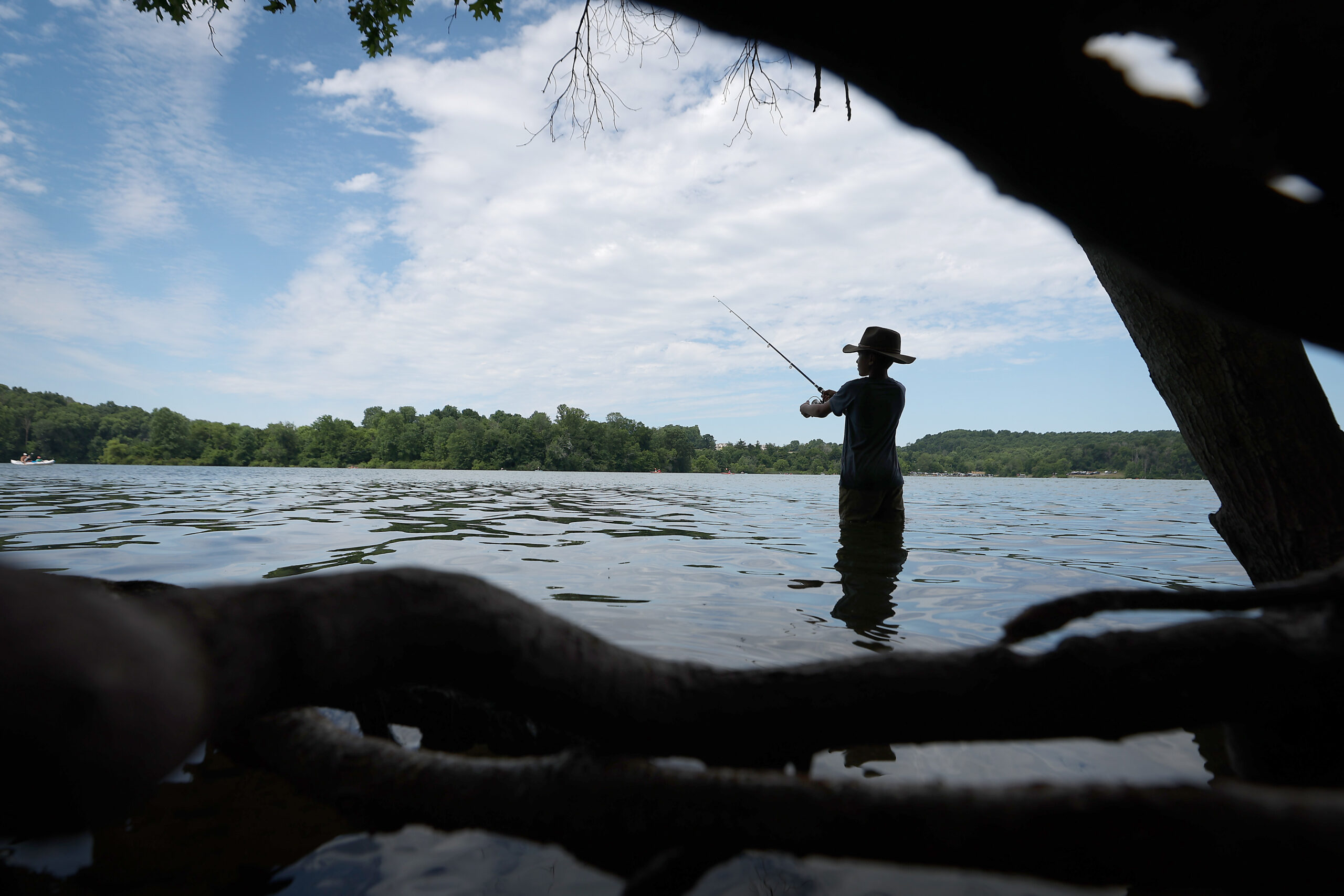
A boy fishes at Marsh Creek State Park in Chester County. Restoring Pennsylvania’s rivers and streams benefits fish and wildlife.
While the report isn’t uplifting, we are fortunate that the state Department of Environmental Protection produces a thorough and transparent analysis of the facts on where and why improvement and degradation have occurred. The report shows us that the key to faster success is focusing efforts around small headwater streams.
These streams, the ones our roads carry us over every day in our communities and that often go unnoticed, are where we find a trickle of hope: Watershed improvements lead to cleaner streams and healthier fish and wildlife populations. They are also the streams that can bring communities together to protect open space, strengthen zoning laws, and form partnerships to target local sources of pollution.
Restoring health
Usually, the science shows us that streams don’t need invasive repairs with backhoes and chain saws akin to a surgeon’s curette and bone saw; they need, like many people making New Year’s resolutions, to go on a diet — for streams, one that’s lower in pollution and higher in leaf litter.
Practically, this means aggressive reduction and treatment of stormwater runoff, eliminating sewer overflows, upgrading sewage treatment, preserving and planting forests, restoring the healthy agricultural soils that benefit farmers, and reducing the use of chemicals on our own properties.
We expect 2026 will bring news of the important progress being made to the Delaware River, as the Philadelphia Water Department will soon be required to meet new water quality standards. Cheer for the Delaware and other superstar rivers, but remember that progress starts at the source of pollution.
Therefore, in 2026, we hope to see a new focus on clustering pollution reductions and protections in smaller watersheds, where measurable improvements in fish and wildlife communities are faster, cheaper, and easier to achieve. That will require more DEP staff to make those measurements, more engaged citizens to champion local actions, and more science to guide the rehabilitation of our streams and watersheds.
Just as evidence-based medicine improves health outcomes and lowers costs, evidence-based restoration improves biological outcomes for our streams and rivers.
The list of potential pollutants is long, so research is needed, now more than ever, on how to restore fish and wildlife at the lowest cost.
Scott Ensign is the assistant director and a research scientist at Stroud Water Research Center. David Arscott is the executive director and a research scientist at the Stroud Center.
In the most-watched race for Congress in Philadelphia in more than a decade, State Rep. Chris Rabb has cast himself as the unabashed anti-establishment leftist. He’s refusing donations from corporations, calls the war in Gaza a genocide, and wants to abolish U.S. Immigration and Customs Enforcement.
But despite announcing his campaign more than six months ago, he had yet to amass support from much of the city’s progressive flank, leading observers to wonder if he would be able to tap into the movement’s network of donors and volunteers.
It appears they’re coming around.
Rabb this week has won an endorsement from One PA, a progressive political group that’s aligned with labor and most of the city’s left-leaning elected officials. That comes after the environmental justice group Sunrise Movement said it, too, would back Rabb.
“This is a moment when democracy is at stake,” said Steve Paul, One PA’s executive director. “If there was any moment for the style of leadership that Chris [Rabb] brings to the table, it’s this moment.”
Rabb said he’s “energized” by the endorsement and what it means for the campaign.
“Our movement is growing every single day,” he said.
The questions now are whether some of the city’s most prominent progressive elected officials will lend their endorsements to Rabb, and if deep-pocketed national organizations will spend money to back him.
For example, Justice Democrats, a progressive political action committee, said it’s “very closely looking at this district.” And the Working Families Party, the labor-aligned third party that supports progressives across the nation, has endorsed candidates in four other congressional races with competitive primaries — but not yet in Philadelphia’s. The group previously spent millions to boost candidates in the region.
The primary election — the marquee race in deep-blue Philadelphia — isn’t until May. But some on the left say the movement should have already coalesced around Rabb.
“We will probably regret it in the end, because this is a seat we should win,” said one leader of a progressive organization in the city who requested anonymity to speak freely about the political dynamic.
Rabb is seen as something of a lone operator with his own political apparatus. He didn’t come up through the newer progressive organizations that have run their own candidates for office in the city. Rather, he won a seat in the state House for the first time a decade ago when he toppled an establishment-backed Democrat.
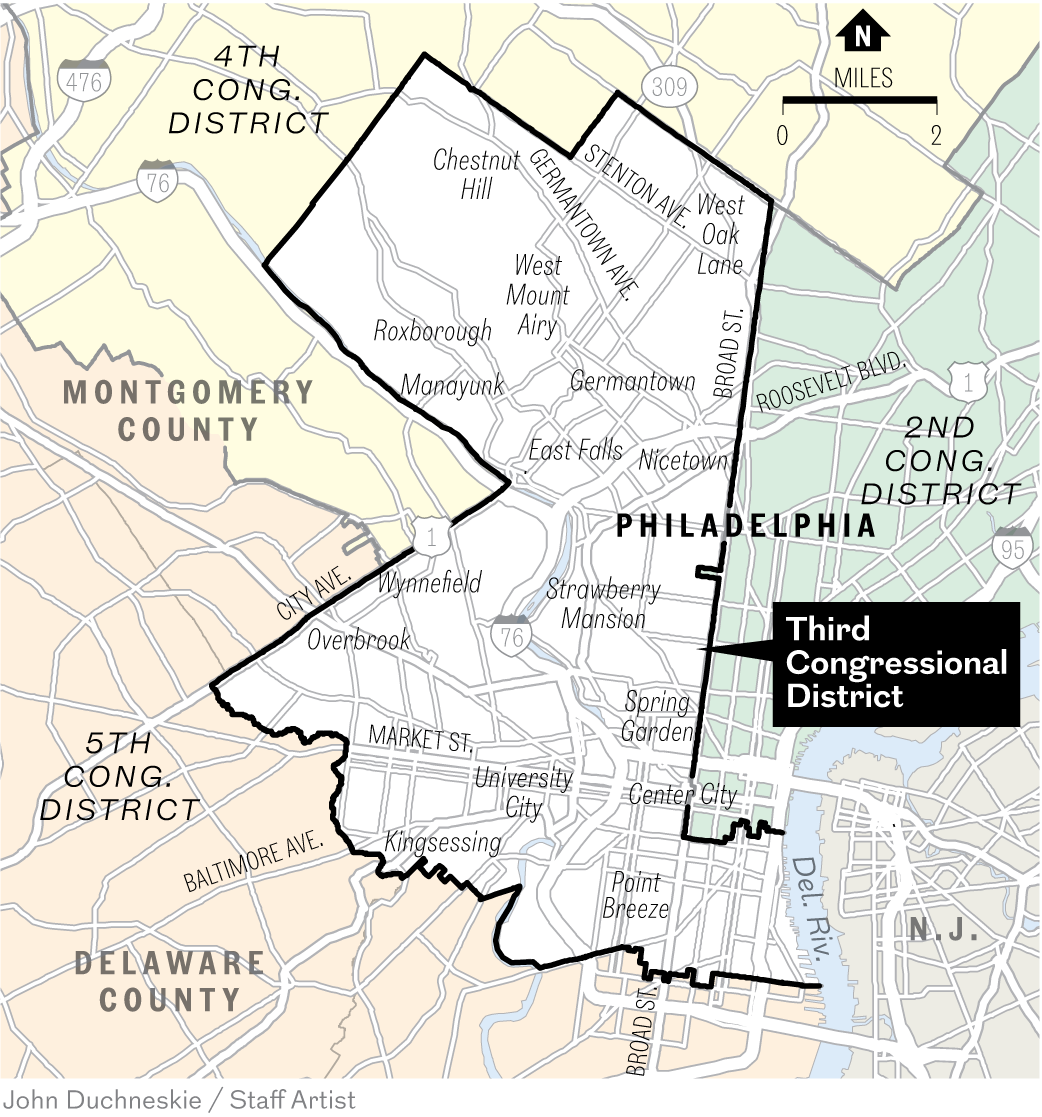
State Rep. Chris Rabb at a forum hosted by the 9th Ward Democratic Committee on Dec. 4, 2025. He is a Democratic candidate running to represent Philadelphia’s Third Congressional District.
Some of the city’s progressive leaders say they expect to back Rabb but that they were waiting to see how the field shaped up.
Last year, there were efforts to recruit other left-leaning candidates to run, including City Councilmember Kendra Brooks of the Working Families Party, and State Rep. Rick Krajewski, according to three sources with knowledge of the efforts who spoke on condition of anonymity to preserve relationships. Both decided against running.
Brooks — who emerged as a face of the Working Families Party six years ago after she became the first third-party candidate to win a seat on Council in 100 years — is likely to back whomever the organization endorses. The group is still in the midst of its endorsement process.
“We’re confident that we will land on a progressive who will fight for working people, not billionaire donors, big corporations, or special interests,” WFP spokesperson Nick Gavio said.
Krajewski, who represents parts of West Philadelphia, has also not endorsed a candidate but he said he will. Rabb, according to Krajewski, has the qualities necessary to be a member of Congress during “a pivotal moment for our country.”
“The question is: Do we allow the fascists and the ruling class to double down on this insanity that they’re pushing? Or do we use this opportunity to agitate and say a different world is possible?” Krajewski said. “That’s what I want from my member of Congress. Chris [Rabb] has demonstrated that he’s clear about that.”
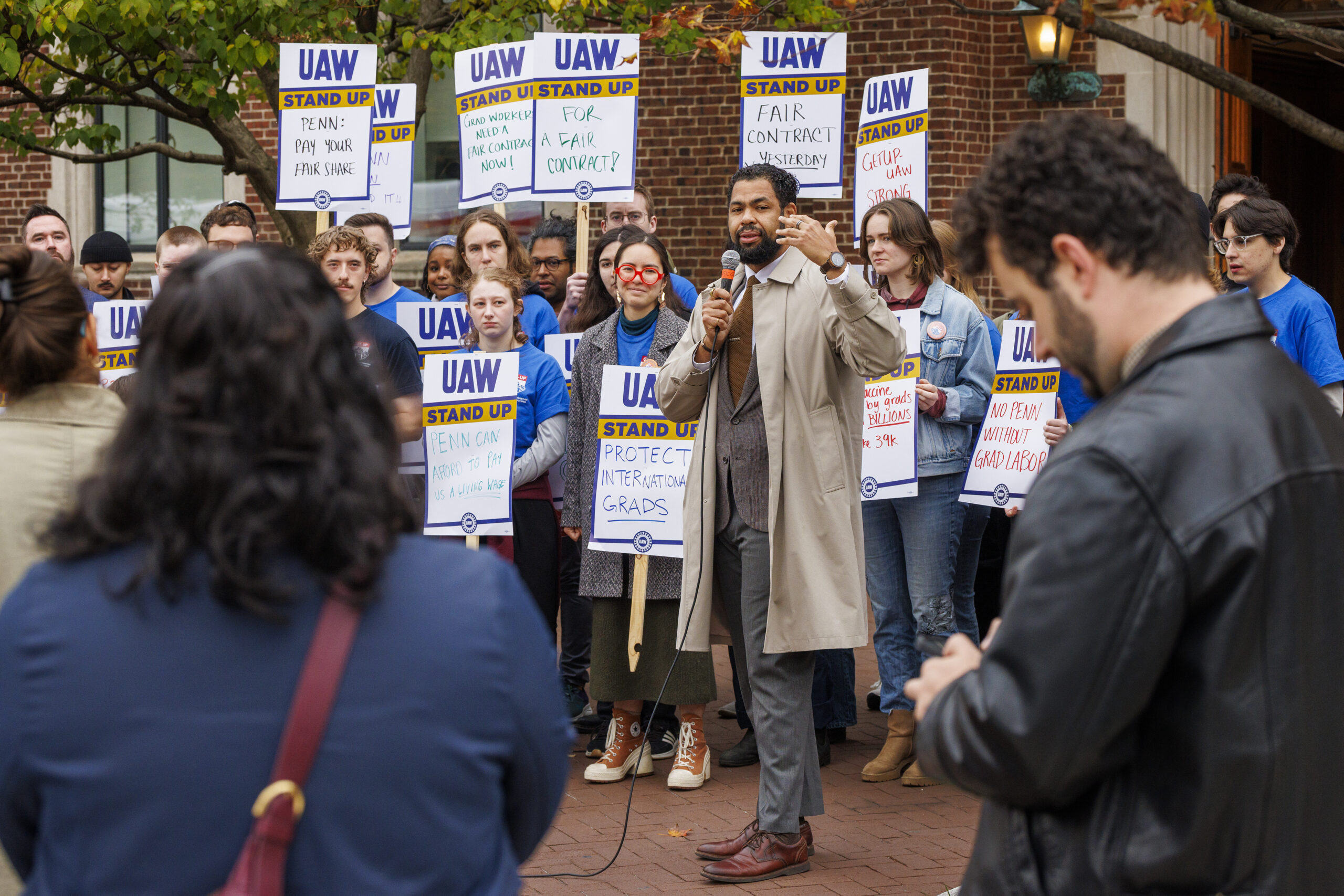
Pennsylvania State Rep. Rick Krajewski making statements at a news conference and rally by University of Pennsylvania graduate students. Grad students held the event to call for a strike vote against the university at corner of South 34th and Walnut Streets on Nov. 3, 2025.
Meanwhile, other candidates in the wide-open Democratic primary have tried to pick off progressive support.
State Sen. Sharif Street, the former chair of the state Democratic Party, is seen as the establishment’s pick for the seat. But he also has alliances with some of the city’s most progressive leaders.
That includes a decades-long relationship with Councilmember Rue Landau, who often votes with Council’s progressive bloc and is the first openly LGBTQ person ever elected to Council. Two sources familiar with Landau’s thinking said she is strongly considering endorsing Street.
Street has also worked closely on criminal justice reform matters with District Attorney Larry Krasner, perhaps the city’s most prominent elected progressive. He inherited some of Krasner’s political staff to manage his campaign.
However, several other candidates in the congressional race could be in the running for backing from Krasner, who recently won his third term in office in landslide fashion. Rabb, Street, and State Rep. Morgan Cephas previously endorsed Krasner for reelection.
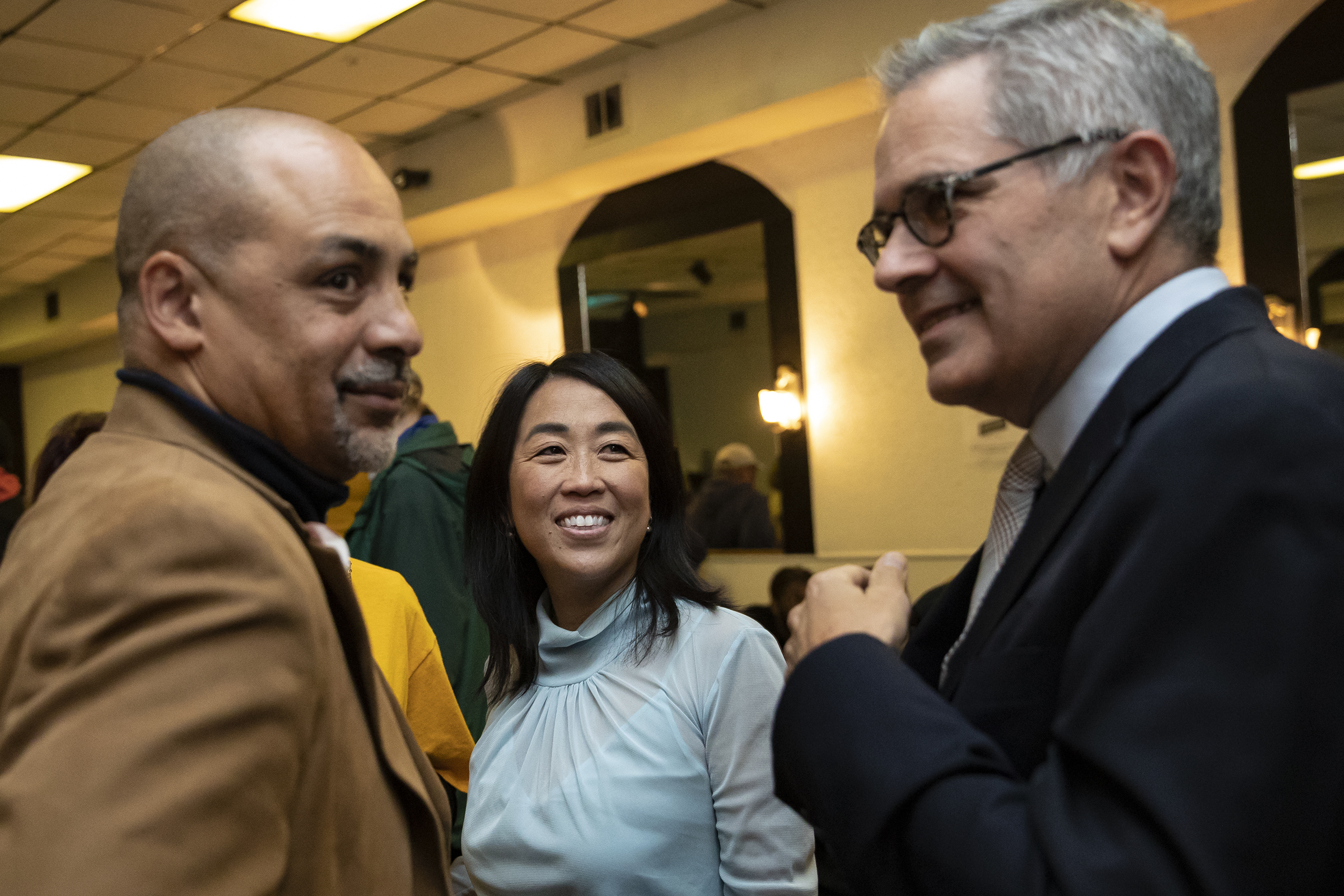
State Rep. Chris Rabb (left), Helen Gym (center), and District Attorney Larry Krasner attend the election results watch party for Working Families Party candidates Kendra Brooks and Nicolas O’Rourke in North Philadelphia on Nov. 5, 2019.
The crowded field may also mean that some elected officials choose not to get involved.
State Rep. Tarik Khan, a Democrat and nurse practitioner who has been backed by progressive organizations, said he has relationships with several leading candidates. That includes his colleagues in Harrisburg, as well as Ala Stanford, a surgeon. She and Khan were both prominent vaccine advocates during the COVID-19 pandemic.
“There’s a lot of good choices in this race,” Khan said. “I’m probably just going to let the process play out.”
The days when Black people couldn’t vote, ride on the front of public buses, be served at lunch counters, attend many schools, or sleep in hotels weren’t all that long ago. Thanks to the advocacy of the late Rev. Dr. Martin Luther King Jr. and the passage of the Civil Rights Act of 1964, discrimination based on race is now illegal.
But President Donald Trump would try to have us believe that the implementation of civil rights policies has hurt white people, when, in actuality, they make life better for everyone because they protect women, religious groups, immigrants, the LGBTQ+ community, and people of different ethnicities and races from discrimination.
In Trump World, though, up is down and down is up.
News reports today often read more like satire from the Onion than real life. But journalists still have a responsibility to report on what comes out of the Oval Office, no matter how ludicrous.
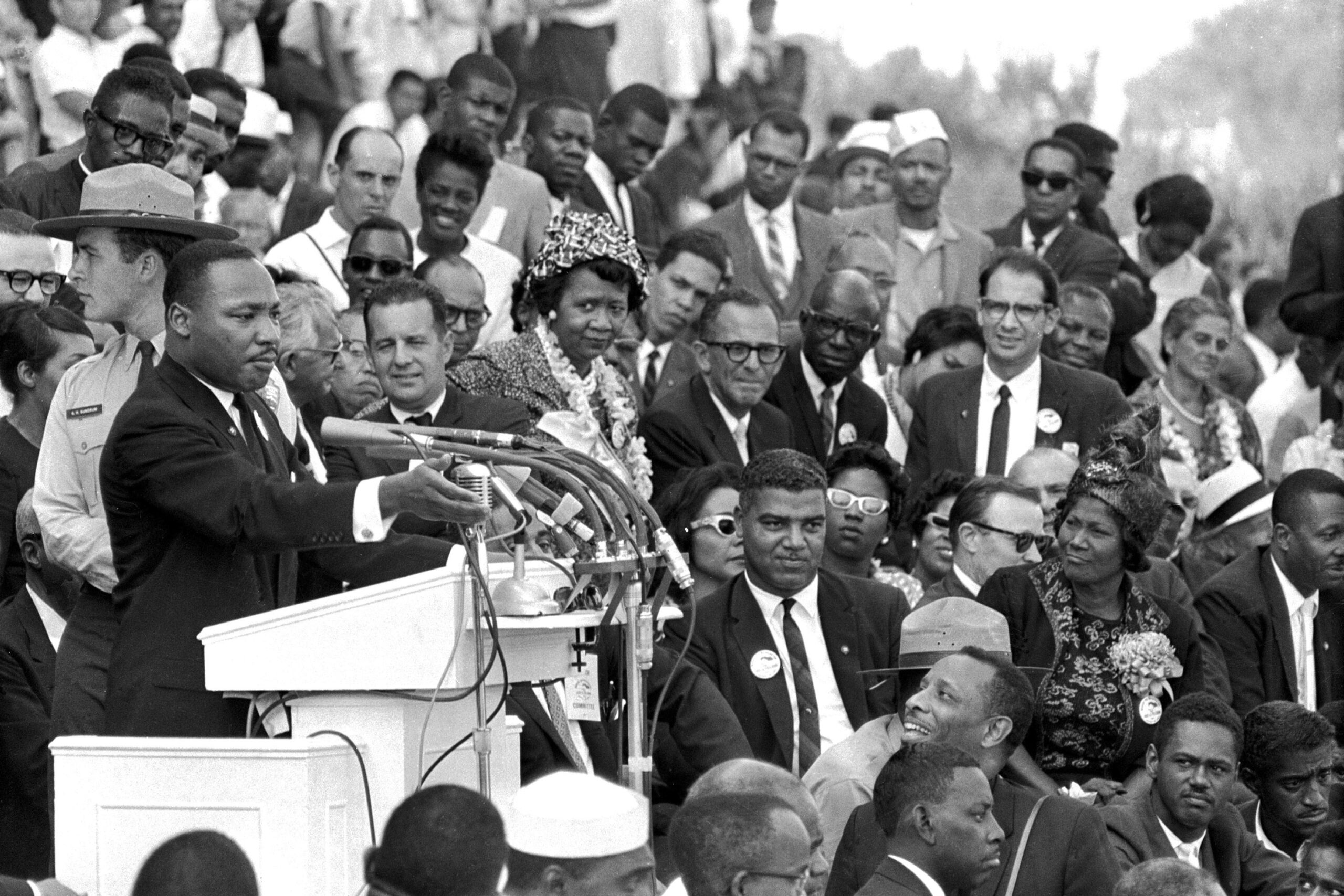
The Rev. Dr. Martin Luther King Jr. speaks to thousands during his “I Have a Dream” speech at the Lincoln Memorial during the March on Washington for Jobs and Freedom, Aug. 28, 1963, in Washington.
So when I read that Trump had met with a small group of New York Times journalists at the White House and told them that civil rights led to white people being “very badly treated,” my jaw dropped. I read and reread what his actual words were, which included his saying, “White people were very badly treated, where they did extremely well, and they were not invited to go into a university to college.”
Trump reportedly added, “So I would say in that way, I think it was unfair in certain cases.”
That’s like saying the rise of feminism and women’s rights hurt men. But wait, there’s more. Trump also is reported as having said: “I think it was also, at the same time, it accomplished some very wonderful things, but it also hurt a lot of people — people that deserve to go to a college or deserve to get a job were unable to get a job. So it was, it was a reverse discrimination.”
He apparently was referring to affirmative action, which is rich considering white women are the largest beneficiaries of it. Same thing with diversity, equity, and inclusion initiatives, which were created to give historically marginalized workers, such as women, people with disabilities, African Americans, and veterans, better opportunities in the workplace.
This attempt by Trump at grievance politics to rev up his base rings hollow to sensible people who recognize that white men have always held the vast majority of upper-level positions in both the private and public sectors.
MAGA is big on accusing former President Barack Obama of supposedly dividing the country, while it is Trump who continually stokes racial division.
He kicked off his presidential campaign in 2015 by maligning Mexicans, saying: “They’re bringing drugs. They’re bringing crime. They’re rapists.” He has referred to Haiti, African nations, and El Salvador as “shithole countries,” accused Haitians in Springfield, Ohio, of eating their neighbors’ dogs and cats, and insulted Somali Americans by calling them “garbage.”
One of the first things Trump did after being sworn into office in 2025 was to sign executive orders aimed at eliminating DEI. His remarks about civil rights supposedly hurting white people are merely his latest salvo, along with his administration’s calls for white men to file complaints with the Equal Employment Opportunity Commission.
“There is zero evidence — none — that the civil rights movement harmed white men in any way,“ said NAACP president Derrick Johnson in a statement to the Grio. “[Trump] is hoping we swallow his lie again, so that he can continue to privatize education, cut social services, and repeal civil rights laws and enforcement mechanisms. It’s all about making more money — even if we all suffer as a result.”
It’s sad — but not surprising — that in 2026 the president would reach for a play out of the tattered segregationist handbook to try and make white people the victims of civil rights.
Had he lived, King would have been thoroughly disgusted — but would have countered the president’s gutter-level deception with an elevated truth: “If the inexpressible cruelties of slavery could not stop us, the opposition that we now face surely will fail.”
Philadelphia Eagles kicker Jake Elliott celebrates an extra point during the third quarter of the Philadelphia Eagles game against the Los Angeles Rams at Lincoln Financial Field on Sunday, Sept. 21, 2025 in Philadelphia.Monica Herndon / Staff Photographer
The Eagles' season ended sooner than expected with a loss to the 49ers in the wild-card round. Now the Birds will try to assemble a roster that can help them get back to their Super Bowl standard. Beat writer Jeff McLane makes his picks on what personnel decisions he sees the team making this offseason.
Make your pick for each player by swiping the cards below — right for Stay or left for Go. Yes, just like Tinder. Finding it hard to decide? We'll also show you how other Inquirer readers have voted so far and what we think the team will do.
Advertisement
Quarterbacks
The biggest question here (for a second straight year) is whether Tanner McKee will stick around as the backup.
#1
Jalen
Hurts
Crowd says
Height
6'1"
Weight
223lb.
Age
27
Inky Says Stay
We've seen what he can accomplish with a good coordinator. But he needs help in the drop-back game if he's going to elevate.
#14
Sam
Howell
Crowd says
Height
6'1"
Weight
220lb.
Age
25
Inky Says Go
Tanner McKee's broken hand in camp forced the Eagles to trade for him before the season. He's a free agent and should get a backup opportunity elsewhere.
#19
Kyle
McCord
Rookie
Crowd says
Height
6'3"
Weight
218lb.
Age
23
Inky Says Go
He had a rough first camp, but a full season to watch and learn may help. His return may depend on the new coordinator and scheme.
#16
Tanner
McKee
Crowd says
Height
6'6"
Weight
231lb.
Age
25
Inky Says Stay
It's not fair to base an evaluation solely on the finale. But it's unlikely the Eagles will receive attractive enough offers to trade.
A.J. Brown’s long-term future with the Eagles might be the biggest question of the 2026 offseason.
#80
Darius
Cooper
Rookie
Crowd says
Height
5'11"
Weight
210lb.
Age
24
Inky Says Stay
The undrafted rookie was used mostly as a run blocker, but he has some receiving upside. He'll be back.
#11
A.J.
Brown
Crowd says
Height
6'1"
Weight
226lb.
Age
28
Inky Says Stay
His future is the question of the offseason. By his standards, he didn't have a good season and may have lost a half-step. He still projects as one of the best. There's also a significant cap charge.
#18
Britain
Covey
Crowd says
Height
5'8"
Weight
173lb.
Age
28
Inky Says Stay
It took too long, but when he was promoted to the active roster the return game was given a boost.
#2
Jahan
Dotson
Crowd says
Height
5'11"
Weight
184lb.
Age
25
Inky Says Go
It must have been tough running all those for-the-love-of-the-game routes. He was just too slight to make an impact as the third receiver.
#6
DeVonta
Smith
Crowd says
Height
6'0"
Weight
170lb.
Age
27
Inky Says Stay
He was maybe the one guy on offense who met expectations. If A.J. Brown leaves, he should be the bona fide No. 1.
#85
Terrace
Marshall
Crowd says
Height
6'2"
Weight
200lb.
Age
25
Inky Says Go
The Eagles need more young receivers with upside. He doesn't satisfy that need.
#86
Quez
Watkins
Crowd says
Height
6'0"
Weight
193lb.
Age
27
Inky Says Go
After a few post-Eagles years in the NFL wilderness, he returned to the practice squad.
#89
Johnny
Wilson
Crowd says
Height
6'6"
Weight
228lb.
Age
24
Inky Says Stay
The Eagles lost their best blocking receiver in training camp. He should return in that role.
Some big names could be moving on here, as Nakobe Dean and Jaelan Phillips appear set to test the market.
#53
Zack
Baun
Pro Bowl
Crowd says
Height
6'3"
Weight
225lb.
Age
29
Inky Says Stay
He proved that 2024 wasn't a fluke and his contract guarantees he's here through 2027.
#30
Jihaad
Campbell
Rookie
Crowd says
Height
6'3"
Weight
235lb.
Age
21
Inky Says Stay
He handled his demotion with grace, but the former first-rounder needs to be in the lineup next season. Can he be a hybrid?
#59
Chance
Campbell
Crowd says
Height
6'2"
Weight
232lb.
Age
26
Inky Says Stay
He provided good looks on the scout team and should probably get a look-see in training camp. Making the 53-man roster is another thing.
#17
Nakobe
Dean
Crowd says
Height
5'11"
Weight
231lb.
Age
25
Inky Says Go
A few years ago, it would have been a no-brainer to retain him. But the Eagles have Campbell in the wings and their most depth at off-ball linebacker in years.
#58
Jalyx
Hunt
Crowd says
Height
6'3"
Weight
252lb.
Age
24
Inky Says Stay
Eagles' scouting deserves accolades for plucking this former safety out of anonymity. He did it all in his second season. The future is bright.
#48
Patrick
Johnson
Crowd says
Height
6'2"
Weight
248lb.
Age
27
Inky Says Go
Practice squad Patrick has been a loyal soldier for five on-and-off years. He wasn't getting call-ups late in the season.
#42
Smael
Mondon Jr.
Rookie
Crowd says
Height
6'2"
Weight
224lb.
Age
22
Inky Says Stay
He'll be a depth piece who can play special teams for years, if need be.
#13
Azeez
Ojulari
Crowd says
Height
6'3"
Weight
240lb.
Age
25
Inky Says Go
It's hard to see him wanting to be back when it was clear the Eagles slow-played his return from a hamstring injury.
#50
Jaelan
Phillips
Crowd says
Height
6'5"
Weight
266lb.
Age
26
Inky Says Go
He started strong and then leveled out. Vic Fangio likes him, but is he worth the squeeze when others will pay?
#3
Nolan
Smith Jr.
Crowd says
Height
6'2"
Weight
238lb.
Age
24
Inky Says Stay
The triceps injury lingered into the season. He plays with great effort, but size and durability remain concerns.
#54
Jeremiah
Trotter Jr.
Crowd says
Height
6'0"
Weight
225lb.
Age
23
Inky Says Stay
He could probably start at middle linebacker for a number of teams, but will likely have to watch for another season.
#0
Joshua
Uche
Crowd says
Height
6'3"
Weight
226lb.
Age
27
Inky Says Go
The trade for Jaelan Phillips and Brandon Graham's unretirement marginalized him. He'll likely want to explore other options.
#43
Ben
VanSumeren
Crowd says
Height
6'2"
Weight
231lb.
Age
25
Inky Says Go
It will be tough to return from back-to-back season-ending knee injuries, but I wouldn't count him out.
Past a marble monument for a Civil War hero, down a grass path where toppled headstones disappear into ivy and weeds and faded miniature American flags droop, lies the underground vault of James Campbell, who died in 1913 and whose remains mayhave been among the dozens stolen in one of the largest grave desecration cases ever uncovered in Pennsylvania.
Jonathan Christian Gerlach,who was charged with more than 500 offenses earlier this month and is being held in jail in lieu of $1 million bail, is accused of methodically breaking into burial vaults and mausoleums at Mount Moriah Cemetery, prying open caskets and removing human remains from Campbell’s burial ground and at least 25 other sites across the sprawling Philadelphia and Yeadon Borough cemetery.
Inside Campbell’s vault, where his family members were also entombed 12 feet beneath the cemetery’s surface as early as 1872, investigators said they found three broken caskets, crumbled marble, and a discarded pry bar. Six sets of human remains, they said, were missing.
Authorities allege that Gerlach moved through the cemetery repeatedly, at all hours, accessing sealed burial sites and removing dozens of remains over several weekswithout being detected. Large sections of the cemetery, overgrown and rarely monitored, offered long stretches of isolation — conditions investigators say Gerlach may have exploited. And as law enforcement continues to sort through the evidence, local officials and cemetery advocates are pressing for changes to prevent this from happening again.
“We were too slow to move,” said Yeadon Mayor Rohan Hepkins. “Nobody thought such a dastardly act — such an inhumane and incomprehensible act — was possible.”
Hepkins last week joined state and local officials to discuss what can be done to protect the burial grounds, where an estimated 180,000 people are buried.
He and others expressed cautious resolve that the cemeterycould be secured well enough to prevent another violation of this scale.
“I wish I could tell loved ones that I’m not critically concerned, but I am,” said State Sen. Anthony Williams, who represents the district where Mount Moriah Cemetery is located and was one of the officials who gathered to discuss preventive measures. “But I don’t know that Mount Moriah will ever be restored to the condition that they buried their loved ones in.”
Mount Moriah Cemetery, a historic landmark abandoned by its last owner and under court receivership, has long been plagued by neglect and limited oversight.
Investigators say Gerlach’s crimes unfolded over the course of months, starting in the fall and ending on the night of Jan. 6, when Yeadon detectives arrested the Pennsylvania man as he attempted to leave the cemetery.
License plate readers and cell phone towers place Gerlach near or inside the cemetery during both daylight and darkness. On Christmas Eve, for example, the technologies captured Gerlach’s vehicle or phone at least three times between 12:28 a.m. and 12:54 p.m., court records show.
The day before, on Dec. 23, a Yeadon investigator working the case saw scratch marks on the heavy stone slab sealing the underground Zeigler family vault, as if, a detective wrote in an affidavit of probable cause for Gerlach’s arrest, it had been “marked” as a target. When the detective returned on Dec. 26, the stone had been broken and nine sets of human remains stolen.
Yeadon police, who investigated the crimes alongside other authorities, have since been inundated with hundreds of calls and emails from anguished family members seeking answers, Chief Henry Giammarcco said.
Rescuing Mount Moriah
Mount Moriah Cemetery opened in 1855. Its owners, the Mount Moriah Cemetery Association, abandoned it in 2011, after years of mismanagement. The Friends of Mount Moriah, a volunteer-driven nonprofit, formed that same year with the goal of rescuing the grounds from vandalism, crime, and decay. In 2014, a Philadelphia judge appointed a receivership, the Mount Moriah Cemetery Preservation Corporation, to temporarily manage the cemetery until a permanent owner could be found.
More than a decade later, no permanent owner has emerged.
In 2018, the two groups and other stakeholders commissioned an ambitious strategic plan that called for stabilizing the cemetery’s finances, finding a permanent owner, and remaking Mount Moriah into a viable public space. The plan assumed significant investment and long-term stewardship. Neither materialized.
“There’s no clear revenue stream, and there’s significant infrastructure improvements and capital improvements that are required, on top of maintenance costs,” said Brian Abernathy, who served as chair of the preservation corporation when the plan was created.
At the time, Abernathy said, “there was a lot of hope and optimism about what we could accomplish with it. But the plan stalled over obstacles that persist today, he said, including enticing an owner when so many costly repairs are needed.
Under the court order, the corporation — a board composed of officials from Philadelphia and Yeadon, including Hepkins — is responsible for preserving the cemetery but has delegated day-to-day care to Friends of Mount Moriah.
Over the years, Friends of Mount Moriah made visible gains. Its 12-person board and volunteers hauled away abandoned cars, tires. and trash, righted toppled headstones, and uncovered burial vaults beneath thick vines, brush, and overgrowth.
“Until this happened,” said John Schmehl Jr., the group’s president, “security was not our first concern.”
<div data-analytics-viewport="autotune" data-analytics-label="visor-arcgis" id="bones"
  data-iframe-fallback="https://www.inquirer.com/resizer/ORTQkrqPSCXca2NSc4Uhl9preV8=/1400x932/smart/arc-anglerfish-arc2-prod-pmn.s3.amazonaws.com/public/5FUK4MYNPFH7LD3SAPB6X4O7TQ.jpg"
  style="width: 0; min-width: 100% !important; border: none;" data-iframe-fallback-height="509.789917082823"
  data-iframe="https://media.inquirer.com/storage/inquirer/projects/innovation/arcgis_iframe/bones.html"
  data-iframe-height="509.789917082823" data-iframe-resizable></div>
<script type="text/javascript">
  (function() {
    var l2 = function() {
      new pym.Parent('bones',
                     'https://media.inquirer.com/storage/inquirer/projects/innovation/arcgis_iframe/bones.html');
    };
    if (typeof(pym) === 'undefined') {
      var h = document.getElementsByTagName('head')[0],
        s = document.createElement('script');
      s.type = 'text/javascript';
      s.src = 'https://pym.nprapps.org/pym.v1.min.js';
      s.onload = l2;
      h.appendChild(s);
    } else {
      l2();
    }
  })();
</script>
Yet thieves knew the grounds. Last year, Schmehl said, more than $14,000 worth of lawn equipment — including mowers, weed trimmers, and hand tools — was stolen from the cemetery garage. Friends of Mount Moriah entered the growing season without the equipment needed to keep large sections of the cemetery accessible, he said.
Now, the group is scrambling to implement security improvements across the cemetery’s more than 100 acres, including repairing dilapidated fencing, launching random patrols, and installing cameras on both the Philadelphia and Yeadon sides of the property. Fencing construction began last week. Schmehl said the group is seeking a private security company to monitor the cameras around the clock.
Cemetery volunteers dwindle
The backyard of 60-year-old Robin Pitts’ house overlooks the Springfield Avenue side of Mount Moriah, where her mother, brother, and extended family are buried.
As a child, Pitts said, she played kickball on an unfenced stretch of the cemetery near where Betsy Ross — the seamstress whose burial helped cement Mount Moriah’s place in American history — rested for more than a century.
Those memories later drew Pitts to volunteer with Friends of Mount Moriah for nearly two decades, she said. On Saturdays, she said, she grilled hot dogs and hamburgers for volunteers who picked up trash and mowed the grass along Springfield Avenue.
But during the pandemic, Pitts said, the grounds began to deteriorate beyond what volunteers could manage. “I thought, ‘Enough’s enough. I can’t do this anymore,’” she said. She stopped volunteering.
Last week, Pitts walked down a path choked with waist-high grass and weeds where she once mowed. She pointed past a tangle of barren hemlock blocking a path to a tree and several headstones — some toppled, others obscured by vines and brush. “We used to clean it all the way past there,” Pitts said. “Now nobody does.”
A shrinking volunteer base has slowed progress at the cemetery, Schmehl said. Some cleanup events draw just one volunteer. “It’s a struggle, to say the least,” he said, adding that entire sections of the cemetery “have been reclaimed by nature.”
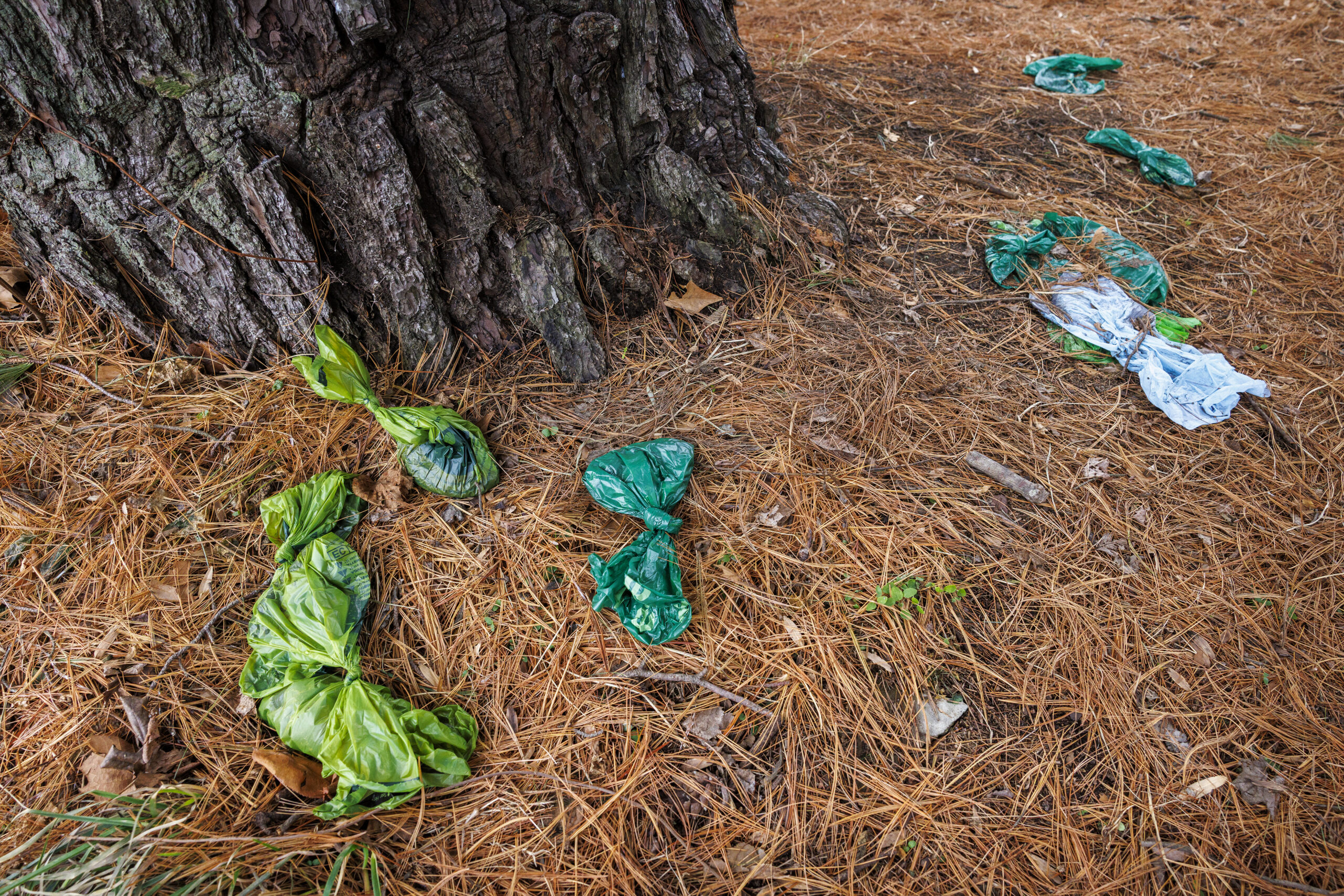
Picture of dog waste discarded on the grounds of Mount Moriah Cemetery on Wednesday, Jan. 14, 2026.
The cemetery is now open just two days a week, Saturdays and Sundays.
The costs of needed improvements are also significant. By Thursday, Friends of Mount Moriah had spent more than $20,000 of its roughly $90,000 annual budget to begin fencing construction and repairs, and secure the mausoleums and vaults that had been desecrated in the recent crimes. Additional donations, Schmehl said, will be needed to sustain the effort.
As recently as spring 2023, Mount Moriah Cemetery Preservation Corp. held more than $400,000 in its endowment, according to a letter filed in Philadelphia Orphans’ Court. Aubrey Powers,the receivership’s chair, did not respond to questions concerning the receivership’s contributions to the Friends of Mount Moriah or what the corporation will do to helpaddress security or infrastructure needs.
As a condition of the receivership, the corporation must file semiannual reports to the court. A year ago, the only reference to security was a brief note stating that the receivership “continues to encourage the Philadelphia and Yeadon Police Departments to schedule patrols in and around Mount Moriah Cemetery more frequently to deter criminal activity.”
Hepkins said increased patrols would be part of a broader strategyto reduce criminal activity and restore oversight to the cemetery. Meanwhile, a spokesperson for the Philadelphia Police Department said officers patrol the cemetery’s perimeter, not its grounds.
“There has to be some sort of intervention in order to rectify what’s happened at Mount Moriah,” Abernathy said. “And I just don’t know who’s going to provide that intervention.”
Whose remains are missing?
Hepkins on Wednesday climbed a steep hill from a small parking lot off Cobbs Creek Parkway to a cluster of mausoleums that Gerlach is accused of breaking into.
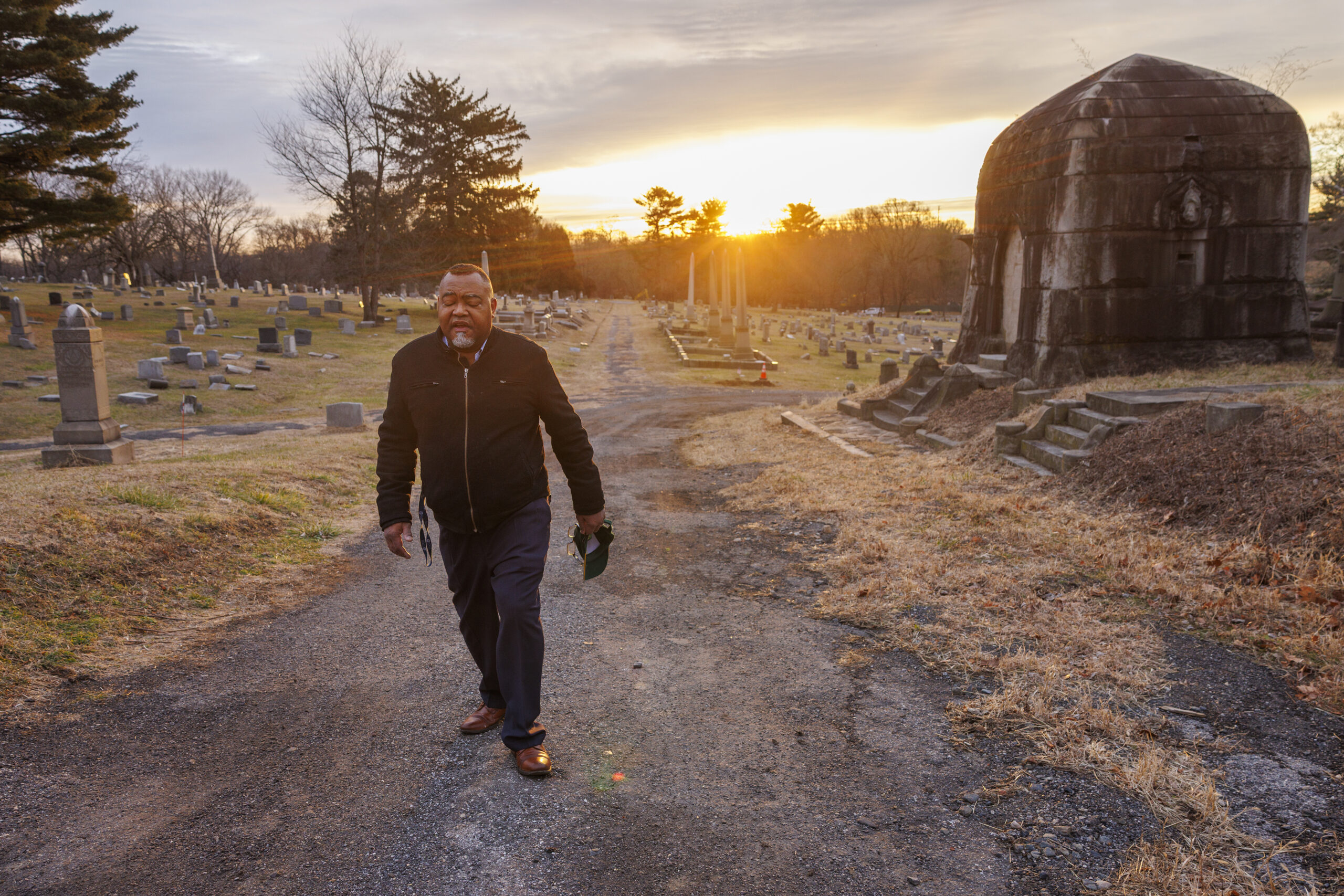
Yeadon Mayor Rohan Hepkins during a walking tour of Mount Moriah Cemetery, Wednesday, Jan. 14, 2026. Graves at the cemetery were allegedly robbed by Jonathan Christian Gerlach.
At the family mausoleum of John Hunter, a former president of the Mount Moriah Cemetery Association, authorities allege Gerlach smashed through a sealed cinder-block doorway and shattered the marble floor. He then rappelled 10 feet into the crypt and removed the remains of 15-year-old Martha Hunter, who died in 1869.
He left behind a length of white rope and a screwdriver, authorities said.
Just feet away, in the mausoleum of wholesale grocer Jonathan Prichard, Gerlach pulled cinder block from a sealed window and rifled through five of nine caskets inside, investigators allege. The remains of 62-year-old Mary Prichard Steigleman, Prichard’s daughter, are now missing.
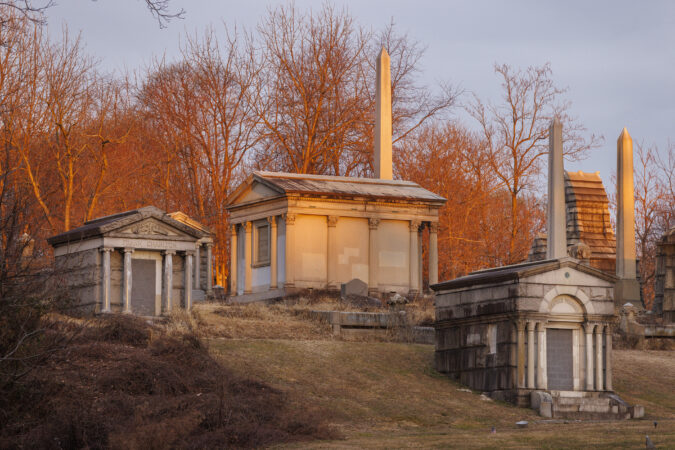
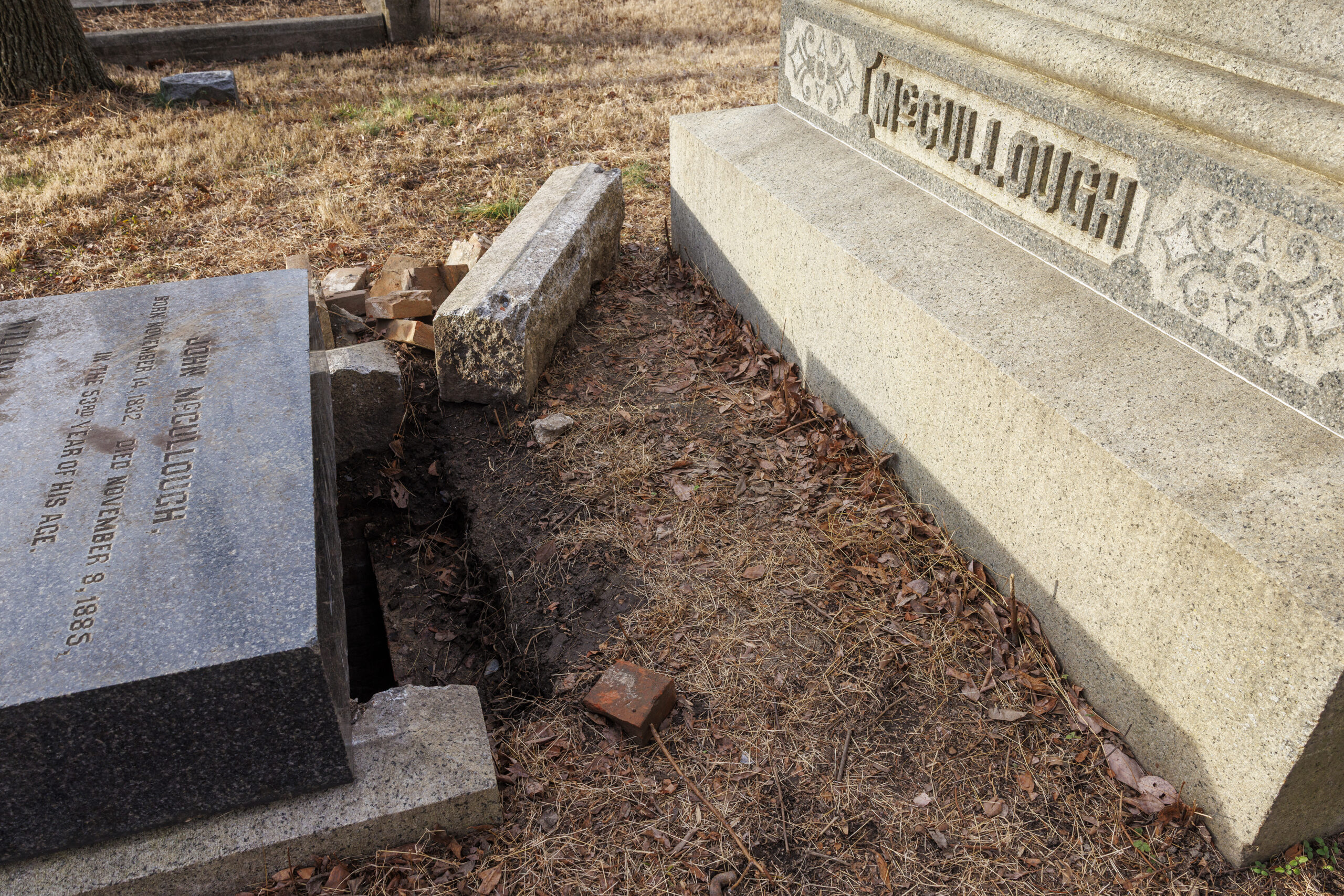
Nearby is the family vault of John McCullough, a Shakespearean actor who died in 1889. Beneath a towering monument etched with a line from Julius Caesar, authorities said they found two caskets disturbed, one tipped onto its side. Both were empty.
More than a week after Gerlach’s alleged break-in, bricks torn from the vault’s seal lay piled beside the entrance, and a foot-long hole exposed the floor below. Inside, wooden pallets that investigators believe Gerlach used to climb down cluttered the crypt.
The McCullough family burial tomb at Mount Moriah Cemetery, Wednesday, Jan. 14, 2026. This and several other graves at this cemetery were allegedly broken into by Jonathan Christian Gerlach.
A short walk away is the cemetery’s naval plot, where rows of identical white headstones mark the graves of more than 2,000 Navy officers. It’s Hepkins’ favorite part of the cemetery, he said.
Hepkins once hoped to be buried at Mount Moriah, a place he called “godly.” Now, he said, “I have to reconsider. I want my bones held somewhere in sacred perpetuity.”