Blog

  • Bulgaria’s left-leaning president Rumen Radev says he is stepping down

    Bulgaria’s left-leaning president Rumen Radev says he is stepping down

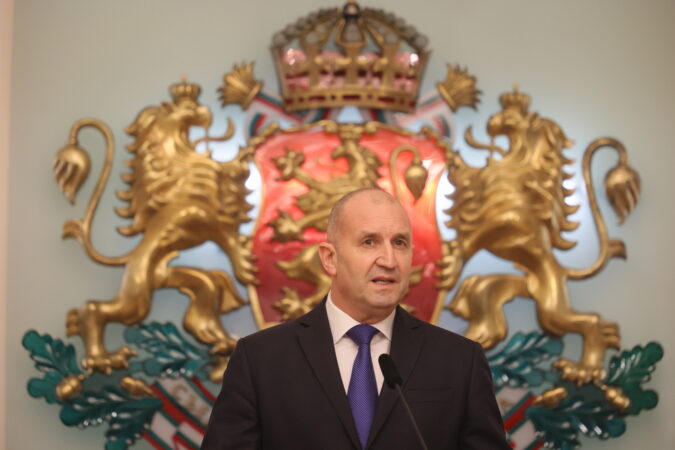
    SOFIA, Bulgaria — Bulgaria’s left-leaning president Rumen Radev announced on Monday that he is stepping down.

    In a televised address, Radev said that he will formally submit his resignation to the Constitutional Court Tuesday.

    Under the constitution, the current vice president, Iliana Yotova, must be sworn in by parliament to take the post until the end of the presidential mandate.

    “The battle for the future of our homeland lies ahead, and I believe we will face it together with all of you — the worthy, the inspired, and the unyielding! We are ready. We can, and we will succeed!” Radev said in his address.

    Radev’s decision comes amid public expectation that he will form a new political party.

    His resignation, the first by a head of state in Bulgaria’s post-communist history, comes as the country — which is a member of the European Union and NATO — struggles to overcome a prolonged political crisis.

    Large anti-corruption protests last month forced the resignation of the governing coalition, led by the center-right GERB party. Attempts to form a new government within the current parliament have subsequently failed, and the country is headed towards its eighth parliamentary election since 2021.

    Radev, whose second mandate ends this year, has repeatedly indicated he may take part in new elections. The 62-year-old former Air Force general has been a vocal opponent of the leader of the GERB party, Boyko Borissov, and of politician and oligarch Delyan Peevski, who has been under U.S. and U.K. sanctions, and whose MRF New Beginning party has repeatedly backed the outgoing GERB-led coalition.

    Radev did not mention on Monday what his plans are. Asked recently about forming a new party, he said there was a need for a party that “unites all democrats — left and right — regardless of where they belong or whether they are politically active at all, because we all need fair elections and democratic, free development.”

  • ICE says immigrant who died in sprawling Texas detention facility killed himself

    ICE says immigrant who died in sprawling Texas detention facility killed himself

    EL PASO, Texas — An immigrant from Nicaragua was found dead at a Texas immigration detention facility last week, federal officials said.

    Victor Manuel Diaz appears to have killed himself Wednesday at the sprawling tent complex at the U.S. Army’s Fort Bill base in El Paso, Immigration and Customs Enforcement said in a statement. The federal investigation into his death continues.

    It’s the same facility where ICE said another detainee died earlier this month as staff members tried to keep him from killing himself. But a fellow detainee said at least five officers were restraining the handcuffed inmate and at least one had an arm around his neck.

    (Editor’s note — This story includes discussion of suicide. If you or someone you know needs help, the national suicide and crisis lifeline in the U.S. is available by calling or texting 988.)

    Diaz was swept up on Jan. 6 in the federal crackdown on immigration in Minnesota and sent to Texas, ICE said.

    Diaz entered the United States in March 2024 and Border Patrol officers took him into custody. He was released on parole pending a court date and a judge ordered him to leave the U.S. in an August hearing that Diaz did not attend, ICE said.

    Diaz was given a final order for removal on Jan. 12, two days before he was found unconscious in his room, authorities said.

    ICE did not release any other details on Diaz’s death. The agency notifies Congress and releases a statement on its website of all in-custody deaths.

    Diaz, 36, was being held at Camp Montana East where ICE said another detainee, Geraldo Lunas Campos, died as staff members tried to prevent him from killing himself.

    But a preliminary investigation by the El Paso County Medical Examiner’s Office found Lunas Campos, 55, died from asphyxia from chest and neck compression and said the death would likely be classified a homicide.

    A fellow detainee told the AP that Lunas Campos was handcuffed and refused to go back into his cell when at least five guards pinned him to the floor. The detainee said at least one of the guards squeezed an arm around Lunas Campos’ neck.

    ICE said it is still investigating that death.

  • AP Source: Fed Chair Powell to attend Supreme Court argument on Cook case

    AP Source: Fed Chair Powell to attend Supreme Court argument on Cook case

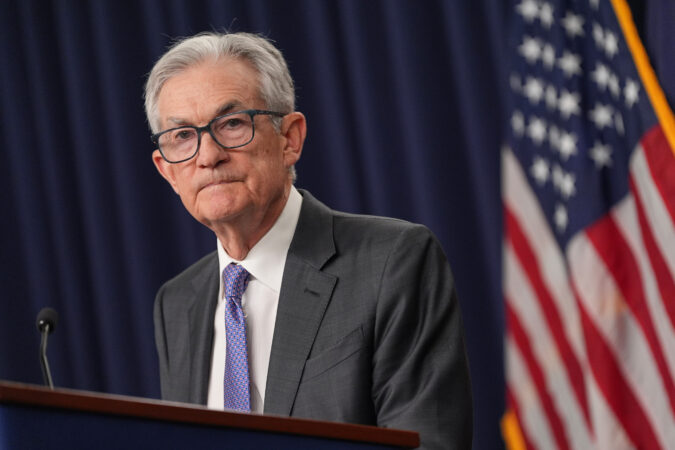
    WASHINGTON — Federal Reserve Chair Jerome Powell will attend the Supreme Court’s oral argument Wednesday in a case involving the attempted firing of Fed governor Lisa Cook, an unusual show of support by the central bank chair.

    The high court is considering whether President Donald Trump can fire Cook, as he said he would do in late August, in an unprecedented attempt to remove one of the seven members of the Fed’s governing board. Powell plans to attend the high court’s Wednesday session, according to a person familiar with the matter, who spoke on condition of anonymity.

    It’s a much more public show of support than the Fed chair has previously shown Cook. But it follows Powell’s announcement last week that the Trump administration has sent subpoenas to the Fed, threatening an unprecedented criminal indictment of the Fed Chair. Powell — appointed to the position by Trump in 2018 — appears to be casting off last year’s more subdued response to Trump’s repeated attacks on the central bank in favor of a more public confrontation.

    Powell issued a video statement Jan. 11 condemning the subpoenas as “pretexts” for Trump’s efforts to force him to sharply cut the Fed’s key interest rate. Powell oversaw three rate cuts late last year, lowering the rate to about 3.6%, but Trump has argued it should be as low as 1%, a position few economists support.

    The Trump administration has accused Cook of mortgage fraud, an allegation that Cook has denied. No charges have been made against Cook. She sued to keep her job, and the Supreme Court Oct. 1 issued a brief order allowing her to stay on the board while they consider her case.

    If Trump succeeds in removing Cook, he could appoint another person to fill her slot, which would give his appointees a majority on the Fed’s board and greater influence over the central bank’s decisions on interest rates and bank regulation.

  • Shane Blakeney scores 16 points but Drexel falls at Towson

    Shane Blakeney scores 16 points but Drexel falls at Towson

    TOWSON, Md. — Tyler Tejada scored 14 points and Jack Doumbia made two free throws with eight seconds left Monday as Towson came back to beat Drexel, 59-58.

    Shane Blakeney led the way for the Dragons (9-11, 3-4 Coastal Athletic Association) with 16 points. Drexel also got 11 points and two steals from Kevon Vanderhorst. Victor Panov also had 10 points

    Tejada contributed five rebounds for the Tigers (11-9, 3-4). Dylan Williamson scored 12 points and added five assists. Jaquan Womack shot 2 of 10 from the field, including 1 for 3 from three-point range, and went 5 for 5 from the line to finish with 10 points.

    Womack scored seven points in the first half, but Towson went into the break trailing by 32-20. Williamson scored a team-high 12 points in the second half.

    Next up for Drexel is a home game against Northeastern on Saturday at 2 p.m.

  • In North Philadelphia, planting seeds for the future on MLK Day

    In North Philadelphia, planting seeds for the future on MLK Day

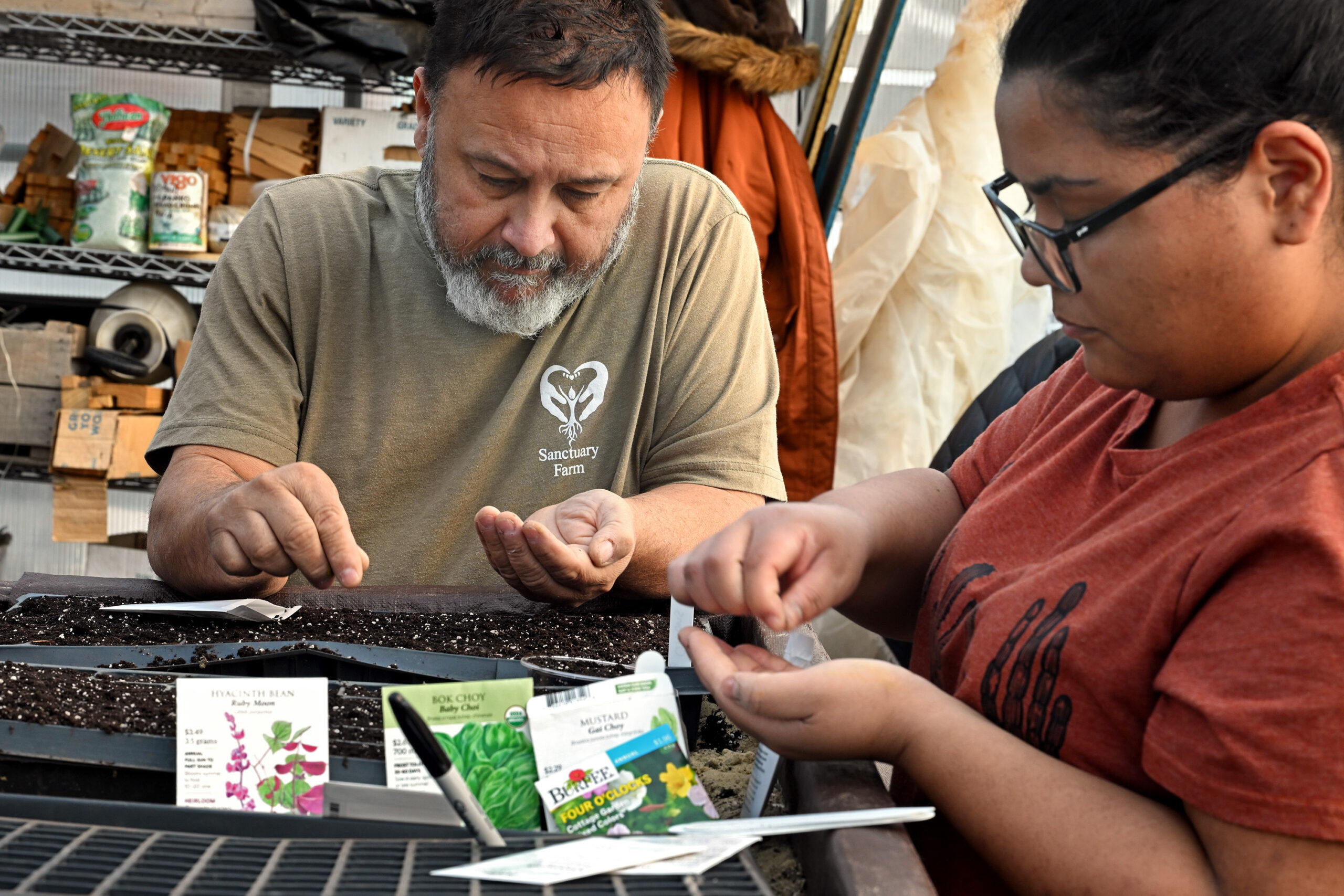
    Chris Meyers, 67, was planting onion seeds Monday in the warmth of a large greenhouse near North 24th and Berks Streets for Sanctuary Farm Phila’s first ever Martin Luther King Jr. Day of Service.

    The onions will be transplanted when the time is right. They’re destined to take root in one of the urban farm nonprofit’s nine lots.

    Meyers, a retired city worker, came to the role by an unexpected path. Three years ago, the North Philly resident sat in the office of nurse-practitioner Andrea Vettori, his primary health care provider, determined to reduce his blood pressure and cut back on medications.

    “She was the only physician — in this case a nurse-practitioner — that started talking about doing it through diet and losing weight,” Meyers said. “I felt like here was someone who was truly listening to me instead of taking the stance, ‘OK, I’m the doctor. I know better. It was like we were reasoning out how we could make this possible.’”

    Vettori told him about the urban farm she oversaw in North Philadelphia as executive director. Soon, Meyers enrolled in Sanctuary Farm’s therapeutic farming program, began meditating with the group he sowed seeds alongside, ate the fruits and vegetables they cultivated, shed weight, and reduced his medications.

    “I can finally see light at the end of the tunnel,” said Meyers, and one of thousands of participants and volunteers in Martin Luther King days of service throughout the region.

    Zora Clark, 8, waters her seed plantings in the greenhouse. She was there with her partents, Mike Clark and Shawnika Hull of Fishtown.

    What’s Sanctuary Farm Phila?

    Vettori, 61, executive director of Sanctuary Farm Phila, is a nurse-practitioner by training and still works in the medical field one day a week.

    She founded the nonprofit in 2017 with a primary mission to improve the health of the neighborhood by addressing food insecurity.

    Sanctuary Farm set out to achieve that by transforming abandoned urban lots into productive agricultural spaces where staff and volunteers grow produce to distribute to neighbors for free.

    The farm offers residents various programs and classes centered on nutrition and health, including gardening, beekeeping, sewing, and candle-making.

    ”Everything’s free to community members,“ Vettori said. “We do lots of different programming.”

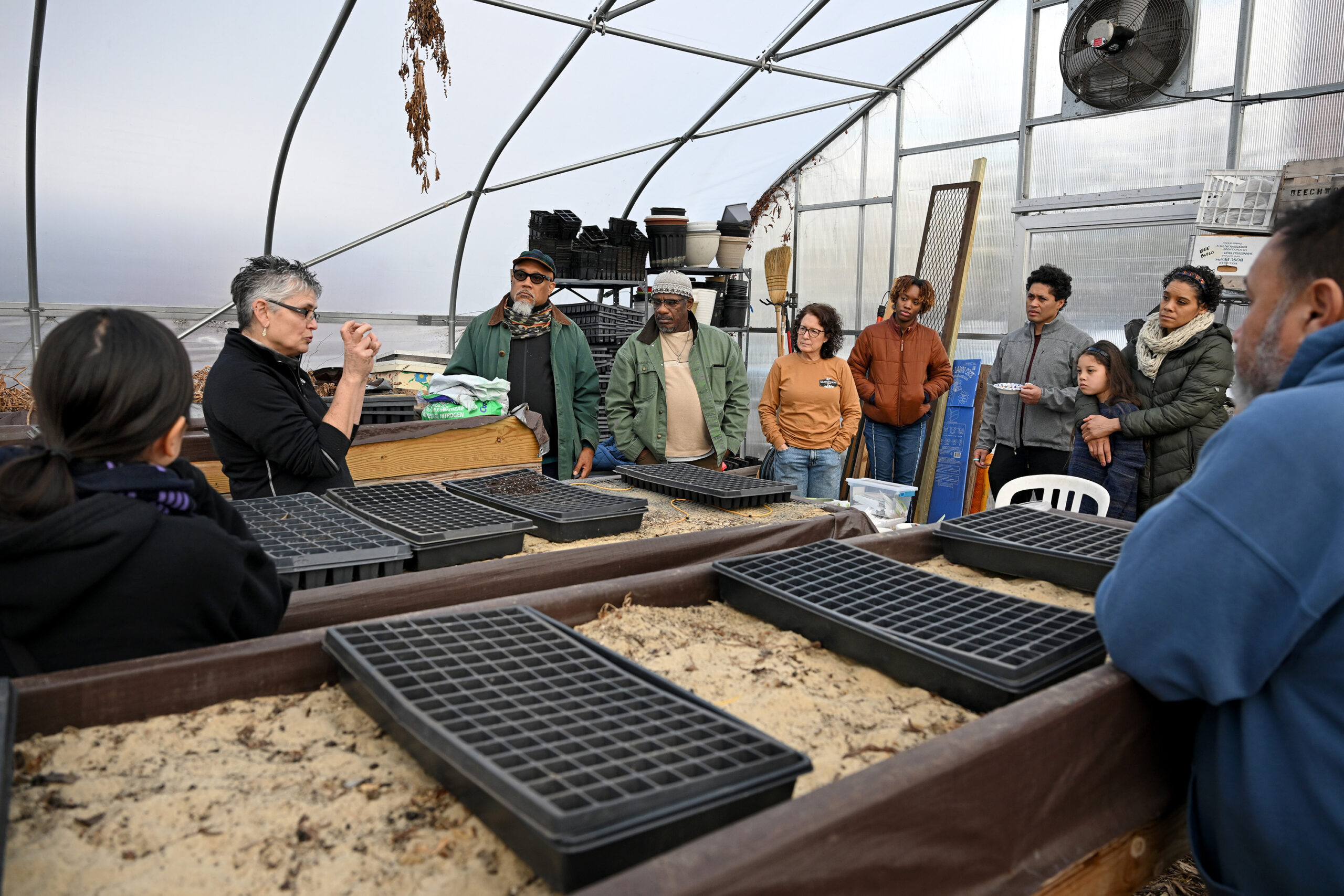
    Sanctuary Farm founder and executive director Andrea Vettori (second from left) talks about seeds and germination.

    Sanctuary Farm has a headquarters on North 24th Street, and currently operates nine gardening sites. Eight are located in North Philadelphia and one is in Huntingdon Valley, Montgomery County.

    During the summer, the organization ramps up its operations to run two to three produce stands per week to distribute free food. The efforts are funded through a combination of private foundation grants, individual donations, and government support from state grants and the U.S. Department of Agriculture.

    Vettori’s organization operates with a small staff — approximately five year-round employees, only two of whom are full-time.

    Because of this small footprint, Vettori notes that they “couldn’t survive” without volunteers.

    Sanctuary Farm has a core group of about 20 regular volunteers, though as many as 150 people have assisted the farm over the years. To draw members of the community, the farm uses a mix of social media, monthly meetings, and “old-fashioned” methods like handing out fliers door-to-door and using information boards, Vettori said.

    In 2024, the organization harvested 9,500 pounds of produce.

    Monday marked the first full scale MLK Day of Service the farm has hosted, though it has opened its doors in the past on the holiday. It was supported by a $1,000 grant for materials and food from Indego Bike Share.

    Jose Hernandez (left) and Lisa Hernandez-Smith plant seeds.

    ‘Contribute back to the community’

    Shamika Hull, of Fishtown, attended Monday’s event with her daughter, Zora Clark, 8, and husband, Mike Clark.

    “I wanted to plan something together with my family to contribute back to the community, but I didn’t anticipate finding an organization that’s really this exciting,” Hull said, as she and her family began to plant onion seeds.

    They had decorated planting pots earlier and also planned to bring home some seedlings.

    Vettori gave a group of about a dozen people instruction in organic gardening basics, such as annuals vs. perennials, what type of seed starter to use, and what types of soils and fertilizers to avoid.

    Sanctuary Farm does not use any chemical fertilizers or chemical pest control methods, she said.

    “We use a lot of flowers to deter pests or to attract beneficials like wasps,” Vettori told the group. “I love wasps. I’m always trying to put in a good word for wasps, because they’re really good for the garden.”

    She started Monday with onions because it’s too early to begin planting greens and tomatoes, she said. The group also planted flowers that they could bring home.

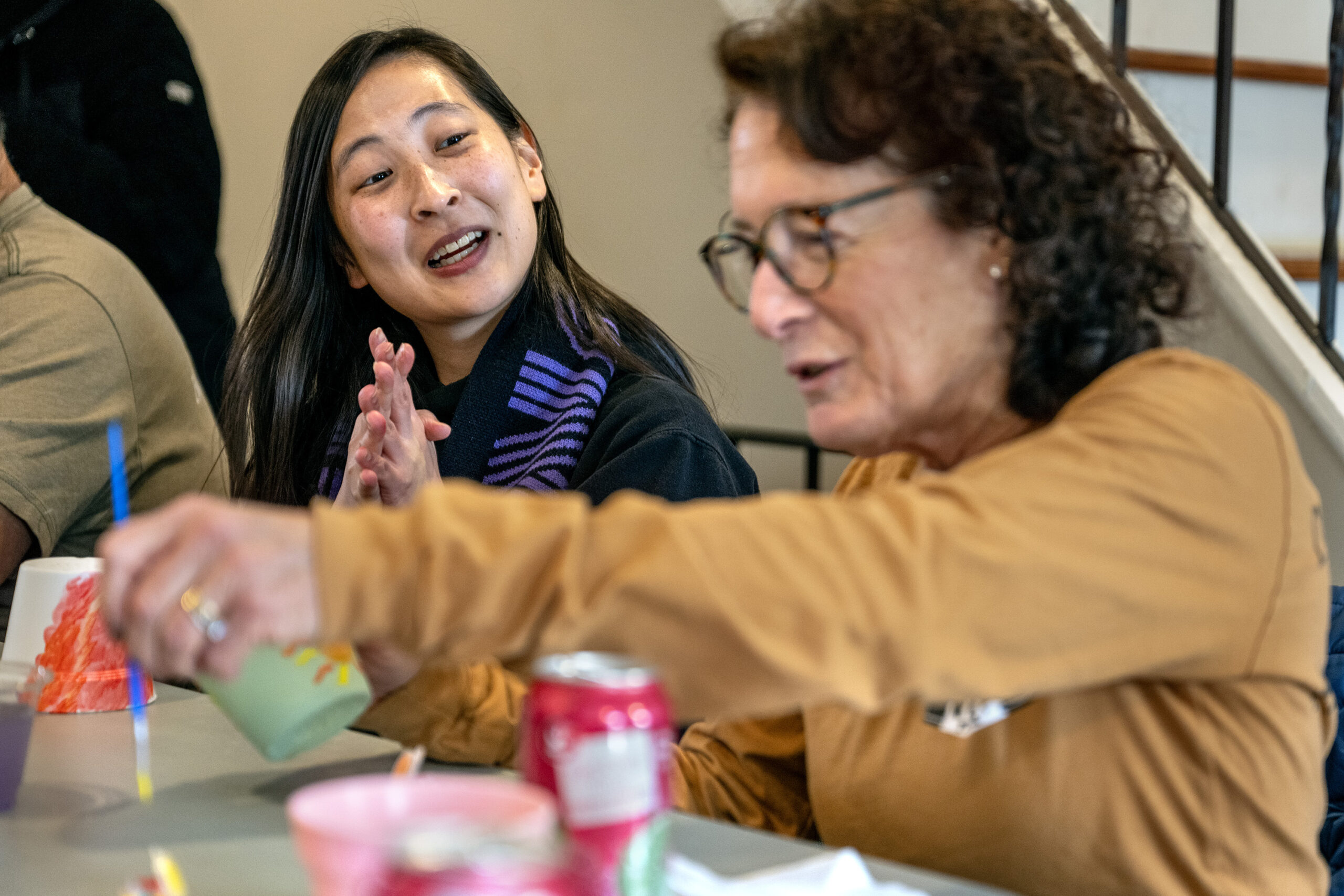
    Patricia Farley (left) and Claudia Huot talk while painting their seedling pots indoors at Sanctuary Farm before heading out to the greenhouse.

    ‘The last think you’d expect’

    Nearby, Jose Hernandez had smoothed seed starter over a plastic seedling tray. He joined the garden as a volunteer a few years ago to help manage his PTSD through the therapeutic gardening program. Hernandez served as a U.S. Marine in Operation Desert Storm during the Gulf War in the early 1990s.

    “I overheard someone at the Veterans Administration speaking about it,” said Hernandez, formerly of Olney but now living in Delaware County.

    Other vets are also enrolled in the therapeutic gardening program, which is designed for people with health challenges.

    Hernandez travels to Sanctuary Farm every Monday. He also takes part in meditation and the sewing class, “which is the last thing you’d expect,” he said with a smile.

    “One of the things that you tend to do when you have PTSD is internalize everything. You just keep to yourself,” Hernandez said. “Coming here, you meet other veterans and realize, ‘Oh, so there are other vets like me.’ … We can speak of things that we’ve experienced.”

  • Valentino, 93, fashion designer to the jet set

    Valentino, 93, fashion designer to the jet set

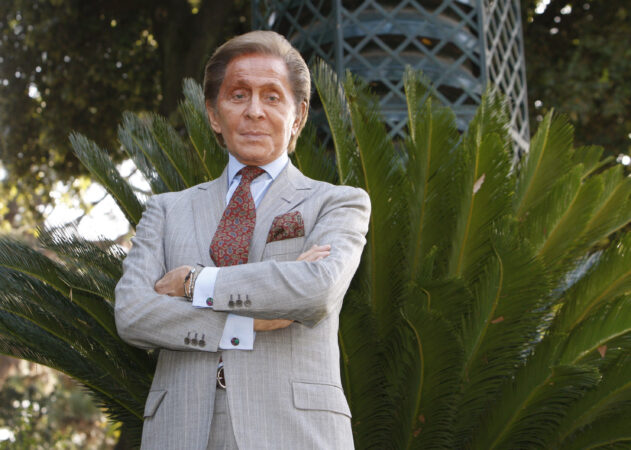
    MILAN — Valentino Garavani, the jet-set Italian designer whose high-glamour gowns — often in his trademark shade of “Valentino red” — were fashion show staples for nearly half a century, has died at home in Rome, his foundation announced Monday. He was 93.

    “Valentino Garavani was not only a constant guide and inspiration for all of us, but a true source of light, creativity and vision,″ the foundation founded by Mr. Garavani and his partner, Giancarlo Giammetti, said in a statement posted on social media.

    Universally known by his first name, Valentino, Mr. Garavani was adored by generations of royals, first ladies, and movie stars, from Jackie Kennedy Onassis to Julia Roberts and Queen Rania of Jordan, who swore the designer always made them look and feel their best.

    “I know what women want,” he once remarked. “They want to be beautiful.”

    Though Italian-born and despite maintaining his atelier in Rome, he mostly unveiled his collections in Paris, and spoke French with his Italian partner Giammetti, an entrepreneur.

    Alessandro Michele, the current creative director of the Valentino fashion house, wrote in Instagram that he continues to feel Mr. Garavani’s “gaze” as he works on the next collection, which will be presented March 12 in Rome, departing from the usual venue of Paris. Michele remembered Mr. Garavani as “a man who expanded the limits of the possible” and possessing “a rare delicacy, with a silent rigor and a limitless love for beauty.’’

    Another of Mr. Garavani’s successors, Pierpaolo Piccoli, placed a broken heart emoji under the announcement of his death. Former supermodel Cindy Crawford wrote that she was “heartbroken,” and called Valentino “a true master of his craft.’’

    Condolences also came in from the family of the late designer Giorgio Armani, who died in September at the age of 91, and Donatella Versace, who posted two photos of Mr. Garavani, saying “he will forever be remembered for his art.’’

    Italian Premier Giorgia Meloni remembered Mr. Garavani as “an indisputable maestro of eternal style and elegance of Italian high fashion.”

    Never one for edginess or statement dressing, Mr. Garavani made precious few fashion faux pas throughout his nearly half-century-long career, which stretched from his early days in Rome in the 1960s through to his retirement in 2008.

    His fail-safe designs made Mr. Garavani the king of the red carpet, the go-to man for A-listers’ awards ceremony needs. His sumptuous gowns have graced countless Academy Awards, notably in 2001, when Roberts wore a vintage black and white column to accept her best actress statue. Cate Blanchett also wore Valentino — a one-shouldered number in butter-yellow silk — when she won the Oscar for best supporting actress in 2004.

    Mr. Garavani was also behind the long-sleeved lace dress Jacqueline Kennedy wore for her wedding to Greek shipping magnate Aristotle Onassis in 1968. Kennedy and Mr. Garavani were close friends for decades, and for a spell the one-time U.S. first lady wore almost exclusively Valentino.

    He was also close to Diana, Princess of Wales, who often donned his sumptuous gowns.

    Beyond his signature orange-tinged shade of red, other Valentino trademarks included bows, ruffles, lace, and embroidery; in short, feminine, flirty embellishments that added to the dresses’ beauty and hence to that of the wearers.

    Perpetually tanned and always impeccably dressed, Mr. Garavani shared the lifestyle of his jet-set patrons. In addition to his 152-foot yacht and an art collection including works by Picasso and Miro, the couturier owned a 17th century chateau near Paris with a garden said to boast more than a million roses.

    Mr. Garavani and his longtime partner Giammetti flitted among their homes — which also included places in New York, London, Rome, Capri, and Gstaad, Switzerland — traveling with their pack of pugs. The pair regularly received A-list friends and patrons, including Madonna and Gwyneth Paltrow.

    “When I see somebody and unfortunately she’s relaxed and running around in jogging trousers and without any makeup … I feel very sorry,” the designer told RTL television in a 2007 interview. “For me, woman is like a beautiful, beautiful flower bouquet. She has always to be sensational, always to please, always to be perfect, always to please the husband, the lover, everybody. Because we are born to show ourselves always at our best.”

    Mr. Garavani was born into a well-off family in the northern Italian town of Voghera on May 11, 1932. He said it was his childhood love of cinema that set him down the fashion path.

    “I was crazy for silver screen, I was crazy for beauty, to see all those movie stars being sensation, well dressed, being always perfect,” he explained in the 2007 television interview.

    After studying fashion in Milan and Paris, he spent much of the 1950s working for established Paris-based designer Jean Desses and later Guy Laroche before striking out on his own. He founded the house of Valentino on Rome’s Via Condotti in 1959.

    From the beginning, Giammetti was by his side, handling the business aspect while Mr. Garavani used his natural charm to build a client base among the world’s rich and fabulous.

    After some early financial setbacks — Mr. Garavani’s tastes were always lavish, and the company spent with abandon — the brand took off.

    Early fans included Italian screen sirens Gina Lollobrigida and Sophia Loren, as well as Hollywood stars Elizabeth Taylor and Audrey Hepburn. Legendary American Vogue editor-in-chief Diana Vreeland also took the young designer under her wing.

    Over the years, Mr. Garavani’s empire expanded as the designer added ready-to-wear, menswear, and accessories lines to his stable. Mr. Garavani and Giammetti sold the label to an Italian holding company for an estimated $300 million in 1998. Mr. Garavani would remain in a design role for another decade.

    In 2007, the couturier feted his 45th anniversary in fashion with a 3-day-long blowout in Rome, capped with a grand ball in the Villa Borghese gallery.

    Mr. Garavani retired in 2008 and was briefly replaced by fellow Italian Alessandra Facchinetti, who had stepped into Tom Ford’s shoes at Gucci before being sacked after two seasons.

    Facchinetti’s tenure at Valentino proved equally short. As early as her first show for the label, rumors swirled that she was already on her way out, and just about one year after she was hired, Facchinetti was indeed replaced by two longtime accessories designers at the brand, Maria Grazia Chiuri and Pierpaolo Piccioli.

    Chiuri left to helm Dior in 2016, and Piccioli continued to lead the house through a golden period that drew on the launch of the Rockstud pump with Chiuri and his own signature color, a shade of fuchsia called Pink PP. He left the house in 2024, later joining Balenciaga, and has been replaced by Michele, who revived Gucci’s stars with romantic, genderless styles.

    Valentino is owned by Qatar’s Mayhoola, which controls a 70% stake, and the French luxury conglomerate Kering, which owns 30% with an option to take full control in 2028 or 2029. Richard Bellini was named CEO last September.

    A public viewing will be held at the Valentino Garavani and Giancarlo Giammetti Foundation on Wednesday and Thursday, and a funeral will be held Friday in the Basilica di Santa Maria degli Angeli e dei Martiri in central Rome.

  • Gunmen abduct over 150 worshippers from 3 churches in Nigeria

    Gunmen abduct over 150 worshippers from 3 churches in Nigeria

    ABUJA, Nigeria — Gunmen abducted more than 150 worshipers in simultaneous attacks on three separate churches in northwest Nigeria, a state lawmaker told the Associated Press on Monday.

    The attack occurred on Sunday in Kurmin Wali, a community in the Kajuru area of Kaduna state, while services and a Mass were underway at the Evangelical Church Winning All, at another church belonging to the denomination Cherubim and Seraphim, and a Catholic church, according to Usman Danlami Stingo, a lawmaker representing the area at the state parliament.

    “As of yesterday, 177 people were missing, and 11 came back. So we have 168 still missing,” he said.

    Police in Kaduna state have not commented.

    No group has taken responsibility. Such attacks are common in Nigeria, Africa’s most populous country, where multiple gangs and religious armed groups attack remote communities with limited security and government presence.

    The northern region of the country has been hit hardest.

    Similar attacks on churches have sparked allegations of the persecution of Christians by U.S. President Donald Trump and some American lawmakers. The U.S. government launched military strikes in Sokoto on Dec. 25, allegedly targeting an Islamic State group in the region.

    The Nigerian government has rejected the characterization of the country’s escalating security crises as a “Christian genocide.”

  • Christian leaders urge the protection of worshippers’ rights after protesters interrupt service

    Christian leaders urge the protection of worshippers’ rights after protesters interrupt service

    Several faith leaders called urgently for protecting the rights of worshipers while also expressing compassion for migrants after anti-immigration enforcement protesters disrupted a service at a Southern Baptist church in Minnesota.

    About three dozen protesters entered the church during Sunday service at the Cities Church in St. Paul, some walking right up to the pulpit, others loudly chanting “ICE out” and “Renee Good,” referring to a woman who was fatally shot on Jan. 7 by an ICE agent in Minneapolis during an immigration enforcement operation.

    One of the church’s pastors, David Easterwood, leads the local field office for Immigration and Customs Enforcement.

    One of the leaders of the protest, prominent local activist Nekima Levy Armstrong, said she’s also an ordained reverend.

    In a statement, the Minnesota-Wisconsin Baptist Convention called what happened “an unacceptable trauma.”

    “I believe we must be resolute in two areas: encouraging our churches to provide compassionate pastoral care to these (migrant) families and standing firm for the sanctity of our houses of worship,” Trey Turner, who leads the convention, wrote to the Associated Press on Monday. Cities Church belongs to the convention.

    “The interference was so significant that services were forced to end prematurely. Video footage captured by the protesters themselves and others show them shouting insults and accusations at youth, children, and families,” the statement said.

    The U.S. Department of Justice said Sunday it has opened a civil rights investigation.

    The recent surge in operations in Minnesota has pitted more than 2,000 federal immigration officers against a mobilized network of community activists and protesters. The Trump Administration and Minnesota officials have traded blame for the heightened tensions.

    “No cause — political or otherwise — justifies the desecration of a sacred space or the intimidation and trauma inflicted on families gathered peacefully in the house of God,” Kevin Ezell, president of the North American Mission Board, said in a statement. “What occurred was not protest; it was lawless harassment.”

    Ezell said his organization fully supports Jonathan Parnell, the pastor who was leading the disrupted service. Parnell is a missionary with Ezell’s group and serves dozens of Southern Baptist churches in the area. Cities Church did not return the AP’s requests for comment.

    U.S. Christians divided on immigration enforcement

    Christian voters and faith leaders in the United States are divided on the moral and legal dilemmas raised by immigration, including the presence of an estimated 11 million people who are in the country illegally and the spike in illegal border crossings and asylum requests during the Biden administration.

    There are divergent opinions among and within Christian denominations on whether the imperative is to care for the stranger and the neighbor or to obey laws and emphasize security. Broadly, white evangelical churches have supported stronger enforcement, while the Catholic hierarchy has spoken strongly in favor of migrant rights.

    The Southern Baptist Convention is the largest Protestant denomination in the U.S. and has a conservative evangelical theology.

    Miles Mullin, who leads the Ethics and Religious Liberty Commission of the Southern Baptist Convention, said faith leaders can and often have led protests on social issues but that he urges a firm “red line” on actions keeping others from worshipping.

    “This is something that just shouldn’t happen in America,” Mullin said. “For Baptists, our worship services are sacred.”

    Federal protections for houses of worship

    Many faith leaders were dismayed when the Trump administration announced last January that federal immigration agencies could make arrests at churches, schools, and hospitals, ending broader policies that protected sensitive spaces.

    While no immigration raids during church services have been reported, some churches, including in the Twin Cities, have posted notices on their doors saying no ICE or Border Patrol agents are allowed inside. Others have reported a drop in attendance, particularly during enforcement surges.

    Following the protest in Cities Church, Harmeet Dhillon, the assistant attorney general for civil rights at the U.S. Department of Justice, posted on social media that there “is zero tolerance for this kind of illegal behavior & we will not stand for it.”

    Dhillon posted on X that her office was investigating “potential violations of the federal FACE Act,” calling the incident “un-American and outrageous.”

    The federal 1994 Freedom of Access to Clinic Entrances Act prohibits interference or intimidation of “any person by force, threat of force, or physical obstruction exercising or seeking to exercise the First Amendment right of religious freedom at a place of religious worship.”

    White House press secretary Karoline Leavitt called the protest despicable, warning in a social media post that “President Trump will not tolerate the intimidation and harassment of Christians in their sacred places of worship.”

    Several pastors commented on the need to have better security at churches in today’s volatile political environment.

    The Rev. Joe Rigney, who was one of the founding pastors at Cities Church in 2015 and served there until 2023, said safety would have been his first concern had a group disrupted service, especially after the fatal shooting at a Minneapolis Catholic school Mass last summer.

    Legal developments, protests in Twin Cities

    Also Monday, the Department of Justice notified a federal appeals court that it will appeal a ruling that federal officers in the Minneapolis area cannot detain or tear gas peaceful protesters who aren’t obstructing authorities. The case was filed in December on behalf of six Minnesota activists who are among thousands of people observing the activities of federal immigration officers in the area.

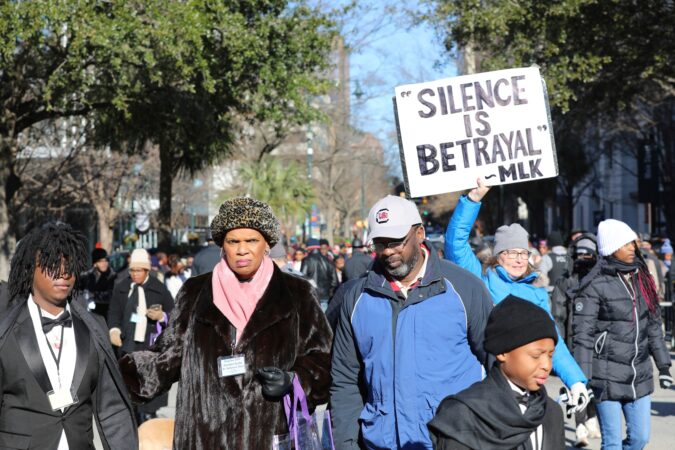
    Yet more protesters braved temperatures that dipped below zero Monday to honor Martin Luther King, Jr. Day in St. Paul. Some waved signs from vehicles bearing messages including, “What did you do while your neighbors were being kidnapped?” and “We love our Somali neighbors.”

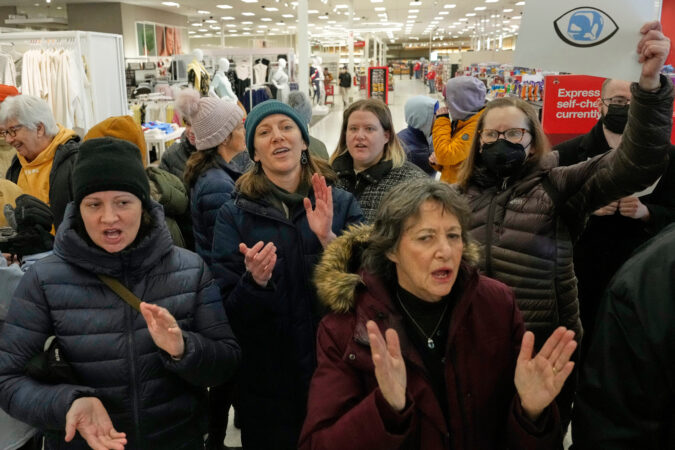
    Dozens of protesters also staged a brief sit-in at a Target store in St. Paul demanding that the retailer bar entry to federal agents. Target, headquartered in Minneapolis, has been criticized by activists after a video showed federal agents, detain two employees at a store in Richfield, Minnesota.

  • U.S. Catholic cardinals urge Trump administration to embrace a moral compass in foreign policy

    U.S. Catholic cardinals urge Trump administration to embrace a moral compass in foreign policy

    ROME — Three U.S. Catholic cardinals urged the Trump administration on Monday to use a moral compass in pursuing its foreign policy, saying U.S. military action in Venezuela, threats of acquiring Greenland, and cuts in foreign aid risk bringing vast suffering instead of promoting peace.

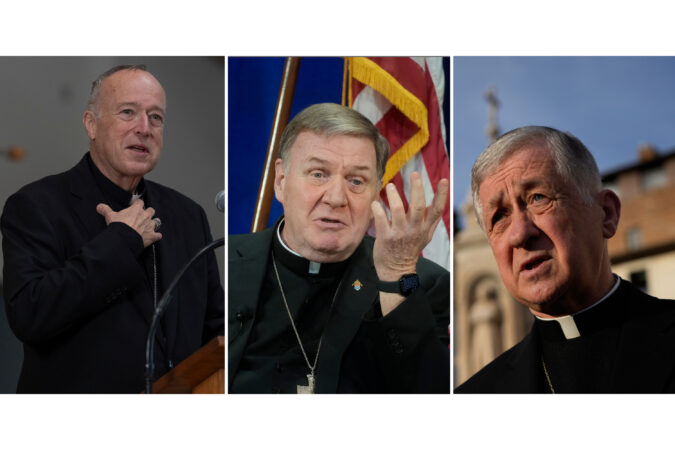
    In a joint statement, Cardinals Blase Cupich of Chicago, Robert McElroy of Washington, and Joseph Tobin of Newark, N.J., warned that without a moral vision, the current debate over Washington’s foreign policy was mired in “polarization, partisanship, and narrow economic and social interests.”

    “Most of the United States and the world are adrift morally in terms of foreign policy,” McElroy told the Associated Press. “I still believe the United States has a tremendous impact upon the world.”

    The statement was unusual and marked the second time in as many months that members of the U.S. Catholic hierarchy have asserted their voice against a Trump administration many believe isn’t upholding the basic tenets of human dignity. In November, the entire U.S. conference of Catholic bishops condemned the administration’s mass deportation of migrants and “vilification” of them in the public discourse.

    The three cardinals, who are prominent figures in the more progressive wing of the U.S. church, took as a starting point a major foreign policy address that Pope Leo XIV delivered Jan. 9 to ambassadors accredited to the Holy See.

    The speech, delivered almost entirely in English, amounted to Leo’s most substantial critique of U.S. foreign policy. History’s first U.S.-born pope denounced how nations were using force to assert their dominion worldwide, “completely undermining” peace and the post-World War II international legal order.

    Leo didn’t name individual countries, but his speech came against the backdrop of the then-recent U.S. military operation in Venezuela to remove Nicolás Maduro from power and U.S. threats to take Greenland as well as Russia’s ongoing war in Ukraine.

    The U.S. Conference of Catholic Bishops was consulted on the statement, and its president, Archbishop Paul Coakley, “supports the emphasis placed by the cardinals on Pope Leo’s teaching in these times,” said spokesperson Chieko Noguchi.

    The White House didn’t immediately respond to the AP’s request for comment on Monday.

    Cardinals question the use of force

    The three cardinals cited Venezuela, Greenland, and Ukraine in their statement — saying they “raised basic questions about the use of military force and the meaning of peace” — as well as the cuts to foreign aid that U.S. President Donald Trump’s administration initiated last year.

    “Our country’s moral role in confronting evil around the world, sustaining the right to life and human dignity, and supporting religious liberty are all under examination,” they warned.

    “We renounce war as an instrument for narrow national interests and proclaim that military action must be seen only as a last resort in extreme situations, not a normal instrument of national policy,” they wrote. “We seek a foreign policy that respects and advances the right to human life, religious liberty, and the enhancement of human dignity throughout the world, especially through economic assistance.”

    Tobin described the moral compass the cardinals wish the U.S. would use globally.

    “It can’t be that my prosperity is predicated on inhuman treatment of others,” he told the AP. “The real argument isn’t just my right or individual rights, but what is the common good.”

    Cardinals expand on their statement

    In interviews, Cupich and McElroy said the signatories were inspired to issue a statement after hearing from several fellow cardinals during a Jan. 7-8 meeting at the Vatican. These other cardinals expressed alarm about the U.S. action in Venezuela, its cuts in foreign aid, and its threats to acquire Greenland, Cupich said.

    A day later, Leo’s nearly 45-minute-long speech to the diplomatic corps gave the Americans the language they needed, allowing them to “piggyback on” the pope’s words, Cupich said.

    Cupich acknowledged that Maduro’s prosecution could be seen positively, but not the way it was done via a U.S. military incursion into a sovereign country.

    “When we go ahead and do it in such a way that is portrayed as saying, ‘Because we can do it, we’re going to do it, that might makes right’ — that’s a troublesome development,” he said. “There’s the rule of law that should be followed.”

    Trump has insisted that capturing Maduro was legal. On Greenland, Trump has argued repeatedly that the U.S. needs control of the resource-rich island, a semiautonomous region of NATO ally Denmark. for its national security.

    The Trump administration last year significantly gutted the U.S. Agency for International Development, saying its projects advance a liberal agenda and were a waste of money.

    Tobin, who ministered in more than 70 countries as a Redemptorist priest and the order’s superior general, lamented the retreat in USAID assistance, saying U.S. philanthropy makes a big difference in everything from hunger to health.

    The three cardinals said their key aim wasn’t to criticize the administration, but rather to encourage the U.S. to regain is moral standing in the world by pursuing a foreign policy that is ethically guided and seeks the common good.

    “We’re not endorsing a political party or a political movement,” Tobin said. The faithful in the pews and all people of good will have a role to play, he said.

    “They can make an argument of basic human decency,” he said.

  • U.S. political climate spurs efforts to reclaim the MLK holiday

    U.S. political climate spurs efforts to reclaim the MLK holiday

    As communities across the country on Monday hosted parades, panels, and service projects for the 40th federal observation of Martin Luther King Jr. Day, the political climate for some is more fraught with tensions than festive with reflection on the slain Black American civil rights icon’s legacy.

    In the year since Donald Trump’s second inauguration fell on King Day, the Republican president has gone scorched earth against diversity, equity, and inclusion initiatives and targeted mostly Black-led cities for federal law enforcement operations, among other policies that many King admirers have criticized.

    One year ago, Trump’s executive orders, “Ending Illegal Discrimination and Restoring Merit-Based Opportunity” and “Ending Radical and Wasteful Government DEI Programs and Preferencing,” accelerated a rollback of civil rights and racial justice initiatives in federal agencies, corporations, and universities. Last month, the National Park Service announced it will no longer offer free admission to parks on King Day and Juneteenth, but instead on Flag Day and Trump’s birthday.

    A.R. Bernard, founder, pastor, and CEO of the Christian Cultural Center in Brooklyn, told an audience gathered at King’s home church in Atlanta Sunday that the Trump administration is attempting to rewrite history.

    “We are living in a moment where America is being tempted to forget the painful truth of its Black history. Slavery being renamed as labor, segregation reduced to a footnote, racial terror explained away as exaggeration,” Bernard said, speaking at Ebenezer Baptist Church in Atlanta. “This is irresponsible historical revisionism.”

    Urgent calls to unite against injustice were interspersed with energetic gospel at Ebenezer, where King preached. A sense that civil and human rights are at stake infused the comments by many speakers there Monday.

    U.S. Sen. Raphael Warnock, a Georgia Democrat and Ebenezer’s senior pastor, invoked a story about King fighting for the Voting Rights Act after Congress passed the Civil Rights Act. He urged the crowd to keep pushing against Trump’s policies, sweeping immigration enforcement, and what he described as attempts from the “Trump-Vance regime” to sow division.

    “They are trying to weaponize despair and convince us that we are at war with one another,” Warnock said.

    The fatal shooting this month of an unarmed Minneapolis woman in her car by Immigration and Customs Enforcement agents sent there to target the city’s Somali immigrant population, as well as Trump recently decrying civil rights as discrimination against white people, have only intensified fears of a regression from the social progress King and many others advocated for.

    Still, the concerns have not chilled many King holiday events planned this year. Some conservative admirers of King say the holiday should be a reminder of the civil rights icon’s plea that all people be judged by their character and not their skin color. Some Black advocacy groups, however, were vowing a day of resistance and rallies nationwide.

    ‘We’ve always strived to be a more perfect union’

    In a recent interview with the New York Times, Trump said he felt the Civil Rights Movement and the reforms it helped usher in were harmful to white people, who “were very badly treated.” Politicians and advocates say Trump’s comments are what are harmful, because they dismiss the hard work of King and others that helped not just Black Americans but other groups, including women and the LGBTQ+ community.

    “I think the Civil Rights Movement was one of the things that made our country so unique, that we haven’t always been perfect, but we’ve always strived to be this more perfect union, and that’s what I think the Civil Rights Movement represents,” Gov. Wes Moore, Maryland’s first Black governor and only the nation’s third elected Black governor, said this week in an interview with the Associated Press.

    Maya Wiley, president and CEO of the Leadership Conference on Civil and Human Rights, one of the nation’s oldest and largest civil rights coalitions, said the Trump administration’s priorities make clear it is actively trying to erase the movement.

    “From healthcare access and affordable housing to good paying jobs and union representation,” Wiley said, “things Dr. King made part of his clarion call for a beloved community are still at stake and is even more so because (the administration) has dismantled the very terms of government and the norms of our culture.”

    The White House did not respond to a request for comment.

    In Washington Monday, hundreds of people marched along Martin Luther King Jr. Avenue, braving cold weather to honor the civil rights leader. The parade began decades ago as part of the effort to establish a national holiday in King’s honor.

    Sam Ford, a retired broadcaster and member of the Martin Luther King Jr. Day Parade Committee, helped bring the parade back in 2012.

    “We got to continue to do this because not just of Dr. King, but of what he stood for,” Ford said. “The struggle continues.”

    The conservative Heritage Foundation think tank is encouraging the holiday’s focus to stay solely on King himself. Brenda Hafera, a foundation research fellow, urged people to visit the Martin Luther King Jr. National Historical Park in Atlanta or reread his “I have a dream” speech, delivered on the steps of the Lincoln Memorial in Washington nearly 63 years ago.

    But using the holiday as a platform to rally and speak about “anti-racism” and “critical race theory” actually rejects King’s ambition for the country, Hafera argued.

    “I think efforts should be conducted in the spirit of what Martin Luther King actually believed and what he preached. And his vision was a colorblind society, right,” Hafera said. “He says very famously in his speech, don’t judge by the color of your skin, but the content of your character.”

    Groups call for holiday of reclamation

    The NAACP, the nation’s oldest civil right organization, which had a myriad MLK Day events planned for Monday, asserted that the heightened fears among communities of color and in immigrant communities meant King Day observances should take a different tone. People would have to put their safety first, even if their government doesn’t, said Wisdom Cole, NAACP senior national director of advocacy.

    “As folks are using their constitutional right to protest and to speak out and stand up for what they believe in, we are being faced with violence. We are faced with increased police and state violence inflicted by the government,” Cole said.

    The Movement for Black Lives, a coalition of organizations affiliated with the Black Lives Matter movement, has planned its events under the banner “Reclaim MLK Day of Action.” Organizers planned demonstrations in Atlanta, Chicago, and Oakland, Calif., among other cities, over the weekend and Monday.

    “This year it is more important than ever to reclaim MLK’s radical legacy, letting his wisdom and fierce commitment to freedom move us into the action necessary to take care of one another, fight back, and free ourselves from this fascist regime,” Devonte Jackson, a national organizing director for the coalition, said in a statement.

    Indiana school cancels historic MLK Day event

    For the first time in its 60-year history, Indiana University in Indianapolis canceled its annual Martin Luther King dinner. Over the years, the event drew notable guest speakers including Shirley Chisholm, the first Black woman elected to Congress, and activist Angela Davis.

    The reasoning was “budget constraints,” according to a social media post by the school’s Black Student Union. However, the group said it was worried this was “connected to broader political pressures.” A few students have since organized smaller community dinners or “eat-ins” to fill the void, WTHR-TV in Indianapolis reported.

    Meanwhile, the St. Anthony of Padua Catholic Church in Westbrook, Maine, canceled an MLK Day service due to “unforeseen circumstances,” according to the parish website. But a member of the church’s social justice and peace committee told NewsCenterMaine.com that the pastor was concerned about people’s safety amid rumors of ICE agents being in the area.

    Overall, there have been few reports of King Day events being scaled down or canceled altogether.

    In Memphis, Tenn., the National Civil Rights Museum planned to go about its annual King Day celebration as normal. The museum is located on the site of the former Lorraine Motel, where King was shot on April 4, 1968. The museum was offering free admission on the holiday, an annual tradition.

    “This milestone year is not only about looking back at what Dr. King stood for, but also recognizing the people who continue to make his ideals real today,” museum President Russell Wigginton said.