Nestled under all the success of last season for the Union is that their manager, Bradley Carnell, proved yet again that he’s one of Major League Soccer’s bona fide tacticians.
In his first season at the helm, he came within one point of the club’s record, a statistic that originally took more than a decade to amass. He guided the Union to their second Supporters’ Shield, which is given to the club with MLS’s best regular-season record.
With 30 teams vying for the shield, that’s no small thing.
While aspirations of their second MLS Cup final appearance were dashed in the Eastern Conference quarterfinals, success was already apparent, and Carnell, 48, was orchestrator, the proof in the form of the 2025 MLS Coach of the Year award.
However, in the afterglow of a banner year for the Union, Carnell knows the limelight, particularly for him, is fleeting. He’ll never admit it, but his vision board, whether real or imaginary, surely includes the notion that success this season would right a lot of wrongs along his coaching path.
He knows it. It’s why in a conversation with Union sideline reporter Sage Hurley, he said: “I take personal accolades and forget about them very quickly. In our business, it’s very fluid, very daily, and we focus on the present.”
Bottom line: Judge this manager not by what he has done, but by what he does in 2026.
Here’s why:
Been here before
It’s important to remind folks that what Carnell accomplished with the Union last season wasn’t new for him over his nine seasons in MLS. Replicating it or even eclipsing it in Year 2 would be.
Why? Because he’s well aware of just how quickly a sophomore slump can turn into a crash-and-burn.
In his previous stint as a manager, Carnell’s St. Louis City SC became the first expansion team to win its conference in its inaugural season. St. Louis topped the Western Conference with a 17-12-5 record and reached the 2023 MLS playoffs.
Like the Union this year, St. Louis crashed out of the playoffs early. It was swept in a best-of-three first-round series against Sporting Kansas City after entering the tournament with the fourth-highest point total (56) that season.
Copy and paste.
As coach of expansion team St. Louis City SC, Carnell led the team to the best regular-season record in MLS’s Western Conference.
Carnell didn’t even finish the following season. He was replaced in July following a dismal start in which St. Louis was at the bottom of the Western Conference standings with just three wins.
But in his final regular-season news conference of 2025, while answering questions about who will orchestrate player moves with sporting director Ernst Tanner on leave amid an investigation into his alleged misconduct, Carnell was asked what he learned from the season to ensure he doesn’t find himself in the same boat.
He seemed like he couldn’t wait for someone to bring it up.
“This has been an amazing journey for me as a coach,” Carnell said. “I’ve grown up, and I’ve learned a lot more through the players and the engagement and just the people here at the front office. [I’ve learned that] when there’s support, alignment, [and] collaboration, a lot can be achieved. I think we’ve shown that over the course of the year that we are all pulling in the same direction.”
A big takeaway, Carnell said, too, is just how easily he assimilated into the culture of the club, its fans, and the city. Philly feels like home for the South Africa native, as he noted that the team and front office have made it easy for him and others who felt like outsiders to want to be here.
“I think about [former Union defender] Kai Wagner, who has been here multiple years now. You would assume he’s from Philadelphia,” Carnell said. “There’s a certain edge and a drive and a determination and a quality about this group. That speaks volumes for the development of the club and the development of people, staff, and players.”
It’s safe to say the pressure Carnell will feel entering Year 2 will eclipse his second year with St. Louis. The Union made massive changes in the offseason, as proven players (like Wagner) were brokered for top dollar and replaced by some complete unknowns.
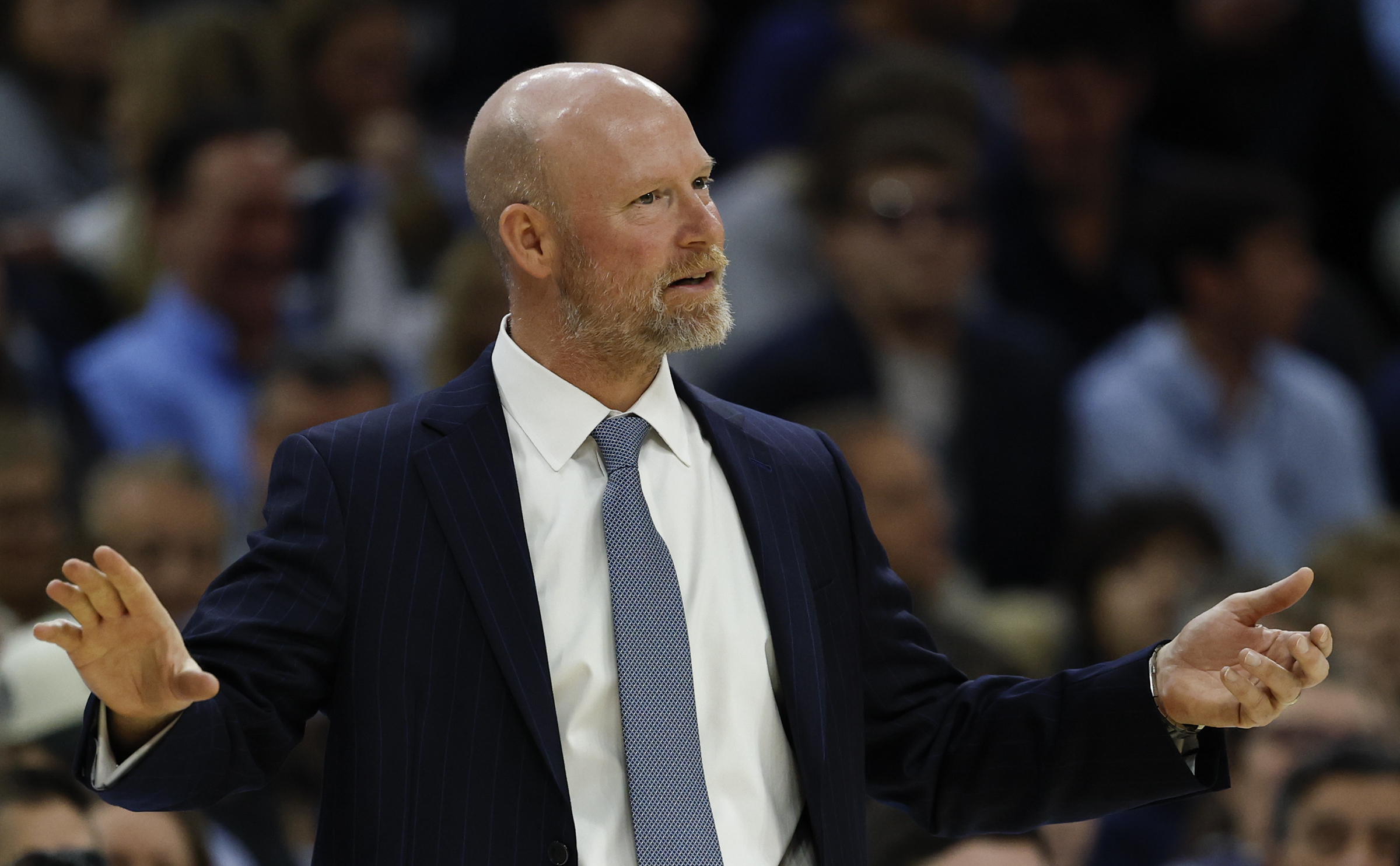
Bradley Carnell (right) was all smiles last season, celebrating the Union’s Supporters’ Shield title with midfielder Danley Jean Jaques.
Also, Carnell wasn’t operating St. Louis City during a FIFA World Cup year in a city that will host six matches. Soccer eyes will be on MLS — and just how good the local MLS club is. Especially one that was the league’s best under his guidance a year before.
Another thing he won’t admit: There is newfound pressure for the Union to come out strong — not just to further erase the pain of coming up short last season, but also because events like a World Cup tend to bring transformative change within an organization.
The club won’t admit it, but there are questions in the background that perhaps only top Union management and ownership can answer. But no one expects those questions to arise until the afterglow of the World Cup.
Union majority owner Jay Sugarman has figured out how to remain one of the league’s best clubs on a shoestring budget. Carnell is a big reason.
There also are other reasons. The obvious is that, entering a seven-week World Cup break beginning in May, sitting near the top of the Eastern Conference standings bodes well once MLS play resumes.
And while he’ll naturally mask that last factor by suggesting that the focus is “on the collective,” a familiar phrase from his first season in Philly, nothing would make people forget his sophomore slump in St. Louis more than not replicating something similar in 2026 with the Union.
“Around 11 months ago, we stepped in here in a world of our own,” Carnell said. “I hope 11 months later, through the team’s performance and collective effort, some of those questions have been answered.”
Some have, sure. But on a personal level for this manager, heading into 2026, just one more needs closure.
Players showered manager Bradley Carnell with a lot more than just praise after the team’s massive 2025 season.
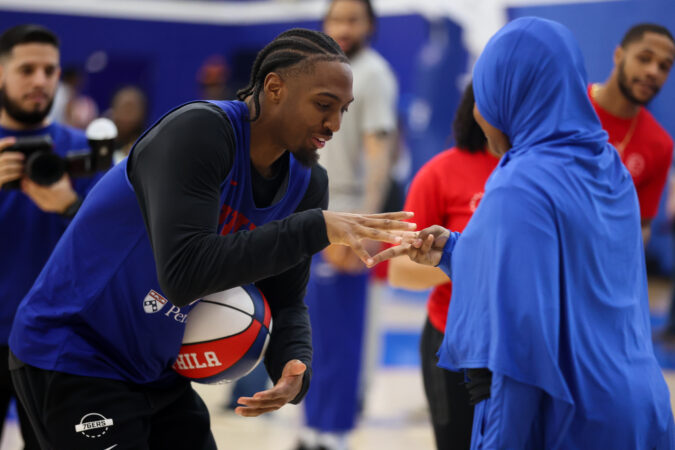
Two games into their six-game homestand, the 76ers took time for a community event at their practice facility, where they brought in in 40 local kids from Breakthrough of Greater Philadelphia.
The Sixers often attend community charity events individually or in small groups. Saturday’s event, in honor of Martin Luther King day and Mentorship Month, was a rare full team event, something the players said helped them decompress after Friday’s loss.
“It’s cool to see the entire team here, entire staff, that’s a really cool scenario,” Sixers guard Tyrese Maxey said. “I’ve never done this since I’ve been here.”
The team split into small groups with the students and competed in a series of different games, including a basketball obstacle relay course, knockout, a math station, and a rock, paper, scissors challenge featuring a few hula hoops, which many of the Sixers chose to bypass.
Through each of the four stations, the teams worked to earn points, which ultimately led to a win for star rookie VJ Edgecombe’s team.
Sixers big man Dominick Barlow enjoyed the down time with the students and his teammates.
“[I love] just being around the guys, I like these events,” Barlow said. “Obviously, when we’re around like the youth and the community, we get to show them that they mean a lot to us, and we try to give that back to them.”
Breakthrough of Greater Philadelphia is a non-profit that helps put students from underserved parts of the Philadelphia area on the path for top high schools and colleges, and helps educate and inspire the next generation of teachers through a teacher-in-residence program.
The organization was a Sixers Youth Foundation grantee and served 211 total students across grades five through 12 in 2024-25.
“Seeing the smile on some of these kids faces, obviously, some guys on the team are their favorite players, like Tyrese, VJ,” Trendon Watford said. “It’s just good to see the smile on their faces, and take a little time out of our day to make their day.”
Monday’s game against the Toronto Raptors showed who the 76ers could be.
Wednesday and Friday’s matchups against the Cleveland Cavaliers revealed who they are currently.
As much as their talent level has improved because of health and key offseason additions, these Sixers still don’t know which version of themselves will show up on any particular night, a reality they were reminded of in a 117-115 loss to the Cavs on Friday night at Xfinity Mobile Arena.
With Cleveland playing without two-time All-Star Darius Garland (right big toe soreness) and key reserve Sam Merrill (sprained right hand), the Sixers should have been able to make up ground on the fourth-place Raptors (25-18). Instead, they’re seventh in the standings.
Fortunately for the Sixers (22-18), there are 42 games remaining in the regular season.
But if it concluded today, they would be bound for the play-in tournament for the second time in three seasons. Last year, the Sixers missed the postseason entirely. And with Joel Embiid, Paul George, and Jared McCain over last season’s injuries, the hope was that the squad would be a contender in the East.
At times, they appear to be. But this season has been a roller coaster of inconsistency.
The Sixers will resume play at home Monday against the Indiana Pacers in a Martin Luther King Jr. Day game (6 p.m., NBCSP). On paper, they should defeat the Pacers, who have the NBA’s second-worst record of 10-33.
Entering this week’s games, it’s unclear if Joel Embiid (21) will play against the Pacers or the Suns.
But there are several questions the Sixers will face.
Will Embiid and George play against Indiana or on Tuesday versus the Phoenix Suns, given they haven’t been cleared to play on both nights of back-to-backs?
Can they resemble the Sixers squad that rarely missed a shot while scoring 80 first-half points in Monday’s 115-102 victory over the Raptors at Scotiabank Arena?
Or will they come out sluggish and fail to match their opponent’s intensity, as they did in Wednesday’s 133-107 loss to the Cavs (24-19)?
And will they’ll fail to close out the game as they did in Friday’s loss and in several other winnable games?
“I think seven or eight [games] this year, where we just had [it] in our hands and then slip away,” Tyrese Maxey said. “Two Detroit games up in the fourth quarter, let them slip away. Chicago [on Nov. 16], same thing. Two of those games, let them slip, and Toronto as well [on Sunday]. Both times, had them beat, kind of let the game slip away. It’s probably more. Just those are the ones that come on top of my head, but those hurt.”
On Friday, the Sixers had an 11-point cushion with 8 minutes, 47 seconds remaining. After the teams traded baskets, the Sixers missed six straight shots, as Cleveland tied the score at 102.
The Sixers responded by making four consecutive baskets to build a 111-104 cushion with 3:53 left. But they fell apart down the stretch, turning the ball over before missing five of their final six shots.
Something to remember: The Sixers have only played with a full complement of key players in their last six games. Even that’s a bit misleading, with Dominick Barlow leaving early in the third quarter of Wednesday’s game with a bruised back. That ugly setback came after the Sixers briefly looked like they’d turned the corner.
On Monday, the Sixers were on top of their game against the Raptors as the ball moved freely and they boasted balanced scoring. Maxey finished with a game-high 33 points on 10-for-16 shooting. Rookie VJ Edgecombe, his backcourt mate, added 15 points while making 5 of 6 three-pointers.
But the standout duo, considered among the league’s best young backcourts, failed to have the same scoring impact against Cleveland. Edgecombe had nine points on 3-for-10 shooting on Wednesday — and missed five of six three-pointers. He finished with 10 points on 4-for-5 shooting on Friday. However, only two of his shot attempts came after intermission. The shooting guard didn’t attempt a shot while logging 7:19 in the third quarter, and shot 1-for-2 while playing the entire fourth quarter.
Sixers guard Tyrese Maxey (0) averaged 18 points on 35.9% shooting in the past two games.
Meanwhile, Cleveland appears to be Maxey’s Kryptonite.
The point guard, an All-Star in 2023-24, entered Saturday as the league’s third-leading scorer at 30.3 points per game. However, he averaged 18 points on 35.9% shooting — including making just 4 of 16 three-pointers — in the past two games.
“They do a good job on all my ball screens, and they just put a lot of attention on me,” Maxey said of his struggles against the Cavs. “So it’s a lot of times, even when I’m coming off a ball screen with Joel, and Jarrett Allen’s guarding him … I’m throwing it back to Joel. So, I mean, that was that, and then I missed some good looks tonight.”
Maxey and the Sixers will attempt to regroup during this week’s games against the Pacers, Suns, Houston Rockets (Thursday), and New York Knicks (Saturday). They should have a great opportunity to climb up the standings with all four of those contests at home, but the Sixers are 10-11 at Xfinity and 12-7 on the road.
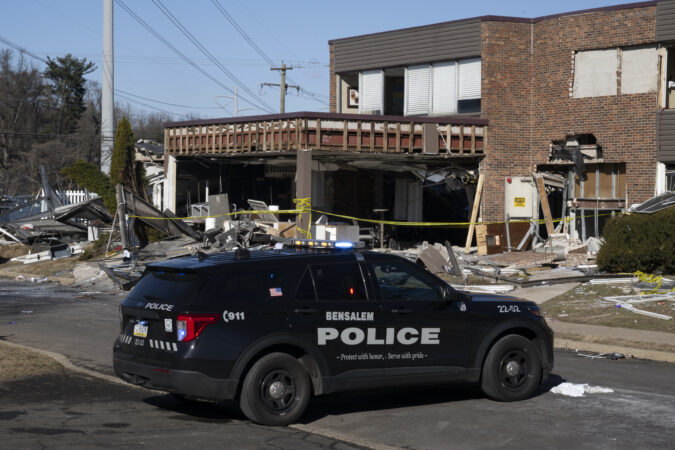
The nursing home in Bucks County where three people died last month in a natural gas explosion had a long track record of safety violations.
The exact cause of the explosion has yet to be determined, but state regulators cited the 174-bed Bristol Township facility for numerous safety violations in the three years leading up to the tragedy. The nursing home, which changed owners three weeks before the accident, was cited for over 70 health and fire safety violations since 2023, and fined more than any nursing home in the Philly area.
The Centers for Medicare & Medicaid Services (CMS) slapped a total of $418,000 fines on the facility, then named Silver Lake Healthcare Center, between 2023 and 2025, more than any other facility in Delaware, Chester, Montgomery, Bucks, and Philadelphia Counties. Major fines were issued after a resident overdosed on illegal narcotics on four separate occasions. The new owners renamed it Bristol Health & Rehab Center in 2025.
The Pennsylvania Department of Health conducts inspections of nursing homes on behalf of the federal government every 15 months, said Neil Ruhland, a spokesmanfor the Pennsylvania Department of Health. Facilities that repeatedly fail to comply with safety standards can face penalties including fines and, in rarecases, termination from Medicare and Medicaid, he said.
Across the region, a total of $5.3 million in fines have been issued to nursing homes since 2023.Nearly half the region’s nursing homes had fines, and six-figure penalties are not uncommon in the region. More than 22% of the 85 facilities fined had penalties greater than $100,000.
Fines for fire safety
In January 2023, when the facility was known as Silver Lake Healthcare Center, it was cited for a fire safety deficiency during a routine inspection. According to the report, the facility failed to maintain exit signage requirements and fire sprinkler systems. The facility also did not maintain corridor doors, which help resist the passage of smoke, on two floors, and failed to provide the required smoke barrier partitions on two floors.
These violations led to a single fire safety citation at the nursing home between 2023 and 2025. Other nursing homes in Southeastern Pennsylvania had far more, including one with 60 fire-safety citations during the same period.
Two months before the explosion, in October 2025, the state completed another inspection of the building. Some of the problems from 2023 were addressed, but not all, the report shows.
The center again failed to provide required smoke barrier partitions on two of three floors. The nursing home also failed to provide an accurate floor plan that inspectors could carry during a building safety review, failed to maintain portable fire extinguishers on one floor, and did not properly secure a room whereoxygen cylinders were stored with smoke-tight doors.
The inspection report indicates that the center had requested a Fire Safety Evaluation System (FSES), which according to CMS, “may be applicable when a facility has multiple deficiencies that may be cost-prohibitive or infeasible to correct.”
Silver Lake Healthcare Center did not respond to The Inquirer’s request for comment.
Citations for narcotics, mental health
In addition to fire safety violations, the facility has received a high number of health citations — a total of 71 issued by CMS over the past three years.
A resident overdosed on illegal narcotics on four separate occasions during a seven-month period from December 2023 to July 2024,according to a September 2024 inspection report. One time, the resident reported to investigators buying an unidentified narcotic from another resident of the facility in one incident.On another occasion, the patient obtained fentanyl that led to another overdose and a trip to an emergency department.
Despite the patient’s “history of heroin and fentanyl abuse,” according to the report, “there was no documented evidence that a consistent psychiatric, psychological counseling to address resident’s addiction was provided.”
The facility also failed to adequately supervise a resident diagnosed with schizoaffective and bipolar disorders, according to an October 2024 inspection report. An interview with a nurse aide found that the resident left the facility at 11:30 p.m. Staff were unaware until notified by police hours later.
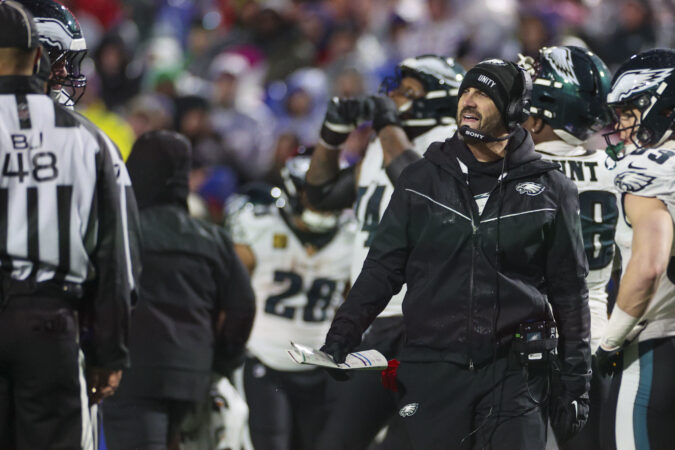
Nick Sirianni is the son of a high school football coach and a mentee of a Division III football coach. Everyone knows this about him.
When he speaks publicly, he frequently sprinkles in references to his father, Fran, and his nine years in charge of the program at Southwest Central High School in western New York. He talks of lessons learned from his years as a player and assistant under Larry Kehres at the University of Mount Union (it was Mount Union College when Sirianni was there) in northeast Ohio.
If one of Sirianni’s greatest weaknesses as an NFL head coach is that he’s often too impulsive and emotional, maybe it’s because there’s a fine line between small town and small-time, and he can’t help himself from crossing it. Still, he ain’t changin’ now, and in an honest appraisal of Sirianni’s five years with the Eagles, one can make the case that his background might be one of his greatest strengths.
Eagles executive vice president and general manager Howie Roseman (left) says the Eagles are fortunate to have an “elite” coach in Nick Sirianni.
If nothing else, it might be one of the reasons that he’s still in this position and, if Howie Roseman was to be believed Thursday, will be for more than a minute.
“Obviously,” Roseman said, “I sit here, and I feel incredibly grateful that I’m working with someone who … is elite at being a head coach, elite at building connections with our team, elite talking about fundamentals, game management, situational awareness, bringing the team together, holding people accountable. When you’re looking for a head coach, those are really the job descriptions.”
They’re not much different from the job descriptions of a head coach at any level of football, and for all the suggestions that Sirianni is nothing but an empty hoodie, those qualities still matter at the sport’s highest level.
What’s more — and this is the important part as far as Sirianni’s future is concerned — they allow him to be flexible, to contour himself both to what the team needs in a given season … and what he needs to do to survive.
Think about Sirianni for a moment in contrast to his predecessor, Doug Pederson. It’s no secret that Roseman and Eagles chairman Jeffrey Lurie want a head coach who aligns with their thinking on how to win games. Boiled down, a head coach here doesn’t have much independence or power relative to others around the NFL. (The last time Lurie gave a coach such freedom, Chip Kelly started making holiday party-related demands, and Pat Shurmur ended up coaching the 2015 season finale.)
Pederson had been hired as an offensive guy, and he accepted that label and that arrangement right up until he and his team won Super Bowl LII in February 2018. Six months later, his memoir hit stores. At the end of the 2019 season, he asserted in a news conference that embattled assistants Mike Groh and Carson Walch would return — only to have Lurie say, Not so fast, Dougie.
The Eagles relationship with former coach Doug Pederson (left) shares contrasts to Nick Sirianni’s time as head coach.
One day after Pederson endorsed them, Groh and Walch were gone. A year later, after a 4-11-1 season, so was Pederson. So much for assertiveness, and so much for the notion that Pederson’s status as the orchestrator and often the lead play-caller for the Eagles’ offense would preserve his job. Once Carson Wentz and the offense collapsed, what reason was there to keep Pederson?
Because Sirianni’s personality is more tempestuous than Pederson’s, it was always fair to wonder whether, if he ever found himself in the same post-championship situation, he might try to flex a little bit, too. But he did the opposite Thursday, explaining why his close friend Kevin Patullo was no longer the offensive coordinator, suggesting that he would be open to having the new OC have the kind of say-so over the unit that Vic Fangio has over the defense.
“You’re looking to continue to evolve as an offense,” he said, “and I’m looking to bring in the guy [who is] going to best help us do that. I think that there are many different ways to be successful on offense, and everybody has different styles. Everybody has different players. And there’s many different ways to be successful.”
The cynical way to look at this, of course, is that A) Sirianni is acting out of self-preservation; and B) his presence acts as a Kevlar vest for Roseman, protecting him from any public-relations damage if he messes up the assembling of the Eagles’ roster. As great a general manager as Roseman has been, he still makes mistakes. And on those rare occasions when he makes more than his share, the perception that Sirianni is handed an outstanding team every year and that all he can do is screw it up sure takes a lot of heat off the guy who is calling the player-personnel shots.
There’s another prism through which to view Sirianni, though: that he doesn’t have to control every aspect of a team, or even one specific aspect of a team, to do his job and do it well. He doesn’t need to pick the players, design the offense, call the plays.
He’ll delegate responsibility, trust his people, fill in the gaps where he can and should. He’ll take the guys who happen to be on his team that particular year and play that particular hand. Sounds like what a high school or small-college coach does. Sounds like a formula to last a while with this particular franchise.
Here’s the glaring sign of how drunk President Donald Trump has become on his own power: his ongoing threat to seize Greenland for security reasons, “whether they like it or not.” Anything else is “unacceptable,” Trump ranted last week.
Never mind that this icebound island is an autonomous territory of Denmark, one of our longest-standing and closest NATO allies. POTUS is trying to bludgeon Copenhagen, along with seven other European allies who back the Danes, by imposing new 10 per cent tariffs on them all unless they bow to his outrageous demands.
Never mind that seizing Greenland via economic coercion or force would destroy the NATO alliance, handing Russia and China a major victory at zero cost. Never mind that polls show that only one in four Americans want Trump to take control of Greenland, and only 6% of Greenlanders want to become part of the United States.
Yet, Trump is not only treating Denmark like an enemy but openly rebuffing the rights of Greenland’s government and people, who, according to Danish law have the final say about their future.
To learn more about what Greenlanders want and why Trump’s approach draws outrage, I turned to Galya Morrell, a Greenlander of Komi ethnic origins, who was raised in the Soviet Arctic. She has led an amazing life in journalism, the arts, and Arctic adventures, alongside her late husband, the renowned Greenlandic explorer Ole Jørgen Hammeken.
Our conversation has been edited for length and clarity.
Galya Morrell stands by her husband’s box sled, which was used to transport killed game, atop the frozen sea ice of Uummannaq Fjord in Northern Greenland.
What was the first reaction of most Greenlanders to Trump’s proposal to take control of Greenland?
When we heard about Trump’s proposal during his first term, everyone took it as a joke. Back then, we still lived in a world where logic mattered. How can you buy a country? What about people living there? Many people saw The Apprentice, that’s how they knew Trump, so they thought that maybe he was going to make a new season about Greenland after he retires from his presidency, and some young aspiring actors were asking if they can join the show.
Do they take Trump seriously now, especially after Venezuela?
Now it’s different. I don’t think that Venezuela played a big role in their perception, because already, people knew that Trump became obsessed with Greenland. At first, people thought that maybe it was even good for Greenland, because finally — finally — Denmark started taking Greenland seriously. Before, many Danes saw Greenlanders as a bunch of drunks and useless folks, which they aren’t, and a burden for Denmark. After Trump said he wanted it, many Danes changed their mind.
Trump also accidentally woke up Greenlandic nationalism because the Greenlandic independence movement was sleepy and divided. Now there was a foreign bully. Nothing unites people faster than someone who treats them like furniture in the new condo purchase. Suddenly even Denmark looked like a shield [against Trump] instead of a cage.
A 1951 pact with Denmark offers the U.S. almost unlimited military access on land, air, and sea. As for mining hard-to-access critical minerals, Greenland’s government would eagerly welcome U.S. investment. So what is your take on what Trump really wants?
About 20,000 U.S. soldiers and technicians were based in Greenland [after World War II] and then suddenly they were all gone. Today only Pituffik Space Base [the former Thule Air Base] is still around with some 150 personnel. So why did the US not bring them back when it was clear that Russia rebuilt and upgraded all the former Soviet bases in the Arctic and became a threat in the region?
The United States already had Greenland, quietly, through contracts, bases, and the gravitational pull of English. But none of that had Trump’s name on it. And if your name is not on something, do you even own it?
It appears that [Trump’s need for ownership] is not logical but psychological. I think that his understanding of success or power is only when “there is a deal,” and when someone loses face — very important! And when he gets credit — even more important. Soft power, which America had in Greenland until recently, looks like nothing to him. Because none of what existed had Trump’s name on it.
Donald Trump Jr. (center) smiles after arriving in Nuuk, Greenland, in 2025.
Are there Trump influencers (or suspected intelligence agents) roaming around, trying to find or buy supporters?
As a family, we have not seen or met the “agents,” but we certainly saw some people in Nuuk, following Donald Trump Jr.’s visit a year ago, giving money and red MAGA hats to the youngsters, schoolkids, and making them say things on camera. Parents were outraged when they saw their own kids on TV, but it was too late.
What really happened when Trump Jr. visited? Why was he so eager to talk about Greenland?
My late husband, an Inuit elder and explorer, was asked to meet Trump Jr. back in 2015. He wanted to hunt musk ox in Greenland, but not where average tourists hunt. So my husband said that there are a lot of musk oxen around Hammeken Point [a mountain named after him], and he could take him there and be his guide.
They were planning the expedition for a while, until one day Junior said that he can’t go because his dad decided to run for the presidency. Later, my husband thought that maybe it was all his fault for telling Junior exciting stories about Greenland and about what was hidden there under “all this ice,” and maybe that somehow affected Trump’s father’s interest.
Some Trumpers think Greenlanders can be bought. Are some interested?
We hear rumors that he is thinking of paying $100,000 to each Greenlander. Well, it’s not a lot of money, a boat costs around that, and who will sell the country for the price of a boat? But seriously speaking, today, everyone whom I know says firmly no. There is no price tag, no matter how much. The country is not for sale.
But we live in a strange world, so I don’t know what will happen for sure. [Opposition leader] Pele Broberg is saying out loud what many politicians think quietly: that Greenland is already being pulled into the American orbit, and that it might as well try to get paid for it.
Denmark’s Foreign Minister Lars Løkke Rasmussen (right) and Greenland’s Minister for Foreign Affairs Vivian Motzfeldt (left) prepare at the Danish Embassy for a meeting with Vice President JD Vance and Secretary of State Marco Rubio in Washington on Wednesday.
Do some Greenlanders feel that way?
Yes. Especially younger people, miners, business owners, and those who feel Denmark never gave Greenland a real economy, only a welfare system. For them, a deal with America sounds like a shortcut to dignity, jobs, and finally being taken seriously.
But there is no such thing as “a deal” between a superpower and a small Arctic society. There is only dependence, dressed up as partnership.
The United States already has what it needs in Greenland: military access, strategic geography, and preferential access to resources [such as rare earths]. What it doesn’t have is legal ownership or political control. A so-called “deal” would simply move Greenland’s dependency from Copenhagen to Washington. The question is whether Greenland would still be free after it is made.
Can you imagine a U.S. military takeover attempt? What would be the consequences? Denmark and many other NATO allies are already moving small numbers of troops to Greenland as a tripwire.
My husband and I had hoped to live the rest of our years in a small village, Siorapaluk. It is such a beautiful and peaceful place. Ironically, it is 92 miles from Pituffik Space Base. We honestly thought it was the most peaceful place on Earth.
At this moment, we all — I can only talk about our family and friends — hope for a peaceful solution. Any negotiations are better than the war in the Arctic. Real war in the Arctic will be the end to everything.
If the U.S. really wanted to secure its interests in Greenland what could Trump do legitimately?
Trump still can return to U.S. bases, build new ones, invest in the population, in their education and knowledge. I see how scientists, glaciologists, marine biologists — 15 different specialties — from Japan’s Hokkaido University work together side by side with the local Inuit hunters, elders, and children in Qaanaaq, very close to Pituffik Space Base. It is an ideal collaboration; they love each other and benefit from each other. But they have a very smart leader, Shin Sugiyama. I think that President Trump could learn from him.
People take part in a march ending in front of the U.S. consulate, under the slogan, Greenland belongs to the Greenlandic people, in Nuuk, Greenland, in March.
Trump claims that if the U.S. doesn’t take Greenland, China or Russia will. What is he talking about?
Russia is expanding its military presence in the greater Arctic region. This is their priority. I was once arrested by Chechen commandoes [on a floating Russian ice base, not part of Greenland but above the disputed underwater location of the North Pole]. So, yes, activity in Arctic waters is very real, and it is increasing. China has a major interest in Greenland. [But Greenlanders and Arctic experts see no signs of the Chinese and Russian ships Trump says are lurking around Greenland.]
Greenlanders have said no to Russia and China because we don’t want them. A year ago, the Chinese bought some mining rights, but said they would bring their own workers, like what they have done in Yakutia [a northern region of Russia]. Chinese men married Russian women in Yakutia. There is a growing Chinese presence in Siberia. Soon, a majority will be Chinese, but no one sees it. [Fearing a similar outcome, the Greenland government ultimately rejected the Chinese investment.]
[Russia’s invasion of Ukraine has also increased Greenlanders’ hostility to Moscow. They are painfully aware of “how poorly Russians treat their Arctic minorities” and how “Putin took the poorest people from Arctic villages” to fight and die in Ukraine].
Should NATO troops be stationed in Greenland alongside more U.S. troops?
Today the Arctic is becoming a place where three things overlap: military early warning systems, resource competition, and new shipping routes [due to melting ice]. That combination creates the possibility of accidents and miscalculations long before it creates a planned Russian or Chinese invasion.
The biggest risk is not that someone like Russia or China suddenly wakes up and “takes Greenland.” The risk is escalation. I think that Greenland’s best protection is not a sudden flood of troops. It is a predictable security architecture that everyone understands.
Greenland needs protection. But we are old enough to remember how conflicts were avoided during the Cold War: There were rules and restraint. There was clarity. Not theater.
What do you hope for (or dread) after the failure of last week’s meeting at the White House between Vice President JD Vance and Secretary of State Marco Rubio and the foreign ministers of Denmark and Greenland?
What I hope for is very simple: that adults will run the room. Secretary of State Marco Rubio is not a performer. So I really hope meetings will not be about headlines or symbolic victories. They should be a security conversation and not a dominance ritual.
As I said before, the U.S. already has what it needs in Greenland in terms of security. My husband said not long before he departed: “Greenland does not need to be rescued. It needs to be respected.”
For Eagles fans, the end came suddenly, even if the signs were there all along. That doesn’t make the loss any easier to handle. Now that it’s all over, perhaps you’re confused and consumed by strong, unexpected emotions.
story continues after advertisement
The doctor is in
Pull up a chair. Here is a guide to identifying the five stages of grief for Eagles fans.
Denial
The first reaction to loss is denial — “How many times are they going to keep running four verticals against a quarters defense??” Your refusal to accept reality could be a psychological defense mechanism to avoid intense emotional pain, but football is a painful sport.
Anger
Anger is the birthright of a true Philadelphia sports fan. Just remember that venting your anger on other people (or homes of Eagles’ coaches) is off-limits. Whether to take out your frustrations on your TV is up to you, your significant other, and your budget.
Bargaining
If you find yourself saying something like “I’d give up my first-born child for another Super Bowl win,” perhaps amend the proposition to substitute a relative of lesser importance.
Depression
If the Eagles losing a playoff game has made you mournful and sullen, giving you feelings of emptiness and hopelessness, then welcome to life as a Philadelphia sports fan.
Acceptance
After cycling through the other stages of grief, you’ll come to this conclusion: Two Super Bowl wins in the last nine seasons is not too shabby.
story continues after advertisement
Of course, once you arrive at acceptance and you’re ready to move on to next season, we’ve got plenty of Eagles content to get you ready for the offseason.
Staff Contributors
Design: Steve Madden
Reporting: John Duchneskie
Digital Editing: Matt Mullin
Copy Editing: Tony Moss
(()=>{var R=(e,t)=>()=>(t||e((t={exports:{}}).exports,t),t.exports);var M=R(s=>{var G={0:”Jan.”,1:”Feb.”,2:”March”,3:”April”,4:”May”,5:”June”,6:”July”,7:”Aug.”,8:”Sept.”,9:”Oct.”,10:”Nov.”,11:”Dec.”};function y(e){return e===void 0&&(e=new Date),G[e.getMonth()]}var W={0:”Jan”,1:”Feb”,2:”Mar”,3:”Apr”,4:”May”,5:”Jun”,6:”Jul”,7:”Aug”,8:”Sep”,9:”Oct”,10:”Nov”,11:”Dec”};function S(e){return e===void 0&&(e=new Date),W[e.getMonth()]}function r(e){return e==null}function x(e){return typeof e==”number”&&isFinite(e)}function u(e){return x(e)&&Math.floor(e)===e}var Y=[“one”,”two”,”three”,”four”,”five”,”six”,”seven”,”eight”,”nine”],U=[“million”,”billion”,”trillion”,”quadrillion”,”quintillion”,”sextillion”,”septillion”,”octillion”,”nonillion”,”decillion”],b=[“th”,”st”,”nd”,”rd”,”th”,”th”,”th”,”th”,”th”,”th”],_=[11,12,13];function L(e){if(r(e))return””;var t=+e;return u(t)?_.indexOf(t%100)>-1?b[0]:b[t%10]:””}var Z=[“first”,”second”,”third”,”fourth”,”fifth”,”sixth”,”seventh”,”eighth”,”ninth”],K=new RegExp(/s+([^s]*)s*$/);s.apdate=function(e){return e===void 0&&(e=new Date),y(e)+” “+e.getDate()+”, “+e.getFullYear()},s.apdatetab=function(e){return e===void 0&&(e=new Date),S(e)+” “+e.getDate()+”, “+e.getFullYear()},s.apmonth=y,s.apmonthtab=S,s.apnumber=function(e){if(r(e))return””;var t=+e;return u(t)?t=10?e.toString():Y[t-1]:e.toString()},s.aptime=function(e){e===void 0&&(e=new Date);var t,n,o=e.getHours(),i=e.getMinutes(),a=i===0;if(a){if(o===0)return”midnight”;if(o===12)return”noon”}return o0?o:12):(t=”p.m.”,n=o===12?o:o-12),a?n+” “+t:n+”:”+(i<10?"0"+i:i)+" "+t},s.capfirst=function(e){if(r(e))return"";var t=String(e);return""+t.charAt(0).toUpperCase()+t.slice(1)},s.intcomma=function(e){if(r(e))return"";var t,n=+e;return x(n)?((t=n.toString().split("."))[0]=t[0].replace(/B(?=(d{3})+(?!d))/g,","),t.join(".")):e.toString()},s.intword=function(e){if(r(e))return"";var t=+e;if(!u(t))return e.toString();var n=Math.abs(t);if(n<1e6)return e.toString();var o=Math.ceil(Math.log(n+1)/Math.LN10)-1,i=o-o%3,a=t/Math.pow(10,i);return(a=Math.round(10*a)/10)+" "+U[Math.floor(i/3)-2]},s.ordinal=function(e,t){if(t===void 0&&(t=!1),r(e))return"";var n=+e;return u(n)?t&&n{n||(n=document.querySelector(“head”));let o=document.createElement(“script”);o.type=”text/javascript”,o.src=e,t&&(o.onload=t),n.appendChild(o)},A=()=>(window.PMNdataLayer?.[0]!==void 0&&window.PMNdataLayer[0])?.analytics?.user?.state===”Subscribed”,T=()=>{let t=(window.PMNdataLayer?.[0]!==void 0&&window.PMNdataLayer[0])?.analytics?.user?.state;return window.location.host.includes(“zzz-systest”)||window.location.host.includes(“pmn.arcpublishing.com”)||window.location.host.includes(“stage.fusion.inquirer.com”)||typeof t>”u”},q=()=>{let t=(window.PMNdataLayer?.[0]!==void 0&&window.PMNdataLayer[0])?.analytics?.user?.hasAdsFreeReading;return!!(t&&t==1)},m=()=>window.location.host.includes(“localhost”);var Q=()=>{q()&&document.querySelectorAll(“.js-adbox”).forEach(t=>{t.classList.add(“is-hidden”)})},k={init:()=>{Q()}};var c,E,V=()=>{c=document.getElementById(“js-inno-toast”)},X=e=>{if(!c)return;c.innerHTML=e,c.classList.add(“is-active”);let t=()=>{c.addEventListener(“transitionend”,ee,{once:!0}),c.classList.remove(“is-active”)};clearTimeout(E),E=setTimeout(t,5e3)},ee=()=>{c.innerHTML=””},l={init:()=>{V()},showToast:X};var p,j=!1,te=async()=>new Promise(e=>{setTimeout(()=>{console.log(“simulating createShareLink for localhost”),e(“https://inquirer.com/interactives”),ne()},100)}),ne=()=>{let e=document.querySelector(“.js-gift-toast-receiver”);!e||!(e instanceof HTMLElement)||setTimeout(()=>{let t=e?.querySelector(“span”);t&&(t.innerHTML=”Gift link copied to clipboard“)},20)},oe=()=>{let e=window.services?.createShareLink;e&&(p=e),m()&&(p=te),p&&se()},ie=async e=>{let t=”text/plain”,n=async()=>{try{return await p(window.location.pathname)}catch{e.dataset.state=”error”,l.showToast(“Hmm, we couldn’t generate a gift link…”)}},o=new ClipboardItem({[t]:n()});await navigator.clipboard.write([o]).catch(i=>{console.log(i),l.showToast(“Couldn’t copy to clipboard, try again?”),e.dataset.state=”error”}),l.showToast(“Gift link copied to clipboard!”),e.dataset.state=”complete”},se=()=>{document.querySelectorAll(“.js-gift”).forEach(t=>{(A()||m()||T())&&t.classList.add(“is-available”)}),document.querySelectorAll(“.js-gift-button”).forEach(t=>{t instanceof HTMLButtonElement&&t.addEventListener(“click”,()=>{t.classList.contains(“disabled”)||(t.dataset.state=”loading”,j=!0,ie(t),setTimeout(()=>{t.dataset.state=”ready”},2e3))})});let e=document.querySelector(“.js-gift-toast-receiver”);!e||!(e instanceof HTMLElement)||re(e)},re=e=>{new MutationObserver(n=>{for(let o of n){let i=[…o.addedNodes].at(0);if(!(i instanceof HTMLElement))return;j&&l.showToast(i.outerHTML)}}).observe(e,{subtree:!0,childList:!0})},P={init:()=>{oe()}};var ae=()=>{window.addEventListener(“message”,e=>{if(e.data[“datawrapper-height”]){let t=e.data[“datawrapper-height”];for(let n in t)document.querySelector(`#datawrapper-chart-${n}`).setAttribute(“height”,t[n])}})},ce=()=>{document.querySelectorAll(“.js-datawrapper-graphic”).forEach(e=>{h(`https://datawrapper.dwcdn.net/${e.dataset.id}/embed.js`,null,e)})},le=()=>{window.addEventListener(“message”,e=>{let t=e.data;document.querySelectorAll(`iframe[src*=”${t.id}”]`).forEach(o=>{o.style.height=`${t.height}px`})},!1)},de=()=>{document.querySelectorAll(“.js-pym-graphic”).forEach(e=>{if(typeof window{new window.pym.Parent(e.id,e.dataset.iframe)};typeof window.pym>”u”?h(“https://pym.nprapps.org/pym.v1.min.js”,t):t()}})},D={init:()=>{ae(),ce(),de(),le()}};var d,ue=()=>{document.querySelectorAll(“.js-hover”).forEach(e=>{e.addEventListener(“click”,()=>{C(e)}),e.addEventListener(“mouseenter”,()=>{C(e)}),e.addEventListener(“mouseout”,()=>{I(e)})}),window.addEventListener(“scroll”,()=>{d!==null&&pe()})},pe=()=>{(d>window.scrollY+100||d{I(e)})},C=e=>{e.classList.add(“is-visible”),d=window.scrollY},I=e=>{e.classList.remove(“is-visible”),d=null},N={init:()=>{ue()}};var f,fe=(e,t)=>{f=f||window.PMNdataLayer,f?f.push({event:”misc_event”,eventAction:e,eventLabel:t}):window.location.hostname.includes(“localhost”)?console.log(“Analytics event:”,e,t,”(not actually being sent due to localhost)”):console.log(“Failed to push analytics event”,e,t)},H={event:(e,t)=>{fe(e,t)}};var $=1,v=class{constructor(t){this.el=t,this.contentPosition=”default”,this.possibleSteps=new Array,this.currentStep=null,this.offset=window.innerHeight*.9,this.instanceOfSteps=$,$++,this.setPossibleSteps(),this.updateContent(),this.bindings()}setPossibleSteps(){this.el.querySelectorAll(“.js-steps-step”).forEach(t=>{t.dataset.step&&this.possibleSteps.push(t.dataset.step)})}bindings(){window.addEventListener(“scroll”,()=>{this.updateContent()}),window.addEventListener(“resize”,()=>{this.updateContent()})}updateContent(){this.updateCurrentStep()}updateCurrentStep(){let t;if(this.el.querySelectorAll(“.js-steps-step”).forEach((o,i)=>{o.getBoundingClientRect().top{let w=”is-“+i,g=”is-“+a;this.possibleSteps.indexOf(i){document.querySelectorAll(“.js-steps”).forEach(e=>{new v(e)})}};var he=()=>{},O={init:()=>{he()}};var B={init:()=>{k.init?.(),P.init?.(),D.init?.(),N.init?.(),F.init?.(),O.init?.(),l.init?.()}};var me=()=>{},z={init:()=>{me()}};var ve=document.querySelector(“.js-inno”),J=()=>{B.init(),z.init()};ve?J():new MutationObserver((t,n)=>{if(document.querySelector(“.js-inno”)){n.disconnect(),J();return}}).observe(document,{attributes:!0,childList:!0,subtree:!0});})();
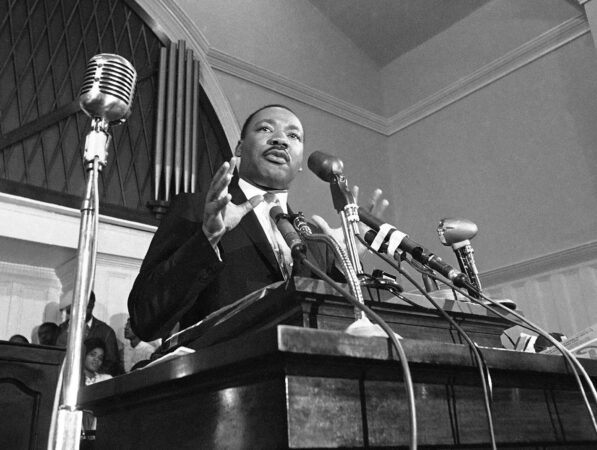
The limousine door burst open, and the Rev. Dr. Martin Luther King Jr. stepped out onto the sidewalk in front of Dennis Kemp’s South Philadelphia school.
Kemp was 13 that day in October 1967, a member of the stage crew and the basketball team asked by the principal of Barratt Junior High to greet the school’s surprise special guest.
“In just about every Black household that I went into those days, there were three pictures hanging: Jesus, John Kennedy, and Dr. King,” said Kemp, now 72. “To actually meet this guy, it just blew me away.”
“What is your life’s blueprint?” King asked the students. “This is a most important and crucial period of your lives, for what you do now and what you decide now at this age may well determine which way your life shall go.”
The community will mark the historic moment Monday, on Martin Luther King Jr. Day, with a showing of the speech in the auditorium of the school now known as Childs Elementary, then a day of service projects inside the building. One group hopes to apply to havea historical marker commemorating the visit placed outside the school.
Kemp is glad that people still view and discuss King’s speech. Although he was a child, he sensed that he was part of something significant.
Though nearly 1,000 students had packed into the Barratt auditorium, crowding into aisles and leaning over balconies, the room was silent save for King’s voice, Ben Farnese, then the school’s principal, told The Inquirer in 2006. In a nearby overflow room, 450 more students watched King on closed-circuit TV.
“I took it in,” said Kemp, who was in the auditorium. “I said, ‘I’m going to keep this with me as long as I live.’”
Charles Carter, a ninth grader who was in the auditorium, remembers the quiet.
“Just figure — kids can be a little rowdy,” Carter said. “But we were transfixed, we were glued. We weren’t rowdy that day.”
Jeffrey Miles, another Barratt student, had a good seat that day. He had heard a speaker was coming to school, and he was excited — he thought it might be Georgie Woods, the prominent DJ.
After he heard King speak, he couldn’t help himself.
“I had the end seat, and I jumped up out of my seat,” said Miles, who had turned 14 a few weeks before King spoke. “The speech was so exhilarating and so electrifying, I couldn’t control myself. He was walking down the aisle with [DJ] Georgie Woods, and I said, ‘Dr. King, can I shake your hand?’”
King said yes. Miles grabbed his hand, which was sweaty — a detail that sticks in his mind, along with the sound of the Barratt students clapping thunderously for King.
A belief in ‘somebodiness’
King was in town for a “Stars for Freedom” show at the new Spectrum, opened the prior month in South Philadelphia.
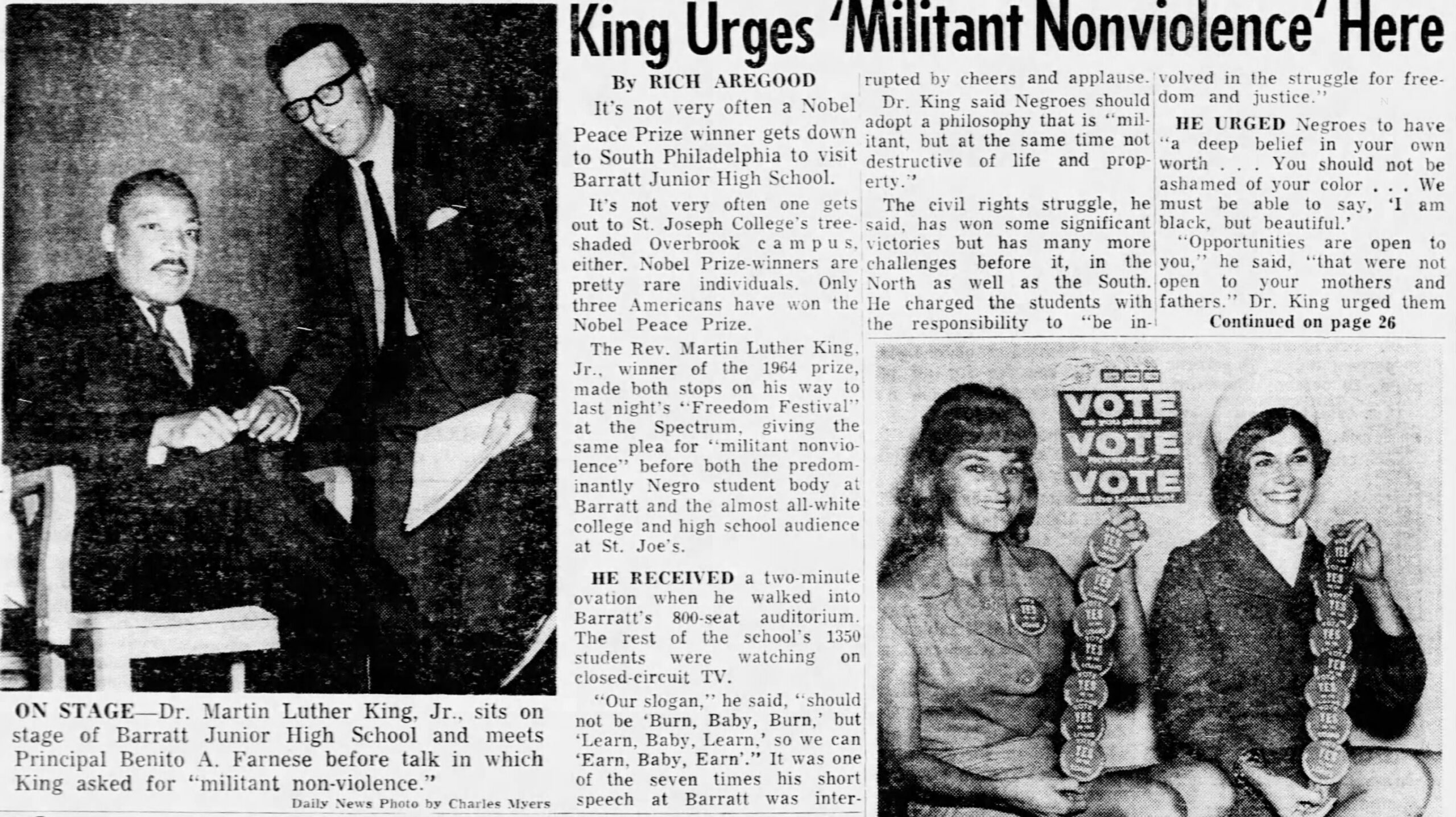
The Philadelphia Daily News recounted Martin Luther King Jr.’s visit to Barratt Junior High in October, 1967.
“I know you’ve heard of that new impressive structure called the Spectrum, and I know you’ve heard of Harry Belafonte and Aretha Franklin and Nipsey Russell and Sidney Poitier and all of these other great and outstanding artists,” King said. He told the students to urge their parents to attend. “And I hope you will come also, for it will be a great experience and, by coming, you will be supporting the work of the Civil Rights Movement.”
King did not use notes, Farnese said. He spoke for 20 minutes, an address that would eventually be known as his “What is Your Life’s Blueprint?” speech.
The Barratt students, seventh, eighth, and ninth graders, were poised to move into a time that would determine the course of the rest of their lives.
The great civil rights figure, who had by that time already won the Nobel Peace Prize, told the young people to have “a deep belief in your own dignity, your own worth, and your own somebodiness. Don’t allow anybody to make you feel that you are nobody.”
Take pride in your color, your natural hair, King told the students, most of whom were Black.
“You need not be lured into purchasing cosmetics advertised to make you lighter, neither do you need to process your hair to make it appear straight,” King said. “I have good hair and it is as good as anybody else’s in the world. And we’ve got to believe that.”
‘Learn, baby, learn’
King urged the crowd to set upon a path to excellence, whatever that looks like.
“I say to you, my young friends, that doors are opening to each of you — doors of opportunity are opening to each of you that were not open to your mothers and your fathers,” King said. “And the great challenge facing you is to be ready to enter these doors as they open.”
Kemp remembers being surprised that King came to South Philadelphia.
“Our neighborhood was pretty poor,” said Kemp, who grew up as one of nine children in a family that struggled. “There really wasn’t too much to look forward to in our neighborhood.”
King acknowledged the “intolerable conditions” faced by many of the children he addressed. But, he said, it was incumbent on them to stay in school, to build a good life.
“Set out to do a good job and do that job so well that the living, the dead, and the unborn couldn’t do it any better,” King said. “If it falls to your lot to be a street sweeper, sweep streets like Michelangelo painted pictures.”
The civil rights hero told students to commit to “the eternal principles of beauty, love, and justice. Don’t allow anybody to pull you so low as to make you hate them.”
King, who encouraged peaceful resistance, urged “a method that can be militant, but at the same time does not destroy life or property.”
“And so our slogan must not be ‘Burn, baby, burn,’” King said, referring to a chant that had become associated with the 1965 Watts riots in Los Angeles. “It must be ‘Build, baby, build. Organize, baby, organize.’ Yes, our slogan must be ‘Learn, baby, learn’ so that we can earn, baby, earn.
“And with a powerful commitment, I believe that we can transform dark yesterdays of injustice into bright tomorrows of justice and humanity.”
‘I’ll never forget it’
Some of the members of the Barratt class in the room that day soared: Kevin Washington, who was on the basketball team with Kemp, went on to become the first Black president of the national YMCA.
Kemp was bright, but his family’s economic struggles weighed on him, he said. He dreamed of college, but it wasn’t in reach. He ended up leaving South Philadelphia High without a diploma, eventually earning a GED.
He raised children, built a life working — often in maintenance. He spent time as a school basketball coach.
After suffering medical and marital issues, Kemp fell on hard times. He spent four months without a home, sleeping in parks and at 30th Street Station.
“Dr. King’s speech really helped,” he said. “That used to come to mind when I was on the street. I’ll never forget it.”
Kemp rallied; he now lives in an apartment in South Philadelphia.
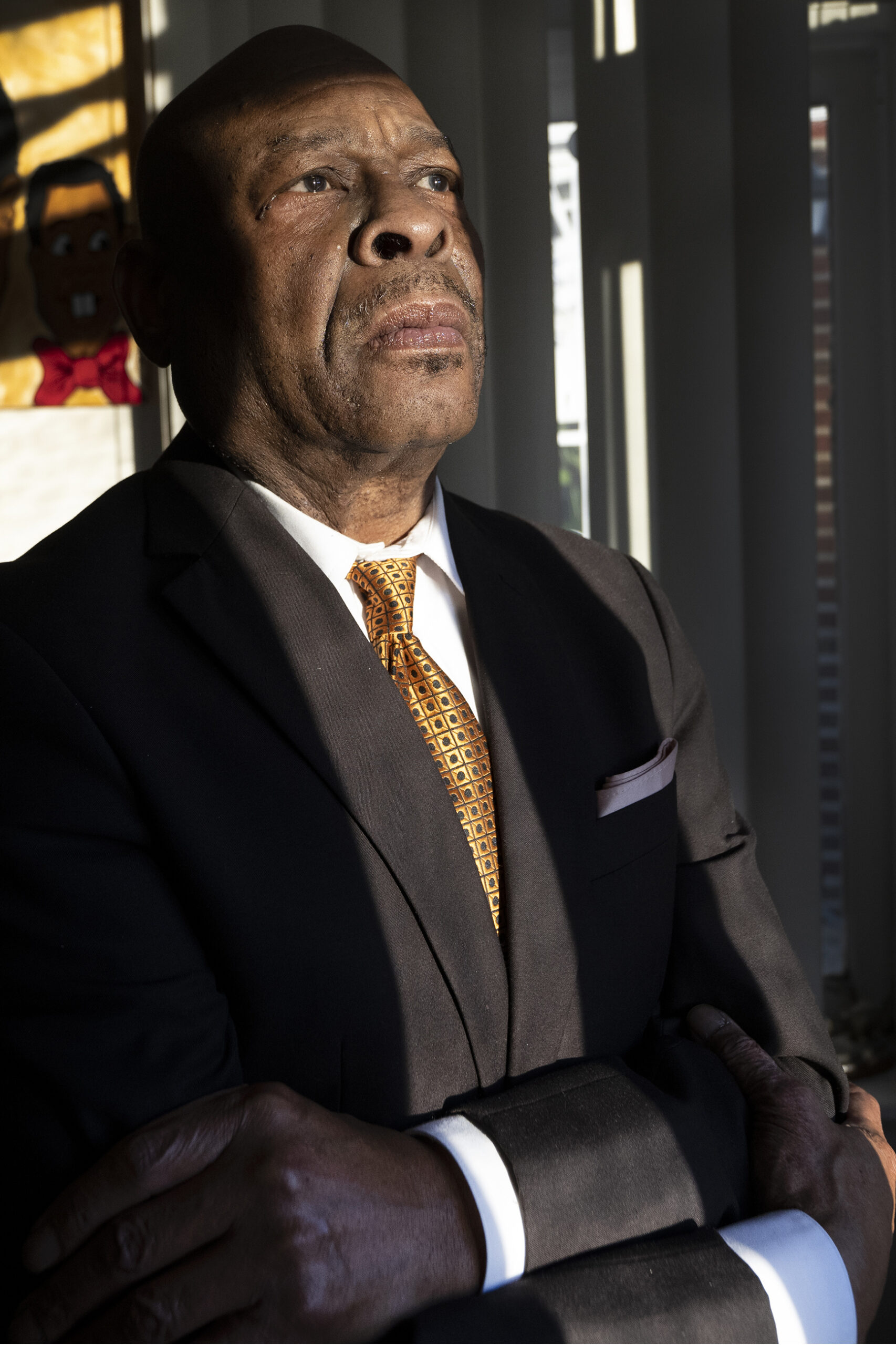
Jeffrey Miles is photographed at his home in Philadelphia on Friday, Jan. 16, 2026. Miles was 13 in October 1967 when he shook the hand of the Rev. Dr. Martin Luther King Jr. and witnessed a speech that altered the course of his life.
The speech also altered the course of Miles’ life.
“I was a member of a gang in South Philly,” said Miles, now 72. “I never paid attention to adults and teachers. But that day I paid attention to Dr. King.”
King’s words — reach for more, do your best, no matter your struggles — resonated. He buckled down at school, graduated from high school, from college. He became an optician and even taught students at Salus University.
“When Dr. King said, ‘instead of burn, baby, burn, learn, baby learn,’ that gave me a window,” said Miles, who lives in West Oak Lane. “It gave me hope.”
Six minutes was all it took for the things that had to have worried Kevin Willard ahead of Villanova’s Saturday night showdown with St. John’s to make the difference.
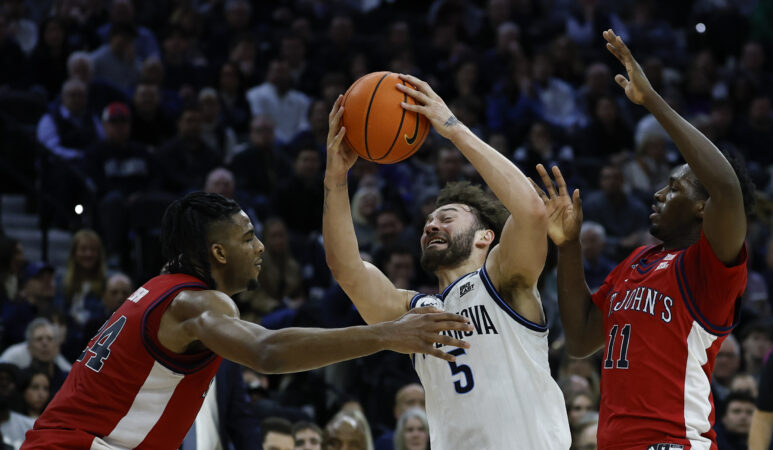
Villanova’s deficit at halftime was just one point, but by the time St. John’s converted the fifth Villanova turnover of the second half into a layup, the deficit was 56-39 with 14 minutes to go in an eventual 86-79 St. John’s victory.
Some inherent disadvantages were working against Villanova at Xfinity Mobile Arena. Chief among them were the size, strength, and experience that St. John’s possesses, and the way its defensive pressure can be unrelenting. Three of Villanova’s top five scorers — Acaden Lewis, Bryce Lindsay, and Matt Hodge — are in their first or second season playing college basketball. The Red Storm, meanwhile, starts four seniors to Villanova’s one. All of that showed during a 20-4 run.
St. John’s had 12 offensive rebounds to Villanova’s seven. Four of the 12 came during that fateful six-minute stretch. Each team had eight turnovers by halftime, but Villanova finished with 14, five during the opening six minutes of the second half, and St. John’s had just one over the final 20 minutes. The Red Storm converted those Villanova turnovers into 17 points. St. John’s had 42 paint points to Villanova’s 22.
The youthful Wildcats eventually got back in the game and trailed by five with 6 minutes, 36 seconds left and again inside of a minute to play. But St. John’s was too big, too strong, and too experienced for Villanova to get over the hump, no matter how hard junior Tyler Perkins and senior Devin Askew — who scored 23 and 21 points, respectively — tried.
Villanova’s lone senior starter, center Duke Brennan, a transfer from Grand Canyon, was no match for his experienced Big East counterparts. Zuby Ejiofor had 17 points and seven rebounds. Bryce Hopkins had 20 and six. Brennan was minus-14 on the night. Lewis finished with a season-low three points and a season-high six turnovers and was on the bench for the final 11 minutes.
Lewis, who was also minus-14, looked like a freshman, which has only happened a few times this season. Hodge normally scores 10.6 points per game but was held to four. Lindsay entered Saturday scoring 15.2 points per game and scored 11, all in the second half.
“Acaden, Bryce, Matt — freshman, freshman, sophomore — against grown men,” Willard said. “That’s why Devin and Tyler played well, because they’re grown men. They’re physical, able to play against a St. John’s where I think Acaden, Bryce, and Matt are all trying to figure out, ‘How do I play when I play against a physically dominant team?’ We’ve struggled against physically dominant teams for that reason.”
Saturday night offered Villanova (14-4, 5-2 Big East) a chance for its first real signature win. Instead, it showed, for now, where the Wildcats are. They have beaten teams projected to make the NCAA Tournament like Wisconsin and Seton Hall, but they have been knocked off by the three big dogs on the schedule so far: BYU, Michigan, and now St. John’s. Villanova is where it is — ranked 25th in the NCAA’s NET rankings and 27th at KenPom as of Saturday — in large part because it has beaten the teams it’s supposed to beat.
Villanova entered Saturday as the 21st team in ESPN bracket guru Joe Lunardi’s projected NCAA Tournament field. The best of all the No. 6 seeds. St. John’s, meanwhile, was 26th. Saturday should at least cause a flip-flop.
“You’ve got to sit back as a coach every once in a while and realize there is a process to this,” Willard said. “Sometimes you’ve got to play bad and go back and watch film and kind of … we did some things in the second half late, defensively, that made no sense.”
It is not a talent thing, Askew said. Villanova has the players, but it needs to play in games like Saturday’s to get better.
“It’s an experience thing,” said Askew, a sixth-year senior who is averaging 18 points off the bench in his last three. “As they play more games in atmospheres like that, they’ll get better. … They just have to get used to it and they will.”
Villanova coach Kevin Willard believes his team is still learning to deal with physical opponents.
The good part for Villanova is that very few teams in the Big East are built to hurt Villanova the way St. John’s can.
The Wildcats are back at the Finneran Pavilion on Wednesday night against Georgetown, which is 1-6 in the Big East. After that is another big test — a road game at No. 3 UConn next Saturday afternoon that will give Villanova a chance to quickly show what it learned from its step up in competition.
“It’s a little bit of a learning process,” Willard said. “This group, they have a great attitude, they work hard. We’re going to have some bumps in the road. It’s a part of conference play.
“We’re not at the level where we’re going to pitch a shutout. We can’t give up 50 points in the second half. We can’t give up nine offensive rebounds in the second half. We can’t come out and turn the ball over three times. That’s all part of the learning curve a little bit.”
The long-lost demo tape had always held a certain mythos in Charlotte Astor’s imagination.
For years, the Cherry Hill teen had heard stories about it, recorded about 30 years ago by her mother’s very loud, very short-lived, teenage hardcore band, Seed.
Shannon Astor, now 47, had been a vocalist for the group, just 14 or 15 years old, at a time when female representation within the genre was rare. Within a year or so, the group had disbanded — but before it did, the group, which typically practiced in a member’s parents’ basement, recorded a single demo. There had been only a few dozen copies produced back then, and they had all sold, scattering out around the South Jersey area.
For Charlotte, the tape became a kind of white whale — a relic of her mother’s hard-charging past, something the teen occasionally scoured the web for, to no avail.
She’d never heard her mother’s band. And she wanted to. Badly.
“Ninety-five percent of what I have about my mother is in the stories she tells me,” says Charlotte, 16, a junior at Cherry Hill High School East.
But a demo was something tangible. Something concrete.
“A demo,” she decided, “I can find.”
And so one night last spring, that’s what she set out to do.
She had little to go on: A rough estimate of when the demo would have been released (1993-94), a general geographic location (South Jersey), and a single lyric (“In the wind of the AM shadows cling to nearby trees as season shifts to satisfy the light from above”).
“I have been looking for this tape for 4 years,” she wrote in an appeal to her 1,000 or so Instagram followers, “… and it would mean the absolute world to me to find this tape.”
Butsomething about her search — this desire to connect with a parent, to bridge a gap three decades wide — resonated. It became, within the tight-knit confines of the hardcore music scene, a united pursuit.
At an age when most teenagers couldn’t get far enough away from their parents, here was one launching a quixotic quest to better understand hers.
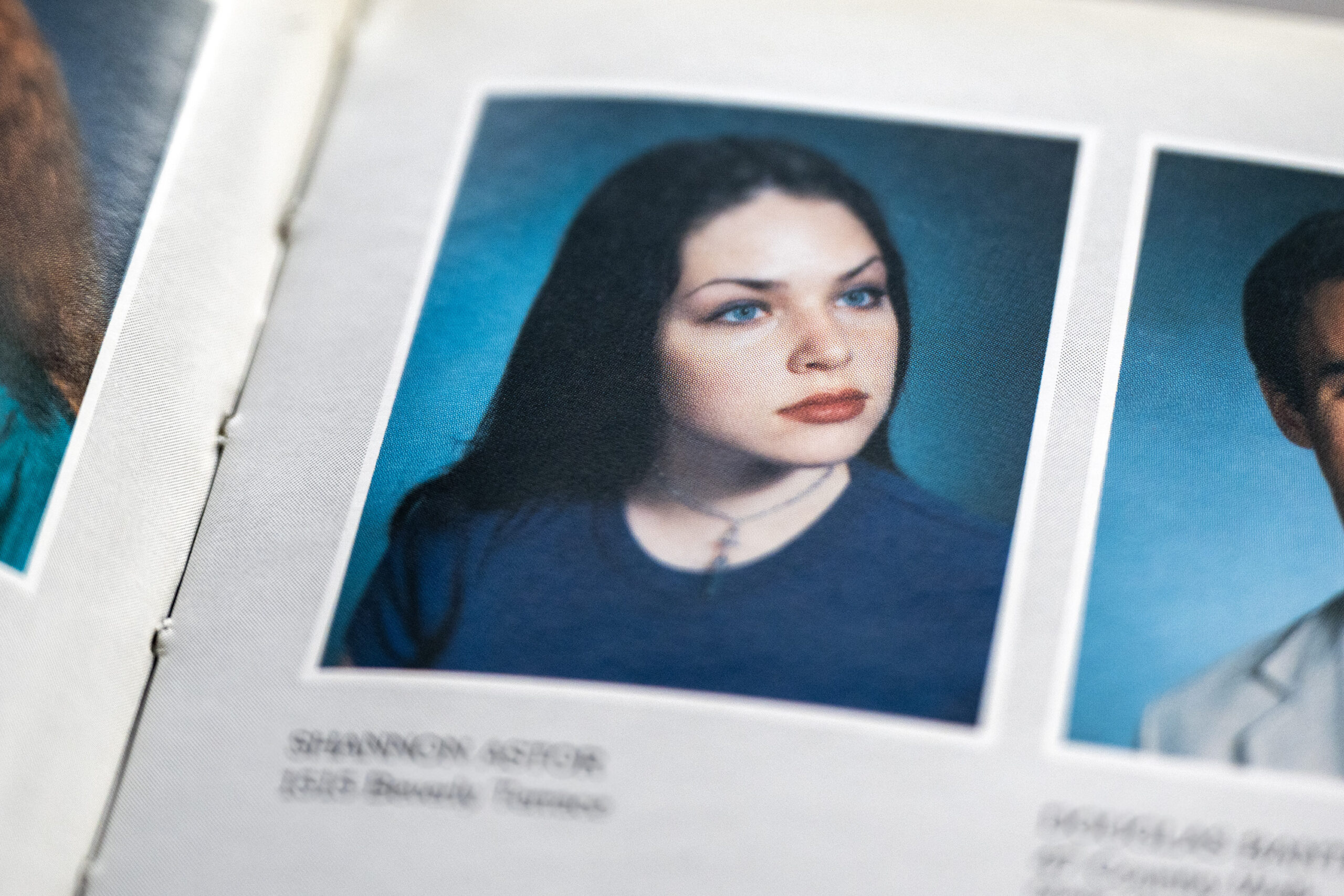
A senior class photo of Shannon Astor in the 1996 Cherry Hill High School East yearbook. Now 47, Shannon was previously in a hardcore band called Seed.
Soon, strangers from across the country were digging through old boxes in basements, or tagging old running buddies from Jersey’s 1990s hardcore scene in social media posts. Some reached out to old producers from the area, wondering whether the demo might have made its way into some dusty studio corner.
Messages poured in, too — hundreds of them — with suggestions ranging from the plausible to the outlandish. Had she tried getting in touch with Bruce Springsteen’s people? You never know what the Boss might have stowed away in some mansion closet.
“I suddenly had communication with so many people who I thought I would never in my life have any connection with,” Charlotte said. “California to Jersey, and everything in between.”
The lead singer of a well-known Jersey straight-edge band of the era, Mouthpiece, joined the search, messaging Charlotte after others reached out to him about the tape. (He vaguely remembered her mother, Shannon, but not the band.)
Much of the outside help, Charlotte notes, has come from the hardcore community.
Indeed, much of Charlotte’s young life is rooted in the same hardcore music scene that her mother’s once was. Like Shannon before her, Charlotte spends many nights at hardcore shows around the area, photographing the scene for the magazine she self-publishes, “Through Our Eyes.” And like her mother previously, she’s a member of the “straight-edge” hardcore community, a group with a shared collection of ideals that includes abstaining from drinking or drugs. (Her first flirtation with teenage rebellion came when she snuck out of the house one night to go to her favorite record store.)
And though her mother does not necessarily share Charlotte’s zeal for locating the old tape — “I’m not waiting for some garage band demo to be unearthed,” Shannon joked — she understands what it would mean to her daughter to have it.
“It’s special to me only because of how much she needed to hear it,” said Shannon. “I’m just so pro-Charli and everything that she does … But this is her journey, and something that was intrinsically important to her.”
To those in the scene, meanwhile, the response has been very hardcore.
“A bunch of people banding together to help this random girl find her mom’s thing,” said Quinn Brady, 19, of New York, and a friend of Charlotte’s. “Most people assume that hardcore people are not very nice or friendly. [But] there’s this inherent kinship. It connects people across the nation in a way that not a lot of other genres of music do.”
A recent selfie by Charlotte Astor (right) and her mother, Shannon Astor, taken at Reading Terminal Market.
Those outside the hardcore scene have been no less enthralled, however.
In December, after NJ.com picked up the story, further extending its reach, a documentary filmmaker reached out about the possibility of doing a film on her quest.
Last year, after posting in some “old-head” hardcore Facebook groups about the tape, Shane Reynolds — a member of the Philly-based hardcore band God Instinct — stumbled upon what appeared to be the most promising lead yet.
“I found the guy who allegedly made the demo,” Reynolds said.
But when she got the man on the phone, Reynolds says, it proved to be a dead end.
The closest Charlotte came was last year, not long after she first posted about the demo on Instagram. Her mom’s former bandmate in Seed, convinced he must have kept something from that period, recovered from storage an old cassette that featured a recording of a single Seed practice session.
Charlotte took it home, pushed it into the stereo in her bedroom. She stared at the ceiling as the tape began to play and 30 years fell away.
For the first time, she could put a sound to the stories she grew up hearing.
“The first thing I heard was a few seconds of my mom talking,” Charlotte said. “That’s my mom, when she was 16. I’m listening to a clip of my mother, listening to her at the same age I am.”
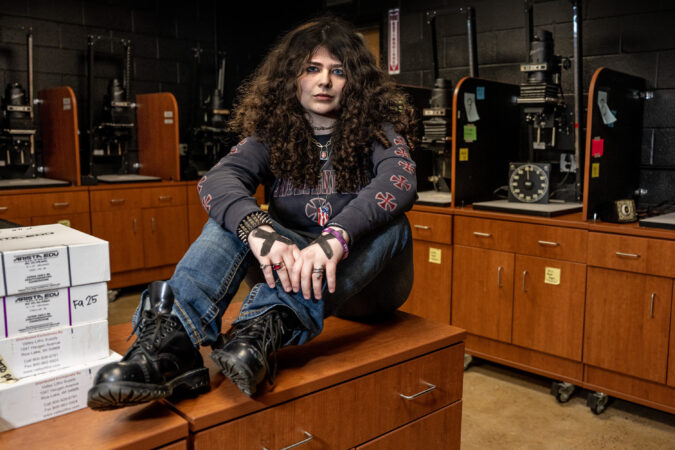
Charlotte Astor, a junior at Cherry Hill High School East, and her vintage 35mm film Nikon camera in the school’s photography classroom.
Still, that small taste has only reinforced her devotion to unearthing the actual demo.
Charlotte remains realistic about her odds of finding it. No, it’s not likely to be found in some radio station’s studio. And no, Bruce Springsteen is almost certainly not in possession of a three-decades old demo tape from her mother’s teenage years.
But some graying hardcore fan from the ’90s, with a penchant for hoarding and a cluttered garage?
Stranger things have happened.
“I have confidence — unwavering confidence — that someone has it,” Charlotte says. “And that I will get my hands on it.”