Pennsylvania’s richest man contributed an undisclosed amount to President Donald Trump’s presidential transition, which raised slightly more than $14 million.
Jeffrey Yass, a billionaire GOP megadonor, appeared on a list of 46 individuals — obtained by the New York Times and published Wednesday — who helped bankroll Trump’s transition. The publication of the list came a full year after Trump publicly promised to disclose the donors.
The transition team said it spent $13.7 million, according to the Times.
Yass’ name appearing on the list of donors was not shocking, as the billionaire has frequently used his financial capital to support Republican candidates both in Pennsylvania and nationally.
Commerce Secretary Howard Lutnick, who cochaired Trump’s transition team and is Haverford College’s largest donor, also donated to the transition.
“President Trump greatly appreciates his supporters and donors; however, unlike politicians of the past, he is not bought by anyone and does what’s in the best interest of the country,” Danielle Alvarez, a spokesperson for the Trump transition, said in a statement to the Times. “Any suggestion otherwise is simply false.”
There had been a back-and-forth as to whether the Trump transition team would release the names of the donors, and transition officials refused to sign an agreement that caps individual donations at $5,000 and prohibits foreign donations. The agreement with the General Services Administration would have required the publication of names of contributors and donation amount within 30 days of the inauguration.
Prior administrations, including the first Trump administration, had signed this agreement.
Mayor Cherelle L. Parker unveiled her planning process for the future of Market East earlier this month to a room packed with many of the city’s top developers, lobbyists, and business leaders.
Her news conference followed the announcement that the alliance between the Philadelphia 76ers and Comcast had plans to demolish buildings on the 1000 block of Market Street, without saying what they plan to do with the soon-to-be vacant space.
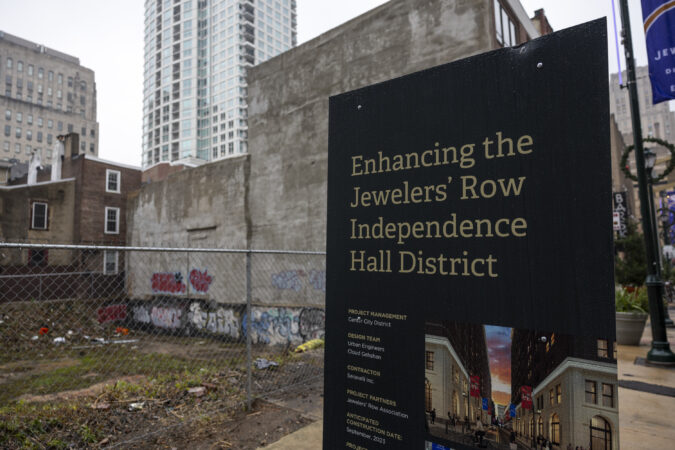
A Comcast executive’s promise to “turbocharge” development on the beleaguered corridor did not quiet dissent in the packed room from a group of historic preservationists who stood solemnly holding signs reading “No More Holes On Market Street” and “No Plan, No Demo.”
The moment captured a recurring dynamic in modern Philadelphia, a city where over 70% of buildings reportedly date to before 1960 but only 4.4% of them have a degree of protection from demolition by the Historical Commission.
Now two bills in City Council would require property owners to get a building permit for a new structurebefore they move forward with demolition.
“This bill is about putting commonsense guardrails in place,” said Councilmember Jeffery “Jay” Young, who represents much of North Philadelphia and part of Center City.
His bill, which covers his entire district, requires a building permit before a property owner can demolish a structure, with exceptions for dangerous buildings.
“It ensures property owners are prepared to move forward responsibly and that residents aren’t stuck living beside another empty lot with no timeline or plan,” Young said in a statement.
“This isn’t about slowing down development; it’s about preventing speculative demolition that destabilize blocks. This is about preserving communities,” Young said.
Councilmember Jamie Gauthier’s bill would enact similar rules for parts of University City, where higher education institutions are dominant, as part of a larger package of land-use regulations.
Builder and developer advocacy groups say the legislation is a potential new burden on a key economic sector that’s been flagging in recent years.
The Building Industry Association (BIA), the trade association for residential developers, cautioned that new regulations were especially unwelcome in a time of higher interest rates and high construction material prices, especially as Parker makes housing a centerpiece of her agenda.
“I’m not sure why Council would create more barriers for delivering new homes,” said Sarina Rose, president of the BIA and an executive with the Post Brothers development firm. “It’s a really bad time to do that. Unfortunately, some old buildings simply are not good fits for adaptive reuse.”
The BIA and its allies are backing legislation that would make it easier to demolish some older buildings for new construction.
Councilmember Mark Squilla introduced legislation the week before Thanksgiving that would weaken protections for structures nominated to the Philadelphia Register of Historic Places.
At the same time, Parker promises to pursue legislation in the next year to prompt adaptive reuse or demolition of underused buildings by offering a 20-year property tax abatement.
Demolition policy in other cities
In a city as old as Philadelphia, razing buildings is often a fraught process.
Currently the only safeguards against demolition come with a successful nomination to the Philadelphia Register of Historic Places, and in the handful of neighborhoods protected by conservation zoning overlays, property owners have to get building permits before demolition (a template for Gauthier and Young’s bills).
But given the city’s economic and demographic doldrums in the second half of the 20th century, municipal government enacted most of the demolitions of unsafe and abandoned buildings, usually in lower-income neighborhoods.
Mayor John F. Street’s Neighborhood Transformation Initiative, the centerpiece of his administration, spent half its $300 million (in George W. Bush-era dollars) on demolishing thousands of buildingsin the early 2000s.
That dynamic changed in the last decade, as low interest rates and a surge of new residents juiced real estate development to levels not seen in the city for generations. The private sector began to regularly outpace city government in demolition permits, as developers cleared the way for new projects.
Preservationists pushed back. Under Mayor Jim Kenney’s administration (2016-24), the movement demanded new policies such as a demolition review requirement. Before an applicable building could be razed, municipal authorities reviewed its historic merits and adaptive potential.
Similar policies of varying strength exist in cities from Santa Monica, Calif., to Chicago. In the latter case, it applies to buildings from before 1940 that were included in a citywide survey of historic places.
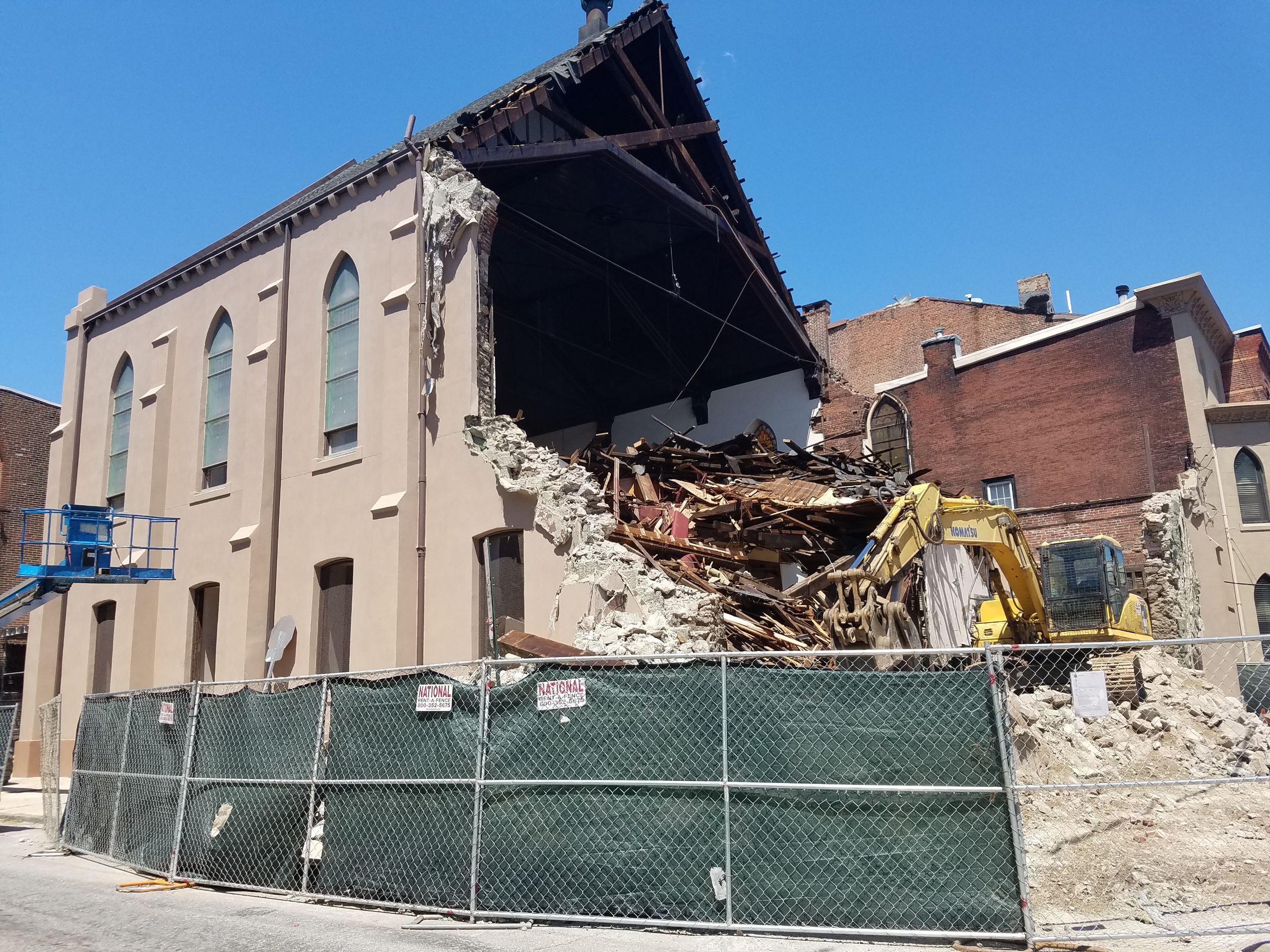
Demolition of New Light Beulah Baptist Church at 17th and Bainbridge Streets, a block below South Street.
During Kenney’s administration, a preservation task force called for a survey and demolition delay as in Chicago, but no elected officials championed the ideas.
Laws like the ones Gauthier and Young are proposing are less common but are used in municipalities like Spokane, Wash., and Pasadena, Calif. Similarregulationsexist for properties in Philadelphia’s conservation districts.
In Spokane, the regulations apply to buildings in the downtown core, those along commercial corridors and buildings on the National Register of Historic Places, which is more of an honorary designation that affords protections.
“You have to have that building permit in hand, plus you have to show us that you have the financial backing to build that replacement building,” said Megan Duvall, Spokane’s historic preservation officer. “If you also can’t show us that you have the construction loan in hand, we won’t allow you to demolish that building.”
Why City Council is acting now
The sudden renewal of interest in demolition policy began when St. Joseph’s University sold much of its West Philadelphia campus, acquired through a merger with University of the Sciences in 2022, to a charter school operator founded by student housing mogul Michael Karp.
After the sale, Gauthier proposed placing controls on the sprawling higher education footprint in her district.
As higher education comes under acute financial and demographic pressure, she fears that building sales by struggling universities could result in demolition and resale of newly vacant lots to developers without the wherewithal to complete projects or speculators with no desire to build quickly.
“The safety and quality-of-life in our neighborhoods should not be disrupted by incomplete or uncertain projects,” Gauthier said in a statement. “I believe requiring responsible development practices is a commonsense approach in today’s uncertain development market.”
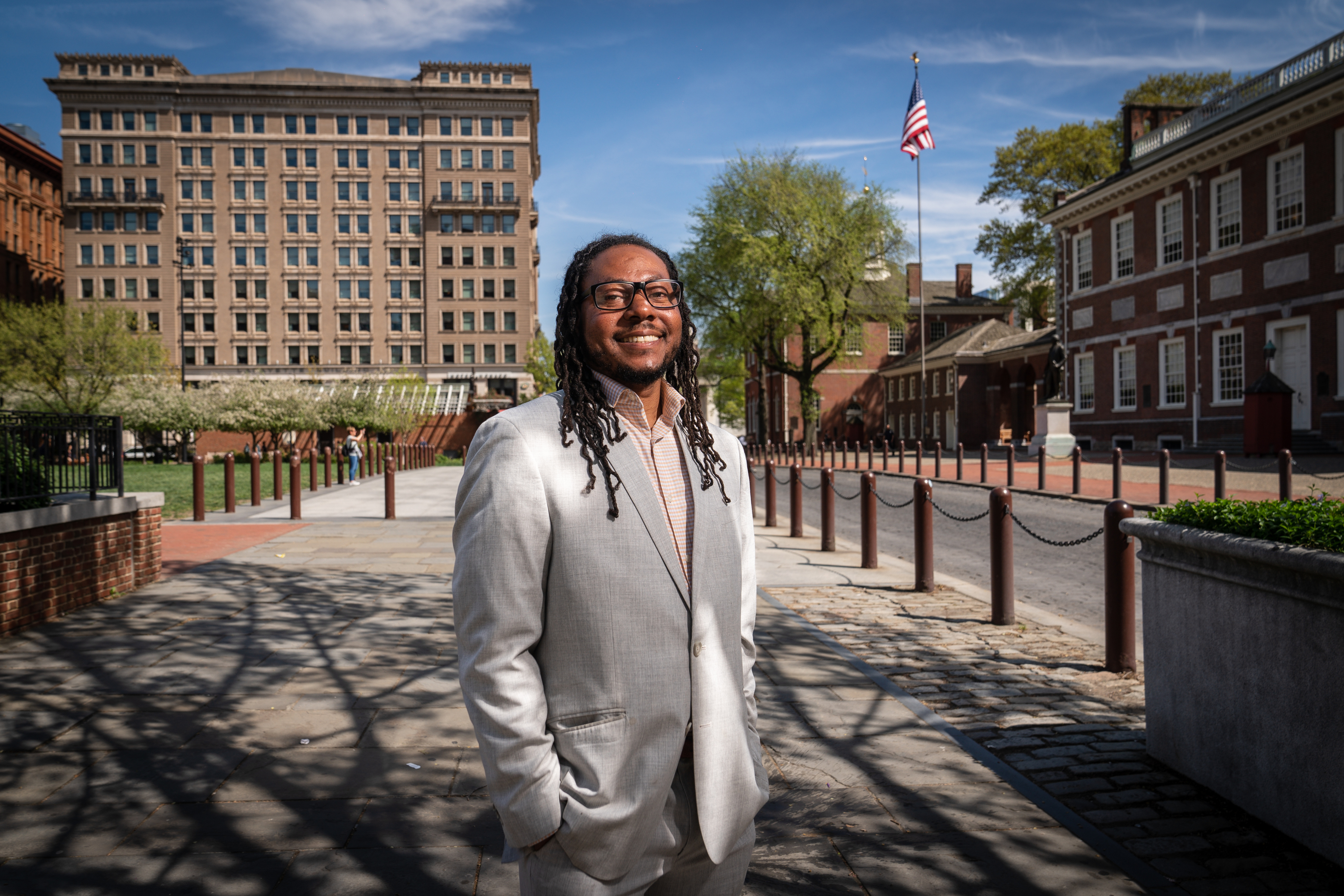
Jeffery “Jay” Young outside Independence Hall.
Young’s bill covering much of North Philadelphia and parts of Center City followed the introduction of Gauthier’s legislation. Neither bill has been passed by City Council.
According to the Philadelphia Planning Commission, from January 2022 through November 2025 approximately 580 demolition permits were issued in Young’s district. The Department of Licenses and Inspections said that with a few tweaks, his proposed bill would be enforceable.
Young says his legislation was inspired by frequent calls from constituents who hate the vacant lots that dot their neighborhoods and are frustrated with promised development that never comes to fruition. Both bills exempt buildings in poor condition that are considered dangerous.
While welcoming this spate of demolition regulation, preservationists would prefer citywide policies, not district by district.
“These bills are important first steps, and this is the moment to build them into a modern, citywide framework consistent with approaches already used in several peer cities,” said RePoint, the preservation advocacy group that protested the mayor’s Market East announcement, in an unsigned statement.
Real estate industry backlash
At the same time, Philadelphia’s development industry is embarking on its own campaign to ease existing preservation rules and to push back against these new bills. Both Gauthier’s and Young’s bills have been critiqued by business groups and by the zoning lawyers who often represent developers.
“This is one-tenth of the city of Philadelphia, just based upon a political subdivision [that] changes every 10 years,” Matthew McClure, a prominent zoning attorney, said in testimony about Young’s bill before the Planning Commission. “It’s the exact opposite of planning.”
Groups including the Building Industry Association are backing a new bill from Squilla that the Preservation Alliance for Greater Philadelphia fears will stoke more demolitions.
It would require a new 30- to 60-day window before a building nominated to the local register of historic places could be given protection, which critics believe will incentivize owners to tear down empty buildings quickly.
The mayor’s proposed 20-year property tax abatement proposal for adaptive reuse projects also allows room for demolition if buildings are considered unadaptable, which preservationists fear will bring back the wrecking ball-forward incentives of the city’s earlier abatement policies.
In the last week, groups like the Preservation Alliance have pivoted from thinking about new demolition regulations to playing defense.
“We’re still trying to wrap our heads around it all,” said Paul Steinke, the Preservation Alliance’s executive director. “It’s a lot to take in, and it’s happening after a decade or so of a building boom where we lost a chunk of the historic fabric.”
A former Fox broadcasting executive submitted a letter to the Federal Communications Commission on Tuesday asking the agency to reconsider a petition seeking to terminate the license of the network’s Philadelphia-area affiliate, Fox29.
Preston Padden, who worked as a senior executive at the broadcasting network controlled by Rupert Murdoch and his family in the 1990s, has been a vocal critic of Fox News and its coverage of the 2020 election and an early supporter of the petition.
In his letter to the FCC, Padden writes that Fox and the Murdochs lied to the American people by reporting that the 2020 election was stolen, despite knowing that it was untrue.
“Fox and the Murdochs’ lies to the American people had consequences,“ Padden wrote. ”Those lies undermined public confidence in the electoral process.”
Neither Padden nor Fox’s attorneys responded to requests for comment.
Padden’s letter urged the FCC to respond to an appeal of the order denying the challenge to Fox29’s license.
The FCC dismissed in January a challenge to Fox29’s license renewal that was brought by the Media and Democracy Project, a self-described nonpartisan nonprofit. The petition, originally filed in July 2023, accused Fox of broadcasting “knowingly false narratives about the 2020 election” on the cable-based Fox News Channel.
Former FCC chairperson Jessica Rosenworcel, who was appointed by President Joe Biden, said in a statement accompanying the dismissal of the petition, alongside three other complaints targeting local TV stations, that the order was intended to direct the agency to “take a stand on behalf of the First Amendment.”
“We draw a bright line at a moment when clarity about government interference with the free press is needed more than ever,” she said.
“We can do this the easy way or the hard way,” Carr said following remarks Kimmel made about the assassination of conservative commentator and activist Charlie Kirk. “These companies can find ways to change conduct, to take action, frankly, on Kimmel, or there is going to be additional work for the FCC ahead.”
Arthur Belendiuk, the attorney for the Media and Democracy Project, said he expects to “grow old and die” before Carr issues a response. Even if Carr denies the appeal, he would open the possibility of an appeal to court.
Belendiuk believes that’s a risk the FCC chair will not take.
“If you, Brendan Carr, think you are right, issue a decision and defend it in court,” the attorney said. “Be a man.”
Staff writers Rob Tornoe and Nick Vadala contributed to this article.
A trail planned in Montgomery County is getting new funding to take the project to the next step.
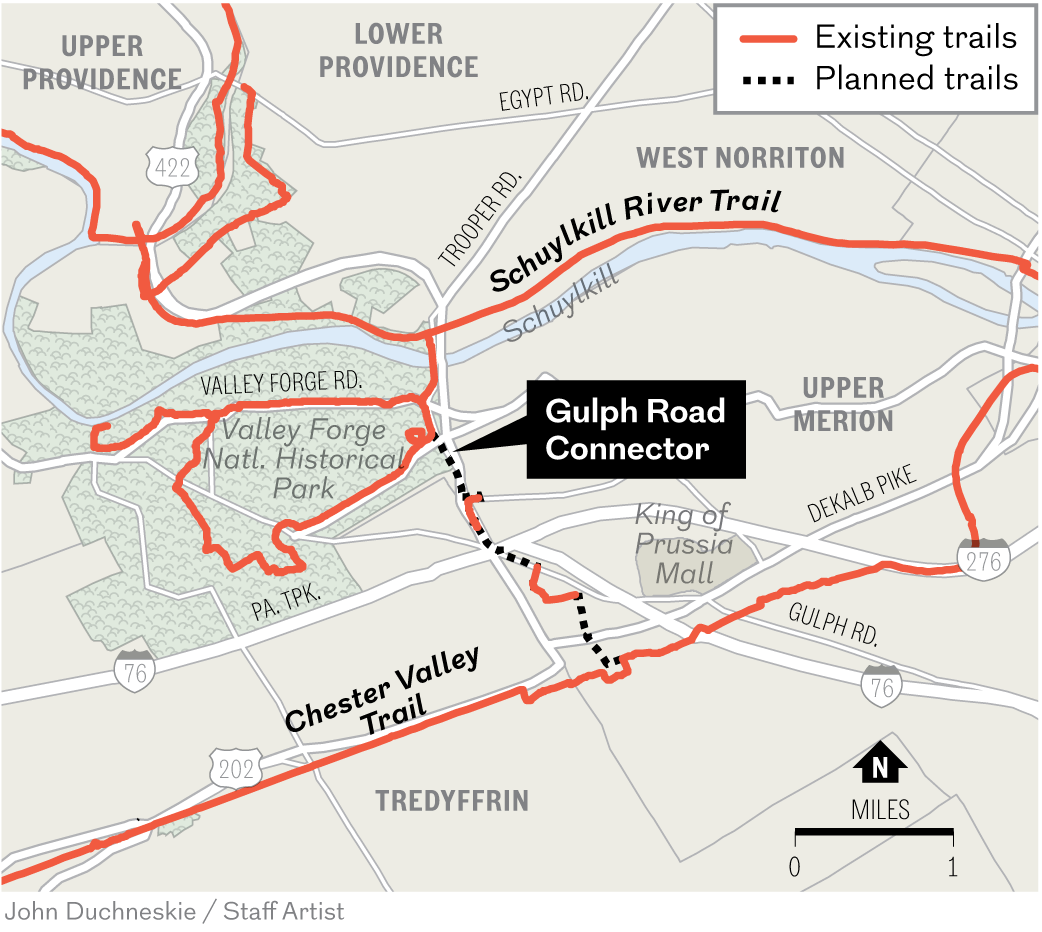
The “Gulph Road Connector,” as it is currently called, is slated to connect to the Chester Valley Trail near the King of Prussia Mall, cross through Valley Forge National Historical Park, and link with the Schuylkill River Trail when completed.
The project was recently awarded a three-year $326,900 grant from the William Penn Foundation, which will begin in January, said Eric Goldstein, president and CEO of the King of Prussia District, which is leading the project. The official name of the trail has not been determined.
The influx of funds is slated for education, advocacy, and marketing, said Goldstein, who noted that the foundation is supporting “efforts to build a coalition of advocates” for the trail. The money will not be used for design or construction.
Segments of the planned 2.8-mile trail connector are in stages of design and construction, with some already built, Goldstein said.
“What we’re trying to do is ultimately fill in the blanks to make the 2.8-mile section complete,” he said.
Goldstein said the new funds will allow the King of Prussia District to work with different partners along the trail. The aim is to build a coalition and raise awareness of the proposed trail, which ideally would lead to more grant money down the line for design and construction, he said.
Map of the planned Gulph Road Connector trial near King of Prussia.
The new funding is “the impetus for this trail to start moving toward completion,” said Molly Duffy, executive director of the Valley Forge Park Alliance, a partner organization in the trail’s development.
There is no estimate yet for the total cost of the project, Goldstein said.
The project is part of the Circuit Trails, a regional network that aims to have more than 850 miles of trails through nine counties. Once the trail is built out, Goldstein said, he expects it will be managed by multiple entities, depending on the section.
He hopes to be able to complete the trail in the next 10 years.
Some parts of the trail are “enormously complex,” he noted, adding that pedestrian bridges over sections of highway would require complex engineering and be costly — which requires raising funds.
While the trail is expected to be used for recreation, it could also be an option for commuting to work.
“The second audience of this proposed trail network is employees that work in Upper Merion Township that are seeking alternative modes of transportation to get to and from work,” he said.
The trail also could make Valley Forge National Historical Park more accessible by ways other than driving, Duffy said.
“We want people to be able to get here,” Duffy said. “Knowing where this is — in this super densely populated suburban area — we know that there’s this missing link, really, between these two major trails that, once built, will literally connect thousands and thousands of people who live in the area, work in the area, are visiting the area.”
The Philadelphia Police Department is forming an “auxiliary” unit that may be ready as early as next year, according to a department spokesperson, adding to its ranks volunteer members who will assist officers at large public gatherings.
Auxiliary police will not carry weapons and will not be assigned typical law enforcement duties, according to Sgt. Eric Gripp, a department spokesperson. They will not be authorized to make arrests.
But the department wants the unit to act as a link between the public and police, participating in community engagement and, according to Gripp, serving as additional “eyes and ears” for officers on the ground.
As Philadelphia prepares to host a series of widely attended events in 2026 — the country’s 250th July Fourth anniversary celebration, FIFA World Cup matches, and more — the police department will be tasked with maintaining order amid an influx of visitors.
An auxiliary unit would assist police during those types of events, according to Gripp. He said the department had tasked its academy recruits with similar duties during citywide celebrations after the Eagles’ Super Bowl victory in February.
It is unclear whether the auxiliary unit will be ready in time for the summer.
The department does not have an official estimate on when it plans to introduce the unit; the idea is still in the planning stages and targeted for 2026, Gripp said. The only confirmed requirement is that recruits must be 18 years old to apply.
Police departments in municipalities large and small have used auxiliary units, sometimes called reserve units, for years.
The New York Police Department has maintained its auxiliary unit for more than half a century; major cities like Baltimore also have reserve officers, as do smaller townships like Cranford, N.J.
Criminologists and former law enforcement officers say police departments use these units to assist with traffic management, crowd control, and community engagement, and for reporting more serious issues to officers who have the authority to intervene.
Experts say the units are a boon to departments facing recruitment and retention issues, providing unpaid assistance from those who are already curious about life as a police officer and who often hail from the communities they are assigned to.
But departments must invest time, money, and adequate training into auxiliary units for them to be successful.
Joseph Giacalone, a retired NYPD sergeant and criminal justice instructor at Pennsylvania State University’s Lehigh Valley campus, said the New York department often uses its 3,700-member auxiliary unit for crowd control during “fun events” like parades and street fairs.
Most importantly, Giacalone said, departments should not view their auxiliary unit as a crime-fighting tool; members should be provided uniforms that are recognizable to the public, he said, distinct from those of actual police officers.
“We’re not talking riots,” Giacalone said of situations in which auxiliary officers are useful. “We don’t want them really identifying things such as drug dealing, dens of prostitution, things like that. We can get that from ordinary intelligence — we don’t want ordinary citizens doing that.”
Still, auxiliary members may help officers with other duties.
During Giacalone’s tenure with the department, the NYPD’s auxiliary unit proved beneficial when members reported quality-of-life issues such as abandoned vehicles and broken traffic lights, he said.
Given the potential danger that accompanies police work, Giacalone said, he hopes the Philadelphia department’s plan includes extensive training for auxiliary recruits — as well as protective gear.
The former sergeant still recalls a harrowing day in 2007 when two unarmed New York auxiliary officers were shot and killed by a gunman in the city’s Greenwich Village neighborhood while out on patrol.
Gripp, the Philadelphia department spokesperson, said the city’s auxiliary unit would not conduct foot patrols. He said members would be trained by the department’s internal staff.
Meanwhile, New York auxiliary officers must pass hours of training courses in first aid, self-defense, and patrol technique; in Giacalone’s experience, those trainings require more experienced officers to sacrifice time and energy to the project.
By the former sergeant’s estimate, for Philadelphia, “it’s going to take a while to get this up and running.”
HONG KONG – At least 36 people were killed and 279 were missing on Wednesday after Hong Kong’s deadliest fire in three decades ripped through high-rise residential towers sheathed in flammable bamboo scaffolding, authorities said.
More than 10 hours after the fire started in the northern Tai Po district, flames and thick smoke still engulfed the 32-story towers as rescue workers swarmed the site and shocked inhabitants watched nearby.
The cause of the blaze was not immediately known, but it was fanned by green construction mesh and bamboo scaffolding which the government began phasing out in March for safety reasons.
Firefighters work to extinguish a blaze that broke out at Wang Fuk Court in Hong Kong on Wednesday.
Working through the night, firefighters were struggling to reach upper floors of the Wang Fuk Court housing complex, which has 2,000 apartments in eight blocks, due to the intense heat.
One 71-year-old resident surnamed Wong broke down in tears, saying his wife was trapped inside.
A firefighter was among the 36 killed, and 29 people were in hospital, Hong Kong leader John Lee told reporters. Some 900 people were in eight shelters.
“The priority is to extinguish the fire and rescue the residents who are trapped. The second is to support the injured. The third is to support and recover. Then, we’ll launch a thorough investigation,” Lee told reporters. Harry Cheung, 66, who has lived at Block Two in one of the complexes for more than 40 years, said he heard a loud noise about 2:45 p.m. (6:45 GMT) and saw fire erupt in a nearby block.
“I immediately went back to pack up my things,” he said.
“I don’t even know how I feel right now. I’m just thinking about where I’m going to sleep tonight because I probably won’t be able to go back home.”
A firefighter was among those killed, the director of Fire Services said.
China’s XI urges ‘all-out’ effort against fire
Frames of scaffolding were seen tumbling to the ground as firefighters battled the blaze, while scores of fire engines and ambulances lined the road below the development.
From the mainland, China’s President Xi Jinping urged an “all-out effort” to extinguish the fire and to minimize casualties and losses, China’s state broadcaster CCTV said.
Hong Kong’s sky-high property prices have long been a trigger for social discontent in the city and the fire tragedy could stoke resentment towards authorities ahead of a city-wide legislative election in early December.
The cause of the blaze was not immediately known, but it was fanned by green construction mesh and bamboo scaffolding which the government began phasing out in March for safety reasons.
Hong Kong’s Transport Department said that due to the fire, an entire section of the Tai Po road, one of Hong Kong’s two main highways, had been closed and buses were being diverted.
At least six schools will be closed on Thursday due to the fire and traffic congestion, the city’s Education Bureau said.
It was Hong Kong’s worst fire since 41 people died in a commercial building in the heart of Kowloon in November 1996.
That fire was later found to be caused by welding during internal renovations.
A public inquiry yielded sweeping updates to building standards and fire safety regulations in the city’s high-rise offices, shops and homes.
Dozens of shocked residents and onlookers in Hong Kong watched from nearby walkways as smoke funneled up from the complex.
Bamboo scaffolding being phased out
Hong Kong is one of the last places in the world where bamboo is still widely used for scaffolding in construction.
The government moved to start phasing that out in March, citing safety. It announced that 50% of public construction works would be required to use metal frames instead.
Wang Fuk Court is one of many high-rise housing complexes in Hong Kong, one of the most densely populated areas in the world. Tai Po, located near the border with mainland China, is an established suburban district with some 300,000 residents.
Occupied since 1983, the complex is under the government’s subsidized home ownership scheme, according to property agency websites. According to online posts, it has been undergoing renovations for a year at a cost of HK$330 million ($42.43 million), with each unit paying between HK$160,000 and HK$180,000.
Owning a home is a distant dream for many in Hong Kong, one of the world’s most expensive housing markets and where residential rents are hovering around record highs.
Bucks County’s 2026 proposal for a $516 million operating budget does not include tax increases for residents, but they are not off the table as county commissioners look to combat a projected $16.4 million deficit.
“There’s no question” that a tax increase is a possibility, Democratic Commissioner Diane Ellis-Marseglia told The Inquirer on Wednesday, noting the budget proposal is currently a “work in progress.”
“The biggest thing that I’m going to be looking at, besides cutting and seeing what we can do, is if we were to have to increase taxes, to make it, you know, pennies, as small as we can, so that it’s not impacting people,” said Ellis-Marseglia, the board’s vice chair.
The county’s expenses are projected to increase by 3.2% — more than $16.2 million, according to the budget proposal released Wednesday.
The increase is driven by requests for required upgrades and replacements of public safety resources, funding for capital improvement projects, and financial support for the county’s library system and Bucks County Community College, according to a county news release.
Revenue is projected to drop by a little more than $531,000, or roughly 0.1%, according to the proposal.
“Bucks County residents deserve stability, fiscal security and a high level of service from their County government,” said Jeannette Weaver, the county’s chief financial officer, in the news release. “Over the next few weeks, we will continue working with our many departments and row officers to present a budget that meets those demands.”
“It will likely mean that this county will have to consider a tax increase because we need to meet the needs of” residents, Bob Harvie, who chairs the Bucks County commissioners and is running for Congress, told The Inquirer earlier this month.
Counties were formulating their budget proposals as Pennsylvania was grappling with its state budget impasse and the federal government underwent its longest shutdown in history.
“We are facing the same thing everybody is facing,” Ellis-Marseglia said. “But inflation is everywhere. Energy costs are up. Everybody’s having a tough time. So, of course, so is county government, trying to make ends meet.”
The Bucks CountyBoard of Commissioners will hold a public hearing on Dec. 4 at 2 p.m. for residents to ask questions and provide comments. The commissioners will vote on the final budget on Dec. 17.
Comedian and Eagles die-hard fan Shane Gillis will take center stage at Lincoln Financial Field for a one-night-only show next summer.
Gillis will headline one of the biggest shows of his career in South Philly on July 17, 2026. More than 60,000 fans will be in attendance to see the Mechanicsburg, Pa., native crack his edgy and often controversial jokes.
He will be joined by a lineup of special guests, who will be announced at a later date. Who knows: Maybe Gillis’ good friend and country star Zach Bryan will make a surprise appearance.
Host Shane Gillis speaks at the ESPY Awards at the Dolby Theatre in Los Angeles on July 16.
Tickets to the show will go on sale to the general public at 10 a.m. on Black Friday. Presale tickets went on sale Wednesday.
“Lincoln Financial Field is thrilled to set the stage this summer for one of the world’s biggest entertainers in Shane Gillis,” Brian Napoli, the Eagles’ senior vice president of corporate partnerships, said in a statement.
The 37-year-old stand-up has risen to stardom thanks to his brash comedic style, his long-running podcast with fellow comic Matt McCuster called Matt and Shane’s Secret Podcast, and his viral impersonations of President Donald Trump.
Comedian Shane Gillis reacts after throwing out a pitch before a baseball game between the Phillies and the Texas Rangers on May 22, 2024, at Citizens Bank Park.
Along with donning Eagles gear at shows and interviews, the central Pennsylvania native has plenty of ties to the Philadelphia region.
Gillis graduated from West Chester University and cut his teeth in the local comedy scene by performing shows at Helium Comedy Club and other Philly venues. He was announced as a Saturday Night Live crew member in 2019 but was quickly fired for making homophobic and racist jokes on his podcast with McCuster.
His hit Netflix series, Tires, which is a collaboration with Philly comic and show director John McKeever, is being renewed for a third season.
His latest stand-up, Beautiful Dogs, was a massive success for Netflix. It ranked in the streaming service’s Top 10 in five countries and remained in the U.S. Top 10 for two weeks. His second Netflix special is currently in the works.
Editor’s note: An earlier version of this story included a photograph of a woman who had been a victim of the scheme and she was identified as such in the caption. The photo was removed because the juxtaposition of the headline and the image made it appear as the victim was the perpetrator.
The Pennsylvania attorney general has issued a six-figure fine to the former CEO of ABC Capital, a failed real estate firm behind an $82 million scheme that saw overseas investors snap up hundreds of homes in the city’s poorest neighborhoods — only to leave them to rot.
During the 2010s, ABC facilitated the sales of over 1,900 distressed homes billed as “turnkey rental” opportunities to investors in Asia, Europe, and South America. The company promised to purchase, renovate, and manage the rentals in exchange for up-front cash, but often reneged — bilking investors out of their money and sometimes stranding tenants in crumbling rental homes.
Tenants rights advocates and lawsuits from investors later described the business as a “scam” or “Ponzi scheme.”
Attorney General Dave Sunday said on Tuesday that former ABC Capital CEO Jason “Jay” Walsh had violated the terms of a 2024 settlement agreement negotiated by the attorney general’s office in response to these complaints.
That agreement, which described ABC’s business practices as “deceptive and unfair,” prohibited Walsh from managing and maintaining rental properties in Pennsylvania. But a Common Pleas Court judge earlier this week ruled that Walsh violated the agreement by continuing to perform “management services for a property he owned,” communicating with tenants, and providing “inaccurate information” to the attorney general’s office.
Sunday issued a $350,000 fine in response.
“We are grateful that the Court recognized blatant breaches of this agreement, and imposed a serious penalty against Mr. Walsh,” Sunday said in a prepared statement. “We will continue to hold Mr. Walsh accountable under this agreement that clearly prohibits him from managing properties in the Commonwealth.”
Walsh could not be reached for comment. His attorney did not immediately respond to requests for information or comments.
Walsh’s crumbling empire was chronicled in 2022 reports by The Inquirer and the Baltimore Banner. His company decamped to the latter city as rising property values made the City of Brotherly Love less attractive to investors seeking cheap real estate.
But during the 2010s, ABC facilitated more than $82 million in property sales involving 600 different companies in Philadelphia alone, Inquirer reporting showed. Walsh and his partners — Israeli expats Yaron Zer and Amir Vana — later faced numerous lawsuits filed by investors alleging the company left units unfinished or fell far short of promised 40% returns on investment, leaving them saddled with debt.
Some of the homes that were ostensibly renovated, leased, or managed by ABC eventually became uninhabitable, due to either shoddy work or poor maintenance, according to tenants, investors, and the attorney general.
“It’s almost always in poor communities, with high rates of people of color,” Karla Cruel, a former staff attorney at Tenant Union Representative Network, told The Inquirer in 2022. “But they were screwing over the tenants and the investors at the same time. It was just a big old scam.”
Last September, the Banner reported, Walsh was convicted of acting as an unlicensed contractor in Baltimore and ordered to pay $20,500 in restitution — the only criminal action brought against him to date.
The Pennsylvania civil settlement — brokered by Pennsylvania Attorney General Michelle Henry in 2024 — banned Walsh and his wife, Blanca, from acting as landlords without the use of a third-party property manager. The duo, who appeared to have decamped to Aruba by 2024, were also not to have any contact with tenants for periods of 25 and 15 years, respectively.
But court filings show that Walsh violated that agreement by continuing to directly lease out and manage two properties not far from the company’s defunct headquarters in Northern Liberties.
One was his former residence, and another was a property he acquired under the moniker Nolo Investments LLC. Walsh had reported to the attorney general that while he and his wife co-owned both properties, they were managed by an outside company called “My Mega Realty.”
While Walsh did discuss such an arrangement, the company’s owner said he never completed the deal. Former tenants also reported to the attorney general that Walsh and his wife were directly managing the property and collecting rent.
Jean E. Corrigan, 70, of Roslyn, Montgomery County, retired fleet and operations manager for the Montgomery County Department of Assets and Infrastructure, onetime constituent services representative for then-State Rep. Josh Shapiro, hair salon owner and operator,disability services advocate,and award-winning volunteer, died Saturday, Nov. 22, of non-alcoholic cirrhosis of the liver at her home.
A lifelong resident of Glenside and nearby Roslyn, Mrs. Corrigan was vice chair of the Abington-Rockledge Democratic Committee from 1995 to 2013, and served as Gov. Shapiro’s constituent service agent when he represented the 153rd Legislative District in the Pennsylvania House of Representatives from 2004 to 2012.
“Jean was the very first volunteer on my very first campaign,” Shapiro recalled. “We knocked doors together, met our neighbors together, and, after winning, served our community together.”
In addition to breaking down bureaucratic delays and solving all kinds of constituent problems for Shapiro, Mrs. Corrigan doggedly championed fair wages, reproductive freedom, increased funding for special education and disability services, and improved healthcare. Colleagues called her a “super volunteer” and a “campaign mom” because she helped so many candidates win elections.
Gov. Shapiro said Mrs. Corrigan “made her neighbors’ lives better.”
She hosted visiting campaign workers at her home for years, took charge of distributing lawn signs and sample ballots, and organized other preelection events at her dining room table. She was named the local committee’s Democrat of the Year in 2002 and earned several awards from community service organizations.
“Through that work, I got to see just how much of herself she gave to others,” Shapiro said. “Where there was a need in the community, she worked to address it. When someone needed help, she lent a hand. She made her neighbors’ lives better, and I will forever be grateful for her life of service.”
In 2001, Mrs. Corrigan ran unsuccessfully for Abington Township commissioner, finishing second among three candidates and losing to a long-entrenched incumbent. In a preelection profile in The Inquirer, she listed “responsible growth” as a top value and “maintain integrity of Abington Township” as a main goal.
“Jean was passionate about serving others,” her family said in a tribute. “She believed that politics and civic activism could make a positive difference in people’s lives.”
Mrs. Corrigan was called a “super volunteer” by colleagues and friends.
At work, Mrs. Corrigan managed Montgomery County’s fleet of vehicles from 2015 to her retirement in 2022. She joined the county’s assets and infrastructure department in 2012 as operations manager for public property and supervised the county’s building services, construction carpenters, project collaboration, and computer-aided design.
She studied beauty science and hair styling in high school, attended the Willow Grove Beauty Academy, and ran her own salon called Shears to You from 1993 to 2001. As a volunteer, she was one-time president of the Abington School District Special Education Parent Advisory Council, copresident of the Abington Junior High School parent-teacher organization, and chair and vice chair of several Abington Township community initiatives.
She raised funds for school events and served on the board of the Abington YMCA. “Jean was selfless, empathetic, blunt, affectionate, caring, plainspoken, honest, and incredibly hard-working,” her family said. “There was no ego, no vanity.”
Jean Elizabeth Fanelli was born Aug. 30, 1955, in Abington Township. She grew up with a brother, Angelo, and graduated from Abington High School in 1973. She was interested in clothing design as well as beauty culture and took classes at Temple University.
Mrs. Corrigan stands with her husband, Peter, and son David
After a brief marriage to Bruce Cunningham was annulled, she married Peter Corrigan — an usher at her first wedding — in 1977, and they had sons Joseph and David and a daughter, Pauline. They lived in Glenside for decades, in the same house in which she grew up, and moved to Roslyn a few years ago.
Mrs. Corrigan enjoyed shopping trips with her daughter and baking holiday cookies. She liked to entertain and cook for everybody.
She doted on her two granddaughters and spent memorable summers near Arrowhead Lake in the Pocono Mountains. She could talk to anybody, her family said.
“She was a wonderful mother,” her daughter said. “I learned to have respect and manners from her.”
Mrs. Corrigan (front right) enjoyed time with her family.
Her son David said: “She taught me to be considerate and understanding of everyone I encounter, a lesson I will never forget.”
Her son Joseph said: “She was incredibly generous with her time and resources. She could build relationships, and a theme of her life was caring for people.”
Her husband said: “She was one of a kind.”
In addition to her husband, children, granddaughters, and brother, Mrs. Corrigan is survived by other relatives.
A private celebration of her life is to be held later.
Donations in her name may be made to Hedwig House Inc., 1920 Old York Rd., Abington, Pa. 19001.
Mrs. Corrigan’s smile could light up a room, her family said.