Blog

  • U.S. plans to stop recommending most childhood vaccines, defer to doctors

    U.S. plans to stop recommending most childhood vaccines, defer to doctors

    The Trump administration plans to shift the federal government away from directly recommending most vaccines for children and suggest they receive fewer shots to more closely align with Denmark’s immunization model, according to two people familiar with the matter.

    Federal health officials are weighing vaccine guidance that would encourage parents to talk to a doctor to make decisions for most shots, according to the people, who spoke on the condition of anonymity to describe internal deliberations. This approach would mark a fundamental shift in the U.S. healthcare system, which generally relies on federal health agencies to guide how patients are protected against disease.

    It was not immediately clear which shots would no longer be recommended. The plans are still in flux, the people said, but broadly align with President Donald Trump’s directive earlier this month to consider recommending fewer shots, referring to the United States as an “outlier” among developed countries. He said any changes to the country’s vaccine schedule should continue to preserve access to currently available shots.

    Health Secretary Robert F. Kennedy Jr. has been critical of the childhood vaccine schedule for years and has called for additional scrutiny, even though he told senators during his confirmation hearings that he supports the schedule.

    Andrew Nixon, a spokesperson for the Department of Health and Human Services, said of the planned revisions to vaccine recommendations: “Unless you hear it from HHS directly, this is pure speculation.” The potential shift to more closely align with Denmark’s schedule was first reported by CNN.

    The current U.S. schedule calls for vaccinations to protect against 18 infectious diseases, including COVID-19, according to a Food and Drug Administration presentation in December, compared with calls for vaccinations to protect against 10 infectious diseases in Denmark. Denmark does not recommend vaccinating children for influenza, respiratory syncytial virus (RSV), and chickenpox, among other common pathogens.

    Public health experts say comparisons to Denmark are misleading, noting the countries differ sharply in population, health systems, and disease burden. They argue that what works in Denmark’s small universal healthcare system does not easily translate to the far larger and more diverse U.S. population with uneven access to quality care.

    “You don’t just superimpose policies from other countries without context onto the United States,” said Demetre Daskalakis, who oversaw the Centers for Disease Control and Prevention’s center for respiratory diseases and immunization before he resigned from the agency in August. “This is not gold standard science.”

    A Danish health official questioned why the U.S. would follow his country’s lead.

    “Personally, I do not think this makes sense scientifically,” Anders Hviid, an official in Denmark’s Statens Serum Institute, which prevents and controls infectious diseases as part of the country’s ministry of health, wrote in an email early Saturday. “Public health is not one size fits all. It’s population specific and dynamic. Denmark and the U.S. are two very different countries.”

    Unlike Denmark, the U.S. is planning a more limited approach for recommending vaccines to children known as shared clinical decision-making, which has not been reported. This means people should consult a doctor, pharmacist, or other medical professional before getting a shot, and insurers would still be required to pay for them. It’s not clear how broad the shift would be and when it would happen.

    This type of recommendation is usually made when there is real uncertainty about the benefits and risks, said David Higgins, an assistant professor of pediatrics at the University of Colorado Anschutz Medical Campus. By applying it broadly to many vaccines that are now routinely recommended, it creates the false impression that experts are divided on the best way to protect health, he said.

    “I have never been more concerned about the future of vaccines and children’s health than I am now,” Higgins said.

    In practice, vaccination is often already done in consultation with doctors, who explain the risks and benefits to patients. But critics of the shared clinical decision-making approach say it takes the government out of the business of providing powerful endorsements and can confuse doctors.

    A 2016 survey found that most pediatricians and family doctors did not know private insurers are required to cover vaccines recommended under this model.

    Under Kennedy, the CDC has already shifted recommendations for some vaccines to this talk-to-a-doctor approach, including for COVID and the hepatitis B vaccine for children. In the case of adults seeking COVID vaccines, the shift has had little practical impact at major pharmacy chains such as CVS where the shots are still routinely administered without prescriptions.

    Kennedy, the founder of a prominent anti-vaccine group, has previously decried the “exploding vaccine schedule” and blamed it for the rise of chronic disease, autism, and food allergies in the United States. Medical experts have said more vaccines are available now to combat more diseases, arguing the link has no basis in evidence.

    In a Truth Social post this month, Trump wrote that “many parents and scientists have been questioning the efficacy of this ‘schedule,’ as have I!”

    The plan to redo the U.S. schedule “kicked into high gear” immediately after Trump’s directive, one person familiar with the plan said. Two experts who were consulted — Martin Kulldorff, recently named a chief science officer at HHS, and Tracy Beth Hoeg, a top official at the Food and Drug Administration — have expressed concern about the number of vaccinations in the U.S. schedule.

    Hoeg gave a presentation two weeks ago comparing the U.S. with Denmark during a meeting of the CDC’s federal vaccine advisory committee. One of her slides, titled “Danish Vaccination Schedule Benefits,” said the country makes more time for overall health at doctors’ appointments and decreases the “medicalization of childhood.”

    The Denmark schedule does not include seasonal respiratory vaccines, such as RSV, the leading cause of infant hospitalizations in the U.S., or influenza for children. During last year’s flu season, the CDC reported 288 deaths associated with pediatric influenza, the highest number since the 2009-2010 H1N1 swine flu pandemic.

    Denmark also does not recommend vaccinating against hepatitis B for all infants, as well as hepatitis A and rotavirus for any infants and children.

    Higgins, the Colorado pediatrician, said many clinics and pediatricians will simply say they don’t recommend the Denmark schedule, which will worsen parental confusion. School vaccination requirements are set by state laws, and most require some of the vaccines that aren’t on the Denmark schedule, Higgins said.

    Denmark has universal prenatal care and strong social services. Tom Frieden, a former CDC director, recently wrote that virtually every pregnant woman in Denmark receives consistent medical attention and testing for serious diseases that can be passed to their babies throughout their pregnancy, including hepatitis B.

    About 1 in 4 pregnant patients in the U.S. deliver babies without adequate prenatal care, according to a report by the March of Dimes.

    “We do not believe in the one-size-fits-all approach nor the approach of choose one random alternate national schedule and adopt it,” said James Campbell, vice chair of the American Academy of Pediatrics’ infectious-diseases committee.

    Del Bigtree, Kennedy’s former communications director during his presidential run and the leader of an anti-vaccine group, said he’d support shifting to a Denmark model for vaccination, adding that the “medical freedom” movement has always touted that country.

    “Our belief is there are just too many vaccines,” Bigtree said. “It’s very exciting, but it still won’t solve my major issue that vaccines aren’t mandated.”
  • Thousands of households in the Philly suburbs are still without power after Friday’s wind storm

    Thousands of households in the Philly suburbs are still without power after Friday’s wind storm

    Thousands of households in Philadelphia’s collar counties remained without power a day after wind gusts downed trees and caused hundreds of electrical outages throughout the region.

    More than 2,230 customers, mostly in Bucks, Chester, Delaware, and Montgomery Counties, still did not have electric service as of Saturday evening, according to Peco.

    Nearly half the outages were due to fallen trees and branches interfering with electrical systems, Peco spokesperson Tom Brubaker said Saturday afternoon. As a result, suburban counties saw far more outages than Philly, he said.

    Winds registered as high as 62 mph Friday afternoon. Around 7 p.m., a pine tree fell on a Chestnut Hill apartment, CBS3 reported, while in Roxborough, a tree fell on a vehicle, sending two people to the hospital.

    Temperatures plummeted into the 20s Friday night, and, according to Brubaker, about 80,000 homes lost power.

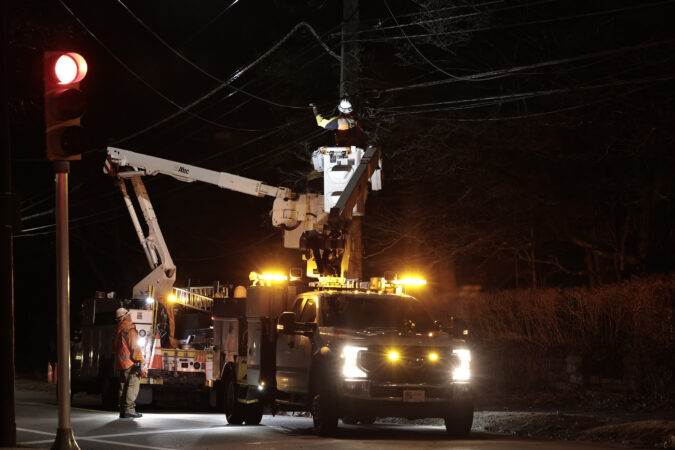
    Crews faced challenges from the weather, with wind gusts frequently topping 40 mph, Brubaker said.

    “When wind gusts are that high, we can’t take our bucket trucks to repair lines,” he said.

    An additional 135 Peco employees from Virginia and North Carolina have traveled to the region to assist in the recovery, Brubaker said.

    He said he expected most of the remaining outages to be resolved by Saturday evening, though “a few rural, isolated customers” may face longer waits.

    A live update of the outages can be found at peco.com/outages/experiencing-an-outage/outage-map.

  • Villanova extends winning streak to seven with a win over Seton Hall

    Villanova extends winning streak to seven with a win over Seton Hall

    With a 72-55 win over Seton Hall in its conference home opener, Villanova’s winning streak reached seven on Friday night.

    The Wildcats (9-2, 2-0 Big East) made an early statement at Finneran Pavilion against one of their prime conference rivals. Seton Hall (7-4, 1-1 Big East) was third in the conference preseason poll, while Villanova was ranked fourth.

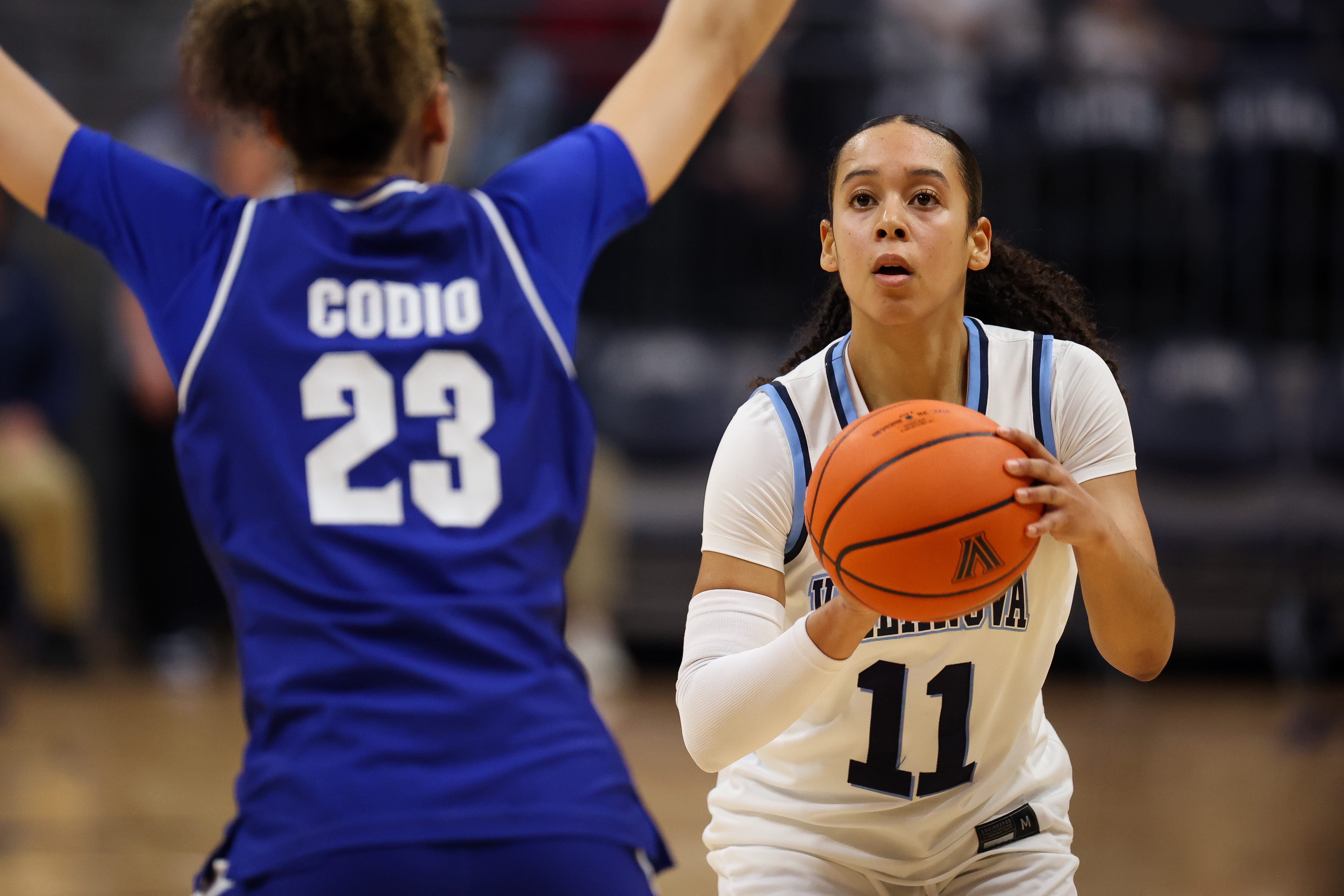
    Sophomore guard Jasmine Bascoe led the way with 20 points and seven rebounds. Senior guard Ryanne Allen added 19 points.

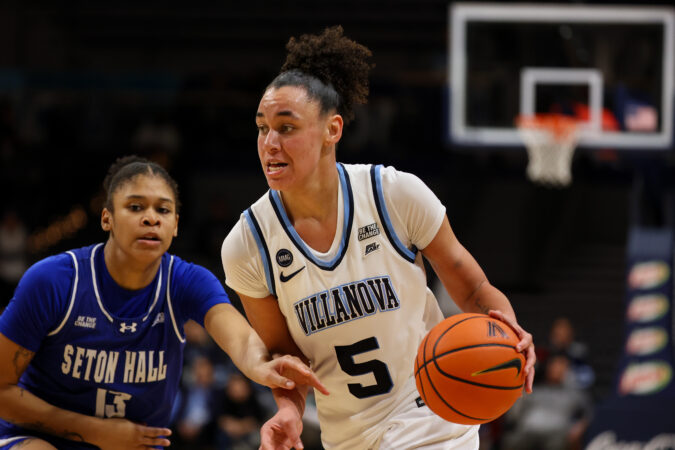
    Villanova guard Jasmine Bascoe (11) prepares to shoot a three-point basket against Seton Hall on Friday.

    The Pirates were paced by sophomore guard Jada Eads, who scored 12 points and grabbed four rebounds.

    It wasn’t one of Villanova’s strongest shooting nights. The Wildcats went 30-for-68 (44.1%) from the field, including 12-of-34 on three-pointers. But they thrived on defense to claim a double-digit victory over their Big East foe.

    Villanova’s success in the turnover battle was key, as they scored 18 points off 15 Seton Hall turnovers. Meanwhile, the Pirates managed four points from Villanova’s 12 turnovers.

    Shaking off the rust

    It took some time for the Wildcats to find their rhythm after a nearly two-week hiatus from competition. Villanova last played on Dec. 7, when it beat St. Joseph’s to claim the Big 5 Classic championship.

    The Wildcats shot just 5-for-18 from the field in the opening 10 minutes.

    However, Villanova leaned on its steady defense, notching six steals in the first quarter and holding Seton Hall to 5-for-14 shooting from the field.

    As Villanova trailed, 11-7, with 49 seconds left in the first quarter, Bascoe stole the ball and drove in a layup. Freshman forward Brooke Bender then sank a three-pointer to give the Wildcats a one-point edge heading into the break.

    Allen heats up

    Allen fueled the scoring in second quarter, making all five of her three-pointers.

    The Wildcats continued to control possession as 12 of their 23 points came off turnovers.

    With 1 minute, 23 seconds remaining in the first half, junior forward Brynn McCurry grabbed a steal and passed it to Bender. She then assisted Allen’s fourth three-pointer to secure a 35-25 halftime lead.

    Using offensive depth

    Villanova pulled away from Seton Hall in the third quarter. A three-pointer from Bender gave the Wildcats a 21-point advantage in the period’s final seconds.

    The Wildcats shot just 3-for-14 on three-pointers in the final 20 minutes, but Bascoe and McCurry were effective in distributing the ball.

    Villanova finished with 20 assists, and McCurry dished out a team-high eight.

    Meanwhile, Villanova limited Seton Hall’s movement, holding the Pirates to just six assists.

    Up next

    Villanova will host St. John’s (11-2, 1-1 Big East) on Monday (noon, ESPN+).

  • Villanova tops Wisconsin in overtime to close out nonconference play on a high note

    Villanova tops Wisconsin in overtime to close out nonconference play on a high note

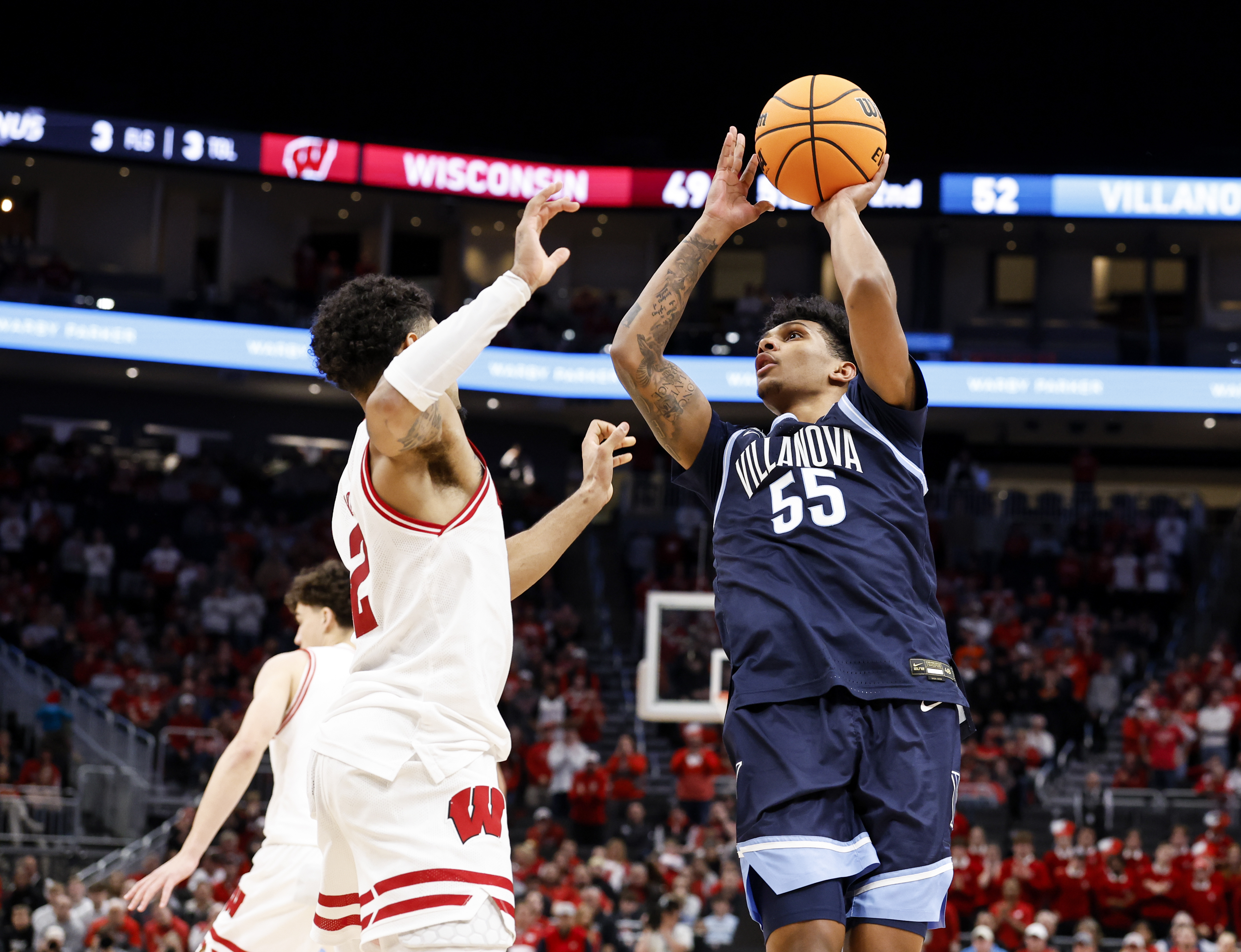
    MILWAUKEE — Duke Brennan came up to the top of the key and set a screen for Devin Askew, rolled to the paint, and rose for a two-handed dunk to put Villanova up eight in overtime, sending Wisconsin fans to the exits.

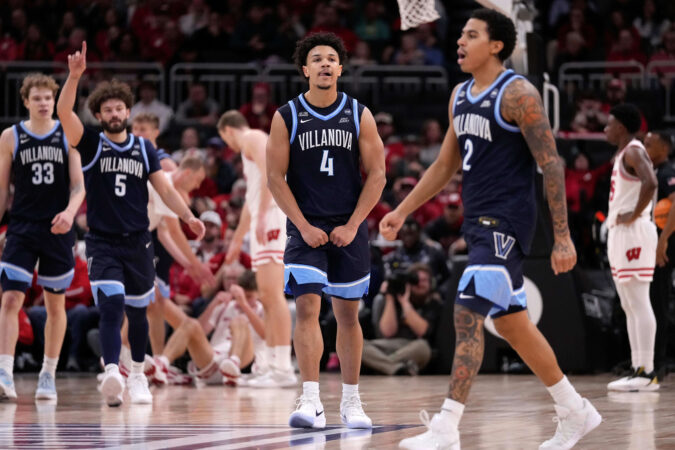
    The inside of Fiserv Forum on Friday night felt more like a Wisconsin home game than a neutral-site nonconference matchup. It was a tale of two halves for Villanova, but when the clock hit zero, the Wildcats picked up a resumé-boosting 76-66 overtime win against the pesky Badgers, who had beaten Big East foes Providence and Marquette.

    The win moved Villanova (9-2) into the 29th spot of KenPom’s rankings and sends the Wildcats into the Big East slate on a high note.

    “I thought they did a really good job of extending their halfcourt defense on us, which kind of surprised us a little bit,” Villanova coach Kevin Willard said postgame. “We had opportunities in the second half to win the game. And when you have two freshmen and a sophomore out there, sometimes you have to live through those mistakes.”

    Live by the three, die by the three

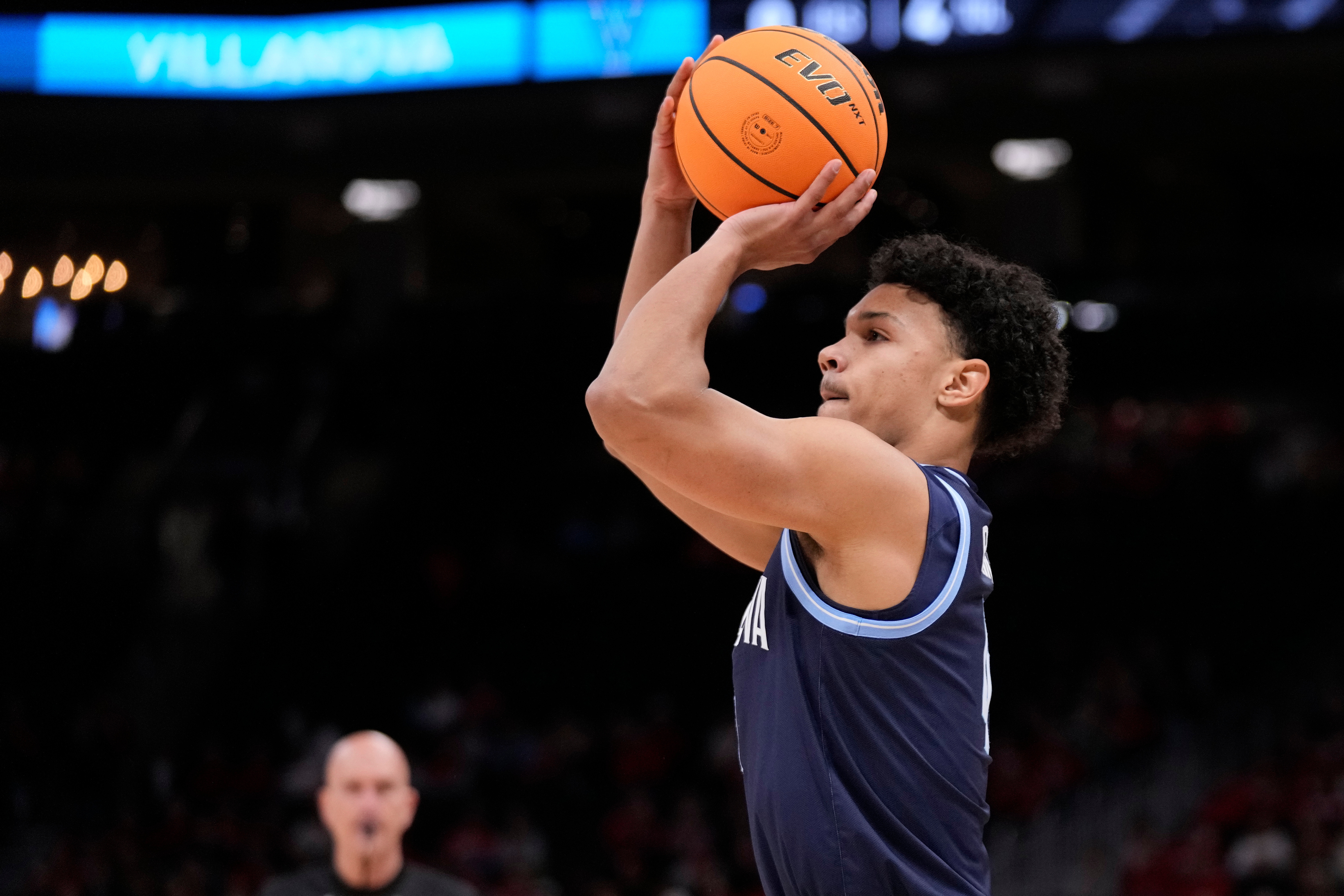
    The Wildcats got off to a hot start from the three-point line, hitting 8 of 19 attempts in the first half, led by Tyler Perkins’ barrage. He came into the game making 40.5% of his three-pointers, and his third three-pointer of the half from the top of the key pushed Villanova’s lead to 13 before the break.

    Perkins paced the Wildcats with 19 points and earned praise from his coach afterward.

    “I like the fact that Perk’s looking to shoot the basketball,” Willard said. “He’s shooting a high percentage. He does all the little things that most people don’t see. But when he’s aggressive out there, it gives us another scorer.”

    Villanova guard Tyler Perkins prepares to shoot a three-pointer against Wisconsin on Friday.

    But the second half was a different story. The three-point shots weren’t falling (1-for-10 in the second half), and the pressure Wisconsin (7-4) put on Villanova’s ballhandlers, like freshman Acaden Lewis and transfer guard Bryce Lindsay, left little room to operate.

    A lead that had ballooned to 15 early in the second half was slowly whittled to three with less than seven minutes remaining in regulation. After a Brennan layup with 6 minutes, 16 seconds left, the Wildcats did not score a field goal for nearly five minutes. Villanova was outscored, 34-21, in the second half and shot just 8-for-29 from the field.

    “We knew they [were] going to go on that run,” Lindsay said. “They got everybody in the crowd [into it], their fans. We just had to stay [together] as a team and play together.”

    Wisconsin tied the game with 31 seconds left, and Lewis’ contested stepback jumper fell short right before the buzzer to send the game to the extra frame.

    But in overtime, it was Lindsay, who shot 1-for-9 from the field through the first 40 minutes, who ignited the Wildcats. He opened the scoring with a curling three from the top of the key after a Brennan screen freed him. A dribble handoff with Villanova’s big man got Lindsay loose again two minutes later, pushing the Wildcats up seven with 2:59 left in overtime.

    “I see one fall, the hoop gets a little bigger for me,” said Lindsay, who finished with 12 points.

    Brennan’s battle on the boards

    Brennan was tested by the size of Wisconsin big men Nolan Winter (7-foot) and Aleksas Bieliauskas (6-10). The 6-10 Brennan, who entered the night averaging 11.6 rebounds, second-most in college basketball, pulled down seven of his 11 rebounds in the first half and outrebounded Winter and Bieliauskas combined.

    He also found soft spots in the middle of Wisconsin’s defense on pick-and-roll action. Lindsay found him in the lane for an and-one layup to open the second half, and Lewis found him on a similar action to end a scoring drought later in the half.

    Villanova’s Duke Brennan dunks the ball during overtime of a 76-66 win over Wisconsin.

    He played a team-high 39 minutes finished with his fourth double-double of the season.

    Turning up the heat defensively

    It was a shame that Lewis got into foul trouble in the first half because he was a big reason Wisconsin turned the ball over.

    His full-court pressure, along with Lindsay and Askew, made the Badgers uncomfortable in the first 20 minutes, which was part of Villanova’s game plan. The Wildcats scored 15 points off 16 Wisconsin turnovers, eight of which came in the first half.

    “That’s a Wisconsin team that can put up a lot of numbers,” Willard said, “and to have them struggle and turn them over like that, to me, was huge.

    “If you let them just run their offense, they will pick you apart. And really early in the game, we wanted to get them uncomfortable.”

    Friday was another learning experience for Lewis, who had opportunities to close out the game for Villanova. He missed the front end of a one-and-one with the Wildcats up three with 59 seconds left, committed a foul on the other end to give Wisconsin two free throws, then missed the potential game-winning shot and didn’t play most of the overtime period.

    However, he didn’t turn the ball over and finished with seven points and two assists on 3-for-9 shooting.

    Villanova freshman Acaden Lewis attempts a shot over Wisconsin’s Nick Boyd on Friday at Fiserv Forum in Milwaukee.

    “I thought he played great,” Willard said. “This is a great learning experience for him of what to do at the end of the game. But he had two huge steals in the end of the second half. And he’ll make his free throws next time, and he’ll make a better play at the end of the game.

    “That’s why you got to put him in those situations, and he’ll learn from it. He’s done it every game.”

    Added Perkins: “He’s so mature. … He got in foul trouble early. And a lot of freshmen would dig in their head, not be ready, not stay in the game. But he had some great stops at the end of the game.”

    Freshman guard out indefinitely

    Before the game, Villanova announced that freshman guard Chris Jeffrey underwent right knee surgery and is out indefinitely. Jeffrey, a Brooklyn native, had a knee injury before he arrived on campus that “recently flared up,” the program said.

    In nine games this season, Jeffery was averaging 4.2 points across 10.6 minutes. The team also announced that walk-on Wade Chiddick also had right knee surgery and has no timetable to return.

    Up next

    Villanova will open conference play at Seton Hall on Tuesday (7 p.m., Peacock). The Wildcats hope to ride the momentum they gained through their tough stretch of nonconference play.

    “The schedule we inherited, didn’t give us a whole ton of games in November to test ourselves,” Willard said. “And I think going through Michigan, [Pittsburgh], now Wisconsin, and now we got a really good Seton Hall team on Tuesday, now we’re testing ourselves, and I like the way these guys are going.”

  • Grant helps Kensington teens turn a trash-filled lot into a public garden

    Grant helps Kensington teens turn a trash-filled lot into a public garden

    The intersection of Shelbourne and Willard Streets is known by neighbors as an illegal dumping corner, where debris, trash, and weeds are part of the scenery.

    A $17,000 grant from the pilot program Revive and Thrive could change that, as the teenagers from nonprofit Klean Kensington are set to turn the vacant lot at 859 E. Willard St. into a public park.

    In Upper Kensington, the typical block has, on average, three or four vacant buildings or lots, an Inquirer investigation found. The problem has been identified as a contributing factor to the open-air drug trade.

    Since 2022, Klean Kensington has been trying to address the issue by employing local teens to transform trash-filled parcels into community gardens on Madison, Westmoreland, and Hilton Streets, providing food for neighbors, and offering young residents a way to stay occupied.

    For Jeremy Chen, the group’s executive director, the Willard Street project is an opportunity to “activate the corner” by creating a garden that neighbors feel is their own while recognizing the community work.

    “The teens have been doing this work for a while, but it’s always encouraging to have their work recognized,” Chen said.

    The idea is to keep children and youth at the center of the garden, Chen said. Pollinator flowers, benches, bright art, planter boxes, and a durable trash setup are among the features being considered. Klean Kensington will employ 25 teens for the project, and two or three local high school students will be hired as park ambassadors.

    Thomas Jefferson University’s Park in a Truck (PIAT) program, Circular Philadelphia, Trash Academy, and Glitter will partner for the program, providing dumping-prevention workshops, facilitating the design process, documenting the effectiveness of the project, and aiding in weekly cleanups.

    Cleanup activities are expected to start early in the spring. And community members will gather to decide what they envision for the 16-by-60-foot space owned by Esperanza Health Center.

    For Lois Williams, Trash Academy codirector, this initiative is an opportunity to benefit both the city and neighbors in the fight against illegal dumping.

    “This project can demonstrate how neighbors with low budgets, on privately owned lots, can make a difference,” Williams said.

    Keeping neighborhoods clean and ending the sprawling drug market have been a focus of Mayor Cherelle L. Parker’s administration. Chen hopes this initiative can show City Hall that funding local organizations to do cleaning in their neighborhoods instead of hiring contractors can give them a sense of ownership, preventing dumping recurrence.

    “When it’s locals taking care of their community, it’s more likely for them to care and to self-monitor so it doesn’t become a dumping ground again,” Chen said.

    The garden is scheduled to open in the summer of 2026.

  • 🪏 ‘Snow melts, reputation doesn’t’ | Morning Newsletter

    🪏 ‘Snow melts, reputation doesn’t’ | Morning Newsletter

    Welcome to a brisk, mostly sunny Saturday.

    In today’s edition, we’re addressing a seasonal situation: the neighborly approach to snow shoveling.

    But first, we’re covering Philadelphia Mayor Cherelle L. Parker’s State of the City speech, how to avoid the stomach bug that recently hit one area school hard, why you may hear a different voice calling the Flyers game on 97.5 this weekend, and our report card for this week in Philly news.

    Read on for these stories and more.

    — Paola Pérez (morningnewsletter@inquirer.com)

    If someone forwarded you this email, sign up for free here.

    What you should know today

    The sidewalk snow debate

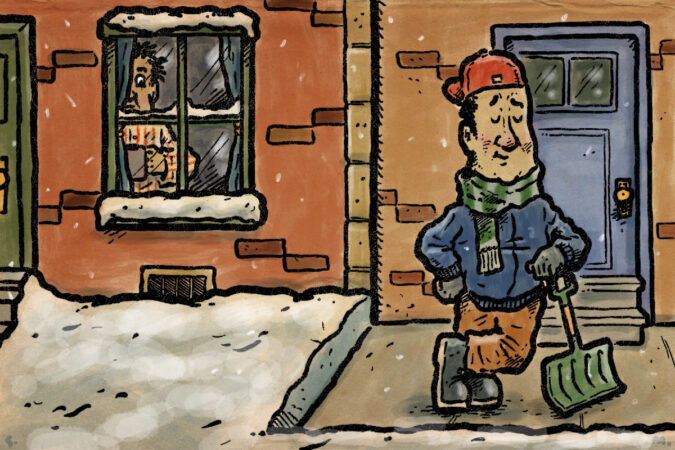
    Shoveling snow

    After it snows in Philly, sidewalks must get shoveled clean. It’s a city rule that could result in fines if not followed.

    There are right (and wrong) ways to do it, but what happens when we add community courtesy into the mix? A reader asked: “I usually shovel beyond my own sidewalk, but my younger neighbor only does his patch. Am I expecting too much from him?”

    To settle the issue, Inquirer editor Evan Weiss brought in editors Sam Ruland and Tommy Rowan. The Philly natives hashed out whether or not the responsibility to wipe the walkway ends at your property line, and how standards have changed over the years.

    On Sunday, I gladly let some neighbors borrow my shovel to clear their front steps or even dig cars out, but I’ve definitely noticed when people push the white stuff to a precise fault line. I saw people recently express frustration online over folks not cleaning off block corners, and confusion over one neighbor piling a bunch of snow in front of their car. (And in case you were curious, we already handled the savesies situation.)

    Between Sam’s and Tommy’s verdicts, one thing is for certain: It’s a bit weird to stop at the exact margins of your home, and Philly might be silently judging you for it. This quote from Sam will live rent-free in my head: “I don’t shovel because I love it. I shovel because I fear the block.”

    What about the right price to pay kids eager to get the job done? You’ll have to read along for their full take. And if you’re looking for advice, we’re all ears. Send in your pressing Philadelphia problems here.

    One viewpoint

    In this week’s Shackamaxon, Inquirer columnist Daniel Pearson reflects on political theater at the glitzy Pennsylvania Society dinner, and the discovery that “Champagne, cigars, cocktails, and filet mignon” are apparently essential to productive bipartisanship.

    Read on for Pearson’s experience at the signature gala, along with thoughts on what City Council has been up to (including a new bill to ban residential development in one area), and what Pearson calls an example of positive preservation.

    📍 Find the location

    Somewhere in Philly, there’s a Christmas tree placed in front of the 30-foot frieze, “The Spirit of Transportation.”

    Think you know where this Christmas tree is located? Our weekly game puts your knowledge of Philly places to the test. Try your best guess here.

    🧩 Unscramble the anagram

    Hint: New Year’s Day tradition

    MAURER SPAMMED

    Email us if you know the answer. We’ll select a reader at random to shout out.

    Cheers to Amanda Costello, who correctly guessed Friday’s answer: Bryn Mawr Film Institute. The beloved Main Line theater turned 20 this year. Here are 20 iconic movies from its history.

    We were there

    Staff photographer Monica Herndon captured the moment Rabbi Yitzchok Gurevitz lit the menorah at Canal View Park on Thursday night, the fifth night of Hanukkah. The lighting was hosted by Chabad-Lubavitch of Northwest Philadelphia.

    Somewhere on the internet in Philly

    We’re nerding out over this Eagles fan’s website tracking Tush Push data across the NFL. (It also points out which of the teams attempting to use it may or may not have also voted to ban it.😉)

    Do our crosswalk indicators have Philly accents? I don’t think you’re imagining things, @thrashertv.

    People are loving this sweet proposal as seen through South Street Sam’s lens.

    And shoutout to Mike on X for managing to squeeze Phillies lore into 280 characters. Go Phils.

    👋🏽 Thanks for stopping by this morning. Let’s do this again tomorrow.

    By submitting your written, visual, and/or audio contributions, you agree to The Inquirer’s Terms of Use, including the grant of rights in Section 10.

  • A disabled Ecuadoran immigrant faces deportation. Del. Gov. Matt Meyer hopes to stop it.

    A disabled Ecuadoran immigrant faces deportation. Del. Gov. Matt Meyer hopes to stop it.

    Delaware Gov. Matt Meyer has stepped into the case of a 52-year-old disabled Ecuadoran immigrant, telling the judge it would be “cruel” and “egregious” to deport the Seaford resident to face gang violence in his homeland.

    The man, Victor Acurio Suarez, is unable to live on his own, always cared for by his younger brother. He tried to flag down a U.S. Immigration and Customs Enforcement agent in a Lowe’s parking lot near his home in September, apparently thinking the officer could help him find work. Instead, he was arrested and placed in detention and is scheduled for an Immigration Court hearing on Jan. 16.

    “Given Mr. Suarez’s medical and functional limitations, I am concerned that he is unable to safely care for himself, effectively represent himself in legal processes, or access the necessary support without his family,” the governor wrote to Judge Dennis Ryan.

    Meyer also advocated for Acurio Suarez in a series of social media posts, saying, “I want Delawareans to know about Victor Acurio Suarez,” and calling what has happened to him “deeply disturbing.”

    Meyer’s advocacy is notable. While many elected officials have spoken out against President Donald Trump’s broader immigration policies, advocating for specific individuals has been typically reserved for high-profile cases like Kilmar Abrego Garcia, the Maryland man who was illegally deported to El Salvador’s notorious CECOT prison, returned to Moshannon Valley Processing Center, and was recently released.

    Meyer argued that with no criminal history, not even a traffic violation, Acurio Suarez “poses no threat to public safety.”

    Yet how much weight the backing of a governor carries in the immigration system remains to be seen.

    In the past, someone with Acurio Suarez’ profile might have been allowed to stay home as their case moved forward in Immigration Court.

    A medical assessment submitted for his asylum application this week said Acurio Suarez has autism and aphasia, a language disorder that affects his ability to produce or understand speech.

    Dr. David W. Baron noted Acurio Suarez can’t safely live on his own. He requires supervision to perform daily hygiene activities or cook and has a hard time communicating his needs to others, a condition made worse by being in an unfamiliar setting while in detention, where he doesn’t have access to the support needed for his neurocognitive disabilities.

    Still, as the Trump administration pursues a mass deportation agenda, undocumented immigrants without violent criminal histories are increasingly held in mandatory detention, unable to seek release on bond, as their cases play out.

    The latest federal data from November says 74% of the roughly 65,000 people in detention have no criminal convictions.

    It’s unclear what impact the governor’s letter might have. The judge on the case can only approve or deny the asylum application.

    ICE does have discretion in releases but has so far denied a September request from Acurio Suarez’ attorney, Kaley Miller-Schaeffer.

    “The letter from the governor, if anything, could maybe persuade ICE to relook at the request for release on parole,” she said, noting that Meyer’s letter brings more attention to the case.

    An ICE spokesperson said in a statement that the agency was committed to the “health, safety, and welfare of all detainees in custody.”

    “ICE’s National Detention Standards and other ICE policies require all contracted facilities to provide comprehensive medical and mental health screenings from the moment an alien arrives at a facility and throughout their entire time in custody,” the statement said.

    Miller-Schaeffer said she will still have to prove Acurio Suarez met all the strict requirements for asylum in Immigration Court. Should ICE not reconsider releasing Suarez on bond, he will remain in Moshannon Valley Processing Center until he is either granted asylum or deported.

    Deportation could be deadly, according to Acurio Suarez and his brother. In addition to lacking the necessary support to perform daily tasks, Acurio Suarez fears the gang that drove him and his brother to flee the country would find him again in an effort to recruit or kill him.

    Acurio Suarez told Baron he fled to the United States in 2021 after a group of gang members beat and kicked him with steel-toe boots, knocking out his gold front teeth and stealing them. The group was part of Los Lobos, a criminal organization with a national presence in the country, designated a foreign terrorist organization by U.S. Secretary of State Marco Rubio this year.

    Acurio Suarez said the group also set his home on fire after they learned his younger brother reported the attack to the police.

    According to the Global Initiative Against Transnational Organized Crime, gang violence has risen in Ecuador amid economic hardship and subsequent battles over the illicit economy. The Geneva-based group estimates that the country will reach about 9,100 intentional homicides in 2025, a 40% increase from the previous year.

    In his passionate defense of Acurio Suarez, Meyer said the 52-year-old is at “high risk of re-victimization by the Los Lobos gang” should he be deported.

    “If you believe compassion belongs in our immigration system, join me in calling for Victor’s release,” Meyer wrote.

  • Porch pirates stole Christmas and Donna Kelce goes full ‘Traitors’ | Weekly Report Card

    Porch pirates stole Christmas and Donna Kelce goes full ‘Traitors’ | Weekly Report Card

    The Delco Pooper’s day in court: C

    Every Philly-adjacent viral saga eventually ends the same way: not with a plot twist, but with probation.

    The Delco Pooper (a title no one asked for but Delaware County fully delivered) finally reached the unglamorous end of her moment in the internet sun this week. Instead of a trial, Christina Solometo entered a first-time offender program that includes probation, community service, anger management, and a strict “no posting about this” rule that feels tailor-made for someone who briefly became a meme.

    If she completes it all, her record could be wiped clean. Which feels… both reasonable and deeply unceremonious, given how loudly this story echoed across the internet.

    Here’s the thing: This was never really a crime story. It was a spectacle. A perfect storm of road rage, cell phone video, Delco energy, and a news cycle that will absolutely stop to rubberneck if given the chance. The moment went viral because it was shocking and absurd, not because anyone was asking for a legal reckoning.

    And now, like most viral Philly chaos, it fizzles out in a courtroom with no cameras and a lot less laughter.

    The C grade isn’t about whether the punishment fits the offense. It’s about the strange disconnect between how massive this story became and how ordinary its ending is. Two years of probation and some mandated self-reflection doesn’t feel dramatic. But maybe that’s the point. Real life isn’t a meme, and viral notoriety doesn’t translate to anything meaningful once the internet moves on.

    Philadelphia Eagles quarterback Jalen Hurts (1) scores a touchdown against the New York Giants during the third quarter of an NFL football game, Sunday, Dec. 11, 2022, in East Rutherford, N.J. (AP Photo/John Minchillo)

    Taking back a Jalen Hurts touchdown ball: D

    If a quarterback hands you a touchdown ball, that’s not a loan. That’s a gift. And if the allegations in this lawsuit are even mostly true, what followed was one of the most aggressively uncool things the NFL industrial complex could’ve done to a fan.

    Jalen Hurts scored, made history, and chose a guy in an Eagles jersey to share the moment with. That should’ve been the end. Instead, according to the suit, it turned into security, state police, and multiple officials allegedly insisting the fan return the ball, including being told he’d be “breaking the law” if he didn’t.

    Yes, historic game balls matter. Yes, teams want them back. But there is a time-honored, normal-person solution here: You ask nicely, you offer a jersey or autographs, everyone leaves happy. What you don’t do is allegedly escalate a good-vibes moment into a stadium-security fever dream.

    If this played out the way it’s described, the failure wasn’t policy. It was vibes. You can’t spend all week saying fans are the heart of the game and then, on Sunday, treat one like he stole the Declaration of Independence.

    That said — and this is where Philly clears its throat — declaring you’re no longer an Eagles fan over it is… a lot. We’ve survived the Vet, Santa, and several entire seasons of Chip Kelly. Eagles fandom is not something you simply return at the gate like a confiscated football.

    So yes: If the ball was forcibly taken back, that’s deeply uncool and deserves a D. But also: Buddy, you still bleed green. You just had a very bad day at MetLife.

    The porch pirates who stole Christmas: F

    Every winter, Philadelphia relearns the same brutal lesson: The stoop is not a safe place, especially in December. This week’s Philly Reddit reminder came courtesy of a transplant who made it almost a full year without incident, a rare and beautiful run, only to have a Christmas package stolen. Not electronics. Not sneakers. Homemade cookies from an aunt. The kind of theft that doesn’t just steal stuff, but steals joy.

    The comments quickly turned into a familiar group therapy session: delivery drivers who won’t ring the bell, packages sitting untouched until they’re suddenly gone, neighbors debating whether knocking on strangers’ doors makes you a Good Samaritan or a suspect on Ring footage. One person suggested fake poop packages. Another admitted they stopped ordering anything between Thanksgiving and New Year’s. Several people basically said, “Welcome. This is Philly.”

    The frustrating part is that everyone involved is kind of right and kind of powerless. Drivers are overworked. Neighbors want to help but don’t want to be mistaken for thieves. And the data back up the collective misery: Package theft reports are up again this year, with December doing what December always does and accounting for a disproportionate share of the pain.

    The unofficial Philly solution, as always, is community. Grab your neighbor’s packages. Knock if you see a box sitting too long. Use lockers if you can. Put up a sign that says “PLEASE RING THE BELL” and hope for the best.

    The two most-beloved Pennsylvania convenience store chains are just .3 miles apart – with a CVS in between – Thursday, Sept. 19, 2024, as the first Wawa in Central Pennsylvania – solid Sheetz territory – had its grand opening in the Dauphin County borough of Middletown.

    Wawa absolutely cooking Sheetz: A+

    Wawa once again reminded Pennsylvania who the main character is. The Delco-born convenience store giant is still the state’s largest private company. And while Sheetz’s revenue took a 20% tumble, Wawa kept cruising, widening the gap like a hoagie wrapper slowly unpeeling in victory.

    Sure, Wawa’s revenue dipped slightly on paper. In reality? The lights were on, the coffee was hot, and no one has ever stress-cried in a Wawa parking lot at 2 a.m. wishing they were at Sheetz instead. That’s brand power you can’t spreadsheet.

    Sheetz hired more people. Wawa hired none of our doubts. It’s expanding, it’s everywhere, and it continues to dominate the only metric that truly matters in this region: where people go when they’re tired, hungry, and emotionally fragile.

    The Christmas Village mystery package hut: A

    Only in Philadelphia would one of the longest lines at the Christmas Village be for a booth selling completely unknown items in heavily taped boxes. No cocoa, no ornaments, no guarantees. Just curiosity, chaos, and the real possibility you’re paying $25 for either a diamond bracelet or a deadbolt.

    Hundreds of people a day are voluntarily handing over cash for packages nobody ordered, nobody claimed, and nobody is allowed to peek inside. It’s reckless. It’s hopeful. It’s the purest form of “eh, sure” spending this city has ever embraced.

    Watching grown adults aggressively shake mystery mail like they’re working airport security is peak Philly behavior. So is opening it immediately, accepting your fate, and announcing it’s “actually perfect” no matter what comes out. Lacy lingerie? Seasonal. Random hardware? Useful. Animal pregnancy tests? That’s a story you’ll be telling for years.

    This hut works because it removes all the pressure of gift-giving. You didn’t pick a bad present — the box did. And now it’s everyone’s problem.

    Some cities do traditional Christmas markets. Philly sells you a taped-up question mark and says, “Good luck.”

    FILE – Chicago Cubs closing pitcher Brad Keller celebrates after the Cubs defeating the Pittsburgh Pirates in a baseball game, Aug. 16, 2025, in Chicago. (AP Photo/Paul Beaty, File)

    Phillies landing Brad Keller: A-

    Credit where it’s due: The Phillies actually identified a problem and spent real money fixing it. That alone deserves applause.

    Brad Keller isn’t a flashy closer signing or a back-page splash, but he’s exactly what this bullpen has been screaming for: a legit, high-leverage righty who doesn’t make everyone start bargaining with the universe in the seventh inning. A 2.07 ERA, a fastball that suddenly touches 97, and proof he can handle pressure without combusting? We’ll take it.

    This is also a refreshing break from the Phillies’ recent bullpen habit of “maybe this guy will be fine” optimism. Keller isn’t a flier. He’s a bet. And at two years, $22 million, it’s a smart one. Not cheap, not reckless, just intentional. That’s new.

    Is there risk? Of course. Relievers are famously fragile creatures. But after last postseason’s bullpen roulette wheel, it’s hard to argue this team didn’t need another arm they can trust when the game tightens and the stadium starts vibrating.

    The best part: This move signals awareness. Dave Dombrowski didn’t pretend last year’s formula was good enough. He didn’t wait for July. He didn’t say “internal options” and hope everyone forgot October.

    No parade yet. But for once, the Phillies didn’t ignore the fire and buy another rug.

    Donna Kelce and Jason Kelce pose for a photo at the premier of Jason Kelce’s documentary at Suzanne Roberts Theater in Philadelphia on Friday, Sept. 9, 2023. The film, “Kelce,” is a feature-length documentary featuring Jason Kelce and the Eagles’ 2022-23 season.

    ​​Donna Kelce on ‘The Traitors’: A (Philly claims her, sorry not sorry)

    Donna Kelce entering a Scottish castle to scheme, lie, and possibly backstab for $250,000 feels less like reality TV casting and more like destiny. Yes, she technically gave birth to two NFL stars in different cities. But let’s be clear: Jason Kelce played his entire Hall of Fame career here, wore a Mummers parade costume, screamed about underdogs, and permanently imprinted his mom onto the city’s cultural fabric. Donna Kelce is Philly now.

    Watching her plot alongside Johnny Weir (a Coatesville native, also claimed) is just icing on the Tastykake. While the rest of the cast is stacked with reality-show professionals who’ve been training for deception their whole lives, Donna’s superpower is subtler: calm mom energy and the ability to disappoint you with one look. That’s lethal in a game like this.

    Also, the idea of Donna Kelce quietly maneuvering through a castle while reality stars spiral feels extremely on brand. She has raised elite athletes, survived Super Bowl media weeks, and somehow stayed likable through all of it. A few traitors don’t stand a chance.

    If she wins, we’re counting it as a hometown victory. If she betrays someone? Even better.

  • A new round of confusing economic data is muddying the picture

    A new round of confusing economic data is muddying the picture

    A barrage of post-shutdown data this week has left economists with more questions than answers about the state of the U.S. economy.

    Unemployment rose to a four-year high in November, inflation improved more than expected, and retail sales appeared surprisingly resilient in October — though economists say all of that is likely to be bogged down by low response rates, disruptions in data collection and other shutdown-related complications.

    The result: More confusion about an economy that’s already confounded policymakers, politicians, and business owners for much of the year.

    “We knew we’d have to take this data with a grain of salt; I just didn’t know we’d have to make it this salty,” said Diane Swonk, chief economist at KPMG. “This week’s data really adds more confusion than clarity.”

    Employment data on Tuesday showed a decline of 41,000 jobs in October and November, while the unemployment rate inched up to 4.6%, offering a sobering picture of an already slowing labor market. Two days later, the Consumer Price Index came with more optimistic economic news: Inflation, it said, had cooled from 3% in September to 2.7% in November. But economists largely shrugged off both reports, saying they were unlikely to be reliable snapshots because the 43-day government shutdown had upended the way federal agencies gather data.

    The Labor Department’s monthly household survey, used to calculate the unemployment rate, was scrapped altogether for October. The data for November was far less reliable than usual, with a survey response rate of 64%, the lowest on record. (Two years ago, by comparison, 70% of households responded.) As a result, some said they weren’t putting much stock into the 4.6% unemployment rate. It’ll take a few more months of data, they said, to get a better read on the job market.

    “Yes, the unemployment rate rose, but I didn’t pay too much attention to it, to be honest,” said Kathy Bostjancic, chief economist at Nationwide. “The survey process was completely disrupted by the shutdown.”

    That was also the case for Thursday’s Consumer Price Index. Economists widely dismissed the figures, saying it was probably skewed lower by delays in data collection. Government officials didn’t begin tabulating prices until Nov. 14, when many items had already been marked down for Black Friday sales and other holiday promotions. More significantly, a third of the inflation index looks lower than it otherwise would because the government’s data appears to show no increase at all in rent and homeowners’ housing costs for October.

    “This inflation data was flawed, at best — and I think it would be inappropriate to be making policy or investment decisions based off the November report,” said Joe Brusuelas, chief economist at RSM US. “We have definitely entered a season of noise in economic data that isn’t likely to clear until early spring.”

    A third government report this week, a delayed retail sales reading, showed that spending picked up at grocery stores, furniture shops, and online retailers in October but declined at restaurants, gas stations, and hardware stores. Economists, though, cautioned against reading too much into the findings, calling them “unusually noisy” because of the shutdown.

    Even data unaffected by the government closure did little to shed light on exactly what’s happening. A consumer sentiment reading from the University of Michigan on Friday showed Americans’ views on the economy inched up slightly in December but are down significantly from last year, with 63% saying they expect worsening unemployment in the coming year.

    Although the U.S. economy generally seems to be on stable footing, economists are concerned that weakness in the job market, worsening inflation, or a pullback in consumer spending could easily tip the scale toward recession.

    President Donald Trump has also recently shifted his focus back to the economy, kicking off an “affordability tour” and addressing the nation in a prime time address this week, saying he is “bringing those high prices down and bringing them down very fast.” He was expected to speak about the economy again Friday evening in North Carolina.

    The next snapshot of the economy comes Tuesday, with a Gross Domestic Product report that is expected to show another three months of brisk growth between August and October.

    The lack of clarity is a particular challenge for the Federal Reserve, which is looking to the job market and inflation for clues on whether it should continue lowering interest rates early next year. Fed Chair Jerome H. Powell last week cautioned that upcoming economic reports should be viewed with a “skeptical eye” because they “may be distorted by very technical factors.”

    “We’re going to get data, but we’re going to have to look at it carefully and with a somewhat skeptical eye,” he said at a news conference this month.

  • Are holiday delays mounting at PHL? We’re tracking the year-end travel surge.

    Are holiday delays mounting at PHL? We’re tracking the year-end travel surge.

    Travelers are expected to fly in record numbers for the holidays this year, breaking a years-long dip brought on by the COVID-19 pandemic.

    Whether or not they make it to their destinations on time, however, is a different story.

    AAA estimates more than 8 million will fly this year between Dec. 20 and 31, up 2.3% from last year — a record if it holds.

    Travel through PHL has been relatively smooth so far through the holiday season, Inquirer analysis of flight data shows, but a stampede of year-end travelers could quickly change that.

    Are you headed to PHL? Use our charts below to get a glimpse of how the airport is functioning today. The charts will update every hour through Jan. 20, and reset every morning at 4 a.m.

    window.addEventListener(“message”,function(a){if(void 0!==a.data[“datawrapper-height”]){var e=document.querySelectorAll(“iframe”);for(var t in a.data[“datawrapper-height”])for(var r,i=0;r=e[i];i++)if(r.contentWindow===a.source){var d=a.data[“datawrapper-height”][t]+”px”;r.style.height=d}}});

    window.addEventListener(“message”,function(a){if(void 0!==a.data[“datawrapper-height”]){var e=document.querySelectorAll(“iframe”);for(var t in a.data[“datawrapper-height”])for(var r,i=0;r=e[i];i++)if(r.contentWindow===a.source){var d=a.data[“datawrapper-height”][t]+”px”;r.style.height=d}}});

    So far in December, about 81% of flights coming in and out of PHL have been on time, data show, with arrivals faring slightly worse than departures.

    The worst day for travel was Dec. 14, when snow blanketed the region. Only 36% of flights were on time that day.

    Delays also mounted in the days following Thanksgiving, another of the year’s busiest travel periods, data show, but quickly recovered.

    PHL offers flights from 15 airlines. The chart below shows what percentage of the most active airlines’ flights are delayed or canceled.

    window.addEventListener(“message”,function(a){if(void 0!==a.data[“datawrapper-height”]){var e=document.querySelectorAll(“iframe”);for(var t in a.data[“datawrapper-height”])for(var r,i=0;r=e[i];i++)if(r.contentWindow===a.source){var d=a.data[“datawrapper-height”][t]+”px”;r.style.height=d}}});

    What about my flight?

    PHL offers up-to-date information for each flight arriving or departing from its gates on its website. However, airport officials recommend checking with your airline for more specific information.

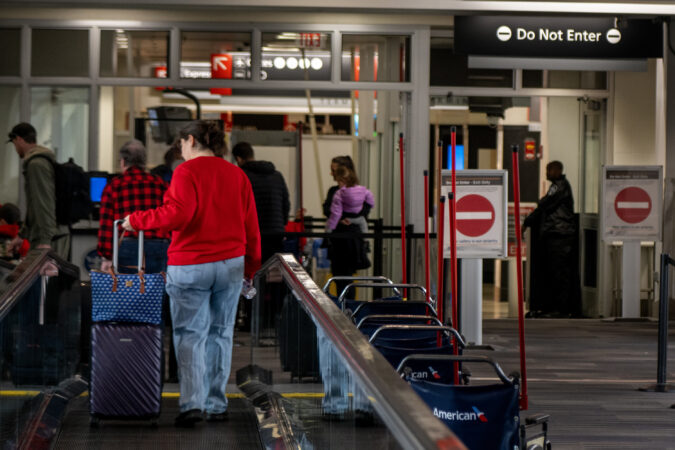
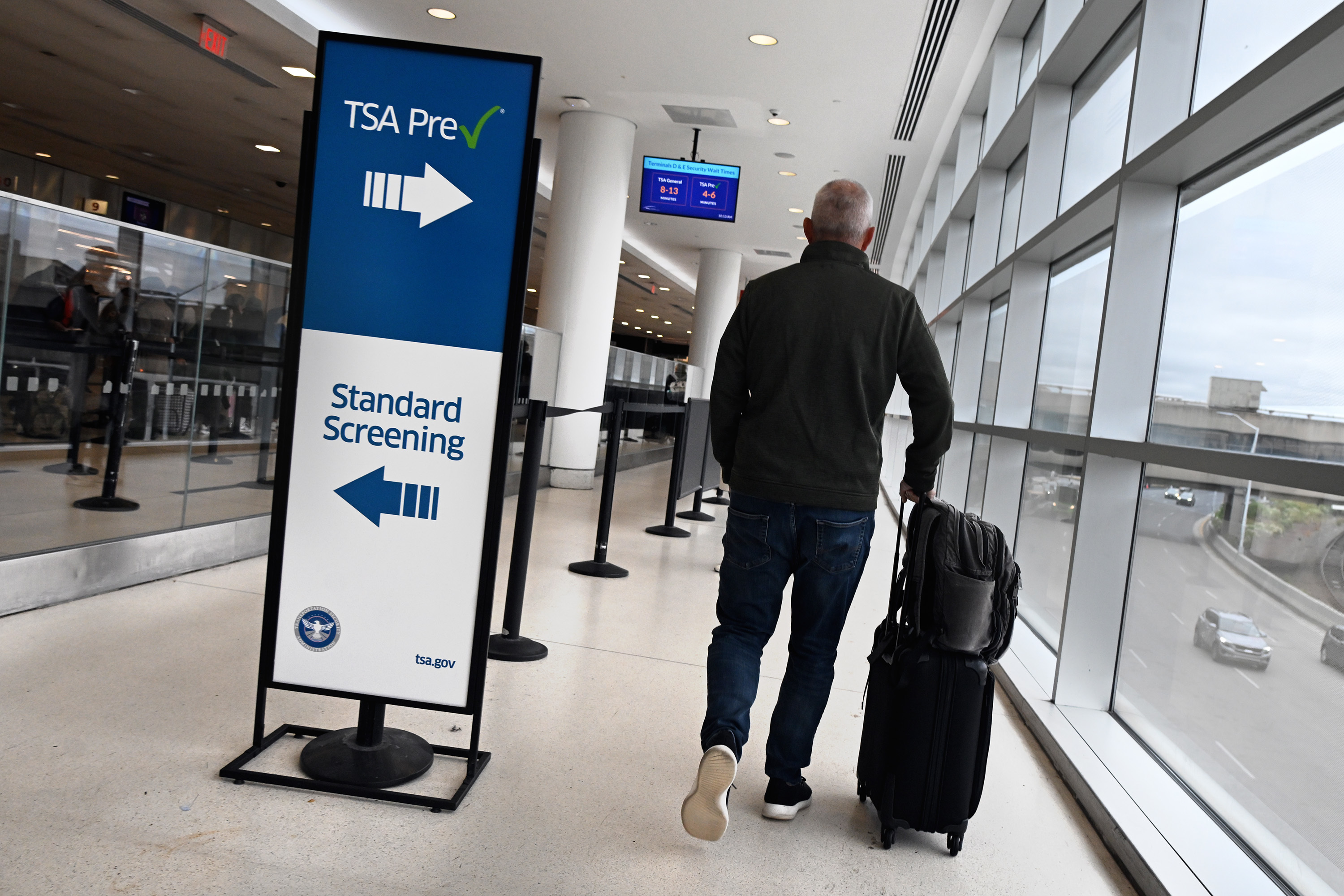
    A traveler enters the TSA PreCheck security line at Terminals E-F at Philadelphia International Airport in October.

    Security wait times

    As of Friday morning, all six security checkpoints at PHL were open. TSA PreCheck is available at Terminals A-East, C and D/E.

    Current security wait times are available on PHL’s website.