Atlantic City Police are investigating the deaths of two New Yorkers who were found dead in a casino hotel room Sunday afternoon.
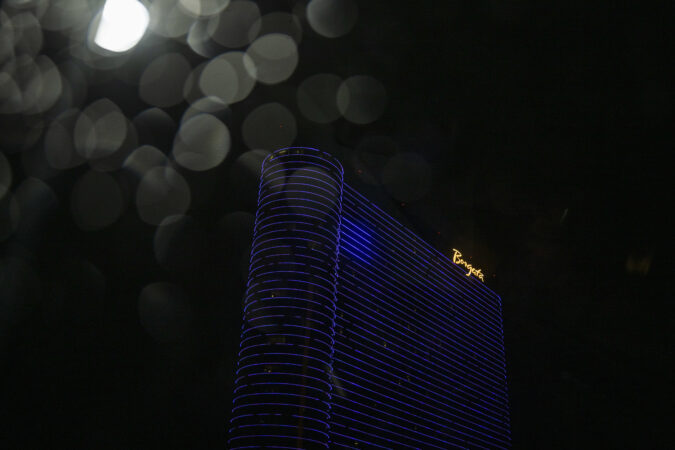
Police were called to the Borgata Hotel Casino and Spa around 5 p.m., where they found the bodies of Baoyi Bowie Zheng, a 36-year-old woman from Staten Island, and Wei Guo Liang, a 68-year-old man from Brooklyn.
An autopsy determined Bowie Zheng died of a broken neck. Guo Liang was found to have died from self-inflicted stab wounds.
Many details regarding the individuals, including their connection, if any, and how long they’d been at the Borgata, had not been made public as of Wednesday, when the Atlantic County Prosecutor’s Office encouraged people with information about the incident to call in.
A spokesperson for the hotel could not be reached for comment.
The new show, aptly named Far Cry, was recently ordered by FX and will stream on Hulu in the United States and Disney+ internationally.
Mac will also star in the adaptation.
Far Cry is an anthology franchise of first-person shooter games created by French-based company, Ubisoft. The details for the television adaptation are still unknown, but it will be action packed, featuring a different cast and setting each season.
“Getting to work alongside Noah Hawley is a dream realized,” Mac, a South Philly native, told Variety. “Ubisoft has been remarkably generous, entrusting us with one of the most iconic video game worlds ever created. And through it all, my FX family continues to lift me up with their constant belief and support.”
Mac created and stars in It’s Always Sunny in Philadelphia, which aired its 17th season earlier this year. He also stars in and executive produces the Emmy-winning FX docuseries Welcome to Wrexham.
The forthcoming series, Mac told Variety, stands to deepen his friendship with Hawley, who also has a long-standing relationship with FX as the creator of Fargo and Alien: Earth
“Each game is a variation of a theme, the same way each season of Fargo is a variation on a theme,” Hawley told Variety. “To create a big action show that can change from year-to-year while always exploring the nature of humanity through this complex and chaotic lens is a dream come true.”
In the early ’90s, Colleen Mazzella walked into a newly opened pizzeria and met the man who would become not only her boss, but her husband.
She was visiting a friend who had been hired at Italian Affair in Stafford, and owner Dominick Mazzella, then a recent Staten Island transplant, offered her a job, too.
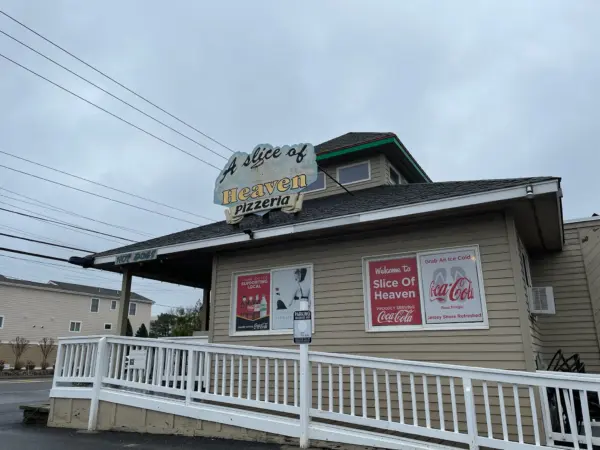
They soon became a couple, and a year later, in May 1995, opened A Slice of Heaven across from Fantasty Island Amusement Park on Long Beach Island. The building at 7th Street and Bay Avenue in Beach Haven had housed a car wash, candy store and photo shop through the years, and when the two met with owner Peter Buterick, “he said ‘I’m going to take a chance on you. I’ve got a good feeling about this,’” Mazzella said.
They made a name for themslves, thanks to a menu of dishes like stuffed cheesesteak pizza, scratch-made meatballs and cheesesteaks.
Thirty years later, the building is full of memories that became precious to Mazzella after Dominick died just days before his 50th birthday in 2024. She recalls the Stanley Cup being brought to the restaurant (“My husband was a gigantic hockey fan,” she said), staying open to serve pizza until 4 a.m. and borrowing ingredients from other restaurant owners to get through busy days.
Dominick Mazzella is pictured behind the counter of A Slice of Heaven, the Long Beach Island pizzeria he opened with his wife, Colleen, in 1995.
She remembers when a family who lost their father stopped in for his favorite pizza before spreading his ashes on the beach, rebuilding after Superstorm Sandy sent four feet of water into the dining room and making pizza by flashlight during a power outage.
The restaurant is also where Dominick taught his son to make pizza, a legacy the 18-year-old — also named Dominick — has dreamed of continuing.
But it will have to happen somewhere else, as A Slice of Heaven closed earlier this month. The Mazzellas leased their restaurant space and the building has been sold.
“The plan was to take this place over,” Mazzella said of her and her husband’s plans for their son, a third-generation pizza maker whose grandfather emigrated from Naples, Italy, and owned restaurants in New York before opening the Stafford pizzeria with Dom.
A Slice of Heaven’s last day in business was Nov. 17, and Mazzella must vacate the building by the end of the month. She has been searching for a new location since learning of the impending sale several years ago, and while she wants to keep the restaurant on Long Beach Island, rentals that will work for her business are hard to come by, she said.
“My intention is to be on the island,” said Mazzella, who grew up in Brant Beach and now lives in Cedar Run on the mainland. “I love the people here. I grew up here. I love everything about it.”
“It’s just a fact of finding a place to land,” she said. “It’s been tough. I just have to keep believing that the places that I found that didn’t work out didn’t work out for a reason, and that it’s because we’re waiting for the right place.”
“We’ll find something,” she said. “I gotta believe that.”
Since announcing the closing date in early November, Mazzella has seen an outpouring of support online and in person, with customers sharing memories and well wishes.
One spoke of how the elder Dominick fulfilled her request to spell “It’s a boy!” in pepperoni on a pizza for her gender reveal. Another customer wrote of how the restaurant’s delivery driver checked on her elderly father when she couldn’t reach him. Dozens more said A Slice of Heaven’s pizza is part of their vacation tradition.
For Mazzella, it is stories like these that make giving up not an option.
WASHINGTON – A prosecutor on Wednesday dropped all criminal charges in Georgia against U.S. President Donald Trump for interference in the 2020 presidential election, ending a high-profile racketeering case that once seemed like a significant threat to the Republican.
The decision by Peter Skandalakis, a state official who recently took over the prosecution, was a stinging defeat for Fulton County District Attorney Fani Willis, who brought the case in 2023 but then lost control of it amid ethics complaints by defense lawyers.
It was one of four criminal prosecutions that Trump faced in the years since losing his 2020 presidential re-election bid to Democrat Joe Biden. Only one of them — a New York case over a hush-money payment to a porn star during his 2016 campaign — went to trial. Trump was found guilty in that case but has asked for it to be thrown out.
The dismissal highlighted how Trump’s return to the White House this year, a political comeback unparalleled in U.S. history, dismantled a thicket of legal cases that once seemed set to define his post-presidency era.
Trump’s political career had appeared to be over after his false claims of election fraud led a mob of supporters to storm the U.S. Capitol on Jan. 6, 2021, in a failed bid to overturn his 2020 defeat.
Skandalakis said in a court filing that “there is no realistic prospect that a sitting President will be compelled to appear in Georgia to stand trial,” so it would be “futile and unproductive” to push forward with the case.
Skandalakis said his decision, which was approved by a judge on Wednesday morning, “is not guided by a desire to advance an agenda but is based on my beliefs and understanding of the law.”
Steve Sadow, a lawyer for Trump, praised the dismissal, saying the case should have never been brought.
Willis had brought the case against Trump and 18 co-defendants, charging a sweeping criminal conspiracy to overturn Georgia’s 2020 election results after a recording surfaced in the media of Trump asking Georgia’s top electoral official to “find” him enough votes to win the state.
The co-defendants included former Trump lawyers Rudy Giuliani and John Eastman, who like Trump pleaded not guilty.
An appeals court removed Willis, an elected Democrat in Atlanta, from the case last year. The court said she had created an “appearance of impropriety” by having a romantic relationship with the special prosecutor she had hired to lead the case.
Skandalakis heads the Prosecuting Attorneys’ Council of Georgia, a government agency that supports the state’s local prosecutors. Earlier this month, he appointed himself to lead the case, saying he had been unable to find another prosecutor willing to take it over.
Anthony Michael Kreis, a Georgia State University law professor, said Skandalakis’s decision to drop the charges was not surprising. The agency he oversees does not have the resources to prosecute such a complex case with several co-defendants, Kreis said.
The holiday season is officially upon us and with it, a slew offestive events. From Santa sightings to a cocoa crawl, here’s how and where to celebrate in and around Media.
Linvilla Orchards will transform for the holidays, complete with a Winter Makers Market on most Fridays, Saturdays, and Sundays throughout December. There will also be ice skating, live music, and visits with Santa. Plus, you can cut your own Christmas tree.
⏰ Through Sunday, Dec. 21, times vary 💵 Pay as you go 📍Linvilla Orchards, 137 W. Knowlton Rd., Media
Holiday Tree Lighting at the Promenade at Granite Run
See the tree lit and explore area small businesses, which will have tables set up for the occasion.
⏰ Saturday, Nov. 29, 5-6 p.m. 💵 Free 📍Promenade at Granite Run, 1067 W. Baltimore Pike, Media
Get into the holiday spirit with a free block party at Veterans Square, where attendees are asked to contribute goods to the Media Food Bank or an unwrapped gift for Toys for Tots. There will be a holiday costume contest at 4 p.m., followed by a fun run and walk at 4:15 p.m. Festivities conclude with Santa parading along State and Front Streets, complete with mummers, musicians, classic cars, and fire trucks.
⏰ Sunday, Nov. 30, 2:30-7 p.m. 💵 Free, donations to Media Food Bank or Toys for Tots encouraged 📍Downtown Media
The Festival of Lights returns to Rose Tree County Park.
Marking its 50th anniversary this year, the festival will be open nightly for a month, with food trucks, vendors, and live entertainment on Dec. 4, 6, 7, 13, and 14. The tree lighting takes place Dec. 4 at 5 p.m.
⏰ Thursday, Dec. 4-Saturday, Jan. 3 💵 Pay as you go 📍Rose Tree County Park, 1671 N. Providence Rd., Media
This annual tradition returns with an all-day celebration that includes the Reindeer Dash one-mile walk and run at 11:30 a.m. Participants are encouraged to dress for the season. From noon to 4:30 p.m., the Winter Village will take over the borough parking lot, complete with a pub, food vendors, and crafts. There will also be a Kwanzaa celebration, trolley rides, and caroling, capped by a fire truck parade with Santa that ends with the town’s tree lighting.
⏰ Saturday, Dec. 6, 9 a.m.-9 p.m. 💵 Pay as you go 📍 Swarthmore town center
Love holiday cookies but don’t love baking? Or just want to sample an array of treats? This annual event lets attendees pick and pay for the homemade cookies they want.
⏰ Saturday, Dec. 13, 9 a.m. 💵 Pay as you go 📍Middletown Church, 273 S. Old Middletown Rd., Media
Kate Brennan puts a modern twist on A Christmas Carol with this show centered on a woman who gets trapped in her apartment on Christmas Eve and ends up assessing how technology and devices both connect and disconnect us.
⏰ Thursday, Dec. 18, 12:30 p.m., and Friday, Dec. 19, 7 p.m. 💵 $21 📍Park Avenue Community Center, 129 Park Ave., Swarthmore
This tribute to Frankie Valli and the Four Seasons features classic hits and festive tunes, as well as audience participation.
⏰ Saturday, Dec. 21, 7 p.m. 💵 $41 📍The Media Theatre, 104 E. State St., Media
This suburban content is produced with support from the Leslie Miller and Richard Worley Foundation and The Lenfest Institute for Journalism. Editorial content is created independently of the project donors. Gifts to support The Inquirer’s high-impact journalism can be made at inquirer.com/donate. A list of Lenfest Institute donors can be found at lenfestinstitute.org/supporters.
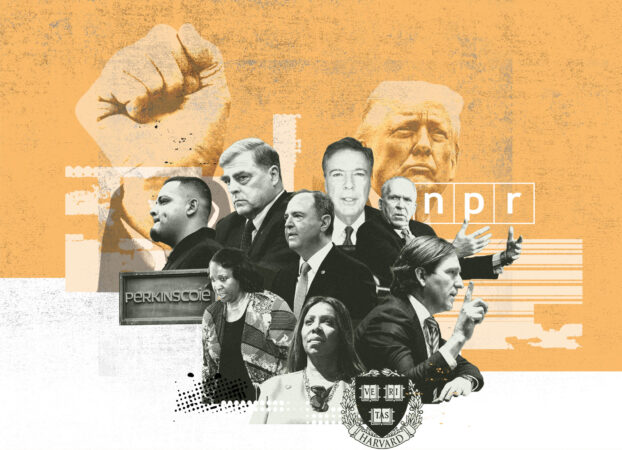
In his second term, Donald Trump has turned a campaign pledge to punish political opponents into a guiding principle of governance.
What began as a provocative rallying cry in March 2023 — “I am your retribution” — has hardened into a sweeping campaign of retaliation against perceived enemies, reshaping federal policy, staffing and law enforcement.
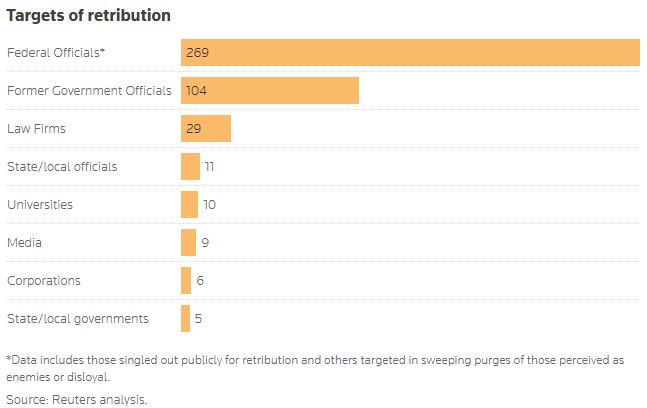
A tally by Reuters reveals the scale: At least 470 people, organizations and institutions have been targeted for retribution since Trump took office — an average of more than one a day. Some were singled out for punishment; others swept up in broader purges of perceived enemies. The count excludes foreign individuals, institutions and governments, as well as federal employees dismissed as part of force reductions.
The Trump vengeance campaign fuses personal vendettas with a drive for cultural and political dominance, Reuters found. His administration has wielded executive power to punish perceived foes — firing prosecutors who investigated his bid to overturn the 2020 election, ordering punishments of media organizations seen as hostile, penalizing law firms tied to opponents, and sidelining civil servants who question his policies. Many of those actions face legal challenges.
At the same time, Trump and his appointees have used the government to enforce ideology: ousting military leaders deemed “woke,” slashing funds for cultural institutions held to be divisive, and freezing research grants to universities that embraced diversity initiatives.
Reuters reached out to every person and institution that Trump or his subordinates singled out publicly for retribution, and reviewed hundreds of official orders, directives and public records. The result: the most comprehensive accounting yet of his campaign of payback.
The analysis revealed two broad groups of people and organizations targeted for retaliation.
Members of the first group – at least 247 individuals and entities – were singled out by name, either publicly by Trump and his appointees or later in government memos, legal filings or other records. To qualify, acts had to be aimed at specific individuals or entities, with evidence of intent to punish. Reuters reporters interviewed or corresponded with more than 150 of them.
Another 224 people were caught up in broader retribution efforts – not named individually but ensnared in crackdowns on groups of perceived opponents. Nearly 100 of them were prosecutors and FBI agents fired or forced to retire for working on cases tied to Trump or his allies, or because they were deemed “woke.” This includes 16 FBI agents who kneeled at a Black Lives Matter protest in 2020. The rest were civil servants, most of them suspended for publicly opposing administration policies or resisting directives on health, environmental and science issues.
Most common were punitive acts, such as firings, suspensions, investigations and the revocation of security clearances.
Reuters found at least 462 such cases, including the dismissal of at least 128 federal workers and officials who had probed, challenged or otherwise bucked Trump or his administration.
The second form was threats. Trump and his administration targeted at least 46 individuals, businesses and other entities with threats of investigations or penalties, including freezing federal funds for Democratic-led cities such as New York and Chicago.
Trump openly discussed firing Federal Reserve Chair Jerome Powell for resisting interest rate cuts, for instance. Last week, he threatened to have six Democratic members of Congress tried for sedition – a crime he said is “punishable by DEATH” – after the lawmakers reminded military personnel they can refuse “illegal orders.” This week, the Defense Department threatened to court-martial one of them, U.S. Senator Mark Kelly, a former Naval officer.
The third form was coercion. In at least a dozen cases, organizations such as law firms and universities signed agreements with the government to roll back diversity initiatives or other policies after facing administration threats of punishment, such as security clearance revocations and loss of federal funding and contracts.
It’s a campaign led from the top: Trump’s White House has issued at least 36 orders, decrees and directives, targeting at least 100 individuals and entities with punitive actions, according to the Reuters analysis.
Trump openly campaigned on a platform of revenge in his latest run for the presidency, promising to punish enemies of his Make America Great Again movement. “For those who have been wronged and betrayed, I am your retribution,” he said in a March 2023 speech. Weeks later, while campaigning in Texas, he repeated the theme. “I am your justice,” he said.
Today, the White House disputes the idea that the administration is out for revenge. It describes recent investigations and indictments of political adversaries as valid course corrections on policy, necessary probes of wrongdoing and legitimate policy initiatives.
“This entire article is based on the flawed premise that enforcing an electoral mandate is somehow ‘retribution.’ It’s not,” White House spokesperson Abigail Jackson said. There is no place in government for civil servants or public officials “who actively seek to undermine the agenda that the American people elected the president to enact,” she added. Trump is abiding by campaign promises to restore a justice system that was “weaponized” by the Biden administration, Jackson said, and “ensure taxpayer funding is not going to partisan causes.”
Trump’s actions have been cheered by his staunchest backers. Right-wing commentator and former Trump advisor Steve Bannon told Reuters the use of government power to punish Trump’s enemies is “not revenge at all” but an attempt to “hold people accountable” for what he said were unfair investigations targeting Trump. More is on the way, he said.
“The people that tried to take away President Trump’s first term, that accused him of being a Russian asset and damaged this republic, and then stole the 2020 election – they’re going to be held accountable and they’re going to be adjudicated in courts of law,” he said in an interview. “That’s coming. There’s no doubt.” There’s no evidence the 2020 election was stolen.
Trump’s allies point to actions former President Joe Biden took upon taking office. After Trump’s supporters attacked the U.S. Capitol on January 6, 2021, in a failed bid to overturn his election loss, Biden revoked Trump’s access to classified information, a first for any former president. Biden also won a court battle to dismiss Senate-confirmed directors of independent agencies serving fixed terms, such as the Federal Housing Finance Authority, and removed scores of Trump-era appointees from unpaid advisory boards.
Yet the scale and systematic nature of Trump’s effort to punish perceived enemies marks a sharp break from long-standing norms in U.S. governance, according to 13 political scientists and legal scholars interviewed by Reuters. Some historians say the closest modern parallel, though inexact, is the late President Richard Nixon’s quest for vengeance against political enemies. Since May, for instance, dozens
of officials from multiple federal agencies have been meeting as part of a task force formed to advance Trump’s retribution drive against perceived enemies, Reuters previously reported.
“The main aim is concentration of power and destruction of all checks against power,” said Daron Acemoglu, Nobel laureate in economics and a professor at the Massachusetts Institute of Technology, which faces an ongoing federal investigation for embracing diversity and equity programs. “Retribution is just one of the tools.”
Dozens of Trump’s targets have challenged their punishments as illegal. Fired and suspended civil servants have filed administrative appeals or legal challenges claiming wrongful termination. Some law firms have gone to court claiming the administration exceeded its legal authority by restricting their ability to work on classified contracts or interact with federal agencies. Most of those challenges remain unresolved.
Investigating foes of Trump
The administration has moved aggressively against officials in the government’s legal and national security agencies, institutions central to investigations of Trump’s alleged misconduct during and after his first term.
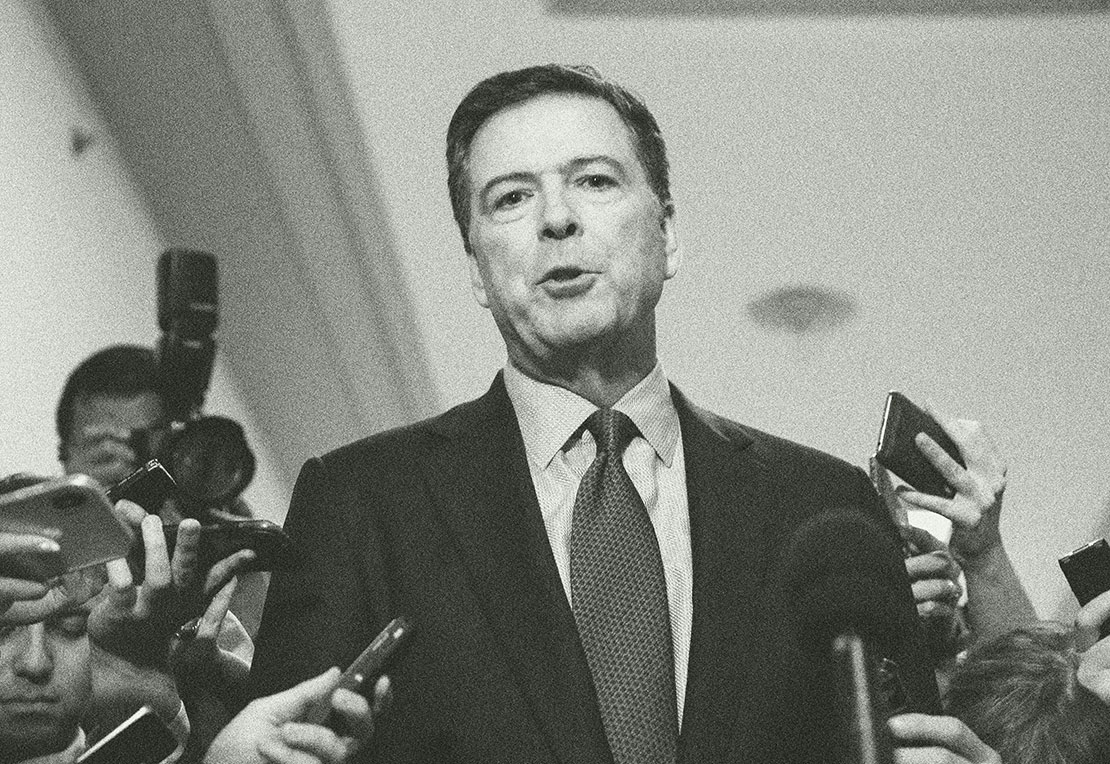
At least 69 current and former officials were targeted for investigating or sounding alarms about Russian interference in U.S. elections. U.S. intelligence agencies concluded soon after the 2016 election that Moscow sought to tilt the race toward Trump, a finding later affirmed by a bipartisan Senate Intelligence Committee report in August 2020. Acts of retribution tied to the Russia probe include the September 25 indictment of former FBI Director James Comey, a break from Justice Department norms meant to shield prosecutions from political influence.
Comey, who led the FBI’s investigation into Trump’s 2016 campaign, was charged after Trump demanded his prosecution. The Justice Department has cast the case as a corruption crackdown. Comey and his lawyers said in court documents that the case was “vindictive” and motivated by “personal animus.” Comey, who pleaded not guilty, declined to comment. A federal judge dismissed the case on Monday, ruling that Trump’s handpicked prosecutor had been unlawfully appointed.
Acts of retribution tied to the Russia probe include the indictment of former FBI Director James Comey. His lawyers say he is the target of a “vindictive” prosecution.
At least 58 acts of retribution have targeted people Trump viewed as saboteurs of his election campaigns, including Chris Krebs, the top cybersecurity official during his first term. Trump fired him in 2020 for disputing claims that the election was rigged. In April, Trump stripped Krebs’ security clearance and ordered a federal investigation into his tenure. Krebs, still asserting that Trump’s defeat was valid, has vowed to fight the probe. He did not respond for this story.
Reuters documented 112 security clearances revoked from current and former U.S. officials, law firms and state leaders – credentials needed for work that involves classified information. In August, Director of National Intelligence Tulsi Gabbard announced she was revoking 37 clearances.
In a response to Reuters posted on X, an agency spokesperson said Gabbard and Trump are working “to ensure the government is never again wielded against the American people it is meant to serve.” She added: “President Trump said it best, ‘Our ultimate retribution is success.’”
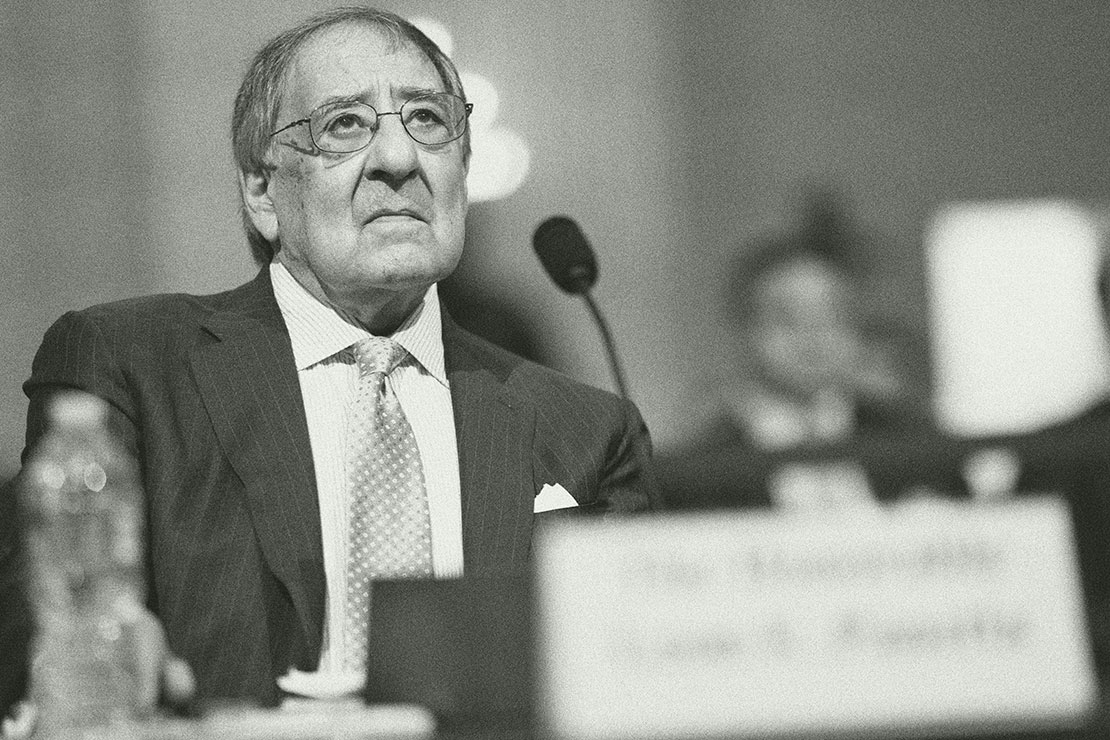
Leon Panetta, CIA director and defense secretary under former President Barack Obama, had his security clearance revoked in January along with others who signed an October 2020 letter suggesting Russia may have been behind reports about emails on Hunter Biden’s laptop. At the time, Joe Biden — Hunter’s father — was Trump’s Democratic rival in the 2020 election. An executive order Trump signed in January claimed: “The signatories willfully weaponized the gravitas of the Intelligence Community to manipulate the political process and undermine our democratic institutions.” Panetta has said he stands by signing the letter.
Panetta told Reuters he had already surrendered his clearance after leaving government nearly a decade ago. Trump’s retribution campaign is hurting CIA morale and wrecking the bipartisan trust that allows Washington to function, Panetta said. “What I worry about is that our adversaries will look at what’s happening and sense weakness,” he said. “This kind of political retribution leads to a loss of trust, which ultimately leads to a failure of governing.” The CIA did not respond to a request for comment.
Former CIA director Leon Panetta had his security clearance revoked along with others who signed a letter suggesting Russia may have been behind reports about emails on Hunter Biden’s laptop.
The revenge effort also reaches deep into the civil service, punishing employees who speak out against Trump’s policies and turning forms of dissent that were tolerated by past administrations into grounds for discipline.
This summer, hundreds of Environmental Protection Agency staffers wrote an open letter protesting deep cuts to pollution control and cleanup programs. The fallout was swift. More than 100 signers who attached their names were placed on paid leave. At least 15 senior officials and probationary employees were told they would be fired. The rest were informed they were under investigation for misconduct, leading to at least 69 suspensions without pay. Many remained out of work for weeks.
“They followed all the rules” of conduct for civil servants, said Nicole Cantello, one of the signers and an officer with the American Federation of Government Employees, a union that represents many affected workers. She called the punishments an attempt to “quell dissent,” stifle free speech and “scare the employees.” In a statement, the EPA said it has “a zero-tolerance policy for career officials using their agency position and title to unlawfully undermine, sabotage, and undercut” administration policy.
At the Federal Emergency Management Agency, about 20 staffers were put on leave and now face misconduct investigations after signing a letter criticizing the agency’s decision to scrap bipartisan reforms adopted years ago to speed disaster relief.
Cameron Hamilton, a Republican who served briefly as acting head of FEMA, was fired in May, a day after telling Congress he didn’t believe the agency should be shut down, contradicting the administration.
Hamilton told Reuters he still supports Trump. But he said too many senior officials are firing people in the name of retribution, trying to impress the White House. “They want to find ways to really launch themselves to prominence and be movers and shakers, to kick ass and take names,” said Hamilton. “They’re trying to show the president ‘look at what I am doing for you.’”
In a statement to Reuters, the Department of Homeland Security, which includes FEMA, said it is building a “new FEMA” to fix “inefficiency and outdated processes.” Employees “resisting change” are “not a good fit,” the statement said.
Dr. Jeanne Marrazzo, former head of the National Institute for Allergy and Infectious Diseases, sees her firing in October — three weeks after filing a whistleblower complaint alleging politicization of research and vaccine policy — as a warning shot. She told Reuters the administration’s purge of dissenting health officials is breeding “anticipatory obedience” — a reflex to comply before being asked. “People know if they push back … this is what happens,” she said. The effect, she says, is an ecosystem of fear: those who stay in government self-censor; those who speak out are branded “radioactive, too hot to handle.”
The Department of Health and Human Services, the agency that oversees NIAID, did not respond to a request for comment.
Federal agency leaders have dismissed a wide array of officials they deemed out of step with Trump’s MAGA agenda, including employees involved in diversity, equity and inclusion initiatives and those working on transgender issues.
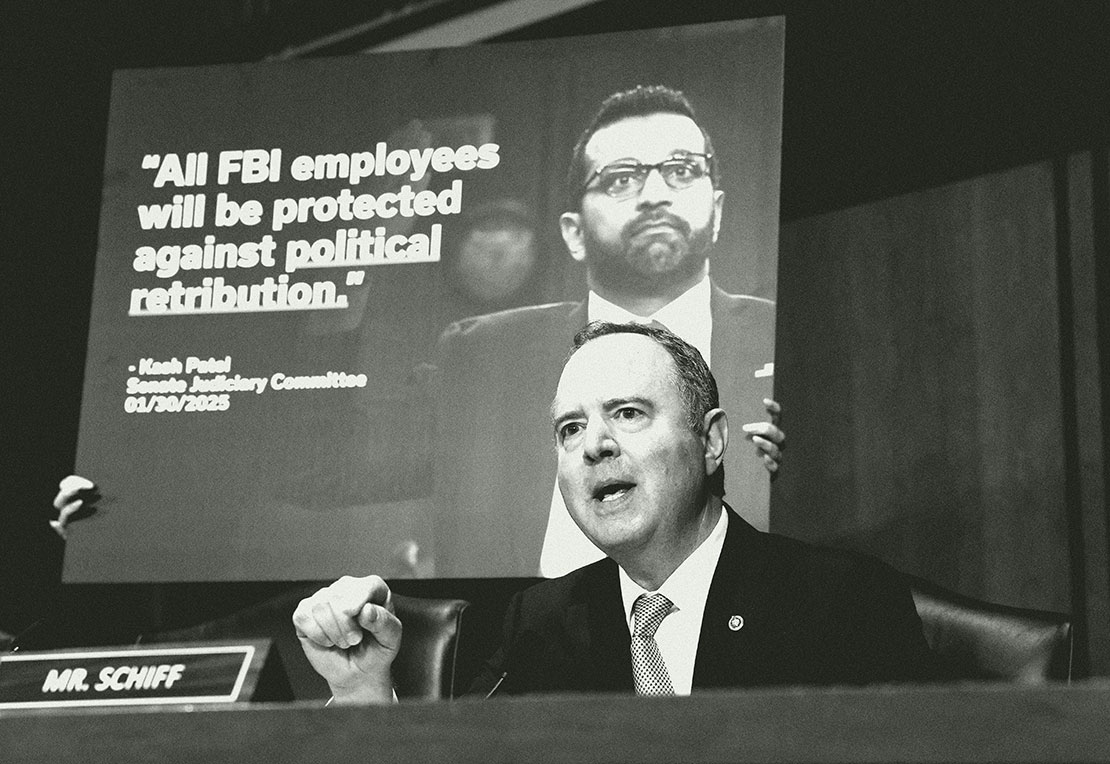
David Maltinsky, a Federal Bureau of Investigation employee, says he was fired by Director Kash Patel for displaying a Pride flag at work — one of at least 50 bureau personnel dismissed on Patel’s watch. Maltinsky sued the FBI and Justice Department, alleging violations of his constitutional rights and seeking reinstatement. The Justice Department has yet to file a formal response.
In his 2023 book, “Government Gangsters,” Patel named 60 people that he said were members of an “Executive Branch deep state” that opposed Trump, including former Democratic government officials and Republicans who served in Trump’s first administration but eventually broke with him. He called for firings and said that anybody who abused their authority should face prosecution. In his 2025 confirmation hearing before Congress, Patel denied that it was an “enemies list.”
Under FBI Director Kash Patel’s watch, at least 50 FBI personnel have been dismissed. In this photo, U.S. Senator Adam Schiff speaks in front of an image of Patel at a Senate hearing on FBI oversight.
Reuters found that at least 17 of the 60 people on Patel’s list have faced some sort of retribution, including firings and stripping of security clearances. The FBI did not respond to a request for comment.
Against perceived foes in the private sector, the administration has wielded financial penalties as leverage. At least two dozen law firms faced inquiries, investigations or restrictions on federal contracting, often for employing or representing people tied to past cases against Trump. Eight struck deals to avoid further action.
Nine media organizations have faced federal investigations, lawsuits, threats to revoke their broadcast licenses and limits on access to White House events. Trump has also suggested revoking broadcast licenses for networks whose coverage he dislikes.
The targets include universities, long cast by the president and his allies as bastions of left-wing radicals.
Officials froze more than $4 billion in federal grants and research funding to at least nine schools, demanding policy changes such as ending diversity, equity and inclusion programs, banning transgender athletes from women’s sports and cracking down on alleged antisemitism amid pro-Palestinian protests. Five universities have signed agreements to restore funding. Harvard University successfully sued to block a freeze on $2.2 billion in federal aid for the school, which Trump accused of “pushing political, ideological, and terrorist inspired” dogma. Harvard declined to comment.
The administration has described the funding freezes and other efforts to force policy changes at colleges and universities as a necessary push to reverse years of leftward drift in U.S. education. “If Reuters considers restoring merit in admissions, reclaiming women’s titles misappropriated by male athletes, enforcing civil rights laws, and preventing taxpayer dollars from funding radical DEI programs ‘retribution,’ then we’re on very different planes of reality,” said Julie Hartman, a spokesperson for the U.S. Education Department.
A historical parallel: Nixon’s enemies
It’s impossible to predict, of course, how far the Trump revenge campaign will go, or whether it will be affected by a recent slide in popular support. Trump has been hurt by public frustration with the high cost of living and the investigation into late convicted sex offender Jeffrey Epstein.
Nixon resigned in 1974 over the Watergate scandal, in which aides to his re-election campaign broke into Democratic Party headquarters and the president himself later directed a cover-up. While in office, he kept a list of more than 500 enemies. But while Trump has conducted his retribution campaign in the open, historians note, Nixon’s enemies list was conceived as a covert tool.
John Dean, chief counsel in the Nixon White House, wrote a confidential memo in 1971 addressing “how we can use the available federal machinery to screw our political enemies.” The planned methods included tax audits, phone-tapping, the cancellation of contracts and criminal prosecution. Yet the execution faltered: IRS Commissioner Donald Alexander refused to conduct mass audits, and most targets escaped serious punishment.
Other recent presidents, to be sure, have been accused of seeking to punish opponents, though on a smaller scale. The Obama administration pursued “aggressive prosecution of leakers of classified information,” the Committee to Protect Journalists said in a 2013 report. Two IRS employees alleged they were retaliated against during the Biden administration for raising concerns about the handling of the tax-compliance investigation of Hunter Biden.
Nixon’s plotting remained a secret until the Watergate hearings exposed it, turning his enemies list into a symbol of presidential abuse. The secrecy reflected a political culture in which retaliation was whispered, not broadcast, and where institutional checks blunted many of Nixon’s ambitions.
Trump’s approach reverses that pattern, historians say. He has openly named his perceived enemies, urged prosecutions in public and framed vengeance as a campaign vow. Some say today’s “enemies list” politics are in that sense farther-reaching than Nixon’s, possibly signaling a shift toward a normalization of retribution in American political life.
Corey Brettschneider, a political science professor at Brown University who has written a book on power grabs by American presidents, said Nixon was ultimately checked and forced to resign by Congress, including members of his own Republican Party. “That’s just not happening now,” he said.
Temple University Health System reported a $15 million operating loss in the three months that ended Sept. 30.
The result for the first quarter of fiscal 2026 was an improvement from the North Philadelphia nonprofit’s $17 million loss last year.
“We’re pretty happy where we are,” CEO Mike Young said Wednesday. Revenue was above budget and labor costs were on budget in the first quarter for the first time in several years.
Here are some details:
Revenue: Total revenue was $800 million, up 13% from $712.5 million a year ago. Outpatient revenue increased by nearly $62 million, much of it from the health system’s specialty and retail pharmacy business.
Temple participates in a federal program for safety-net hospitals that allows it to buy certain drugs at a discount and then get full reimbursement from insurance companies.
Expenses: Temple noted in its report to municipal bond investors Tuesday that salaries, including higher pay rates for nurses, and higher drug spending for outpatient infusions and other pharmacy business were the biggest expense increases.
Notable: On the labor front, several job categories remain hard to fill, Young said. Those are CT techs, nurse anesthetists, and lab techs. “Other than those three [specialties], it’s not where it was three years ago, where you couldn’t find anybody,” he said.
Just weeks after a triumphant moment, Byron Young found himself dealing with the greatest tragedy of his life. Back in March, the defensive tackle returned home to Mississippi for a festive weekend with family. Not only did they celebrate him being part of the Eagles’ 2024 Super Bowl championship team, but his aunt’s birthday as well. A day later, Young’s father, Kenny, died suddenly. The Philadelphia Inquirer’s Jeff McLane profiled Young’s emotional journey in a recent feature.
You can read the article in full on inquirer.com and via the following link: https://www.inquirer.com/eagles/byron-young-late-father-memory-key-chain-nfl-week-13-20251126.html
Listen to an excerpt of Jeff’s conversation with Young on this bonus episode of unCovering the Birds.
unCovering the Birds is a production of The Philadelphia Inquirer and KYW Newsradio Original Podcasts. Look for new episodes throughout the season, including day-after-game reactions.
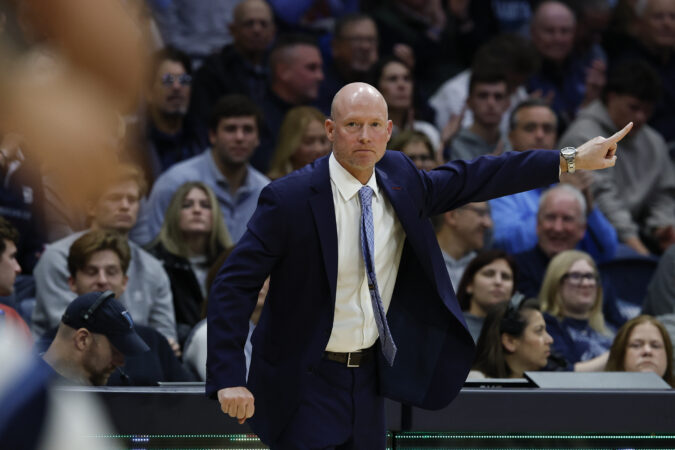
With Villanova without the nation’s leading rebounder, Duke Brennan, on Tuesday night, 7-footer Braden Pierce started in his place in the Wildcats’ 89-75 win over visiting Old Dominion.
The change forced Villanova coach Kevin Willard to play a small lineup more than he would have preferred.
“I mean, I think that’s something that we’re still not very good at,” Willard said. “Because we just haven’t had time to practice. I think the more we practice it, the more we will be comfortable with having five guys out there that can shoot, pass, and dribble.”
Brennan was sidelined with a right ankle sprain he suffered last week in a win over La Salle. The Grand Canyon transfer has averaged a double-double while leading the country with 14.4 rebounds per game.
With Pierce starting, Villanova (5-1) struggled to find a rhythm on either side of the court. Forward Tafara Gapare ended up getting more playing time off the bench, with 31 minutes to Pierce’s 12.
Brennan’s absence was noticeable early in the first half. Villanova gave up a few offensive boards that could have been hauled in.
Villanova tied a season-low with nine offensive rebounds but still won the battle on the boards, 34-29. Entering the game, Villanova had double-digit offensive boards in each of its games, including a season-high 22 against Queens University on Nov. 8.
Beyond the arc, Villanova allowed an Old Dominion team that averages 32.7% on three-pointers to shoot 47.8% (45.3 overall). How does Willard think Villanova should address that?
“Don’t schedule good shooting teams,” he said.
Early shooting woes
Villanova opened the game shooting a sloppy 1-for-7 on three-pointers but spun it around in the tail end of the first half and closed it with marks of 35.7% from beyond the arc and 45.2% from the field. Overall, the Wildcats shot 53.6% from the field, including 38.5% from deep.
Bryce Lindsay knocked down a three-pointer to open the second half. With the help of an Acaden Lewis steal, Tyler Perkins broke away on the next possession and finished it on the other end of the court, forcing a timeout by Old Dominion (3-5).
All told, the Wildcats opened the second half with a 15-3 run.
Villanova guard Bryce Lindsay during the game against Duquesne on Nov. 15.
Perkins scored a season-high 21 points, shooting 8-for-13 from the field, including 3-for-4 on three-pointers.
“Tyler just gives us great energy,” Willard said. “I think that’s something that he’s still trying to figure out, a little bit of what he’s doing and what we need him to do. To start the second half, he gets two big steals, gets a layup, and a good pass. Tyler just gives us energy and some toughness. And I think he’s really starting to figure out, ‘How do I play in this system?’”
Ball screens and movement
Midway through the second half, Willard motioned to forward Matt Hodge to set a pick for Perkins at the top left of the arc in front of Villanova’s bench.
Hodge set the pick. Perkins shifted left, then Hodge drove to the basket while hauling in the pass from Perkins and was met at the rim with a foul, stopping him from capping the pick-and-roll with a dunk.
“I feel like we moved the ball well,” Hodge said. “It allows me to be very versatile.”
Villanova dished out 16 assists and limited its turnovers to seven. It has been a successful early start for a squad with 13 new faces and a starting freshman point guard in Lewis. The team has had at least 15 assists in its last five games.
Lewis, who had 20 points, led Villanova with four assists. He is averaging 5.2 assists on the season.
“Well, he’s super talented,” Willard said. “If you look at college basketball this year, the freshman class is loaded. This is probably one of the best freshman classes, probably about five to 10 years. I mean, the draft can be loaded. He’s going to get better and better every game. He’s getting a little bit more comfortable.”
Up next
Villanova is on five-game winning streak. Next up is a Big 5 clash at home against Temple (4-2) on Monday (6:30 p.m., FS1). The winner claims a spot in the championship game of the Big 5 Classic on Dec. 6 at Xfinity Mobile Arena. Villanova leads the all-time series, 51-43.
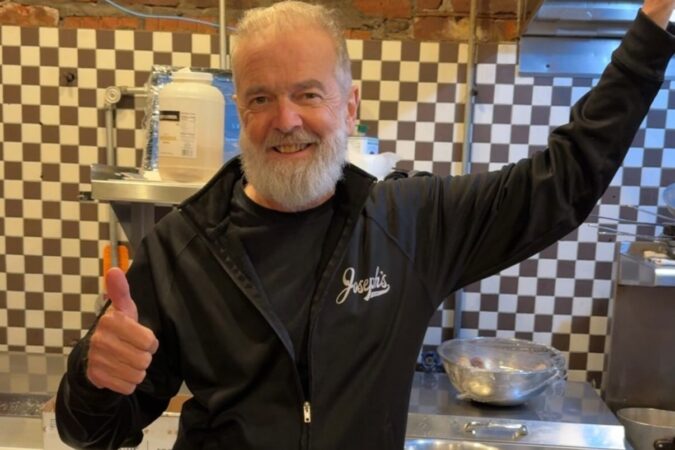
In his prime, Steve Sillman worked nights, Thursday through Monday.
And he was usually late coming in, despite only a 10-minute walk separating the front door of his impeccably preserved Fox Chase twin and the double red doors of Joseph’s Pizza Parlor.
The dayside managers would be tapping the toes of their dark work shoes, and Mr. Sillman would just glide in. He’d start turning radio dials in search of disco hits or a 1970s station, resetting the vibe with work-appropriate dancing to classic hits from Carole King and James Taylor. He’d remind anyone listening that he wanted disco played at his funeral.
And at the end of the night, hours after the other staff members had gone home, he’d pour himself a glass of red wine and close out the register, and then he’d call a few of the staffers and leave a message. He’d tell them to call back: “It’s important.” And when they called back, he’d say they missed a spot sweeping.
“You work with people so long,” said current Joseph’s co-owner Matt Yeck, “that you become like family.”
For the better part of four decades, and until the 70-year-old received a terminal brain cancer diagnosis earlier this year, Mr. Sillman was the face of the neighborhood’s trademark pizza place.
He started working there shortly after graduating from Northeast High School in the 1970s, and floated among the pizza parlor, neighboring Italian restaurant Moonstruck, and the once-wild Ciao nightclub above it.
He’d often speak of waiting on entertainment icon Elizabeth Taylor. (He would say he got lost in her transfixing blue eyes.) Over the course of those 40ish years, he became intimately familiar with the building’s quirks, and attended to its every need, from fixing broken faucets to decorating it for Christmas.
At the front of the house, he was the manager who would chat up customers before their order was ready. They always remembered his name, and sometimes he’d have to pretend to know theirs. In the back of the house, he was a peacekeeper, confidant, psychiatrist, dance partner, friend, and brother.
It was Mr. Sillman who raised an entire generation of neighborhood kids who came to Joseph’s for work. He watched them grow up, and then he folded them into his restaurant family.
He met his best friend of 40 years, Jane Readinger, through her siblings. They worked with Mr. Sillman at the restaurant, and over the years they folded him into their wider familial unit.
“A lot of his friendships came through that building,” said Jane, who is eight years younger. “And he had those friendships for life.”
It started with “P.L.P.’s,” or parking lot parties, after Joseph’s closed for the night. It grew into group ski trips and shared shore houses.
As his friendsstarted getting married and having kids and growing up, Mr. Sillman, a lifelong bachelor, bought a Sea Isle house so they all had a place to stay.
But it was the twin on the corner of Jeanes Street and Solly Avenue that was his legacy. His grandparents built the house in 1914, and only his family — three generations — had called it home. He maintained its original layout and finishes and flourishes from the turn of the 20th century.
The home was a marvel at Christmas, as Mr. Sillman would decorate his and the adjoining twin together. Draping them in handmade ribbons, and bestowing showstopper wreaths made of fresh fruit.
After he was diagnosed in the spring with glioblastoma, members of that restaurant family would stop and see him on Jeanes Street, even as Mr. Sillman could no longer climb the three flights of stairs, and after he transitioned from the recliner to a bed setup in the dining room.
Even the new owners came. Yeck and his partner, Jimmy Lyons, awkwardly inherited Mr. Sillman when they bought Joseph’s in 2021. But it didn’t take long for both to see his indistillable value.
“Steve came with the building,” Yeck said.
As Mr. Sillman took his last breaths on the morning of Sunday, Nov. 23, with Jane cradling his head in her arms, Carole King’s 1971 classic played through the house:“You’ve Got a Friend.”
The outpouring of support in person and on social media was a nice reminder to Jane that people don’t need to be blood to be family. There’s family you’re born with, and then there’s family you collect along the way.
“He was never alone during this fight,” Jane said. As a registered nurse, she volunteered to help attend to Mr. Sillman as he entered hospice care at home.
Mr. Sillman is survived by his sister-in-law, Harriet Sillman; nieces and nephews; great nieces and nephews; and generations of former co-workers. His neighbors are planning to decorate the twin Jeanes Street houses in his absence this holiday season.
Services for Mr. Sillman will be held Saturday, Nov. 29, at the Wetzel and Son Funeral Home, 419 Huntingdon Pike in Rockledge. The viewing will be held from 8 to 10 a.m., followed by a funeral ceremony.
And then his extended family will honor Mr. Sillman’s wishes with an appropriate send-off: They’re throwing a disco party.
Donations in his name may be made to the American Cancer Society, Box 970, Fort Washington, Pa. 19034, or to the Alex’s Lemonade Stand Foundation, 333 E. Lancaster Ave., Suite 414, Wynnewood, Pa. 19096.