Blog

  • The Sixers experienced a flashback to last season’s injury misery. They hope reinforcements are on the way.

    The Sixers experienced a flashback to last season’s injury misery. They hope reinforcements are on the way.

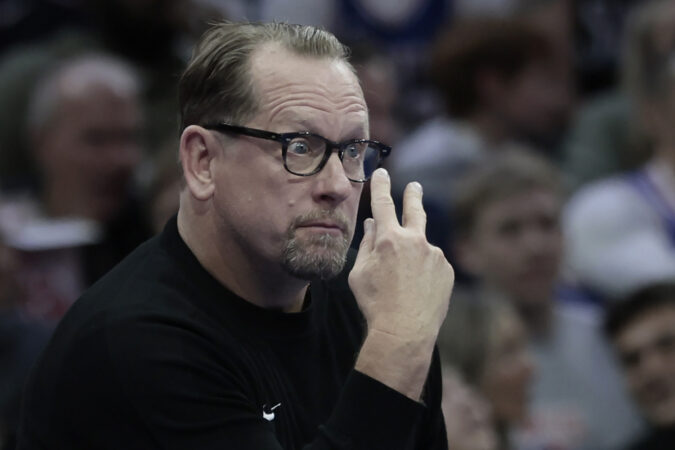
    All nine questions posed to Nick Nurse during Tuesday’s pregame news conference pertained to the 76ers’ mounting injuries. Joel Embiid’s knee. VJ Edgecombe’s calf. Paul George’s ankle.

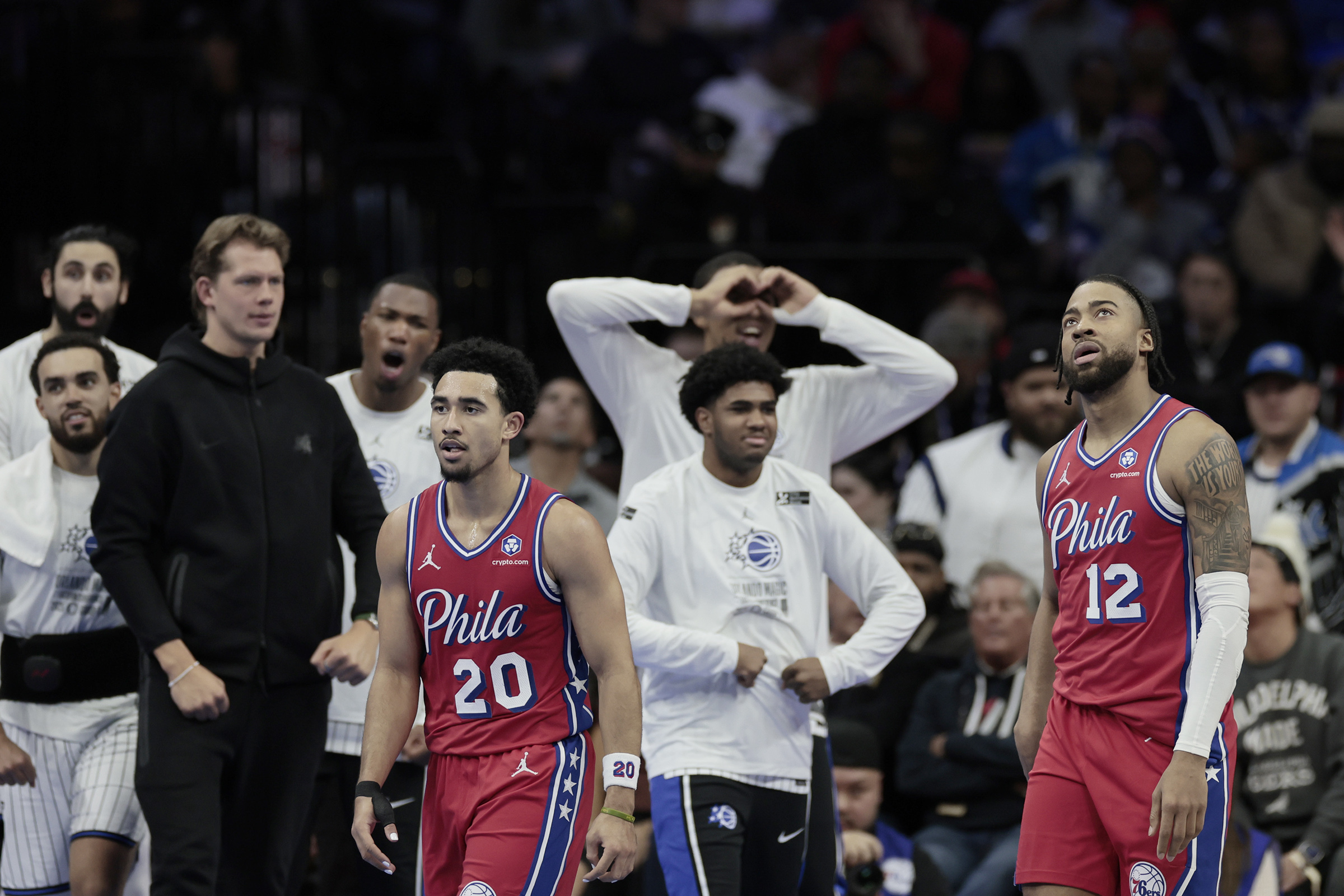
    The five-minute session felt like a flashback to last season, when inquiries about statuses and ramp-ups and rotation ripple effects piled up as jarringly as the Sixers’ losses. So did the ensuing on-court product, a 144-103 shellacking by the Orlando Magic peppered with boos from the Xfinity Mobile Arena crowd.

    The Sixers (9-8) so far have handled health absences significantly better than last season, though this version of the roster was at its most depleted Tuesday. Now the Sixers must prove that showing was a brutal blip that’s inevitable over the course of an 82-game regular season and not slippage into a “here we go again” injury conundrum.

    “We weren’t who we are tonight,” Nurse said postgame. “I’m super proud of what they’ve done the rest of the other games. They fought like crazy. And tonight, we couldn’t catch and we couldn’t shoot and we couldn’t fight.”

    Nurse said pregame that he would be “really surprised” if the Sixers’ rotation remains this decimated for Friday’s matchup at the Brooklyn Nets. Embiid, who practiced fully Monday and participated in “parts” of Tuesday’s shootaround, was “trending” toward playing against the Magic before being ruled out for an eighth consecutive game because of right knee injury management, Nurse said. George, who is nursing a sprained ankle, had been downgraded from probable to play Tuesday to out.

    To better withstand any inconsistent availability from the oft-injured Embiid and George, the Sixers deliberately got younger and more athletic. Their guard-heavy, fast-paced approach already has been more competitive and entertaining in this season’s first month than during virtually any stretch of 2024-25, when the Sixers were 3-14 through 17 games.

    But now injuries have struck starting wing Kelly Oubre Jr., who was playing perhaps the best basketball of his career before a knee sprain that is scheduled to be reevaluated next week. Edgecombe’s terrific rookie season has been interrupted by a calf issue that could benefit from a cautious treatment approach. Reserve big man Adem Bona, whose size is needed when Embiid is sidelined, was testing his sprained ankle during pregame on-court work Tuesday.

    Those absences have meant that, during the last week, the Sixers needed a career-high 54 points from star point guard Tyrese Maxey to beat a Milwaukee Bucks team missing Giannis Antetokounmpo in overtime (though that still was an admirable Sixers effort on the second night of a home-road back-to-back). Sunday’s loss to the Miami Heat was competitive until the Heat closed out the fourth quarter.

    Then, after the opening frame, Tuesday was disastrous for the Sixers on both ends of the floor.

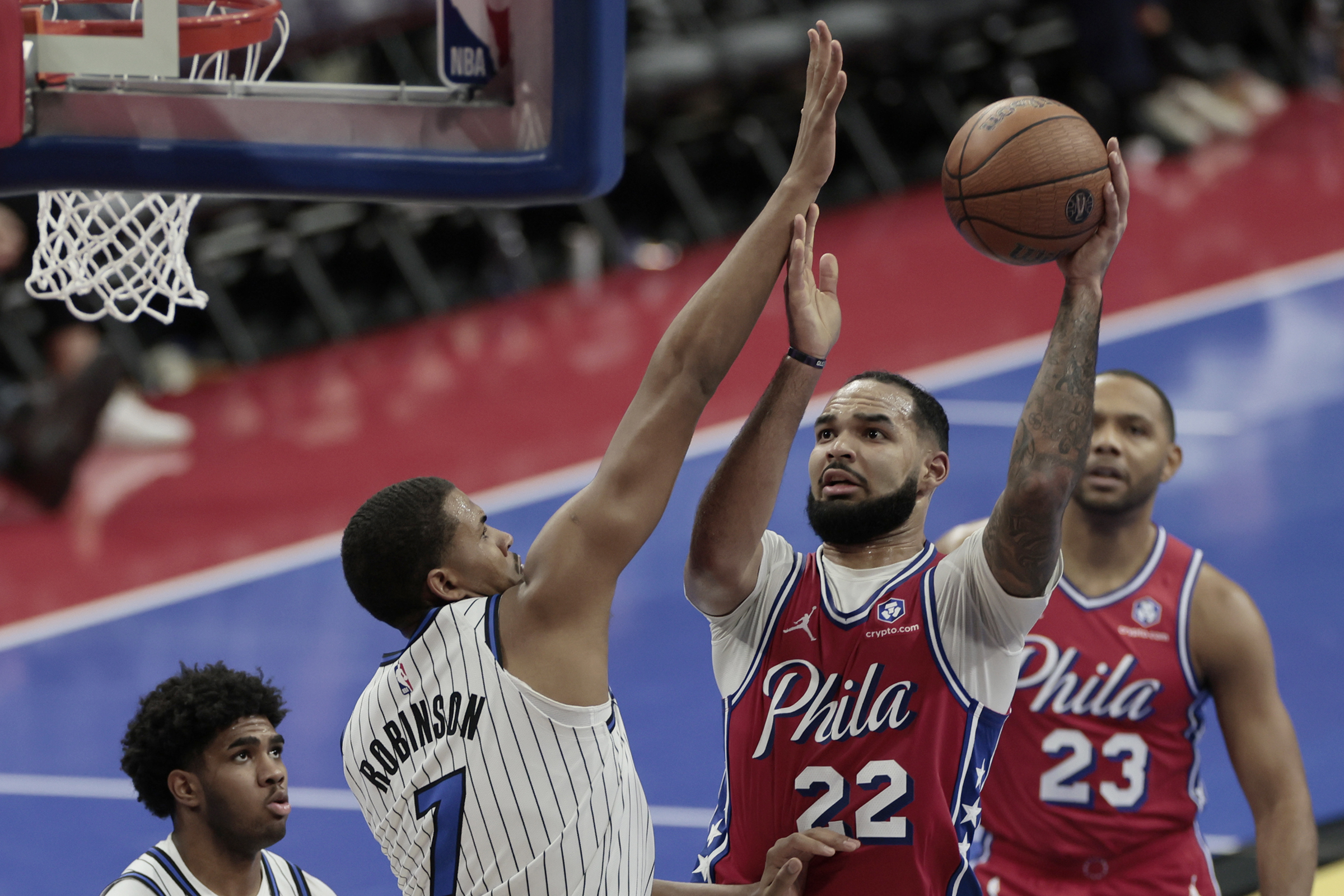
    The injuries forced Dominick Barlow to be the starting forward and backup center, even against the 6-foot-11 Goga Bitadze. Rarely used veteran guard Eric Gordon played legitimate rotation minutes, and rookie big man Johni Broome entered during garbage time while chants of “We want Kyle [Lowry]!” rang through the arena.

    Another in-game blow arrived in the second half, when versatile forward Trendon Watford collapsed to the floor with an adductor strain in his left leg.

    Maxey unsurprisingly was the last starter standing Tuesday, and even he began the day listed on the injury report with a shoulder sprain he suffered vs. Miami.

    He also entered the night leading the NBA in minutes per game (40.4), then logged another 31 minutes, 58 seconds in a game the Sixers trailed by as many as 46 points. His workload prompted a pregame question about whether it is time to strategically scale back Maxey’s playing time, especially after all that he shouldered physically and mentally during last season’s slog.

    “We’re always trying to get him a few minutes here and there a little bit more,” Nurse said, “And just see if it presents itself. He’s obviously vital to the team, especially right now.”

    Edgecombe, meanwhile, entered Tuesday ranked third in minutes (37.4 per game), a much heavier load than any college player experiences. Oubre also was in the top 20 in that category, at 34.8 per game, a number slightly skewed by logging only 14:56 before leaving the Nov. 14 loss at the Detroit Pistons with his knee injury.
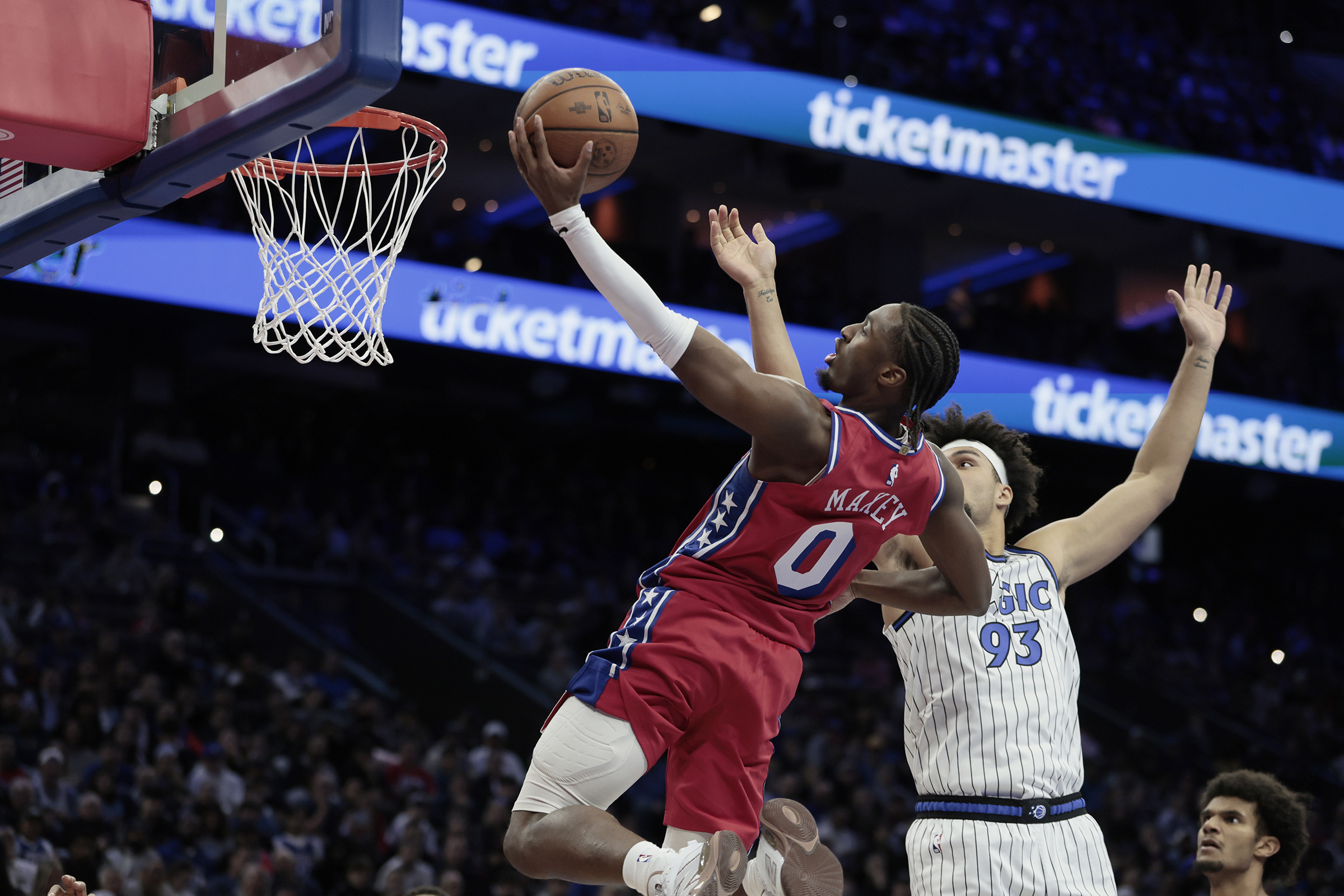
    Sixers guard Tyrese Maxey has played heavy minutes to start the season.

    Yet the injury bug is not only affecting the Sixers. The number of NBA stars — including the Magic’s Paolo Banchero — already missing notable time has again become a leaguewide topic in recent days. And Maxey publicly called for his deeper-bench teammates to seize their chance to make an impact.

    “This is your time,” Maxey said during his postgame news conference. “When I was a rookie and guys either sat out or just got hurt, I knew I had to step up and bring something to the table to help our team win. And for the most part, every single time that happened, I pretty much did. …

    “You wish for opportunity. Now, when the opportunity presents itself, you’ve got to go out there and put your mark on the game.”

    That was a continuation of Maxey’s preseason vow to set a standard, and style of play, no matter who is on the floor. That sentiment has been echoed by Nurse, who said his primary goal was for spectators to conclude whenever they left the arena that the Sixers “played their [butts] off.”

    Calling Tuesday’s effort a failure in that regard would be a massive understatement. One could blame the depleted roster, which got two recovery days before Friday’s game in Brooklyn.

    That will be the Sixers’ opportunity to squash what briefly felt like a flashback to last season’s injury misery.

    “I know, firsthand, that’s the worst feeling to know when people go down,” said second-year guard Jared McCain, who underwent knee and thumb surgeries within the last year. “So I hate seeing it. … Now, it’s just chalk this game up [and] understand that this isn’t us.

    “We’re not going to go back to last year. [We are] trying to do our best to just get back to our personality, our character, and how we play as a team.”

  • After Manayunk’s Bridget the Dino statue was decapitated, neighbors will decide the name for a new dinosaur

    After Manayunk’s Bridget the Dino statue was decapitated, neighbors will decide the name for a new dinosaur

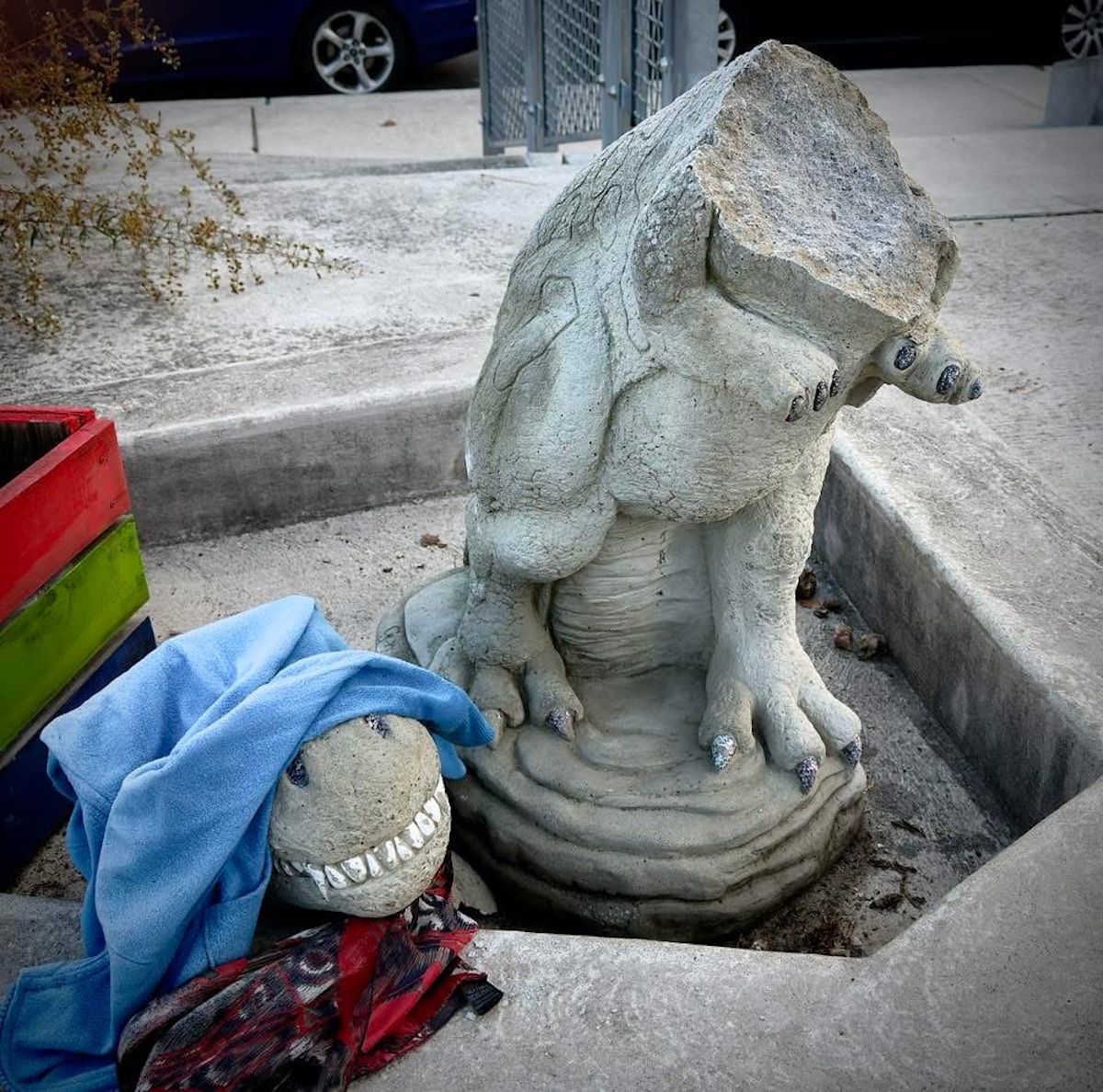
    The decapitation of a beloved stone garden dinosaur in Manayunk left the community reeling earlier this week.

    Bridget the Dino was a symbol for the neighborhood’s green spaces and neighborly affection, who oversaw the Manayunk Bridge Trail gardens.

    When all hope was lost, the original owners of Bridget, and other neighborhood dinosaurs that have become a staple to Roxborough and Manayunk, saved the day.

    Holod’s, the Lafayette Hill home and garden store, donated a brand new stone dinosaur to the Manayunk gardens at Dupont and High Streets, taking over Bridget’s yearslong watch as the garden guardian.

    “After the heartbreak of seeing Bridget damaged, this unexpected act of kindness means more than words can say. The neighborhood love is real, and this Dino is already feeling it,” park organizers announced on Tuesday.

    Now that the difficult task of placing a new 300-pound stone garden dinosaur is complete, the fun part comes: choosing a name for the new dino. When park organizers learned they would be getting a brand new dino, they decided they couldn’t just name the new statue Bridget, as she is “irreplaceable,” said park volunteer and Roxborough resident Juliane Holz.

    “The community is so much a part of this that they can help us name this new one,” Holz said. “I like Manny. But we also have to decide whether she is a girl or a boy dino. I do like ‘Holly’ for Holod’s.”

    Park organizers have already posted a list of suggested names for the new statue. This reporter is partial to “Yunker.”

    Potential dinosaur names:

    • Manny (for Manayunk)
    • Archie (for the arch of the bridge)
    • Roxie (for the Roxborough side)
    • Schuylie (for the Schuylkill)
    • Ivy (garden vibes)
    • Rocky (Philly and Roxborough)
    • Ledger (bridge and connection vibes)
    • Petra (means “rock”)
    • Yunker (play on Manayunk)

    Residents from Manayunk, Roxborough, and beyond can drop a comment below the park’s latest Instagram post to vote on one of the above names or suggest a new one.

    Last Sunday, a neighbor found Bridget’s head lying at the feet of her stone body after it was smashed between late Saturday evening and early Sunday morning. The vandalism came as a shock to the community that welcomed Bridget with open arms, as she grew into a beacon for the ever-growing green spaces that the families of Manayunk and Roxborough have come to revitalize.

    Bridget the Dino, a beloved stone garden statue at the Manayunk Bridge Garden, had its head smashed off between late Saturday night, Nov. 22, and early Sunday morning, Nov. 23, 2025. The 300-pound stone statue would be hard to move, neighbors say, leading some to believe an adult purposefully broke the statue.

    “It seems like something silly to be upset about, but someone put a lot of effort and money — these statues and improvements are not cheap — into making that bridge garden a really nice place,” Manayunk resident Annie Schuster said. “I hate the fact that somebody did that.”

    Neighbors believe the cowardly act to have been perpetrated by an adult who intended to destroy the iconic statue. Holz believed the statue proved too heavy for someone to mistakenly bump into it. Police reached out to Holz and park organizers to let them know they will investigate the crime, Holz said.

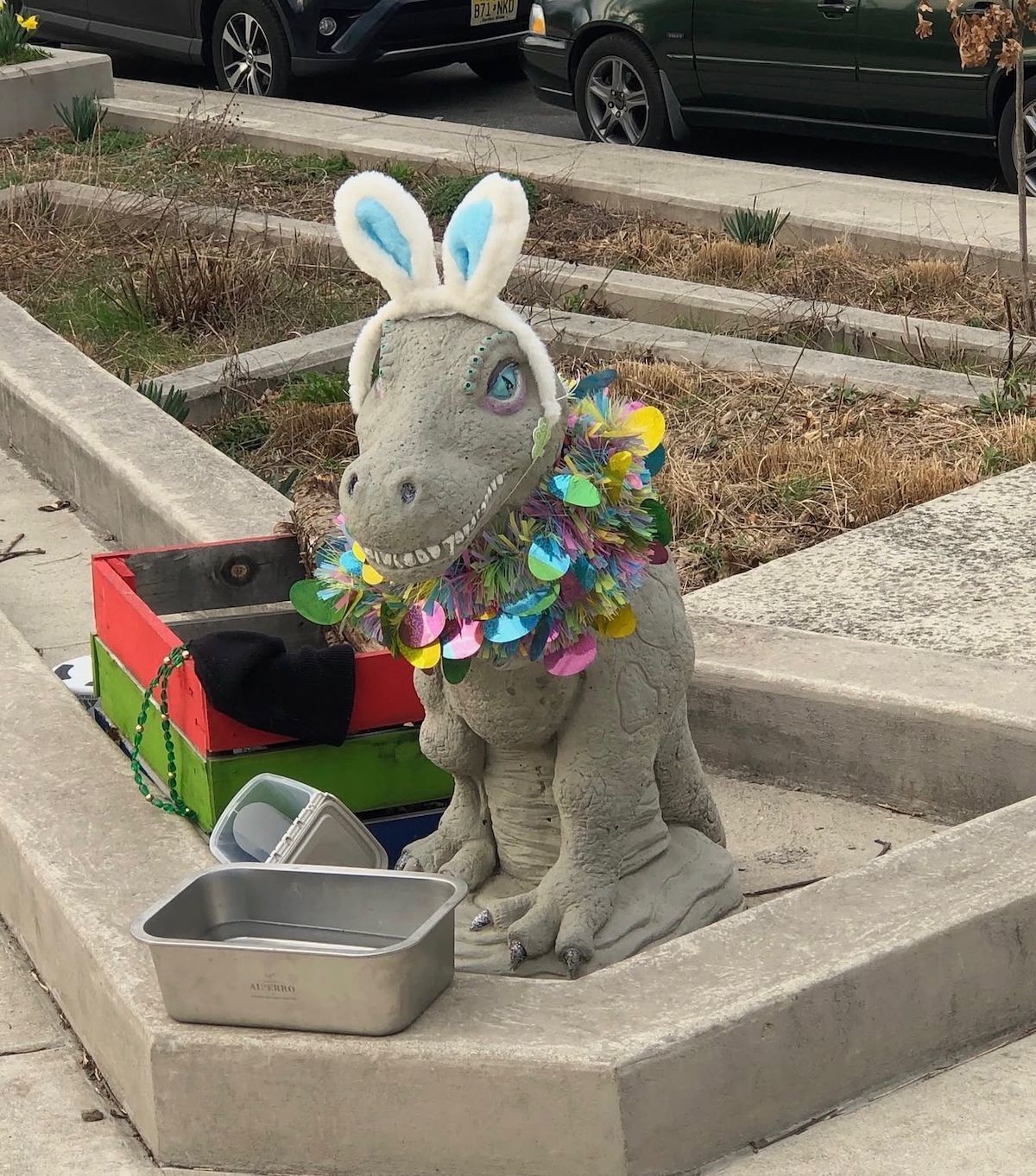
    Bridget the Dino, a beloved stone garden statue at the Manayunk Bridge Garden, pictured in an Easter Bunny costume for Easter. The community often dresses up Bridget during different holidays and themed events. In November 2026, her head was smashed off her body.

    Meanwhile, they’ll repurpose Bridget elsewhere among the garden beds and usher a new dinosaur dynasty with Holod’s latest statue. Holz said perhaps Bridget’s new iteration will be as a bird bath installation or an addition in a new sensory garden.

    The Manayunk Bridge Garden is one of the many public spaces being transformed into neighborhood gardens and pedestrian thoroughfares. Since COVID-19 lockdowns, residents have donated their time, alongside the Roxborough Manayunk Conservancy, to making this place special for local families. Bridget and her new friend encapsulate all of that passion.

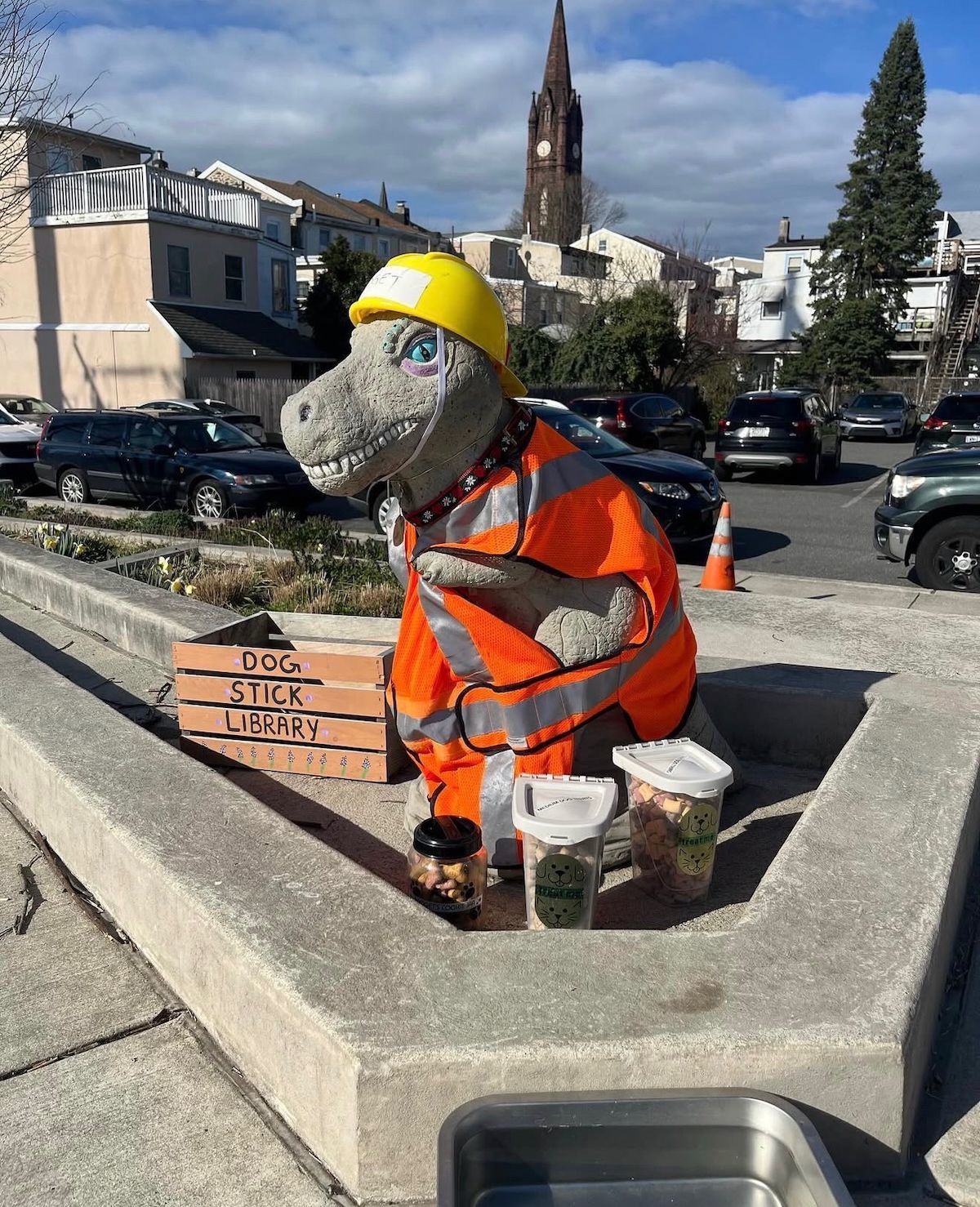
    Bridget the Dino, a beloved stone garden statue at the Manayunk Bridge Garden, pictured in a construction worker’s uniform. The community often dresses up Bridget during different holidays and themed events. In November 2026, her head was smashed off her body.

    “We are focused on improving the park’s ecology and creating opportunities for the community to enjoy and use the space. The gardens are stunning in autumn with their masses of purple asters and yellow goldenrod,” said Avigail Milder of the Roxborough Manayunk Conservancy.

    Along with the welcoming stone dinosaur, volunteers have been planting native shrubs and herbaceous plants that bloom through spring and summer. A new sugar maple tree was planted for much-needed shade. And most recently, Opus Piano donated a mini grand piano to be enjoyed and played by all parkgoers.

  • Two Camden Housing Authority employees win $1.7 million in lawsuit after wrongful termination: ‘I feel vindicated.’

    Two Camden Housing Authority employees win $1.7 million in lawsuit after wrongful termination: ‘I feel vindicated.’

    A slip of paper slid under Gary Evangelista’s office door at the Camden Housing Authority — a document that showed a tenant owed the agency $10,000 in unpaid rent. Evangelista, a retired police officer who oversaw security, was puzzled. Instead of being evicted, as policy required, the woman had been moved into another unit. So, Evangelista flagged the discrepancy to the top.

    That episode was one of several times over the course of a year that Evangelista and a colleague, Kaberia Fussell, brought reports of possible wrongdoing inside the agency — including allegations of theft, fraud, and favoritism — to its highest officials, according to a lawsuit they later filed.

    But rather than investigating, the lawsuit said, the housing authority fired Evangelista and Fussell in 2018.

    The two challenged their terminations in federal court, arguing that the housing authority had violated their First Amendment right to free speech without retaliation.

    And last week, after a five-year legal battle in federal court in Camden, a jury agreed, awarding Evangelista and Fussell a combined $1.7 million.

    It was unclear Wednesday whether the Camden Housing Authority and three officials named as defendants in the lawsuit — Victor Figueroa, its former executive director; Katheryn Blackshear, its former deputy executive director; and Debbie Person-Polk, chair of its board of commissioners — would appeal the jury’s verdict. Attorneys for the agency did not respond to calls and emails.

    Evangelista and Fussell’s lawyer, Joseph Guzzardo, said his clients are “good people” who were wrongfully terminated for “doing the right thing.”

    In all, Evangelista and Fussell, who worked as a housing specialist, brought at least five allegations of illicit activity to officials between 2017 and 2018, according to the lawsuit, including an employee scheme to steal scrap metal from housing villages and reports of sexual harassment against a tenant.

    They were fired on Dec. 19, 2018.

    “My reputation was ruined,” Evangelista said in an interview this week.

    Fussell, a union employee, successfully appealed her termination and returned to the agency. But Evangelista, a nonunion employee, could not appeal. He said he struggled to find steady employment.

    The verdict, he said, “gave me my life back after six years.”

    Fussell still works at the housing authority. Even so, before the verdict, “I still felt like a loser, even though I did nothing wrong. Because when you’re fired, people look at you like, ‘What did you do?’” Fussell said.

    But now, she said, “I feel vindicated.”

  • Flyers mailbag: Is Rick Tocchet compromising the future for short-term success? What’s going on with Nikita Grebenkin?

    Flyers mailbag: Is Rick Tocchet compromising the future for short-term success? What’s going on with Nikita Grebenkin?

    TAMPA — The Flyers have hit the quarter mark of the 2025-26 season.

    Sporting an 11-7-3 record, they sit one point back of a wild-card spot in a tight Eastern Conference where the worst team, the Toronto Maple Leafs, are just four points back of the Flyers.

    Here’s what is on the mind of the Flyers faithful as The Inquirer opens up the mailbag for the first time this season:

    Q: Could you see [Christian] Kyrou as a call-up at some point this year? — Danny Matos (@danmatos_danny) on X

    Never say never. Is it a little too early to determine what the season brings? Sure. But across the past two seasons, I don’t get the sense that the Flyers call up players based on merit alone. Like most teams, it always seems to be based on need. But that’s not to say he doesn’t deserve a look.

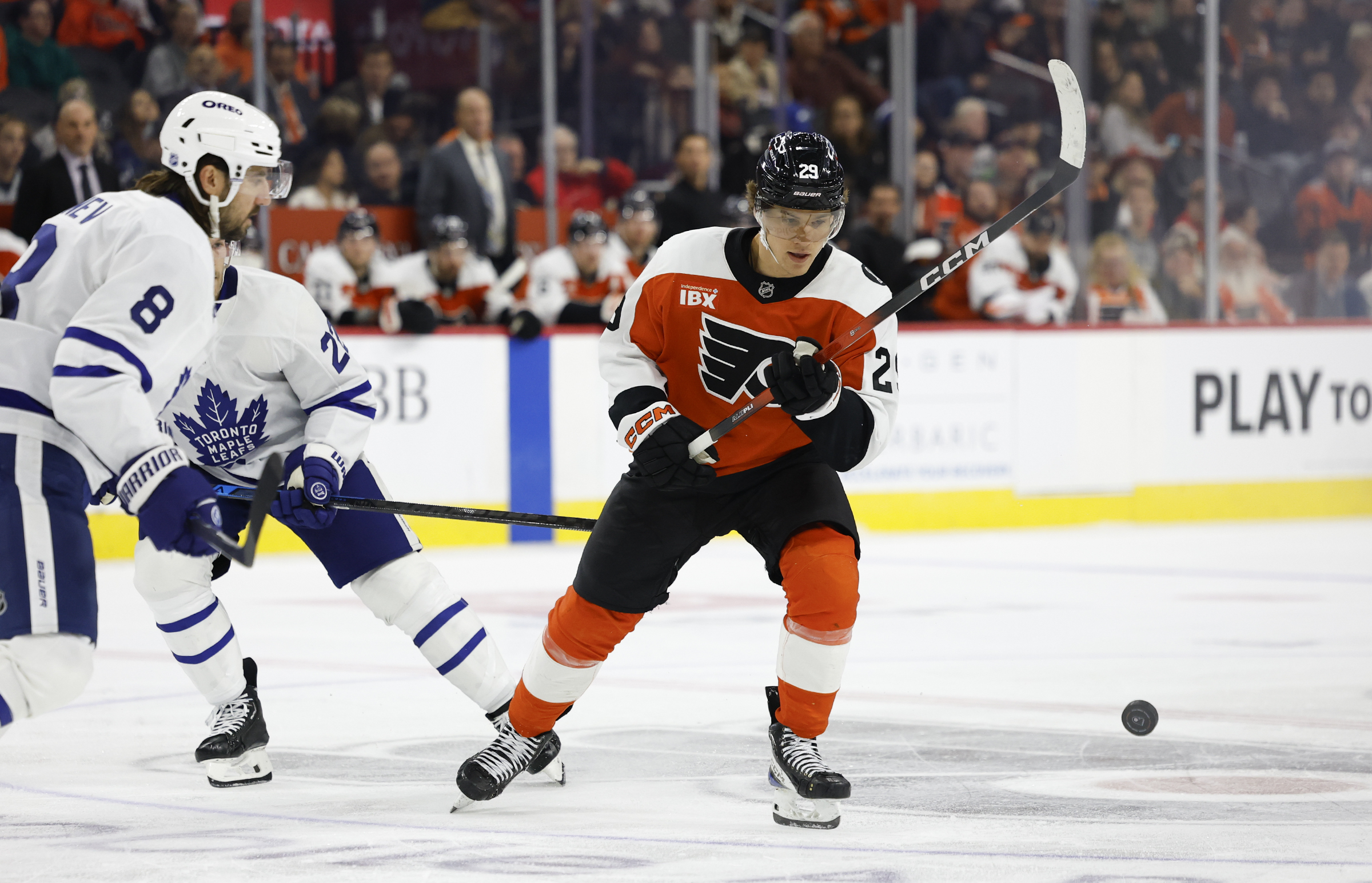
    Since being acquired in the trade that sent Samu Tuomaala to Dallas, Kyrou has 12 points (three goals, nine assists) with a plus-minus of plus-12 in 10 games. Not too shabby. Now, one issue is that Kyrou is 5-foot-10 and the Flyers already have two sub-6-foot defensemen on the blue line in Jamie Drysdale and Emil Andrae. The 22-year-old, who is the younger brother of St. Louis Blues forward Jordan Kyrou, is a right-handed shot and could find a role down the road given his offensive skills.

    Defenseman Christian Kyrou has been a revelation with 12 points in 10 games since being acquired from Dallas last month.
    Q: Do you feel Tocchet has prioritized player development over immediate journeyman success? — Hockeygobler (@hockeygobler) on X

    This question sounds like it is more asking whether Flyers coach Rick Tocchet is focused on the rebuild. And it’s a tough one to gauge where Tocchet’s thinking lies. The whole point of a game is to win, and the whole point of a season is, ideally, to make the playoffs and compete for a Stanley Cup. After all, as former coach John Tortorella always said, winning is important to building culture.

    Player development needs to be a multifaceted approach. It’s not necessarily X but X, Y, and Z. Players need to develop not just their individual skills but team concepts and systems that help the team win. Someone like Matvei Michkov needs to continue to develop his individual skills, like his offense, but he also needs to learn things like how to read plays better, like when to — and when not to — leave the zone early. He took a big step in the right direction on Saturday when he played it perfectly, and Sean Couturier fed him for a breakaway goal. It’s baby steps in that regard, but do I personally think some of the younger kids, like Michkov and Nikita Grebenkin, should play more? Yes. Would they maybe benefit from more ice time to correct mistakes? I believe so. Now, if they don’t make corrections and sit, well that’s another part of player development.

    Q: Why do you think Tocchet is tougher on the younger kids for making the same mistakes the vets make? — Hassan Goodman (@phillygator1986) on X

    Veterans will always get a longer leash. This isn’t a Tocchet thing. It’s a tale as old as time. And there’s a reason they are veterans: They’ve played in the world’s best league for a long time, and although they’ve assuredly made mistakes along the way, they have obviously corrected them to keep playing in the NHL.

    Youngsters need to learn and grow, and have mistakes corrected, too. Should they be benched for entire games, a la Joel Farabee was famously under Tortorella? No. But there do need to be consequences for not learning and making corrections, and there’s no book on the younger kids yet to say they will fix things.

    Q: Why does Tocchet consistently scratch 29?? It makes absolutely no sense to me. He clearly has skill and would benefit the struggling offense, yet we continue to play 44 over him. — Rich #83 (@dangler83) on X

    To start, No. 29 is Grebenkin and No. 44 is Nic Deslauriers. I don’t think it’s fair to say it’s one or the other. Or that Deslauriers should only sit to get Grebenkin in. Deslauriers is a veteran who plays a specific role. There’s a reason he was on the ice on Monday in Tampa Bay — to contain and, if needed, which did happen, fight 6-9 Lightning forward Curtis Douglas. Grebenkin wasn’t going to fight him; it wouldn’t have been fair. And it wouldn’t have been fair to ask Garnet Hathaway or Nick Seeler, who can also drop the gloves, to take on that role.

    Flyers winger Nikita Grebenkin has found playing time scarce of late.

    Asking why Grebenkin, 22, has only skated in 12 of the Flyers’ first 21 games is a valid question. He’s talented, can play a physical game, and can score. Tocchet wants guys to go to the net and the dirty areas, and he thrives there — a scout told The Inquirer during the preseason they were impressed by his game.

    But Tocchet recently said Grebenkin needs to be more predictable — this is something he has preached about his lines, especially the fourth line, which is the only one to presumably have a spot open for the winger. It’s also valid to say that you cannot be predictable if you don’t know how to predict the game, and the only way you can predict the game is by playing in games. Something has to give soon.

  • Meet Project HOME’s New President and CEO

    Meet Project HOME’s New President and CEO

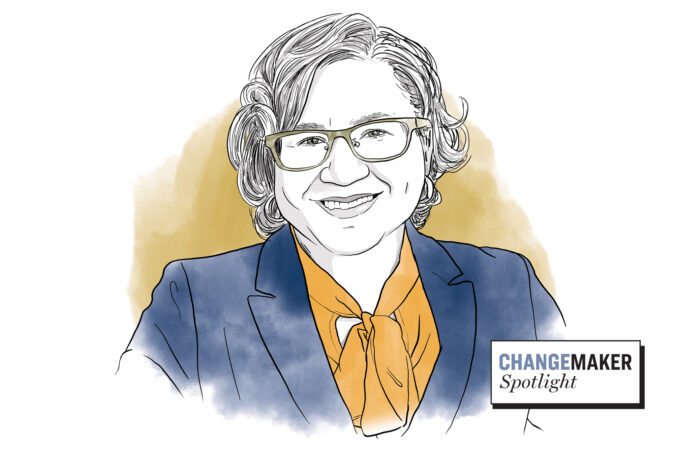
    The former state representative, lawyer, and longtime community advocate Donna Bullock is now leading one of Philadelphia’s most respected nonprofit organizations, Project HOME. Named its president and CEO in July 2024, Bullock brings lived experience and a deep sense of justice to the organization’s mission of eradicating homelessness. The child of a single mother, she grew up relying on the network of local church soup kitchens in New Brunswick, N.J. “But my mom and grandmother taught me something powerful there, not just how to receive help, but how to give back,” she said. “I may have gone there for a meal, but I also had to wash dishes, help a senior. That sense of community responsibility has always stayed with me.”

    Founded in 1989, Project HOME has built more than 1,000 units of supportive housing, manages more than $150 million in net assets, and has become a national model for holistic solutions to homelessness. In this conversation, Bullock reflects on the legacy she has inherited, the systems she hopes to shift, and the very personal stories that shape her leadership.

    Project HOME was founded in 1989. How is the landscape different than it was 36 years ago? What does the cause of ending homelessness look like now?

    We remain true to the founding vision of our co-founders [Sister Mary Scullion and Joan Dawson McConnon]: none of us are home until all of us are home. When we look at that statement, it’s really this commitment that we have to our fellow human beings, to see them as our brothers, and sisters, and neighbors, and fellow Philadelphians. Our work doesn’t end until we can really say that everybody is home and that we all have a role in the work it takes to solve homelessness.

    That also remains true: we still believe we can solve homelessness. We can do that. It will require everyone to play their part.

    The founders of Project HOME and the folks doing this work 20, 30, 40 years ago really believed we could achieve functional zero homelessness in Philadelphia. They were on track to doing that. But what they could not expect was a pandemic. They could not expect the opioid crisis. And they could not expect the scale of the affordable housing crisis. These three national, if not global, issues have deeply impacted housing and homelessness here and across the country.

    In the 1990s, Project HOME fought a four-year legal battle that culminated in a landmark Fair Housing victory, securing the right to build supportive housing at 1515 Fairmount. Over the years, the organization has also built a holistic model of care. How will the organization’s legacy continue under your leadership?

    Sister Mary and Joan, our founders, built this amazing organization with a deep understanding: to address homelessness at its roots, we have to address housing, employment opportunities, medical care, and education. We will continue that. We will continue to build supportive housing, provide services, and support individuals on their journeys, through recovery and into stability.

    We’ve also always remained on the front lines. We’ve always been an advocate, and we’ll continue to be one. I believe the skillset I bring as a legislator and as a lawyer, with experience in both city council and Harrisburg, will only amplify and support the legacy I’ve inherited. That means being a voice for those in our care, those at the core of our mission, especially now as we navigate policies from the federal government, HUD, and the Department of Health, that will impact the people we serve on a very personal level.


    You were raised by a single mom. You’ve experienced some of the very issues you’re now helping others navigate. How did your upbringing shape your worldview?

    Those lived experiences absolutely shaped my sense of justice and community obligation.

    My family relied on resources like the local soup kitchen in New Brunswick. I watched that soup kitchen evolve too. It was once just different churches offering meals on different days. But in the ’80s, around the same time Project HOME was founded, they came together, formed a nonprofit, created a central location, coordinated the schedule, and started offering meals seven days a week. That showed me the power of nonprofits when they work together in the best interests of the people they serve.

    And that’s what I want to carry forward. No matter where we go next, we keep the people we serve at the center of our decisions.

    You studied criminal justice at Rutgers and earned your law degree at Temple. You could have taken different paths. Why law?

    Honestly, I was a very naive young person who wanted to change the world. I thought, law school is how I’ll do that.

    And I did well: I got good grades in tax law, property law. But I took a class called “Law and Community,” and one of my classmates worked at Project HOME. We talked about their work in the 19121 ZIP code. I was planning to move into that same community.

    When I graduated, I asked myself, “How am I going to change the world with corporate law?” That’s when I found my niche supporting nonprofits and small businesses as a legal services attorney. I helped make sure they stayed compliant and stable, because they were providing critical resources to the community. It was a way for me to give back what I always believed didn’t belong to me: my law degree belonged to the community.

    That work exposed me to leaders like [Philadelphia city] council president [Darrell] Clarke and others, and it led me into public service. Eventually I was working with organizations like Project HOME from the outside. Now I get to work with them, and lead them, from the inside.

    In a past interview you said you “took the leap” in 2015, and ran for political office, eventually winning a special election to represent Pennsylvania’s 195th district in the state House of Representatives. What compelled you to leap?

    I’ve always answered the call to service. Did I plan to run for office? No.

    But a few people came to me and said: “You should consider this. You’re the right fit.” I gave it a lot of thought. I had been hosting a women of color leadership breakfast at my house every year, encouraging other women to run. When this opportunity came up, many of them looked at me and said, “Donna… it’s your turn.”

    What is it like to run for and hold office?

    It’s a vulnerable position to be in. But because I was led by service, it didn’t feel like I was putting myself in the spotlight. It was a shift, of course — personally for family, and professionally for my career — because it wasn’t the direction I was going. But it was an amazing detour. I was able to bring in my skillset as a lawyer and as an advocate into this legislative space, see the issues that I was passionate about on a statewide level, and advocate for those issues with folks who weren’t as aligned. Being on that stage in Harrisburg really helps you to become a stronger advocate for issues that are really important for you. You have to work a little harder to see where other folks are coming from and try to reframe those same issues so you can get buy-in.

    Yes, it becomes about consensus building.

    Yes. I spent time across the state meeting folks in their district. “What does this legislation look like in your district? Well, now I understand why you don’t support it. Let me show you what it looks like in my district, and maybe we can find a way to get to the middle.” That coalition building is so important, and I think has helped already in the work that I’m doing here at Project HOME.

    You’ve said, “There are many challenges, but you don’t overcome them. You accept them, embrace them, and use them to effectuate change.” That’s a powerful reframing. What’s a moment in your career where that philosophy took hold?

    There was a moment in Harrisburg when there had been a series of shootings in my district. Young people had lost their lives to gun violence. I stood on the House floor and talked about it, not just as a legislator, but as a mother of two Black boys in North Philadelphia.

    I talked about what it meant to walk my children past blocks with candles and teddy bears. I didn’t want to just argue the policy; I wanted them to understand the experience. My colleagues had met my boys. I wanted them to understand that these weren’t abstract lives; these were our kids. While it didn’t move the legislation, it did bring more people to the table to say, “I need to understand this.” There were a couple of colleagues who met with me separately. With one in particular, we started having regular coffee meetings to talk about the differences in our districts and in the things that our constituents wanted.

    And that’s the power of storytelling. Whether it’s on the House floor of the state capitol, through the media, social media, in a small group, or just a conversation that one of our residents may have with somebody else, storytelling can really move people. It can move legislation, policy, and resources.


    PHILLY QUICK ROUND

    Favorite Philly food indulgence: It’s got to be water ice, right? My favorite water ice is the neighborhood spot called King’s in Strawberry Mansion.

    Favorite Philly small business: Everybody needs a spa day. My favorite is a Black woman-owned spa in Brewerytown called Remedy Spa & Wellness. I’ve been going to [owner Cari Young’s] spa for years. Back when I was a state representative, she would host Black women’s business roundtables there. Even when I didn’t have a spa appointment, she would let me just sit in the space. Even her lobby had that sense of relaxation, Zen, and getaway, and I always appreciated that.

    Sports teams you love or root for: I’m at Project HOME, so it’s got to be the Phillies. [The Phillies are a Project HOME partner.]

    Greatest Philadelphian of all time: Marian Anderson. Just for what she stood for at the time. Standing firm in her art form, but also in advocacy and what she meant to the community, and her grace and beauty in doing it.

    What do you wish people knew about the folks who call Philly home? We got grit. But we are also just a loving group of folks. Everybody’s welcome. What I love about Philly is once you become family, they just welcome you with open arms. We may be a little aggressive with the love. But it’s love.

  • Sixers takeaways: Mounting injuries, poor defense, and more from blowout loss to the Magic

    Sixers takeaways: Mounting injuries, poor defense, and more from blowout loss to the Magic

    The 76ers are literally breaking down.

    They still need to do a better job of keeping opposing teams out of the paint.

    One of the Sixers’ few positives is that Andre Drummond continues to be a rebounding machine.

    And when it comes to availability, things haven’t changed since last season for Joel Embiid and Paul George.

    Those things stood out in Tuesday’s 144-103 NBA Cup loss to the Orlando Magic at Xfinity Mobile Arena.

    Broken down Sixers

    This was the Sixers’ worst loss of the season.

    They had no answers for the Magic on a night when the home crowd of 19,746 booed them loudly over the last three quarters. Fans even began heading for the exits at the conclusion of the third quarter. And with the Sixers down 42 in the fourth quarter, the remaining fans chanted, ‘We want Kyle,’ in reference to Sixers reserve point guard Kyle Lowry, who’s in his 20th season.

    The Sixers (9-8, 0-3 East Group B) hobbled into their group play game against the Magic (11-8, 3-0).

    Tyrese Maxey and Dominick Barlow, who started the first two games in place of George, were the Sixers’ only available starters from the opening day lineup.

    Embiid (soreness in right knee), George (sprained right ankle), Kelly Oubre Jr. (sprained left knee), VJ Edgecombe (left calf strain), along with reserve center Adem Bona (sprained right ankle) missed the game.

    The Sixers’ able bodies shrunk when Trendon Watford suffered a game-ending left adductor strain with 4 minutes, 7 seconds remaining before intermission.

    The reserve power forward grabbed the inner part of his left leg while passing the ball before falling to the court. After being helped up, Watford was assisted to the locker room.

    He had eight points, one rebound, and an assist in 11 minutes. He was 2-for-2 from the field and 4-for-4 from the foul line.

    The Sixers got another scare when Justin Edwards appeared to hurt his foot after scoring a third-quarter basket. He went to the locker room during a timeout to be checked out and returned to the game.

    Sixers rookie Johni Broome played in just his fourth game of the season on Tuesday night.

    With all the injuries, seldom-used guard Eric Gordon was the ninth man off the bench, and rookie power forward Johni Broome entered the game in the third quarter.

    “It’s out of our control, man,” Drummond said of the injuries. “It’s the next-man mentality. It’s Barlow, [Jabari] Walker, Broome, and [Hunter Sallis]. These guys got to step up and be ready to fill those shoes. You know we are not excited for our guys to go out. But for them, it’s a great opportunity to come in and showcase themselves.”

    While this is an excellent opportunity, the Sixers need to get healthy if they expect to remain competitive as they embark on an upcoming rough stretch of games.

    Is the attrition starting to catch up to the Sixers?

    “It sure felt like it tonight,” coach Nick Nurse said. “But, again, I think two or three times a season, you are going to have games like this where it’s like everything goes wrong. All of a sudden, they get hot. They start throwing in threes. We start turning [over the ball]. We can’t catch the ball. We can’t get back. We can’t grab a rebound. Just everything was really out of whack. You never really explain it. …

    “Just like I told the guys, we’ve got to be better. That’s certainly not who we are out there tonight. We’ve got to get rid of this one, get rest and treatment over the next couple of days, and get back to who we are.”

    Sixers must stop the ball

    The Sixers struggled to stop the Magic’s dribble penetration. Orlando routinely drove to the lane with ease. Perhaps realizing the Sixers couldn’t stop it, the Magic prioritized the dribble drive for long stretches.

    This was similar to what the Hornets did to the Sixers during the second game of the season. Charlotte led, 80-56, in points in the paint and had an 20–6 advantage in second-chance points.

    Thirty of the Magic’s points in the paint came in the second quarter, where they outscored the Sixers, 51-25, to take an 86-60 halftime lead.

    “It was one of those days, 82 games,” Drummond said. “These types of games do happen. Not that we want it to happen, but [stuff] does happen. It is what it is. Everything they shot went in. And it also didn’t help that we gave them that momentum in the second quarter, going into halftime.

    “So it’s something to learn from. We’ve got to get some rest. A lot of guys are out, banged up right now. I think these next two days are very crucial for us going into Brooklyn.”

    While Drummond downplayed it, the Sixers will have to improve their defense if they expect to beat quality teams. In a copycat league like the NBA, teams will watch this game film and attack the rim until the Sixers can stop them.

    Drummond still an elite rebounder

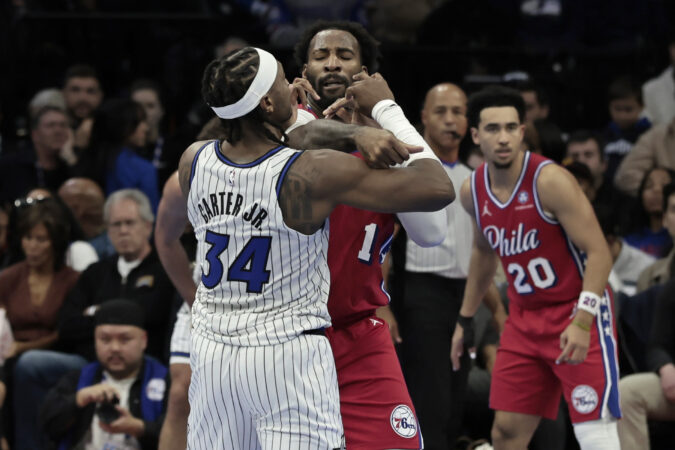
    Drummond squaring up with Orlando center Wendell Carter Jr. was one of the most memorable things about this game.

    The Sixers center got into a fighting stance after fouling and exchanging words with Carter. Things escalated after Orlando point guard Jalen Suggs shoved Drummond. That caused Walker to push Suggs.

    Suggs received two technical fouls and was ejected. Meanwhile, Carter, Drummond, and Walker each received a technical.

    “I had to stop the bleeding, man,” Drummond said of his exchange with Carter as the Sixers trailed 82-58 with 26.6 seconds left in the half. “They went on a crazy run. For me, if you can see me, I looked up at the score, and I was, like, ‘Man, this [expletive] is nasty. I got to do something.’ And I was just [expletive] with him, and he reacted. I was like, ‘OK, I got to capitalize on it!’

    “I mean, I’m not one of those players who do anything dirty, so once I did what I had to do, I was clapping because I got the reaction I was looking for, I got somebody thrown out, hoping it would get us going a little bit. Still ended up losing by 30-plus, so it was one of those nights for us. Got to learn from it, watch film, and move on to the next one.”

    But aside from that, Drummond continued to show that he’s still an elite rebounder.

    The 32-year-old, in his 14th season, finished with three points and a game-high 12 rebounds in 22 minutes, 19 seconds. He is averaging 13.7 rebounds in his last eight games as a starter. That included a season-high 24 rebounds in Sunday’s 123-114 loss to the Miami Heat. And he had 18 boards in a Nov. 17 victory over the Los Angeles Clippers.

    Drummond said his goal is to lead the league in rebounding. That will be tough to do once Embiid returns and takes a chunk of Drummond’s minutes. He’s currently ranked ninth (10.7) in rebounding. His play has been one of the team’s bright spots.

    “For me, I’m trying to get back to No. 1,” Drummond said. “I’m [at] 10 right now. I think the leader [San Antonio’s Victor Wembanyama] is averaging [12.9]. I’m not too far off. The goal is to win, obviously. That’s first and foremost. [Rebounding] is what I’m known to do. So I got to keep putting a show on.”

    Sixers guard Jared McCain and forward Trendon Watford walk off the court during a timeout during their loss Tuesday night to the Magic.

    Same old story with George and Embiid

    A season ago, Embiid had only played in four of the Sixers’ first 17 games while George played in eight. Tuesday’s contest marked this season’s 17th game. And at this point, George has played in only three games, while Embiid has been available for six.

    George was sidelined with a sprained right ankle. Meanwhile, Embiid missed his eighth consecutive game because of knee injuries. The last seven were because of right knee injury management or soreness. He also missed the Sixers’ 111-108 home loss to the Detroit Pistons on Nov. 9 because he doesn’t play on back-to-back nights to rest his left knee.

    George missed the first 12 games while recovering from left knee surgery. Then he sat out Wednesday’s 121-112 loss to the Toronto Raptors because he isn’t cleared to compete on both nights of a back-to-back.

    The Sixers signed George to a four-year, $211.5 million contract on July 6, 2024, to form a Big Three with Embiid and Maxey. But for the second straight season, Maxey is carrying the bulk of the load while the duo is dealing with injuries. The hope is that things will change as the season goes along.

    Tyrese Maxey carried the scoring load for the Sixers with 20 points.

    But one could argue that, for the time being, they’ve been worse, with George playing in five fewer games and Embiid out since Nov. 8.

    A year ago, Embiid missed the entire preseason and first six games of the season because of left knee management. After that, he served a three-game suspension for an off-court altercation.

    Embiid made his season debut last year against the New York Knicks on Nov. 12, 2024. After playing in three of the next four games, he missed seven straight contests.

    George was also hampered by injuries before the start of last season.

    He was sidelined for three weeks after hyperextending his left knee during an Oct. 14, 2024, exhibition game against the Atlanta Hawks, leading to a bone bruise. George suffered the same injury during the Sixers’ loss to the Memphis Grizzlies on Nov. 20, 2024, the team’s 14th game of the season. That cost him the next three games.

    Give the Sixers credit for handling their absences better than a year ago, when the team was 3-14 through 17 games. But they are starting to fall apart, losing eight of 13 games after starting the season 4-0. And not seeing Embiid and George play is very reminiscent of last season.

  • 🍸 Cheers to the holiday bars | Let’s Eat

    🍸 Cheers to the holiday bars | Let’s Eat

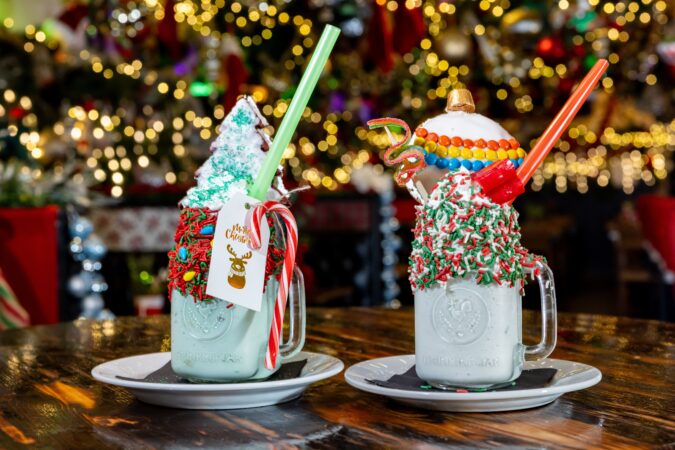
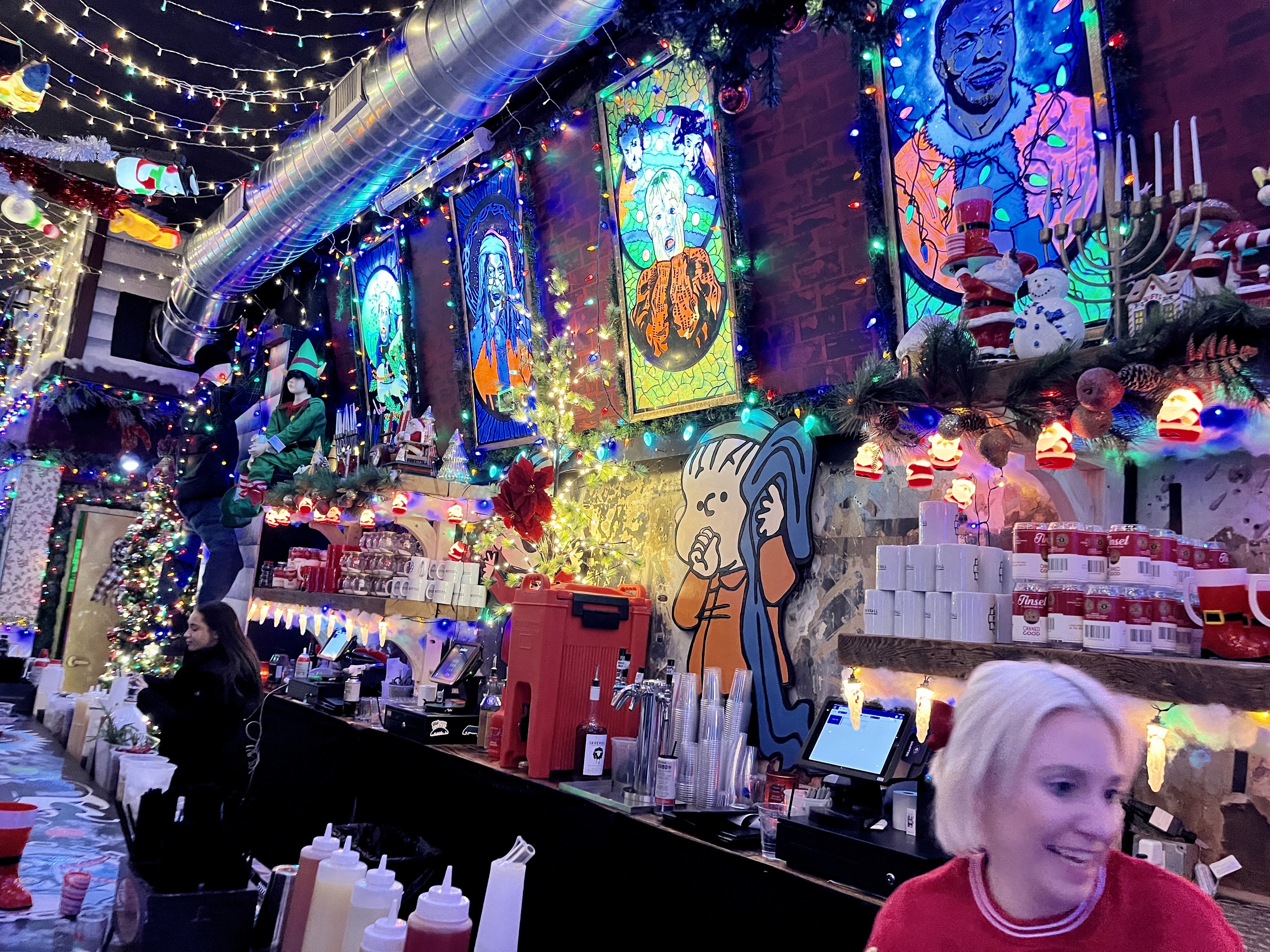
    Cheers, Grinches! We’ve rounded up 18 Christmas pop-up bars.

    Also in this edition:

    Mike Klein

    If someone forwarded you this email, sign up for free here.

    All the bars dressed in holiday style

    Bar, humbug! Beatrice Forman scoped out the Philly watering holes that are decking their halls (or booths) with garlands, nutcrackers, and more string lights than you can count.

    The Michelin effect

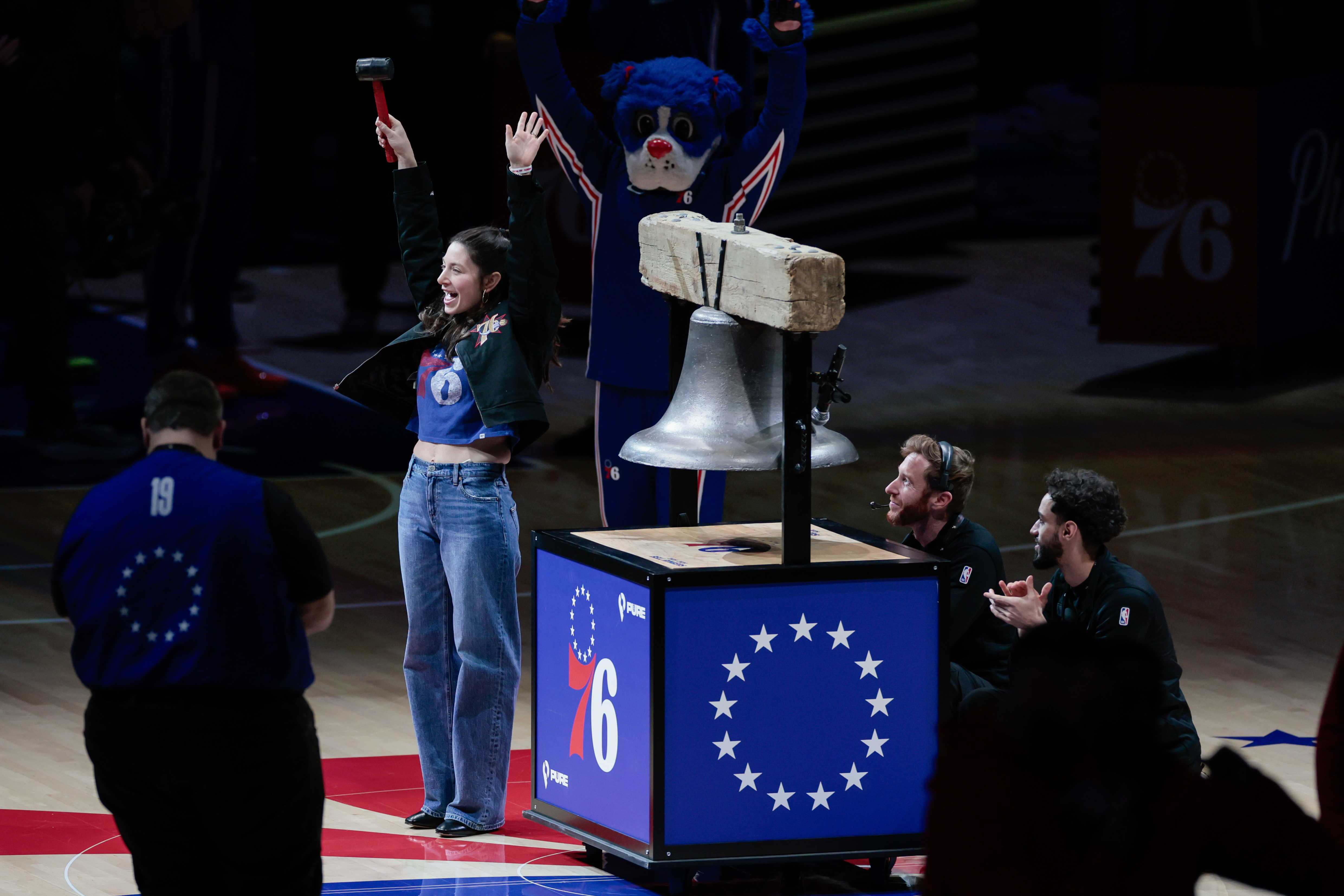
    ⭐ It’s been a bell-ringer of a week for the chefs at Michelin-approved restaurants, including Amanda Shulman at the one-star Her Place Supper Club, who was front and center before a Sixers game. Can Philly’s good vibes last?

    Dalessandro’s, one of three cheesesteak shops to be awarded a Michelin Bib Gourmand, learned the news almost by accident.

    👨‍❤️‍💋‍👨 Philly’s Michelin men are all “wife guys.

    👍 What do we think of the Philly Michelin-approved restaurants?

    Tales of three closings

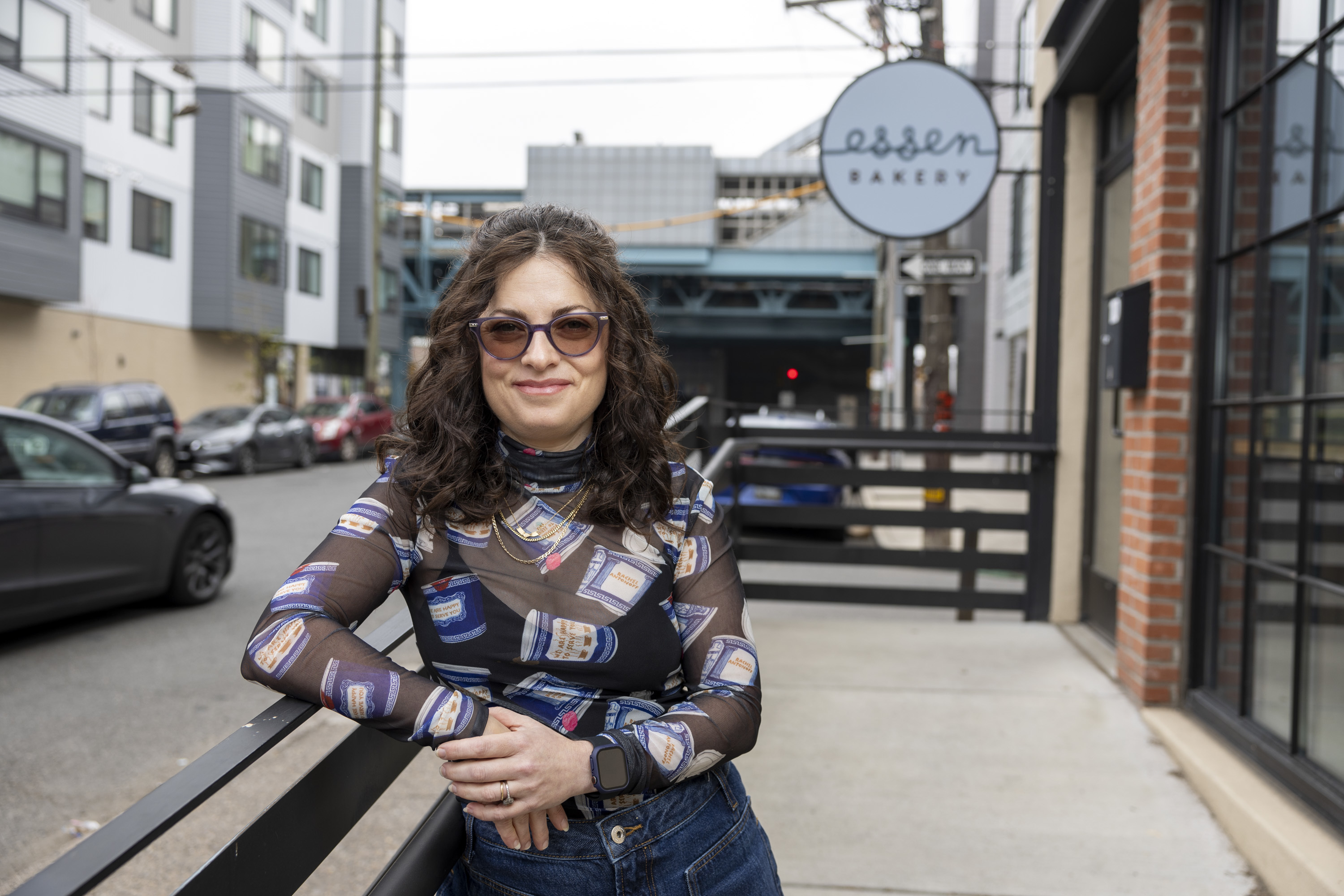
    🍰 The acclaimed Essen Bakery is closed for good, and owner Tova Du Plessis explains why it took so long for her to come to grips with the decision.

    🥩 Rocco’s at the Brick, a busy Bucks steakhouse, was apparently forced to shut down on the weekend before Thanksgiving.

    😢 Mama’s Pizzeria, the Main Line landmark, is in its final days. Owner Paul Castellucci Sr. says he’s facing health issues.

    Four ideas for wine under $20

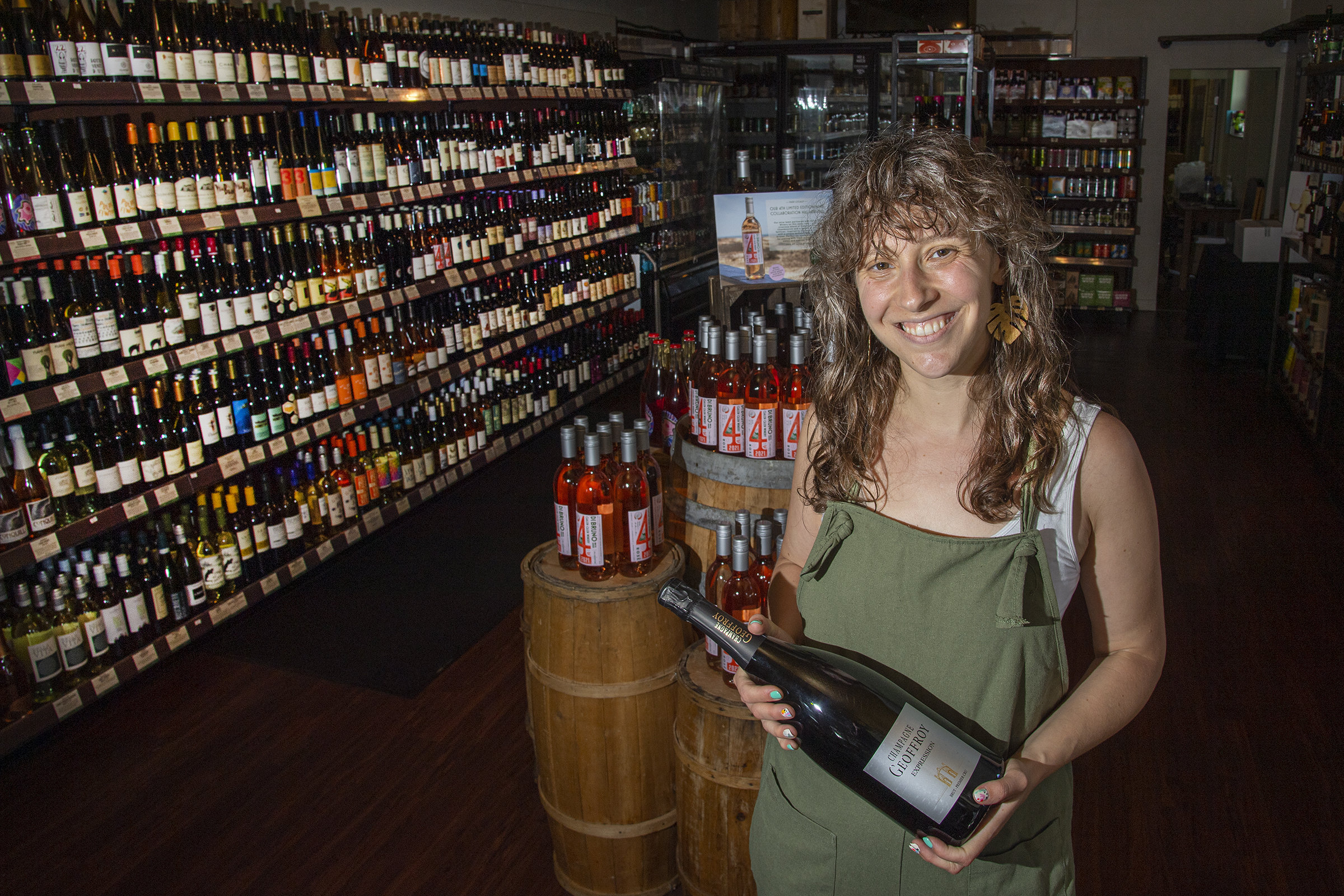
    Wine specialist Sande Friedman recommends small, independent wine shops in the Philly-area offering four great values on sparkling, white, orange, and red.

    Center City has a cutting-edge cocktail bar

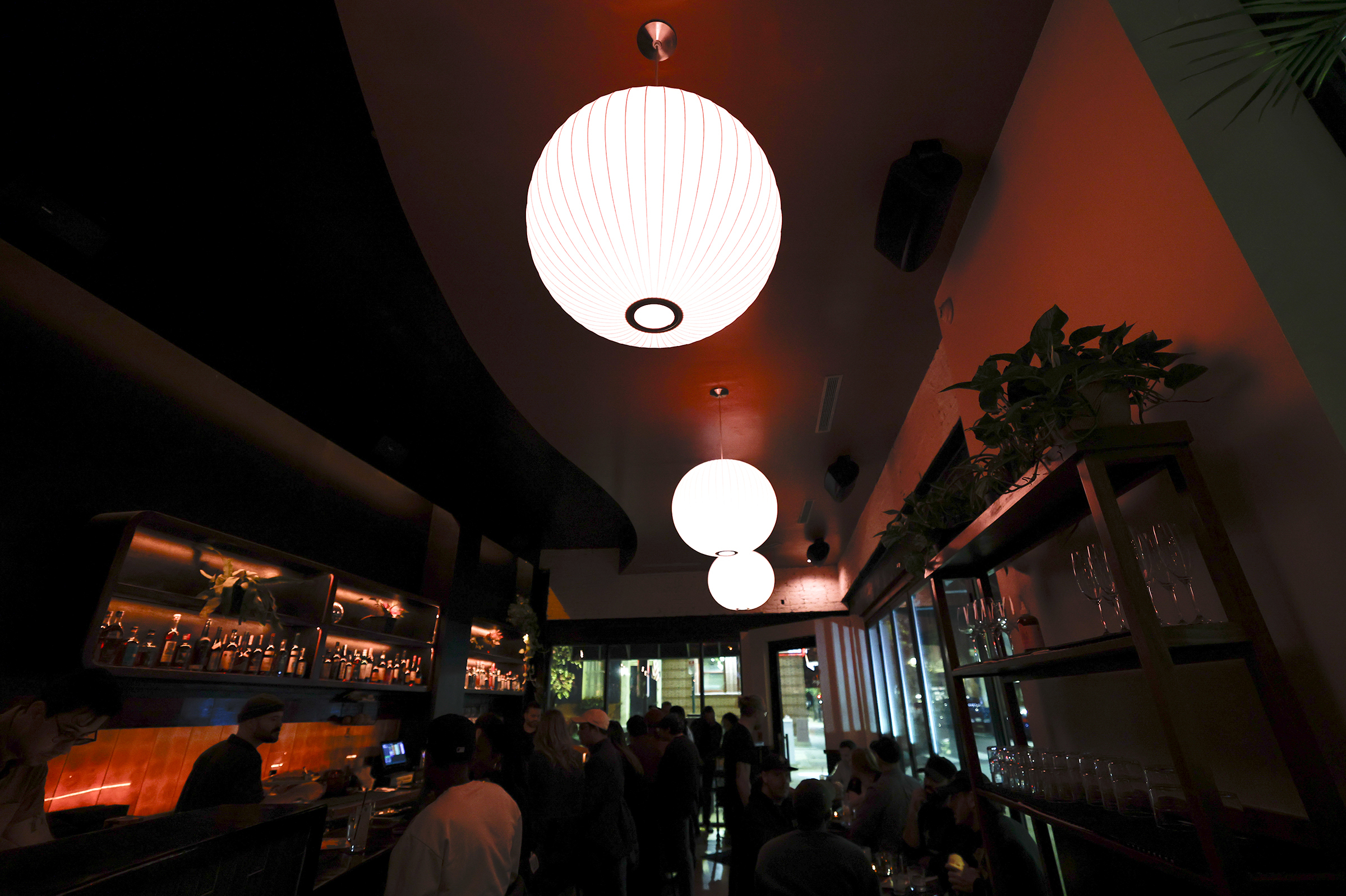
    Kiki Aranita puts the exclamation point on Static!, the followup from the owners of the Fishtown lounge Next of Kin. She says she found cocktails concocted by some of the nerdiest, most process-driven bartenders in Philly.

    Scoops

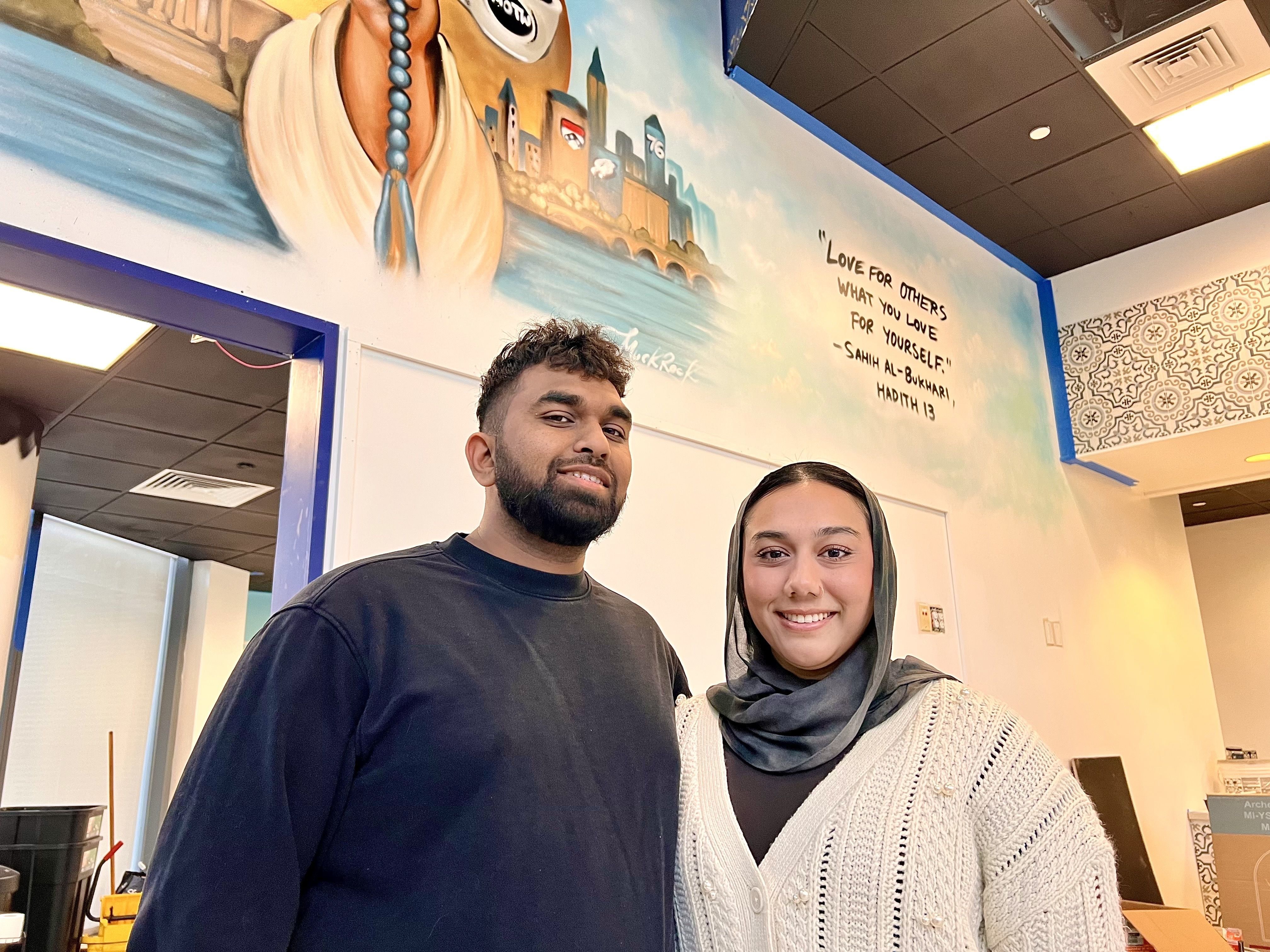
    Muslims of the World Coffee & Pastries, the Indiana-based cafe extension of the social-media storytelling/philanthropic project founded by Sajjad Shah in response to post-9/11 stereotypes, is setting up its first Philly location at the Murano at 21st and Market Streets. They hope to open next month. MOTW’s local operators are newlyweds Mahmood Islam and Samina Akbar (above), the chain’s first Bengali franchisees, who say they envision a space where no one will feel out of place. Akbar, who recently left her job as a scientist for Johnson & Johnson, will run the day to day. Islam works for his father’s Lansdale-based company (Electronic Mechanical Services) and runs Global Tech Systems, which focuses on electronic-waste recycling and donations to schools and foundations in developing countries. They’ll source foods from all over, including local pastries from Au Fournil. “This isn’t just a business,” Islam said. “It is something to be proud of.”

    Wild Yeast Bakehouse, the sourdough bread bakery of Main Line resident John Goncher, has a brick-and-mortar retail location in Wayne teed up for spring. A self-taught baker with a career in corporate finance, Goncher launched Wild Yeast out of his home kitchen in 2021, starting with 10 bread-share customers. As he expanded to the farmers market circuit and wholesale, he converted his Rosemont living room into an (entirely legal) commercial kitchen. When Jenn Ladd profiled his business in 2024, Goncher was firmly committed to staying in his living room. Now baking more than 600 loaves a week, he tells her he’s leased a storefront in the Eagle Village Shops complex so he can stop storing 2,000 pounds of bread flour in his house. Wild Yeast plans to continue to supply its bread share and wholesale customers, as well as its farmers market audience, in addition to expanding production to baguettes, babka, scones, and cookies.

    Ponder Bar will replace the Penalty Box at Coral and Sergeant Streets in Kensington. Owner Matt Kuziemski, backed by Leighton Phillips (ex-Hiroki, Fork, Friday Saturday Sunday), is keeping details under wraps — including an opening date, other than “coming soon.”

    Restaurant report

    Sally. Two weeks ago on a pizza walkabout, I popped into Sally, the pizzeria/wine shop near Fitler Square, to see what new chef David Kupperberg was up to. (And then, wouldn’t you know it, the Michelin Guide awarded it a Bib Gourmand.)

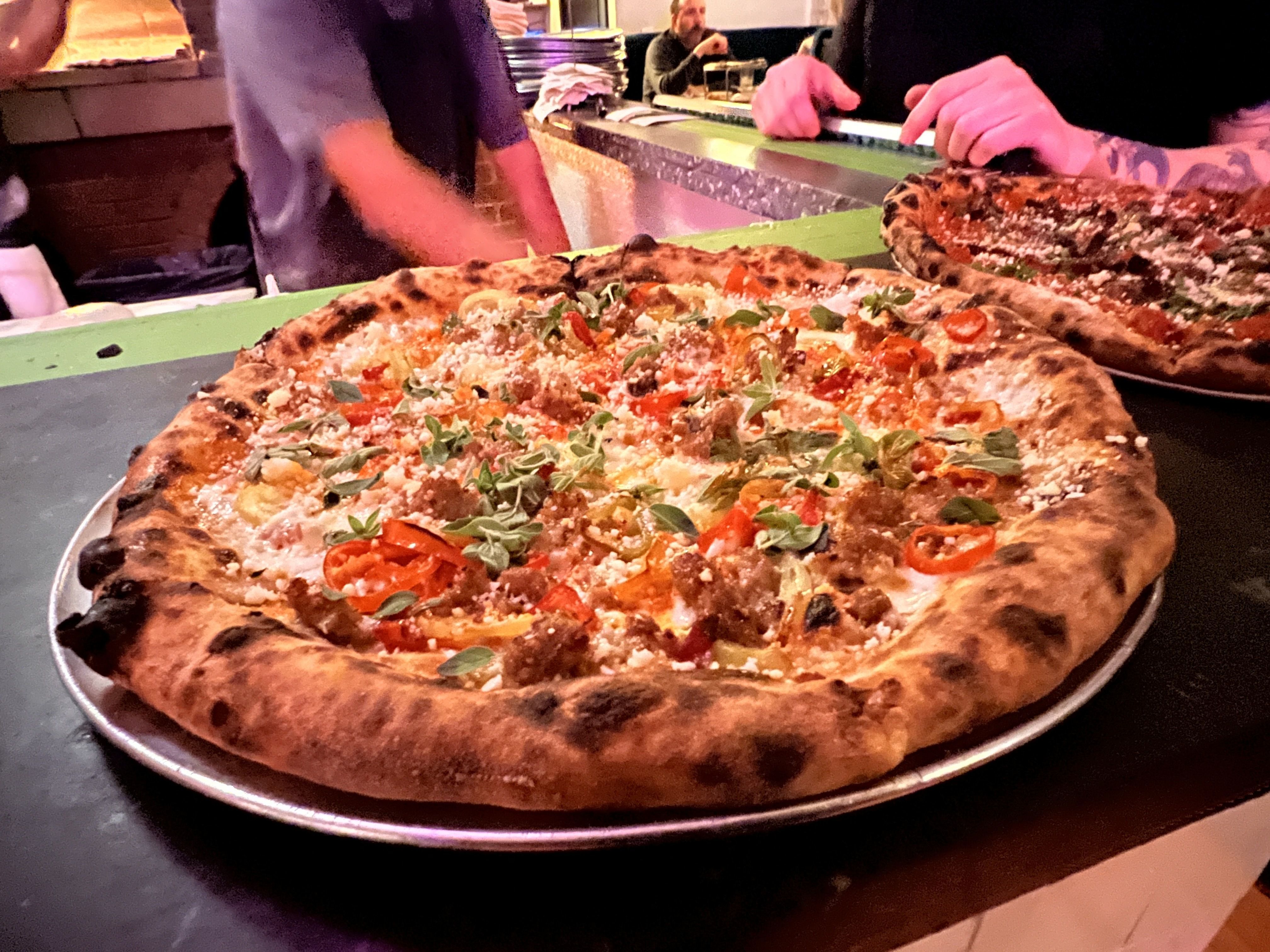
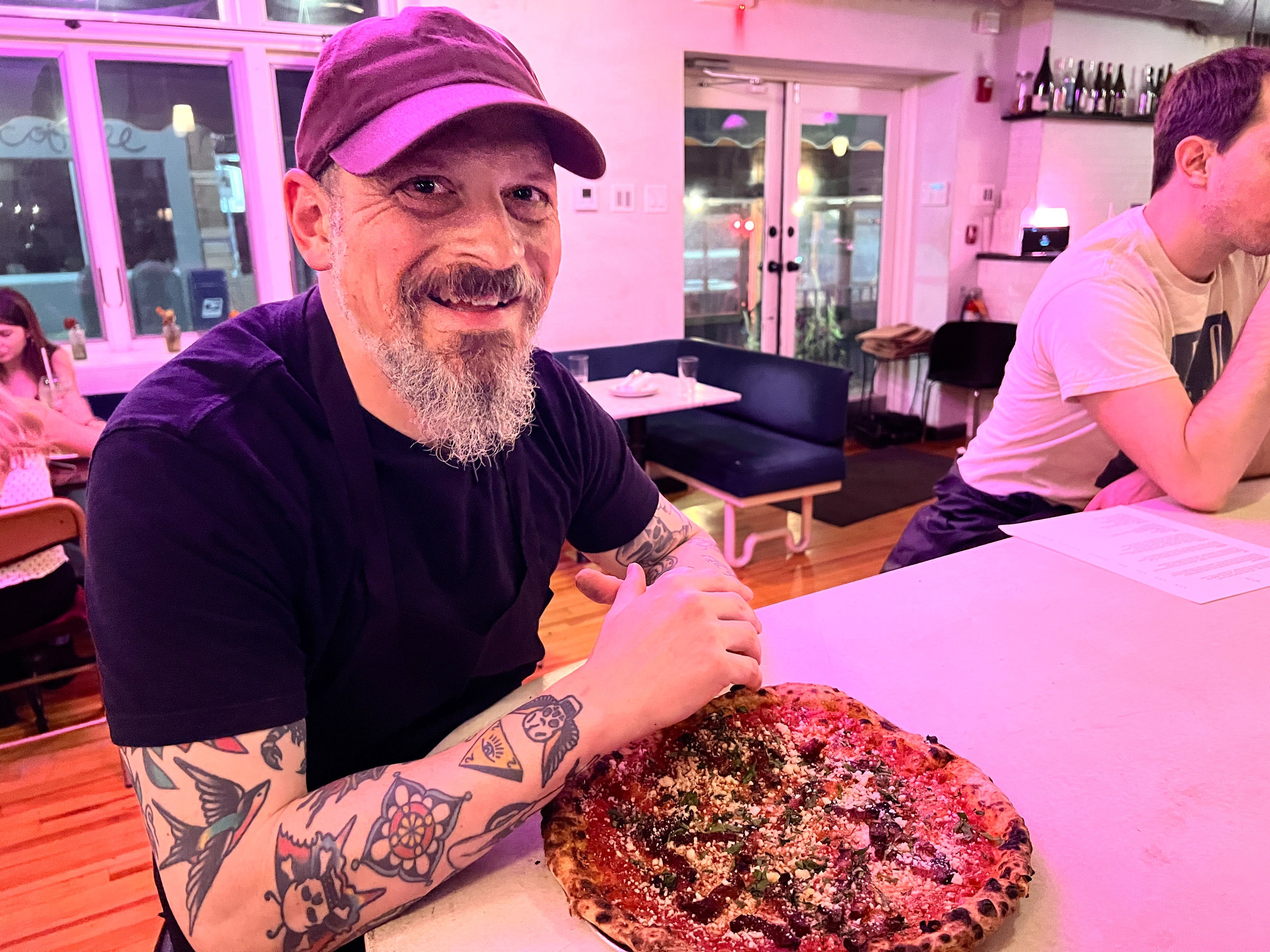
    With only eight sourdough, wood-fired rounds on the menu (including a plain cheese, a red, and a white), Kupperberg is going for bold: There’s a “LOUD” red with arrabbiata sauce; a deeply savory mushroom pie layered with porcini, béchamel, and Comté; a soppressata with earthy Fat Cat cheese and pepper jelly; and the pepper-packed Pepper Pie (pork sausage, Calabrian chili, pickled Jimmy Nardellos, cubanelles, mozzarella, provolone, and pecorino, shown above). Below is Kupperberg with an All’Amatriciana — a pizza version of the classic bucatini dish.

    Sally, 2229 Spruce St. Hours: 4:30-10 p.m. daily, plus 11 a.m.-2:30 p.m. weekends for brunch. Closed Nov. 26 and 27.

    Briefly noted

    Watch Party PHL, the group planning a women’s sports bar and community space to open in 2026, may not have a location yet but it has announced its name: The Stoop Pigeon. This will be Philly’s second such bar, following the recent opening of Marsha’s at 430 South St.

    Mod Spuds, with a menu of loaded-jacket potatoes, is the latest residency from chef Ange Branca and Kampar. It’s a month-long stay at Comfort & Floyd (1301 S. 11th St.) on Mondays (5-9 p.m.) and Tuesdays (11 a.m.-9 p.m.) starting Dec. 8. Branca is inspired by the potato bars she frequented during her university days in 1990s Scotland. Sample toppings: chili con carne, chorizo, chicken tikka masala, barbecue jackfruit. Mod Spuds will preview at Dec. 5’s First Friday at the Barnes, along with drinks from Kampar Kongsi. (Tickets for that one are here.)

    Throwing snowballs at Santa (that overblown incident from a 1968 Eagles game) will be part of the festivities at a Dec. 8 Eagles watch-party fundraiser at Sports & Social at Live! Casino & Hotel in South Philly to benefit Easterseals. The event, sponsored by law firm Zarwin Baum, runs from 5 p.m. through the final whistle of the Eagles-Chargers game, featuring unlimited food, drink tickets, raffles, silent auction, and fan activities. General admission tickets are $100, VIP is $125.

    RJ Smith, the Drexel University culinary student-turned- chef of Ocho Supper Club, will partner with chef Yun Fuentes for a one-night Caribbean-style Feast of the Seven Fishes at 7 p.m. Dec. 16 at Fuentes’ Bolo in Center City. Reservations via OpenTable: $150pp. (Ocho dishes will be available during happy hour at the first-floor rum bar from 4–7 p.m.)

    ❓Pop quiz

    Based on Craig LaBan’s review of Borromini on Rittenhouse Square, how many restaurants does Stephen Starr now own?

    A) 29

    B) 41

    C) 50

    D) 72

    Find out if you know the answer.

    Ask Mike anything

    What do you know about the opening of Santucci’s Pizza in University City?

    Alicia Santucci says Santucci’s will soft-open next week at 38th Street and Powelton Avenue. Since Santucci’s serves square pizza, perhaps it’s fitting that the building is Anova uCity Square.

    🤔 Read on as my colleagues and I answer a batch of your questions, including: “Is the Philly restaurant scene reaching a point of saturation?”

    📮 Have a question about food in Philly? Email your questions to me at mklein@inquirer.com for a chance to be featured in my newsletter.

    By submitting your written, visual, and/or audio contributions, you agree to The Inquirer’s Terms of Use, including the grant of rights in Section 10.

  • 🦃 The parade that almost wasn’t | Morning Newsletter

    🦃 The parade that almost wasn’t | Morning Newsletter

    Welcome to Wednesday, Philly. Today may bring some rain ahead of what’s expected to be a dry, breezy Thanksgiving.

    One of the city’s beloved holiday traditions returns to the Benjamin Franklin Parkway this Thursday. Below, we recall the year Philadelphia almost lost its Thanksgiving Day parade.

    And Elfreth’s Alley is getting a pocket park to honor the woman who saved it from demolition. Read on for plans for Dolly Ottey Park.

    — Julie Zeglen (morningnewsletter@inquirer.com)

    P.S. This newsletter is taking some time off for the holiday. Look for its return to your inbox on Sunday.

    If someone forwarded you this email, sign up for free here.

    A Thanksgiving tradition floats on

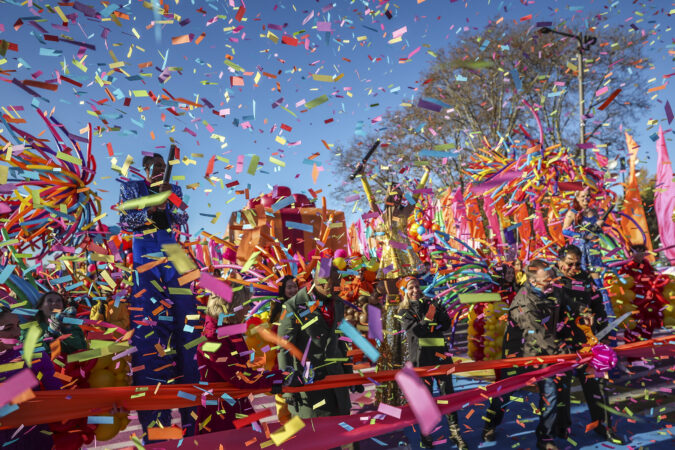
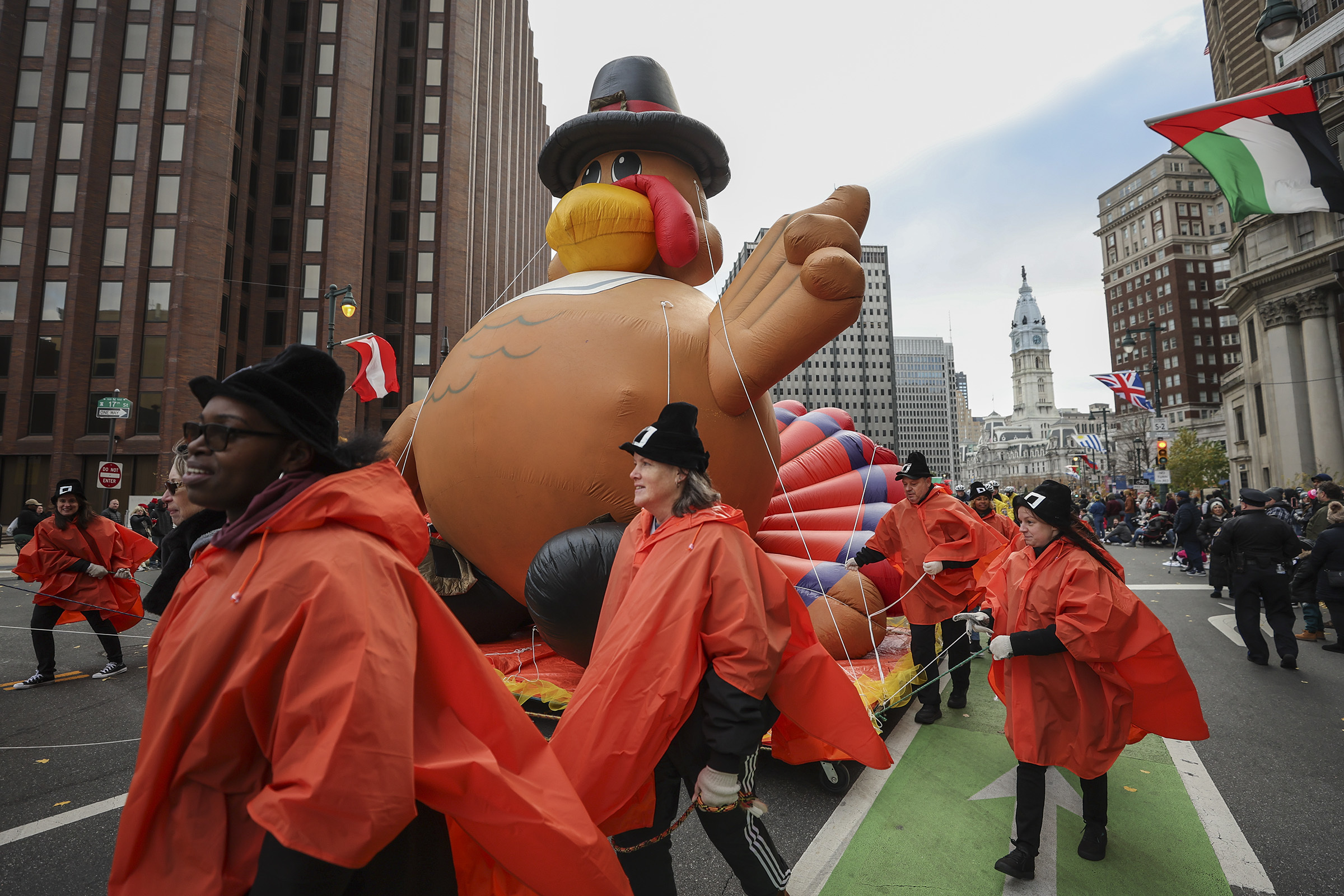
    Thousands of Philadelphians will gather in Center City this Thursday morning for the 106th annual march down the Parkway — officially, the 2025 6abc Dunkin’ Thanksgiving Day Parade.

    🦃 But one terrible year nearly four decades ago, the legendary holiday event almost died. The city struggled to find a lead sponsor after the liquidation of Gimbel Brothers Department Store, which had funded the parade since its inception.

    🦃 Philadelphia was soon wrapped up in a drawn-out corporate sponsorship saga that prompted angry newspaper columns, pleading editorials, and cheeky poetry published in the Daily News.

    🦃 In the end, the 1986 Thanksgiving parade was bigger and better than it had ever been, thanks to the heroics of a different kind of local media — a TV station.

    Reporter Nick Vadala digs through the archives for this very Philly throwback.

    P.S. Check out The Inquirer’s 2025 guide on how to navigate the parade IRL or watch at home.

    In other November traditions: The trophy is falling apart and attendance is down — but Northeast and Central refuse to stop playing their historic Thanksgiving game.

    A new pocket park for Old City

    What’s now a vacant lot at the end of the country’s oldest residential street will soon become Dolly Ottey Park.

    Ottey was an Elfreth’s Alley resident and restaurateur who championed preservation of the narrow cobblestone passage starting in the 1930s. Her advocacy continued through the ’60s, when construction of I-95 threatened demolition of at least half the street.

    After years of effort from Old City organizations, the pocket park in Ottey’s honor will come to life in 2026 — just in time for the 250th anniversary of the Declaration of Independence, signed just blocks away.

    Reporter Frank Kummer has the details.

    What you should know today

    Quote of the day

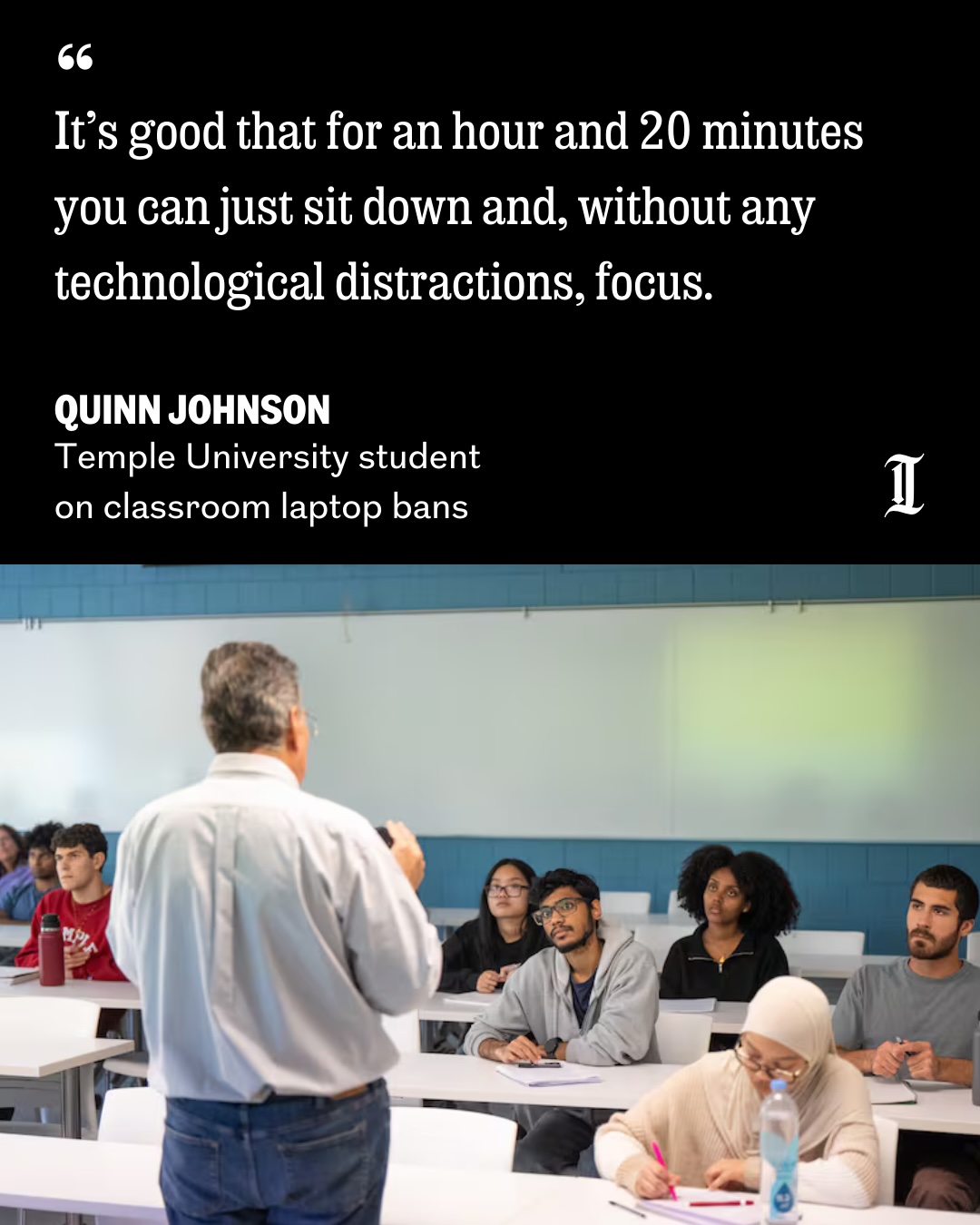
    A growing number of college professors are banning laptops from the classroom, including some who noticed students were spending class time surfing the web or online gambling. They say it encourages participation and better learning. Students don’t seem to mind.

    🧠 Trivia time

    The holiday pop-up bars have arrived in Philadelphia. Which is not the themed name of one of them?

    A) Miracle on 8th Street

    B) Reindeer Gone Wild

    C) North Pole on South Street

    D) Uptown’s Little Workshop

    Think you know? Check your answer.

    What (and whom) we’re…

    🩹 Following: Medical staffers of a Kensington wound care clinic.

    🍽️ Answering: Readers’ questions about where Philly’s restaurant scene is going.

    Swiping to decide: which Union players should stay or go.

    🏈 Meeting: Eagles Hall of Fame inductee Bucko Kilroy, once called the NFL’s dirtiest player.

    💸 Considering: What the plans to scrap diversity goals for city contracts will mean for Black Philadelphians.

    🧩 Unscramble the anagram

    Hint: Acclaimed Philly bread maker, now closing

    KEENER ABYSS

    Email us if you know the answer. We’ll select a reader at random to shout out here.

    Cheers to Rob Jefferson, who solved Tuesday’s anagram: Cherry Hill. Five elementary schools in the South Jersey suburb will be overcrowded by 2028. The district is considering how to redistribute students.

    Plus: Say Yes to the Dress star Randy Fenoli visited Cherry Hill on Saturday for the grand opening of a bridal boutique.

    Photo of the day

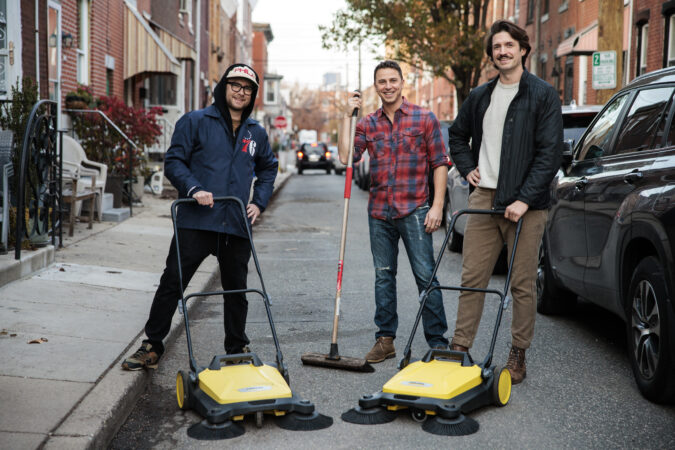
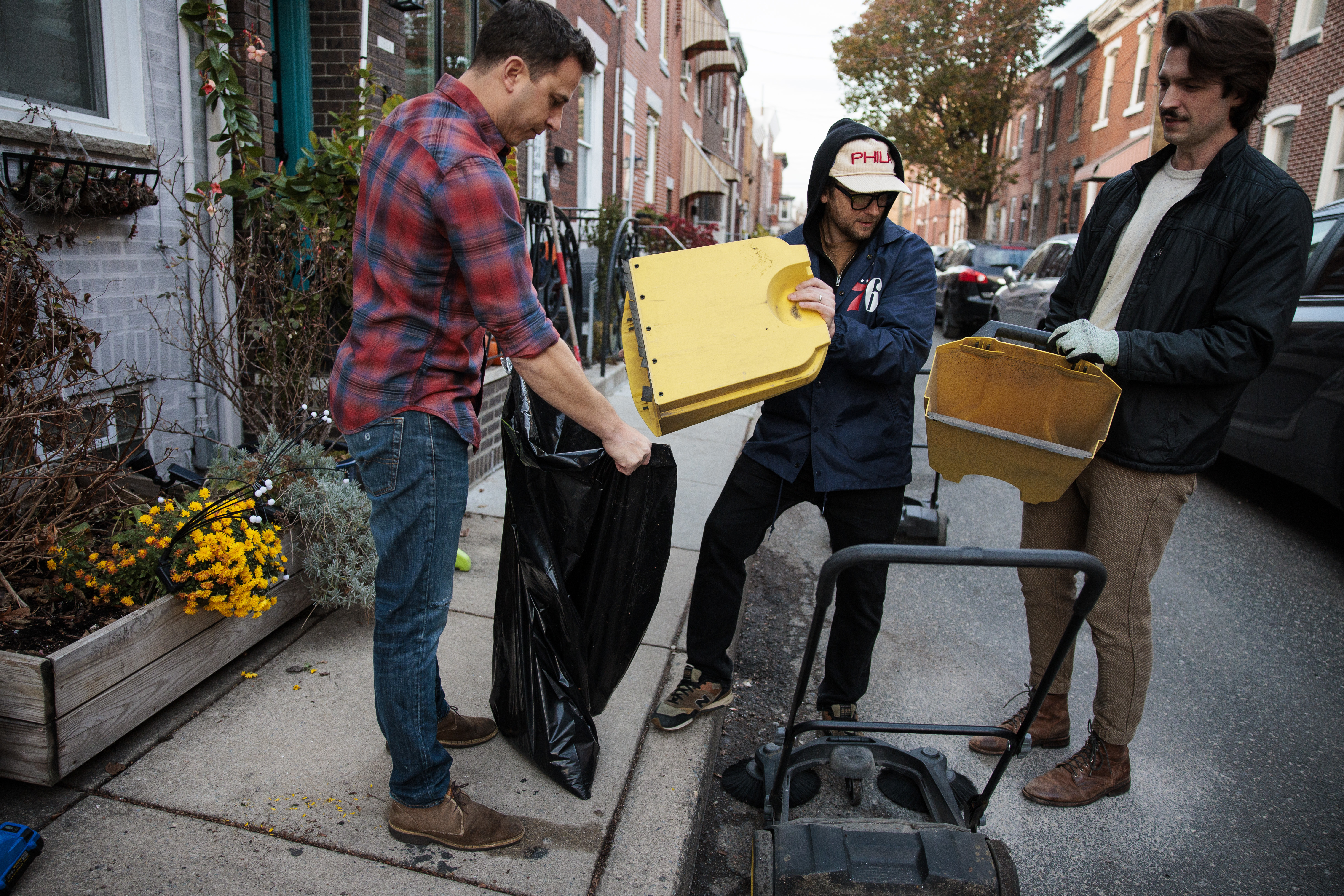
    Matt Barber (center) and Frederick Stahl (right) demonstrate how to use the Kärcher push sweepers on South Iseminger Street.

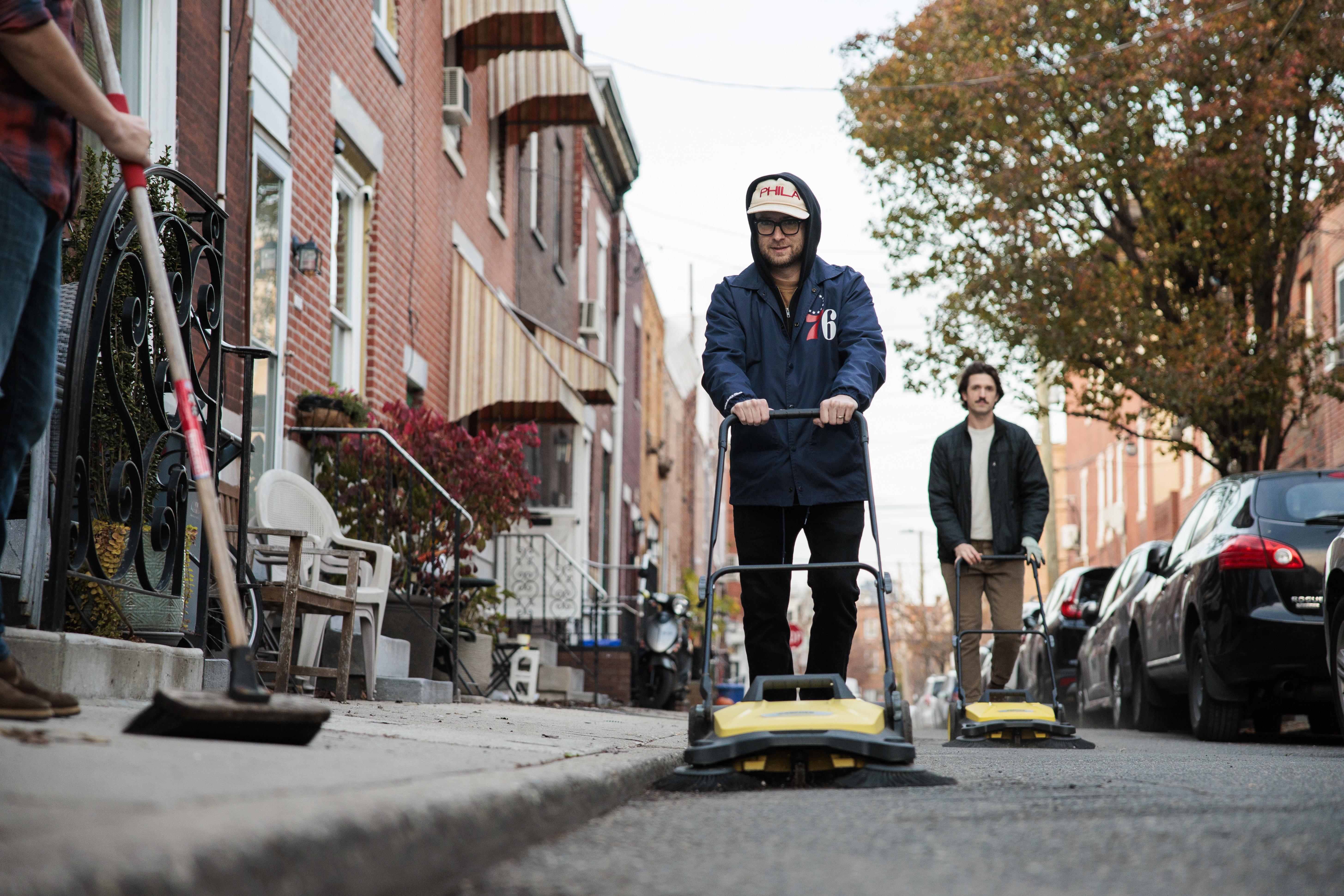
    🧹 One last neighborly thing: These South Philly dads bought personal street sweepers — a German device that’s “like a little Zamboni” — for their block. They’ve led to not only a cleaner street, but a stronger sense of community, too.

    Wishing you a cozy, communal week. Paola will be back with you on Sunday.

    By submitting your written, visual, and/or audio contributions, you agree to The Inquirer’s Terms of Use, including the grant of rights in Section 10.

  • These South Philly dads bought personal street sweepers for their block: ‘It’s like a little Zamboni’

    These South Philly dads bought personal street sweepers for their block: ‘It’s like a little Zamboni’

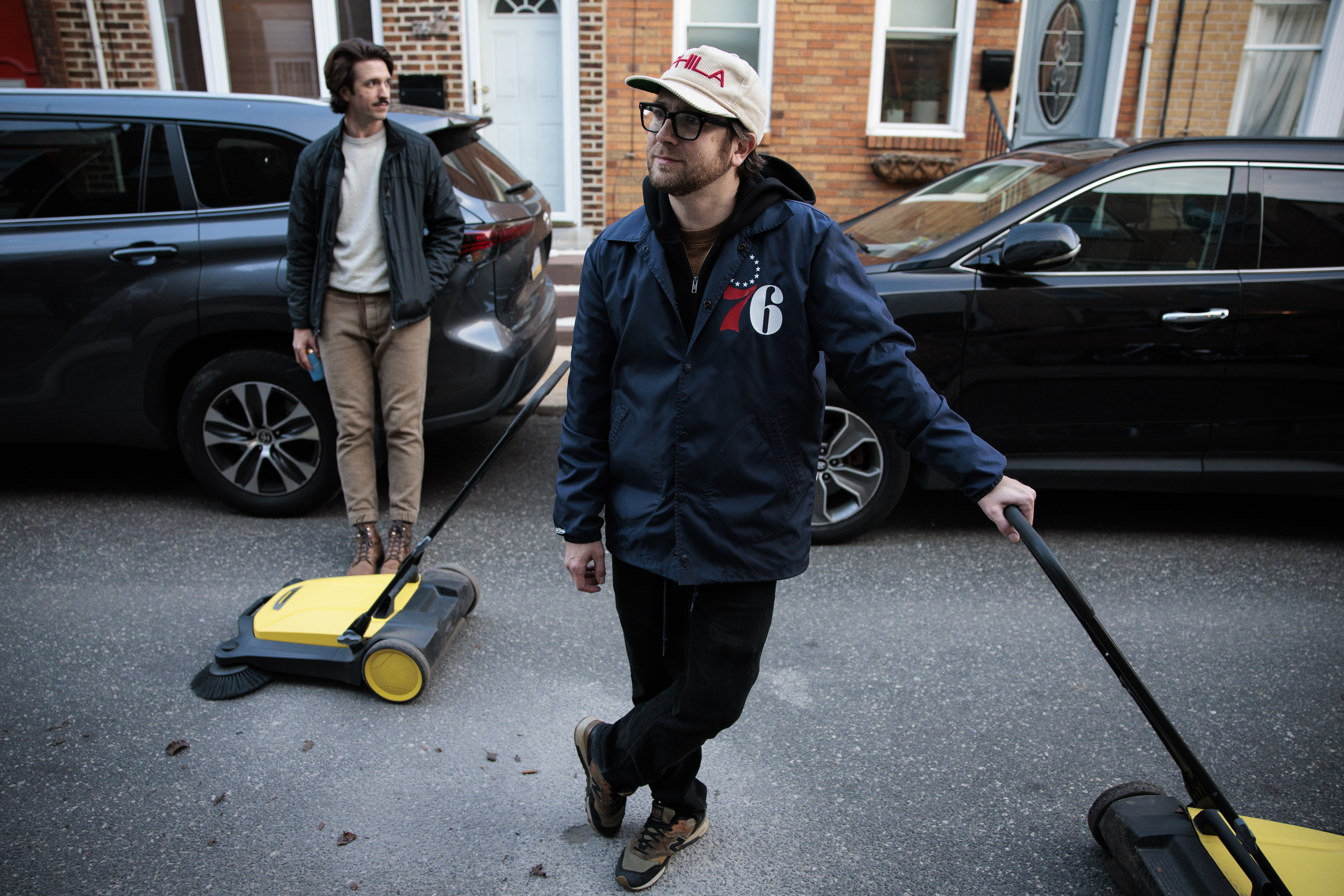
    Just about every time Frederick Stahl, Matt Barber, and Anthony Masucci sweep their block of Iseminger Street in South Philly, someone stops them with a question or asks to take their picture.

    That’s how I found out about these street-sweeping South Philly dads, when someone posted a photo of Stahl doing his thing on Facebook and a friend tagged me in the comments.

    “This is the most fundamental level of environmentalism,” the photo was captioned.

    At first, I had to squint my eyes. I couldn’t tell what Stahl was pushing. It looked like a street sweeper, but it was yellow and fun-sized. I’d never seen anything like it before, and I dropped my email in the comments, hoping to learn more.

    And so, when Stahl and I finally connected this month — more than a year after that photo was posted — I went down to his block to check it out.

    “I’d be remiss not to include two of my neighbors — Matt Barber and Anthony Masucci,” Stahl wrote to me prior to our meeting. “I actually moved to Iseminger in 2020, and it was their street sweepers that inspired me to get one myself.”

    Matt Barber and Frederick Stahl (right) demonstrate how to use the Kärcher push sweepers on Iseminger Street.

    On their classic South Philly block, which boasts a Tofani door or two and a street so narrow you’re inclined to suck your gut in while you’re driving down it, there are 18 kids under the age of 14 and eight under the age of 3, including Stahl’s 1-year-old son.

    “Those are the ones that really touch the concrete,” he said of the little tykes.

    The guys used to sweep the street with janitor brooms, “just so our kids could come out and play without glass around,” Masucci said.

    “Neighbors would be like, ‘Oh, it’s nice, but it’s really dusty,’ and I’d be like, ‘God! There’s gotta be a better way,’” he said.

    During the COVID lockdowns in 2020, when Masucci had some extra time on his hands, he went searching online and stumbled upon the website for Kärcher, a German company that sells cleaning equipment. The company’s S 4 Twin model, which claims to sweep large areas up to five times quicker than a push broom, seemed like it might do the trick.

    “I found this thing and all of the marketing is for driveways, like old men kind of brushing their long driveways in the suburbs,” Masucci said. “I was like, ‘I think this would work fantastic. It’s like a little Zamboni. Let me see what we can do.’”

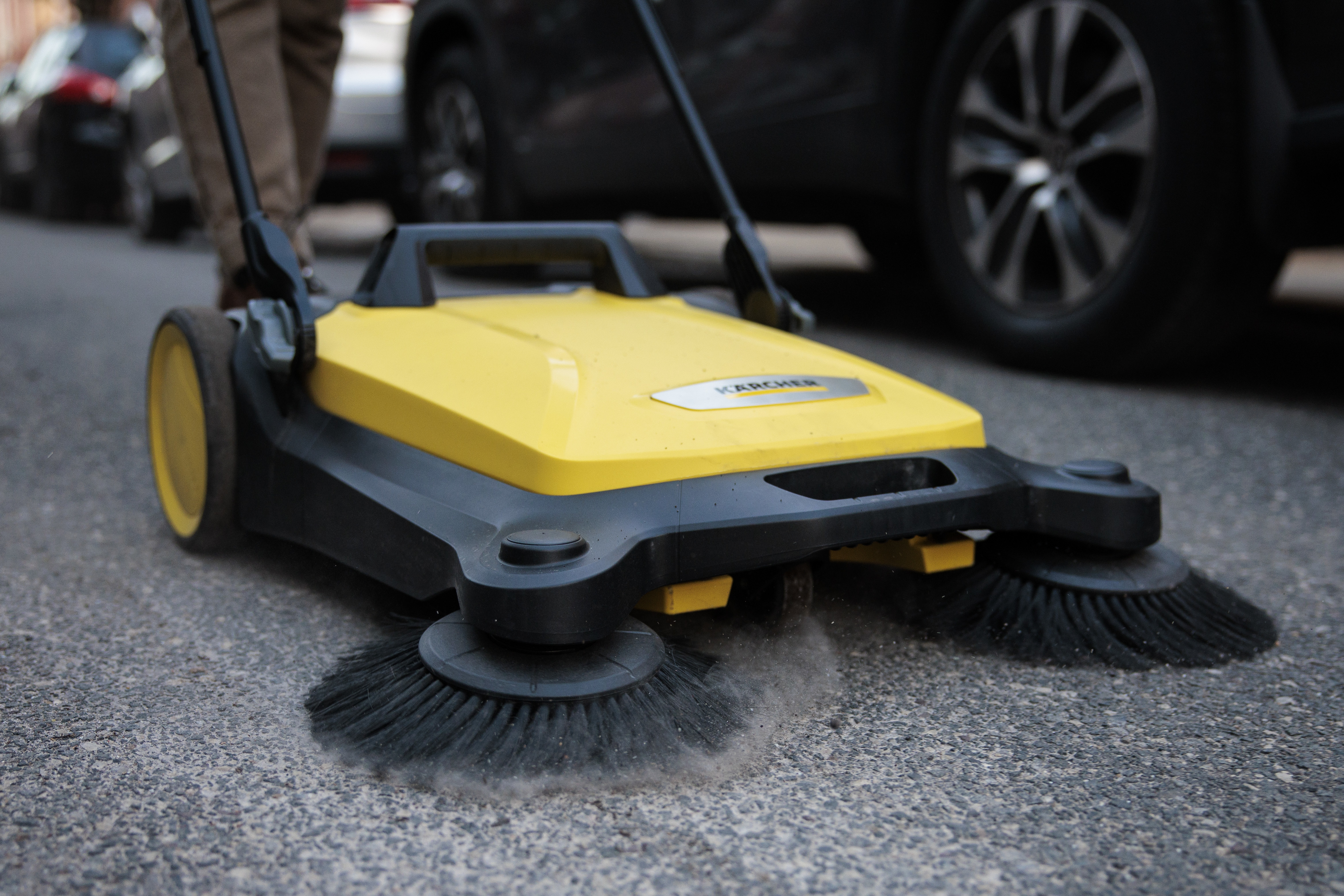
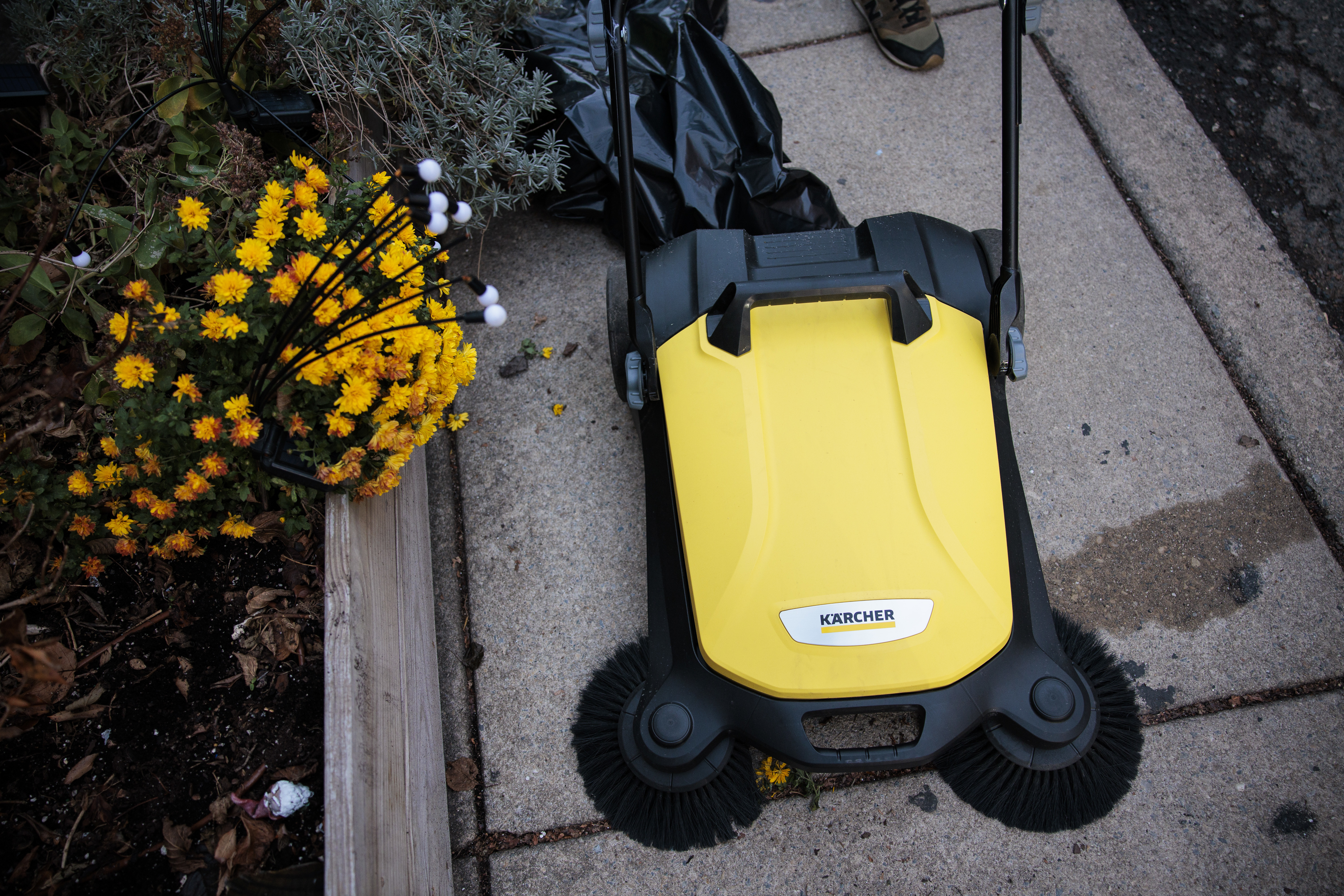
    The Kärcher S 4 Twin push sweeper on Iseminger Street in South Philly.

    Masucci purchased one — which typically retails for $189.99 but is currently on sale for $125.36 — and donated it to the block. Barber offered to keep it on his back patio.

    “Anthony came through and made the dream happen and we put it together,” Barber said.

    “It was like Christmas,” Masucci said. “Oh my God, the first time going up and down, we’re like, ‘It’s filled! It’s filled and it works so cleanly and easily!’”

    The guys all grew up watching their dads mow the lawn every weekend, and even though they don’t have lawns to mow in South Philly, using the sweepers felt a little like that, they told me. Stahl even bought his own Kärcher when his little one was on the way.

    “We love the community and you feel great coming out here and doing it so much more efficiently than brushing around,” Masucci said. “The kids run out. They wanna help you push it. Everyone runs out and wants to help you bag it up. So it becomes a community thing.”

    Neighbors Frederick Stahl (left) and Matt Barber with their Kärcher push sweepers on Iseminger Street in South Philly.

    Barber even gets the kids to pull weeds from the sidewalk and throw them into the street so he can sweep them up, promising them water ice from around the corner if they help out.

    “I go, ‘Listen, weeds for water ice,’” he said.

    Kärcher’s S 4 Twin unit is lightweight, foldable, has an adjustable handle, and uses no electricity or gas, so it makes no noise.

    “It runs on human will,” Masucci said.

    Its 5.25-gallon waste bin holds an impressive amount of debris and doesn’t blow up much dust. After the guys dumped it out following four passes along their street, the trash bag they emptied it into weighed about 15-20 pounds.

    Neighbors Anthony Masucci (from left), Matt Barber, and Frederick Stahl empty the waste containers of their Kärcher units after sweeping their block.

    “This bag will be so heavy at the end. I always feel like it’s a real proud moment,” Barber said.

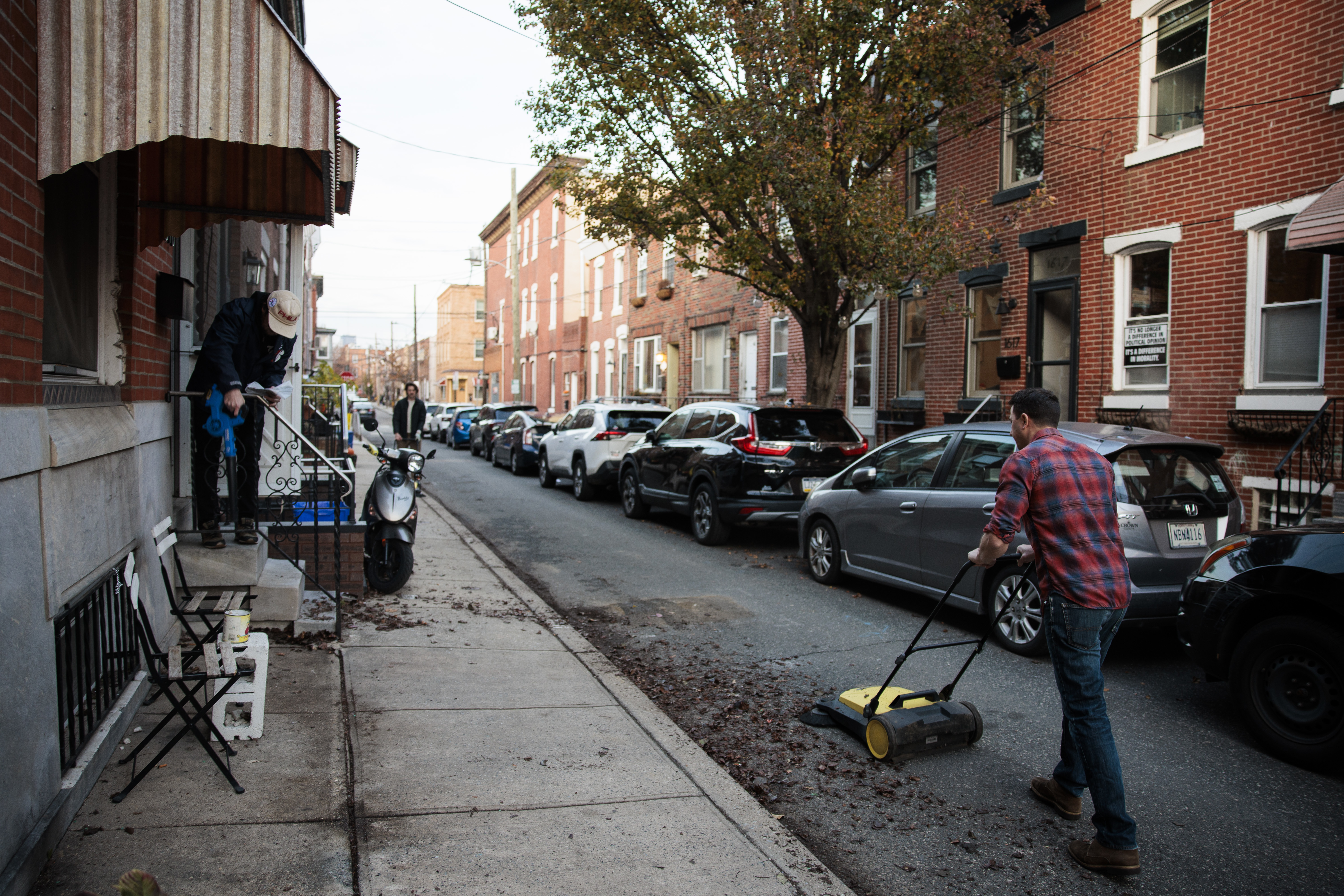
    Mostly they’re sweeping up dirt, debris, broken glass, nails, and cigarette butts. It takes about 20 minutes and four or five passes to clean the block.

    The day after trash and recycling collection is particularly bad — there’s some stuff that misses the truck or glass that gets broken on its way in — so they make sure to do it then.

    Some items will get stuck in the Kärcher, like flattened water bottles and dog poop bags, so they still have to pick up that stuff by hand (with gloves on!) before they do a pass.

    The few times they’ve been unable to repair the device, they said Kärcher customer service has been amazing and sent them replacement parts and even a whole new unit for free.

    The Kärcher S 4 Twin push sweeper.

    When the dads first started using the Kärcher, one of their neighbors on the block, a South Philly lifer who threw his cigarette butts in the street, raised an eyebrow.

    “He was like, ‘Yo man, what, what are you doing? Why are you out here always cleaning the street?” Barber recalled. “I said, ‘I don’t know, man. I just consider it my backyard.”

    Not long after, that neighbor stopped throwing his cigarettes in the street, they said.

    “It’s little stuff like that. Maybe it’s always what they did and now hopefully we’re raising awareness,” Masucci said. “If you’re in the city and living here you can impact a lot. You do rely on public works, and if the street light goes out we can’t go fix that, but this is something you can do.”

    Being stewards of their street has also bought them a lot of equity with their neighbors, they said. The block holds three major parties a year, including one where they chuck pumpkins off the roofs of their rowhouses, and they get little pushback from anyone.

    “We can be up late, blast the music and throw those crazy parties. Everybody knows we’re gonna mess stuff up, but we’re gonna clean it up, because in the end, nobody cares more than us,” Masucci said.

    Anthony Masucci demonstrates how to use the Kärcher push sweeper on Iseminger Street.

    The men would love to see more people in Philly get Kärchers, perhaps through a citywide program, and so would I. Philly has a notorious litter problem — I don’t have to tell you that — but when people become invested in their neighborhood and cleaning their block becomes a fun, easy, community activity instead of just a chore, it’s much more likely to happen.

    “They have all these initiatives to clean up Philly and I’m like, if every block captain was given one of these and they just let people take responsibility for their block, you’d probably see a bit of a difference in terms of the litter and cleanliness of South Philly,” Barber said.

  • The time Philly almost didn’t have a Thanksgiving Day parade

    The time Philly almost didn’t have a Thanksgiving Day parade

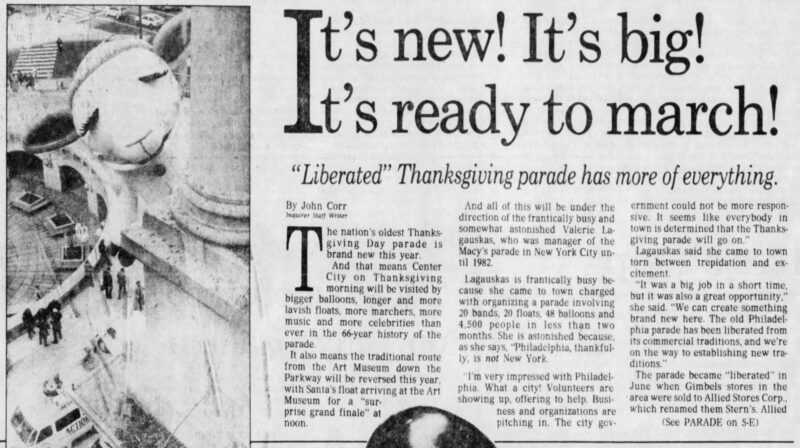
    Since 1920, Philadelphia has gone without a Thanksgiving Day parade only twice — once because of poor weather, and once because of a global pandemic. But nearly four decades ago, another formidable foe — corporate sponsorship — threatened the city’s beloved holiday tradition.

    That’s not a bad record for the country’s oldest Thanksgiving Day parade, which Gimbel Brothers Department Store launched with a humble procession through Center City. For more than 60 years, the festivities ended with Santa Claus climbing a ladder into the window of the Gimbels store at Ninth and Market Streets, signaling the start of the holiday season.

    Until 1986, that is. Gimbels by then had fallen on hard times and, following its sale to the highest bidder, was liquidated. Its Philadelphia-area locations were to be converted into Stern’s department stores, and Gimbels hoped to pass the baton to that chain to keep the Thanksgiving Day tradition alive.

    The problem was that Stern’s and its parent company, Allied Stores Corp., were not interested.

    “I think the best we could do this fast is to buy the Mummers some T-shirts,” Allied Stores chairman Thomas Macioce told the Daily News in 1986.

    The parade that year, however, became bigger and better than it had ever been. Here is how The Inquirer and Daily News covered it:

    https://www.newspapers.com/article/philadelphia-daily-news/185403993/

    Article from Jun 18, 1986 Philadelphia Daily News (Philadelphia, Pennsylvania) <!— –>

    ‘We can’t be ready in time’

    A deal in the Gimbels sale emerged in June 1986 and, right away, the Thanksgiving Day parade was on the chopping block, at least for that year. Allied officials claimed no planning had yet been done and there was no way to put it together in time.

    That, it turns out, wasn’t true. Ann Stuart, a Gimbels executive, told the Daily News that parade organizers had been proceeding as though the parade would be held as scheduled. And Barbara Fenhagen, the city’s special events coordinator, said planning was going ahead as usual.

    Either way, Stern’s and Allied’s lack of interest left the city in a tight spot. Aug. 15 was the last day orders could go in for the floats to be ready on time, marking a hard deadline to find a sponsor. Whoever took up the role would be expected to spend hundreds of thousands of dollars.

    “We will do everything we can to make sure that [the parade’s] appearance is not interrupted, even for one year,” Fenhagen said at the time.

    https://www.newspapers.com/article/philadelphia-daily-news/185404572/

    Article from Jul 16, 1986 Philadelphia Daily News (Philadelphia, Pennsylvania) <!— –>

    ‘Don’t rain on our parade’

    As the controversy wore on, Philadelphians and the local press grieved and snarled at the potential loss of a holiday tradition. The Daily News seemed to plead for Stern’s to reconsider.

    “Please don’t rain on our parade,” the People Paper wrote in an editorial. “To Philadelphians of all ages, it launches the holiday season in a special and heartwarming way.”

    Business columnist Jack Roberts struck a more combative tone, likening Stern’s to a houseguest who begins a conversation “by spitting in your face.” He later suggested that readers send back Stern’s junk mail to the company’s “Scrooge” executives with the phrase “I want the parade” scrawled across it.

    Special events professionals, meanwhile, warned that forgoing the sponsorship might create a bad name for Stern’s that would be difficult to overcome.

    “Philadelphians have a way of remembering,” special events consultant Shelly Picker said.

    https://www.newspapers.com/article/philadelphia-daily-news/185404234/

    Article from Nov 21, 1986 Philadelphia Daily News (Philadelphia, Pennsylvania) <!— –>

    ‘We’re delighted’

    The search for a new lead sponsor was arduous, with city officials approaching “most every local company that breathes,” according to a Daily News report. A number of bigger local outfits — ranging from Meridian Bancorp to Kiddie City — bowed out over cost and branding concerns.

    Then, after 56 days of limbo, the Thanksgiving Day parade was back on. And it was thanks to WPVI (Channel 6), better known today as 6abc.

    “When it became clear that because of the time frame and other commitments most were unable to assume that mantle, we decided to do it — and we’re delighted,” said the station’s general manager, Rick Spinner.

    The station had been airing the parade locally for 19 years and seemed to be a natural fit to take over. And, as the Daily News reported, the city had been pressuring Channel 6 to come up with a plan, seeing as the station benefited significantly from broadcasting the day’s festivities.

    The parade would go on to be known as the “Channel 6 Thanksgiving Day Parade.” But that was not the only — or even the biggest — change afoot.

    https://www.newspapers.com/article/philadelphia-daily-news/185404169/

    Article from Sep 24, 1986 Philadelphia Daily News (Philadelphia, Pennsylvania) <!— –>

    ‘Establishing new traditions’

    Channel 6 brought in the big guns straight away. Namely, by hiring a parade coordinator named Valerie Lagauskas, who previously managed the Macy’s parade in New York and wrote a book on parade planning.

    A number of changes came under Lagauskas’ leadership, including a new route. Instead of starting at the Philadelphia Art Museum and marching toward City Hall, as had been tradition, the parade would reverse direction and end at the Art Museum. The route would allow for the use of larger balloons, bigger floats, and better camera angles for the parade’s telecast.

    The full parade that year would also be broadcast nationally for the first time, appearing on the Lifetime network, in which ABC was part owner.

    In total, there would be 20 bands, 20 floats, 8 gigantic balloons, and 40 other balloons that were merely very large, The Inquirer reported. A massive balloon of the cartoon cat Heathcliff would make its debut. The theme, fittingly, would be “We Love a Parade.” And leading it all as parade marshal would be Sixers legend Julius “Dr. J” Erving,

    “The old Philadelphia parade has been liberated from its commercial traditions and we’re on the way to establishing new traditions,” Lagauskas said.

    https://www.newspapers.com/article/the-philadelphia-inquirer/185404381/

    Article from Nov 28, 1986 The Philadelphia Inquirer (Philadelphia, Pennsylvania) <!— –>

    ‘The best ever’

    On parade day, more than 500,000 spectators were expected to attend. And, according to reports from the time, they were not disappointed.

    Not only were there better floats and a more picturesque route, but paradegoers also were met with unseasonably warm temperatures.

    “It’s the first time we’ve been to a Thanksgiving Day parade where you could get a sunburn,” one attendee joked.

    The parade itself seemingly went off without a hitch, concluding on the steps of the Art Museum as Santa Claus pulled up to a rendition of “Happy Holidays.” Musicians and dancers let go of green and white balloons that drifted out over the Benjamin Franklin Parkway to cheers.

    And at least one Philadelphian didn’t forget who saved the day. Donna Harris, 30, of Audubon, who had attended the parade yearly since she was 5, was spotted holding a sign that read “Thank You WPVI.”

    “This parade was the best ever,” she said.