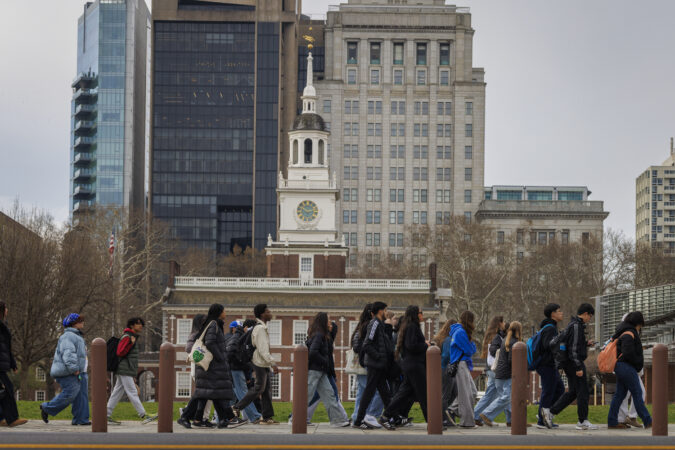
While all eyes are on Independence Hall this week, something almost unfathomable happened more than 200 years ago: It was nearly demolished.
Between the 18th and 19th centuries, Pennsylvania’s capital had moved to Harrisburg from Philadelphia, by way of Lancaster, and lawmakers wanted a new statehouse. The obsolete building then known as the Old State House in Philadelphia, on Chestnut between Fifth and Sixth Streets, was on prime real estate, according to Villanova University professor and historian Whitney Martinko.
So, they contemplated demolishing the building and selling off the salvage and parcels of land to the highest bidders to fund the grand statehouse. But Philadelphians mounted a campaign to save what’s now called Independence Hall — the Georgian-style building where the Declaration of Independence and U.S. Constitution were debated and drafted. Today, Independence Hall stands as a testament to the Founding Fathers’ ideals as the country prepares for its 250th birthday this Saturday.
“People looked to Independence Hall — already in the 1810s — as an important building and historic site,” said Martinko, who studies historic preservation in the early U.S. “Some of those people were residents of Philadelphia who didn’t want to lose a local landmark … but other people were really tourists who came to Philadelphia to see the site.”
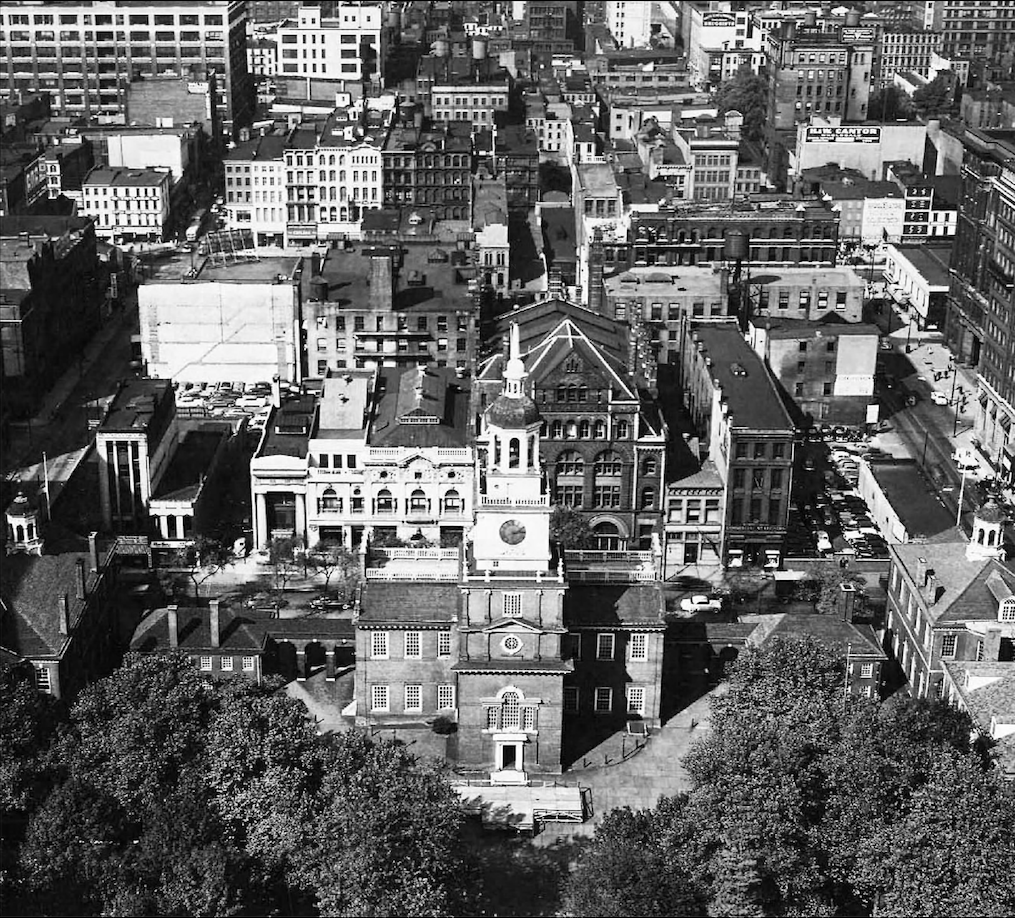
Independence Hall in 1950, looking north from Walnut Street, in the area that would become Independence Mall.
The state initially wouldn’t budge on its $150,000 price tag for the building, according to Martinko’s research, but after its yearslong campaign, the city ultimately purchased the plot for $70,000, or less than $2 million today. The deal, which was finalized in 1818, cemented Independence Hall’s legacy as a monument to the great American experiment.
Government offices occupied the building, while the State House yard remained public green space. What’s now Independence National Historical Park was once a maze of industry, mixed-use buildings, and alleyways.
By the mid-20th century, those blocks were razed, with some giving way to Independence Mall, in a push to beautify and boost civic pride.
“Preservation and stewardship of historic sites is an ongoing decision — it’s very easy to take for granted buildings that are preserved today are going to be there tomorrow,“ Martinko said, ”but there’s no guarantee that any building will be here tomorrow or in 50 or 100 years.
“History needs stewards and we all need to think of ourselves as people who should be engaged with saving places.”
A former Olympic canoeist who had been arrested in June on charges that he had vandalized the Lincoln Memorial Reflecting Pool has been indicted, according to court documents. He is charged with “destruction of property $1,000 or more,” a felony.
President Donald Trump blamed vandals for the problems following a quick and costly makeover of the pool, and the canoeist, David Carter Hearn, 67, of Bethesda, Md., was among the first to be charged. The U.S. Park Police had arrested Hearn near the pool June 19, and accused him of destroying government property. At the time, Hearn denied the charge in an interview with the New York Times.
Jeanine Pirro, the U.S. attorney in Washington, said in a news briefing that prosecutors had “tremendous evidence” underpinning the indictment, and she condemned what she called “unchecked vandalism and civil disorder.”
“National Park Service employees observed Hearn actually forcefully and violently pulling up and removing the bottom liner with both hands,” she said. “According to witnesses, Hearn damaged approximately 2 square feet of sealant from the bottom of the pool.”
When a parks employee told him to stop, Pirro said, Hearn was “belligerent, rude, and disrespectful.”
Norm Eisen and Mary Dohrmann, lawyers representing Hearn, said in a statement that he is innocent.
“These charges are outrageous and should be alarming to every American,” they said. “This indictment reflects the administration’s effort to shift blame for their own failures. On the eve of our nation’s Independence Day, Americans should be deeply concerned by the misuse of government power against an ordinary citizen.”
Hearn has acknowledged putting his hand in the water and touching the peeling sealant during a pause in a bike ride but has said that is all he did. “I was just a curious, concerned citizen,” he said in an interview. “I guess I was there at the wrong place, wrong time.”
On Thursday, Pirro described the case in the context of Trump’s extensive efforts to refurbish Washington, D.C., which she said was amid “a renaissance like it has never experienced before, in both safety and in beauty.”
In April, Trump announced that he would be fixing “the once beautiful Reflecting Pool.”
The pool’s problems, including leakage and the routine algal blooms, had bedeviled previous administrations, including Barack Obama’s, but Trump declared that when he was done, the pool would be “much more beautiful than the day it was built!”
The administration awarded no-bid contracts to drain, resurface, and refill the pool at a cost of $16.4 million, but by mid-June — days before Hearn’s arrest — it was already clear that things were not going according to plan.
Chunks of the sealant, which had been recently applied to the pool’s concrete slabs, were spotted floating in the water. And the water was turning a lively shade of green, proof that the algae was still present.
Past administrations have wrestled with keeping the pool free of algae, but experts said some of the current problems were because of decisions made during the rushed makeover. But Trump blamed vandals, who he said, without citing evidence, had poured fertilizer into the water to nurture the algae.
The area, an eternal draw for tourists, was quickly surrounded by security officers. Federal officials have said that seven people, including Hearn, have been arrested on charges of vandalizing the pool.
Pirro said that her office was reviewing those other cases and that some would likely result in misdemeanor charges and others in violations.
The indictment of Hearn came at a fraught moment for Pirro’s office, which has had trouble obtaining — and sustaining — criminal cases against Washington residents who protested Trump’s anti-crime efforts involving the National Guard and federal law enforcement.
Under Pirro, prosecutors failed three times last summer to secure an indictment against a woman accused of assaulting an FBI agent during a protest against immigration officials, and ultimately lost the case at trial.
In a similar case, grand jurors in Washington rejected efforts to indict a man who was accused of hurling a submarine sandwich at a federal officer on the street. Prosecutors later lost that case at trial as well.
Gregory Rosen, a former prosecutor in Pirro’s office, raised questions about Thursday’s charges, especially given binding precedent from the court of appeals in Washington.
“Malicious destruction of property has never meant just touching things,” he said. “The court has consistently required either an actual intent to cause the harm or wanton conduct, and damage resulting from an accident or curiosity doesn’t qualify.”
Christopher Reynolds thought he was talking to a woman looking to exchange money for sex with her 13-year-old daughter, Bucks County prosecutors said Thursday.
Reynolds was adamant about certain graphic details while negotiating the price for the encounter, and even offered a higher rate so the woman could buy her daughter an emergency contraceptive pill, according to the affidavit of probable cause for his arrest.
But in reality, Reynolds was speaking to an undercover detective who investigates human trafficking. And Reynolds, 35, was arrested late Wednesday after driving nearly an hour from New Jersey to a motel in Bensalem.
Reynolds, of Browns Mills, Burlington County, has been charged with criminal attempt to engage or perform a commercial sex act with a minor, criminal attempt to commit trafficking in individuals, and related crimes. He was held in lieu of $500,000 bail, and there was no indication that he had hired an attorney.
District Attorney Joe Khan said Reynolds’ arrest “sends an unmistakable message to those who look to prey on children in our communities.”
“This is the exact kind of proactive, aggressive enforcement the public can expect from our office’s revamped anti-trafficking operation,” he said. “We are going to use every tool and technology at our disposal, and we will continue to hunt down those who attempt to exploit vulnerable individuals.”
Investigators say the undercover detective first started communicating with Reynolds on Tuesday, after he responded to an ad on a website offering “taboo” with an underage girl, the affidavit said.
After negotiating the price and duration of the encounter, Reynolds agreed to meet the girl’s mother at a motel on Lincoln Highway. He nearly called off the appointment when detectives declined to send nude images of the girl, but relented when they sent a digitally de-aged photo of a female detective.
Investigators arrested Reynolds as soon as he entered the motel, the affidavit said. He was carrying $300 and a bottle of Mountain Dew, items the undercover detective told him to bring to the meeting while posing as the girl’s mother.
Reynolds is scheduled to appear before a district judge for his preliminary hearing on July 16.
WASHINGTON — President Donald Trump and his fellow Republicans are reviving a line of attack against Democrats heading into the midterm elections: They’re communists.
In just the past week, Trump has issued dark warnings that members of the Democratic Party’s ascendant left are communists who want to “completely destroy the traditional American way of life” and even engage in assassinations. Vice President JD Vance has similarly called out communism as a political shift that is “something we haven’t seen in the U.S.” House Speaker Mike Johnson has decried “radical candidates” who are “self-described, self-identifying Marxists.”
The GOP’s ideological focus conflates democratic socialism, which often centers on securing universal healthcare, higher taxes on the wealthy, and stricter corporate regulation, with communism, under which private ownership is largely eliminated. It has been building since Zohran Mamdani, a democratic socialist, won the Democratic nomination for New York City mayor last year.
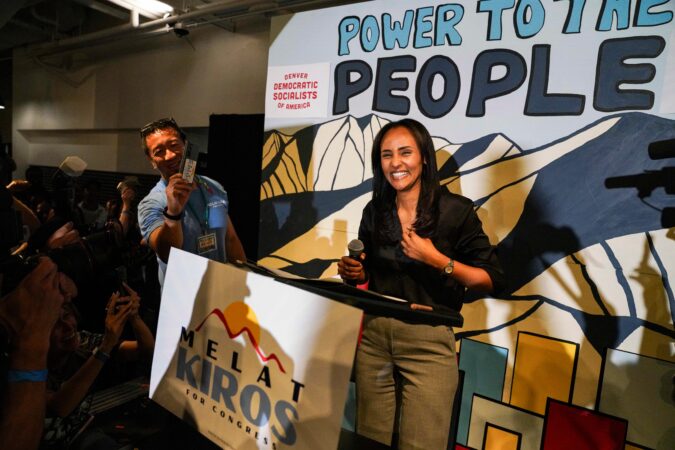
But it’s kicked into a higher gear recently after democratic socialists won several New York City congressional primaries last week. The primary victory on Tuesday by another democratic socialist, Melat Kiros, for a Denver congressional seat suggested the trend may extend beyond Manhattan liberalism.
“The Democrats are making this easy for us,” Rep. Richard Hudson, the North Carolina Republican who leads the House GOP’s strategy and fundraising arm, said in an interview. “They’re nominating extreme liberals, leftists who are out of touch even with mainstream Democrats.”
Republicans are holding onto slim majorities
The messaging effort comes as Republicans scramble to hold onto threadbare congressional majorities in the November midterms. It risks overlooking public frustration, particularly among younger voters, with unfettered capitalism at a time of growing income inequality and rising costs.
But it also gives Republicans a much-needed opportunity to shift the conversation back to territory that is more comfortable for them after their party has spent much of the year on defense over the fallout from Trump’s decision to launch a war against Iran, which contributed to widespread price spikes.
Ralph Reed, the longtime conservative activist who hosted Trump last week at a Faith and Freedom Coalition conference, acknowledged that Republicans are facing steep headwinds this year. But the recent string of wins by democratic socialists, he said, allows Republicans to present a contrast between “common sense and crazy.”
Democrats uncertain over the party’s direction
The renewed push could tug at tensions among Democrats who are largely united in their loathing of Trump but are divided over the party’s direction. This year’s primaries are shaping up as a referendum between centrists who are eager to course correct from what they see as progressive overreach earlier in the decade and a left wing pushing for even more sweeping change.
“A lot of this anger has been boiling under the surface,” said Joseph Geevarghese, executive director of Our Revolution, which was founded by U.S. Sen. Bernie Sanders, a Vermont independent who caucuses with Democrats. “It’s coming to the fore in this moment in a very powerful way.”
But Rep. Josh Gottheimer, a centrist New Jersey Democrat, called the victories in Colorado and New York “aberrations.”
“We’ve got to fight like hell to keep our party from being hijacked by socialists,” he said. “Most of them are bomb throwers, not problem solvers.”
Nevada Attorney General Aaron Ford easily dispatched a more progressive rival earlier this year in his Democratic bid for governor in a state Trump carried in 2024. As he eyes a general election challenge to Republican Gov. Joe Lombardo, he insisted candidates like those who won in New York don’t represent all Democrats.
He said the Democratic Socialists of America “is not the face of our party.”
Rep. Suzan DelBene, a Washington Democrat who chairs the House Democratic campaign committee, said in a statement that Republicans were “resorting to desperate attacks that aren’t actually about the pocketbook issues.”
Trump risks overreaching with communism argument
Trump and fellow Republicans risk missing the mark when the public’s embrace of capitalism might not be as strong as it was decades ago.
About half of U.S. adults, 54%, have a positive view of capitalism, according to an August poll from Gallup, a slight decline from 61% in 2010. Democrats have driven some of the shift, but favorable opinions of capitalism have fallen among independents as well.
Only 42% of Democrats viewed capitalism favorably, while 66% had a positive view of socialism. The poll found that both younger and older Democrats have warmed slightly on socialism since 2010, but Democrats under age 50 are much less likely to view capitalism favorably. Democrats age 50 or older didn’t shift meaningfully.
“Young voters, who I would argue are driving a lot of the electoral energy that we’re seeing, came of age politically in a post-Soviet world,” Geevarghese said. “The attacks don’t land in the same way when Donald Trump was politically of age.”
Hudson, who is running the House GOP campaign committee, acknowledged the communism line might not resonate in the same way with all voters, particularly younger people. That’s why, he said, it’s important for Republicans to tailor their message to the needs of individual districts.
“I’ve never run cookie-cutter campaigns where we just say one thing over and over everywhere,” he said.
Still, the argument was high on Trump’s mind again on Wednesday as he visited the newly built Theodore Roosevelt Presidential Library in North Dakota. He called the former president a “ferocious opponent of a thing called communism.”
“It’s the biggest threat to our country, including World War I, World War II, Pearl Harbor, September 11,” he said. “It’s a bigger threat, potentially a bigger threat than that, because it’s like a cancer that spreads, and you better stop it fast.”
Beverly Gage, a history professor at Yale University who has written on the rise and fall of Sen. Joe McCarthy, said earlier eras of anti-communism politics took hold because there was a large and active Communist Party in the U.S. and the Soviet Union was the country’s primary foe. But she said Trump’s focus on the issue is notable given his ties to Roy Cohn, a onetime confidant of Trump who earlier worked for McCarthy.
“It’s not very many steps to get from McCarthy to Roy Cohn to Donald Trump,” she said.
California Gov. Gavin Newsom, a potential Democratic presidential candidate, shrugged off Trump’s communism focus as “bunk.” In an interview, he said the direction of the party isn’t all that different from the dynamics he’s navigated for decades in California politics.
“I governed in an environment where the DSA was otherwise known as progressives,” he said. “This dialectic is so deeply familiar to me, and I don’t over read any of it.”
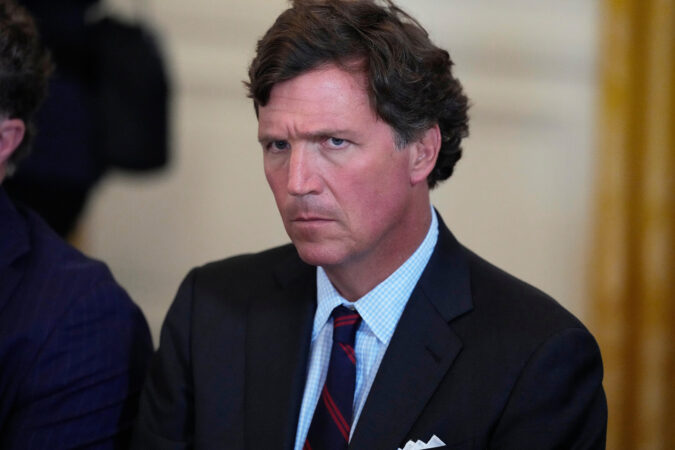
Tucker Carlson, the influential conservative media commentator, said in an interview that he planned to help start a new political party after leaving the Republican Party but that he had no interest in running for office.
Carlson, a former close ally of President Donald Trump who has broken with the Republican Party over the war with Iran, told the Columbia Journalism Review that he was “going to help build a third party.”
“There should be a good-faith effort to figure out what benefits the country,” Carlson said in an interview with the Columbia Journalism Review published Wednesday.
He outlined his plans at a moment of upheaval for both parties: The insurgent left appears ascendant in the Democratic Party as the base has grown angry over the party leadership’s stance on Israel since the war in the Gaza Strip. The Republican Party has been fractured by Trump’s handling of the war with Iran.
Carlson, a popular podcaster and former Fox News host, said last month that he was leaving the Republican Party. He described himself on a podcast episode as a “consistent defender” of the party for 35 years, but said that he believed the party had lost touch with “America First” principles under Trump.
In the Columbia Journalism Review interview, he described some of the policies that might animate his new party, saying he supports “ending all immigration.” A longtime nativist and immigration hard-liner prone to conspiratorial views, Carlson said immigration drives unemployment. (Many economists say it does not.)
He also argued that the two parties did not offer a sufficient contrast on “war and finance.”
“That’s not a democracy,” Carlson told the Columbia Journalism Review. “That’s a one-party state posing as a democracy, and it needs to be broken, and there’s going to be a third party, and I’m going to do everything I can to bring that about.”
Carlson was often at Trump’s side during his 2024 presidential campaign and pushed Trump to select JD Vance, then a senator from Ohio, as his running mate.
But he broke sharply with the president after the United States started the war with Iran in late February, declaring Trump was violating a core campaign promise to avoid foreign conflicts. By April, Carlson said he was “tormented” by his past support for the president.
He told the Columbia Journalism Review that he had not spoken to Trump since the start of the war, which has been largely paused by a fragile ceasefire.
“I’m not interested in talking to him,” Carlson told the publication.
In the past, Carlson’s relationship with Trump has been revived after rocky stretches. In a text surfaced by a defamation lawsuit filed by Dominion Voting Systems, Carlson wrote of Trump, “I hate him passionately.” (Carlson was fired by Fox News after it agreed to pay $787.5 million to resolve the case, which centered on the network’s promotion of 2020 election misinformation.)
But Carlson’s frequent, forceful public criticism of Trump since the war began has led to some speculation that he might be angling for his own run for office.
Carlson told the Columbia Journalism Review that he was not entertaining the idea, and he insisted he did not see himself as a competitor to Trump.
“I’m not a politician, that’s for sure,” Carlson told the publication. “I’m not a rival to Trump for power. I have no power. I’m someone who knows Trump, and I know him well, and I’ve known him for a long time.”
Temple University on Tuesday identified a 20-year-old student who was killed last week by a hit-and-run driver on Kelly Drive.
Bryce Wolfe, of Conyngham, a borough in Luzerne County, was an actuarial science major in the Fox School of Business and had just completed his sophomore year, said Temple President John Fry in a joint statement to the university community with Jodi Bailey Accavallo, vice president of student affairs, and Denise Wilhelm, interim vice president for public safety.
Wolfe was riding a motorcycle when he was struck by a vehicle believed to be a white SUV, his parents said in an interview late Tuesday night.
The unidentified driver dragged Wolfe for more than a mile on Kelly Drive, Clarence Wolfe III said.
“We’re committed to getting justice for our son,” Lori Wolfe said.
Philadelphia police said they responded to a report of a crash at Kelly and Reservoir Drives around 11:15 p.m. on June 24.
Police said they believe the driver of a white SUV was traveling east on Kelly Drive and was trying to make an illegal turn onto Reservoir Drive, but then attempted to return to eastbound Kelly Drive when the SUV entered the westbound path of the red 2004 Triumph motorcycle Wolfe was riding.
Wolfe became trapped beneath the SUV and was dragged to the area of Fountain Green Drive before his body was dislodged from the SUV, police said.
Wolfe was transported by medics to Penn Presbyterian Medical Center and pronounced dead at 4:41 a.m. on June 25, police said.
The suspected SUV sustained damage on the driver’s side and damage to the driver’s-side front wheel well, fender, and possibly driver’s-side door, police said.
“Thanks to an anonymous donor, there is a $10,000 reward available for information leading to an arrest and conviction,” Fry said.
Anyone with information about the case can contact police at 215-686-TIPS (8477), Fry said.
Wolfe “had quickly established a reputation as both an excellent student and engaged member of the Temple community,” maintaining a high grade-point average while being enrolled in both Temple and Fox Honors program, Fry said.
“Bryce was also deeply involved outside of class as he was a member of the student professional organization Gamma Iota Sigma and had recently started an internship with United States Liability Insurance Group,” Fry said.
“There is no doubt that he had a very bright future ahead of him, and that’s what makes delivering this news especially difficult,” Fry said.
The word “believe” was used throughout the Flyers’ run to the postseason and beyond.
It was in big letters on the T-shirts the team wore, with 3.8% on the sleeve and beloved goalie Bernie Parent’s mask. And, a year ago, it was why Dan Vladař signed with the Flyers. He believed he could be a No. 1 goalie, and he believed something special was brewing in Philly.
That belief became a reality when, across 51 starts, he went 29-14-7 and recorded the most wins by a Flyers goalie since Steve Mason in 2013-14. He finished the regular season with a 2.42 goals-against average and .906 save percentage, with one relief appearance included. He was even better in the playoffs, posting a 2.18 GAA, a .922 save percentage, and two shutouts.
The Flyers showed how much they believe in Vladař on Wednesday by signing him to a five-year, $27.5 million contract extension that carries an annual average value of $5.5 million.
Vladař, who turns 29 next month, spoke to the Flyers’ brass not long after the season concluded, and said that two weeks after the exit interviews, the deal was done. There was no hesitation and “no thinking longer than one second” on his part to get it done.
“Obviously, it means a lot. I, for sure, I don’t take it for granted,” he said on a Zoom with reporters Thursday when asked what it means to him to have the Flyers believe in him. “Since Day 1, I really felt like I became a part of the family here, and [that’s] why my goal is to stay here for as long as I can and to have as much success as I can.
“Nothing’s going to change for me heading into the next season. I’m still going to try to be the same goalie and obviously be the same person and really enjoy my time in Philly, and obviously my family loves it there, too, which was a big factor as well.”
Family is another word used religiously by the Flyers. Vladař said when he signed his initial two-year contract last July 1, every player reached out to him. They welcomed him with open arms, and it’s akin to how he reached out to the newest goalies in the organization, Martin Psohlavec and Marek Sklenička. The fellow Czechs were drafted by the Flyers last weekend.
“I spoke to them right away on Saturday,” he said. “Both seemed really excited to be part of the Flyers, and I basically just congratulated them. I just told them that I’m here for them if they ever have any questions and stuff like that. And at the same time, if they are going to be in Prague around the summer, they are more than welcome to go for lunch or come over for some barbecue.”
It will be a 50% new look between the pipes for the Flyers this upcoming season. Sam Ersson was traded to Toronto before his rights were traded to Ottawa. He signed a two-year, $4.4 million contract with the Senators on Wednesday.
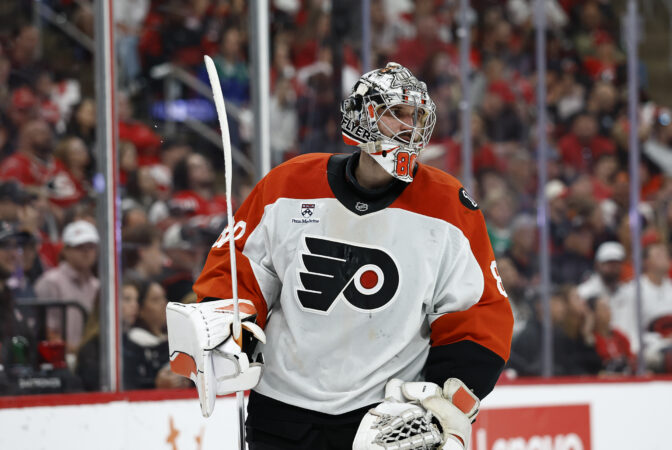
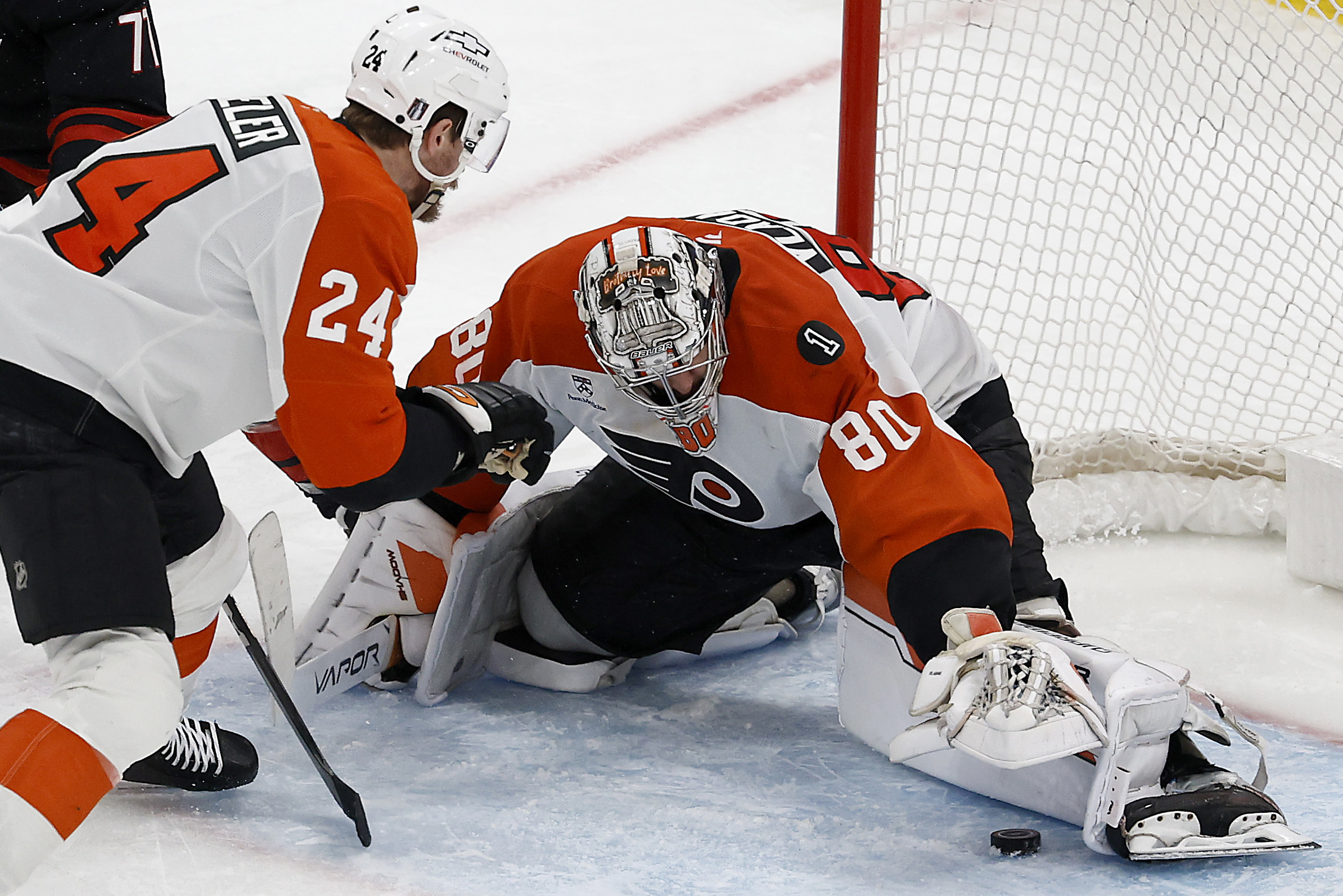
Flyers goaltender Dan Vladar was 29-14-7 and posted a .906 save percentage in his first season in Philadelphia.
Vladař said the news of the trade on June 16 was shocking — “I never saw that coming” — and called it a sad day.
“First of all, I want to say thank you to Sam. He’s been one of the big reasons why we had a pretty good year, us as a team,” Vladař said. “I cannot wish him anything, just the best. And I hope he’s going to get his role, he’s going to get his games, and he’s going to prove to everybody that he’s a starting goalie. That’s my belief.”
And, yes, he has spoken with Joseph Woll, his new goalie partner acquired in the swap with Toronto.
“I reached out right away to Joe,” he said. “… And same thing as with Sam; we are going to need two, if not three, goalies over the next couple of years. So, for me, nothing’s changing. I’m going to be supportive, and I’m going to battle, and I’m going to be there for him every time he needs me. So nothing’s changing for me.
“And he seemed like a really good person and a guy who wants to be a Flyer. So I think that’s what we are trying to build here. So I’m pretty sure that we are going to have great chemistry, and we are going to do something really special here.”
As a heatwave continued to roll across the Northeast on Thursday, the Phillies’ offense wilted.
On a scorching afternoon at Citizens Bank Park, where the temperature at first pitch was 98 degrees and climbed to triple digits from there, the Phillies dropped the series finale to the Pirates, 6-1.
But the loss could have easily been even more lopsided. Pittsburgh had plenty of opportunities to run up the score further, with 14 hits to the Phillies’ four.
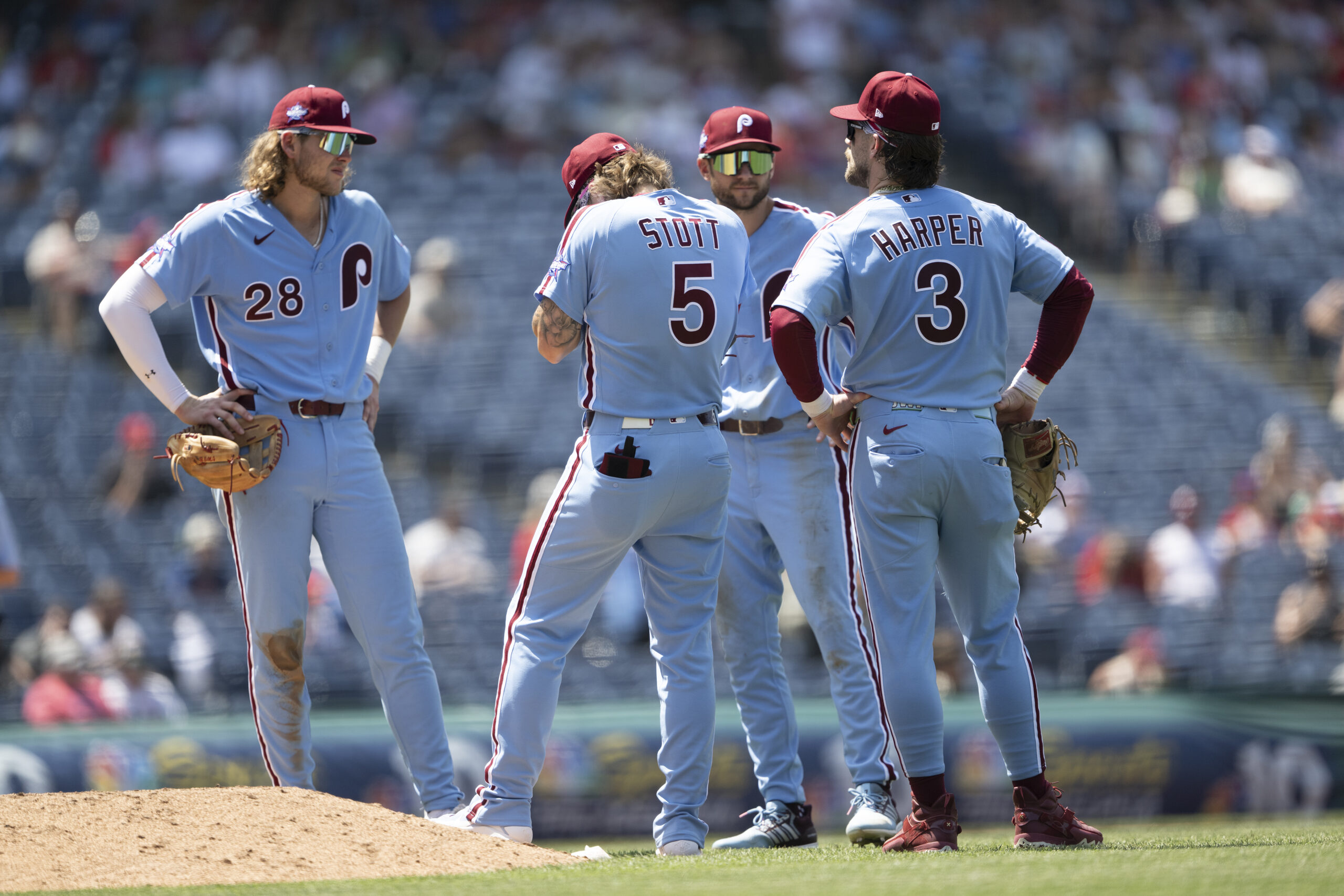
“That was definitely one of the hotter days I’ve felt in this ballpark,” said Bryce Harper, whose RBI double in the third inning drove in the Phillies’ only run. “Played some hot ones out in Turner Field against the Braves, but that was one of the hotter days I’ve ever felt in this park.”
The Pirates had base runners in every inning except the first, and stranded 12 thanks to some solid defensive efforts from the Phillies.
Interim manager Don Mattingly opted not to use an opener for Alan Rangel, who made his first major league start and delivered four scoreless innings. He wriggled out of a few jams to do it. A double play from Alec Bohm — who fielded a grounder, stepped on third, and fired to first base — helped Rangel leave two on in the third. Rangel also recovered from back-to-back walks in the fourth with a groundout that ended the inning.
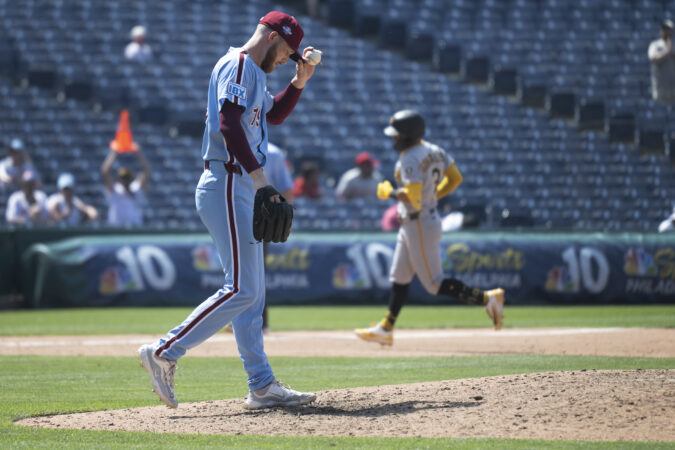
Alan Rangel pitched four scoreless innings in his first major league start.
“He’s kind of doing what he’s been doing for us the whole time, which is keeping us in the game,” Mattingly said. “Threw zeros. You could tell he was kind of running out of gas at the end with the walks and things like that, but he did a nice job for us.”
The Phillies led early after Harper’s RBI double, but the bats fell silent after that. It gave the Pirates time to break through, which they did against the Phillies’ bullpen.
Pittsburgh tied things up with one run on three hits against Tim Mayza in the fifth. Trea Turner limited the damage there with another double play, which he fielded himself and threw to first while stepping across the bag.
The Pirates took the lead against José Alvarado in the seventh inning. He got ahead, 0-2, against Brandon Lowe, but failed to put him away, giving up a leadoff single instead on a cutter. Lowe later scored when Esmerlyn Valdez sent a ball past Justin Crawford in center for a triple.
Another single scored Valdez before Alvarado ended the inning with a strikeout. The lefty has a 6.10 ERA this season.
“It’s kind of game to game with Alvy,” Mattingly said. “Big games, he’s been good, getting some big outs. But in other games, he gives up the hit that obviously hurts. But in general, I think his stuff has been good.”
Runs scored on all three left-handed relievers the Phillies used in the game: Mayza, Alvarado, and Kyle Backhus, who gave up a solo homer in the ninth. Lefties in the Phillies’ bullpen have a 4.73 ERA, fifth-worst in baseball.
Lou Trivino, a righty who had his contract selected earlier this week to give the bullpen a fresh arm, also allowed a pair of runs in the eighth. He gave up two hits, including a solo homer, and walked two.
Bryce Harper (far right) said Thursday was “definitely one of the hotter days I’ve felt in this ballpark.”
The Phillies’ bullpen overall has been taxed this week, but will get a respite with Friday’s off day.
“The off day is definitely coming at a good time for us,” Mattingly said. “ … I think anytime you can get guys a day off their legs, it’s good. And obviously we need to try to get that bullpen where more of the guys are rested.”
The offense, meanwhile, struggled against Pirates starter Jared Jones and piggybacking Carmen Mlodzinski, who combined for seven innings. After Harper’s RBI double against Jones, the Phillies managed just two more hits — singles from Turner and Bryson Stott — the rest of the game.
“I think in the whole series I thought we swung the bat well,” Harper said. “Obviously, today didn’t go as planned. They got four horses over there that throw really hard and have really good stuff, so just weren’t able to really get it going today, fell behind, and split the series.”
Pirates relievers entered Thursday’s game with a 4.44 ERA, which is fourth-worst in the National League, but the Phillies didn’t capitalize. Mason Montgomery struck out Brandon Marsh, Bohm, and Stott in order in the ninth to seal it.
“Obviously it was hot, we know that, but both teams played in it, so can’t really make an excuse with the weather,” Mattingly said. “Obviously, it affects in some way, but both teams played in it.”
The Phillies played their final game at home before the All-Star Game at Citizens Bank Park on July 14. They depart on a three-city, nine-game road trip, opening in Kansas City on Saturday.
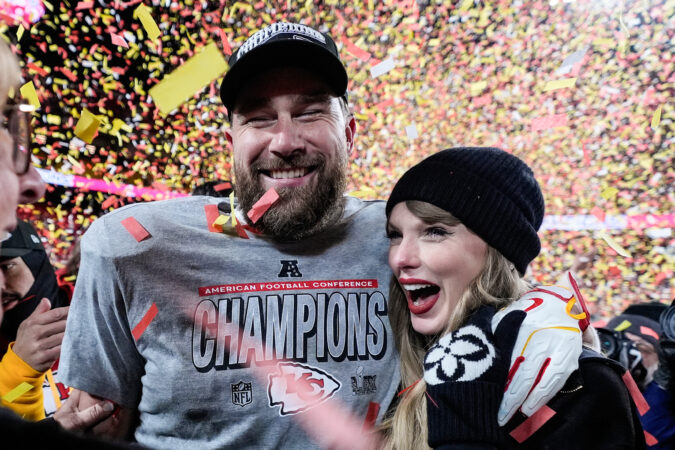
Taylor Swift and Travis Kelce may or may not be getting married this weekend. But the pop singer and Kansas City Chiefs tight end are celebrating their impending nuptials with some philanthropy.
The couple donated $26 million to 20 charities across the United States on Thursday — including one in Swift’s hometown of Reading. Helping Harvest, a food bank that serves “seniors and adults experiencing food insecurity” in Berks and Schuylkill Counties, received $1 million from the couple.
The donation was unexpected, Helping Harvest said in a statement on Thursday, but greatly appreciated.
“The $1 million that Ms. Swift and Mr. Kelce donated to us today will be used and the impact will be exponential in allowing us to rescue more food from waste and provide more food to people in need,” Helping Harvest president Jay Worrall said to The Inquirer. “[Swift] has done the people in her home community a great service, and we thank her for it.”
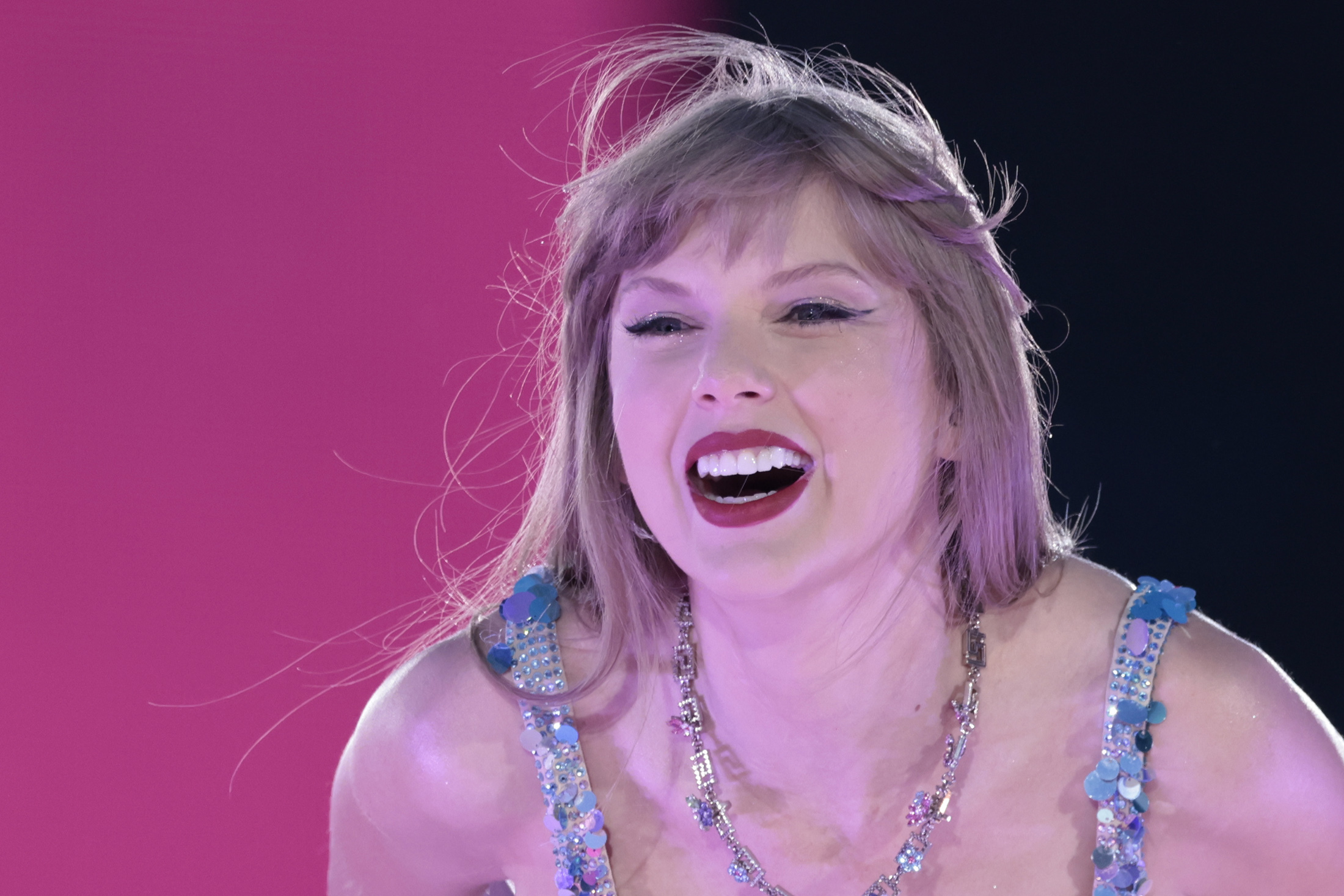
Taylor Swift performs during the first of three Eras Tour performances at Lincoln Financial Field in Philadelphia on Friday, May 12, 2023. .
Swift has a history of donating to food banks, particularly when on tour. During the “Eras Tour” in 2023, Swift donated to Three Square Food Bank in southern Nevada, Food Lifeline in Seattle, and Second Harvest of Silicon Valley in San Jose, Calif., among others.
One of Helping Harvest’s largest expenses is its infrastructure, such as cold storage and refrigerated trucks for food distribution. The donation, Worrall said, would likely be invested in additional trucking or warehouse space that would allow them to store more food.
“There have been substantial reductions in federal resources for food banks over the past few years, compounded by the reductions to the SNAP programs that are being enacted right now,” he said. “The state has tried to step up in some ways, but the increase in state funding has been modest compared to the reductions in federal funding.”
Last year, Gov. Josh Shapiro’s administration invested $459,000 in Helping Harvest’s new community kitchen, which provides culinary training and is where meals are prepared for people in need.
In the last two years, Helping Harvest’s federal funding has decreased by a little over a third. The organization received $2,687,166 in grants awarded under federal programs, compared to $4,240,293 in 2024, according to a recent audit for the 2025 fiscal year. The organization anticipates distributing over 14 million pounds of food this year, up 3 million pounds from 2024.
A spokesperson for Swift did not immediately respond to The Inquirer’s request for comment about the donation to Helping Harvest.
While there has been no confirmation from the couple, Swift and Kelce are reportedly tying the knot on Friday at New York City’s Madison Square Garden, where Swift was most recently seen cheering on New York Knicks in Game 4 of the NBA Finals against the San Antonio Spurs.
Celebrity news publication Page Six released a video of large Sysco-branded boxes of food being brought into the venue, including lobster meat, french fries, andchicken. The Associated Press has reportedly obtained a copy of a city permit for a “special event” taking place at the venue on Friday night.
The article has been updated to include details about Swift and Kelce’s reported wedding. Staff writer Beatrice Forman contributed to this article.
It was right after birthright citizen Folarin Balogun tapped in another game-winning goal for U.S. men’s soccer in the World Cup Wednesday night that I had a moment of clarity about where things are in America as our nation turns 250.
I’d gone to Union Yards, the outdoorsy beer hall adjacent to Chester’s soccer palace, Subaru Park, not only to catch the game but also a vibe that I’d wanted to turn into this column.
The euphoria after Balogun’s goal — a red-bearded man in a colonial tri-corner hat and the two older veterans who’ve saluted through all of the prematch “Star-Spangled Banner” jumping to their feet, as a little girl in cornrows danced on a table — was the bucket-list moment I’d come there for.
I saw a beer-recipe melting pot of Americans cheering the immigrant-heavy rainbow coalition of U.S. soccer, showing yet again — just as we did in 1976, when I was 17 — that the people instinctively know how to celebrate what’s actually great about our country no matter how much our leaders try to muck it up.
I’d joked with my editors earlier in the week that I might lose my columnist license (not an actual thing, although maybe it should be) if my piece that runs on the weekend of the United States Semiquincentennial wasn’t a Big Think essay on what the American Experiment all means — to the extent that anyone can actually think through the fireworks, traffic jams, and 100-degree temperatures.
That’s when it hit me. That was exactly the column Donald Trump was counting on from me and every other opinion writer in America ahead of Independence Day. The 47th president needed a week when the pundits put on their wide-angle lenses and put away the magnifying glasses, while his “forgotten Americans” headed off to the beach or the fireworks show, or gorged themselves on six hours of World Cup soccer every day, and stopped watching the news.
An international jewel thief needs to create a distraction. Because if you’d been paying attention during the nation’s summer vacation week, you’d have seen that Trump is robbing us blind.
The July Fourth holiday gave the Trump regime an opportunity for the ultimate Friday news dump, the now time-honored tradition of releasing the worst stuff when people will be unplugged for a few days. In this case, the dump was a federally mandated financial disclosure form that revealed the stunning extent to which Trump has cashed in on his power and influence as president since taking office in January 2025.
The top-line numbers defy belief. Trump, who reported earning at least $622 million in 2024, his last year as an out-of-power businessman, revealed that he made at least $2.2 billion in 2025, and it’s hard not to see a lot of this as coming from turning the institution of the American presidency into a cash cow.
Consider the $636 million Trump made by releasing a so-called meme coin — an asset whose value is tied to nothing beyond its own hype — that depicted his fist-pumping reaction to the 2024 assassination attempt in Butler, Pa., and which was released literally hours before he took the oath of office again. Not only is this a staggering amount, but Trump pocketed this cash by fleecing thousands of middle-class folks who voted for him.
Publicly available information from last year showed that some 764,000 individuals who bought the Trump meme coin after its launch lost money. How many investors profited from the $TRUMP coin? Just 58 — and no one got nearly as rich as the man pictured on the coin.
Yet, Trump’s other sources of wealth are almost as troubling — especially the real estate and crypto deals with foreign nations that have an enormous stake in the president’s policy decisions. That’s especially true when the investment arm of the United Arab Emirates bought nearly half of the Trump family’s main crypto venture, World Liberty Financial, contributing to his at least $1.4 billion in crypto-related earnings. The U.S. and the UAE are (or were) key allies in the war-torn Persian Gulf.
But the important thing to understand about Trump’s money: It’s not a case in which the issue is that these deals are a lot shadier than the financial profiteering by, say, Jimmy Carter or Warren G. Harding or whomever. None of Trump’s 44 White House predecessors seriously profited from the presidency while they were still in office.
Carter put his peanut farm in a blind trust. On the flip side, Spiro Agnew pleaded no contest to a felony charge for accepting just a few thousand dollars in the White House — not billions. There is absolutely no precedent for Trump’s naked greed and for how he trades on his office for personal profit.
Yet, the president thinks that by declaring his crimes on a public document, voters will think it isn’t a crime — even if he releases that form over July Fourth to hedge his bets.
Indeed, the scale and scope of the president’s grift is vast and overwhelming, which is the point. I’m just now getting to a different Trump family scandal, in which the president approved a lucrative tungsten mining deal with Kazakhstan whereby his sons are key investors, propped up with up to $1.6 billion in loans from Trump’s Pentagon.
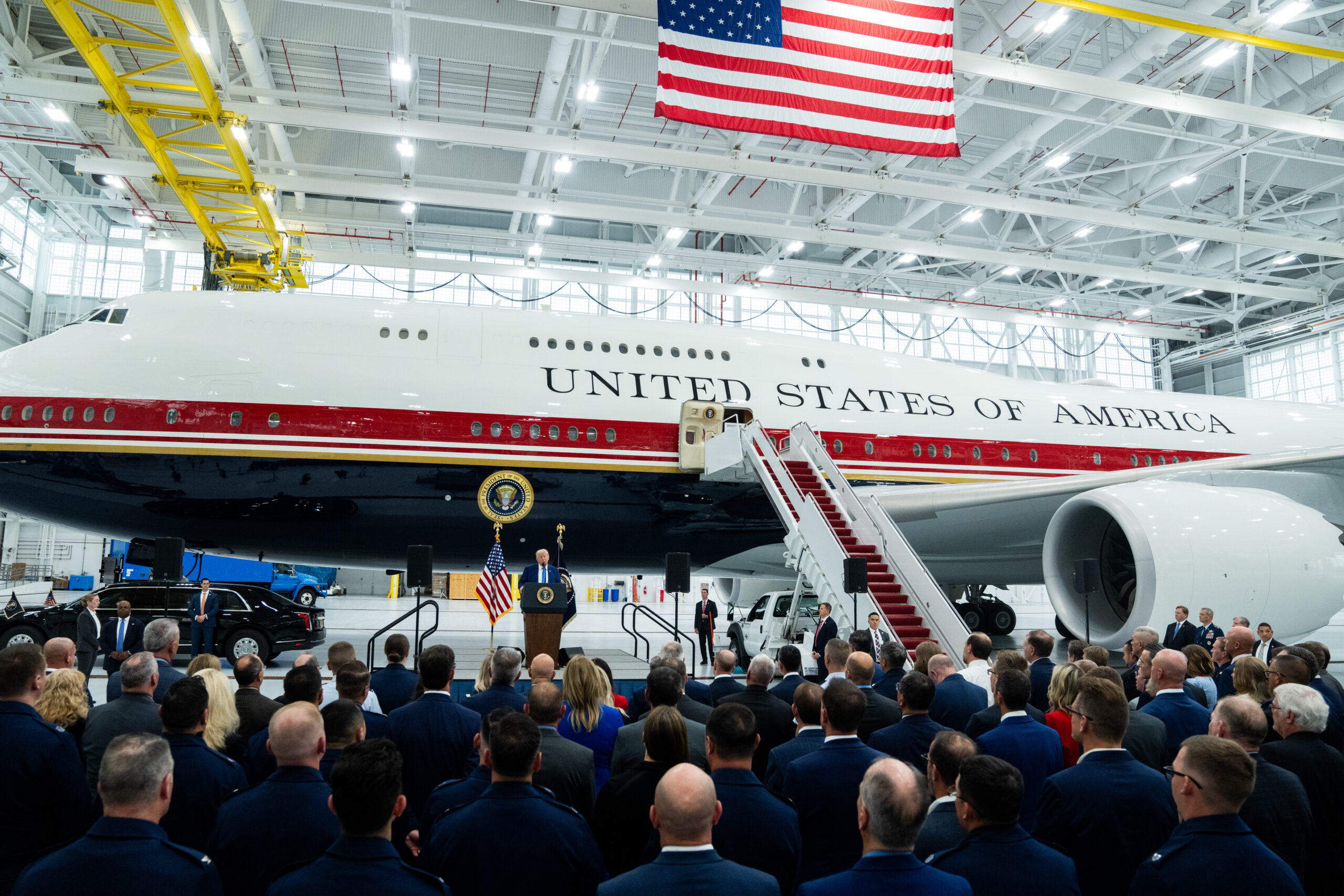
Trump took questions about his family’s 2025 cash bonanza as — and you can’t make this up — he prepared to fly for the first time in the $400 million luxury jet that was gifted by Qatar and which, after a brief stint as Air Force One, is slated to go to Trump’s presidential library (a.k.a. Trump) in 2029.
President Donald Trump delivers remarks next to the new red, white, and blue Boeing 747 jetliner donated by the government of Qatar that will be used as Air Force One, at Joint Base Andrews, Md., in June.
One of the many ironies here is that Trump is inadvertently doing America a July Fourth favor by highlighting a key part of the flawed wisdom of the nation’s founders. In declaring independence in 1776 and creating a government that aimed for people-powered democracy with checks and balances on unbridled autocracy, the mad scientists of the American Experiment also expressed their fears for our future.
“The only path to a subversion of the republican system of the Country is, by flattering the prejudices of the people, and exciting their jealousies and apprehensions, to throw affairs into confusion, and bring on civil commotion,” Alexander Hamilton wrote in 1790. “When a man unprincipled in private life, desperate in his fortune, bold in his temper … is seen to mount the hobby horse of popularity, he may ‘ride the storm and direct the whirlwind.’”
This Fourth of July week, I’ve been thinking a lot about the 1770s, but also the 1970s. For the second-half baby boomers like myself, it’s impossible not to experience the nation’s 250th anniversary without sepia-toned memories of July 4, 1976 — the U.S. Bicentennial.
Things were both so similar and so different.
Just as democracy stares into the abyss now, the assassinations, riots, and bombings of the late 1960s and early ’70s felt like the apocalypse to those who lived through it. But the Watergate scandal — yes, the very thing JD Vance and others on the far-right are dismissive of now — and the way courts and newsrooms and members of Congress responded had created a new hopeful yearning in the summer of 1976.
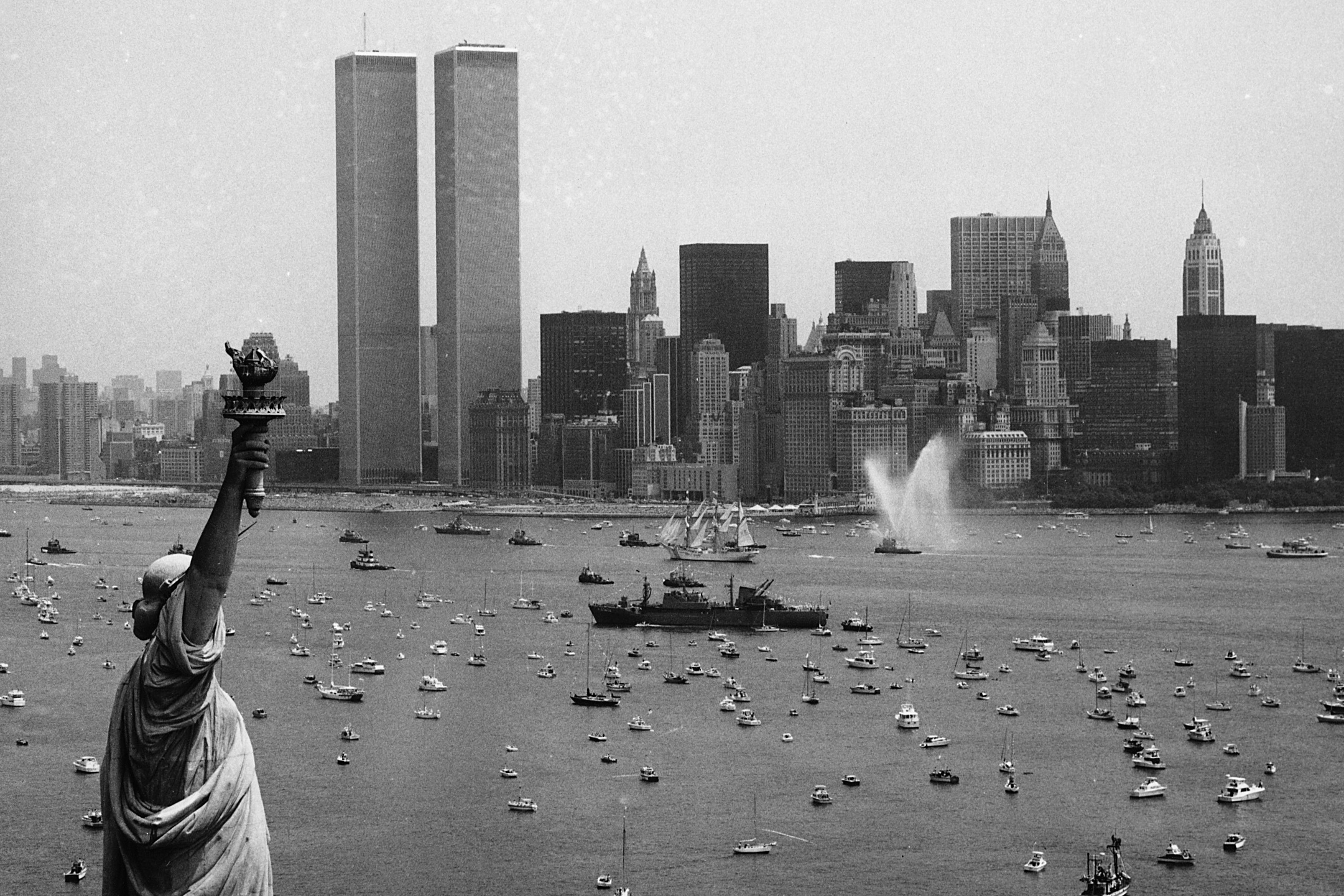
Ships participate in Operation Sail between the Statue of Liberty and the Twin Towers to celebrate the U.S. Bicentennial in New York on July 4, 1976.
That feeling is what made the day I enjoyed with my family as a 17-year-old a half-century ago — watching those glorious tall ships glide down the Hudson River from my dad’s high-rise office on 10th Avenue, then cramming into a subway to get to the fireworks over the Statue of Liberty — still bring back chills today. There was an unexpected sense of togetherness — and, naively in hindsight, that a storm had passed.
It’s different in 2026. The whirlwind that Hamilton warned us about is directly overhead, and the man is still riding, however clumsily, the hobby horse. The institutions that saved us ahead of 1976 are shells of their former selves, as if a neutron bomb had struck.
And yet, the fundamental essence of what can make America actually great someday remains intact: its people. This summer, millions of us are showing that Americans want things that can bring us together, and also to celebrate what makes us all different and all special, whether on a soccer pitch or a parade route laced with pink.
The question is, how do we take this positive energy and stop the whirlwind? How do we celebrate a 250-year slow-bending of the arc of the moral universe without losing our focus on the ongoing crime scene at 1600 Pennsylvania Avenue?
When the president’s Freedom 250 sets off 850,000 fireworks over Washington on Saturday, think of every single blast as about $2,000 that Trump pocketed for himself, and then it might be possible to comprehend the scope of his crime against our citizenry.
Don’t let the president hijack the Fourth of July to rob the focus from what matters most, the things we need to write and discuss and march against every week: his unprecedented criminality. The bombs are bursting in air, but only when weunleash our people power and seek justice will we see the dawn’s early light of a new nation again.