Blog

  • Shark attack on Alabama teen inspires the start of a national alert system

    Shark attack on Alabama teen inspires the start of a national alert system

    Lulu Gribbin was 15 when she survived a shark attack off the coast of Florida. She lost her left hand, part of her right leg and almost her life.

    What she didn’t know when she entered the water on that day in 2024 was that another woman had been bitten by a shark 90 minutes earlier and just 3 miles down the beach. Had she known about the earlier attack, there is no way she would have been swimming, she said.

    Gribbin’s story has inspired new federal legislation to authorize emergency alerts to mobile phones to warn beachgoers when a shark has bitten someone in the area.

    President Donald Trump last week signed Lulu’s Law, which requires the Federal Communications Commission to allow the emergency messages. The legislation, which Gribbin advocated for, authorizes the warnings by classifying a shark attack as an event for which an emergency alert can be issued. It is up to states to implement the warnings. Gribbin’s home state of Alabama approved such a warning system last year.

    “It’s really just common-sense legislation. It says that whenever there has been a shark attack in a certain area where you are near, it will send an alert to your phone, exactly like how an Amber Alert system works when a child is abducted,” she said.

    Gribbin said she hopes the alert system will help prevent attacks like hers. “I definitely see this law working in the future and I’m really excited to hopefully save lives,” she said.

    A fight to survive

    Gribbin was one of three people bitten by a shark on June 7, 2024, off the Florida Panhandle.

    She was on a mother-daughter trip to the Florida Panhandle. Gribbin said she and her friend had been diving for sand dollars.

    “All of the sudden my best friend yelled, ‘Shark!’ and so we all started swimming for our lives,” Gribbin recalled. She said she remembered that sharks are attracted to frantic splashing and yelled for everyone to be calm. Gribbin, who was closest to the shark, was bitten.

    “The shark bit off my hand first, and I raised my arm out of the water, and there was just flesh and bone there,” Gribbin said. The shark then latched onto her leg. A man punched the shark off her and strangers on the beach rushed to help. She was flown by helicopter to a nearby hospital.

    Doctors were able to save the teen’s life but had to amputate part of her right leg.

    Choosing positivity throughout her recovery

    In the hospital, Gribbin made a deliberate decision to choose joy and to never give up.

    She initially struggled, knowing “that I only have two regular limbs, and that my life would be completely different.”

    “I would cry, and I would ask my mom, ‘Why is it happening to me?’ And on that day, we put a Bible verse on my bedside table that said, ‘With God, all things are possible.’ And then she told me that what you look like doesn’t define you, it’s who you are on the inside. And so, I think that stuck with me throughout my whole recovery the past two years.

    “It doesn’t matter what I look like, as long as I’m spreading positivity and inspiring others to stay strong and to never give up,” she said.

    Gribbin was fitted with prosthetic limbs, quickly regained her ability to walk, returned to sports, and got her driver’s license. She has gone back in the water and learned to surf, meeting Bethany Hamilton, a professional surfer who lost her arm in a shark attack.

    U.S. Sen. Katie Britt, the Alabama Republican who sponsored the legislation, said the fact that Gribbin was bitten soon after an attack on another woman prompted discussions about what could have been done differently. That led to the idea of an alert. She contacted Gribbin’s parents who had thought about the same possibility.

    “If there had been any type of alert that was given, that there’s no way that Lulu would have been in the water. And so we talked about how a simple change could have made a huge impact,” Britt said.

    Shark bites remain rare

    While sharks are commonly found in the waters off the United States, shark bites are rare, said Gavin Naylor, director of the Florida Museum of Natural History’s shark research program.

    There are between 60 to 80 known unprovoked bites worldwide each year, he said. It’s extremely rare that two or more people are bitten in close proximity. He said in a database of known shark bites, called the International Shark Attack File, there have only been a few instances of multiple bites in a single day.

    “If somebody is bitten by a shark, and then an alert goes out, the probability that another person’s going to be bitten by a shark within, let’s say, two or three hours is incredibly small,” Naylor said.

    When that happens, he said it’s likely because of environmental conditions such as sharks following schools of bait fish closer to the shore. Murky water conditions can also be a factor because they increase the chance that a shark will mistake a person for a fish or seal.

    In the area where Gribbin was bitten, there are about 20 to 30 bull sharks 1,312 feet offshore at any time, Naylor said. Great white sharks have been spotted more frequently in the chilly waters of New England and Atlantic Canada, according to conservation groups. A smartphone app called Sharktivity also allows shark spotters to report their sightings.

    The sightings might unnerve people, but Naylor said it’s important to remember that shark attacks are rare.

    “If sharks wanted to eat people, we’d have about 10,000 bites a day. The fact that we have so few is basically testament to the fact that the sharks are doing their level best to avoid people, not to target them,” Naylor said.

    Britt said she believes parents and others on the beach will want the information. “I know as a parent, I want every tool in my toolbox to be able to keep my child safe,” Britt said.

    Another survivor praises the alert system

    Braxton Rocha, who was bitten by a large tiger shark off the north shore of the Big Island of Hawaii, said he liked the idea of an alert system. He thinks it is information that people, particularly tourists to the island, will want to know.

    Rocha was spearfishing in 2015 when he saw the large shark. “Looked like a bus or submarine. She was the biggest thing I’d seen in the ocean at that time,” Rocha said. He started making his way to shore. When he looked back to check where the shark was, the animal was right in front of him. He tried to push the shark away, but the animal was too big and powerful. It latched onto his leg. Rocha punched it in the nose and the shark let go and swam away.

    “Everything happened so fast. It was almost like being struck by lightning. I was still kind of out of it. I looked down and see giant clouds of blood just bursting out of my leg,” he said.

    It took nearly 100 staples to repair the gaping wound on his leg. But the experience did not dampen Rocha’s enthusiasm for the ocean and wildlife. “I’ve always loved sharks,” Rocha said.
  • LeBron James’ connection to Mike Gansey, how the Sixers can afford him, and what happened the last time they tried to sign him

    LeBron James’ connection to Mike Gansey, how the Sixers can afford him, and what happened the last time they tried to sign him

    Historically, Philadelphia has a rocky relationship with kings. That could change.

    Following the team’s blockbuster trade for Jaylen Brown, it seems the 76ers could be a legit candidate to land LeBron James, who will not be returning to the Los Angeles Lakers for his 24th season. Here’s why the proposition is not as far-fetched as it may seem …

    What is Mike Gansey’s connection to LeBron?

    The prospect of James coming Philadelphia was already picking up steam on social media following the Brown trade. Then, Steven Gansey, the younger brother of new Sixers president of basketball operations Mike Gansey, added fuel to the fire.

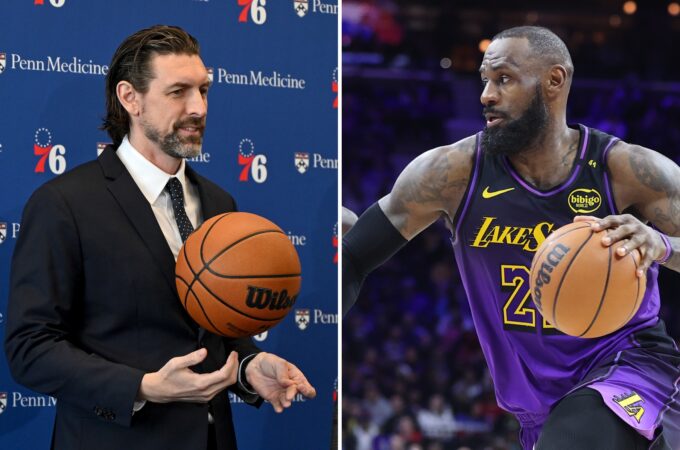
    On Wednesday, Steven posted a throwback photo of his brother (far right) alongside James (second from the right) in high school on X. He captioned the post with the eyeballs emoji, insinuating a connection.

    As the photo shows, Gansey and James have crossed paths. The two Ohio natives competed in high school. Gansey, who went to have a memorable collegiate career at West Virginia, finished as the runner-up to James in the 2001 Mr. Ohio Basketball race.

    Would Gansey make another splashy move?

    Over a decade after facing LeBron on the court, Gansey served in a variety of roles in Cleveland during James’ second stint with the Cavaliers. In 2016, when James willed the team to a 3-1 comeback over the Golden State Warriors in the NBA Finals, Gansey received a ring as the team’s director of development league operations.

    Signing James would also be in line with the Sixers president’s resume. Gansey has previously shown that he is not scared of making splashy moves — and bringing in one of the NBA’s all-time greats is a cannonball.

    As the Cavaliers general manager, Gansey was part of a front office that traded for stars Donovan Mitchell and James Harden. Now, during his first offseason leading the Sixers, he executed a trade for Brown — another top-tier player. So it wouldn’t appear Gansey is too risk-adverse to add another star to the roster.

    New Sixers president Mike Gansey has been known to make splashy moves.

    Are the Sixers actually in the mix?

    On Wednesday, Rich Paul, James’ agent and longtime friend, told Game Over podcast host Max Kellerman that between 12 and 14 teams have reached out about his client. With the Sixers appearing to be all-in this season, it would make sense that the team has interest.

    And on Thursday, ESPN’s Shams Charania reported that the Sixers are “trying to make a pitch” to James.

    Shortly after, ESPN’s Brian Windhorst also linked James to the Sixers, pointing to Tyrese Maxey’s connection through Paul and Klutch Sports.

    “A key factor in any sort of Philadelphia pursuit of LeBron is Tyrese Maxey. That is not only because of his talent, which is awesome, but he’s one of Klutch’s core clients,” Windhorst said. “He’s basically a part of LeBron’s extended family, so you would not only have Jaylen Brown as the addition, you would have Tyrese Maxey as your drawing card.”

    James has also been linked to the Heat, the Cavaliers, and the Warriors since becoming a free agent.

    How would LeBron fit with the Sixers?

    James’ time-proven versatility makes him a good fit on most NBA rosters, and the Sixers are no exception.

    James could easily slide into the four-spot over presumptive starter Dean Wade, a free-agent acquisition from Cleveland. Even if Joel Embiid is banged up during the regular season, the Sixers have two high volume scorers to take the load off James in Brown and Maxey. Last season, Brown and Maxey finished fourth and fifth in points per game, respectively.

    The 41-year-old future Hall of Famer is more than willing to take the backseat in the twilight of his career. Last year, Lakers guard Luke Dončić led the league in points per game as James served as the team’s secondary ballhandler. James averaged 20.9 points, 6.1 rebounds, and 7.2 assists in 60 games last season. With the Sixers, he would be asked to do even less.

    Could the Sixers even afford him?

    James is not looking for a big payday, which is welcome news for the cash-strapped Sixers.

    ESPN reported that the four-time MVP is willing to sign a minimum contract. This report coincides with comments from Paul, who previously explained the 41-year old’s decision will be motivated by achieving “complete happiness” — not money.

    The Sixers, after signing former New York Knicks center Ariel Hukporti on Wednesday and guard Anfernee Simons on Thursday, are now over the luxury tax and $3.2 million under the first apron, where they are hard-capped. They are now limited to veteran minimum contracts, meaning they could sign James if he is willing to play on a low-cost deal.

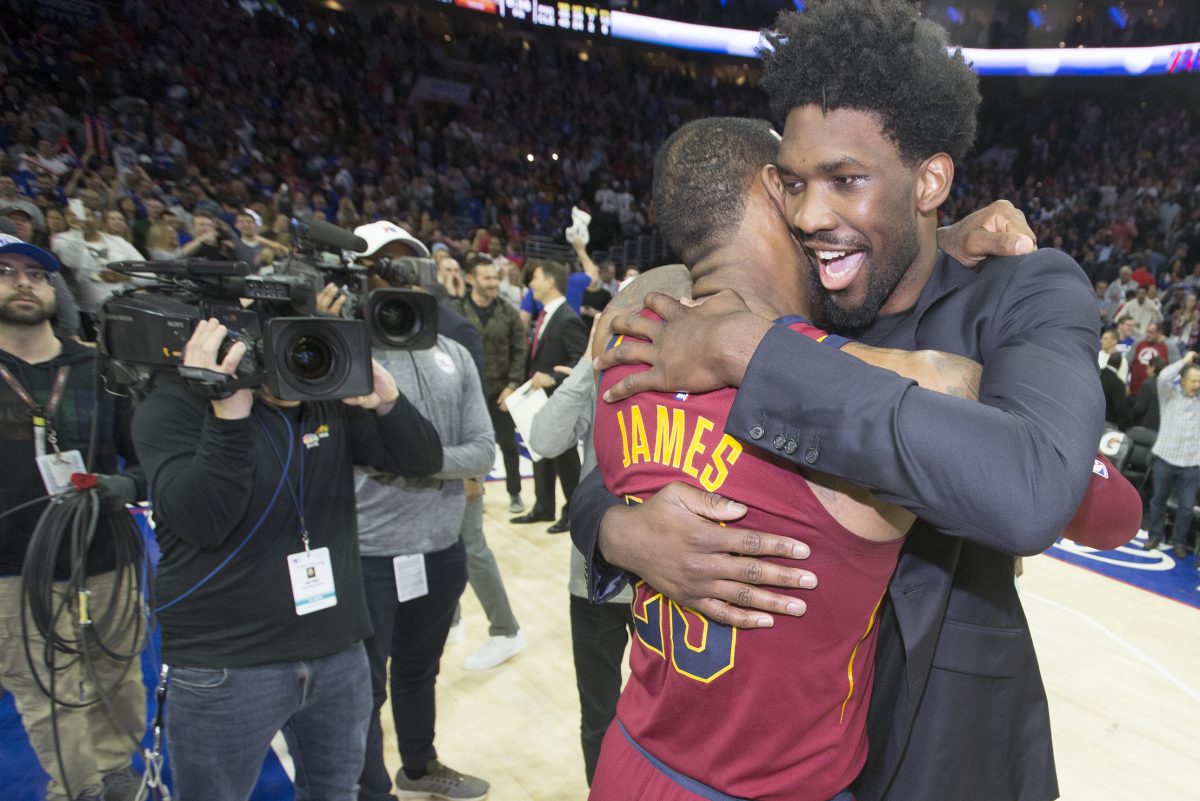
    Joel Embiid (right) tried recruiting LeBron the last time he was a free agent.

    Have the Sixers ever been close before?

    The last time James was seeking a new team, as a free-agent in 2018, he gave Philadelphia a look.

    Although many considered James to Los Angeles to be a done deal at the time, he did consider joining the Sixers. In an interview with ESPN’s Rachel Nichols after signing with the Lakers, James mentioned that he chose the Lakers over the likes of the Sixers and the Houston Rockets — two teams that boasted more talent than LA at the time — to help cement his legacy as a great.

    “I definitely thought long and hard about the possibilities of lining up alongside Ben [Simmons] and [Joel] Embiid, or lining up alongside [James] Harden and Chris [Paul],” James told ESPN in 2018. “I felt like at this point in my career, the ultimate for me — just like when I went to Miami, everyone kind of looks at me joining a super team.”

    “I like the challenge of being able to help a team get to some places they haven’t been in a while, and obviously the Lakers haven’t made the playoffs in a few years,” he added.

    Representatives from Philadelphia met with James’ camp but James did not attend the meeting. The meeting was led by then-Sixers head coach Brett Brown, who was also serving as the team’s interim president following the resignation of Bryan Colangelo.

    Leading up to that free agency, Philadelphia made an all-out push for James with Embiid taking to social media to pitch his team to James. The then-24-year-old center made a plea on Twitter (now X), and even took a shot at Colangelo by referencing a now infamous line he used on one of the burner accounts that led to his exit.

    Meanwhile, Philadelphia-based company Power Home Remodeling purchased three billboards outside of Cleveland to court James, who played for the Cavaliers at the time. Two of the billboards read “Philly Wants LeBron” and “Complete The Process” — referring to the Sixers’ motto spearheaded by former president Sam Hinkie. The third billboard featured LeBron’s number on the court alongside the numbers of the Sixers’ starting lineup.

    The rumor mill around James joining the Sixers mainly revolved around his well-known relationship with Simmons, who was known to workout with James on occasion. Both former first overall picks, the two (like Maxey and James) shared an agency in Klutch Sports. Coming out of the draft and early in his career, Simmons, a 6-foot-10 point guard, also received a hefty comparison to James because of his playmaking ability and size.

    As fate would have it, Simmons recently displayed interest in returning to Philadelphia in an interview with Men’s Health.

  • Inside Pa.’s measles outbreak: A family rides out the virus, doctors treat severely ill children

    Inside Pa.’s measles outbreak: A family rides out the virus, doctors treat severely ill children

    On a small Lancaster County farm last month, five of the eight King siblings sprawled on the living room floor, sucking on ice pops and listening to calming music, trying not to scratch their itchy skin.

    The next county over, in Hershey, children were lying in hospital beds as their immune systems battled an infection damaging their organs.

    They all had measles.

    One of the most contagious diseases has made a resurgence in Pennsylvania and across the country as growing numbers of people are refusing the highly effective vaccine that prevents its spread.

    Pennsylvania is now seeing its worst measles outbreak in 30 years, centered around rural counties just west of the Philadelphia metro area. Lancaster County has emerged as a particular hot spot, with 51 of the 89 total measles cases reported this year in the state.

    Anti-vaccination sentiment is prevalent in Lancaster County, where vaccination rates among kindergarteners are some of the lowest in the state. Known for its agricultural bounty and the Amish and Mennonite communities that dot its rural landscapes, Lancaster is also home to the state’s eighth-largest city with an economy heavily supported by tourism and entertainment.

    In Lancaster, doctors say many are flocking to local clinics and pop-up vaccination events as cases rise. But others, like the King family, remain resolute in their decision not to vaccinate, instead preparing to ride out what they hope will be an inconvenient summer interruption that builds character and family bonding.

    The family isolated in their home for weeks in June while all eight unvaccinated children, who range in age from a 1 to 15, recovered from measles. Their 14-year-old son experienced the most severe symptoms, and went to the emergency department when coughing and nausea rendered him unable to keep down water or medicine.

    “Measles isn’t fun, seeing your kids sick isn’t fun,” said Gina King, 41, who lives outside New Holland. But, she added, “I know this is going to be added to the King family core memories.”

    The 89 cases Pennsylvania has recorded so far this year exceed by more than five times the cases recorded in 2025. Doctors say the official tally may be an undercount, with many cases going unreported.

    The virus reached the Philadelphia region earlier this week, when Chester County reported two cases.

    An Inquirer analysis found both the metropolis and state increasingly have become vulnerable to a major outbreak. In the 2024-2025 school year, kindergarten vaccination rates in 50 of Pennsylvania’s 67 counties were below the 95% vaccination rate scientists consider necessary to keep the virus from spreading. And even in counties with vaccination rates near so-called “herd immunity,” school-level vaccine data show that susceptible communities pockmark the region.

    The majority of measles cases resolve in weeks with mild-to-moderate flulike symptoms, but the disease can take life-altering and even deadly turns, especially for young children.

    Doctors and nurses who spoke to The Inquirer could not comment on the King family’s experience because they did not treat them.

    But they cautioned that they have seen the harm measles can do to a child’s body: neurological damage, respiratory infections, and pneumonia, which can lead to death.

    “Each one of those cases where a child suffers something really devastating — it only takes seeing one for it to really be something that hits home very hard,” said Evan Shirey, a pediatric infectious disease physician who has treated several children with measles at Penn State Health Golisano Children’s Hospital this year.

    On the front lines of measles

    As a medical student, Shirey never expected he would treat a measles case himself. By 2000, vaccination rates across the United States were so high that the disease was declared eliminated.

    “I read the textbooks like they were history books,” Shirey said.

    But as vaccination rates decreased, he and other providers began preparing in the last couple of years. He feared inevitably seeing cases like the several adults and children treated at Penn State hospitals this year.

    He declined to share details on the cases, saying hospitalization numbers are low enough that doing so would risk compromising patients’ privacy.

    Shirey said he’s also fielding “constant” phone calls from pediatricians all over the state as they prepare for — or deal with — emerging measles cases.

    Intensive protection measures implemented at Penn State hospitals in Dauphin County, for example, include testing patients with respiratory symptoms, or who were potentially exposed to measles, and isolating them while they wait for test results.

    The virus is so contagious, it can infect nine in 10 people who haven’t been vaccinated.

    “Airborne diseases are a whole other world,” said Nancy Himmelberger, a critical care registered nurse at Golisano Children’s Hospital and the vice president of its nurses’ union, which is affiliated with SEIU.

    Shirey tries to explain to parents why vaccination is the best defense against measles. “I do encounter a lot of parents who truly want the best for their child, and they’re afraid because of what they see on TV or social media.”

    The Centers for Disease Control and Prevention recommends children receive two doses of the measles, mumps, rubella (MMR) vaccine at 1 year of age and before starting kindergarten, typically around age 5.

    The vaccine is among those required for students to attend school, though Pennsylvania’s lax rules allow families to opt out for medical, religious, or philosophical reasons.

    In response to rising cases, Pennsylvania earlier this year updated its guidelines to recommend babies be given their first dose as early as 6 months.

    Once someone is infected with measles, Shirey stresses, no treatments are available that specifically target the virus.

    Vitamin A may be given to children who have been hospitalized with severe measles symptoms, but it is not a cure and cannot prevent the disease. Excessive amounts of vitamin A can be dangerous.

    “For measles, it is supportive care and trying to manage the complications that occur,” Shirey said.

    Gina King and her daughters pick strawberries at their home in Lancaster County.

    Trying to change vaccine perspectives

    When King and her husband, Shawn, began their family 15 years ago, they thought carefully about each vaccine recommended for their babies. They read package labels and looked up ingredients. For each shot, they considered whether they were more comfortable with the risk of side effects from the vaccine, or the risk of illness from skipping it.

    When their pediatrician recommended a hepatitis shot before traveling to India, the Kings decided the risk of the disease was greater than any potential side effects.

    But when it came to the measles, mumps, rubella (MMR) vaccine, they were uncomfortable that the rubella portion of the vaccine was developed using cells of an aborted fetus.

    The approach used in some vaccines grows viruses in fetal cells. Scientists then extract proteins from the viruses to develop vaccines, according to the Children’s Hospital of Philadelphia’s Vaccine Education Center.

    Vaccines themselves do not contain fetal material. And most major religions promote vaccination, even if they oppose abortion, reasoning that parents have a moral duty to protect their children and the health of the public.

    Gina and Shawn King’s sons relax in hammocks after being cooped up inside with measles for several days.

    Measles at home

    The Kings weren’t aware their children had been exposed to measles, but knew cases were spreading locally. When their two oldest sons, aged 14 and 15, began showing symptoms, they locked down their home.

    They appreciated how people can be contagious before and after they experience symptoms. They have relatives with cancer and Down syndrome, conditions that could put them at risk of severe illness if they contracted measles.

    “If you made the choice to not vaccinate, you knew there was a risk of getting sick,” King wrote in a tip sheet she created to share with other families. “We should care about others enough to be willing to make some sacrifices to protect vulnerable people.”

    Grandparents offered to help care for the children, but the Kings declined for fear of getting anyone else sick.

    Instead, friends and family left treats for the kids on the front porch, picked up grocery orders, and checked in through video chat.

    Days four, five, and six, were the thorniest, King said. She draped chilled washcloths over the foreheads of her usually independent teens, brought them tea, and read books to them.

    She spent at least one night sitting beside the bed of her 14-year-old son, whose coughing and nausea were so bad he couldn’t eat or drink, and she worried he’d become dehydrated.

    “I just wanted to be there and keep an eye on him,” she said.

    A few days after the boys started feeling well enough to go outside, the five girls, who range in age from 4 to 12, were sick. The baby experienced the most mild symptoms among the siblings.

    King, who is vaccinated, also got sick, though her husband, who is not vaccinated, has yet to develop symptoms. Vaccinated people, in rare instances, can contract measles, and infection is more likely in an outbreak.

    After being inside all day, it became part of the family’s routine to tuck the kids into the back of their family ATV with blankets and more ice pops, and ride around their property to say goodnight to the sheep, cows, horses, and fruit trees.

    (function() {
    var l2 = function() {
    new pym.Parent(‘HE_MEASLES6.html’,
    ‘https://media.inquirer.com/storage/inquirer/projects/innovation/arcgis_iframe/HE_MEASLES6.html’);
    };
    if (typeof(pym) === ‘undefined’) {
    var h = document.getElementsByTagName(‘head’)[0],
    s = document.createElement(‘script’);
    s.type = ‘text/javascript’;
    s.src = ‘https://pym.nprapps.org/pym.v1.min.js’;
    s.onload = l2;
    h.appendChild(s);
    } else {
    l2();
    }
    })();

    Community support

    Elsewhere in Lancaster, church communities and friend groups are encouraging people who are sick to stay home, as well as those who are unvaccinated with a higher risk of severe illness.

    Claudia Beiler, a Lancaster mother of five and a Christian wellness influencer, said she has dropped off vitamins, coffee, and dinner for friends and others in her community who were quarantining at home.

    Beiler has posted frequently to her more than 110,000 Instagram followers about her decision not to vaccinate her children. She has also offered tips about how to weather measles cases at home.

    Like the Kings, she says families who don’t vaccinate must avoid spreading the virus to vulnerable people.

    “There’s a seriousness I’m proud of,” she said. “It feels like a lot of care and kindness.”

    At Penn Medicine Lancaster General Hospital, physician Jeffrey Martin is heartened when he hears that residents have decided to isolate themselves when diagnosed with the virus. He sees it as a measure of the community spirit inherent to Lancaster County.

    But isolating once symptoms emerge isn’t enough to protect the community, since the virus can spread days before the first sneeze or cough. The disease’s signature rash typically does not appear for several days.

    “‘I can accept the risk’ doesn’t play well with infectious disease,” he said. “Creating space for people to think about that on another level is really important.”

    Amid the latest outbreak, Martin said, clinics run by the state health department and Penn Medicine have seen high attendance, with unvaccinated patients choosing to get the shot.

    Martin and his colleagues don’t ask many questions about why: “We’re just thankful that people are showing up,” he said.

  • Top Trump official Sean Duffy promotes the President’s House in video with Mayor Parker

    Top Trump official Sean Duffy promotes the President’s House in video with Mayor Parker

    President Donald Trump’s administration has spent almost a year scrutinizing, and then dismantling, and then trying to rewrite history at one of Independence Mall’s most informative exhibits on slavery.

    All for one of Trump’s cabinet secretaries to promote the President’s House in a new video ahead of July Fourth.

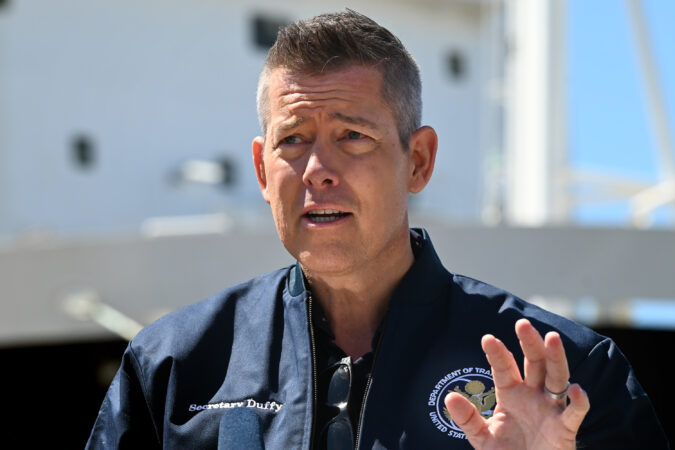
    Transportation Secretary Sean Duffy, who has been one of the Trump administration’s biggest cheerleaders for this week’s 250th anniversary celebrations, produced a video asking Mayor Cherelle L. Parker which Philadelphia historical sites visitors should see.

    Parker listed the highlights — the National Constitution Center, Independence Mall, the Liberty Bell, and ended her list of recommendations with the President’s House, which memorializes the nine people enslaved by George Washington in Philadelphia.

    “Reconnect with our history, recommit to the democratic values that we stand on, and have an amazing time,” Parker said.

    Cue Duffy showcasing pictures of the very panels at the President’s House that his boss wants to take down.

    The video, which was posted Wednesday to Duffy’s social media, appears to have been filmed in May, when Duffy visited Philadelphia while the city and the Trump administration were in the midst of a legal battle over the President’s House after the federal government removed the site’s exhibits earlier this year.

    A February court order allowed some of the panels to be reinstalled. Then, a ruling from the Third Circuit Court of Appeals in June said the Trump administration could replace the exhibits with its own materials, which are posted online.

    After the Third Circuit’s ruling, Parker said in a statement that: “I will pursue every legal action possible to reverse this decision. We cannot and WILL not rest until the full story of American history — including the existence of slavery at the President’s House here in Philadelphia — is told, for our Nation and the World to see.”

    On Thursday, a Boston-based federal appeals court removed the final legal obstacle that prevented the Trump administration from installing its own exhibits at the President’s House.

    This was not Duffy’s only visit to Philadelphia that coincided with a key event in the President’s House saga. Duffy joined Interior Secretary Doug Burgum in a visit to Independence National Historical Park in September 2025, just days after reports that the Interior Department planned to make changes to the President’s House.

    The secretaries were preparing for the Semiquincentennial celebrations. The Transportation Department, led by Duffy, has promoted road trips to a number of sites targeted by the Interior for changes, including Harpers Ferry National Historical Park in Virginia, in addition to the sites in Philadelphia.

    Duffy, a former MTV reality television star, has faced backlash for shooting a reality TV-style travel series with his family over the span of several months called The Great American Road Trip, meant to encourage celebrating the United States ahead of the 250th.

    A trailer for the series shows that he stopped in Philadelphia and visited LOVE Park and the Liberty Bell.

    In Wednesday’s video, which does not appear to be related to the series, Duffy says, “There’s no better place to go than where it all began in Philadelphia.”

    “This city is truly amazing, and the history that exists here,” Duffy said, “No one has it.”

  • After gutting foreign aid, Trump goes big on Venezuela earthquake relief

    After gutting foreign aid, Trump goes big on Venezuela earthquake relief

    The humanitarian crisis gripping Venezuela after last week’s earthquakes is testing President Donald Trump’s claim of American leadership in the Western Hemisphere, as officials tout their surge of U.S. money and personnel to the country after gutting America’s foreign assistance apparatus early in the administration.

    At first glance, the large-scale relief effort may be surprising as the Trump administration has championed a policy of “trade over aid” in its attempt to reimagine how Washington apportions the federal government’s largess.

    But the U.S. aid presence now in Venezuela — including search-and-rescue teams along with military and civilian logistical support — is an example of the big, brash displays of humanitarian assistance and disaster relief that the administration says it favors over slower-paced development work.

    “There is a definite ‘Team America’ element to a search-and-rescue deployment,” said Jeremy Konyndyk, former head of disaster assistance at the United States Agency for International Development (USAID), which the Trump administration dismantled and shuttered within months of the president taking office. “It makes for good TV.”

    Another twist is Washington’s newly close relationship with Venezuela, which has become tethered to the United States since a January military raid captured President Nicolás Maduro. The Trump administration has fostered ties with the country’s interim leader, Delcy Rodríguez, focusing on shared economic benefits, including the takeover of Venezuela’s oil industry, and sidelining its exiled opposition leader María Corina Machado.

    Trump emphasized this dynamic in the hours after the two quakes struck June 24, writing on social media that the U.S. would “be there for our new and great friends.”

    On Capitol Hill, some in the president’s own party have appeared more skeptical of this relationship, citing reports of Venezuelan officials stymieing the efforts of international rescue teams, including those from the U.S. Such accounts are “very troublesome for the White House,” Rep. María Elvira Salazar (R., Fla.) told reporters this week, adding that it raised questions about where Rodríguez’s “heart is.”

    Asked about the reports, John Barrett, chargé d’affaires of the U.S. Embassy in Caracas, told reporters Wednesday that “local authorities have fully complied with our requests and have accelerated this massive humanitarian response.”

    Since returning to office, Trump has advanced a more assertive U.S. leadership role in the Western Hemisphere in a bid to dilute the influence of China and Russia. His supporters call it the “Donroe Doctrine,” a play on the 19th-century pledge by President James Monroe to protect America’s neighboring nations from European colonial powers.

    At the same time, the Trump administration has radically overhauled the U.S. government’s decades-old approach to foreign aid, and what remains is sharply scaled back in key areas, including global health, food aid, and support for refugees around the world.

    Few have expressed doubt that the U.S. response to the Venezuelan earthquakes is substantial, though some experts question the metrics being used by the Trump administration to promote its claims that the relief effort is one of Washington’s fastest and most robust in decades.

    Jeremy Lewin, a senior official with the State Department’s foreign aid bureau, told reporters Monday that the $300 million the United States had pledged to spend on the relief effort was likely to grow significantly.

    “This is, by really any estimate, at this point the largest response to any natural disaster the United States has mounted in this century in terms of personnel on the ground, money out the door, [and] speed,” Lewin said.

    It is unclear how the State Department arrived at that assessment. One official, speaking on the condition of anonymity to describe internal discussions, pointed to the number of U.S. personnel “on the ground,” including military staff, urban search-and-rescue teams, and other U.S. government employees, as well as the initial pledge of monetary support.

    Gen. Francis Donovan, the commander of U.S. Southern Command, told reporters this week that there were “roughly 2,000 teammates” from the Defense Department in area to help with search and rescue. The U.S. military has used drones to aid those efforts and led the repair and reopening of an international airport in Caracas that had been inoperable due to damage.

    Sam Vigersky, a former USAID official now at the Council on Foreign Relations think tank, said that in 2010, when Haiti experienced a devastating earthquake, records show that the U.S. sent roughly 5,800 military personnel to help within five days — a figure significantly larger than those currently deployed to Venezuela.

    The Obama administration deployed six search-and-rescue teams to Haiti, compared to the four in Venezuela, Vigersky said.

    President Barack Obama also extended temporary protected status to Haitian nationals after the earthquake, allowing tens of thousands of people to continue living and working in the U.S. by shielding them from deportation.

    The Trump administration canceled TPS for Haitians and for Venezuelans, who were granted protected status by the Biden administration due to political and economic turmoil under Maduro. Deportation flights originating from the U.S. were arriving in the country right up until the day of last week’s earthquakes.

    Vigersky said that the different nature of the natural disasters in Haiti and Venezuela, as well as the political situations in the two nations, may explain disparate figures; the U.S. initially estimated more than 65,000 dead in Haiti, far more than the current toll of about 1,700 in Venezuela.

    Even still, Vigersky said, “Venezuela is a huge response by any measure.” And with the $300 million in aid announced by the State Department so far, the Trump administration may well surpass early U.S. spending after the Haiti earthquake.

    However, only a third of that money appeared to be new funding for partner organizations in Venezuela, with the rest made up of previously announced assistance for the United Nations Office for the Coordination of Humanitarian Affairs and other agencies.

    The State Department said this week it was directing funding to several large and well-established religious aid agencies, including the evangelical Samaritan’s Purse and Catholic Relief Services. Both organizations have been involved in relief efforts since the earthquakes hit, with CRS working through a local partner, Caritas Venezuela, and Samaritan’s Purse setting up a field hospital in the coastal city of La Guaira.

    Representatives of both organizations said Wednesday that they had not yet received funding from the State Department.

    Brittany Wichtendahl, a media relations contact for CRS, said that their “request is still in proposal form” and they did not have a dollar figure yet.

    Franklin Graham, president and CEO of Samaritan’s Purse, said his organization was in “final discussions” with the State Department for a $15 million funding agreement. “While that has not been finalized yet, these funds would certainly enable us to do more and to help more people,” Graham said in a statement.

    In response to a request for comment from the Washington Post, the State Department said that there were 1,900 personnel currently deployed to Venezuela and that the number of search-and-rescue teams sent to the region does not “signify any perceived level of support.”

    “In terms of personnel, financial support, and speed, the State Department’s response has been swift and comprehensive,” the State Department said in a statement.

    The Trump administration drew criticism last year for a slower and smaller response to an earthquake in Myanmar that occurred amid the dismantling of USAID. More than 5,000 were later estimated to have died in that disaster.

    Paul Spiegel, a professor at Johns Hopkins University who chaired a recent commission that proposed radical ways to overhaul the international humanitarian system, expressed concern with what he called the seemingly selective nature of the support for Venezuela.

    “A $300 million response to Venezuela, framed around its strategic importance and set beside roughly $9 million for a comparable earthquake in Myanmar last year, creates the appearance of aid being allocated by political interest rather than relative need,” Spiegel said.

    Speaking to reporters Monday, Lewin, the State Department official who oversaw much of USAID’s dismantling, said politics and geography would play a role in the Trump administration’s response to such disasters going forward.

    “Venezuela,” he told reporters, “has been part of our system and part of our hemisphere … it’s one of our neighbors.”

    Lewin pointed to efforts in the Caribbean last year, where the State Department led a smaller disaster-relief effort after Hurricane Melissa struck the region. The new model, he explained, is to support these nations as “quickly, efficiently, and accountably as possible, whenever these sudden onset disasters occur in friendly nations and our neighbors.”

    Konyndyk, who now leads the nongovernmental group Refugees International, said he supported the administration spending big on the disaster-relief efforts underway in Venezuela. “There’s a really powerful symbolism to it, in addition to being lifesaving,” he said.

    But in terms of dollars spent per life saved, the administration could do more if it also reinstated other forms of foreign assistance, Konyndyk added.

    “The administration has fully cut off food aid to Somalia ahead of what could turn into a famine there,” he said. “You could save exponentially more lives for dramatically less money in Somalia just by turning food aid back on there. They’re choosing not to do that.”

  • Bill Wine, Emmy Award-winning film and TV critic, and longtime La Salle professor, has died at 81

    Bill Wine, Emmy Award-winning film and TV critic, and longtime La Salle professor, has died at 81

    Bill Wine, 81, of Philadelphia, three-time Mid-Atlantic Emmy Award-winning film and TV critic, retired tenured associate professor of TV and film at La Salle University, onetime freelance TV critic for the Daily News, freelance writer, playwright, and popular lecturer, died Sunday, June 14, of complications from Parkinson’s disease at his home in Chestnut Hill.

    The son of two part-time amateur actors and a lifelong devotee of theater, film, TV, writing, and teaching, Mr. Wine was a film critic for WTXF-TV, Channel 29, for 12 years and KYW radio for 17 years. Known for his pithy, witty, and often acerbic reviews, and a breezy conversational style of writing, he worked at Channel 29 from 1990 to 2002 and KYW from 2001 to 2018.

    “Bill Wine was a character out of a Neil Simon comedy, more Oscar than Felix,” said Carrie Rickey, former Inquirer movie critic. “You didn’t have to wait long for the punchline.”

    Mr. Wine’s film reviews on Channel 29 were often funny and entertaining.

    At Channel 29, Mr. Wine was nominated for eight regional Emmy Awards for commentary and writing, and won three. He appeared regularly on the station’s Ten O’Clock News, in primetime movie preview and review programs, and later on Mondays, Wednesdays, and Fridays on Good Day Philadelphia.

    By 1990, he had already written hundreds of freelance film reviews for the Daily News and Courier-Post, done radio reviews for WPEN, and taught a variety of classes about film and writing for a decade at La Salle. So, despite no previous TV experience, he was hired at Channel 29 over 60 other film critic applicants.

    “I had never been on TV, but I wasn’t nervous,” he told the Daily News in 2001, “because I had been standing in front of 100 students for 10 years.”

    Mr. Wine worked at at WTXF-TV, Channel 29, for 12 years.

    He started at KYW radio in 2001 and usually aired reviews and reports on Thursdays, Fridays, and Saturdays. Sometimes, he watched three movies in one day. He left Channel 29 in 2002 and KYW in 2018 only after both companies eliminated their local film critic position.

    “When I started [writing film reviews], it was before the internet,” he told The Inquirer in 2018. “A lot of people [now] feel like, ‘Who the heck is a movie critic to come on in a minute and to dismiss something that took hundreds of people and millions of dollars to create?’”

    In the 1970s and ‘80s, he wrote articles and reviewed films, TV shows, books, and plays for WPEN, The Inquirer, Courier-Post, Philadelphia Magazine, and other outlets. In 1975, he wrote dozens of freelance TV columns called “On the Air” for the Daily News.

    Mr. Wine wrote dozens of columns as a freelance TV critic for the Daily News in 1975.

    He spent three years in California in the 1970s working on plays and film and TV scripts. He hobnobbed with famous writers, producers, and actors in Los Angeles, staged one of his own plays, and was a winning contestant on a new TV game show.

    He wrote 11 plays over the years, and several made it to the stage. “Now the people who disagree with my reviews can come and find out if I’m as dumb as they think I am,” he told The Inquirer in 2002.

    He aired reviews on WIP radio and lectured often at libraries, schools, community centers, theaters, and other venues about his favorite films, adapting books to film, and other topics. “He could be wickedly funny, especially when delivering a pan of a movie,” his family said in a tribute. “One of his favorite quotes was: ‘I had a bad seat. It was facing the screen.’”

    Mr. Wine was a prolific playwright who enjoyed table readings with family and friends.

    Mr. Wine earned a bachelor’s degree in math at Drexel University and a master’s degree in communications at Temple University. He helped design La Salle’s nascent Communication Department in the 1980s, and school officials called him one of their “Founding Fathers.” He also taught briefly at Drexel, and came close to earning a doctorate at Temple.

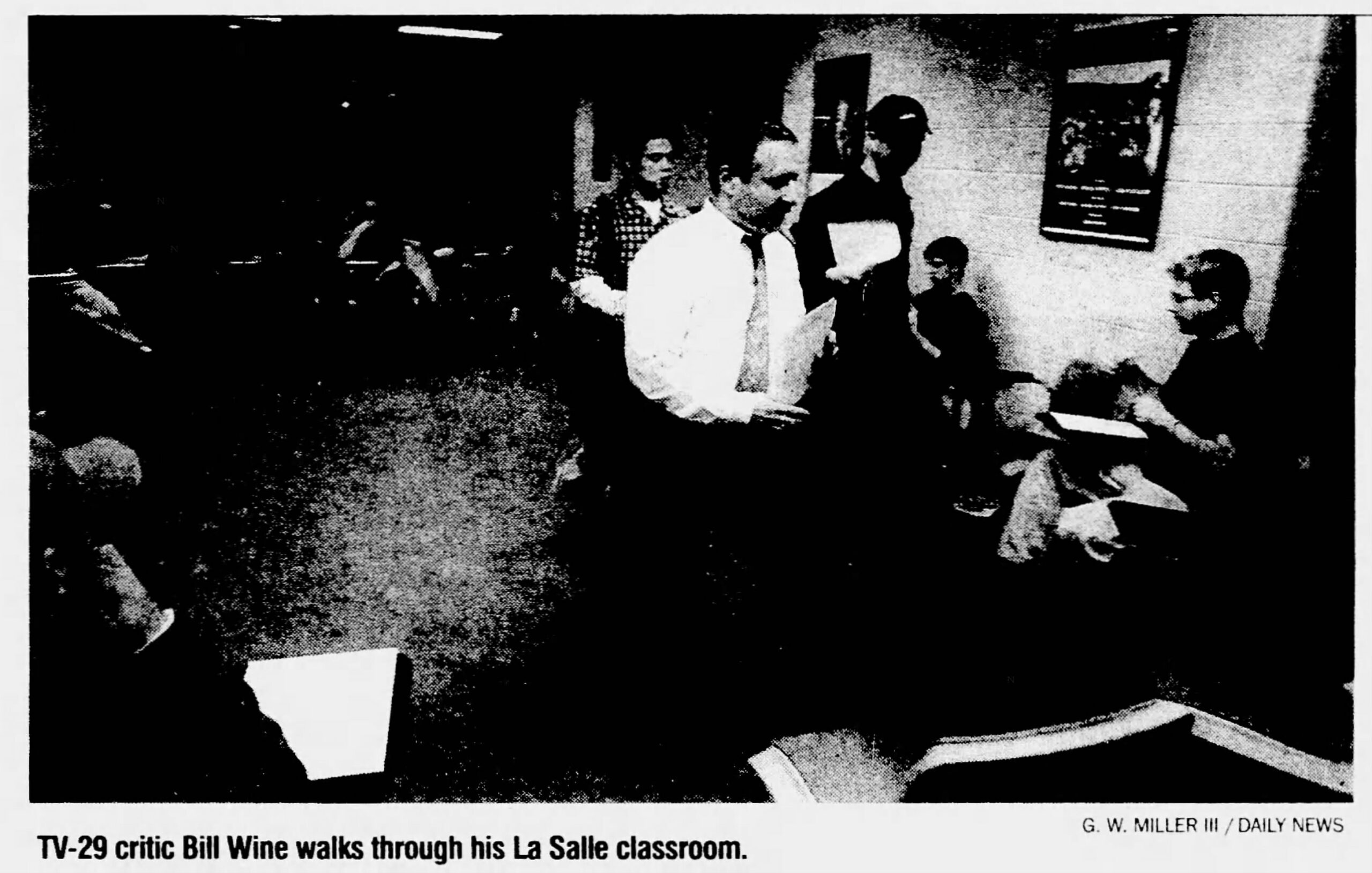
    In 2001, he was featured in a Daily News story about “celebrity professors” and said: “You have to remind yourself that this is television, not the classroom. You mention, say, ‘film noir’ on TV, and you get a memo.”

    William David Wine was born June 21, 1944, in Germantown. He grew up in West Oak Lane and Cherry Hill, attended Central High School, and graduated from the old Cherry Hill High School.

    A story and this photo of Mr. Wine about his time as a professor at La Salle appeared in the Daily News in 2001.

    As a boy, he devoured newspaper movie reviews and fell in love with film after seeing Alfred Hitchcock’s 1954 thriller Rear Window. He got positive reviews of his own freelance movie review when he was at Temple, and he knew then, he said later, that writing about movies was his creative niche.

    “The first time I saw my byline, I was hooked,” he told Drexel Magazine in 2016.

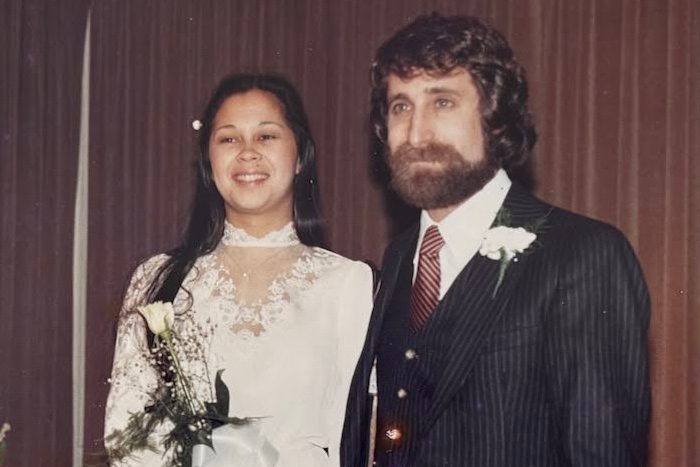
    He married Dina Lichtman, and they divorced later. He married Suzanne Monsalud in 1981, and they had daughters Simone and Paulina, and lived in Germantown, Wyncote, and Chestnut Hill.

    Mr. Wine and his wife, Suzanne, married in 1981.

    Together, Mr. Wine and his family traveled to Paris and London, and he and his wife honeymooned in Rio de Janeiro, Brazil. He doted on his daughters and sometimes took them to his La Salle classroom, the Channel 29 TV set, and movie screenings.

    Friends, former colleagues, and former students called him “a force of nature,” “smart and gifted,” and “a rare combination of kindness, professionalism, and humor.” His daughter Simone said: “His humor, warmth, and presence made life brighter.”

    Mr. Wine played tennis, third base on adult softball teams, and pickup basketball into his 70s. He followed the Phillies, 76ers, and Eagles closely, and hit tennis balls with Hall of Famer Rod Laver at a publicity event in Los Angeles.

    Mr. Wine and his family made memorable trips to Paris, London, and elsewhere.

    “He was a wonderful father and a dedicated teacher,” his wife said. “He was a real Philadelphian, and we complemented each other.”

    His daughter Paulina said: “Dad, I think you cracked the code. We’ll see you at the movies.”

    In addition to his wife and daughters, Mr. Wine is survived by three grandchildren, a sister, Marcia, and other relatives. A sister died earlier.

    A celebration of his life was held earlier.

    Donations in his name may be made to the Bill Wine Scriptwriting Award at La Salle University, 1900 W. Olney Ave., Philadelphia, Pa. 19141.

    Mr. Wine (second from left) enjoyed time with his family.
  • Second teen accused of killing Penn State student arrested on murder charge, authorities say

    Second teen accused of killing Penn State student arrested on murder charge, authorities say

    A teenager who authorities say killed a Penn State student surrendered to Philadelphia police on Thursday, one day after U.S. marshals captured a second teen wanted in the slaying more than 1,700 miles from the South Philadelphia street where the crime occurred.

    Kaiseem Smith, 16, turned himself in after a two-week, multiagency law enforcement search, according to the U.S. Marshals Service.

    Smith and Azzubair Outen-Fleming, 16, are expected to face charges of murder, robbery, criminal conspiracy, illegal possession of a firearm, and related crimes in the June 6 death of William “Billy” Schmidt.

    Both teens had been on the run until Wednesday night, authorities said, when members of the U.S. Marshals Service arrested Outen-Fleming at a house in Colorado Springs, Colo.

    Smith remained at large until Thursday.

    Police have said Outen-Fleming and Smith killed Schmidt, 22, shortly after 1 a.m. as he walked toward his South Philadelphia home.

    According to prosecutors, surveillance video captured two masked people — identified by investigators as Outen-Fleming and Smith — robbing Schmidt of his cell phone, searching his pockets, and then, moments later, shooting him.

    Smith, they said, is accused of firing the fatal shot.

    The teenagers fled after the shooting, police said.

    On Wednesday, prosecutors also announced charges against Outen-Fleming’s stepfather, Donte Abdulmalik, who they said helped him evade authorities after the killing.

    Abdulmalik was charged with hindering apprehension, obstruction of justice, tampering with evidence, and related crimes.

    Deputies with the U.S. Marshals Service’s Violent Offender Task Force tracked Outen-Fleming this week to a house in southern Colorado Springs with “ties to his family in Philadelphia,” Supervisory Deputy U.S. Marshal Robert Clark said. After conducting surveillance, deputies arrested him there late Wednesday.

    Schmidt’s father, William, did not return a phone call Thursday afternoon, and attempts to reach other family members were unsuccessful.

    Philadelphia police spokesperson Sgt. Eric Gripp said it was not clear when Outen-Fleming would be returned to Philadelphia.

  • Caitlin Clark voted a starter in her third straight WNBA All-Star Game

    Caitlin Clark voted a starter in her third straight WNBA All-Star Game

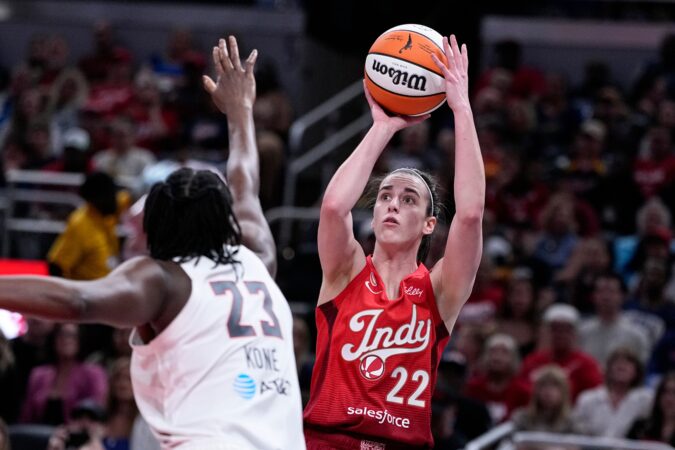
    NEW YORK — Caitlin Clark was voted to start her third straight All-Star Game and will be joined by Indiana Fever teammates Kelsey Mitchell and Aliyah Boston, the WNBA announced Thursday.

    It’s the second time in four years that three players from the same team were chosen to start the game, with Las Vegas doing so in 2023. Clark couldn’t play in last year’s game that the Fever hosted because she was injured right before the All-Star break.

    Dallas’ Paige Bueckers and Minnesota rookie Olivia Miles will join Clark and her teammates as backcourt starters. It’s the fourth consecutive year that a rookie was chosen as an All-Star starter. Bueckers played last season.

    A’ja Wilson, Breanna Stewart, Jessica Shepard, Natasha Howard, and Gabby Williams were selected for the frontcourt for the game that will be played July 25 in Chicago. It will be Wilson’s and Stewart’s eighth All-Star appearance while Shepard will be making her first.

    “It’s an honor to be an All-Star, even though I’ve had a few of them,” Stewart said. “Each one is really special, and I’m not taking it lightly.”

    Williams played in her first All-Star Game last season. Howard will play in her third.

    Starters were chosen by a mix of fan, player, and media votes. The fan vote counted for 50% while media and player votes were 25% each. Each player’s score was calculated by averaging their weighted rank from all three areas.

    The league’s head coaches will select the 12 reserves for the team, and they’ll be announced Tuesday. The 15 head coaches will vote for three guards, five frontcourt players, and four players at either position regardless of conference. Coaches can’t vote for their own players.

    New this year, WNBA greats Cynthia Cooper and Teresa Weatherspoon will serve as honorary general managers and select the two teams from the pool of All-Stars. Previously, the top two fan vote-getters would serve as captains and select the squads.

    Bueckers, Clark, and Boston were the top three vote-getters among fans. All three received more than 1 million votes.

  • ‘Task’ to begin filming second season in Manayunk. Here’s what fans and residents need to know.

    ‘Task’ to begin filming second season in Manayunk. Here’s what fans and residents need to know.

    Editor’s note: This story contains spoilers for season one of “Task.”

    The cast and crew of the HBO crime drama Task will descend on Manayunk next week to begin filming Season 2, according to notices posted around the neighborhood and on a local Facebook group.

    The company Random Productions wrote that filming is scheduled for July 7-9, when certain streets will be closed to accommodate trailers, equipment vehicles, cast, and crew members. Parking restrictions, however, will begin earlier on specific blocks, starting Sunday, July 5.

    “We will try to keep these closures as minimal as possible and will not prevent residents from accessing driveways or parking lots,” the notices state.

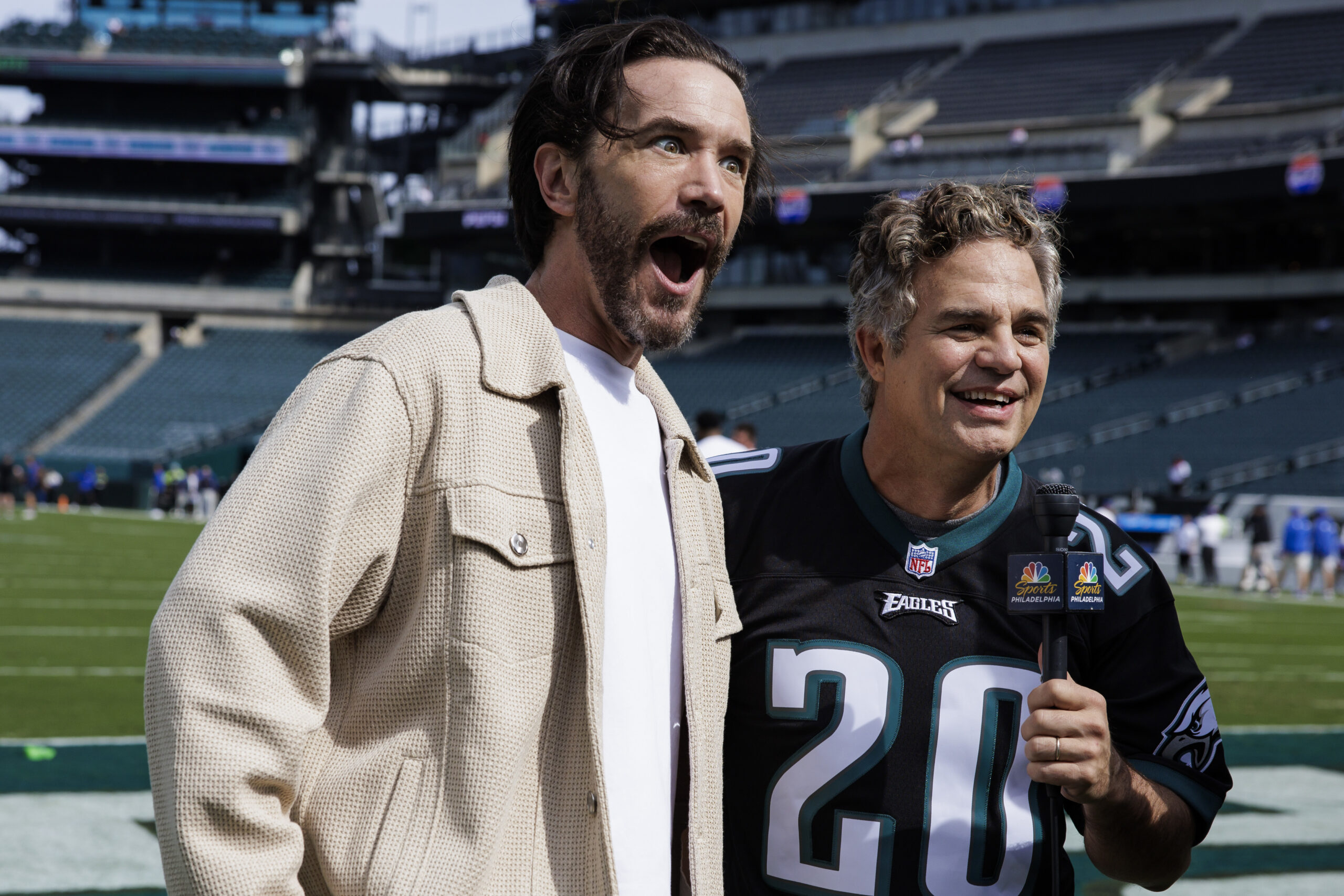
    Actors Tom Pelphrey (left) and Mark Ruffalo, from HBO’s “Task,” do interviews before the Philadelphia Eagles game against the Los Angeles Rams at Lincoln Financial Field on Sunday, Sept. 21, 2025, in Philadelphia.

    What fans need to know

    The Mark Ruffalo-led series from Mare of Easttown creator and Berwyn resident Brad Ingelsby will again center on the dogged and empathetic FBI agent Tom Brandis, this time as he spearheads a new task force where, as the logline reads, “the deeper the operation runs, the harder it is to tell who’s the target.”

    Brandis’ rival this season will be Philadelphia DEA agent Eddie Barnes, played by Mahershala Ali, the Oscar winner who starred in Moonlight, Green Book, and the 2019 HBO crime show True Detective. (Season 1 saw Brandis face off against robber Robbie Prendergrast, played to critical acclaim by Ozark actor Tom Pelphrey, who grew up in Howell Township, N.J.)

    Joining Ali as fellow DEA agents are Pillion and Harry Potter actor Henry Melling, who will play a hothead named Brennan Boylan; The Assassination of Gianni Versace star Edgar Ramirez, cast as second-in-command Miguel Contreras, described as a “devoted family man … torn between duty and guilt”; and Star City actor Adam Nagaitis, playing loyal agent Luke Clemmons.

    On the FBI side, 1923 actor Aminah Nieves will play Nataly Zamora, who Deadline described as “a no-nonsense FBI agent and dedicated young mother who fights hard to protect the community that raised her.”

    It’s not yet clear whether other cast members from Season 1 will return. That includes Silvia Dionicio and Phoebe Fox, who played Brandis’ daughters, and Andrew Russel, their incarcerated brother who killed their mother accidentally during a schizophrenic episode. The emotional and bittersweet finale concluded with Brandis testifying at his son’s trial and affirming that he would be welcome home whenever he’s released.

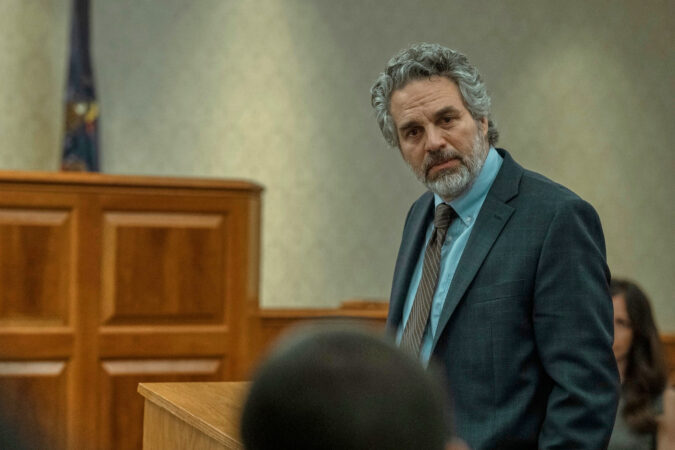
    Tom Brandis (Mark Ruffalo) hugs his family after his son Ethan’s parole hearing in the “Task” finale.

    Season 1 received millions of viewers — and, of course, a strong Philadelphia following — with the finale alone reaching an audience of 4 million in the U.S. within three days of airing. HBO has said that Task was one of its “top three fastest-growing, debut seasons.” Viewership overall outpaced Ingelsby’s Emmy-winning Mare of Easttown, which broke HBO viewership records in 2021 and may return for a second season. (It’s likely that Task, too, will receive Emmy Awards attention when nominations are announced July 8.)

    Returning to Task behind the scenes are South Philadelphia native Jeremiah Zagar, who was a director and executive producer on Season 1; the son of late Philadelphia mosaicist Isaiah Zagar will serve as executive producer. Ruffalo will again executive produce the show, alongside Ingelsby and others, including Mare of Easttown executive producer Mark Roybal.

    The first season of Task filmed in and around Philadelphia, including Delaware, Montgomery, and Chester Counties, and further out into rural Pennsylvania. Creator Inglesby has proudly said that the show is a Delco story, and his team aims for authentic portrayals of the region, down to the signature Delco accent.

    Part of that effort means hiring local crews and background actors. In Season 1, the production hired 777 Pennsylvanians as cast and crew for 177 days, investing $230 million in the regional economy.

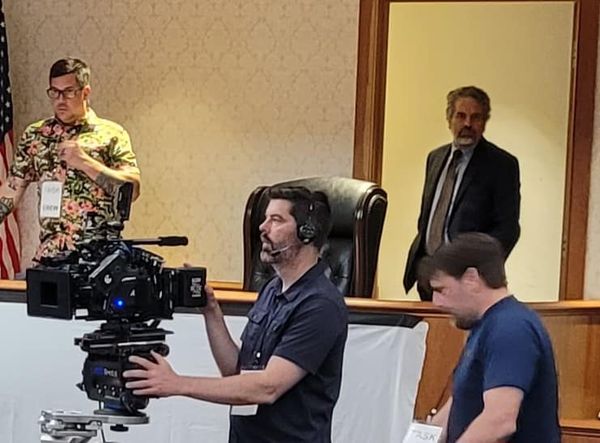
    Actor Mark Ruffalo (right in black suit) shoots for the HBO series ‘Task’ at the Delaware County Government Center and Courthouse on June 17, 2024.

    Last fall, Task received a record-breaking $49.8 million tax credit from Pennsylvania, the highest amount the state has ever granted a single production. HBO estimates that Season 2 will bring some 3,700 jobs to the state and the studio expects to invest an estimated $194.1 million in Pennsylvania’s economy as it pays for local crews and hotel accommodations, among other expenses.

    Kensington-based casting agency Heery Loftus has led local casting efforts for the show, most recently announcing a call for “Latino men who can portray organized crime figures” and “men and women of all ethnicities who can portray law enforcement personnel.”

    A premiere date for Season 2 has not yet been announced.

    “Task” showrunner Brad Ingelsby and star Mark Ruffalo on set.

    What Manayunk residents need to know

    Per two notices from Random Productions, “No Parking” signs will be posted on these streets during these dates:

    Sunday, July 5 at 6 p.m. to Wednesday, July 8 at 11 p.m.:

    • Cresson Street between Cotton Street and Gay Street

    Monday, July 6 at 6 p.m. to Wednesday, July 8 at 11 p.m.:

    • Grape Street between Silverwood Street and Cresson Street
    • Levering Street between Cresson Street and Silverwood Street
    • Cotton Street between Cresson Street and Main Street
    • Main Street between Cotton Street and Levering Street
    • Grape Street between Main Street and Cresson Street
    • Levering Street between Main Street and Cresson Street

    Wednesday, July 8 at 6 p.m. to Thursday, July 9 at 10 p.m.:

    • Dupont Street between High Street and Smick Street
    • Baker Street between Dupont Street and Green Lane
    • Baker Street between Dupont Street and Mallory Street

    These streets will be closed during these dates and approximate times:

    Tuesday, July 7 from 7 a.m. to 10 a.m. and Wednesday, July 8 from 7 a.m. to 3 p.m.:

    • Grape Street between Silverwood Street and Cresson Street
    • Cresson Street between Cotton Street and Gay Street

    Thursday, July 9 from 6 a.m. to 1 p.m.:

    • Dupont Street between Smick Street and High Street

    Please note: This breakdown of parking restrictions and street closures may not be comprehensive as the company released multiple neighborhood notices.

  • Immigrant arrests surge to 10,000 in 5 days as ICE clamps down

    Immigrant arrests surge to 10,000 in 5 days as ICE clamps down

    WASHINGTON — Federal immigration officials have detained more than 10,000 people in the five days ending Thursday, a major surge that has stemmed from a push within Immigration and Customs Enforcement to increase arrest rates.

    Agency leaders in recent days ordered top ICE officials to focus more of their officers’ efforts on picking up immigrants they want to deport, according to documents obtained by the New York Times and interviews with federal officials. ICE officers have arrested people at check-ins, with immigration authorities, during traffic stops, and on the street. The push has apparently yielded results, with recent arrest numbers roughly doubling from the 1,000 picked up each day earlier this year.

    ICE officials were told that the White House wanted an increase in arrests, according to three officials with knowledge of the conversations. One of the officials said that it was unclear how long the pace could continue, but that ICE officials had been told that 2,000 arrests a day was the new standard for enforcement.

    The surge has occurred without the fanfare of highly visible operations last year, in which officials announced their intentions ahead of time to target cities, including Chicago and Los Angeles, and send officers pouring into the streets. Markwayne Mullin, the homeland security secretary, pledged to mount a quieter enforcement campaign following the chaos of a monthlong operation in Minnesota, where federal officers killed two U.S. citizens.

    The rise in arrests suggests that President Donald Trump is determined to meet his pledge of mass deportations, a goal that is popular among his conservative supporters but that has fueled a political backlash amid the administration’s heavy-handed tactics. The Trump administration has promised more aggressive actions, particularly after the Supreme Court in recent days expanded the president’s power to set federal immigration policy, but undercut his effort to eliminate birthright citizenship for the children of immigrants in the country illegally and visitors.

    “Our message is clear: If you come to our country illegally, we will find you, we will arrest you, and we will deport you,” Lauren Bis, a Department of Homeland Security spokesperson, said in a statement.

    Word of an uptick in arrests has started to trickle out, sowing fear in immigrant communities and among advocates already on edge after the Supreme Court ruled that Trump could end deportation protections for people from disaster- and war-torn countries under the Temporary Protected Status program.

    In recent days, ICE officers have launched an intense push to ramp up arrests. Arrests topped out Saturday when authorities detained more than 2,400 people, according to documents obtained by the Times. The detention population inside ICE facilities has jumped nearly 4,000, to more than 63,000 in the agency’s custody as of Tuesday, according to internal documents.

    In emails to ICE personnel, agency leaders applauded the latest numbers.

    “I want to personally thank each of you for your extraordinary efforts this past weekend,” Marcos Charles, the head of ICE’s deportation wing, wrote this week. “Through your dedication, professionalism, and unwavering commitment to our mission, enforcement and removal operations achieved remarkable operational results.”

    Top ICE officials were told to make sure that as many officers as possible were working seven days a week, and to put 80% of their officers on arrest operations, according to two U.S. officials who spoke on the condition of anonymity to discuss internal conversations. Top supervisors were expected to be working closely on the operations as well.

    Last year, Stephen Miller, Trump’s deputy chief of staff, set a goal of 3,000 arrests a day for the agency, a figure it was not able to hit. Since then, the agency has hired thousands of new officers and has had its budget increased by billions of dollars for the enforcement surge.

    Across the country, immigration lawyers and advocates have reported an uptick in enforcement.

    In South Texas, Sister Letty Ugboaja, a Nigerian nun, was arrested on her way to church on Sunday morning, according to Sister Norma Pimentel, her colleague. Ugboaja is a local nurse who also helps at a parish in the region. Pimentel called local leaders after learning of the arrest, and congressional officials soon got involved and pushed for her release.

    On Sunday, she was let go from ICE custody, and Pimentel was there to greet her.

    Pimentel said that Ugboaja was distraught upon her release.

    “It took her awhile to be able to talk — she was crying,” she said.

    In southern Florida, attorneys have been on alert. Cindy Blandon, an immigration attorney in Miami, said that one of her clients, a Nicaraguan father of two children, had an immigration court hearing set for 2027, but was arrested by ICE on Monday during a routine check-in.

    And in Utah, Ysabel Lonazco, an immigration attorney, has noticed an uptick as well. She has spoken to several clients, including a man who was driving when he was picked up by the agency for overstaying his visa this weekend.

    “It sets further fear in the community,” she said. “People don’t want to leave their houses. They are afraid to drive to do their grocery shopping. They are just terrified with these detentions.”

    One of her clients, Arturo, a 48-year-old Mexican man, was arrested in Salt Lake City on his way to a soccer game Sunday, according to his wife, Veronica. She said the arrest had shattered their family.

    “They’re getting people — be very careful,” her husband told her from ICE detention, she recalled through an interpreter. She said her 13-year-old son was traumatized by the arrest of his father, who had worked most days of the week building furniture before his arrest, she added.

    A Department of Homeland Security spokesperson said that Arturo had illegally reentered the United States and would be held in ICE custody as the agency sought to deport him.

    Veronica said the family had not expected to be caught up in Trump’s deportation sweep.

    “We were worried, but it wasn’t like we were extremely worried. We figured — we don’t have any criminal record, we pay taxes every year,” she said.

    This article originally appeared in the New York Times.