The longest ever federal government shutdown is now in the rearview mirror, but not for federal workers.
With their jobs back to normal, some local federal employees said worries created by the shutdown remain — one said their credit score suffered, others noted their Thanksgiving tables will be less festive. And for many, another shutdown in a matter of weeks is a real concern.
Federal employees — whether furloughed or required to work during the shutdown — missed paychecks during the 43-day lapse in federal appropriations, the longest ever in United States history. Workers sought out food pantries, delayed payments on bills, and tried to make ends meet for their families ahead of the holidays.
“I will be paycheck to paycheck for the next couple of months maybe, before I can start accumulating my savings again,” said a Philadelphia Veterans Benefits Administration employee, who was working without a paycheck during the shutdown.
The Inquirer agreed to withhold the names of federal employees interviewed due to their fear of retaliation for speaking out. Despite workers beginning to receive retroactive paychecks from the shutdown, they spoke of lingering financial damage and worries that yet another lapse in funding could happen in just a couple of months.
The bill to end the shutdown, signed into law by President Donald Trump on Nov. 12, funds the government through Jan. 30. It includes protections for federal employees such as reversing layoffs that took place during the shutdown, and ensures back pay for all government workers throughout that time, which had been put into question by the Trump administration. And certain government agencies, such as Veterans Affairs, the Department of Agriculture, and the Food and Drug Administration, have been allocated a year’s worth of funding.
But after Jan. 30, if lawmakers once again fail to agree on keeping the government open, some federal workers could once again face a lapse in their pay.
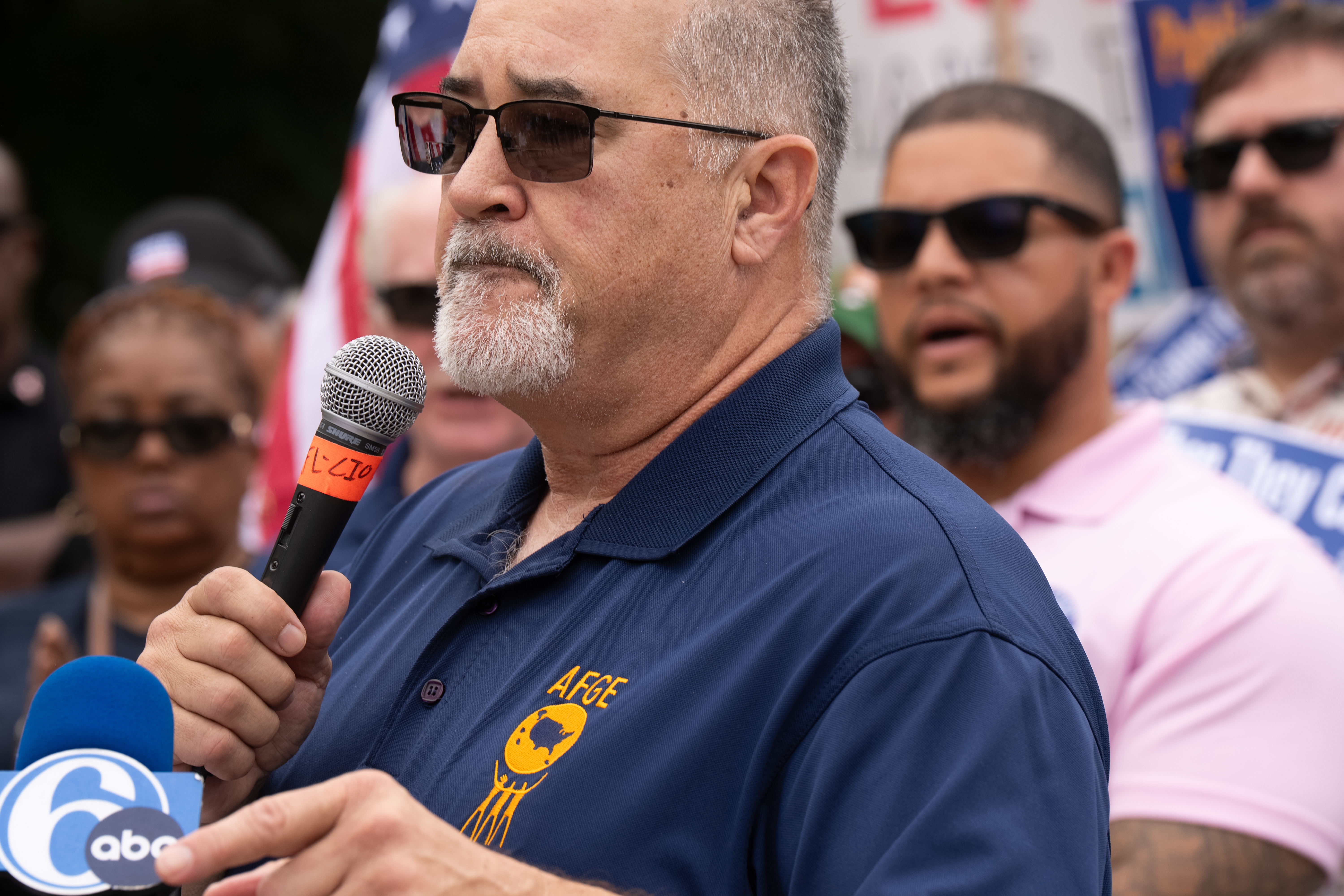
“We’re bracing for Jan. 30,” said Philip Glover, national vice president of the American Federation of Government Employees District 3, the union that represents federal employees in Pennsylvania.
Philip Glover, AFGE District 3 national vice president, speaks at a news conference focused on federal workers amid the government shutdown, near the Liberty Bell on Oct. 7.
Federal workers have been “dealing with a layer cake of trauma,” said Max Stier, founding president and CEO of the Partnership for Public Service, a federal government management organization.
“This is not simply one incident, but it’s one on top of a bunch of them that this administration has put in their way,” Stier said.
The financial strain
At the Social Security Administration in Philadelphia a benefit authorizer said Monday that she and her coworkers had started getting their back pay, but she had already felt the impact of missing checks.
“We assumed we could just call and everybody would place everything on hold, and that was not the case,” said the Social Security employee.
The benefit authorizer had put her mortgage and car payments on hold, but some banks and utility companies weren’t as accommodating, and she accumulated overdraft fees from a credit union.
Her role required her to work through the shutdown without pay. (In Pennsylvania, furloughed workers may apply for unemployment benefits, but those who continue to work, even without pay, may not.) The benefit authorizer looked for additional work, unsure how long the shutdown would last. Some of her colleagues in Philadelphia picked up gigs with Uber, DoorDash, and Instacart, she said.
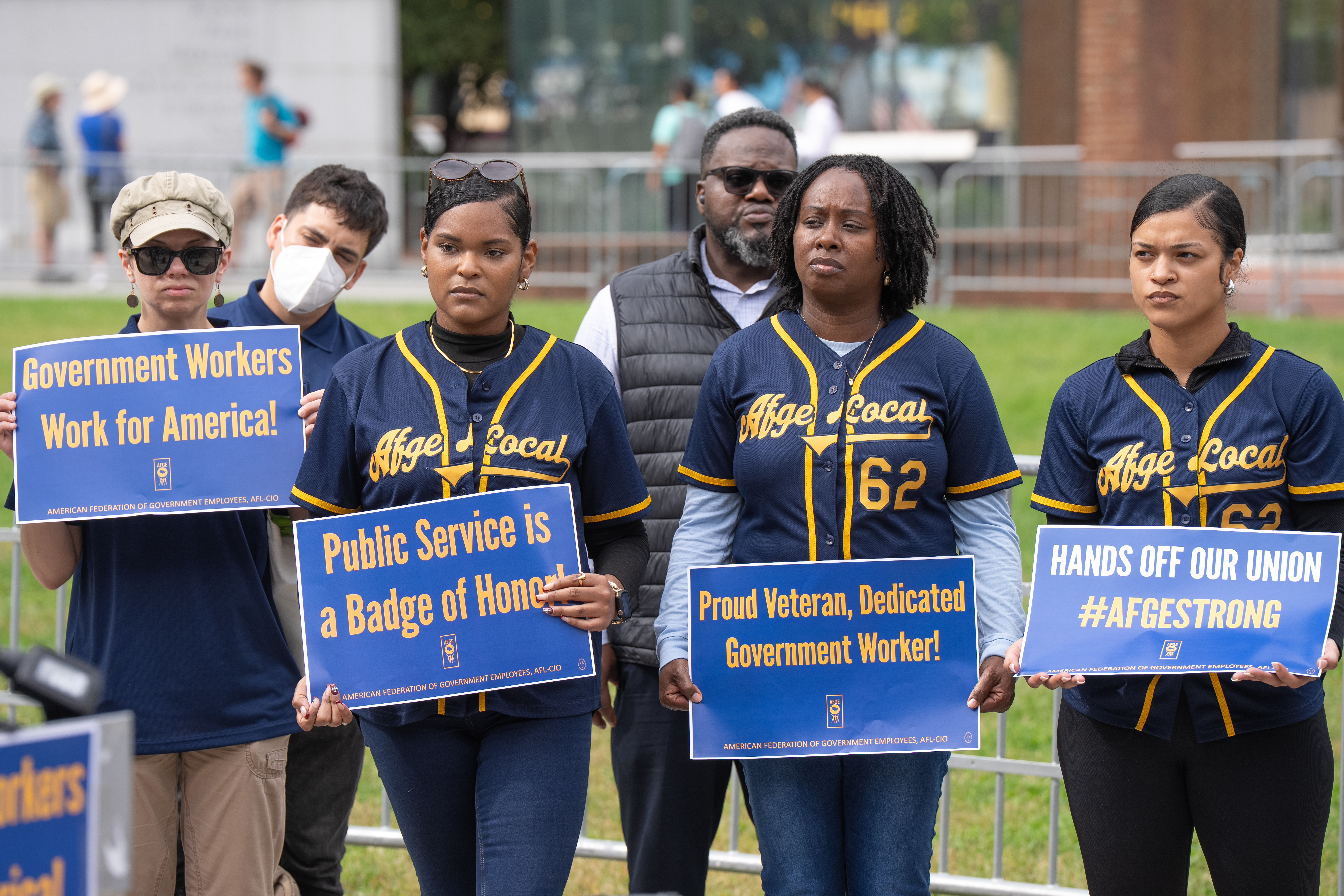
Union officials from AFGE gathered on Oct. 7 in front of Independence Hall to protest the government shutdown.
Another Philadelphia Social Security employee, who has been with the agency for 15 years, noted that some colleagues picked up night shifts at Amazon or work in home healthcare.
“People living paycheck to paycheck, they needed something to pay those bills that were absolutely essential that they had to pay,” the 15-year Social Security employee said.
For one federal employee from Central Jersey, 2025 already came with an unexpected career turn when they lost their job at U.S. Housing and Urban Development, as part of a mass layoff of probationary employees. They found a job at the U.S. Department of Commerce, in Virginia, which allowed them to support their mother and three kids back in New Jersey.
Wary of permanently moving to Virginia during such a volatile time in the federal workforce, the Commerce employee commutes eight hours by Amtrak twice a week and stays in a $200 per night hotel on workdays.
During the federal shutdown, the Commerce employee had to work without a paycheck. They used up their savings paying for the commute, hotel, and other expenses. Ultimately, they took out a bank loan to cover their expenses.
The government shutdown exemplifies a lack of stability in the workforce, the Commerce employee said. “To be honest, you feel unsafe all the time, and you feel like you’re not deserving that.”
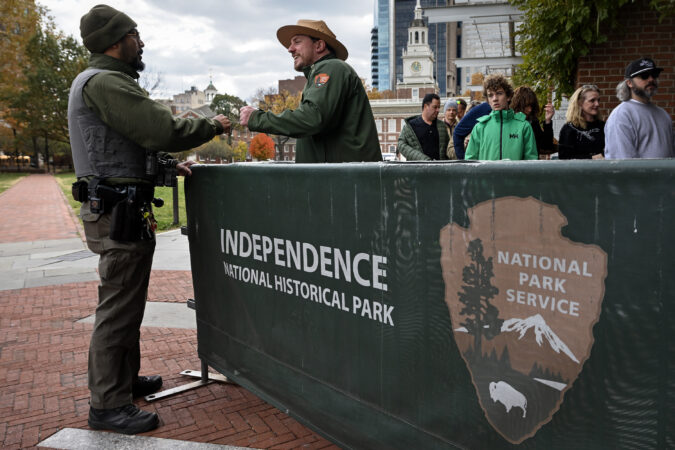
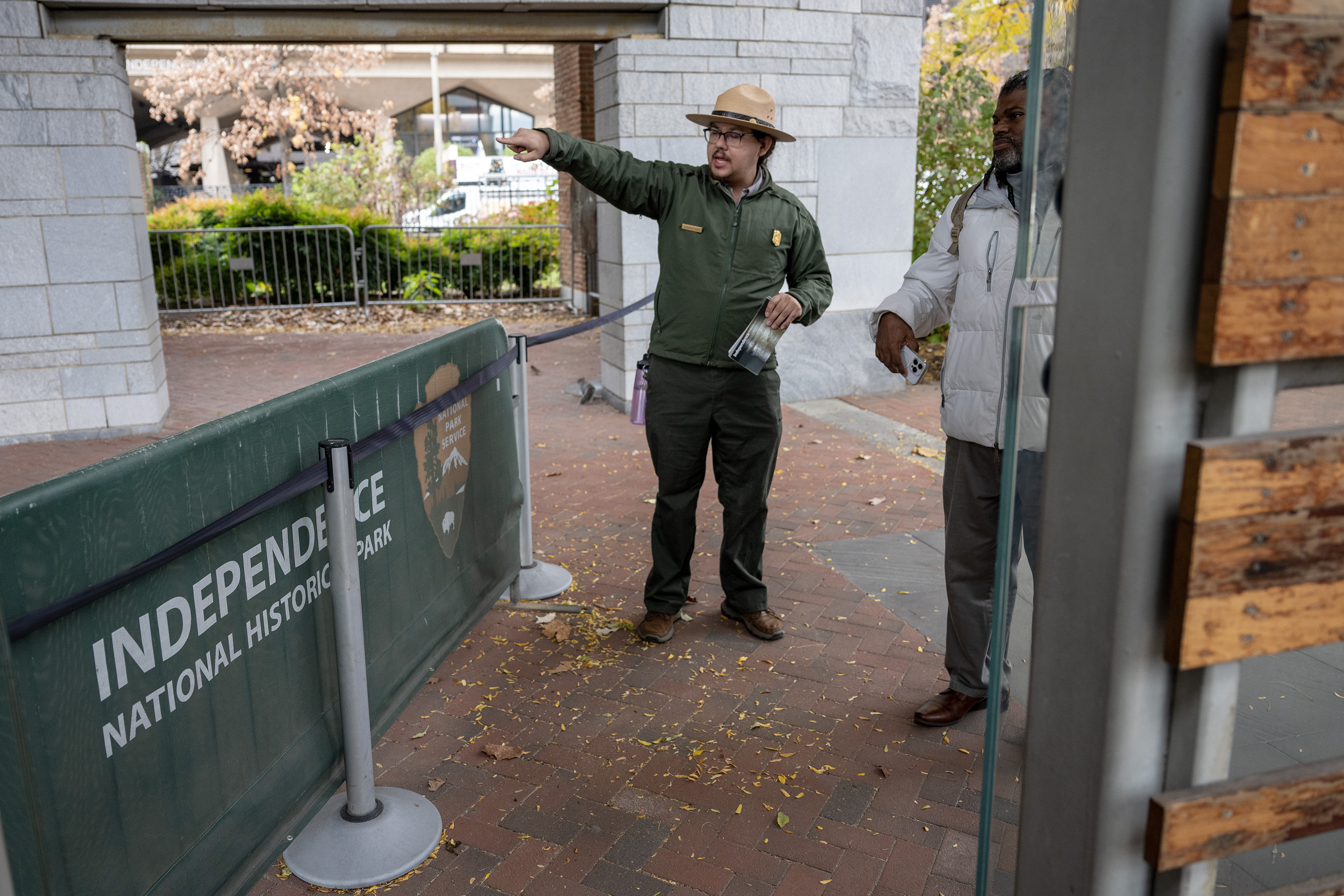
National Park Service ranger Christopher Acosta talks with tourists outside the Liberty Bell Center on Nov. 13 after returning to work from the shutdown.
Worries remain ahead of the holiday season
The Philadelphia VBA employee, who worked without pay during the shutdown, received their back pay Monday. The single parent said they were one more missed paycheck away from turning to food pantries and living off credit cards.
“Usually I’m the one donating around this time,” the employee said last week. “I usually adopt a family and provide them with the meal and then their gifts and stuff from our local community churches and outreach programs.”
Thanksgiving is the time they “splurge,” but now the shutdown has made them contemplate their finances. “I haven’t even thought about the process of even having a Thanksgiving dinner on the table because I didn’t want to spend the money,” the VBA employee said. By Christmas, they hope to be caught up on payments.
It’s a similar story for one Philadelphia VA Medical Center employee who worked without pay through the shutdown. Speaking days before the shutdown’s end, the employee said their credit score had taken a hit. They reached out to creditors and got some of their payments deferred, but relief won’t set in until the employee can catch up on their water, electric, gas, mortgage, and car bills.
A “big feast” for Thanksgiving is off the table. “You can’t do that now because you don’t have the funds,” they said.
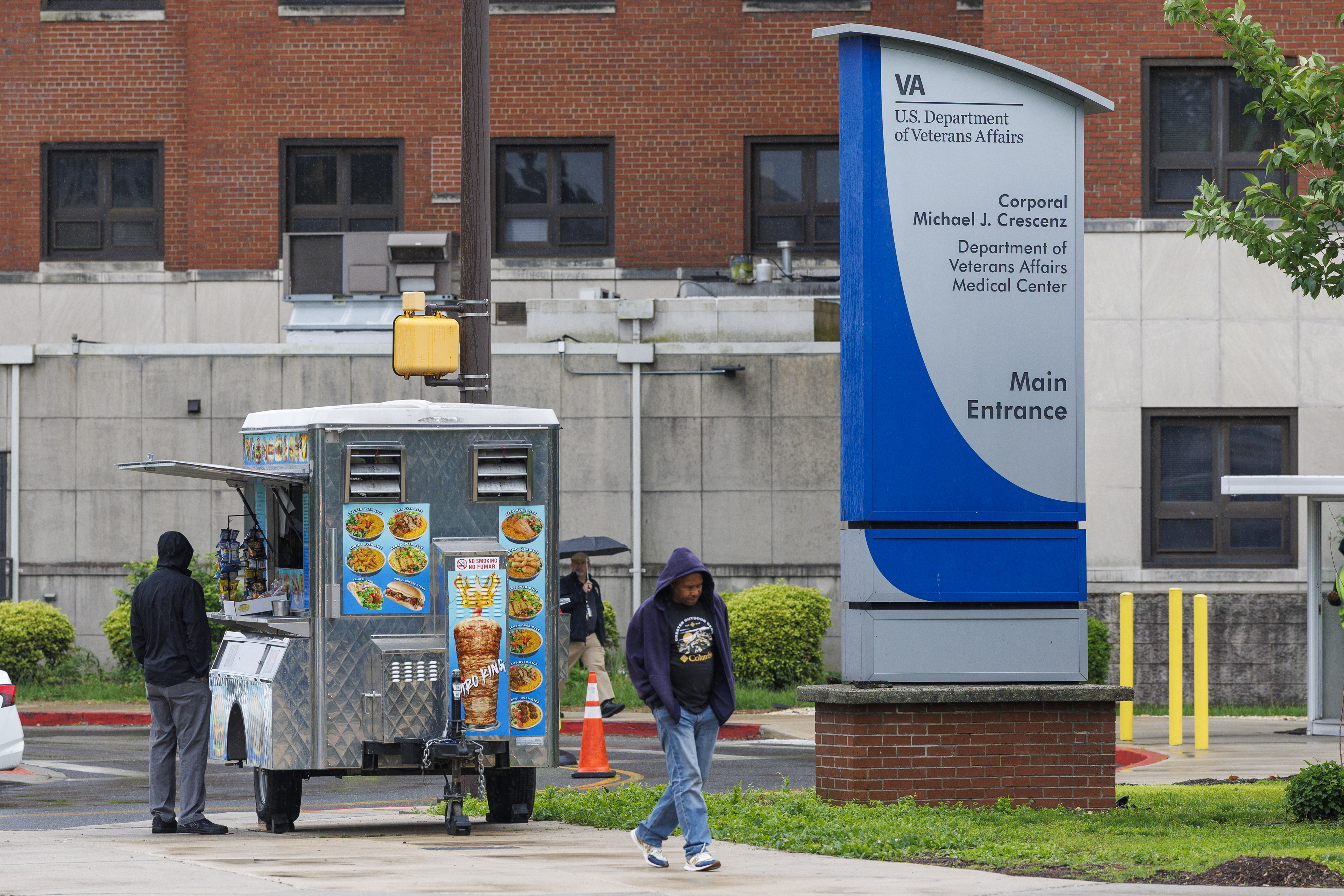
The Corporal Michael J. Crescenz Department of Veterans Affairs Medical Center in Philadelphia.
‘Fear of what’s to come’
Throughout the funding impasse, Philadelphia’s federal workers turned to each other for assistance.
At the VBA, supervisors set up a small food pantry several weeks into the shutdown. The VBA employee said that didn’t feel especially helpful. “That was our second paycheck missed, and that was the best that they could come up with,” the employee said.
“It’s business as usual in the eyes of the VA, and they expect us to work like nothing’s going on in our real lives.”
At the Social Security Administration, workers banded together to start an impromptu food pantry, the Philadelphia benefit authorizer said.
“Everything was taken. People needed it. People were really pinching pennies,” she said.
The national office of AFGE, the largest federal workers’ union, backed the deal to end the government shutdown. “Government shutdowns not only harm federal employees and their families, they also waste taxpayers’ dollars and severely diminish services depended on by the American people,” AFGE national president Everett Kelley said in a statement on Nov. 10.
But some thought it should have ended differently.
In the days leading up to the deal, dozens of AFGE Local 3631 members, who are employed at the Environmental Protection Agency, said in a local union survey that they did not want their local to support budget legislation such as what passed. Their concerns were with an expected rise in healthcare expenses across the country.
The union local had polled members at the end of October, according to local union officer Hannah Sanders. The survey got more than 100 responses, and over85% said the local should only support a deal if it preserved subsidies for Affordable Care Act healthcare plans and avoided cuts to Medicaid.
EPA workers and supporters gathered outside their office for a solidarity march around Philadelphia’s City Hall in March.
Sanders said there are few changes between the recently passed deal and the bill that could have averted the shutdown back in September. “We would have not had this shutdown, and people wouldn’t have, you know, gone without pay or gone without SNAP benefits and all these things. So it’s super frustrating to see that this is how it all resolved,” said Sanders.
Now, the benefit authorizer at the Social Security Administration says, people are concerned that another shutdown could be on the horizon come Jan. 30.
“We are in complete fear of what’s to come,” she said.
Only one restaurant – Friday Saturday Sunday – received both a star from the Michelin Guide and a yes from a majority (62%) of our readers.
Readers
Michelin Guide
Two other restaurants were given a Michelin star but received majority no votes from our readers – Her Place and Provenance, with only 35% and 38% of readers voting yes.
story continues after advertisement
Readers
Michelin Guide
Royal Sushi & Izakaya clinched a 64% yes from our readers. While it was snubbed for a Star, it still secured a Bib Gourmand – a category for establishments with excellent, albeit not star-worthy, food for the price.
More than half of our readers also voted yes for Kalaya and Zahav. Although they didn’t receive a star, they both earned a spot on the guide’s list of recommendations.
Readers
Michelin Guide
None of these restaurants received a Michelin star, which our readers agreed with.
On a week when the Union should be preparing for a crucial Eastern Conference semifinal against New York City FC on Sunday (7:55 p.m., Apple TV, MLS Season Pass), the prevailing news is drama of a different kind.
On Tuesday, the Guardian unveiled a monthslong report revealing alleged misconduct by the Union’s sporting director, Ernst Tanner, who is considered the mastermind of the team’s prominence in Major League Soccer over the last few seasons.
According to the report, Tanner is accused in a series of incidents involving racism, sexism, and homophobia directed toward people around American soccer. On Wednesday, we heard the latest from the stance of MLS, the club, and even Tanner himself, via his legal team after he was put on “administrative leave.”
The situation puts the Union in a bind: The technical staff is focused on advancing to next week’s conference final, while the front office seeks to distance itself from serious allegations against the guy in charge of its future.
It’s what we’re leading off your Thursday with, one expected to remain cloudy, but peaking into the 50s today.
Eagles quarterback Jalen Hurts during a break against the Detroit Lions last Sunday.
We all know the Eagles quarterback is good for a great quote or two, but what does he have to say about himself when asked? In a moment in which pundits once again are starting to doubt Jalen Hurts, here’s a snippet of what he said, gathered by Inquirer reporter Olivia Reiner:
“I guess I get a lot of attention when things are going well and when things are not going so well,” Hurts said. “So I never run away from holding myself accountable and I think that’s exactly what I’ve taken the approach of doing. Even when I look at this last game, I take great pride in what we do on offense. I take great pride in how we go out there and play as a team and what our flow is.
“So we obviously got work to do, and I think that obviously starts with me. That’s always my approach. That’s always me looking internally first in everything that we do. And in due time, rising above.”
According to Hurts, scrutiny is par for the course. But he doesn’t plan on caving in to the rumors.
Sixers forward Paul George joined the team in 2024 with expectations that he would help the team compete for a title.
Paul George wasted no time getting in on the action in his first game of the 2025-26 season. Just 36 seconds into regulation Monday, George picked up a block against James Harden and turned a quick give-and-go with Tyrese Maxey into a catch-and-shoot three-pointer. Of course, the rest of George’s night wasn’t quite as smooth.
It’s tough to draw too many sweeping conclusions from George’s season debut. But The Inquirer takes a closer look at how his return could help the Sixers improve at both ends while lightening the load on Maxey. We look at what George can give to the Sixers — and what might be a thing of the past.
The Sixers could not overcome a third-quarter surge by the Raptors in a 121-112 loss to Toronto. Tyrese Maxey paced the Sixers with 24 points, but the team committed a season-high 21 turnovers that led to 31 Raptors points.
Joe Maddon (left) managed Kyle Schwarber for the first five years of his career with the Cubs.
Kyle Schwarber spent much of his first five major league seasons trying to get things right against lefties.
Joe Maddon watched the struggle up close as manager of the Cubs.
Schwarber became a complete hitter in four seasons with the Phillies — and put himself in position to cash in this offseason in free agency. As Schwarber’s market develops, Maddon sat down with Phillies Extra, The Inquirer’s baseball podcast, to discuss the slugger’s maturation as a hitter.
Get up to speed before kickoff as the Inquirer’s Olivia Reiner and Jeff McLane break down everything you need to know ahead of Sunday’s game against the Cowboys. Watch here.
Eric Lindros
On this date
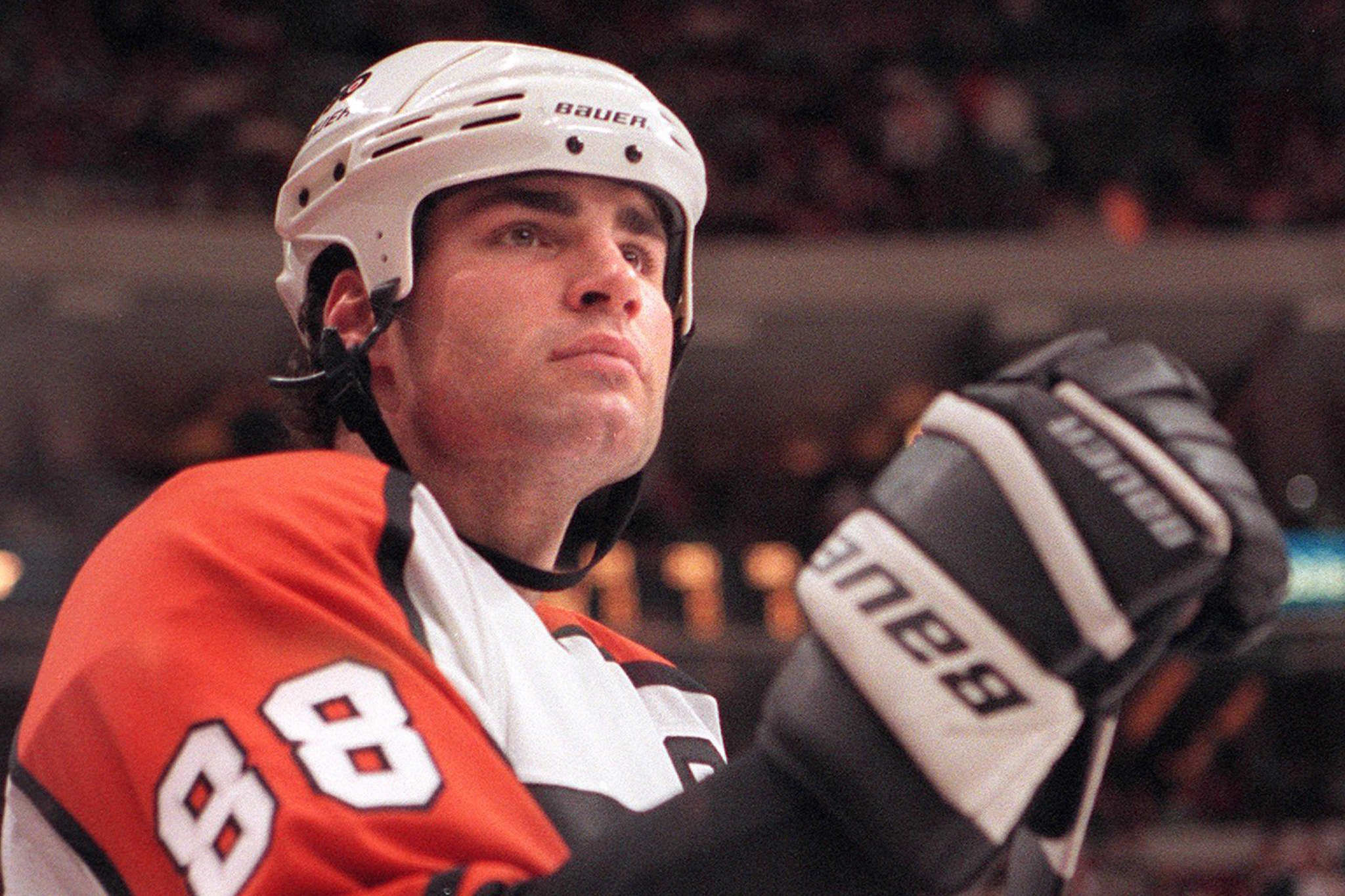
Nov. 20, 1997: Flyers great Eric Lindros is alleged to have bitten San Jose Sharks defenseman Marty McSorley. However, two days later, the NHL cleared Lindros of any wrongdoing, despite video appearing to show Lindros in full bite mode.
Standings, stats, and more
Want to see the full breakdown of last night’s Sixers game against the Toronto Raptors? Here’s a place to access your favorite Philadelphia teams’ statistics, schedules, and standings in real time.
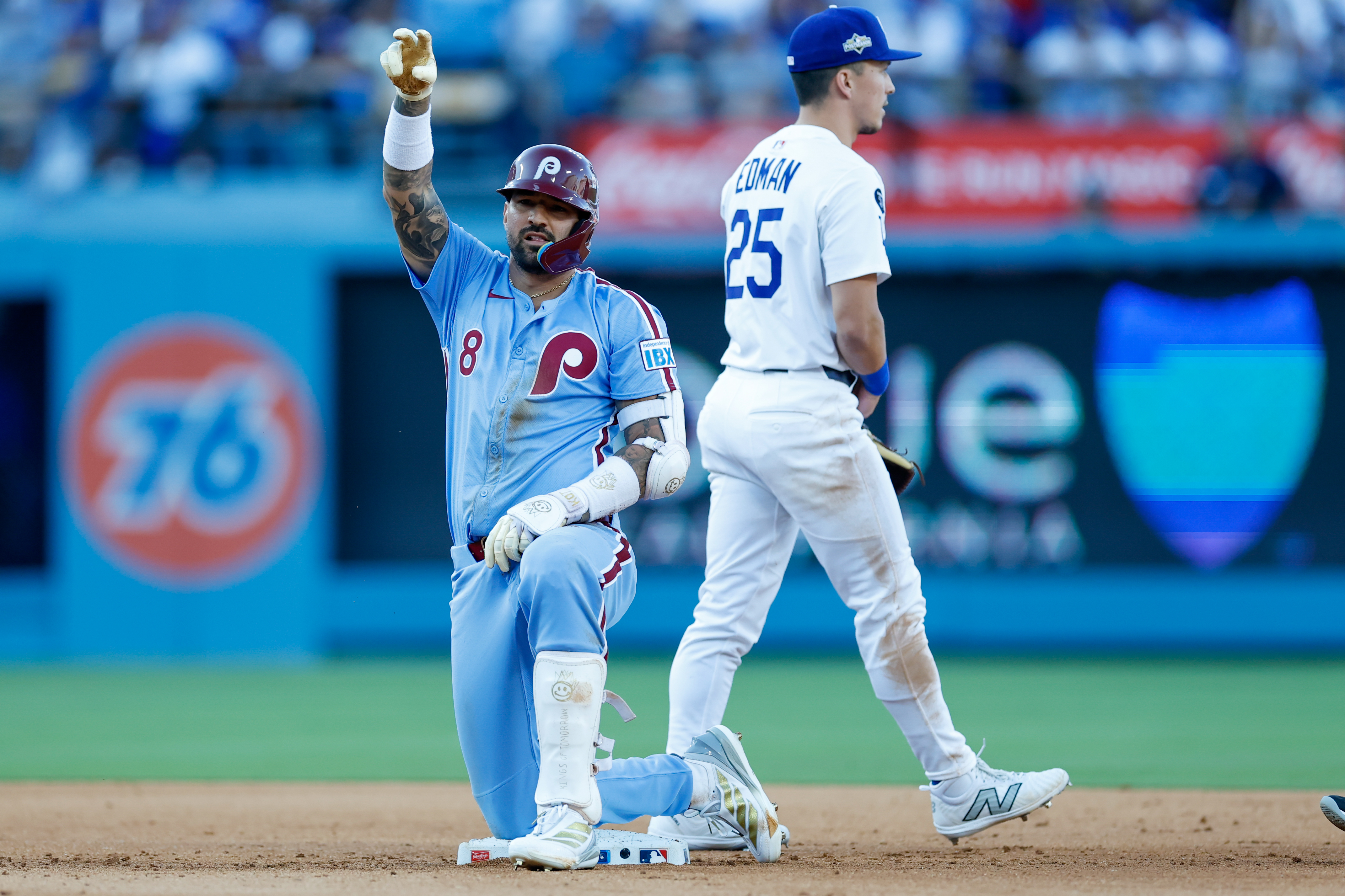
Nick Castellanos and the Phillies will likely part ways before the start of next season.
The most important variable in any negotiation is what the other side thinks you are willing to pay. Right now, the other 29 teams in Major League Baseball have every reason to think the Phillies aren’t willing to pay Nick Castellanos anything. — The latest from Inquirer columnist David Murphy on the upside of Castellanos’ situation for the Phillies.
What you’re saying about Temple football
We asked: Can K.C. Keeler bring success back to Temple in football?
Success for Temple football is fielding a competitive team capable of earning a bid for a Bowl Game. Following four years of three-win seasons, KC [Keeler] has worked miracles on North Broad this season. He brought in 46 new players and totally revamped the culture. The team believes they can win and are on the brink of potentially qualifying for a bowl bid. Choosing a successful head coach who is committed to Temple, not the next job, is a big win for the Owls. Now, we need fans in the stands when Penn State visits next September. — Bob C.
Yes. They were competitive in the conference this year in his first year at Temple. He knows the area, he can recruit, he can coach and the American conference is not impossible to win (see Army and Navy this year and last). — Richard V.
Short answer on KC Keeler NO. Temple is not a football school. They should forget football and put all their money and efforts into becoming a big-name basketball school. Lifetime, the Owls are 499-622-52. They have played nine Bowl Games and won three. From 1887 to 2025, Penn State has had 16 coaches. From 1894 to 2025, Temple has had 34. They have played in multiple conferences and were expelled from the Big East in 2019 for a lack of commitment. Their greatest years were the Pop Warner era that ended in 1938 when I was born. Wayne Harden and Matt Rhule also had success there, but very limited success since then. —Everett S.
We compiled today’s newsletter using reporting from Jonathan Tannenwald, Kerith Gabriel, Olivia Reiner, Keith Pompey, Scott Lauber, David Murphy, and Neil Pane.
By submitting your written, visual, and/or audio contributions, you agree to The Inquirer’s Terms of Use, including the grant of rights in Section 10.
Hey, thanks for allowing us to get your days started — or just to feel better informed. Bella returns to your inbox tomorrow to get you ready for the weekend.— Kerith
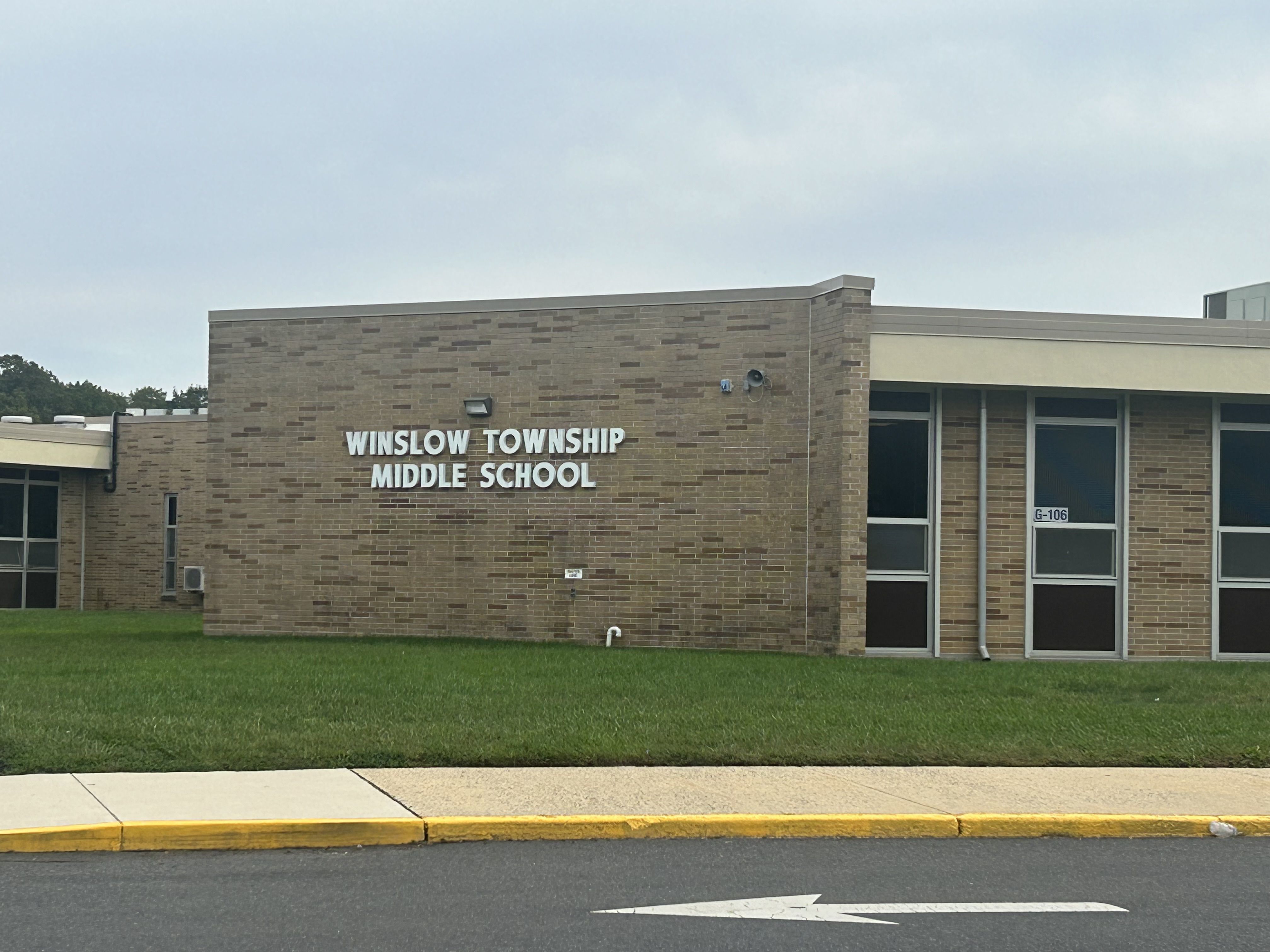
Winslow Township interim Superintendent Mark Pease had been on the job for a week when he received an urgent message.
A burst pipe in September at the Winslow Middle School had flooded the sprawling complex. Crews were frantically trying to manage the leak that left most sections under several inches of water.
It was the first major challenge for Pease, who stepped into the role toreplace Superintendent H. Major Poteat, who is on medical leave.
Pease shut down the middle school for three days while experts assessed the damage. The school enrolls about 740 seventh and eighth graders.Since then, students have had a hybrid schedule, with two days in person and three virtual learning days per week because the school can accommodate only half its students at one time.
Winslow Middle School will be closed for 30 days after a pipe burst.
Experts determined that the water damage was massive and would require extensive repairs to about 28 classrooms, two gyms, the library, the main office, and the entrance area.
Initially, the project was expected to take about a month, but that timeline has been extended. The repairs, done by All-Risk Property Damage Experts Inc., which specializes in school restoration, could take until January or February to complete, Pease said.
After removing standing water, contractors had to dry out the building and environmental specialists inspected it for mold damage and air quality, Pease said. They had to rip out drywall and flooring.
Pease said the project is expected to cost more than $1 million. Most of it will be covered by insurance after a $5,000 deductible, he said.
“Things are moving. They’re progressing,” Pease said in a recent interview. “We’re pushing really hard.”
A damaged floor in a science classroom at Winslow Township Middle School.
It has not been determined what caused the water main break, Pease said. Custodians were in the building when the leak occurred, he said.
“This wasn’t your normal sink or toilet overflowing,” Pease said. “This was a serious emergency.”
On a recent morning, contractors were making repairs in the art room. Supplies were stockpiled in hallways. Pease said contractors have been working overtime and he hopes the work will be completed ahead of schedule.
Hybrid learning
About half of the building was not damaged by the water main break, so classes are held in that area, Pease said. The cafeteria was not affected, so meals are served to students on their in-person learning days. To-go meals are available on virtual days.
Some parents wanted the district to move the students to another school, but Pease said there was not adequate space. The district enrolls about 5,000 students and has nine schools.
The school day feels different with students only in person two days a week, said parent Mary Kelchner. They especially miss socializing with friends, she said.
“The kids are struggling with it,” said Kelchner, whose daughter, Kathryn, is an eighth grader. “I feel so bad for these kids.”
Pease said the district was able to quickly implement hybrid learning for students and staff using the model introduced during the pandemic, when schools nationwide were shut down by the coronavirus.
The New Jersey Department of Education approved the plan but required the district to make up the three missed days. Other schools in the district remain on their normal schedule.
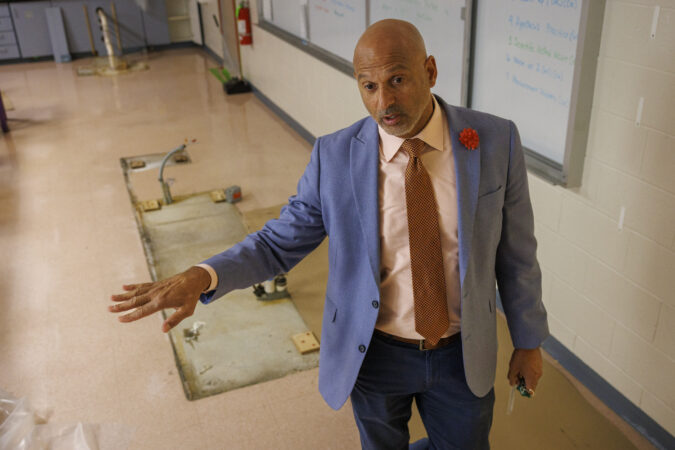
Winslow interim Superintendent Mark Pease (right) beside subfloor and new hardwood for gymnasium. With him are school principal William Shropshire III and Assistant Superintendent Sheresa Clement.
Parents picked up Chromebooks for students to use for the virtual learning days. Students follow an A-B schedule, with half reporting in person on Mondays and Thursdays and the other half on Tuesdays and Fridays.
The current middle school students were first and second graders when the pandemic upended education around the country and some schools were closed for months.
“These kids are resilient,” said Assistant Superintendent Sheresa Clement.
“It’s definitely setting kids back,” Robinson said. Her daughter, a seventh grader, has adjusted well, she said.
Pease said the district plans to carefully monitor students’ academic performance. Tutoring and remediation will be available if needed, he said.
“Nothing will replace students being in a building in the face of a teacher,” Pease said. “We want them back in school.”
Kelchner said her daughter, a straight-A student, has fallen behind in math. She said her daughter has had technical issues and difficulty hearing the teacher.
“She absolutely hates it,” Kelchner said. “She’s having a hard time keeping up.”
Principal William Shropshire said the school has maintained most of its extracurricular activities but had to forfeit a few home sporting events. Winter sports, which began this week, will be held at other district schools, he said.
An educator for 32 years, Pease said this has been one of the biggest challenges in his career. He previously was employed in the Somerdale and Palmyra school districts. His contract in Winslow runs through June 2026.
“We’re doing our best to get them back in school,” he said.
Nick Sirianni’s message for Fred Johnson during his annual meeting when he explains each player’s role on the team was pretty simple.
The Eagles had just reacquired Johnson via trade at the end of training camp. They weren’t comfortable with their depth at tackle, and Johnson’s quest to be a starter when he signed with Jacksonville in free agency had not gone as planned.
The message, and the role: “Be ready for when your number’s called,” Sirianni said Wednesday. “You just never know when that’s going to be, and that’s every backup. Every guy’s one snap away from going in. We have a lot of faith in [Johnson].”
The role, Johnson said, was “the same role as last year. Be ready to go at any moment.”
The moment, once again, has come.
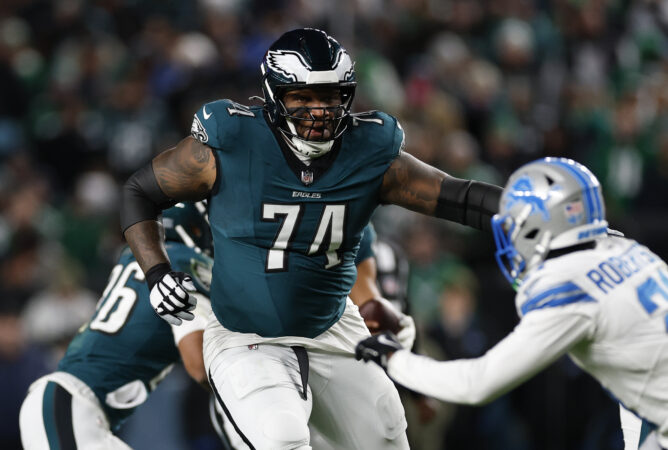
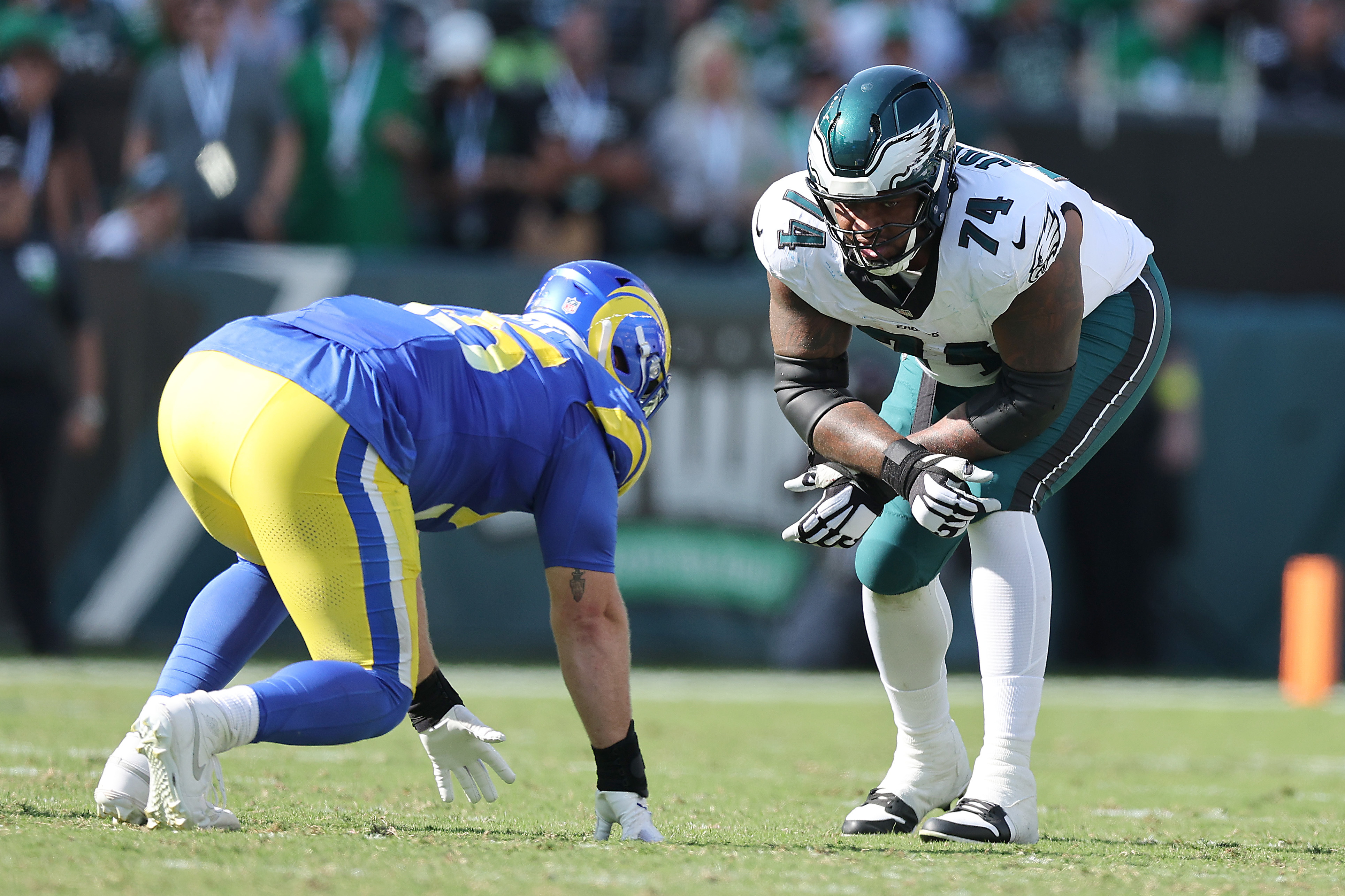
The Eagles and Johnson have been here before. Last season, Johnson started five games as a fill-in for Lane Johnson (once) and Jordan Mailata (four times), and he has come on in relief of Lane Johnson multiple times this season. But while Fred Johnson’s role is the same, and he’s being called on once again to fill in for Lane Johnson — who will likely hit injured reserve and miss at least the next four games with a Lisfranc injury to his right foot — he doesn’t want a repeat of last year.
There were things he “would have taken back,” he said. He felt as if he was just waiting for the starters in front of him to come back rather than trying to seize the opportunity.
“Lane Johnson is cemented in stone as one of the greats,” Fred Johnson said. “Fred Johnson is still trying to make a name for himself.
He has been a reliable backup for the Eagles so far. Four times this season, he has been asked to come in at right tackle to replace Lane Johnson, the Eagles’ perennial Pro Bowler.
The Eagles first added Fred Johnson as a practice squad member in November 2022. In addition to filling in, he has been used as an extra blocker in the Eagles’ jumbo package this season.
“There’s a reason why we were putting him into playing those big packages because we have a lot of faith in him,” Sirianni said. “For what we were trying to do, we felt like he was one of our best 11 to do what we were trying to do on those particular plays.”
Eagles tackle Fred Johnson is a seventh-year veteran who also has played for the Bengals and Buccaneers.
It is no secret that the Eagles are a worse football team without Lane Johnson. They are 12-23 since the beginning of the 2016 season in games he doesn’t start. Fred Johnson, though, has at least provided some reliable backup play over the last two seasons.
But some of the numbers show a big difference. The offense’s struggles, particularly in the running game, are well documented at this point. But when the Eagles do choose to run behind Lane Johnson — something they probably should do with more frequency — they have found success. According to Next Gen Stats, the Eagles average 4.6 yards on their 84 designed runs to the right side with Lane Johnson on the field. That average drops to 2.4 yards on 40 runs to the right side with him off the field.
Pass protection sees a similar drop-off.
According to Pro Football Focus, Lane Johnson has allowed seven pressures (and no sacks) on 262 pass-blocking snaps, a pressure rate of 2.67%. Fred Johnson, meanwhile, has also allowed seven pressures, but on 77 pass-blocking snaps, a pressure rate of 9.09%.
The Eagles will need to make adjustments, or live with the fact that their already-struggling offense is going to find improvements hard to come by for the duration of Lane Johnson’s absence.
“Lane’s one of the best players in the NFL, so it makes you do a couple different things here and there,” Sirianni said. “With that being said, I have a lot of faith in the guys with Fred. … We need all hands on deck. We’ve had a lot of guys play, so a lot of experience doing that, not just with Lane, but with every position.”
Fred Johnson, 28, said knowing he is starting changes little except getting more first-team reps in practice. He prepares to play every week.
“Fred knows the drill,” Mailata said. “Fred knows what’s going on, what we’re going to ask of him.”
Mailata said he sees a difference this year in the backup’s mindset and how he approaches the game plan each week. He thought Fred Johnson’s size and skills would have landed him a starting job and was excited to have the “extra-extrovert” back in the building when the Eagles traded him for after camp.
Maybe Fred Johnson did, too. For the next stretch of games, he’ll have another chance to, as he said, show what he can do. He wants the 2025 version to be better than the 2024 version. He thought he “left some meat on the bone” last time around.
“I don’t want nobody to see a down step in physicality, execution, things like that that Lane does day in and day out,” he said. “I want people to forget that I’m even on the field.”
Nearly 1 million Pennsylvanians are expected to qualify for a new state tax credit that is meant to ease the burden of making ends meet.
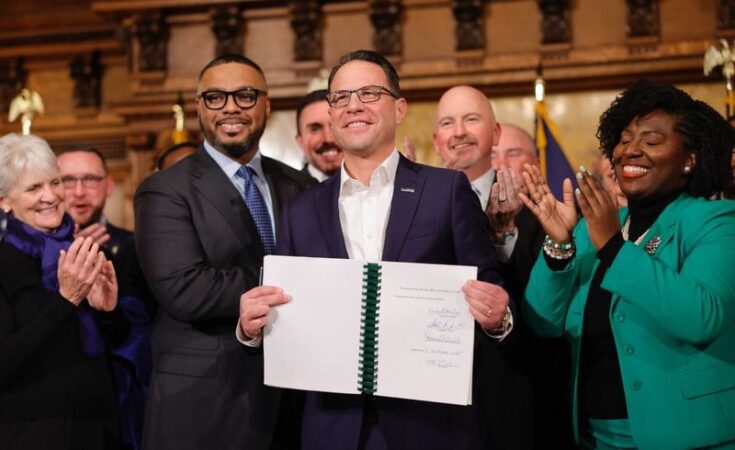
The new Working Pennsylvanians Tax Credit will allow eligible low- and moderate-income filers to receive a state tax credit that is equal to 10% of what they qualify for through the federal Earned Income Tax Credit (EITC). Like the EITC, the state credit will depend on income and number of children. The highest credit will be $805 and, according to Gov. Josh Shapiro’s office, the average credit will be around $240.
In Philadelphia alone, 175,393 people are estimated to benefit from the new state tax credit totaling $41.7 million, according to Shapiro’s office. Statewide, it is expected to provide a total of $193 million in tax relief to 940,000 Pennsylvanians.
The policyhad bipartisan support since 2023, and was led by State Rep. Christina Sappey, a Chester County Democrat. Sappey and a team of Democrats sponsored a bill that passed the Democratic-led House in May that would have allowed a 30% credit, but that figure waslowered to 10% as a result of budget negotiations with the Republican-led Senate and Shapiro.
It’s one of the measures being hailed as a major win for Democrats in the $50.1 billion state budget deal, which was approved last week after a more than four-month impasse.
Sappey saidthat she was approached by the United Way of Pennsylvania “several years ago” about the idea.
“I think of all of the folks who are really just struggling right now to make ends meet — but they’re working,” Sappeytold The Inquirer.
“They get thrown a curveball, like an unexpected healthcare expense, get in a car accident, need a giant car repair, something like that,” she added. “They really get kind of knocked off the rails, and then they kind of spiral.”
At a news conference on Tuesday, Shapiro listed examples of Pennsylvanians who will qualify for the tax credit.
“That single mom who’s raising three kids whose making about $25,000 a year as a waitress, she can get $770 back on her state taxes on top of whatever relief she was going to get from the federal government,” Shapiro said.
“This isn’t some giveaway … we’ve come together on a bipartisan basis to say, ‘If you’re working, if you’re doing everything right by the book, we’re going to put money back in your pockets,’” he added.
Who is the Working Pennsylvanians Tax Credit for?
The tax credit is designed for working Pennsylvanians with a total income up to $61,555 if filing alone, and up to $68,675 if filing jointly as a married couple, according to the IRS guidelines for the EITC.
Eligibility for the state credit is based on thefederal EITC, which is meant for low- to moderate-income workers. Workers with kids can qualify for a bigger credit that increases with the number of children up to three or more kids.
Individuals must be employed and earn income to qualify.
Households that can benefit from this program may earn too much to qualify for public assistance while not earning enough to be able to handle an unplanned financial emergency, according to the United Way. About 28% of Pennsylvanians fall into this group, according to testimony from the United Way of Pennsylvania president Kristen Rotz.
How does the tax credit work, and how much is it for?
Pennsylvania’s state credit will be 10% of the EITC amount a filer qualifies for. Filers will automatically qualify for the state credit.
“This is probably one of the more easy tasks you’re going to have to deal with as you’re helping people fill out their taxes,” Shapiro told a group of Widener University students Tuesday.
The program will begin for tax year 2025, so Pennsylvanians can use it this forthcoming tax season. The credit is refundable, so taxpayers will get money back if the credit exceeds how much they owe.
The credit amount initially increases based on how much money the earner makes and then decreases after it reaches a certain amount, resembling a bell curve, said Montgomery County accountant David Caplan. That “tipping point” differs depending on the tax filer’s status and number of dependents, he said.
The maximum state credit for filers with no kids is $65, and about 261,739 Pennsylvanians are expected to fall in that tier, according to the Office of state House Speaker Joanna McClinton, a Philadelphia Democrat.
That maximum raises to $432 for households with one child, $715 for two children, and $805 for households with three or more kids. About 133,641 Pennsylvanians are expected to fall in that maximum credit tier, according to McClinton’s office.
There were 802,000 claims for the federal EITC in Pennsylvania for the 2023 tax year, totaling $2.086 billion, according to the IRS. The average federal credit amount was $2,600. Under the new state credit, that would amount to $260.
“While it’s not much, it’s certainly a help, and that’s something that’s tangible,” said State Rep. Tarik Khan, a Democrat who cosponsored the state tax credit bill and represents parts of Philadelphia.
Do other states have a credit like this?
According to the National Conference of State Legislatures, 31 states, D.C., Guam, Puerto Rico, and some municipalities have their own version of the EITC.
Most of those states calculate their credit as a percentage of the federal program, ranging from 4% in Wisconsin to 125% in South Carolina, according to the group.
Neighboring New Jersey offers a 40% credit and Delaware has 4.5% refundable and 20% nonrefundable credits.
State Rep. Steve Samuelson, a Northampton County Democrat who chairs the House Finance Committee and cosponsored the tax credit bill, called the credit a “commonsense” measure. He pointed out how existing states have varying political leanings, from the redder Oklahoma, Indiana, and Kansas to bluer states like New York, Hawaii, and California.
“Better now than never,” Samuelson said.
Is a 10% tax credit the right amount?
Sappey and other Democrats see the 10% credit as a starting point. They hope to increase the size of the credit in future years.
“If this is a program that both sides can agree to, getting a program established is more important than, you know, how big it is at the beginning,” she said in an interview.
Caplan, who chairs the Pennsylvania Institute of Certified Public Accountants’ Local Tax Thought Leadership Committee, said he believes the 10% tax credit could be higher, but maybe not as high as the 30% initially approved by the House.
“I don’t think the 10% is outrageously low that it’s kind of chintzy,” he said. “I think it’s just a nice thing to do.”
Sen. Lynda Schlegel Culver, a Republican from Northumberland County who said she championed the policy, lauded the program for helping taxpayers who work.
“This credit rewards work, strengthens household stability, and helps those doing everything right, working, paying their bills, and supporting their families,” she said in a statement. “This is a commonsense investment in both our workforce and the future of our Commonwealth.”
Concerns from other Republicans about the program were related to the cost and its size.
Sappey said “that’s legitimate” but contends that the program helps people “increase their earning power” and that the hope is, in turn, for them to no longer be eligible for the credit. And when they get it, she argues, “they are spending it in really good ways.”
“We’re keeping people in the workforce, we’re generating revenue, and we’re keeping them out of social safety net programs,” she said.
Rotz, of the United Way, said in her testimony that EITC recipients often spend their credit on grocery stores, vehicle and home repairs, paying off debt, and sometimes education.
Khan lauded HouseDemocratic leaders for holding onto the tax credit in negotiations — and compared their long-delayed negotiations to the Eagles’ season, which has seen the team rack up wins despite offensive struggles.
“You love them, and then you watch the game, and you’re like, ‘Goddamn it. Why can’t you just play like a normal team?’ But then they win in the end, and you’re like, ‘You know what? That was a tough game, but damn it, I’m so happy right now,’ and so that’s how I feel with this.”
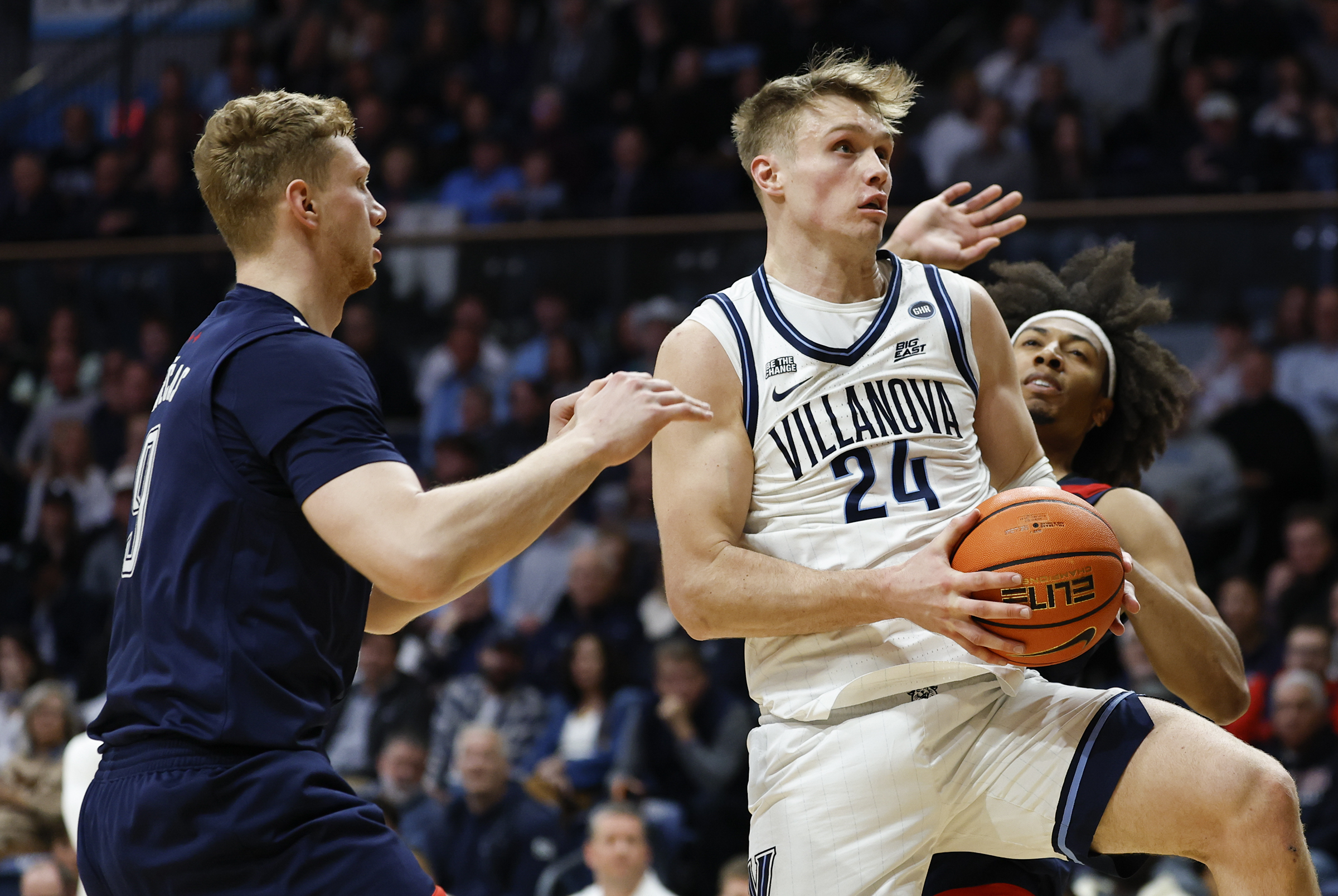
There was a small sequence midway through the second half of Villanova’s 70-55 victory over La Salle in John Glaser Arena on Wednesday night that showed the allure of Kevin Willard’s small-ball lineup.
Matt Hodge was being guarded by La Salle’s 7-foot backup center, Bowyn Beatty. After a La Salle turnover, Hodge caught a pass on the wing as Villanova looked to quickly set up its offense. Hodge, a redshirt freshman, was 3-for-5 from three-point range at that point. So when he pumped, Beatty bit.
Hodge then drove past the big man in no time, en route to a two-handed slam that extended Villanova’s lead to 16.
Hodge, in his fifth college basketball game, scored a game-high 17 points and led the Wildcats with 35 minutes in their victory. He went 7-for-9 from the floor and is up to 12.6 points per game. More important, though, for Villanova’s long-term development, a healthy Tafara Gapare, who has missed time with a foot injury, allowed Willard to go to his small-ball lineup with Hodge and Gapare in the frontcourt.
Willard raved before the season about the different styles of play his personnel afforded him. It’s most apparent in Hodge, who starts at power forward, and senior Duke Brennan, the starting center. Brennan continued his gritty start to the season with eight points and 13 rebounds, five on the offensive glass, in just 22 minutes. He leads the nation with 14.4 rebounds per game.
“A shot goes up and you think you got a one-shot stop and he comes up with it,” La Salle coach Darris Nichols said of Brennan.
“They’re a hard guard.”
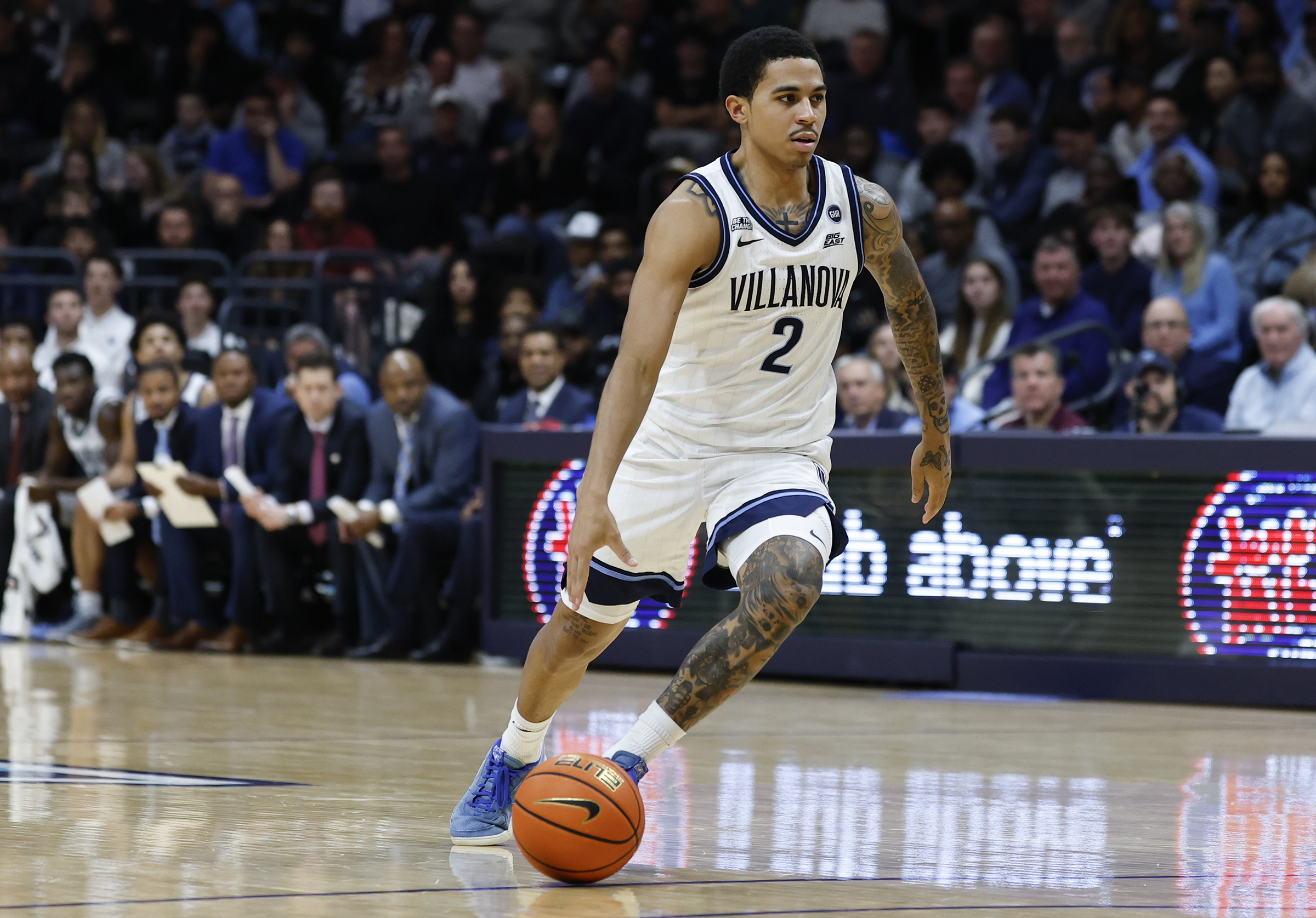
Especially given the versatility. Much has been made about this new-look Villanova team’s guard play. Redshirt-sophomore Bryce Lindsay entered the game averaging 23 points in Villanova’s first four games, but La Salle held him to just 10; freshman Acaden Lewis is starting to assert himself more; Devin Askew has shown flashes; and Tyler Perkins has been as steady as it gets.
But it was Villanova’s forwards and its ability to play smaller at times that had a major impact.
“When you have five guys out that can shoot the basketball and drive it, it opens up a lot of opportunities,” Willard said.
Villanova forward Duke Brennan, shown against Duquesne on Saturday, leads the NCAA in rebounding average.
Aside from Beatty, La Salle (2-3) is a relatively smaller team, and Willard said his small-ball unit — Hodge is 6-8, and Gapare is 6-9 — gives his team “opportunities to match up” with smaller teams that do more switching.
Bigger teams and bigger games are on the horizon for the 4-1 Wildcats. Willard pointed at future Top 25 opponents like Michigan, Wisconsin, Connecticut, and St. John’s having much bigger lineups. His frontcourt’s versatility will enable him to “maybe throw a curveball at them offensively or defensively. … I think it really helps.”
Hodge playing at this level makes it all easier, too. He was forced to sit out last season after being ruled academically ineligible, but through five games he is showing why he was a four-star prospect out of St. Rose High School in Belmar, N.J.
“It felt good, a good win for the team,” Hodge said.
Hodge, Willard said, has “been as solid as anybody.”
“I think he’s getting a little bit more comfortable with how we’re trying to play, and also being back, it’s much different from practice,” Willard said. “He’s worked really hard to put himself in this position.”
Villanova guard Bryce Lindsay, shown against Duquesne on Saturday, is the team’s leading scorer though five games.
Still, there’s more to be desired apparently. Hodge was the topic of conversation in the media room postgame, so it was worth asking how his defense was coming along.
“Oh, it’s horrible,” Willard said.
Matt?
“Work to do,” Hodge said before his coach replied: “Good answer.”
Where do you need the work most?
“Never give that answer,” Willard interjected. “Never give the weakness.”
Hodge might be a redshirt-freshman, but he finished this sequence like a senior: “No comment.”
Like everything else in November in this sport, it’s a work in progress.
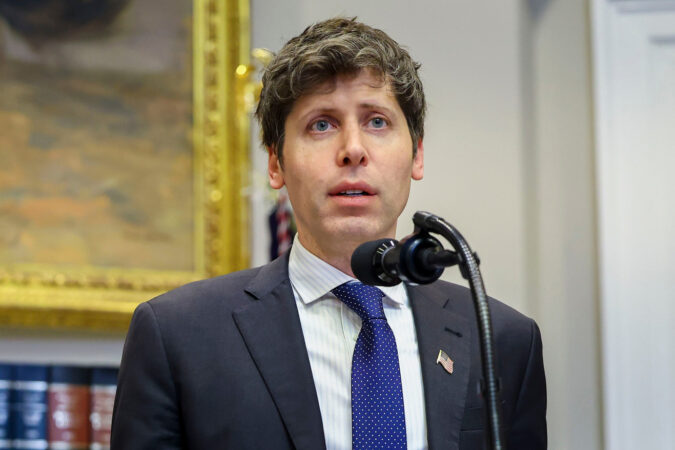
It’s been 10 years since OpenAI was set up as a nonprofit by Sam Altman, Elon Musk, and other software developers and investors, friends, and rivals who didn’t quite trust each other to run a traditional for-profit business with explosive potential.
Delaware officials who monitor the state’s nonprofits took a particular interest as OpenAI became so valuable, and so contentious, that the San Francisco-based startup ballooned into an enterprise requiring multibillion-dollar investments and sought to restructure as a for-profit company.
“We realized building [artificial general intelligence] will require far more resources than we’d initially imagined,” the company wrote in an open letter last year, explaining its plans. In fact, OpenAI had set up for-profit affiliates at least as far back as 2019.
But the company said it needed more corporate flexibility if it was to bring in the billions needed to fund high-speed data centers full of Nvidia chips and other systems that could withstand intense AI searches and commands.
So it wasn’t surprising last year when OpenAI, which Altman runs, announced plans to raise billions of new dollars by ending its previous limits on investor profits — or that Musk, now owner of a competitor, X.AI, and others, promptly sued, challenging terms of their plan.
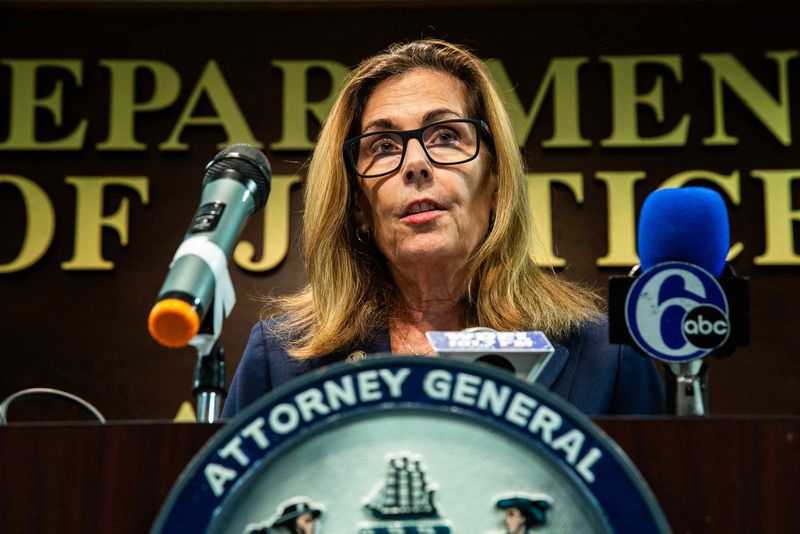
That’s when Delaware Attorney General Kathy Jennings, and California Attorney General Rob Bonta, stepped up.
Jennings and Bonta filed court papers challenging the proposed business structure — not to stop it, as Musk wanted, but to ensure that the public interest was somehow protected, so OpenAI wouldn’t stray from what the company has called its “save the world” mission.
A public-benefit corporation is a for-profit company but does not have the usual legal obligations to enrich investors before anything else, freeing directors to act in favor of public goals even if it hurts sales or profits.
A public-benefit corporation provides “a clear and durable vehicle” for companies whose goals go beyond shareholder gains, says Lawrence Cunningham, who runs the Weinberg Corporate Governance Center at the University of Delaware. “I like seeing it used in that way here.”
State intervention at the corporate-charter level “does not happen often” and usually involves questions about nonprofit hospitals’ business activities, said Mat Marshall, spokespersonfor Delaware AG Jennings.
Jennings hired lawyers from Manhattan-based Pillsbury Winthrop Shaw Pittman and financial analysts from Moelis & Co. to buttress the state’s fraud and consumer protection director, Owen Lefkon, in talks with OpenAI.
Delaware Attorney General Kathy Jennings at a December 2024 press conference.
What changes for OpenAI
At first, OpenAI planned to pay off its nonprofit obligations by leaving those to a large charitable foundation and then move forward as a typical for-profit company, still professing public goals but responsible to private investors.
Lawyers for the two states argued that the company’s public mission had to survive the restructuring.
OpenAI “is the world leader in the artificial intelligence industry,” but it needs guidelines as it funnels massive information about science, medicine, and communities to private, commercial, and government users, and power to “hold OpenAI accountable” for the safety of those whose information is raw material for AI, Jennings said in a statement.
The foundation also needed some way to keep control over the company, alongside its powerful new for-profit investors. The nonprofit has kept the power to name and remove board members for the business.
OpenAI’s Safety and Security Committee will remain in place, with “authority to oversee and review the safety and security processes and practices of OpenAI” and the companies it controls, even halting new AI systems if it finds them dangerous, or taking time to resolve ambiguities.
Zico Kolter, professor of machine learning at Carnegie Mellon University in Pittsburgh, will continue to head the safety committee, attend the corporation’s board meetings, and receive “all director information regarding safety and security.”
And the states will be given “advance notice of significant changes” in governance.
In a statement praising the new structure, OpenAI chair Bret Taylor, creator of Google Maps and a former Facebook and Twitter officer, acknowledged changing the plan in discussion with Delaware and California.
He said the parent, now called the OpenAI Foundation, will own around one-quarter of the business group. Outside investors include Microsoft, Japanese investor Softbank, company employees, and other investors, with room for more.
Besides keeping the business subordinate to the foundation’s mission, Taylor wrote that the foundation will set aside $25 billion: for “open-sourced and responsibly-built” health data sets to speed up diagnostics, treatments and cures; and to fund AI security to protect power grids, banks, governments, companies and individuals” from AI abuse.
Microsoft Chief Technology Officer of Microsoft Kevin Scott, right, and OpenAI CEO Sam Altman at the Microsoft Build event in Seattle in 2024.
Microsoft has invested $11.6 billion in OpenAI over several years (and promised at least $1.4 billion more).
Thanks to exploding OpenAI sales and additional private investments, Microsoft says its investment is now worth $135 billion. That’s more than 10 times what the company paid. Microsoft is the largest OpenAI shareholder, with around 27%. .
Under a recent agreement following the restructuring, Microsoft said, OpenAI promises to buy another $250 billion in Microsoft Azure cloud networking and other services but also gains the right to form more partnerships with other companies.
The companies also enjoy a revenue-sharing agreement — the first time that’s been disclosed, according to McKenna and Usvyatsky — though details will have to wait for future disclosure.
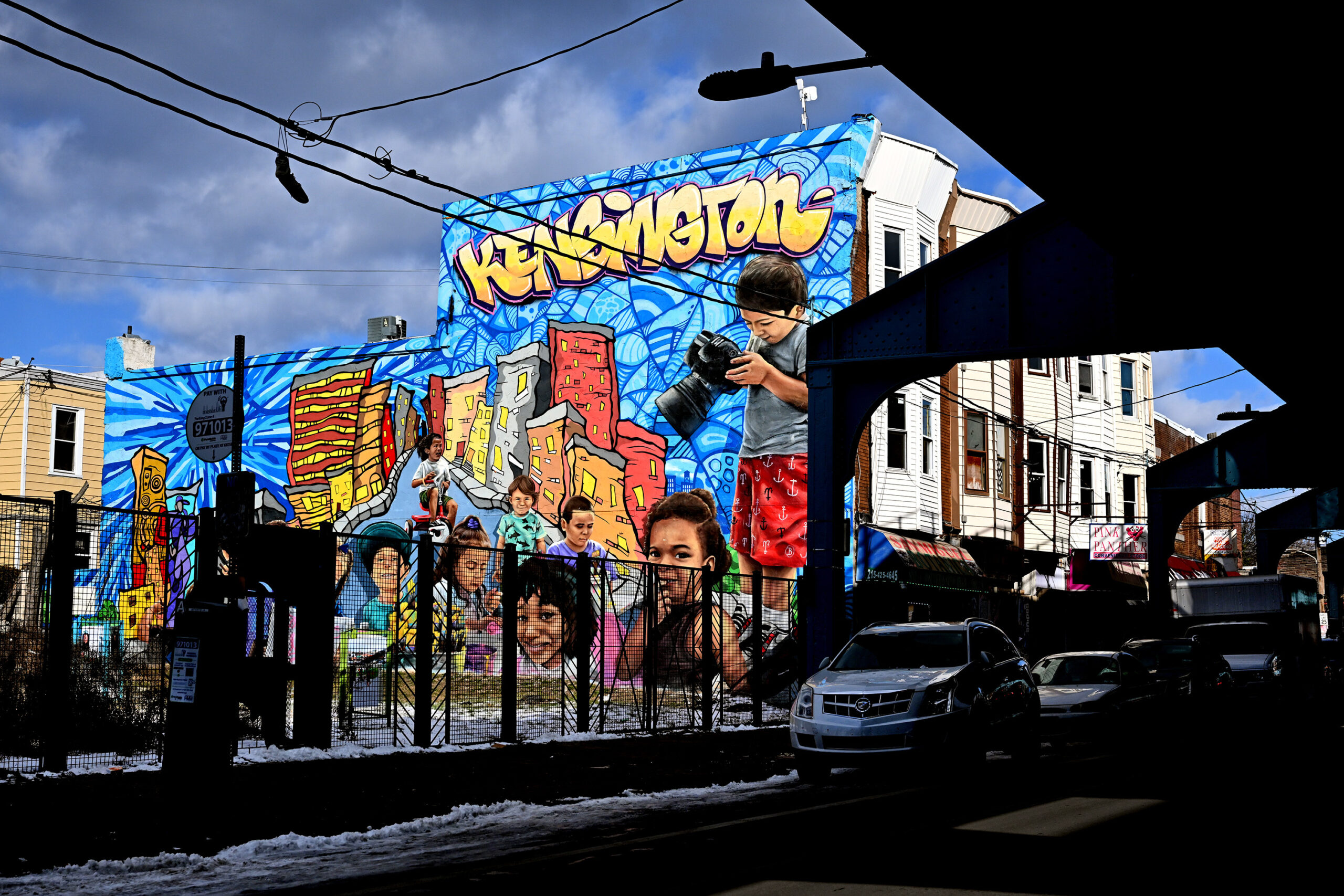
Gloria Cartagena Hart vividly remembers the scenes and sounds of her Kensington block just three years ago: The streets filled with trash. The sidewalks lined with dozens of people openly using drugs. Nightly pops of gunfire from dealers competing for turf, and the haunting screams that followed.
It was 2022, in the heart of one of the most notorious drug markets and poorest zip codes in America.
But Cartagena Hart, a longtime resident at Somerset and Jasper Streets, now says the neighborhood is experiencing something she once believed might never come.
“I see some progress,” she said.
Gloria Cartagena Hart is a community organizer in Kensington who said she will never stop fighting for resources to stabilize the area.
For the first time in decades, under the renewed efforts of Mayor Cherelle L. Parker’s administration, some residents and city officials alike agree that many of Kensington’s most chronic challenges have been improving — albeit slowly.
Fewer dealers dot the corners. Three times as many police officers patrol the neighborhood, disrupting their business. Half as many people are living on the streets compared with last year, police said. Some residents say quality-of-life issues — trash pickup, abandoned car removals, 311 calls — are being addressed more quickly.
And gun violence — long a byproduct of the drug economy and fragmented crews fighting for turf — is at its lowest level in a generation.
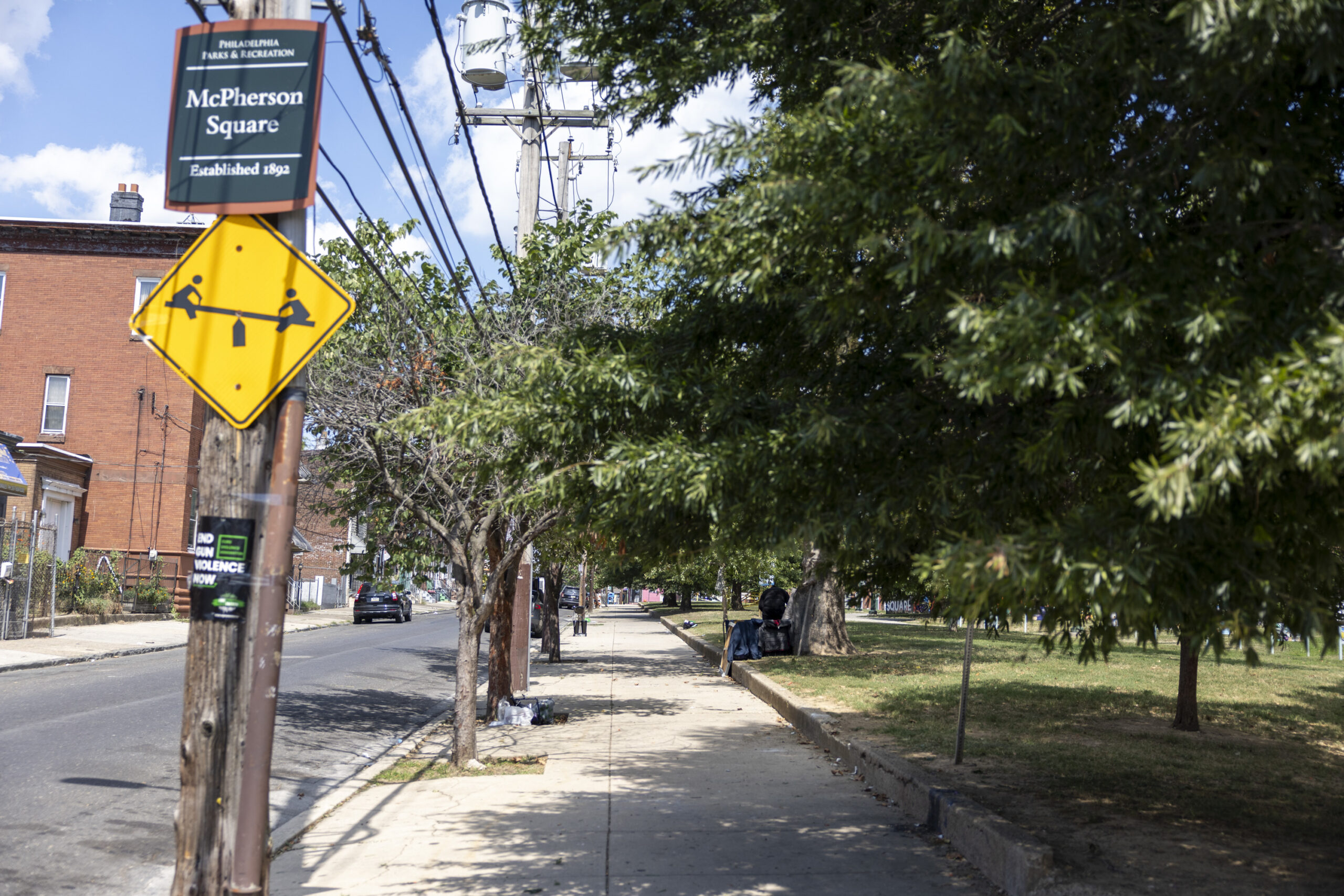
For years, McPherson Square was typically filled with people openly using drugs, as seen in this photo from April 2021. Residents could not let their children visit the park safely.This year, McPherson Square is a different scene. There are often a few people sitting along the edges, but police regularly sweep the park and ask people to leave.
City agencies and healthcare groups say they have also worked to get drug users into treatment more quickly, and have started building a network of care that they hope will keep fewer people from returning to the streets. Riverview Wellness Village, Parker’s new $100 million recovery and treatment facility, now houses about 200 people.
“Neighbors [are] telling me how many more people are sitting on their steps, how many more children are riding their bikes, how many more people may walk the commercial corridor,” Parker said this week. “To me, that’s progress. … We weren’t going to close our eyes and ignore it and walk around like it didn’t exist, or just contain it in one area.”
She’s committed to long-term change there, she said.
More dealers show up to give out free samples of drugs — and free pizza slices to go with them — in an effort to win over customers in a more competitive market, she said. She is constantly asking people to stay off her steps.
Deputy Police Commissioner Pedro Rosario sees the ongoing challenges.
“Am I where I want to be? No. Nowhere close to it,” said Rosario, who oversees the policing strategies in Kensington. “But ‘moving in the right direction’ is not giving us enough credit.”
Deputy Commissioner Pedro Rosario walks through the mini police station on Allegheny Avenue.
Improvements in Kensington, he said, may always be limited by the depths of the drug crisis and economy.
“It’s never gonna be as good as everyone wants it to be,” he said, but “it’s like the first time we’re all kind of rowing in the right direction.”
Some harm-reduction groups said the progress is surface level, and criticized the city for pushing homeless people into other areas where they are harder to reach: Harrowgate, Center City, the SEPTA stops at Broad and Snyder, Erie Avenue, and 69th Street.
“They’ve made it more difficult for people to be visibly homeless,” Sarah Laurel, who heads the harm reduction organization Savage Sisters in Kensington, said of the city’s efforts. “But have they actually resolved the dire need of community members who are unhoused?”
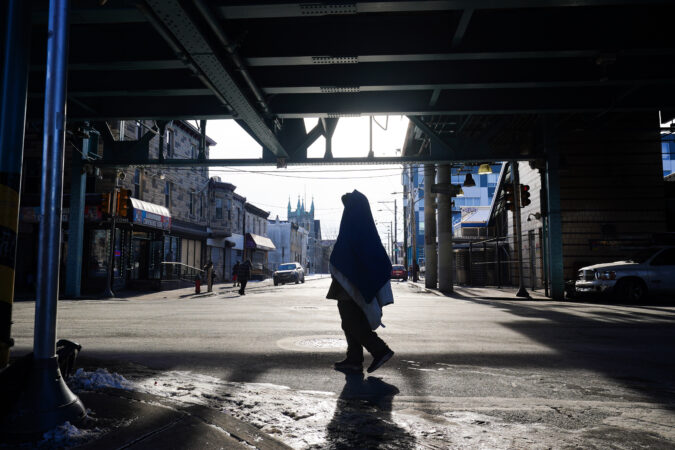
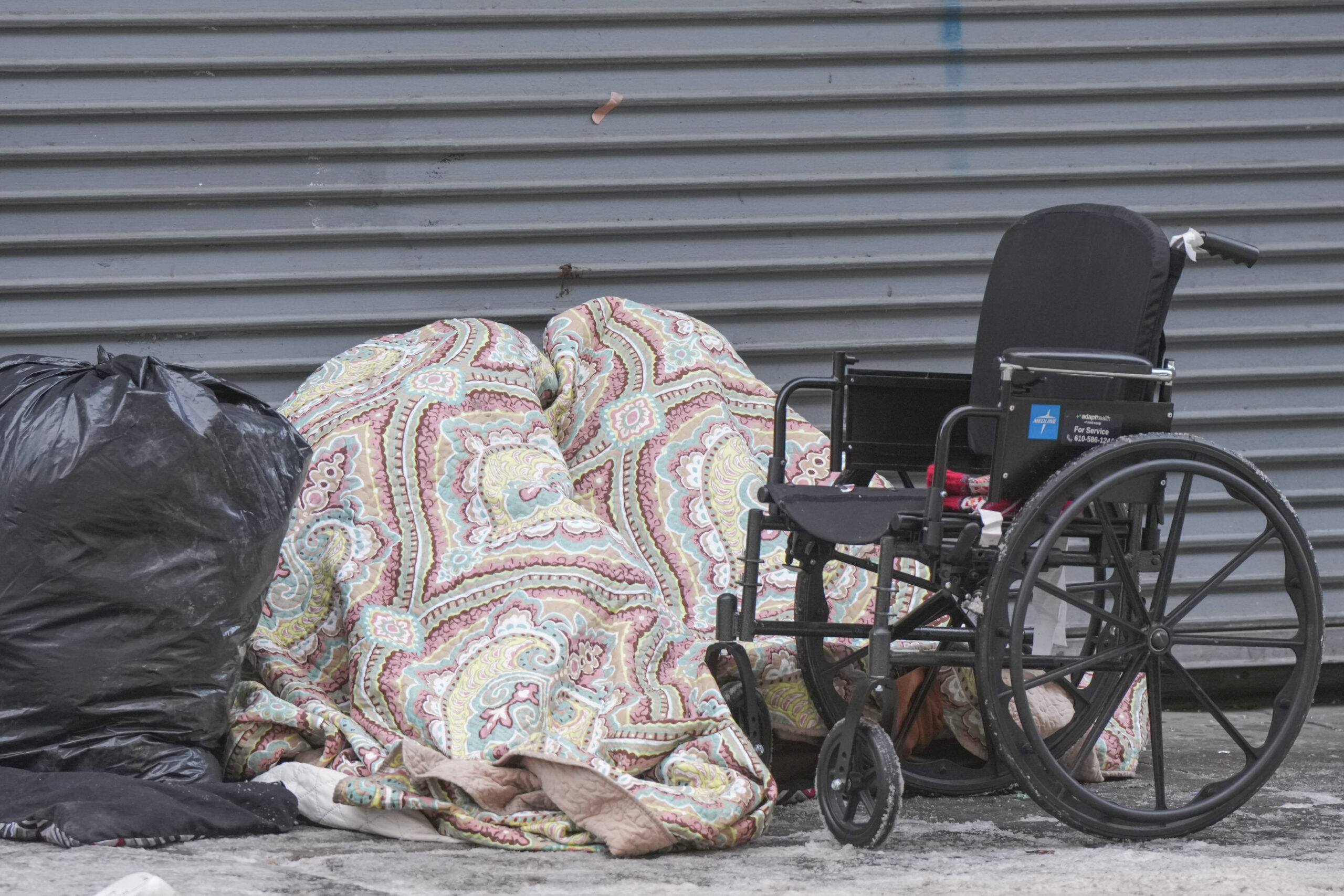
People experiencing homelessness and addiction sleep under blankets on Kensington Avenue in January.
Still, one woman in her 30s, who has come to Kensington on and off since she was 16, acknowledged the neighborhood is no longer the “free-for-all” it was at the height of the pandemic.
“It has changed,” she said, clutching a crack pipe on a quiet block away from police. “You can still get high on the street, you just can’t get caught doing it.”
And that, Rosario said, is progress.
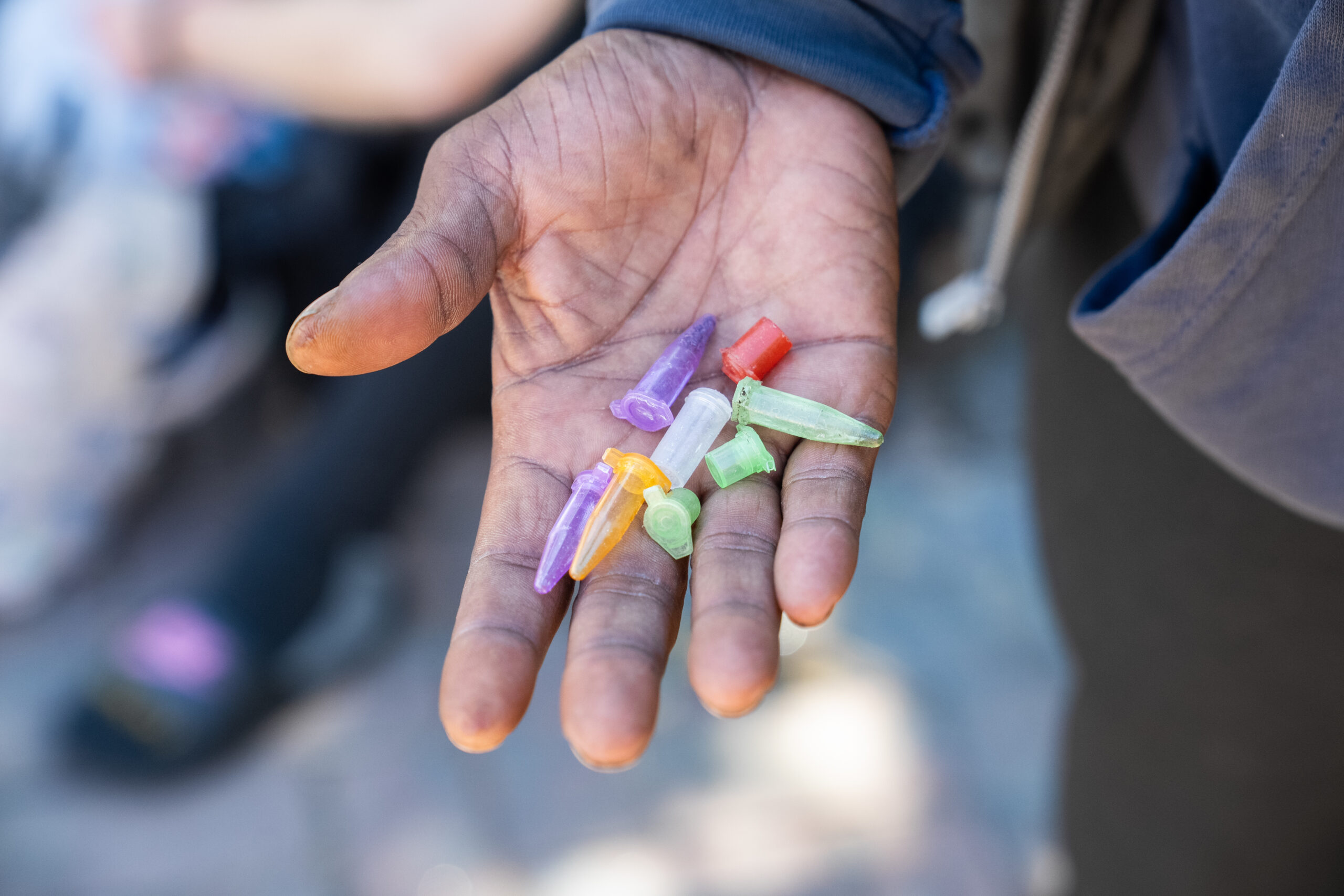
A man who sells drugs holds a collection of empty vials that typically hold meth, crack, and other illicit substances.
A drug ‘flea market’
Rosario has been a police officer in Kensington for 24 years, and saw how the neighborhood became what he calls “the flea market” of the city’s billion-dollar drug economy.
There have always been drug organizations that run specific blocks there — crews from Weymouth, Jasper, and Rosehill Streets, each with its own product, stamp, and employees to sell it.
But in the last five years, he said, blocks have been “leased out.” Someone in New York City or the Dominican Republic will often “own” a block, Rosario said, and rent it out to a local dealer to use for a week to make a stack of money and move on. Dealers even started using drug users to sell in the last few years, he said, because they are less obvious to police, can be paid less, and are seen as “expendable.”
That structure makes it challenging for police to identify and arrest the people in charge, he said. If a lower-level dealer is arrested — or killed — the top distributors can easily find a replacement.
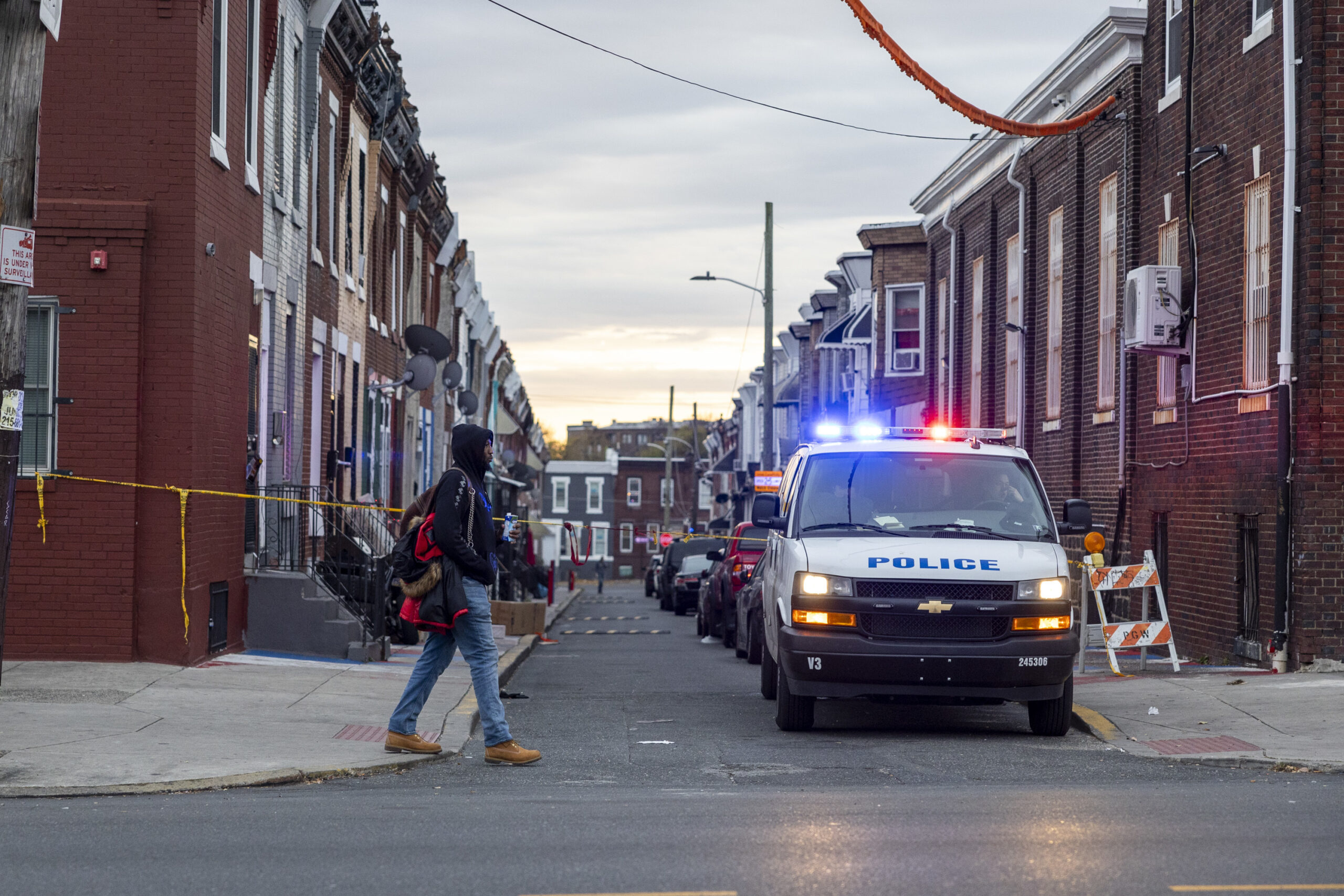
Philadelphia police officers have a shut down the 3100 block of Weymouth Street after federal agents raided the block and arrested 30 people last month.
And the dealers are fearless, he said. Just before the police department was set to open a mini station near F Street and Allegheny Avenue in November 2020, the building was firebombed, he said. He suspects it was dealers attempting to prevent a growing police presence. (The department has since opened a station at 1952 Allegheny Ave.)
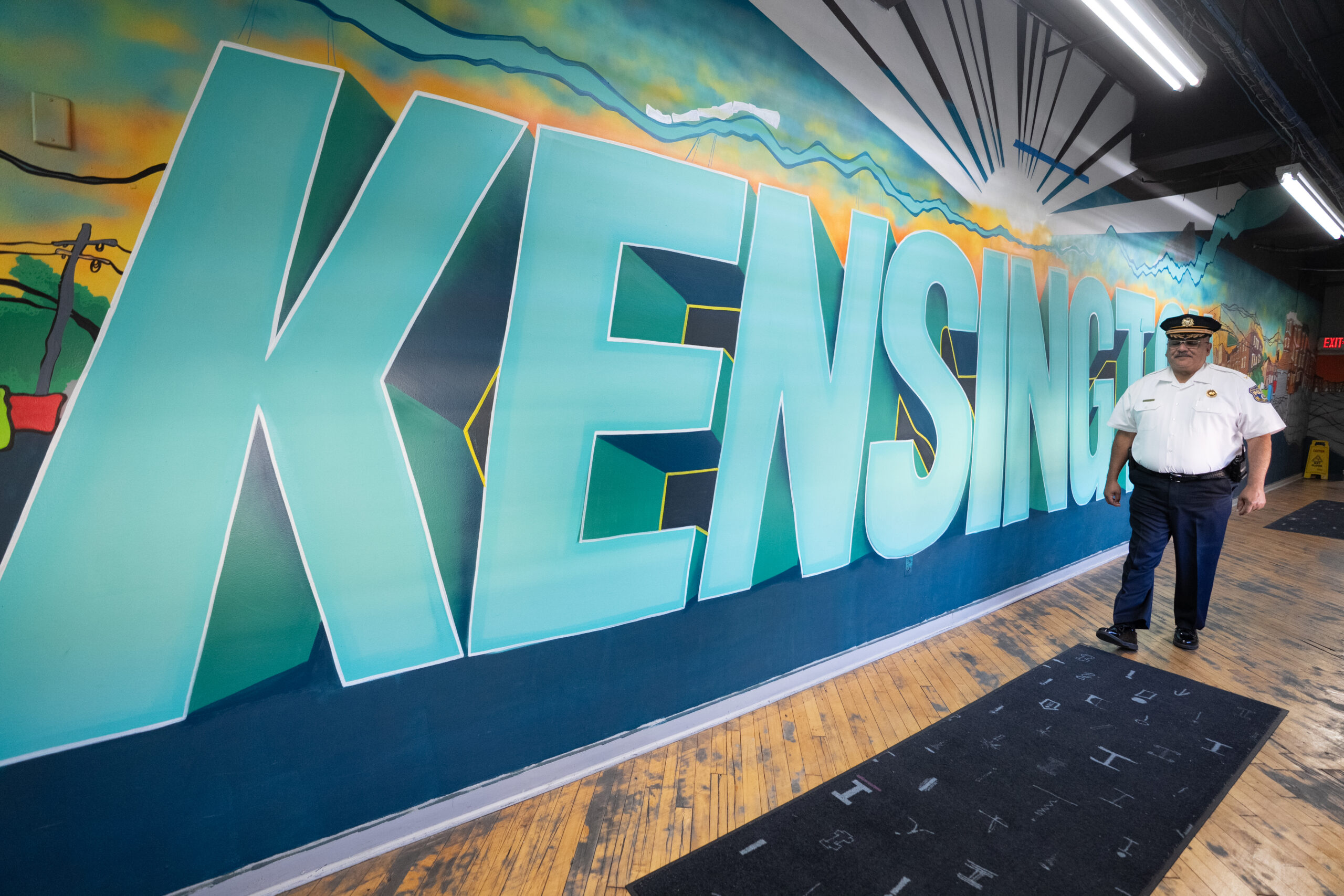
Deputy Commissioner Pedro Rosario faces the challenge of overseeing the policing one of Philadelphia’s poorest and most challenging neighborhoods. He sees progress so far.
When Parker tapped Rosario to lead the police department’s plans in the neighborhood, his first order of business was to reduce the violence so that city workers felt safe enough to go into the neighborhood.
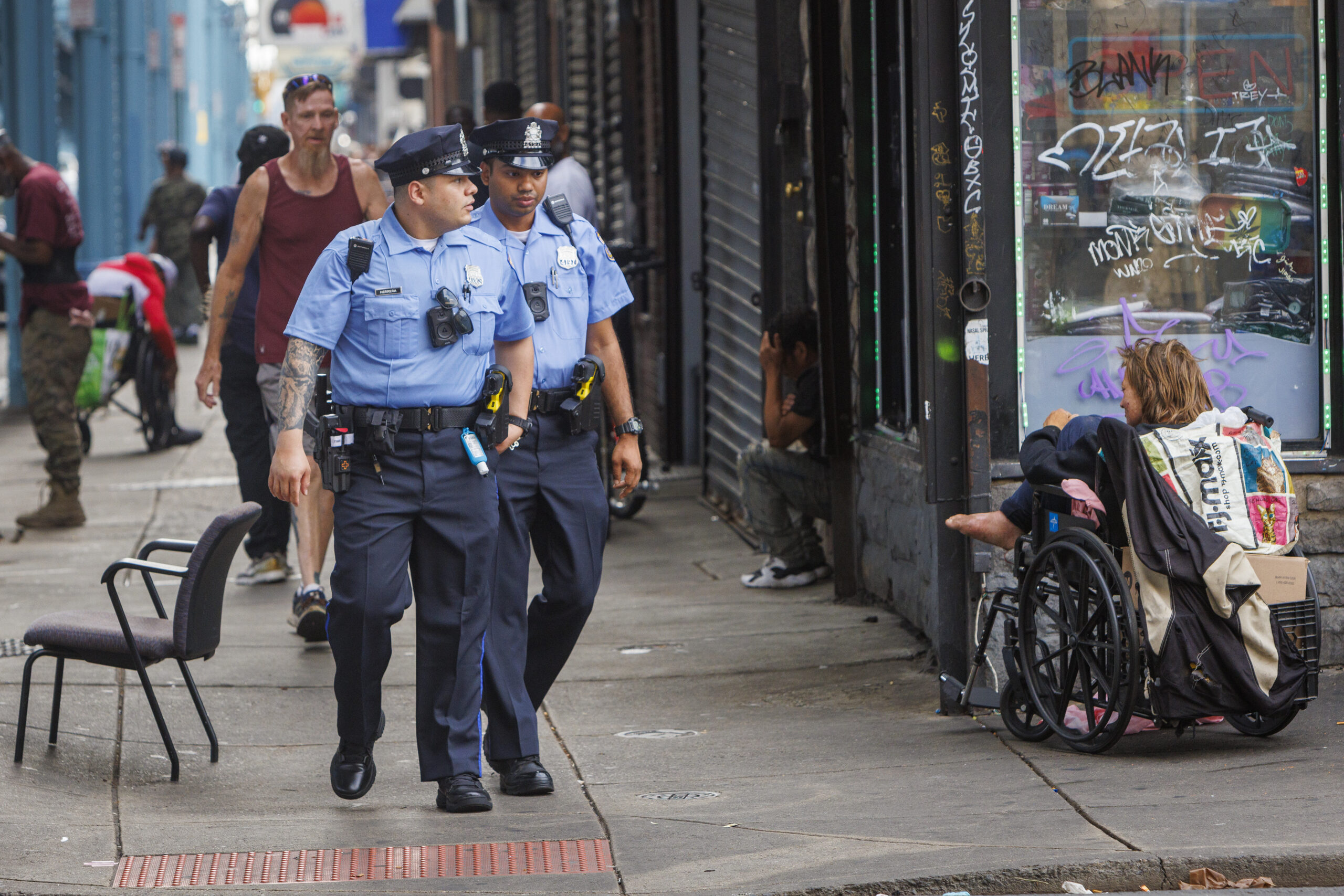
Last summer, the department assigned about 75 rookie cops to buttress existing patrols in the neighborhood, and it has continued to send in more officers. There are now three times as many police patrolling the main drag along Kensington Avenue as there were in 2021 — most of them on foot.
Rosario says the expanded police presence has contributed to a historic decline in violence.
(function() {
var l2 = function() {
new pym.Parent(‘kensington_2025’,
‘https://media.inquirer.com/storage/inquirer/projects/innovation/arcgis_iframe/kensington_2025.html’);
};
if (typeof(pym) === ‘undefined’) {
var h = document.getElementsByTagName(‘head’)[0],
s = document.createElement(‘script’);
s.type = ‘text/javascript’;
s.src = ‘https://pym.nprapps.org/pym.v1.min.js’;
s.onload = l2;
h.appendChild(s);
} else {
l2();
}
})();
While shootings citywide are down about 55% compared to three years ago, they have fallen even more in Kensington.
Through the second week of November, 46 people had been shot in the 24th Police District — an 82% drop from 2022, when, during the same time period, 259 people were shot. And there are half as many shooting victims as there were a decade ago.
“I cannot emphasize how important that is to resetting the norms in that community,” said Adam Geer‚ the city’s chief public safety director. “That is 82% less families dealing with the trauma. That is 82% less gunshots heard ringing in the night.”
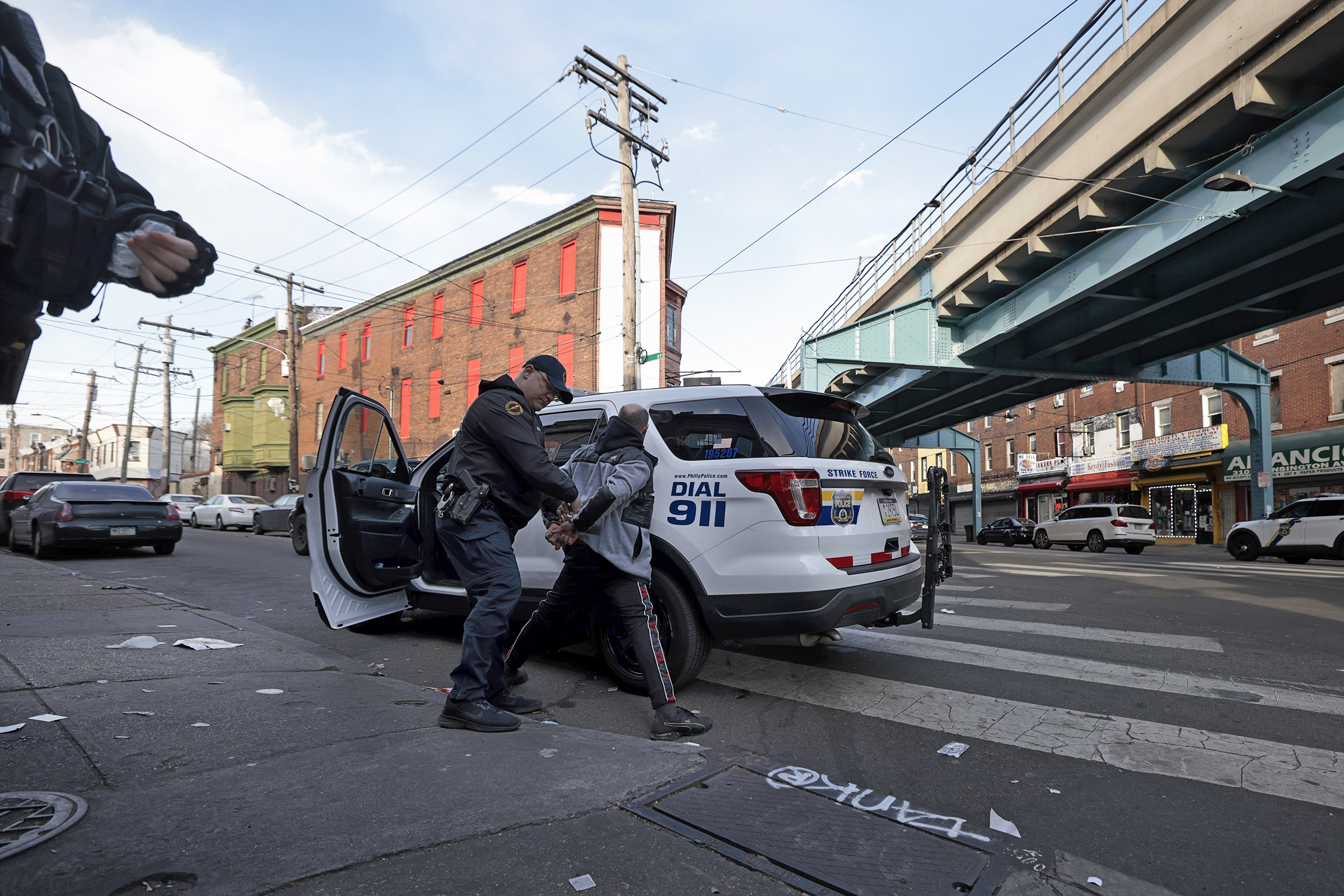
Philadelphia police take a man into custody at Kensington Avenue and G Street on March 20, 2024. Police searched the man and said they found small plastic bags containing what was believed to be illegal drugs (top left).
Through Nov. 15, arrests for drug dealing in the neighborhood were up 23% since Parker came into office. Still, overall, the city is on pace to see the fewest number of drug-related arrests in at least 15 years, city data show, and as law enforcement largely focuses in Kensington, arrests for selling drugs in other parts of the city are down about 34% compared with the 23 months before Parker was elected mayor.
Geer said the city is still in the beginning phases of its efforts. Illicit drug sales will likely always persist, he said, “but what we are really, really going after is the open, blatant, in the air using drugs and selling drugs toxic to this community.”
Rosario also said that reducing the area’s homeless population — by disbanding encampments and generally “being as disruptive as possible” — was critical to reducing the strain on the area’s services and residents, and lessening the open-air drug use and dealing.
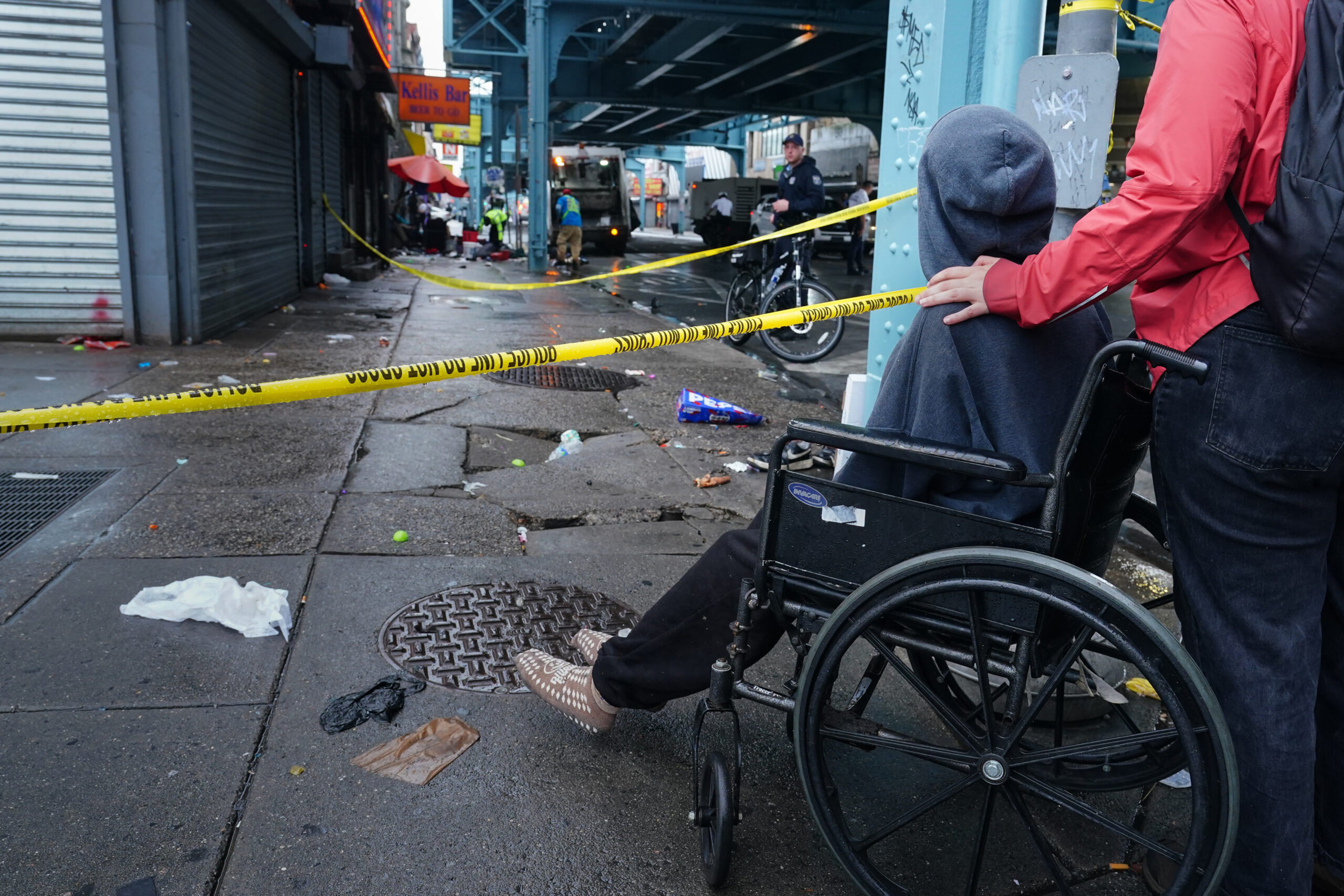
A woman in a wheelchair looks down Kensington Avenue after police cleared a large encampment in May 2024.
It has worked. Last September, there were about 750 people living on the streets in the area, according to a weekly count by police. During the same time this year, there were about 400.
But homelessness in the city generally has not improved, city data show.
There are actually about 400 more people experiencing homelessness this year than last, according to data from the Office of Homeless Services. Police and care providers believe some have simply moved to other neighborhoods to avoid the police presence.
Rosario acknowledged the dispersal, but said Kensington didn’t deserve to bear the burden of those crowds alone.
Because shutting down the drug market in Kensington, he said, “is like trying to stop a wave” at the beach.
“You can disperse it,” he said. “Maybe you can reengineer to kind of push it to a different direction.”
But you can’t stop it.
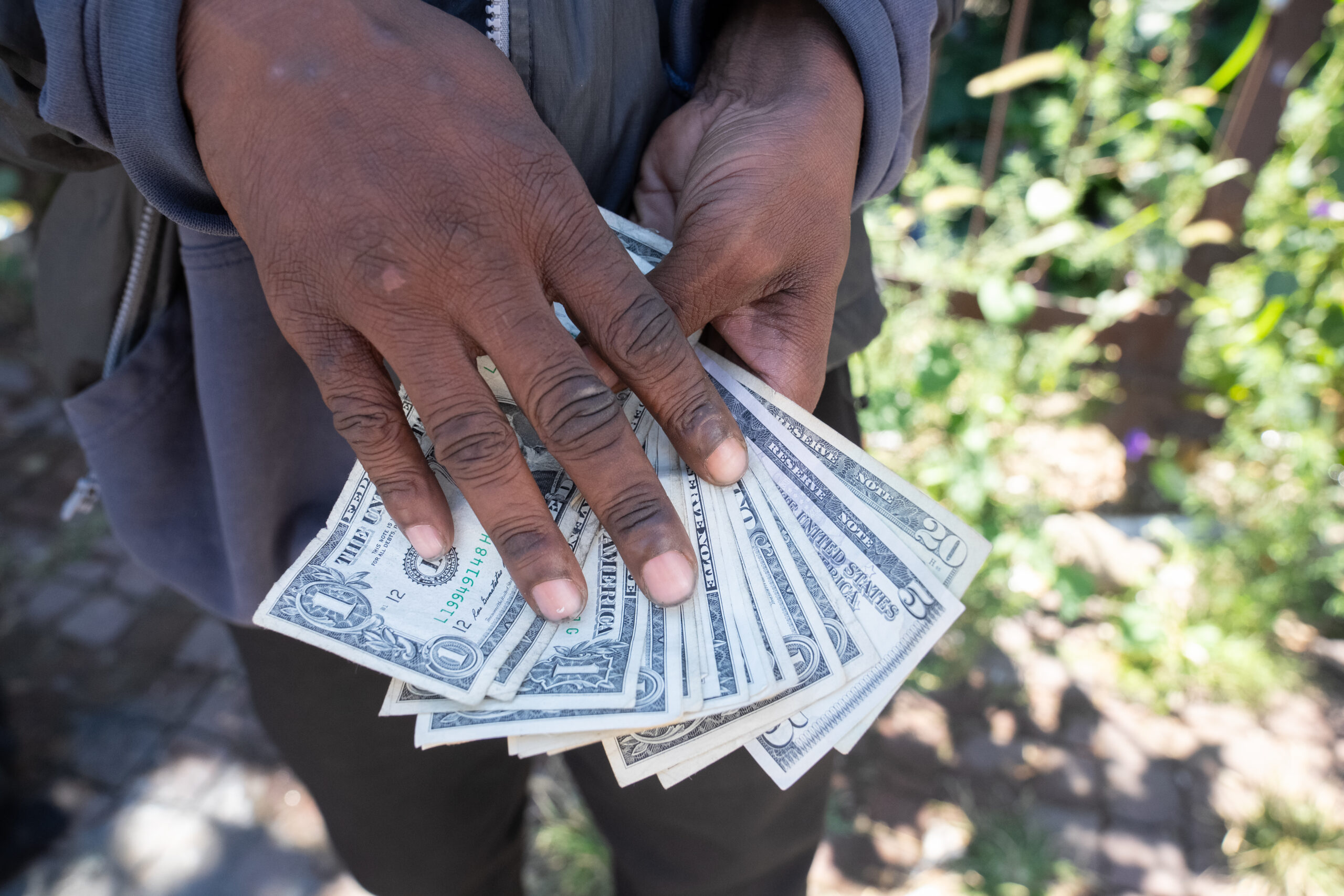
A man fans out the cash he has made on a recent day selling drugs. It’s not much — in part, he said, because there are fewer people in Kensington buying from him.
The view from the streets
One drug dealer can see the shift — and feel it in his wallet.
The 47-year-old man, who asked not to be identified because he sells illegal drugs, said he came to Kensington from New York in 2012 after serving time in prison for robbery. He’s been in the drug trade since he was 12, he said, taught by his parents, who hustled in the Bronx.
Today, he spends his days and nights on a quiet, trash-strewn corner, smoking K2 and selling crack, meth, and dope — whatever the man in the maroon Crown Victoria drops off that day.
During the pandemic, he said, business was booming. When he worked the overnight shift on Jasper Street, he said, he made at least $1,500 a week. Today, with more police on the corners and fewer customers on the streets, he’s lucky to clear $400.
A 28-year-old dealer along Kensington Avenue scoffed at the police enforcement. Where does the city expect the drug economy to go if not here? he asked. The drug trade is a constant, a viable employer with a stable customer base, and it has to go somewhere.
“They can’t put a cop on every f― block,” said the man, who asked not to be identified to discuss illegal activity.
A woman smokes crack on a quiet street in Kensington.
A few streets over, a 36-year-old man who smokes fentanyl and crack said that, a year or two ago, there would be five or six dealers on the corner of Jasper Street and Hart Lane.
Now, he said, there’s one.
“It’s harder to get drugs,” he said.
As police have cracked down on retail theft — once an easy way for people in addiction to make quick cash by reselling the items — it’s also gotten harder to fuel his habit, he said. He usually gambles online on his phone to scrape together a few extra dollars, he said, getting paid through CashApp, which some dealers use to accept payment now.
Many people in addiction said life overall is harder in Kensington — police clear away their tents, shoo them out of parks, and remove the often-stolen grocery carts used to carry belongings. It makes them feel subhuman, said one 36-year-old woman who has struggled with addiction since she was 13.
“We just want to be safe and warm,” she said.
But the biggest fear on the block these days, people said, is the withdrawal.
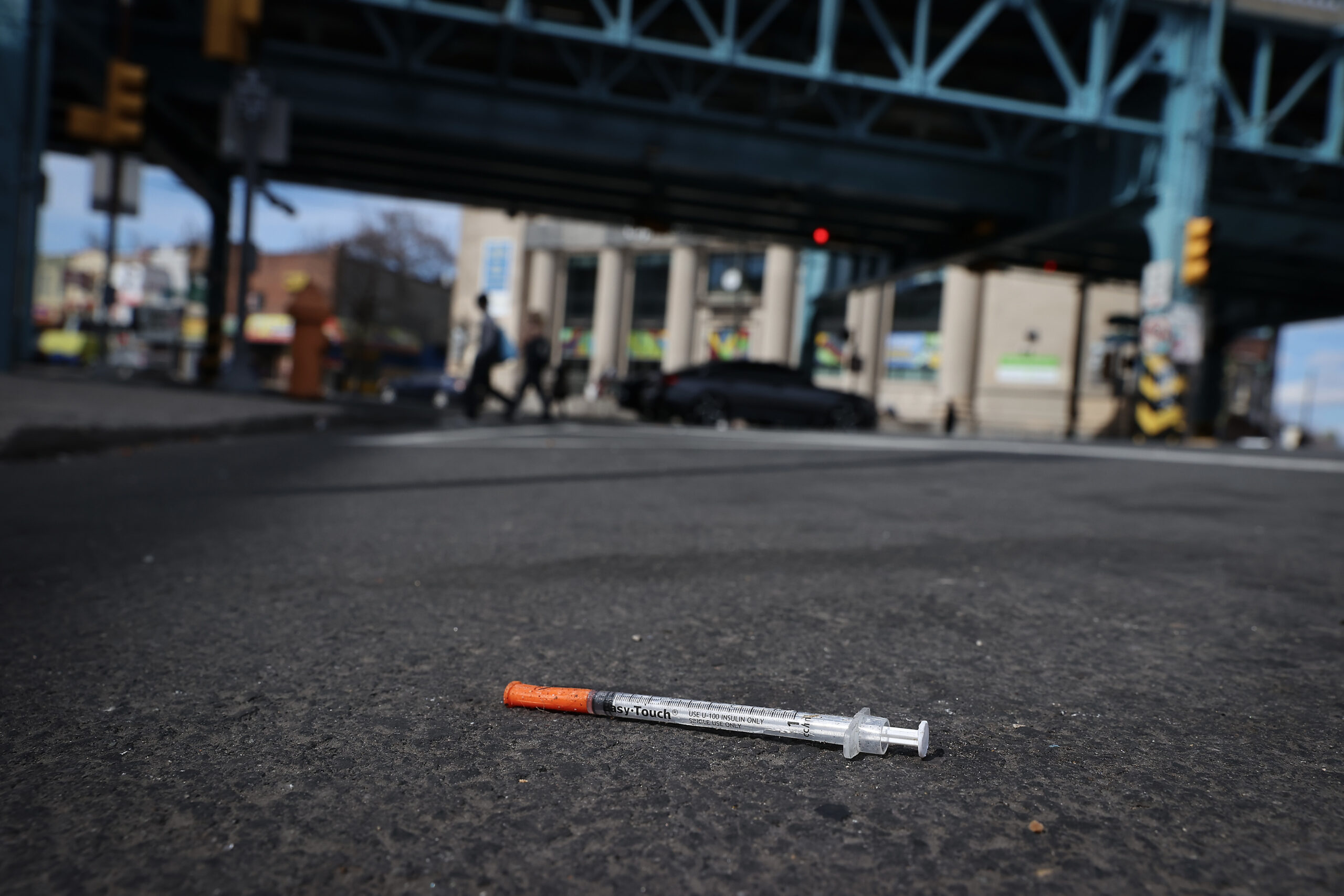
A used hypodermic needle rests on Allegheny Avenue at Kensington Avenue on March 17, 2024.
The withdrawal symptoms, which can begin within two hours, are so intense they can send people into cardiac arrest. Only hospitals can offer the most effective treatments for medetomidine withdrawal, and more people are ending up in intensive care units.
Dave Malloy, director of mobile services for Merakey, one of the city’s main addiction treatment providers, said the city has made strides in streamlining access to treatment in the last two years.
Evaluations that once required a daylong wait at a hospital can now happen in the field through mobile units like Malloy’s, getting people to rehab within hours. Doctors can also start patients on medications like Suboxone or methadone, to lessen their withdrawal symptoms, in as little as 45 minutes.
Malloy said that treatment providers, hospitals, police, and city agencies are working together better than they have in years.
“There was a realization that everybody had been siloed,” he said.
Only about 6% of the city’s homeless people who accepted help fromoutreach workers went to drug treatment and detox centers in recent years, according to city data — a statistic that, as of February, had not improved under Parker’s tenure.
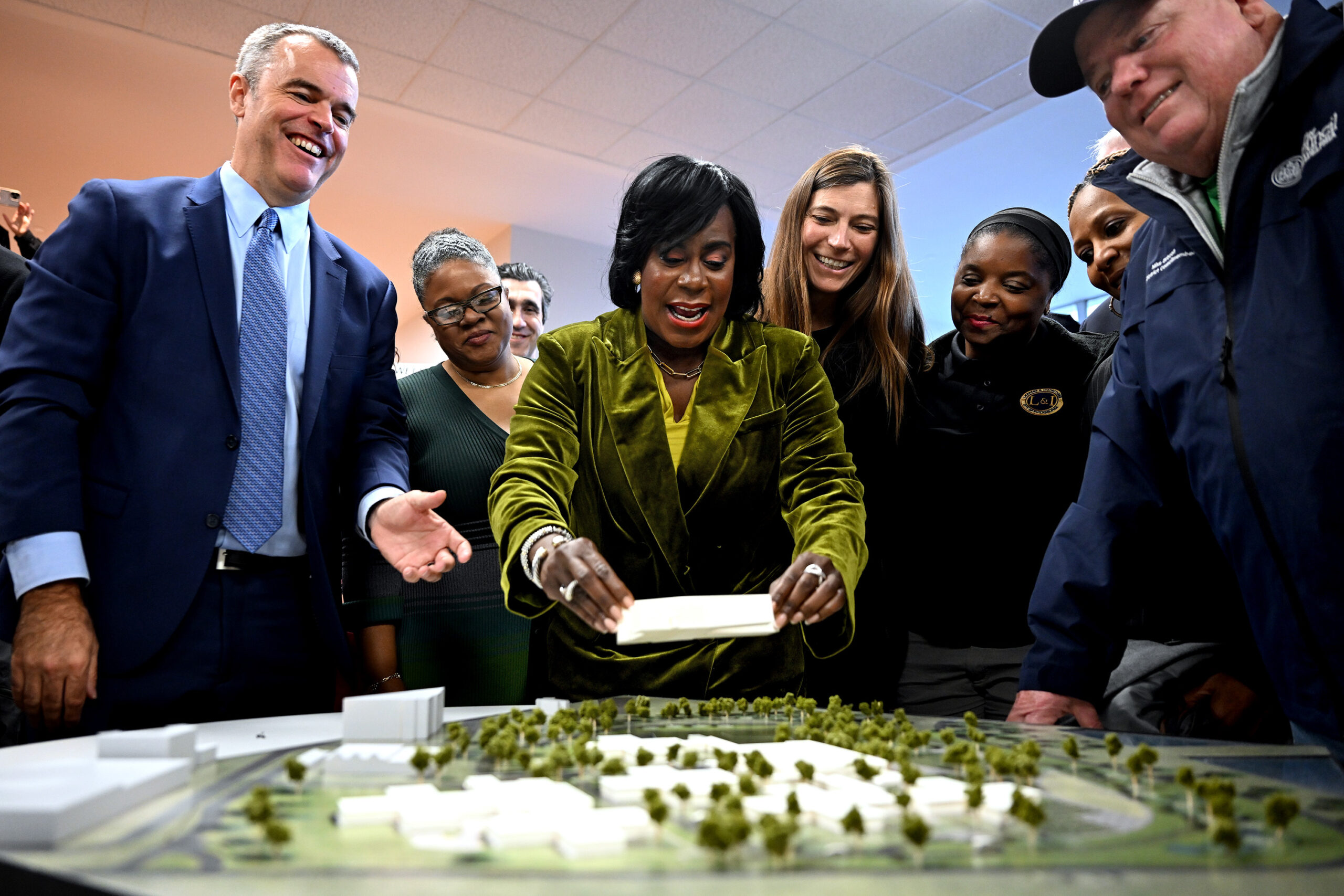
Mayor Cherelle L. Parker places a new block on the scale model of the Riverview Wellness Village Wednesday during the January unveiling of Philadelphia’s new city-operated drug treatment facility. At left is Managing Director Adam Thiel.
The city said it has also expanded the number of beds available for people in recovery by 66% through the opening of the Riverside Wellness Village, where people can live for up to a year after completing 30 days of inpatient drug treatment. Once construction is complete, the facility will house over 600 people.
Another 180 people are living in a shelter at 21st Street and Girard Avenue, which the city expanded last spring.
And the Neighborhood Wellness Court — a fast-track diversion program where people in addiction who are arrested for low-level offenses are brought before a judge the same day, in hopes of getting them into treatment more quickly — is growing.
In the first three months of the court, which Parker’s team launched in January and runs one day per week, only two of the approximately 50 people who had come through completed the program. Most who opted to go to rehab immediately left and absconded from follow-up hearings. At one point, operations were so disjointed that court leadership threatened to shut it down.
But Parker is committed to the court’s success and wants it to operate five days a week. The city recently hired a new director to oversee the court, and is in the process of hiring 14 additional staff members to provide better follow-up care.
Still, through early September, of the 187 people who had come through the court, only 10 completed the program and saw their criminal cases expunged, according to city data.
And while most people still do not come to court, the city said that it expects the situation will improve with the additional hires, and that there is success in the 130 people who have accepted some form of service through the court, even if they weren’t ready to enter recovery.
The “Lots of Lots of Love” mural by artist J.C. Zerbe is on the 3200 block of Kensington Avenue.
‘Kensington is love’
The increased police enforcement has sent more people in addiction to jail, and several people have died in police custody after they overdosed or had medical emergencies while going through withdrawal.
And not all residents feel the progress, or see the increased police presence as a good thing.
Theresa Grone, 41, who lives next to McPherson Square Park, said she and her children still cannot sit outside without someone in addiction asking them if they have free drug samples or clean syringes.
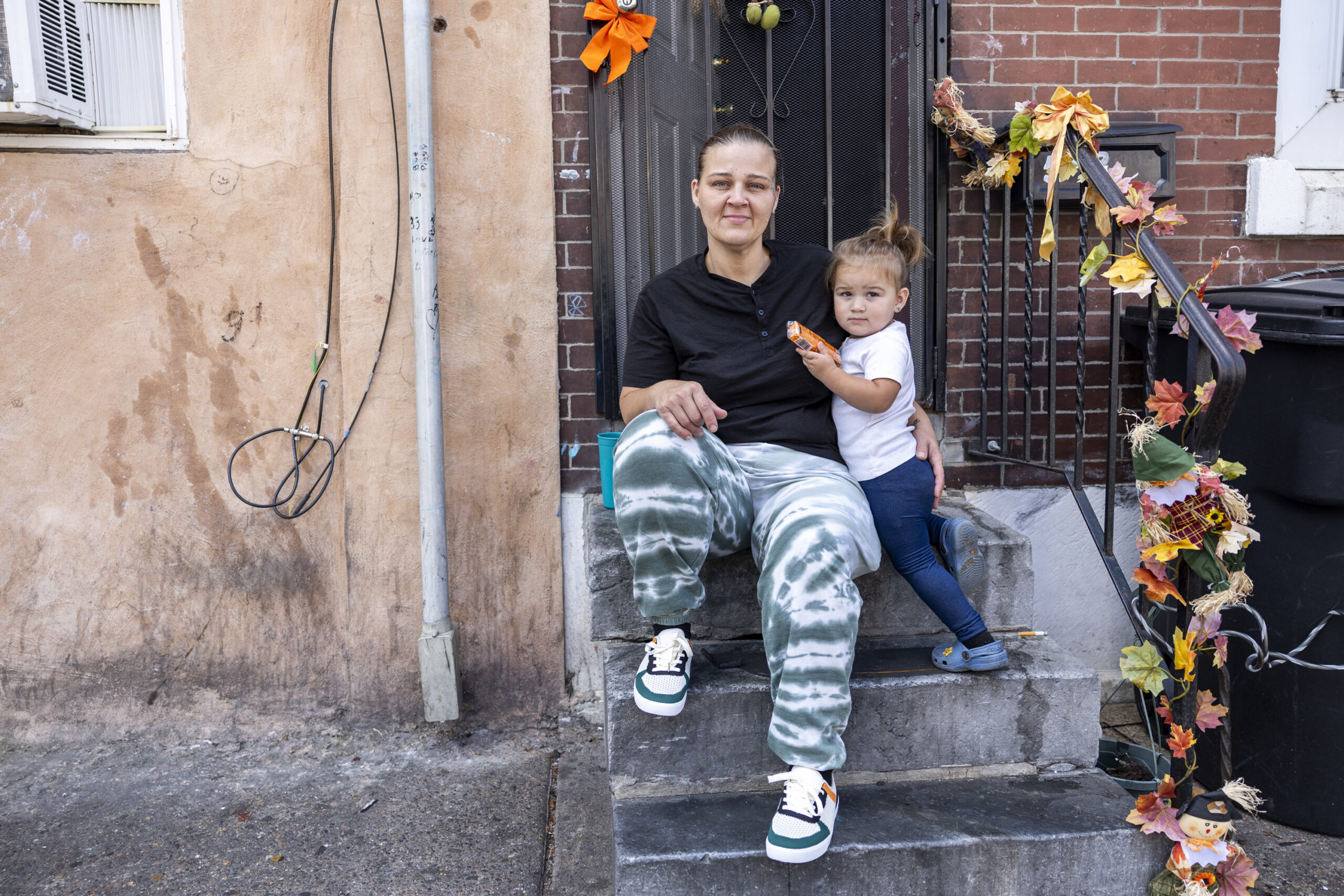
Theresa Grone, 41, and her daughter Abagail, 2, live near McPherson Square Park in Kensington.
And, she said, the police in the neighborhood have gotten more aggressive and harass people who aren’t doing anything wrong. Drug dealers and users still dominate the block.
“They’re not in the places they used to be, but they’re still there,” she said — on side streets, in abandoned houses, moving to corners as soon as the police leave.
She feels like the city is expanding resources for people in addiction more than for families like hers — a group of eight people renting a rowhouse in disrepair who want to move but can’t afford to.
But other residents, like Cartagena Hart, hope to never leave.
She said she has always seen the beauty and strength of Kensington, even at its lowest — the neighbors who care for each other’s children and feed the homeless, the police officers who will show up as soon as she texts them for help.
“Kensington,” she said, “is love to me.”
And she’s proud, she said, that her advocacy and that of her neighbors has helped city leaders finally invest in helping them.
Staff writers John Duchneskie, Max Marin, Anna Orso, Dylan Purcell, Sean Walsh, and Aubrey Whelan contributed to this article.
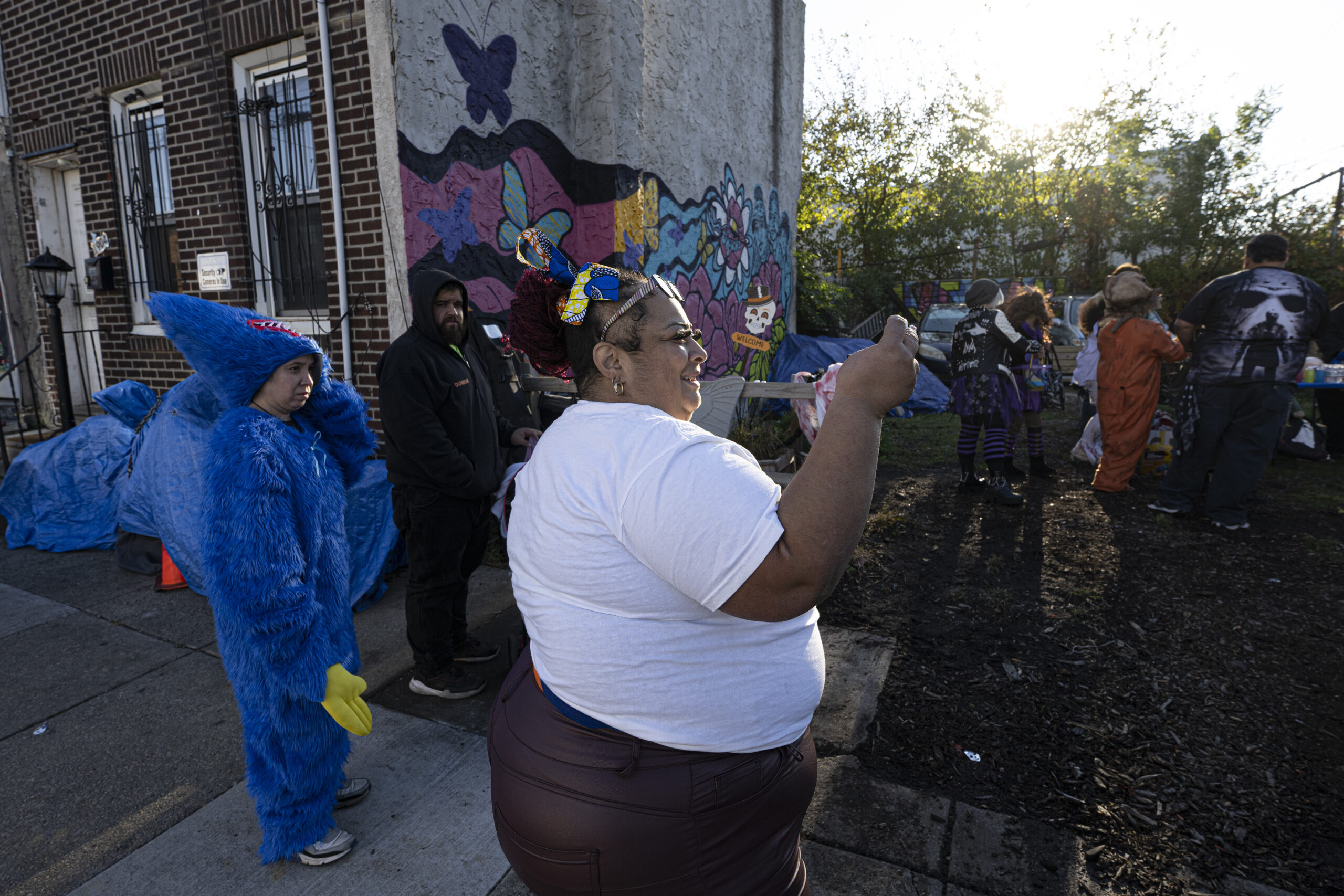
Gloria Cartagena Hart interacts with neighbors during a Halloween party and giveaway that she organized at the Butterfly Garden in Philadelphia’s Kensington neighborhood.
Art matters. And because it does, artists and art institutions have been targets of authoritarian regimes from Red Square to Tiananmen Square. Black Lives Matter Plaza, located near the White House, was removed in March. That same month, President Donald Trump issued an executive order targeting the Smithsonian Institution and interpretive signs at National Park Service sites, including the President’s House.
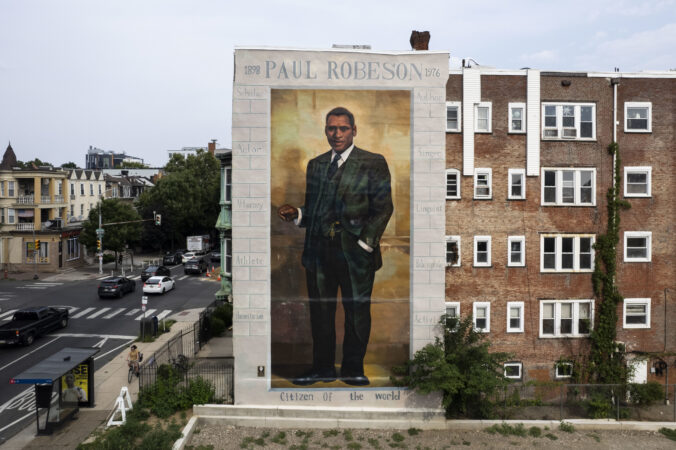
Paul Robeson, athlete, singer, actor, and human rights activist, lived his final years in West Philadelphia. At a protest rally in London in 1937, Robeson said: “The artist must elect to fight for freedom or for slavery. I have made my choice. I had no alternative.”
With democracy nowunder assault, “Fall of Freedom,” a national artist-led protest, hasissued a call for creative resistance, of actions against authoritarian control and censorship, to take place in venues nationwide beginning Friday.
“Fall of Freedom is an urgent reminder that our stories and our art are not luxuries, but essential tools of resistance,” Pulitzer Prize-winning playwright Lynn Nottage wrote in a statement. “When we gather in theaters and public spaces, we are affirming our humanity and our right to imagine a more just future.”
Creative resistance is as American as apple pie, and this city is, after all, the birthplace of our democracy.
The political cartoon “Join, or Die,” published in 1754 in the Pennsylvania Gazette, became a symbol of the American Revolution and stoked public opinion against Britain.
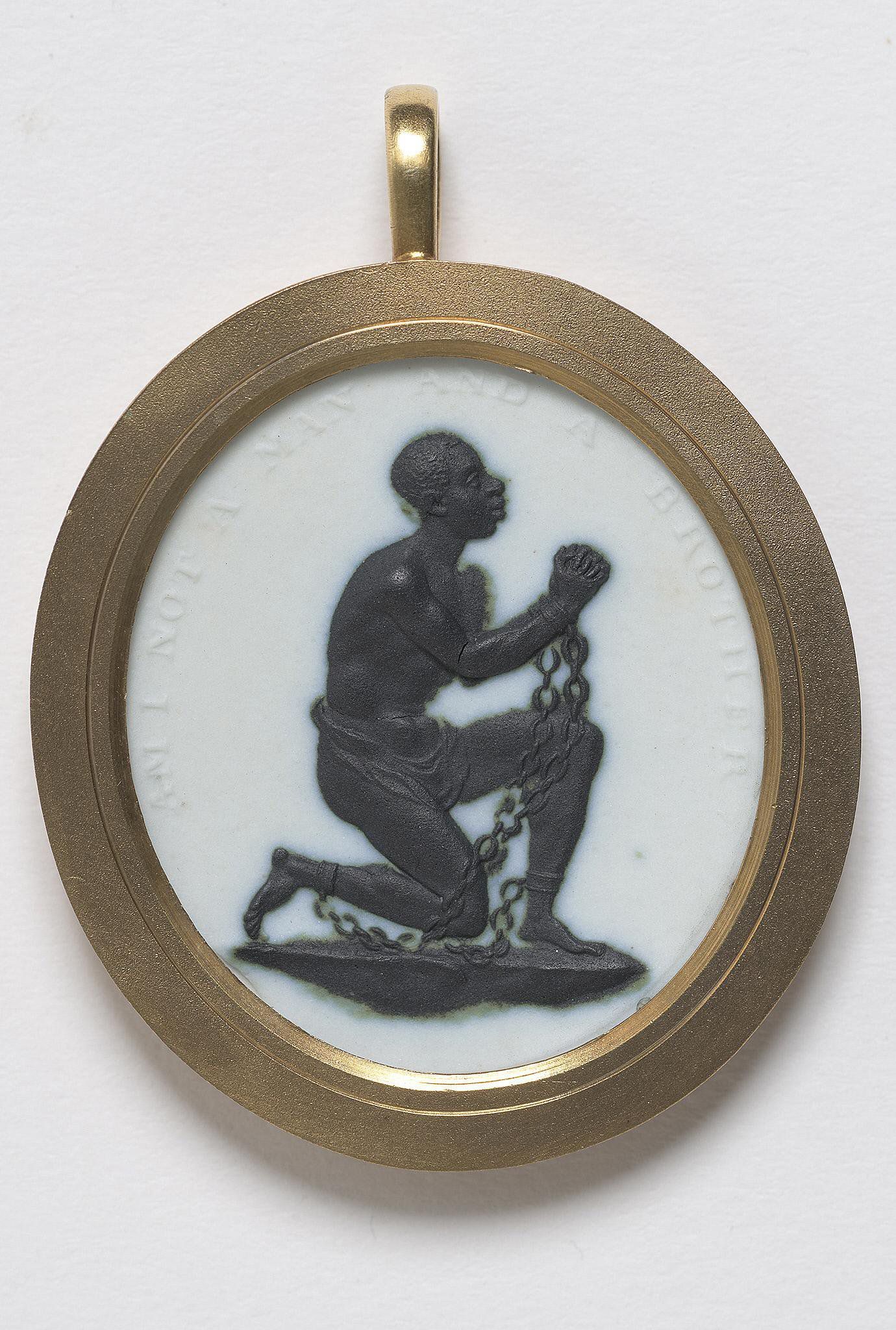
During his tenure as president of the Pennsylvania Abolition Society, Benjamin Franklin helped distribute Josiah Wedgwood’s anti-slavery medallion “Am I Not a Man and a Brother.” In a letter to Wedgwood, Franklin wrote, “I am persuaded [the medallion] may have an Effect equal to that of the best written Pamphlet in procuring favour to those oppressed people.”
Wedgewood medallion with the words “Am I not a man and a brother” in relief along the edge, ca. 1780s, from the collection of the Philadelphia Museum of Art. The museum’s education materials on the medallion stipulate that it was “modeled by William Hackwood and fabricated by Josiah Wedgwood in England in 1787 for the Society for Effecting the Abolition of the Slave Trade, this medallion functioned as a potent political emblem for promoting the abolition of slavery. It reached the United States in 1788, when Wedgwood sent a batch to Philadelphia for former enslaver and ‘cautious abolitionist’ Benjamin Franklin to distribute.”
And indeed it did. Wedgwood’s engraving became the iconic image of the anti-slavery movement. It was printed on broadsides, snuffboxes, decorative objects, and household items. Abolitionist art was part of domestic life in Philadelphia.
The American Anti-Slavery Society, whose founding members included Philadelphians James Forten, Lucretia Mott, and Robert Purvis, commissioned a copper token featuring a related “Am I Not a Woman and a Sister” design. Proceeds from the sale of the token were used to fund the abolition movement.
Abolitionists used art to create a visual language of freedom. Artists created illustrations and paintings that showed “how bad slavery was.” There were theatrical performances and public readings of Harriet Beecher Stowe’s Uncle Tom’s Cabin, the best-selling novel of the 19th century.
Robert Douglass Jr. studied at the Pennsylvania Academy of the Fine Arts. He is considered Philadelphia’s first African American photographer. Active with the National Colored Conventions movement, Douglass created a counternarrative to derogatory racial stereotypes. His daguerreotype of Francis “Frank” Johnson, a forefather of jazz, is in the collection of the Historical Society of Pennsylvania.
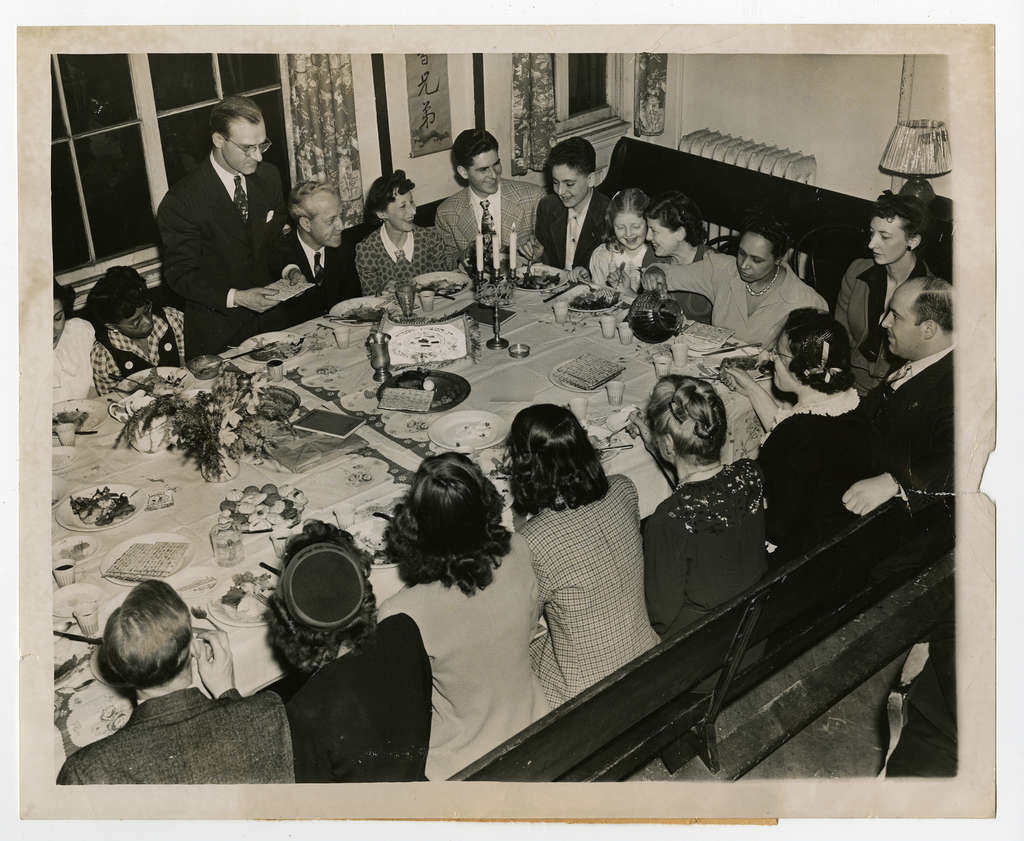
On the heels of the Jazz Age, a group of religious activists formed the Young People’s Interracial Fellowship in North Philadelphia in 1931. The fellowship brought together Black and white congregations for dialogue, cultural exchange, and joint activism.
A 1944 seder at Fellowship House.
In 1941, the organization evolved into Fellowship House, whose mission was to resist racial discrimination through education, cultural programs, and community organizing.
Notable cultural figures who spoke at Fellowship House include Marian Anderson, Dave Brubeck, and Robeson. In April 1945, seven months before the release of the short film The House I Live In, Frank Sinatra, the film’s star, stopped by Fellowship House to speak about the importance of racial tolerance. He told the young people that “disunity only helps the enemy.”
The film’s title song, an anti-racism patriotic anthem, became one of Sinatra’s signature songs.
Abel Meeropol, an educator, poet, and songwriter, composed both the film’s title song, “The House I Live In,” and the anti-lynching poem and song, “Strange Fruit,” which would become inextricably associated with one of Philadelphia’s jazz greats.
Born on April 7, 1915, at Philadelphia General Hospital in West Philly, Billie Holiday, née Eleanora Fagan, is one of the greatest jazz singers of all time.
No artist has met the moment with more courage than Lady Day, whose 1939 recording of “Strange Fruit” was named song of the century by Time magazine in 1999, and was added to the National Recording Registry in 2002.
“Strange Fruit” is a timeless and empowering act of creative resistance.
While Holiday is sui generis, jazz musicians were the vanguard of the civil rights movement.
At so-called black and tan clubs like the Down Beat and the Blue Note, Black and white people intermingled on an equal basis for the first time.
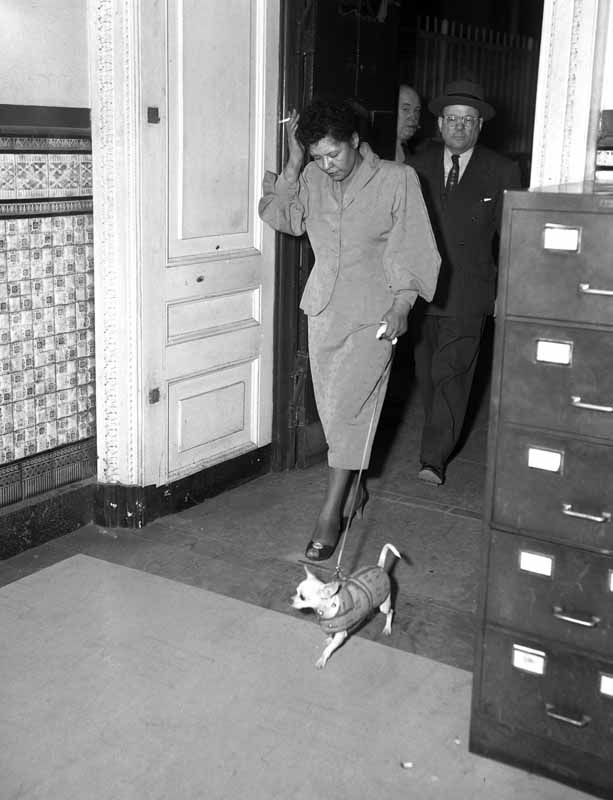
Billie Holiday leaving City Hall in 1956 after her release following a drug bust. Police Capt. Clarence Ferguson walks behind her.
Jazz clubs were constantly harassed by Philadelphia police led by vice squad Capt. Clarence Ferguson and his protégé, Inspector Frank Rizzo. The nightspots became battlegrounds in the struggle for racial justice. Jazz musicians’ unbowed demeanor fashioned a new racial identity.
In remarks to the 1964 Berlin Jazz Festival, the Rev. Dr. Martin Luther King Jr. riffed on the importance of jazz and the jazz culture. He observed: “It is no wonder that so much of the search for identity among American Negroes was championed by jazz musicians. Long before the modern essayists and scholars wrote of racial identity as a problem for a multiracial world, musicians were returning to their roots to affirm that which was stirring within their souls.”
“Much of the power of our Freedom Movement in the United States has come from this music,” he added. “It has strengthened us with its sweet rhythms when courage began to fail. It has calmed us with its rich harmonies when spirits were down.”
At a time when our constitutional rights are being trampled and American history is being whitewashed, I am answering “Fall of Freedom’s” call — as a cultural worker and as a Philadelphian.
Under the “Fall of Freedom” banner, and in collaboration with Scribe Video Center, I will lead a walking tour of Holiday’s Philadelphia.
We will trace her footsteps through Center City and South Philly. We will visit the clubs where she sang, the hotels where she stayed, and the site of the jazz club immortalized in the Tony Award–winning play Lady Day at Emerson’s Bar and Grill. Along the way, we will also highlight places connected to Robeson.
Courage is contagious. When we gather on South Broad, we are the resistance.
Faye Anderson is the founder and director of All That Philly Jazz, a place-based public history project. She can be contacted at phillyjazzapp@gmail.com.


 Compare To