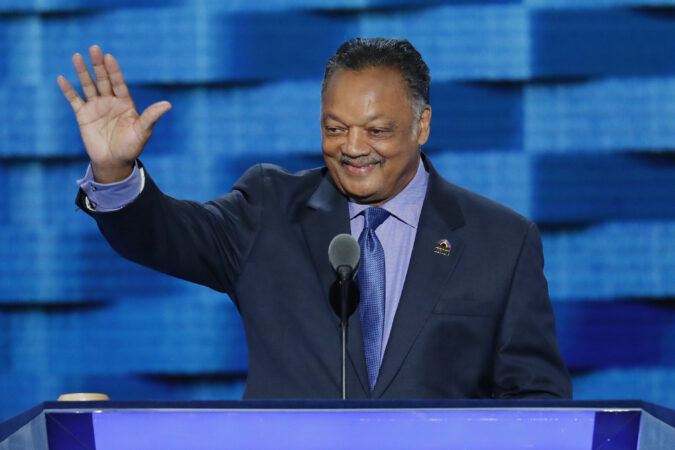
WASHINGTON — The late Rev. Jesse Jackson will not lie in honor in the United States Capitol Rotunda after a request for the commemoration was denied by the House Speaker Mike Johnson’s office due to past precedent.
Johnson’s office said it received a request from the family to have Jackson’s remains lie in honor at the Capitol, but the request was denied, because of the precedent that the space is typically reserved for former presidents, the military, and select officials.
The civil rights leader died this week at the age of 84. The family and some House Democrats had filed a request for Jackson to be honored at the U.S. Capitol.
Amid the country’s political divisions, there have been flare-ups over who is memorialized at the Capitol with a service to lie in state, or honor, in the Rotunda. During such events, the public is generally allowed to visit the Capitol and pay their respects.
Recent requests had similarly been made, and denied, to honor Charlie Kirk, the slain conservative activist, and former Vice President Dick Cheney.
There is no specific rule about who qualifies for the honor, a decision that is controlled by concurrence from both the House and Senate.
The Jackson family has announced scheduled dates for memorial services beginning next week that will honor the late reverend’s life in Chicago, Washington, D.C., and South Carolina. In a statement, the Jackson family said it had heard from leaders in both South Carolina, Jackson’s native state, and Washington offering for Jackson to be celebrated in both locations. Talks are ongoing with lawmakers about where those proceedings will take place. His final memorial services will be held in Chicago on March 6 and 7.
Typically, the Capitol and its Rotunda have been reserved for the “most eminent citizens,” according to the Architect of the Capitol’s website. It said government and military officials lay in state, while private citizens in honor.
In 2020, Rep. John Lewis, another veteran of the Civil Rights movement, was the first Black lawmaker to lie in state in the Capitol Rotunda after a ceremony honoring his legacy was held outside on the Capitol steps due to pandemic restrictions at the time.
Later that year, then-House Speaker Nancy Pelosi allowed services for Supreme Court Justice Ruth Bader Ginsburg at the Capitol’s Statuary Hall after agreement could not be reached for services in the Capitol’s Rotunda.
It is rare for private citizens to be honored at the Capitol, but there is precedent — most notably Civil Rights icon Rosa Parks, in 2005, and the Rev. Billy Graham, in 2018.
A passionate civil rights leader and globally-minded humanitarian, Jackson’s fiery speeches and dual 1984 and 1988 presidential campaigns transformed American politics for generations. Jackson’s organization, the Rainbow PUSH Coalition, became a hub for progressive organizers across the country.
His unapologetic calls for a progressive economic agenda and more inclusive policies for all racial groups, religions, genders and orientations laid the groundwork for the progressive movement within the Democratic Party.
Jackson also garnered a global reputation as a champion for human rights. He conducted the release of American hostages on multiple continents and argued for greater connections between civil rights movements around the world, most notably as a fierce critic of the policies of Apartheid South Africa.
Under the boardwalk, down by the sea. That’s where Bryce Harper wants to be, apparently.
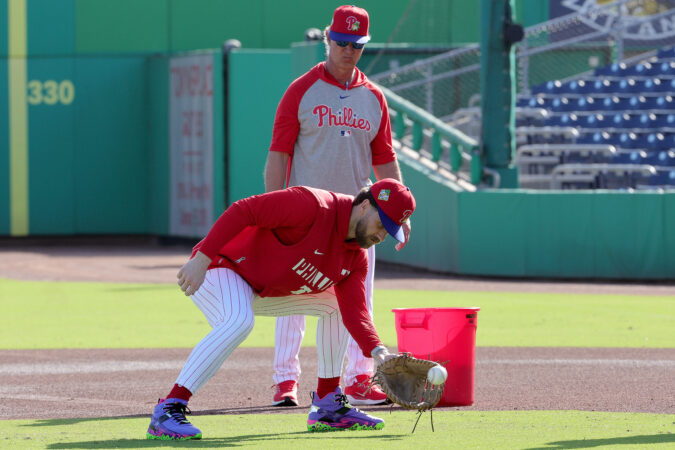
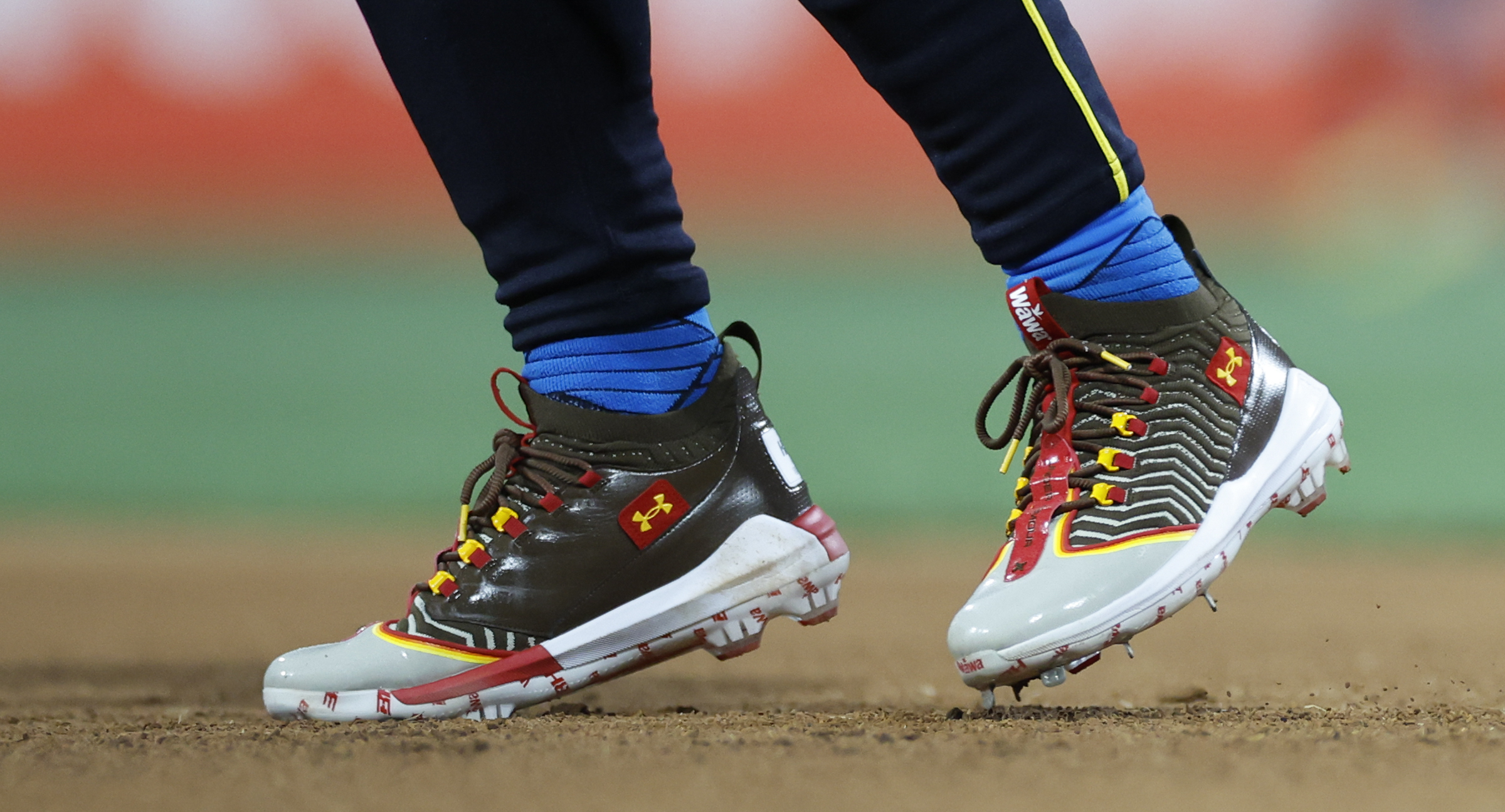
Harper’s newest cleats — the Under Armour Harper 10 “Mad House” — pay homage to the Jersey Shore, and unlike his previous colorful, locally-inspired cleats, these are not player exclusives (PE), meaning anyone can buy the $130 cleats.
With a hyper violet base and slime-green studs that resemble a boardwalk funhouse, the cleats are “inspired by Bryce’s love for spending time at the Jersey Shore during the offseason early on in his career,” Under Armour said.
On Thursday, Harper posted a short promotional video for the new kicks. Inside the funhouse’s skull entrance, the Harper 10s are displayed in the middle of a spiraling, mirror maze — akin to one that can be found on the Wildwood boardwalk.
The latest edition of Bryce Harper 10s, “Mad House,” are a nod to boardwalk funhouses.
Harper has not gone on the record to claim one shore town in particular. In July 2022, while rehabbing his broken thumb, he spent time in Stone Harbor, taking photos with fans in a Wawa. That same month, he posed with restaurant workers at Uncle Bill’s Pancake House in Ocean City.
The release of the “Mad House” cleats comes after Harper and Under Armour reached a contract extension on Jan. 13. Under Armour initially signed Harper in 2011. In 2016, they awarded him with what was then the largest endorsement deal in MLB history.
Previously, Harper has made his love for the Phanatic known through apparel. Last year, Harper and Under Armour released a pair of green, fuzzy Harper 3s inspired by the Phillies mascot, equipped with insoles displaying caricatures of Harper and the Phanatic. But that was hardly the first time Harper’s cleats have paid tribute to the Phanatic — he also wore custom Phanatic cleats during his first game as a Phillie in 2019, and again during the team’s home opener in 2020, this time featuring Swarovski crystals.
Phillies first baseman Bryce Harper’s Wawa themed spikes against the Arizona Diamondbacks on Friday, June 21, 2024 in Philadelphia.
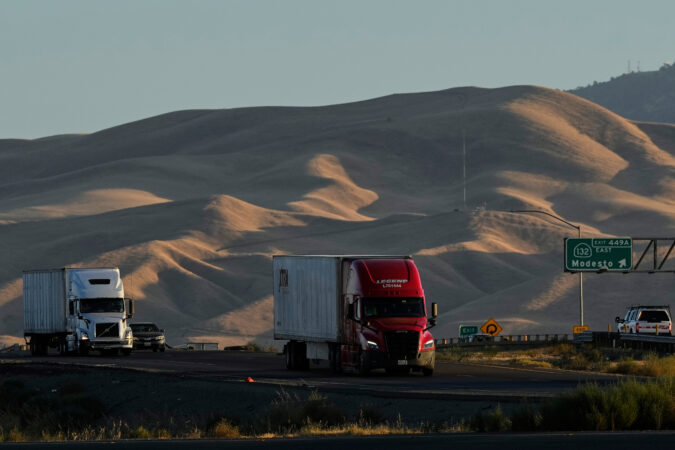
All truckers and bus drivers will have to take their commercial driver’s license tests in English as the Trump administration expands its aggressive campaign to improve safety in the industry and get unqualified drivers off the road.
Transportation Secretary Sean Duffy announced the latest effort Friday to ensure that drivers meet the federal requirements to understand English well enough to read road signs and communicate with law enforcement officers. Florida already started administering its tests in English.
Currently, many states allow drivers to take their license tests in other languages even though they are required to demonstrate English proficiency. California offered tests in 20 other languages. Duffy said that a number of states have hired other companies to administer commercial driver’s licenses tests, and those companies aren’t enforcing the standards that drivers are supposed to meet to demonstrate their driving and English skills.
These latest enforcement efforts come just days after the Transportation Department said 557 driving schools should close because they failed to meet basic safety standards. The department has been aggressively going after states that handed out commercial driver’s licenses to immigrants who shouldn’t have qualified for them ever since a fatal crash in August.
A truck driver who Duffy says wasn’t authorized to be in the U.S. made an illegal U-turn and caused a crash in Florida that killed three people. Other fatal crashes since then, including one in Indiana that killed four members of an Amish community earlier this month, have only heightened concerns.
Duffy says truckers should be well qualified
States are expected to ensure drivers can speak English before giving them a commercial license, and then law enforcement is supposed to check driver’s language skills during any traffic stops or inspections. Drivers who can’t communicate effectively are supposed to be pulled off the road. A recent federal effort involving 8,215 inspections led to nearly 500 drivers being disqualified because of their English skills. California initially resisted enforcing the English rules, but the state recently pulled more than 600 drivers off the highways.
Duffy said every American wants drivers who get behind the wheel of a big rig to be well-qualified to handle those vehicles. But he said that for too long the problems in the trucking industry were “allowed to rot and no one’s paying attention to it for decades.”
“Once you start to pay attention, you see that all these bad things have been happening. And the consequence of that is that Americans get hurt,” Duffy said. “When we get on the road, we should expect that we should be safe. And that those who drive those 80,000-pound big rigs, that they are well-trained, they’re well-qualified, and they’re going to be safe.”
More efforts to crack down on fraudulent companies
The campaign will also now expand to prevent fraudulent trucking companies from getting into the business while continuing to go after questionable schools and ensure states are complying with all the regulations for handing out commercial licenses.
Duffy said that the registration system and requirements for trucking companies will be strengthened while Federal Motor Carrier Safety Administration inspectors conduct more spot checks of trucks and commercial driver’s license schools.
Officials are also trying to make sure that the electronic logging devices drivers use are accurate, and that states are following all the regulations to ensure drivers are qualified to get commercial licenses.
‘Chameleon carriers’ avoid enforcement
Currently, companies only have to pay $300 and show proof of insurance to get registered to operate, and then they might not be audited until a year or more later. And even then the audits might be done virtually, which makes it less likely to identify fraudulent companies.
That has made it easy for fraudulent companies that are known in the industry as “chameleon carriers” to register multiple times under different names and then simply switch names and registration numbers to avoid any consequences after crashes or other violations.
Dan Horvath, who is the chief operating officer for the American Trucking Associations trade group, said this longstanding problem has made it far too easy for companies that have been ordered to shut down to just change their name and registration number and keep operating the same way.
“What we think at ATA has happened over the years is that we have a lack of true enforcement and intervention with motor carriers that are in operation,” Horvath said. Only a small fraction of trucking companies ever undergo a full compliance review with an in-person inspection, he said.
Past enforcement efforts
After that Indiana crash, the Federal Motor Carrier Safety Administration knocked the company that employed the driver out of service and pulled the DOT numbers assigned to two other companies that were linked to AJ Partners. Tutash Express and Sam Express in the Chicago area were also disqualified, and the Aydana driving school that the trucker involved in the crash attended lost its certification.
Immigration authorities arrested that driver because they said the 30-year-old from Kyrgyzstan entered the country illegally. Authorities say he pulled out and tried to go around a truck that had slowed in front of him, and his truck slammed into an oncoming van.
Duffy said the companies involved in that Indiana crash were all registered at the same apartment. In other cases, there might be hundreds of these chameleon companies registered at a single address.
NEW YORK — The nation’s highest court struck down some of President Donald Trump’s most sweeping tariffs on Friday, in a 6-3 decision that he overstepped his authority when using an emergency powers law to justify new taxes on goods from nearly every country in the world.
Trump has launched a barrage of new tariffs over the last year. Despite Friday’s ruling, many sectoral levies remain in place — and the president has already said that he’ll turn to other options for more import taxes, including plans to impose a new 10% tariff globally. But the Supreme Court decision upends a core set of tariffs that Trump rolled out using the 1977 International Emergency Economic Powers Act, or IEEPA.
IEEPA authorizes the president to broadly regulate commerce after declaring a national emergency. Over the years, presidents have turned to this law dozens of times, often to place sanctions on other countries. But Trump was the first to use it to implement tariffs.
Here’s a look at the now-overturned tariffs Trump imposed using IEEPA — and other levies that still stand today.
‘Liberation Day’ tariffs
Trump used IEEPA to slap import taxes on nearly every country in the world last spring. On April 2, which Trump called Liberation Day, he imposed “reciprocal” tariffs of up to 50% on goods from dozens of countries — and a baseline 10% tariff on just about everyone else.
The 10% tax kicked in early April. But the bulk of Liberation Day’s higher levies got delayed by several months, and many rates were revised over time (in some cases after new “framework” agreements). Most went into effect Aug. 7.
The national emergency underlying these tariffs, Trump argued at the time, was the long-running gap between what the U.S. sells and what it buys from the rest of the world. Still, goods from countries with which the U.S. runs a trade surplus also faced taxes.
Major trading partners impacted by Liberation Day tariffs include South Korea, Japan and the European Union — which combined export a range of products to the U.S., like electronics, cars, and car parts and pharmaceuticals. Following trade talks, Trump’s rates on most goods stood at 15% for the EU, Japan and South Korea ahead of Friday. But just last month, Trump threatened to hike levies on certain South Korean products to 25% — and countries worldwide still face sector-specific, non-IEEPA tariffs.
‘Trafficking tariffs’ on Canada, China and Mexico
At the start of his second term, Trump used IEEPA to impose new tariffs on America’s three biggest trading partners: Mexico, Canada, and China.
Ahead of Friday’s decision, “trafficking tariffs” on Canadian and Mexican imports were 35% and 25%, respectively, for goods that don’t comply with the 2020 United States-Mexico-Canada Agreement. China, meanwhile, faced a 10% fentanyl-related tariff. That’s down from 20% imposed by Trump earlier last year. Chinese goods also once saw sky-high levies after Liberation Day, but rates had since come down during trade talks.
Top U.S. imports from China include mobile phones and other electronics, as well as clothing, toys and household appliances. Meanwhile, Canada and Mexico are both major sources of cars and auto parts. Canada is also the U.S.’s largest supplier of crude oil. And Mexico is a key exporter of fresh produce, beverages and more.
Tariffs on Brazil over Bolsonaro trial
Trump also used IEEPA to slap steep import taxes on Brazilian imports over the summer, citing the country’s policies and criminal prosecution of former President Jair Bolsonaro.
Brazil already faced Trump’s 10% baseline Liberation Day rate. The Bolsonaro-related duties added another 40%, bringing total levies to 50% on many products ahead of Friday.
The U.S. has actually run a consistent trade surplus with Brazil over the years. But top exports from the country include manufactured products, crude oil and agricultural products like soybeans and sugar.
Tariffs on India linked to Russian oil
India has faced additional IEEPA tariffs, too. After Liberation Day, Trump slapped a 25% levy on Indian imports — and later added another 25% for the country’s purchases of Russian oil, while also citing the emergency powers law, bringing the total to 50%.
But earlier this month, the U.S. and India reached a trade framework deal. Trump said Prime Minister Narendra Modi agreed to stop buying Russian oil, and that he planned to lower U.S. tariffs on its ally to 18%. Meanwhile, India said it would “eliminate or reduce tariffs” on all U.S. industrial goods and a range of agricultural products.
India’s top exports to the U.S. include pharmaceuticals, precious stones, clothing and textiles.
What are other non-IEEPA tariffs that countries still face today?
Despite the Supreme Court knocking down sweeping import taxes Trump imposed with IEEPA, most countries still face steep tariffs from the U.S. on specific sectors.
Citing national security threats, Trump has used another law — Section 232 of the 1962 Trade Expansion Act — to slap levies on steel, aluminum, cars, copper, and lumber worldwide. He began to roll out even more Section 232 tariffs in September, on kitchen cabinets, bathroom vanities and upholstered furniture.
Amid pressure to lower rising prices, Trump has rolled back some of his tariffs recently. Beyond trade frameworks, that’s included adding exemptions to specific levies and scrapping import taxes for goods like coffee, tropical fruit and beef.
Still, Trump has threatened more sectoral levies are on the way. And following Friday’s decision, he said that he would sign an executive order to enact a 10% global tariff — using another federal law, known as Section 122. Those tariffs would be limited to just 150 days, unless they are extended legislatively.
Pennsylvania Gov. Josh Shapiro joined President Donald Trump at the White House for a breakfast on Friday, following weeks of uncertainty and strife over whether any Democrats would attend the traditionally bipartisan annual event after Trump reversed course on a decision to disinvite two other blue-state governors from the meeting.
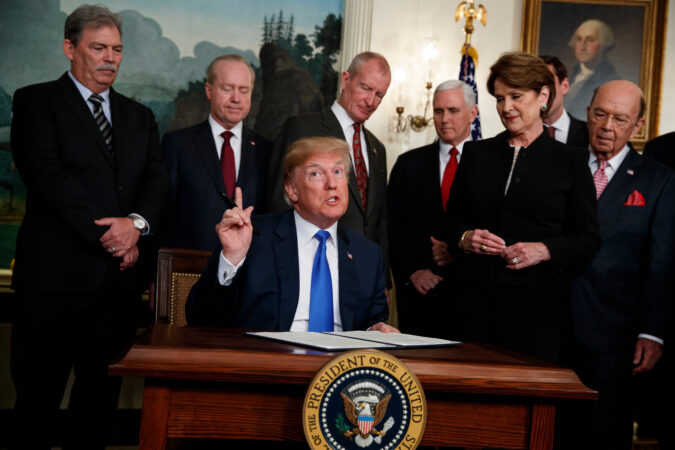
A spokesperson forShapiro said he decided to attend the meeting at the White House once Maryland Gov. Wes Moore and Colorado Gov. Jared Polis were invited, despite Trump previously declaring the pair of Democratic leaders were not welcome.
“Gov. Shapiro chose to join his colleagues and go to the White House to raise real issues and harm the Trump administration is doing to Pennsylvania,” Rosie Lapowsky, Shapiro’s press secretary, said in a statement.
Trump initially planned to invite only Republican governors to the annual event that coincides with the National Governors Association winter meeting in Washington, D.C., but faced pushback by the group’s GOP chair. Trump then invited Democrats, as well, but rescinded the invitations for Moore and Polis. In a post on his Truth Social platform earlier this month, Trump wrote that the two Democratic governors were “not worthy of being there.”
The weekslong back-and-forth threatened the nonpartisan nature of the National Governors Association that represents 55 governors, including those from all 50 states and five U.S. territories. Ultimately, the NGA declined to facilitate the annual breakfast event, and Trump later re-invited Polis and Moore.
President Donald Trump arrives to speak during a breakfast with the National Governors Association in the State Dining Room of the White House, Friday, Feb. 20, 2026, in Washington. (AP Photo/Evan Vucci)
Moore, Polis, and Shapiro were among the more than two dozen governors who attended the White House breakfast Friday, where Trump delivered brief remarks. Other Democrats, including New Jersey Gov. Mikie Sherill, decided against going.
Sherrill, a former member of Congress who just began her term last month, said in a statement that she opted to skip the White House breakfast to “focus on other NGA meetings.”
“The president’s chaotic back-and-forth about the NGA was counterproductive and Gov. Sherrill decided not to attend,” said Sean Higgins, a spokesperson for Sherrill.
What Shapiro talked about
Shapiro described the closed-door meeting between Trump, the governors, and all of Trump’s cabinet as productive for him to advocate for specific issues directly with federal leaders.
“Folks were respectful to me,” Shapiro told reporters following the meeting. “I went there with a mission to talk about things that were important to Pennsylvania.”
Shapiro, who is currently running for reelection and touts his ability to work across partisan lines, has expressed an openness to working with Trump on issues specific to Pennsylvania, though he has challenged the president more than a dozen times in court since Trump took office last year.
Shapiro said he was able to discuss his top issues directly with federal officials. He said he spoke with U.S. Department of Agriculture Secretary Brooke Rollins about the reemergence of the avian flu in Pennsylvania; discussed releasing withheld broadband funding with Treasury Secretary Howard Lutnick about releasing withheld broadband funding; and talked with U.S. Secretary of Health and Human Services Robert F. Kennedy Jr. and Director of the Office of Management and Budget Russ Vought about the ways “their policies are hurting rural Pennsylvanians.”
New York Gov. Kathy Hochul, another Democrat who attended the meeting, said afterward in a news conference that she was glad to hear what lessons Trump said he learned from his administration’s immigration enforcement mission in Minneapolis that led to mass protests and the fatal shootings of two U.S. citizens by federal agents.
Hochul said Trump told the group that “we’ll only go where we’re wanted,” alleviating concerns among some Democratic governors that their states may be the next to see a full-scale federal presence upending daily life.
Weeks of back-and-forth ahead of the White House breakfast
“Democratic governors have a long record of working across the aisle to deliver results and we remain committed to this effort,” they said in a joint statement on Feb. 10 through the Democratic Governors Association. “But it’s disappointing this administration doesn’t seem to share the same goal. At every turn, President Trump is creating chaos and division, and it is the American people who are hurting as a result.”
They added: “Democratic governors remain united and will never stop fighting to protect and make life better for people in our states.”
In comments to CNN last week, Sherrill said that “worse decisions” would be made without all the governors there.
“For the president to pick and choose who he is going to have to sort of undermine the very focus of this, of coming together to get stuff done for the country just seeds more … chaos,” the New Jersey Democrat said.
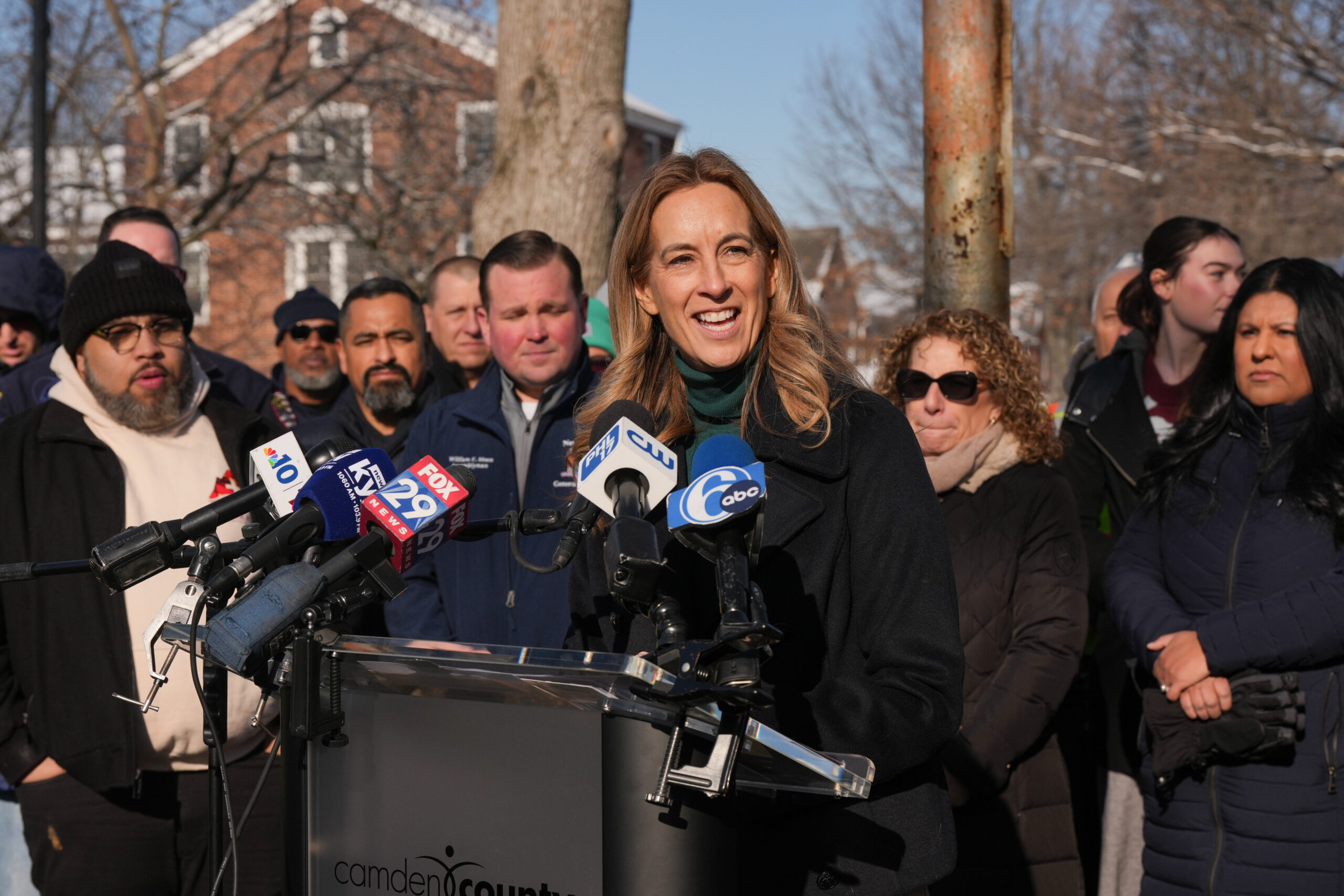
Gov. Mikie Sherrill, shown here at a news conference as volunteers gather prior to shoveling snow at Fairview Village on Martin Luther King Day during a day of service, in Camden, New Jersey, January 19, 2026.
Moore, the nation’s only Black governor, and Polis, the first openly gay man elected to U.S. governor, were the only two leaders Trump singled out, raising concerns by civil rights groups.
Trump, however, cited different reasons for his objections to Moore and Polis’ attendance. He said he wanted to exclude Polis because his state continues to incarcerate a former county clerk over her conviction related to allowing election-denier activists access to election data following the 2020 election. Trump also expressed a number of grievances toward Moore, including his handling of the rebuilding of the Francis Scott Key Bridge and Baltimore’s crime rates.
Following the meeting Friday, governors from both parties reaffirmed that they were still committed to working with Trump despite the turmoil.
“It’s really important imagery that we stand together as governors of our states and represent all of America, and just remind people that there’s really more that brings us together and unites us than divides us,” said Oklahoma Gov. Kevin Stitt, a Republican who chairs the NGA.
Shapiro separately told reporters that he has worked with directly Trump to “save steelworker jobs” but remains ready to challenge them in court if they threaten Pennsylvanians’ rights.
Asked whether he has a good relationship with Trump, Shapiro said: “We have a relationship where we can work for the people of Pennsylvania, that’s my job.”
The University of Pennsylvania Health System had an operating profit of $189 million in the first six months of fiscal 2026, up from $117 million in the same period a year ago, the nonprofit reported to bond investors Friday.
Operating income increased, even after Penn put $43 million put into reserves for medical malpractice claims. Two years ago, Penn had recorded charges totaling $90 million for the same purpose.
Here are more details on Penn’s results:
Revenue: Penn had $6.76 billion in total revenue, up nearly 12% even adjusting for the inclusion of Doylestown Health in fiscal 2026. Penn acquired Doylestown last April.
“We’ve had good volume growth over the prior year, particularly in our outpatient activity,” the health system’s chief financial officer, Julia Puchtler, said in an interview.
The system has also had an increase in the acuity level on the inpatient side, she said. That translated into more revenue.
Expenses: The $43 million malpractice charge boosted overall malpractice expenses through December to $125 million, from $69 million in the same period a year ago.
It’s not that Penn is seeing more claims, Puchtler said. “It’s really the average reserve per claim that we’re seeing accelerate,” she said.
Notable: Excluding Doylestown, Penn saw a 5.9% increase in patient volumes, Puchtler said. “That’s mostly outpatient,” she said. “Outpatient surgery, endoscopy, and some of our other infusion therapy are all increased over the prior year.”
Editor’s note: This article has been updated to reflect an additional medical malpractice charge in 2024, bring the total to $90 million.
No one in the NBA has played more minutes than Tyrese Maxey this season.
Without Joel Embiid in the lineup, even more of the Sixers’ offensive load lies on Maxey’s shoulders, and it’s leading to inefficiency in his shot-making.
To play better with — and without — Embiid, coach Nick Nurse said he needs Maxey and the Sixers to play faster. Earlier this season, the Sixers played with “tremendous speed.” But as the season has progressed, they’ve moved away from that play style.
“I just talked to [Embiid] for a long time, and he said the same thing,” Nurse said. “[Embiid said], ‘They need to play faster, even when I’m out there. They wait for me too much. They need to blast ahead and take opportunities that are there, and if they’re not, I’ll get down there eventually to get into some of the halfcourt offensive stuff.’”
On Thursday, Cameron Payne, playing in his first game back with the Sixers after starting the year with Serbian team KK Partizan, got the first minutes in relief of Maxey in the second quarter and again in the fourth. The Sixers lost Payne’s fourth-quarter minutes, 11-7, and Payne missed all three of his three-point attempts in his return to the NBA. But he dished out four quick assists in the second quarter and has familiarity with much of the roster.
Payne played 31 games under Nurse after the Sixers acquired him at the trade deadline in 2024. While some things are similar to his last stint, Payne says there still are several new plays to learn, and he needed to get back into NBA shape after the time away from the league.
“They play a lot faster,” Payne said. “I feel like we played fast when I was here, but they play a lot faster now.”
Nurse hopes they’ll get even quicker. But to maintain that, Maxey and VJ Edgecombe especially need to have fresher legs. Edgecombe already has played more games this season than he did all of 2024-25 at Baylor.
Nurse said that Maxey and Edgecombe’s speed and athleticism are among their biggest strengths, and the Sixers need to leverage it even more to find success down the stretch. But if players like Payne are able to come in and become playmakers on offense, that can help buoy the team in tough minutes and give Maxey more rest opportunities.
“I thought early in the year, our guards were creating offense for each other a lot more,” Nurse said. “Remember all the VJ to Tyrese, all the stuff with [Quentin Grimes], and that has gotten a little less.
“But I think that’s what [Payne] did last night. He came in and just hit through, ran the screen roll, got in the paint, boom, it’s out. Or even just simple throw-aheads, catch-and-shoots. … That’s what we need, is more creation for others, more hitting the paint and not trying to play through the gauntlet and then hitting the paint and getting it out a little.”
CLEARWATER, Fla. — After Cristopher Sánchez finished his bullpen session on Friday, Phillies manager Rob Thomson walked off from where he’d been observing behind the mound.
As he passed by Mark Kolozsvary, the catcher who had been behind the plate, Thomson leaned over.
“He any good?” he joked. “Make the team?”
Sánchez, who looked very sharp in his session, is preparing to represent the Dominican Republic at the World Baseball Classic next month. He will make at least one start in a Grapefruit League game before he joins his federation for pool play in Miami.
“I just want to box him up and send him up north,” Thomson said. “He’s been great.”
Thomson said the Phillies expect Sánchez to pitch in the Dominican Republic’s first game of the tournament, which is against Nicaragua on March 6, but they don’t know the plan after that.
He was one of several pitchers who impressed Thomson on Friday, the final workout day before the Phillies’ Grapefruit League slate opens on Saturday with a game against the Blue Jays. Also turning some heads was prospect Alex McFarlane, a 24-year-old right-hander who was added to the Phillies’ 40-man roster in December ahead of the Rule 5 deadline.
Phillies pitcher José Alvarado throws in the bullpen during a workout on Friday in Clearwater, Fla.
McFarlane had been somewhat “erratic” in a previous live batting practice session on Tuesday, but showed better command Friday.
“Fastball, heavy sink, 97 [mph] or whatever it was,” Thomson said. “Slider for strikes. That’s what you’re going to see. I think a lot of times, first time out you see hitters, [pitchers] can be a little bit erratic, but he was more in the zone today. He was really good. … Very mature kid, too.”
Another standout was José Alvarado, who struck out Adolis García and Bryce Harper in his live batting practice session. Thomson said Alvarado looked like he did last year around this time. The lefty had a strong 2025 spring, hitting 100 mph on the radar gun with his sinker multiple times and not allowing a run in nine Grapefruit League appearances.
That hot start cooled off quickly, though, when Alvarado was suspended 80 games for testing positive for a performance-enhancing drug.
“He’s in a good spot, and I think we’re behind all that stuff,” Thomson said.
Justin Crawford will start in center field in the Phillies’ spring opener on Saturday against the Blue Jays.
‘Satan’s corner’
Justin Crawford is scheduled to play center field in Saturday’s Grapefruit League opener against Toronto. He will be sharing the outfield with García in right and Otto Kemp, who will play left.
It will be a tough first test for Kemp, who has been getting more outfield work this spring as the Phillies believe he could be a platoon for Brandon Marsh. Rob Thomson has nicknamed the left field in TD Ballpark, the Blue Jays’ spring training home in Dunedin, ‘Satan’s Corner,’ because it is a particularly difficult place to play.
“The wind swirls down there. The sun, it seems like every time we go over there, there’s not a cloud in the sky,” Thomson said. “I’ve seen a lot of mistakes out there.”
The biggest thing Thomson is looking for from Crawford this spring is to take the lead in the outfield as the center fielder.
“Reads and routes, and taking charge,” Thomson said. “Florida for an outfielder, it’s brutal in spring training. High sky, wind, sun. I’ve seen gold glovers make a lot of mistakes out there. But that’s really what I’m looking for is just proper reads and routes and taking charge.”
Extra bases
Harper homered off Tanner Banks in a live batting practice session Friday. … Bryse Wilson is scheduled to start for the Phillies on Saturday against the Blue Jays (1:07 p.m., NBC Sports Philadelphia and 94.1 WIP).
Isaiah Zagar, 86, of South Philadelphia, the renowned mosaic artist who crafted glittering glass art on 50,000 square feet of walls and buildings across the city and founded Philadelphia’s Magic Gardens, has died.
Mr. Zagar died Thursday of complications from heart failure and Parkinson’s disease at his home in Philadelphia, the Magic Gardens confirmed.
“The scale of Isaiah Zagar’s body of work and his relentless artmaking at all costs is truly astounding,” said Emily Smith, executive director of the Magic Gardens. “Most people do not yet understand the importance of what he created, nor do they understand the sheer volume of what he has made.”
His art, Smith said, “is distinctive and wholly unique to Philadelphia, and it has forever changed the face of our city.”
saiah and Julia Zagar in their mosaic-adorned home in South Philadelphia in October 2024. The couple married in 1963 and moved to South Philly in 1968 after serving in the Peace Corps in Peru.
Mr. Zagar was born in Philadelphia in 1939, grew up in Brooklyn, N.Y., and received a bachelor of fine arts degree in painting and graphics at the Pratt Institute of Art in New York. He met his wife, artist Julia Zagar, in 1963. The couple married the same year and moved to South Philadelphia in 1968 after serving in the Peace Corps in Peru. Together, they founded Eye’s Gallery at 402 South St., focusing on Latin American folk art.
In the 1970s, the Zagars were part of a group of artists, activists, and business owners who pushed back against development of a Crosstown Expressway that would have demolished South Street. Their contributions helped lead to a neighborhood revitalization later called the South Street Renaissance.
“Philadelphia’s iconic South Street area has become inseparable from Isaiah Zagar’s singular artistic vision,” said Val Gay, chief cultural officer and executive director of Creative Philadelphia, the city’s arts office. “His mosaics redefine the very framework of the public space they inhabit. Isaiah Zagar reshaped the visual identity of Philadelphia, and his legacy will endure through all that he transformed.”
A self-taught mosaicist, Mr. Zagar used broken bottles, handmade tiles, mirrors, and other found objects to cover walls across the city, particularly in South Philly. The artist, who struggled with mental health over many years, found that creating mosaics was a therapeutic practice. He was inspired by artists Pablo Picasso, Jean Dubuffet, Kurt Schwitters, and Antonio Gaudí.
“He worked with found objects that he found everywhere and put them to use. So, [he thought], ‘Why is the thing a piece of trash? Well, it doesn’t have to be a piece of trash. It could be a piece of art, too, and still be a piece of trash,’” said longtime friend Rick Snyderman, 89, a renowned Philadelphia gallerist based in Old City. An object “in the hands of the right person changes your perspective about it. That’s, I think, what the greatest gift of Isaiah was — to change your perspective.”
Mr. Zagar’s son, the filmmaker Jeremiah Zagar, documented his father’s life in a 2008 documentary, In a Dream. Jeremiah Zagar recently directed episodes of the HBO miniseries Task. His father came to the show’s New York City premiere last September carrying a mosaicked cane.
Snyderman remembers Mr. Zagar as a big reader and world traveler who was “eternally curious” and created artwork to make people smile. They first met in the 1960s and their families were part of the South Street community of “creative thinkers” who bonded “because they were misfits in some other world, perhaps.”
“He was a man who just didn’t pay attention to his own world, he paid attention to the larger world. One of his favorite sayings was that ‘Philadelphia is the center of the art world, and art is the center of the real world,’” Snyderman said.
More than 200 of Mr. Zagar’s mosaics adorn public walls from California and Hawaii to Mexico and Chile. His artwork is in the permanent collections of the Philadelphia Museum of Art and the Pennsylvania Academy of the Fine Arts, among other museums, and has been shown in solo exhibitions at cultural institutions including Washington’s Hinckley Pottery Gallery and New York’s Kornblee Gallery.
“Isaiah Zagar was devoted to mosaic work and the creation of immersive art environments. Internationally recognized, he is proudly claimed by Philadelphia as our own,” said Elisabeth Agro, the Nancy M. McNeil curator of modern and contemporary craft and decorative arts at the Philadelphia Museum of Art. “Although his death is a profound loss to our city’s culture and creative economy, Zagar’s indelible imprint remains inextricably linked to Philadelphia’s soul.”
Synonymous with Philadelphia’s public art
Mr. Zagar’s colorful and eclectic mosaic murals have become synonymous with Philadelphia’s public art scene.
After arriving in the city, Mr. Zagar soon set about modifying Eye’s Gallery, which was then also his home. The building, the Daily News reported in 1975, was dilapidated when he took possession of it, and at one point lacked plumbing and had a wood-burning stove.
Several years into his ownership, the Daily News wrote, Mr. Zagar had evolved the rowhouse into a “womb-like living space with undulating cement walls.” Materials for its decoration were largely scavenged, and included thousands of pieces of broken glass and mirrors.
Changes, the People Paper reported, started with the cementing of a stairway wall that had become wet. Lacking experience in carpentry, plastering, and home repairs, Mr. Zagar said, he and a fellow artist cemented the wall to hide the leak, and covered it in mirrors to disguise the issue. That didn’t fix the leak, but it did inspire a kind of operating logic for his home repairs.
“We would do something artistic to hide a fault, then have to correct the fault to save the artwork,” Mr. Zagar said in 1975.
Isaiah Zagar in May 2004, in front of a wall he was working in Bella Vista, on Clifton Street between Fitzwater and Catharine.
His process included embedding everything from broken teapots and cups to plates and crystal into the cement while it was still wet. Mirrors, however, were an early favorite of Mr. Zagar’s.
That idea, he told the Daily News, came from Woodstock, N.Y.-based artist Clarence Schmidt, who covered the outside of his home in broken mirrors embedded in tar.
“Mirrors intercept space, they keep poking holes in things,” Mr. Zagar said. “If they’re in the sun, they throw prisms around. You can’t fashion a mirror into an anatomical human being. It freed me from the concept of what things were supposed to look like.”
Preservation challenges
New development in Philadelphia in recent decades has led to the demolition of many of Mr. Zagar’s mosaic murals, most of which have been on private property.
By the turn of the century, Mr. Zagar had covered about 30 buildings in the city — largely then in Old City and on South Street — in his distinctive mosaic work, according to reports from the time. Among his largest passions in that medium, he told The Inquirer in 1991, were the colorful mirror and tile murals that today dot the city.
“These materials have a lasting quality,” he said at the time. “I have never seen an ugly piece of tile, it’s all beautiful.”
Detail of the wall of the former home of the Painted Bride Art Center at 230 Vine St. on Oct. 19, 2025. The building is covered by “Skin of the Bride,” a mosaic by Philadelphia artist Isaiah Zagar, created between 1991 and 2000.
Mr. Zagar held grand ambitions for Philadelphia as the home of his mosaics by the mid-1990s. As he told the Daily News in 1993, he hoped to see Philly changed “into a city of the imagination.”
“My dream is [to] turn all of Philadelphia into tile city — to turn all these ugly old brick and stucco walls into a manifesto of magic,” he said.
(function() {
var l2 = function() {
new pym.Parent(‘zagar_pmg’,
‘https://media.inquirer.com/storage/inquirer/projects/innovation/arcgis_iframe/zagar_pmg.html’);
};
if (typeof(pym) === ‘undefined’) {
var h = document.getElementsByTagName(‘head’)[0],
s = document.createElement(‘script’);
s.type = ‘text/javascript’;
s.src = ‘https://pym.nprapps.org/pym.v1.min.js’;
s.onload = l2;
h.appendChild(s);
} else {
l2();
}
})();
Perhaps the prototypical example of that dream was the Painted Bride Art Center, which once was home to Mr. Zagar’s Skin of the Bride — a massive, 7,000-square-foot mosaic work that came to envelop the exterior of the building. Demolition of the Painted Bride began in December after a lengthy legal battle, but members of the Magic Gardens Preservation Team had been able to remove about 30% of the tiles for reuse in new mosaics in 2023.
Mr. Zagar’s work on the Painted Bride began in 1991 and carried on for about nine years. The work was exhausting, and his wife recalled Mr. Zagar working up to 12 hours a day for years to create what he viewed as his masterpiece.
In 1993, however, he took some creative liberties with the number of tiles, mirrors, and pieces of pottery involved with its creation.
“I’ve counted them,” he jokingly told the Daily News. “There are exactly 3,333,333.”
In summer 2022, a fire at Jim’s Steaks damaged the neighboring Eye’s Gallery, requiring lengthy restoration work that Julia Zagar spearheaded. She called the space a landmark “for the creative spirit of South Street.” The fire eventually uncovered a hidden mural by Mr. Zagar from the 1970s that had been covered up by drywall.
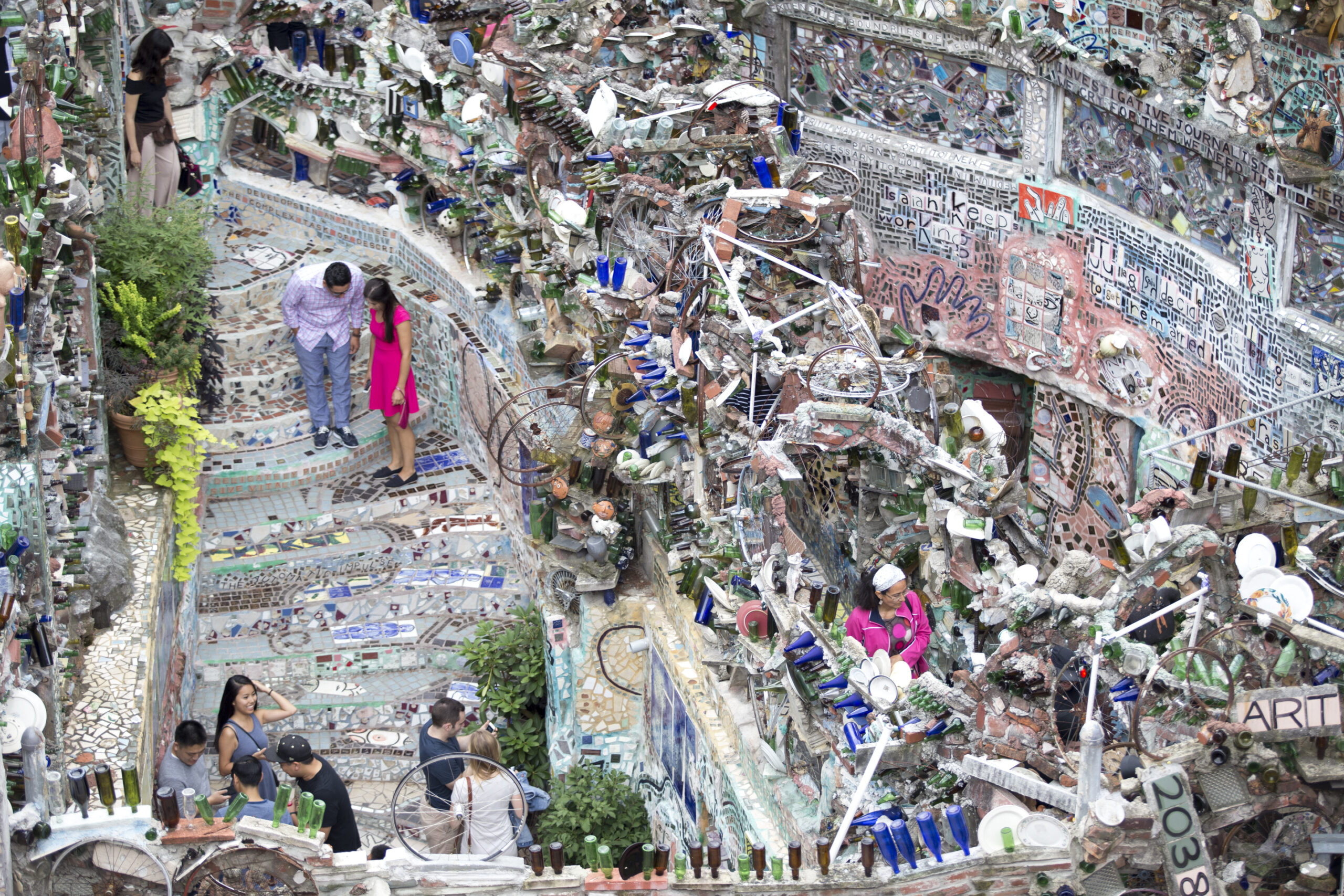
Tourists at Philadelphia’s Magic Gardens in July 2017. The Magic Gardens has become a Philadelphia landmark, attracting about 150,000 visitors a year to walk through the immersive, labyrinthine indoor and outdoor spaces.
The Magic Gardens
In the late 1990s, Mr. Zagar expanded his sculpture and mosaic art into two empty lots neighboring his South Street home. The lots were owned by a group of Boston businessmen who had abandoned them, so with permission from the owners’ agent, Mr. Zagar cleared and transformed the space.
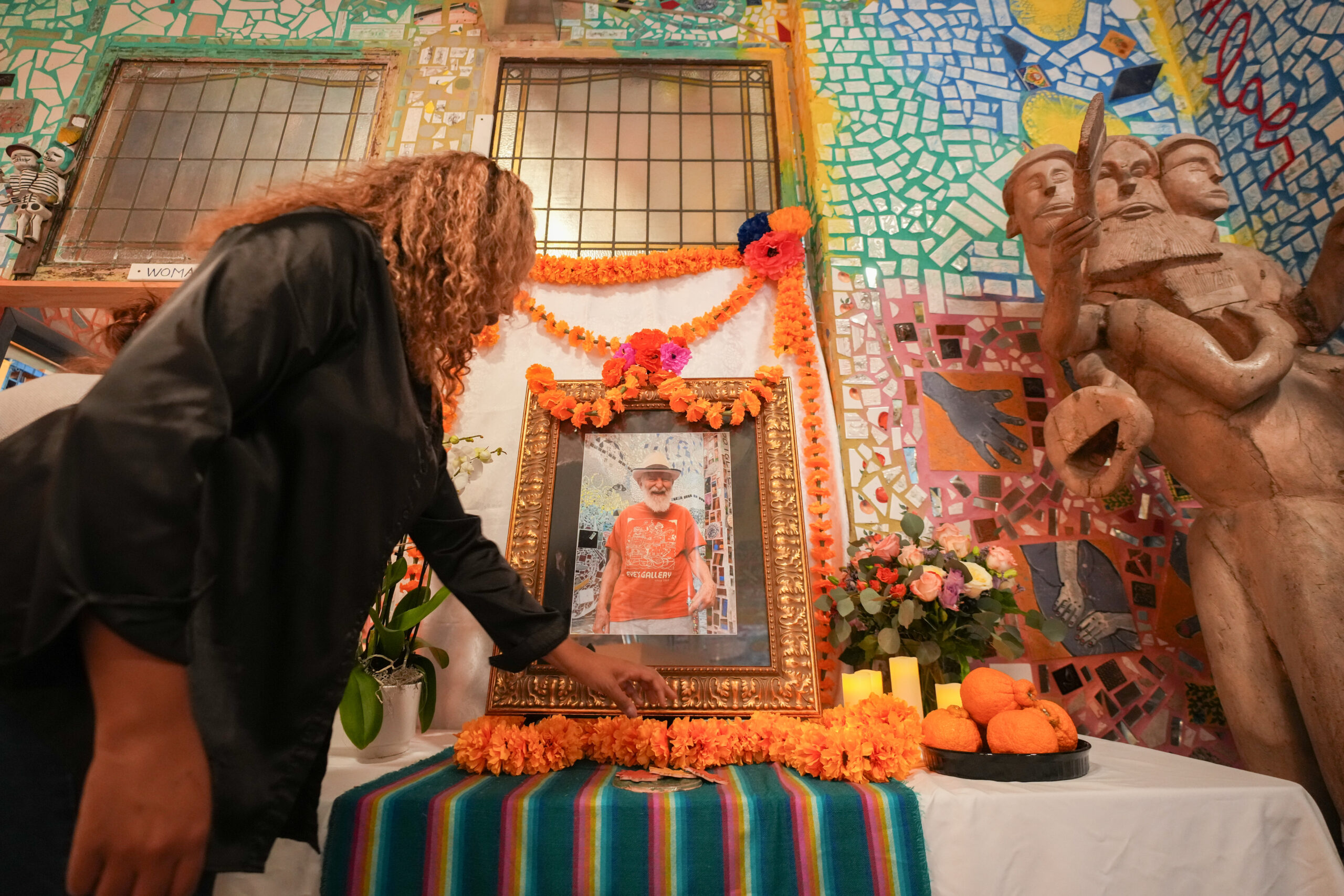
Chelsey Luster, Exhibition Manager at Philadelphia’s Magic Gardens, places flowers on an Ofrenda that friends and staff members are putting together in honor of artist Isaiah Zagar who passed earlier today, at Philadelphia’s Magic Garden, in Philadelphia, Thursday, Feb. 19, 2026, in Philadelphia
It would go on to become Philadelphia’s Magic Gardens, but it took a legal battle in the 2000s to keep it there.
In 2004, about a decade after Mr. Zagar started building in the space, the owners of the land ordered the artist to dismantle and remove the work ahead of plans to market the property for sale.
Mr. Zagar and a group of volunteers formed the nonprofit organization known as Philadelphia’s Magic Gardens and, with help from an anonymous benefactor, purchased the lot for $300,000, The Inquirer reported that year. The nonprofit had begun collecting donations and was tasked with raising a majority of the funding, and, if successful, the benefactor planned to donate $100,000 to the cause.
“Why it’s so important for me to save the garden is that it’s not finished,” Mr. Zagar told The Inquirer in late 2005. “The too-muchness of it is the artist’s life.”
Isaiah Zagar in April 2007, applying colored cement to his mosaic on the 300 block of Christian Street. He was perched in a cage of a 90-foot boom truck reaching to the top of a 60-foot wall.
By that time, the garden was open on a limited basis for visitors to help with fundraising efforts, and adopted a more regular schedule several years later. A swing-top trash can was placed just inside the property’s front fence to collect donations from passersby, collecting about $100 a month in its early days, The Inquirer reported.
“I make art voluminously,” Mr. Zagar told The Inquirer in 2005. “The common man is clear about it: This is art.”
The Magic Gardens has become a Philadelphia landmark, attracting about 150,000 visitors a year to walk through the immersive, labyrinthine indoor and outdoor spaces.
In 2020, after allegations of sexual harassment were leveled against Mr. Zagar, the Magic Gardens issued a statement from its board and staff reacting to concerns raised over “inappropriate past behavior.”
“Though the Gardens were originally created by Isaiah Zagar, he does not own the Gardens or have a vote on its Board of Directors,” the statement read before clarifying that the Magic Gardens operated as an independent nonprofit with its own staff and board of directors.
The allegations, the statement said, left the staff and board “hurt, angry and confused as we confronted a reality that was in every way the opposite of what we stood for.”
When asked if there was a formal investigation into Mr. Zagar’s behavior, Leah Reisman, board member of Gardens said on Friday, “Isaiah Zagar experienced mental health struggles throughout his life. While this experience often propelled his artmaking, it also at times led to challenges and repercussions in his personal and professional relationships.”
In 2020, she said, the Gardens’ staff and board “brought these concerns directly to Isaiah and assisted him in accessing professional support to address these concerns.” Mr. Zagar’s presence on site, she added, was “carefully scaffolded through the years.”
In 2023, the Zagars donated his Watkins Street Studio to Philadelphia’s Magic Gardens to open a secondary space — also entirely covered in mosaics, of course — to host arts workshops and educational programming.
Several students at Quakertown High School were taken into custody on Friday after a student walkout protesting federal immigration enforcement escalated into a confrontation that left at least one teenager bloodied and in handcuffs, according to witnesses and video footage from the scene.
School officials said the episode began shortly before noon, when dozens of students left campus without permission to demonstrate along Front Street in opposition to the policies of U.S. Immigration and Customs Enforcement. What followed, according to videos posted widely on social media, was a chaotic scene involving students, an unidentified man, and local police officers.
By late afternoon, authorities had released few details about what prompted officers to intervene or how many students were detained.
In a letter to parents, Lisa Hoffman, the acting superintendent of the Quakertown Community School District, said 35 students left school grounds at about 11:30 a.m. to stage the protest. She said district officials were informed by the Quakertown Police Department that the students were “engaging in unsafe and disruptive behavior,” though she did not elaborate on what that behavior entailed.
The school also went on a short lockdown as a precaution, she said.
Quakertown police contradicted the account offered by school officials, saying in a statement that as many as 50 students were involved in the protest, which “began peacefully” but became dangerous when students entered traffic, threw snowballs, kicked cars, and damaged property, including a car’s sideview mirror.
“Officers issued additional warnings to maintain civil,” the statement said, before “confrontation escalated, and some individuals assaulted officers.”
Police said “five to six juveniles and one adult have been taken into custody,” but offered no additional information.
Videos circulating online offer a fragmented glimpse of the confrontation. In one clip, a man is seen grabbing a teenage girl and placing her in a chokehold. A male student rushes in and strikes the man, after which police officers move in and take the student into custody. Other footage shows protest signs scattered across the sidewalk, speckled with blood, and a teenage girl in handcuffs with blood visible along the side of her face.
A woman who was dining inside a restaurant along Front Street said she watched the confrontation unfold just outside the window.
“This man was easily twice her size,” said the woman, who asked not to be identified for fear of reprisal. “She couldn’t have been much more than 100 pounds.”
When a male student stepped in to help the girl, she said, the scene quickly spiraled. Another woman in the restaurant recalled that several adults — including police officers — forced the boy to the ground.
“The situation completely escalated,” said the second woman, who also asked not to be identified out of fear of reprisal. “There were multiple grown men getting in the faces of the children, spit flying out of their mouths.”
It remains unclear what role the man played in the altercation. Both women said they later saw him drive away from the scene in a police vehicle.
The statement by police made no mention of the man, nor did it include details about any injuries sustained by the students.
Messages seeking comment from the school district were not immediately returned Friday afternoon.
The Buck’s County District Attorney’s Office said in a statement Friday that it was aware of the incident and was “gathering information.”
“We are committed to ensuring public safety and will provide updates if and when legally appropriate,” the office said.
By late afternoon, the number of students taken into custody had not been disclosed, and school officials had not said whether any would face disciplinary action.
Videos also showed papers and books scattered on the sidewalk next to dropped and bloodied signs. “These children were thrown around and brutalized by these officers,” said one of the women.
School officials had been aware of the planned student walk-out, according to the high school’s Facebook page, and canceled it Friday morning.
“While we respect students’ rights to express their views, our first priority is to ensure a safe and secure environment for all,” House Principal Jason D. Magditch wrote in a letter posted on the Facebook page. “At this time, we believe canceling the protest is the most appropriate course of action in the interest of student safety and well-being.”