Blog

  • Tyrese Maxey ghosted, then roasted James Harden in a battle of brothers

    Tyrese Maxey ghosted, then roasted James Harden in a battle of brothers

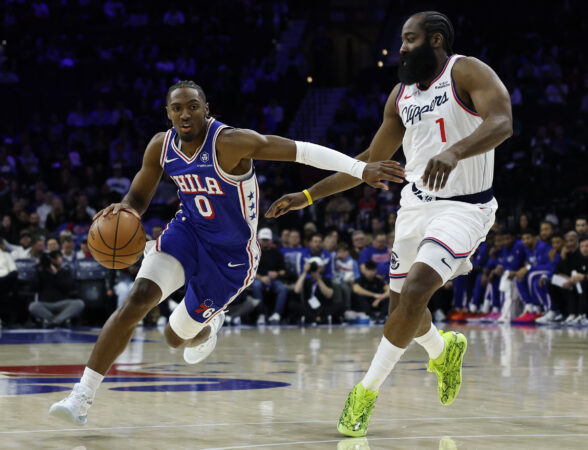
    Tyrese Maxey hurt Big Bro’s feelings Sunday night. When James Harden and the Clippers flew in from Boston on Sunday evening, Harden expected Maxey to have called and left a message, or to at least have sent a text, inviting Harden to meet Maxey somewhere in Philly for food and fellowship.

    But then the plane touched down, and Harden turned on his phone and … crickets.

    The Beard was bummed. After all, he’d mentored Maxey for the 18 months they’d been 76ers teammates in the 2021-22 and 2022-23 seasons. It was a mentorship Maxey rode to his All-Star appearance the very next season.

    They are similar, and they remain close. When Harden began battling the Sixers’ front office in 2023, Maxey defended him and called him “my big brother.”

    On Sunday, though, Big Bro was left to his own devices, and he mentioned that to Maxey before they faced each other Monday night: “Bro, you didn’t call me. I mean, like when I landed … nothing.”

    Maxey replied, “Yeah, I thought you were gonna go to sleep. Back-to-back. [You’re] getting old now.”

    Harden might be old — he’s 36, and he’s playing in his 17th season — but he’d dropped 37 on the Celtics, he entered Philly averaging 26 points in his 12 games this season, and he’d averaged 34.0 points, 9.8 rebounds, and 8.8 assists in his last four games. This, after making his 11th All-Star team last season.

    Harden managed 28 points Monday, but 18 of those came in the first half. Then the Sixers threw a few junk defenses at him, and he missed 14 of 16 shots in the second half and went 0-for-6 in the fourth quarter, when the Clippers blew a 10-point lead. The Sixers muzzled Harden and won, 110-108, serving the Clippers their eighth loss in their last nine games.

    It wasn’t just the box-and-one and double-team schemes that diminished Harden’s effectiveness. Playing without Kawhi Leonard and Bradley Beal, Harden had averaged 39 minutes per game in his last five games. He played almost 37 minutes Monday.

    “The minutes he’s been playing … I think he got tired,” coach Tyronn Lue said. “Got worn down.”
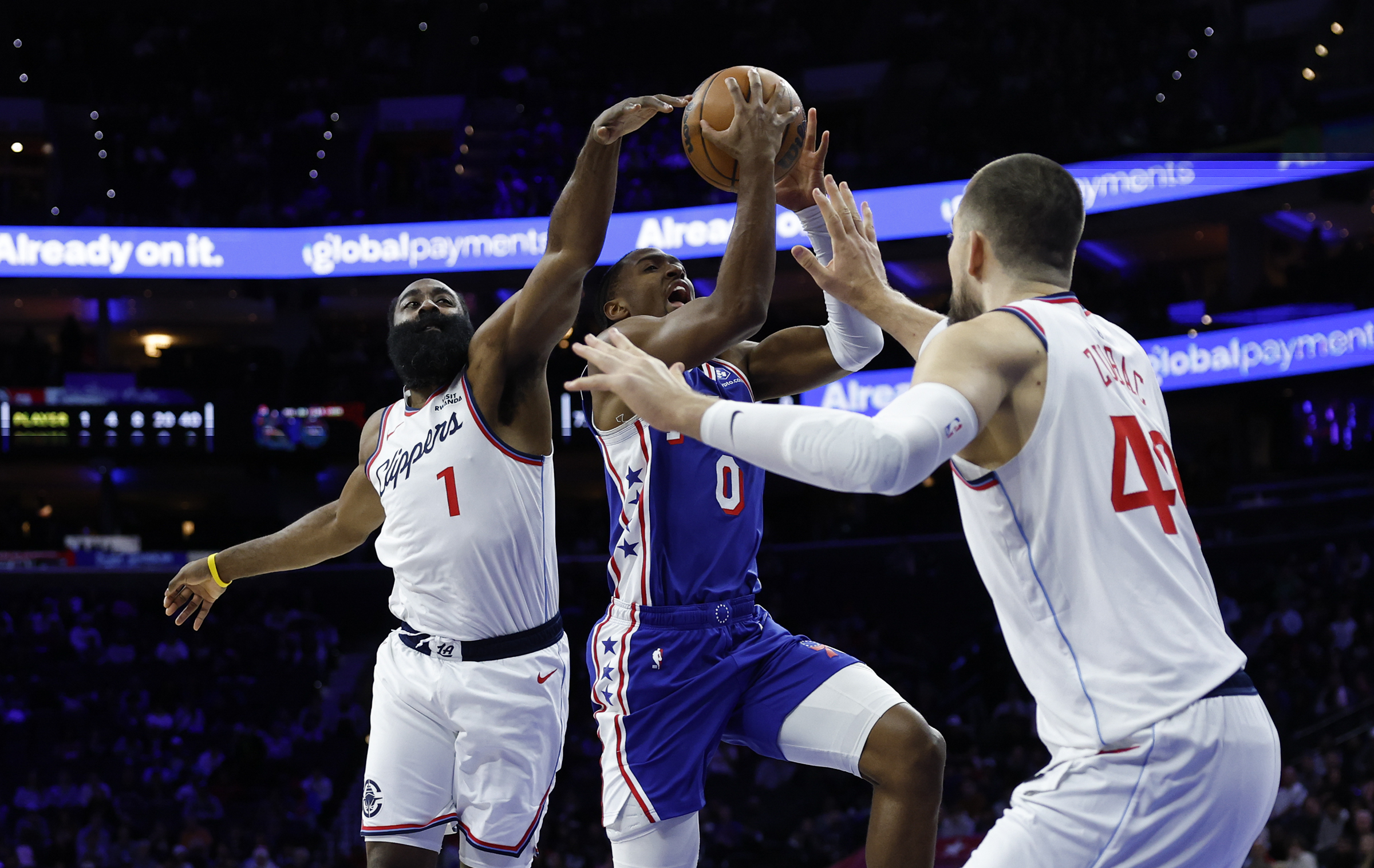
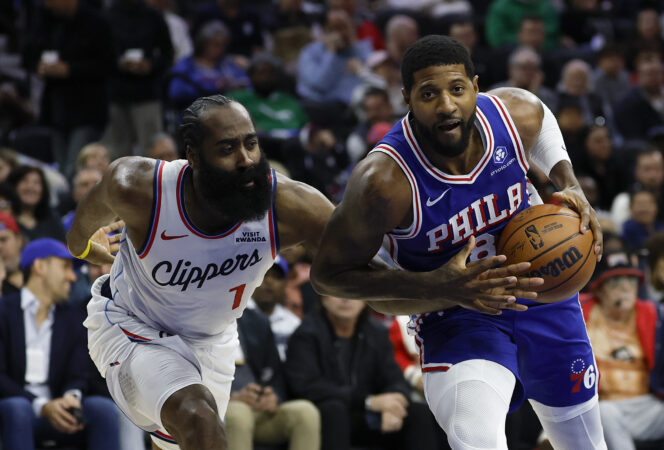
    Sixers guard Tyrese Maxey drives to the basket against Clippers guard James Harden (1).

    Afterward, Harden, who has the fashion sense of a Muppet, put on his fuzziest sneakers, used a pick to groom his luxurious facial fur, shook his head, and said, “I’m not tired. I wasn’t exhausted.”

    In fact, he said he has not felt this good since the 2019-20 season, his last full season in Houston, when he won his third consecutive scoring title. A raft of injuries, he said, hindered his efforts to both perform consistently and to reach his physical peak.

    Now, fully healthy, “I feel amazing,” Harden said.

    But then, Harden has faced years of criticism about his conditioning — he once was accused of wearing a fat suit to force a trade from Houston to Brooklyn — so he will forever challenge any hint that he might ever get tired.

    Little Bro certainly wasn’t tired.

    After missing eight of 12 shots in the first half, Maxey scored 27 of his game-high 39 points in the second half, including 14 in the fourth quarter. It was the eighth time in his 13 games that he’s scored at least 30 points and the fifth time he’s scored at least 39.

    The student has surpassed the master. Of course, the student is 11 years younger, and, as ever, affectionate:

    “I love James,” Maxey said.

    The rest of Philadelphia does not share his Brotherly Love.

    Harden was roundly booed every time his name was mentioned Monday night, and the ire came across generations. When Harden bobbled a loose ball near the sideline in the fourth quarter, a middle-aged businessman in a tailored suit rage-cheered from the third row. Ten seats down, a 20-something in a fancy sweatsuit leaned over fans in the second row so he could hard-clap and taunt Harden from a few feet closer.

    This is all lingering residue of Harden’s acrimonious departure from Philly in the late summer of 2023, when he forced a trade to his hometown Clippers. He burned the bridge between himself and Sixers president Daryl Morey, who acquired and enriched Harden in Houston and Philly but declined to overpay him two years ago. In response, Harden ended his brief and disappointing time with the Sixers by opting into the final season of his deal and leveraging his way home.

    He’ll always be shown a little love in Philly as long as Maxey’s around.

    “James has done a lot for me,” Maxey said. Like every little brother, Maxey relishes the chance to outperform Harden: “He scored on me once today. The other times he couldn’t score on me. I tell him, ‘You can’t score me. I know everything you do!’”

    That’s because, from crossover drives to step-back threes to wrong-footed finishes, Harden taught Maxey so much. More than anything, Harden said, he is most impressed that Maxey took to heart the message to always stay hungry.

    “Just the aggressiveness that he has,” Harden said, “whether you’re missing or you’ve got it going, he keeps shooting. He had that big fourth quarter. So, I’m just proud of the jump that he’s made and the continuous success that he had.

    “And, you know what? He’s just getting started.”

  • Lower Merion superintendent recommends against merging district’s football programs

    Lower Merion superintendent recommends against merging district’s football programs

    Lower Merion’s two high school football teams won’t be merging, for now.

    At a school board meeting Monday night, Lower Merion School District Superintendent Frank Ranelli made an official recommendation that the district not merge Lower Merion and Harriton High Schools’ football programs despite a coordinated push by parents to combine the teams.

    “I don’t feel it’s [Lower Merion’s] responsibility to give up their team identity … and playoff chances to merge with Harriton,” Ranelli said. “Lower Merion High School would be giving up a great deal for a problem that they do not need to solve.”

    Parents of Lower Merion and Harriton football players in recent months have petitioned the school board to allow for a merger. They argue that a lack of youth football infrastructure in Lower Merion Township has contributed to a steep decline in player interest, leaving both high school teams under-rostered and unable to compete with neighboring schools. Neither high school has a freshman or junior varsity team, leaving 14-year-old freshmen to play alongside 18-year-old seniors and, the parents argue, increasing the risk of injury.

    Amy Buckman, director of communications for the Lower Merion School District, said any further action or vote on a potential football merger would be the school board’s decision.

    Last fall, Lower Merion went 1-8 in the Central League, the 12-school athletic conference that stretches across parts of Montgomery and Delaware Counties. Harriton went 0-9.

    Ranelli said the issues described by parents were “more of a Harriton problem than [a Lower Merion] problem.”

    Explaining his recommendation, Ranelli cited a potential loss of age-old traditions, school spirit, and playoff eligibility. He expressed concerns that the district’s two cheerleading teams would not combine, creating potential issues.

    Ranelli also cited a survey sent out to football players and parents. He said 95% of Lower Merion High School football players rated “having their own school team [as] important” and 74% of Harriton players “want to maintain the program at their school.” Thirty-nine percent of middle school players were in favor of merging the teams, Ranelli said.

    Parents, students, and alumni, however, called the survey “misleading” and said Ranelli’s comments ignored the safety concerns at the core of their argument. Many urged the school board to take an official vote on the merger.

    “To say I am unhappy and a little shocked with the decision is an understatement,” said Michelle Miller, a Lower Merion football parent.

    Miller called the survey questions “confusing and up for interpretation.”

    About a dozen football players attended the meeting, and four addressed the school board, advocating for their teams to merge.

    “You’re shorting a lot of students this opportunity to develop,” Tommy Burke, a Lower Merion High School football player, said. “You’re shorting them development as players and as young men. A lot of them quit because of it. It’s a complete detriment to both programs.”

    Rahul Mistry, the parent of a Harriton football player, told the board: “We’ve been trying to have a conversation for months. Let’s talk about it. Let’s open the books and have a conversation.”

    This suburban content is produced with support from the Leslie Miller and Richard Worley Foundation and The Lenfest Institute for Journalism. Editorial content is created independently of the project donors. Gifts to support The Inquirer’s high-impact journalism can be made at inquirer.com/donate. A list of Lenfest Institute donors can be found at lenfestinstitute.org/supporters.

  • Cloudflare outage impacts X, ChatGPT, Spotify, and other websites

    Cloudflare, an internet infrastructure platform, is experiencing an outage that appears to be affecting websites across the internet, including the social media platform X.

    The company said in a status update before 7 a.m. EST on Nov. 18 that it was aware of “an issue which potentially impacts multiple customers,” and was investigating the problem.

    In a statement to USA TODAY around 8:30 a.m. EST, Cloudflare said it “saw a spike in unusual traffic” to one of its services around 6:20 a.m. EST.

    “That caused some traffic passing through Cloudflare’s network to experience errors. We do not yet know the cause of the spike in unusual traffic. We are all hands on deck to make sure all traffic is served without errors. After that, we will turn our attention to investigating the cause of the unusual spike in traffic,” the statement said.

    Many X users reported having problems loading the social media app.

    According to Downdetector, an outage-tracking website, thousands of users of several popular websites were reporting issues or outages as of 8 a.m. EST, including X, Spotify, OpenAI, League of Legends and more.

    By 8:30 a.m. EST, though, Downdetector also appeared to be having connectivity issues tied to the Cloudflare outage.

    Is Cloudflare down?

    Cloudflare said it is experiencing issues with its global network, causing outages at many websites that rely on the platform.

    Shortly after 8 a.m. EST, Cloudflare said it had identified the issue and made changes to recover its Cloudflare Access and WARP system, which both help protect companies’ traffic and devices.

    “We are continuing to work towards restoring other services,” Cloudflare said.

    More updates will be available on its status website.

    Cloudflare is a platform which many websites use to improve their performance and functionality.

    Which websites are down from Cloudflare outage?

    According to Downdetector, the following websites were reporting increased outages as of 9 a.m. EST:

    • X, formerly Twitter
    • Spotify
    • OpenAI
    • League of Legends
    • Grindr
    • Google Store
    • Archive of Our Own
    • Uber
    • Quizlet
    • Canva
    • Claude AI
    • Character AI
    • Indeed
    • Truth Social
    • Dayforce
    • ChatGPT
    • Letterboxd
    • Square
    • Rover
    • Zoom
    • Canvas
    • Ikea

    Downdetector also appeared to be impacted by the outage, as did news outlet Axios. Both websites loaded a banner that said, “Please unblock challenges.cloudflare.com to proceed.”

  • At 89, she’s a top nutrition expert. Here’s what she eats in a day.

    At 89, she’s a top nutrition expert. Here’s what she eats in a day.

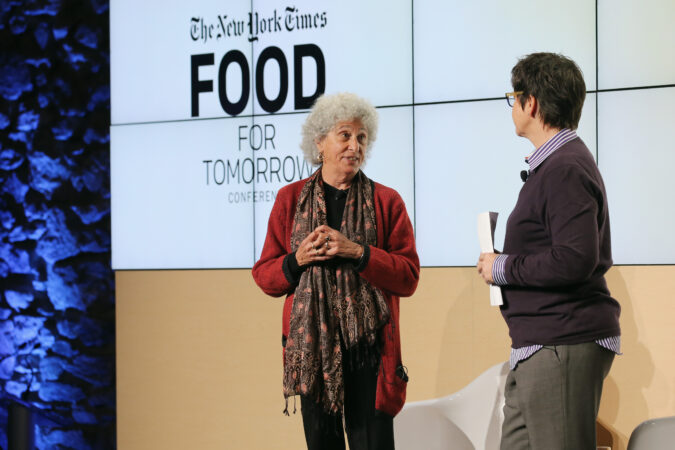
    For more than three decades, Marion Nestle has been telling people what to eat.

    In the late 1980s, she edited the first Surgeon General’s Report on Nutrition and Health, then went on to cowrite the federal government’s Dietary Guidelines for Americans and cofound New York University’s influential food studies program.

    Nestle, now an emerita professor at NYU, says her time in government opened her eyes to the multi-billion-dollar food industry’s enormous influence over Congress. By the early 2000s, she became a critic of the food industry and an advocate for major food reforms, which she made the case for in best-selling books.

    In 2002, Nestle published Food Politics, an exposé that argued that the food industry is at the root of many of the country’s nutritional problems. The industry rakes in ever-growing profits by churning out highly processed foods laden with additives, Nestle wrote, and then aggressively markets those foods to children and adults while lobbying against regulations and trying to co-opt nutrition experts.

    Over the years, Nestle’s blunt nutrition advice, sharp criticism of food companies, and frequent media appearances made her one of the most recognizable names in nutrition. In 2006, she published one of her most popular books, What to Eat, which showed consumers how to navigate supermarkets and improve their health by deciphering food labels.

    At age 89, Nestle, who lives in New York City and Ithaca, is still going strong. In November, she published her latest book: What to Eat Now: The Indispensable Guide to Good Food, How to Find It, and Why It Matters.

    We wanted to know how Nestle’s knowledge of nutrition and the food industry affects her daily food decisions. So we caught up with her to find out what she eats in a typical day, which foods she loves and avoids, which “junk foods” she can’t resist, and whether she takes supplements or has advice on how to navigate grocery stores. This interview has been edited for length and clarity.

    Q: What’s your general approach to food?

    A: I follow Michael Pollan’s famous mantra: Eat food, not too much, mostly plants. And I define food as being unprocessed or as minimally processed as possible. Not ultra-processed. I really think that takes care of it. That doesn’t mean I’m perfect. I’m an omnivore. I eat everything. I just don’t eat very much in part because metabolism drops with age, and I don’t have much metabolism left.

    I eat pretty healthy, but I don’t obsess about it. If I have a bad day of eating, I don’t worry about it. By this time, it’s pretty clear I’m not going to die prematurely. Obviously, what I’m eating is working for me because I’m 89 and I’m still here.

    Q: What do you eat for breakfast?

    A: I start with coffee between 8 and 9 a.m. I’ll have a couple cups of weak coffee with milk, no sugar. And then I’m at work. That’s when I do my writing. I don’t get hungry until about 10:30 or 11 a.m. That’s when I’ll usually have oatmeal or unsweetened Post Shredded Wheat cereal. It basically has one ingredient: wheat. I like the texture of Shredded Wheat and the way that it tastes. I add a little brown sugar, not much. I use a lot less sugar than what’s in presweetened cereals. And then I’ll add blueberries or whatever fruit is in season. That combination to me is really appealing.

    I’ve never believed any of the research on breakfast being the most important meal of the day. Most of that was sponsored by cereal companies.

    Q: What about lunch?

    A: My lunches are totally irregular. Sometimes I’ll have a salad for lunch. Or if I’m having lunch with someone then I’ll eat whatever is in the restaurant. If I’m at home in New York City, I’ll harvest whatever is growing on my terrace. The peaches, cherries, raspberries, and blueberries that I was growing are long gone. But I’ve still got some lettuce and tomatoes, so I’m going to go out and pick those. I might cut up some cheese or have it with peanuts. And I might have some bread with that.

    Q: What about dinner?

    A: It depends. I just don’t eat that much. But I do really like salads. I can have salads twice a day. If I’m at home, I might have an egg. I might have crackers and cheese with that. I kind of like making meals based on what I have available. So, it depends on what I bought, what’s in the house, or what’s on the terrace. That’s my favorite way of cooking. We have a garden in Ithaca, there’s a garden on my terrace, and there’s a farmers market not very far from here.

    I also go to a lot of neighborhood restaurants. I’m going to Mark Bittman’s restaurant this week — the kitchen that he started in the East Village where people pay according to their income. I’ll eat whatever they’re serving. One restaurant that I like a lot is il Buco Alimentari & Vineria. I love going there. They have a particular salad that I adore. It’s always so crisp, and they have wonderful pasta dishes.

    Q: What are some foods that you love?

    A: Fortunately, I like a lot of very simple foods. I like vegetables. I like eggs. I like cheese. I do eat some ultra-processed foods. But not a lot of them. I don’t like ultra-processed foods that have a long list of ingredients. Most of those don’t taste good to me. I do really like vegetables. I like the crunch, the flavors, and the colors. That makes it easy to eat healthy.

    But I recognize that I’m privileged. I weigh basically what I weighed when I was in high school. I don’t have a weight problem. And I have an enormous amount of sympathy for people who do. I consider myself extremely fortunate. Is it genetics? I have no idea. My father died of a heart attack at the age of 47. He was an obese three-pack-a-day smoker. It’s hard to know where genetics fits into this.

    Q: Do you have any favorite treats or desserts?

    A: Ice cream. When I’m at home in New York City, I try to find ginger ice cream, which I like very much. It’s hard to find. But when I find it, I buy it. And then my partner and I make homemade vanilla ice cream in Ithaca. It’s only three or four ingredients. It’s ruined other ice creams for me because a lot of commercial ice creams have all these emulsifiers in them that keep the ice cream sticking together. Real ice cream completely falls apart if it’s left at room temperature and not eaten right away. It separates and liquefies. But I like that. I think it tastes better and has a better texture than the commercial ice creams that have emulsifiers. I like ice cream without the emulsifiers.

    Q: What about snacks?

    A: I like corn chips. Not too salty. Some corn chips are ultra-processed, although most are not. The ones I like are Wegmans. They only have a few ingredients — just corn, oil, and salt basically. I also like candy, particularly See’s Candies. The one See’s candy store in New York is just a couple blocks away from me. I normally get the peanut brittle. Sometimes the lollipops. I can have these things in the house and not feel like I have to eat all of them all at once. Not everyone can do that.

    Q: Can you tell us about your new book?

    A: It’s called What to Eat Now. It’s the updated edition of What to Eat, which was published 20 years ago. It’s a completely rewritten book. I thought it was going to be a six-month project, and it ended up taking me four years because so much has changed in grocery stores. There’s been a huge turnover in products. For example, “functional waters” that contain vitamins, minerals, cannabis, supplements, and other things have replaced Coca-Cola and plain water. Plant milks are new. The only plant milk that existed 20 years ago was soy milk. Now there are tons of others. Plant-based meats did not exist 20 years ago — at least not in the way that they do now.

    Q: What is one takeaway from the book?

    A: It’s not a book about personal diets. It’s a book about how to think about food issues. I think what to eat now boils down to eat food, not too much, mostly plants.

    Q: Do you take any supplements?

    A: I don’t take supplements because I eat a healthy diet. I don’t think I need them. But two out of three Americans take supplements. They make people feel better — and it’s hard to argue with that. Life is tough. If all it takes is a supplement to make you feel better, then I’m not going to argue with that. I used to be much more upset about supplements. But now it’s clear to me that they make people feel better. Whether that’s because they’re doing something or because they’re a placebo, it’s hard to know.

    But I don’t trust what’s in them. There’s so much evidence that what the label says isn’t what’s actually in them. Many studies have found that a remarkable percentage of supplements do not actually contain what’s listed on their labels. I don’t want to put something in my body if I don’t know what’s in it. And there are things in supplements that are not supposed to be there — that’s what so many studies have found. It’s not true of all supplements. But it’s very hard to know which ones are OK and which ones are not. So I don’t take any of them.

    Q: Do you have any advice for our readers?

    A: Eating healthfully in today’s society is very difficult because you’re fighting an entire food industry on your own— and that industry is trying to sell you the most profitable, least healthy foods available. But one thing you can do is read food labels. There’s a lot of information on them. If you’re looking at a packaged food and you can’t recognize the ingredients, or if you can’t purchase the ingredients at a supermarket, then it’s ultra-processed. There are certain ingredients that are indicators of ultra-processed foods. That would be color additives, flavor additives, and emulsifiers such as mono and diglycerides, polysorbates and carrageenan, and texturizers such as agar. I always read food labels. If something has a lot of artificial additives and ingredients that I don’t recognize, then I’m not going to eat it.

  • Shapiro’s long road to a budget deal | Morning Newsletter

    Shapiro’s long road to a budget deal | Morning Newsletter

    Good morning, Philly.

    Gov. Josh Shapiro is calling the state budget that came out of the Pennsylvania legislature’s monthslong stalemate an across-the-board victory. What does it mean for his national brand?

    And stolen cell phones sparked a fight and ongoing tension at Frankford High as students protest the school’s phone-locking policy.

    — Julie Zeglen (morningnewsletter@inquirer.com)

    If someone forwarded you this email, sign up for free here.

    The political value of compromise

    The federal government and Pennsylvania got new budgets on the same day last week. Both were late — the country’s by six weeks, the state’s by more than four months.

    Shapiro, who oversaw negotiations among top Pennsylvania legislators, says the outnumbered Democrats in his state ended up with a better deal than what the outnumbered national Democrats got in the government shutdown. He also touts his willingness to “stay at the table and fight and bring people together in order to deliver.”

    For a popular Democratic leader facing reelection in 2026 as whispers swirl over his potential 2028 presidential ambitions, the moment was bigger than a procedural win.

    But critics are quick to note that it took the self-proclaimed dealmaker so long to get a deal. And securing long-term funding for public transit remains, in Shapiro’s words, “unfinished business.”

    Politics reporters Gillian McGoldrick and Julia Terruso have the story.

    Plus: Shapiro had a guest at Sunday’s Eagles-Lions game at Lincoln Financial Field: Michigan Gov. Gretchen Whitmer, a fellow swing-state leader who is seen as a likely rival for the Democratic nomination in 2028.

    ‘We just want to have a say in where our property goes’

    Frankford High, like many schools in Philadelphia and across the country, has recently moved to get cell phones out of students’ hands during the school day in a bid to reduce distractions.

    But tensions are flaring at Frankford over its stowaway policy, which requires phones be kept in lockers outside the building.

    Several phones were recently stolen from the lockers, sparking a fight that sent a student to the hospital, as well as protests over concerns that the school cannot keep students’ property safe.

    Education reporter Kristen A. Graham has more details.

    What you should know today

    Quote of the day

    Call him Pennsylvania’s reptile king: Peeling has operated the roadside attraction in Union County, about a three-hour drive from Philadelphia, for over 50 years.

    🧠 Trivia time

    Which Philadelphia college is getting an alma mater song for the first time in its 201-year history?

    A) Temple University

    B) La Salle University

    C) Thomas Jefferson University

    D) Moore College of Art and Design

    Think you know? Check your answer.

    What we’re …

    🎁 Buying: The most Philly gifts you can give.

    🪧 Writing down: These clever ideas for Philadelphia Marathon signs.

    🦶 Learning: What is a Lisfranc injury, and what does it mean for Lane Johnson?

    🍴 Asking: Inquirer food writers about the city’s best restaurants before Nov. 21.

    🏥 Considering: Whether health insurance should be treated like a perk.

    🧩 Unscramble the anagram

    Hint: Mütter Museum’s parent org, the _ _ _ of Philadelphia

    FEELING PSYCHOSOCIAL

    Email us if you know the answer. We’ll select a reader at random to shout out here.

    Cheers to Lynn Brubaker, who solved Monday’s anagram: Lancaster. The latest edition of our Field Trip series outlines a perfect weekend in the small city about 90 minutes from Philly, complete with lakeside glamping, a presidential home, and international eats.

    Photo of the day

    The Grand Court of the Wanamaker building on Monday, Nov. 3, 2025.

    🌲 One last merry thing: The Wanamaker Grand Court will host a one-night-only holiday concert on Dec. 2 with an orchestra, chorus, singers, and organist.

    Spread your own joy today, and I’ll see ya back here tomorrow.

    By submitting your written, visual, and/or audio contributions, you agree to The Inquirer’s Terms of Use, including the grant of rights in Section 10.

  • Hark! A Christmas concert is popping up at the Wanamaker Building

    Hark! A Christmas concert is popping up at the Wanamaker Building

    The Wanamaker Grand Court won’t just have the Light Show back again this year but will also host a one-night-only concert with orchestra, chorus, singers, and Wanamaker Grand Court Organist Peter Richard Conte.

    “Home for the Holidays,” on Dec. 2, will feature holiday classics like Sleigh Ride, “The Christmas Song,” and “O Holy Night,” as well as classical works, such as David Ludwig’s Hanukkah Cantata.

    The performance will be recorded by WHYY for radio and TV broadcast and streaming later in the month.

    The event is another in a series dubbed Pipe Up! programmed in the space vacated by Macy’s in March. Philadelphia philanthropist Frederick R. Haas donated $1 million to help keep the Grand Court and Greek Hall open and accessible to the public with concerts, films, and other activities in the span of a few months before building owner TF Cornerstone begins renovations on the building early next year.

    Separately, responsibility for the holiday Light Show and Dickens Village have passed from Macy’s to a partnership of the Philadelphia Visitor Center and TF Cornerstone. Both Christmastime attractions open this year on Friday, Nov. 28, and are expected to be placed on pause for 2026 and 2027 during construction.

    The Dec. 2 concert will be led by conductor Geoffrey McDonald, and features the Opera Philadelphia Orchestra and Chorus. Soprano Leah Hawkins will perform, as will the opera company’s general director and president, countertenor Anthony Roth Costanzo. Philly-based creative design agency 10th Floor Productions will craft and project art onto the Grand Court as the music is performed.

    In addition, the former Macy’s space will host a Christmas Market starting on Black Friday, as well as pop-up food service offering snacks, craft beers, and holiday fare.

    More Pipe Up! events are being planned and are expected to be announced soon, a spokesperson said.

    “Home for the Holidays,” Dec. 2, 8 p.m., Wanamaker Building, 13th and Market Sts. Pick Your Price tickets starting at $11 go on sale on Thursday at operaphila.org. The concert will be broadcast Dec. 23, 8 p.m. on WHYY TV12, WHYY radio (90.9 FM), and via whyy.org.

  • Sixers’ Paul George pleased to return to court after ‘long journey’ back from knee surgery: ‘There were so many emotions’

    Sixers’ Paul George pleased to return to court after ‘long journey’ back from knee surgery: ‘There were so many emotions’

    When Paul George received an opening-minute pass from Tyrese Maxey and let the three-pointer fly from the right wing, his stoic backpedaling as the ball splashed through the net did not exactly convey his actual feelings.

    “I watched it, and there were so many emotions inside,” George later said. “There were zero emotions outside. Honestly, I was just trying to focus on just the game and staying locked in and engaged, but it felt great to make the first shot.”

    Monday was far from the first time George has taken the floor after a monthslong injury recovery, but he used the words “rusty” and “rewarding” to describe his first NBA game action since early March. He totaled nine points, seven rebounds, three assists, and two blocks in 21 minutes, 6 seconds of the 76ers’ 110-108 victory over the Los Angeles Clippers at Xfinity Mobile Arena.

    “It was a long journey,” George said at his locker following the Sixers’ win over his former team. “A lot of ups and downs. A lot of hiccups. But felt good to finally get back out there.”

    Clippers coach Tyronn Lue — who is more than familiar with George’s game and injury history — quipped before tipoff that he “just [hopes George is] not himself tonight.” Yet it would be unreasonable to expect a 35-year-old George to immediately return to All-Star form following a July arthroscopic knee surgery — and while limited to roughly five-minute stints at the beginning of each quarter.

    It took George less than 60 seconds to record his first block, rebound, and points of the season. Sixers coach Nick Nurse said he considered running plays specifically for George, but instead opted to see what opportunities the 6-foot-8 wing would organically discover in a revamped offensive scheme that emphasizes pace and passing.

    George went 2-of-9 from the field, an indicator of that rust. Yet Nurse appreciated George’s commitment to rebounding and instantly slinging the ball ahead in transition — like in the second quarter, when he found a streaking Quentin Grimes, who drew a foul. The lack of offensive rhythm, George said, could be attributed to pushing to regain his game-level cardio and conditioning in those abbreviated stints.

    “Before you know it, five minutes is up, and then [you’re] getting subbed out,” George said. “I’ve always kind of let the game come to me. I thought today I was a little rushed, trying to make the most of that five minutes every quarter. A lot of possessions were kind of uncomfortable from just how I play.”

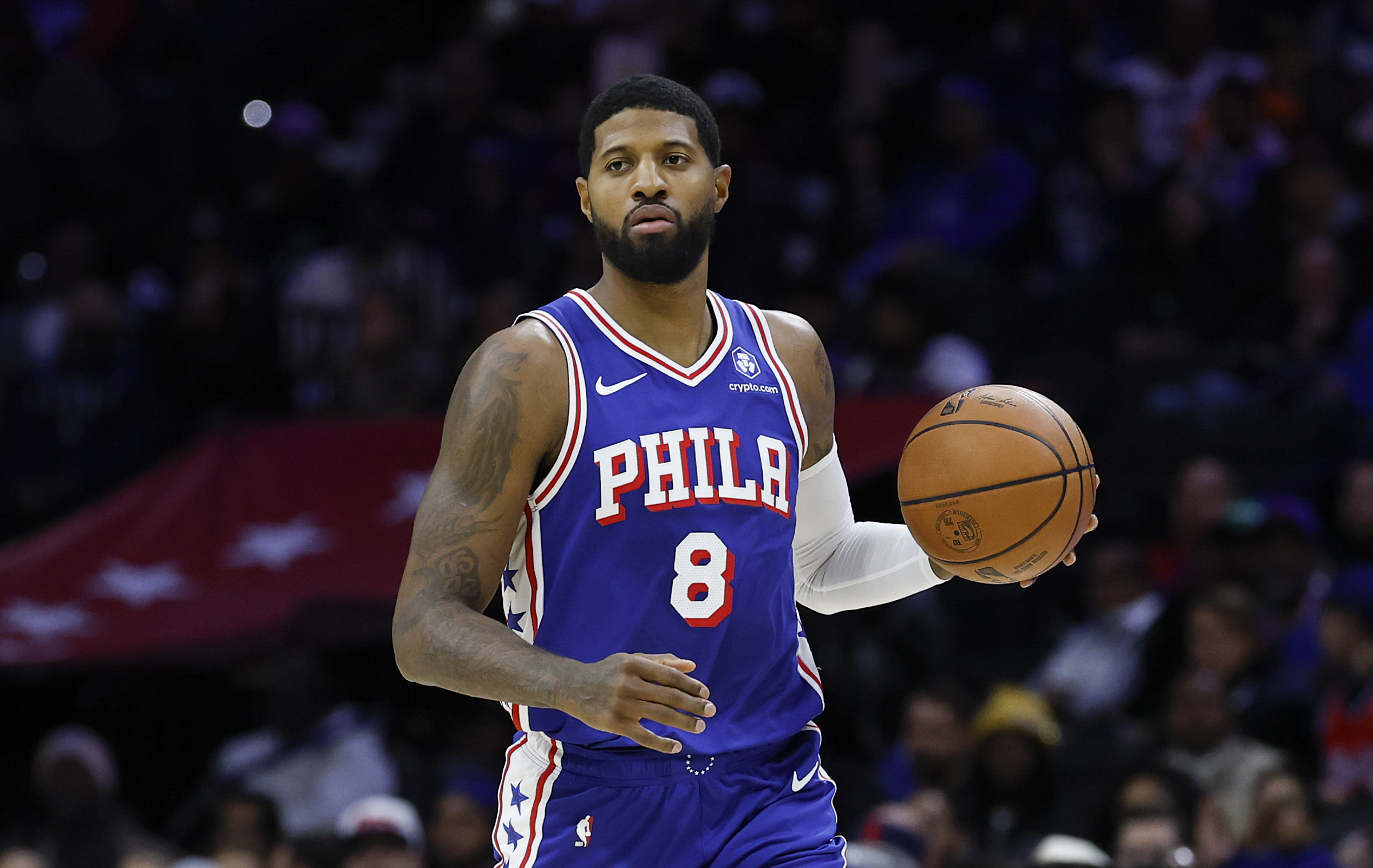
    Paul George showed rust in his return but contributed as the Sixers moved to 8-5.

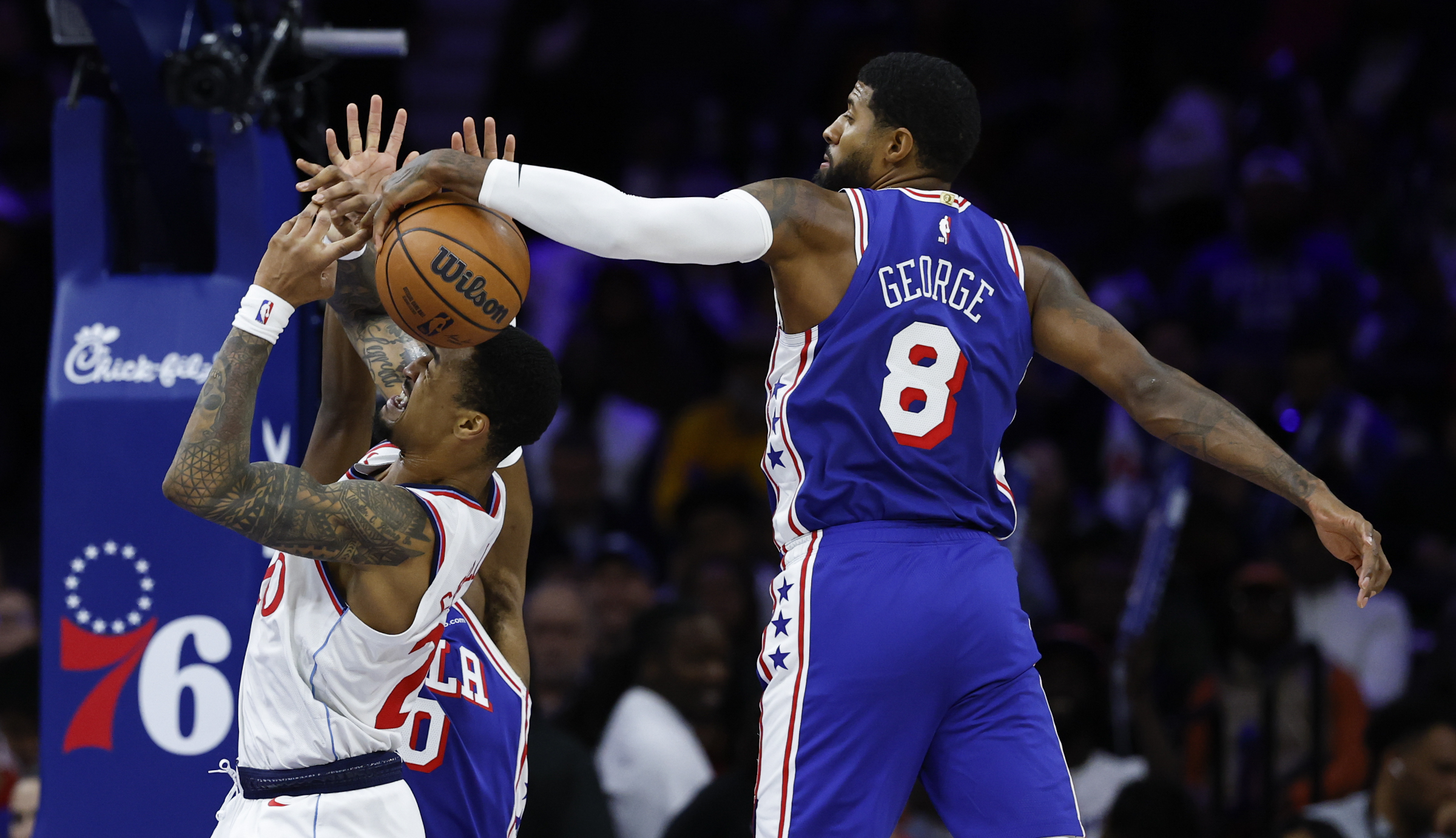
    The internal reviews for George were higher on defense, the end of the floor where Nurse was more eager to observe George’s impact. George said he rolled through a mental checklist, clocking that he could slide his feet, stay in front of ballhandlers, and “just fly around.” In the third quarter, for instance, George elevated to block a John Collins floater and pinned the ball to the side of his body.

    “Right away,” George said, “it was like, ‘All right, I’m ready for this. I can move. I can react. I can play physical. I can beat the guy to his spot. I can rebound.’”

    Monday’s outing marked George’s latest comeback in a decorated career interrupted by injuries. In his first season with the Sixers, he battled multiple knee issues — plus a finger injury that eventually required painkilling injections in order to play — before being shut down after 41 games.

    Then came a “freak accident” during an offseason workout, restarting George’s recovery timeline after knee surgery.

    George made his presence felt on defense, including in a block of a John Collins shot.

    Though George had been practicing with the Sixers for about a month, his left quadriceps muscle “was just weak from being shut down for so long,” he said. George went through a strengthening program targeting that muscle, with extra reps on the left side of squats and leg extensions. He said he had a “huge breakthrough” a few days ago, when the measurable data on his left quad finally matched his right.

    “That was kind of the stamp,” George said, “to go along with how I felt on court and to be clinically cleared.”

    From here, George and the Sixers’ medical team will monitor how his body tolerated Monday’s workload. The Sixers already have evidence that long-term injury recovery does not always occur in a straight line.

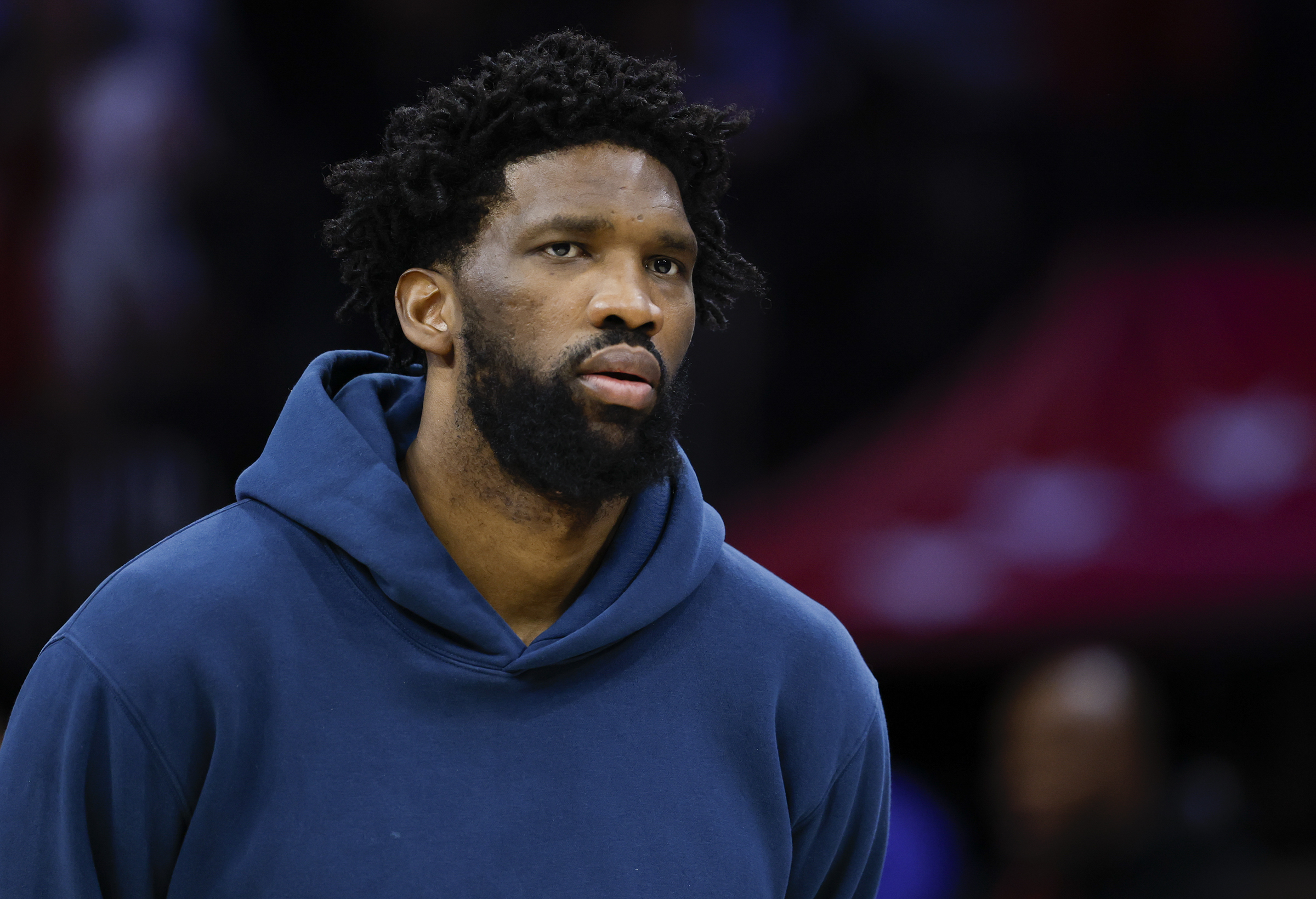
    Joel Embiid missed his fourth consecutive game Monday with right knee injury management, even amid a cautious plan with minutes restrictions and scheduled absences to aid his left knee that has undergone multiple surgeries. Jared McCain, who missed nearly 11 months after knee and thumb surgeries, has not scored a point in four games since his return earlier this month.

    The Sixers’ injury history with Joel Embiid and others shows that recovery timetables are not always linear.

    And there are legitimate questions about George’s ability to ever rekindle his perennial All-Star production or whether he will be more of a veteran role player with this iteration of the Sixers’ roster. After signing a max contract as the NBA’s most coveted free agent during the 2024 offseason, George struggled to get by defenders in his first season in Philly. He averaged 16.2 points — his lowest scoring average over a full season in more than a decade — along with 5.3 rebounds, 4.3 assists, and 1.8 steals.

    When asked about his role at media day in late September, George said, “I do think I’ve still got a lot of game in me.” Following Monday’s game, George added that he hopes his offensive creation can take some pressure off Maxey, who amassed another 39 points and six assists in 40:57 against the Clippers. But George also recognizes that teammates, such as Grimes and rookie VJ Edgecombe, also can put the ball on the floor and make plays for a Sixers squad that is off to a surprising 8-5 start and entered Tuesday ranked seventh in the NBA in offensive efficiency (117.8 points per 100 possessions).

    “That’s really why our team is special and so versatile,” George said. “So [I’m] just trying to fit into what the guys are doing now.”

    George, though, still holds gravitas within the Sixers locker room. Fellow veteran Andre Drummond called him “very smart” on both ends of the floor. Maxey praised George’s defensive presence. And Edgecombe said sharing the floor with George for the first time brought out his “inner child” who was a “big fan” of his while growing up in the Bahamas.

    “I wanted him to get going early,” Edgecombe said of George. “At least feel the ball, feel the flow of the game.”

    By crunch time, though, George had a towel draped over his shoulders while standing with teammates to watch the final possession unfold. When the Clippers’ James Harden missed two potential game-winning three-pointers, George lifted his arms into the air in celebration.

    Finishing the game on the bench illustrated how much reacclimation remains for George. But making his season debut — and that first shot — was a start.

    “It felt great to finally play basketball again,” George said.

  • What we know (and don’t) about the Eagles entering Week 12 vs. the Cowboys

    What we know (and don’t) about the Eagles entering Week 12 vs. the Cowboys

    Week after week, the Eagles just keep winning.

    They are now 8-2 after their latest defensive master class, a 16-9 win over the Detroit Lions on Sunday night. But for every week that the defense has taken strides lately, the offense seems to stray further from the flashes it showed coming off the mini-bye week in early October.

    Week 12 might not be the get-well game the Eagles offense could use. The 4-5-1 Dallas Cowboys clobbered the lowly Las Vegas Raiders, 33-16, on Monday night. Is it a mirage or a sign of a defensive turnaround for the Eagles’ NFC East foe?

    Here’s what we know (and what we don’t) about the Eagles entering their final matchup of the regular season against the Cowboys, who are coming off a short week:

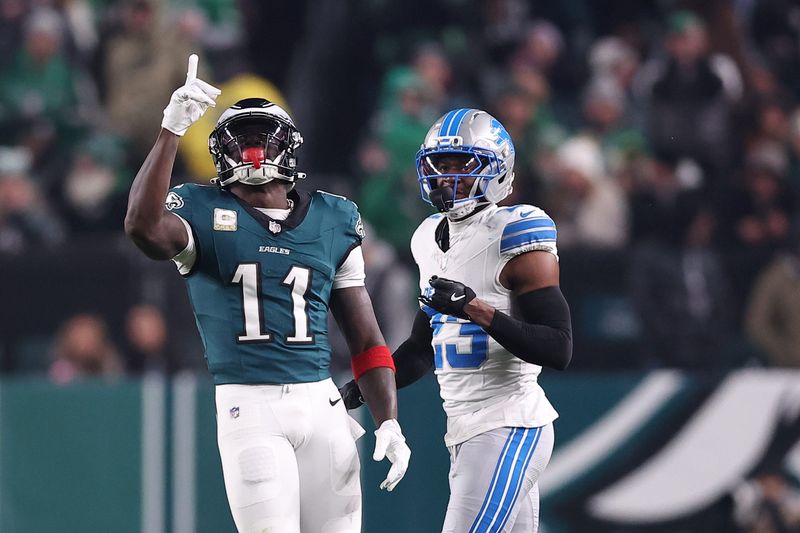
    A.J. Brown (11) was more involved in the offense on Sunday night against the Lions.

    Band-Aids galore

    Last week, A.J. Brown stood at his locker stall in the NovaCare Complex and identified the crux of his frustration about the state of the Eagles offense.

    He expressed a desire to make an impact on the Kevin Patullo-led offense, just a couple of days removed from a 13-yard performance against the Green Bay Packers. But he also didn’t make his frustrations solely about him. He had grown increasingly tired of the defense bailing out the listless offense and sought to play complementary football as a collective.

    “I think if we’re really focusing on winning and doing our job; we can’t just keep slapping a Band-Aid over the defense doing their job and getting us out of trouble,” Brown said Wednesday. “At what point are we going to pick a box as an offense and say, ‘We’re so great?’ That’s what I’m getting at.”

    That point didn’t come Sunday night against the Lions. Vic Fangio and the Eagles defense opened up another box of Band-Aids, limiting the league’s second-ranked scoring offense entering Week 11 to just nine points, the Lions’ lowest total since 2023.

    The Eagles offense, meanwhile, scored one touchdown and settled for three field goals. The group mustered just six points (two field goals) off five fourth-down stops generated by the defense.

    According to Next Gen Stats, the Eagles offense registered the third-worst expected points added per play in the league in a win this season (-.28). The statistic measures the average points an offense generates on a play.

    “We want them to continue to play at a high level,” Brown said postgame of the defense. “We’ve still just got to do a better job on offense and get our stuff going. It’s a lot of room for improvement. A lot of self-inflicted wounds. But hats off to the defense because they are playing their butts off.”

    Brown might not be satisfied — and he’s certainly not the only one on offense — but what if the offense can’t get off the ground? Is the way the Eagles are winning right now sustainable?

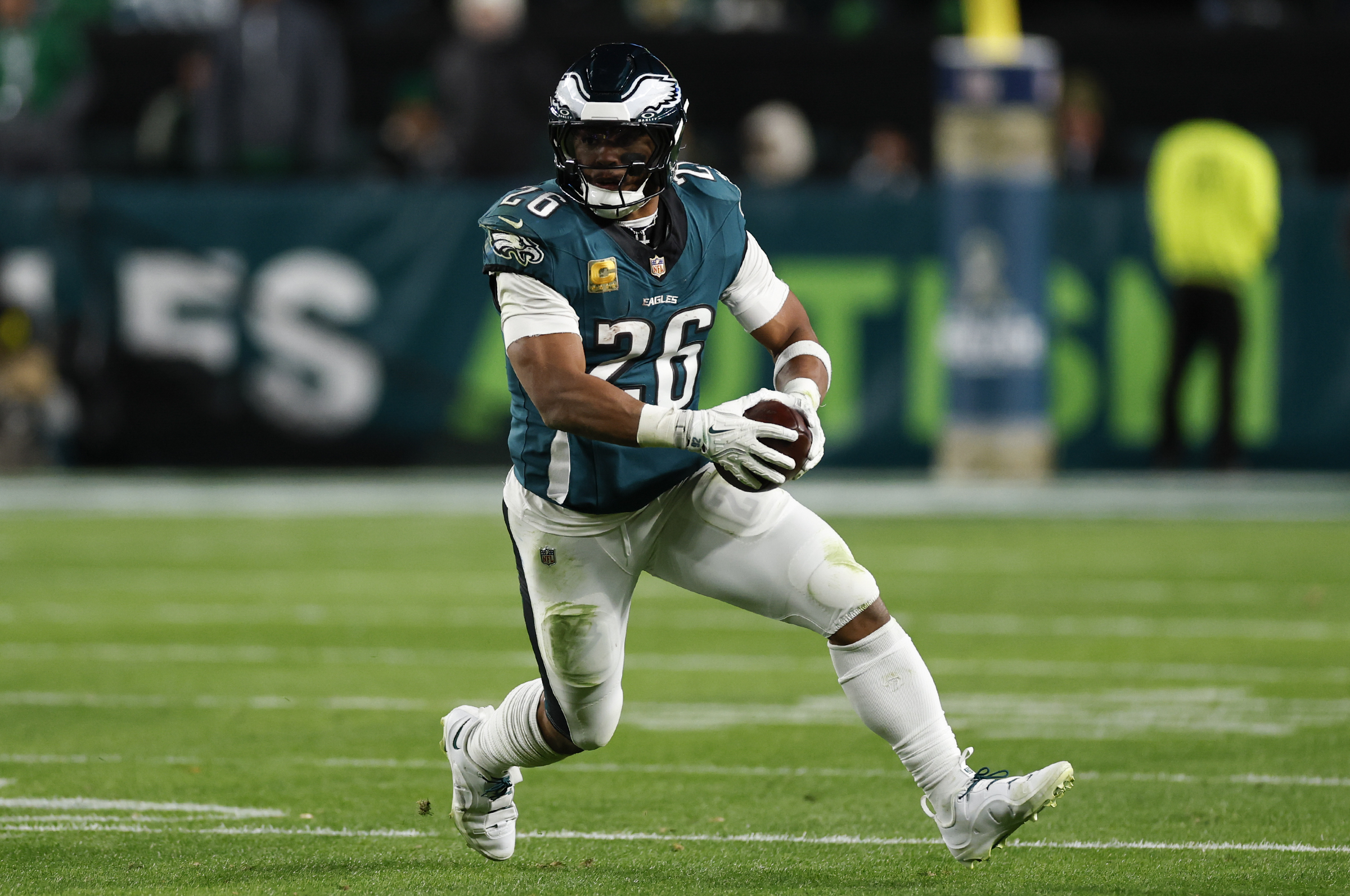
    Will the Cowboys defense provide an avenue for Saquon Barkley to break off some major runs on Sunday?

    Unsurprisingly, recent history suggests it’s unlikely. In the last seven seasons, only one Super Bowl champion offense generated a negative EPA per play during the regular season — the 2023 Kansas City Chiefs (-.04).

    The Eagles offense sits at -.02 this season. While the offense may be able to get away with being inconsistent if the defense continues to excel, the offense can’t be consistently as bad as it was on Sunday night for the rest of the season.

    Offensive line attrition

    The offense’s quest to improve won’t get any easier in the absence of Lane Johnson. The 35-year-old right tackle suffered a Lisfranc injury and is likely headed to injured reserve, where he could spend the next four to six weeks.

    It goes without saying that the Eagles are a better team when the two-time All-Pro right tackle is on the field. According to StatMuse, the Eagles are 110-57-1 in games that Johnson plays. They are 15-23 in games he does not play.

    Cam Jurgens also exited Sunday’s game with an undisclosed injury. The center had previously been sidelined for the last two games with a knee injury. His status against the Cowboys is unclear.

    There’s a chance that two backups start on the offensive line in Week 12. Fred Johnson and Brett Toth generally have fared well in place of Johnson and Jurgens this season.

    But the overall performance from the offensive line has been substandard, particularly in the running game. Saquon Barkley has eclipsed 100 rushing yards in just one game this year so far. He’s averaging 2.5 yards per carry before contact this season, down from 3.8 last year.

    Barkley had a pretty average day when the Eagles faced the Cowboys in the season opener, finishing with 60 yards and a touchdown on 18 carries.

    Since the Eagles last saw them, the Cowboys have been atrocious overall on defense, ranking No. 31 in the league entering Monday night’s game. The Raiders couldn’t get much going on the ground against the Cowboys, but it’s also worth noting that Las Vegas played from behind for most of the game and boasts the league’s worst rushing offense.

    The Cowboys also acquired defensive tackle Quinnen Williams from the New York Jets before the trade deadline. He dominated in his Dallas debut and recorded 1½ sacks and five quarterback hits. He will be a tough assignment for the interior offensive line, regardless of whether Jurgens or Toth starts.

    Quinyon Mitchell’s work against the Cowboys’ receiving corps in Week 12 figures to be important.

    Right on Q

    The last time the Eagles played the Cowboys, Quinyon Mitchell didn’t shadow CeeDee Lamb. But when he was in coverage against the Cowboys receiver, he kept him in check, conceding one reception on four targets for 13 yards, according to Pro Football Focus.

    It was a precursor to a strong sophomore season for the 24-year-old outside cornerback. According to Next Gen Stats, Mitchell has allowed receptions on just 41.9% of his targets, which is the lowest by any player with at least 50 targets in a season since 2018.

    Mitchell played up to his standard again on Sunday night. He didn’t allow a catch on any of his six targets, according to Next Gen Stats, which is tied for the most targets without conceding a reception in a game over the last two seasons.

    He even played 39 coverage snaps, tying the third-most by an outside cornerback in a game this year without giving up a catch.

    Fangio has been utilizing Mitchell as a boundary cornerback over the last couple of weeks, often leaving him on an island on the short side of the field. Given the Cowboys’ dual receiving threats on the outside in Lamb and George Pickens, Fangio may take that approach with Mitchell this week.

    Pickens was quarterback Dak Prescott’s favorite receiver on Monday night. The 24-year-old receiver had 144 yards and a touchdown on nine receptions, while Lamb finished with 66 yards and a touchdown on five catches. Both receivers are on track to eclipse 1,000 receiving yards this season.

    Nakobe Dean has been a key part of a tremendous Eagles defense of late.

    Dazzling Dean

    Just over a month ago, it seemed uncertain if Nakobe Dean was going to have a role in Fangio’s defense upon his return from the physically unable to perform list. Jihaad Campbell, the No. 31 overall pick out of Alabama, was off to a solid start in his rookie season at inside linebacker alongside Zack Baun.

    But over the last four games, Dean’s snap count has steadily increased, peaking at 67.8% of the defensive snaps against the Lions. Meanwhile, Campbell’s has decreased, reaching a season-low 33.9% on Sunday.

    Dean has earned the opportunity to play, picking up where he left off before his knee injury. His excellence was illustrated by a two-play sequence late in the fourth quarter against the Lions, when he covered Jameson Williams on a crossing route to force an incompletion on first down and sacked Jared Goff on a simulated pressure on second down.

    No matter how the Cowboys and their top-ranked passing offense tries to attack the Eagles, Dean will provide a boost to Fangio’s group on Sunday.

  • New analysis shows more U.S. consumers are falling behind on their utility bills

    New analysis shows more U.S. consumers are falling behind on their utility bills

    WASHINGTON — More people are falling behind on paying their bills to keep on the lights and heat their homes, according to a new analysis of consumer data — a warning sign for the U.S. economy and another political headache for President Donald Trump.

    Past-due balances to utility companies jumped 9.7% annually to $789 between the April-June periods of 2024 and 2025, said the Century Foundation, a liberal think tank, and the advocacy group Protect Borrowers. The increase has overlapped with a 12% jump in monthly energy bills during the same period.

    Consumers usually prioritize their utility bills along with their mortgages and auto debt, said Julie Margetta Morgan, the foundation’s president. The increase in both energy costs and delinquencies may suggest that consumers are falling behind on other bills, too.

    “There’s a lot of information out there about rising utility costs, but here we can actually look at what that impact has been on families in terms of how they’re falling behind,” Margetta Morgan said.

    Troubles paying electricity and natural gas bills reflect something of an economic quandary for Trump, who is promoting the build-out of the artificial intelligence industry as a key part of an economic boom he has promised for America. But AI data centers are known for their massive use of electricity, and threaten to further increase utility bills for everyday Americans.

    These troubles also come as Trump faces political pressure from voters fed up with the high cost of living. The president spoke about the economy and affordability issues Monday at an event hosted by the McDonald’s fast food company.

    “We have it almost at the sweet spot and prices are coming down on different things,” Trump said at the event, adding that inflation has been “normalized” at a “low level.”

    Ever since Republicans saw their fortunes sag in off-year elections this month and affordability was identified as the top issue, Trump has been trying to convince the public that prices are falling. Fast-rising electricity bills could be an issue in some congressional battlegrounds in next year’s midterm elections.

    Trump has put a particular emphasis on prices at the pump. Gasoline accounts for about 3% of the Consumer Price Index, slightly less than the share belonging to electricity and natural gas bills — meaning that possible savings on gasoline could be more than offset by higher utility bills.

    The president maintains that any troubling data on inflation is false and that Democrats are simply trying to hurt his administration’s reputation.

    “In fact, costs under the TRUMP ADMINISTRATION are tumbling down, helped greatly by gasoline and ENERGY,” Trump posted on social media Friday. ”Affordability is a lie when used by the Dems,”

    Nearly 6 million households have utility debt “so severe” that it will soon be reported to collection agencies, according to the foundation’s analysis, drawn from the University of California Consumer Credit Panel.

    During Trump’s first six months in office, there was a 3.8% increase in households with severely overdue utility bills.

    “Voters are frustrated and families are hurting because these tech giants are cutting backroom deals with politicians, and it’s causing their power bills to go up,” said Mike Pierce, executive director of Protect Borrowers. “If the Trump administration doesn’t want to do its job and protect families and make life more affordable, I guess that’s its choice.”

    Both Margetta Morgan and Pierce previously worked at the Consumer Financial Protection Bureau, a government agency formed in part to track trends in household borrowing to prevent potential abuses. The Trump administration has essentially shut down the bureau.

    The administration has so far said it has no responsibility for any increases in electricity prices, since those are often regulated by state utility boards. The White House maintains that utility costs are higher in Democratic states that rely on renewable forms of energy.

    “Electricity prices are a state problem,” Treasury Secretary Scott Bessent told ABC News this month. “There are things that the federal government can control. Local electricity prices are not one of them.”

    The new analysis of utility bills by the groups counters that the Trump administration is contributing to higher utility costs “by impeding renewable energy generation” including solar and wind power.

    While that analysis is a warning sign, other economic analyses on consumers suggest their finances are stable despite some emerging pressures.

    The New York Federal Reserve has said delinquency rates of 90 days or more for mortgages, auto loans, and student debt have each increased over the past 12 months, though it said mortgage delinquencies are “relatively low.” An analysis of debit and credit card spending by the Bank of America Institute showed that consumers’ “overall financial health looks sound.”

  • Pennsylvania’s Working Families Party pledges to support a primary challenger against Sen. John Fetterman

    Pennsylvania’s Working Families Party pledges to support a primary challenger against Sen. John Fetterman

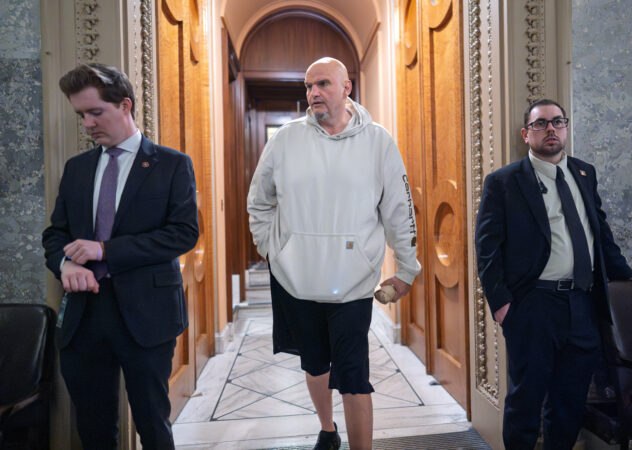
    Pennsylvania’s Working Families Party is recruiting candidates to run against Pennsylvania’s Democratic senator, John Fetterman.

    Fetterman has not announced whether he will run for reelection in 2028, but the progressive party put out a public declaration Tuesday pledging to endorse — and, if necessary, recruit and train — a challenger.

    The announcement, first reported by The Inquirer, is a remarkable step for the left-leaning organization to take more than two years before an election and speaks to the degree of frustration with Fetterman among progressives.

    “At a time when Donald Trump and Republicans in Congress are doing everything they can to make life harder for working people, we need real leaders in the Senate who are willing to fight for the working class,” Shoshanna Israel, Mid-Atlantic political director for the Working Families Party, said in a statement.

    “Senator Fetterman has sold us out, and that’s why the Pennsylvania Working Families Party is committed to recruiting and supporting a primary challenge to him in 2028.”

    Fetterman did not immediately return a request for comment about the Working Families Party’s announcement.

    The Working Families Party is a progressive, grassroots political party that is independent from the Democratic Party, but it often endorses and supports Democratic candidates.

    Israel noted in her statement that Fetterman voted last week in support of the Republican plan to end the government shutdown — along with seven other Senate Democratic caucus members who crossed the aisle.

    Democratic lawmakers in the House, including several from Pennsylvania’s delegation, railed against the decision as caving to the GOP and President Donald Trump without any substantive wins on healthcare, rendering a 35-day shutdown pointless.

    Though he supports extending federal healthcare subsidies, Fetterman has long said he is against government shutdowns as a negotiating tactic and will always vote to get federal coffers flowing and federal employees paid.

    “I’m sorry to our military, SNAP recipients, gov workers, and Capitol Police who haven’t been paid in weeks,” Fetterman said in a post on X after the vote. “It should’ve never come to this. This was a failure.”

    Already one of the most well-known and scrutinized senators in Washington, Fetterman was back in the spotlight this week as he returns to work following a hospitalization after a fall near his home in Braddock. His staff said he suffered a “ventricular fibrillation flare-up” and hit his face, sustaining “minor injuries.”

    Ventricular fibrillation is the most severe form of arrhythmia — an abnormal heart rhythm — and the most common cause of sudden cardiac death.

    It’s the latest in a string of serious health incidents that have marked the Democratic senator’s time in the public eye. The fall comes three years after he recovered from a near-fatal stroke just days before he won the 2022 Senate primary, which was caused by a blood clot that had blocked a major artery in his brain.

    He spent Thursday and Friday in the hospital and was released Saturday, saying he was feeling good and grateful for his care with plans to be back in the Senate this week.

    Working Families on the offensive

    Israel said in addition to the online portal, the party will hold a number of recruitment events across Pennsylvania in the coming months to train candidates and campaign staff on the basics of running for office and managing a campaign with hopes of finding quality candidates for a variety of races ahead of 2028.

    The party is also pledging a robust ground game and fundraising for a potential challenger it supports.

    It wouldn’t be the first time the Working Families Party has opposed Fetterman. In the 2022 Democratic Senate primary, WFP endorsed State Rep. Malcolm Kenyatta (D., Philadelphia) over Fetterman, who was lieutenant governor at the time.

    The Working Families Party has grown its influence in the region since then. In 2023, WFP became the minority party on Philadelphia’s City Council, defeating Republicans in seats the party had held for over 70 years by electing Councilmembers Kendra Brooks and Nicolas O’Rourke.

    Fetterman has been promoting his book, Unfettered, recounting his stroke during the 2022 Senate run, subsequent struggles with depression, and adjustment to life in the U.S. Senate.

    The book makes no mention of a reelection bid but laments the ugly politics he experienced in both the Democratic primary and his general election race against Mehmet Oz.

    Fetterman said in the book that Oz’s attacks during his rehabilitation from his stroke became so mentally crushing he felt he should have quit the race.

    And he grapples with criticism he faced during the primary surrounding a 2013 incident in which he wielded a shotgun and apprehended a Black jogger he suspected of a shooting. Fetterman calls the backlash an early trigger of his depression.

    Fetterman has said he will remain a Democrat even as Republicans have lauded his independent streak and willingness to work with the GOP.

    Earlier this year, Fetterman was the first Senate Democrat to support the Laken Riley Act, a Republican immigration bill that requires U.S. Immigration and Customs Enforcement to detain and take into custody individuals who have been charged with theft-related offenses, even without a conviction. Critics of the law say it severely cracks down on due process for immigrants.

    Fetterman was the sole Senate Democrat to vote to confirm Attorney General Pam Bondi, who was one of Trump’s attorneys when he tried to overturn the results of the 2020 election.

    And he has been the Senate’s most outspoken defender of Israel during its war in Gaza, sponsoring a resolution with Sen. Dave McCormick (R., Pa.) against antisemitism and appearing for the first time since his fall at an event hosted by the Jewish Federations of North America in Washington on Monday.

    He also received recognition from Israeli Prime Minister Benjamin Netanyahu, who called him the country’s “best friend” and gifted him a silver pager inspired by Israel’s attack on Hezbollah in Lebanon that exploded pagers.

    “He has repeatedly shown disregard for the rights of Palestinians,” the Working Families Party release said. “Refusing to support a two-state solution and breaking with the rest of the Democratic caucus on Israel’s illegal annexation of the West Bank.”

    Staff writer Aliya Schneider contributed to this article.