Eagles legend Billy Ray Barnes, the three-time Pro Bowl halfback, who aided in the team’s 1960 NFL Championship, died on Wednesday in his hometown of Landis, N.C.
He was 90.
Mr. Barnes was a second-round selection in the 1957 NFL draft out of Wake Forest and spent five seasons in Philadelphia.
“He was 90 and had a fabulous life,” said Mr. Barnes’ daughter, Billi Barnes Akins, via statement.
In his first year, Mr. Barnes led the Eagles in both rushing and receiving. He would go on to end his career in Philly with 2,391 yards and 20 rushing touchdowns, and had eight more scores on 120 receptions.
Mr. Barnes had stints in Washington (1962-63) and Minnesota (1965-66). After his playing career, he served as an assistant coach with the Saints and Falcons.
He was inducted into the Wake Forest Hall of Fame in 1975 following his stellar college career, where he earned All-America honors, and in 1956, became the first player in the Atlantic Coast Conference to rush for more than 1,000 yards in a single season.
Mr. Barnes returned to Philadelphia in 2010 for the 50-year reunion of the 1960 NFL championship team.
“The biggest thing was the friendships that he had made there,” Akins said. “They were lifelong. He talked to a bunch of guys on the phone for years. He enjoyed everything about Philadelphia.”
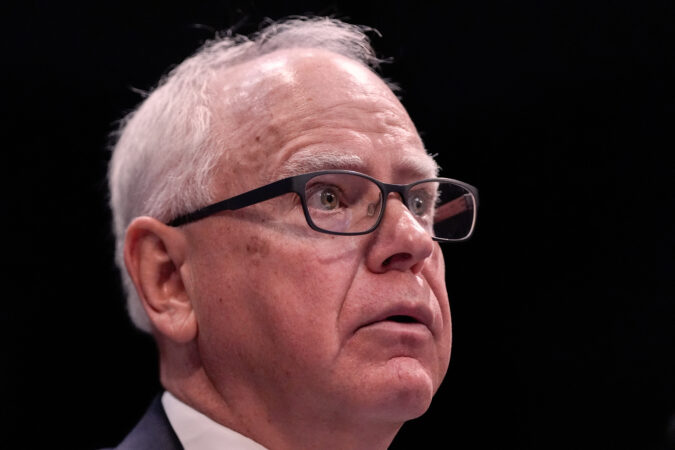
MINNEAPOLIS — Just a few months ago,Larissa Laramee would have encouraged Minnesota Gov. Tim Walz to run for president. She admired the man who helped lead the Democratic presidential ticket in 2024 — and who once taught her social studies.
But Laramee’s feelings have changed as a yearslong welfare fraud probe in Minnesota becomes a national maelstrom. Prosecutors say scammers stole brazenly from safety net programs,taking hundreds of millions of dollars in government funding — potentially billions — for services they never provided while Walz led the state.
“I like him as a person. He’s fantastic,” said Laramee, 40, who works at a Minnesota nonprofit for people with disabilities. Walz, as her high school teacher, helped inspire her career, she said. “But with all of this that’s happened, I’m struggling with seeing a path forward for him.”
Laramee’s doubts show how the sprawling fraud cases in Minnesota now hang over Walz — even as it’s too soon to tell how they will ultimately affect his political future. A year and a half after he vaulted onto the national stage as Kamala Harris’ running mate, Walz is back in the spotlight, this time for acontroversy that Republicans around the country view as political gold.
Republicans are betting the fraud saga will hurt Walz, a staunch liberal and potential 2028 presidential candidate who is seeking a third term as governor this year. GOP officials say it will be one of their top campaign issues in Minnesota as they try to reverse many years of statewide losses and navigate through tough national headwinds in the midterms.
But many of the attacks on Walz are geared just as much toward riling the GOP’s national base, using the issue and Walz’s prominence to validate broader anger within the party over immigration and a social welfare system that President DonaldTrump and others have long argued is out of control.
How much blame Walz should bear forthe state’s response to the fraud is a matter of a debate. He has said that, as state executive, he takes ultimate responsibility. Walz has said officials have “made systematic changes to state government” over the past few years as prosecutions were underway. The governor’s critics say the changes were insufficient and came too late.
Democrats say Republicans are risking a backlash by fixating on the fraudsters’ nationality — most people charged in the schemes are of Somali descent — and by freezing some federal childcare funding in response. Trump has lobbed broad attacks on Somali immigrants that Walz denounced as “racist lies,” and many on the right have called for deportations, even though officials say most of the fraud defendants are U.S. citizens.
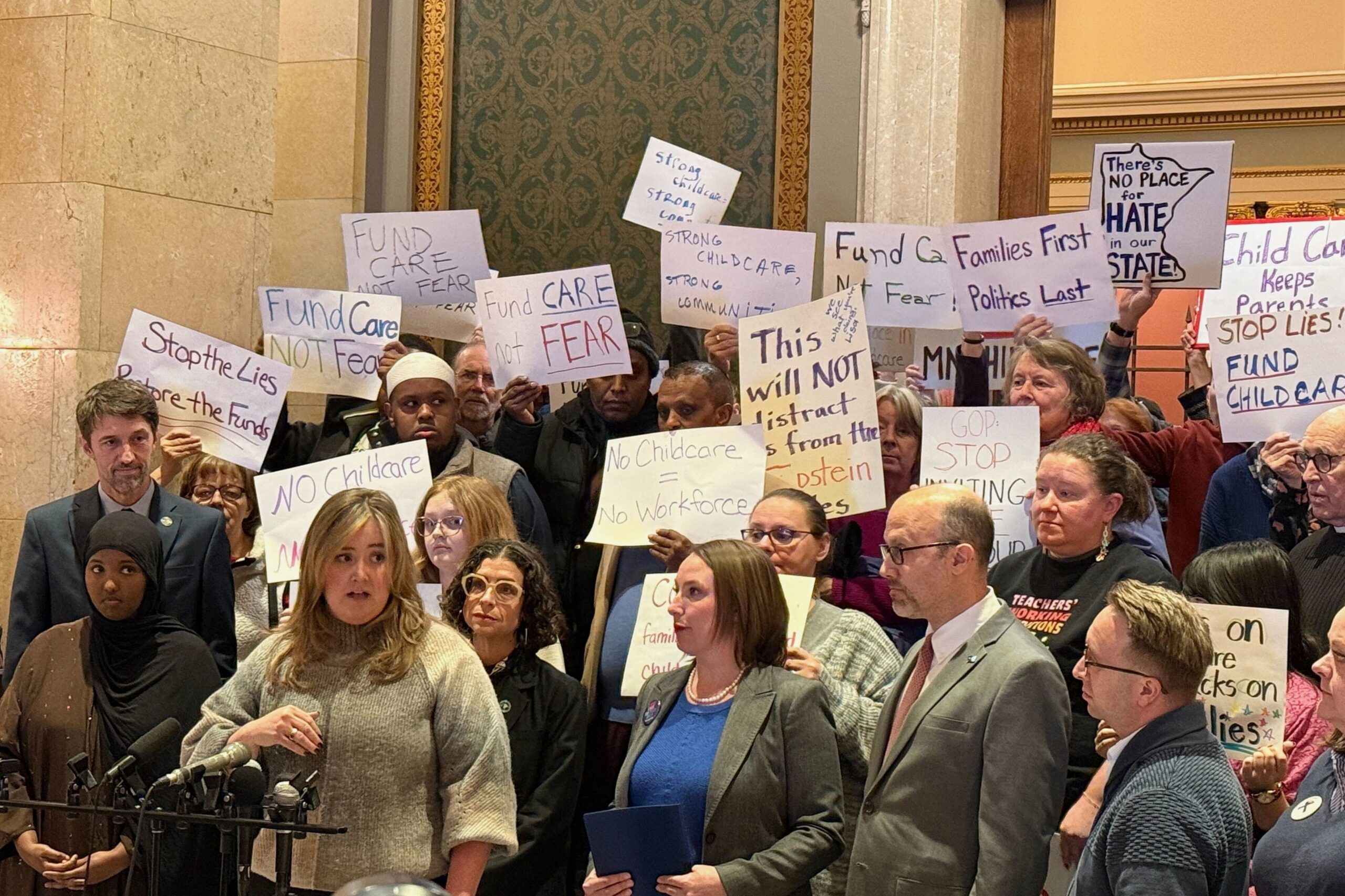
Maria Snider, director of the Rainbow Development Center and vice president of advocacy group Minnesota Child Care Association, speaks as people gather for a news conference at the state Capitol on Wednesday in St. Paul.
Democrats are favored to win the governor’s race in 2026; Republicans have not won a statewide election in Minnesota since 2006. Walz won reelection by about 8 percentage points in 2022, when some of the fraud cases had already surfaced, and it’s not clear that the new attention to the issue has affected his approval in the state. There are no clear recent shifts in available surveys.
Some Democrats remain worried the falloutthreatens to blunt Walz’s attacks on Trump, as well as the economic issues the party has sought to highlight.
“The anti-fraud message is going to be very strong. …I fear that message will dominate or drown out the affordability message,” said Ember Reichgott Junge, a former Minnesota state senator who is now a Democratic political analyst.
Junge said she’s heard many Democrats express concern about Walz’s reelection campaign and noted thathis performance couldaffect lower-profile races on the ballot. Democrats are defending a one-vote majority in the state Senate and trying to retake the House, where Republicans hold a two-seat advantage amid two vacancies.
“He is a riskier candidate than any other Democrat” would have been, she said of Walz, who has not drawn primary challengers so far.
Walz has accused Trump of politicizing the probes. Walz appointed a statewide “director of program integrity” to prevent fraud in mid-December, among other changes, and the state shut down one fraud-plagued housing program this fall.
“We have made significant progress. We have much more to do. And it’s my responsibility to fix it,” Walz wrote in a recent op-ed for the Minnesota Star Tribune.
His office did not make him available for an interview.
Other Democrats dismissed Republicans’ chances in the governor’s race, said the GOP response to the fraud has overreached and accused Trump — who has pardoned people convicted on fraud charges — of hypocrisy. Trump and others on the right have also attacked Walz in highly personal terms that many call cruel; Trump recently called Walz “seriously retarded,” and videos of people yelling “retard” outside Walz’s house have circulated online. (Walz has spoken about his son’s learning disability).
“Republicans are overplaying their hand, and this is what’s going to turn off a lot of voters,” said Abou Amara, a former adviser to Democratic leadership in the state legislature. “They have made this not just about fraud, but they’ve made it about xenophobia.”
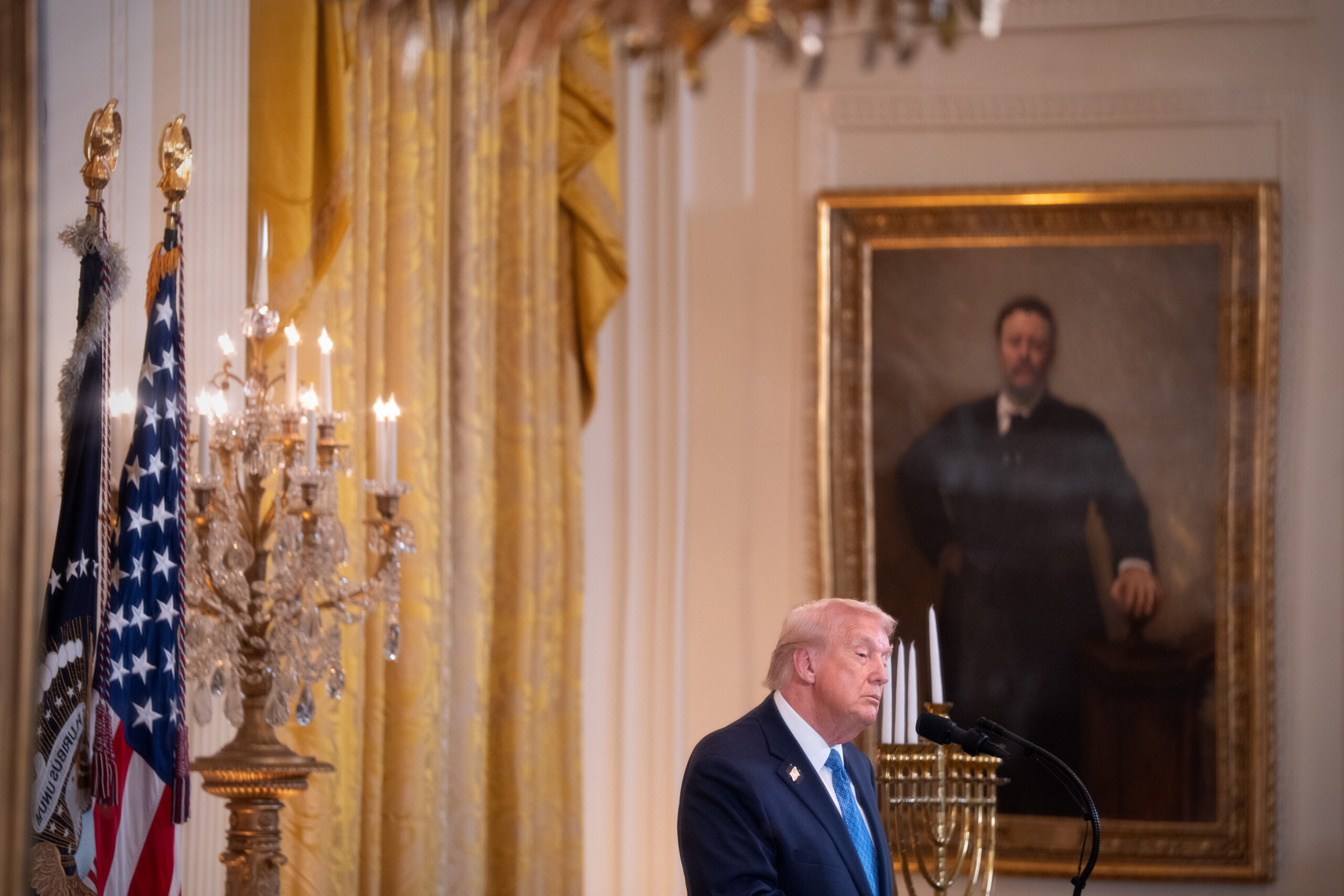
President Donald Trump on Dec. 16 at the White House.
Federal authoritiesin Minnesota have been investigating the sweeping abuse of safety net programs for years and brought many of the charges in 2022, accusing 47 people of misusing $250 million — meant to feed children during the pandemic — on luxury cars and property as far away as Kenya and Turkey.
News reports, a viral video and a flood of criticism from right-wing influencers and politicians have drawn new national attention to the issue in recent weeks. Federal investigators also suggested last month that the problem could be much bigger than previously known.
Joe Thompson, a prosecutor with the U.S. Attorney’s Office in Minnesota, said at a news conference last month that authorities have identified “significant fraud” in14 state Medicaid programs — and said fraud may account for more than half of the $18 billion that went to those programs since 2018.
“Every day we look under a rock and find a new $50 million fraud scheme,” Thompson said.
Republican leaders including Vice President JD Vance and House Speaker Mike Johnson (R., La.) have weighed in this past week, sharing a video posted on social media on Dec. 26 by a 23-year-old YouTuber, Nick Shirley, who joined a roundtable with Trump last year. In the 42-minute video, Shirley claimed daycare centers were not caring for children because he could not see them on-site. Regulators, however, saw children on their visits within the last 10 months, according to officials and records.
Shirley’s video has accumulated more than 130 million views on X and triggered a flood of GOP interest — and criticism of Walz. House Republicans said they would call Walz to testify before Congress next month. Right-leaning billionaire Elon Musk, who owns X, suggested Walz should go to prison.
“Minnesotans are finally much more aware of the extent of the fraud and how deep it is and how it’s gone unchecked, and it is going to play favorably for Republicans on every level of government in the ’26 election,” said state House speaker Lisa Demuth, one of many candidates seeking the GOP nomination to challenge Walz.
Another GOP gubernatorial candidate, Minnesota Rep. Kristin Robbins — who chairs a House committee on fraud — called it the top issue in the race. “We are still, sadly, at the tip of the iceberg,” she said.
A 2024 report from the nonpartisan Minnesota LegislativeAuditor found that the state education department, which administered nutrition programs at the center of many fraud cases, “failed to act on warning signs” and “created opportunities for fraud.”It did not point specifically at Walz.
Michael Brodkorb, a former deputy chair of the Minnesota GOP who has crossed the aisle in the past to vote for Walz, said he isn’t sure how he’ll vote in the coming gubernatorial race, and argued that the Walz administration could have been more responsive. Voters, he said, will have to decide if state officials “have the credibility to be a part of the solution when maybe a lot of Minnesotans think they’re part of the problem.”
But he also warned that Trump’s rhetoric isn’t helping local Republicans. The president railed against Somali immigrants in a cabinet meeting last month, saying “they contribute nothing” and declaring, “Their country stinks, and we don’t want them in our country.”
Some Republicans in Minnesota want to leave race out of the debate — though they argue sensitivities about racism helped enable the fraud. (A nonprofit behind much of the fraud once accused a state agency of racial discrimination while pushing back on skepticism).
“We want to stay focused on the fraud and just the act itself, not on the culture or the people behind it,” Minnesota GOP chair Alex Plechash said in an interview, adding later, “I’m not at all into dividing the people by race or by socioeconomic status or any other way.”
At a Somali mall in Minneapolis, Kadar Abdi, a student at a nearby mosque, said he believes Trump is trying to turn attention away from his own political challenges. “Because of these failures, as a distraction tactic, you want to blame a marginalized group” he said. “It’s as old as American society.”
An hour away in Owatonna, an exurb of the Twin Cities, diners at the Kernel represented the full gamut of opinions. Trump voter Michael Haag, 54, said Walz “should be in prison” and that he plans to leave the state if Walz is reelected.
He “should resign, and I also think he should be charged, because he’s for the Somalis,” Haag said. “He should have been looking out for us, vs. them.”
Another patron wearing a pink Carhartt hat and sipping coffee disagreed.
“I find him honest,” said Joan Trandem, who is retired. “He cares about the small guy.”
Given the drama that’s surrounded Walz, Trandem said she’s surprised he wants to run fora third term. But if he continues with the campaign, she plans to vote for him. In the rural part of Minnesota where Trandem lives, the fraud probe doesn’t get much play anymore, she said. “I’m tired of talking about it.”
Venezuela native Gil Arends was unwinding at his South Philadelphia apartment Saturday when an X notification came through: “There’s no power in Caracas and we are hearing some explosions.” A panoramic video showed smoke rising from the capital city.
“I was immediately scared; even with all the military, I did not think Caracas was going to get bombed,” Arends, 40, said. Then, the news came through: Venezuelan President Nicolás Maduro was in custody.
A U.S.military operation ousted Maduro from power early Saturday, capturing him and his wife, Cilia Flores. The couple were extracted from their home on a military base and taken to New York, where they face prosecution for their alleged participation in a narco-terrorism conspiracy. The dramatic ground offensive capped a monthslong pressure campaign by President Donald Trump against the Venezuelan leader.
Arends, who owns Puyero Venezuelan Flavor with locations in Center City and University City, left Venezuela 15 years ago. He woke up his mother, sister, and wife when he learned the news. No one could believe it.
“Some people just began noticing the bombings in the Caribbean, but we have been living this our entire lives,” Arends said. “No one wants to see their country getting bombed, but they gave us no alternative. I am grateful for the help.”
In the wake of the raid, Trump said the United States would “run Venezuela” until a transition of power could be arranged. Speaking from Mar-a-Lago, Trump offered few details on what American intervention would look like — or how long it could take — but revealed he plans to “fix” the country’s oil infrastructure and sell “large amounts” of oil to other countries.
The military operation and takeover Saturday elicited reactions from Philadelphia’s Venezuelan community and a cohort of area politicians who denounced Trump’s plan to run the country and capitalize off its oil reserves.
Philadelphia Democrat U.S. Rep. Brendan Boyle took to X, writing, “The American people want affordable housing and health care. The last thing they want is another costly forever war.”
U.S. Rep. Brian Fitzpatrick said in a statement that Venezuela’s future “belongs to the Venezuelan people alone.”
“The only country that the United States of America should be ‘running’ is the United States of America,” the Bucks County Republican said.
The legal authority for the raid on Maduro and airstrikes in Caracas were not immediately known, but area lawmakers said Trump did not seek congressional authorization to capture Maduro. Decrying the attack, a spokesperson for U.S. Rep. Dwight Evans of Philadelphia noted that the president’s chief of staff Susie Wiles told Vanity Fair in November that ground operations in Venezuela would require the approval of Congress.
In a social media post, Sen. Andy Kim accused Secretary of State Marco Rubio and Defense Secretary Pete Hegseth of “blatantly” lying when the administration told congressional leaders its objective was not a regime change. Kim — a New Jersey Democrat and former national security official in the Obama administration — argued the raid may further isolate the U.S. from its allies.
“This strike doesn’t represent strength. It’s not sound foreign policy,” Kim wrote. “It puts Americans at risk in Venezuela and the region, and it sends a horrible and disturbing signal to other powerful leaders across the globe that targeting a head of state is an acceptable policy for the U.S. government.”
Delaware Democratic U.S. Sen. Chris Coons echoed Kim in a news release: According to Coons, senior Trump administration officials said in briefings to Congress that they were focused on combating drug trafficking.
“President Trump put American service members in harm’s way to capture Maduro, but the president lacks a clear plan for what comes next,” Coons said. “This raid risks creating more instability in the region, putting U.S. service members and civilians in the hemisphere at risk, and dividing us further from our regional partners.”
While condemning Trump, Sen. Cory Booker, a New Jersey Democrat, also upbraided the Republican-led Congress for its “ongoing abdication of its constitutional duty” and choosing “spineless complicity over its sworn responsibilities.”
“Again and again, the president has exceeded his authority, defied congressional intent, trampled the separation of powers, and broken the law — while Congress looked away in cowardice and submission,” Booker said in a news release. “Congress must act now. It must reassert its constitutional authority, restore the rule of law, and stop this president before further injury is done to our democracy and our republic.”
State Sen. Nikil Saval (D., Philadelphia) called for his federal counterparts to impeach Trump.
“Trump’s attack on Venezuela and abduction of its President are criminal acts of terror. They follow in the darkest traditions of American history: a violent, reckless flex of military power to gain control over foreign resources,” Saval posted on Instagram. “It is incumbent on every American of conscience to rise against these actions.”
Bill Burke-White, an international lawyer and law professor at the University of Pennsylvania Carey Law School, said the United States’ unsanctioned attack on another sovereign state opens the doors for other military superpowers to oust opposing heads of states.
“Many countries in the world are going to look at this and say … that the United States has fundamentally abandoned the basic principles that kept us safe for the last 70 years. We’re going to be reverting to a world that looks more like regional powers that can do whatever they want,” he said, “a world governed, not by law, but by the whims of powerful autocrats in countries with nuclear weapons.”
The U.S. government does not recognize Maduro as a legitimate leader of Venezuela, and Trump repeated rhetoric Saturday that Maduro had effectively exploited the nation for cocaine trafficking and criminal enterprises. American presence in waters off South America has swelled in recent months as the U.S. attacked boats allegedly carrying drugs.
The number of known boat strikes was 35 and the number of people killed at least 115 as of Friday, according to the Trump administration. Trump has said that the U.S. is engaged in an “armed conflict” with drug cartels and has justified the boat strikes as necessary to curb the flow of drugs.
In social media posts, Pennsylvania U.S. Sens. Dave McCormick , a Republican, and Democrat John Fetterman applauded American military personnel who carried out the mission under the cover of darkness.
“For years Maduro’s regime killed our children by flooding America’s streets with poison, threatened our borders, and undermined U.S. national security,” McCormick wrote. “I urge what’s left of the Maduro regime to honor the will of the Venezuelan people and transition peacefully to rightfully elected leadership.”
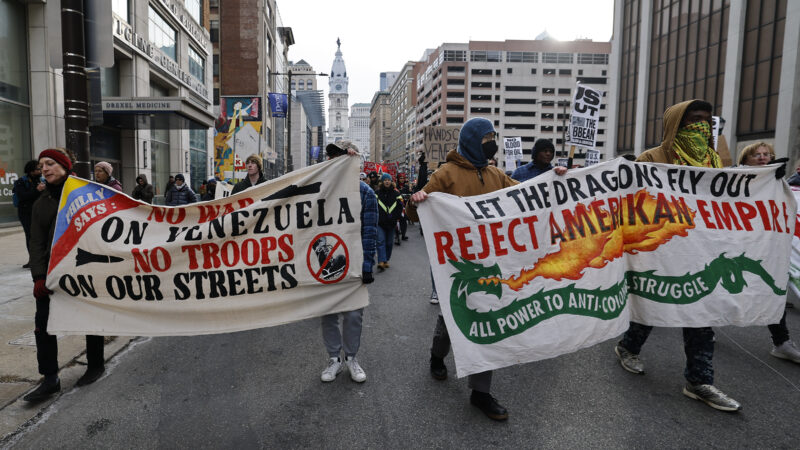
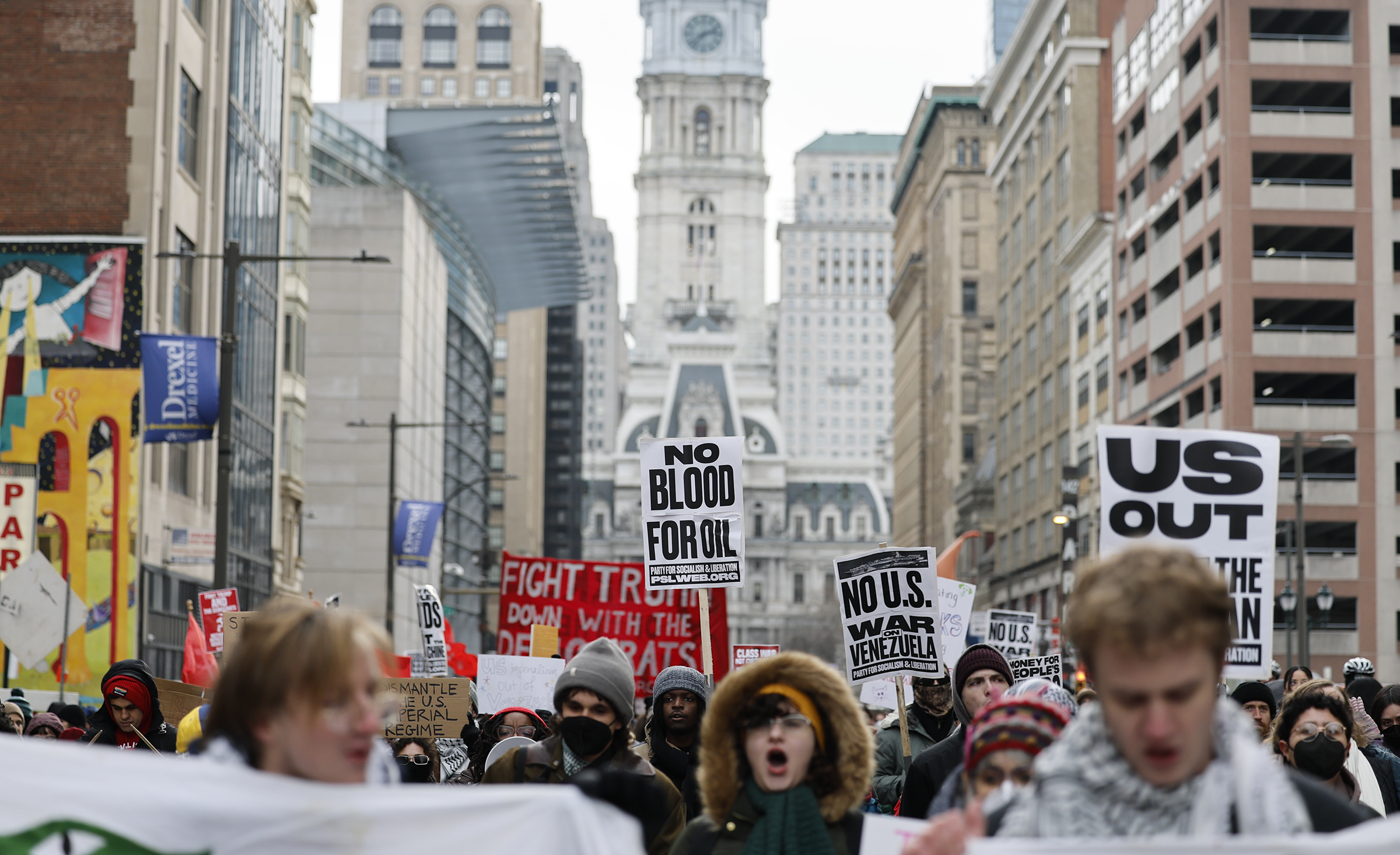
Demonstrators march along North Broad Street reacting to U.S. strikes on Venezuela on Saturday.
There are about 7,000 people of Venezuelan origin in the Philly metro area, according to the latest census data, out of a total metro area Latino population of 681,000. By comparison, there are 135,000 people of Mexican origin, and 74,000 people of Dominican origin in the metro area.
Three local Venezuelan organizations — Casa de Venezuela Philadelphia, Casa de Venezuela Delaware, and Gente de Venezuela Philadelphia — rallied for peace and unity among the diaspora.
“In moments of heightened emotional sensitivity and rapid information circulation, we urge our community in exile to act with serenity, caution, and a sense of collective responsibility,” a joint statement read.
A vigil for Venezuela’s future is scheduled for noon Sunday at the Cathedral Basilica of SS. Peter and Paul.
“We firmly believe that no process of change will be sustainable if built on hatred, confrontation, or suffering,” the statement said.
After the news began to sink in, Arends, the restaurateur, checked in with his employees, asking about their family members in Caracas. Overall everyone was OK, he said, although some were startled and concerned by the bombing sounds.
“There is so much uncertainty in every single level and we have been through so much; we have seen bad things become worse so it’s very difficult to just be happy without fearing what that might lead to,” Arends said. “I’m hopeful but it doesn’t feel like we are at the point where this is over.”
As the first day of a post-Maduro Venezuela came to a close, Venus Lucini, 28, said she felt like there was a difference in the air.
“There are too many emotions, too much uncertainty, but for the first time, there is possibility,” Lucini said, as she held her daughter Sofi’s hand.
For the young mother this is a chance for younger generations to recover a sense of the future.
“I already had to emigrate, but this is her chance to see a new Venezuela,” Lucini said, longing to visit with family members who have never seen her 6-year-old in person.
“Can we go to Venezuela now, Mami?” Sofi asked.
“Not yet, baby, but soon you will get to see all the places Mami grew up in,” Lucini replied.
Graphics editor John Duchneskie and the Associated Press contributed to this article.
Brian Lovenduski was strolling with his leashed miniature pinscher, Ziggy, through a Center City plaza Monday evening — just another routine walk for the pair.
“Just enjoying the Christmas lights,” said Lovenduski, who had David Bowie’s Diamond Dogs pulsing through his earbuds. “And then, before I knew it, I turned around and a pit bull had latched onto Ziggy’s leg.”
Lovenduski recalled the horrific attack that followed at 12th and Chestnut Streets in front of dozens of bystanders. He was bitten and Ziggy was left seemingly near death — until the small dog rallied and fought back for his life against the much bigger, more powerful pit bull.
Miguel Torres, a spokesperson for the Philadelphia Police Department, said Saturday that the pit bull is believed to have been involved in a trio of attacks in Center City that took place in the week after Christmas. The pit bull is believed to be owned by a homeless person, police said.
Owners of two victimized dogs say they have not only been traumatized by the attacks, but face tens of thousands of dollars collectively in vet bills.
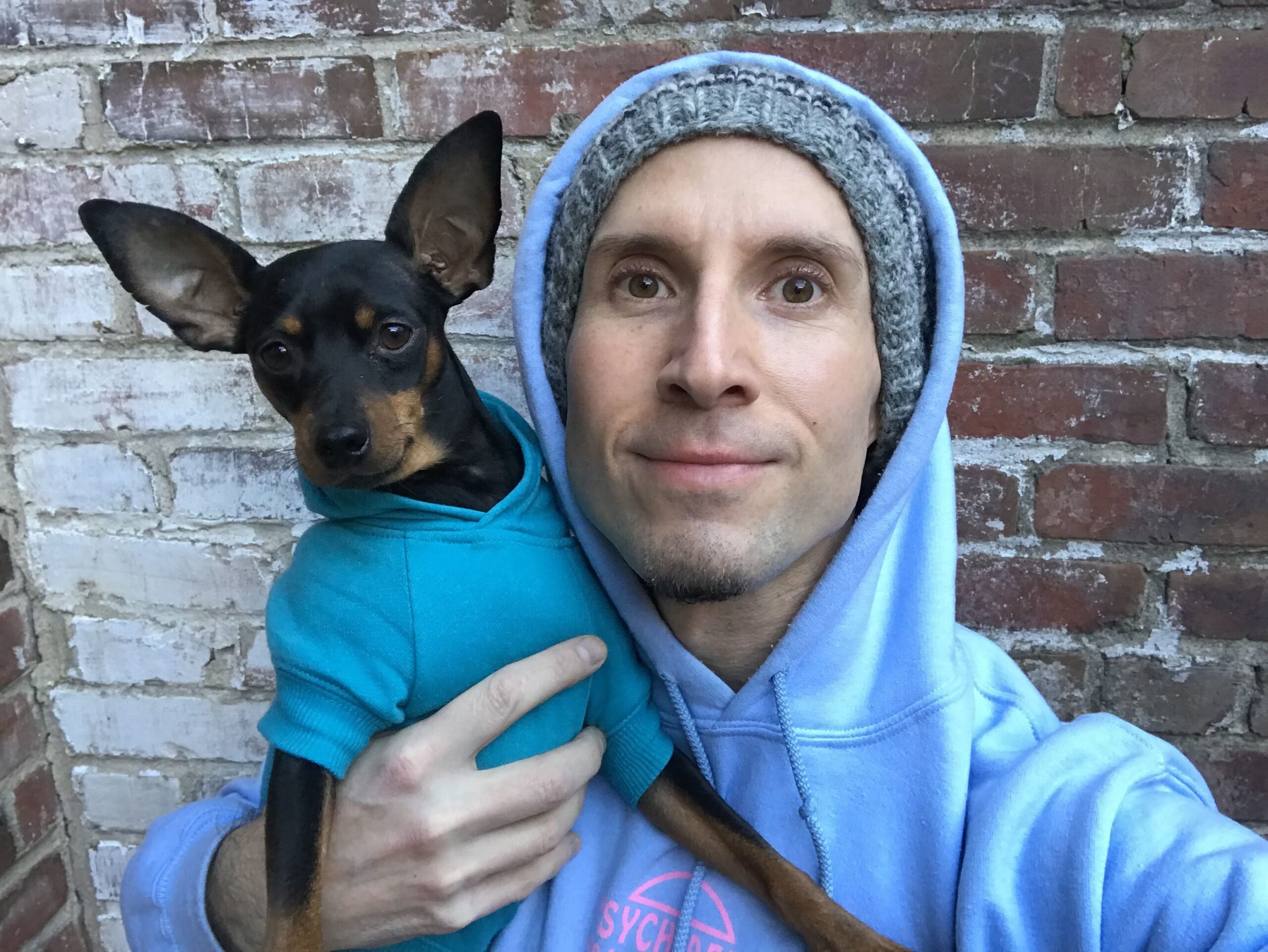
Brian Lovenduski was walking his leashed miniature pinscher, Ziggy, Monday in Center City when they were attacked by a pit bull, which is believed to have carried out two other recent attacks.
Ziggy’s attack
Ziggy was the second dog attacked by the pit bull.
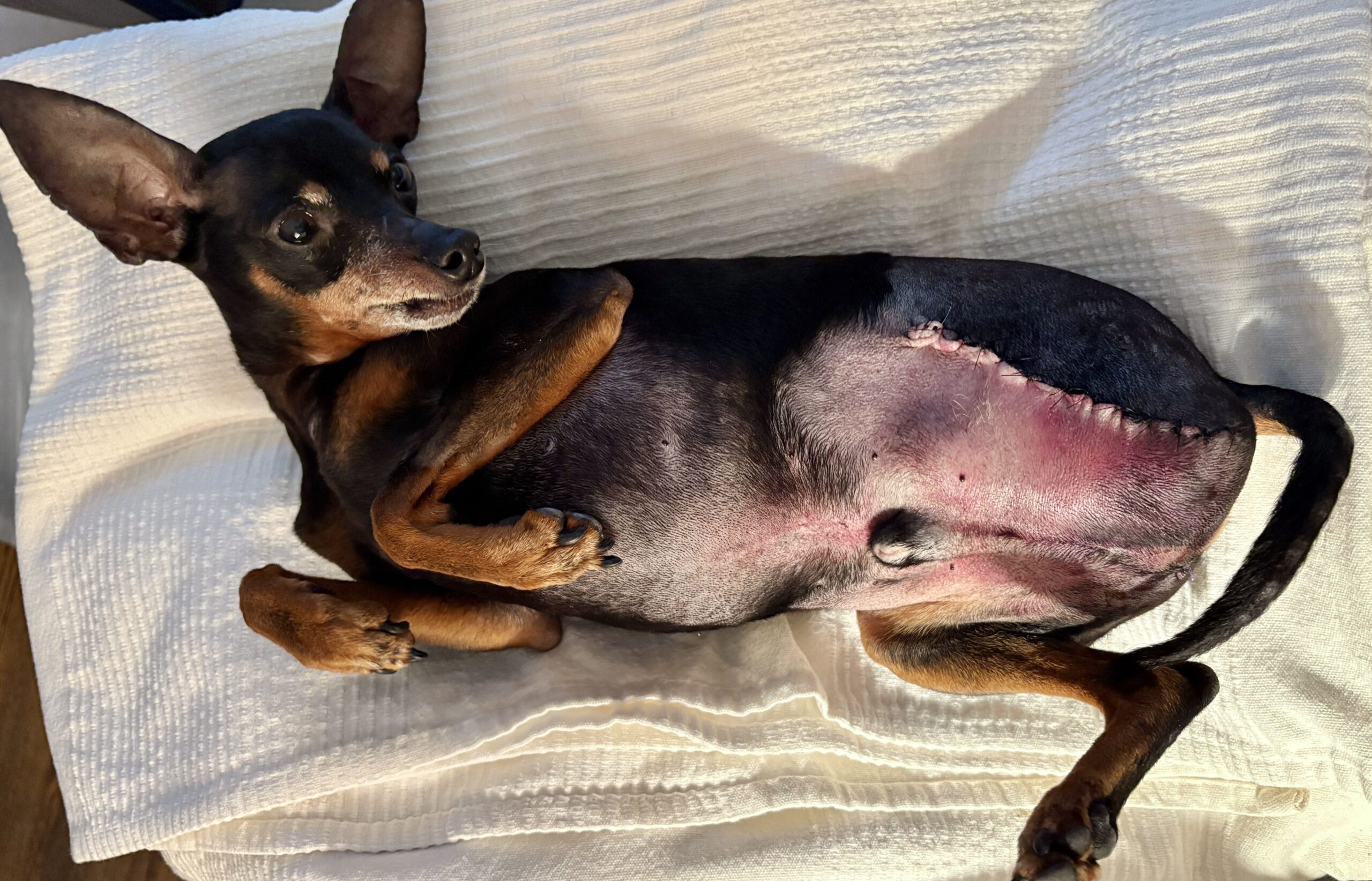
The 4.5-minute attack left Ziggy with a long row of stitches and an amputated leg. Lovenduski was bitten on the hand as he tried to ward off the pit bull.
Lovenduski said he grabbed the pit bull by the collar and pulled its head to his chest to wrest him away from Ziggy. Dozens of people gathered, with some shouting instructions, but not intervening. At one point, Ziggy went limp.
“I was worried that I’m watching my dog die in front of me, and I can’t save him,” Lovenduski said. “And then suddenly, Ziggy in his little, little, fiery body sprung back to life and started biting the pit bull on the ears, over and over and over. There was blood everywhere.”
Lovenduski continued to strike the pit bull on the head and finally it released Ziggy. A nurse from Jefferson Hospital came and helped seek medical treatment.
Eventually, Ziggy was treated at Philadelphia Animal Specialty & Emergency on Washington Avenue in Point Breeze.
“He is little by little, starting to learn how to balance himself upright on three legs,” Lovenduski said of Ziggy. “I’m still in shock. But Ziggy’s will to live is inspiring me.”
Lovenduski estimates he faces $11,000 in medical expenses, and expects that could grow. He has set up a GoFundMe account to raise money for the bills.
Ziggy, a miniature pinscher, was attacked by a pit bull while being walked by owner, Brian Lovenduski on Dec. 29, 2025. It was one of three known attacks by the pit bull.
The attack on Stella
The first known attack by the pit bull occurred on Dec. 26 as J. Bazzel was walking his 11-month-old sheltie Stella at Juniper and Chestnut Streets.
Bazzel said he saw a homeless woman sitting on the corner under a blanket with a pit bull to the side. He’d seen the dog before and usually gives it “a wide berth.” He believes the woman also travels with a man.
He crossed over Juniper, near the Wanamaker Building, and was startled to hear Stella suddenly yelp.
“I looked down, and saw that the dog had, very quietly, ran over, grabbed Stella’s front left leg and wouldn’t let go of it. My dog was yelping and crying in pain. I started yelling for help.”
Bazzel said a man came over and jumped on the back of the pit bull and started striking it in the head. Bazzel worked his gloved fingers into the back of the pit bull’s jaw and applied pressure until it released Stella.
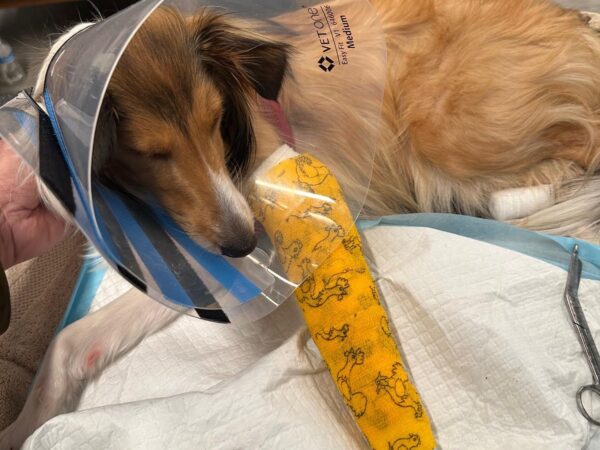
Stella, an 11-month-old sheltie, is seen here recovering from surgery after she was attacked by a pit bull Dec. 26 in Center City. Police believe the pit bull is responsible for three recent attacks.
“The guy who was holding back the pit bull yelled at me to run,” Bazzel recalled. “And I scooped Stella up.”
Bazzel brought the bleeding puppy to the VEG Emergency Vet center, where staff helped.
“I had blood on me, I had excrement on me,” Bazzel said. “The folks at VEG were just amazing. They quickly got the door. They escorted me right back. They got her on a table. They started taking care of me and her because I was out of breath.”
Eventually, Bazzel got Stella to Philadelphia Animal Specialty & Emergency. There, a surgeon pieced together Stella’s crushed foreleg, keeping it together with a plate. Stella also needed a skin graft.
“She’s with me every single place I go,” Bazzel said of Stella. “She’s my emotional support. She’s my best friend. It just breaks your heart to see what she’s going through.”
Bazzel is hoping the dog’s foreleg will be saved, but is still waiting to see if it heals. He said the medical bills total about $9,000 so far, and he expects it could run thousands more by the time treatment is over. He has also set up a GoFundMe account.
The third attack occurred 7 a.m., Dec. 31, as a 74-year-old man was walking his dog at 19th and Walnut Streets, according to police.
There, a homeless person, described by police as a white male wearing a black coat and dark blankets, was lying on the ground with a pit bull.
The pit bull then rose to bite both the man and dog. The man drove himself to a hospital for treatment.
The city’s Animal Care and Control Team is aware of the situation, said ACCT Philly executive director Sarah Barnett.
But, stopping the pit bull is a process.
“We can’t just take someone’s dog; the process takes so long and it’s not victim friendly,” Barnett said.
The steps involve filing dangerous dog charges, taking the owner to court, and waiting over 30 days. This process is more complicated when the owner is unhoused, she said.
After three attacks, Barnett conceded there’s a chance that the pit bull attacks again.
“It wouldn’t surprise me if someone’s dog gets attacked and they do something horrible like shoot it,” Barnett said. She encouraged people to instead call the police if they think they have spotted the pit bull.
“Be aware of your surroundings and don’t just assume the dog is only in Center City,” she said.
This story has been corrected to say that Stella was initially bought to VEG Emergency Vet center, not Vedge the restaurant.
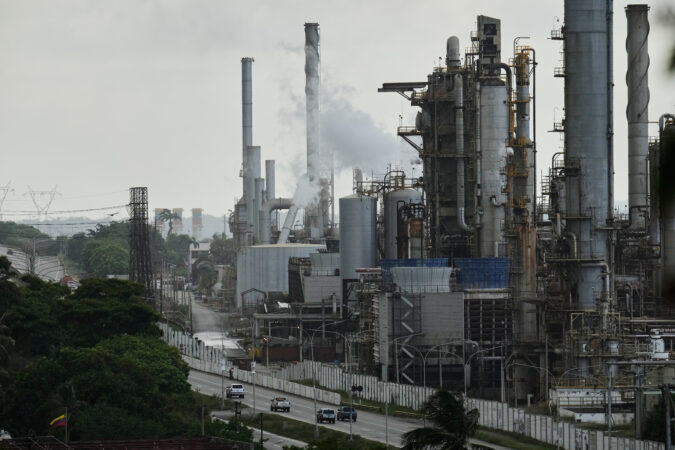
In 1976, the government of oil-rich Venezuela assumed control of the country’s petroleum industry, nationalizing hundreds of private businesses and foreign-owned assets, including projects operated by the American giant ExxonMobil.
In 2007, Hugo Chávez, the founder of Venezuela’s socialist state, assumed control of the last privately run oil operations in the Orinoco Belt, home to the country’s largest oil deposits.
President Donald Trump said in December that the expropriation of American oil company assets justified a “total and complete blockade” of oil tankers arriving and leaving Venezuela in defiance of U.S. sanctions. The blockade will remain, he wrote on Truth Social, until the South American nation returns “to the United States of America all of the Oil, Land, and other Assets that they previously stole from us.”
“They’re not going to do that again,” Trump told reporters. “We had a lot of oil there. As you know they threw our companies out, and we want it back.”
But U.S. companies never owned oil or land in Venezuela, home to the world’s largest proven reserves of crude, and officials didn’t kick them out of the country.
“Trump’s claim that Venezuela has stolen oil and land from the U.S. is baseless,” said Francisco Rodríguez, a Venezuelan economist at the University of Denver.
Nationalization was the culmination of a decades-long effort by administrations of both the right and the left to bring under government control an industry that an earlier leader had largely given away.
The right-wing strongman Juan Vicente Gómez, the military dictator who ruled Venezuela from 1908 until his death in 1935, granted concessions that left three foreign oil companies in control of 98% of the Venezuelan market. The country became the world’s second-largest oil producer and largest exporter; oil accounted for over 90% of the country’s total exports.
Gómez’s successors tried to seize greater control over the country’s economy. Under President Isaías Medina Angarita, authorities approved a law in 1943 that required foreign oil companies to relinquish half their profits to the government. A 1958 pact signed by Democratic Action, the Democratic Republican Union, and the Independent Political Electoral Organization Committee ensured the country’s major political parties had access to oil profits.
By the time Venezuelan lawmakers began debating nationalization legislation in 1975, Rodríguez said, the “writing was on the wall.”
“Nobody was going to resist Venezuela carrying this nationalization to its end, and the U.S. was much more interested in having Venezuela be a provider of oil — relatively cheap oil — than to have a production collapse in Venezuela,” Rodríguez said. The change, consequently, was “relatively uncontroversial.”
President Carlos Andrés Pérez, a social democrat, signed the bill into law that August. In January 1976, Venezuelan state oil company Petróleos de Venezuela S.A. took over the exploration, production, refining, and export of oil.
The country followed Mexico, Brazil, and Saudi Arabia in a wave of resource nationalism aimed at trying to wrest control of energy resources, primarily from the United States, to achieve economic sovereignty.
American oil companies, including Exxon and Mobil, which merged in 1999, and Gulf Oil, which became Chevron in 1984, were hit hardest. The Dutch giant Shell was also affected. The companies, which had accounted for more than 70% of crude oil production in Venezuela, lost roughly $5 billion in assets but were compensated just $1 billion each, according to news reports from that period.
But they didn’t seek larger sums, Rodríguez said, and “felt that it didn’t make sense to press it more.” They also lacked “a mechanism that would have allowed the companies in 1976 to actually take these cases to court.”
(A 1991 bilateral investment treaty between Venezuela and the Netherlands created a legal pathway for investors to sue a foreign government for unfair treatment. Cases go before private arbitration panels rather than courts.)
In January 2007, Chávez called for the nationalization of the natural gas industry — part of his plan to redistribute oil wealth and transform the poverty-stricken nation into a socialist state.
When PDVSA assumed control of oil operations in Venezuela’s Orinoco Belt, ExxonMobil and ConocoPhillips were unable to agree to new contract terms and sought up to $40 billion in compensation through arbitration.
Several oil companies, including Chevron and Spanish-owned Repsol, remained in Venezuela under new contract terms. Chevron is the only American company still operating there.
In 2012, the International Chamber of Commerce awarded ExxonMobil $908 million in compensation, less than the $1 billion that Venezuela had offered. The tribunal awarded ConocoPhillips $2 billion in 2018. The World Bank’s International Center for Settlement of Investment Disputes awarded ExxonMobil $1.6 billion in 2014 and ConocoPhillips $8.7 billion in 2019.
Venezuela has yet to pay the full amounts. The economy is struggling under hyperinflation, government corruption, and U.S. sanctions. Under Chávez’s successor, Nicolás Maduro, oil exports, once 3 million to 4 million barrels a day, are now estimated at no more than 900,000 barrels per day. Most of it goes to China.
“American sweat, ingenuity and toil created the oil industry in Venezuela,” Stephen Miller, Trump’s deputy chief of staff and homeland security adviser, wrote in a post on X. “Its tyrannical expropriation was the largest recorded theft of American wealth and property.”
Rodríguez said the administration’s position “just doesn’t have any logic.”
“It’s kind of like an odd argument,” he said. “You owe me some money. We both went to court. The court said, ‘You pay me this.’ You start paying me, then I — by force, by the imposition of sanctions — make it impossible for you to continue paying me, and then I accuse you of stealing something from me.”
BUENOS AIRES, Argentina — Venezuelans on Saturday were scrambling to understand who is in charge of their country after a U.S. military operation that captured President Nicolás Maduro.
President Donald Trump delivered a shocking pick: the United States, perhaps in coordination with one of Maduro’s most trusted aides.
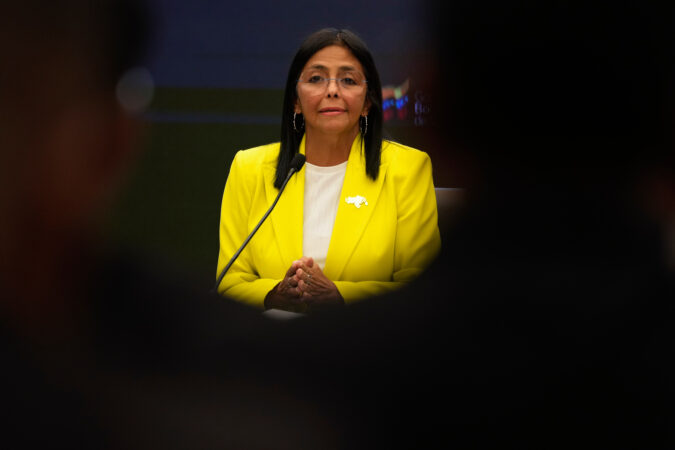
Delcy Rodríguez has served as Maduro’s vice president since 2018, overseeing much of Venezuela’s oil-dependent economy as well as its feared intelligence service. But she is someone the Trump administration apparently is willing to work with, at least for now.
“She’s essentially willing to do what we think is necessary to make Venezuela great again,” Trump told reporters of Rodríguez, who faced U.S. sanctions during Trump’s first administration for her role in undermining Venezuelan democracy.
In a major snub, Trump said opposition leader Maria Corina Machado, who was awarded last year’s Nobel Peace Prize, didn’t have the support to run the country.
Trump said Rodríguez had a long conversation with Secretary of State Marco Rubio in which Trump claimed she said, “‘We’ll do whatever you need.’”
“I think she was quite gracious,” Trump added. “We can’t take a chance that somebody else takes over Venezuela that doesn’t have the good of the Venezuelan people in mind.”
Rodríguez tried to project strength and unity among the ruling party’s many factions, downplaying any hint of betrayal. In remarks on state TV, she demanded the immediate release of Maduro and his wife, Cilia Flores, and denounced the U.S. operation as a flagrant violation of the United Nations charter.
“There is only one president in this country, and his name is Nicolás Maduro,” Rodríguez said, surrounded by top civilian officials and military commanders.
There was no immediate sign that the U.S. was running Venezuela.
“What will happen tomorrow? What will happen in the next hour? Nobody knows,” Caracas resident Juan Pablo Petrone said.
No sign of a swearing-in
Trump indicated that Rodríguez had been sworn in already as president of Venezuela, per the transfer of power outlined in the constitution. However, state television has not broadcast any swearing-in ceremony.
In her televised address, Rodríguez did not declare herself acting president or mention a political transition. A ticker at the bottom of the screen identified her as the vice president. She gave no sign that she would be cooperating with the U.S.
“What is being done to Venezuela is an atrocity that violates international law,” she said. “History and justice will make the extremists who promoted this armed aggression pay.”
The Venezuelan constitution also says a new election must be called within a month in the event of the president’s absence.
Venezuelan military officials were quick to project defiance in video messages.
“They have attacked us but will not break us,” said Defense Minister Gen. Vladimir Padrino López, dressed in fatigues.
Interior Minister Diosdado Cabello appeared on state TV in a helmet and flak jacket, urging Venezuelans to “trust in the political leadership and military” and “get out on the streets” to defend the country’s sovereignty.
“These rats attacked and they will regret what they did,” he said of the U.S.
Strong ties with Wall Street
A lawyer educated in Britain and France, Rodríguez has a long history of representing the revolution started by the late Hugo Chávez on the world stage.
She and her brother, Jorge Rodríguez, head of the Maduro-controlled National Assembly, have strong leftist credentials born from tragedy. Their father was a socialist leader who died in police custody in the 1970s, a crime that shook many activists of the era, including a young Maduro.
Unlike many in Maduro’s inner circle, the Rodríguez siblings have avoided criminal indictment in the U.S. Delcy Rodríguez has developed strong ties with Republicans in the oil industry and on Wall Street who balked at the notion of U.S.-led regime change.
Among her past interlocutors was Blackwater founder Erik Prince and, more recently, Richard Grenell, a Trump special envoy who tried to negotiate a deal with Maduro for greater U.S. influence in Venezuela.
Fluent in English, Rodríguez is sometimes portrayed as a well-educated moderate in contrast to the military hard-liners who took up arms with Chávez against Venezuela’s democratically elected president in the 1990s.
Many of them, especially Cabello, are wanted in the U.S. on drug trafficking charges and stand accused of serious human rights abuses. But they continue to hold sway over the armed forces, the traditional arbiter of political disputes in Venezuela.
That presents major challenges to Rodríguez asserting authority. But experts say that Venezuela’s power brokers have long had a habit of closing ranks behind their leaders.
“These leaders have all seen the value of staying united. Cabello has always taken a second seat or third seat, knowing that his fate is tied up with Maduro’s, and now he very well might do that again,” said David Smilde, a sociology professor at Tulane University who has conducted research into Venezuela’s political dynamics over the past three decades.
“A lot depends on what happened last night, which officials were taken out, what the state of the military looks like now,” Smilde said. ”If it doesn’t have much firepower anymore, they’re more vulnerable and diminished, and it will be easier for her to gain control.”
An apparent snub of the opposition
Shortly before Trump’s news conference, Machado, the opposition leader, called on her ally Edmundo González — a retired diplomat widely considered to have won the country’s disputed 2024 presidential election — to “immediately assume his constitutional mandate and be recognized as commander-in-chief.”
In a triumphant statement, Machado promised that her movement would “restore order, free political prisoners, build an exceptional country and bring our children back home.”
She added: “Today we are prepared to assert our mandate and take power.”
Asked about Machado, Trump was blunt: “I think it would be very tough for (Machado) to be the leader,” he said.
“She doesn’t have the support or respect within the country.”
Venezuelans expressed shock, with many speculating on social media that Trump had mixed up the two women’s names. Machado has not responded to Trump’s remarks.
It wasn’t always pretty, but Villanova men’s basketball extended its winning streak to five and preserved its undefeated Big East record with a 85-67 road win against Butler on Saturday in Indianapolis.
The Wildcats (12-2, 3-0) got out to a slow and sometimes sloppy start, which allowed Butler (10-5, 1-3) to take an early lead. Villanova turned the ball over seven times within the first nine minutes and trailed Butler by as many as nine points in the first half.
However, Villanova poured in 55 points in the second half, nearly doubling its first-half scoring performance to put the game away.
“I think sometimes when you have a young team, getting them to understand maybe just being a little bit more purposeful on the offensive end early in games,” said Villanova coach Kevin Willard. “I just thought we came out a little bit too casual to start. The turnovers kind of let us get down, but I felt we came out with a much better purpose in the second half.”
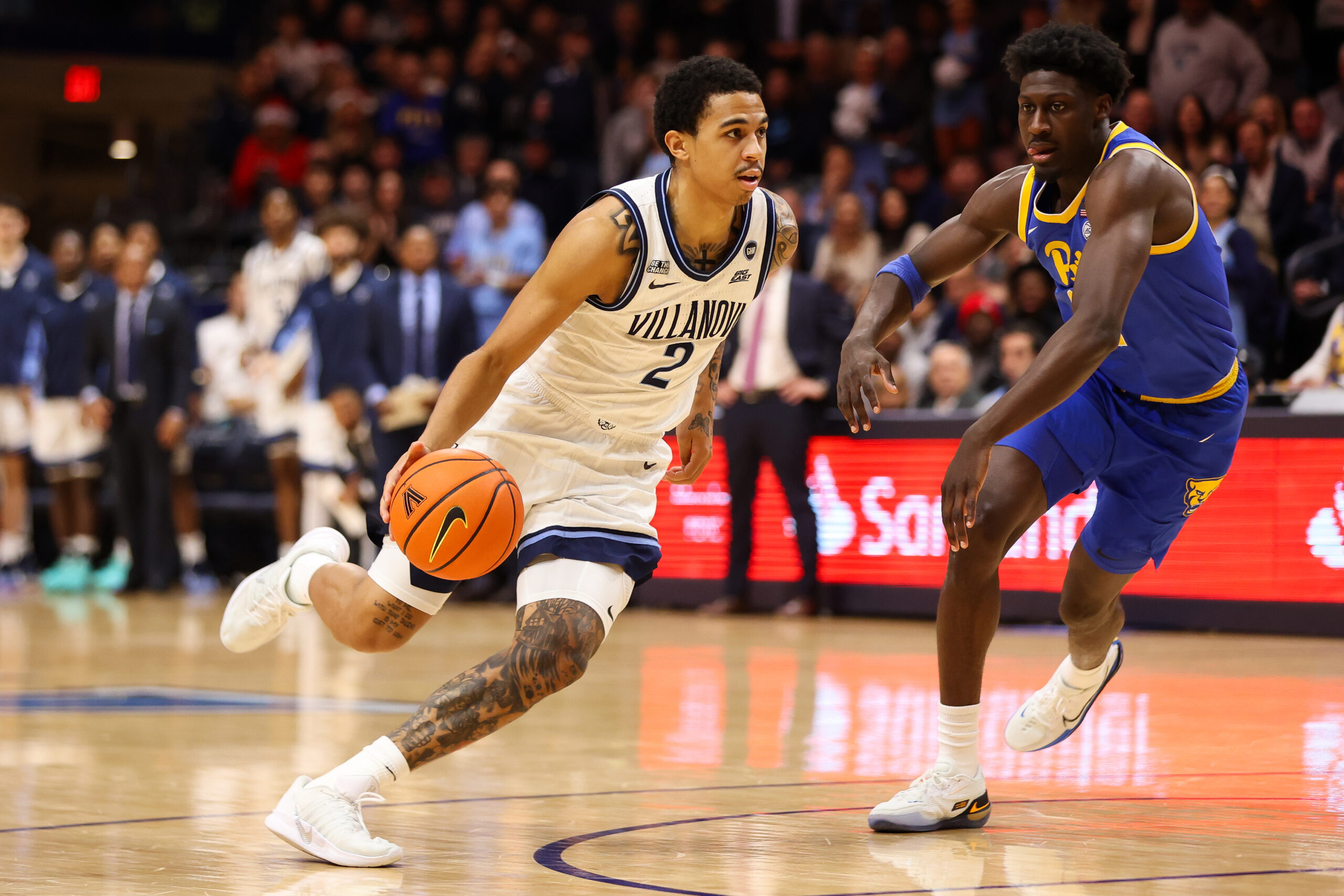
Villanova guard Bryce Lindsay (2), here in action vs. Pitt, led the Wildcats with 18 points vs. Butler on Saturday.
Villanova had just three second-half turnovers shot 55.2% from the field overall.
In the second half, Villanova held Butler’s two leading scorers, Michael Ajayi and Finley Bizjack, to a combined 12 points. Bizjack had 14 first-half points to power the Bulldogs’ early lead and finished with 18. Ajayi had 12 points, 12 rebounds, and five assists.
Redshirt sophomore guard Bryce Lindsay led Villanova in scoring with 18 points, shooting 7-for-13 (54%) from the field. Lindsay is averaging team-highs in points (16.8) and three-point percentage (44.8%) through 14 games.
Senior forward Duke Brennan continued his command of the paint, posting a 15-point, 10-rebound double-double. It marked Brennan’s fifth double-double of the season, and he is averaging 11.4 rebounds.
Villanova has been a consistent three-point shooting team through Big East play, but on Saturday only shot 1-for-12 from deep in the first half. Despite that, the Wildcats found a way to dig out of their early hole.
After closing the first half on a 7-2 scoring run, Villanova stretched that momentum into the second half. Lindsay and redshirt freshman forward Matt Hodge knocked down three-pointers in a 17-3 Villanova scoring run to open the second half.
Three-point shooting accounted for 18 of Villanova’s 55 second-half points as it shot 6-for-9 in the period. A majority of those threes came from Lindsay and Hodge. Lindsay shot 3-for-5, and Hodge went a perfect 3-for-3 from beyond the arc and finished with 17 points.
“We’re a good shooting team,” Willard said. “So we’re going to take a lot of threes. Bryce Lindsay is probably one of the best shooters in the country. He doesn’t get talked about a lot. [Hodge] can knock it down. Tyler Perkins [12 points on Saturday] is shooting over 40% [from three]. Then we come off the bench with Devin Askew. So, everyone we have out there, most times we have four guys out there that can shoot.”
It was the second straight game in which Villanova found late success with its three-point shooting after a poor first half. On Wednesday against DePaul, Villanova shot 7-for-10 from beyond the arc after going 3-for-13 in the first half.
Overall, Villanova is averaging 37.5% from beyond the arc this season.
Acaden Lewis has come a long way since he was benched for much of Villanova’s season opener against BYU, and the 6-foot-2 freshman guard has displayed confidence as the team’s main ballhandler.
He totaled 12 points, six assists, and five rebounds on Saturday. Lewis is second to Lindsay in scoring, averaging 12 points, and can find unusual ways to finish at the basket.
However, his passing abilities have earned him four Big East Freshman of the Week nods only halfway through the season. He has dished out 68 assists, which is double that of any other player on the team and is averaging 4.8 assists, which ranks third in the Big East.
Villanova, which entered the game 25th in the NCAA’s NET rankings, now has its second Quad 1 road win of the season. The Wildcats will return home to face Creighton (9-5, 3-0) on Wednesday (7:30 p.m., Peacock).
The Bluejays, which entered Saturday 49th in the NET rankings, was hit with a slew of injuries early in the season but has won four straight. Villanova has lost three straight to Creighton but leads the all-time series, 19-11.
President Donald Trump on Saturday demonstrated how expansively he is willing to exert U.S. power abroad, removing a foreign leader who had not threatened military force against America and declaring that Washington could assume long-term control in Venezuela.
The operation echoed those by past hawkish U.S. presidents to overthrow leaders in Iraq and Panama, raising questions about whether Trump’s “America First” doctrine is being redefined as he authorizes successive foreign attacks and pursues regime change in the South American nation.
“We’re going to run the country until such time as we can do a safe, proper, and judicious transition,” Trump said in a news conference at Mar-a-Lago. The remark contrasted with Trump’s past criticism of U.S. leaders who, he has argued, acted as “the policemen of the world,” andstood to sharpen tensions inside his political movement, which has long been skeptical of overseas entanglements. He did not say how long the United States would seek to control Venezuela.
But Trump described the operation as part of a broader effort to reassert “American dominance in the Western Hemisphere,” language that echoed Cold War-era interventionism more than the restraint he once championed.
“We’re not afraid of boots on the ground,” Trump said, adding that the United States would be “replacing” the country’s oil infrastructure. The remarks pointed to a scope of involvement that could extend beyond the limited, short-term actions Trump has previously championed.
In a wide-ranging news conference, Trump pointed to multiple justifications for the action, citing drugs, dictatorship, and regional dominance. Taken together, the shifting explanations suggest not a single rationale for the operation, but a broader assertion of presidential authority — one in which the White House claims latitude to act first and justify later.
Trump’s approval of a “large scale strike” on Venezuela early Saturday to capture President Nicolás Maduro and his wife marked the latest in a series of U.S. military actions since Trump returned to office, following strikes on Iranian nuclear facilities in June and attacks against the Islamic State in Nigeria on Christmas that underscore his expanding use of force abroad.
Despite branding himself a “peace president” who ran on a promise of “no new wars” and openly coveted the Nobel Peace Prize, Trump has increasingly relied on military force abroad — a turn that has unsettled parts of his MAGA base even as it has not yet produced prolonged U.S. involvement.The approach reflects a gamble Trump appears willing to take as he seeks to project strength and test the limits of presidential authority, even if doing so strains the anti-interventionist identity once central to his political brand.
Asked how taking control of a South American country was “America First,” Trump told reporters it is because he wanted to “surround” America with “good neighbors” and “stability.”
“We have tremendous energy in that country,” Trump said. “It’s very important that we protect it. We need that for ourselves. We need that for the world.”
Trump rose to power in 2016 in part because of his willingness to break sharply with previous Republican interventionism, especially the 2003 invasion of Iraq, which his Democratic rival Hillary Clinton supported.
Throughout his first term, he focused on reducing U.S. presence abroad, including setting in motion the pullout from Afghanistan ultimately carried out by President Joe Biden in 2021.
But Trump has been willing to be sharply more interventionist in his second term, declaring a desire to take over Gaza and again threatening Iran this week — saying the U.S. is “locked and loaded” to take action if the government harms more protesters in a 3 a.m. social media post Friday.
The president said hehad watched the Venezuela mission in real time fromhis Mar-a-Lago estate in Palm Beach, Fla., surrounded by military generals, and compared the feed to an action-packed “television show.” The “massive number” of aircraft — helicopters and fighter jets — and “steel all over the place” that didn’t stop the U.S. team from snatching Maduro in the dead of night.
Calling into Fox News’ morning show, Trump touted “the speed, the violence” employed by the military personnel assigned to the mission.
“‘Violence.’ They used that term,” Trump said, describing accounts of the operation relayed to him. “It was just an amazing thing.”
As he spoke with the conservative news channel, his first extensive public remarks about the operation since he had announced it hours earlier on Truth Social, Trump offered shifting rationales for why the apprehension of Maduro had occurred,suggesting that he is still testing howto sell the operation to American voters.
On the one hand, Trump said,preventing Venezuela from being “run by a dictatorship” was important, asserting that the United States has a role in shaping the country’s political future — a claim he framed as serving Venezuelan citizens’ interests.
“We can’t take a chance of letting somebody else run it and just take over what he left off,” Trump said. “We’ll be involved in it very much. And we want to do liberty for the people … I think the people of Venezuela are very, very happy because they love the United States. You know, they were run by, essentially, a dictatorship or worse.”
“But look,” Trump said as he returned to the antidrug message he has emphasized for months, “Tremendous numbers of people were being killed through drugs. And what they did to our country in sending prisoners and mental people, people from mental institutions and drug lords and everything — they sent them by the hundreds of thousands of people into our country — and that is just unforgivable.”
An Economist/YouGov poll conducted Dec. 20-22 found that 52% of respondents opposed using the U.S. military to overthrow Maduro, while just 22% said they supported doing so. Another 26% of adults, meanwhile, said they were not sure.
Vice President JD Vance, who has privately urged restraint in some foreign-policy decisions, said on social media Saturday that Trump had “offered multiple off-ramps” to Maduro before apprehending him, framing the operation as chiefly a law enforcement mission. He cited U.S. indictments ofMaduro “for narco-terrorism.”
“You don’t get to avoid justice for drug trafficking in the United States because you live in a palace in Caracas,” Vance wrote.
He was not among theseniorofficials flanking Trump during a news conference at Mar-a-Lago on Saturday — a notable absence given his past criticisms of excessive military action abroad. A spokesperson for Vance said the vice president “was deeply integrated in the process and planning of the Venezuela strikes and Maduro’s arrest,” and remotely took part in several late-night meetings ahead of and during the operation. Vance “briefly” met with Trump at his West Palm Beach golf club Friday to discuss the strikes, the spokesperson said, but steered clear of Mar-a-Lago as the operation took place for fear of signaling an attack was imminent.
Trump gave little indication this week that his administration was preparing the strike, declining to answer reporters’ questions about Venezuela as he entered his glitzy New Year’s Eve party Wednesday. He spent Friday shopping for marble for his planned White House ballroom project and spending time at his West Palm Beach golf club.
Photos released by Trump on Truth Social showed that the administration had stood up a makeshift situation room where the president, Defense Secretary Pete Hegseth, and Secretary of State Marco Rubio — a longtime proponent of regime change in the South American country — monitored the attack. Black fabric draped the room, where the president and administration officials sat on golden chairs.
Trump at the news conference Saturday embraced the “Donroe Doctrine” — a play on former president James Monroe’s declaration that the Western Hemisphere is Washington’s sphere of interest and that U.S. leaders would not tolerate unfriendly nations in their backyard.
Despite a flurry of recent declarations from right-wing commentators and online influencers criticizing the Trump administration for focusing too much on foreign affairs, many MAGA-aligned voices were largely silent Saturday morning, a sign that they were waiting to see the scope of the strike and potential fallout.
Stephen K. Bannon, a former Trump adviser and prominent MAGA commentator who has been sharply critical of the prospect of the United States pushing for regime change in Iran, initially spoke favorably about the operation in Venezuela.
Before Trump’s news conference, during his War Room show, Bannon called it “a stunning and dazzling overnight strike by U.S. forces.” But after Trump declared the United States would “run” the country, Bannon withheld further endorsement.
While Trump appeared to have the backing of traditional, hawkish Republicans, there were signs that his staunchest supporters may remain uneasy about open-ended control.
MAGA-aligned pollster Rich Baris warned that any brief “rally around the flag” effect from Trump’s announcement would fade if the Venezuela mission expanded. “Unless Trump can pull off the first ever successful regime change in a non-Western European nation since WWII,” Baris wrote on social media, “this will consume much of the year and voters will get more pissed he isn’t focused on them.”
So far, however, resistance inside Trump’s coalition has been limited. Congressional Republicans largely praised the strike despite Trump not seeking authorization or briefing lawmakers in advance, while only two House Republicans publicly raised concerns. Democrats, by contrast, warned the move amounted to an overreach of executive authority that could set a dangerous precedent.
Trump has declared ambitions over the Western Hemisphere so sweeping that they would reshape world affairs — and maps — for generations. He has said he wants to turn Canada into the 51st state, an effort that would require military force.
He evinced interest in annexing Greenland from Denmark, a close ally, and has tapped a top Republican as a special envoy to the territory. He has tied military action in Latin America to his top domestic priorities of reducing immigration and stopping the flow of drugs into the United States.
On Saturday, he left the door open to further military action against the leaders of Cuba and Colombia, who have also opposed Trump and his policies.
DUBAI, United Arab Emirates — Iran’s supreme leader insisted Saturday that “rioters must be put in their place” after a week of protests that have shaken the Islamic Republic, likely giving security forces a green light to aggressively put down the demonstrations.
The first comments by 86-year-old Ayatollah Ali Khamenei come as violence surrounding the demonstrations sparked by Iran’s ailing economy has killed at least 10 people. The protests show no sign of stopping and follow U.S. President Donald Trump warning Iran on Friday that if Tehran “violently kills peaceful protesters,” the United States “will come to their rescue.”
While it remains unclear how and if Trump would intervene, his comments sparked an immediate, angry response, with officials within the theocracy threatening to target American troops in the Mideast. They also take on new importance after Trump said Saturday that the U.S. military captured Venezuelan President Nicolás Maduro, a longtime ally of Tehran.
The protests have become the biggest in Iran since 2022, when the death of 22-year-old Mahsa Amini in police custody triggered nationwide demonstrations. However, the protests have yet to be as widespread and intense as those surrounding the death of Amini, who was detained over not wearing her hijab, or headscarf, to the liking of authorities.
Khamenei makes first comments on protests
State television aired remarks by Khamenei to an audience in Tehran that sought to separate the concerns of protesting Iranians upset about the collapse of the rial, Iran’s currency, from “rioters.”
“We talk to protesters, the officials must talk to them,” Khamenei said. “But there is no benefit to talking to rioters. Rioters must be put in their place.”
He also reiterated a claim constantly made by officials in Iran that foreign powers like Israel or the United States were pushing the protests, without offering any evidence. He also blamed “the enemy” for Iran’s collapsing rial.
“A bunch of people incited or hired by the enemy are getting behind the tradesmen and shopkeepers and chanting slogans against Islam, Iran, and the Islamic Republic,” he said. ”This is what matters most.”
Iran’s paramilitary Revolutionary Guard ranks include the all-volunteer Basij force, whose motorcycling-riding members have violently put down protests like the 2009 Green Movement and the 2022 demonstrations. The Guard answers only to Khamenei.
Hard-line officials within the country are believed to have been pushing for a more aggressive response to the demonstrations as President Masoud Pezeshkian has sought talks to address protesters’ demands.
But bloody security crackdowns often follow such protests. Protests over a gasoline price hike in 2019 reportedly saw over 300 people killed. A crackdown on the Amini protests of 2022, which lasted for months, killed more than 500 people and saw over 22,000 detained.
“Iran has no organized domestic opposition; protesters are likely acting spontaneously,” the Eurasia Group said in an analysis Friday. “While protests could continue or grow larger (particularly as Iran’s economic outlook remains dire), the regime retains a large security apparatus and would likely suppress such dissent without losing control of the country.”
Deaths overnight in protests
Two deaths overnight into Saturday involved a new level of violence. In Qom, home to the country’s major Shiite seminaries, a grenade exploded, killing a man there, the state-owned IRAN newspaper reported. It quoted security officials alleging the man was carrying the grenade to attack people in the city, some 80 miles south of the capital, Tehran.
Online videos from Qom purportedly showed fires in the street overnight.
The second death happened in the town of Harsin, some 230 miles southwest of Tehran. There, the newspaper said, a member of the Basij died in a gun and knife attack in the town in Kermanshah province.
Demonstrations have reached over 100 locations in 22 of Iran’s 31 provinces, the U.S.-based Human Rights Activists News Agency reported.
Iran recently said it was no longer enriching uranium at any site in the country, trying to signal to the West that it remains open to potential negotiations over its atomic program to ease sanctions. However, those talks have yet to happen as Trump and Israeli Prime Minister Benjamin Netanyahu have warned Tehran against reconstituting its atomic program.
Throughout Temple’s six-game winning streak, there has been an evident theme — inconstancy.
The Owls have been plagued by cold stretches in which they rely on their defense to keep them going. Saturday against UTSA was more of the same.
However, it didn’t matter as Gavin Griffiths’ 23-point performance and a 15-point, 12-assist double-double from Jordan Mason lifted Temple to a 76-57 victory and gave the program its longest winning streak under coach Adam Fisher.
“We’re really proud of this game today,” Fisher said. “We talk about this all the time. ‘Tougher together; 15 beats five.’ That’s been our mantra since we got together in June. … I have great respect for the [UTSA] program, and I thought we prepared yesterday the right way, and I thought that was key.
The Owls (10-5, 2-0 American) next host East Carolina (5-9, 0-1) on Wednesday (7 p.m., ESPN+).
Balance scoring attack
Near the end of Temple’s 76-73 win over Charlotte on Tuesday, guard Derrian Ford collided with 49ers center Anton Bonke. The senior was sidelined for the remaining three minutes and was inactive for Saturday’s contest, leaving the Owls without their scoring and rebounding leader as Masiah Gilyard slotted into the starting lineup.
Ford’s absence was apparent early, as Temple went 6 of 20 from the field over the first eight-plus minutes before making adjustments.
“Like Coach says, ‘15 beats five,’” Mason said. “So knowing he’s not going to play, and he’s a big piece. We just needed a little bit more from everybody. I feel like everybody just contributed a little bit more in their role.”
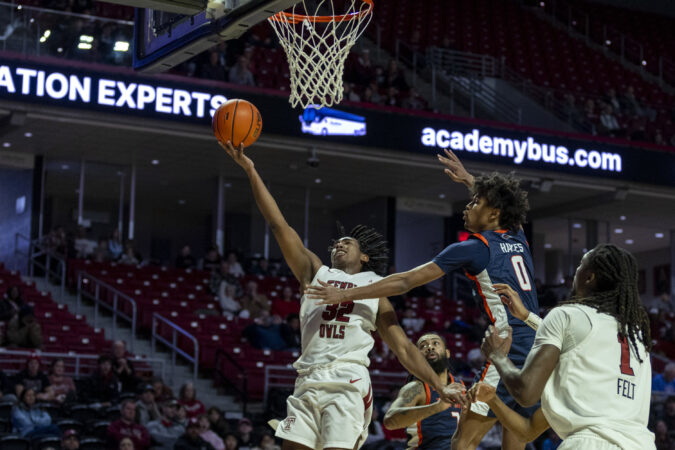
Temple’s Masiah Gilyard (10) goes for a layup against UTSA at the Liacouras Center on Saturday.
Little by little, Temple began to push the game out of reach as it entered halftime up, 39-30.
Six players scored in the first half, led by Mason’s 10 points, as the guard extended his double-digit scoring streak to six games.
Gilyard also provided a boost in Ford’s absence, finishing with nine points and eight rebounds.
“We knew other guys had to step up,” Fisher said. “I thought [Gilyard] set the tone. I think we grabbed three or four offensive guns in the first possession. We missed five wide-open shots. But the tone was set.”
Points left on the board
Temple lacked in three-point shooting on Saturday, which was a rarity for an offense that is second in the American in three-point percentage.
The Owls shot just 9-of-27 from deep, so they had to put an emphasis on getting buckets down low.
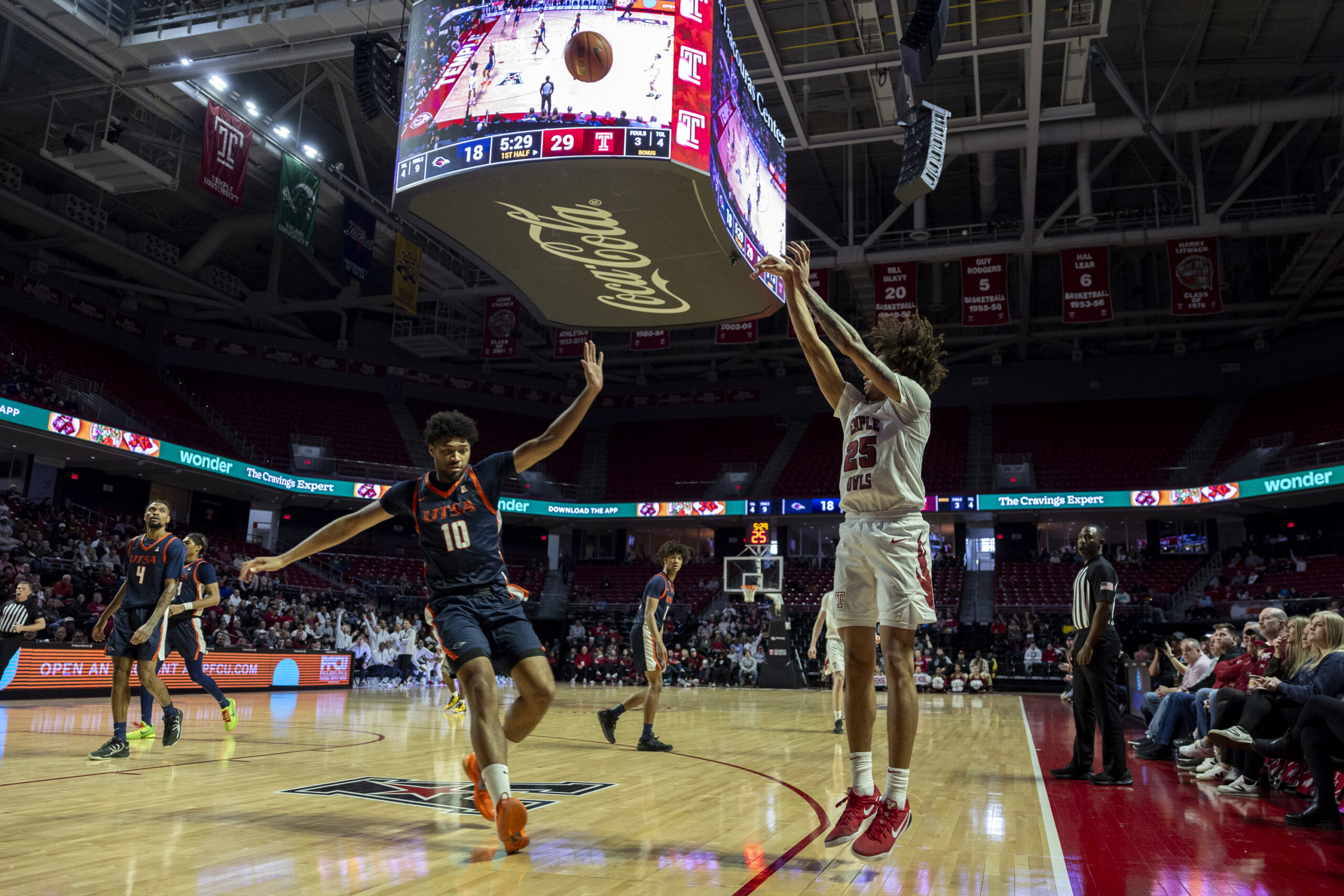
Temple’s Aiden Tobiason shoots a three-pointer against UTSA on Saturday.
However, the lack of offense put Temple in a similar position it had been in for most of this season: relying on the defense. UTSA (4-10, 0-2) got within eight points with 14 minutes, 2 seconds left, , but the Owls regrouped and held them to 32.7% shooting on the day.
Griffiths’ second half
With UTSA trying to cut into Temple’s lead, the Owls needed someone to step up.
After his 10-point first half, Mason had just five second-half points. However, he had 12 assists, the most since guard Mardy Collins in 2006. Aiden Tobiason also was inconsistent and finished with 13 points on 4-for-13 shooting.
Ford typically would be the go-to hand. Instead, it was Griffiths.
Griffiths scored 17 of his 23 points in the second half, anchoring Temple’s offense. His performance was just two points shy of his career high, which he set as a freshman at Rutgers. He also finished with a season-high seven blocks and two steals.
“I feel like I got a lot of really good looks today,” Griffiths said. “I was put in a position to make a lot of threes.”
Inquirer staff writer Colin Schofield contributed to this article.