Blog

  • Dear Abby | Colleague hasn’t been honest with the boss

    DEAR ABBY: A co-worker, “Erin,” has been allowed to work from home since the COVID-19 pandemic, while the rest of us came back to the office. We function alongside each other much like a small family. We have no drama, no office politics and an overall great atmosphere. Erin’s absence has caused a strain on our team and has fueled resentment. Many feel it’s unfair, although these feelings have not been shared with Erin.

    It so happens that Erin has accepted a new job and hasn’t told our boss because she’s worried about how the boss will react. When I found out, I did tell the boss even though Erin told me not to. So now I am caught in the snare of my own little trap of deceit. Advice?

    — TANGLED WEB IN NEW MEXICO

    DEAR TANGLED WEB: I’m sorry you didn’t mention what the benefit structure is at your company. Erin took a job on the Q.T. while still on your boss’ payroll. In the state where I live (California), that would be a reason to fire her. I do not regard enlightening your boss about what Erin did as deceitful. I think what you did was the right thing to do and loyal to the company.

    ** ** **

    DEAR ABBY: I’m nearly 70, and suddenly I’m remembering things from the past that I haven’t thought about in years — mostly conversations in which I wish I had responded differently. (I’ve never been really quick about responding to things.) Now they keep popping up, and I can’t seem to stop thinking about what I wish I had said. I don’t know why this is happening or how to stop it. Any advice?

    — MEMORY-RIDDEN IN MICHIGAN

    DEAR MEMORY-RIDDEN: If this is how you are spending your leisure time, you may have too much of it on your hands. When this happens, try to redirect your thoughts to something else. Then remind yourself that none of us can change the past, but we can LEARN from it so we don’t repeat our mistakes (or errors of omission) in the future. If what’s happening leads to depression or anxiety, you might benefit from consulting a therapist about it.

    ** ** **

    DEAR ABBY: I have been an avid reader my entire life, and you have always given solid advice, especially when it comes to topics regarding proper etiquette. That’s why you were the first person I thought to ask when my friend shared this information from our Catholic priest on how to attend Mass with reverence. “Don’t cross your legs. Crossing your legs is considered a disrespectful posture.” I’m all for proper manners and posture, but I have never heard this before.

    — WONDERING IN THE MIDWEST

    DEAR WONDERING: This is the first I have heard of it, but your friend may be correct. In some Orthodox cultures outside North America, crossing one’s legs is considered to be very disrespectful. Here in America, however, it is not taboo, but it is considered to be “too casual and relaxed” for church.

  • Horoscopes: Saturday, Jan. 3, 2026

    ARIES (March 21-April 19). You’ll catch a glimpse of future you: the version who lives with more freedom. It’ll arrive unexpectedly in a thought or feeling. Keep revisiting the vision because this is an anchor for the changes to come.

    TAURUS (April 20-May 20). Access to information is easy these days; it’s the organization and application that will move you forward. Today brings the right situation. It’s perfect for practicing. You’ll get the hands-on experience you need as well.

    GEMINI (May 21-June 21). You step into a remarkable moment of honesty. Why pretend to tolerate the things that drain you? Admit your feelings, at least to yourself. This clarity will rearrange your world. Truth is the perfect compass.

    CANCER (June 22-July 22). Go boldly forward, not because luck is on your side, but because it isn’t. No good luck, no bad luck either — everything is neutral, so it’s all on you. A confident advance will tip the scales of fortune your way.

    LEO (July 23-Aug. 22). Productivity is not the sole measure of worth. Tend to holistic values such as rest, delight, relationships and curiosity. It’s more fun to cross things off your list when there are actually fun things on your list.

    VIRGO (Aug. 23-Sept. 22). Hoping for a magical fix or heroic save? It’s so human, it may be one of the most relatable feelings in the world. Take a day away from the issue. Buy yourself time. Complex problems don’t have to be solved in a day.

    LIBRA (Sept. 23-Oct. 23). You made a commitment long ago. The enthusiasm so abundant then is now waning. How do you spark excitement again? Competition, inspiration or challenge can do it. Today delivers exactly the element needed to make things interesting again.

    SCORPIO (Oct. 24-Nov. 21). Beginning isn’t always the hard part. You recently entered a project with high energy. The true test of your grit will be how you handle the slump in the middle. Set yourself up for tenacity. Give yourself extra incentives.

    SAGITTARIUS (Nov. 22-Dec. 21). Emotionally intertwined, you feel someone’s pain, joy, interest, irritation and more. Are they feeling you too? Do you want them to? Is this relationship balanced? Sustainable? Today brings questions and answers.

    CAPRICORN (Dec. 22-Jan. 19). You’re used to setting your own goals, but it’s not the only way. You’ll love what happens today when you fall into someone else’s plan featuring you. You’ll shine in a different and new way.

    AQUARIUS (Jan. 20-Feb. 18). Yesterday’s move doesn’t work today. It’s a new game, and the rules have yet to be established. Step back and watch. Consider whether it’s even worth it, or fair, to participate now when so little has been established.

    PISCES (Feb. 19-March 20). Make a commitment and go. Only then will you know what you’re capable of. You can’t see the destination yet, not even with your mind’s eye. But journey on. With each step, you’ll be able to see further.

    TODAY’S BIRTHDAY (Jan. 3). Welcome to your Year of the Playful Gamble. You try things you used to overthink. You take chances and often win. Maybe it’s because you only risk what you can afford to lose, and it’s just enough to make life delicious. More highlights: flirty energy everywhere you go, late-night conversations that reshape your ambitions, and a milestone achievement that feels both surreal and deserved. Aries and Aquarius adore you. Your lucky numbers are: 14, 8, 21, 16, and 37.

  • Diane Crump, the first female jockey to ride in the Kentucky Derby, dies at 77

    Diane Crump, the first female jockey to ride in the Kentucky Derby, dies at 77

    WASHINGTON (AP) — Diane Crump, who in 1969 became the first woman to ride professionally in a horse race and a year later became the first female jockey in the Kentucky Derby, has died. She was 77.

    Crump was diagnosed in October with an aggressive form of brain cancer and died Thursday night in hospice care in Winchester, Virginia, her daughter, Della Payne, told The Associated Press.

    Crump went on to win 228 races before riding her last race in 1998, a month shy of her 50th birthday and nearly 30 years after her trailblazing ride at Hialeah Park in Florida on Feb. 7, 1969.

    Crump was among several women to fight successfully at the time to be granted a jockey license, but they still needed a trainer willing to put them in a race and then for the race to run. Others were thwarted when male jockeys boycotted or threatened to boycott if a woman was riding.

    Photographs of Crump’s walk to the saddling area at Hialeah show her protected by security guards as a crowd pressed in on all sides. Six of the original 12 jockeys in the race had refused to ride, Mark Shrager wrote in his biography, “Diane Crump: A Horse Racing Pioneer’s Life in the Saddle.” Among them were future legends Angel Cordero Jr., Jorge Velasquez and Ron Turcotte, who four years later would ride Secretariat to win the Triple Crown.

    But other jockeys stepped up, and as the 12 horses made their way onto the track, the bugler skipped the traditional call to the post and instead played “Smile for Me, My Diane.” Crump, on a 50-1 longshot called Bridle ’n Bit, finished 10th, but the barrier had been broken. A month later, Bridle ’n Bit gave Crump her first victory at Gulfstream Park.

    She again made history in 1970 by becoming the first woman to ride in the Kentucky Derby. She won the first race that day at Churchill Downs, but again her mount for the history-making race was outclassed. She finished 15th out of 17 on Fathom.

    It would be 14 more years before another female jockey would ride in the Derby, with only four more to follow in the decades since.

    The president of Churchill Downs Racetrack, Mike Anderson, said in a statement on Friday that Crump “will be forever respected and fondly remembered in horse racing lore.”

    He noted that Crump, who had been riding since age 5 and galloping young Thoroughbreds since she was a teenager, “was an iconic trailblazer who admirably fulfilled her childhood dreams.”

    Chris Goodlett, of the Kentucky Derby Museum, said “Diane Crump’s name stands for courage, grit, and progress.” He added: “Her determination in the face of overwhelming odds opened doors for generations of female jockeys and inspired countless others far beyond racing.”

    After retiring from racing, Crump settled in Virginia and started a business helping people buy and sell horses.

    In later years, she took her therapy dogs, all Dachshunds, to visit patients in hospitals and other medical clinics. Some with chronic illnesses she visited regularly for years.

    Payne said when her mother went into assisted living a month ago, she was already “quasi-famous” in the medical center because of how much time she had spent there, and a “steady stream” of doctors and nurses came to see her. One of the last people to visit her was the man who mowed her lawn.

    Her daughter said Crump would never take “no” for an answer, whether it was becoming a jockey or helping someone in need.

    “I wouldn’t say she was as competitive as she was stubborn,” Payne said. “If someone was counting on her, she could never let someone down.”

    Late in life, Crump’s mottos were literally tattooed on her forearms: “Kindness” on the left, “Compassion” on the right.

    Crump will be cremated and her ashes interred between her parents in Prospect Hill Cemetery in Front Royal, Virginia.

  • Carjacking suspect briefly steals Philly police car before getting caught

    Carjacking suspect briefly steals Philly police car before getting caught

    A suspect in a West Philadelphia carjacking briefly stole a Philadelphia police car in the city’s Frankford section Friday night before finally being arrested.

    Around 6:30 p.m. at Race and Robinson Streets, a young man carjacked a Chevrolet SUV, said Inspector D.F. Pace.

    Its OnStar system enabled police to track the vehicle, which the man abandoned at Frankford and Adams Avenues, Pace said.

    As officers tried to apprehend him, the man stole a 25th District police vehicle and drove north to the area of Castor Avenue and Herbert Street, Pace said, where he then parked the vehicle in a driveway on the 900 block of Herbert Street.

    The department’s helicopter unit tracked the stolen police car and officers were able to apprehend the man a short time later, Pace said.

    No one was injured, Pace said. The SUV that was originally stolen sustained some damage.

  • Garnet Hathaway and Emil Andrae are excited to rejoin the lineup after hitting the reset button

    Garnet Hathaway and Emil Andrae are excited to rejoin the lineup after hitting the reset button

    EDMONTON, Alberta ― Garnet Hathaway may not want to use the word reset, but like a reset button on your iPhone or Android, he does want to restore his system to what made him a successful, everyday NHL player.

    Hathaway has skated in 639 games since being signed by the Calgary Flames as an undrafted forward out of Brown University in April 2015. But lately, and for the first time in about six or seven seasons, Hathaway has been watching games from the press box as a healthy scratch.

    The move came after he posted zero points and an uncharacteristic plus-minus of minus-8 over the Flyers’ first 33 games. But he has been putting in the work.

    “That’s why I respect him. He didn’t waste his time being out. He really worked on his game,” said coach Rick Tocchet, referring to the 34-year-old veteran’s work with assistant coaches Jaroslav “Yogi” Svejkovský and Jay Varady during his six-game absence from the lineup.

    Hathaway has also been watching and taking notes on what makes the Flyers successful and how lines build chemistry. And now he’ll get a chance to show the work he’s been doing against the Edmonton Oilers on Saturday afternoon (3:30 p.m., NBCSP) as he slots back in alongside Rodrigo Ābols and Carl Grundström.

    “This league is addictive, and I think when you start focusing on the outcome rather than the process, you tend not to focus on the gratitude of the game. [And] not focus on the process of you getting to where you are,” Hathaway said as he reflected from the visitors’ locker room at Rogers Place on Friday.

    “I thought about that a lot [over the years]. I wanted to play one game in this league, and then I wanted to play 10, and then I wanted to play 100, and I wanted to play 200, and I wanted to play every single game. And I wanted to be successful. I wanted to continue to grow my game. … I think that for me personally, I want to continue to learn how to be, to show gratitude for this game, for what I’m fortunate enough to do.”

    There is no doubt that Hathaway has another gear. His legs have really been the problem this year as he is 12th in the NHL in hits — everyone above him has played more games — and has drawn 13 penalties.

    Tocchet noted that the veteran is a true professional who has put in the work. He wants to see it now.

    “Just confidence with the puck,” Tocchet said when asked what specifically he needs to see from Hathaway. “In all fairness to him — and I just don’t blame him — a lot of times he was leading the rush. He had the puck on his stick by himself a lot, and I think he’s one of those guys who is a support guy. He’s a really good forechecker.

    “So those are the things I want to see him do, as the F1 be a disruptor, get on top of their defense. That’s when he’s on this game.”

    While Hathaway is a grizzled veteran getting another chance, Emil Andrae is on the other end of the spectrum. At 23 years old, the defenseman is trying to solidify himself as an everyday NHLer and will re-enter the lineup after being a healthy scratch in the Flyers’ loss to Calgary on New Year’s Eve.

    Flyers defenseman Emil Andrae, 23, has been one of the team’s biggest bright spots this season.

    “He’s a young guy, and we’ve played a lot of consecutive games, and I think he was getting a little tired,” Tocchet said. “For him, it’s just like puck decisions, breakouts. When he’s on his game, he wheels the puck well, and that’s it. He’s given us a lot of good games, but this is just part of the process.”

    Andrae has played in 28 of the Flyers’ 39 games this season after originally starting the season with Lehigh Valley of the American Hockey League. He has one goal and 10 points and is tied with Travis Konecny for the second-best plus-minus on the team (plus-11). And since Nov. 22, when he began getting second-pair minutes alongside Jamie Drysdale, he has been averaging the fifth-most minutes on the Flyers (18 minutes, 49 seconds), tied with forward Trevor Zegras.

    “I think overall, just get back to my swagger, get back to the confidence that I have, the play style I have to be [successful],” he said, noting he was disappointed that he had to sit but sees it as a learning experience.

    “I have to be skating. And I think that’s one of the biggest things that I can improve, that I need to be on my toes and skating, and being aggressive. I think that’s when I play the best. So it’s been a little bit of that.”

    The Swedish blueliner is self-aware that he is in the early stages of his NHL career, and that it has been an interesting year to do that.

    Philly has been playing a bit of a condensed schedule with the upcoming Olympic break. Across the next 34 days, the Flyers will play 17 games.

    “You need to go on your game every game, because if you’re not, you get kind of punished for it,” he said. “So yeah, it’s been tough, obviously, for a guy who’s not used to it, both mentally and physically. It’s tough, but you learn every day. And I think I’ve been getting better and better.”

    Andrae has been a bright spot this season and continues to build and grow his game. Which is why he’ll be back in the lineup alongside Drysdale.

    “He hasn’t been bad at all. I think for like, smaller guys, he’s a quick guy. When you can defend with your brain, and he’s a smart guy … [and] when he doesn’t get his body position, I think that’s when he gets pinned, and he’s been getting hit a little bit,” Tocchet said.

    “So I think for him, on his toes, getting off the walls quicker, things like that, are beneficial to him. But he’s one of our best breakout guys, too, so when he’s on his game, it really helps our breakouts.”

    Breakaways

    Two Flyers prospects are on the move. Matthew Gard and Luke Vlooswyk, who were each taken in the 2025 NHL draft, have been traded by Red Deer of the Western Hockey League. Gard, a 6-foot-5, 194-pound center taken in the second round, is heading to Seattle. An alternate captain for the Rebels, he had six goals and 11 points in 23 games this season. Vlooswyk, a native of Calgary, was traded to Everett after putting up six assists in 32 games. Listed at 6-5, 201 pounds, the defenseman was selected in the fifth round by Philly.

  • Lenny Dykstra arrested for alleged drug possession in Northeast Pennsylvania

    Lenny Dykstra arrested for alleged drug possession in Northeast Pennsylvania

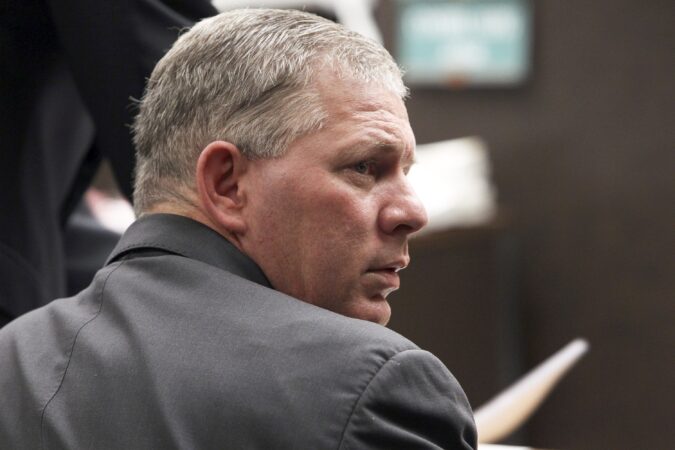
    Former Phillies star Lenny Dykstra was arrested for possession of narcotics and narcotics paraphernalia during a traffic stop just after midnight on New Year’s Day in Northeastern Pennsylvania, the state police said.

    Dykstra, 62, who lives in Scranton, was a passenger in a 2015 silver GMC Sierra truck in the area of Route 507 and Robinson Road in Greene Township, Pike County, when the vehicle was stopped by the Pennsylvania State Police for an alleged motor vehicle code violation, the state police said in a report.

    “During this investigation, the passenger was found to be in possession of narcotics and narcotic related equipment/paraphernalia,” the state police report said. “Charges to be filed.”

    Neither Dykstra nor the Pike County District Attorney’s Office could be reached for comment Friday night.

    Dykstra played 12 seasons in Major League Baseball in center field, spending the first four with the Mets — including as part of the team that won the 1986 World Series — before being traded to the Phillies during the 1989 season. He retired with the Phillies in 1996.

    Nicknamed the “Dude” and “Nails,” Dykstra was a celebrated member of the 1993 Phillies team that made it to the World Series, but lost to the Toronto Blue Jays.

    After his baseball career, Dykstra ran afoul of the law multiple times. He spent time in prison after pleading guilty in federal court for bankruptcy fraud and pleading no contest to grand theft auto in California.

    In February 2024, Dykstra suffered a stroke. In an interview later that year with the Times-Tribune in Scranton, he reflected on his health recovery and his legal and drug problems.

    Dykstra told the Times-Tribune he did some drinking while playing for the Mets, but his drug use intensified when he played for the Phillies.

    “It was a pharmacy,” he said.

    Dykstra said he liked using drugs and alcohol, but did not consider himself an addict, the Times-Tribune reported.

    “There were a lot of other players that were worse than me,” he said.

  • Zohran Mamdani’s first full day as NYC mayor: Subway rides, new offices, and backlash from Israel

    Zohran Mamdani’s first full day as NYC mayor: Subway rides, new offices, and backlash from Israel

    NEW YORK — Less than 24 hours after throngs of ecstatic supporters poured into Manhattan for his history-making inauguration, Zohran Mamdani began his first full day of work with a routine familiar to many New Yorkers: trudging to the subway from a cramped apartment.

    Bundled against the frigid temperature and seemingly fighting off a cold, he set out Friday morning from the one-bedroom apartment in Queens that he shares with his wife. But unlike most commuters, Mamdani’s trip was documented by a photo and video crew, and periodically interrupted by neighbors wishing him luck.

    The 34-year-old democratic socialist, whose victory was hailed as a watershed moment for the progressive movement, has now begun the task of running the nation’s largest city: signing orders, announcing appointments, facing questions from the press — and answering for some of the actions he took in his first hours.

    But first, the symbolism-laden Day One commute.

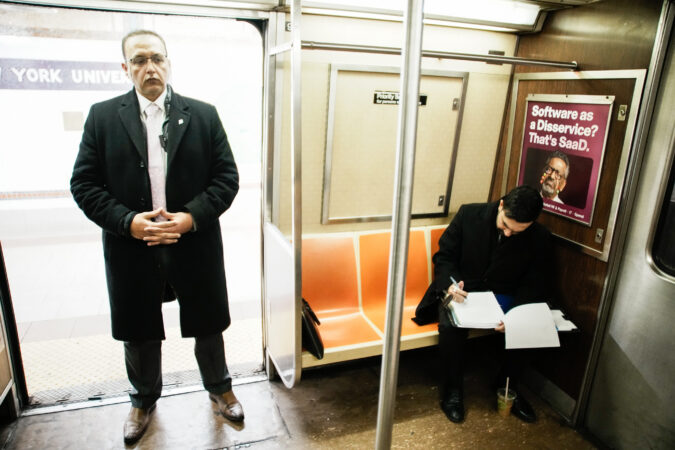
    Flanked by security guards and a small clutch of aides on a Manhattan-bound train, he agreed to several selfies with wide-eyed riders, then moved to a corner seat of the train to review his briefing materials.

    When a pair of French tourists, confused by the hubbub, approached Mamdani, he introduced himself as “the new mayor of New York.” They seemed doubtful. He held up the morning’s copy of the New York Daily News, featuring his smiling face, as proof.

    Mamdani, a Democrat, is hardly alone among city mayors in using the transit system to communicate relatability. His predecessor, Eric Adams, also rode the subway on his first day, and both Bill de Blasio and Michael Bloomberg made a habit out of it, particularly when seeking to make a political point.

    Within minutes of Mamdani entering City Hall, the images of him riding public transit had lit up social media.

    If the ride served as a well-timed photo-op, it also seemed to reflect Mamdani’s pledge, made in his inaugural speech, to ensure his “government looks and lives like the people it represents.”

    His other early actions have also seemed to underscore that priority.

    After centering much of his campaign on making rent cheaper for New Yorkers, Mamdani raced from his inauguration ceremony Thursday to a Brooklyn apartment building lobby, drawing boisterous cheers from the tenants union as he pledged that the city would ramp up an ongoing legal fight against the allegedly negligent landlord.

    Mamdani’s next action, meanwhile, showed the unusual scrutiny faced by his nascent administration, particularly around his criticism of Israel and outspoken support for the Palestinian cause.

    In an effort to give his government a “clean slate,” he revoked a slate of executive orders issued by Adams late in his term, including two related to Israel: one that officially adopted a contentious definition of antisemitism that includes certain criticism of Israel, and another barring city agencies and employees from boycotting or divesting from the country.

    The move drew swift backlash from some Jewish groups, including allegations from the Israeli government posted to social media that Mamdani had poured “antisemitic gasoline on an open fire.”

    When a journalist on Friday asked about the revoked orders, Mamdani read from prepared remarks, promising his administration would be “relentless in its effort to combat hate and division.” He noted that he had left in place the Mayor’s Office to Combat Antisemitism.

    Mamdani also announced the creation of a “mass engagement” office, which he said would continue the work his campaign’s field operation did to bring more New Yorkers into the political fold.

    Ringed by supporters and passersby who stood several rows deep, phones in the air, to catch a glimpse of the new mayor, Mamdani then acknowledged the weight of the current moment.

    “We have an opportunity where New Yorkers are allowing themselves to believe in the possibility of city government once again,” he said. “That is not a belief that will sustain itself in the absence of action.”

    Also on Mamdani’s to-do list: Moving to the mayor’s official residence, a stately mansion in the Upper East Side neighborhood of Manhattan, before the lease on his Queens apartment ends later this month.

  • A forgotten chapter: The stories of Allied POWs in Nagasaki during the atomic bombing

    A forgotten chapter: The stories of Allied POWs in Nagasaki during the atomic bombing

    NAGASAKI, Japan — Hundreds of prisoners of war from Allied countries were held at brutal Japanese camps in Nagasaki when the United States dropped an atomic bomb 80 years ago.

    Their presence during the Aug. 9, 1945, bombing is little known, and family and researchers have been collecting and publishing testimonies to tell the stories of these often unrecognized victims.

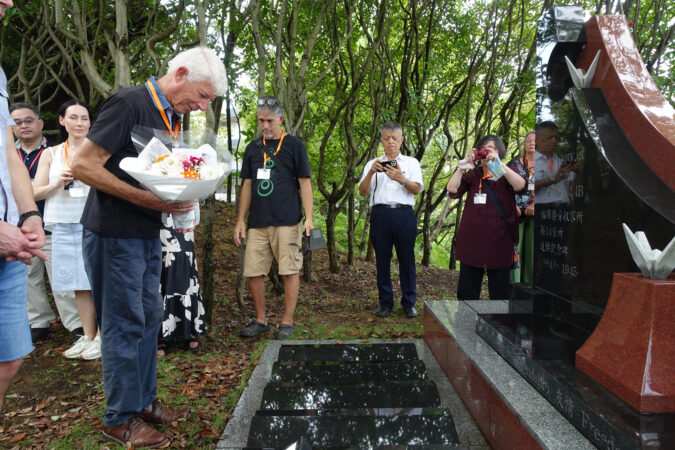
    In September, dozens of relatives of Dutch POWs and descendants of Japanese bombing survivors came together to commemorate both those who were abused at the camps and the tens of thousands of Japanese who were killed that day. The dead included at least eight captives at one of the Nagasaki camps.

    Descendants and survivors reckon with a painful past

    Andre Schram, who represented the Dutch families at the Nagasaki memorial, unveiled in 2015, is the son of a sailor who was among nearly 1,500 POWs held at the Fukuoka No. 2 Branch Camp for three years and forced to work at the Kawanami shipyard.

    Many of the prisoners were Dutch service members captured by the Japanese in Indonesia, transported to Nagasaki on so-called “hell ships,” kept at two major camps — No. 2 and No. 14 — and used as slave labor.

    About 150,000 Allied prisoners were held in dozens of camps across Asia during the war, including 36,000 sent to Japan to make up for labor shortage as Japanese men were drafted and deployed to battlefields across Asia, according to the POW Research Network Japan.

    There were also prisoners from the United States, Britain, and Australia in Nagasaki. None died from the atomic blast at the No. 2 Camp, but more than 70 earlier died of malnutrition, overwork, and illness.

    Andre Schram’s father, Johan Willem Schram, returned to the Netherlands four months after the war ended, but only near the end of his life did he tell his son about being treated like a slave. Japanese officials have apologized multiple times for wartime atrocities, “but Johan, like many other victims, had doubts about their sincerity,” his son said.

    “He felt Japan and the Netherlands treated him and other prisoners of war with disrespect. He never wanted anything to do with Japan again,” Andre Schram wrote in Johan’s Story, a booklet about the Netherlands’ colonial rule of the Dutch East Indies, the war with Japan and the aftermath, based on his research after his father died in 1993.

    Peter Klok said his father, Leendert Klok, also a Dutch POW at the camp, told him that Japanese civilians at the shipyard were friendly and helped him find parts to repair his watch. Military police later beat him for seeking help.

    Klok called the atomic bombings of Hiroshima and Nagasaki awful, but said Japan must reflect on its atrocities.

    A blinding flash, violent explosions, then the end of the war

    When the U.S. B-29 dropped the “Fat Man” plutonium bomb on Nagasaki, prisoners at the No. 2 Camp, about 6.2 miles from ground zero, saw a huge orange fireball, purple smoke, and a triple-layer mushroom cloud, British captive Tom Humphrey wrote in his diary, part of which is quoted on the Royal Air Force website.

    Windows at the camp were shattered, doors were blasted off, and the clinic ceiling collapsed, he wrote.

    The other camp, Fukuoka No. 14, was much closer to the blast. The brick buildings were destroyed, killing eight and injuring dozens.

    A former Dutch captive, Rene Schafer recalled that he and his fellow prisoners were digging a new shelter when Japanese soldiers warned of U.S. aircraft approaching. They jumped into a bunker, but his roommate suffered severe burns and died nine days later.

    Australian survivor Peter McGrath-Kerr was reading when everyone bolted to shelters. A fellow Australian captive dug him out from the debris, but he was unconscious for five days with broken ribs, cuts and bruises and radiation burns on his hand.

    Researchers examine a largely neglected history

    In the days that followed the atomic bombing, prisoners from the Fukuoka No. 2 Camp provided rice and other assistance to their comrades from the No. 14 Camp.

    Schram’s father and fellow POWs at the No. 2 Camp were officially notified of Japan’s surrender on Aug. 18, and a U.S. B-29 delivered its first food drop for the Allied POWs on Aug. 26.

    On Sept. 13, the prison camp survivors left Nagasaki, heading for the Philippines on a U.S. carrier.

    The ceremony in Nagasaki at a granite monument with three inscribed panels was the result of efforts by the families of Dutch POWs, who returned home with painful memories, and the descendants of atomic bombing survivors, said Kazuhiro Ihara, whose father lived through the bombing and was devoted to reconciliation with the POWs.

    In Hiroshima, Japanese survivor Shigeaki Mori’s decadeslong independent research led to U.S. confirmation of the deaths of 12 captured American service members in the Aug. 6 atomic bombing.

    Former President Barack Obama, who became the first U.S. leader to visit Hiroshima’s Peace Memorial Park in 2016, mentioned in his speech “a dozen Americans held prisoner” as part of the victims. He recognized Mori for seeking out the Americans’ families, believing their loss was equal to his own, and later gave him a hug.

    A 1957 Japanese law allowed medical support for certified atomic bombing survivors and has since gradually expanded its scope. The number of certificate holders is now 99,000, down from a peak of 372,000 in 1980.

    The Health and Welfare ministry says about 4,000 certificate holders were living outside Japan, many of them South Koreans and Japanese in the United States, Brazil and other countries.

    According to the POW Research Network, at least 11 former POWs who were in Nagasaki — seven Dutch, three Australian and one British — received survivors’ certificates.

    “The issue has been swept under the rug,” POW Research Network co-founder Taeko Sasamoto said.

    The research requires the time-consuming examination of historical documents that haven’t attracted much academic interest, Sasamoto said. “It’s an important issue that has long been neglected.”
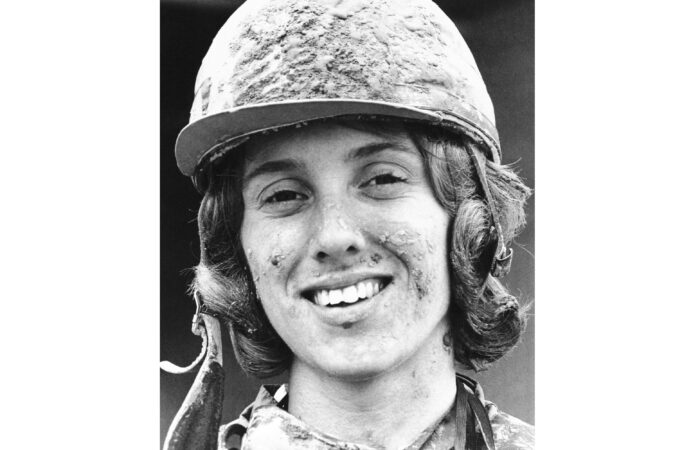

  • Diane Crump, the first female jockey to ride in the Kentucky Derby, has died at 77

    Diane Crump, the first female jockey to ride in the Kentucky Derby, has died at 77

    WASHINGTON — Diane Crump, who in 1969 became the first woman to ride professionally in a horse race and a year later became the first female jockey in the Kentucky Derby, has died. She was 77.

    Ms. Crump was diagnosed in October with an aggressive form of brain cancer and died Thursday night in hospice care in Winchester, Va., her daughter, Della Payne, told the Associated Press.

    Ms. Crump went on to win 228 races before riding her last race in 1998, a month shy of her 50th birthday and nearly 30 years after her trailblazing ride at Hialeah Park in Florida on Feb. 7, 1969.

    Ms. Crump was among several women to fight successfully at the time to be granted a jockey license, but they still needed a trainer willing to put them in a race and then for the race to run. Others were thwarted when male jockeys boycotted or threatened to boycott if a woman was riding.

    Photographs of Ms. Crump’s walk to the saddling area at Hialeah show her protected by security guards as a crowd pressed in on all sides. Six of the original 12 jockeys in the race had refused to ride, Mark Shrager wrote in his biography, Diane Crump: A Horse Racing Pioneer’s Life in the Saddle. Among them were future legends Angel Cordero Jr., Jorge Velasquez, and Ron Turcotte, who four years later would ride Secretariat to win the Triple Crown.

    But other jockeys stepped up, and as the 12 horses made their way onto the track, the bugler skipped the traditional call to the post and instead played “Smile for Me, My Diane.” Ms. Crump, on a 50-1 longshot called Bridle ’n Bit, finished 10th, but the barrier had been broken. A month later, Bridle ’n Bit gave Ms. Crump her first victory at Gulfstream Park.

    She again made history in 1970 by becoming the first woman to ride in the Kentucky Derby. She won the first race that day at Churchill Downs, but again her mount for the history-making race was outclassed. She finished 15th out of 17 on Fathom.

    It would be 14 more years before another female jockey would ride in the Derby, with only four more to follow in the decades since.

    The president of Churchill Downs Racetrack, Mike Anderson, said in a statement on Friday that Crump “will be forever respected and fondly remembered in horse racing lore.”

    He noted that Ms. Crump, who had been riding since age 5 and galloping young Thoroughbreds since she was a teenager, “was an iconic trailblazer who admirably fulfilled her childhood dreams.”

    Chris Goodlett, of the Kentucky Derby Museum, said “Diane Crump’s name stands for courage, grit, and progress.” He added: “Her determination in the face of overwhelming odds opened doors for generations of female jockeys and inspired countless others far beyond racing.”

    After retiring from racing, Ms. Crump settled in Virginia and started a business helping people buy and sell horses.

    In later years, she took her therapy dogs, all Dachshunds, to visit patients in hospitals and other medical clinics. Some with chronic illnesses she visited regularly for years.

    Payne said when her mother went into assisted living in November, she was already “quasi-famous” in the medical center because of how much time she had spent there, and a “steady stream” of doctors and nurses came to see her. One of the last people to visit her was the man who mowed her lawn.

    Her daughter said Ms. Crump would never take “no” for an answer, whether it was becoming a jockey or helping someone in need.

    “I wouldn’t say she was as competitive as she was stubborn,” Payne said. “If someone was counting on her, she could never let someone down.”

    Late in life, Ms. Crump’s mottos were literally tattooed on her forearms: “Kindness” on the left, “Compassion” on the right.

    Crump will be cremated and her ashes interred between her parents in Prospect Hill Cemetery in Front Royal, Va.

  • Earthquake with 6.5 magnitude rattles southern and central Mexico, killing 2

    Earthquake with 6.5 magnitude rattles southern and central Mexico, killing 2

    MEXICO CITY — A strong earthquake rattled southern and central Mexico on Friday, interrupting President Claudia Sheinbaum‘s first press briefing of the new year as seismic alarms sounded and leaving at least two people dead.

    The earthquake had a magnitude of 6.5 and its epicenter was near the town of San Marcos in the southern state of Guerrero near the Pacific coast resort of Acapulco, according to Mexico‘s national seismological agency. There were more than 500 aftershocks.

    The state’s civil defense agency reported various landslides around Acapulco and on other highways in the state.

    Guerrero Gov. Evelyn Salgado said that a 50-year-old woman living in a small community near the epicenter died when her home collapsed. Authorities also said that a hospital in Chilpancingo, Guerrero’s capital, suffered major structural damage and various patients were evacuated.

    Residents and tourists in Mexico City and Acapulco rushed into the streets when the shaking began. Mexico City Mayor Clara Brugada said that one person died after suffering an apparent medical emergency followed by a fall while evacuating a building.

    The U.S. Geological Survey said the earthquake occurred at a depth of 21.7 miles, 2.5 miles north-northwest of Rancho Viejo, Guerrero, which is in the mountains about 57 miles northeast of Acapulco.

    Sheinbaum resumed her press briefing a short time after the quake.

    José Raymundo Díaz Taboada, a doctor and human rights defender who lives on one of the peaks ringing Acapulco, said he heard a strong rumble noise and all the neighborhood dogs began barking.

    “In that moment the seismic alert went off on my cellphone,” he said, ”and then the shaking began to feel strong with a lot of noise.”

    He said the shaking was lighter than in some previous quakes and he had prepared a backpack of essentials to be ready to leave as the aftershocks continued.

    He said he had been unable to reach some friends who live along the Costa Chica southeast of Acapulco because communications were cut.