Seeing the Mummers’ New Year’s Day parade became something of a running joke to Avril Davidge and her family.
You see, they live in Wales and Davidge is now a 93-year-old grandmother who rarely leaves her flat. She didn’t have a passport, nor had she been on a plane in 30 years. She’d never been to the United Statesand she jokes she could die tomorrow.
But after going down a YouTube rabbit hole and becoming what can only be described as obsessed with the tradition two years ago, she would often say things like “when we go to Philadelphia” or “when I see my Mummers.”
“It’s done a lot for me,” Davidge said. She had her granddaughter set her Mummers YouTube videos on autoplay since she can’t figure out the search function.“Even having breakfast, I put it on. It starts the day right for me.”
While the Mummers Parade can draw drastically divergent opinions at home, where some see it as a beloved multigenerational tradition and others paint it as an excuse for people to get drunk on Two Street, Davidge sees it as a connection to her late husband. She doesn’t know anyone in Wales who has even heard of Mummery, but deep in her heart, she knows it’s something her husband of 70 years would have loved. He died two years ago and she discovered her first Mummers video weeks later.
Quaker City String Band Captain Jimmy Good pushes the wheelchair of “Queen Mumm” Avril Davidge doing a Mummers strut. Davidge is a 93 year old Welsh grandma who came to the United States for the first time to see the Mummers.
Eventually, her family decided to give Davidge the trip of a lifetime to witness the 10,000-person spectacle that has ushered in the new year for Philadelphians for 125 years.Davidge will be among the many spectators watching the Mummers Parade take Broad Street on Thursday.
Using the power of social media and propelled by her family, Davidge landed Tuesday at Philadelphia International Airport, greeted by a Rocky statue — another bit of culture she loves. On Wednesday she was surprised with a trip to the Mummers Museum in South Philadelphia, where she delighted in a private tour: Yes, they’re real ostrich feathers on the costumes, and one of the more elaborate costumes can weigh 150 pounds.
Then she met Jimmy Good, captain of the Quaker City String Band, and a personal favorite of Davidge’s. Her family said Davidge often quiets them down with a “my Jimmy is on.”
“I’ll never forget this,” she told Good, complimenting what she called his beautiful smile and showing him her golden shoes, a nod to dem golden slippers. “Never.”
The two even strutted in the museum, Good pushing Davidge in her wheelchair as she lifted a gifted satin umbrella.
It was a scene Davidge’s family could hardly believe was playing out. Just a few weeks ago, they thought Davidge was at death’s door.
Divine intervention brings the Mummers to Wales
When Davidge’s husband died, she was “feeling low,” as she calls it.
Then the YouTube algorithm, programmed by her granddaughter to show her United Kingdom marching bands, showed her a clip of the Quaker City String Band performing “Make Believe,” a song Davidge and her husband loved. Her family felt it was almost a form of divine intervention.
Something about the string bands, the costumes, the performances offered a comfort Davidge needed. Soon, the Mummers were all she was watching and she quickly developed an encyclopedic knowledge of the longtime Philadelphian tradition.
The 1999 Quaker City String Band theme of “Reflections of Old Moscow” is a legendary performance, Davidge said, and then-captain Bob Shannon Jr. remains her all-time favorite.
She was in awe as she learned Shannon stood at 6-foot-10; the old YouTube clips are grainy and don’t do the performances justice.
Connecting Philly and Wales through social media
Davidge’s love for the Mummers has been contagious, family members say, not that they’ve had much of a choice.
Last year, Fiona Smillie-Hedges, Davidge’s granddaughter, asked a friend, American expat Wendy Ratcliffe, if she had heard of the Mummers.
Ratcliffe, whose maternal side of the family is scattered around Southeastern Pennsylvania, was floored.
“I said, vast swaths of the country would have no idea what you’re talking about,” she said.
When Ratcliffe’s family visited her, they brought a Mummers mug and other Philly merch for the grandmother they had heard so much about. The mug is not for use and remains propped in front of Davidge’s television.
Last Christmas, Davidge even got a Mummers book, which she calls her bible.
By 2025, the joke of going to Philly felt more like an inevitability. Smillie-Hedges, 38, tried to figure out how to maximize the experience and took to TikTok and Instagram to get some advice. She needed to know how people kept warm, how to get a good view of the string bands, and where to stay.
Soon she was in touch with Jim Donio, host of the String Band Sessions podcast, a longtime Mummer who led the broadcasts from 1985 to 1987.
Donio arranged for the museum tour and asked Good to set some time aside to meet Davidge.
“I need[ed] to step in here and do what I can to make this dream happen and make this dream come true,” Donio said.
But as Donio — who calls Davidge “Queen Mumm” — worked stateside, Davidge caught some sort of virus a few weeks ago, which at her age can be deadly.
Davidge said she thought she wouldn’t make it.
But Smillie-Hedges said the family used the Philadelphia trip to motivate her into eating and staying positive.
“She’s worked very hard to be here, to be well enough,” Smillie-Hedges said. “Every time I was like, you must eat this, you must drink that. Come on, Rocky training for Philly.”
On Wednesday, Davidge was all smiles. Her hotel overlooks Broad Street should she get cold and need to duck in for warmth. Unbeknownst to her, Donio also arranged for a golf cart to get her, Ratcliffe, Smillie-Hedges, and Davidge’s daughter Kay Hedges to their VIP seats by the judges’ table.
The whole trip feels implausible to the family, yet the only natural outcome.
“[Davidge] didn’t find the Mummers until it was literally a couple of weeks after my granddad had passed,” Smillie-Hedges said. “I swear it was meant to be.”
Happy New Year! Start it off by judging other people’s homes.
In the latest installment of my Price Point series, I compare three local homes on the market for about $390,000 — the median sale price in the Philly area in November.
Bucking a trend: Learn about the challenges that help explain why homeownership in Philadelphia fell during the pandemic while rates grew nationally and in other big cities.
Every couple of months, I set out to help homebuyers get a sense of their options by featuring three local properties for sale for about the same price.
This time, I’m answering the question: What can a homebuyer get with a budget of $390,000 in the Philly area?
These homes offer a taste of what’s out there.
🏠 A condo located on what a real estate agent calls Haverford’s “golden mile.”
This unit is one of the larger layouts at Haverford Hunt Club and is close to restaurants, stores, and public transportation.
🏠 A twin that has a private bathroom attached to the primary bedroom, an uncommon feature among older homes in Philly’s Mayfair neighborhood.
The home also has a garage and a finished basement with a bathroom.
🏠 A Gloucester Township house that has a more open layout than the traditional Colonial.
This house has a deck in the spacious backyard and a bunch of recently updated features.
Have you noticed that a lot of the new rowhouses and apartments in Philly look alike? Architecture critic Inga Saffron has, too.
And she’s not shy about sharing her thoughts: “The streets of Fishtown and Graduate Hospital and Spruce Hill are now awash in interchangeable blocky structures, all dressed in the same dreary gray clothing, their aluminum panels shrink-wrapped around the exterior like a sheet of graph paper.”
Saffron says no one likes these buildings, which opponents snarkily refer to as fast-casual architecture, McUrbanism, and developer modern.
But they’re cheap and easy. So they’re everywhere.
Cue the rebellion: The arch is making a comeback. And it’s shaking up the city’s built environment.
Are you looking for some interior design tips in the new year? Jaden Daubert in Old City is @homedecorhomie on TikTok, where he shares his ideas and vintage finds.
But he doesn’t think anyone should blindly follow advice from influencers, him included. He even breaks his own rules.
“My goal is to be authentically unique,” he said. He plays with patterns and textures and describes his apartment’s aesthetic as maximalist and eclectic.
Daubert likes to collect vintage pieces, and he’s a regular at thrift stores. His walnut dining room table was built in the early 1900s. He has two vintage Tiffany lamps.
Art fills his home and even decorates his doors.
Daubert’s two-bedroom corner apartment spans 1,400 square feet, has 14-foot ceilings, and features two walls of windows that let in sunlight and frame city views.
It’s actually his second stint in the same apartment after he moved out in 2020. Daubert said being back feels “meant to be.”
As I reach for the hope of 2026, I am convinced that this new year is about more than the 250th anniversary of the Declaration of Independence and more than the politics of the upcoming midterm elections. This new year is a mirror that allows us to look back on who we were in 2025.
Internationally, 2025 was defined by the Trump administration’s military attacks in and around oil-rich countries like Venezuela and Nigeria, an apparent push to annex mineral-rich Greenland, and Trump-backed peace deals in Gaza and Ukraine that never quite seemed to bring peace.
Perhaps, in Trump’s mind, that’s what it means to Make America Great Again. In 2026, the country will have to decide if we agree with him, and the choice will not be easy, because the sides are completely dug in.
For millions of Americans, there’s an inherent appeal to Trump’s brand of no-holds-barred politics.
His supporters believe political correctness has robbed them of the right to say what they feel, to take what they want, and to run through anyone who stands in their way.
When Trump insults those who don’t look or think like him, his supporters believe he’s speaking for them.
After all, the idea of blaming others for their problems is not only palatable, it’s delicious — because when someone else is always at fault, one never has to look at oneself.
For millions of other Americans, like me, the echoes of white supremacy that amplify the MAGA movement are repulsive.
Pro-Trump demonstrators in Washington during the Jan. 6, 2021, insurrection. The echoes of white supremacy that amplify the MAGA movement are repulsive, Solomon Jones writes.
By implementing that strategy, the Trump White House won 21 victories in the Supreme Court. The wins allowed the Trump administration to take wide-ranging actions, including: deporting undocumented immigrants to third-party countries, ending federal funding for DEI, firing thousands of federal workers without congressional approval, accessing Americans’ Social Security data, and revoking the power of federal judges to implement nationwide injunctions.
Perhaps the ruling will stop the president’s strategy of sending troops into cities run by Democrats, or maybe he’ll find a workaround. If I were a betting man, I’d take the odds on the latter.
That’s why in 2026, if we truly want to commemorate the 250th anniversary of the birth of American democracy, we cannot stand by and watch as our country is twisted into knots.
When this year’s midterm elections take place, we must raise our voices and vote.
One woman moved back across the country to care for her grandmother, giving up her dreams of sunshine and palm trees. A young mother, overwhelmed caring for two children and her ailing grandmother, finally asked family to help her juggle. Andanother woman assumed financial responsibility for her grandmotherafter her home fell into foreclosure.
All three women belong to whatagingexperts call America’s unseen workforce — the 48 million family caregivers who provide unpaid support that allows millions of adults who are older, ill, or disabled to remain at home. It is a group that is expected to shoulder even more responsibility as the population ages and conditions such as dementia, cancer, and heart disease continue to rise. Within the already stretched community of caregiving, they belong to a group that is even more overlooked and undercounted: grandchildren.
Research shows unpaid caregiving is valued at more than $1 trillion, said Nicole Jorwic, chief program officer at the nonprofit Caring Across Generations.
“Right now, families filling in the gaps is the only option for a lot of people whether they’re grandchildren or not,” said Jorwic, who is in her 40s andhelpingcare for three grandparents in their 90s.
Research suggests race and ethnicity may be the “strongest predictors” of who becomes young adult caregivers, with about a third of caregivers in Asian, Black, or Latino families being 18 to 34 years old. And family caregivers generally are more likely to be women.
Caring for an aging family member is already an emotional, financial, and physical gantlet. Add to that the inexperience of youth, and some aging researchers say the challenges for grandchildren who are caregivers become even harder to navigate.
What this looks like in real life — the exhaustion, the sacrifice, the sense of purpose — comes through in the stories of three women shouldering the weight, not simply out of necessity but also devotion.
A caregiver who built an online community
The average caregiver is 51 years old. But five years ago, Elaine Goncalves stepped into the role at 28. She hadn’t imagined becoming hergrandmother’s caregiver. Elaine’shigh-paying tech job had just allowed her to relocate to San Diego.
Her grandmother, AdelaideGoncalves, was 90 and living in Massachusetts with one of her daughters and a different grandchild, barely able to manage the stairs of her third-floor home. Before Elaineleftfor California, she tried in vain to relocate her grandmother, askingall six of Adelaide’s surviving children for help. Elaine’s parents, unsure if their work schedules would accommodate the need, agreed with her plan, and her grandmother did, too — until it was time to go.
“Other family members were telling her not to,” Elaine said.
When the pandemic hit, Elaine was forced to return home. The way she made peace with the move was by finding a way to care for her grandmother. She kept the plan quiet, afraid relatives would talk her grandmother out of it again, and mindful of how it might look for a granddaughter to take on a role traditionally expected of a daughter in her Cape Verdean family. When someone in the house got COVID, no one objected to Adelaide relocating.
The first two years were “pretty humbling,” Elaine said. “I experienced crazy things like walking in my bathroom andit was covered in poop,” she said. “I basically went from ‘She’s so sweet!’ to praying — literally — every day for patience.”
The experience also made Elainerealize she owed her aunt an apology for judging the care she had provided and the frustration her aunt expressed in taking on a formidable task.
What the family didn’t know then was that Adelaide had dementia. Elainesaid guilt set in. A caseworker who called unexpectedly to schedule her grandmother’s annual physical helped secure the diagnosis, she said, and connected Elaine with “resources I needed but didn’t know were available.” Home health aides now feed, bathe, and change her grandmother, who goes to an adult day program daily.
In 2020 and 2025, about 18% of family caregivers ages 18 to 49 were caring for their grandparents, according to reports by AARP and the National Alliance for Caregiving. But researchers say it’s hard to know exactly how many young people provide care because the term “caregiver” can be defined in so many ways and national surveys count differently.
Researchers say that many young people aren’t identified because unlike Elaine, they’re not the primary caregiver, but rather pitching in as part of a family network.
“Most of them are disrupting parts of their life to engage in something they may not be counted as doing,” said Karen Fingerman, a professor at the University of Texas at Austin and director of the Texas Aging and Longevity Consortium.
Last year, Adelaide’s heart briefly stopped, a scare that led to hospice care.
“Emotionally, this has been a roller-coaster ride,” Elaine said. “Balancing the family dynamics and their help — or lack thereof — and their opinions and the emotions of her being hospitalized and me thinking she’s dying” forced tough family conversations.
Elainedecided to reflect on her experiences a few months ago, and wound up sharing the lessons online, inadvertently buildinga community through the social media series. It has drawn 1.6 million views, thousands of comments and shares, and more messages than she can keep up with — and she had posted only 11 of the 15 lessons.
“I didn’t know there were other people my age dealing with this,” she said.
A caregiver who had to give up care
Ramona Reynolds didn’t go away to college, opting instead to stay home and care for the grandmother who raised her. They hadnever spent more than a weekend apart, including after the 38-year-old got married and started having children. But eventually her 86-year-old grandmother’s health deteriorated beyond Reynolds’s capacity to provide care.
“That was a hard pill to swallow,” she said of sending her grandmother, Thelma McDonald, to live with her aunt.
For years, Reynolds watched dementia transform the woman who once commanded so much respect in their Brooklyn neighborhood that boys on the block carried her groceries upstairs unasked.
Reynolds was in her 20s when her grandmother was first diagnosed with dementia. A friend noticed that her grandmother was repeating herself. A few years later, one of her great-uncles did, too.Even though McDonald has four living children and a host of brothers and sisters, Reynolds never thought to ask them for help.
For years, things were manageable. Then, Reynolds got pregnant with her second child, and the family decided to relocate to Georgia for more space. As they prepared to move, Reynold’s family stayed with her in-laws and was to become a paid family caregiver. What she didn’t know was that moving someone with dementia out of a familiar environment can worsen their symptoms.
“So, when we moved here, I’m like, ‘Oh my god. Why is it so much harder?’” she recalled of her grandmother, who worked as a paid caregiver after emigrating from Jamaica. Reynolds was chasing after a toddler, trying to make sure her son — who is autistic, has ADHD, andin virtual school – stayed on task, all while also caring for her grandmother. “We did everything for her. Cooking, bills, dealing with doctors, social workers, program directors, all that stuff.”
Being a caregiver can be draining mentally, physically, and emotionally, experts say. What ultimately drives caregiver burnout and makes the role heavy is the lack of support, recognition, and resources, and the isolation, more so than the work itself, said Melinda S. Kavanaugh, a professor at the University of Wisconsin-Milwaukee whose research focuses on children and young adult caregivers.
“You can only do something on your own without any support for so long before you break,” she said, noting that older caregivers “might be able to last a little bit longer” because they have life experience to draw on.
Reynolds knew something had to give as her grandmother’s condition progressed and McDonald began unlocking doors trying to leave. She called a family meeting and asked for help. Her aunt stepped in, taking over her grandmother’s care.
“It’s a hard balance,” Reynolds said. “On the one hand, I would be nothing without this woman. But on the other, now I have my own family, and these babies deserve a mother that’s whole, that is not filled with anxiety and grief and a little bit of resentment, too.”
A caregiver shouldering financial responsibilities
Sharita Payton, 45, stepped in to help her sister care for their grandmother about two years ago, when several crises hit at once. Their grandfather died, their grandmother became more forgetful, maintaining the house became unaffordable, and her sister was facing personal struggles.
Payton’s mother was unable to take on the responsibility full time because she’s caring for a husband who has had multiple strokes. Neither could her grandmother’s other children, for different reasons: One is in jail, another struggles with addiction issues, and the third lives far from the family in South Carolina.
“There’s a lot of different nuances involved,” she said. “To look around and see that after everything they have given, there’s really no one that’s available to pour back into her when she needs it. That’s been really hard to navigate. I just had to step up.”
So, on and off for the past two years, Payton’s husband would drive her 89-year-old grandmother, Geneva Madison, between their house in Massachusetts and her mother’s house in Connecticut.Payton became hergrandmother’s power of attorney, took over her finances, and began setting aside money for when a move was needed. That move came several months ago when she set her grandmother and sister up in a new apartment.
Caregiving can be financially stressful for families because close to three-quarters of costs are out of pocket, said Sue Peschin, president and CEOof the Alliance for Aging Research. Often families don’t realize this “until they’re up against it,” she said, noting that people tend to think Medicare covers long-term care and it doesn’t.
Part of the misconception is how “we think about retirement in the United States,” Peschin said. “Oftentimes the thinking is, ‘How do we want to live as fully functional human beings?’” But not what happens after a health crisis.
Payton, who owns a hair salon, isn’t certain her grandmother will stay in Connecticut for good. She keeps a close watch in case she needs to bring Madison back to Massachusetts. She talks about the need for more resources often with clients who find themselves in similar situations. “A lot of us are navigating these new things for the first time, and we don’t even know what to do or how to do it,” Payton said. “We just put more on our plate than I think we need to.”
Still, she said, “it’s kind of like a no-brainer. That’s my grandmother.” As a mother of five, Payton said she tries to involve her children in her grandmother’s care in small ways, teaching them to “treasure her because this is something that is not the norm, having your great-grandmother in your presence.”
The Social Security Administration — the sprawling federal agency that delivers retirement, disability, and survivor benefits to 74 million Americans — began the second Trump administration with a hostile takeover.
It ended the year in turmoil. A diminished workforce has struggled to respond to up to six million pending cases in its processing centers and 12 million transactions in its field offices — record backlogs that have delayed basic services to millions of customers, according to internal agency documents and dozens of interviews.
Long-strained customer services at Social Security have become worse by many key measures since President Donald Trump began his second term, agency data and interviews show, as thousands of employees were fired or quit and hasty policy changes and reassignments leftinexperienced staff to handle the aftermath.
Exaggerated claims of fraud, for example, have led to new roadblocks for elderly beneficiaries, disabled people, and legal immigrants, who are now required to complete sometransactions in person or online rather than by phone. Even so, the number of calls to the agency for the year hit93 million as of late September — a six-year high, data show.
The troubled disability benefits system is also deteriorating after some improvement, with 66% of disability appointments scheduled within 28 days as of December — down from nearly 90% earlier in the year, data show.
One notable exception is phone service, which improved in the second half of the yearbut is still subpar. Average hold times peaked at about 2½ hours in March, but dropped starting in July as employees were diverted from field office duties to fix what had become a public relations crisis. Average wait times for callbacks remain an hour or longer, however, while new delays have emerged elsewhere in the system, internal data show.
“It was not good before, don’t get me wrong, but the cracks are more than beginning to show,” said John Pfannenstein, a claims specialist outside Seattle and president of Local 3937 of the American Federationof Government Employees, which represents most Social Security employees. “It is a great amount of stress on our employees that remain on the job, who haven’t jumped ship.”
Commissioner Frank Bisignano has authorized millions of dollars in overtime pay to employees in a race to clear the bottlenecks, which worsened dramatically after nearly 7,000 employees — 12% of the workforce — were squeezed out early in the year. The agency said it has made improvements: It reduced the processing center backlog by one million cases this fall, cut pending disability claims by a third and kept the website live 24-7 after a series of outages earlier this year.
The current crisis follows years of disinvestment by Congress and acting leadership, despite a surge in baby boomer retirements. Bisignano promised faster service and a leaner workforce with a digital identity that he says willautomate simple retirement claims and other operations.
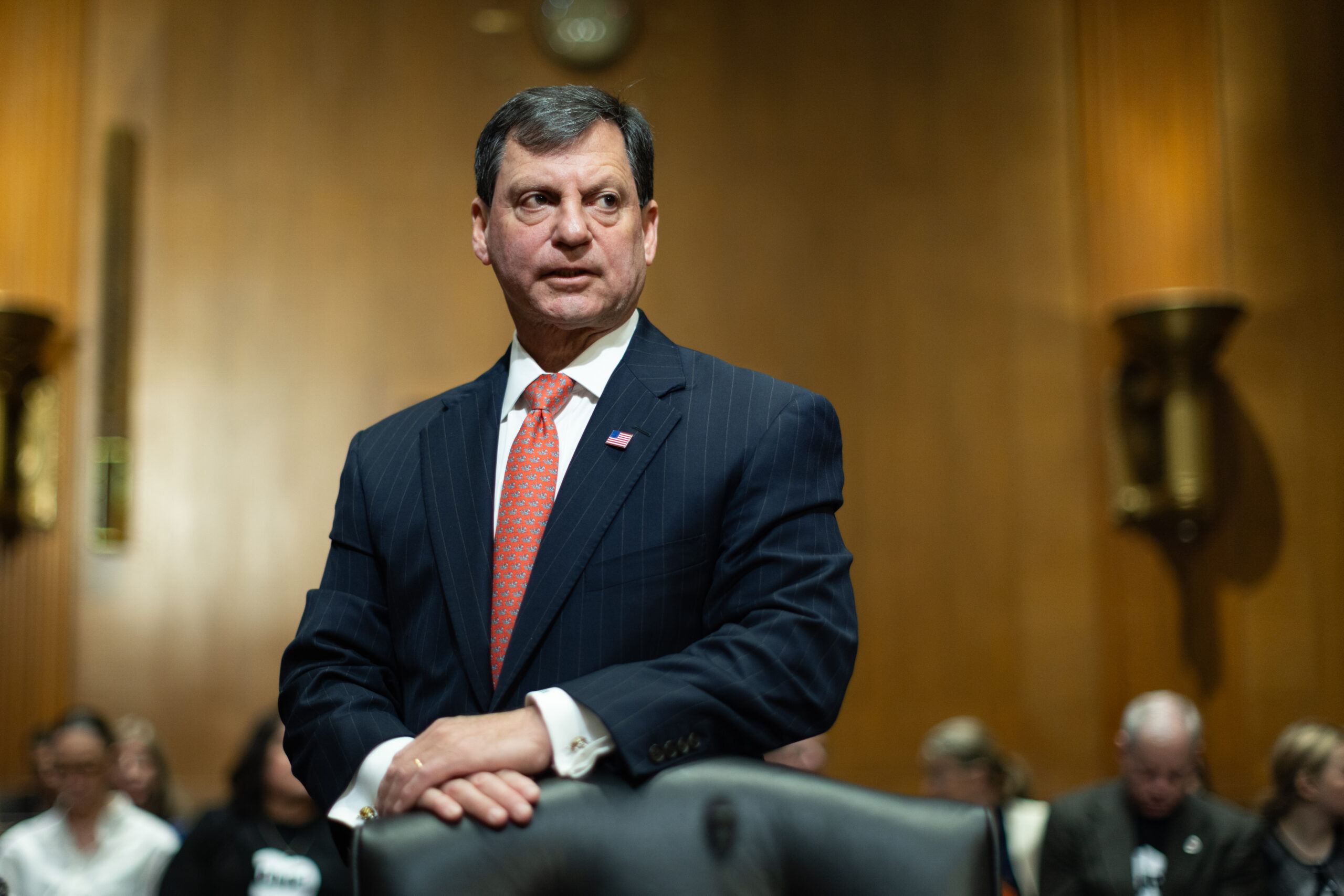
Frank Bisignano, President Donald Trump’s nominee for commissioner of the Social Security Administration, arrives for his confirmation hearing in March.
“In the coming year, we will continue our digital-first approach to further enhance customer service by introducing new service features and functionality across each of our service channels to better meet the needs of the more than 330 million Americans with Social Security numbers,” the commissioner said in a statement to the Washington Post.
But responsiveness and trust in the agency have suffered, according to current and former officials and public polling.
This account of the crisis at Social Security is based on internal documents and interviews with41 current and former employees, advocates and customers, many of whom spoke on the condition of anonymity to speak candidly about their concerns.
Social Security officials declined to make Bisignano available for an interview, though he did respond to written questions.
Three days before Christmas, Brian Morrissey, 65, arrived at the field office in Silver Spring, Md., for an appointment to apply for Medicare. He had tried the “MySSA” website, “but navigating it was just really hard,” he said. Morrissey owns a home improvement business, he said.
“If they can make the process easier online, great, but right now it is not well designed,” he said. So his wife waited 30 minutes on hold to schedule a face-to-face appointment for him.
Aime Ledoux Tchameni, an immigrant from Cameroon, waited in line at the Silver Spring office to get an appointment time to fix his last name from being listed as his first name — a mistake that occurred when he came to the U.S. two years ago. He has a provisional driver’s license from Maryland and needs to clear up his name with Social Security by mid-January, he said. But his appointment is not until Feb. 9.
“This is really going to cause me problems, because I need my driver’s license to get to work,” Tchameni said in French. “I don’t understand why I have to wait so long.”
‘I flipped the switch’
The table was set in February by Elon Musk and his Department of Government Efficiency, or DOGE, which installed a loyal, mid-level data analyst with no management experience to lead the $15.4 billion agency.
That former analyst, Leland Dudek, insists that he saved Social Security from a worse fate under Musk’s cost-cutting team. “I flipped the switch,” he said in a recent interview, referring to his disruptive four-month tenure as acting commissioner. “The casualty of that is a smaller SSA, an SSA that is being, for the first time, subject to the whims of being a political organization, which it was never intended to be.”
Regional offices abruptly disappeared in a rushed reorganization. New policies to fight fraud were rolled out only to be canceled or changed, prompting confused customers to jam the phones and the website, which crashed repeatedly. Daily operations in some respects became an endless game of whack-a-mole as employees were pulled from one department to another.
Along the way, Social Security also became ground zero in the administration’s quest to gather Americans’ personal data — largely in service of its mass deportation campaign.
The chaos quickly became a political cudgel, as Democrats saw an opening to defend one of the country’s most popular entitlement programs. Senate Democrats, led by Sen. Elizabeth Warren of Massachusetts, set up a “war room,” holding rallies with former commissioners in both parties and issuing demands for more resources to keep the Trump administration on the defensive.
“We’ve kept up the pressure and held Donald Trump, Elon Musk and Frank Bisignano accountable for the chaos they’ve caused,” Warren said in an interview.
Many critics note that Bisignano, a Wall Street veteran who became commissioner in May, now wears a second hat as CEO of the Internal Revenue Service —another massive portfolio with a multibillion-dollar budget.
In a statement, Bisignano said his shared leadership of Social Security and the IRS “will drive a better outcome for the American public.” He saidhe envisions “a Social Security Administration that is easier to access, faster to respond, and better prepared to meet the challenges facing Americans.”
Bisignano also said he is working to improve morale and “have the right level of staffing to operate at peak efficiency and deliver best-in-class customer service to the American people.”
‘Work piles up’
By the time Bisignano was confirmed by the Senate, Social Security had been led by three acting commissioners in six months. He pledged to stabilize the upheaval.
But he confronted immediate challenges. Dudek had reassigned 2,000 employees in administrative, analytical and technical roles to jobs dealing with the public. Many accepted the switch under threat of firing if they refused. Some began working the phones. But the national toll-free number was still in crisis, so another 1,000 staffers were assigned to the phones in July. The employees were thrown in with minimal training, multiple employees said — and found themselves unable to answer much beyond basic questions. The phone staff was told to keep calls under seven minutes in what became a push for volume over quality, employees said.
Although officials have publicly claimed that wait times have improved to single digits in some cases, those numbers do not account for the time it takes for customers to be called back, according to internal metrics obtained by the Post.
An audit published by the Social Security Inspector General’s Office on Dec. 22 confirmed that millions of callers requesting callbacks were counted as zero-minute waits by the agency. The review concluded that the metrics themselves were accurate, however, and showed that customer service overall has improved.
Jenn Jones, AARP’s vice president of financial security, said the improved phone service numbers were “encouraging” but that “more work needs to be done.”
“Wait times for callbacks remain over an hour, and more than a quarter of callers are not being served — by getting disconnected or never receiving a callback, for instance,” Jones said in a statement.
Public outcry and pushback from congressional Democrats derailed the planned closure of dozens of field offices that DOGEhad said were no longer needed.
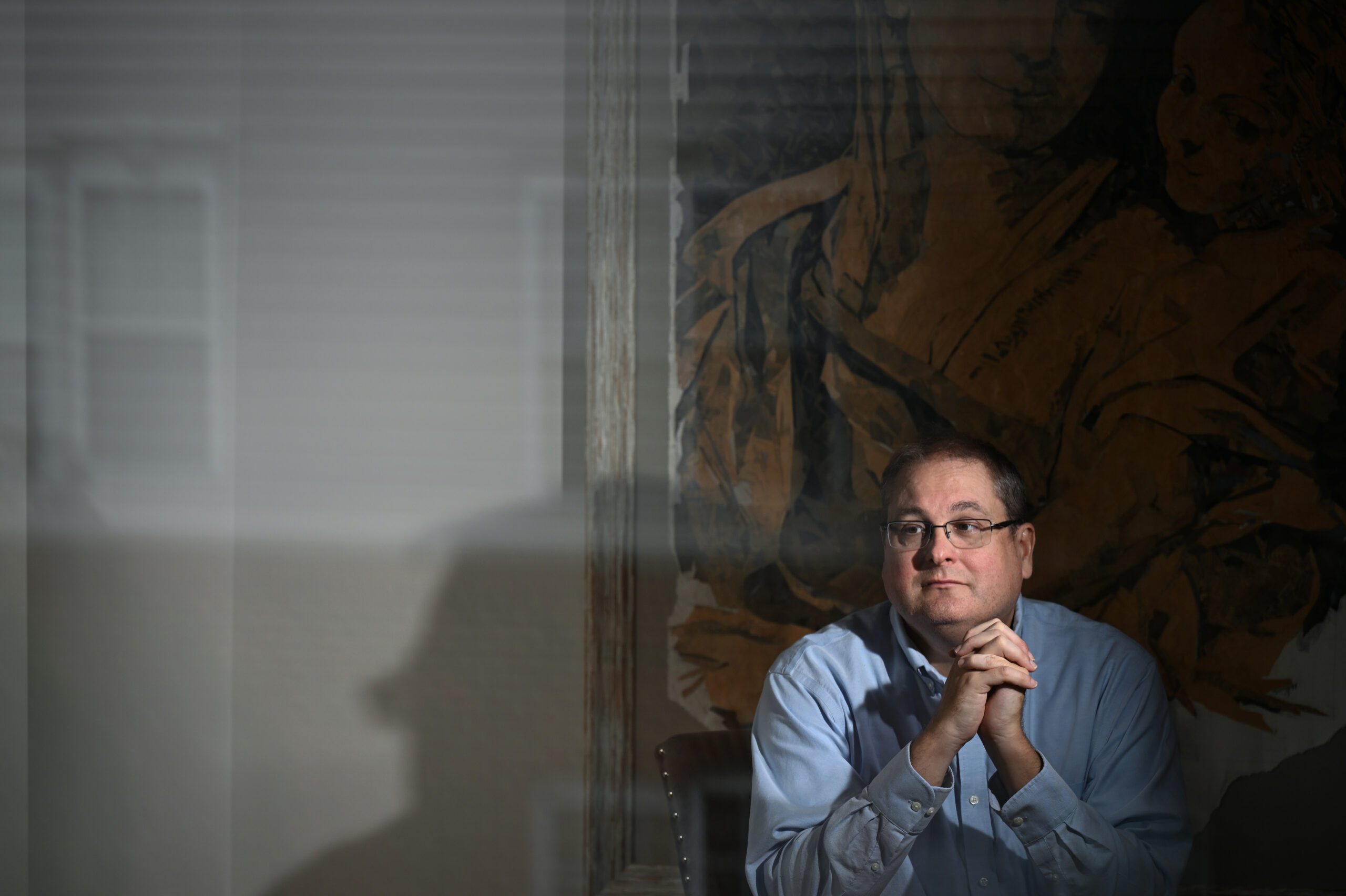
Leland Dudek, former acting commissioner of the Social Security Administration, in November.
Meanwhile, Dudek’s workforce cuts led field offices to shed 9% of their employees by spring due to early retirement and deferred resignation offers. Overtime was restricted and hiring was frozen,even as customer visits continued to climb.
Shortly after taking office, Bisignano’s field operations chief, Andy Sriubas, wrote in an email to the staff that field offices “are, and will always remain, our front line — our face in the community and the primary point of in-person contact.”
In the near term, though, the front line staff were overwhelmed. Attrition was geographically uneven, with some offices losing a quarter of their employees to early retirement offers just as foot traffic grew, according to a staffing analysis by the AFGE’s research partner, the Strategic Organizing Center. The groupcalculated that there were about 4,000 beneficiaries for every field office employee in August of this year.
In several states that ratio is worse, the group found. Wyoming’s field offices, for example, have just 18 employees — or one for every 7,429 beneficiaries.
The shortages have created temporary office closures in many rural areas, some for days or months at a time. The office in Havre, Mont., has been closed for months, with the nearest one almost two hours away in Butte.
Today a majority of Social Security staffers who accepted reassignmentshave not been fully or properly trained, according to several employees with direct knowledge of the initiative. Instruction is often truncated so the staff can respond to customers. Officials said they provide training based on the employee’s level of experience and review the reassigned employees’ work.
“They offered minimal training and basically threw them in to sink or swim,” one veteran employee said of their transferred colleagues.
Training on the phone system and complicated claims and benefit programs lasted four hours for some reassigned workers when it should have taken six months, another employee said. As a result, some customers still can’t get basic questions answered or are given inaccurate information,according to a half-dozen staffers who answer the phones or work closely with employees who do.
The increased workload, hiring freeze and departures have made it harder for the staff to complete their daily tasks, said Jordan Harwell, a Butte, Mont., field office employee who is president of AFGE Local 4012. The staff used to find time between calls to process pay stubs, take in new disability applications and schedule appointments, but now “that work piles up,” he said.
DOGE officials, citing fraud concerns, also required direct deposit changes to be done in person or online — but getting online now calls for new identity verification measures that do not come easily to many elderly or disabled customers. Immigrants approved for green cards to work in the U.S. are now required to get Social Security cards in person under a Trump anti-fraud policy, producing a flood of new field office visits.
In one Indiana field office, one employee said she drags herself to work every day, dreading what will come next. Although she was hired as a claims specialist, she and her colleagues are being told to prioritize answering the phones, which never stop ringing now that her office is taking calls for both Indiana and parts of Illinois due to reorganizations and reductions.
That means she is forced to let other work pile up: calls from people asking about decisions in their cases, claims filed online and anyone who tries to submit forms to Social Security — like proof of marriage — through snail mail.
As the backlogs keep building, she is taking calls from 25 or so people every day, already knowing that she won’t be able to help five or six of them. These are elderly people, often poor or bedridden, who have no way to comply with the change requiring that direct deposit actions take place in person or online. Usually they’re calling because something has happened to their bank accounts and they need to alter their financial information. But they can’t access a computer, the employee said, and driving is out of the question.
She received a call this month from a 75-year-old man who suffered a massive stroke that left him unable to drive. He’d also had to switch banks and, as a result, hadn’t received Social Security checks for the last two or three months.
“I had to sit there on the phone and tell this guy, ‘You have to find someone to come in … or, do you have a relative with a computer who can help you or something like that?’” she recalled. “He was just like, ‘No, no, no.’”
She ended that call by telling the man to call his bank, hoping they might be able to help when her agency, hampered by administration policies, no longer could.
‘Everybody started laughing’
As the staff races to answer the phones, other tasks are backing up, including Medicare applications, disability claims that require initial vetting by field offices and other transactions that cannot be solved in one conversation. Any case falling in that category is redirected to a processing center, where the backlogs have been building all year.
These back-office operations, located across the country, often handle labor-intensive, highly complex cases that do not call for automated resolution. Among the tasks are issuing checks, including for back pay, to disabled people whose denial of benefits was reversed by an administrative law judge.
As Congress kept funding flat for Social Security over many years, the processing operations fell way behind, requiring headquarters employees to help handle the volume. But it was never as bad as it got this fall.
Many disability payments now takethree to six months to process when they used to take weeks, advocates and employees said.
At the start of September, one benefits authorizer in a processing center was called into an all-staff meeting with her colleagues, she said. There, management explained that the backlog at the time — six million cases — was unacceptable and that everyone would have to work overtime in an attempt to drive it down to two million by Christmas.
“When they told us that, everybody started laughing,” she said. “Because there is just absolutely no way to get it down in that short period of time.”
Still, she and her colleagues have been hustling, she said, processing cases as fast as they can, even as they can see their haste sometimes causes errors. No time to fix them, she has decided: Best to just keep moving.
The Social Security Administration has said it expects to pay $367 million less on payroll this fiscal year than the year before.
Meanwhile, another staffer, who answers phones at a national call center, said she has changed what she says to customers when she realizes their claim can’t be finished in one conversation and must be referred to a payment center.
“I’m supposed to reassure people it’s being worked on,” she said. “But now I avoid giving people a firm date they can expect it to be done by.”
Just before Thanksgiving, Bisignano said that starting next year, he hopes to slash field office visits by half. More than 31 millionpeople visited field offices in the last fiscal year — or tried to. Critics say the change will dismantle the fail-safe for those who cannot use computers, no matter how imperfect.
At the same time, in recent weeks, hundreds of employees who transferred to customer service operations have been recalled to the roles they were originally hired to fill. Others have been reassigned to a new “digital engagement” office.
Social Security has told Congress it plans to put more resources toward IT, with an expected increase of $591 million this fiscal year compared to fiscal 2025, according to the agency’s budget justification. The agency also expects to pay $367 million less on payroll than it did the year before.
Social Security also plans to roll out a new program that will allow customers to book phone appointments with field offices throughout the country, no matter where they live, according to two people familiar with the plans.
The goal is to reduce the number of field office visits, though one field office employee said the change will probably lead to a greater workload for staff keeping up with queries from customers outside their area.
“They’ve created problems and now they are trying to fix problems they created,” the worker said.
During Christmas week, the grind continued for most front line staff. After Trump signed an executive order last week closing most federal offices on Christmas Eve and Friday, Bisignano told his staff that field offices, teleservice centers, processing centers and more operations would remain open.
“In order to balance the needs of the public and our workforce, we will solicit interest from employees who would like to work on Wednesday and Friday,” he wrote.
Scott Sauer would like nothing better than to make SEPTA an afterthought.
He doesn’t mean that the Philadelphia region’s mass transit agency should be neglected, but rather that it will come to do its job so seamlessly that its nearly 800,000 daily customers can rely on the service without worrying about breakdowns, delays and disruptions.
Given the cascading crises that hit SEPTA in 2025, many people wondered if the place was hexed.
“I hope not, because I don’t know how to get the curse off me,” Sauer said in a recent interview. “But listen, truth be told, there were days when I scratched my head and thought, ‘Oh, my goodness, what is going on?’”
“We just couldn’t seem to get more than a day or two of relief before something else was causing a headache,” said Sauer.
A bus passes the stop near Girls High at Broad and Olney Streets on Monday, Aug. 25, 2025. Thirty two SEPTA bus routes were cut and 16 were shortened, forced by massive budget deficits.
Back to basics in 2026
In the end, help from above and a new labor contract bought SEPTA at least two years to recover from its annus horribilis and stabilize operations.
When the Pennsylvania legislature couldn’t get a transit funding deal done, Gov. Josh Shapiro shifted $394 million in state-allocated funds for infrastructure projects to use for operations — the third temporary solution in as many years. The administration also later sent $220 million in emergency money in November for the Regional Rail fleet and the trolley tunnel.
And, early in December, SEPTA reached agreement on a new, two-year contract with its largest bargaining unit, Transport Workers Union Local 234.
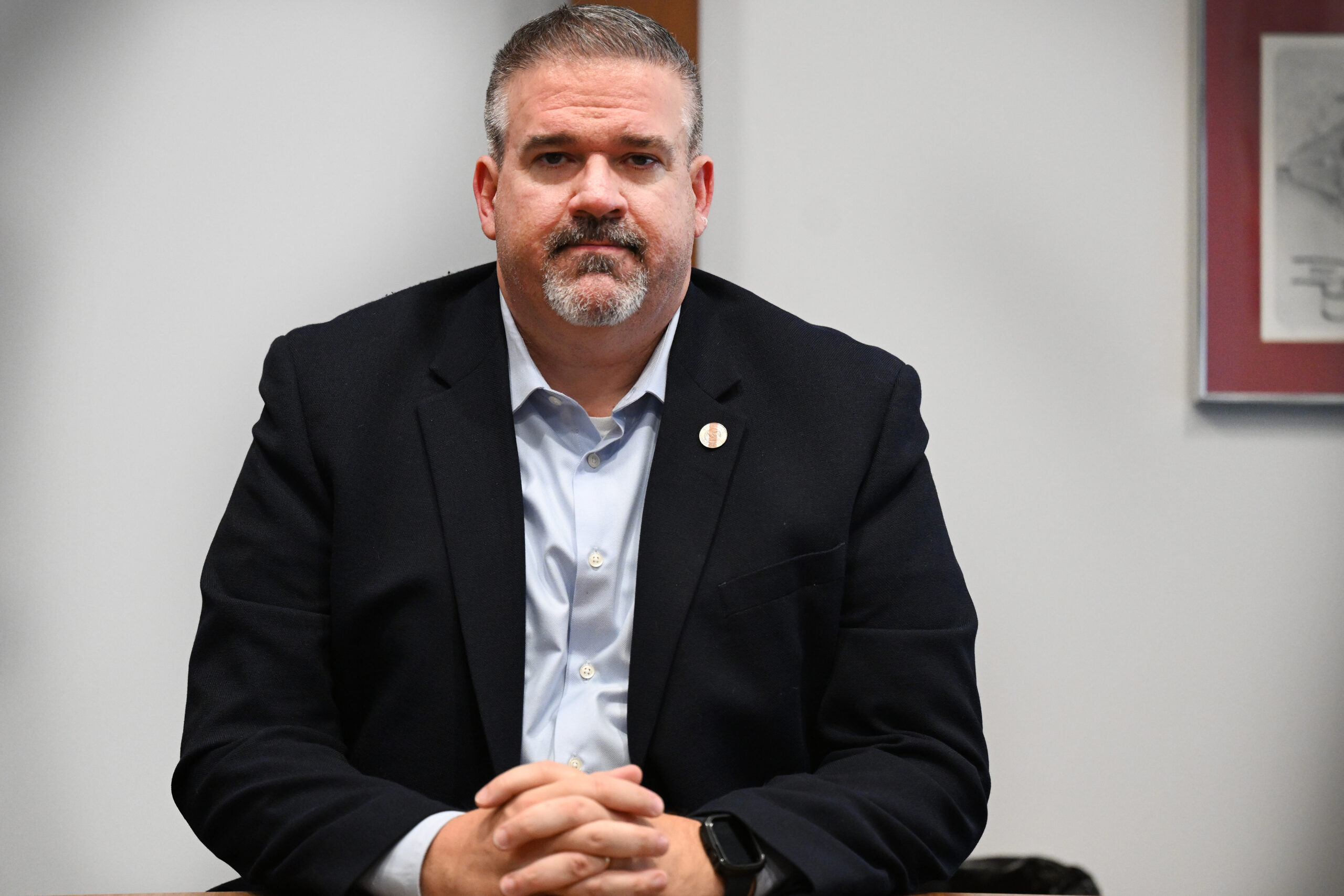
Scott Sauer, general manager of SEPTA, admits that 2025 was an extremely challenging year.
Sauer compared SEPTA’s position to football refs. When they are doing their jobs right, fans don’t have to think about them when watching the game. And when things are going well on the transit system, it becomes part of the background.
“Let’s make sure we do the basics, and we do them really well, because at the end of the day, people want SEPTA to move them from one place to the other, right?” he said.
The test of the focus on fundamentals comes soon, with millions of visitors expected in the region for the 250th anniversary of the Declaration of Independence, World Cup soccer, and other big events.
Sauer, 54, began his career as a trolley operator more than 30 years ago. He had no political experience, though, and would quickly be thrown headfirst into those murky waters to swim with sharks.
Storm clouds were already rolling in. Weeks before Sauer took the reins, Shapiro had flexed $153 million in state highway funds for SEPTA operations after a broader deal failed amid Senate GOP opposition.
It’s a legal move, but often controversial, and Shapiro’s opponents were furious.
Richards and her leadership team had been warning of a looming fiscal “doomsday scenario” for months. Officials were drafting a budget with service cuts and fare increases.
On Feb. 6, a Wilmington-bound Regional Rail train caught fire as it was leaving Crum Lynne Station in Delaware County. It was worrisome, but at the time, nobody knew it would get worse.
More than 300 passengers were safely evacuated after a SEPTA Regional Rail train caught fire near Crum Lynne Station in February.
Familiar battle lines were drawn. Senate Republicans, in the majority in the chamber, opposed Shapiro’s proposal to generate $1.5 billion for transit operations over five years by increasing its share of state sales tax income.
They preferred a new source of income for the state’s transit aid and said SEPTA was mismanaged, citing high-profile crimes, rampant fare evasion, and lax enforcement.
On a mid-August night, the Senate GOP came up with a proposal that would take money from the Public Transportation Trust Fund, a source for transit capital projects, and split it evenly between transit operations subsidies and rural state highway repairs.
Senate Majority Leader Joe Pittman, a Republican from Indiana County, was a key player in budget negotiations, which ultimately did not yield additional funding for mass transit.
“It was kind of quiet … and then we got alerted that a proposal was coming within minutes. And so everybody was scrambling to try to read through it,” Sauer said.
In a quick news conference with Shapiro, Sauer opposed the idea of taking capital dollars for transit operations, as did the governor. Then he spoke with Senate Republicans and told reporters it could be worth considering, but he had questions. And by the end of the night, he walked that back and opposed the measure.
“I guess if there was a lesson to be learned for me in August, it was I should have taken some [more] time reading through that proposal,” he said.
There was not much time to reflect on what happened, though, because the hits kept on comingas the federal government ordered SEPTA to inspect all 223 Regional Rail cars.
SEPTA’s Regional Rail fleet is the oldest operating commuter fleet in the country, and the fires highlighted the difficulty of keeping them maintained while needing to stretch limited capital funds to address multiple problems.
The Market-Frankford El cars, though younger than the Silverliner IVs, have been beat up and unreliable. SEPTA is moving forward with replacing them, as well as the Kawasaki trolleys that are more than 40 years old.
SEPTA had ordered new Regional Rail coaches from a Chinese-government-related manufacturer, but canceled the contract after the first few models, built during the pandemic, showed flaws. Now the agency is advertising for bids on a new fleet of Regional Rail workhorses — but it has to make them sturdier to last for at least seven more years before new cars would be on the way.
Officials plan to use $220 million received from the state on that effort.
Some of the money, about $48 million, is slated to help fix the trolley-tunnel issue. SEPTA is contending with glitches in the connection between the overhead catenary wires and the pole that conducts electricity to the vehicle.
What SEPTA got done
SEPTA has made some progress on some of its persistent issues, officials say, though the accomplishments understandably have been largely overlooked amid the urgent, existential crises of 2025.
For instance, serious crimes on the SEPTA system dropped 10% through Sept. 30 compared to the same period in 2024, according to Transit Police metrics.
And there had already been a sharp improvement. Serious crimes in 2024 dropped 33% compared to 2023 — from 1,063 to 711, year over year.
SEPTA transit police police patrol officers Brendan Dougherty (left) and Nicholas Epps (right) with the Fare Evasion Unit ride the 21 bus.
“If you think back to where we were in 2021 and 2022, the perception was bad things were happening on SEPTA, and you should steer clear of them,” Sauer said.
The Transit Police have been hiring new officers, including a recently graduated academy class of nine, and has about 250 officers.
SEPTA also installed 42 full-length gates designed to thwart fare evasion on seven platforms in five stations during 2025, spokesperson Andrew Busch said.Another 48 gates are coming in the first quarter of the year.
Police are also issuing citations with an enhanced penalty of up to $300 for fare evasion.
Prepare for déjà vu
Andyet, in 2027, it will be time to start the old SEPTA-funding dance once again, as transit agency advocates and supportive lawmakers work at getting a stable state funding stream for transit operations.
State Democrats have said the transit issue could help them take control of the Senate from Republicans — a longtime goal but one that is difficult to achieve. One wild card is whether President Donald Trump’s slumping popularity will cause GOP congressional candidates to get swamped in the 2026 midterms, and whether that will translate into voters’ local senators.
It likely would have to be a huge wave, and it’s a closely divided state.
By 2027, Shapiro is expected to be running for president (if he is reelected next year), and it’s anyone’s guess how that could affect budget politics.
“Not everybody wants to see us. I didn’t make a lot of friends,” Sauer joked after the TWU settlement.
DALLAS — Maybe the 76ers should have listened to VJ Edgecombe sooner.
With 18.3 seconds left in Tuesday’s game against the Memphis Grizzlies, coach Nick Nurse drew up a play with two options for the Sixers (17-14). The first option was for Tyrese Maxey to score a layup. But if Maxey drew a double team, he was instructed to dish the ball to Edgecombe, who would take the shot.
The latter happened as Edgecombe’s defender left him to trap Maxey. And the No. 3 pick in June’s NBA draft buried a 25-foot three-pointer with 1.7 seconds left in overtime to give the Sixers a 139-136 victory at FedEx Forum.
“VJ has been telling us for probably, like, three weeks that he deserves to get to shoot one game-winner,” Maxey said. “Like, at the end of the game, like, ‘Everybody has shot one! Let me shoot one!’ He shot one, and he made it.”
This was actually the second game-winning basket Edgecombe has made during the first 27 games of his professional career. The first one occurred on Dec. 4 against the Golden State Warriors at Xfinity Mobile Arena.
He scored on a putback with 0.9 seconds left after Golden State’s De’Anthony Melton blocked Maxey’s shot. After that play, Maxey blocked Melton’s layup attempt at the buzzer, enabling the Sixers to escape with a 99-98 victory. But that was more of an athletic play by Edgecombe, who was in the right place at the right time.
Tuesday’s effort showed that Edgecombe can be trusted to close out games. And his teammates are not surprised that he made the shot or that he dared to take it.
“I said, ‘OK.’ I trust him,” Maxey said of Edgecombe asking for his number to be called. “Even that play, at first we were going to go 4-flat. I said, ‘Listen, let’s try something. Come up, set a screen, see if they put two on the ball. If they put two on the ball, slip out, shoot the three, and make it.’ And that’s what happened.”
With VJ Edgecombe guarding him, Jalen Brunson was held to six points on 1-for-10 shooting in the second half of the Sixers’ Dec. 19 victory over the New York Knicks.
Joel Embiid thinks Edgecombe’s desire to attempt a game-winner was normal, especially given the looks others get on the team.
“So everybody’s always bound to have that big moment,” Embiid said. ”It’s another thing to make it. … Then tonight, he made shots to give us the win.”
Edgecombe finished with 25 points while making five three-pointers. He carried the Sixers in the fourth quarter, scoring 13 points before adding the game-winner on his lone basket in overtime.
The shooting guard, who starred last season at Baylor, has a knack for producing in the clutch for the Sixers, even on the rare nights when he struggles for three quarters.
“We’re blessed to have him. Super,” Maxey said. “Thank you, basketball gods, Lord, Baylor, I don’t know. Daryl Morey. Everybody.”
Edgecombe has made Morey, the Sixers president of basketball operations, look like a genius.
The 20-year-old showed that he can be an elite scorer by producing 34 points on 13-for-26 shooting to go with seven rebounds in the Sixers’ 117-116 season-opening victory over the Boston Celtics at TD Garden. It was the third-highest scoring debut in NBA history behind Wilt Chamberlain’s 43 points on Oct. 24, 1959, and Frank Selvy’s 35 on Nov. 30, 1954.
He also exhibited the ability to be a lockdown defender, with his stellar effort guarding New York Knicks star Jalen Brunson in a 116-107 victory at Madison Square Garden on Dec. 19. Brunson, a two-time All-Star, finished with 22 points on 7-for-22 shooting and missed 6 of 7 three-pointers. With Edgecombe guarding him, the former Villanova standout was held to six points on 1-for-10 shooting in the second half.
And on Tuesday, Edgecombe showed that he can be a closer.
Now, he and the Sixers turn their attention to a New Year’s Day game against the Dallas Mavericks at American Airlines Center. Embiid is listed as probable for the matchup against the Mavs (12-22) with a sprained right ankle and right knee injury management. His absence from the game would create more scoring opportunities for Edgecombe.
Edgecombe outperformed No. 1 pick Cooper Flagg in their first meeting, finishing with 26 points, six rebounds, and four assists in a 121-114 victory on Dec. 20 at Xfinity Mobile Arena.
The prior matchup against Dallas was Edgecombe’s fourth straight game with at least 22 points, tying Charlotte Hornets forward Kon Knueppel for the longest such streak by a rookie this season.
Sixers guard VJ Edgecombe has been mentored by the Warriors’ Buddy Hield (left).
Edgecombe is clearly off to a fast start. So what’s his potential?
“He’s 20. Let him figure it out,” Maxey said. “I’m not going to put a cap on him. People tried to put a cap on me, and now we’re here. So, who knows? It’s up to him. How much does he want to work? Who does he want to become?”
For now, they’re enjoying the season the poised Bahamian is producing.
“A game-winner for a rookie is pretty good,” Nurse said. “He’s made some big shots and big plays this season. He’s kind of even-keeled all the time. He never shows a lot of emotion, and that’s an incredible quality to have. He just goes and plays the game.”
Dave Barry, arguably the funniest columnist ever and certainly the funniest Haverford College alumnus ever, has a tradition. Every December, he writes a piece in which he reviews everything that happened over the previous calendar year. Some of the things are true. Some of them are kinda true. All of them are hilarious.
Barry got his start in journalism at the West Chester Daily Local News, was almost hired by The Inquirer in 1983, won the Pulitzer Prize in 1988, and has written more than 40 books, including a terrific memoir, Class Clown, that was published in May. (Dave, when you update the “Acknowledgments” section for the paperback edition, it’s S-I-E-L-S-K-I.) So in honor of a great writer with strong local ties, let’s close out 2025 with a look back at the year in Philadelphia sports.
January
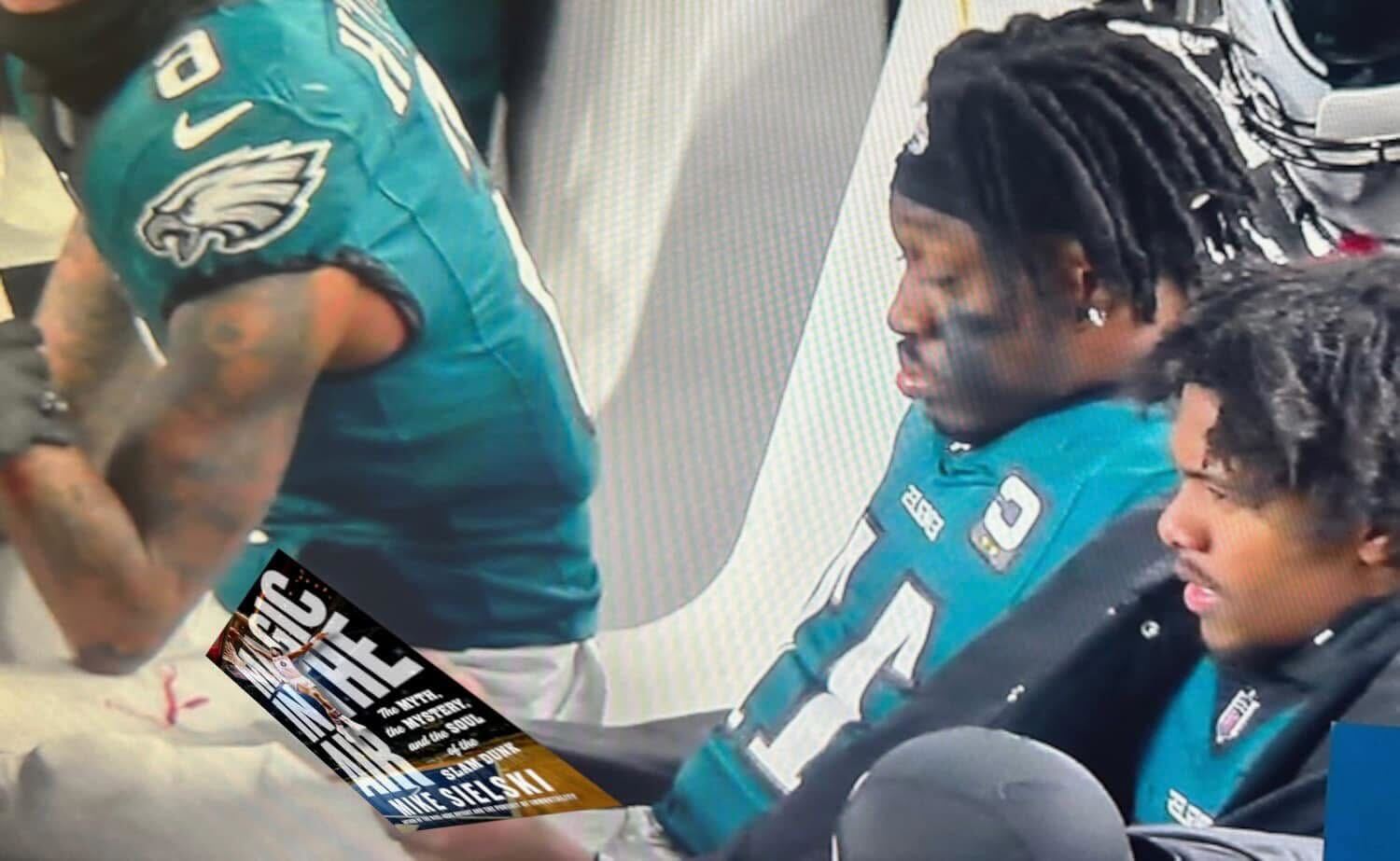
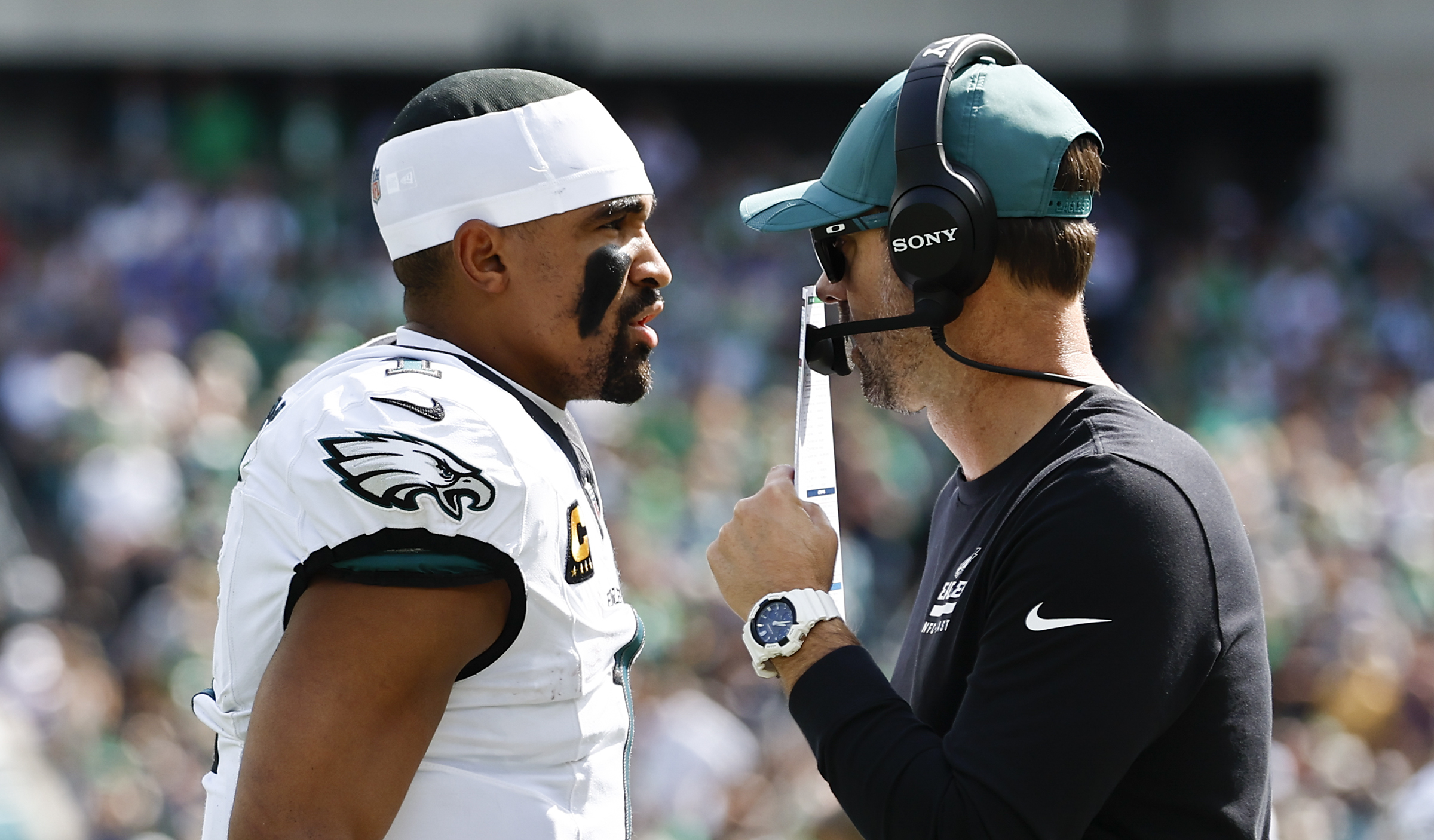
The year got off to a rough start when Howard Eskin, the Edward R. Murrow of autograph seekers, lost his very important job of telling everyone how awesome the Eagles are. Tanner McKee started the team’s final regular-season game and played well against the Giants, proving that he is better than Jalen Hurts, Tom Brady, and Joe Montana combined. Nevertheless, coach Nick Sirianni insisted on starting Hurts in the Eagles’ first playoff game, which led to wide receiver A.J. Brown’s decision to sit on the sideline and read a book called Magic in the Air, which was written by some hack from the suburbs. Hurts shook off his two tepid performances against the Packers and the Rams to play brilliantly in the NFC championship game against the Commanders, who aided him by refusing to cover any receivers or tackle Saquon Barkley.
A.J. Brown plays football and has impeccable taste in literature.
Meanwhile, the Sixers played 17 games in the month and lost 11 of them, which cut into the listenership for Paul George’s podcast. But on the bright side, Penn State lost a close game to Notre Dame in the College Football Playoff semifinals, inspiring optimism that James Franklin finally would guide the Nittany Lions to a national championship the following season.
February
Speculation of a pro-Chiefs conspiracy among NFL officials swirled in the run-up to Super Bowl LIX, but those rumors were put to rest once Patrick Mahomes conspired to throw the ball to Cooper DeJean and Zack Baun throughout the first half. The Eagles thumped Kansas City, 40-22, prompting Brady to provide no discernable analysis on the telecast other than shouting “WOW!” after every significant play. At the Super Bowl parade, Eagles vice president Howie Roseman was struck in the head by a full can of beer. He immediately found the fan who threw the beer and signed him to a three-year, cap-friendly contract. On WIP, Spike Eskin argued that the fan should start ahead of Hurts.
March meant a pink slip for Flyers coach John Tortorella.
March
The Phillies began the 2025 season with three wins in their first four games and the expectation that, if the team did not win the World Series, fans would storm Citizens Bank Park, bind and gag team president Dave Dombrowski, and throw him into the Schuylkill. Villanova’s men’s basketball team lost in the quarterfinals of the Big East tournament and fired coach Kyle Neptune, which reminded everyone that Kyle Neptune had been coaching Villanova’s men’s basketball team. The Flyers lost 11 times in a 12-game stretch and fired coach John Tortorella, which reminded everyone that Philadelphia used to have a hockey team.
Brandon Graham said he was retiring after 15 years with the Eagles. Yep. He said that. There was a news conference and everything.
Aaron Nola elicited deep concern in April.
April
Aaron Nola lost four consecutive starts for the Phillies, which raised the concern that fans would storm Citizens Bank Park, bind and gag him, and throw him into the Schuylkill. Coaches and executives around the NFL began lobbying the league to ban the Tush Push. The Eagles responded by encouraging their offensive linemen to stop blocking altogether — a strategy they carried into the 2025 season. The team then drafted Jihaad Campbell, the first time that the Eagles had selected a linebacker in the first round since 1979 … two years before their head coach was born. Seriously.
Big Five Hall of Fame induction continues to elude Pope Leo XIV.
May
A busy time. The Flyers hired Rick Tocchet as their new head coach, which prompted several 55-year-old South Jersey women to dig their TOCCHET, ZEZEL, and MELLANBY jerseys out of mothballs and start wearing them again.
The Phillies won nine straight games, but bad news marred their hot streak. Major League Baseball suspended closer José Alvarado for 80 games and ruled him ineligible for the postseason after a drug test revealed he had not told gamblers that he was using a banned substance. Nola gave up 12 hits and nine earned runs over 3⅔ innings against the St. Louis Cardinals, after which the Phillies placed him on the injured list. Then Jesús Luzardo gave up 12 hits and 12 earned runs over 3⅓ innings against the Milwaukee Brewers, which raised the concern that fans would storm Citizens Bank Park and insist that Nola pitch again.
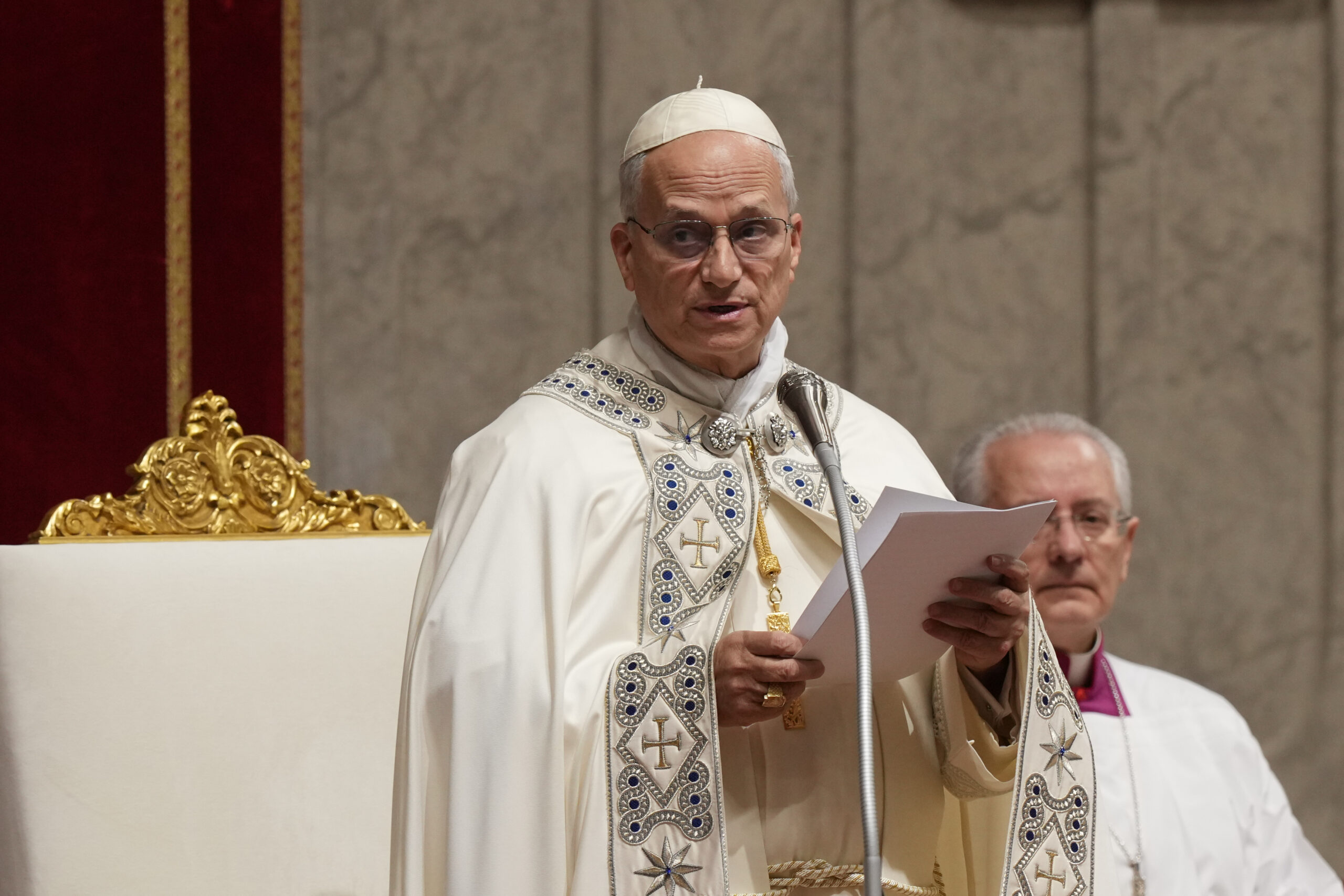
DeJean and his fellow Eagles defensive back Reed Blankenship launched their podcast, Exciting Whites, which immediately rocketed up the audience rankings in Mayfair, Somerton, and Ridley Township. The College of Cardinals elected Robert Francis Prevost, a Villanova alumnus, as the new Pope. In his first declaration as Pope Leo XIV, Prevost announced that “V for Villanova” would become the official Communion hymn for every Catholic Mass in the United States, replacing “Taste and See,” “Eat This Bread,” and the ever popular “One Bread, One Body.”
The Sixers drafted VJ Edgecombe and everyone blindly trusted that the franchise made the correct choice.
June
The Indiana Pacers’ remarkable run to Game 7 of the NBA Finals — thanks in large part to T.J. McConnell — reminded Sixers fans of those halcyon days when the team tanked for three years to acquire a 5-10 backup point guard who might someday lead them to an almost-championship. Things got better once the Sixers selected VJ Edgecombe with the third overall pick in the draft, allowing them to phase out Joel Embiid and George with a roster made up entirely of guards who were 6-4 or shorter.
The Flyers used their first-round pick on a promising winger, Porter Mantone, though fans remained disappointed that neither Tocchet, general manager Danny Brière, nor team president Keith Jones would be suiting up for the team himself.
Jalen Hurts and the Eagles did not win a single game in July.
July
The WNBA announced that Philadelphia would get an expansion franchise in 2030, provided that the WNBA still exists in 2030. The NCAA announced that it would keep the March Madness field at 68, quelling any remaining hope that any Big 5 team would ever qualify for the Tournament again. At the MLB trade deadline, the Phillies acquired Harrison Bader, who immediately became their best player, and Jhoan Duran, who immediately increased their in-game pyrotechnic production costs by 250%.
The Eagles began training camp, and Hurts laid out the team’s message for the season: “We are focused on 2025. We’re acting like we didn’t just win the Super Bowl. We’ve forgotten that we won the Super Bowl. You either win or you learn. We are keeping the main thing the thing that is mainly the thing that we think is, in the main, what we want to be doing. What is the Super Bowl anyway? What is soup? What are bowls? Who am I? Why am I here?”
Kyle Schwarber (right, with Bryce Harper) heated up the Philadelphia summer.
August
Kyle Schwarber became the 21st player in major-league history to hit four home runs in a game, raising questions about whether the Phillies would re-sign him in the offseason — questions that Dombrowski dispelled: “Kyle is an elite power hitter. He’s the most elite hitter we have. He’s the elitist elite hitter around. Got all that, Bryce?”
Taylor Swift and Travis Kelce announced that they were engaged and that their wedding ceremony would be streamed live on the New Heights podcast. That way, someone would finally have a reason to listen to a full episode of the New Heights podcast.
Jalen Carter’s one magic loogie earned him an early trip to the locker room.
September
Seconds into the Eagles’ season opener, Jalen Carter spat on Cowboys quarterback Dak Prescott. Carter was ejected from the game and, via referendum, elected mayor of Philadelphia. The Eagles won their first four games, which everyone agreed was awful, just like A.J. Brown said on Twitter/X.
Before the ninth inning of a Phillies-Nationals game at Citizens Bank Park, Duran set himself on fire and jogged to the pitcher’s mound, where he sacrificed a goat to what he later called “the mighty spider god who gives me strength.” He then gave up two runs for his first blown save.
After manager Rob Thomson benched him, outfielder Nick Castellanos complained that Thomson didn’t communicate well. When asked to respond to Castellanos’ comments, Thomson shrugged and said, “Welp.”
Orion Kerkering could have done without all of that.
October
A not-so-great month. The Phillies lost in the National League Division Series when a Dodgers batter hit a ground ball back to the mound and reliever Orion Kerkering passed out. The Eagles lost back-to-back games to the Broncos and Giants. To adjust to their team’s limitations, Sirianni and new offensive coordinator Kevin Patullo decided that Hurts would be forbidden from throwing a pass after halftime for the rest of the season. Penn State fired James Franklin after losses to Oregon, UCLA, Northwestern, Archbishop Ryan, and the Lenape Valley 10U Pop Warner team.
The silver lining? Brandon Graham — surprise! — came out of retirement to rejoin the Eagles.
Jalen Hurts and Kevin Patullo are pleased to give Eagles fans something to discuss.
November
The media who cover the Eagles grappled with a simple question: Does the offense stink because of A) Jalen Hurts, B) Kevin Patullo, or C) Yes? The Eagles then squandered a 21-point lead in losing to the Cowboys and got pushed around in losing to the Bears, leading NFL experts to wonder whether a team coached by Sirianni and quarterbacked by Hurts could ever win anything of consequence.
Tocchet faced withering criticism from Flyers fans for limiting the ice time of Matvei Michkov, who showed up for training camp weighing 350 pounds and having forgotten how to skate. The Sixers got off to an excellent start as Edgecombe and Tyrese Maxey showed they could form the franchise’s best backcourt since Isaiah Canaan and Ish Smith.
The Flyers are good again and we all saw it coming.
December
The Phillies re-signed Schwarber for too many years and too much money for a 32-year-old designated hitter, handing him a contract that will prevent them from breaking down the roster and beginning the 15-year rebuild that any true fan would really want. In response to Dombrowski’s assertion that he was “not elite,” Harper began a new offseason training program similar to Robert De Niro’s in Cape Fear.
The Flyers finished the month in third place in the Metropolitan Division and on pace to make the playoffs, disappointing those fans who hated the idea of tanking right up until the Flyers stopped tanking. Maxey and Edgecombe kept up their fine play for the Sixers, and Villanova won 10 of its first 12 games, even though no one, not even new coach Kevin Willard, could identify a single player on the Wildcats’ roster.
In a possible Super Bowl preview, the Eagles beat the Buffalo Bills despite scoring one point and racking up negative-19 yards of total offense. Sirianni then chose to have most of the Eagles’ starters sit out the team’s regular-season finale, because if 2026 turns out to be anything like 2025, everyone is going to need some rest.
For five out of the last six seasons, the Union have been the class of Major League Soccer’s Eastern Conference. In those six seasons, the team has earned two Supporters’ Shield titles, five MLS playoff appearances, and in 2022 came close to winning arguably one of the best MLS Cup finals ever.
It’s even more incredible when you realize that the franchise has done so with an ownership and front office that have been reluctant to spend any more than they have to, wallowing near the bottom of the league in terms of payroll while consistently being among the leaders in the Eastern Conference.
It’s like that scene in Moneyball when Billy Beane, portrayed by Brad Pitt, asks owner Stephen Schott for a little more money to support championship aspirations. In the case of the Union, owner Jay Sugarman has played the role of Schott to perfection, while the team’s fans could be perceived collectively as Beane, asking for a little more star power to fuel the team to a title.
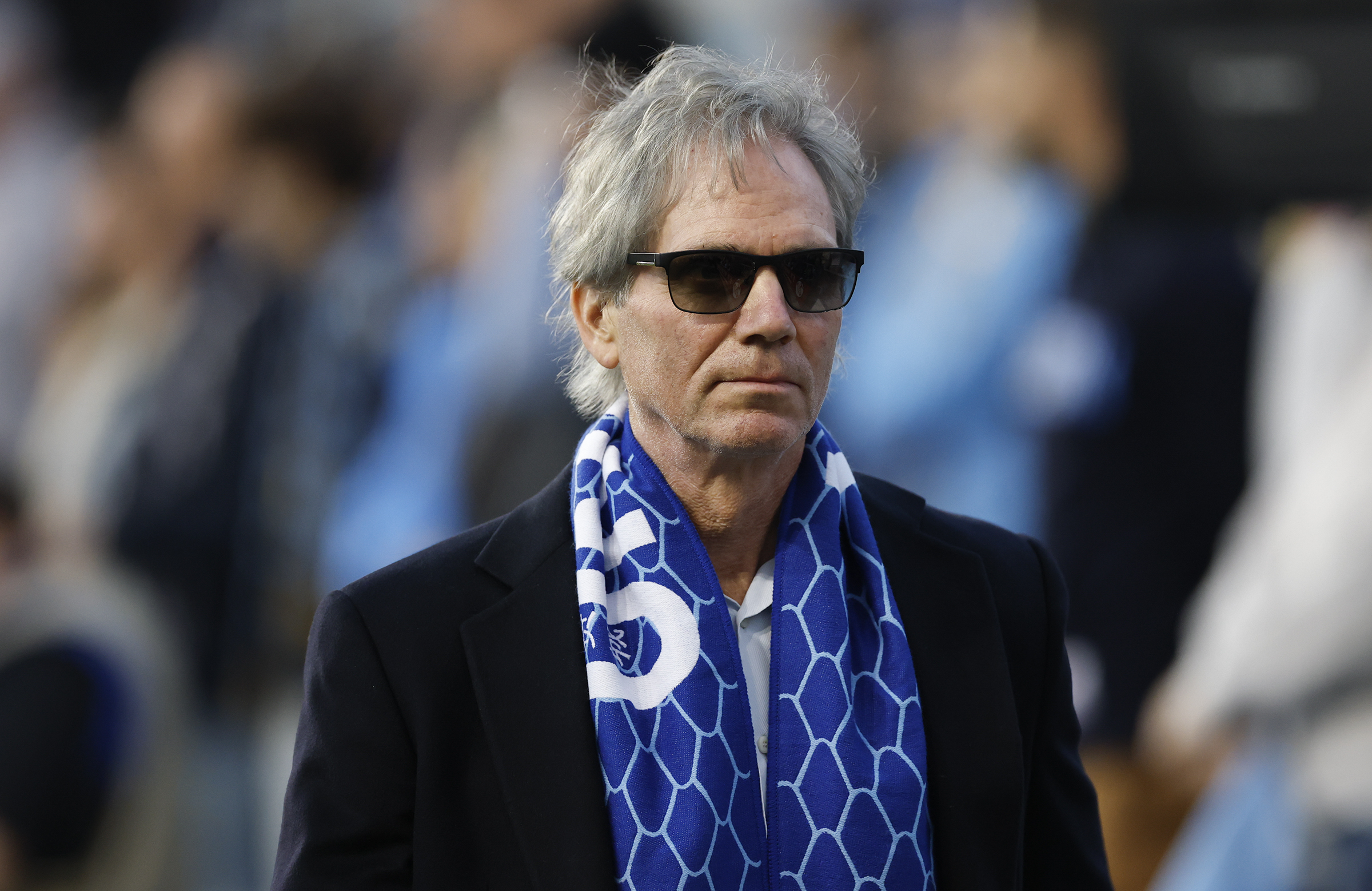
Union chairman and majority owner Jay Sugarman has been stubborn on spending to bring in top talent. But results have shown he doesn’t have to.
It’s been a stubborn approach that has proved successful enough to keep fans interested and engaged. And just like the way Beane’s Oakland team set a modern-day baseball record by winning 20 straight games on a shoestring budget, the Union lifted a trophy by knowing what they had and how much more they were willing to spend, and hiring a coach eager to prove his methods are championship-caliber.
Although the Union lost a pair of key pieces this offseason following the departures of forward Tai Baribo to D.C. United and longtime defender Jakob Glesnes to the Los Angeles Galaxy, there’s a belief that the team can go even further this season.
Their roster supports that claim — but Philly fans will be the first to remind anyone within earshot that a team on paper means very little around here.
The proof is in what the product can consistently produce on the field. Said proof arrives in a little over two weeks as the Union return to Marbella, Spain, on Jan. 17 to kick off their preseason.
The Union will play in 2026 without without Tai Baribo (center) and Jakob Glesnes (right), both MLS All-Stars in 2025 who were traded in the offseason.
It’s also going to be a massive year for soccer in Philadelphia as one of 11 cities in the United States scheduled to host matches in the FIFA World Cup. So much soccer on the horizon will have an impact on the local team. Increased exposure for Philly as a soccer city can only benefit a team coming off one of its best seasons in recent history — assuming the Union can replicate it.
If there was a crystal ball, genie, or whatever else is used to grant a wish for the new year, these are the three that probably are top of mind for most Union fans.
My Union wishes for 2026:
1️⃣ Win the CONCACAF Champions Cup. 2️⃣ Lift MLS Cup. 3️⃣ Cavan Sullivan has a breakout season that feels Messi-level magical.
There are 14 teams in Major League Soccer that have never won an MLS Cup — and seven of those teams were expansion clubs that arrived after the Union kicked off play in 2010.
If there’s an original seven of sorts, the Union are among them. In a poll of Union fans on social media, one of the biggest responses was for the team to win a major trophy. This year, they have a chance to win three: Along with chasing an MLS title, they’ll have an opportunity to lift the Concacaf Champions Cup and the Leagues Cup.
The Union will not be one of the 16 MLS clubs taking part in the 2026 U.S. Open Cup because of their Champions Cup berth, so the Leagues Cup, the competition in which MLS clubs face off against Liga MX teams, will be a third chance to take home some hardware.
A title of any sort beyond boasting the league’s best regular-season record would go a long way in validating the Union’s philosophy and a coach eager to win big.
Use the money from the sell-offs of Baribo and Glesnes for a TOP level player.
The Union have never been in the business of spending money on high-priced players. To their credit, they’ve arguably been the most successful MLS club to prove that the notion of building a roster around superstar talent isn’t a surefire way to success.
However, the obvious problem with that idea is that it’s very hard to win it all without an anchor to guide you to the promised land, in this case an MLS Cup title, Champions Cup trophy, or even a Leagues Cup or Open Cup crown.
This past season proved that bolstering a team around top talent can forge a championship as Miami, led by Lionel Messi — who, yes, just happens to be one of the greatest players on the planet — is the latest defending champion, with Messi collecting Most Valuable Player honors in both the regular season and in the title game.
1. Spend money to push this team from decent to great 2. Capitalize on the world cup via acquiring a 1a star player post World Cup. A leader who can fill Bedoya's role. 3. Win MLS Cup or CONCACAF Champions Cup.
The World Cup is one of the best possible opportunities for exposure. From the Union’s standpoint, they have a front-row seat to watching players from 48 nations, many of whom might be playing in lesser leagues. This is a chance for them to raise their stock and become an attractive move for a club full of talent but devoid of a go-to star (as yes, the jury is still out on 20-year-old newcomer Ezekiel Alladoh). Big tournaments allow players to showcase their talents and they allow clubs to get a look without having to tap their recruiting budget to find them.
Ezekiel Alladoh signs his new Union contract at the team’s practice facility on Dec. 3.
On the flip side, players want to come to an attractive club and in this sport, like so many others, you’re only as good as your last game. If the Union can replicate the success they had in the 2025 season (especially that stretch from mid-April to late June when they ran through teams in all competitions, setting a club-record 11-game unbeaten streak), then that’s when love affairs tend to become mutual.
Also, a successful club entices interested parties to invest, and I don’t see a world where Sugarman isn’t going to listen to those interested in a minority ownership — or dare we even suggest that after 15 years as the primary funder of this franchise, entertain offers from those who might want to take the task off his hands.
Going into the World Cup as one of MLS’s best teams when the eyes of the world are on America opens up a lot of possibilities. The last one might sound wild to envision — but it’s not out of the realm of reality.
During Turning Point USA’s AmericaFest 2025, held on Dec. 21, I heard Vice President JD Vance say that America was founded as, and always will be, a Christian nation. I strongly disagree.
Not because we have failed to live up to that standard (we have), but because no nation-state can rightly claim that title. Scripture never supports such claims. Nations may be influenced by God, restrained by God, or even blessed by God, but they are not the Kingdom of God.
Two hundred and fifty years ago, 13 British colonies did something unprecedented in human history.
Their most remarkable act was not just rebellion itself — rebellions had happened before — but the nature of their rebellion. They did not cast off one king to enthrone another. They rejected the very premise that sovereignty ultimately belonged to any earthly monarch.
Instead, they declared that all people are created equal and endowed with certain “unalienable rights” not by a crown, but by God, our creator. These were not merely political claims; they were moral assertions rooted in a Judeo-Christian worldview that affirmed human dignity as a gift, not a privilege.
This declaration was, of course, an act of war not just against England, but the feudal worldview. Over the next eight years, these colonies fought the most powerful military force on Earth for the right to govern themselves — and they won.
What followed was one of the most remarkable political achievements in history: a constitutional framework designed not to grant rights, but to protect rights already given by Almighty God.
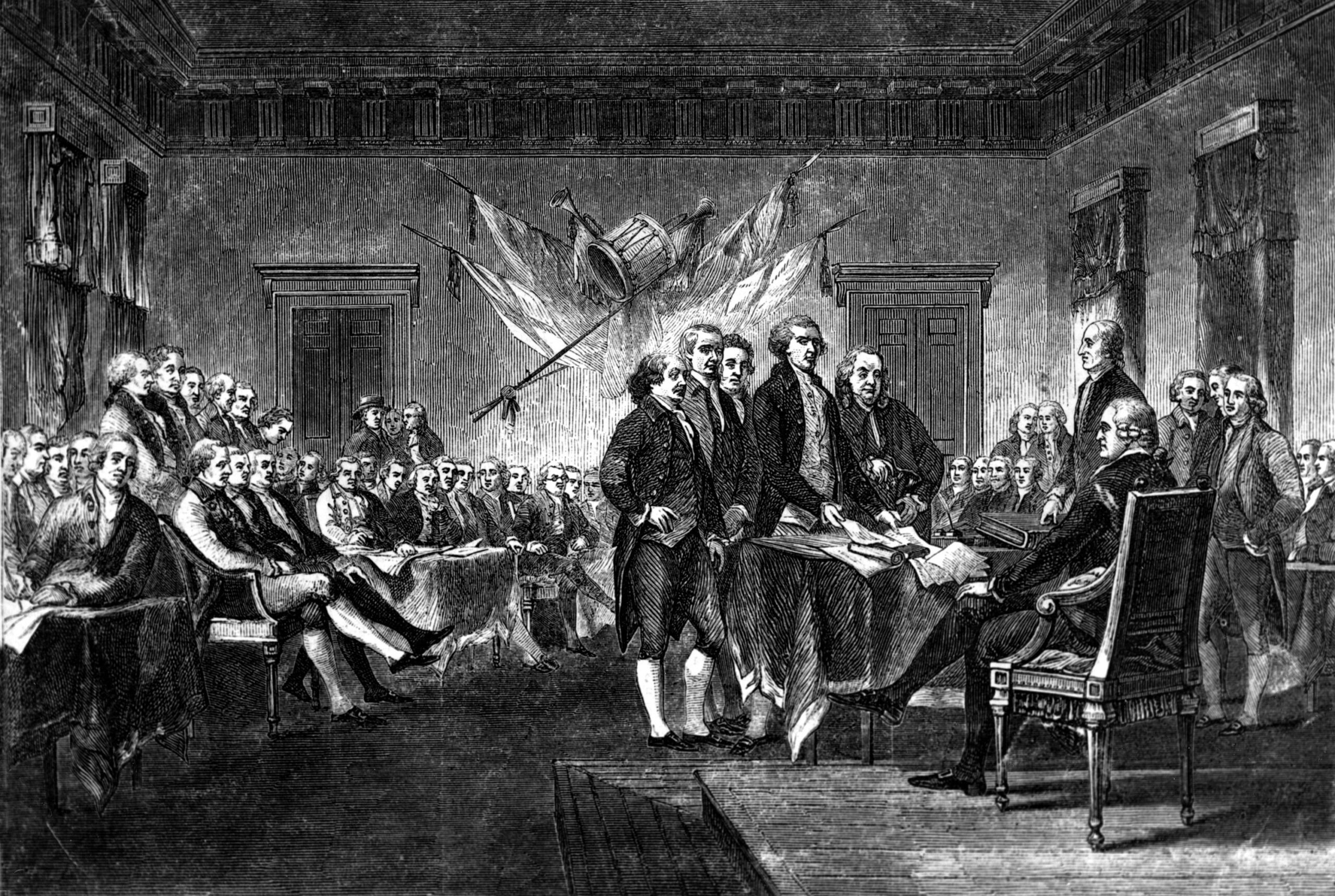
This undated engraving shows the scene on July 4, 1776, when the Declaration of Independence, drafted by Thomas Jefferson, Benjamin Franklin, John Adams, Philip Livingston, and Roger Sherman, was approved by the Continental Congress in Philadelphia.
Governing powers were divided, totalitarian authority was restrained, and freedom was placed in the hands of the people. John Adams captured this intent with striking clarity when he wrote: “Our Constitution was made only for a moral and religious people. It is wholly inadequate to the government of any other.”
The founders understood that liberty could not survive without moral virtue — and that virtue could not be legislated.
These principles still work today — but only when we the people take an active role in self-government. Our freedom is not self-sustaining. It requires discipline, restraint, and moral courage from each generation. When citizens abdicate responsibility, power inevitably consolidates. Self-rule depends upon self-control.
The founders also stumbled grievously over the question of slavery. Many knew it was morally wrong, yet they compromised, deferred, and left its resolution to future generations. That failure should never be minimized. But neither should it be used to dismiss the ideals of freedom themselves. The principles were sound. The people were flawed.
History reminds us that liberty must be defended, expanded, and, at times, redeemed by those willing to pay the price.
Many of the original signers were Christians, and they understood a core principle of God’s Kingdom: It is transcendent. When Jesus was questioned by political authority, he stated plainly, “My kingdom is not of this world” (John 18:36). Jesus did not come to establish a nation-state or seize political power. He formed a people whose true citizenship transcends borders, flags, and governments.
This truth must direct how, as Christians, we live as Americans. As citizens of a nation-state, we have real obligations. Citizenship is not passive. It requires obedience to just laws, respect for civil authority, and a commitment to the common good.
It also demands vigilance. We must be willing to challenge laws and policies that violate the God-given freedoms of others — especially religious liberty. Obedience without conscience is not virtue; it is mere compliance.
America was shaped by Judeo-Christian principles, but it was never intended to be a theocracy. America’s unity is powerful precisely because we do not have a state religion. Faith compelled by law is no faith at all. Genuine belief cannot be coerced; it must be chosen. The Gospel advances by witness, persuasion, and sacrificial love, not by legislation or force.
I say this as a Christian and a follower of Jesus Christ: The church does not need the power of the state to fulfill its mission. History shows that when the church weds itself too closely to political power, it loses its prophetic voice and relinquishes its spiritual authority.
America is not the Kingdom of God, and it was never meant to be.
But neither is it a historical accident nor a moral improvisation. It is something far more fragile: A people united in the conviction that liberty flows from God, not the state, that government exists to safeguard rights it did not create, and that faith must remain free.
If we confuse America with the Kingdom of God, we will ultimately diminish both — robbing the nation of its moral responsibility and the Gospel of its eternal power.
The Rev. Dr. Michel J. Faulkner, a former NFL player, community leader, pastor, and registered Republican, is chair of the board of directors of the Philadelphia Council of Clergy.