Blog

  • Grieving Roman Catholic coach and his family find solace in their football community

    Grieving Roman Catholic coach and his family find solace in their football community

    When Rick Prete returned from Iraq in 2009, he had just one focus: his family. Throughout his yearlong deployment as an infantryman in the Army, he could speak to his wife and daughter only sparingly over Skype.

    Once he was home in Audubon, Montgomery County, he tried to spend as much time with them as possible. He took on day-to-day tasks with glee, like doctor’s appointments and school drop-offs. Prete didn’t see these as mundane. To him, they were opportunities.

    “How can I be around my kid more?” he said. “That’s all I really cared about.”

    It was this mentality that brought Prete to youth cheerleading practice in Conshohocken in the summer of 2010. For four nights a week, he would sit and watch 6-year-old Arianna’s routines as the 15-and-under football team did drills nearby.

    Prete, a former wide receiver at Norristown High School and East Stroudsburg University, barely noticed that the players were there. But the Conshohocken Bears’ coaches noticed him, and quickly asked if he’d consider joining their staff.

    Prete declined at first. The veteran was battling depression, he said, and worked late nights as an emergency room technician. Any free time he had, he wanted to spend with Arianna and his wife, Gabriela.

    But after a few weeks, Prete warmed up to the idea. He would observe the team’s practices and suggest different defenses and coverages. Conshohocken added him as an assistant coach in August 2010, and he dove right in.
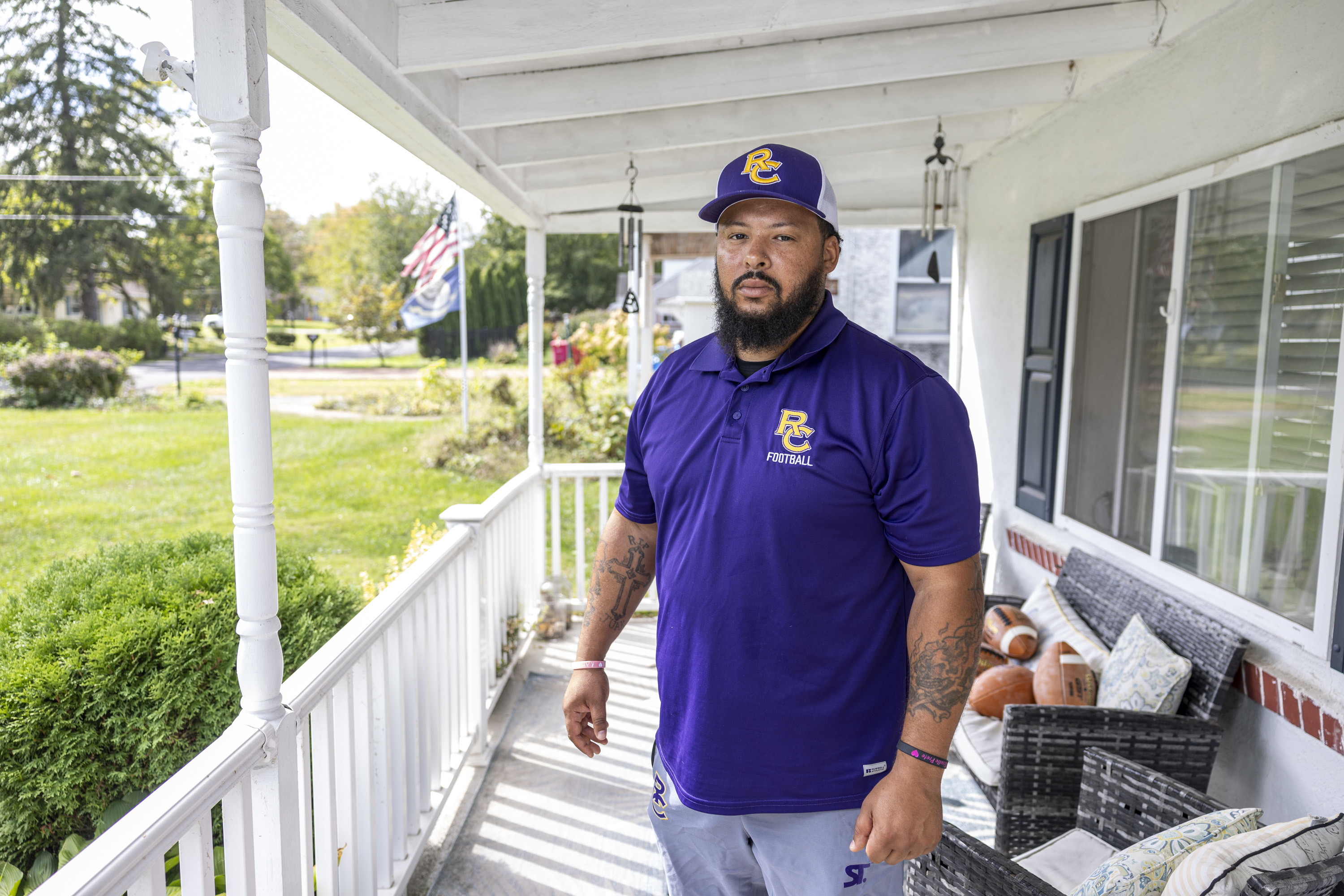
    Rick Prete has been the head football coach at Roman Catholic since 2019.

    Gabriela noticed that Rick was happier and more talkative at home. She’d catch him poring over film and scribbling plays on napkins and notepads. Instead of thinking about what he’d seen in Iraq, he was thinking about how to help his players.

    “I definitely saw a shift in him,” she said. “This was something that he loved, but he was also good at it. It was like an outlet.”

    Prete’s coaching career took off from there. He was hired as a wide receivers/defensive backs coach at Plymouth Whitemarsh High School in 2012, and joined Malvern Prep’s staff as the freshman head coach in 2015. He was named the school’s varsity wide receivers coach in 2016, and Imhotep Charter hired Prete to serve as offensive coordinator in 2017.

    In 2019, he became head coach of Roman Catholic High School’s football program, where he remains.

    Prete has always said that he wouldn’t have found his calling without Arianna. Now the sport is healing him in her absence.

    In the early morning of July 11, 2024, Arianna and a friend were riding in another friend’s Honda Odyssey when their vehicle collided with a tow truck at K Street and East Hunting Park Avenue in North Philadelphia.

    According to the Philadelphia Police Department, the truck driver was speeding and blew through a red light. The minivan entered the intersection just as the traffic signal was turning from yellow to red.

    Arianna was ejected forward from the backseat. She suffered severe injuries and was taken to Temple University Hospital, where she was pronounced dead less than an hour later.

    She was 19, and the only fatality from the crash.

    Court records show that the driver of the tow truck, Omar Morales, was charged with homicide by vehicle, involuntary manslaughter, and four related offenses.

    Charlie Payano, the friend driving the Odyssey, was charged with homicide by vehicle, involuntary manslaughter, and three related offenses.

    The trial is scheduled to start soon.

    Prete’s initial instinct was to quit football altogether. He barely had enough energy to get out of bed, let alone handle a group of teenagers.

    But Gabriela urged him to return to Roman Catholic. More than a year since the crash, he’s glad he did.

    “I don’t know if I’d be able to sit here right now, and go forward throughout a day,” Prete said, “if I didn’t have those kids.”
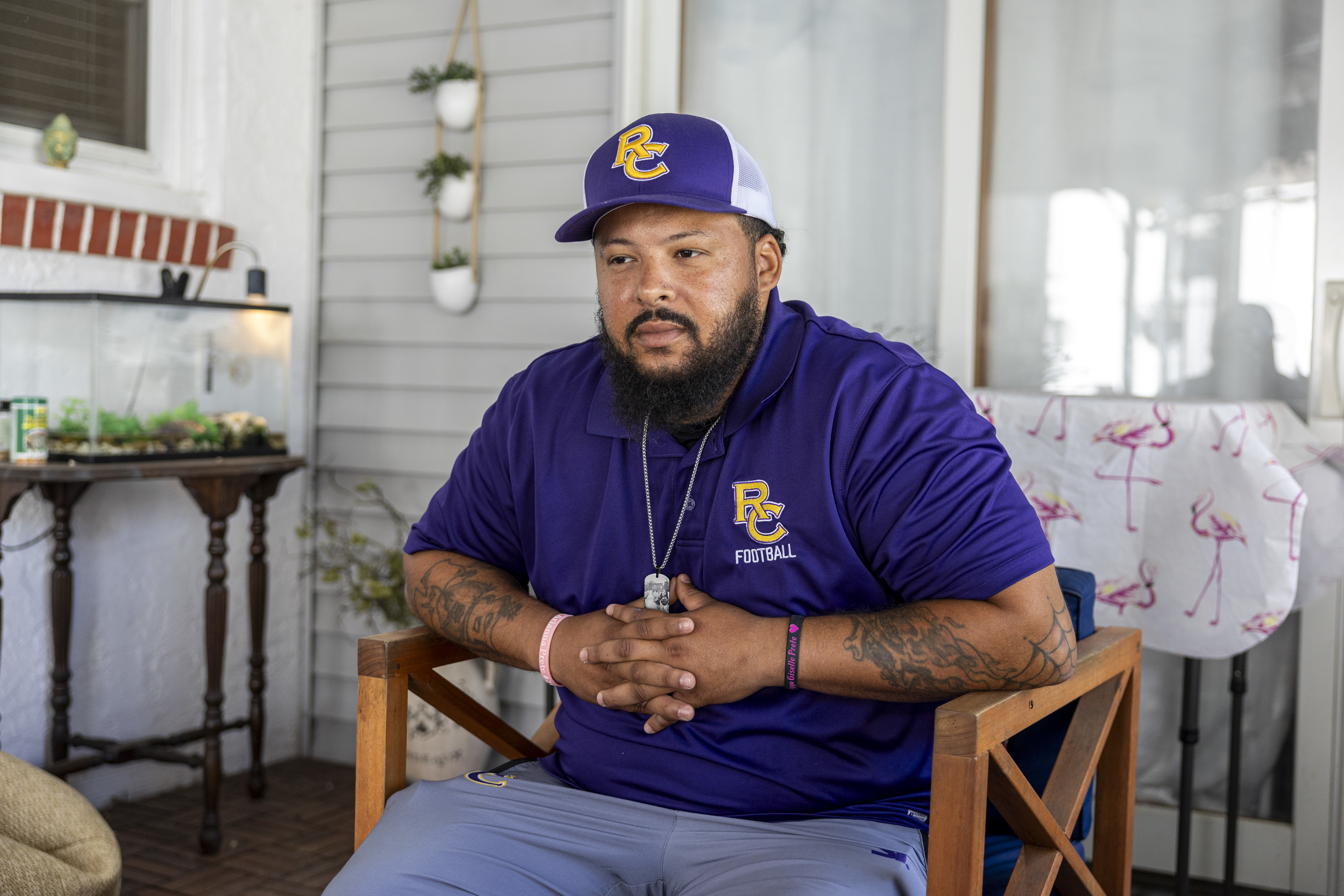
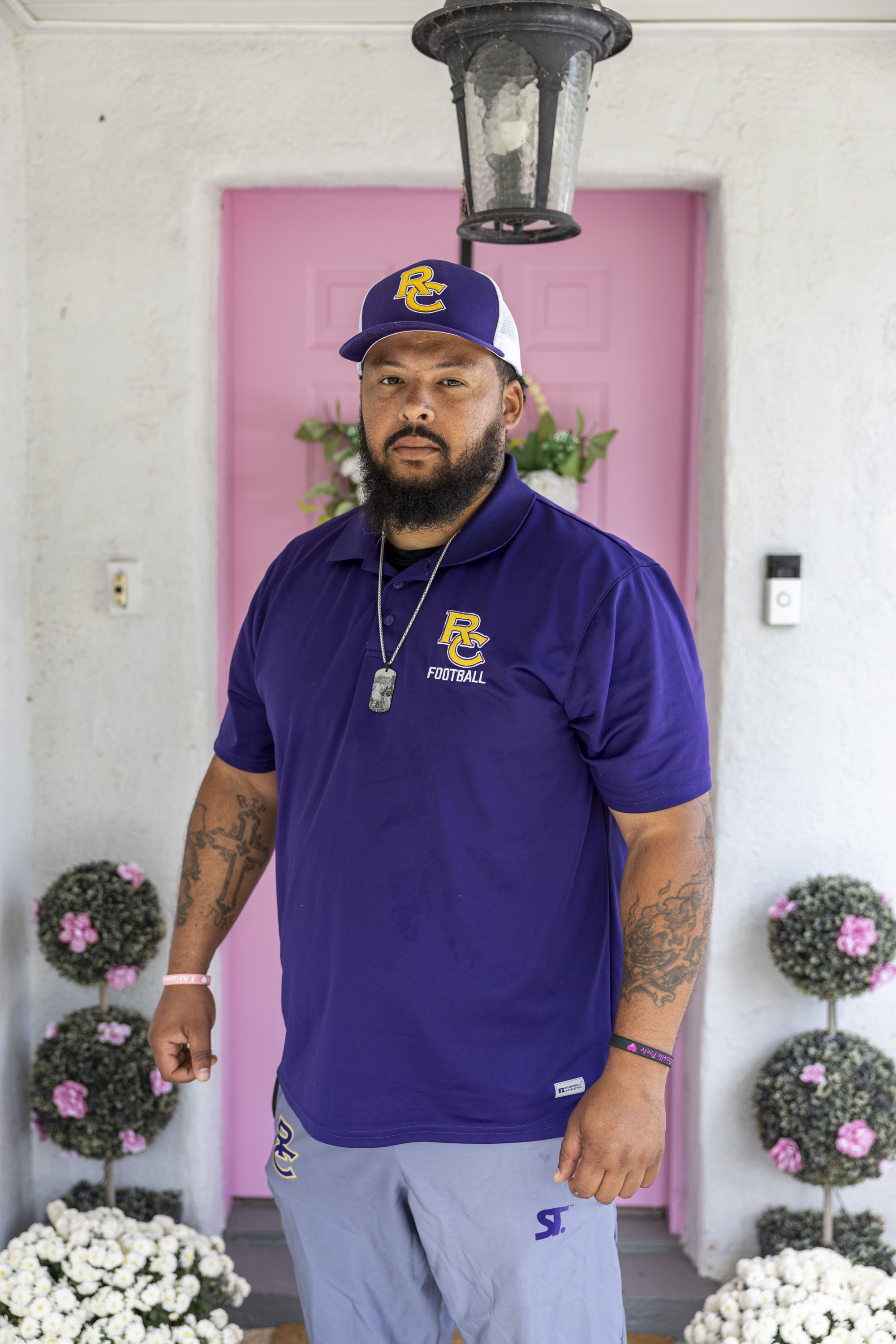
    Rick Prete at his home in Audubon, Montgomery County, on Oct. 2.

    A football and softball bond

    Arianna and Rick always connected over sports. She was a self-described “girly girl” who loved the color pink, romantic comedies, and Bruno Mars, but also a natural athlete like her father.

    She signed up for T-ball when she was 6 and switched over to travel softball not long after. Norristown Recreation didn’t have an under- 10 team at the time, so Arianna played with 10-, 11-, and 12-year-olds.

    Despite facing pitchers far older, she made contact regularly and quickly emerged as a hitter to watch. Rick, who played baseball in high school and college, began to train with her.

    Arianna would take 100 swings off the tee every day. Sometimes, her father would throw soft toss in the backyard. When she switched from third base to catcher at age 10, Rick started challenging her behind the plate.

    He’d spike softballs in the dirt, or pitch them high above, forcing his daughter to shift and block. By age 12, they were flipping tires and swinging sledgehammers in the driveway.

    “[Softball] was a huge part of our relationship,” he said. “That was my avenue to learn how to be her dad.”

    Arianna felt equally invested in Prete’s coaching career. When she was a student at Methacton High School, from 2019 to 2023, she would spend Friday nights with the football team at Roman Catholic.

    Rick Prete’s wife, Gabriela, with daughters Nylah and Arianna at a Roman Catholic game.

    In the school’s 2019 season opener, on Aug. 24, the Cahillites found themselves down 26-0 in the first quarter to Pope John Paul II. By halftime, they’d narrowed their deficit to 11 points.

    The team kept chipping away, and with 1 minute, 30 seconds to go, quarterback Jayden Pope threw a 50-yard touchdown pass to earn Roman a 47-46 comeback win.

    Prete still has the film from that night. In the background, Arianna is on the sideline, sprinting toward wide receiver Malachi Harris, who made the game-winning catch.

    “You couldn’t tell that girl that she wasn’t an assistant coach,” Gabriela said. “She liked the energy. Running up and down the field with the other coaches. You would always find her there.”

    Prete’s teams went 10-28 over his first four seasons, but over time, he built a strong program. The Cahillites posted a 9-3 record in both 2022 and 2023.

    In 2023, in the District 12 Class 5A championship game, Roman Catholic lost to Imhotep Charter, the eventual state champion, by only 4 points.

    With more success came more commitment, so Prete would always check to make sure that Arianna and her younger sister, Nylah, were comfortable with him coaching. After a while, the question became redundant. The answer was always yes.

    “They’d both say, ‘No, you go coach,’” Prete said. “‘We want you to.’”

    Arianna graduated from Methacton in 2023. She enrolled at Montgomery County Community College in the fall of that year, and took a real estate course in the spring, but was unable to pass the state exam. She planned to return to Montco in September.

    The former softball player had always loved working with kids, so she thought about becoming a teacher. Or maybe going back to real estate school, to retake her test. But these possibilities, once filled with promise, came to an abrupt halt on July 11, 2024.

    Rick and Gabriela heard a knock at about 3:30 a.m. Two Lower Providence Township police officers were standing outside their door.
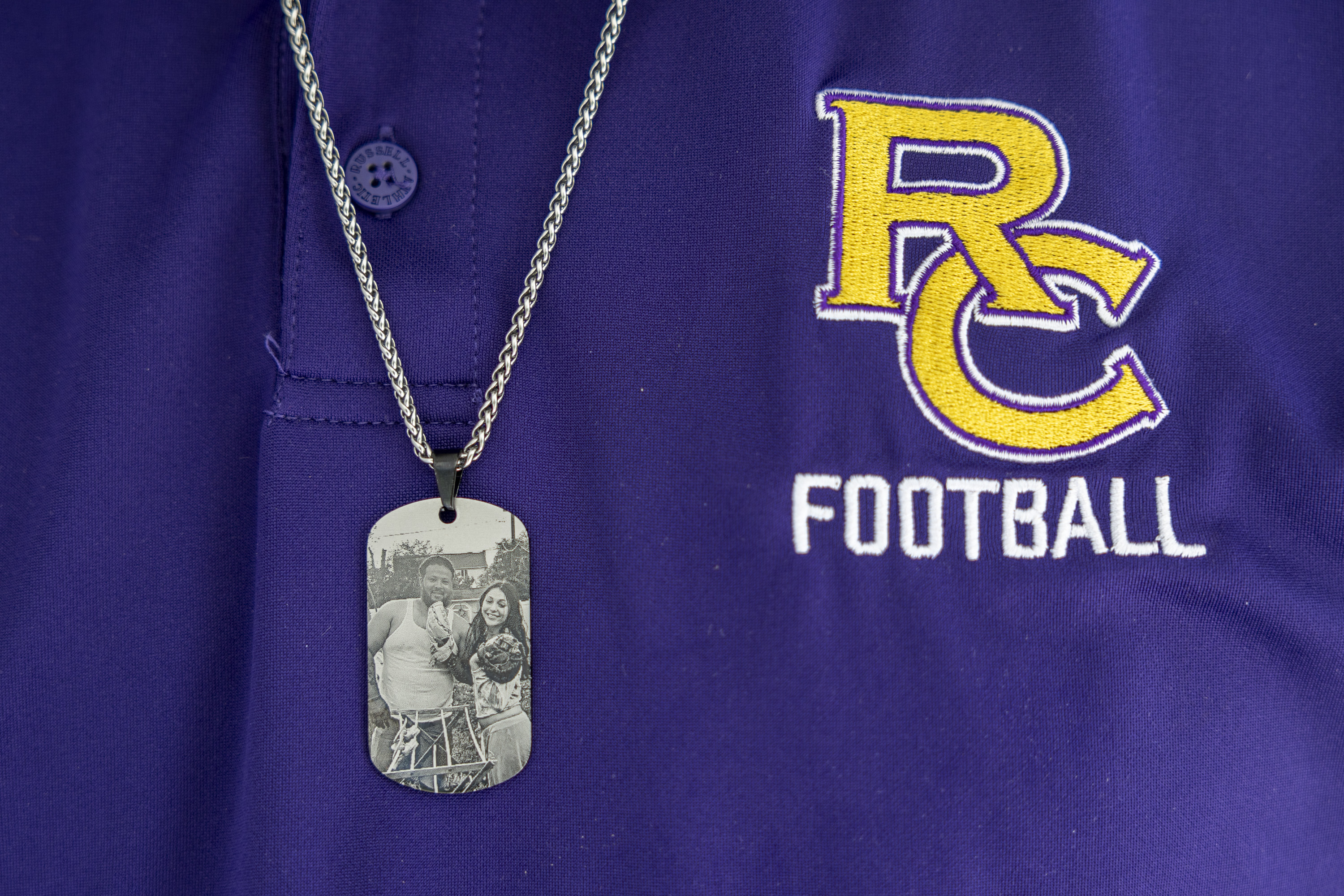
    Rick Prete wears a necklace with a photo of him and his daughter Arianna, who died in a 2024 car crash.

    They told the Pretes about the collision and instructed them to go to Temple University Hospital Jeanes Campus, in Fox Chase, to identify Arianna’s body.

    But once they arrived, their daughter wasn’t there.

    “It gives you a glimmer of hope,” Gabriela said. “Maybe they got this wrong.”

    In an email, Lower Providence Police Chief Michael Jackson said that the officers received their information from a victims’ advocate at Temple University Hospital.

    The parents finally reached Temple’s main hospital, on North Broad Street, at about 7 a.m., and realized that the victim was indeed their daughter.

    “Your body shuts down,” Rick said. “Your mind goes numb. It’s your worst nightmare being realized.”
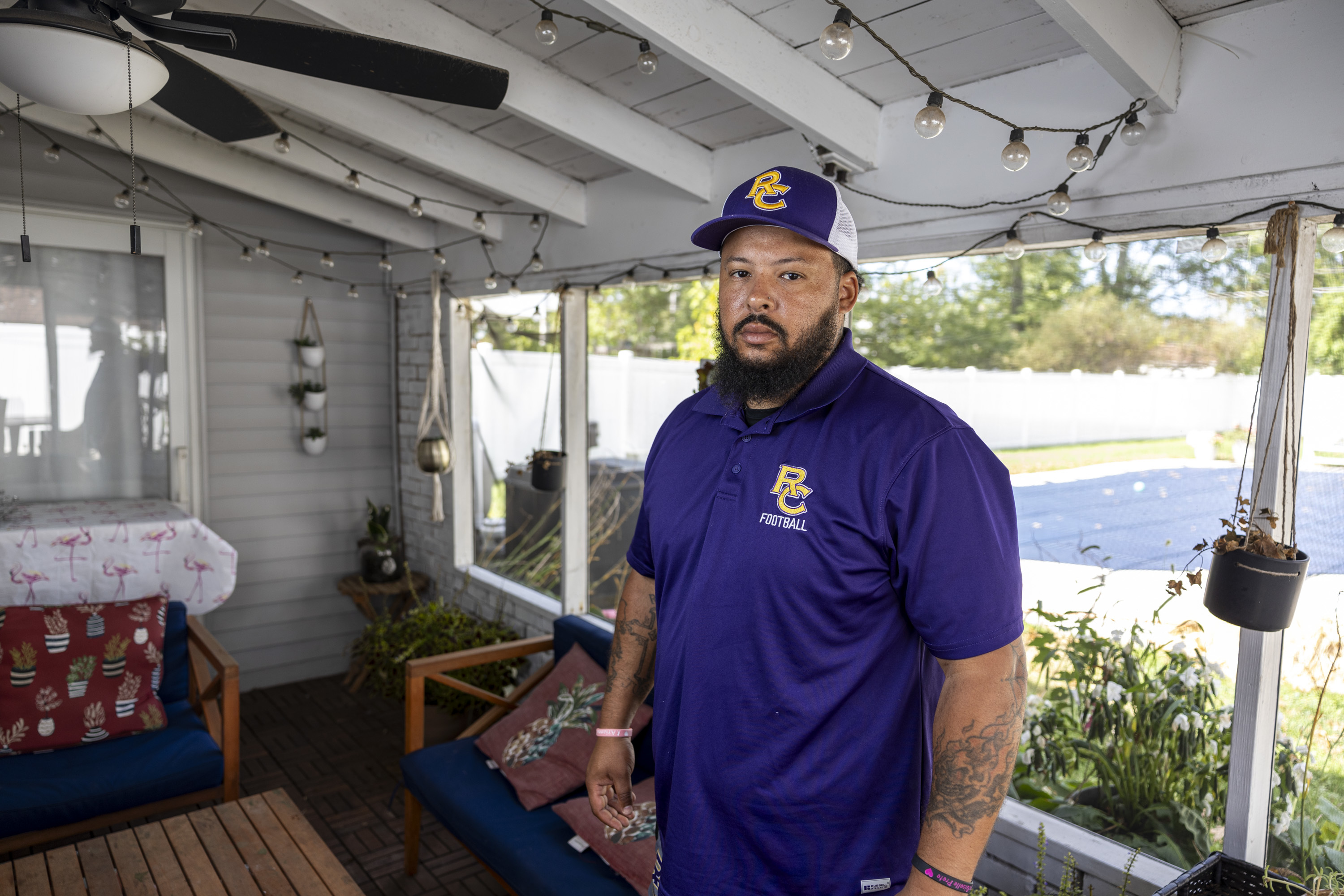
    Rick Prete poses for a portrait at his home in Audubon, Montgomery County, on Oct. 2.

    ‘I feel your pain, Coach’

    The next few days were a blur. The Pretes called as many family members as they could. A steady stream of visitors came through the house to share condolences, with flowers and food in hand.

    Roman Catholic was scheduled to go to a three-day team camp at East Stroudsburg on the day of Arianna’s passing. But Prete was not in any shape to attend and arranged for offensive coordinator Marcus Hammond to take the team instead.

    Two days later, the Cahillites finished their visit and piled into two yellow school buses. The drivers were supposed to head back to campus, but the students had a different idea.

    The team went to the coach’s house in Audubon. More than 50 players gathered on his lawn, took a knee, and began to sing Roman Catholic’s fight song.

    Prete stood on his porch, buried his head in his hands, and cried.

    “Thank you,” he said. “Now, give me a … hug.”

    Gabriela ordered some pizzas. A few players pulled Rick aside to say a prayer. One student, 17-year-old quarterback Semaj Beals, shared that he’d lost his sister Dymond in 2014. She was 8, and died by suicide.

    “I feel your pain, Coach,” Beals said. “And if you need anything, if you need to talk to me, I’m here.”

    Prete hugged him tight.
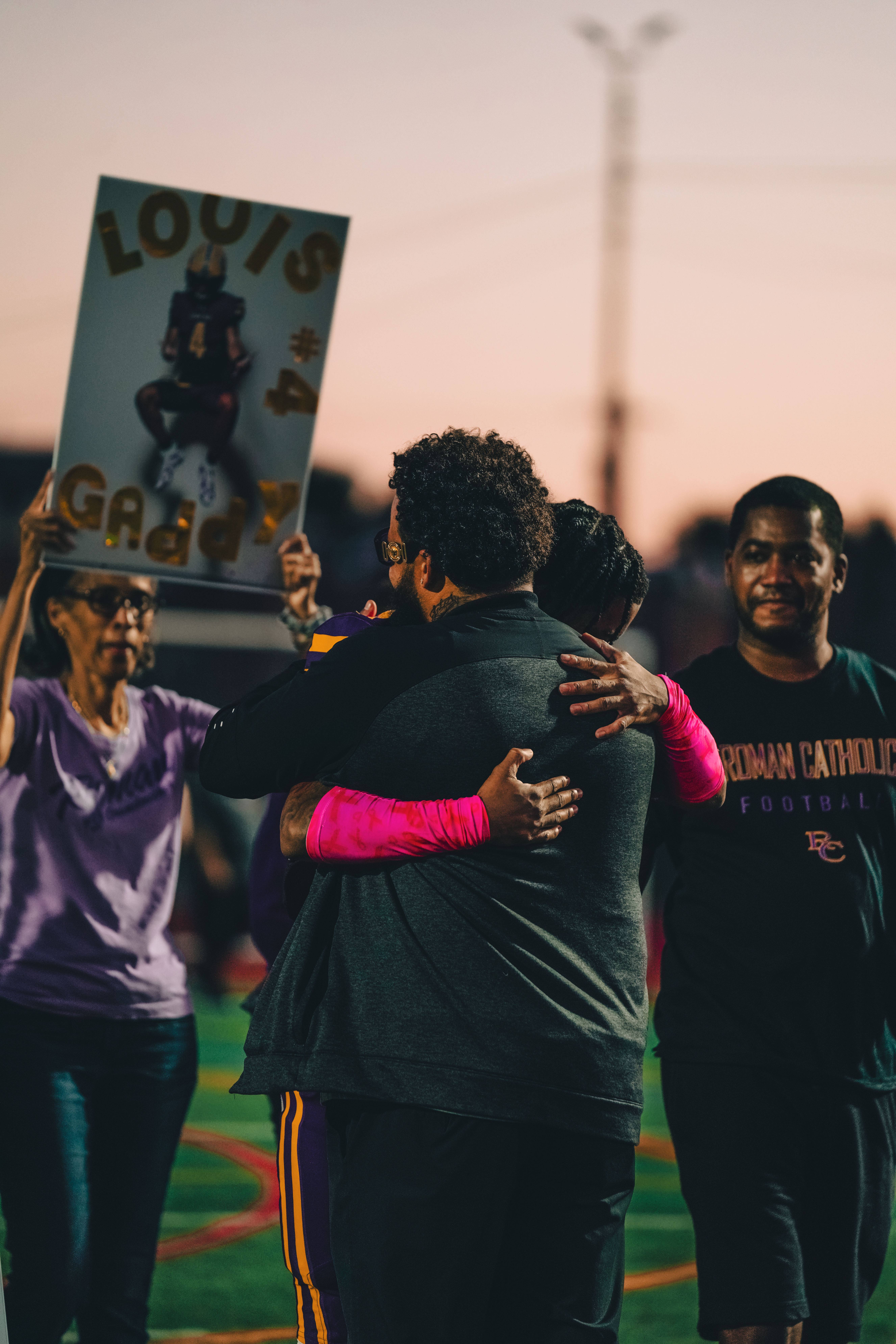
    Lou Gaddy hugs his coach, Rick Prete, at Roman Catholic’s senior day in 2024.

    “I know you do,” he replied.

    For many of the Cahillites, Prete has been like a second father. He’d lend them food and gas money. If they lived far away from the school, at Broad and Vine, he’d arrange for alternate transportation.

    The coach would regularly check on his players’ mental health and always made sure their grades weren’t slipping. There were conversations about schemes and formations, but also about how to treat a young woman, how to plan for their future, and how to handle a difficult situation at home.

    Lou Gaddy, a Roman Catholic graduate who is now a freshman safety at Stony Brook University, is the first person in his family to go to college. He received a full scholarship.

    Gaddy grew up in Burlington County in South Jersey and is unsure if he would have made it if he hadn’t played for Roman Catholic.

    “Who knows if I’d develop the way I did,” he said. “The [Philadelphia Catholic League] is a much stronger conference than where I live. It’s way more work. It requires more out of you. Long days, late nights.

    “But Coach Prete definitely knew what he was doing. He’s sent countless amounts of kids to college. Countless.”

    Because of this connection, the players felt Arianna’s death on a deeper level. Some saw Prete, overwhelmed by grief, and felt as if they were watching their own parent cry for the first time.

    Their coach was the one who fixed problems for them. Now, he was distraught. He struggled to focus. His attention to detail wasn’t the same.

    Prete was reluctant to return to Roman Catholic. He struggled to just get through a day. But Gabriela insisted he go back. The couple had already been robbed of their daughter. She didn’t want him to lose his career, too.

    He rejoined his team in August 2024. It was a challenging adjustment. There were days when players asked if Prete was OK, only to hear him say, “No.” The coach began wearing sunglasses during games and practices, day and night, because he couldn’t hold back his tears.
    Rick Prete was reluctant to return to Roman Catholic after his daughter died in a car crash last summer. Now, it’s helping him heal.

    Prete was in charge of the defense, but at times, he struggled to call plays. So, his players would call them for him.

    “They’d bail me out,” Prete said. “Lou [Gaddy] would literally line the defense up. And he would just make sure the defense had the plays that they needed. And he’d do it right.

    “All of the kids did that, because they knew that I’d be gone sometimes.”

    Gaddy would also make sure that his teammates understood the playbook and handled any adjustments that needed to be made on defense. Beals compared him to a “coach on the field.”

    “It was just to take the stress off,” Gaddy said. “Semaj made sure the offense was in check. And that’s kind of how I was with the defense. Making sure people were attacking the field the right way.”

    Players who previously sat out practices became regular participants. They were more efficient in their workouts and pushed themselves harder than before.

    The team discovered a greater purpose beyond competing for district titles or a state championship. The season was no longer about them. It was about their coach.

    “Sometimes, when things happen like that, a head coach will step away,” Beals said. “But Coach Prete was there the whole way. So, we just felt like that was special. We needed to do something for him.”

    Roman began to win — a lot. The Cahillites didn’t lose until Week 5 when the team played DeMatha, a high school powerhouse out of Hyattsville, Md.
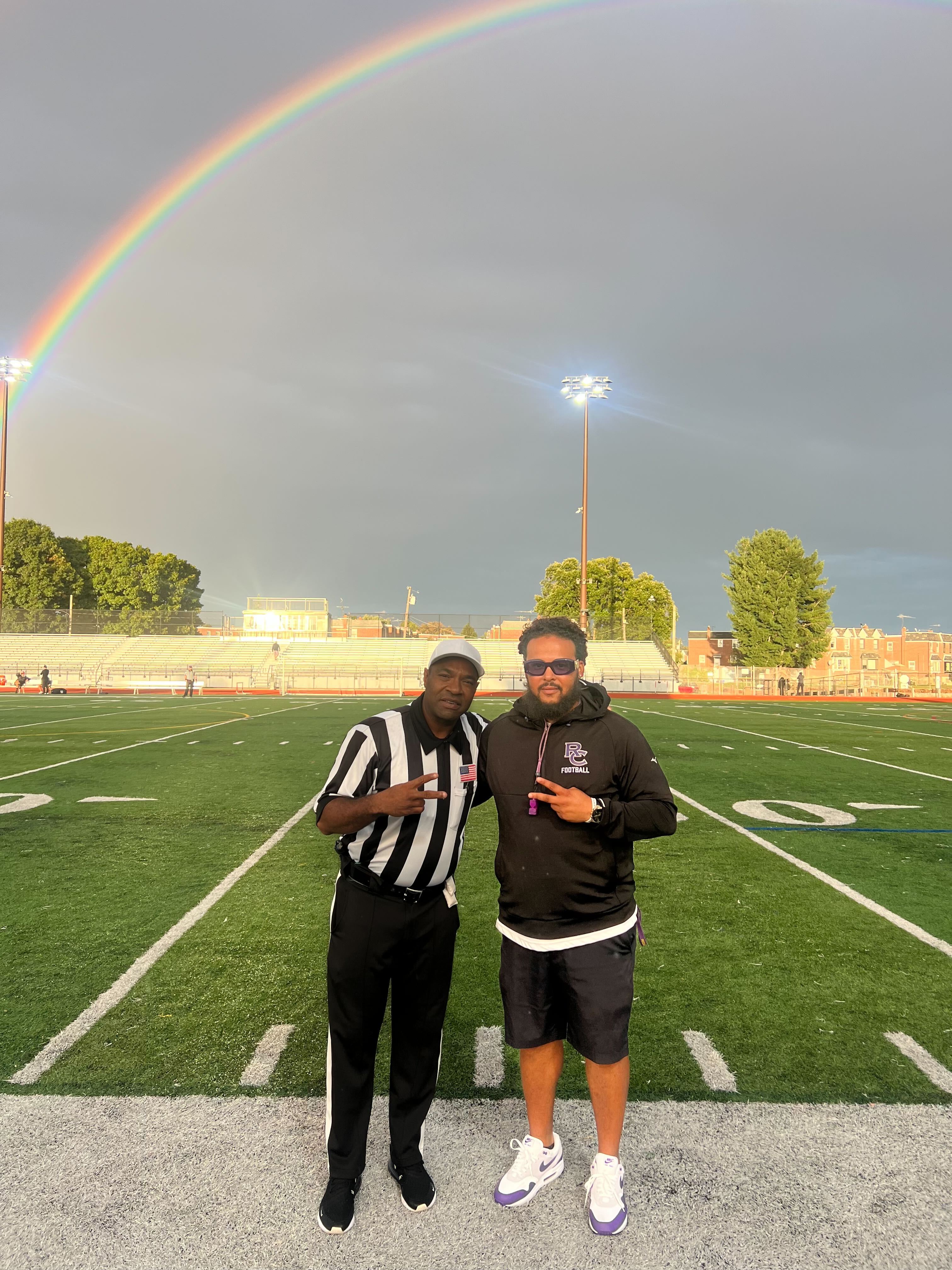
    Rick Prete (right) with a referee who approached him before a game in 2024. The referee had also lost a child, and expressed his condolences, when a rainbow appeared over both of them.

    The games were competitive, but with soulful moments of humanity throughout. Opposing coaches would give Prete prayer cards when they shook hands. In September 2024, before Roman Catholic played A.P. Randolph Campus High School in New York, a referee walked up to him.

    He told Prete that he’d also lost a child. As they talked, a rainbow appeared over the field. To Rick and Gabriela, the 2024 campaign was full of moments like these. Moments that felt as if their daughter was with them.

    It could be as subtle as a seeing a butterfly on the field. Or hearing a song on the way to a game. Or noticing that the players had written “LLA” — Long Live Arianna — on their helmets, compression sleeves, and wristbands.

    An already special season reached a new height in December, when Roman Catholic advanced to the state championship for the first time in school history. With an 11-4 record, the Cahillites had plowed through the district playoffs to face Bishop McDevitt of Harrisburg in the final.

    On a brisk night in central Pennsylvania, Roman Catholic rallied from a 21-3 deficit to tie the score at 31 and push the game into overtime. The Cahillites fell just short of a championship, losing to McDevitt on a field goal, but Prete was filled with pride.

    “I don’t want to say it was magical,” he said, “but that team became so close. And it really felt like my kid was right there. Like my kid was literally right next to me.”
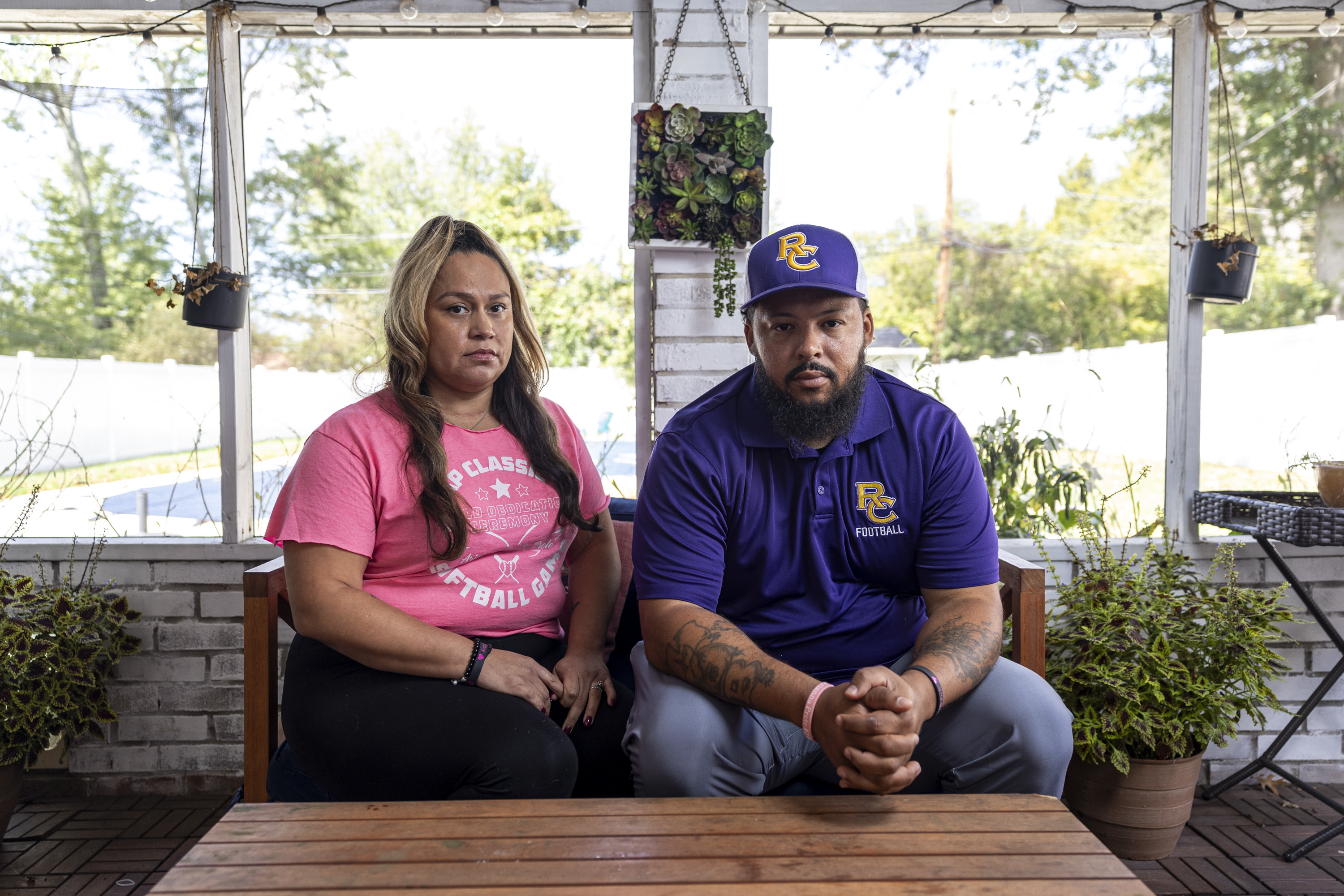
    Rick and Gabriela Prete at their home in Audubon, Montgomery County, on Oct. 2.

    Coaching with purpose

    The Prete house is quiet now. Arianna’s laugh is no longer ringing through the halls. Her parents don’t hear her feet stomping along the floor upstairs, or her shrill voice singing to Bruno Mars.

    Gabriela thinks about her daughter constantly. Sometimes, when Rick is sitting in his living room chair, late at night, he looks toward the door, expecting Arianna to open it.

    There are little signs of normalcy. Last year, Gabriela started seeing Rick’s trail of football plays again. He would leave them all over the house, on napkins and notepads, just like he did before his daughter’s passing.

    Football won’t bring her back. It won’t diminish the family’s grief. But Roman Catholic gives them a community. It gives Gabriela and Nylah a place to be on Friday nights.

    It gives Rick a task; three or four hours that aren’t spent asking questions he can’t answer. A task that fills him with purpose.

    “I didn’t know how much energy I have left to give anybody,” Prete said. “But [the players] help get me out of bed. They put things in perspective. That we still have a family, that our family still does have a future.

    “That we need to pour into what’s here, and to be present, for Arianna. We can’t live in a standstill. And seeing people accomplish their goals. … It’s always been something we’ve wanted, but now that is what it’s all about. You know?”


  • 2025 Toyota Corolla: One way to stay under $30K

    2025 Toyota Corolla: One way to stay under $30K

    2025 Toyota Corolla FX vs. 2025 Buick Envista Avenir: Two options to avoid being spendy.

    This week: Toyota Corolla

    Price: $29,089 as tested. Convenience Package added blind-spot monitor and cross-traffic alert for $530; black roof, $500; and connected services trial, $325.

    Conventional wisdom: Motor Trend liked the “$27,785 base MSRP, cool black accents, and bigger, more readable screen”; on the down side, it was “not particularly quick,” the “engine drones,” and it’s a “dated cabin.”

    Marketer’s pitch: “Introduce fun to every day.”

    Reality: You’re going for the fun angle, Toyota? Really, now?

    What’s new: The Corolla adds a new FX model for 2025, which pays homage to the old FX16, something I’d never heard of before writing this. Still, I feel I can say with confidence, it doesn’t live up to that.

    Not so new: How thankful I am to have two small, inexpensive cars to test. They’re a rare treat among model lineups and even rarer among vehicles I get to test, and readers are clamoring for them. Manufacturers want to make money selling you expensive things we don’t really need.

    The Corolla is a sedan and the Envista is a crossover, so very different directions indeed.

    Competition: Honda Civic, Hyundai Venue, Hyundai Elantra, Kia Niro, Kia Soul, Mazda 3, Nissan Kicks, Subaru Impreza, Toyota Prius, to name just a few.

    Up to speed: The Corolla is not winning any races. The 2.0-liter four-cylinder engine creates 169 horsepower and gets to 60 mph in 8.2 seconds, according to Motor Trend.

    Still, I was pleased enough with most of the performance, though I was traveling solo through almost all of it. A packed car would suffer a bit of malaise under the extra strain.

    Shiftless: The continuously variable transmission in the Corolla saps power as much as any. The gearless setup offers infinite ratios in theory but in actuality some examples make hill-climbing and hard acceleration something you’d just rather avoid. The Corolla’s version sits about in the middle, not the worst or the best.

    On the road: The Corolla has never been anything like fun, although the XSE version gets close. The FX model doesn’t get there, though, although handling is small-car good. Still, you won’t confuse it with a Golf or Mazda3.

    Driver’s Seat: Sturgis Kid 1.0 once purchased a new Scion iM (the Corolla Hatchback before it was called that) based solely on the dreamy front seats. Every time I borrowed that car, I noted how comfortable it was.

    The Corolla FX tested had sport fabric-trimmed seats with orange stitching that matched that feel. They were soft but supportive seats and made all the Schuylkill Expressway stop-and-go feel lots better.

    The Corolla also benefits from the simple gauge setup that Toyota offers in its base models. Changing the screen to fit your needs is simple with the steering wheel controls.

    The interior of the 2025 Toyota Corolla adds a 10.5-inch infotainment screen, and the seats remain among the most comfortable among all sizes of vehicles, not just small cars.

    Friends and stuff: The rear seat is pretty good for a small car. Headroom is dear — my head doesn’t hit the ceiling but it’s close — while legroom and foot room are nice. The door requires care when getting in and out because it’s a bit of a squeeze.

    The middle seat passenger will be perched on a narrow cushion and a tall floor hump, and will be permitted to throw small food items at everyone else, or to at least choose the evening’s movie later.

    Cargo space is 13.1 cubic feet. The seat folds to create a pass-through.

    Play some tunes: The new 10.5-inch touchscreen helps with navigating through the sources and whatnot. But somewhere a designer is patting themselves on the back for the sleek control panel, which trades a volume dial for pushbutton -/+ system. Boo!

    The stereo offers pretty good playback, especially by Toyota standards, about an A- or B+.

    Keeping warm and cool: Kudos for the simplest controls I’ve seen in a long time — one dial for air speed, another for temperature, and silver buttons for everything else.

    Fuel economy: I averaged about 32 mpg in an unusual array of Mr. Driver’s Seat testing. A very stop-and-go round trip to Center City figured mightily into the week. Otherwise it was mostly highway and side roads.

    Where it’s built: Blue Springs, Miss.

    How it’s built: Consumer Reports predicts the Corolla reliability to be a 5 out of 5. (Like, duh.)

    Next week: Buick Envista Avenir

  • How the ‘different personalities’ of Acaden Lewis and Tyler Perkins will guide Villanova

    How the ‘different personalities’ of Acaden Lewis and Tyler Perkins will guide Villanova

    NEW YORK — Tuesday morning was going to be an unfamiliar experience for any player who joined Villanova coach Kevin Willard at Madison Square Garden for the annual Big East media day.

    The Wildcats have 11 new players on the roster, all of them new to the Big East, and just one returning player who saw the floor last season, junior guard Tyler Perkins. Which players would Willard opt to put in the spotlight at the conference’s kickoff event and why? Perkins was an obvious choice “because he’s the only player that scored in a Big East game,” Willard said.

    The second choice could have been a few people. Villanova has multiple seniors or graduate students. Any of them — Long Beach State transfer Devin Askew, Grand Canyon transfer Duke Brennan, and Maryland transfer Tafara Gapare — would have been a reasonable second option. So would Matthew Hodge, the redshirt freshman who was forced to sit out last season at Villanova.

    But Willard chose to pair Perkins with freshman point guard Acaden Lewis, the consensus top-35 prospect Willard landed in May when the Washington native decided to reopen his recruitment after originally committing to Kentucky last fall. It is a sport sometimes dominated by upperclassmen and a conference that leans a little older. Braylon Mullins was named the conference’s preseason freshman of the year, but he wasn’t one of the players Dan Hurley brought with him to represent UConn.

    To be fair, Willard’s roster is not laden with the same type of talent as UConn’s, but Lewis, who will be relied on heavily to be the engine that makes Villanova’s offense go, was chosen by Willard for a reason.

    “Acaden is a big-time freshman recruit,” he said. “I know this is good for his career.”

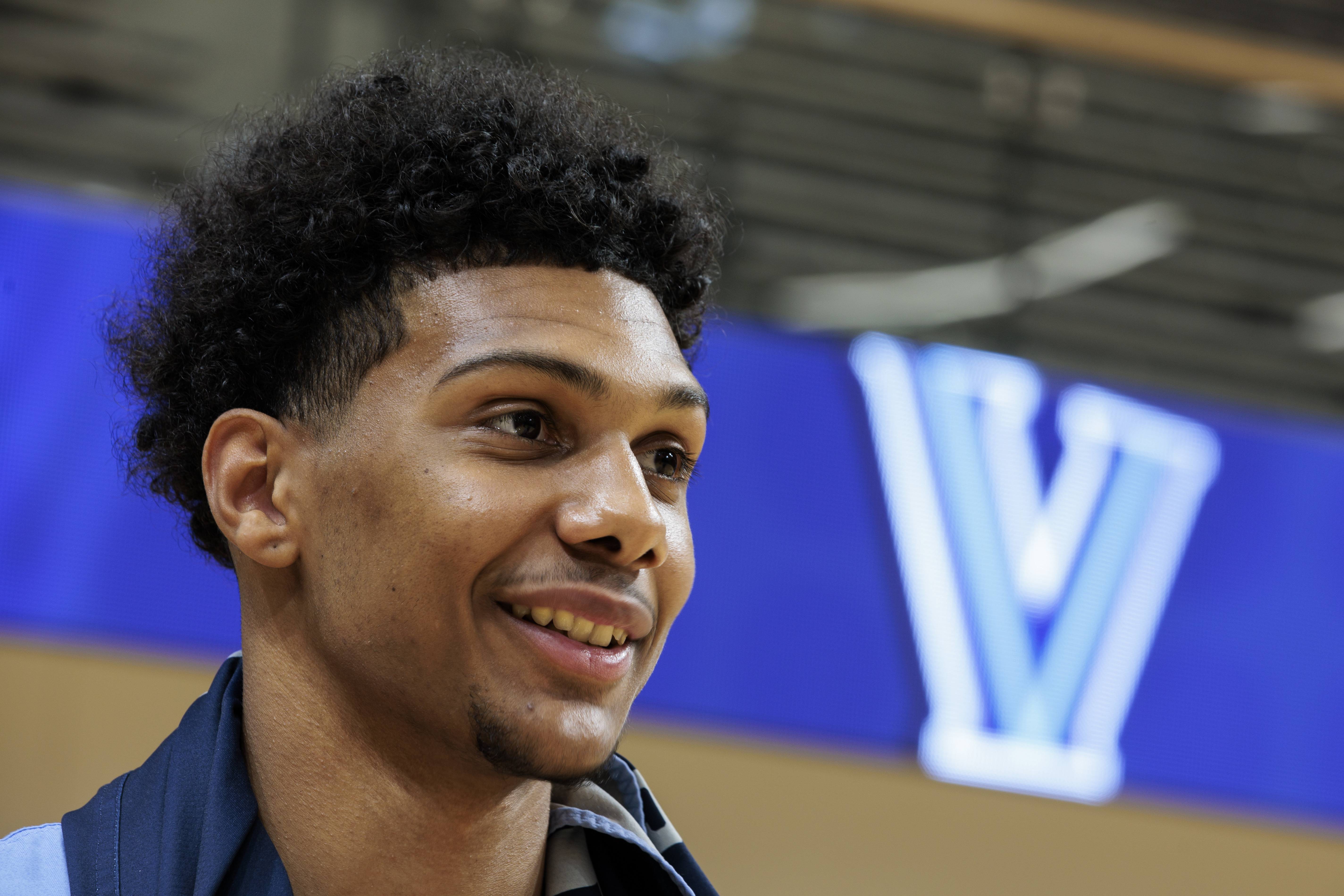
    This basketball season will bring a lot of firsts in Lewis’ life, and this week was the start of it all in some ways. Villanova’s media day traveling party arrived Monday in New York. While Willard had some other things to attend to — including a meal with Jay Wright — Lewis, Perkins, and another Villanova staff member dined at TAO, the popular upscale Asian fusion chain. On Tuesday, Lewis was in Madison Square Garden fulfilling various media obligations, shaking hands, smiling for the cameras.

    “Most freshmen don’t get the chance to do this, not even sophomores,” he said. “This definitely isn’t normal. I’m just really thankful that I get to be in opportunities like this, and that’s why I’m here to experience some of these things. I’m here with a lot of talented guys, amazing coaches, legendary coaches, and we’re in New York. This is amazing.”

    Villanova freshman Acaden Lewis got a talking to from coach Kevin Willard after a flashy play in an exhibition game.

    The Wildcats were picked to finish seventh among 11 teams in the Big East’s preseason poll. The conference is a “guard league,” Willard said, and while Villanova has a couple of other traditional guards — like Askew and Bryce Lindsay — who will factor largely in where the 2025-26 season goes, the dynamic between Lewis and Perkins will be a big one.

    Lewis is a self-described “flashy” player, and his big and mature personality was on display for a larger audience Tuesday. Perkins is an off-ball guard whose defensive intensity might be the loudest thing about him. He’s quiet but steady, and Villanova will need that to stabilize what could be a bumpy early portion of the season as all the new pieces try to fit together.

    Willard will rely on that steadiness from Perkins, too, to help Lewis navigate his first college basketball season.

    That much has been communicated to Perkins.

    “[Willard] just said it’s not going to be easy for him and us as a team,” Perkins said.

    And the dueling dispositions?

    “We definitely do have two different personalities, but they mix, though,” Perkins said.

    How will Perkins help Lewis in Willard’s mind?

    “Tyler’s the only guy we have that has experience,” Willard said. “He’s the only guy that’s scored in the Big East so far. So what I rely Tyler on is to teach Acaden the intensity that you have to play in this league. It’s such a big transition. … Every night, he’s going to face physicality. Every night, he’s going to have to be on. Tyler has been really good in, not only in practice, but just talking to Acaden about ‘You can’t be cute. You can’t be casual. You have to be on the go at all times.’ I think Acaden’s really taken that message and ran with it.”

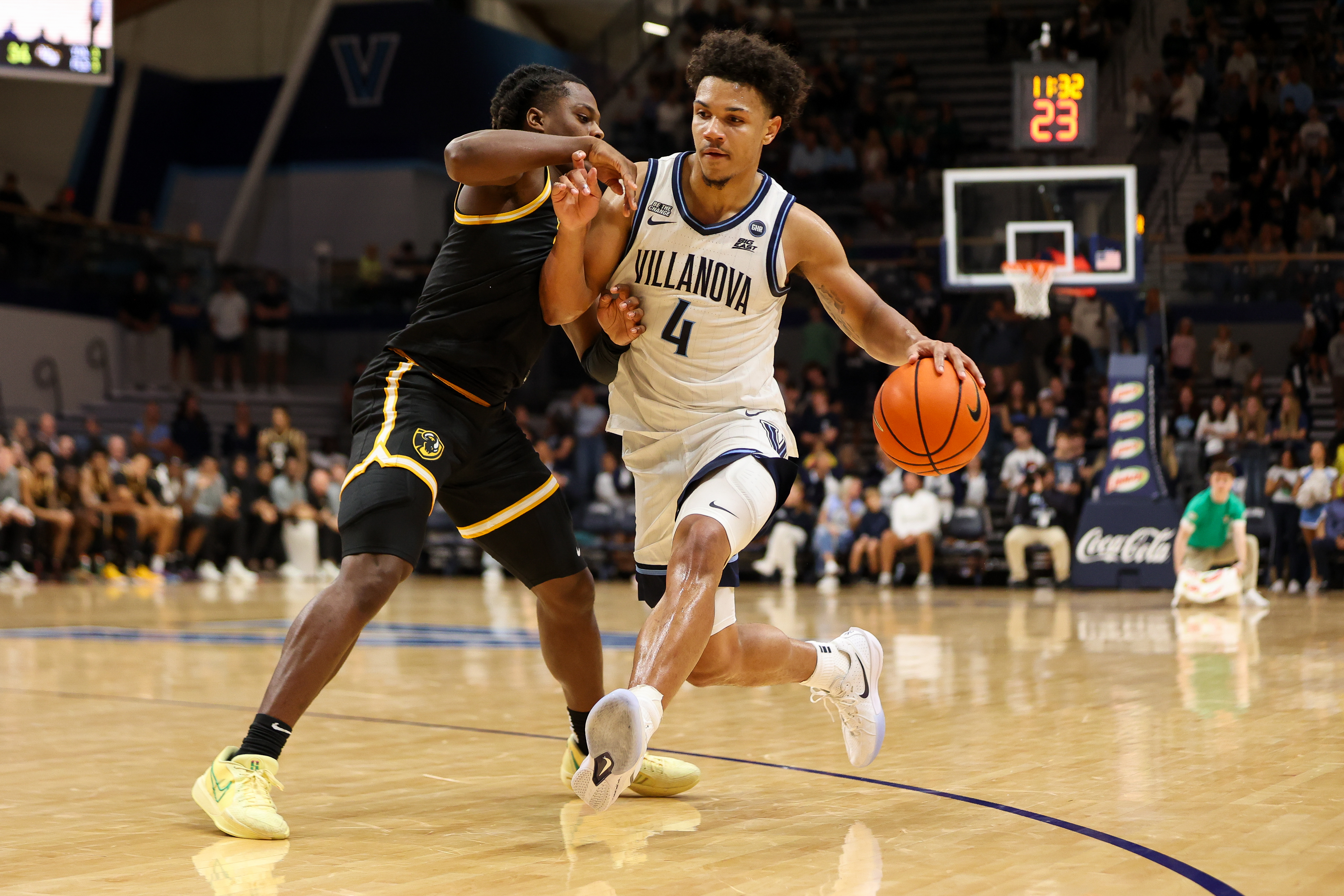
    Wildcats guard Tyler Perkins drives to the basket against VCU’s Ahmad Nowell during an exhibition game on Sunday.

    Not always. Villanova won its first exhibition game Sunday vs. Virginia Commonwealth. Lewis led all scorers with 15 points while adding three assists (against three turnovers). Perkins had 14 points, five rebounds, and five steals. But Lewis’ flashiness was on display. Near the end of the first half, the freshman tossed an underhanded pass deep down the court. It worked, but his new coach wasn’t a big fan.

    Most of Villanova’s players and coaches traveled one way to get back to the locker room for halftime, but Willard and Lewis took a different route.

    “He cursed me out the whole time there,” Lewis said. “It just wasn’t the best play. He told me I could beat the big [man], so there was no need to do all of that. He just gave me a little bit of words of encouragement.”

    That’s one way to put it.

    “It did work, so I couldn’t really argue with him as we were walking off the court,” Willard said. “But I think I told him, ‘If you ever … do that again, I’m going to kill you.’ He kind of said, ‘OK, I’m going to go with your message and not my message.’”

    Another new experience, and another lesson learned in a season when there will be many — some from a fiery coach, others from a quiet teammate.

  • A vacant South Philly Walgreens is set to become a supermarket

    A vacant South Philly Walgreens is set to become a supermarket

    South Philadelphia is set to get a new supermarket in early 2026.

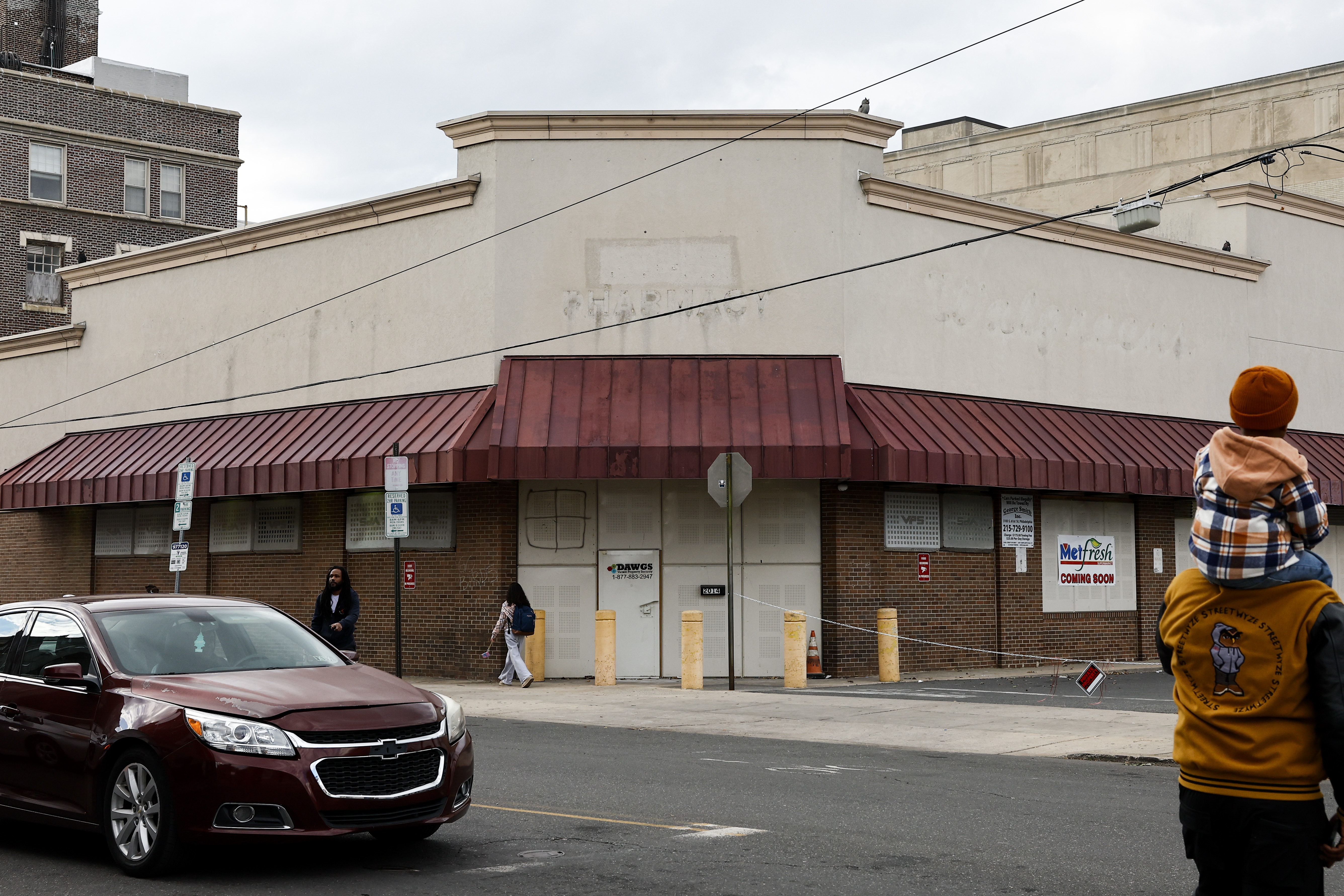
    New York-based Met Fresh is on track to open its first Philly location in January inside the former Walgreens at Broad and Snyder Streets, said owner Omar Hamdan.

    The 13,000-square-foot supermarket will include a pharmacy, a fresh-cut produce department, and a deli counter, Hamdan said, and will offer free grocery and prescription delivery to area seniors. It is also applying for a license to sell beer and wine.

    The former Walgreens at 2014 S. Broad St., where Met Fresh’s first Philly location is set to open in early 2026, photographed on Wednesday.

    “We try to bring the human factor back into the market,” Hamdan said, adding that the company’s philosophy hearkens back to a simpler time: “That store owner who had the apron and was sweeping outside of his store, who said ‘good morning’ to everyone? That is what we do.”

    Met Foods, a family-owned company, has been operating markets in New York City for 15 years, Hamdan said. It currently has locations in the Bronx, Brooklyn, Queens, Staten Island, and northern New Jersey.

    When the South Philly grocer opens, it will mark Met Fresh’s first location outside the New York City area, Hamdan said.

    In 2019, Met Fresh had been in talks to move into a mixed-use development in Philadelphia’s Mantua section, but Hamdan said those plans fell through.

    Since then, Hamdan said they continued to look for potential Philadelphia locations. The store at 2014 S. Broad Street seemed like “a perfect fit,” he said, due to the area’s walkability, dense population, and a demand for more grocery stores and pharmacies.

    The “pharmacy” lettering is seen on a former Walgreens on South Broad Street, where Met Fresh plans to open a supermarket in early 2026 after “extensive” renovations, its owner said.

    From the Broad Street store, the nearest supermarket is seven-tenths of a mile away. As for chain pharmacies, the Walgreens closed last year, and a Rite Aid across the street shuttered this summer as the Philly-based company went out of business. So the nearest large drugstore is a CVS off Passyunk Avenue, also seven-tenths of a mile away.

    The Met Fresh will soon start hiring in South Philly, with Hamdan noting that his stores typically need 30 to 40 part- and full-time employees from the surrounding communities. The new location will open after “extensive” renovations, Hamdan said, and once the team gets ahold of refrigeration equipment, which has been impacted by tariffs on steel and aluminum.

    Hamdan said he’s excited for Philly consumers to be introduced to Met Fresh, calling the Broad Street spot “a test pilot to see how we do in the Philly market.”

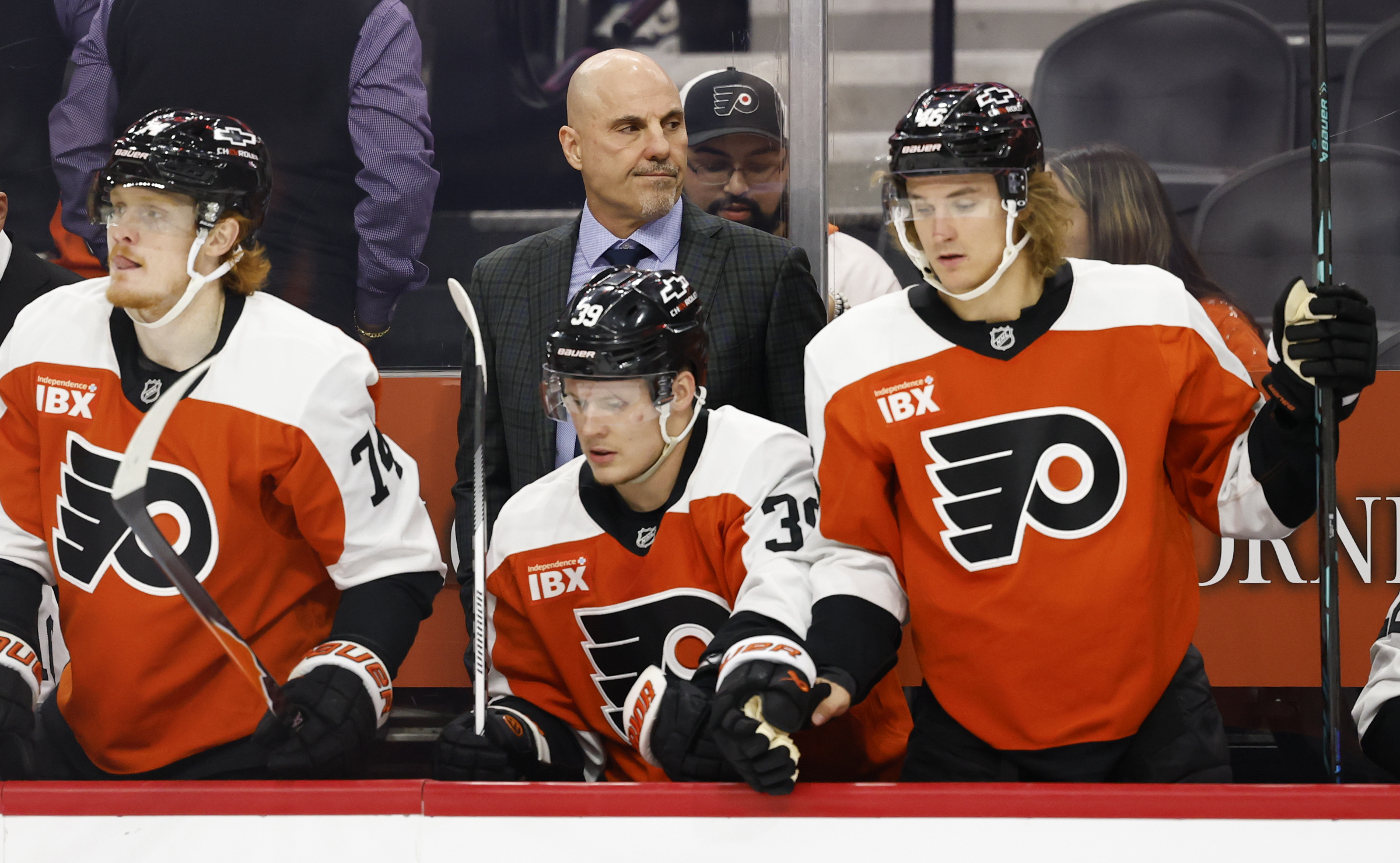
  • Owen Tippett is setting the tempo for the Flyers, both on the ice and with the aux cord

    Owen Tippett is setting the tempo for the Flyers, both on the ice and with the aux cord

    Owen Tippett may have had a smile on his face when chatting in the locker room in Voorhees recently. But the big grin hid some of the anxiety he had heading into the Flyers’ home opener on Oct. 13.

    It wasn’t about scoring. At that point, the winger already had his first goal of the season under his belt — a power-play one to boot.

    No, this was a different kind of pressure.

    Tippett is now in charge of setting the tone. He is the new vibes guy. So, after months of preparation, of picking the right songs, of sending them to the Flyers game presentation group for the proper mix, his warmup playlist was making its debut.

    The Flyers’ aux cord now belongs to No. 74.

    For years, the playlist had been closely guarded by Scott Laughton, with Joel Farabee assisting. But both were traded last season: Farabee at the end of January to the Calgary Flames, and Laughton in early March to the Toronto Maple Leafs.

    Tippett took charge of the aux afterward, saying last season that he did it because he’s the “closest guy that kind of offered up for the Bluetooth not to cut out.” However, he didn’t really change much from the 105-song playlist he was handed in the group chat.

    Until now.

    “I’m always one who’s kind of looking for new music,” said Tippett, who ran the aux a handful of times playing for Mississauga and Saginaw of the Ontario Hockey League.

    “Obviously, there’s some staples that you can kind of keep in [the playlist] from years past, but I think anything that’s new, you kind of throw it in the playlist and hopefully guys catch on to it.”

    Note: Some songs on the playlist embedded below may be offensive to certain audiences or contain explicit content. Use caution while enjoying this playlist by making sure you’re aware of your surroundings.

    ‘T.N.T.’ – AC/DC

    Tippett hasn’t just set the mood in the locker room — there are several playlists, one has “slower songs” and “more of an easy vibe” for morning skates, and another before they get on the ice — but his on-ice presence has been setting the tone, too.

    During game action, he’s been like song No. 2 in warmups, AC/DC’s “T.N.T.,” and playing “dynamite.” Just six games into the new season, Tippett has collected five goals. Last season, when he finished with 20 tallies, it took him 25 games to hit that mark.

    The dip in production came after two consecutive seasons with at least 27 goals — it took him 15 games in 2023-24 and 13 in 2022-23 to score No. 5 on the season — and expectations that he would crack the 30-goal mark in his third full season with the Flyers.

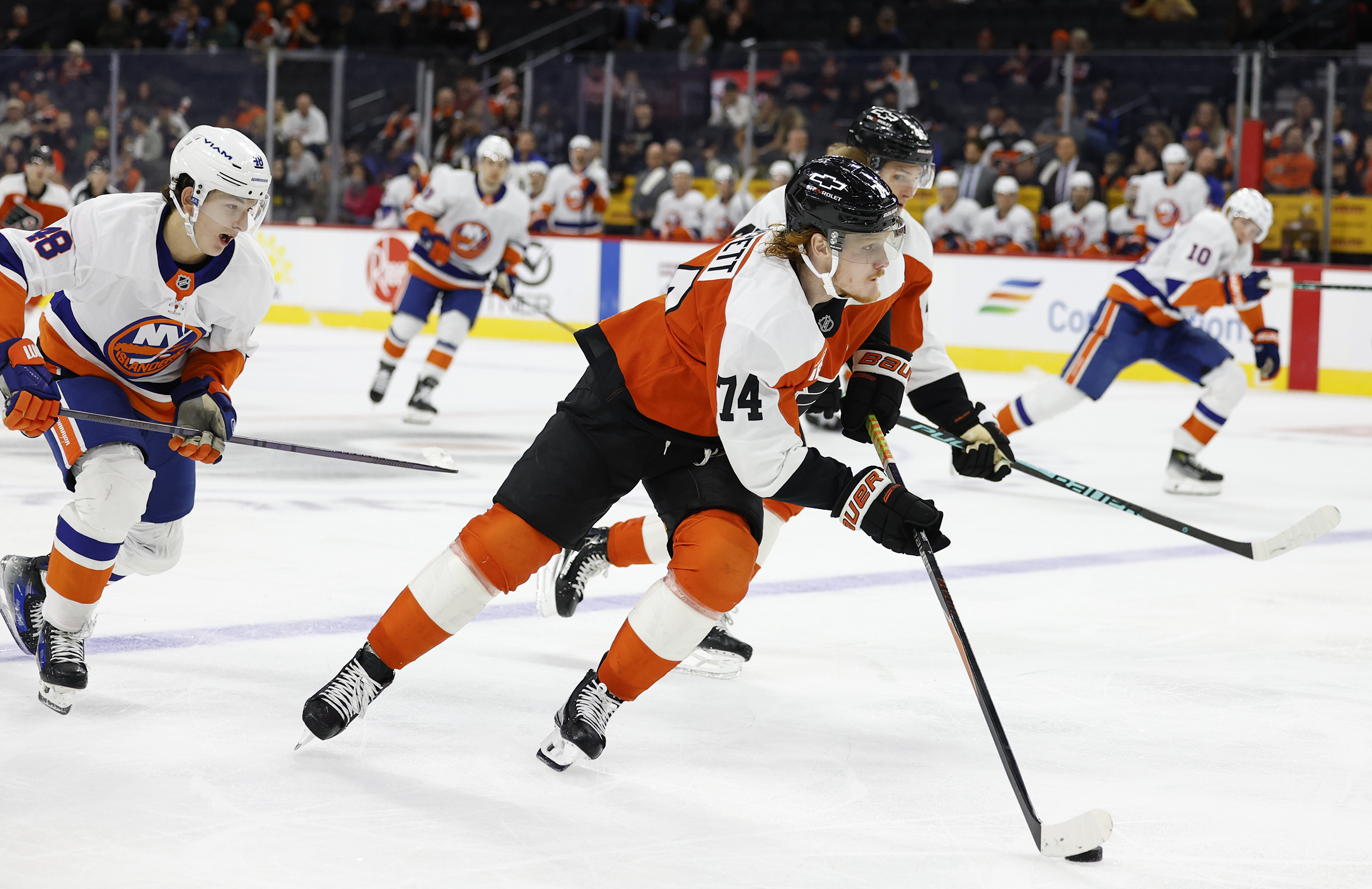
    Flyers right wing Owen Tippett is really using his speed and strength to get to the middle more. The early results have been promising.

    “I think it’s just getting reset and looking back onto those years and what worked and what made me kind of more successful than I was last year,” he told The Inquirer on Oct. 6. “End of the day, everyone has those years; it’s going to happen and not get too frustrated with the dips and just trying to regroup as quick as you can.”

    And he is using it all as motivation.

    “I think it’s just take that next step,” he said about his ambitions during training camp. “Obviously, a bit older now, and more games played, and I think it’s time that I kind of take that step and take on that bigger role. … That comes with little things within the game, but as a player, just kind of round out my game.”

    Tippett sounds like a grizzled veteran, but the 26-year-old winger has only 353 regular-season games under his belt — 94 with the Florida Panthers and 259 with the Flyers after being acquired in the Claude Giroux trade.

    And this year, he has taken on a bigger role, averaging 16 minutes, 31 seconds a night, while being put into more situations by the new coaching staff led by Rick Tocchet.

    Under new head coach Rick Tocchet, Owen Tippett (left) looks poised for his first 30-goal season.

    ‘Because You Move Me’ – Helsloot & Tinlicker

    Tippett has always played on the power play, but this season he has been moved into a rotating spot between the net-front and the bumper. It’s different than his previous spot on the flank, but he likes that it “gives you more options.”

    His one power-play goal came from being atop the crease — he was screening Carolina Hurricanes goalie Frederik Andersen — when he pounced on a shot that caromed off the glass behind the net.

    Tippett has become an all-around special teams threat. In his first 253 games with Philly, he was on the ice killing penalties for an average of nine seconds per game (36 minutes, 3 seconds total). This season, he’s up to 24 seconds per game for a total of 2:24. Former coach John Tortorella always said Tippett played better with more ice time, and it’s showing.

    And the additional responsibilities play into what the Flyers wanted to see from Tippett this season. The winger is in Year 2 of an eight-year, $49.6 million extension that he signed in January 2024, and before the season, Flyers general manager Danny Brière said he wanted to see Tippett take the next step and work on “developing his all-around game.”

    “He is becoming even more of a true threat. … We hope he becomes a 30-, 35-goal scorer,” Brière said on Oct. 2. “That’s what we hope from him. I mean, what he brings is more than just goals, too. The size, the speed, the powerful explosiveness that he has is tough to find.

    “So that’s what we want to keep seeing from him. Evolving, finding ways to take advantage of the best time to use those assets that he has that not a lot of players have.”

    The Flyers have high hopes for Owen Tippett and believe he is just scratching the surface of his potential.

    ‘Walk It Talk It’ – Migos (feat. Drake)

    Recently given the title of “the fastest skater I’ve ever seen” by new teammate Trevor Zegras, Tippett is a dynamic, speedy winger packed into a 6-foot-1, 210-pound power forward’s body. He crunches guys with ease — as noted by his big hit on Seattle Kraken forward Tye Kartye on Monday — and also keeps defenses on their heels because they cannot predict when he will turn on the jets.

    He is known for highlight-reel goals, but when he mixes his speed, shiftiness, and big shot, Tippett can resemble a freight train. According to NHL Edge, Tippett’s max speed last season was 23.89 mph — Miles Wood’s 24.82-mph burst was the NHL’s fastest last season — and he recorded 38 bursts of 22 mph, ranking fourth in the NHL. Two seasons ago, he was clocked as the fastest skater in the NHL — yes, faster than Connor McDavid — by hitting a max of 24.21 mph, and was ranked fourth in the league with 46 trips at 22-plus mph.

    This season, his max speed is 22.89, with Bobby Brink the fastest Flyer at 23.30. But Tippett has hit at least 22 mph seven times already, putting him right behind McDavid’s 11.

    Just because he has dropped a little speed doesn’t mean anything. It’s actually a good sign because, while “it’s obviously exciting when you look up and see no one in front of you … and you start turning the legs,” he also has realized that he doesn’t need to be going 100 miles an hour all the time.

    “I know my speed’s always going to be there,” he said. “So it’s focusing on the other little things and then letting my game take over from there. There’s definitely going to be times where it fits in, and we’re still trying to figure that out. … It’s just a matter of finding times, and then letting the game kind of open up and not force things.”

    ‘Can’t Stop’ – Red Hot Chili Peppers

    After he was hired as the Flyers’ coach in May, Tocchet told The Inquirer, “I think Owen Tippett is a guy who I feel has another level in him. I think he’s a prototypical big, fast winger. Can we unleash him?”

    Well, it looks like the collar is off.

    The bench boss noticed early on that the winger had a habit of exposing the puck; Tippett has been working on it. Tocchet mentioned his “incredible” speed and how he is a “great off-the-rush guy,” but wanted to see him go to the inside more. One of his two goals Monday came because he positioned himself in the slot, and he combined his newfound inside game with his trademark speed to beat two-time defending Vezina Trophy winner Connor Hellebuyck on Oct. 16.

    “In the short time I’ve been here, [and] this coaching staff, he’s been a pleasure to coach,” Tocchet said. “He’s been in the room. He’s asking questions. He’s in the video room. He’s taking the information. He’s really taken ahold of the game like a leader-type of role. That’s what I see. I don’t know what happened in the past, but he looks like a guy who’s dialed in.”

    Indeed.

    Like the music he listens to — EDM (electronic dance music) to house to rap to remixes — Tippett is adding variety to his game while burying five goals on 19 shots. For someone notoriously criticized for missing the net, Tippet is ranked sixth in the NHL with an eye-popping 26.3% shooting percentage (minimum 15 shots).

    Of course, Tippett’s taste in music isn’t for everyone, but as Cam York said, “It’s been good. If he keeps scoring like that, keep going.”

  • Eagles Week 8 film preview: Key to a big day for Jalen Hurts, stopping Giants’ rookie duo, and more

    Eagles Week 8 film preview: Key to a big day for Jalen Hurts, stopping Giants’ rookie duo, and more

    Breaking tendencies on offense for the Eagles played a big role in their Week 7 win over the Minnesota Vikings. With a rematch looming with the New York Giants on Sunday, that formula will likely be put to good use again.

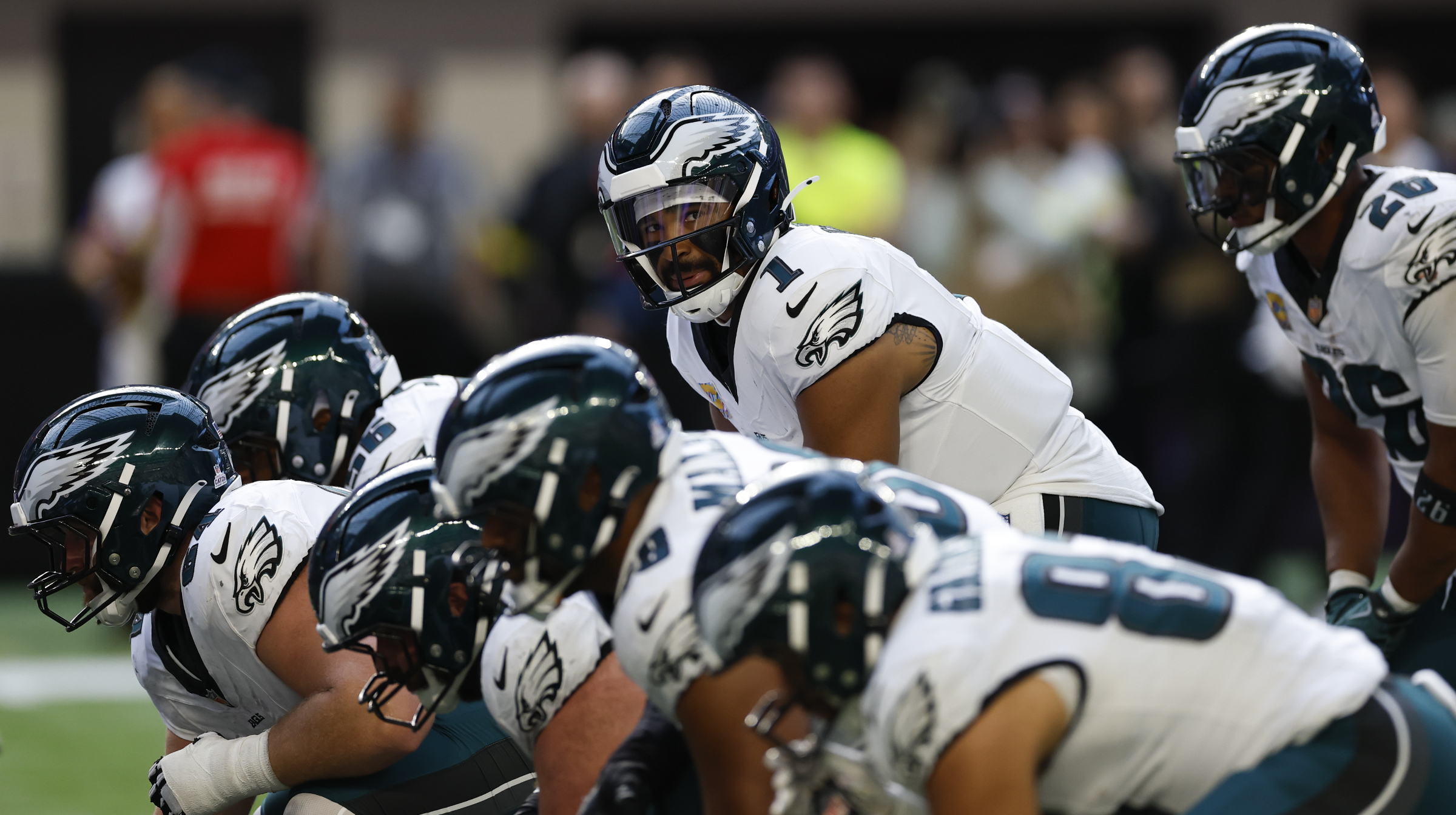
    Jalen Hurts finished the Vikings game with a perfect passer rating (158.3) and continued his trend of exploiting zone coverage for a second straight game. But the influx of under-center play-action and connecting on his deep shots with A.J. Brown and DeVonta Smith made all the difference.

    Can the offense carry that momentum against the Giants, while figuring out its running-game issues? Here’s what we learned from the film ahead of Sunday’s rematch between the division foes:

    Eagles quarterback Jalen Hurts thrived passing from under center against the Vikings in Week 7.

    More under-center play-action

    Of Hurts’ 326 passing yards against Minnesota, 121 of them came on play-action, under-center throws downfield. Entering that game, the Eagles averaged just 0.8 yards from under center, which ranked 30th in the NFL, according to Fantasy Points Data.

    Hurts completed all four of those pass attempts, including the 79-yard touchdown strike to Smith. The play-action also opened up the middle, allowing the Eagles offense to attack an area of the field it has often neglected.

    The Giants, according to Next Gen Stats, are giving up the eighth-highest total of passing yards on throws traveling 10 to 19 air yards, yielding 71.9 yards per game. Hurts has completed four of six passes in that range of the field in each of his last two games.

    There are also examples of the Giants defense giving up explosive plays off play-action passes from under center. New York yielded a 33-yard gain to CeeDee Lamb during a matchup with Dallas in Week 2, and surrendered an 87-yard touchdown connection from Spencer Rattler to Rashid Shaheed in Week 5 against New Orleans.

    In their Week 6 matchup, Hurts, who has typically thrived against man coverage in his career, completed just six of 12 passes against New York’s man looks on defense, according to Next Gen Stats. And he threw his lone interception of the season, which all but ended the game.

    Hurts’ early touchdown pass to Brown against Minnesota was proof of his improvement as a passer, making plays with his arm rather than taking off and scrambling. According to Next Gen Stats, Hurts had his first game with a positive expected points added (which measures team performance on a play-by-play basis) per drop back on scrambles without actually taking off and running.

    If Hurts can continue that trend, the Eagles should be in for another big passing day — the Giants are giving up the seventh-highest total of passing yards per game in the NFL (245.3) and the second-most passing yards on throws that travel 20 or more air yards (62.9), according to Next Gen Stats.

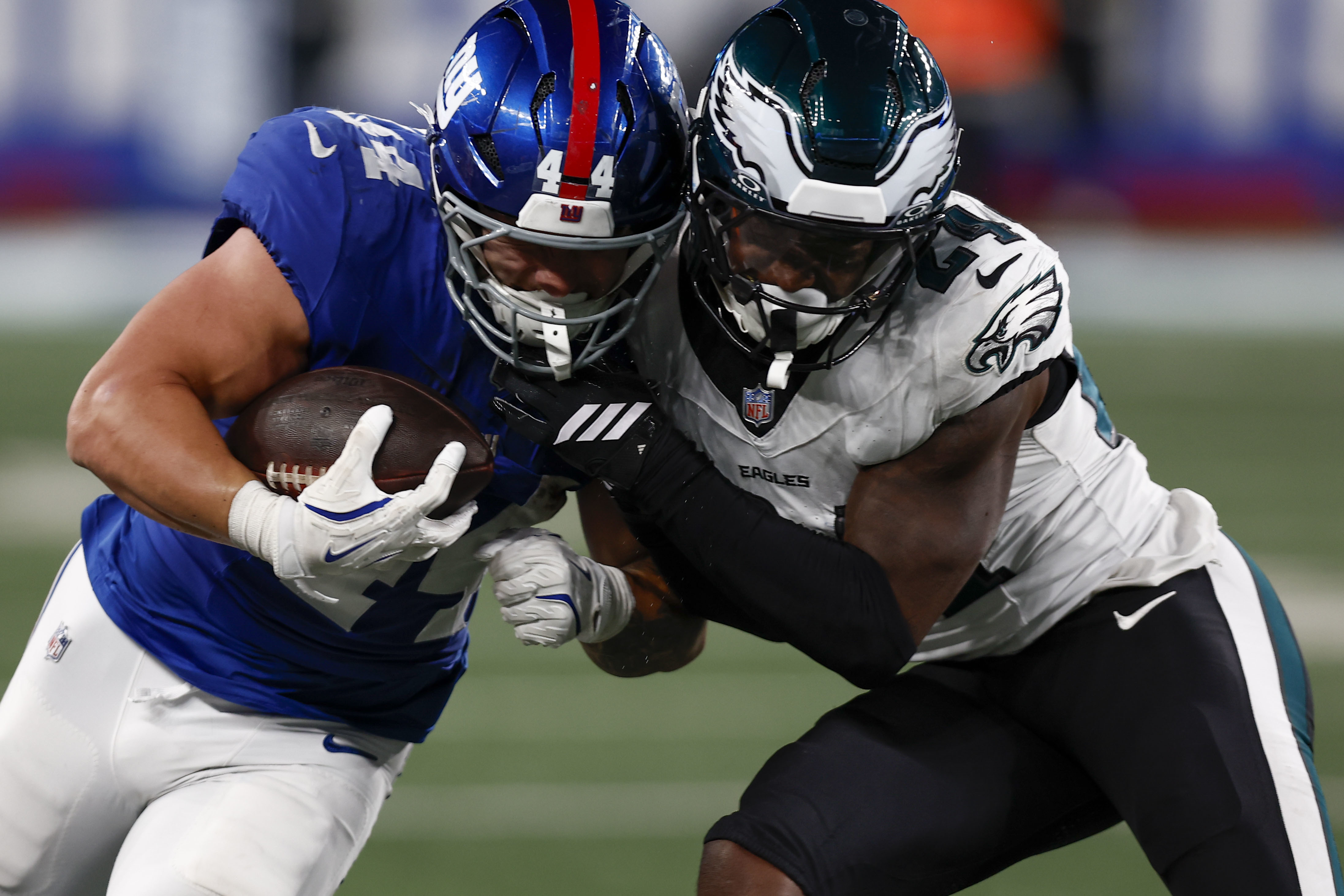
    Giants rookie running back Cam Skattebo rushed for 98 yards and three touchdowns against the Eagles in Week 6.

    Keeping Dart and Skattebo in check

    In Week 6, rookies Jaxson Dart and Cam Skattebo ran wild over the Eagles defense, which was without defensive tackle Jalen Carter and cornerback Quinyon Mitchell, who left the game with a hamstring strain. And the pairing hasn’t slowed down after accounting for 156 of the Giants’ 172 rushing yards in that game.

    Skattebo was a little more subdued against Denver, rushing for 60 yards on 3.1 yards per carry. But Dart continued to make plays downfield and on the move, hurting the Broncos defense with his arm. Dart is coming off his best passing day, throwing for 283 yards and three scores.

    His connection with wide receiver Wan’Dale Robinson continues to grow. When he escapes the pocket and extends plays, Dart has consistently found Robinson outside the numbers or over the middle of the field for big gains — first against the Eagles in Week 6, then Denver last week.

    Tight ends continue to be among Dart’s favorite targets. He threw two more to that position group Sunday in Denver, finding Daniel Bellinger (44 yards) and Theo Johnson (41 yards) for touchdowns.

    Of Dart’s seven touchdown passes, five have gone to tight ends, and Johnson has four of them. Because of the high tight end usage, the Giants could look to attack downfield and utilize double moves against the Eagles’ secondary to spring Johnson or Bellinger.

    Against Minnesota, a double move from Jordan Addison created a 32-yard completion between Mitchell and Drew Mukuba in zone coverage. The Giants completed a pass on similar action to Bellinger, albeit against man coverage.

    But the most important thing the Eagles need to do to prevent New York from taking shots downfield is to stop the run. The Birds defense has allowed 26 runs of 10 or more yards, tied for the seventh-most in the NFL, and it particularly struggles on outside runs.

    The Giants made the Eagles pay in their previous matchup, with three of the five rushes that went 10 yards or more coming from runs outside the tackles, according to Next Gen Stats. The running-back toss play to Skattebo has been effective over their last two games.

    Although his status for Sunday’s game is in question, defensive end Brandon Graham, now back with the Eagles, could provide a huge boost in the run defending department. Graham’s reps before his first triceps injury last season showed a promising trend of setting a firm edge and knifing through offensive lines.

    He would be a major boost to a run defense that ranks 22nd in the NFL in rushing yards allowed per game (127.9).

    Encouraging signs for Barkley

    For the last two games, Eagles opponents entered the game struggling to defend the run but were still able to hold Saquon Barkley to 58 and 44 total rushing yards. Looking beyond the numbers, though, tells a different story.

    The Eagles are trying to get Barkley out in space and last week’s game that featured under-center play-action passing showcased an evolved plan for the running game. After finding some success earlier in the season on Barkley pitch plays to the left side of the offensive line, the Eagles called four outside toss plays against the Vikings that yielded 14 yards. It also provided some new run scheme looks from under center that can be paired with play-action passes.

    Denver ran a similar play that popped a big gain against the Giants’ defense in Week 7, with J.K. Dobbins rumbling for a 32-yard gain. Expect the Eagles to keep the toss play as a run scheme option for Barkley on Sunday.

    In addition to the toss play, the Eagles have found success in getting Barkley some daylight on split-zone runs against the Giants and Vikings that created 18-, 8-, and 9-yard gains. The action allows a backside tight end (Dallas Goedert) or motioning receiver across the formation to keep a defensive end or edge rusher from crashing down the play for a loss.

    Barkley’s rushing numbers could be even worse if not for his elusiveness in the backfield. Twice last week he had to force someone to miss right after he got the handoff to turn a potential negative play into a positive one.

    With center Cam Jurgens’ status for Sunday in question, the Eagles must continue to find ways to give Barkley room to run. Mixing in variations of run schemes should help aid a potential breakout performance.

  • The clash between the federal government and states over vaccine policy is ‘unprecedented,’ Villanova health law professor says

    The clash between the federal government and states over vaccine policy is ‘unprecedented,’ Villanova health law professor says

    Villanova professor Ana Santos Rutschman would describe the current state of vaccine policy as a game of chess.

    When the federal government does something, some states — primarily Democratic-led states including Pennsylvania respond immediately to counter.

    A prime example followed the federal government’s move, through the Food and Drug Administration, in August to limit eligibility for the updated COVID-19 vaccine. Previously, the annual shot was recommended for all Americans 6 months and older. The new guidance was for people 65 or older and those at high risk of complications from COVID-19.

    Pennsylvania’s regulatory body for pharmacists opened up access by allowing pharmacists to follow the broader recommendations of professional medical societies.

    “It’s kind of [like] ‘Harry Potter’ chess. Remember when they climb on the gigantic pieces and then try to kill one another?” Rutschman said, referring to the fictional scene where chess pieces violently smash the opposing side’s pieces.

    “There’s a certain violence to this from a political perspective,” she added.

    States are allowed to diverge from the federal government on vaccine policy because our system of government, known as federalism, divides power between the federal government and the states.

    With vaccines, states historically have chosen to align in large part with the federal government’s recommendations.

    Rutschman says recent actions by Health and Human Services Secretary Robert F. Kennedy Jr. have ushered in a new era of what’s being called “vaccine federalism.” Kennedy is a longtime anti-vaccine activist now serving as President Donald Trump’s top health official.

    Many states, especially those with Democratic governors, including Pennsylvania and New Jersey, saw recent changes under his leadership as a sign that they “need to do something in direct opposition to the federal government,” Rutschman said.

    Now it’s a “head-on collision,” she added.

    The Inquirer spoke with Rutschman, who researches vaccine federalism as a health law professor and director of the Health Innovation Lab at Villanova University, to learn more about this new era and its possible consequences in a conversation lightly edited for length and clarity.

    What is vaccine federalism?

    For vaccination and everything else, our system is split in two. You have the states and then you have the federal government.

    There is room for tension between the federal level and the state level. Historically, that tension has been, I would argue, limited. It has existed, but it’s not been the defining feature. Now, particularly in the context of vaccines, it has become probably the most salient feature.

    How are states allowed to differ from the federal government as far as vaccine policy?

    States don’t have the power to authorize a new vaccine to come to market.

    But then you have a lot of things that the Centers for Disease Control have done that are more informational. The federal government recommends which shots children or adults should get, and the time frame for most children to get these shots.

    The federal government offers this kind of informational support, and then states set their own policy.

    How has vaccine federalism played out in the past?

    Examples from the past are not as salient or blatant as the ones you’re seeing right now.

    There was a lot of variability around the country, but the overall message was harmonious. Everybody was trying to get, by and large, most of the population vaccinated past herd immunity.

    What is happening now?

    Now it’s a head-on collision.

    States are saying, ‘We’re not going to implement requirements to restrict access to these vaccines.’ The Board of Pharmacy in Pennsylvania decided not to be bound by the CDC’s recommendations. This is a direct clash. We hadn’t had this before between the federal government and the states in the field of vaccines.

    What are examples of this new era of vaccine federalism?

    One example would be the formation of state clusters. These are a lot of neighboring states in agreement. They’re trying to share data and think of best practices, which is almost that informational function that traditionally fell to the [federal health agencies].

    The states are saying, ‘Well, you’re not doing that, so we will.’

    ‘We will pull resources and information to come up with our own advisory role.’ That’s unprecedented.

    You have sort of two speeds in the country. Some states are collaborating and very active in setting regional vaccine policy. And then you have a bunch of states that go completely the other way. You have the, for now, isolated case of Florida saying, ‘We’re going to just basically do away with all vaccination mandates,’ which is going further than the federal government.

    Now it’s a much messier situation, legally, philosophically, politically, etc.

    How effective are these regional coalitions?

    They are accomplishing something. You see fewer restrictions in access to vaccines in a place like Pennsylvania than other states.

    Whereas states who are not part of these kinds of coalitions — typically excluding the likes of Florida — a lot of them are waiting to see what happens, because this has never happened in the history of vaccination in the United States.

    In the meantime, there are a lot of people falling through the cracks who would have been indicated for a vaccine last year. Now they’re wondering what to do, and their providers are not entirely sure.

    There’s a lot of confusion about what happens now that federal policy has taken a completely different direction.

    What impacts do you see coming from this new era of vaccine federalism?

    People hearing one thing out of the CDC and another one out of the state of Pennsylvania may think, ‘Who’s correct? Who should I listen to?’ You start aggregating all the people who might forgo vaccination just because they don’t understand what’s going on.

    I think it continues to accelerate the overall phenomenon of vaccine mistrust, and we’re already seeing levels of herd immunity come down for many vaccine-preventable diseases.

    If I were a provider, I would be similarly confused and concerned, because nobody takes lightly the idea that from now on, ‘I’ll be doing something that’s in direct opposition to what the federal regulators are suggesting I should be doing.’ So I think there’s a fear factor and confusion.

    Lastly, I think there’s an overall chilling effect with regard to vaccines. Yes, some vaccines make money, but they don’t make a whole lot of money to begin with. They’ve never been one of the preferred products for manufacturers. These are not the most profitable things they can be doing.

    I think that we will see much less focus on vaccine development in years to come, because that’s the logical position for pharmaceutical companies, and for some funders even to take, which is unfortunate.

    What do you think of Pennsylvania’s response?

    I think it’s to Pennsylvania’s credit, and I think it’s to some degree reassuring for Pennsylvanians. Although it obviously makes me sad that we have sort of this two-speed mode in the country. Some part of this national fabric has ruptured.

    For now, Pennsylvania has protected itself as it can, but states alone don’t control everything. You have Pennsylvanians going to other states where you may have an outbreak of a vaccine-preventable disease. We don’t have real borders. We cross them all the time.

  • Google unveils quantum computing breakthrough on Willow chip

    Google unveils quantum computing breakthrough on Willow chip

    Alphabet Inc.’s Google ran an algorithm on its “Willow” quantum-computing chip that can be repeated on similar platforms and outperform classical supercomputers, a breakthrough it said clears a path for useful applications of quantum technology within five years.

    The “Quantum Echoes” algorithm, detailed in a paper published Wednesday in the science journal Nature, is verifiable, meaning it can be repeated on another quantum computer. It also ran 13,000 times faster than previously possible on the world’s best supercomputer, Google said. Taken together, the advances point to a broad range of potential uses in medicine and materials science, Google said.

    “The key thing about verifiability is it’s a huge step in the path toward a real world application,” said Tom O’Brien, a staff research scientist at Google Quantum AI who oversaw the completion of this work. “In achieving this result we’re really pushing us toward finding mainstream.”

    Alphabet shares rose as much as 2.4% Wednesday in New York trading before closing up 0.5%.

    The breakthrough brings Google a step closer to harnessing the processing power promised by quantum computing, also being pursued by rivals Microsoft Corp., International Business Machines Corp., and numerous start-ups. It follows Google’s announcement in December that Willow had solved a problem in five minutes that would have taken a supercomputer 10 septillion years.

    Quantum computers use tiny circuits to perform calculations, like traditional computers do, but they make these calculations in parallel, rather than sequentially, making them much faster. While firms have boasted of building quantum platforms that surpass classical computers, their challenge has been to find a useful application.

    Computer scientist Scott Aaronson, who wasn’t involved in the study, wrote in an email that he was “thrilled” by Google’s progress toward outperforming supercomputers in a way which could be efficiently repeated, and thus proved, on a second quantum computer — which had been “one of the biggest challenges of the field for the past several years.” Still, he warned that there was a lot of work ahead.

    “Getting from here to anything commercially useful, and/or to scalable fault-tolerance (which wasn’t used for this demonstration), will be additional big challenges,” wrote Aaronson, who serves as the Schlumberger Centennial Chair of computer science at the University of Texas at Austin.

    The Google team, which includes 2025 Nobel Prize in Physics winner Michel H. Devoret, said it plans to continue to move toward real-world applications by scaling up and improving the accuracy of its machines.

  • In ‘Fire!!,’ Quintessence Theatre brings 1920s Harlem to Mount Airy

    In ‘Fire!!,’ Quintessence Theatre brings 1920s Harlem to Mount Airy

    After the success of its world premiere adaptation of James Baldwin’s Giovanni’s Room, Quintessence Theatre Company is back. In collaboration with the New Classics Collective, it’s now presenting the world premiere of Fire!! by Paul Oakley Stovall and Marilyn Campbell-Lowe.

    The play seeks to reimagine the 1927 quarterly publication Fire!!, the first all-Black magazine in the country, as a stage production. Throughout the show, audiences are treated to staged performances of plays, stories, and poems by some of the great writers of the Harlem Renaissance, including Zora Neale Hurston and Langston Hughes.

    Seeking to offer audiences a more immersive experience, director Raelle Myrick-Hodges begins the play in the historic Sedgwick Theater’s lobby, with performers in suits and flapper dresses. The 1928-built lobby throbs with life, making you believe you are in 1920s Harlem. Wallace Thurman (Kaisheem Fowler-Bryant), one of the editors of Fire!!, introduces himself and his fellow editors and explains that the night’s performances are part of a fundraiser to raise money for the magazine.

    From left: Taylor J. Mitchell (as Gwendolyn Bennett) and Alicia Thomas (as Zora Neale Hurston) in Quintessence Theatre’s “Fire!!”

    Zora Neale Hurston (Alicia Thomas) introduces herself soon after, but it’s hard to hear her over the rumbling of a wheeled platform stage being ushered into the lobby. This later serves as the train for the first scene of Hurston’s play Color Struck.

    While it is admirable for Quintessence to use the Sedgwick in new and different ways, the echoing sound quality of the lobby leaves things feeling under-produced.

    The audience eventually makes its way into the house. The theater’s arching pillars remain visible as a “backstage” space throughout the play — without the black curtains, this adds to the echo in the lobby.

    Charlie Bay (as Richard Bruce Nugent) and Imani Lee Williams (as Melva) in Quintessence Theatre’s “Fire!!”

    Inside, the play continues, flipping between staged presentations of pieces that were published in Fire!! and the imagined drama of the editors hoping to appeal to patrons and fund the publication.

    This invented drama is interesting but feels under-realized. For one thing, this is the actual conflict of the play, but all the action happens upstage of the “stage” and presents a myriad of sight line issues depending on where audiences are seated in relation to the pillars on stage. The audibility issues persist, making it difficult to hear actors, especially when they are fighting over any sound cues or underscoring.

    The conflict of the play boils up when Thurman voices hesitancy toward presenting his lover Richard Bruce Nugent’s novel, which features queer characters. This conflict, while seeming to be the crux of the entire play, easily resolves itself within the performance of Nugent’s story, and is barely addressed later.

    From left: Imani Lee Williams, Taylor J. Mitchell, Nichalas Parker (as Paul Watson), Alicia Thomas, and Ivana R. Thompson in Quintessence Theatre’s “Fire!!”

    The behind-the-scenes tension, which is the through line of the plot, feels almost forgotten by the time the house lights are back up.

    The staged presentations of works from Fire!! are, however, alive and well-executed.

    At a time of extreme political division, it is important to celebrate joy — especially Black joy. It is timely to witness Quintessence recall the Harlem Renaissance and its resistance with fondness.

    The stagings are ripe with music and dance. Xavier Townsend, who plays Aaron Douglas, in particular dazzles the audience with high kicks and spins, and Jordan Fidalgo’s Helene Johnson blows the audience away with her musical rendition of Johnson’s poem “A Southern Road.” The poems of Langston Hughes and Gwendolyn Bennett speak for themselves and are well orated by Nicholas Parker and Taylor J. Mitchell, respectively.

    From left: Xavier Townsend (as Aaron Douglas), Ivana R. Thompson (as Dorothy West), Tyler Bey (as Arthur Huff Fauset), Imani Lee Williams (as Georgia D. Johnston), Kaisheen Fowler-Bryant (as Wallace Thurman), Alicia Thomas (as Zora Neale Hurston), Nichalas Parker (as Langston Hughes), and Taylor J. Mitchell (as Gwendolyn Bennett) in Quintessence Theatre’s “Fire!!!”

    Quintessence and the New Classics Collective are, as usual, impeccable with their selection of source material. The selected works from Fire!! are dynamic and fascinating stories that investigate the issues of the 1920s and today.

    Audiences seeking to hear works of the Harlem Renaissance will be overjoyed by this production, if a bit confused by the subplot.

    ‘Fire!!’

    (Community/Arts)

    The story of the country’s first all-Black magazine, and the fight to keep it afloat, gets told in this 1920s Harlem Renaissance-set play. With Zora Neale Hurston and Langston Hughes making an appearance, Fire!! is a celebration of Black joy and resistance, and a delight to witness.

    ⌚️ Through Nov. 2, 📍 7137 Germantown Ave. (Mount Airy), 🌐quintessencetheatre.org

    Theater reviews are produced independently by The Inquirer without editorial input by their sponsor, Visit Philadelphia.

    The article has been updated with the correct name for the actor who plays Aaron Douglas.

  • Fewer killings, more homicide cases solved is good news for Philadelphia | Editorial

    Fewer killings, more homicide cases solved is good news for Philadelphia | Editorial

    Philadelphia has lost 187 people to homicide this year. With just over two months left in 2025, this represents a marked improvement over the pandemic era, a time when the city experienced more than 500 killings annually.

    This reduction — along with an increase in the number of homicide cases detectives are solving — is worth celebrating. But, as evidenced by the horrific killing of Kada Scott and far too many other calamities, there is still much more to be done. Even if homicides remain under 240 killings this year, which would be the lowest number since the 1960s, it would still leave the city with a homicide rate that is triple that of New York or Boston.

    That’s not to say there hasn’t been important progress.

    In 2020, when gun violence was beginning to surge, City Council authorized the “100 Shooting Review,” which identified weaknesses in the criminal justice system and outlined a series of recommendations to cool the violence.

    In 2021, Philadelphia invested more than $150 million in violence prevention and intervention programs. The disbursement of those funds was marked by instances of disorganization and insufficient oversight. However, according to those who study urban violence, the money served its purpose.

    A report from the Coalition to Save Lives credited community programs, including city-funded initiatives, with helping to reduce gun violence. Community leaders like the Rev. Carl Day, pastor of the Culture Changing Christians Worship Center, also stepped up, even without city support.

    Thanks, in part, to new technology and the installation of high-definition cameras across the city, police are now solving between 85% and 91% of homicide cases, a 40-year high.

    The clearance rate — or the percentage of homicides that have been solved — had dipped as low as 42% in recent years, meaning killers were more likely than not to get away with murder in Philadelphia.

    Beyond providing closure for families and accountability to perpetrators, solving cases and prosecuting offenders can also help deter future acts of violence. According to crime researchers, certainty of punishment is one of the most effective deterrents for those who are likely to kill. This effect is particularly strong for younger offenders, who tend to act impulsively. Given that gun violence among teens continued to rise despite the progress made in other age groups, continuing to improve the clearance rate is essential.

    Solving cases also helps to prevent cycles of retributive shootings by gang members. These days, experts say, it is song lyrics and social media beefs that drive many conflicts between rival gangs, not territorial clashes. Solving cases, and doing so quickly, can help intervene before these groups become the next Young Bag Chasers.

    Despite the drop in the murder rate, Philadelphia still often feels beset by misdemeanors and lower-level felonies that contribute to an overall sense of disorder. Reckless driving permeates nearly all corners of the city, many transit stations reek of smoke and urine, illegal dumping plagues communities, blighted buildings like the former Ada H.H. Lewis Middle School attract crime, and police can take hours to respond to calls.

    Many Center City businesses feel the need to employ armed security due to regular incidents involving thieves or emotionally disturbed people. In August, a security guard at a women’s clothing store fired a warning shot at a man who was harassing the staff. Earlier this month, a security guard at an IHOP in Center City was charged with murder after shooting a man who allegedly spat on her. Buying clothes and eating pancakes should not feel like a trip to the Wild West, nor should crossing the street feel like a game of Frogger.

    Philadelphia’s leaders, including Police Commissioner Kevin J. Bethel, deserve credit for the progress the city has made in providing justice and reducing gun violence. But the job is far from over.