Blog

  • Drew Brees, Larry Fitzgerald lead Pro Football Hall of Fame modern era finalists

    Drew Brees, Larry Fitzgerald lead Pro Football Hall of Fame modern era finalists

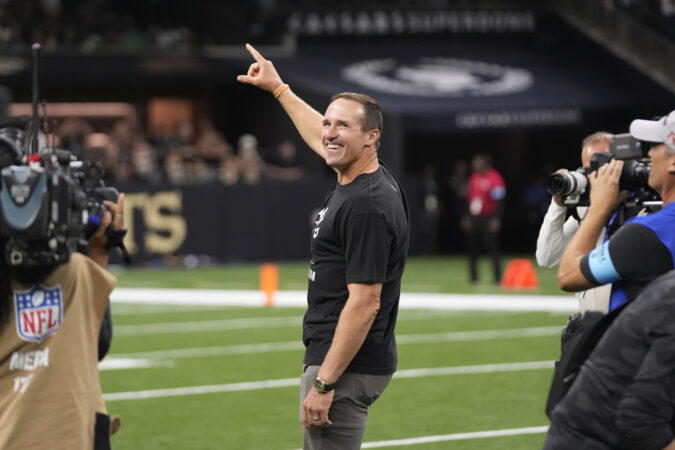
    Quarterback Drew Brees and wide receiver Larry Fitzgerald headlined a group of four modern era finalists in their first year of eligibility for the Pro Football Hall of Fame.

    Tight end Jason Witten and running back Frank Gore were the two other first-year eligible players who were also announced Tuesday among the 15 finalists.

    Willie Anderson, Torry Holt, Luke Kuechly and Adam Vinatieri were guaranteed spots after advancing to the final seven in voting for the 2025 class. There are six other returning finalists with Eli Manning, Reggie Wayne, Jahri Evans, Marshall Yanda, Terrell Suggs and Darren Woodson all making it back to this stage.

    Defensive tackle Kevin Williams made it to the finalist stage for the first time in his sixth year of eligibility.

    The 50-person selection committee will vote on the 15 finalists next month with the results announced Feb. 5 at “NFL Honors.” Between three and five of the finalists will be inducted in the second year of this current format.

    In addition to the modern era finalists, the selection committee will also consider seniors candidates Ken Anderson, Roger Craig and L.C. Greenwood, coaching candidate Bill Belichick and contributor Robert Kraft. Between one and three of those finalists will make it into the Hall.

    Only four people got in last year for the smallest class in 20 years.

    Brees and Fitzgerald are the top new candidates this year.

    Brees is second all time to Tom Brady with 80,358 yards passing and 571 touchdown passes. He spent the first five seasons of his career with the San Diego Chargers before signing as a free agent with the Saints in 2006, where his career took off as he helped lift a city still recovering from Hurricane Katrina.

    Brees delivered to New Orleans its first Super Bowl title following the 2009 season, when he won MVP of the game after beating Peyton Manning and the Indianapolis Colts. Brees made the Pro Bowl 13 times in his career, won AP Offensive Player of the Year in 2008 and 2011, was an All-Pro in 2006 and was a second-team All-Pro four times.

    Fitzgerald spent his entire career with the Arizona Cardinals after being drafted third overall in 2004. His 1,432 catches and 17,492 yards receiving in 17 seasons rank second all time to Jerry Rice.

    Fitzgerald topped 1,000 yards receiving nine times — tied for the fourth most ever — and helped the Cardinals reach their only Super Bowl following the 2008 season. Fitzgerald set single-season records that postseason with 546 yards receiving and seven TD catches, including a go-ahead 64-yard score with 2:37 to play in the Super Bowl before Pittsburgh rallied for a 27-23 win over Arizona.

    Witten was one of the most prolific tight ends with his 1,228 catches and 13,046 yards ranking second best all time. Witten was a two-time All-Pro for Dallas and was a second-team All-Pro two other times.

    Gore ranks third all time with 16,000 yards rushing with nine 1,000-yard seasons and five Pro Bowl honors.

    Kuechly’s career was brief but impactful. The first-round pick by Carolina in 2012 was an All-Pro five times, with seven Pro Bowl nods and a Defensive Rookie of the Year award.

    Over his eight-year career, Kuechly led all linebackers in the NFL in tackles (1,090), takeaways (26), interceptions (18) and passes defensed (66).

    Vinatieri was one of the most clutch kickers in NFL history, making the game-winning field goals in the first two Super Bowl victories during New England’s dynasty.

    He helped launch the run with one of the game’s greatest kicks — a 45-yarder in the snow to force overtime in the “Tuck Rule” game against the Raiders in the 2001 divisional round. He made the game-winning kick in OT to win that game and then hit a 48-yarder on the final play of a 20-17 win in the Super Bowl against the Rams.

    Vinatieri is the NFL’s career leader in points (2,673) and made field goals (599) over a 24-year career with New England and Indianapolis. He also leads all players with 56 field goals and 238 points in the postseason.

    Holt was a key part of the Rams’ “Greatest Show on Turf,” helping the team win the Super Bowl in his rookie season in 1999 and getting back there two years later. Holt led the NFL in yards receiving in 2000 and in catches and yards in 2003 when he made his only All-Pro team.

    Holt finished his career with 920 catches for 13,382 yards and 74 TDs.

    Anderson was considered one of the top right tackles in his era after being a first-round pick by Cincinnati in 1996. He spent nearly his entire career with the Bengals and made three straight All-Pro teams from 2004-06.

    Among the candidates who didn’t advance from the 26 semifinalists were quarterback Philip Rivers, who was taken off the ballot when he came out of retirement, and offensive lineman Steve Wisniewski, who was in his final year of eligibility as a modern era candidate.

    Two finalists from last year also didn’t advance with running back Fred Taylor and receiver Steve Smith Sr. falling short.

  • Israel says it will halt operations of several humanitarian organizations in Gaza starting in 2026

    Israel says it will halt operations of several humanitarian organizations in Gaza starting in 2026

    JERUSALEM — Israel said Tuesday it will suspend over two dozen humanitarian organizations, including Doctors Without Borders, for failing to meet its new rules to vet international organizations working in Gaza.

    The Ministry of Diaspora Affairs said the nongovernmental organizations that will be banned on Jan. 1 did not meet new requirements for sharing staff, funding, and operations information. It accused Doctors Without Borders, one of the largest health organizations operating in Gaza, of failing to clarify the roles of some staff that Israel accused of cooperation with Hamas and other insurgent groups.

    International organizations have said Israel’s rules are arbitrary and could endanger staff. The ministry said around 25 organizations, or 15% of the NGOs working in Gaza, did not have their permits renewed.

    Doctors Without Borders, also known by its French acronym MSF, did not immediately respond to a request for comment. Israel previously accused its staff of involvement in military activities in Gaza in 2024. At the time, the group said it was “deeply concerned by these allegations” and “taking them very seriously.” The group said it would never knowingly employ people engaged in military activity.

    Israel and international organizations have been at odds over the amount of aid going into Gaza. Israel claims it is upholding the aid commitments laid out in the latest ceasefire in the two-year war, which took effect Oct. 10, but humanitarian organizations dispute Israel’s numbers and say more aid is desperately needed in the devastated Palestinian territory of more than 2 million people.

  • Rams loss eliminates one Eagles wild-card opponent as playoffs approach

    Rams loss eliminates one Eagles wild-card opponent as playoffs approach

    The Eagles will host a playoff game at Lincoln Financial Field during the first round of the NFL playoffs, and got a clearer sense of who their opponent will be Monday night.

    The Los Angeles Rams (11-5) lost to the Atlanta Falcons (7-9) Monday night, a surprising outcome that could have a big impact on the NFC playoff picture, not to mention which team the Birds (11-5) will face in their wild-card game.

    Here’s everything on the line and how it could impact the Eagles:

    NFC playoff picture

    window.addEventListener(“message”,function(a){if(void 0!==a.data[“datawrapper-height”]){var e=document.querySelectorAll(“iframe”);for(var t in a.data[“datawrapper-height”])for(var r,i=0;r=e[i];i++)if(r.contentWindow===a.source){var d=a.data[“datawrapper-height”][t]+”px”;r.style.height=d}}});

    NFC West playoff scenarios

    The math is pretty easy here. The winner of Week 18’s matchup between the San Francisco 49ers (12-4) and the Seattle Seahawks (13-3) will end up deciding the NFC West champion and home-field advantage throughout the playoffs.

    The Rams had an outside chance at claiming the division, but they were officially eliminated from contention by the 49ers’ win Sunday night. Now the best Los Angeles can do is the No. 5 seed.

    Who will the Eagles play in the wild-card round?

    Which team the Eagles face in the first round of the playoffs will ultimately be decided by what happens in Week 18. The Rams loss Monday night eliminates the possibility the Eagles will face the Seahawks first in the postseason.

    It also makes it most likely the Eagles will face the Rams in the wild-card round.

    Here is a breakdown of the Eagles’ potential wild-card opponents, excluding ties:

    • No. 2 Eagles vs. No. 7 Packers: Eagles win vs. Commanders AND Bears loss to the Detroit Lions (8-8)
    • No. 3 Eagles vs. No. 6 Rams: Eagles loss or Bears win
    • No. 3 Eagles vs. No. 6 49ers: Rams win vs. Cardinals AND Seahawks win vs. 49ers

    The Falcons can ruin the NFC South’s win-and-you’re-in game

    With both teams losing Sunday, the Tampa Bay Buccaneers (7-9) and Carolina Panthers (8-8) will face off in a Week 18 win-and-you’re-in game for the NFC South title.

    The winner will claim the division crown and the NFC’s No. 4 seed, which means it will host a game against the No. 5 seed.

    Unless the Falcons and Buccaneers win in Week 18, which would force a three-way tie at 8-9 atop the NFC South.

    In that unlikely case, the first tiebreaker would be head-to-head among the three teams, which the Panthers would win.

    Two AFC divisions will be decided in Week 18

    window.addEventListener(“message”,function(a){if(void 0!==a.data[“datawrapper-height”]){var e=document.querySelectorAll(“iframe”);for(var t in a.data[“datawrapper-height”])for(var r,i=0;r=e[i];i++)if(r.contentWindow===a.source){var d=a.data[“datawrapper-height”][t]+”px”;r.style.height=d}}});

    • AFC North: The Pittsburgh Steelers (9-7) and Baltimore Ravens (8-8) will meet with a playoff berth on the line. The winner becomes the AFC’s No. 4 seed and claims the conference’s final postseason spot, while the loser watches the playoffs from the couch.
    • AFC South: The Jacksonville Jaguars (12-4) will claim their first division crown since 2022 with a win against the Tennessee Titans (3-13) or a Houston Texans (11-5) loss to the Indianapolis Colts (8-8). The Texans need a win and a Jaguars loss to win the AFC South.
  • Here’s what Dry January does to your body

    Here’s what Dry January does to your body

    The booze-free month known as Dry January has surged in popularity, from just 4,000 participants when it launched in 2013 to millions of (at least short-term) teetotalers today. If you are considering giving up alcohol this January, you’ll be happy to hear that new research suggests it may bring you health benefits, including better mood and sleep, as well as lower blood sugar and blood pressure.

    A review of 16 studies on Dry January recently published in the journal Alcohol and Alcoholism found that even a short pause in alcohol use is linked to improvements in physical and psychological health.

    Dry January participants reported better mood, improved sleep, and weight loss, and had healthier blood pressure, blood sugar, and liver function. And several of the studies found participants experienced some benefits from simply reducing their drinking, also known as “Damp January,” rather than abstaining entirely.

    Health effects of giving up alcohol

    The tradition of abstaining from alcohol in January began in 2013 as a challenge by a charity, Alcohol Change UK, to reduce “alcohol harm.” In 2025, 21% of U.S. adults said they planned to participate in Dry January, a YouGov poll found.

    Fewer people in the United States are drinking in general. About 54% of U.S. adults say they drink alcohol, according to a 2025 Gallup poll, the lowest that number has been since Gallup started tracking drinking behavior in 1939.

    Alcohol use has been increasingly linked to health problems. In January, the U.S. surgeon general published an advisory report warning that alcohol can cause seven types of cancer, including breast and colorectal cancers.

    And a 2025 study in the journal BMJ Evidence-Based Medicine suggested that no amount of alcohol is safe in terms of dementia risk.

    “Alcohol affects far more aspects of our physical health beyond the commonly cited liver damage,” said Megan Strowger, a postdoctoral research associate at the University at Buffalo and lead author of the new review. (Strowger conducted this research during a postdoctoral fellowship at Brown University’s Center for Alcohol and Addiction Studies.) Strowger and her colleagues were surprised by the wide-ranging health effects of just a month without alcohol, including changes in blood pressure, insulin resistance, blood glucose, liver function, and even cancer-related growth factors.

    Even those who didn’t abstain for the full month reported health benefits such as better mental well-being a month later. They also had “decreased drinking frequency, reduced drunkenness, and lower alcohol consumption” six months later, two studies cited in the review found.

    “Given that there weren’t huge reductions in drinking … I thought it was impressive that they found some of those physical health benefits around lowered blood pressure and liver abnormalities,” said Daniel Blalock, a medical associate professor in the department of psychiatry and behavioral sciences at Duke University School of Medicine, who was not involved in the review.

    How to reduce your alcohol consumption

    Strowger sees Dry January as a helpful opportunity. “What really makes Dry January successful is its massive reach and unique, non-stigmatizing approach; it focuses on the positive, accessible health outcomes of taking a break, rather than dwelling on participants’ prior drinking habits or issues of addiction,” she said.

    Here are some ways you can limit your alcohol consumption:

    • Try Damp January: If you’re not quite ready to give up alcohol entirely this January (or for Dry July or Sober October), you might consider Damp January, “where the goal is to reduce consumption rather than attempt full abstinence, making the shift feel more manageable,” Strowger said.

    “It helps prevent what we call the ‘abstinence violation effect,’ where if you fall off the wagon, you say, ‘Forget it, I might as well just get really drunk since I haven’t met my goal of complete abstinence,’” said Blalock, also a clinical research psychologist at Durham Veterans Affairs Medical Center.

    • Track your progress: Write down when you drink and how it makes you feel in a notebook, said George F. Koob, director of the National Institute on Alcohol Abuse and Alcoholism, or the Notes app on your phone. There are also digital tools such as the Try Dry app that make tracking your alcohol use simple, Strowger said.
    • Create an environment to drink less: Try creating a social environment that supports your goal to drink less, Blalock said. For example, if you join a running club for a Saturday morning run, you might be less inclined to drink the night before so you can wake up feeling fresh.

    And while you certainly don’t have to join a running club, exercise is one of Koob’s go-to recommendations for drinking less. It can help you cope with stress, rather than relying on alcohol to take the edge off. “Taking a walk clears your brain, and you come back and you don’t need that drink in order to relax,” he said.

    The researchers noted there’s also little harm in trying Dry January if you’re at all sober-curious — it may even be easier than trying to cut back on drinking at other times of the year.

    Saying you’re participating in Dry January often reduces some of the stigma associated with wanting to drink less alcohol, because so many people do it and can relate to the desire to start the year off a little bit healthier, Blalock said.

    “Dry January really helps you evaluate your relationship with alcohol,” Koob said. It may prompt you to pay more attention to how much and when you’re drinking, and how you feel the next day. “If you feel better when you’re not drinking, you should listen to your body, because it’s telling you something,” he said.

  • 🏗️ Building faster in Pa. | Morning Newsletter

    🏗️ Building faster in Pa. | Morning Newsletter

    Morning, Philly. Hold on to your hat when you step outside on what’s expected to be a blustery Tuesday.

    Pennsylvania was known for an arduous permitting process. New policies aim to accelerate building projects and drive investment in the commonwealth.

    And a Philadelphia lawyer who became one of the most influential voices in the U.S. juvenile justice system is taking a step back after 50 years as a “superhero.”

    Plus, look back on The Inquirer’s best interactives and visual stories of 2025.

    — Julie Zeglen (morningnewsletter@inquirer.com)

    If someone forwarded you this email, sign up for free here.

    Reforms for quicker development

    Pennsylvania has long been known as a state where development projects get caught in the slog of bureaucracy. That reputation has cost it business, stakeholders say, as in the case of a U.S. Steel mill that went to Arkansas instead of Allegheny County.

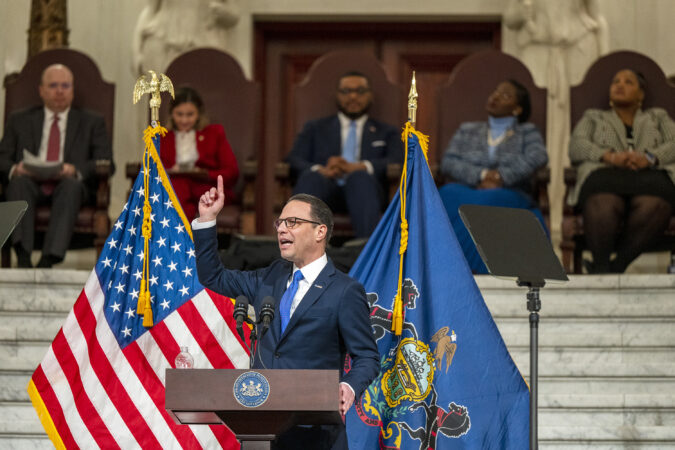
    🏗️ State leaders hope that will change with a new process approved as part of the state’s $50.1 billion budget, signed into law by Gov. Josh Shapiro last month.

    🏗️ Certain building permits must now be approved in as few as 30 days, among other updates, per the legislation.

    🏗️ The goal is that when businesses consider projects in the state, “they won’t wince at the fact that this is going to take forever,” a Pennsylvania Chamber of Business and Industry exec told The Inquirer.

    Politics reporters Katie Bernard and Gillian McGoldrick have more.

    In other state government news: The attorneys general of New Jersey and Pennsylvania — an anti-Trump crusader and a self-described “boring” Republican prosecutor, respectively — have forged an unlikely partnership. They say they will maintain their bipartisan friendship when one leaves office next month.

    ‘50 years later, you’re pushing the rock back up the hill’

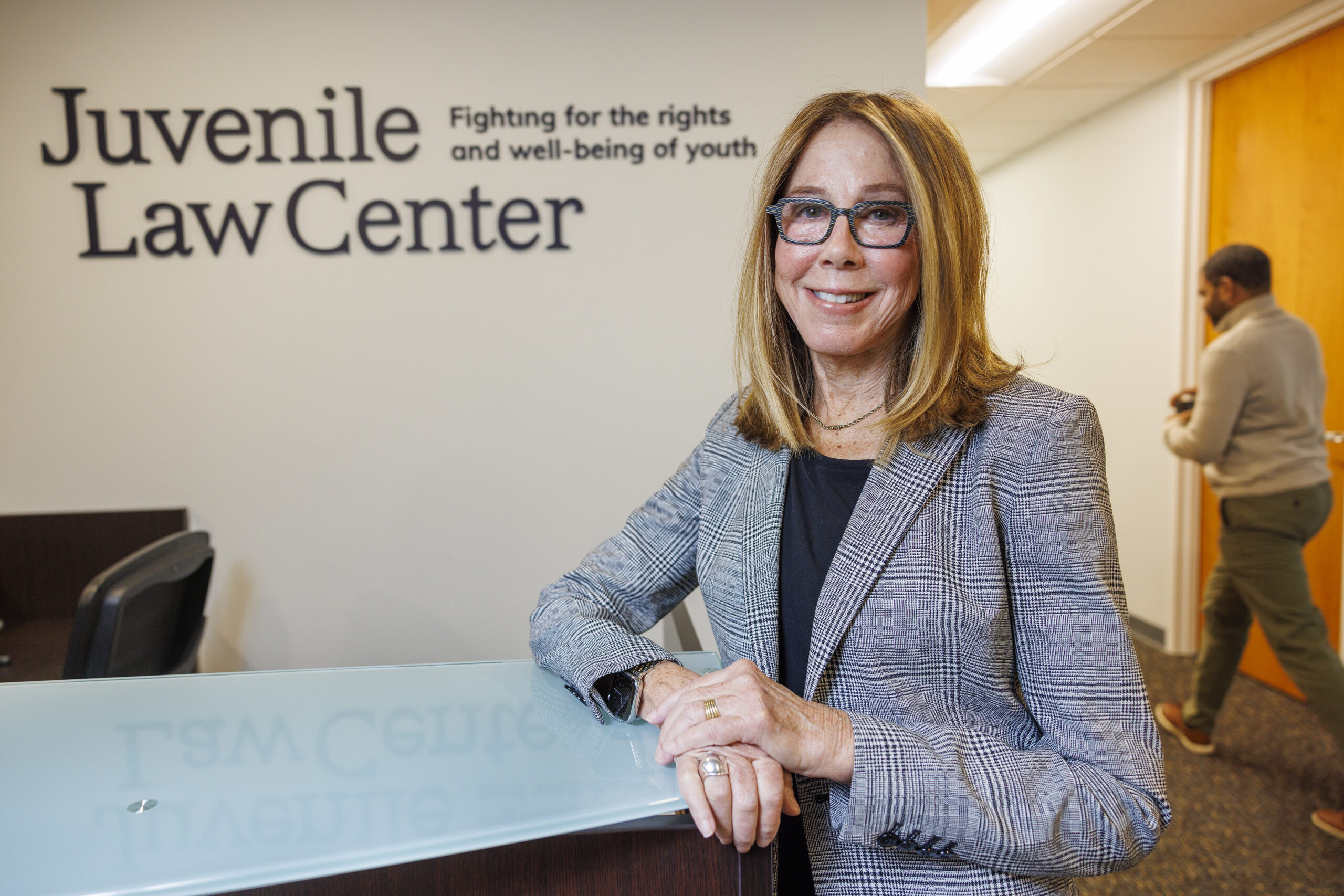
    Marsha Levick’s career has ranged from representing individual teenagers to steering landmark litigation that forced states to overhaul abusive practices.

    Levick will step down Wednesday from her position as chief legal officer of the Juvenile Law Center, the Center City-based organization she helped build from a walk-in legal clinic into a national leader in children’s rights.

    Her departure coincides with the center’s 50th anniversary, a time of celebration — as well as what she calls a “dark moment” for civil liberties in America.

    Reporter Jillian Kramer has the story on Levick’s legacy.

    What you should know today

    Plus: The Inquirer’s best interactives and visual stories of 2025

    The Inquirer’s interactives team spends their time designing fun, informative stories that invite you to play along.

    This year’s slate ranged from a game that teaches you Gillie Da King’s viral two-step to a tour of the Southeast Asian Market to an explainer on how a plane crash changed five Northeast neighbors’ lives.

    Want to finally understand how to navigate the green card maze, or see which route out of the Linc after an Eagles game is most efficient? We have interactives for those, too.

    Check out the team’s favorite visual stories from the past 12 months.

    🧠 Trivia time

    Which of these was among the top searches by Zillow home shoppers in Pennsylvania and New Jersey in 2025?

    A) “Luxury”

    B) “Historic”

    C) “Fixer upper”

    D) “Tiny”

    Think you know? Check your answer.

    What we’re …

    🔔 Greeting: The “sibling” Liberty Bell to be featured in Cherry Street Pier’s New Year’s Eve celebration.

    🍕 Trying: The best new slices and pies in the Philly area.

    🎤 Remembering: The best Philly concerts of 2025, according to pop music critic Dan DeLuca.

    🔥 Cozying up at: These 40+ area spots with heated outdoor dining areas.

    🍲 Eating: A cozy bowl of pozole, at food writer Kiki Aranita’s urging.

    🧩 Unscramble the anagram

    Hint: Wilmington children’s hospital

    RUM EONS

    Email us if you know the answer. We’ll select a reader at random to shout out here.

    Cheers to Marvin Adams, who solved Monday’s anagram: Ephrata. A former Mennonite left the dating parlors and courting buggies of Lancaster County behind. Now she’s learning to date from scratch.

    Photo of the day

    Chef Alex Kemp shreds cheese on his green garlic escargot roll, a witty star of My Loup’s menu.

    🐌 One last mouthwatering thing: Remember the best meals you ate in 2025? Inquirer critic Craig LaBan recalls his. Look back on his list of Philly’s best restaurants of the year, in photos. Then reminisce on the top five local restaurant trends of 2025 (hi, Michelin) and say a last farewell to the Philly-area eateries that shut down (RIP, McGlinchey’s).

    I’ll be back with you tomorrow to close out the year of news. See you then.

    By submitting your written, visual, and/or audio contributions, you agree to The Inquirer’s Terms of Use, including the grant of rights in Section 10.

  • The doctor is always in | Expert Opinion

    The doctor is always in | Expert Opinion

    It’s reassuring to have a doctor around when an unexpected medical emergency occurs.

    “Is there a doctor in the house?” is the infamous call when someone has chest pain on an aircraft, falls in the grocery store, faints in the theater, or experiences any sudden physical ailment or mishap. Recently, a physician colleague shared a story that illustrated the value of a foundational doctoring skill — empathetic communication — even in a situation that wouldn’t ordinarily call for a doctor’s expertise.

    My colleague was in a crowded pharmacy, and a number of customers were growing irritated by the slow progress at the photo station. A part required replacement, which slowed the processing of print orders. When one customer approached the store manager to air his frustration, the manager appeared to ignore him. Then the manager abruptly turned to the customer and shouted, “You can leave my store!”

    By now, lines were also getting longer at another checkout area, since the manager was too preoccupied with the photo problem to address the cashier’s issue. When he finally made it over, a customer expressed his frustration that so few checkout lanes were open.

    “You can leave my store!” the manager responded.

    My friend is a seasoned medical specialist who had been in line for a half hour himself. He observed the commotion and the manager’s dismissive retorts.

    He decided to approach the manager, but with a different opener. “You seem to be having a really awful day.”

    The manager looked up in surprise and replied, “You’re right. It’s been a horrendous day.”

    “You know,” my friend whispered with a half smile, “if you keep telling everyone to leave your store, that might not be so great for business.”

    They both chuckled a bit, and the tension in the room eased. The manager continued moving from task to task without much enthusiasm but my friend did not hear him invite anyone else to “leave my store.”

    Compassionate communication is not unique to medicine, but it is the skill that I consider most essential to ensuring that patients leave feeling relieved and reassured after a doctor’s visit.

    In the pharmacy, my friend never identified himself as a doctor, nor was he recognized as one. He didn’t need to. At the time, doctoring was not on his mind.

    As I listened to his story, it was clear that his ability to notice someone’s distress and convey empathy is now so professionally innate as to be just part of the way he exists in the world.

    Like the store manager, many of us may have been helped by a doctor in a nonclinical setting without realizing it. It’s nice to know those interpersonal skills don’t shut down at the conclusion of office hours.

    Jeffrey Millstein is an internist and regional medical director for Penn Primary and Specialty Care.

  • A bank’s ‘racist and overzealous’ fraud investigator ruined a Pa. car dealership, lawsuit says

    A bank’s ‘racist and overzealous’ fraud investigator ruined a Pa. car dealership, lawsuit says

    Tianna Williams didn’t finish high school after becoming a mom at 16. As a teen dropout, she began flipping cars to make money, and by her late 20s, her car sales acumen led her to open a dealership in Lehigh Valley that grossed over $1 million in annual sales.

    An opportunity to get a line of credit with one of the nation’s largest banks turned Williams’ dream into a nightmare, she said, which led the 30-year-old to file a lawsuit.

    M&T Bank opened a fraud investigation into Williams in spring 2023, says the suit filed in Common Pleas Court in Philadelphia in March. The bank inappropriately informed her financial partners that her business could be illegitimate, the complaint says. The bank froze her account, her partners cut ties, and her checks bounced. Williams’ growing businesses crashed.

    The investigation found no fraud, M&T lawyers said in a September hearing. But Williams says the damage was done.

    The complaint says the Black entrepreneur was a victim of the bank’s “racist and overzealous fraud investigator” who tormented the business owner for weeks. The investigator told Williams “you people” have ways of making fraudulent behavior seem legitimate, the suit says.

    Despite eventually finding no fraud, the investigator shared an email with a colleague, signed with a smiley-face emoji, saying “doing my best to not let her win on my watch.”

    “She killed my self-esteem,” Williams said of the investigator. “I lost all financial security.”

    The phenomenon of Black people being treated with suspicion by financial institutions has been dubbed “banking while Black” and has a history going back at least to the 1930s, when red lines on maps labeled majority-Black neighborhoods as unworthy of mortgages. More subtle variations of the practice have continued into the 21st century, resulting in settlement agreements for millions of dollars.

    Black customers have also reported tellers refusing to cash their checks, and banks calling police in disbelief that deposits made by Black people were legitimate. Studies further found that banks are more likely to scrutinize, and less likely to offer assistance to, Black small-business owners compared with their white counterparts.

    The Philadelphia area is not immune to the phenomenon. Black Philadelphians are less likely to have a bank account than their white neighbors, according to a report from the Economy League of Greater Philadelphia. And multiple banks entered settlements over offering worse interest rates and ratcheting up closing costs for Black mortgage seekers.

    ‘Somebody really has it out for you’

    Williams’ rags-to-riches story began in 2012, when she became pregnant at the age of 16. Her mother had recently been diagnosed with cervical cancer, and the family barely scraped by. After dropping out of high school before completing 10th grade, Williams learned how to flip cars from auctions with the help of a mentor she met through Facebook.

    Her first car: a 2002 Lincoln that as a 17-year-old she sold the next day for a $700 profit.

    The young hustler with a knack for sales got her auction license a couple of years later. She kept selling cars on Craigslist and through other social media connections. In 2018, she began working at an auto dealership. She learned the trade and became especially good at working with people who had low credit scores.

    Williams’ cut from each sale at the dealership was a fraction of the overall profit, so she decided to go it alone. She bought a lot in Easton in 2020 and set to work. The cars she sold became newer and more expensive.

    Tianna Williams next to the sign of her car dealership in Easton.

    To sell cars for more than a couple of thousand dollars, Williams needed to offer financing options. She got her banking license and contracted with lenders. Her business was booming and she was planning to open a second location.

    That’s when Shazard Mohammed from M&T reached out, the complaint says. He offered Williams a line of credit that would allow her to take her business to the next level, and she transferred her accounts to the bank.

    Within days, Williams’ lenders contacted her to say they could no longer offer her financing because she was being investigated by M&T for fraud. Nearly overnight, she was without a business while owing about $200,000 in business and tax debts.

    “M&T BANK basically told me that they suspected you of fraud,” one business partner told Williams in a text message, according to the complaint. “If that’s not true, then somebody really has it out for you.”

    Records fight

    The bank is now fighting in court to keep documents related to the investigation secret, despite an attorney representing M&T saying in a September hearing that “there was no finding of fraud,” according to a transcript.

    M&T said in that hearing that Williams was investigated because of “red flags,” such as misspellings on checks that were immediately withdrawn as cash, and that the investigation lasted only seven days.

    Common Pleas Court Judge Paula Patrick sanctioned the bank’s lawyers in October for their failure to produce documents and ordered them to pay nearly $8,000 in attorneys’ fees. The judge also found that most records should not be sealed. M&T is appealing the ruling.

    Dean Malik, the attorney representing Williams, frames the case as a fight of David vs. Goliath. By issuing sanctions, he said, the judge reminded large entities that in court the playing field is leveled.

    “The judge is sending a message that it doesn’t matter if you are a billion-dollar bank and have two law firms representing you with five lawyers, you are still bound by the orders of the court,“ Malik said.

    Williams now cleans houses with her mother to support her family financially. She said her self-esteem has been shattered, and she hasn’t set foot inside a bank out of fear since her business closed in 2023.

    “There is nothing else I know how to do,” Williams said. “All I know is cars.”

  • Using a migrant’s shooting death to attack immigration itself

    Using a migrant’s shooting death to attack immigration itself

    In the days after the mass shooting at Brown University and the killing of a Massachusetts Institute of Technology professor, the Trump administration suspended the diversity visa “green card lottery,” saying the suspected shooter, a Portuguese national, had obtained permanent residency through it. It’s a convenient move that redirects attention from what happened to whom to blame.

    But one of the two students killed at Brown was a migrant, too.

    Mukhammad Aziz Umurzokov was a Brown freshman, raised by a family that came to the United States from Uzbekistan to build a life here. Those who knew him described his kindness and generosity. Friends and family said he dreamed of becoming a neurosurgeon, a goal shaped in part by the brain surgery he needed as a child.

    Mukhammad Aziz Umurzokov, 18, a college freshman and immigrant from Uzbekistan, was killed in the shooting at Brown University on Dec. 13.

    This young man represented what so many families come here hoping for: safety, education, a bright future. His death should have sparked a national reckoning with gun violence. Instead, the policy response once again targeted immigration, even as an immigrant family is among those grieving.

    Freezing the diversity visa lottery doesn’t touch the core problem of mass shootings at schools across the country. It doesn’t answer the question that matters most in the wake of any campus shooting: How is it so easy to get a gun, let alone bring it into a place built for learning?

    The administration’s response hinges on a simple narrative in which the suspected shooter’s immigration history becomes the headline, and the first policy move becomes a freeze on a visa program that has nothing to do with how a gun was obtained or used.

    Even the publicly reported timeline is more complicated than that talking point suggests. What’s clear is that the suspension of this visa program diverts attention from gun access and campus safety.

    Immigrants from around the world take the U.S. citizenship oath at the National Constitution Center in Philadelphia in 2024.

    The diversity visa lottery is one of the few legal routes for people from underrepresented countries to come to the United States. This year alone, more than 5,500 people from Uzbekistan were selected in the lottery. For many families, it represents the only legal path forward. The administration has closed the door on that pathway.

    So when the administration suspends the program in the name of “safety,” it does more than change a policy. It tells grieving immigrant families that their place here can shift with every news cycle.

    It also asks the public to draw the wrong lesson from what happened at Brown. If leaders want to prevent another campus shooting, they have to deal with the common denominator across these tragedies: easy access to guns and the absence of meaningful guardrails.

    Suspending a visa program does not keep a firearm out of an attacker’s hands. It does not make a classroom safer. It does not protect the next student walking into an engineering building on an ordinary day.

    Umurzokov should not be an afterthought in this debate. His family came here to build a future. He earned his place at Brown. He wanted a life spent helping others. Yet none of that kept him safe.

    If we are serious about honoring the lives of people like Mukhammad Aziz Umurzokov, we should resist the impulse to turn grief into scapegoating.

    In a nation built by immigrants and now mourning an immigrant student, leaders should be focused on preventing the next shooting, not using this tragedy to deepen fear while guns remain exactly where they are.

    Mehri Hamrokulova grew up between the U.S. and Uzbekistan, and recently graduated from Colgate University with a degree in sociology, focusing on immigrant experiences.

  • 8 ways small-business owners can prep for the new year

    8 ways small-business owners can prep for the new year

    As we head into the new year, here are eight ways you can position your Philly-based business for success.

    Join a business group

    The people who best understand the challenges you face as a business owner are the ones who are also running small businesses in the area. Meeting them will give you the opportunity to share your problems with others who can help solve them, or at least give you a shoulder to cry on.

    Some of my clients enjoy groups like Vistage and the Entrepreneurs’ Organization. Others get involved in local business organizations like Philly Business Connect, the Union League, or any number of other groups listing their events on Meetup.com. LGBTQ+ business owners can consider the LGBTQ+ Chamber of Commerce and other groups. Black business owners can choose from a number of local groups.

    Expand your horizons

    If you’re looking for foreign customers, have a meeting with someone from the World Trade Center of Greater Philadelphia. They help their members connect to overseas customers (and suppliers), make introductions, and create new opportunities. If you want to sell more to the government — which spends more than $7 trillion per year! — reach out to a local chapter of APEX Accelerators. They’ll connect you to government projects particular for your industry and guide you through the process of getting approved so that you can respond to bids.

    Revisit your taxes

    There were big changes in the 2025 federal tax and spending bill that can benefit your business. These include significant new deductions for capital expenditures (particularly if you’re a manufacturer), more incentives to offer your employees paid time off, the ability to go back to 2022 and deduct research and development costs, and additional options for investing in other small businesses. And, because “pass-through” rules and corporate rates have been made permanent, maybe now is the time to reconsider your entire business structure.

    “Maybe [pass-throughs] such as S corporations or partnerships are perfect for you and minimizes your ultimate tax liability,” says Rich Petillo, a partner at Centri Business Consulting in Philadelphia. “But perhaps converting to a C corporation is more attractive to potential future investors.”

    Before things get really busy for your accountant, meet and make a plan for leveraging these benefits.

    Provide financial counseling to employees

    Your employees have a lot of complicated financial choices to make. How can they make sure they’re taking advantage of all the tax incentives that are available to help them with their dependents? What health insurance plan is right for them? How much should they be saving for retirement? When should they buy life insurance? Which are the best investments for the short and long term? What’s the difference between “after-tax” and “before-tax” savings plans?

    It’s important to make sure your employees are making the best financial decisions possible. This year ask your CPA firm, financial adviser, and benefits consultants for help. They can provide advice to your staff as an added employee benefit. It may cost a little extra, but it’s good for everyone in the long term.

    Start an HSA

    Health Savings Accounts have been exploding in popularity and there’s no mystery why: having one for your employees allows them to put away $4,400 per year ($8,750 for families) pretax (it lowers their taxable income) and can then be withdrawn, without penalty, as long as the funds are used for unreimbursed medical expenses. That includes periodic health evaluations, such as tests and diagnostic procedures ordered in connection with routine examinations, routine prenatal and well-child care services, child and adult immunizations, and even certain weight-loss programs. Unused amounts are rolled over to the next year and continue to grow with investment choices you can offer.

    “The longer the funds stay in the account and grow, the bigger the tax benefit,” Meg McGinn, founder of Osprey Health, a health insurance brokerage firm based in Berwyn said. “It’s one of the only accounts out on the market right now that offer these benefits.”

    Get immigration paperwork in order

    U.S. Immigration and Customs Enforcement ”is likely looking at companies right now that they think and/or know are hiring undocumented immigrants,” Lindsay Eury, an attorney at the Philadelphia-area immigration law firm Solow, Hartnett & Galvan, told me earlier this year. “We do expect to see an increase in on-site inspections and audits for other employers.”

    Make sure you have updated I-9 Employment Eligibility Verification forms for each of your workers. Also check with E-Verify to make sure they’re legal to work.

    Lean into AI

    AI assistants like ChatGPT, Copilot, Gemini, Claude, and Grok — though far from perfect — have become more reliable and accurate and 2026 is the year where you should be leaning into their offerings. Encourage your employees to do the same.

    You could make a rule that no contract, quote, bid, purchase order, estimate, or other outside communication leaves your company without first uploading to your AI assistant for review. Or require all new policies, internal memos, and agreements be first created by your AI assistant and then reviewed by your experts. Use your assistant for research, analysis, and advice. AI can now play a very important role in your business if you accept that it’s no more than another smart adviser.

    Finally … make ‘me’ time

    Running a small business is very demanding, stressful, and can put pressure on your family relationships. In 2026, regularly commit to doing something for yourself. Join a birdwatching group. Ride your bike in the middle of the day. Go to a gym every morning. Coach or get involved in your child’s after-school activity. Volunteer. Take an art class.

    Do something that’s completely unrelated to your business. You’ll find that it takes your mind off your daily problems and clears your head for better thinking. Your customers, employees, and family will notice the difference.

  • What we know (and don’t) about the Eagles entering Week 18 vs. the Commanders

    What we know (and don’t) about the Eagles entering Week 18 vs. the Commanders

    Another week, another ugly win for the Eagles.

    Thanks to Vic Fangio’s defense, the Eagles outlasted Josh Allen and the Buffalo Bills, 13-12, on Sunday. While the Eagles offense posted just 17 yards on 17 plays in the second half, their defense made just enough stops to seal the victory.

    Despite all of the ugliness that has characterized the Eagles’ season, particularly for the offense, the NFC’s No. 2 seed is still in play. The Eagles are familiar with that path, having begun last season’s playoffs as the No. 2 seed on their quest to the Super Bowl.

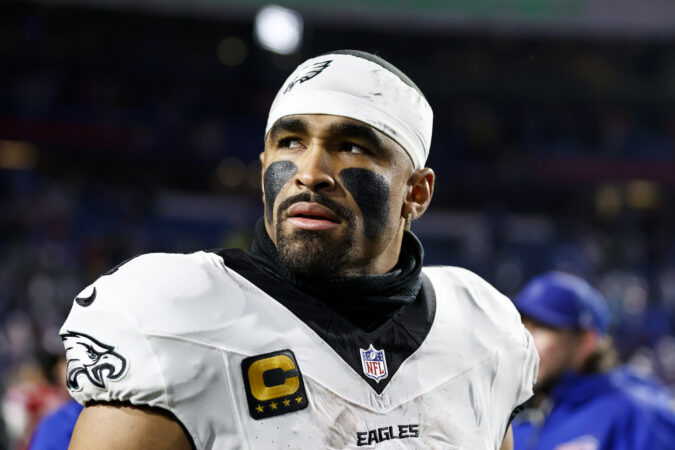
    The Chicago Bears are the only team in their way. An Eagles win at home over the 4-12 Washington Commanders in the regular-season finale on Sunday and a Bears loss to the Detroit Lions in Chicago would make Philadelphia the No. 2 seed. That improved seeding would lock in a wild-card matchup against the reeling, Micah Parsons-less Green Bay Packers.

    Here’s what we know (and what we don’t) about the Eagles heading into Week 18:

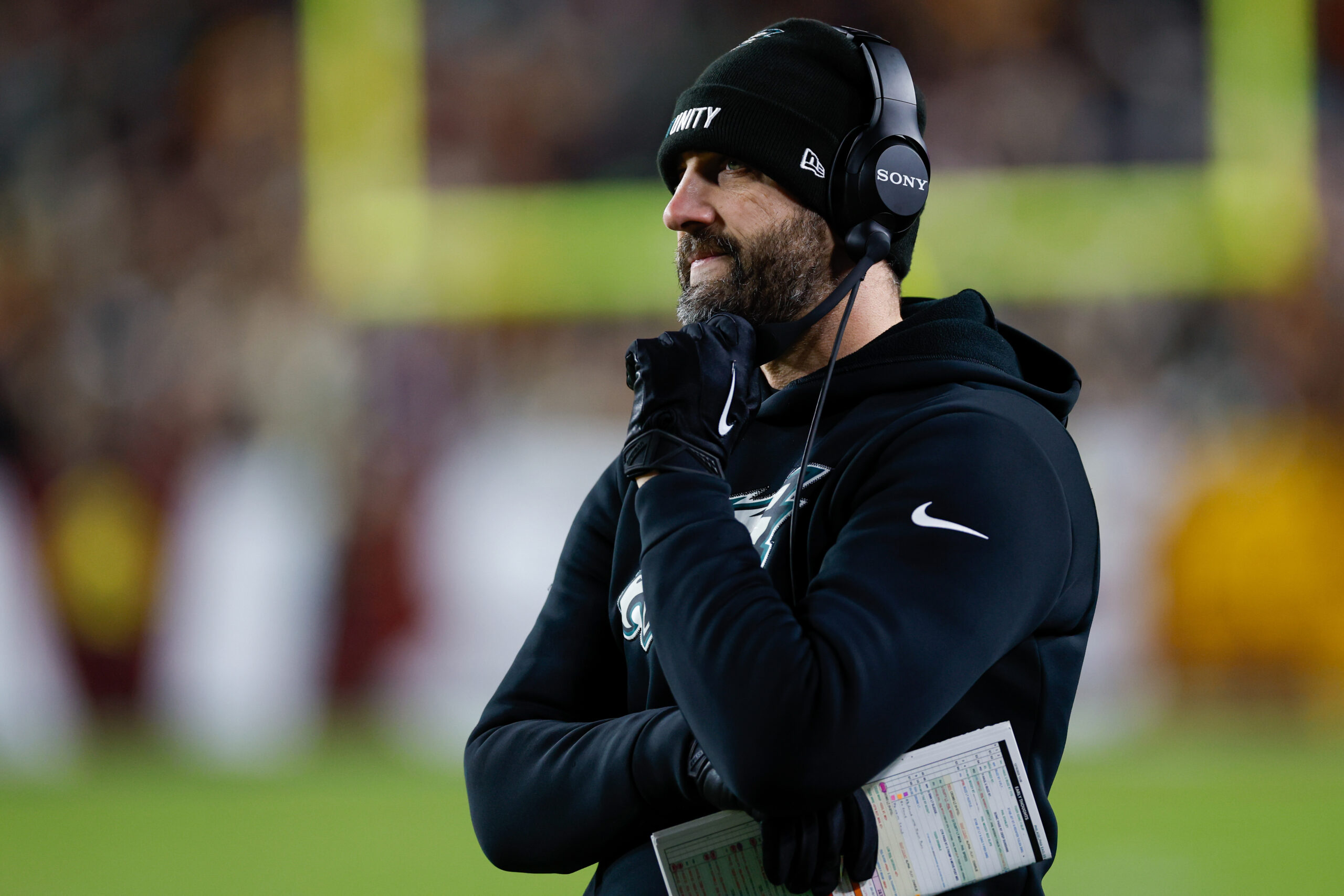
    Play his starters on Sunday or rest them for the playoffs? There are risks and rewards with either decision for Eagles coach Nick Sirianni.

    To rest or not to rest?

    Hamlet didn’t know what he was talking about. The real question, at least to Nick Sirianni this week, is: to rest or not to rest the Eagles’ starters?

    Sirianni will be tasked with deciding whether the starters should play against the Commanders on Sunday in an effort to improve their chances at the No. 2 seed. There are risks and rewards associated with either decision.

    If all of the starters play, the Eagles likely have their best chance at a win vs. lowly Washington. But Sirianni has been burned by playing his starters in the season finale. In the last regular-season game of the 2023 season against the New York Giants, A.J. Brown injured his knee, which sidelined him for the wild-card loss to the Tampa Bay Buccaneers the following week.

    Jalen Hurts also hurt a finger on his throwing hand against the Giants, although he ended up playing against Tampa Bay.

    Technically, the starters had something to play for in Week 18. The Eagles could have had a shot at the No. 1 seed with a win, but they were also at the mercy of the Dallas Cowboys, who were playing simultaneously against the Commanders. Dallas ultimately won and clinched the division.

    Could Sirianni take the same approach with his starters this time around? The Eagles likely have a better shot at beating the Commanders with Hurts, Brown, Saquon Barkley, DeVonta Smith, and Dallas Goedert than they do with Tanner McKee, Will Shipley, Jahan Dotson, Darius Cooper, and Grant Calcaterra.

    But would they still have a decent shot with the backups? It’s possible. After all, the Commanders were down numerous key players in their Christmas Day loss to the Cowboys last week, including quarterback Marcus Mariota (the de facto starter with Jayden Daniels shut down) and left tackle Laremy Tunsil. Center Tyler Biadasz left the game with knee and ankle injuries.

    Perhaps there is a middle ground in which some of the Eagles starters play and others sit. Sirianni offered a window into his thinking Sunday night after the starters beat the Bills when he discussed the importance of coming out of the game healthy.

    “I thought it was really important that we played in this particular game,” Sirianni said. “Fortunately, we got through this, I think. I haven’t talked to the doctors yet, but fortunately we got through this. … I know there will be some bumps and bruises, but we’ve got through what we needed to get through and you feel really good.”

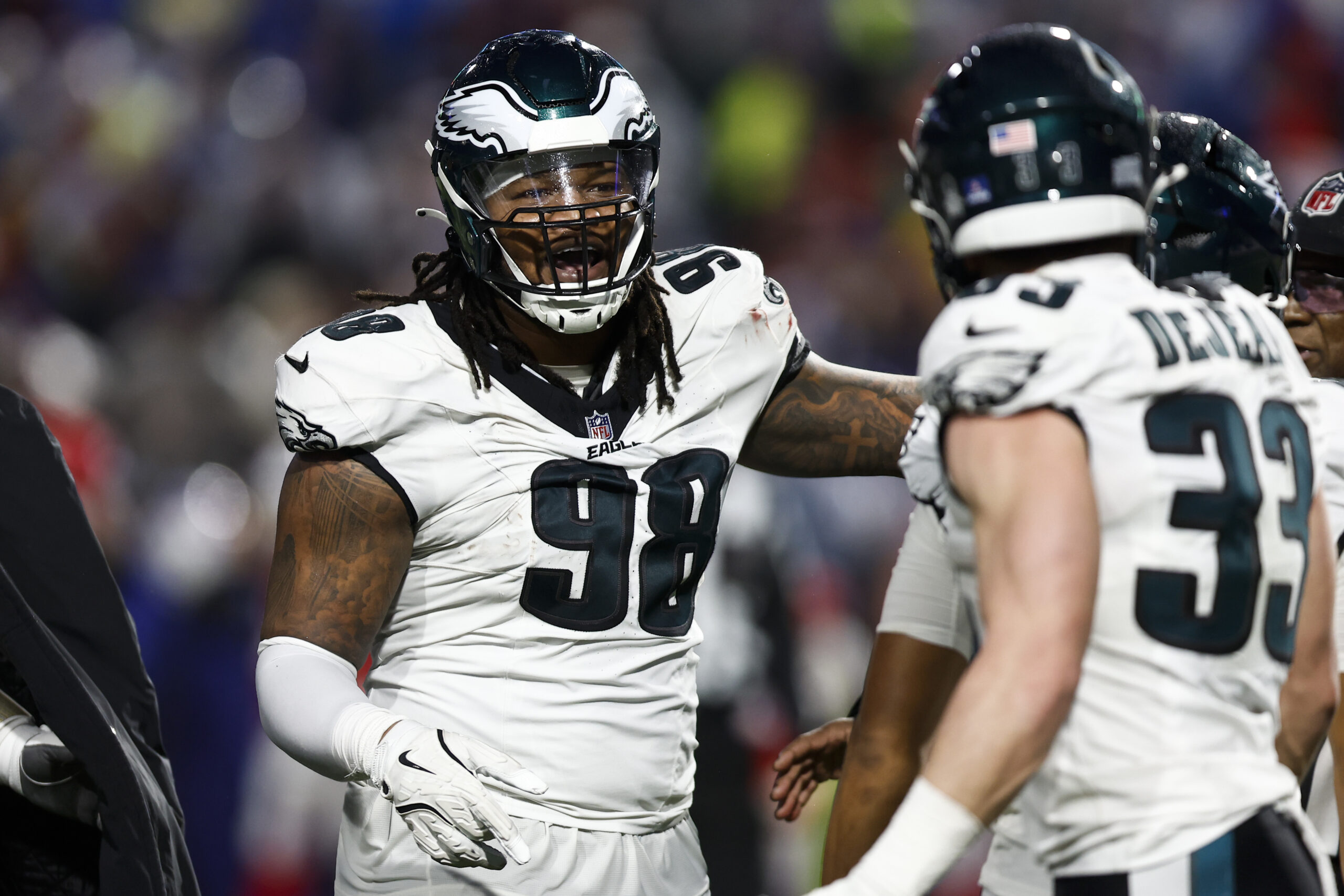
    Jalen Carter and the Eagles defense were dominant again on Sunday against the Bills.

    The age-old question

    Seventeen games and 17 “what we know” exercises later, we still don’t know if this style of victory from the Eagles — a dominant defensive performance and just enough firepower on offense — will be sustainable in the playoffs.

    It might seem unlikely any other year. As noted ahead of the Week 12 loss to the Cowboys, only one Super Bowl champion offense in the last seven seasons registered a negative expected points added (EPA) per play during the regular season — the 2023 Kansas City Chiefs (-.04). EPA measures how much one play improves or hurts a team’s chances of scoring.

    The Eagles are sitting at an EPA of -.02 this season (tied for 11th in the NFL) after their third-worst showing of the year against the Bills (-.21).

    But is there enough parity in the NFL this season that the Eagles could still win this way in the postseason?

    Maybe. Every team in the league has its flaws, as evidenced by the fluctuation of the NFC playoff seeding over the last couple of weeks. The Eagles’ path to a repeat is made easier by the Kansas City Chiefs no longer being the perennial powerhouses they once were, too.

    The Eagles’ Super Bowl-winning offense was also flawed, but not this flawed, especially in the running game. Even if the 2025 Eagles can win this way, Sirianni made it clear that it’s not the way he necessarily wants to win. The Eagles beat the Bills, but Sirianni emphasized that he wasn’t satisfied with the offensive showing and pushed back on the notion that he was playing not to lose in the second half.

    “We weren’t in a mode of saying, ‘Hey, [a] 13-0 [lead] is enough,’” Sirianni said after the game. “Not against this quarterback. Not against this offense. So I don’t think our mindset was ever that.”

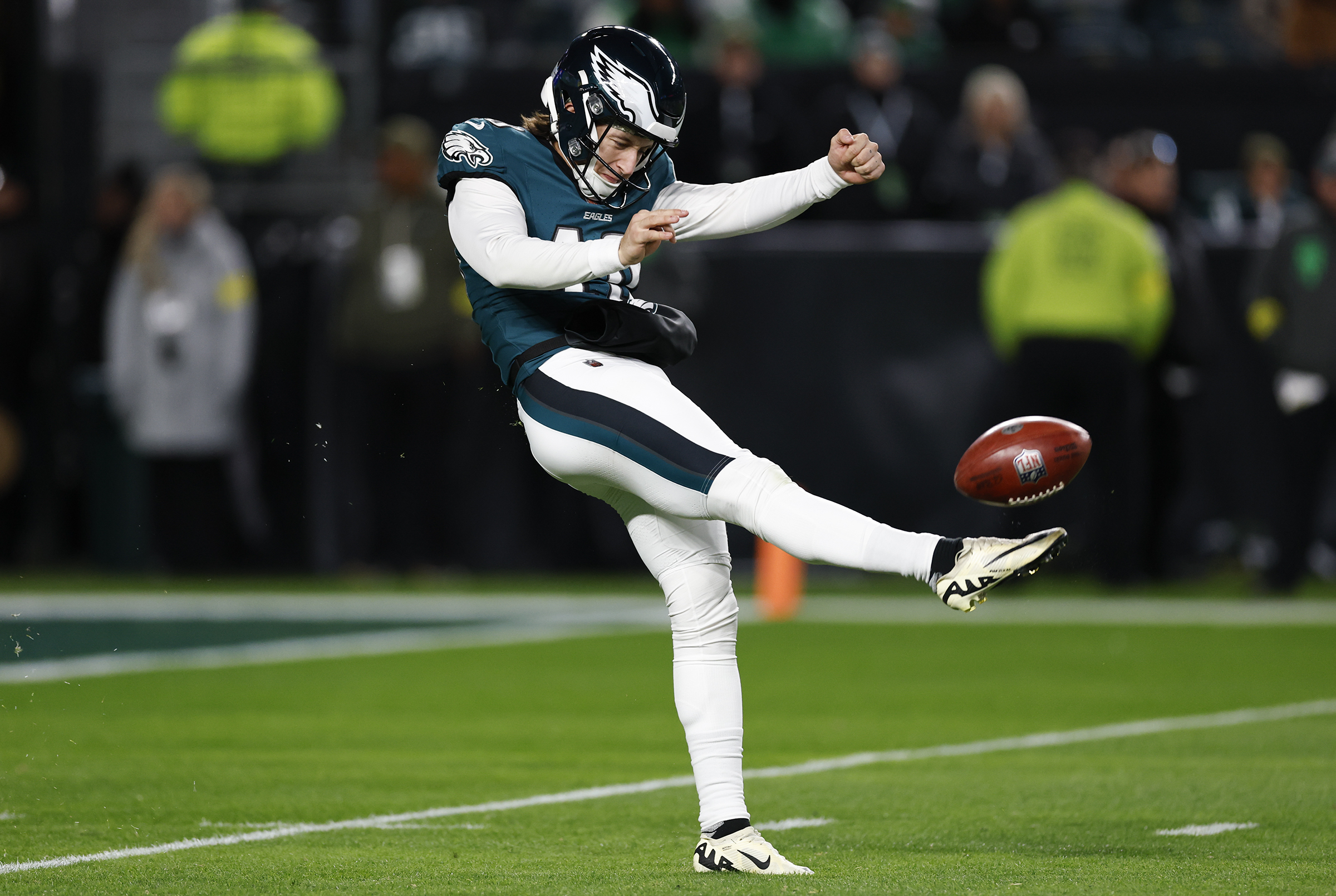
    The Eagles’ Braden Mann is tied for third in the NFL with 69 punts.

    Mann of the year

    It’s a miracle that Braden Mann’s leg is still attached to his body at this point in the season. When you punt for the New York Jets for three years, though, you’re probably used to a hefty workload.

    Mann, the Eagles’ 28-year-old punter, is tied for third in the league with 69 punts. He’s been an unsung hero when the offense sputters. Mann is one of just six punters averaging more than 50 yards per punt (he ranks fifth in the league at 50.4).

    The Eagles will need every edge they can get heading into the playoffs, including continued contributions from Mann. He’s hitting his stride heading into the postseason. Even in the wet conditions, Mann had one of his best showings of the year against the Bills.

    He averaged 55.4 yards per punt on Sunday (388 yards on seven punts), his third-best rate of the year. Mann had a pair of punts for over 60 yards (65 and 62) and he pinned the Bills inside their own 20 twice (the 17-yard line and the 10). Even while their special-teams unit attempted to block his punts, Mann didn’t flinch.

    “They were coming after us to try and block a lot of them and our interior did a really good job,” Mann said after the game. “So I’m always super comfortable in there, which is not something that needs to be overlooked. And then I trust the gunners on the outside. They do such a good job on our coverage team. So I can just punt freely, and I think that helps.”

    From the Bills to Bill

    The Commanders are full steam ahead on the Hot Mess Express, but they have one emerging offensive weapon not named Terry McLaurin who could provide a challenge to the Eagles defense.

    Jacory “Bill” Croskey-Merritt, the 24-year-old rookie running back, is coming off his second career 100-yard rushing performance against the Cowboys. Granted, the majority of that total came on a 72-yard house call that helped the Commanders chip away at Dallas’ 14-point lead at the time.

    Still, he had 11 carries for 105 yards and two touchdowns on Thursday, an uptick in volume over his eight carries for 25 yards and a score two weeks ago against the Eagles. Croskey-Merritt earned more touches in the absence of Chris Rodriguez, who was inactive with an illness.

    The Commanders have nothing to lose, so perhaps they will look to get their rookie more involved in the season finale.

    The Eagles defense will be up for any kind of challenge on the ground. Even in the absence of Nakobe Dean, the Eagles limited Bills running James Cook, the league’s leader in rushing yards, to just 74 yards on 20 carries (3.7 yards per carry, his fourth-lowest clip of the season).