Blog

  • Trump’s failing 2025 performance reminded voters he’s unfit for office | Editorial

    Trump’s failing 2025 performance reminded voters he’s unfit for office | Editorial

    Donald Trump’s first year back in the White House has brought only one surprise: the speed with which he has upended the American Experiment. This board spent 2024 warning of the dangers a second Trump administration could bring. It was hardly soothsaying.

    During his first term, Trump proved to be unfit for office in myriad ways. He lied consistently and openly, ignored norms and rules, disparaged the military, fomented division, avoided accountability, indulged in racism, bias, and xenophobia, and attempted to steal the 2020 election — falsely denying Joe Biden’s electoral victory and stoking the flames that culminated in the riot at the U.S. Capitol on Jan. 6, 2021.

    That Trump was elected in 2016 was a fluke; that he was reelected in 2024 was folly.

    Perhaps the electorate was swayed by nostalgia for a pre-pandemic America — the three years when Trump’s worst impulses were kept in check by his cabinet, and the economy sailed swiftly on the course inherited from President Barack Obama.

    Sadly, Trump’s 2025 performance has reminded many voters that his undeniable luck, charisma, and bravado may be entertaining, but the reality of governance demands more. The office of the presidency demands more.

    For his second term, no longer constrained by the guardrails the conservative establishment placed on his first presidential stint, and surrounded by sycophants and incompetents, Trump has wasted no time trying to live out his authoritarian fantasies while being unable to keep the trains running on time.

    Indeed, he is very much the man whose administration helped give the world a COVID-19 vaccine in record time before bowing to anti-vax conspiracy theories that ultimately cost American lives.

    Instead of allowing inflation to continue to abate and the U.S. economy to live up to its label as “the envy of the world,” he haphazardly and likely illegally instituted tariffs on global trading partners that amount to a tax on American consumers. Rather than sitting back and taking credit for curtailing immigration at the southern border, which concerned a large number of voters, he’s lost public support as masked federal agents abuse, harass, and intimidate immigrants and citizens alike.

    Trump’s signature legislation, the One Big Beautiful Bill Act, is set to make the rich richer and the poor poorer, all while a shrinking middle continues to lose faith in America’s institutions — some of which have willingly acquiesced to whatever Trump demands.

    But while Trump has failed to make life better for everyday people, he has been successful in enriching himself, his family, and his cronies. He has captured the U.S. Department of Justice and the FBI, pushing them to pursue his perceived political enemies; used the U.S. Department of Homeland Security to implement cruel immigration policies and as a de facto secret police; and devastated America’s standing in the world by destroying the U.S. Agency for International Development, which helped generate enormous goodwill while improving the lives of millions of people around the globe.

    The following appraisal of Trump’s presidency so far is not a “we told you so,” because we are all in this together. It is a reminder that those of us who value democracy and the rule of law must continue to stand fast and push back in defense of the ideals that fueled our nation’s founding and the rights and obligations codified in the Constitution.

    As 2025 ends and a new year begins, we must not allow the avalanche of outrages to numb us to the fact that Trump remains unfit for office.
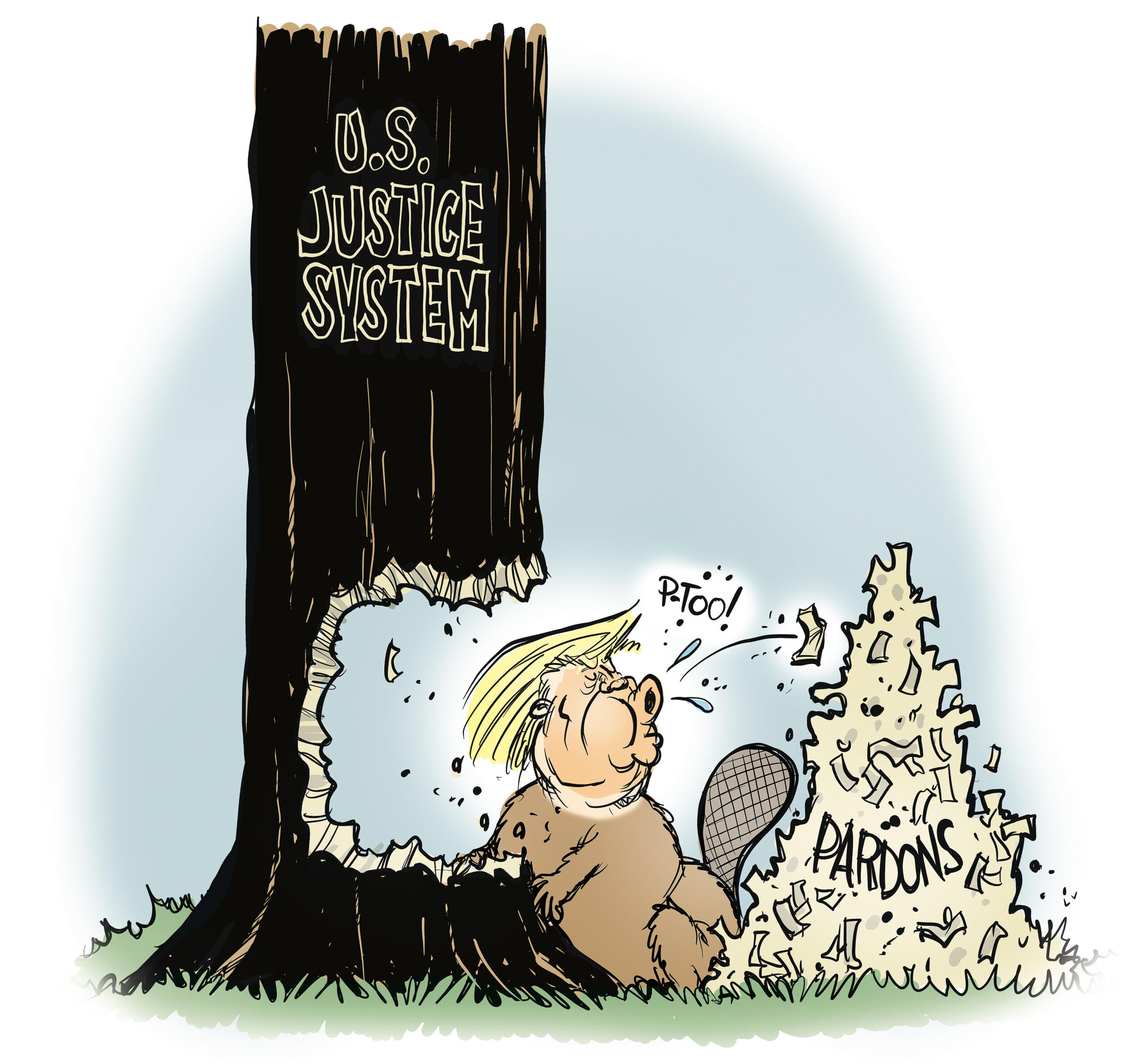
    Donald Trump and his administration have attacked judges and maligned the courts, while the president has used his pardon power to eliminate accountability for his political allies and business interests.

    Pardoned lawlessness

    As far as ominous indicators of dire times ahead, “Abandon hope, all ye who enter here” is difficult to beat. But Trump’s blanket pardon of the roughly 1,600 people involved in the attack on the Capitol comes in a close second.

    Signed shortly after he took power, among a raft of other troubling executive orders, the clemency shown to the insurrectionists — including those who brutally assaulted law enforcement officers — showed the administration had no interest in accountability for its political allies nor any true concern for the rule of law.

    Among Trump’s biggest abuses of presidential power are pardoning Rudy Giuliani and dozens of others accused of trying to overturn the 2020 election, campaign donor and convicted fraudster Trevor Milton, cryptocurrency kingpin Changpeng Zhao, and former Honduran President Juan Orlando Hernández, who had been sentenced to 45 years in prison for drug trafficking.

    Not only have some of the people Trump pardoned committed new crimes, but victims of fraud awaiting restitution have now seen those hopes dashed.

    But why wait for a pardon when the president can simply pressure Justice Department lawyers to drop the corruption case against New York Mayor Eric Adams, or dismiss allegations that Trump border czar Tom Homan took $50,000 from FBI agents posing as business executives.

    It is part of the administration’s stifling hypocrisy that while it righteously claims to seek justice by going after people like former FBI Director James Comey or New York Attorney General Letitia James, or labels all undocumented immigrants as criminals, it brazenly ignores due process — a bedrock principle of the American legal system.

    If there are bright spots in a U.S. justice system in which the attorney general operates more like the president’s lawyer than a servant to the American people, it’s that grand juries remain independent, refusing to indict on trumped-up charges. And the courts — run by judges appointed by presidents of both parties, including some by Trump himself — are still a bulwark against the administration’s abuses.
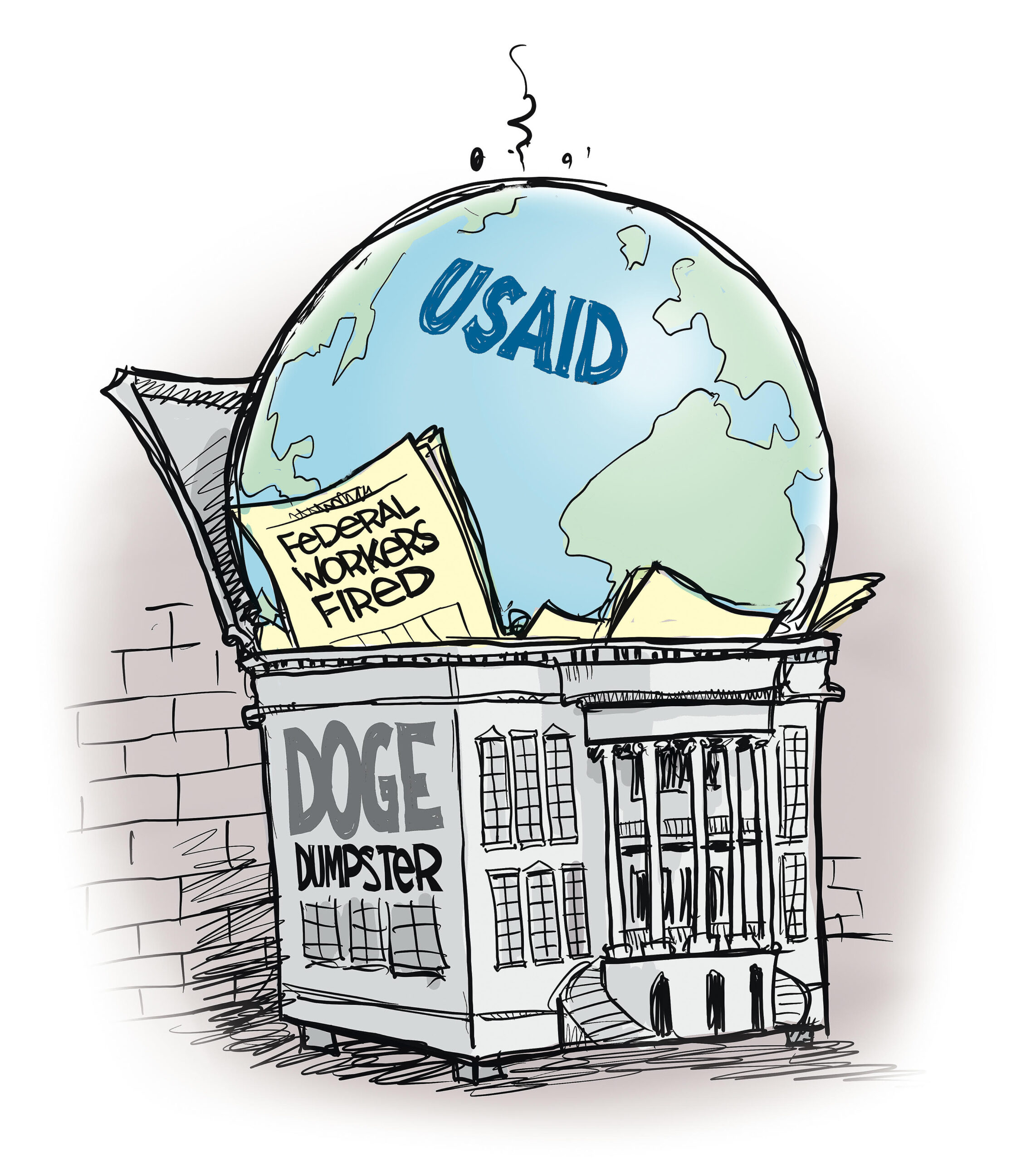
    Donald Trump allowed billionaire Elon Musk to fire hundreds of thousands of government workers as head of the so-called Department of Government Efficiency. It is estimated that DOGE’s dismantling of the U.S. Agency for International Development has already led to the deaths of nearly 700,000 people.

    Costly savings

    The Department of Government Efficiency was Elon Musk’s chance to eliminate the U.S. Agency for International Development, an agency he called a “criminal organization” that needed to die. That the tech billionaire’s passion to eliminate USAID dovetailed with a bullet point in the conservative blueprint for Trump’s second term was likely welcomed by the administration.

    Call it Pet Project 2025.

    Musk, who spent $250 million to help get Trump elected, was the public face of DOGE and promised to eliminate $2 trillion in government spending by identifying and eliminating waste, fraud, and abuse. What he did was bring in a squadron of techies more versed in crunching code than in carefully evaluating government services.

    The chaos that followed meant not only the dismantling of USAID — which, as of Dec. 22, was estimated to have led to almost 700,000 deaths, more than half of them children, through the elimination of health and nutrition programs — but the firing or early retirement of nearly 300,000 federal employees.

    DOGE also terminated more than $2.6 billion in contracts at the National Institutes of Health tied to medical research and clinical trials, leading to setbacks that may impact Americans’ health for generations.

    So what was the result of DOGE’s actions? How much of that promised $2 trillion will show up on the positive side of the government’s ledger? According to an analysis by the libertarian Cato Institute, DOGE had no noticeable effect on the trajectory of government spending.

    It did reduce the federal labor force, with savings that may amount to about $40 billion annually. That’s a lot less than it sounds when you consider it’s equal to 0.57% out of around $7 trillion in U.S. spending.
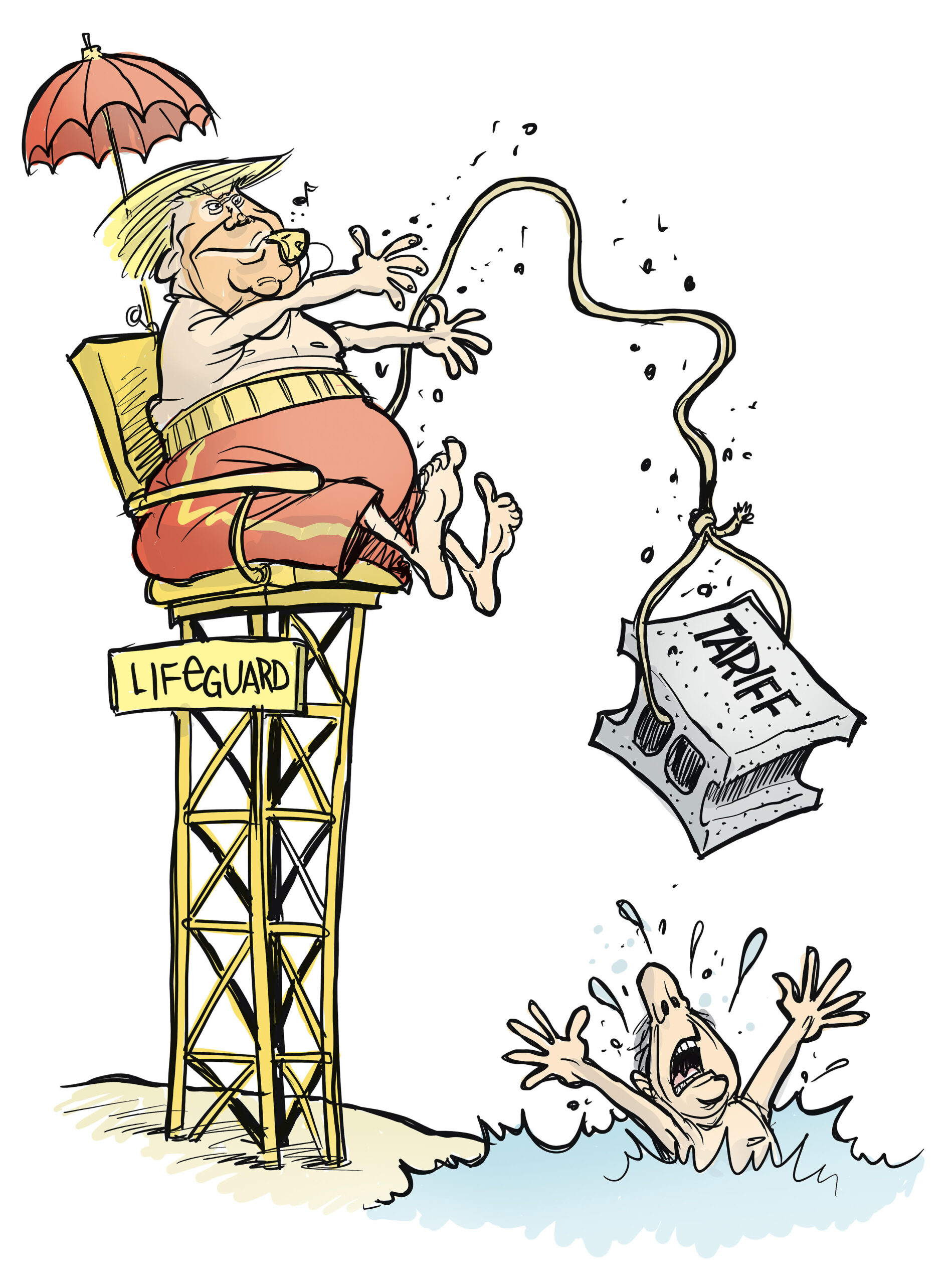
    In his campaign for the president, Donald Trump promised he would lower consumer prices. A dubious pledge under most circumstances was made worse by policies, including the chaotic application of tariffs, that threaten the economy as a whole.

    Self-inflicted decline

    Looking at the data, it was easier to see why Vice President Kamala Harris did not distance herself from President Biden’s economic policies in her 2024 run for the White House. After all, after suffering through the pandemic like the rest of the world, the U.S. economy was bouncing back faster and stronger than that of other developed nations.

    Unfortunately for Harris, to many voters, “Bidenomics” did not mean higher wages, lower unemployment, record stock market gains, and that post-pandemic inflation was starting to ease. It certainly didn’t mean billions in investment in infrastructure projects or in domestic production of critical semiconductors through the CHIPS and Science Act.

    It meant the high cost of a dozen eggs.

    Trump took advantage of the bad economic vibes and pledged to lower prices on Day One if elected. This was a dubious promise under most circumstances. Considering the president’s signature economic policies — indiscriminate tariffs and mass deportations — were destined to actively hurt consumer prices, it was political malpractice.

    It is no wonder, then, that people have begun to sour on Trump’s economy, with the latest polling finding 57% of Americans disapprove. People are worried about losing their jobs, as unemployment has increased, and household debt levels are at record highs.

    The impact of the president’s tariffs, which are taxes paid by the importer, not the exporter, is gradually being felt on the price of goods. Meanwhile, the administration’s crackdown on immigration, both legal and illegal, is hurting industries that depend on immigrant labor, including construction, agriculture, and health services.

    According to the administration, fewer immigrants in jobs means more jobs for native workers, but so far, that result has not materialized. Instead, the projected economic impact of mass deportation on the labor force and consumer market (i.e., fewer people in the country purchasing goods and services) could reduce the U.S. gross domestic product — a common measure of economic growth — by 4.2% to 6.8%, according to the American Immigration Council. On the low end, that would be similar to the impact of the Great Recession on GDP.

    Trump also promised to reduce energy prices by half within 18 months of taking office. The growing demand from data centers and the administration’s continued efforts to delay or kill renewable energy projects make it unlikely he will be able to deliver.

    Trump infamously said his tariffs meant kids would get “two dolls instead of 30” come Christmas, but even that may have been optimistic, as data find more Americans are relying on installment or buy-now-pay-later plans to cover their holiday shopping.

    The president, who had called Americans’ affordability concerns a “fake narrative” and a “con job,” backtracked in a prime-time speech on Dec. 18 in the most Trumpian way possible: He lied.

    Trump falsely blamed immigrants for driving up the cost of housing, claimed gasoline is $2.50 a gallon “in much of the country,” and took credit for the mathematically impossible “400, 500, and even 600%” reduction in the cost of some prescription drugs, and for securing $18 trillion in investments in the U.S.

    “Inflation has stopped, wages are up, prices are down, our nation is strong,” Trump said.

    Well, at least the cost of eggs is down.
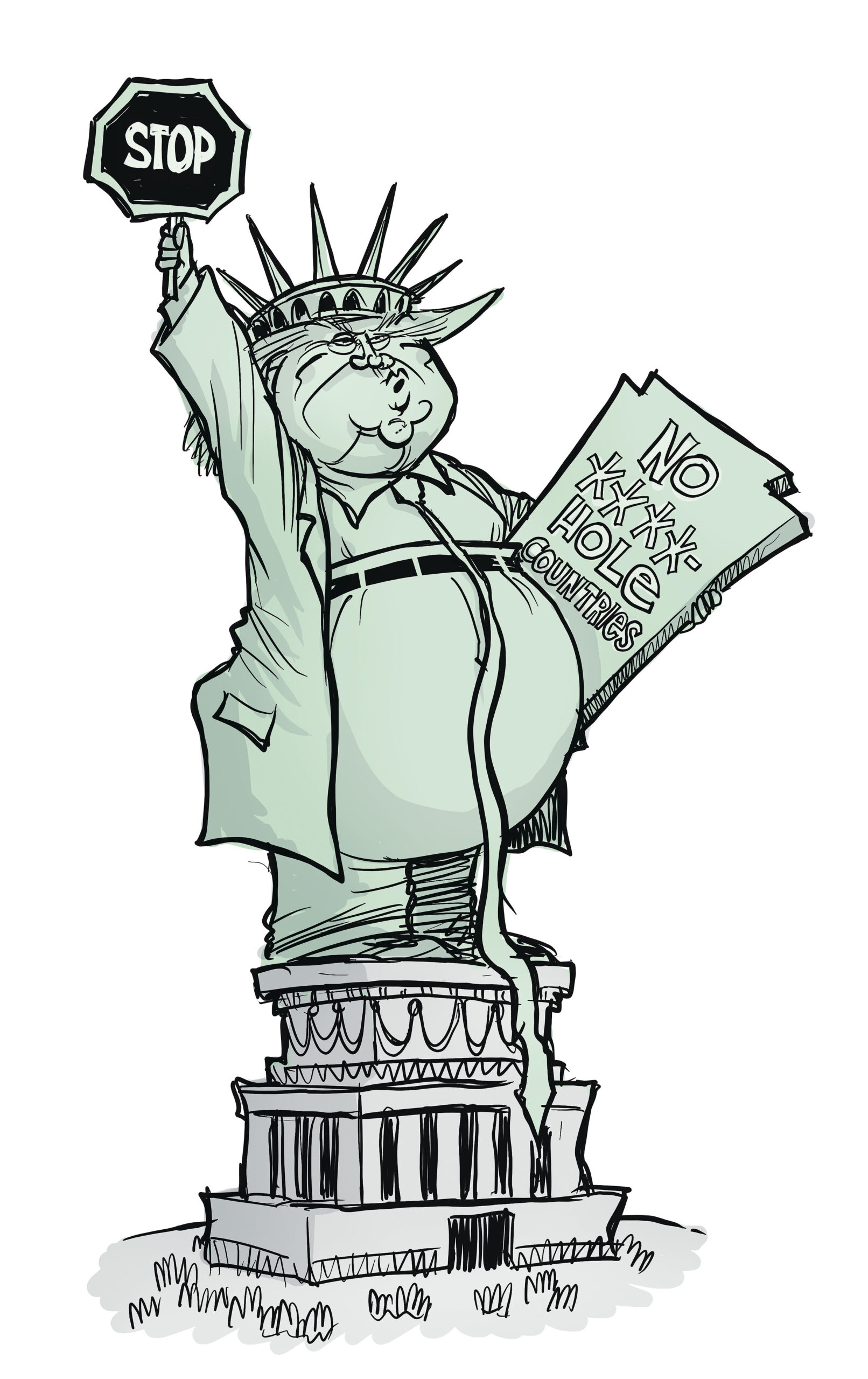
    Donald Trump’s immigration enforcement agencies are seeding terror in communities while his administration’s immigration policies are unashamedly bigoted.

    Anti-American sentiment

    The Trump administration does not like immigrants. Period.

    It does not like those who crossed the border illegally in search of a better life, nor those who are fleeing persecution and are seeking asylum in the land of opportunity. It does not like those who come here to study in America’s universities, nor those who want to fill jobs in fields in which there are not enough native-born workers.

    It does not like immigrants having a child here just to have the Constitution grant that newborn citizenship, nor does it like those who go through the yearslong process to become naturalized Americans.

    The administration is looking for any excuse — any one example it can point to — to paint all immigrants as rapists, as murderers, as garbage. Any excuse to shut the golden door that has welcomed people from across the world to the benefit of a nation that is as dynamic as it is diverse.

    What Trump and the ethnonationalists who surround him fail to understand is that the United States is an ideal — one so strong it has held disparate groups of people together for almost 250 years. The secret to America’s success is that everyone has the right to life, liberty, and the pursuit of happiness.

    Perhaps that’s why the administration’s immigration enforcement feels so wrong to so many. Why it’s losing support even among those who voted for Trump.

    It’s un-American to have heavily armed, masked, and unaccountable government forces trampling people’s rights. It’s un-American to send immigrants to foreign torture prisons. It’s un-American to turn your back on those in need.

    That is why people are standing up against Trump’s tactics. They are organizing and pushing back, peacefully, against people being snatched up off the streets, against neighbors being intimidated, families split apart, cities roiled by chaos of the government’s own making.

    Because while the administration may not like immigrants, America does.

    Donald Trump called the very real threat of climate change a “con job.” His administration’s policies not only ignore efforts to mitigate the problem, they actively seek to make it worse.

    Climate of denial

    The American people’s concern about affordability is at least not the biggest “con job,” according to Trump. That distinction belongs to climate change, humanity’s era-defining challenge that the president has long called “a hoax.”

    Speaking to the United Nations in September, Trump said predictions about the impact of a warming planet “were made by stupid people that have cost their countries fortunes and given those same countries no chance for success.”

    Never mind that the effects of climate change are already evident in rising sea levels, increasing temperatures, and more frequent extreme weather events such as wildfires and flooding.

    Not content with simply ignoring decades of science that prove greenhouse gas emissions caused by human activity are negatively affecting the planet, the Trump administration has swiftly moved to defund climate research, reverse U.S. climate change mitigation efforts, and impede the development of clean energy sources.

    On Monday, the government suspended all large offshore wind farms under construction, citing “national security risks.” It was the latest example of Trump using regulatory red tape to hinder these kinds of projects to the detriment of both the environment and clean energy jobs.

    Trump and his allies in Congress have also eliminated subsidies for solar panels, wind turbines, and electric vehicles — all while promoting fossil fuel use, including oil, gas, and coal.

    While Trump’s climate and energy policies are a danger to the entire world, his administration’s policies also put Americans at risk in their own backyards. The Environmental Protection Agency has rolled back multiple efforts to promote clean air and water, including limits on toxic pollutants from coal-fueled power plants, greenhouse gas emission limits from coal- and gas-fueled power plants, and delayed timelines for water utilities to remove some “forever chemicals” from drinking water.

    As Trump tries to leave a legacy by demolishing part of the White House to build a $300 million ballroom or emblazoning his name atop the Kennedy Center, it may be his shortsighted gutting of climate and environmental rules that truly leaves a mark for the ages.

    Since retaking the White House, Donald Trump has added billions of dollars to his personal wealth, much of it through crypto and other digital currency schemes.

    Shameless enrichment

    The man who once couldn’t make money off a casino is $3.4 billion richer since he took office on Jan. 20. He did this, as reported in a comprehensive piece by the New Yorker’s David D. Kirkpatrick, by ignoring conflicts of interest and gauchely trading on the prestige and power of the U.S. presidency for personal gain.

    The corruption is so flagrant and transparent that many voters perhaps think this is normal. But while there is likely nothing illegal in what is known about the president’s business ventures, no clear evidence of any quid pro quo, there is nothing ordinary or ethical about what Trump and his associates are doing.

    For example, potential access to Trump at his Mar-a-Lago club now comes with a $1 million initiation fee — up from $100,000 in 2016. In May, the president hosted a gala at a Virginia golf club for the biggest buyers of his meme coin, an intrinsically worthless digital token for which the 220 attendees at the event shelled out $148 million. The venture, along with a separate $MELANIA meme coin, reportedly netted the Trumps $385 million.

    Cryptocurrency is where Trump and his family are profiting the most.

    The digital currency, which can be traded without relying on banks to verify transactions — or regulate or report them — has so far earned the Trump family billions. It is here where some of the most egregious conflicts of interest are made manifest, as individuals and foreign governments with interests before the United States, including government regulation of crypto itself, have made large investments that end up in Trump’s coffers.

    Shortly after Trump won the election, a Chinese billionaire accused of fraud invested $30 million in World Liberty Financial, a Trump family cryptocurrency interest. In May, an Abu Dhabi, United Arab Emirates-backed investment firm put $2 billion into the company.

    While Trump’s two sons strike lucrative business deals around the world, Trump’s foreign policy seems to be dictated by his drive for fortune. A plan for the “Gaza Riviera” was tied to the end of the war between Israel and Hamas, while either mineral deals from Kyiv or business ventures in Russia have become part of the calculus around the war in Ukraine.

    In his short time back in the White House, Trump has shown that the presidency of the United States is open for business.
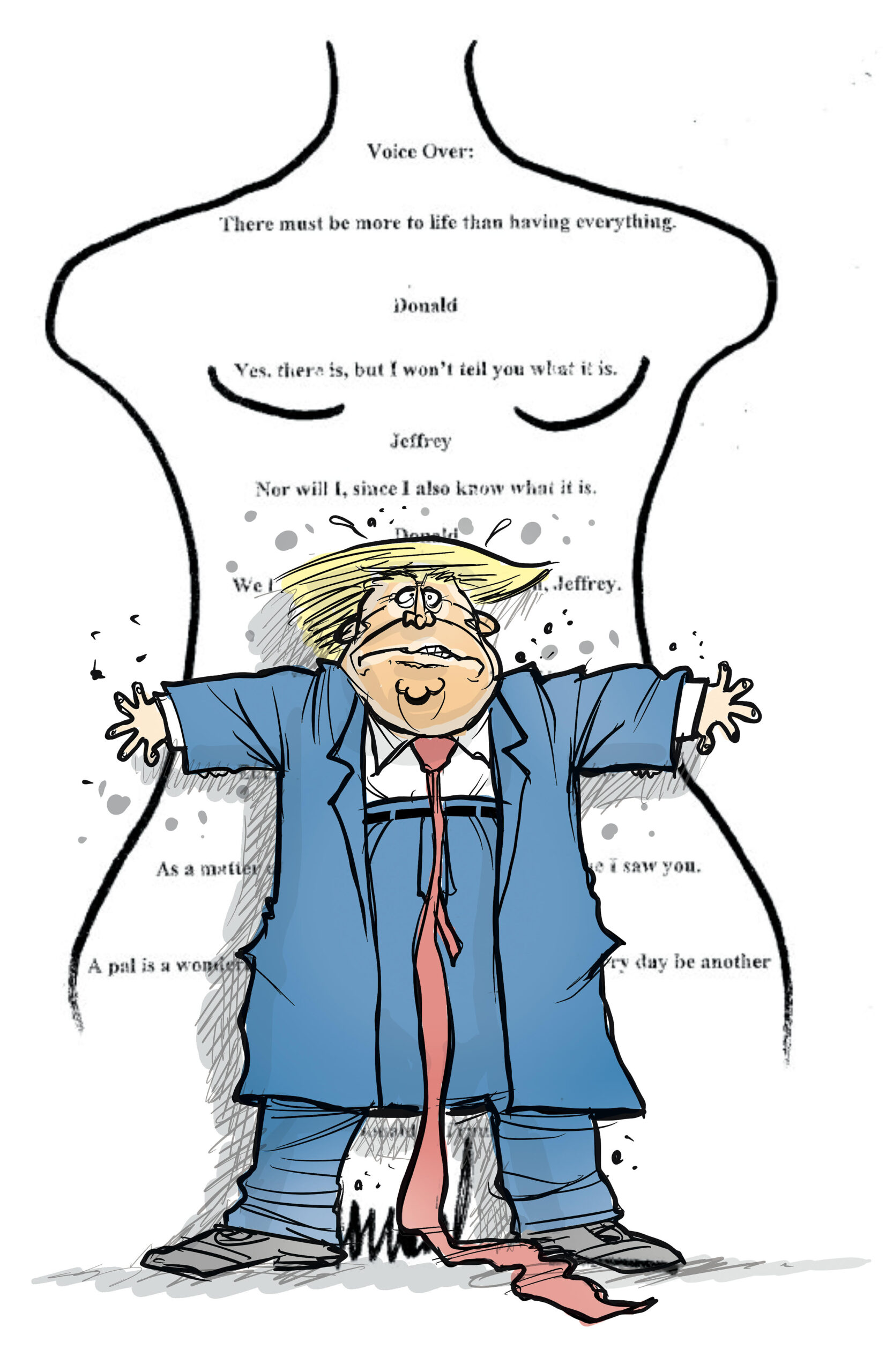
    The U.S. Department of Justice, which seems to otherwise have no trouble doing Donald Trump’s bidding under Attorney General Pam Bondi, continues to drag its feet in releasing the Jeffrey Epstein files mandated by Congress.

    Protecting the powerful

    Among the promises Trump made in his bid for the White House in 2024, releasing the investigation files regarding convicted sex offender Jeffrey Epstein should have been the easiest to fulfill. Yet, more than a year later, it took an act of Congress to force the Department of Justice to release the files — or at least some of them, at least partially.

    The documents made available recently were criticized by lawmakers and victims as incomplete and full of heavy redactions, with some of the published material quickly taken down over unspecified administration concerns.

    Epstein, who took his own life in 2019 inside a federal jail cell, was accused of exploiting or abusing hundreds of women and girls over decades, procuring them for his famous friends, who included financial titans and political leaders.

    Despite the president’s denials, he and Epstein once shared a friendship, reportedly bonding over the pursuit of women. There are videos and photos of them together, and Trump repeatedly flew on Epstein’s plane (known as “the Lolita Express”), though the president claimed he “never had the privilege” to visit Epstein’s notorious island.

    The island, Little St. James, was once described by government officials as “the perfect hideaway and haven for trafficking young women and underage girls for sexual servitude, child abuse and sexual assault.”

    The Trump administration’s efforts to delay and obfuscate regarding the files remain an affront to justice and decency. Survivors of the horrors perpetrated by Epstein and the rich and powerful he catered to deserve a public accounting of what happened to them, and there must be accountability for those who participated.

    If the president has nothing to hide, if the “privilege” was indeed never his, then whose was it? Whom is Trump protecting?
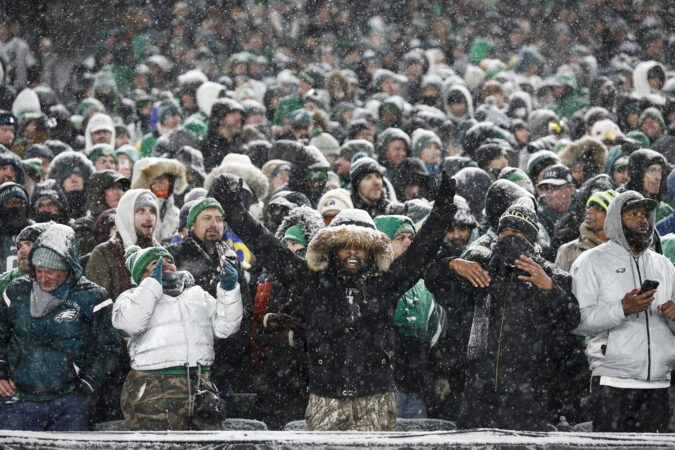
  • The Big Picture: The Inquirer’s best sports photos of 2025

    The Big Picture: The Inquirer’s best sports photos of 2025

    The Eagles won the Super Bowl, of course, and the Phillies captured the NL East title before falling out of the playoffs in excruciating fashion. These were the biggest stories for Philadelphia fans in 2025, but there was much more.

    Dazzling rookie VJ Edgecombe brought new hope for the Sixers, while the downtrodden Flyers showed new fight under coach Rick Tocchet. The city’s iconic events, the Broad Street Run and the Philadelphia Marathon, were as thrilling as ever. The PGA Tour paid a visit this summer. And the NCAA wrestling championships brought a different vibe to the city.

    The Inquirer’s photographers were there to capture it all. Here’s a look at our best photos of 2025.

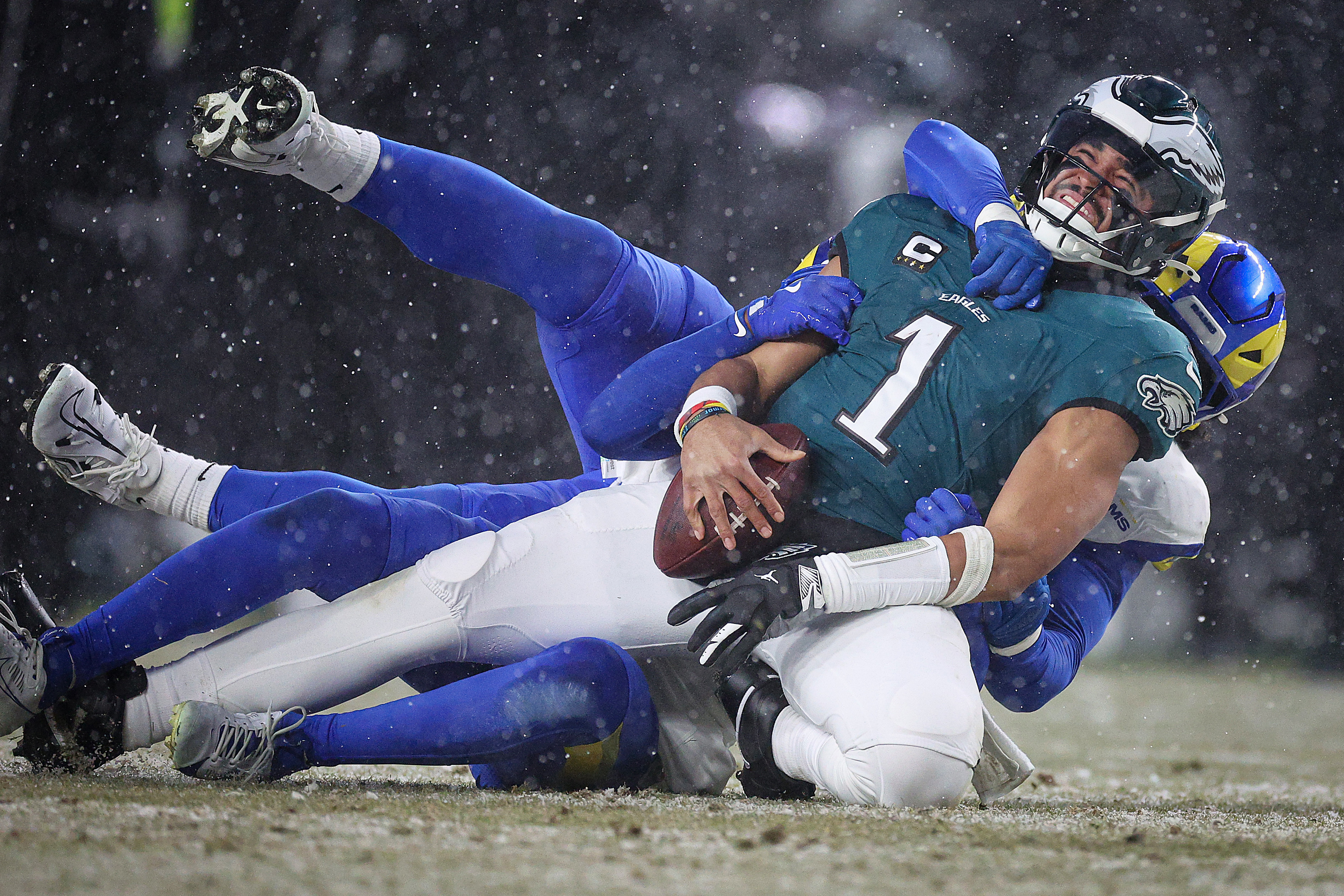
    Eagles quarterback Jalen Hurts is sacked by Rams safety Jaylen McCollough during their playoff matchup on Jan. 19. The Eagles won, 28-22.
    A reveler climbs a pole on Broad Street near City Hall as Eagles fans celebrate the NFC championship rout of the Washington Commanders on Jan. 26.
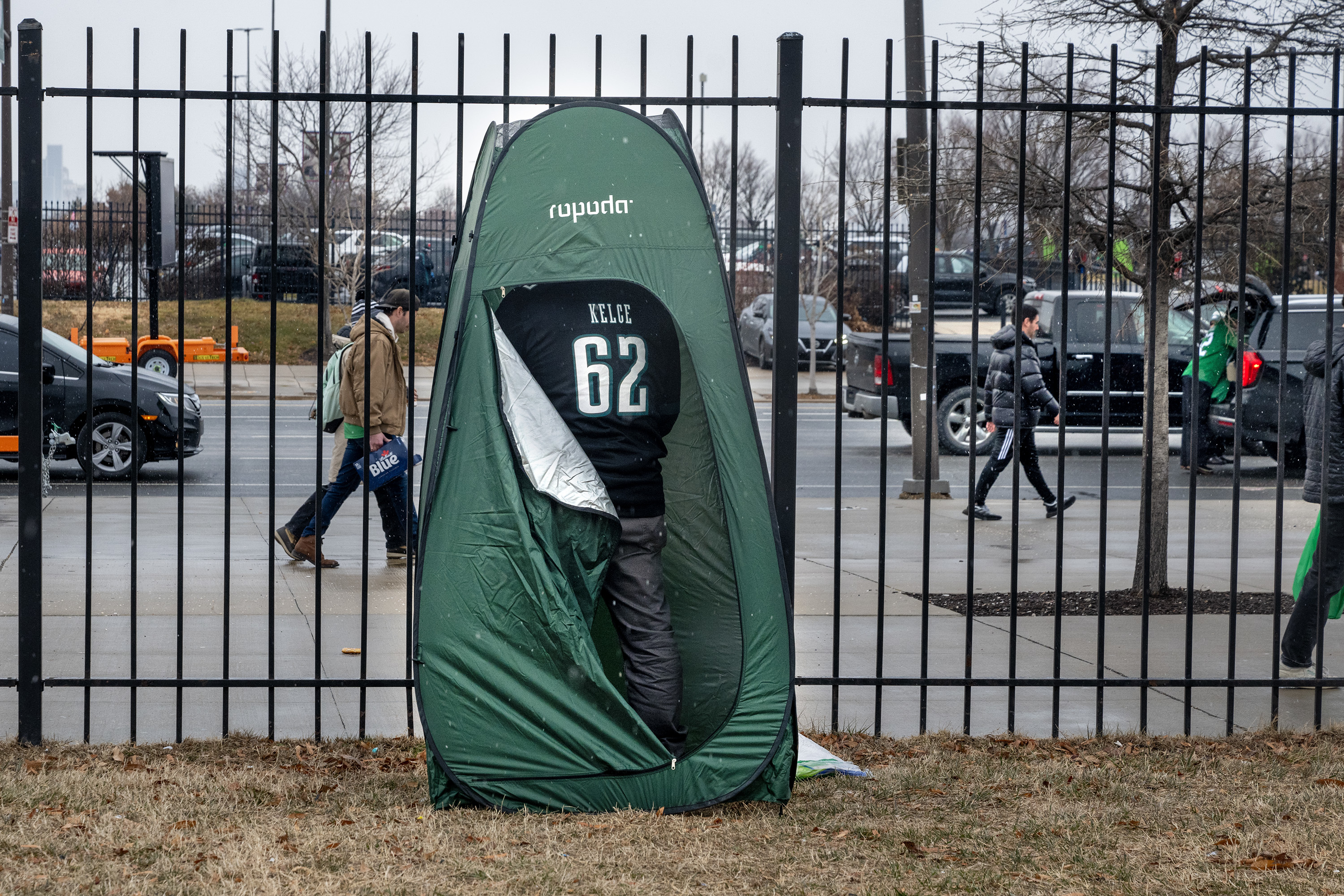
    A tailgater makes use of a personal porta-potty in a Lincoln Financial Field parking lot on Jan. 19.
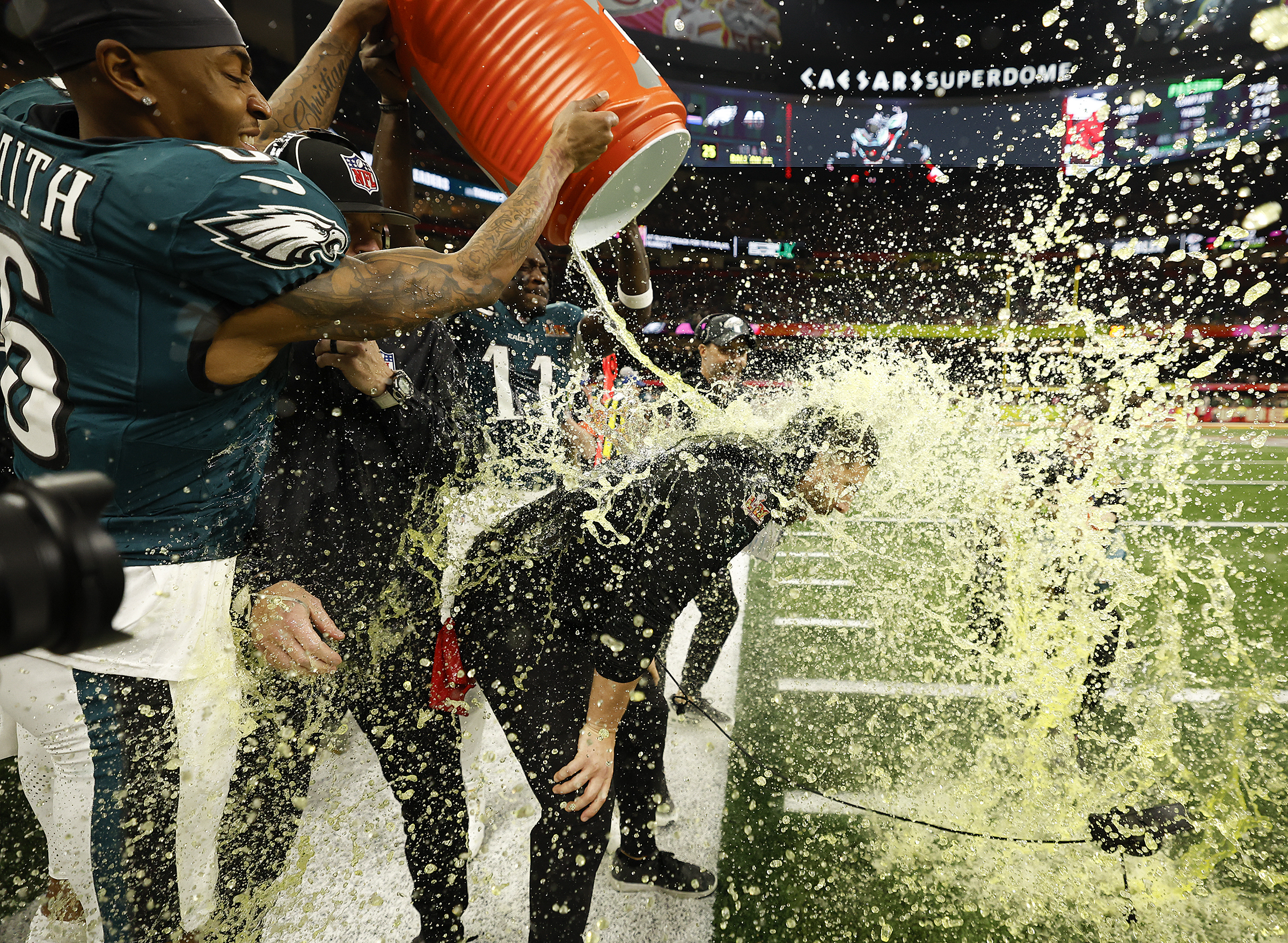
    Eagles coach Nick Sirianni gets a Gatorade shower from DeVonta Smith and A.J. Brown late in the Super Bowl rout of the Kansas City Chiefs.
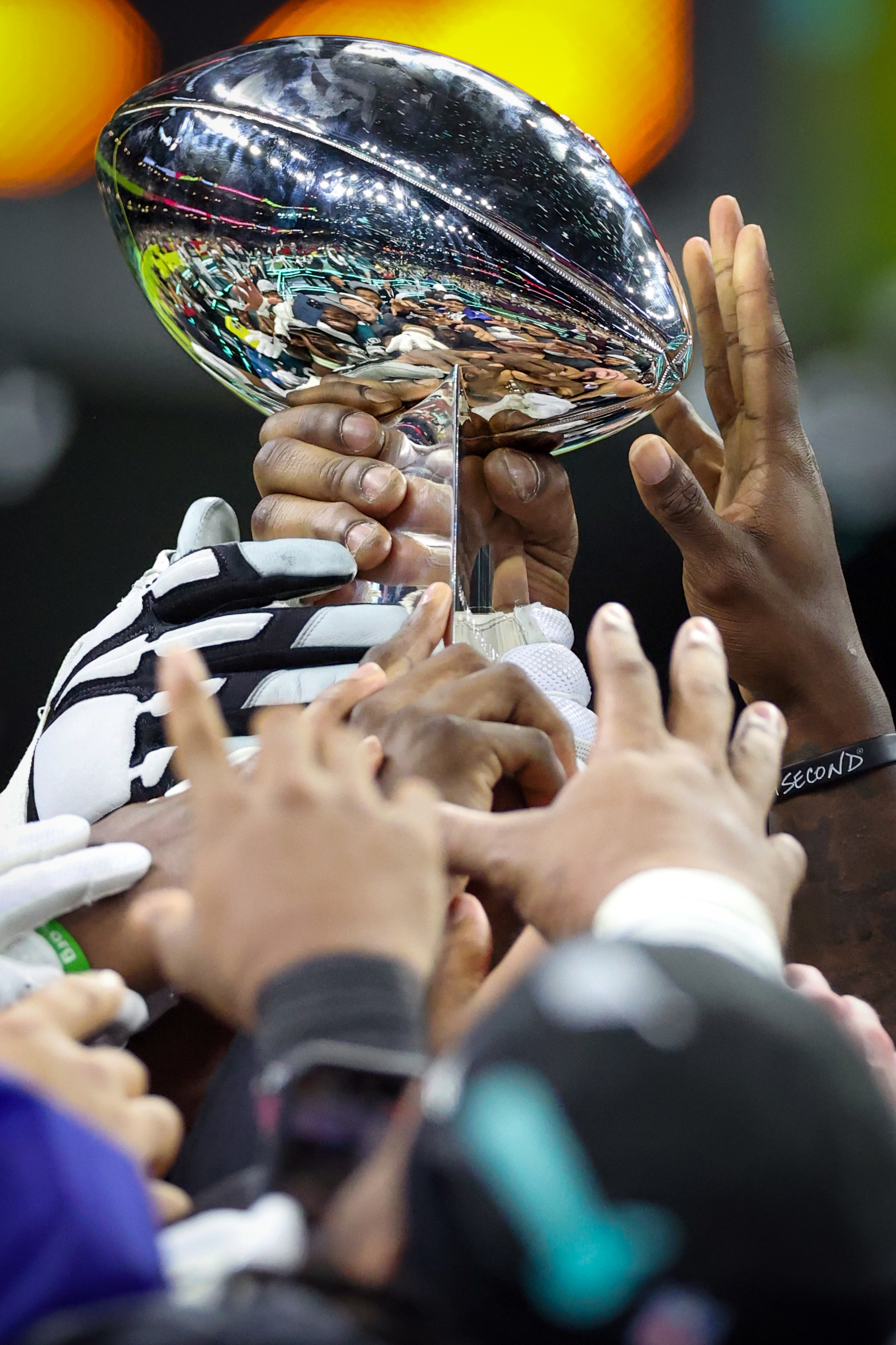
    Eagles players are reflected in the Lombardi Trophy after the 40-22 win against the Chiefs in Super Bowl LIX on Feb. 9.
    Fireworks fly at the Art Museum at the conclusion of the Super Bowl LIX victory parade on Feb. 14.
    Imhotep Charter star RJ Smith (1) celebrates with his teammates after they beat Samuel Fels High, 71-66, in the Public League championship game on Feb. 23.
    Fans sramble to avoid a foul ball during a Phillies spring training game against the Tampa Bay Rays on Feb. 25 in Port Charlotte, Fla.
    St. Joseph’s guard Laura Ziegler (left) is mobbed by Paula Maurina (right) and teammates after her game-winning shot against Richmond in the Atlantic 10 semifinals on March 8.
    La Salle’s retiring basketball coach, Fran Dunphy (left), receives a six-pack of beer and other mementos from St. Joseph’s coach Billy Lange on March 8.
    Brandon Graham hugs his daughter Emerson after his retirement announcement at the NovaCare Complex on March 18. The Eagles defensive end unretired and is playing again this season.
    Oklahoma State heavyweight Wyatt Hendrickson celebrates after defeating Olympic gold medalist Gable Steveson of Minnesota during the NCAA wrestling championship at the Wells Fargo Center on March 22.
    Minnesota Timberwolves guard Anthony Edwards grabs a rebound between a fallen Quentin Grimes and Adem Bona of the Sixers on April 5.
    Eagles running back Saquon Barkley looks at President Donald J. Trump during the Super Bowl champions’ visit to the White House on April 28.
    Runners pass a beer sign near Windrim Avenue during the Independence Blue Cross Broad Street Run on May 4.
    PGA player Keegan Bradley hits a challenging shot from a hill at the par-4 17th hole during the Truist Championship at the Philadelphia Cricket Club on May 9. Bradley shot a double bogey on the hole.
    Edmundo Sosa of the Phillies is tagged out at the plate by Reds catcher Tyler Stephenson during the fourth inning on July 4.
    Baseball’s greatest entrance: Newly acquired closer Jhoan Duran making his Phillies debut to finish off the Detroit Tigers at Citizens Bank Park on Aug. 1.
    Phillies shortstop Trea Turner leaps into the celebration after his game-winning hit against the Braves. The Phillies beat Atlanta, 3-2, in 10 innings on Aug. 30.
    Wendy Cooper of Reading takes in the scene at the TrueFan tailgate party before the Eagles played the Cowboys at Lincoln Financial Field on Sept. 4.
    Phillies outfielders Nick Castellanos and Harrison Bader greet each other with their ring fingers before a game against the Mets on Sept. 9.
    Kyle Schwarber acknowledges the crowd at Citizens Bank Park on Sept. 9 after he hit his 50th home run of the season in a game against the Mets.
    Phillies reliever Orion Kerkering shows his dejection as the Dodgers celebrate their series-clinching playoff win on Oct. 9 in Los Angeles.
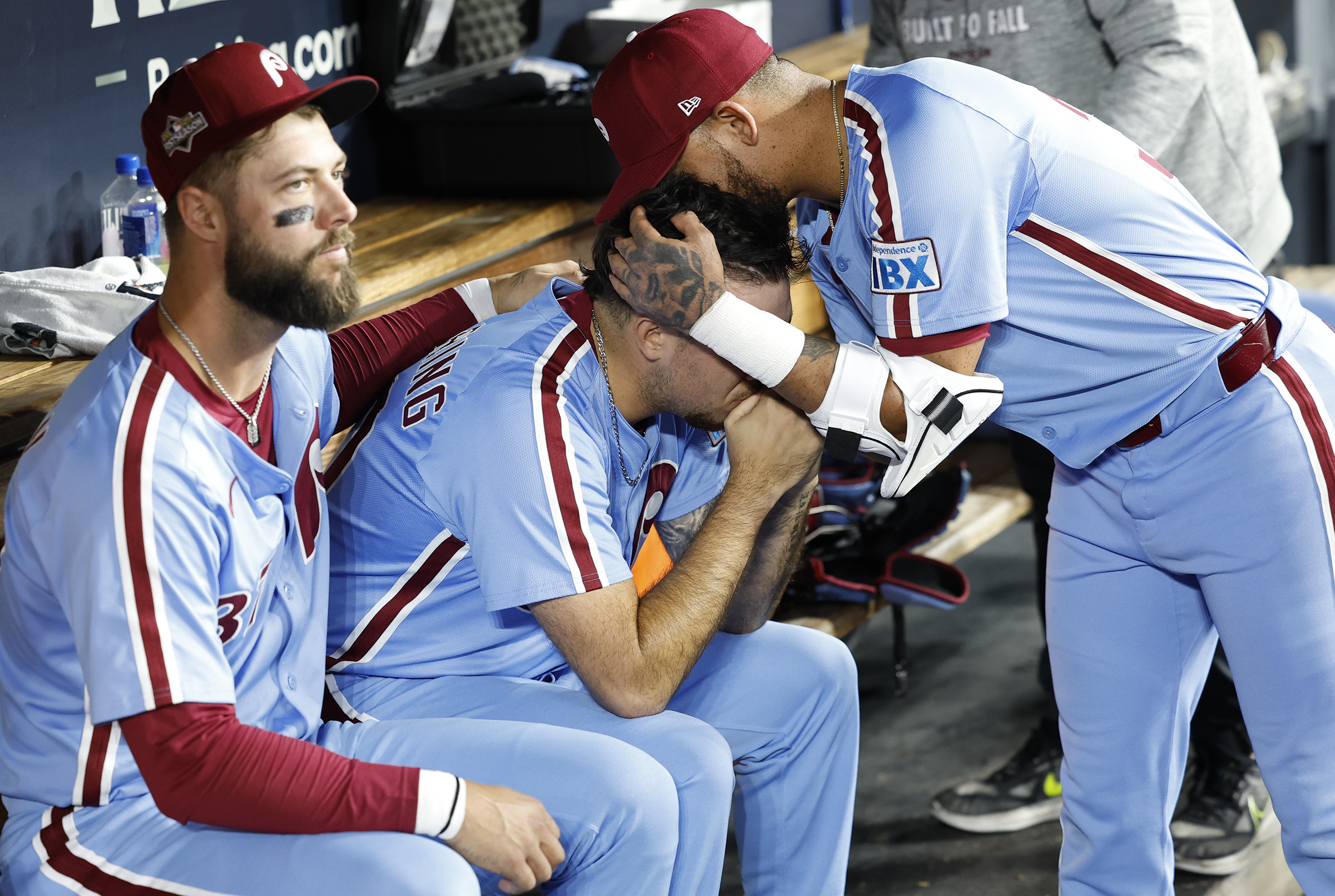
    Weston Wilson (left) and Edmundo Sosa console Orion Kerkering after the reliever’s 11th-inning error handed the Dodgers a walk-off win in the NL Division Series.
    Temple’s Peter Clarke reacts after quarterback Blake Horvath’s 51-yard touchdown run lifted Navy past the Owls, 32-31, on Oct. 11 at the Linc.
    Au’vion Horton hangs on during the bull riding event at the 8 Seconds Rodeo inside the Liacouras Center on Oct. 11.
    Flyers captain Sean Couturier leaps over Florida Panthers goaltender Daniil Tarasov during the team’s 5-2 win over the defending champs on Oct. 13.
    The Eagles defense celebrates after linebacker Jalyx Hunt’s interception return for a touchdown against the Minnesota Vikings on Oct. 19.
    Eric McGarry of Manayunk talks to his wife, Gwen Jones, on the phone after finishing the Philadelphia Marathon on Nov. 23. It was his first marathon and he was most excited about running through his neighborhood, where his wife and friends were there to cheer him on.
    Central High’s players celebrate after they won the annual Thanksgiving Day rivalry game against Northeast, 22-14.
    The Sixers’ radiant rookie, VJ Edgecombe, gets fouled by Indiana Pacers forward Pascal Siakam as he attempts a dunk on Dec. 12.
  • Stock prices have grown rapidly. So is the market a bubble?

    Stock prices have grown rapidly. So is the market a bubble?

    Is the stock market a bubble?

    The answer to this question is a big deal for the approximately one-third of well-to-do Americans who own most of the stock. However, it also matters to the broader economy and thus by extension to the majority who don’t.

    All of the ingredients that go into making a bubble are evident. Most important, stock prices have been on a tear. Prices never move in a straight line, but they’ve rocketed more or less straight up over the past decade, more than doubling since the COVID-19 pandemic.

    This amount of price growth has happened in only three other decades since the late 1800s, when the Dow Jones Industrial Average index, comprising the 30 largest publicly traded companies, was first published. Those decades were the 1920s, the 1950s, and the 1990s.

    The roaring 1920s, of course, ended terribly in the 1929 stock market crash, which ushered in the Great Depression of the 1930s. That was clearly a bubble.

    In the 1950s, stock market gains were powered by U.S. companies’ dominance of the global economy after World War II. This included companies such as General Electric, AT&T, General Motors, U.S. Steel, and DuPont. That wasn’t a bubble.

    And then there was the 1990s internet craze, which ended soon after Y2K with a dramatic decline in stock prices. No question: That was a bubble.

    The internet was a game-changing technology that resulted in enormous productivity gains and ultimately generated significant profits. However, investors had discounted all this and much more. Stock market valuations — stock prices relative to corporate earnings — surged.

    Valuations aren’t quite as lofty today as they were in the late 1990s, but they are close. And they are still on the rise. My favorite valuation measure is the ratio of the value of all publicly traded stocks, as measured by the Wilshire 5000, to economy-wide corporate profits from the Bureau of Economic Analysis.

    In the 75 years for which this valuation measure can be calculated, stock prices have averaged 12 times corporate profits, a 12-1 ratio. Currently, the ratio is 20-1. The only other time valuations have been higher was at the height of the Y2K bubble, when the measure briefly spiked to 24-1.

    But perhaps today’s extraordinary stock market valuation is justified. After all, this largely reflects the investors’ optimism about the large artificial-intelligence companies. These so-called hyperscalers are nothing like many of the fly-by-night internet companies (think Pets.com) that inflated the Y2K bubble.

    This is undoubtedly the case, but like those internet companies, the stock prices of today’s AI companies are being juiced up by investor speculation. That is, an increasing number of investors are piling into these stocks, driven by the simple logic that since their prices have risen a lot, they will continue to rise. This momentum will continue, and if it doesn’t, they will be smart enough to recognize this and find other unwitting investors to buy their stocks before the bottom drops out.

    Another form of arguably accidental speculation may also be taking hold in the stock market via the fast-growing index funds. These funds passively track a market index, like the Standard & Poor’s 500, by holding stocks in the same proportion as the index. The goal is to match the market’s performance. Index funds offer the benefits of diversification and low fees but aren’t based on an analysis of the underlying companies’ strengths.

    Thus, if the stock price of a company is rising, it will attract more investments from index funds, and its price will rise even further. There is no argument that AI-chip juggernaut Nvidia’s stock price should be up significantly, for example, but it has increased substantially more due to this self-reinforcing dynamic.

    The soaring stock market has been a powerful tailwind to the entire economy.

    The wealthy, who own the bulk of the stocks, are now much wealthier and spending accordingly. In the past year alone, stock wealth has increased by nearly a staggering $10 trillion. This newfound wealth supports a significant amount of spending, which, in turn, supports a substantial number of jobs.

    This brings into clear relief a significant threat to the economy. If the stock market is a bubble and it bursts, wiping out this wealth, consumer spending will suffer a significant blow, triggering a recession. This is precisely what happened after the bursting Y2K bubble.

    So, is the stock market a bubble?

    Well, if it isn’t, it soon will be if the current trends continue for much longer. The final ingredient for a bubble is that nearly all the naysayers are silenced. That happens when they’ve called out the bubble for so long, they are no longer considered credible. Any skepticism is thrown to the side, and the bubble inflates more.

    We aren’t there yet. There are still too many naysayers like me.

  • Letters to the Editor | Dec. 26, 2025

    Letters to the Editor | Dec. 26, 2025

    Gun control works

    In response to the Dec. 14 mass shooting at Bondi Beach in Australia, right-wing voices in the U.S. have quickly moved to point to this tragedy as evidence that gun control does not work. This is not only a disgusting lie, but also a claim that is so divorced from reality it would be laughable were its consequences not so dire.

    According to the Associated Press, since the Port Arthur massacre in 1996, which saw Australia implement sweeping gun control laws, that nation has experienced a total of six mass shootings. According to the Gun Violence Archive, the U.S. had twice that number in December 2025 alone.

    This does not have to be our reality. We do not have to continue losing members of our communities to gun violence. Gun control works, and while our legislators should have passed commonsense gun control decades ago, the least they can do is pass it now.

    Katherine Roberts, Philadelphia

    Freedom doesn’t defend itself

    The United States was founded on the idea that individual rights must be protected from usurpation. Those rights, rooted in natural law and expressed through law and custom, were never meant to survive on principle alone. They endure only when citizens actively understand and defend them. History shows that rights are rarely taken outright; more often, they are lost through neglect.

    A free society depends on the recognition that liberty is shared. In a nation defined by difference, coexistence is not optional, and respect is not sentimental — it is structural. When Americans ignore one another or reduce differences to something threatening, the civic bonds that hold the country together begin to weaken. Division does not start with conflict; it begins when responsibility is abandoned.

    The greater danger emerges when ignorance gains influence and truth is treated as negotiable. In such moments, freedom is not abolished but rebranded — used to justify exclusion, distortion, and power without accountability. Institutions remain standing, but their purpose thins. Law continues, but its moral authority erodes.

    This is the warning worth repeating: Rights lost through complacency are not easily recovered through outrage. Self-government depends not only on laws and elections, but on an informed and engaged citizenry. When truth yields to convenience and civic duty gives way to faction, the damage is no longer political — it becomes foundational.

    Joel Alan Eisenberg, Warminster

    An easy fix

    The city is expecting people from New Jersey to come see the Mummers Parade, as well as visitors during the 2026 celebration. It’s really a shame how they will be greeted when they come up from the 15th Street PATCO station, because the elevator never works, and the steps are falling apart.

    I have complained many times over the last few years. PATCO tells me it’s the city’s responsibility once you get past the turnstile. I’ve complained to the city, to the visitors bureau, to the mayor’s office. When I finally got a response, they told me to complain to SEPTA. When I told them it is not a SEPTA station, I never heard from them again. How can they not know this? I can’t believe I’m the only one who ever told them about this. I know the city has bigger problems, but this is something that can be easily fixed if they want people to come in to spend money in the city.

    Fradele Feld, Cherry Hill

    Sidewalk cleanups

    I read with interest the article about the Center City Residents Association ceasing its contract with the Center City District to clean sidewalks in its own catchment area.

    In the Graduate Hospital part of the city, we struggle with similar issues, and have in the past worked with various groups to help us keep the sidewalks clean. These groups are helpful and employ local workers.

    The one missing ingredient is that of personal responsibility: If every homeowner, landlord (those who rent out their residential properties), and business simply cleaned up their own public space on a daily basis, the city would be immensely cleaner.

    It would be lovely if the city would champion this notion of personal and shared responsibility — it would reap great benefits and would cost nothing. A real win-win. It would also require the city to expand its own enforcement in addition to policing antidumping measures and the like. As a physician, I can tell you that this is also a public health issue, and not just one of aesthetics.

    David Share, chair, South of South Neighborhood Association Clean and Green Committee

    Power of the people

    As we approach our 250th birthday as a nation, I wonder what the founders would think of the current state of affairs.

    They would be alarmed at the power wielded by our president. They would be even more concerned about how inept the people’s branch, Congress, is. The lack of bipartisanship is causing the imbalance of power between the branches of government. Without Congress doing its job, someone else has to do what needs to be done.

    The founders would feel like America is right back where it was before the American Revolution, i.e., taxation without representation.

    A national movement should be organized to protest how we’re paying taxes through the nose and not getting representation from our elected representatives. The time is now. Start by marching on the National Mall in Washington, D.C.

    Brian Reilly, Medford

    . . .

    I believe in the adage, ”It bears repeating.” When you apply that to Donald Trump, I can understand why people are interested in reading many different accounts of his depraved thirst for power and his ruthless attempts to get it. However, reading those details repeated over and over again ad infinitum will not necessarily tell me how to fight Trump.

    Your editorial was an accurate and direct analysis of the Jeffrey Epstein files release, and we see once again the deceptions in which Trump engages.

    The burning question in my mind is, after the recording of all his lies, over 30,000, what do we do about it?

    We can’t just moan and complain and write editorials for the next three years. We need to do something more effective.

    I personally think we need to have more “No Kings” protests and big demonstrations, as we had against the Vietnam War.

    Judy Rubin, Philadelphia

    Dishonor endures

    As I read the recent Associated Press article about Vice President JD Vance’s recent speech, in which he refused to denounce bigots in the Republican Party, I couldn’t help comparing Vance’s positions with former Washington Post journalist Jennifer Rubin’s recent Substack post, “Remember the Unsung Resistance Fighters.” While Vance states outright his desire for a country in which white supremacy guided by Christian nationalism rules, Rubin asks us to acknowledge those of us who continue to stand in opposition, supporting instead the rule of law and the Constitution of the United States of America.

    Someday, Trump will be gone from office. To all the Republican government officials — including the U.S. Supreme Court — your voting record will remain. And with that voting record, so, too, will your dishonor.

    Cindy Maguire, Merion Station

    Join the conversation: Send letters to letters@inquirer.com. Limit length to 150 words and include home address and day and evening phone number. Letters run in The Inquirer six days a week on the editorial pages and online.

  • Dear Abby | Loss of son has grown even harder to bear

    DEAR ABBY: My son died of cancer at 33. It was heartbreaking. My daughter-in-law, “Belinda,” had grown distant before his death, and although they had a son through artificial insemination, I have almost never seen him. I helped with the weeding in my son’s yard, but any time I came, Belinda always had the baby at the park or someplace else.

    Now that my son is gone, she won’t answer any phone calls or texts. We do have some contact with her family. They have asked her why she won’t contact us, and she has no explanation. My theory is that Belinda was uncomfortable sharing our son, and it has transferred to the grandchildren. I say “grandchildren” because she used his sperm to have another child. We found out by accident that a baby girl was born. We were never notified. While I doubt this plays a big part in this, Belinda is bipolar.

    As it stands, I no longer make an effort to have a relationship with my grandchildren. They are so young, and I anticipate difficulty in pursuing grandparents’ rights because of their ages and their mother’s attitude toward us. This is painful, as they are the only part of my son that remains. I feel helpless and have pretty much blocked out the fact that I have grandchildren. Do you have any advice?

    — BLOCKED IN OHIO

    DEAR BLOCKED: What a sad letter. I do have some thoughts about your situation. The first is that because your son’s sperm was used to conceive the children, you might benefit from discussing this with an attorney and asking if your state is one in which there are grandparents’ rights. The second is, because you are hurting, ask your doctor for a referral to a licensed family therapist to help you accept what you cannot change. You have my sympathy.

    ** ** **

    DEAR ABBY: My mother took care of her mother-in-law with Alzheimer’s for nine years. My father had two sisters who had nothing to do with their mother during that time. Now, the younger sister is having health problems and wants my parents, who are 78, to take her to appointments that are more than an hour away. She also tried to move in with them. Abby, this sister has two grown children who live with her. Neither one works. One is on Social Security; the other has a spouse living there. (He has a job.) All of them have vehicles and an income to help her.

    My parents have their own health issues and really are not able to do what she wants or expects. She has always been selfish and childish. She’s constantly calling and giving my mother some sob story. I’d like to tell my aunt they aren’t able to do what she wants, but I don’t want to put my parents in an awkward position. What should I do?

    — WARY IN WEST VIRGINIA

    DEAR WARY: In what way would telling your aunt that your parents really aren’t able to do the things she’s asking put them in an awkward position? If it’s the truth, then TELL her.

  • Horoscopes: Friday, Dec. 26, 2025

    ARIES (March 21-April 19). Your sense of fun is going strong, and you’ll be inclined to say yes to friends intent on roping you into their games and schemes. Going along for the ride will definitely have its perks!

    TAURUS (April 20-May 20). People are curious about you. You’ll share, knowing they’re unlikely to understand. If they ask why you do what you do or why you did what you did, just shrug lightly. “Because I felt like it” is a complete philosophy.

    GEMINI (May 21-June 21). You like to keep your emotional weather private, but today you could go either way. You’re sensitive, but you choose when to show it. Process feelings on your own whim. It’s really OK to be unpredictable in this and other small, delightful ways.

    CANCER (June 22-July 22). Follow your body’s response to requests of you. If your chest tightens or you feel heavy, don’t go. If you feel curious, floaty, or lightly mischievous, go. No rationalizing. No “I should.” Only: How does this feel?

    LEO (July 23-Aug. 22). You’re reliable, impressive and talented at solving problems. Do avoid letting anyone come to you every time with the same problem. If you always fix things for them, they never learn, and you become their default crisis manager.

    VIRGO (Aug. 23-Sept. 22). Mismatched intensity feels frustrating and has potential to discourage. But when you’re with people who can meet your hustle, your warmth and your creativity, the whole scene brightens. You get things done together and the teamwork creates a sense of belonging.

    LIBRA (Sept. 23-Oct. 23). Your creative energy is potent today. Don’t let it stay abstract; give it form. What you express now will come to have a life of its own and will spark something in the people who receive it.

    SCORPIO (Oct. 24-Nov. 21). Too much negotiating hurts a relationship because the longer a negotiation goes on, the more likely you are to accidentally hurt someone’s ego by valuing or devaluing the wrong thing. Make a deal or don’t make a deal, but keep it short!

    SAGITTARIUS (Nov. 22-Dec. 21). Suffering doesn’t mean you’re doing life wrong. Sometimes it means life is asking too much of you. You’re one person doing the work of many. Of course you’re going to feel overextended. Your frustration about that is data.

    CAPRICORN (Dec. 22-Jan. 19). You have fans. The interest and admiration will be an energy boost. And don’t worry, you don’t have to perform for anyone. Simply do what comes naturally and make yourself comfortable … because your comfort makes everyone comfortable.

    AQUARIUS (Jan. 20-Feb. 18). In the world of entertainment, it’s a sin to bore the audience. In polite society, it’s the norm. You’re in the mood to deliver an experience to people, and it’s OK if you go a bit out of the expected for the sake of capturing and holding their attention.

    PISCES (Feb. 19-March 20). Wondering if someone is good for you? Consider that “good for you” doesn’t always feel fun in the moment. Also, your needs are changing so rapidly now, the answer might be different in a few days. Return to the question next week.

    TODAY’S BIRTHDAY (Dec. 26). Welcome to your Year of Sharp Timing. Your quips land, you’ll buy and sell auspiciously, you’ll say yes in the right moment, pass when necessary, and catch opportunities just before they peak. In relationships, someone meets you exactly where you are time and again. More highlights: a money-saving miracle, a supportive collaboration and a long-awaited green light. Virgo and Pisces adore you. Your lucky numbers are: 6, 8, 20, 13 and 50.

  • ’Twas the night before Christmas at Trump’s Mar-a-Lago. Here’s what happened.

    ’Twas the night before Christmas at Trump’s Mar-a-Lago. Here’s what happened.

    PALM BEACH, Fla. — ’Twas the night before Christmas, and all through the villa, the president assured children that Santa wasn’t a guerrilla.

    “Santa’s a very good person,” President Donald Trump said on Christmas Eve, during the annual presidential ritual of helping excited little ones track Santa Claus’ location. “We want to make sure he’s not infiltrated — that we’re not infiltrating into our country a bad Santa.”

    This wasn’t exactly what Jasper, 10, from Oklahoma, had wanted to know when he dialed the NORAD Santa Tracker on Wednesday afternoon. He had called to find out where St. Nick and his reindeer were on their nightlong journey circumnavigating the globe, which the hotline “tracks” with the aid of top U.S. military technology.

    But out of the phone Jasper rang came a clatter. It was none other than Trump! Nothing was the matter.

    The president played along, disclosing Santa’s location, which at that moment, he said, was in the Czech Republic. But first, he offered a few choice observations about Jasper’s own.

    “Santa loves Oklahoma like I do,” Trump said. “You know, Oklahoma was very good to me in the election, so I love Oklahoma. Don’t ever leave Oklahoma, OK?”

    “OK,” Jasper replied haltingly. “I’ll try.”

    Such was Christmas Eve at Mar-a-Lago, the president’s private club in Palm Beach. He had spent the morning at his golf course in West Palm Beach, just across the lagoon, and by the afternoon, he was sitting in a gilded chair before a gilded Christmas tree in his gilded living room, the first lady at his side.

    With Melania in her heels and Trump in his tie, the first couple settled down to give Christmas cheer a try. The president took his calls over speakerphone; the first lady took hers murmuring softly into a receiver held closely to her ear: “She’s able to focus totally without listening to this,” Trump said.

    Jasper’s 4-year-old sister, Anastasia, told Trump she wanted a dollhouse for Christmas.

    “I think we can work that out,” Trump replied. “I think Santa’s gonna bring you the most beautiful dollhouse you’ve ever seen.” (Whether the dollhouse would be subject to his administration’s tariffs, Trump didn’t say. He has been much clearer about dolls, saying earlier this year while imposing global tariffs that young girls would be “very happy” with just “two or three or four or five.”)

    Next was Savannah, 8, from North Carolina, who wanted to know if Santa would be mad if she didn’t leave out cookies for him. The president cocked his head and smirked. “This is getting good!” he told reporters.

    “I think he won’t get mad, but I think he’ll be very disappointed,” he counseled Savannah. “You know, Santa’s — he tends to be a little bit on the cherubic side. Do you know what cherubic means? A little on the heavy side. I think Santa would like some cookies.”

    Amelia, 8, from Kansas, told Trump she wasn’t sure what she wanted for Christmas. “Not coal,” she said.

    “Not coal, no, you don’t want coal,” the president agreed. Then he caught himself. “Well, you mean clean, beautiful coal.” He turned to the media. “I had to do that, I’m sorry,” he said.

    “Coal is clean and beautiful,” he told Amelia. “Please remember that, at all costs.”

    Next up came a 5-year-old who proudly informed the president she was from Pennsylvania.

    “Pennsylvania’s great,” Trump said. “We won Pennsylvania — actually, three times,” he continued. (He did not.)

    “This is America,” he said to reporters at one point between calls. The president did not explain what he meant by this.

    His last call was with a pair of sisters, ages 6 and 10, from Tacoma, Wash. One of them told Trump she would like a pinball machine for Christmas.

    “Pinball machine? That’s great.” Trump said. “You know Elton John?” If she did, she did not say. Nor did she point out that The Who, not Elton John, first released “Pinball Wizard.”

    “He did ‘Pinball Wizard,’” the president continued. “We’ll have to send you a copy of ‘Pinball Wizard.’”

    Trump didn’t take any questions from reporters, though there were many questions to ask unrelated to Santa’s whereabouts. What about the latest tranche of the Epstein files, which include wide-ranging references to the president? Or the Supreme Court decision that thwarts his planned National Guard deployment in Chicago? Is Nicolás Maduro on the naughty or nice list?

    Not today — not on Christmas Eve. Couples were arriving in suits and ball gowns; the aroma of roasting meat wafted through the halls. The club’s celebrations were about to begin, and the president was in the holiday spirit. “Show them the festivities,” he instructed his staff, “and then send them home for Christmas dinner.”

    Around 7 p.m., reporters were escorted into the Mar-a-Lago ballroom to take in the teeming dessert platters and his guests’ holiday finest. Trump sat at a table near the center of the room with his wife and father-in-law, cordoned off from his fellow revelers with a velvet rope.

    Two minutes later, the media were whisked away. But we all heard him Truth, ere he retired for the night: “Merry Christmas to all, including the Radical Left Scum that is doing everything possible to destroy our Country, but are failing badly.”

  • U.S. strikes Nigeria after Trump warnings on Christian killings

    U.S. strikes Nigeria after Trump warnings on Christian killings

    U.S. forces struck Islamic State targets in northwestern Nigeria on Thursday evening, following up on threats to the country over killings of Christians, President Donald Trump said in a Truth Social post.

    Trump said the military conducted “multiple strikes” but did not elaborate. In a follow-up post, U.S. Africa Command said multiple people it said were ISIS terrorists were killed in strikes in Sokoto State, which is in the northwest portion of the country, bordering Niger, and has become a hot spot for a resurgence in violent extremism and the kidnapping of schoolchildren.

    “MERRY CHRISTMAS to all, including the dead Terrorists, of which there will be many more if their slaughter of Christians continues,” Trump posted to social media.

    The Pentagon said the Nigerian government approved the strikes and worked with the U.S. to carry them out. No further details on how the strikes were conducted were immediately available.

    A spokesperson for the Nigerian foreign ministry confirmed the U.S. strike Thursday evening, saying that “precision hits on terrorist targets in Nigeria by air strikes” had been carried out in response to the “persistent threat of terrorism and violent extremism.”

    “Terrorist violence of any form, whether directed at Christians, Muslims or other communities remains an affront to Nigeria’s values,” the statement from spokesperson Kimiebi Imomotimi Ebienfa said.

    For months Trump and Republican lawmakers, including Sen. Ted Cruz of Texas and Reps. Tom Cole of Oklahoma, Mario Diaz-Balart of Florida, and Riley Moore of West Virginia, have raised alarms about killings of Christians in Nigeria amid larger ethnic and religious bloodshed. Trump had previously directed the Pentagon to plan potential military action in Nigeria, and earlier this month the State Department restricted visas for Nigerians involved in the violence.

    Trump threatened an attack in Nigeria early last month, writing on his Truth Social site that: “If the Nigerian Government continues to allow the killing of Christians, the U.S.A. will immediately stop all aid and assistance to Nigeria, and may very well go into that now disgraced country, ‘guns-a-blazing,’ to completely wipe out the Islamic Terrorists who are committing these horrible atrocities.”

    His post followed a meeting in Washington between top advisers and representatives of religious groups and came after he watched a Fox News segment on the topic aboard Air Force One, the Washington Post reported. The push to make the issue an administration priority was long in the making, according to three people with knowledge of the situation, but the president’s threat of military action was entirely unexpected, they said.

    The Council on Foreign Relations reported earlier this year that the Sahel, a region that spans multiple countries across Central Africa including Niger, Nigeria, Mali, Chad, and Sudan, has seen a significant uptick in the growth of violent extremist organizations as a result of decreased international counterterrorism support.

    U.S. forces lost access to key counterterrorism bases in Niger and Chad in 2024. In their place, a number of proxy military groups such as the Russian-backed Wagner Group have filled in.

    But the Trump administration has been looking at ways to reduce the U.S. role in Africa overall as it shifts to a strategy that will focus more military assets and attention to the Western Hemisphere. The administration is also looking at potentially consolidating U.S. Africa Command into a theater command that would also include U.S. European Command and U.S. Central Command, which could further reduce the attention and resources the region would receive.

    That proposal drew concern from some lawmakers, including Democratic Sen. Chris Coons of Connecticut, who cautioned against the U.S. pulling back given Africa’s young and quickly growing population and economic importance.

    Nigeria is a diverse, multiethnic country split between the mostly Muslim north and predominantly Christian south. The country’s 230 million people are roughly split between Christians and Muslims. While violence has sometimes targeted Christians, it has also deeply affected Muslims, according to Nigerian and Western analysts.

    Most violence in Nigeria has taken place in the northeast, where the extremist group Boko Haram has regularly attacked churches and kidnapped children for more than a decade as part of its campaign to build an Islamist state through violence.

  • A Venezuelan family’s Christmas: From the American dream to poverty

    A Venezuelan family’s Christmas: From the American dream to poverty

    MARACAY, Venezuela — This was not the Christmas that Mariela Gómez would have imagined a year ago. Or the one that thousands of other Venezuelan immigrants would have pictured. But Donald Trump returned to the White House in January and quickly ended their American dream.

    So Gómez found herself spending the holiday in northern Venezuela for the first time in eight years. She dressed up, cooked, got her son a scooter, and smiled for her in-laws. Hard as she tried, though, she could not ignore the main challenges faced by returning migrants: unemployment and poverty.

    “We had a modest dinner, not quite what we’d hoped for, but at least we had food on the table,” Gómez said of the lasagna-like dish she shared with her partner and in-laws instead of the traditional Christmas dish of stuffed corn dough hallacas. “Making hallacas here is a bit expensive, and since we’re unemployed, we couldn’t afford to make them.”

    Gómez, her two sons, and her partner returned to the city of Maracay on Oct. 27 after crossing the U.S.-Mexico border to Texas, where they were quickly swept up by U.S. Border Patrol amid the Trump administration’s crackdown on immigration. They were deported to Mexico, from where they began the dangerous journey back to Venezuela.

    They crossed Central America by bus, but once in Panama, the family could not afford to continue to Colombia via boat in the Caribbean. Instead, they took the cheaper route along the Pacific’s choppy waters, sitting on top of sloshing gasoline tanks in a cargo boat for several hours and then transferring to a fast boat until reaching a jungled area of Colombia. They spent about two weeks there until they were wired money to make it to the border with Venezuela.

    Gómez was among the more than 7.7 million Venezuelans who left their home country in the last decade, when its economy came undone as a result of a drop in oil prices, rising corruption, and mismanagement. She lived in Colombia and Peru for years before setting her sights on the U.S. with hopes of building a new life.

    Trump’s second term has dashed the hopes of many like Gómez.

    As of September, more than 14,000 migrants, mostly from Venezuela, had returned to South America since Trump moved to limit migration to the U.S., according to figures from Colombia, Panama, and Costa Rica. In addition, Venezuelans were steadily deported to their home country this year after President Nicolás Maduro, under pressure from the White House, did away with his long-standing policy of not accepting deportees from the U.S.

    Immigrants arrived regularly at the airport outside the capital, Caracas, on flights operated by a U.S. government contractor or Venezuela’s state-owned airline. More than 13,000 immigrants returned this year on the chartered flights.

    Gómez’s return to Venezuela also allowed her to see the now 20-year-old daughter she left behind when she fled the country’s complex crisis. They talked and drank beer during the holiday knowing it might be the last time they share a drink for a while — Gómez’s daughter will migrate to Brazil next month.

    Gómez is hoping to make hallacas for New Year’s Eve and is also hoping for a job. But her prayers for next year are mostly for good health.

    “I ask God for many things, first and foremost life and health, so we can continue enjoying our family,” she said.

  • ‘Carol of the Bells’ was born in a Ukrainian city destroyed by Russia

    ‘Carol of the Bells’ was born in a Ukrainian city destroyed by Russia

    DNIPRO, Ukraine — The cherished, century-old Ukrainian song that Americans know as “Carol of the Bells” was written for layers upon layers of voices to fill churches, concert halls, and city squares.

    But in wartime, Ukrainians have learned to improvise.

    For one choir displaced by Russian bombardment from the very city where many believe the song was written, that means arranging the complex choral melody for just three singers this Christmas, down from the usual 30.

    Hearing the arrangement performed by just three singers gives a sense of Ukraine after years of war at the moment: depleted, persistent, still beautiful.

    The choir is from a historic music school in the besieged eastern city of Pokrovsk — an institution so tied to the original Ukrainian song, called “Shchedryk,” or “Bountiful,” that it bears the name of its composer, Mykola Leontovych.

    The piece has long served as an unofficial anthem for the city, where he lived from 1904 to 1908.

    “Wherever we would go, we would sing this song,” said Alla Dekhtyar, 67, the school’s choir director, who will be one of its three singers to perform at the school’s downsized holiday concert this month. “It was like our business card.”

    That was before Russia’s devastating advance on Pokrovsk forced most residents — including every member of the choir — to flee elsewhere in Ukraine or Europe.

    The Leontovych music school evacuated its most precious instruments in 2024, and drone footage of the city shows the building has since been largely destroyed. Russian forces now control about 95% of what remains of the city, which they aggressively shelled like so much of Ukraine they have sought to control.

    The Leontovych school reopened in exile last year in Dnipro, about 115 miles to the west.

    But with Pokrovsk’s population so widely scattered, the choir that once blended dozens of voices for regular performances in Pokrovsk is down to just two sopranos and an alto, including Dekhtyar.

    Even so, the trio will go ahead with the modified rendition of “Shchedryk” this year. Choosing another, simpler song to perform at the forthcoming holiday concert was never an option.

    Singing the song in its original Ukrainian remains an act of resistance against Russian aggression — and a reminder of Ukraine’s contributions to the global cultural canon.

    That is especially true for those displaced from Pokrovsk. While the song is beloved across Ukraine, it is particularly special for the eastern city, where many believe Leontovych began writing it long before it premiered in Kyiv in 1916 and stunned an American crowd at Carnegie Hall in 1922.

    “For everyone else, that melody means Christmas,” said Angelina Rozhkova, director of the Pokrovsk Historical Museum, who also lives in exile in Dnipro. “For us, that melody means home — a home that we don’t have anymore, a home that is in ruins.”

    “For Russia,” she added, “our home means territory that they want to take from us.”

    Leontovych was the son of an orthodox priest and an aspiring music teacher. In 1904, he moved with his young wife to the small eastern village of Hryshyne — a hub for rail workers expanding the train line, which eventually became Pokrovsk.

    Leontovych was born in the Vinnytsia region of central Ukraine in 1877, and there are competing tales of how he ended up so far east. One version is that he heard about a job posting to teach music at the railway school from rail workers themselves, Rozhkova said. Another claims he responded to a newspaper ad.

    Once there, he directed several musical groups, including a choir of rail workers. They sang songs with Ukrainian, Russian, and Jewish roots — but his own music was influenced by sounds from his childhood. Leontovych was a fierce believer in an independent Ukrainian state, and as he gained fame he was viewed, like other Ukrainian intellectuals, as a threat to Russia’s influence over a country it claimed as its own.

    “He is connected to the culture of Donbas,” Rozhkova said, referring to the part of eastern Ukraine that includes Pokrovsk, and which Russia is trying to conquer. “He was very much carrying the flag of Ukrainian culture. He was performing repurposed traditional Ukrainian songs with his choir.”

    Historians believe that the opening notes of “Shchedryk” — the same ones that have come to signal the start of the Christmas season around the world — originated from a folkloric melody Leontovych heard sometime in his childhood, or that a choir member shared with him from their own memories.

    In the original version — the one still sung in Ukraine — there is no “ding dong, ding dong,” no mention of silver bells, no announcement that “Christmas is here.”

    The lyrics never even mention Christmas.

    Instead, voices describe a swallow fluttering through the sky as it ushers in a prosperous new year, urging a farmer to greet his newborn lambs and celebrate his future. It is because of that Pokrovsk includes a drawing of a swallow on the city’s crest, which is based on a piece of art made by Leontovych’s father.

    The song made its major debut abroad only in 1922, one year after a Soviet security agent assassinated Leontovych over his nationalist views. A Ukrainian choir promoting the country’s independence and cultural heritage performed it in Carnegie Hall that year to remarkable reviews — although some American newspapers wrongly praised it as Russian music.

    Eventually, Ukrainian American composer Peter Wilhousky adapted the song with a completely different set of lyrics in English, transforming it into a Christmas classic.

    “When Leontovych was writing ‘Shchedryk,’ he didn’t understand he was creating a hit,” said Elmira Dzhabrailova-Kushnir, 39, a cultural history specialist in Kyiv. “For him, this was an ethnic study.”

    He built the iconic song around the distinct opening notes, building it out into a masterpiece that weaves different voices and melodies into a singular experience for the audience.

    “He took three notes and, through his genius, worked it into that song,” Dekhtyar said.

    A week before Christmas, Dekhtyar and her trio from Pokrovsk gathered in the new Leontovych music school to rehearse.

    The building in Dnipro is cozy and clean, the practice rooms complete with pianos evacuated from Pokrovsk last year.

    But the space lacks most of the memories and people that made it home. Albums of archival photos dating back decades sit stacked in a corner. A painting of Leontovych leans against the wall.

    Dekhtyar, who used to direct the choir, now sings in it as lead soprano. Her daughter, Natalia Aleksahina, 44, who also teaches vocals at the school, has taken the alto part. Their friend Viktoriia Ametova, 43, joined Dekhtyar as second soprano.

    Behind them, a Christmas tree illuminated the corner. Holiday lights twinkled on the walls. But there was little to celebrate. Inside, each singer’s happy memories of home were buried under the pain of leaving.

    Aleksahina fled home with her mother in April 2022 after a Russian cluster munition tore through the roof of her parents’ home.

    Her 12-year-old daughter was there at the time of the attack but was unharmed. Her father was lightly wounded. The family expected the war would soon end and they would return home and rebuild. They occasionally visited Pokrovsk even as they settled in a rental apartment in Dnipro.

    But as Russian forces slowly advanced and a mandatory evacuation order was issued in August 2024, they began to realize their temporary displacement might not be temporary after all.

    “It’s a painful subject,” Dekhtyar said. “We all had our own houses. Now there’s nothing left.”

    “There’s nothing left,” her daughter repeated. “Our friends, social circle, family — everyone is scattered all over the place.”

    Ametova left amid evacuation orders in August 2024, after her neighbor’s building was badly damaged. She still carries the keys to the house and apartment she owns in Pokrovsk everywhere she goes, even if she can’t confirm they’re still standing.

    When she thinks of home, Ametova said, “I feel pain.”

    The trio agree that singing is one of the only reprieves they have left. And nothing makes them feel better than singing “Shchedryk,” a song they can’t remember not knowing —- a song that lives in them deeper than any other memory.

    They stand up. They close their eyes. Dekhtyar raises her hands. They are just three voices, but together, they fill the entire room with the precious sound of home.