Blog

  • The NFL’s stadium greed, the Flyers’ missing component, and other thoughts

    The NFL’s stadium greed, the Flyers’ missing component, and other thoughts

    First and final thoughts …

    Clark Hunt and his family, who own the Kansas City Chiefs and are worth a reported $25 billion, are going to build a new domed stadium for the team in Wyandotte County, Kan. Wait, that’s not quite right. The Hunts aren’t really the ones building it. The construction is projected to take $3 billion to complete, but $1.8 billion — 60% of the cost — will come from Kansas taxpayers.

    That’s OK, though, because once the stadium is finished, it’ll be a gleaming football palace where the Chiefs’ opponents will never have to face harsh Midwest winter conditions during December and January. The teams will play football the way it was meant to be played: inside an aseptic arena where the temperature is always 72.3 degrees Fahrenheit.

    Best of all, the NFL is sure to hold at least one Super Bowl at the stadium. And by at least one, I mean one, because if there’s anywhere that the celebrities and fat cats and influencers who populate Super Bowl week can’t wait to go, it’s … the Missouri-Kansas border.

    What we’re seeing here, of course, is the privatization of profit and the socialization of cost, a dynamic as old as the modern multibillion-dollar industry of pro sports. What we’re also seeing — and it will accelerate — is the slow death of the un-rich sports crowd. Those with the financial means to go to a game in the Chiefs’ new stadium — or in a new Eagles stadium, if Jeffrey Lurie eventually gets his way — don’t want cold and snow to mar their fun. They don’t want the experience they’re having to be common or accessible.

    Eagles quarterback Jalen Hurts kneels in the endzone before a game at the Kansas City Chiefs on Sept 14.

    Attending a major pro sports contest became a luxury buy long ago. Now it’s on its way to becoming a sterile exercise only a select few can afford, and those fans who care the most, who drive interest and revenue in these games boys and girls can play, end up paying anyway, even while they are kept on the other side of the window.

    Still seeking a star

    If the NHL season had ended on Christmas … well, that would be a really short NHL season. Also, the Flyers would have qualified for the playoffs for the first time since 2020, and Trevor Zegras would have been considered a brilliant offseason acquisition.

    But the season, of course, isn’t even half-finished yet, and, given the Flyers’ recent history, there’s still plenty of reason to wonder whether they’ll keep up a postseason-worthy pace. That natural skepticism accounts for some of the relative indifference to their relative success so far. People will believe the Flyers are a good team when they see the Flyers be a good team over a full 82 games.

    After falling out of favor in Anaheim, Trevor Zegras has rebounded in Philly, where he has 37 points at Christmas, besting his mark for the entire 2024-25 season.

    There’s another reason, though, why the Flyers haven’t penetrated the broader, more mainstream public conversation about Philly sports so far: They don’t have any stars.

    At his current pace, Zegras would finish with 34 goals and 83 points over 82 games, which would lead the team but place him 31st in the league in points per game. Offense has been up in the NHL for a while. This would be the fifth straight season that the average team has scored at least three goals each game, the first such stretch in the league since the early 1990s.

    Yet the Flyers haven’t been part of that surge in scoring. They have not had a player with 35 goals or more in a season since 2011-12, when Scott Hartnell had 37. They have not had a player with 40 goals or more in a season since 2008-09, when Jeff Carter had 46. And they have not had a player with 50 goals or more in a season since 1997-98, when John LeClair had 51.

    That recent history also explains part of the frustration and disgruntlement from the fan base over Matvei Michkov’s sluggish sophomore season. Michkov was supposed to be the franchise’s next superstar, and he still can be, but his regression has at least delayed his development into the kind of player who even a hockey neophyte knows and feels compelled to watch. The Flyers haven’t had such a star since Eric Lindros, and, at the moment, they still don’t.

    Casty got one thing right

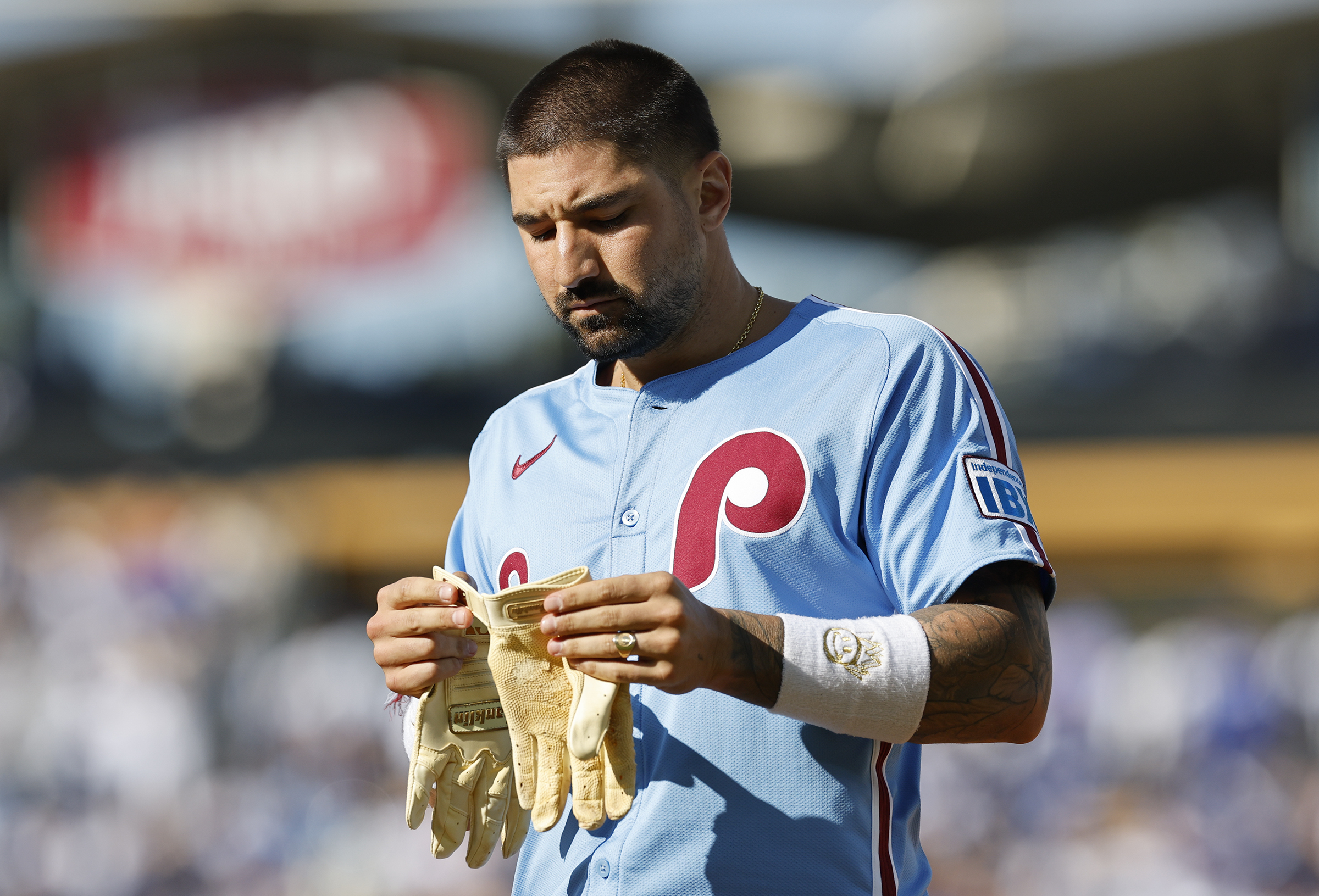
    A tip of the cap to Mark Whicker, an all-time great Philadelphia sports columnist, for noting that Nick Castellanos delivered the quote of the year in Philly sports.

    After Phillies pitchers Cristopher Sánchez and Ranger Suárez were snubbed for the National League All-Star team in favor of the Milwaukee Brewers’ Jacob Misiorowski, who had made just five starts, Castellanos said:

    “This is turning into the Savannah Bananas.”

    Nick Castellanos is likely out in Philly after a couple tough years in the field and at the mound.

    No offense to the Bananas, who make baseball less stuffy and lots more fun for loads of kids in America. But Castellanos’ point about the All-Star Game being more than just a meaningless exhibition — that it is, still, supposed to be an acknowledgment of and accolade for those players who have performed best through a season’s first half — was well taken. Whatever one might think of his performance on the field in 2025, he launched that answer into the upper deck.

    Good stuff, Gramps

    In his two games with the Indianapolis Colts this season, nearly five years after he had retired, Philip Rivers — 44 years old, father of 10, grandfather of one — has completed 41 of 62 passes for 397 yards and three touchdowns.

    How hard can it be to play quarterback in the NFL if Pop-Pop can do it this well?

  • A new wine style for a new year: Prosecco rosé is a thing now

    A new wine style for a new year: Prosecco rosé is a thing now

    As we prepare to leave 2025 behind, it’s time to make sure you have some bubbles ready. With freshness, verve, and just a hint of new beginnings, this prosecco rosé makes a nice change of pace for this year’s midnight toasts.

    Prosecco used to be a specialty of Venice that was always white — never pink — and was only familiar to locals and those who visited Venice in person. However, it has since become an international sensation and is now one of the top-selling sparkling wines on earth.

    Like most sparkling wines, prosecco is made from grapes that are picked when underripe in order to preserve crisp acidity and prevent the development of excess alcohol during their double-fermentation production process. Unlike others — French Champagne or Spanish cava, namely — it has always been made using the more economical Charmat process for its second fermentation. Lower prices were not prosecco’s only appeal though: The key to its success has been that it is rarely made in the dry “brut” style, but rather retains a faint touch of sweetness, giving its orchard-fresh apple and pear flavors extra succulence and charm.

    The massive increase in Prosecco’s popularity in the past 25 years has spurred innovation and led to a 2020 regulatory change to make prosecco rosé possible. Prosecco wines were historically made using only the green glera grape of northern Italy, but are now permitted to blend up to 15% pinot nero (aka pinot noir) into white glera wine in order to turn it pink.

    In its flavor and scent, the dominant flavors of this wine are squarely in the classic prosecco profile, tasting of green apples, white peaches, and jasmine tea. But its dollop of pinot nero adds a lively scent of fresh-cut strawberries, like a preview of the coming spring and all the possibilities of a new year.

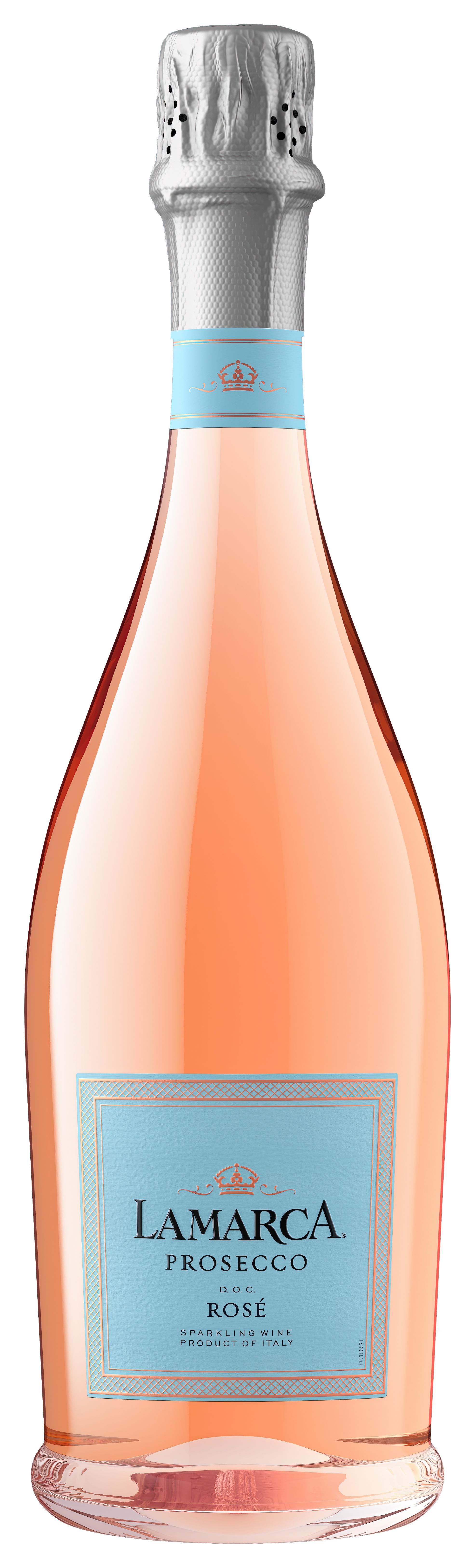
    La Marca Prosecco Rose

    La Marca prosecco Rosé

    Veneto, Italy; 11% ABV

    PLCB Item # 98896, on sale for $17.99 through Jan. 4 (regularly $19.99)

    Also available at: Canal’s in Pennsauken ($15.01; canalsliquors.com), Total Wine & More in Cherry Hill ($15.07; totalwine.com), and Wine Warehouse in Clementon, N.J. ($15.98; winewarehousenj.com)

  • Class demonstration uncovers dangerously large kidney stone in medical student

    Class demonstration uncovers dangerously large kidney stone in medical student

    Aria Moreno was excited when she walked into class on Hofstra University’s campus in Long Island. It was late August, her fourth week of medical school, and Moreno had volunteered to undergo an ultrasound as part of the day’s lesson on the gastrointestinal system.

    It probably saved her half a kidney.

    As the ultrasound wand hovered over Moreno’s abdomen, Amanda Aguiló-Cuadra, the class instructor, noticed dark patches over Moreno’s right kidney. She suspected a buildup of fluid caused by a blockage.

    Aguiló-Cuadra said nothing. Per school policy, she waited until after class to pull Moreno aside and recommend that she see a urologist.

    “It was kind of a big shock,” Moreno said, adding: “I had zero symptoms. I had no pain, no urinary symptoms. Nothing flag-worthy.”

    Doctors eventually found and removed a dangerously large kidney stone. A typical person can pass a 4-millimeter kidney stone naturally, although it’s often very painful. Moreno’s kidney stone measured four centimeters — 10 times larger, about as wide as a pingpong ball.

    Moreno is back to normal life, but damage from the stone has left the 22-year-old with only 50% function in her right kidney and no guarantee it will improve. She’ll need to be careful with what medications she takes going forward.

    If it had not been detected, “it very likely would have progressed, and she could have lost the entire kidney,” said David Battinelli, dean of the Donald and Barbara Zucker School of Medicine at Hofstra/Northwell on Long Island, where Moreno is enrolled.

    Aguiló-Cuadra, a radiology resident who graduated from Zucker in 2024, said it was lucky this discovery happened early in the semester. Not only was it better for Moreno’s health, it preserved her privacy because her classmates did not know enough to question what they saw on the ultrasound display.

    Medical students are largely healthy 20-somethings. Still, past ultrasound demonstrations at the school using student volunteers have uncovered gallstones and thyroid nodules, said John Pellerito, a co-founder of the ultrasound program at Zucker.

    The school’s policy directs instructors to tell an affected student in a way that protects their privacy.

    But before she did that, Aguiló-Cuadra wanted to look at Moreno’s other kidney without raising alarm.

    She asked the student scanning Moreno to position the wand over Moreno’s left kidney while making an excuse about visualizing the spleen.

    Moreno was out of class for two weeks recovering from surgery to remove the kidney stone. She sent Aguiló-Cuadra regular updates.

    Her classmates sent Moreno study notes, but she didn’t need help with any renal topics ahead of her finals next week.

    “Now I can tell you anything about a kidney,” Moreno said with a laugh.

    The New Jersey native is back to exercising and her other passion, dancing. Despite an unexpected dive into kidney health, she wants to become a physician who specializes in the health of dancers.

    Moreno said she is inspired by the tactful, compassionate way Aguiló-Cuadra informed her about what she’d seen on the screen.

    “I hope to bring that kind of ease to all my patients,” Moreno said.

  • ‘Everywhere chemicals’ are in our food, decades after scientists recognized dangers

    ‘Everywhere chemicals’ are in our food, decades after scientists recognized dangers

    CARY, N.C. — Earl Gray was astonished by what he found when he cut into the laboratory rats. Some had testicles that were malformed, filled with fluid, missing, or in the wrong place. Others had shriveled tubes blocking the flow of sperm, while still more were missing glands that help produce semen.

    For months, Gray and his team had been feeding rats corn oil laced with phthalates, a class of chemical widely used to make plastics soft and pliable. Working for the Environmental Protection Agency in the early 1980s, Gray was evaluating how toxic substances damage the reproductive system and tested dibutyl phthalate after reading some early papers suggesting it posed a risk to human health.

    Sitting on a screened porch on a humid summer day more than 40 years later, Gray recalled the study and the grisly birth defects. “It was in enough animals, so we knew it wasn’t random malformations,” said Gray, 80, who retired after nearly 50 years with the agency.

    Gray and other scientists were awakening to the potential dangers of phthalates, which were making their way into nearly every human being on the planet as plastics became a way of life in the 20th century.

    Yet even as the dangers became more evident, the Food and Drug Administration, the EPA, and other regulators made only piecemeal efforts to limit their use over the next 50 years. This inaction allowed companies to continue to churn out millions of tons of phthalates for plastics manufacturing, leading these “everywhere chemicals” to become pervasive.

    Today, most people are exposed to phthalates when they eat. Although industry has largely eliminated their use in food packaging — once one of the most common uses — phthalates are used in factories that make food, accumulating at high levels in ultra-processed foods. They also enter the environment through products including medical equipment, vinyl flooring, cars, cosmetics, and cheap plastic goods like shower curtains.

    A large body of science has linked phthalates to a variety of serious health conditions, including premature birth and infertility. Studies have also tied the chemicals to neurodevelopment issues like ADHD. In April, a study led by New York University attributed 350,000 deaths from heart disease globally to phthalates exposure. And a University of Miami study linked phthalates’ disruption of hormones to breast cancer, a leading cause of death for women globally.

    The costs to society are huge. A 2024 NYU-led study that cataloged health effects from phthalates exposure in the United States — including contributions to diabetes levels and infertility — estimated that dealing with phthalate-related diseases cost $66.7 billion in a single year. That is triple the economic impact of health impacts from “forever chemicals,” another class of chemicals widely implicated in disease. Treating all cancer, by comparison, costs the U.S. $209 billion annually, according to one estimate by the government-run National Cancer Institute.

    The sporadic attention regulators have paid to this issue has allowed far more of these chemicals to circulate than what many experts consider safe. Many scientists say phthalates should have been banned or severely limited two decades ago and compare regulators’ slow response to delays in protecting the public from cigarettes and asbestos.

    “If I was in charge, would I have removed it from products? Yes,” said Shanna Swan, an epidemiologist with the Icahn School of Medicine at Mount Sinai. “The only thing you can do is ban it.”

    There was already “sufficient evidence” in the 2000s that pregnant women’s exposure to phthalates harmed fetal development, Swan said. At that time, studies by Swan and others found “phthalate syndrome” — telltale genital malformations — in humans that were similar to what Gray and others had found in rats.

    “When you already see things in humans, that is too late,” said Maricel Maffini, an independent biochemist, who has worked with major corporations and nonprofit chemical advocacy groups. “When we see effects in humans, it is because we didn’t do a good job years earlier.”

    After years of delay, federal regulators began limiting phthalates use in children’s toys in 2009, eventually banning eight compounds. The EPA is scrutinizing seven additional phthalates, but any possible action would be years away. Even the chemical Gray served to rats — dibutyl phthalate — is still on the market for use in adhesives and paints.

    Industry associations say that their voluntary actions have already reduced public exposure to these chemicals.

    By the mid-2000s, manufacturers had removed phthalates from plastic cling wrap. The FDA has worked with drug companies since 2012 to phase out two varieties, but others continue to be used. And in 2022, the agency granted a request from vinyl plastic manufacturers to withdraw approvals for 25 little-used phthalates in food packaging and manufacturing.

    Industry groups say they have been unfairly portrayed as exposing the public to phthalates.

    “It is a myth that consumer exposure to phthalates is through food packaging,” said the American Chemistry Council, the trade group that represents major phthalate manufacturers, in a statement.

    These actions have reduced public exposure, but scientists say the current phthalate levels remain dangerous, especially for pregnant women and children.

    “There are chemicals that in very, very, very small concentrations at certain times in your life will have a profound effect,” Maffini said. “We cannot go back and rewire the brain. We cannot go back and get the testes to be developed in a different way.”

    The Washington Post spoke to 14 current and former regulators at the FDA and the EPA, who blamed an institutional culture based on weak laws and a fear of litigation for why they did not ban or restrict phthalates, as well as two dozen outside scientists and other experts.

    Former regulators blame the decades of inaction on laws that did not require regulators to reexamine older chemicals that were introduced before the health dangers were known. Agency officials also feared that studies showing a link to disease would not hold up in court and companies would challenge regulators for taking action without a legal mandate.

    The fact that the FDA, the EPA, and the Consumer Product Safety Commission all regulate chemicals in some fashion means that no single agency takes responsibility for all the ways people are exposed to phthalates, experts say.

    “For the last 120 years of the modern chemical age, the country’s chemical safety laws were either nonexistent, ineffective, or rendered unusable, until only nine years ago,” said Michal Freedhoff, President Joe Biden’s EPA assistant administrator for chemical safety. “EPA will need to play catch-up for a very long time.”

    In 2016, federal officials began to implement a 2016 amendment to the Toxic Substances Control Act that requires the EPA to systematically review chemicals already on the market. A similar process is being undertaken at the FDA, though it is not legally mandated.

    Former FDA officials, including those who oversaw chemicals that come in contact with food, defended the agency’s past approach as being based on the best available science at the time.

    “Within the confines of the statute and the available science, they are making the best decisions they can,” said Dennis Keefe, who headed the FDA’s Office of Food Additive Safety from 2011 until 2022.

    The FDA takes decisive action when it is presented with clear proof of harms, Keefe said, and some studies may raise safety concerns but stop short of definitive proof.

    The Health and Human Services Department did not respond to questions about the history of its approach to the chemicals, but spokesman Andrew Nixon said in a statement, “The FDA continues to work to better understand the safety and use of the nine phthalates still authorized for use in food contact applications, and phthalates are included on FDA’s list of chemicals in the food supply that are under review.”

    EPA spokeswoman Brigit Hirsch said in a statement that before 2016, the law “did not provide a specific process or timeline for assessing and managing unreasonable risks from existing chemicals.” The agency is now prioritizing existing chemicals for review, she said, evaluating their harm and creating rules to manage unreasonable risk.

    A century of exposure

    Late 1800s-1940s: Phthalates, which are derived from petroleum, predate modern American regulation by decades. The chemicals were being commercially produced in the U.S. and Japan by the 1930s.

    Plastic — invented in the late 1800s — was still in its infancy then. Early uses include camera film and Bakelite, an extremely hard plastic. For decades, Bakelite rotary phones and radios were the most common plastic items in an American home.

    When World War II created a shortage of rubber for U.S. military equipment, scientists turned to phthalates, which make a rubberlike material when added to plastic, particularly vinyl and PVC.

    1950s: After the war ended, the U.S. reoriented its newfound plastics manufacturing might toward an ever-increasing number of consumer products containing phthalates — rubber ducks, vinyl flooring, Dow Chemical’s Saran wrap — with little regulation.

    In 1958, Congress directed the FDA to review new chemicals for use in food packaging and processing equipment — but the Food Additives Amendment grandfathered in approvals for most chemicals already broadly in use. Among them was di(2-ethylhexyl) phthalate (DEHP), the most commonly used phthalate and one of the most toxic, according to peer-reviewed studies by Gray and many other scientists.

    1960s-1970s: The publication of Rachel Carson’s Silent Spring in 1962 led to a growing public awareness of the harms resulting from the use of pesticides. The EPA was established in 1970 but did not initially regulate chemicals already on the market. Scientists noticed the reproductive effects of phthalates on animals as early as the 1970s, but their research drew little public attention.

    1980s-1990s: After Gray’s early experiments, a scientist named Theo Colborn embarked on a pioneering research program focused on chemicals that short-circuit the hormone system, including pesticides and DEHP, but later expanding to other phthalates and plastic additives.

    Colborn co-wrote the 1996 book Our Stolen Future, which helped bring hormone-disrupting chemicals to public awareness, with pressure mounting over the next decade.

    2000s: Amid concern over phthalates’ impact on children, the 2008 Consumer Product Safety Improvement Act banned DEHP and two other phthalates in toys like rubber ducks and dolls. A decade later, the Consumer Product Safety Commission banned using five additional phthalates in toys after determining they harm male reproductive systems.

    To date, the commission’s actions on children’s toys stand out as one of the few limits that regulators have placed on phthalates.

    Joint custody

    The federal government has divided the primary responsibility for regulating phthalates between the FDA, which polices exposure to chemicals through food, drugs and cosmetics, and the EPA, which oversees them elsewhere, including in the environment.

    For decades campaigners focused on food packaging, but companies have voluntarily addressed that concern. Nestlé, considered a leader in setting food standards, began limiting phthalates in its products in the mid-2000s, according to Stephen Klump, who helped develop tests for phthalates in his 21 years at the company. It gradually ratcheted up restrictions on its suppliers, banning the chemicals by 2018. The rest of the industry followed, Klump said.

    The FDA, however, still allows nine phthalates to be used in factories processing food.

    “You have hoses that are loaded with phthalates, you have plastic tanks that stuff is stored in, you have pumps that are plastic — that’s where you get a lot of phthalates,” said Tom Neltner, a longtime chemical campaigner and chemical engineer who worked in food manufacturing.

    The American Chemistry Council said the FDA has approved using certain phthalates in food-contact applications like tubing, conveyor belts, and vinyl gloves, concluding that dietary exposures do not exceed safe levels.

    “The leadership in FDA, both political and the senior career leadership, for decades in the food safety space, didn’t think chemicals merited much attention,” said Jim Jones, who was brought in as a deputy commissioner to overhaul food safety at the agency in 2023 after a career at the EPA.

    Five phthalates that predate the 1958 food additives law, including DEHP, remain on the market. Four additional phthalates still in use were subsequently approved by the agency, though scientists say those approvals rely on outdated science.

    Monsanto’s 1961 application to the FDA for the use of dicyclohexyl phthalate (DCHP) in food packaging and adhesives, obtained through a Freedom of Information Act request, relied heavily on a 1956 German study of 1,400 rats supported by Bayer (which acquired Monsanto in 2018). That study primarily looked at what doses of certain phthalates would kill them, or severely affect body and organ weight.

    Gray chuckled at the study’s unsophisticated toxicology, noting it showed only how a rat would drop dead with a single dose. “It just shows things have improved quite a bit because that’s useless,” he said.

    DCHP remains approved for use in contact with food.

    Keefe agreed the science used in older applications “wasn’t that developed.”

    Under the current process, teams of evaluators try to determine the level at which a chemical has no negative effect, and then estimate an even lower safe exposure threshold.

    Historically, the agency has reconsidered legacy chemicals only on an ad hoc basis, which often happens when there is a citizen petition to reconsider a chemical, “a health concern” or public outcry, or “new evidence,” said Carrie McMahon, who worked in the Office of Food Additive Safety reviewing ingredients during her 20-year FDA career before retiring this year.

    Susan Mayne, who was the director of food safety and nutrition at the FDA until 2023, said she went to Congress many times in her eight years there to request additional funding for post-market reviews of chemicals but never got it. “We were really at the mercy of what Congress would give that particular office,” she said. She said Congress also rebuffed the FDA’s efforts to charge companies a user fee to fund reviews, as is done for drugs.

    One central issue in a lawsuit pushing for the FDA to revoke the approvals for dozens of phthalates is the standard that there be “reasonable certainty of no harm” for a chemical to be allowed on the market. Environmental groups argue that a substance should be banned if there is significant doubt about its safety.

    But for reevaluating chemicals already in use, FDA officials require proof that a substance causes harm before removing it, a harder bar to clear.

    FDA employees said the agency’s conservative approach requires clear evidence to ban or restrict chemicals, relying mostly on animal experiments rather than the many epidemiological studies showing links between exposure to phthalates and reproductive problems.

    Despite voluntary corporate efforts, the chemicals are still making their way into consumers’ bodies: Centers for Disease and Control Prevention survey data show remnants of phthalates in virtually all Americans’ urine.

    Last year, the Biden administration reorganized the food safety division, now called the Human Foods Program, which will set out to reevaluate old chemicals, including phthalates.

    Health and Human Services Secretary Robert F. Kennedy Jr. has vowed to continue those reviews. President Donald Trump’s proposed budget asks for an additional 70 employees and $49 million to address “unsafe additives in our food supply.”

    A moving target

    While phthalates regulation has historically fallen mostly on the FDA, some experts say the EPA should now bear more responsibility since phthalates in the environment could be contaminating food before it’s even processed or packaged. Studies have shown the chemicals are broadly present in the environment, including in dust, rivers, and cow feed.

    “Saying it’s food and pointing to the people who regulate food is not solving the problem. In fact, it’s distracting people from what the problem actually is,” said Mitchell Cheeseman, who worked at the FDA for 20 years and led its Office of Food Additive Safety.

    For years, the EPA did little to regulate phthalates. In 1984 the agency set guidelines for plastics makers that put limits on discharging certain chemicals into waterways but put off action on phthalates.

    In 1992, the agency established a limit on DEHP for drinking water, based primarily on data about the chemical’s cancer risk, but did note the potential reproductive concerns, according to Betsy Southerland, former science and technology director in the EPA’s Office of Water. Only in 2015 did the EPA recommend limits, in voluntary guidelines, for manufacturers discharging five phthalates.

    Southerland said the agency failed to protect the public. “We knew about it in 1984,” said Southerland, who joined the EPA’s water office that year.

    The EPA started to review seven phthalates under the first Trump administration and has found that two of them pose a risk to factory workers, but not the public.

    But now the EPA’s chemical office has proposed reversing the Biden-era approach for evaluating toxic substances, potentially narrowing what exposure routes it considers and limiting broader actions on phthalates.

    Finding safer alternatives

    Other governments have taken a more aggressive approach to regulating phthalates.

    European Union regulators have placed much heavier restrictions on common phthalates, because they damage the reproductive system, operating under the precautionary principle that action should be taken when any activity raises the threat of serious harm to human health or the environment, even if there is not full scientific certainty.

    The EU has banned four phthalates in all but a narrow set of circumstances. And it has banned three additional phthalates in children’s toys and at least 12 in cosmetics.

    “A law, a regulation, is always stronger than everything that you can achieve with voluntary agreements among the industry,” said Anne-Sofie Backär, executive director of ChemSec, a European advocacy group.

    Safer Products for Washington is a program that focuses on preventing pollution and finding safer substitutes in the state. It assesses chemical classes and uses, rather than individual substances, said Marissa Smith, a toxicologist and the program’s technical lead, comparing a chemical’s hazardous properties to alternatives. If a safer substitute is available, then the chemical is phased out.

    Launched in 2019, the program reviews a new batch of chemical uses every five years. In its first round it found at least seven safer alternative chemicals for phthalates in vinyl flooring and a dozen alternatives for cosmetics. Sealants, caulks, and adhesives are now under scrutiny.

    Toxic-Free Future executive director Laurie Valeriano, who campaigned for the law, said this approach avoids the federal system’s pitfalls because comparing chemicals’ relative dangers is far easier than studying potential human exposure.

    Smith said some substitutes might still pose health risks.

    “That’s kind of a hard pill to swallow,” she said. “But it doesn’t mean that we still can’t make progress.”

    Gray said he was pleased the EPA is using his research in its current assessments of phthalates, as are governments around the world. But he acknowledged regulators have taken too long to act.

    “Why it took so long?” Gray asked. “I don’t know.”

    Studies show levels of phthalate exposure are declining in Americans’ urine. A Harvard study found that markers of DEHP in the urine of 1,900 people in Boston fell by at least 11.9% from 2000 to 2017, although levels of some substitutes rose. But that does not erase the fact that regulators failed for decades to protect pregnant women and children from high levels of exposure, Gray said.

    Gray’s own children had mostly grown up by the time he knew enough to be worried, meaning that he and other parents unknowingly dosed their children with phthalates over and over again.

    “There were decades where the exposures were really high,” he said. “You don’t know what the consequences of those exposures were.”

    Sitting on his neighbor’s porch, Gray recalled giving his children rubber duckies to play with in the bath. The danger now seems so clear: They were 40% phthalates.


  • Celebrating a Jewish tradition: Chinese food on Christmas

    Celebrating a Jewish tradition: Chinese food on Christmas

    For years, I envied Jews who enjoyed Christmas without getting into the weeds of what it’s all about, who put up a tree and lights without a sense of guilt. I admired Jews who wrote the best Christmas songs in history (google it), even though the holiday will never be their own.

    But the day itself has never been my favorite. It ranks slightly ahead of Good Friday and Easter, but not by much. While no mindful Jew needs to be reminded of what a small minority we are, Christmas puts us in our tribal place. No amount of secular candy canes or court-ordered ecumenical neutrality softens the reality that the day is not for us.

    This is not a complaint or a condemnation of the celebration. If there is a war on Christmas, I am not a combatant.

    Unlike the Grinch, I never begrudge others their joy, even though I can’t embrace it. I wish others a merry Christmas and mean it. Why shouldn’t they be happy?

    Adaptation

    I have no resentment toward public displays of Christmas decorations. So long as they are not paid for with tax dollars, who are they hurting? There are far greater injustices to litigate, more serious public displays to mourn. With antisemitism on the rise, nobody has the luxury of getting upset over a creche.

    To survive, one need not assimilate; one need only adapt. And Jews are masters of it. Take, for example, the now cliché practice of our eating Chinese food on Christmas.

    Chef Rui Guang Yu prepares long life noodles at Nom Wah in Philadelphia. Chinese food generally does not violate kosher dietary laws.

    But it has become more than an adaptation.

    Tradition

    The Christmas Chinese dinner is one of the truly great and unique nights of the American Jewish year. Jewish families patronize the same restaurant every year with the dedication generally reserved for delis and houses of worship.

    What makes the night different from all other nights is the special joy that can only be found in our shared otherness. Being with those who share your identity — religious and otherwise — is always a blessing. But that feeling of togetherness is never more poignant than in those moments when what makes us different from others also makes us so alike among ourselves.

    And it is often reciprocated by the people feeding us. The owners of the restaurants seem as happy to see us as we are to see them. And to share in our joy.

    That I especially feel my Jewishness in a Chinese restaurant on a Christian holiday is the stuff of comedy.

    And thus humanity.

    Jonathan Shapiro is an Emmy- and Peabody Award-winning TV writer and the author of the recent “How to Be Abe Lincoln: Seven Steps To Leading a Legendary Life.”

  • Eagles vs. Bills predictions: Our writers pick a winner for Week 17

    Eagles vs. Bills predictions: Our writers pick a winner for Week 17

    The Eagles and Buffalo Bills meet Sunday in Western New York in one of the best games of the NFL’s Week 17 slate — and maybe the entire 2025 season.

    Josh Allen vs. Jalen Hurts. Western New Yorker Nick Sirianni vs. La Salle College High School graduate Sean McDermott. Cheesesteaks vs. wings.

    The two teams played a classic in South Philly two years ago. Will Sunday deliver the same kind of drama?

    Here’s what our writers think:

    Jeff Neiburg

    I had these teams as my preseason Super Bowl matchup, and I still think Sunday afternoon could be a Super Bowl preview. There are a bunch of flawed teams preparing to battle it out in what seems to be a wide-open NFL playoffs.

    These two teams are among the flawed, but they’re also pretty good.

    Great offense and average defense (Bills) vs. great defense and average offense (Eagles). Who has the edge? I’m leaning Eagles.

    The running game is showing signs of life, and the Bills have been dreadful against the run. They allow 144.3 rushing yards per game, which ranks 29th in the league. They are much better against the pass (167.1 yards, second), but the Eagles should give them trouble with an improving, balanced attack. The offense has looked much better — even if it struggled to finish drives last week — over the last two games, but the Bills present a step up in competition.

    Allen should find it difficult to find open receivers given the quality of the Eagles’ secondary vs. the Bills’ receivers. But Buffalo does a great job protecting Allen. The Bills’ pressure rate allowed of 29.7% ranks sixth in the league. More time for Allen means more time for him to freelance and make plays, and there aren’t many better than him.

    The Eagles have struggled this year against quarterbacks who run, but they kept Marcus Mariota in check before he left the game in the second half.

    It’s a tough one to predict in what essentially is a coin-flip game. But I think the Eagles find a way to win.

    Prediction: Eagles 27, Bills 23

    Bills running back James Cook (right) is the NFL’s leading rusher.

    Olivia Reiner

    The key to an Eagles win starts in the trenches on both sides of the ball.

    James Cook is the league’s top rusher at 1,532 yards on the season. Defensive coordinator Vic Fangio lauded Cook for his elusiveness as a runner and touted his speed once he gets into the open field. This is going to be the Eagles run defense’s biggest test since the Bears game, but they’ve been pretty sound on the ground since then.

    Cook isn’t the only challenge on the ground. Allen is capable of using his legs to extend plays and executing designed runs (especially in the low red zone).

    The prospect of getting Jalen Carter back could be a big boost to the defensive line. The group has already been playing at a high level over the last few weeks, especially Jordan Davis and Brandon Graham. It will be interesting to see if Fangio continues to utilize Graham at defensive tackle upon Carter’s return.

    On the other side, the Eagles offense has done a better job of marrying the run with the pass in recent weeks. They must establish the run game against the Bills, a prospect that ought to be attainable.

    While the Bills boast one of the best pass defenses in the league, their run defense is suspect, conceding 5.4 yards per attempt (the second-most in the NFL).

    Buffalo is a tough place to play. The Bills are a good team with a great quarterback, who may be limited by a foot injury on Sunday. I’m not fully convinced that the Bills are a great team, especially given their strength of schedule this season.

    Prediction: Eagles 28, Bills 27

  • Why waste a Christmas wish on the Eagles? Phillies, Sixers need all the help they can get

    Why waste a Christmas wish on the Eagles? Phillies, Sixers need all the help they can get

    Since you’ll most likely be reading this column on Christmas Day, here’s a question in the spirit of the season for Philly sports fans:

    What would be your Christmas wish?

    Don’t be hasty and just say, “Another Lombardi Trophy.”

    Yes, it’s football season, and yes, the Eagles secured a home playoff game last Saturday, but the rest of the teams, in one manner or another, are making strides and could use your help.

    The Eagles don’t need it.

    They won it all just last season, and they also won seven years ago, and they also went to the Super Bowl three years ago. Their window for winning titles will remain open for at least another two years.

    I ran a X poll from Monday afternoon through Tuesday evening, which was this column’s deadline.

    For me, the Eagles were the last team for whom I’d hope Santa would bring some luck.

    What about the Phillies? They’ve only ever won two World Series, the last in 2008, and none since John Middleton began spending like he’s the love child of Nero and Louis XIV. They’re my choice.

    And whither The Process, now in its 13th fruitless season?

    Finally, no team has tried longer and harder to build a winner than the Flyers, now engaged in an earnest rebuild.

    Let’s investigate them all.

    Zack Wheeler has said he’s retiring after the 2027 season.

    Phillies, 52.3%

    Most folks agreed: This club needs to eat a whole bushel of apples on Christmas night (a Chinese tradition symbolizing safety and peace). Zack Wheeler is 35. Bryce Harper is 33. Trea Turner and Kyle Schwarber are 32. Tick, tick, tick.

    Wheeler, perhaps the best pitcher in franchise history, has said he’s retiring after his contract expires in 2027. Harper will then be 35, Turner and Schwarber 34. The only viable replacement for these stars is starter Cristopher Sánchez, who is 29, and who will demand an astronomical contract in 2031 — when he’s 34.

    The realistic window for the Phillies ends when Wheeler walks in two years. As such, Phillies faithful should wish for this:

    • Wheeler returns from thoracic outlet syndrome surgery in May and is back to normal by August.
    • Harper outperforms an injury-affected 2025 season that president Dave Dombrowski accurately (if unwisely) said he considered not “elite,” with a .844 OPS, and again produces at an elite level — say, the .937 OPS he averaged in the 10 previous seasons, which was best among all players with at least 5,000 plate appearances.
    • Turner hits .300, as he has since 2024.
    • Schwarber matches his average of 46 homers in his four previous Phillies seasons.
    • Closer Jhoan Duran and setup man José Alvarado are dominant for seven months.
    • Sánchez is, once again, a horse.

    That’s a lot to ask for, but, hey, Christmas comes but once a year.

    Howie Roseman (left), Nick Sirianni, and the Eagles don’t need to rely on Christmas wishes.

    Eagles 36.7%

    A pleasant surprise. I not only thought the Eagles would win the poll with a plurality — say, 45% — I thought that Philly fans wouldn’t be sophisticated enough to accept the logic that makes the Phillies the clear choice.

    Apologies.

    And good job.

    After all, why squander a Christmas wish on a team that doesn’t need it? Thanks to the era of ownership that began with Jeffrey Lurie’s purchase of the team in 1994 — 19 playoff appearances, four Super Bowl appearances, and two titles — the Eagles are, by far, the best team in town. There’s no need for the Birds to put a carp scale in their wallet and carry it around all year (a German/Polish tradition).

    The Birds have given Philadelphia the best seven-year run of any team in the city’s history, and there’s no reason to think that run is anywhere close to ending.

    Howie Roseman has constructed a roster with contracts that ensure at least two more peak years of Jalen Hurts, Saquon Barkley, A.J. Brown, DeVonta Smith, Landon Dickerson, Jordan Mailata, Cam Jurgens, Jalen Carter, Zack Baun, Cooper DeJean, and, last but not least, Quinyon Mitchell, who might be the best of them all.

    Further, head coach Nick Sirianni and his two best assistants, defensive coordinator Vic Fangio and offensive line coach Jeff Stoutland, aren’t going anywhere. No team in Philadelphia, in the NFC East, or in the entire NFL is better positioned for continued success than the Eagles.

    Don’t waste a wish on them.

    Flyers goaltender Dan Vladař against the Vancouver Canucks on Dec. 22.

    Flyers, 8.9%

    This is a great result for a team that hasn’t made the playoffs since the first time Donald Trump was president.

    Dan Vladař has a top-10 2.39 goals-against average, which, if the season ended today, would be the best GAA for a starting Flyers goalie in a decade. Similarly, the Flyers haven’t sent a defenseman to the All-Star game since Kimmo Timonen in 2012.

    These are institutional issues that cannot be undone, no matter how many spider webs you use to decorate the tree (a Ukrainian tradition and the origin of tinsel).

    That said, Vladař, having a career year, is under contract through next season. The team has hovered around the playoff bubble all season. They should lock up Trevor Zegras, a 24-year-old trade gamble who can be a restricted free agent after this season but who leads them in goals and assists.

    The wish: Vladař stays steady, Zegras continues to produce, and error-prone young talent Matvei Michkov eventually prospers under demanding new coach Rick Tocchet. If that happens, the Flyers’ goal to once again be a perennial playoff team is not unreasonable, beginning this spring.

    Joel Embiid (21) shoots against the Indiana Pacers during the second quarter at Xfinity Mobile Arena.

    Sixers, 2.1%

    Like all X polls, mine was unscientific, since it mainly drew from the folks who follow me, who obviously possess high degrees of discernment and taste.

    Maybe that’s why poll respondents seem to have utterly abandoned the Sixers.

    More than any Philly franchise, this bad-luck franchise needs to burn some shoes (a Greek Christmas tradition). I can’t blame the respondents, what with the team’s egregious misevaluations of talent; its mismanagement of the draft, free agency, and player development; not to mention the self-inflicted dramas of Ben Simmons, James Harden, and, of course, Joel Embiid, whose continued entitlement and incredible fragility have exhausted the patience of the populace.

    That said, they’re still ours, and they’re not bad. Tyrese Maxey’s talent and exuberance provide an anchor, the potential of rookie überathlete VJ Edgecombe, the increased presence of Paul George, an energetic supporting cast, and superb coaching from Nick Nurse have made this edition of the Sixers the most watchable team since The Process began in 2013.

    As for the big guy, like him or loathe him, Embiid’s presence makes them markedly better, especially if he is active on the defensive end, which, if you know the game, always has been his greatest value. As of Tuesday, Embiid’s knees had him on pace to play 33 games. The wish:

    By the time the season ends in mid-April, the Sixers can get him to 41 games, which is half the schedule. At that point, if he can play every other day, which is a typical playoff schedule, they not only would have a chance to win a playoff round, but they also would have a template for the next two seasons, the final years of George’s monster contract.

    But 2%?

    Even with a likable young trio, Embiid’s toxic presence has, for most people, ruined the image of the only team I ever cared for (and that, only as a youth).

  • Cloudy future for bourbon has Jim Beam closing Kentucky distillery for a year

    Cloudy future for bourbon has Jim Beam closing Kentucky distillery for a year

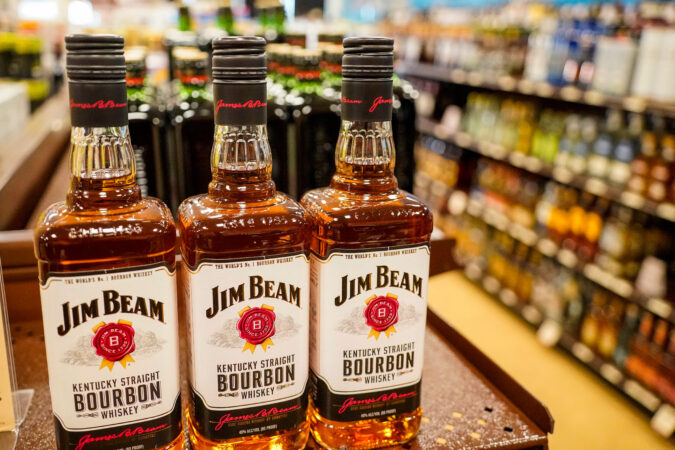
    Bourbon maker Jim Beam is halting production at one of its distilleries in Kentucky for at least a year as the whiskey industry navigates tariffs from the Trump administration and slumping demand for a product that needs years of aging before it is ready.

    Jim Beam said the decision to pause bourbon making at its Clermont location in 2026 will give the company time to invest in improvements at the distillery. The bottling and warehouse at the site will remain open, along with the James B. Beam Distilling Co. visitors center and restaurant.

    The company’s larger distillery in Boston, Ky., will continue to operate, the company said.

    “We are always assessing production levels to best meet consumer demand,” the company said in a statement that added they were talking with the distillery’s union to determine whether there will be layoffs or other reductions.

    Bourbon makers have to gamble well into the future. Jim Beam’s flagship bourbon requires at least four years of aging in barrels before being bottled.

    Whiskey makers are dealing with back-and-forth arguments over tariffs in Europe and in Canada, where a boycott started after the Trump administration suggested annexing the country into the U.S.

    Overall exports of American spirits fell 9% in the second quarter of 2025 compared to a year ago, according to the Distilled Spirits Council of the United States. The most dramatic decrease came in U.S. spirits exports to Canada, which fell 85% in the April-through-June quarter

    Bourbon production has grown significantly in recent years. As of January, there were about 16 million barrels of bourbon aging in Kentucky warehouses — more than triple the amount held 15 years ago, according to the Kentucky Distillers’ Association.

    But sales figures and polling show Americans are drinking less than they have in decades.

    About 95% of all bourbon made in the U.S. comes from Kentucky. The trade group estimated the industry brings more than 23,000 jobs and $2.2 billion to the state.

  • Forty years after a brain injury changed this veteran’s life, a Jefferson program helped him rebuild

    Forty years after a brain injury changed this veteran’s life, a Jefferson program helped him rebuild

    When Scott Edgell was discharged from the military after a service-related head injury at age 20, he thought he would resume life as normal.

    But over the next four decades, the Lancaster County man was troubled by frequent migraines, memory problems, dizziness, irritability, and balance issues. Even everyday activities, like grocery shopping or eating at a restaurant, became overwhelming.

    “I didn’t understand what was happening to my body,” said Edgell, who is now 57.

    He realized the head injury he suffered while serving in the military was to blame after watching the 2015 movie Concussion, but struggled to find doctors who knew how to help him.

    Just as he started to lose hope in late 2023, he learned about a Jefferson Health program in Willow Grove for veterans and first responders with traumatic brain injuries (TBIs). The clinic provides physical and cognitive rehabilitation to participants over a three-week intensive outpatient program.

    Edgell is among the estimated one in four veterans who have had a TBI. More than half a million U.S. military members have been diagnosed with the injury since 2000, according to the Department of Defense.

    Many suffer TBIs as a result of combat-related incidents, exposure to blasts during explosions, training accidents, and vehicle crashes.

    While some patients can recover completely, up to 30% of those with mild TBIs, also commonly called concussions — which account for the vast majority of TBI cases — experience long-term symptoms.

    The lasting effects of TBIs are often overlooked among veterans because of the injury’s invisibility. Yet they can be life-altering, affecting employment, personal relationships, and overall quality of life.

    Veterans with a TBI had suicide rates 55% higher than veterans without the injury, one study found.

    Jefferson’s program, called the MossRehab Institute for Brain Health, was founded in 2022 and has treated roughly 100 patients. It runs on donations — the biggest being from the veterans’ wellness nonprofit Avalon Action Alliance, which has provided $1.25 million annually.

    Donations allow them to offer the program at no out-of-pocket cost to veterans and first responders, and cover housing, transportation, and meals during the three weeks.

    “I walked in those doors at the lowest part of my life,” said Edgell, who participated in June 2024.

    Though there’s no cure for his injury, the program has helped him rebuild his life.

    “All you can do is learn to manage your symptoms,” he said.

    Edgell and his family, including his wife Tami, stepdaughter Monica Bressler, son-in-law Kenny Bressler, and granddaughter Hayvin.

    The program

    Edgell entered the MossRehab program in June 2024 as part of a cohort of four.

    The first step in his rehab was learning about what was happening to his brain.

    His accident occurred back in 1989, when a steel hatch swung shut and hit him in the back of the head during a training exercise at Fort Riley, Kan.

    Doctors at the time provided memory exercises, mental health support, and physical rehabilitation to improve his gait, but nothing brought him back to baseline.

    Edgell managed to push through his memory problems in college by putting in extra effort into studying, and ultimately became an electronics engineer.

    However, it became harder to cope with the symptoms as he got older.

    Even brief outings would exhaust him to the point of needing days to recover.

    When his wife, Tami, would ask what she could do to help him, he wouldn’t know what to say.

    One therapist at the program offered him a helpful analogy: If a normal brain is like a six-burner stove, then having a brain injury is like being down to only three burners.

    “You’re trying to do everything with two or three burners that you would normally do with six, and your brain just becomes very fatigued and overwhelmed,” Edgell said.

    The program teaches participants to adapt to their brain’s new way of functioning, whether through physical rehabilitation for symptoms such as dizziness, or cognitive rehabilitation to address issues affecting attention, concentration, memory, and mood.

    “We’re basically retraining the brain to do something that it’s having difficulty doing because of an injury,” said Yevgeniya Sergeyenko, a physical medicine & rehabilitation physician and clinical director of the program.

    Since treatment for TBIs revolves around managing the symptoms — which can vary widely between patients — the program has staff across an array of specialties that patients see throughout their three-week stay.

    One provider helped Edgell, who was struggling to get more than a few hours of sleep a night, find medication to help him sleep.

    A physical therapist, meanwhile, assisted with his balance and core structure, so he could walk and move around more easily.

    Others taught Edgell exercises to improve his dexterity, speech, and memory.

    Army veteran Scott Edgell participates in a cohort session at the MossRehab Institute for Brain Health.

    Some forms of therapy were less conventional.

    There was horticultural therapy — a therapy that involves working with plants — which Sergeyenko said has been shown to lower blood pressure and is intended to help with emotional regulation.

    Patients also did yoga and other mindfulness and movement activities intended to calm the nervous system.

    Edgell said yoga wasn’t his favorite, but he found art therapy helped him communicate more openly.

    One of the exercises at the start of the program asked him to draw a tree. He drew one that “was not doing very well,” he said.

    At the end of the three weeks, he drew a lush version full of leaves. The framed drawing now hangs in his dining room.

    “I look at that everyday to see where I came from,” he said.

    Army veteran Scott Edgell shows drawings of trees representing himself during a cohort session at the MossRehab Institute for Brain Health.

    Outcomes

    Program organizers say returning to a pre-injury baseline is not always a realistic goal.

    “There’s not a medicine that you can give that’s going to make all of your brain injury symptoms subside,” said Kate O’Rourke, the program director at the clinic.

    The program aims to improve function and quality of life.

    As of September, the last time outcome statistics were compiled, 82 patients had gone through the three-week intensive. Sixty-five percent saw significant reduction in their symptoms, as measured by their Neurobehavioral Symptom Inventory scores — which assesses a patient’s severity of neurobehavioral symptoms from 0 to 88. The average reduction was 13.26 points.

    Ninety-nine percent of patients reported that they personally felt they improved after the program.

    Current patients (Jeff Todd Malloch and Jessica Mack) and Army veteran Scott Edgell participate in a cohort session with his therapy dog, Lars, at the MossRehab Institute for Brain Health.

    Edgell regularly reaches out to staff for advice, and meets with the program’s alumni in monthly conference calls.

    He still has bad days sometimes, but he’s able to manage them better.

    Before, when he would go to a grocery store or restaurant, he would become overwhelmed by the noise, lights, and commotion.

    “I couldn’t catch my triggers before I fell off the cliff,” Edgell said.

    He was only able to leave the house four to five times a month.

    Working with a service dog at MossRehab inspired him to get one of his own.

    Now, when he starts to react, a golden doodle named Lars will nudge him, giving him a moment to let his brain calm down.

    Edgell and his service dog, a golden doodle named Lars.

    Today, he’s able to leave the house more frequently and for longer.

    He and his wife have reconnected with friends and engaged more in social activities.

    “I still get tired, I still need breaks, but my recovery time is a lot faster, and it’s not nearly as devastating,” Edgell said.

  • A Philly priest’s soon-to-be-famous Christmas song was played on this week in Philly history

    A Philly priest’s soon-to-be-famous Christmas song was played on this week in Philly history

    One of America’s great Christmas songs grew out of procrastination.

    Two friends — a rector and his organist at the Church of the Holy Trinity on Rittenhouse Square — found the inspiration in the run-up to the Christmas celebration in 1868.

    The result of their delayed creativity was “O Little Town of Bethlehem,” composed and heard in a Philadelphia church.

    It was a song that spread across the world, and put the 19th-century church on the map.

    The silent stars

    Three years before, in 1865, the church’s vicar visited the Holy Land.

    So moved by what he saw on that trip, the Rev. Phillips Brooks put pen to paper.

    The result was a poem:

    O little town of Bethlehem,

    How still we see thee lie.

    Above thy deep and dreamless sleep

    The silent stars go by.

    In totality, as a piece of music, the song is not exactly upbeat.

    The lyrics reflect on the darkness found after midnight. Cries of misery reverberating through dark streets under cover of ink-black skies.

    But there’s also everlasting light.

    A Christmas miracle

    Three years later in 1868, Brooks asked the church’s organist, Lewis Redner, a real estate agent who played the organ for four churches, to set music to those lyrics Brooks penned.

    It was to be part of a song that would play during the Christmas holiday in 1868.

    And then Brooks waited.

    To his congregation, Brooks was an inspiring preacher. In the throes of the American Civil War, he would ride on a wagon to the battlefields around Gettysburg to perform last rites on dying soldiers and offer words of comfort to wounded soldiers — Union and Confederate.

    Days turned to weeks, and Brooks was still waiting for the completed song.

    But as the holiday approached, the procrastination had reached a fever pitch.

    Two days before the Christmas service, on a Friday, Brooks nervously asked about the song.

    “Have you ground out the music yet?”

    “No,” Redner said.

    But he assured Brooks: “I’ll have it by Sunday.”

    On Saturday night, Redner wrote in his diary that his brain was in knots over the tune, according to The Inquirer.

    Once asleep, he woke with a start.

    He wrote that he heard an angel whispering in his ear.

    Redner then scribbled down the tune.

    And before the Sunday service, he layered on the harmony.