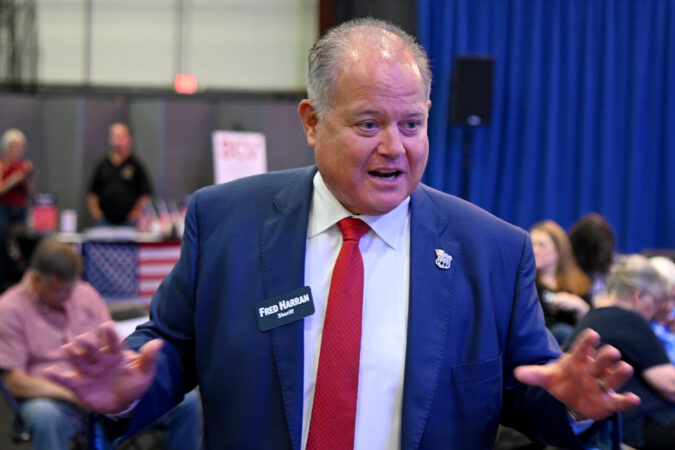
Bucks County Sheriff Fred Harran acted legally in signing up to have his deputies help ICE enforce federal immigration laws, a judge ruled Wednesday in a case that has riled residents on both sides of a contentious issue.
Bucks County Court Judge Jeffrey Trauger said Harran’s cooperation with the agency was “clearly lawful under Pennsylvania jurisprudence,” and both “reasonable and necessary” in fulfilling his lawful duty to keep the citizens of Bucks County safe.
What the judge called “intergovernmental cooperation of law enforcement” is no different under the law at the county, state, or federal level, he wrote.
Reached by phone Wednesday, Harran said he was pleased with the decision and expected his partnership with U.S. Immigration and Customs Enforcement to be fully operational by the end of next week.
“I knew from the time I started this that I was in the right, that the county commissioners do not control the office of the sheriff,” Harran said.
A spokesperson for Bucks County said the county intended to appeal.
Those who sought to block Harran’s efforts said they would continue to battle.
“This decision doesn’t mean that we’ll stop fighting to hold Sheriff Harran accountable,” said Diana Robinson, co-executive director of Make the Road Pennsylvania, an advocacy group that was one of the plaintiffs. ”Indeed, we will redouble our efforts in this case and continue to fight for what is right.”
She said an alliance between Harran’s department and ICE was aimed at “turning our neighborhoods into surveillance zones” and “weaponizing local law enforcement to carry out ICE’s harmful agenda.”
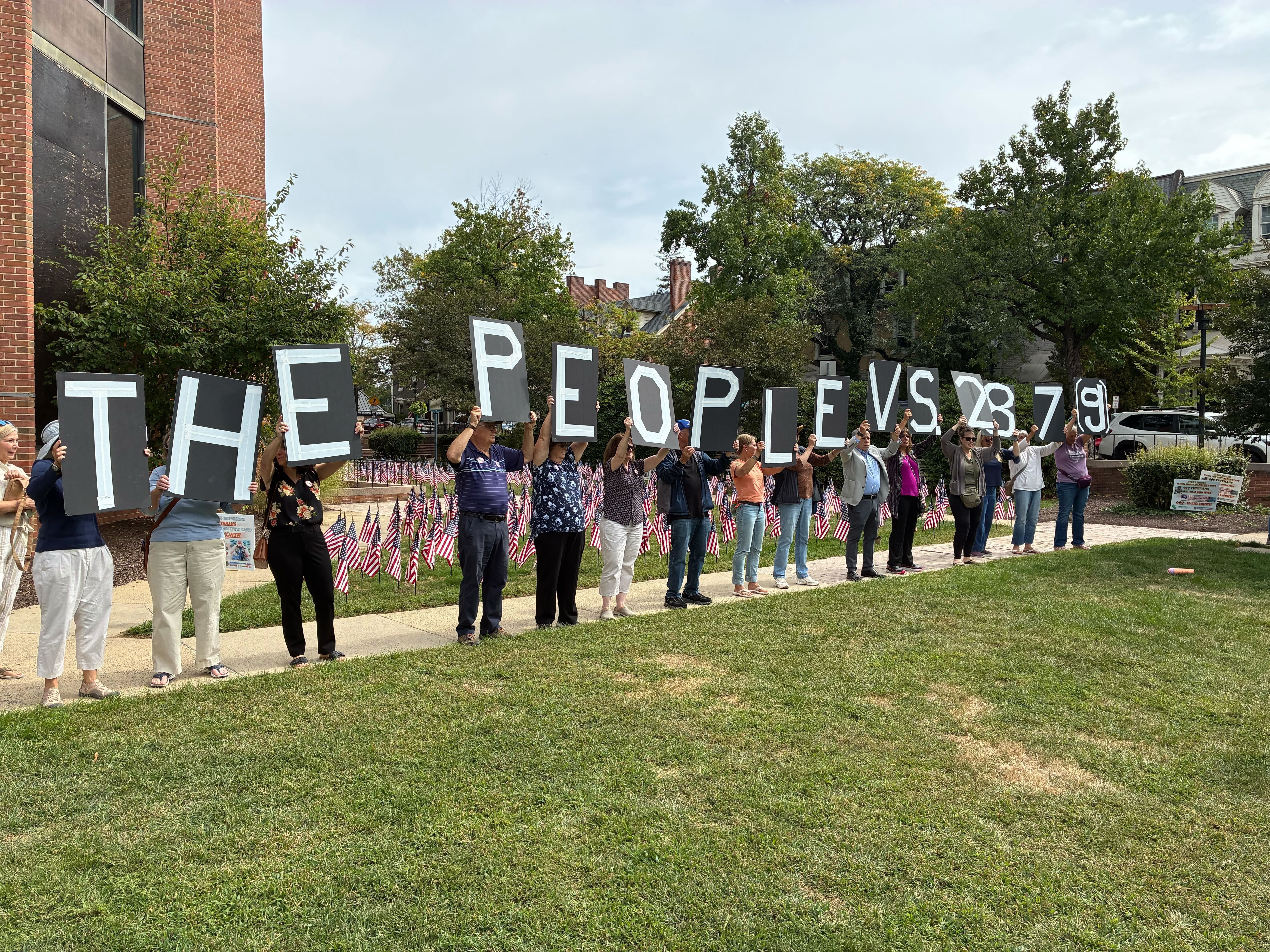
Community members rally in Bucks County before civil rights groups asked a judge to block Sheriff Fred Harran’s controversial partnership with ICE.
In his opinion, the judge said it did not appear that Make the Road, NAACP Bucks County, or Buxmont Unitarian Universalist Fellowship as organizations had clear standing to sue under Pennsylvania law.
While individual members might have standing if they were caused harm by the sheriff’s office, he said, the injuries they alleged were “not immediate or substantial,” and their complaint was based in part on speculation about what might happen.
ACLU of Pennsylvania attorney Stephen Loney, who helped lead the court fight, said Wednesday that he disagreed with the decision.
“In the most respectful way I could possibly say it, I think the judge got it totally wrong,” he said. “It’s unfortunate.”
He said the ACLU would appeal the decision.
ICE officials did not immediately offer comment.
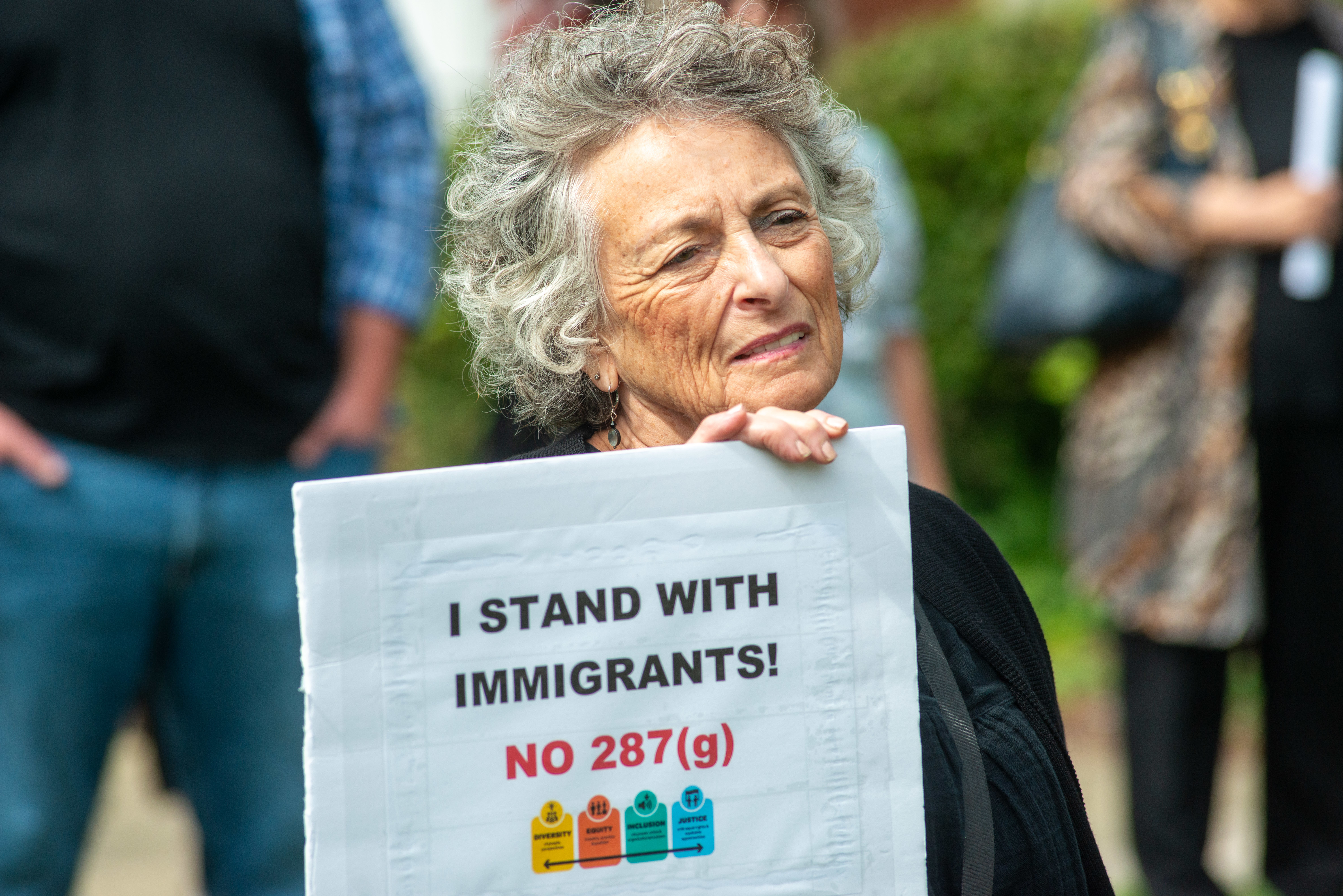
Melanie Goldstein holds a sign as demonstrators rally outside the Bucks County Administration building before a hearing last month during which the ACLU and other organizations sought an injunction to stop the Bucks County sheriff from going through with his plan to help ICE enforce immigration laws.
Laura Rose, an organizer with Indivisible Bucks County, said the group was “deeply disappointed in Judge Trauger’s decision” to let Harran proceed “without guardrails.”
She called the ruling “a profound failure to protect both the immigrants and taxpayers of Bucks County.”
Rose called on voters to end the local alliance with ICE by voting Harran out of office on Nov. 4.
Harran’s lawyer, Wally Zimolong, called the decision “a victory for the rule of law and for the safety of Bucks County residents,” and accused the ACLU of maligning the sheriff with false claims.
“Frankly,” he said, “it is mind-boggling that anyone would oppose this. It is also a vindication for Sheriff Harran, a good and honorable man and dedicated public servant. … It is a proud day when people of good character, like Sheriff Harran, prevail over those that lack it.”
In the spring, Harran and ICE officials signed what is called a 287(g) agreement, a controversial program named for a section of a 1996 immigration law. It enables local police to undergo ICE training, then assist the agency in identifying, arresting, and deporting immigrants.
Shortly before the government shutdown, ICE was poised to begin backing its recruitment efforts with money, announcing that it would reimburse cooperating police agencies for costs that previously had been borne by local departments and taxpayers.
Harran, who is seeking reelection in November, has pledged “zero cost” to local taxpayers.
He insists the alliance with ICE will prevent crime and keep people safe. Civil rights groups say the sheriff is inviting racial profiling, taxpayer liability, and a loss of trust between police and citizens.
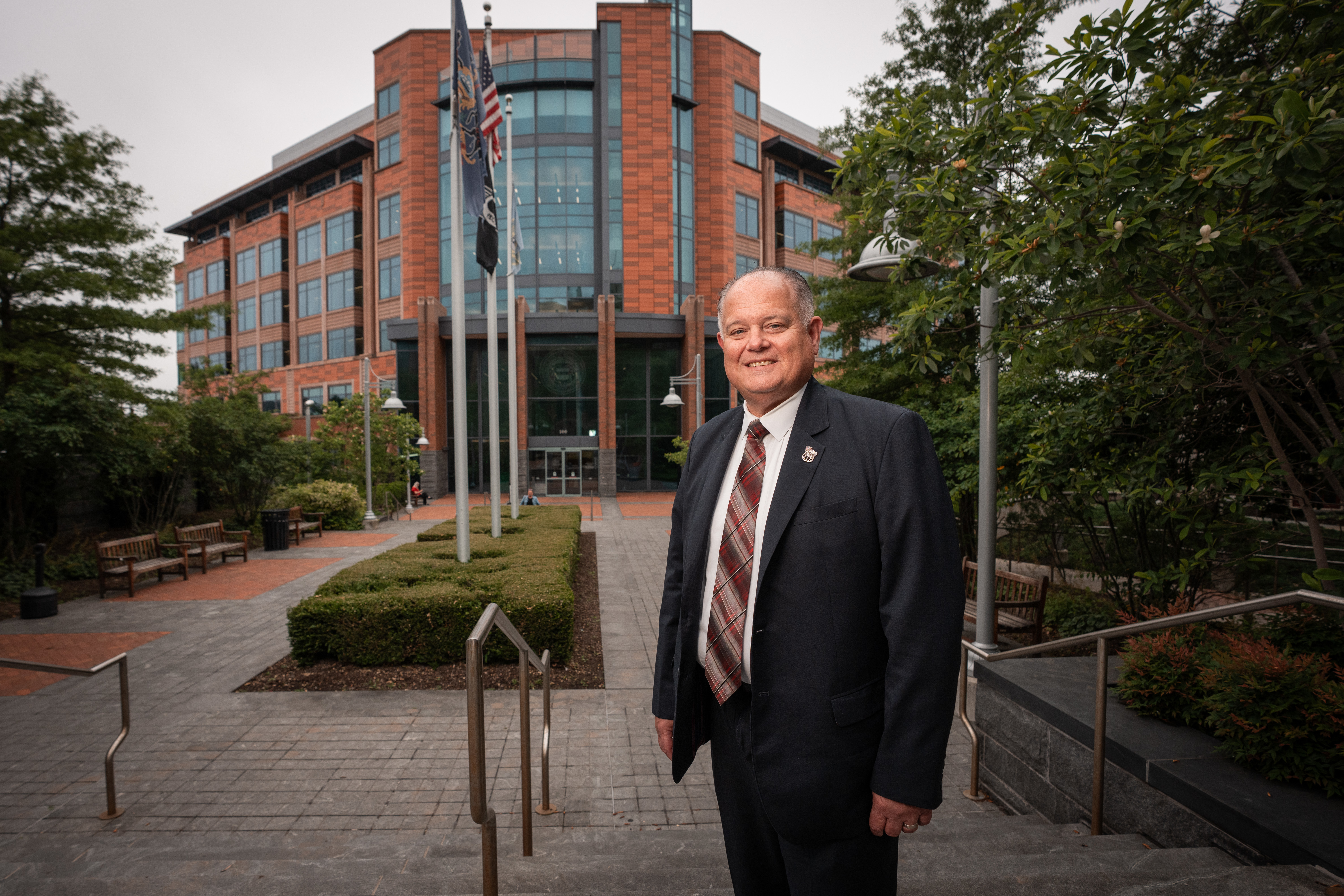
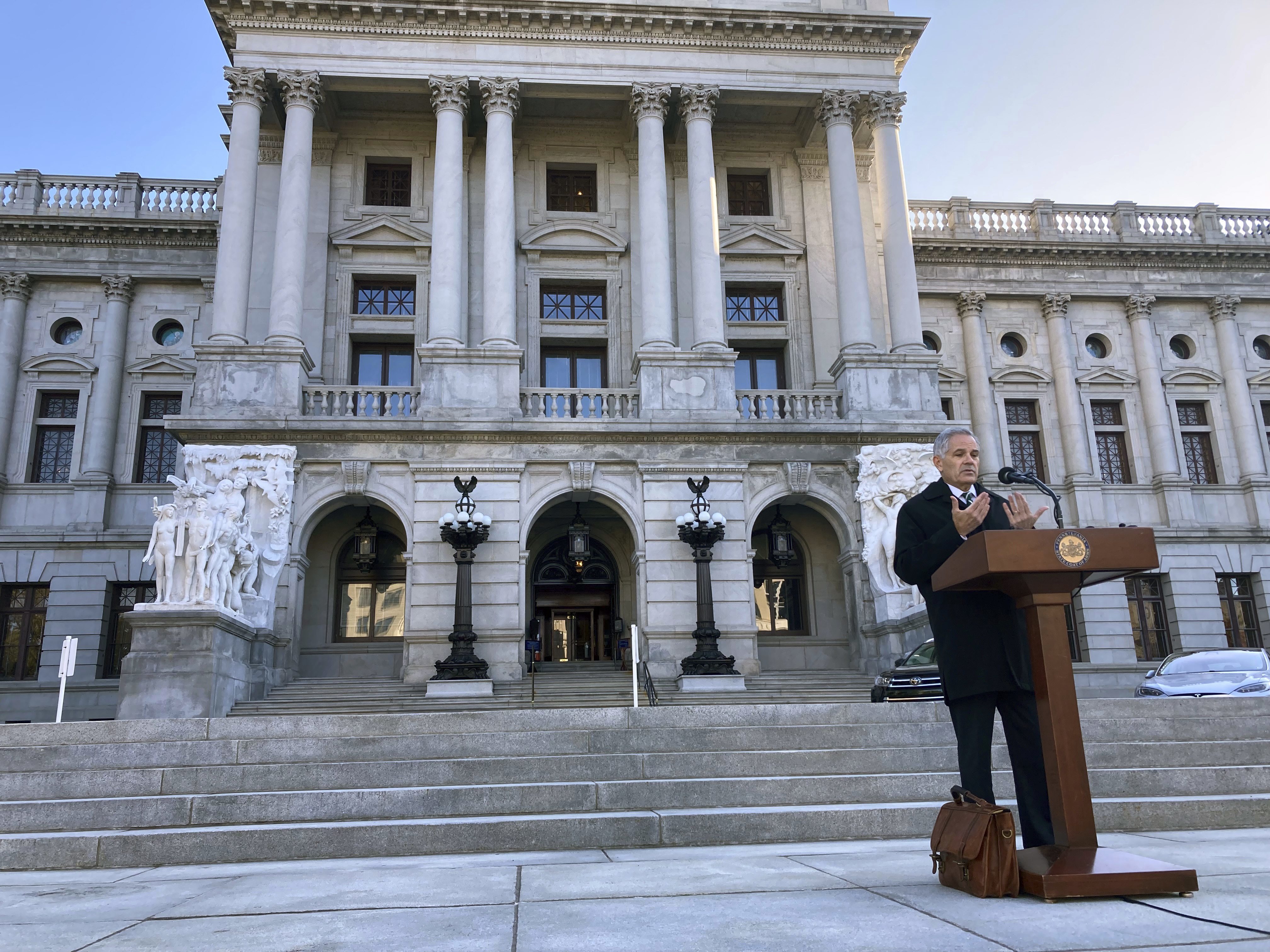
Bucks County’s sheriff Fred Harran, outside the courthouse in Doylestown, PA, June 9, 2025.
Contentious legal hearings have come against a backdrop of name-calling and rancor outside the courtroom.
The Democratic-led Bucks County Board of Commissioners has disavowed Harran’s actions, voting 2-1, with the lone Republican opposed, to approve a resolution that declared the agreement with ICE “is not an appropriate use of Bucks County taxpayer resources.”
The ICE issue has become central to Democrats’ effort to oust Harran, a Republican, while the sheriff says his intentions have been misconstrued by political opponents and the news media.
“A judge ruling that he has the authority to enter into this deportation agreement does not make this any less dangerous,” Harran’s Democratic opponent, Danny Ceisler, said in a statement Wednesday.
The last opportunity to end the partnership, Ceisler said, is by winning the election next month.
A key issue has been the difference between what Harran says he intends to do and the much broader powers conferred within the agreement with ICE.
Harran signed up for the “Task Force Model,” the most far-reaching of the three types of 287(g) agreements. It allows local police to challenge people on the streets about their immigration status and arrest them for violations.
Harran said his officers won’t do that.
Wednesday’s ruling, Harran said, recognized the limited scope of his plans, and he suggested that every county should partner with ICE.
“I’m only interested in making the county safer, and I’m only interested in dealing with those folks that are in this country illegally that have committed crimes,” Harran said. “I am not the immigration police. I am not Immigration and Customs Enforcement.”
Harran has said staff will electronically check the immigration status of people who have contact with the sheriff’s office because of alleged criminal offenses. Those found to be in the country illegally will be turned over or transported to ICE, if the federal agency desires, he said.
Harran testified in court last month that he planned to create a sheriff’s office policy to specify the limits of his deputies’ powers but had not yet done so.
He insisted that his office would take only the actions he has described.
“We will not be stopping people to ask them on immigration status,” he said under cross-examination. “I know what I am doing, and that’s all I intend to do.”
This suburban content is produced with support from the Leslie Miller and Richard Worley Foundation and The Lenfest Institute for Journalism. Editorial content is created independently of the project donors. Gifts to support The Inquirer’s high-impact journalism can be made at inquirer.com/donate. A list of Lenfest Institute donors can be found at lenfestinstitute.org/supporters.
With the exception of a sign etched onto a glass window on the ground floor, there’s no indication that an entertainment venue and bar awaits beyond the doors of Media’s predominately office-focused Phoenix building.
Inside is equally vague. There’s just a large sign that reads “Martinique Deux” situated on a staircase leading to the basement. Following it downstairs, there’s an innocuous door that leads to a speakeasy-like bar.
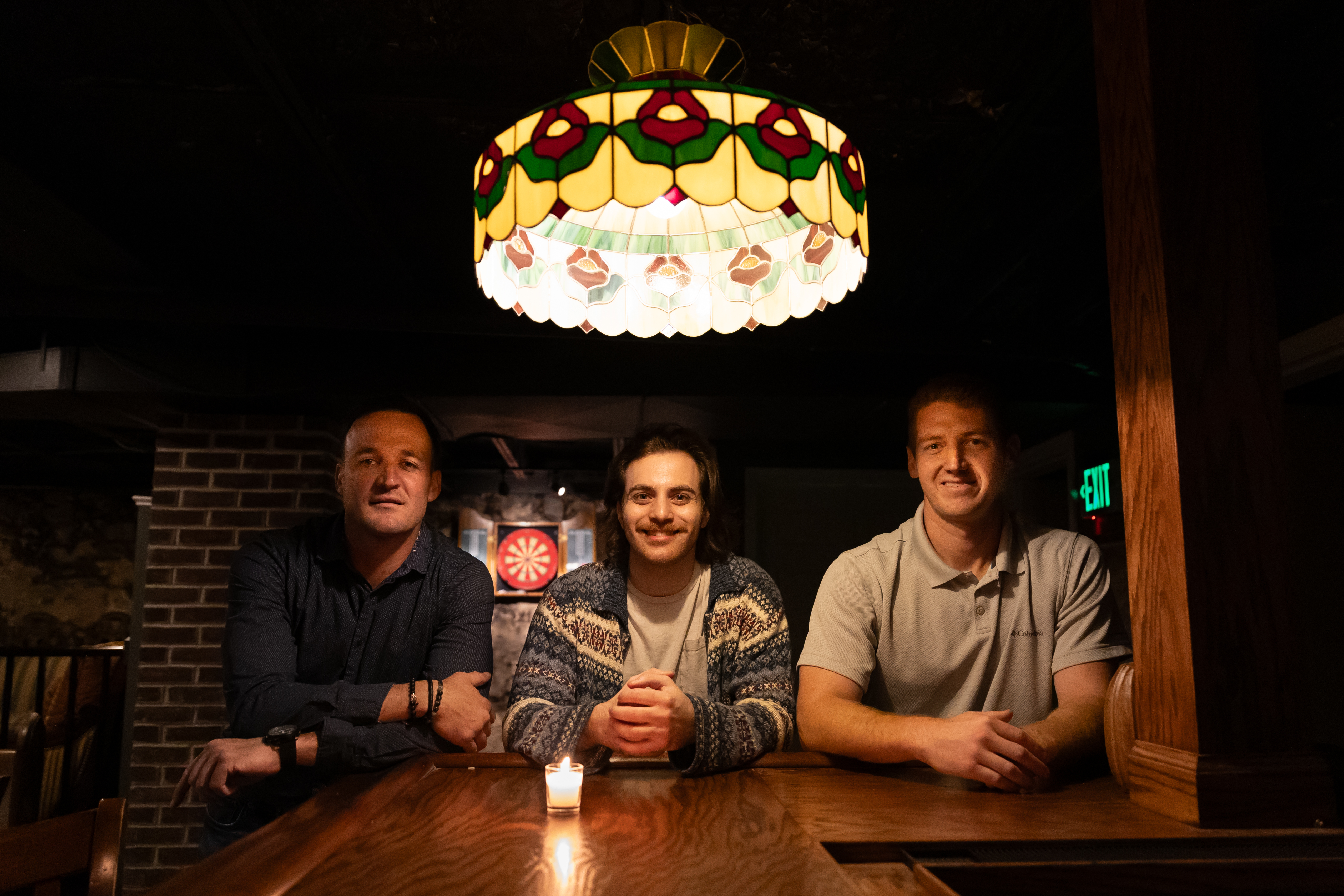
Martinique Deux’s owners — business partners James Matika, Jason Fogg, and Pat Collins — like that it has a bit of a mystique, at least for the time being.
That will change when the entertainment venue and bar debuts on Oct. 17 and Oct. 18, during a soft opening in advance of its grand opening on Oct. 23.
Located at 115 W. State St., the 2,400-square-foot space features a long bar with chairs, high- and low-top tables, including some with church pews for seating, a stage with a piano, as well as a back section with couches and a big-screen TV.
Though largely dark and atmospheric, there are some pop culture nods, like a large painting of David Bowie and a photo of Princess Diana sporting an Eagles jacket.
When Martinique Deux opens, its owners envision it as a lively place where people can grab a drink before or after dinner, watch a game, play darts, and enjoy a music or comedy show. It will be open from 4 p.m. to midnight on Wednesdays, Thursdays, and Fridays, and open earlier on weekends.
A dart board on the wall at Martinique Deux in Media.
The 21-and-over venue will have live entertainment at least three days a week, with music performances on Fridays and Saturdays and comedy shows on Thursdays, though the lineups will vary. They plan to launch with a range of musical acts and comedy, with some being ticketed events and others charging a cover.
Sports fans can also catch games, with a large TV taking center stage during Eagles games.
“If there’s Philly sports on, that’s what will be on,” Matika said.
After football season ends, they’re contemplating adding acoustic performances on Sundays. Weekends may also see Martinique Deux open earlier to accommodate Premier League soccer fans.
Martinique Deux will also be open on Wednesdays starting around Thanksgiving, but largely without planned entertainment.
The bar will offer staple food items like soft pretzels, popcorn, and chips, with plans to partner with neighboring pizza joint Lariele Wood Fired Square Pie. They’re also contemplating a rotating food truck lineup on live entertainment nights.
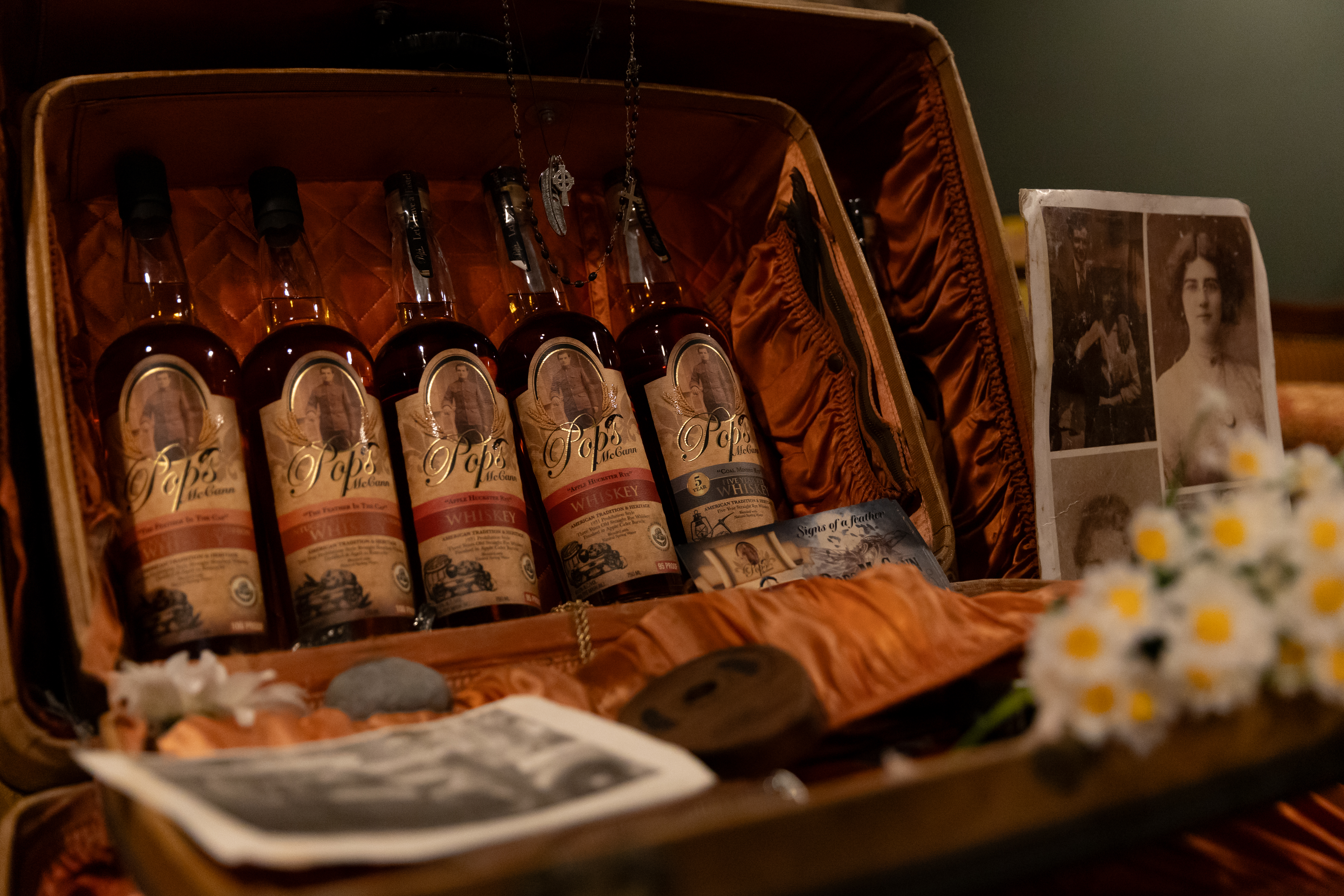
While they’re still finalizing the cocktail list, it will likely be bourbon-forward and feature Pops McCann liquors, Fogg’s Pottstown distillery that produces bourbons, whiskeys, and a rum, and is planning to expand into vodkas and tequilas.
“We’re going to keep it simple,” Matika said.
The bar will feature Pops McCann liquors, Fogg’s Pottstown distillery.
When Martinique Deux opens, it will mark the end of a year-and-a-half-long effort to bring the concept to life. Matika and Collins began working on it together last March after each independently considered similar ideas. They soon connected and set about transforming the space, which was sitting empty after an escape room there closed amid the pandemic.
Both also have experience in the industry — Matika worked at Tap 24 and La Belle Epoque in Media and grew up in the bars his father owned, including The Martinique in Wildwood. Similarly, Collins’ father formerly owned the Clam Tavern in Clifton Heights, and Collins himself said he owned a dive bar in South Philly previously.
They later connected with Fogg through a mutual friend, bringing the entire vision together.
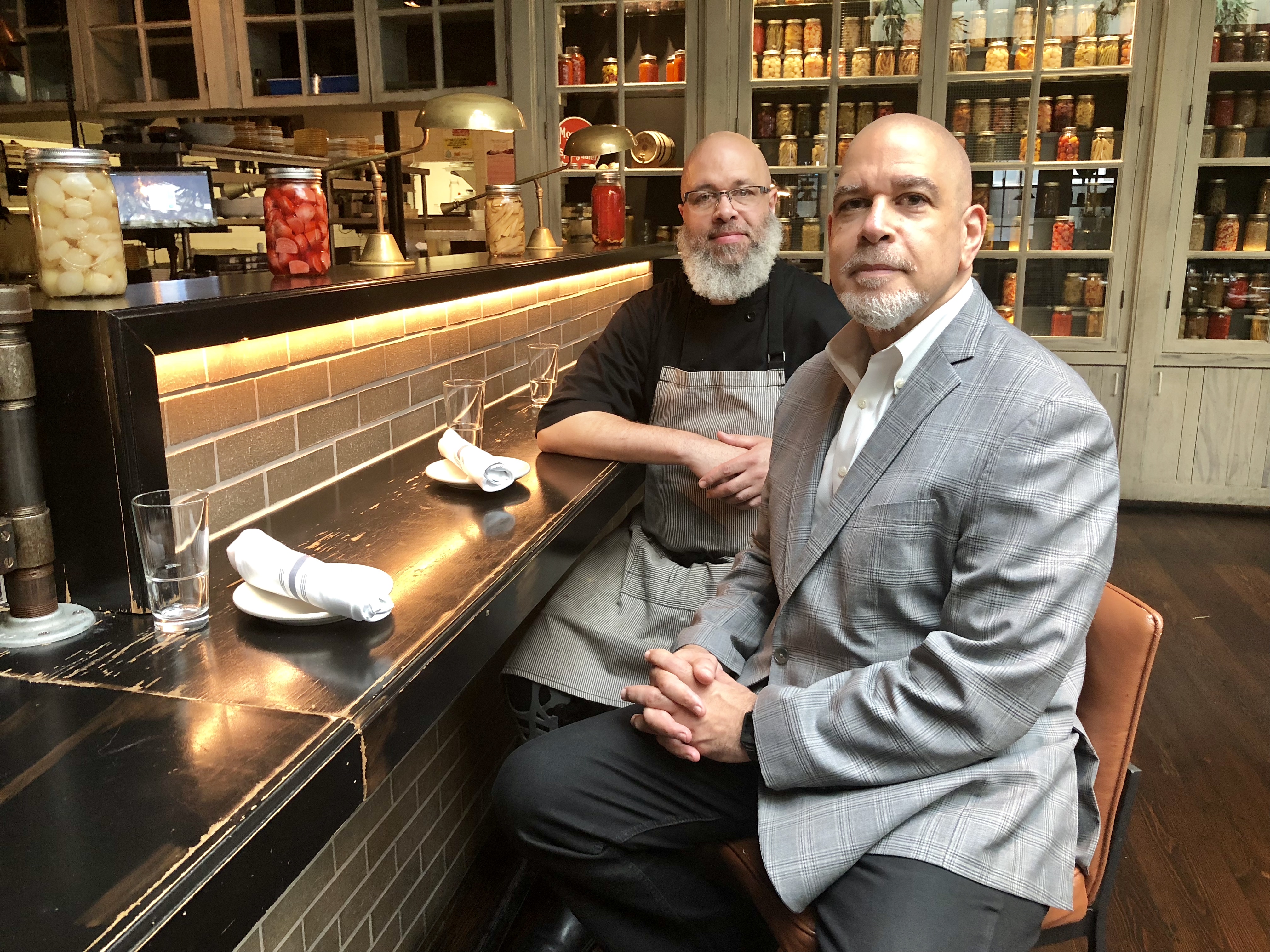
Owners Jason Fogg, James Matika, and Pat Collins pose for a photo at the bar.
“I think it’s going to be one of Media’s staples,” Collins said.
This suburban content is produced with support from the Leslie Miller and Richard Worley Foundation and The Lenfest Institute for Journalism. Editorial content is created independently of the project donors. Gifts to support The Inquirer’s high-impact journalism can be made at inquirer.com/donate. A list of Lenfest Institute donors can be found at lenfestinstitute.org/supporters.
The Mann is getting a new name. With a major sponsorship in hand, Philadelphia’s arts center in Fairmount Park will now be called the Highmark Mann Center for the Performing Arts.
The Pittsburgh-based Highmark insurance company will join the Mann nameplate starting immediately under the terms of a 12-year deal.
“This investment will absolutely help to ensure that the Mann will continue to be an evolving, creative, living, inviting premier destination for our region, for all the artists that we present, and for the audiences that come. This is really an exciting next step for us,” said Catherine M. Cahill, president and CEO of the arts center.
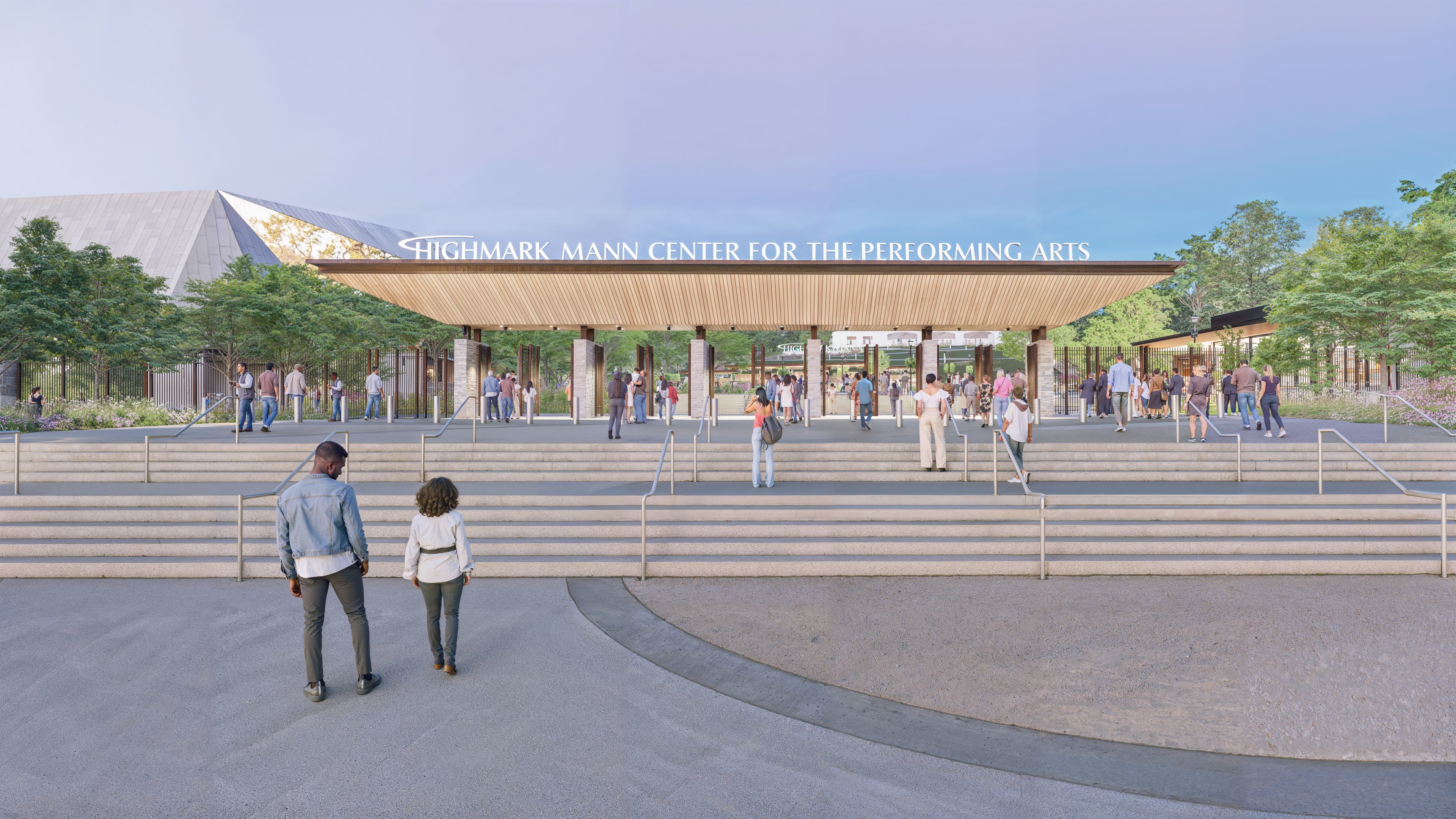
The main entrance to the Highmark Mann as it is envisioned after a renovation and re-opening in the spring of 2026.
Cahill and Highmark declined to discuss how much the company paid for the naming rights and other financial details. “Substantial” is how Dan Tropeano, market president of Highmark Blue Shield in Southeastern Pennsylvania, described the amount of money the company will pay to put its name on the venue.
He noted that Highmark had entered the Philadelphia market recently — in 2023 — and that the company saw an alignment between its customers and the Mann’s patrons.
“They offer programming that appeals to the entire demographic of the folks here in Southeast Pa., whether that’s the orchestra for folks that like that kind of thing, whether it’s other music festivals that cater to other types,” said Tropeano, who recalled attending his first Mann concert in 1991 (the Allman Brothers Band). “We find it to be one of the most diverse venues that really exposes us to the entire community, not just one defined segment.”
The arts center will use the moniker Highmark Mann for short.
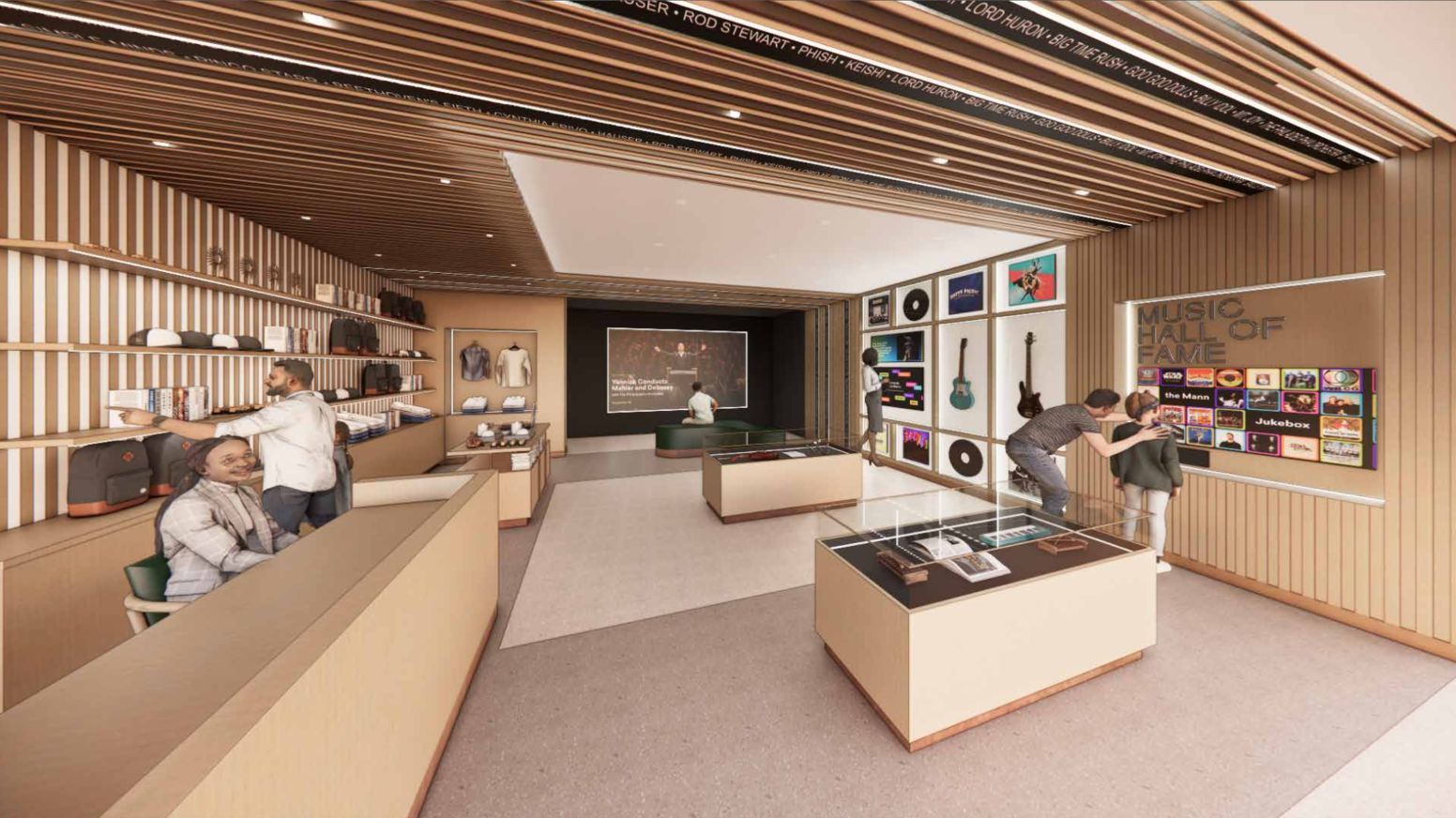
A rendering of a new Welcome Center at the arts center that, when built, will house a Music Hall of Fame Jukebox, gift shop and a continuously running LED ticker with names of performers who have played the center throughout its history.
The new name was announced Wednesday afternoon in a ceremony marking the start of construction on a renovation slated for completion in the spring. The project is part of a $70 million campaign that will also boost endowment and fund operations and artistic projects.
Among the changes coming to the Mann are a new main entry canopy and a plaza three times the size of the current one. A section of the Mann’s angular shed will display a 4,900-square-foot LED screen animated with video and kinetic artwork. Digital pillars, landscaping, lighting, and new way-finding features are on the way.
To date, nearly $60 million has been raised toward the $70 million total, said Cahill, who declined to specify whether the money from Highmark would be paid in one lump sum or in installments over years.
“This is an important component of this campaign, but we still have more work to do. We still have more money to raise,” she said, adding that she expects the $70 million goal to be reached by February 2027.
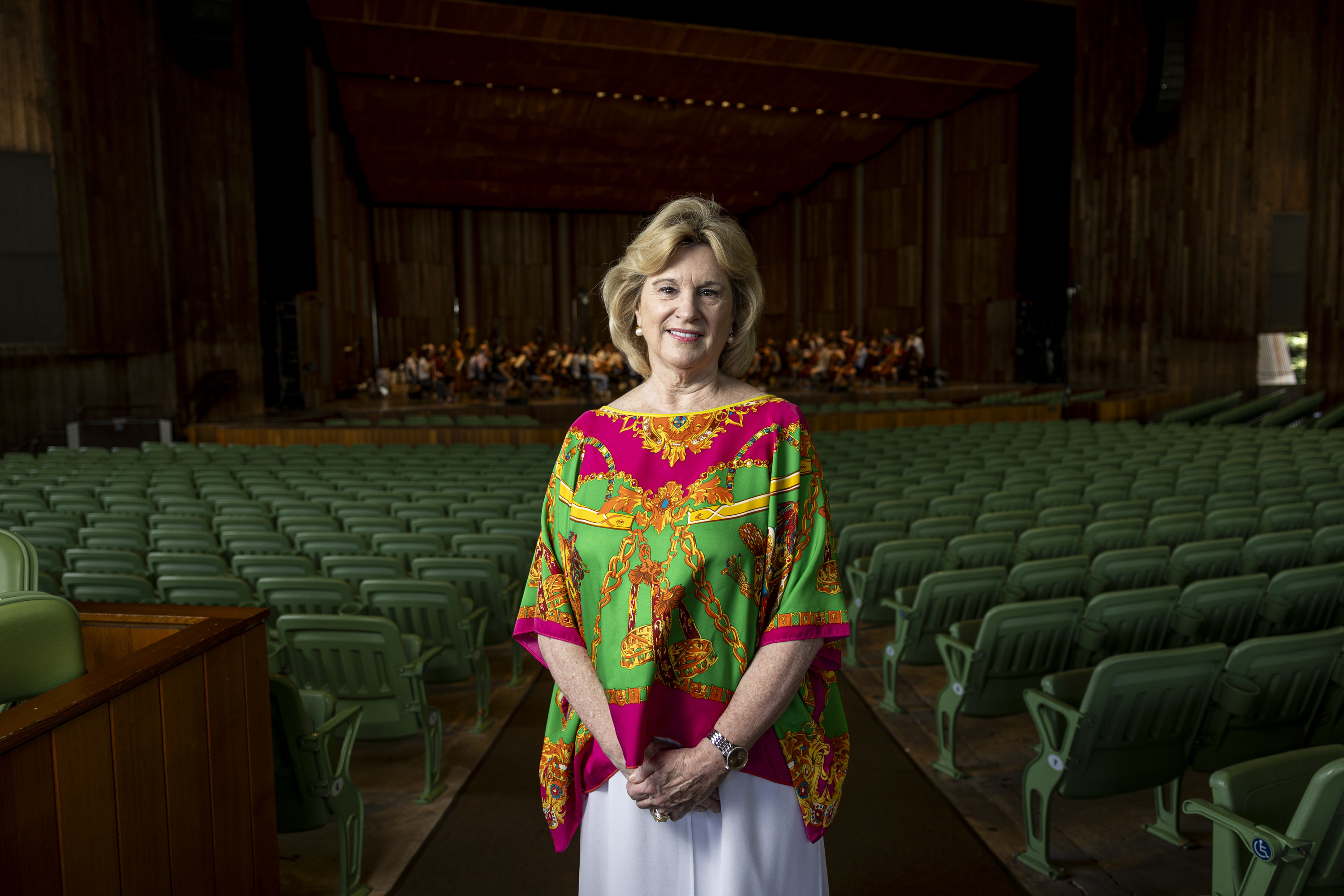
Catherine M. Cahill, president and CEO of what is now called the Highmark Mann, with the Philadelphia Orchestra rehearsing in the background, July 23, 2025.
The new name is the center’s fourth. Called the Robin Hood Dell West at its opening in 1976, it was renamed the Mann Music Center in 1979 for philanthropist Fredric R. Mann and then, in 1998, the Mann Center for the Performing Arts.
The new name will apply not just to the physical campus — which includes the main shed named for TD Bank and a smaller stage at the top of the hill already named for Highmark — but also to the organization itself.
(The name change is a rebranding; the center is not changing its name legally.)
Fans cheer while Black Thought of The Roots performed during day two of the Roots Picnic 2025 at the Mann Center on Sunday, June 1, 2025.
Some major naming opportunities may be spoken for, but others remain, Cahill said.
“We have the plaza that can be named. We have backstage spaces to be named. We have programmatic things to be named. We have a whole laundry list of naming rights.”
Though officials declined to quantify the cost of the sponsorship deal, Cahill said the amount was in line with similar ones elsewhere.
“We did national benchmarking about the world of naming rights, and I can tell you we are absolutely confident that where we landed in this deal is exactly where the Mann should be.”
Almost as soon as we closed The 76 last year, The Inquirer’s Food team started thinking about how to improve it. The challenge of an annual list is not just to keep it going, but to make sure it stays as relevant and useful as it was in the first edition.
Philadelphia is an incredible city for eating. That’s not news to anyone reading this. As the fine dining scene in Philadelphia — rightfully — draws more national (and international) attention, the danger is that excellent, low-profile eateries will go ignored while kitchens focused on luxe ingredients win acclaim.
What makes Philadelphia’s restaurant scene unique is that there’s room for experiments, for big swings, and for upstarts to express their own culinary perspectives. That’s thanks to a blend of factors: a lower cost of living than other East Coast cities, a confluence of talent, and a diversity of immigrant cuisine. There’s an exciting culture of collaboration and DIY energy in Philly, like going to a basement show of a band that feels destined to make it big.
In the food section, we cover the big award nominees, of course. But we’re equally eager to celebrate an unassuming BYOB, a new-to-us food cart, a killer sandwich, or a fantastic café. It’s not that these places are secret, but they aren’t the national media darlings that some of Philly’s top spots have become. With this year’s 76, we aimed to give those restaurants their accolades, too.
So we enlisted even more eating power than last year, drawing on a newsroom of reporters who travel all over the Philadelphia area every day, telling stories in every community. There were surprises. There were delights. There were at least two cases of food poisoning.
But the results were worth it. This list is unlike any other in Philadelphia, both in its scope and in its depth. I’m tremendously proud of it, and of the immense effort The Inquirer put into it.
As the new food editor at The Inquirer, my aim is to make sure that The 76 keeps evolving, to reflect, as best we can, the vast cultural and culinary diversity in Philadelphia. Don’t worry: We’re already thinking about next year.
It’s a brand-new year for The 76, The Inquirer’s annual list of the most vital restaurants in the Philadelphia area. This year, we started fresh with a new batch of dining scouts and an even wider purview, diving deeper into pockets of Philadelphia that we didn’t get to eat through last year. The result is a list that we hope is as vibrant, diverse, and interesting as the city that it reflects.
You’ll find some favorites from last year on 2025’s 76, which held on to their spots by being just as impressive as they were the last times we ate there (Friday Saturday Sunday still dazzles, as does Gabriella’s Vietnam).
But you’ll notice that there’s a good deal of turnover, too. More than half of the list is fresh — either classics we felt deserved their time in the spotlight, like the white-tablecloth red-gravy stalwart Dante & Luigi’s or chef favorite Pho 75, or new and new-to-us spots that reflect the shifting energy of the dining scene, like Indonesian karaoke hot spot Niki Echo and the revived Tequilas, a three-restaurants-in-one experience.
Advertisement
Our scouts, all 18 of them, fanned out across the Philadelphia area and ate through cuisines we were curious about, like the wide-ranging food truck landscape and the vibrant Mexican community in Norristown. We found a Main Line cheesesteak (Johnny’s Pizzeria) that rivals South Philly’s best. The result is a list filled with gems, some in plain sight and some that required a bit more hunting.
We think this list, which is unranked and alphabetical, is the most useful list of Philadelphia-area restaurants out there. Some hotly anticipated openings like Stephen Starr’s Borromini and Phila Lorn’s Sao opened too late to make the cut. But don’t worry, there’s always next year.
The 76 is how we think Philadelphia is eating right now, and — we hope — might help you uncover your next favorite spot. Grab a plate and dig in.
Advertisement
How The Inquirer makes its recommendations
The Inquirer aims to represent the geographic, cultural, and culinary diversity of the region in its coverage. Inquirer staffers and contributors do not accept free or comped meals — all meals are paid for by The Inquirer. All dining recommendations are made solely by The Inquirer editorial staffers and contributors based on their reporting and expertise, without input from advertisers or outside interests. More information about how The 76 was put together is available here.
Filter by
Genres
1
Regions
1
Price
1
Showing 76 places
Clear filters
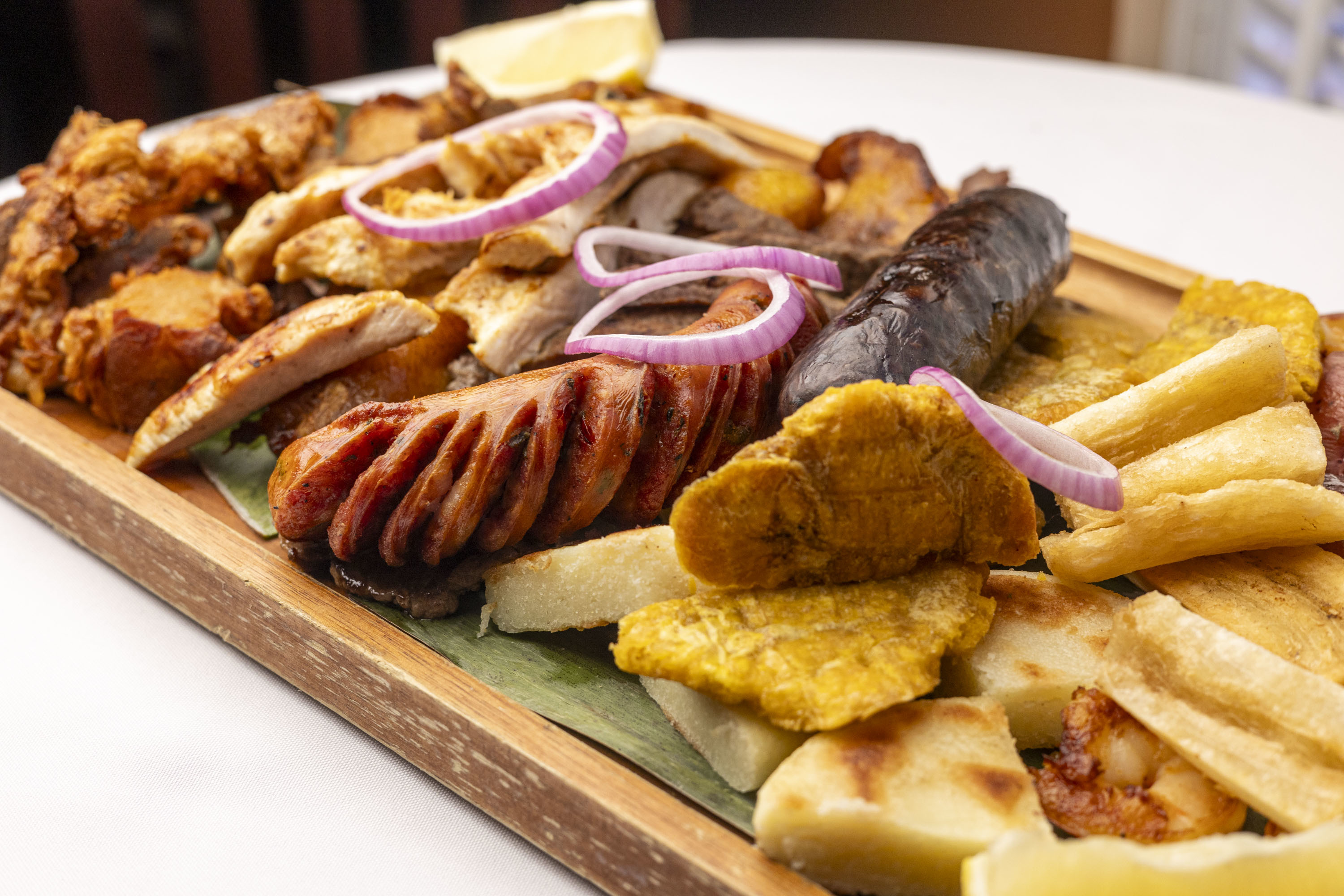
The medium mixed grill and sides.Monica Herndon / Staff Photographer
BBQ captain Jason Kim cooks prime rib eye for the “Korean BBQ Combo B,” including prime cha dol begi, prime rib eye, marinated prime kalbi, steamed egg, scallion salad, doenjang jjigae or kimchi jjigae.Elizabeth Robertson / Staff Photographer
Pho order number 1: Slices of eye-round steak, well-done flank, fat brisket, soft tendon and beef tripe with added meatballs.Alejandro A. Alvarez / Staff Photographer
This is the second edition of The 76 and we’re looking for your feedback to make it even more useful. If you have thoughts about its design or features, we would appreciate a few minutes of your time by taking this survey.
Staff Contributors
Editing: Margaret Eby, Jenn Ladd, and Matt Buchanan
Reporters: Beatrice Forman, Craig LaBan, Earl Hopkins, Emily Bloch, Evan S. Benn, Evan Weiss, Hira Qureshi, Jake Blumgart, Jasen Lo, Jenn Ladd, Julia Duarte, Kiki Aranita, Max Marin, Michael Klein, Ryan Briggs, Tommy Rowan, and Ximena Conde
Social Editing: Esra Erol and Sam Stewart
Design, Art Direction, and Development: Sam Morris
Art Direction: Julia Duarte and Suzette Moyer
Photo Editing: Jasmine Goldband
Photographers: Alejandro A. Alvarez, Caean Couto, Tom Gralish, Jessica Griffin, Monica Herndon, Heather Khalifa, Yong Kim, Joe Lamberti, Elizabeth Robertson, Tim Tai, Isaiah Vazquez, Tyger Williams
Video: Gabe Coffey, Esra Erol, Jenna Miller, Samantha Stewart
`}tablecell(t,n){let r=n.header?”th”:”td”;return(n.align?“:“)+t+`
`}strong(t){return`${t}`}em(t){return`${t}`}codespan(t){return`${t}`}br(){return this.options.xhtml?” “:” “}del(t){return`${t}`}link(t,n,r){if(t=hi(this.options.sanitize,this.options.baseUrl,t),t===null)return r;let i=’“+r+”“,i}image(t,n,r){if(t=hi(this.options.sanitize,this.options.baseUrl,t),t===null)return r;let i=`“:”>”,i}text(t){return t}},kt=class{strong(t){return t}em(t){return t}codespan(t){return t}del(t){return t}html(t){return t}text(t){return t}link(t,n,r){return””+r}image(t,n,r){return””+r}br(){return””}},bt=class{constructor(){this.seen={}}serialize(t){return t.toLowerCase().trim().replace(//ig,””).replace(/[u2000-u206Fu2E00-u2E7F\’!”#$%&()*+,./:;?@[]^`{|}~]/g,””).replace(/s/g,”-“)}getNextSafeSlug(t,n){let r=t,i=0;if(this.seen.hasOwnProperty(r)){i=this.seen[t];do i++,r=t+”-“+i;while(this.seen.hasOwnProperty(r))}return n||(this.seen[t]=i,this.seen[r]=0),r}slug(t,n={}){let r=this.serialize(t);return this.getNextSafeSlug(r,n.dryrun)}},ie=class{constructor(t){this.options=t||me,this.options.renderer=this.options.renderer||new Qe,this.renderer=this.options.renderer,this.renderer.options=this.options,this.textRenderer=new kt,this.slugger=new bt}static parse(t,n){return new ie(n).parse(t)}static parseInline(t,n){return new ie(n).parseInline(t)}parse(t,n=!0){let r=””,i,s,o,l,a,c,h,u,f,p,x,y,k,w,T,b,D,B,Z,ce=t.length;for(i=0;i<ce;i++){if(p=t[i],this.options.extensions&&this.options.extensions.renderers&&this.options.extensions.renderers[p.type]&&(Z=this.options.extensions.renderers[p.type].call({parser:this},p),Z!==!1||!["space","hr","heading","code","table","blockquote","list","html","paragraph","text"].includes(p.type))){r+=Z||"";continue}switch(p.type){case"space":continue;case"hr":{r+=this.renderer.hr();continue}case"heading":{r+=this.renderer.heading(this.parseInline(p.tokens),p.depth,wi(this.parseInline(p.tokens,this.textRenderer)),this.slugger);continue}case"code":{r+=this.renderer.code(p.text,p.lang,p.escaped);continue}case"table":{for(u="",h="",l=p.header.length,s=0;s<l;s++)h+=this.renderer.tablecell(this.parseInline(p.header[s].tokens),{header:!0,align:p.align[s]});for(u+=this.renderer.tablerow(h),f="",l=p.rows.length,s=0;s<l;s++){for(c=p.rows[s],h="",a=c.length,o=0;o<a;o++)h+=this.renderer.tablecell(this.parseInline(c[o].tokens),{header:!1,align:p.align[o]});f+=this.renderer.tablerow(h)}r+=this.renderer.table(u,f);continue}case"blockquote":{f=this.parse(p.tokens),r+=this.renderer.blockquote(f);continue}case"list":{for(x=p.ordered,y=p.start,k=p.loose,l=p.items.length,f="",s=0;s0&&T.tokens[0].type===”paragraph”?(T.tokens[0].text=B+” “+T.tokens[0].text,T.tokens[0].tokens&&T.tokens[0].tokens.length>0&&T.tokens[0].tokens[0].type===”text”&&(T.tokens[0].tokens[0].text=B+” “+T.tokens[0].tokens[0].text)):T.tokens.unshift({type:”text”,text:B}):w+=B),w+=this.parse(T.tokens,k),f+=this.renderer.listitem(w,D,b);r+=this.renderer.list(f,x,y);continue}case”html”:{r+=this.renderer.html(p.text);continue}case”paragraph”:{r+=this.renderer.paragraph(this.parseInline(p.tokens));continue}case”text”:{for(f=p.tokens?this.parseInline(p.tokens):p.text;i+1<ce&&t[i+1].type==="text";)p=t[++i],f+=`
`+(p.tokens?this.parseInline(p.tokens):p.text);r+=n?this.renderer.paragraph(f):f;continue}default:{let Ie='Token with "'+p.type+'" type was not found.';if(this.options.silent){console.error(Ie);return}else throw new Error(Ie)}}}return r}parseInline(t,n){n=n||this.renderer;let r="",i,s,o,l=t.length;for(i=0;i{if(r.message+=`
Please report this to https://github.com/markedjs/marked.`,e){let i=”
An error occurred:
"+R(r.message+"",!0)+"
“;if(t)return Promise.resolve(i);if(n){n(null,i);return}return i}if(t)return Promise.reject(r);if(n){n(r);return}throw r}}function xi(e,t){return(n,r,i)=>{typeof r==”function”&&(i=r,r=null);let s={…r};r={…m.defaults,…s};let o=kl(r.silent,r.async,i);if(typeof n>”u”||n===null)return o(new Error(“marked(): input parameter is undefined or null”));if(typeof n!=”string”)return o(new Error(“marked(): input parameter is of type “+Object.prototype.toString.call(n)+”, string expected”));if(yl(r),r.hooks&&(r.hooks.options=r),i){let l=r.highlight,a;try{r.hooks&&(n=r.hooks.preprocess(n)),a=e(n,r)}catch(u){return o(u)}let c=function(u){let f;if(!u)try{r.walkTokens&&m.walkTokens(a,r.walkTokens),f=t(a,r),r.hooks&&(f=r.hooks.postprocess(f))}catch(p){u=p}return r.highlight=l,u?o(u):i(null,f)};if(!l||l.length{l(u.text,u.lang,function(f,p){if(f)return c(f);p!=null&&p!==u.text&&(u.text=p,u.escaped=!0),h–,h===0&&c()})},0))}),h===0&&c();return}if(r.async)return Promise.resolve(r.hooks?r.hooks.preprocess(n):n).then(l=>e(l,r)).then(l=>r.walkTokens?Promise.all(m.walkTokens(l,r.walkTokens)).then(()=>l):l).then(l=>t(l,r)).then(l=>r.hooks?r.hooks.postprocess(l):l).catch(o);try{r.hooks&&(n=r.hooks.preprocess(n));let l=e(n,r);r.walkTokens&&m.walkTokens(l,r.walkTokens);let a=t(l,r);return r.hooks&&(a=r.hooks.postprocess(a)),a}catch(l){return o(l)}}}function m(e,t,n){return xi(re.lex,ie.parse)(e,t,n)}m.options=m.setOptions=function(e){return m.defaults={…m.defaults,…e},sl(m.defaults),m};m.getDefaults=mi;m.defaults=me;m.use=function(…e){let t=m.defaults.extensions||{renderers:{},childTokens:{}};e.forEach(n=>{let r={…n};if(r.async=m.defaults.async||r.async||!1,n.extensions&&(n.extensions.forEach(i=>{if(!i.name)throw new Error(“extension name required”);if(i.renderer){let s=t.renderers[i.name];s?t.renderers[i.name]=function(…o){let l=i.renderer.apply(this,o);return l===!1&&(l=s.apply(this,o)),l}:t.renderers[i.name]=i.renderer}if(i.tokenizer){if(!i.level||i.level!==”block”&&i.level!==”inline”)throw new Error(“extension level must be ‘block’ or ‘inline’”);t[i.level]?t[i.level].unshift(i.tokenizer):t[i.level]=[i.tokenizer],i.start&&(i.level===”block”?t.startBlock?t.startBlock.push(i.start):t.startBlock=[i.start]:i.level===”inline”&&(t.startInline?t.startInline.push(i.start):t.startInline=[i.start]))}i.childTokens&&(t.childTokens[i.name]=i.childTokens)}),r.extensions=t),n.renderer){let i=m.defaults.renderer||new Qe;for(let s in n.renderer){let o=i[s];i[s]=(…l)=>{let a=n.renderer[s].apply(i,l);return a===!1&&(a=o.apply(i,l)),a}}r.renderer=i}if(n.tokenizer){let i=m.defaults.tokenizer||new Je;for(let s in n.tokenizer){let o=i[s];i[s]=(…l)=>{let a=n.tokenizer[s].apply(i,l);return a===!1&&(a=o.apply(i,l)),a}}r.tokenizer=i}if(n.hooks){let i=m.defaults.hooks||new Te;for(let s in n.hooks){let o=i[s];Te.passThroughHooks.has(s)?i[s]=l=>{if(m.defaults.async)return Promise.resolve(n.hooks[s].call(i,l)).then(c=>o.call(i,c));let a=n.hooks[s].call(i,l);return o.call(i,a)}:i[s]=(…l)=>{let a=n.hooks[s].apply(i,l);return a===!1&&(a=o.apply(i,l)),a}}r.hooks=i}if(n.walkTokens){let i=m.defaults.walkTokens;r.walkTokens=function(s){let o=[];return o.push(n.walkTokens.call(this,s)),i&&(o=o.concat(i.call(this,s))),o}}m.setOptions(r)})};m.walkTokens=function(e,t){let n=[];for(let r of e)switch(n=n.concat(t.call(m,r)),r.type){case”table”:{for(let i of r.header)n=n.concat(m.walkTokens(i.tokens,t));for(let i of r.rows)for(let s of i)n=n.concat(m.walkTokens(s.tokens,t));break}case”list”:{n=n.concat(m.walkTokens(r.items,t));break}default:m.defaults.extensions&&m.defaults.extensions.childTokens&&m.defaults.extensions.childTokens[r.type]?m.defaults.extensions.childTokens[r.type].forEach(function(i){n=n.concat(m.walkTokens(r[i],t))}):r.tokens&&(n=n.concat(m.walkTokens(r.tokens,t)))}return n};m.parseInline=xi(re.lexInline,ie.parseInline);m.Parser=ie;m.parser=ie.parse;m.Renderer=Qe;m.TextRenderer=kt;m.Lexer=re;m.lexer=re.lex;m.Tokenizer=Je;m.Slugger=bt;m.Hooks=Te;m.parse=m;var tc=m.options,nc=m.setOptions,rc=m.use,ic=m.walkTokens,sc=m.parseInline;var oc=ie.parse,lc=re.lex;var Ni=lt(Ri());var wn=lt(gt());function xn({label:e,text:t}){return wn.default.createElement(“span”,{className:”inno-hover js-hover”},e,wn.default.createElement(“span”,{className:”inno-hover__box”,dangerouslySetInnerHTML:{__html:Tt.toHTML(t[0])}}))}var jl={name:”spannerWithColor”,level:”inline”,start(e){return e.match(/</)?.index},tokenizer(e){let n=/^]*)>(([^)]*))/.exec(e);if(n){let i=/#(?:[0-9a-fA-F]{3}){1,2}$/.exec(n[2]);return{type:”spannerWithColor”,raw:n[0],text:n[1],…i&&{color:n[2]}}}},renderer(e){if(e.color){let t=(0,Ni.default)(e.color).isDark();return`${m.parseInline(e.text)}`}else return`${m.parseInline(e.text)} (u26D4uFE0F Error: Incorrect hex color provided)`}},_l={name:”spanner”,level:”inline”,start(e){return e.match(/</)?.index},tokenizer(e){let n=/^]*?)>(?!()/.exec(e);if(n)return{type:”spanner”,raw:n[0],text:n[1]}},renderer(e){return`${m.parseInline(e.text)}`}},Rl={name:”hover”,level:”inline”,start(e){return e.match(/e&&typeof e==”string”?m.parseInline(e.replace(“v”,`
`)):””};var Pl=(e,t)=>{let n=e.querySelector(“.js-description”);for(let r of t.body){let i=document.createElement(“p”);i.classList.add(“inno-p”),i.innerHTML=Tt.toHTML(r.value),n.appendChild(i)}},At={init:()=>{},populate:(e,t)=>{Pl(e,t)}};var kn=!1,Ul=()=>{document.querySelectorAll(“.js-filter-header”).forEach(e=>{e.addEventListener(“click”,()=>{Bl(e)})}),document.querySelectorAll(“.js-filter-checkbox”).forEach(e=>{e.addEventListener(“change”,()=>{Wi(),Hi(),O.event(“click”,`Filter checked | ${e.dataset.group} | ${e.value} | ${e.checked?”on”:”off”}`)})}),document.querySelectorAll(“.js-filter-reset”).forEach(e=>{e.addEventListener(“click”,()=>{Nl()})}),document.querySelector(“.js-filter-catcher”).addEventListener(“click”,()=>{Zl()}),document.querySelectorAll(“.js-toggle-filters”).forEach(e=>{e.addEventListener(“click”,()=>{Zi()})}),window.addEventListener(“resize”,()=>{Bi()})},Bi=()=>{document.querySelectorAll(“.js-filter”).forEach(t=>{window.innerWidth>1199?t.classList.remove(“is-open”):t.classList.add(“is-open”)})},Zi=()=>{kn=!kn,kn?(document.querySelector(“body”).classList.add(“is-filtering”),O.event(“click”,”Show mobile filters”)):(document.querySelector(“body”).classList.remove(“is-filtering”),O.event(“click”,”Hide mobile filters”),window.innerWidth{document.querySelector(“.js-guide”).scrollIntoView({behavior:”instant”})},Nl=()=>{document.querySelectorAll(“.js-filter-checkbox:checked”).forEach(t=>{t.checked=!1}),O.event(“click”,”Reset all filters”),Wi()},Bl=e=>{let t=document.querySelector(“.js-filters”),n=document.querySelectorAll(“.js-filter”),r=e.closest(“.js-filter”),i=r.classList.contains(“is-open”);window.innerWidth>1200&&n.forEach(s=>{s.classList.remove(“is-open”)}),i?(r.classList.remove(“is-open”),t.classList.remove(“is-open-filter”),O.event(“click”,`Desktop filter group closed | ${r.dataset.filter}`)):(r.classList.add(“is-open”),t.classList.add(“is-open-filter”),O.event(“click”,`Desktop filter group opened | ${r.dataset.filter}`))},Zl=()=>{document.querySelector(“.js-filters”).classList.remove(“is-open-filter”),document.querySelectorAll(“.js-filter”).forEach(n=>{n.classList.remove(“is-open”)})},Hl=()=>{let e=new Object,t=document.querySelectorAll(“.js-filter-checkbox:checked”);for(let n of t){let r=n.dataset.group;e[r]||(e[r]=new Array),e[r].push(n.value)}return e},Wl=(e,t)=>{let n=Object.keys(e),r=new Array;for(let i of n){let l=e[i].map(a=>{if(t[i]!==void 0)return t[i].split(“,”).map(f=>f==a).filter(Boolean).length>0;console.log(`no ${i}`)}).filter(Boolean).length>0;r.push(l)}return r.every(Boolean)},Wi=()=>{let e=Hl(),t=document.querySelectorAll(“.js-place”),n=0;for(let i of t){let s=Wl(e,i.dataset),o=document.querySelector(`.js-marker[data-id=”${i.dataset.id}”]`);s?(o.classList.remove(“is-filtered”),i.classList.remove(“is-filtered”),n++):(o.classList.add(“is-filtered”),i.classList.add(“is-filtered”))}document.querySelectorAll(“.js-filter”).forEach(i=>{let s=i.querySelector(“.js-filter-active”),o=e[i.dataset.filter];o?(i.classList.add(“is-active”),s.textContent=o.length):(i.classList.remove(“is-active”),s.textContent=”1″)});let r=Object.keys(e).reduce((i,s)=>i+e[s].length,0);document.querySelector(“.js-filter-indicator”).textContent=r,document.querySelectorAll(“.js-filter-count”).forEach(i=>{i.textContent=n}),document.querySelectorAll(“.js-filter-plural”).forEach(i=>{i.textContent=n==1?””:”s”}),n==0?document.querySelector(“.js-guide”).classList.add(“is-empty”):document.querySelector(“.js-guide”).classList.remove(“is-empty”),Object.keys(e).length>0?document.querySelector(“.js-inno”).classList.add(“has-filters”):document.querySelector(“.js-inno”).classList.remove(“has-filters”),$e.reDraw()},Lt={init:()=>{Ul(),Bi()},toggle:()=>{Zi()}};var bn,ae,En,Ce,Vi=null;var Vl=async()=>{let e=await fetch(“https://interactives.inquirer.com/projects/2025/10/the-76/1760553884505/assets/places.json”);if(e.ok){let t=await e.json();for(let n of t){let r=document.querySelector(`.js-place#${n.id}`);r?(Pe.populate(r,n),At.populate(r,n)):console.log(`u26D4uFE0F Can not find ${n.name} on the page`)}Pe.done(),Gi(),Kl(),ta(),document.querySelector(“.js-inno”).classList.remove(“is-loading”)}},Gi=()=>{ae=document.querySelectorAll(“.js-place:not(.is-filtered)”),En=ae.length-1},Gl=e=>{if(e=Ki(e),!(Ce&&e!==Ce)){if(e!==bn){bn=e,document.querySelectorAll(“.is-current-place”).forEach(n=>{n.classList.remove(“is-current-place”)});let t=ae[e]||null;Ql(t),t&&(t.classList.add(“is-current-place”),t.id&&O.event(“card-view”,`Scrolled into view | ${t.id}`)),clearTimeout(Vi),Vi=setTimeout(()=>{bn==-1&&En>1?tt.showAll():t&&tt.highlight(t.dataset.index)},300)}}},Ki=e=>Math.min(Math.max(e,-1),En),Kl=()=>{document.addEventListener(“scroll”,()=>{Sn()}),window.addEventListener(“resize”,()=>{Sn()}),document.querySelector(“.js-guide-filter-toggle”).addEventListener(“click”,()=>{Lt.toggle()}),document.querySelectorAll(“.js-place-expand”).forEach(e=>{e.addEventListener(“click”,()=>{Jl(e)})})},Jl=e=>{let t=e.closest(“.js-place”);t.classList.remove(“is-collapsed”),O.event(“click”,`expand block | ${t.dataset.name}`)},Sn=()=>{Yl(),Xl(),ea()},Ql=e=>{e?history.replaceState(null,null,”#”+e.id):history.replaceState(null,null,” “)},Yl=()=>{if(Ce){let t=Array.from(ae).filter(n=>n.dataset.index==Ce)[0].getBoundingClientRect().top+window.scrollY-70;window.scrollY+100>t&&window.scrollY-100{let e=-1;ae.forEach((t,n)=>{let r=t.getBoundingClientRect();200>r.top&&r.height>0&&(e=n)}),Gl(e)},ea=()=>{let e=document.querySelector(“.js-guide”),t=e.getBoundingClientRect(),n=window.innerHeight/2;t.top+t.height-n<0?(e.classList.add("is-post-guide"),e.classList.remove("is-in-guide")):t.top-n{let i=Array.from(ae).filter(s=>s.dataset.index==e)[0].getBoundingClientRect().top+window.scrollY-70;Ce=e,ae[e]&&ae[e].id&&n&&O.event(“node-click”,`Clicked on marker | ${ae[e].id}`),window.scrollTo({top:i,behavior:t})},ta=()=>{let e=window.location.hash;if(e){let t=document.querySelector(e);if(t){let n=Ki(t.dataset.index);n&&Ji(n,”smooth”,!1)}}},$e={init:()=>{Vl()},scrollTo:(e,t=”smooth”)=>{Ji(e,t)},reDraw:()=>{Sn(),Gi()}};var nt,te,na=null,rt=new Array,st=!1;var Fe=null,ve=20,it=window.innerWidth>1200,ra=()=>{document.querySelector(“.js-toggle-map”).addEventListener(“click”,()=>{Yi()}),window.addEventListener(“resize”,()=>{Qi()})},Qi=()=>{it=window.innerWidth>1200,ve=it?20:Math.floor(window.innerWidth*.4),te.setPadding({top:it?ve+80:ve,left:it?window.innerWidth/2:ve,bottom:ve,right:ve}),setTimeout(()=>{te.resize()},400)},ia=()=>{let e,t,n,r,i=new Array;return document.querySelectorAll(“.js-place”).forEach(o=>{let l=parseFloat(o.dataset.long),a=parseFloat(o.dataset.lat);(e&<||!t)&&(t=l),(n&&ar||!r)&&(r=a)}),i=[[e,n],[t,r]],i},sa=()=>{let e=document.querySelectorAll(“.js-place”);e.forEach((t,n)=>{let r=t.dataset;if(r.lat&&r.long){let i=ht(“js-marker-stub”);i.classList.add(`inno-map__marker–${n}`),r.index=n,r.id=Ee(r.name),r.imageSrc=`https://interactives.inquirer.com/secondbank/arc/${r.media}/80.webp`,ft(i,r),i.addEventListener(“click”,()=>{i.classList.contains(“is-active”)&&st&&Yi(),$e.scrollTo(n,st?”instant”:”smooth”)}),i.addEventListener(“mouseover”,()=>{e[n].selected=!0}),i.addEventListener(“mouseleave”,()=>{e[n].selected=!1,Fe&&(e[Fe].selected=!0)}),rt.push(i),new nt.Marker({element:i}).setLngLat([parseFloat(r.long),parseFloat(r.lat)]).addTo(te)}})},zn=()=>{let e=ia();te&&te.fitBounds(e),document.querySelectorAll(“.js-marker”).forEach(t=>{t.classList.remove(“is-active”)}),document.querySelector(“.js-map”).classList.add(“is-all”)},oa=()=>{vr(“https://interactives.inquirer.com/storage/dependencies/maplibre/5.3.0/maplibre-gl.js”,()=>{let e=new Xn;nt=window.maplibregl,nt.addProtocol(“pmtiles”,e.tile);let t=”https://interactives.inquirer.com/melish/1.2.1″,n=`${t}/us-latest.pmtiles`,r=new at(n);e.add(r),r.getHeader().then(async()=>{let s=await(await fetch(`${t}/styles/neutral.json`)).json();ve=it?20:Math.floor(window.innerWidth*.4),te=new nt.Map({container:”map”,zoom:13,center:[-75.165222,39.952583],maxBounds:[[-86.485129,34.333968],[-69.915035,43.854144]],attributionControl:!1,style:{…s,sources:{openmaptiles:{type:”vector”,url:`pmtiles://${n}`}}}}),Qi(),te.scrollZoom.disable(),te.addControl(new nt.NavigationControl({showCompass:!1,showZoom:!0,visualizePitch:!1}),”bottom-right”),document.querySelector(“.js-map”).classList.add(“is-loaded”),te.on(“load”,()=>{sa(),zn()})})})},la=e=>{if(rt.length>0){let t=rt[e];if(document.querySelector(“.js-map”).classList.remove(“is-all”),document.querySelectorAll(“.js-marker”).forEach(n=>{n.classList.remove(“is-active”)}),t){let n=document.querySelector(`.js-place[id=${t.dataset.id}]`),r=document.querySelector(`.js-marker[data-id=${t.dataset.id}]`);te.flyTo({center:[parseFloat(n.dataset.long),parseFloat(n.dataset.lat)],zoom:13.2,speed:.5}),Fe=e,t.selected=!0,r.classList.add(“is-active”)}else te&&rt&&(zn(),Fe!==null&&(rt[Fe].selected=!1,Fe=null))}else na=e},Yi=()=>{st=!st,st?(document.querySelector(“.js-inno”).classList.add(“is-mapping”),O.event(“click”,”Open mobile map”)):(document.querySelector(“.js-inno”).classList.remove(“is-mapping”),O.event(“click”,”Close mobile map”))},tt={init:()=>{oa(),ra()},highlight:e=>{la(e)},showAll:()=>{zn()}};var aa=()=>{document.querySelectorAll(“.js-media-caption-toggle-show”).forEach(e=>{e.addEventListener(“click”,()=>{ca(e)})}),document.querySelectorAll(“.js-media-caption-toggle-hide”).forEach(e=>{e.addEventListener(“click”,()=>{ua(e)})})},ca=e=>{e.closest(“.js-place”).classList.add(“is-captioning”),O.event(“click”,”Open caption”)},ua=e=>{e.closest(“.js-place”).classList.remove(“is-captioning”),O.event(“click”,”Closed caption”)},Xi={init:()=>{aa()}};var An=new Array,Mn=650,Tn=650,ha=()=>{let e=document.querySelectorAll(“.js-slide-viewer”);for(let n of e){n.height=Mn,n.width=Tn;let r={el:n,id:n.dataset.id,ctx:n.getContext(“2d”),totalFrames:n.dataset.totalFrames,frames:new Array,currentFrame:1},i=new Array;for(var t=1;t{r.frames=s,An.push(r),es(r.id)})}},fa=e=>new Promise((t,n)=>{let r=new Image;r.onload=()=>t(r),r.setAttribute(“crossOrigin”,”anonymous”),r.src=e}),es=e=>{let t=An.filter(n=>e==n.id)[0];if(t.currentFrame!==void 0||t.currentFrame!==null){let n=t.frames[t.currentFrame];n&&(t.ctx.clearRect(0,0,Tn,Mn),t.ctx.drawImage(n,0,0,Tn,Mn))}},pa=e=>{for(let t of An)t.currentFrame=Math.ceil(e*t.totalFrames),es(t.id)},$t={init:()=>{ha()},updateFrame:e=>{pa(e)}};var da=()=>{xr()&&document.querySelectorAll(“.js-ad”).forEach(t=>{t.classList.add(“is-hidden”)})},ts={init:()=>{da()}};var ns=async(e,t)=>(await fetch(`https://inq-junto.herokuapp.com/${e}`,{method:”POST”,headers:{“Content-Type”:”application/json”},mode:”cors”,body:JSON.stringify(t)})).json(),Ln=()=>{let t=document.querySelector(“.js-inno”).dataset.junto;if(t)return t;throw new Error(“no junto id found”)},$n={getDefaultId:()=>Ln(),vote:(e,t=Ln())=>{ns(“vote”,{poll:t,ballot:e})},results:async(e=Ln())=>await ns(“results”,{poll:e})};var ga=()=>{document.querySelectorAll(“.js-feedback”).forEach(e=>{let t=e.dataset.question;e.querySelector(“.js-feedback-yes”).addEventListener(“click”,()=>{rs(“yes”,e)}),e.querySelector(“.js-feedback-no”).addEventListener(“click”,()=>{rs(“no”,e)})})},rs=async(e,t)=>{t.classList.add(“has-answered”,`has-answered-${e}`),t.querySelector(`.js-feedback-${e}`).blur();let n=”feedback-“+$n.getDefaultId(),r=t.dataset.question;$n.vote({[r]:e},n)},is={init:()=>{ga()}};var ye,ss,ma=()=>{ye=document.getElementById(“js-inno-toast”)},va=e=>{if(!ye)return;ye.innerHTML=e,ye.classList.add(“inno-toast–active”);let t=()=>{ye.addEventListener(“transitionend”,ya,{once:!0}),ye.classList.remove(“inno-toast–active”)};clearTimeout(ss),ss=setTimeout(t,5e3)},ya=()=>{ye.innerHTML=””},we={init:()=>{ma()},showToast:va};var Ct,os=!1,wa=async()=>new Promise(e=>{setTimeout(()=>{console.log(“simulating createShareLink for localhost”),e(“https://inquirer.com/interactives”),xa()},100)}),xa=()=>{let e=document.querySelector(“.js-gift-toast-receiver”);!e||!(e instanceof HTMLElement)||setTimeout(()=>{let t=e?.querySelector(“span”);t&&(t.innerHTML=”Gift link copied to clipboard“)},20)},ka=()=>{let e=window.services?.createShareLink;e&&(Ct=e),Wt()&&(Ct=wa),Ct&&Sa()},ba=async e=>{let t=”text/plain”,n=async()=>{try{return await Ct(window.location.pathname)}catch{e.dataset.state=”error”,we.showToast(“Hmm, we couldn’t generate a gift link…”)}},r=new ClipboardItem({[t]:n()});await navigator.clipboard.write([r]).catch(i=>{console.log(i),we.showToast(“Couldn’t copy to clipboard, try again?”),e.dataset.state=”error”}),we.showToast(“Gift link copied to clipboard!”),e.dataset.state=”complete”},Sa=()=>{document.querySelectorAll(“.js-gift”).forEach(t=>{(yr()||Wt()||wr())&&t.classList.add(“is-available”)}),document.querySelectorAll(“.js-gift-button”).forEach(t=>{t instanceof HTMLButtonElement&&t.addEventListener(“click”,()=>{t.classList.contains(“disabled”)||(t.dataset.state=”loading”,os=!0,ba(t),setTimeout(()=>{t.dataset.state=”ready”},2e3))})});let e=document.querySelector(“.js-gift-toast-receiver”);!e||!(e instanceof HTMLElement)||Ea(e)},Ea=e=>{new MutationObserver(n=>{for(let r of n){let i=[…r.addedNodes].at(0);if(!(i instanceof HTMLElement))return;os&&we.showToast(i.outerHTML)}}).observe(e,{subtree:!0,childList:!0})},ls={init:()=>{ka()}};var za={0:.5,1:.2,2:1,3:.8,4:.6,5:.9},Ma={0:.02,1:.14,2:.16,3:.11,4:.07,5:.23},Ta=()=>{document.addEventListener(“scroll”,()=>{as()})},as=()=>{let t=document.querySelector(“.js-hero”).getBoundingClientRect(),n=document.documentElement.scrollTop,r=t.top+n,i=t.height,s=r+i,o=s-n,l=Math.min(1-o/s,1),a=s*.5;document.querySelectorAll(“.js-hero-image”).forEach((h,u)=>{let f=a*za[u]*l;h.setAttribute(“style”,`transform: translateY(-${f}px)`),l>Ma[u]?h.classList.add(“is-visible”):h.classList.remove(“is-visible”)}),$t.updateFrame(l)},cs={init:()=>{Ta(),as()}};var Aa=()=>{},us={init:()=>{Aa()}};var hs={init:()=>{Bn.init?.(),tt.init?.(),At.init?.(),Lt.init?.(),$e.init?.(),Xi.init?.(),Pe.init?.(),$t.init?.(),ts.init?.(),is.init?.(),ls.init?.(),cs.init?.(),us.init?.(),we.init?.()}};var La=()=>{},fs={init:()=>{La()}};var $a=document.querySelector(“.js-inno”),ps=()=>{hs.init(),fs.init()};$a?ps():new MutationObserver((t,n)=>{if(document.querySelector(“.js-inno”)){n.disconnect(),ps();return}}).observe(document,{attributes:!0,childList:!0,subtree:!0});})();
/*! Bundled license information:
object-assign/index.js:
(*
object-assign
(c) Sindre Sorhus
@license MIT
*)
react/cjs/react.production.min.js:
(** @license React v16.14.0
* react.production.min.js
*
* Copyright (c) Facebook, Inc. and its affiliates.
*
* This source code is licensed under the MIT license found in the
* LICENSE file in the root directory of this source tree.
*)
react-dom/cjs/react-dom-server.browser.production.min.js:
(** @license React v16.14.0
* react-dom-server.browser.production.min.js
*
* Copyright (c) Facebook, Inc. and its affiliates.
*
* This source code is licensed under the MIT license found in the
* LICENSE file in the root directory of this source tree.
*)
*/
Three Pennsylvania Supreme Court justices are on the ballot this November, when voters will decide whether to extend each of their tenures for another 10-year term.
There are currently five justices who were elected as Democrats and two who were elected as Republicans on the bench.
This year’s retention race has drawn heightened attention, as Republicans have launched a campaign to sink the retention bids of Justices Kevin Dougherty, Christine Donohue, and David Wecht — all elected as Democrats in 2015 — in hopes of flipping the court’s balance.
Still, advocacy groups on both sides of the aisle are trying to make the case that control of the judicial seats is critical, if not existential, to their causes.
The Inquirer reviewed the cases that have come before the Pennsylvania Supreme Court over the last decade, and how Dougherty, Donohue, and Wecht voted.
Here are some of the most significant cases of their tenure.
The ruling came in a case challenging a state law limiting Medicaid funding for abortions except in cases involving rape, incest, or danger to the life of the mother.
The 219-page majority opinion included language that strongly endorsed access to abortion as a right derived from the Pennsylvania Constitution, but the judges could not agree on whether they were ready to make the call in this case.
The majority sent questions about a specific funding limit and broader constitutional protection for abortion access back to a lower court — setting up another round of legal battles that will likely, again, make it before the state Supreme Court.
How the three justices ruled: Donohue wrote and Wecht joined the majority opinion. The two justices said they believed Pennsylvania’s 1971 Equal Rights Amendment clearly established a right to abortion access. Dougherty wrote a separate opinion saying this case did not call on the court to opine on the right to an abortion. “At least, not yet,” he wrote.
Voting rights and elections
The Pennsylvania Supreme Court has ruled on a litany of challenges to Pennsylvania’s election rules, many of them focused on the state’s mail voting law.
In 2020, the court issued a major ruling ahead of the presidential election allowing for ballot drop boxes and allowing local election offices to accept ballots for up to three days after the election as long as those ballots were postmarked by 8 p.m. on Election Day.
How the three justices ruled: Donohue, Dougherty,and Wecht each joined the majority opinion in the redistricting case. On the 2020 election ruling, Dougherty and Wecht joined the majority opinion. Donohue joined the majority opinion but dissented from the decision to extend the ballot deadline.
A Delaware County secured drop box for the return of mail ballots in 2022 in Newtown Square.
Education
A Delaware County school district had the right to challenge Pennsylvania’s school-funding system, the Supreme Court ruled in 2017.
The decision affirmed the role of courts in ensuring that state funding leads to equitable education and sent the case back to Commonwealth Court to proceed with litigation.
In 2023, Commonwealth Court ruled, as part of the same case, that the state’s funding system for school districts led to disparities that prohibit quality education for all students, rendering it unconstitutional.
How the three justices ruled:Wecht wrote the majority opinion, which Dougherty and Donohue joined.
Environment
Pennsylvania, which partly sits on the natural gas-rich Marcellus Shale, found itself in the midst of the fracking boom of the early 2000s.
The state sold leases to oil and gas companies to drill wells. The practice raised questions, and legal challenges, as to how the state should use the revenues in the context of the Pennsylvania Constitution’s Environmental Rights Amendment.
The court ruled in 2017 that it is unconstitutional for the state to userevenuefrom the royalties of oil and gas leases on public land to pay for anything but conservation and maintenance of the environment.
How the three justices ruled: Donohue wrote the majority opinion, which Dougherty and Wecht joined.
Justices David Wecht, Christine Donohue and Kevin Dougherty sit onstage during a fireside chat at Central High School in September. The conversation was moderated by Cherri Gregg, co-host of Studio 2 on WHYY, and presented by the Committee of Seventy, Pennsylvanians for Modern Courts, and the League of Women Voters of Pennsylvania.
Criminal justice
Pennsylvania has had the nation’s largest population of juvenile lifers: people sentenced as minors to life in prison without the possibility of parole.
In 2017, the Supreme Court made it harder to sentence a juvenile to life. The majority opinion says there is a “presumption” against life without parole for juveniles who are found guilty of murder, and prosecutors must show that the offender is “unable to be rehabilitated” when seeking the sentence.
How the three justices ruled: Donohue wrote the majority opinion, which Dougherty and Wecht joined.
Second Amendment
In 2024, for the first time, the Pennsylvania Supreme Court issued an opinion that interpreted the wording in the U.S. Constitution that gives Pennsylvanians the right to bear arms.
In Stroud Township, a zoning ordinance that prohibited the discharge of a firearm within the township’s borders limited the possible locations for shooting ranges. The ordinance barred a resident from having a personal outdoor shooting range on his property, and he sued the township for violating his Second Amendment rights.
The court ruled that the ordinance was constitutional.
How the three justices ruled: Dougherty wrote the majority opinion, which Wecht joined. Donohuewrote her own opinion, reaching the same conclusion as the majority but disagreeing with the analysis.
Philadelphia District Attorney Larry Krasner talks about Republican-led efforts to investigate his record addressing crime and gun violence at the Pennsylvania Capitol in 2022.
The decision said that the articles of impeachment approved by the state House in late 2022 were “null and void” because they were sent to the Pennsylvania Senate on the last day of that year’s legislative session, and the upper chamber did not complete its work on the matter before the next session began. The attempt to carry the process from one two-year session to the next was unlawful, the court said.
The majority also agreed with a lower court that none of the articles of impeachment met the required legal standard of “misbehavior in office.”
How the three justices ruled: Donohue and Wecht joined the majority opinion. Dougherty did not participate in the deliberations.
How the three justices ruled: Wecht wrote the majority opinion, which Donohue joined. Dougherty wrote a separate opinion, saying he would allow for Cosby to be retried, but would order his testimony from the civil case to be suppressed.
It’s a local tradition as predictable as slow-rolling through a South Philly stop sign or cursing Schuylkill Expressway traffic: Each election season, the Philadelphia Bar Association publishes its carefully considered opinion of the sitting judges up for reelection — then, the voters ignore it and send every incumbent back to the bench.
That’s because, since 1969, judicial retention elections have been yes-or-no votes for each judge rather than head-to-head competition. In that time, only one Philadelphia Common Pleas Court judge has ever been denied another term — and he was already facing removal for misconduct in a high-profile case. He “had to work damn hard to lose that election,” retired Common Pleas judge Benjamin Lerner said.
In September, the bar’s Commission on Judicial Selection and Retention issued its advice for the Nov. 4 election, recommending 13 out of the 18 judges seeking reelection to Philadelphia’s Common Pleas and Municipal Courts. Other than noting that three of the five “not recommended” judges had not participated in the review process, the bar — as is typically the case — released no further information about its decisions.
But this year, The Inquirer obtained the confidential survey responses the association collected from hundreds of lawyers. The attorneys — who practice in Philadelphia’s criminal, civil, and family courts — provided the bar with detailed feedback under the cover of anonymity about the sitting judges. They also answered yes-or-no questions about their confidence in each judge’s integrity, legal ability, temperament, diligence, attentiveness, and general qualification for the job.
The Inquirer followed up on the issues raised in the survey by interviewing lawyers and judges, watching weeks of court hearings, and reviewing a decade of Superior Court decisions.
The survey results and The Inquirer’s examination offer voters a rare window into how members of Philadelphia’s legal community view the performance of the judges up for retention next month. It has been at least 40 years since such inside information was made available to the public.
window.addEventListener(“message”,function(a){if(void 0!==a.data[“datawrapper-height”]){var e=document.querySelectorAll(“iframe”);for(var t in a.data[“datawrapper-height”])for(var r,i=0;r=e[i];i++)if(r.contentWindow===a.source){var d=a.data[“datawrapper-height”][t]+”px”;r.style.height=d}}});
The judges earning the bar association’s recommendation include several on Common Pleas Court with near-unanimous support: Family Court Judges Walter Olszewski, Ourania Papademetriou, and Christopher Mallios; and Judge Ann Butchart, who handles civil cases.
Olszewski is a “wonderful, caring, intelligent jurist,” one lawyer wrote. “A true public servant.”
The majority of the judges received the bar’s recommendation despite feedback that was mixed, though generally positive.
The most polarizing was Judge Tracy Brandeis-Roman, who has faced blistering appeals from the district attorney’s office accusing her of a pro-defendant bias. Two-thirds of lawyers surveyed said Brandeis-Roman is qualified, and some referred to her as a “fair and compassionate” jurist. But others called her biased and “ill-informed on the law.”
Brandeis-Roman declined to comment.
The judges who received the harshest criticism — and whom the bar ultimately declined to recommend — were faulted for their demeanor, disciplinary histories, or disregard for legal procedures.
“She was cruel and condescending to my client,” a lawyer wrote of Common Pleas Court Judge Lyris F. Younge, who faced parent protests in 2018 and was later sanctioned by the state Court of Judicial Discipline.
“Incapable, even after all of the years of being on the bench, of making an appropriate decision expeditiously,” another said of Common Pleas Court Judge Frank Palumbo.
Younge and Palumbo did not respond to requests for comment.
Marc Zucker, who chairs the bar’s Commission on Judicial Selection and Retention, said the anonymous survey has no bearing on the final recommendations. Instead, he described it as a jumping-off point for an extensive process in which more than 100 volunteer investigators interview candidates, other judges, and lawyers. They also scrutinize judges’ written opinions, social media posts, and financial disclosures.
“We don’t take any criticism at face value,” Zucker said. “We try and look behind it, and hear multiple voices addressing each of those matters.”
That information is kept private, he said, to encourage candor.
The bar’s work does seem to have an influence on voters in competitive primaries. In May, only candidates it recommended won primaries for Common Pleas Court judge.
But the stakes are high. Local judges “make decisions that have a huge impact on our communities,” Cristella said. “Everyone knows someone who’s had a custody hearing, or had to appear in traffic court. People have all kinds of reasons to be before a judge.”
Here is what voters should know about some of the more notable judges up for retention on Nov. 4:
(function() { var l = function() { new pym.Parent( ‘retention-palumbo3__graphic’, ‘https://media.inquirer.com/storage/inquirer/ai2html/retention-palumbo3/index.html’); }; if(typeof(pym) === ‘undefined’) { var h = document.getElementsByTagName(‘head’)[0], s = document.createElement(‘script’); s.type = ‘text/javascript’; s.src = ‘https://pym.nprapps.org/pym.v1.min.js’; s.onload = l; h.appendChild(s); } else { l(); } })();
When Palumbo first ran for judge in 1999, he was best known as the son of a famous Philly power broker and nightclub owner. The bar association declined to recommend him, but Palumbo drew the top ballot position and cruised to victory. Since then, he has been reelected twice without the bar’s support.
This year, survey participants complained that Palumbo is erratic and indecisive. One lawyer wrote that getting through a daily list of cases “is an immense struggle for him.” Another claimed he “purposefully blows up negotiated pleas in his room so he does not have to take them.”
The Superior Court has overturned about one-quarter of cases it decided on appeal from Palumbo’s courtroom over the last decade, well above the statewide average of 13%.
A reporter sat in Palumbo’s courtroom on five occasions in August and September. By the time he arrived around 10:30 a.m., most matters had already been resolved by agreement.
One day, the prosecutor and the public defender informed Palumbo that, in his absence, they had agreed on the outcome of every single case: In minutes, Palumbo’s work on the bench was done.
But when the lawyers in the matters before him did not reach a complete agreement, as was the case on Aug. 27, Palumbo launched into circuitous legal questioning that stymied what might have been a routine proceeding.
On that day, Palumbo took the bench at 10:40 a.m. and asked, “Is everything worked out?”
The lawyers told him there was just one outstanding matter: A man on probation had agreed to plead guilty in a gun case, and they wanted Palumbo to order a presentence investigation and schedule a sentencing for a future date. Instead, Palumbo questioned why the case was in his courtroom, offered to transfer it to another judge, and then aborted the proceeding, saying he could not accept the plea without the man’s probation file in hand.
After the prosecutor complained, Palumbo offered, twice more, to transfer the case elsewhere. “I can just move it to the trial room,” he said.
Generally speaking, lawyers on both sides find it difficult to navigate judges who unilaterally delay or derail proceedings, said Dana Bazelon, a former Philadelphia defense lawyer and policy director for the district attorney’s office, who is now a fellow at the Quattrone Center of the University of Pennsylvania Carey Law School.
“There are judges who really struggle to make decisions who are currently sitting — and that is as basic a tenet of the job as there is,” she said. “You can’t really do the job if you can’t make decisions.”
(function() { var l = function() { new pym.Parent( ‘retention-roman2__graphic’, ‘https://media.inquirer.com/storage/inquirer/ai2html/retention-roman2/index.html’); }; if(typeof(pym) === ‘undefined’) { var h = document.getElementsByTagName(‘head’)[0], s = document.createElement(‘script’); s.type = ‘text/javascript’; s.src = ‘https://pym.nprapps.org/pym.v1.min.js’; s.onload = l; h.appendChild(s); } else { l(); } })();
After a jury returned a guilty verdict against Stephen Jones in a child sexual assault case this May, the victim’s family felt a moment’s relief. Then Brandeis-Roman handed down her sentence.
The outcome was not unusual for Brandeis-Roman. Philadelphia’s district attorney’s office has appealed more than two dozen of her rulings, arguing that her sentences are too lenient and that her decisions have a pro-defendant bias. It’s a notable trend given that the office, under D.A. Larry Krasner, is considered one of the most progressive in the country.
The Superior Court has so far decided 17 of those cases appealed by prosecutors. Sixteen of them were overturned, including a guilty jury verdict Brandeis-Roman had tossed out despite what the Superior Court called “uncontradicted and overwhelming” video evidence tying the defendant to a shooting.
Krasner’s office is appealing another Brandeis-Roman decision to vacate a jury’s guilty verdict in a sexual assault trial.
At what was supposed to be the sentencing hearing for that case, the judge instead threw out the verdict, saying that the evidence did not support the jury’s finding and that the defendant might not have known the victim was incapacitated. The prosecutor’s appeal argued that Brandeis-Roman usurped the role of the jury, took a “thoroughly slanted view,” and disregarded testimony that the woman had been so drunk that her friends had to clean up her vomit and put her to bed.
Marian Braccia, a Temple University law professor and former Philadelphia prosecutor, said it is rare to see a judge overrule a jury in that manner and requires a finding that no reasonable jury could have reached that verdict.
For that to happen repeatedly, she said, “really undermines the reliability of the whole system.”
The lawyers responding to the bar’s survey who praised Brandeis-Roman cited her diligence, compassion, and unyielding commitment to justice.
“Constantly bullied by the [district attorney’s office] and yet still has the self-respect and respect for fairness to be kind and stand up to them. Holds everyone to the same standard,” one lawyer wrote.
Setting aside the prosecution’s appeals, the appellate court has affirmed more than 90% of her rulings.
Prosecutors, meanwhile, continue to file motions urging Brandeis-Roman to reconsider what they say are light sentences.
In one September case, she sentenced Eladio Vega — a 33-year-old man convicted of beating a pregnant woman, causing her to miscarry and breaking her jaw — to a brief jail term, followed by probation and drug treatment.
The prosecutor had requested five to 10 years in prison for Vega, given previous convictions for domestic incidents that included breaking his mother’s wrist. But Brandeis-Roman, noting that Vega had survived child abuse and mental illness, said state prison “would absolutely be adding to the trauma.”
She acknowledged that her decision went against state guidelines: “On paper,” she said, giving him a lighter sentence “doesn’t make sense.”
(function() { var l = function() { new pym.Parent( ‘retention-younge2__graphic’, ‘https://media.inquirer.com/storage/inquirer/ai2html/retention-younge2/index.html’); }; if(typeof(pym) === ‘undefined’) { var h = document.getElementsByTagName(‘head’)[0], s = document.createElement(‘script’); s.type = ‘text/javascript’; s.src = ‘https://pym.nprapps.org/pym.v1.min.js’; s.onload = l; h.appendChild(s); } else { l(); } })();
Then a relatively new Family Court judge hearing child-welfare cases, Younge had come to the bench with deep expertise in child welfare, having worked as a lawyer for the City of Philadelphia and an executive in the Philadelphia Department of Human Services.
But, among other complaints, the protesting parents said Younge had shut them out of proceedings. One mother who became ill during a hearing stepped out of the room, and Younge would not allow her to return, terminating her parental rights in her absence.
The Superior Court reversed a spate of the judge’s decisions, finding Younge abused her discretion in throwing a grandmother in jail and handcuffing a mother while her kids were removed.
One appellate decision cited “example after example of overreaching, failing to be fair and impartial, evidence of a fixed presumptive idea of what took place, and a failure to provide due process to the two parents involved. … The punishment effectuated by [Younge] was, at best, neglectful and, at worst, designed to affect the bond between Parents and [child] so that termination would be the natural outcome of the proceedings.”
Instead of child-welfare matters, Younge is now hearing civil cases. Over her tenure, the Superior Court has overturned about 27% of the cases appealed from her courtroom, double the statewide average.
Younge did not participate in the bar’s process or respond to requests for comment from The Inquirer.
In the survey, most lawyers brought up concerns with her record in Family Court. Those who had been in her civil courtroom gave mixed feedback.
“Those patterns and practices are still present in her civil courtrooms,” one lawyer wrote. “No party, on either side, gets a fair trial.”
(function() { var l = function() { new pym.Parent( ‘retention-diclaudio2__graphic’, ‘https://media.inquirer.com/storage/inquirer/ai2html/retention-diclaudio2/index.html’); }; if(typeof(pym) === ‘undefined’) { var h = document.getElementsByTagName(‘head’)[0], s = document.createElement(‘script’); s.type = ‘text/javascript’; s.src = ‘https://pym.nprapps.org/pym.v1.min.js’; s.onload = l; h.appendChild(s); } else { l(); } })();
Presiding mostly over post-conviction reviews in criminal court, DiClaudio inherited a docket that included cases pending for a decade or longer, and he said he prided himself on his hard work and efficiency in clearing that backlog. He has noted that his record includes overturning roughly 50 homicide convictions.
Lawyers surveyed about DiClaudio were divided, with many criticizing his courtroom demeanor even as they said he “knows the law and gets to the right conclusions.” The Superior Court has overturned his rulings in only about 7% of cases.
But DiClaudio’s decade on the bench has been marked by controversy, including three cases the Judicial Conduct Board brought against him.
In the first case, from 2019, the board said DiClaudio ignored court orders related to a lawsuit over unpaid membership dues he owed to a sports club. DiClaudio was given a two-week suspension and placed on judicial probation until 2026.
This year, the board argued that DiClaudio had improperly used his office to promote his wife’s cheesesteak shop and “traded on and abused the prestige of his office for the personal and economic benefit of himself and others.”
While a final decision on that case was pending, fellow Common Pleas Court Judge Zachary Shaffer alleged that DiClaudio tried to influence his sentencing decision in a gun case by showing Shaffer a piece of paper with the name of a defendant and saying, “I’ve heard you might do the right thing anyway.”
Court supervisors placed DiClaudio on administrative leave, and the Judicial Conduct Board pushed for his suspension without pay on the grounds that his continued employment as a judge would “erode public confidence in the judiciary.”
DiClaudio stipulated to various missteps in the 2019 case related to the club debt, but he has denied any wrongdoing in the two pending cases. DiClaudio denied trying to influence Shaffer, and his lawyer insisted that he had not sought to sway the judge but had happened to mention the defendant in passing when Shaffer stopped by his chambers to buy a T-shirt from the cheesesteak shop.
(function() { var l = function() { new pym.Parent( ‘retention-grey2__graphic’, ‘https://media.inquirer.com/storage/inquirer/ai2html/retention-grey2/index.html’); }; if(typeof(pym) === ‘undefined’) { var h = document.getElementsByTagName(‘head’)[0], s = document.createElement(‘script’); s.type = ‘text/javascript’; s.src = ‘https://pym.nprapps.org/pym.v1.min.js’; s.onload = l; h.appendChild(s); } else { l(); } })();
A former criminal-defense lawyer, Grey was recommended by the bar when he first ran for judge in 2015.
Some survey respondents praised him for his commitment to families. But lawyers also raised concerns about his temperament, saying he yells at litigants and interrupts testimony.
“Judge Grey’s judicial performance is highly dependent on his mood, which varies widely from day to day,” one lawyer wrote. “He is also frequently aggressively impatient with attorneys, social workers and adult parties. Great with kids.”
An Inquirer review of Superior Court decisions found Grey had the highest reversal rate of any judge in Family Court’s juvenile division. In several opinions, appellate judges said Grey returned children home to dangerous situations — in one case going so far as to say they were “appalled” by Grey’s decision.
In an interview, Grey acknowledged some errors but said in most cases, his decisions were properly grounded in the available evidence and the law.
As for occasionally yelling, he said it’s warranted.
“I’ve yelled at attorneys for not knowing what’s going on or being prepared,” he said.
Grey said that allowing himself to become emotionally involved is crucial to building connections, and that it is incumbent on him to get involved in asking questions and guiding testimony so that he has all the information he needs to decide cases.
(function() { var l = function() { new pym.Parent( ‘retention-frazier-lyde2__graphic’, ‘https://media.inquirer.com/storage/inquirer/ai2html/retention-frazier-lyde2/index.html’); }; if(typeof(pym) === ‘undefined’) { var h = document.getElementsByTagName(‘head’)[0], s = document.createElement(‘script’); s.type = ‘text/javascript’; s.src = ‘https://pym.nprapps.org/pym.v1.min.js’; s.onload = l; h.appendChild(s); } else { l(); } })();
Frazier-Lyde is the only Municipal Court candidate up for retention whom the bar declined to recommend.
It’s unlikely to affect her chances at the polls. In the last election cycle, she won by the largest margin of any Municipal Court judge.
The former champion boxer — and daughter of a Philly legend, Smokin’ Joe Frazier — is often responsible for reviewing defendants’ bail terms and handling preliminary hearings, including in domestic violence cases.
Frazier-Lyde, in an interview, said she is proud of her work on the bench and in the community, and she said she felt blindsided by the bar’s failure to recommend her. She noted the association’s magazine praised her in a feature in its spring 2025 issue as “kind, empathetic and outwardly focused.”
“I have public interest and public welfare at the forefront of how I look at everything,” Frazier-Lyde said, adding that she had heard no complaints from the legal community or her supervisors, who in recent months have asked her to handle a double caseload.
But lawyers who responded to the survey said Frazier-Lyde often ignores procedural rules, such as when she questions witnesses after both sides have rested.
She disagreed with that assessment. “I follow the law. I know the law,” she said.
Survey respondents also questioned her handling of domestic violence cases, reporting that she had ordered victims and their alleged abusers into couples counseling. Frazier-Lyde said she does not order anyone into counseling but does seek expert evaluations to determine whether counseling is warranted.
She also frequently imposes mutual stay-away orders on both defendants and complainants — even extending that to unspecified “friends, family, and associates” on both sides, advising that any violation could result in criminal charges.
Frazier-Lyde said it’s her job to do all she can to keep everyone safe before trial, and such orders help achieve that.
Bazelon, the Penn Law fellow, said it can become impossible to prosecute domestic violence cases if judges see their role as mediating an interpersonal conflict rather than assessing the evidence in an alleged crime.
“Many people see domestic violence as not real crime,” she said. “But when judges bring that to the bench, it means they’re not taking victims seriously enough, and it has the potential to put people in danger.
—Staff writers Dylan Purcell and Chris A. Williams contributed to this article.
Correction: A previous version of this story incorrectly stated the terms of Eladio Vega’s sentence.
ACKNOWLEDGMENT
The Inquirer’s journalism is supported in part by The Lenfest Institute for Journalism and readers like you. News and Editorial content is created independently of The Inquirer’s donors. Gifts to support The Inquirer’s high-impact journalism can be made at inquirer.com/donate. A list of Lenfest Institute donors can be found at lenfestinstitute.org/supporters.
Seventy-six sounds like a lot of restaurants — until you consider just how many gems there are in the Philly area. We whittled our selections down to the main list, but there were still some scouts’ favorites that didn’t make the cut.
Amá
The emergence of chef Frankie Ramirez and his thrilling vision of modern Mexican food at Amá is one of the best food storylines of 2025. His seasonal tlayuda topped with a summer sunburst of squash blossoms over epazote pesto and Oaxaca cheese is one of the most beautiful things I’ve eaten all year. The milpa salad is a poetic tribute to the cornfields of his youth and may be the dish that finally gets Philadelphians to love eating bugs. Ramirez’s large-format sharing centerpieces — lamb neck birria, an entire octopus flashed over the wood-fired grill — are showstoppers that offer a glimpse of contemporary Mexican cooking this city has yet to see. The sunny corner room with white walls and a view of the kitchen’s fiery hearth channels the minimalist-chic vibe of its new building amid the construction boom along Front Street in Kensington-Fishtown, but the large space has also posed persistent challenges for service that need more polish on a number of fronts before Amá can reach its true potential. — Craig LaBan
Amá, 101 W. Oxford St., Philadelphia, Pa. 19122, 215-933-0707, amaphl.com
The seasonal tlayuda at Amá.
Artisan Boulanger Patissier
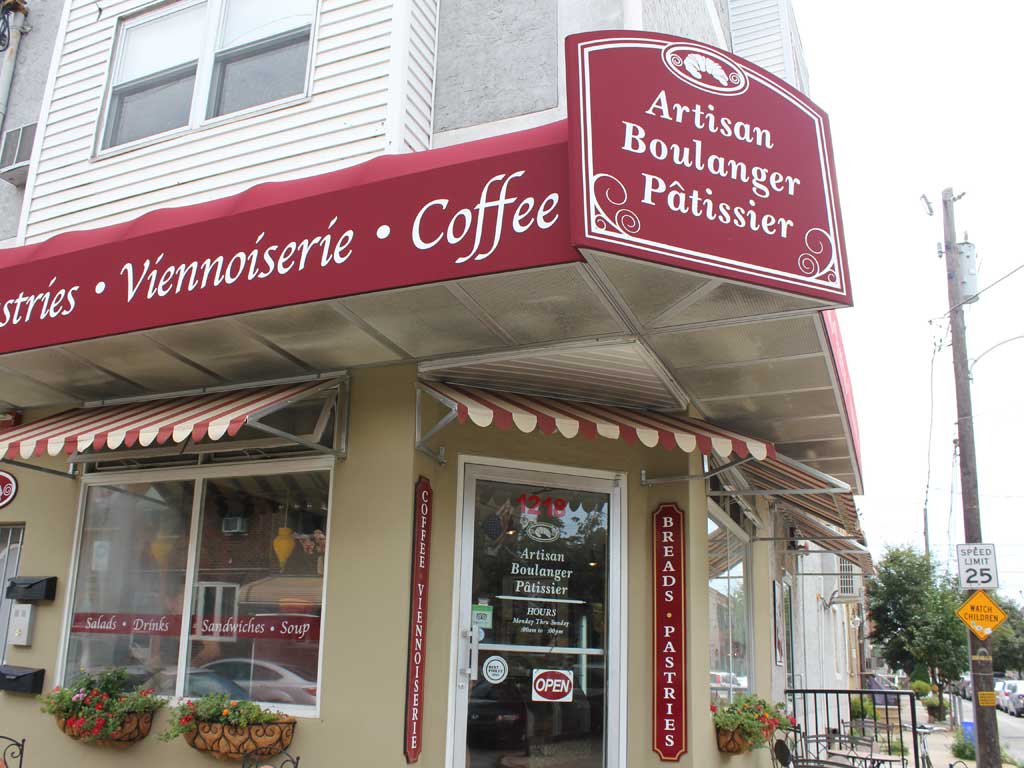
It’s been three years since Andre Chin — who co-owned Artisan Boulanger Patissier in South Philly alongside his wife, Amanda Eap — died following a long battle with prostate cancer. But his presence is still felt everywhere: from the baker and pastry artist’s delectable croissants to the framed portrait of him that hangs over the register area, to the handwritten cards and drawings addressed to Eap and taped to the glass. With the help of their two sons, the couple’s James Beard-nominated Cambodian-French cafe continues to stand strong as a community pillar with a devoted fan base churning in for signature cronuts, Vietnamese iced coffee, and over-stuffed banh mis served on perfectly fluffy baguettes. Try the almond sticks, which still draw a line on weekend mornings at this 23-year-old cash-only spot. — Emily Bloch
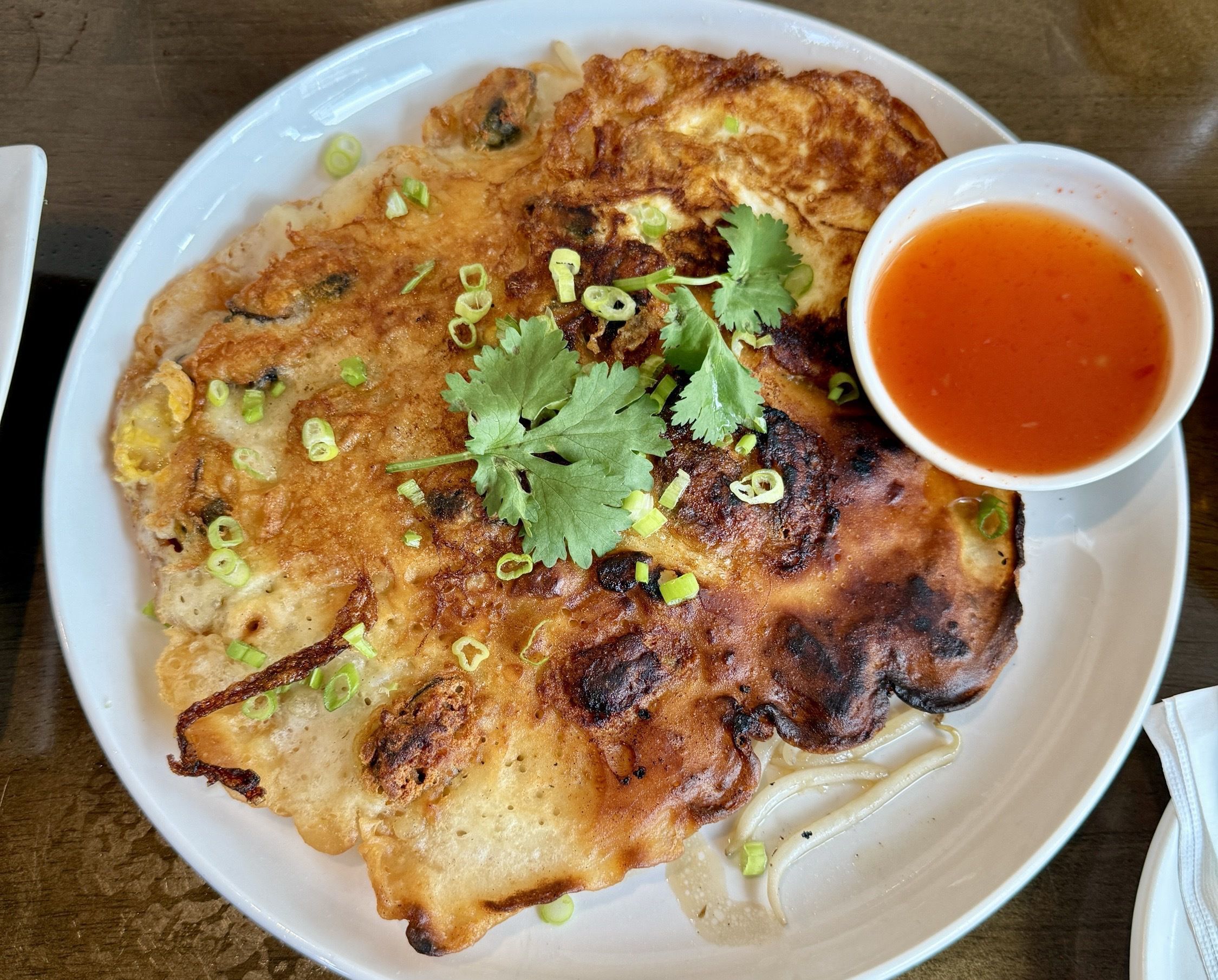
Located on Vine Street — practically on the expressway — Chon Tong is an unlikely place to find some of Philadelphia’s best Thai food. And yet, their hoi tod, a golden-edged mussel pancake; tum tod (imagine the best, puckeringly sweet-and-sour papaya salad but fried); and jay tod, speckled with juicy-sweet corn kernels and crunchy tofu crackling with crevices, are only three tiny precursors to the spectacular dishes emerging from a kitchen that specializes in Central Thai recipes. Ignore that Chon Tong advertises itself as a Thai dessert kitchen. You’re here for the beefy boat noodles, the moo ping — unctuous, barbecued pork sausages pressed into patties and strung onto skewers — spicy chicken wings, and curries that skew sweet (not a bad thing). — Kiki Aranita
Hoi Tod is a mussel pancake served over gently stir-fried bean sprouts at Chon Tong.
D’jakarta Cafe
Although the Indonesian food scene in Philly — like in its native Indonesia — represents a huge amount of regional variation, most restaurants offer certain dishes recognized as national staples. This is where D’jakarta Cafe, near 16th and Ritner Streets, truly excels. While it specializes in the flavors of Jakarta and West Borneo, nearly every iconic Indonesian dish is available and executed to near perfection. An order of both their nasi rendang and nasi kuning yields an embarrassment of riches: beef rendang, wonderfully crisp fried chicken, ikan bilis (fried anchovies), and turmeric-stained rice. Not to mention their assortment of noodle soto (soups) and a char-grilled pompano (ikan bakar) dressed with sambal that will convince you there’s no better way to eat fish. For dessert, don’t miss the jus alpukat, an avocado-chocolate smoothie that’s a common drink in tropical Indonesia. But instead of the typical drizzle of chocolate syrup, D’jakarta’s rendition resembles a milkshake, topped with a scoop of chocolate ice cream and a Pirouline wafer masquerading as a straw. — Jasen Lo
Small egg noodle, big egg noodle (right) and bowls of meatball soup at D’Jakarta, 1540 W. Ritner St.
El Primo
This 17-year-old Norristown institution started off as a Mexican specialty grocery store, eventually expanding into prepared food. Last year, it moved to a bigger location next to the town’s DMV. In addition to the grocery store stocked with Mexican chiles, herbs, and a section of vaquero boots, the new locale includes a bakery and carniceria. But there’s also a vibrant dining room covered in murals and featuring bespoke wood seating — a departure from the picnic tables El Primo used in the past. Diners are greeted with a bowl of chips covered in creamy, spicy refried beans; mosey over to the salsa bar for any additional accoutrements. Latin music on the speakers and friendly staff make for a festive dining experience. El Primo’s menu is vast, but standouts include the mole poblano, with its hints of sweetness and spice, as well as the flavor-packed tacos árabes and perfectly cooked lengua tacos. — Ximena Conde
El Primo, 1700 Markley St., Norristown, Pa. 19401, 610-279-2610, elprimoproduce.com
Gouldsburger’s
Yes, Gouldsburger’s original location, in Haddonfield, is the centerpiece of an aspiring franchise empire that has already crossed the Delaware River, opening locations in the territory of already-established steak shops. But have you tasted the sandwich? Have you bitten into that soft, everything bagel-seasoned roll, born in a Moorestown bakery? Usually the goal is to bake a roll that is crusty on the outside and soft inside, but in breaking the rules, Gouldsburger’s separates itself in the best possible way. In the embrace of that roll, tender and carefully griddled ribbons of rib-eye steak marry beautifully with an even spread of yellow Cooper Sharp, composing a symphony of a sandwich that’s well-balanced and not overstuffed. Another standout is the buffalo chicken cheesesteak — but be prepared for a healthy dose of spice sprinkled on the diced chunks of chicken breast. They’ll have you breaking a sweat even on a brisk November afternoon. It’s further proof that Gouldsburger’s can compete with the slew of top-notch offerings across the river. — Tommy Rowan
Gouldsburger’s, six locations (two in Philadelphia, four in South Jersey), gouldsburgers.com
Griddle & Rice at 22nd and Jackson Streets.
Griddle & Rice
You could easily mistake Griddle & Rice for a diner offering all-American breakfast — the retro checkered-tile interior almost invites that association, and it wouldn’t be entirely inaccurate. The charming brunch spot near Girard Estates serves excellent French toast and eggs Benedict. But once you spot the sink in the corner and the Indonesian aunties happily eating nasi uduk (breakfast rice platter) and satay skewers with their right hands, you’ll realize that Griddle & Rice is also a warung — the Indonesian term for a casual, usually family-run food stall. Sure, you could treat your groggy morning with their omelet breakfast, but ask for a dollop of one of their many sambals to give your eggs a kick, and you’ll be just as nourished by a bowl of bubur ayam — shredded chicken congee garnished with fried shallots, peanuts, scallions. As one of the only Indonesian places in Philly with an espresso machine, Griddle & Rice also serves a unique assortment of Indonesian beverages, such as the nostalgia-inducing milo dinosaur (malted chocolate powder excessively heaped atop iced malted chocolate), coffee with gula aren (palm sugar), and a frothy tek tarik(hand-pulled milk tea). — Jasen Lo
It doesn’t get more South Philly than a hole-in-the-wall Mexican brunch restaurant that also dishes out brie pancakes and an Old Bay-spiced crab frittata under a big green Eagles banner. The menu is an homage to chef Israel Romero’s upbringing and combines the food he grew up eating as a child in Puebla with the over-the-top American breakfasts he grew to love after immigrating to Philadelphia at age 18. It’s easy to get distracted by the menu’s long selection of sweet breakfasts, including numerous French toast iterations that take inspiration from, among other things, coffee cake and churros. But it’s worthwhile to opt for some savory plates, like the bandeja Mexicana — a little-bit-of-everything platter complete with a twice-cooked tamale and carne asada — or the chilaquiles divorciados, which pairs red and green chilaquiles with a hefty serving of steak and eggs. — Beatrice Forman
Jersey Kebab became a local rallying point earlier in 2025 when Emine Emanet, the powerhouse matriarch of the restaurant, was detained by Immigration and Customs Enforcement for two weeks. The community came together to support this beloved South Jersey institution, where colorful variations of Turkish delights line the display case up front. In the seating area, plates of iskender, adana kebabs, and baklava are served at comfy tables. Turkish decor and music invite customers to linger. Love for the community comes through with every thoughtful dish they serve, bringing diners from Philadelphia and other cities out to Haddon Township. — Hira Qureshi
Few curmudgeonly chefs have as much apparent fun as Nic Macri, who likes to shake up the menu at this Bella Vista institution every three months or so with a special event that packs the house — be it a weekend devoted to an international array of pies, from pithiviers to key lime, or a month-long house-made hot dog bonanza. But this gastropub deserves to be on The 76 not for its rousing one-offs but for its day-in, day-out excellence. Royal’s reputation has long been synonymous with its drippy, smoked Gouda-topped burger, but the more intriguing sandwiches — a double-take-worthy vegan gyro, a mesmerizing smoked beef round slicked with maple dijonnaise, a handheld mushroom cutlet with hoagie relish I couldn’t stop eating — have been the real draws since the restaurant reopened in 2023. Round that out with a stellar lineup of snacks (legitimately great beet-pickled eggs, crab puffs showered in grated cheese, house-made ham and focaccia with pickle butter), vegetable-centric sides and fan-favorite desserts, and general manager Eden Beschen’s carefully curated beverage program, and you’ve got one of the most complete neighborhood bars in the city. And the kitchen stays open till 1 a.m. like clockwork, to boot. — Jenn Ladd
Royal Tavern, 937 E. Passyunk Ave., Philadelphia, Pa. 19147, 215-389-6694, royaltavern.com
A Chicago-style hot dog that chef Nic Macri offered at Royal Tavern during a “Dog Days of Summer” promotion.
Sansom Kabob House
To find excellent Afghan food in Philadelphia, venture to the corner of 13th and South Streets, where platters of raisin-filled qablee palaw and spiced chablee kabobs served with Afghan rice, salad, and bread are the best dishes on the menu. Well-rendered Afghan specialties have emanated from the kitchen at Sansom Kabob House, named after its original address on Sansom Street, since its opening in 2002. We have our favorites, but there’s no incorrect order here — unless you skip dessert. The furni pudding and sheeryaki ice cream will make the savory hits a happy afterthought. — Hira Qureshi
One crunch into the honey-drizzled fried chicken at South and you’ll understand its staying power. Nearly a decade into its run on North Broad Street, Robert and Benjamin Bynum’s upscale soul foodery — dresses and suits, please — stands apart from the sea of styrofoam takeouts. Of course, that’s due in part to the in-house jazz venue and the brass solos that ooze like chase scenes through the bungalow-style dining room. But South’s menu deserves a separate ovation. Come for the classic skillet of cornbread topped with a decadent pearl of butter, and the rosemary turkey wings, cooked low and slow to perfection. Then venture deeper into the diaspora riffs on the menu, like the brioche crab toasts with salmon roe. Open four nights a week, don’t be surprised if it’s hard to get a prime-time reservation. And make sure you dress to the nines. — Max Marin
South, 600 N. Broad St., Philadelphia, Pa. 19130, 215-600-2049, southjazzkitchen.com
Benjamin Bynum Jr. (left) and his brother, Robert Bynum, at South restaurant, 600 N. Broad St.
Tierra Colombiana
Jorge Mosquera has operated the Hunting Park institution Tierra Colombiana as a neighborhood catch-all since 1989. The restaurant serves a little bit of everything — from Puerto Rican street food and Argentinian churrasco to Colombian breakfast and filet mignon — creating an experience that’s not unlike dining at the Cheesecake Factory, where combing through a massive menu to find exactly what you’re craving is part of the journey. Politicians use Tierra Colombiana’s first floor to court voters and celebrate life milestones, while the upstairs nightclub hosts a popular singles night every Friday. Come for an oversized margarita and the whole red snapper, stay to salsa-dance the night away. — Beatrice Forman
This truck near 33rd and Market Streets in West Philly started out in 2022 as a smoothie spot aimed at thirsty Penn students, but patrons soon discovered proprietors Boronne and Sue Gao were also serving excellent breakfast. Jianbing guozi, a savory crepe, has the regional ubiquity of a bacon, egg, and cheese sandwich in some Chinese cities — but it is nearly unheard of in the Philadelphia region. So, last year, the mother and son duo rebranded altogether. West River’s rendition fills a delectable egg-and-mung bean crepe with crunchy sheets of wonton and a savory filling of your choice; favorites include braised pork brushed with chili oil or a Chinese-style hot dog that scratches a nostalgic itch for students from Tianjin, the city where both the dish and Sue Gao originated. Whatever your choice, the combination of crepe, wonton, and filling adds up to sizzling comfort food that transcends national boundaries. To top it all off, West River also offers a dim sum menu featuring dan dan noodles, bao, and chili oil dumplings. — Ryan W. Briggs
Before the first pitch is thrown, Tyrone Young arrives early to the baseball field at Hunting Park to pick up trash in both dugouts where teenagers gather to play in North Philadelphia’s Heritage Baseball League.
The trash is what he can control. What he can’t fix are the deep holes on the base paths that make it nearly impossible to play when it rains. He believes race has something to do with the condition of his field.
“Certain fields you might go in the Northeast … their fields are immaculate, but why do ours not look like that?” said Young, who founded the league in 2008.
A new city-funded study of nearly all public sports facilities in Philadelphia confirmed his suspicions: Neighborhoods with more white residents have more fields, amenities that are in better shape, and more youth sports programs than other areas. The survey, conducted across more than 1,400 fields, courts, and baseball diamonds in 2023, also found lower crime rates in the blocks surrounding sports facilities and youth programs, echoing the belief of many coaches that sports help kids stay out of trouble.
The study also found that areas with higher rates of homeownership have more sports facilities. Areas with a higher proportion of white residents are more likely to have youth sports programs, while areas with a higher proportion of foreign-born residents are less likely to have them.
There are holes throughout the baseball field at Hunting Park. The holes trap water, making it difficult for the players to use it.
“I wouldn’t even want to imagine if they weren’t playing baseball what they would be doing,” Young said of his players. “So [we’re] giving them an avenue to do some stuff.”
The Philadelphia Youth Sports Collaborative (PYSC), a nonprofit consortium of youth sports providers, chose Temple University’s Sport Industry Research Center to conduct the study with funding from Philadelphia Parks and Recreation. The city and PYSC had a shared interest in gathering data on fields that had experienced “a lifetime of underinvestment,” said Beth Devine, PYSC’s executive director.
“As an advocate in this space, we not only have to identify the issues but we have to call them out,” Devine said. “If we want to say that we’re a youth sports city and we’re investing in youth sports, we can’t only do that, we have to look at the spaces where the kids are playing.”
The study’s results reflect Philadelphia’s de facto racial segregation and a pattern of disinvestment in communities of color. But they also show the city’s sports facilities are in poor shape overall, with 60% rated “somewhat below” or “far below” average quality, attributed in large part to heavy traffic, litter, and poor maintenance.
The city’s Rebuild initiative to renovate parks, libraries, and recreation centers has made a dent in the catalog of fields in need. But in Hunting Park, where Young’s Heritage League plays, the ball field built 13 years ago with help from former Phillie Ryan Howard is an example of what can happen when facilities don’t receive sustained care over time.
“The investment has to be a long-term, thoughtful, and deep investment,” said Mike Barsotti, the director of youth sports at Philadelphia Parks and Recreation. “Every neighborhood needs to have these great advantages, so how do we think about doing that, not in six months, but over a 20-year plan?”
An effort to fix the fields
For decades, Philadelphia leaders have been contending with how to fix the city’s park infrastructure — labeled “Acres of Neglect” by the Daily News in 2001 — amid a growing body of research tying quality green space to crime prevention.
Rebuild, launched under former Mayor Jim Kenney and continued by Cherelle L. Parker’s administration, has showed signs of success: Thirty-nine sites have received improvements and another 21 are under construction or in planning phases, according to an October report from the city, and sports facilities at completed sites were rated at 18% higher quality than other sites in the Temple study.
However, Rebuild has been beset by delays and was largely funded by one-time cash infusions of bonds, grants, and city capital funds. Maintaining those sites and others over time with sustained investment should be a priority, Devine said.
“If you renovate a building with no solid long-term investment in the maintenance of what you’ve just done, you’re going to be talking about Rebuild again in 20 years,” Devine said.
Philadelphia ranked 14th among U.S. cities in total city spending on parks in 2024, according to the Trust for Public Land. The $83.5 million budgeted for Parks and Recreation this fiscal year comprised about 1.2% of the city’s $6.8 billion budget.
The stakes of continued investment in youth sports are tied to the city’s crime prevention efforts, as the Temple study found 21% less violent crime in the immediate area surrounding sports facilities compared to sites without them. The study found similar trends for sites with more permitted youth sports programs.
“We talk about Rebuild and the importance of built physical infrastructure, but there’s a huge personal, social component to this, which I think is the programming itself, and is using these places as essentially a hub to build social capital and positive social relations among community members,” said Gareth Jones, the study’s principal investigator.
A member of the North Heritage Baseball League wears a shirt detailing the league that the Phillies help run at Hunting Park. The Phillies help run leagues across the city.
The Parker administration in 2024 poured $3 million into youth sports, including $450,000 for PYSC’s Philly Youth Sports Fund, with an explicit focus on youth development and violence prevention, Philly Voice reported.
Shanika Bowen, whose son Elijah plays for Young’s Heritage Baseball League, said when children are doing something positive — like playing baseball — “we have to back them on that.”
“Many people are complaining about the kids being on the street and not having anything to do,” Bowen said. “That money needs to be put into different programs to have these kids doing something other than being out on the corners or running rambunctiously, not doing anything.
“If they don’t have the field, where are they going to go?”
Emelie Beckman contributed reporting to this story.
Playing Fields, Not Killing Fields is an Inquirer collaboration with Temple’s Claire Smith Center for Sports Media and the Logan Center for Urban Investigative Reporting, to produce a series examining the current state of Philadelphia’s youth recreation infrastructure and programs. The project will explore the challenges and solutions to sports serving as a viable response to gun violence and an engine to revitalize city neighborhoods.
Penn believes it has all the right pieces to be a competitive women’s basketball program in the Ivy League.
Now the Quakers just have to put it all together.
After a season in which Penn lost in the first round of the conference tournament for the third straight year, the Quakers find themselves only a month away from opening tip at the Palestra with plenty of questions still left to answer.
Having to reinvent the offense to make up for the loss of first-team All-Ivy forward Stina Almqvist — who led the team in total minutes, points, and rebounds — coach Mike McLaughlin recognizes that the starting rotation needs a lot of ironing out .
Penn will miss the production of Stina Almqvist, who led the team in total minutes, points, and rebounds.
“I think we need a little more in the post. … We need to see who’s going to be three, four, and five in that rotation,” McLaughlin said. “ … That is the area that I need to see more of because that’s been inconsistent so far.”
Katie Collins, last year’s Ivy League Rookie of the Year, is the only other front court player to log significant minutes for Penn — and is preparing to adapt to playing next to a more traditional center in Tina Njike.
“Little different from last year with Katie and Stina,” McLaughlin said. “They could both play inside and out. Katie is going to need to adapt a bit because Tina’s ball skills away from the basket are not where Stina’s were.”
With McLaughlin believing Njike to be capable of playing only 20 minutes a game because of her physical style of play, the team will have to find valuable minutes from players eager to make an impact.
Katie Collins (center), last season’s Ivy League Rookie of the Year, will be relied on even more in her sophomore season.
Kate Lipatova, a 6-foot-3 stretch forward from Moscow, rounds out the frontcourt group alongside fellow international freshman Ari Paraskevopoulou (Greece).
“[Lipatova] hasn’t played, unfortunately, she got hurt 10 minutes into practice, and will be out at least a couple more weeks, which is going to impede her growth,” McLaughlin said. “She had a nice preseason. … This is definitely a setback.”
Figuring out the rotation
Point guard Mataya Gayle is set to take center stage for the first time with the Quakers. After being a strong No. 2 to Almqvist in 2024 and former first-team All-Ivy forward Jordan Obi in 2023, Gayle will be Penn’s go-to player when it comes to scoring.
“This kid is ready,” McLaughlin said. “She’s going to have a huge year. She’s going to score it, she’s going to assist it, you’re going to see her rebound the ball better, you’re going to see her in big spots being significantly further along.
“I think for someone with her stature after the first two years, she’s taken massive growth, [and] I just love where the kid is mentally — I just think she’s doing it the right way.”
Which players get to fill out the rotation, besides Gayle and Collins, is still up in the air. Stalwart guards Saniah Caldwell and Abby Sharpe, who played significant minutes last year, are battling injuries already — leaving the door open to establish a larger rotation of guards.
“If we can add 10 players that can actually get out there and play at our level every day, I think this team has a chance” of competing for a championship, McLaughlin said.
Roster overturn and injuries will always lead to uncertainty. Gayle, though, is confident that this is the roster that will bring Ivy glory back to the Palestra.
“This is the most excited I’ve been about a season — I see us taking this to the next level,” Gayle said. “We’ve had a lot of team conversations, internal work, and I think we are all on the same page this year, which is obviously winning an Ivy League championship.”
Penn guard Mataya Gayle (right) enters as one of the team’s leaders on offense.
With the season growing closer by the day, McLaughlin feels as though this squad has the ability to rise to the occasion by the end of the season.
“If a couple of these kids take a bigger step before we get to league play, anything can happen from there,” McLaughlin said. “ … We have a ways to go to get to where we were last year, but our ceiling couldn’t be higher.”